



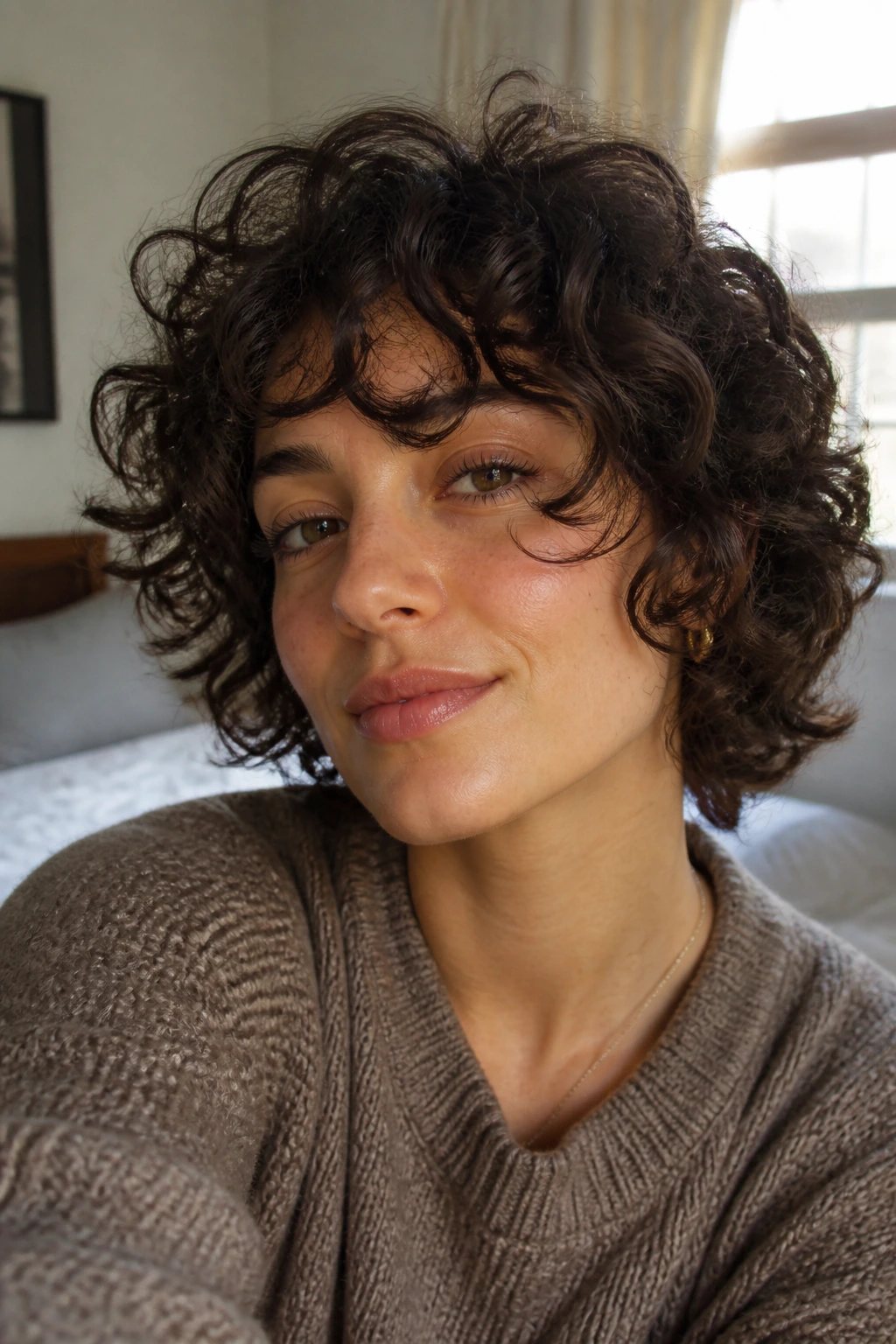
Thick hair with loose curls can be a joy or a small act of chaos. Give it too much length, and the bottom starts to drag. Cut it too blunt, and the whole shape can turn wide at the sides, like the hair is trying to claim extra square footage on your face. The sweet spot is a short cut that keeps the curl moving, lets the density breathe, and still leaves enough length for the pattern to show off instead of puffing into a helmet.
That’s where short messy haircuts for thick hair with loose curls get interesting. The best ones aren’t sloppy; they’re engineered to look a little undone. A tapered nape, a broken perimeter, a fringe that falls in pieces instead of one solid curtain — those details matter more here than on straighter hair. Loose curls also shrink in uneven ways, so a style that looks tidy wet can wake up looking shorter, fuller, and a little more interesting once it dries.
I’ve always liked cuts for this texture that keep some weight up top but take bulk out of the sides and back. That balance keeps the head shape clean. It also gives you room to skip the perfect blowout and still walk out the door looking intentional, not overworked. The styles below lean into that idea from every angle: soft bobs, cropped shags, bixies, mini mullets, and a few sharper shapes for anyone who wants the haircut to have some attitude.
Why These Cuts Stay Airy Instead of Puffing Out
-
They remove weight in the right places: Thick loose curls need bulk taken out from the interior and nape, not just the ends, or the shape swells out sideways.
-
They let the curl clump: Shorter lengths and broken outlines help loose curls gather into defined pieces instead of stretching into one heavy mass.
-
They grow out with less drama: A good messy cut can slide into the next stage without looking like you missed your trim appointment by a month.
-
They work with a fast routine: A little mousse, a quick scrunch, and a diffuser pass can be enough when the cut already has movement built in.
-
They leave room for personality: Side parts, micro fringes, longer front pieces, and tapered napes all change the mood without changing the basic length.
-
They suit thick hair that resists flatness: If your hair never lies close to the head anyway, these cuts stop fighting that fact and use it.
1. The French Bob for Thick Loose Curls
A French bob sits right around the jaw, and on thick loose curls that small change in length makes a big difference. The weight comes off the bottom edge, so the curls spring instead of hanging into a pyramid. Ask for a soft perimeter and a little interior shaping, not a harsh one-length line.
This cut works best when you want polish with a little mess left in it. A deep side part or a slightly off-center fringe keeps it from feeling too neat. If your curls swell at the cheeks, ask your stylist to leave the front a touch longer than the nape.
2. The Piecey Bixie
The bixie lives between a bob and a pixie, which is exactly why it flatters dense loose curls. It keeps enough length on top to show the curl pattern, while the sides and neckline stay light and easy. The result is soft, not heavy.
I like this cut when the hair is thick enough to feel bulky at ear level. A bit of extra length around the temples keeps it feminine and balanced. Ask for point cutting over heavy thinning; loose curls can fray if the ends get shredded.
3. The Ear-Length Curly Shag
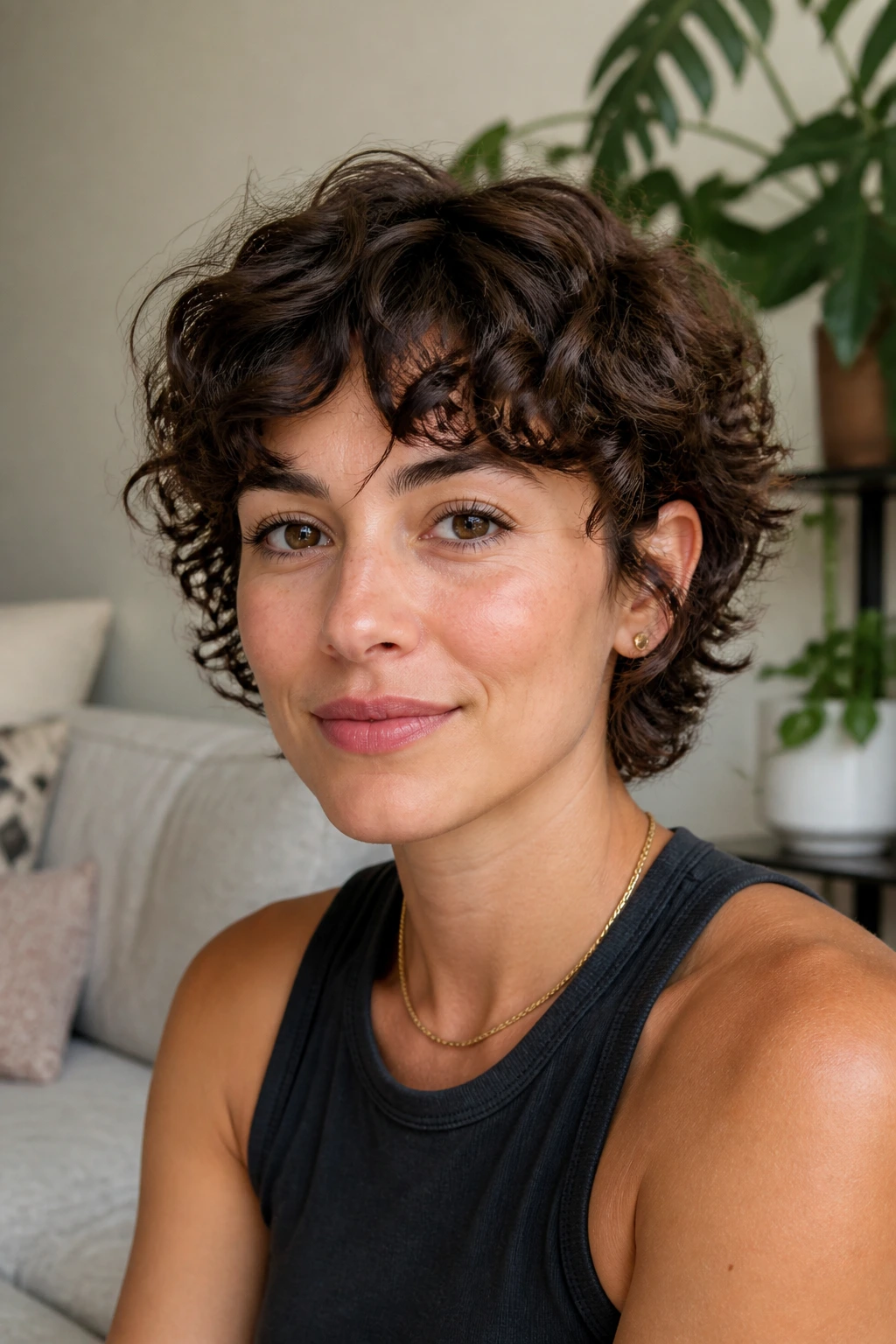
What makes an ear-length shag work? Layers that start high enough to remove bulk, but not so high that the crown goes see-through. On loose curls, that balance gives you lift without the fuzz.
How to Wear It
Use mousse on damp hair, scrunch with a microfiber towel, and diffuse until the roots are about 80 percent dry. Then stop. The ends usually look better if they finish air-drying on their own. This is a cut for people who want shape without a lot of brush work.
4. The Rounded Jawline Bob
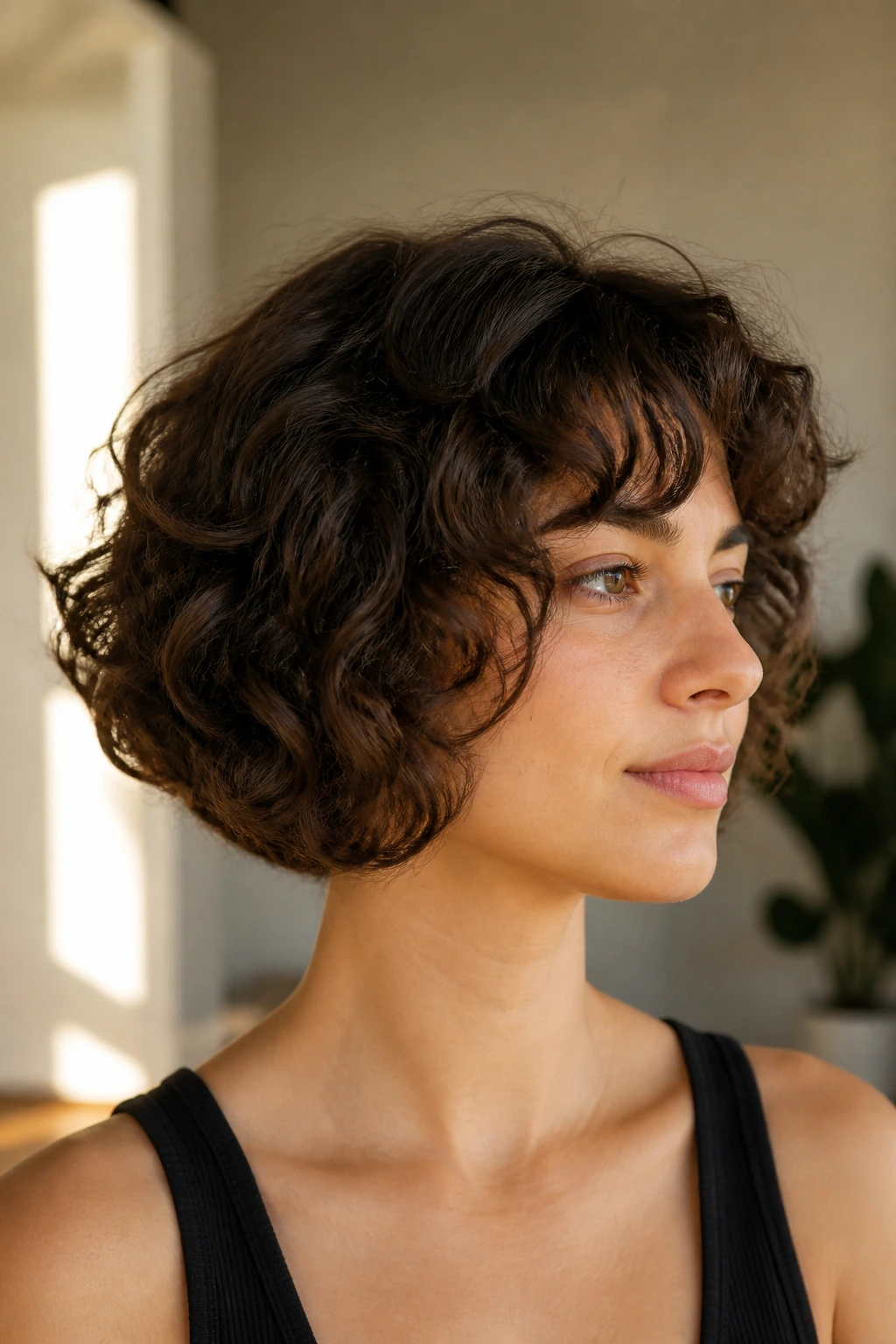
A rounded bob curves in just enough to keep thick curls from flaring out at the sides. The widest part of the cut sits near the jaw, then narrows slightly toward the nape. That keeps the silhouette soft instead of boxy.
It’s especially good if your face already has strong angles, because the haircut takes the edge off them without hiding your features. Ask for light layering inside the shape, not through the very ends. The perimeter should still feel solid.
5. The Tapered Curly Crop
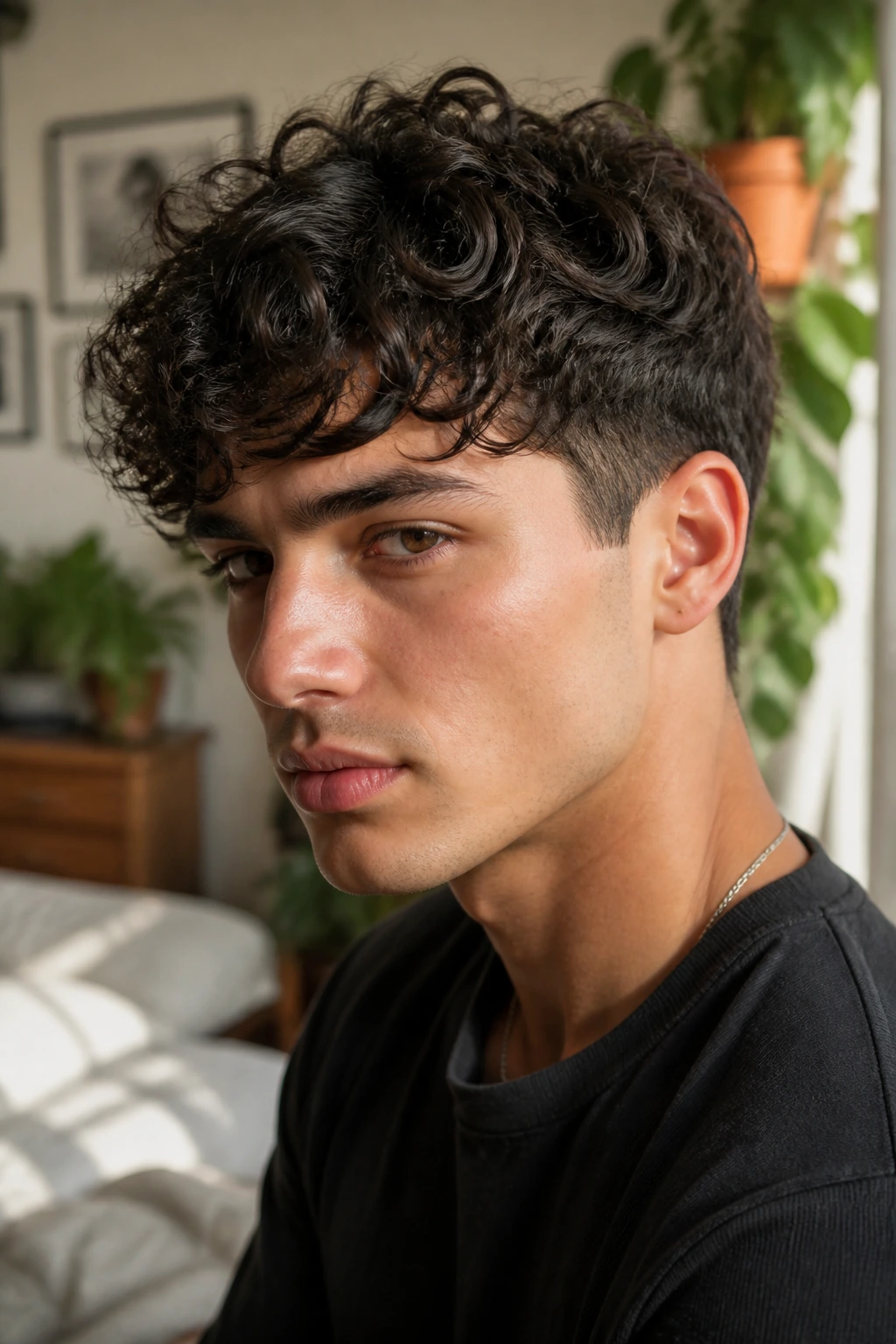
This is one of my favorites for thick hair because it solves the “too much hair everywhere” problem fast. The nape and around-the-ear zones are tapered close, while the top keeps enough length to show the curls. You get lift up top and less bulk where hair tends to swell.
If your hair gets hot and puffy under scarves, collars, or hoodies, this cut makes daily life easier. It also dries faster than a short bob, which matters more than people admit. Thick curly hair can drink up time.
6. The Pixie Mullet
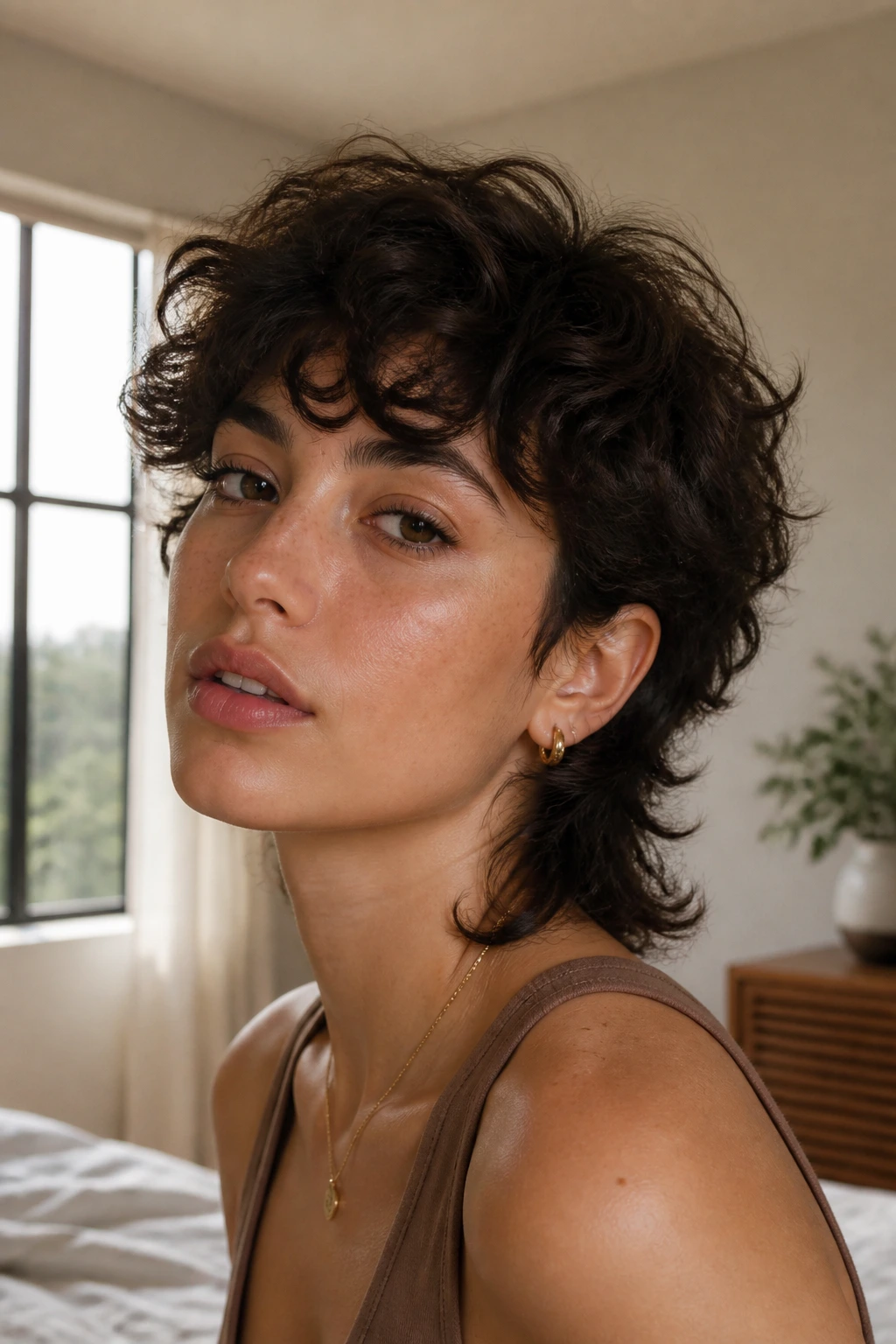
A pixie mullet sounds more rebellious than it usually wears. On loose curls, it can be surprisingly soft if the top is kept airy and the back is only a little longer. The shape gives you movement at the crown without making the sides bulky.
I’d choose this if you like short hair but hate the helmet feeling that some pixies give thick hair. Ask for the top to stay piecey and the neckline to stay clean. If the back starts looking stringy, the stylist has gone too far.
7. The Choppy Chin Bob

Chin-length is the sweet spot for a lot of thick loose curls. It’s short enough to lift the weight, but long enough to keep the curl pattern from springing up too high. Choppy ends make the whole shape feel lighter.
This cut is friendly if you still like tucking hair behind one ear or clipping it back on second-day hair. It also gives you a little more room than a French bob if your curls are not fully consistent from root to end. That extra inch matters.
8. The Side-Part Razor Crop
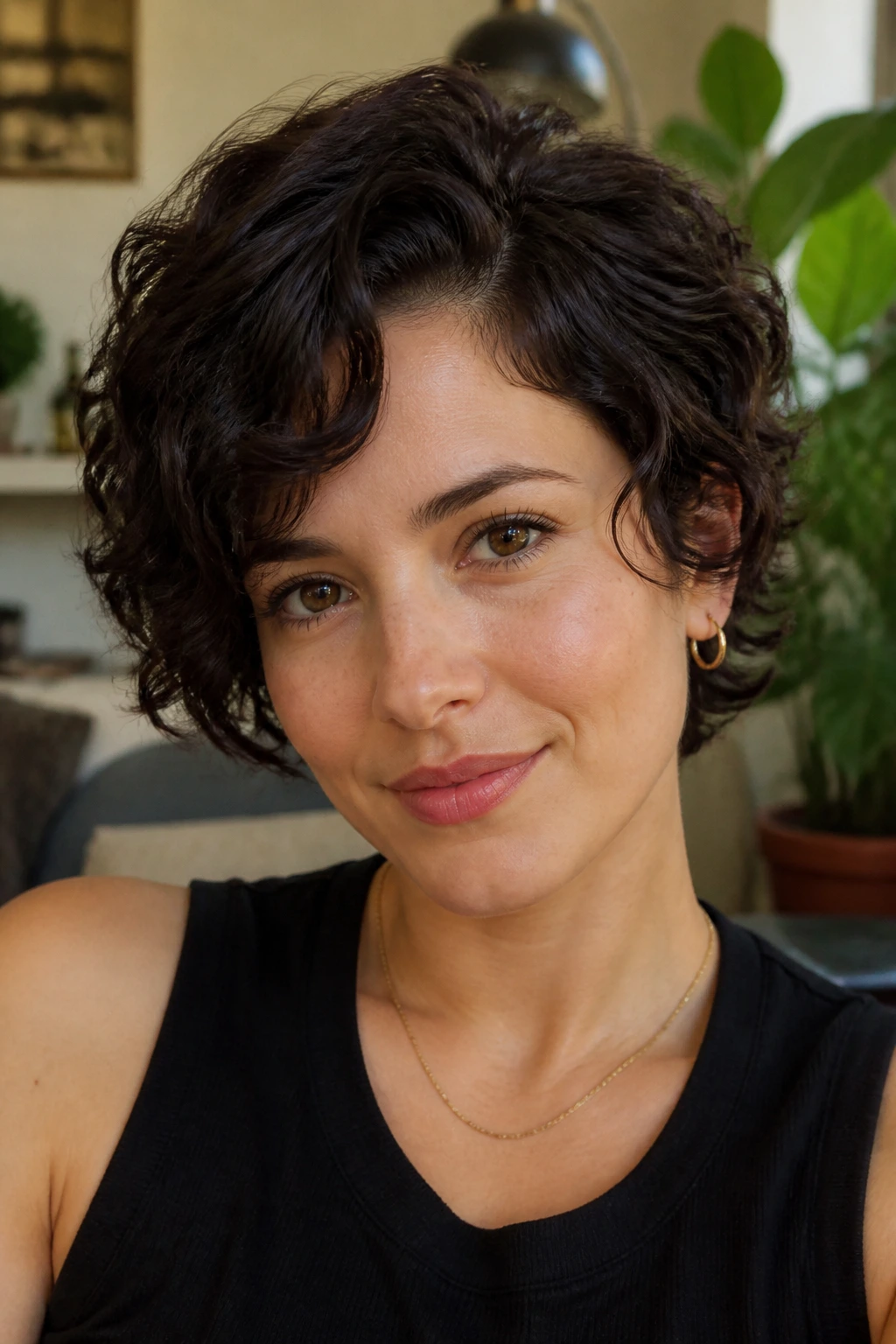
A side-part crop gives thick loose curls a diagonal line to follow, which keeps the shape from going round in a too-perfect way. The side part also helps the volume sit where you want it, not where the hair decides on its own. If the texture tolerates it, a light razor touch on the surface can soften the outline.
I’m cautious with razors on this hair type, though. If your ends already frizz, point cutting is safer. The goal is softness, not frayed edges that catch on everything.
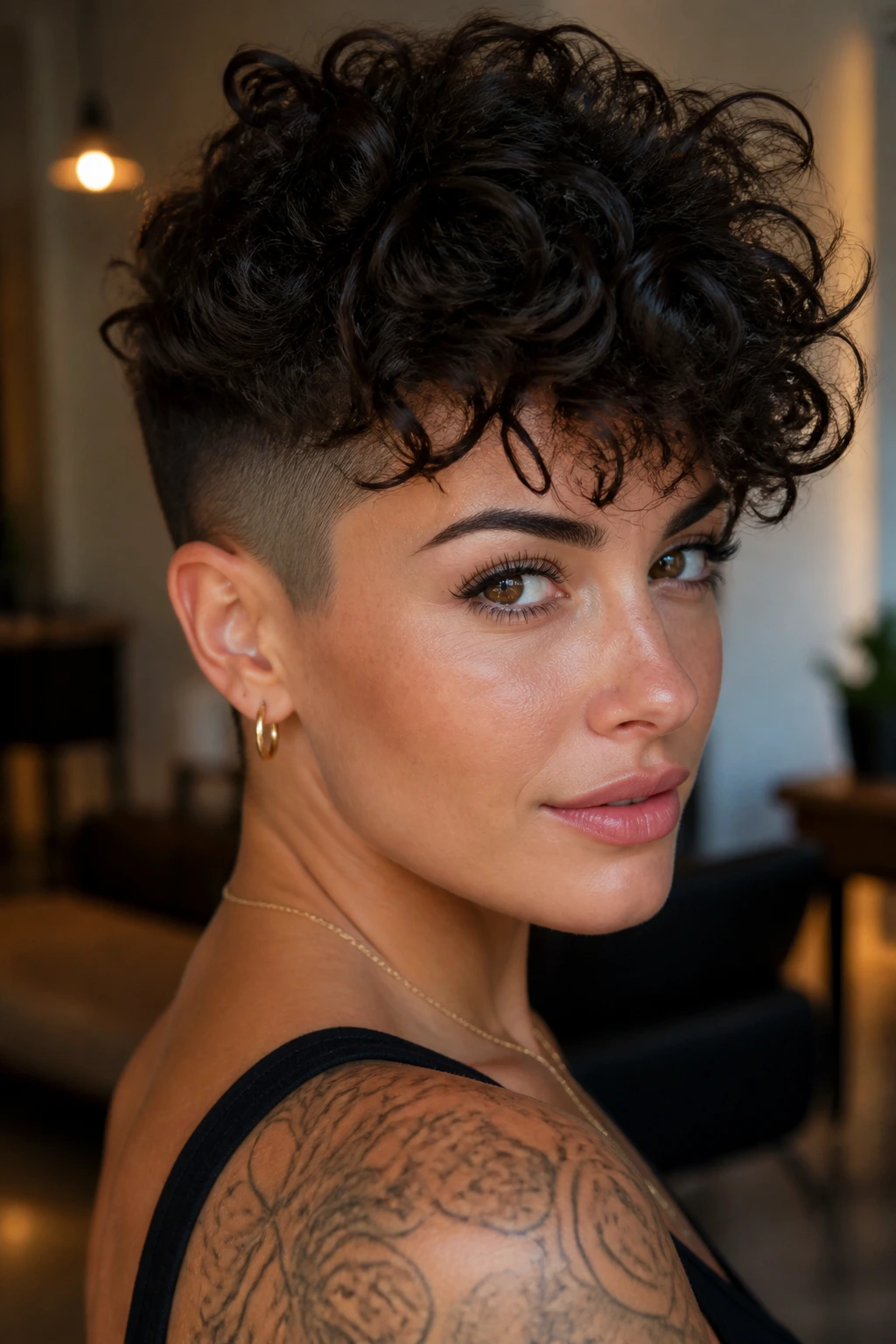
9. The Curly Undercut Pixie
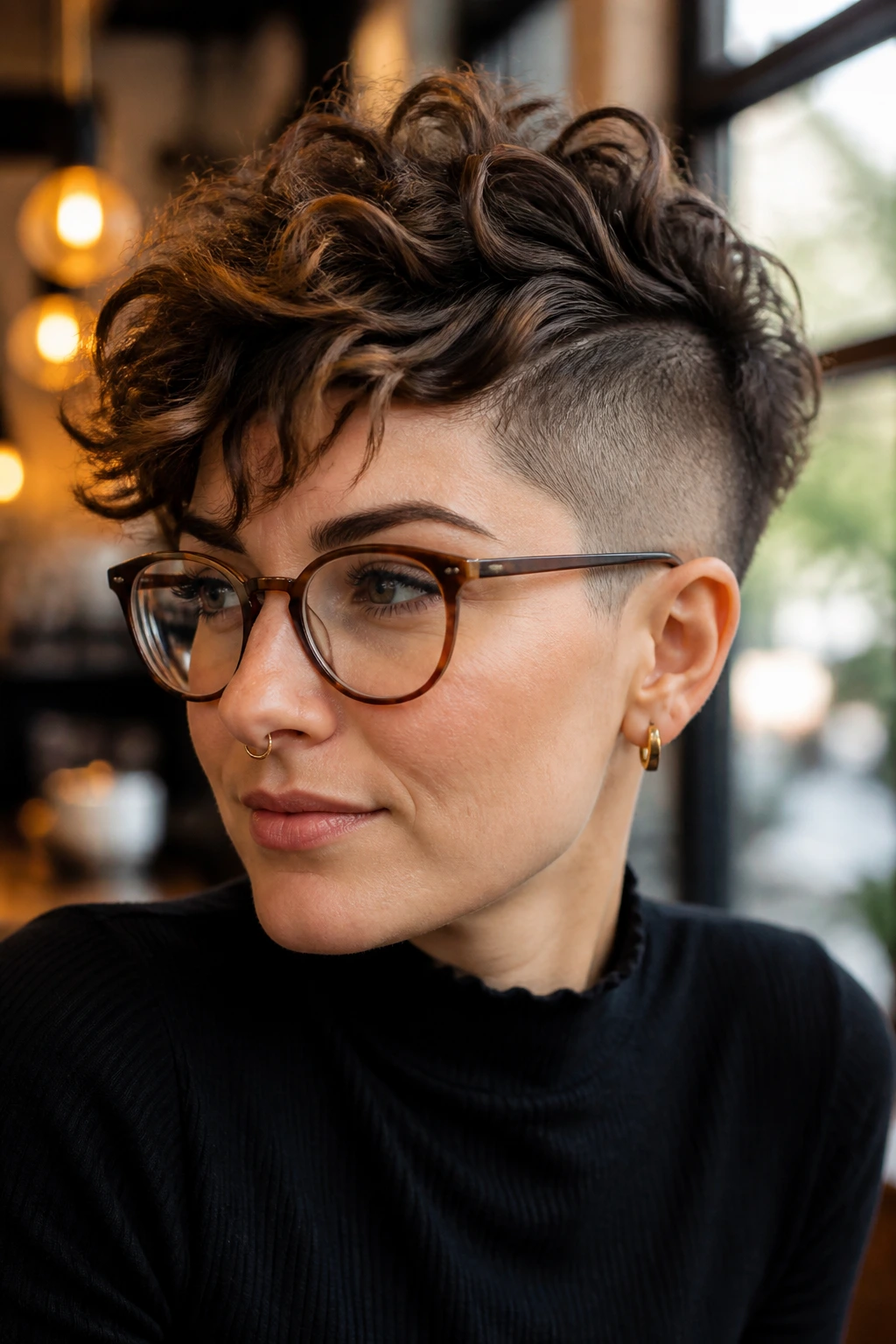
If your hair is dense enough to hide a small animal, the undercut pixie is worth a look. The sides and nape are cut short underneath, which removes a lot of hidden bulk, while the top stays long enough to create a loose curl mound. It looks polished only if the top isn’t overdone.
This is the kind of cut that gets better on day two, once the top settles. It also works nicely if you wear glasses, because the hair won’t keep crowding the frames. Ask your stylist to keep the transition soft rather than shaved to a hard line unless you want the contrast.
10. The Feathered Mushroom Cut
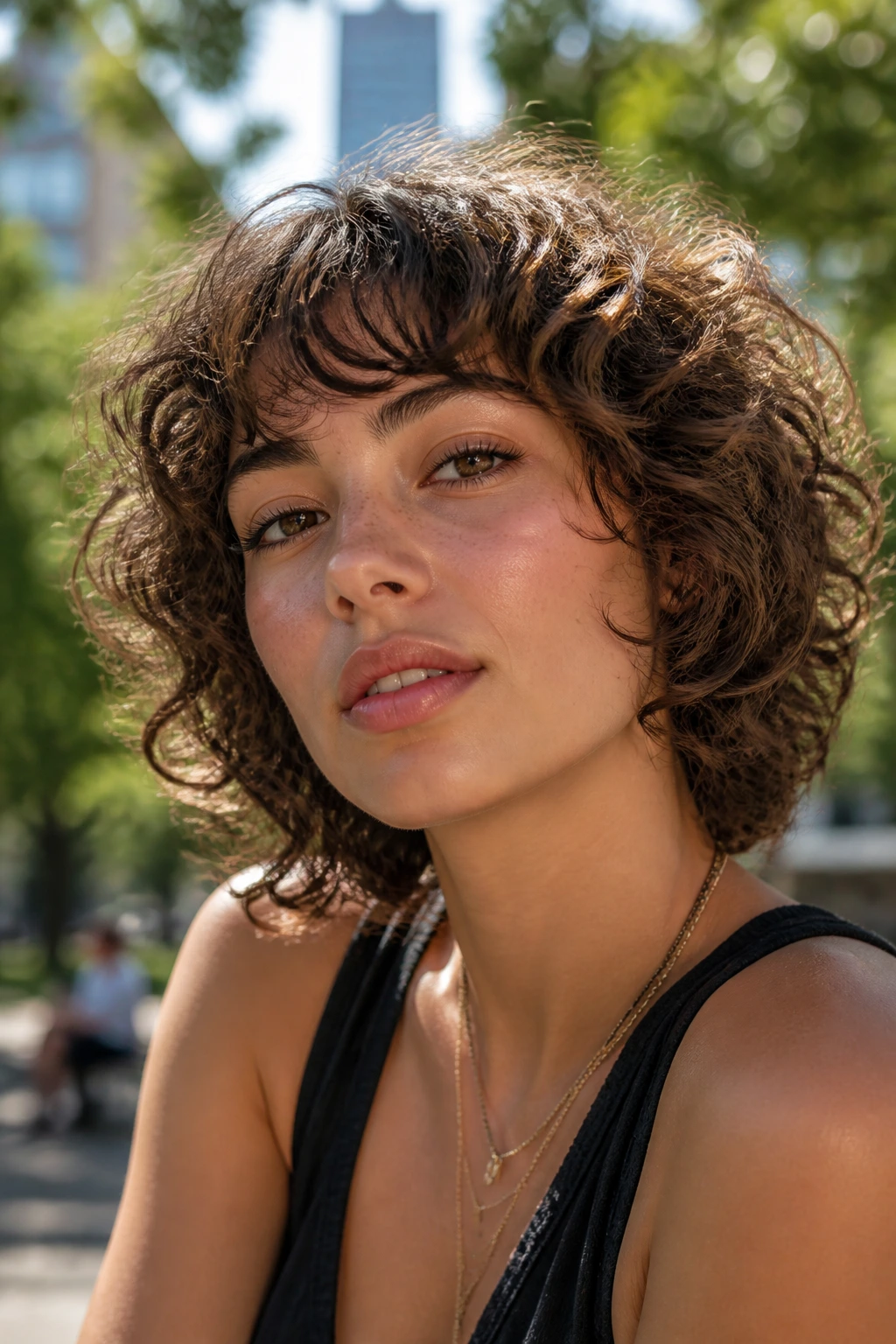
A modern mushroom cut can look very fresh on thick loose curls if the feathering is controlled. The crown stays rounded, but the ends are broken up so the shape doesn’t sit like one solid cap. It’s a trickier silhouette than it looks.
I like this for people who want something a little unusual without going full avant-garde. It has a neat outline from the front and a touch of cheekiness from the back. Keep the fringe soft. Hard edges will fight the curl pattern.
11. The Cropped Lob with Broken Ends
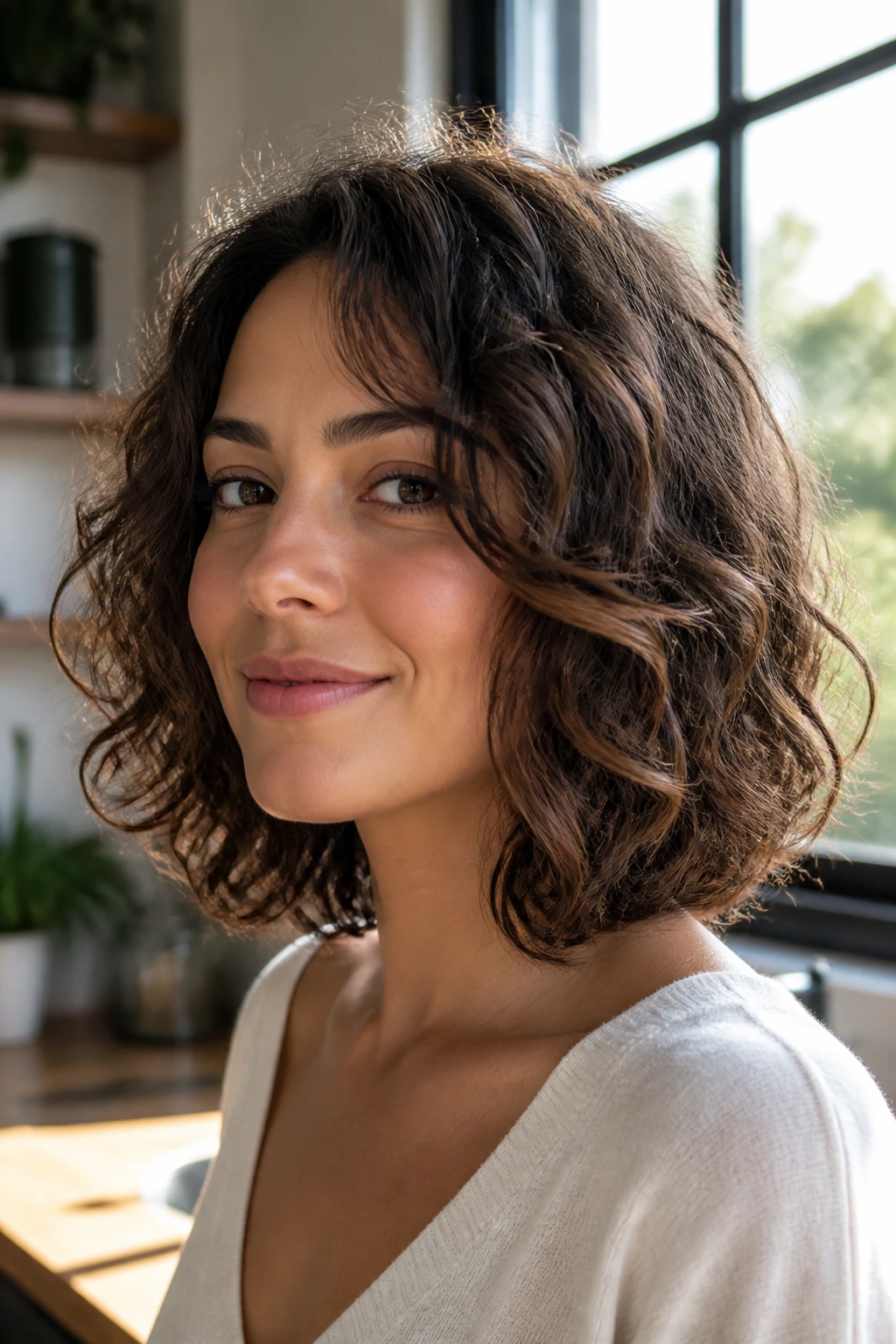
This is the longish option in the list, but it still reads short once the curls spring up. The broken ends keep thick hair from forming a blunt shelf around the shoulders. It’s a smart move if you want a cut that can still tuck, clip, and grow out with grace.
For loose curls, this length is forgiving on busy mornings. You can air-dry, twist a few face-framing pieces, and go. It doesn’t demand constant shaping, which is why so many people end up staying here longer than expected.
12. The Wolfy Bob
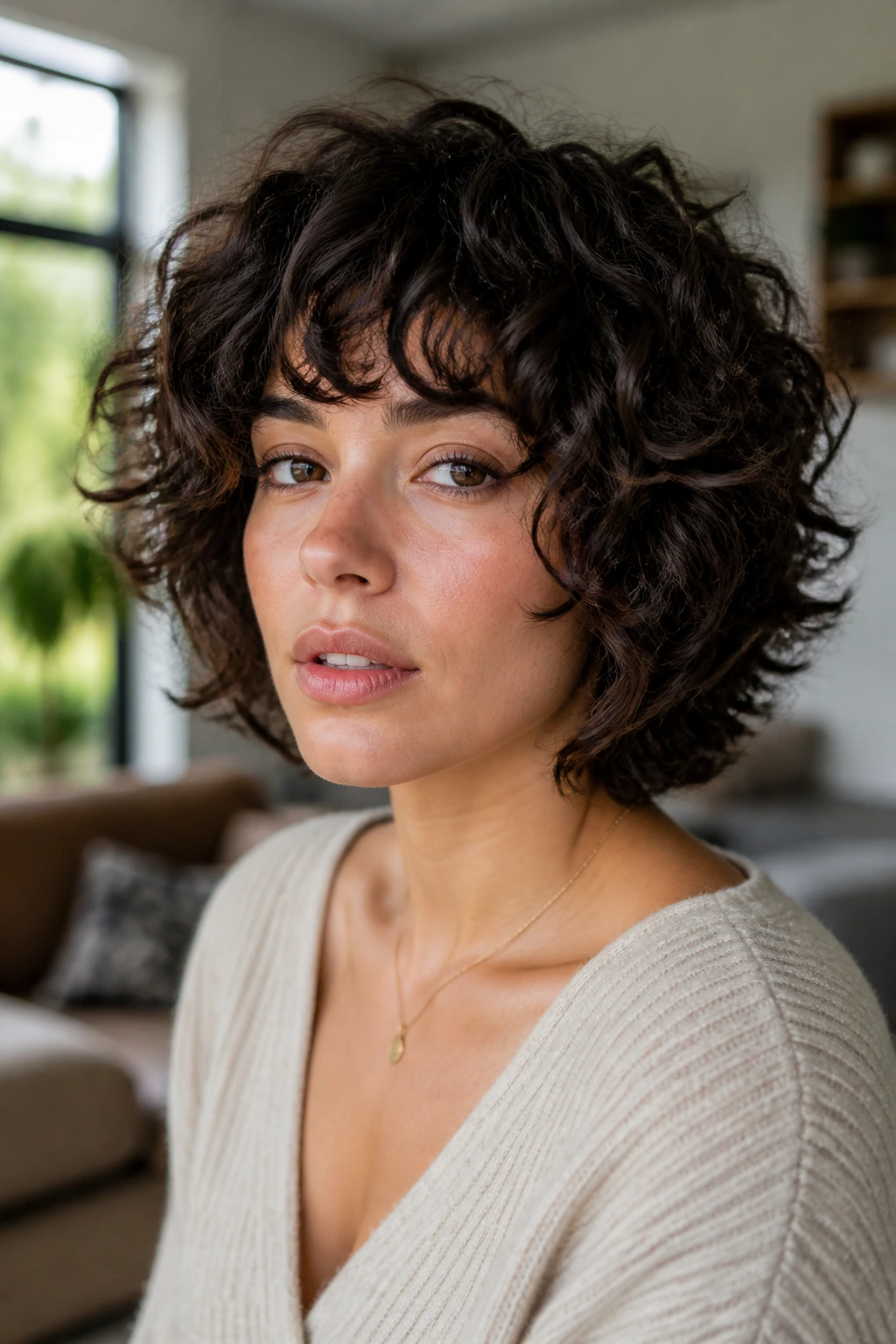
The wolfy bob takes the shag’s movement and trims it into a shorter, sharper shape. Layers in the crown and around the cheeks keep thick curls from building one heavy silhouette. It has a little edge, but not enough to feel costume-like.
Best part? It hides a messy air-dry better than most short cuts. If your curl pattern changes from side to side, that unevenness works in your favor here. The whole point is a cut that looks better with some texture, not less.
13. The Curtain-Bang Crop

Curtain bangs can make a short messy cut feel softer fast. On thick loose curls, they break up the forehead area and pull attention toward the eyes and cheekbones. The rest of the crop can stay compact while the fringe does the talking.
What to Ask For
Ask for the bangs to be cut longer than you think you need, then dried into shape. Loose curls jump. A fringe that seems comfortable at the chair can land much shorter once it dries. Leave some extra length, especially if your curl pattern tightens near the front.
14. The Stacked Curly Bob
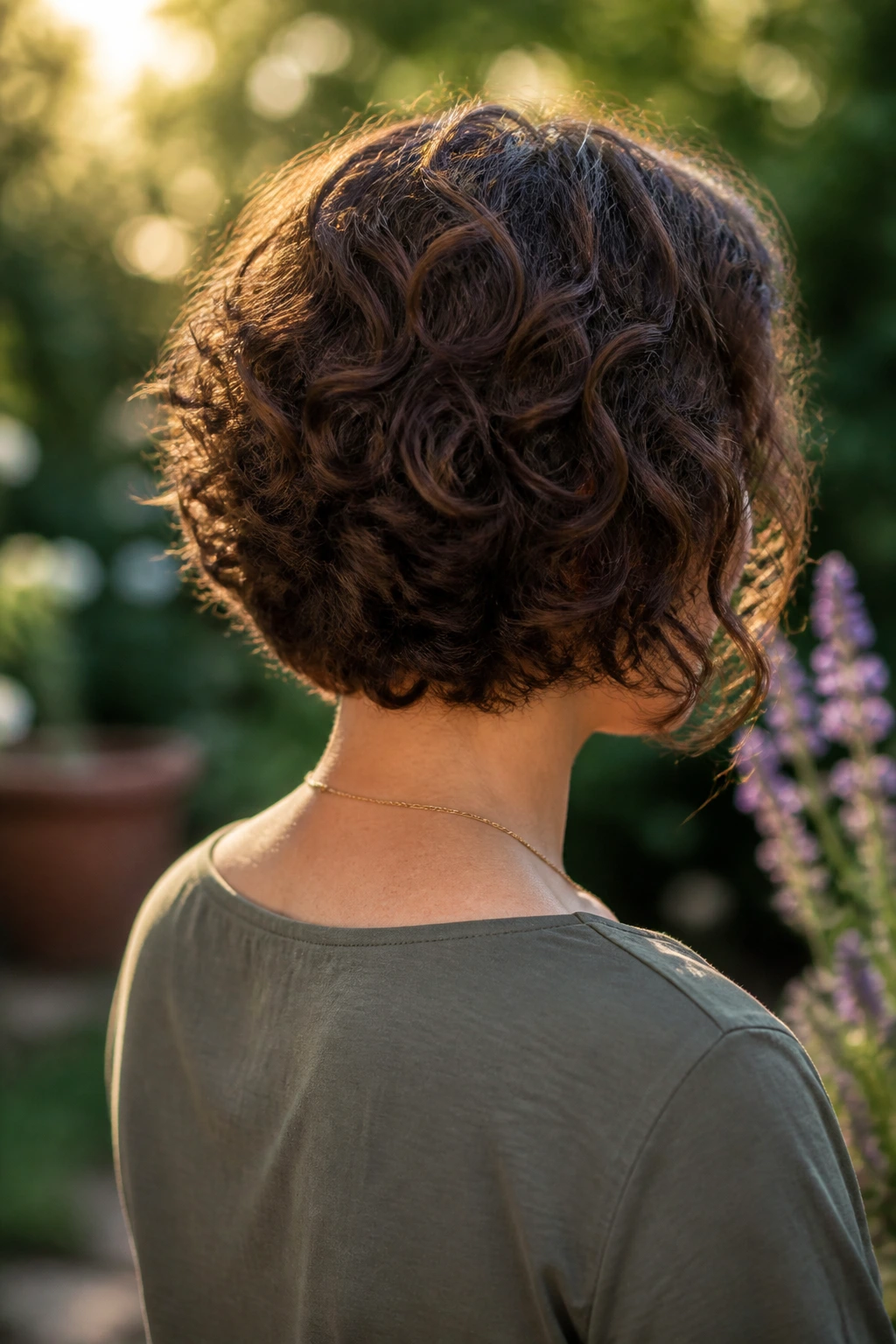
A stacked bob brings short layers through the back so the shape lifts instead of collapsing. On thick loose curls, that stack can reduce the mushroom effect that happens when all the weight sits low. The front can stay slightly longer to keep the line flattering.
This is one of the best cuts if your hair tends to go flat at the crown but bulky at the nape. The stack fixes both problems at once when it’s done cleanly. Too much stacking, though, and the back gets puffy. That’s the line to watch.
15. The Temple-Tapered Crop
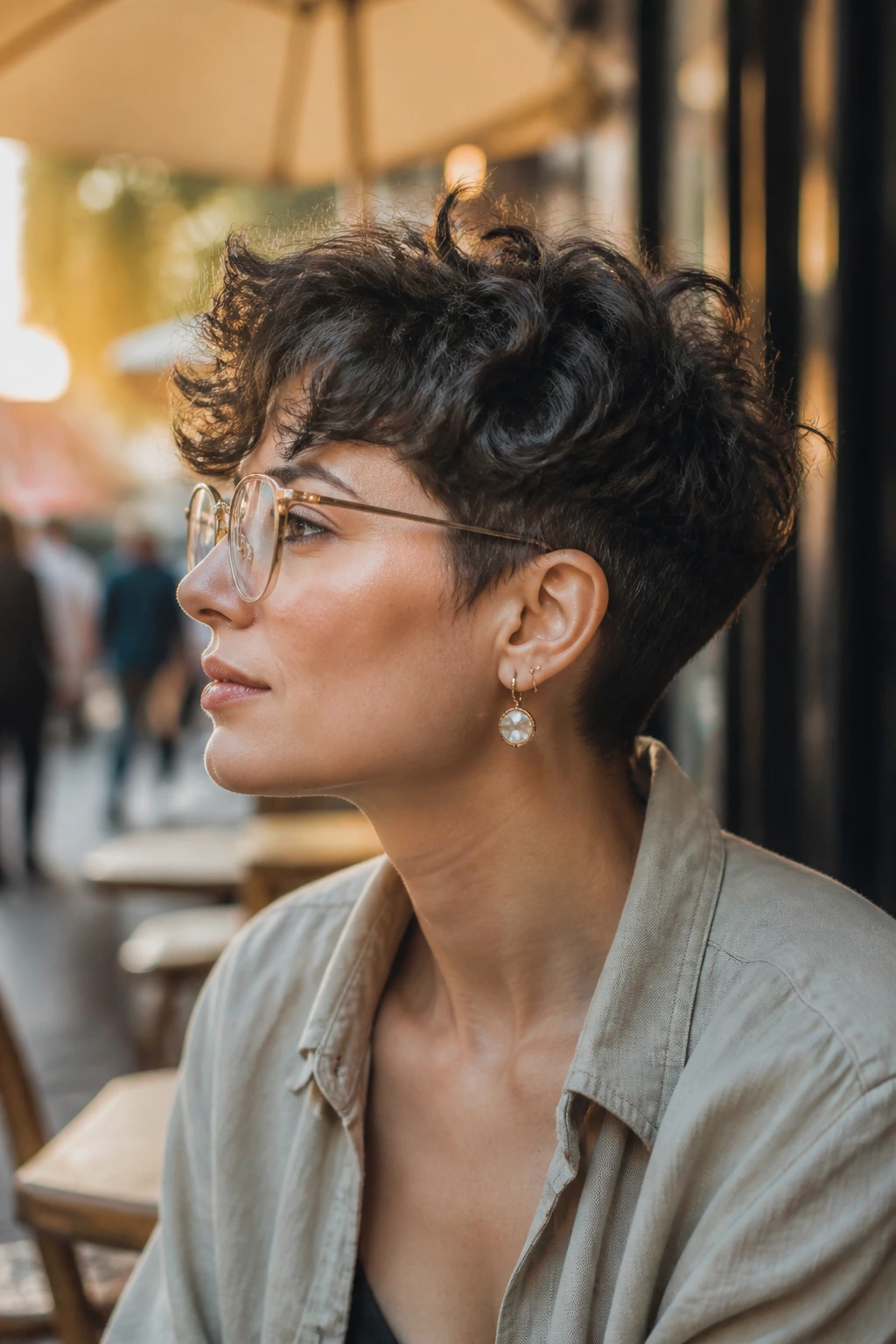
This cut is a quiet winner for people whose hair gets heavy around the temples. Tapering that zone opens up the face and gives the rest of the curls room to sit better. The top stays messy; the sides stay controlled.
It’s a smart choice if you wear glasses or earrings and want them to show. It also behaves well when you tuck one side behind the ear. That small move changes the whole attitude of the cut.
16. The Soft Bowl Cut
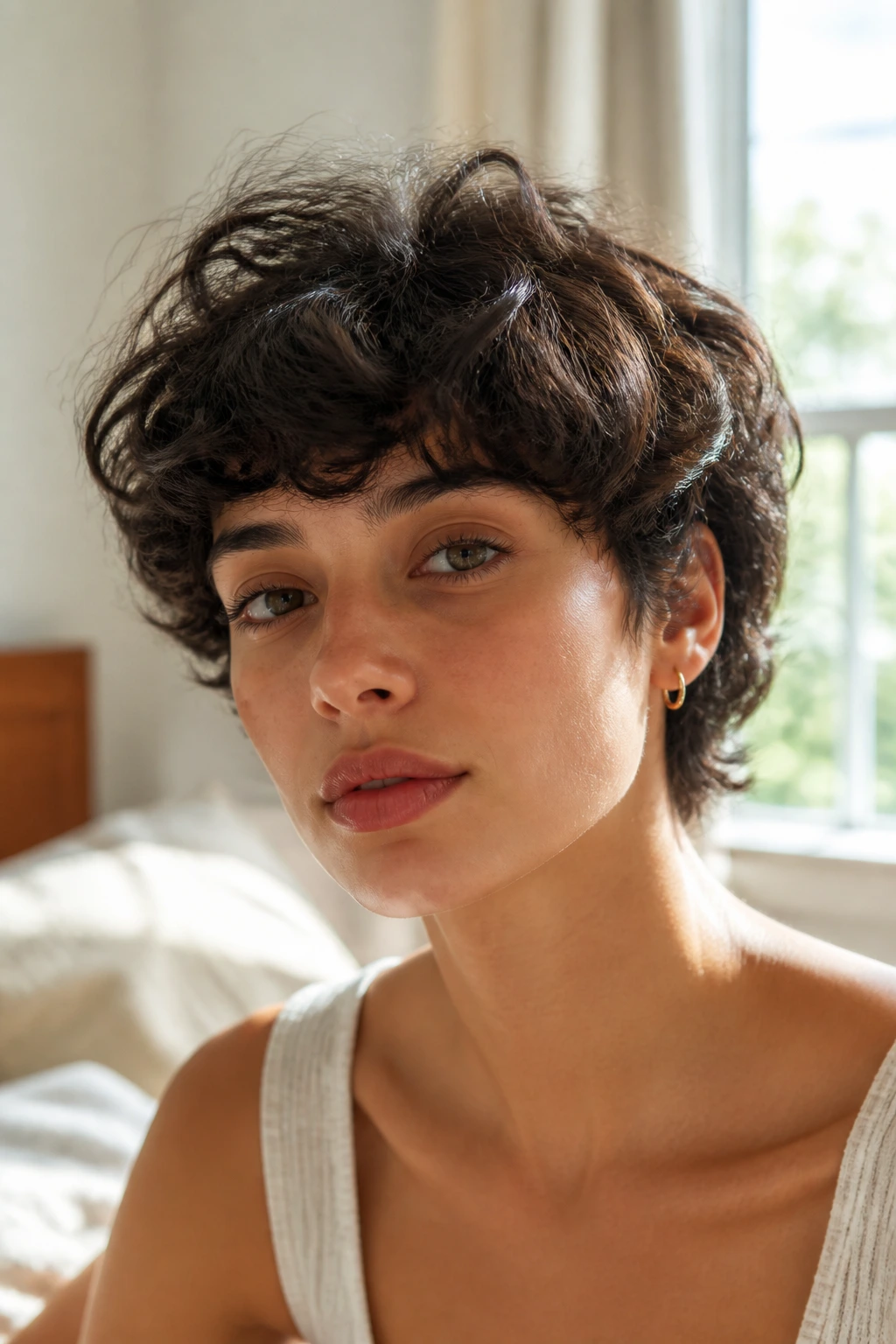
A soft bowl cut on thick loose curls sounds braver than it actually is. The trick is keeping the outline rounded but breaking the ends so it doesn’t sit like a helmet. Done right, the hair looks sculpted, not stiff.
This is a good one for people who like clean lines but still want curl movement. The fringe can be slightly longer at the temples, which helps the shape wrap the face. If your curls are loose and springy, the bowl shape can look airy instead of severe.
17. The Long-Top Pixie
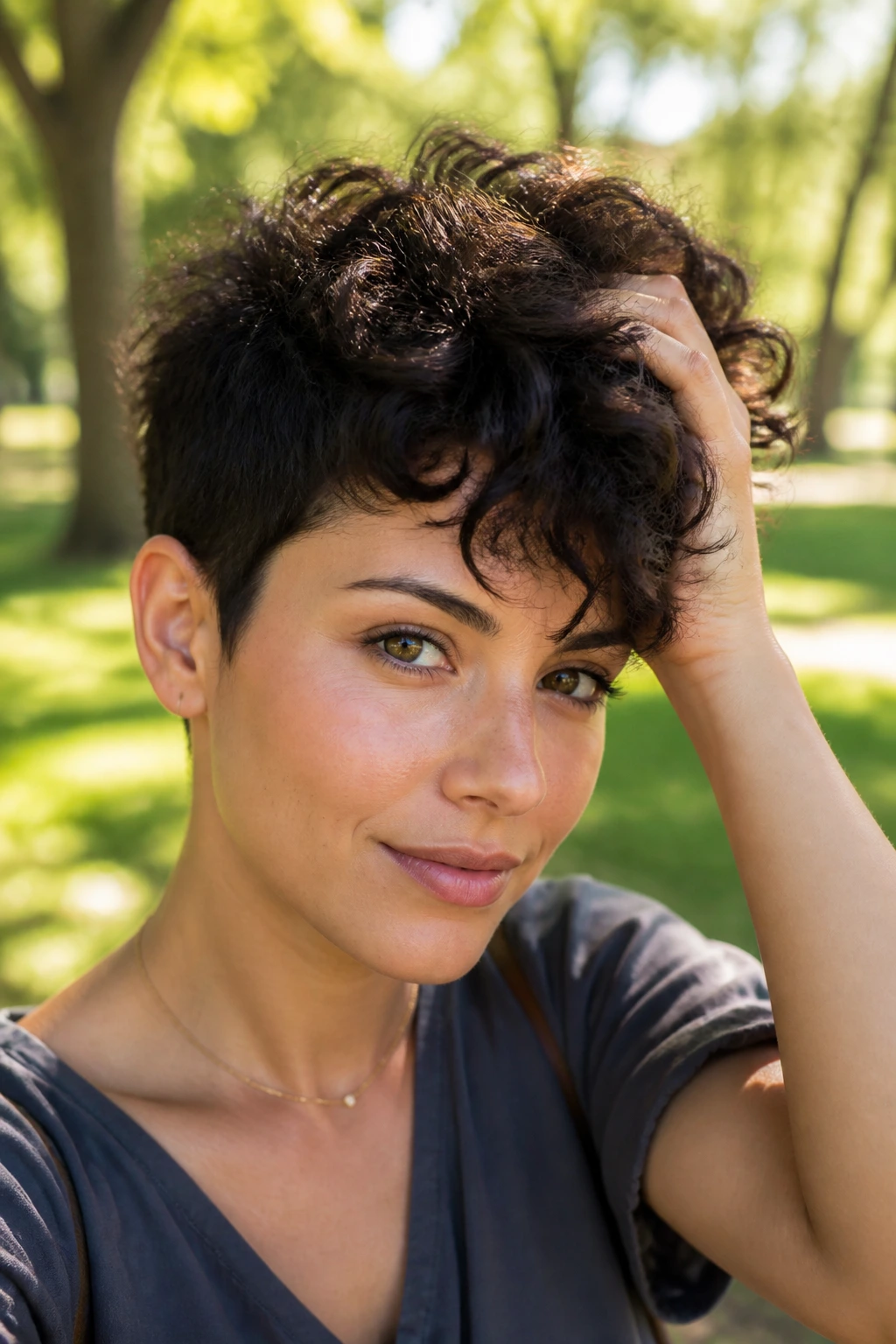
A long-top pixie gives you the shortness around the sides that thick hair often needs, while preserving enough length on top to show off the curl pattern. That balance is the whole trick. Without the top length, the cut can read flat or too boyish; with too much top, it turns unruly.
I’d pick this for someone who likes to toss the top with fingers and stop there. It doesn’t demand elaborate styling. The haircut does most of the work, which is the point.
18. The Wedge Bob with Texture

The wedge bob gives you a narrower back and a slightly fuller front, but texture keeps it from looking stiff. Thick loose curls can wear this shape well because the curl pattern softens the hard geometry that straight hair would show more clearly. A little asymmetry helps too.
This cut shines when the back is kept neat and the front pieces are left broken and touchable. It frames the jaw nicely and keeps the neck open. If the wedge gets too steep, though, the shape can go retro in a bad way. Stay soft.
19. The Soft Mohawk Crop
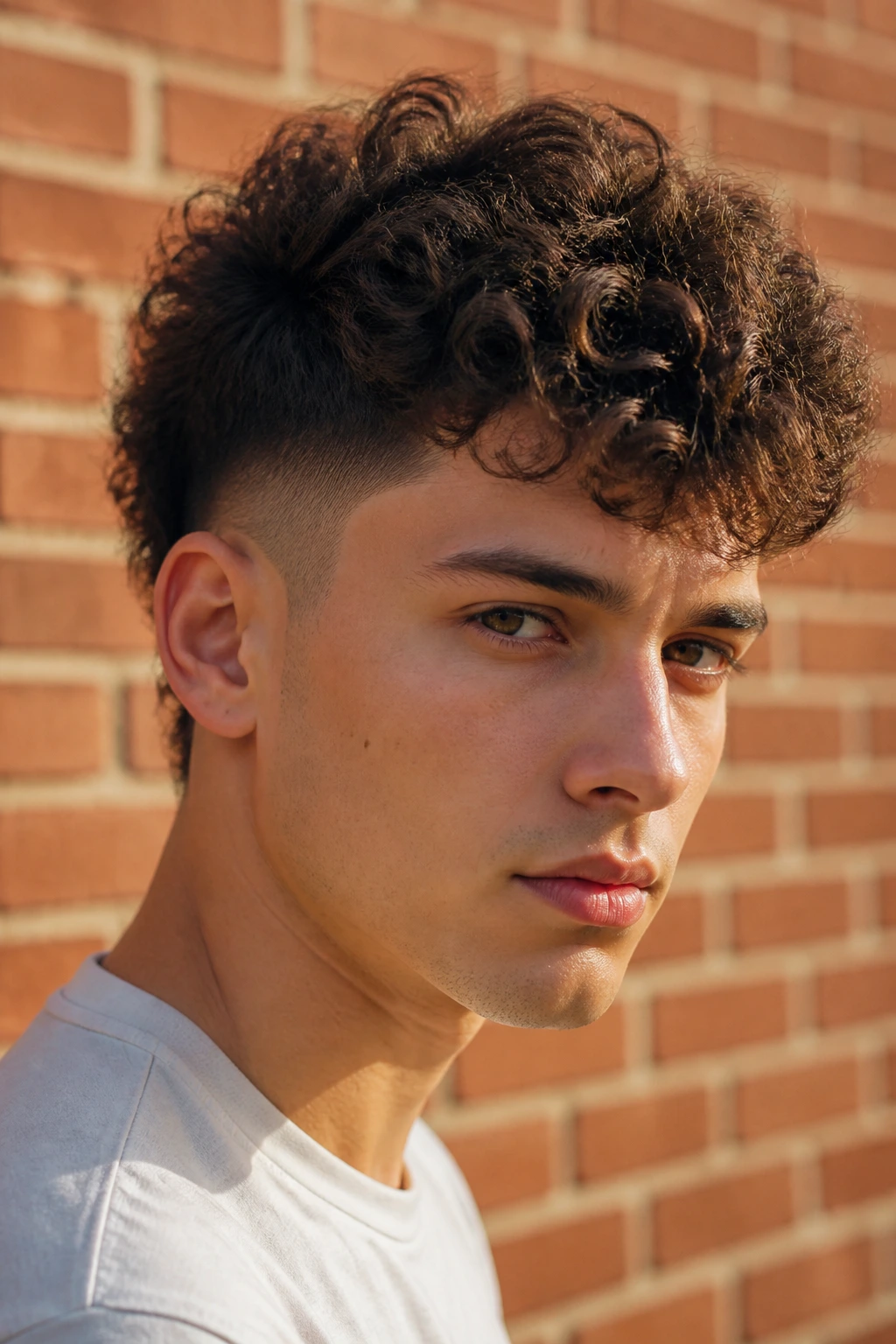
A soft mohawk crop is for people who want the boldest silhouette in the group without shaving the sides to the skin. The middle ridge of curls stays full, while the sides are tapered close enough to narrow the head shape. On thick loose curls, that contrast is strong in a good way.
It’s a cut with personality. You’ll either love the energy or know instantly it’s not your thing. I think it’s especially good for dense hair that refuses to lie flat anyway, because the haircut stops pretending otherwise.
20. The Layered Nape Bob
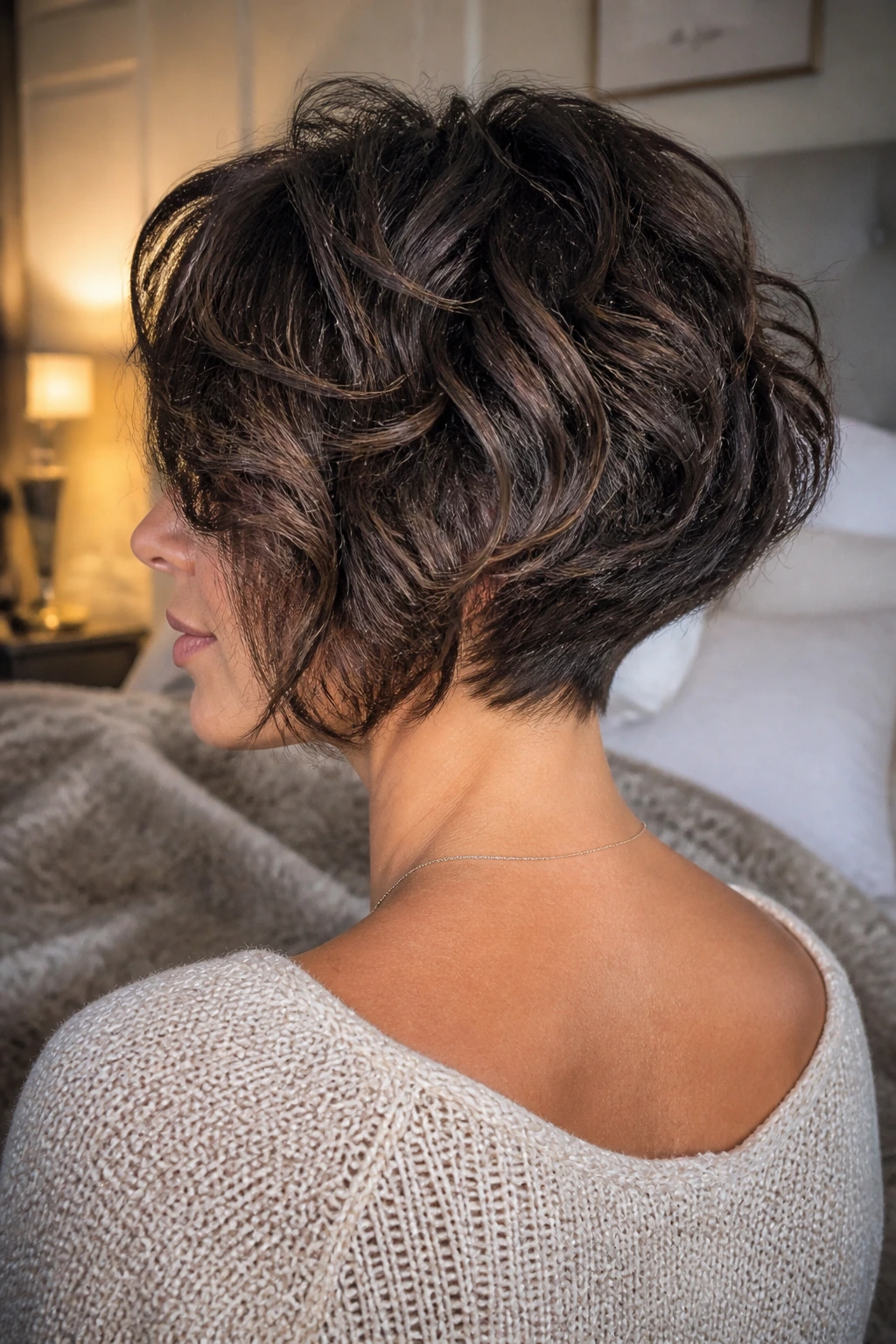
This one keeps the front fairly simple and puts the action at the nape. A layered nape bob lifts the back away from the neck, which matters when thick curls bunch up and make the hair feel heavy. The front can stay chin-length or a bit longer.
The nape is where many short cuts go wrong on dense hair. Too much length there and the whole cut droops. Too little and the silhouette gets fluffy. This version finds the middle ground.
21. The Deep Side-Part Crop
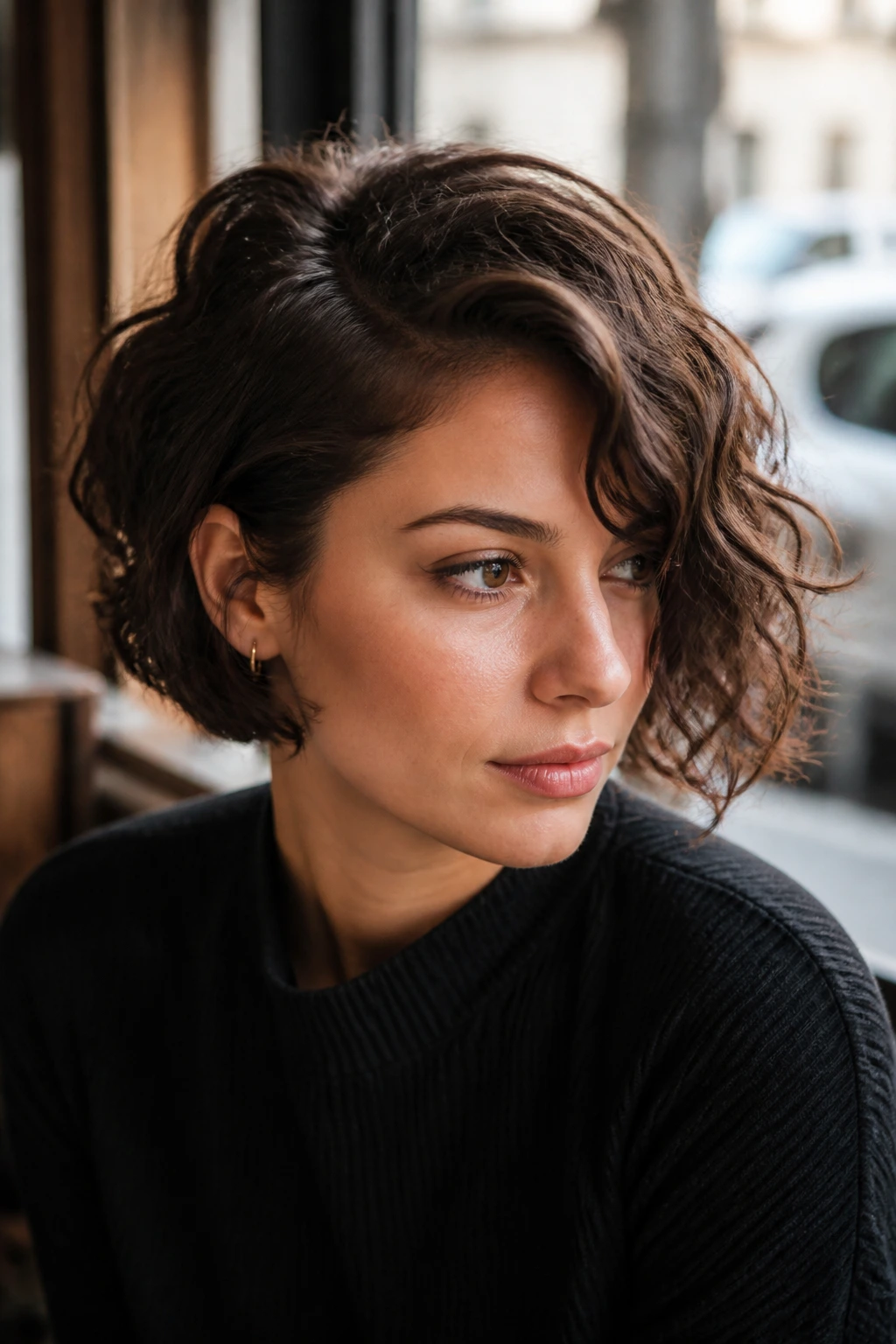
A deep side-part crop changes the whole mood of thick loose curls with one move. The side part creates a diagonal line that breaks up width and gives the hair a place to fall naturally. The cut itself can stay short and piecey.
Best For
This works well if one side of your curl pattern behaves better than the other, which is more common than people think. Rather than forcing symmetry, the cut uses the better side to lead. It’s also good when you want a shorter style that still feels a little dramatic.
22. The Short Shag with Fringe
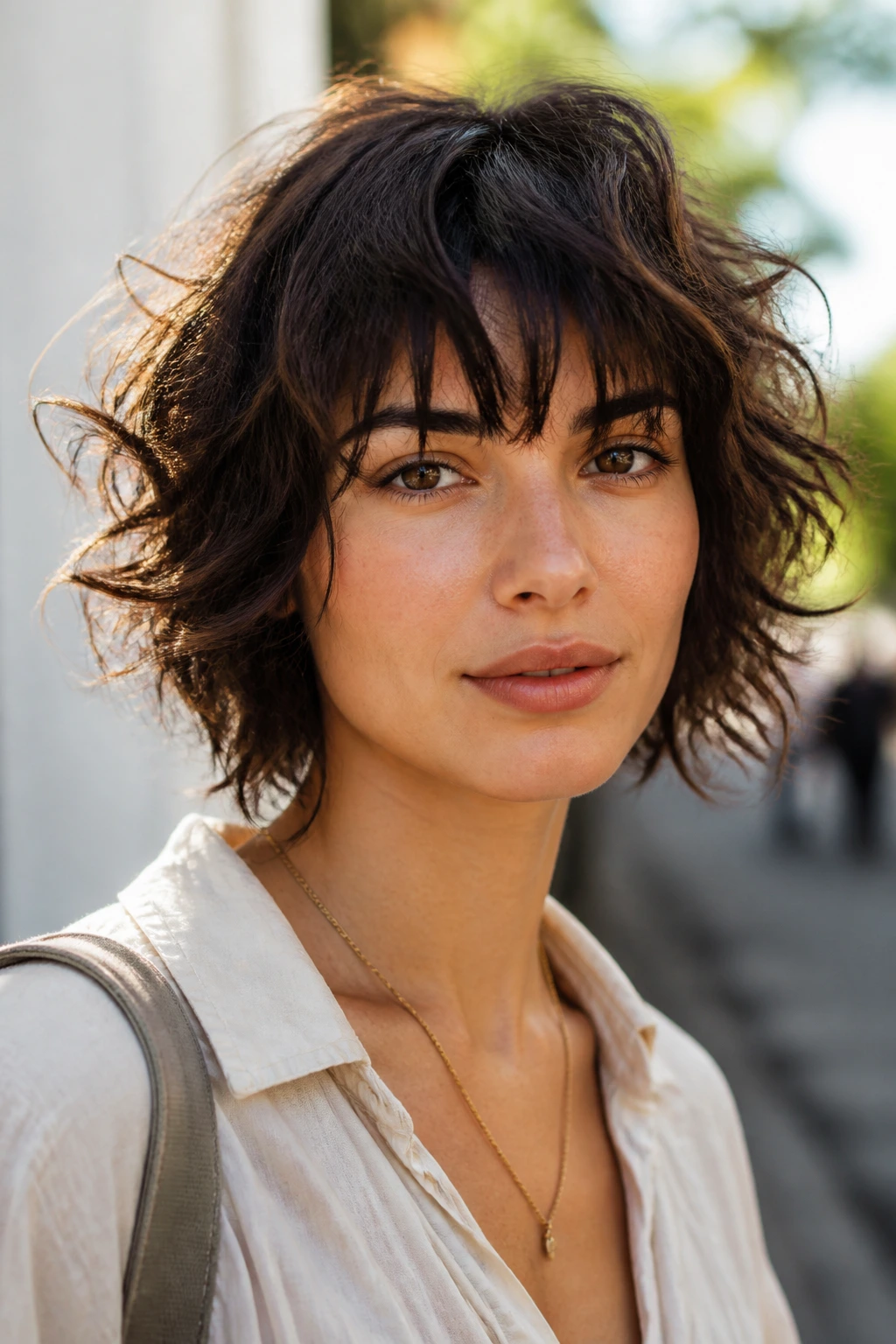
The short shag is the comfort food of messy curly cuts. Layers, fringe, and broken ends all work together to keep thick hair from sitting in one heavy block. Loose curls make the shag look softer than on tighter textures, which is part of the appeal.
If you want your haircut to look good after a nap, a windy walk, or a long day in a car, this is a dependable choice. It’s not precious. That’s a virtue.
23. The Tapered Bixie
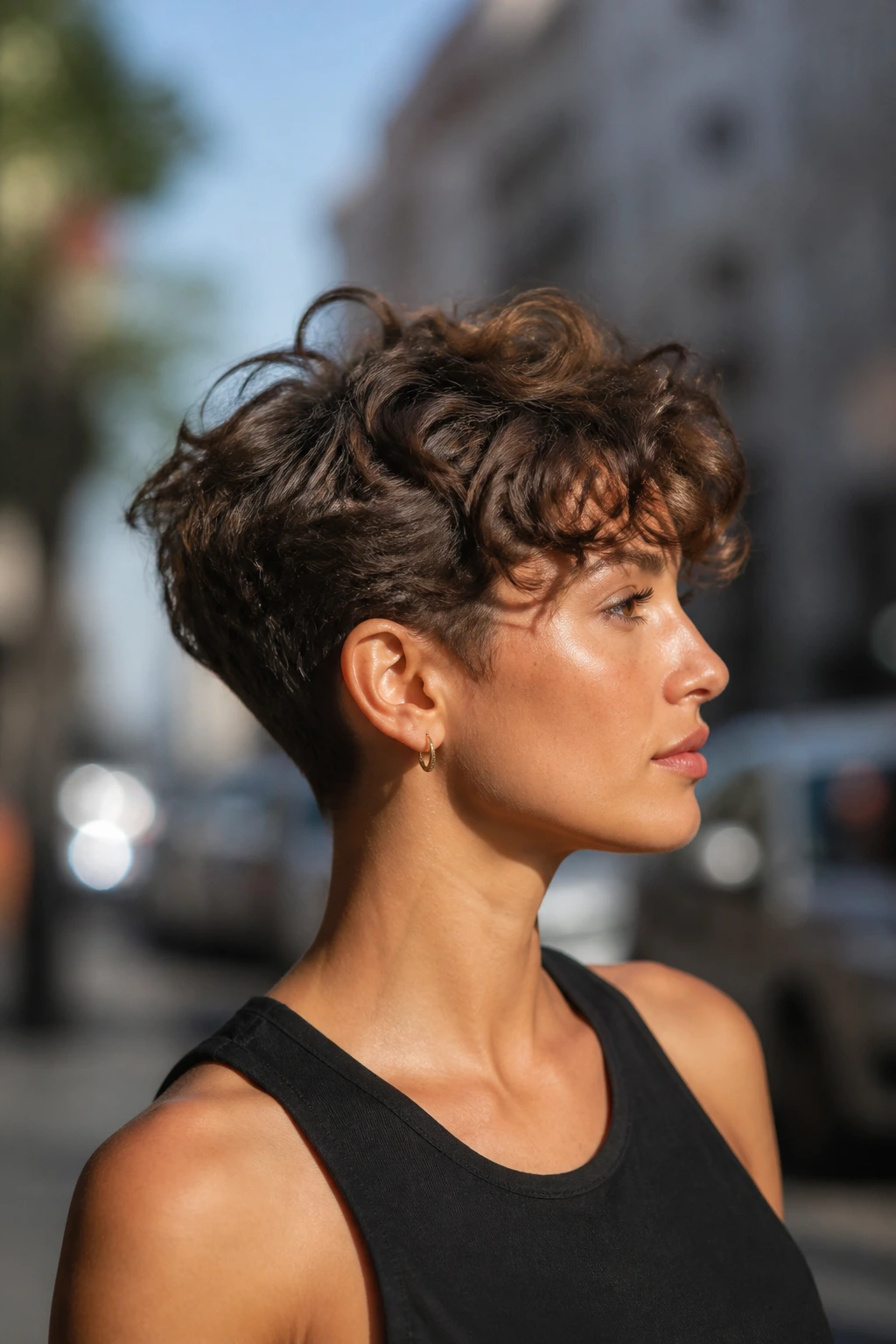
A tapered bixie trims the sides and nape closer than a standard bixie, which is useful when thickness shows up where you do not want it. The top remains longer, so the style still feels curly and feminine instead of clipped down. It’s neat, but not severe.
I’d choose this if you want a short cut that feels easy to refresh with fingers only. It can take a tiny amount of cream or mousse and still look intentional. Thick loose curls usually respond well to that kind of restraint.
24. The Scissor-Soft Mullet
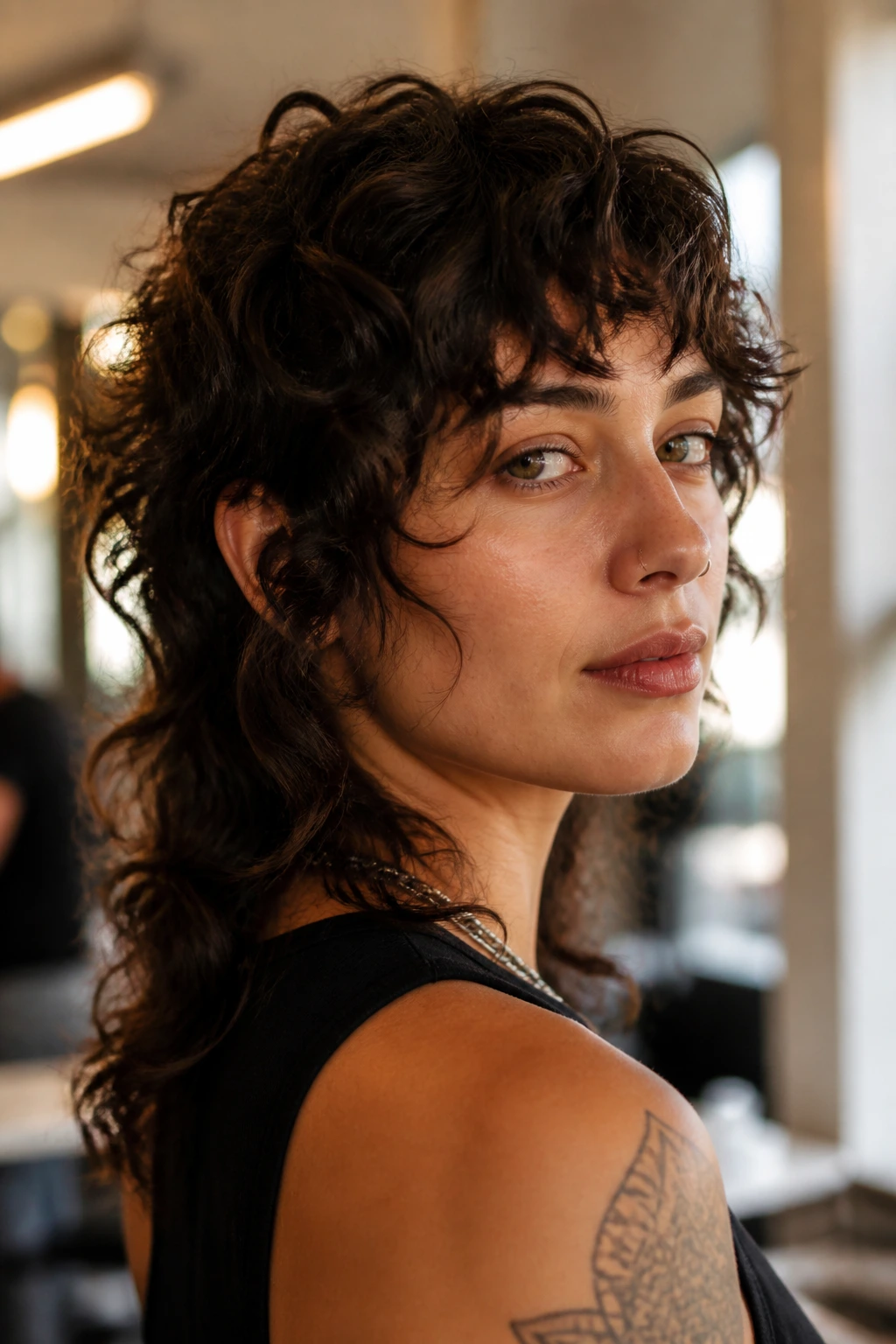
A scissor-soft mullet has more in common with a shag than with a punk haircut from a music video. The front and top stay layered, while the back drops a little longer and softer. On thick loose curls, that back length helps maintain movement without bulk.
It’s a strong choice if you like your hair to feel a little rebellious but still wearable in normal life. The edges should stay broken and touchable. If the back gets too piecey, it starts to look like a missed haircut instead of a style.
25. The Chin-Grazing Curly Crop
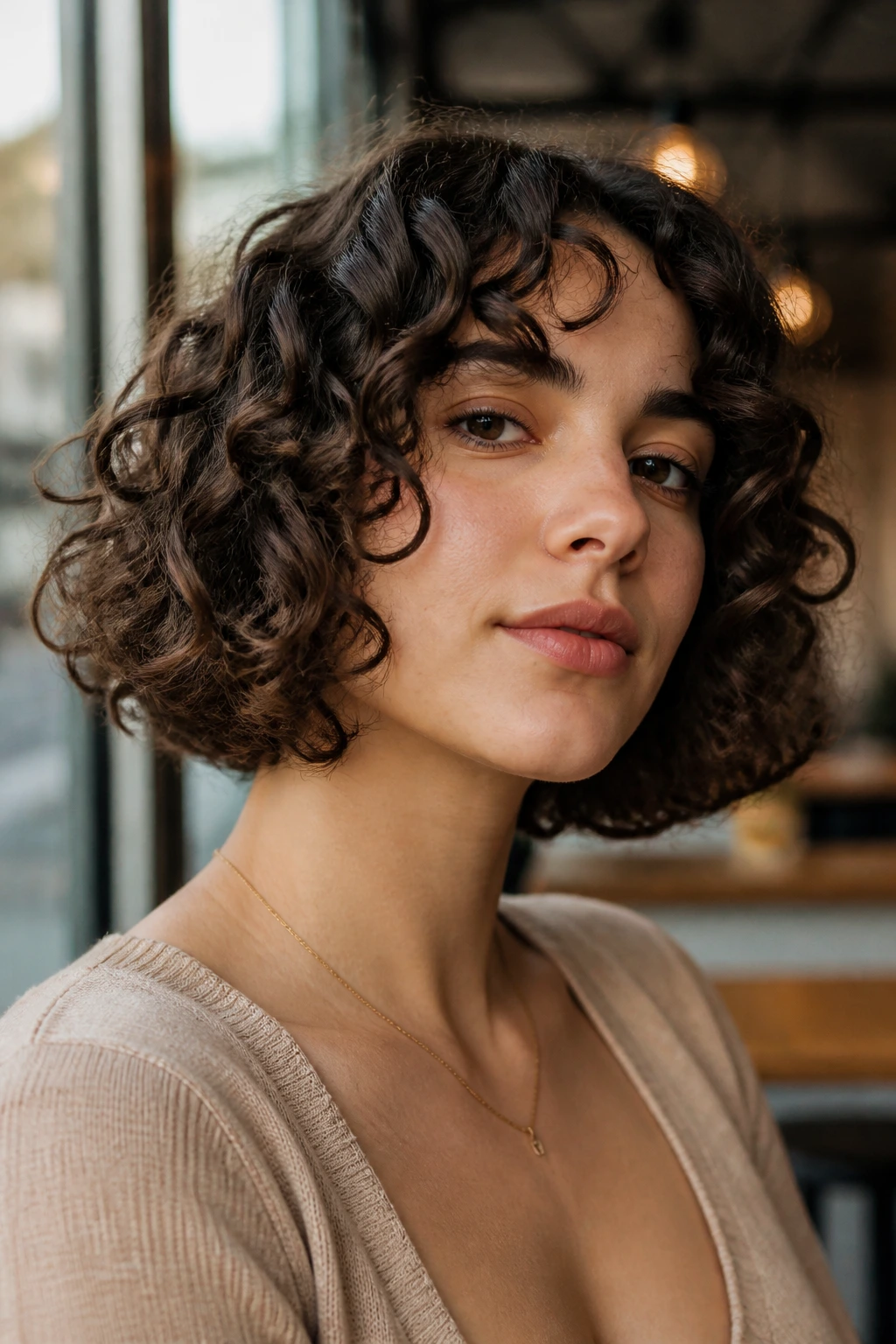
The chin-grazing crop is one of the easiest short shapes to live with because it gives thick loose curls just enough room to move. It sits between a bob and a crop, which means you get softness around the face and less bulk at the ends. That makes it a strong finishing note for the list.
If you’re unsure how short to go, start here. It’s flattering, grow-out friendly, and less fussy than the more sculpted cuts above. A good chin-grazing crop keeps the curl pattern visible without asking you to babysit it every morning.
What Makes a Short Messy Cut Work Instead of Puff Out
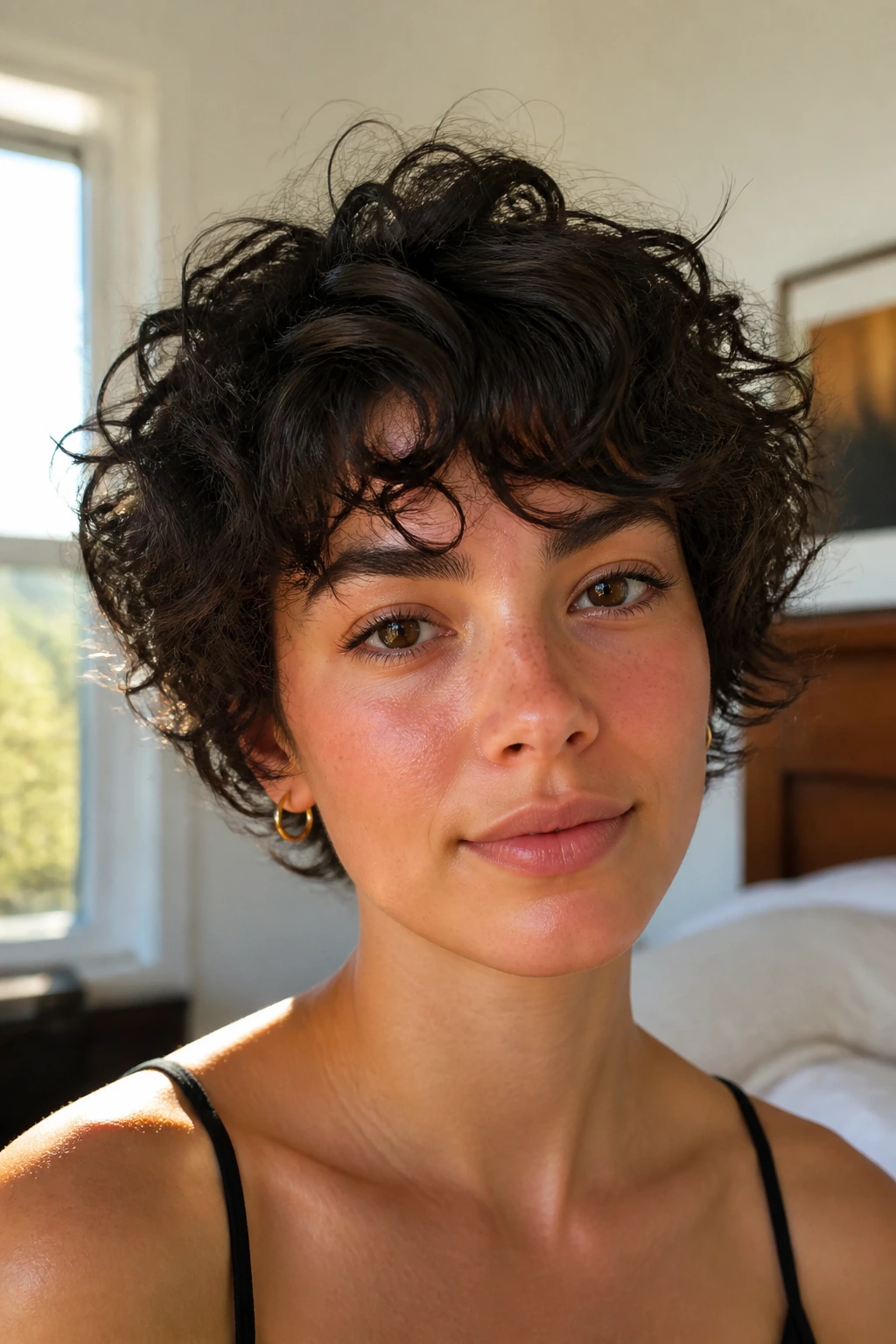
The difference between a short messy haircut and a short puffball is usually hidden in the interior, not the outline. Thick loose curls need weight removed from the middle so the ends don’t kick out and the sides don’t spread. A soft perimeter helps, but the real work happens inside the shape.
The Weight Line Matters
If the bulk sits too low, the haircut drags. If it’s removed too high, the top can go thin and fuzzy. The safest zone is usually around the nape, temple, and lower crown, where a little reduction changes the silhouette without wrecking the curl pattern.
Shrinkage Is Part of the Design
Loose curls can lose an inch or more when they dry, sometimes more near the front. That means the line you see when hair is wet is not the line you’ll live with. A smart cut always accounts for shrinkage, especially around bangs and cheek-length pieces.
One Solid Edge Is Often the Problem
A perfectly blunt outline looks clean on a salon chair and then too square at home. Point cutting, soft layering, and a broken finish keep the haircut from turning rigid. I’d rather see a little unevenness than a heavy shelf. Every time.
Essential Tools for Styling and Maintenance
-
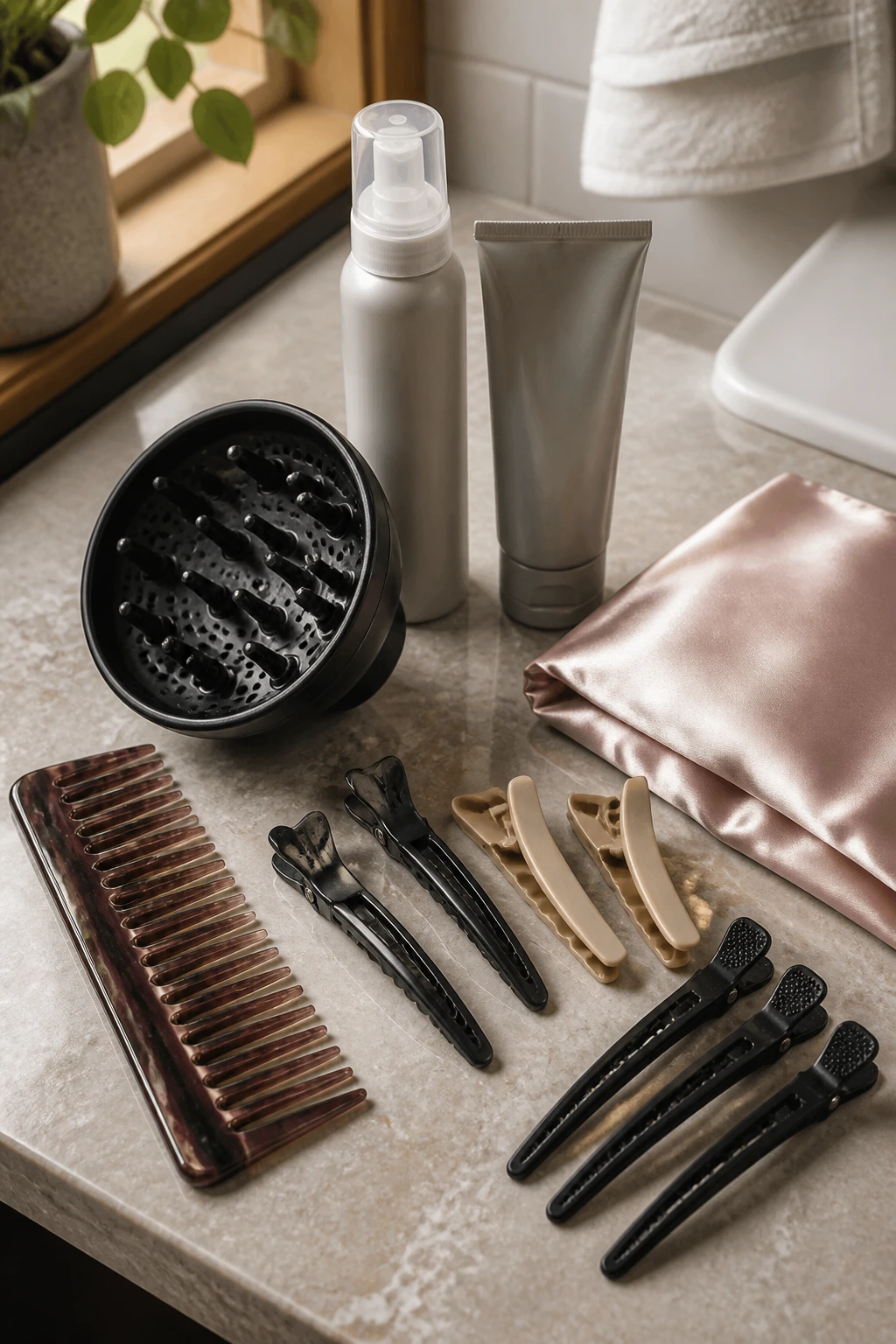
Wide-tooth comb: Good for detangling without stretching loose curls flat.
-
Microfiber towel or cotton T-shirt: Cuts down rough frizz while you blot out water.
-
Diffuser attachment: Helpful if you want lift at the root without blasting the curl pattern apart.
-
Duckbill clips: Useful for pinning fringe or setting a side part while the hair dries.
-
Sectioning clips: They make it easier to distribute product through thick hair evenly.
-
Light mousse or foam: Gives support without making the cut feel crunchy.
-
Flexible-hold gel: Best when you want the ends to stay piecey through humidity.
-
Hand mirror: A small one helps you check the nape and side taper at home.
-
Silk or satin pillowcase: Keeps the curls from getting flattened and ragged overnight.
What to Tell Your Stylist Before the First Snip
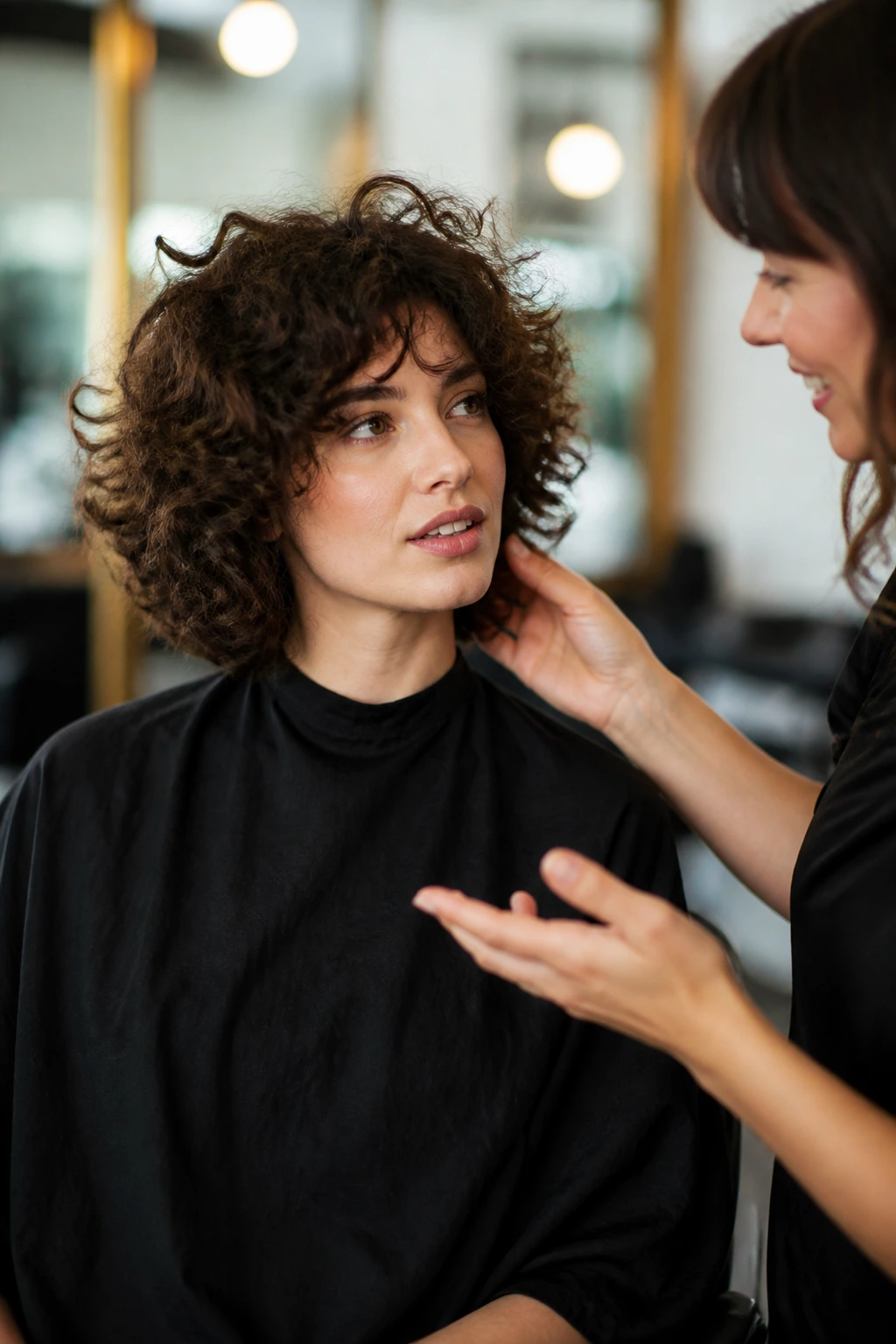
The quickest way to ruin a short curly cut is to talk about length without talking about shape. Bring photos, yes, but also describe what bothers you: bulk at the sides, a flat crown, a heavy nape, or curls that jump too short in the front. Those details matter more than saying you want it “messy.”
Ask whether the cut will be done dry or mostly dry. For loose curls, that conversation is worth having. Wet hair lies. Dry hair tells the truth about shrinkage, density, and where the weight really sits. I like a stylist who checks the curls in motion before taking off too much.
Be specific about the finish you want: piecey, soft, broken up, not wispy. That last one matters. Wispy ends on thick curls can look frayed fast, while piecey ends still hold their shape. If your stylist reaches for thinning shears, ask what part of the hair they plan to thin and why. Sometimes it helps. Sometimes it’s the wrong tool.
Products That Keep Loose Curls Piecey, Not Crispy
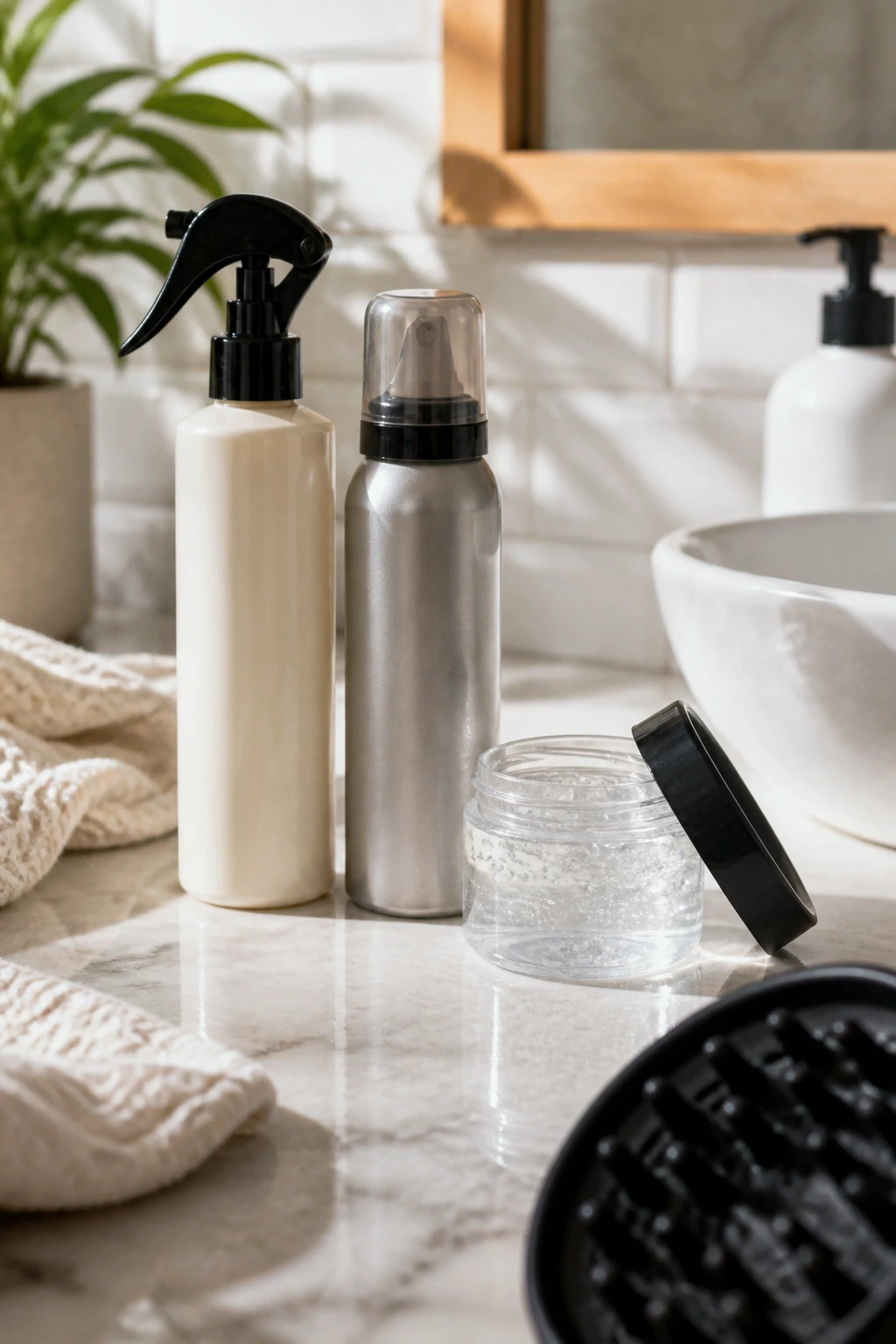
Thick loose curls usually like support without heaviness. A lightweight leave-in plus mousse is a strong starting point because the leave-in smooths the hair and the mousse gives the cut a little memory. If the hair is extra dense, a small amount of gel on the ends can help the shape last through the day.
What to Reach For
-
Foams and mousses: Best for lift and soft control at the roots.
-
Light creams: Good when your curls feel dry, but use a small amount or the cut can collapse.
-
Flexible gels: Better than sticky, heavy ones if you want movement.
-
Root clips: Not a product, but useful if the crown goes flat after drying.
What to Skip
Heavy butters and rich masks on the top layers can flatten a short cut fast. Save those for the mids and ends if your hair needs them. The top should feel supported, not coated.
How to Style These Cuts on Busy Mornings
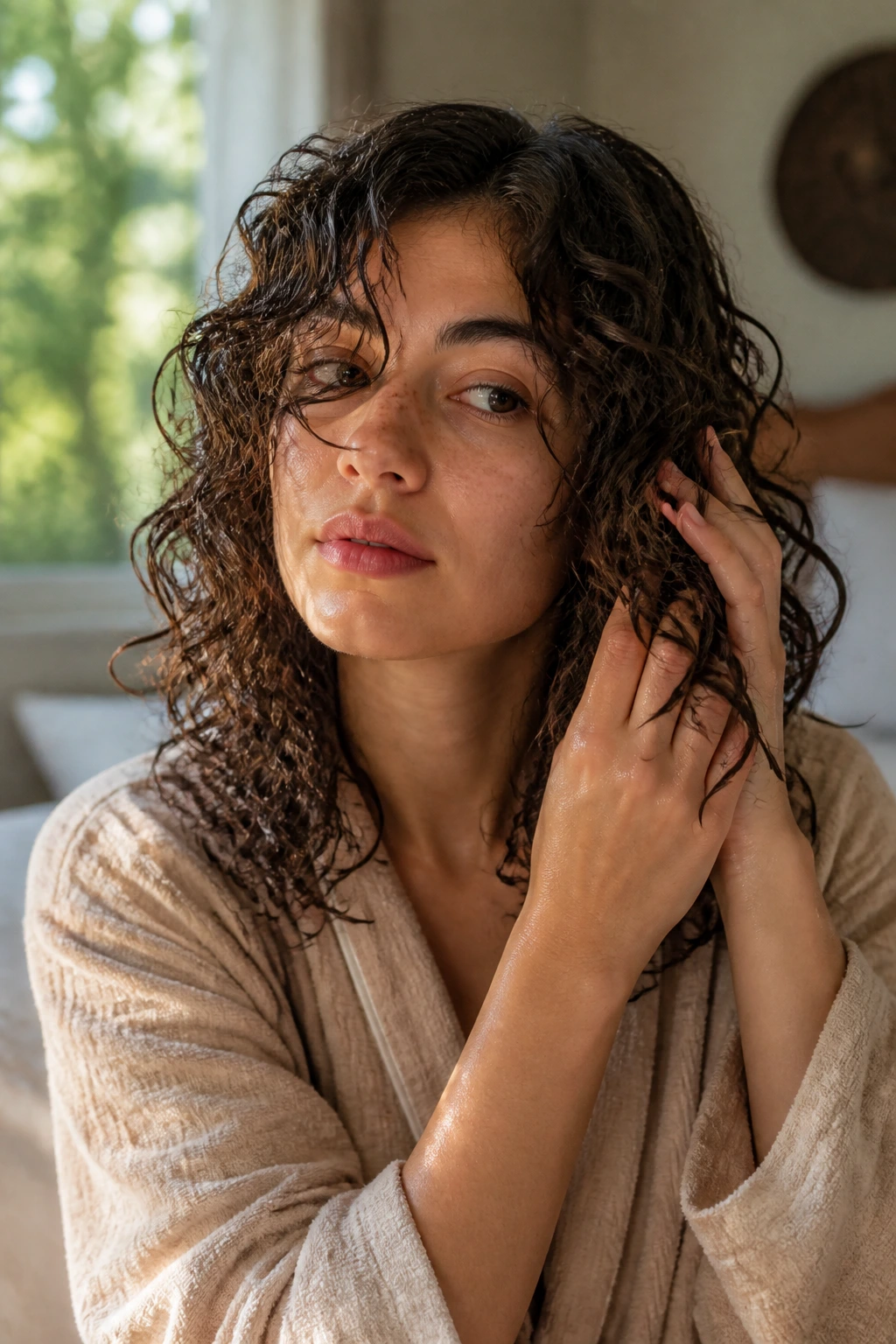
Air-Dry Route: Scrunch product into damp hair, then leave the curls alone until they’re 70 to 80 percent dry. Touching them too much while they’re wet tends to create frizz, especially around the nape and fringe.
Diffused Route: Flip the head, diffuse at low heat, and stop before every strand is dry. A little dampness left in the hair keeps the shape softer. Full dry can make thick loose curls swell.
Refresh Route: Mist the hair lightly, smooth a dime-sized amount of mousse between your palms, and scrunch the pieces that lost shape overnight. Focus on the front and crown. The nape usually needs less help than people think.
Humidity Route: Use a bit more gel than usual and avoid over-separating the curls. The goal is to keep clumps intact. Once the hair is finger-combed too much, it frizzes faster in warm air.
Additional Tips and Shape Boosters
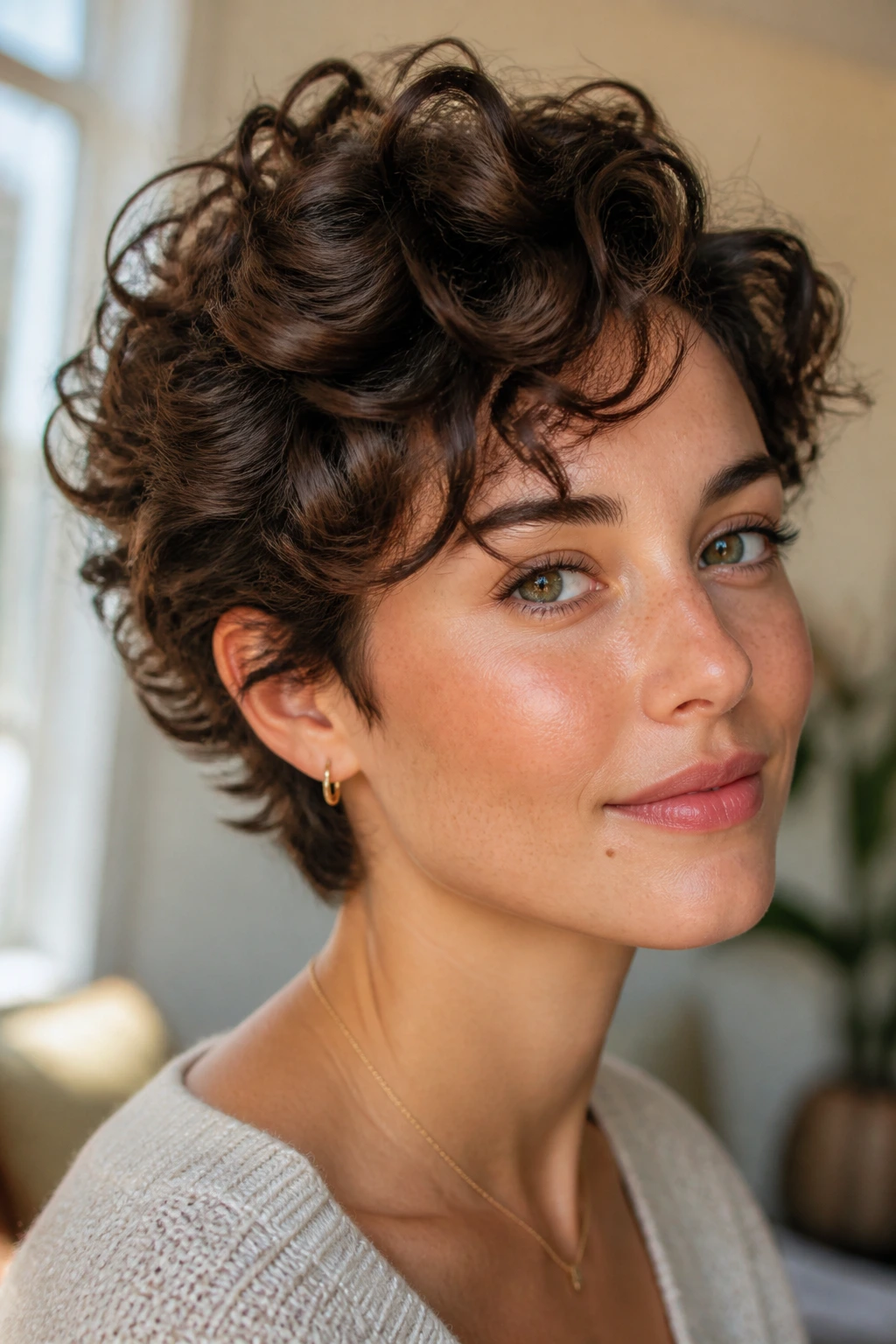
Shape Boost: If the haircut feels too wide, ask for a tiny bit more removal at the temples and under the crown. One half-inch can change the silhouette more than a whole bottle of styling product.
Curl Definition: Twist just the front two or three sections while the hair is damp. That frames the face without making the entire cut look over-styled. It’s a small move, but it changes the read of the whole shape.
Frizz Control: Dry with a T-shirt, not a rough towel, and stop squeezing once the water is out. Overhandling thick loose curls during drying is usually the moment the frizz starts.
Make-It-Yours: If you like a softer look, keep the fringe longer and side-swept. If you want more edge, shorten the nape or add a deeper side part. The same cut can feel quiet or bold with one small adjustment.
Common Mistakes That Throw the Shape Off
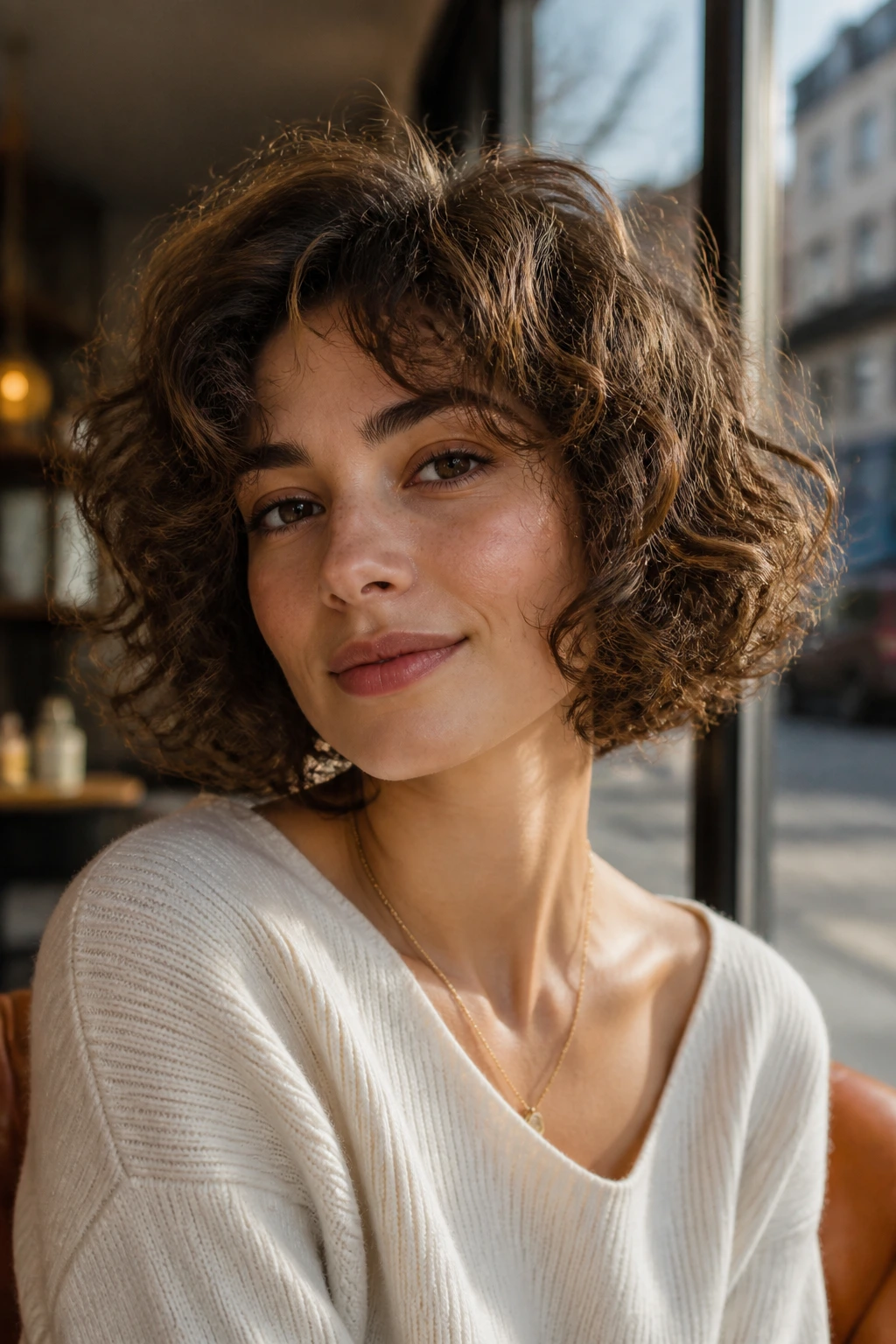
The first mistake is leaving too much bulk at the bottom. Thick loose curls then fan out like they’re trying to make room for themselves, and the haircut loses its short shape. The fix is obvious but not always easy: take weight out of the interior and nape, not only the ends.
The second is over-thinning with the wrong tool. Thinning shears can make the haircut feel lighter for a week, then the ends puff up and look ragged. Point cutting or carving small sections is usually kinder to loose curls.
Another one is cutting fringe too short because the hair looked longer when wet. Loose curls spring up. A bang that lands at the brows wet can jump to the forehead or higher when dry. Leave extra length, then trim again if needed.
Finally, don’t style every curl into perfect uniformity. These cuts depend on a little broken texture. If every piece is forced the same way, the haircut starts looking stiff instead of messy on purpose.
Variations and Alternatives to Try
The Polished Office Version: Keep the same short shape but soften the fringe and clean up the nape a bit more. It still has movement, just less edge around the ears and neck.
The Big-Texture Version: Ask for a little more interior layering and wear it with mousse and diffuser drying. This gives the hair a fuller, more lifted finish that leans into the curl pattern.
The Low-Maintenance Version: Choose the chin-grazing crop or the cropped lob with broken ends. They grow out more gracefully and can be tied back in a pinch.
The Edgier Version: Go for the soft mohawk crop, pixie mullet, or curly undercut pixie. These cuts narrow the sides and put the drama where the curls can handle it.
The Softer Version: Pick the French bob, rounded jawline bob, or curtain-bang crop. These hold the messy feel without looking too sharp.
Keeping the Shape Between Trims
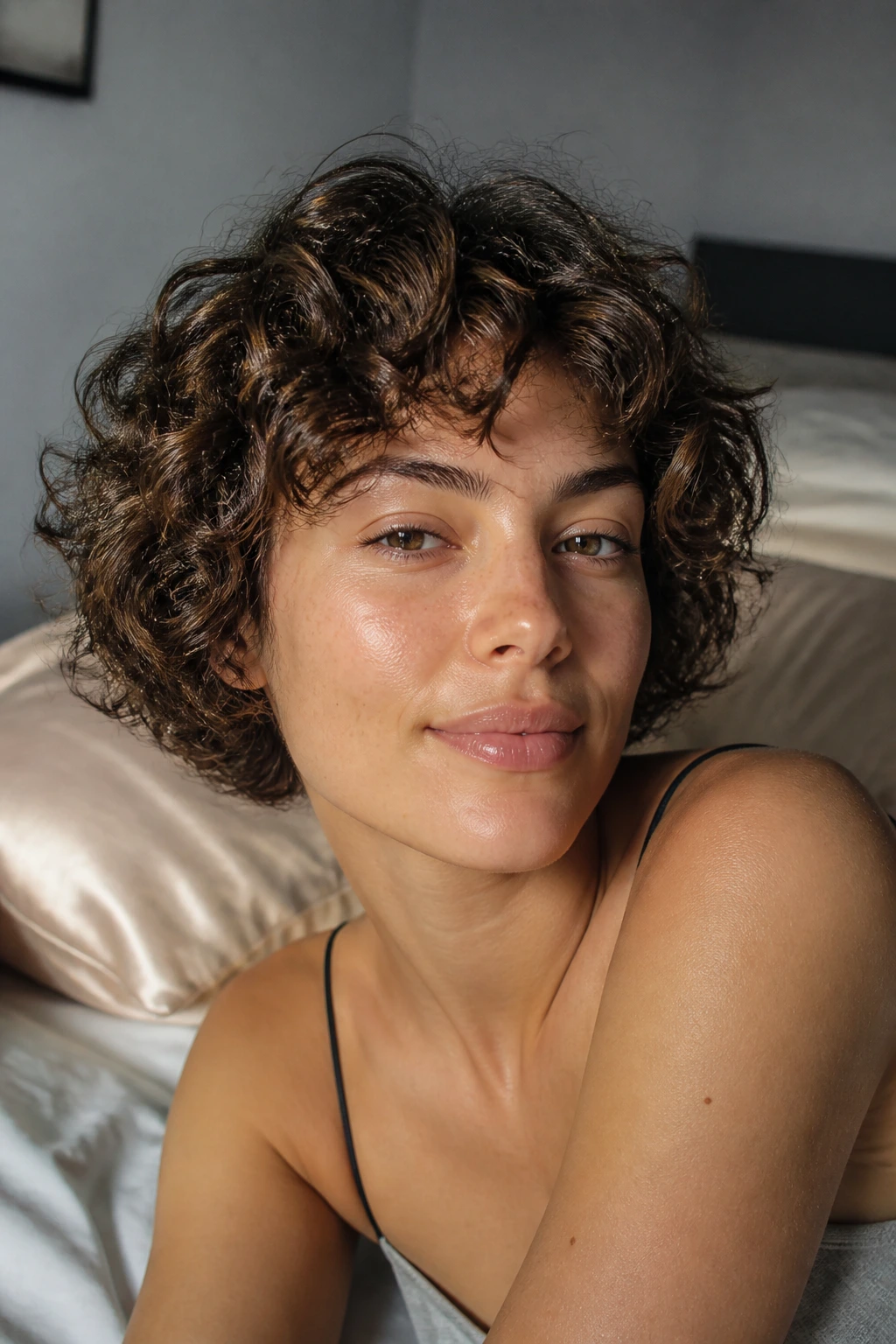
Short curly cuts do not need constant salon visits, but they do need a rhythm. Most thick loose curls hold their best shape with trims every 6 to 10 weeks, depending on how fast your hair grows and how much the silhouette depends on the nape and fringe. If the back starts puffing into the collar or the front pieces keep landing in your eyes, it’s time.
Night care matters more than people think. A satin pillowcase or bonnet helps the curls keep their clump, especially around the crown and temples where short layers can flatten fast. If the cut is very short, a loose pineapple can still work, but don’t tie it so tight that it leaves a crease.
On wash day, stay gentle around the perimeter. Thick curls can trap product near the roots, and that buildup changes how the cut sits. A light shampoo at the scalp and a clean rinse usually do more for shape than another heavy cream ever will.
Frequently Asked Questions
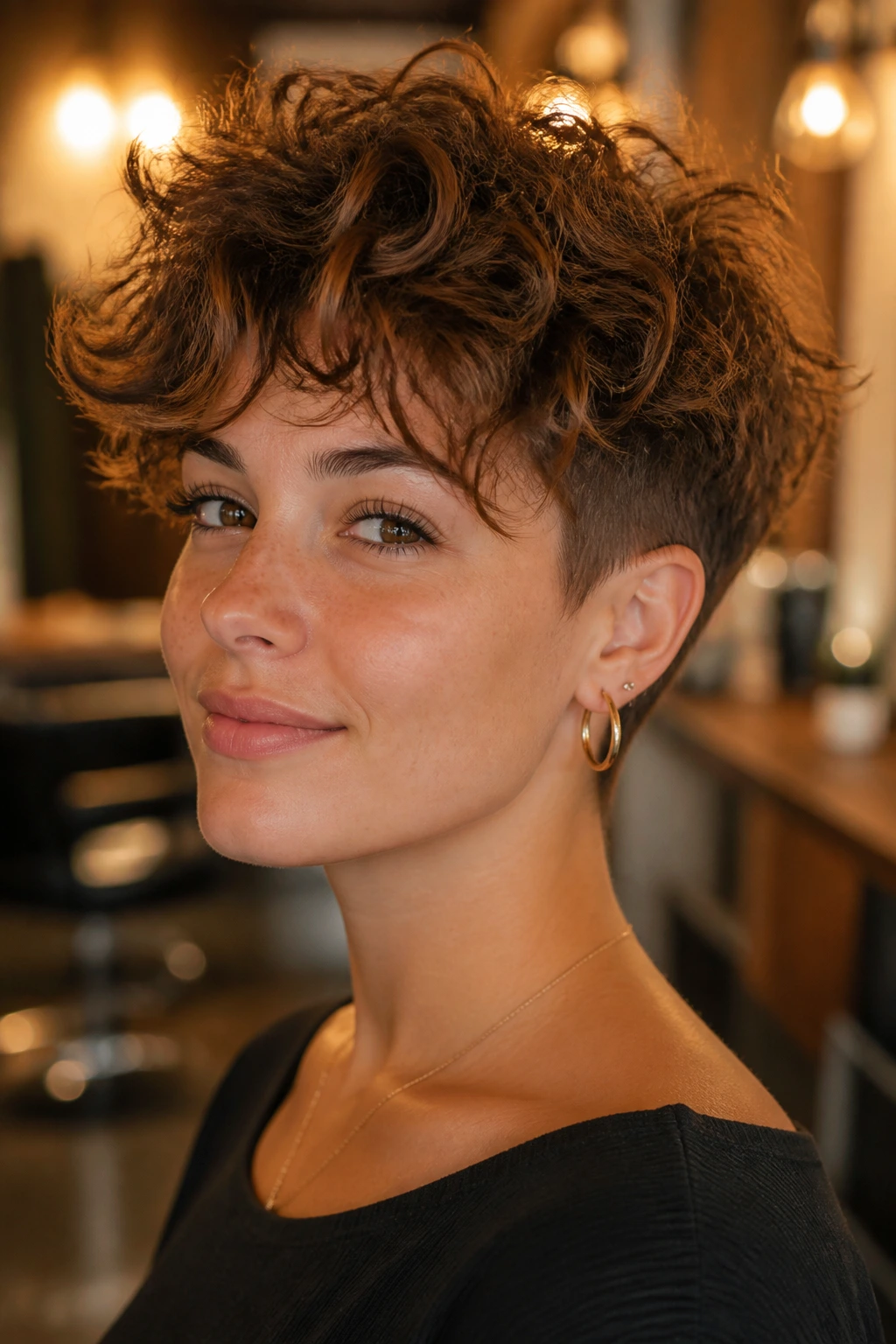
Will a short cut make my thick loose curls look wider?
It can, if the weight isn’t removed in the right places. The cure is a tapered nape, some interior layering, and a perimeter that’s soft rather than blunt. That combination keeps the silhouette from ballooning out.
Should I ask for layers or one length?
For this hair type, some layers usually help more than a strict one-length cut. The trick is keeping the layers controlled so the top doesn’t go thin and the ends don’t look shredded. You want shape, not chaos.
Is a dry cut better for loose curls?
Often, yes. Dry or mostly dry cutting shows where the curls actually land and how much they shrink. A wet cut can still work if the stylist understands curl behavior, but dry cutting makes the result easier to predict.
Can I wear bangs with thick loose curls?
Absolutely, but keep them a little longer than you think. Curtain bangs, side-swept fringe, and soft brow-length pieces tend to behave better than a dense blunt fringe. Loose curls jump, and bangs are where that shows fastest.
What if my curl pattern is uneven on each side?
That’s normal. A deep side part or an asymmetric crop can make the difference feel intentional instead of frustrating. Some stylists will also leave one front section longer to balance the curl behavior.
How do I keep the cut from looking puffy on day two?
Use a small amount of water or curl refresher, scrunch in a bit of mousse, and avoid overcombing. The point is to wake the curls back up, not to reset the whole head. A diffuser on low heat helps if the roots have gone limp.
What’s the easiest short style to grow out?
The chin-grazing crop and the cropped lob with broken ends are usually the simplest. They hold shape while the hair gets longer, and they don’t get awkward as fast as a very short pixie or undercut. That matters if you like to change your mind halfway through.
The Cut That Lets Curls Breathe
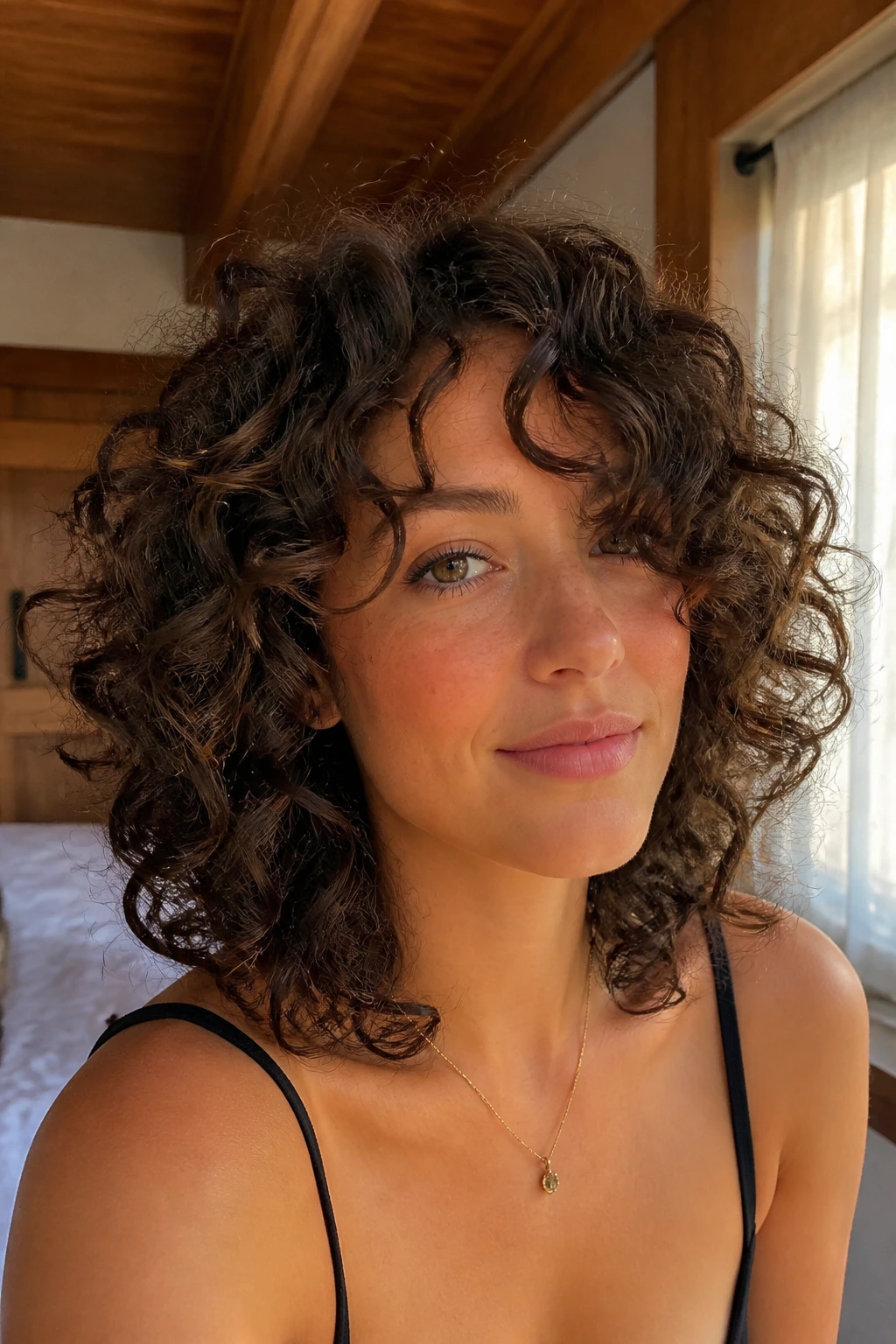
Short messy cuts work on thick loose curls when they stop fighting the hair’s natural volume and start directing it. A good cut narrows the heavy places, leaves enough length for the curl to show, and keeps the outline soft enough to move. That’s the whole game.
If you choose one of these shapes, ask for a finish that matches your real life, not the salon mirror. Some cuts want a diffuser. Some want air-drying and a little hand-shaping. The right one is the one that still looks good when you’re late, the weather is odd, and your hair has decided to do its own thing.