



Your curls can look polished at 7:12 and stubborn by 7:18. That’s not a mood problem. It’s what happens when texture, humidity, a rough pillowcase, and a clock that never shows mercy all hit at once.
The trick is not to fight the curl pattern you already have. The best classy hairstyles for busy mornings with curly hair use the bend, volume, and shape that are already there, then nudge them into something cleaner. A low twist, a tucked crown, a clipped side sweep — those styles work because they don’t demand perfect uniformity. They just need a good part, a few pins, and enough restraint to stop overhandling the curls.
The American Academy of Dermatology has long advised gentle handling for curls, especially when they’re wet, because rough brushing and tugging strip away the clump structure that keeps curls looking defined. That’s the whole game here. Keep the curl family together, move it where you want it, and leave a little softness around the face so the style still feels like hair, not armor.
Why These Styles Earn Their Keep
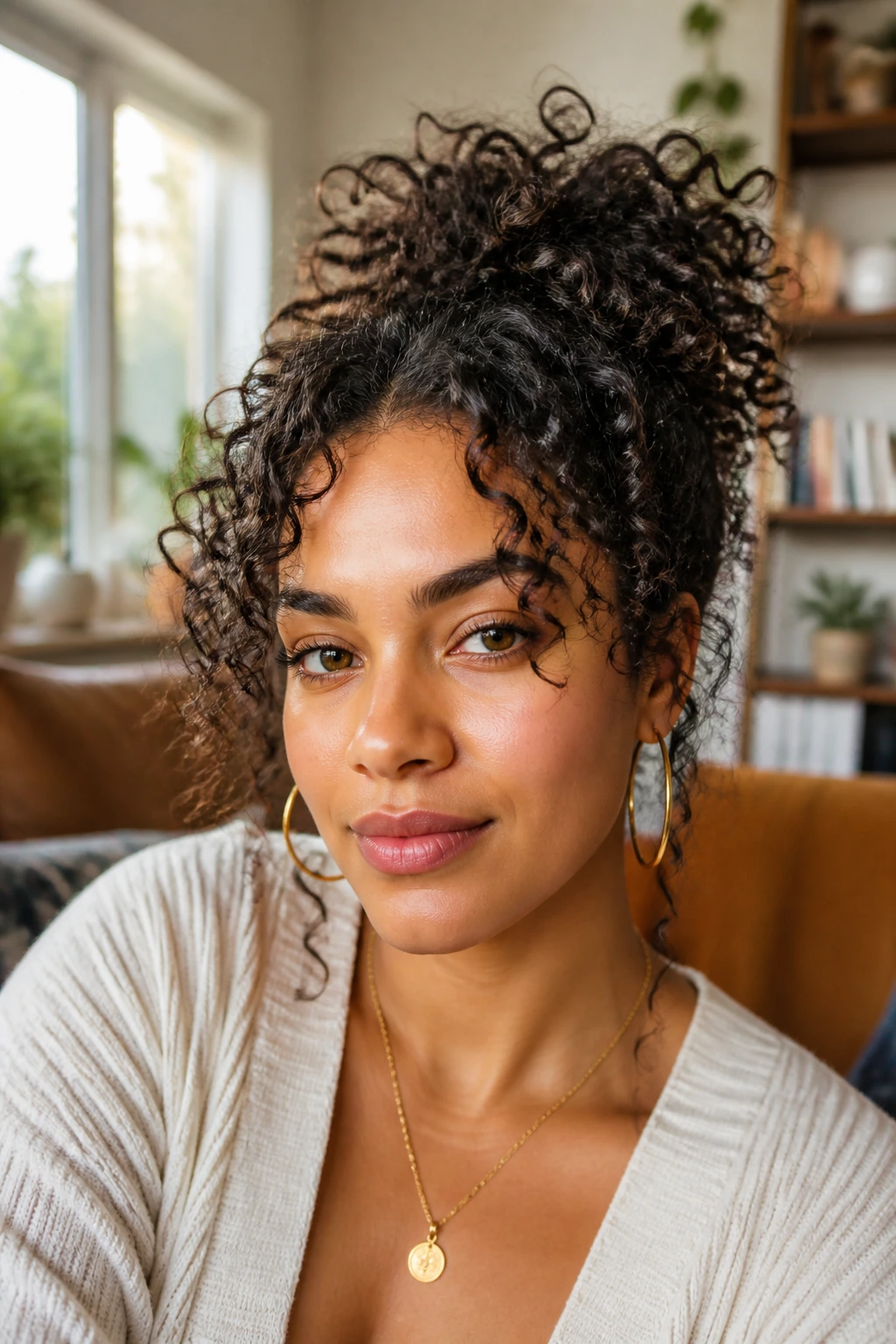
-
They respect curl pattern instead of flattening it: Each style works with bend, shrinkage, and volume, so you’re not spending ten minutes trying to make curly hair behave like straight hair.
-
They hide the rough spots fast: A side part, a twist, or a low tuck can cover frizz at the crown and the “slept-on-it” section near the temples without a full restyle.
-
They do not need a full tool drawer: Most of these looks need one claw clip, a few bobby pins, a satin scrunchie, or a small brush. That’s it.
-
They hold up better on day-two curls: Slightly lived-in curls give pins something to grip, which is part of why these styles often look better the second day than the first.
-
They read polished without looking stiff: The shape is clean, but the texture still shows. That’s the sweet spot for curly hair.
-
They scale up or down easily: Tight coils, loose spirals, shoulder-length cuts, and long layers all have a version here. You only change the placement and how much hair you leave out.
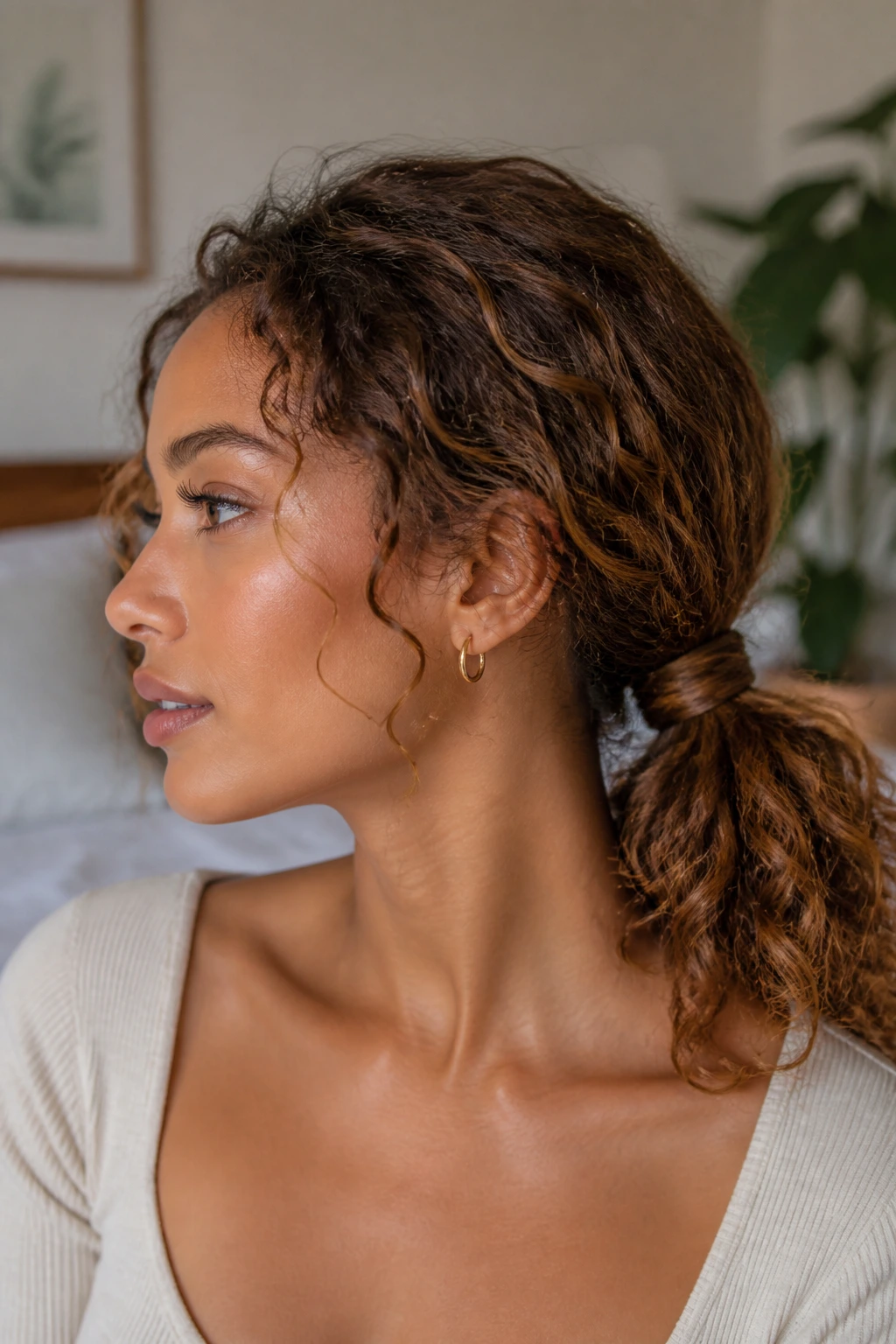
1. The Low Curly Ponytail with a Wrapped Coil
A low ponytail is the kind of style that gets underestimated. On curly hair, it can look sleek at the nape, soft at the crown, and finished in a way that feels deliberate instead of rushed. The wrapped coil around the elastic is the detail that makes it look like a choice.
Why It Works
The low placement keeps weight off the crown, which helps if your curls puff at the roots the second you touch them. It also gives the ends room to keep their shape, and that matters more than people think. Curly ponytails fall flat when the elastic sits too high and drags the whole pattern backward.
Fast Styling Notes
- Use a 3 to 4-inch satin scrunchie or a snag-free elastic.
- Smooth the top with a dime-size dab of gel or cream on damp palms.
- Leave out a 1-inch curl section from underneath, wrap it around the elastic, and pin the end under the pony.
- If the crown is fuzzy, mist it once with water before you smooth it.
Best for: shoulder-length to long curls that need a clean shape in under five minutes.
Watch for: pulling too hard at the sides. That’s how you get the “headache ponytail” and a flat crown. Keep the grip loose enough that the curls still spring.
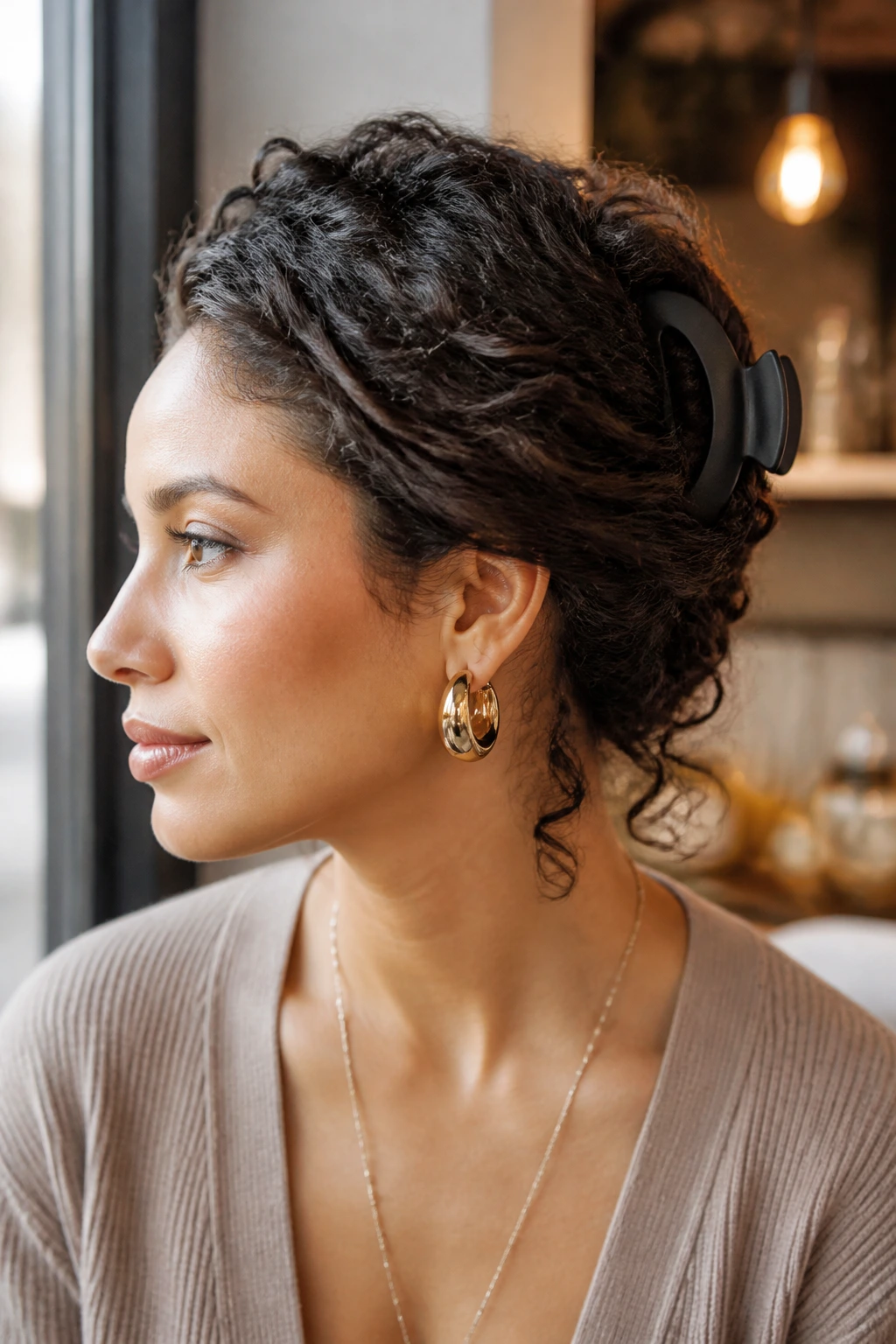
2. Side-Parted Claw Clip Twist
This one is pure breakfast-table elegance. The side part gives the front a little drama, while the claw clip holds the length up without crushing the curl pattern. If your hair is thick, this is a lifesaver; if it’s finer, it gives you lift without having to tease anything.
The best version leaves a few curls loose at the nape and near the ears. That softness keeps the clip from looking severe. A matte clip looks better than a shiny one here. It blends into the texture instead of sitting on top of it like plastic decor.
A good twist takes less than two minutes once your hands know the motion. Gather hair as if you’re making a low pony, twist upward once, fold the length in, and clip across the center. Done properly, the twist feels secure but not tight.
3. Soft Half-Up Crown Twist
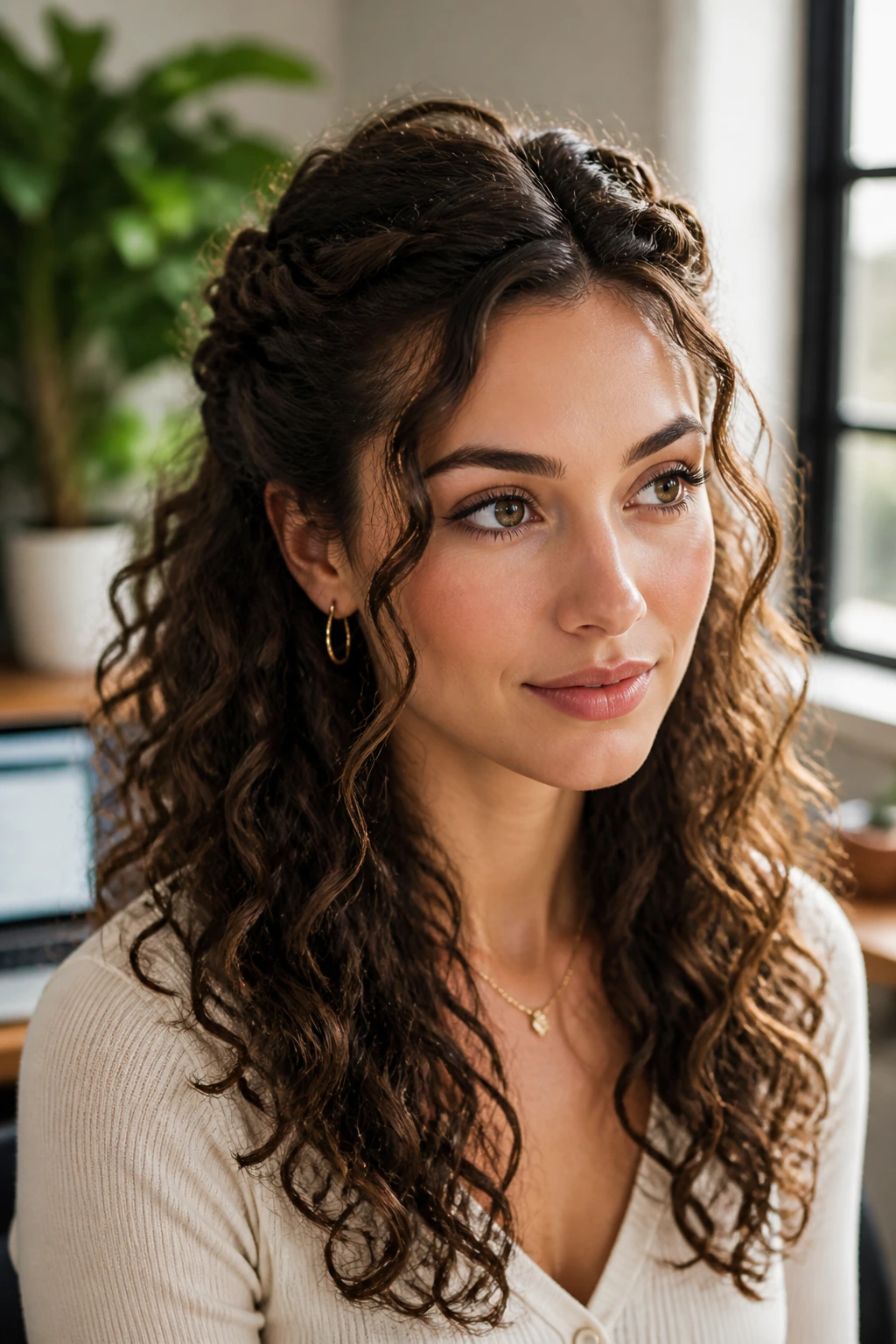
Why does this one look so put-together so fast? Because it lifts the front without touching the whole head. You get a cleaner face frame, a little height at the crown, and the bottom curls stay free, which keeps the style from looking heavy.
How to Make It Fast
- Take two sections from each temple, about 2 inches wide.
- Twist them back loosely, not rope-tight.
- Meet them at the crown and pin with two crossed bobby pins.
- Let the rest of the curls fall naturally, then pinch out one or two face-framing spirals.
This works especially well when the top layer is a little flattened from sleep. The twist hides that, and the loose lower half still gives you all the curl movement you want. If you like a softer office look, this is one of the easiest places to start.
4. Polished High Puff Ponytail
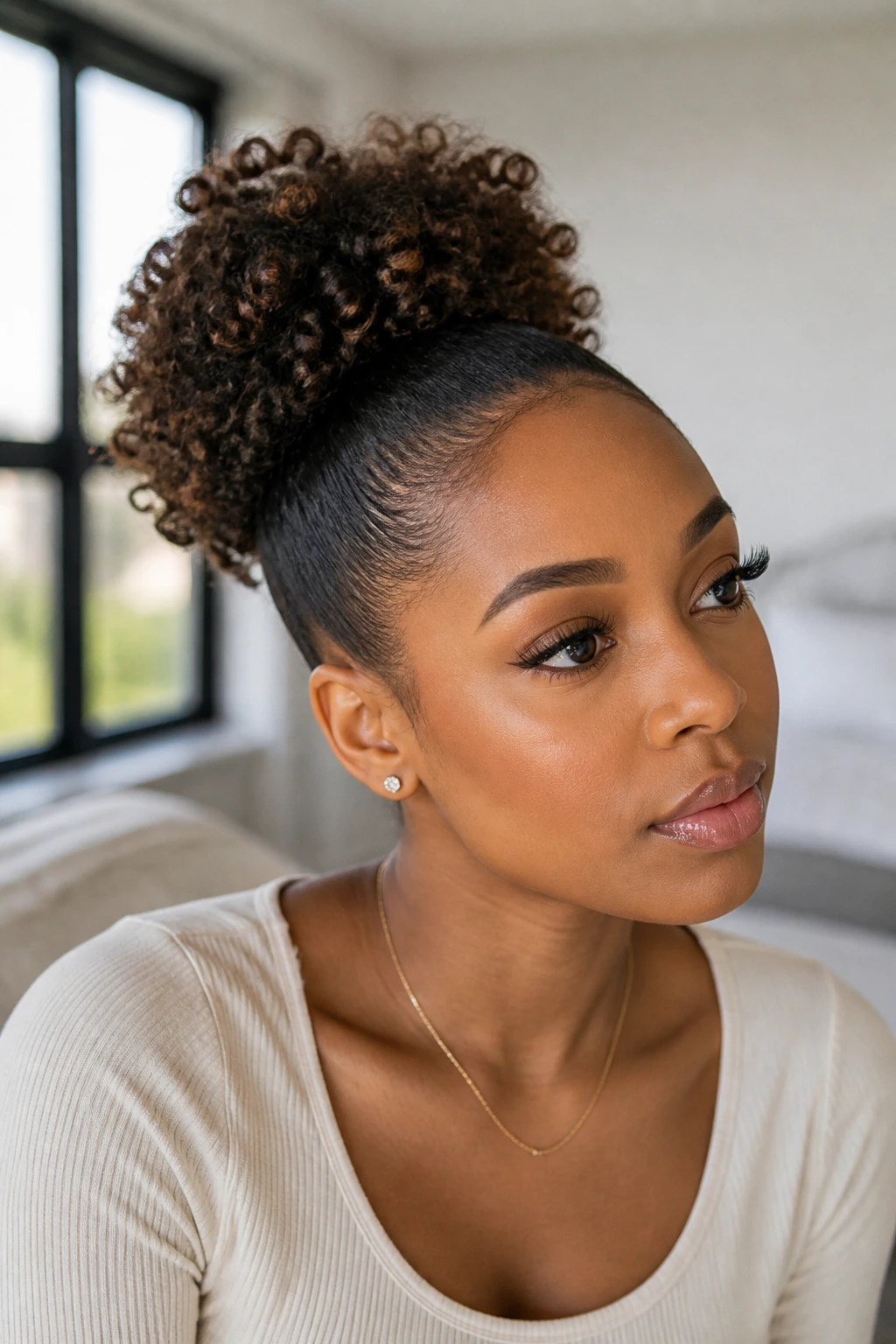
A high puff ponytail on curly hair can look sharp, clean, and a little bit bold in the best way. The key is tension. Too much and it turns into a tight tug at the hairline. Too little and it droops by lunch.
Think of this as a controlled lift. Brush or smooth the crown upward with damp hands, gather the curls high enough to show the neck line, and stop before the roots start protesting. The puff should sit like a cloud, not a helmet.
- Best when your curls are dense, coily, or medium-length.
- Use a wide, no-slip elastic if your hair is heavy.
- Finish with a small amount of edge control only at the perimeter, not through the whole puff.
One extra thing: leave the pony a little fuller than you think you should. Curly hair shrinks, and a puff that looks huge in the mirror often settles into the right shape after five minutes.
5. Loose Curly French Twist
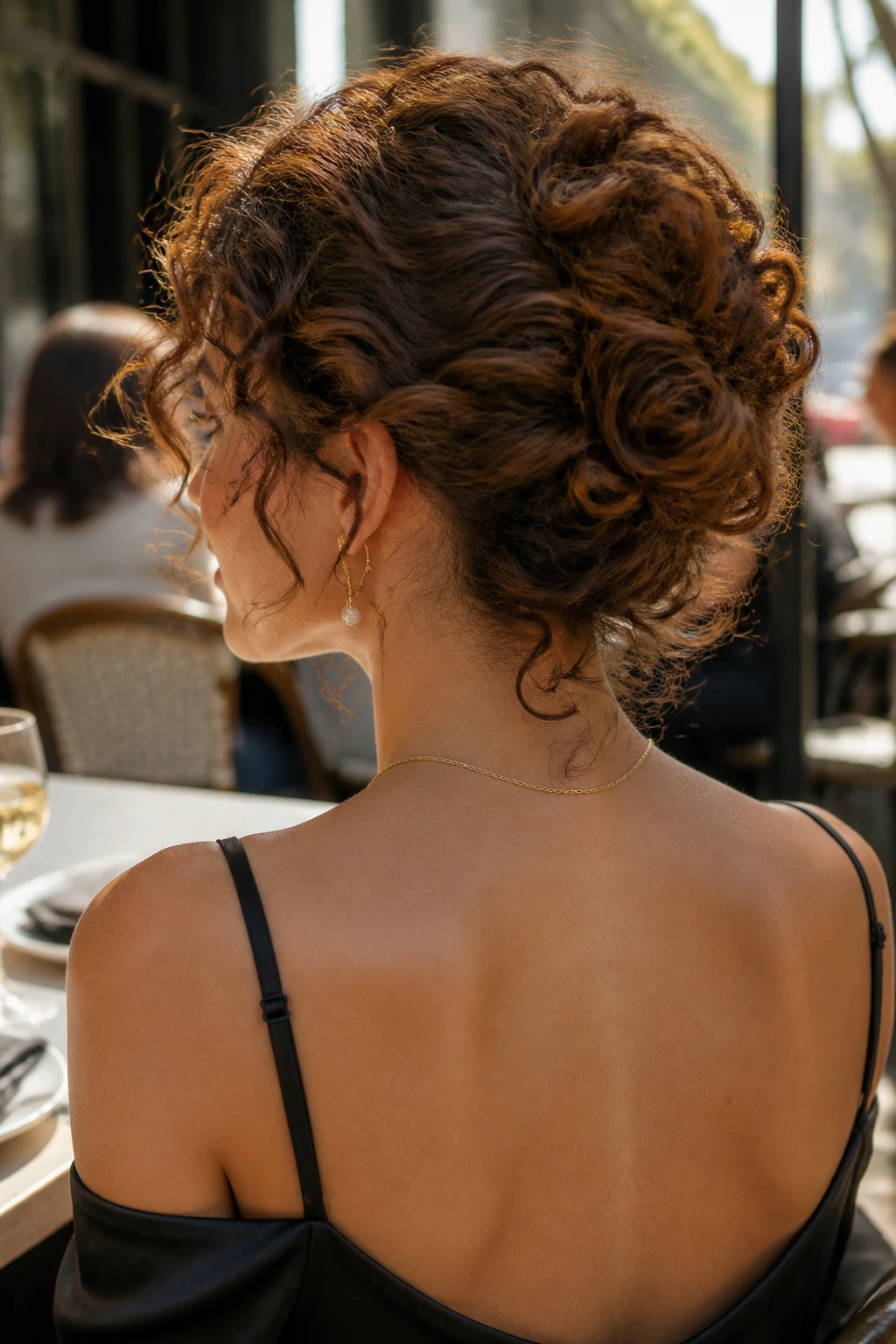
A French twist on curly hair sounds formal, but the curly version is softer and less severe than the straight-hair version people picture. It’s one of those styles that can move from a work shirt to a dinner dress without changing a thing.
The trick is not to make it glassy. Curly hair has too much character for that, and trying to iron it flat with product usually makes the twist look stiff. Instead, gather the length toward the center back, fold it upward, and pin the roll so a few curls spill at the top edge. That little bit of escape keeps it human.
This is one of the best options for thick hair that needs to be controlled quickly. It removes bulk from the shoulders, which is useful if the weather is humid or the day involves a jacket collar rubbing at the neck.
6. Braided Headband with Free Curls
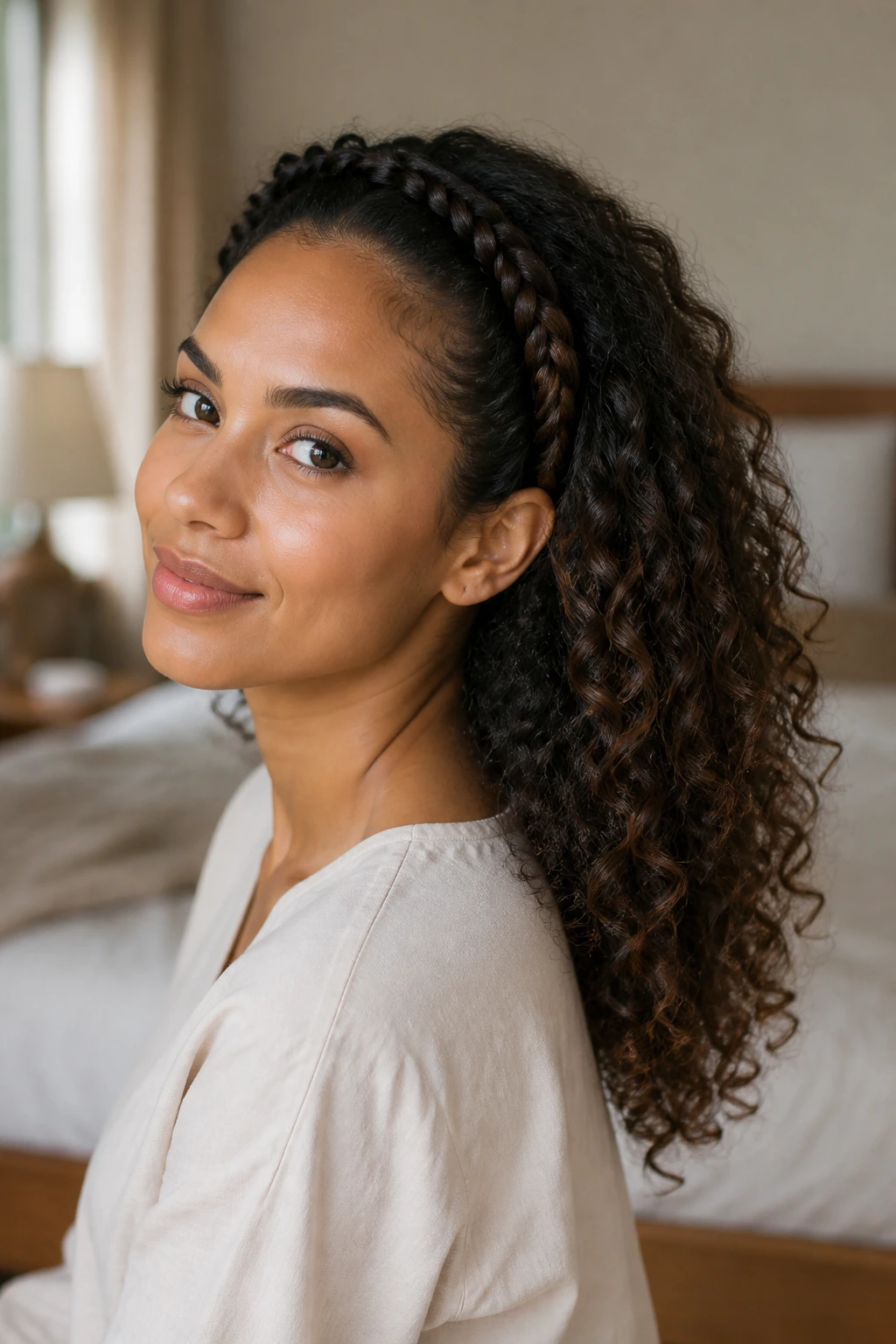
This style gives you structure at the front and freedom everywhere else. The braid acts like a built-in accessory, which is handy on mornings when you want the hair to look finished but not overworked. A thin braid along the hairline also helps tame the little fringe curls that often frizz first.
It’s cleaner than a standard headband because the braid is your own hair, not a separate object sliding around. If you have layers, just braid from the thicker side and pin behind the ear. The free curls behind it keep the whole thing from looking too precious.
Best used when:
- Your front curls are too short to gather into a pony.
- You want a style that works with a blouse, blazer, or earrings.
- You need something that survives a few hours of movement.
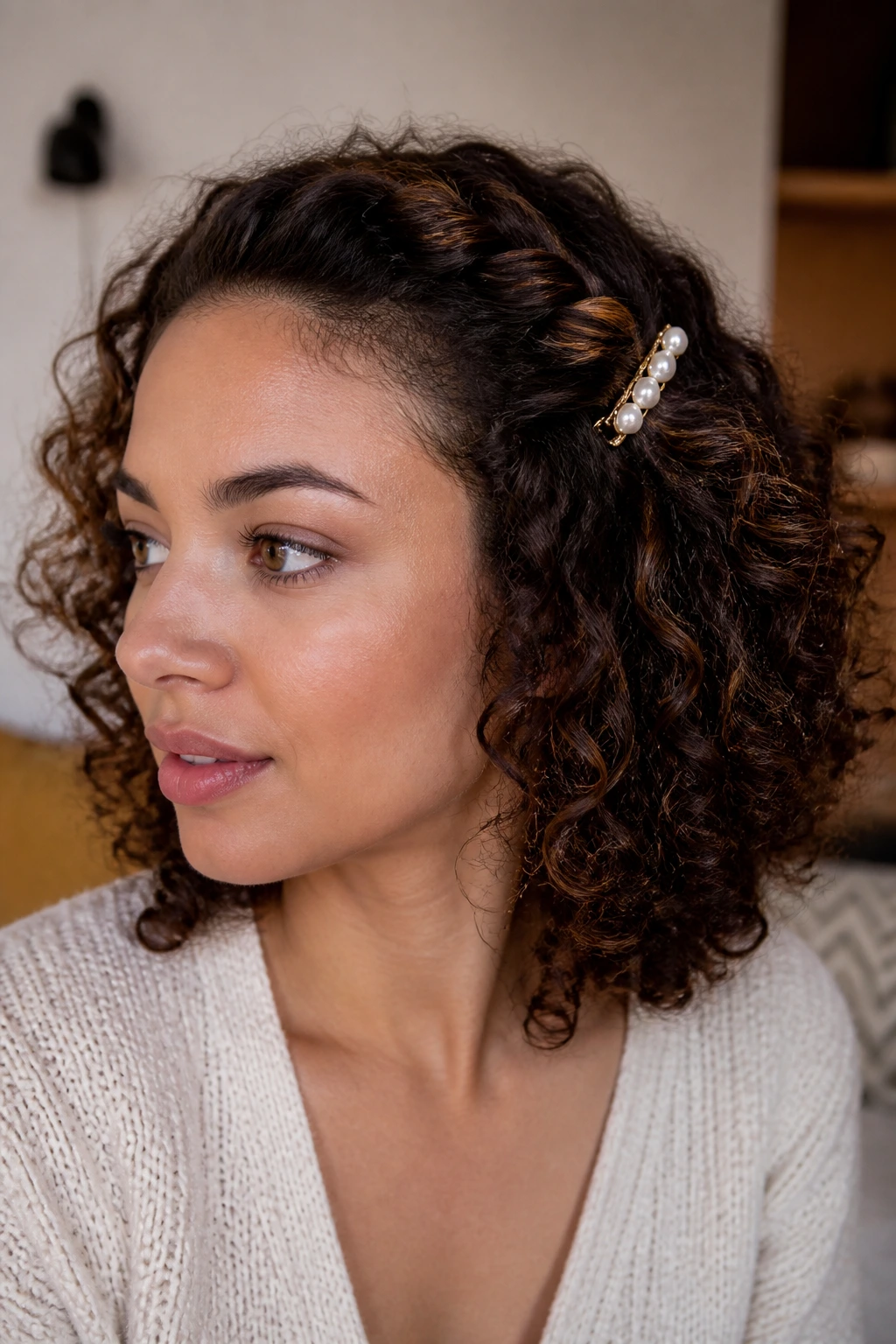
A small pearl pin at the temple makes this look feel dressed up without trying too hard.
7. The Soft Topknot with Face-Framing Tendrils
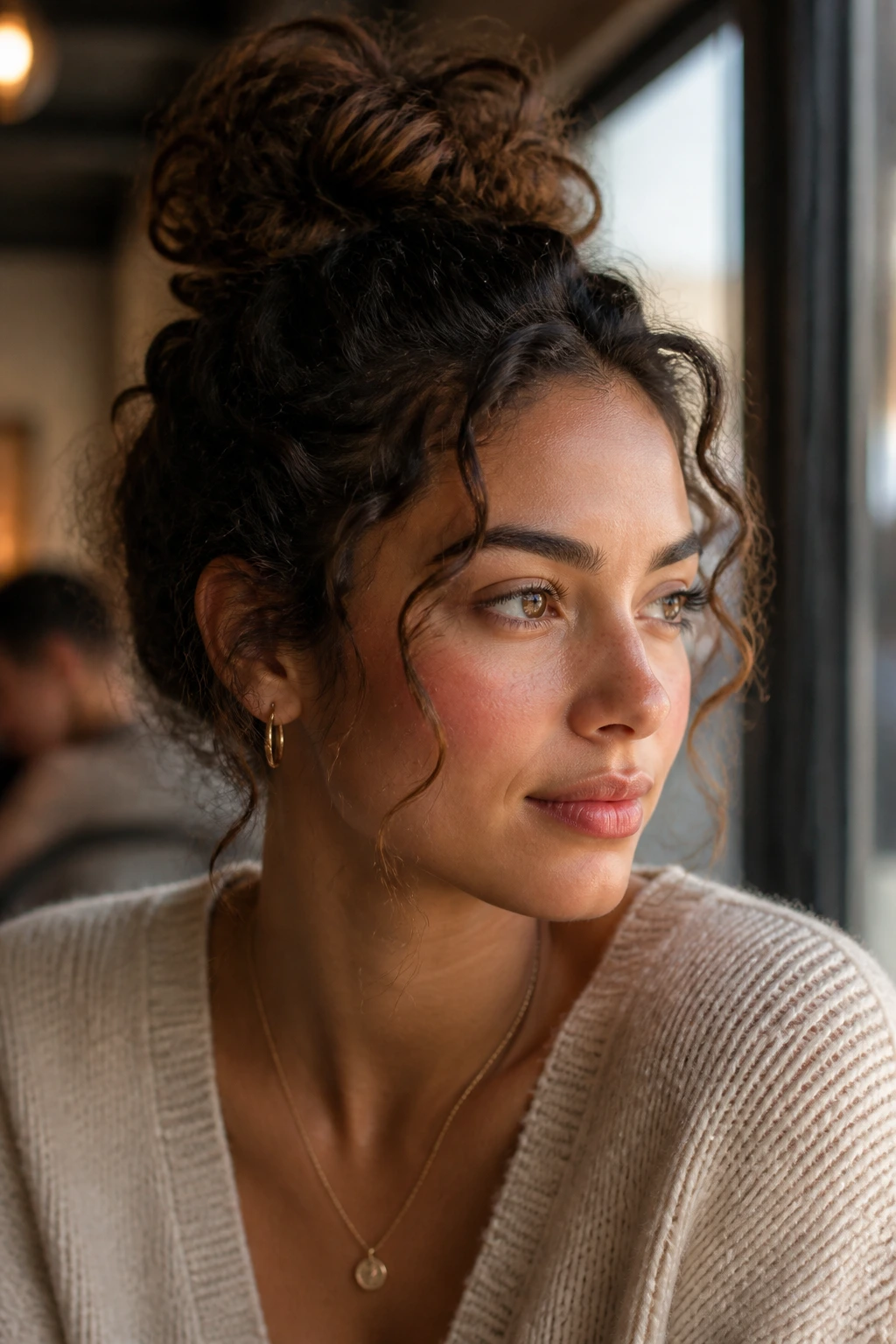
A topknot can go bad fast on curly hair if you pull it too tight and leave no texture behind. The softer version is better. Keep the knot loose, let the curl pattern show through, and pull out two tendrils at the front so the face still has movement.
This is the style I’d reach for when the roots are a little oily but the ends still look good. Gather the hair high, twist once, wrap it around itself, and pin rather than cinch it hard with a single elastic. Pins spread the tension out. A hair tie can pinch the whole thing in one ugly line.
The tendrils matter. They stop the style from reading as “quick fix” and make it look like you meant to leave softness there.
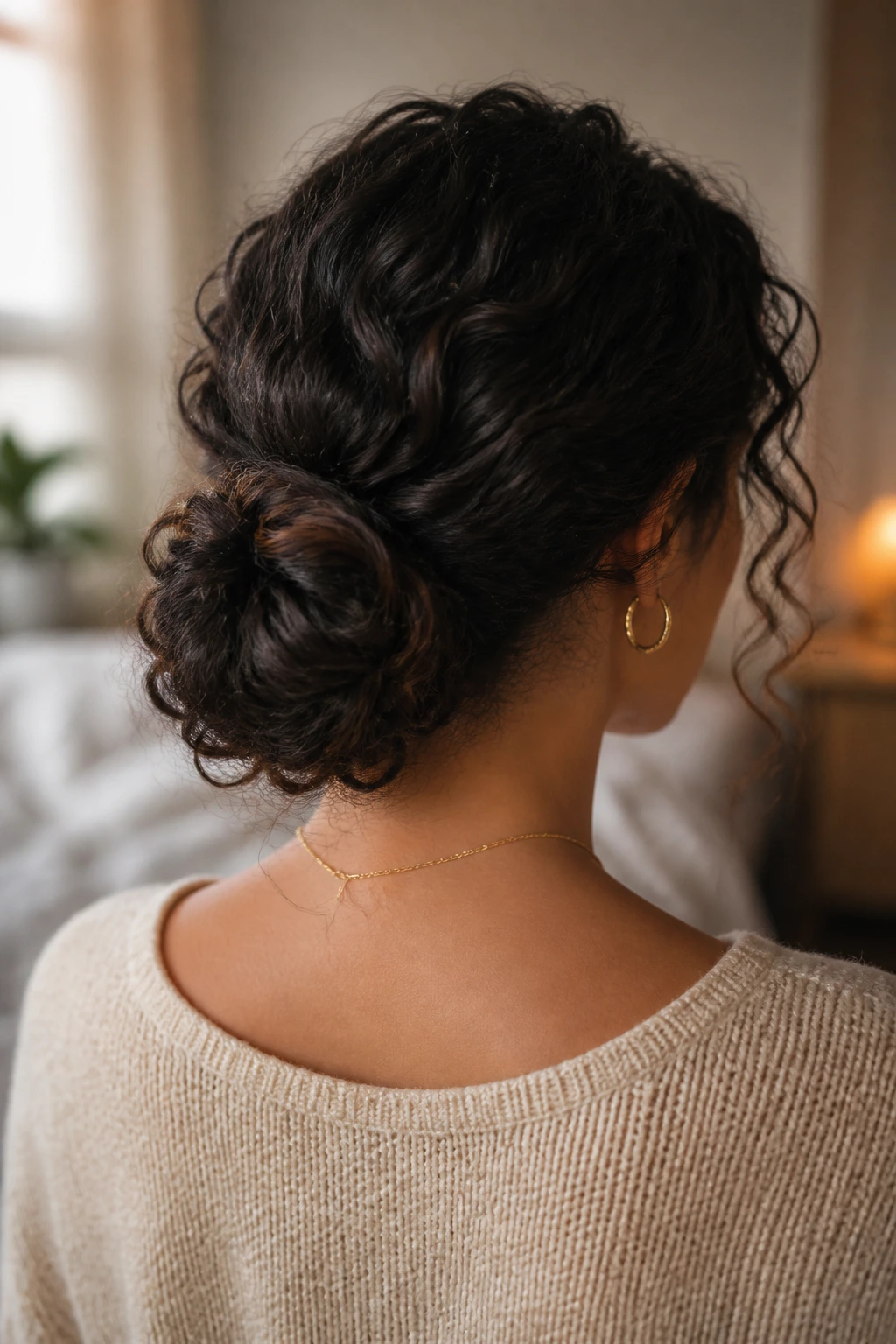
8. Low Chignon with Hidden Pins
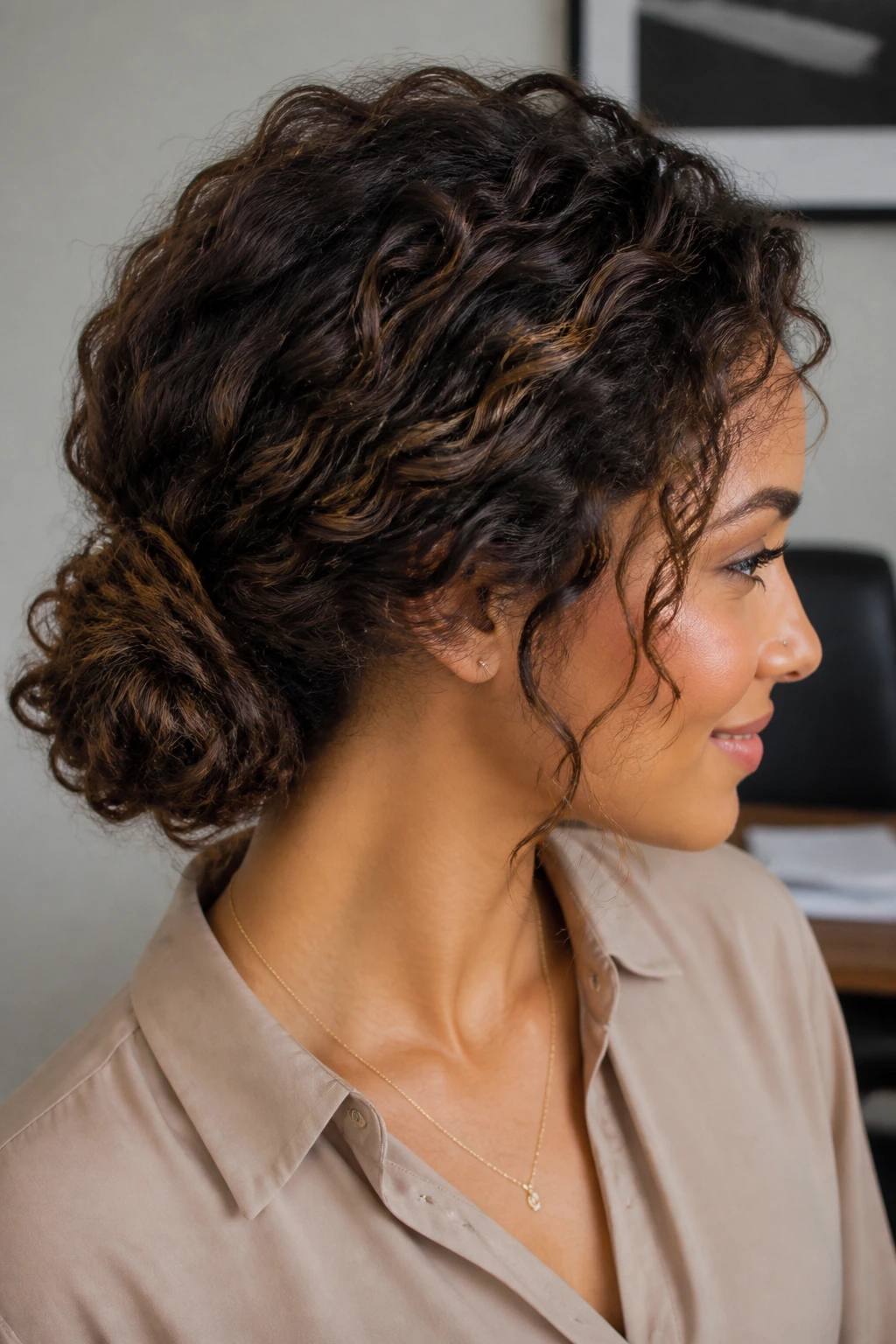
The low chignon is the quiet one in the group. It sits at the nape, tucks the ends under, and keeps the silhouette smooth enough for meetings, errands, or any day where you want your hair off your neck without looking plain.
It works especially well on curls that have a little bend left in them but not enough to wear loose. Gather the length low, twist it inward once, coil it against the head, and pin from underneath. Hide the pin ends in the curl mass so the finish looks seamless from the side.
A small note: this is not the style for tiny pins and hope. Use 4 to 6 sturdy bobby pins, and cross them if your hair is thick. The chignon should feel anchored, not delicate.
9. Mini Bun Half-Up Crown
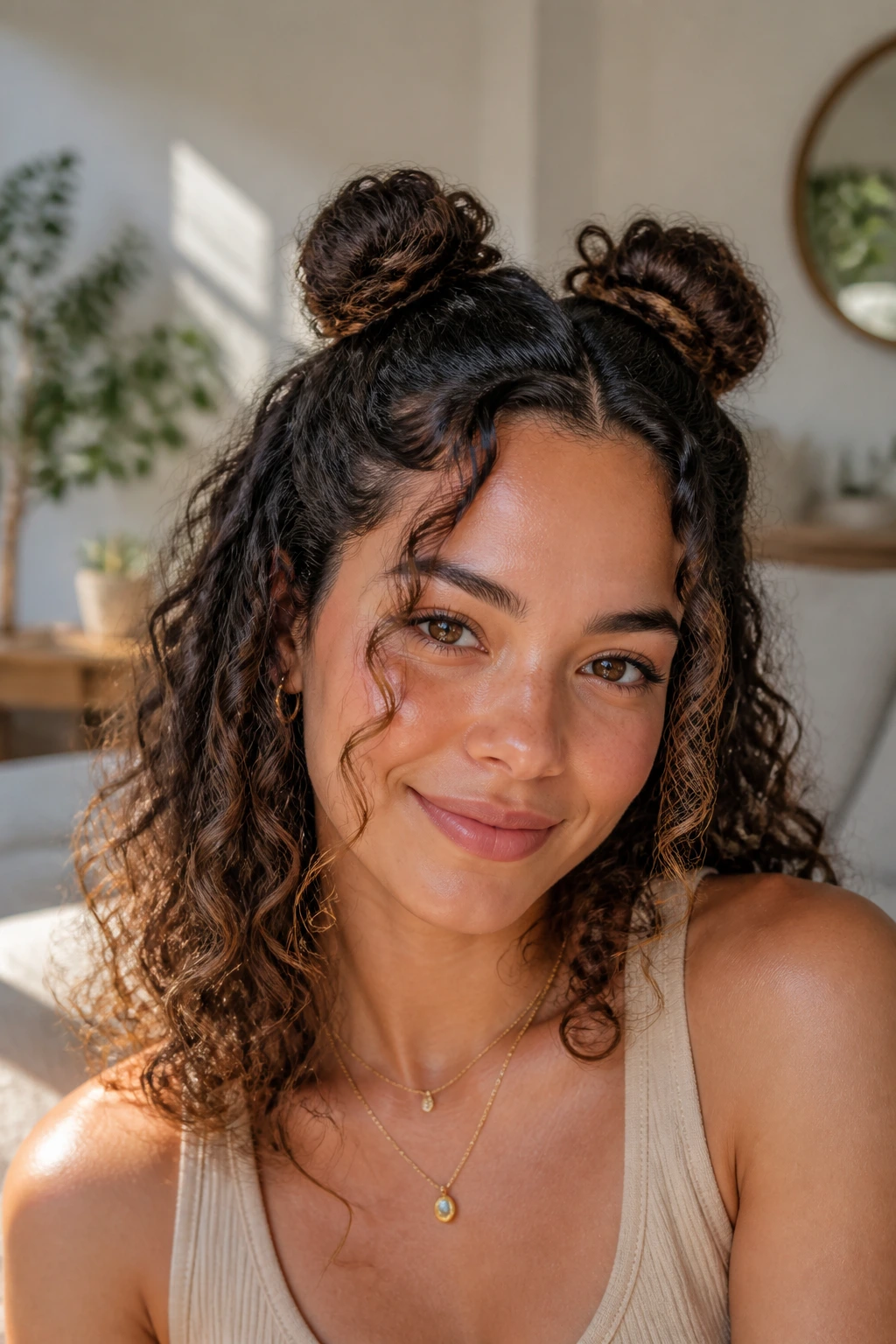
Two small buns at the crown can look playful, but the polished version is neat, controlled, and surprisingly grown-up. Keep the buns small, low-tension, and balanced on each side so they read as shape rather than cartoon.
This works because it takes the top half of the curl volume and parks it where it can’t puff outward too much. The lower half stays loose, which keeps the style from becoming too structured. If you’ve got layered curls, let a few shorter pieces fall around the face. That breaks up the symmetry in a good way.
A pair of tiny clear elastics and two pins per side is usually enough. If you use more than that, the buns start looking crowded. Little buns. Clean lines. That’s the goal.
10. Twisted Halo Updo
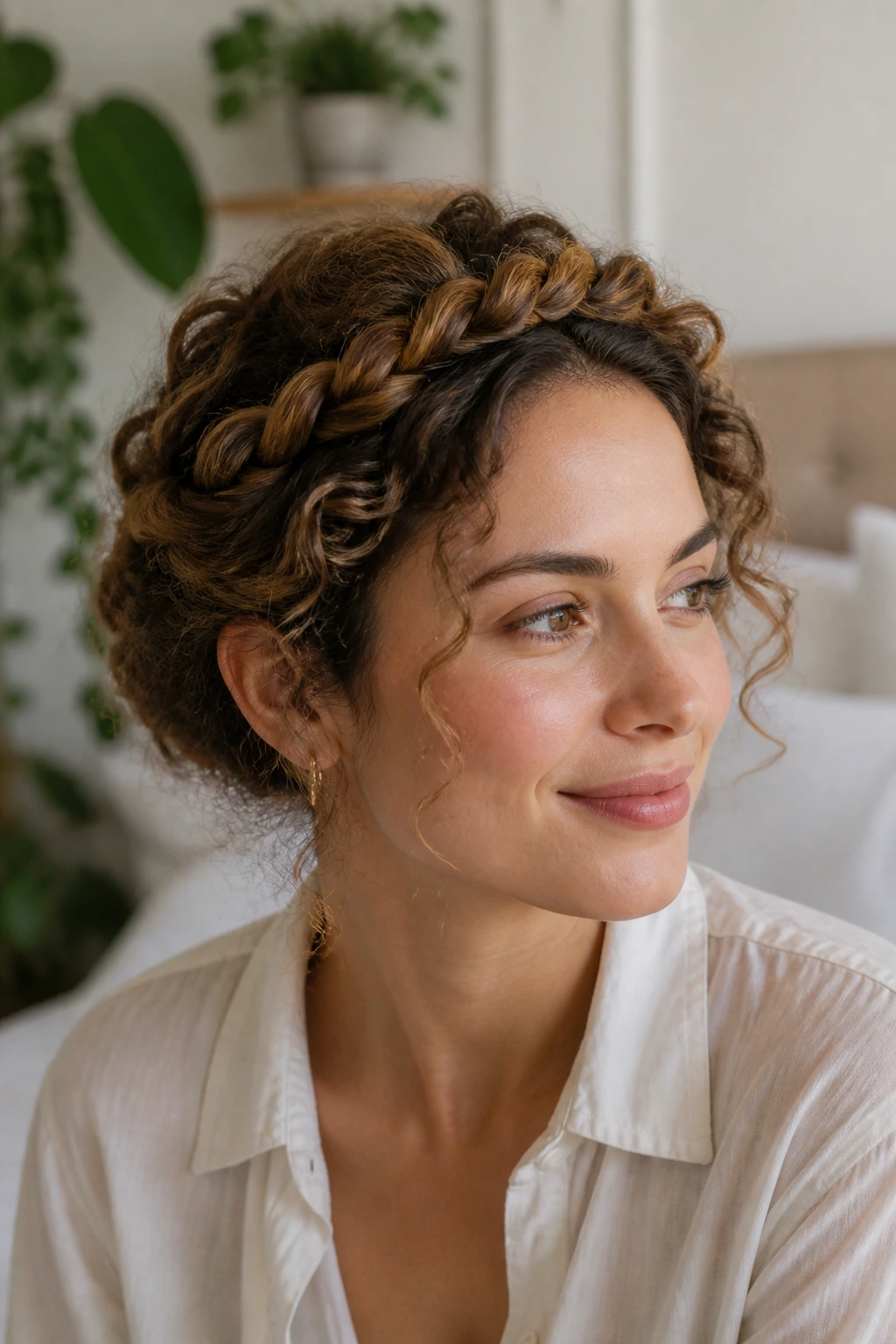
Can a halo style work on curly hair without looking overdone? Absolutely, if you keep it loose. A twisted halo takes the front and side sections back around the head, then pins them near the opposite ear or nape so the style circles the face without pulling every curl flat.
The beauty of this style is that it frames the face from above. That means you can leave the rest of the curls fuller at the back or tuck them into a low bundle. It’s a nice option when the front is behaving and the underneath layers are not.
Use your fingers, not a fine comb, when you make the twists. Fingers preserve curl clumps. A comb breaks them apart and makes the halo look fuzzy before you leave the house.
11. Bubble Ponytail on Curls
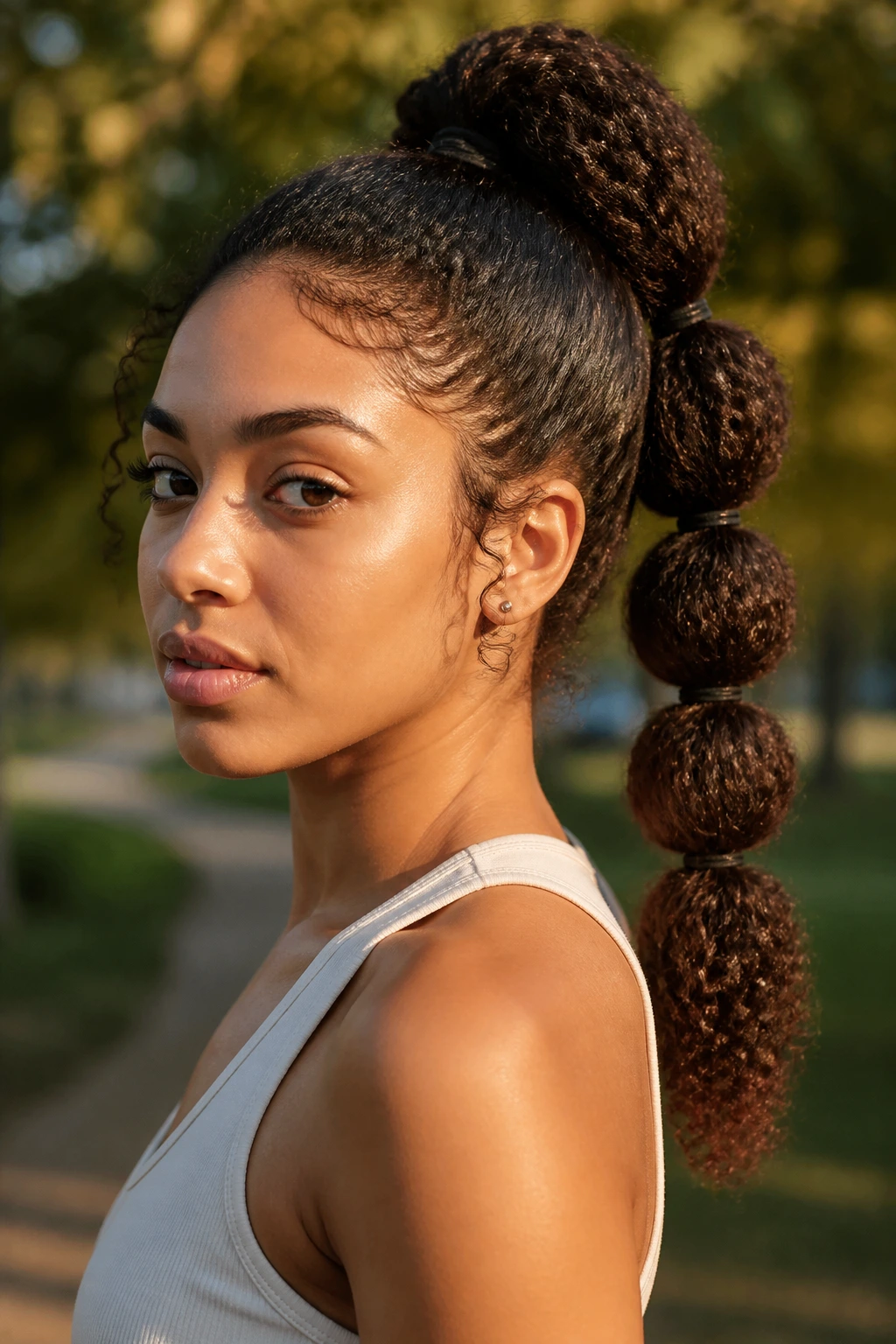
Bubble ponytails look polished because they create shape in sections. On curly hair, that sectioning works especially well since the curls already provide texture between the elastics. You don’t need perfect smoothness; you need consistent spacing.
Start with one ponytail, then add small elastics every 2 to 3 inches down the length. Gently pull each section outward to make the “bubble” without stretching the curl pattern apart. If your hair is very dense, you can use larger bubbles farther apart. If it’s fine, shorter spacing keeps the shape from collapsing.
This style is one of the better choices for long curls that tend to tangle when left loose. The sections prevent the ends from rubbing together all day.
12. Tucked Headband Roll
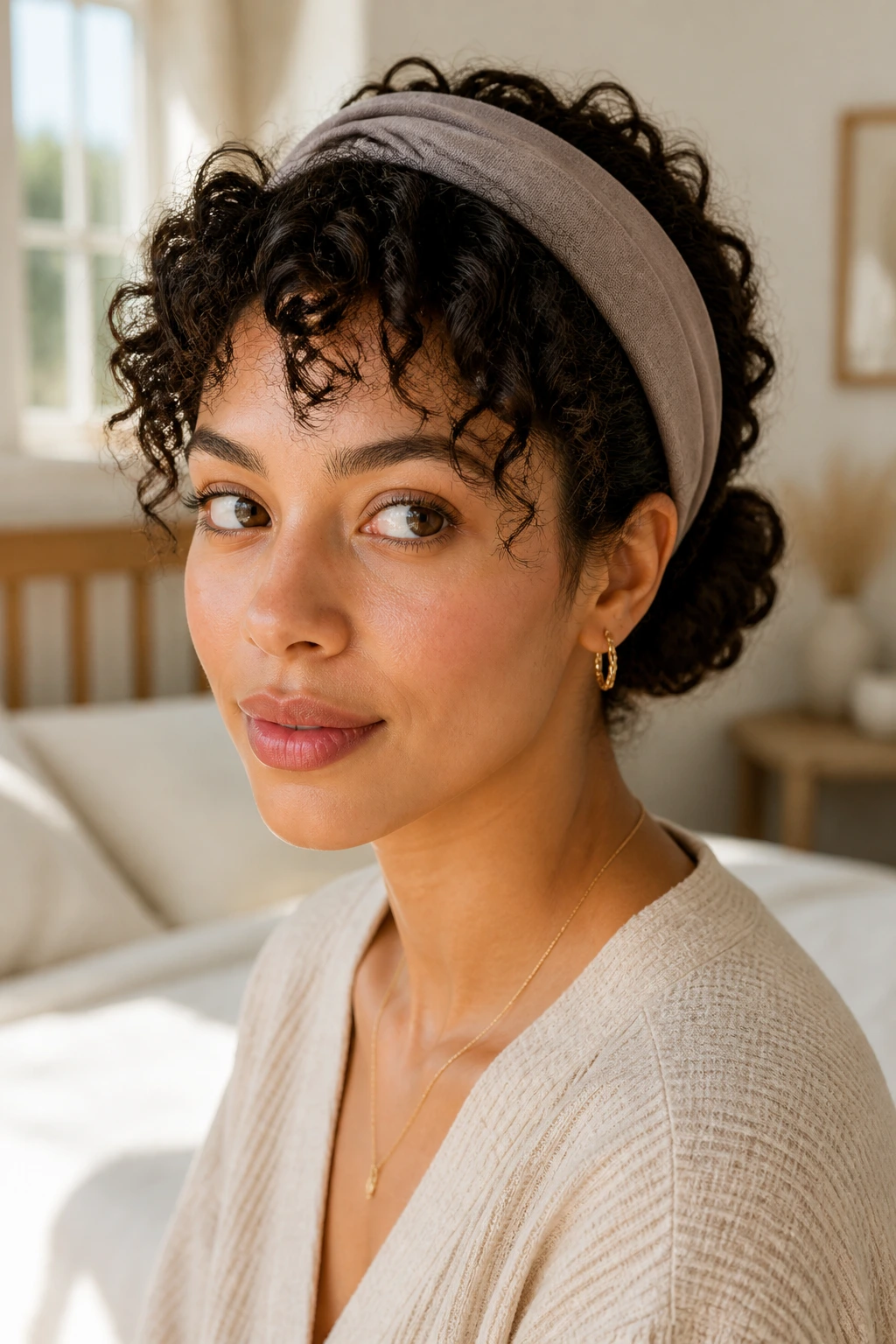
A tucked headband roll is what happens when a simple accessory does the heavy lifting. Slip on a stretchy or padded headband, then tuck the length under and into the band at the nape. The curls disappear into a neat roll, and the front stays clean.
This style gives you a strong neckline and a controlled shape without needing a single pin if your hair is cooperative. If it’s not, pin the roll at the sides before you tuck. A wide headband works better than a skinny one because it hides more of the roll and feels more balanced on curly hair.
It’s especially good on mornings when the roots are flat and the ends are puffy. The headband becomes the frame, and the tucked roll becomes the finish.
13. Side-Swept Clip-Back Style
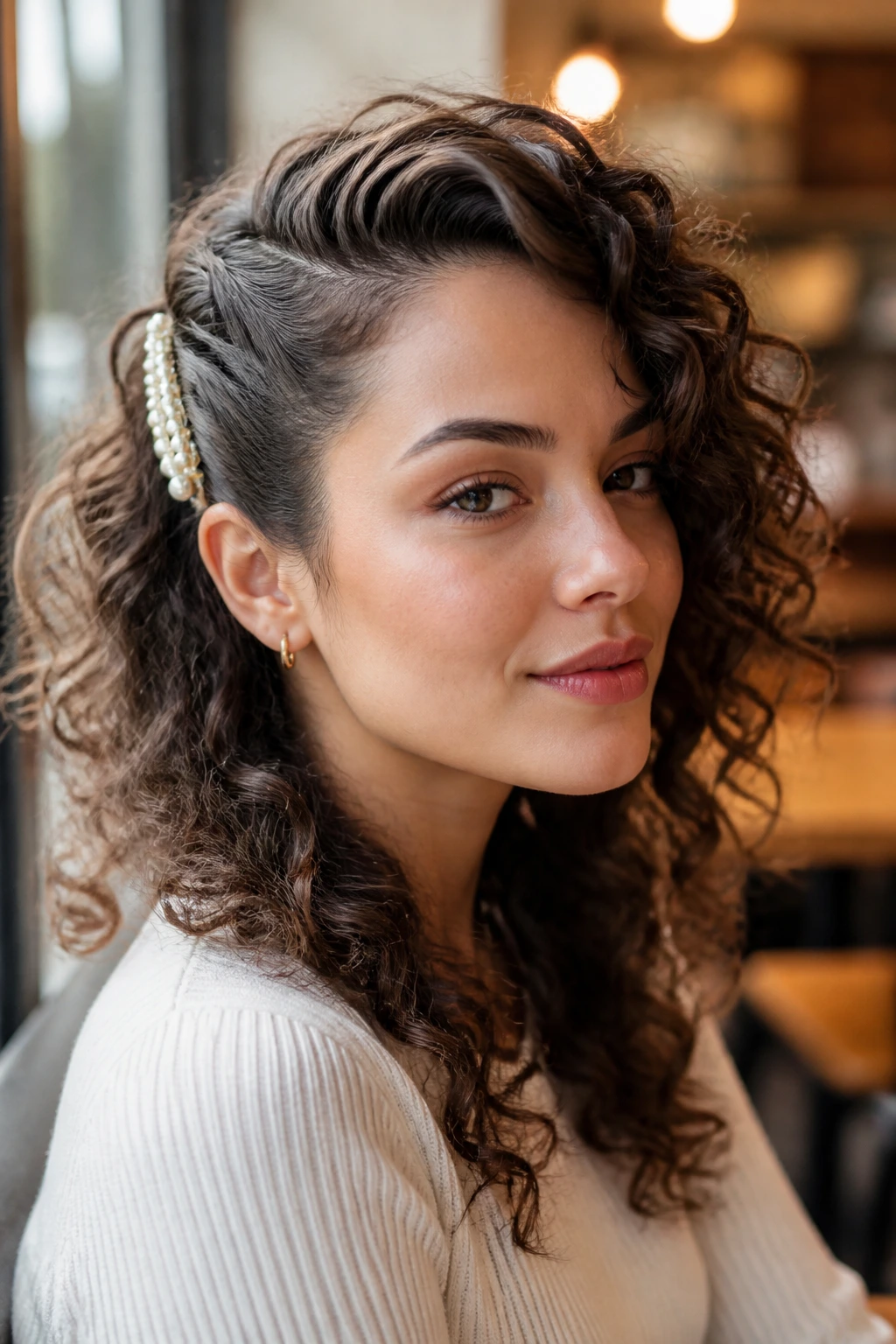
A side-swept clip-back is one of the fastest ways to look intentional. Sweep one side away from the face, secure it with a decorative clip, and leave the rest of the curls loose. That’s it. It sounds almost too easy, but that asymmetry gives the whole style a line.
This is a smart choice if one temple is frizzier than the other or if your part has gone crooked overnight. The clip covers the odd side and creates the sense that the rest of the curls were arranged on purpose.
Quick cues
- Use a clip with a smooth backing so it doesn’t snag.
- Choose a side part that follows your natural growth pattern.
- Let one or two curls fall near the clip so it doesn’t feel severe.
A single pearl clip or metal barrette can make this look feel dressed up in seconds.
14. Double Mini Knots
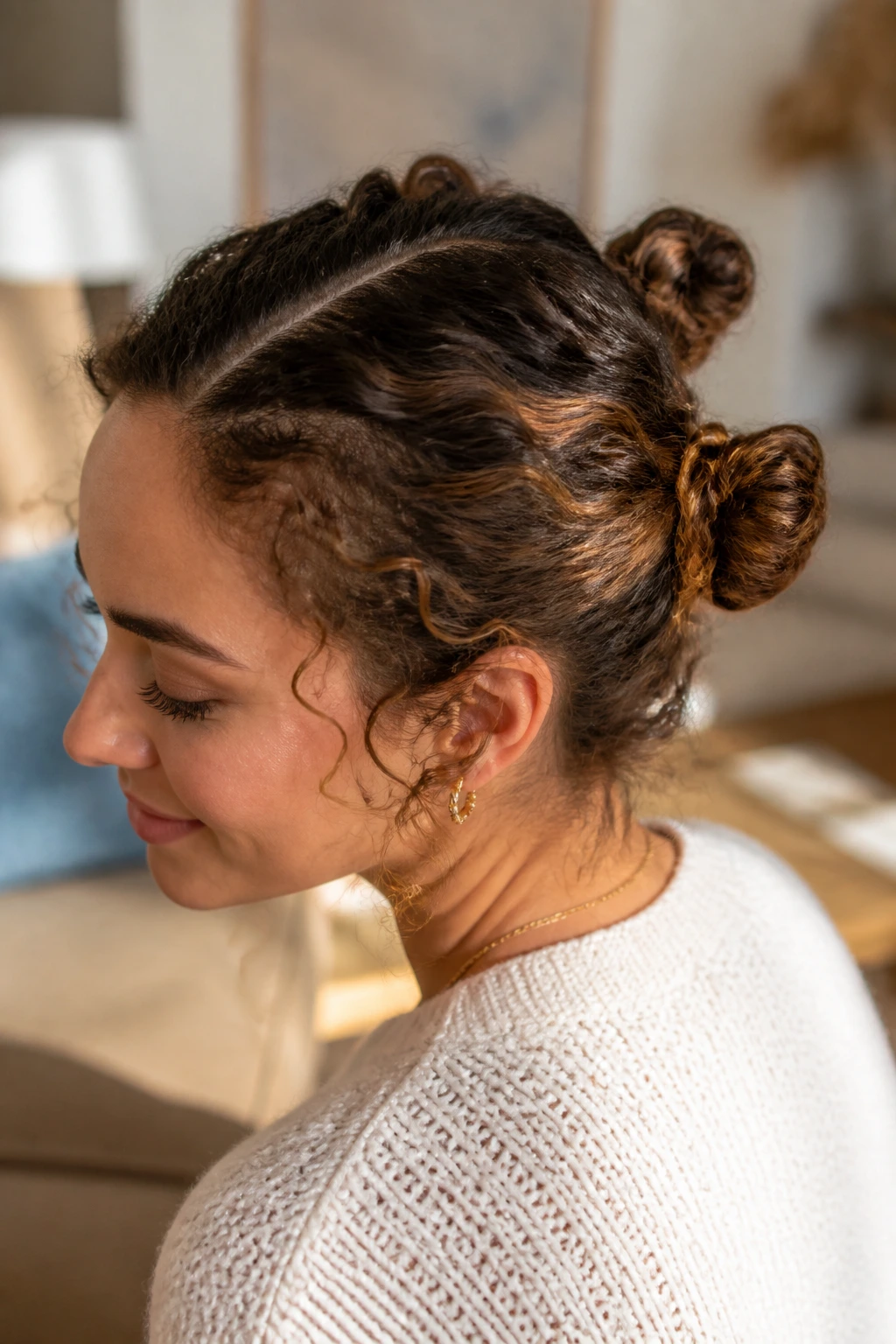
Two small knots at the back or crown give curly hair a tidy shape without demanding full control over every strand. The best version is low and neat, almost like two tiny buns that sit quietly instead of shouting for attention.
This style works when your curls have a lot of volume but not much uniformity. Split the hair into two sections, twist each one, and wrap into small knots. Leave the rest of the texture intact. If you smooth the sections too hard, the knots lose their charm and start looking thin.
It’s a nice bridge style for people who want something a little more playful than a bun but cleaner than loose hair. Keep the knots small. That’s what keeps them classy.
15. Deep Side-Part Wash-and-Go
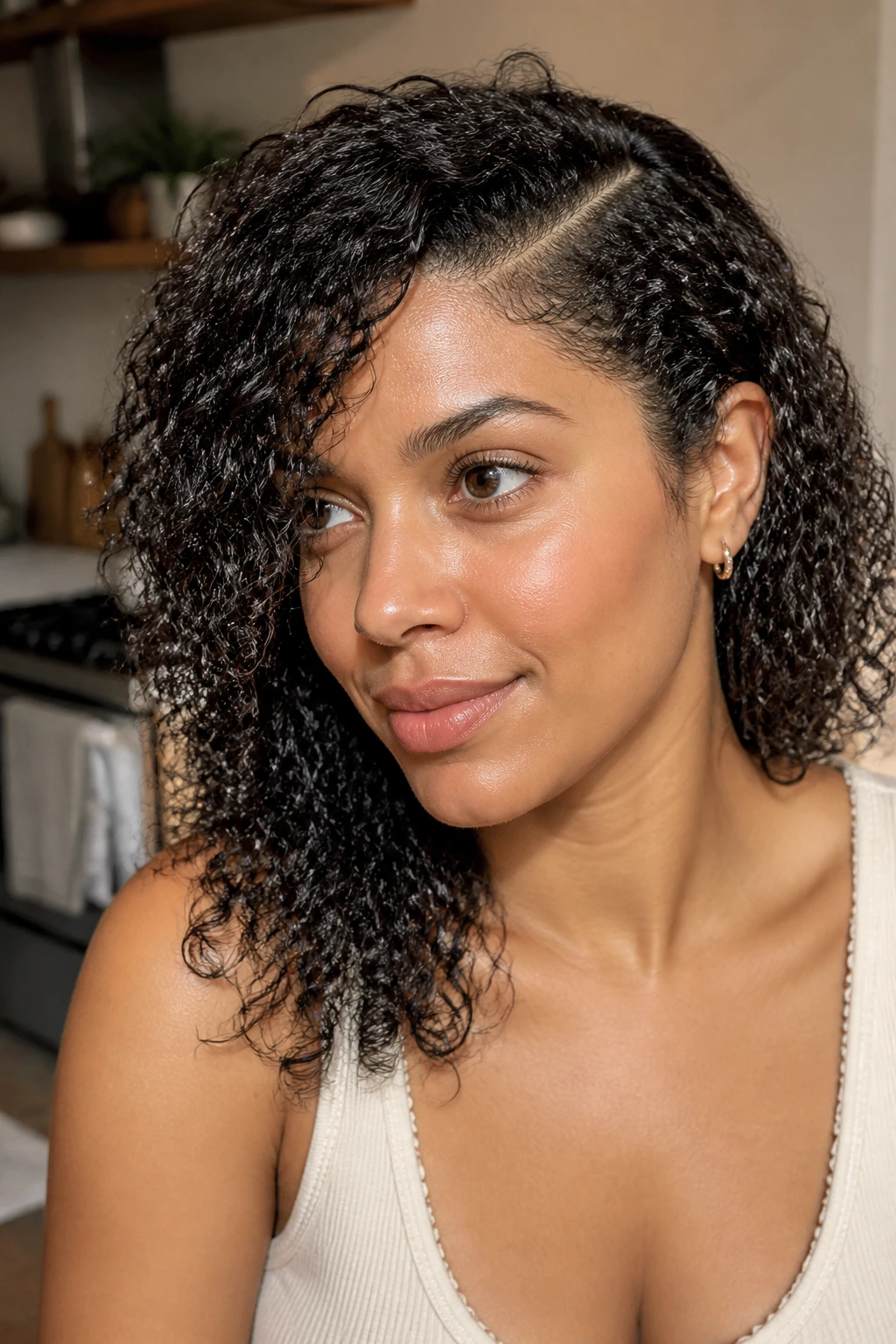
A deep side part can change a curly head in thirty seconds. That’s not exaggeration. It shifts the weight, changes the line of the face, and turns an ordinary wash-and-go into something sharper and more deliberate.
The real power here is that it doesn’t ask you to restyle the curls. You’re just changing the map. Once the part is in place, scrunch a little water at the front, lift the roots with your fingers, and let the curls fall where they want. If one side feels too flat, clip it at the root for ten minutes while you get dressed.
This look is ideal when your curls are already decent and only need a small adjustment to feel polished again.
16. Wrapped Base Ponytail
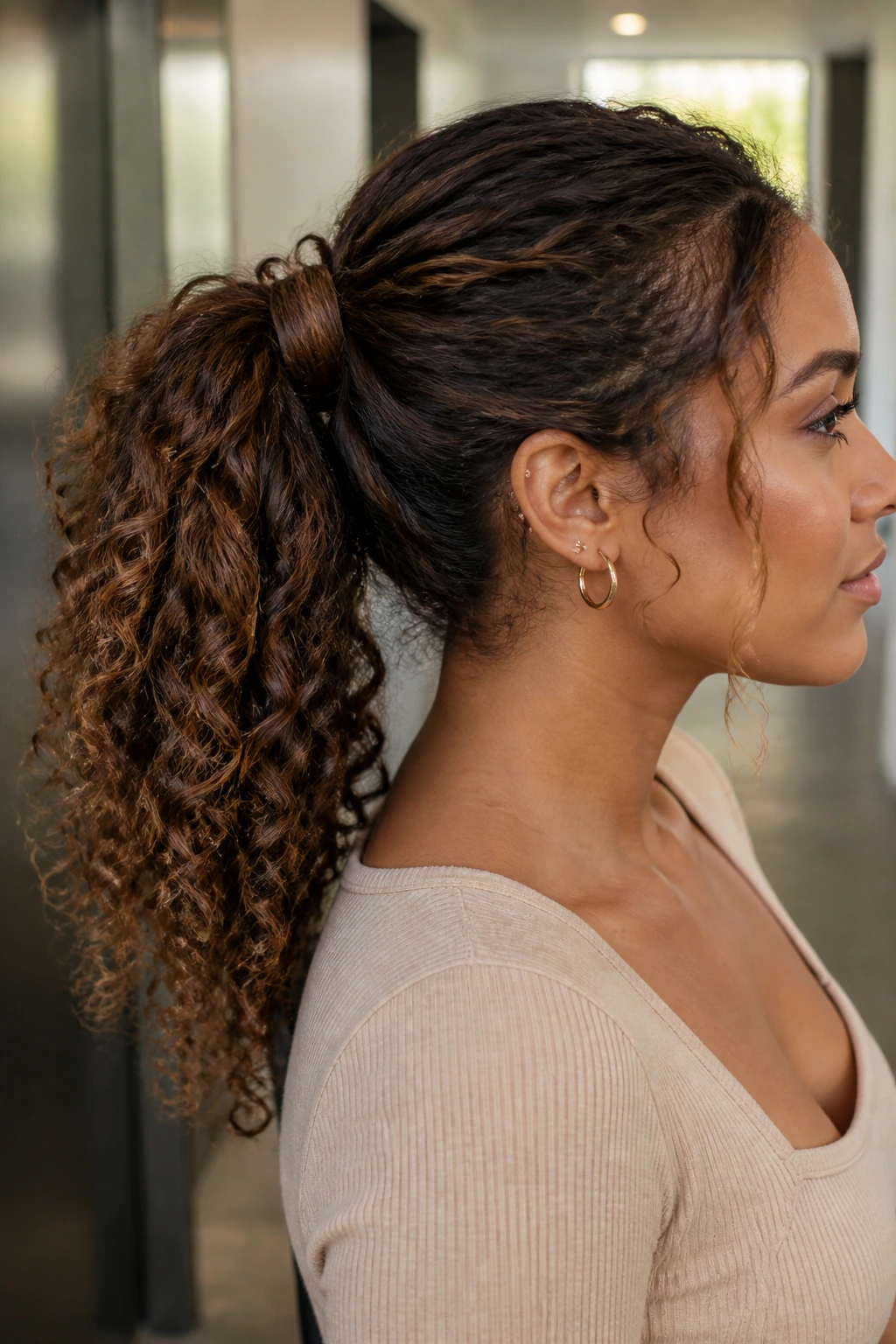
A wrapped base ponytail takes the basic pony and cleans up the exact place most people leave messy. Instead of showing the elastic, you wrap a small strand around the base and pin it under. That tiny move makes the whole thing look finished.
The pony can sit low, mid-height, or high, but the wrap is what makes it read as elegant. Curly hair usually has enough texture to hide the pin if you tuck it beneath the wrap and the pony itself. If your hair is very layered, use a bobby pin with a matte finish so it grips without sliding.
This one is useful on days when the pony needs to go straight from school drop-off to a work meeting. It’s still a pony. It just looks like you spent more time than you did.
17. Halo Braid with Free Ends
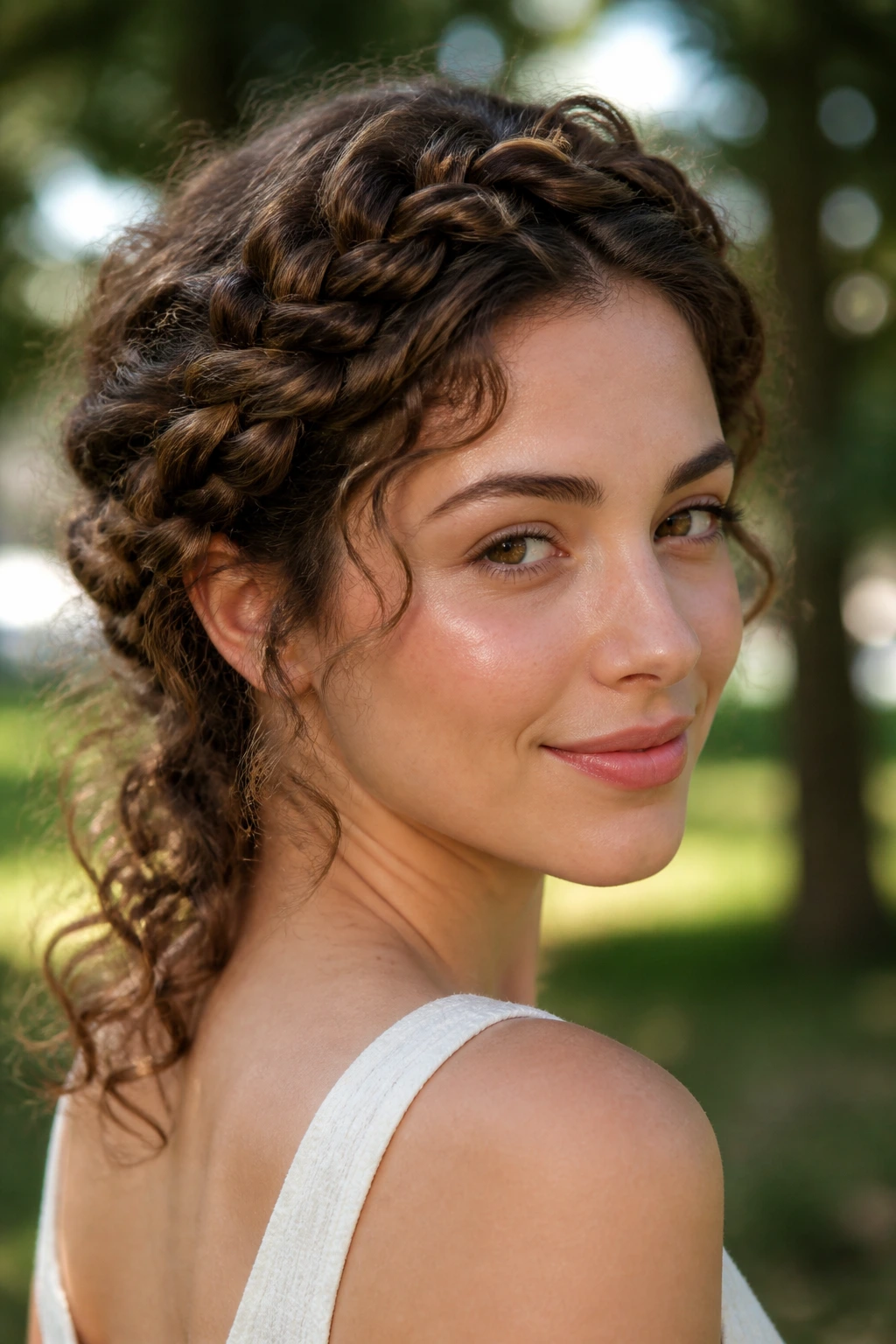
A full halo braid can sound like a lot, but curly hair gives it a softer edge. The braid wraps around the head, and the ends can stay loose at the back or tuck into the base depending on the time you have.
This style is better on medium to long curls because the braid needs enough length to drape comfortably. Keep the tension even, not tight. Tight braids on curly hair can pull the hairline and flatten the crown in a way that feels harsh by noon.
Let a few curls peek out of the braid. That’s the part I actually like best. It keeps the whole thing from becoming too neat, and curly hair looks better when it’s allowed a little movement.
18. Faux Bob Tuck
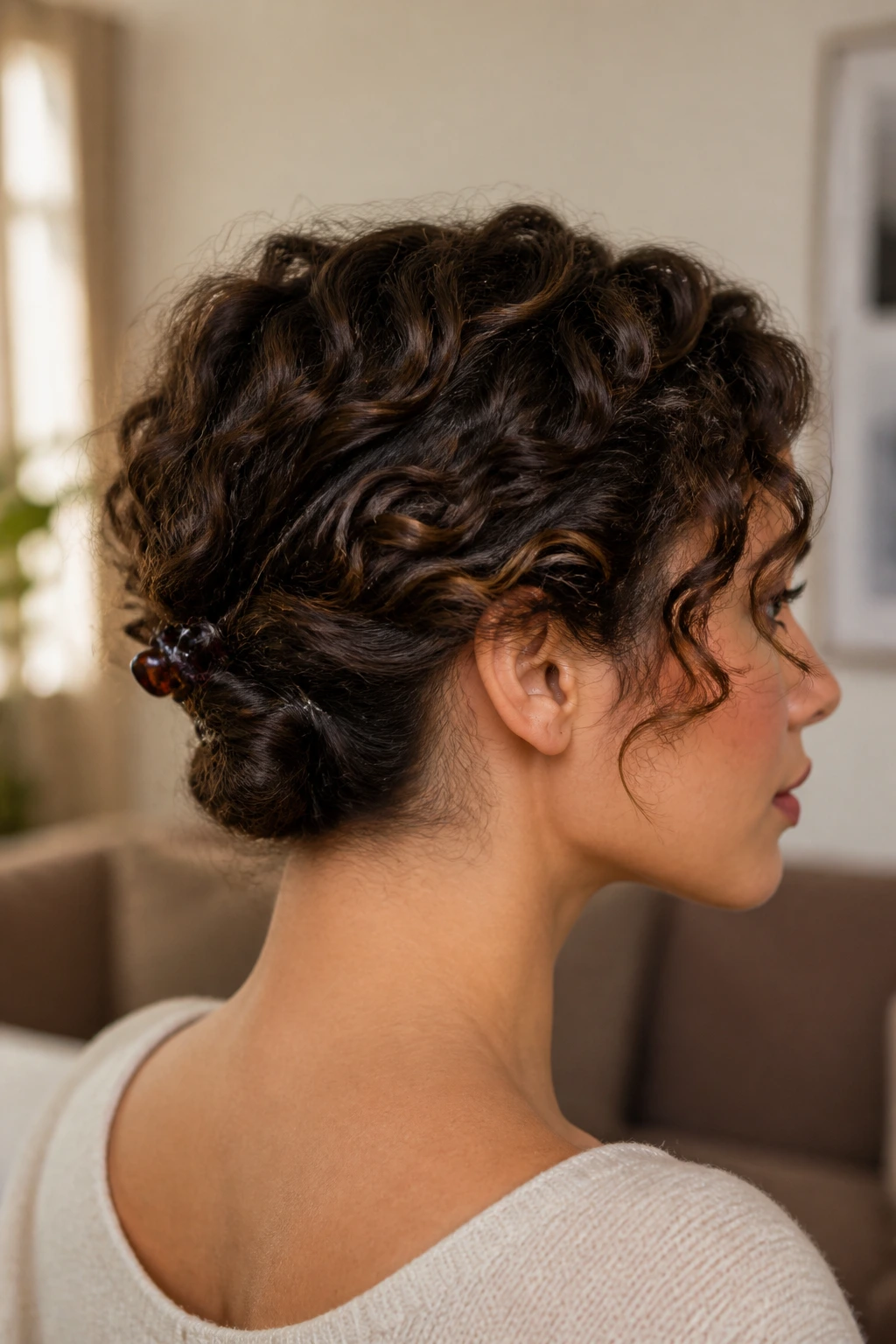
A faux bob is a clever little cheat. You tuck the length under at the nape, pin it low, and suddenly the hair reads as shorter and more sculpted. On curly hair, the texture helps sell the illusion because the ends have enough volume to sit in place.
This works best with medium-length curls that can fold under without creating a lumpy bulge. Use two layers of pins: one to secure the tucked length, one to secure the outer shape. If you’re worried about it dropping, add a tiny claw clip at the base before pinning the top layer. Hidden. Effective.
The best faux bob looks like an old photograph in the right way — soft, shaped, and a little fancy without trying to be perfect.
19. Low Braided Ponytail
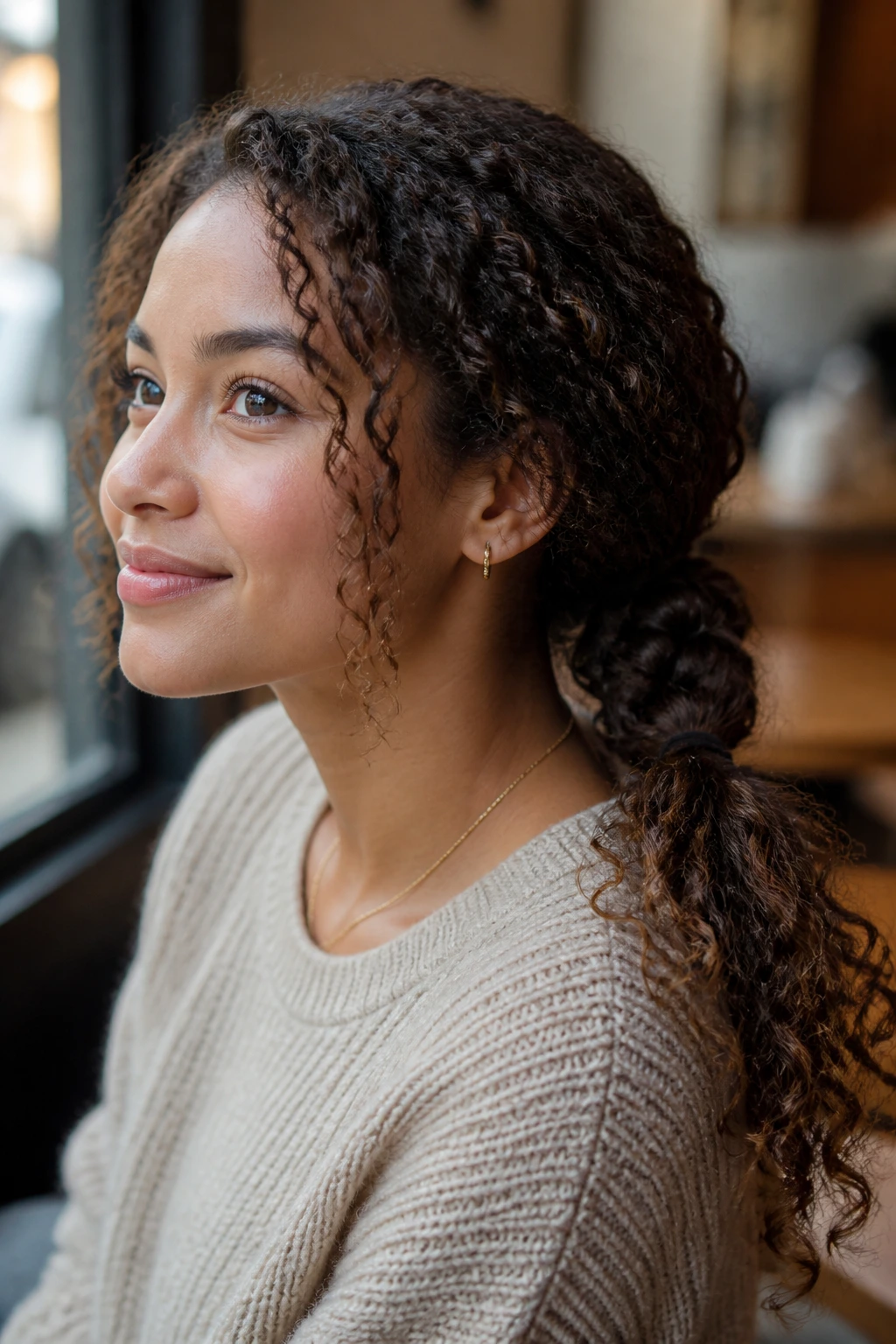
A low braided ponytail gives you the neatness of a braid and the simplicity of a ponytail in one go. Start low, secure the pony, braid the length loosely, and stop before you over-tighten the last few inches. Curly ends look better when they stay a little free.
It’s a strong choice for thick hair because the braid organizes the weight. Without that braid, a heavy pony can swing around and frizz at the ends. With it, the shape stays calmer. If your hair is layered, use a small clear elastic at the end so the braid doesn’t unravel halfway through the day.
A ribbon tied around the base can take this from practical to polished fast.
20. Twist-and-Pin Crown
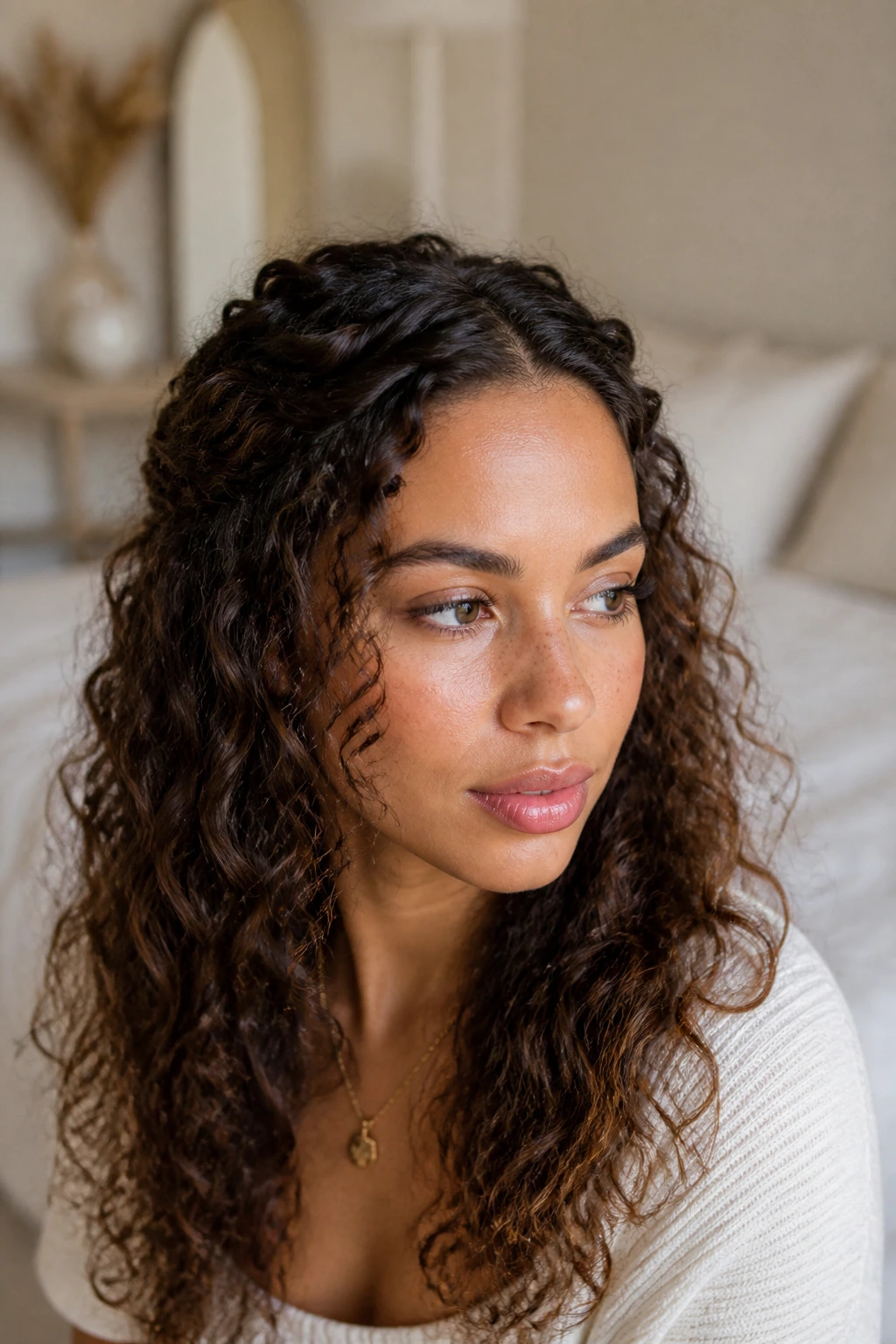
Here’s the thing about a twist-and-pin crown: it sounds fussy, but it isn’t if you keep the sections small. Twist two pieces at the front or sides, pin them where they meet, and repeat until the upper part of the head looks framed and secure.
This style is a good answer when the top curls are having a strange day and the rest of the hair is fine. You’re not trying to force uniformity. You’re building a border around the face and letting the rest move freely.
It works especially well with a little root volume. Flat roots make the twists look limp. A tiny lift at the crown — even a 30-second fluff with your fingertips — changes everything.
21. High Curly Puff Pineapple
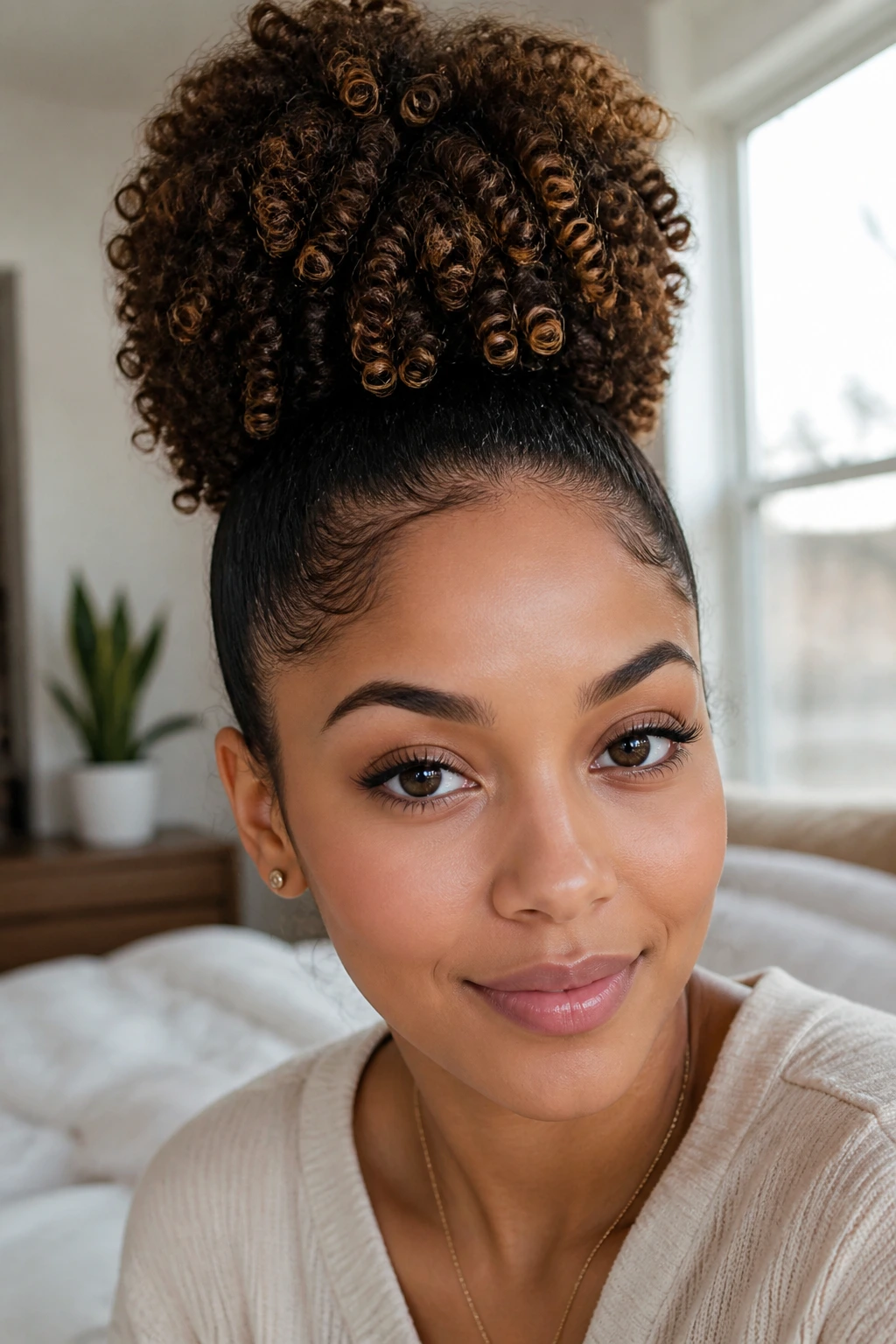
A high pineapple puff is one of the fastest ways to use volume instead of fighting it. Pull the curls high, let the ends sit on top of the head, and keep the front smooth enough that it feels intentional. This is not a messy top knot. It’s a shape.
The pineapple is excellent for tighter curl patterns because it preserves the curl clumps and keeps the length from getting crushed against collars and backpacks. Use a soft scrunchie and stop before the elastic grabs too much hair. A scarf can sit at the base if you want a cleaner finish.
If your curls were slept on and you need them to look alive again, this is the style that makes sense. It’s fast, and it looks better when the curls have some memory in them.
22. Statement Clip Side Bun
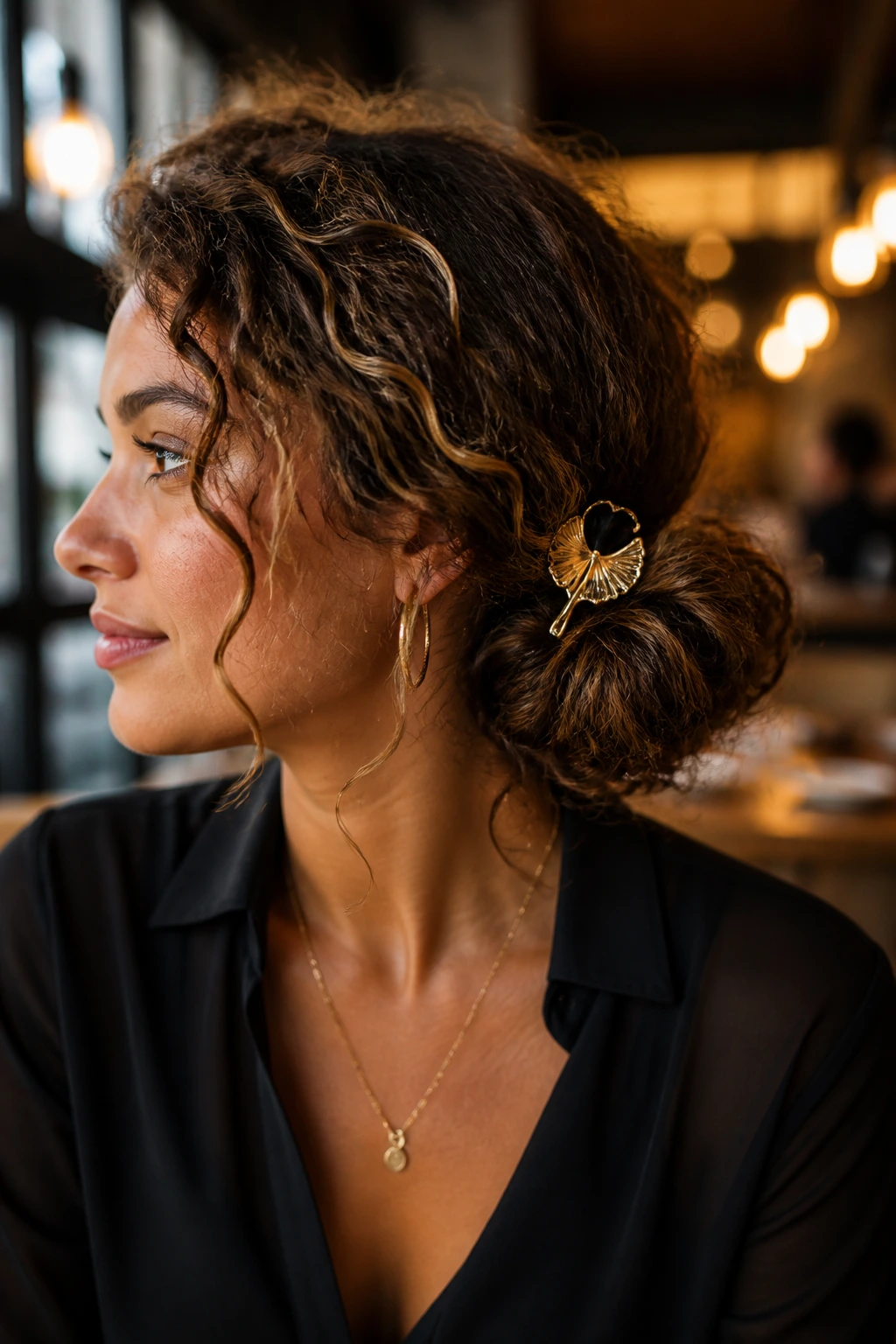
A side bun with one bold clip can look dressed up in a way that takes very little time. Sweep the curls to one side, gather them low, twist into a bun, and secure with a clip that has enough grip to hold the bulk. The clip becomes the focal point, which means the bun itself doesn’t have to be perfect.
This is a smart move on days when the hair is a little uneven or when one side has more volume than the other. The side placement hides that imbalance. A gold or tortoiseshell clip tends to read more polished than a plastic one.
Leave a small curl or two near the jawline. The style looks less rigid that way.
23. Roll-and-Tuck French Roll
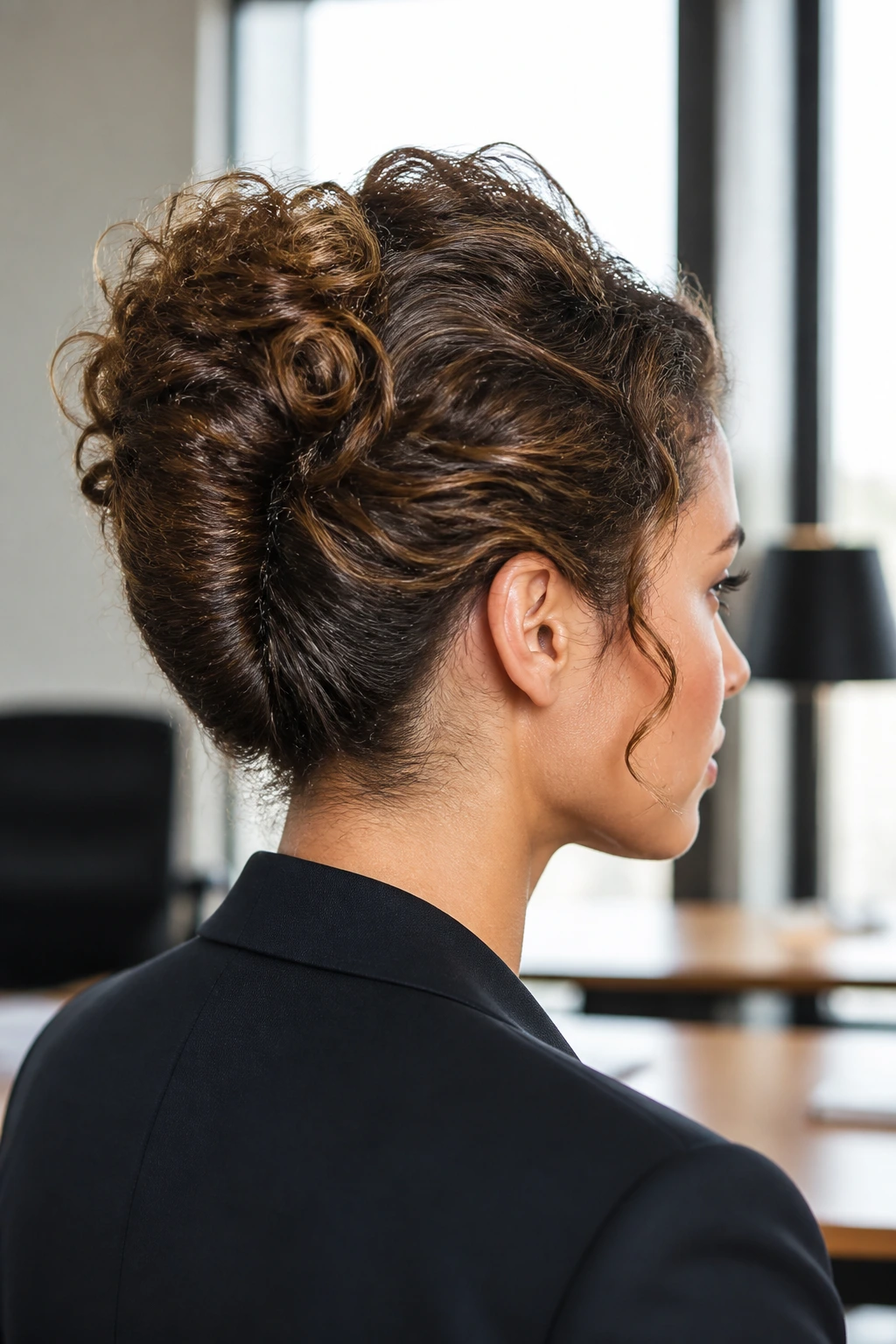
This is the grown-up cousin of the casual twist. The roll-and-tuck French roll works because it gathers the hair upward, folds it in, and hides the ends inside the shape. On curly hair, the texture helps hold the roll better than slippery straight hair ever could.
You want a smooth outer line and a bit of softness inside. That means you don’t need to iron the curls flat before you start. Use your hands to guide the hair, tuck sections as you go, and pin the roll from the center outward. If the roll looks too tight, pull one tiny curl free near the top. It breaks the stiffness.
It’s one of the best choices for events, office days, or any morning that ends with you needing to look polished for more than an hour.
24. Half-Up Bubble Crown
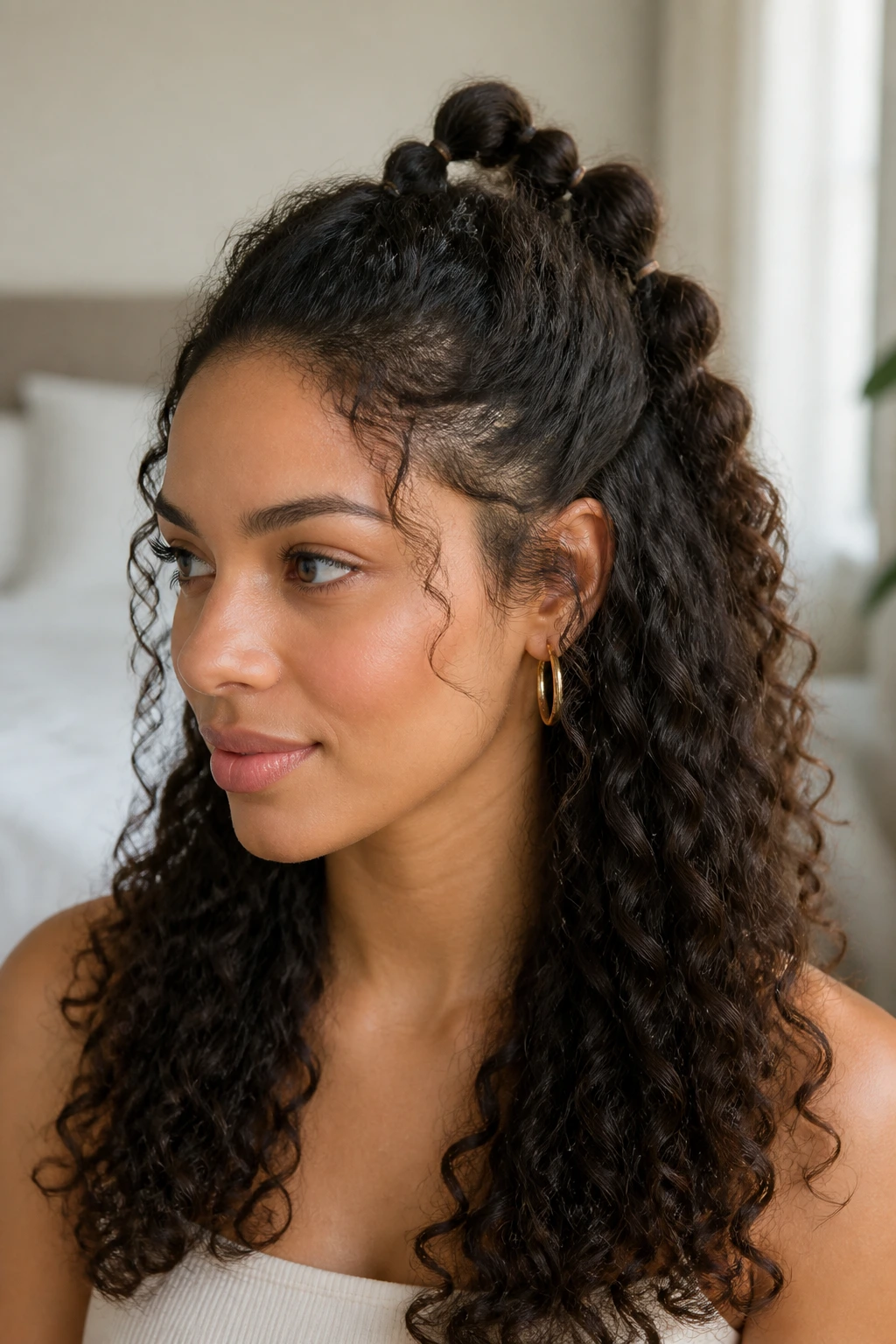
A half-up bubble crown is a cleaner, more structured version of the playful bubble ponytail. The top section gets divided into two or three small bubbles, while the lower curls stay loose. That contrast keeps the style from feeling too heavy.
The elastics should sit evenly, about 2 inches apart. Pull each bubble gently until it rounds out, then stop. Overpulling makes the sections frizzy, and curly hair punishes overhandling faster than most people expect. If the part line is sharp, the bubbles look more intentional. If it’s slightly soft, the style reads a little more romantic.
This one is especially nice when you want something different but not loud. It has shape. It has movement. It still gets you out the door.
25. The Sleek Low Knot with Lift at the Crown
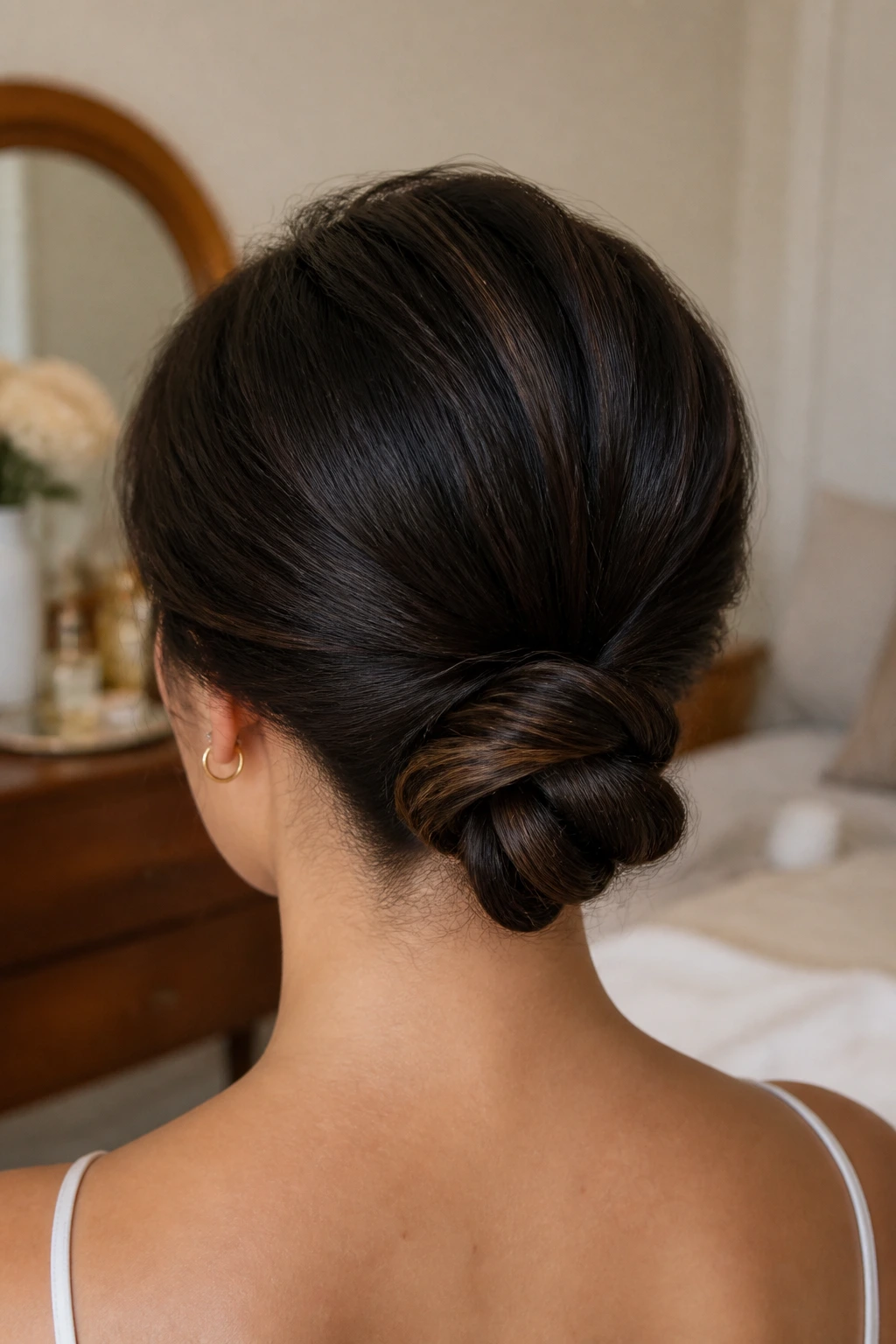
A low knot is one of the few styles that can look both quick and polished if the crown has a little lift. That lift matters. Without it, the knot can look flat and tired. With it, the whole style gains balance.
Pull the curls back loosely, smooth only the top few inches, twist the length into a knot at the nape, and pin it so the knot sits compact. Then use your fingers to nudge a touch of volume back into the crown. Not a teased mess. Just a little height so the profile looks clean from the side.
This is the last style on the list for a reason. It’s the one I’d trust on a morning when nothing else is cooperating and I still need the hair to look like I meant it.
Why Curly Hair Needs a Softer Morning Strategy

Curly hair gets judged by straight-hair rules all the time, and that’s where the frustration starts. Straight hair can often be brushed into shape and left alone. Curls are different. They’re a living stack of bends, clumps, and shrinkage, and if you rip them apart in a hurry, they puff in the worst places.
The better move is to keep the structure you already have. A side part can hide flatness. A twist can hide crown frizz. A low bun can save the ends from weather and coat collars. That’s why the hairstyles above work so well on busy mornings: they reduce decisions. You are not inventing a new look from scratch. You are steering the one already on your head.
There’s also a practical reason these looks feel easier. Curly hair holds shape. A pin has more to grip than it does in glassy straight hair, and a satin scrunchie creates less snagging than a regular elastic. Handle the hair while it still has a little slip from leave-in or last night’s refresh, and the style sets faster. Dry, over-touched curls? Those fight back.
One more thing. The more you know your curl pattern, the less time you spend second-guessing yourself. Tight coils want anchor points. Loose spirals often need a little root lift. Thick density needs stronger clips and more pins. Fine curls usually need lighter products and less weight at the base. That’s not theory. It’s the difference between a style that lasts until lunch and one that collapses in the car.
Essential Equipment for These Looks
-
Wide-tooth comb: Best for gentle detangling when curls are damp and coated with conditioner or leave-in.
-
Spray bottle with water: A fine mist resets dry sections without soaking the whole head.
-
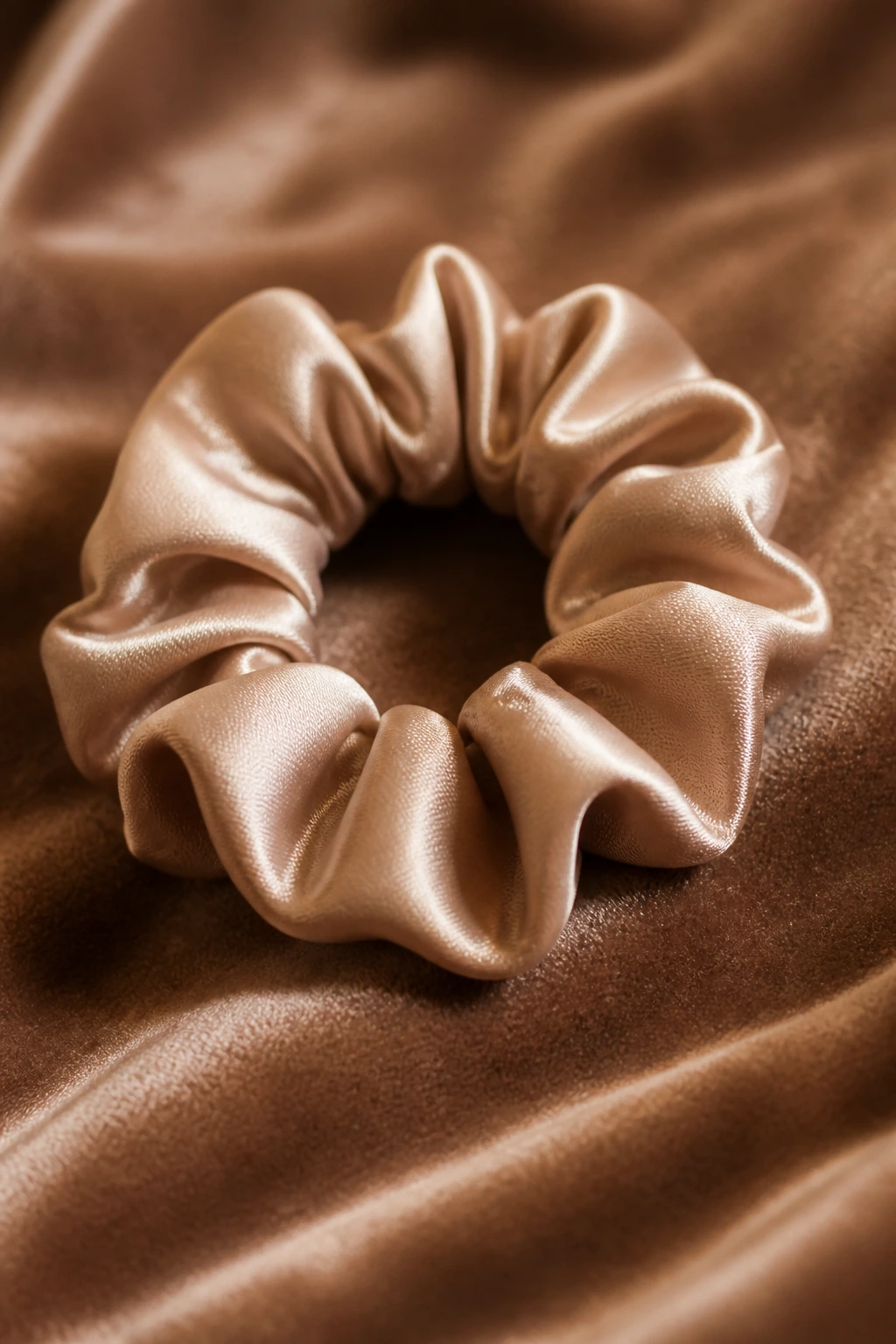
Satin scrunchies: They grip without leaving the harsh dent that thin elastics can carve into curls.
-
Bobby pins, preferably matte: Matte pins hold better and slide less in textured hair than slick, shiny ones.
-
Claw clips, medium to large size: A 3.5 to 4.5-inch clip suits most medium and long curly styles.
-
Edge brush or soft toothbrush: Useful for smoothing just the hairline when you want polish at the front.
-
Microfiber towel or T-shirt: Better than rough cotton for blotting after wash day.
-
Hand mirror: Sounds basic, but it saves you from fixing one side three times while the other side stays crooked.
Smart Product and Accessory Picks
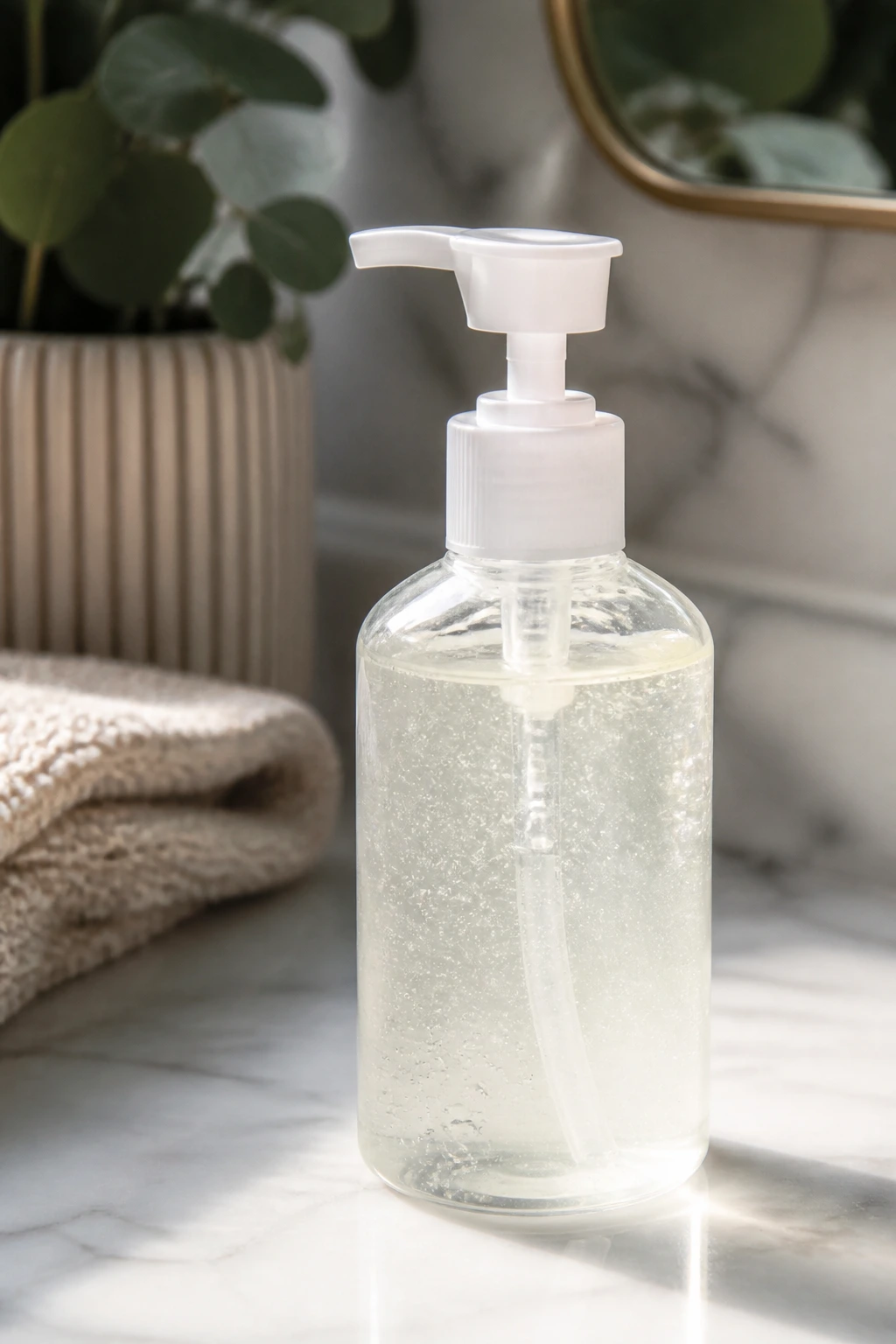
The smartest purchase for curly morning styling is usually not another bottle of something shiny. It’s a better hold product and the right accessory size. A medium-hold gel, a lightweight curl cream, and a mousse with a little lift are usually enough for this whole collection. You do not need to drown the hair in all three.
For clips, pay attention to the teeth. Smooth inside edges reduce snagging. A claw clip with weak springs will slip on dense curls by noon, no matter how pretty it looks on the shelf. For scrunchies, the wider ones work better because they distribute pressure over more hair. Thin elastics tend to create that half-broken dent that never quite disappears.
If your curls are very fine, skip heavy oils before an updo. They make the hair too slippery. If your curls are coarse or high-density, a touch of cream at the ends helps the style stay soft instead of fuzzy. That balance matters more than brand names.
How to Make These Styles Faster Without Losing the Finish
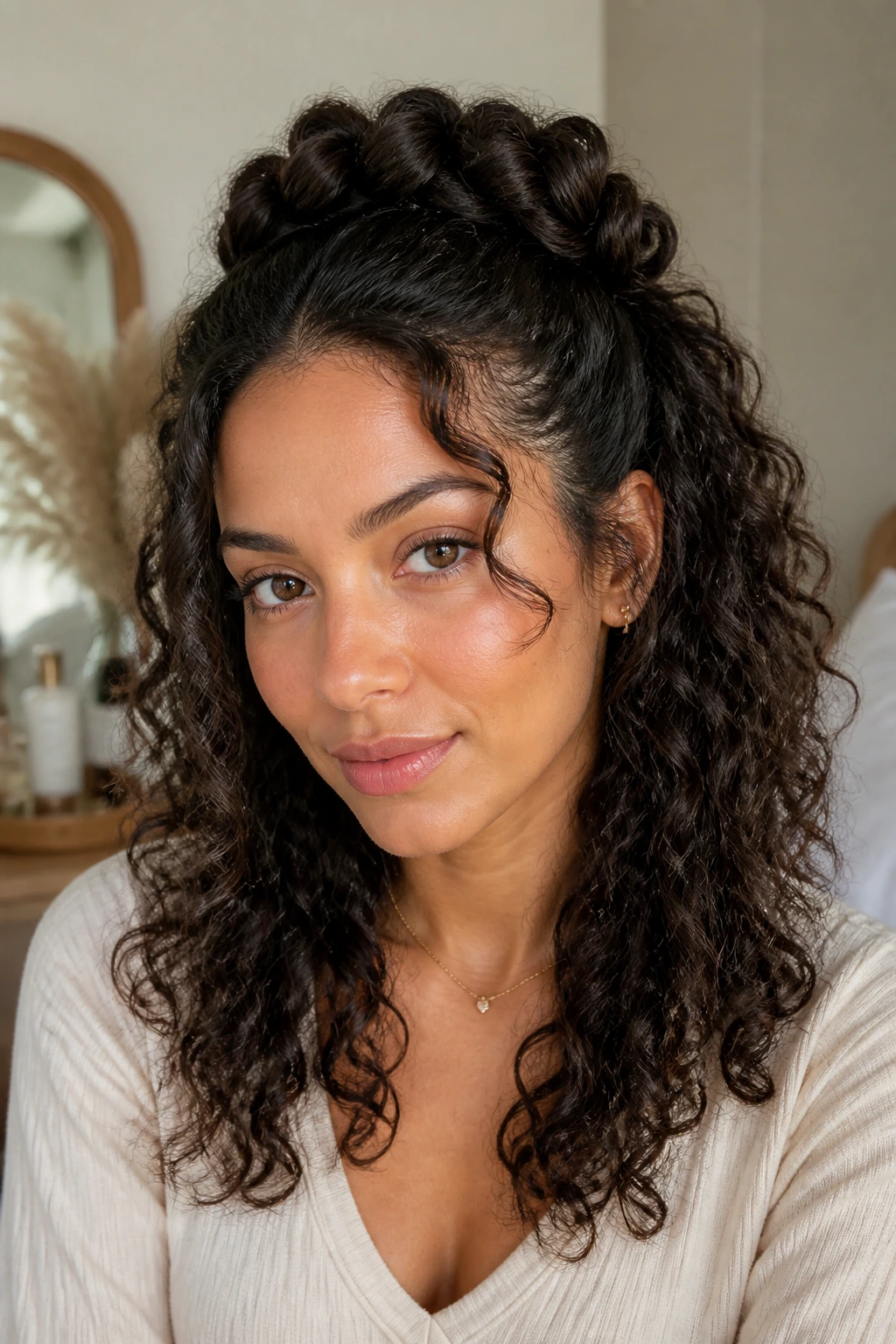
The real time-saver is prep, not speed. A little work at night changes everything in the morning. If you sleep on a satin pillowcase or wear a bonnet, the hair keeps more of its curl clump and needs less rescue in the first place. That alone can save five to ten minutes.
Night-Before Prep: Put the part where you want it, refresh the top section with a light mist, and loosely pineapple or clip the hair so it doesn’t flatten. If a style relies on twists or a low bun, leave the sectioned pattern in place with soft clips before bed. It makes the morning assembly faster.
Morning Rescue: If the crown looks rough, use only a few spritzes of water and scrunch once with a bit of leave-in on your palms. Don’t soak everything. Wet curls that are then yanked into shape tend to frizz more, not less.
Hold Without Crunch: A tiny amount of gel at the hairline or a little mousse at the roots usually beats a heavy coat of product. The goal is movement with memory, not a shell.
Dress It Up Fast: One decorative clip, a silk scarf, or a pearl pin changes the vibe of a simple bun or side sweep immediately. You don’t need a new hairstyle. You need one smart finish.
How to Keep These Styles Looking Fresh Past Lunch
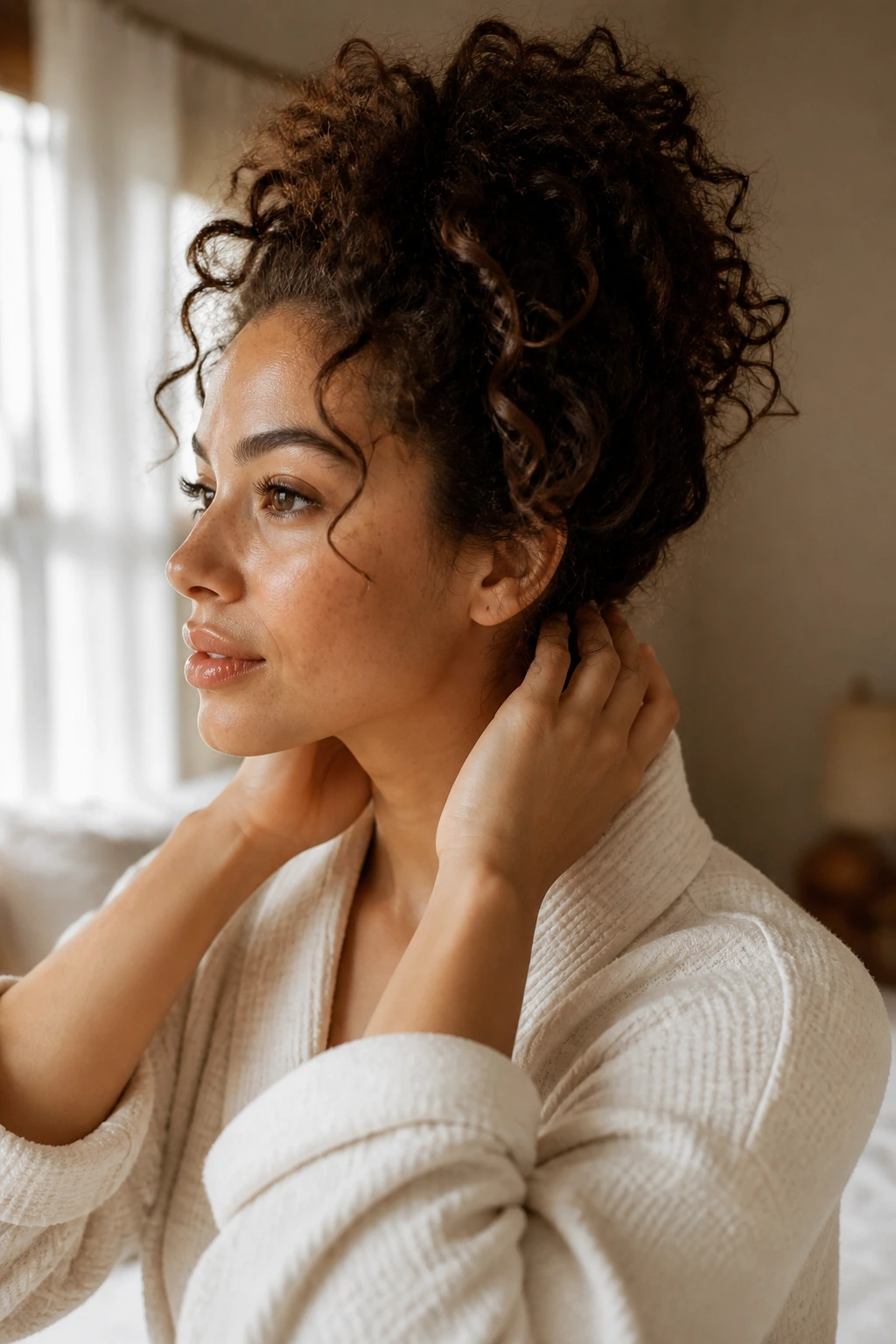
Curly hair rarely needs a full restart. It usually needs a small rescue. If a style begins to sag, the first fix is almost always at the base: tighten the anchor point, not the whole head. Add one extra bobby pin near the nape, move the clip a half-inch upward, or swap a stretched elastic for a fresh one.
Frizz at the crown is easier to tame than people think. Smooth a few drops of water over the top with your fingers, then press a pea-size bit of cream between your palms and tap it over the rough spots. Don’t rub. Rubbing breaks clumps apart and creates more halo frizz.
At night, use a bonnet, a satin pillowcase, or a loose pineapple depending on the style. Low buns and twists can usually be pinned loosely and covered. Bubble styles and wrapped ponytails often keep their shape better if you remove only the decorative pieces and sleep with the core structure intact. If you wake up with a dent, a 30-second mist and a finger fluff usually beats starting over.
Common Mistakes That Make Curly Styles Fall Apart
-
Pulling too tight at the start: The style may look neat for ten minutes, then the roots ache and the crown flattens. Keep the first gather loose, then tighten only the anchor.
-
Using too much product before clipping: Heavy cream or oil makes clips slide. Use just enough to smooth the surface, not enough to coat the whole head.
-
Styling soaking-wet curls: Wet hair stretches differently, and as it dries, the shape can shift in awkward ways. Aim for damp, not dripping.
-
Choosing clips that are too small: A tiny clip on dense curls is a joke. It opens, slips, or pops out at the worst possible time. Match the tool to the hair mass.
-
Touching the style too often: Every time you pat, pinch, or check the curls, you separate clumps and invite frizz. Fix it once, then leave it alone.
-
Ignoring your part and cowlicks: Fighting natural growth patterns wastes time. Work with the way your hair falls, and the style settles faster.
Ways to Adapt These Looks for Different Lengths and Curl Patterns
Short-Curl Version: Use half-up shapes, side clips, and crown twists. Shorter curls often don’t have enough length for full buns, but they do have enough texture to hold a pinned front or a tucked side.
Long-Volume Version: Low buns, wrapped ponytails, and bubble styles work best when the length gets heavy. Extra length needs stronger anchors and more space between elastics.
Fine-Curl Version: Keep product light and use smaller sections. Too much cream or too many pins weighs fine curls down, which makes polished styles collapse instead of settle.
Coily-Hair Version: Go for puffs, low knots, and twist-based looks. Tight coils hold shape beautifully, but they often need gentler tension at the hairline and stronger support at the base.
Day-Three Refresh Version: Deep side parts, side-swept clips, and headband rolls are excellent when the curls need camouflage more than styling. The less you disturb the roots, the better the refresh.
Frequently Asked Questions
How do I keep curly hairstyles from puffing up by noon?
Start with a cleaner anchor point and less product than you think you need. A satin scrunchie, a few matte bobby pins, and a light mist at the crown usually hold better than heavy cream and tension.
What’s the fastest style on this list for very thick curls?
The low curly ponytail with a wrapped coil and the side-parted claw clip twist are the quickest. Both rely on the curl’s own volume instead of trying to compress it into something smaller.
Can I do these styles on freshly washed hair?
Yes, but choose gently. Wet or damp curls can work for half-up styles and soft twists, yet they’re easier to stretch out or frizz if you pull them too tightly. Fully soaking hair is the risky version.
Do I need gel for every style?
No. Some looks only need water and a little leave-in. Gel helps the hairline stay tidy, but too much of it can make curls stiff, especially if you’re planning to wear the style all day.
What if my curls are short and don’t reach a bun?
Use side clips, crown twists, braided headbands, or a tucked headband roll. Short curls actually make those styles easier because there’s less length to corral.
How many pins do I really need?
Usually fewer than people think, but stronger ones matter more than a pile of weak ones. Two good pins crossed at the anchor point often do more work than six flimsy pins scattered around.
How do I make a curly updo look polished instead of messy?
Keep one part of the style clean — usually the part line or the nape — and let the rest keep its texture. The style looks polished because there’s a deliberate shape, not because every curl is forced into obedience.
Will a claw clip damage my curls?
Not if the clip has smooth teeth and you’re not yanking the hair into it dry and tangled. A good clip should hold the base, not crush the whole curl mass. If it leaves a harsh dent, it’s too small or too sharp.
The Styles That Buy You Breathing Room
Busy mornings are rough on curly hair when you treat every strand like it has to be perfect. It doesn’t. A good part, a smart anchor, and one polished detail are often enough to make the whole head look finished.
What I like most about these styles is that they leave room for texture. They don’t erase the curls. They frame them, corral them, and let them do the part they’re already good at doing.
Try the low twist on a rushed Monday, the braided headband when the front needs help, and the low chignon when you want the cleanest possible line at the neck. Once you find the few shapes that suit your curl pattern and your morning pace, the mirror gets a lot less dramatic.