



A good curly haircut should make your face look a little longer, your cheekbones a little sharper, and your morning a little less rude. That’s the real promise behind slim face haircuts for curly hair: not magic, not a new identity, just a shape that helps your curls do the flattering work for you while you’re still half-awake and hunting for coffee.
The wrong cut on curls is easy to spot. The sides puff out at the widest point of the face, the ends sit heavy at the jaw, and the whole thing turns into a triangle by lunch. I’ve seen perfectly healthy curls ruined by a blunt line that looked neat when wet and then went full mushroom once it dried. Curly hair has shrinkage, memory, and a mood of its own. If the cut ignores that, the mirror will be honest about it later.
The best versions here use a few simple tricks: lift at the crown, softness around the cheekbones, and length where the face needs a vertical line. Some are short enough to dry in minutes. Some are long enough to tie back when life gets messy. All of them are built for real mornings, not glossy salon photos with diffusers and ring lights.
Why Slim Face Haircuts for Curly Hair Save Time Before Work
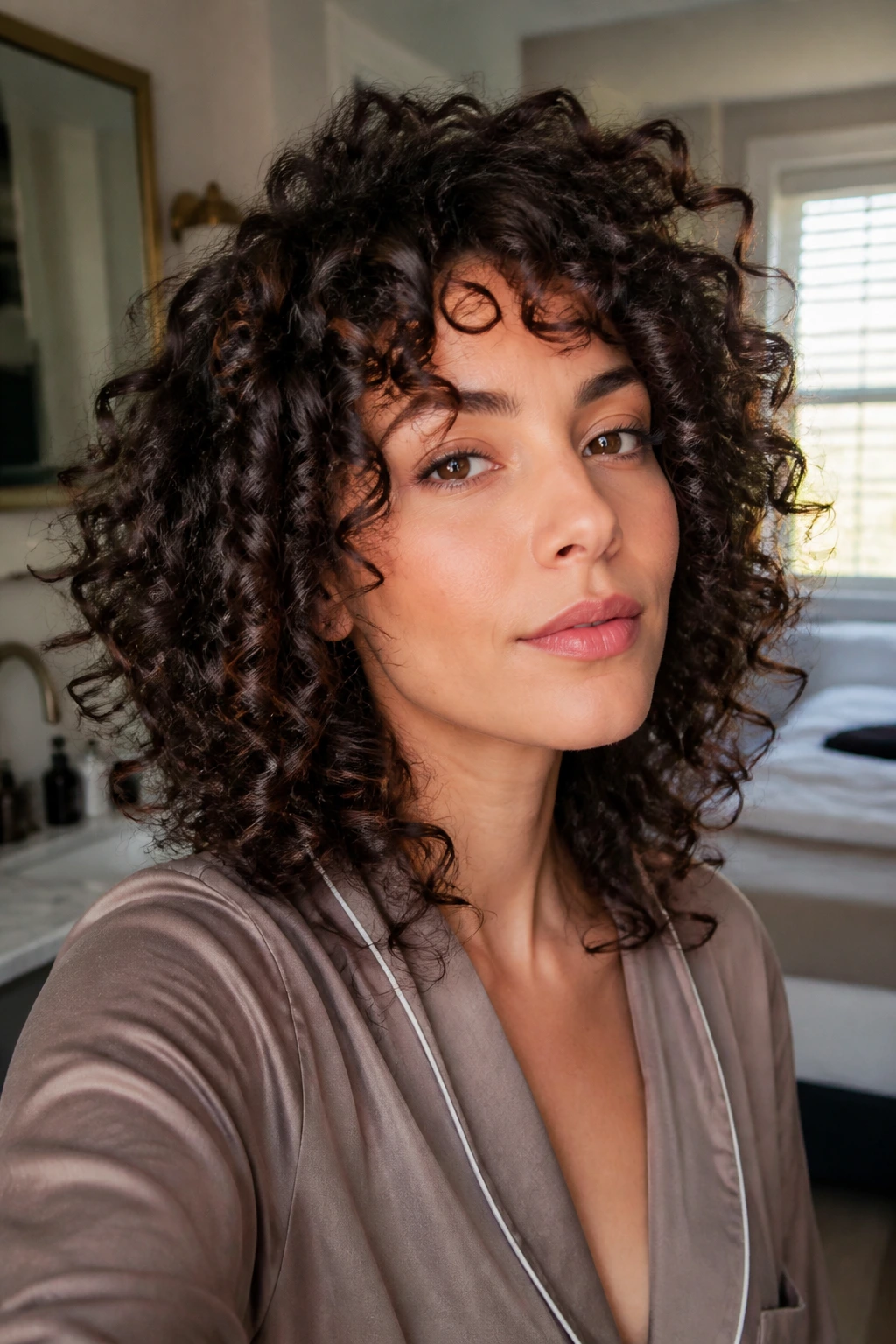
-
They build shape into the cut. A good curl haircut lands in the right places when you scrunch and go, so you’re not using ten clips and three brushes to fake structure.
-
They keep bulk away from the jaw. The fastest way to make curls read wider is to stack too much width at the sides; these cuts move weight higher or lower instead.
-
They still work on day two. When the style loses a little definition, the shape stays readable because the silhouette is doing half the styling.
-
They can be air-dried without looking unfinished. You’re not relying on a round brush blowout to make the face-framing pieces behave.
-
They give your stylist a clear target. Instead of asking for “something flattering,” you can ask for cheekbone placement, crown lift, or length that sits below the jaw.
The Shape Tricks Behind a Curly Cut That Looks Slimmer
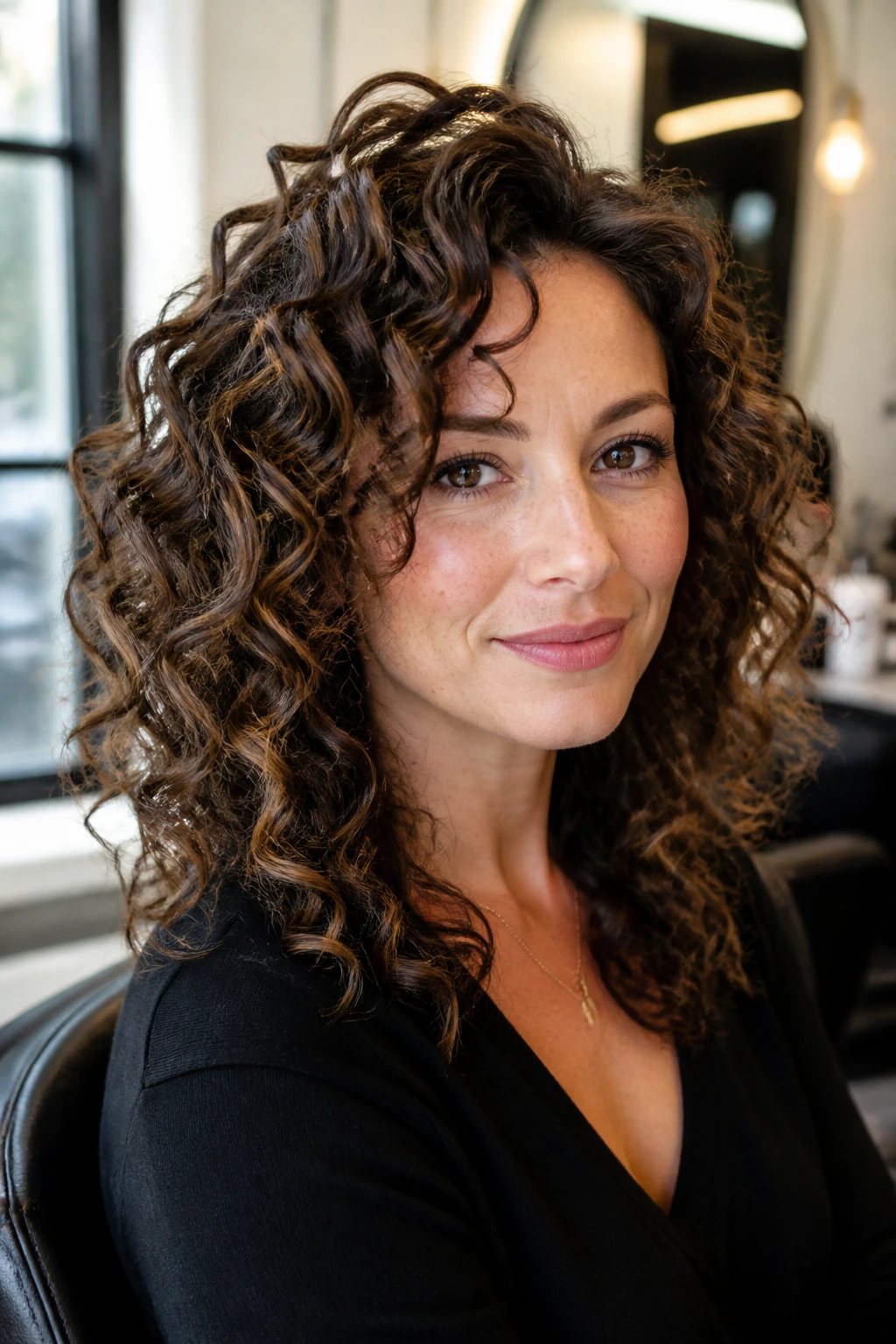
Curls slim the face when the cut changes where the eye lands. That sounds simple, but it’s the whole game. A curve that opens at the cheekbone is more flattering than one that hits right at the widest part of the jaw, and a little height at the crown draws the eye upward without turning the hair into a helmet.
Dry cutting matters here. A curl that looks tame when it’s wet can spring up an inch or two, sometimes more if your pattern is tight. If your stylist cuts for the wet shape only, the finished result can end up too short at the sides and too blunt at the bottom. That’s how a shape meant to slim the face turns into one that sits squarely on it.
And then there’s the parting. A center part gives a clean vertical line, but a deep side part can carve out space across the forehead and cheek area in a way that reads softer. Neither is automatically better. The point is to put the line where your face needs it, not where habit has parked it for the last five years.
1. Long Layers with Cheekbone Face Framing
Long layers are the old reliable of curly cuts, but only when they’re placed with intent. If the shortest face-framing pieces land around the cheekbone and the longest length stays below the collarbone, the face reads longer without losing that soft curl curtain around it.
Why It Works
The layers keep dense curls from bunching at the sides, which is where a lot of curly cuts start to feel heavy. This version is especially good if you want to keep your length but still make your face look a little narrower through the middle. Ask for the front pieces to start lower than you think. Curls bounce up.
- Best for: 2C to 3C curls that need movement without a big chop.
- Salon note: Ask for the cut on dry hair, or at least for the face-framing pieces to be checked dry.
- Morning payoff: A little mousse at the roots and a palmful of curl cream can be enough.
Pro tip: Keep the layers long near the sides and let the shortest pieces open at the cheekbone, not the chin. That one change does more than most people expect.
2. The Curly Shag That Takes Weight Off the Sides
The shag is bluntly good at this job. It removes bulk where curls tend to explode outward and leaves enough length in the back to keep the silhouette from looking puffy or square.
A strong curly shag isn’t a chopped-up mess. The crown is shorter, the sides are softer, and the perimeter usually stays a little longer than people expect. That combination creates lift on top and movement around the face, which is exactly what you want if you’re trying to make the face read slimmer without spending ten extra minutes styling it.
If your curls are dense, this cut can be a lifesaver. You can air-dry it with a little foam or diffuse the roots for five to eight minutes, then stop. The shape does the rest. That’s the appeal.
3. Shoulder-Length Lob with Soft Layers
Why does a lob keep showing up in curly-hair conversations? Because it hits the sweet spot between short and long. It’s long enough to pull back, but short enough that the weight doesn’t drag the curl pattern flat at the ends.
How to Wear It
Keep the longest point near the collarbone, then ask for soft internal layers rather than a staircase effect. The goal is a shape that hugs the neck a little and opens around the face, not a blunt line that lands right at the jaw. For rounder faces, this cut is easy to live with because it keeps the eye moving vertically.
A middle part works if your curls are balanced. A side part works if you want a little more sweep across the forehead. Either way, the styling is mercifully plain: mist, scrunch, dry, leave.
4. Side-Parted Curly Bob
A side-parted curly bob can be sharper than people think. One side falls a little longer, the curl mass shifts off center, and the face gets this subtle diagonal line that breaks up width around the cheeks.
Quick Shape Notes
- Part slightly off-center, not all the way to the ear.
- Keep the bob somewhere between the chin and the top of the shoulders.
- Ask for a little more length in the front than the back.
- Avoid a blunt line that ends exactly at the jaw.
That last point matters. A bob that hits the jaw squarely can make the lower face look fuller. Shift the line a touch lower, or angle it softly, and the whole cut feels lighter. It’s a small change. It really is.
5. The Tapered Curly Pixie
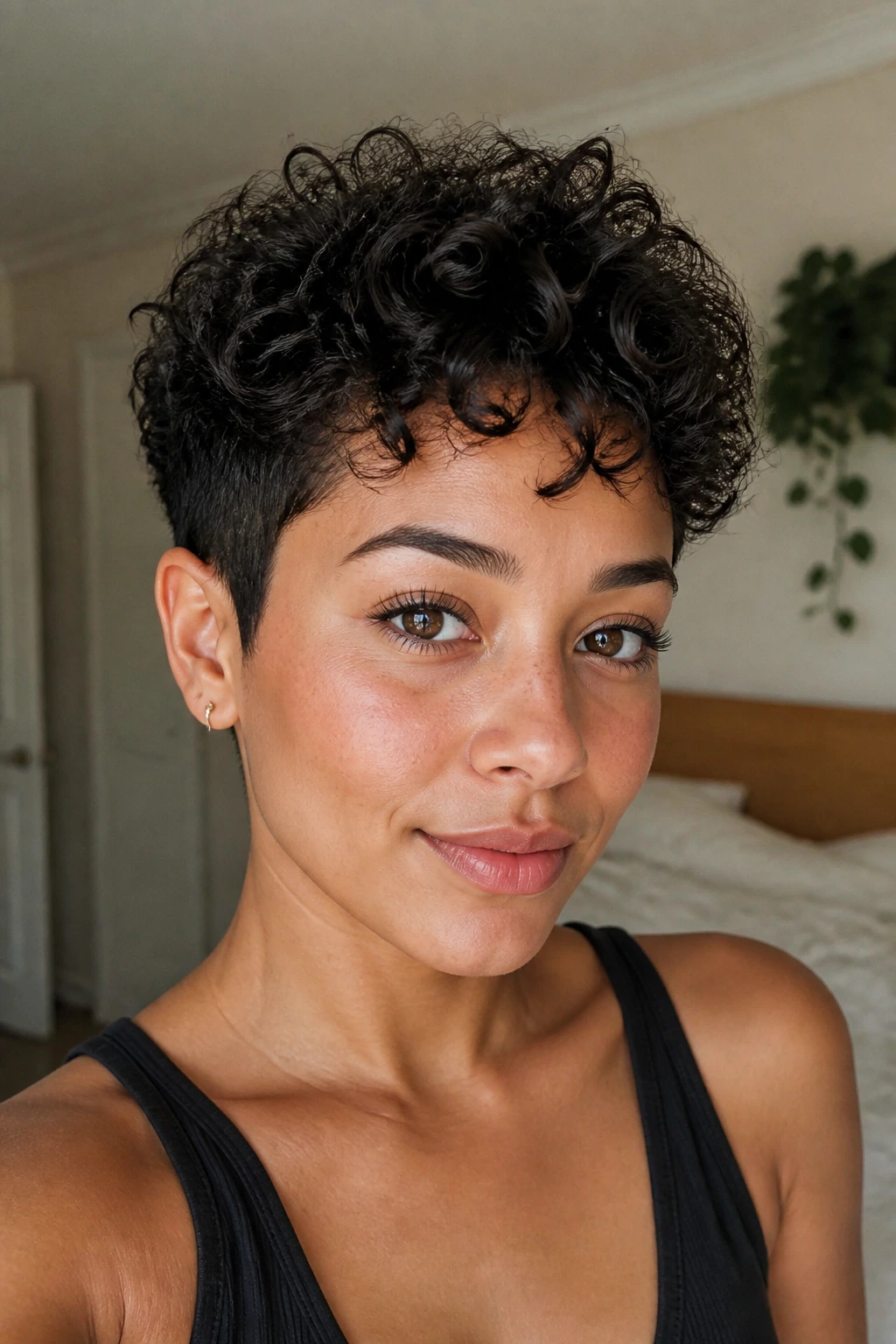
Short curly cuts only work when the shape is intentional. A tapered pixie does that better than most. The sides and nape are neat, the top keeps enough length for curl pattern, and the whole cut pulls attention upward instead of spreading it sideways.
The best version of this cut gives you a little volume on top and around the crown without leaving a heavy shelf at the temples. That’s the secret. You want the eyes to travel up the center of the face, not settle on the widest part of the cheeks.
It’s also one of the fastest morning cuts on this list. A dab of cream, finger-coiling a few front curls, and a quick shake is often enough. No round brush. No ceremony.
6. The Rounded Afro Shape
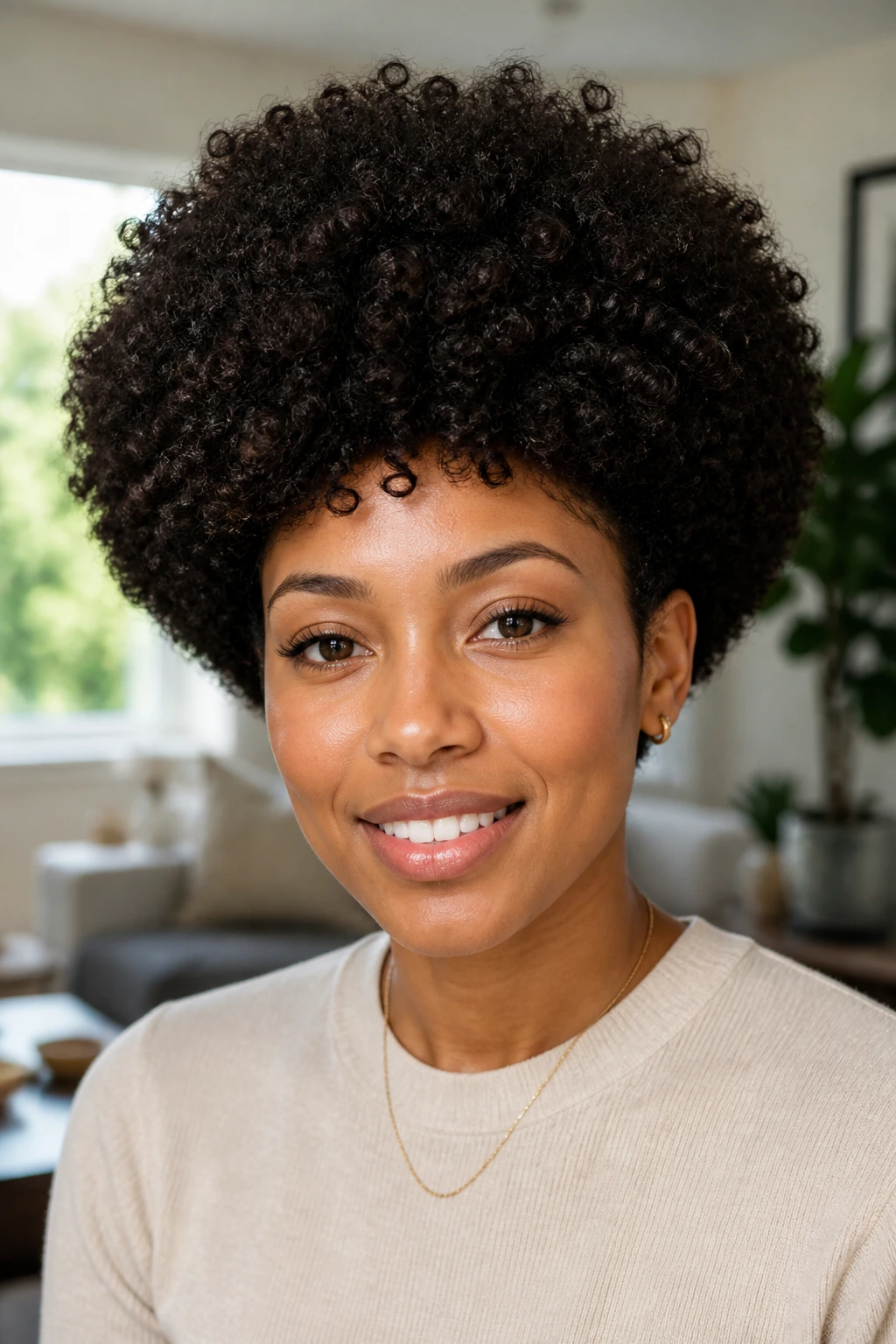
A rounded afro can slim the face beautifully when it’s shaped with clean sides and a controlled halo on top. The trick is not to flatten the curls down or carve them into a box. You want the silhouette to feel open and lifted, especially near the crown.
Unlike a bulky shape that sits out at the temples, a well-shaped rounded afro creates space around the forehead and narrows in toward the jaw. That gives the face room to breathe. It also looks polished even when you haven’t done much beyond refreshing the roots and picking the curls out a little.
This cut is especially good for tighter coils that hold shape well. Ask your stylist to keep the bottom line soft and to remove bulk where the hair wants to fan outward first.
7. Curtain Bangs with Long Curls
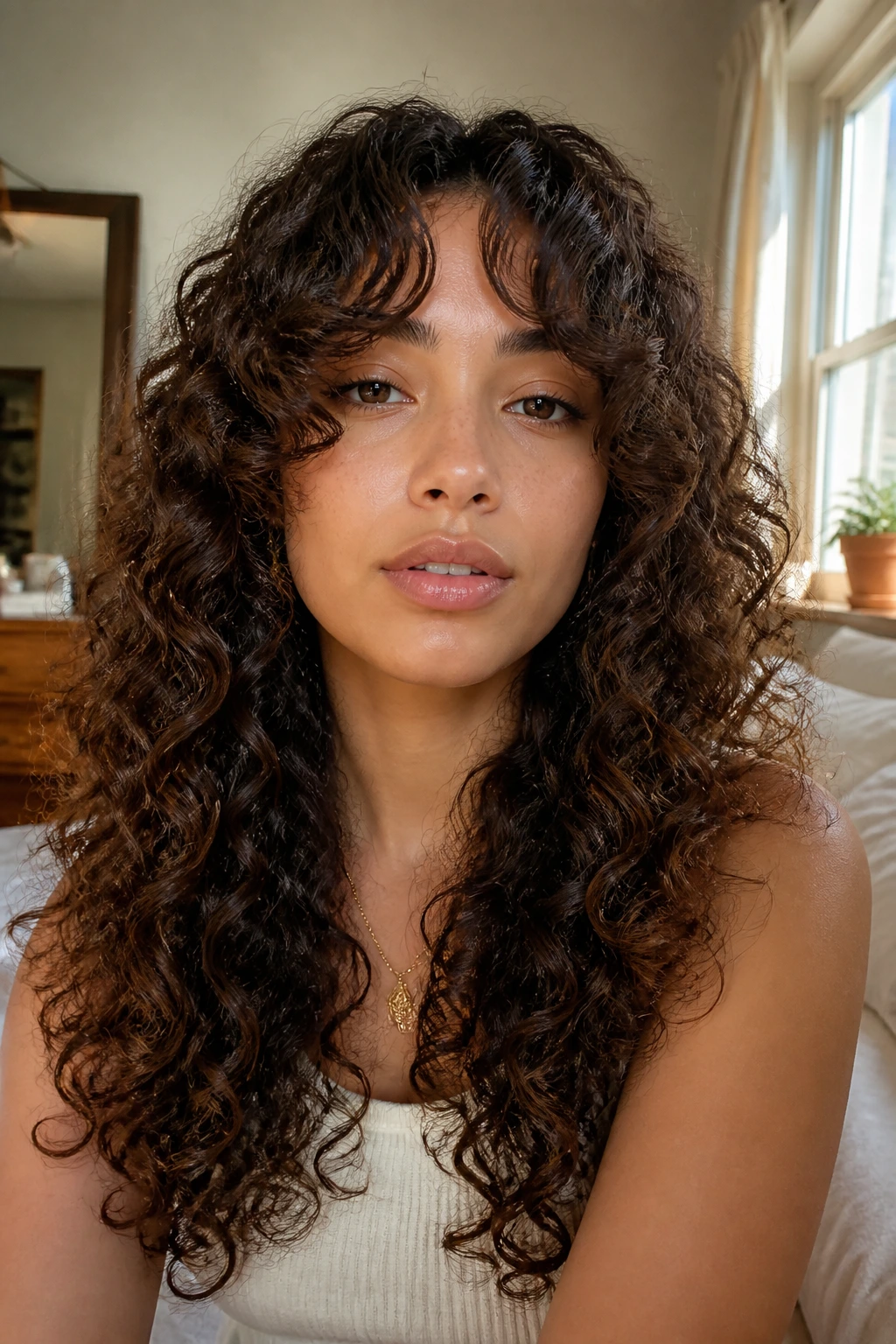
Curtain bangs can be a gift on curly hair if they’re cut with shrinkage in mind. The center opens the face, the sides fall away from the forehead, and the long lengths keep the whole thing from feeling boxed in.
What Makes It Work
The fringe should be cut longer than the final target, because curls will spring up after drying. That’s where people go wrong. They ask for bangs at eyebrow level and end up with a curly fringe hovering halfway up the forehead. Not ideal.
- Best for: oval, round, and heart-shaped faces.
- Styling note: Use a tiny bit of gel or mousse just on the fringe so it doesn’t separate into random twigs.
- Maintenance: Bang trims need attention more often than the rest of the cut.
If you want a face-slimming result without losing length, this is one of the smartest options. The bangs frame the eyes; the long sides do the lengthening.
8. The Asymmetrical Curly Bob
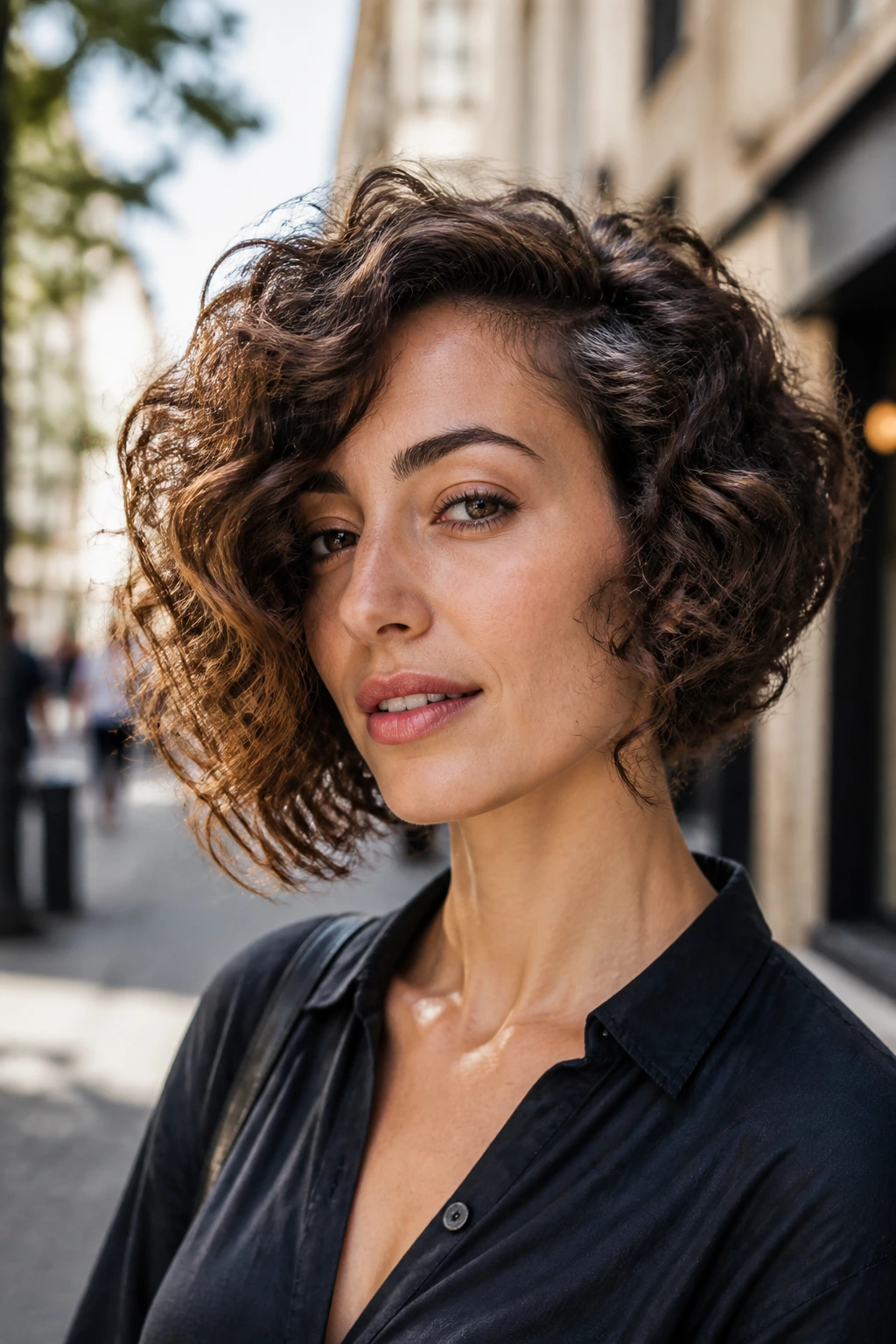
A small asymmetry changes everything. Even a difference of half an inch to an inch and a half can create a visible diagonal that pulls the eye away from width and toward length.
The cut works because the brain reads diagonals as movement. A straight bob can sit there and behave itself, but it can also feel static. The asymmetrical version has a little built-in action. That’s useful if your curls are heavy and tend to sit in a block.
I like this cut best on curls that have some definition on their own. It doesn’t need to be perfect. In fact, the imperfect movement is half the appeal. A light gel cast helps the shape hold through the first half of the day.
9. The Wolf Cut for Curls
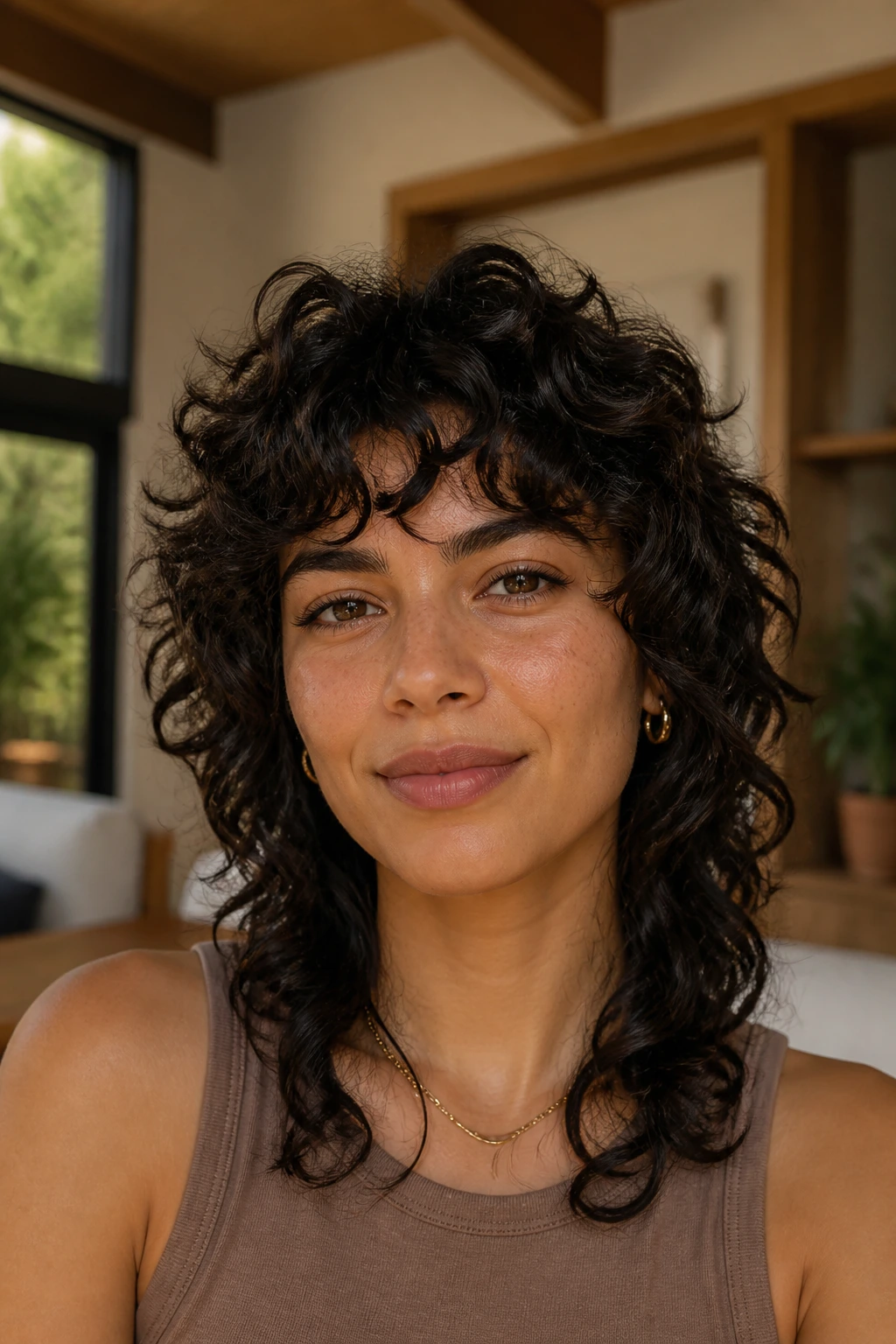
Can a wolf cut slim the face? Yes, if it’s done with restraint. The curly version works because it keeps volume up high and away from the sides while leaving the ends loose enough to move.
How to Ask for It
Tell the stylist you want crown lift, cheekbone opening, and length that doesn’t balloon at the jaw. That’s the language that matters. The cut is part shag, part mullet, but on curls it often reads softer than the name suggests.
This one suits thicker hair that gets triangular when it’s one length. The layers prevent that heavy shelf effect. For mornings, a diffuser helps, but only at the roots and front. You do not need to dry every curl into place. That would defeat the point.
10. The Collarbone Cut with Invisible Layers
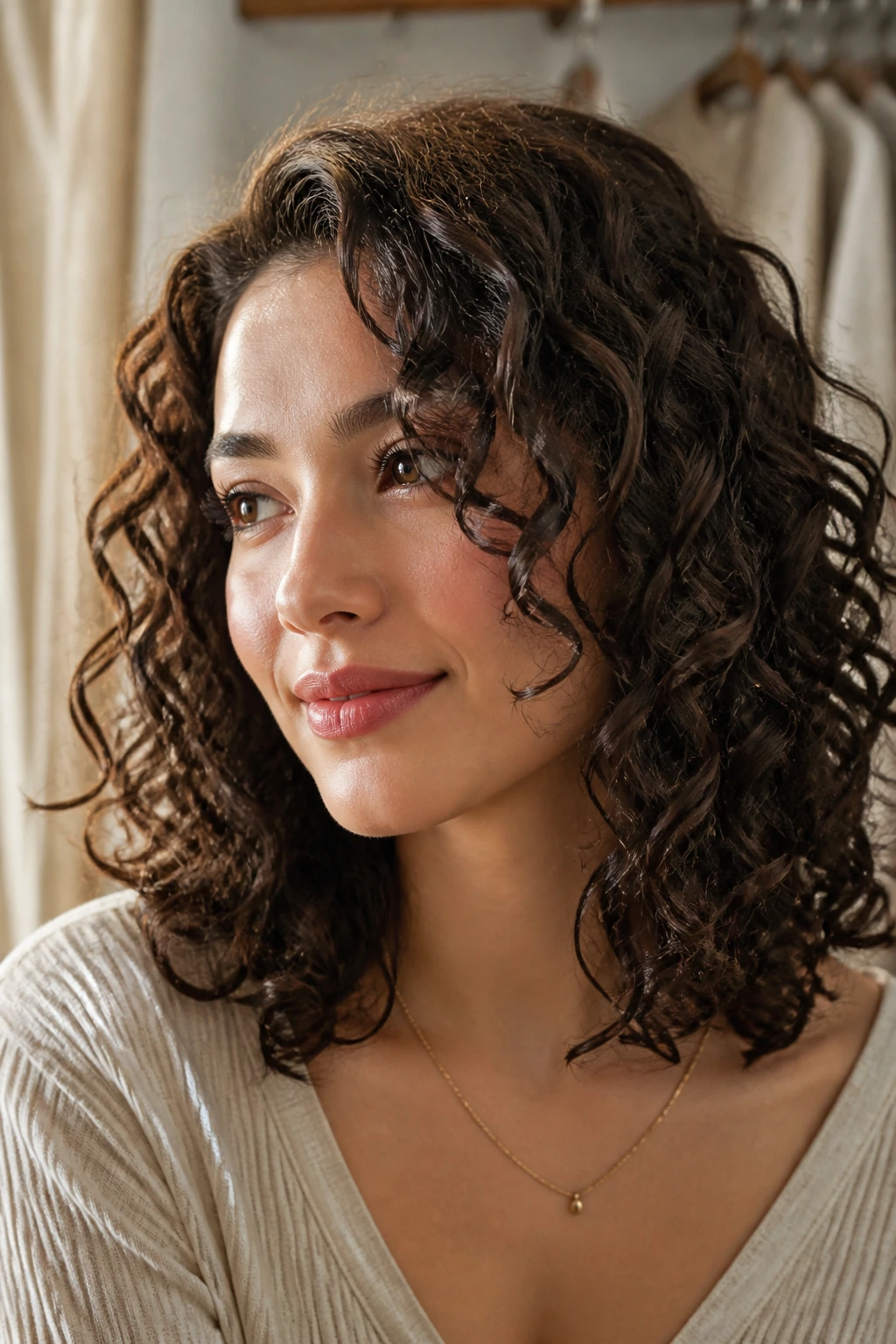
An invisible-layer cut keeps the silhouette clean while still removing enough weight to stop curls from hanging like a curtain. It’s one of my favorite low-drama options for people who want to look put together with very little effort.
The collarbone length is doing a lot of work here. It draws a long line down the body, which helps the face feel narrower. Meanwhile, the hidden layers keep the curls from puffing wide at the cheeks. You get shape without an obvious chop. Nice trade.
This cut is also forgiving if your curl pattern changes a little from day to day. The length gives you room to refresh, clip, or half-up without exposing a weird bottom line.
11. Side-Swept Fringe with Mid-Length Curls
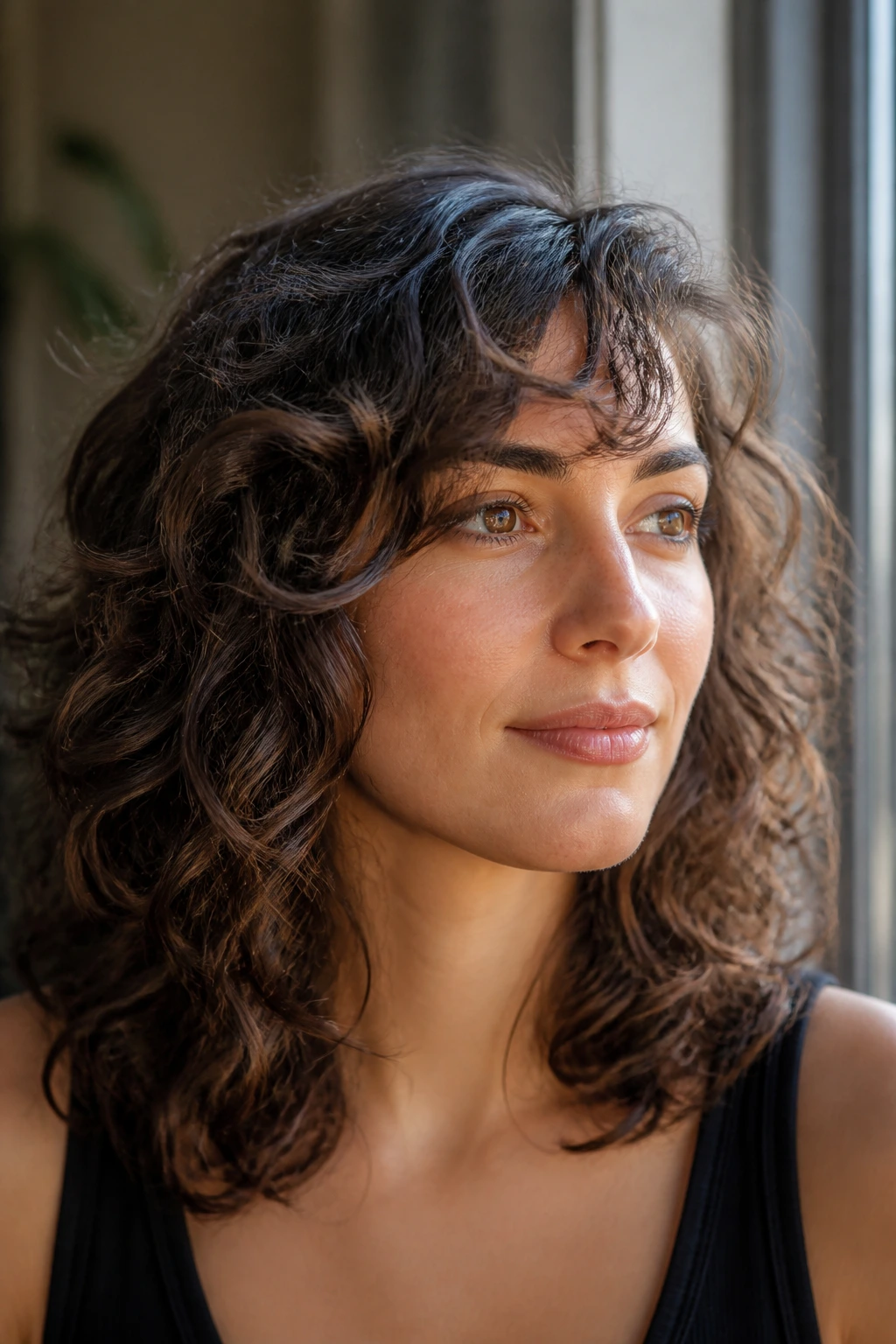
A side-swept fringe can do what straight-across bangs can’t: it softens the forehead and bends the eye line. On curly hair, that sweep often makes the face look a touch longer and less square.
The fringe should be light enough to move, not so dense that it forms a curtain. You want one side to sit a little deeper into the cheek area, almost like a soft shadow. That’s the flattering part. It adds shape without shouting for attention.
Mid-length curls work well with this because the cut has room to breathe. If the hair is too short, the fringe and the body of the cut can compete. At shoulder length, they cooperate.
12. The U-Shaped Shoulder-Graze Cut
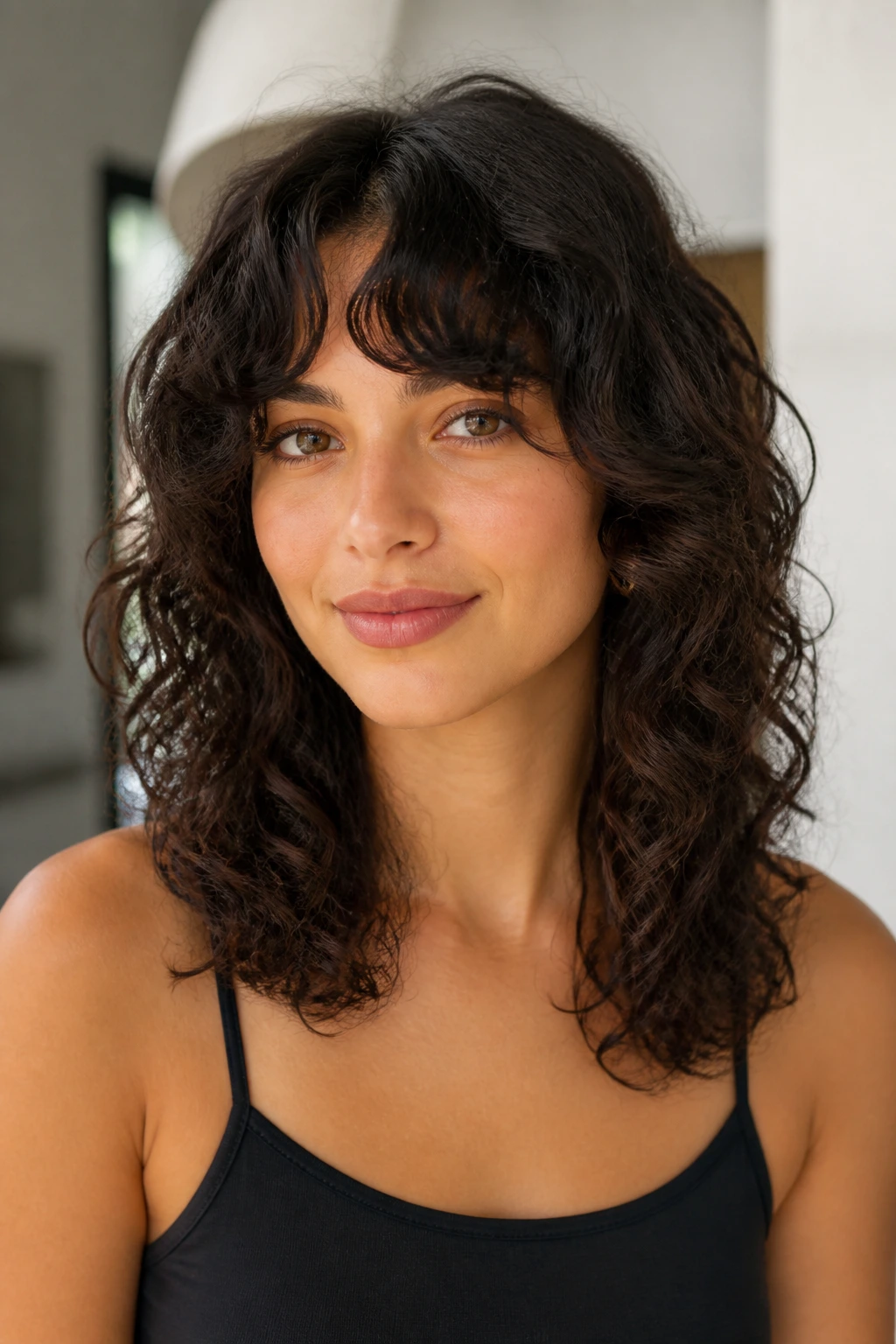
A U-shaped cut is sneaky good. It keeps the ends softer at the sides and a little longer in the center, which helps curls fall in a more vertical way instead of flaring out at the cheeks.
Unlike a blunt straight cut, the U-shape gives the eye a path to follow. That matters more than people think. The face reads narrower when the hair doesn’t end all at the same level. It also tends to look less harsh as it grows out, which is handy if you don’t live in a salon chair.
If you want low-maintenance styling, ask for long internal layers and a soft U perimeter. Then keep the part where your curls naturally want it. Fighting the part every morning is a waste of time.
13. The Tapered Curly Mullet
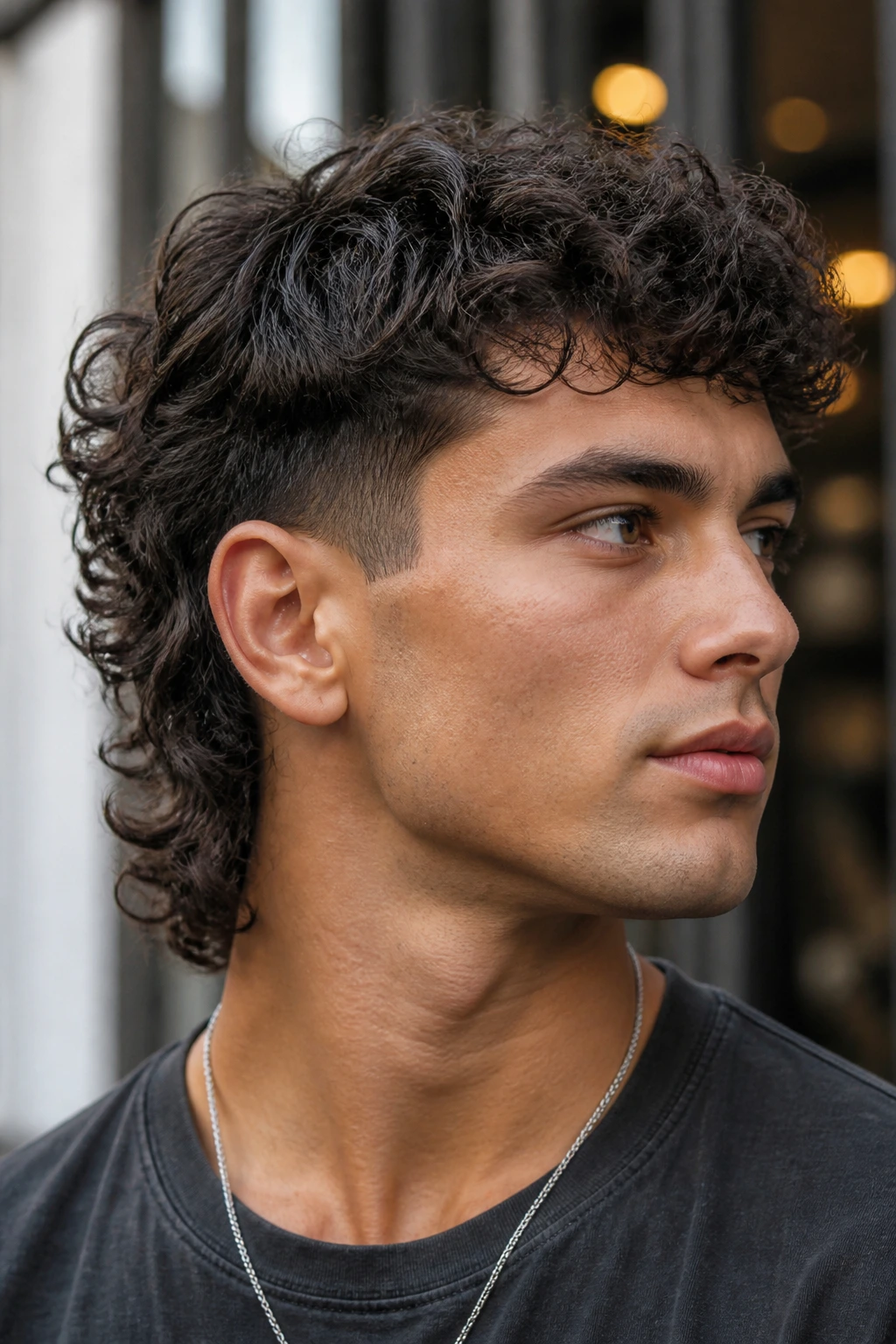
A curly mullet sounds bold because it is, but the shape can be startlingly flattering when the sides are controlled and the back carries the length. The front and crown keep the eye high; the nape keeps the silhouette from feeling wide.
This cut works well when your curls need room to stack without looking puffy at the jaw. The shorter top gives lift, and the longer back stops the style from shrinking into a box. It’s a little rebellious, sure. It’s also practical.
On busy mornings, this shape is a gift because it doesn’t need perfect styling to read as intentional. A bit of root volume and a few refreshed front pieces are enough. The rest can do its own thing.
14. The Chin-Length Curly Crop with Fringe

A chin-length crop can be sliming or widening depending on how it’s cut. The key is to bevel the ends and keep the sides from sitting like a shelf. Add a soft fringe, and the face gets framed instead of boxed in.
This cut is not for someone who wants to hide the hair. It is for someone who wants the curls to sit close to the head and show off the face. The fringe should be wispy enough to open the forehead, not dense enough to shorten the face too aggressively.
On tighter curl patterns, this can look chic with almost no daily effort. A little cream, a little scrunching, done. If the cut is shaped well, the face gets a neat, clean outline that feels lighter than the length would suggest.
15. Butterfly Layers for Curls
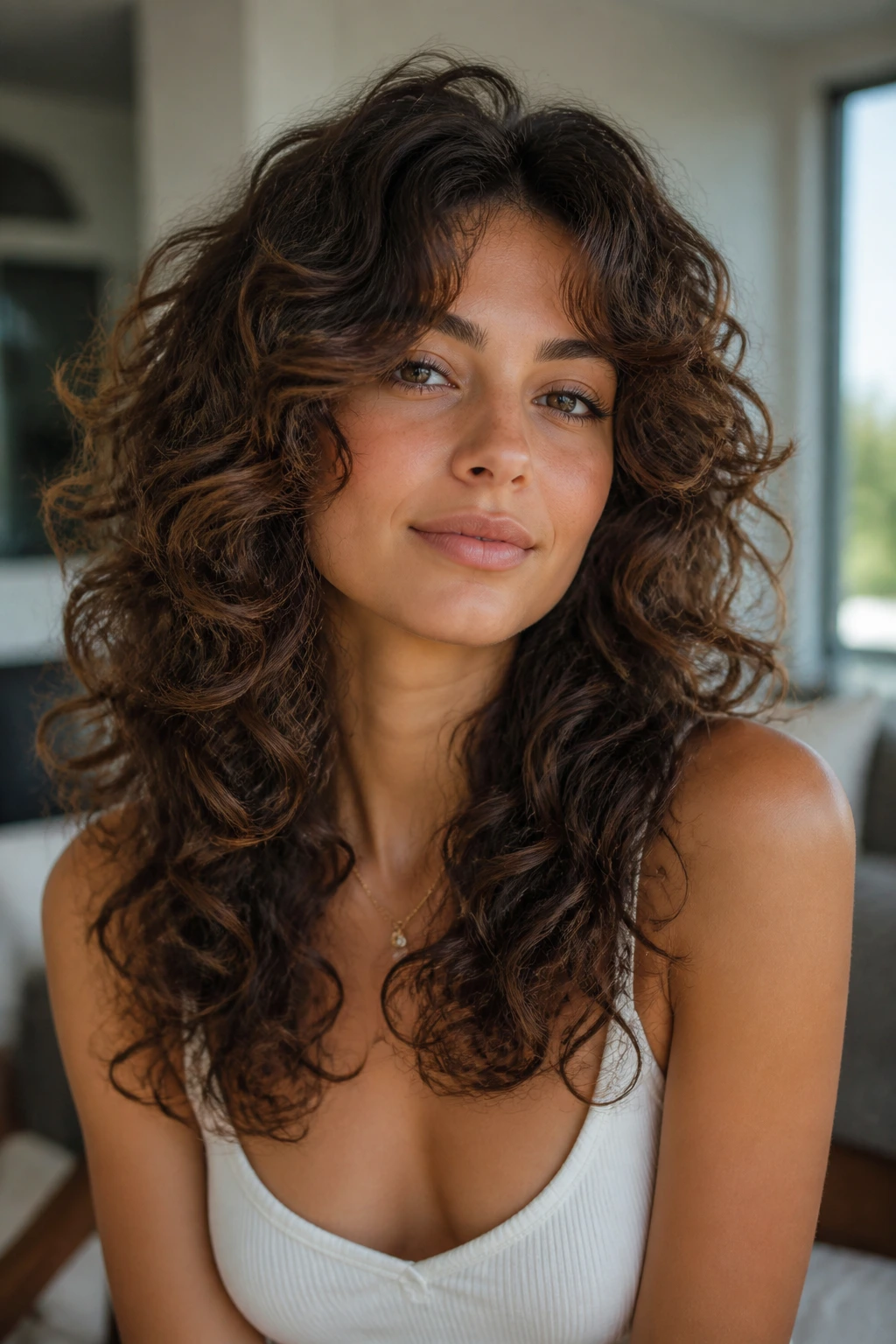
Butterfly layers give you long hair with built-in movement around the face. The shorter top layers lift the area around the cheekbones, while the bottom length stays intact and keeps the face from feeling crowded.
How to Keep It From Going Flat
Use the shorter front layers to create height, not width. That means diffusing the root a bit or clipping the crown while it dries. You do not need to puff out the sides. In fact, the point is to keep the outer edges softer and let the center line stretch the face visually.
This cut is a strong choice if you refuse to lose length. It offers the flattering part of layering without the feeling that half your hair disappeared on the salon floor.
16. The Deep Side-Part Layered Cut
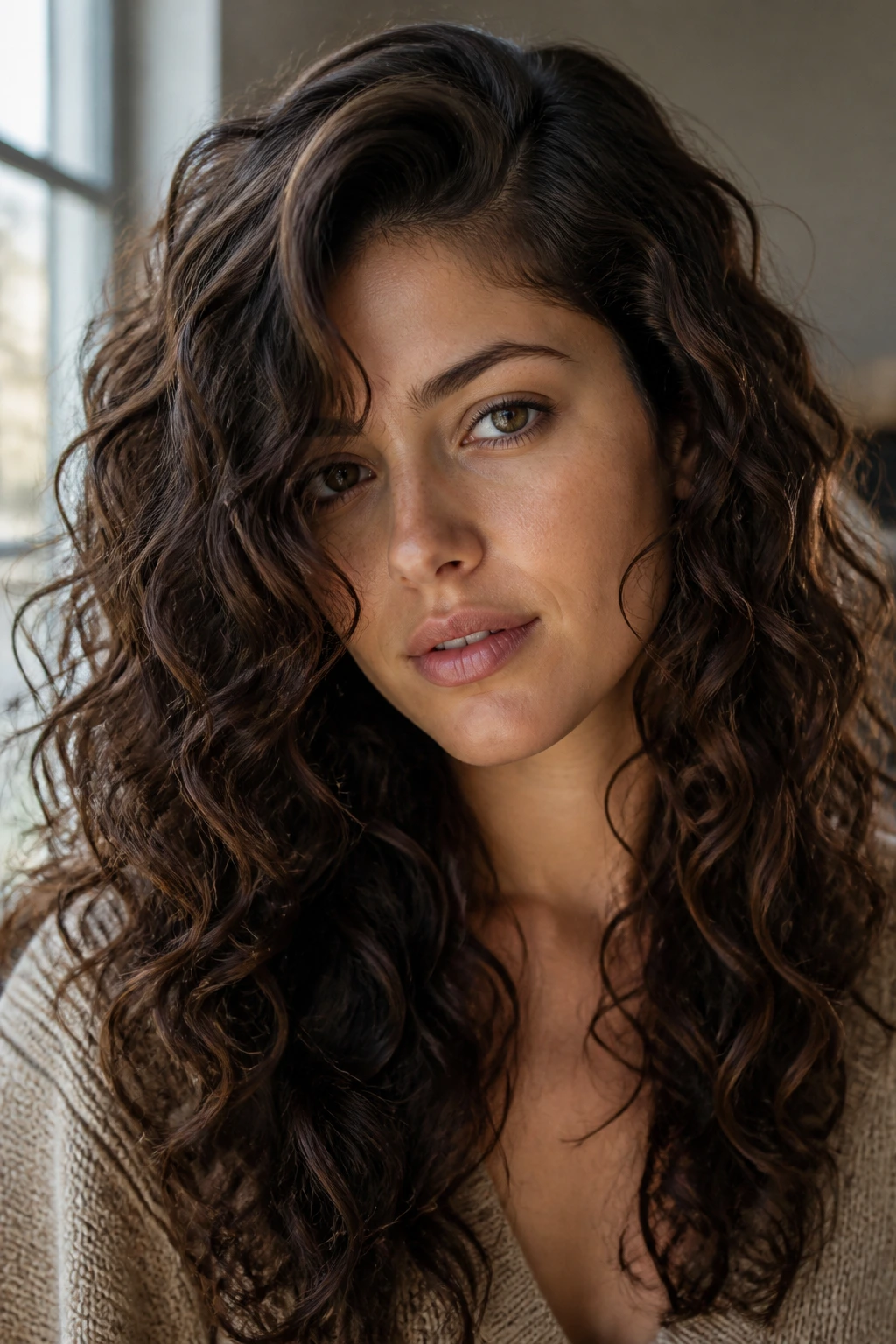
A deep side part can change the whole face shape without a dramatic haircut. Pair it with long layers, and the result is one of the easiest slimming tricks in the curly-hair book.
The part creates asymmetry near the forehead, which stops the face from reading too round or too square. The layers stop the curls from collapsing into one heavy block. Together, they make a plain cut look more finished than it is.
This is a smart option if you hate bangs. It also works when your hair is growing out and you need shape without another major appointment. Sometimes the best cut is partly a cut and partly a smart place to put the part.
17. The Bouncy Ringlet Bob
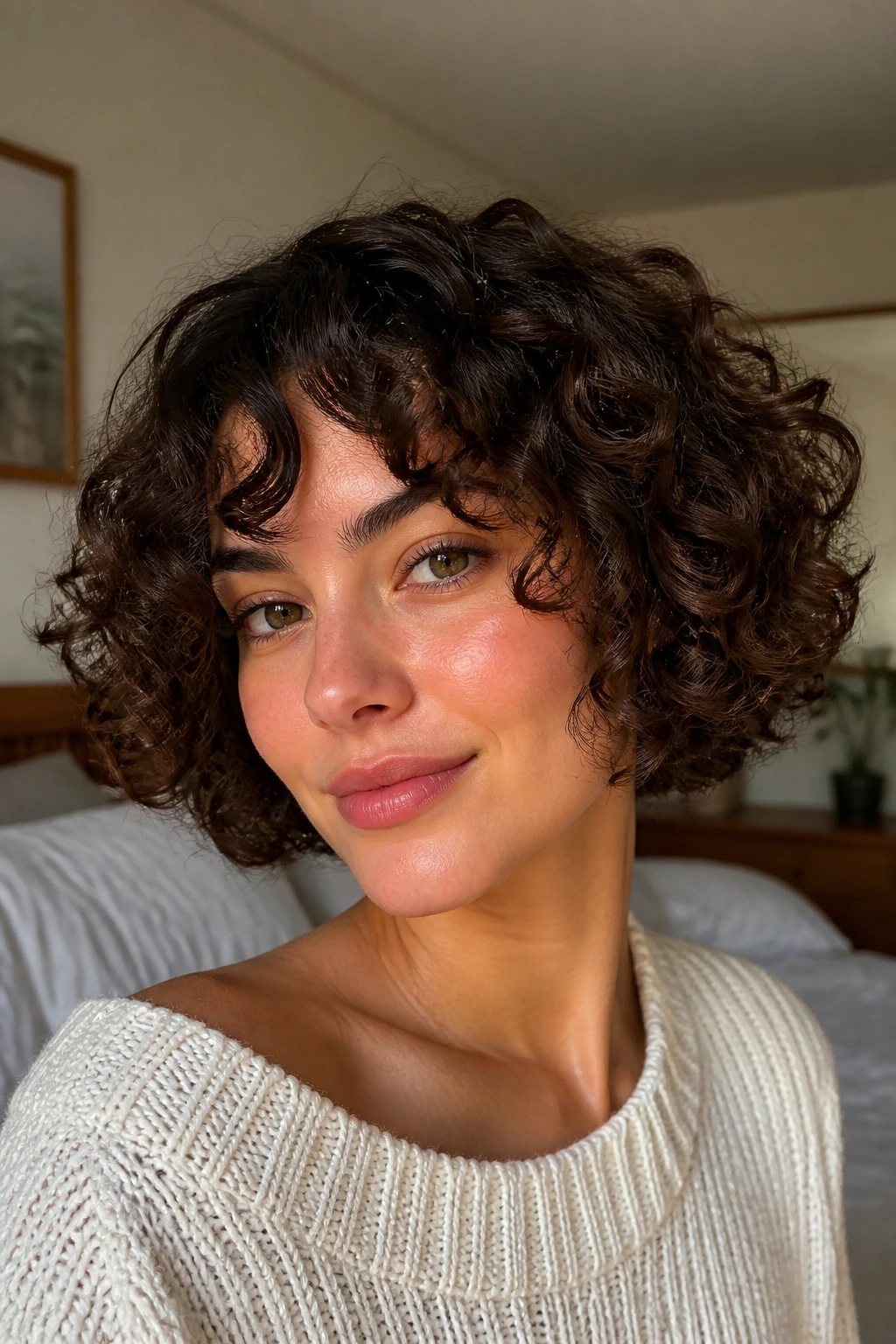
A ringlet bob looks best when the curls are allowed to spring but not sprawl. That’s why the length matters so much. Too short and it widens. Too long and it loses the bounce that makes the shape feel lively.
Keep the bob a little below the chin or near the top of the shoulders, depending on your curl shrinkage. The point is to let the ringlets stack in a soft frame that opens around the face rather than sitting on it. Done right, the style feels neat in the morning and still decent by afternoon.
This is one of the easier cuts to refresh. A spray bottle, a little foam, and some finger shaping at the front often bring it right back.
18. The Soft A-Line Bob
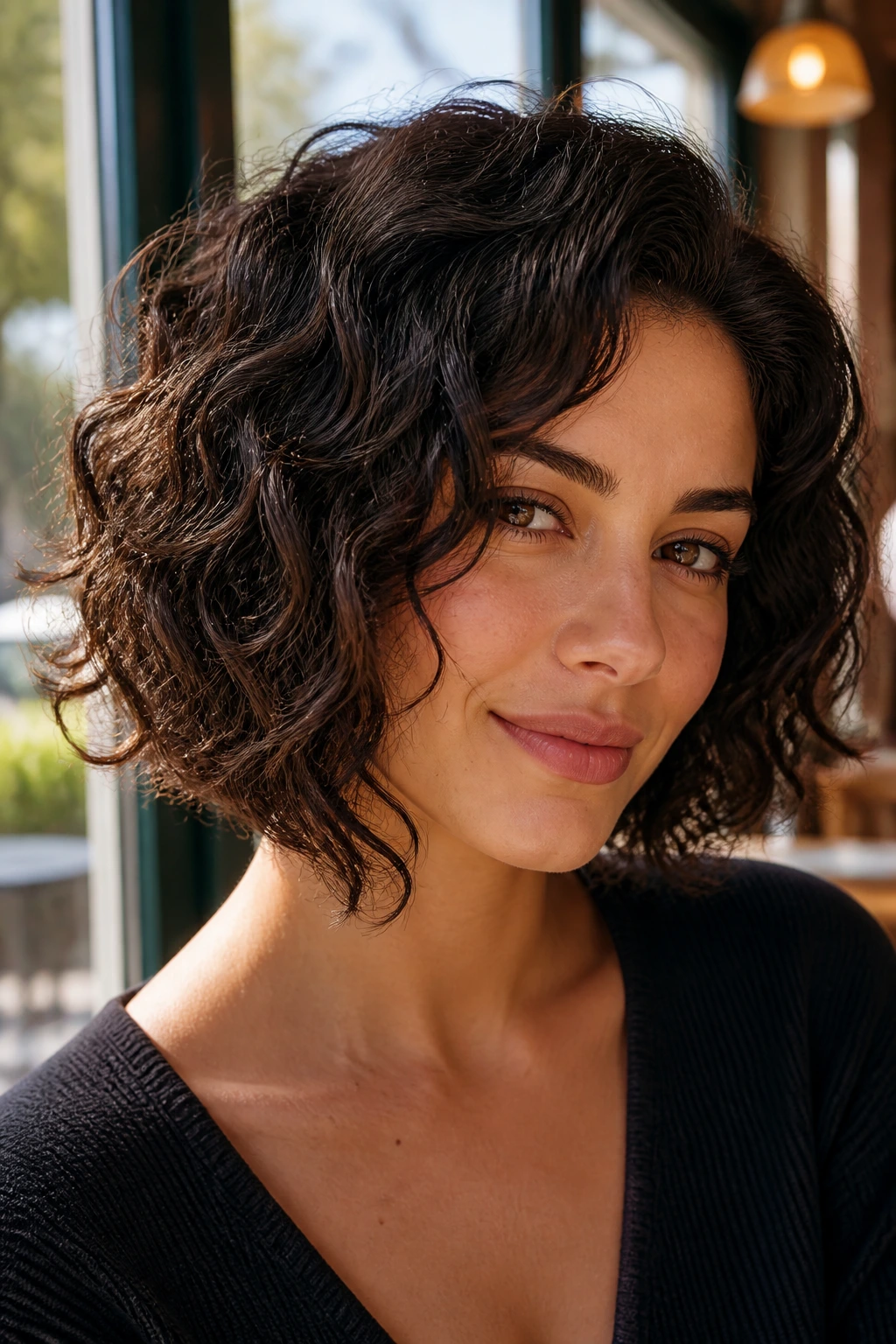
An A-line bob is a little longer in front and shorter in back, which sounds simple until you see what it does on curls. That gentle angle pulls the eye down and forward, and that can make the face look longer without making the whole style feel severe.
The soft part matters. A sharp inverted bob can look too architectural for curly hair unless the curl pattern is very controlled. A softer A-line gives you the same lengthening effect without the rigid edge. The curls move, the line stays readable, and the face gets a cleaner frame.
If you have fine curls, this cut can also help the back look fuller. The angle does the visual work even when the hair itself isn’t massive.
19. The Layered Midi Cut with Internal Shaping
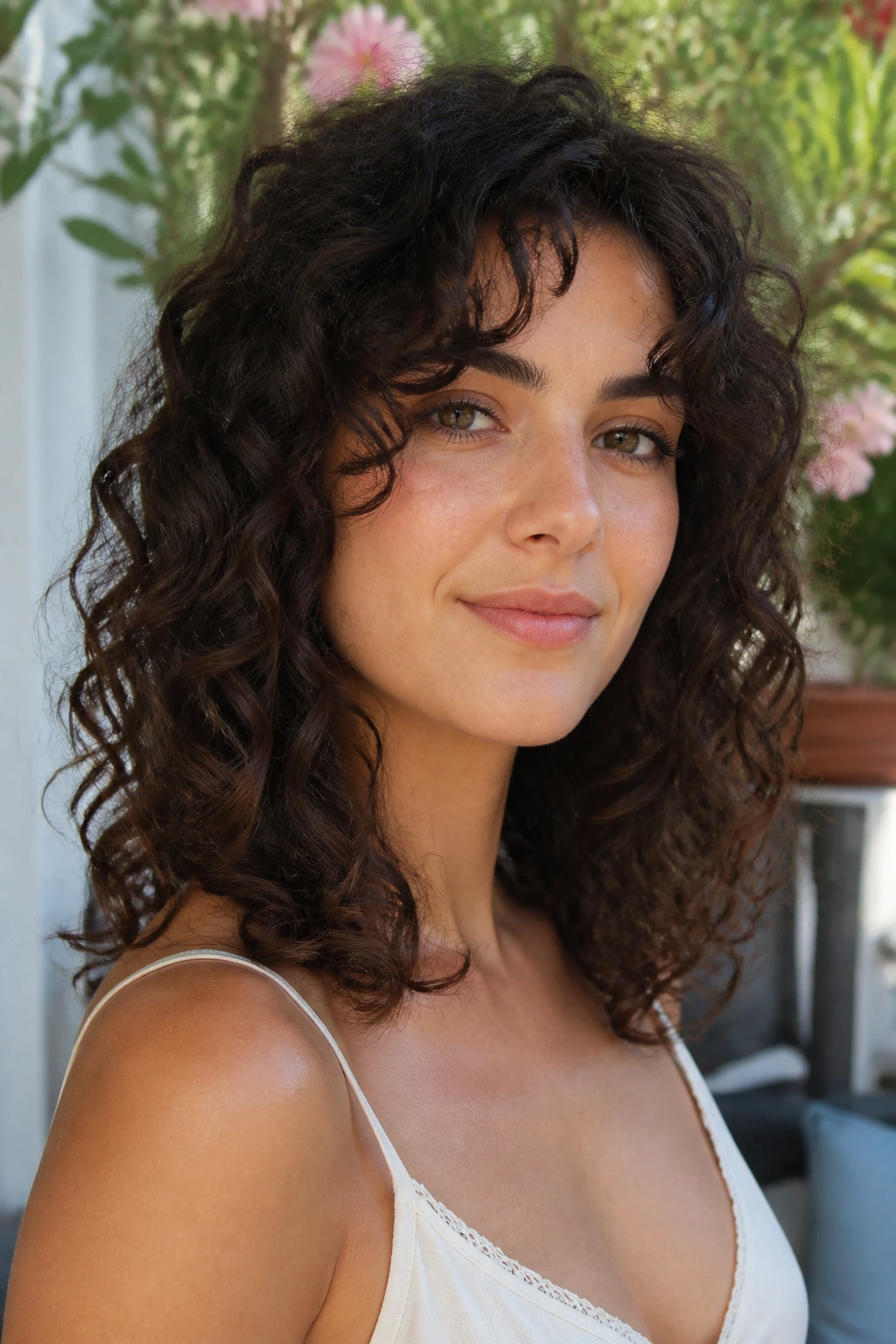
This is the cut for people who want length, volume, and a shape that doesn’t fight them every morning. Internal layers take weight out of the middle without chopping the outer line to pieces.
Why It’s a Quiet Winner
The hair falls in a smoother vertical column, which is what makes the face look slimmer. The curl clumps stay more defined because the ends aren’t over-thinned. And since the shape doesn’t depend on perfect styling, it’s one of the more forgiving options on this list.
- Best for: medium to thick curls that get wide at the mid-face.
- Ask for: internal shaping, not aggressive layering around the perimeter.
- Morning use: mist the top, reapply a pea-size amount of cream, and go.
If your life is chaotic, this is the kind of haircut that behaves without drama. I like that in a cut.
20. The Curly Shag with Micro Fringe
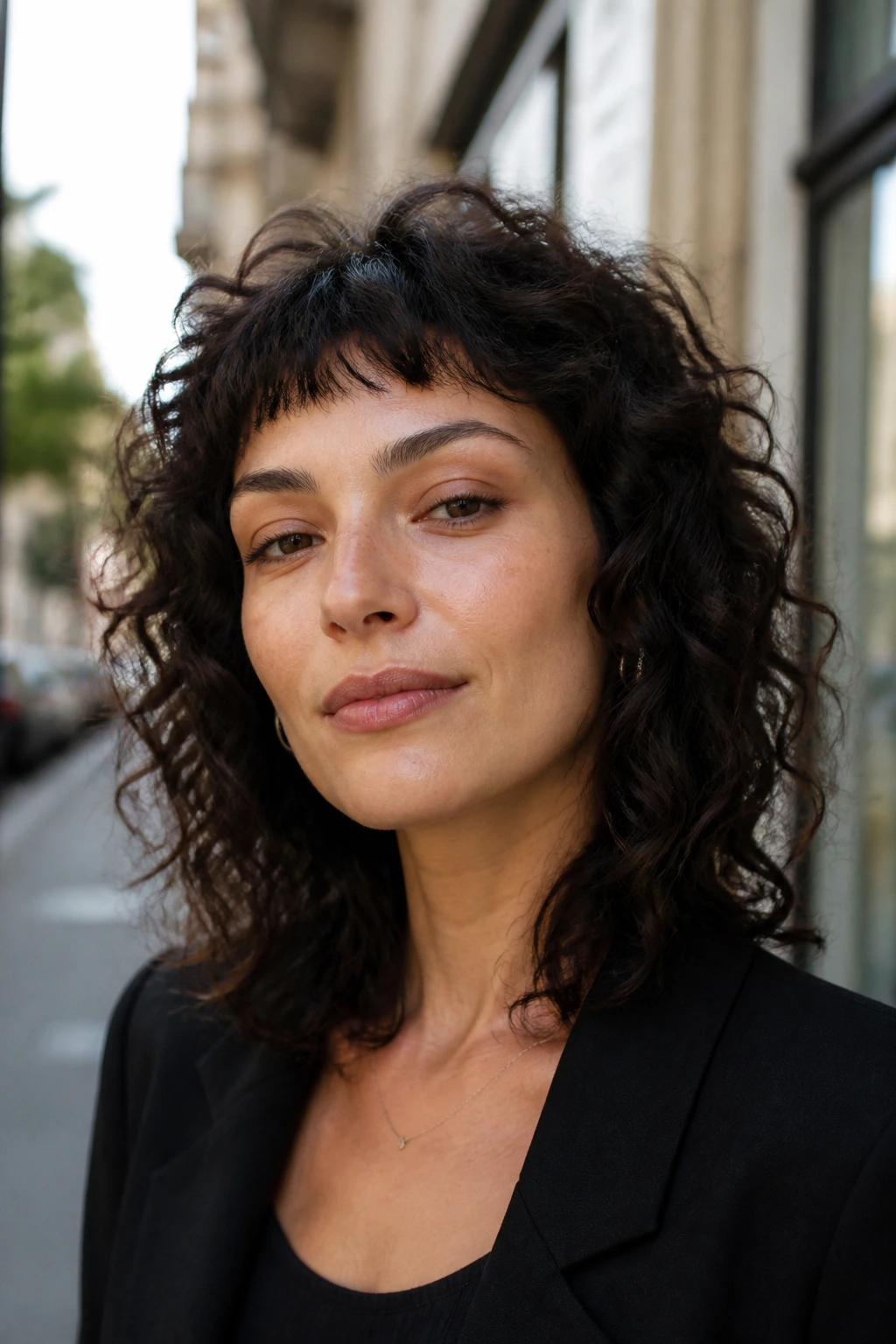
A micro fringe is not a casual choice, but on certain curl patterns it can be a smart one. The short fringe shortens the forehead visually, while the shaggy layers keep the sides from reading too heavy.
The important part is balance. The fringe should be tiny but soft, not hard and blunt. The rest of the cut needs enough movement to stop the face from feeling boxed in. On tight curls, this can look sharp and modern. On looser waves, it can get fussy fast.
If you want something that feels distinct and still quick to style, this is one of the more interesting options. It’s a statement, sure, but not a high-maintenance one if the shape is cut well.
21. The Length-Keeping Dusting Cut
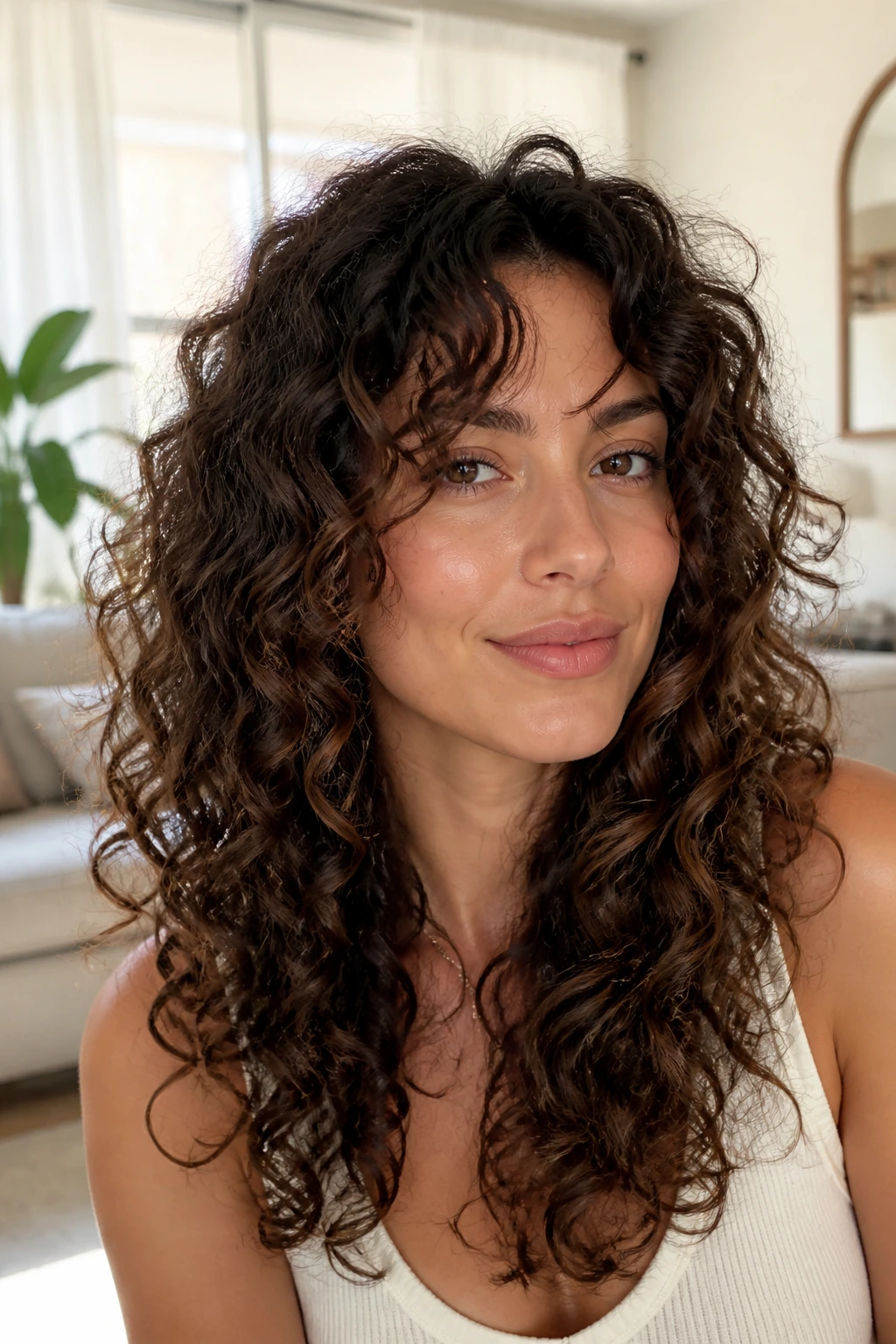
Sometimes the smartest haircut is the one that keeps most of the length and trims only what’s dead or bulky. A dusting cut with crown volume does exactly that: it preserves the line while subtly changing where the weight sits.
That matters if you’re attached to your length but still want a face-slimming effect. The stylist removes just enough from the ends to stop the hair from dragging downward, then cleans up the crown so the silhouette lifts instead of slumps. It sounds tiny. It isn’t.
This is also a good maintenance move between bigger shape changes. If you already like your cut and just want it to keep behaving, a dusting trim can buy you another few weeks of sane mornings.
22. The Halo-Shaped Long Curly Cut
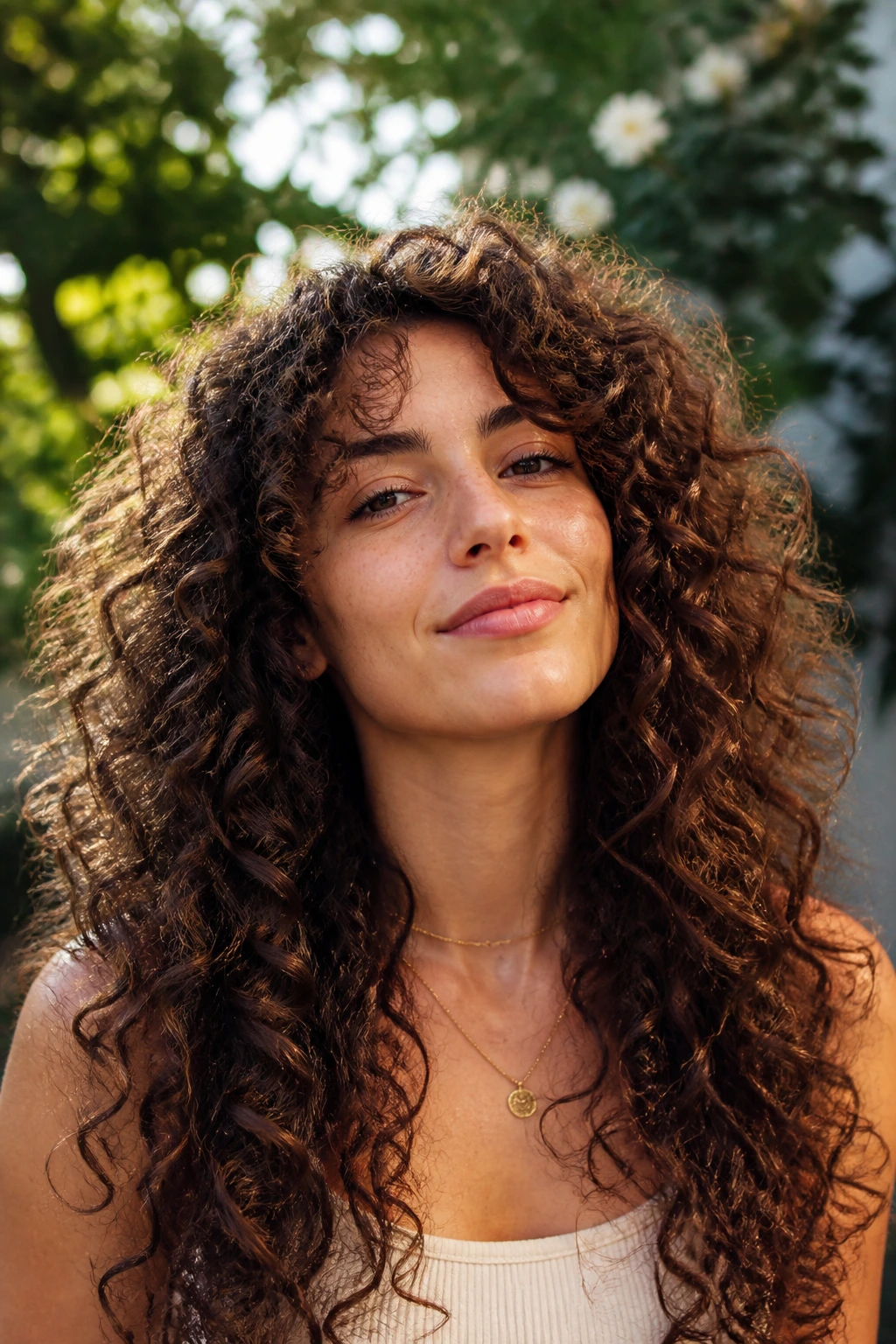
A halo shape keeps the volume around the head rounded and controlled, with the longest pieces falling in a way that opens the face instead of swallowing it. It works especially well when the curls are dense and want to spread sideways.
The key is to keep the top lifted and the sides soft. You want a rounded frame, not a puffball. The face-framing pieces should start high enough to open the cheek area, but not so high that the front feels chopped. That balance is what makes the cut look deliberate.
For mornings, this one is kind. A refresh spray, a quick scrunch, maybe a clip at the crown while you get dressed. Done. The shape carries the rest.
How to Make These Curly Cuts Work Faster on Busy Mornings
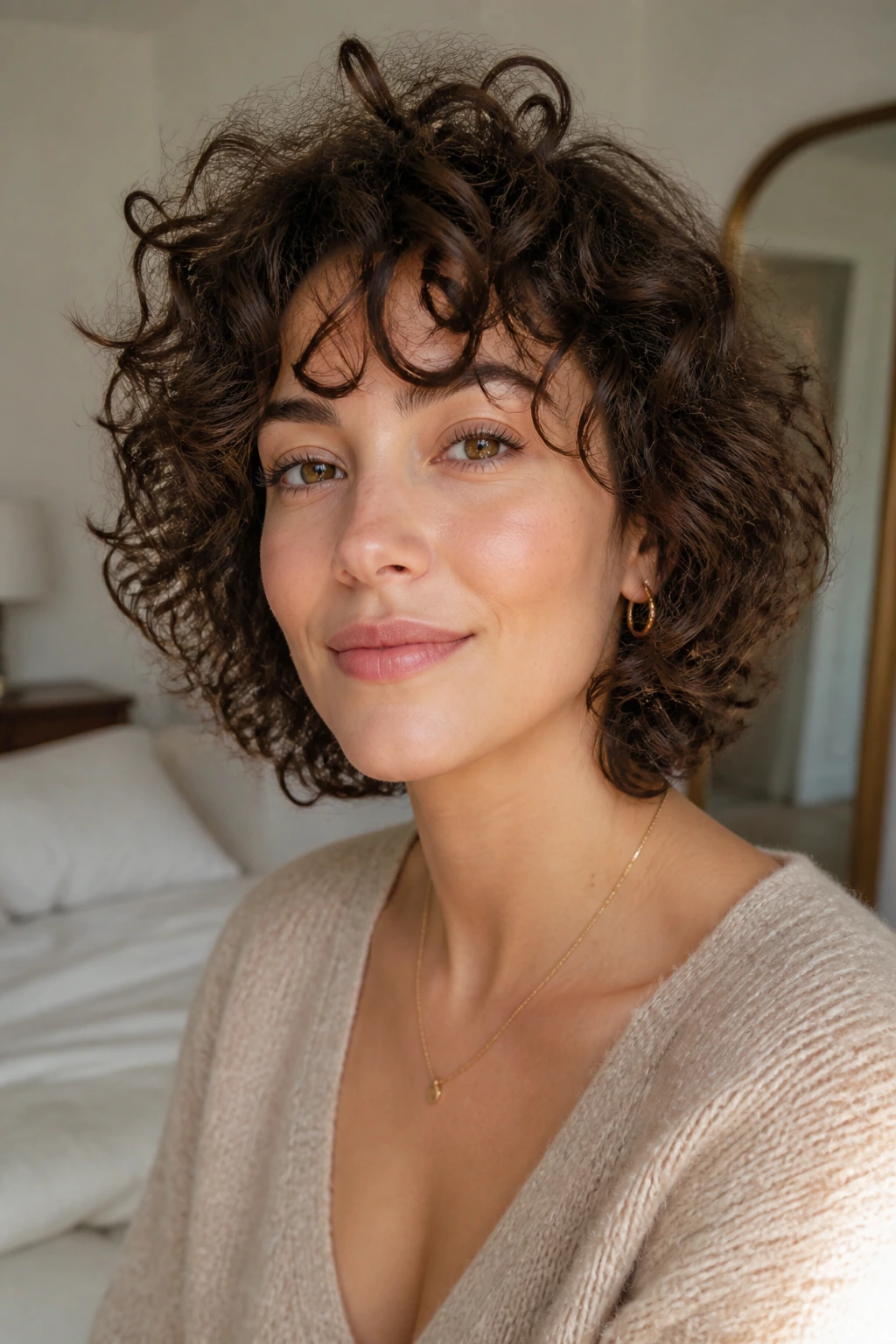
The cut helps, but the first ten minutes still matter. I’d start with the roots. If the crown is flat, the face reads wider, even when the haircut is good. A little root clip or a quick blast of diffuser air at the top solves more than people expect.
Drying strategy: Stop soaking the whole head every day. Mist the top layer, re-scrunch the front pieces, and leave the ends alone unless they’ve gone frizzy. Over-wetting creates more work than it saves.
Product strategy: Use enough mousse or light gel to give memory, but not so much that the curls clump into strings. If your hair feels coated and heavy, the cut cannot rescue it. That’s just physics.
Styling strategy: Pick the part once the curls are roughly dry and leave it there. Constantly flipping the part is how a neat shape becomes a fuzzy one by noon. A single, intentional part usually looks better than three “quick fixes.”
The Mistakes That Make Curly Hair Look Wider Than It Is
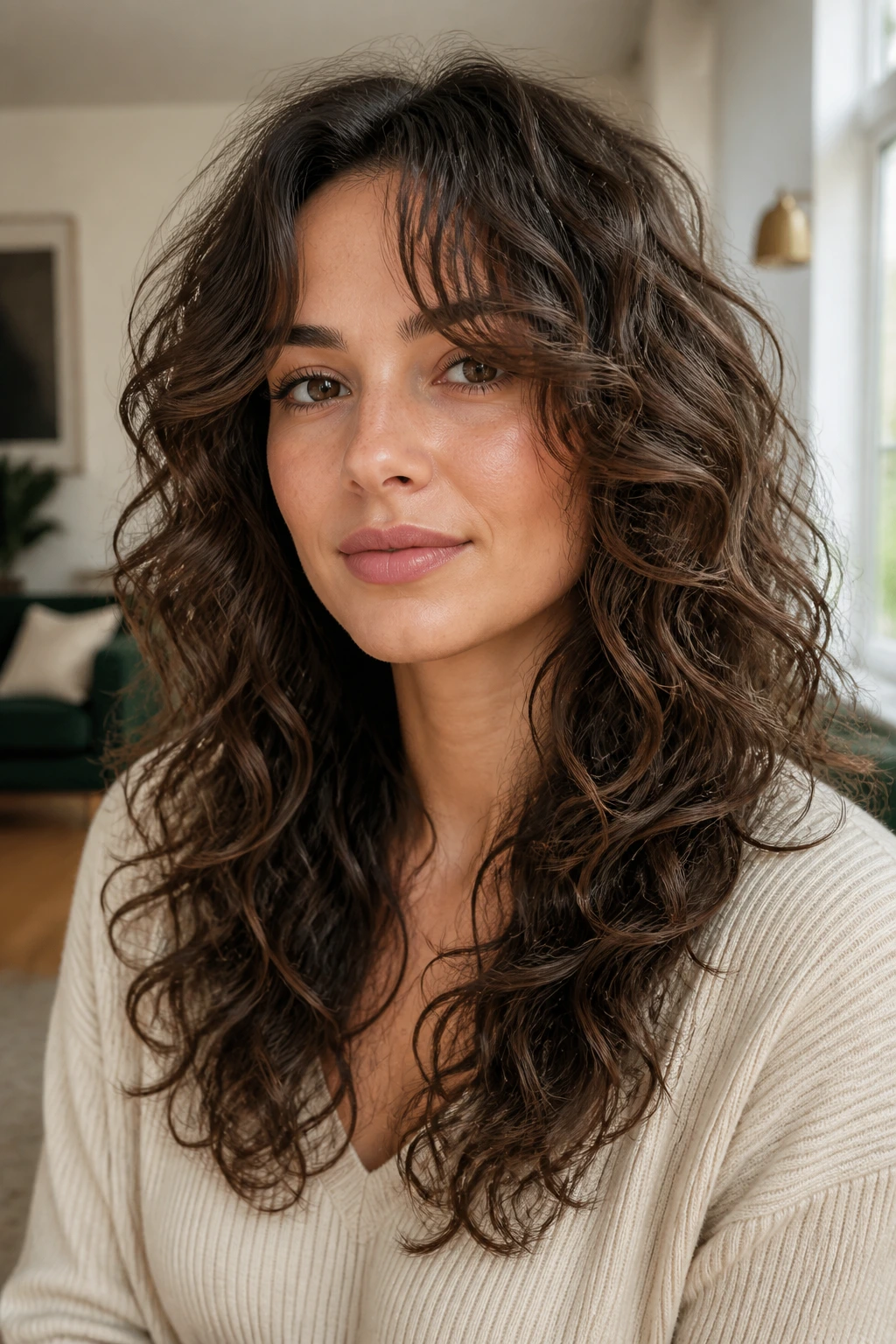
The first mistake is cutting curls too bluntly at the jaw. The symptom is obvious: the sides seem to stick out, even when the hair is clean and defined. The fix is a softer perimeter or longer face-framing pieces that start above or below the widest point of the face.
The second mistake is thinning the ends too aggressively. That can leave the top full and the bottom wispy, which makes curls look frizzier and bigger, not sleeker. Ask for weight removal in the interior, not a rough shred through the outer shape.
Another common one: bangs cut too short for shrinkage. Curly fringe that seems “safe” wet can bounce up hard and sit in an awkward place. Always cut longer than the final target and check the shape dry.
Heavy cream causes trouble too. It stretches curls, pulls them down, and makes the sides collapse into odd blobs. If your cut is already doing the slimming work, don’t bury it under thick product.
Other Ways to Wear the Same Cut Without Starting Over
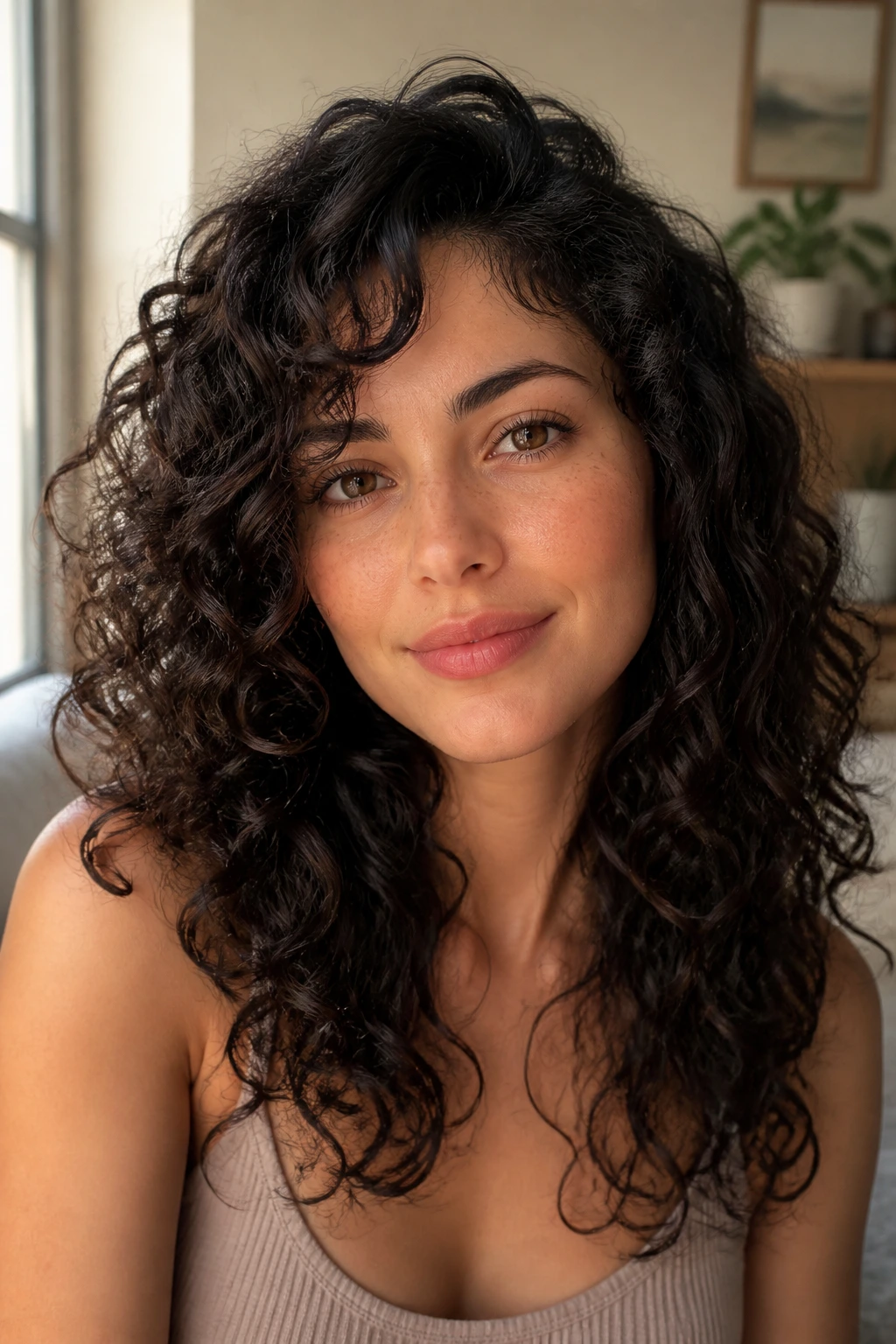
The Low-Styling Version: Keep the same shape, but ask for longer layers and fewer short face-framing pieces. This is the right move if you want to air-dry and forget about it.
The Bold-Fringe Version: Add curtain bangs or a side-swept fringe to a lob or shag. It changes the whole face frame without changing the length much, which is useful if you’re nervous about going shorter.
The Length-Keeping Version: Keep the perimeter long and use internal layers only. You still get lift, but the haircut grows out quietly and doesn’t force you back into the salon every few weeks.
The Tight-Curl Version: For 3C to 4C curls, keep the silhouette rounded and reduce bulk at the sides rather than chasing too many short pieces. The shape should sit where the curls actually live when dry.
The Fine-Curl Version: Use softer layering and avoid over-thinning. Fine curls need shape, not aggressive texture, or they disappear fast.
Tools That Make Curly Cuts Easier to Live With
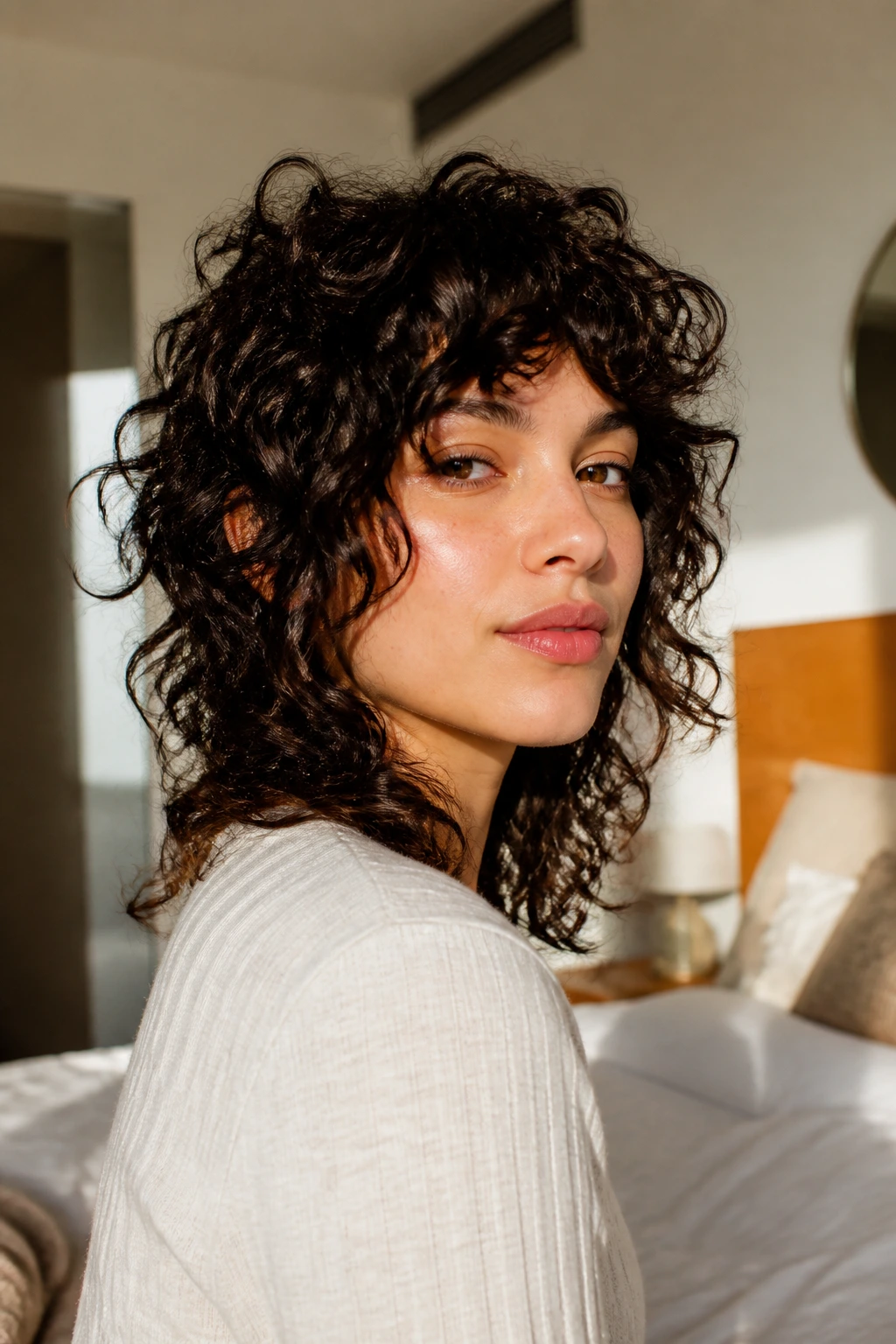
- Diffuser attachment: Helps lift the roots and set the shape without blasting the curl pattern flat.
- Spray bottle: Best for refreshing the top and front pieces without soaking the whole head.
- Microfiber towel or soft T-shirt: Cuts down on friction, which matters if your face-framing curls frizz first.
- Wide-tooth comb: Useful in the shower or on wet curls, but keep it away from dry hair if you want to preserve clumps.
- Duckbill clips: Great for setting root lift at the crown or keeping bangs in place while they dry.
- Light mousse or foam: Gives memory to the cut without weighing down the sides.
- Satin pillowcase or bonnet: Helps the shape survive the night instead of collapsing into a fuzzy wedge.
- Curly-hair stylist who dry-cuts: Not a tool, exactly, but probably the most useful resource on the list.
Keeping the Shape Between Salon Visits
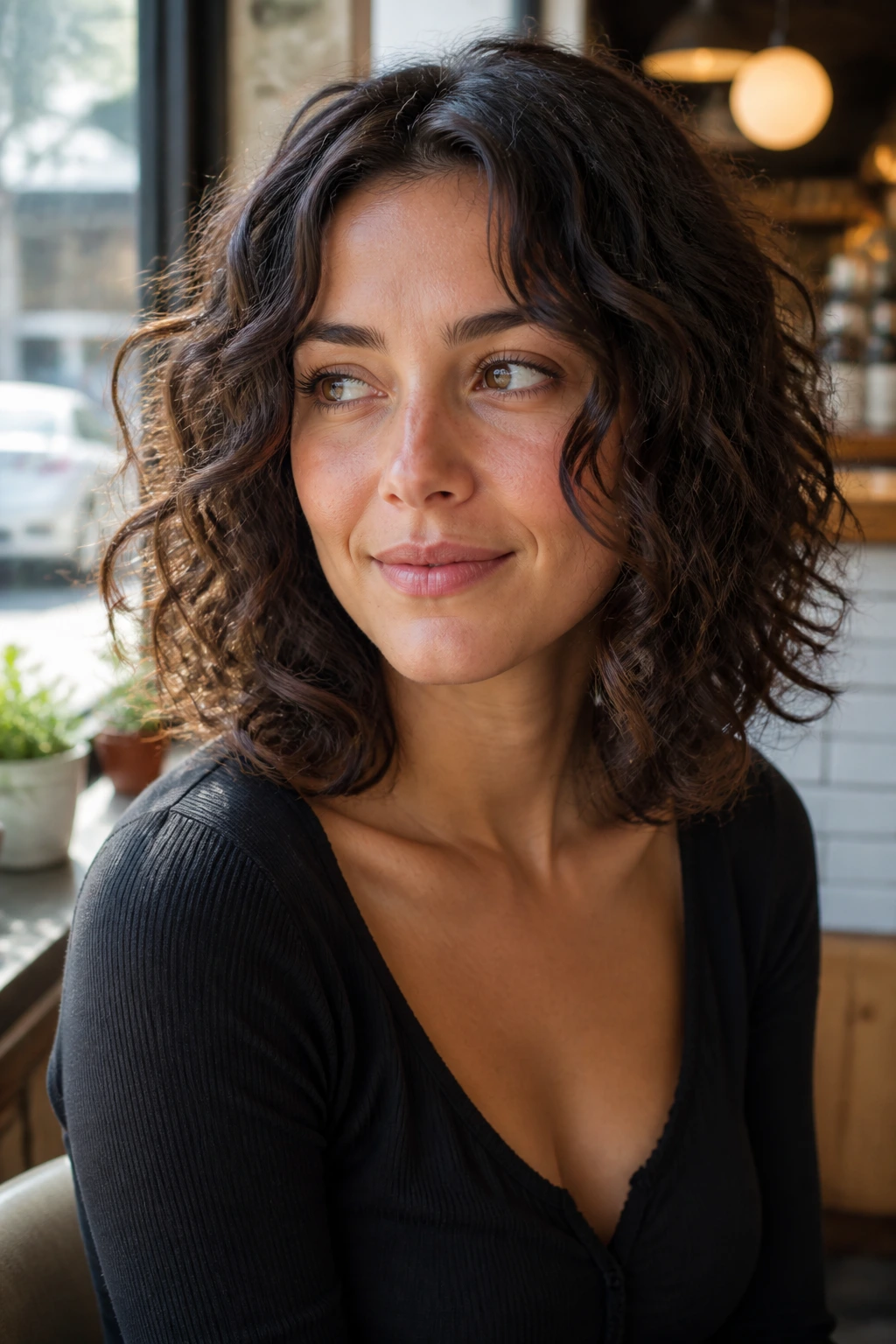
Shorter curly cuts need trims sooner. Pixies, bobs, and fringe-heavy cuts usually look best every 6 to 10 weeks, because the shape shows growth fast. Longer layered cuts can stretch to 10 to 14 weeks if the ends are still behaving.
Nighttime care makes a difference too. Pineapple the hair loosely at the crown, or clip it up in a soft section if the curls are long enough. The goal is to protect the front pieces and stop them from getting crushed against the pillow.
If the shape starts to drift, refresh the crown first. That’s usually where the face-slimming effect begins to vanish. A quick mist, a little root lift, and a few finger-shaped pieces around the cheekbones can buy you another good day.
Clarifying every few washes helps as well. Product buildup makes curls slump, and a slumping curl pattern can make even a great haircut look bulky. If the ends feel coated or the roots feel limp, that’s usually your clue.
Questions People Ask Before They Chop the Length

What curly haircut makes the face look slimmer fastest?
A shoulder-length lob with cheekbone layers is one of the easiest wins. It keeps length below the jaw while taking bulk off the sides, so the face looks longer without a dramatic transformation.
Should curly hair be cut wet or dry?
Dry cutting is usually better for curls because shrinkage changes everything. Wet cuts can work when the stylist knows how your curl pattern behaves, but the final shape still needs to be checked dry.
Will bangs make my face look wider?
Not if they’re cut and placed well. Curtain bangs and soft side-swept fringe can actually narrow the face by opening space around the eyes and forehead.
Can a bob work on thick curly hair?
Yes, but only if the weight is managed carefully. A bob that’s too blunt at the jaw can widen the face, while a softly angled or layered bob can do the opposite.
What if my curls shrink a lot after the cut?
Tell the stylist the length you want when the hair is dry, not just wet. If your shrinkage is extreme, the cut needs to start longer than you think, especially around the fringe and cheekbones.
How often should I trim a curly cut?
Short shapes usually need attention every 6 to 10 weeks. Longer layered shapes can go 10 to 14 weeks if the ends stay tidy and the shape doesn’t collapse.
What should I ask for if I want less width at the sides?
Ask for the bulk to be removed from the mid-side area, with more lift at the crown and face-framing pieces that start higher or lower than the jawline. That’s the language that helps more than saying “make it slimming.”
Can I air-dry these cuts, or do I need to diffuse?
You can air-dry most of them, but a quick diffuser blast at the roots helps the face-slimming shape hold better. If you skip the diffuser, focus on root clips or crown lift while the hair dries.
The Cut Does Half the Work

A curly haircut that flatters the face doesn’t need to be dramatic. It needs to be placed well. The right length, the right part, and the right amount of weight removed in the right spots can make a face look longer and calmer without asking you to become a morning styling person.
That’s the real appeal here. These cuts aren’t about perfection. They’re about giving your curls a shape that still looks good when you’re late, the weather is damp, and you’ve only got five minutes to deal with it. A cut like that earns its keep.
If you’re heading to the salon, bring a couple of references, but also bring a clear opinion about where your curls should sit when they dry. That conversation matters more than the photo.