



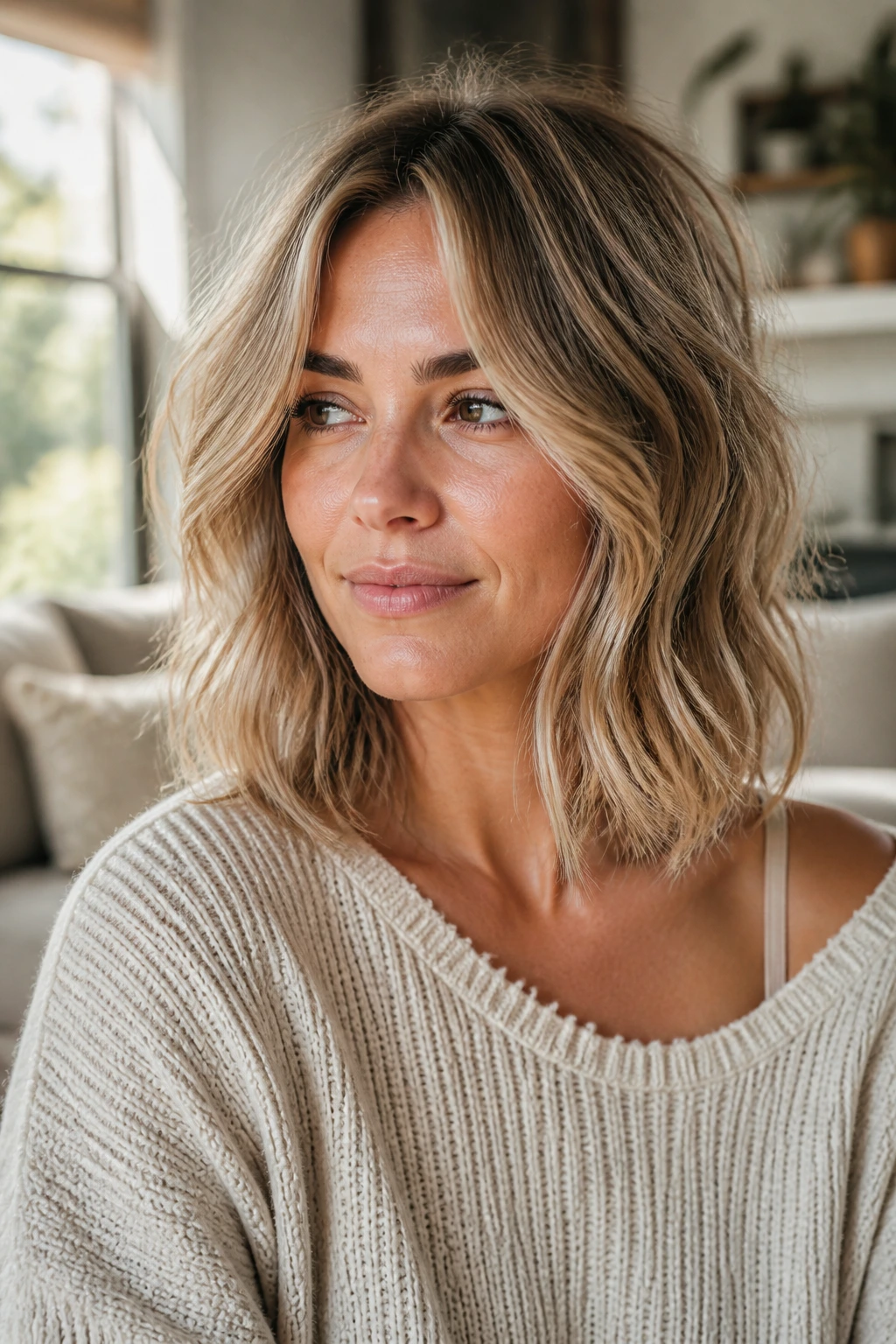
Thin hair behaves best when the cut gives it a job. Shoulder length wavy bobs for thin hair do exactly that: the ends land where they can hold a line, the wave breaks up see-through sections, and the whole shape reads fuller without pretending the hair has more density than it does.
I’ve always liked this length for fine strands because it’s honest. A blunt edge can make the bottom look denser, while a loose bend adds shadow between the pieces; together, they do more for the eye than layers piled on top of layers ever will. Too many people chase “volume” by stripping away weight, and then wonder why the bob turns wispy by lunch.
The sweet spot is restraint. Keep the perimeter clean, keep the wave soft, and keep the styling light enough that the hair can still move. That’s where these looks live — not in giant curls, not in over-shredded ends, but in shape, balance, and a little bit of controlled mess.
Why These Shoulder-Length Waves Make Thin Hair Look Fuller
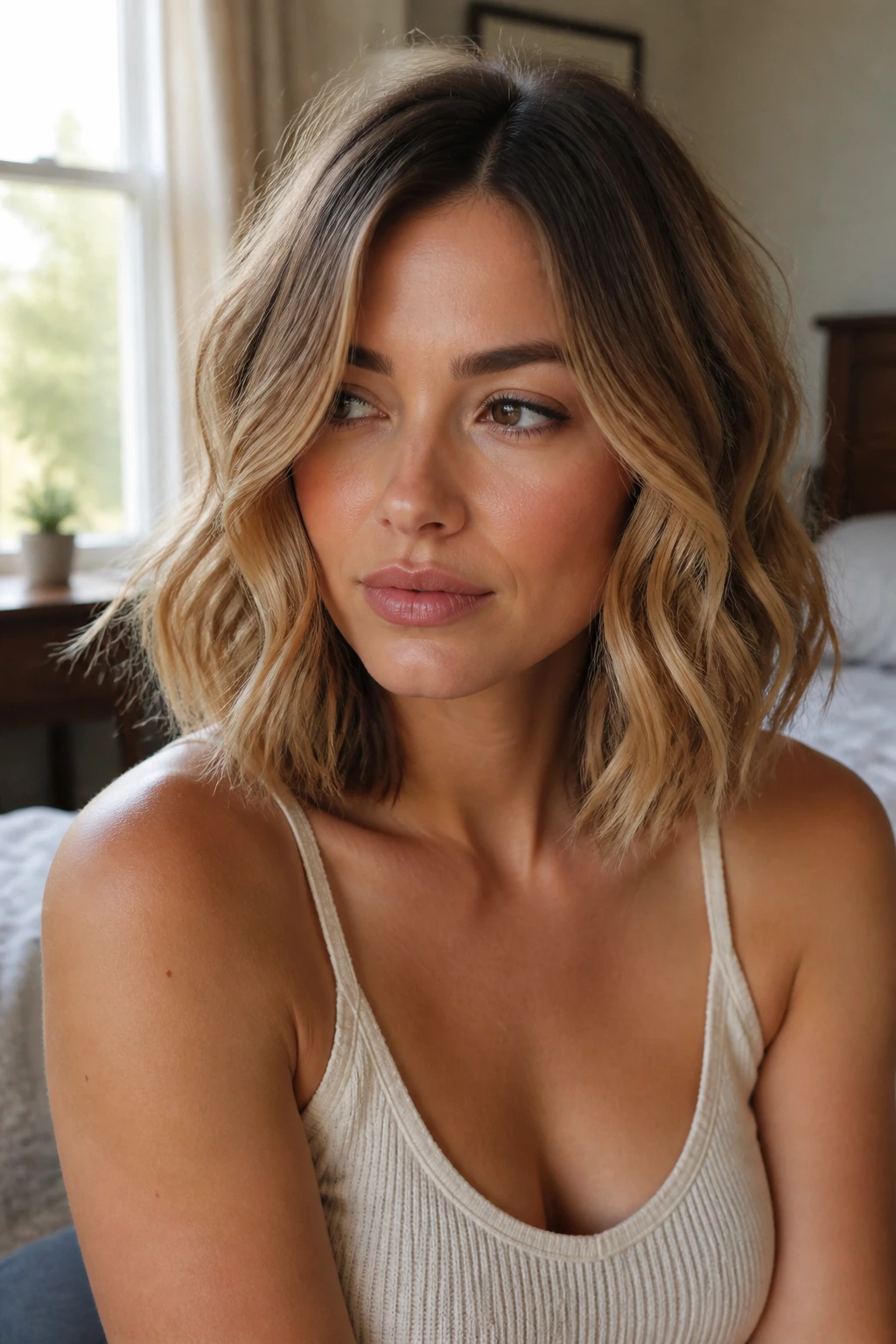
The length sits on a useful ledge: when the ends skim the collarbone or the top of the shoulder, they stop drooping into a long, flat curtain.
The wave creates depth: loose bends make the hair catch and release light in different places, so the outline looks thicker than a straight, one-length fall.
The perimeter does real work: a clean edge at the bottom gives fine hair a stronger visual line, which matters more than people expect.
The cut can be styled two ways: you can wear it smooth and neat, or rough it up with a bend and get a more lived-in finish without changing the haircut.
The grow-out is kinder: a shoulder-length bob still looks intentional when it slips an inch or two longer, which saves you from the awkward “it’s growing out badly” stage.
1. Collarbone Blunt Wave Bob
A collarbone-blunt wave bob is one of those cuts that looks calm from a distance and richer up close. The edge is tidy, the wave is loose, and the ends keep enough weight to avoid that feathery, see-through finish thin hair can fall into fast.
Why It Works on Fine Hair
The blunt perimeter gives the eye one clean line to follow. That matters when the hair itself doesn’t have a lot of bulk. A soft wave through the middle adds movement without chewing up the outline.
- Ask for the length to land right on the collarbone.
- Style with a 1-inch iron and leave the last inch straight.
- Use mousse at the roots, not a heavy cream through the ends.
Best move: brush the wave out once it cools so the texture looks like bend, not curl.
2. Soft Layered Lob with Face-Framing Pieces
If your hair needs softness around the face, this is the cut I’d reach for before anything shaggy. The layers stay light and strategic, and the face-framing pieces start around the cheekbone so the front doesn’t look sliced apart.
A little movement at the front can open up the whole cut. The trick is to keep the bottom line intact while easing a few strands around the face; that way the style still feels airy, but it doesn’t lose its shape. Thin hair usually hates heavy layering. This version avoids that trap.
It also photographs well in real life, not because of some magic styling trick, but because the front pieces create a soft frame while the back holds the weight. That combination is what keeps the bob from puffing out in the wrong places.
3. Off-Center Part Volume Bob
Why does a part move make such a difference? Because thin hair often collapses in the exact place it’s trained to fall. Shift the part a half-inch off center and the roots have to lift and bend in a new direction.
That small change can make the whole style look fuller at the crown. Add a few loose waves, and the higher side starts to look thicker almost immediately. I like this look on people who want volume without making the haircut obviously “styled.”
How to Wear It
- Part the hair while it’s damp, then clip the heavier side up for five minutes as it dries.
- Use a root-lift spray only at the part and crown.
- Keep the wave looser on the heavy side and tighter near the front.
A small part shift is cheap, fast, and annoyingly effective.
4. Air-Dried Tousled Bob
Picture hair that dries with a bend already in it, not a blowout that looks too polished for a Tuesday morning. That’s the appeal here. The air-dried version gives thin hair a little grit, which keeps it from lying flat against the head.
The cut needs a light touch. Too many layers and the air-dried texture starts to look scraggly instead of easy. A soft mousse, a scrunch, and a bit of patience go a long way. If your hair has any natural wave at all, this is one of the least fussy ways to work with it.
The best part is the finish. It should look touched, not overworked — like you let the hair do some of the styling itself and stepped back.
5. Curtain-Bang Wavy Lob
Curtain bangs can do a lot for fine hair, provided they’re not cut too short. Long, split bangs draw attention up toward the eyes and cheekbones, which helps the whole bob feel fuller around the face.
The rest of the lob stays soft and shoulder-skimming. That length gives the bangs something to blend into, so the cut doesn’t read as “fringe plus bob” in a hard, disconnected way. I like curtain bangs here because they soften the forehead area without taking away too much density from the sides.
The styling is half the charm. A round brush at the fringe, a loose wave through the sides, and a quick brush-through when everything cools — that’s enough. No need to make the bangs perfect. A little bend makes them look expensive; poker-straight bangs on thin hair can get harsh fast.
6. Subtle Shag Lob
A subtle shag lob is for the person who wants movement but not a mess. The layers are there, but they’re controlled, and the crown gets a touch of lift so the top doesn’t sit like a lid.
This is where I think a lot of haircuts go wrong. People hear “shag” and assume more choppiness equals more body. Not true. On thin hair, too much texturizing can leave the ends looking hollow. The better version keeps some interior lift and leaves enough weight around the perimeter to anchor the cut.
If you like texture sprays and a slightly undone finish, this one will make sense fast. It has personality, but it still feels wearable at work or on days when you do not want to spend twenty minutes fixing the front section.
7. Deep Side-Part Volume Bob
A deep side part is a cheap trick in the best possible sense. It changes the whole balance of a shoulder-length bob by pushing one side up and over, which creates instant height at the root.
That little lift matters on thin hair because the crown often needs help most. With a side part, one side gets more lift, the other side gets a softer fall, and the overall shape looks richer without adding product by the handful.
Why It Stands Out
- It works with straight or wavy texture.
- It gives the front a stronger swoop.
- It keeps the cut from reading too symmetrical or too flat.
Use a clip at the roots while the hair cools on the heavy side. It’s a tiny move, but it helps the lift stay where you put it.
8. Tapered End Wavy Bob
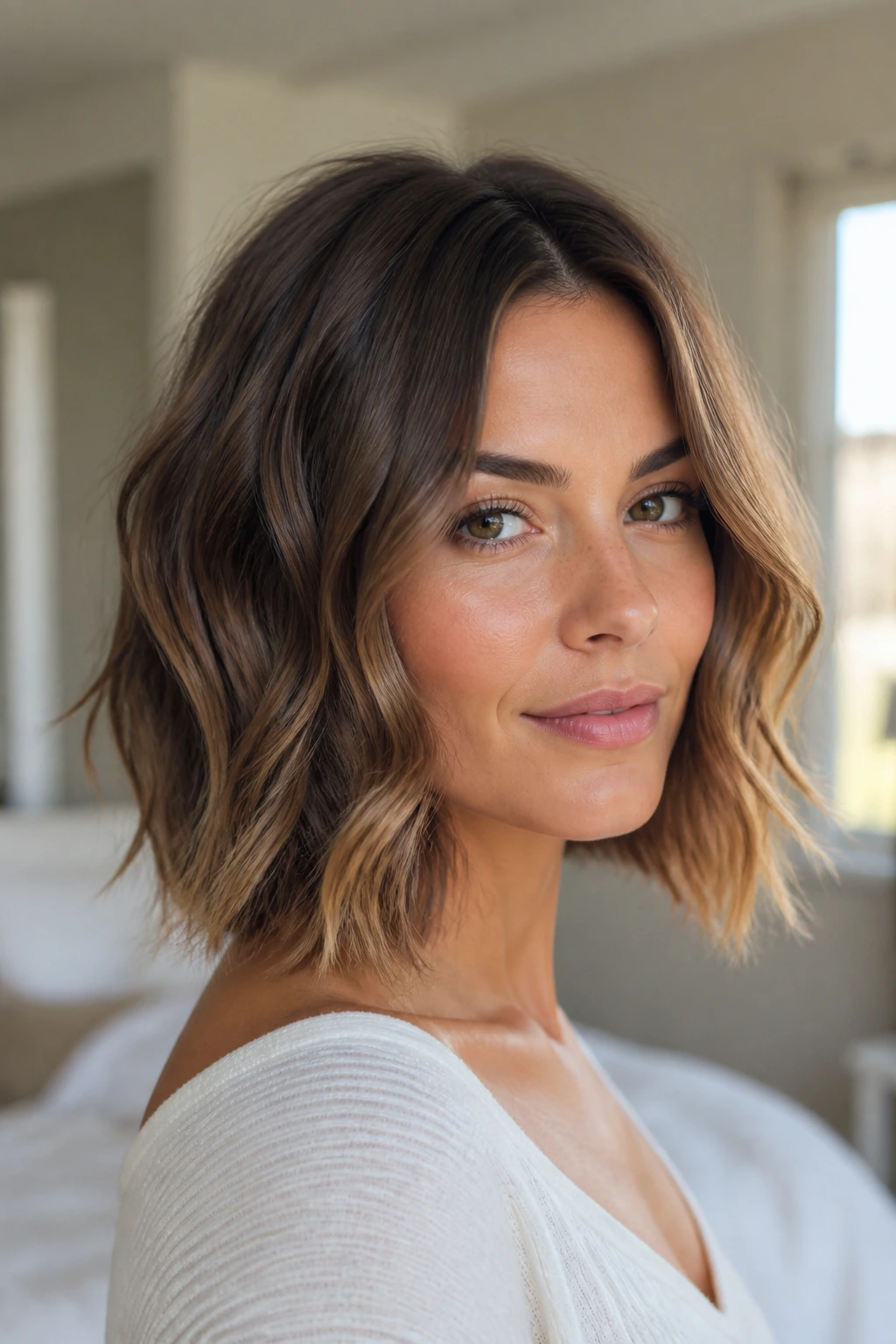
This one is all about the bottom edge. Instead of a blunt finish, the ends taper just enough to keep the bob from feeling boxy. Thin hair can carry that softened outline well when the wave is loose and the layers stay subtle.
The important part is not to overdo the taper. You want the perimeter to still look solid when the hair is straightened out or tucked behind the ear. Too much removal at the ends and the whole shape gets flimsy. A clean, light taper gives motion, not holes.
It’s a good choice if you hate the look of heavy, thick-looking bobs. The shape feels lighter on the neck, but it doesn’t lose that shoulder-grazing density line that makes fine hair look healthier.
9. Minimal-Layer French Lob
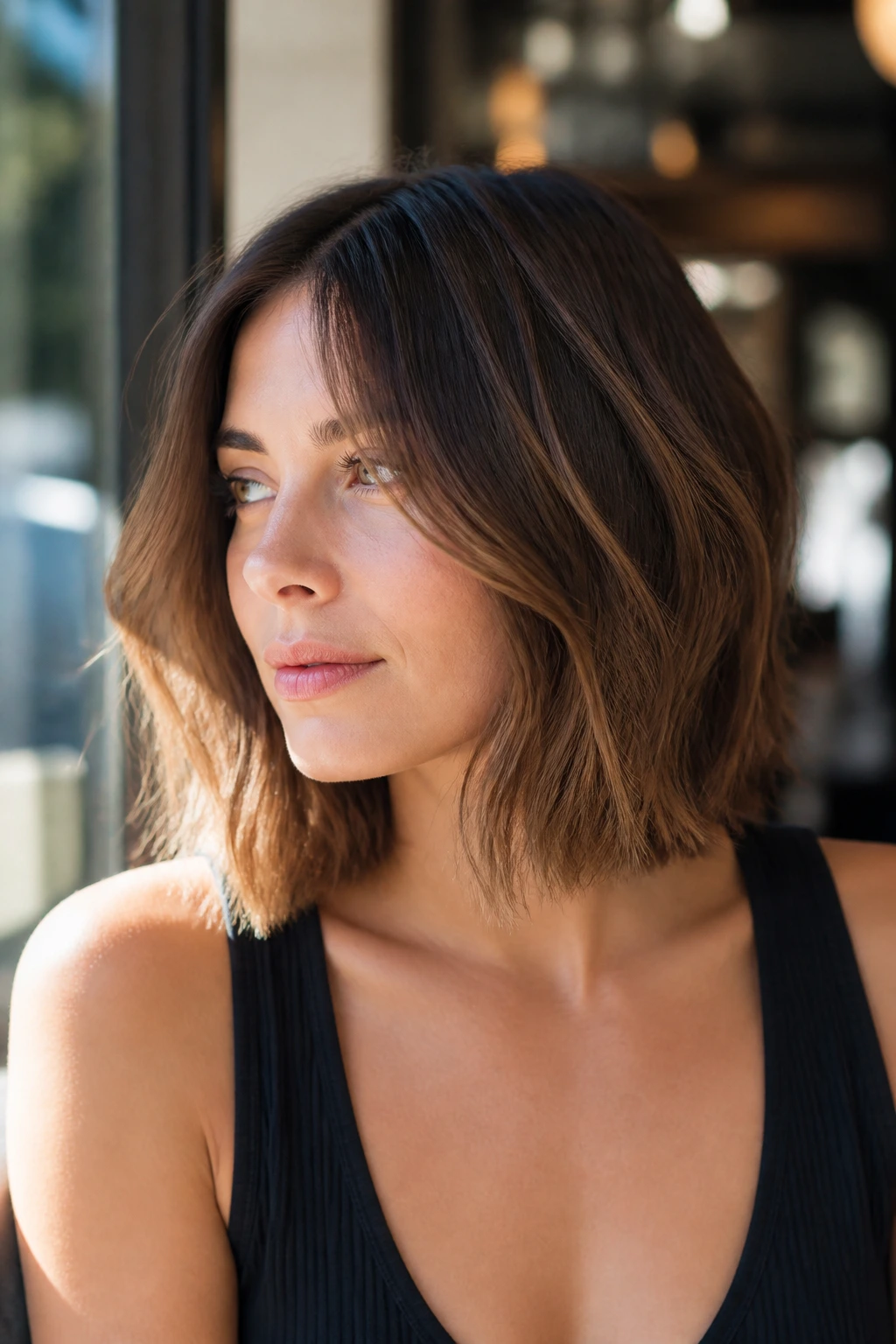
A minimal-layer French lob has that neat, almost effortless feel — except the “effortless” part is really a careful cut. The hair stays close to one length, with only a few discreet layers to stop the wave from hanging stiffly.
That restraint is why it works so well on thin hair. You get swing, not fray. If the ends are too chopped up, this style loses its charm fast. Keep the wave loose, add a slightly off-center part, and let the movement live in the mid-lengths instead of the bottom.
How to Wear It
- Tuck one side behind the ear for a cleaner line.
- Use a light mousse before drying.
- Finish with a soft brush-out so the wave looks relaxed, not set.
This is one of the easiest shoulder-length wavy bobs to keep looking expensive without leaning on heavy styling.
10. Beach-Wave Shoulder Bob
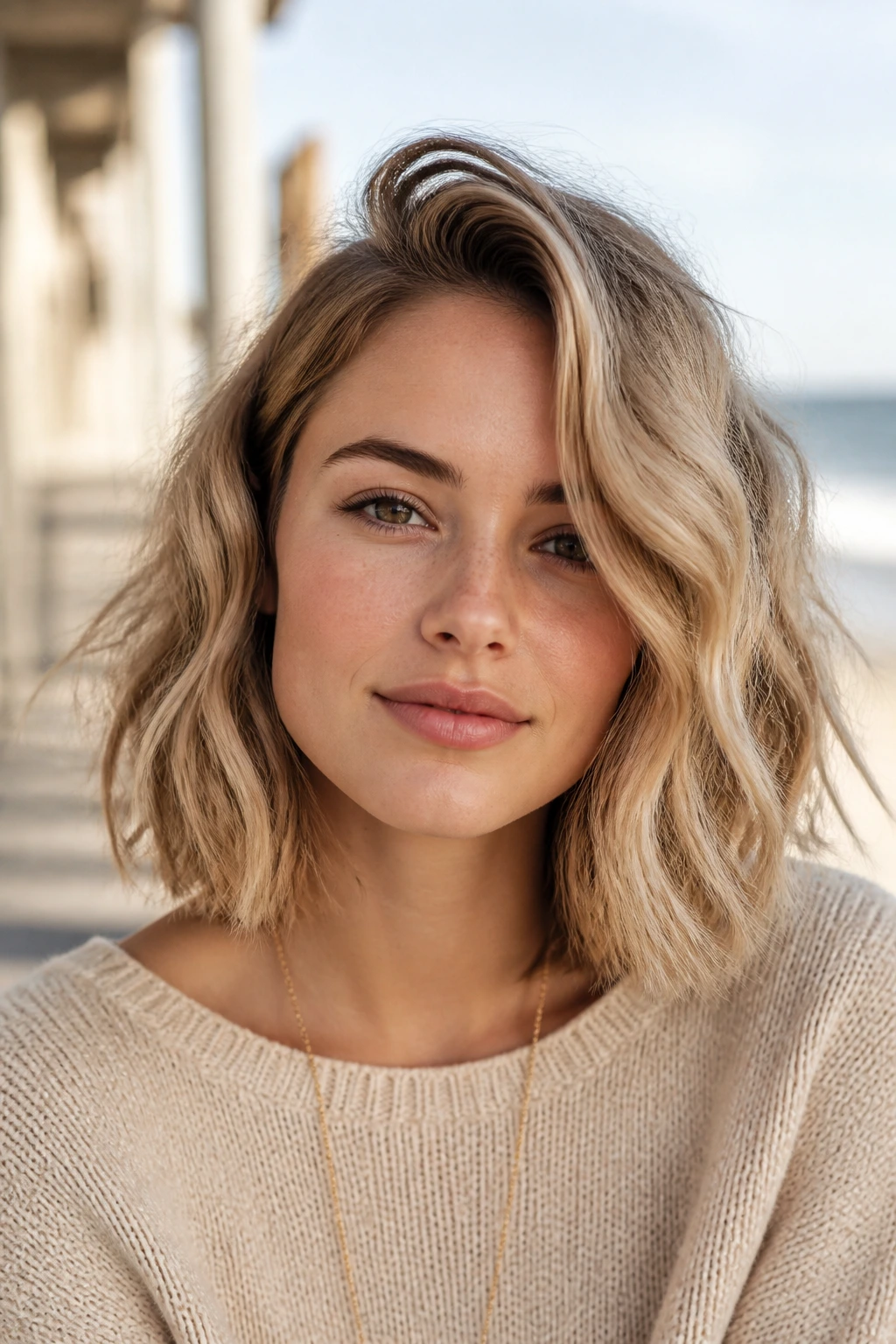
A beach-wave shoulder bob is different from a curled bob with loose ends. The wave pattern is wider, softer, and a little more irregular — which is exactly why fine hair can pull it off without looking overdone.
I prefer a 1-inch barrel for this look, but only if you don’t wrap the hair too tightly. Leave the ends out, alternate the direction of the bends, and shake the waves apart with your fingers. Thin hair looks fuller when the texture is broken up, not when every strand behaves like a twin.
This style also grows out well. When the wave relaxes after a day or two, it still looks intentional. That’s a nice thing to have in a haircut.
11. Razor-Cut Textured Lob
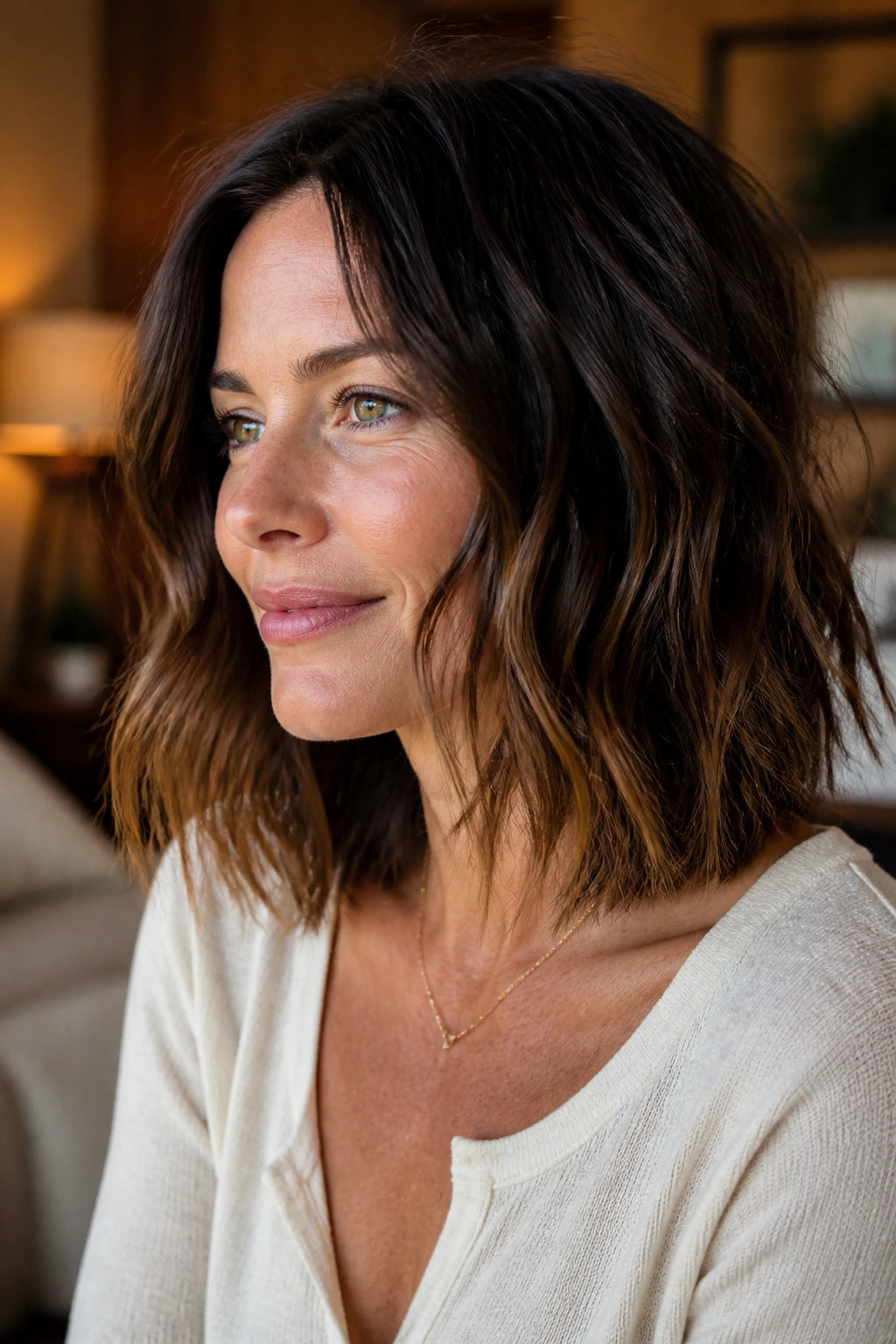
A razor-cut textured lob can be brilliant on fine hair, but only when the razor is used with a light hand. The point is to soften the line, not chew it into bits. Healthy ends with gentle texture can look airy and modern; overdone razor work can make the haircut look thirsty.
The wave helps hide the softer edge. It gives the whole shape some movement, and the texture keeps the hair from laying in one heavy sheet. I like this cut for hair that’s already a little bendy, because the razor detail shows up better once the waves are in.
If your hair is fragile or breaks easily, ask for scissors instead. You can still get texture. You do not need a shredded perimeter to get shape.
12. Old-Hollywood Bend Bob
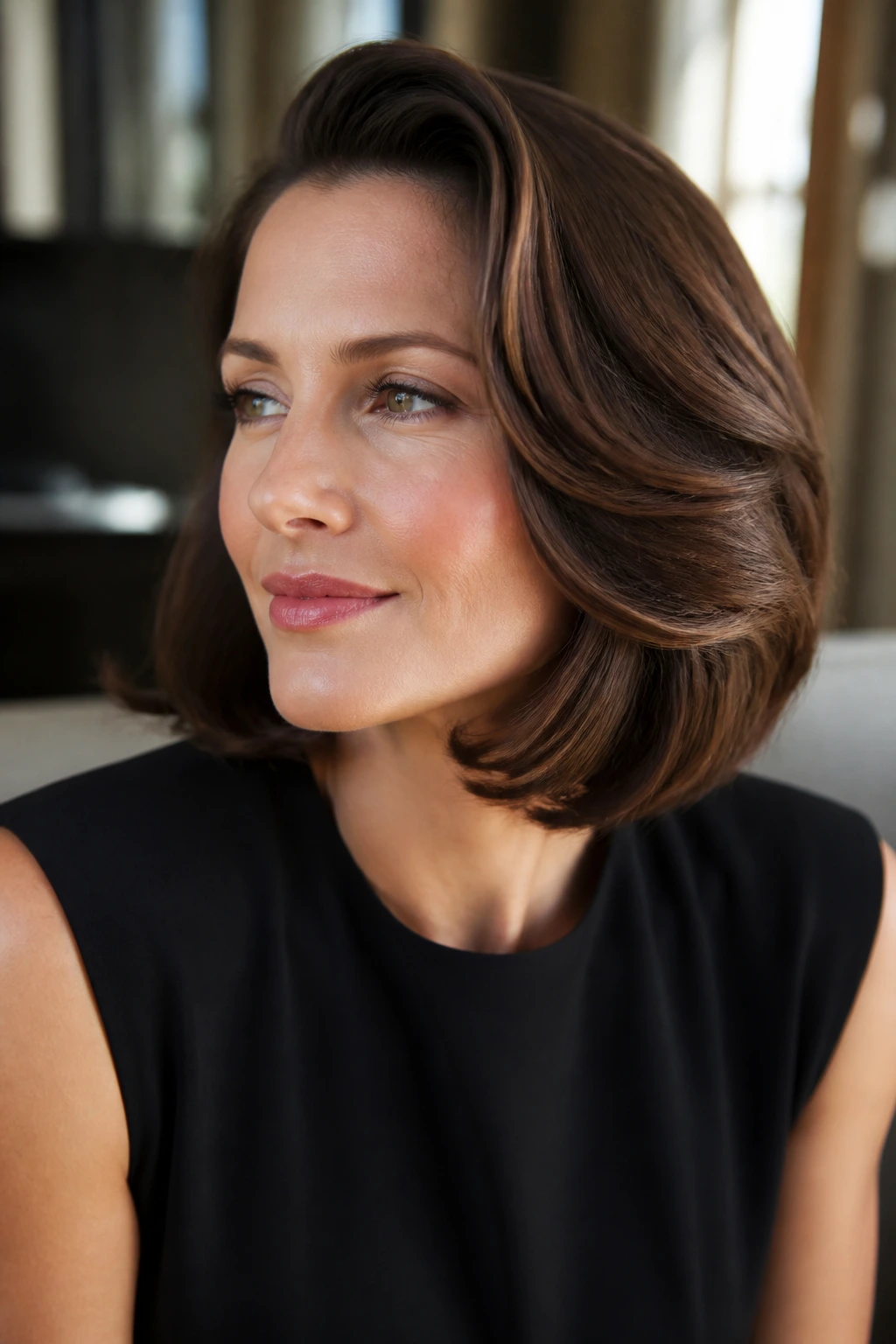
This one is the polished cousin in the group. Side part, smooth bend, glossy finish — the whole thing leans more dressed up than beachy. Thin hair often looks richer in this style because the wave is deliberate and the finish is controlled.
There’s less randomness here, which is the point. The curves sit in clean arcs, usually away from the face, and the ends stay tucked into the shape instead of flaring out. I like this when someone wants shoulder-length movement without the casual mess that can sometimes make fine hair look sparse.
It also has a strong profile. From the side, you get a neat curve through the cheek and jaw, then a fuller fall across the shoulders. That shape can be very flattering when the hair itself needs a little help reading thicker.
13. One-Length Messy Wave Bob
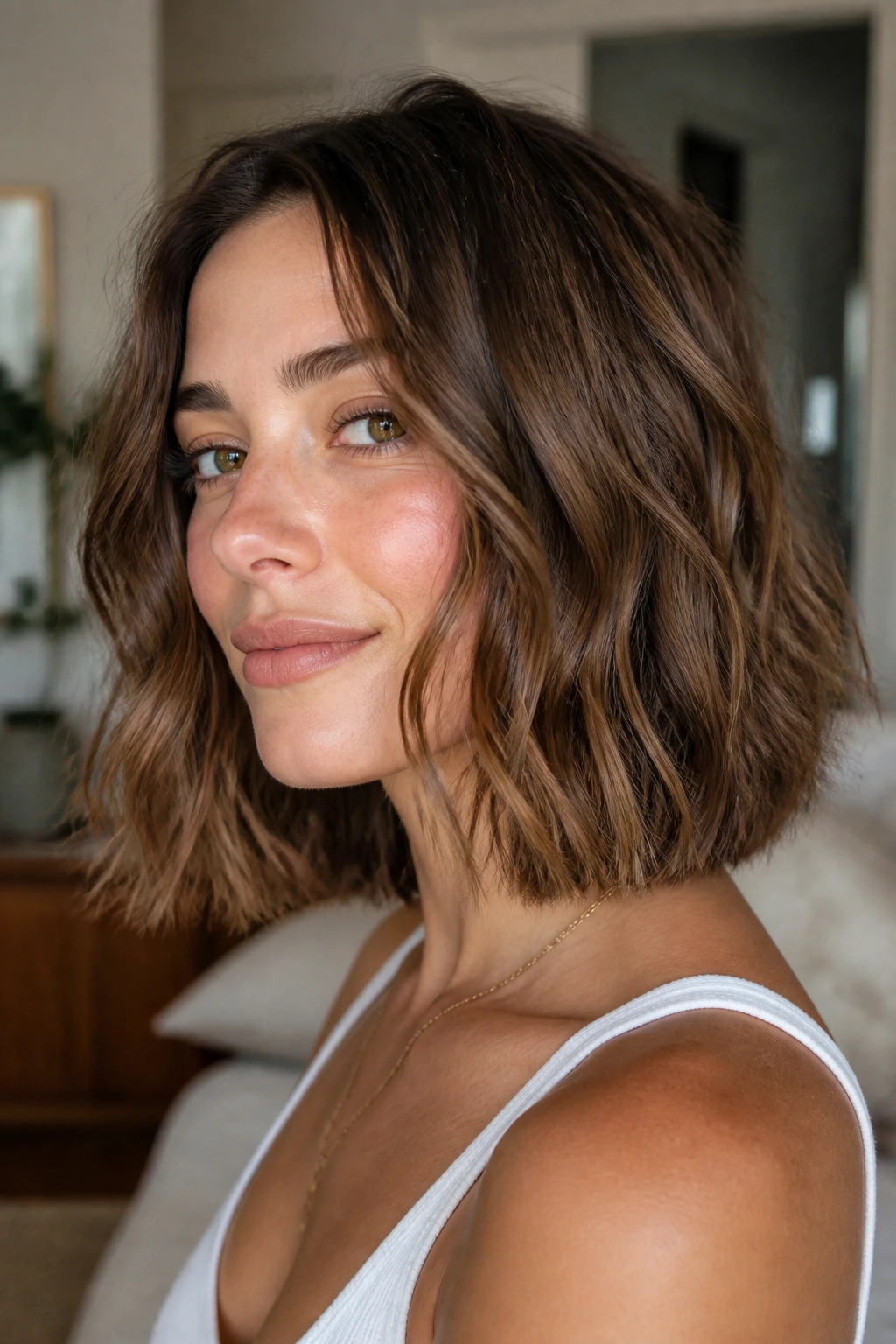
A one-length messy wave bob looks laid-back, but the cut underneath has to be disciplined. The perimeter stays steady, and the texture comes from the styling, not from the scissors doing too much.
That’s why it works on thin hair. One-length cuts can make the ends look denser, especially when the wave is broken up with fingers instead of brushed into a perfect shape. You get a little grit, a little swing, and a stronger bottom line all at once.
Quick Notes
- Best if your hair is naturally straight with a slight bend.
- Use dry texture spray sparingly.
- Keep the ends blunt enough to hold weight.
The mess should live in the wave, not in the cut. That’s the distinction that keeps it from looking patchy.
14. Feathered Ends Lob
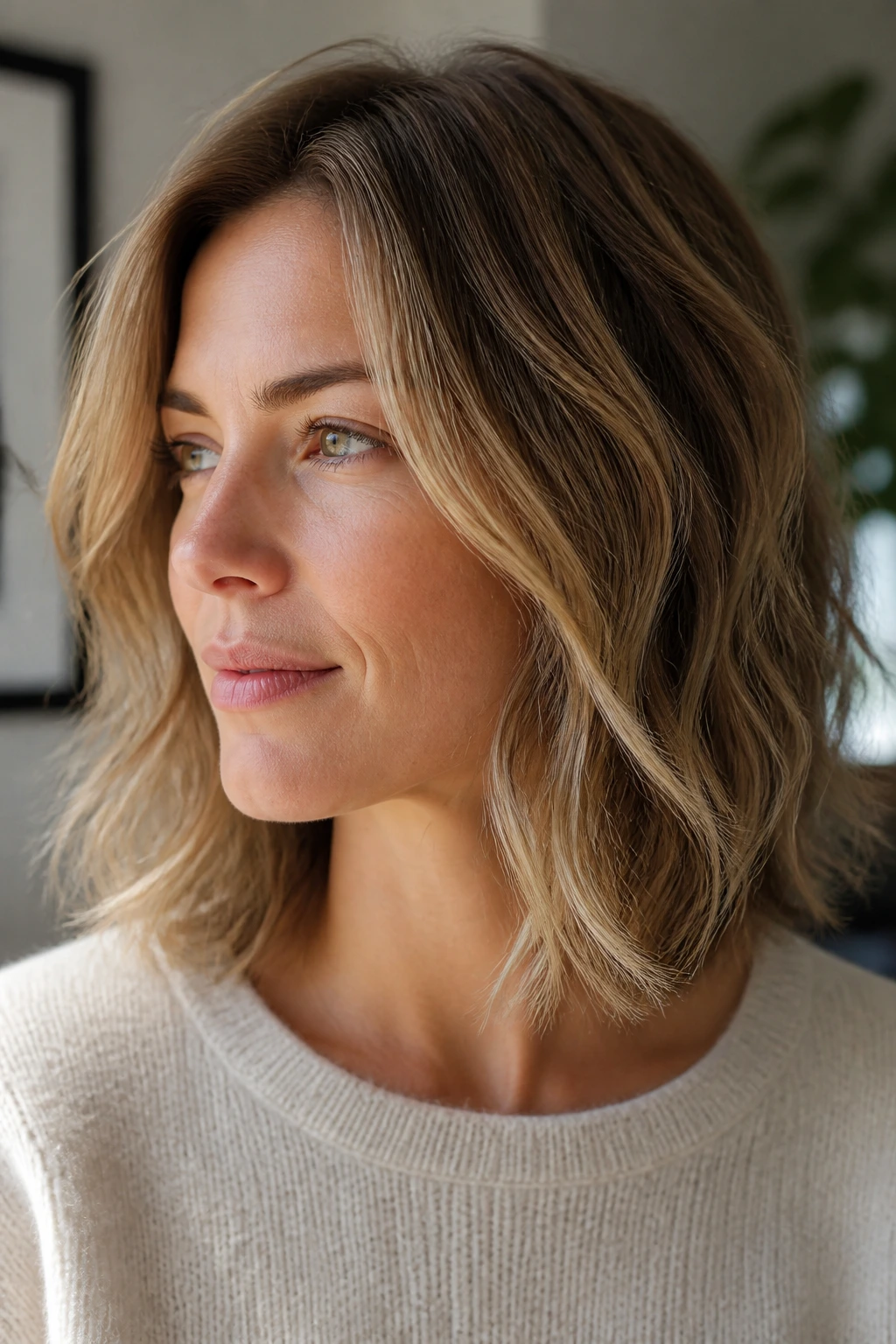
Feathered ends can be risky on thin hair, so the version I like is softer than the old-school feathered cuts people remember from salon magazines. The edges are light, but not hollow, and the texture sits mostly at the last inch or two.
That small bit of feathering helps the hair swing instead of sticking. It’s useful if your ends tend to flip outward or if your hair has a little static and needs movement to look intentional. Too much feathering, though, and the bob starts to lose its shape in a hurry.
This cut is good for someone who wants a softer finish around the shoulders without going all the way into shag territory. It keeps the style airy, which matters when the density is limited.
15. Bottleneck Bang Wavy Bob
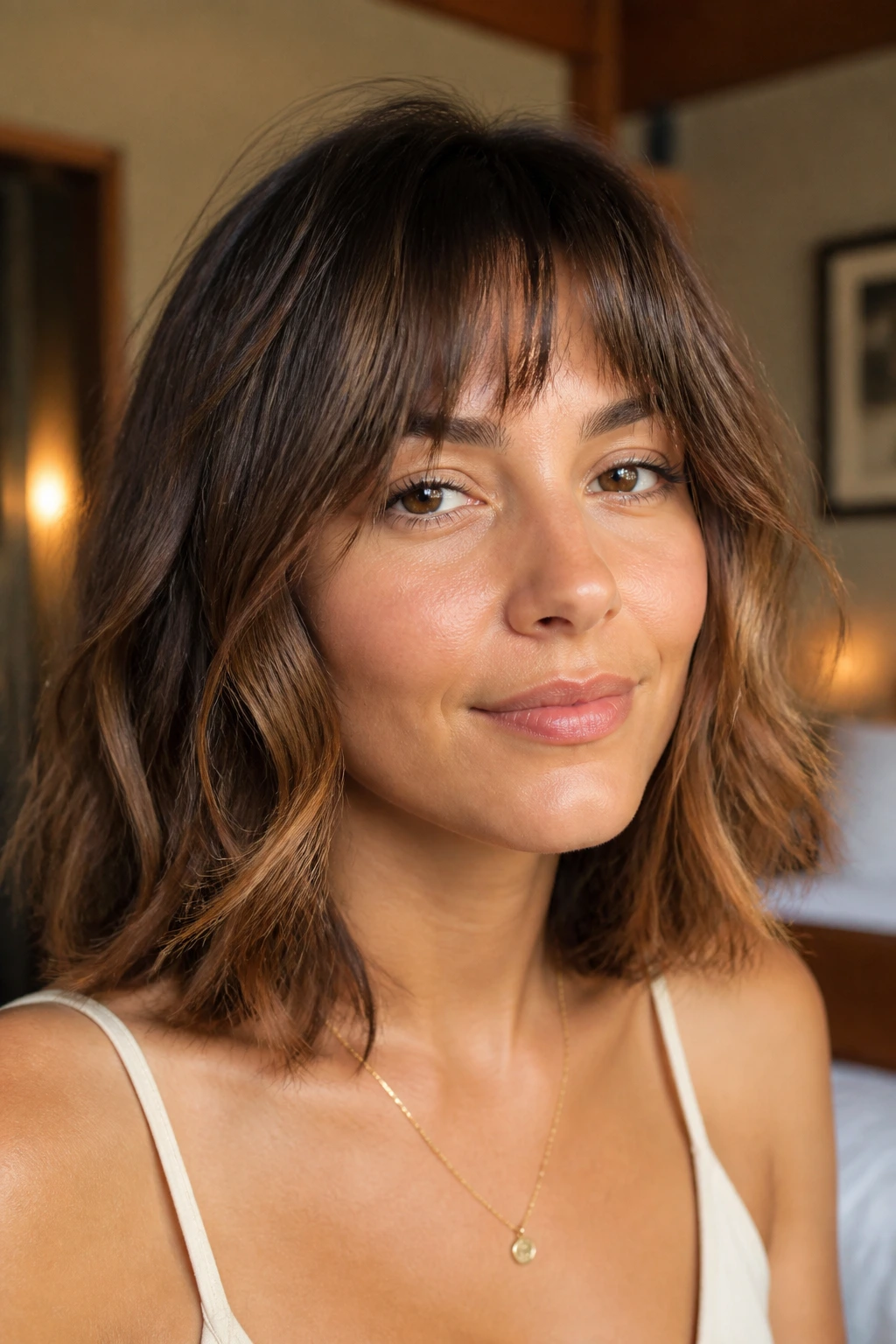
Bottleneck bangs give the front of the haircut a bit more structure than curtain bangs, but they still open out at the sides so the face doesn’t get boxed in. On thin hair, that means the fringe can add focus without eating up too much weight.
The rest of the bob should stay soft and shoulder-length. The contrast between the denser center of the bang and the loose wave around the sides makes the haircut look more deliberate, which helps a lot if your hair is naturally fine and tends to fall a little plain.
How to Wear It
- Keep the center of the fringe slightly shorter than the sides.
- Blow-dry the bangs first so they don’t collapse.
- Let the rest of the wave stay loose and touchable.
It’s a smart option when you want more framing up top but don’t want a heavy full fringe.
16. Polished S-Curve Lob
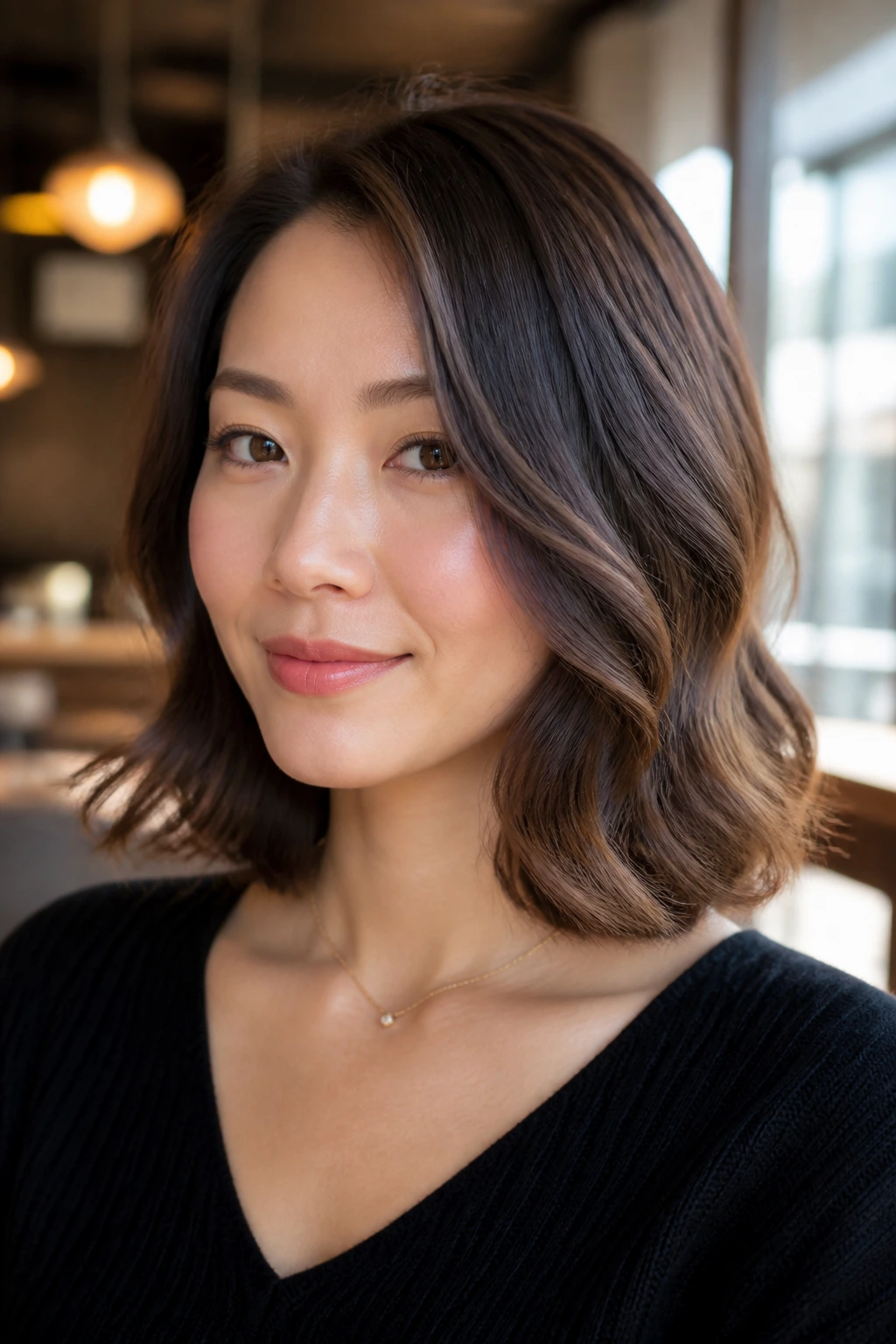
A polished S-curve lob is the “my hair is behaving” version of a wavy bob. The bend is smooth, the line is controlled, and the finish feels neat without looking stiff. Fine hair often benefits from that kind of order.
I like this with a flat iron or curling iron used in small, gentle motions — not tight curls, just a bend that turns in and out. The S-curve gives the illusion of more body because the hair changes direction along the shaft. That movement creates width.
This is one of the better choices for work settings or dressier events. It doesn’t fight thin hair. It frames it.
17. Invisible-Layer Bob
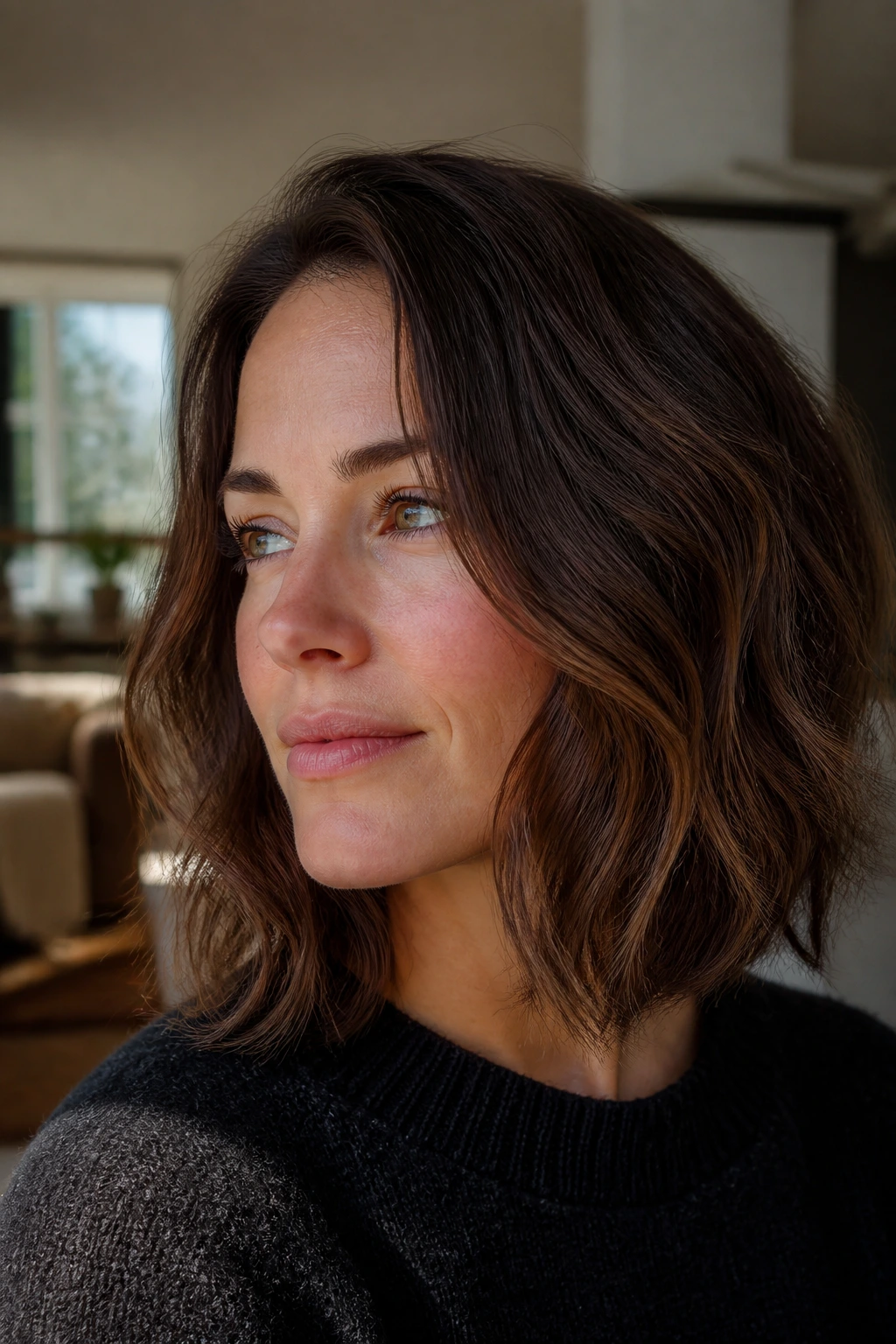
Invisible layers are one of my favorite things to ask for on fine hair, because they remove weight without advertising themselves. The cut still looks close to one length from the outside, but the inside has enough shaping to stop the ends from drooping.
That’s a nice balance on shoulder-length hair. The wave sits cleaner, the roots lift more easily, and the bottom edge keeps its shape. If you’ve ever had a bob that looked great for two days and then went flat, this is the kind of internal structure that helps.
I’d call this a good compromise cut. You get movement, but you don’t sacrifice the density line that thin hair usually needs most.
18. Swept-Back Volume Bob
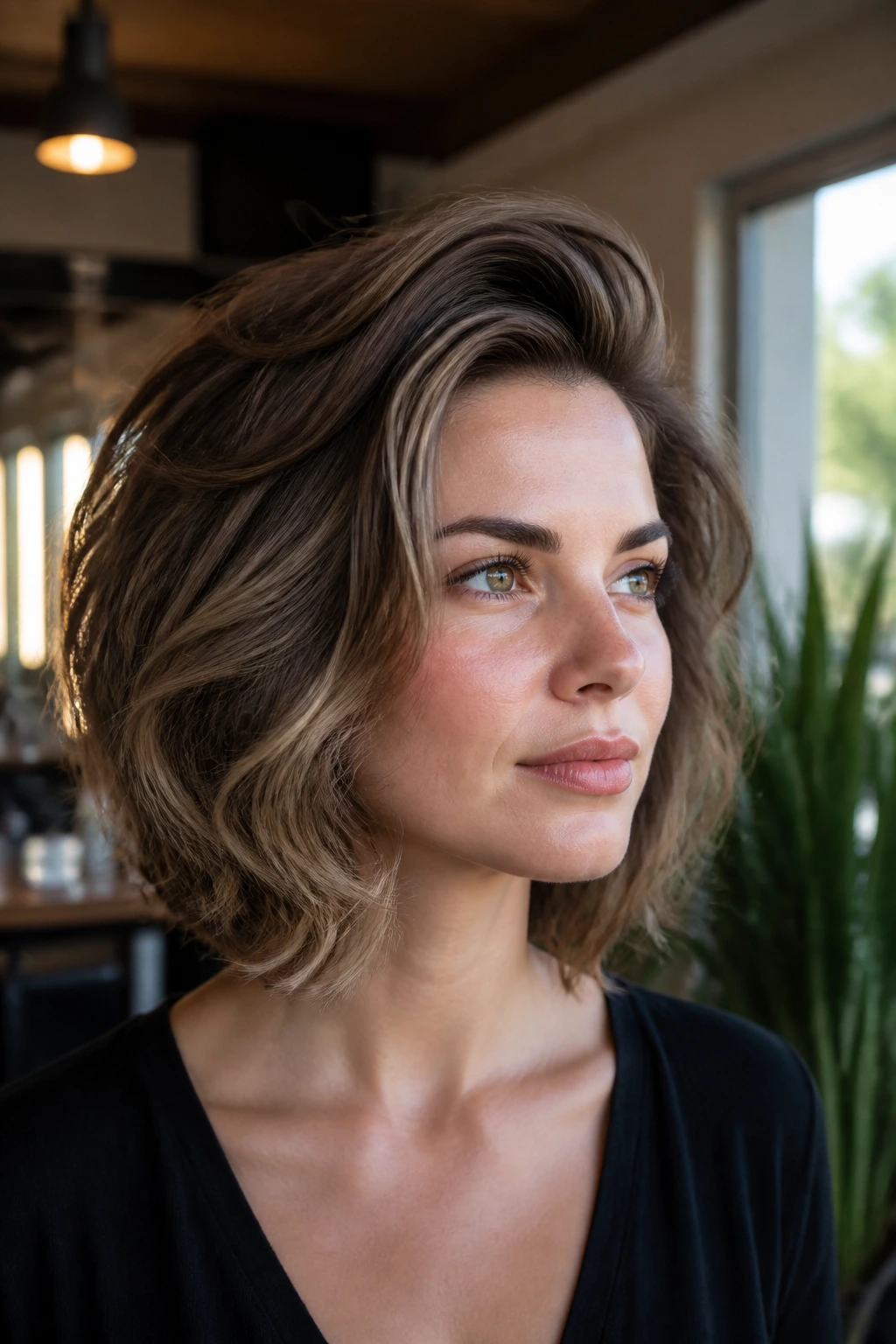
A swept-back volume bob moves the front away from the face and lets the crown do the talking. It’s a little dramatic, but not in a loud way. The lift at the roots and the backward sweep make the hair look fuller right where thin hair often feels most sparse.
This works especially well if you wear a side part or if your hair has a natural bend near the temples. The wave can fall softly over the shoulders while the top stays lifted, which gives the whole style a more open shape.
Best For
- Hair that lies flat at the crown.
- Faces that need a little lift around the temples.
- Anyone who wants a polished, not-too-sweet finish.
A couple of velcro rollers at the front while you do makeup can make a bigger difference than another product layer.
19. Piecey-Ends Lob
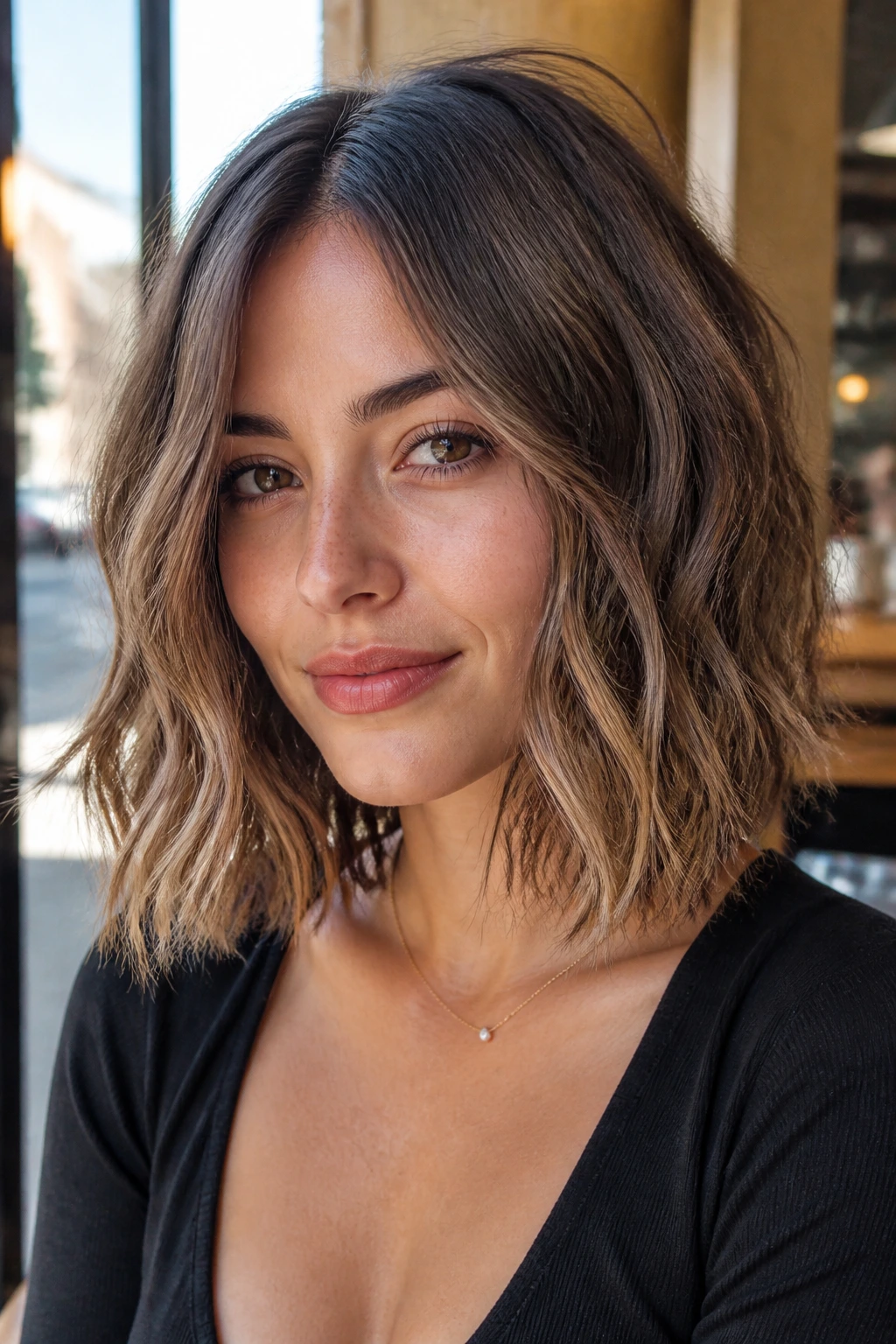
Piecey ends are about separation, not frizz. The bottom of the cut stays shoulder-length, but the styling breaks the ends into small, defined bits so the hair looks textured instead of heavy.
Thin hair can handle this well if the perimeter is still solid. The pieces should feel intentional, not broken. A tiny bit of cream or wax at the very ends is enough. You don’t want the whole head coated; you only want to suggest movement where the eye lands last.
It’s a useful look for people who dislike smooth blowouts. There’s more personality here, and the haircut has enough edge to keep it from reading flat.
20. Soft Inverted Wavy Lob
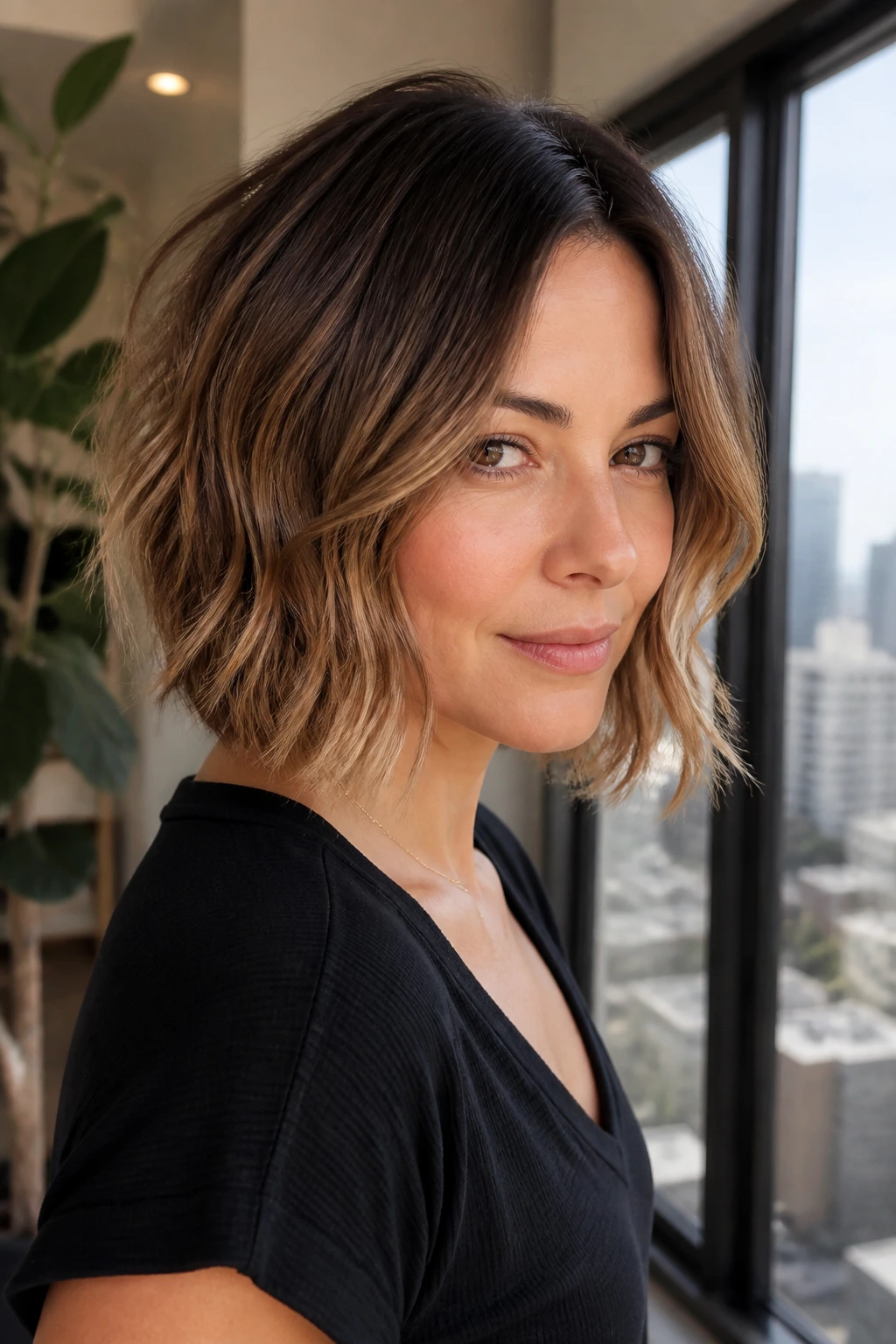
A soft inverted lob is shorter in the back and a touch longer in the front, but the angle is gentle. That little lift at the nape can make thin hair look cleaner through the neckline while the longer front sections keep some softness around the face.
The wave helps the shape blend. Without it, the angle can feel too obvious. With a loose bend, the front pieces skim the jaw and collarbone in a way that creates movement and a bit of visual fullness. I like this when someone wants a bob that feels a little more sculpted than a straight shoulder cut.
It also removes one of the common bob problems: the back hanging limp against the neck. This shape keeps that area tidy.
21. Grown-Out Shag Lob
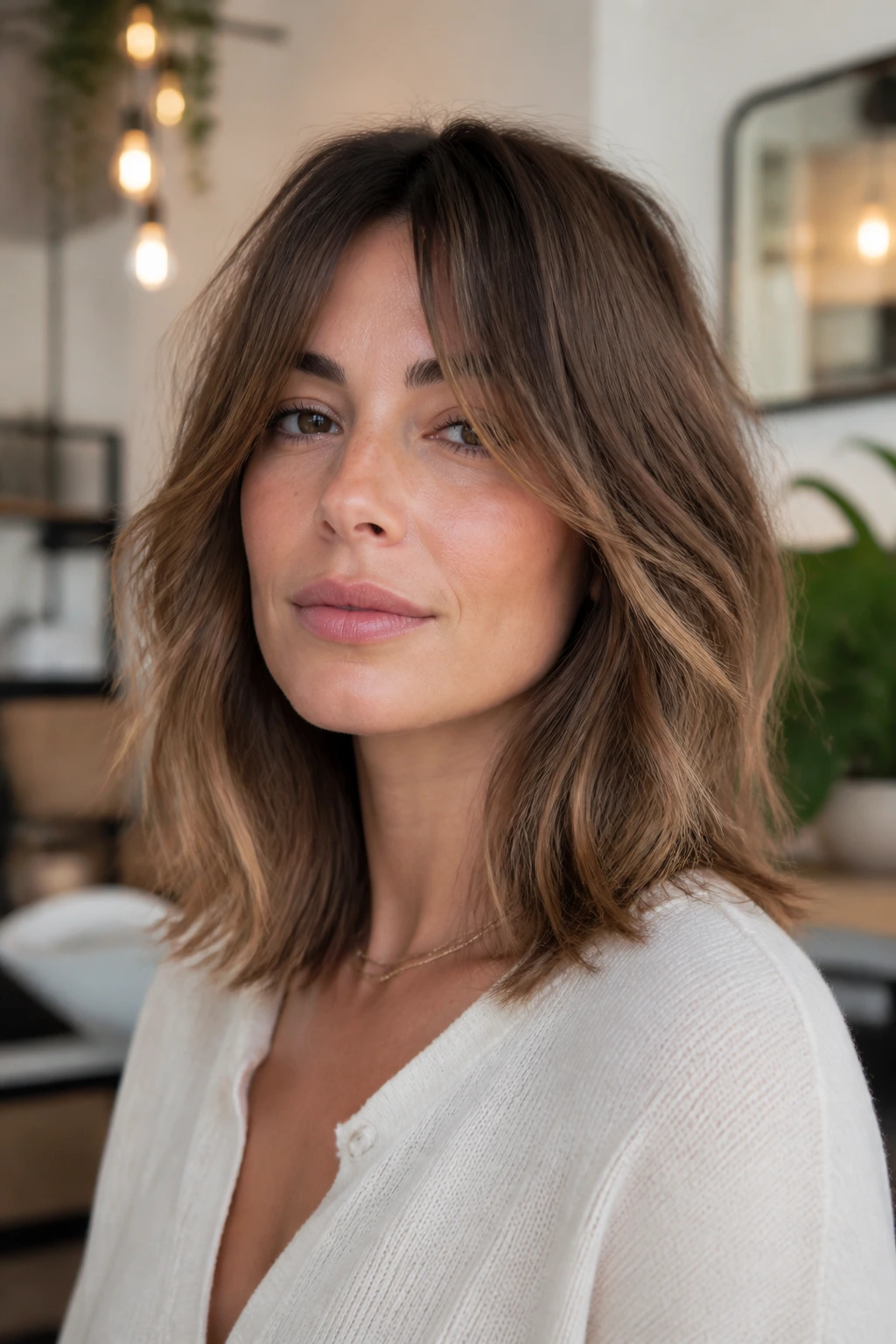
A grown-out shag lob is what happens when a shag settles down and gets a little less wild. The layers are still there, but they’re longer, softer, and more useful for fine hair than a heavily razored shag would be.
That makes it good for people who want movement without constant styling. The shoulder length keeps the hair from getting too wispy, and the grown-out layers leave enough weight that the ends still look present. It’s one of the easier ways to get texture without making the haircut feel high-maintenance.
What to Watch For
- Keep the crown layers soft, not choppy.
- Trim the perimeter often so the shape doesn’t drift.
- Use light texture spray, not sticky paste.
If your hair loses body fast, this version is safer than a more aggressive shag.
22. Side-Swept Bang Shoulder Bob

Side-swept bangs can rescue a bob that feels too open across the front. They draw the eye diagonally, which gives the haircut movement before you even touch a hot tool.
For thin hair, the nice part is that the bang doesn’t need to be heavy. It can start from a small section near the part, sweep across the forehead, and blend into the shoulder-length wave. That keeps the density around the fringe while still adding softness.
The style also handles cowlicks better than some center-parted looks. If your front pieces refuse to cooperate, a side-swept bang gives them a job instead of asking them to behave perfectly.
23. Salt-Spray Airy Bob

Salt spray has a reputation for being rough, but the right amount gives fine hair a dry, airy hold that works well on a wavy bob. The trick is not to soak the ends. A light mist at the mid-lengths and roots is enough.
What you get is separation. The waves stay visible, the roots pick up a little grit, and the bob keeps its shape longer than it would with plain air-drying. I’d use this on days when the hair needs texture more than shine.
How to Use It
- Spray onto damp hair, not dripping hair.
- Scrunch once, then leave it alone.
- Add a drop of leave-in only if the ends feel scratchy.
Salt spray can flatten thin hair if you overdo it, so use restraint. That’s the whole story.
24. U-Shaped Collarbone Lob
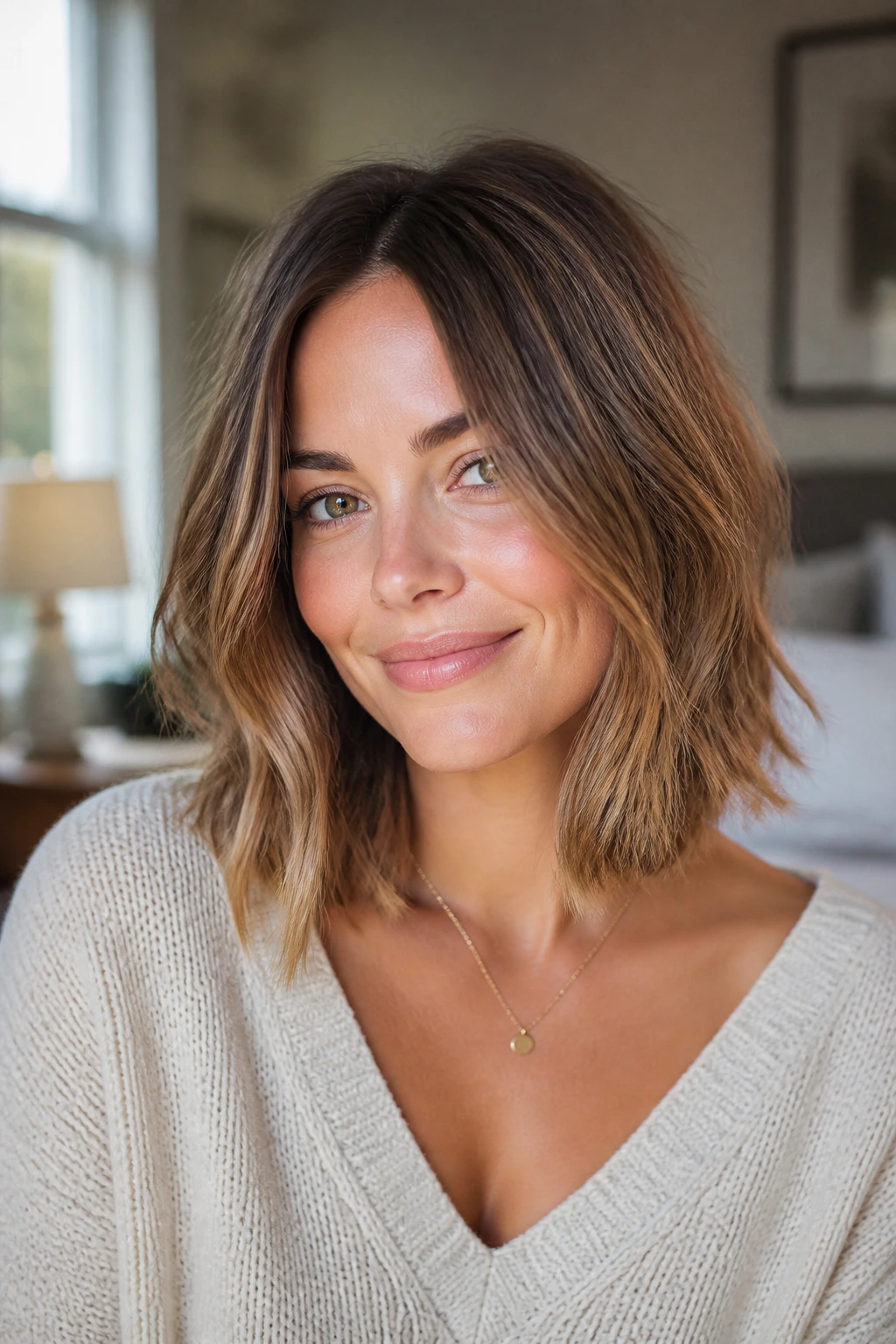
A U-shaped collarbone lob keeps the back slightly shorter and the front a touch longer, which creates a gentle curve instead of a hard straight line. On thin hair, that soft arc can make the ends look fuller because the perimeter doesn’t fall into a sharp shelf.
I like this shape when the hair needs a little movement but not a lot of layers. The curve gives the wave a better place to sit, and the front pieces can frame the jaw without eating into the density at the back. It’s subtle, which is why it works.
Good For
- People who want a softer silhouette.
- Hair that flips out at the shoulders.
- A bob that can grow out without looking blunt in the wrong way.
It’s a quiet shape, but a useful one.
25. Root-Lift Micro-Wave Bob
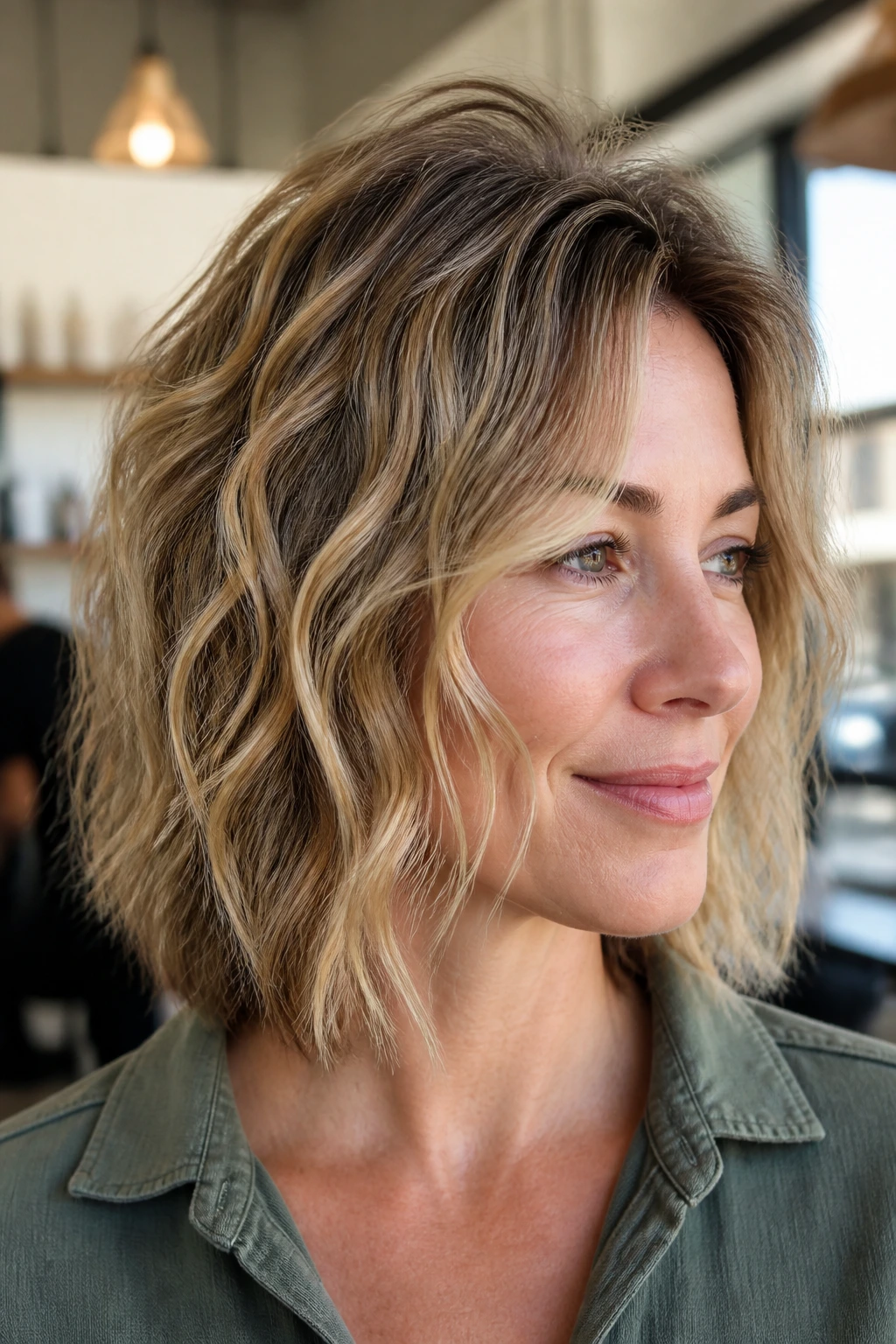
A root-lift micro-wave bob is all about keeping the volume where fine hair needs it most: at the top. The waves are smaller and looser than beach waves, and they start higher up so the crown doesn’t lie flat.
This is a smart look if your hair is very fine or slips down fast after styling. Use a lightweight mousse, blow-dry the roots in the opposite direction of your part, then add a few shallow bends through the mid-lengths. The effect is fuller without turning into curls.
Why It Sticks
- The lift starts at the root, not halfway down.
- The wave pattern is soft enough to brush out.
- The shoulder length keeps the ends from getting stringy.
If your hair usually gives up halfway through the day, this cut gives it a better chance.
Why Shoulder-Length Waves Make Thin Hair Look Fuller
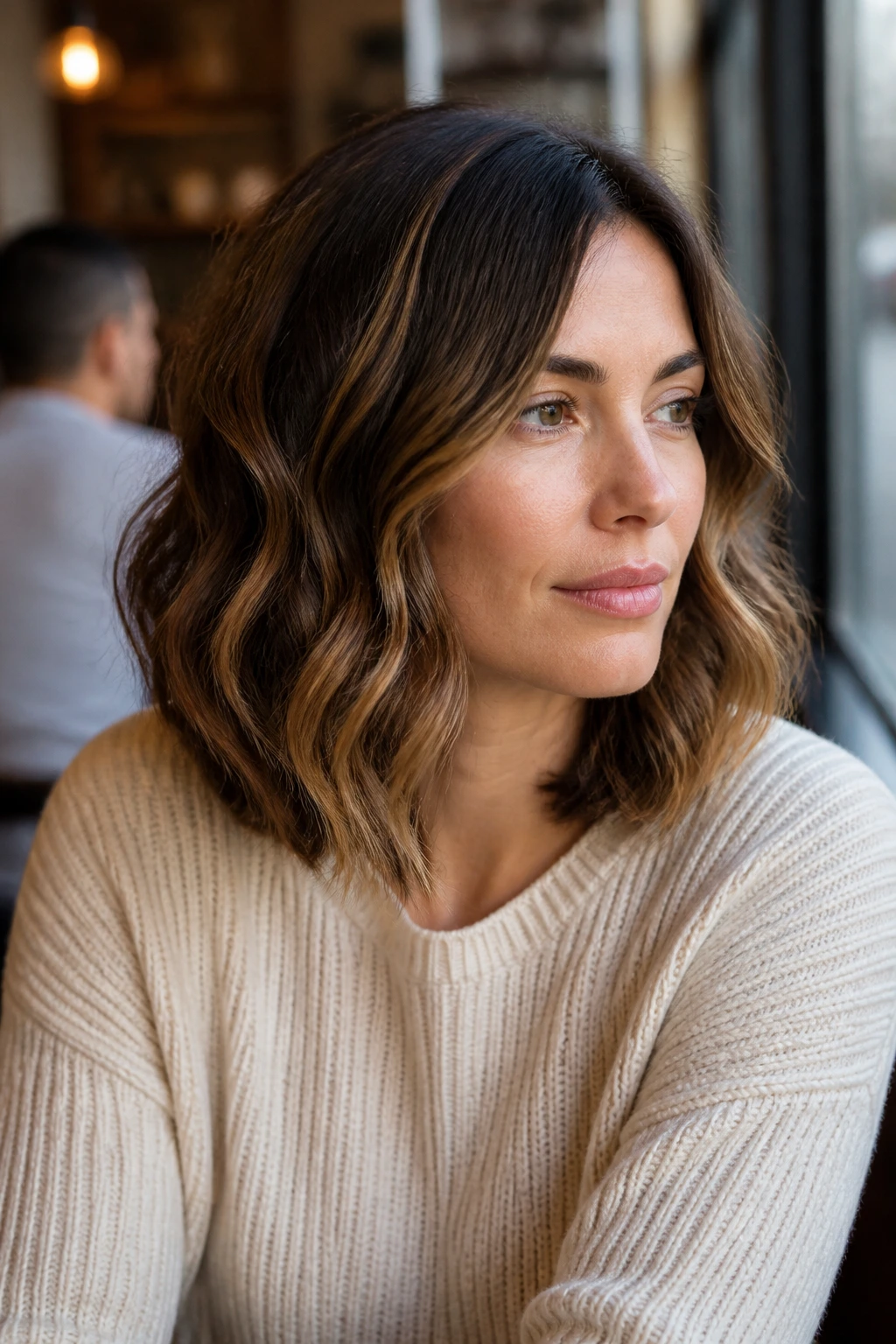
The real reason these cuts work is that they use shape instead of volume theater. Thin hair often looks flatter when it’s pulled too long, and it looks thinner when the ends are stripped too hard. Shoulder length changes both of those problems. The hair has enough length to bend, but not so much that the weight drags it into a limp sheet.
A wave helps because it creates micro-shadow. Even a soft bend breaks the outline of the hair, and the eye reads that texture as density. You don’t need tight curls or heavy product to get there. You need a perimeter that holds and a pattern that moves.
I also think shoulder-length hair is easier to rescue on bad days. If the roots collapse, you can rough up the crown. If the ends get fuzzy, you can smooth them with a little cream. If the wave falls out, the cut still has enough shape to look deliberate.
Essential Tools for Styling and Cutting
- Blow dryer with a concentrator nozzle: directs air at the roots so they lift instead of puffing out.
- 1-inch curling iron or wand: makes loose bends that look fuller than tight curls on thin hair.
- Round brush, 1½ to 2 inches: useful for smoothing the face-framing pieces and the crown.
- Velcro rollers or metal clips: hold the top section while it cools and help set the root.
- Light mousse: gives body without weighing the hair down.
- Heat protectant spray: keeps the ends from getting dry and brittle.
- Dry shampoo: useful on day two, especially at the crown and part.
- Texturizing spray: adds separation to waves that have gone soft.
- Wide-tooth comb or soft brush: helps break curls into waves without flattening the shape.
- Microfiber towel or T-shirt: cuts down on frizz after washing.
Smart Cut and Product Choices for Fine Hair
If you’re asking for one of these cuts, the biggest mistake is ordering too much texture before the hair has enough structure. For thin hair, a good perimeter matters more than a dramatic layer story. Ask for the length to stay at the collarbone or just above it, and ask your stylist to keep the bottom line full unless your density is unusually high.
Internal layering is useful. Over-thinning is not. A few invisible layers can remove bulk from the inside and help the wave sit better, but point cutting all the way through the ends can leave the bob looking ragged. If you want face-framing pieces, keep them long enough to blend into the main shape.
Product choice matters in the same plain way. Lightweight mousse at the roots, a heat protectant before blow-drying, and a light texturizing spray at the end usually beat heavy creams and oils. Thick styling butter can make fine hair feel dirty before lunch. If your hair gets dry, use a pea-sized amount of cream only on the last inch or two.
Color can help, too, if you already color your hair. A softer root area or subtle dimension can make the wave read more clearly. But the haircut still has to earn its keep. Color alone will not fix a flat outline.
Styling Tricks That Keep the Ends Full
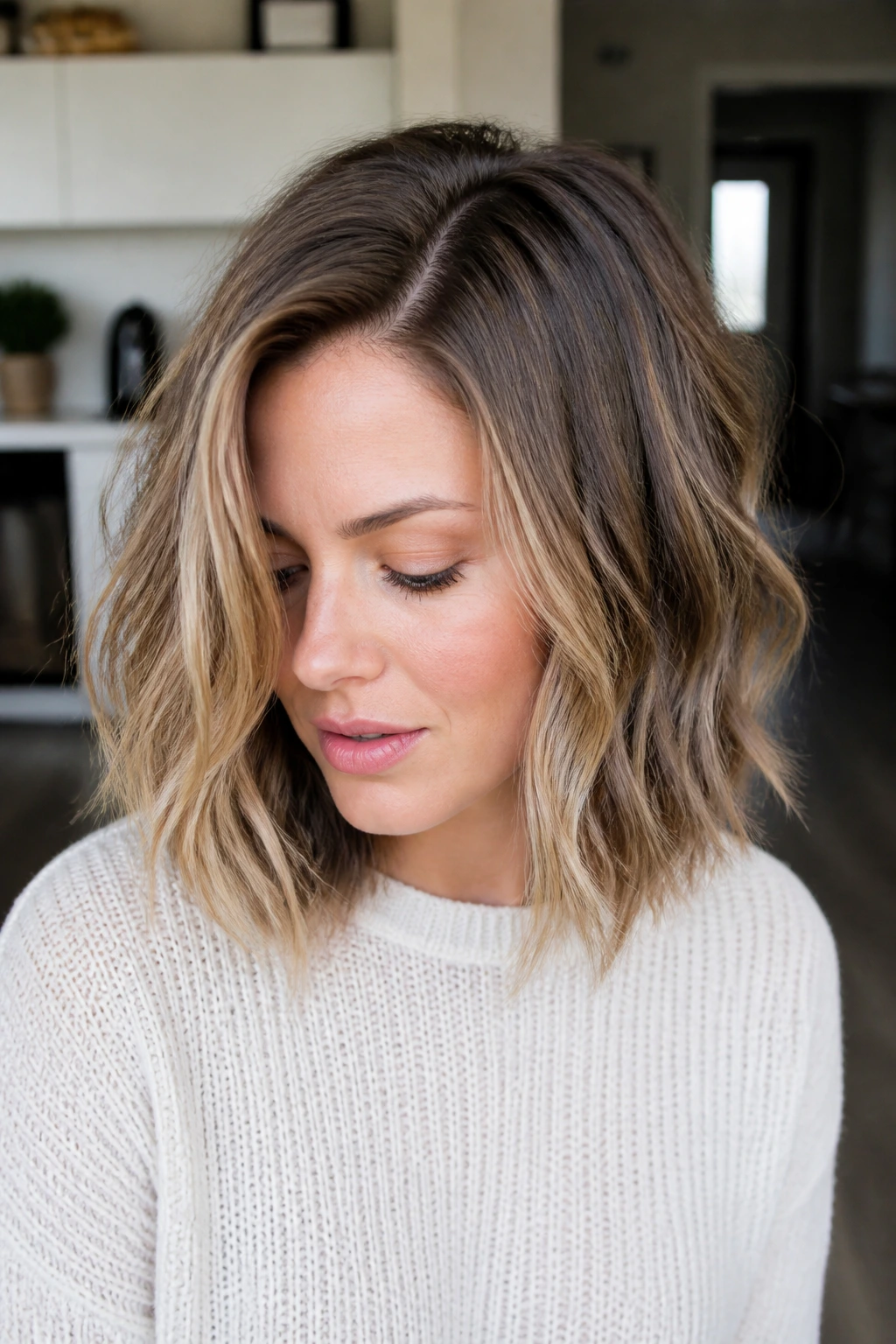
Root lift first: dry the roots in the opposite direction of your part for the first few minutes, then switch back once the hair has some memory. That one step often matters more than the finishing spray.
Wave direction matters: alternate the direction of each bend around the head so the hair doesn’t fall into one big uniform pattern. Fine hair looks better when the texture feels broken up a little.
Brush it out after it cools: let the wave set for a minute, then run a soft brush or your fingers through it. That turns hard curls into loose, thicker-looking movement.
Finish with restraint: a puff of texturizing spray at the mid-lengths is enough. If the ends feel crunchy, you’ve gone too far.
Use the shoulder as a guide: if the bottom starts flipping in weird ways, tuck one side behind the ear or change the part by a fraction. Tiny shifts can rescue the shape faster than starting over.
Common Mistakes That Leave Fine Hair Limp
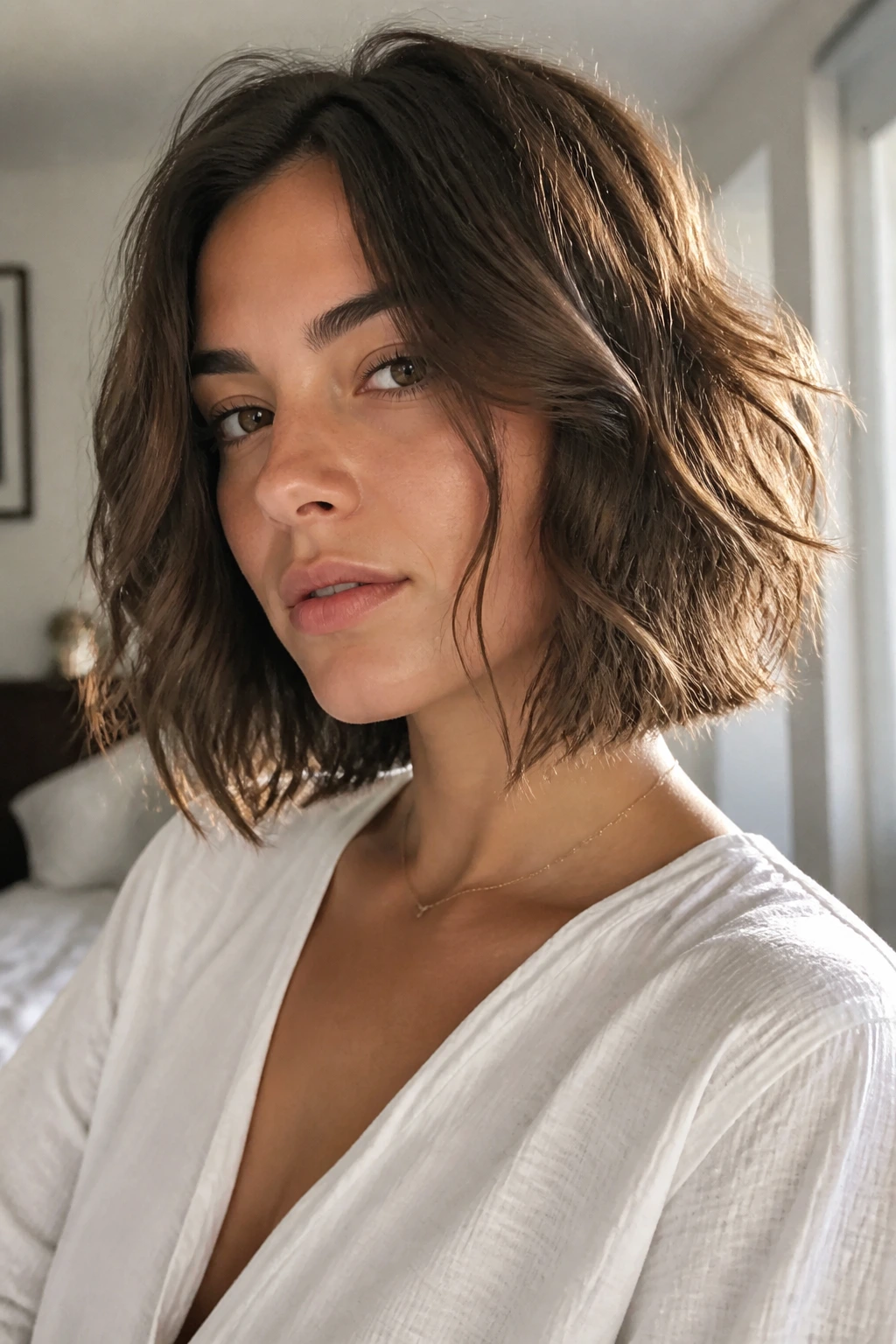
- Over-layering the ends: the symptom is see-through, fluttery pieces at the bottom. The fix is a stronger perimeter with only a few internal layers.
- Curling every section the same way: that creates a uniform tube shape that looks stiff. Alternate directions so the wave looks airy.
- Using heavy oils near the root: the hair goes flat fast and feels dirty early in the day. Keep richer products on the last inch only.
- Blowing the hair dry without root tension: if the roots dry in the direction they naturally fall, they collapse. Lift them with a brush or clips while drying.
- Going too short at the face: if the front pieces stop above the jaw, thin hair can lose the soft framing that makes the style work. Keep those pieces long enough to blend.
- Skipping trims too long: the ends start to split, and thin hair shows damage faster than dense hair does. A clean trim keeps the line solid.
Variations and Alternatives to Try
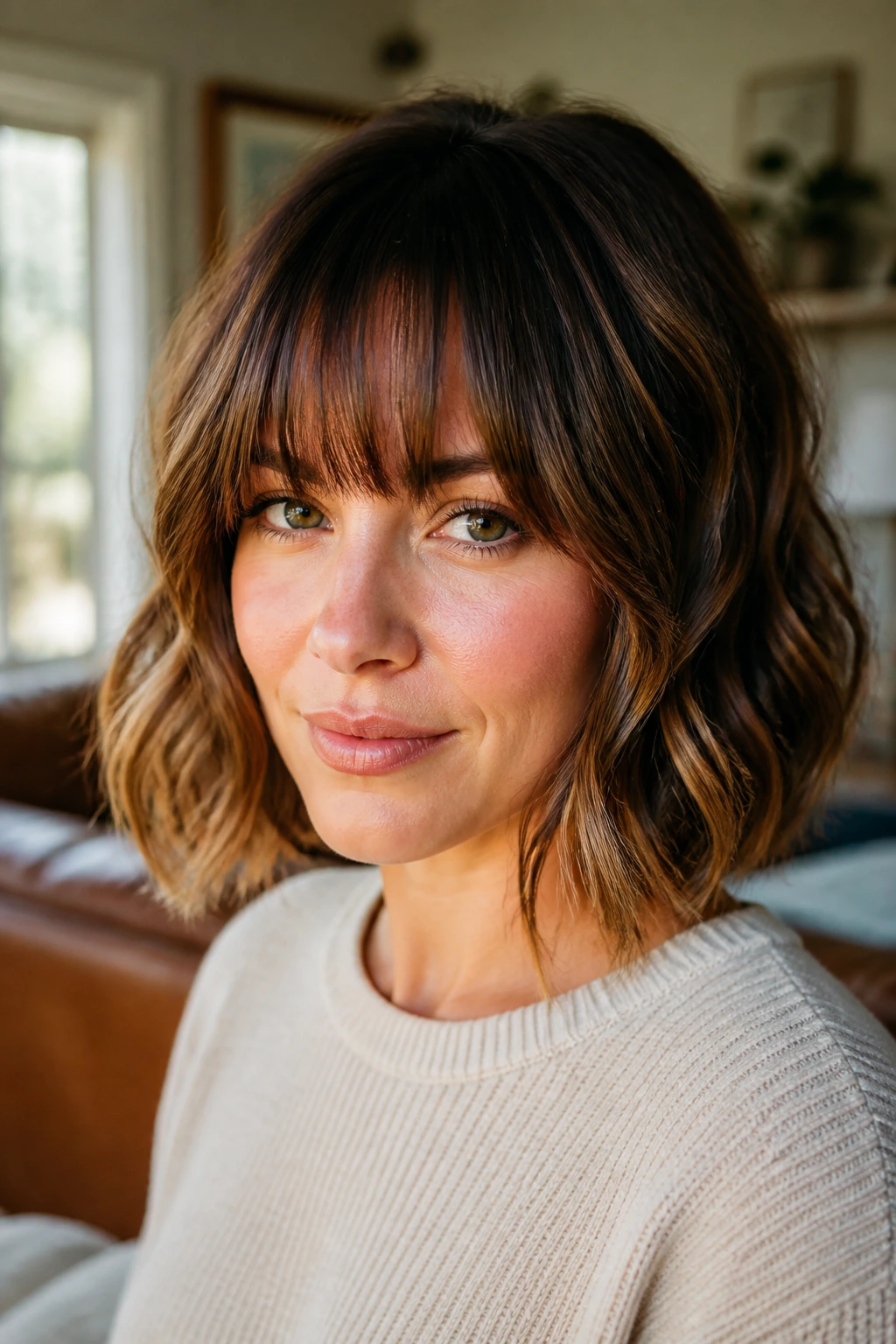
The Shorter Collarbone Swap: if shoulder-skimming hair keeps flipping awkwardly, move the cut up an inch. That small change can make the bob hold its shape better without losing the long-bob feel.
The Softer Air-Dry Version: use less heat, more mousse, and fewer layers. This works well if your natural wave is already doing half the work and you want the haircut to look easy on purpose.
The Fringe-Forward Version: add curtain bangs or bottleneck bangs if your face needs more framing. The fringe can make the whole style feel fuller near the front, which is useful when the crown is fine.
The Polished Workday Version: keep the same cut but blow it out smooth with a round brush and a soft bend at the ends. It gives you a cleaner shape for office settings without making the haircut too formal.
The Textured Weekend Version: use a salt spray or dry texture spray and rough up the wave with your fingers. This version has more edge and works well when the hair needs help staying off the scalp.
Keeping the Shape Between Salon Visits
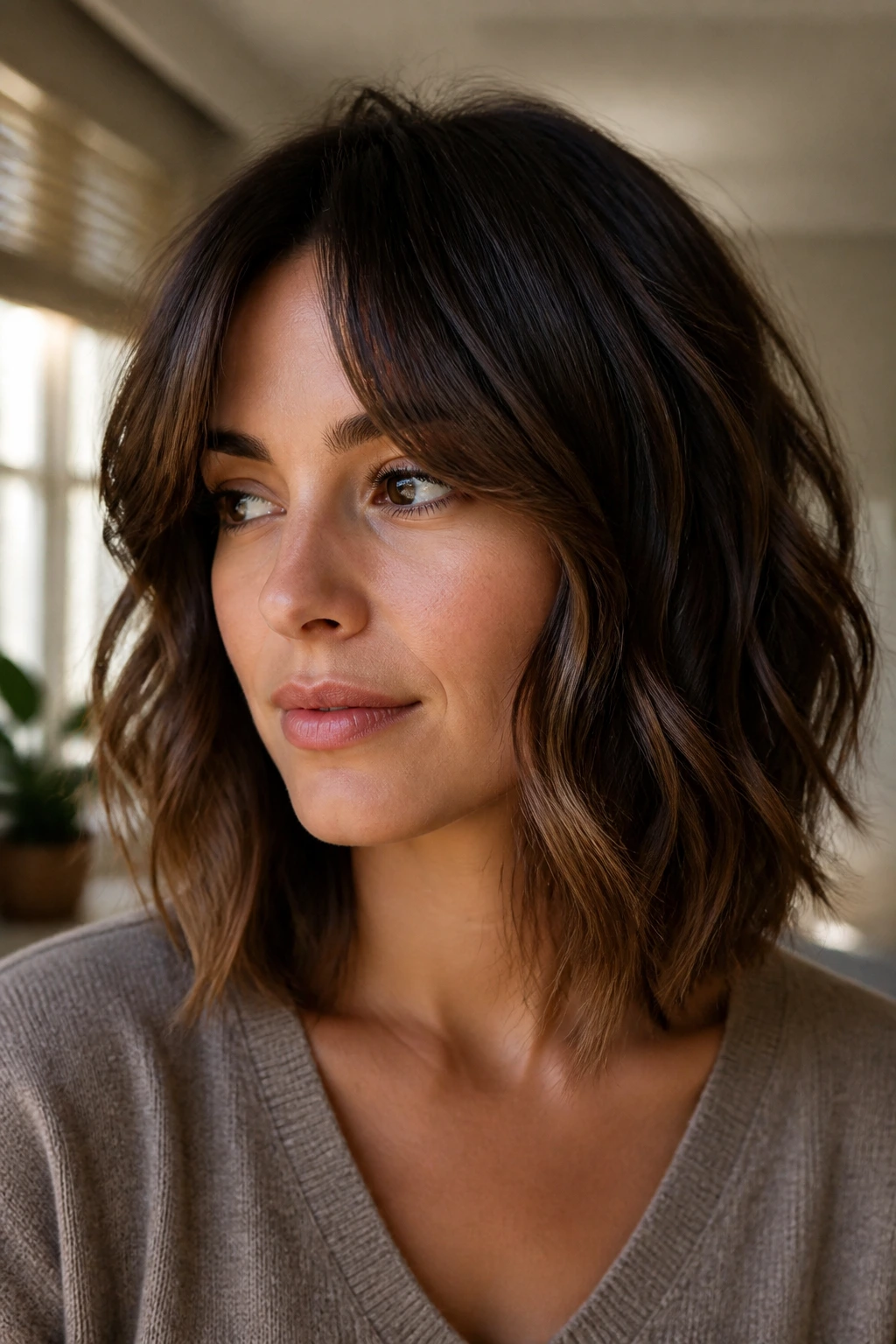
Fine hair usually loses its best shape when the ends start to split, so trims matter more than people want to admit. For most shoulder-length bobs, a trim every 6 to 8 weeks keeps the perimeter clean. If you wear bangs, clean up the fringe sooner, often every 3 to 4 weeks.
At home, sleep on a satin pillowcase or gather the hair into a loose clip at the crown. That keeps the wave from getting smashed flat against the back of the head. In the morning, mist the roots lightly with dry shampoo, then lift them with your fingers before adding any product.
Washing rhythm matters too. Fine hair often looks best when the scalp is cleaned often enough to stay light but not so often that it dries out and frizzes. If your roots get oily fast, wash more frequently and keep conditioner low on the lengths. If your hair is drier, stretch the washes and use a light leave-in on the ends only.
Frequently Asked Questions About Shoulder-Length Wavy Bobs for Thin Hair
Is a shoulder-length wavy bob good for very thin hair?
Yes, as long as the cut keeps a strong perimeter and doesn’t get over-thinned. The wave adds the look of body, but the blunt or softly curved edge is what keeps the ends from looking see-through.
Should thin hair have layers or stay one length?
A little of both usually works best. One-length cuts can make the ends look denser, while a few invisible layers help the wave move; the bad version is heavy layering that removes too much weight.
Can I wear this style if my hair is naturally straight?
Absolutely. A 1-inch curling iron, a flat iron used to make bends, or a round-brush blowout can create the wave. The key is keeping the bend soft so the style doesn’t turn into tight curls.
What if my waves fall out fast?
Start with mousse at the roots, add a heat protectant, and pin or clip the crown while the hair cools. A lighter wave pattern usually lasts longer on thin hair than a tight curl that relaxes into nothing.
How often should I trim it?
Every 6 to 8 weeks is a good rhythm for keeping the shape crisp. If you have bangs or very fine ends, a smaller cleanup sooner can keep the cut from getting fuzzy.
Will a bob make my thin hair look thinner?
It can if the cut is too shredded or too long. A shoulder-length bob with a clean line does the opposite because it gives the eye a fuller bottom edge and keeps the hair from hanging limp.
What’s the best parting for this haircut?
A soft off-center part is often the easiest place to start. It gives one side a bit more lift, which helps the crown look fuller without making the cut feel overstyled.
Can I air-dry this haircut and still get shape?
Yes, especially if your hair has any natural wave. Use a light mousse, scrunch once, and keep your hands off it while it dries; too much touching is what turns nice wave into fluff.
The Shape That Stays Useful

The reason these shoulder-length wavy bobs keep showing up in good salons is simple: they solve a real problem. Thin hair needs structure first, movement second, and these cuts respect that order instead of fighting it.
If you keep the line clean, the wave loose, and the product light, the haircut does most of the work for you. That’s the part I like best. It doesn’t ask fine hair to become thick hair; it gives it a shape that reads fuller, swings better, and still looks like hair when the wind hits it.