



Feathered haircuts for long hair with fine hair solve a very specific problem: the length wants to drag itself flat, but you still want movement around the face and a little lift through the crown. The wrong layers make long, fine hair look politely thinned at the ends. The right ones make it sway, bend, and catch a little air when you turn your head.
The trick is restraint. Fine strands do not need to be butchered into short, choppy tiers to look alive. They need shape placed where the eye notices it most — the cheekbones, the jawline, the collarbone, the soft bend around the shoulders — while the perimeter stays full enough to read as hair, not mist. That’s the part a lot of salon photos skip. They show the movement and forget the density.
What follows is a set of feathered cuts I’d actually keep in the running file if I were helping someone with long, fine hair choose a shape that still looks good on day three, not only in the salon mirror. Some are glossy and polished. Some lean softer and more undone. All of them respect one stubborn rule: keep enough weight at the ends that the cut still looks like it belongs to you.
Why These Feathered Cuts Work Better Than Random Layers
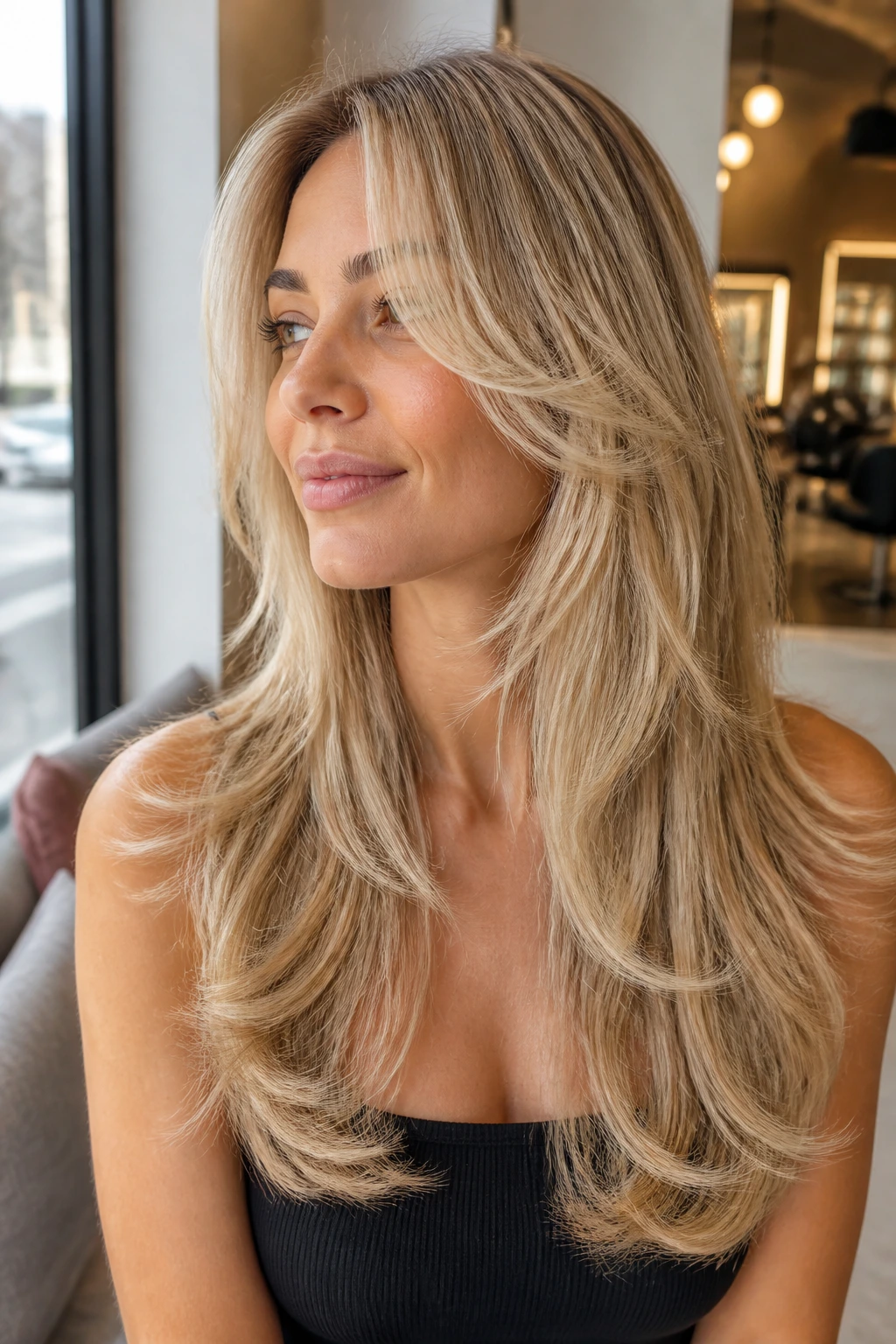
Fine hair needs direction, not chaos. Feathering gives the strands a path to follow, so the hair lifts around the face instead of collapsing into one heavy curtain.
Long length can stay. You do not have to give up inches to get movement. The best versions keep the bottom line mostly intact and place the airier pieces higher up.
The face gets the payoff. A little taper at the cheekbone or collarbone changes the whole read of the haircut faster than ten extra inches of length ever could.
The grow-out is kinder. Soft layers and feathered edges usually soften as they grow, which means you’re not staring at a blunt awkward shelf three weeks after a trim.
Styling gets easier, not harder. These cuts work with a round brush, large rollers, or even a good rough-dry. They don’t demand a full salon blowout to make sense.
1. Butterfly Feather Layers
This is the cut people ask for when they want movement without losing the drama of long hair. The butterfly shape keeps the length in back, then opens the front with higher, lighter layers that fall like wings around the face. On fine hair, that little bit of lift can make the whole head look fuller, especially when the shortest pieces start around the cheekbone or just below it.
Where the Lift Lives
The magic is in the contrast. The top and front sections get the feathering, while the bottom keeps enough density to look plush instead of wispy. If your hair has a soft bend already, this shape almost styles itself with a medium round brush and a quick cool shot at the end.
Ask for the shortest front layer to skim the cheekbone, not the brow. That gives the cut room to frame the face without eating up length too high up. I like this one on people who wear their hair down often and want the front to do more than sit there.
- Keep the face frame soft, not razor-sharp.
- Leave the bottom 2 to 3 inches with some weight.
- Blow-dry the front pieces away from the face for the full winged effect.
Best for: long hair that needs face-framing movement and a little salon-style bounce.
2. Curtain Fringe with Floating Sides
Want something softer than full bangs but more interesting than plain long layers? Curtain fringe does that job with almost no drama. The center opens just enough to show the forehead, and the sides sweep wide toward the cheekbones, which gives fine hair a little stage lighting around the face.
A clean curtain shape works especially well if you already part your hair in the middle. The fringe becomes the start of the haircut instead of a bolt-on accessory. On long, fine hair, I’d keep the sides long enough to tuck behind the ears on lazy days. That tiny detail matters. It keeps the cut from looking precious.
The trick is not to cut the fringe too short at the center. Fine hair can look sparse fast when the front is overcut. Let the fringe graze the bridge of the nose or cheekbone area so it has room to move when it’s styled.
The result is soft, not fussy. It’s the kind of shape that still looks intentional after a hoodie and a bit of wind.
3. Soft U-Shape Feather Cut
Do you want your ends to look fuller without giving up layers? The soft U-shape is the answer I reach for first. The back perimeter curves gently instead of pointing into a harsh V, so the bottom line keeps some visual thickness while the front can still be feathered for movement.
The Shape That Protects the Ends
Fine hair can go see-through fast when the longest pieces are carved into a sharp point. A U-shape avoids that problem. The hair still falls longer in the middle, but the taper is gentle enough that the eye reads one continuous sheet of hair rather than a narrow tail.
This is one of the easiest feathered haircuts for long hair to live with because it works with air-drying. If your natural texture bends a little, the front sections will fall into place with very little help. If your hair is poker-straight, a low-heat blowout at the ends adds movement without turning the whole cut into a project.
- Ask for a rounded perimeter, not a hard V.
- Keep internal layering light through the mids.
- Let the front pieces begin around the jaw or collarbone if you want softness without a big change.
It’s quiet in the best way. The cut doesn’t shout, but it makes fine hair look more deliberate.
4. Long Shag, Softened
A shag on fine hair can go one of two ways: chic and airy, or chopped into little broken pieces that never quite settle. The softened version is the one worth considering. It keeps the spirit of the shag — crown lift, texture, movement — but removes the aggressive stair-step effect that can make long hair look thin at the bottom.
I’d think of this as the shag for someone who likes a bit of grit in the shape but still wants long, swingy lengths. The layers are feathered, not shredded. That difference matters. If the stylist can show you how the shortest layer will sit when you tuck the hair behind your ears, you’re on the right track.
This cut really comes alive with a little dry texture spray at the mids and ends. Not a cloud of it. Just enough to separate the layers so you can see the shape. Too much product and the hair goes dull. Too little and the whole thing collapses into a flat sheet.
Best on Hair That Already Has a Bend
- Slight wave makes this one easy.
- Straight fine hair needs a root-lift product and a brush finish.
- Very fragile ends should stay longer, with the layers concentrated higher up.
It’s a good cut if you want movement that feels a little lived-in, not polished to death.
5. Bottleneck Bang Feathering
Bottleneck bangs are the useful middle ground between a true fringe and curtain bangs. They start narrower at the center, then open out around the cheekbones, which gives long fine hair shape right where the face needs it. The cut is flattering without asking the rest of the hair to do too much heavy lifting.
The reason I like this for fine strands is simple: it puts the visual interest in front. Fine hair often looks limp when all the action sits in the ends. Bottleneck bangs pull the eye upward, and the longer side pieces continue the line down the face instead of stopping it cold.
This version works well if you wear hair loose most days and want the front to do some of the styling for you. A quick round-brush bend at the ends of the fringe is enough. You do not need full curls. In fact, too much curl makes the fringe look separate from the rest of the cut, which is not the goal.
The best bottleneck versions barely graze the eyelashes at the center and open softly near the cheekbone. That keeps the line airy. Heavy bangs on fine hair can feel like a lid. Nobody wants that.
6. Invisible Layers for Straight Fine Hair
Straight fine hair is a sneaky beast. It looks sleek for about five minutes, then the lengths slump and the roots go flat. Invisible layers fix that without broadcasting every cut line to the room. The idea is to remove weight inside the shape, not to stack obvious steps through the surface.
Why This Feels Cleaner Than a Shag
A shag announces itself. Invisible layering whispers. That’s why it works so well on straight hair that tends to show every snip. The outer silhouette stays long and smooth, while the hidden layers stop the whole head from behaving like one heavy sheet.
This cut is especially useful if you want long hair that still slides nicely behind the shoulders. You can tuck it, clip it, or wear it straight down and it won’t look like you chopped it into pieces. I’d call it the quiet achiever of feathered haircuts for long hair.
Ask your stylist to keep the perimeter mostly blunt and use subtle internal graduation. That phrase matters. It tells them you want lift without a choppy finish. And if your ends are already fragile, this is the safer route.
Best for: straight, fine hair that gets weighed down quickly and loses shape by lunch.
7. V-Tail Feather Cut
A V-tail cut gives you the longest possible sweep in back with feathered sides that stop the shape from feeling bottom-heavy. It’s a sharper silhouette than the U-shape, but it can still look elegant on fine hair if the V is soft and the layers don’t begin too high.
What saves this style is balance. The point in back should be noticeable, not extreme. If the point is too narrow, the ends start looking sparse and the whole cut reads as overworked. Keep the side layers long and tapered so they fold into the V instead of fighting it.
This is the cut for people who like seeing length move when they walk. The hair swings. It has a little edge. And because the front layers are feathered rather than blunt, the shape still frames the face instead of dragging all the attention to the back.
A quick blowout with a paddle brush through the mids and a round brush at the ends is usually enough. You want a smooth fall, not a curled flip all the way through. That’s too much shape for this one.
8. Side-Swept Feather Fringe
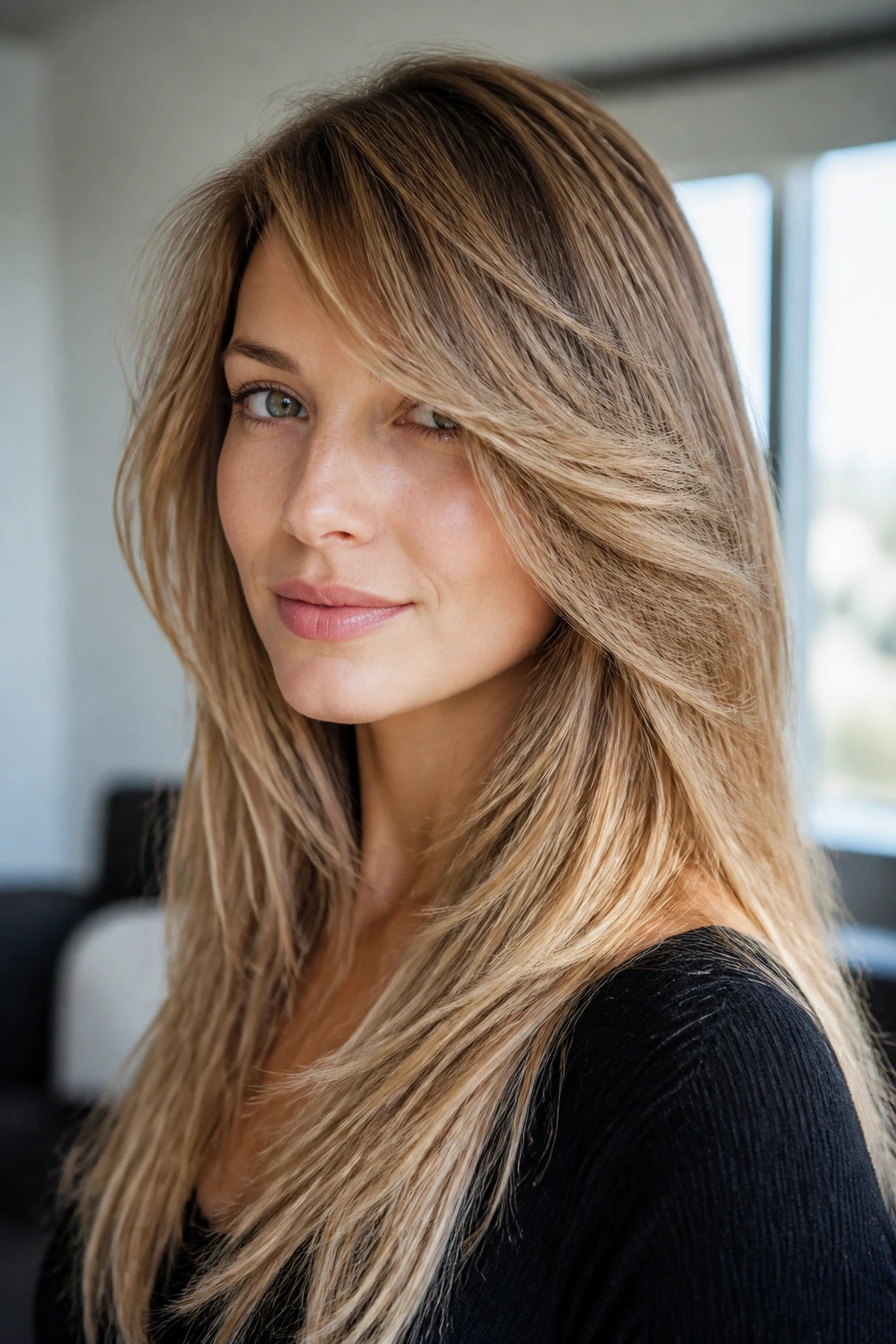
A side-swept fringe can rescue long fine hair that feels too open at the front. It creates a diagonal line that cuts across the face and gives the eye somewhere to land. On a day when the roots are a little flat, that diagonal actually does more work than a center part and two identical face-frame pieces.
I like this version for people who already wear a side part or who want to break up a long face. The fringe should be soft enough to blend into the front layers, not a separate chunk sitting on top of the haircut. If the ends are feathered a touch, the movement looks natural instead of clipped in.
The styling is merciful. One pass with a medium round brush, rolling the fringe away from the face, usually does the trick. You can pin it back behind the ear after it cools if you want a looser effect. That trick keeps the bend but removes the “freshly styled” stiffness.
This is not the fringe for someone who wants zero upkeep. It does ask for a little attention. But the payoff is good, especially when long hair needs a front section that keeps the whole head from looking too straight and too plain.
9. Cheekbone-Starting Face Frame
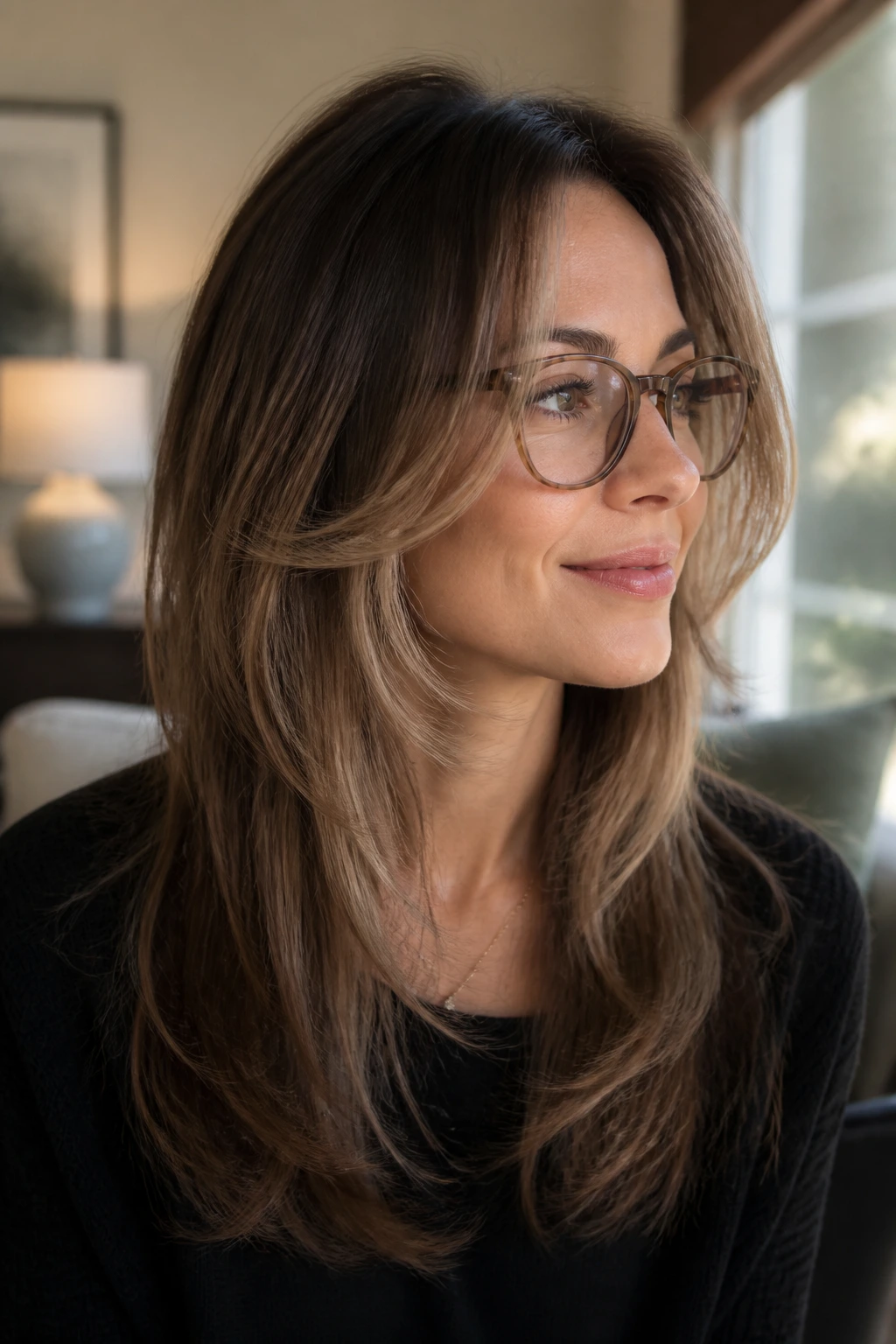
Start the layers at the cheekbone, and suddenly the haircut has a spine. That’s the whole idea here. The front pieces are feathered enough to soften the face, but they begin high enough to create visible lift where long fine hair usually goes limp.
This style is one of my favorites for people who think their hair “does nothing” around the face. It does something here. The cheekbone start point draws the eye upward and out, which can make the whole cut look lighter without sacrificing actual density at the ends.
The key is not making those first pieces too short. If they stop too high, they puff out in a way that can feel dated fast. Keep them long enough to brush against the cheek and jaw, then let the rest of the hair fall in long, feathered sections behind them.
It’s a neat cut for glasses wearers, too. The frame lands around the face instead of competing with the frames on your face. Small detail. Big difference.
10. Rounded Blowout Layers
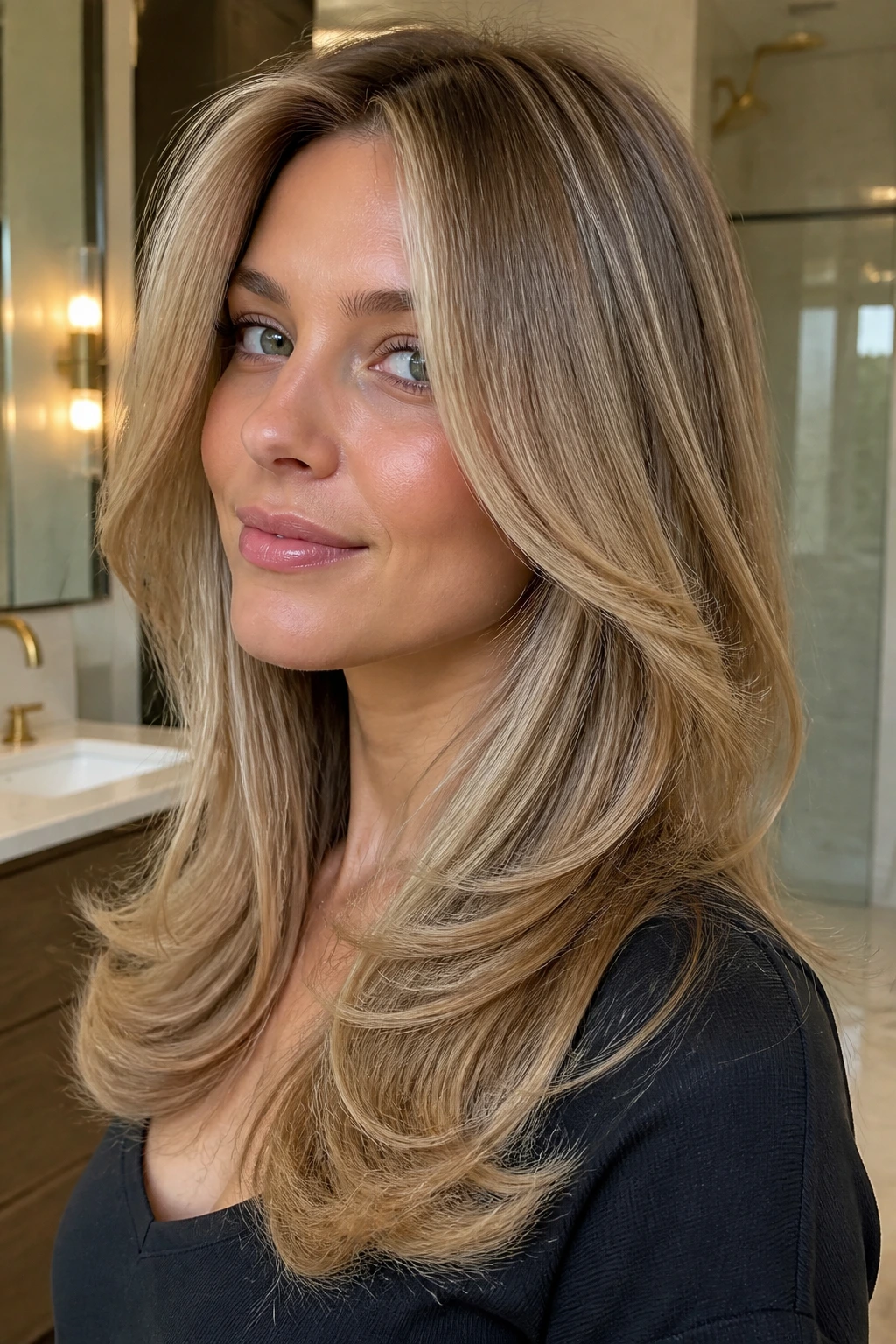
This one is built for the round brush crowd. Rounded blowout layers are feathered to curve softly under and away from the face, which gives long fine hair a fuller, salon-finished silhouette. If your goal is to look like you spent ten minutes more on your hair than you really did, this is a useful shape.
The layers should follow a curve, not a staircase. That keeps the hair moving as one piece. Straight-across layers on fine hair can separate too sharply and make the length look sparse. Rounded layers, by contrast, keep the ends flowing into each other.
It helps if the stylist pays attention to your cowlicks and natural parting before cutting. A blowout style that fights your growth pattern will not hold. Hair with fine strands tends to reveal bad geometry immediately.
The visual result is smooth and airy at once. You get a little lift through the mids, a clean sweep around the jaw, and ends that still look thick enough to hold the line. Not bad for a cut that mostly behaves itself.
11. Razor-Soft Feather Ends
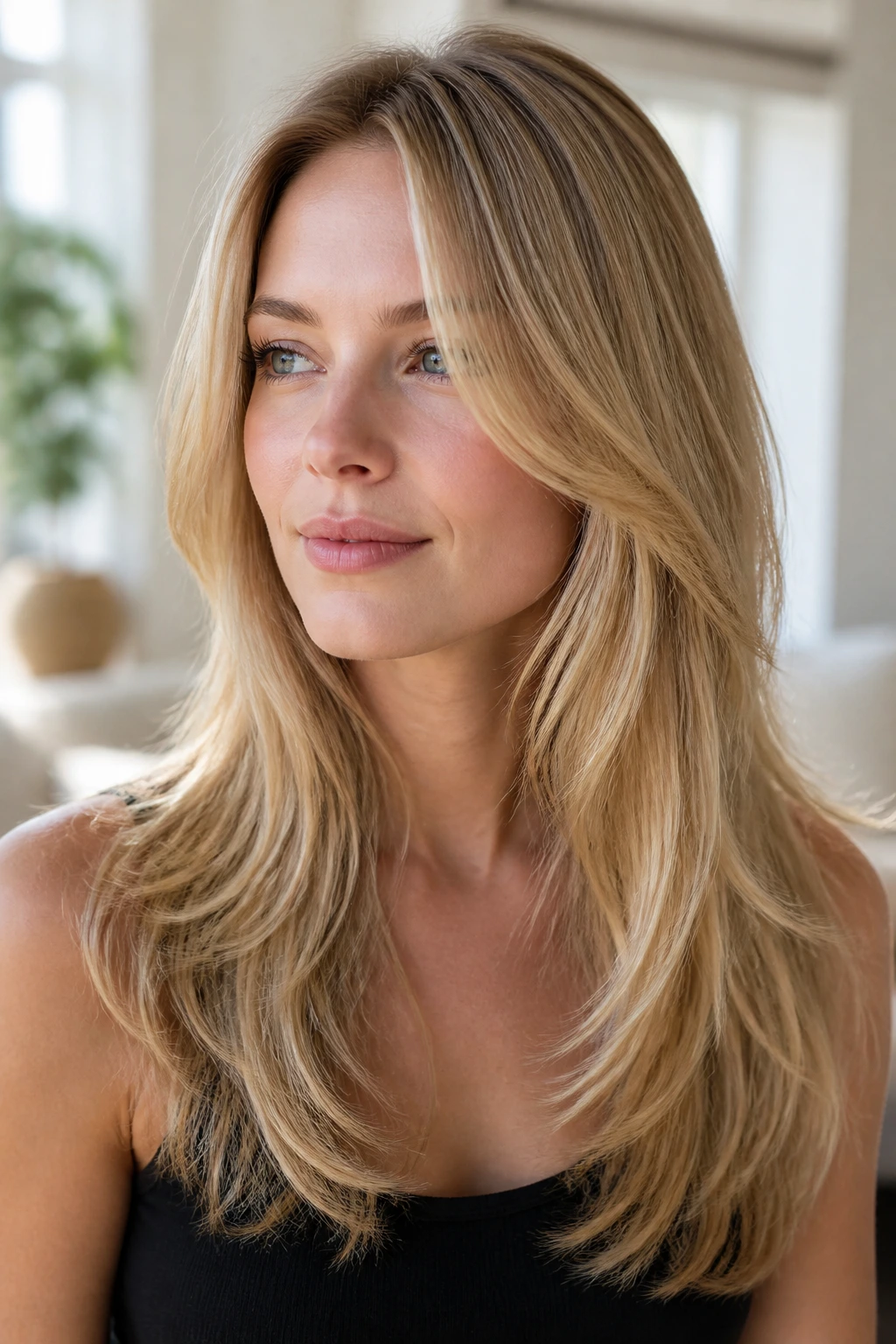
Razor cutting gets talked about like it’s magic. It isn’t. On healthy fine hair, it can soften the ends into a light feathered finish. On dry, fragile hair, it can make the perimeter fray in a way that looks tired instead of airy.
That’s why I’m picky about this one. If the hair has good condition and the stylist knows how to use a razor sparingly, the ends can take on a clean, wispy movement that suits long lengths beautifully. The result feels soft when you run your fingers through it. Almost slippery, but not limp.
The danger is overdoing it. Too much razor work on fine hair removes the last bit of body you had left, and the ends stop looking intentional. They start looking defeated. Nobody needs that.
This cut works best when the razor is used to refine the feathered pieces around the face and gently taper the lower lengths — not to shred the whole head. If you’re nervous, ask for point cutting instead. Safer. Less dramatic. Often better.
12. Chin-to-Collarbone Veil Layers
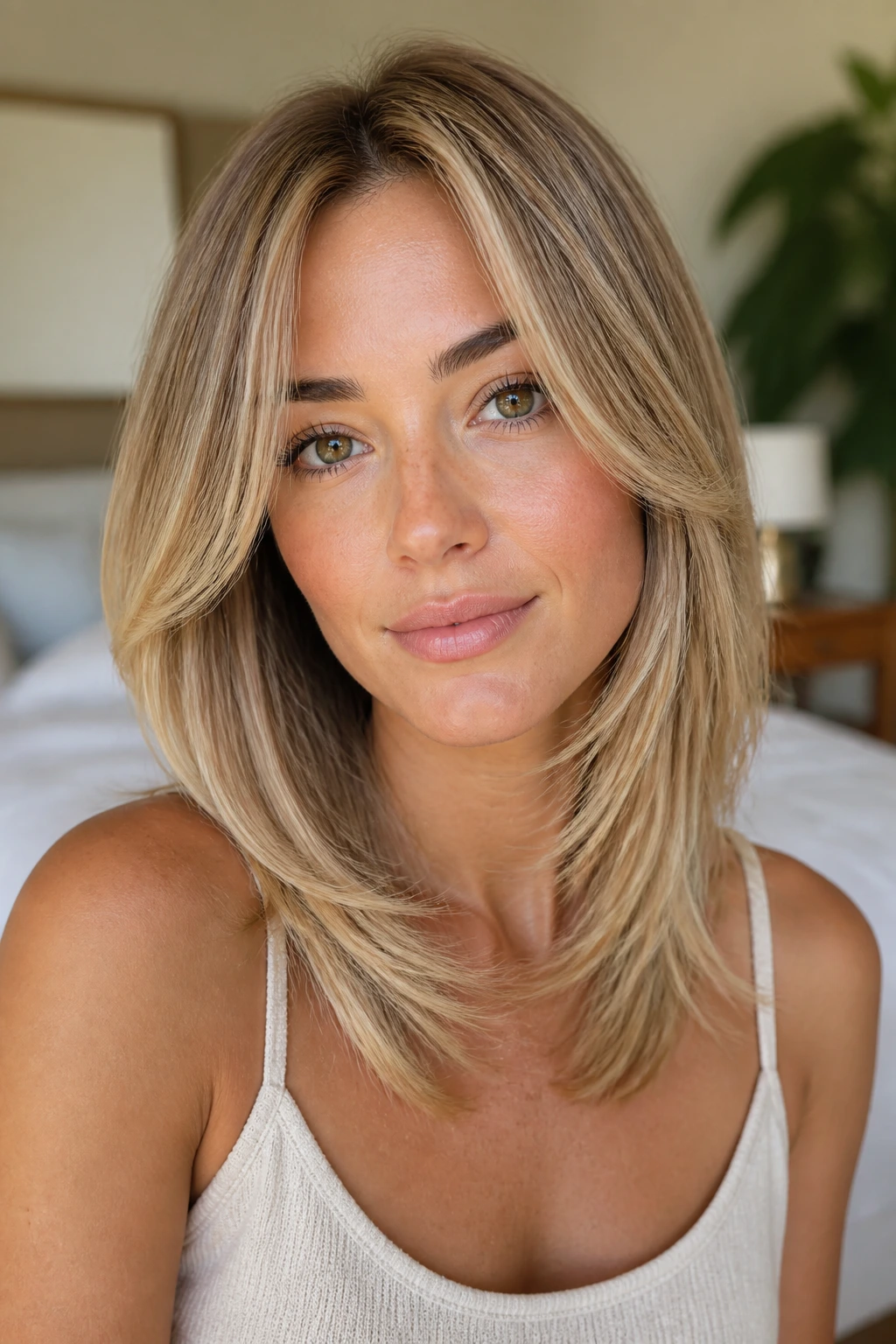
Want a face frame that doesn’t turn into bangs after two weeks? The chin-to-collarbone veil gives you softness without a big maintenance bill. The shortest pieces open near the chin, then taper into the collarbone so they can live tucked, pinned, or swept behind the shoulders.
This shape is handy for fine hair because the front pieces carry the visual load while the rest of the hair keeps its length and body. It’s subtle enough to wear to work, but it still changes the silhouette when the hair moves. That’s the whole point.
The veil effect is especially nice on long hair that tends to lie flat at the sides. The front pieces create a little shadow and light around the face, which makes the rest of the hair look fuller by comparison. Small trick. Works every time.
If you like low-friction styling, this is one of the best feathered cuts in the lineup. You can air-dry it and still see the shape, or you can bend the front pieces under with a brush for a cleaner finish. Either way, the length stays the main event.
13. Waterfall Layers
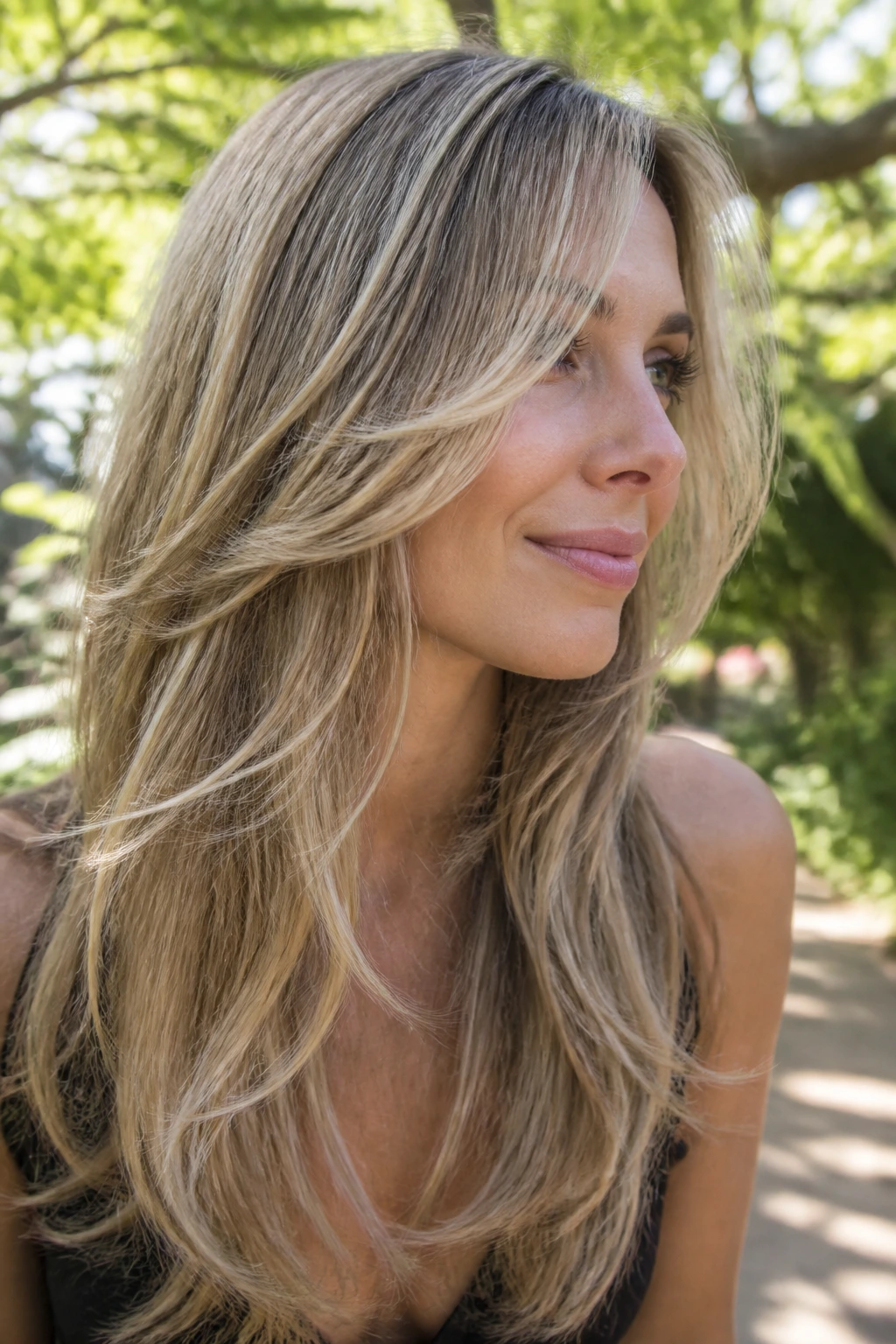
Waterfall layers are all about flow. Instead of stopping abruptly, each layer falls into the next, which gives long fine hair a softer, cascading look. The cut is lovely when the goal is movement without a choppy outline.
The Part That Makes It Look Expensive
The layers are usually longest through the mids, then gently feathered toward the ends. That’s what keeps the hair from looking overcut. Fine hair needs continuity. A waterfall shape gives you motion but still reads as one head of hair, not six separate sections trying to be friends.
I like this shape on hair that has a slight bend or natural wave, because the layers echo the movement instead of fighting it. Straight hair can still wear it, but it benefits from a bit of blow-dry smoothing through the crown. Keep the brush strokes long and directional.
- Ask for layers that blend, not stack.
- Keep the shortest pieces around the lips or chin.
- Let the back retain enough length to feel full.
There’s a softness here that feels polished without trying too hard. Fine hair often needs that middle ground.
14. Center-Part Halo Layers
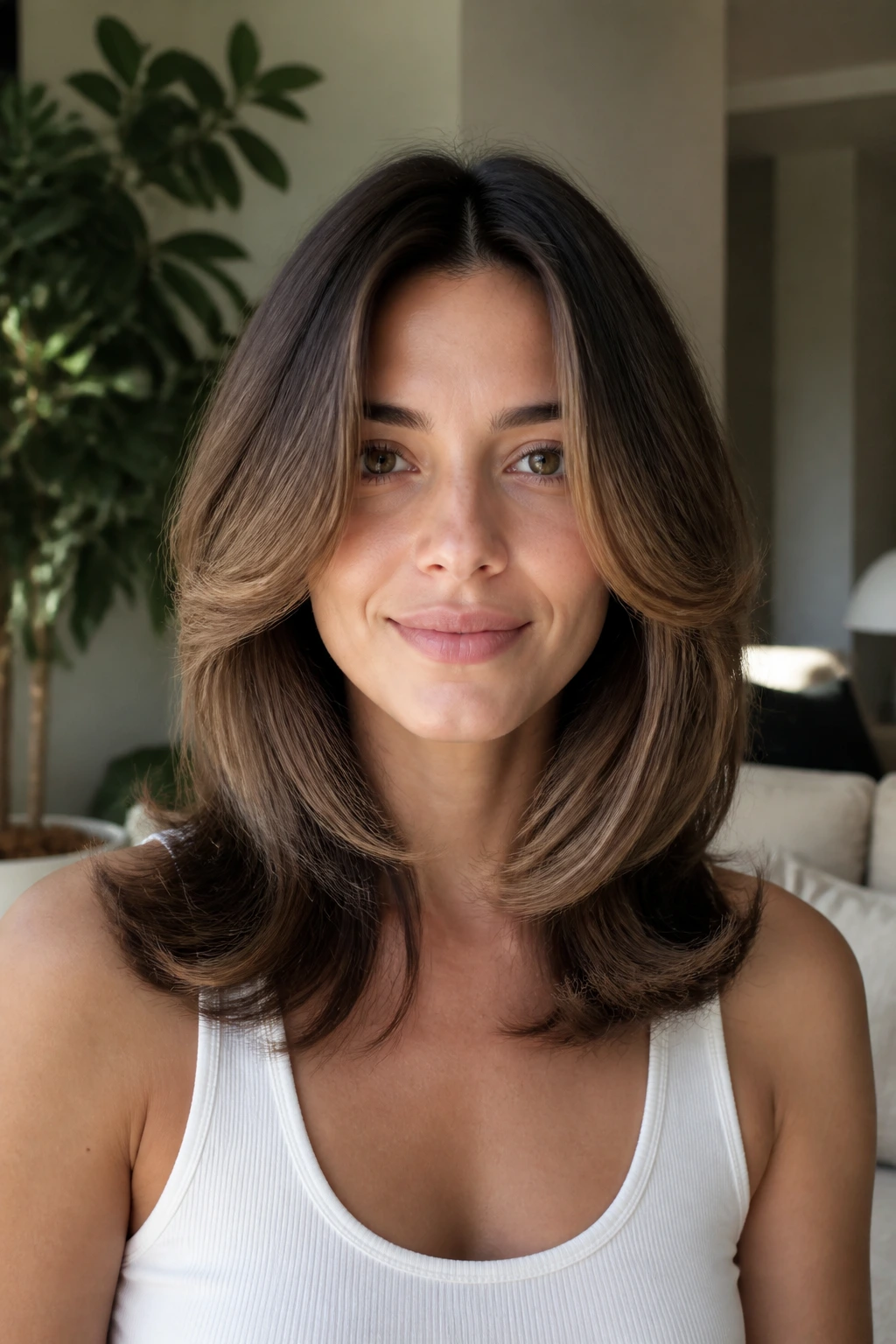
A center part can either sharpen fine hair into a flat curtain or make it look elegant and open, and the difference usually comes down to the face-framing shape. Halo layers solve that by surrounding the face with soft, even feathering that falls on both sides like a light frame.
This is a good cut if you wear your hair parted in the middle and want to keep that symmetry. The face-framing pieces should start around the cheekbones and curve down toward the collarbone. That keeps the center part from looking severe, which matters more than people think.
I especially like this on oval and long faces because the halo can shorten the visual length a touch without hiding the forehead. It’s not a heavy curtain. It’s a softer border. Fine hair benefits from that kind of border because it gives the eye a place to stop.
The layers in back should stay quiet. The front already does the work. If the back gets too chopped up, the whole shape loses the calm that makes this style so wearable.
15. Toned-Down Wolf Cut
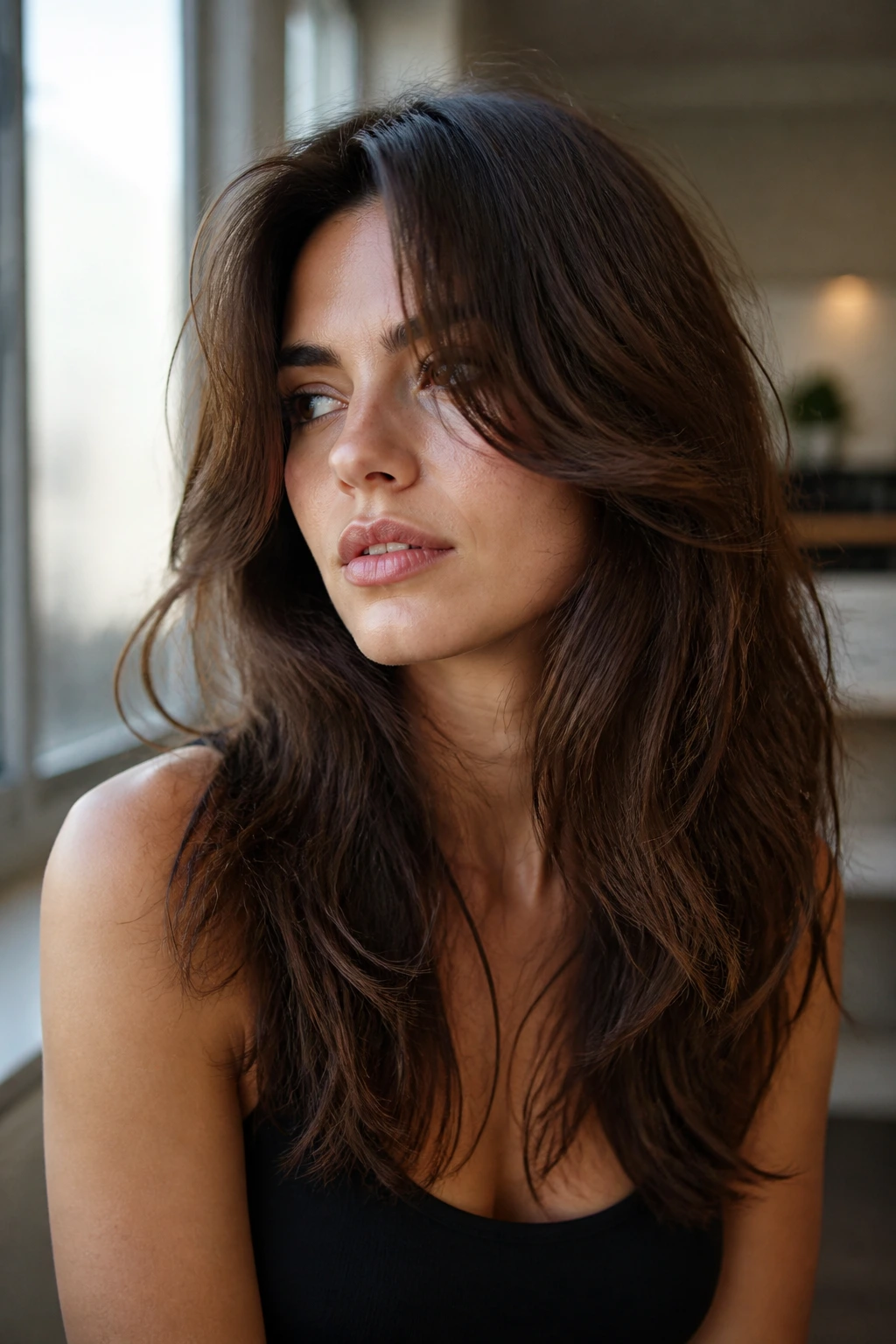
A full wolf cut on fine hair can get messy fast. The toned-down version is much smarter. You keep the lifted crown, the airy feathering, and the sense of movement, but the layers stay longer and softer so the hair doesn’t end up with a spiky little halo and a thin tail.
This is the cut for someone who wants attitude without a fight with the mirror every morning. The crown gets a bit of lift. The sides get some taper. The ends stay long enough to look substantial. That balance is the whole point.
If your hair is straight, you’ll need a little styling help to make the texture read. If it’s softly wavy, the cut will do half the work on its own. Either way, ask your stylist not to overthin the perimeter. Fine hair already knows how to look fragile; it doesn’t need help.
This version is surprisingly good for ponytails and half-up styles. The shorter layers at the top loosen around the face, and the rest still gathers without looking like you lost half your length in the salon chair.
16. C-Cut Feathering
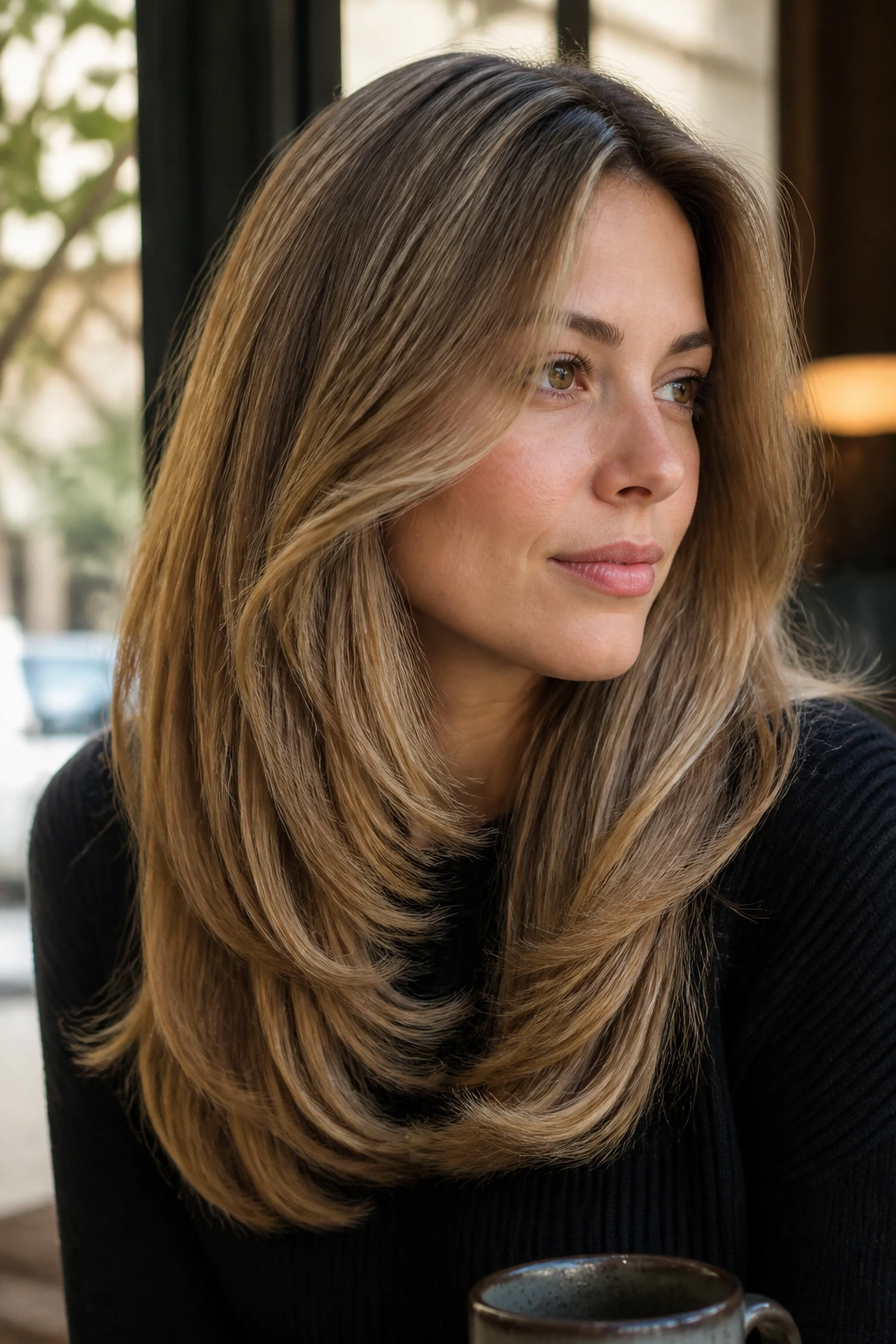
A C-cut curves inward toward the face and outward through the length, making a soft “C” shape when the hair is styled. On fine hair, that curvature can make the ends look fuller because the eye follows the arc instead of landing on a blunt shelf.
The reason I like this cut is that it’s flattering without being loud. It’s a shape, not a statement. The layers should be long and blended, with the strongest curve near the cheek and collarbone. That gives the haircut its movement without stealing too much from the hemline.
This one works especially well on long faces or anyone who wants to soften a strong jaw. The curve eases the whole silhouette. It’s not dramatic in a loud salon-poster way. It’s better than that. It quietly makes the hair look like it has more body than it does.
A round brush is your friend here, but a big one. You want the curve to be gentle, not barrel-curl obvious. The style should feel like the hair has fallen naturally into shape after a good blow-dry.
17. Collarbone Flick Layers
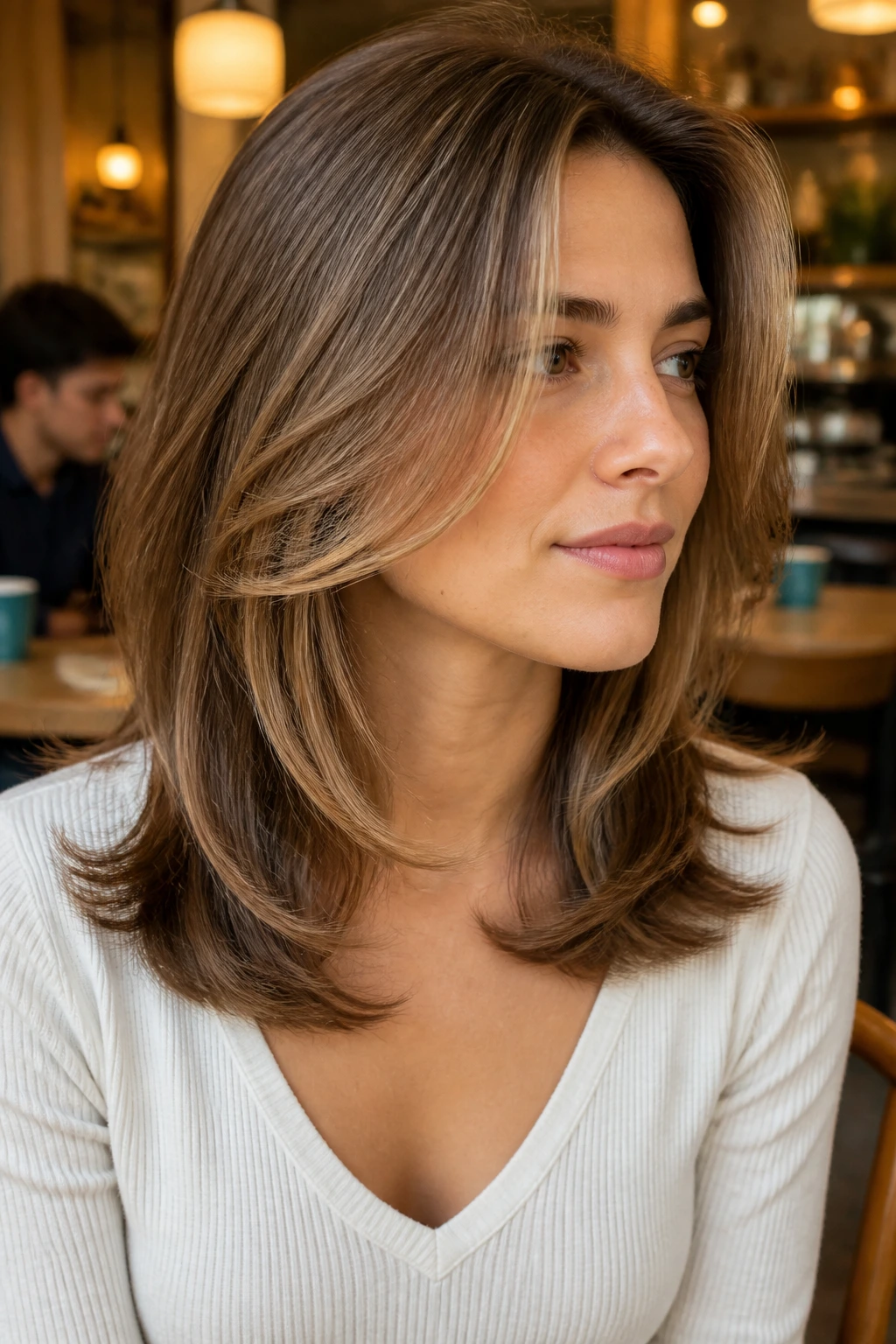
Some cuts are all about the front. This one is about the finish at the collarbone. Collarbone flick layers are feathered so the ends naturally bend out or under around that length, which is a sweet spot for long fine hair. The movement sits low enough to keep the hair looking long, but high enough to feel styled.
There’s a reason this works. The collarbone is where long hair tends to catch on sweaters, straps, and scarves. If the cut has a little flick built into it, that movement looks intentional instead of accidental. A tiny detail. Worth it.
I’d ask for layers that encourage the ends to turn, not abrupt chops. The front can be lightly shorter, but the main event is the way the cut moves near the shoulders. On fine hair, that motion makes the hair feel less static.
This is one of the easier styles to maintain with a blow-dry brush or a medium round brush. You do not need perfect curls. You need enough bend to show the shape. That’s it.
18. Internal Weight-Removal Layers
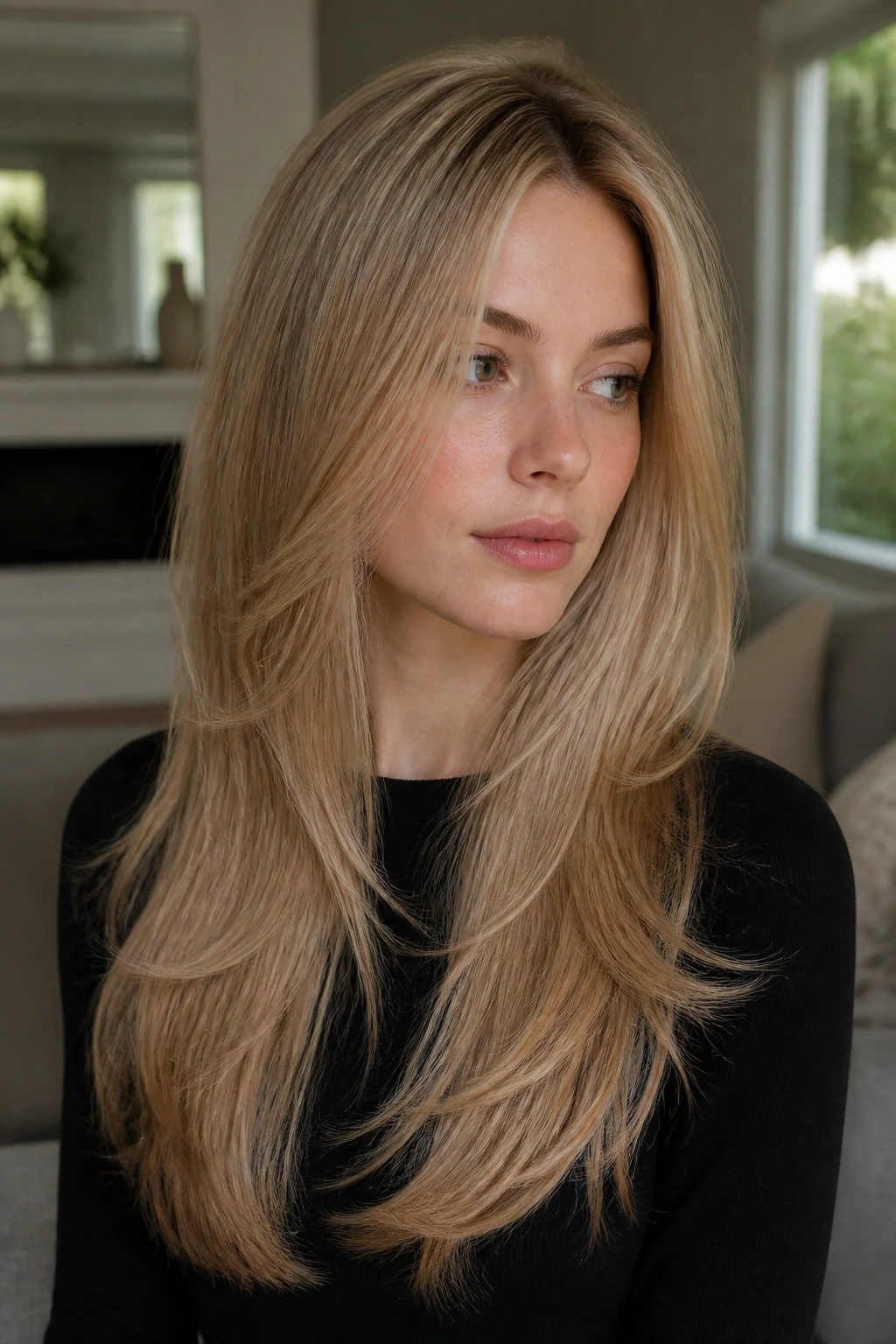
Dense fine hair can fool people. It looks slim in a strand-by-strand sense, yet there’s enough total volume to build a heavy triangle if the cut stays one length. Internal weight-removal layers fix that by taking bulk out from the inside while preserving a fuller outline.
Why This Is Different From Thinning
Thinning shears chop at the ends and can leave fine hair feeling frayed. Internal layering removes weight higher up in the structure, which lets the length still look rich. The hair moves better, but the perimeter stays intact.
This is a smart choice if your ponytail feels thick but your down style looks flat. That combo is more common than people think. The problem isn’t lack of hair. It’s lack of shape. Internal layers solve the shape issue without making the hair look threadbare.
- Ask for weight removal inside the shape, not at the very ends.
- Keep the outline soft and slightly rounded.
- Pair it with a lightweight root-lift spray if you style often.
I’m picky about this cut because it can be very good in the right hands and very disappointing in the wrong ones. If your stylist reaches for thinning shears like they’re confetti, back up a step.
19. Blunt Bottom with Feathered Sides
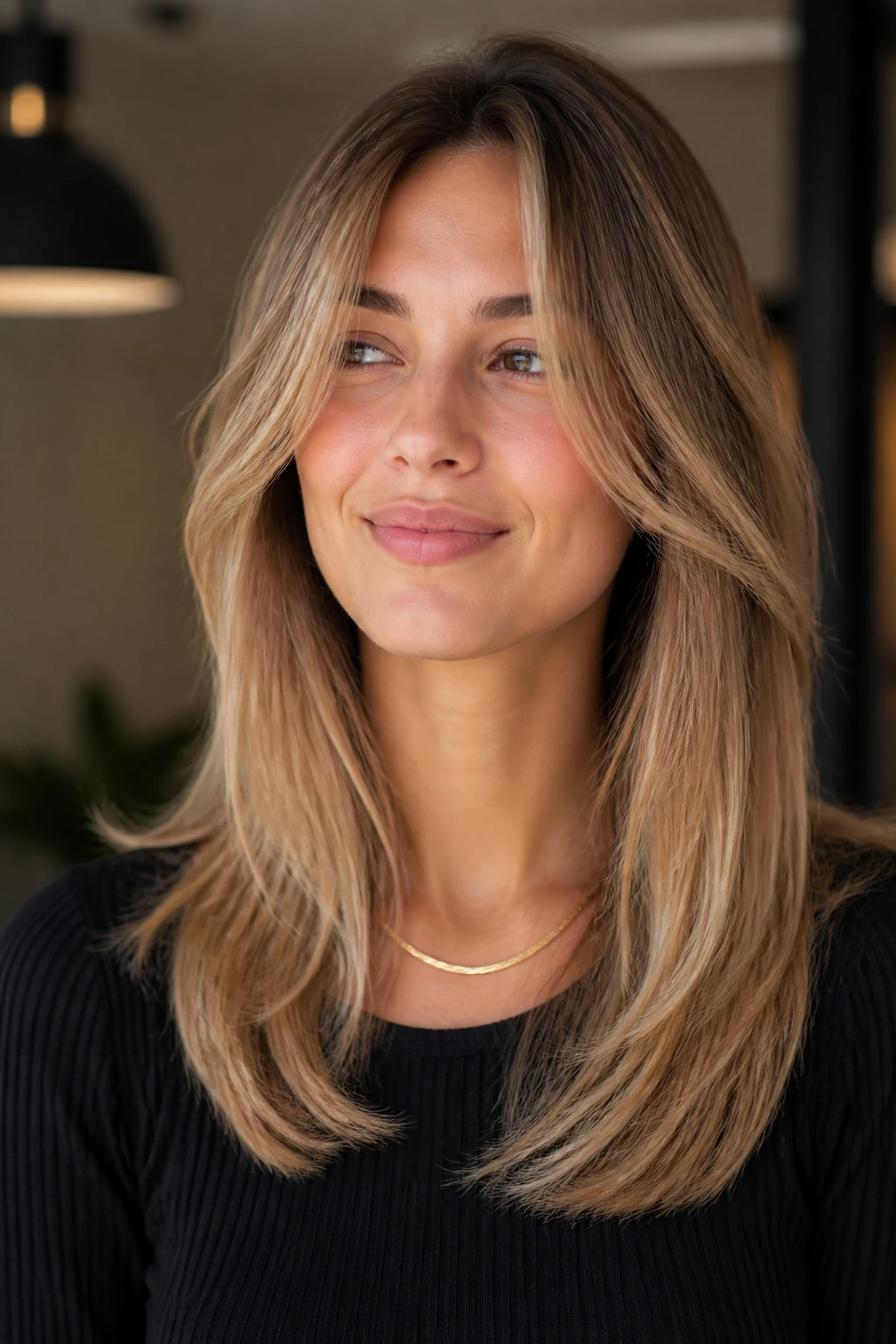
This is one of the smartest ways to fake thickness. Keep the bottom edge blunt, or nearly blunt, so the ends read as full. Then feather the sides and front just enough to add movement around the face. That contrast does a lot of work on fine hair.
A fully layered hemline can look airy in a bad way. A blunt bottom line avoids that. It gives the eye a clean stop, which makes the rest of the hair look denser than it is. I use this concept a lot when someone says, “I want layers, but I also want my hair to look like I have hair.”
The side feathering should be soft and long. No short stepped pieces. You want the cut to open the face, not hollow out the body of the hair. If you wear your hair over one shoulder, this shape looks especially nice because the blunt end line still reads through the movement.
It’s a clean, polished compromise. Not bland. Just sensible. Fine hair usually appreciates sensible.
20. Long Curtain Veils
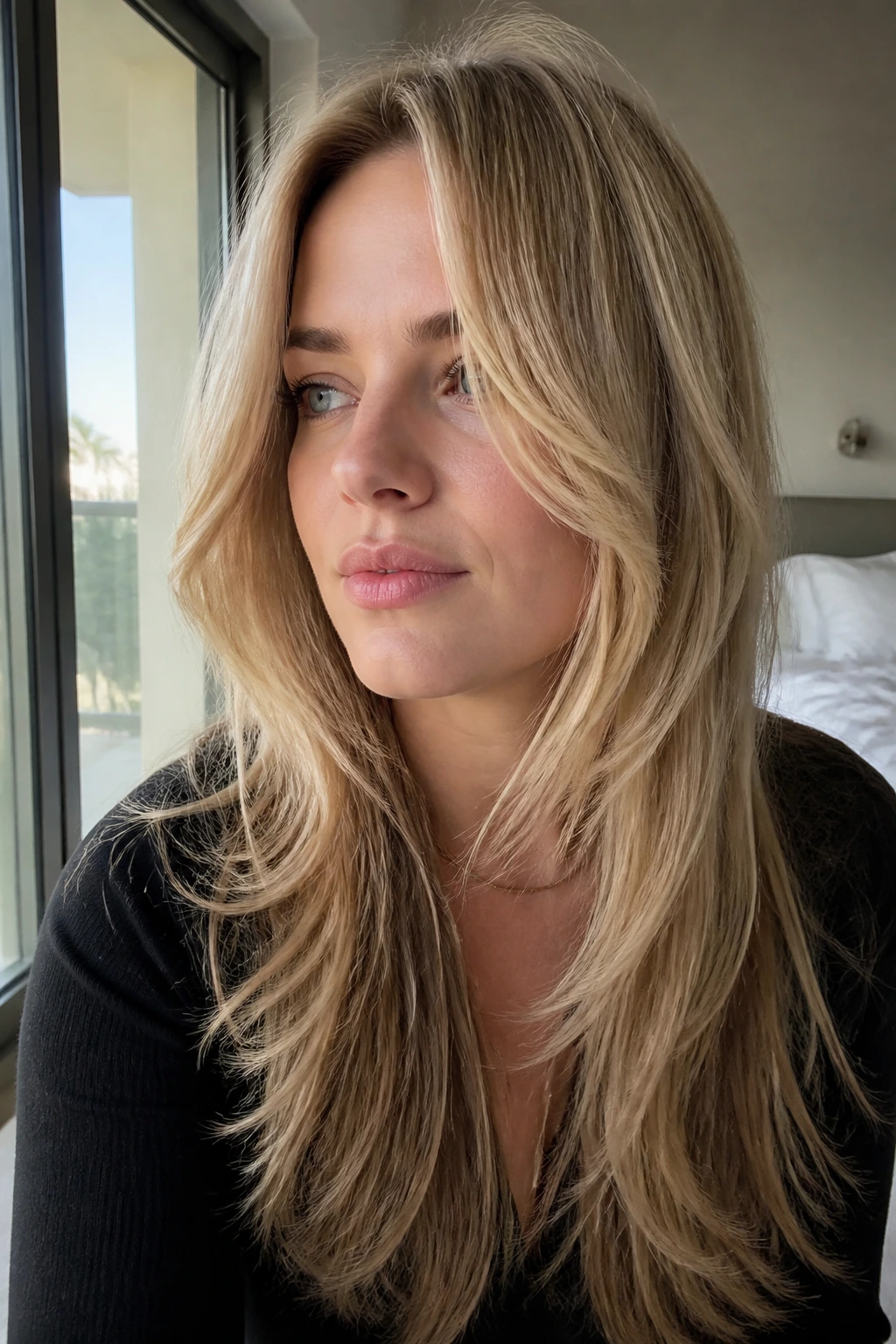
Long curtain veils are for people who want the effect of curtain bangs without actually committing to a fringe that sits on the forehead every day. The front pieces start around the lips or chin, then drift down toward the chest. They frame the face softly and can be tucked away when you want a cleaner look.
This is one of the most forgiving feathered cuts for long hair because the grow-out is graceful. The veil pieces blend into the rest of the length instead of sitting there like a separate haircut. On fine hair, that matters. Separation is what makes hair look stringy.
The trick is to keep the pieces long enough that they can move with the rest of the hair. If they’re too short, they become a little curtain you have to babysit. Keep them longer and the whole style feels easier.
This cut is especially nice if you spend a lot of time putting your hair half up. The front pieces still drop out around the face and make the style look considered, even when the rest is clipped back.
21. Mermaid Feather Layers
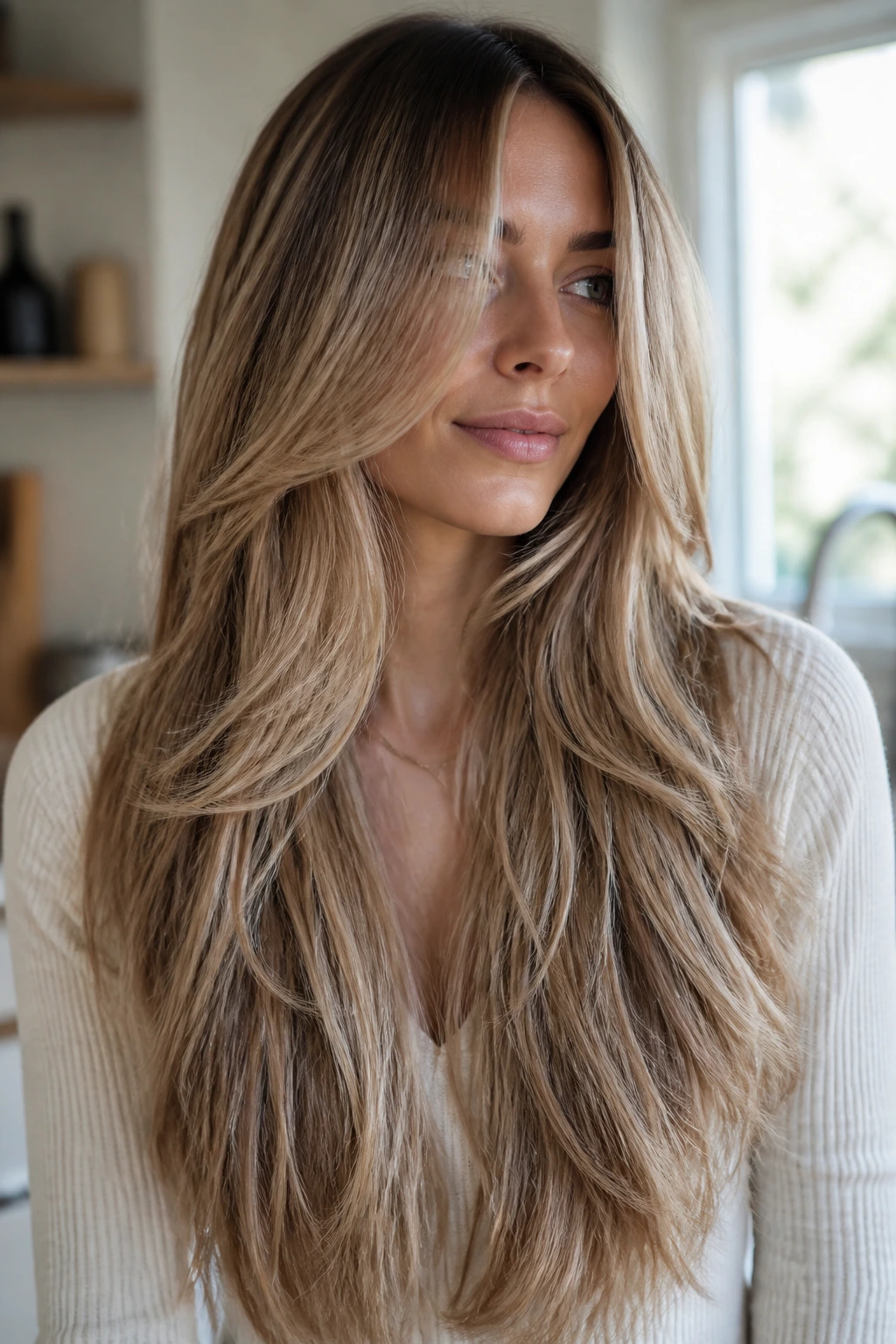
Long hair already gives a certain mermaid effect; the trick is making it look soft instead of heavy. Mermaid feather layers keep the length and add light tapering through the lower half, which gives the ends a little motion when you walk. On fine hair, that motion can keep the length from looking like a flat ribbon.
I would not do this with short, chopped layers. The silhouette depends on length. The feathering should feel almost like a hush through the mids, then a soft taper near the ends. Too much texture breaks the illusion.
This cut shines on hair that’s already very long — below the bust, preferably — because the movement needs room to show. If the hair is only medium-long, the effect can feel busy. With real length, it’s lovely.
The mermaid version is less about volume at the crown and more about flow through the body of the hair. If you like wearing the hair down, straight, and loose, this one gives you a gentle shape without making you work for it.
22. Bounce Layers for a Round Brush
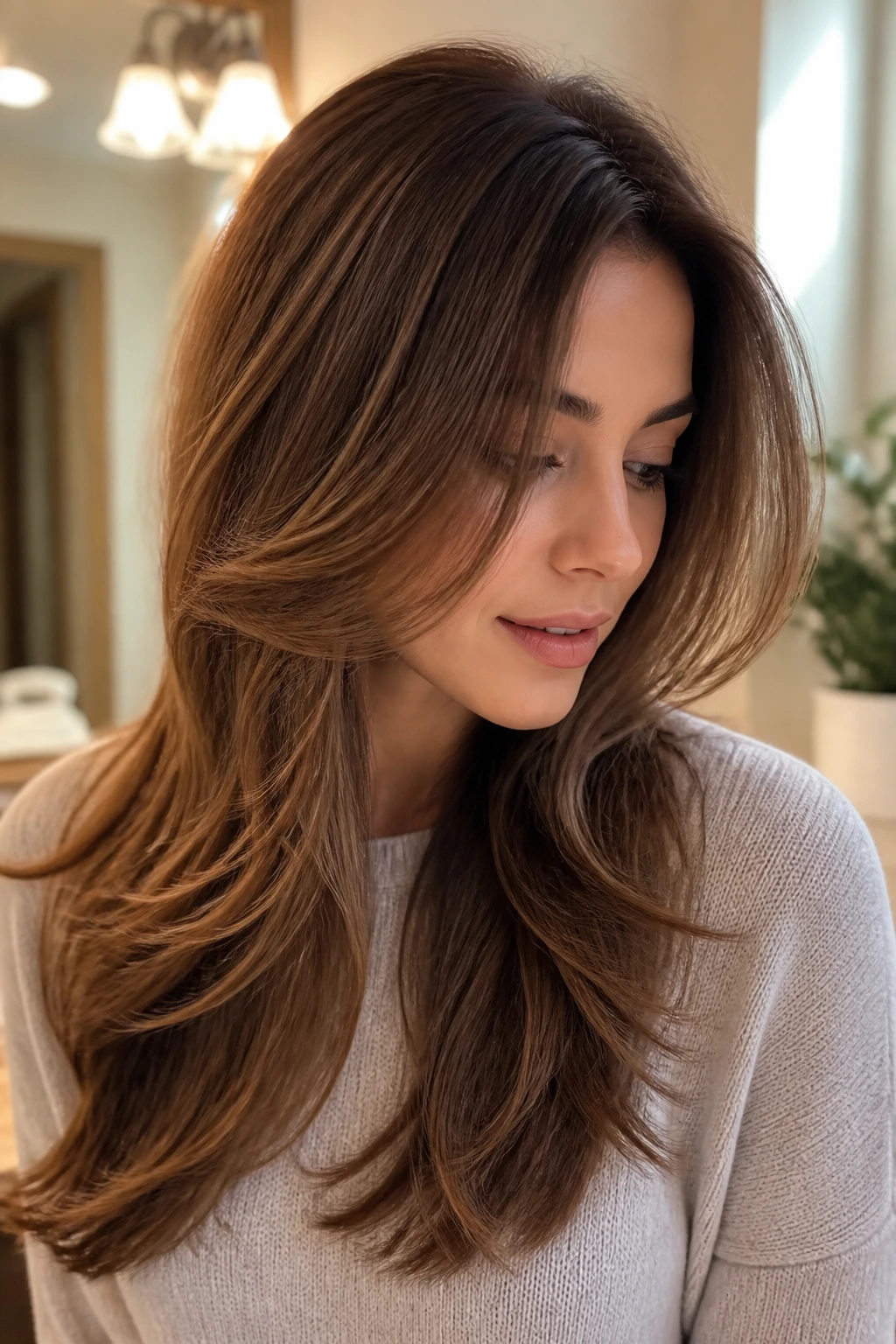
Some layers are designed to air-dry. These are designed to move after a round brush. Bounce layers place the feathering where a little tension and heat can turn it into shape — usually through the mids and around the face — so the finished look has spring instead of flatness.
The cut works because the layers are placed to support bend, not to break the hair into pieces. Fine hair loves that. It needs help remembering where to go. Once the hair is set with a brush and cooled, the shape tends to hold better than a random chopped cut would.
I like this look for anyone who likes a polished finish but hates spending forever styling. A rough dry to about 80 percent, then a quick brush finish, is usually enough. The layers catch the movement and return a little bounce at the ends.
If your hair is pin-straight, this is one of the more practical ways to fake body without resorting to heavy teasing or a mountain of spray. Keep it smooth at the root and rounded at the edge.
23. Swept-Back Crown Layers
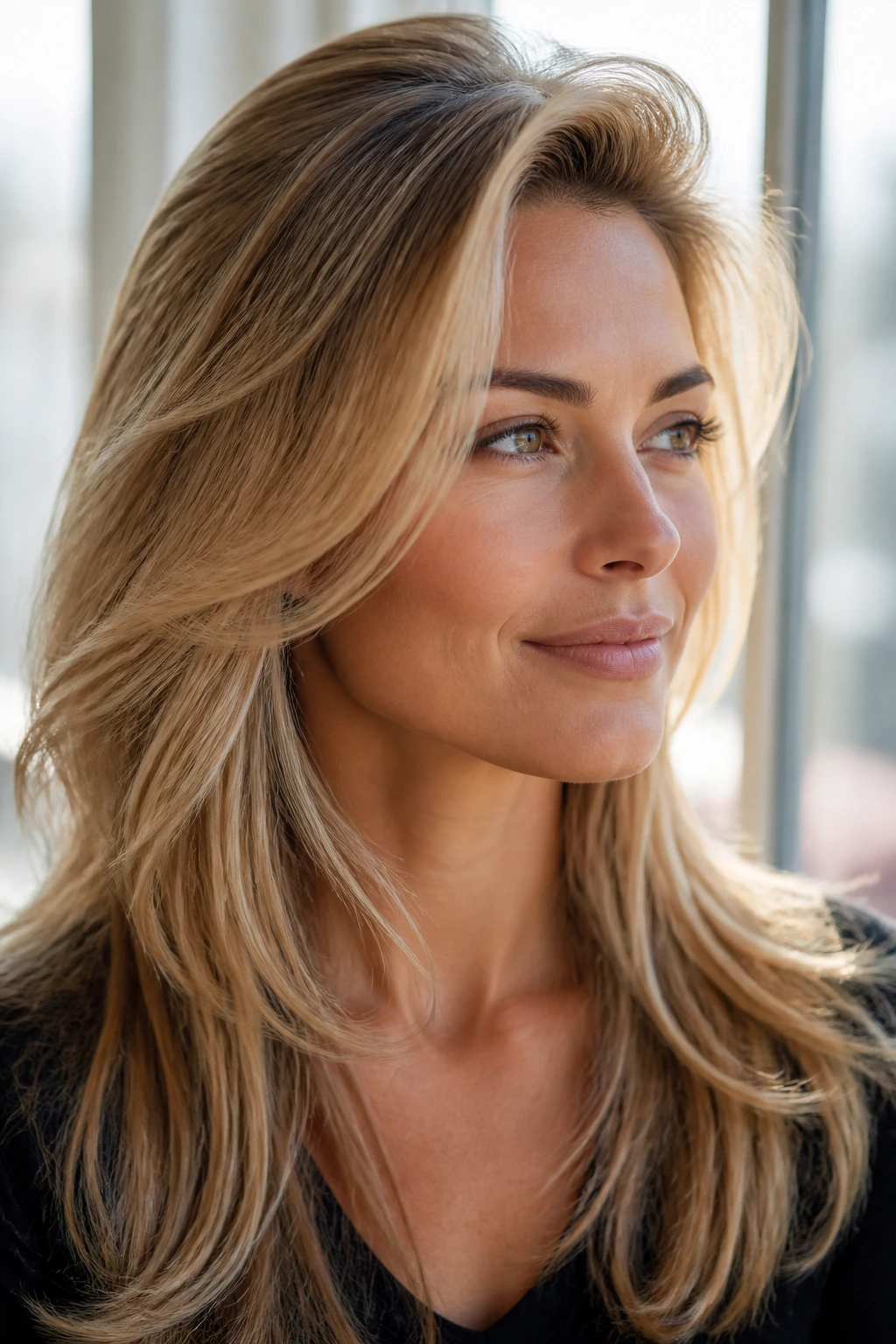
Flat roots can ruin a fine-hair haircut faster than bad scissors. Swept-back crown layers solve that by placing more lift through the top and crown, then guiding the front pieces away from the face. The effect is open, airy, and a little lifted without looking overstyled.
This cut works best if your hair tends to split flat at the part. The crown layers should be subtle, not short and spiky. You want movement, not a little cap sitting on top of your head. That’s the difference between polished lift and dated volume.
A medium round brush at the root, angled back as you dry, helps the shape set. Once the crown is cooled, the longer front pieces can fall softly around the face. It’s one of the few times I’ll actually say the styling matters almost as much as the cut.
This style looks especially good when you tuck one side behind the ear. It shows the crown shape and gives the feathering some room to breathe. Small trick. Big visual difference.
24. Temple-to-Collarbone Side Layers
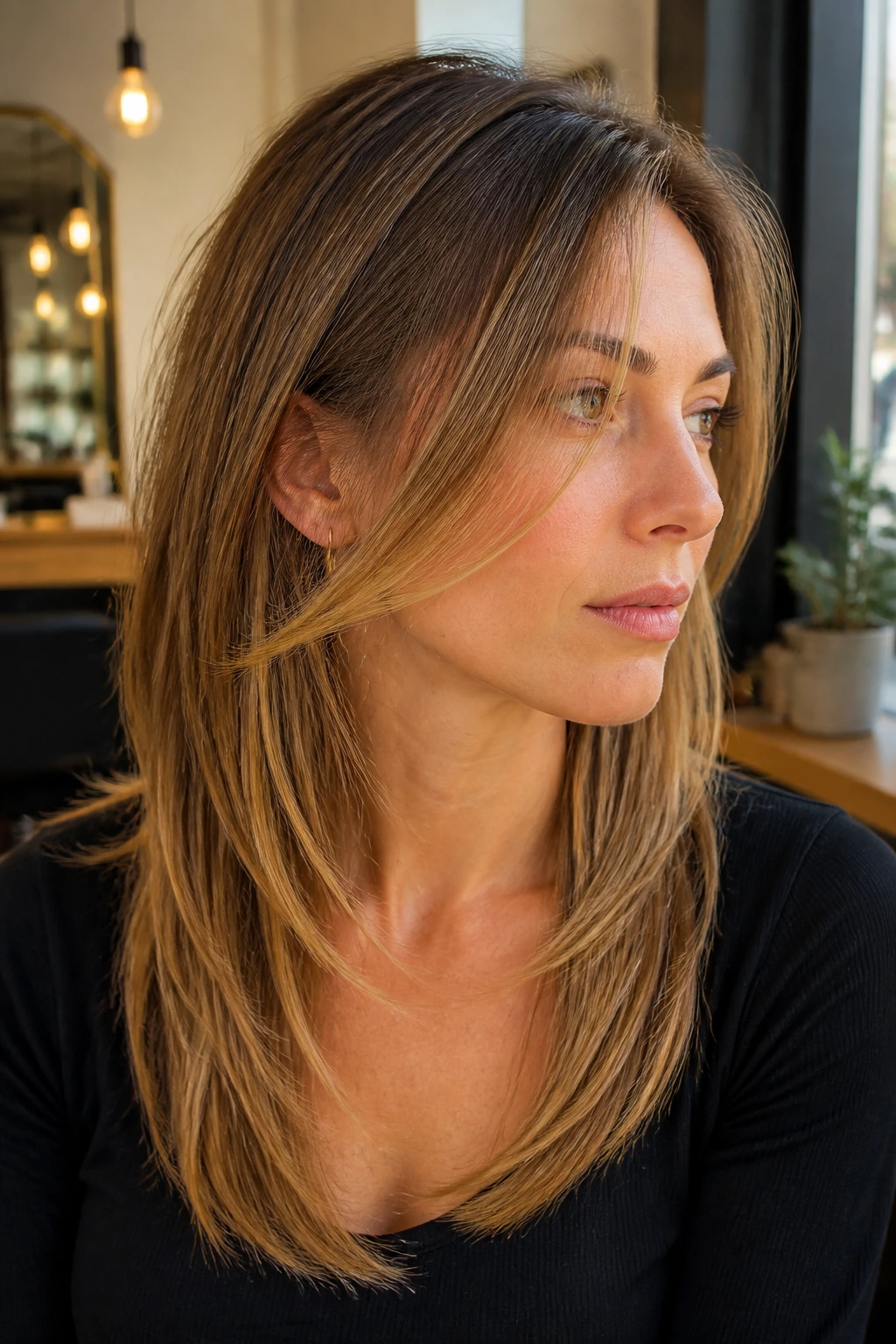
If you wear a side part or your hair naturally falls that way, temple-to-collarbone layers are worth a close look. The front pieces begin near the temple, then sweep diagonally down toward the collarbone, which helps fine hair look fuller on the side that usually falls flat.
The diagonal line is the whole point. It breaks up the long vertical drop that can make fine hair look narrow. By starting higher at the temple and finishing lower near the chest, the cut adds a little motion across the face and through the shoulders.
This shape is flattering on round and square faces because it creates a soft diagonal without cutting the hair too short. It also works well for people who like to tuck one side behind the ear and leave the other loose. That asymmetry keeps the look from feeling stiff.
I’d keep the back layers modest here. The side pieces are doing the work. If the whole haircut becomes too layered, the effect gets noisy. Keep the line clean. Let the front sweep.
25. Extra-Long Tapered Layers
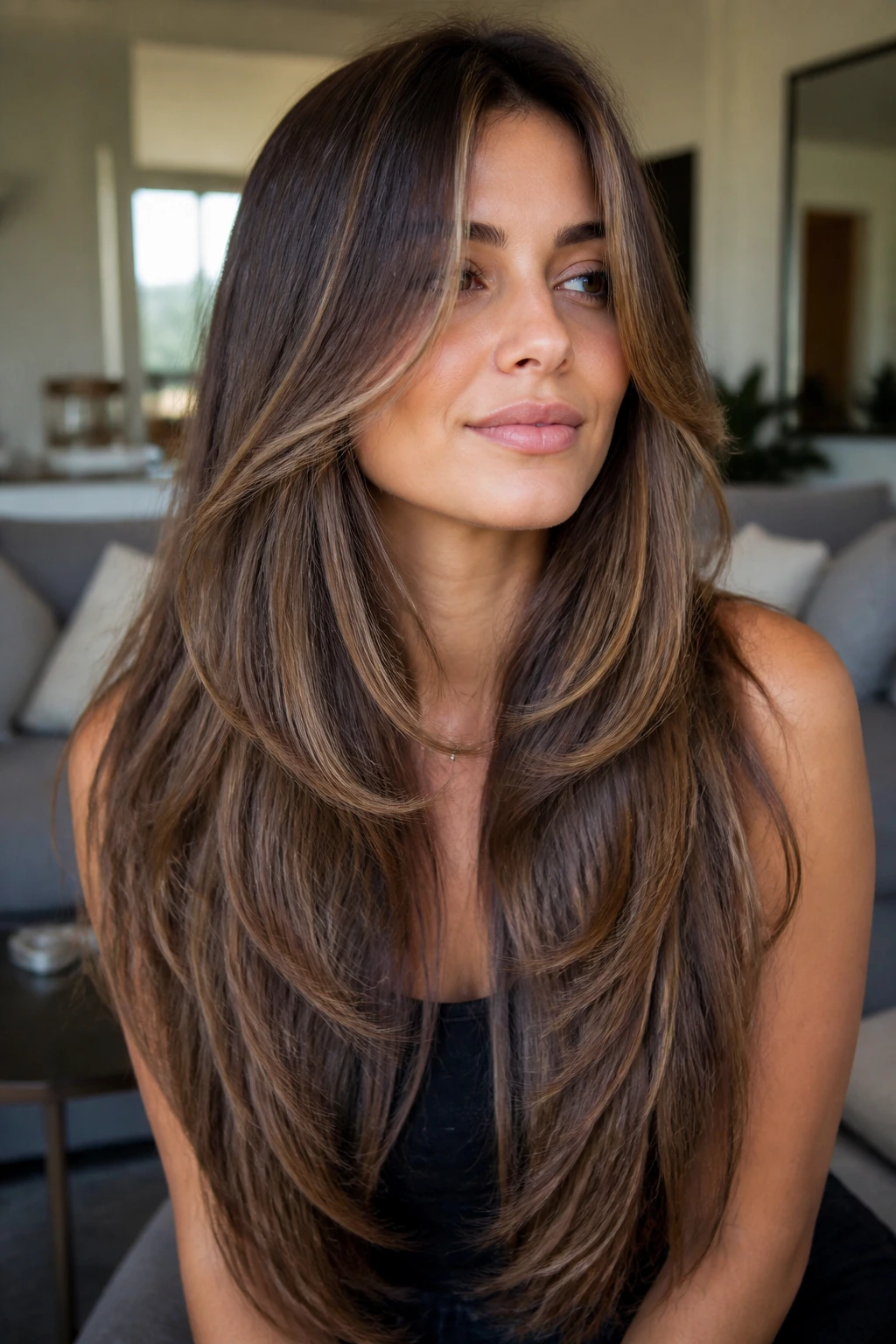
The safest feathered cut is often the smartest one. Extra-long tapered layers barely disturb the overall length, but they still remove enough weight around the face and lower mids to create movement. On fine hair, that restraint can be the difference between “nice shape” and “why did I lose half my hair.”
This is the style for someone who wants to keep the length almost untouched. The taper should be soft, starting low enough that the layers don’t fight the density at the ends. If the stylist keeps the shortest pieces around the chin or lower, the result stays graceful and wearable.
I like this version for people who are nervous about layers but know they need something. It grows out quietly. It styles easily. It doesn’t make the hair feel overdesigned, which is a relief if you spend most of your time in a ponytail or a clip.
Sometimes the best feathered haircut is the one that barely announces itself. This is that haircut.
Why Feathered Haircuts for Long Hair Work So Well on Fine Strands
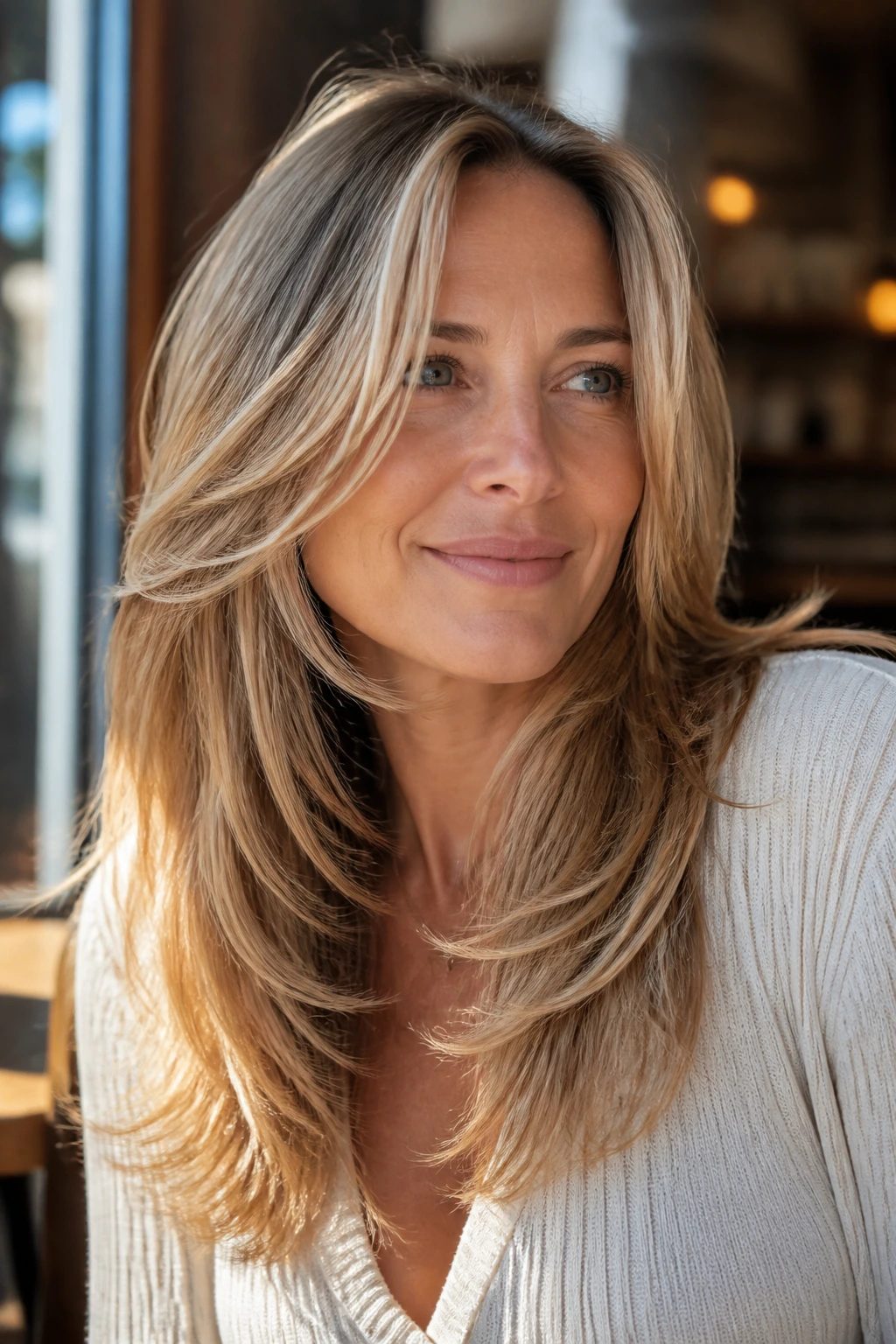
Fine hair and long hair can be a tricky pair. The longer the strand, the more gravity has to work with, and the more likely the root area is to lose lift while the ends start looking thinner than they are. Feathering helps by moving some visual weight upward and outward, where the eye sees shape first.
The other thing feathering does well is break up the sameness of a single long curtain. If every piece drops in one straight line, the cut can feel heavy at the bottom and limp at the top. A soft feathered shape changes that line just enough to make the hair move when you turn your head. That movement reads as fullness.
Fine hair is not the enemy. Overcutting is. That’s the distinction people miss. A good feathered cut doesn’t thin the hair into submission; it redistributes the shape so the ends still feel present. Keep the perimeter honest, and the layers can do their job.
One more thing: fine hair can still be dense. If your ponytail is thick but your hair feels delicate strand by strand, the haircut should respect both facts at once. That’s why I keep circling back to the ends. They matter more than the internet gives them credit for.
What to Ask Your Stylist Before the First Snip
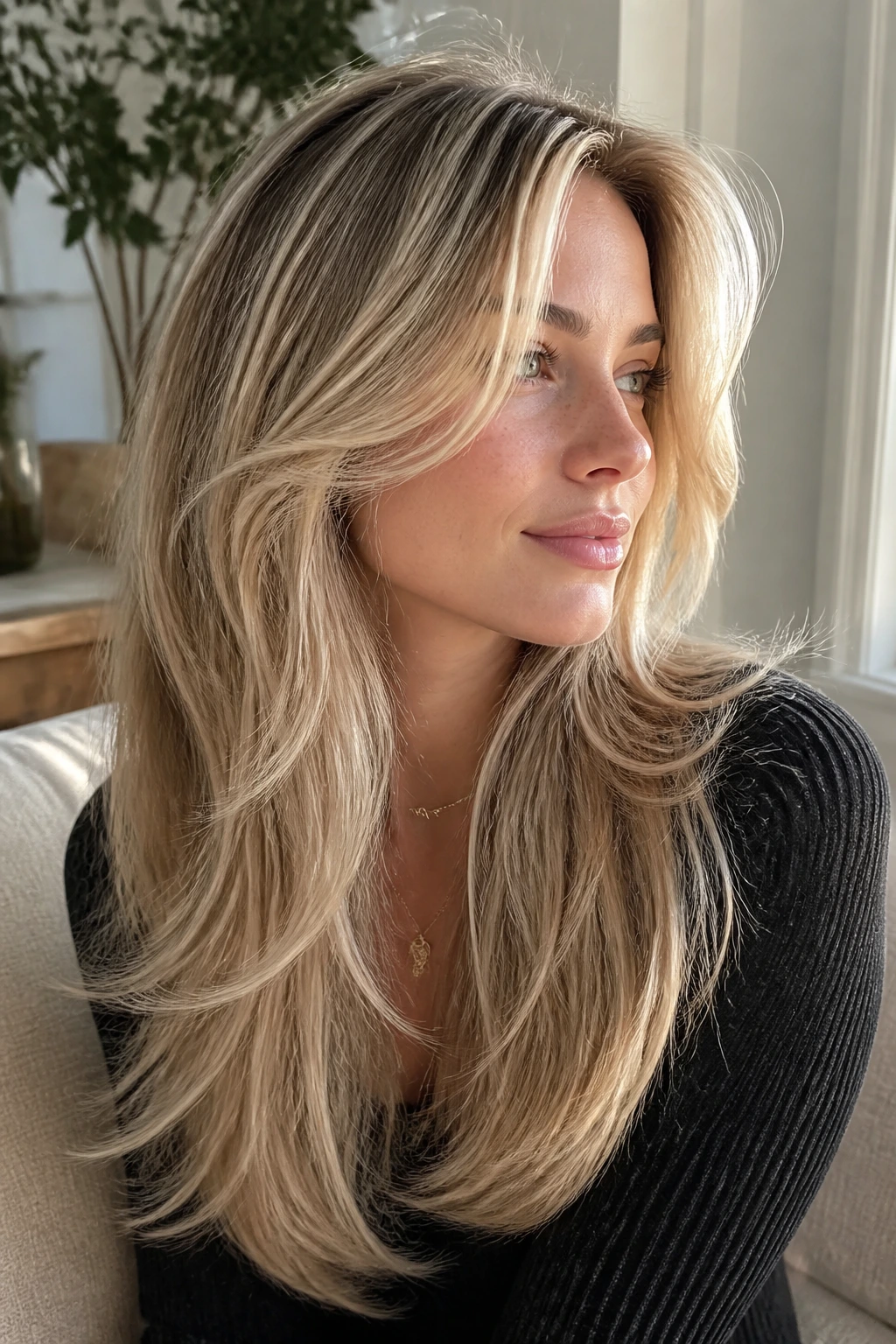
Bring photos, yes. Bring words too. Tell the stylist where you part your hair, how often you wear it up, and whether you want to blow it out or let it air-dry. Those details change the cut more than most people realize.
Perimeter: ask to keep the bottom line mostly full, especially if your hair is fine through the ends. A blunt or softly rounded hemline gives the haircut a thicker base.
Face frame: decide where you want the shortest pieces to start. Cheekbone, lip, jaw, or collarbone each create a different mood. Don’t leave that vague.
Texture method: point cutting and subtle slide cutting usually create softer feathering than aggressive thinning shears. If the hair is fragile, say so.
Parting: a center part and a side part do not wear the same layers the same way. Tell your stylist which one you actually use.
If you only say “lots of layers,” you’re asking for trouble. If you say “long feathered layers, keep the ends full, frame the face at the cheekbone, and don’t chew through the perimeter,” you’ll usually get something far closer to what you want.
The Tools That Make These Cuts Easy to Wear
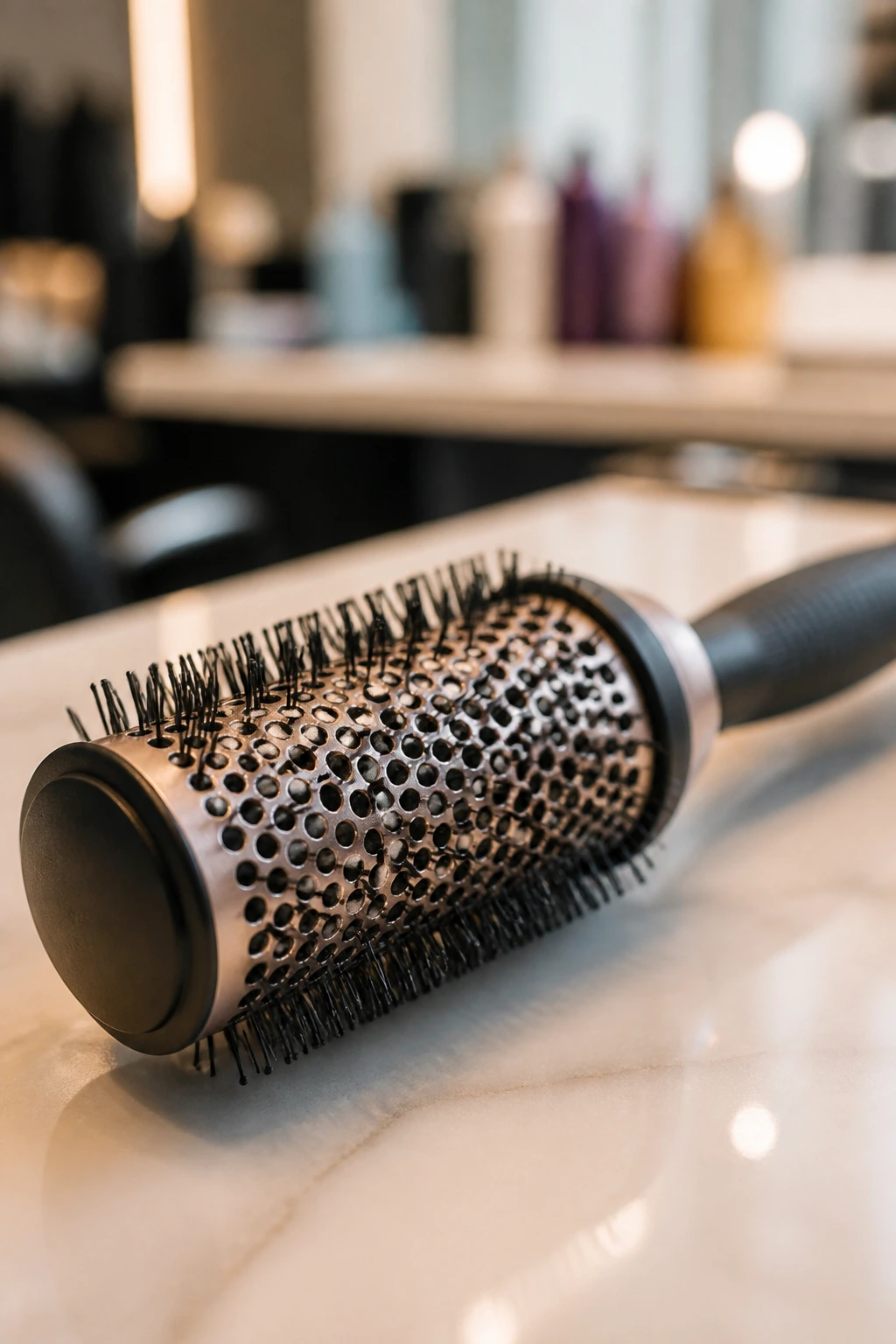
- 1.5- to 2-inch round brush: Large enough to bend the front layers without making tiny curls that look stiff.
- Blow dryer with a nozzle attachment: The nozzle keeps the airflow directed so fine hair doesn’t get blown into a fuzzy cloud.
- Duckbill or sectioning clips: These make it easier to isolate the crown, face frame, and side pieces while styling.
- Tail comb: Useful for clean parting and for lifting the root section before you dry it.
- Heat protectant spray: Fine hair shows heat damage fast, especially on feathered ends.
- Lightweight mousse: Gives the crown some memory without making the hair tacky.
- Velcro rollers: Handy if you want the front layers to set with extra lift for a few hours.
- Dry shampoo: More for shape support than oil control on fine hair; a little at the roots can keep the cut from collapsing.
- Wide-tooth comb: Better than a brush for distributing leave-in product without pulling the layers flat.
- Silk or satin scrunchie: Helps preserve the feathered ends if you tie the hair loosely overnight.
Lightweight Products That Keep the Shape from Falling Flat
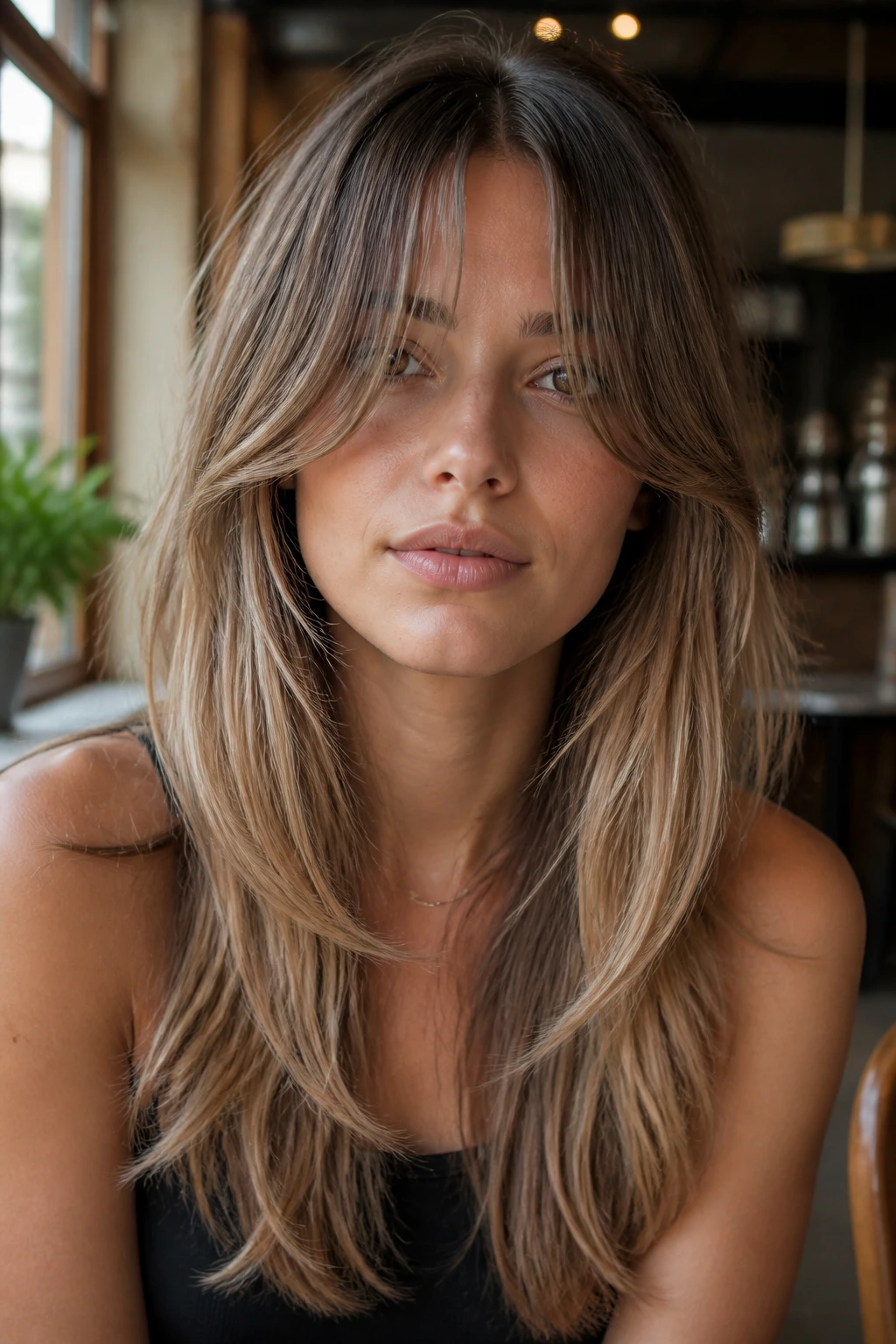
The product aisle can get ugly fast for fine hair. Heavy cream, dense oil, and too much serum are the usual culprits. They make the hair feel soft for about five minutes, then the roots sink and the feathering disappears. I’m a fan of lighter textures here — mousse, spray foam, airy leave-ins, and a touch of dry shampoo at the root line.
Start with product at the right place. Root-lift mousse belongs on damp hair near the crown and side part, not dragged through the ends. If the mids and ends need moisture, use the smallest amount you can get away with. Fine hair usually needs less than people think. A half-pump of leave-in can be plenty for long lengths.
The styling formula I trust most is simple: heat protectant, light mousse, blow-dry for shape, then a tiny bit of texture spray if you want separation through the feathered pieces. Too much product flattens the shape. Too little and the cut has no memory. Somewhere in the middle is the sweet spot.
Clarifying shampoo also deserves a mention. If you use dry shampoo and finishing spray all week, a gentle clarifying wash every 2 to 3 weeks keeps buildup from coating the hair and making the layers sink. Fine hair gets dull fast when the roots are coated. Clean roots hold a shape better. That’s not glamorous, but it’s true.
How to Style the Cut Without Building a Helmet
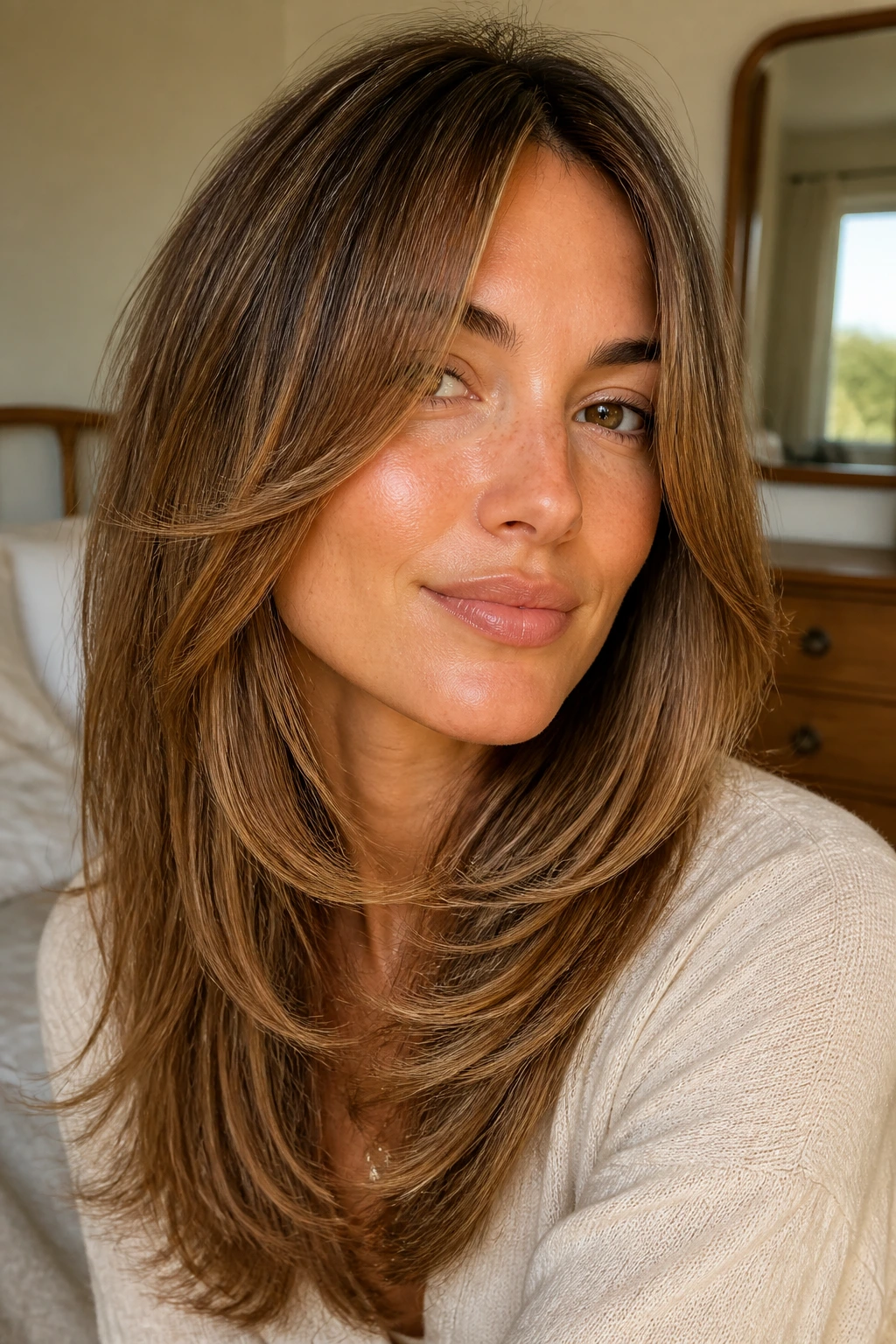
Here’s the part most people get wrong: they use too much brush, too much spray, or too much heat in one go. Feathered hair should move. If the finish feels shellacked, you’ve gone too far.
Root lift: rough-dry the hair until it’s mostly dry, then focus the brush at the crown and side part. Lift at the root for a second or two, then let it cool before moving on. That cooling step matters more than people think.
Face frame: roll the front pieces away from the face if you want a soft open shape, or under and slightly out if you want a blowout bend. Keep the brush strokes long. Tiny rolls make the layers look fussy.
Finish: one light pass of texture spray through the mids is enough if you want separation. If the hair already has good movement, skip it. You don’t need to “add texture” to a cut that already has texture.
Night care: a loose silk scrunchie, a soft braid, or a low twist can keep the front layers from bending into odd shapes while you sleep. Fine hair picks up sleep marks fast.
The goal is soft control. Not perfection. Not stiffness. Just enough shape that the feathering stays visible when the hair settles.
Common Mistakes That Make Fine Hair Look Thinner
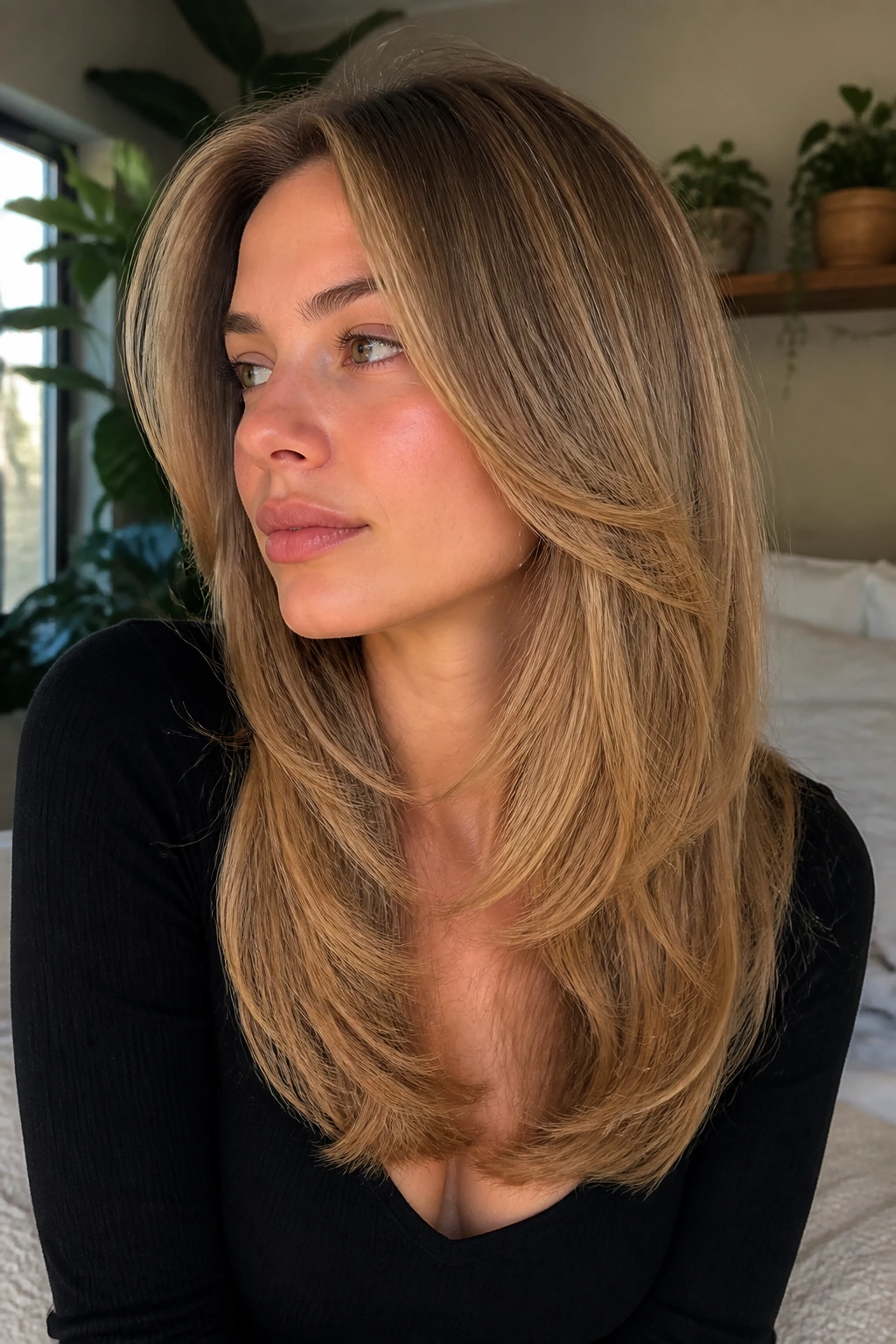
The first mistake is over-layering the bottom. When the perimeter gets too chopped up, fine hair starts looking hollow from the mid-length down. The fix is simple: keep the hemline blunt or softly rounded and let the feathering happen higher in the shape.
The second mistake is using thinning shears as a cure-all. On fine hair, they can leave the ends wispy and dry-looking. If you need weight removed, ask for internal layering or point cutting instead.
The third mistake is cutting the face frame too short. Short front pieces can be cute for about ten days, then they grow into a weird shelf and make long hair look awkward. If you want easy maintenance, keep the shortest pieces around the lip, chin, or collarbone.
The fourth mistake is drowning the style in heavy product. A thick cream or oil can flatten the root area and make the layers cling together. Use lighter textures and keep the densest products away from the scalp.
One more: ignoring your real parting. A cut designed for a center part won’t sit the same way on a side part. If you wear your hair one way 90% of the time, say so before the haircut starts.
Variations for Straight, Wavy, and Dense Fine Hair
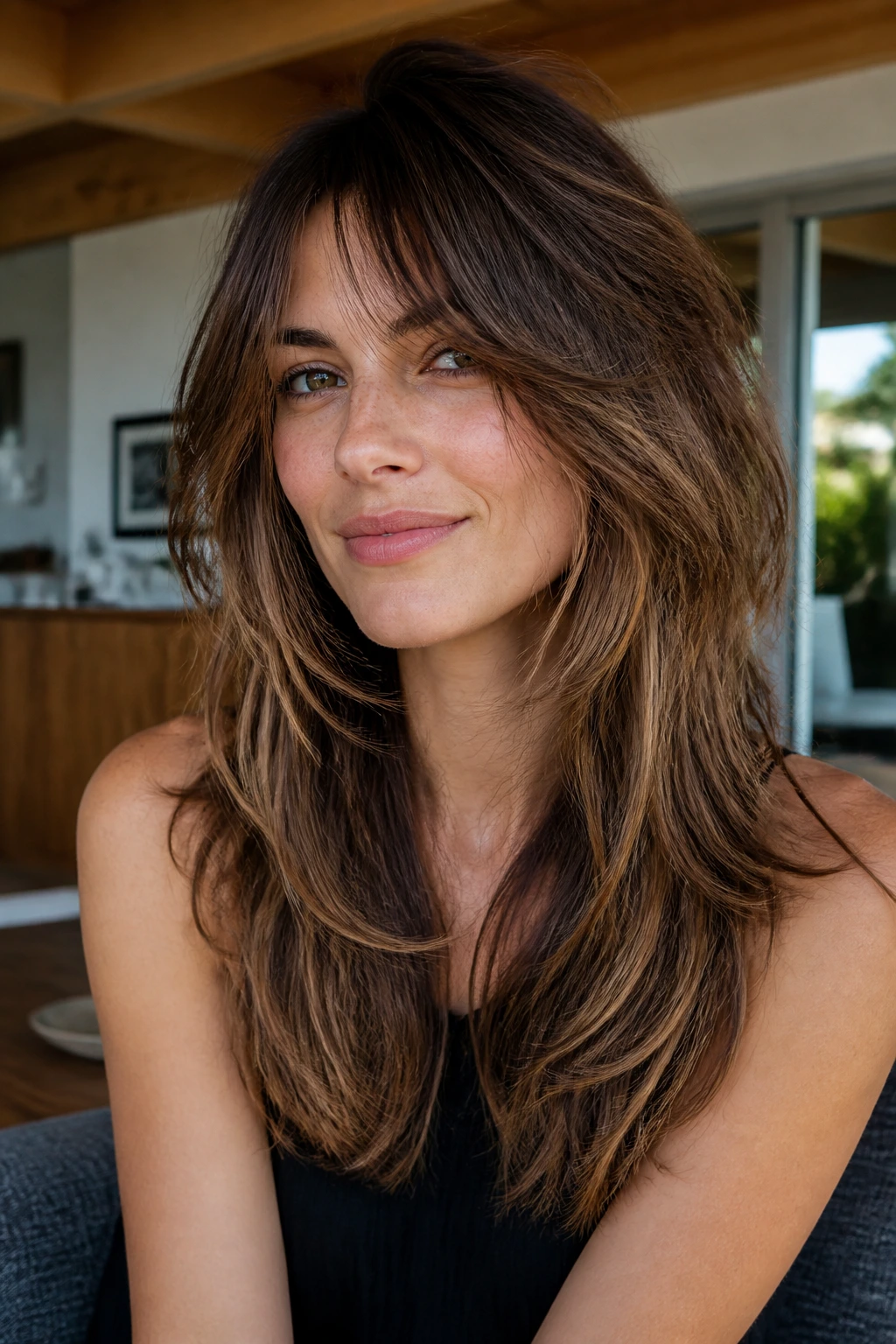
The Soft Curtain-Only Version: If you want almost no change in the back, keep the length and ask only for curtain-style face framing. The haircut stays conservative, but the front gets movement where it matters. Good for people who are attached to every inch.
The Air-Dry Wave Version: For hair with a little natural bend, ask for longer layers and softer ends so the texture can do the work. Skip anything too short in the crown. The hair should fall into shape without being bullied there.
The Dense-Fine Balancing Act: Fine hair can still be thick in total volume. If that sounds like you, ask for internal weight removal and a full-looking perimeter. You want the bulk reduced from inside the shape, not from the ends.
The Blowout-First Version: If you love round-brush styling, choose rounded layers and a cheekbone-to-collarbone frame. The haircut will look more finished after heat styling than it will air-dried. That’s the tradeoff.
The Grow-Out-Friendly Version: Keep the layers long, the fringe minimal, and the bottom line intact. This version needs fewer trim appointments and ages more gracefully as it grows. Boring? Maybe. Useful? Absolutely.
Keeping the Cut Fresh Between Salon Visits
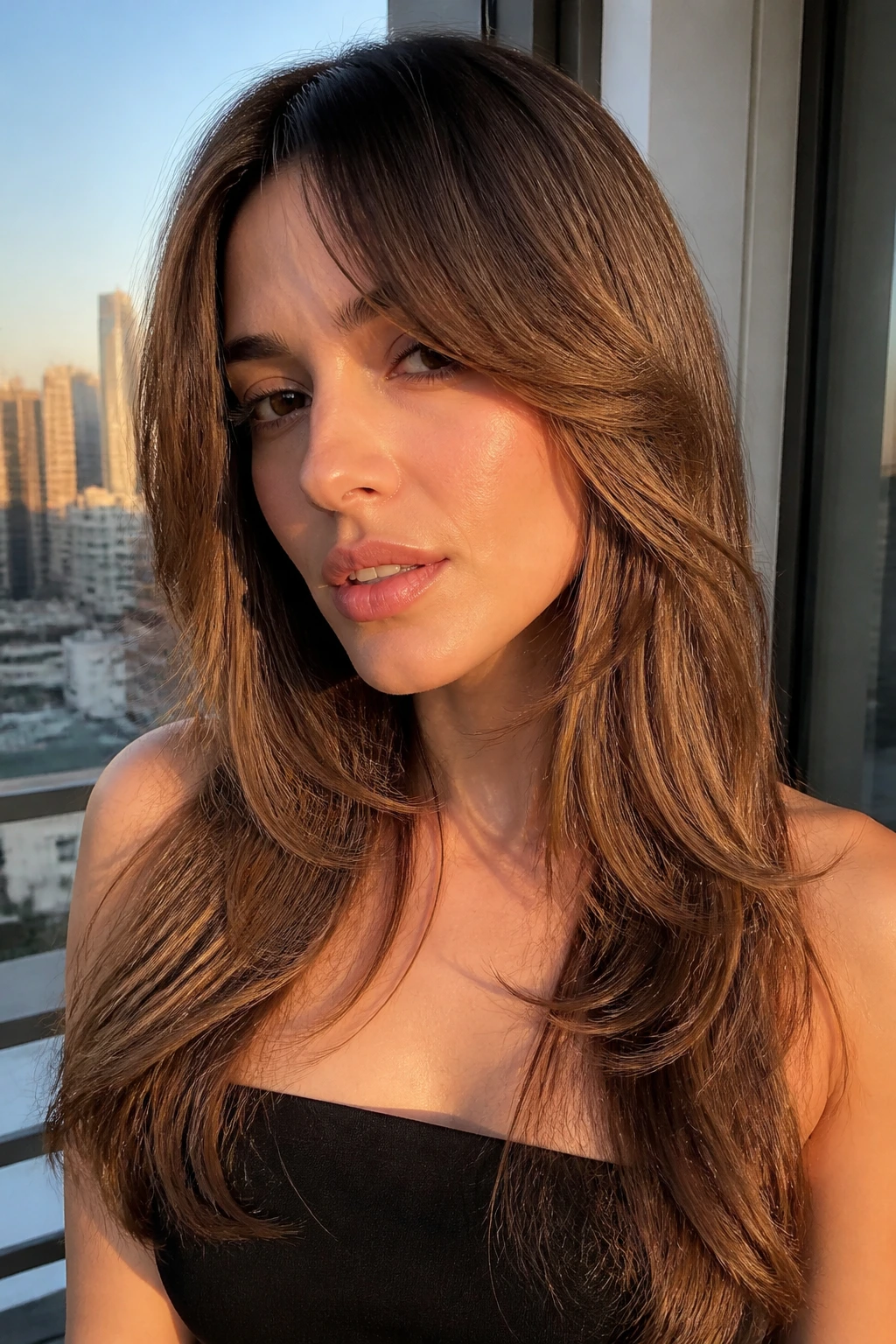
Long fine hair usually needs a trim every 8 to 10 weeks if you want the feathering to stay crisp. If you’ve got curtain bangs, bottleneck bangs, or a shorter face frame, plan on a fringe touch-up every 4 to 6 weeks. That’s the difference between a shape and a shrug.
Wash routine matters too. Fine hair doesn’t like heavy buildup hanging around the roots, so a clarifying wash every 2 to 3 weeks can help the crown hold volume. If your hair gets dry through the ends, focus the clarifier mostly at the scalp and follow with a light conditioner below the ears.
A quick blow-dry reset once a week helps more than people expect. You don’t need a full styling session. Just reshape the front pieces and crown so the layers remember their direction. If you let feathering air-dry in odd positions over and over, it starts to settle that way.
If the ends begin to look rough before your trim is due, ask for a dusting rather than a full reshape. That keeps the line clean without sacrificing the length you worked to keep.
Questions People Ask Before They Book
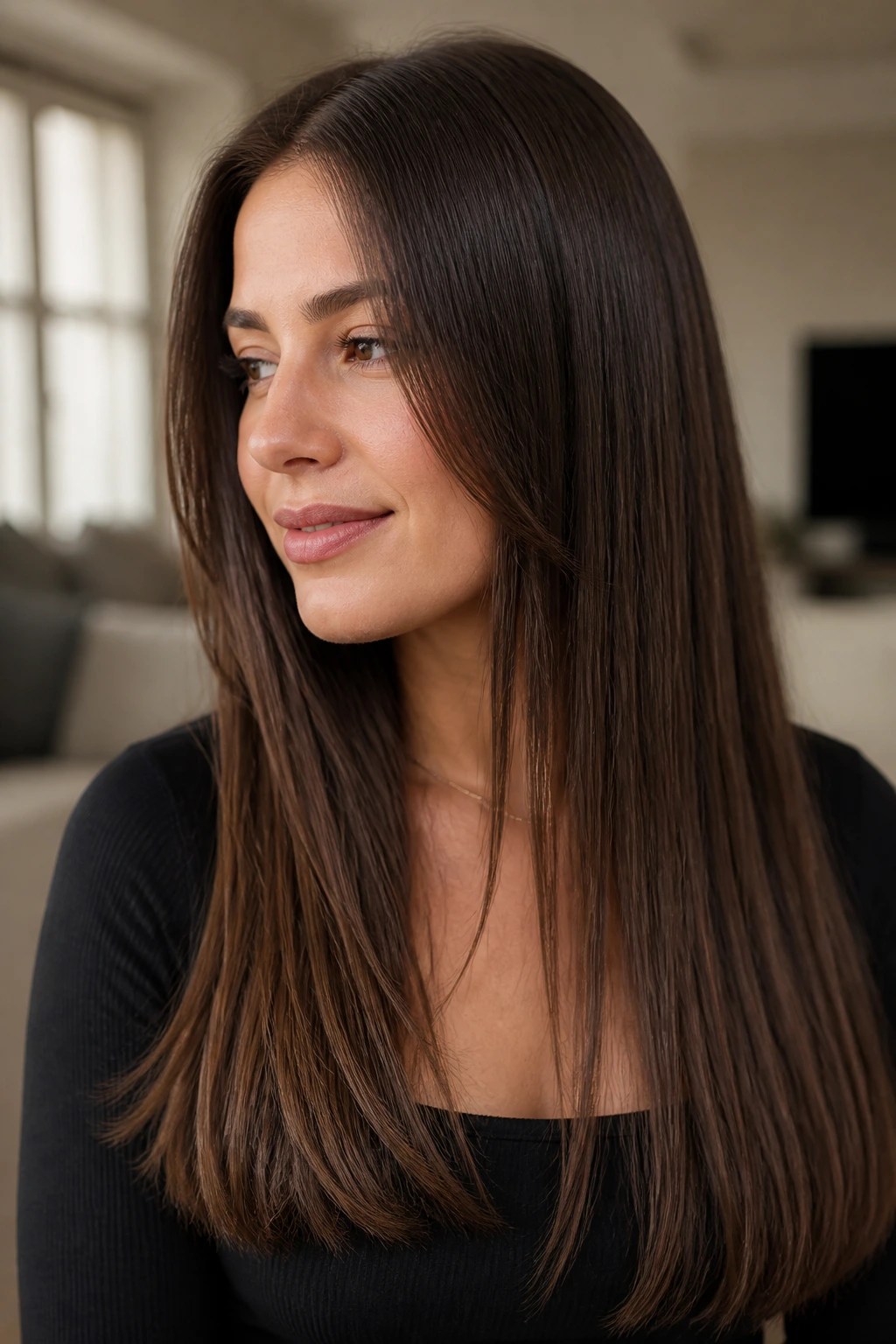
Will feathered layers make fine hair look thinner?
Only if they’re cut too aggressively. Soft feathering with a fuller perimeter can make fine hair look more substantial because the movement sits above the ends instead of stripping away their shape.
Are curtain bangs a bad idea for fine hair?
No, but they need the right length. Keep them long enough to blend into the sides, and they’ll open the face without looking sparse. Short, chunky fringe is much harder to manage on fine strands.
Should I ask for a razor cut?
Only if your hair is healthy and your stylist knows how to use one lightly. Razor work can create lovely feathering, but on dry or fragile hair it can make the ends look frayed.
Can I air-dry feathered long hair?
Yes, though the look depends on your texture. Slight wave or bend helps a lot. If your hair is very straight, a little root-lift product and a quick brush finish usually make the shape look more intentional.
What if my hair is fine but very dense?
Then the haircut should remove weight from inside the shape, not from the perimeter. That keeps the hair from puffing out like a triangle while still protecting the fullness at the ends.
How do I keep the crown from going flat?
Dry the roots with lift, use a light mousse, and avoid piling heavy leave-in products near the scalp. Dry shampoo can also help on day two because it adds grip, not just oil control.
Can I still wear ponytails with these cuts?
Yes. Long feathered layers actually make ponytails look softer, especially when the shortest face-framing pieces fall loose around the cheeks. If you hate flyaways, choose longer front layers that can be tucked or secured easily.
Do these cuts work if my hair is straight and slippery?
They can, but the styling has to do a little more work. Ask for subtle internal layering and a shape that supports a blow-dry bend. Straight, slippery hair usually needs less feathering at the ends and more attention near the face.
Keeping Length and Movement in the Same Haircut
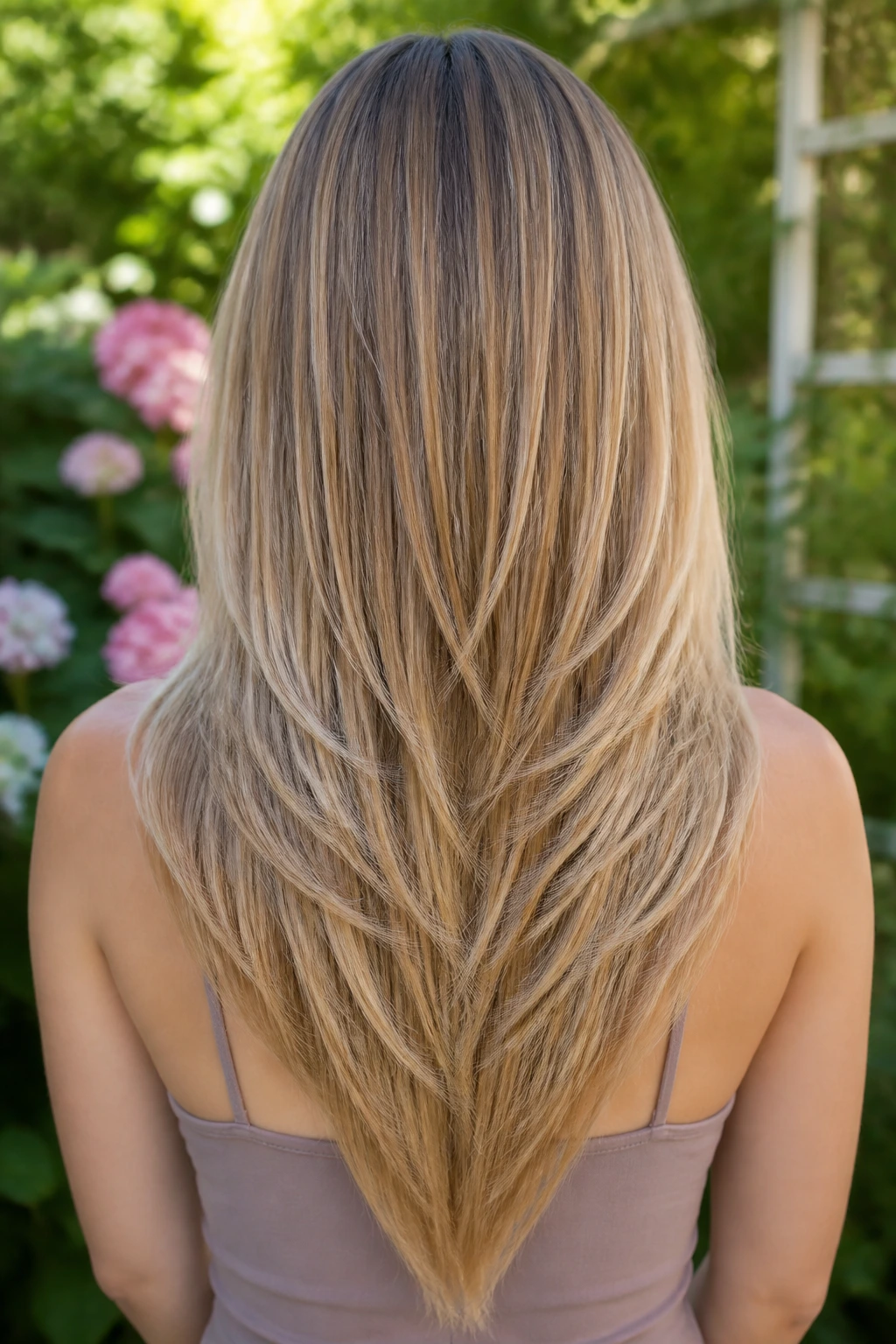
The nicest feathered cuts for long fine hair do not try to fight the hair into a fake sense of fullness. They give the strands a better map to follow. That’s the whole trick. Keep the ends honest, keep the face frame soft, and keep the layers long enough to move without turning fragile.
If you’re heading to a salon with one of these ideas saved, the detail that matters most is not the trend name. It’s where the shortest pieces start, how much weight stays at the bottom, and whether the cut works with the way you actually wear your hair. Bring those three answers, and the haircut gets much easier to get right.
The best versions feel light when you move and full when you stop. That’s the balance worth asking for next time.