



Short black hairstyles for thick hair with loose curls work best when the cut trims the bulk, not the personality. That’s the part people miss. Thick curls don’t need to be tamed into submission; they need a shape that stops the sides from ballooning and gives the curl pattern somewhere clean to sit.
A blunt, one-length cut on dense loose curls can look cute for about an hour, then the perimeter starts widening, the crown starts lifting, and the whole thing turns into a triangle with opinions. A smarter short cut changes that. It lets the curls stack, bend, and fall in a way that looks intentional even when you’ve only had time for a quick mist and a diffuser.
I like short styles on thick curls because they expose the architecture. The nape suddenly matters. So does the part. So do those tiny differences between a rounded bob, a tapered pixie, and a stacked crop. Once the shape is right, the hair does less fighting and more showing off.
Why These Cuts Work So Well on Thick Loose Curls
-
They remove weight where thick hair gets pushy. A few well-placed layers around the nape and sides stop the silhouette from flaring out by lunchtime.
-
They let loose curls clump instead of exploding. When the length is shorter, curl groups stay together more easily, which usually means softer definition and less halo frizz.
-
They make shrinkage easier to predict. A chin-length cut that shrinks to the jaw reads as polished; a longer cut that shrinks unpredictably can land in awkward territory.
-
They show off earrings, collars, and cheekbones. Short curls frame the face instead of hiding it behind a wall of hair.
-
They are easier to revive on day two. A little water, a little foam, and a quick scrunch often bring these styles back faster than a longer cut ever will.
1. Rounded Curly Bob
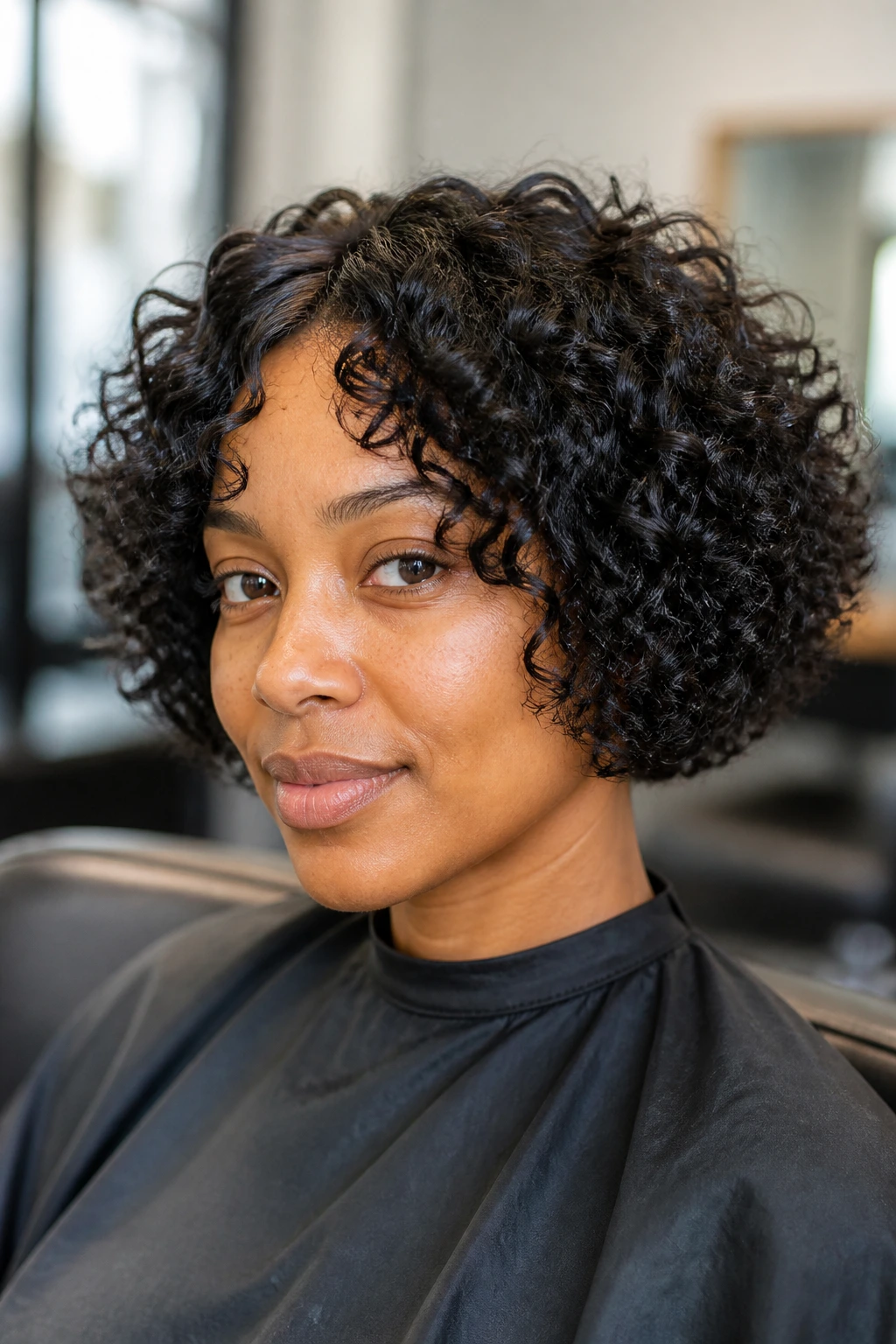
A rounded curly bob is one of the cleanest answers to thick hair that wants to spread. The curve keeps the weight in the middle of the shape, so the sides don’t poke out like a shelf. On loose curls, that round outline looks soft, full, and controlled at the same time.
Ask for light interior layering and a perimeter that hugs the jaw rather than sitting dead straight. You want movement inside the cut, not razor-thin ends. If your hair shrinks a lot, this is the sort of bob that often lands right at chin length when dry and still keeps enough body to look lush.
Why it flatters thick curls
The rounded hemline acts like a frame. It gives the curls a place to settle, which matters when each strand has its own little agenda. If you want something that feels polished without being stiff, this is a strong place to start.
2. Tapered Curly Pixie
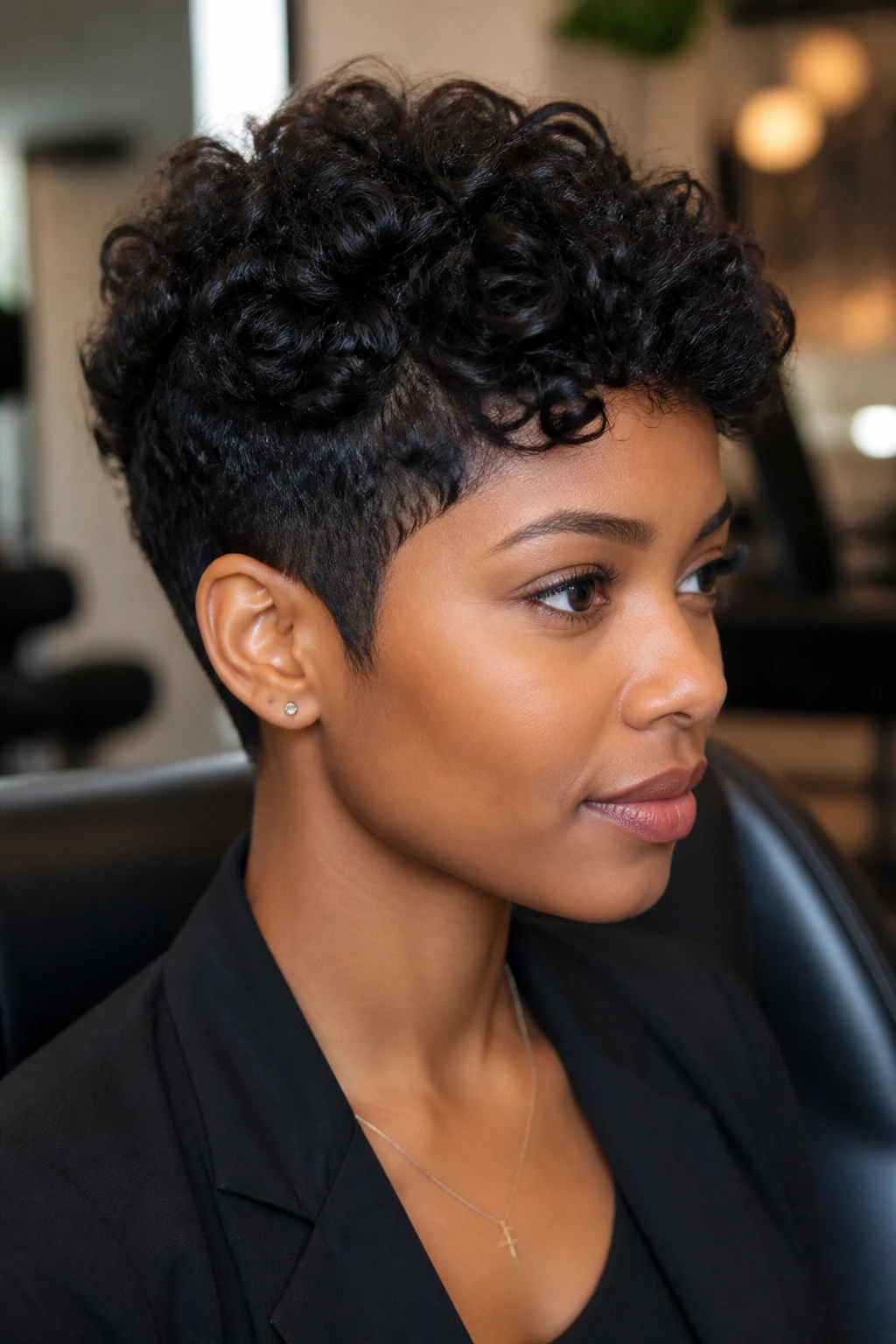
This is the cut that makes dense curls feel lighter the second you sit down in the chair. When the nape and around the ears are tapered close, all the bulk shifts upward, where loose curls can create height instead of width. The result is neat at the edges and lively on top.
Keep the top long enough for curl pattern—usually a few inches—so the shape doesn’t collapse into a cap. I like this cut best when the top is styled forward or slightly to the side, because the curl movement looks deliberate instead of puffy. It also does a nice job of showing cheekbones without requiring a ton of styling.
If you’re tired of fighting the back of your head every morning, this one has a point.
3. Side-Parted Chin-Length Coil Bob
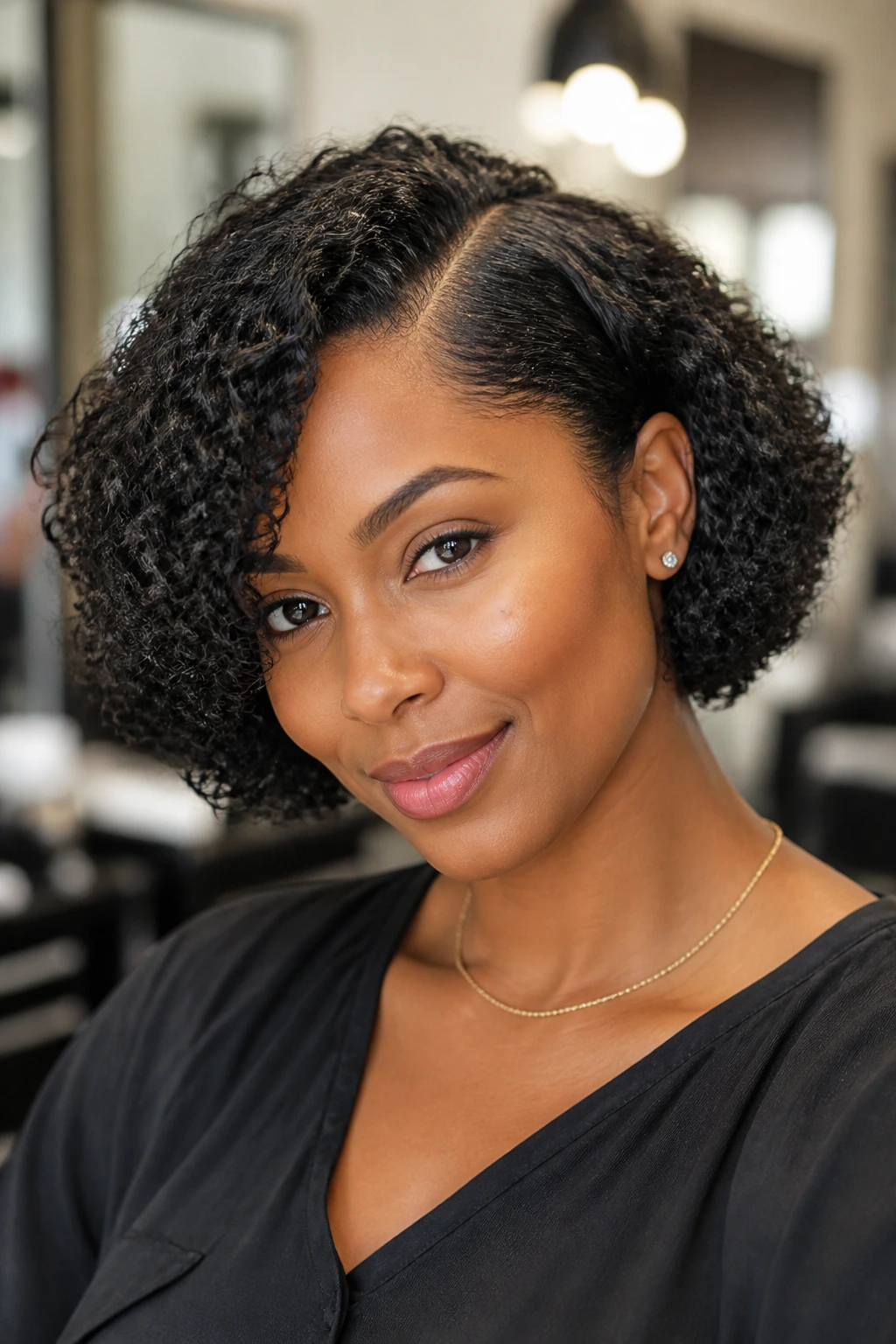
A deep side part changes everything here. It gives thick loose curls a diagonal line to follow, and that slant makes the shape look slimmer through the crown and fuller through the ends. The effect is clean, not fussy.
This works especially well when one side is tucked behind the ear and the other side falls forward a little. You get a bit of asymmetry without committing to a wild cut. Ask your stylist to keep the line soft around the chin so the bob doesn’t look boxy once it dries.
The side part also buys you something practical: less volume right where the hair wants to puff most. Small move. Big difference.
4. Asymmetrical Curly Crop
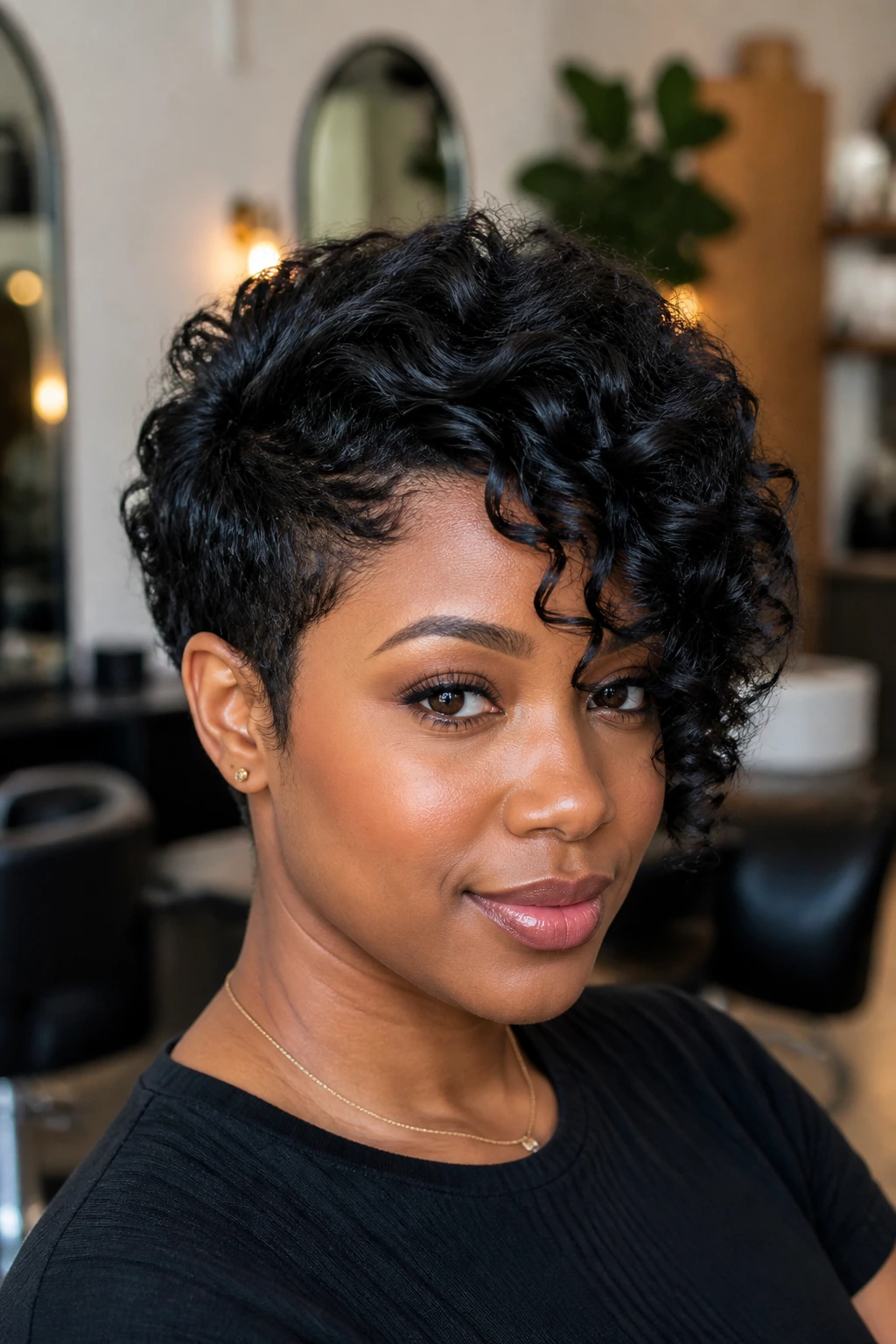
One side longer, one side shorter. Simple idea. Useful haircut.
The asymmetrical crop gives thick curls a built-in sense of motion, which is helpful when your hair wants to sit heavy. The longer side can graze the jaw while the shorter side opens up the face and keeps the shape from reading as too round. It’s a good cut if you want a little edge without shaving anything off.
I’d ask for the longer side to be kept soft, not sharp. Loose curls look better when the line has some bend to it. If the contrast is too severe, the style can start looking like two separate haircuts stitched together. A gentler slope keeps it wearable.
5. Layered Mini Shag
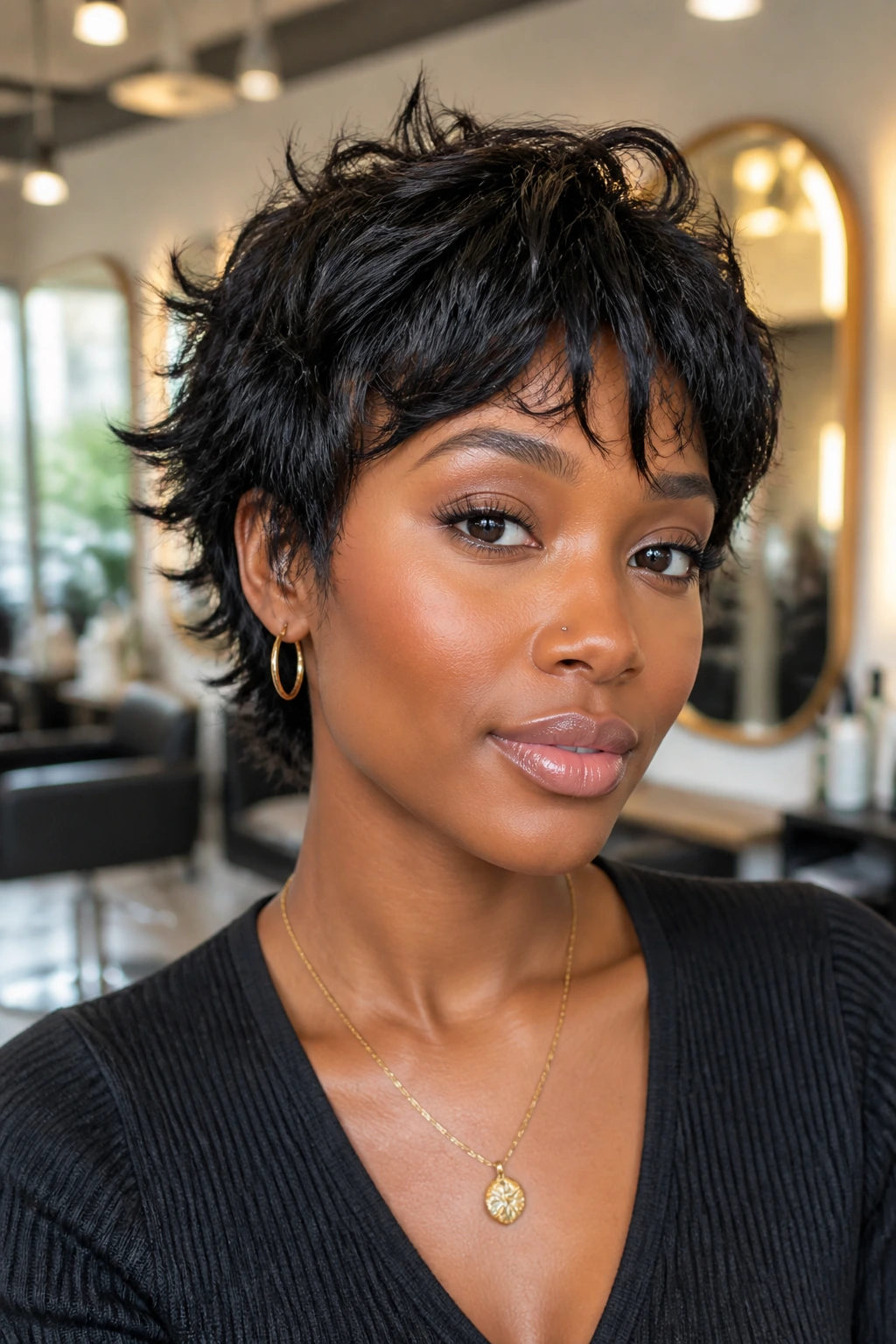
The mini shag is for people who like curl movement more than perfect symmetry. It breaks the bulk into smaller pieces, which helps thick hair stop acting like one heavy sheet. With loose curls, those layers make the ends flick and separate in a way that looks lived-in rather than overdone.
What to ask for
Request short, choppy layers through the crown and a little face framing around the cheeks. Keep the length grazing the jaw or just above it if you want a true short shape. Fringe can work here, but it should be soft and piecey, not blunt.
This cut is especially good if your curls get flat at the roots and too wide at the sides. The shag gives you lift up top and a little swing around the face. It has attitude, but it doesn’t need constant babysitting.
6. Curly Bixie
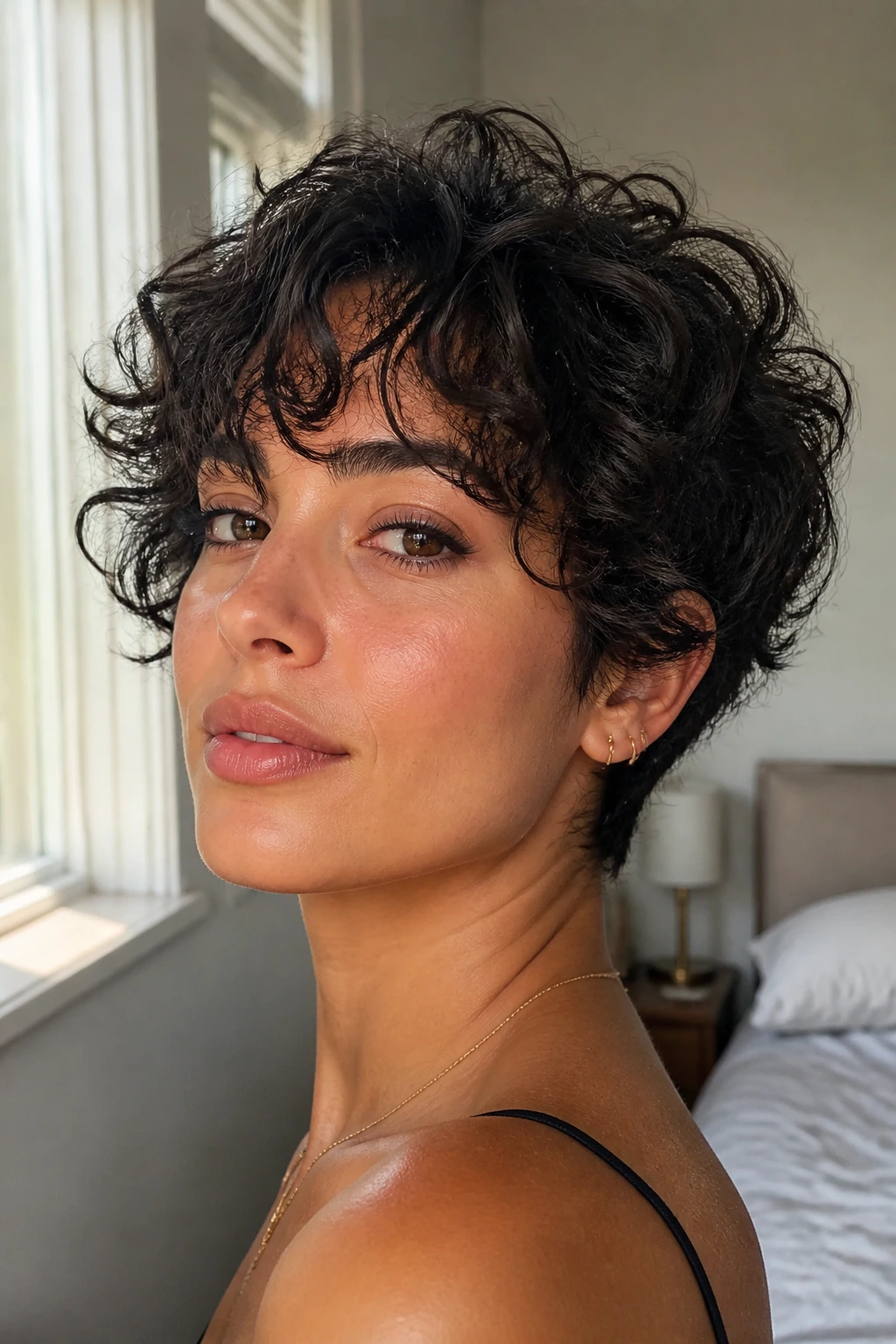
The bixie sits in that sweet spot between a pixie and a bob, and thick loose curls are a nice match for it. You get enough length to show curl pattern, but not so much that the hair turns heavy and triangular. That middle ground is the whole point.
Keep the nape shorter and leave more length at the crown and fringe area. The top should be able to fall forward, curl back, or sweep to the side without needing a ton of product. If you want a cut that feels airy and still has shape, this one does a lot with very little.
It’s a good cut for readers who keep saying they want to go shorter, then hesitate when they think about losing softness. The bixie gives you both.
7. Stacked Curly Bob
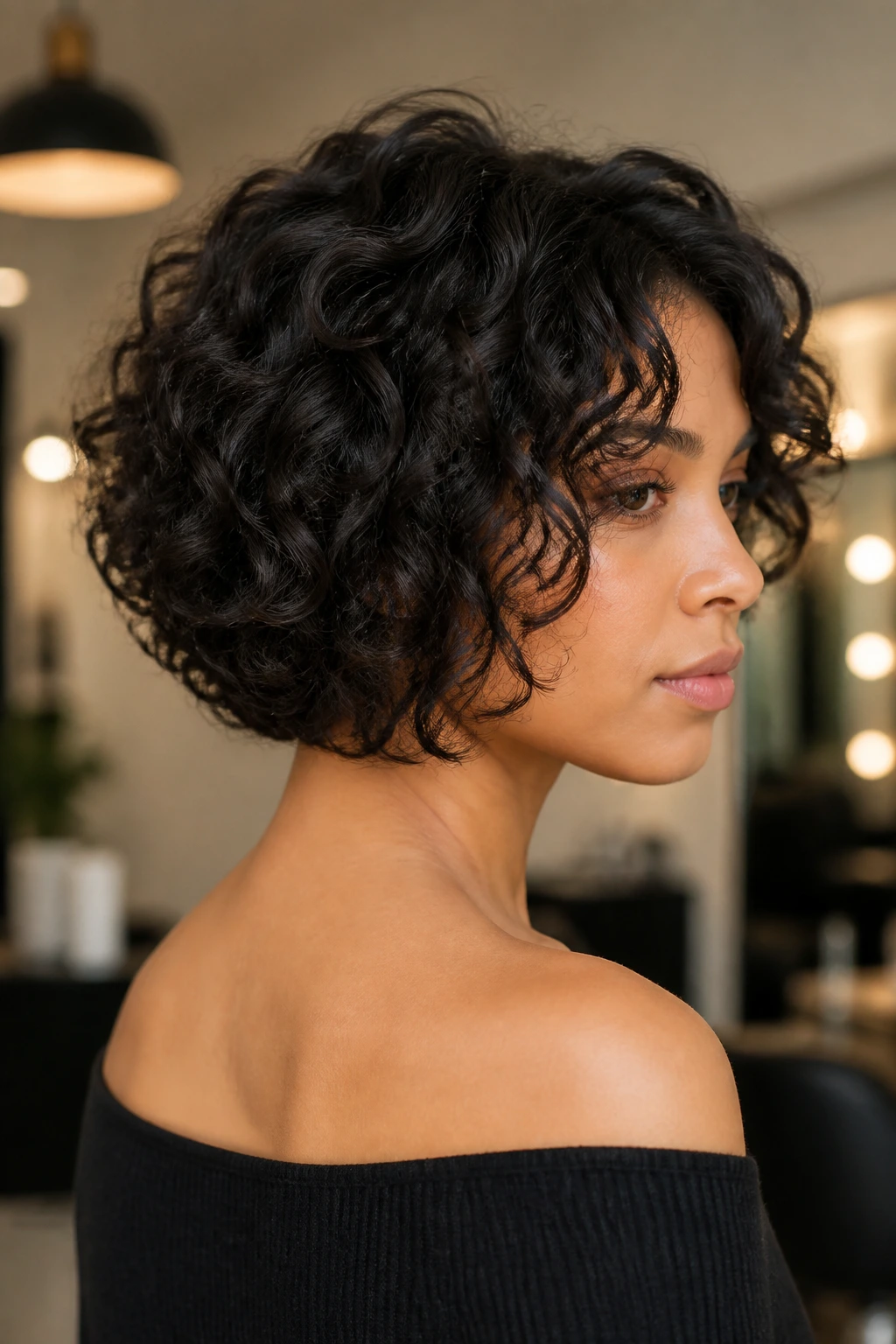
A stacked bob builds volume in the back on purpose, which sounds risky until you see how well it works on thick curls. The short, graduated layers in the nape create a lifted shape that keeps the back from collapsing. The front stays a touch longer, so the whole cut lands with a clean curve.
This is one of the best options if your hair tends to flatten at the crown but still needs some body at the ends. The stacking gives structure without making the top feel too tall. It also works nicely with loose curls because the curl clumps stack like little soft bricks instead of separate wisps.
Not a shy haircut. That’s part of the appeal.
8. Frohawk Curl Cut
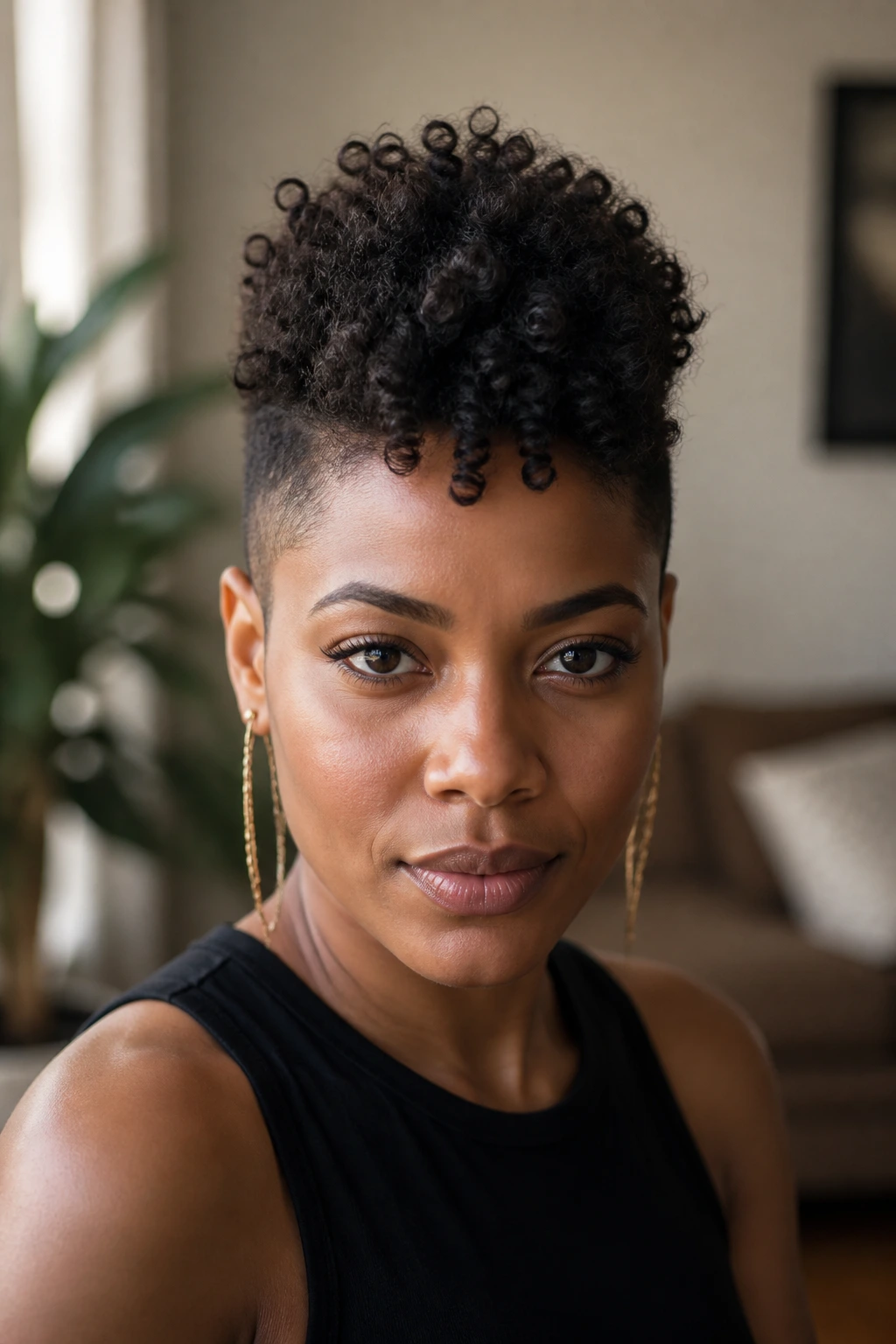
A frohawk is for the days you want height and a little swagger. The sides are tapered or clipped close, while the center strip stays longer and fuller so the curls can rise through the middle. On thick loose curls, that center line gives the shape a strong spine.
The best version of this cut doesn’t look stiff. It should feel soft and touchable, with the curls on top falling in loose waves or springy bends. If your hair grows wide fast and you hate constant side volume, the frohawk can feel like a relief.
I’d keep the center strip slightly longer than you think you need. Loose curls shrink. They always do.
9. Undercut with Loose Curls
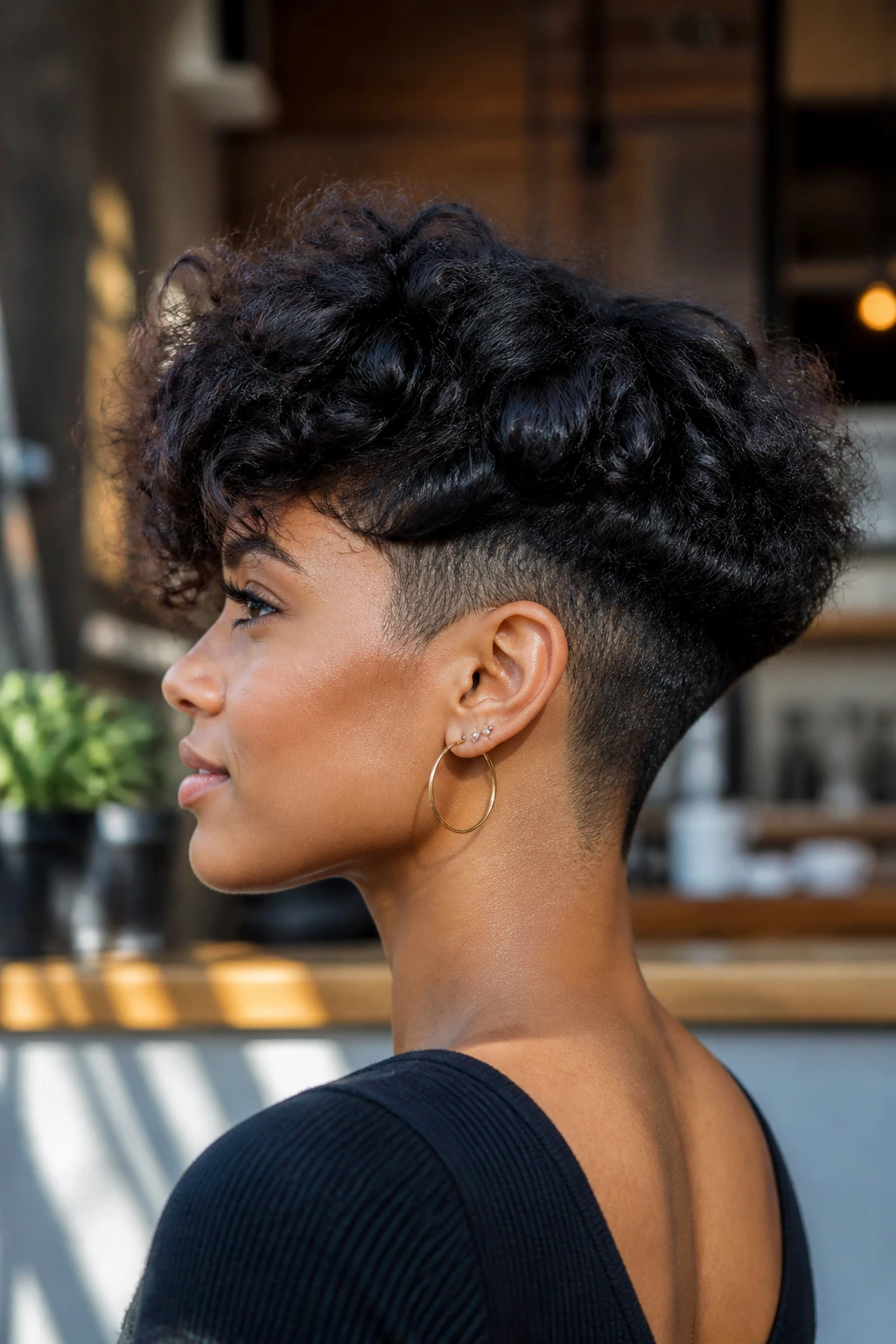
An undercut removes a chunk of bulk from underneath, which makes thick hair dramatically easier to wear short. The visible top layer keeps the style looking full and curly, while the hidden shave or clipper work removes the heat-trapping weight underneath.
This cut is a smart move if you like the idea of short hair but don’t want your whole head to feel stripped down. It also gives you more freedom with curl cream, because you’re not trying to coat as much hair. Less product, less fluff, less time.
The best part is the shift in how the cut sits on the neck. It feels lighter the minute you move.
10. Soft Finger-Wave Crop
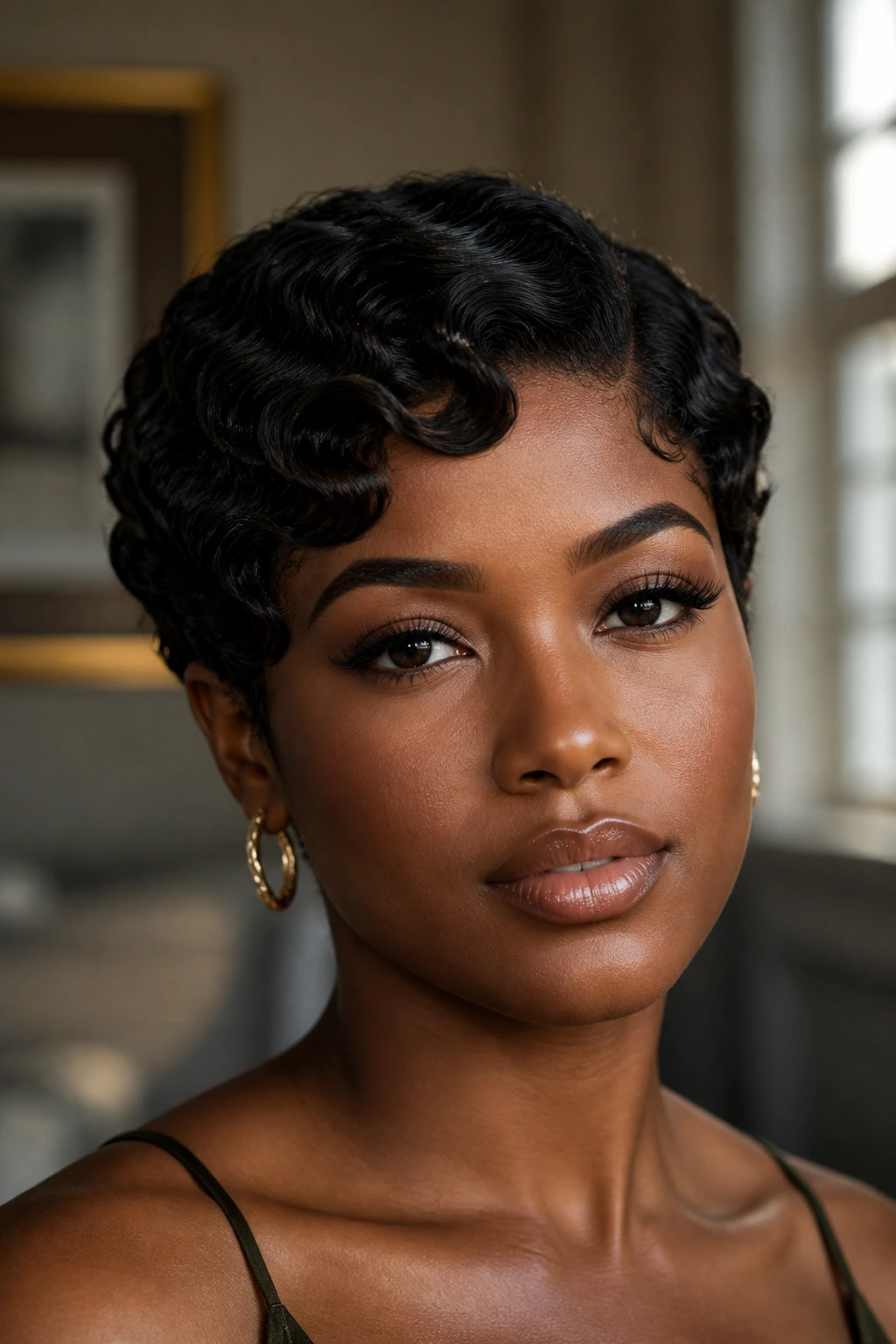
Finger waves on loose curls are not the same as old-school molded waves on slick hair. Here, the wave shape is softer, more curved, and usually focused through the front or top. The result is polished, face-framing, and a little dramatic in the best way.
How it works
A crop like this needs curls that can be coaxed into direction with mousse or setting lotion and a careful comb-through. The shape looks best when the edges are smooth and the top has those S-shaped bends. If your hair holds a part well, this style can look sharp without feeling harsh.
I like it for events, dinners, and days when you want the hair to look styled even if the rest of the outfit is simple. It has presence.
11. Curly Bob with Bangs
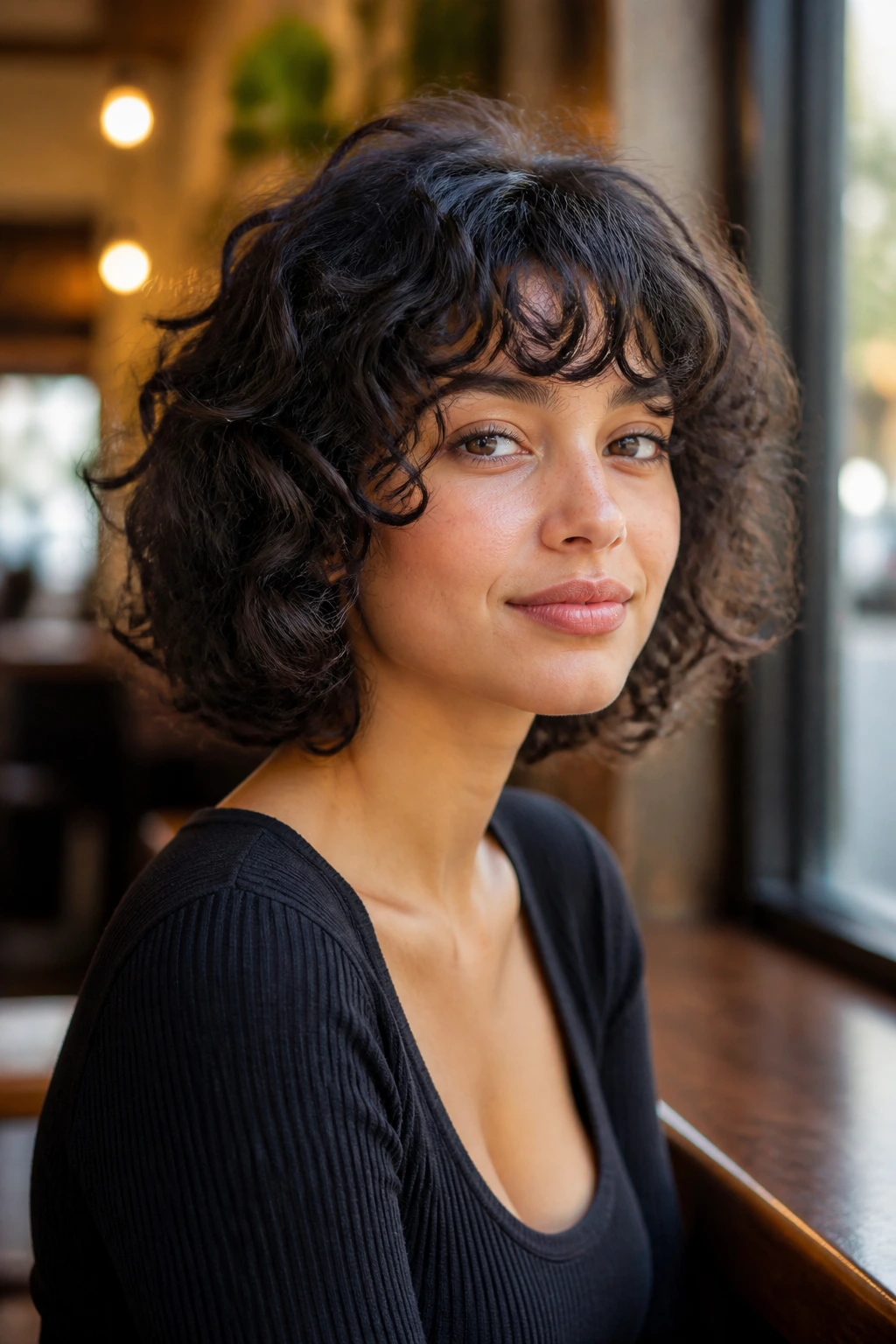
Bangs on thick loose curls can be gorgeous, but only if they’re cut with some give. Too blunt, and they spring into a shelf. Too long, and they disappear into the rest of the hair. The sweet spot is a soft, curved fringe that lands somewhere around the brows or upper lashes when dry.
The rest of the bob should stay compact enough to keep the bangs from getting swallowed. A bit of layering through the front helps the fringe blend into the sides rather than sitting like a separate piece. This is a strong choice if you want your face framed without opening the forehead completely.
A good curly bang cut looks a little different on day one and day three. That’s normal. It should still fall nicely.
12. Temple Fade with Crown Curls
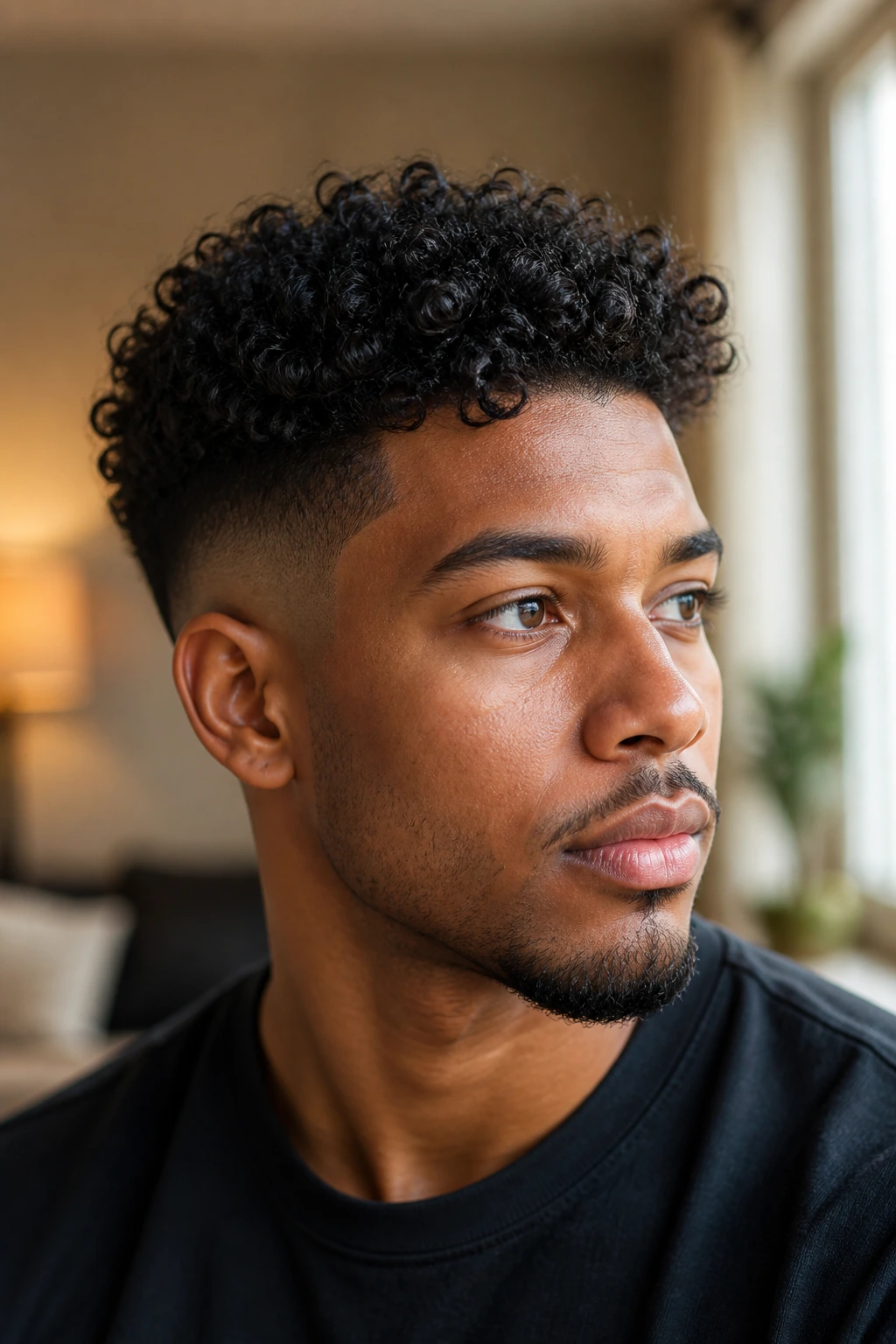
The temple fade is one of those details that changes the whole mood of a short style. By clearing the temples and tightening the sides, you give the crown curls room to stand up and move. Thick hair suddenly feels smarter and more sculpted.
This cut works especially well if you like a clean outline but don’t want the top flattened. Keep the crown long enough to show the curl pattern; otherwise the fade can read too severe. The contrast between the crisp sides and the soft top is the point here.
It’s a strong option for people who want short hair that still has some shape drama. Crisp around the edges. Soft up top. Good combination.
13. Jawline Bob with Internal Layers
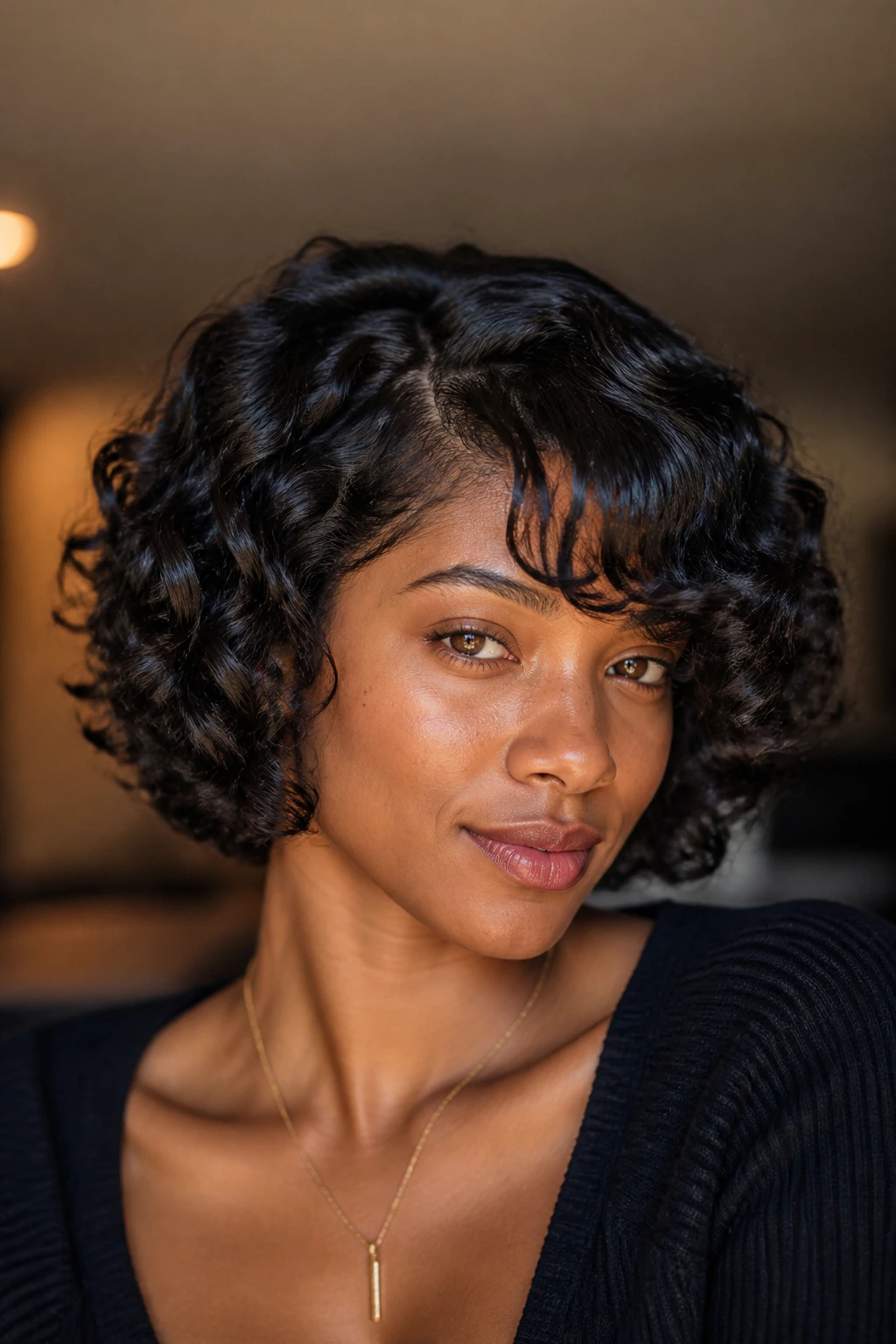
The jawline bob is one of my favorite answers to dense hair because the bulk gets removed where no one sees it first. Internal layers sit inside the cut and take weight out of the center without chopping up the outline. That means the bob keeps its shape, but it doesn’t feel heavy.
If your hair tends to mushroom when it dries, this is worth a serious look. Ask for the perimeter to stay clean at the jaw and for the inside to be thinned by layering, not by aggressive texturizing. On loose curls, that creates movement without making the ends fray.
It’s a quiet haircut. Quiet, but not boring.
14. Defined TWA with Curved Outline
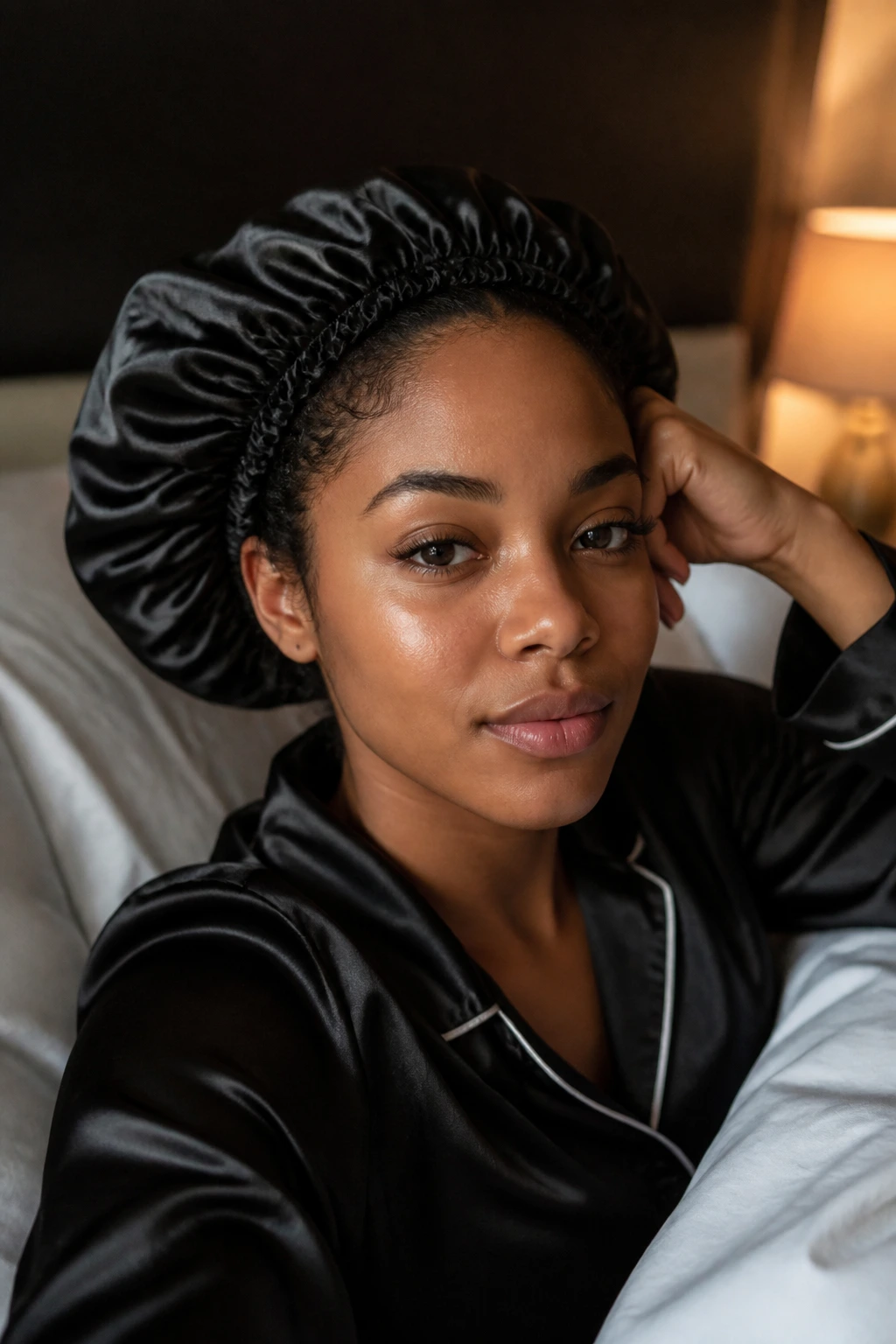
A short TWA with a curved outline can look incredibly neat when the shape is controlled. The edge follows the roundness of the head instead of fighting it, and thick loose curls keep enough texture on top to avoid looking flat. The whole cut reads compact and strong.
This is the sort of style that benefits from a clean hairline and a careful shape-up every few weeks. It doesn’t need much length to make a point. If your curls shrink a lot, the curved outline keeps the silhouette from turning boxy once it dries.
You want soft definition here, not crunchy definition. Let the hair move a little.
15. Side-Swept Tapered Cut
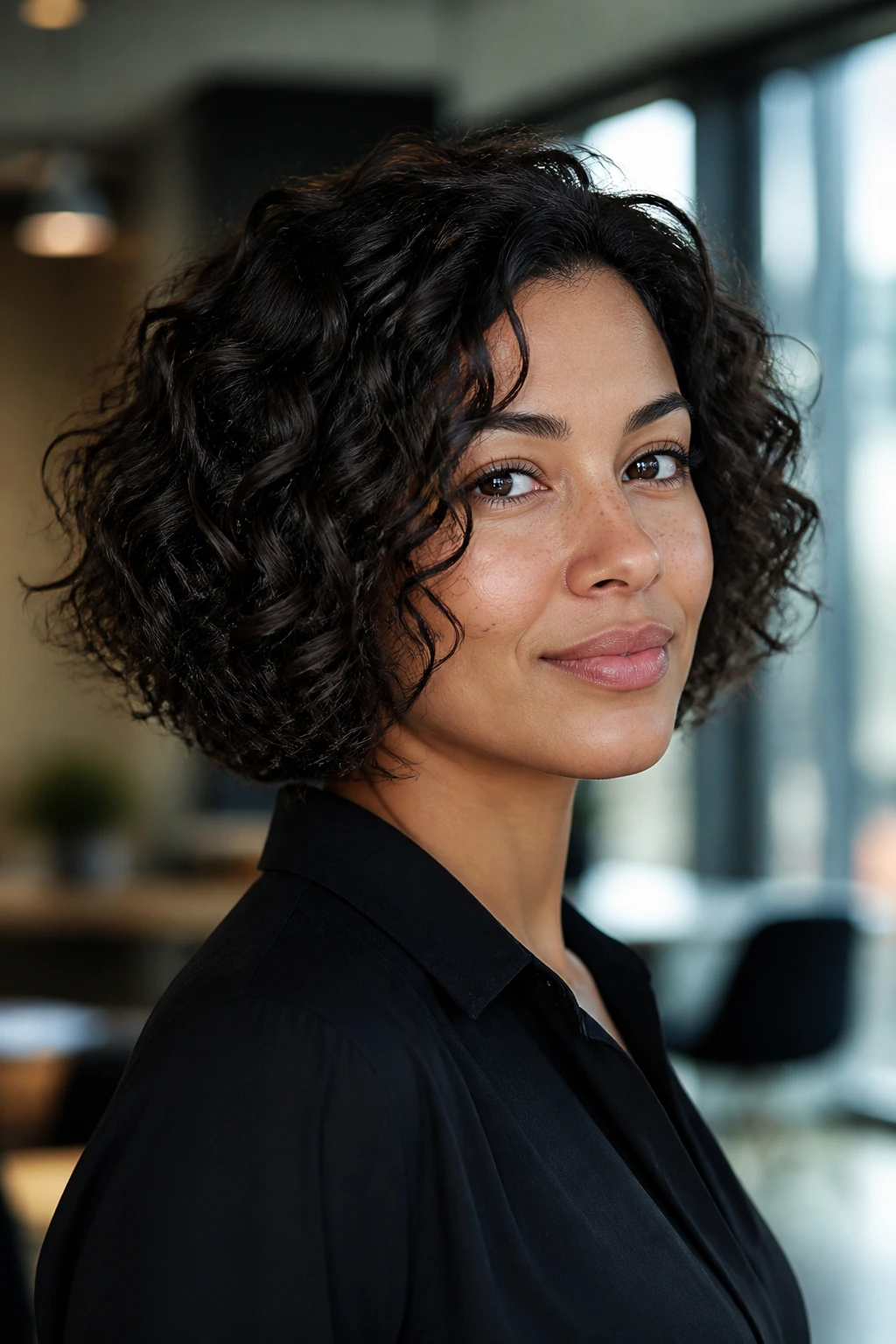
A side-swept taper gives thick curls a direction, which is often all a short cut needs. Instead of sitting straight up or straight out, the curls are encouraged to fall across the forehead or toward one cheek. That diagonal line slims the shape and makes the cut look intentional.
Best way to wear it
Part the hair where the crown naturally wants to fall, then style the front with a light cream or foam so the bend stays soft. The sides should stay tapered enough that the volume stays up top and forward. If you like a little asymmetry without a full asymmetric cut, this is a nice middle ground.
It’s a tidy style, but not a stiff one. That balance matters.
16. Modern Curly Mullet
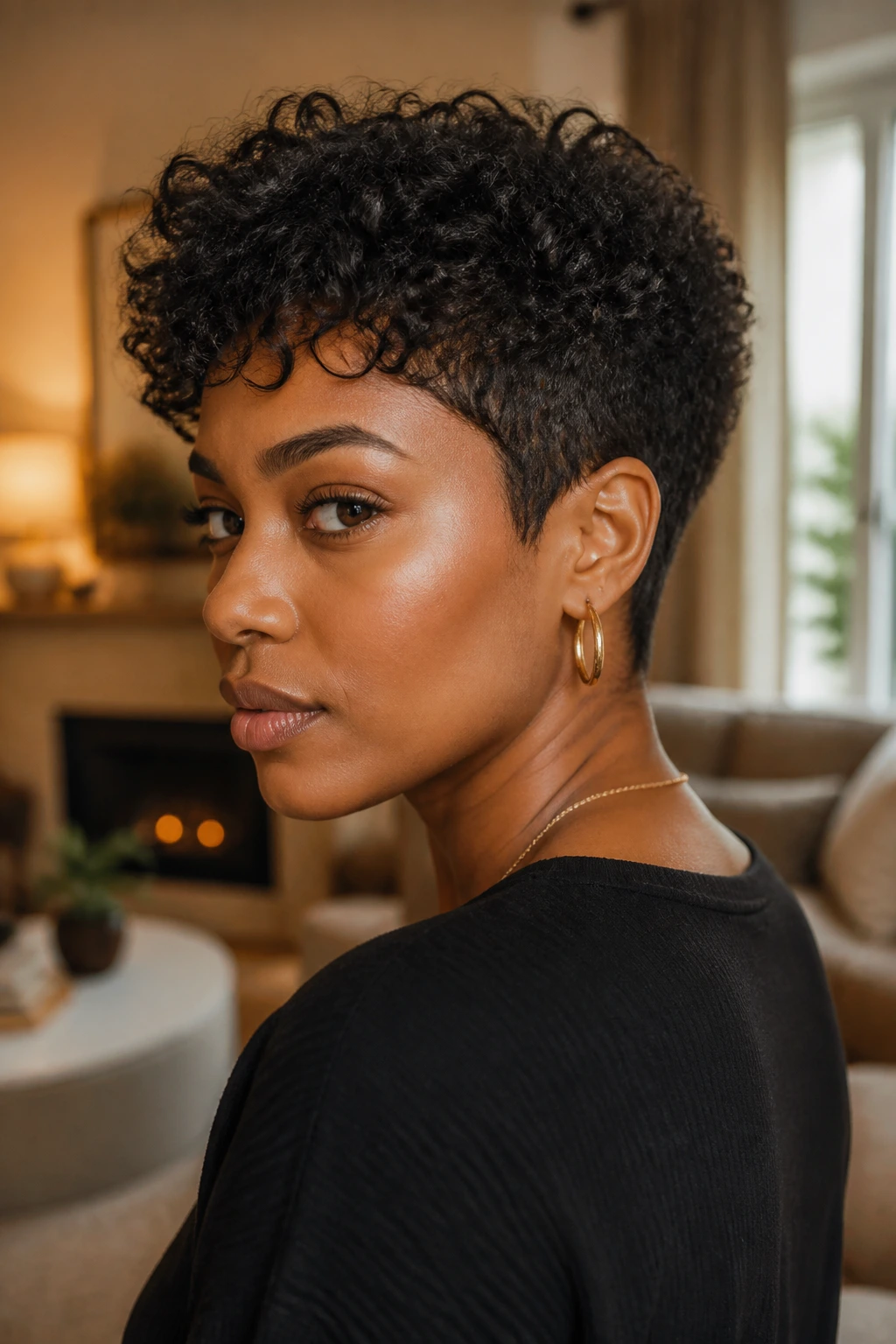
This is the bold one. A modern curly mullet keeps more length in the back while the top and front stay shorter and more layered. On thick loose curls, that contrast can look sharp rather than costume-like if the transition is soft and the edges are handled well.
I’d only recommend it if you like shape with some attitude. The shorter top helps the curls lift, and the longer back keeps movement where the neck can catch it. Ask for the blend to stay smooth so the cut doesn’t look like a disconnected grow-out.
Who should skip it
If you want everything even and tidy, this probably isn’t your cut. If you want a little edge and you don’t mind getting comments, it can be a fun one.
17. Rounded Afro Bob
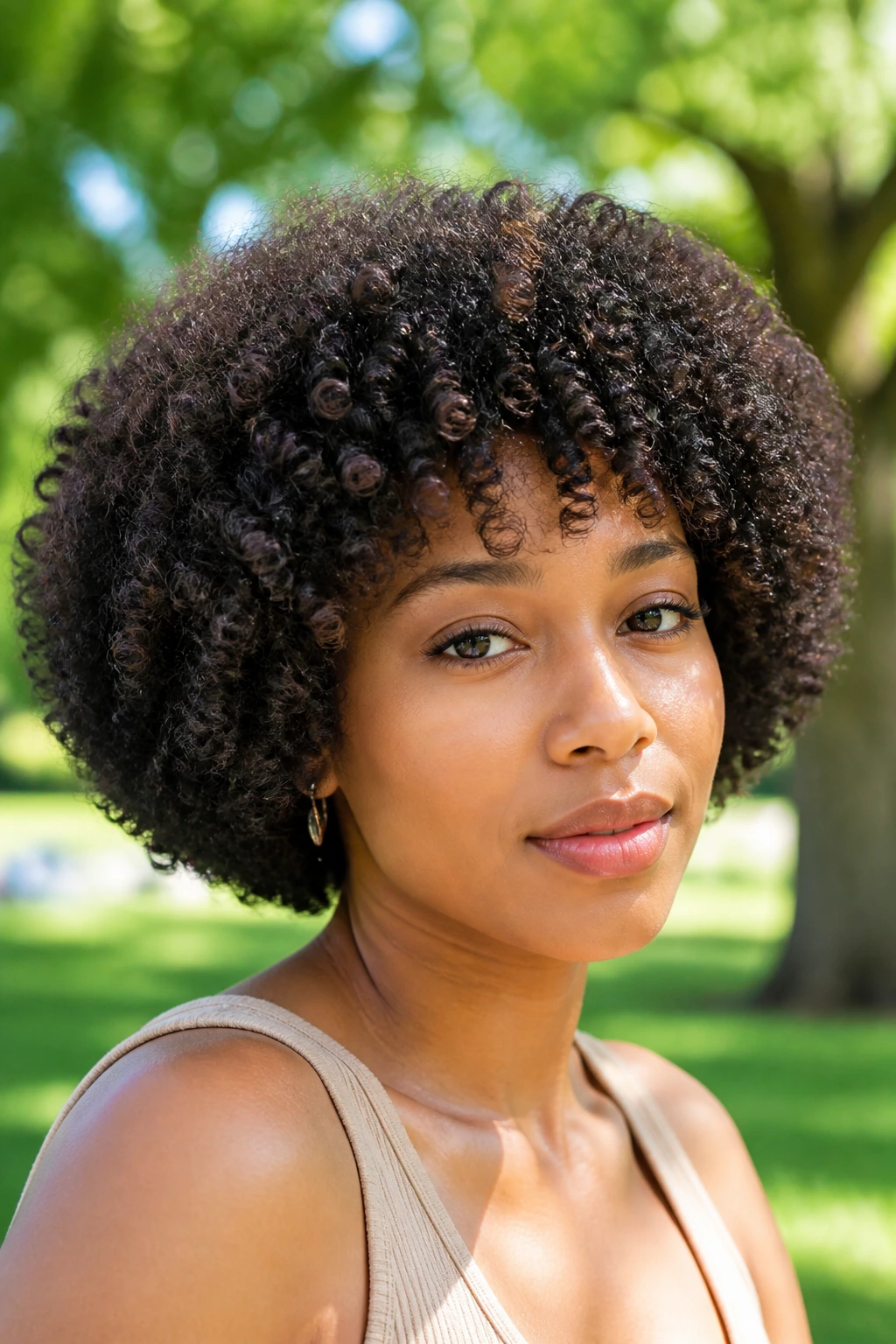
A rounded afro bob keeps the fullness but gives it a shorter boundary. The shape is plush and soft, not flat and strict. Think of it as a halo that has been politely trimmed into place.
This works beautifully on thick loose curls because the curl pattern still has room to breathe, but the outline doesn’t get wild. Ask for a rounded perimeter and avoid over-thinning the ends; you want a soft mound, not a scraggly silhouette. The result is bold in a way that feels easy to wear.
It also photographs nicely from the side because the curve stays visible. And yes, the side profile matters here.
18. Long-Top Pixie
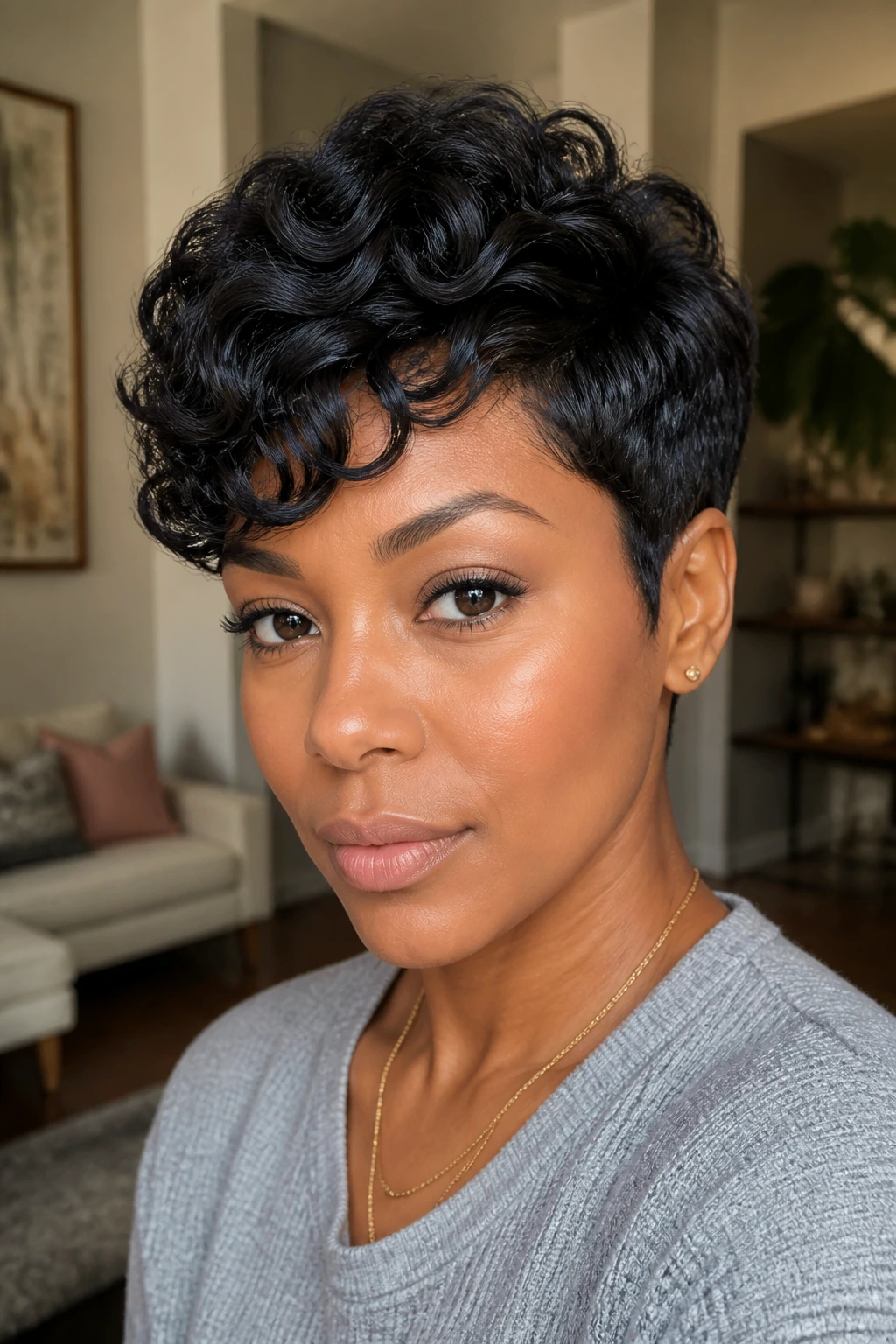
A long-top pixie gives you a lot of styling play in a short frame. The back and sides stay cropped, while the top keeps enough length for curl separation, a small quiff, or a soft sweep to the front. It’s short, but not flat.
The real trick is keeping the top long enough to clump into curls instead of frizzing into fuzz. If your loose curls are more bend than ringlet, a little mousse can help the top hold its direction. The cut works best when the crown has lift and the sides stay neat.
I like this one for people who want short hair that still feels changeable from day to day.
19. Micro-Fringe Curl Crop
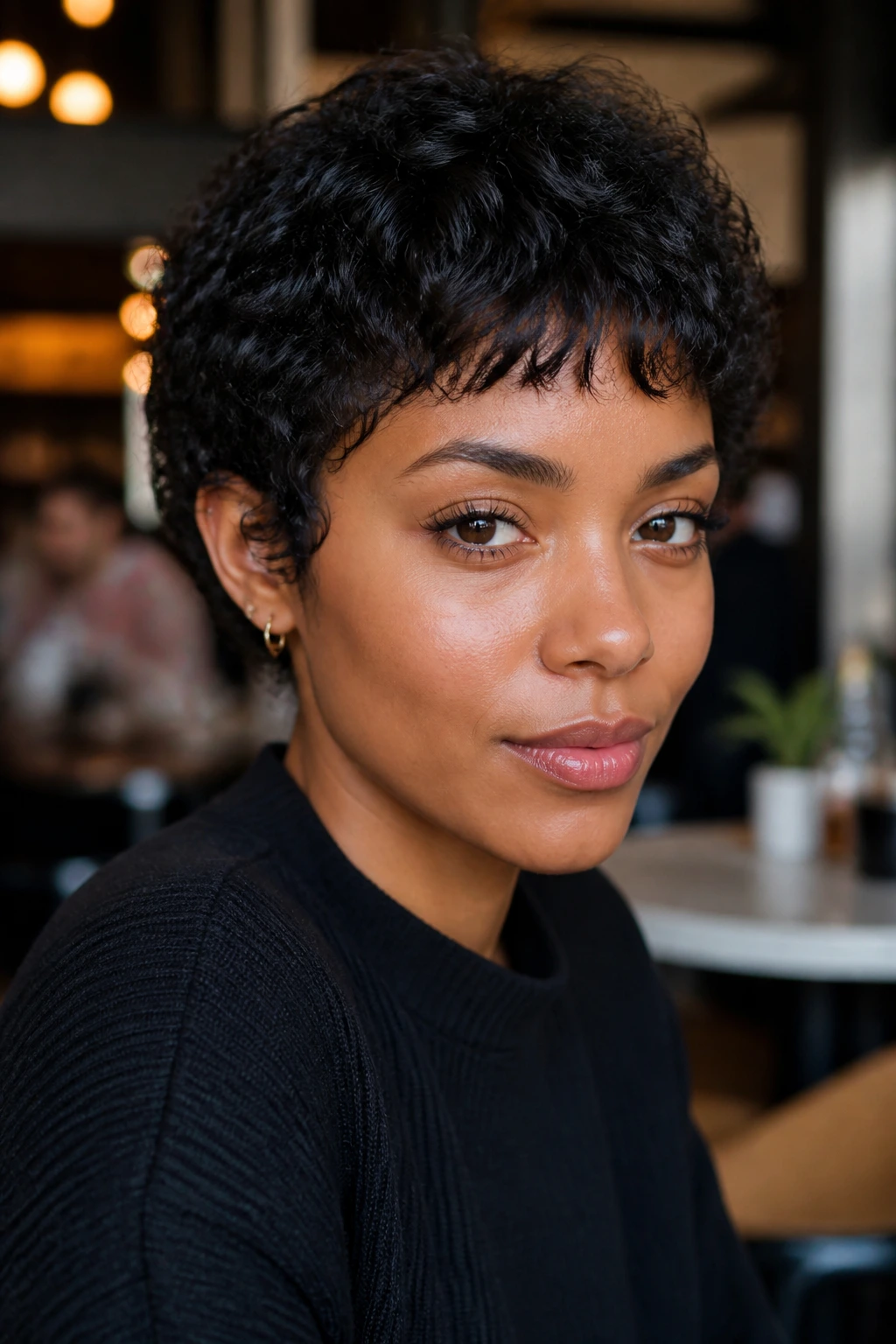
A micro-fringe crop is a brave choice, but on the right curl pattern it can be stunning. The fringe sits short across the forehead, and the rest of the crop stays compact so the eye goes straight to the texture. With loose curls, the fringe should be feathered, not cut into a hard line.
This style needs confidence and a good stylist. Tiny bangs can go wrong fast if they’re cut too blunt or too short, so the fringe should be approached in small steps. The payoff is strong: a face-framing cut with a little edge and a lot of texture.
It’s not the easiest choice on the list. It is one of the most memorable.
20. Diffused Wash-and-Go Crop
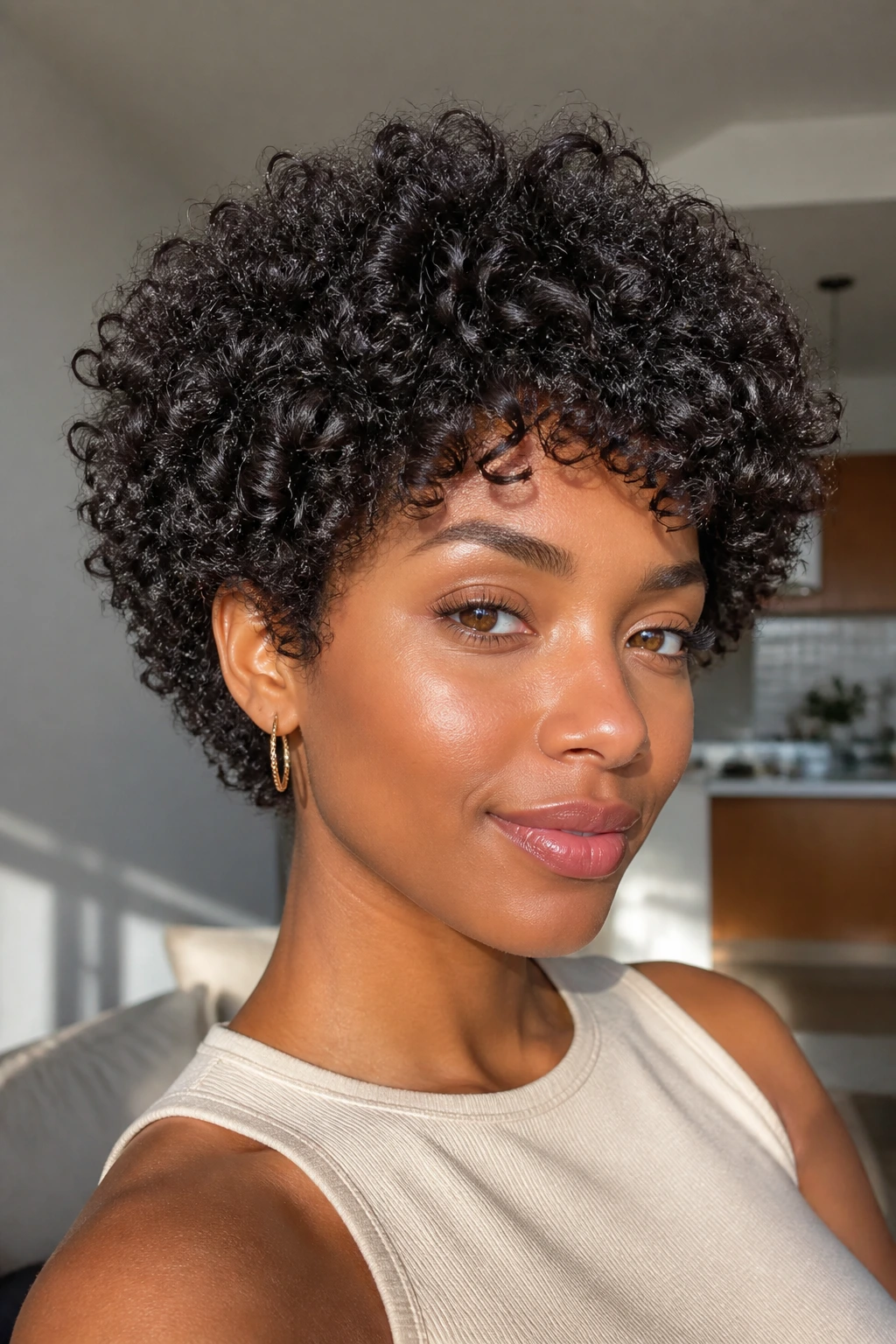
A wash-and-go crop is less about a dramatic haircut and more about a shape that behaves after a simple style. The cut should allow the curls to fall into a rounded short silhouette once they’ve been diffused and set. If the haircut is done right, you can let product do less work.
What makes it look clean
Ask for soft layers that support curl clumping and avoid a heavy blunt edge around the bottom. The hair should dry into a shape that still looks planned when you leave it alone. That means the crown, sides, and front all need enough balance to hold together without constant hand fluffing.
This is a strong choice if you want your styling time to stay under fifteen minutes. It’s not lazy. It’s efficient.
21. Curly Crop with Shaved Nape
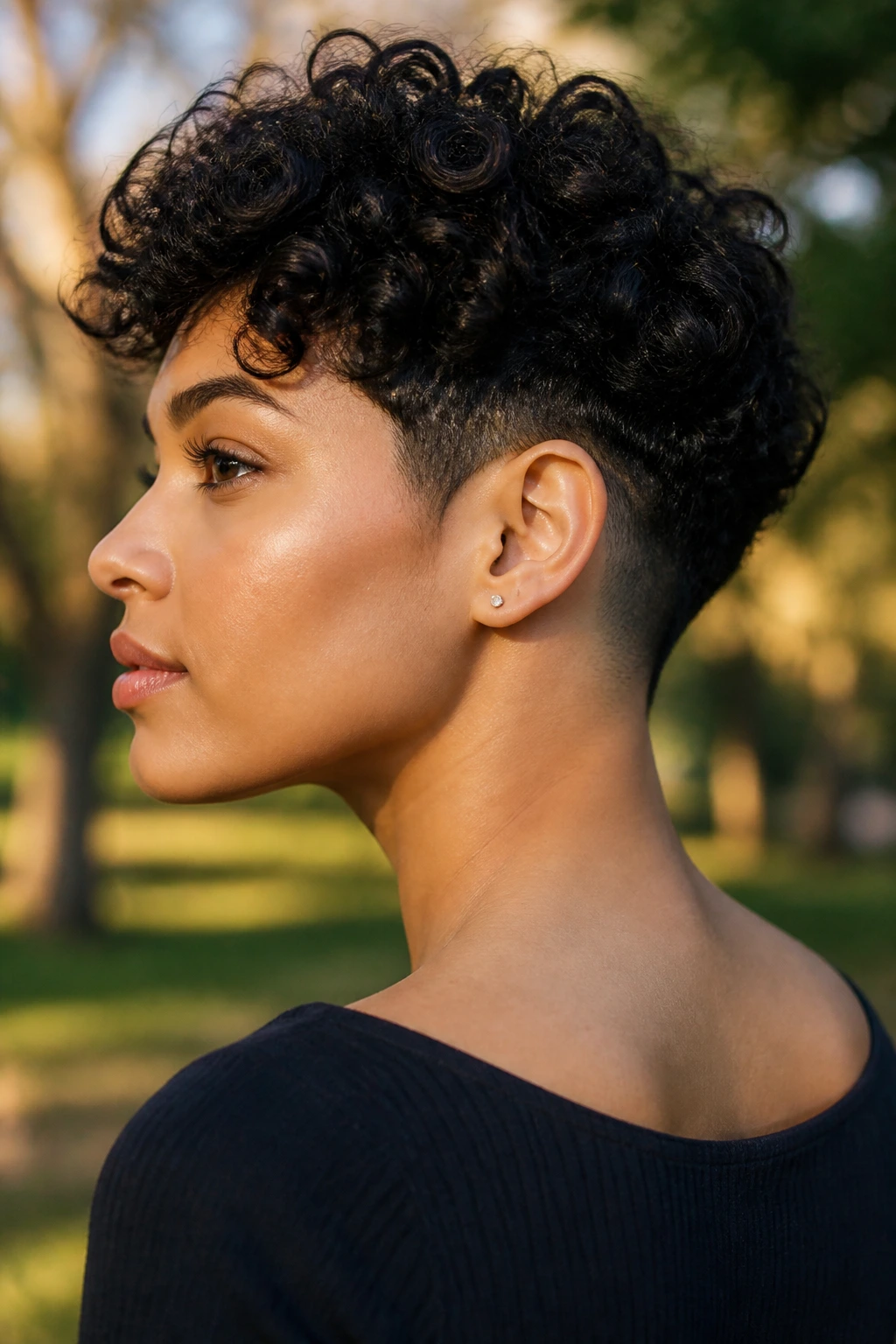
A shaved nape gives a short curly crop a cooler neck line and removes the bulk that usually builds up under thick hair. The top can stay soft and loose while the back stays clean, which keeps the whole shape from getting heavy. It also helps in warm weather, though I’m not pretending that’s the only reason to like it.
How to keep the nape crisp
Ask for the nape to be cleaned up every few weeks so the grow-out doesn’t blur the shape. The top can be refreshed with water and cream, but the back needs a sharper touch-up if you want the style to keep its edge. If your hair grows fast, this is the part that gives you away first.
This cut looks best when the top has some lift and the sides are not fighting the taper.
22. Neck-Hugging Layered Bob
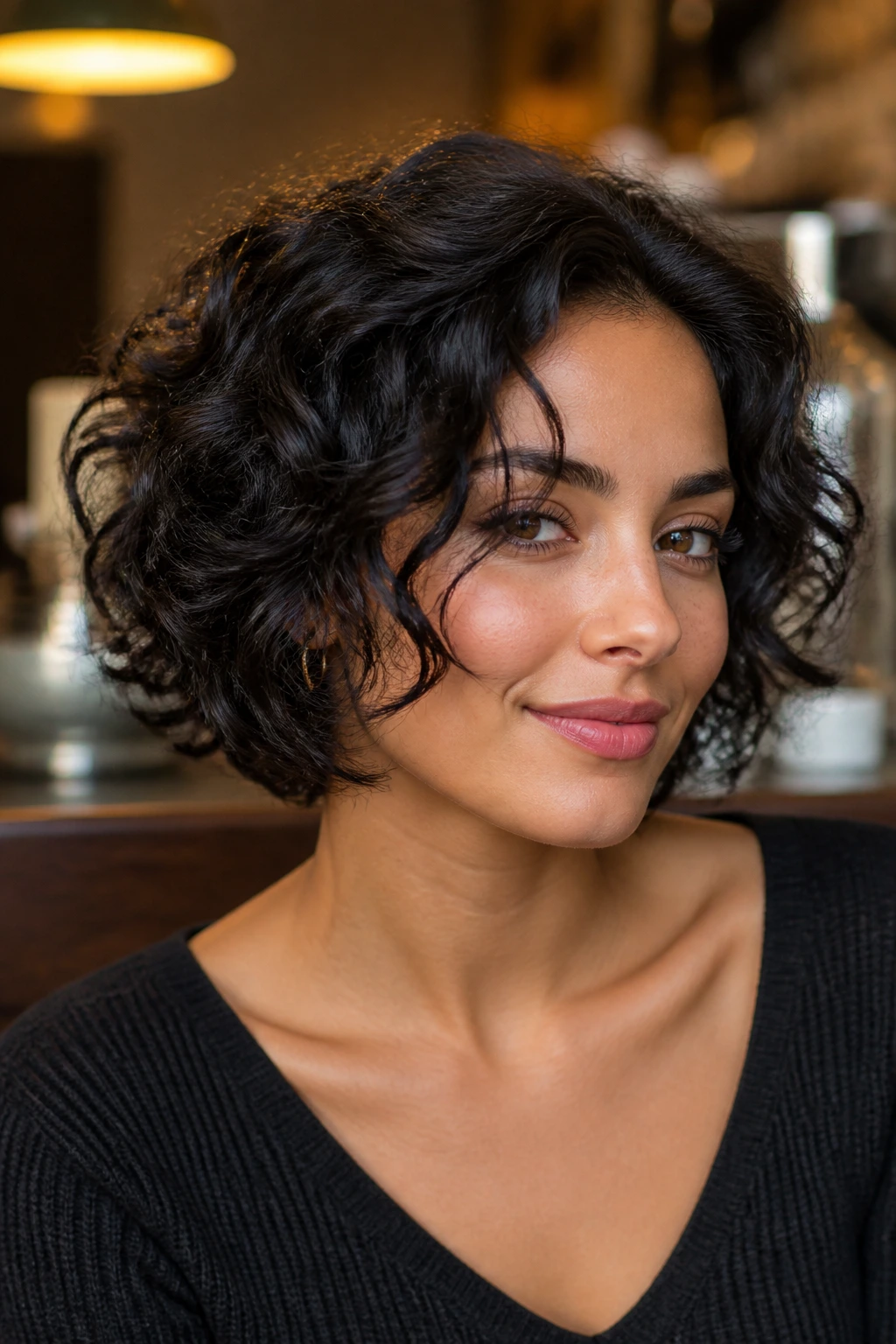
A neck-hugging bob sits close enough to show the line of the neck, but the layers keep it from getting stiff. The curve is sleek, the curls stay soft, and the ends land near the nape without bunching up. It’s a nice answer if you want short hair that still feels grown-up and clean.
The layering matters more here than people think. Without it, thick curls can sit like a block. With it, the shape wraps instead of stacking. That small difference is the reason this cut stays neat on day two instead of spreading out.
It’s a good style for button-downs, earrings, and anything with a strong neckline.
23. Twist-Out Bob
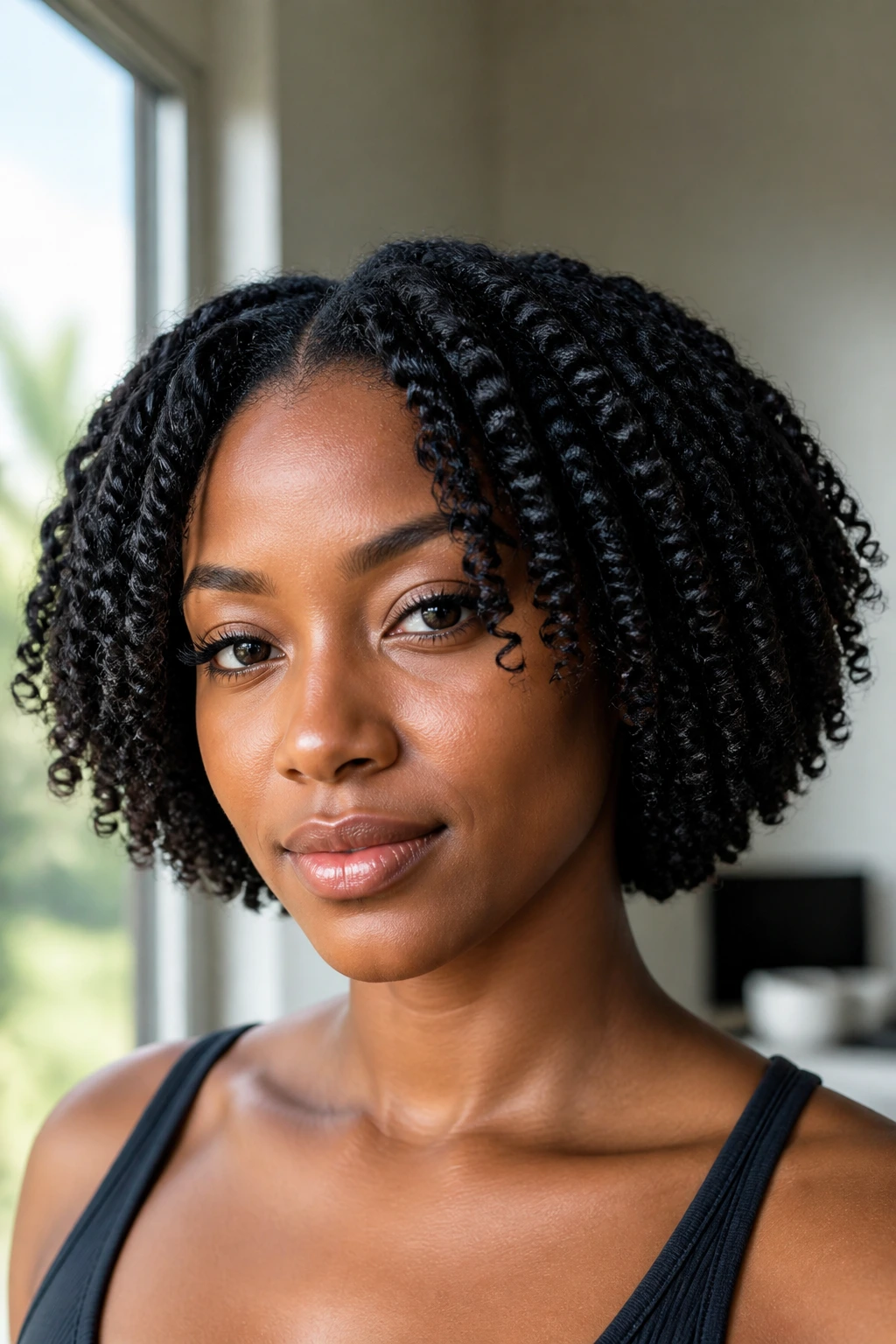
A twist-out bob gives you stretch, definition, and a little length without committing to heat. The twist pattern softens the curl, so thick hair lays in a calmer, more organized shape. That makes the bob feel longer and less dense.
This cut works best when the ends are shaped while the hair is dry or nearly dry, because loose curls can spring up and change the perimeter more than you expect. If you like a softer look with more visible length, this is a smart route. It’s also one of the easier ways to keep a short style looking fresh for several days.
Not as shiny as a slick bob. Better if you want texture.
24. Center-Parted Sculpted Bob
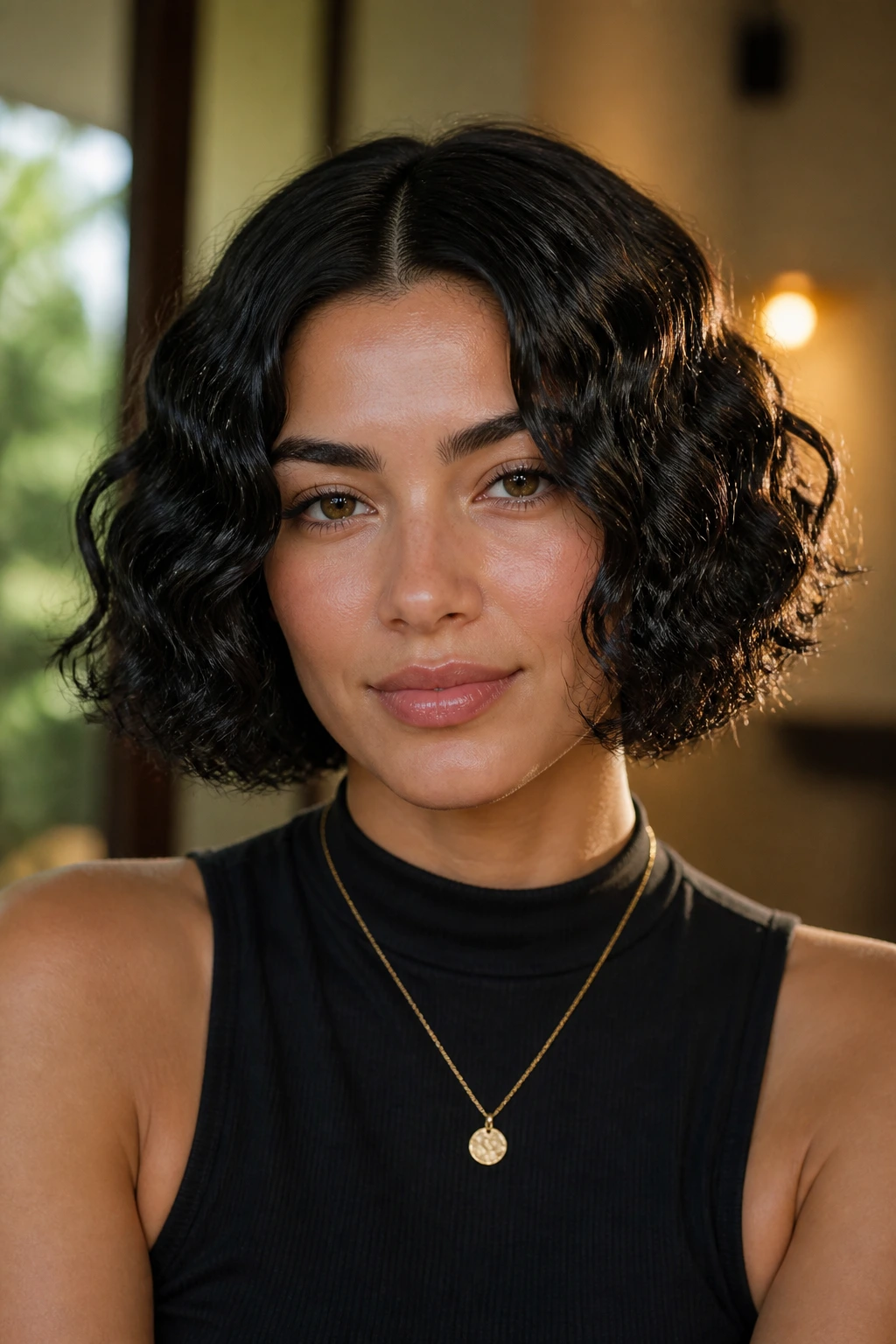
A clean center part on thick loose curls can look surprisingly sharp. It creates two balanced sides, which helps the cut feel controlled even when the curls have plenty of body. The trick is keeping the center line neat and the ends shaped so the hair doesn’t puff outward in the middle.
This style works best when the perimeter sits around the jaw or slightly below, with enough layering to stop the sides from turning too heavy. If your hair has a lot of natural volume, the center part gives it a place to fall instead of scattering in every direction. It reads modern without needing a lot of ornament.
A small amount of shine product on the top layer can make the part look cleaner.
25. Glam Side-Sweep Crop
This is the short cut you reach for when you want the face to lead and the hair to follow. The side sweep pulls the curls across the forehead and over one eye or temple, which gives the shape a soft, dramatic line. Thick hair helps here, because there’s enough body to hold that sweep without collapsing.
The finishing move
Use a light foam or cream at the roots, then encourage the curls to dry in the swept direction with clips if needed. A little lift at the crown keeps the style from going flat on the swept side. I like this one with a bold earring and a clean neckline, because the whole cut suddenly feels dressed up.
It’s not fussy. It’s simply arranged.
Why Thick Loose Curls Behave Better in Shorter Shapes
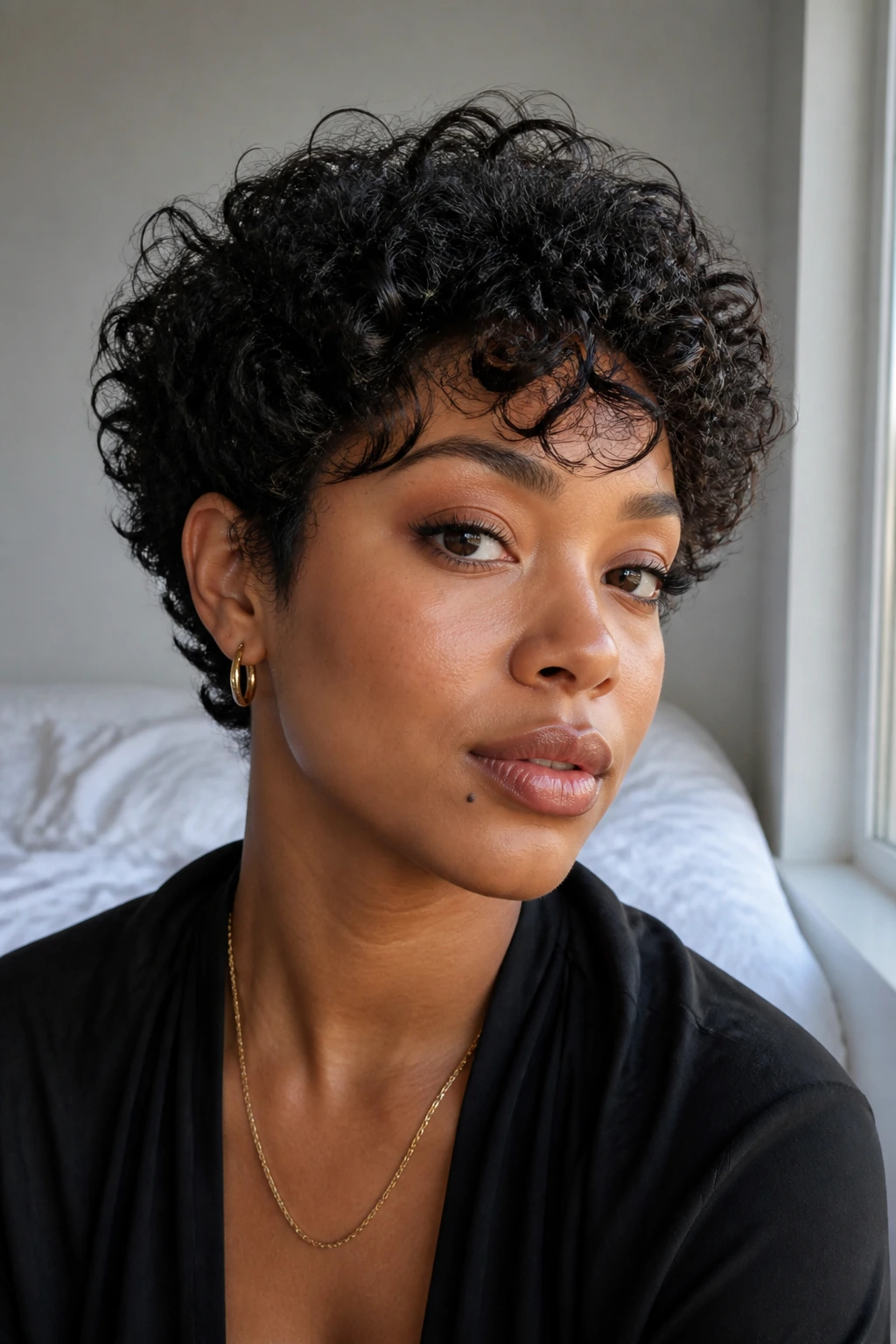
The length itself is part of the problem. Thick hair has weight, and loose curls have a habit of stretching at the top while puffing at the edges. Once the hair gets too long, that combination can build a wide silhouette that looks bigger than the shape you asked for.
Shorter cuts interrupt that pattern. They let the curl groups sit closer to the head, which usually means less drag, less frizz, and less of that wide triangle outline nobody asked for. I’m fond of cuts that use geometry on purpose: a rounded bob to soften the sides, a taper to remove bulk at the neck, a part to direct volume where you want it. That is the real logic behind the best short natural styles.
There’s also a practical side. Short thick curls dry faster, refresh faster, and usually need less product to look finished. That matters on mornings when you do not have time to rework every section with a brush and a prayer.
Tools That Make These Styles Easier to Wear
-
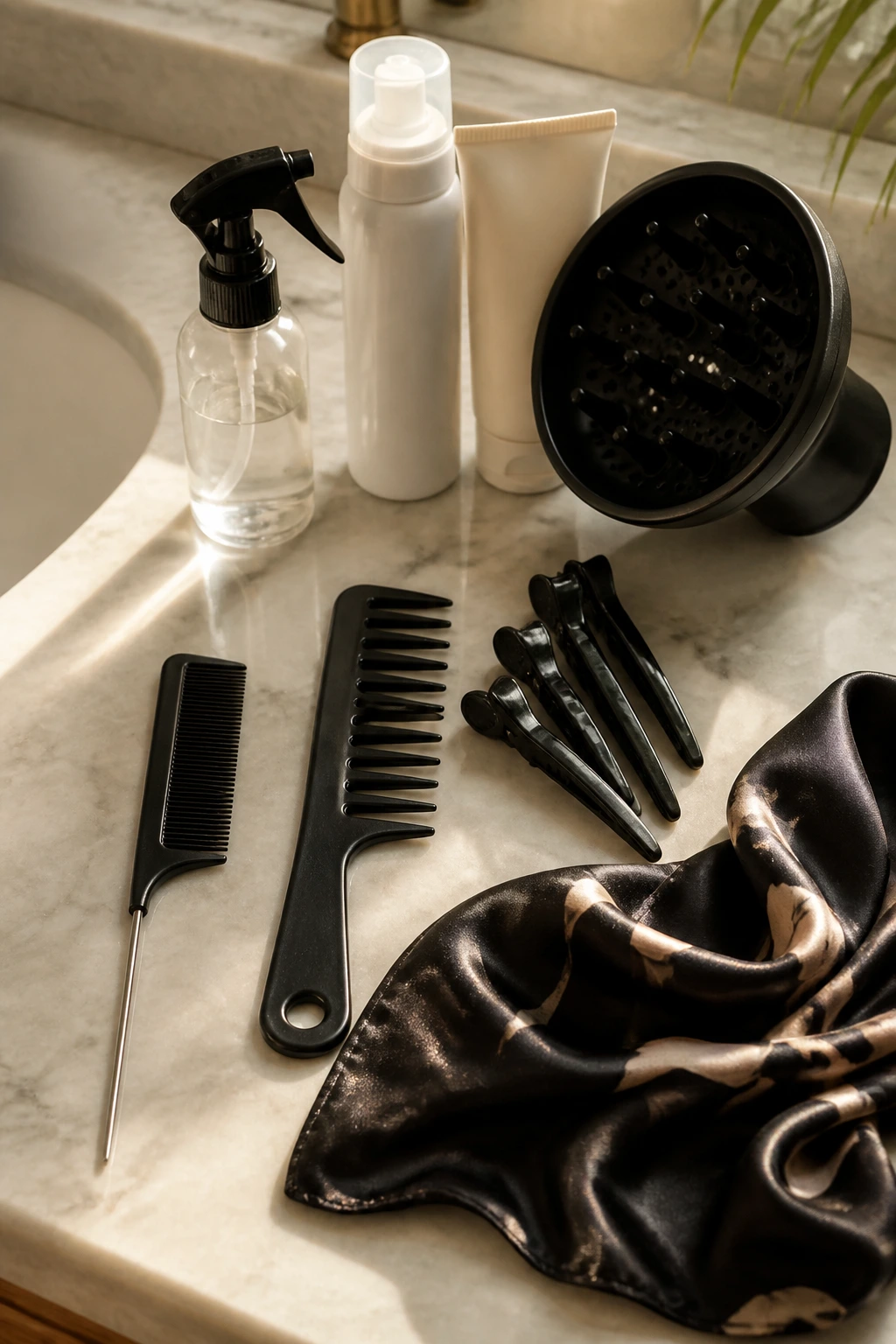
Rat-tail comb: Clean parts, clean sections, and cleaner shape-ups. It’s the tool that keeps a side part from looking fuzzy.
-
Wide-tooth comb: Best for detangling wet hair without pulling the curl pattern apart.
-
Spray bottle with water: A fine mist wakes up day-two curls faster than drenching the whole head.
-
Lightweight mousse or foam wrap: Good for holding curl clumps and keeping the crown from puffing too fast.
-
Curl cream or leave-in conditioner: Use a small amount on thick hair; too much can collapse the shape.
-
Diffuser attachment: Low heat, low speed, and a much better chance of keeping volume where you want it.
-
Duckbill clips: Useful for setting a side part, lifting roots, or holding a sweep in place while the hair dries.
-
Satin scarf or bonnet: This is not optional if you want the style to last. Cotton steals moisture and roughs up the cut.
-
Hand mirror: Essential for checking the nape, the fade, and the back of any layered bob.
Choosing the Right Cut, Products, and Salon Ask
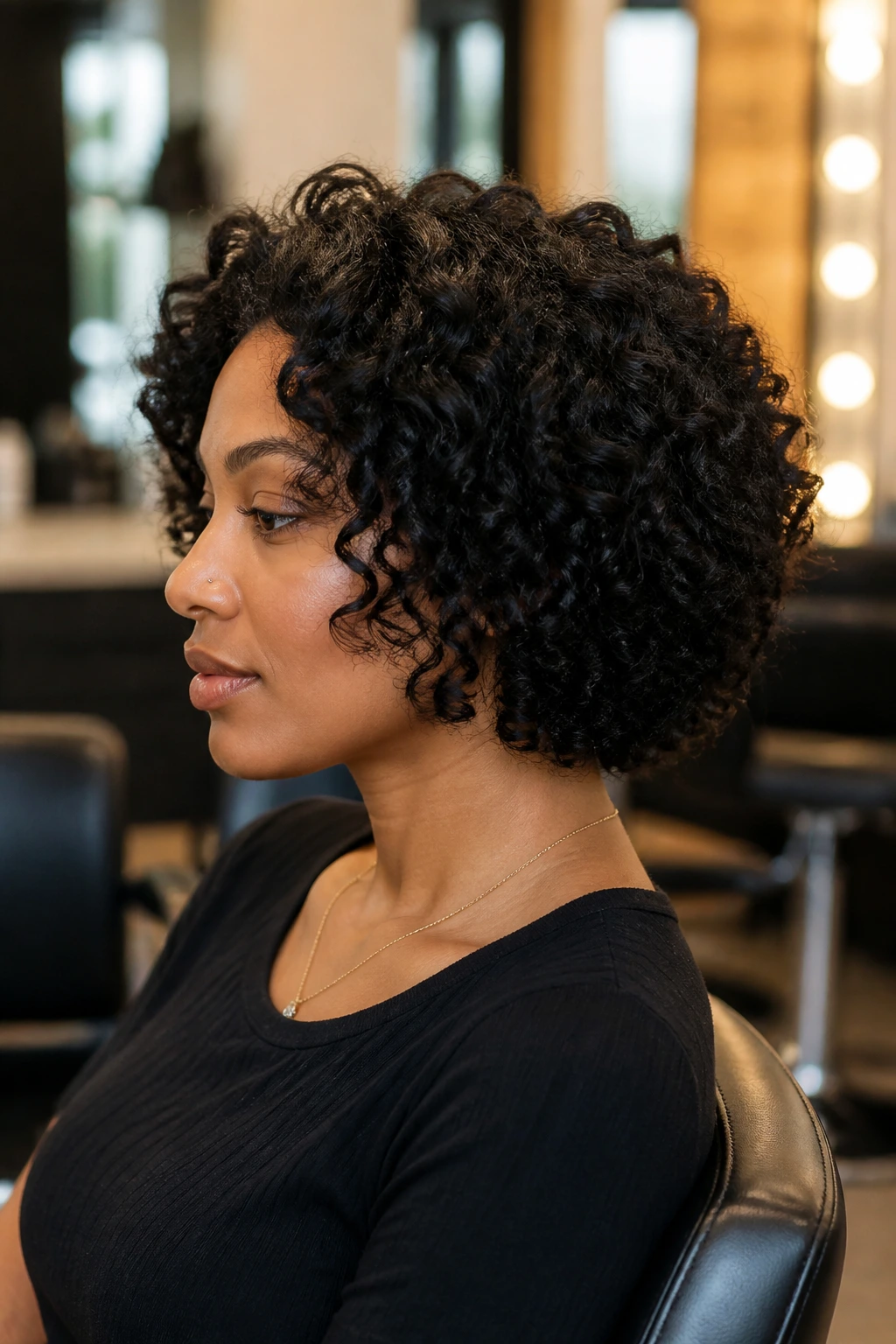
The best short curly cut starts before the scissors do. Thick loose curls need a stylist who understands shrinkage, because wet hair lies. Every time. A cut that looks chin-length in the sink can land at the ear or jaw once it dries, so you want someone who cuts with that movement in mind.
For products, keep an eye on weight. Heavy butters and thick oils can make loose curls hang limp, especially on shorter cuts where the silhouette depends on lift. A water-based leave-in, a foam, and a small amount of cream usually give you more control than a jar of dense styling butter. If the hair frizzes easily, reach for a gel or mousse on the outer layer and keep heavier products close to the mids, not the roots.
At the salon, ask for terms that describe shape, not just length. Say things like rounded outline, internal layers, tapered nape, soft fringe, or stacked back. Those phrases tell the stylist where the weight should come off. And if you want the cut to sit softly on loose curls, ask them to leave a little more length than the final look requires; the curl pattern will take some of it back.
How to Wear These Styles in Real Life
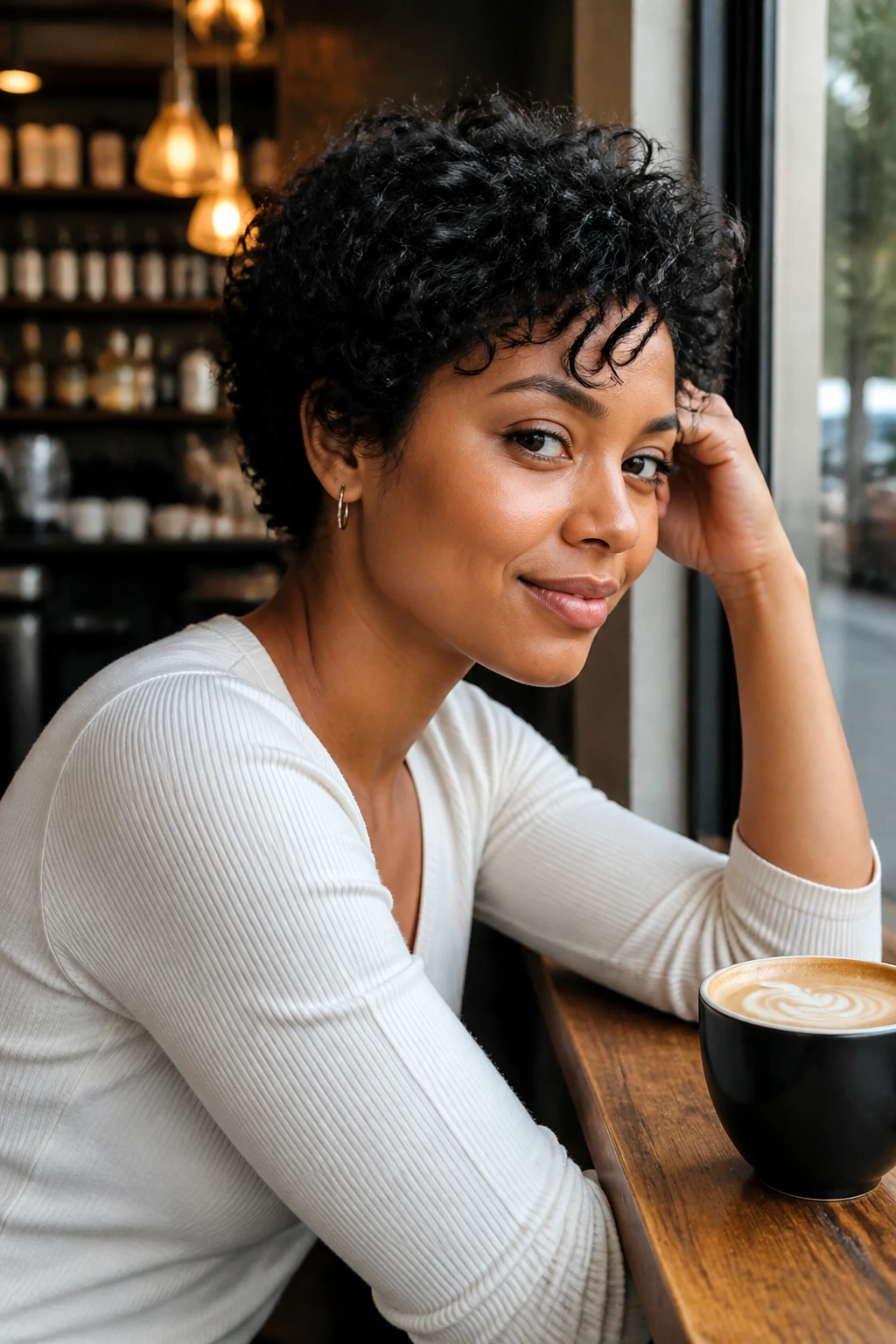
Presentation: Keep the outline clean before you add anything fancy. A tidy part, a shaped hairline, or a rounded perimeter usually does more for these cuts than a pile of accessories ever will.
Accompaniments: Small hoops, a satin scarf, bold brows, or a collar that doesn’t swallow the neck all work well with short curls. I’d skip crowded necklaces if the cut already has a lot of movement around the jaw.
Portions: If your hair is very dense, ask for internal layering instead of simply chopping the perimeter shorter. That keeps the shape balanced without taking away too much length at once. For tighter face-framing cuts, a jaw-length finish usually reads cleanest once the curls dry.
Beverage Pairing: A little shine spray and a hydrating mist are the closest thing this style has to a good pairing. If the hair is thirsty, the shape loses its edge fast, and no amount of fluffing will fix that.
Small Styling Tweaks That Change the Whole Shape
Shine Booster: Two or three drops of lightweight oil rubbed over the outer layer can calm the halo without flattening the crown. Less than that is better than more.
Customization: A side part changes the entire mood of a bob, and a soft fringe can make a short cut feel gentler around the forehead. If you want more attitude, shift the part and clip one side back.
Serving Suggestions: Think in terms of finish. Glossy edges suit the sculpted cuts. Matte texture works better on shaggy crops and twist-out bobs. A small earring can be enough when the haircut already has a strong outline.
Make-It-Yours: If you wear glasses, keep the front slightly lighter so the frames don’t compete with the curls. If you love makeup, a short side-sweep or rounded bob gives you more room to show it off. If you want less maintenance, avoid micro-fringe and aim for a shape that can grow out without losing the line.
Nighttime Care, Wash-Day Refreshes, and Trim Schedule
Short styles live or die by what happens after you take them off. Sleep on a satin pillowcase or wrap the hair in a bonnet or scarf every night, because cotton roughs up the curl pattern and pushes the cut out of shape. If the style is rounded or side-swept, try to keep the curls in the same direction before bed; it saves time in the morning.
Most of these looks can be refreshed for 3 to 5 days before they need a proper wash, sometimes longer if you’re light-handed with product. A light mist of water, a pea-sized amount of foam, and a quick scrunch at the ends often bring loose curls back to life. If the crown goes flat, lift the roots with a clip for 10 to 15 minutes while the hair dries.
Washing every 7 to 10 days usually keeps buildup from taking over, though the undercut and shaved-nape styles can stretch a little longer if the scalp stays comfortable. Trims matter too. A shape like a rounded bob or stacked crop usually benefits from a cleanup every 6 to 8 weeks so the outline stays crisp and the ends don’t fray.
Variations and Adaptations to Try
Soft Office Version: Keep the edges rounded, skip the bold undercut, and lean into a side part or jaw-length bob. This version works when you want polish without looking severe.
Weekend Texture Version: Add a little more layering, use foam instead of cream, and let the curls dry with more separation. The result is looser, airier, and a touch messier.
Low-Heat Version: Choose a cut that looks right air-dried, such as the rounded bob, bixie, or tapered pixie. These shapes should hold their line without needing a diffuser every single time.
Bold Contrast Version: Pair a shaved nape, temple fade, or undercut with soft curls on top. The contrast is what gives these styles their punch.
Protective Night Version: Favor styles that sit flat enough to pineapple or wrap, especially the twist-out bob and the neck-hugging bob. These are the cuts that tend to hold up better between washes.
Color-Accent Version: A few caramel ribbons, honey ends, or subtle copper pieces can make the curl pattern stand out. Keep the color placement focused around the face or crown so the style doesn’t get busy.
Common Mistakes That Throw Off the Shape
The first mistake is cutting thick loose curls too bluntly and then wondering why the hair looks wide. A straight edge on dense curls can puff into a box. The fix is internal layering, rounded edges, or a tapered outline that removes weight without making the ends ragged.
Another common problem is using too much product. Heavy creams and oils can drag down the crown and separate the curls in the wrong way, especially on short cuts. Start smaller than you think you need. If the hair still feels dry, add a little more only to the mids and ends.
The third issue is ignoring shrinkage. A cut that looks balanced wet may land too high once it dries, especially on a TWA, bixie, or pixie. Ask for length with shrinkage in mind and check the silhouette after the hair has fully dried before making any final judgment.
One more: skipping shape-ups. The nape, temples, and hairline are doing more work than you think in short styles. If those areas grow out unevenly, the whole haircut looks sloppy fast. A quick clean-up every few weeks keeps the shape from unraveling.
Frequently Asked Questions
Which short style is easiest if my thick curls shrink a lot?
The rounded curly bob, tapered pixie, and neck-hugging layered bob usually handle shrinkage well because the shape stays readable even when the hair pulls up. Ask for a little more length than you think you need, then let the curl pattern do the shrinking.
Can loose curls still work with a very short cut?
Yes, but the shape matters more than the length. A short crop with a clean taper or a soft rounded outline gives loose curls enough room to show texture without looking sparse.
How do I keep my short curls from turning into a triangle?
Take weight out of the interior and around the nape, not just the bottom edge. A triangle usually means the ends were cut too bluntly or the layers were placed too high in the wrong spots.
Do bangs work on thick loose curls?
They do, as long as the fringe is cut with shrinkage in mind and left soft. Blunt bangs can spring too high and get heavy-looking, so a curved or piecey fringe usually behaves better.
What should I ask my stylist for at the salon?
Use shape language: rounded outline, internal layers, tapered nape, side part, stacked back, or soft fringe. Those words tell the stylist where the bulk needs to come off, which matters more than just saying “short.”
Which style needs the least daily work?
A tapered pixie, undercut, or temple fade usually needs the least fuss because the sides are already controlled. You’ll still need moisture and a little refresh, but the structure is doing half the job.
How often should I trim a short curly cut?
Every 6 to 8 weeks is a good target if you want the outline to stay clean. If the style has a fade or shaved nape, you may want touch-ups sooner so the shape doesn’t blur.
What if my curls go flat by day two?
Refresh the roots first, not the ends. A mist of water, a touch of foam, and a few clips at the crown usually bring the lift back faster than piling more cream onto the hair.
The Shape That Does the Work
Short cuts for thick loose curls are at their best when they respect the way the hair actually falls. A good shape removes bulk, directs volume, and gives the curls a clean outline to live in. That’s why the most useful styles here are the ones with a strong perimeter, a smart taper, or enough layering to keep the silhouette from getting wide.
The best part is how little these cuts ask for once they’re right. A spray bottle. A satin bonnet. A decent trim schedule. Not much else. And when the shape is doing its job, the curls get to look like themselves instead of battling the room.