



Olive skin and black hair have a special kind of chemistry. Put a sharp black base next to the right tip color and the whole look snaps into focus—clean, glossy, a little dramatic, never muddy. The wrong shade can make olive undertones look dull or gray. The right one makes the skin read warmer, clearer, and more alive.
That’s why black hairstyles with colored tips for olive skin are such a smart move. You get the depth of black hair, which acts like a frame, and then you let the ends carry the mood: copper, burgundy, teal, silver, plum, emerald, rose gold, and a dozen other directions that can all work if the placement is right. The color doesn’t have to start at the roots. In fact, it often looks better when it doesn’t.
There’s also a practical side people forget. Tips are easier to maintain than full-length color, easier to hide when you want a quiet day, and easier to refresh without starting over. Braids, twists, curls, locs, ponytails, and short cuts all change the way the color lands on the face, which means the same shade can read soft on one style and bold on another. That’s the fun part. And the useful part.
Why These Color-Tipped Looks Work So Well on Olive Skin
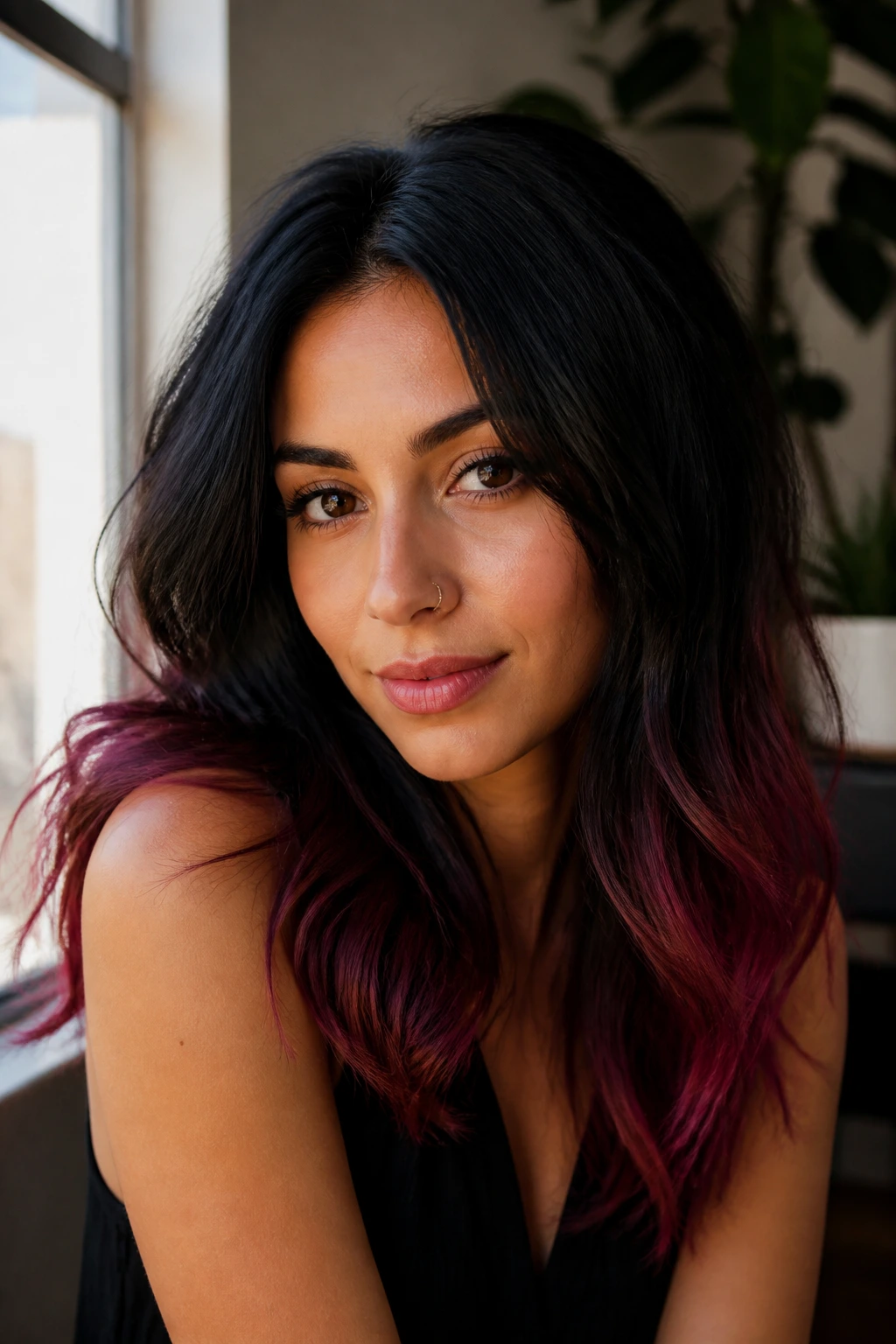
Olive undertones like contrast, but not chaos. Black roots give you that solid base, and the colored tips do the talking at the ends where the eye naturally lands first.
Warm shades keep olive skin from looking green or tired. Copper, amber, bronze, cinnamon, and auburn pull the skin forward instead of flattening it. They’re the shades I reach for when someone wants the color to look rich instead of flashy.
Cool shades can work beautifully too. Teal, emerald, sapphire, violet, and smoky lilac bring out the neutral side of olive skin, especially when the black base stays deep and glossy. The trick is saturation. Muddy, dusty cool tones can get lost; vivid jewel tones usually do not.
Low placement makes the color easier to wear. Tips at the last 2 to 4 inches of braids, curls, or twists give you movement without turning the whole head into a neon billboard.
These looks play well with protective styling. A lot of the most interesting color-tip ideas can be done with extension hair, so you can test a shade family without bleaching your own hair into a corner.
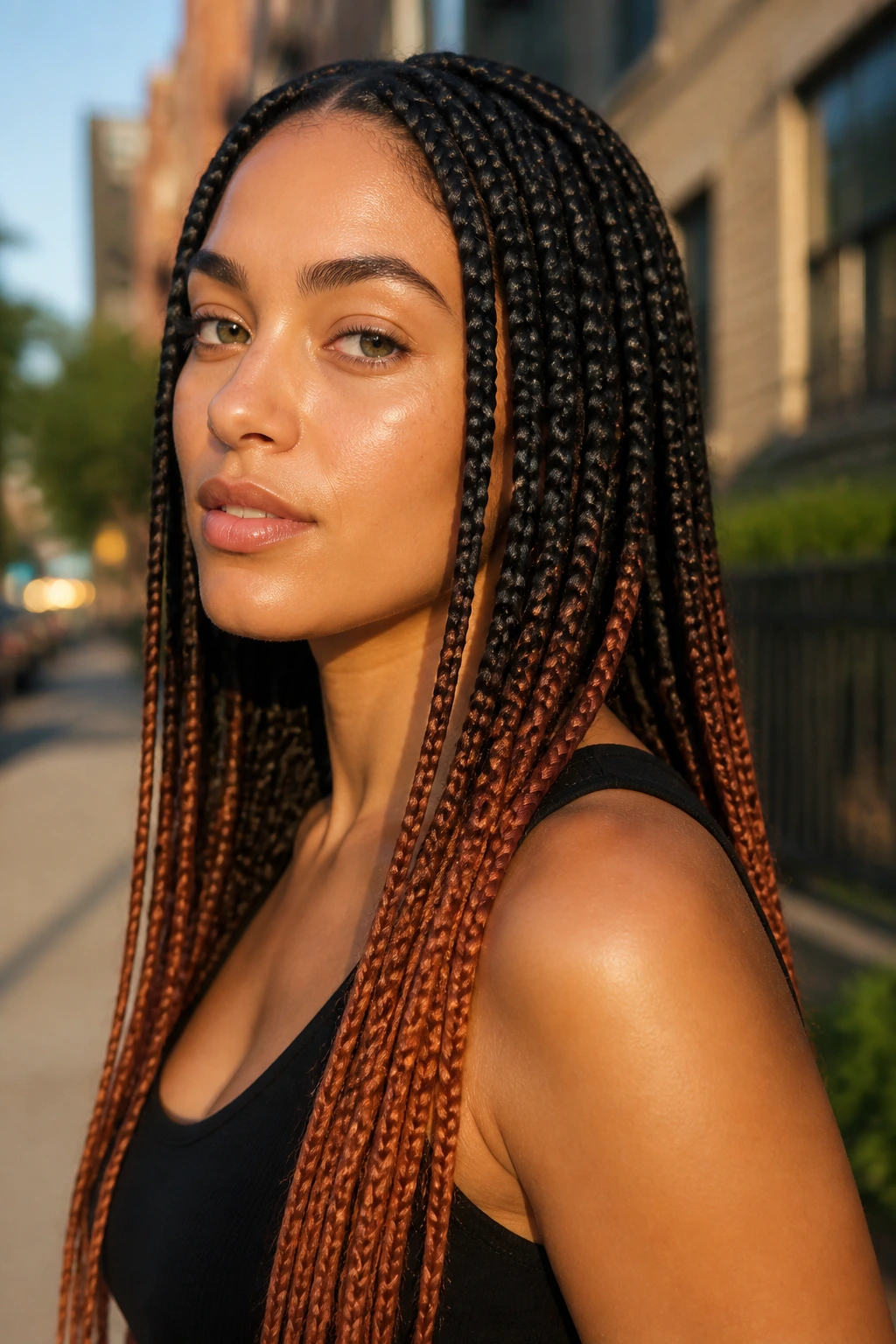
1. Copper-Dipped Box Braids
Copper tips on box braids do one thing extremely well: they warm up olive skin without turning the whole style orange. The black base keeps the braids crisp, while the copper at the ends catches light when you walk. It’s a simple color move, but it doesn’t look simple.
Copper is especially useful if your olive skin leans muted or green-gold. The warmth near the jawline and shoulders makes the face look clearer. Ask for the color to sit mostly on the bottom third of the braids, not halfway up the shaft, unless you want the whole look louder.
If you like a clean finish, ask for blunt ends instead of feathered ones. The color reads richer when the ends are even. And yes, hot-water sealing works fine for synthetic braiding hair if the fiber allows it.
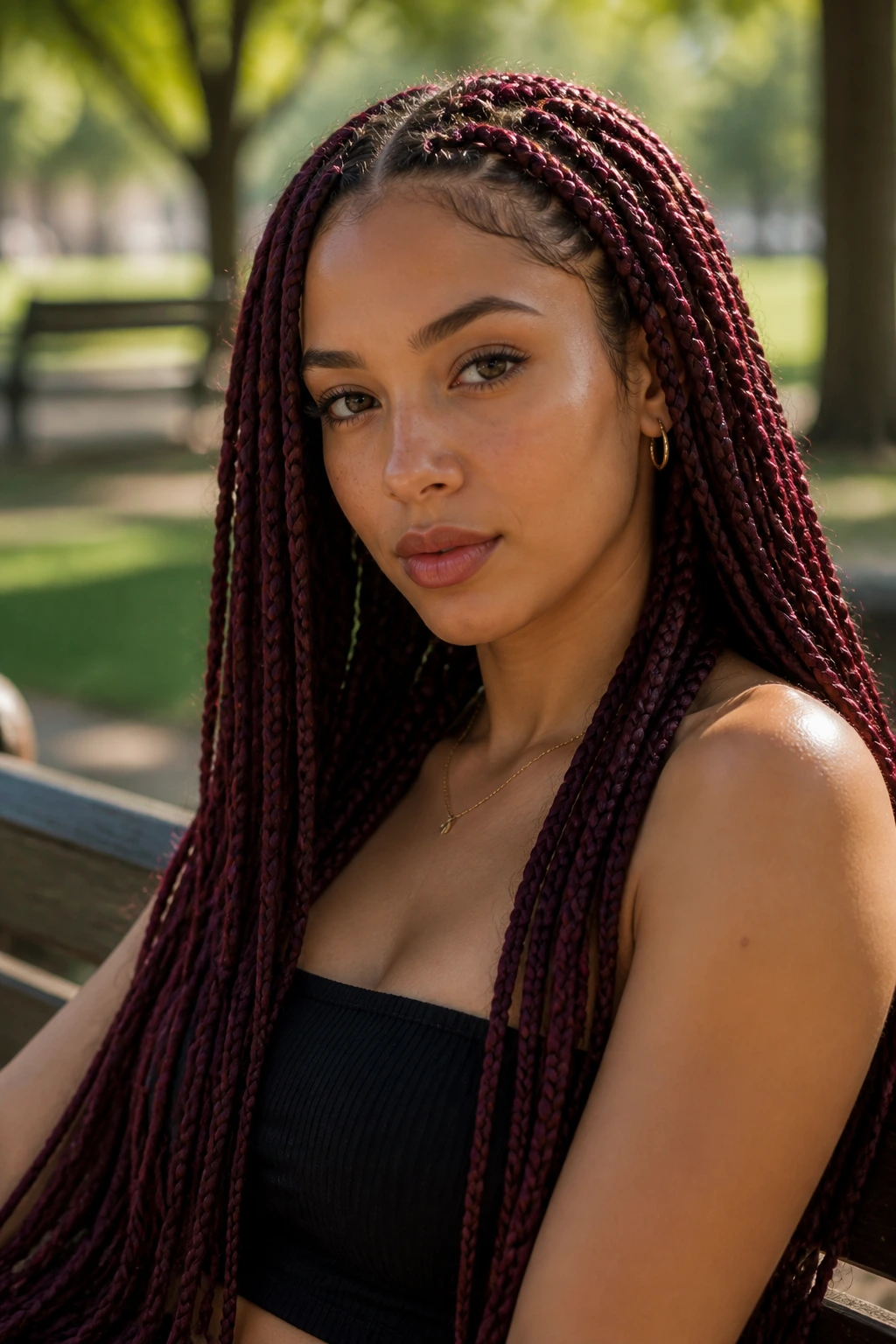
2. Burgundy Knotless Braids
Burgundy is one of those shades that does a lot of work quietly. It isn’t as shouty as true red, and it isn’t as brown as mahogany, so it gives olive skin a deep wine-toned glow without looking harsh.
Knotless braids make the shift from black to burgundy feel soft, which matters here. The color doesn’t need to fight the scalp line. It can just start lower and move with the braid. That lower start is part of why this style looks polished instead of busy.
Why the shade lands so well
Burgundy has enough blue in it to keep the color grounded, but enough red to warm the face. If your olive skin leans deeper, burgundy can be almost smoky. On lighter olive skin, it shows up a little brighter and more romantic.
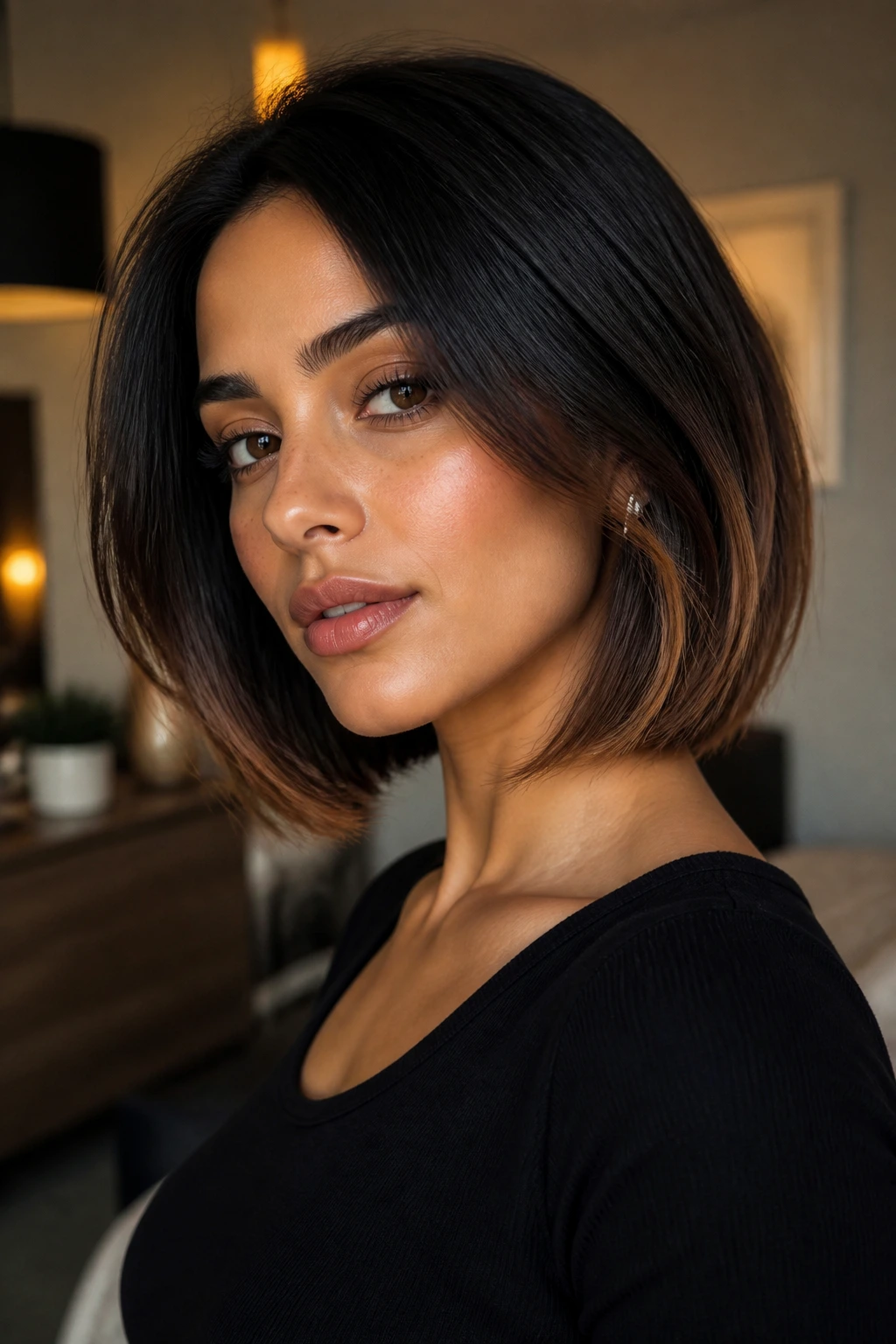
3. Caramel-Tipped Curly Bob
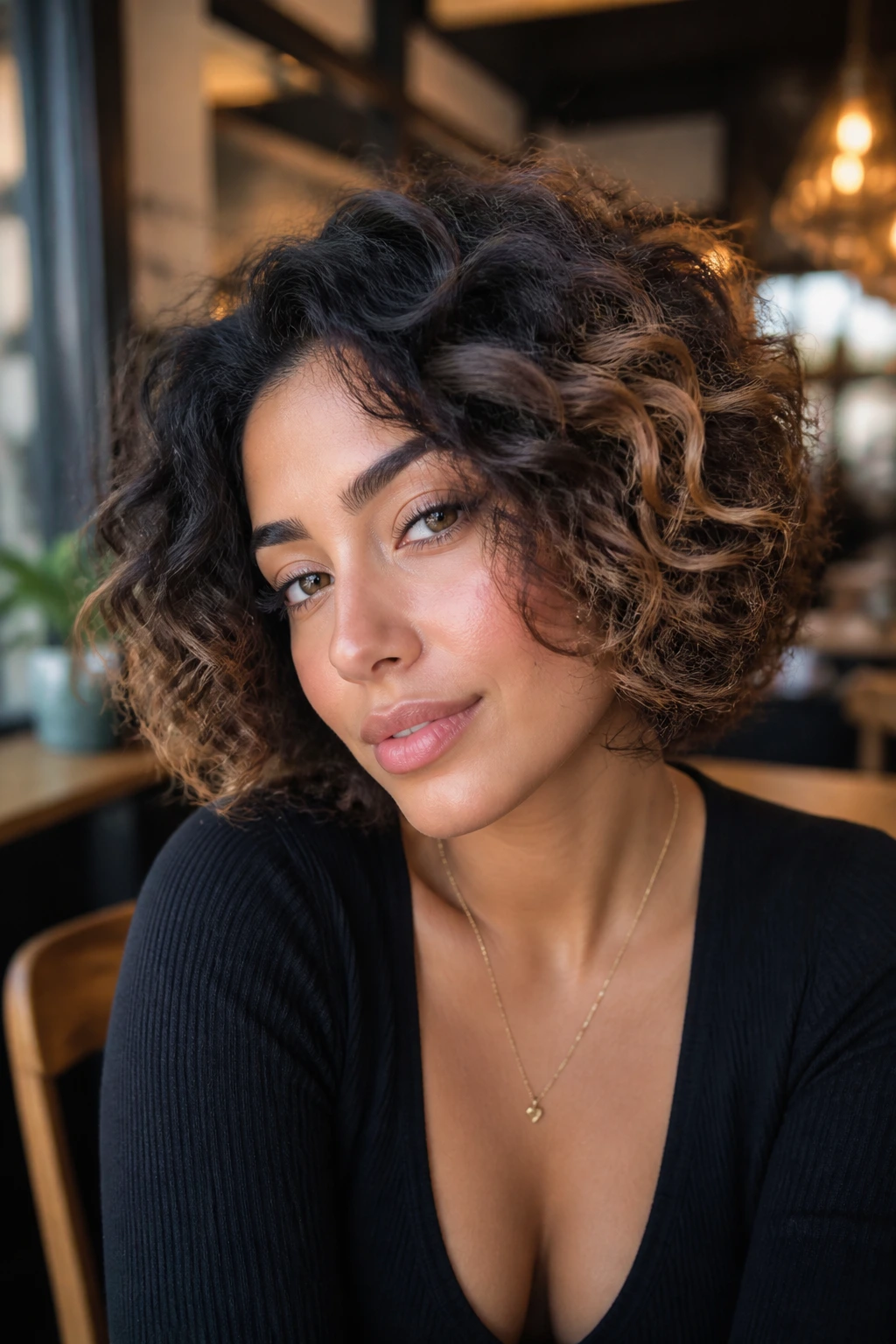
A curly bob with caramel ends is one of the easiest ways to make black hair feel lighter without losing depth. The curls lift the color, the bob keeps it modern, and the caramel tips sit right where the jaw and cheekbones need a little brightness.
The shape matters here. A blunt bob with loose curls gives you a thicker ribbon of color at the perimeter, while a layered bob lets the caramel flick out in little flashes. I prefer the layered version on olive skin because it avoids a hard line around the face.
If you want this to read softer, keep the caramel closer to honey than blond. That warmer caramel tone keeps olive skin from looking sallow. On a good curl pattern, the tips almost look sun-warmed. Almost.
4. Plum Faux Locs
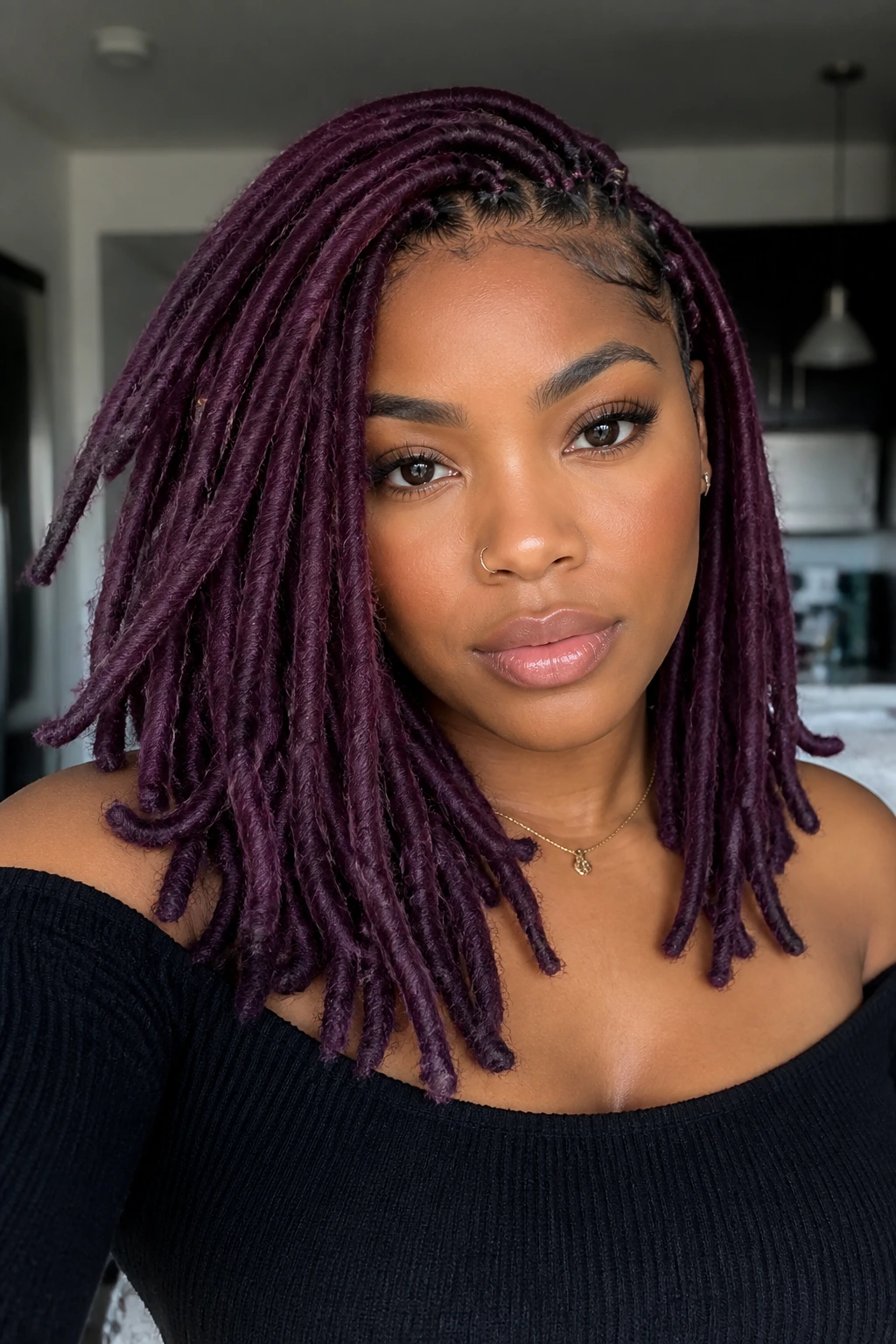
Plum faux locs sit in that sweet spot between cool and warm. They have enough red to flatter olive skin and enough violet to keep the color from turning muddy. I like plum when someone wants depth more than brightness.
Faux locs are a smart home base for colored tips because the texture already gives the shade something to cling to. On smooth hair, plum can look flat. On locs, it gets little breaks of shine and shadow that make the ends look richer.
If you’re choosing a plummy synthetic hair, stay away from browns that lean dusty. You want a real grape tone or a dark berry tone. The color should look intentional in indoor light and still hold its shape outside.
5. Teal Cornrows with Long Feed-In Ends
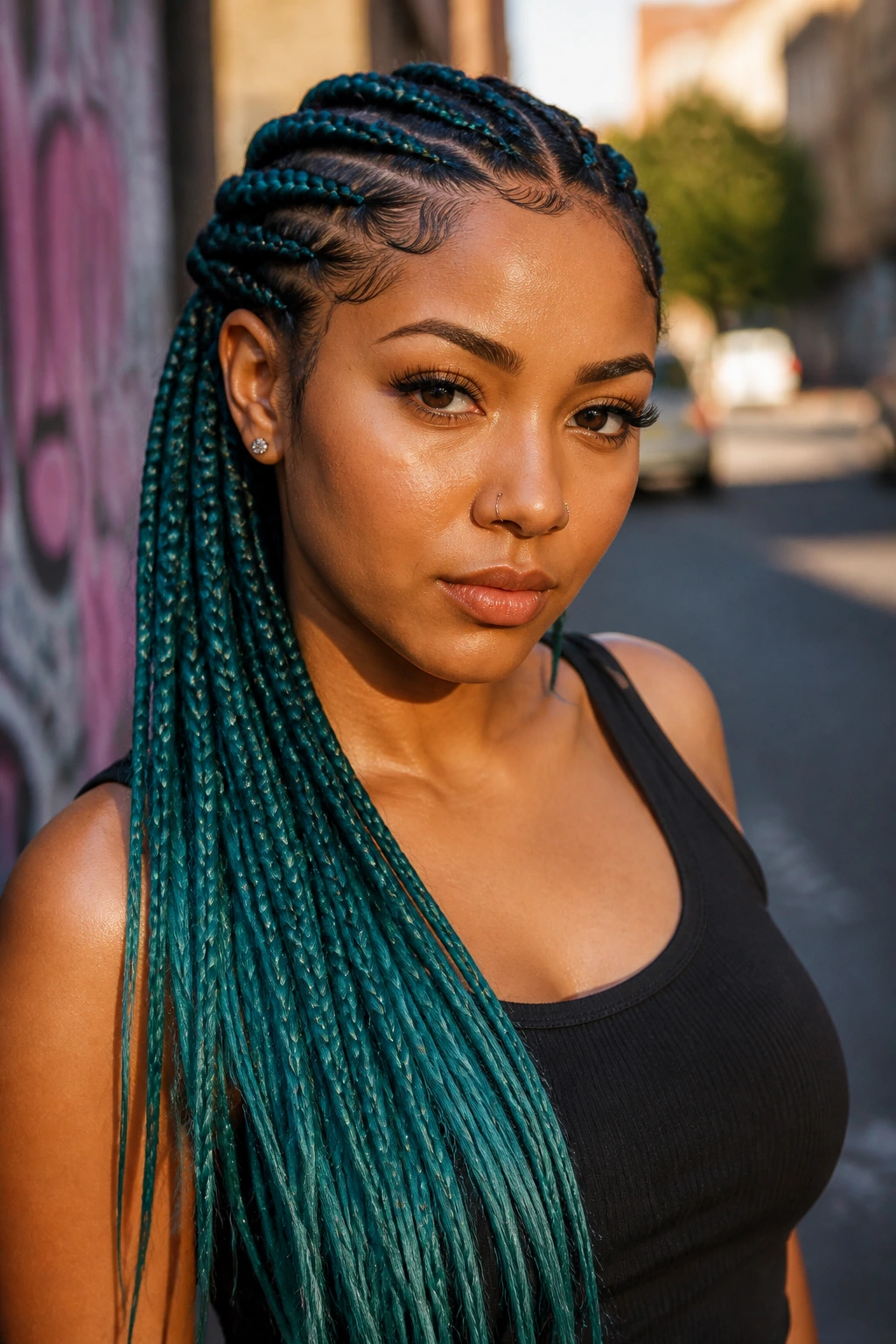
Teal is the kind of color that wakes up olive skin on sight. It’s cool, saturated, and clean. On black cornrows, it doesn’t have to cover much territory to make an impact—just the feed-in length and the ends.
Feed-in cornrows are useful here because they control how much teal shows at once. The roots stay tidy and black, and the color arrives gradually. That gradual reveal is what keeps the style wearable instead of overwhelming.
If you want teal to look expensive, choose a deep blue-green rather than a bright pool color. The richer shade sits better against olive undertones, especially if your skin has a yellow-gold cast.
6. Silver-Blended Sleek Lob
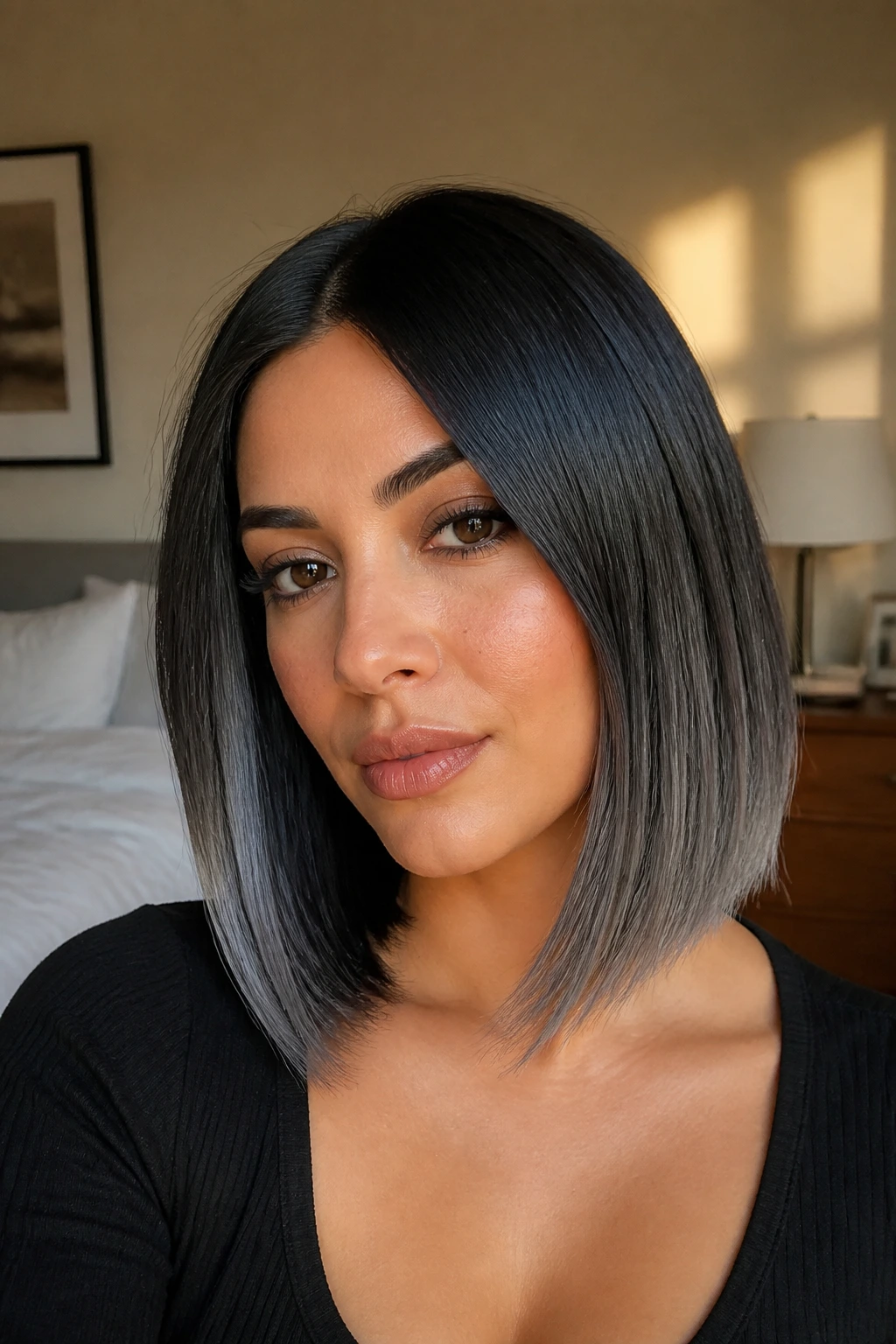
Silver can go wrong fast. Too icy, and it drags olive skin toward gray. Too flat, and it looks accidental. But a smoky silver on a sleek lob? That has edge.
The lob gives silver ends a real surface to show off on. Straight hair makes the color line clean, which is half the appeal. A tiny bend at the ends keeps it from looking too stiff, and a middle part adds a little severity that the silver can handle.
Best way to wear it
Keep the silver blended rather than striped. You want a black-to-smoke fade or a black base with silver-dusted tips. If your olive skin leans warm, add a bit of gloss or a champagne ribbon through the silver so it doesn’t read cold.
7. Auburn Passion Twists
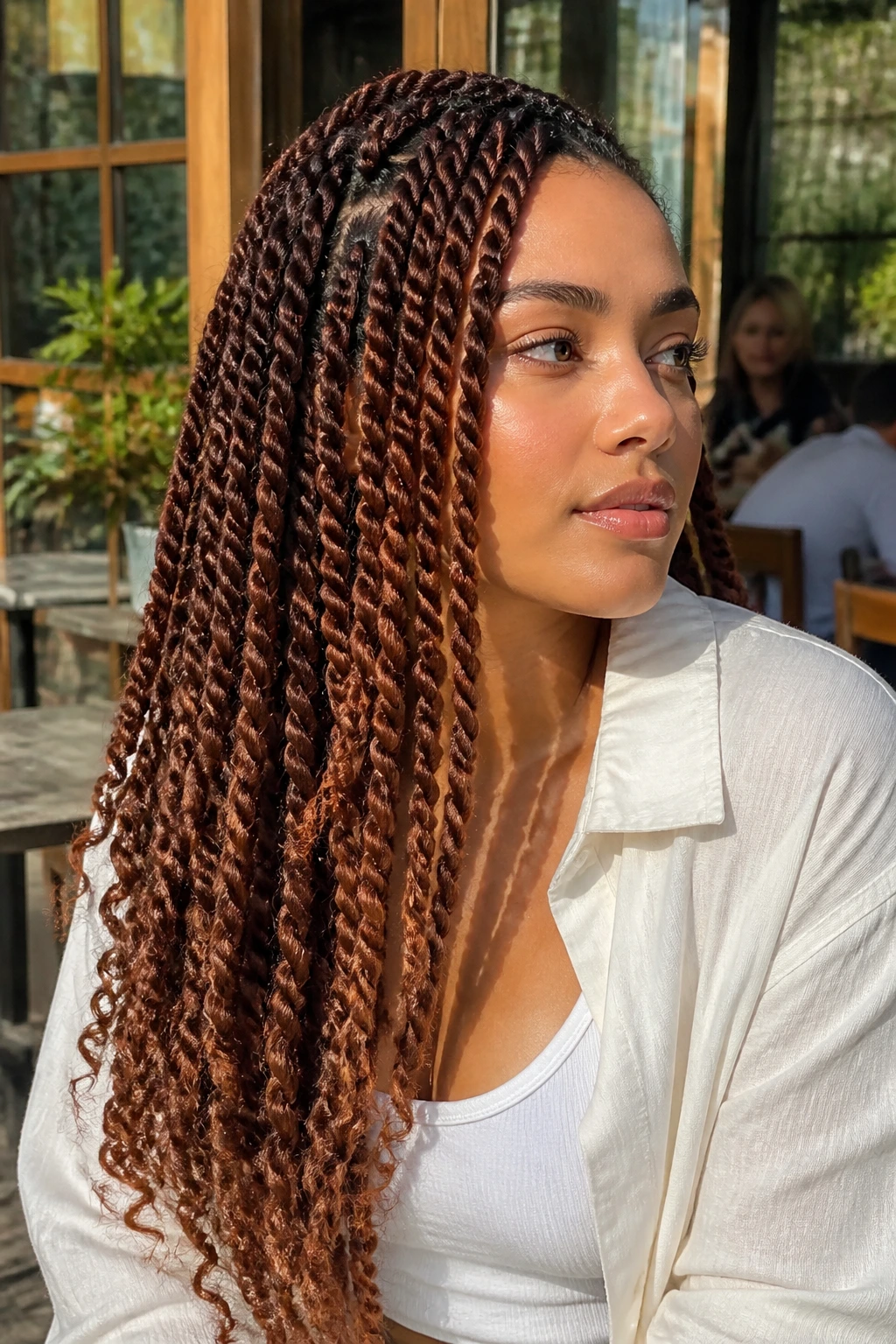
Auburn passion twists look like someone turned up the warmth by one careful notch. The twist texture softens the color, so the auburn doesn’t scream red—it glows. That glow is good on olive skin.
Passion twists move a little when you turn your head, which matters because auburn is a color that likes motion. The tips can shift from deep brown to rust to copper depending on the light, and that variation is what keeps the look from going flat.
This is a good choice if you want color that still feels grounded enough for day-to-day wear. Auburn is warm, but it isn’t sugary. It reads rich, not loud.
8. Emerald High Ponytail
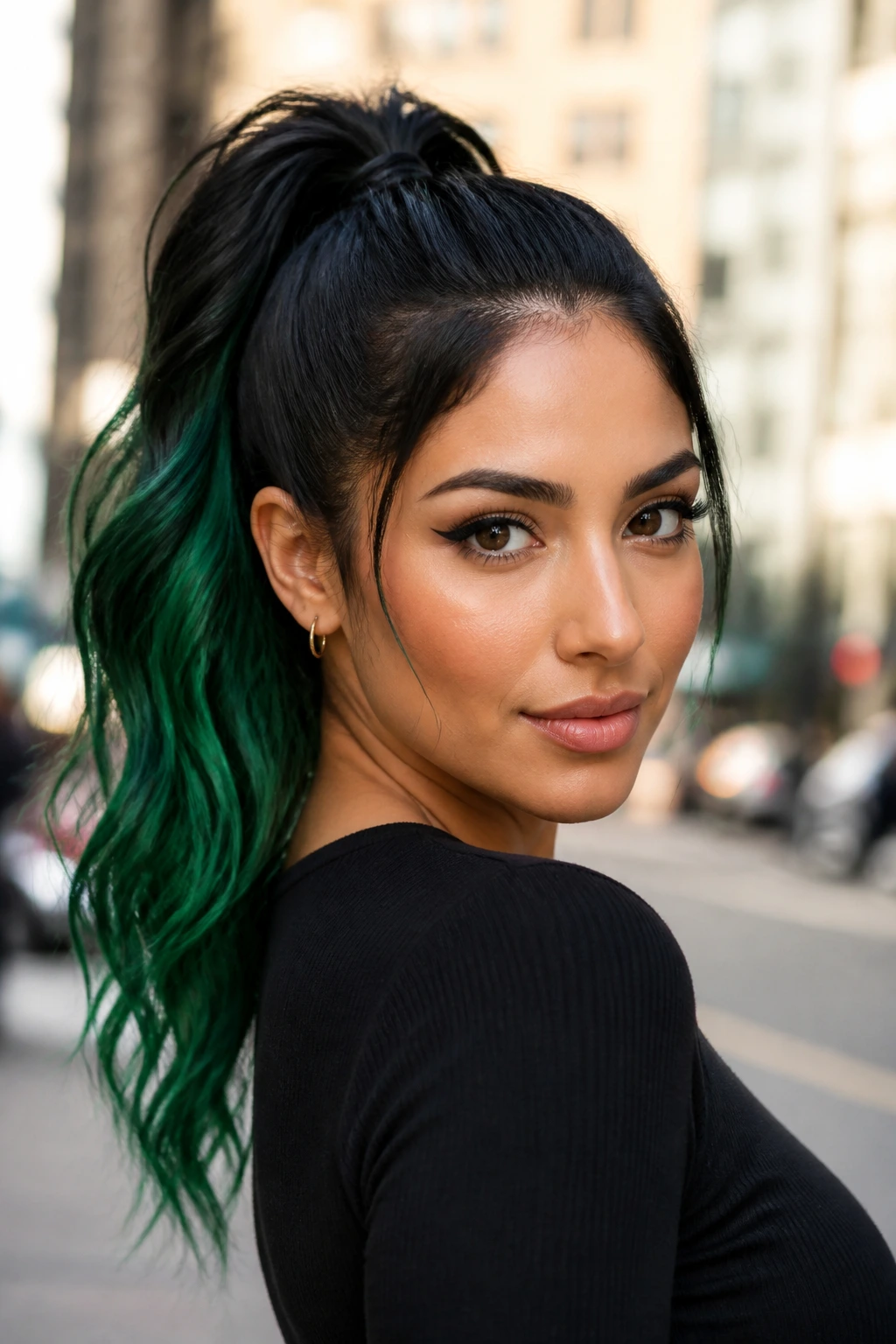
A high ponytail with emerald tips is one of the cleanest ways to make a statement without coloring the whole head. The sleek black base keeps the shape sharp. The emerald ends bring in jewel-tone contrast that olive skin can handle easily.
The higher the ponytail sits, the more the color travels around the face and shoulders. That helps emerald look intentional rather than random. If the ponytail is wrapped at the base, keep the wrap black and let the green live only at the length.
Gold hoops are an easy pairing here. So is a glossy lip. Emerald likes a polished frame, and olive skin gives it one without much effort.
9. Rose-Gold Pixie
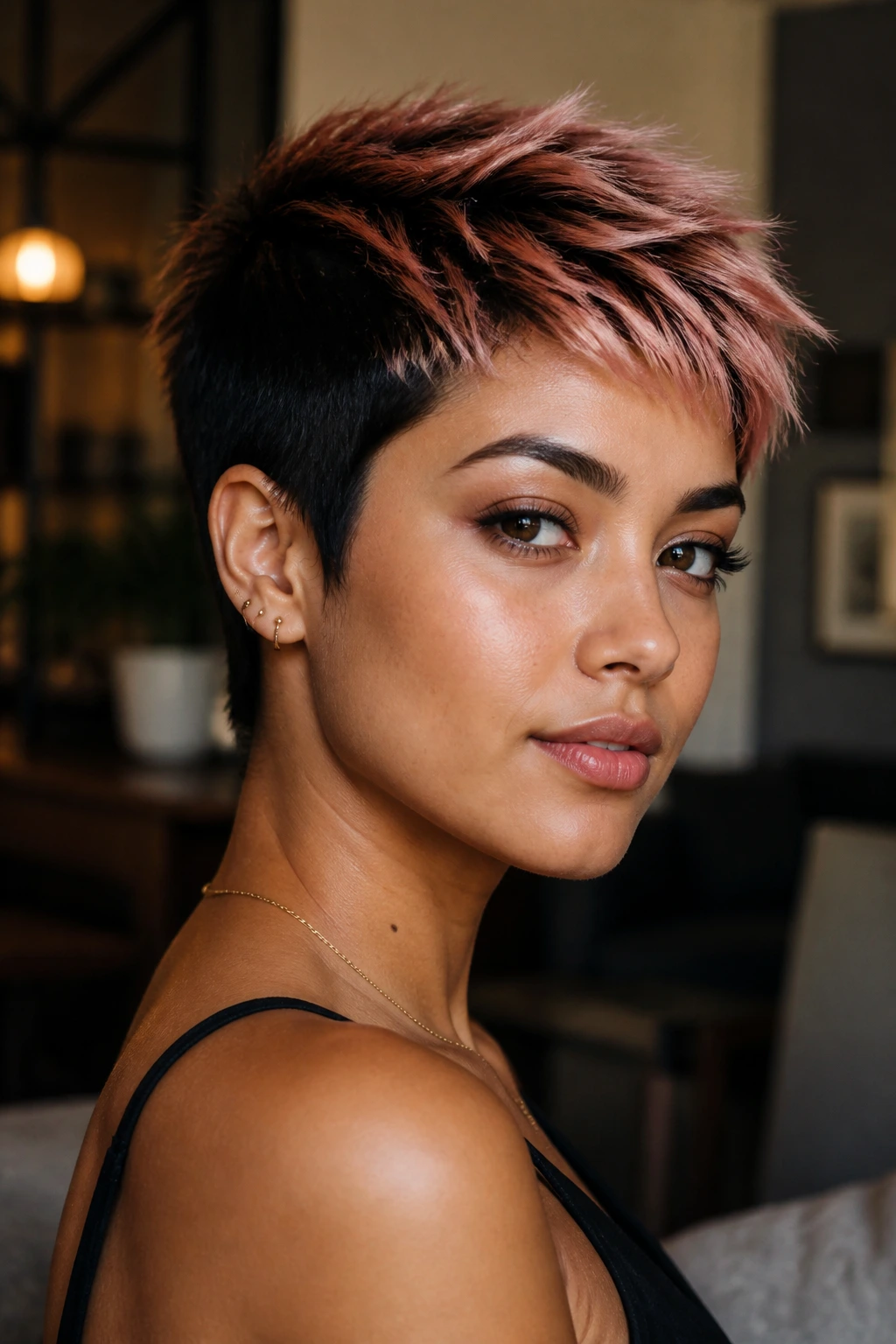
A pixie with rose-gold tips is short hair doing a lot with very little. Since the color sits close to the face, the shade choice matters more than volume. Rose gold works because it’s soft, warm, and slightly metallic without going pale.
On olive skin, rose gold can act like a soft filter. It brightens the face without the hard contrast you’d get from pure blond tips. Keep the tips concentrated near the crown, fringe, or top layers, and let the sides stay dark.
This style is especially good if you don’t want long color maintenance. There’s less hair to keep toned, less chance of the ends looking rough, and more room for the cut itself to carry the drama.
10. Honey-Tipped Afro Puff
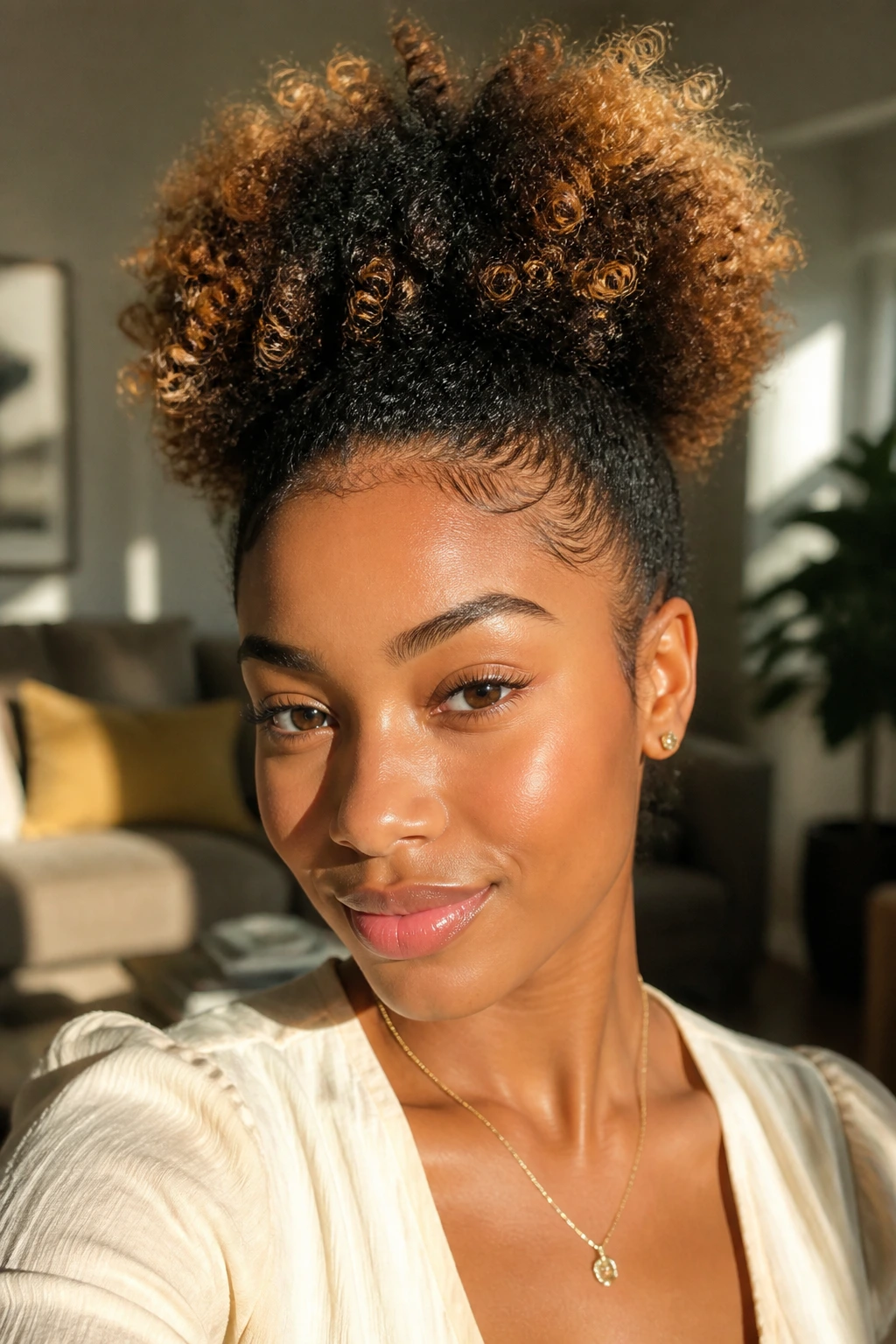
Honey tips on an afro puff bring a warm halo around the face. That matters. Olive skin usually looks better when the warm color sits close to the features, not miles away at the very bottom of a long style.
The puff shape gives the color room to fan out. If the hair is stretched first, the honey tips can show up in the coils and then flash lighter when the hair moves. That movement is the whole point.
A high puff keeps the face open, and the honey shade keeps the look from feeling too dense. If you want a softer version, keep the honey on the outermost curls only and leave the inner layers black.
11. Electric-Blue Shag Layers
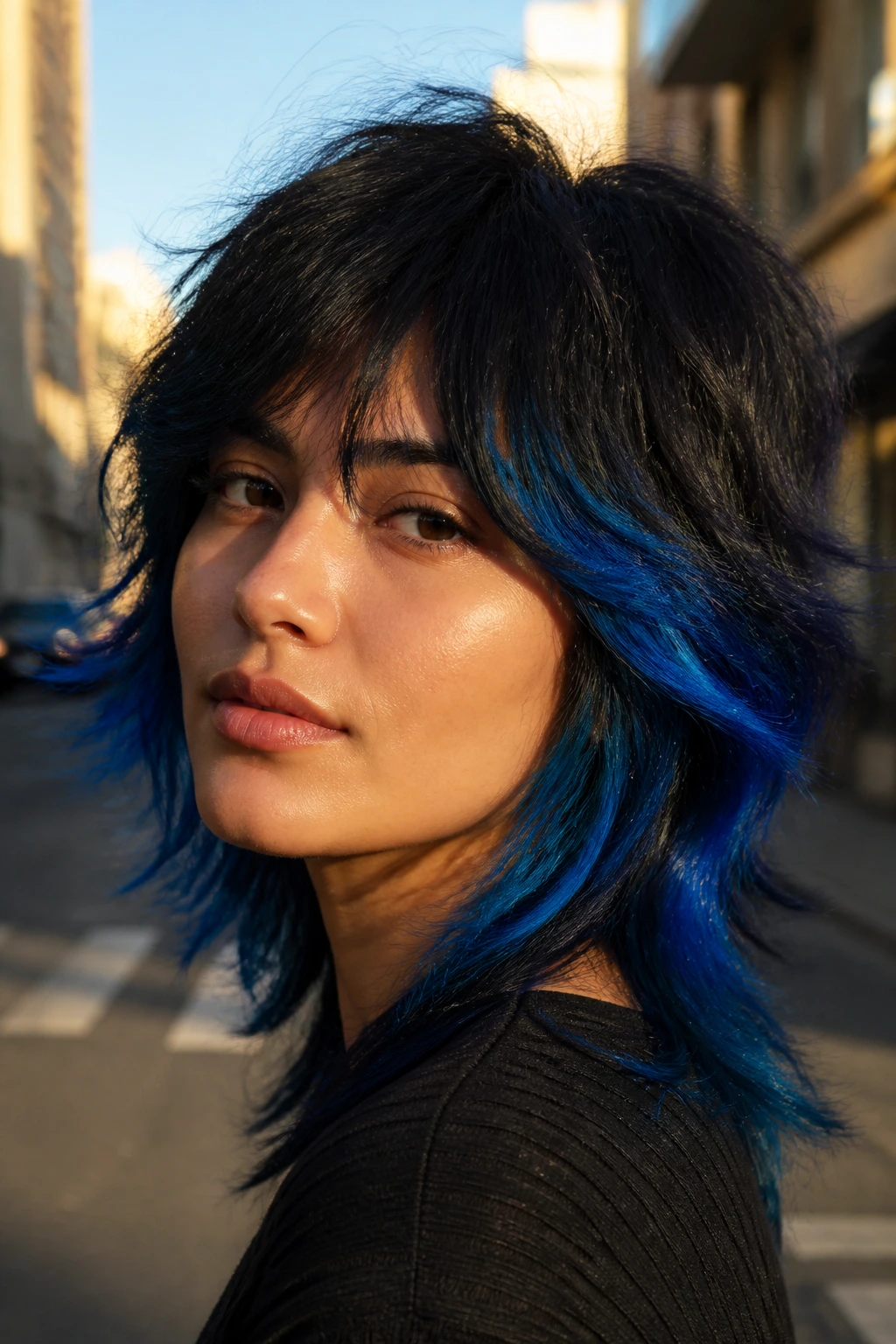
Electric blue is not shy. Good. It shouldn’t be. On a shag cut, the layers break the blue into pieces, so the color looks more textured than flat.
Black roots help a lot here. They stop the blue from taking over the whole cut and give olive skin a dark anchor. The contrast reads best when the tips are where the layers hit longest—around the cheekbone, jaw, and collarbone.
This is the choice for someone who likes movement and a little edge. If your olive skin has cooler undertones, electric blue can look striking. If you run warmer, keep the blue deep and glossy rather than neon-bright.
12. Cherry-Cola Layered Lob
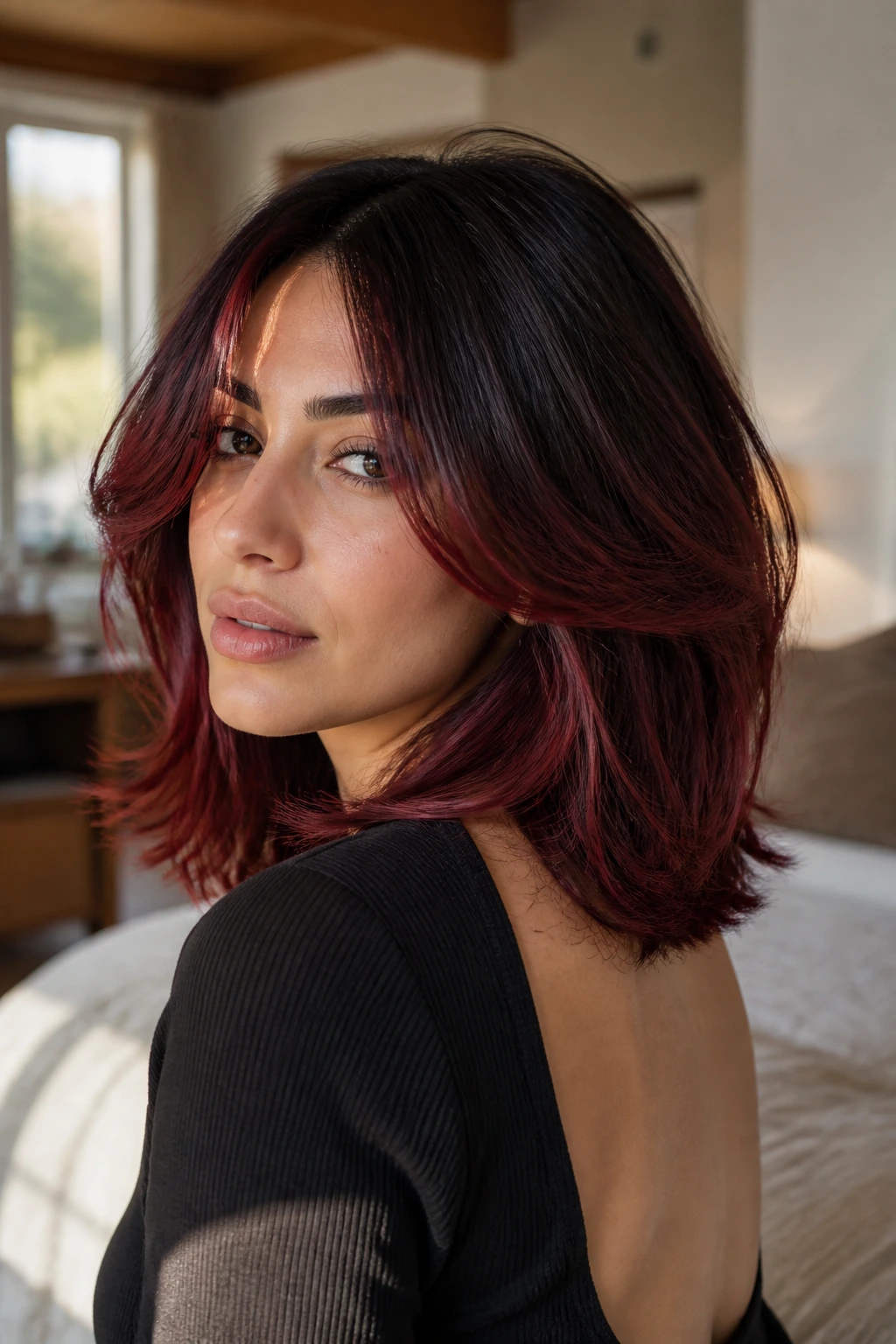
Cherry-cola color is one of the easiest reds to wear on olive skin because it behaves like brown first and red second. That balance matters. Too much red can get loud. Cherry cola stays rich.
A layered lob gives the shade room to show in motion. The tips catch light first, then the darker sections follow, which makes the color seem fuller than it is. On straight hair, the effect is polished. On wavy hair, it looks a little more relaxed.
If you want a color that feels dressy without looking formal, this is a smart pick. It reads expensive in low light and even better in daylight, which is a nice little bonus.
13. Smoky Lilac Waves
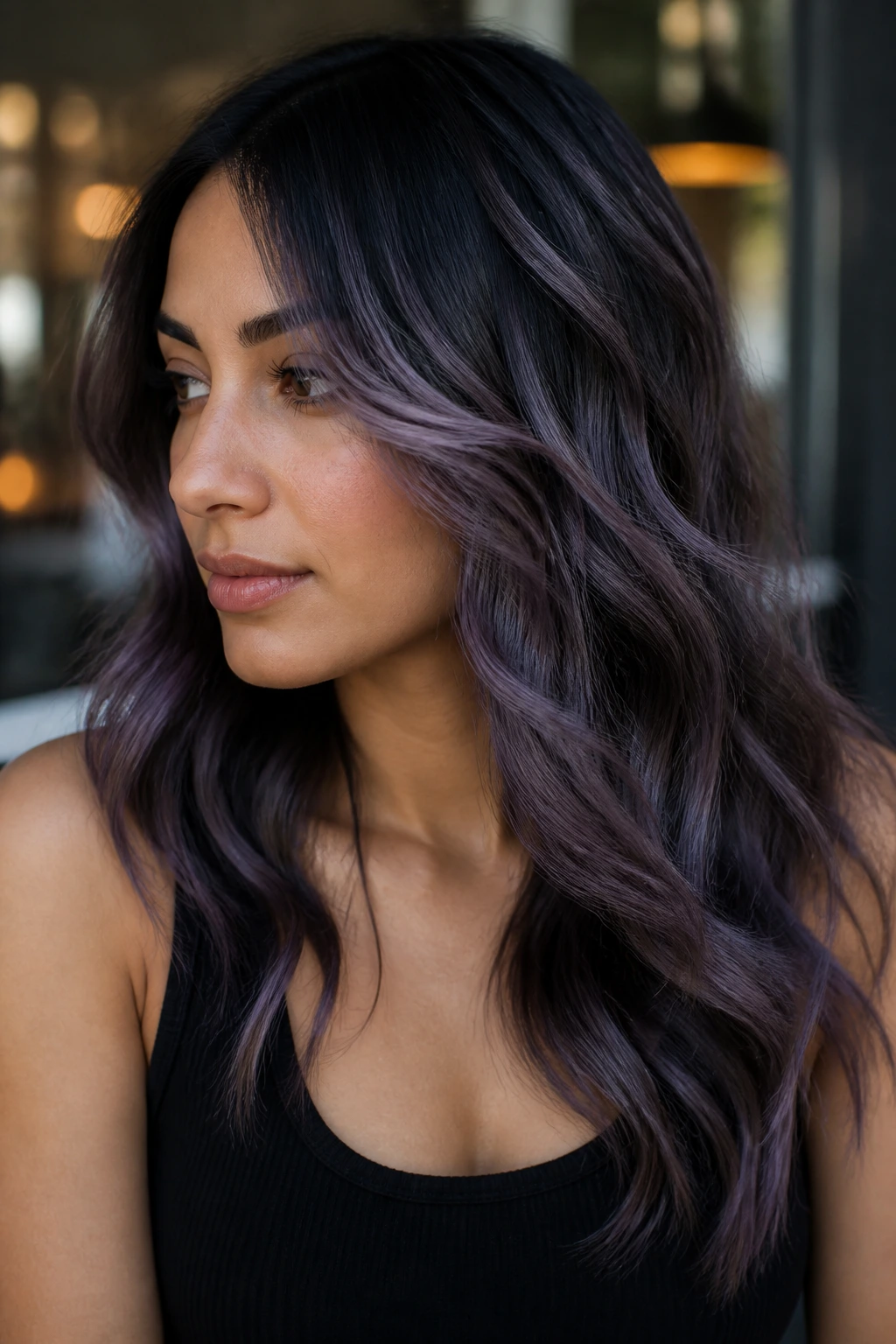
Smoky lilac is what happens when pastel grows up and gets a little depth. That smoky edge keeps it from washing out olive skin, especially if the black base stays visible at the roots and mid-lengths.
Loose waves are the right texture here because they keep the lilac tips from turning into a solid block. Every bend in the hair creates another small flash of color. That movement is what makes smoky lilac feel soft instead of frosted.
If you’ve ever liked purple but worried it would fight your undertone, this version solves the problem. Keep it dusty enough to stay elegant, but not so dusty that the color disappears.
14. Gold-Tipped Bantu Knots
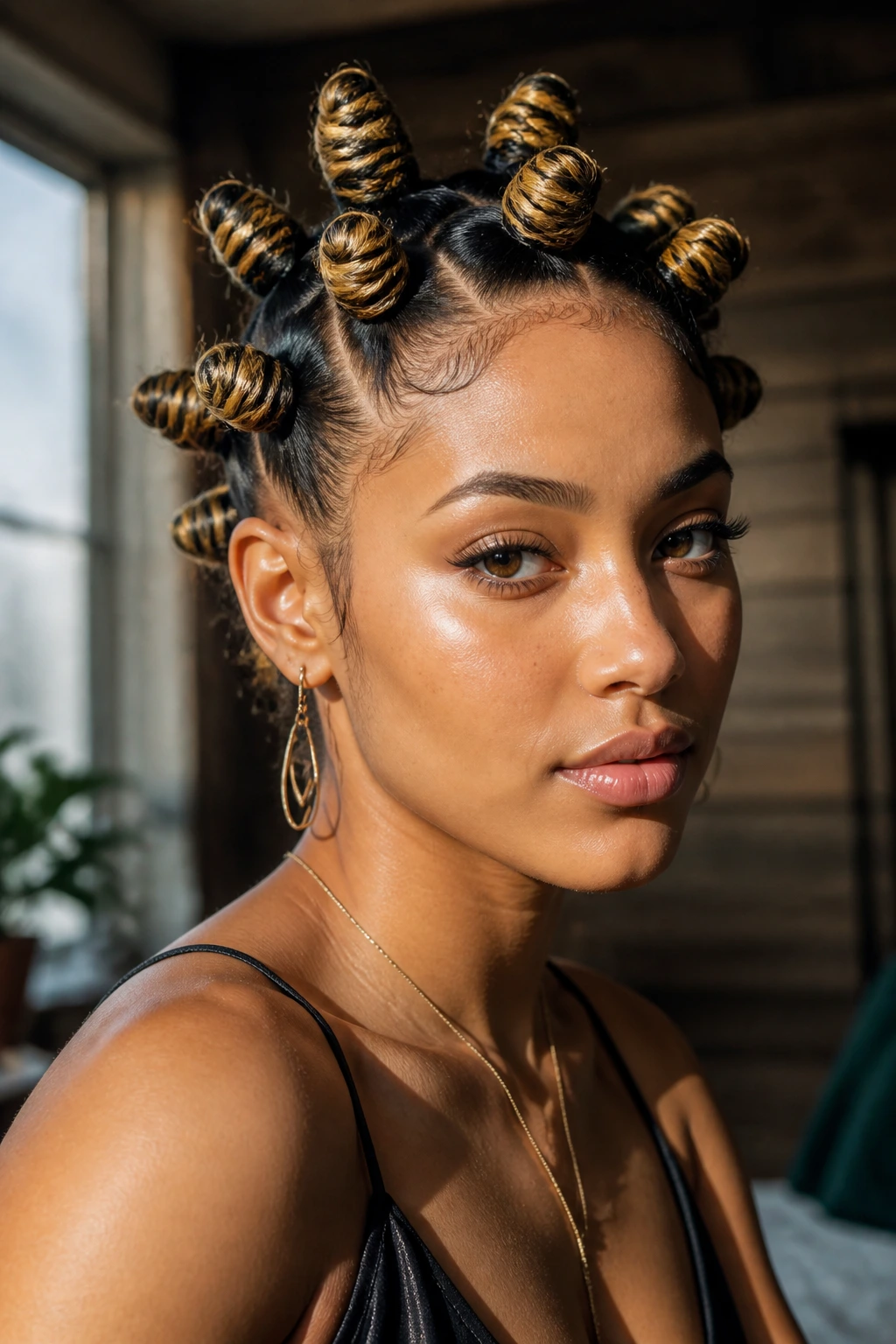
Gold-tipped Bantu knots feel a little editorial, a little ceremonial, and a lot more interesting than people expect. The gold is best kept at the tips or wrapped accents so the knots still read as knots, not ornaments.
On olive skin, gold acts like jewelry. It reflects warmth back into the face, especially near the temples and hairline. That makes this style a smart choice for deeper olive skin or for anyone who likes warm metals near the face.
The black base is doing the heavy lifting here. Without it, gold tips can drift toward costume territory. With it, the look stays bold and clean.
15. Amber Feed-In Braids
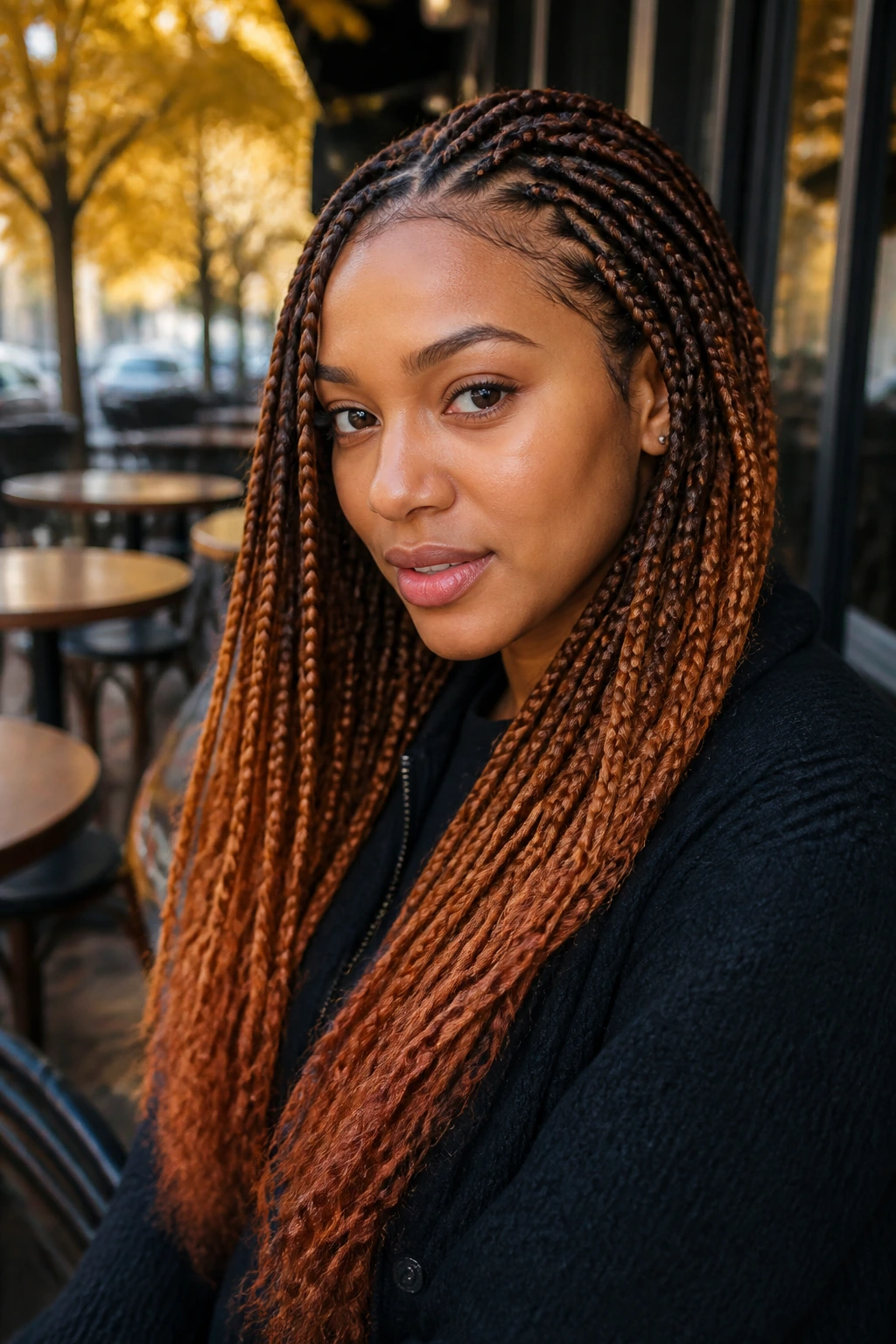
Amber sits somewhere between honey and copper, which is why it works so well on olive skin. It has enough orange warmth to brighten the face but enough brown to stay grounded.
Feed-in braids help the amber reveal itself slowly. You get black near the scalp, then amber in the length, then more color at the tips. That gradient makes the style look more expensive than a hard color block.
If you want the amber to read rich instead of bright, choose extension hair with a deep brown undertone. Light amber can look thin next to black hair; deeper amber looks fuller and more deliberate.
16. Ruby Faux Hawk
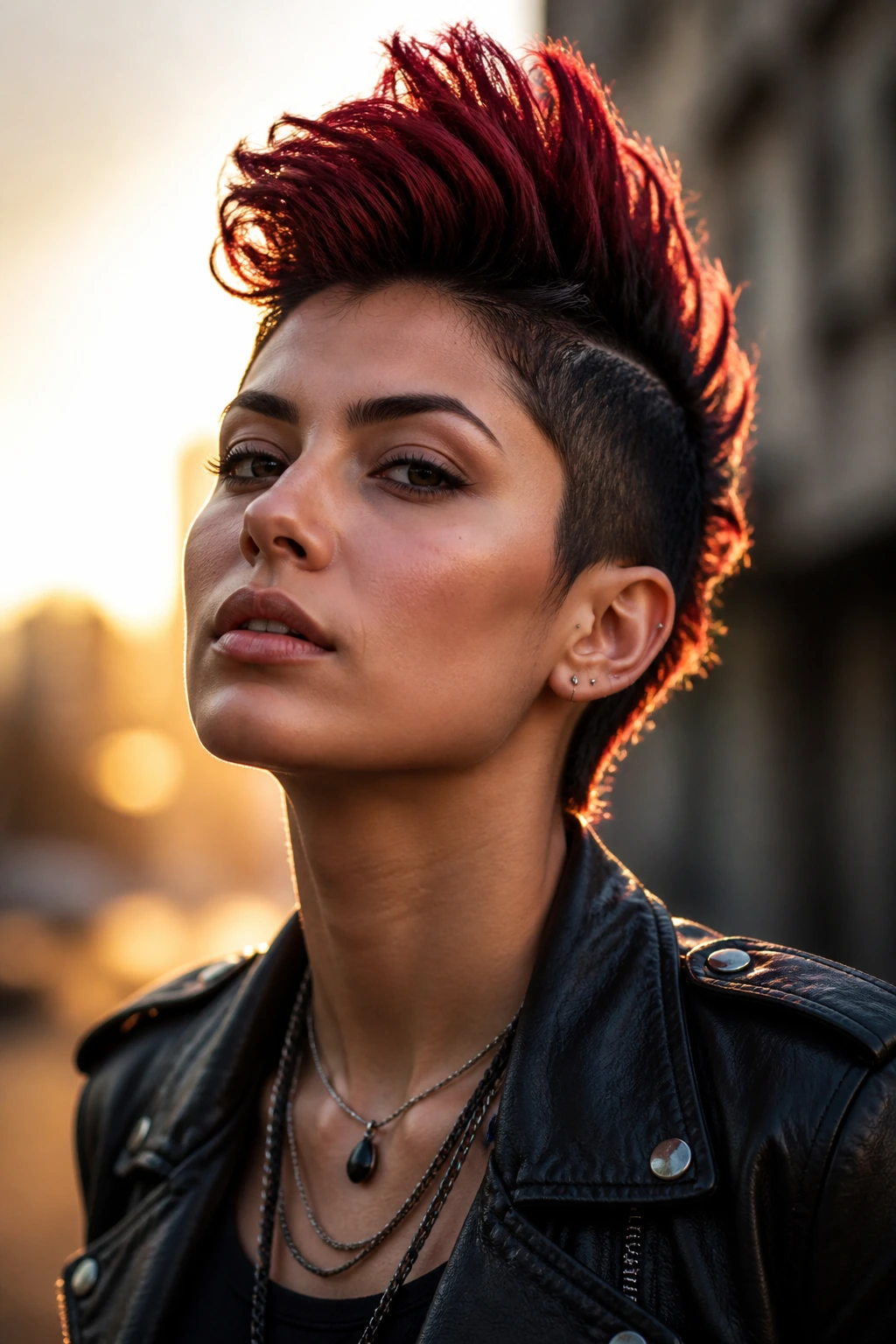
A faux hawk with ruby tips is for someone who wants the color to announce itself. Ruby is a rich red with enough depth to stay flattering on olive skin, especially when the sides or base stay black.
The faux hawk shape gives the ruby a center line to ride on. That keeps the style from feeling scattered. The tips can flare out a little at the top, then narrow near the neck, which creates a nice shape contrast.
I like ruby on olive skin because it doesn’t rely on orange warmth. It has more stone-like depth. That makes the color read fierce instead of candy-bright.
17. Emerald Peekaboo Undercut
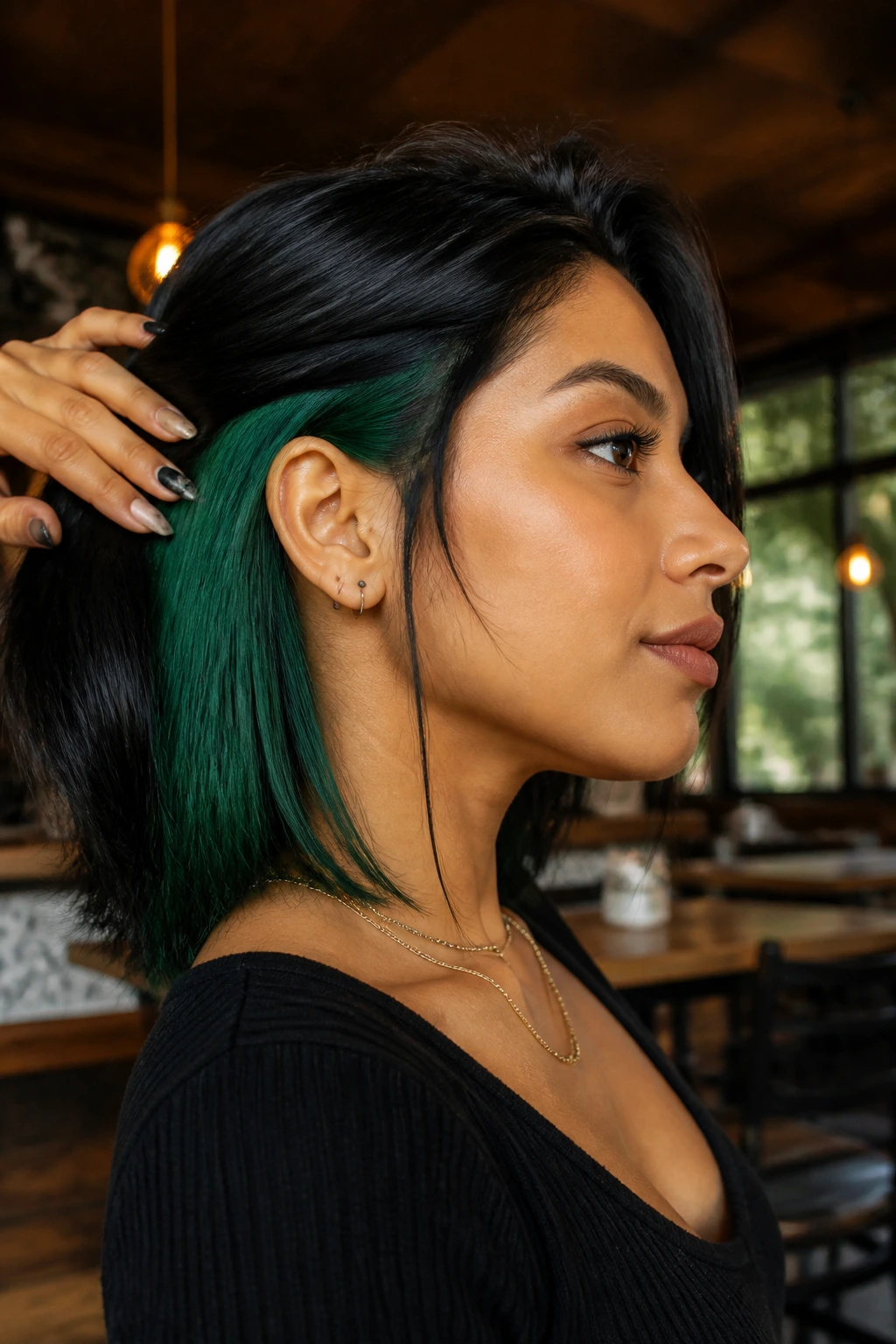
Peekaboo color is the easiest way to satisfy the part of you that wants drama and the part of you that wants to keep things under control. Emerald underlayers on black hair do exactly that.
The color shows when the hair moves, tucks behind the ear, or gets lifted into a bun or ponytail. On olive skin, emerald reads crisp and clean because it’s a jewel tone, not a pastel. That hidden placement also keeps it from overwhelming the face.
If you have a dress code or a quieter week ahead, this is one of the smartest options on the list. The color can disappear when needed, then show up the moment you want it to.
18. Champagne Twist-Out
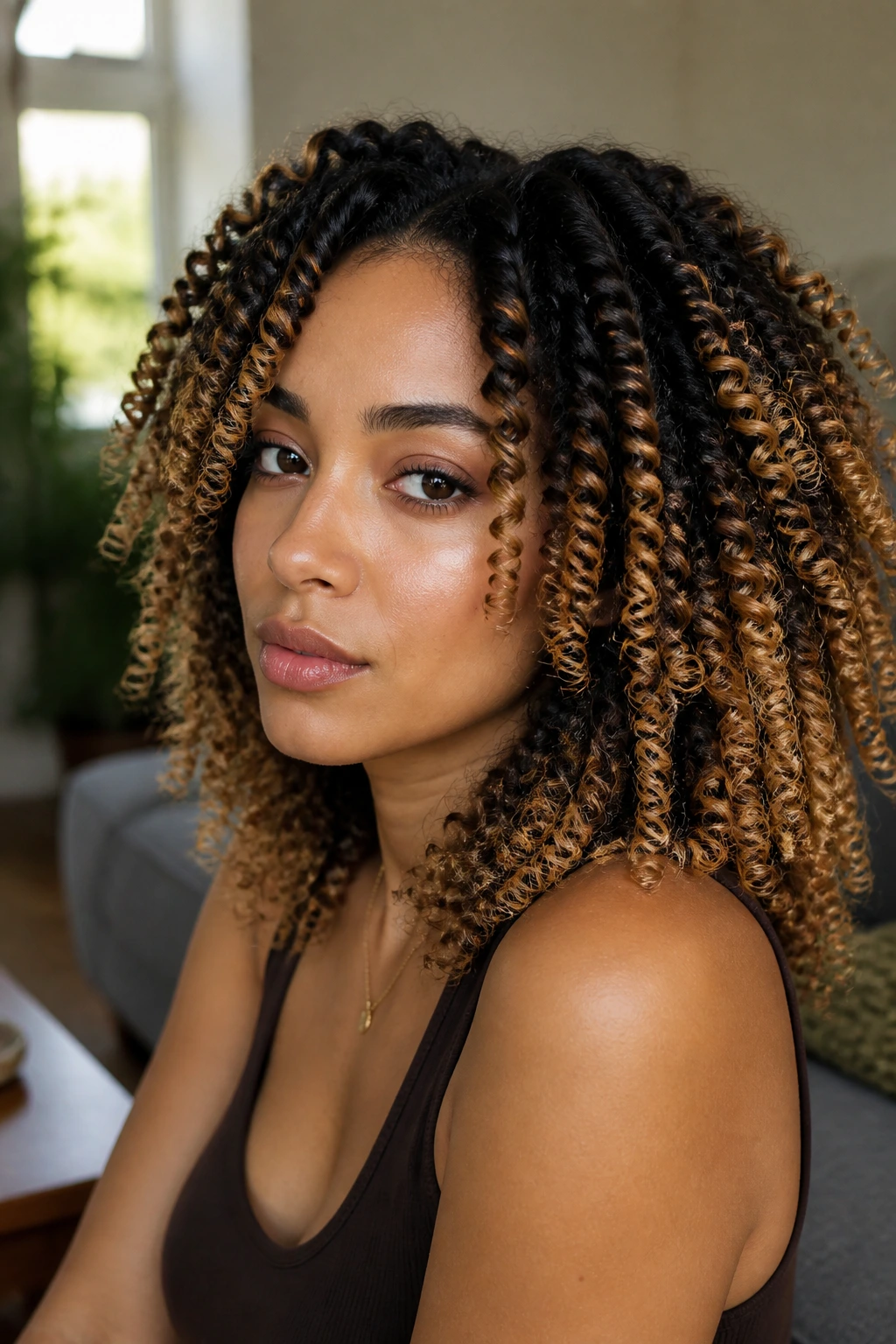
Champagne tips on a twist-out can go wrong if the shade is too icy. So don’t do that. You want warm champagne—more glowing than pale blond—because olive skin needs a little richness near the ends.
The twist-out texture gives champagne some shadow, which is why this works better than it would on pin-straight hair. The bends break the light in a softer way. The result feels airy, but not washed out.
This style is especially useful if you want a lighter-looking finish without committing to a full blond effect. Champagne can brighten the hair while the black base keeps the whole style grounded.
19. Peacock Goddess Braids
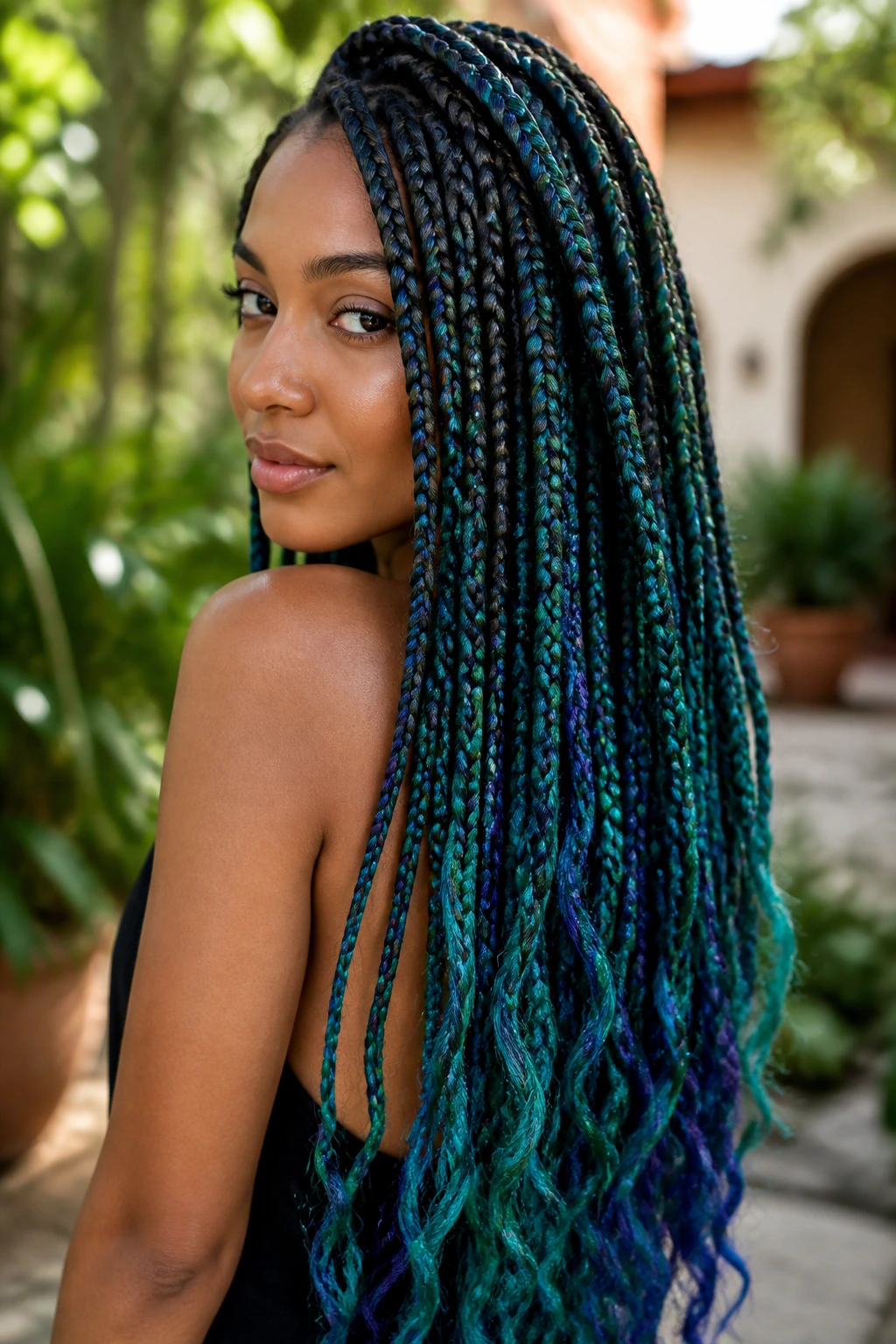
Peacock tones—teal, blue, green, maybe a touch of violet—love olive skin because they borrow from the same deep color family the skin already carries. The trick is keeping the base black so the whole thing doesn’t turn into color soup.
Goddess braids give those tones space to mingle. A few colored ends can do a lot more than a full head of bright fiber. If you’re using extension hair, mix two or three shades in the same braid for a more feathered look.
This is a strong option if you like artful hair. It reads rich, not random, when the shades are saturated and the braid pattern stays neat.
20. Cinnamon Black Curls
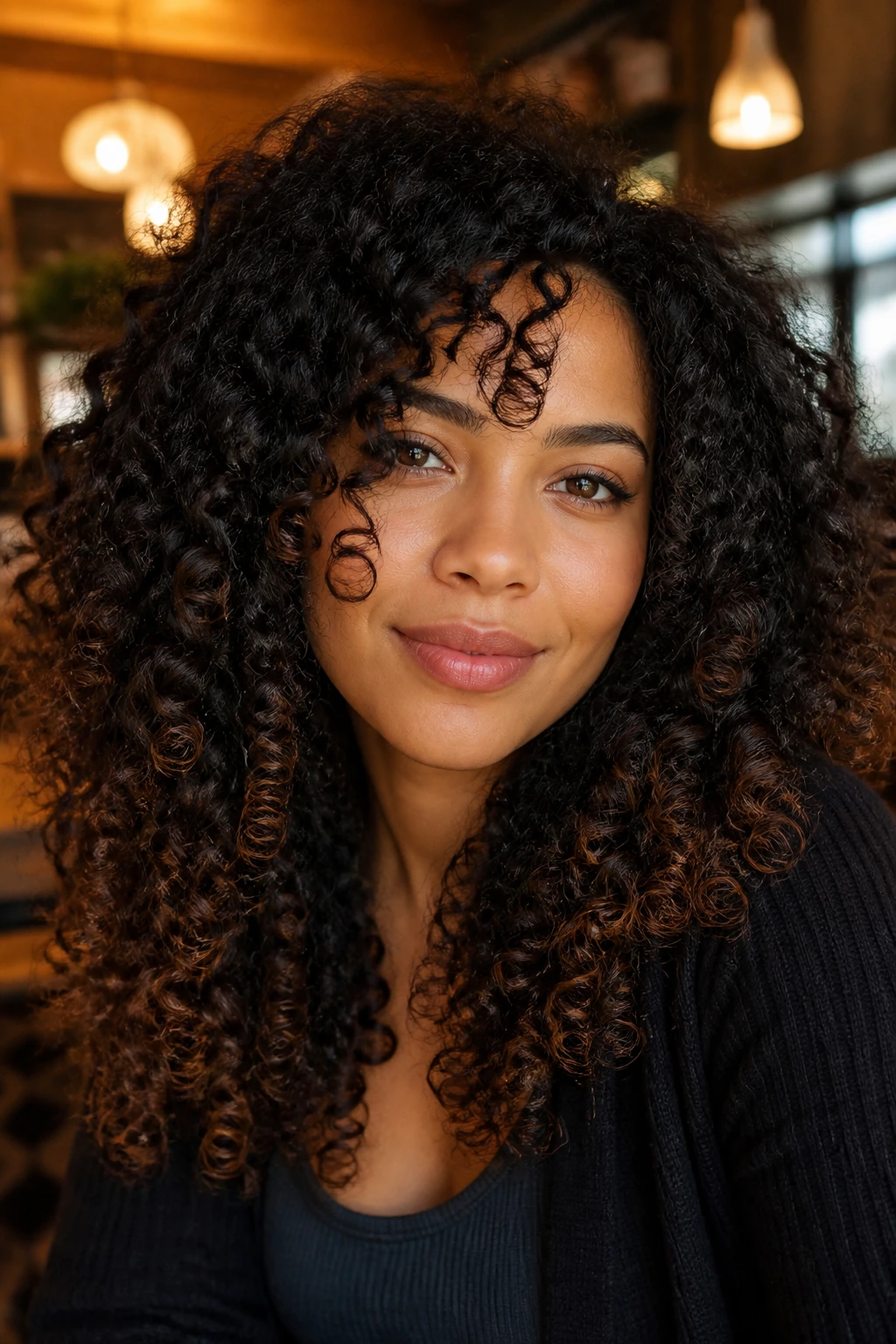
Cinnamon tips are quieter than copper and softer than auburn. That makes them one of the easiest everyday picks for olive skin, especially if you want warmth without a big color jump.
On black curls, cinnamon shows up in the light first and then settles back into the depth of the hair. That subtlety keeps the style from looking striped. It also means the color plays nicely with both casual clothes and sharper tailoring.
If you’re choosing between cinnamon and copper, pick cinnamon when you want a more muted finish. Pick copper when you want the ends to show from across the room.
21. Frosted Silver Locs
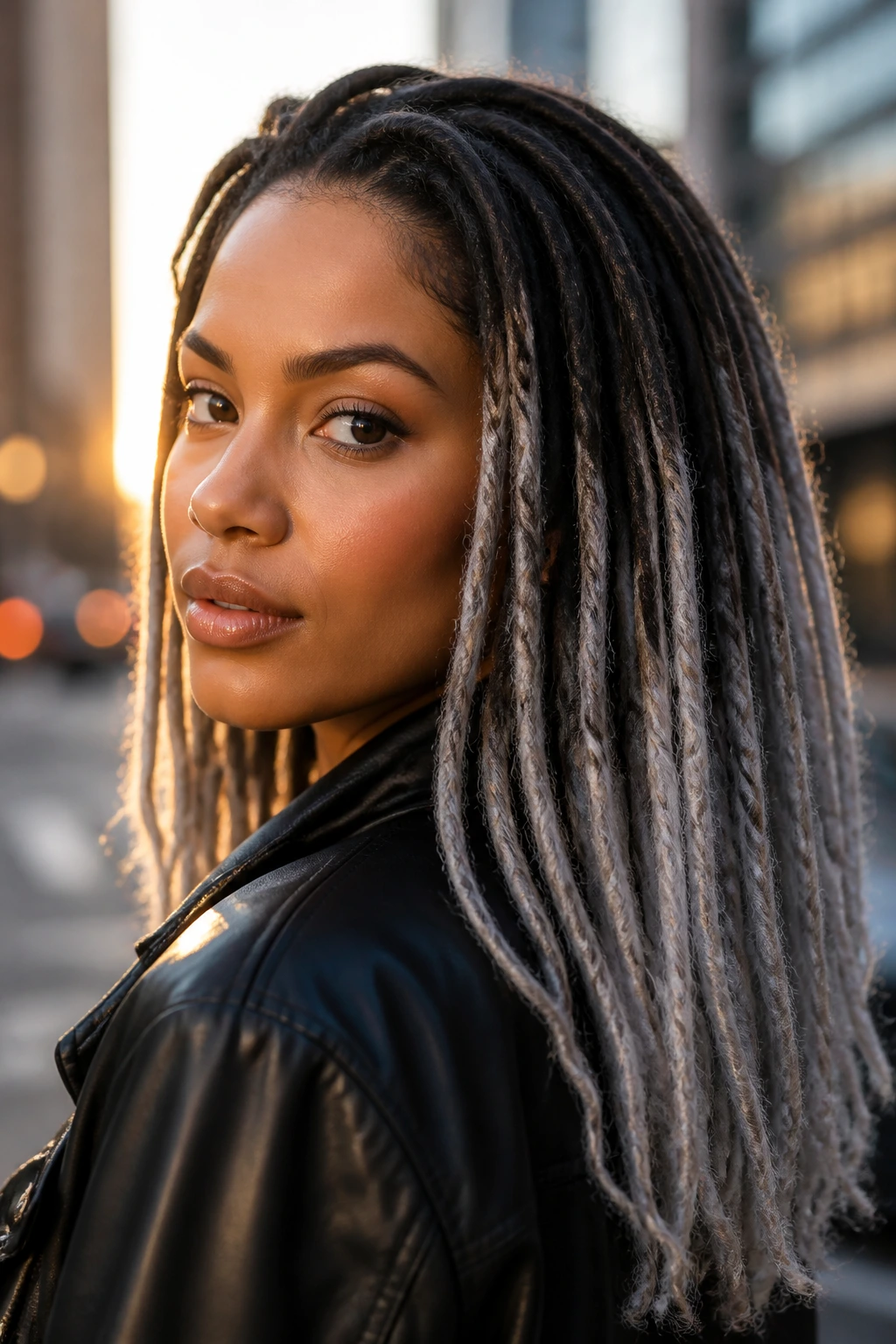
Frosted silver locs are sharp in a good way. Not icy, not flat—frosted. That texture matters because olive skin can get dragged down by stark silver if the shade is too white.
Locs make silver feel more dimensional. The twists and ridges catch light differently, so the color never looks like one flat note. On olive skin, a smoky silver at the tips gives contrast without the chalky effect.
This style looks best when the silver stays at the ends or in selected panels rather than all over. You want the feeling of frost, not a metal bucket.
22. Deep-Violet Silk Press
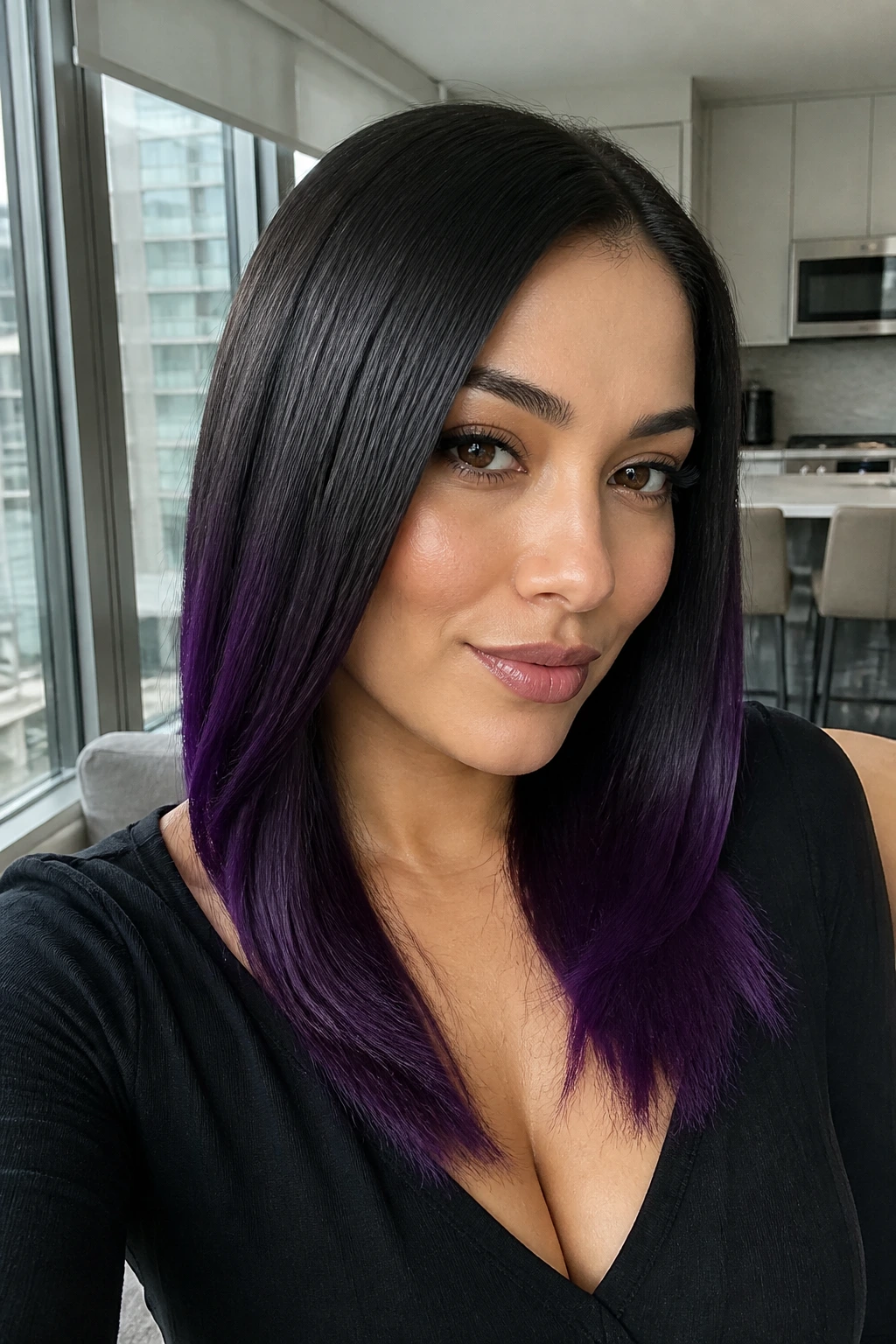
A silk press with deep-violet ends looks clean and deliberate because straight hair shows color boundaries so clearly. That’s useful with violet, which can turn muddy if it’s lost in texture.
Deep violet sits well against olive skin because it has enough blue to feel cool and enough red to keep warmth in the mix. It’s one of those shades that reads polished in the mirror and even better in motion.
Use heat protectant and a light serum here. The goal is shine, not oil slick. A crisp press makes violet look expensive; a rough press makes it look tired.
23. Bronze Asymmetrical Bob
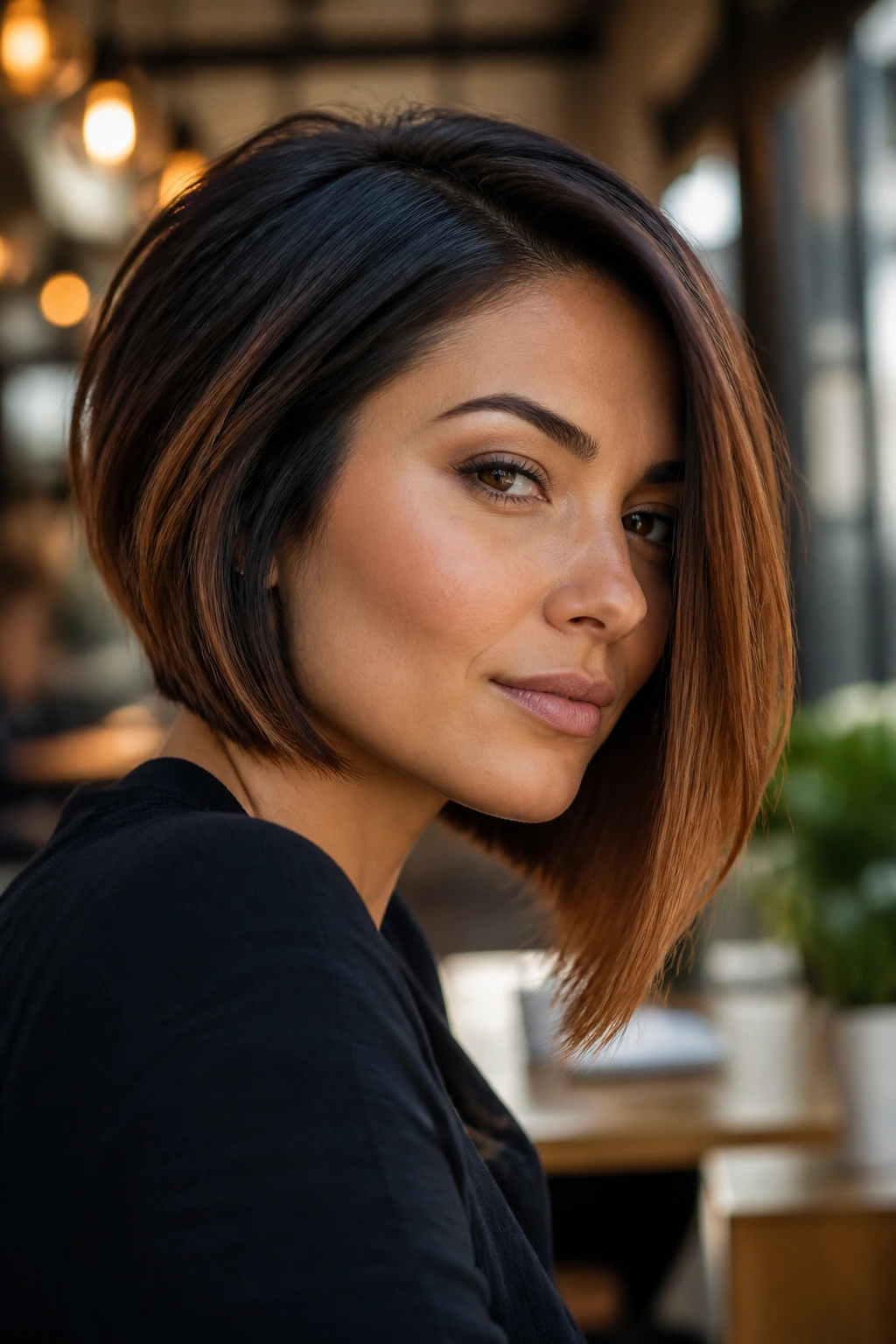
Bronze is warm metal, and olive skin usually loves a warm metal when the shade is deep enough. An asymmetrical bob gives that bronze a strong shape to live inside.
Because one side is longer, the color has a chance to show in a more dramatic sweep. That makes the ends look fuller than they are. The black base keeps the asymmetry from becoming too busy.
This is a nice choice if you want something sleek but not severe. Bronze has the warmth, the bob gives the edge, and the whole look stays wearable.
24. Neon-Lime Jumbo Braids
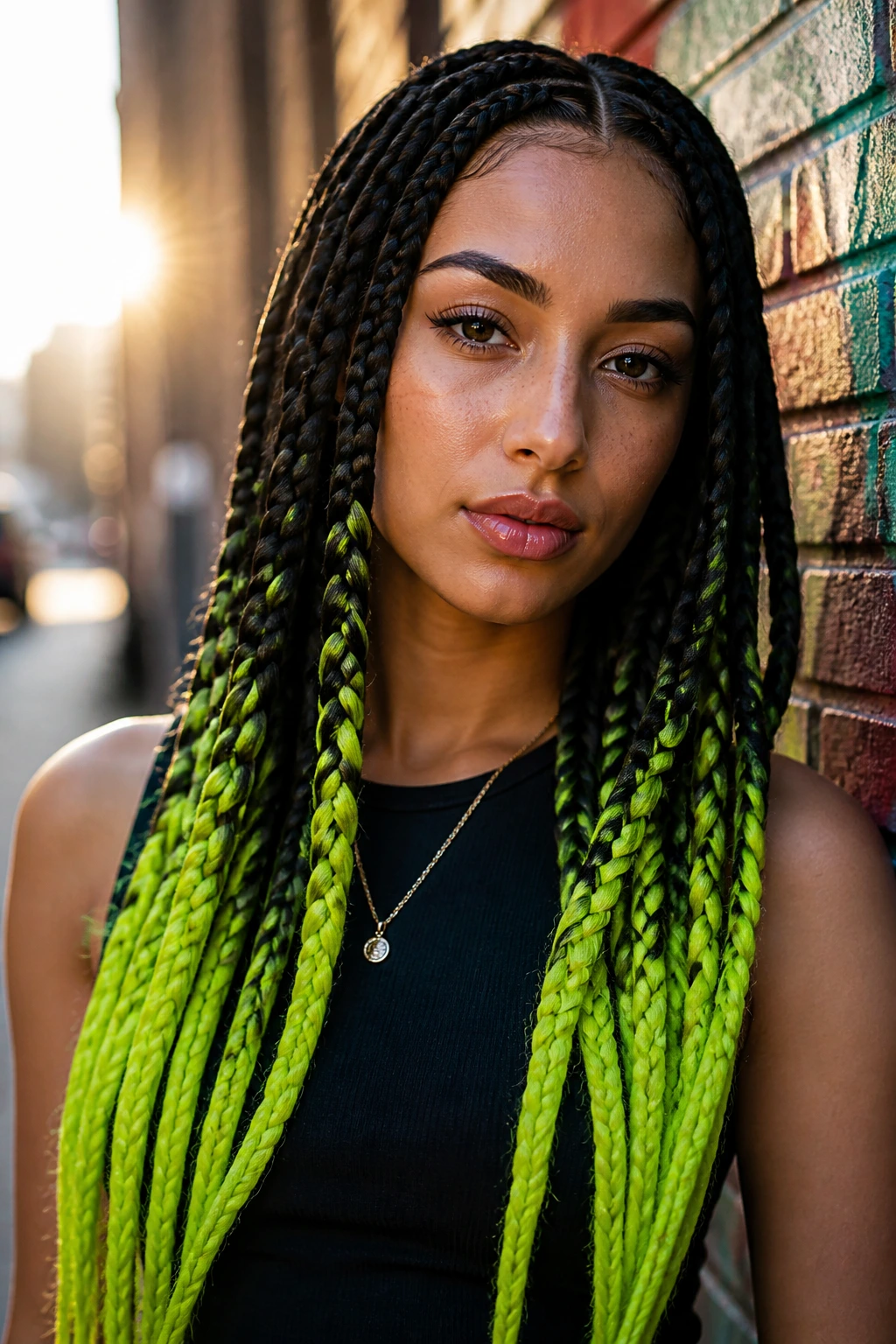
Neon-lime tips are not subtle. They’re not trying to be. On olive skin, that can be a strength if you keep the lime confined to the ends and let the black braids do the framing.
Jumbo braids give the color more surface area, so even a few inches of neon can make a big visual jump. The trick is making the rest of the style clean enough that the lime looks like a choice, not an accident.
If you love high contrast, this is the loudest move in the set. If you want it toned down, mix lime with a darker green or use the neon on only a few braids near the face.
25. Mahogany Halo Braids
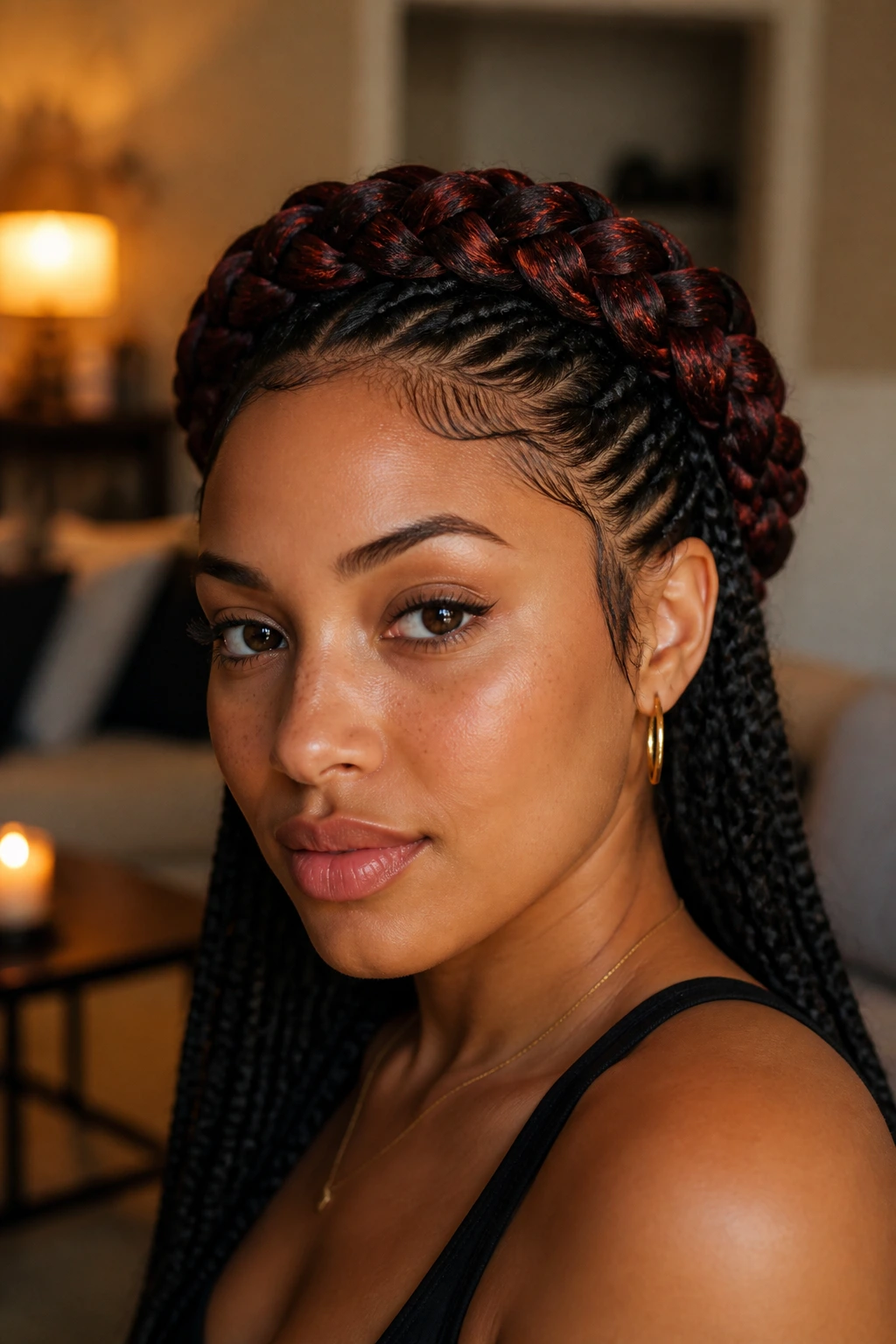
Mahogany sits closer to brown than red, which is exactly why it flatters olive skin so well. It adds warmth without shouting for attention. On halo braids, that warmth circles the face in a very controlled way.
The braid shape helps the color feel elegant. You get the texture of the braid, the depth of the black base, and then the mahogany around the crown or lower edge where it can soften the face. It’s a calm look, but not a boring one.
If you usually avoid red tones, mahogany is a safe place to test the waters. It has enough color to matter and enough brown to stay grounded.
26. Sapphire Curly Ponytail
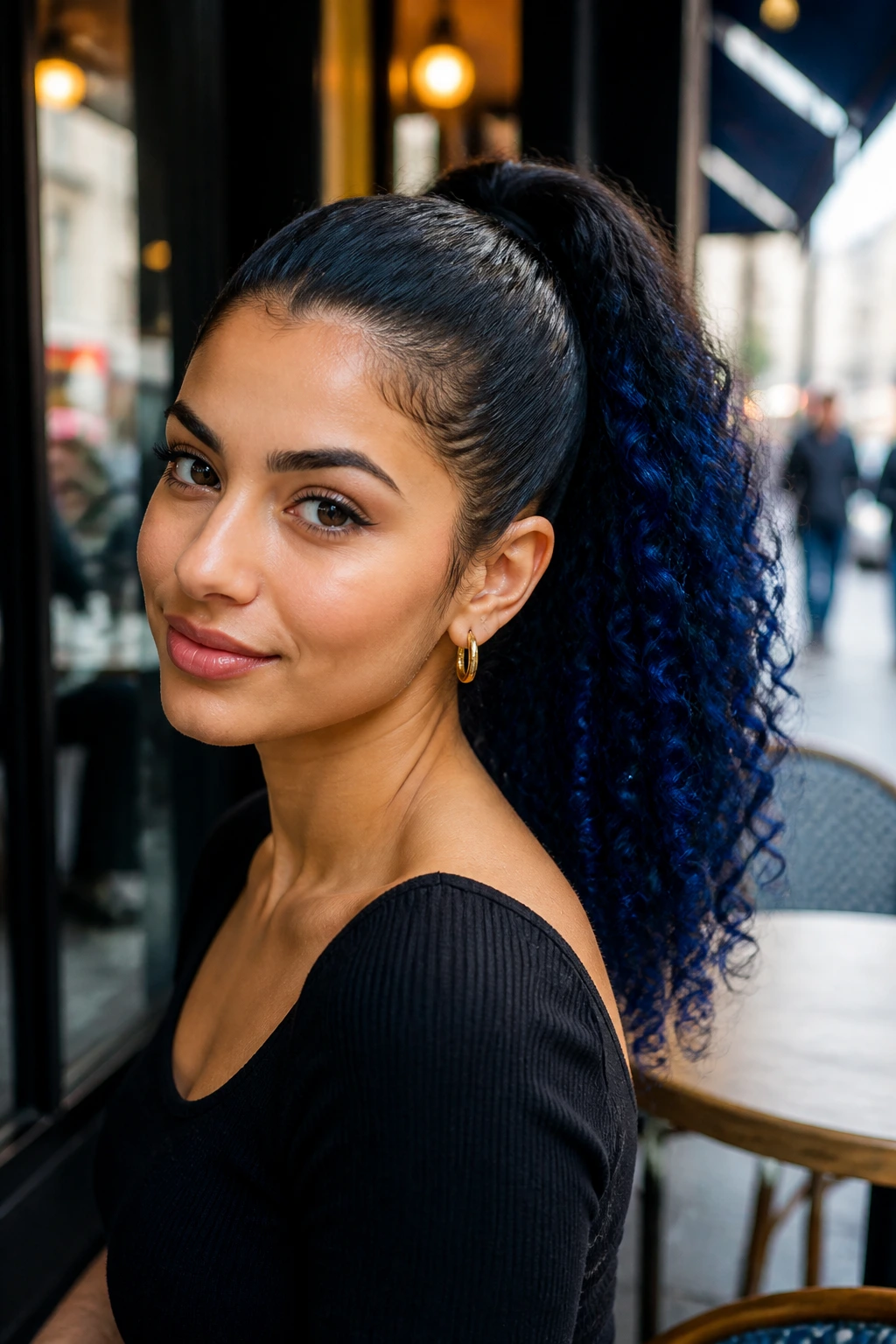
Sapphire is one of the best cool colors for olive skin because it has depth. It doesn’t sit on top of the hair like a thin dye. It sinks in and glows.
A curly ponytail lets the sapphire tips show in each curl coil. That motion keeps the shade alive. The base should stay black and smooth so the ponytail reads neat from the front and color-rich from the back.
This is a strong choice for nights out, but it doesn’t have to stay in that lane. A sleek wrap at the base and controlled curls at the ends make sapphire look sharp enough for daytime too.
27. Apricot Face-Framing Curls
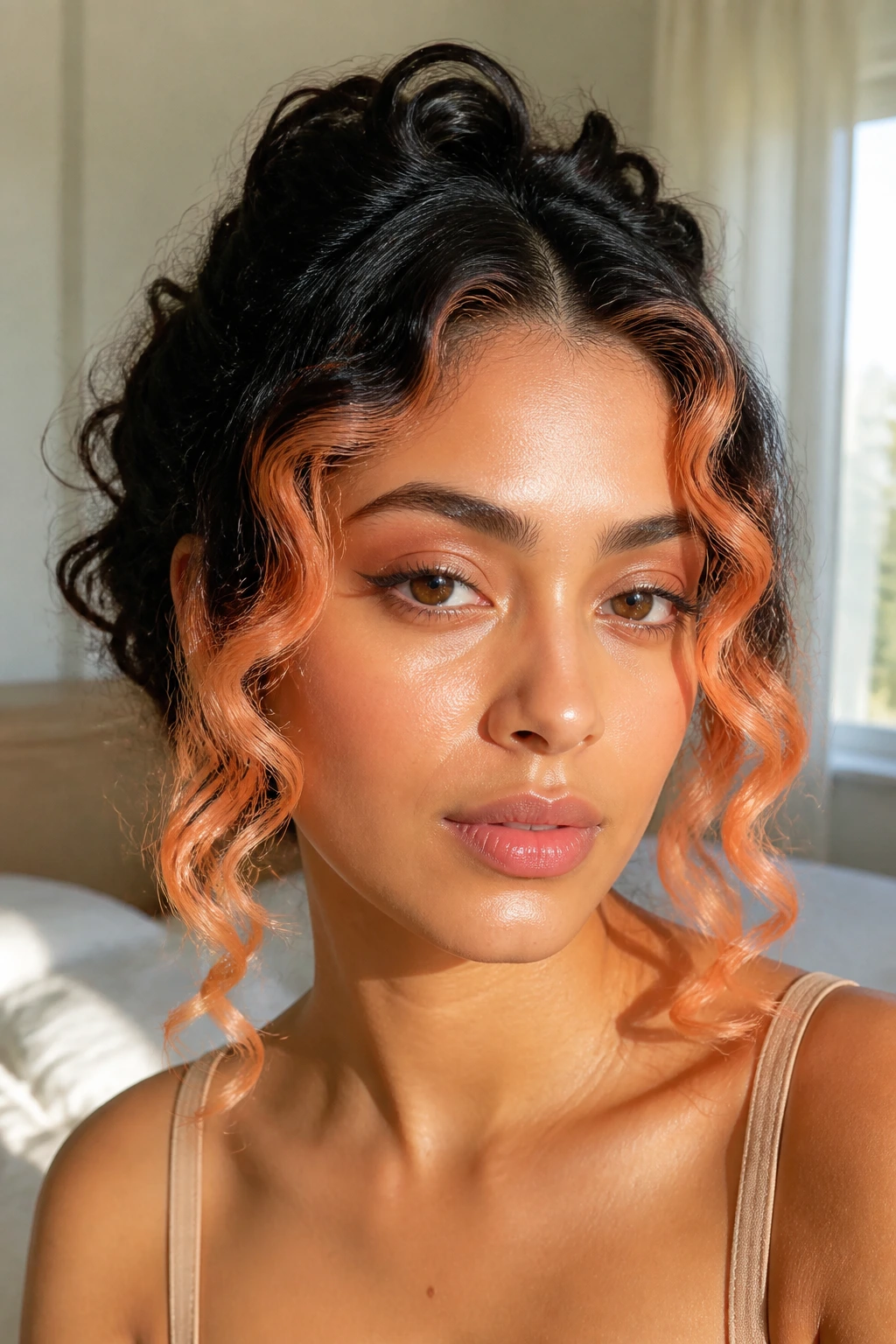
Apricot is softer than orange and less brown than caramel. That makes it a smart face-framing color for olive skin, especially if you want brightness near the cheeks without committing to a full warm look.
Put the apricot on the curls that land closest to the jaw, temple, and fringe. Leave the rest black, and the face suddenly gets this little burst of warmth every time the curls move. That tiny placement does more than a whole head of pale color would.
This is a good “first color” if you’re nervous. It’s warm, lively, and easy to tuck back into the rest of the hair when you want the color to calm down.
28. Opal-Dipped Micro Braids
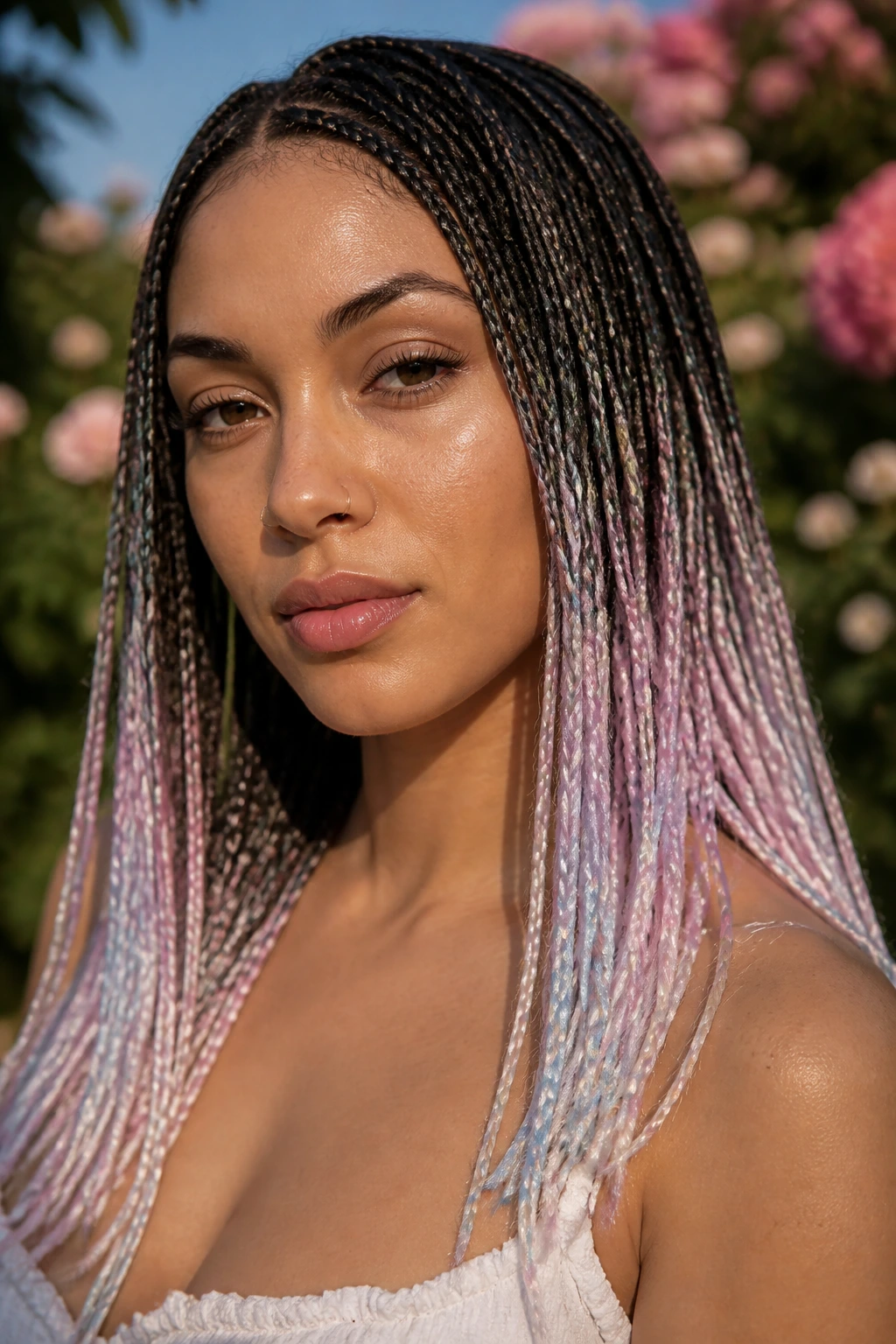
Opal-dipped micro braids are for people who like detail. The color is subtle but not plain: pearl, pale pink, soft blue, maybe a whisper of green, all living in the ends like a little mineral shimmer.
Because micro braids are so fine, the color doesn’t have to be loud to matter. It shows in motion, in sunlight, and when the hair is gathered. On olive skin, opal tones work because they’re soft reflections rather than chalky pastels.
This is one of the more delicate looks on the list, and that’s part of its appeal. It doesn’t need to shout. It just needs to catch your eye once.
Why the Black Base Makes the Color Better
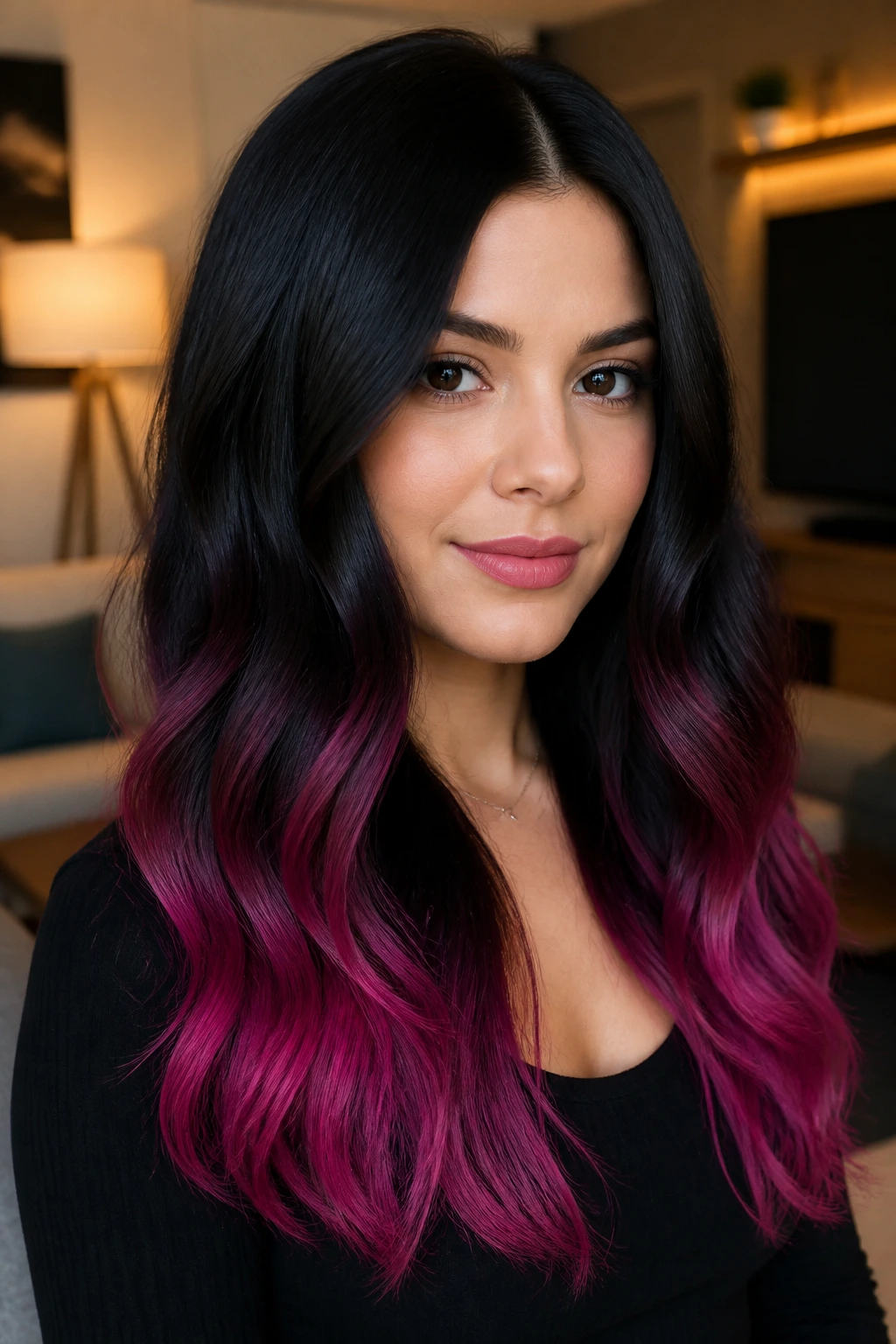
Black hair gives colored tips something important: structure. Without that dark anchor, bright ends can float around the face and look disconnected from the rest of the style. With the base in place, the color has a frame, and olive skin gets the benefit of contrast instead of glare.
There’s another reason this works. Olive skin often carries mixed undertones, which means it can shift under different lighting. A black base keeps that shifting from becoming the whole story. The tips stay readable even when the room is warm, cool, dim, or bright.
That’s why so many of these looks feel polished even when they’re bold. The black does the quiet work. The colored ends get the attention.
Essential Tools for Coloring and Styling
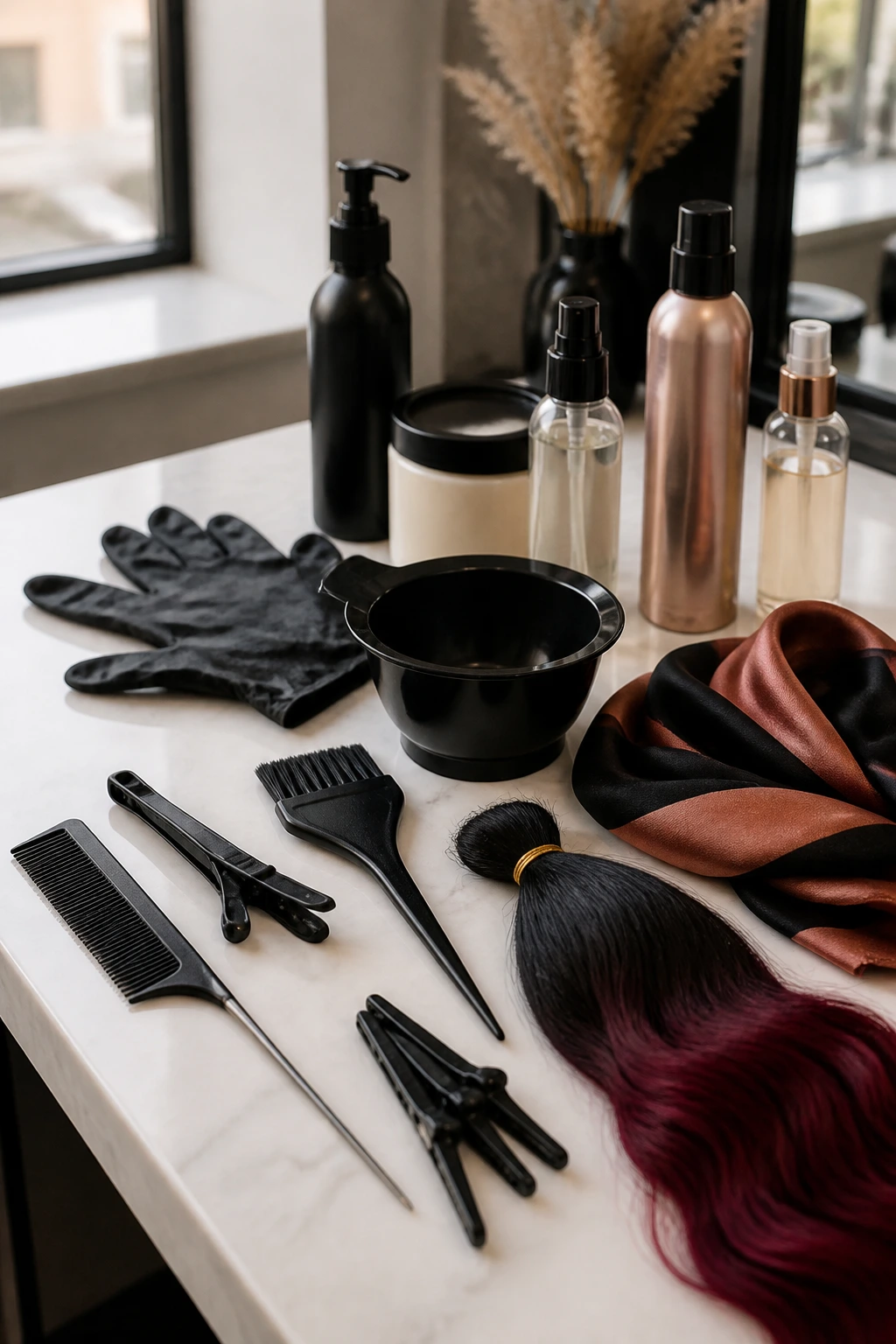
- Rat-tail comb: Clean sectioning matters more than people think, especially for braids, parts, and tip placement.
- Sectioning clips: Keep the hair organized while you color, curl, twist, or press.
- Tint brush or dye brush: Helps you place color only where you want it instead of flooding the hair.
- Gloves: Nonnegotiable for any semi-permanent color, gloss, or tint.
- Color-safe shampoo: Keeps the black base glossy and stops colored tips from fading too fast.
- Deep conditioner or mask: Useful after heat styling, lightening, or frequent braid installs.
- Silk scarf or bonnet: Protects the style and keeps the tips from snagging on rough cotton.
- Heat protectant: Needed for silk presses, curl sets, and any style that uses hot tools.
- Mousse or setting foam: Helps curls, twists, and braids hold shape without getting crunchy.
- Light serum or gloss spray: Adds shine to the tips without weighing them down.
- Braiding hair or extension hair in pre-colored shades: The easiest way to get vivid tips without dyeing your own hair.
- Small mixing bowl and clips: Handy if you’re tinting ends, refreshing color, or blending shades.
Smart Shade Picks for Olive Undertones
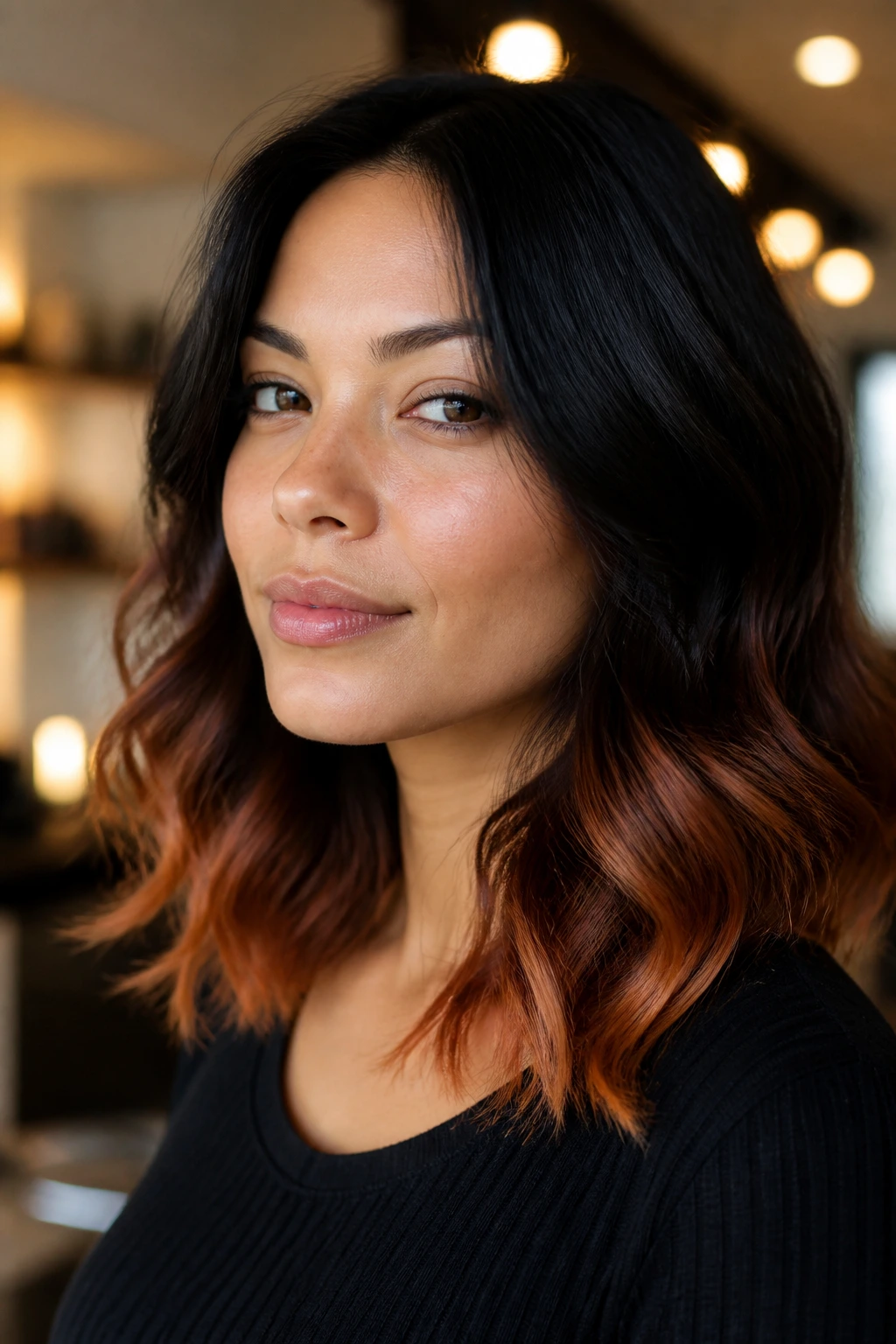
Olive skin is not one flat thing. That’s the part most people skip, and it’s why so many shade choices go sideways. Some olive undertones lean golden, some lean green, and some sit dead center with almost no obvious warmth at all. The tip color should answer the undertone, not fight it.
Warm-leaning olive skin
If your skin leans golden or tan, copper, amber, auburn, bronze, cinnamon, mahogany, and apricot usually land well. Those shades echo the warmth already in the skin, so the face looks bright instead of flat. I would keep the saturation medium to deep here; pale warm colors can look thin next to black hair.
Neutral olive skin
Neutral olive can wear almost anything if the color has enough depth. Burgundy, cherry cola, plum, rose gold, silver, and sapphire all work when the shade is rich and the base stays dark. This is the easiest undertone to play with, and it can handle both warm and cool tips without looking confused.
Cool-leaning olive skin
If your olive skin leans a little green or gray, stay away from dusty beige and very pale ash shades. Teal, emerald, violet, smoky lilac, deep blue, and frosted silver tend to sit better. They add clarity. You want color with a spine, not a washed-out pastel that disappears the minute the light changes.
How to Wear These Styles Without Fighting Your Wardrobe
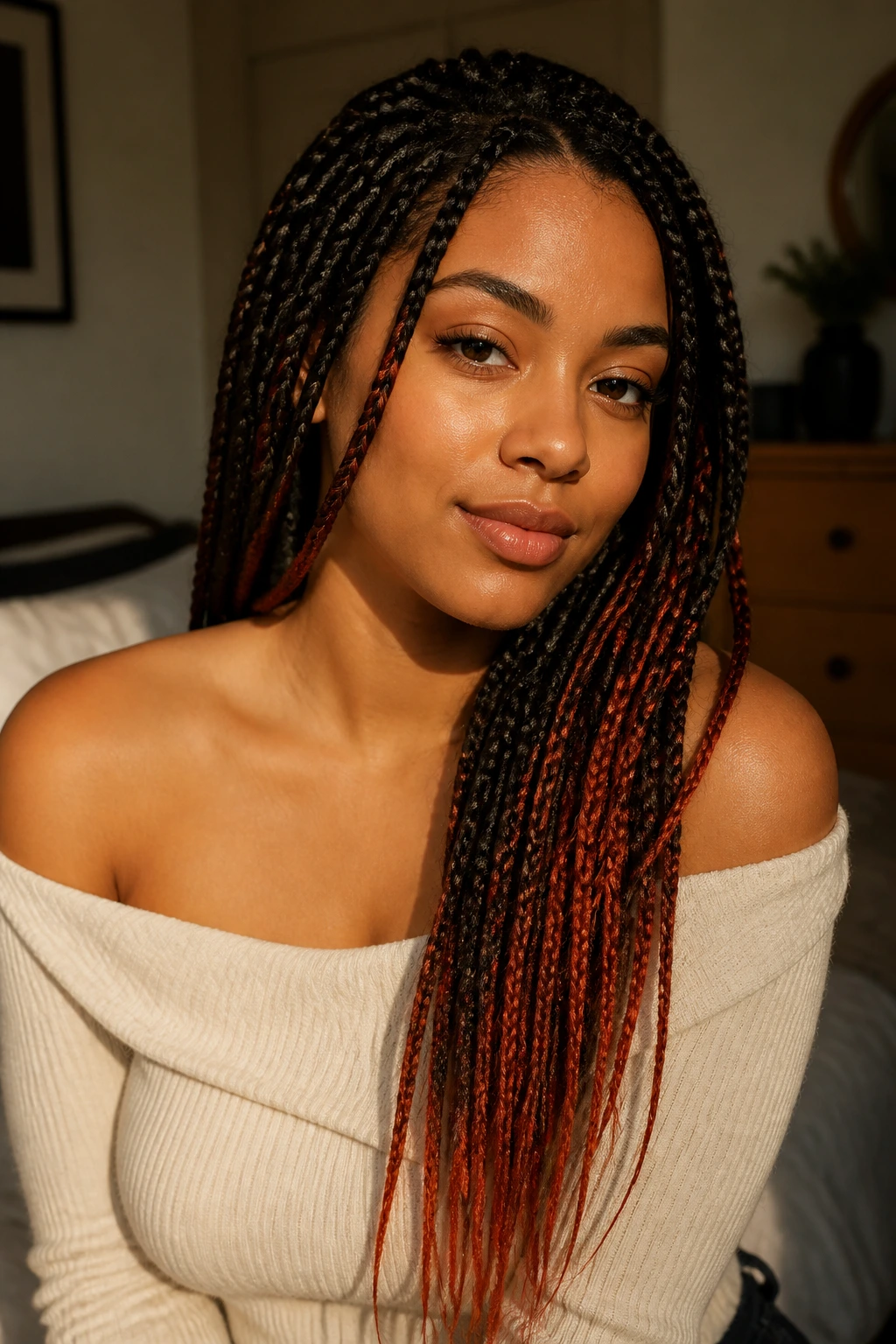
Hair color lives next to clothes, jewelry, and makeup whether we want it to or not. A copper-tipped braid set can look warm and rich with gold hoops and a cream top. Put that same look next to icy silver jewelry and a stark white collar, and the whole mood shifts. Neither is wrong. They’re just different.
Neckline: Long braids, ponytails, and locs look better when the neckline gives them space. Scoop necks, off-shoulder tops, and open collars let the tips move instead of sitting on fabric. Short cuts and bobs can handle high necks more easily because the color sits higher on the face.
Jewelry: Gold loves copper, amber, bronze, and mahogany. Silver and brushed steel work better with sapphire, lilac, violet, and teal. If you’re mixing metals, keep the hair color richer so it can hold both.
Makeup: Olive skin usually looks better when the makeup keeps the same conversation going. For warm tips, think peach blush, bronzy eyes, and a brown lip. For cool tips, a plum lip or soft taupe eye can keep the face from fighting the hair.
Occasion: If you want the color to feel quieter, keep it at the ends and choose a deeper shade. If you want the room to notice the hair first, move the color higher into ponytails, braids, or face-framing layers.
Extra Styling Tricks and Color Boosters
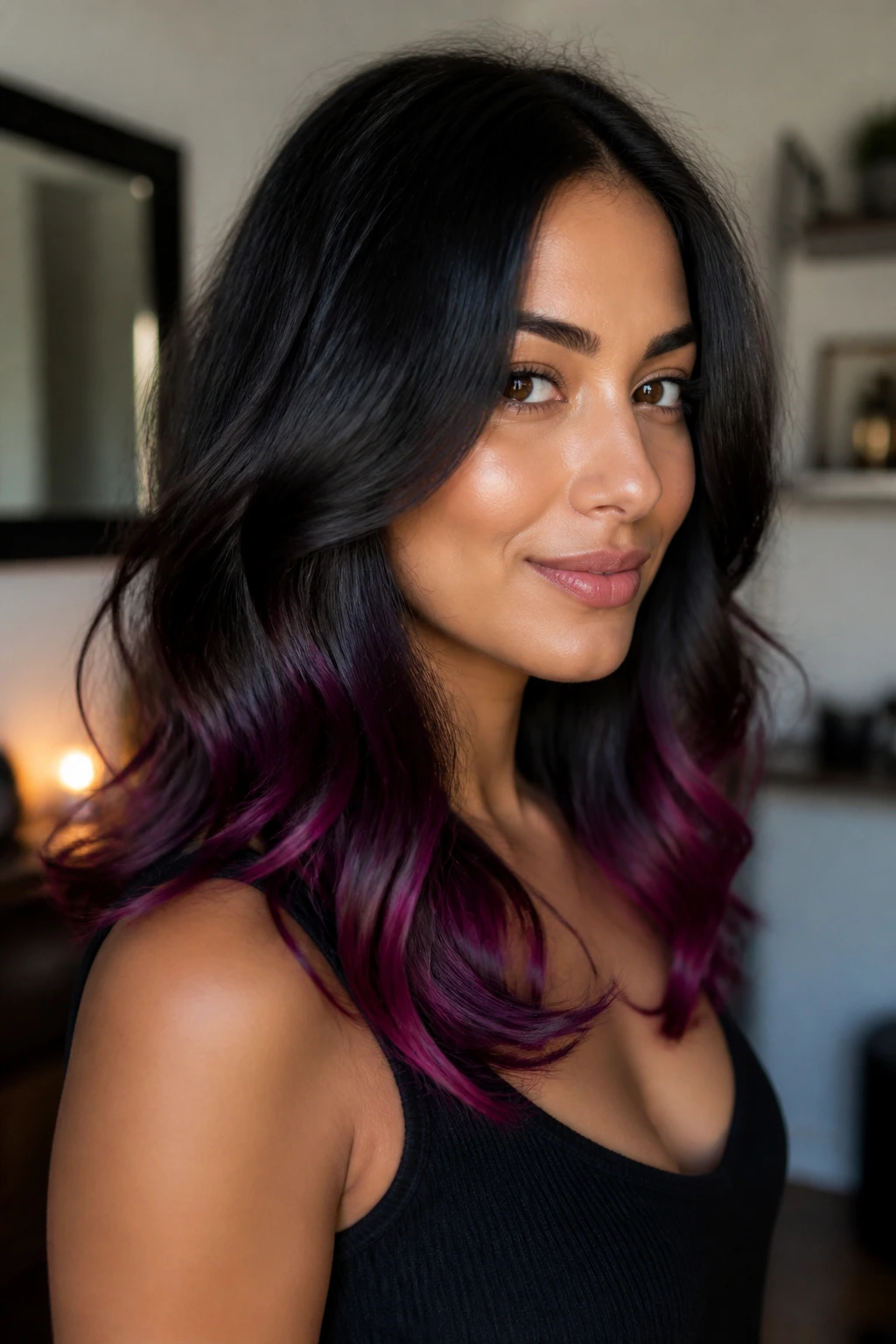
Tone Boost: Add a clear gloss or a tinted shine spray to black lengths so the contrast against the colored tips stays crisp. Flat black hair makes even the best tip color look sleepy.
Placement Trick: Keep bold colors at the last 1 to 3 inches if you want a softer result. Move the color higher only when you’re ready for a louder look. That one change can turn “interesting” into “very loud” fast.
Texture Play: The same shade reads differently on braids, curls, twists, and presses. Teal looks sharper on straight hair; copper looks warmer on curls; silver looks softer on locs. Use the texture on purpose.
Make-It-Yours: If a shade feels too bright, shift it one step deeper. Copper becomes bronze. Teal becomes emerald. Plum becomes burgundy. If it feels too dark, do the opposite and keep the color rich but lighter at the edge.
Common Mistakes That Make the Color Fall Flat
- Choosing dusty ash tones for olive skin: The hair can start to look gray-green instead of rich. Fix it by moving toward warmer copper, deeper jewel tones, or a more saturated silver with smoke in it.
- Putting bright color too high on the head: When neon or very light color starts near the roots, it can overpower the face. Keep the bold shade lower unless you want a full statement look.
- Ignoring the fiber or dye type: Synthetic braiding hair, human hair, and your own hair do not behave the same way. Check whether the color can be heat-set, washed, or toned before you commit.
- Letting the ends fray before refreshing them: The tip color looks best when the ends are neat. Once they get fuzzy, even a rich shade starts to look tired. Trim, re-twist, or refresh before that happens.
- Over-oiling colored ends: Too much oil can dull shine, especially on light tips like silver, champagne, or opal. Keep oil mostly on the scalp and mid-lengths, then use a lighter serum on the ends.
- Skipping a strand test: This is the boring step that saves the whole look. One hidden test piece tells you whether the shade will read copper, orange, brown, or worse.
Variations and Alternative Approaches to Try
Soft Bronze Version
If you want the easiest place to start, swap loud colors for bronze, cinnamon, or auburn tips. These shades flatter olive skin without asking for much makeup or wardrobe adjustment. They also fade more gracefully than neon shades, which is nice if you don’t want a high-maintenance color story.
Jewel-Tone Version
Teal, emerald, sapphire, plum, and violet all fall into this lane. The black base makes them feel expensive rather than juvenile. This is the version to choose when you want the color to look deliberate from every angle.
Metallic Version
Copper, rose gold, gold, silver, and champagne give the hair a reflective finish. Metallic tips work especially well on sleek bobs, pixies, and straight ponytails where the shine can show. On olive skin, they usually look better when the metal is warm or smoky instead of icy.
Temporary Color Version
If you want the look for a weekend, use colored braiding hair, clip-ins, color wax, or a temporary spray. That route is smart if you’re still figuring out whether warm or cool tip colors suit you better. It also keeps your own hair out of the chemical conversation.
High-Contrast Version
Neon lime, electric blue, ruby, and bright teal live here. This version is for people who want the hair to lead the outfit. Keep the black base clean, the styling neat, and the color placement controlled so the look feels sharp instead of chaotic.
Low-Key Office Version
Choose deeper shades like mahogany, cherry cola, plum, or smoky lilac and keep the color at the ends only. The style still reads interesting, but it won’t shout across a room. That restraint is what makes it work in more places.
Maintenance, Washing, and Sleep Protection
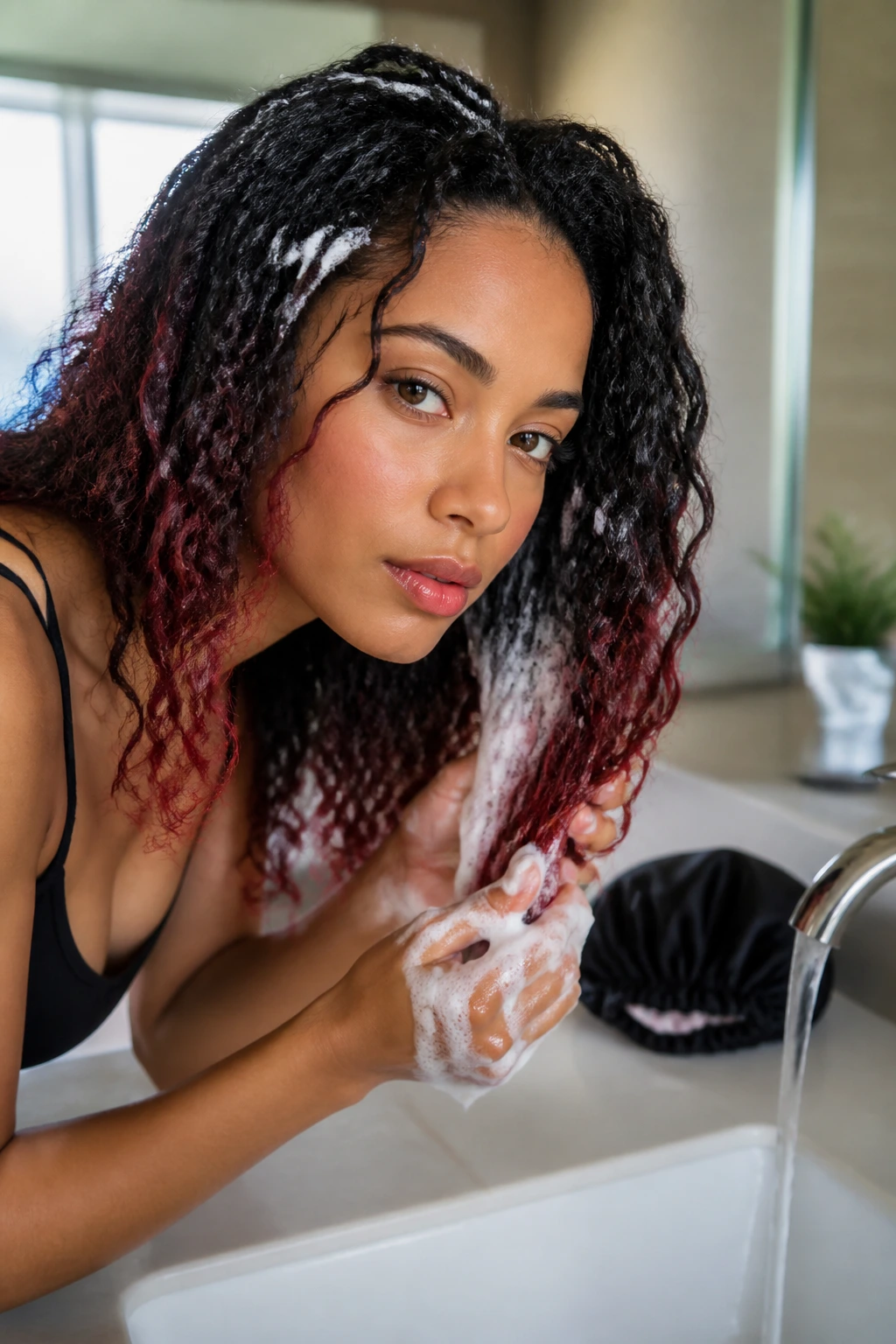
Colored tips hold up best when the rest of the hair is treated like it matters. That means gentle cleansing, low friction, and fewer heavy products than you think you need. Black hair shows shine well; you do not need to drown it in oil to prove the point.
For loose styles like silk presses, bobs, waves, and curls, wash or refresh every 5 to 10 days depending on product build-up and weather. Use color-safe shampoo and cool to lukewarm water. Hot water strips shine fast, and on colored tips it can make the ends look dull before their time.
For braids, twists, faux locs, and cornrows, a proper wash every 1 to 2 weeks is usually enough. Focus on the scalp and lightly squeeze diluted shampoo through the length if the style allows it. Foam refreshers and a little mousse at the roots can keep the finish tidy between washes.
Sleep with a silk bonnet or scarf every night. A satin pillowcase helps too, but it won’t save you from all the friction if the hair rubs around loosely. If you have colored synthetic tips, keep them away from rough towels and cotton hoodies. Those little snags are what make ends look old too soon.
If the style uses heat, give the hair a break between passes. A silk press with violet or silver tips can stay neat for days, but only if you stop touching it with hot tools every morning. And if the color is lightened on real hair, a bond-building treatment every couple of weeks can help keep the ends from feeling brittle.
Frequently Asked Questions
Which tip colors flatter olive skin most often?
Copper, amber, burgundy, plum, teal, emerald, sapphire, champagne, and smoky silver tend to work well because they carry enough depth to sit cleanly against olive undertones. The best pick depends on whether your skin leans warmer, cooler, or somewhere in the middle.
Should olive skin choose warm or cool colored tips?
Warm shades usually feel safer, especially copper, auburn, bronze, and cinnamon. Cool shades can look excellent too, but they need saturation—think emerald, sapphire, violet, or teal rather than pale dusty pastels.
Can I get these looks without bleaching my own hair?
Yes. Braiding hair, clip-ins, pony extensions, color wax, and temporary sprays all let you keep your natural hair dark while still getting bright tips. If you want to color your own ends, a stylist can often lift only the last few inches instead of changing the whole head.
Do colored tips work on short hair?
They do, and sometimes short hair wears color better because the shade sits closer to the face. Pixies, lobs, and cropped curls show tip color fast, which means you do not need much length for the effect to register.
How do I stop silver or champagne tips from looking chalky on olive skin?
Use a version with smoke or warmth in it rather than a flat icy shade. A little gloss helps too. The goal is reflection, not powdery pale color.
What if the shade makes my skin look green or tired?
That usually means the color is too dusty, too pale, or too ashy. Switch to a richer shade, move the color farther from the face, or warm up the rest of your styling with bronzer, gold jewelry, or a softer lip.
Which of these styles last the longest?
Protective styles like knotless braids, faux locs, cornrows, and twist styles tend to hold up longest because the tips stay contained. Loose curls and silk presses look gorgeous, but they need more frequent refreshing.
Can I wear neon tips without the look turning messy?
Yes, but keep the neon limited and the base clean. Lime, bright blue, or electric ruby usually looks strongest when it lives at the ends, not all over the head. That balance keeps the style bold instead of chaotic.
The Shade That Stays Sharp
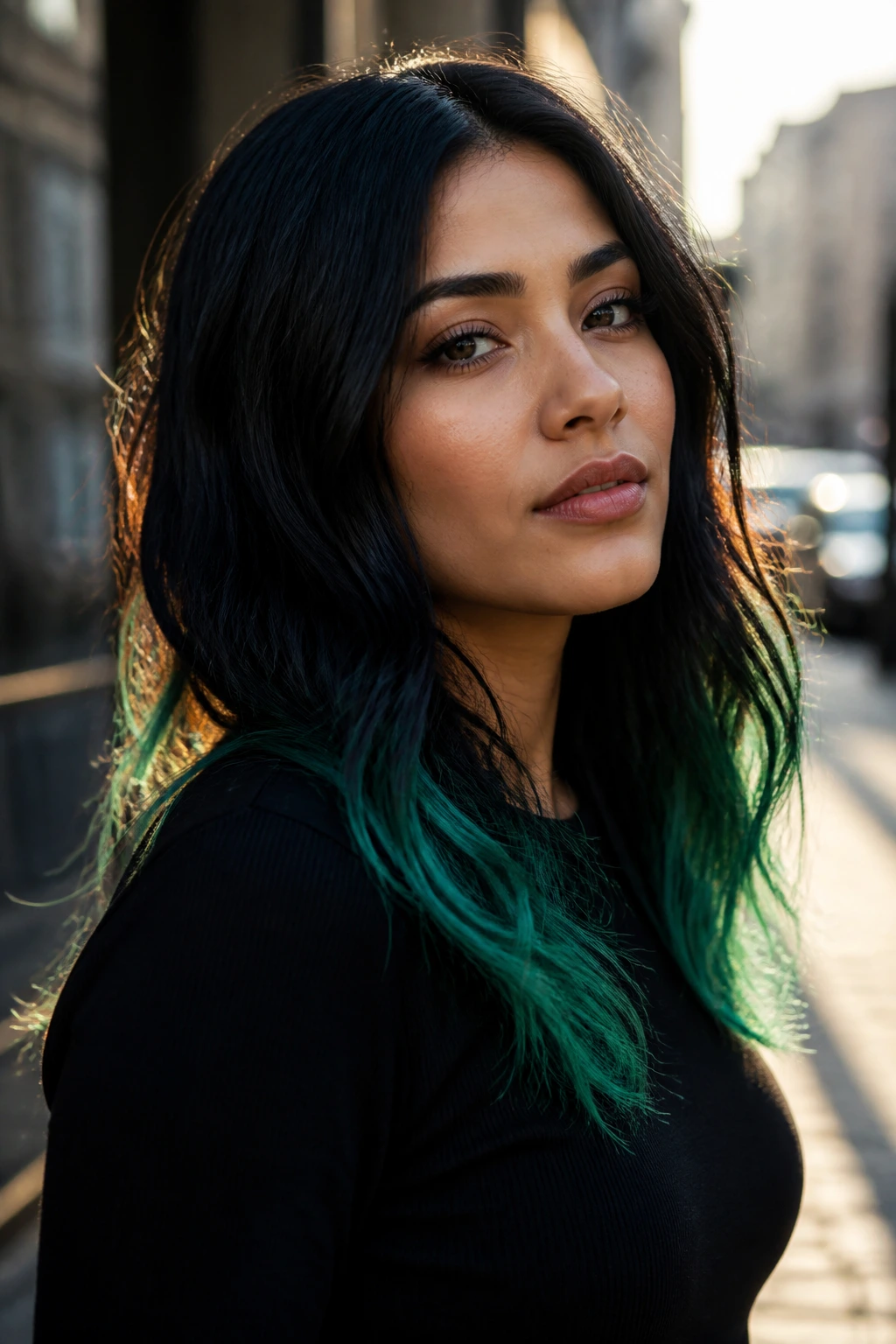
The nicest thing about black hairstyles with colored tips on olive skin is how much control they give you. You can go warm, cool, metallic, or neon, and the black base keeps the whole look from drifting apart. That’s the part I love most: the color doesn’t have to do all the work by itself.
Pick the shade family that makes your undertone look clearer, then let the placement do the rest. A careful 2-inch dip at the ends can be more striking than a whole head of color if the contrast is right. And once you see which tones make your skin look cleaner and brighter, the rest gets a lot easier.