



Brown hairstyles for olive skin can look expensive without a drop of bleach, but only when the brown sits in the right place on the color wheel. Olive undertones are sneaky. They can lean green, gold, gray, or some slightly muddy mix of all three, which is why one brunette shade can make the face glow and another can make it look flat, tired, or just a little off. The shade matters. The cut matters too.
What I love about no-bleach brunette color is that it keeps the hair’s depth intact. You’re not forcing a giant lightening shift that can rough up the cuticle, and you’re not chasing a fake “sun-kissed” effect that often reads brassy on olive skin. Instead, you’re working with gloss, dimension, and shape. That’s the quieter, smarter move.
The trick is not “go brown and hope for the best.” The trick is choosing a brown that has a job: some shades sharpen the jaw, some soften strong features, some wake up a neutral olive complexion, and some make curls or layers look richer from root to tip. The best looks don’t fight your undertone. They sit with it.
Why These Browns Work Without Bleach
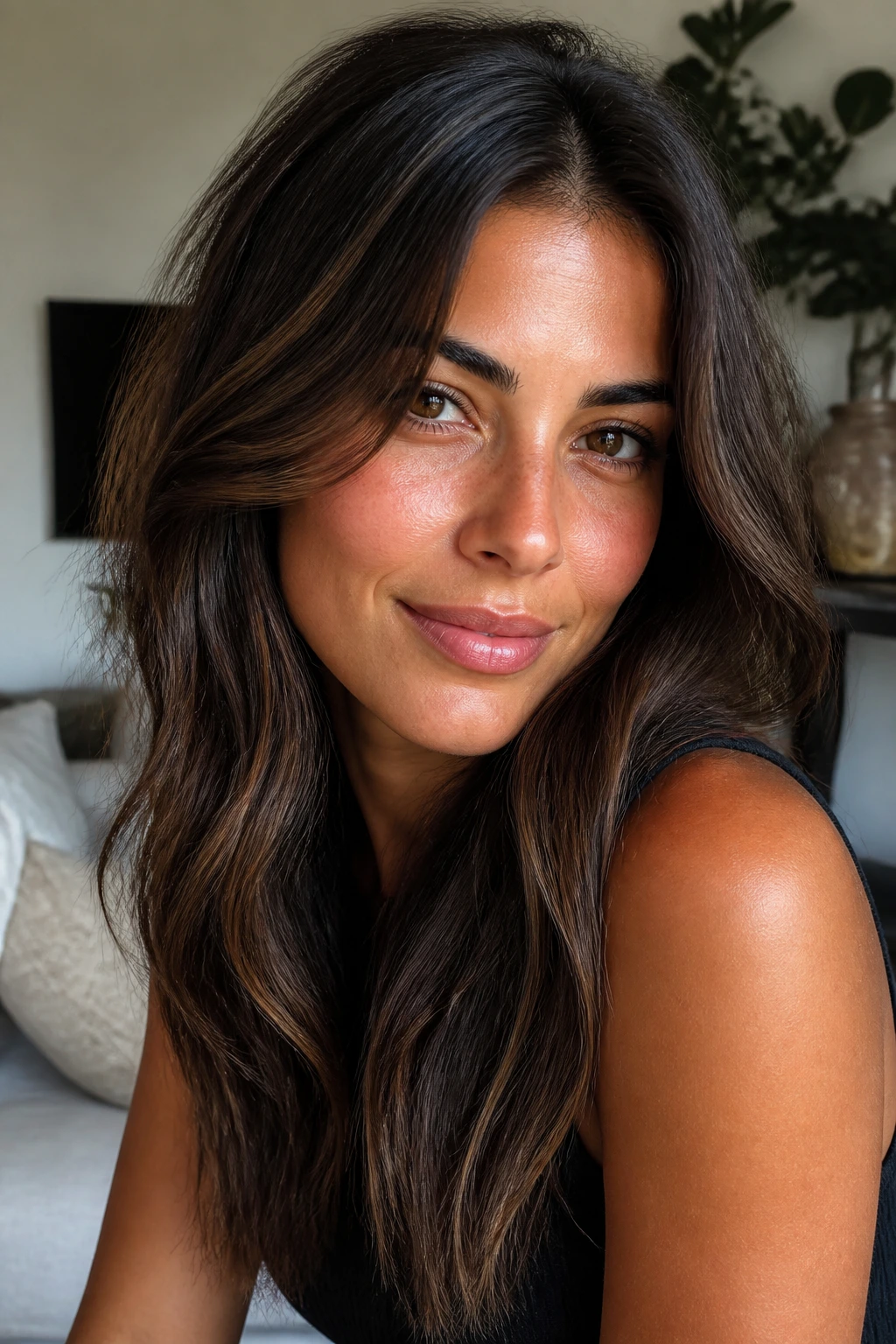
- They keep the hair in a richer range: Olive skin usually looks cleaner beside brunette shades that stay inside levels 3 to 6, because those tones give contrast without dragging the face into yellow or gray.
- They flatter without over-lightening the ends: A lot of olive complexions look sharper when the brown has depth near the roots and a little movement through the mids, not a big bright lift around the face.
- They make shine do the heavy lifting: Glossy brunette hair reflects light in a way that bleach often can’t match, especially on straight bobs, silk presses, and blunt cuts.
- They age better as they grow out: Root regrowth blends into dark brown and medium brown much more softly, so the color line stays cleaner for longer.
- They work with natural texture: Curls, waves, shags, and braids all show off brown dimension better than a flat, all-over blonde-leaning color ever will.
- They’re easier to maintain: When you’re not lifting the hair first, you’re usually dealing with less dryness, fewer rough ends, and fewer patchy spots at the hairline.
1. Espresso Silk Bob
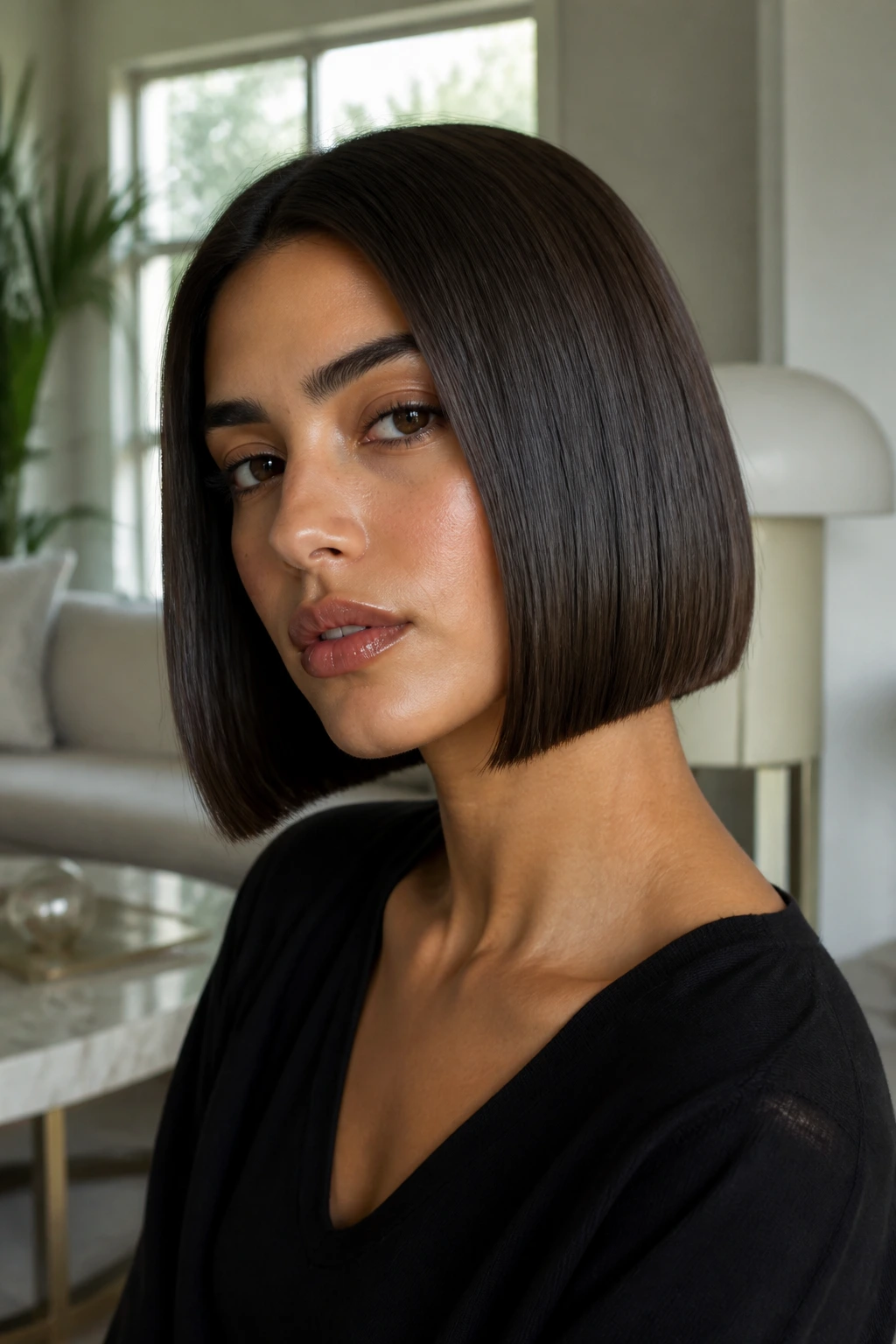
An espresso bob is the shade I reach for when olive skin needs crisp contrast instead of warmth. The color sits deep and glossy, almost like black until the light hits it, and that little edge makes cheekbones look sharper and the skin look more awake. Keep the cut blunt at the chin or just below it, and let the ends stay clean. This is not a shaggy, overtextured look.
Why It Flatters Olive Skin
The point here is control. Espresso brown gives cool and neutral olive skin a clear frame, which matters more than people think. If you go too pale, the face can lose shape. If you go too red, the undertone starts arguing with the hair. Espresso just sits there and behaves.
A slight side part keeps the bob from feeling severe. Add a gloss every few weeks, and the surface stays reflective instead of dull. That shine is doing work. Without it, the cut can look like a helmet.
- Best on straight or softly bent textures
- Ask for a blunt perimeter with no heavy layering
- Keep roots close to level 3 or 4 for that inky brunette effect
- Finish with a pea-sized serum only on the mids and ends
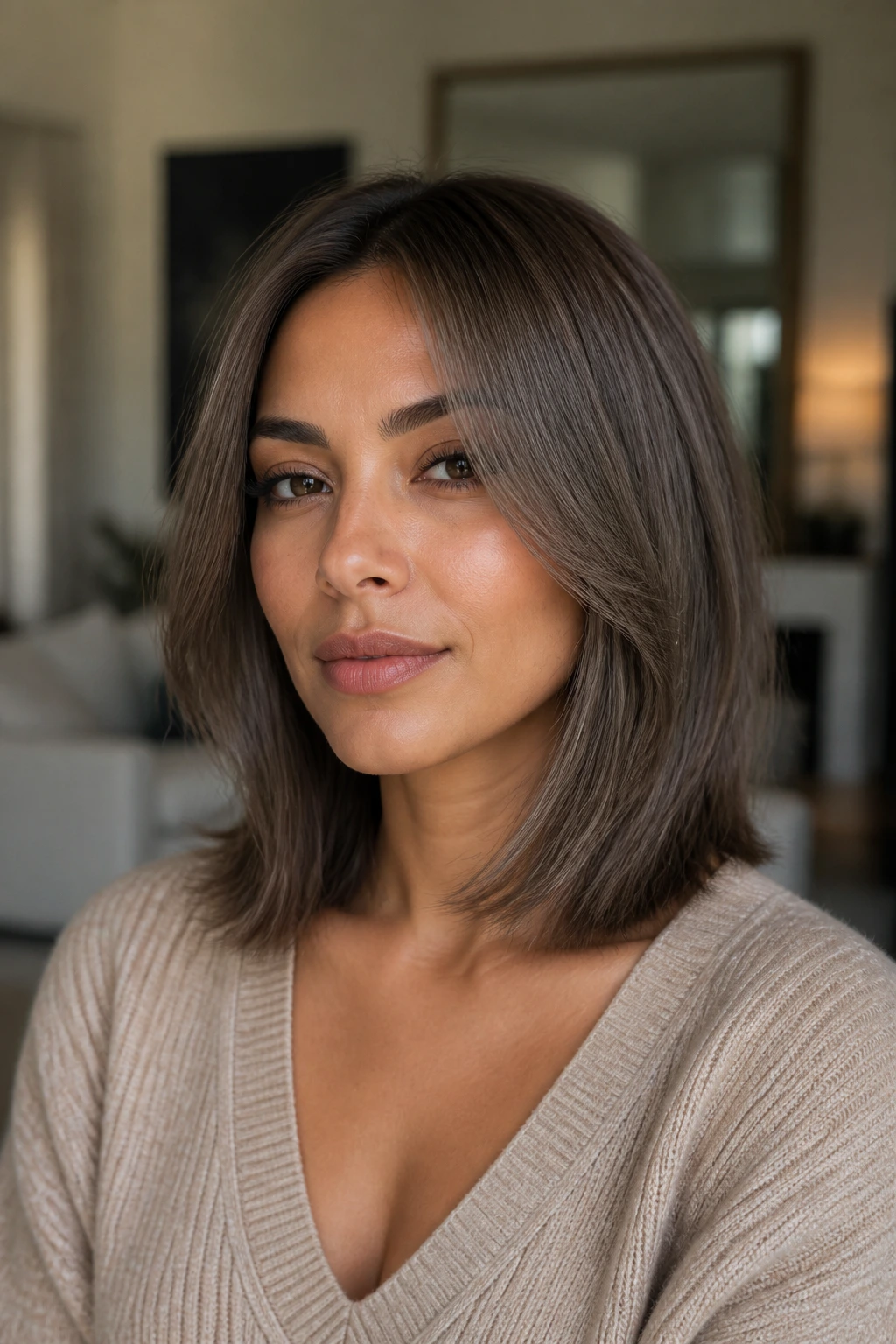
2. Mushroom Brown Lob
Mushroom brown is the shade for anyone who wants a brunette that feels smoky, not red. It has that taupe-gray undertone that can be tricky on paper but looks expensive against a lot of olive complexions, especially neutral-olive skin. Pair it with a collarbone lob and a soft bevel at the ends, and the whole thing reads polished without trying too hard.
This color works because it doesn’t fight the skin’s muted green notes. A warm brown can pull orange. A mushroom brown usually stays calmer. If your hair tends to grab warmth fast, ask for a demi-permanent glaze instead of permanent color, and keep the finish cool with a clear shine coat rather than a warm toner.
3. Chestnut Curtain Bangs
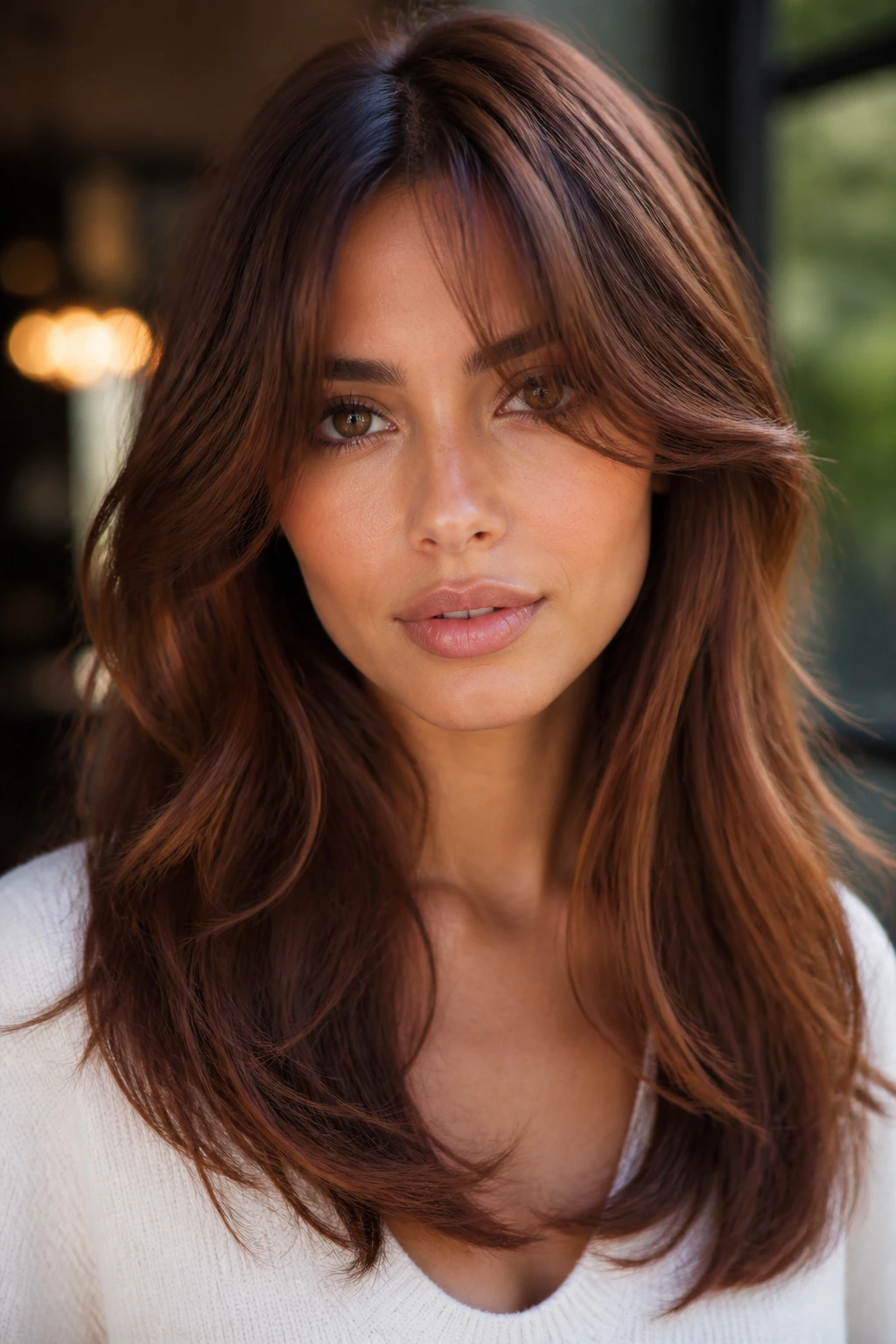
Chestnut brown has that soft reddish-gold lift that can look almost lit from inside when olive skin leans warm. Put it with curtain bangs and long layers, and you get movement right where the face needs it most. The bangs split the forehead gently, while the chestnut tone keeps the look from going too dark.
This is one of the better no-bleach options if your natural base already sits around medium brown. You’re not chasing blonde pieces. You’re deepening and warming the existing brown so it catches light near the eyes and cheekbones. The cut should fall around the ribs or collarbone, because chestnut needs room to move.
Wear It Like This
Keep the blowout soft, not puffy. A round brush bend away from the face does more here than a tight curl ever will. And if your olive skin has a slightly golden cast, chestnut can be one of the few browns that makes that warmth look intentional.
4. Cocoa Layered Shag
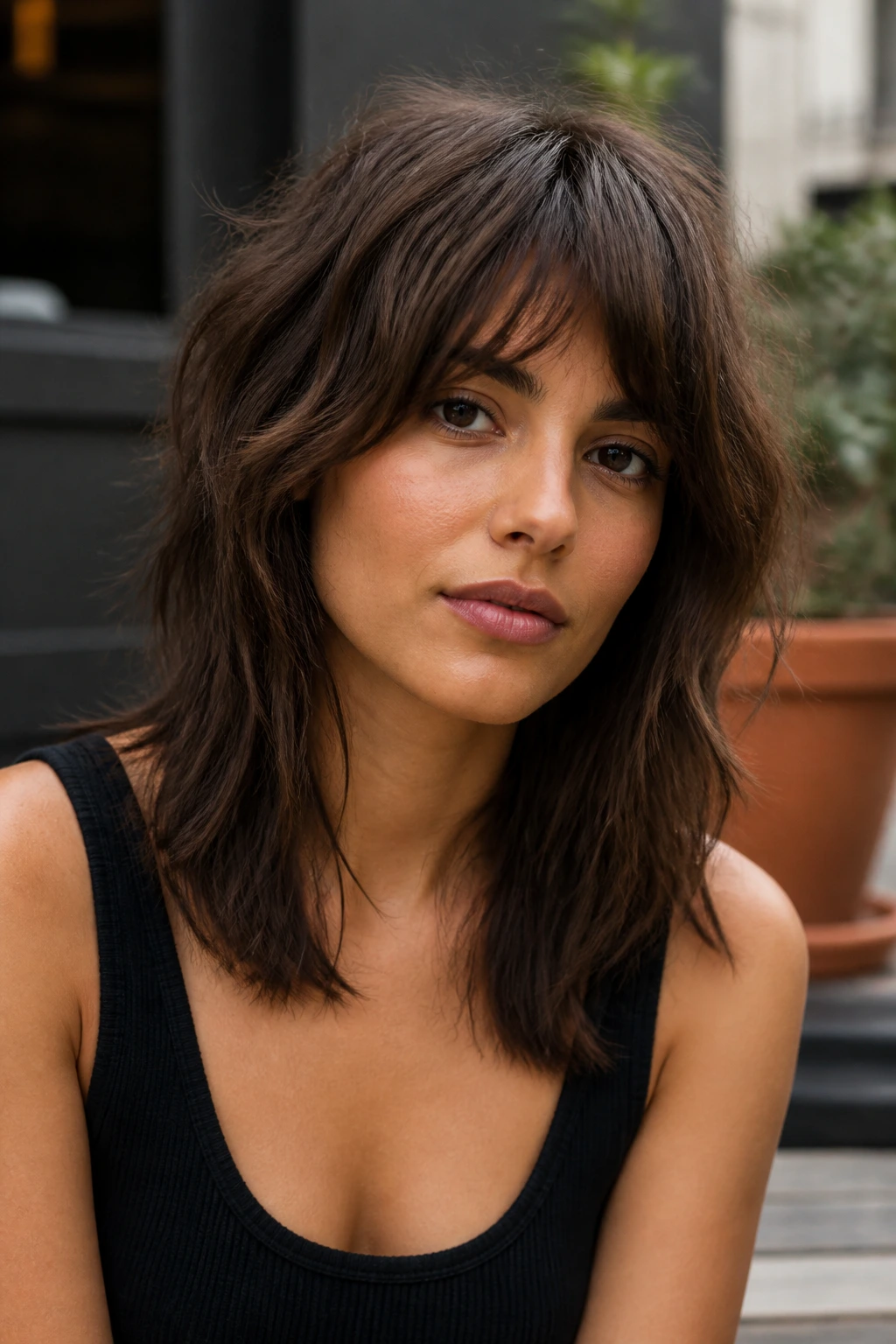
A cocoa shag has edge without the drama of bleaching, and that’s exactly why it works on olive skin. The layers break up the color so the brown never sits as one flat block, which is a problem I see all the time with dark brunettes. Cocoa gives depth, and the shag gives air.
The cut should be choppy around the crown and softer through the ends, with enough texture that you can rough-dry it and still get shape. Olive skin often looks good with this kind of lived-in brown because the cut keeps the face from looking too severe. The result feels a little cooler, a little artsier, and a lot less fussy than a glossy one-length style.
5. Walnut Pixie Cut
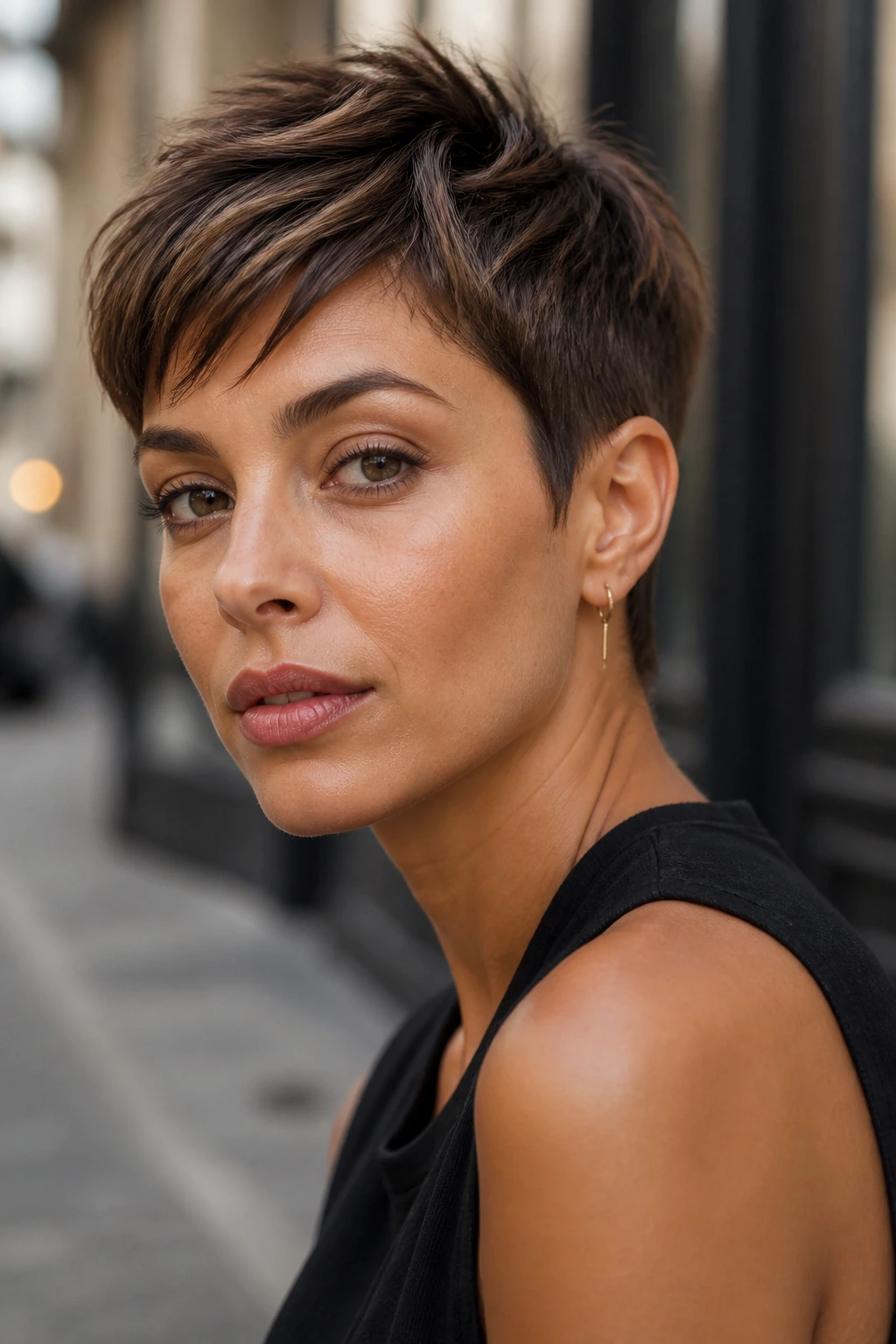
Walnut brown on a pixie is sharp in the best way. The shade sits between deep brown and soft neutral brown, and the short cut means the color shows every small change in light. That matters. On olive skin, a pixie needs a color that gives the face structure without pulling too much attention upward.
Keep the top slightly longer, maybe 1 to 2 inches of piecey length, and taper the sides close. That keeps the look modern instead of helmet-like. If your hairline is strong, walnut makes it feel clean. If your features are softer, it adds a little edge without the harshness of black.
6. Toffee Face-Framing Lob
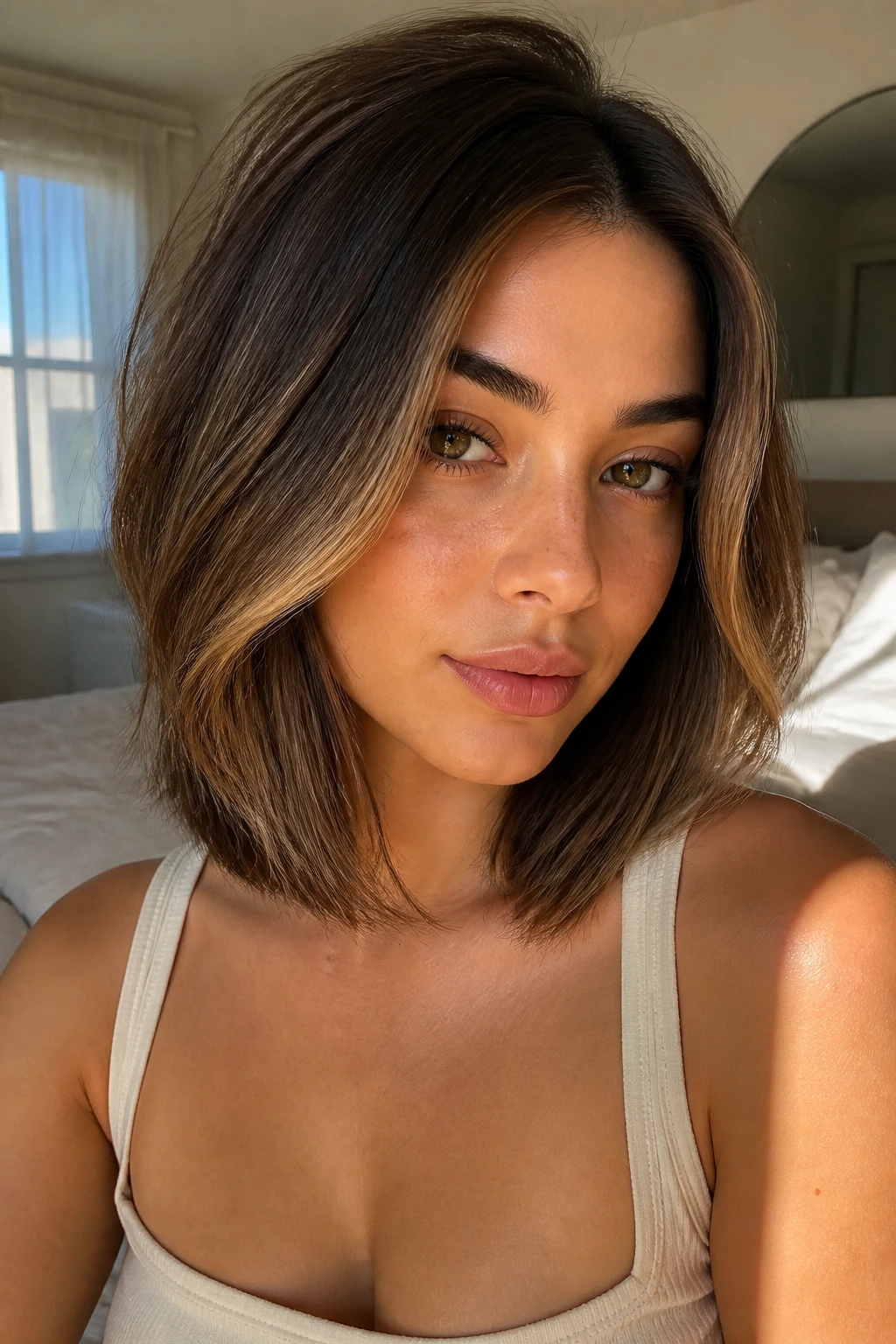
Toffee brown can go wrong fast if it gets too orange, so this version stays restrained. Think medium brunette with a warm, sweet edge near the face, not caramel chunks. On olive skin, that small hit of warmth can brighten the complexion without making the whole head look coppery.
A lob that lands at the shoulders or just above them gives the color enough canvas to show off. Keep the face frame subtle — a few strands around the cheekbones and chin, not thick streaks. If your starting color is dark, ask for lowlights and a gloss rather than any lightening. That keeps the toffee note soft instead of loud.
7. Mahogany Waves
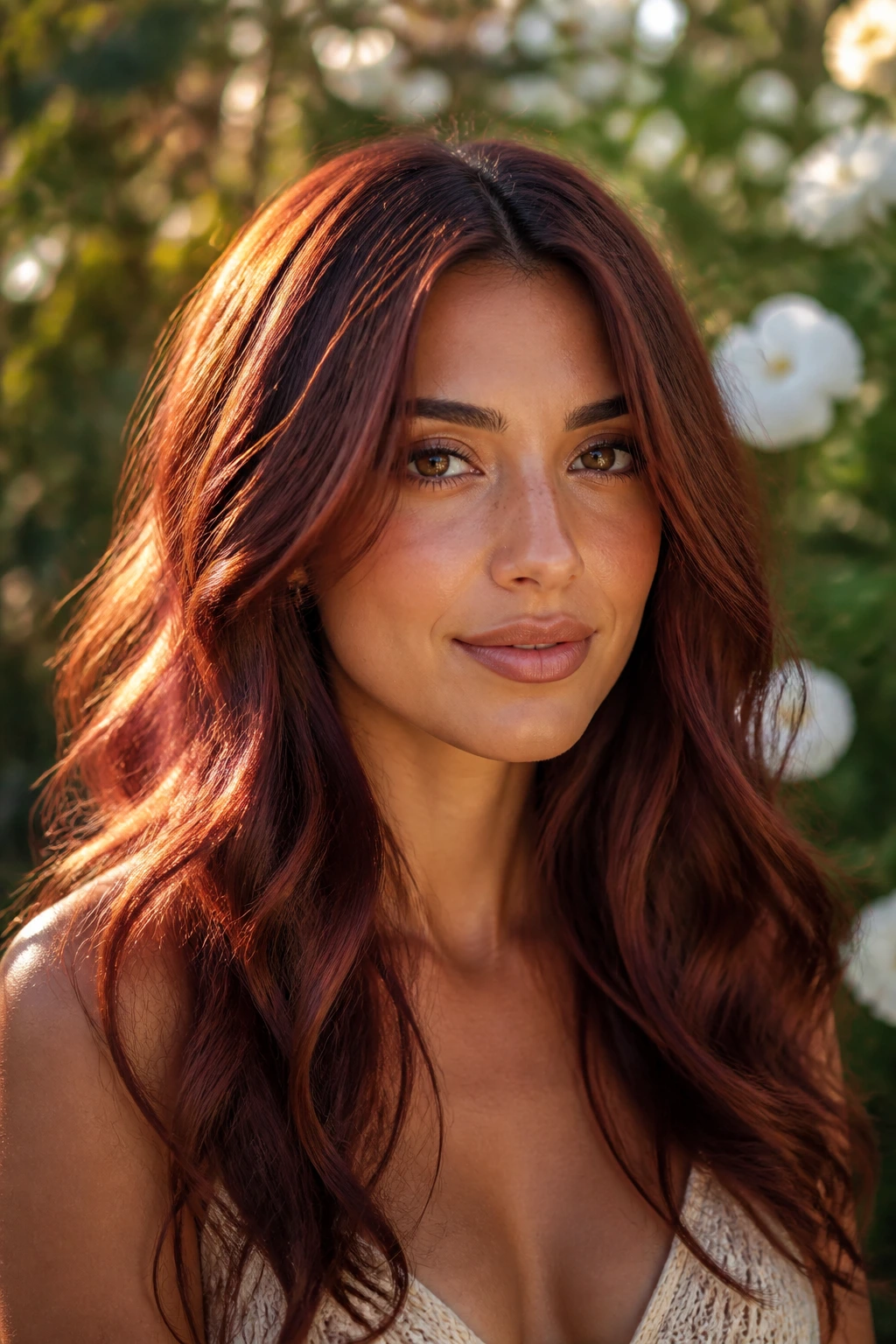
Mahogany brown has a red-brown depth that olive skin can wear better than most people expect. The trick is keeping the red side rich and muted, not cherry. On wavy hair, mahogany catches light in the bends and makes each wave look fuller, almost plush.
This shade is especially nice for warm olive skin that can handle a little color near the face. If your complexion leans green, mahogany can still work, but keep the base darker and the red note low. Loose waves are the right pairing because they stop the shade from feeling heavy. Straight hair can make mahogany look sharper than intended.
8. Mocha Blunt Cut
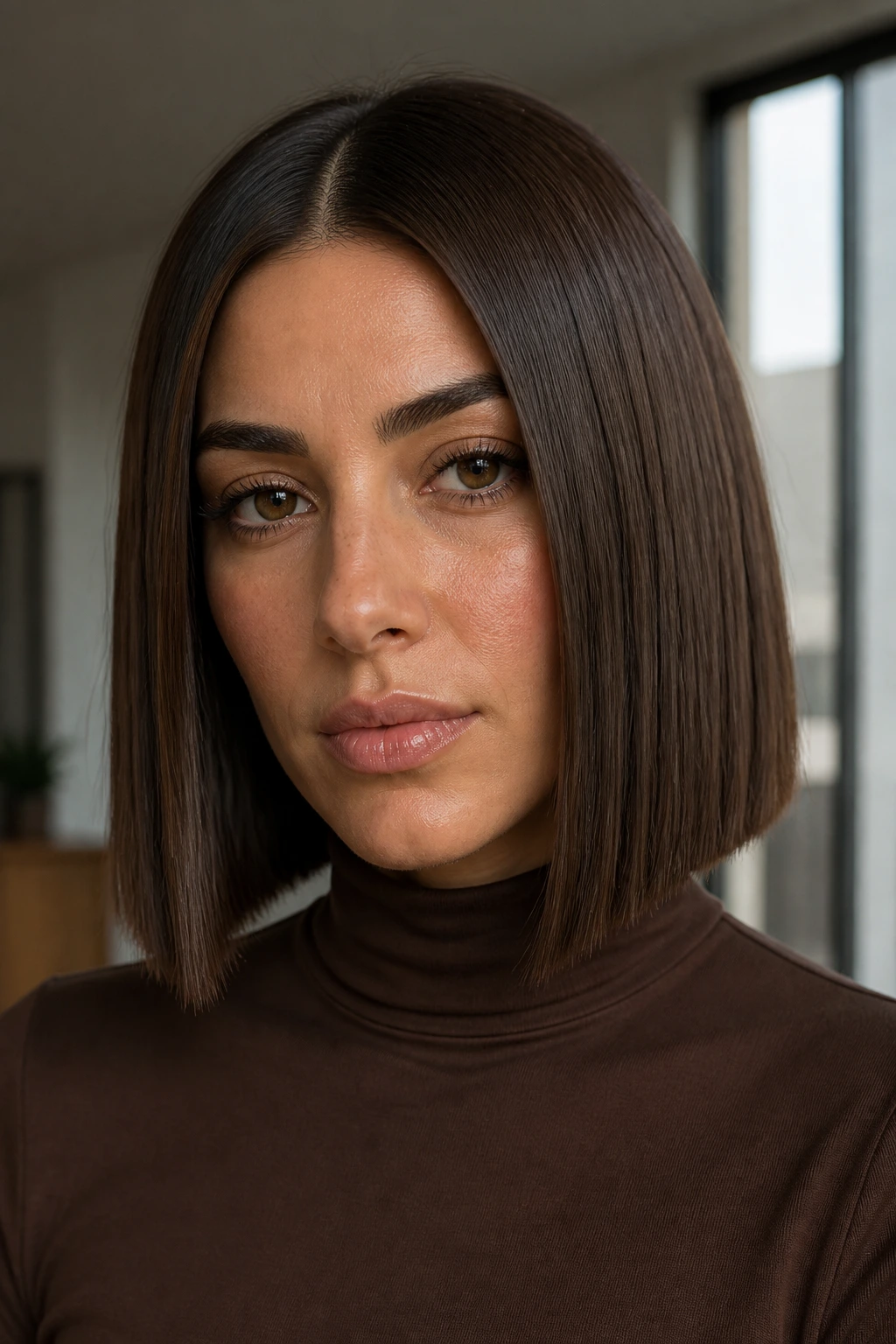
Mocha brown is the safe word I use when someone wants brunette without too much warmth, too much ash, or too much drama. It sits in that balanced middle. A blunt cut turns it into something cleaner and more deliberate, especially on fine or medium hair.
The blunt line matters because mocha is a shade that can disappear if the cut is too layered. Keep the hemline even, add a center part, and finish with a smoothing cream that doesn’t dull the sheen. On olive skin, mocha often works because it looks like your natural hair’s best version — deeper, cleaner, and more even.
9. Hazelnut Curls
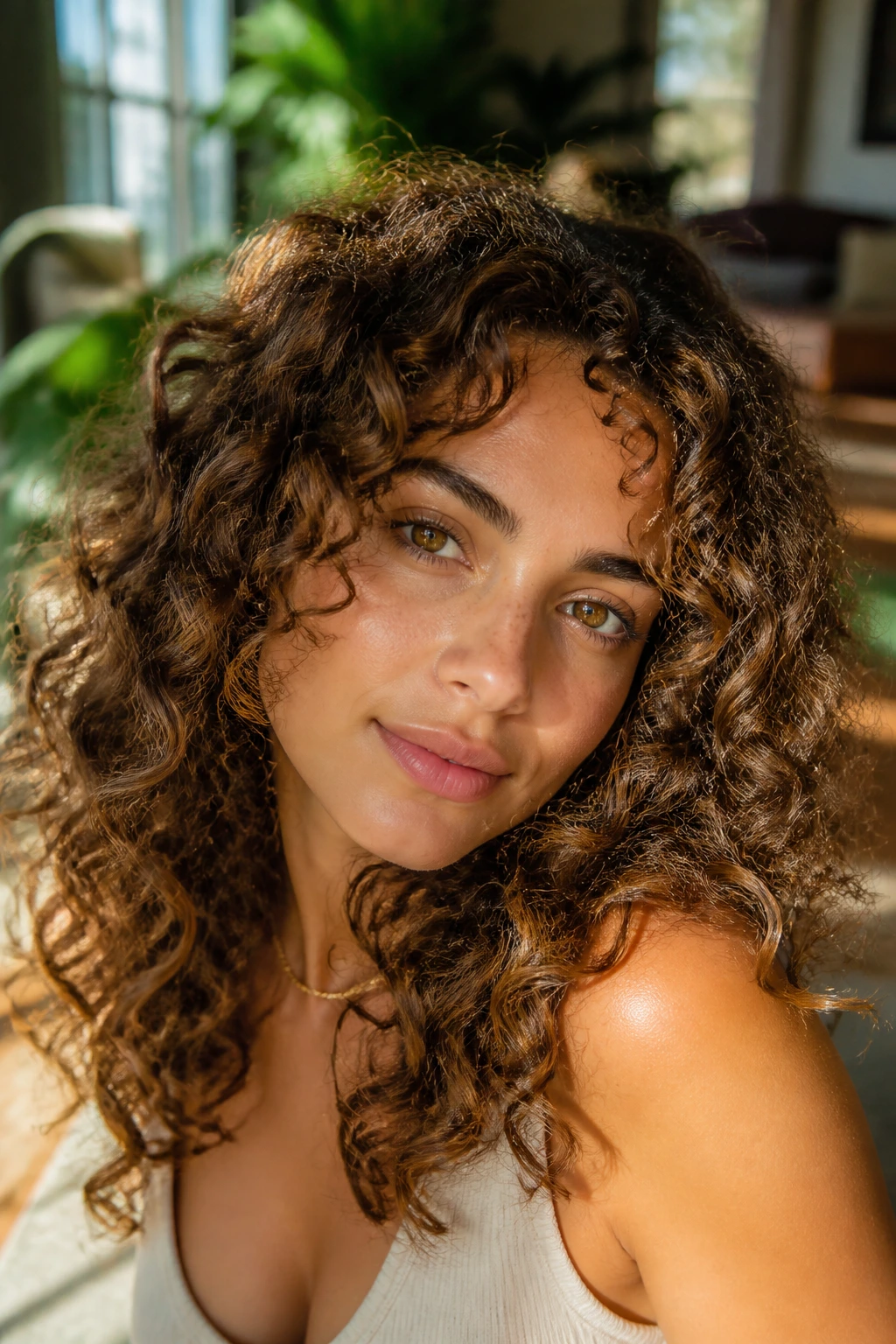
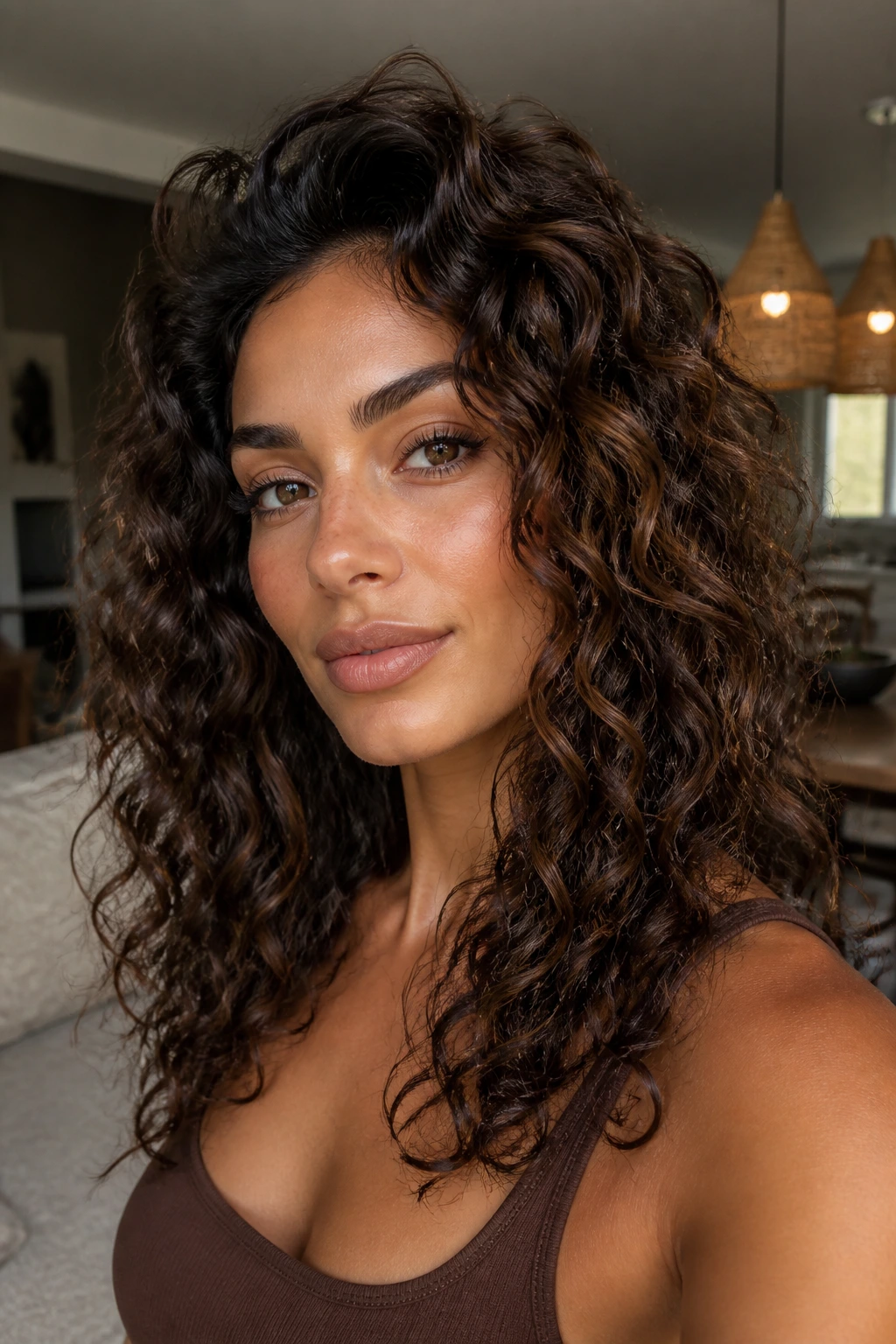
Hazelnut brown is softer than espresso and warmer than mushroom, which is why curls love it. The tone gives ringlets and waves a little glow without turning them copper. On olive skin, that middle ground often reads fresh instead of forced.
This is a good pick if your hair already has natural texture and you don’t want to flatten it with a dark, heavy color. The curls should stay defined, and the brown should have enough tone variation that the shape shows in daylight. If your ends are porous, they’ll grab warmth first, so keep those ends trimmed or lightly glossed.
How to Wear It
A side part can make hazelnut curls feel romantic; a center part gives them a cleaner line. Either way, keep the curl pattern hydrated. Dry brown curls go dull fast, and dull is the enemy here.
10. Smoky Brown Butterfly Layers
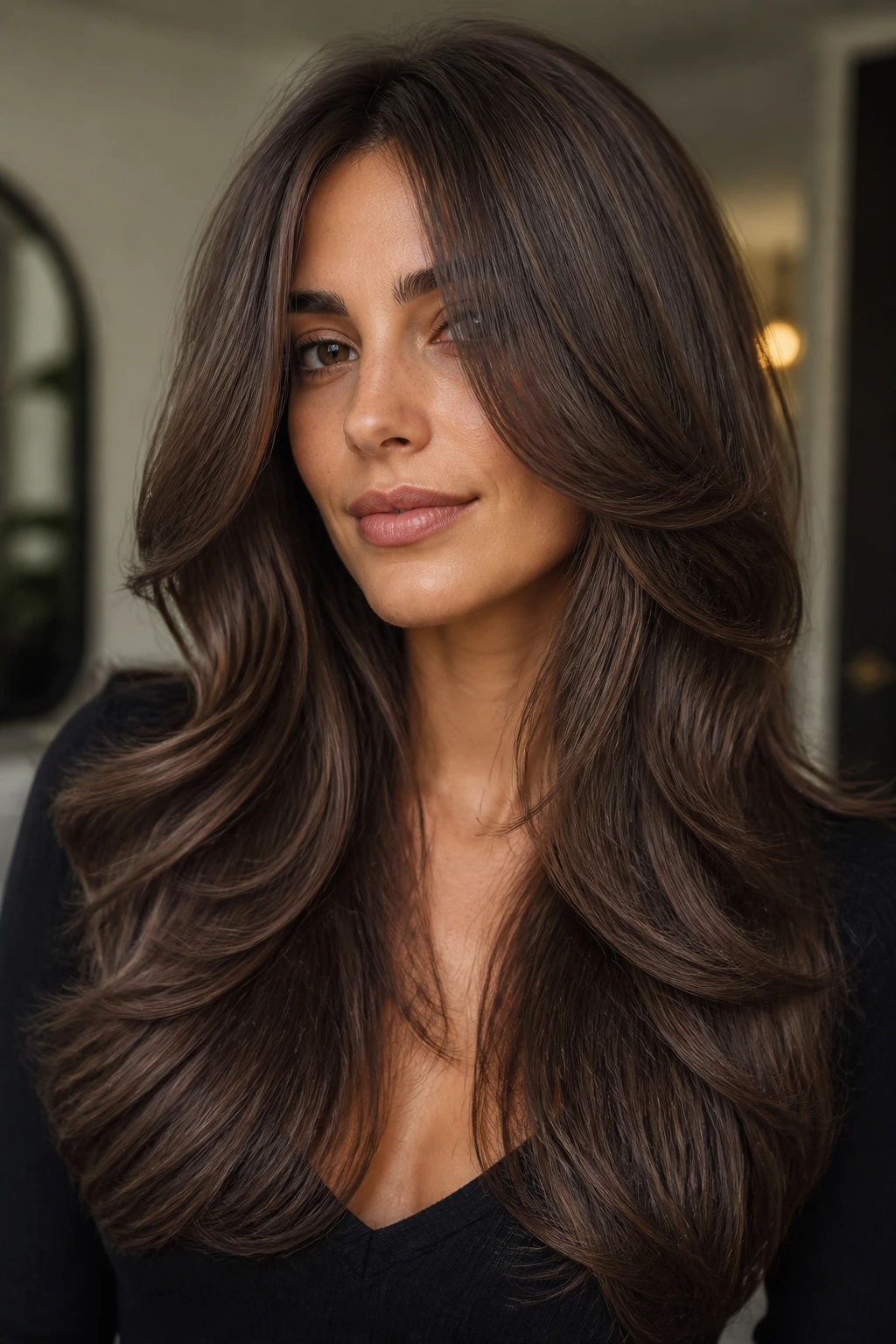
Smoky brown butterfly layers are one of those looks that sounds soft but lands with real shape. The color stays cool-neutral, and the long layers around the face give the hair movement without bleaching the front pieces. That’s the key. You get the lift, not the damage.
This style works best on medium to long hair that can hold a blowout or soft bend. The butterfly cut brings the hair away from the face at the cheekbones, which is flattering on olive skin because it frames the complexion without overloading it with brightness. The smoke in the brown keeps everything calm. If you want a dramatic brunette that still feels wearable, this is a strong one.
11. Cinnamon Textured Crop
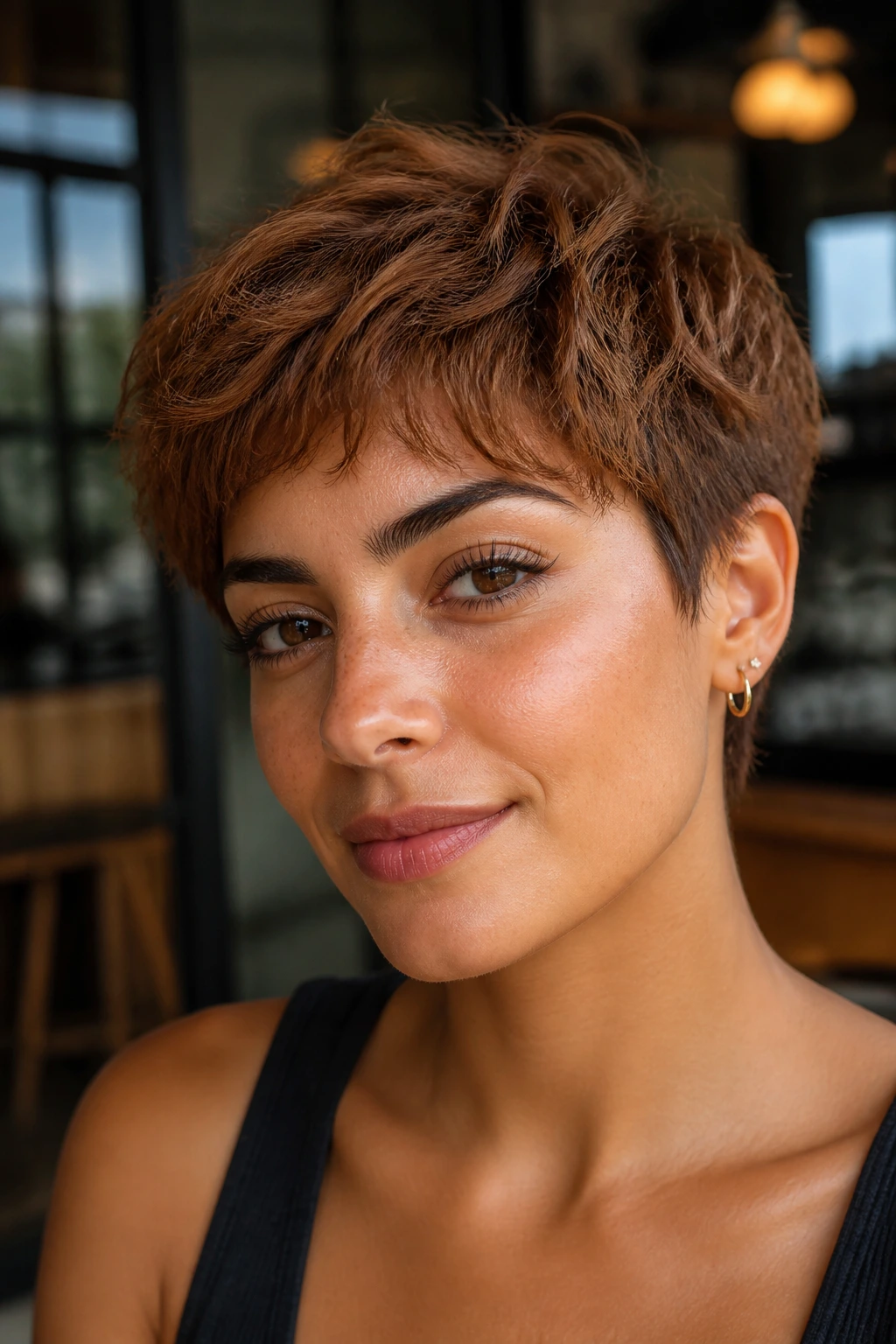
Cinnamon brown has more warmth than cocoa, but on the right olive skin it brings life to the face. Keep the crop textured and short, either just above the ears or softly rounded at the nape, and the color will feel lively instead of fussy. The texture matters because a short, smooth cinnamon cut can look too neat.
This is a good choice if your olive undertone leans golden. The warm brown pulls the skin forward instead of leaving it behind the hair. Ask for piecey definition at the top and a little softness around the temples. It should look like hair that moves, not a single block of shade.
12. Dark Chocolate Sleek Ponytail
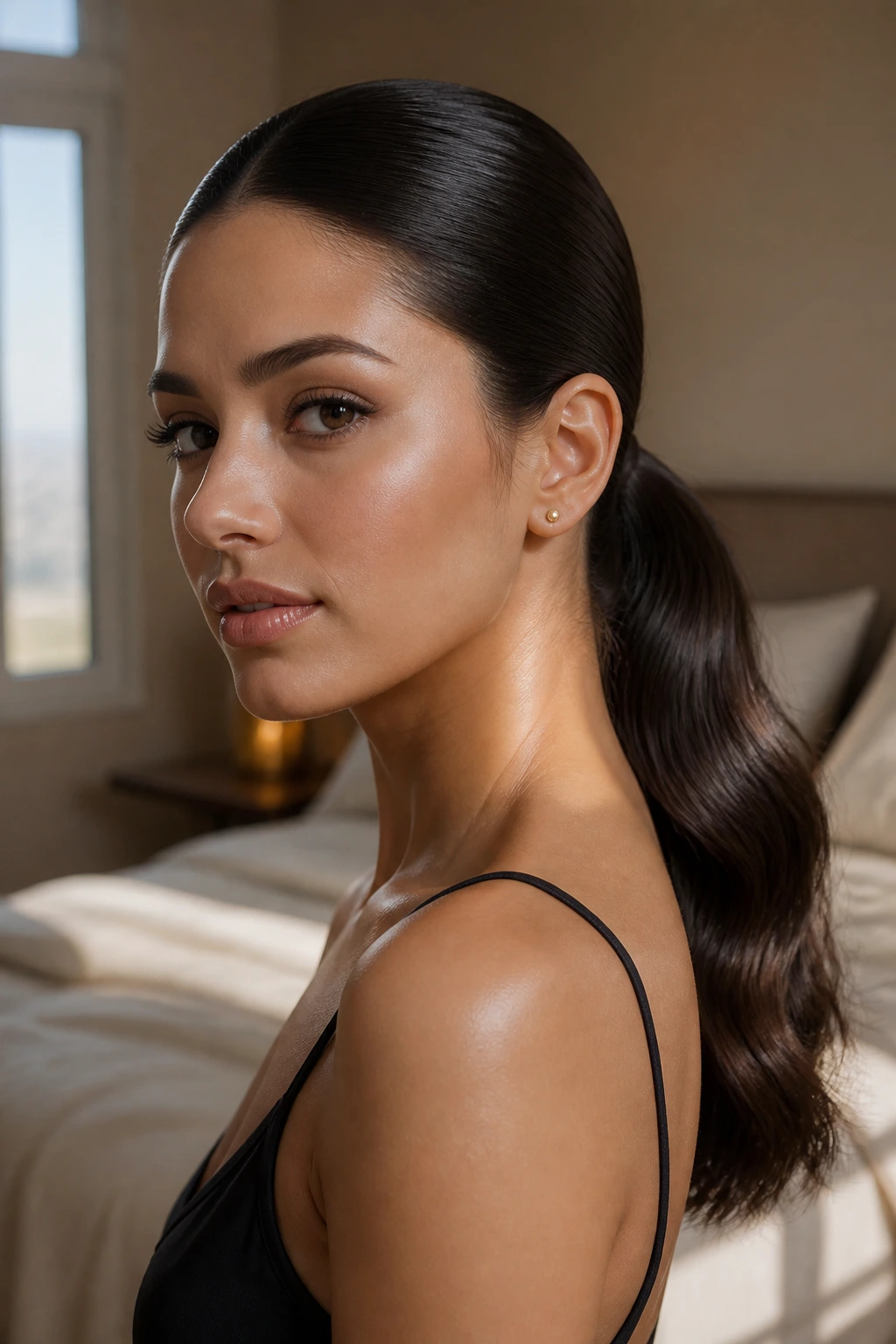
Dark chocolate brown in a sleek ponytail is a clean, almost severe look, and I mean that as a compliment. It gives olive skin a sharp outline, especially if the skin has a cooler undertone or your features are already strong. The ponytail keeps the color practical. The chocolate keeps it rich.
Pull the hair back low and tight, then smooth the surface with a light serum or edge control if your hairline needs it. Leave the tail straight, softly waved, or lightly curled at the ends. The point is the shine. On this style, dullness shows fast, so keep the finish polished and neat.
13. Chestnut Ribbon Blowout
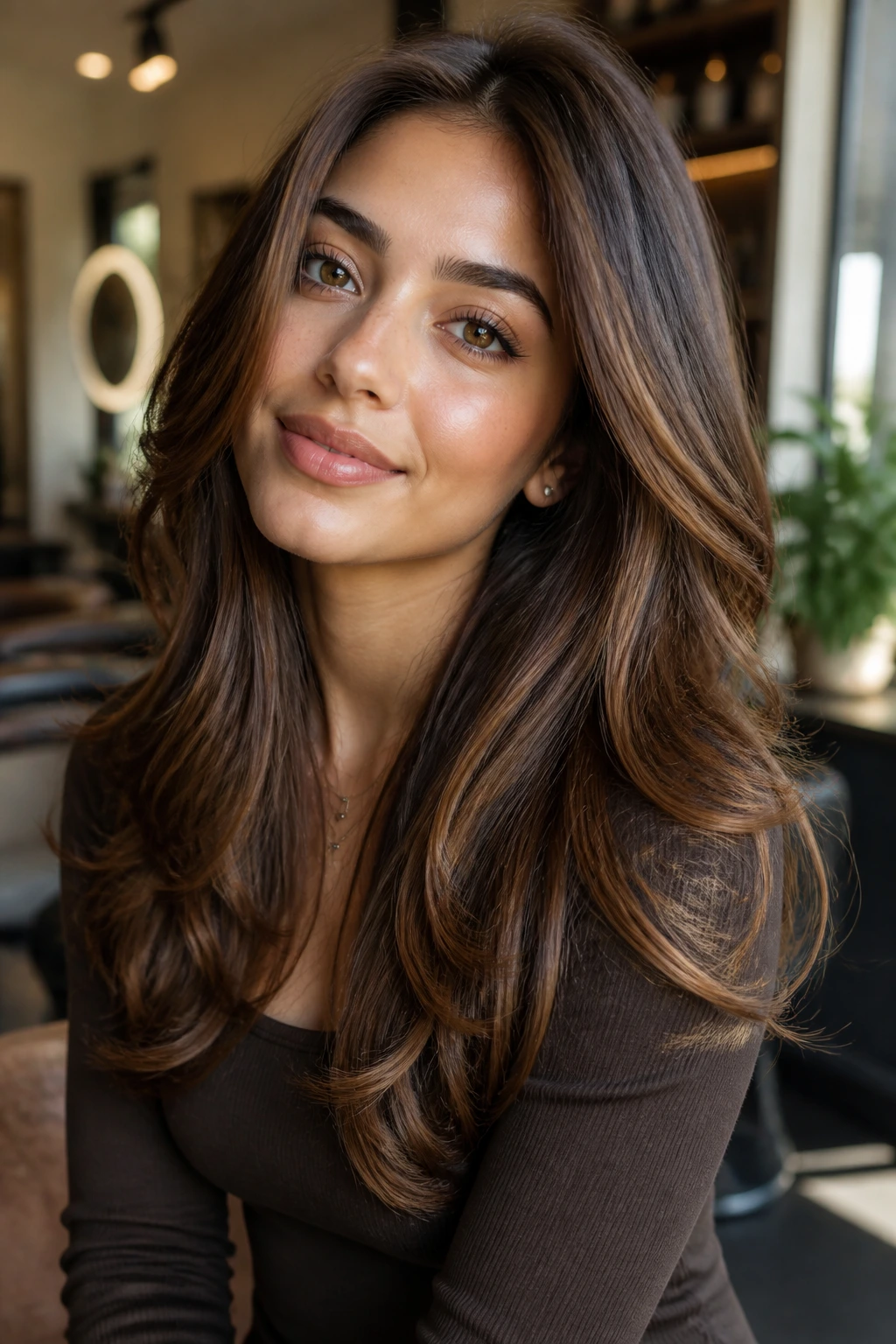
A chestnut ribbon blowout feels fuller than a standard brown style because the color has enough warmth to catch the bends in the hair. The “ribbon” effect comes from the way light moves across the layers, not from bleach. That makes it a smart no-bleach option for olive skin that wants dimension without light pieces.
This look works best on medium-length or long hair with a round-brush finish. Keep the chestnut rich at the roots and slightly softer through the ends. The color should look like one brown family, not a stripe pattern. On olive skin, that warmth can soften the face and make the eyes look less flat.
14. Carob Twist-Out
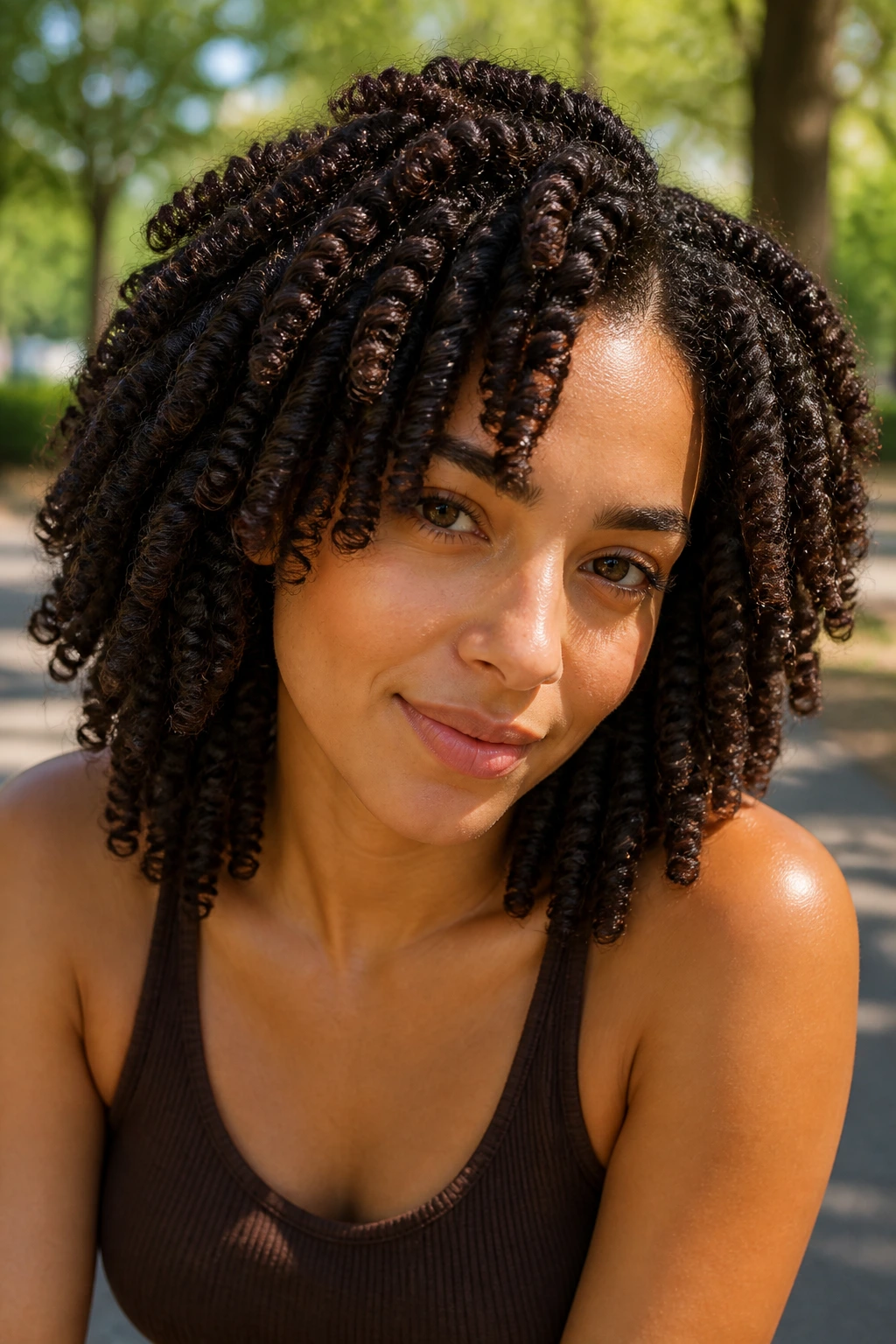
Carob brown on a twist-out is one of the prettiest ways to show natural texture on olive skin. It’s deep, dark, and clean, with just enough warmth to keep coils and curls from disappearing into the background. The twist-out pattern gives the color shape, which matters because brown needs movement.
Use a leave-in that gives slip, twist on damp hair, and separate only when the hair is fully dry. The color itself doesn’t need to be bright. It needs to be even. On olive skin, deep carob tones tend to make the complexion look steadier and the texture look richer.
15. Rosewood Brown Lob
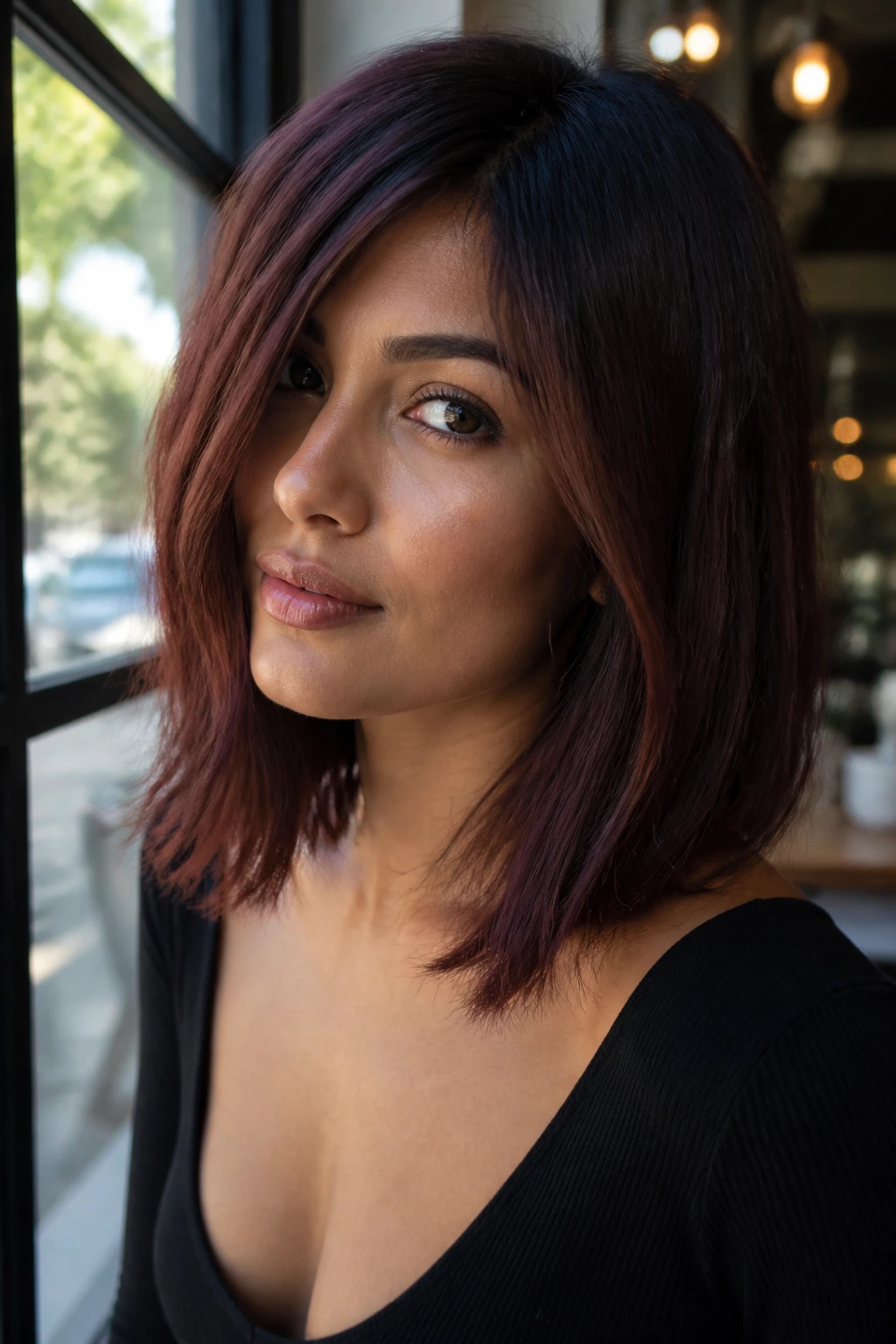
Rosewood brown sits between brunette and muted red, and that little rose note can be excellent on olive skin with a neutral or slightly cool cast. It’s softer than mahogany and less orange than cinnamon, which gives it a nice middle lane. Pair it with a shoulder-grazing lob and gentle face framing.
This shade likes shine. A dull rosewood brown can look dusty; a glossy one looks deliberate. If your skin turns a bit gray next to very cool browns, rosewood may solve that without pushing the hair into copper. It’s a good choice when you want something brunette but not plain brunette.
16. Cocoa Knotless Braids
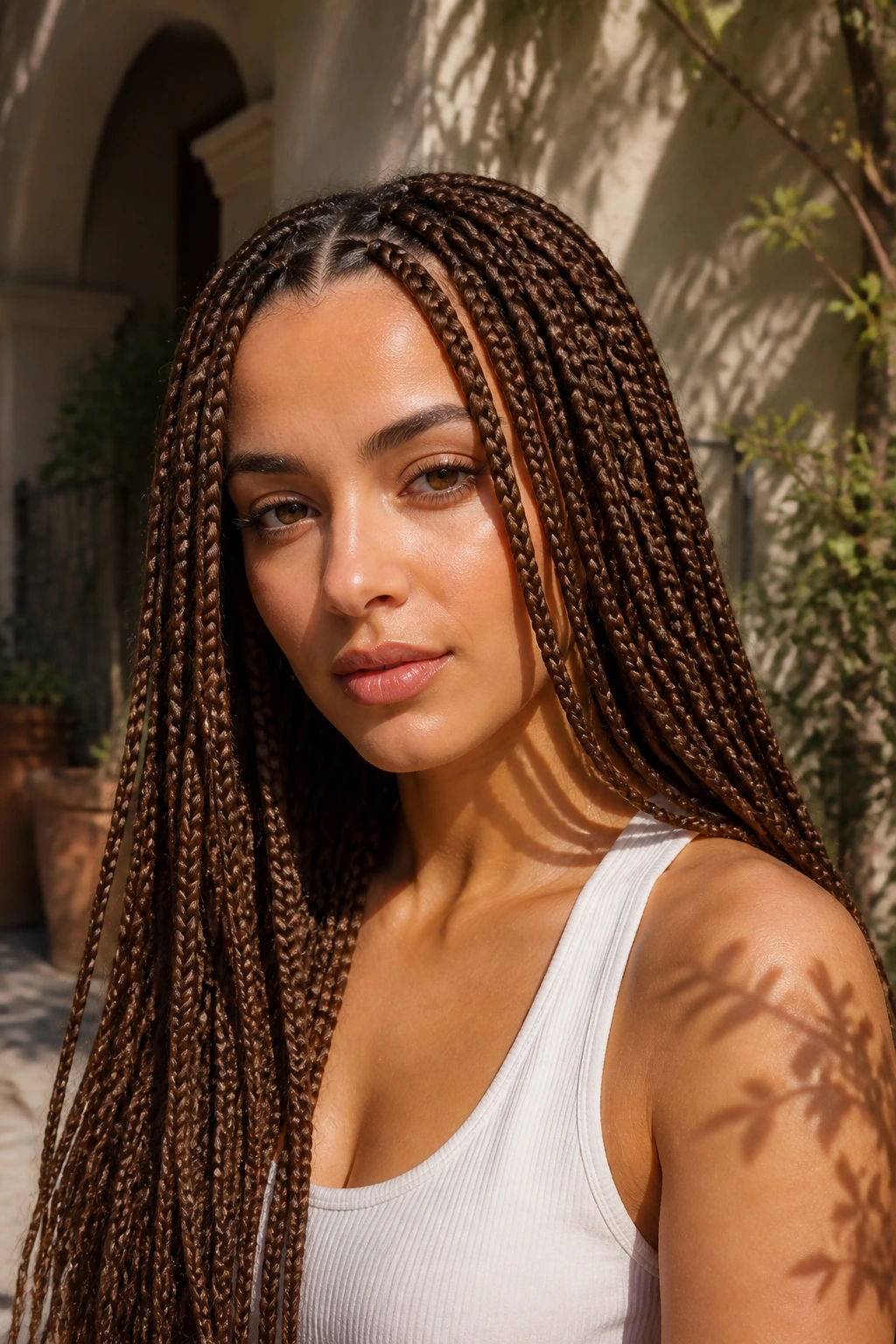
Knotless braids in cocoa brown extensions are one of the easiest ways to get a no-bleach brunette look with strong shape. The brown extensions do the color work for you, and the braids keep the finish clean around the face. On olive skin, cocoa braids read warm enough to feel alive, but not so bright that they fight the undertone.
Choose a shade that sits close to your natural brown at the root, then go a shade or two lighter through the lengths if you want movement. That small shift looks richer than a dramatic contrast. The braids should feel light at the scalp. If they’re too heavy, the whole look loses its line.
17. Iced Mocha Shoulder Cut
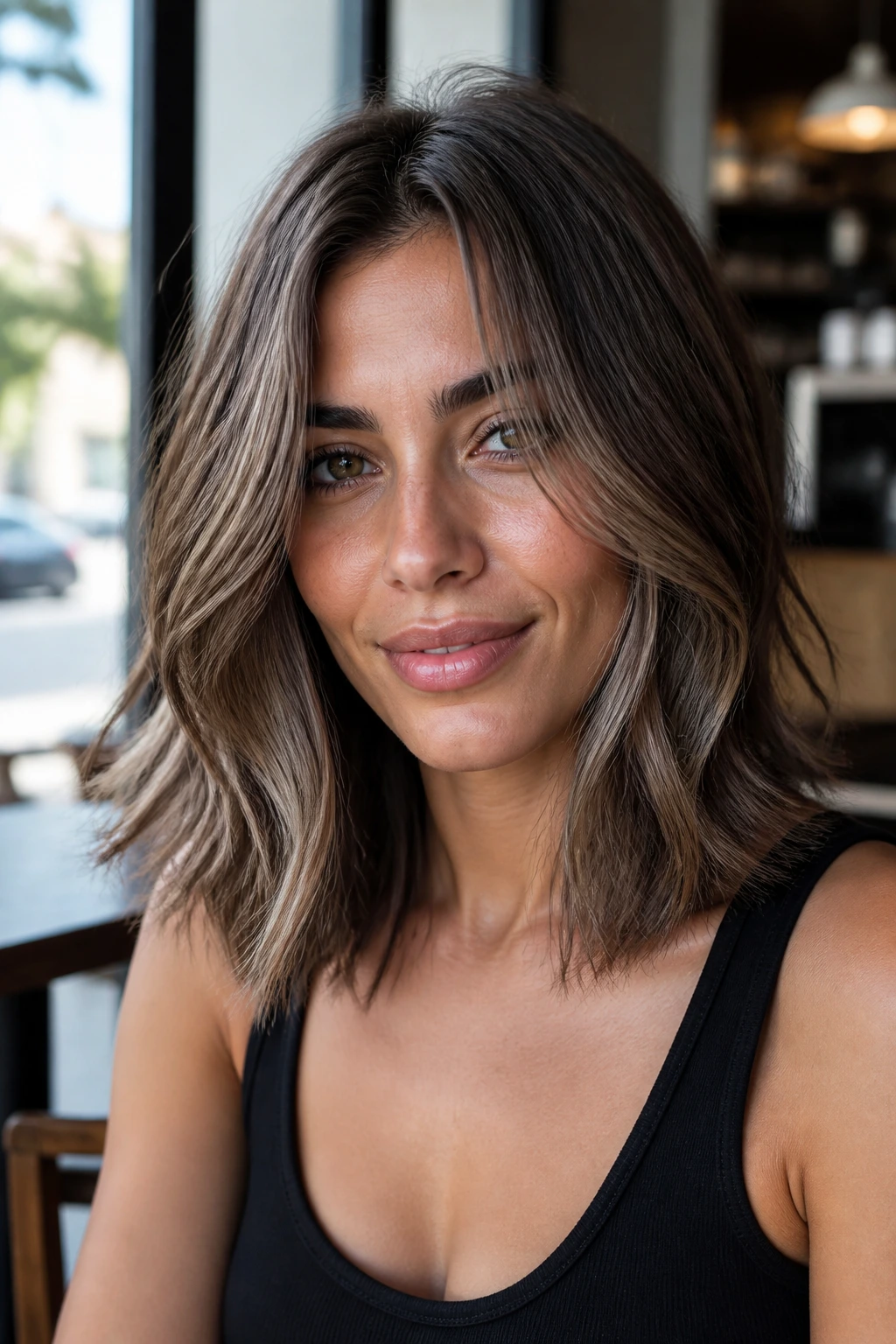
Iced mocha is for the olive complexion that likes brown with a chillier edge. It has the softness of mocha, but with a cooler finish that keeps the shade from getting too warm or too red. A shoulder cut gives it enough surface to show the color’s quiet shift.
This cut should move at the ends, either with a subtle bevel or soft layers. That way the iced mocha catches light along the outer edge instead of looking like one dark slab. It’s a solid option if your hair is straight or lightly wavy and you want a brunette that feels controlled.
18. Walnut Face-Frame Bob
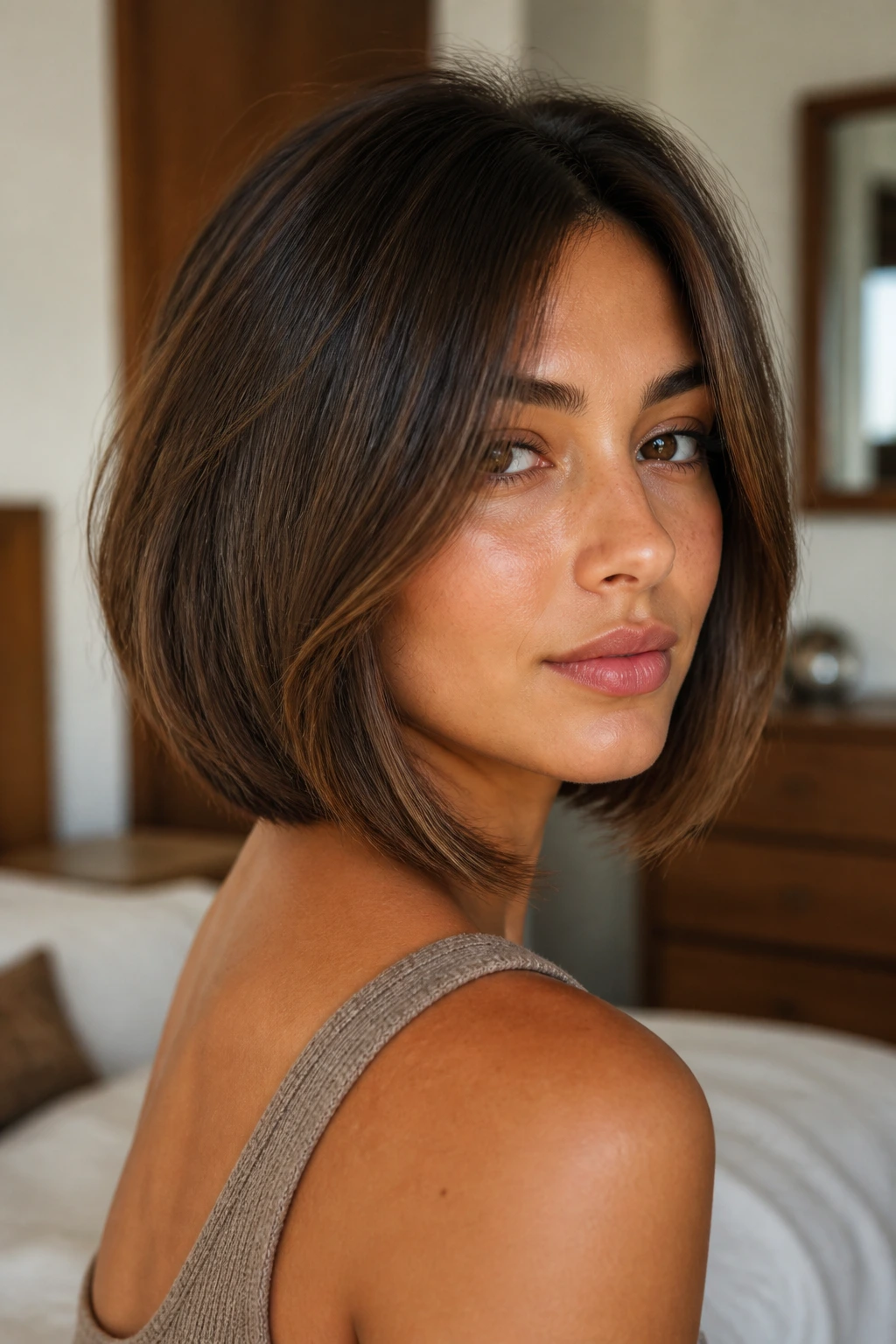
A walnut bob with face-framing pieces is a smart compromise between structure and softness. Walnut sits in that medium-dark brown zone that doesn’t shout, and the face frame keeps the style from feeling too severe on olive skin. You get shape near the cheekbones without bleaching anything.
Ask for the front pieces to graze the chin or the top of the jaw, then keep the back a little shorter if you want movement. This works especially well on dense hair because walnut can handle weight better than a lighter brown. The shade stays grounded; the cut does the talking.
19. Burnt Sugar Waves
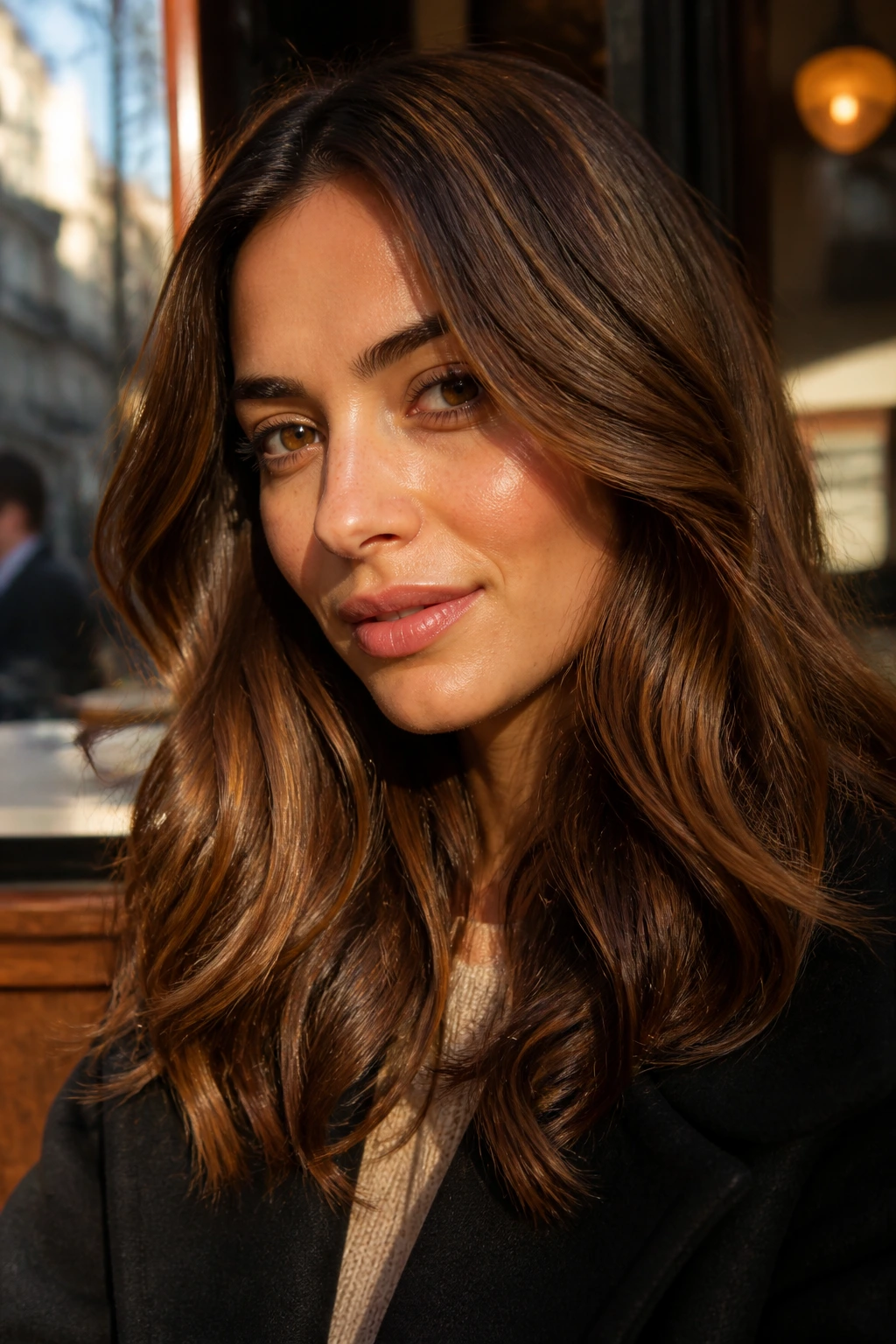
Burnt sugar brown has a warm edge, but it’s still brown first. That distinction matters. Too many warm brunettes tilt orange, then olive skin starts looking like it’s competing with the hair. Burnt sugar avoids that by staying deep and glossy, with just enough warmth to feel inviting.
Soft waves are the right match. They let the color show in bends rather than as one flat tone. If your hair tends to look flat in photos, this shade can fix that without bleach, because the warm reflection creates depth where the eye lands first.
20. Sable Half-Up Claw Clip Style
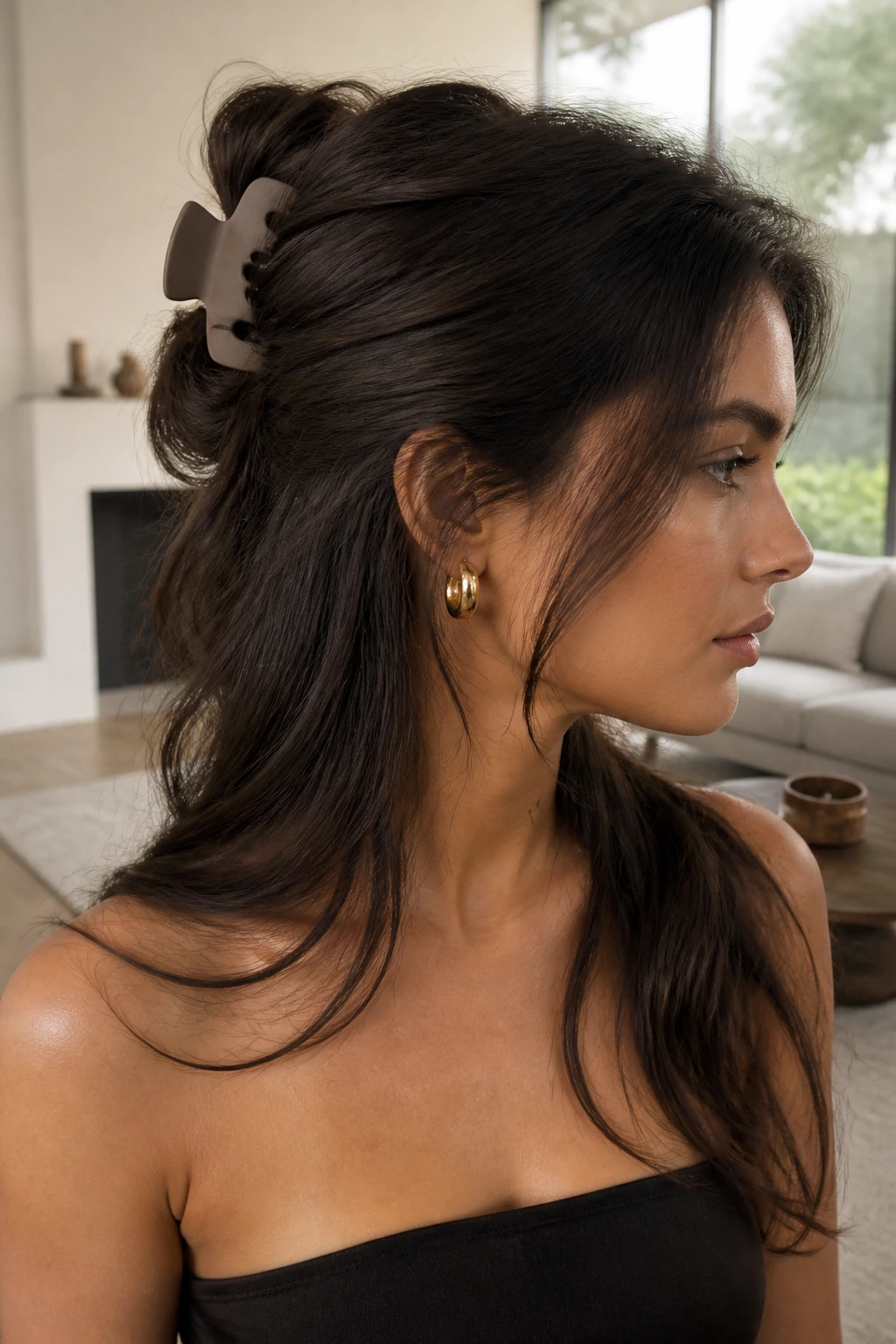
Sable brown in a half-up claw clip style is simple, but don’t mistake simple for boring. Sable is a dark, cool-leaning brunette that looks especially crisp on olive skin with neutral or cool undertones. The half-up shape lifts the face and gives the color some height.
Pull the top section loose enough to keep a little volume at the crown, then clip it with a matte or tortoiseshell clip. Let the bottom section fall straight or softly bent. This look is good when you want brown hair to look intentional without needing a full blowout every morning.
21. Mocha Melt Curls
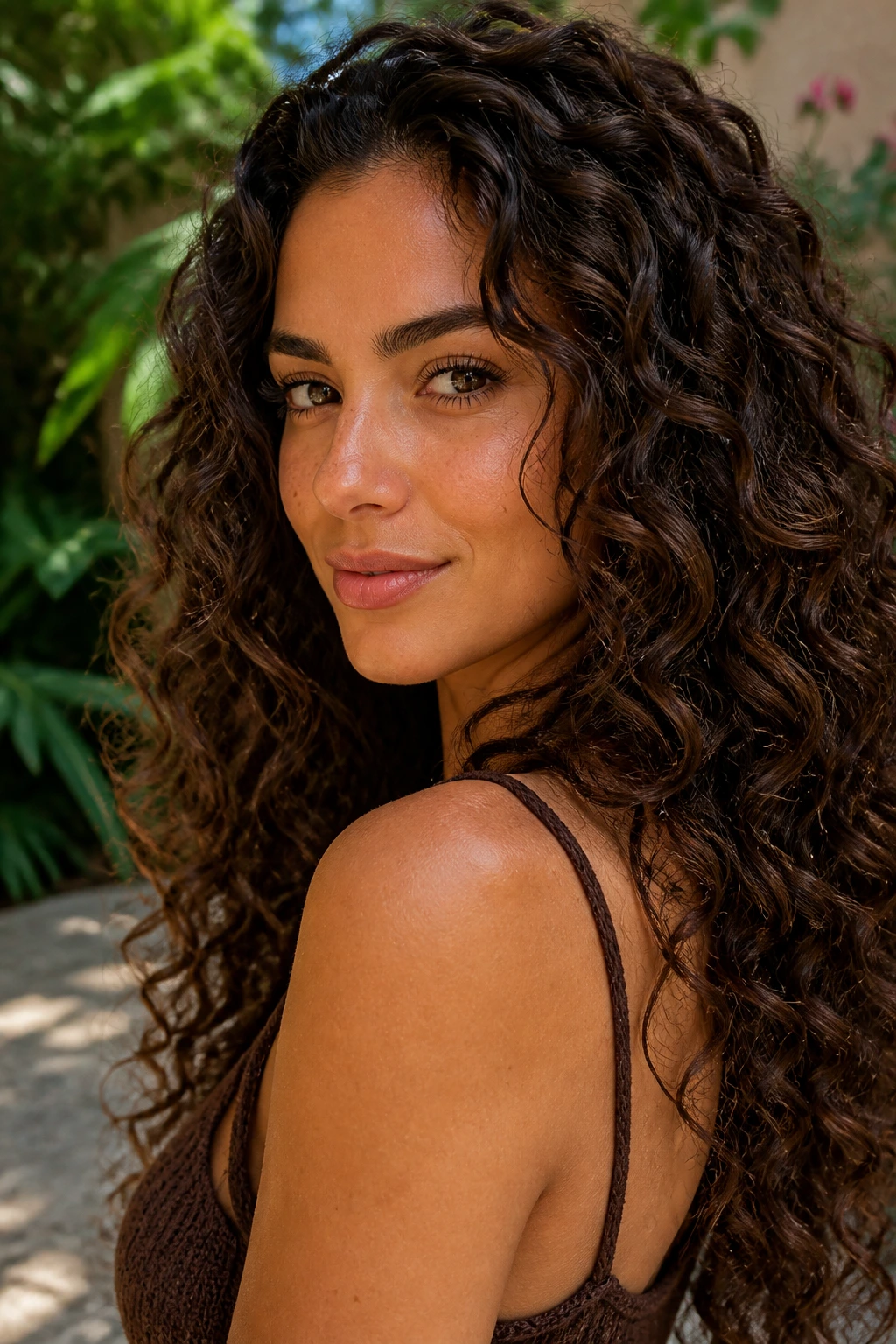
Mocha melt curls are less about bright contrast and more about gentle tonal shift. The roots stay deeper, the mids soften a touch, and the curls carry the rest. On olive skin, that melt effect keeps the color from looking blocky, which is the most common brunette problem I see.
This style works on natural curls, heat-set curls, or flexi-rod sets. The important part is that the brown stays within one family. No harsh stripes. No blonde pieces. Just a smooth brunette range that gives the hair motion and lets the skin stay the focus.
22. Chestnut Shag with Micro Bangs
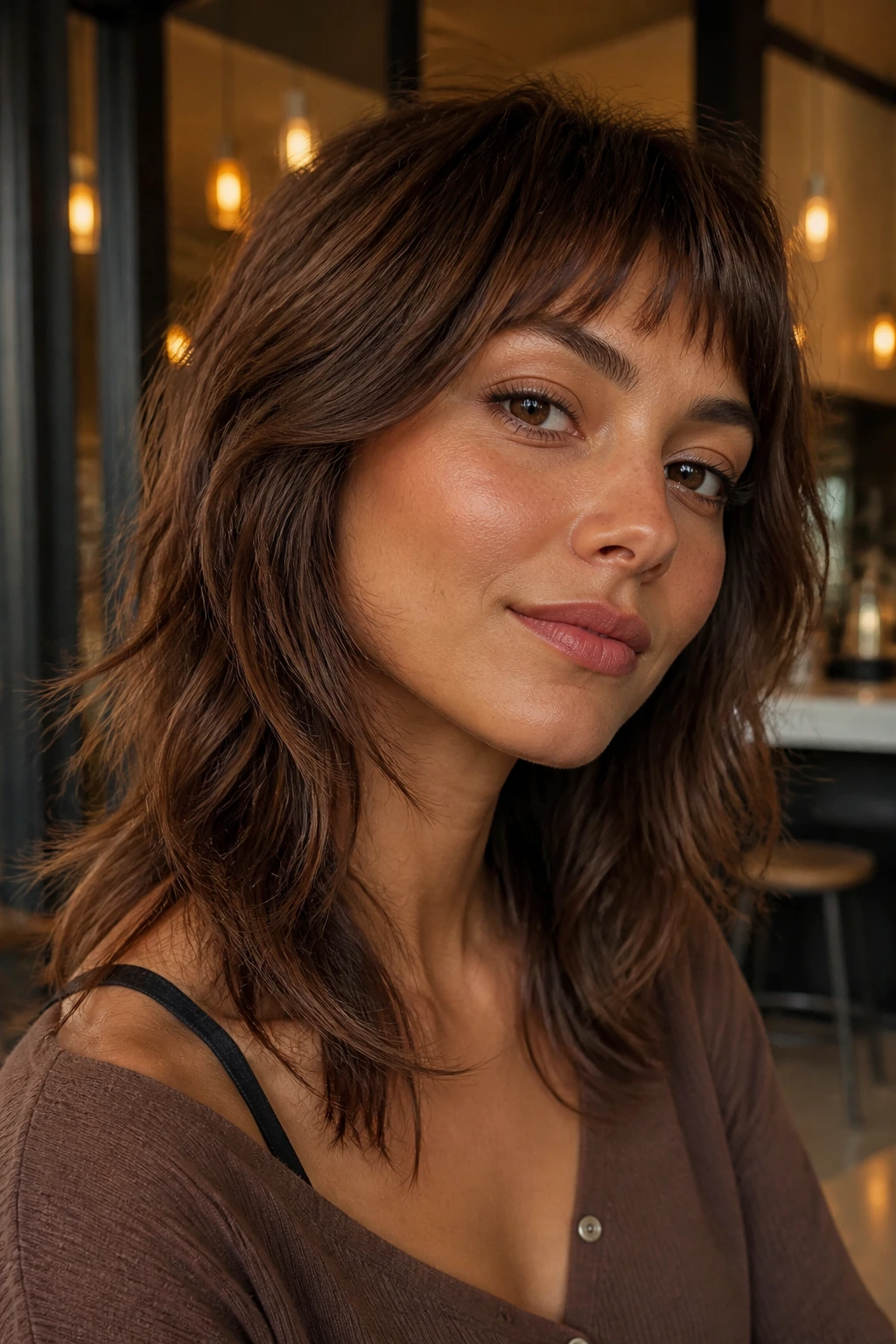
A chestnut shag with micro bangs is a bold choice, but olive skin often handles it well because the chestnut tone softens the face while the bangs add edge. The short fringe keeps the forehead open and the layered shag stops the style from feeling too neat. It’s playful. A little odd. In a good way.
If your features are delicate, this can make them pop. If your features are sharper, the chestnut warmth balances them out. Keep the micro bangs wispy rather than heavy, or the whole thing can swing toward costume territory fast.
23. Deep Brunette Silk Press
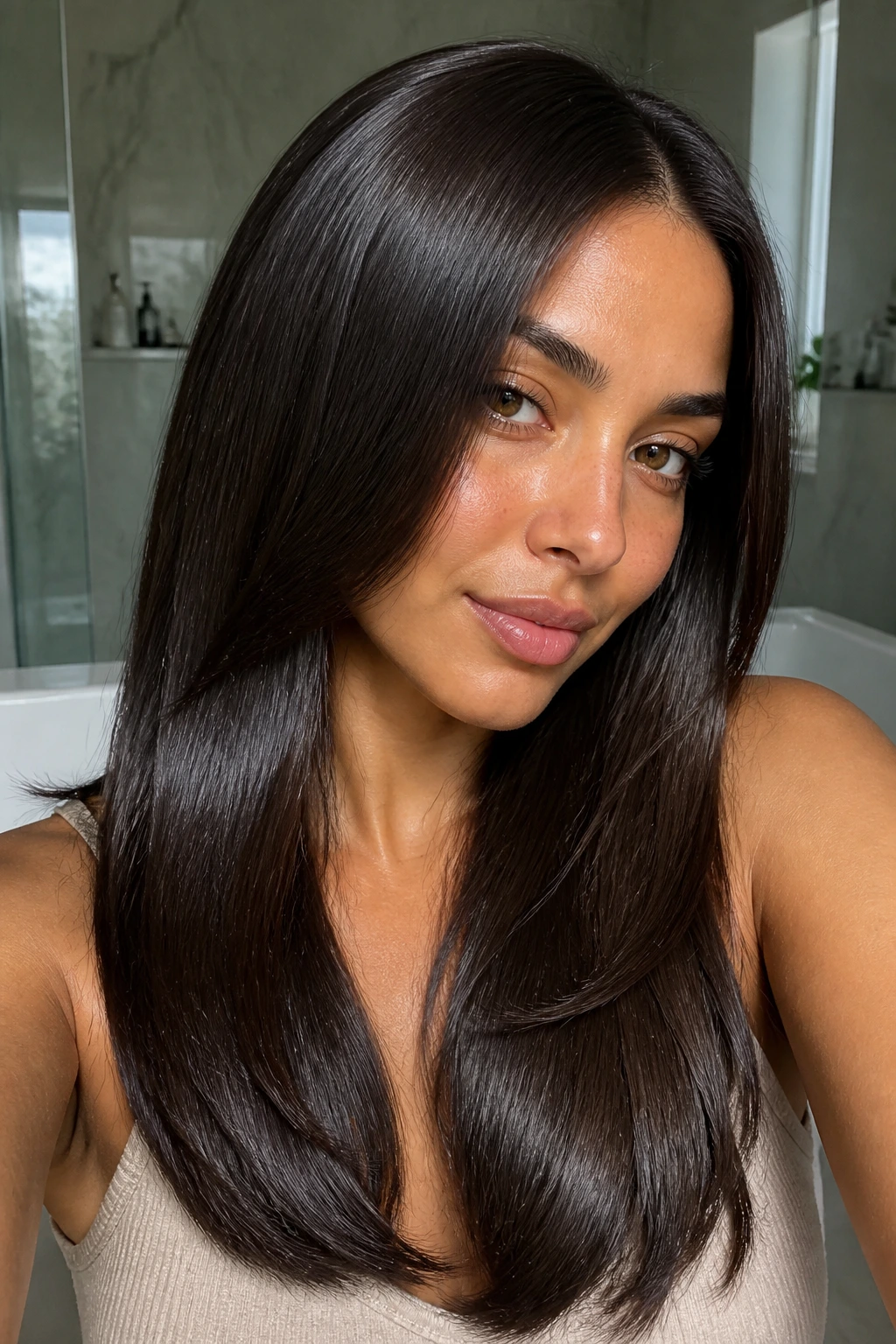
A deep brunette silk press is all about the finish. The shade stays close to dark chocolate or espresso, but the press makes every strand reflect light. On olive skin, that mirror-like surface can look very clean, especially if your undertone likes contrast.
You need heat protection here. Non-negotiable. Start with fully dry hair, press in small sections, and stop once the hair is smooth. If you overdo the heat, the shine turns brittle and the ends start looking frayed. A silk press should move like fabric, not stick like plastic.
24. Smoky Cocoa Braided Ponytail
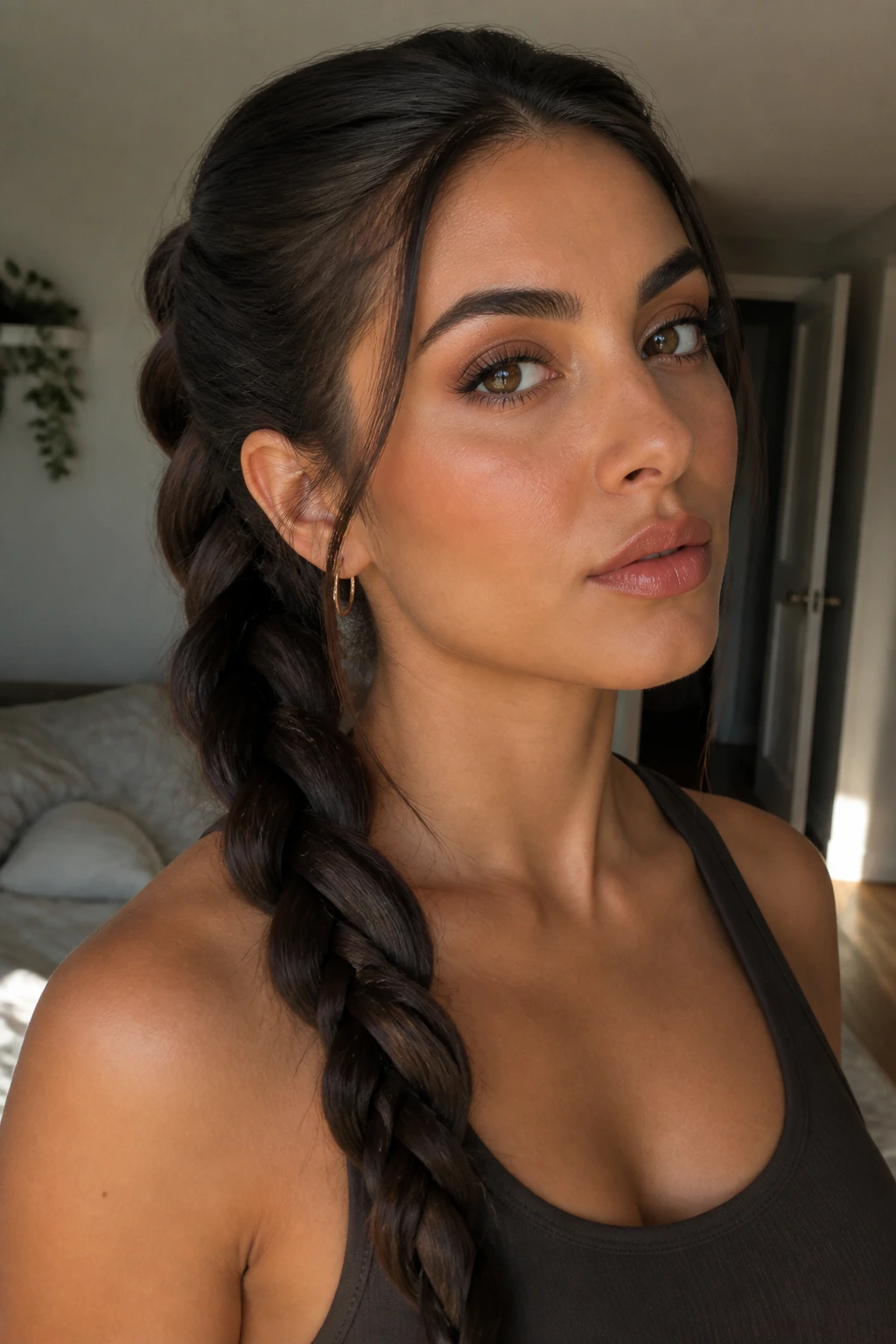
A braided ponytail in smoky cocoa brown gives olive skin a neat frame and a little cool depth. It’s a strong option if you want color that looks deliberate but doesn’t need daily styling. The cocoa tone keeps the braid from looking too flat, especially when the hair pulls back from the face.
Use extensions or your own hair in a shade that matches your roots closely. If the braid is too light, it can look disconnected; if it’s too dark, the detail gets lost. The good version of this style feels clean at the scalp and rich through the length.
25. Velvet Brown Long Layers
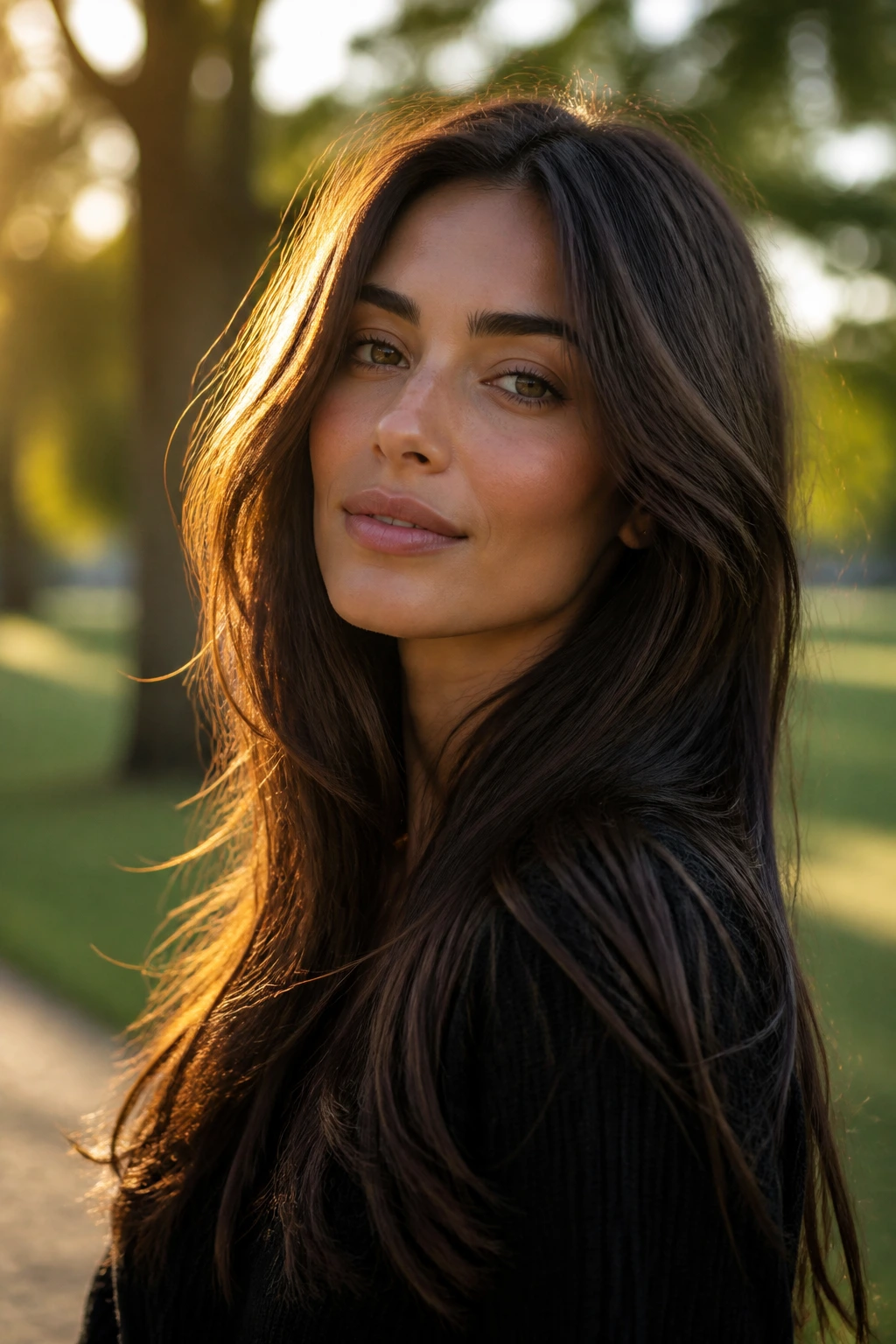
Velvet brown is the last shade on this list because it might be the most underrated. It’s soft, deep, and smooth-looking, with enough richness to flatter olive skin without screaming for attention. Long layers make the color shift gently as the hair moves, which is where velvet brown really earns its name.
This is a strong choice if you want a brunette that lives in the background and still makes the skin look more even. Keep the layers long enough to show movement, and ask for a gloss finish rather than a flat permanent dye if your hair pulls warm. The result should feel lush, not harsh.
Why Brown Works So Well on Olive Skin
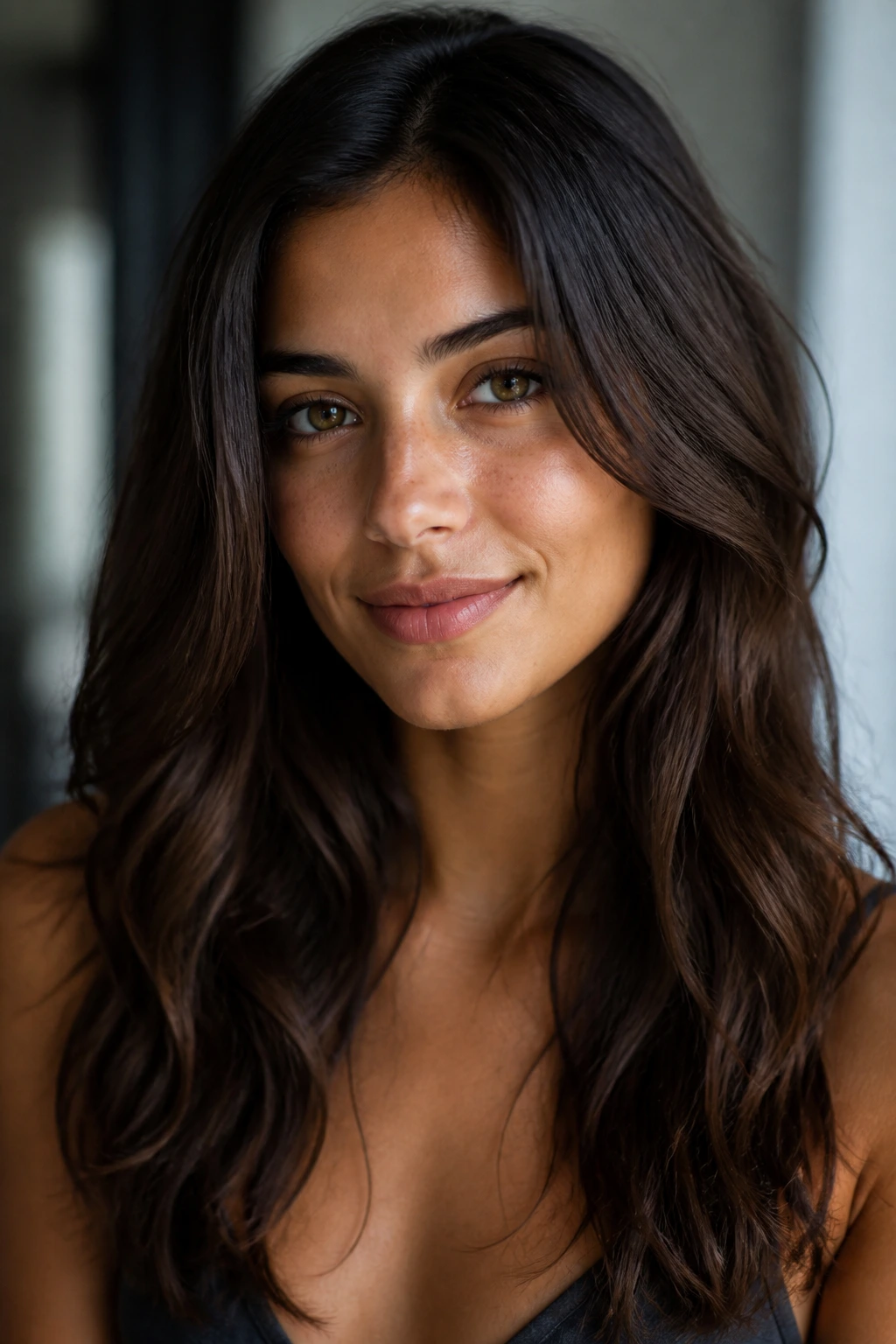
Olive skin is a funny thing. It can look golden in one room, green-gray in another, and perfectly neutral in a third. That’s why brown hair has such a strong hold here: brunette shades can either echo the skin’s muted undertone or give it just enough contrast to make the complexion look cleaner. Bleach is not required for that. In fact, bleach often complicates the whole job by making the hair too bright, too dry, or too warm around the face.
The best no-bleach browns usually live in the middle ground. Espresso, mocha, walnut, chestnut, and mushroom shades all do different jobs, but they share one trait: they keep the color rich enough to support the face. Olive skin tends to look good when the hair isn’t trying to outshine it. That’s why deep glosses, lowlights, and strategic shape often beat a full lightening service.
A lot of people get tripped up by thinking “brown” means one thing. It doesn’t. Brown can be cool, warm, smoky, golden, reddish, or nearly black. On olive skin, the real win is matching the brown to the undertone you actually have, not the one you wish you had. Once that part is right, the rest gets easier.
Tools That Make These Looks Easier at Home
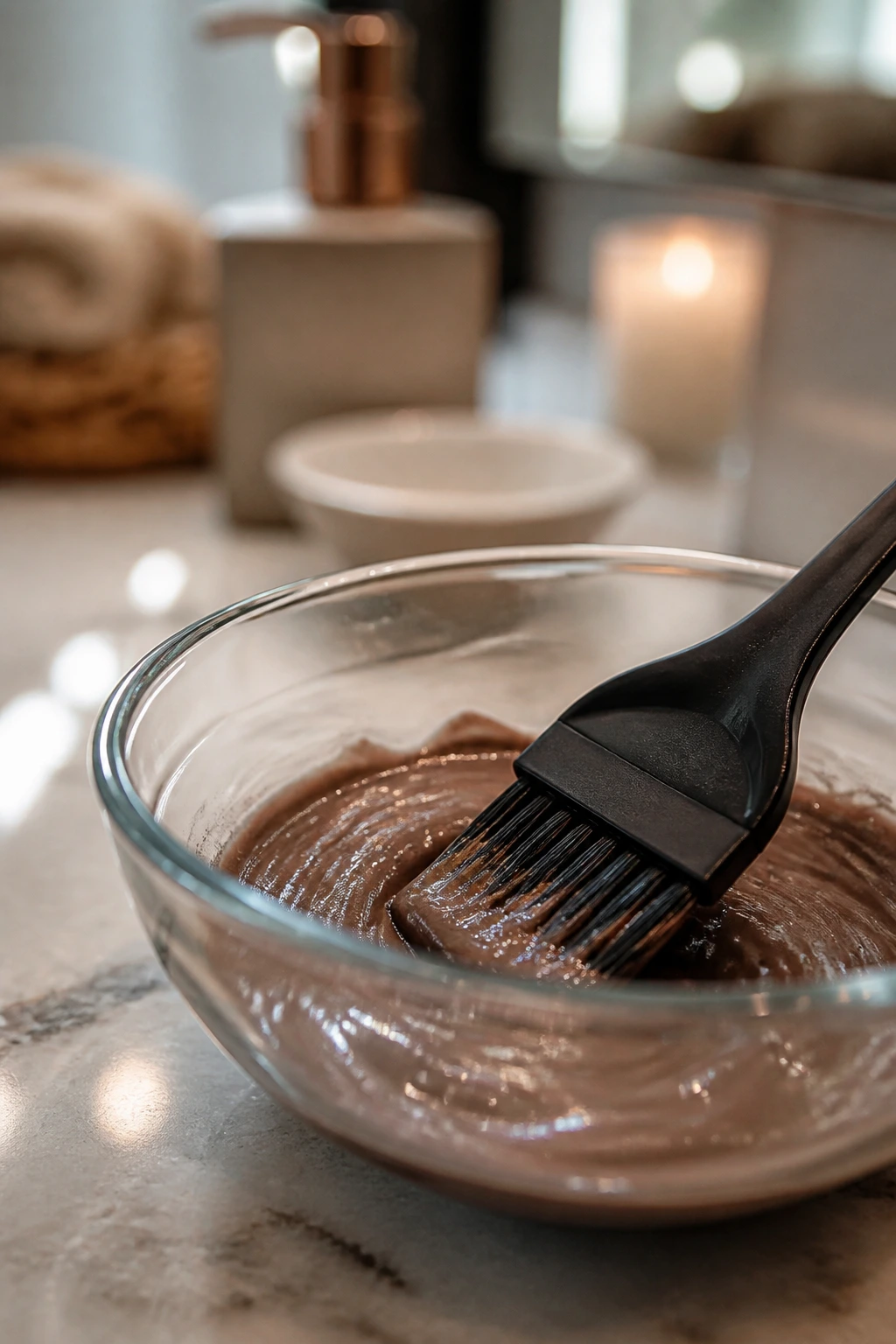
- Tint brush and mixing bowl: Useful for applying a gloss, demi-permanent color, or lowlight formula in clean sections.
- Sectioning clips: They keep hair separated so you don’t miss the back panels or the nape.
- Tail comb: Good for clean parts, especially on bobs, ponytails, and face-framing sections.
- Nitrile gloves: Better than flimsy plastic gloves, and they keep stain control sane.
- Color-safe shampoo: Helps keep brunette tones from fading into dull brown sludge after a few washes.
- Color-depositing mask or gloss: Handy if your shade starts looking flat between salon visits.
- Wide-tooth comb: Safer on curls, braids, and damp hair than a fine comb.
- Heat protectant: Needed if you’re styling with blow dryers, flat irons, or hot brushes.
- Light serum or oil: A small amount brings back shine on the mids and ends without making the hair greasy.
- Root clip or duckbill clips: Useful when setting curtain bangs, blowouts, or soft layers.
Shade Shopping and Formula Notes
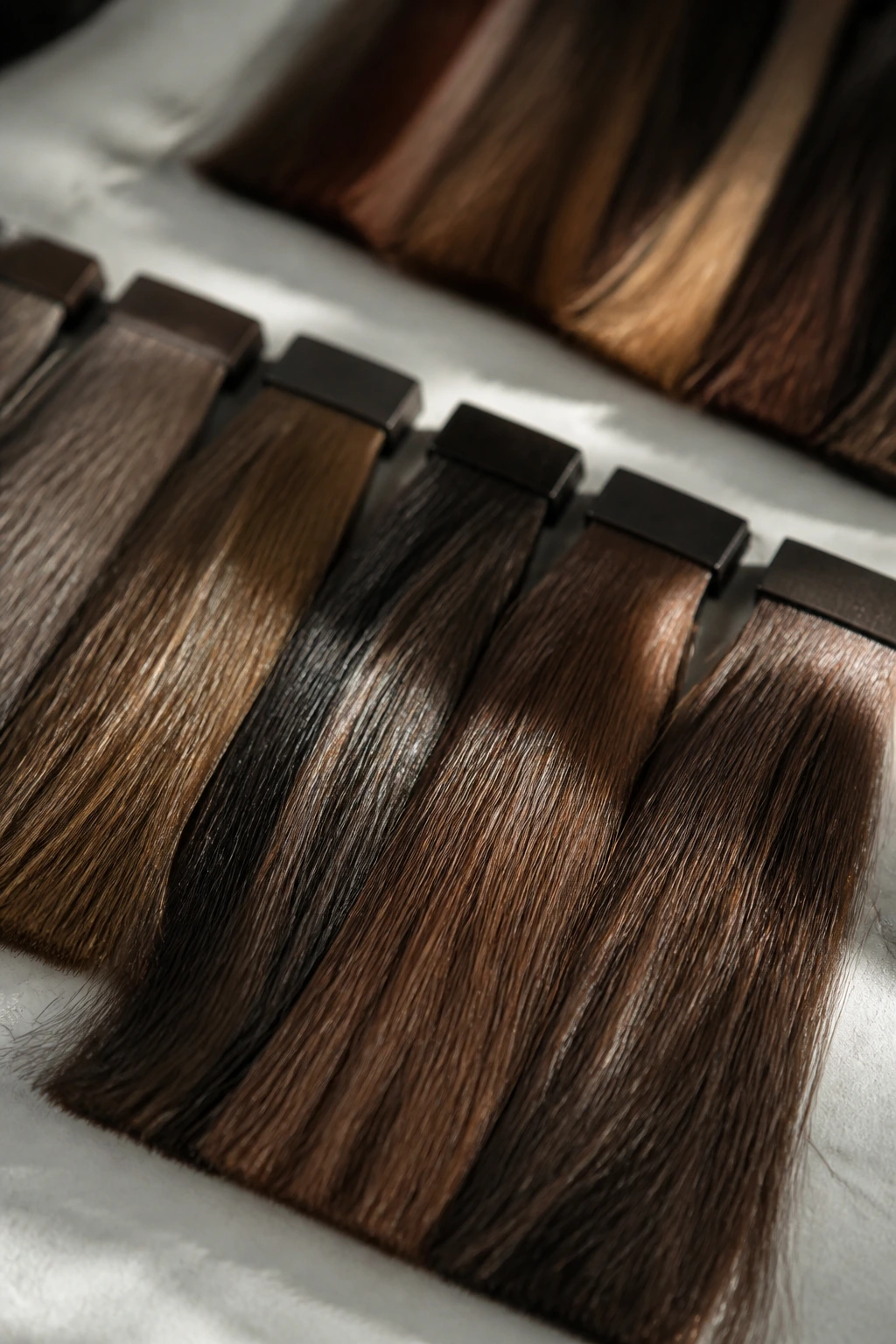
The easiest way to shop for no-bleach brown hair color is to stop thinking in one word terms and start thinking in levels and undertones. If your natural hair sits around level 3 or 4, espresso, chocolate, walnut, and dark mocha will look clean with almost no lift. If you’re closer to level 5 or 6, chestnut, hazelnut, toffee, and rosewood become more visible without forcing lightening. That little detail saves a lot of disappointment.
Olive skin usually likes brunettes that stay balanced. Too ashy, and the skin can look a little gray. Too warm, and the brown can wander into orange or red territory faster than you expect. Mushroom brown, mocha, and iced mocha work well when you want to stay cool. Chestnut, mahogany, and cinnamon help when the complexion needs more warmth. Neutral browns are often the safest bet if you don’t know where to start.
If you’re coloring at home, choose demi-permanent or deposit-only formulas when possible. They sit on the hair in a softer way than permanent dye and are far less likely to turn the ends murky. A strand test matters, especially on porous hair. The ends always tell the truth first, and they usually tell it in a warmer tone than the box promised.
How to Style These Browns So They Frame Olive Skin
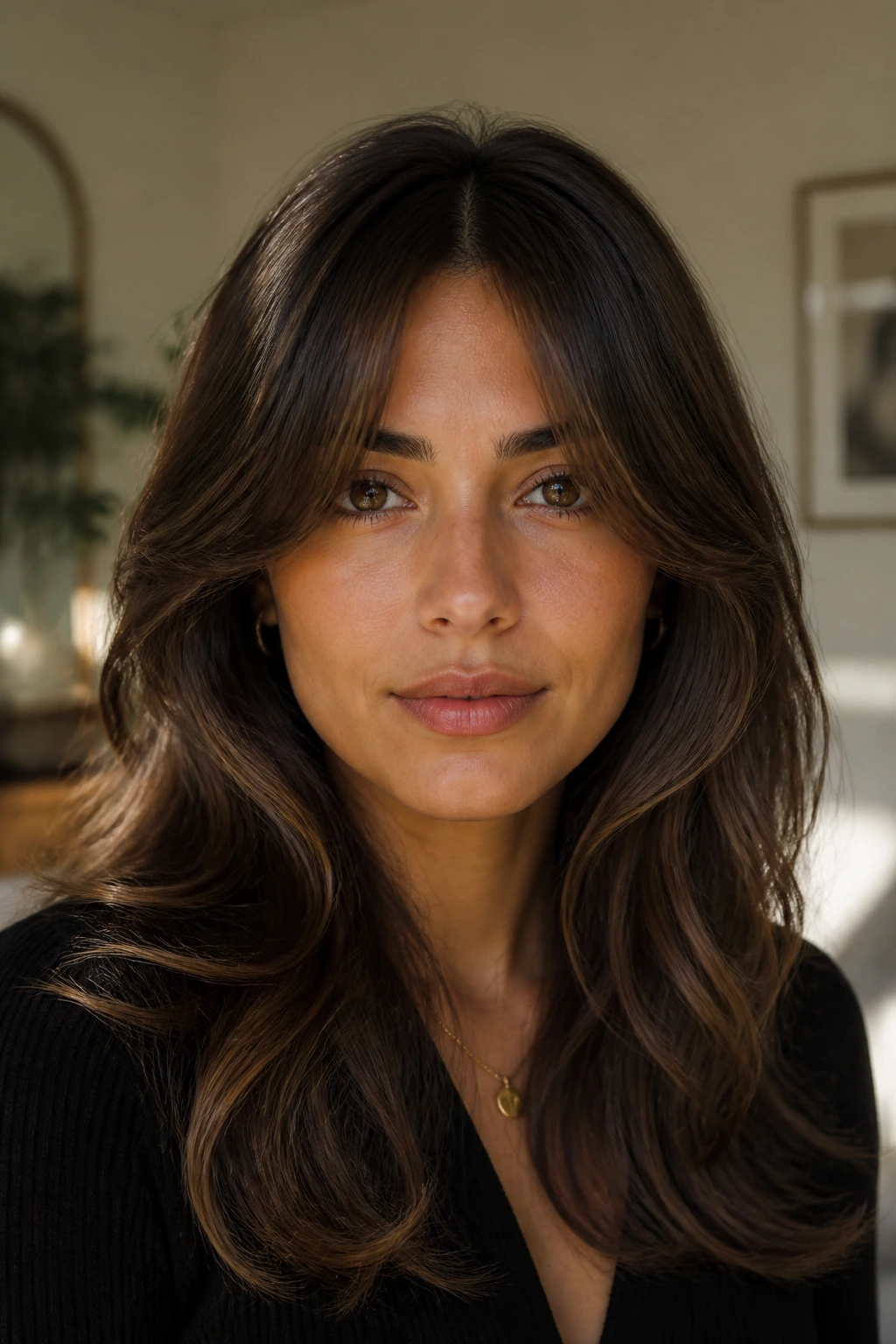
Parting: A center part gives symmetry and works well with blunt cuts, silk presses, and long layers. An off-center part softens stronger features and is kinder on short bobs or pixies.
Texture: Waves, bends, curls, and layered cuts make brunette color look deeper because they break up the surface. Pin-straight hair can still work, but it needs a glassy finish or the color can fall flat.
Face Shape: Chin-length bobs sharpen the jaw. Curtain bangs soften the forehead. Long layers pull the eye downward. Pick the shape first, then let the brown do its job around it.
Finish: Glossy brunettes usually flatter olive skin more than dry, matte brunettes. A little shine serum on the mids and ends changes the whole read of the color. Not much. A little.
Additional Tips and Color Boosters
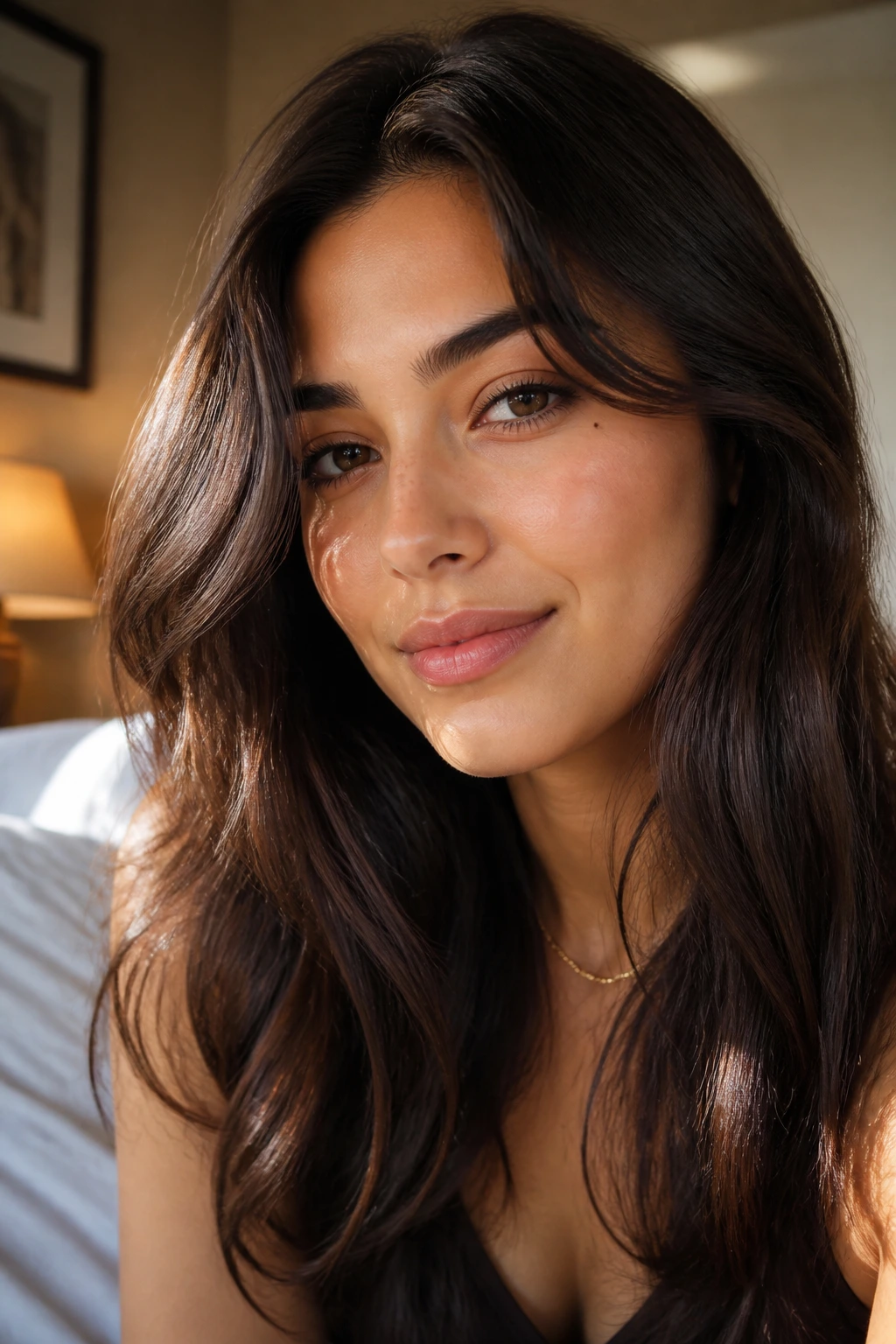
Gloss Trick: A clear or neutral-brown gloss every 4 to 6 weeks keeps brunette shades from looking dusty. If your color starts to lose that wet shine, the fix is usually gloss, not another round of permanent dye.
Sun Protection: UV rays pull brunette color warm faster than people expect. A hat, a UV spray, or even avoiding direct all-day exposure keeps the brown from turning brassy around the face and crown.
Customization: If your olive skin leans warm, chestnut, mahogany, rosewood, and burnt sugar are the browns to test first. If you lean cool or neutral, espresso, mushroom, mocha, and sable usually behave better.
Serving Suggestions: If your hair is long, add soft layers near the front. If it’s short, keep the edges sharp and the tone rich. If it’s curly, keep some depth at the roots and let the mids carry the movement.
Make-It-Yours: For fine hair, stay close to one tone and rely on cut and shine. For thick hair, a little lowlight placement can break up the bulk. For coily hair, a color that sits a shade or two deeper than your natural base often looks cleaner than a lighter brunette.
Common Mistakes to Avoid
- Going too ashy: Very cool brown can make some olive complexions look drained, especially if your skin already leans muted. If your face starts looking gray next to the hair, warm the formula slightly or switch to a neutral brown.
- Choosing a red-heavy brown without checking undertone: Mahogany and cinnamon are pretty, but they can read orange fast on the wrong skin tone. Keep them deep and restrained, not bright.
- Making the whole head one flat block: Olive skin tends to look better when the brown has some lift through the cut — layers, lowlights, gloss, or face framing. Flat color can turn heavy in a hurry.
- Ignoring porous ends: The ends grab warmth first and fade fastest. If the root looks perfect and the ends look rusty, the problem is usually porosity, not the shade itself.
- Skipping the gloss: Brown hair goes dull in a way blonde hair doesn’t. That dullness makes olive skin look tired. A gloss refresh usually fixes the problem faster than a full recolor.
- Overusing heat: A flat iron can polish brunette hair, but too much heat burns the shine off. Once that happens, the color reads rough instead of rich.
Variations and Adaptations to Try
Soft-Neutral Olive Brown: If your skin has a hard-to-pin-down olive tone, choose mocha, walnut, or mushroom brown with very little red. This keeps the hair from fighting your undertone and makes the whole face look steadier.
Warm Olive Glow: If your olive skin leans golden, chestnut, mahogany, toffee, and cinnamon browns can work beautifully. Keep the shade deep enough that it doesn’t wander into copper territory.
Curly-First Brunette: Curly hair usually needs a brunette shade that shows shape, not one that flattens the curl pattern. Hazelnut, carob, and mocha melt tones all work well because they let the curl catch light at different points.
Short and Sharp: Bobs, pixies, and cropped shags look better when the brown is clean and even. Espresso, sable, and walnut give short cuts a crisp edge and keep the face from looking washed out.
Gloss-Only Version: If you don’t want permanent dye, use a brunette gloss or color-depositing mask every few weeks. It won’t lighten anything, but it will deepen the base and give olive skin that polished, lived-in brunette look.
Protective Style Version: Braids, twists, and ponytails can still live in the brown family. Use extensions that match your natural base or sit one shade richer, and the color will look deliberate instead of mismatched.
Maintenance, Washing, and Touch-Up Timing
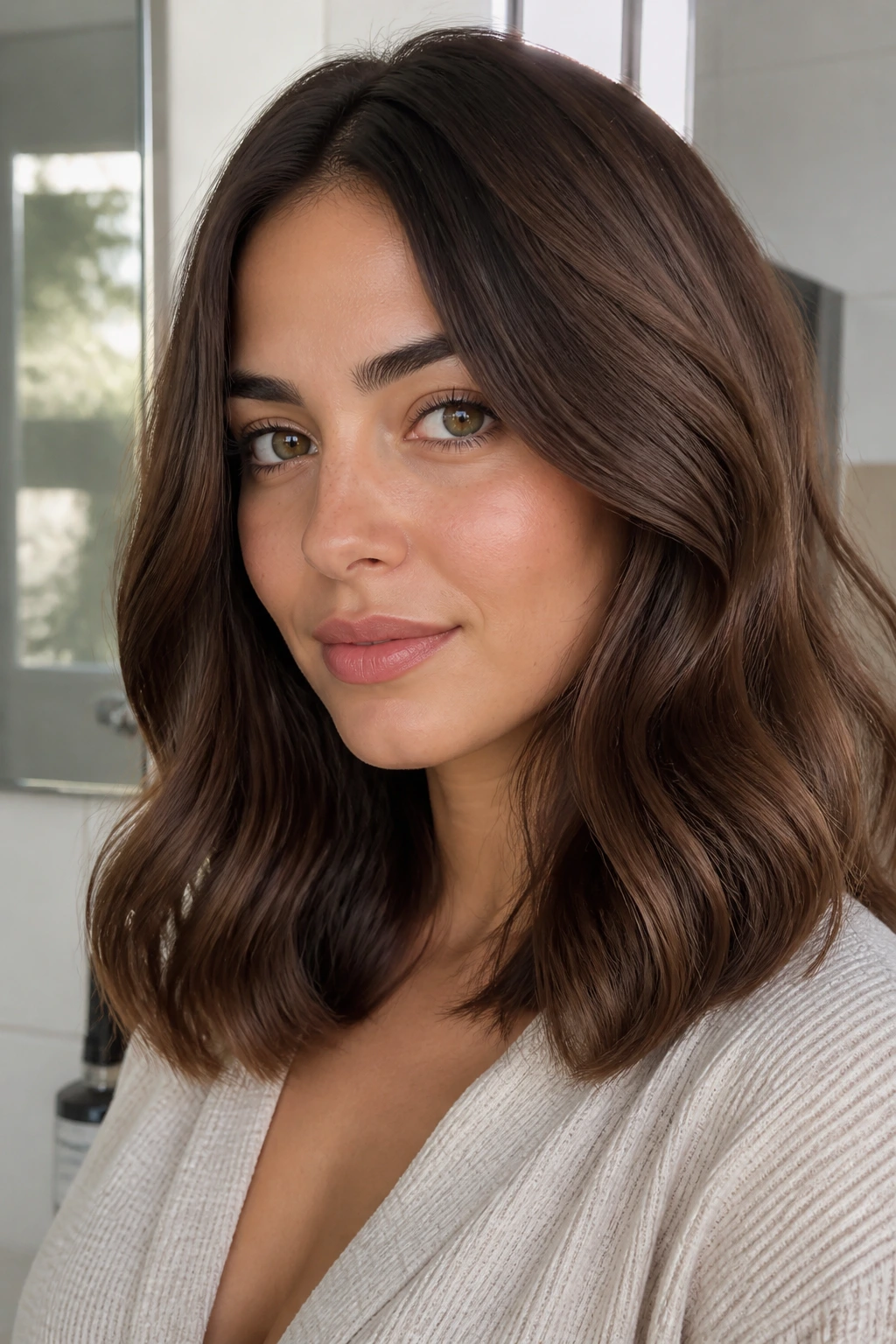
No-bleach brown color usually lasts better than lightened color, but it still needs a little care if you want it to stay clean. Wash with color-safe shampoo about 2 to 3 times a week unless your scalp needs more frequent cleansing. Overwashing strips the shine first, and shine is what keeps brunette shades looking rich on olive skin.
Glosses and demi-permanent brunettes usually benefit from a refresh every 4 to 6 weeks. If you’re wearing a deeper espresso, mocha, or sable shade, the roots can often stretch a little longer because the regrowth blends in softly. Chestnut, mahogany, and cinnamon shades may need a touch-up sooner if your ends are porous or if the color fades warm in the sun.
Heat styling is fine, but keep a heat protectant in the routine and stop frying the ends with high settings. Flat irons and hot brushes should be used carefully on color-treated brown hair; once the cuticle gets rough, the brunette shade loses its gloss and starts looking dry. A weekly moisturizing mask helps, but if the hair feels mushy or stretchy, a lighter protein step may be needed instead. The hair will tell you.
If you wear braids, twists, or a silk press, the maintenance rhythm changes a little. Braids need scalp cleansing and edge care. Silk presses need dry storage, low humidity, and a little restraint with the flat iron. Straight styles look sharp when the hair is clean, not overworked.
Frequently Asked Questions
Which brown shade looks best on olive skin without bleach?
Mocha, espresso, walnut, and mushroom brown are the safest starting points because they stay rich without pulling too red or too flat. If your olive skin leans warm, chestnut or mahogany can also work, but they need to stay deep.
Can dark brown hair make olive skin look washed out?
Yes, if the shade is too flat or too cool for your undertone. The fix is usually subtle dimension, a shinier finish, or a shade that’s one step warmer or softer than the one you picked.
Is mushroom brown good for warm olive skin?
It can be, but it’s not always the first choice. Warm olive skin usually looks better in chestnut, mocha, or walnut, while mushroom brown tends to suit neutral or cool olive a little more easily.
How do I get dimension without bleach?
Ask for lowlights, a glaze, or a color melt that stays within your natural level range. You can also build dimension with the cut itself — layers, waves, bangs, and texture break up the color so it doesn’t sit as one block.
Will brown dye cover gray hair?
Permanent brown dye usually covers gray better than demi-permanent color, but the shade may appear lighter on gray strands. If coverage is the goal, permanent color or a salon gloss-plus-root formula is usually the better route.
How often should I refresh no-bleach brunette color?
Most people do well with a gloss or color refresh every 4 to 8 weeks, depending on the shade and how often they wash. Darker shades stretch longer; warm browns and softer chestnut tones tend to fade faster.
Can I do these looks at home?
Yes, if you’re staying within your natural brown range and using deposit-only or demi-permanent color. If you want serious correction, gray coverage, or a customized undertone match, a salon formula is safer.
What if my brown turns orange?
That usually means the formula was too warm or the hair pulled warmth from porosity. A cooler gloss, a blue-based brunette shampoo, or a salon toner can bring it back down.
Do olive skin and ash brown always go together?
Not always. Ash brown can look great on neutral or cool olive skin, but on warmer olive complexions it can turn the face dull. The best test is simple: if the hair makes your skin look cleaner, it’s working.
A Brown That Looks Like You
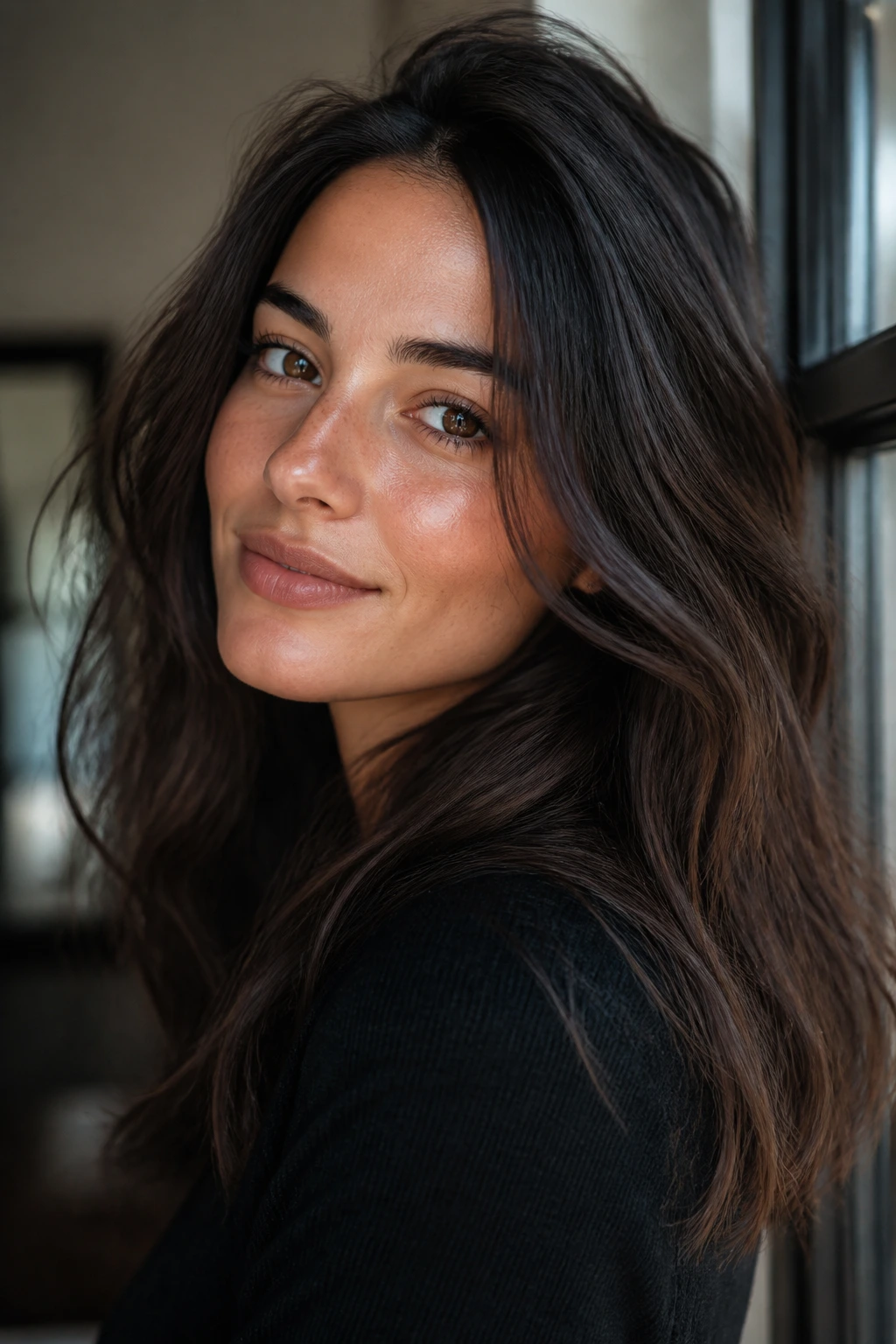
The nicest thing about no-bleach brunettes is that they don’t try to erase olive skin. They work with it. A rich espresso bob, a smoky mushroom lob, a chestnut blowout, or a dark chocolate silk press can each change the face in a different way, but they all keep the color in a place that feels grounded.
That’s the part people miss when they chase lighter and lighter shades. Olive skin often looks best when the hair has depth, shine, and a shade family that understands restraint. Pick the brown that matches your undertone, then let the cut carry the rest. The result should look deliberate the moment you see it in daylight.