



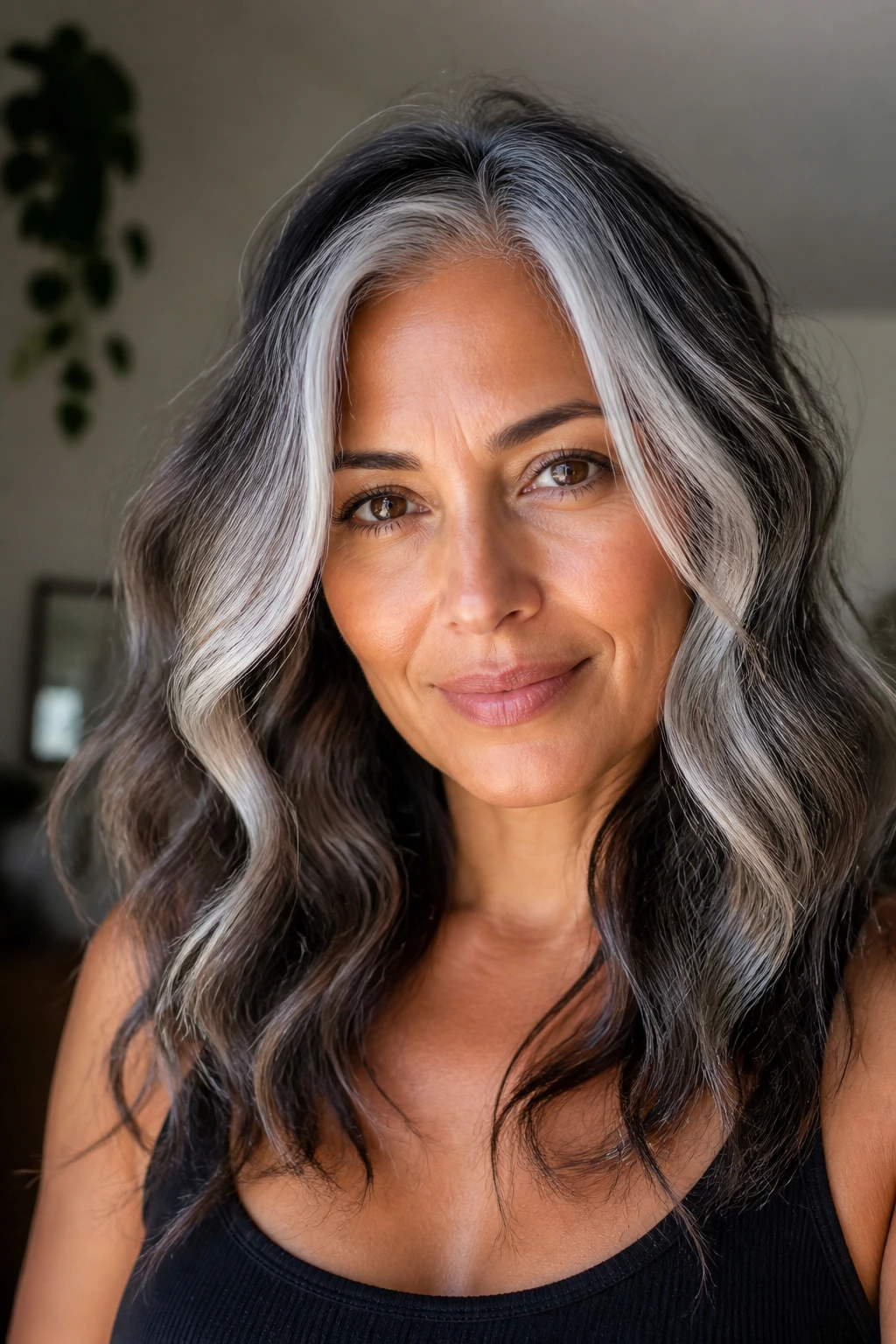
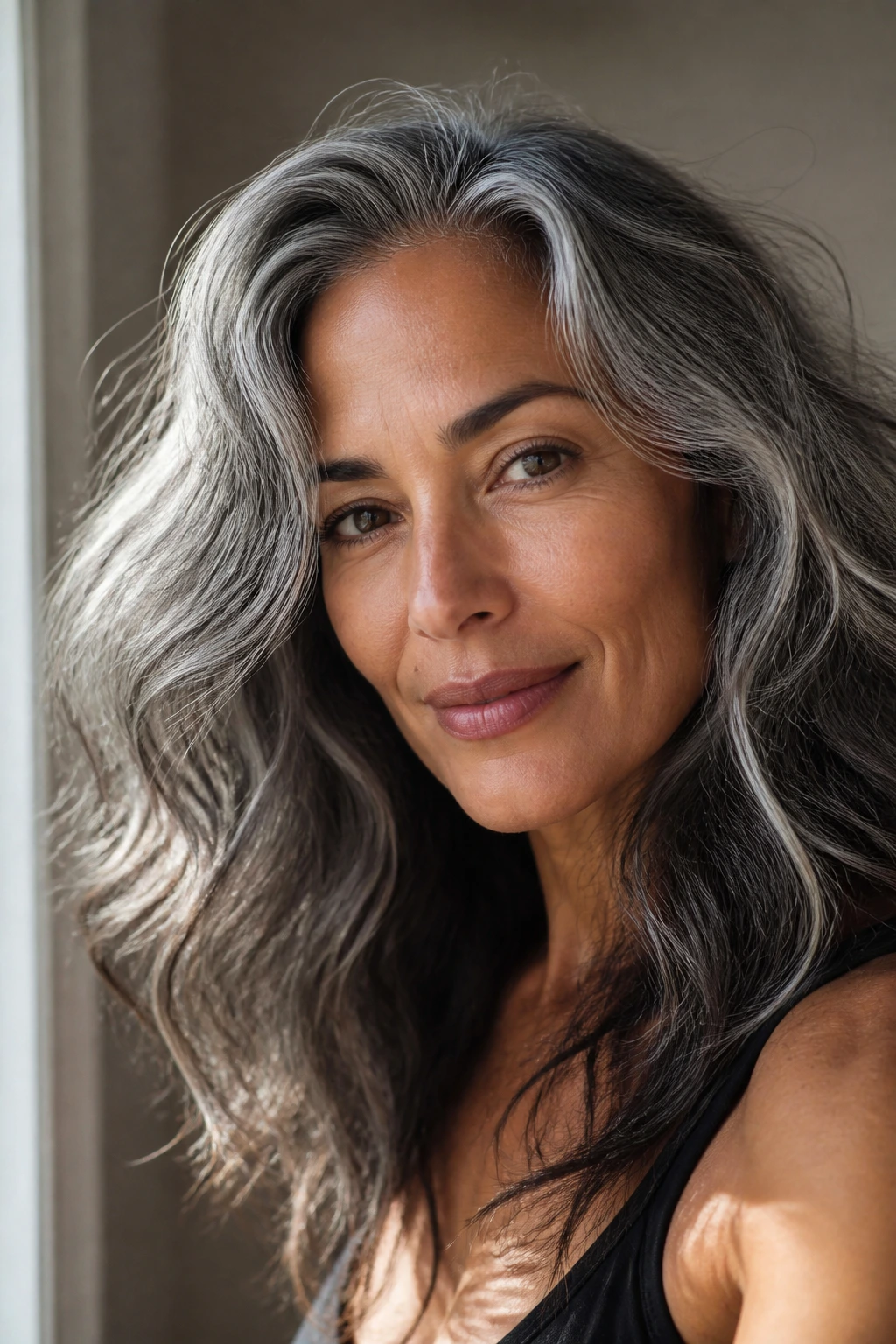
Gray hair shades for medium skin tones with beachy waves can look smoky, creamy, crisp, or almost liquid, and the difference usually comes down to undertone and placement. Medium skin is tricky in the best way: it can carry cool silver, warm mushroom, and moody graphite if the gray is tuned properly. Put those shades into loose, broken-up waves and the color stops reading like a flat sheet of silver. It starts moving.
The best versions don’t scream for attention. They glide between tones. A few brighter ribbons near the face, a deeper root at the crown, and soft bends from mid-length down are enough to make gray feel intentional instead of washed out. That’s the part a lot of people miss. Gray is not one color. On medium skin, it needs a little warmth, a little shadow, and a wave pattern that keeps the finish from turning dull under indoor light.
There’s also a big upside to beachy waves: they let gray do what it does best, which is shift. One curl catches pearl, the next shows steel, and the ends pick up smoke. That movement is what keeps the whole look from feeling severe. Start with the shade family that matches your skin, then decide how bold you want the contrast to be.
Why These Shades Belong on Medium Skin With Beachy Waves
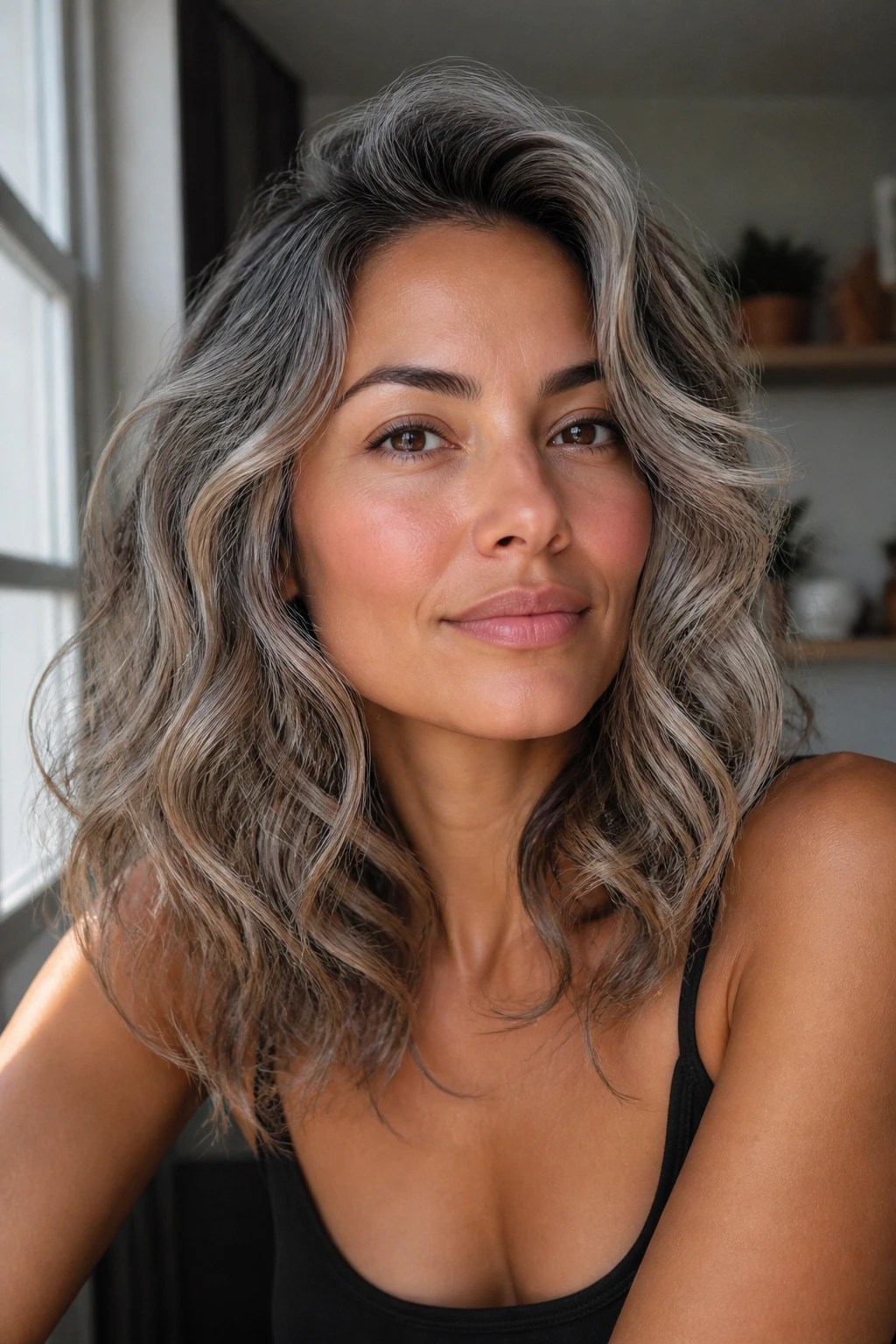
- Undertone balance: Medium skin often carries olive, golden, or neutral undertones, and the best gray shades for it usually have a little beige, taupe, pearl, or smoke instead of icy blue all the way through.
- Wave movement: Beachy waves break up a solid gray block, so the color reads in layers rather than one hard tone from root to tip.
- Grow-out help: Rooted grays, melts, and balayage placements are easier to wear when your natural depth starts showing through after a few weeks.
- Face framing: A lighter gray ribbon around the cheeks can make the skin look cleaner and more awake without bleaching the whole head to the moon.
- Style range: These shades can look polished with a blazer, rough-edged with denim, or a little edgy with black liner and a center part.
1. Smoky Mushroom Gray With Soft Root Shadow
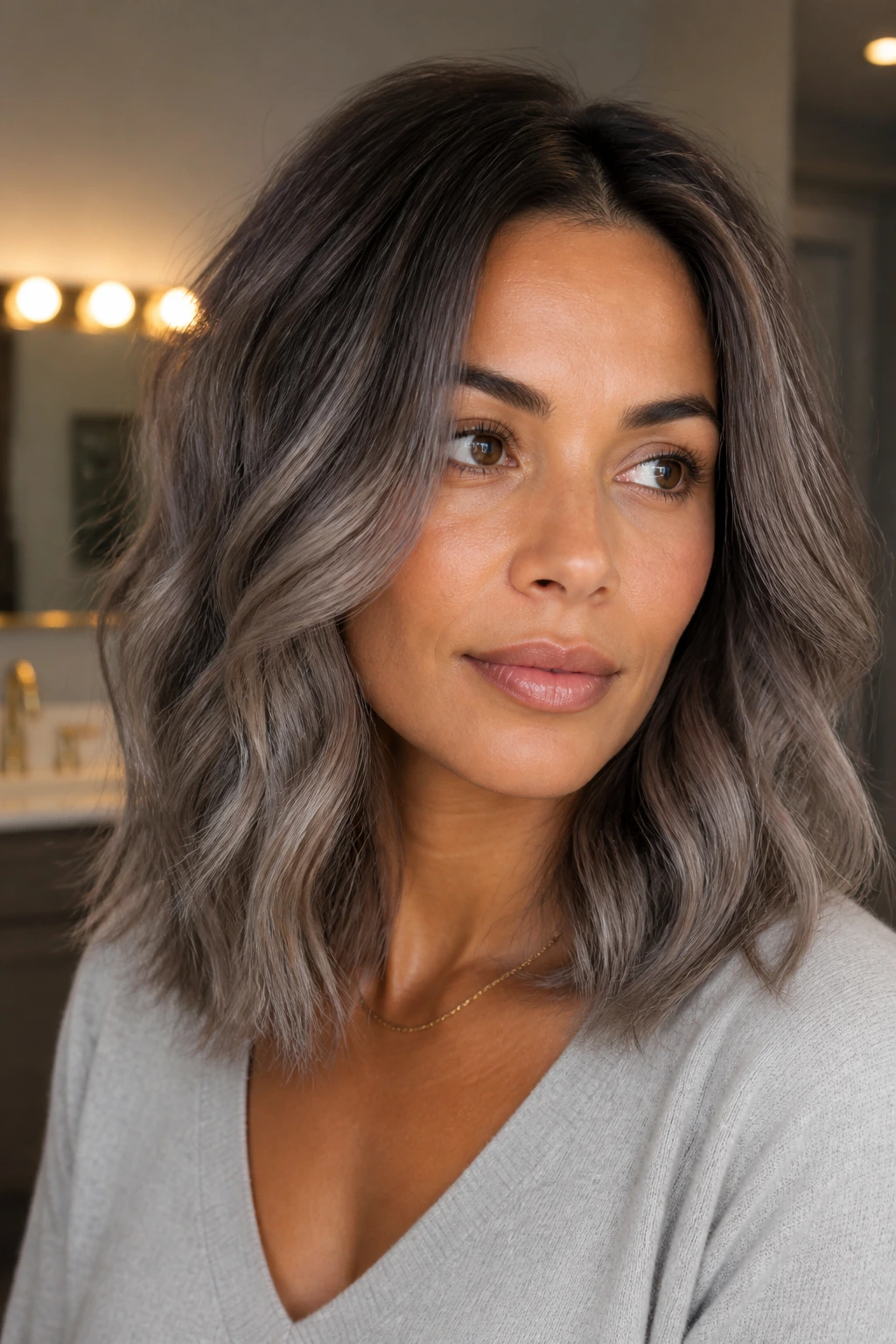
Smoky mushroom gray sits in that sweet spot between brunette and silver, and on medium skin it tends to look grounded instead of icy. The mushroom note keeps the shade from going chalky, while the root shadow gives the whole thing a little depth at the scalp. That depth matters. Without it, the color can float above the face and make everything look washed out.
Beachy waves help the shade the most when they’re loose and a little uneven. A 1.25-inch wand, wrapped away from the face on one side and toward the face on the other, gives the mushroom tone enough movement to show off the taupe and silver mixed through it. Keep the ends a touch straighter. That tiny bit of roughness makes the gray feel lived-in, not helmeted.
Ask for this when your skin leans olive or neutral and you want something gray without going full silver. It’s one of the easiest gray hair shades for medium skin tones with beachy waves because it doesn’t fight your complexion. It just settles in.
2. Silver Sand Balayage
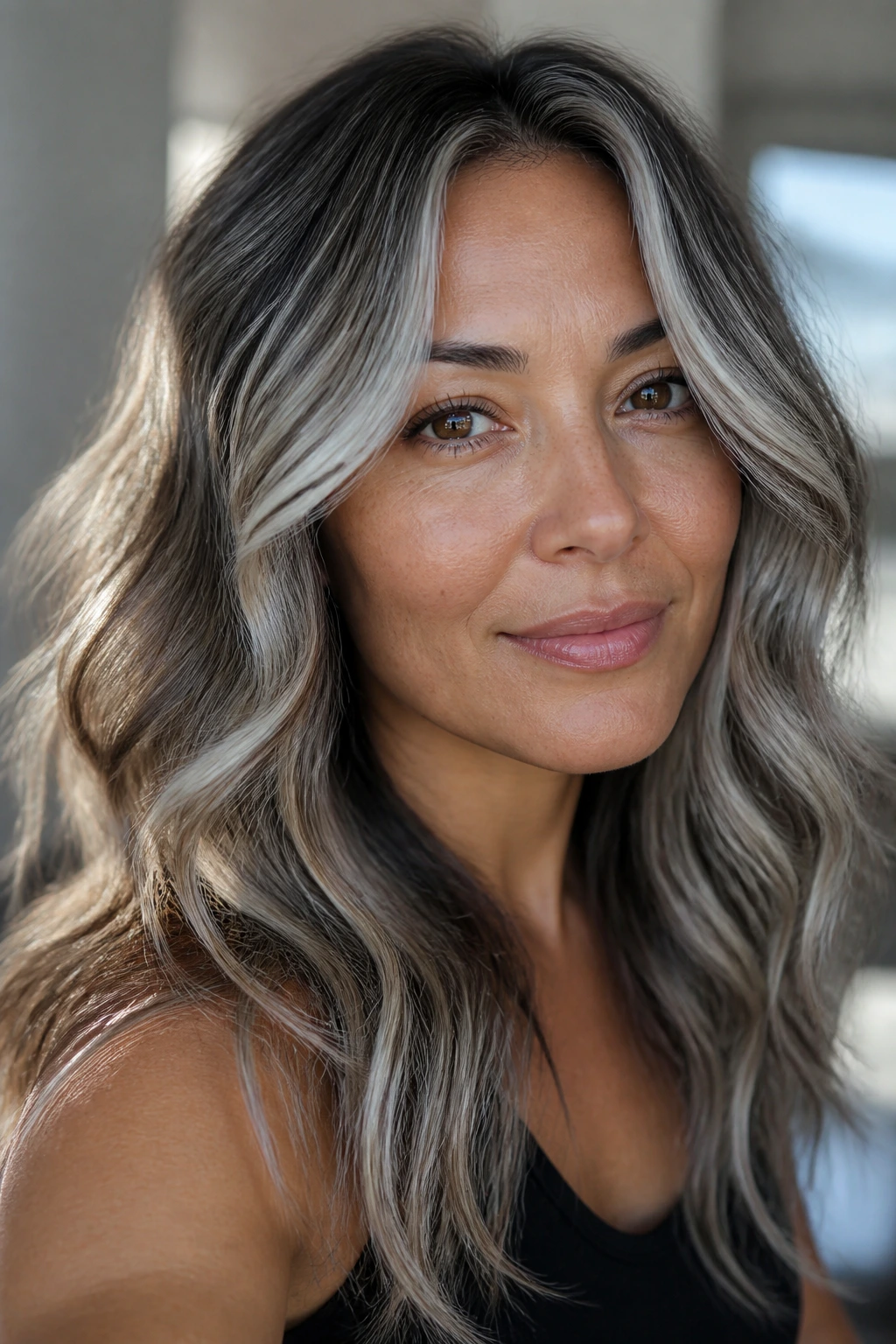
Silver sand balayage looks like a cooler version of sun-faded hair, which is exactly why it works on medium skin. The base stays soft and grounded, while the gray pieces sit in ribboned highlights that feel airy rather than blocky. If your skin has golden warmth, this shade keeps the silver from going too hard or too stark.
The trick is placement. Ask for brighter pieces around the face, a few mids through the top layer, and softer silver on the lower lengths. That keeps the whole color from turning stripey once the waves are added. In loose beach waves, the lighter pieces catch the light while the deeper base holds the shape together. The result is easy to read and not at all fussy.
This is a good choice if you like gray but still want the hair to look sun-touched. It’s not the loudest option on the list, and that’s the point. It feels relaxed, especially with a center part and a dry texture spray misted through the ends.
3. Charcoal Root Melt
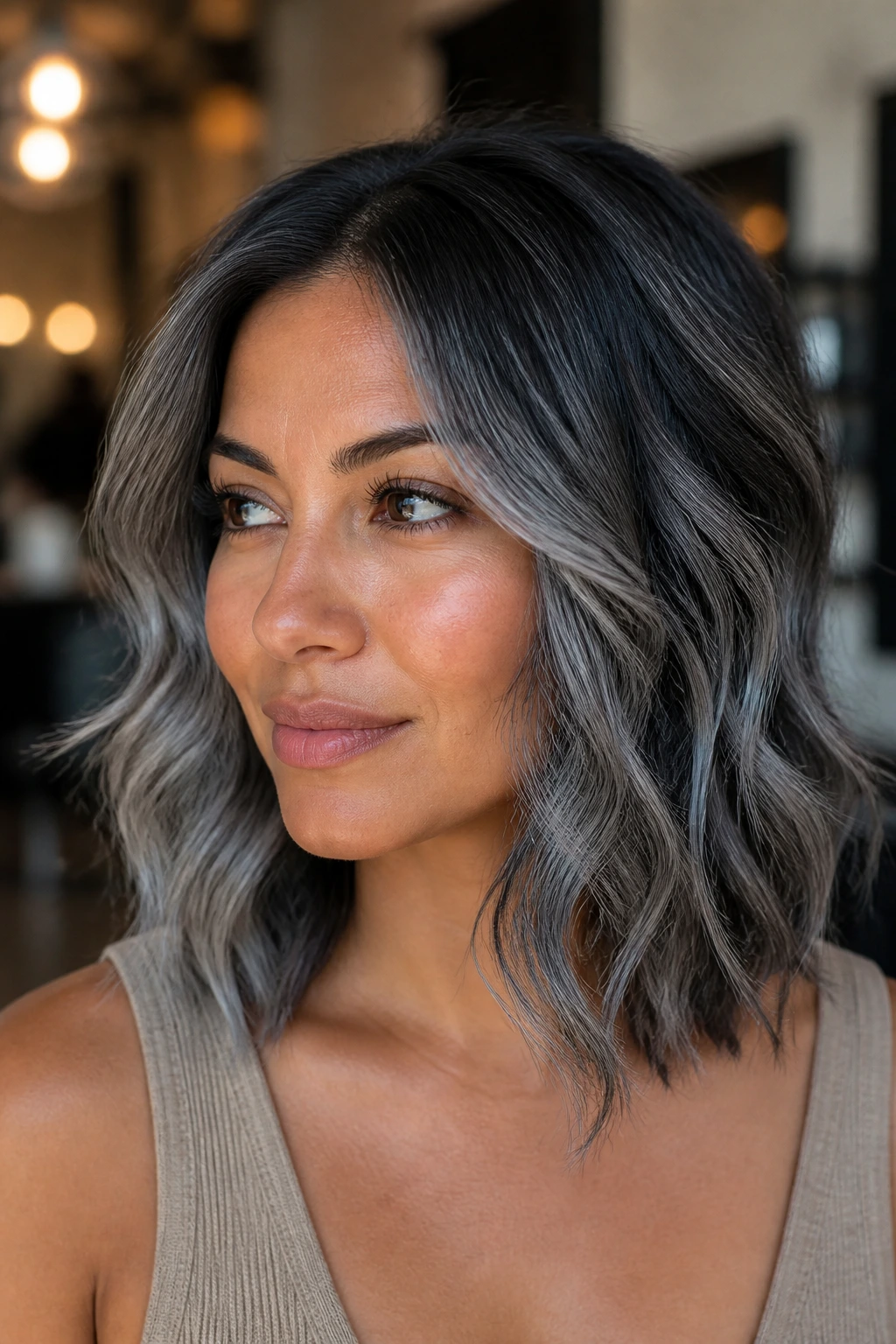
Charcoal root melt gives you a darker crown and a smoky gray finish through the mid-lengths and ends, which makes it one of the most practical gray options for medium skin. The darker root does a lot of heavy lifting here. It keeps the face from being overexposed by the lighter lengths and gives the whole color a cleaner frame.
This shade is good if you don’t want to be in the salon every three weeks. As it grows, the root just looks like part of the design. That matters with beachy waves, because the bends already create natural shadow. A root melt uses that shadow instead of fighting it.
I like this shade on shoulder-length cuts and long layers, where the gray can move without looking too neat. If your hair is naturally dark, this is one of the smarter ways to go gray without turning the whole head into a maintenance project. The finish is soft, moody, and a little cooler near the ends.
4. Pearl Smoke Gray
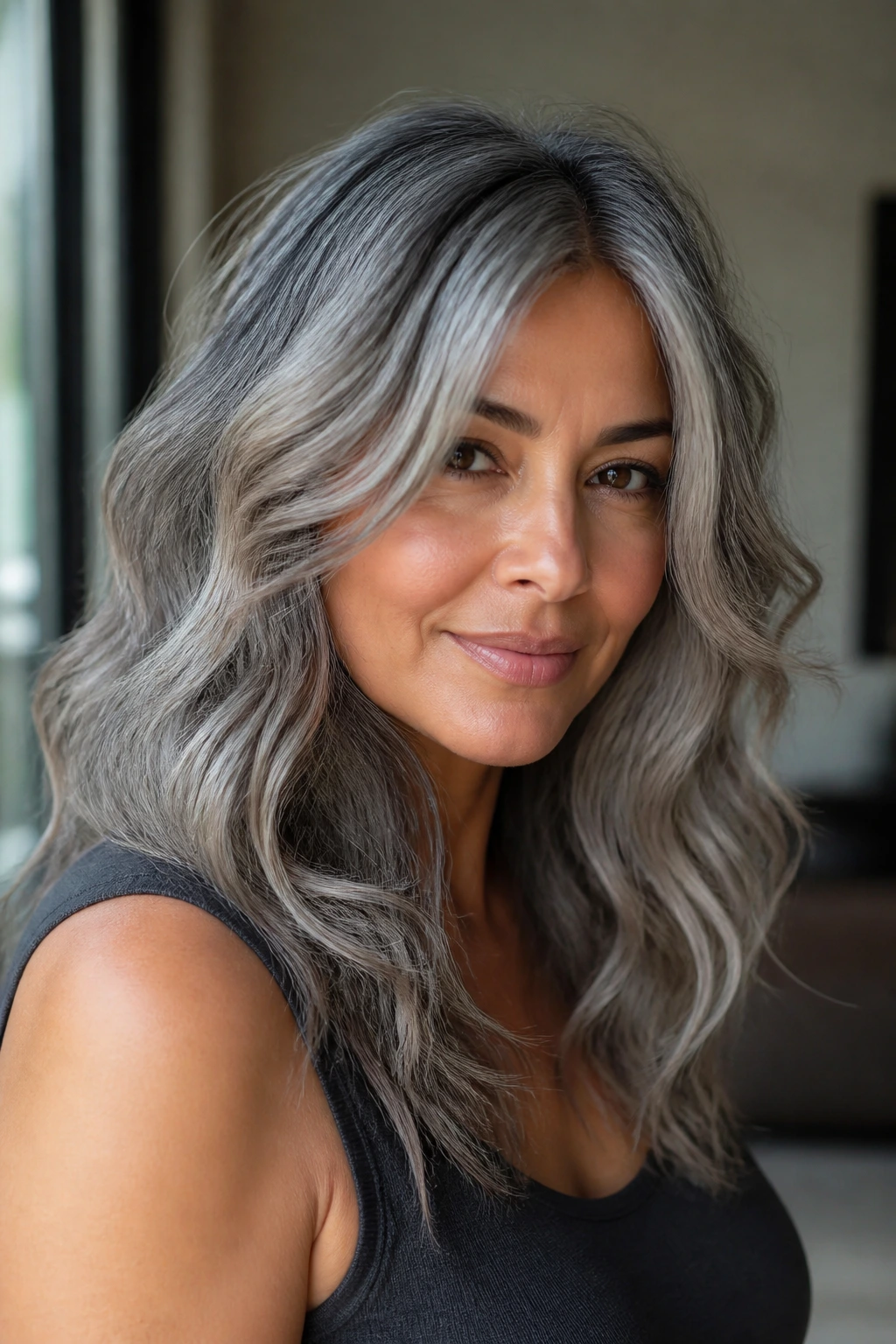
Pearl smoke gray has a soft, luminous finish that works especially well on medium skin with neutral or cooler undertones. It’s lighter than mushroom gray and less metallic than chrome, which is why it tends to read elegant instead of harsh. The pearl tone keeps the gray from going flat under indoor light.
With beachy waves, this shade gets a little more dimension because every bend reflects a different bit of tone. One piece shows silver, the next shows soft smoke, and the whole head looks more expensive in the practical sense: cleaner, softer, less patchy. Use a wide-barrel wand or bend the hair with a flat iron if you want a looser, brushed-out wave.
This is a shade for people who like a polished finish but don’t want the hair to look frozen. It especially likes a glossy topcoat or a clear glaze. Without shine, pearl gray can sink a little. With shine, it turns almost satin.
5. Slate Brown Blend
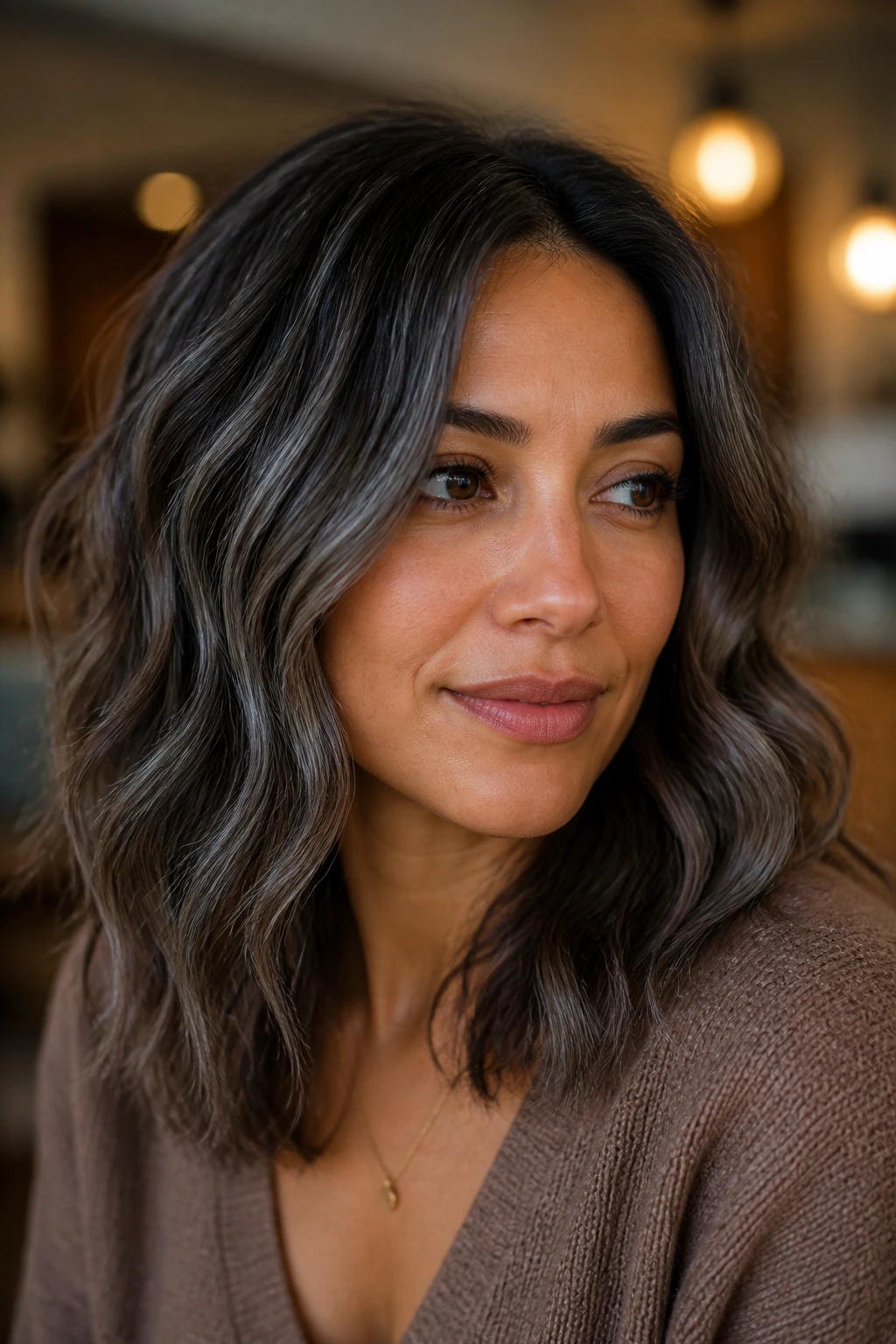
Slate brown blend is for the person who wants gray, but not the kind that announces itself from across the room. It keeps a brunette base and threads in cool slate tones so the overall effect feels smoky rather than silver-heavy. On medium skin, that balance is often the easiest to wear.
The nice thing about slate brown is how forgiving it is around the face. A full silver can make some complexions look a touch flat if the makeup and outfit are too soft. Slate brown keeps enough depth to anchor everything. With beachy waves, the color feels like it has been there forever, which is a good thing in this case.
If you want to start gray without a big leap, this is one of the most sensible places to begin. Ask for subtle lowlights or a gloss that nudges the brunette toward cool slate. The look is understated, but not dull.
6. Titanium Ribbon Lights
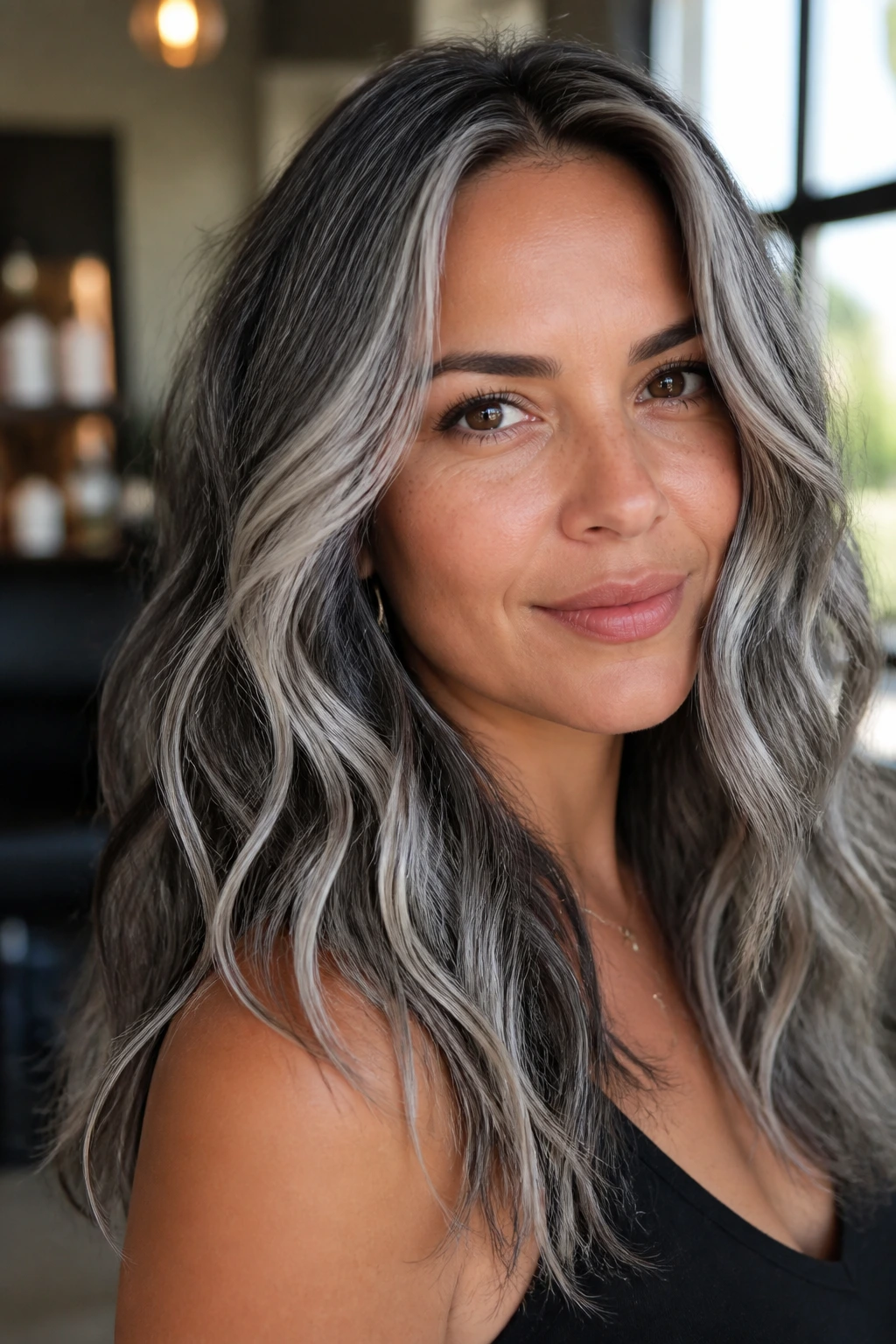
Titanium ribbon lights are for people who want brightness without a full silver cap. The gray comes in narrow, reflective pieces that sit against a darker base, almost like thin strips of metal woven into the hair. On medium skin, that contrast can look striking, especially if your complexion has enough warmth to stop the cool tones from overpowering you.
This shade needs movement. Flat, straight hair can make ribbon lights look too linear, like streaks. Beachy waves fix that by bending the ribbons out of perfect alignment. Suddenly the color reads as dimension rather than stripes. Keep the front pieces a little brighter if you want the face to pop.
Best on thick hair, honestly. There’s enough surface area for the ribbons to show without disappearing into the base. If your hair is fine, the color can still work, but you’ll want softer placement and a gentler contrast.
7. Dusty Steel Gray
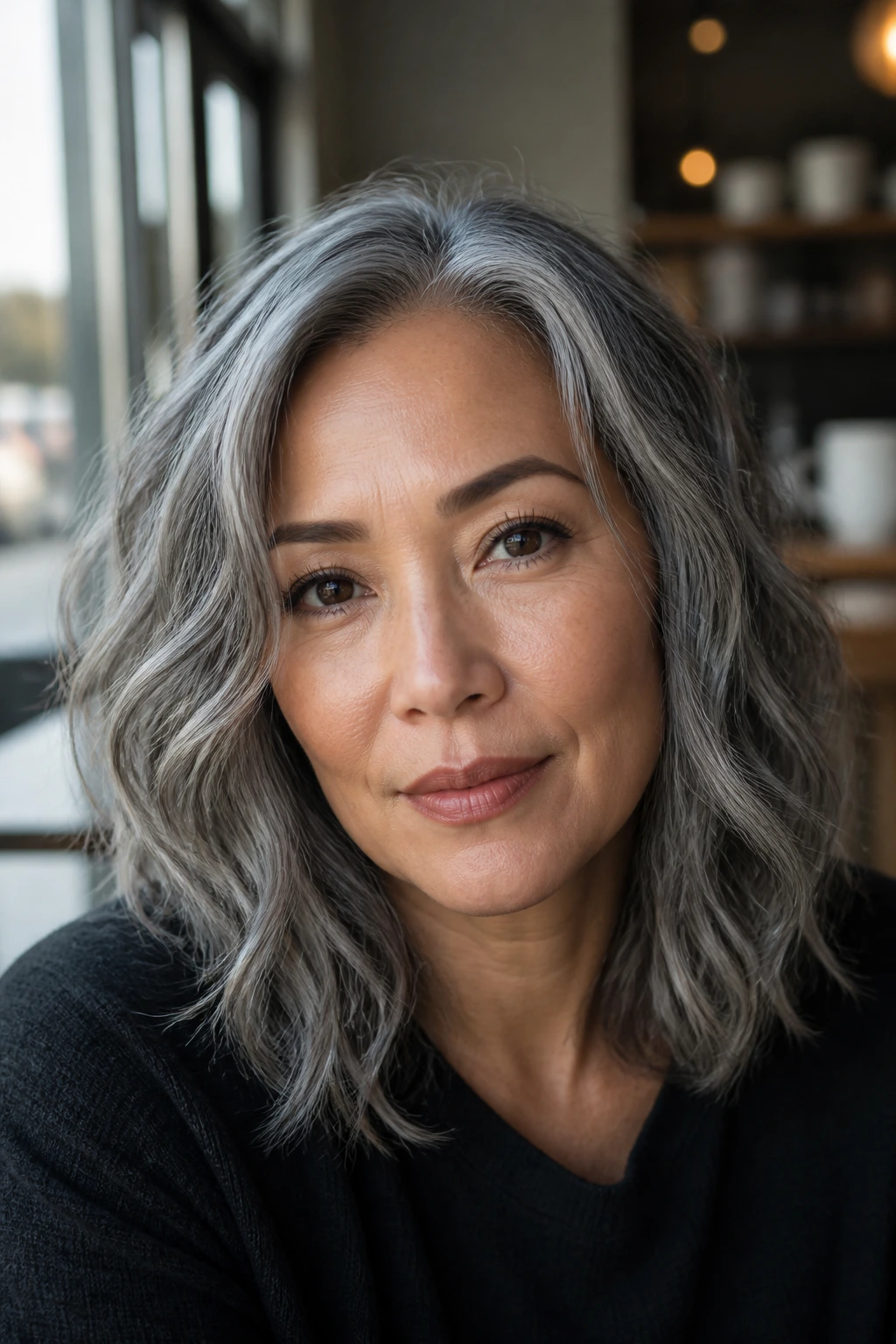
Dusty steel gray has a cool, brushed-metal feel that lands nicely on medium skin with neutral undertones. It’s darker than pearl, cooler than mushroom, and less glossy than chrome. That middle ground is useful. It lets the gray feel modern without making the hair look rigid.
The shade works well when the waves are loose but not too perfect. A little bend through the mids, a few sharper pieces at the ends, and the steel tone starts to feel textured. Too much curl and the color can become busy. Too little and it can read flat. Somewhere in the middle is where it lives best.
I’d pair this with subtle makeup and a strong brow. The gray already has enough edge. If you love black jackets, silver hoops, and a center part, this shade makes a lot of sense.
8. Graphite Glaze
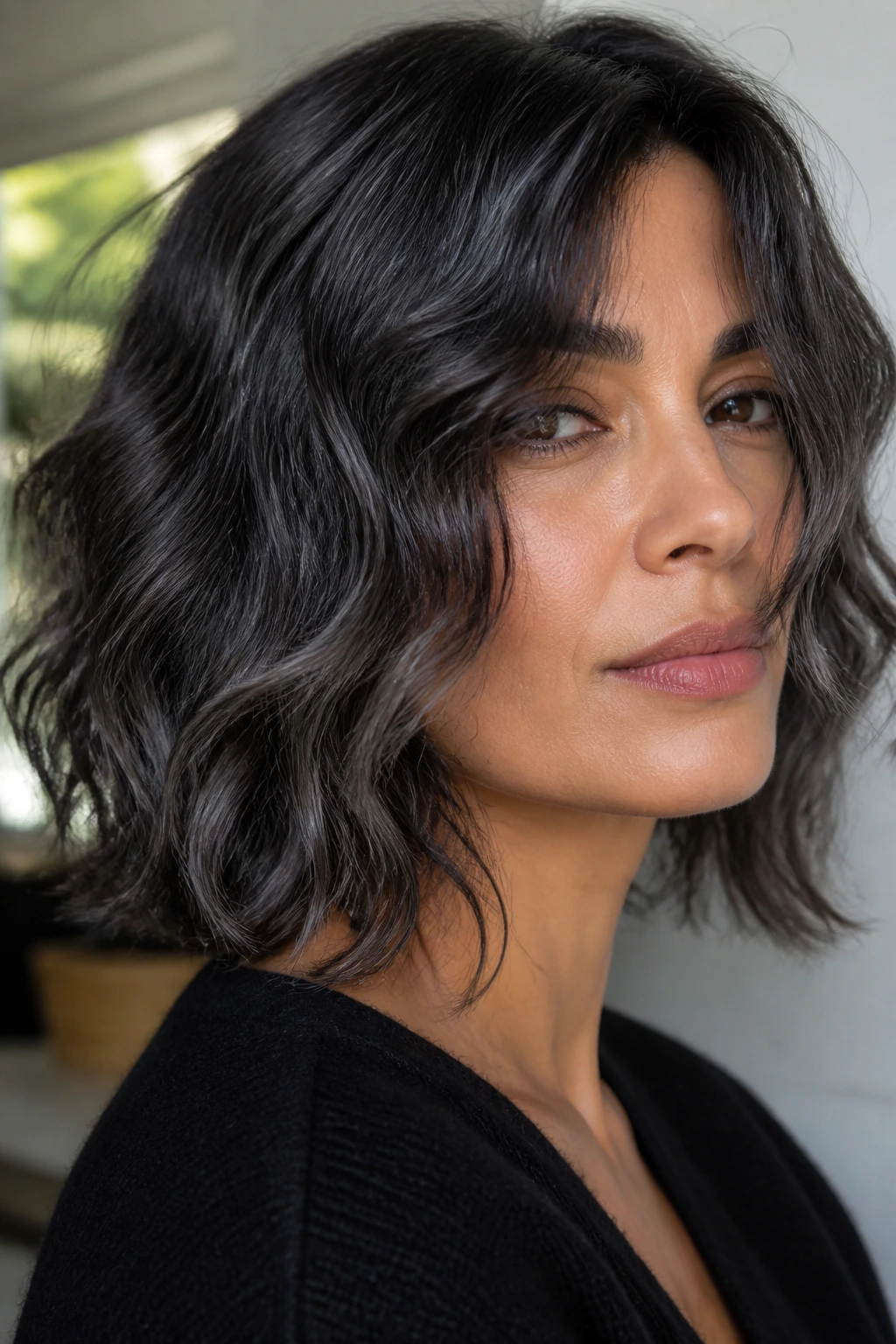
Graphite glaze is one of my favorite choices for people who want gray without a major lightening job. It keeps the hair close to black, but the gray undertone softens the depth so it doesn’t look like plain brunette. On medium skin, that slight cool cast makes the face look cleaner around the jaw and cheekbones.
This is the kind of shade that looks best when the waves are touchable and broken up, not rigid. Think mid-length bends, soft ends, and a little separation from a texturizing spray once the hair is cool. The graphite color reflects enough light to show movement, which is the whole reason it works.
If you’re nervous about going silver, start here. It gives you the gray mood without asking your hair to lift all the way to pale blonde. And that’s a mercy.
9. Oyster Gray Lob
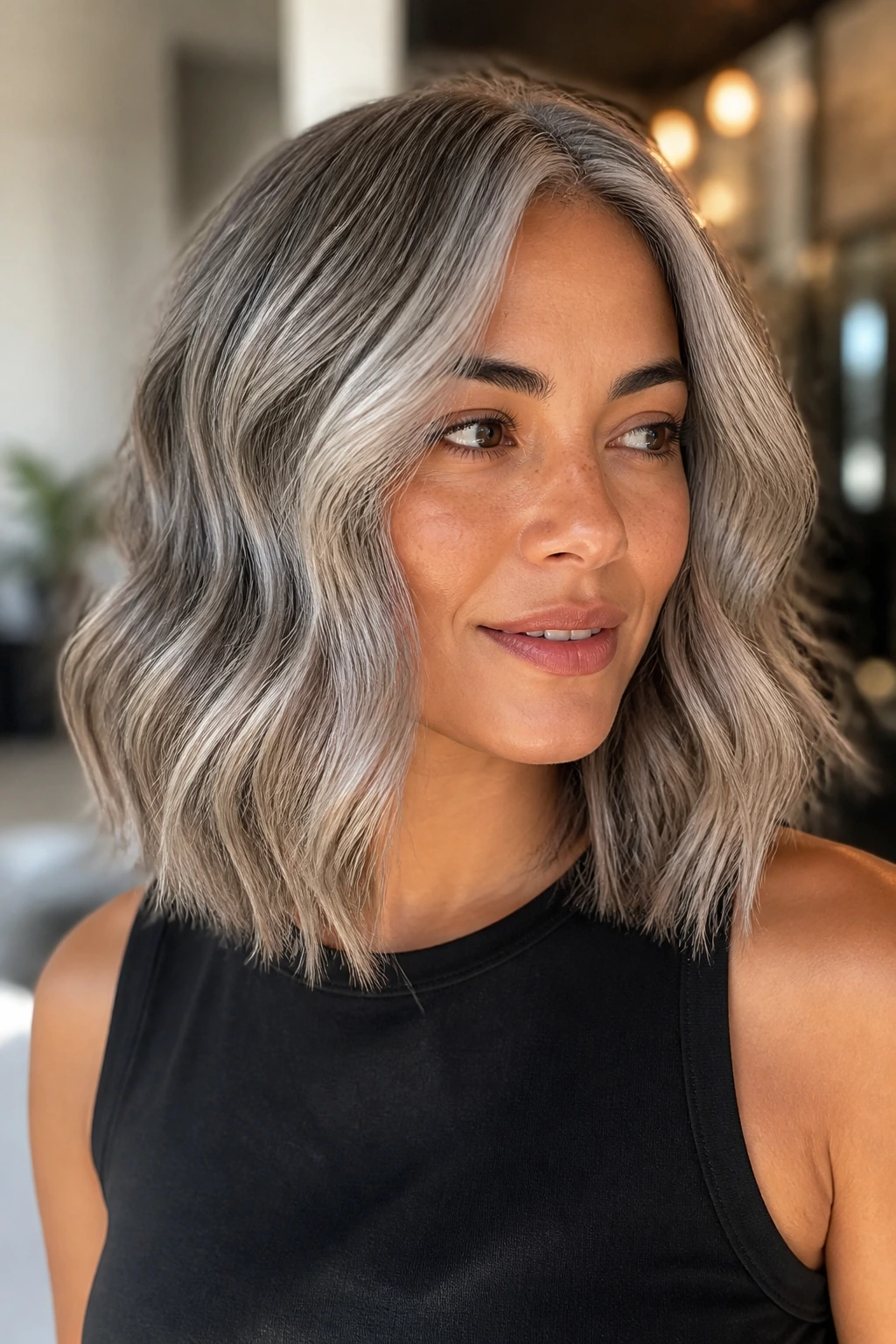
Oyster gray looks soft, shell-like, and slightly beige at the edges, which is why it suits medium skin so well. It doesn’t push too blue, too white, or too brown. Instead it lands in a quiet middle zone that feels wearable on a lob, especially when the cut has a few blunt ends mixed with soft layers.
Beachy waves are almost mandatory here. The oyster tones show up best when the hair bends loosely around the face and the ends move a little. If the hair is too straight, the shape can look too tidy and the gray loses some of its depth. A lob with this color should feel airy, not pinned down.
This is a shade that flatters people who like their color soft but not invisible. It’s subtle, but not shy. A good gloss every few weeks keeps the shell-like sheen alive.
10. Moonlit Ash Gray
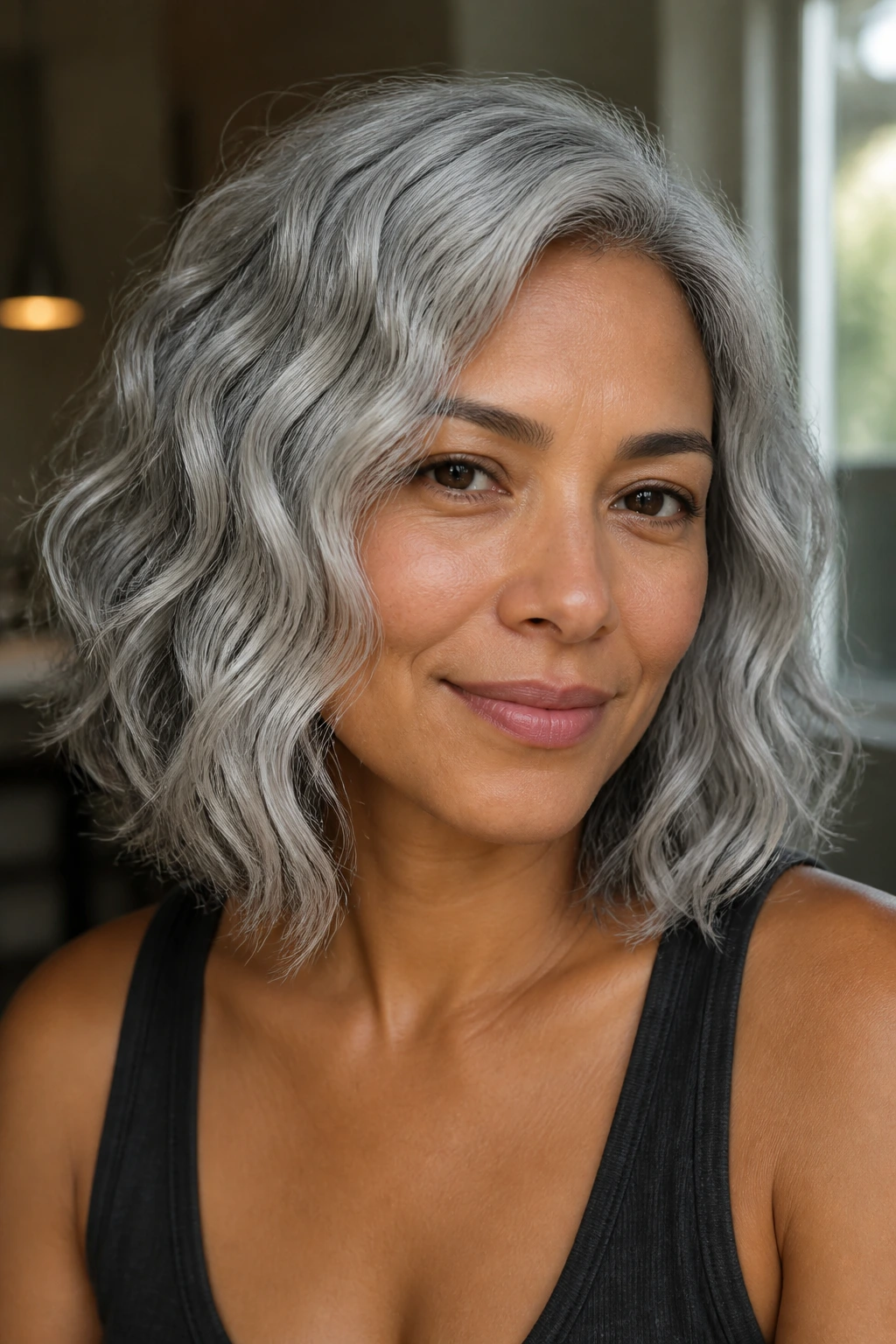
Moonlit ash gray is cooler and more silvery than mushroom or taupe, so it leans best on medium skin with neutral to cool undertones. The ash tone cuts any leftover warmth, which can be useful if your natural hair pulls orange at the ends. Done well, it has a clean, almost frosted look without turning icy-white.
The wave pattern matters more here than with softer shades. Use loose, alternating curls and then finger-comb them apart. That keeps the ash from looking like one solid tone. The bends should show a little shadow, a little shine, and a little separation.
If your style runs minimalist, this is a strong choice. It likes clean lines, silver jewelry, and makeup that stays in the taupe-to-plum family. Moonlit ash gray can be gorgeous, but it does ask for a bit of discipline. Too much warmth in the clothes or makeup, and the color gets weird fast.
11. Cool Taupe Gray
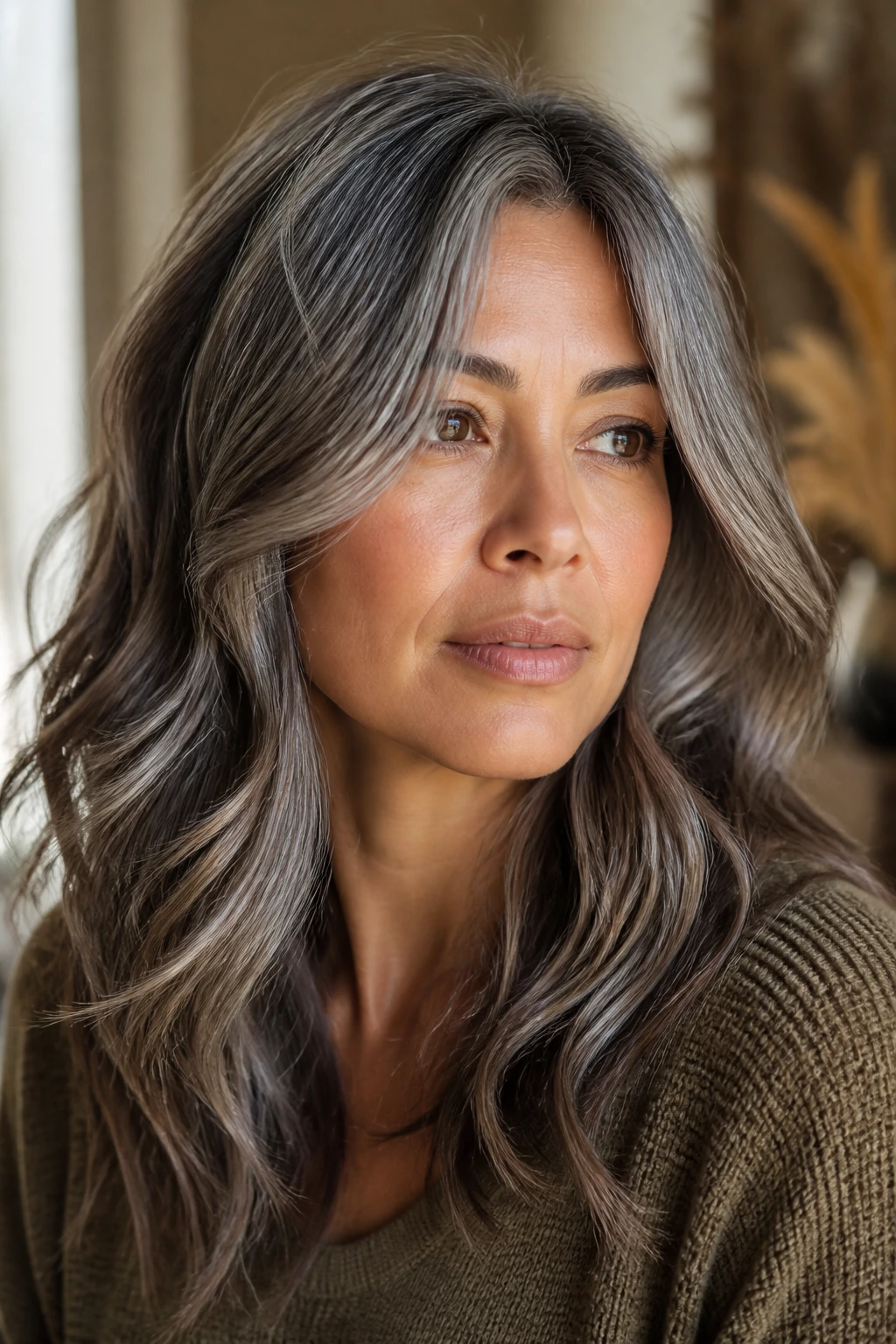
Cool taupe gray is a smart answer for medium skin that has olive or golden notes but still wants a gray finish. Taupe keeps the color soft and wearable. The gray keeps it from wandering into beige-blonde territory. The combination feels balanced, which is probably why it works so often.
This is one of those shades that looks better on wavy hair than on a pin-straight blowout. The waves let the taupe appear in some places and the cooler gray show through in others. It gives you a layered effect without needing heavy highlights. That’s a good trade.
If you wear a lot of earth tones, this shade sits nicely beside them. Camel, denim, charcoal, olive, cream — all of it works. The hair doesn’t fight the outfit, and that matters more than people think.
12. Frosted Espresso Gray
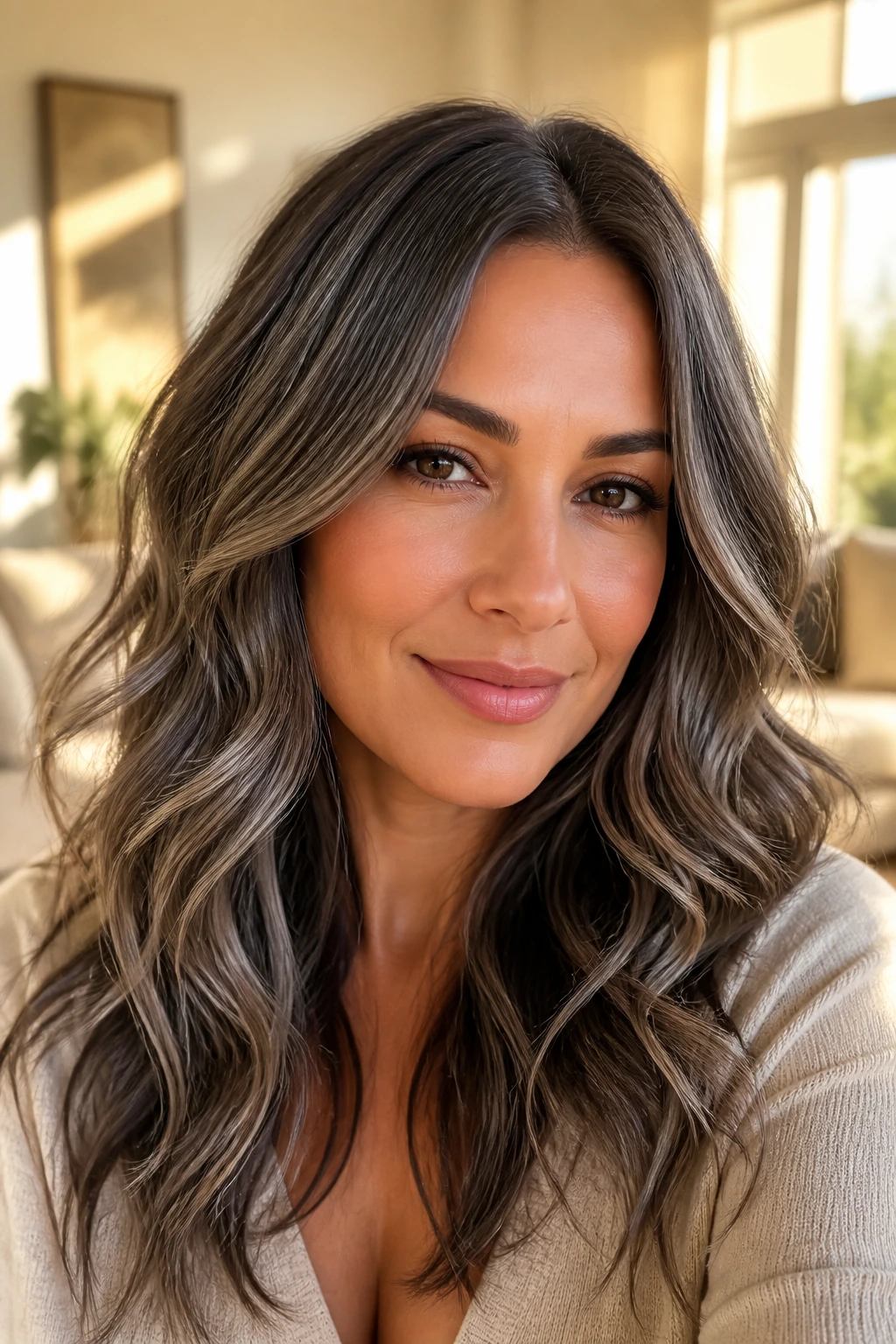
Frosted espresso gray keeps most of the richness of dark espresso hair and adds a frosted gray veil through the surface. On medium skin, that can look especially polished because the depth keeps the complexion from washing out. The frosted pieces show enough contrast to feel intentional, but the overall shade stays grounded.
This works well if your natural base is dark brown or nearly black and you don’t want a total overhaul. The lighter gray can sit around the face and through the top layer, while the lower lengths stay richer. In beachy waves, the contrast feels layered instead of streaky.
It’s a good shade for people who want gray to feel like a detail, not the whole story. You still get movement. You still get shine. You just don’t have to surrender the brunette backbone.
13. Gunmetal Waves
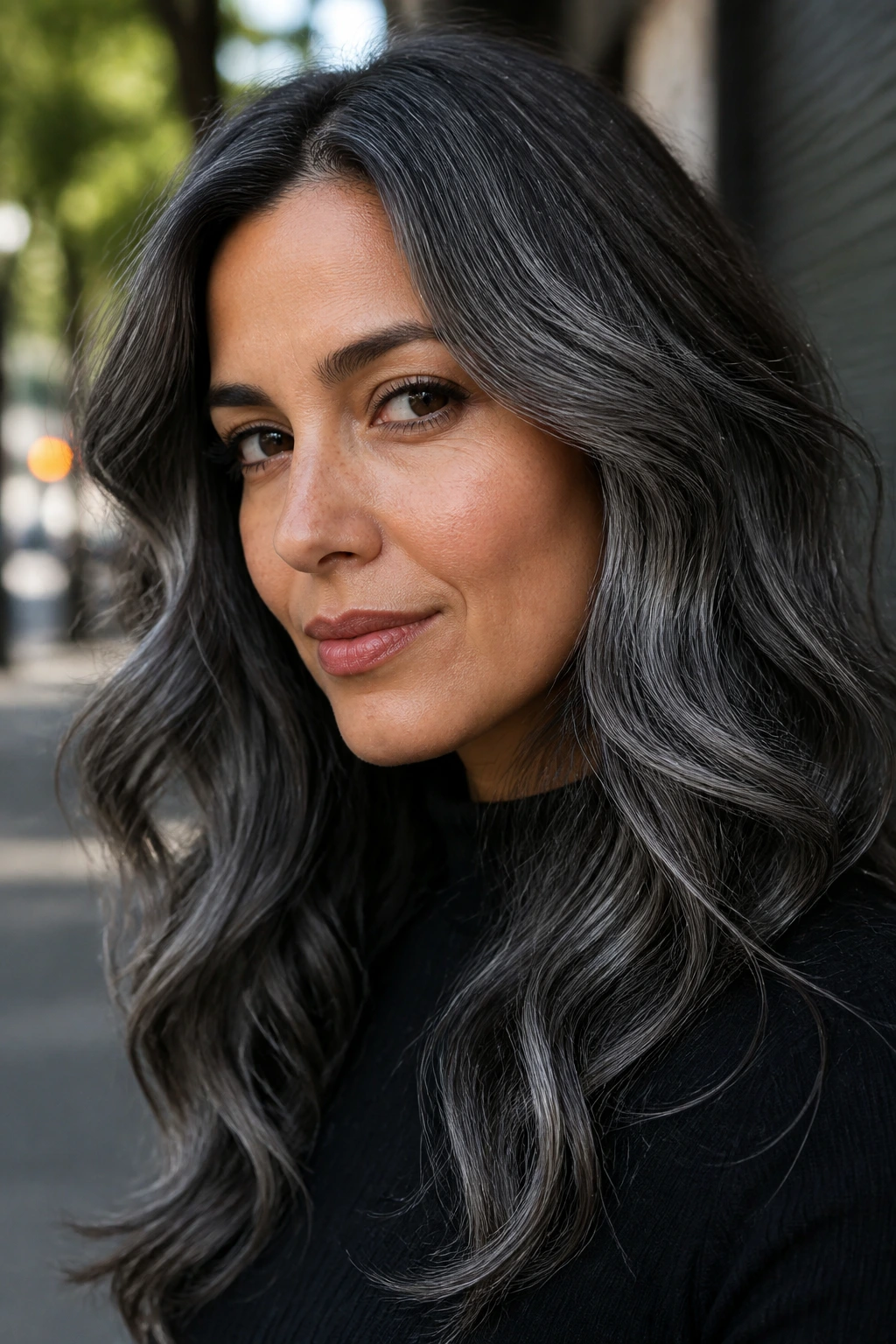
Gunmetal gray is darker and more metallic than dusty steel, and that makes it a little more dramatic on medium skin. The shade has a cool, moody sheen that works best when the hair moves and shows off the reflective surface. On waves, it can look almost liquid at the curve of each bend.
The best part? It doesn’t need to be pale to feel gray. If your hair is naturally deep, gunmetal can give you that smoky effect without a huge jump in brightness. That makes it a strong option for people who want a visible change but don’t want the upkeep that comes with ultra-light silver.
I’d keep the makeup a touch sharper with this one. A defined brow or a smoked liner balances the cool depth. Otherwise the whole look can drift too soft and lose its punch.
14. Lavender-Tinged Silver
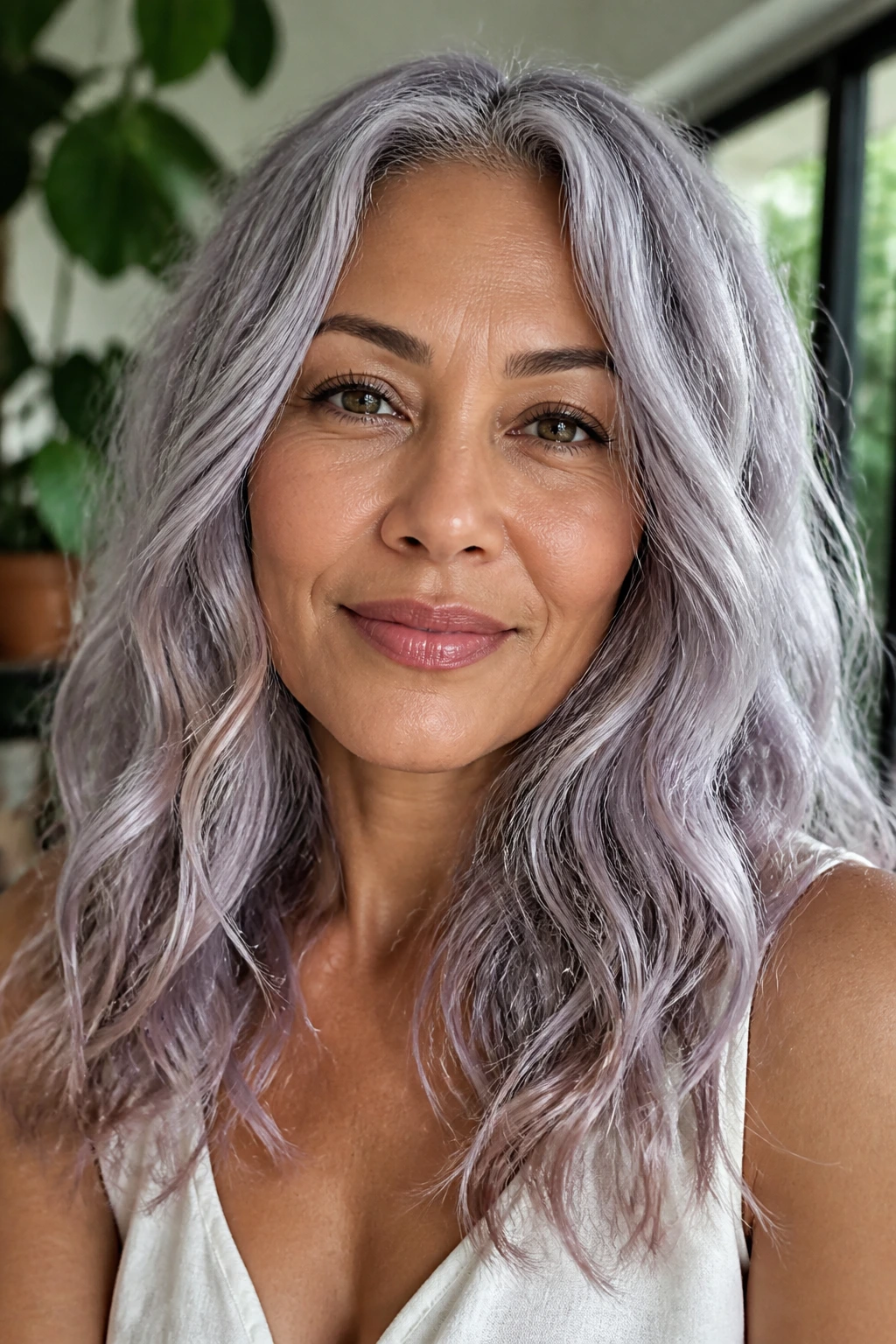
Lavender-tinged silver is not loud purple hair. It’s a silver tone with the faintest lavender cast, and that whisper of color can be a life-saver if your gray tends to look yellow or flat. On medium skin, especially if the undertone is neutral or slightly warm, the lavender softens the transition from silver to face.
Waves help the color show in a layered way. The lavender won’t read like a single obvious color; it appears in the bends and then disappears again. That’s exactly why it works. You get interest without turning the hair into a costume piece.
This is a shade that needs restraint. Too much violet and the gray starts looking pastel. Keep it quiet, use it as a tint, and let the waves do the rest.
15. Smoky Beige Gray
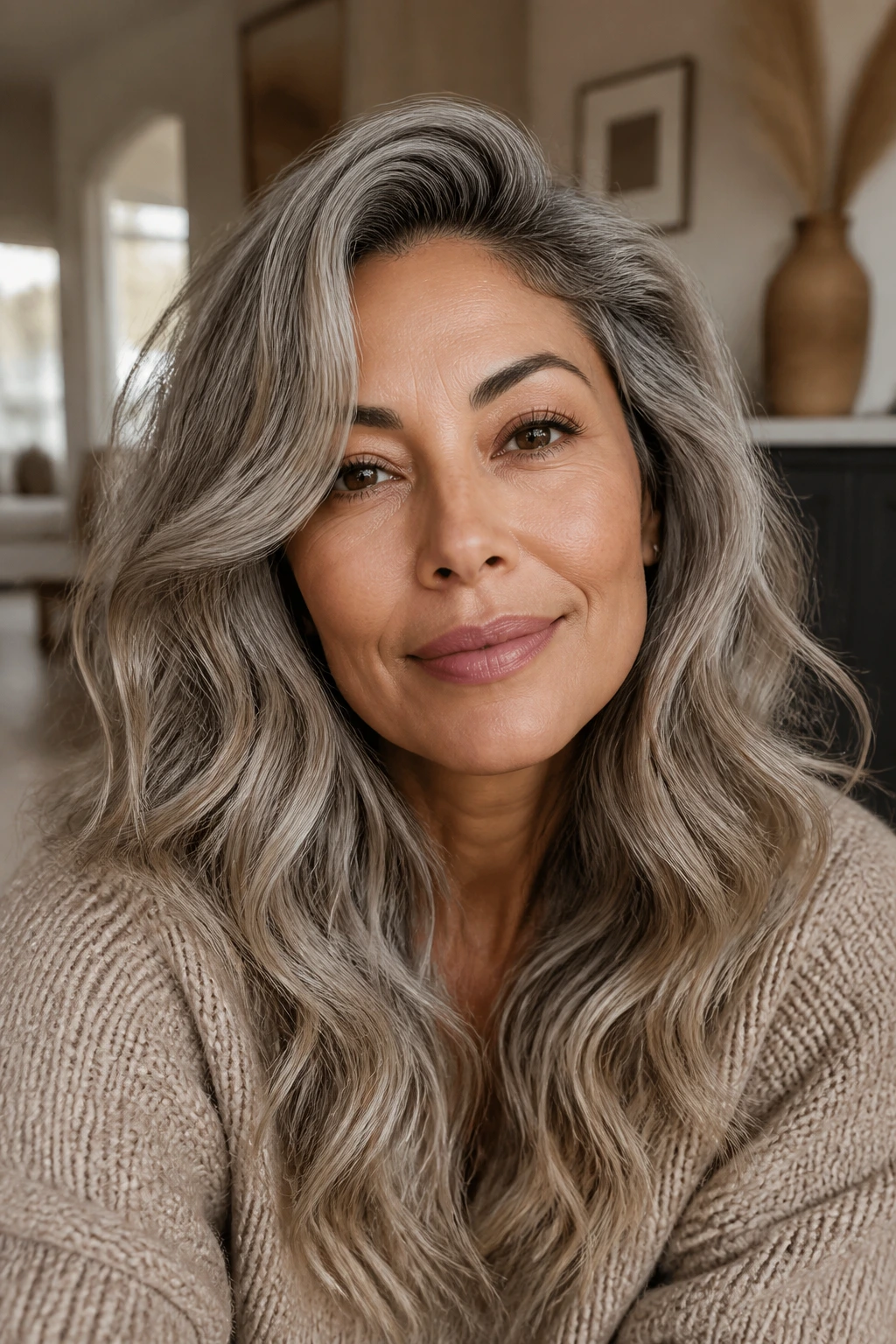
Smoky beige gray is probably one of the easiest gray shades for medium skin to wear. The beige keeps the tone soft and warm enough, while the smoke adds the gray note that keeps it from reading blond. It’s a nice answer if you want a gray family color but hate anything that feels frosty.
The color looks best when there’s a little bend at the ends and a bit of height at the crown. That keeps the beige from flattening out. On layered cuts, smoky beige gray can look expensive in a low-key way because the waves show the contrast between matte smoke and soft beige.
If you’ve ever looked at icy gray and thought, not on my face, start here. This shade respects medium skin instead of trying to erase it.
16. Ice Latte Gray
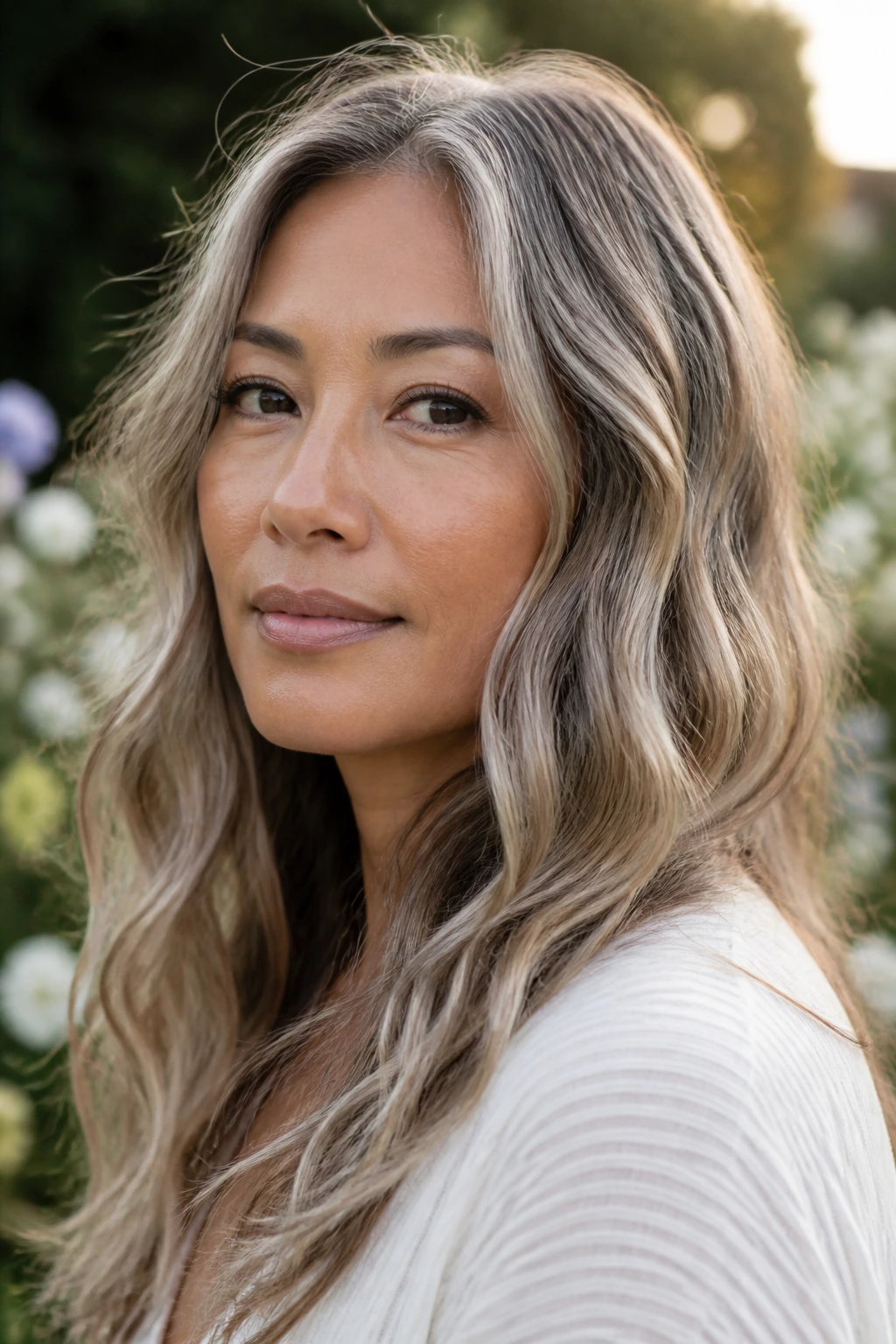
Ice latte gray sounds playful, but the formula is serious: a creamy latte base with cooler gray ribbons or a silver glaze over top. It works on medium skin because the base keeps warmth in the picture while the gray brings in that modern edge. The two tones keep each other honest.
Beachy waves are the right finish because they let the latte and ice notes alternate. A curl can show cream, then silver, then cream again. Straight hair can make the color feel too blended. Wavy hair gives it the spacing it needs.
This shade suits people who wear soft neutrals and don’t want the hair to look severe. It’s less metallic than chrome and less earthy than mushroom. Right in the middle. Which, annoyingly, is often the useful answer.
17. Soft Pewter
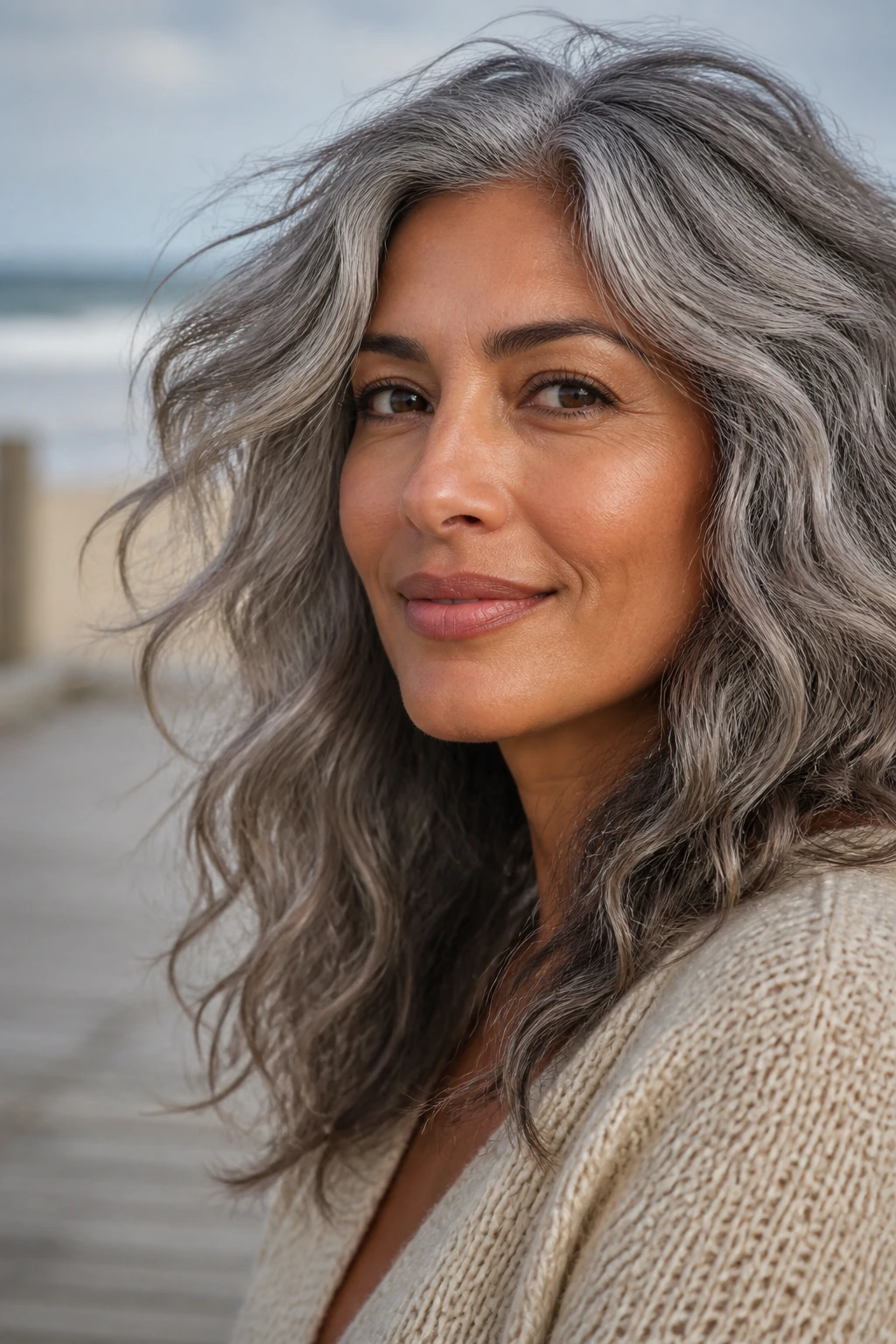
Soft pewter has a satin-metal finish that looks good when the hair has a bit of body. On medium skin, it gives a clean, polished edge without pushing all the way into stark silver. Pewter is nice because it holds both gray and a trace of warmth, which keeps the shade from going clinical.
The wave styling should stay loose and slightly undone. If the hair is overcurled, pewter can look too formal. You want bends, not ringlets. A little sea-salt spray at the ends can help break the surface up once the hair is dry.
I like this shade on medium to long cuts with face-framing layers. It gives the color somewhere to move. Without that movement, soft pewter can feel a little too still.
18. Salt-and-Pepper Blend
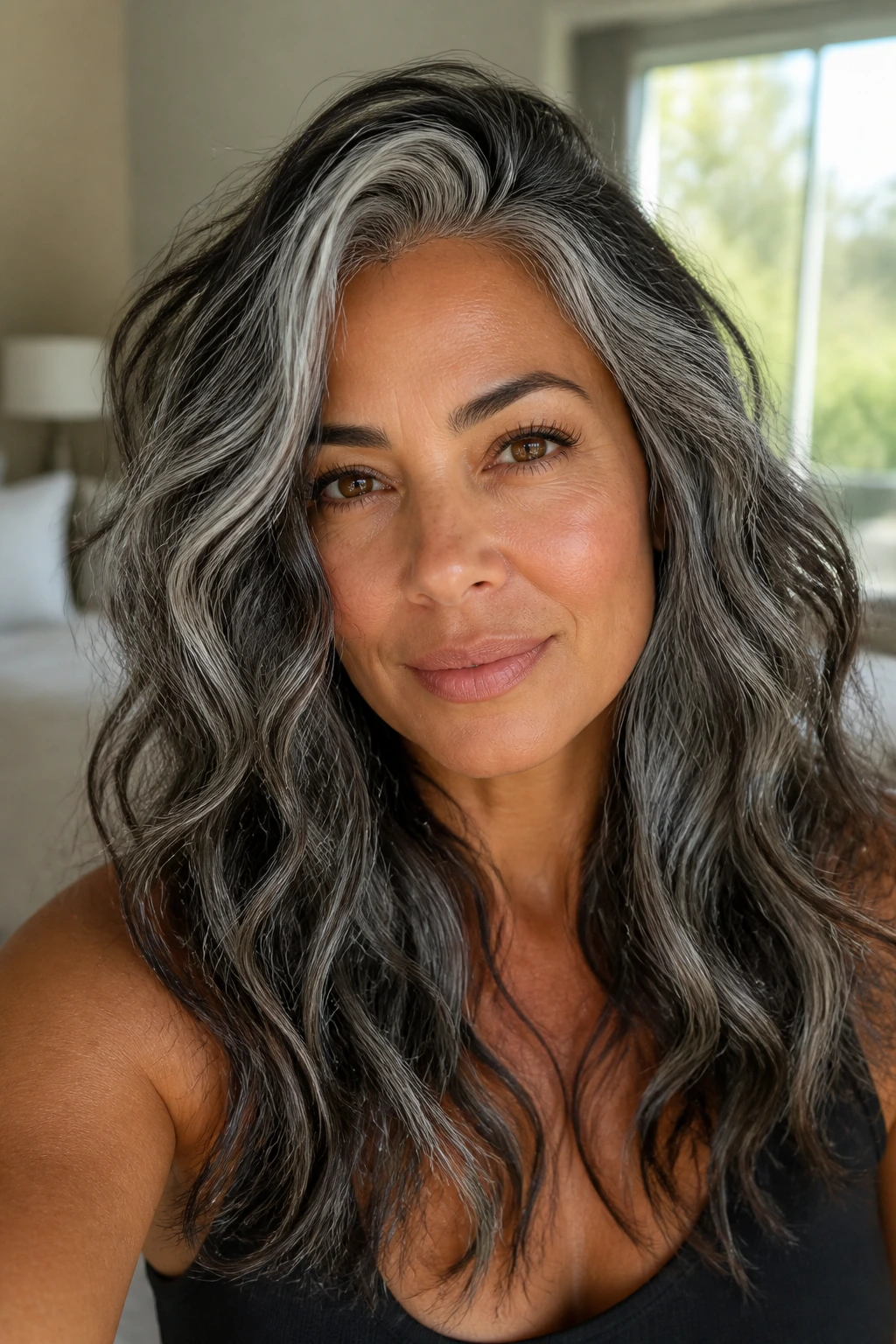
Salt-and-pepper blend is for anyone who wants to work with natural gray instead of chasing a full color correction. Medium skin often wears this beautifully because the darker pieces keep the complexion grounded while the silver sections brighten the hair around the face. It’s honest. That’s the appeal.
Beachy waves make salt-and-pepper hair look styled, not accidental. The bends separate the dark and light pieces so the blend reads as design rather than growth. A blunt cut can make this color feel harsher, so a few soft layers help.
If you’re transitioning into gray, this is one of the easiest places to land. You can keep your base, lighten or tone the silver, and let the color evolve. No panic. No all-or-nothing move.
19. Metallic Silver Ombre
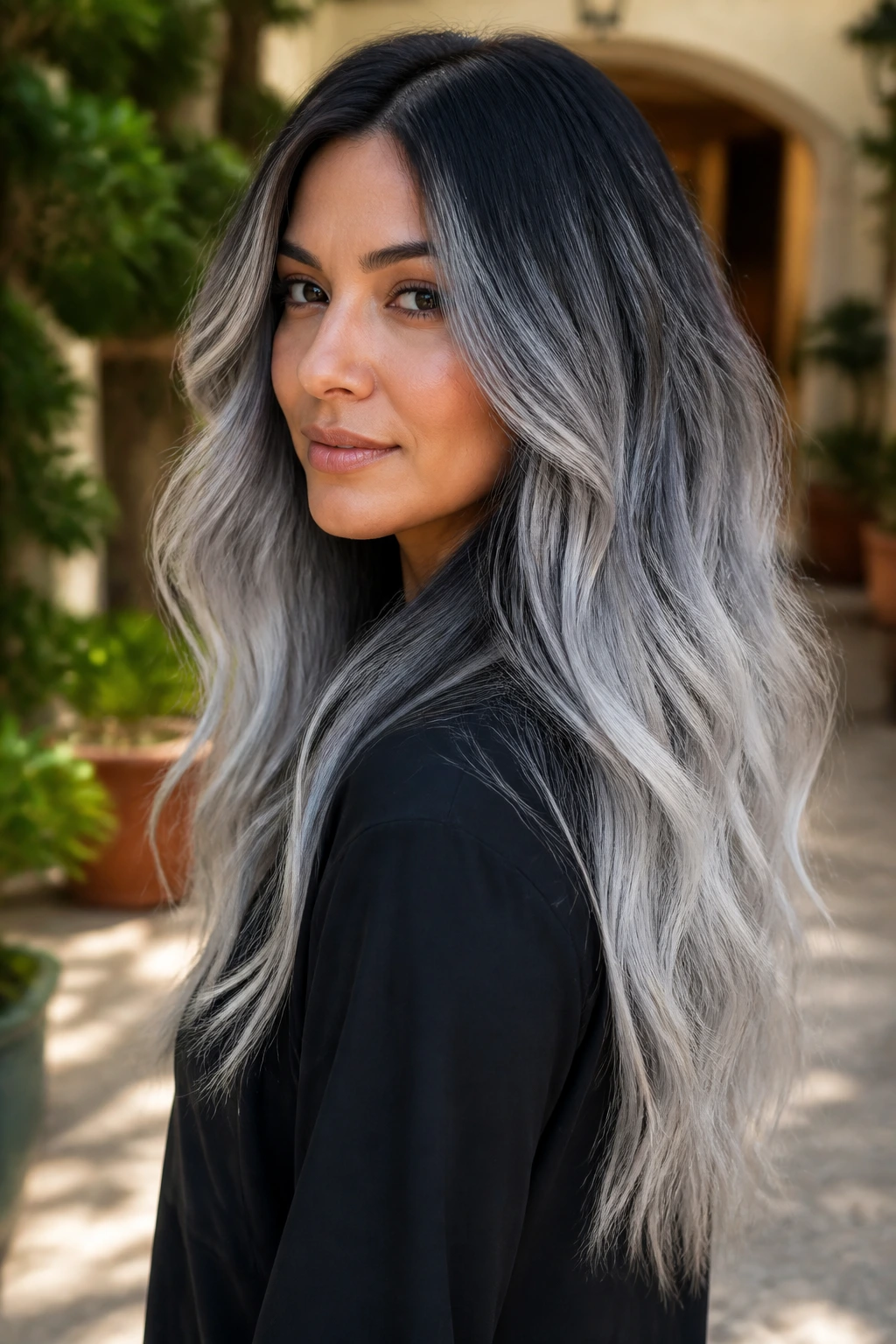
Metallic silver ombre gives you a clear transition from deeper roots into bright silver ends, and that gradient can look striking on medium skin when the contrast is handled carefully. The darker top part keeps the color from washing out the face, while the lighter ends give you the shine people usually want from silver.
The waves matter here because they help blur the line between dark and light. If the ombre is perfectly straight, the divide can feel too graphic. In beachy waves, the transition softens and the color feels less like a line and more like a fade.
This is the shade for someone who wants a little drama. It looks especially good on longer hair, where the ombre has room to stretch. Short hair can wear it too, but the gradient needs to be kept soft or it turns loud fast.
20. Blue-Gray Smoke
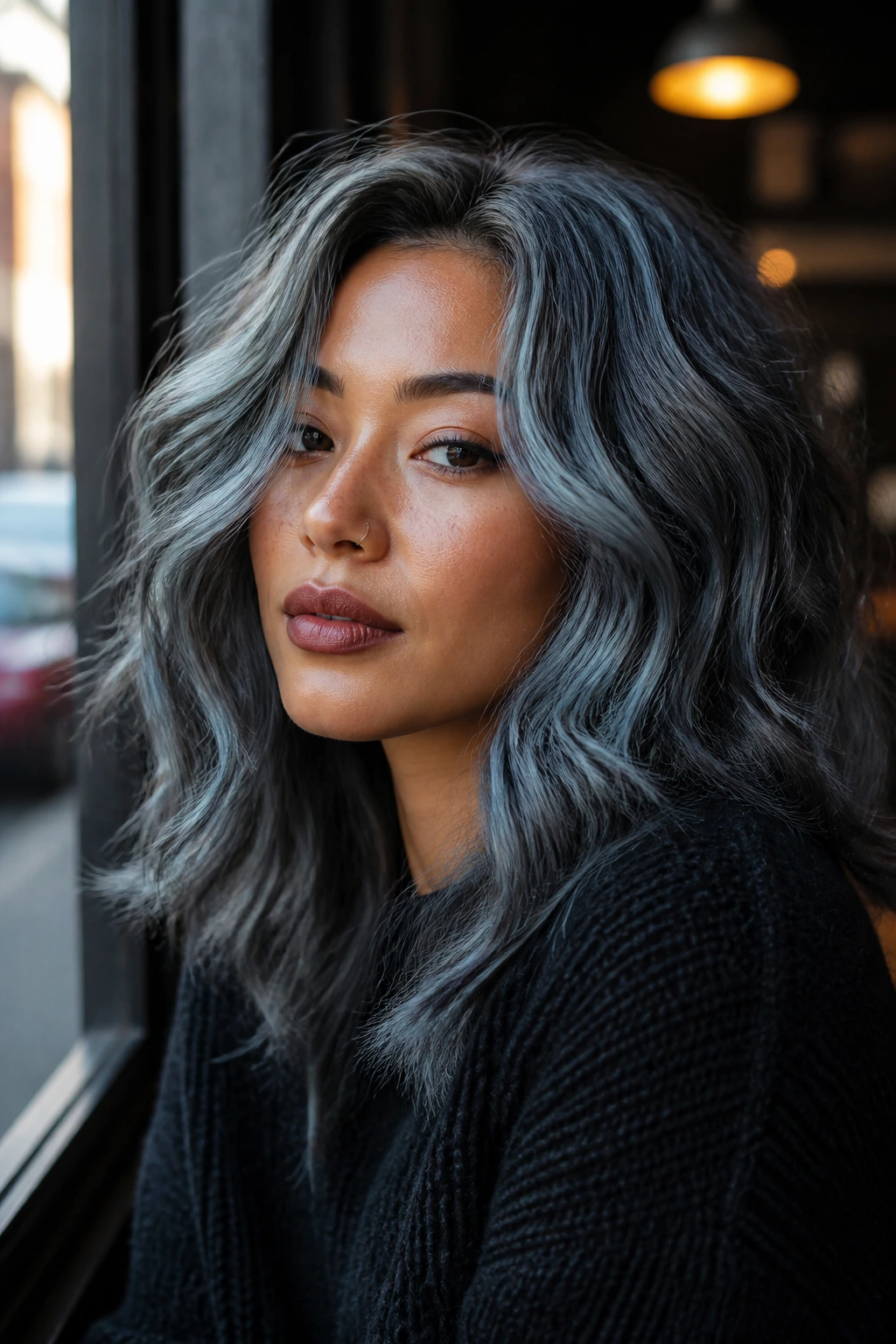
Blue-gray smoke is bolder than most of the softer silver families, and that’s why it’s memorable. The blue undertone cools down medium skin nicely if your complexion runs neutral, but it can be unforgiving if you already lean very cool. That’s the balance to watch.
Beachy waves are almost a requirement here, because they keep the blue-gray from reading flat. The bends let the shade shift between stormy blue, slate, and smoky silver. Without that texture, the color can feel a little too serious.
This is one of the few gray shades that pairs well with sharper makeup and darker clothing right away. Black, navy, charcoal, and deep green all work. It’s not a shy color.
21. Ash Blonde Gray Blend
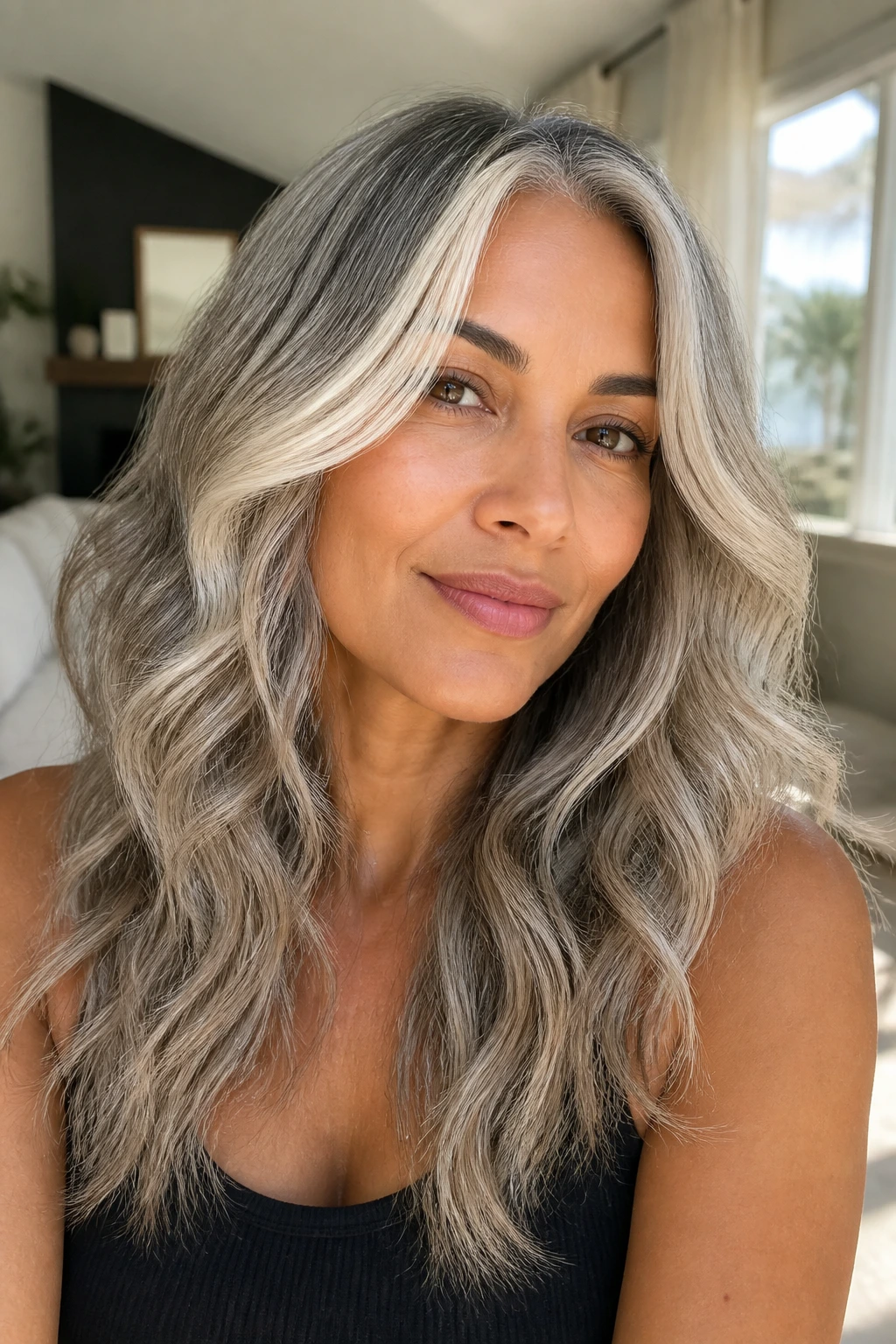
Ash blonde gray blend is useful if you want to step toward gray without giving up brightness. It keeps some of the blonde energy while cooling it down with ash and soft silver. On medium skin, that means the hair still gives off light, but it doesn’t turn yellow or brassy as easily.
The best version usually has brighter pieces through the front and a softer, slightly darker base underneath. That keeps the color from floating away from the face. Beach waves then break the blonde-gray into little pockets of shine, which is much better than one flat pale sheet.
This shade works for someone moving out of blonde or anyone who likes lighter hair but wants it to feel a little moodier. It’s less stark than pure silver and easier to live with for a lot of people.
22. Rose-Silver Gray
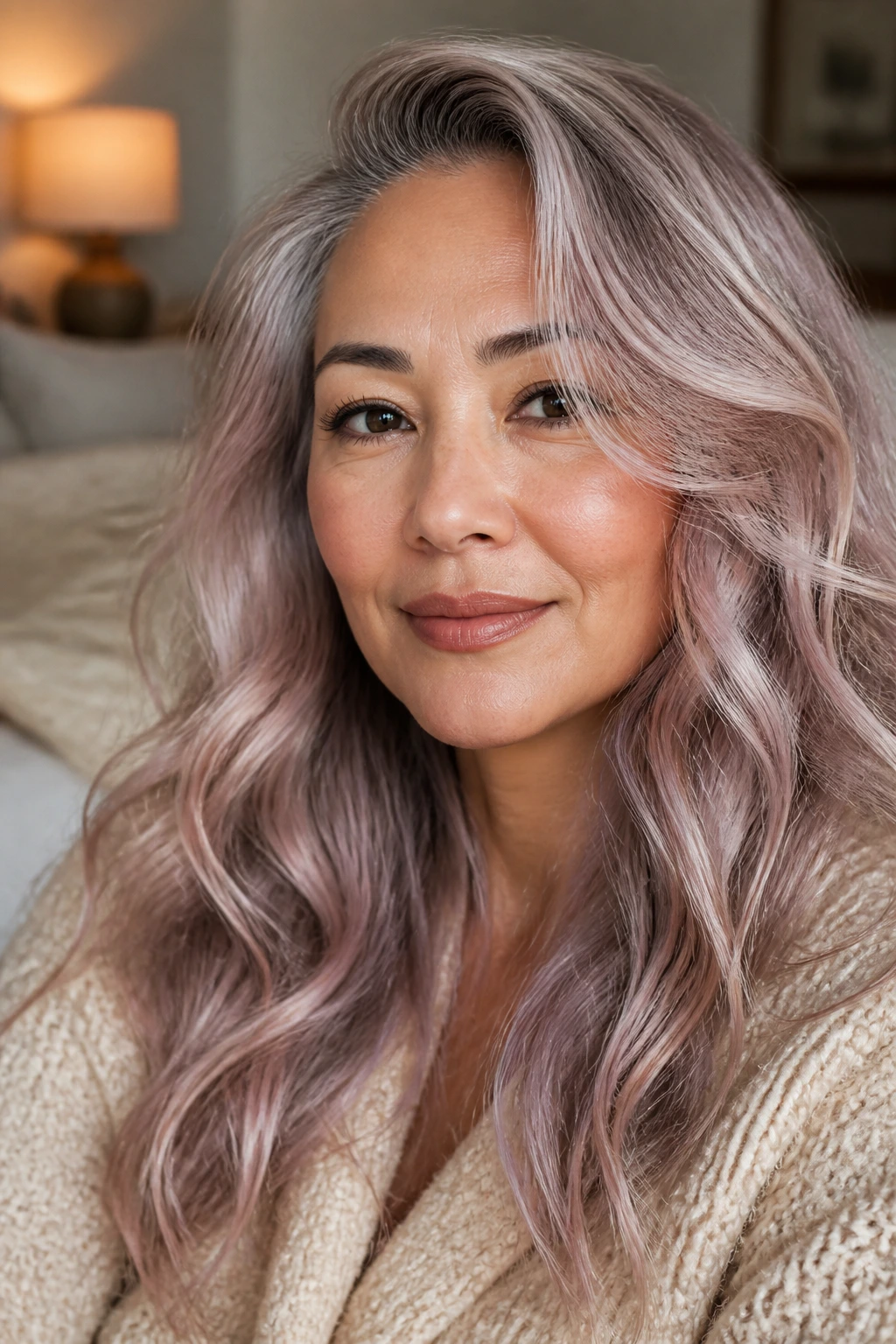
Rose-silver gray adds the faintest blush cast to silver, and when it’s done softly, it can be stunning on medium skin. The rose note warms up the gray just enough so the color doesn’t go flat, especially on complexions that have a touch of golden warmth. Too much pink, though, and the whole thing starts to feel costume-y. Restraint is everything.
Beachy waves keep the rose tone from taking over. The bends let a little pink show in some spots and stay hidden in others. That subtle change makes the hair look dimensional instead of painted one note.
I’d use this shade when you want something a little romantic without giving up the gray base. It likes soft makeup, cream knits, and a slightly undone texture. A bit pretty. Not sugary.
23. Soft Chrome Blonde Gray
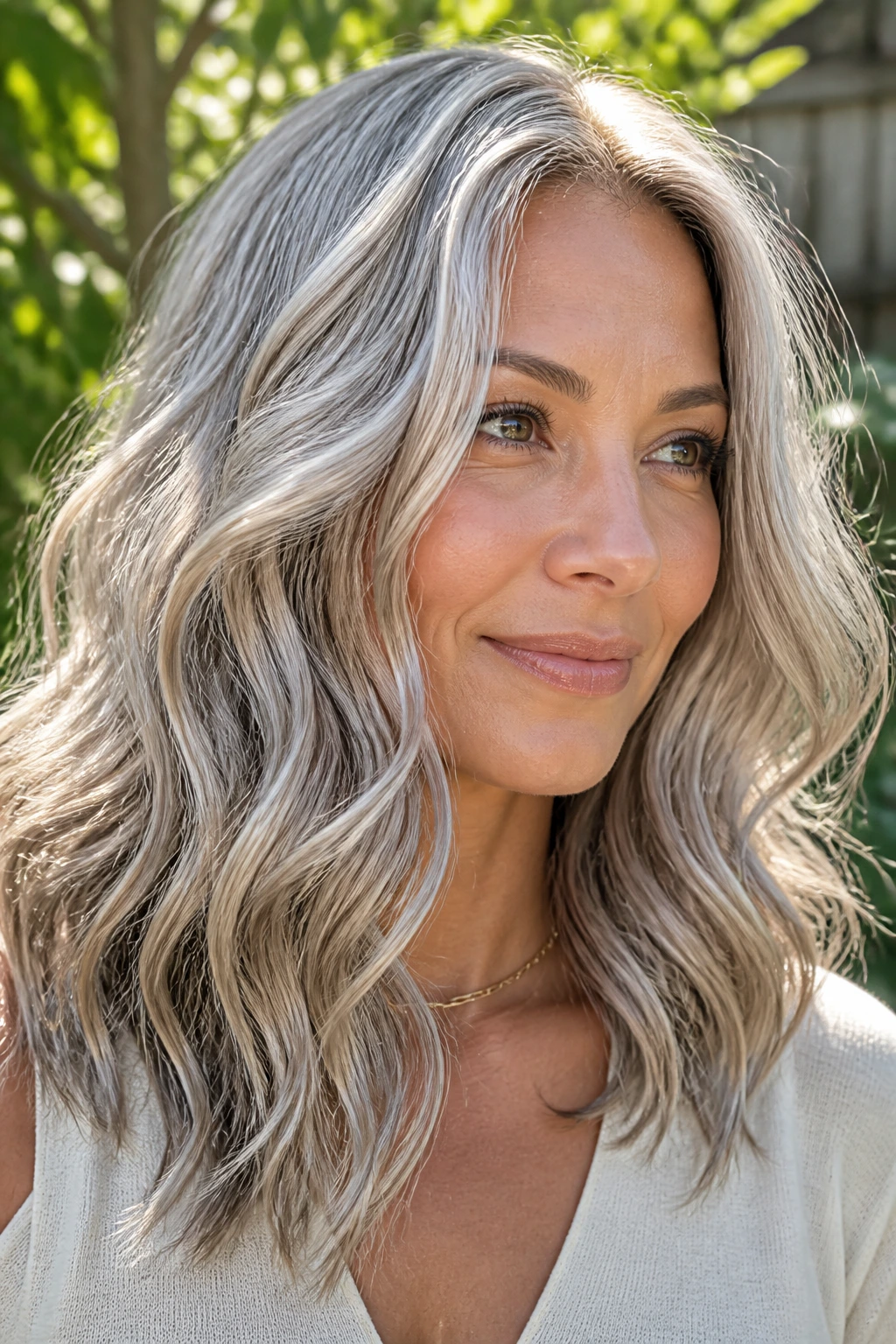
Soft chrome blonde gray brings a reflective finish to a lighter blonde base, and that shine can work surprisingly well on medium skin if the tone is kept controlled. Chrome sounds harsh, but soft chrome is less mirror and more polished satin. The blonde underneath keeps it luminous.
This shade needs a good wave pattern because the chrome finish is all about reflected light. You want the bends to catch it, not a stiff, uniform curl. Beach waves give the color room to flicker between blonde, silver, and pale gray as you move.
If your hair is fine, this can actually help the cut look fuller. The bright finish adds visual density, especially on layered lobs and collarbone-length cuts. It’s one of the more high-shine choices here.
24. Dark Dove Gray
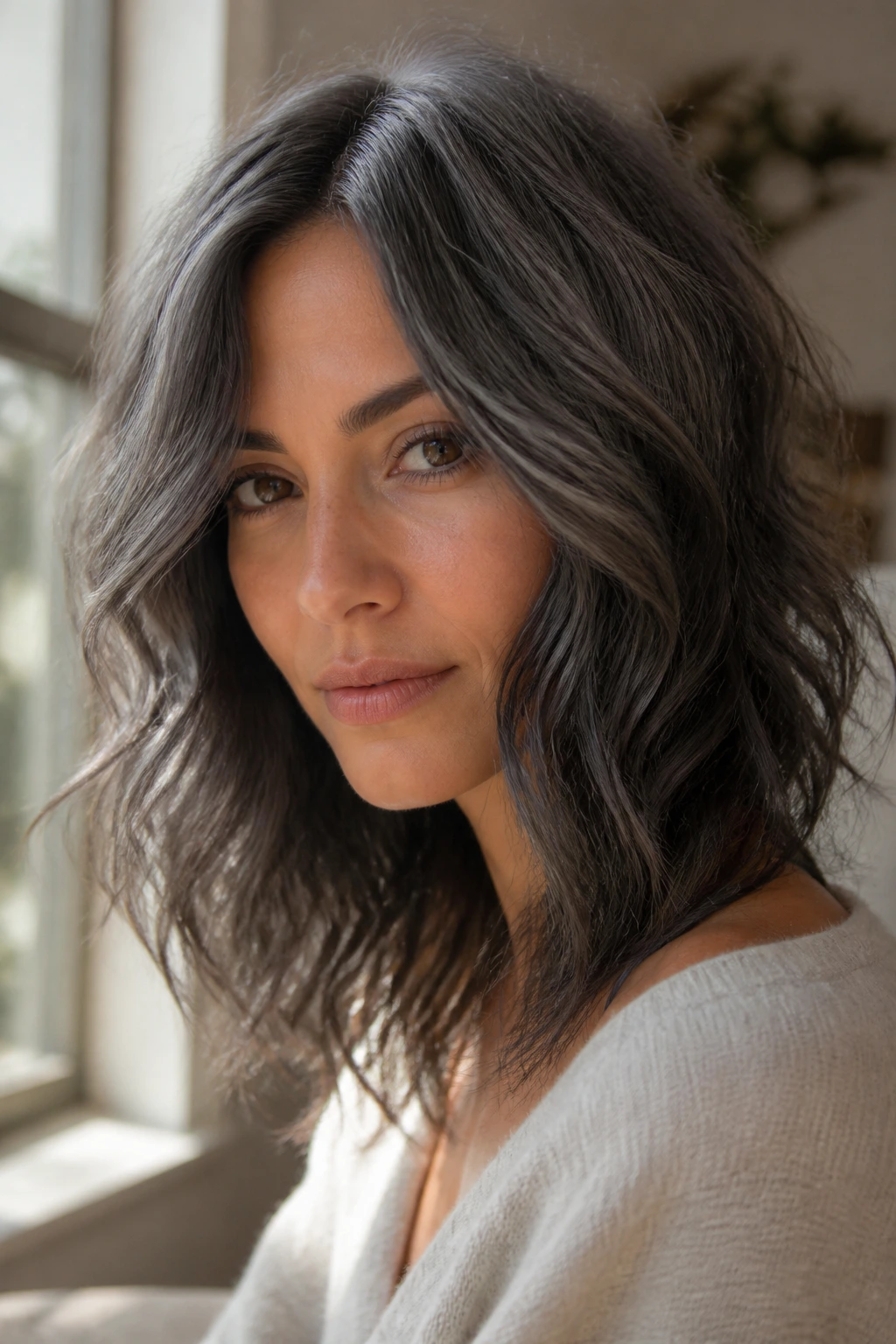
Dark dove gray is softer than graphite and less metallic than gunmetal. It has a feathered, muted quality that works beautifully on medium skin when you want gray to feel calm rather than bold. The tone stays close to the natural depth of brunette hair, but the gray cast keeps it from reading plain brown.
Beachy waves are the right call because they let the soft gray hover instead of sitting heavy. A little bend around the ends, a little lift at the root, and the shade gets shape fast. That softness is the whole point. It feels easy.
This is a good shade if you want your hair to look expensive in the least annoying way possible: clean, controlled, and not screaming for attention. It’s quiet, but not boring.
25. Pearlized Smoke Balayage
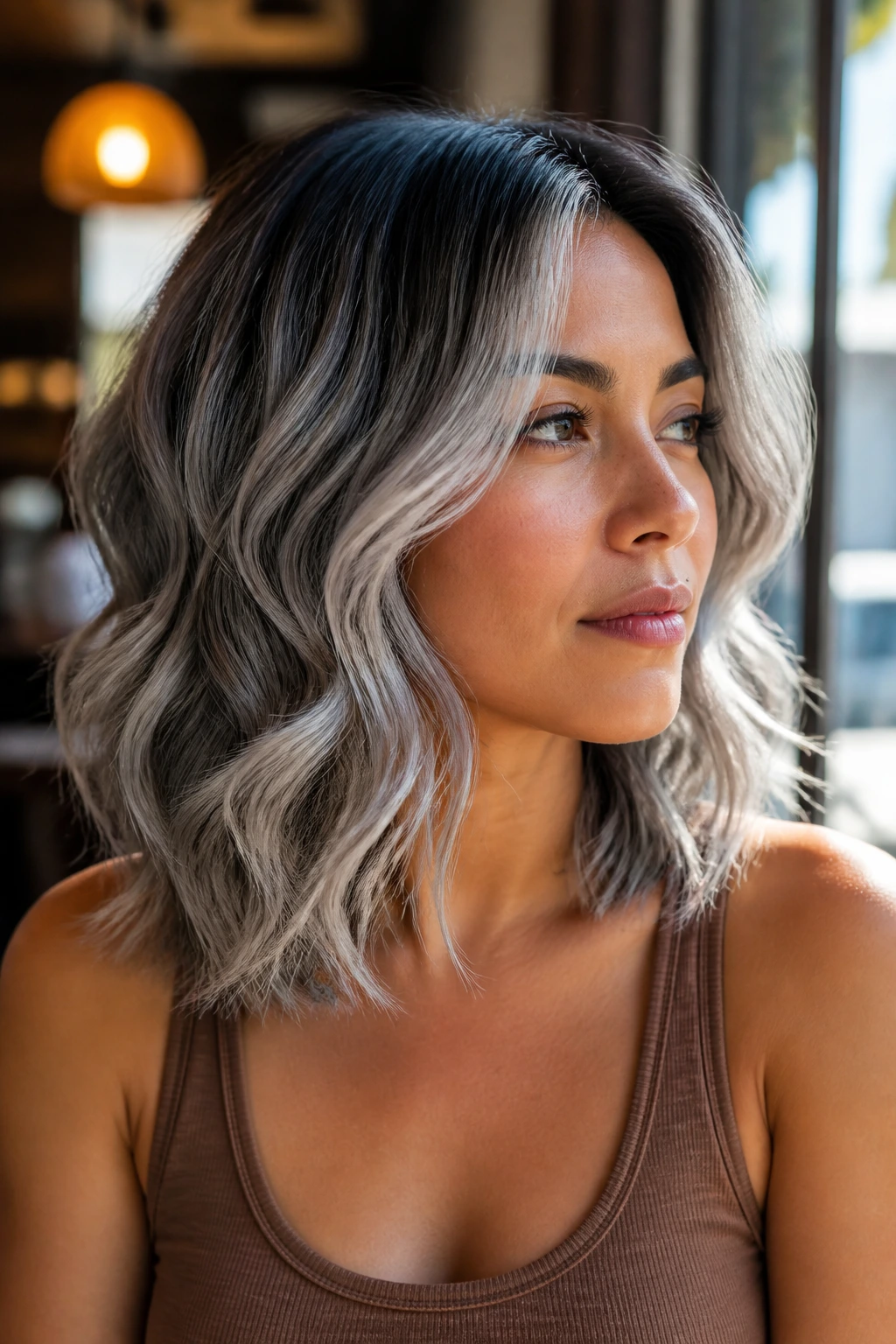
Pearlized smoke balayage is the most layered version of the bunch, and maybe the most forgiving too. It mixes pearl silver, smoke gray, and a bit of shadow at the root, which gives medium skin a lot of flexibility. The lighter pieces brighten the face, while the smoky pieces keep the color from going too icy.
Beachy waves make this shade come alive. Every bend shows a different piece of the blend, so the hair feels like it has depth from every angle. That’s why balayage works so well here. It doesn’t depend on one exact tone. It depends on movement.
If you want gray that feels polished but not rigid, this is the shade I’d point to first. It can be as subtle or as bright as your lightening level allows, and it grows out in a way that doesn’t look awkward by week two.
Why Gray and Beachy Waves Work So Well Together
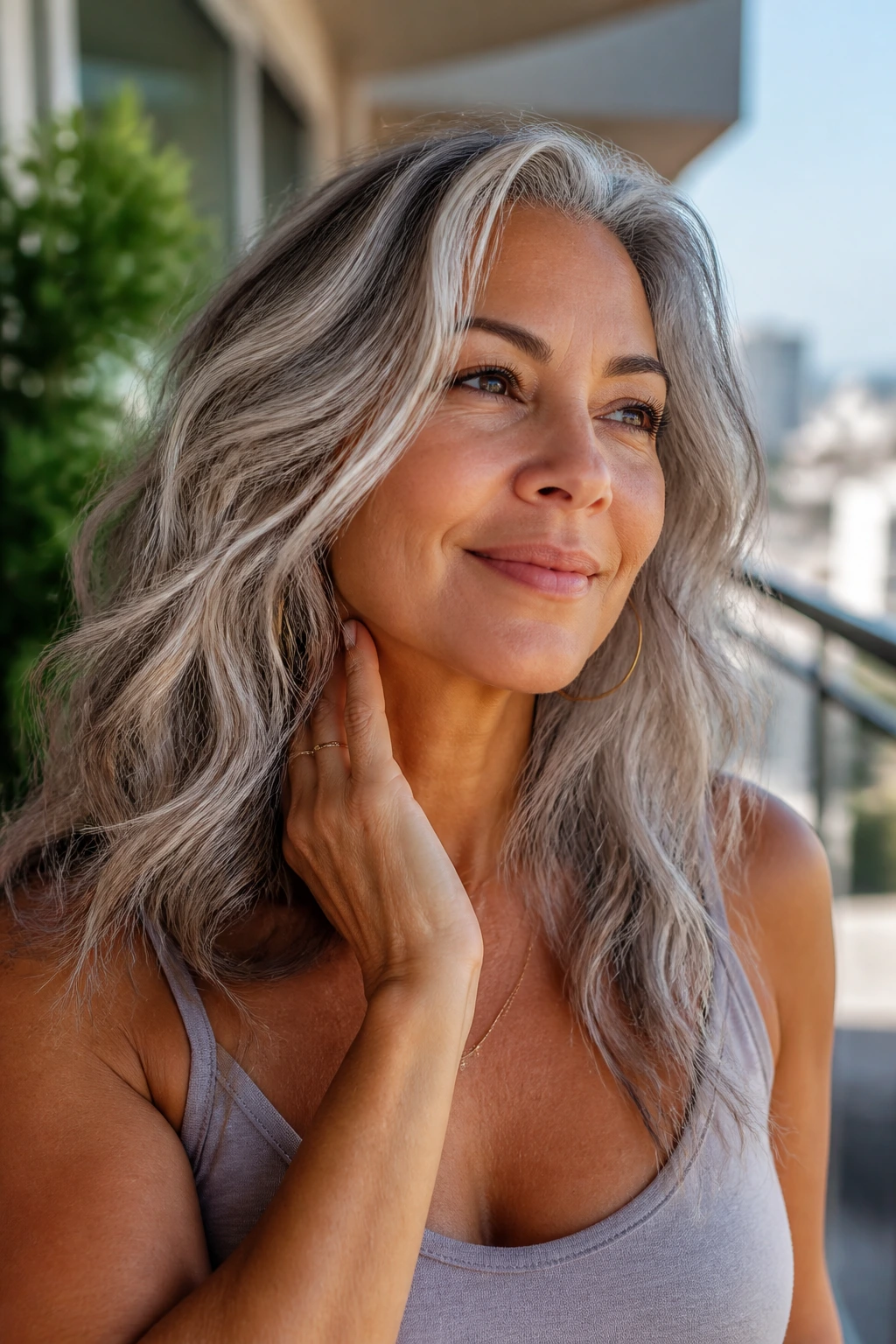
Gray hair and beachy waves make sense for a simple reason: the wave pattern gives gray a job to do. Flat gray can look like a single surface, which is where the trouble starts. Put that same color into soft bends and the light lands differently on every section. Now the hair has depth.
Medium skin benefits from that movement because the color never sits in one static note. A taupe-gray wave near the cheek can warm the face a touch, while a silver bend by the jawline adds contrast. That’s why this combo feels less severe than straight gray hair, especially when the undertone is olive or golden. The waves keep the color from overpowering the face.
There’s another quiet win here. Beachy waves soften the line between natural root, gloss, and lightened ends, which makes gray grow-out easier to live with. A clean wave mask does more for the color than a heavy style ever will. If the hair bends, the eye forgives.
The Tools That Keep Gray Glossy and Waves Soft
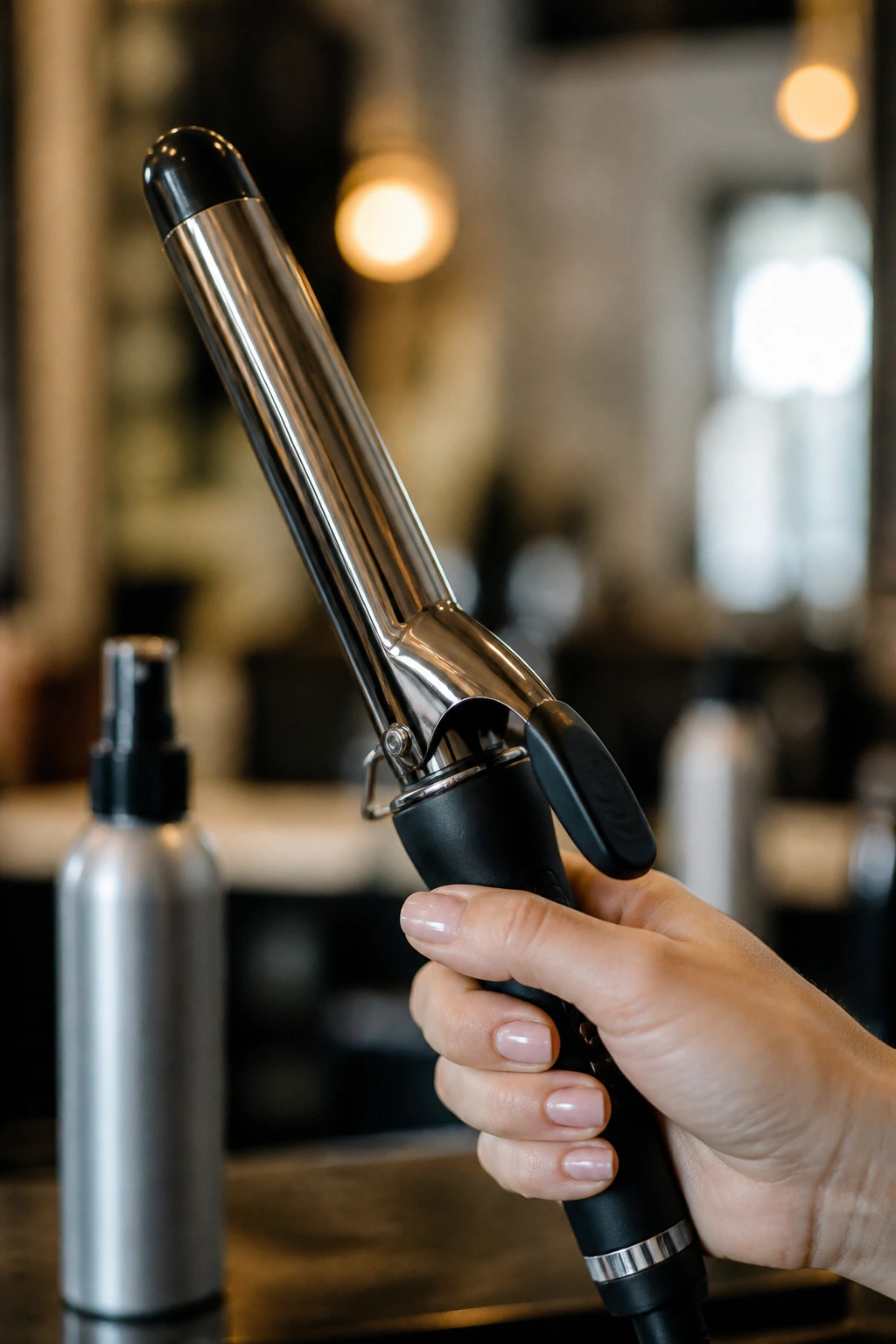
- 1-inch or 1.25-inch curling wand: A barrel in that range makes a loose bend without turning the hair into ringlets.
- Heat protectant spray: Use it every single time you touch the hair with heat; gray shades can look dry fast if the cuticle gets rough.
- Color-safe sulfate-free shampoo: This helps keep toner and gloss from fading out too quickly.
- Purple shampoo or blue shampoo: Purple helps lighter silver and ash tones; blue is often better for darker graphite and smoky brunette-gray blends.
- Wide-tooth comb: It separates waves without shredding them.
- Duckbill clips or sectioning clips: These make it easier to work in clean rows, especially around the crown.
- Microfiber towel or soft T-shirt: Less friction means less frizz and fewer rough ends.
- Leave-in conditioner: A light mist on mid-lengths and ends helps gray hair stay smooth instead of brittle-looking.
- Clear gloss or color-depositing mask: Good for keeping silver from looking dusty between salon visits.
- Silk pillowcase or bonnet: Not fancy. Just useful. The waves last longer and the ends stay calmer.
How to Choose the Right Gray Formula for Your Undertone
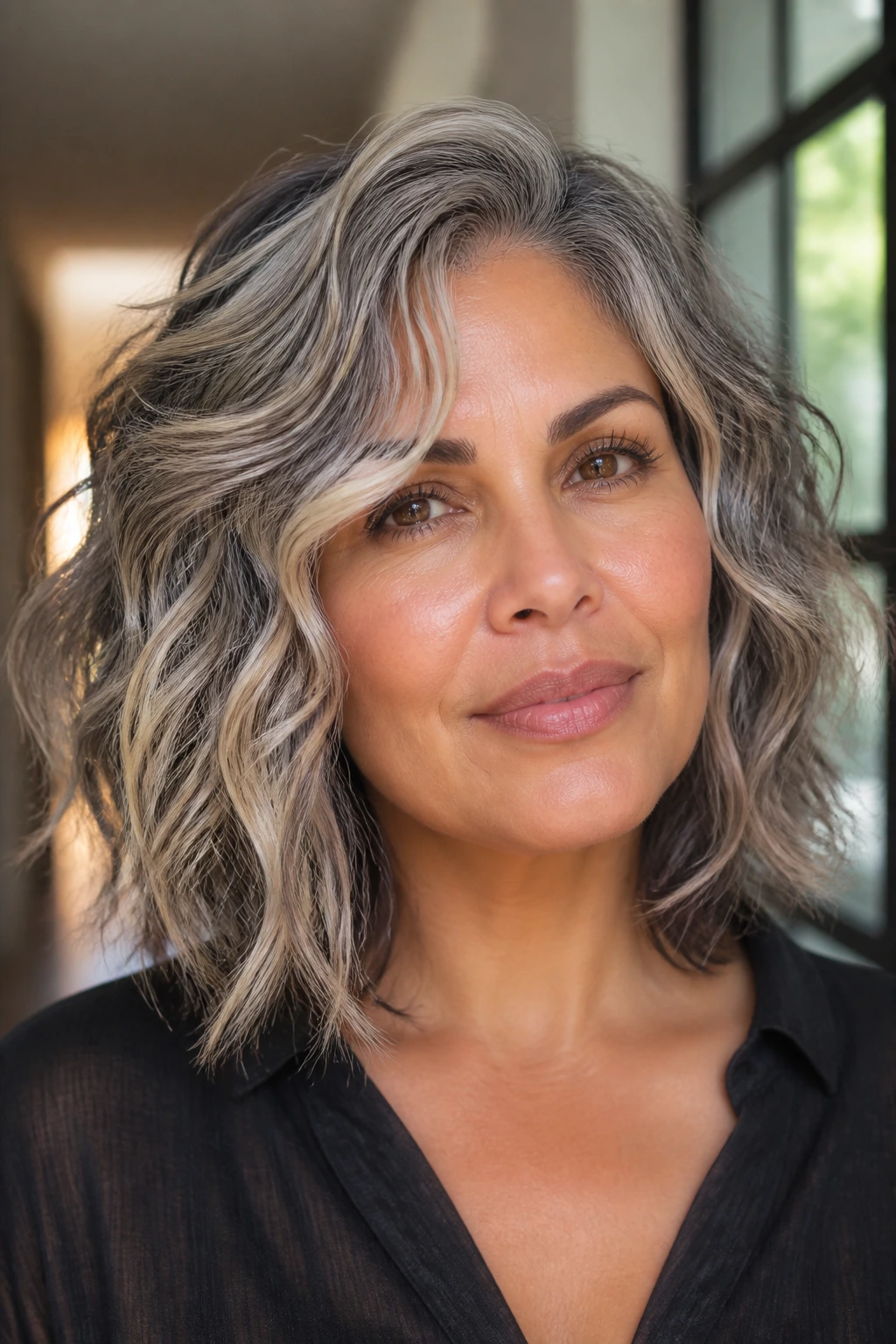
Medium skin isn’t one thing. It can lean olive, golden, peachy, neutral, or cool, and each one changes how gray hair reads against the face. If your skin has warmth, shades like smoky beige gray, silver sand balayage, mushroom gray, and cool taupe usually feel the easiest. They carry enough softness to keep the complexion from looking sallow.
If your skin leans neutral or slightly cool, you can push farther into pearl, chrome, steel, or moonlit ash. Those shades create a cleaner frame around the face and make the skin look smoother. Just be careful with anything too blue if you already run cool; it can get sharp fast. A gray that’s too icy tends to look flat instead of bright.
The starting level of your hair matters too. Dark brunettes usually need a stronger lightening step if they want true silver or pearl gray. If you’d rather avoid that, go with graphite, charcoal, or a glaze-heavy brunette-gray blend. That gives you the mood without forcing the hair into a pale lift it may not love.
How to Wear Gray Hair Shades With Beachy Waves
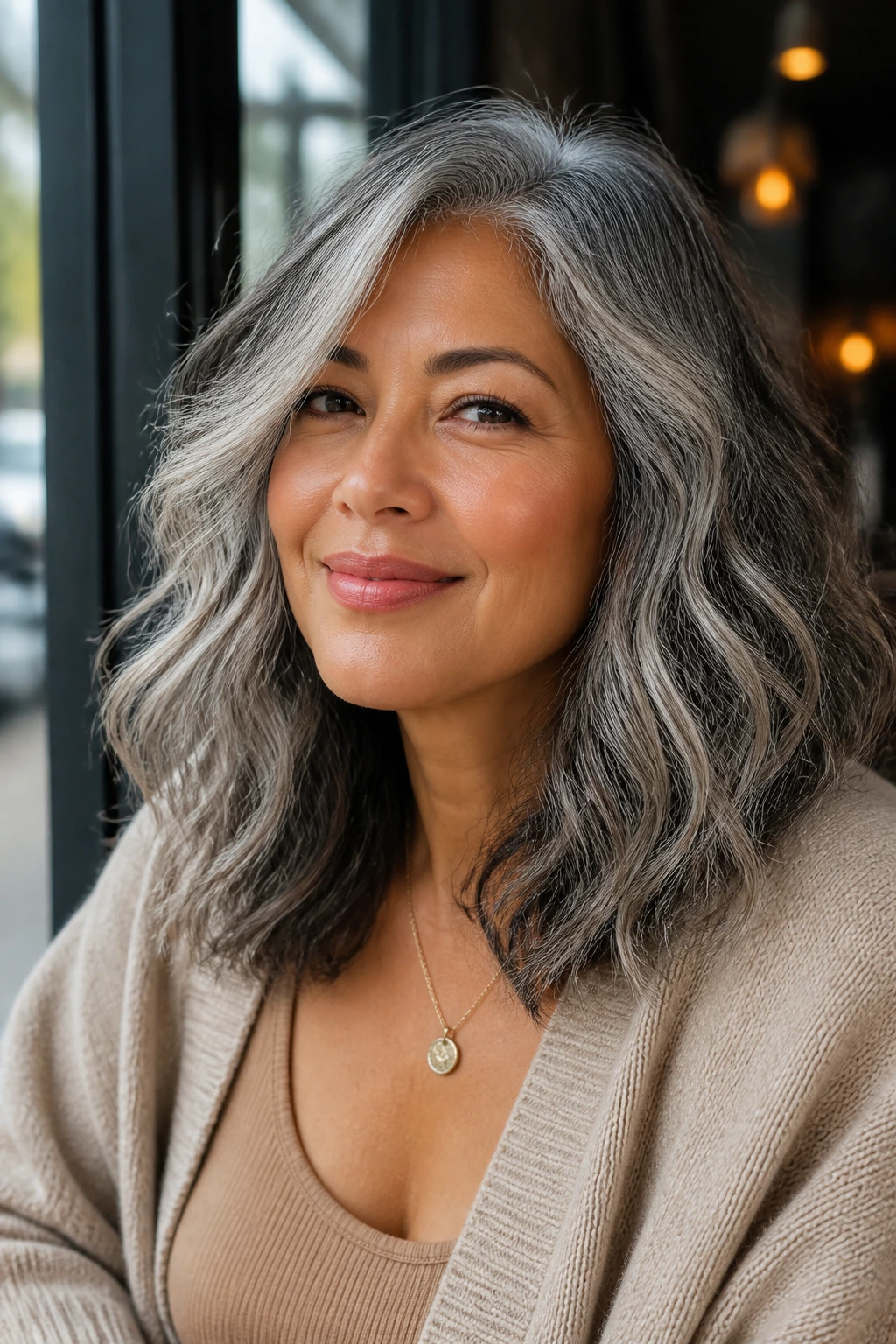
Presentation: Keep the part slightly off-center if you want softness, or go dead-center if the shade has enough dimension to handle it. Start the wave below the cheekbone and leave the last half-inch straighter so the ends don’t curl into a poodle shape. Gray reads best when the wave looks touched, not overworked.
Makeup Pairing: Peach blush, taupe shadow, brown liner, and a neutral lip tend to sit well beside most medium-skin gray shades. Cooler silvers can handle a berry lip. Warmer mushroom and taupe-gray shades usually look best with softer bronzy tones that don’t fight the hair.
Wardrobe Pairing: Cream, charcoal, denim, olive, black, and deep navy are easy wins. If the gray is warm-leaning, camel and warm beige can look good too. When the color goes very cool, a crisp white shirt can make it look sharper than expected.
Best Hair Lengths: Lobs and shoulder-length cuts show off gray waves fast because the color moves without too much weight. Longer hair works too, but it needs layered cutting or the gray can sink into a heavy curtain. Shorter cuts can wear bright silver, though they usually need tighter control at the roots.
Ways to Make the Look More Personal
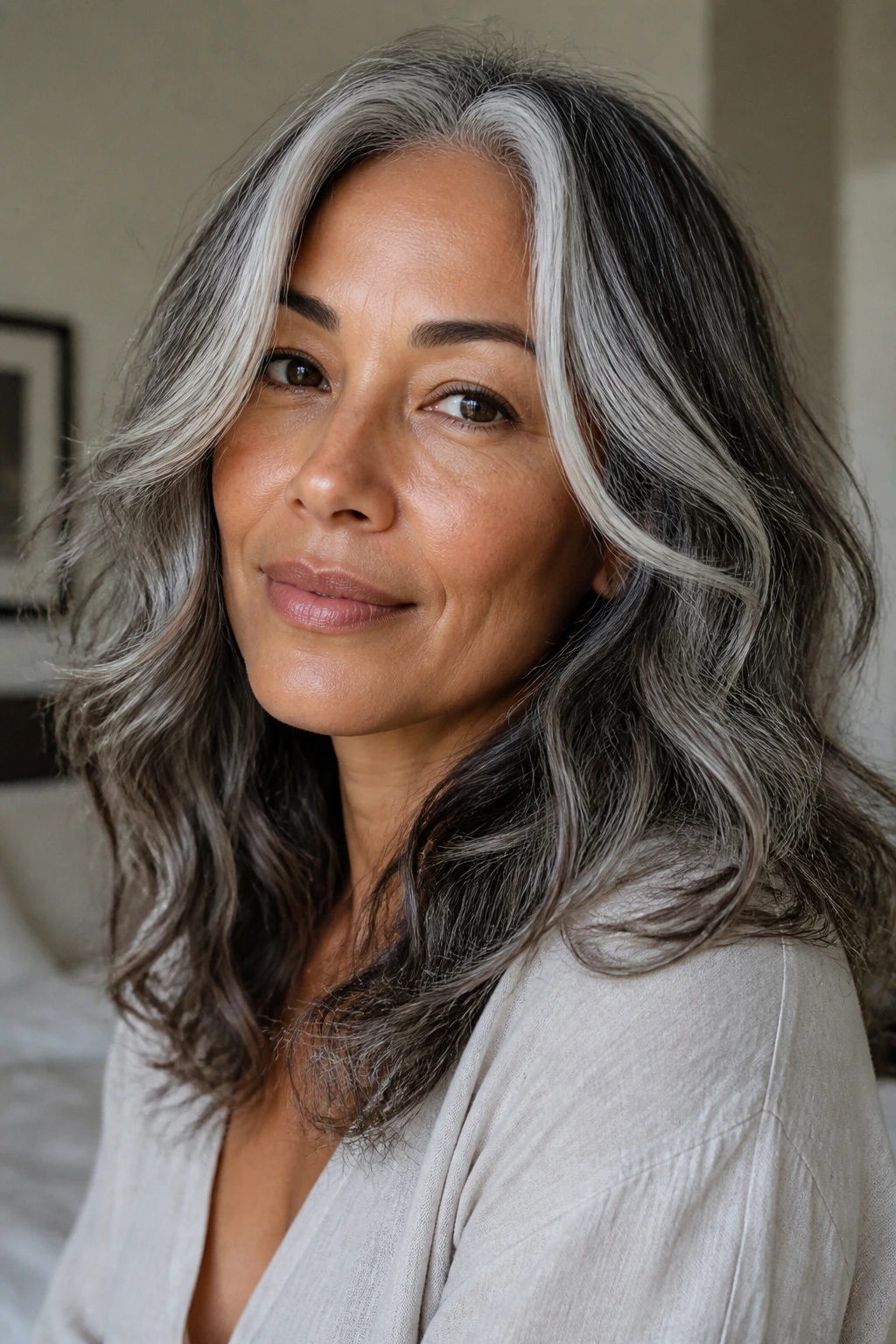
Tone Shift: Push the formula toward beige or taupe if your skin is warm, or toward pearl and steel if your skin is cooler. That tiny change can be the difference between “interesting” and “why does this feel off?”
Dimension: Keep a few lowlights 1 to 2 levels deeper than the main gray. The deeper pieces stop the color from turning flat when the waves relax.
Gloss Finish: A clear gloss every few weeks keeps silver shades from looking dry and dusty. If the hair is porous, a tinted gloss can do more for shine than another round of purple shampoo.
Face-Framing Brightness: Lighter pieces around the front can wake up medium skin fast, especially if the gray is otherwise dark or smoky. It’s a cleaner move than lightening the whole head.
Texture Choice: A salt spray gives gray a rougher, more beachy feel. A lightweight cream gives it a smoother, more polished finish. Pick the texture based on whether you want the color to feel casual or intentional.
Keeping Gray Fresh Between Glosses and Wave Refreshes
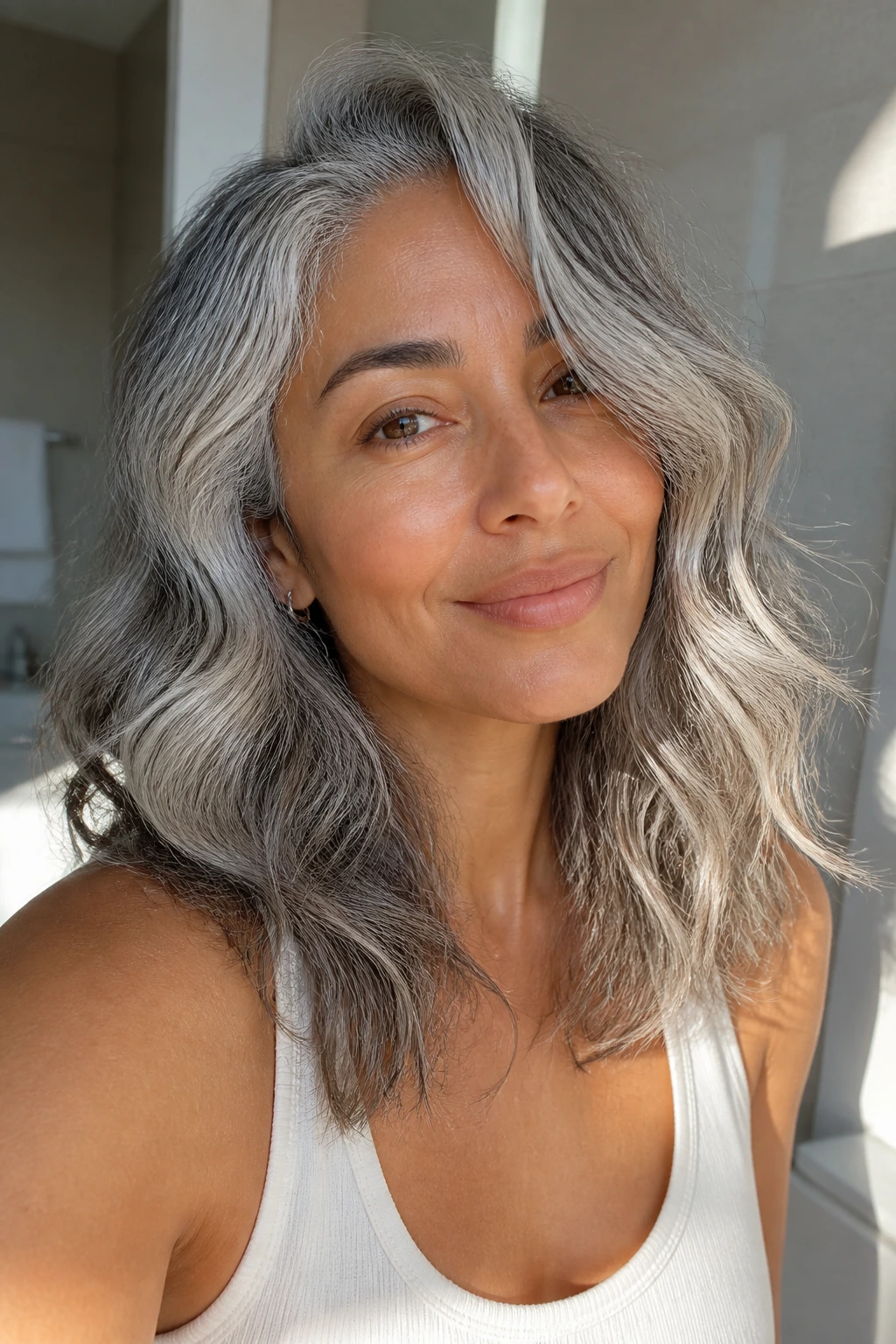
Gray hair gets dull fastest when product buildup, hard water, and too much heat start roughing up the cuticle. A sulfate-free shampoo helps, but the real difference comes from spacing out washes. Two to three washes a week is usually plenty for most beachy-wave styles. More than that, and the color starts losing its shine faster than people expect.
If your gray leans icy or silver, use purple shampoo about once every 7 to 10 days. If the shade is darker — graphite, gunmetal, smoky brunette-gray — blue shampoo can help calm orange tones without turning the hair lavender. Don’t leave toner shampoo on too long. Five minutes is often enough. Ten if the hair is stubborn. Any longer and the color can go matte.
Heat is the other culprit. Keep hot tools around 300 to 350°F for fine or porous hair, and only go higher if your hair can actually take it. Always use heat protectant. At night, a silk pillowcase or bonnet keeps the beach waves from flattening into frizz by morning. If you swim, rinse the hair before and after, then condition the mids and ends right away. Chlorine and gray tones are not friends.
Variations and Adaptations to Try
The Soft Root Melt: Keep the crown 1 to 2 levels deeper than the mids and ends, then add smoky gray through the lower half. It’s a low-maintenance version that grows out cleanly and suits medium skin that needs a little grounding.
The Bright Face Frame: Leave the interior darker and place pearl, silver, or chrome pieces around the front hairline. This works when you want the face to look brighter without turning the whole head high-contrast.
The Brunette-Gray Balance: Keep about two-thirds brunette and one-third gray through glossing or soft ribbon lights. This version feels calm, wearable, and easier to maintain if you don’t want weekly toning.
The Cool Chrome Edit: Push the formula toward steel, pearl, and ash, then style with shinier, looser waves. It’s a sharper look, best for neutral or cool medium skin and dark clothing.
The Warm Smoke Blend: Add beige and taupe into the gray so the color keeps a little warmth. This is the easiest route for golden or olive medium skin that doesn’t like stark silver.
The Beach-Only Finish: Leave the top smoother and put the full wave texture only from the ears down. That keeps the roots neat while the ends do the fun part.
Common Mistakes That Make Gray Hair Look Flat or Muddy
Choosing a gray that’s too icy for your undertone. If medium skin has warmth and the gray goes pale blue-white, the face can look tired. The fix is simple: shift toward mushroom, oyster, taupe, or beige-gray.
Skipping root depth. A gray that starts too light at the scalp can look like a helmet when the hair is wavy or straight. A soft shadow root gives the style structure and makes regrowth less annoying.
Over-toning the hair. Purple shampoo is useful, but too much of it can leave silver hair dull and chalky. Use it sparingly and follow with a hydrating mask.
Curling every section the same way. Uniform curls make gray hair look old-fashioned fast. Alternate directions, leave the ends out a little, and break the waves up with your fingers once they cool.
Forgetting texture and hydration. Gray hair often feels drier than pigmented hair because it’s been lightened or naturally lost pigment. If the ends look frayed, the color will too. A leave-in cream or a light oil at the ends makes a bigger difference than another round of styling spray.
Going too shiny or too matte. Both can go wrong. Mirror shine can make gray look plastic; no shine makes it look dusty. A soft satin finish is usually the sweet spot.
Questions People Ask Before Coloring Gray
Will gray hair wash out medium skin?
It can, but only when the gray is too pale, too flat, or too cool for the undertone. Mushroom, taupe, pearl, and rooted grays usually sit better because they keep some depth around the face.
What gray shade is easiest to wear for warm medium skin?
Smoky beige gray, silver sand balayage, and cool taupe gray tend to be the easiest starting points. They hold enough warmth to keep the skin from looking yellow or drained.
Do I need bleach for silver gray?
If you want a true light silver, usually yes. Dark brunette hair often needs lightening before toning. If you want a darker graphite or smoky gray, you may be able to stay closer to your natural base.
How often should gray hair be toned?
A lot of people need a gloss or toner refresh every 4 to 8 weeks, depending on how pale the shade is and how often they wash. Bright silver usually asks for more upkeep than mushroom or graphite.
Can beachy waves hide grow-out?
They can soften it, yes. Waves break up the line between the root and the lighter pieces, which makes the grow-out look more intentional.
What if my gray turns yellow or brassy?
Use a purple shampoo on lighter silver and an occasional blue shampoo if the hair has deeper brunette tones. Hard water, heat, and product buildup also cause brassiness, so clarifying once in a while helps.
Is gray hair harder to style with waves?
Sometimes, because lightened hair can be drier and a bit rougher. A heat protectant, light leave-in, and a lower hot-tool temperature usually solve most of that.
Can I wear gray hair if I have curly hair instead of loose waves?
Yes. The same shades work on curls, but the placement has to follow the curl pattern so the gray doesn’t disappear into the texture. Dimensional highlights usually work better than a single all-over silver on curly hair.
A Gray Shade That Moves With the Light
The strongest gray looks are never just about the color. They’re about depth, undertone, and whether the hair has enough movement to keep the shade alive. Medium skin gives gray plenty to work with, but only if the tone is chosen with a little care and the finish has some bend to it.
Beachy waves make the whole thing easier. They stop gray from sitting flat, they soften grow-out, and they let the color shift between silver, smoke, and shadow in a way that feels natural. That’s the trick. Not louder. Better placed.
Pick the shade that fits your undertone, keep the texture soft, and let the waves do the rest. The right gray on medium skin doesn’t need to shout. It just needs to move.