



Curly hair doesn’t need to be softened into obedience to look sharp. The strongest rock hairstyles for women with curly hair usually do the opposite: they keep the bend, keep the lift, and let the cut do the heavy lifting so the curls can stay loose, messy, and a little bit defiant. That matters more than people admit. A blunt shape on curls can turn boxy fast, while a good set of layers can make the whole head move like it’s got its own bass line.
And that’s the real trick here. These looks are not about forcing your curl pattern into a straight-haired idea of “neat.” They’re about using the curl’s own spring, shrinkage, and texture to create shape. A shag that sits flat on straight hair can look sleepy; on curls, it turns into something with bite. A pixie can go from sweet to sharp in one snip at the temple. A ponytail can look plain on paper and still read like stage hair if the crown is lifted and the face-framing pieces are left alone.
If you’ve ever walked out of a salon with curls that felt either too puffy, too triangular, or too polite, you already know why the right cut matters. Curls don’t hide mistakes. They announce them. Which is annoying on a bad day and wonderful on a good one, because when the shape is right, you don’t have to fuss much to get the effect.
Why These Curly Rock Looks Hit So Hard
They work with shrinkage, not against it: A cut that looks shoulder-length when wet may sit an inch or two higher when dry, and these styles are built with that in mind.
Layers keep the outline from turning boxy: Curly hair needs internal movement, especially around the crown and cheekbones, or the whole shape can sit like a helmet.
Texture does the styling for you: A little frizz around the ends often reads as energy, not damage, when the cut has the right structure.
They let you pick your level of drama: You can go full shag, slicked-back puff, tapered pixie, or soft glam wave without losing the rock edge.
Most of them are refresh-friendly: A spritz bottle, a touch of mousse, and five minutes in the morning can bring the shape back without a full wash.
They play well with accessories: Hoops, clips, scarves, leather jackets, sharp collars — curls give those pieces more personality because the silhouette already has movement.
1. Curly Shag With Curtain Bangs
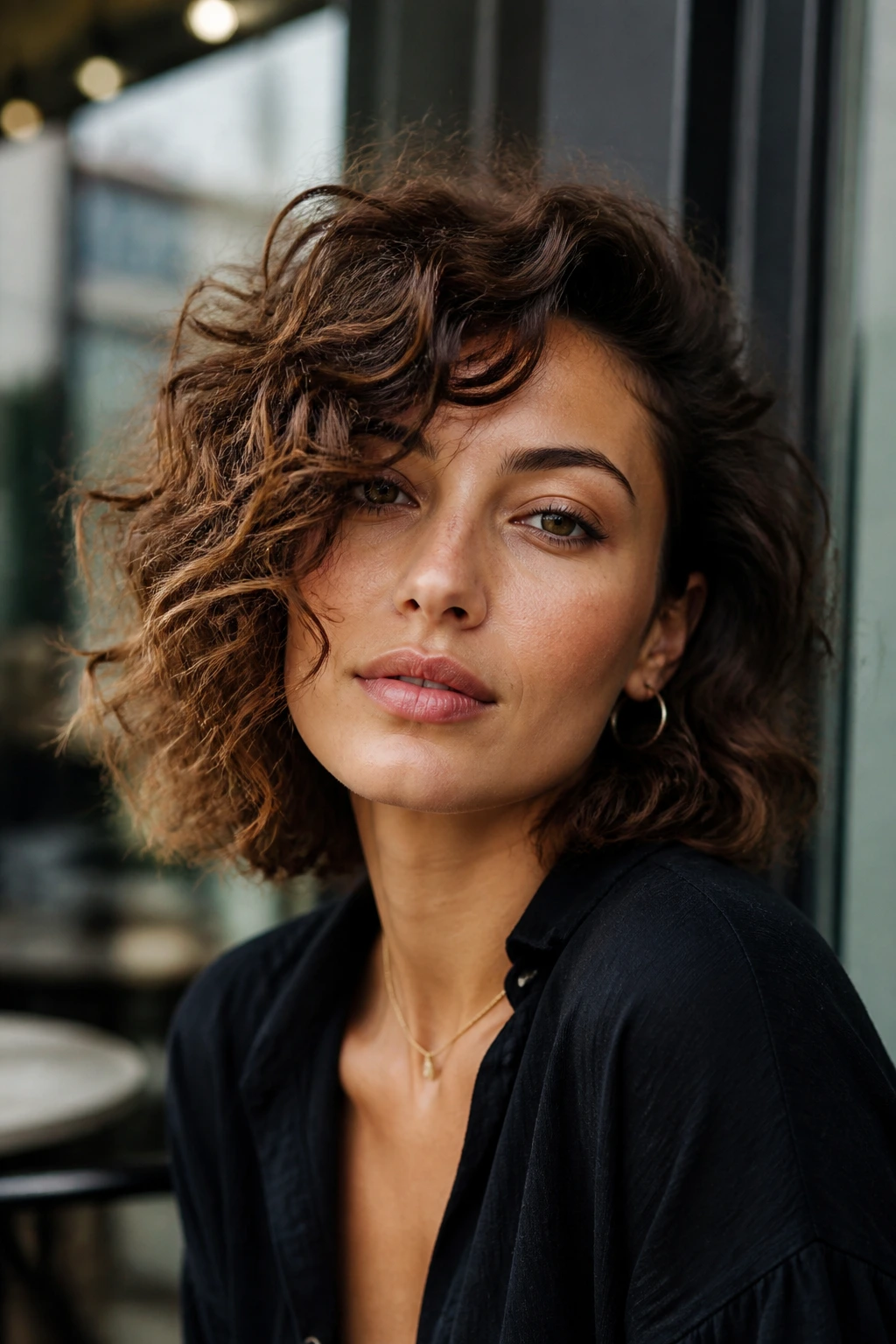
A curly shag with curtain bangs has that perfectly unbothered shape that makes straight lines look a little overdressed. The crown stays airy, the ends kick out in different directions, and the bangs split around the face instead of sitting in one stiff block. It’s one of those cuts that looks as if it happened on purpose and by accident at the same time.
Why it works
The shag wins because it takes weight out of the places where curly hair usually gets bulky: the sides, the back of the crown, and the line just under the chin. Curtain bangs soften the front without taking away the edge. If your curls are 2C to 3B, this cut can make the top feel lighter without robbing the length.
A curl cream plus a medium-hold gel is enough for most days. Air-dry halfway, then diffuse the roots so the crown doesn’t collapse. The bangs should sit in soft arcs, not in a straight curtain that hangs wet and stringy.
2. Tapered Curly Pixie
A tapered curly pixie is sharp in a way that long hair can’t fake. The sides hug the head, the top keeps enough length to show off the curl pattern, and the neck area stays clean so the shape reads crisp even when the curls puff up a little.
The best version of this cut has a little height on top and less bulk at the temples. That keeps the face open. If you’ve got dense curls, a stylist who trims dry and checks the silhouette from all sides is worth the extra time, because a pixie can go from cool to lopsided fast if the curl pattern gets ignored.
This cut likes a tiny amount of styling product. Too much cream can weigh the top down and make the whole thing collapse by lunch.
3. Side-Swept Curly Lob
A side-swept curly lob has the relaxed drama of a guitar solo that never tries too hard. The length sits somewhere between chin and collarbone, which gives the curls enough room to coil without turning the outline into a triangle. Sweep the front to one side and the whole cut gets instant movement.
The thing I like about this shape is how forgiving it is. If one side is flatter than the other, the asymmetry becomes part of the look instead of a problem. It works especially well on medium-density curls because the side part creates a built-in lift at the root.
Use a root clip while drying to keep the part from sealing shut. That small move changes everything.
4. High Curly Ponytail With Face-Framing Pieces
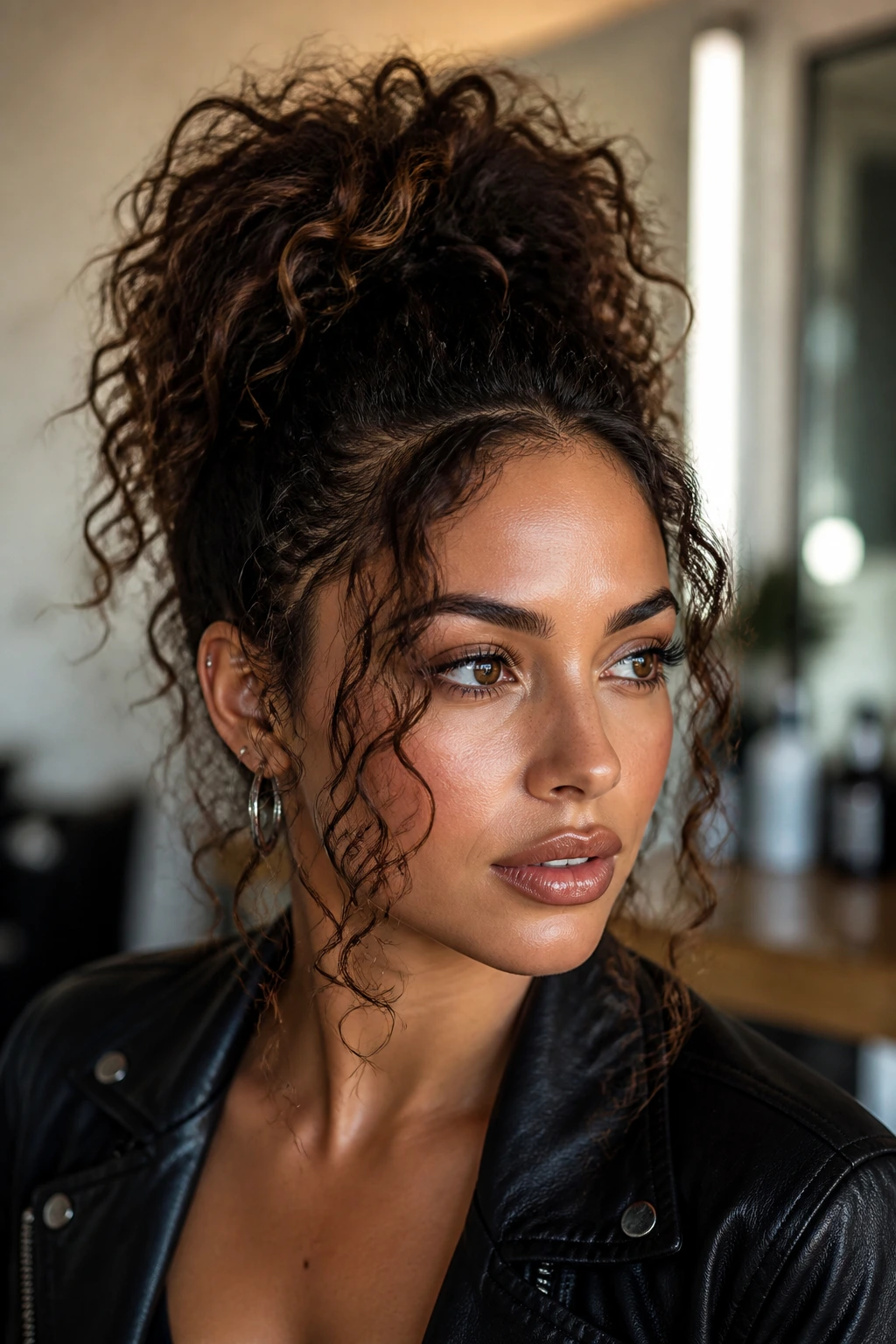
A high curly ponytail sounds plain until you see the crown lifted, the curls piled high, and the front pieces left loose enough to brush the cheekbones. Then it reads as cool, not lazy. The height gives the style attitude; the loose pieces keep it from feeling too severe.
This is one of the easiest rock hairstyles for women with curly hair when you need something fast but still want shape. Keep the ponytail at the top of the head, not the back of the skull, and don’t smooth the crown so hard that the hairline goes flat. A little texture there gives the style life.
If your curls are stretched by day two, mist the lengths lightly, scrunch, and wrap the base with a strand of hair instead of a plain elastic. Small detail. Big payoff.
5. Voluminous Wash-and-Go Shape
The best wash-and-go has a shape, not just hair that dried on its own. That’s the difference. A good one keeps the curls defined at the ends, lifted at the roots, and rounded through the sides so the silhouette feels intentional rather than random.
For rockier energy, ask yourself where the volume should live. Up top? Around the crown? Slightly wider at the cheekbone? Those choices matter more than people think. A wash-and-go that’s all volume everywhere can look puffy; one with controlled root lift and softer ends looks alive.
I prefer a light mousse on the roots and a stronger gel through the mid-lengths. That combo gives hold without turning the whole head into a cast that feels crunchy for two days.
6. Curly Wolf Cut
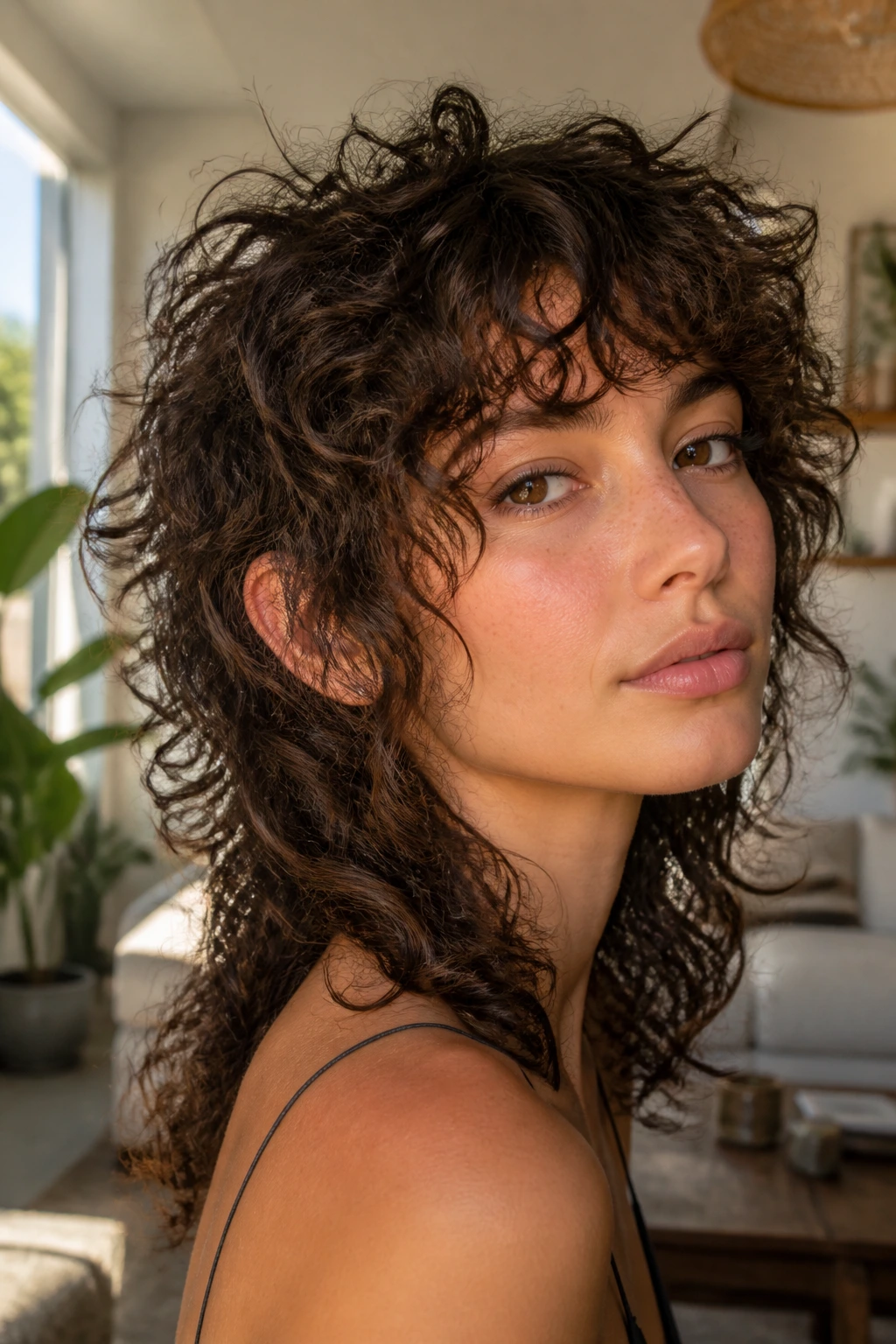
The curly wolf cut is what happens when a shag gets a little more rebellious and stops asking permission. It’s shorter around the crown, longer at the back, and loose around the face. On curls, that uneven shape can look fantastic because the texture breaks up the hard lines that would bother you on straighter hair.
The key is balance. You want enough layering that the cut lifts, but not so much that the ends look wispy and thin. Curls with some density love this style. Finer curls can wear it too, but the layers should be a touch longer so the bottom doesn’t disappear when dry.
This one gets better with a diffuser and a little finger-coiling around the face. That keeps the front from looking ragged in a bad way.
7. Pineapple Updo
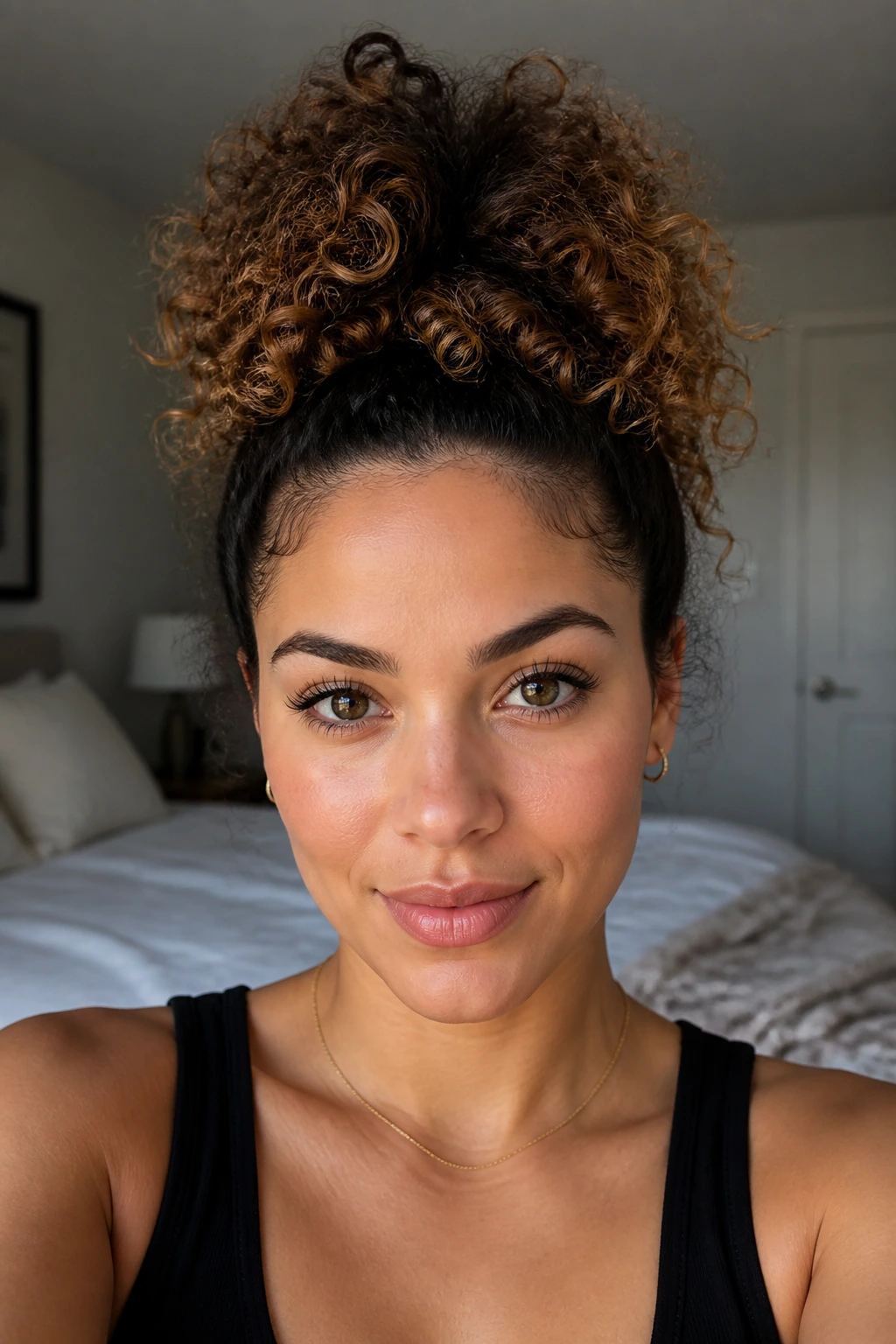
A pineapple updo isn’t just a sleep trick. Worn high and loose, it becomes a real hairstyle with a playful, thrown-up-on-purpose feel. The curls sit at the top of the head like a fountain, and the sides stay smoother, which keeps the shape clean.
It’s especially good for second- or third-day curls because the texture has already settled in. Pull the hair up with a soft scrunchie, leave the ends free, and let a few face-framing spirals fall where they want. If the crown is too flat, pinch the roots gently with your fingers after you lift the hair up.
This style can look too casual if the elastic bites in hard. Use something soft. The line at the base should disappear into the hair, not carve it in half.
8. Braided Crown Into Loose Curls
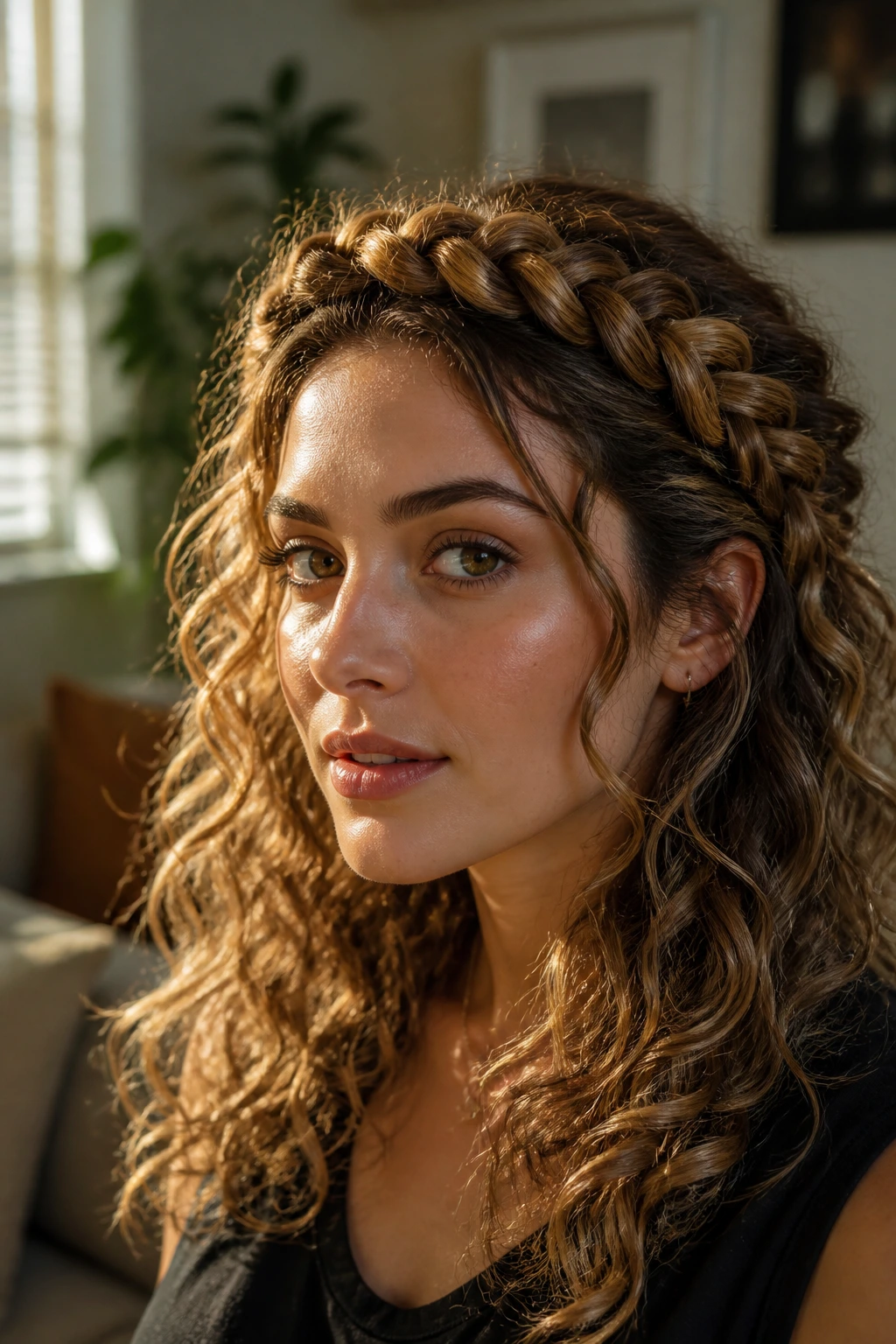
A braided crown gives curly hair a built-in frame, and that frame makes the rest of the texture look even richer. The braid doesn’t need to be perfect; a little looseness keeps it from reading bridal when you want it to feel more rock-club than garden party.
The trick is to braid only enough to create shape around the hairline, then let the remaining curls spill out with their own volume. If the braid is too tight, it can flatten the front and leave the rest of the hair looking disconnected. Soft tension wins here. Always.
I like this style on medium to long curls because it keeps the face open while still letting the length do its thing. Pin a few pieces underneath the braid if you want the crown to sit higher.
9. Asymmetrical Curly Bob
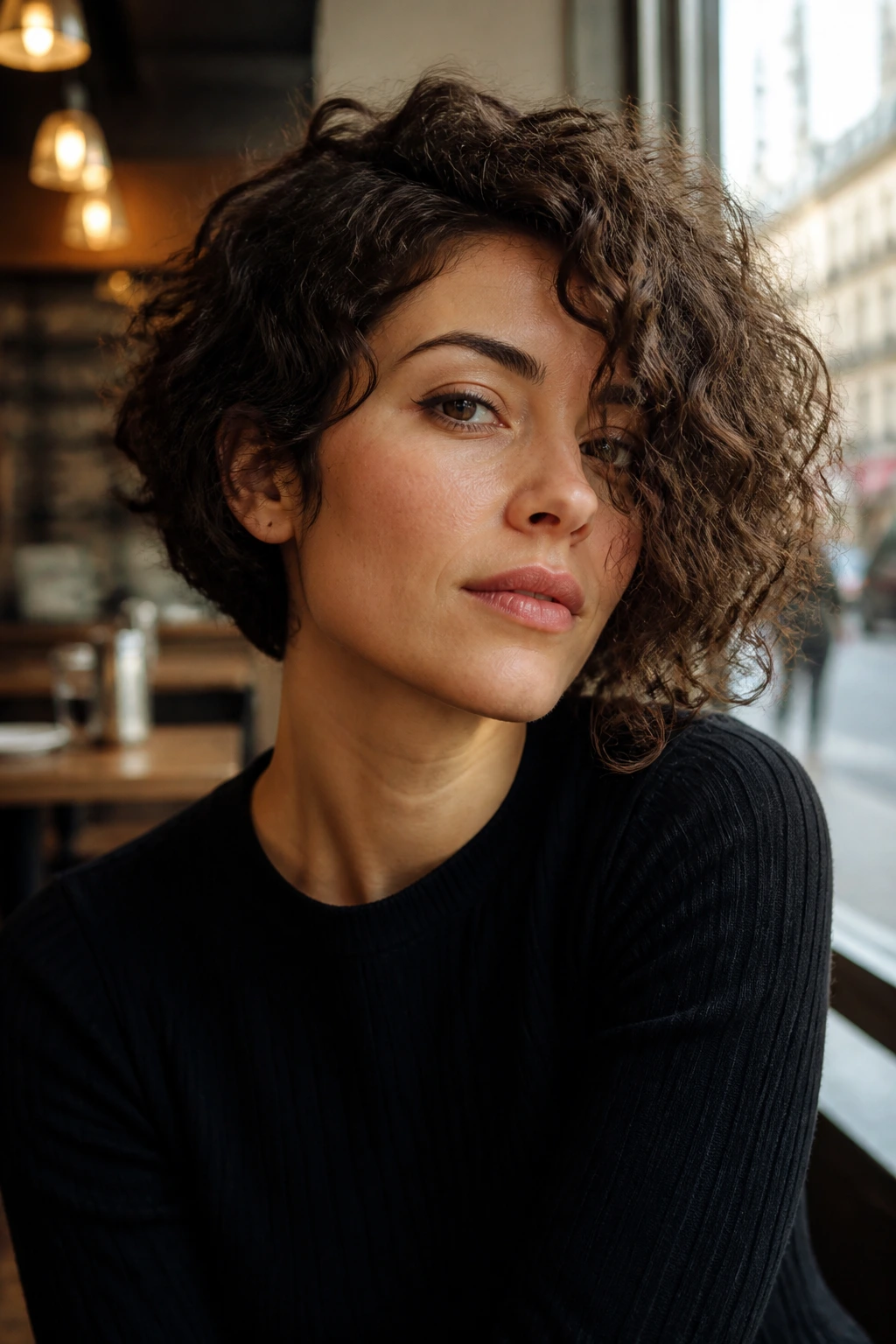
A curly bob with one side a little longer than the other has a sharper mood than the standard rounded cut. It gives curls a place to swing, especially when the longer side lands near the jaw or collarbone. The asymmetry is subtle enough to wear often, but it still looks like somebody made a choice.
This cut is at its best when the shorter side doesn’t get over-trimmed. If it hugs the cheek too tightly, the whole thing can lose balance. A slightly longer front keeps the shape soft while still giving you that angular edge.
You’ll want to dry this one mostly in place. Once the curls are fully set, changing the part too much can make one side explode. Which, depending on the day, might be exactly what you want.
10. Half-Up Top Knot
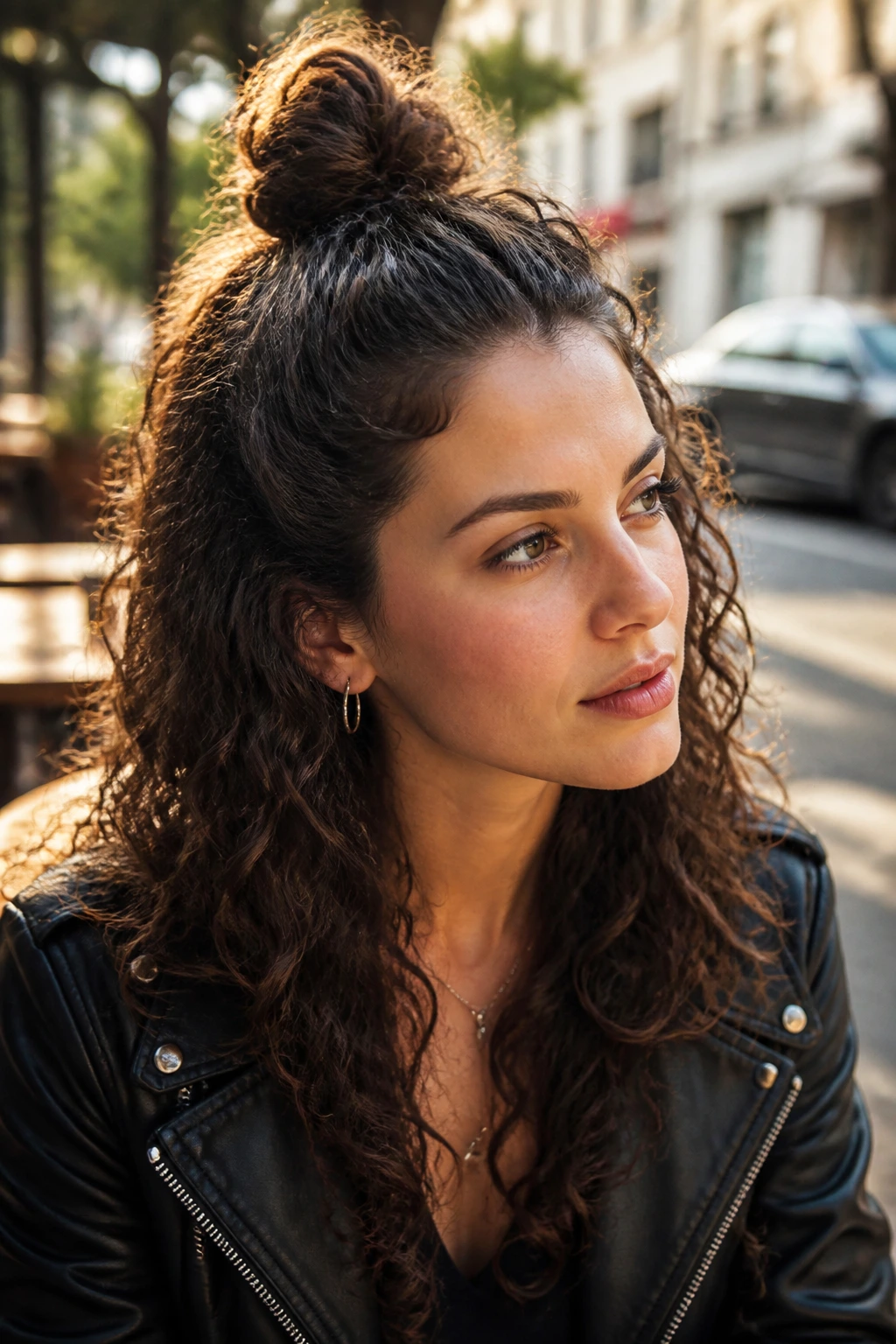
The half-up top knot is one of those styles that looks casual until you notice the volume at the crown and the way the loose curls fall below it. That contrast is what makes it work. The top section adds height; the bottom section keeps the texture visible.
If your curls go flat in the front, tease them lightly with your fingers before pulling up the knot. Don’t over-smooth. Curly hair does not need to look lacquered to look polished. In fact, a little lift near the roots makes this style feel better.
This one is good when you need hair out of your face but don’t want to lose the shape of your curls. A few small pieces left near the temples soften it fast.
11. Faux Hawk Curly Updo
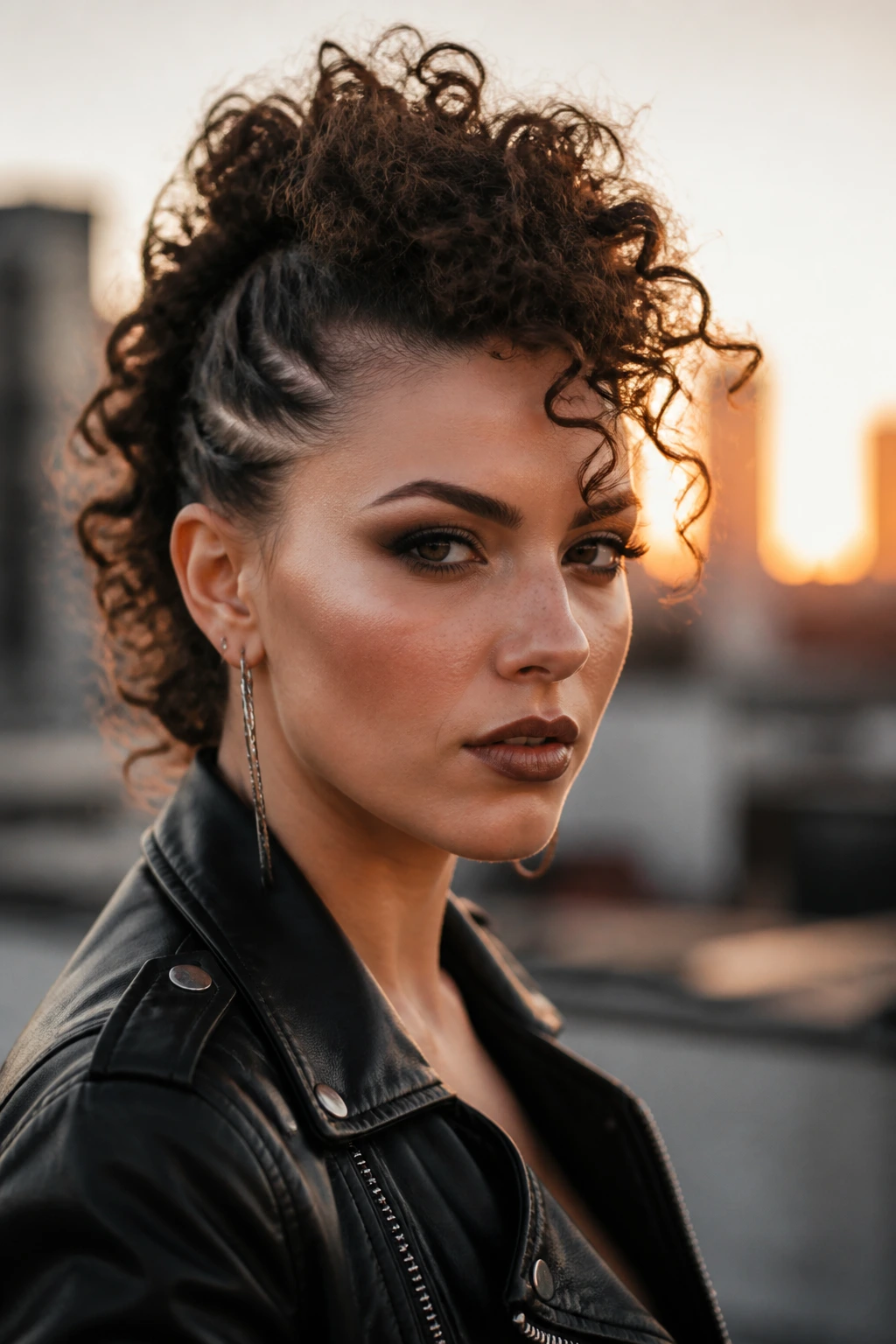
A faux hawk on curly hair has real attitude because the curls create their own ridge down the center. The sides can be pinned flat or slicked back a little, while the middle keeps all the movement. That strip of volume reads bold without needing a complicated set of tools.
The beauty of this style is that it works on short curls and long curls alike. Shorter hair gets a more compact, edgy version; longer hair gets height and length at once. If the middle starts to droop, secure it with a couple of hidden pins rather than adding more product.
This is one of the few styles that looks better when it’s not too neat. A few ends out of place make it feel alive.
12. Defined Afro With Rounded Shape
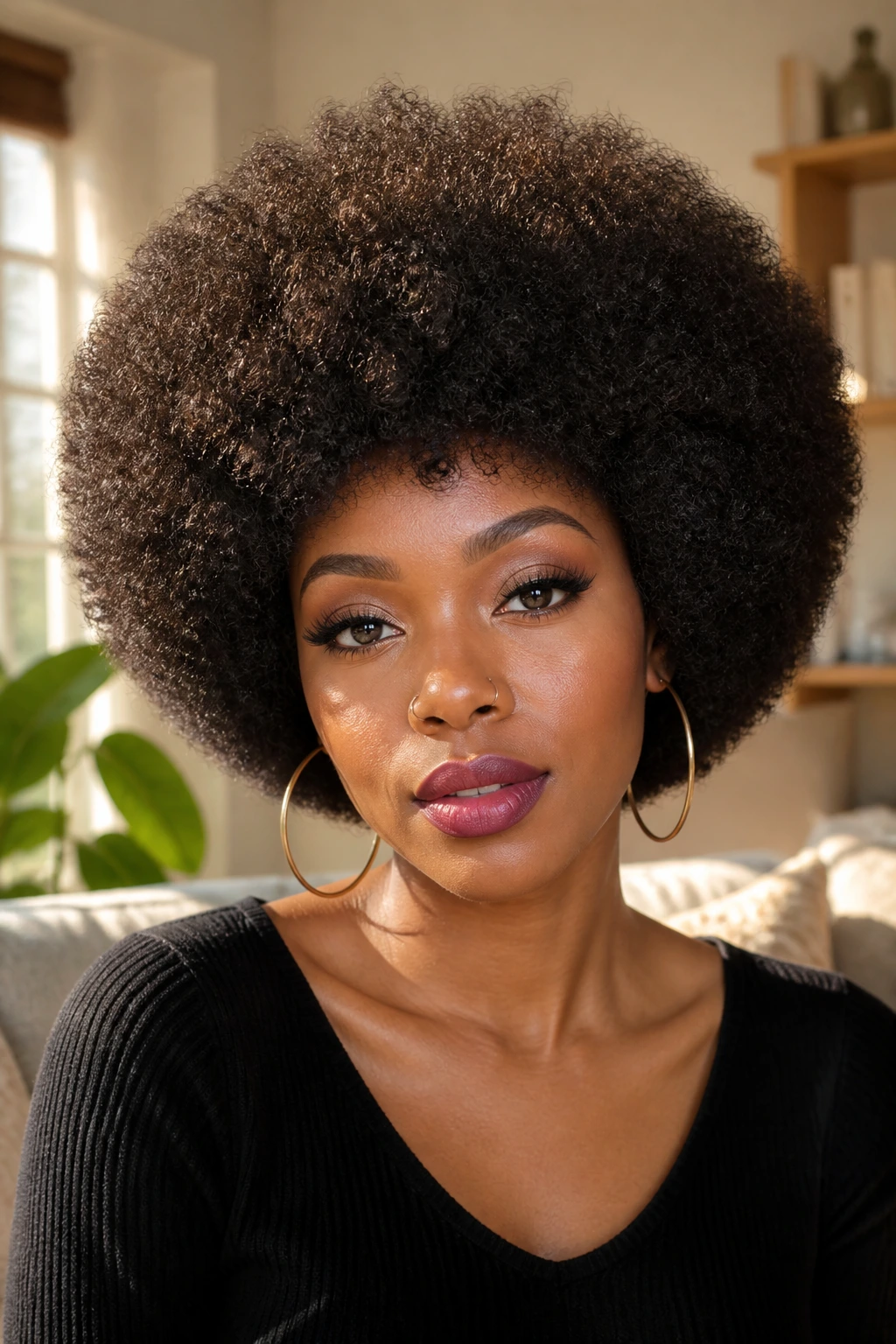
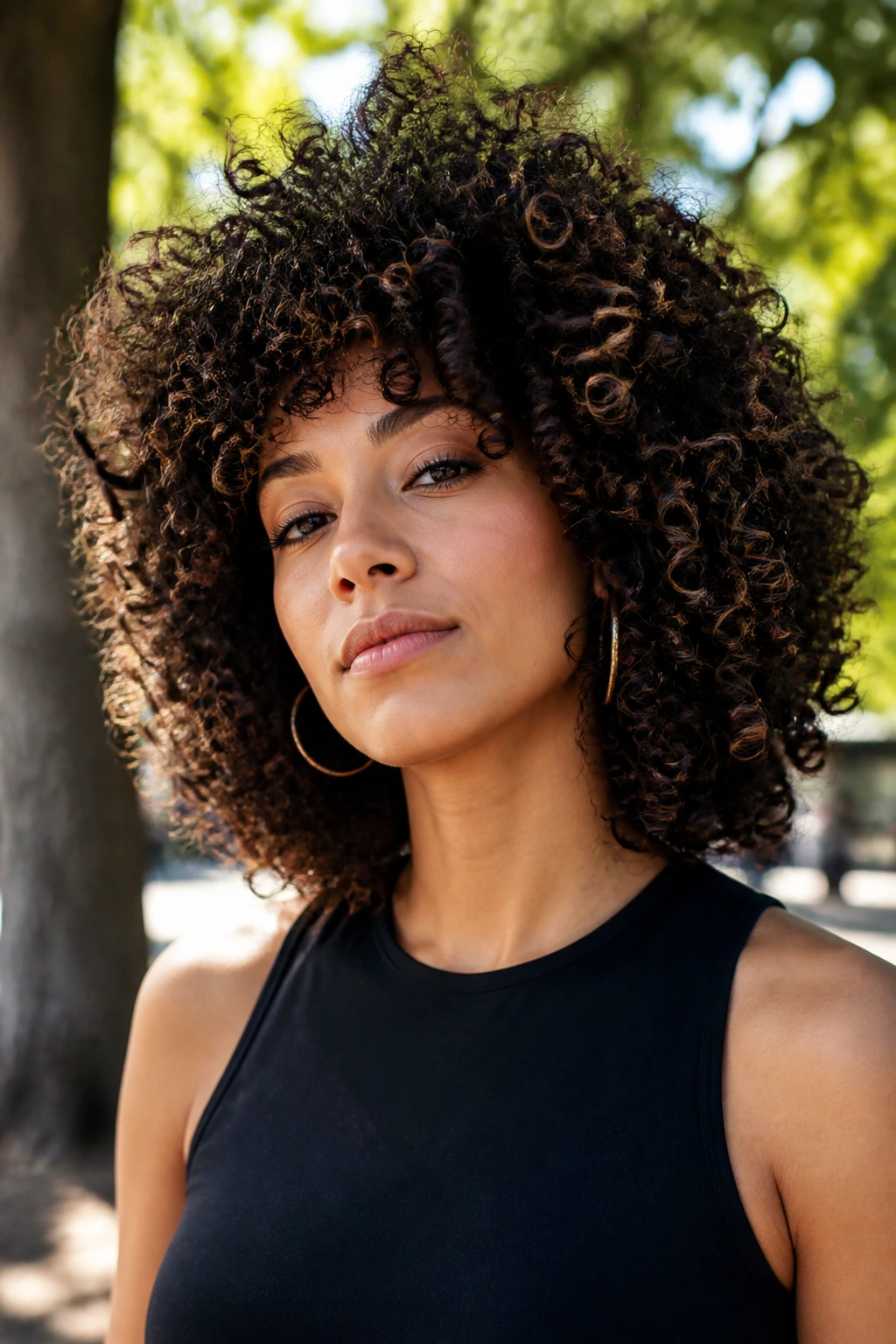
A rounded afro is one of the cleanest ways to let curls or coils take center stage. The silhouette is the point. Nothing is hiding. Nothing is pretending to be smaller than it is. And when the shape is trimmed well, it has a kind of calm power that’s hard to fake with layers and clips.
The best version keeps the roundness even from temple to nape. That means regular shaping, not random snipping at home when the ends start feeling fuzzy. If the top grows taller than the sides, the outline can start to lean. A moisture-rich leave-in and a little oil on the ends help the shape stay plush instead of dry and airy.
This style does not need much else. Good shape, good moisture, a clean outline. That’s the whole argument.
13. Messy Curly Bun With Tendrils
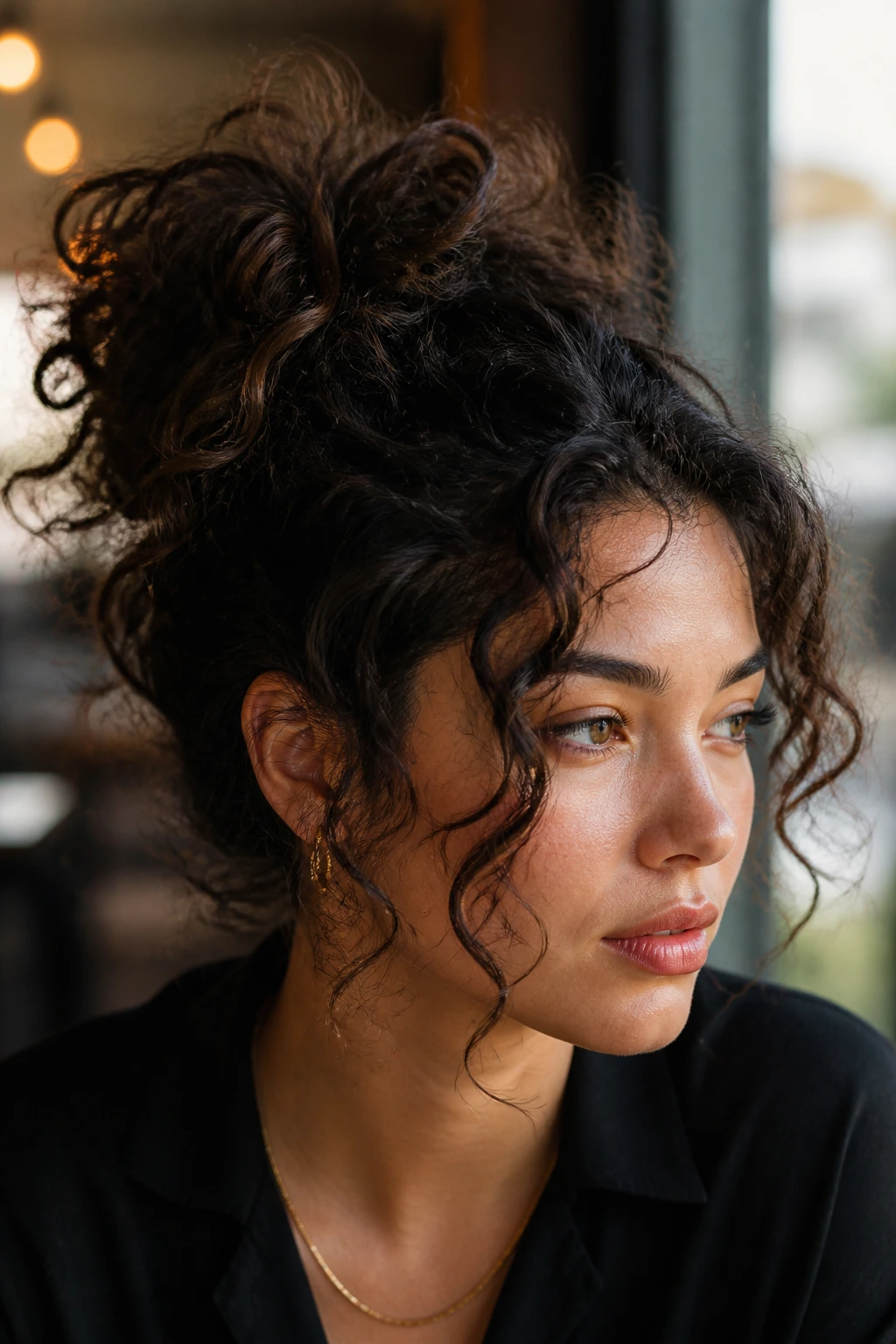
A messy bun on curly hair only looks messy when it’s trying too hard. Done right, it sits high or mid-height with a few tendrils left out around the ears and jaw. Those loose curls soften the line and stop the bun from looking like a knot at the back of the head.
I like this style because it handles volume better than most people expect. Instead of flattening the curls into submission, you gather them loosely and let the texture create the bun’s shape. If the bun feels too tiny, pancake it gently by pulling the outer edges apart with your fingers.
A touch of gel on the tendrils keeps them from frizzing up into halo mode. That little detail matters more than the bun itself.
14. Retro Pin-Up Curls
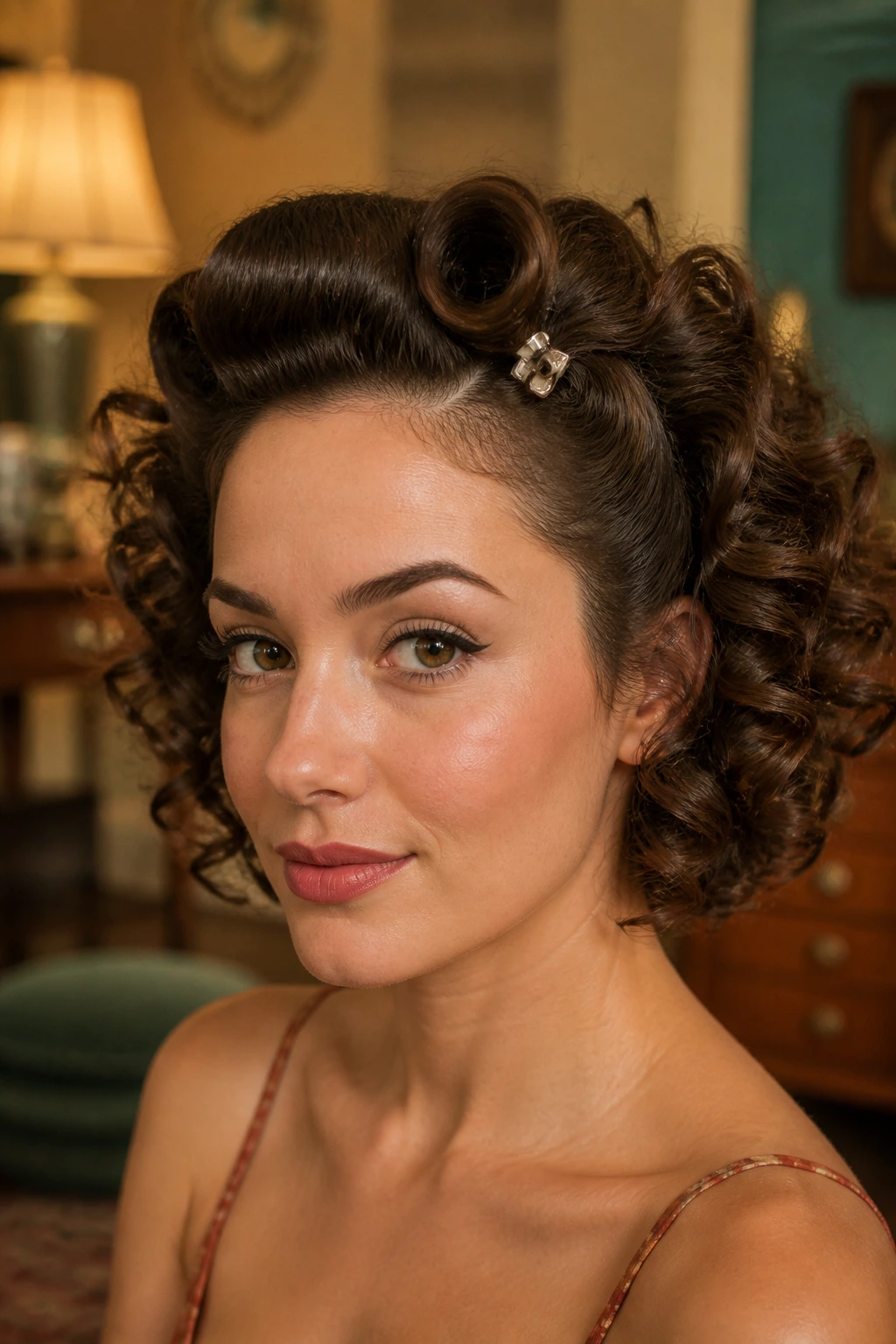
Retro pin-up curls on curly hair have a strange, lovely tension: the finish is controlled, but the texture still looks natural. Roll a few front sections back, pin them with small clips, and let the rest stay full. The result has a vintage outline without losing the personality of the curl pattern.
This style needs definition near the face, not all over. If every curl is set the same way, it can start to feel costume-like. Leave some ends looser, especially near the nape and around the ears, so the style doesn’t turn stiff.
A shine spray helps here, but use a light hand. Too much and the curls start looking damp instead of polished.
15. Twist-Out Halo
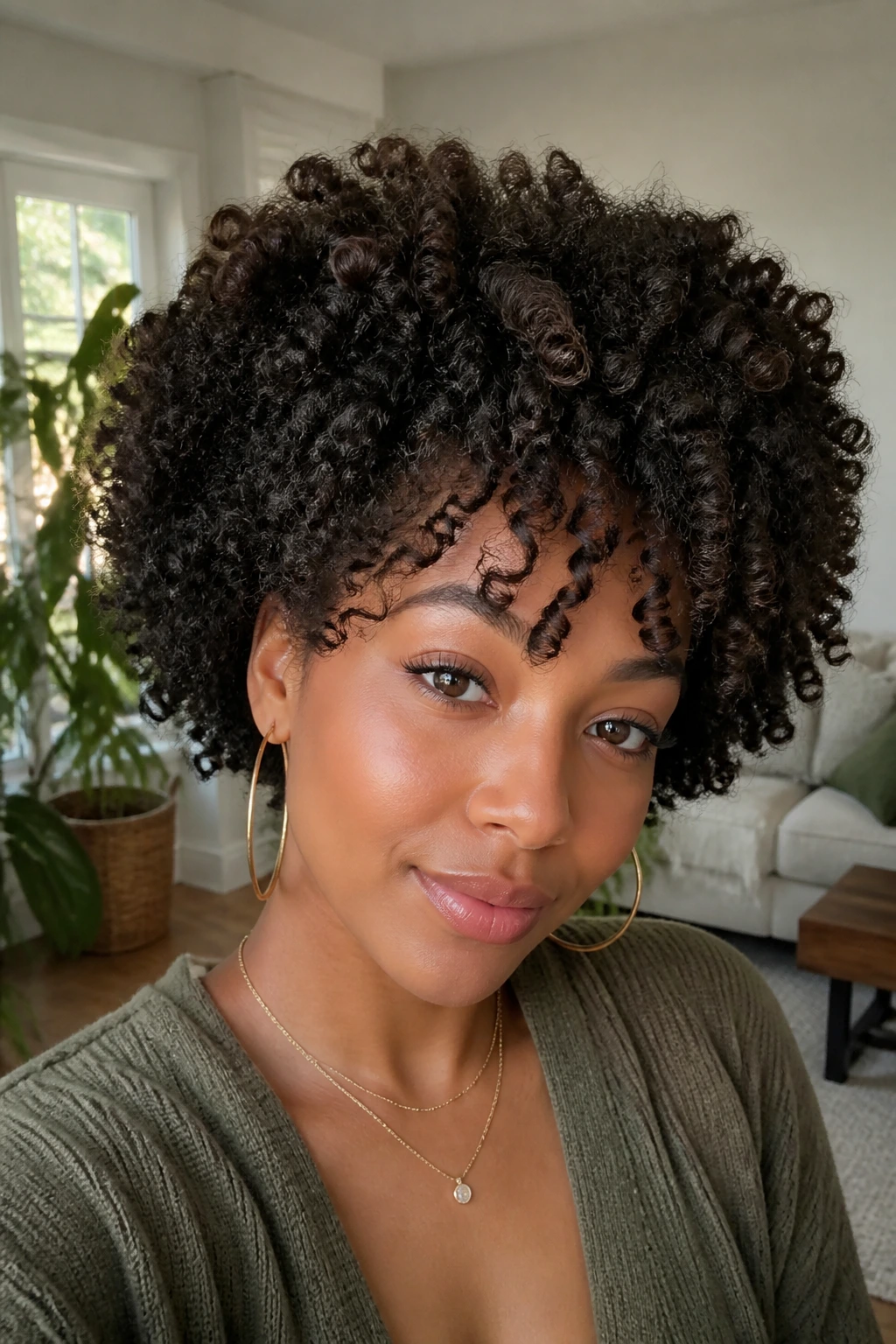
A twist-out halo gives the head a soft, full outline with a little extra height around the crown. The twists break the curl pattern in a controlled way, and when you release them, the hair gets this dense, ropey texture that feels a bit more deliberate than a plain wash-and-go.
This works especially well if you want volume without a lot of separation. Twist-outs can look broad, which is the point if you like your curls to read bold and shaped. Just don’t rush the drying time. A twist-out that comes down even slightly damp will frizz before noon.
Use a light cream before twisting and a touch of oil on the ends when you unravel. The halo should feel soft, not fuzzy.
16. Space Buns on Curly Hair
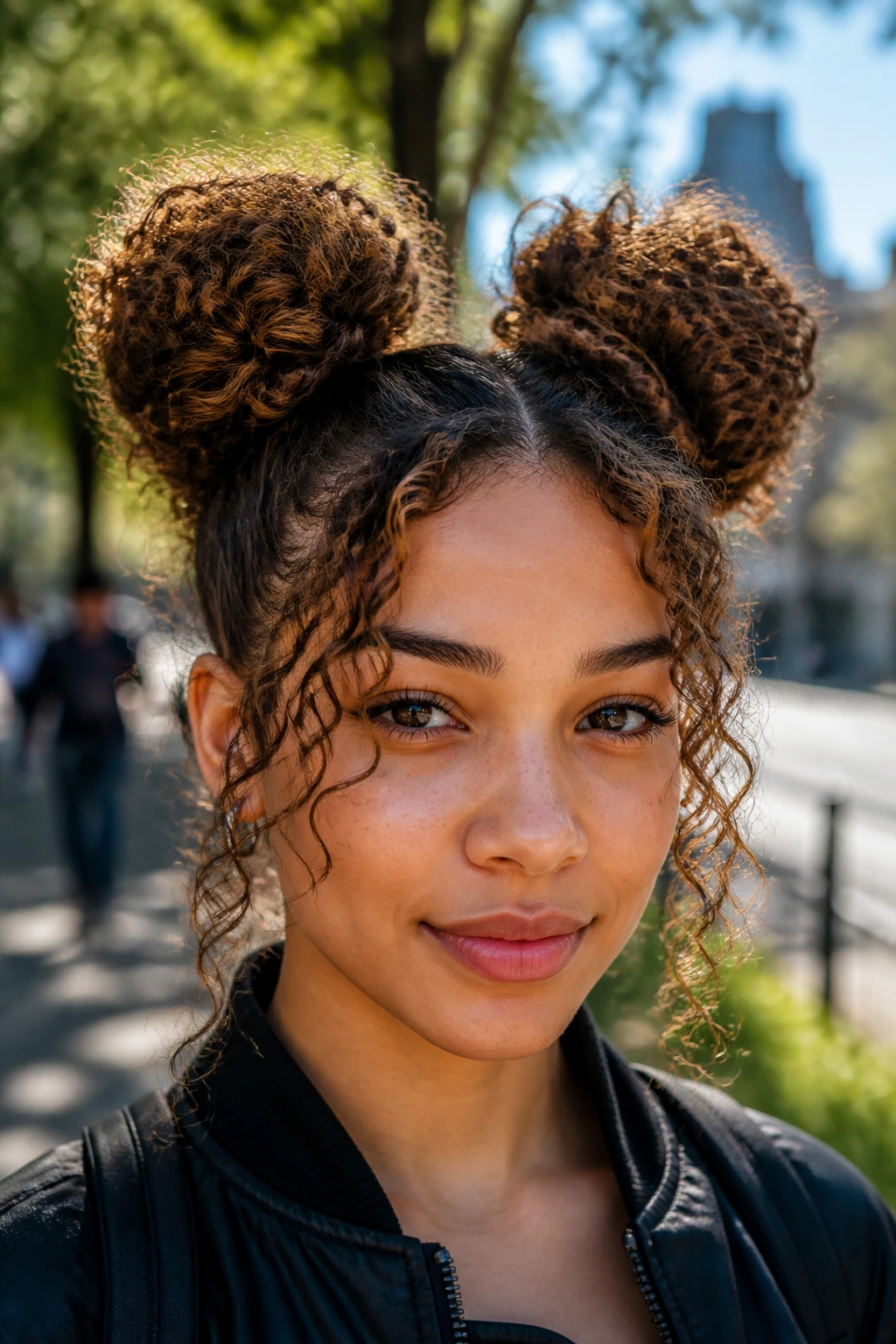
Space buns are playful, yes, but they can also look edgy when the curls are big enough to make each bun feel full. The style divides the head into two lifted shapes, which is handy if you want to show off the texture without wearing all of it loose.
The trick is to leave enough hair out around the hairline so the buns don’t look pasted on. A few curls near the temples or behind the ears keep the style grounded. If your hair is long, the buns can be loose and chunky; if it’s shorter, smaller buns with visible texture look better than tight little knots.
I’d call this one a good bad-hair-day fixer, except it’s more interesting than that. It hides a lot and still looks intentional.
17. Curly Mullet
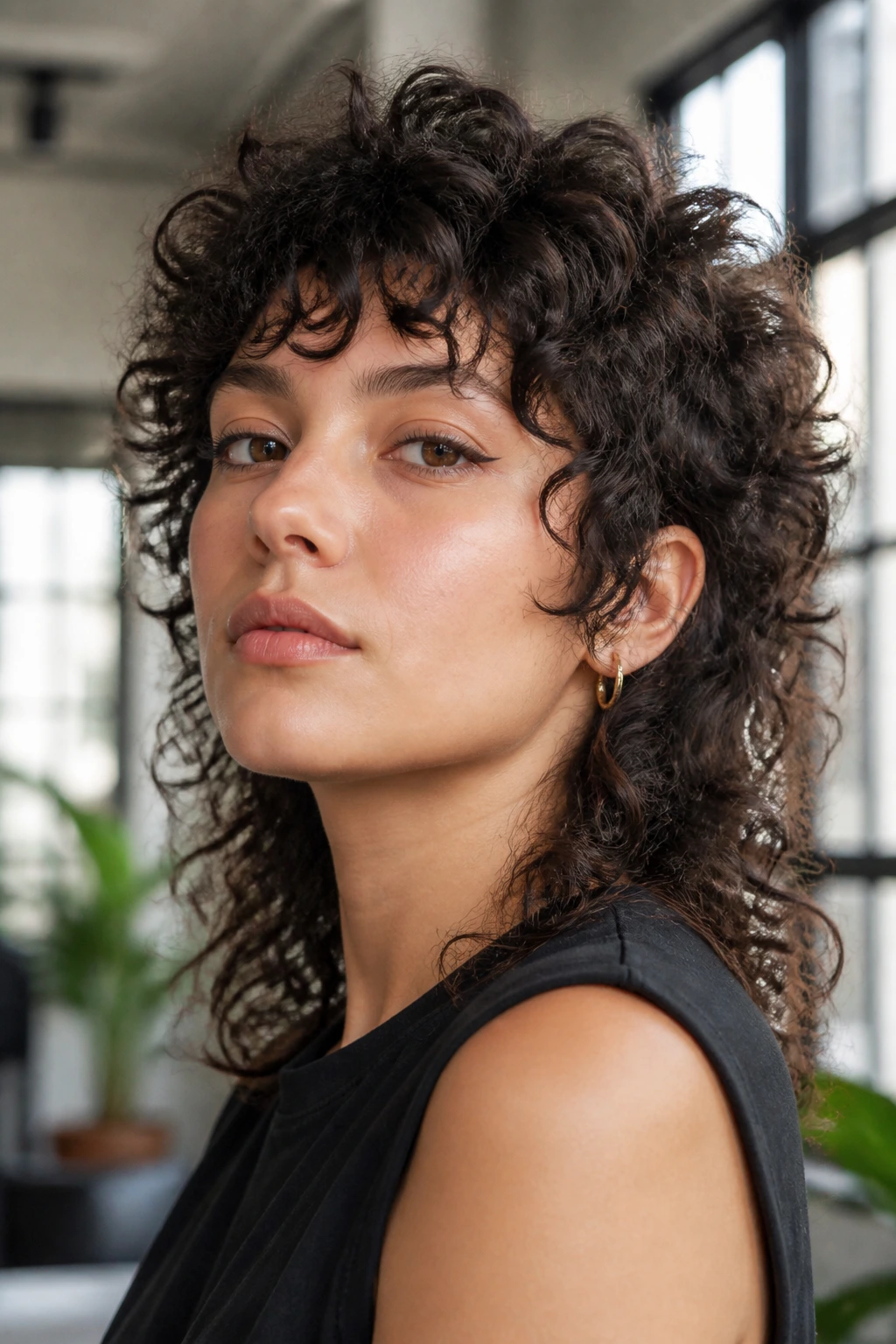
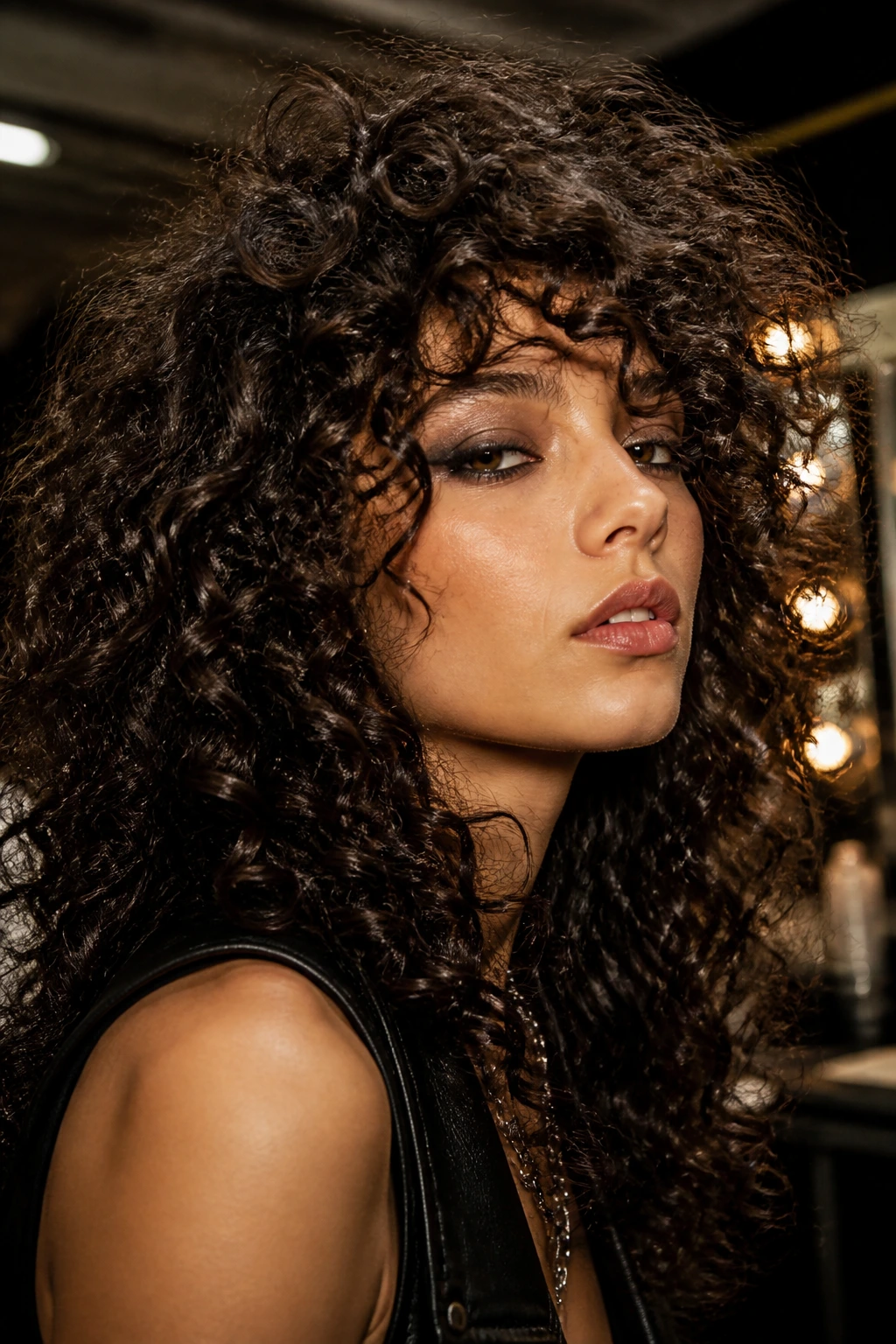
The curly mullet is one of the most misunderstood cuts in the bunch. People hear “mullet” and picture a joke. Then they see it on curls and realize the shape has teeth. Shorter layers up front, a little length in back, and a lot of movement through the middle can make the whole head feel lighter and sharper.
The best curly mullet keeps the transition soft. You do not want a harsh drop from short to long. Instead, let the layers stack gradually so the curl pattern does the work. If your curls are tighter, the back can stay fuller and still look balanced.
This cut is not shy. That’s the appeal. It looks especially strong when the front pieces are a little piecey and the back has more density.
18. Headband-Tucked Curls
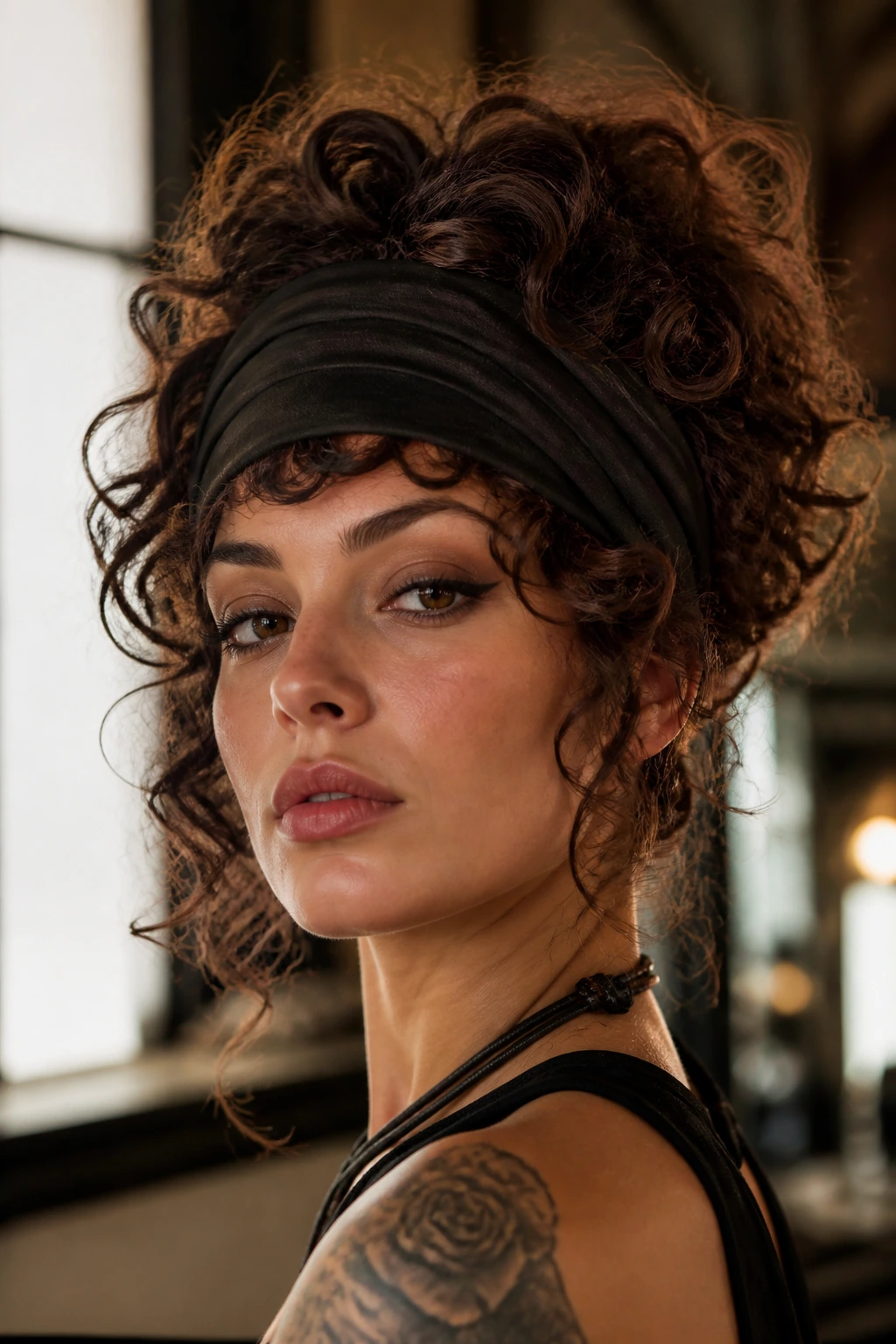
A headband-tucked style can feel surprisingly rock when the texture is big and the headband sits low across the forehead. Tuck the sides back, keep the top loose, and let the curls swell behind the band. The result has a vintage, slightly dramatic silhouette that works on short and medium lengths.
I prefer fabric headbands over stiff plastic ones because they don’t split the curls at the sides. If you want more lift, push the band slightly forward at the crown before tucking the hair. That tiny adjustment changes the whole profile.
This is a good option for people who want their curls controlled without being flattened. Control, not suppression. There’s a difference.
19. Tapered Cut With Coils on Top
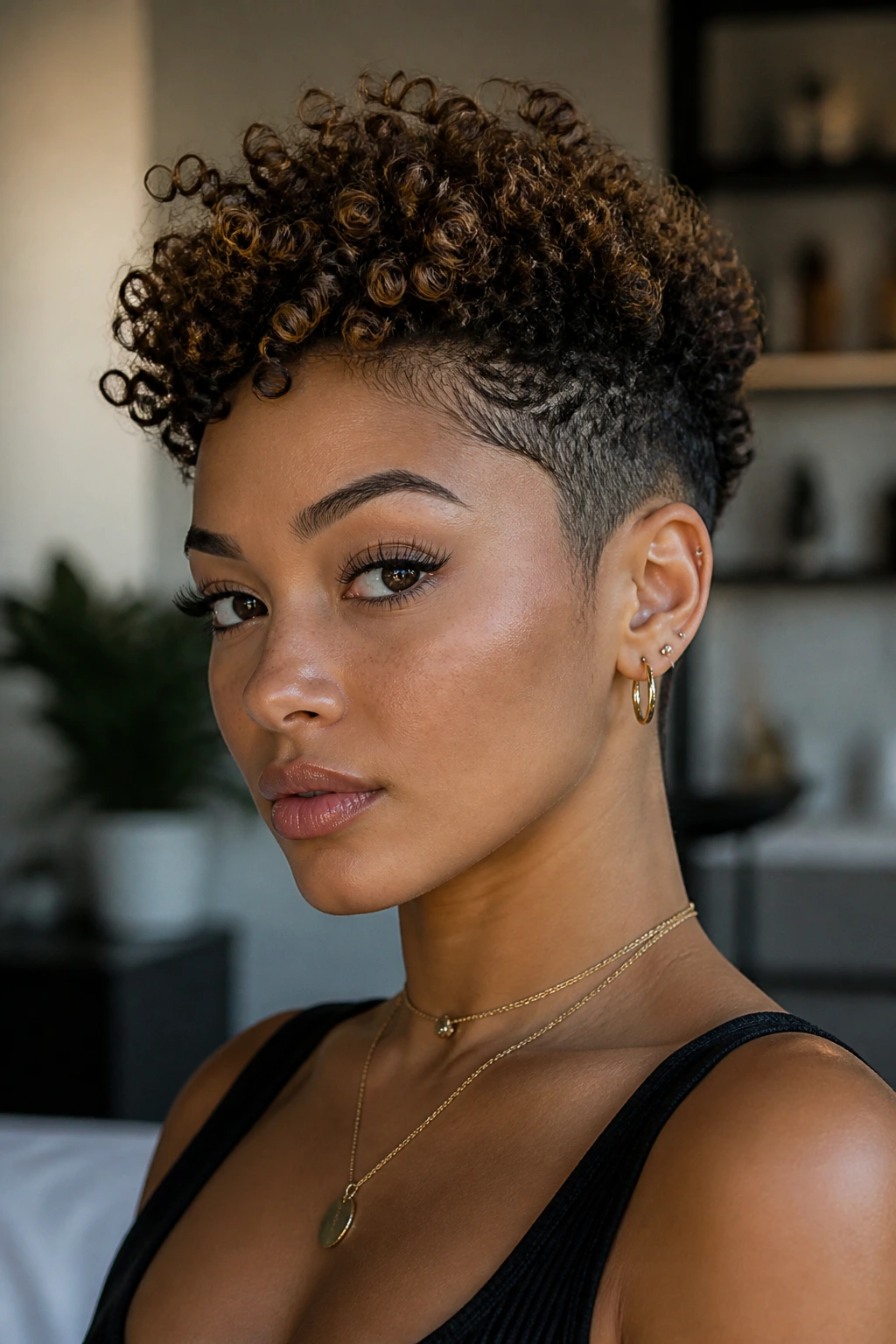
A tapered cut with coils on top keeps the sides neat and lets the crown go full volume. It’s clean at the edges, but the top still feels alive and dimensional. That contrast is what makes it read sharp instead of sweet.
The tapered sides also make daily styling easier. You only need to refresh the top, not the whole head. If the top coils shrink more than expected, let them dry fully before shaping with your fingers. Pulling at them too early can stretch the curl in a way that won’t hold.
This cut loves a little edge control around the hairline and a moisturizing cream through the crown. Enough definition. Not too much shine.
20. Curly Bangs With Long Layers
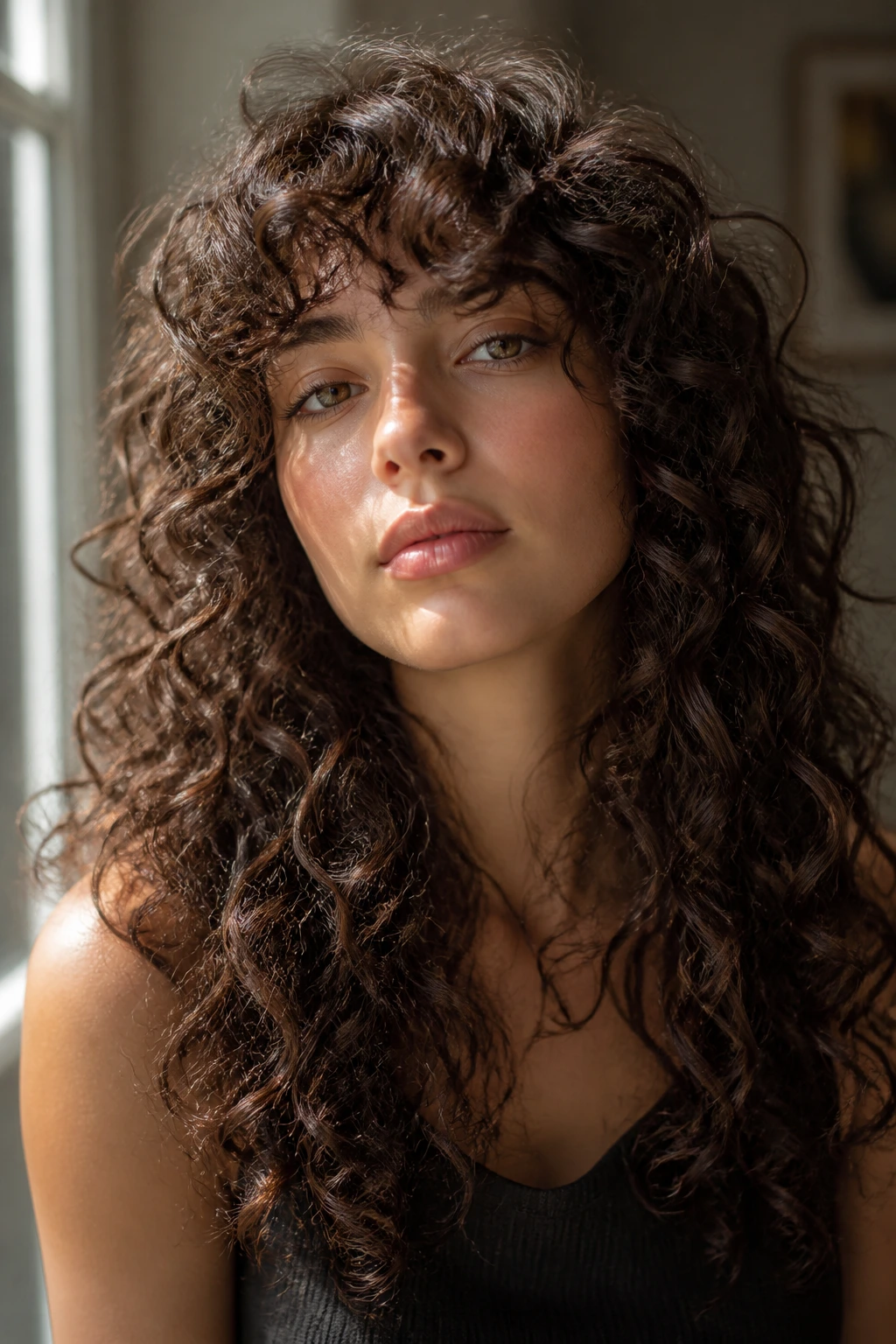
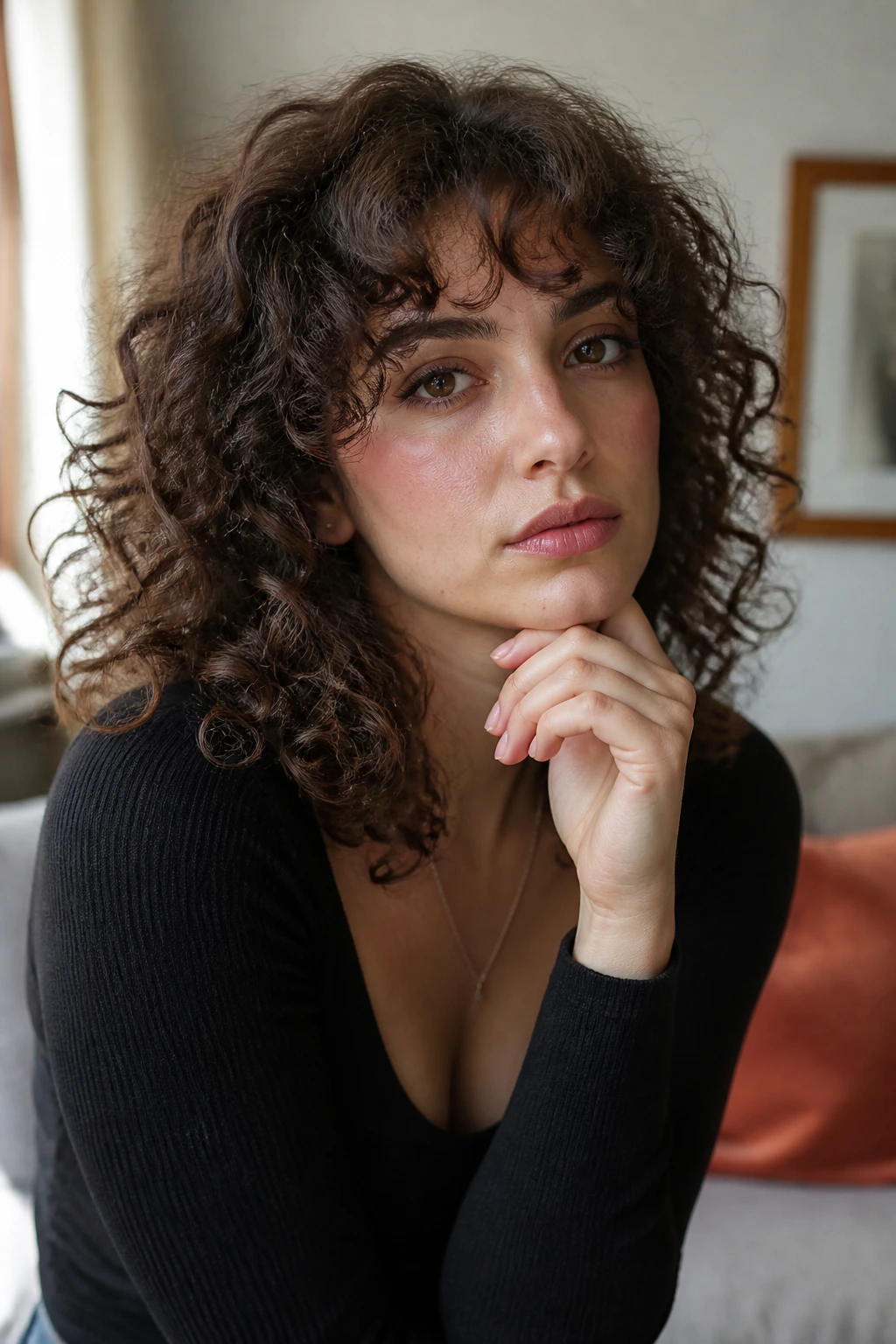
Curly bangs can look theatrical in the best way when they’re cut with enough space to spring up. Long layers around the rest of the head keep the bangs from looking like a separate idea. The whole style moves together, which matters more than people think.
The bangs should land where your curls want to sit, not where they sit wet. That usually means cutting them a touch longer than you expect. If the fringe dries too high, you’ve got a tiny shelf of hair in the middle of your face. Been there. Not cute.
This style gives long curls a little bite near the front without taking away length. That front frame can change the whole mood of a haircut.
21. Side-Part Glam Curls
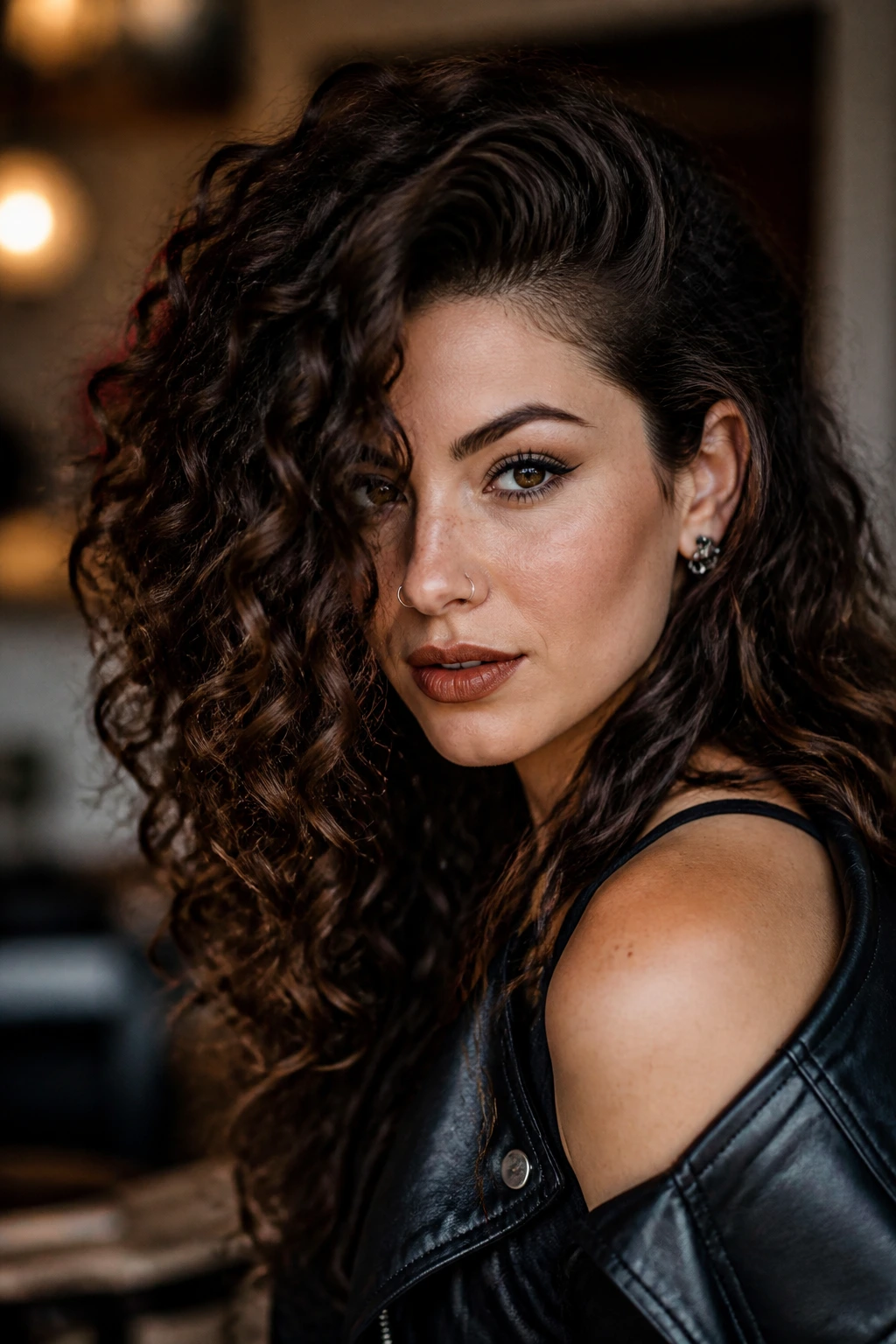
A deep side part changes everything. The root lift is immediate, the curls fall in a richer curve, and the whole head gets a little more drama with almost no extra work. On curly hair, that part can turn a plain shape into something with attitude.
What I like most is the asymmetry. One side sits fuller, the other side sweeps back and shows off the cheekbone or jaw. If your hair tends to puff wide, a side part can narrow the outline without making the curls look squeezed. That’s a useful trick.
Use a root clip or a few minutes of diffusing at the part to keep it from collapsing. If the hair wants to split back down the middle, pin it while it dries.
22. Clip-In Accent Braids
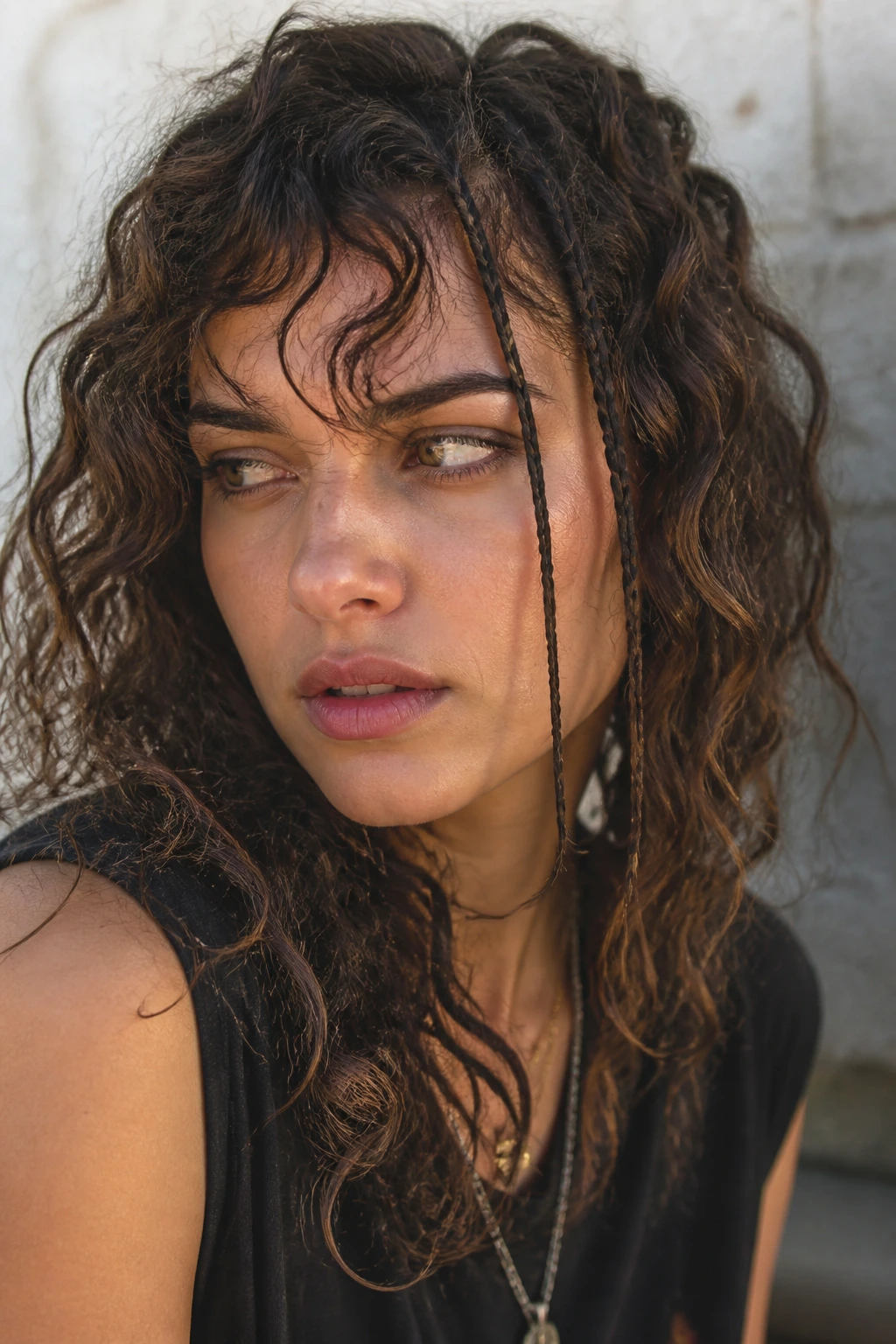
Accent braids are the fastest way to make curls feel more intentional without committing to a full braided style. A couple of tiny braids on one side, threaded through loose curls, can change the whole read of the haircut. It’s a detail, not a takeover.
This works especially well if your curls are medium to long and you want a bit of texture near the face. The braids can sit near the temple, under the part, or tucked behind one ear. I like them best when they’re uneven and a little rough. Too neat and they lose the edge.
Use them on a day when the curls need something extra but not a full redo. That’s where they shine.
23. Bantu Knot-Out Style
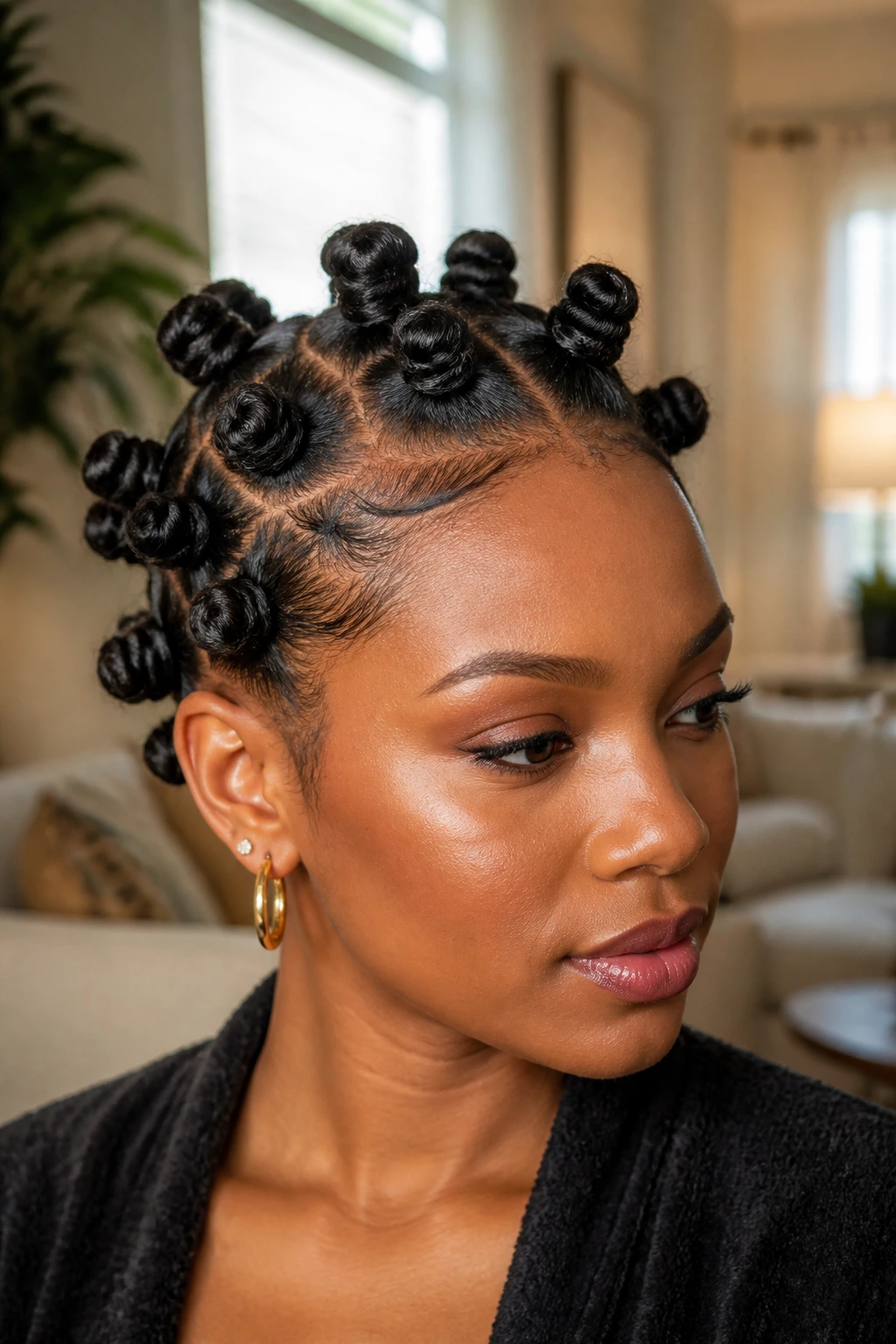
A Bantu knot-out has built-in texture before you even take the knots down. Once released, the curls and coils tend to come out with rounded, springy definition that feels a little more sculpted than a plain dry style. It’s one of the best ways to get a big shape with a lot of detail.
The knots should be small enough to dry evenly but not so tiny that the hair tangles on release. If the hair is still damp in the middle, stop and wait. Pulling them out too early gives you frizz at the roots and flatness at the ends.
This style has a lot of personality and works especially well when the parting pattern is visible. Clean parts. Soft finish. Strong shape.
24. Sleek Root Curly Puff
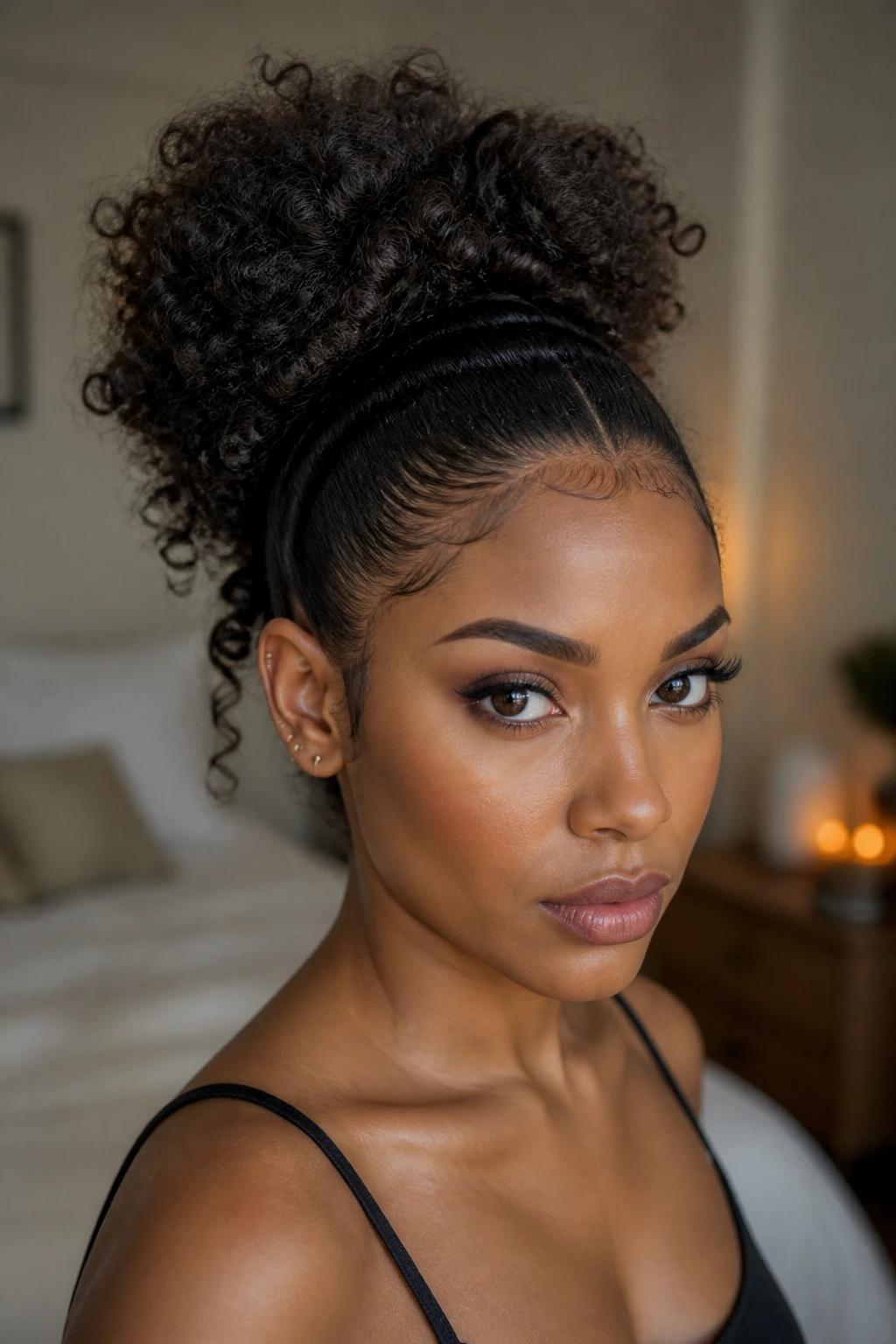
A sleek root curly puff gives you the best of both worlds: a smooth front and a full, textured puff at the back. The contrast makes the curl texture pop even more because the eye sees the difference between the slick roots and the big, soft mass of curls.
This is a smart choice when you want polish without losing volume. Smooth the front with a little gel or edge control, then gather the hair into a puff high on the head or a little lower at the back. The puff should still look loose enough to show its curl pattern.
If the front gets too tight, the style can start looking severe. Leave a little softness around the temples. That keeps the shape flattering instead of stiff.
25. Shoulder-Skimming Layered Curls With a Deep Side Part
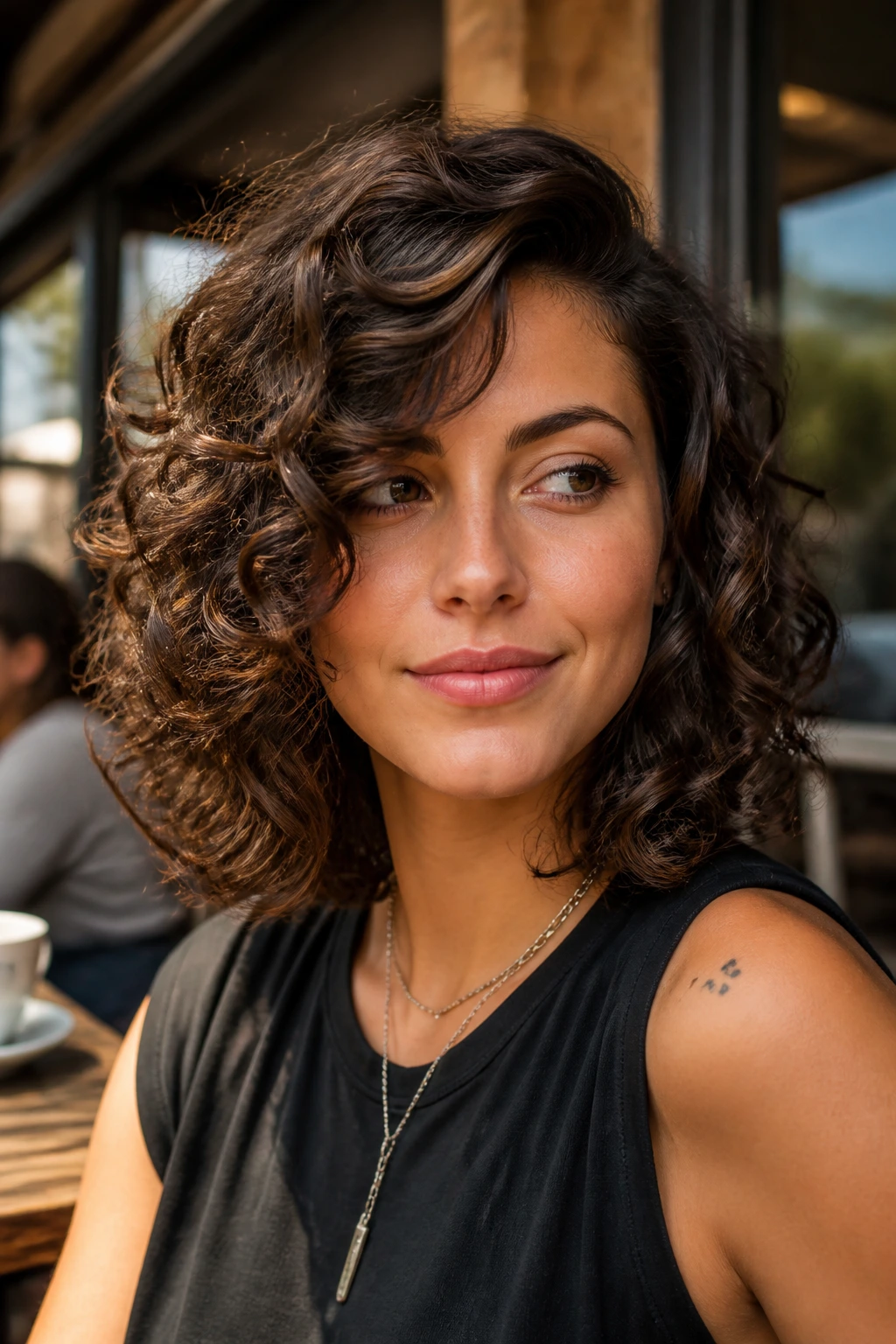
Shoulder-skimming layered curls are the quiet assassin of curly rock hair. They’re not as obviously edgy as a mullet or faux hawk, but the deep side part and stacked layers give the shape movement and drama without screaming for attention. That makes them useful if you want something wearable that still has some bite.
The shoulder length is key. Long enough for the curls to swing, short enough to keep the volume from dragging downward. A deep side part gives the cut a sharper line, and the layers keep the bottom from sitting like a heavy curtain. If the hair is thick, a little internal layering prevents the triangle shape that curly cuts often fall into.
This is the style I’d hand to someone who wants a rock look but still needs to walk into a meeting without feeling overdressed. It does both. Quietly.
Why Layering Gives Curly Hair Its Edge
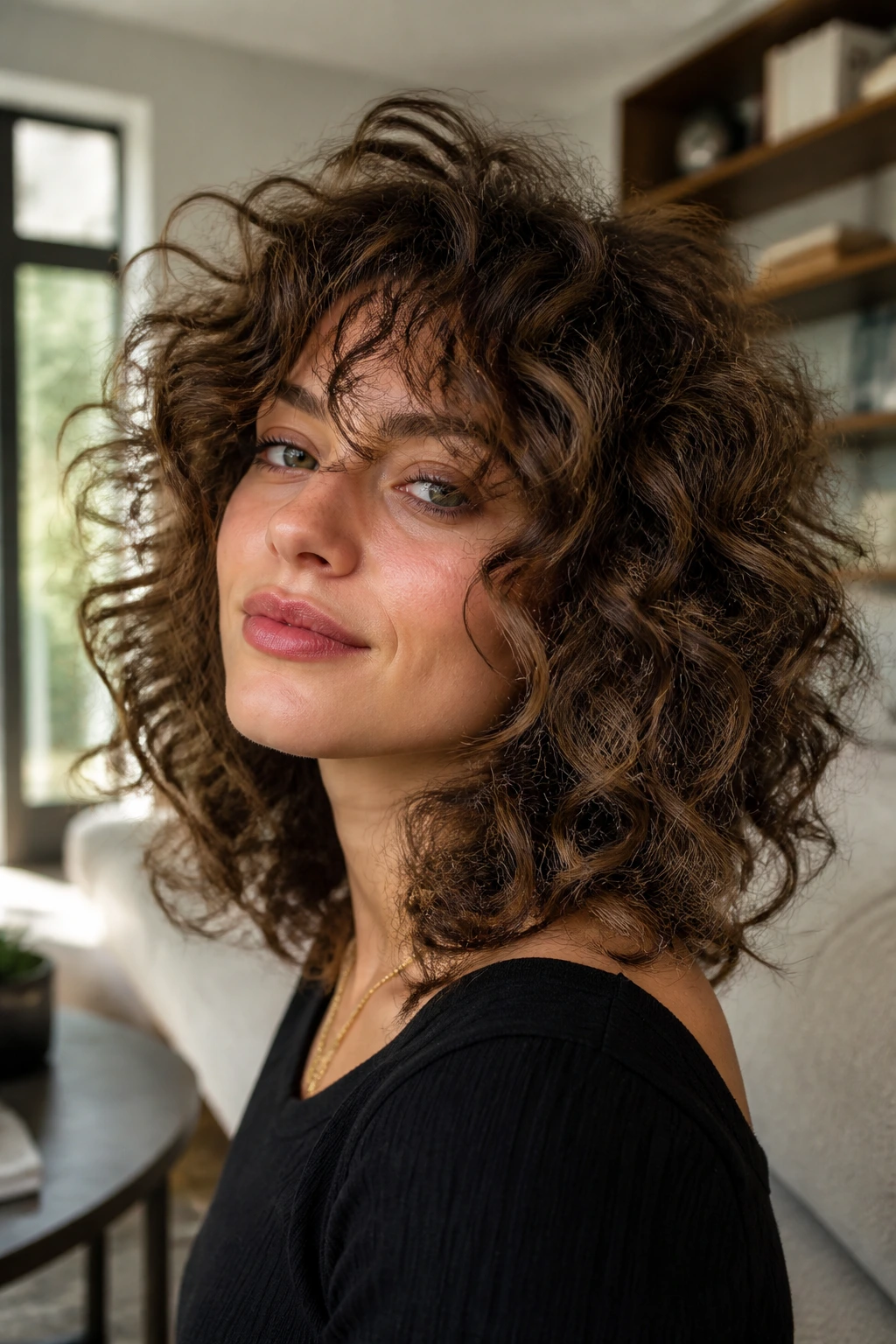
Curly hair has a built-in volume problem and a built-in volume advantage. Sounds contradictory. It is. The same bend that gives curls life can also stack width in the wrong place if the cut is blunt or too heavy at the bottom. Layers fix that by moving weight away from the perimeter and letting the curls rise and separate in a more interesting way.
A good curly cut does not just shorten hair. It changes the architecture. The crown can be lifted, the sides can be thinned just enough to stop the mushroom effect, and the front can be shaped so the face gets a frame instead of a curtain. That’s why a shag, wolf cut, pixie, or tapered shape can feel more “rock” than long, perfectly even curls. The hair gets room to misbehave in a controlled way.
Dry cutting matters here, and I’m opinionated about that. Curls lie when they’re wet. They stretch, they hide fullness, and they make a cut look longer than it will be once dry. A stylist who checks the shape as the hair dries is doing the boring but necessary work that makes the haircut survive real life. If that part is skipped, you can end up with a flattering first day and a weird second week.
Essential Tools for Styling Curly Hair
-
Wide-tooth comb: Best for detangling in the shower when conditioner is still in the hair; it moves through curls without ripping the pattern apart.
-
Microfiber towel or soft cotton T-shirt: Cuts down rough frizz at the ends, especially on tighter curl types that puff up fast when rubbed.
-
Spray bottle with water: A light mist is enough to wake up curls on day two without soaking the whole head again.
-
Diffuser attachment: Worth it if you want lift at the roots and more definition without sitting under a hood dryer.
-
Duckbill or root clips: Great for crown lift and deep side parts; place them at the roots while the hair dries.
-
Curl cream or leave-in conditioner: Use a small amount first. Heavy product can flatten the top faster than you expect.
-
Mousse or foam: Nice for airy volume and styles like wash-and-go looks, puff styles, and layered shags.
-
Strong-hold gel: Best when you need the curl clump to last and frizz to stay in line, especially in humidity.
-
Satin bonnet or pillowcase: Keeps the cut from rubbing flat overnight. Cheap, boring, useful.
-
Bobby pins and small claw clips: Handy for faux hawks, half-up styles, and pinning curls back without crushing them.
Smart Product and Cut Notes
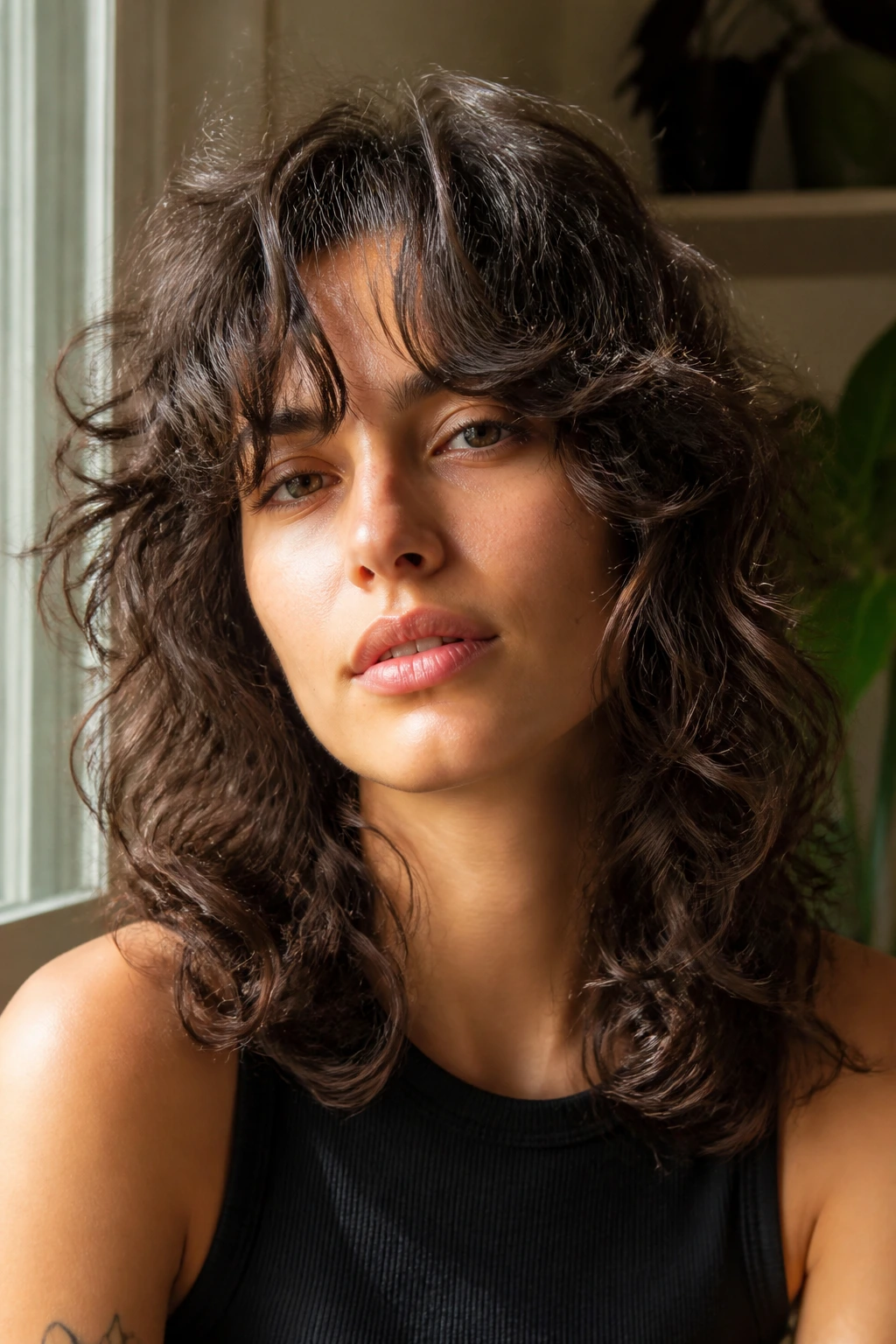
The biggest shopping mistake with curly hair is buying product for the fantasy version of your curls instead of the real one. Fine curls need lighter creams and foams, not thick butters that sit on the surface. Dense curls usually want something richer, but even then, too much cream can collapse a good shape before it leaves the bathroom. Start smaller than you think. Add more only if the hair is still thirsty.
When you’re sitting in a salon chair, ask about the outline before you ask about the length. That sounds backwards, but it isn’t. A cut can be trimmed two inches and still feel long if the silhouette is wide, or lose three inches and still feel heavy if the layers sit wrong. A good stylist will talk about how the curls sit dry, where the bulk lives, and whether the face shape needs more lift at the temples or more length around the jaw.
If your hair is color-treated, stay a little stricter with moisture. Color can make the curl pattern rougher at the ends, which affects how the layers fall. That means a product that looked perfect on untreated hair may suddenly feel too sticky or too light. Curly hair is annoyingly honest that way.
How to Wear These Looks Without Fighting the Curl Pattern
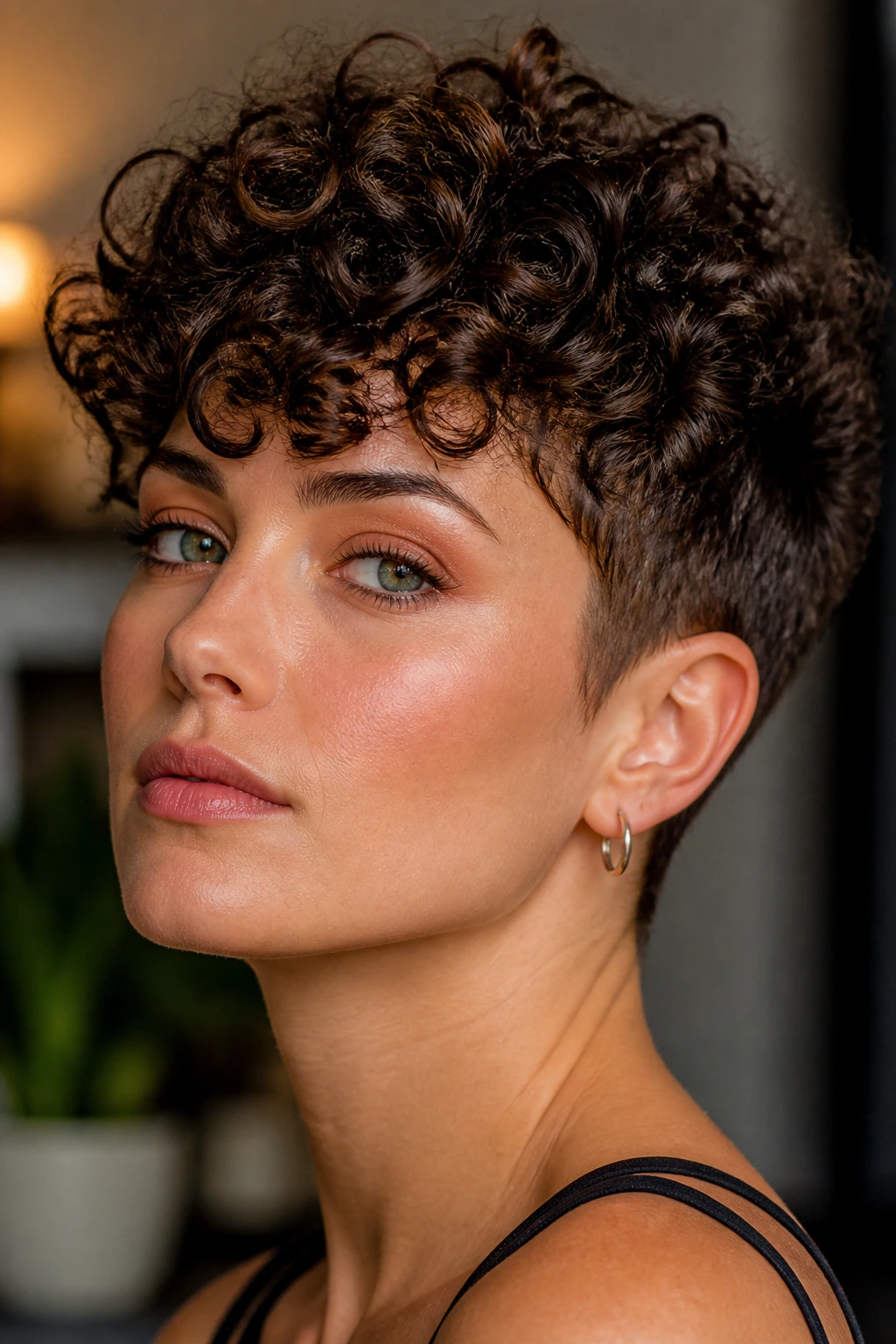
Presentation: Let the silhouette do the talking. A curly pixie wants cleaner edges and a little lift on top; a shag wants movement around the face and a softer outline; a puff or bun needs enough looseness to show texture instead of hiding it.
Accompaniments: Hoops, scarf ties, headbands, clipped-back sides, sharp collars, and a little lip color all pull these styles into rock territory fast. The hair does not need a lot of help, but it does need the right neighbors.
Portions: In hair terms, scale the volume to the length. Short cuts look strongest when the top carries the shape. Medium cuts look best when the side volume is balanced. Long curls need enough layering that the lower half does not drag the whole style downward.
Best Pairings: Deep side parts with bold earrings. Messy buns with leather jackets. Curtain bangs with a broken-in tee and smoky liner. Rounded afros with clean necklines and simple studs. The style changes the outfit, and the outfit changes the style. Both matter.
Extra Styling Tweaks That Give Curly Hair More Edge
Flavor Enhancement: A tiny bit of gloss spray on the outer layer can make curls look richer without turning them greasy. Use it on the mid-lengths and ends, not the roots.
Customization: Add a braid, a clip, or a twisted front section when the shape needs a little asymmetry. One small detail often does more than adding another full styling product.
Serving Suggestions: If the hair feels too soft for the cut, scrunch in a bit of mousse at the crown and diffuse for five minutes. If it feels too wide, pin one side back and let the contrast work for you.
Make-It-Yours: Fine curls usually like lighter foam, medium curls can carry cream and gel together, and dense curls often need a richer leave-in plus stronger hold on top. Don’t copy someone else’s product stack and expect the same result. That’s a fast route to disappointment.
How to Keep the Shape Fresh Between Wash Days
Most curly rock styles look best on day one or day two. After that, the curl clumps start separating, the crown settles, and the shape loses its sharpness. That doesn’t mean the style is done. It means it wants a reset.
At night, pineapple the hair loosely for longer styles or use a satin bonnet for shorter cuts. A bonnet is better for pixies, bobs, and tapered shapes because it keeps the roots from rubbing flat. For day-two refreshes, mist the hair lightly with water, scrunch in a pea-sized amount of leave-in or mousse, and diffuse the crown for a few minutes. Don’t drench the whole head unless you’re planning to start from scratch.
Protective styles like braided crowns, buns, and space buns can last 1-3 days if the scalp stays comfortable and the pins don’t yank at the roots. Longer loose styles usually look best after a full refresh every 2-3 days. If the ends start looking crispy or the product feels chalky, wash earlier. Curls don’t like being dragged along by stale product.
Common Mistakes That Flatten Curly Rock Styles
Cutting curls too short when they’re wet: Wet curls stretch, and the cut can jump much higher once dry. The fix is simple: check the shape dry, or at least let the stylist leave room for shrinkage.
Using too much cream at the roots: That’s the fastest way to lose crown lift. Product should usually live through the mid-lengths and ends unless the scalp is dry enough to need a tiny bit of support.
Skipping layers on heavy curls: A single-length cut can become a triangle or a shelf. Internal layers let the curls stack in a softer, more deliberate way.
Trying to smooth every frizzed edge into submission: A few fuzzy pieces around a shag, bob, or bun give the style energy. If you slick down every stray curl, the hair can look stiff and overworked.
Not adjusting the part: A center part is not a moral choice. Sometimes a deep side part gives curls more lift and shape, especially if one side of the head dries flatter than the other.
Refreshing with too much water: Soaking the hair again can break the old curl clumps apart. A mist bottle is enough most days; save the full re-wet for a proper restyle.
Questions People Ask Before Cutting Their Curls
Will these styles work if my curls are different lengths on top and bottom?
Yes, and that unevenness is often the start of a better cut. A stylist can shape around the difference with layers, tapering, or a side part so the hair looks intentional instead of awkward.
What if my curls are fine and not super dense?
Go lighter on layering than you would with thick curls. A shag or lob can still work, but the layers should stay longer so the ends don’t go wispy and see-through.
Can I wear a rock style without heat styling?
Absolutely. Most of these looks are better without heat, because the curl pattern gives them body on its own. A diffuser is helpful, but flat ironing is not required.
How do I ask for a curly shag or wolf cut without getting something choppy?
Bring photos and say whether you want more volume at the crown or more length at the perimeter. Those two things sound close, but they produce very different results.
What if one side of my curls always frizzes more?
That’s common. Use a little more hold on the frizzier side, dry that side with the diffuser first, and consider a side part to stop the imbalance from sitting right in the middle of the face.
How often should I trim curly hair to keep these shapes?
Most curly shapes need a trim every 8-12 weeks. Shorter cuts and bangs may need a touch-up sooner because the outline shows growth faster.
Are these styles okay for work or more formal settings?
Several of them are. A side-part glam curl, sleek root puff, tapered cut, or polished bob can look sharp enough for a blazer, while a shag or wolf cut leans more casual and expressive.
Can I do a curly bob or pixie if I hate daily styling?
Yes, but choose a cut that keeps its shape between washes. Pixies and bobs can be lower effort than long hair, as long as the outline is trimmed cleanly and the product load stays light.
The Shape That Stays Interesting
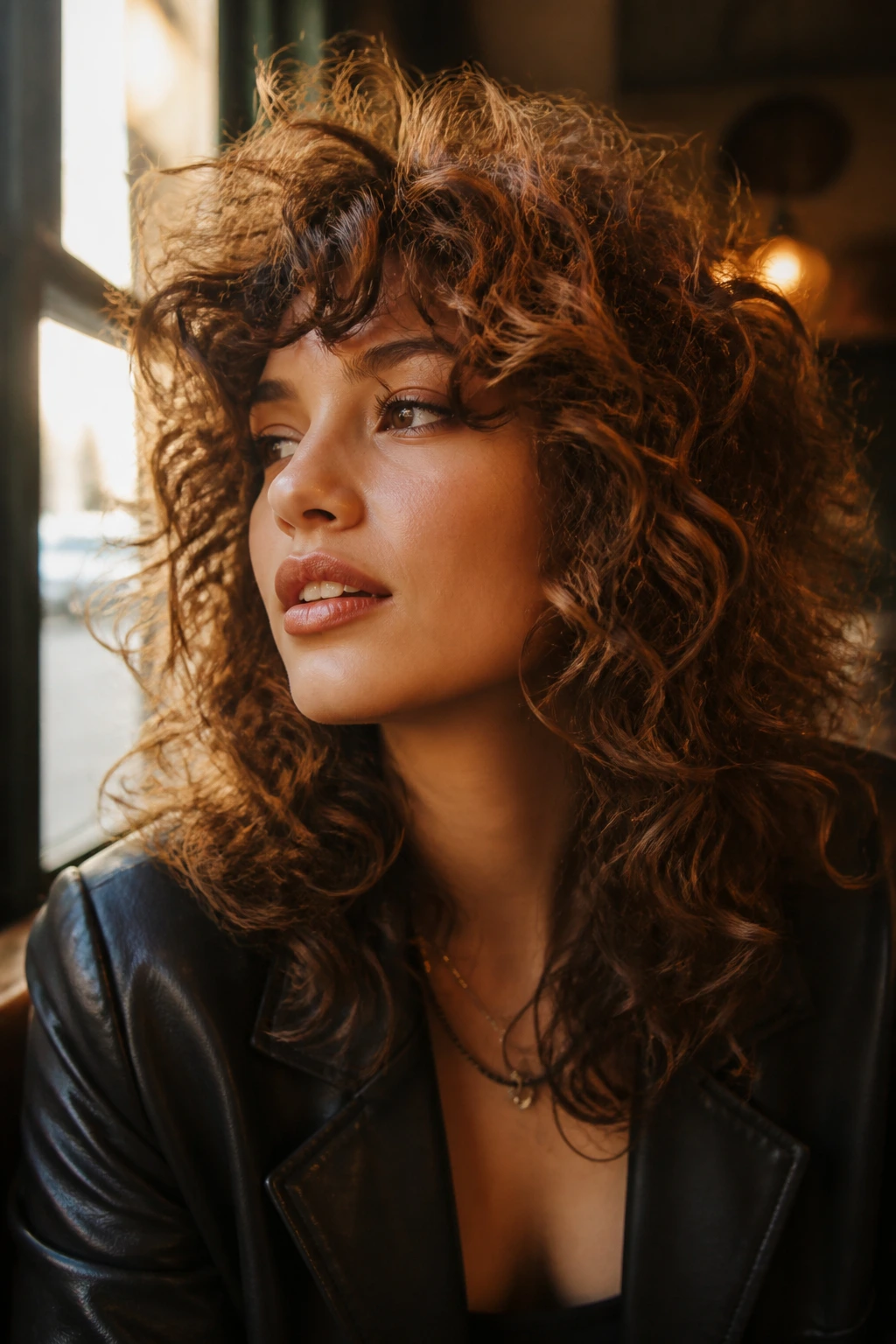
The best curly rock hairstyle is the one that still looks good when you stop trying so hard. That sounds simple. It isn’t. It takes the right layers, the right amount of weight removed, and a style that respects how curls actually move when they dry, sleep, and breathe.
If you get the cut right, the styling gets smaller. That’s the part I like most. You spend less time wrestling the shape and more time letting it do what curls do when nobody is poking at them.
Pick the version that fits your curl pattern, your morning routine, and your willingness to make peace with a little chaos. The good styles here all have that in common, and they’ll keep their edge long after the salon visit is over.