



Brown eyes do not need a blinding blonde to stand out. In fact, the wrong icy shade can wash fair skin so hard that the whole face looks flatter than it really is. The better move is usually a blonde with some depth at the root, some softness through the mids, and a cut that keeps the color moving.
That’s the whole trick with blonde hairstyles for brown eyes and fair skin: you want brightness, but you do not want the hair to become a single pale sheet that steals the show from your eyes. Brown eyes have a lot of natural warmth and contrast in them, and fair skin can either glow beside that contrast or disappear under it. The difference is rarely “blonde or not blonde.” It’s tone, placement, and shape.
A good blonde on this face combo should do three things at once. It should brighten the skin without making it look chalky, frame the eyes instead of floating away from them, and grow out in a way that still looks deliberate a few weeks later. Some of the looks below lean creamy and soft. Some are cooler and sharper. A few are low-maintenance in the way only a good haircut can be.
Why These 12 Blondes Earn Their Keep
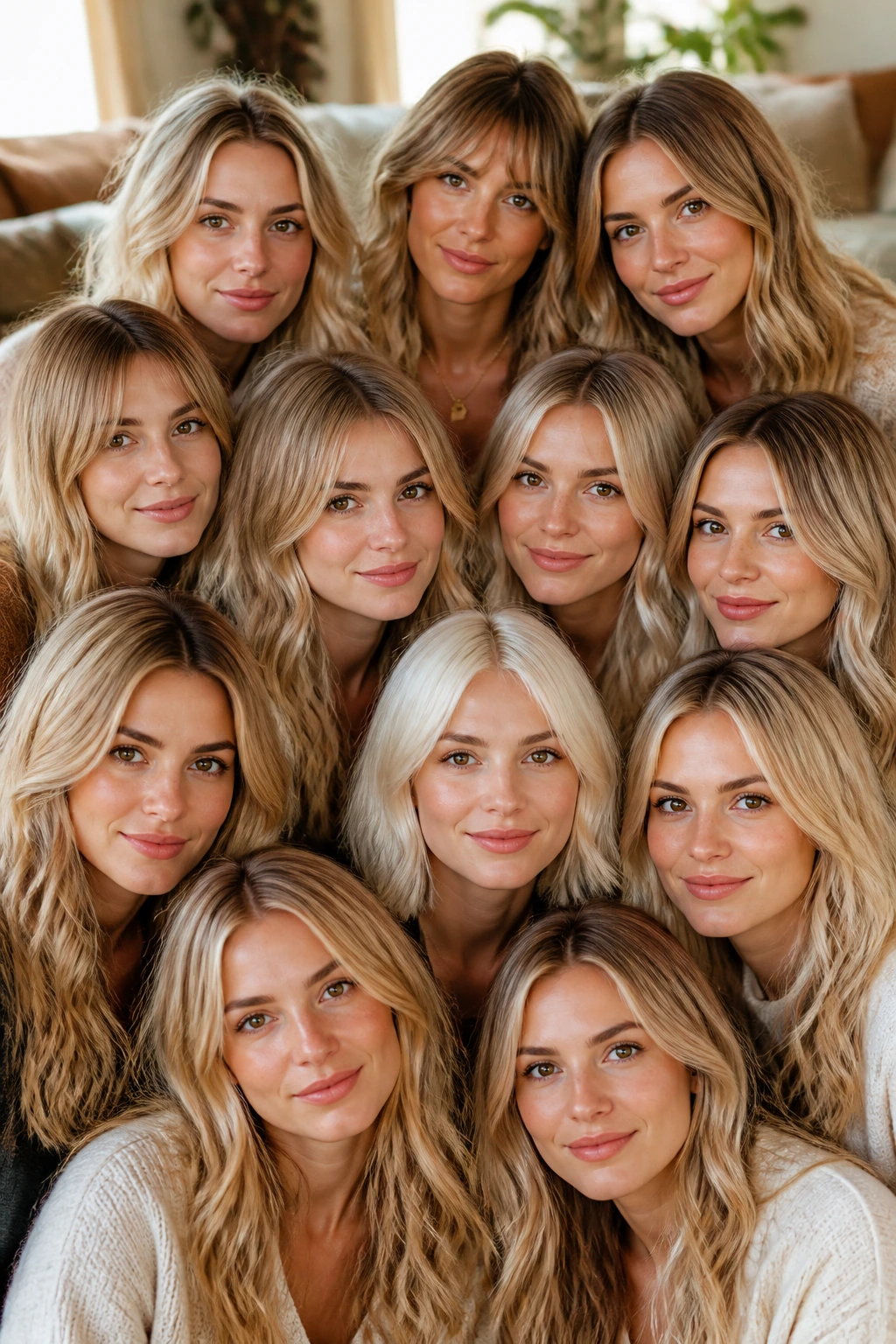
- Soft Contrast: Brown eyes look clearer when the hair has lightness around the face, but a little depth at the root keeps the features from getting washed out.
- Fair-Skin Friendly Tone: Beige, champagne, honey, and pearl blonde each land differently on pale skin, so you can pick the version that doesn’t turn your face flat.
- Shape Matters More Than People Think: Curtain bangs, bobs, shags, and side parts change how the light hits your face, and that changes how the blonde reads.
- Not Every Blonde Needs to Be Bright From Scalp to Ends: Root shadows and balayage give the hair some breathing room, which is often kinder to fair skin than an all-over pale lift.
- There’s Room for Short, Long, Sleek, and Messy: You can keep your length, go cropped, or sit somewhere in between without losing the point of the color.
Why Blonde Hairstyles for Brown Eyes and Fair Skin Need Dimension, Not One Flat Tone
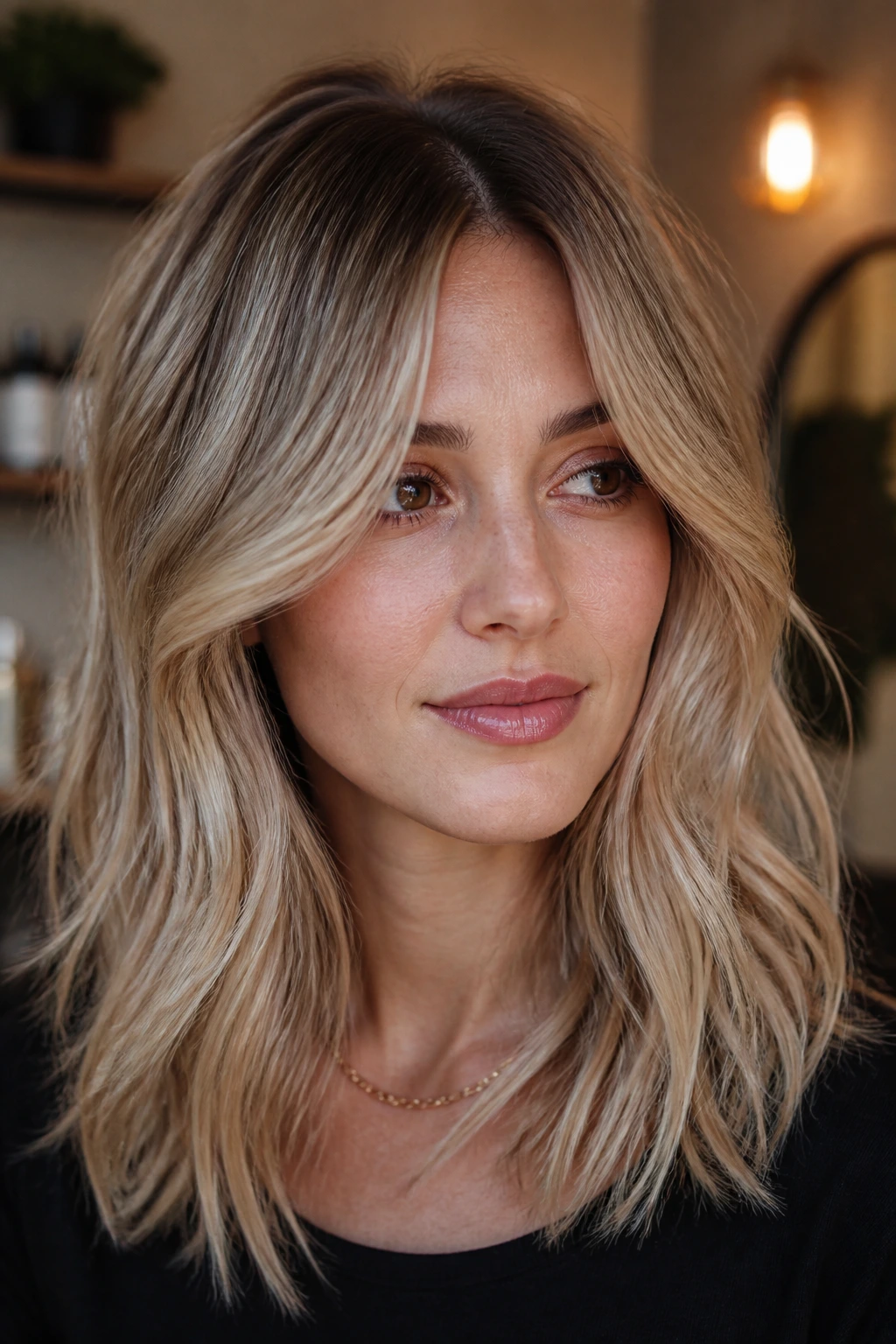
The main mistake people make is thinking “lighter” automatically means “better.” It doesn’t. On fair skin, especially skin with pink or porcelain undertones, a flat pale blonde can erase the subtle edges that make the face interesting. That’s why the best versions of this look almost always include shadow somewhere — at the root, under the crown, or in the interior layers.
Brown eyes also change the rules. They already carry depth, so hair color should frame them, not compete with them. A one-note platinum or butter-yellow blonde can make the eyes feel less anchored. Add a few face-framing pieces, a soft fringe, or a side part, and suddenly the whole thing wakes up.
I’m also a big fan of haircuts that let the color breathe. A blunt bob makes a champagne blonde look sleek. A shag breaks up sandy ribbons so the blonde doesn’t read as a solid block. Long layers do the same thing on longer hair. The cut is not decoration here. It’s the thing that keeps the color from flattening your features.
If your fair skin runs cool, beige, pearl, and champagne are usually the safest bets. If your skin has peach or golden warmth, honey, almond, and vanilla blonde can be gorgeous because they echo that warmth instead of fighting it. There isn’t one magic shade. There is, though, a narrow zone where the blonde looks rich instead of harsh, and that’s the zone these styles live in.
How to Read Beige, Champagne, Honey, and Pearl Blonde at the Salon
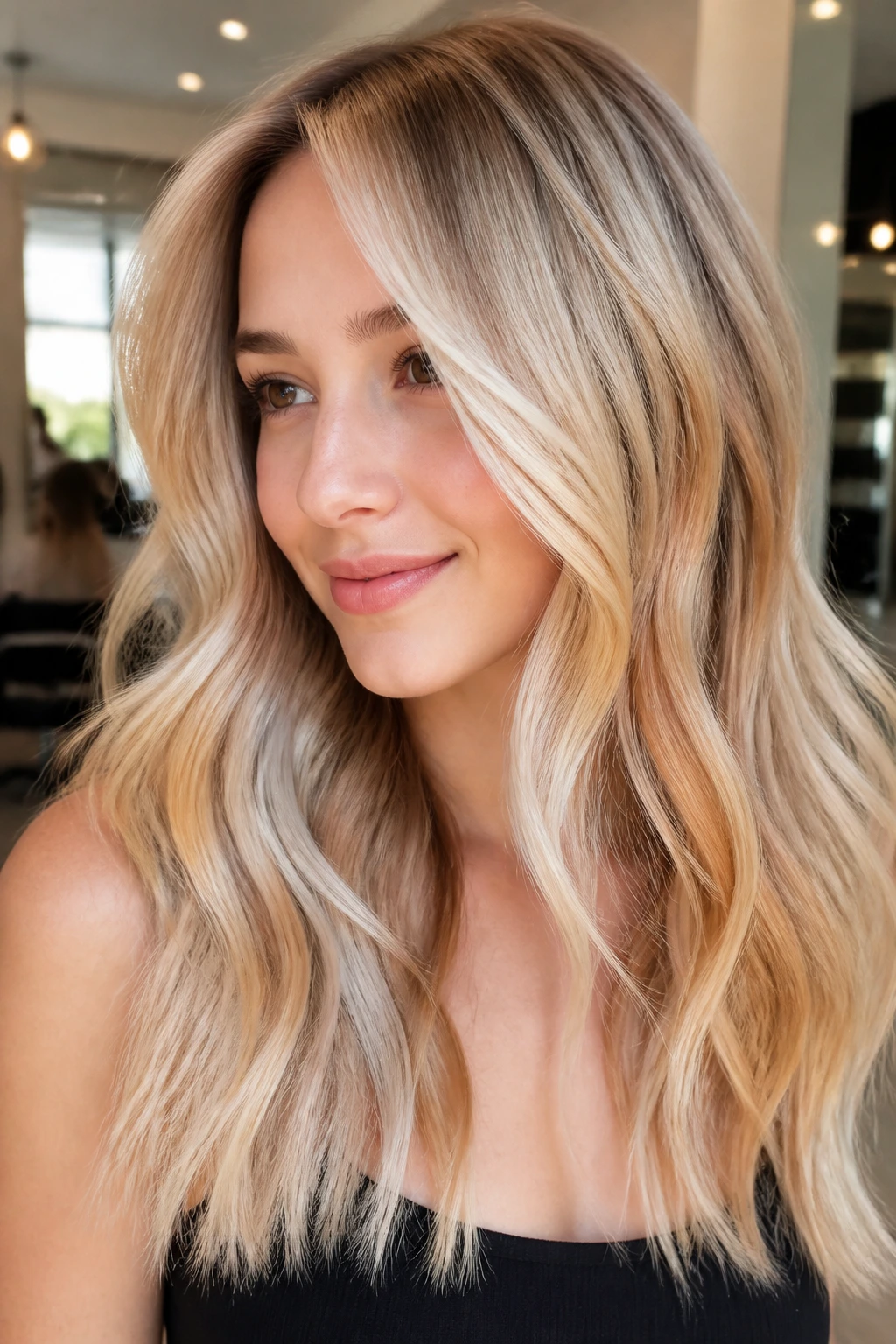
A lot of blonde confusion starts with the names. They sound similar on the menu, but they do different things on the face.
Beige Blonde
Beige sits in the middle. It’s not icy, and it’s not yellow. On fair skin, that middle ground often looks the most natural because it softens the transition from skin to hair without pulling everything warm.
Champagne Blonde
Champagne has a slightly brighter, lighter finish, often with a soft pearly shimmer. It gives brown eyes a little sparkle without turning the whole head into a light bulb.
Honey Blonde
Honey brings in gold. On fair skin with peach or neutral undertones, it can keep the face from looking drained, especially if the haircut has movement and the roots stay a touch deeper.
Pearl Blonde
Pearl reads cooler and cleaner. If your skin leans pink and your eyes are dark brown, pearl can look elegant as long as there’s still some shadow at the root and some shape around the face.
Essential Tools for Styling These Looks at Home
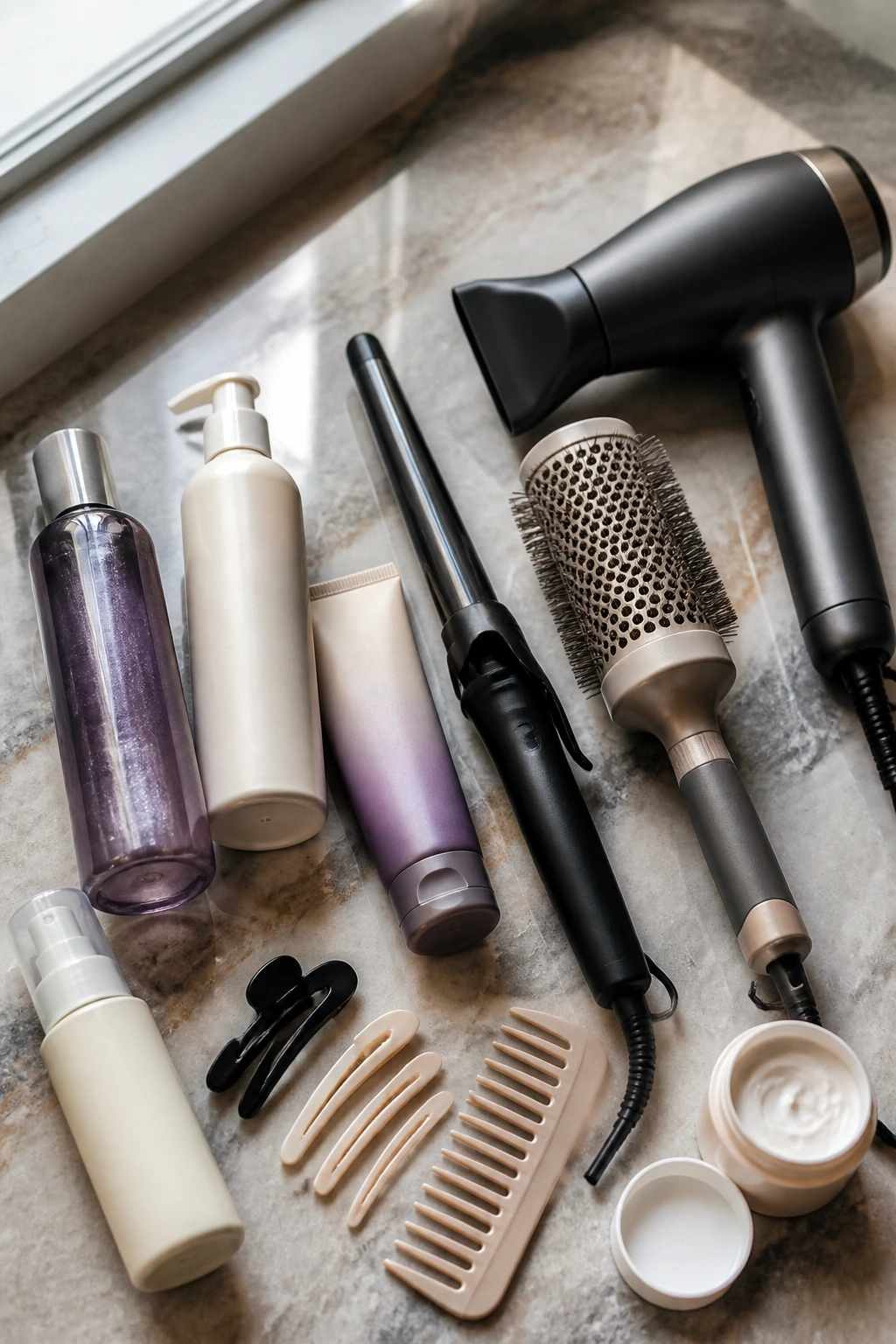
- Blow dryer with a nozzle attachment — The nozzle keeps the airflow directed, which matters when you’re trying to smooth blonde hair without puffing up the cuticle.
- 1-inch to 1.25-inch curling iron or wand — This size gives bend and wave instead of tight ringlets, which keeps these styles modern.
- Round brush, 1.5 to 2 inches — Best for curtain bangs, bobs, and blowouts that need lift at the root.
- Heat protectant spray or cream — Blonde hair shows heat damage fast, especially on lighter ends.
- Purple shampoo — Use it carefully; it keeps brass away, but too much can dull the shine.
- Color-safe conditioner — You need slip and softness, not heavy residue.
- Sectioning clips — Small thing, huge help. They keep the crown clean while you work the lower layers.
- Wide-tooth comb — Useful for detangling damp hair without ripping through lightened strands.
- Texturizing spray — Best for shags, pixies, and braids that need a little grit.
- Light styling cream or serum — Keeps the finish smooth without making the blonde look greasy.
1. Curtain Bangs With Cream Beige Blonde
Curtain bangs are one of those cuts that make fair skin look more awake without shouting about it. When they’re paired with a cream beige blonde, the effect is soft around the forehead, brighter at the cheekbones, and just shadowed enough near the temples to keep brown eyes from getting swallowed by the hair. The whole thing has a loose, brushed-out look that feels easy even when it takes a bit of effort to style.
What I like here is the balance. The bangs open in the middle and sweep down toward the cheekbones, which gives the face a built-in frame. The beige tone does the rest. It’s lighter than a mushroom blonde, warmer than a pearl blonde, and less likely to make fair skin look chalky than a sharp ice blonde.
What to ask for
Ask for curtain bangs that start around the brow or cheekbone and long layers that begin near the collarbone. If your hair is straight, keep the ends softly beveled. If it’s wavy, leave enough length in the bangs so they can be pushed back on off days.
The finish that works best
A large round brush and a quick bend away from the face are enough. Don’t overcurl the fringe. That’s the fastest way to make the whole style look dated.
Pro tip: Ask for a slightly deeper root at the part line — even a subtle shadow keeps the cream blonde from flattening the face.
2. Collarbone Lob With Champagne Blonde
A collarbone lob is one of the cleanest shapes you can pair with champagne blonde. The cut sits right in that in-between zone — not quite short, not quite long — and that length gives the color room to reflect light without looking overdone. On brown eyes and fair skin, I think that matters more than people admit. Too much brightness, too close to the scalp, can look stark. This length softens the whole thing.
Champagne blonde has a little more sparkle than beige, which makes it useful if your skin is very fair and your eyes are a deep brown. The shine lands at the ends and around the face, not all over the head. That’s what keeps it from looking like a helmet of color.
How to style it
- Blow-dry with a 1.25-inch round brush.
- Add a slight underbend at the ends, not a full curl.
- Tuck one side behind the ear to show the jawline and give the face a little asymmetry.
- Finish with a small drop of serum on the mid-lengths only.
If your hair is fine, keep the lob blunt with tiny internal layers. If it’s thick, a little weight removal underneath will stop it from ballooning out at the ends.
Best for: people who want a blonde that looks polished in daylight but still soft enough for fair skin up close.
3. Long Layers With Honey Balayage Waves
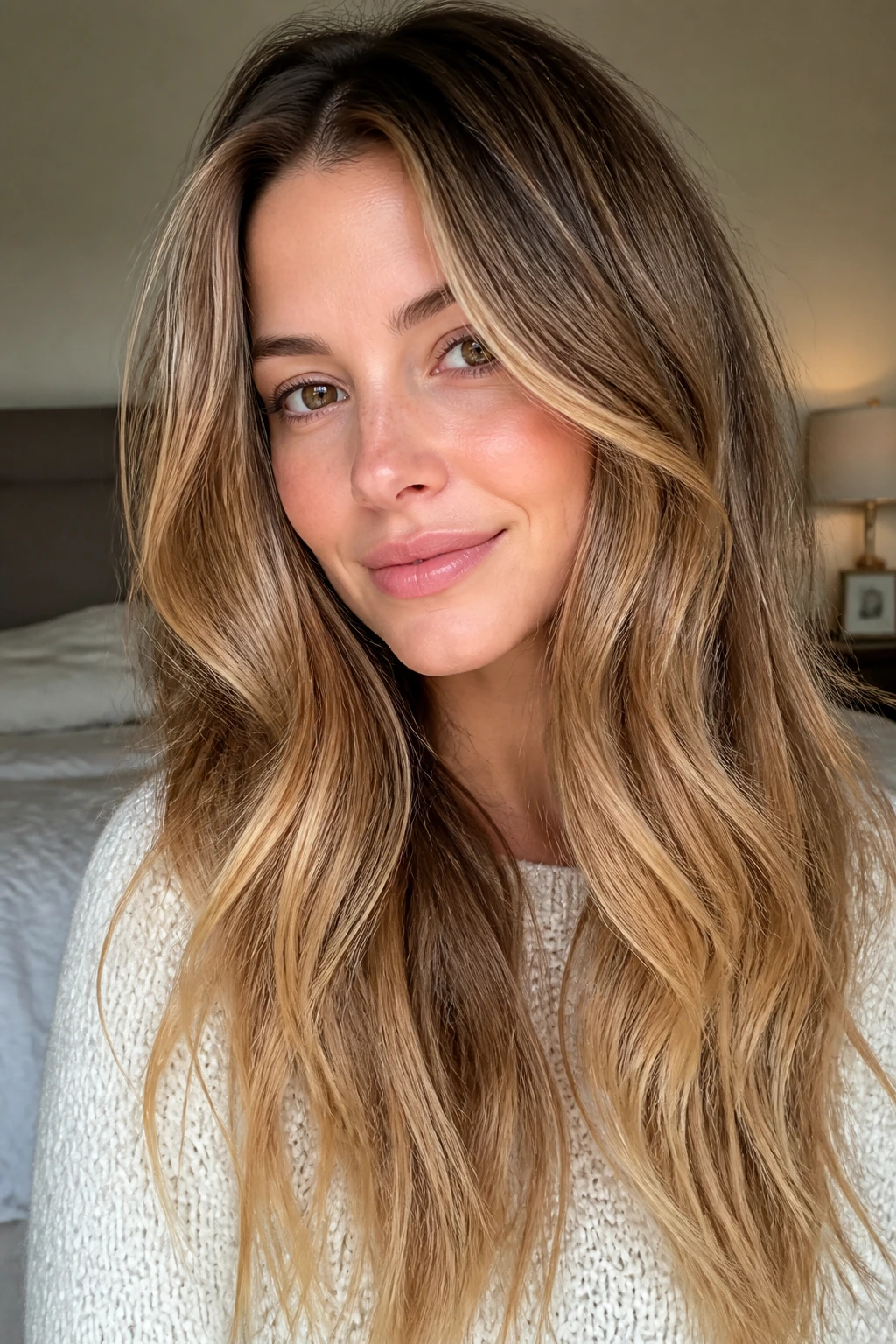
Why does this style keep working? Because it understands how brown eyes and fair skin play together. Honey balayage brings warmth through the lengths, while long layers keep the hair from sitting as one dull curtain. The result is movement around the face and enough light around the cheeks to keep the complexion from going pale.
Balayage is useful here because the light pieces do not start right at the scalp. That matters. When the brightest blonde begins a little lower — usually around the cheekbone or jawline — the hair feels sunlit rather than bleached. On fair skin, that difference is huge. On brown eyes, the honey tone echoes the warmth in the iris and makes the eye color feel deeper.
How to use it
A 1.25-inch iron gives soft bends, not tight curls. Wrap the hair away from the face in alternating directions, then brush it out once it cools. The goal is a ripple, not a pageant wave.
Good color note
Ask for brighter pieces around the front and deeper caramel or beige lowlights underneath. That hidden depth keeps the hair from turning one-dimensional when you wear it down.
Pro tip: Keep the roots a little darker than the mids. Honey balayage looks richest when it has somewhere to fall from.
4. French Bob With Buttery Blonde
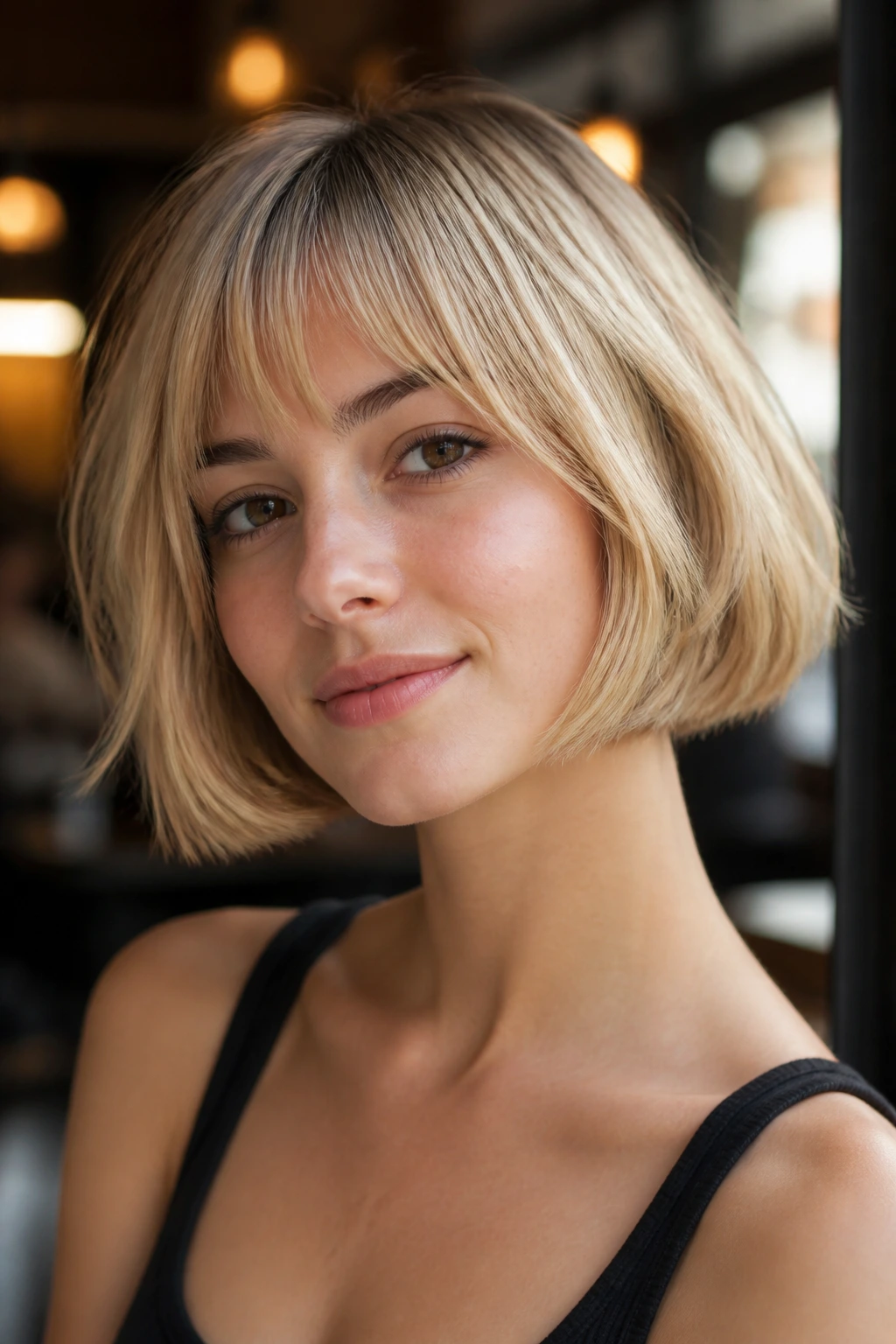
Put a French bob on fair skin with brown eyes and the whole face changes shape. The bob sits near the jaw, the fringe or soft front pieces hit around the cheekbone, and buttery blonde gives the cut a creamy, almost softened edge. It’s short, but it does not need to feel severe.
This is the cut I’d pick for someone who wants the eyes to do the talking. The short length opens the neck, the soft perimeter keeps the cheeks from looking too bare, and the buttery tone gives enough warmth that the face doesn’t disappear into the hair. If your skin is very pink, keep the blonde creamy rather than bright yellow. That’s the difference between fresh and fussy.
What makes it work
- Jaw-grazing or just-below-jaw length.
- Soft undercurve at the ends, not a hard stack.
- A whisper of root shadow so the blonde doesn’t start like a solid block.
- Airy texture instead of stiff polish.
This cut is at its best when the hair has a little bend. Air-dry with a lightweight cream, then tuck the sides behind the ears when you want the brows and eyes to stand out more.
One thing to watch: If your jaw is already sharp, keep the ends a touch softer and less blunt.
5. Textured Shag With Sandy Blonde Ribbons
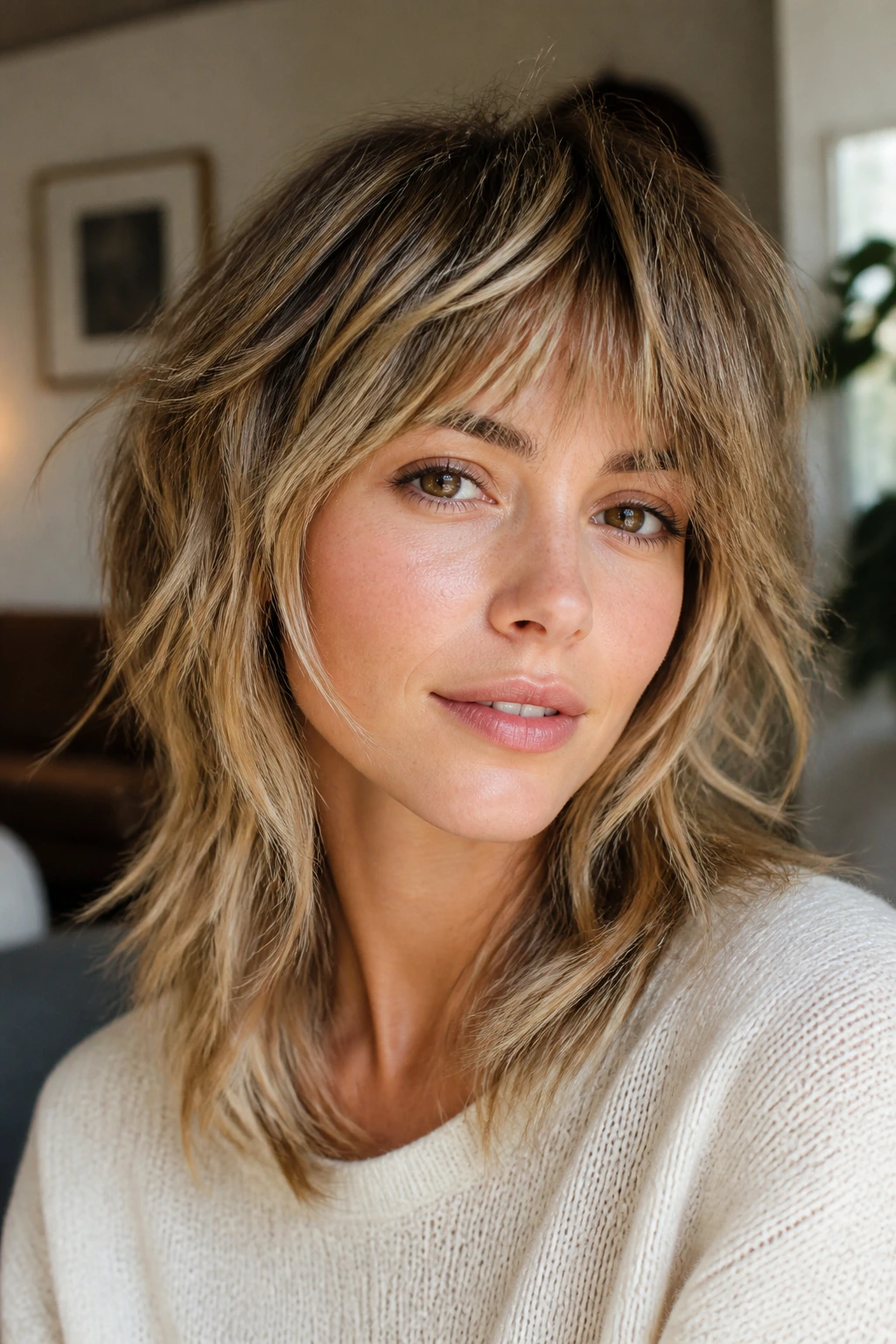
A shag does half the styling for you. That’s the appeal. The layers break up the silhouette, and the sandy blonde ribbons weave through the cut like little flashes of light, which is exactly what you want on fair skin if you’re nervous about looking washed out. The blonde isn’t sitting there in a solid sheet. It’s moving.
Brown eyes love this kind of cut because the texture creates shadow. That shadow makes the eyes feel darker and clearer by contrast. Sandy blonde is also easier to wear than a very pale blonde on a shag because the warmth sits somewhere between beige and gold. It gives the face a little life without dragging the tone too orange.
The best version of this look has soft, choppy layers around the crown, a bit of fringe, and lighter ribbons around the top layers and face frame. If the haircut is too heavy, the ribbons disappear. If the cut is too razored, the ends can fray. The sweet spot is airy but not thin.
A diffuser helps if you have waves. A little texture spray at the roots helps if your hair falls flat. And if the pieces around the face get fuzzy after a few hours, that’s normal. A shag should never look lacquered.
6. Sleek Center-Parted Long Hair With Pearl Blonde Face Frame
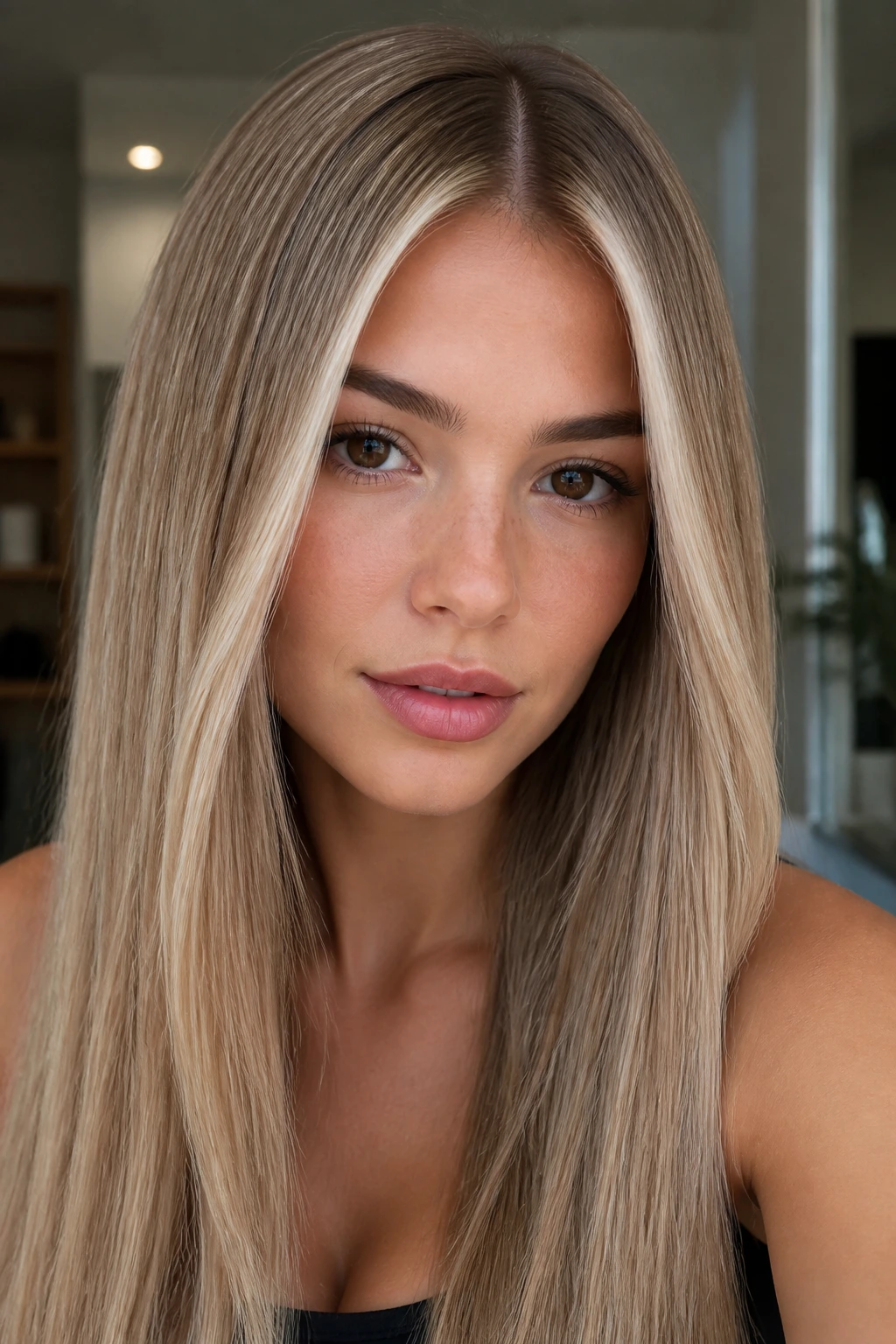
Pearl blonde is a cool girl shade, but only if you keep it under control. I like it best with long hair and a center part because the straight line of the part gives the color structure. Then you add bright face-frame pieces — just enough to catch the light near the temples and cheekbones — and the whole style reads clean instead of icy.
Unlike a heavy all-over platinum, this look lets the length stay softer and deeper while the front gets the brightness. That matters on fair skin. You still get the lifted effect, but the face doesn’t get blanked out by too much light around the roots. Brown eyes also benefit from the contrast. The pearl pieces act like a frame, not a spotlight.
Best if you want
- A sleek finish.
- A cool-toned blonde.
- A style that works well with strong brows.
- Less brass, less gold, less warmth overall.
I’d ask for a root melt that stays one or two levels deeper than the brightest pieces. If your skin pulls pink, that root depth is your friend. If your hair is naturally dark, the blend matters even more; without it, pearl blonde can look pasted on.
Specific recommendation: Keep the face-frame pieces the brightest, then let the length fade into a softer beige or neutral blonde.
7. Side-Swept Pixie In Wheat Blonde
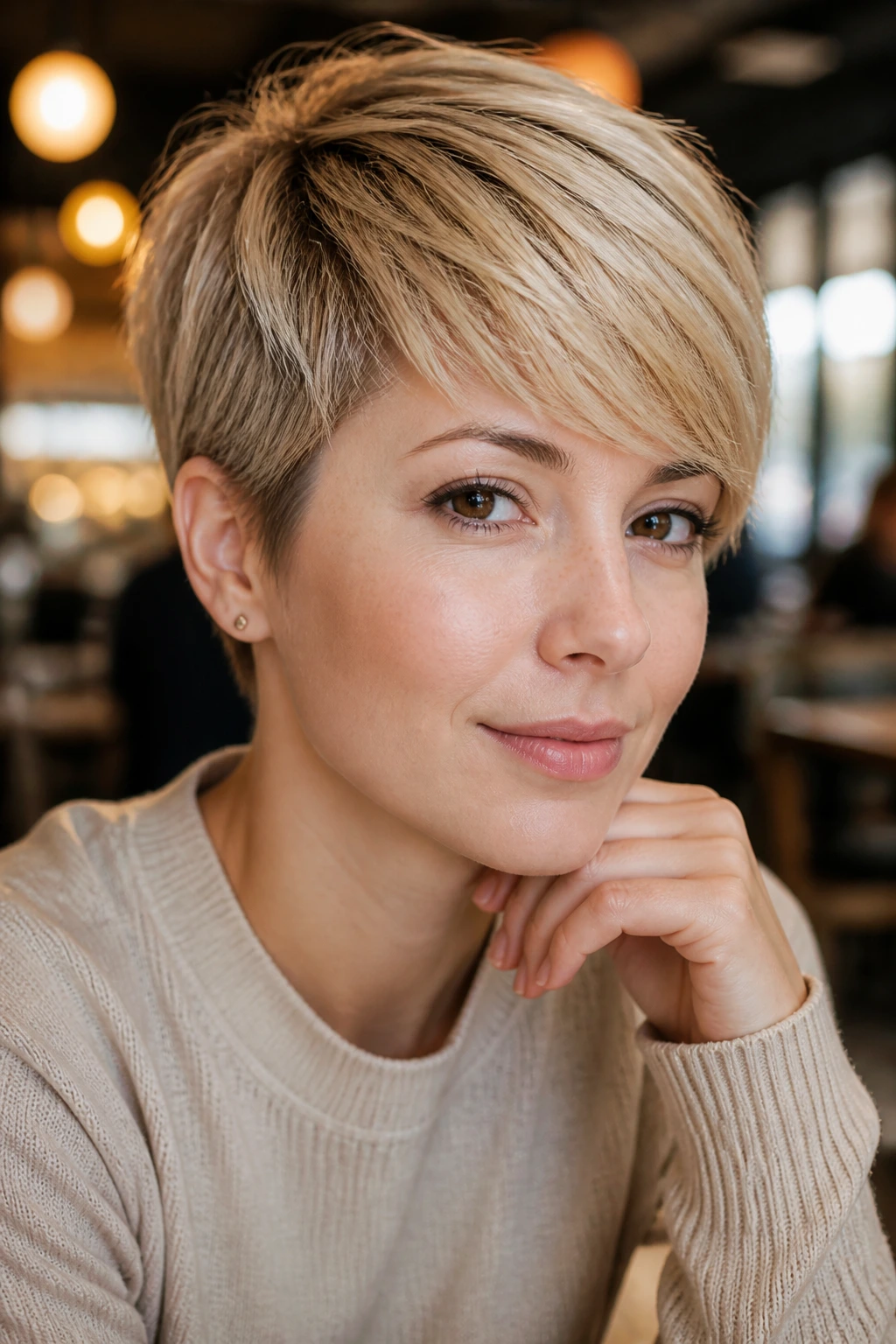
A side-swept pixie can be a small miracle on brown eyes and fair skin. It clears the face, which means the eyes become the obvious focal point, and wheat blonde softens the crop so it does not feel too hard. I like this shade better than stark platinum here because it keeps the skin from looking overly pale next to the cut.
The side-swept fringe gives the style its shape. Without that sweep, a pixie can start to look severe fast, especially on a very fair face. With it, the cheekbones stay visible, the brow line stays soft, and the hairline around the temple becomes a little shadowed. That shadow is doing more work than people realize.
The styling part
Use a pea-size amount of mousse at the roots on damp hair, then blow-dry forward and sweep the fringe to one side with your fingers or a small brush. Finish with a little matte paste through the top for lift and separation.
Why it suits this face combo
The short length shows off the eyes. The soft blonde keeps the skin from looking harsh. And the longer top means you can adjust the shape depending on whether you want more volume or more softness that day.
Pro tip: Keep a slight root shadow at the crown. On very fair skin, a flat light blonde pixie can lose all its shape by lunch.
8. Blunt Midi Cut With Mushroom Blonde Root Melt
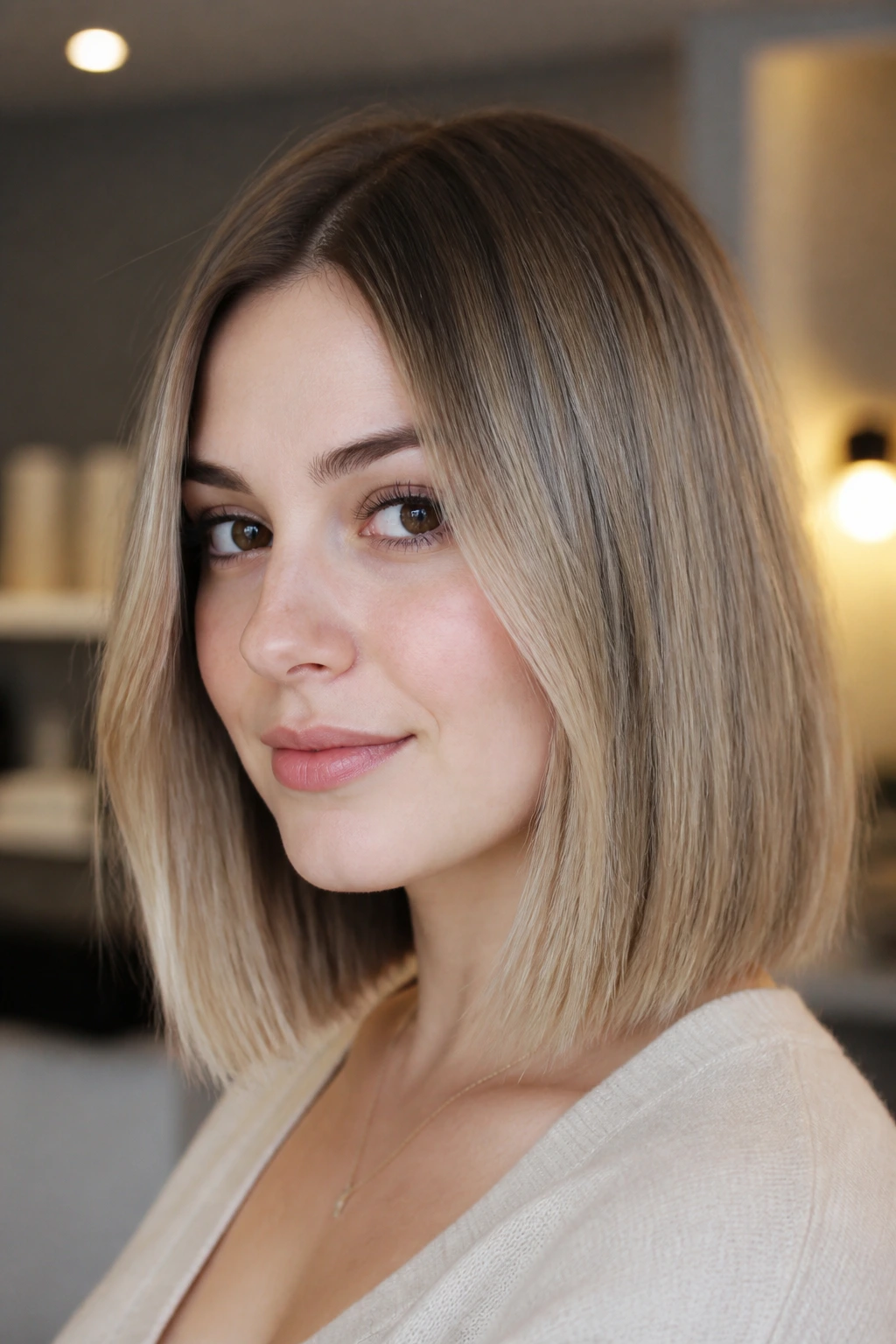
This is the most controlled look on the list, and that’s why it works. A blunt midi cut sits around the collarbone or just above it, which gives the hair a firm edge. Pair that with mushroom blonde — that cool beige-taupe shade with a little smoke in it — and you get a style that feels intentional rather than sugary.
Fair skin with pink undertones often does better with mushroom blonde than with a warmer yellow blonde, because the cooler tone keeps the face from flushing too hard. Brown eyes also benefit from the muted depth. The hair does not compete with the eye color. It surrounds it.
A root melt is the part people skip, and they shouldn’t. Without it, the blonde can read as one blunt mass. With it, the color eases from darker root to lighter length, and the cut suddenly has more dimension. If your hair is thick, ask for hidden internal layers so the blunt line does not puff out at the ends.
A flat iron can polish this cut, but I’d keep a soft bend in the ends. Hard-straight and pale can look too severe on fair skin. A tiny turn under the chin is enough.
9. Deep Side Part With Golden Almond Blonde
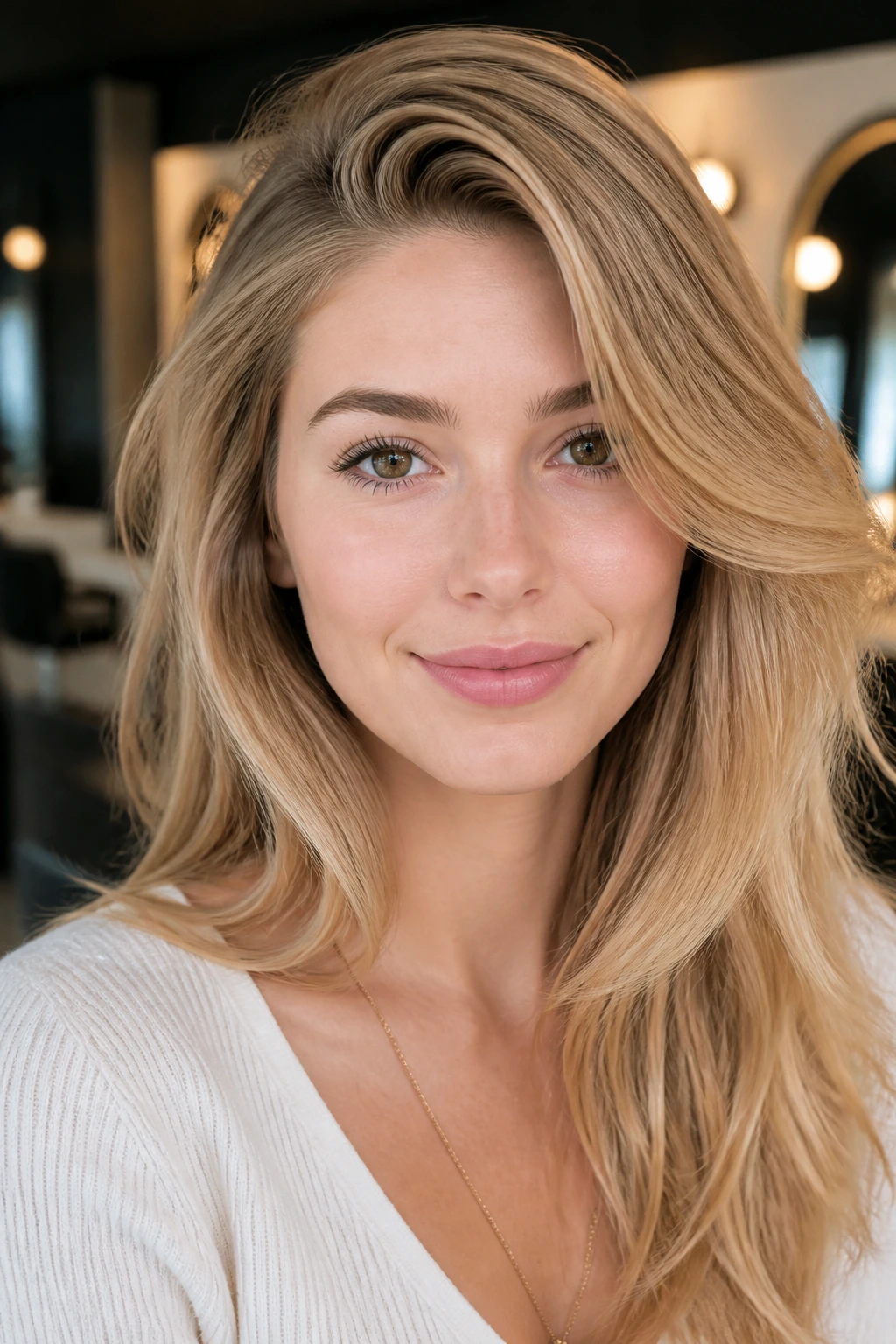
Why does a deep side part do so much work? Because it creates shadow on one side of the face and lift on the other, which is exactly the kind of contrast brown eyes and fair skin can use. Golden almond blonde sits in that warm-but-not-brassy lane, so the overall effect stays soft while the color still feels rich.
This is one of the best choices if your fair skin has a peach or neutral cast. The gold tones add warmth, the side part adds shape, and the longer pieces on the heavier side of the part help the face look sculpted without makeup doing all the heavy lifting. Brown eyes show up more clearly too, especially if the front pieces are a shade lighter than the mid-lengths.
Styling move
Use mousse at the root, then blow-dry upward on the heavier side of the part for lift. A few velcro rollers at the crown can help if your hair falls limp fast. The shape matters more than a perfect curl here.
Quick color note
Ask for golden almond ribbons through the front and around the top layer, not all through the ends. That keeps the color warm where it counts and avoids a flat yellow finish.
Best for: anyone who wants a little old-school glamour without losing softness around a fair face.
10. Bouncy Blowout With Vanilla Blonde Ends
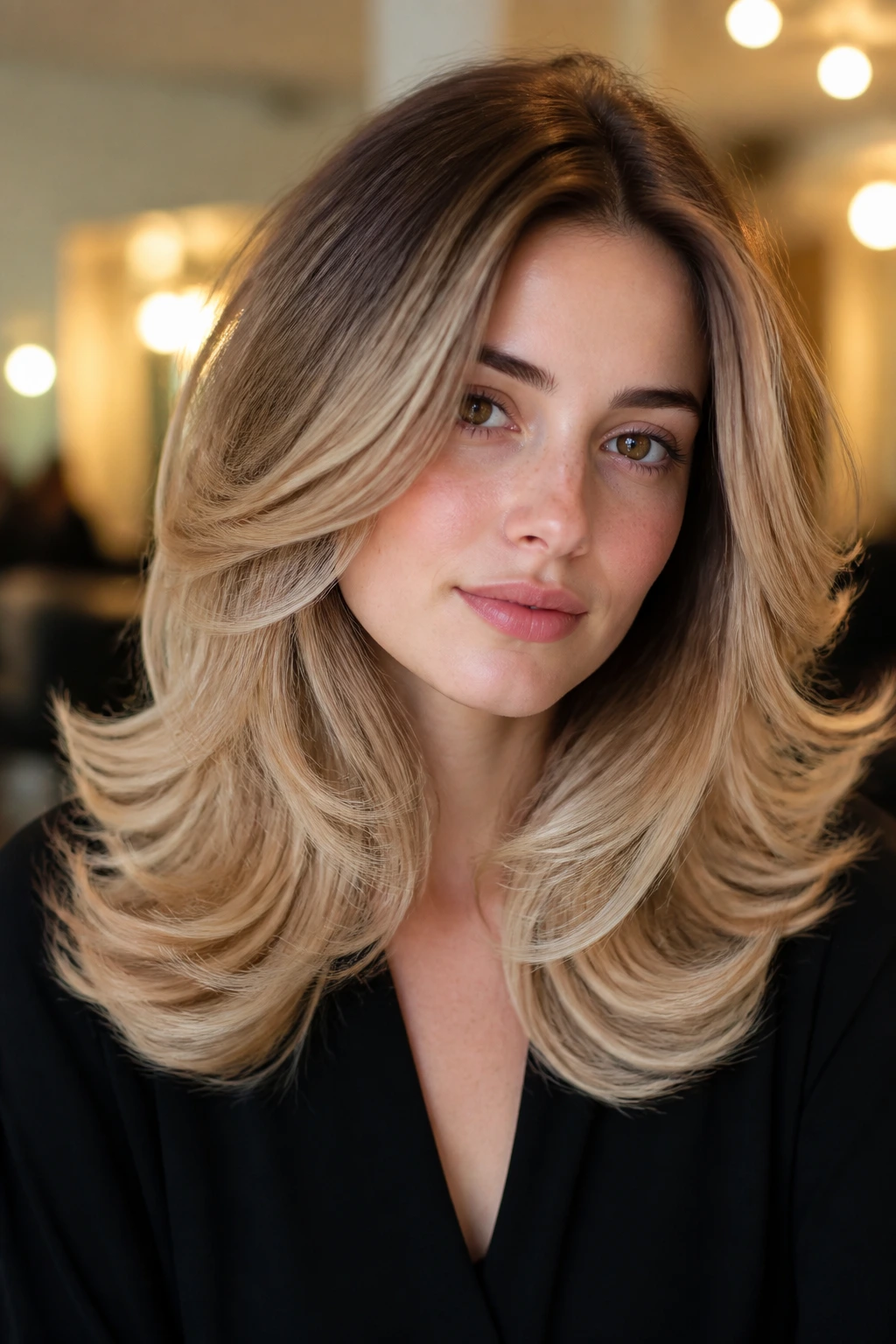
A good blowout can make even a simple cut feel finished. On brown eyes and fair skin, a bouncy blowout with vanilla blonde ends brings movement to the lower half of the hair, which keeps the face from looking top-heavy. The roots can stay a little deeper, the mids a little softer, and the ends bright enough to catch the light when the hair swings.
Vanilla blonde is lighter and creamier than honey, but not as sharp as pearl. That makes it useful if you want brightness without the frost. I especially like it on layered hair that needs some lift at the crown and a soft, polished finish at the ends. If the hair is all one length, the blowout can still work, but the style looks better with some internal shape.
Where the volume comes from
- Blow-dry the roots first, lifting them up and away from the scalp.
- Roll the ends under with a round brush.
- Let the hair cool fully before brushing it out.
- Finish with flexible hold, not stiff spray.
The hair should move when you turn your head. If it doesn’t, it’s too set.
Pro tip: Keep the brightest vanilla pieces in the bottom third of the hair. That’s where the swing lives.
11. Half-Up Twist With Baby Blonde Highlights
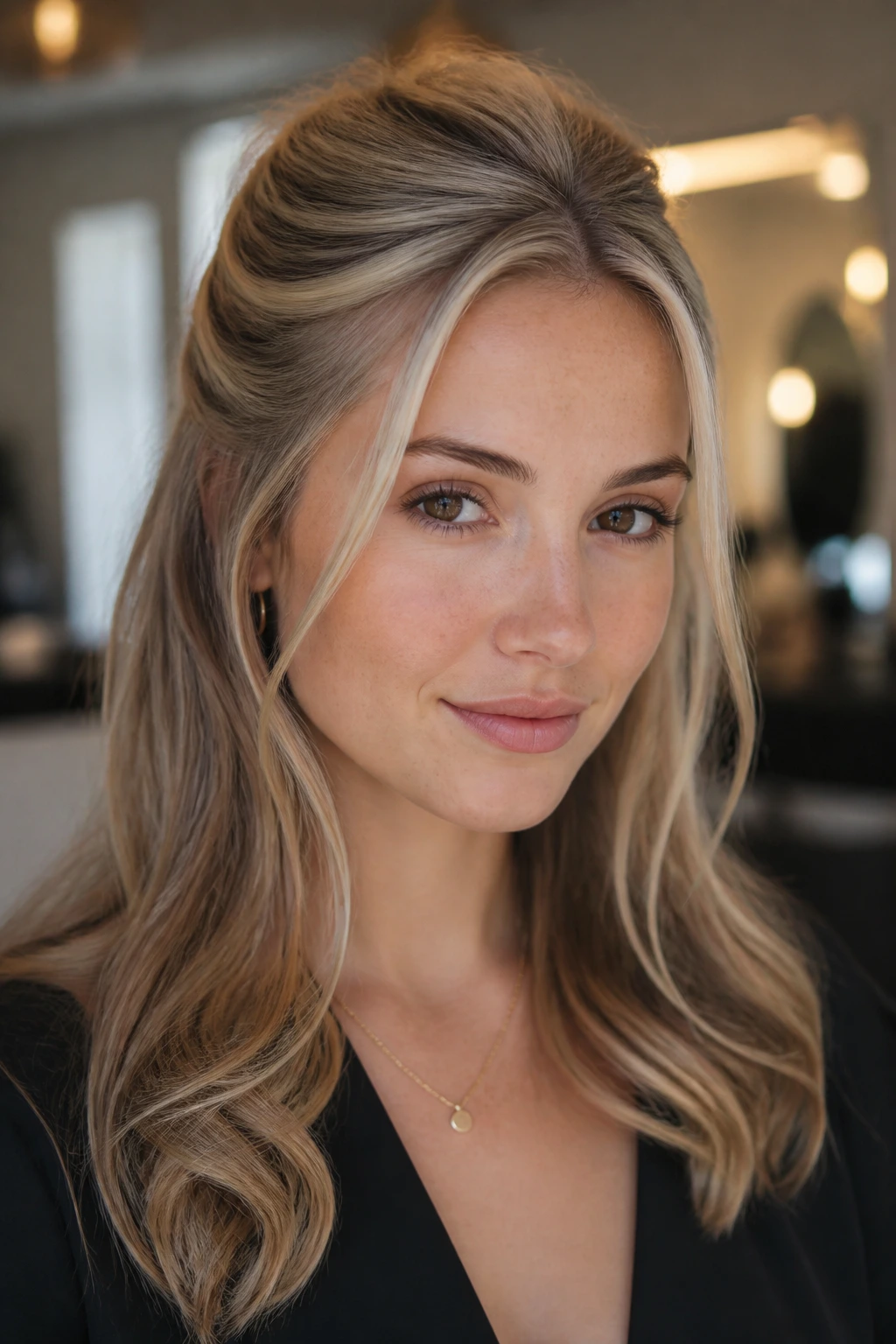
A half-up twist is useful because it shows off the color without forcing the whole head into an updo. That matters if you’re growing out blonde or if your fair skin needs a little brightness around the temples but not much volume on top. Baby blonde highlights are tiny, fine ribbons placed close together, and they give the hair a soft shimmer instead of obvious stripes.
I like this for long hair because it keeps the top section tidy while the lower length stays loose. Brown eyes get framed by the lifted front pieces, and fair skin keeps some softness because the color is broken up rather than flooded across the entire head.
Best if you want
- A style that hides flat roots for a day or two.
- Something quick for lunch, dinner, or a low-key event.
- A way to show dimension in layered blonde hair.
- A softer alternative to a full knot or ponytail.
Twist the top half loosely and pin it low enough that the crown still has a little height. If the twist is too tight, the face can look pulled back. A few loose pieces at the temples make it better.
Specific recommendation: Ask for baby highlights around the part line and hairline only if you want lower upkeep. The effect is quiet, but it lasts.
12. Braided Lengths With Dimensional Beige Blonde
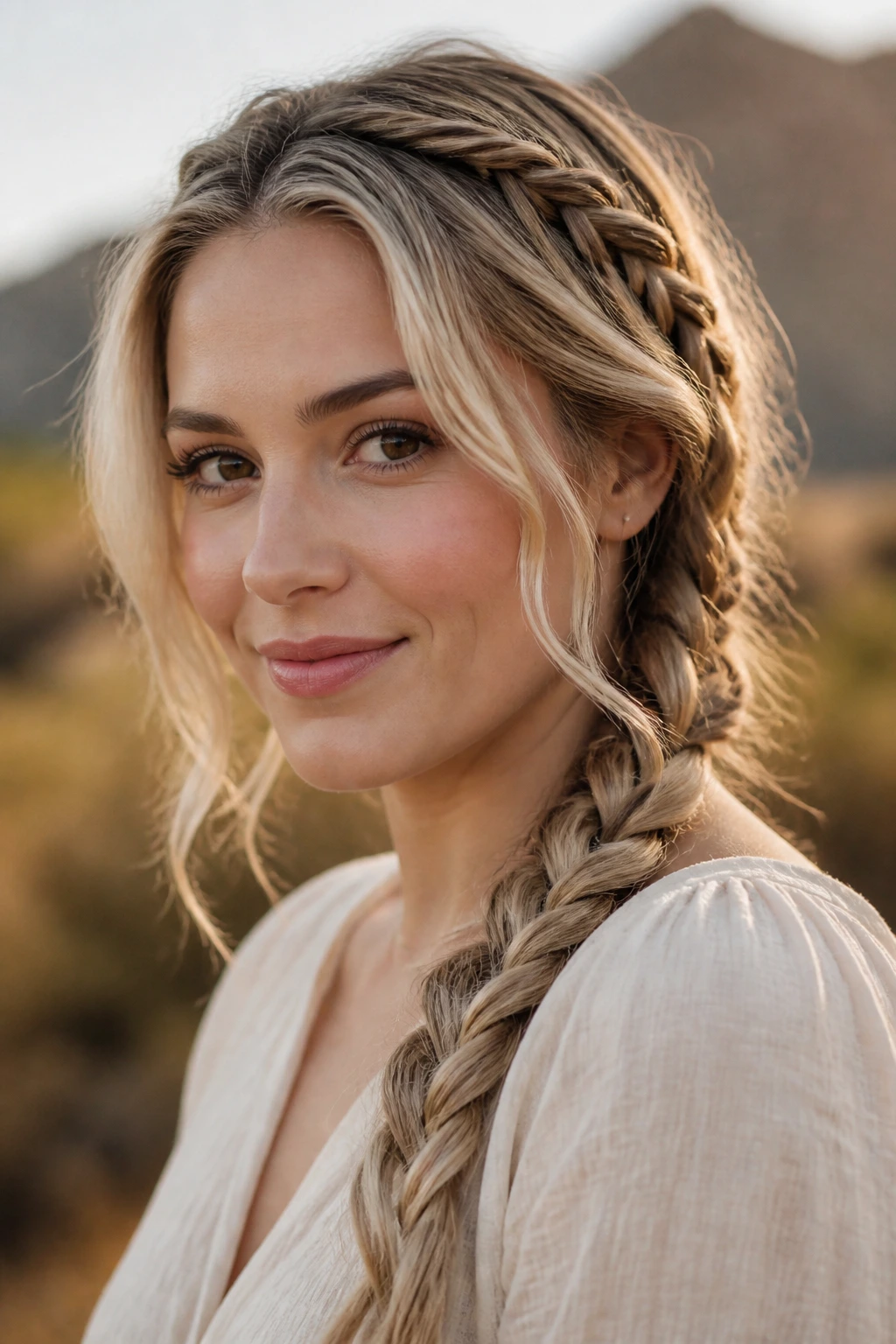
Braids are one of the easiest ways to show off dimensional blonde because the weave itself acts like a display rack for the color. Beige blonde ribbons catch along each section of the braid, and fair skin benefits from the softness because the hair never reads as one hard block. Brown eyes also get more presence when the braid sits close to the head or over one shoulder, because the face stays open.
The braid style you choose changes the feel. A loose fishtail looks airy. A thick three-strand braid feels more classic. A crown braid turns the color into a halo of light around the face, which can be especially nice if your eyes are deep brown and your skin is pale.
Braids that show the color best
- Loose fishtail braid for long, layered hair.
- Dutch braid for stronger contrast and a more carved-out shape.
- Low side braid if you want the face to stay soft and open.
- Crown braid if you want the highlights near the temples to do more work.
Pull a few strands loose around the face. Not too many. Just enough to keep the braid from looking severe against fair skin.
Pro tip: Braids look best on second-day hair with a little texture spray. Clean, slippery blonde tends to slip apart.
Smart Salon Notes Worth Bringing to the Chair
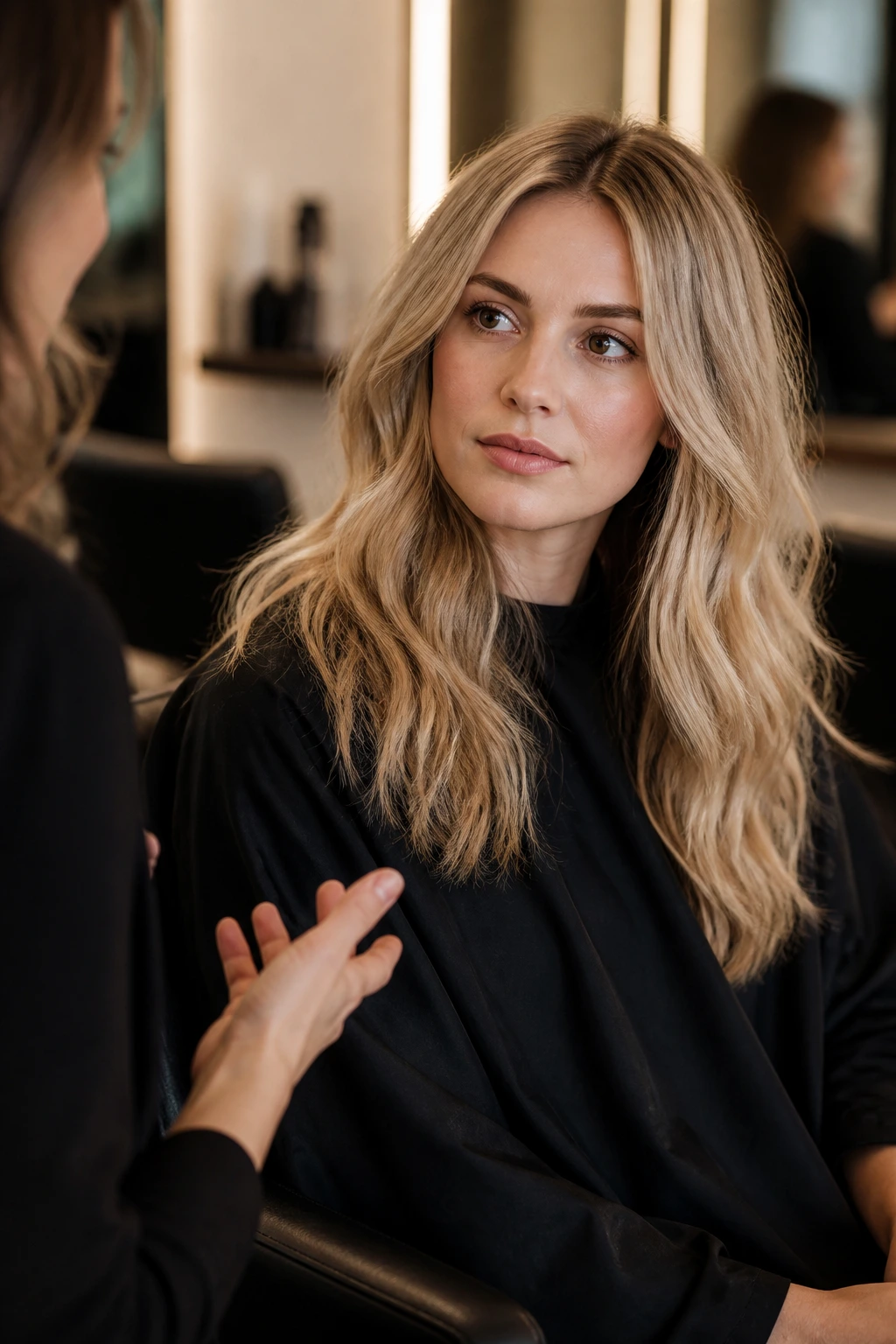
The easiest way to get the blonde you actually want is to describe the effect, not just the color. Say where you want the brightness to live. Say whether you want the roots soft or strong. Say if your skin looks better in creamier tones or cooler ones, because that tells the colorist a lot more than “make me blonde.”
Tell them your maintenance ceiling: If you do not want to sit in the chair every few weeks, ask for balayage, a root melt, or face-framing brightness instead of an all-over lightened base. That choice changes the grow-out line in a way you’ll notice in the mirror, not just on paper.
Bring a daylight photo: Salon lights can lie. A photo shot near a window will show whether the blonde is beige, champagne, or yellow, and that saves everyone a headache.
Mention your brows: Dark brows and very pale blonde can look sharp in a good way, but only if the rest of the color has balance. If your brows are already soft or light, a deeper root often looks better than a pure icy lift.
Ask where the brightest pieces should sit: Around the cheekbones, at the temples, or through the ends? That answer changes the whole face frame.
Common Styling Mistakes That Drain Fair Skin
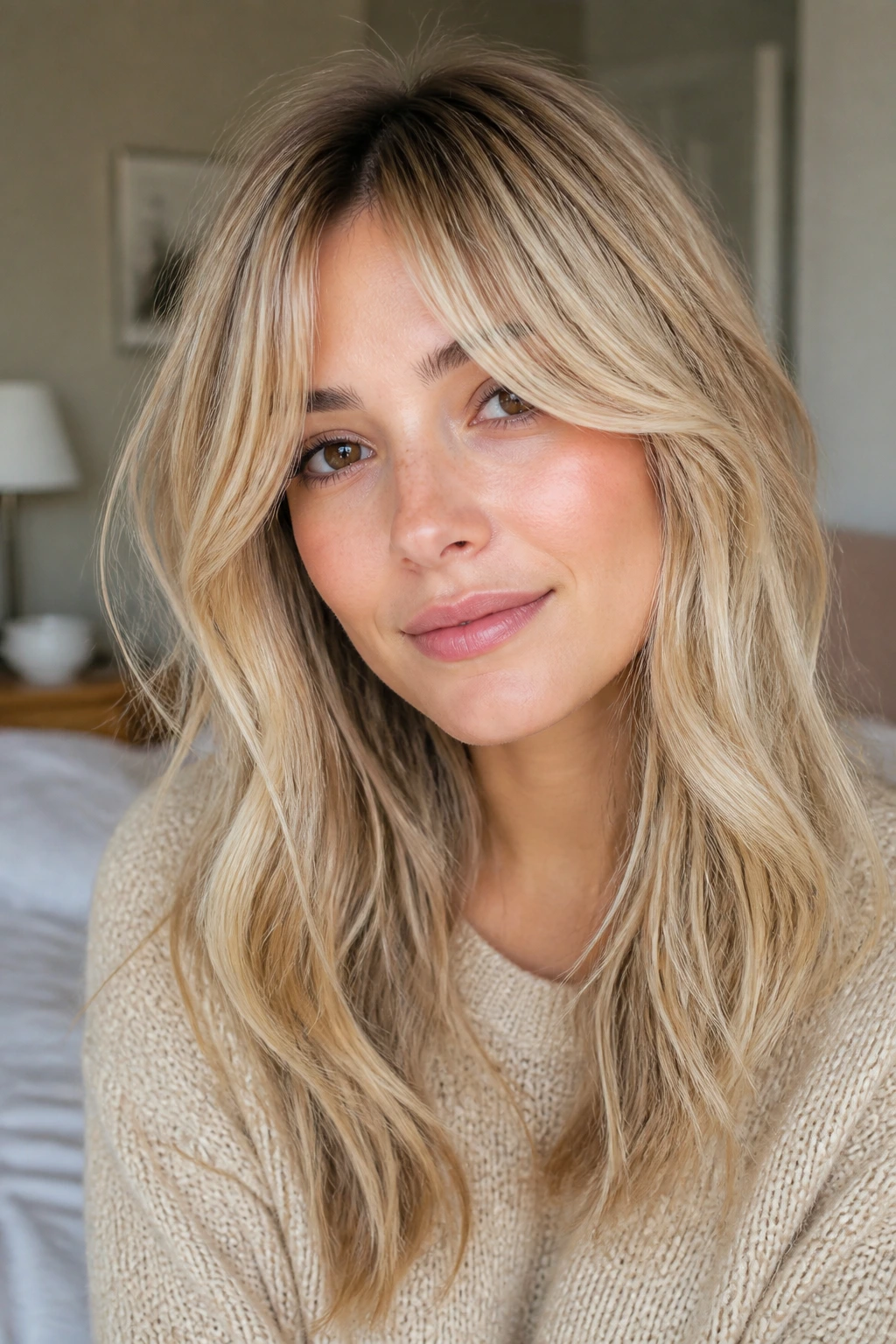
Choosing a blonde that fights your undertone is the fastest way to look tired. If your skin pulls pink, a yellow-heavy blonde can make you look flushed. If your skin is peachy, a grayish blonde can look muddy. The fix is simple: name the tone you want — beige, champagne, honey, pearl — instead of asking for a vague “light blonde.”
Going too bright at the roots can wipe out the shape of the face. A pale strip right against fair skin often looks hard in daylight, especially if the brows are darker. Ask for a root shadow or a softer lift around the hairline so the blonde has a little depth at the base.
Ignoring the haircut is a big one. Flat, one-length hair with a very light blonde can make brown eyes recede. Layers, bangs, a side part, or even a small bend at the ends change how the light lands. The color is only half the story.
Overusing purple shampoo dries lightened hair out fast. One wash too many and the blonde can take on a chalky, flat finish. Use it once a week at most unless your stylist tells you otherwise, and keep the dwell time short.
Blasting everything with heat shows up quickly on blondes. The ends go rough, the shine disappears, and fair skin starts looking better only because the hair looks worse. A heat protectant every time is not optional here.
Variations and Adaptations to Try
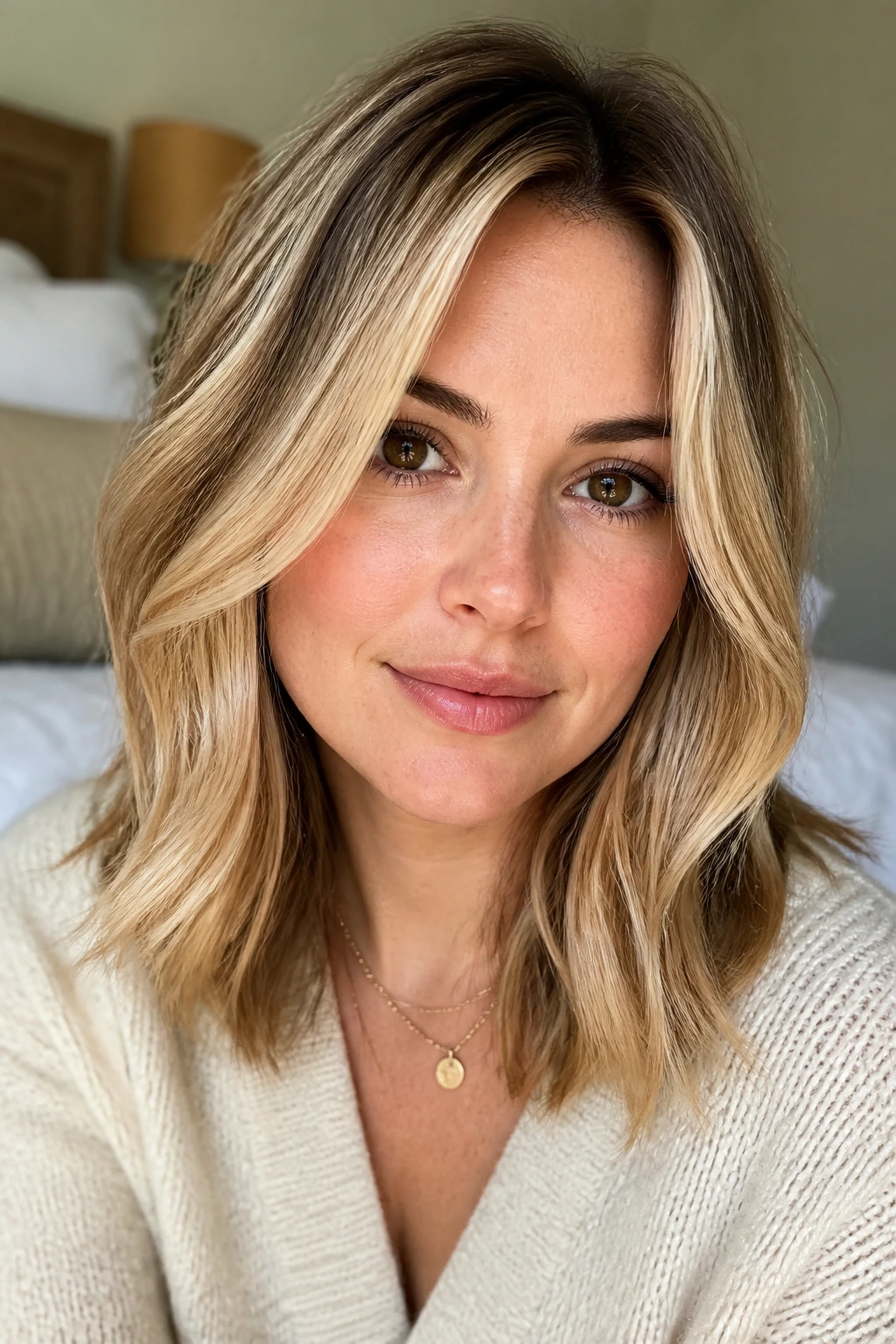
The Cool Pearl Edit
Swap warmer beige or honey tones for pearl, champagne, and soft ash-beige pieces. This version suits fair skin that pulls pink or rosy and brown eyes that look deepest against cooler contrast. Ask for the brightest pieces around the face and a soft root melt so the finish stays clean instead of frosty.
The Honey Glow Edit
Push the blonde warmer with honey ribbons, vanilla ends, and a slightly golden gloss. This is the version I’d pick for peachy or neutral fair skin, especially if the eyes have amber or golden flecks. The warmth keeps the face from looking drained and gives long layers or blowouts a softer finish.
The Low-Maintenance Root Shadow
Keep the base deeper and start the blonde lower, whether you’re wearing a lob, shag, or long layers. This gives you a softer grow-out and makes the color look less abrupt on fair skin. It’s the smartest pick if you don’t want a harsh line every time the roots show.
The Short Crop Switch
Take any of the longer looks and move it into a pixie, French bob, or blunt midi. Shorter cuts make brown eyes the center of the look, and they stop very fair skin from getting overwhelmed by too much hair around the face. The color can stay softer and still feel intentional.
The Curly Texture Version
If your hair bends or curls naturally, ask for highlights placed to follow the curl pattern rather than stripe across it. Beige, sandy, and honey tones show up best when the curls can move. Dry cutting or cutting on textured hair can help the shape sit correctly once it shrinks up.
Keeping Blonde Hairstyles for Brown Eyes and Fair Skin Bright Between Visits
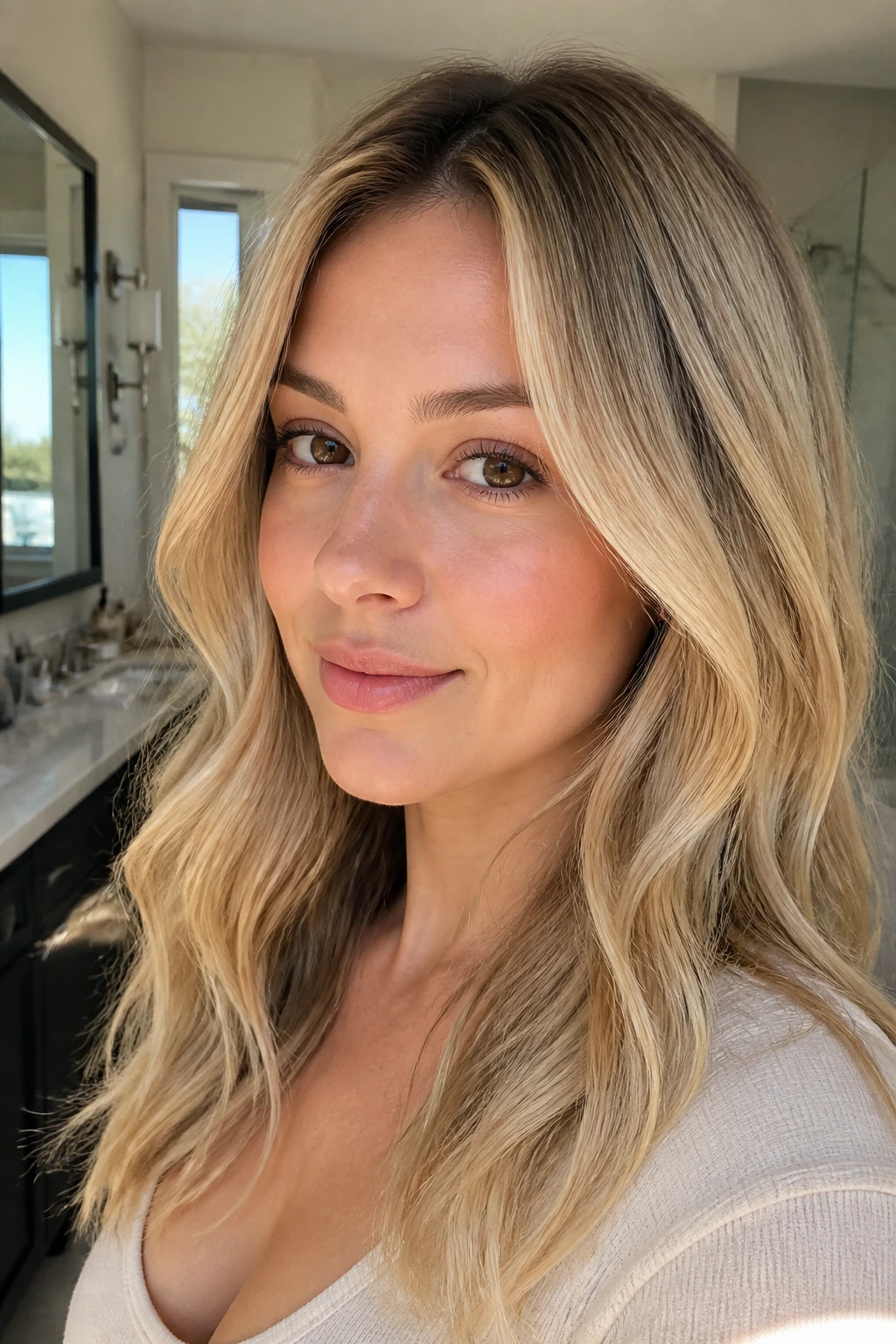
Blonde hair needs a little babysitting. Not much. Just enough to keep the tone from sliding into brass or turning dull at the ends. If your hair is lightened, a weekly purple shampoo is usually enough to keep warmth in check, but leave it on only for the time your stylist recommends — often just 1 to 3 minutes. Longer is not better. It can leave a gray cast that makes fair skin look colder than you want.
A gloss or toner every 4 to 8 weeks can reset the tone, especially if you wear beige, champagne, or pearl blonde. Root shadows and balayage grow out more softly, so those styles usually go 8 to 12 weeks between big appointments, while all-over blondes may need a refresh sooner. If your ends start looking rough before the tone fades, trim them. Blonde hair shows split ends fast.
Heat is the other big issue. Use a heat protectant every single time you blow-dry, curl, or flat iron. Keep the tool on medium heat when you can, not the hottest setting. And if you wash your hair a lot, use a color-safe conditioner and a microfiber towel or T-shirt to cut down on friction. Blonde shine disappears fast when the cuticle gets rough.
A satin pillowcase helps, too. So does a loose braid at night if your hair tangles easily. It’s a small thing, but small things stack up on blonde hair.
Frequently Asked Questions
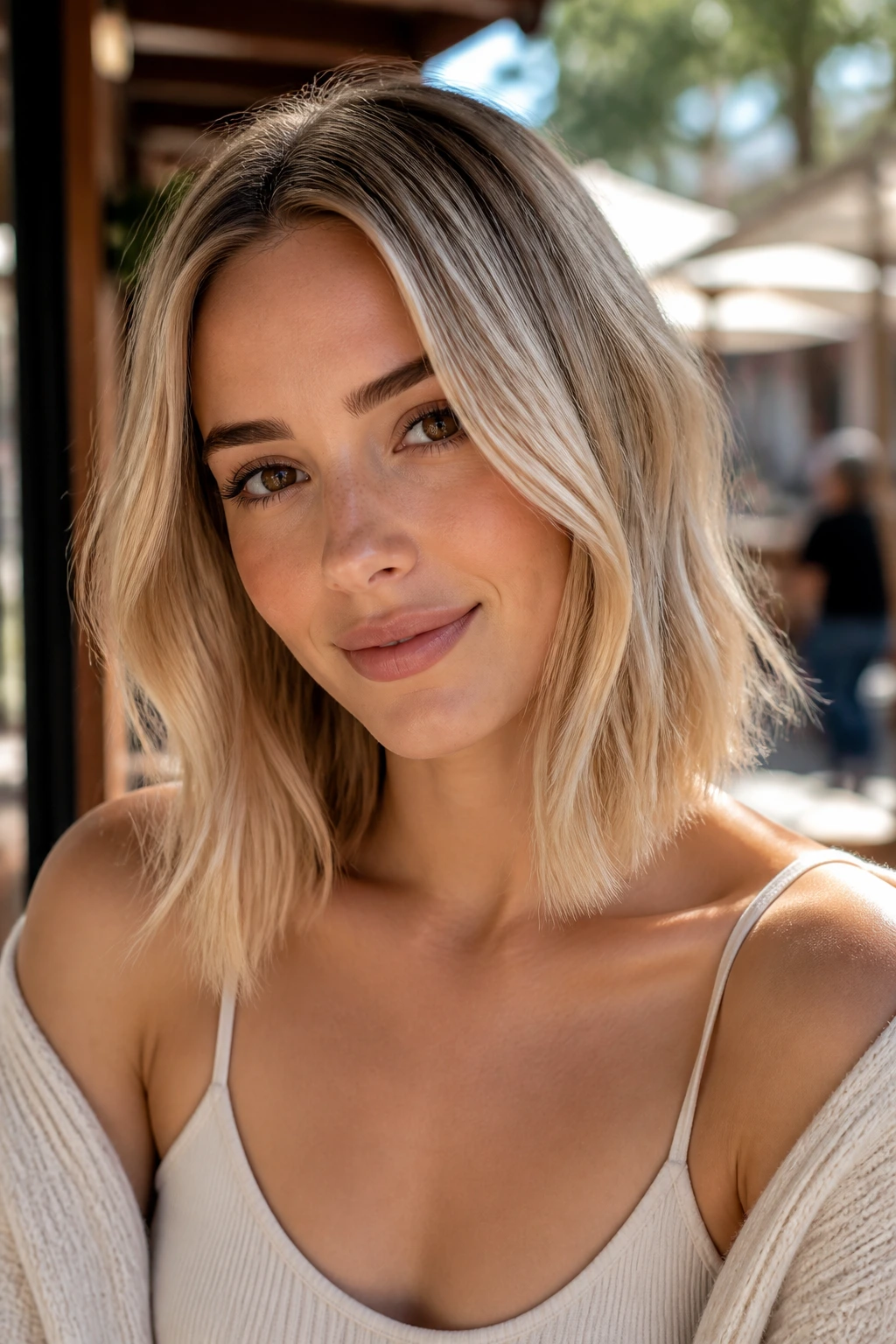
Which blonde shade flatters brown eyes and fair skin the most?
Beige and champagne blonde are the safest starting points because they brighten the face without turning the skin chalky. If your fair skin runs warm, honey or vanilla may look even better. The best shade is the one that matches your undertone and still leaves some depth near the root.
Is platinum blonde too harsh for fair skin?
Not always, but it’s the easiest shade to get wrong. If your brows are dark and your skin is pink-toned, pure platinum can flatten the face unless the haircut has strong shape and the roots are softened. A pearl or champagne version usually gives a cleaner, less stark result.
Do highlights or all-over blonde work better here?
Highlights usually win if you want the hair to stay dimensional. All-over blonde can work, but it needs a cut with movement or a root shadow so the face doesn’t disappear into one pale tone. Highlights also grow out more gently, which is useful if you do not want constant salon upkeep.
Can short hair work with blonde and brown eyes?
Yes, and often better than people expect. A French bob, pixie, or blunt midi lets the eyes become the focal point while the blonde does its work in smaller, sharper sections. Short hair can be a very strong choice if your fair skin needs shape more than length.
How often should blonde hair be toned?
Most blondes need a toner or gloss every 4 to 8 weeks, depending on how fast brass shows up and how often you wash your hair. Cooler blondes usually need more frequent toning than beige or honey shades. If the hair starts looking dull before it looks brassy, a gloss can bring back shine without changing the tone much.
What if my natural hair is dark brown?
You can still wear these looks, but ask for a gradual lift rather than trying to jump straight to the lightest blonde. Balayage, face-framing pieces, and root shadows usually look better than an all-over pale blonde on dark bases because the contrast feels more natural and the grow-out is easier.
Will blonde hair make my brows disappear?
Only if the blonde is too light or too flat for the rest of your features. Brown brows can actually look good with blonde hair because they give the face a point of balance. If the contrast feels too sharp, keep a deeper root and softer pieces around the face.
What if blonde makes my skin look washed out?
Usually the fix is tone, not the haircut itself. Try a beige, champagne, or honey direction instead of pure icy blonde, and ask for brightness closer to the cheekbones rather than all over the scalp. A little shadow at the root can make fair skin look more alive almost immediately.
The Shade That Makes the Eyes Do the Work
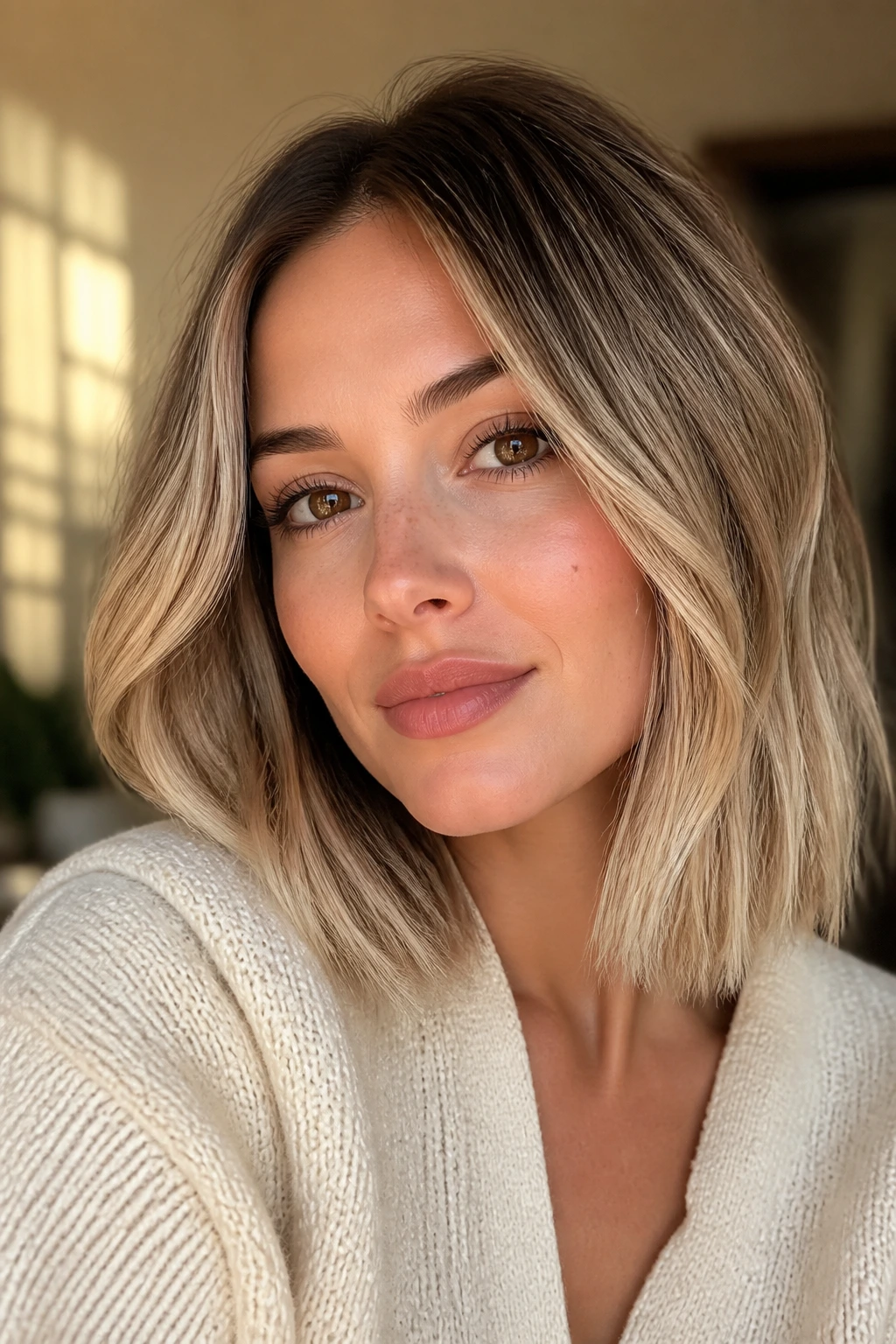
The best blonde is not the lightest one in the room. It’s the one that lets brown eyes stay deep, fair skin stay soft, and the haircut keep its shape from every angle. That can mean a curly shag with sandy ribbons, a blunt lob with champagne ends, or a pixie with just enough wheat-blonde softness to keep the edges from looking severe.
If you remember only one thing, make it this: tone and shape matter more than brightness. Start there, then decide how much maintenance you’re willing to live with. The right blonde should feel like it belongs on your face, not like it landed there by accident.