



The trick with blonde highlights for tan skin and heart-shaped faces is restraint, not shock value. The prettiest versions do not blast the whole head with pale blonde and hope for the best. They use warmth, placement, and a little shadow in the right places so the face looks balanced instead of top-heavy.
That matters more than people think. A heart-shaped face already carries more width through the forehead and a narrower line at the chin, so the brightest ribbons need to help the eye travel downward. Tan skin, meanwhile, usually reads best when the blonde has a beige, honey, caramel, or champagne base rather than a flat, icy yellow. Get that mix right and the whole look feels easier on the eyes. Get it wrong and the hair can fight the skin instead of sitting with it.
I keep coming back to one point because it saves so many bad appointments: placement matters as much as shade. A little brightness at the cheekbones, a softer veil near the temples, and a grounded root near the crown can do more than a full head of foils ever will. The styles below lean into that logic, with enough variety to fit glossy straight hair, loose waves, curls, long bobs, and the kind of grow-out you can actually live with.
Why These Blonde Highlights Earn Their Place
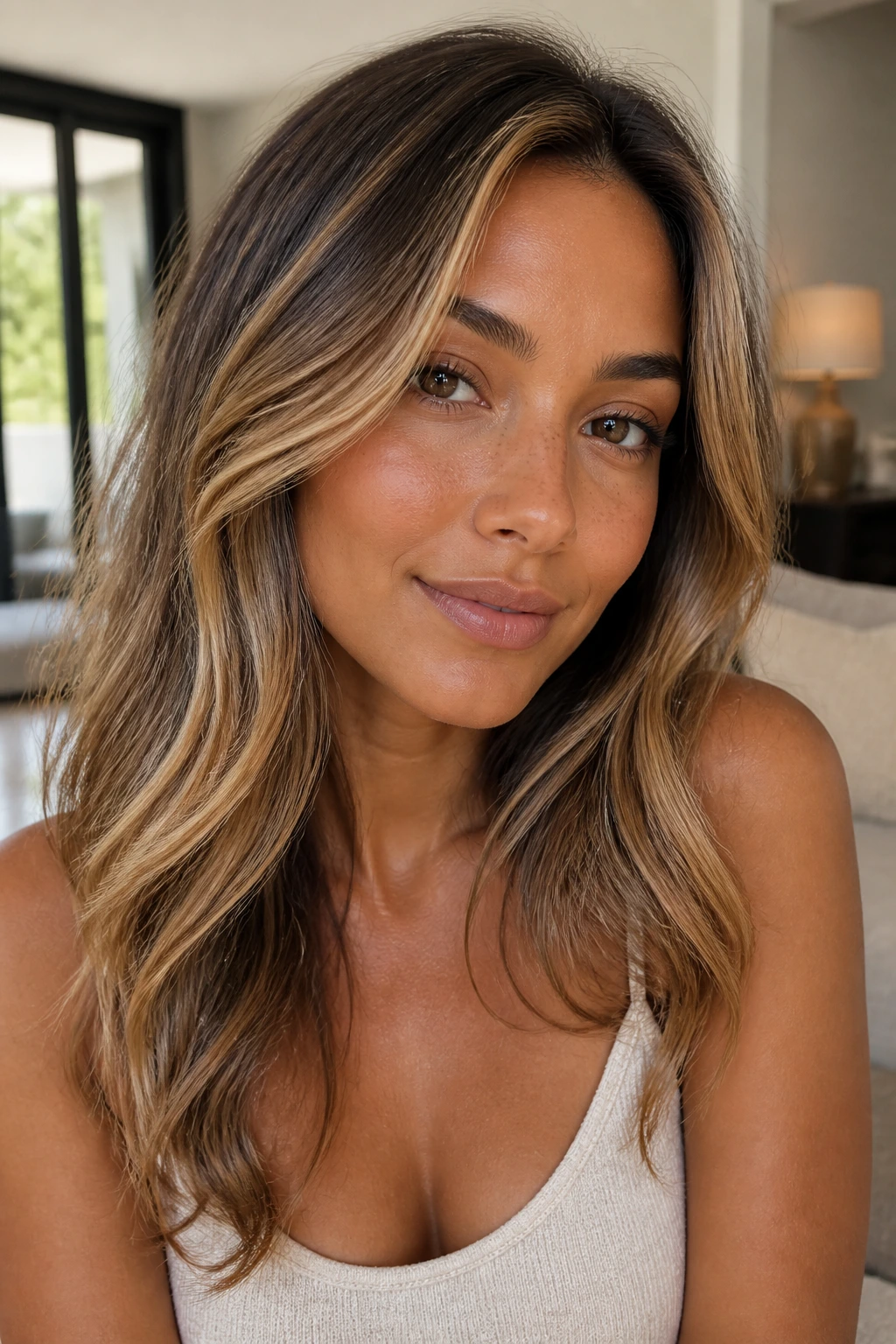
- Tan Skin Likes Depth, Not Flat Light: Beige, honey, caramel, and soft champagne tones keep blonde from looking chalky against warm or olive undertones.
- Heart-Shaped Faces Need Balance at the Lower Face: Highlights that sit around the cheekbones, mouth, and jawline soften a wider forehead better than pieces packed only into the temples.
- Root Shadow Is Your Friend: Leaving a little depth near the part keeps the style from looking helmet-like, and it also buys you a more forgiving grow-out.
- Not Every Blonde Has to Be Bright Blonde: Some of the best results use 2 to 3 tones, with lighter ribbons sitting beside lowlights so the color moves instead of shouting.
- Face Framing Works Hardest When It Is Soft: A chunky money piece can be gorgeous, but on a heart shape it usually looks better when it starts lower and melts into the rest of the hair.
- Maintenance Should Match Your Life: A blonde that needs toning every ten days is a different commitment from one that can stretch through a few months of natural regrowth.
1. Honey Face-Framing Ribbons
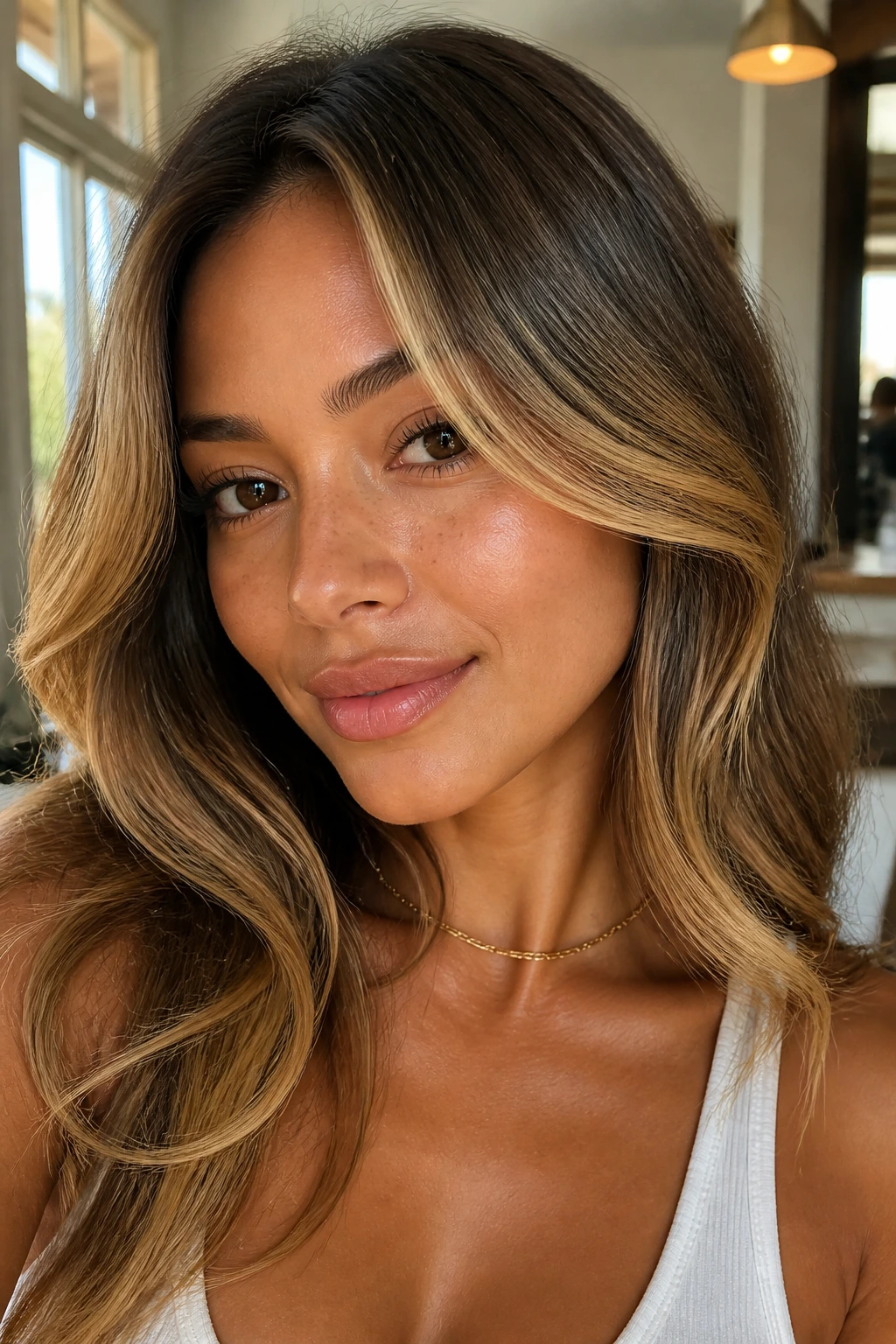
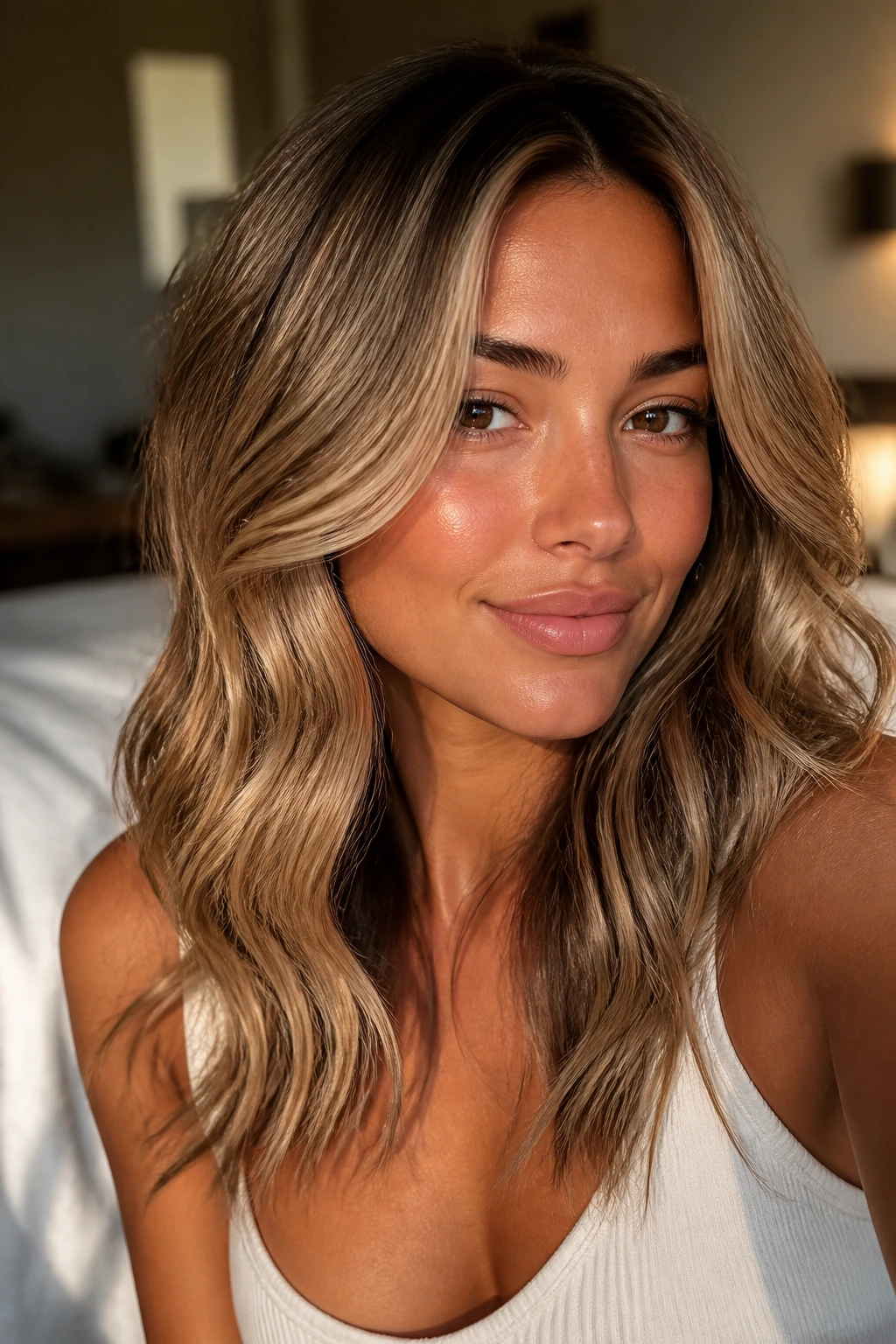
Honey blonde around the face is one of the safest bets for tan skin, and I mean that in the best way. The warmth picks up golden undertones instead of sitting on top of them, and the face-framing placement keeps the brightness where it can soften the forehead without making the top half of the face feel wider.
Why It Works
The best version starts a little below the hairline, usually around the cheekbone, then slides down in thin ribbons. That matters because heart-shaped faces already have enough lift at the crown; you want the eye to land lower. If your hair is medium brown, the contrast stays soft and wearable.
Ask for honey ribbons that melt into a deeper root rather than stripes. The color should look like it came from sunlight, not from a foil packet.
2. Beige Babylights at the Part
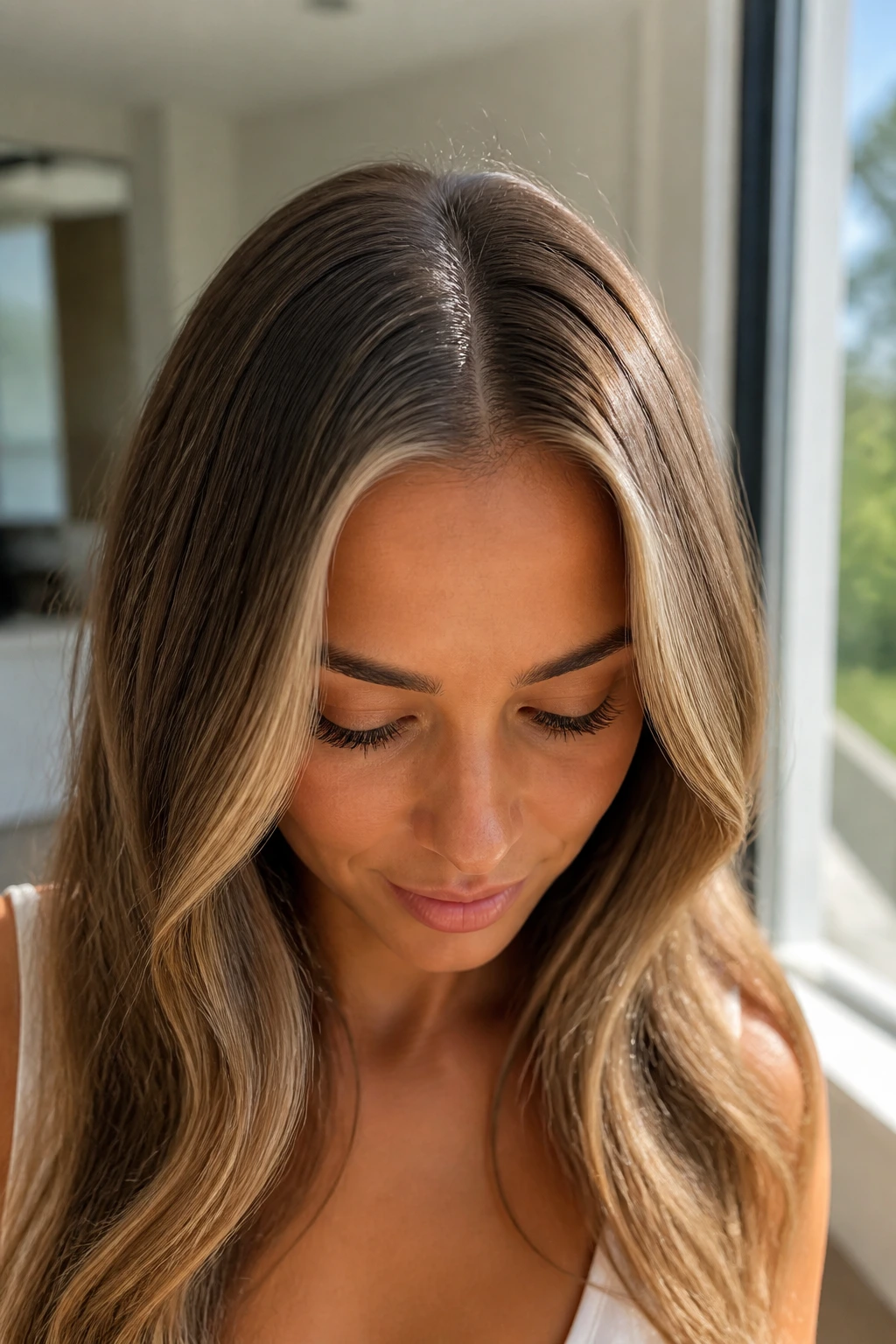
Babylights are tiny for a reason. On tan skin, that fine weave keeps the blonde from reading loud, and on a heart-shaped face it gives brightness without creating a hard line across the forehead.
What Makes It Different
These work best when the lightest pieces sit on either side of the part and then thin out toward the temples. That placement helps the face look narrower up top and keeps the finish airy instead of chunky. If your hair is straight, the result is sleek and polished; if it’s wavy, the tiny strands break up into a soft shimmer.
Keep the tone beige rather than white. Beige blonde usually plays nicer with warm complexions and grows out with fewer obvious edges.
3. Caramel Balayage Through the Mid-Lengths
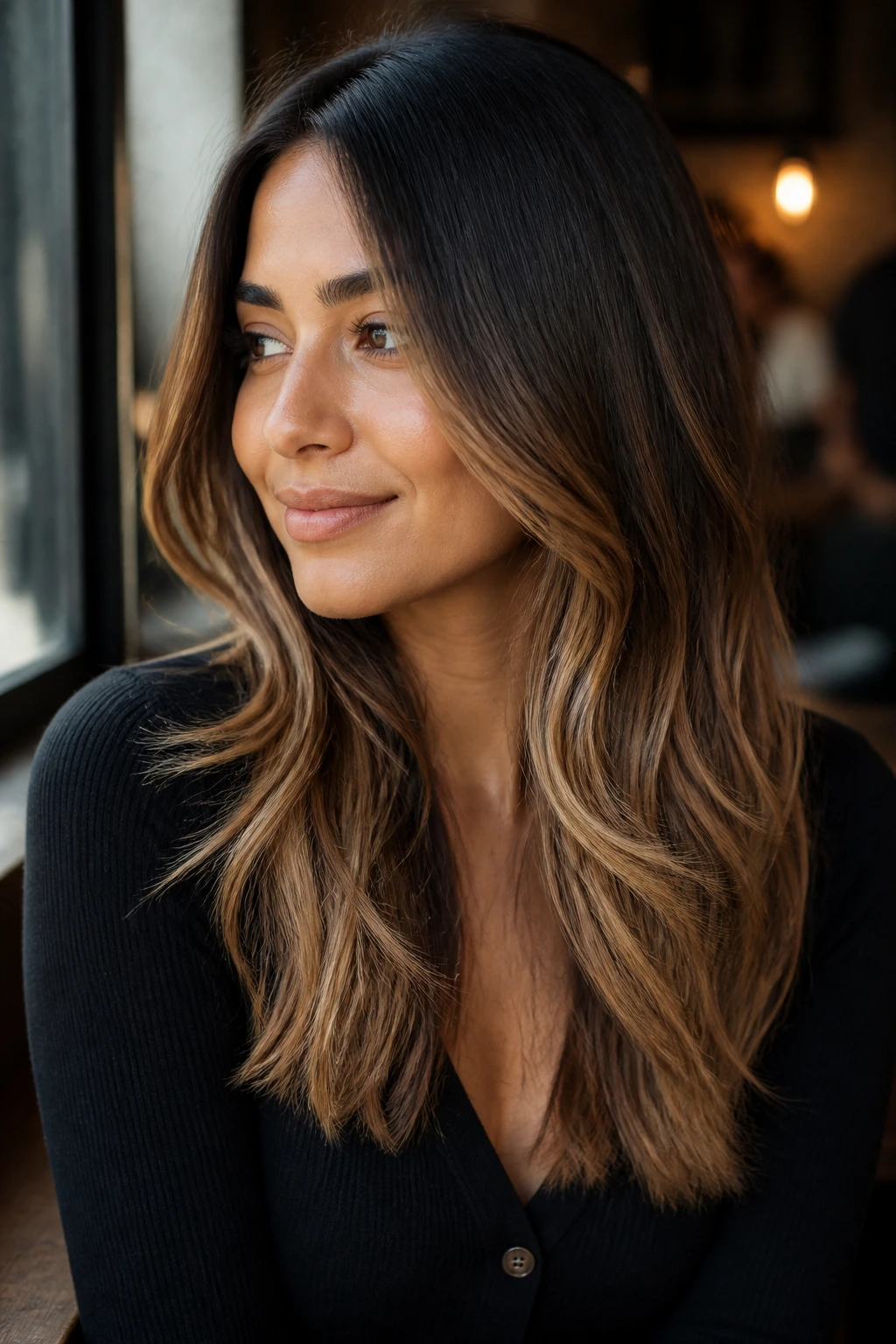
This is the style for anyone who wants blonde, but not the high-commitment version of blonde. Caramel balayage keeps the root deeper and paints the brightness through the middle and ends, which is a smart move for tan skin because it preserves warmth.
The Shape Benefit
Heart-shaped faces do well when the eye moves downward, and mid-length brightness does exactly that. It pulls attention below the brow area and gives the lower half of the cut more life. On layered hair, it also stops the ends from disappearing into one solid brown sheet.
The colorist should hand-paint soft caramel swaths, not wide bands. Bands feel dated fast. Painted ribbons move.
4. Butter Blonde Melt with a Root Shadow
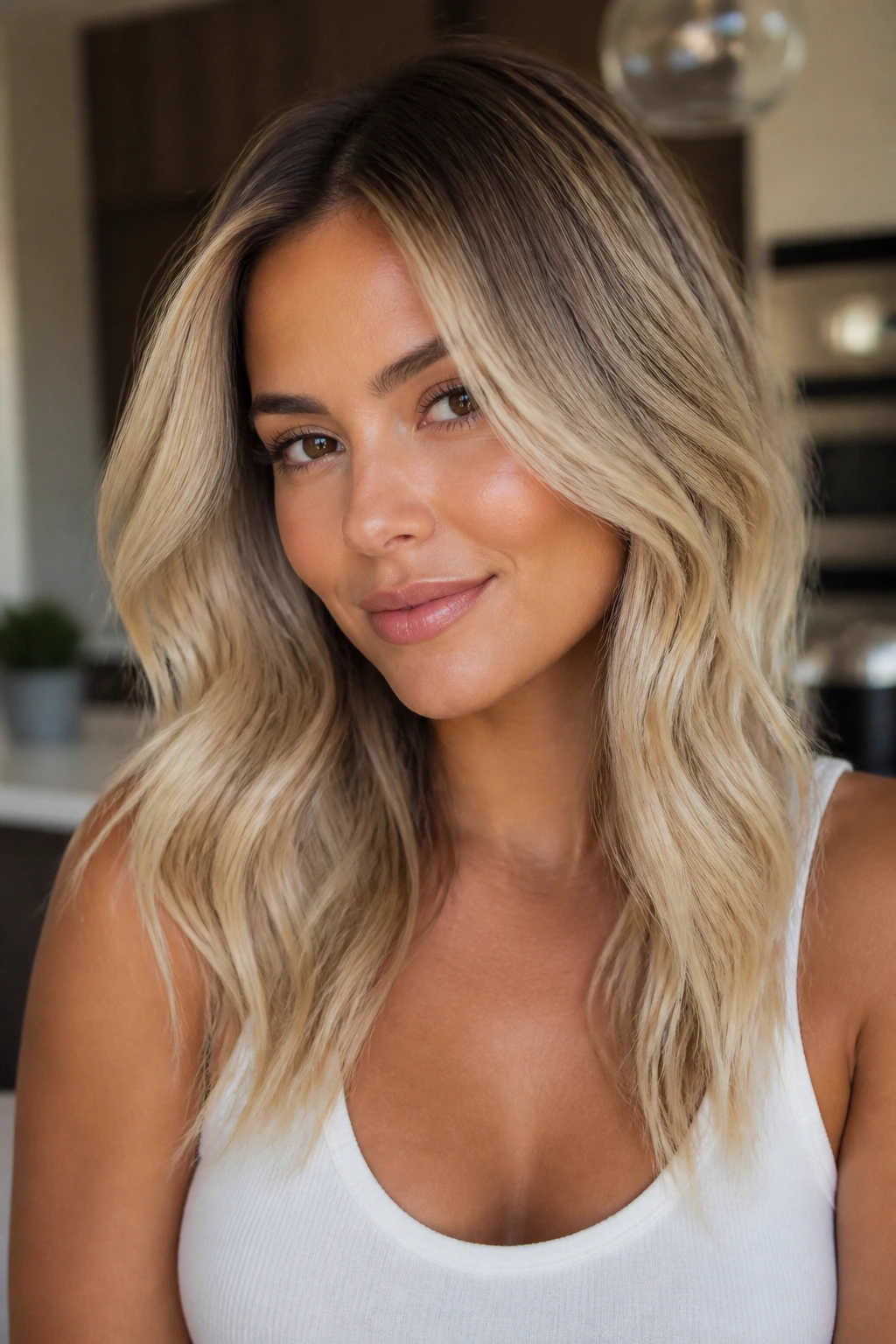
Butter blonde can go wrong in a hurry if it is too yellow or too even. The better version uses a shadow root and a buttery tone through the mid-lengths so the overall color feels creamy, not loud.
Why It Flatters Both Features
Tan skin can carry butter blonde well when the root gives it contrast. For a heart-shaped face, that root shadow is not just maintenance-friendly; it also keeps the crown from looking puffed up. The fade downward makes the face look longer, which is useful when the forehead is the widest point.
I like this look on medium-length cuts. It gives enough brightness near the ends to lift the whole style, but it does not scream for attention at every angle.
5. Champagne Money Piece
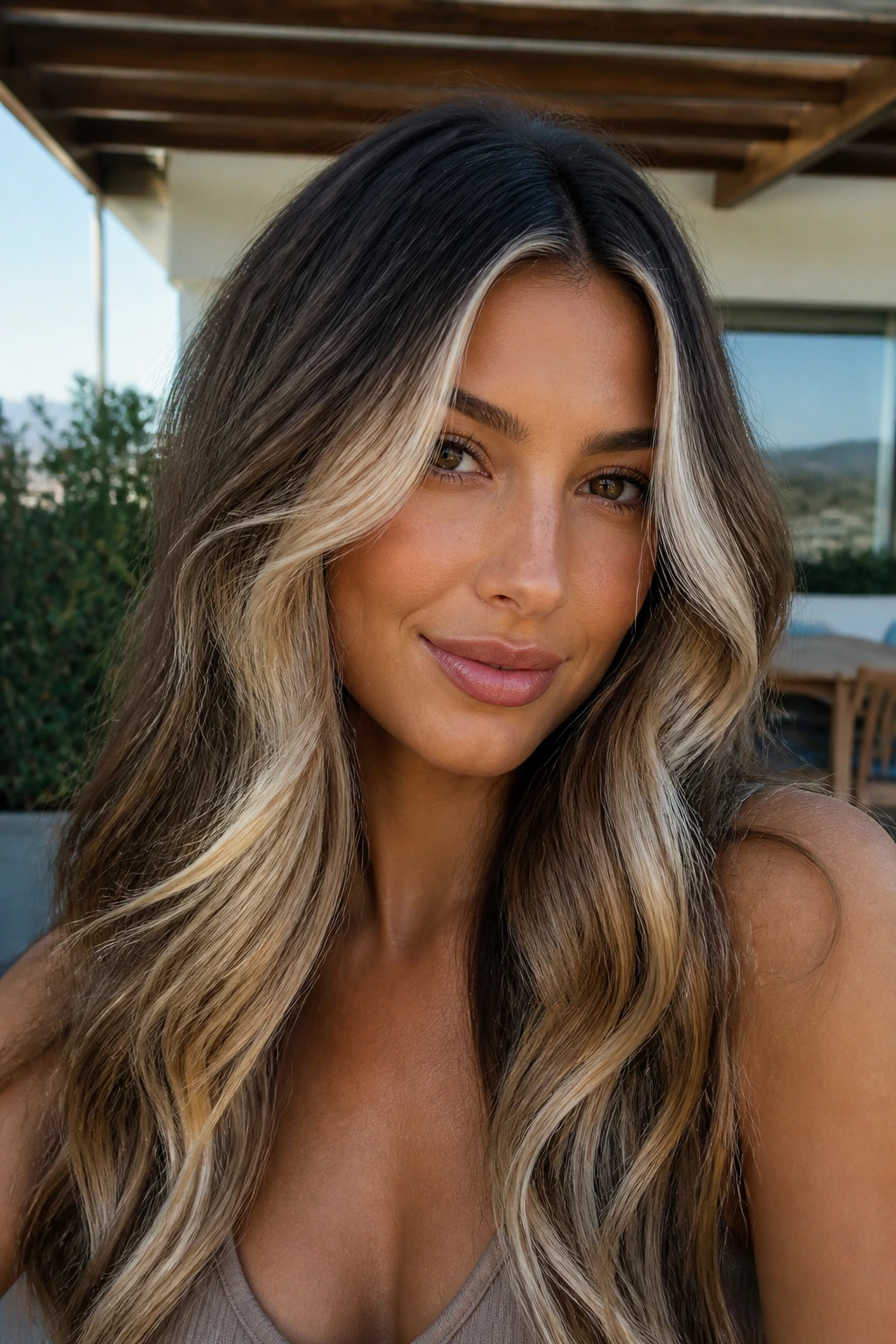
A champagne money piece is brighter and cooler than honey, but it still has enough beige in it to behave around tan skin. The key is not taking it all the way to icy platinum unless the rest of the head has enough depth to support it.
Ask for This Placement
Keep the money piece soft at the root and brighter from the cheekbone down. On a heart-shaped face, that prevents the forehead from looking wider than it is. If the face-framing sections start too high, they can pull the eye up and out instead of down and in.
This style looks sharp with waves. The movement breaks the brightness into pieces, which makes the champagne tone feel expensive without needing to say so.
6. Sandy Ribbon Highlights for Wavy Hair
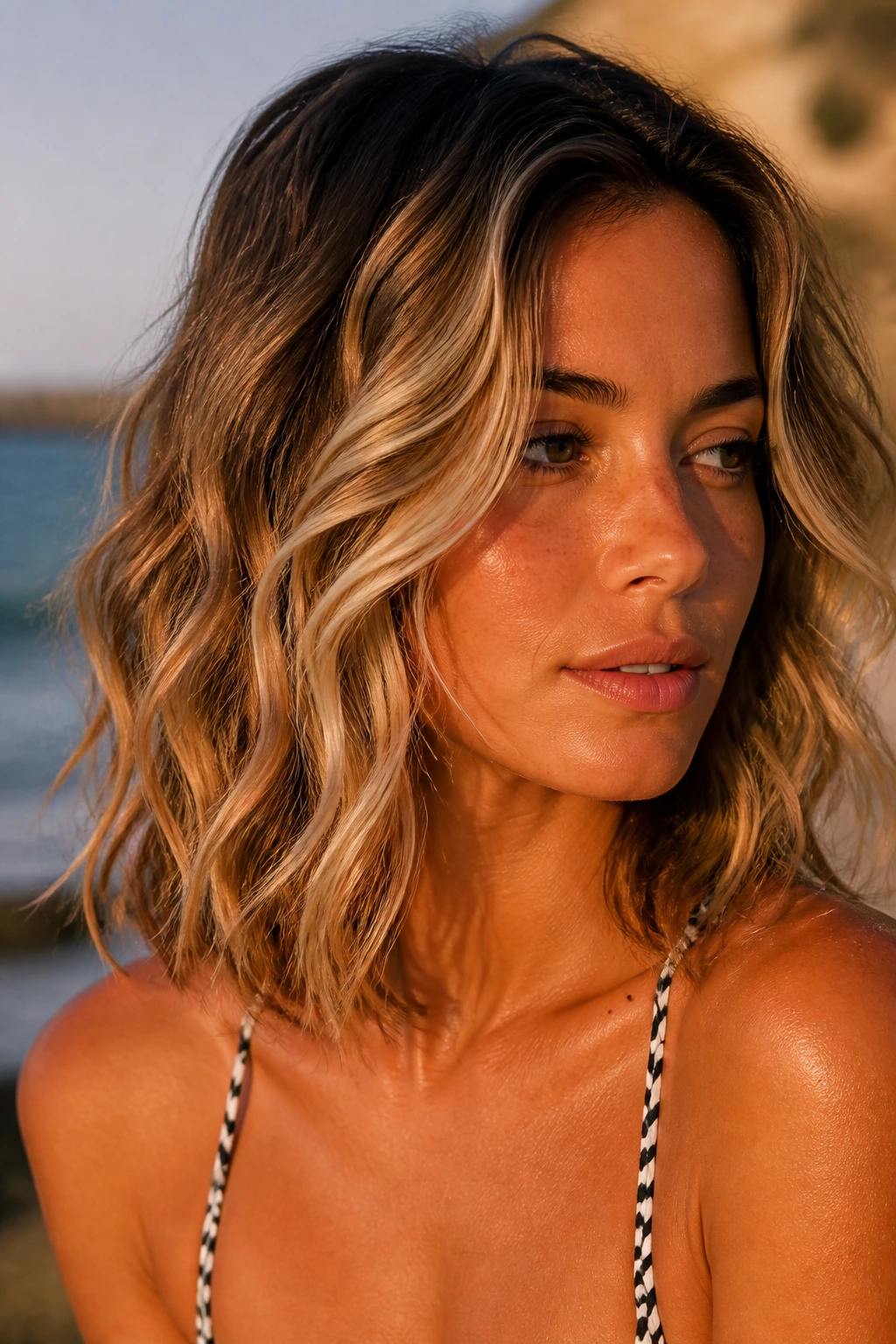
Wavy hair has a built-in advantage: it shows dimension without much effort. Sandy blonde ribbons thread through tan skin in a way that feels beachy but not overcooked, and the texture keeps the face-framing pieces from looking blocky.
Why the Placement Matters
I like these highlights tucked into the bends of the wave, not just the surface. That creates the illusion that the lighter strands were always there. Around a heart-shaped face, the best ribbons sit near the jaw and cheek, then taper off near the temples.
This is a good choice if you want to stay away from obvious contrast. Sandy beige is gentler than ash blonde and less sweet than honey, which gives it a nice middle ground.
7. Toffee and Vanilla Dimension on Long Layers
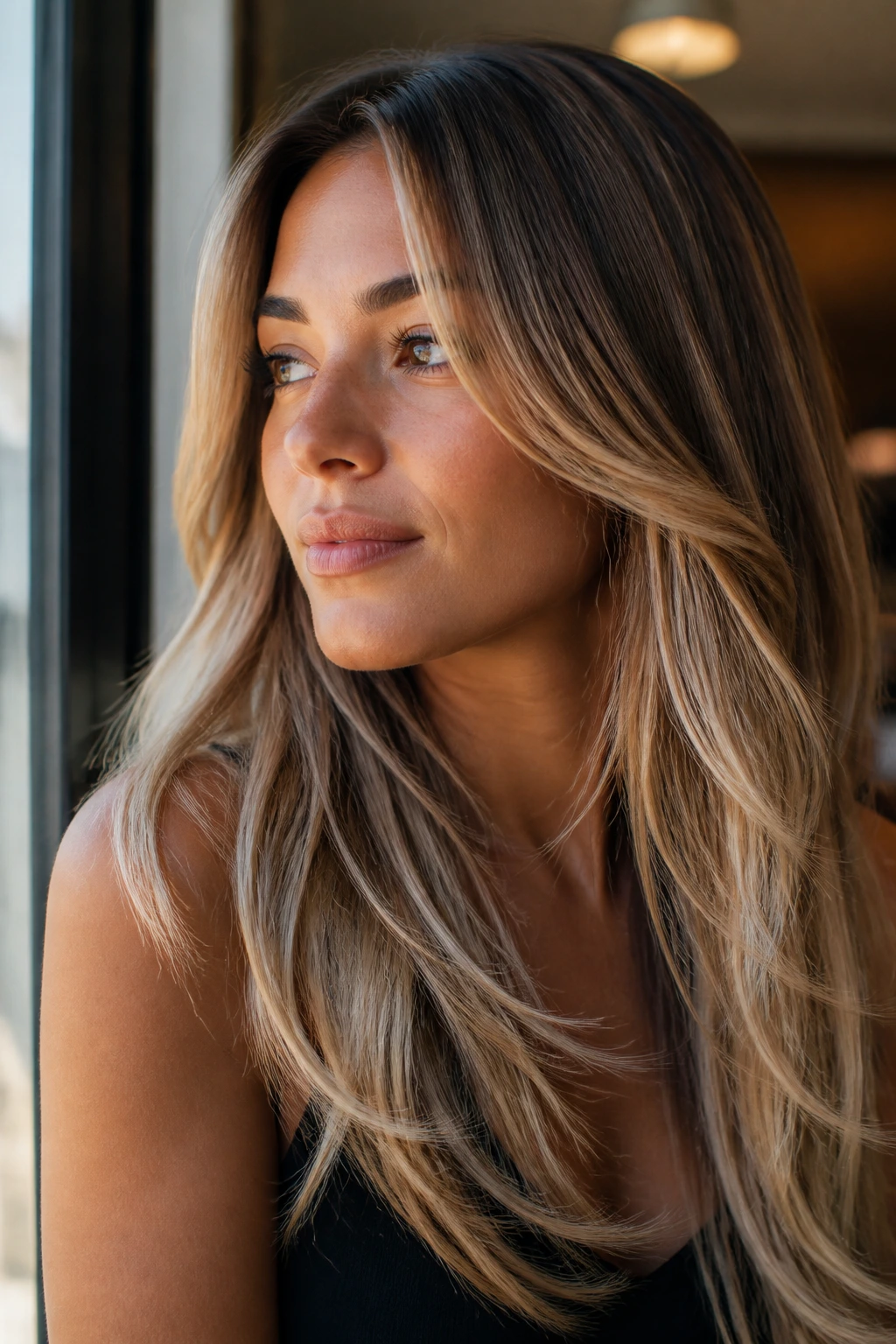
Long layers give highlights room to breathe, and toffee-plus-vanilla is one of the easiest combinations to keep from looking flat. The deeper toffee adds body, while the vanilla pieces catch light at the ends and around the front.
A Better Use of Contrast
For tan skin, that warmer base keeps the blonde from turning harsh. For a heart-shaped face, the layers help the lighter pieces fall past the widest point of the forehead and into the length of the hair. That means the style looks intentional instead of front-loaded.
A good colorist will place the lightest vanilla only where the layers move. Everywhere else, the toffee should stay visible. That contrast is what gives long hair its shape.
8. Golden Wheat Contour Pieces
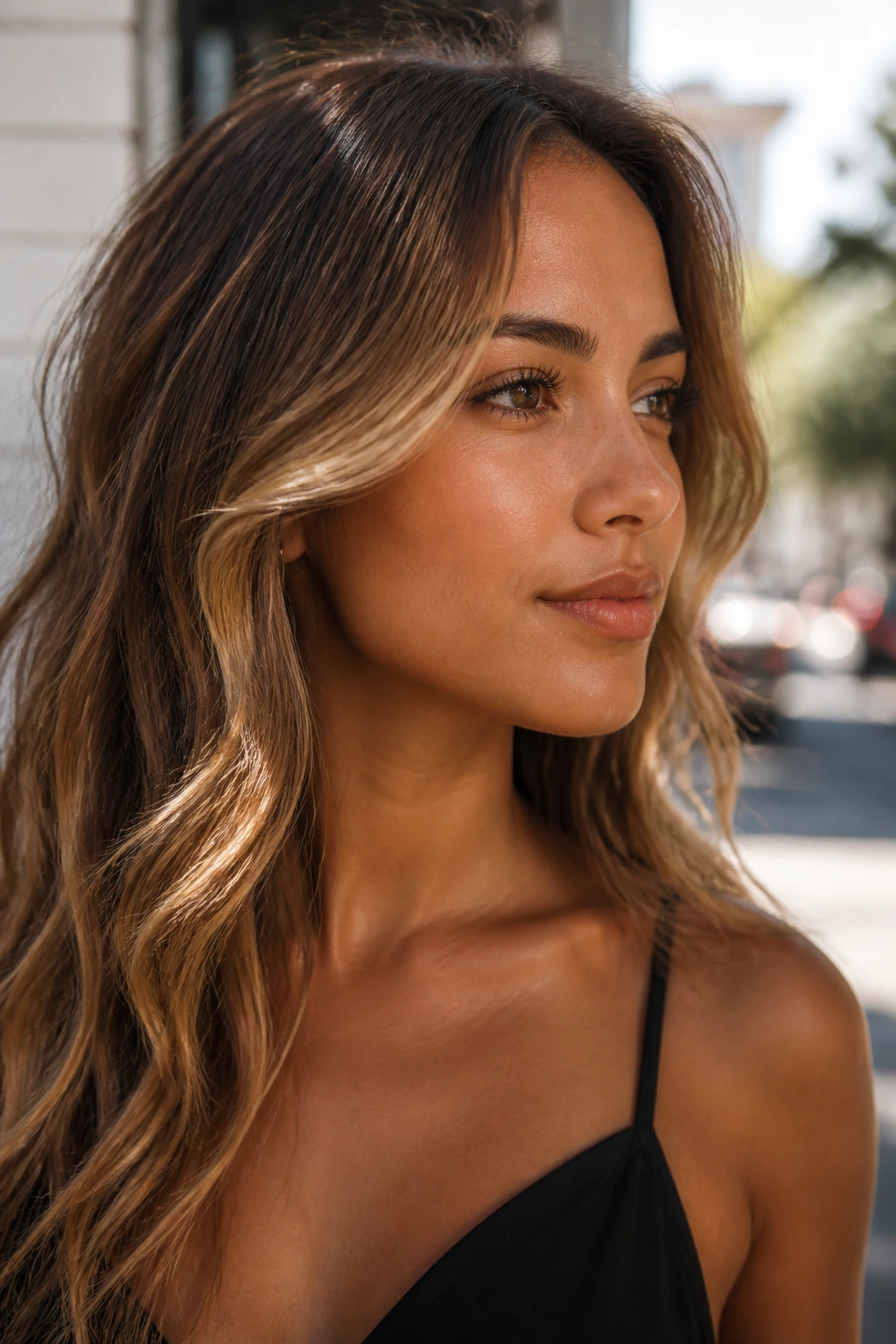
This one is about contouring with hair color, not makeup. Golden wheat pieces sit where the face needs softness most, usually around the temples and the outer cheek, but they should be blended enough that they don’t look like hard stripes.
Why It Works So Well
Heart-shaped faces often benefit from a little width lower down, not at the top. Golden wheat can do that if the light pieces start slightly below the temple and sweep toward the jawline. Tan skin also loves the shade because it sits in the same warm family without going orange.
Keep the overall look airy. A few well-placed wheat strands beat twenty average ones every time.
9. Soft Frosted Ends with Warm Roots
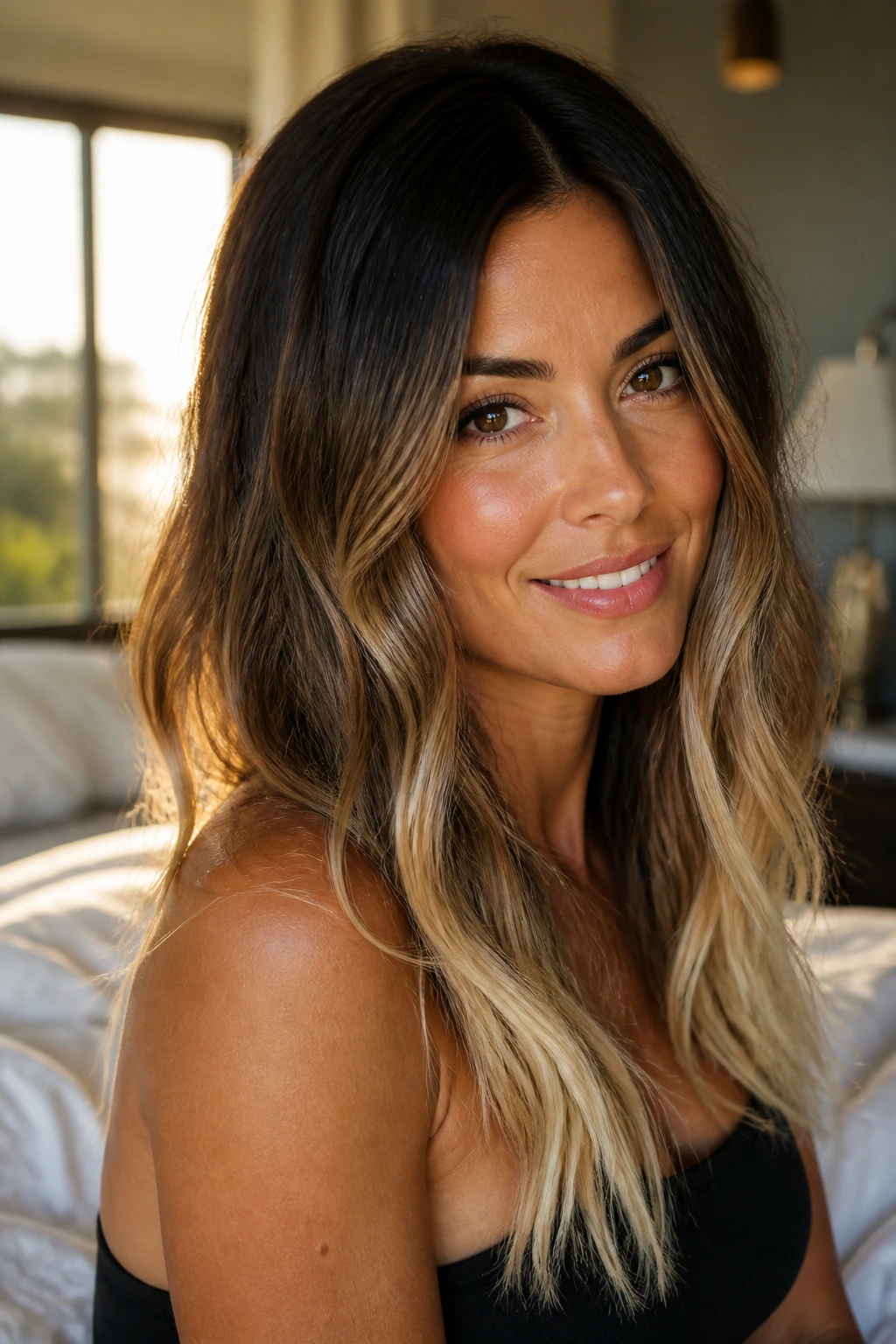
Frosted ends sound cold, but they do not have to be. The trick is keeping the roots warm and deep while brightening the bottom third of the hair with pale beige or soft pearl.
The Visual Effect
This pulls the eye downward, which suits a heart shape better than a super-bright top. On tan skin, the warmer roots prevent the face from looking washed out. The ends do the light-catching work, especially on layered cuts where the hair flips and bends.
If your hair is thick, this can look especially good because the ends often need lightness to keep the shape from feeling heavy. It is one of those styles that looks expensive only because the balance is right.
10. Sunlit Curtain Highlights
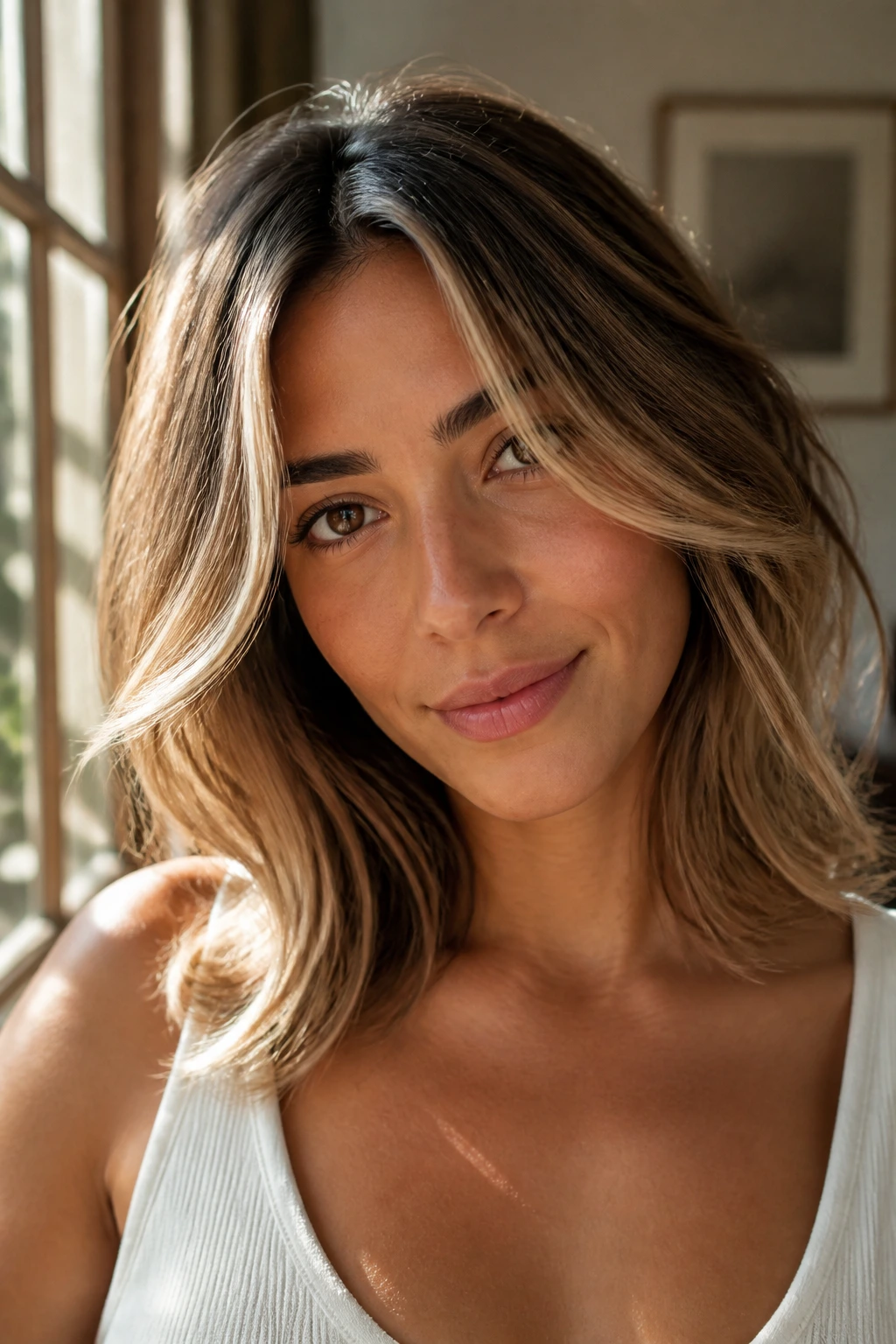
Curtain highlights sit on either side of the center part and frame the face in a softer way than a blunt money piece. On tan skin, they can be lifted to a warm beige blonde without getting chalky, and on a heart-shaped face they split the width of the forehead so it feels less dominant.
How to Wear Them
The best curtain highlights start near the brow area and then soften as they move down. If they are too high or too thick, they fight the face shape. If they are too faint, they disappear behind the rest of the hair.
I like this look with shoulder-length cuts because it lands right where the cheekbone starts to matter. The result feels easy, but there’s quite a bit of thought behind it.
11. Rooted Honey Blonde Lob
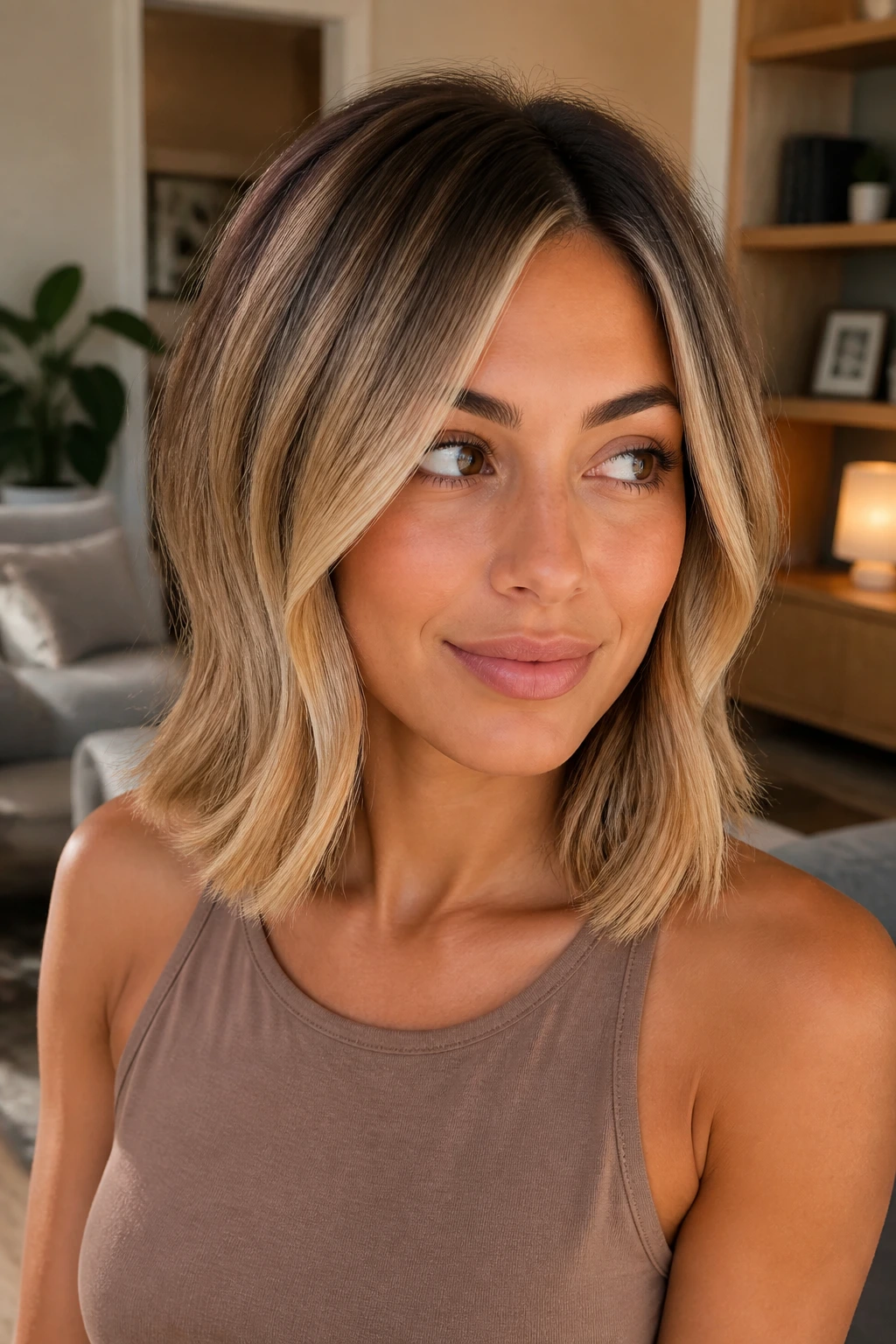
A lob with rooted honey blonde is practical in the nicest sense. The cut stays modern, the root gives depth, and the honey tone keeps tan skin from looking flat under the lighter pieces.
The Shape Advantage
Heart-shaped faces usually look good in lobs because the length softens the forehead-to-chin ratio. Add honey highlights that start around the face and through the ends, and the cut picks up enough movement to avoid a helmet effect. The rooted base also stops the top from looking too wide.
This is one of my favorite options for someone who wants brightness but cannot babysit it. The grow-out looks deliberate, which is half the battle.
12. Creamy Bronde Blend
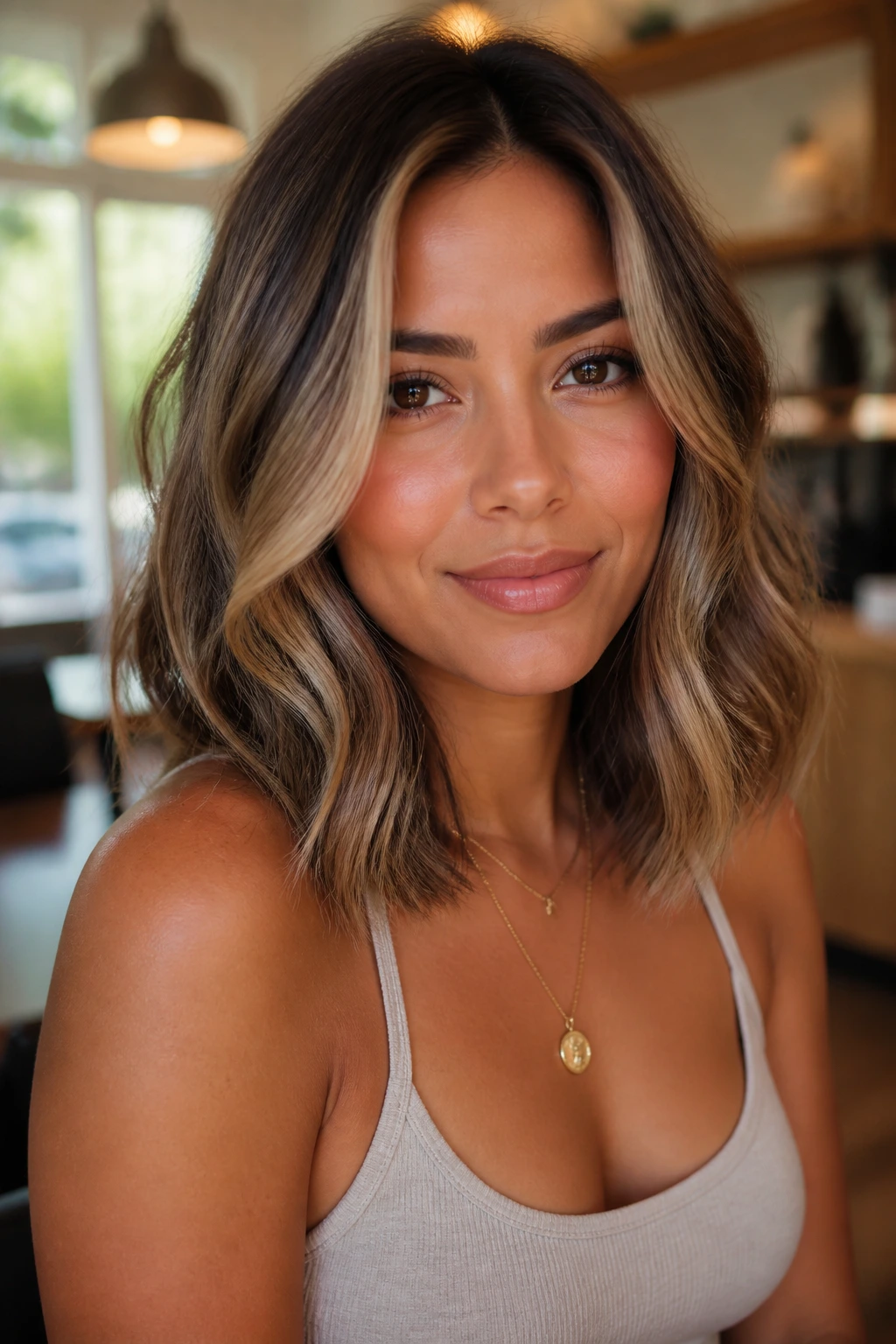
Bronde is still one of the smartest choices for tan skin. It gives you the lightness of blonde with the grounded feel of brunette, which means the transition doesn’t fight the complexion.
What Makes It Easy to Live With
The creamier the blend, the softer it reads around a heart-shaped face. You want lighter pieces near the front and mid-lengths, but you do not need every strand to compete. When the dark-to-light shift is gradual, the face looks balanced and the hair looks thick.
A good bronde job should have enough brown left in it that the blonde feels earned. Otherwise it just looks like unfinished lightening. There’s a difference.
13. Biscotti Beige Balayage
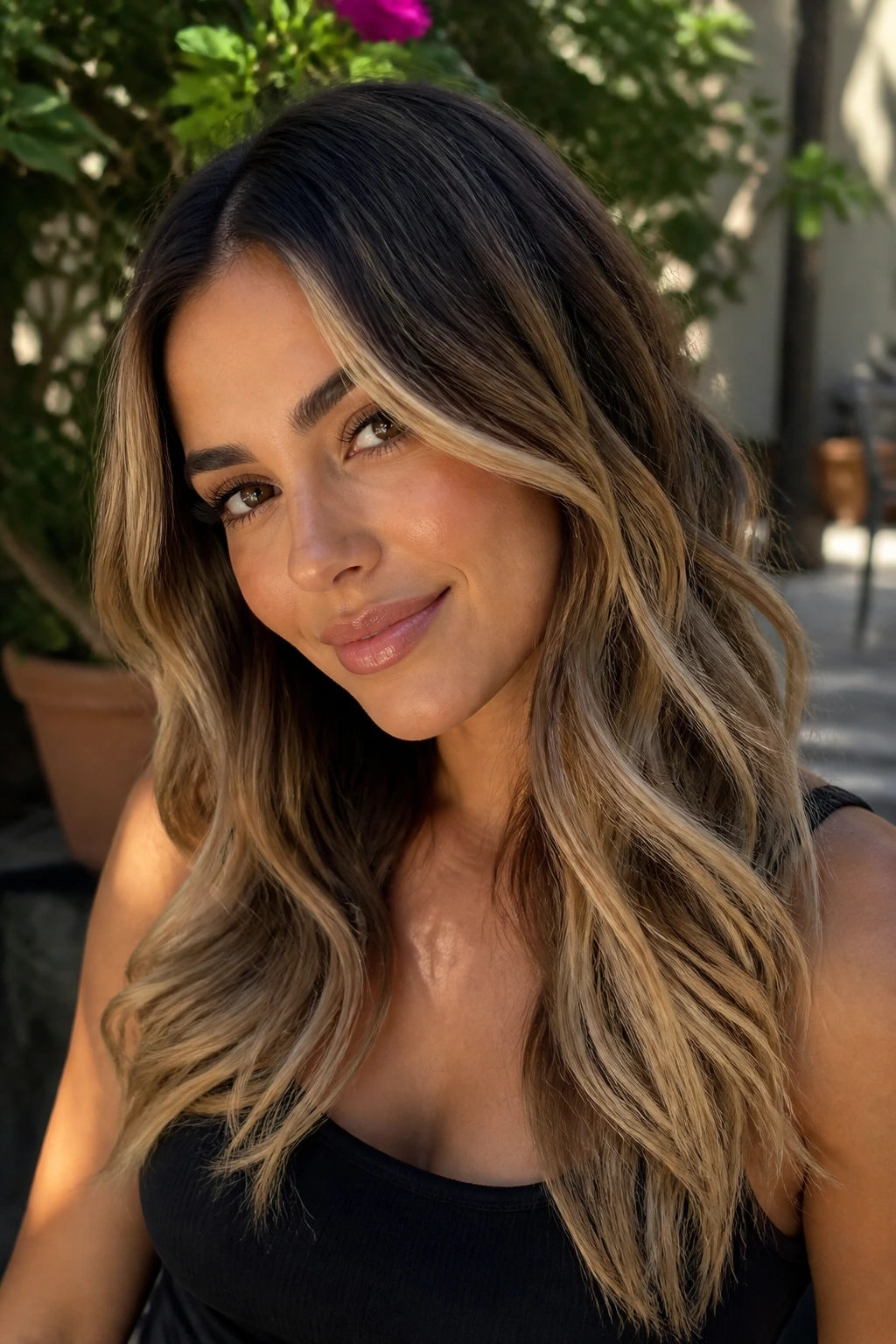
Biscotti beige has that toasted, slightly warm tone that sits well on tan skin without pulling yellow. Balayage keeps it from looking stripy, and the hand-painted application gives the lower half of the hair more shape.
Why I Like It on Heart Faces
Because the lightness is spread through the lengths, the forehead doesn’t get all the visual attention. The eye moves through the cut instead of stopping at the hairline. That’s a quiet fix, but it works.
Ask for soft ribbons near the face and broader sweeps toward the back. The front should guide the face; the back should build depth.
14. Apricot Blonde Veil
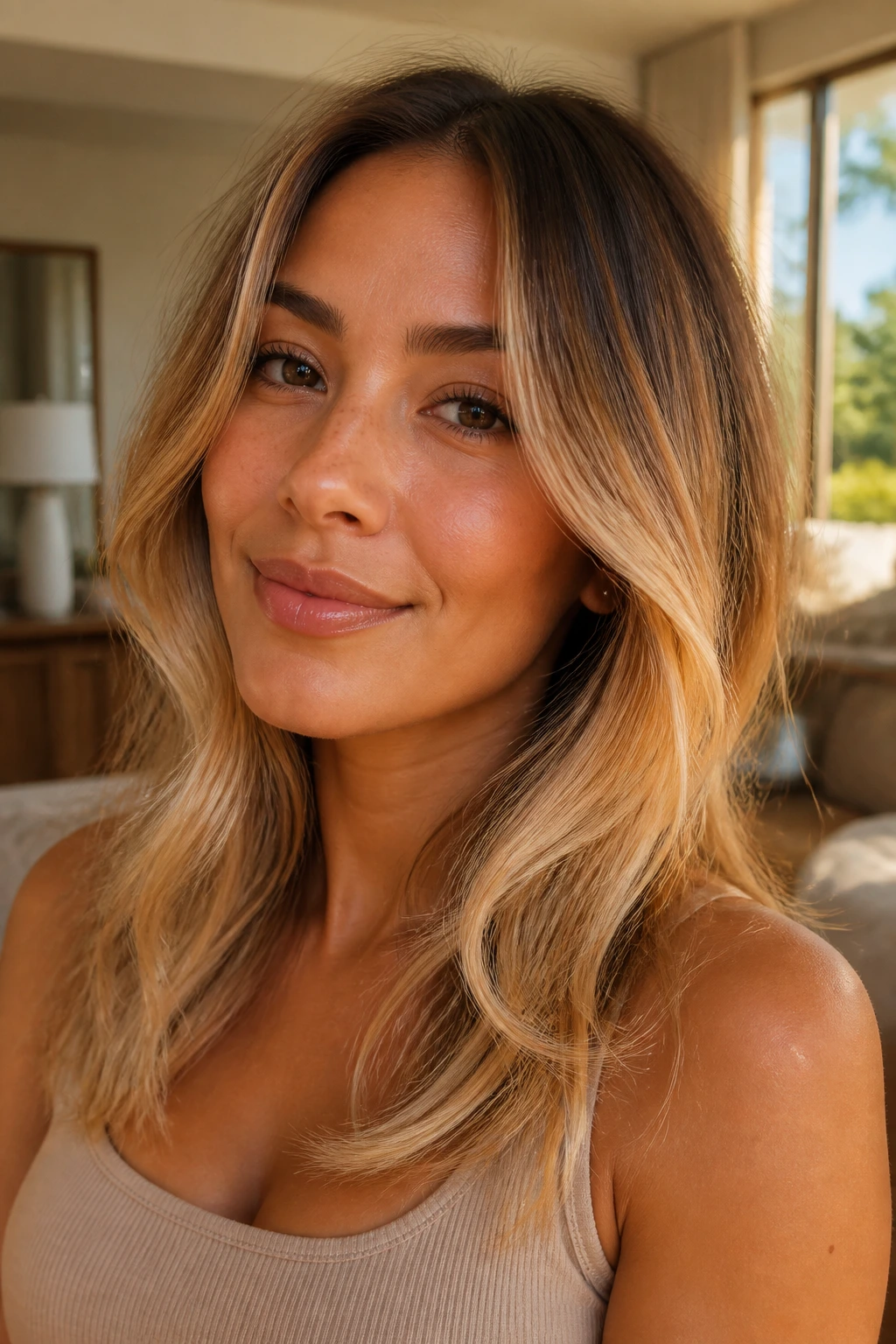
Apricot blonde is a little more playful than honey, but it can be stunning on tan skin when the base is controlled. Think warm peach-gold, not copper, and keep the veil sheer enough that the brunette underneath still shows through.
When It Fits Best
This works especially well if your skin has a golden or sun-kissed cast. The warmth harmonizes instead of competing. On a heart-shaped face, the softer shade can be placed a little lower and wider around the jawline, which makes the face feel less top-heavy.
It is not the first blonde I’d suggest for someone who wants a cold, clean finish. It is, however, one of the better choices if you like warmth and a little personality.
15. Pearl Beige Highlights
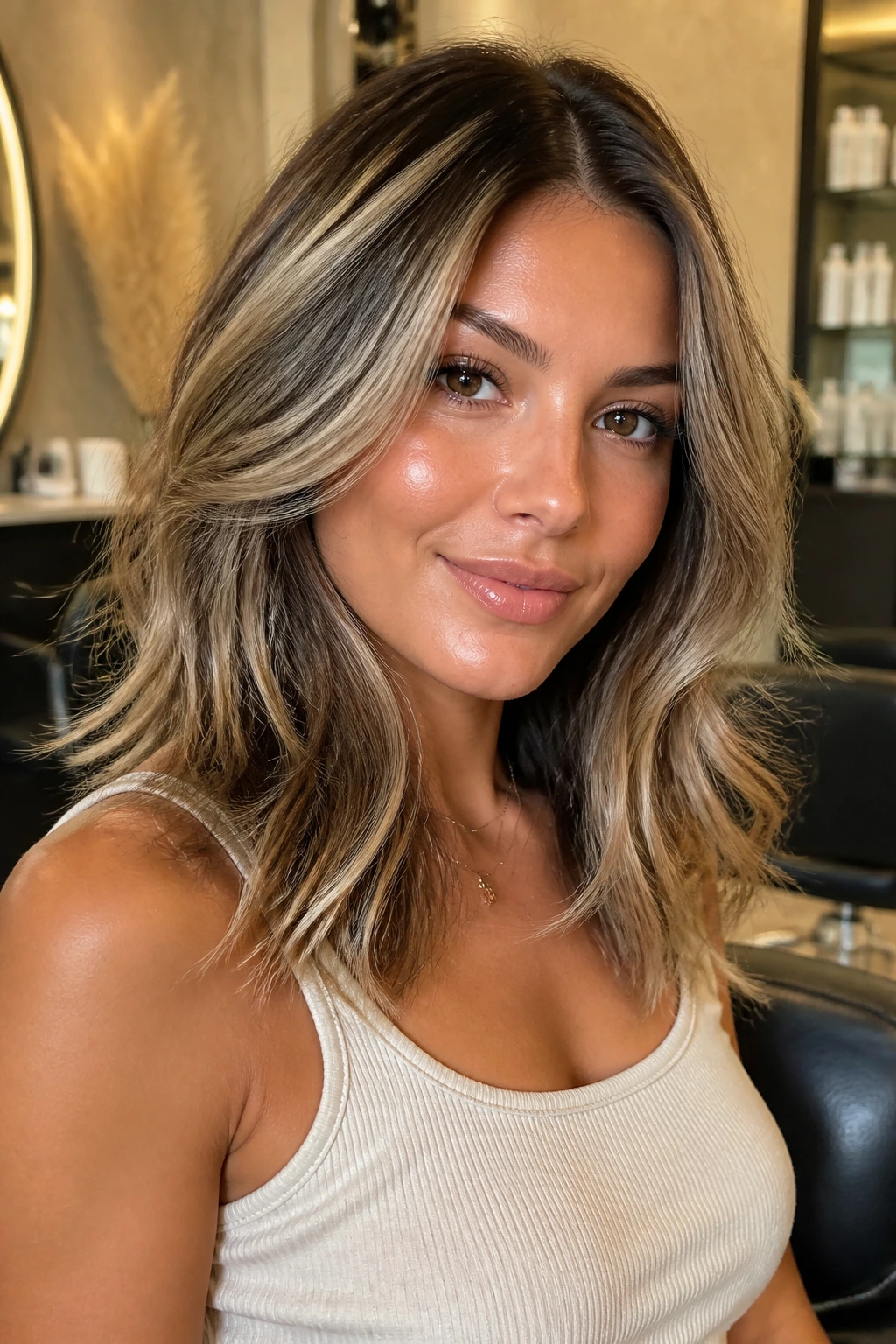
Pearl beige gives you coolness without the stark look of silver or white blonde. That balance matters on tan skin, especially if your undertones lean neutral or olive and you want the hair to feel lighter without turning brassy.
Placement Notes
On a heart-shaped face, I’d keep the pearl beige through the mid-lengths and avoid stacking too much brightness at the temples. Pearl tones reflect light in a softer way, so they work best when they are woven through layers rather than dropped in chunky panels.
The tone can look very different depending on the gloss used on top. A beige glaze keeps it calmer. A sheer pearl toner pushes it cooler.
16. Beach-Glass Blonde Waves
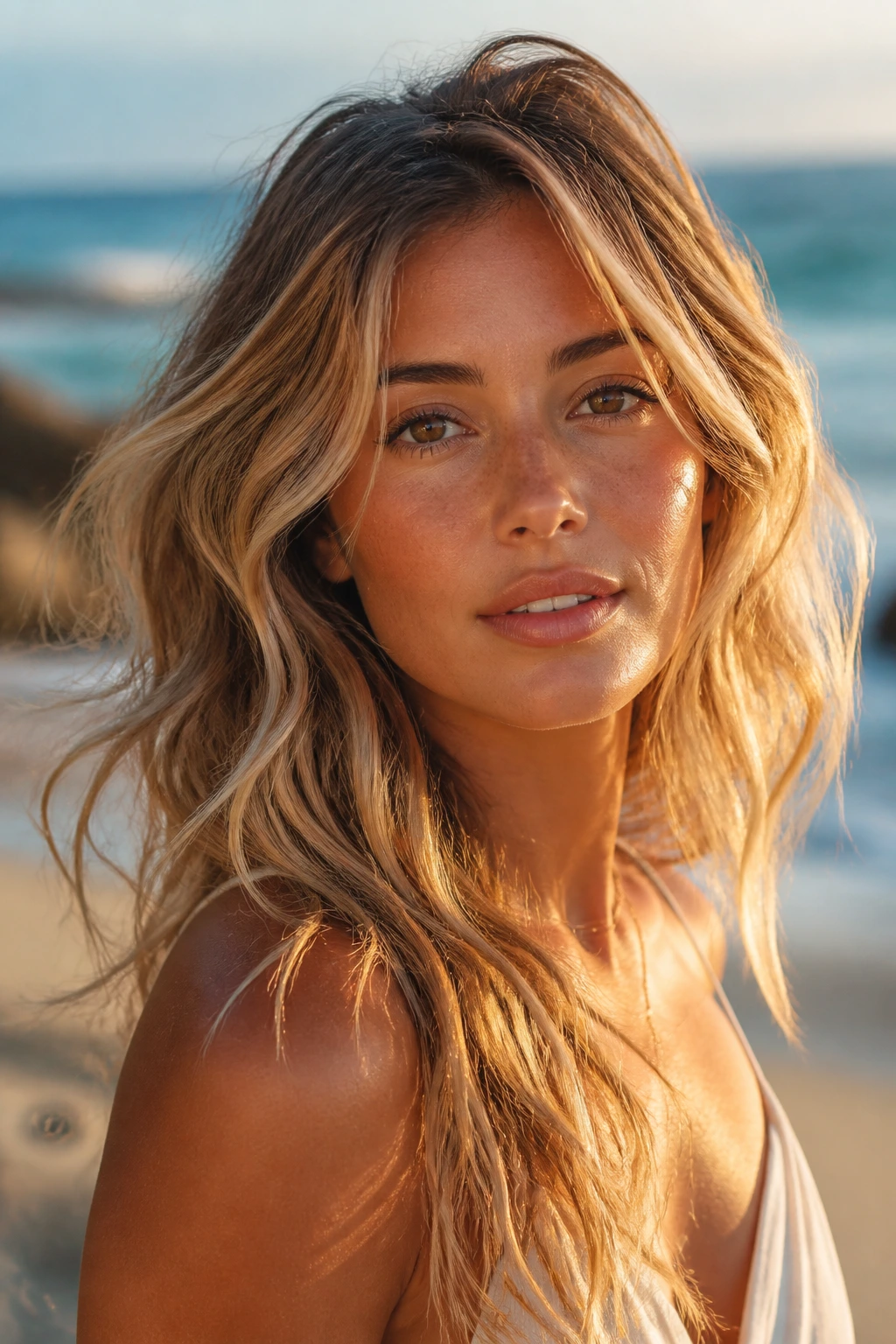
Beach-glass blonde is airy, broken-up, and a little reflective, which is exactly why it works on wavy hair and tan skin. The tone usually lives between champagne and soft beige, so it gives brightness without looking frosty.
What to Ask For
Tell your colorist you want scattered, translucent ribbons rather than full saturation. That matters because the face shape already has enough structure; the highlights should soften it, not sharpen it. The wave pattern will do the rest.
This style can feel casual, but it is more controlled than it looks. The lighter pieces should appear to float over a deeper base. That’s the whole point.
17. Cinnamon-Kissed Blonde Dimension
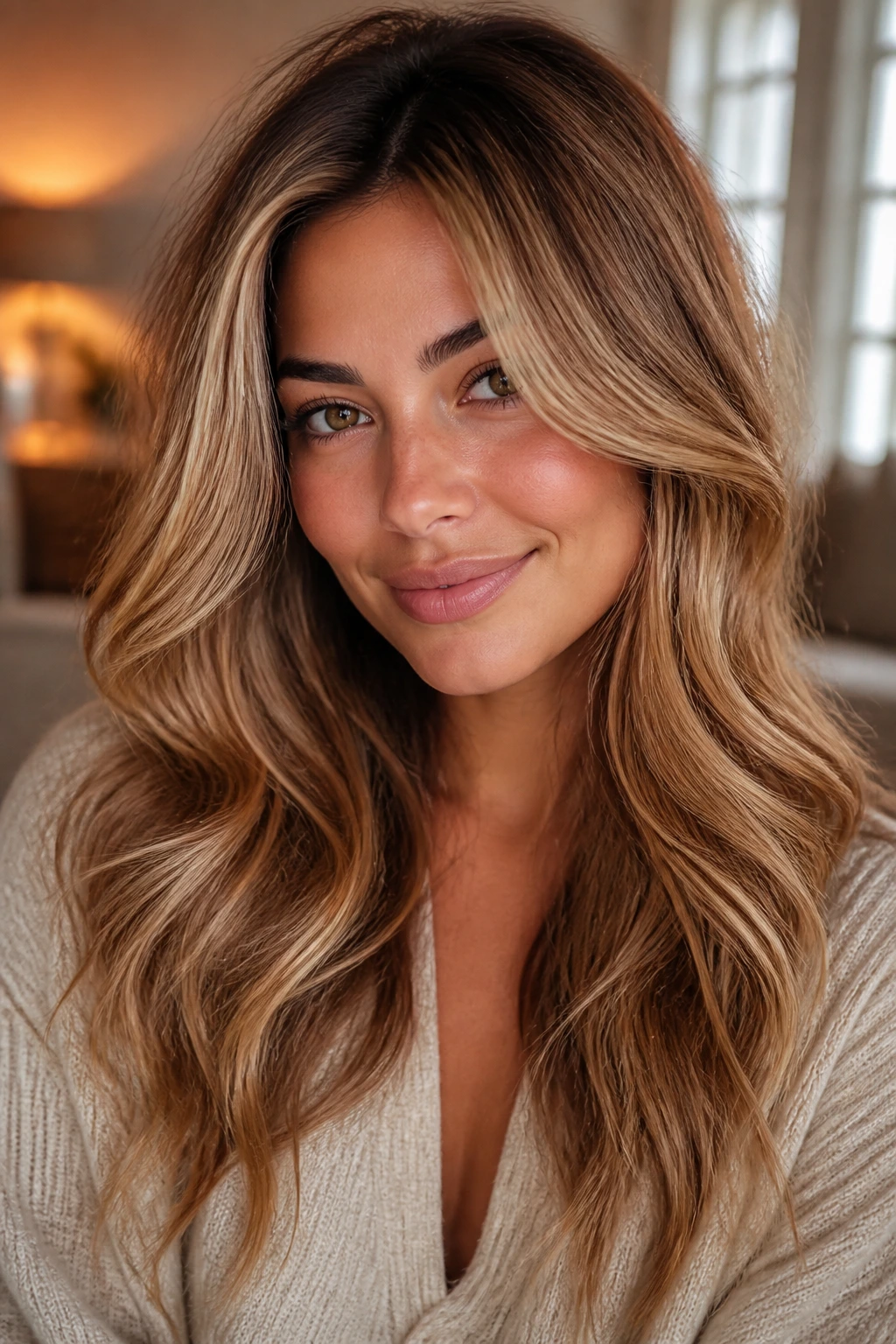
Cinnamon-kissed blonde sounds like a contradiction, and that is exactly why it works. The warmth helps tan skin, and the dimensional placement keeps the blonde from collapsing into one solid tone.
The Best Version
I’d keep the blonde around the face and through the ends, then tuck tiny cinnamon lowlights into the interior. Heart-shaped faces need that little bit of depth near the crown and temples so the forehead does not look wider. The lowlights quietly do that job.
This is a good fit if your natural hair is medium brown or darker. It lets the lighter pieces show up without making the regrowth line too obvious.
18. Almond Milk Highlights on Coarse Hair
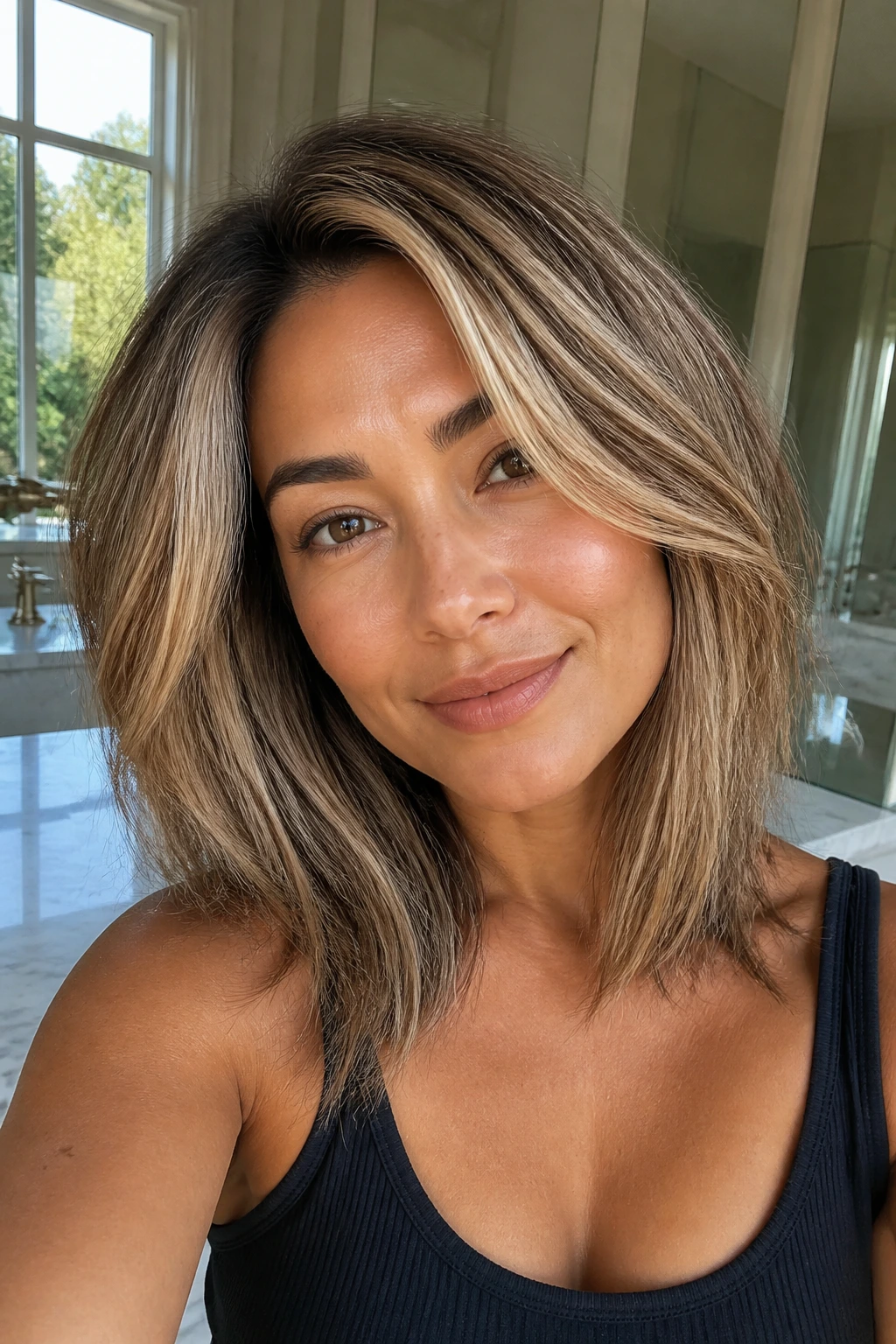
Coarse hair can carry more brightness than fine hair, and almond milk blonde is a smart choice because it stays soft instead of stark. The tone sits in that beige-cream range that flatters tan skin without leaning icy.
Why the Texture Matters
Coarse hair often needs bigger, more deliberate highlight sections so the color does not vanish between thick strands. On a heart-shaped face, those sections should still be placed lower on the head, especially if your crown is dense. You want the brightness to break up bulk, not add width where you already have it.
A gloss after lightening is non-negotiable here. Coarse hair can grab toner unevenly, and a creamy finish makes the whole look calmer.
19. Butterscotch Swirl Around the Jawline
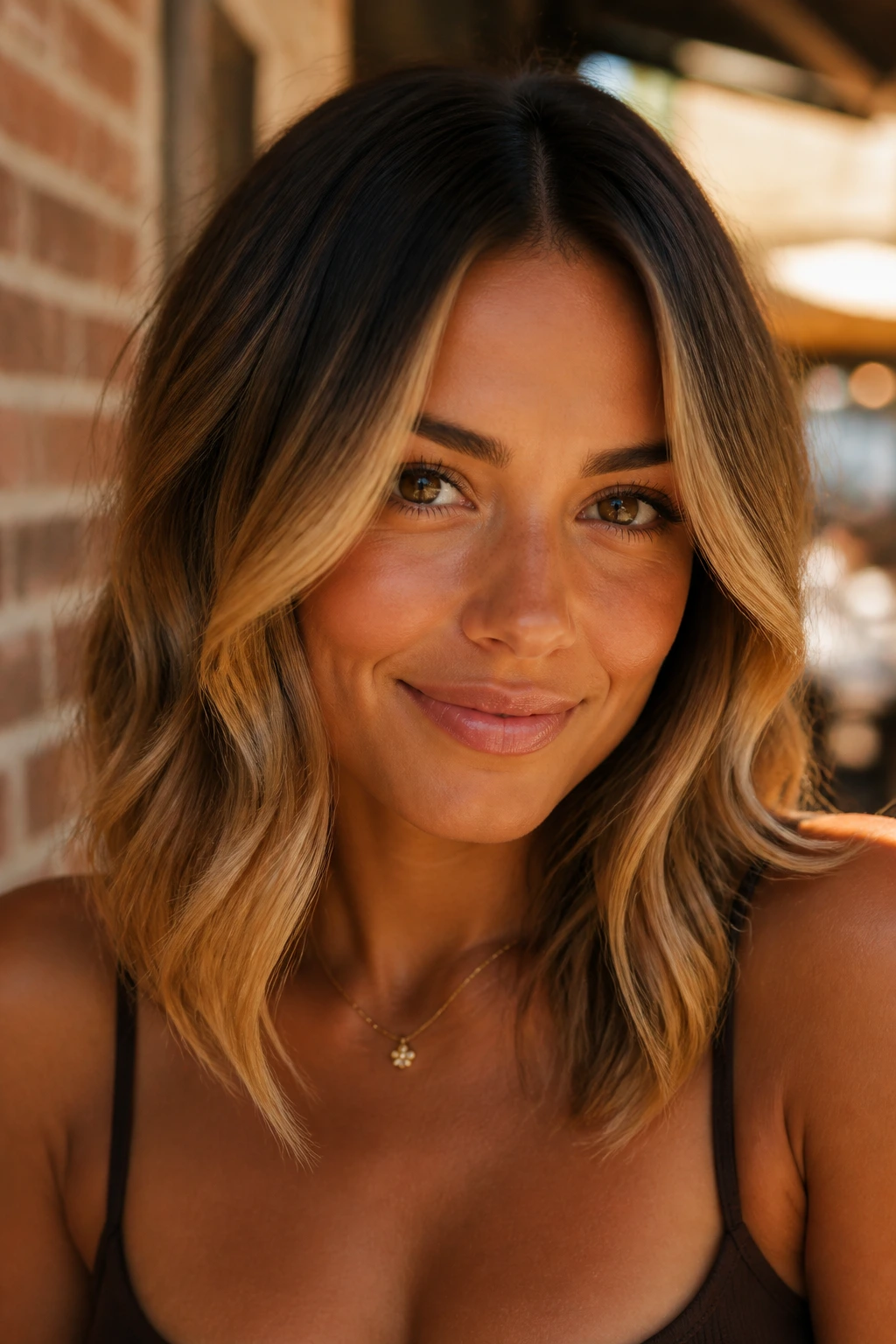
Butterscotch blonde around the jawline is a neat little cheat for heart-shaped faces. It shifts attention downward, where the face narrows, and the warm tone sits comfortably beside tan skin.
Why It Flips the Proportions
If your forehead feels wide, bright pieces around the jaw can balance that in a way a top-heavy highlight pattern never will. I like this most on layered bobs and long lobs, where the jawline actually shows. The color looks deliberate because it has a job to do.
Keep the swirl soft. You do not need a hard bright band. You need a warm glide of light that starts near the cheek and trails lower.
20. Ash-Beige Ribbons for Cooler Tan Undertones
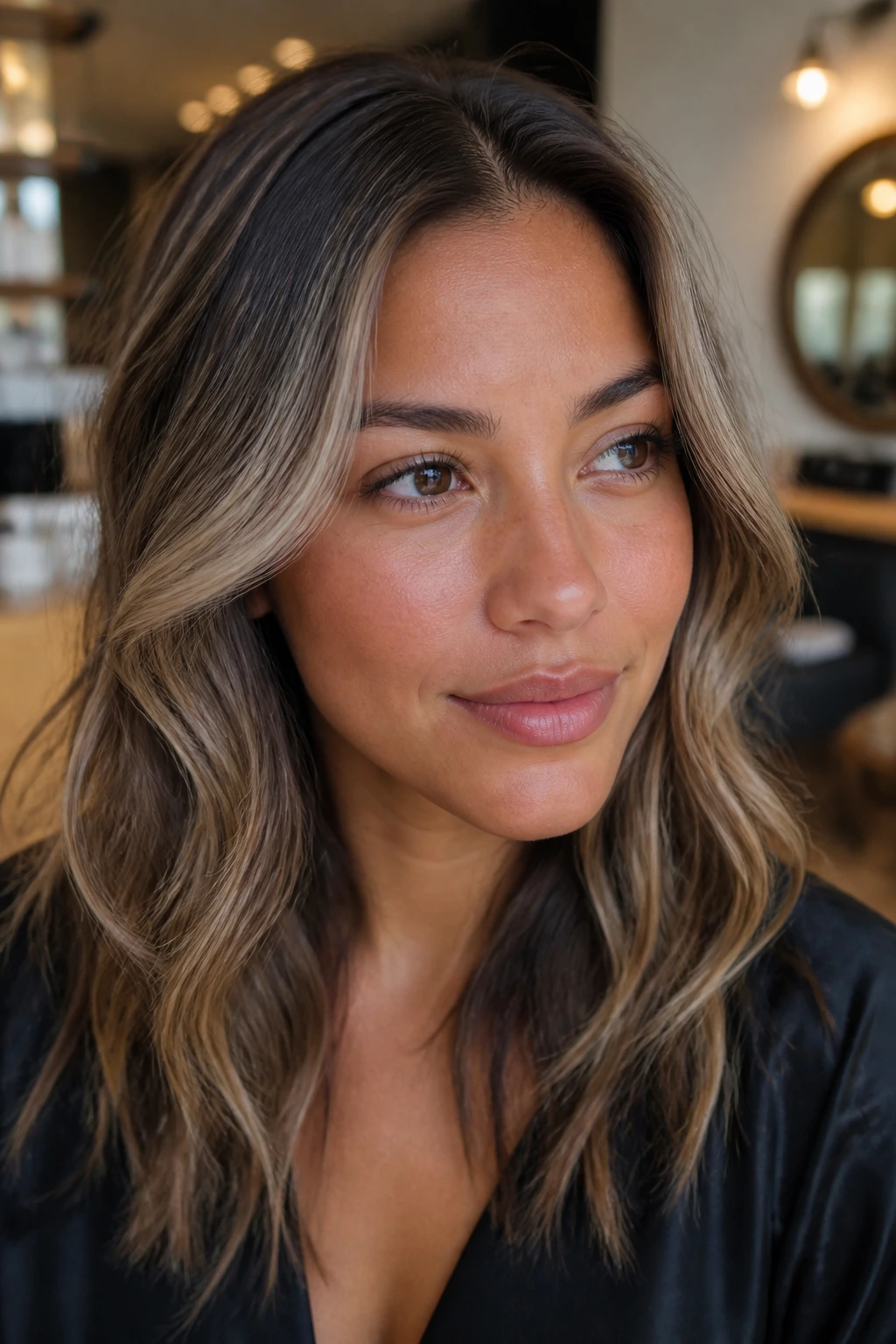
Not every tan complexion wants gold. Some lean cooler or more neutral, and ash-beige ribbons can look cleaner than honey if the skin has a green or olive cast.
How to Keep It from Looking Flat
The secret is beige first, ash second. If the blonde goes too gray, it can make tan skin look tired. If it stays too warm, it may pull yellow. Ash-beige splits the difference and gives the hair a calmer finish.
For a heart-shaped face, place the lightest pieces just below the temple and around the cheekbone. That keeps the forehead from feeling over-bright. This is one of the most underrated blonde families for cooler tan skin.
21. Platinum Peekaboo Panels
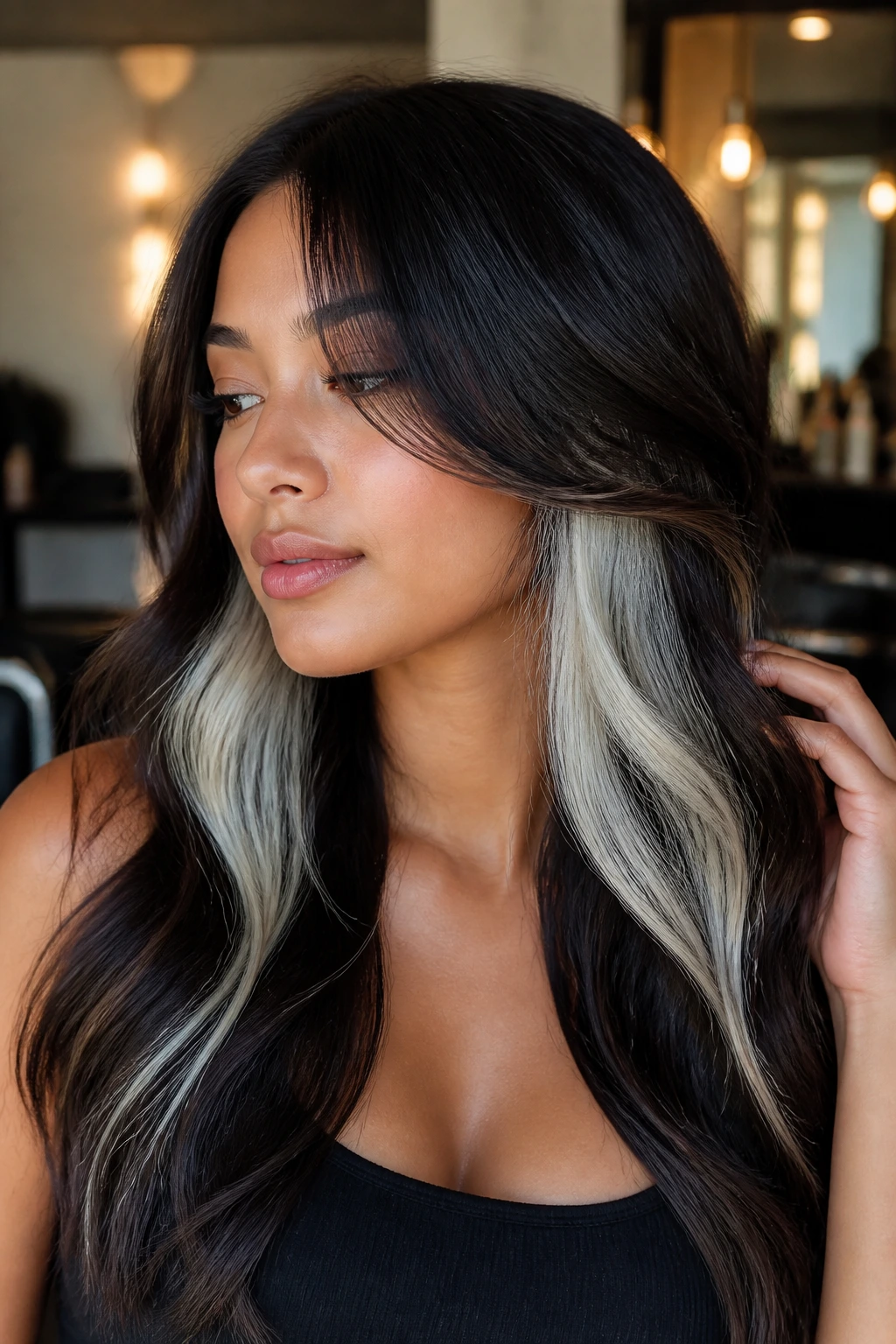
Platinum can work, but I prefer it hidden and strategic rather than spread everywhere. Peekaboo panels let you get that icy hit of brightness without flooding the face with contrast.
Where It Fits
On tan skin, platinum looks best when the rest of the hair has depth. On a heart-shaped face, putting the panels underneath the top layers means the forehead stays grounded and the narrow chin still gets softness from the visible lighter pieces below.
This is the boldest option in the set. It needs a clean toner, honest maintenance, and a haircut that can show off the contrast. If you want subtle, skip it. If you want edge with a little control, it has real impact.
22. Halo Highlights with Darker Underlayers
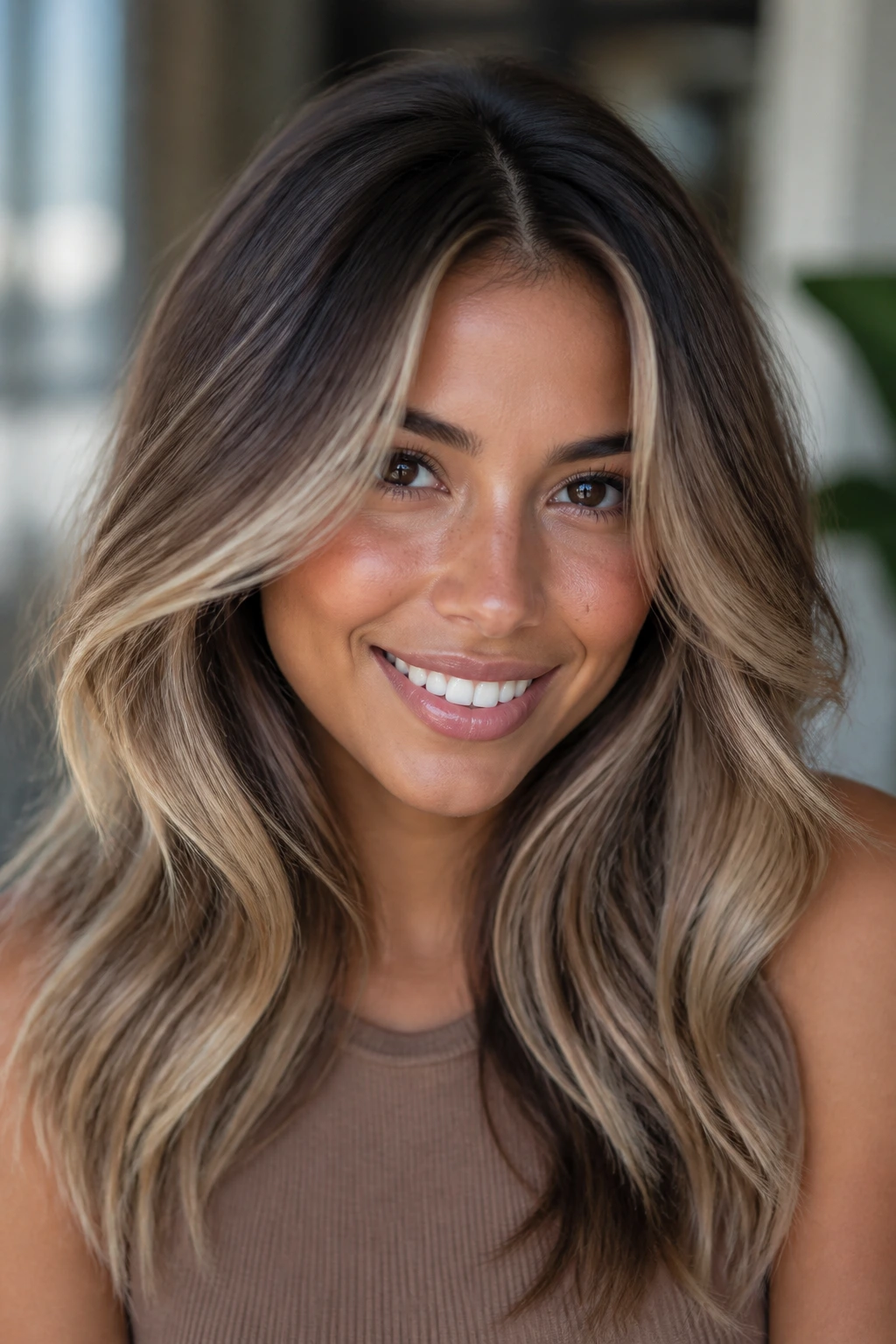
Halo highlights sit around the outer perimeter of the head, while darker underlayers hold the base together. That combo is useful for tan skin because the contrast is gentle on top and richer underneath.
Why It Suits Heart Shapes
The halo effect opens up the face without widening the temple area too much, as long as the brightest strands stay below the hairline. The darker underlayers also keep the style from ballooning out visually at the crown. That is a nice trick for a face shape that already carries more width above the cheeks.
If your hair is thick, this can be a lifesaver. It creates motion and keeps the color from looking busy.
23. Caramelized Fringe Pieces
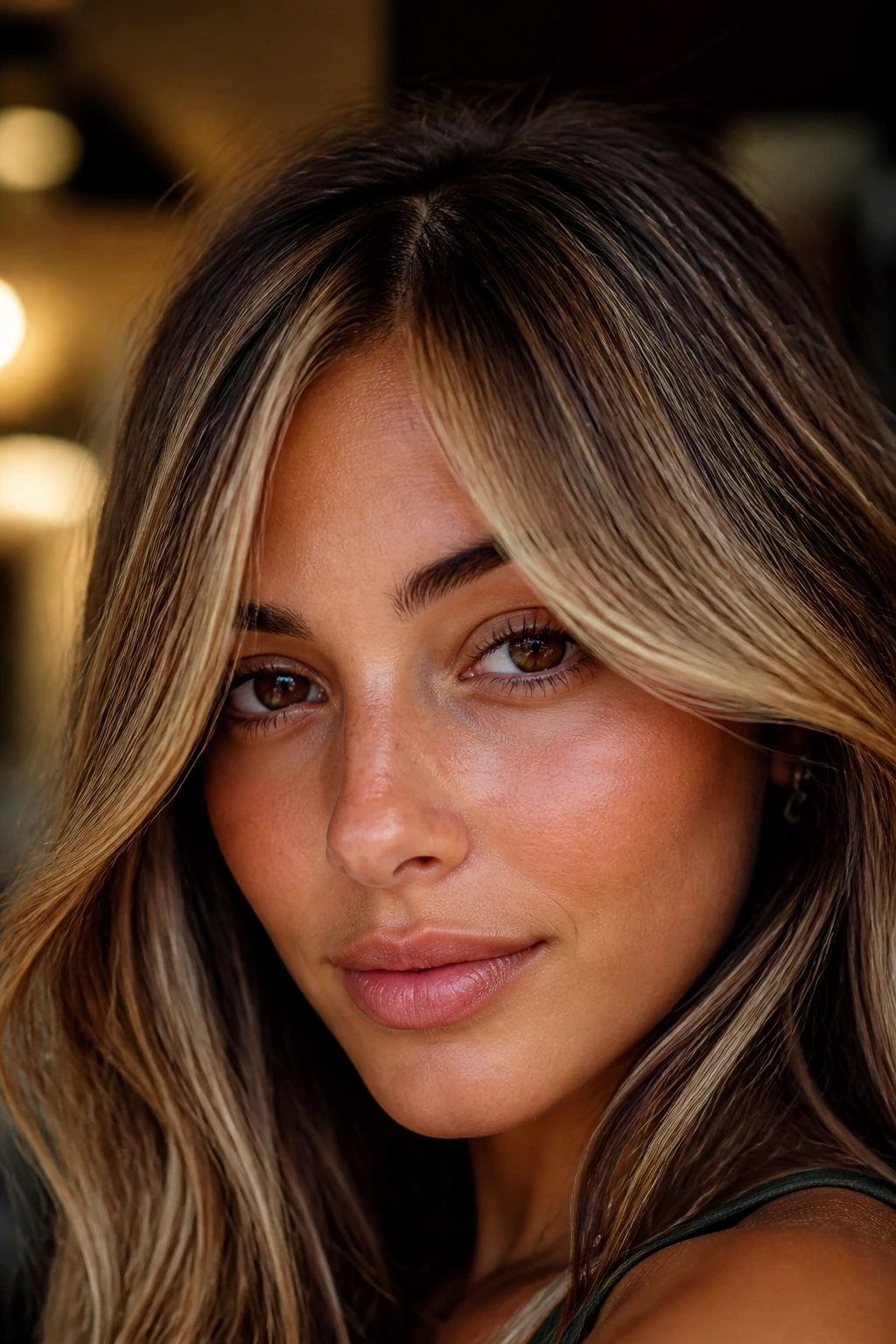
A blonde fringe can be tricky on a heart-shaped face because the forehead is already the widest part. Caramelized fringe pieces solve that by staying warm, soft, and a little diffused instead of harshly bright.
How to Wear the Front
The lightest bits should sit at the ends of the fringe, not the roots. That lets the eyes come down toward the cheekbones rather than straight across the forehead. Tan skin benefits too, because the caramel tone holds onto warmth and avoids that pale strip effect.
This works particularly well if your fringe is curtain-shaped or slightly parted. Straight-across bangs need more caution. They can look heavy if the highlights are too bright.
24. Golden Veil Highlights on Thick Hair
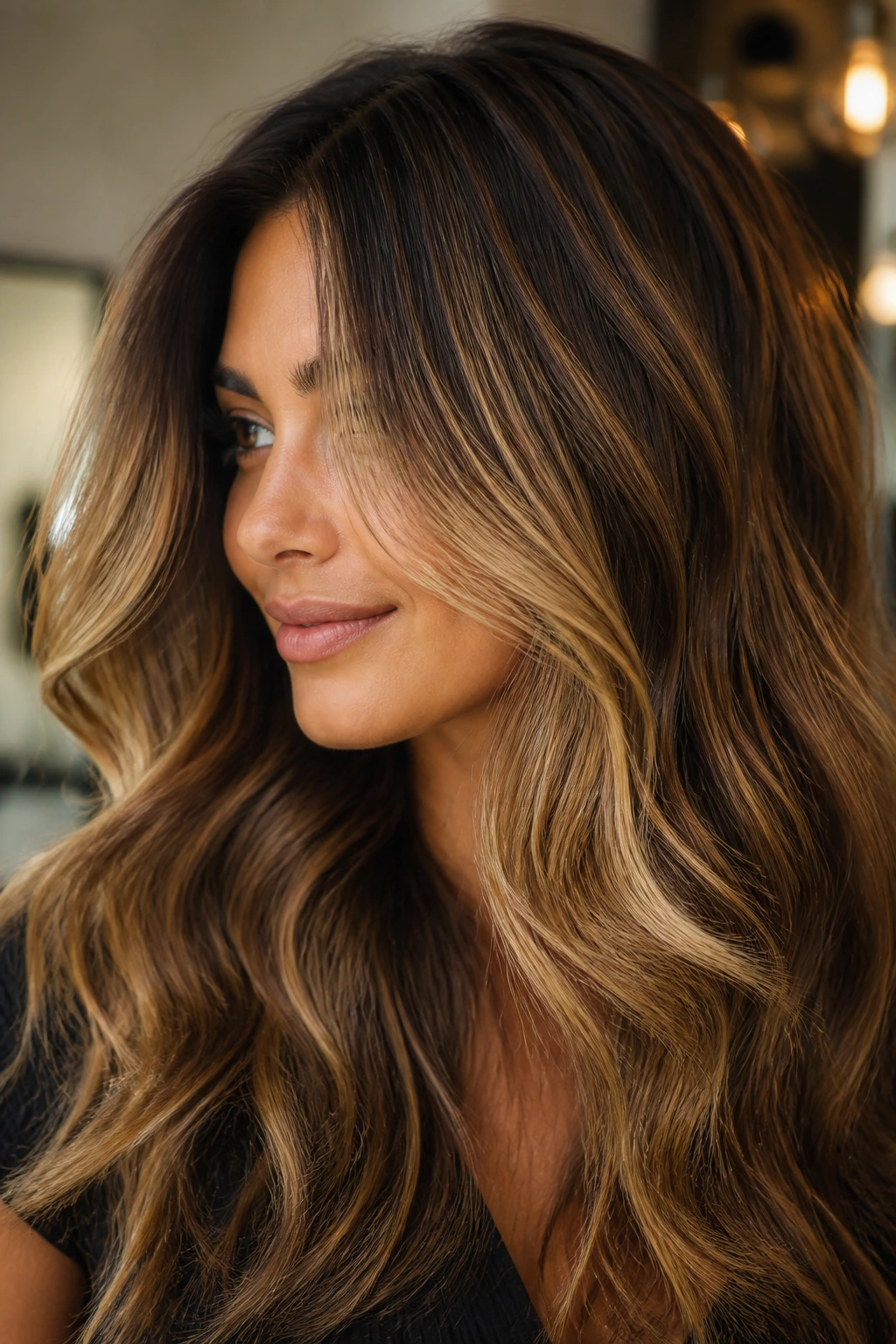
Thick hair can take a veil of blonde and still look balanced. Golden veil highlights are sheer enough to soften the mass of hair while keeping enough depth for tan skin to look rich.
The Practical Part
I like this on long thick hair because the veil can be layered from top to bottom without turning the style stripey. For a heart-shaped face, the main thing is keeping the top lighter only in moderation. Let the brightest gold live from the cheekbone down, and keep the crown a touch deeper.
Thick hair often hides color unless the placement is intentional. This one is intentional. It shows.
25. Glossed Honey Blonde with Lowlights
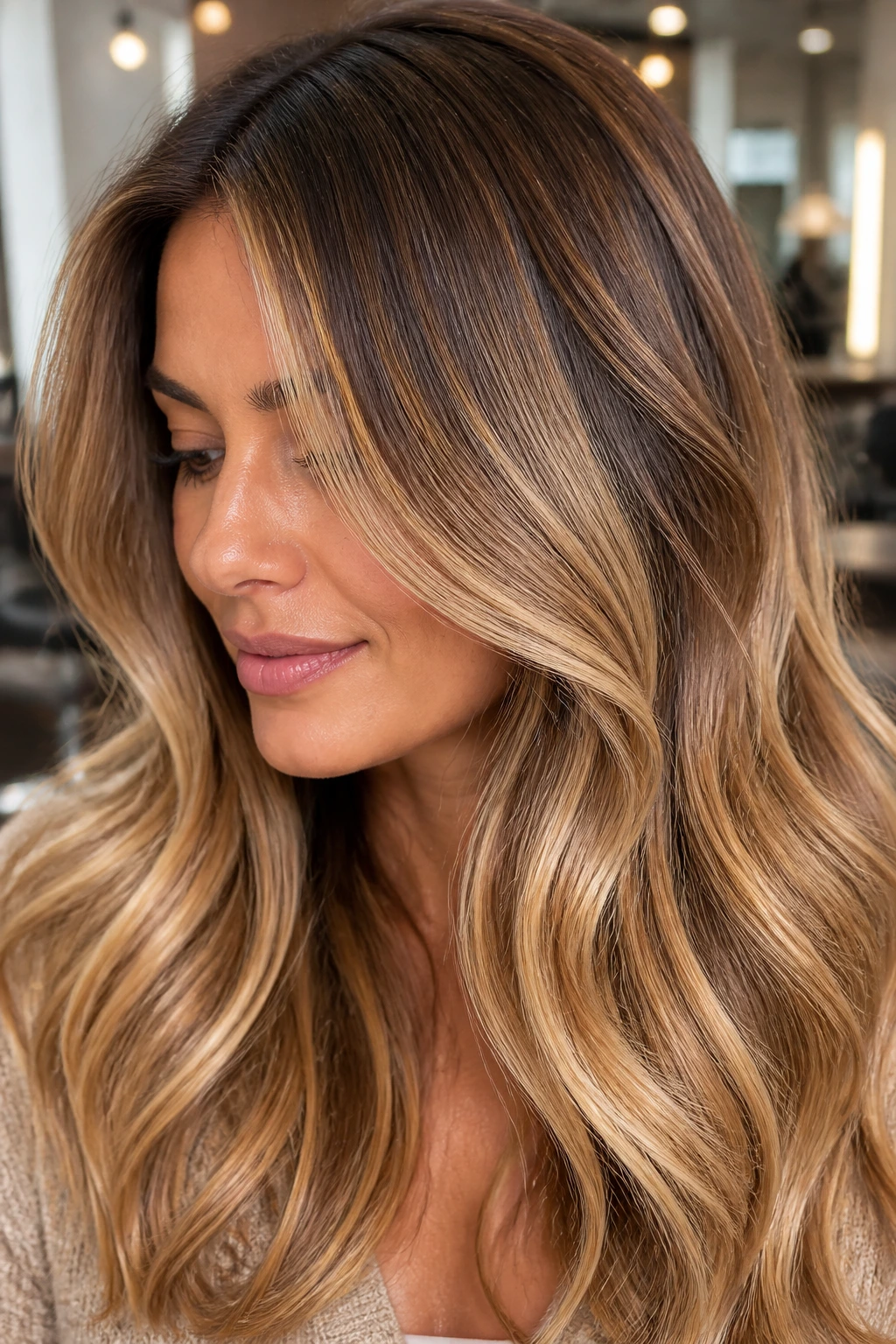
This is the version I’d hand to someone who wants the most forgiving finish of the bunch. Honey blonde gives tan skin warmth, lowlights keep the color from going flat, and a gloss seals the whole thing so it looks polished rather than dry.
Why It’s the Best All-Around Move
Heart-shaped faces need a little depth near the top and a little brightness near the bottom. Lowlights help compress the forehead visually, while the honey pieces around the mid-lengths and ends bring the eye down. That balance is hard to beat.
A gloss matters more than people expect. It softens porosity, adds shine, and keeps the honey tone from turning muddy after a few washes.
How to Make the Color Sit Right on Tan Skin and a Heart-Shaped Face
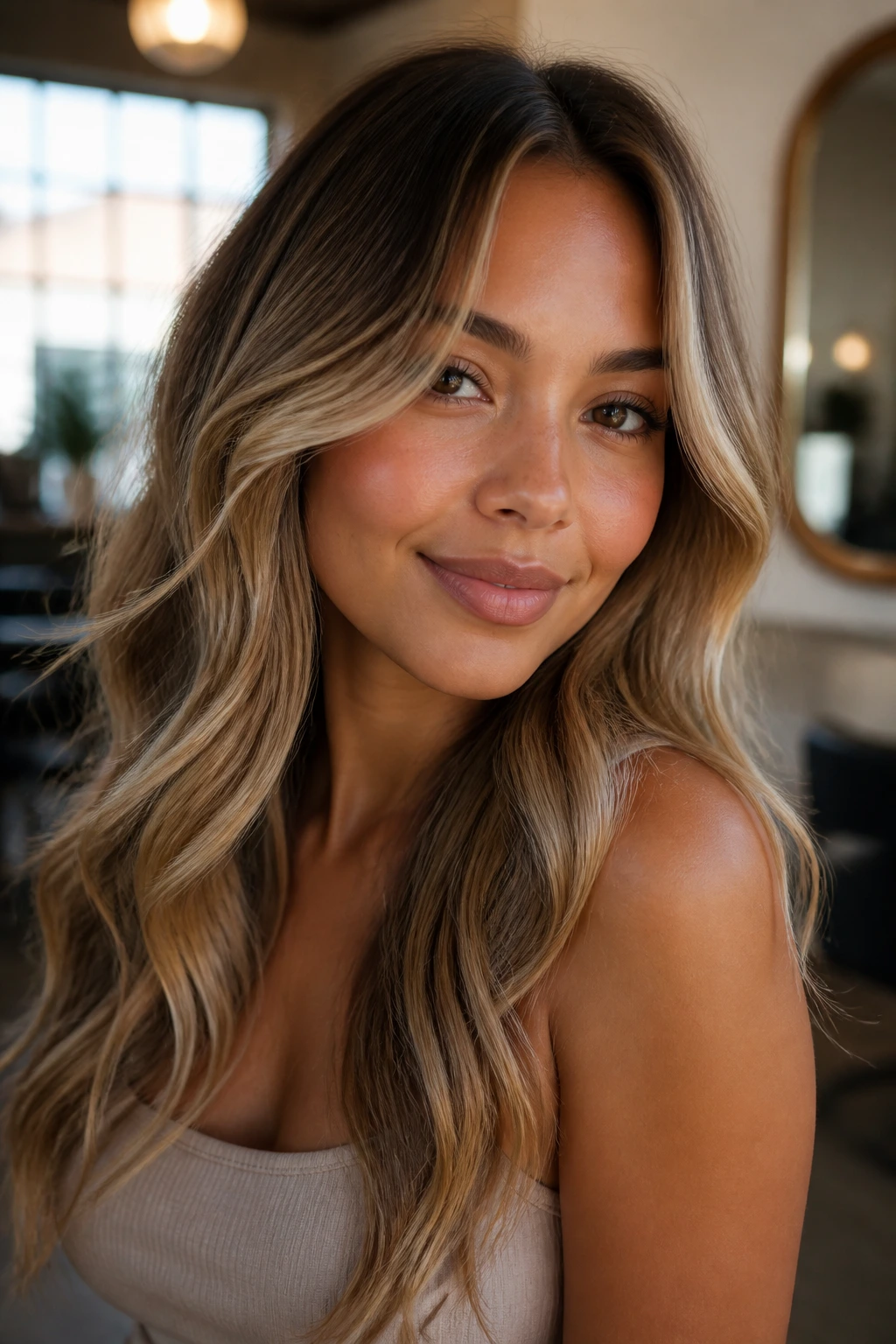
The cleanest blonde choices for tan skin usually live in the beige, honey, caramel, biscuit, and champagne family. Those tones echo the warmth already in the complexion, which means the hair looks like part of the face instead of a separate object sitting on top of it.
Heart-shaped faces need a different kind of thought. The widest part is usually the forehead, so the brightest face-framing pieces should not start too high or too thick. Cheekbone-to-jaw placement is safer and usually prettier because it draws the eye downward, where the face narrows.
If you want a blunt version of my opinion: the most flattering blonde on this face shape is rarely the lightest blonde in the room. It is the one with the best balance of brightness, depth, and reflection.
Tools and Products That Keep the Look Honest
- Sectioning clips: Useful for separating the face-framing pieces from the back so you can see where the brightness actually sits.
- Tail comb: Good for checking your part and deciding whether the brightest pieces are crowding the forehead.
- Color-safe shampoo: Use a sulfate-free formula if your hair feels dry after lightening.
- Purple or blue shampoo: Purple helps yellow brass in lighter blondes; blue is better if the blonde sits on darker brown hair and pulls orange.
- Moisture mask: Lightened hair drinks these up, especially at the ends.
- Heat protectant: Flat irons and curling wands are brutal on blonde tones that already had to be lifted.
- Microfiber towel or T-shirt: Cuts down friction after washing.
- Wide-tooth comb: Better than yanking a brush through damp highlighted hair.
- Gloss or toner appointment: Not a tool, but a non-negotiable part of keeping beige and honey tones looking clean.
Smart Shade Picks for Tan Undertones
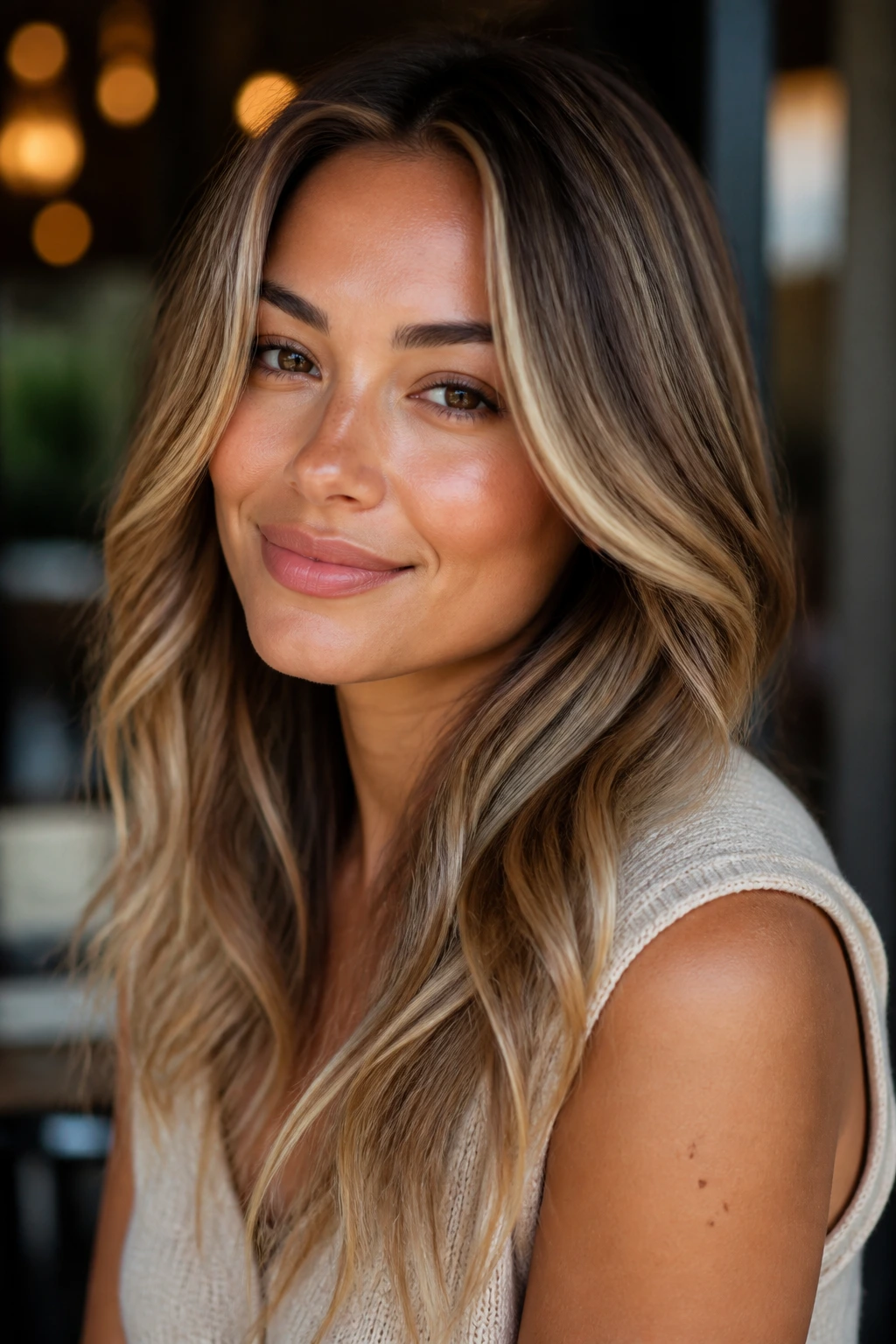
Golden tan skin usually likes honey, caramel, butter, and warm beige. Those shades keep the complexion glowing instead of washed out, especially if the natural hair color is medium brown or deeper.
Olive tan skin often needs more beige than gold. If the blonde is too yellow, the skin can look sallow next to it. That is why champagne, biscotti, and ash-beige often work better than pure golden blonde here.
Cooler tan skin can handle pearl, ash-beige, and creamy platinum accents, but only if the rest of the hair has enough depth to support them. A lot of people skip the depth part. Then they wonder why the hair looks stripy. It is the depth that holds the look together.
How to Ask for the Look Without Guesswork
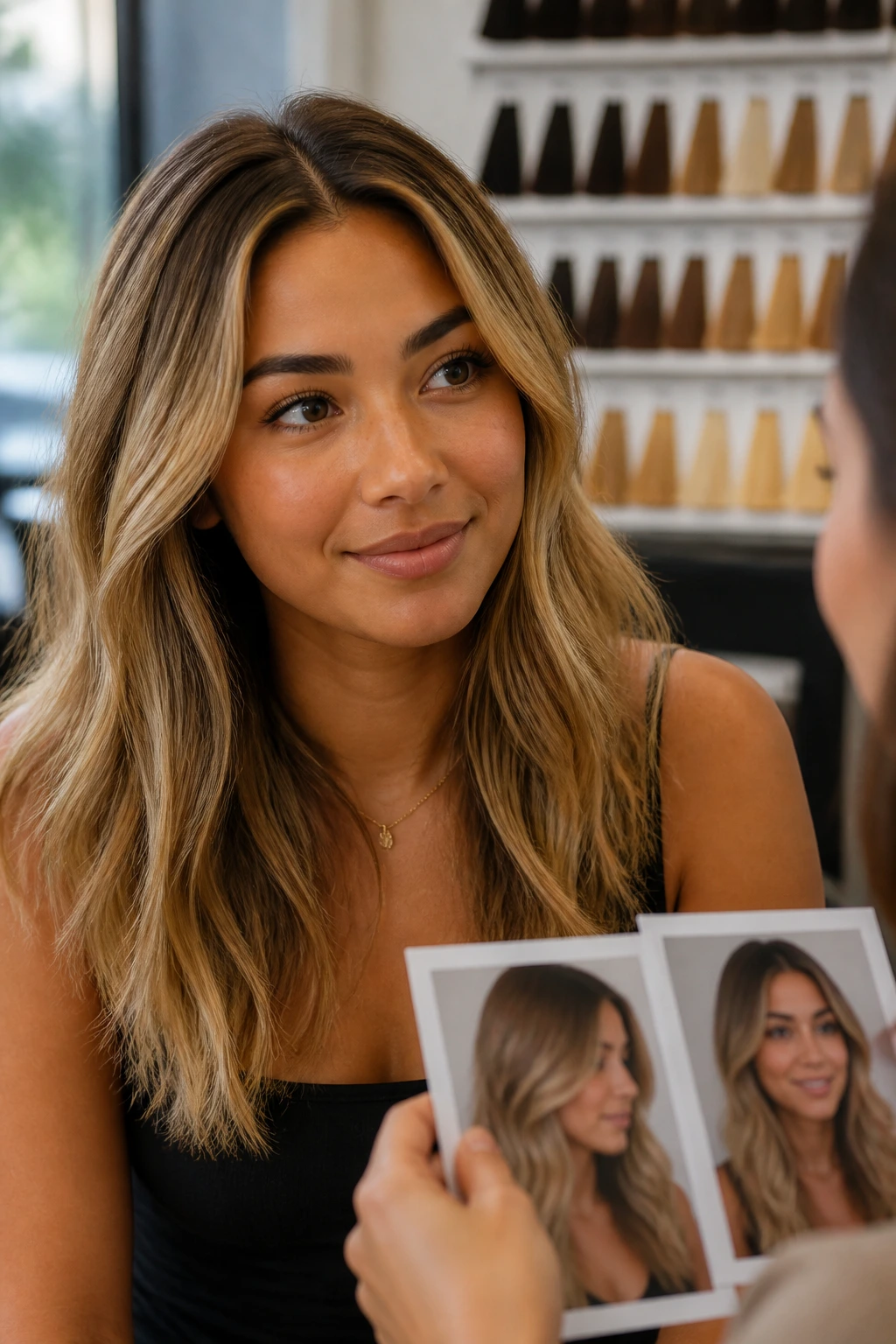
Bring two photos, not one. One should show the tone you like, and the other should show placement. People get into trouble when they bring a photo of a bright blonde on a completely different face shape and expect the same effect to work automatically.
Tell the colorist where your hair parts and where it falls when you wear it day to day. If you flip your part often, the highlight pattern needs to survive both sides. If your hair is curly, the lighter pieces need to be painted where the curl opens, not just where the hair looks flat on the foil board.
Speak plainly: “I want brightness below the cheekbone, not a heavy money piece at the temples.” That one sentence clears up a lot.
Additional Tweaks That Make the Color Look Better
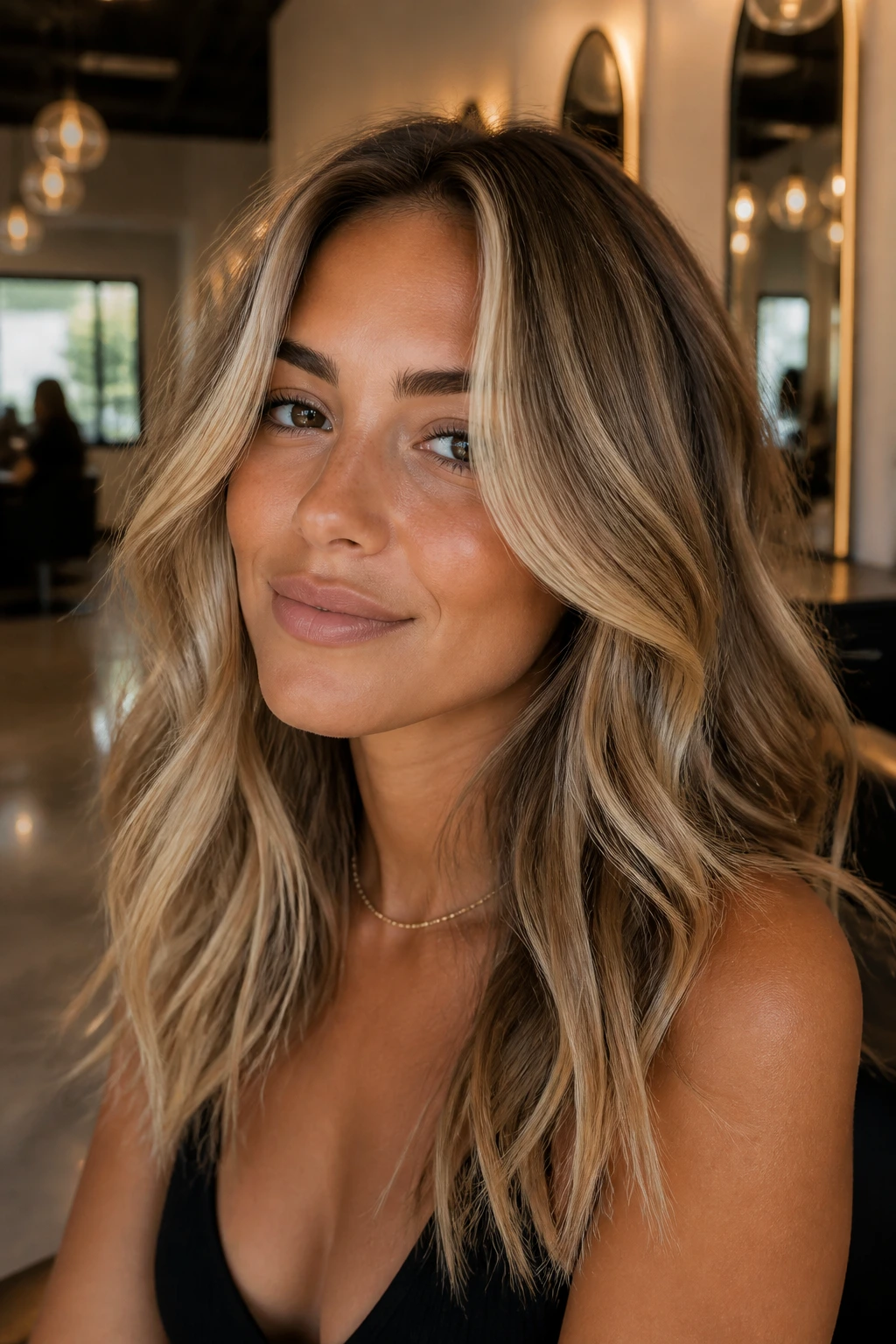
Flavor Enhancement: A clear or beige gloss after the lightening session gives the blonde more slip and keeps tan skin from looking flat beside it.
Customization: Ask for a few lowlights near the crown if you want the forehead area to look softer. It is a small change, but it changes the whole reading of the face.
Serving Suggestions: A center part can sharpen the look, while a slight off-center part gives more lift around the face. Loose bends around the cheekbone tend to be kinder than stiff curls that stop right at the jaw.
Make-It-Yours: If you want low-maintenance, keep the face-framing pieces soft and rooty. If you want more contrast, brighten only the front panels and leave the rest in a deeper bronde range.
Common Mistakes That Make the Blonde Work Against You
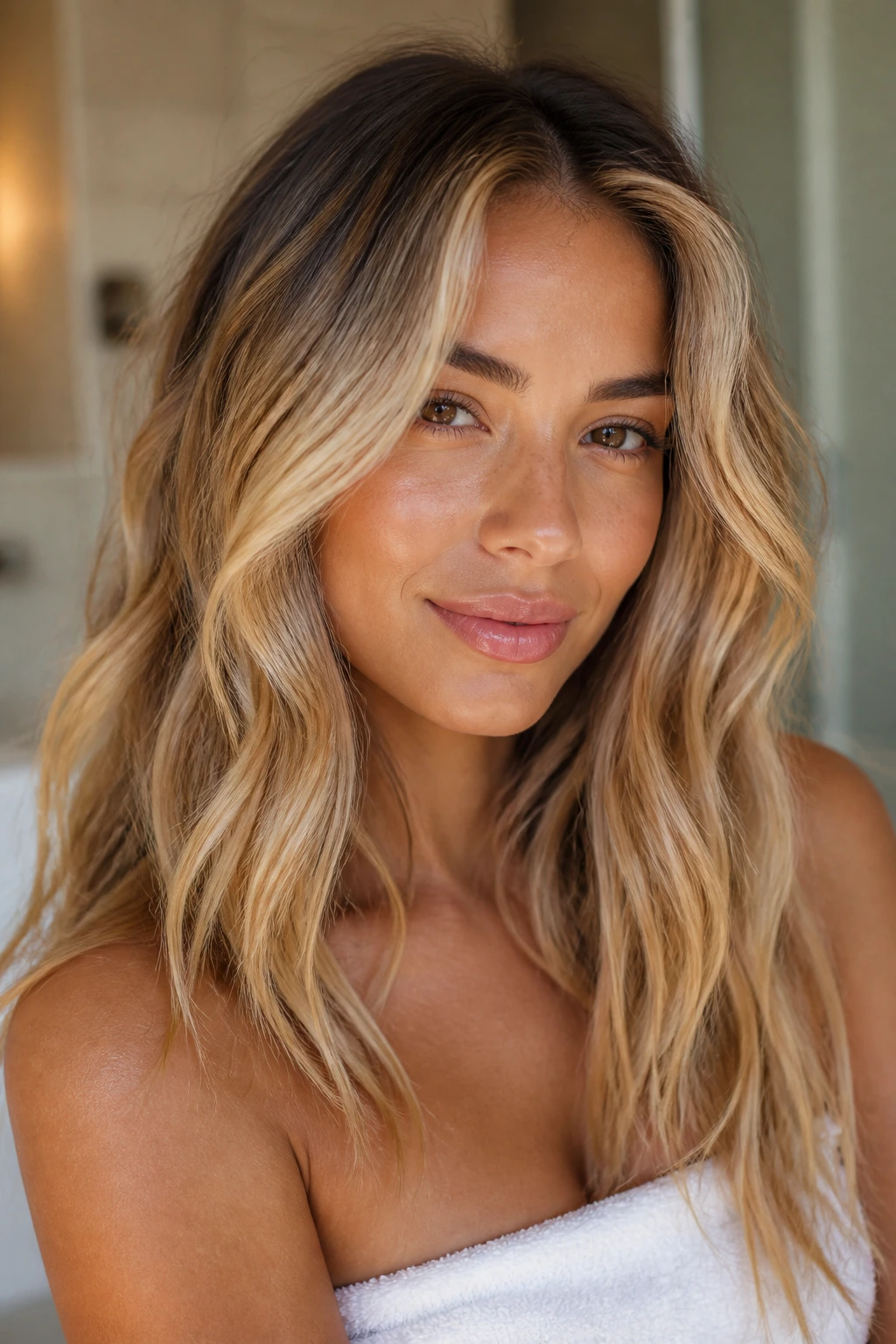
The first mistake is stacking too much brightness at the temples. That makes a heart-shaped face look wider up top and can give the whole style a triangular feel. The fix is simple: push the brightest pieces lower, toward the cheek and jaw, where they soften the taper.
Another problem is choosing a blonde that is too icy for warm tan skin. The hair can turn the complexion dull or gray by comparison. Beige toner, honey gloss, or a small dose of warmth usually solves it.
People also forget about the root. A root that is too light can make the crown puff out visually, and that is the last thing a heart-shaped face needs. Keep a little shadow at the base. It is not laziness. It is balance.
Finally, there is the maintenance trap. Pale blondes need tone checks, and that means more appointments, more masks, and more care between washes. If that sounds annoying, pick a rootier bronde or honey-blonde version instead of chasing white blonde and regretting it later.
Variations for Different Hair Textures and Maintenance Levels
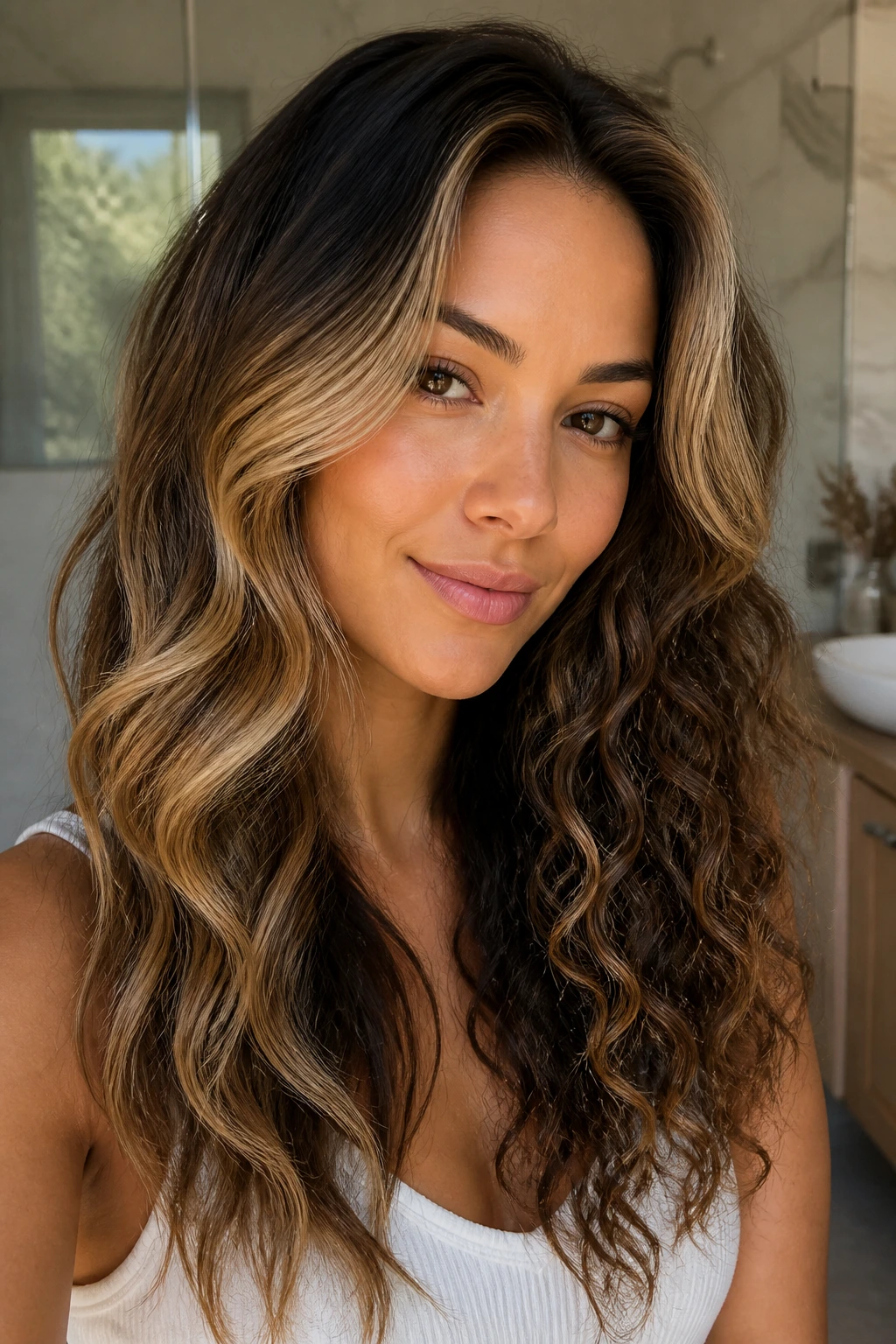
Low-Lift Bronde: Best for people who want dimension without the bleach-heavy look. The highlights stay soft and rooted, and tan skin gets warmth without the upkeep spike.
Curly Coil Painting: On curls, the lighter pieces should follow the curl pattern, not sit in straight lines. That keeps the highlights from disappearing inside the curl or showing up as random stripes.
Fine-Hair Brightening: Fine hair usually needs thinner, more delicate highlights so it doesn’t look sparse. Beige babylights and soft money pieces work better than thick blocks of platinum.
Thick-Hair Contour Glow: Thick hair can carry bigger pieces and deeper lowlights. Use that density to your advantage and shape the brightness around the face instead of trying to lighten everything equally.
Grow-Out Friendly Root Tap: A soft root tap at the basin or at the bowl stage helps the color stretch farther between appointments. It is one of the smartest choices if you don’t want to keep chasing your highlights every few weeks.
How to Keep the Tone Fresh Between Salon Visits
Most blondes stay cleanest when you wash with lukewarm water, not hot. Hot water lifts the cuticle too much and lets tone slide out faster, especially in porous highlighted ends. If the blonde leans honey or beige, a purple shampoo once every 7 to 10 days is usually enough to knock back brass without sucking warmth out of the hair.
Glossing every 6 to 8 weeks keeps beige and champagne tones from going dull. Root touch-ups vary more by pattern and hair growth, but many highlight jobs can stretch 8 to 12 weeks before they need a partial refresh. If the look depends on a strong face frame, the front pieces may need attention sooner than the rest.
The ends matter. They always do. Use a moisture mask once a week and a heat protectant every time you style, because lightened hair frays at the tips long before the roots give you trouble. That’s the part most people miss.
Frequently Asked Questions
Will blonde highlights work on tan skin, or do they need to be very warm?
They work best when the tone is chosen on purpose. Honey, beige, caramel, and champagne usually look smoother than stark platinum, but cooler tan skin can still carry ash-beige or pearl if the base has enough depth.
Where should highlights sit on a heart-shaped face?
Usually lower than people expect. The cheekbone, mouth, and jawline are safer focal points than the temple area, which can exaggerate the width of the forehead.
Is balayage better than foils for this look?
Balayage gives a softer grow-out and is easier to keep natural, while foils give more lift and brightness. If you want face-framing control and a stronger blonde, foils often win; if you want a softer blend, balayage is the easier road.
What if my tan skin has olive undertones?
Lean beige before gold. Too much yellow can turn muddy against olive skin, while a beige or champagne blonde usually sits more cleanly.
Can I make blonde highlights work on dark brown hair without going orange?
Yes, but the lift and toner matter. Dark brown hair often needs a careful lift through orange and gold stages, then a beige, honey, or caramel gloss to keep the finished shade from reading brassy.
How do I stop the face-framing pieces from making my forehead look wider?
Keep the brightest sections soft, not chunky, and let them start lower on the face. A root shadow or a few lowlights near the temples helps a lot too.
What if my highlights feel too yellow after a few washes?
Use purple shampoo sparingly, not every time you wash. If the hair is dry, swap one toner-heavy wash for a moisture mask and let a salon gloss fix the tone instead of scrubbing it harder at home.
The Shade That Does the Most Work
The best blonde highlights for tan skin and heart-shaped faces do one job quietly: they bring the eye down, soften the forehead, and keep the complexion looking warm rather than washed out. That usually means more beige and honey than white, more cheekbone placement than temple saturation, and a little depth left at the root so the whole thing can breathe.
If you remember only one thing, make it this: brightness should help the face, not just decorate the hair. That’s the difference between a decent blonde and one that makes your features look more balanced the second you step into daylight.