



Over 40s hairstyles for curly hair with lowlights work because they do not fight the curl pattern; they give it a frame. That’s the whole trick. Curly hair already has movement, shadow, and shape built in. Lowlights deepen the bends, tuck away bulk where you do not want it, and stop the color from reading as one flat, bright sheet.
The best versions are rarely the loudest ones. A curl that lands at the jawline with a ribbon of mocha underneath can look sharper than a head full of brighter pieces, and it takes less effort to live with. That matters once the hairline has a little silver, the crown has changed texture, or your curls simply refuse to sit the way they did at 28.
The sweet spot is a cut that respects shrinkage, a lowlight shade that stays a shade or two deeper than the base, and a placement pattern that follows the way curls actually fall. Put the dark pieces in the wrong place and you get stripes. Put them where the curl clumps naturally, and the whole style starts to look richer, cleaner, and oddly more expensive without trying too hard.
Why These Cuts Earn Their Keep
-
They keep curls from looking one-note: A few deeper pieces under the surface make ringlets and coils read as separate shapes instead of one fuzzy block.
-
They soften the grow-out line: Lowlights blend gray, brunette, and silver strands in a way that buys you a little breathing room between appointments.
-
They give the crown some anchor: If the top lifts too much or frizzes out, darker interior pieces can quietly pull the eye back down.
-
They work with second- and third-day hair: Once the curl pattern loosens a bit, the deeper strands still hold the outline of the cut.
-
They flatter changing density: Hair that has thinned at the temples or crown can look fuller when the color shifts add depth instead of brightness.
-
They fit a real schedule: Most of these shapes can be refreshed with water, a curl cream, and a diffuser, not a two-hour styling ritual.
1. Collarbone Curly Lob with Mocha Lowlights
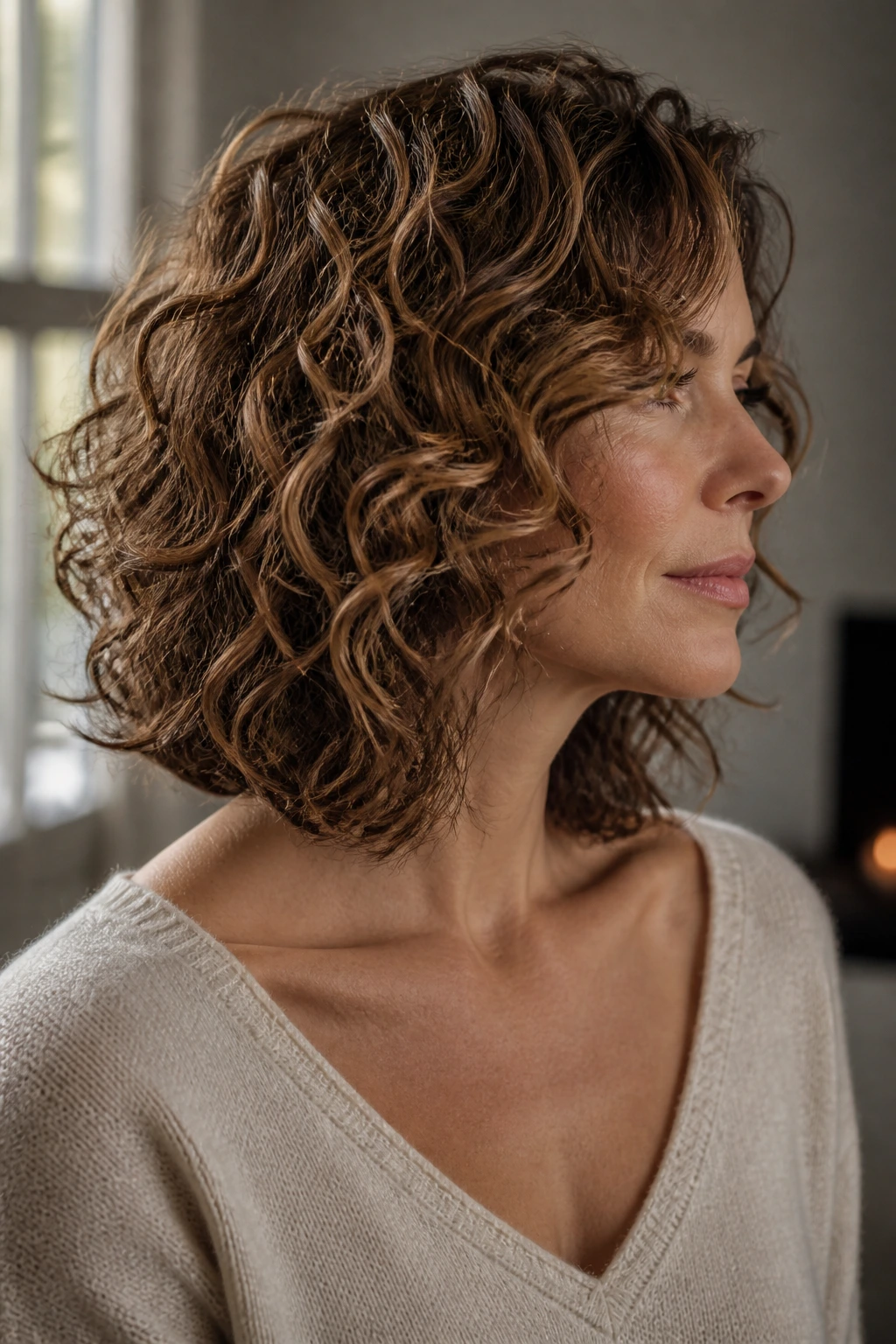
A collarbone lob is one of those cuts that makes curly hair feel more controlled without sanding off the personality. The length lands long enough to keep movement, short enough to keep the ends from turning into a soft triangle, and the mocha lowlights underneath stop the whole shape from looking too airy at the bottom.
This works especially well if your curls are medium density and you want a style that still looks polished when it air-dries a little unevenly. Keep the darker pieces beneath the top layer and around the back curve of the head; that’s where the curl mass tends to puff first. The result is a shape that looks deliberate from the side, not just from the front. One clean cut. One clean color story.
2. Chin-Length Curly Bob with Cinnamon Depth
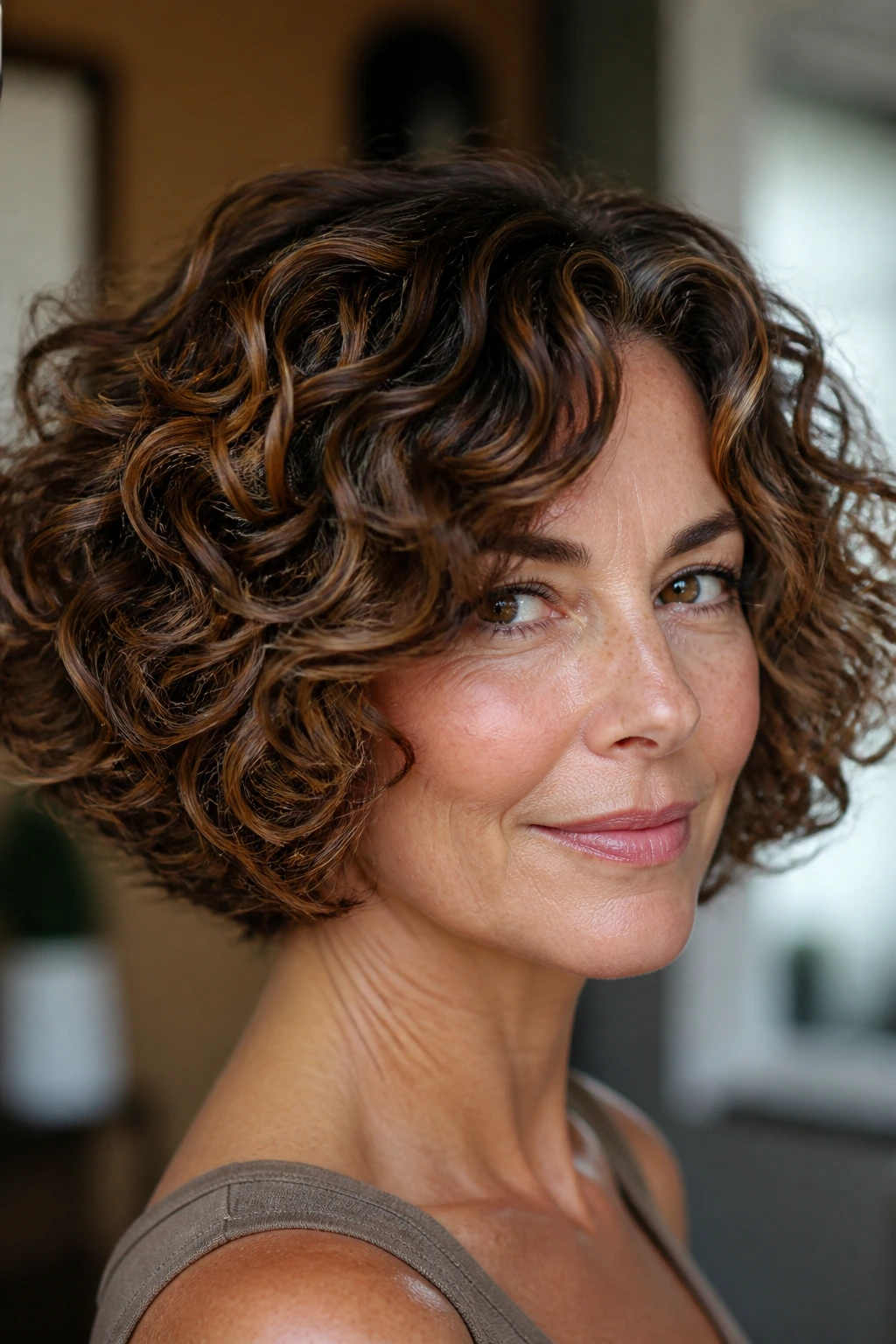
A chin-length curly bob is bold in the best way. It shows off the jawline, opens the neck, and makes every coil do visible work. Cinnamon lowlights give it a warmer, softer finish, which matters if your curls are springy and your face needs a little color movement instead of a hard outline.
- Best when the curls bounce up: Ask for the cut to sit a touch longer in the front so shrinkage does not turn it into a helmet.
- Color placement matters: Put the lowlights through the interior and nape first; that keeps the outer ring bright enough to catch light.
- Good for gray blending: Cinnamon reads less harsh than espresso if silver strands are scattered around the temples.
The whole look has a neat, sculpted feel. It’s not shy.
3. Long Layered Curls with Espresso Ribbons
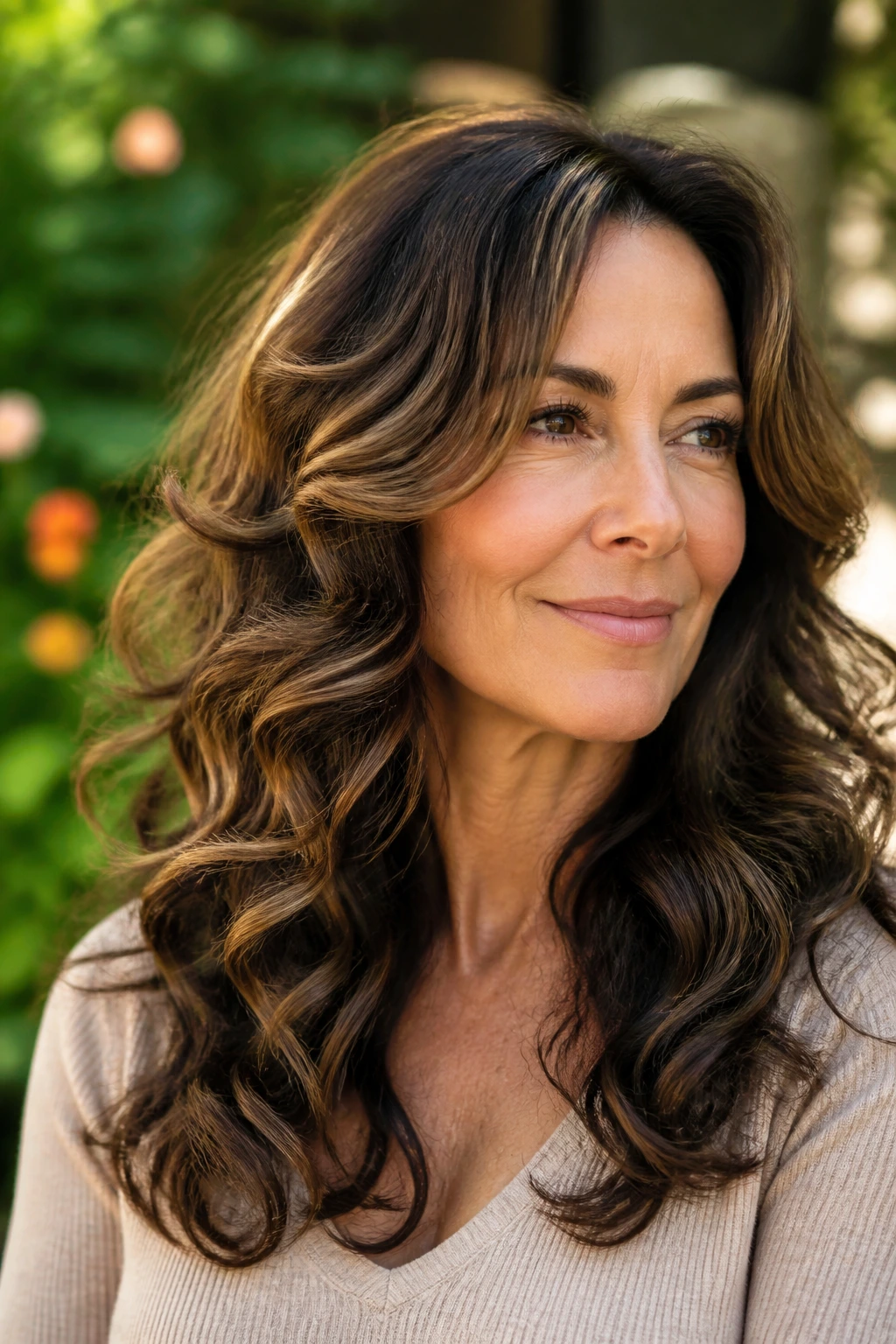
Long curls can fall flat fast if the layers are lazy. Espresso ribbons solve part of that by giving the lower lengths a deeper underside, so the curl stacks look intentional instead of heavy. The color does not need to be dramatic; it needs to be placed where the hair bends and folds.
Why It Works
The best long curly cuts usually hide their smartest work underneath. That is true here. If the lowlights start too high, the crown can look dim and the ends can look heavy. Keep the darker threads mid-shaft to lower lengths, and let the face frame stay a touch lighter or closer to the base shade. You get movement without losing the line.
Long hair after 40 does need a little discipline. Not harsh discipline. Just enough shaping that the curls do not sit as one giant curtain.
4. Curly Shag with Caramel Crown Lowlights
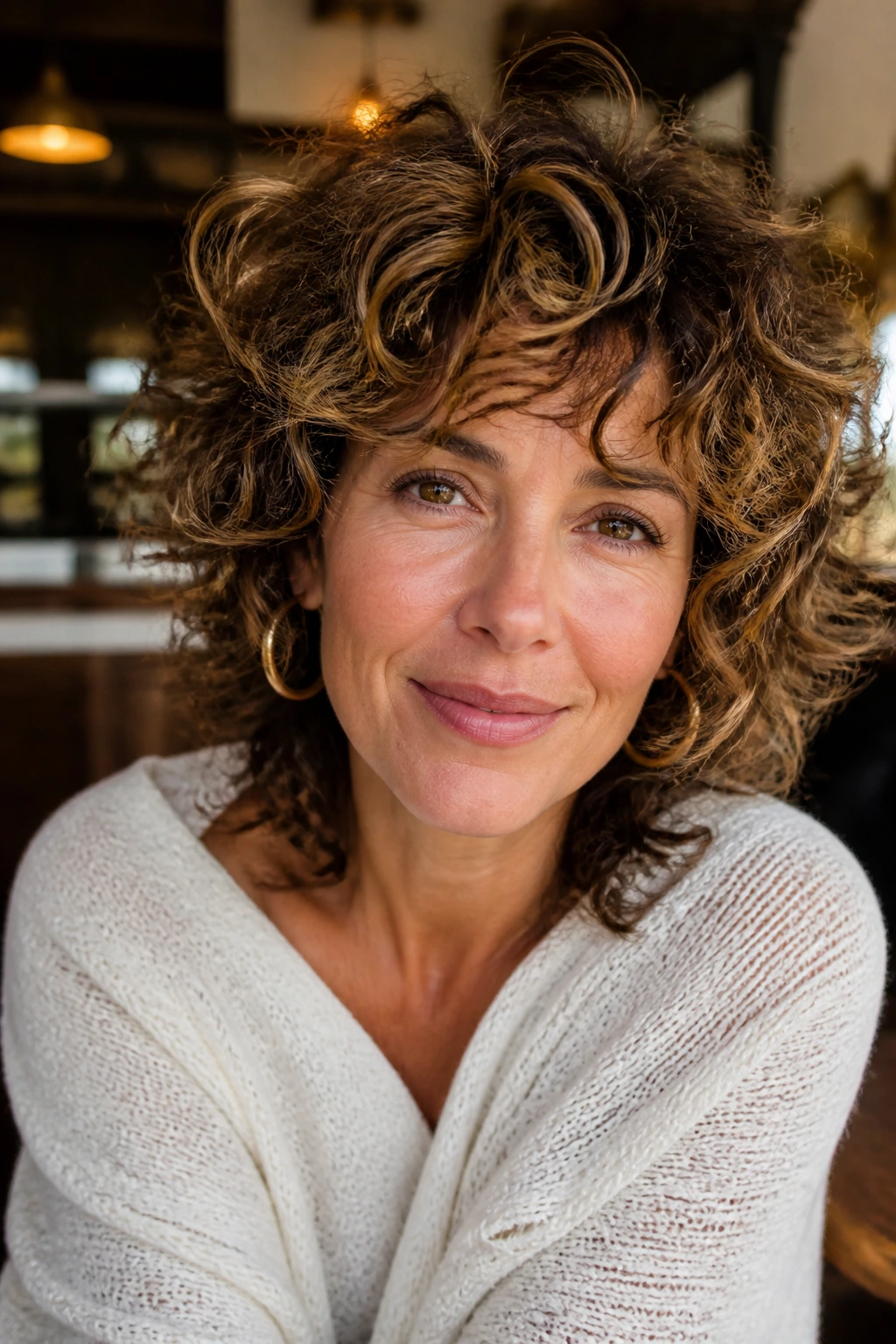
The curly shag is still one of the easiest ways to get lift without begging your hair to do something unnatural. The shorter crown layers create air between curls, and the caramel lowlights around the top keep that lift from turning into a halo of frizz.
This is a good cut for anyone who wants texture first, polish second. The crown shadowing matters because that’s where a shag can start to float away from the head. Caramel pieces under the upper layer bring the eye back to the structure. The whole thing feels lived-in, not messy. And if you have a lot of gray at the part, the warmth keeps the contrast from getting too stark.
5. Tapered Curly Crop with Mahogany Undertones
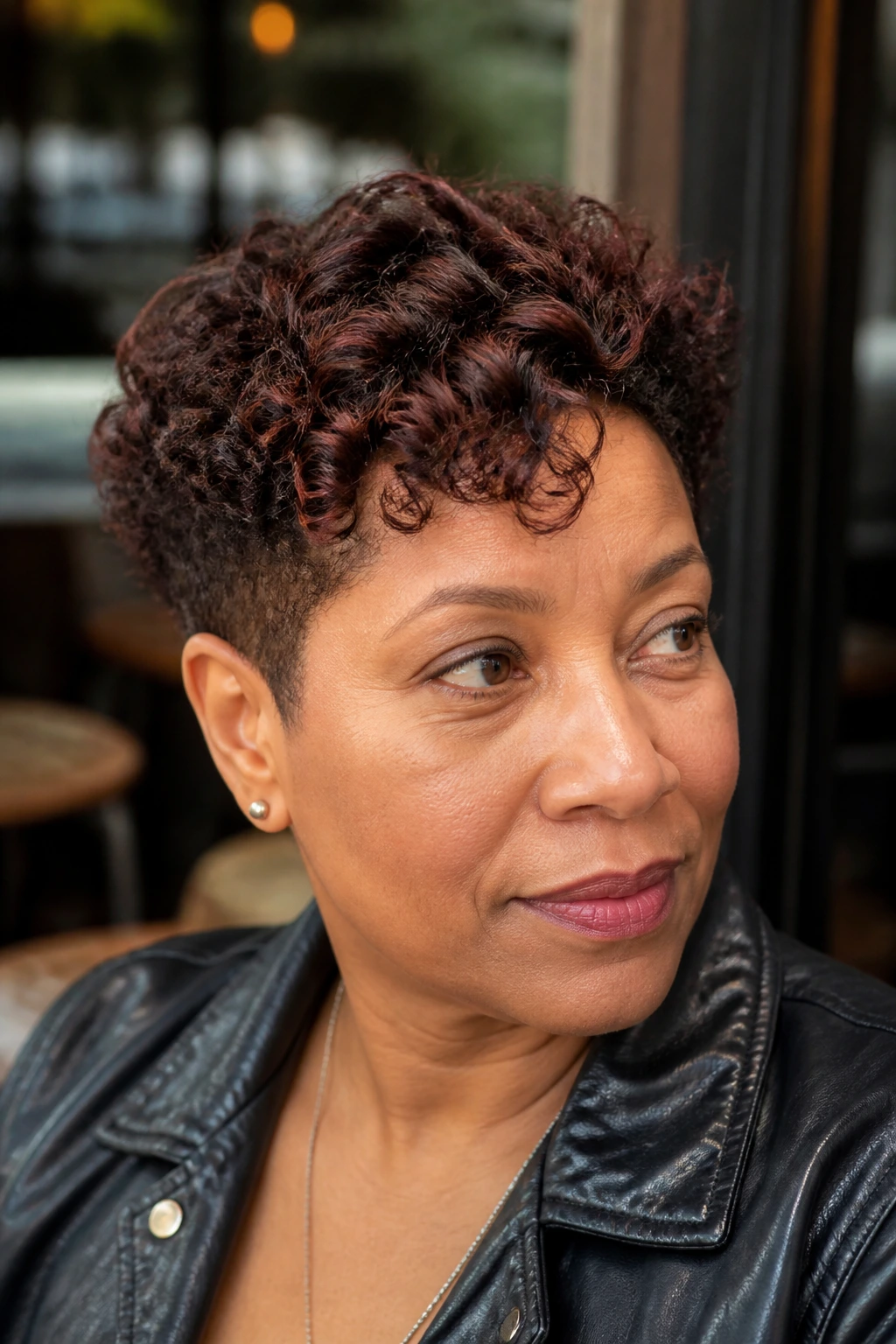
A tapered crop with curls is short, sharp, and a little fearless. The sides and back sit close enough to keep the outline neat, while the top keeps enough length to show curl shape. Mahogany undertones are a smart pick here because they add richness without screaming for attention every time you move your head.
This cut is especially good for thicker curls that need some weight removed around the perimeter. If the nape has always felt bulky, the taper fixes that fast. A good stylist will leave a touch more length on top, then tuck the lowlights into the inner layers so the shape looks dimensional rather than dyed. It’s a tiny thing. It changes everything.
6. Side-Parted Shoulder Cut with Toffee Frame
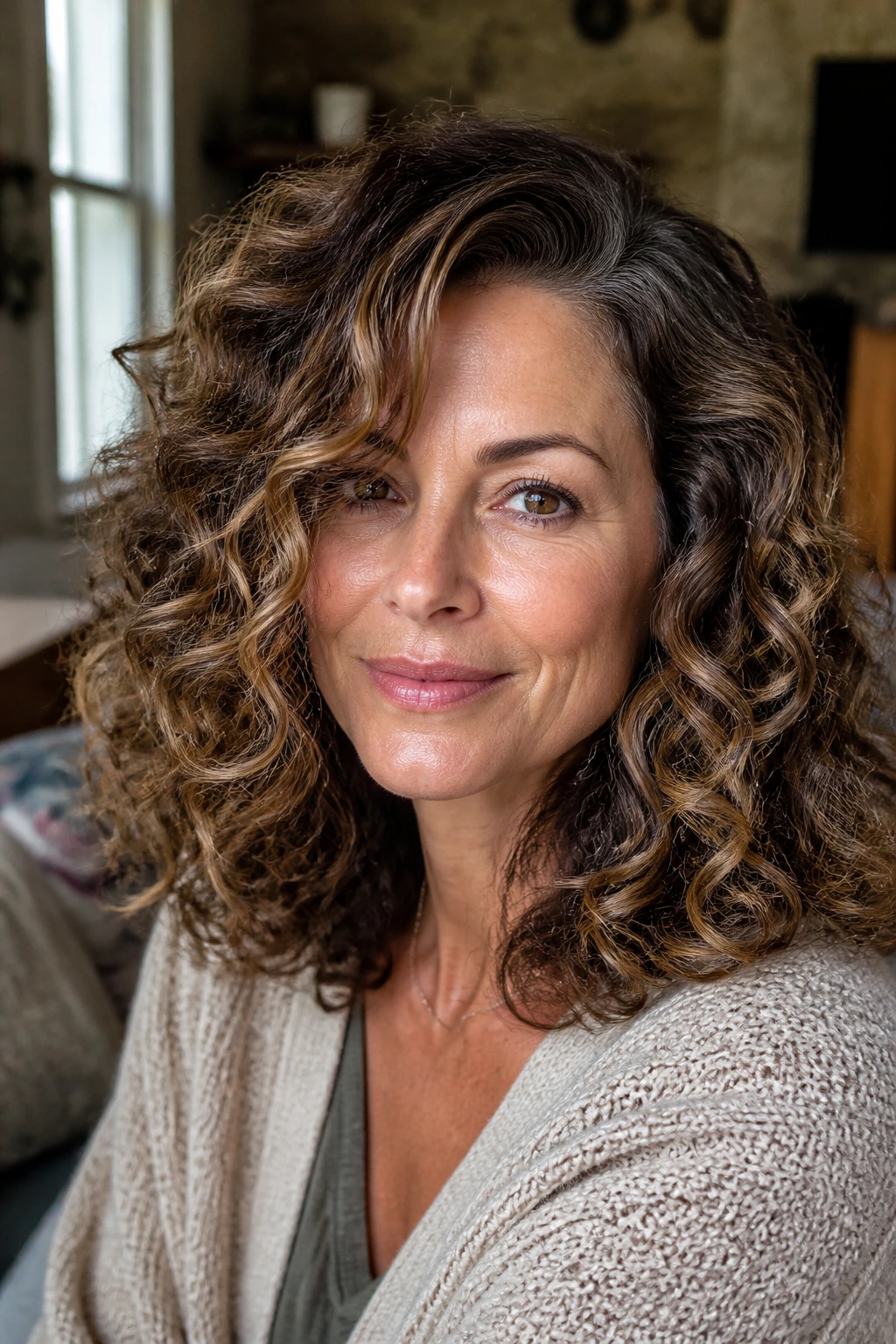
A side part changes the whole mood of curly hair. It softens the forehead, gives the curls a direction to fall in, and keeps the shape from feeling too symmetrical or too severe. Toffee lowlights around the front pieces make the side sweep look softer, which is handy if you want movement near the face without bright streaks shouting for attention.
The shoulder length gives you room to tuck one side behind the ear, clip it back, or let it fan out. I like this shape on curls that have a little frizz at the roots but nicer definition through the mid-lengths. The lowlights sit like quiet depth rather than decoration. That’s the point.
7. Rounded Halo Cut with Soft Chestnut Shadows
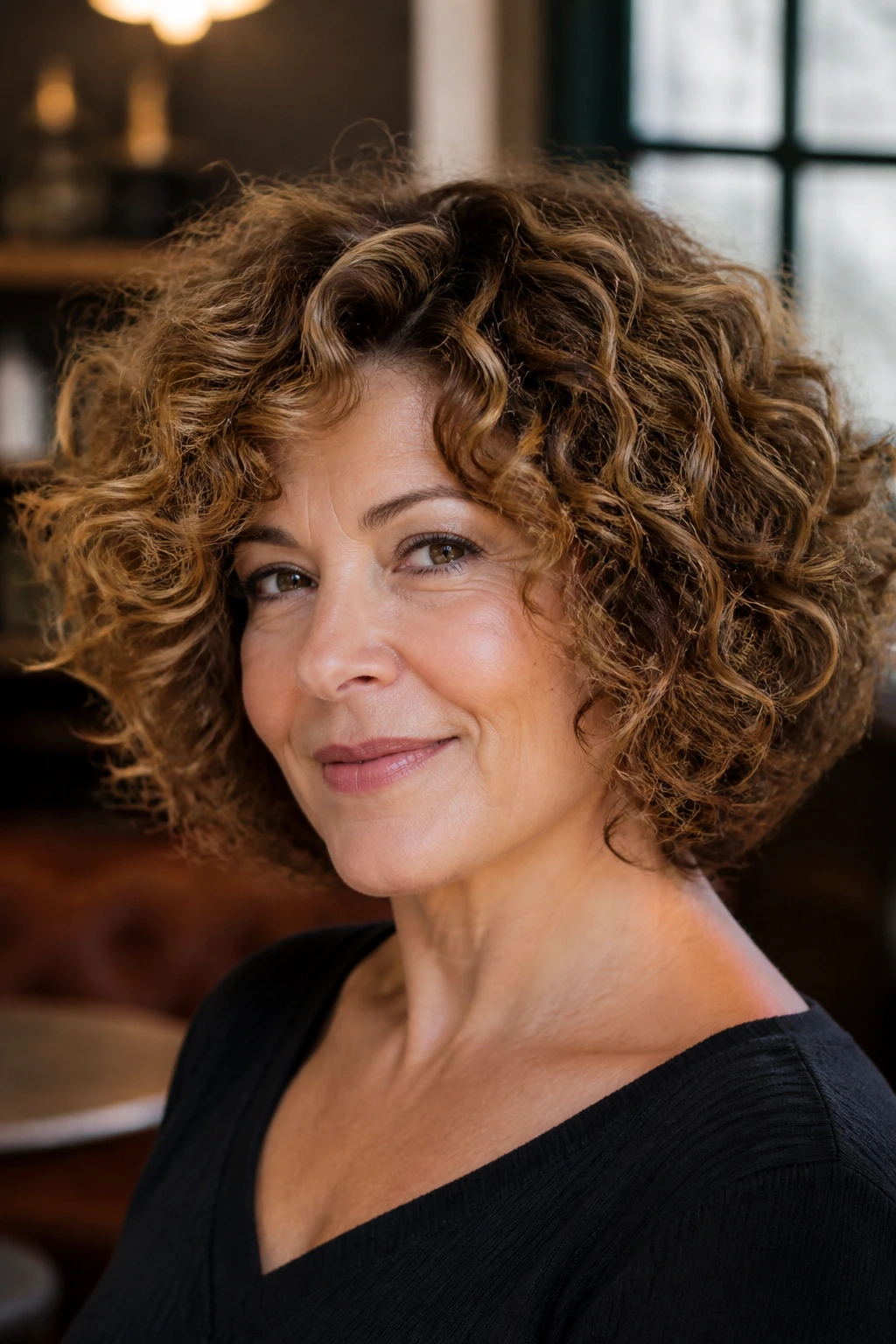
Rounded cuts are underrated because they make curls feel clean and full at the same time. A halo shape keeps the silhouette curved, which suits tighter curl patterns and denser hair that can otherwise puff outward in strange places. Soft chestnut shadows placed inside that round shape add weight where you need it and keep the top from looking too bright.
What Makes It Different
The magic is in the inside layers. If the lowlights only live on the outside, the cut can still read as wide. Put them inside the halo, and the silhouette settles down. This is one of those styles that looks especially good when the curls dry naturally and you do not touch them much.
If you want a shape that looks tidy in a bun, a twist, or a loose wash-and-go, this one is strong.
8. Curly Pixie with Walnut Lowlight Panels
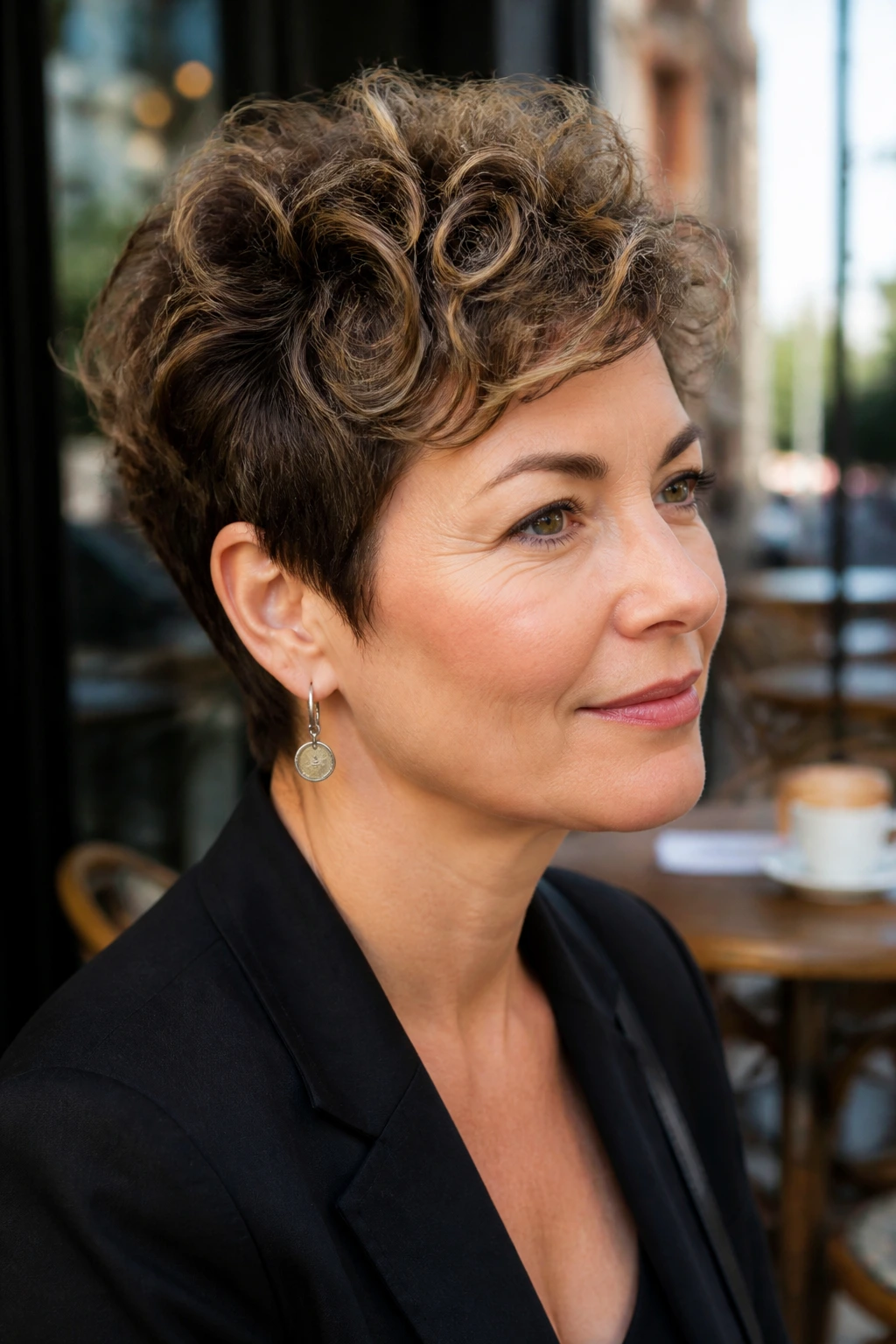
Short curly hair can feel airy and cool, but it needs a plan. A pixie with walnut lowlight panels through the sides and nape keeps the top lifted without making the haircut look lumpy. The dark pieces create clean separation between the curls, which is a gift if your hair has a fine texture that tends to blur together.
This is a sharper look than most people expect. It’s also easier to wear than it looks. The trick is to keep the top pieces long enough to bend over with a little cream, then use the darker panels underneath as a visual anchor. The result reads modern, not overworked.
9. Face-Framing Layers with Honeyed Brunette Depth
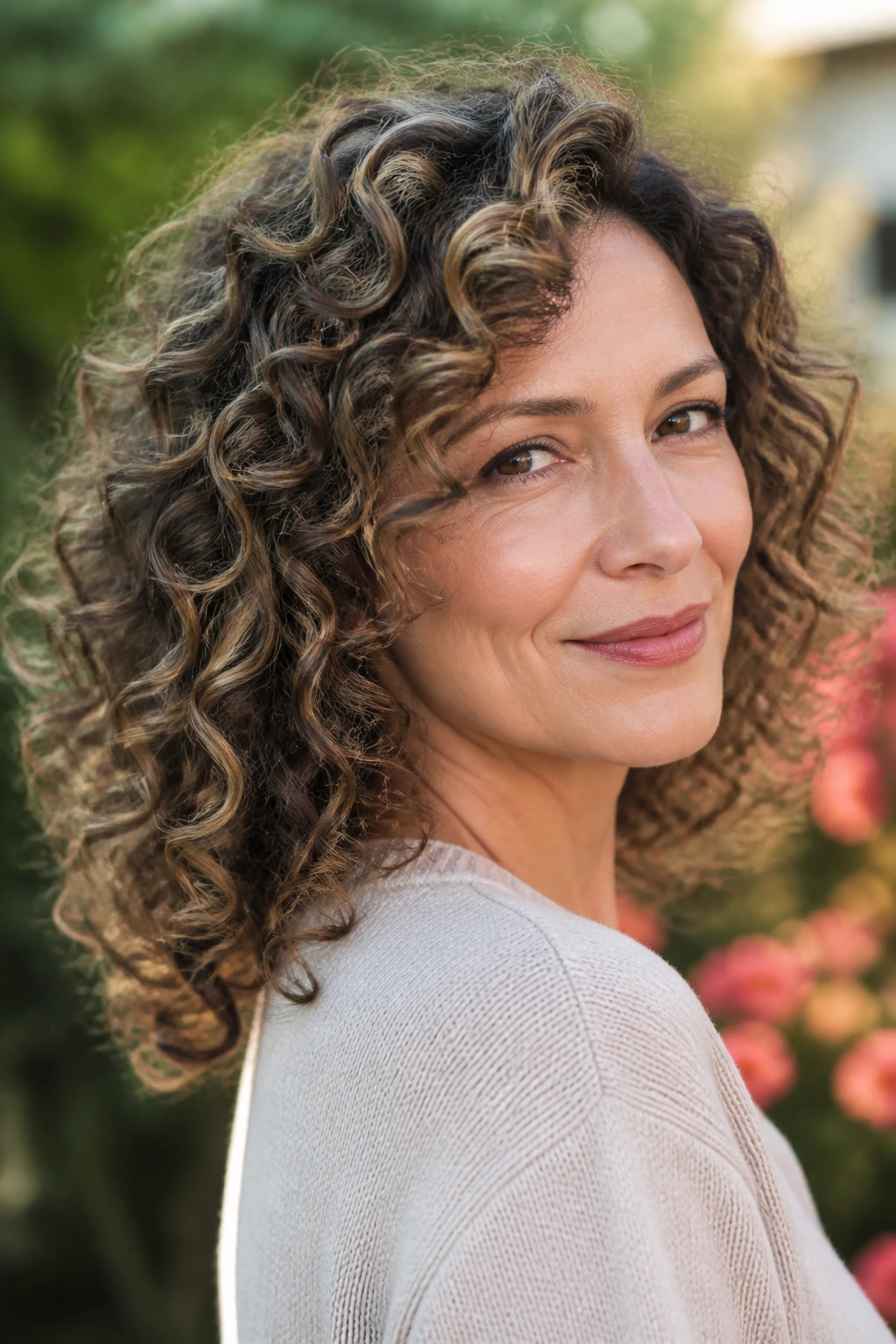
Face-framing layers are the easiest way to make curly hair feel lighter around the cheeks and jaw. Add honeyed brunette depth underneath those front pieces, and the whole cut takes on a softer, warmer outline. The curl near the face lifts a little, the rest of the hair falls back, and you get shape without a heavy curtain effect.
This works well if your glasses sit high, your jawline feels sharper than you want, or your curls tend to bunch too much around the sides. The lowlights should be tucked just behind the face frame, not painted right on it. That leaves the front clean and lets the depth do its work from the second row back. Quiet. Smart. Better than obvious streaks.
10. Stacked Curly Bob with Cocoa Nape Shadows
A stacked bob gives curly hair a built-in lift at the back, which is useful if the crown tends to collapse or the nape feels too thick. Cocoa shadows in the lower back sections stop the stacked shape from turning puffy, and they make the curve of the cut read more clearly.
- Best for denser curls: The stacking removes bulk without carving the shape too aggressively.
- Ask for visible graduation: The back should sit shorter than the front, but not so short that the curls spring into a shelf.
- Color goes under the ridge: That keeps the outline crisp from the side and back.
This is a neat, architectural look. It does not need much styling beyond a diffuser and a little patience.
11. Layered Deva Cut with Auburn Peekaboo Lowlights
A Deva-style cut is built curl by curl, which makes it one of the best ways to keep the shape from collapsing. Auburn peekaboo lowlights fit that method because the color can be tucked into interior sections and around selected curl families instead of flooding the whole head with the same tone.
That peekaboo effect is the part I like most. You turn your head, and the auburn flashes through the darker curls for a second. It’s not loud. It’s movement. If your hair has a mix of silver and brunette strands, this also keeps the color from getting choppy. The cut stays airy. The color stays alive.
12. Soft Afro with Sable Interior Color
A soft afro gains a lot from interior lowlights. Sable color inside the shape makes the outer ring of curls look richer and more lifted without darkening the whole head. You still get the roundness and volume, but the surface has more depth, which helps the shape read cleanly in daylight.
The best versions are not overly sculpted. They have enough length for the curls to bloom, enough layering to avoid a blocky edge, and enough darkness under the top layer to create contrast. If your natural texture is coily, this style gives the hair room to expand while keeping the silhouette from drifting too wide. It’s a strong, easy shape.
13. Curtain Bangs with Mocha Ends
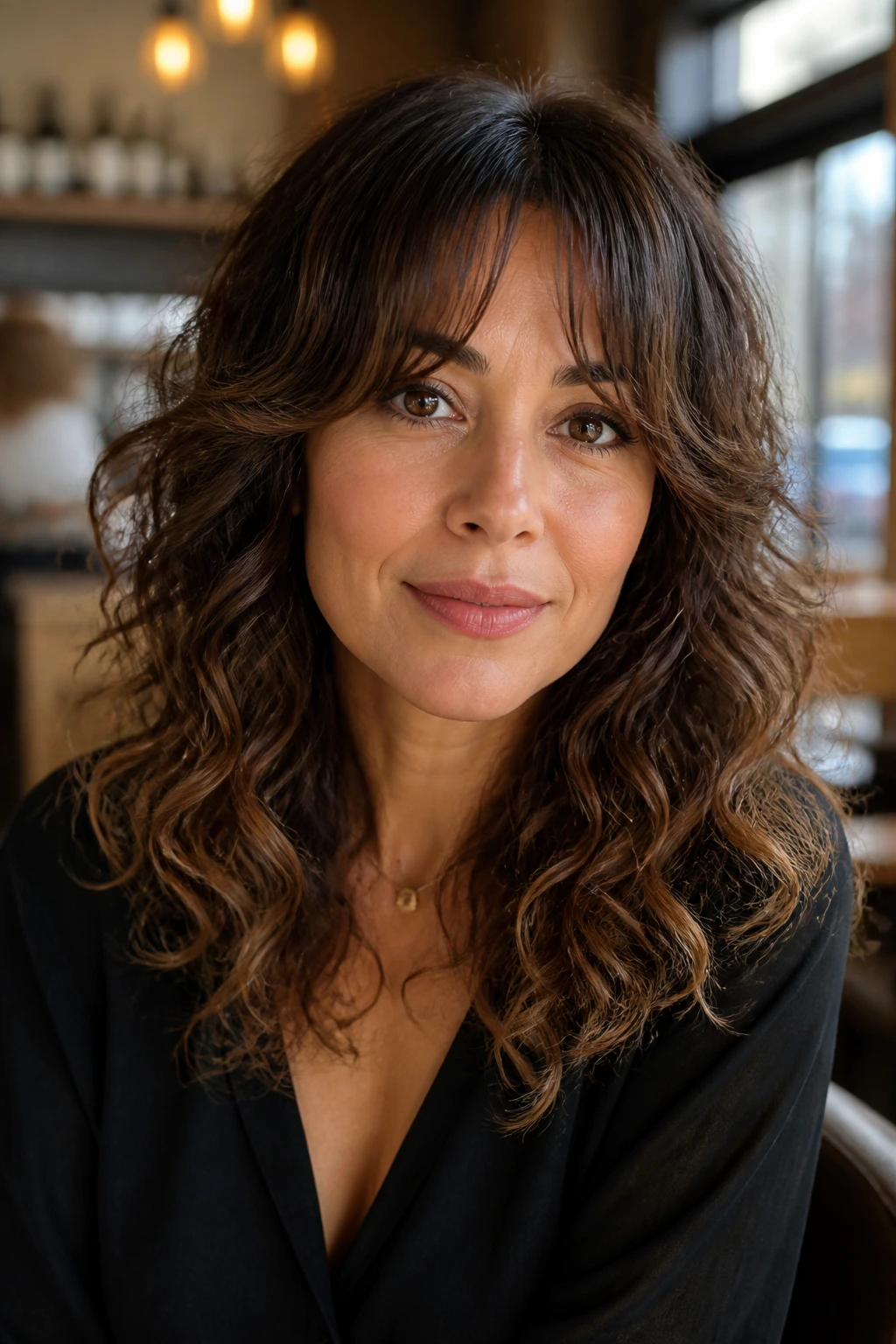
Curtain bangs on curly hair can be charming or annoying. There is not much middle ground. The difference usually comes down to where the length lands and how the bangs connect to the side layers. Mocha lowlights at the ends keep the fringe from looking too bright or stringy once it dries and separates.
That darker finish at the tips matters more than people think. Curly bangs often shrink faster than the rest of the cut, so the ends can pop up and look a little disconnected. A soft mocha depth helps the whole front blend into the rest of the style. If you want cheekbone movement without a heavy fringe, this is a useful option.
14. Asymmetrical Curly Lob with Smoky Brown Lowlights
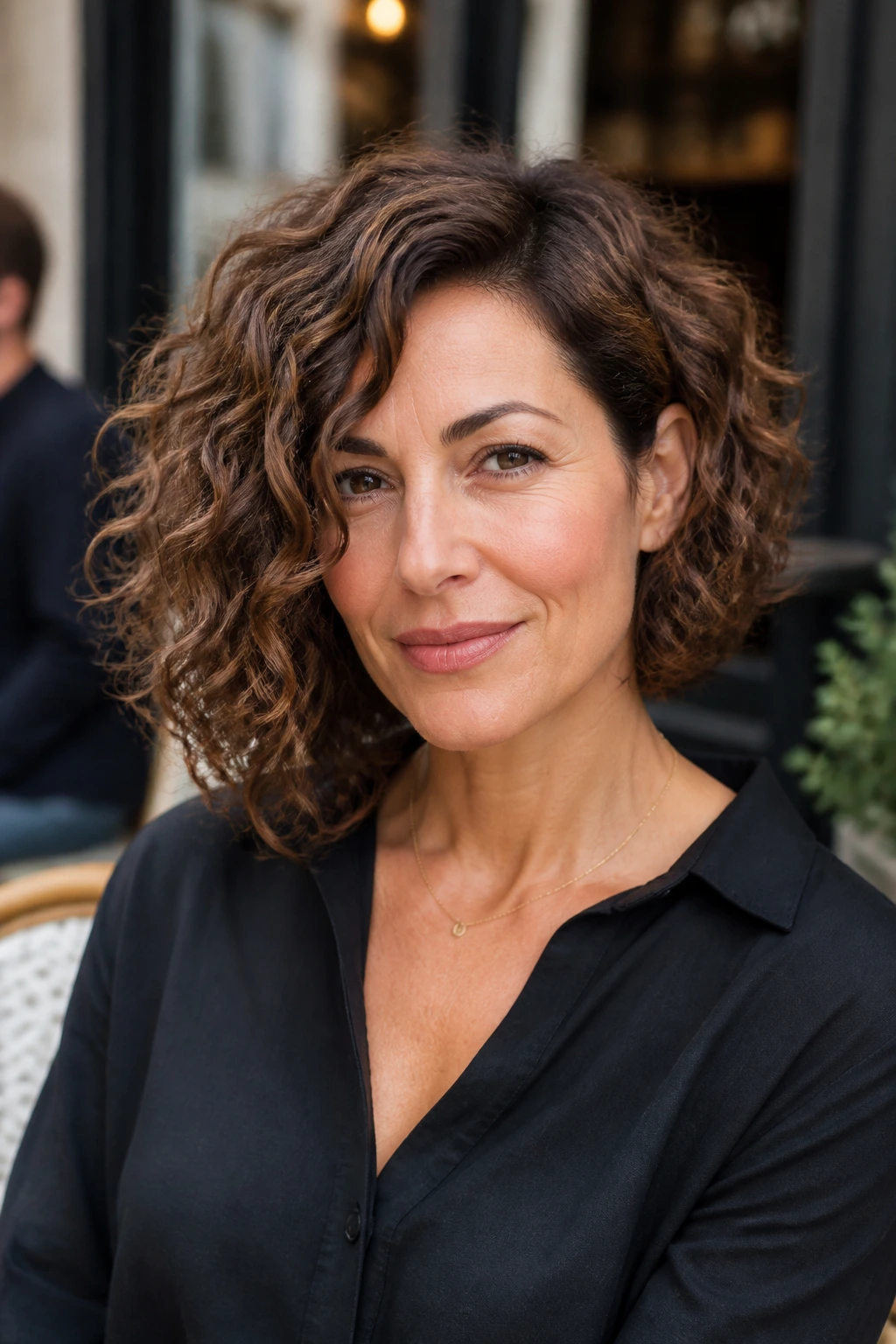
An asymmetrical lob gives curly hair a little attitude without making it high-maintenance. One side sits a touch longer, which can be enough to make the whole cut feel intentional and fresh. Smoky brown lowlights enhance that line by deepening the longer side and underlining the angle instead of flattening it.
The best asymmetrical cuts do not shout about being asymmetrical. They look like the curls naturally fall that way, which is a much better trick. Keep the shorter side near the jaw, let the longer side graze the collarbone, and ask for lowlights under the lengths rather than through the surface. The shape stays readable even when the curl pattern loosens up.
15. Medium-Length Ringlets with Bronze Underpainting
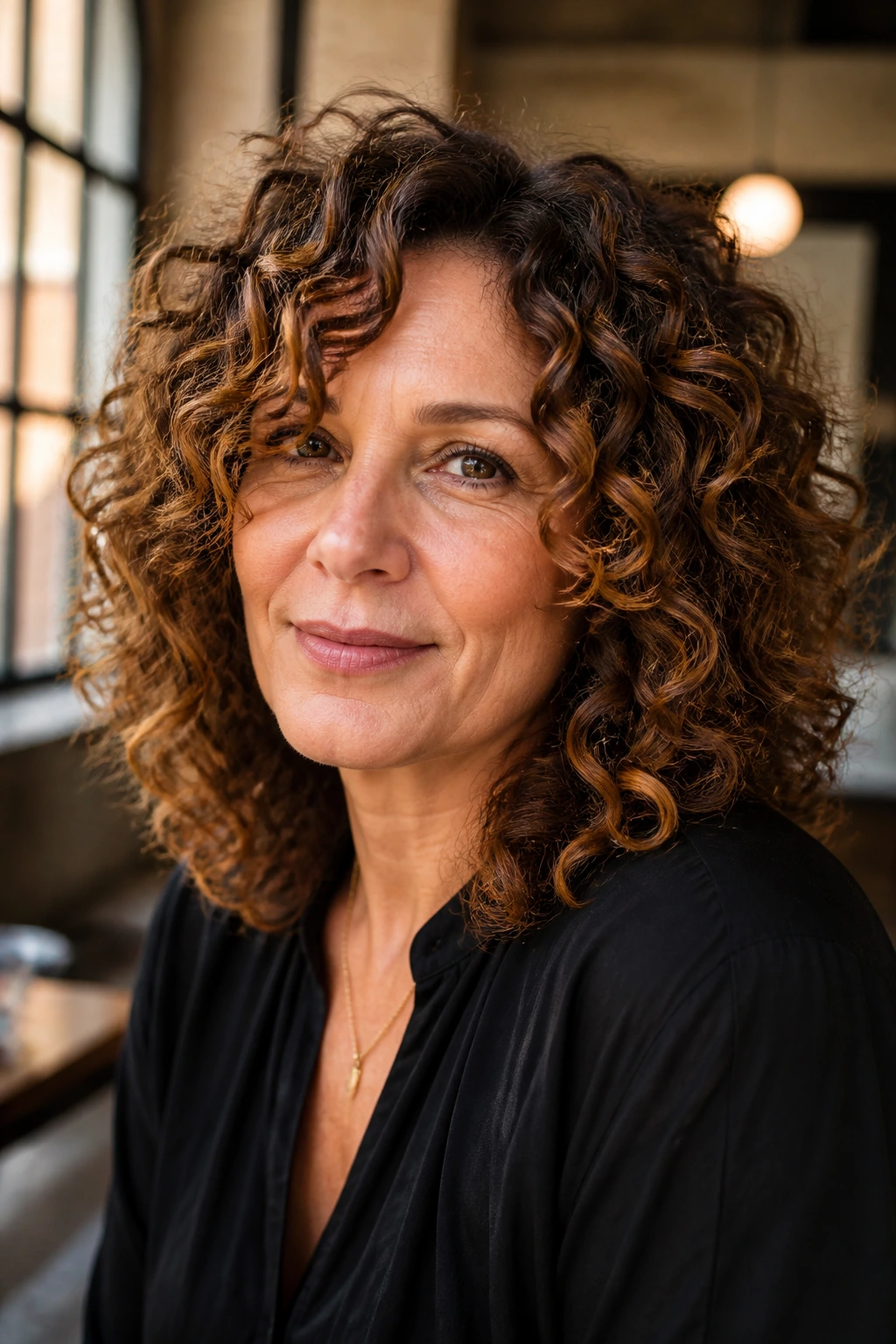
Medium-length ringlets are a sweet spot if you want movement but not too much weight. Bronze underpainting adds warmth from the inside, so the ringlets catch a little glow as they separate. The color is hidden enough to stay sophisticated and visible enough to stop the hair from looking flat.
This works particularly well on looser curls and spiral patterns that need a little help showing their shape. Bronze underpainting also plays nicely with skin that has warm or neutral undertones, because it does not fight the face. A good stylist will keep the brightest pieces near the surface and the darker bronze where the curls overlap. The contrast looks natural. Which is rare, and worth keeping.
16. Tight Coil Crop with Deep Walnut Lowlights
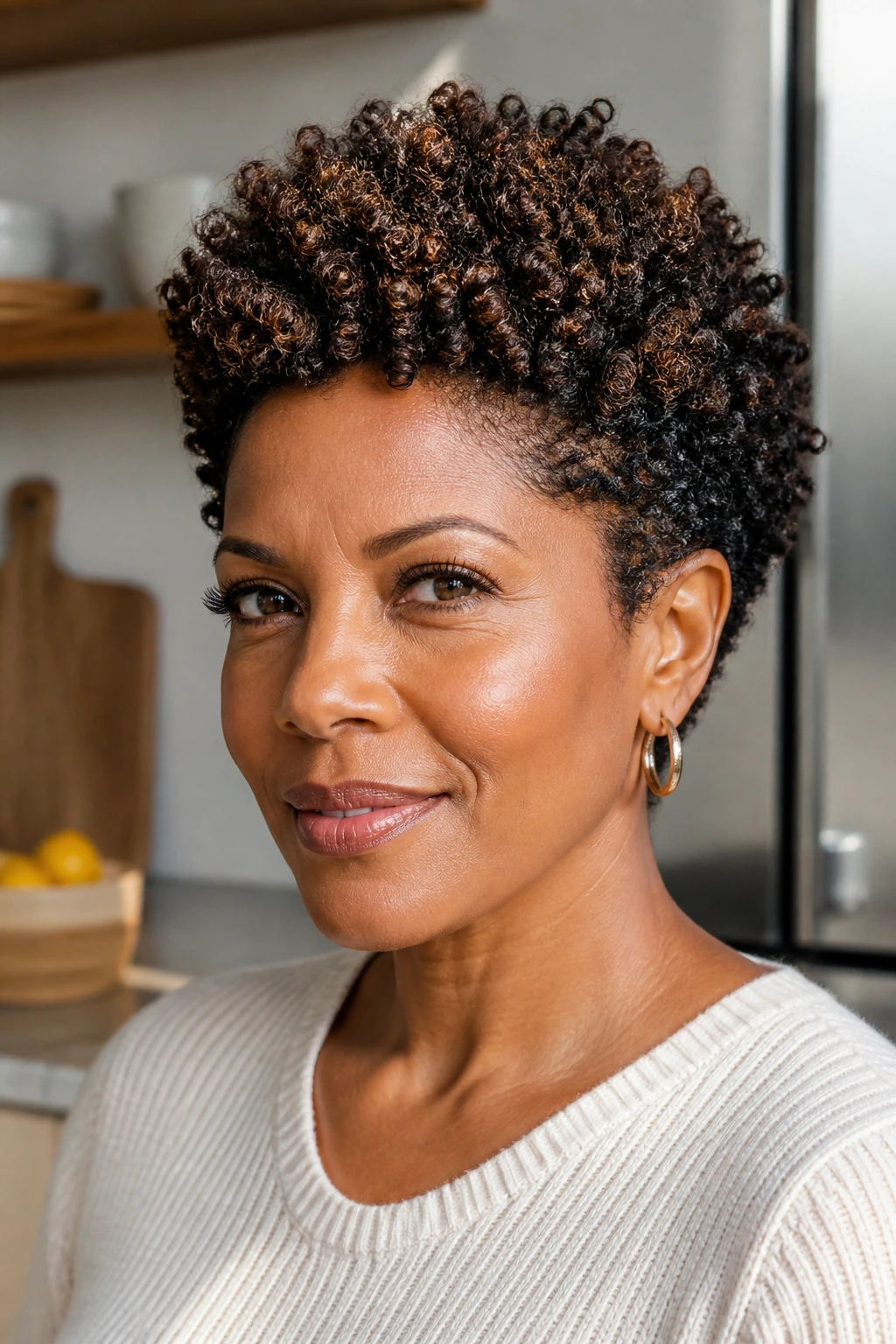
Tight coils can hold color beautifully when the placement is careful. A short crop with deep walnut lowlights creates tiny bands of shadow between coil clusters, and that makes the pattern read clearly instead of as one dense mass. If the cut is too blunt, the color can feel heavy. This solves that.
A lot of people think tight coils need brightening to look alive. Sometimes they do. Sometimes they need structure more than brightness. Walnut lowlights inside the shape give the eye a place to rest and make the outline look neater at the temples and nape. The crop stays compact, but it never feels stiff. Not if it’s cut well.
17. Waterfall Layers with Chestnut and Copper Blend
Waterfall layers cascade nicely on curly hair because the lengths step down in a way that lets each section breathe. Chestnut and copper lowlights blended together keep the effect soft, not striped, and they add warmth that works especially well if your hair already leans brunette with a little gold in the sun.
This cut needs movement. If you pin it too tightly or load it with heavy cream, the waterfall effect disappears. Let the layers fall, let the lower curls separate, and keep the lowlights mostly in the middle and lower zones. That’s where the shine lands when the hair moves. The finish feels warm, dimensional, and a little softer than a single-tone brunette.
18. Curly Wolf Cut with Earthy Brunette Panels
The wolf cut is a little messier by design, and that’s part of the appeal. Shorter layers at the crown, longer lengths below, and a rougher outline give curly hair a lived-in shape that doesn’t need perfect styling. Earthy brunette panels keep the look from turning too punk or too deliberate. They ground it.
This is a good choice if you want volume at the top and movement at the bottom. The lowlights should run through the crown and underlayers, where they can make the shaggy outline look richer. It’s not a neat haircut. It’s not supposed to be. But with the right color placement, it still reads polished enough for everyday wear.
19. Shoulder-Length Curls with Salt-and-Pepper Blending Lowlights
Salt-and-pepper blending is one of the smartest ways to work with naturally silvering curls. Instead of trying to hide the gray, you weave in lowlights that bridge the gap between silver, brunette, and whatever your base color happens to be. The result is softer contrast and less obvious regrowth.
Shoulder length gives this approach room to breathe. The curls frame the face, the mixed tones break up the surface, and the whole head looks more nuanced without leaning fussy. If your silver is clustered at the temples or around the part, ask for a softer hand there and deeper pieces underneath. The goal is not camouflage. It’s harmony.
20. Voluminous Mid-Length Cut with Dark Root Melt
A dark root melt on curls is useful because it creates a slow shift from root to length, which keeps the crown looking grounded while the ends stay bright enough to show movement. Mid-length curls can get puffy fast, and that deeper root zone quietly settles the shape.
This cut is a good match for people who want a little color drama without a high-contrast grow-out line. The root melt should feel soft, not painted on like a cap. When it’s done well, the eye moves from darker roots to lighter mids in a smooth slide, and the curls look fuller as a result. No harsh band. No stripey regrowth. Better.
21. Curly Bob with Sweeping Side Fringe and Walnut Depth
A sweeping side fringe changes a bob from practical to a little more interesting. It brings movement across the forehead and gives the curls a direction that feels soft rather than blunt. Walnut depth under the fringe and around the back stops the cut from turning puffball-shaped.
How to Get the Most From It
Ask for the fringe to be cut while the curls are in their natural pattern, not stretched straight. That keeps the shortest pieces from shrinking too far. The lowlights should live underneath the sweep so the front stays light enough to open the face, while the darker pieces quietly support the structure from behind.
This one is neat on busy days. It holds its shape with surprisingly little fuss.
22. Long Spiral Curls with Subtle Maple Lowlights
Long spiral curls can get gorgeous, but they can also get busy. Subtle maple lowlights keep the spiral pattern readable by adding gentle contrast in the spaces between curls. The shade is warm enough to flatter brunette bases, and soft enough not to compete with the curl itself.
I like this look best when the lowlights are woven in fine sections rather than chunked out in big swaths. Spirals already have strong shape; they do not need extra color drama fighting them. Keep the placement light around the face and denser in the lower lengths. That gives the hair movement when it falls over the shoulders and keeps the top from looking overloaded.
23. Pinned-Back Curly Updo with Dimensional Brunette Base
A pinned-back style is not just for events. On curly hair, it can be a quick way to get shape without forcing every strand into the same direction. A dimensional brunette base with lowlights underneath gives the updo some depth, so the pinned sections look polished instead of flat.
The nice part here is how forgiving it is. Loose face pieces can stay curly, the back can be twisted or clipped, and the darker base hides the pins and bobby points better than a single flat color would. If you wear your curls up often, this is one of the smartest color patterns you can choose because it looks finished even when the style is intentionally undone.
24. Soft Mullet with Cinnamon Interior Lowlights
A soft mullet sounds scarier than it is. On curly hair, it can look airy, modern, and a little rebellious in the best possible way. The crown is shorter, the back keeps more length, and cinnamon interior lowlights make the layer shift more obvious without turning the style harsh.
This cut works when you want movement and shape but do not want a standard bob or shag. The key is softness around the ears and a good connection between the front and back lengths. Keep the lowlights tucked inside the cut so they appear as the hair swings, not as stripes across the top. It’s a style with a little edge. Not costume edge. Just enough.
25. Defined Ringlets with Mushroom Brown Shadowing
Defined ringlets love shadow. Mushroom brown lowlights are a smart choice when you want a cool, slightly muted finish that still reads rich in daylight. The color helps the ringlets separate cleanly, which is useful if your hair tends to look too bright or too red under indoor light.
This is one of the more controlled looks in the list. It suits people who like their curls springy but not fluffy, and who want the shape to feel polished from the front and the back. Keep the shadowing mostly under the top layer and through the back curve. Then let the ringlets sit on top like the point of the whole thing. Clean. Crisp. No guesswork.
Why Lowlights Change the Shape of Curly Hair
Curly hair does not behave like straight hair with a little wave tacked on. It stacks, folds, and shrinks in layers, which means color placement changes how the shape reads just as much as the scissors do. Lowlights work because they create pockets of depth between curl families. That depth matters around the crown, the sides, and the nape, where curly hair can balloon or blur if everything is the same shade.
A well-placed lowlight also acts like an outline. It helps the eye see where one curl clump ends and the next begins. That is why a few pieces of mocha, walnut, or chestnut can make a cut look sharper than a whole head of brighter color. The effect is subtle, but not tiny. You notice it the moment the hair moves.
Grey blending is the other reason these styles hold up. Silver strands can look streaky when they are isolated, especially near the temples. Lowlights soften that contrast and make the grow-out look intentional, which means you spend less time staring at the part line and wondering when it all went off the rails. It usually didn’t. The color just needs more shadow.
Tools That Make the Cut and Color Behave
-
Diffuser attachment: A medium-size diffuser gives curls lift at the root without blasting the cut apart with hot air.
-
Wide-tooth comb: Use it on soaking-wet hair after conditioner so the curl clumps stay intact before styling.
-
Sectioning clips: These matter for both styling and salon upkeep; clean sections make it easier to see where the lowlights actually sit.
-
Microfiber towel or cotton T-shirt: Rough towels steal definition and leave the cut frizzier than it needs to be.
-
Curl brush or Denman-style brush: Helpful for shaping ringlets and directing the curl family where you want it to land.
-
Color-safe shampoo: Keeps lowlights from fading dull too quickly, especially if the formula is warm or demi-permanent.
-
Lightweight leave-in and gel: The pair keeps curls defined without turning the top layer stiff and crunchy.
-
Satin bonnet or pillowcase: Not glamorous, but it keeps the ends from roughing up overnight and preserves the shape longer.
Choosing Shades and Placement Without Guesswork
The easiest rule is also the one people skip: keep lowlights one to two levels deeper than the base, not five. Darker does not always look richer. On curly hair, too much depth can swallow the pattern and make the whole head look muddy, especially if the curls are porous or dry at the ends. A chestnut brunette base usually likes mocha, walnut, or soft espresso. A cooler base can handle mushroom brown or smoky brown better than gold.
Placement matters just as much as color choice. Fine woven lowlights under the top layer often look better than broad streaks over the surface because curls move in clumps. If the darker pieces are woven through the underside, the hair gets dimension when it shifts, and the top layer still catches light. That keeps the style from looking painted on.
If you are blending gray, ask for lowlights around the part, temple, and nape first. Those are the places where regrowth shows fastest. Keep the face frame a touch lighter or closer to the base shade so the cut stays open. Dark pieces right next to the face can work, but only if the rest of the shape is balanced. Otherwise the hair can feel heavy before you even leave the chair.
How to Style These Looks on a Busy Morning
Fast polish: Start with damp curls, smooth in a leave-in, then add a small amount of gel or curl cream from mid-length to ends. Diffuse until the roots are about 80 percent dry, then stop touching it. The curl pattern will tighten as it cools.
Low-effort days: Mist the hair with water until it feels evenly damp, scrunch the ends, and clip a few crown sections at the root for lift. That is usually enough to wake up the lowlights and bring back the shape. You do not need to redo the whole head.
Humidity defense: Use a lighter product stack than you think you need. Heavy creams can swell in damp air and blur the lowlight placement. A lighter leave-in plus a stronger gel gives the curl more hold and keeps the darker pieces visible.
Dressier finish: Pick up the front sections with a side clip or tuck one side behind the ear. Curly cuts with lowlights show their best lines when the face frame is slightly controlled, not fluffed out in every direction.
Accessory move: Satin scrunchies, slim clips, and matte pins work better than shiny oversized ones. They let the curl shape stay the main event.
Small Tweaks That Make Each Cut Feel Personal
Color Enhancement: If the base color is warm, ask for caramel, chestnut, or bronze lowlights. If the base leans cool, mushroom brown and smoky espresso usually look calmer and less brassy.
Crown Lift: A few root clips while the hair dries can keep the top from collapsing into the lowlights underneath. That helps especially on lob and bob lengths, where the silhouette needs a little air.
Face Shape Balance: Softer bangs, side parts, or longer front layers can redirect attention if the jaw feels strong or the forehead seems wide. The lowlights should support that move, not fight it.
Grey Blending: If silver shows in thick streaks, ask for lowlights woven thinner near the part and more concentrated under the layers. The grow-out looks cleaner when the regrowth line is broken up.
Texture Tweaks: Fine curls need lighter color placement and lighter styling products. Dense curls can handle deeper shadows and stronger hold without losing movement.
Keeping the Cut and Color Fresh Between Appointments
A curly cut with lowlights usually looks best when you treat maintenance as part of the style, not as a chore you forgot to schedule. Most short curly shapes need a trim every 8 to 10 weeks if you want the outline to stay clean. Lob and shoulder-length cuts can stretch to 10 to 12 weeks, but once the lower layers start hanging too heavy, the shape loses its bounce fast.
Color refresh depends on how bold you want the lowlights to stay. A soft blended look can go 10 to 14 weeks before it feels dull. If the lowlights are part of a stronger gray-blend pattern, you may want a gloss or demi-permanent refresh sooner, around 6 to 8 weeks, to keep the tone from turning flat. Porous curls grab color fast and lose shine just as fast, so a monthly glaze can help.
At home, deep condition every 1 to 2 weeks and clarify about once a month if you use heavy creams, oils, or gels. Too much buildup makes lowlights disappear under a dusty film. Sleep on a satin pillowcase or wear a bonnet, and refresh the front pieces with a water spray and a little leave-in instead of soaking the whole head again. Less water, less friction. Better curl memory.
Common Mistakes That Flatten Curls or Muddy Color
-
Going too dark with the lowlights: If the shade is several levels deeper than the base, the curls can look dull instead of dimensional. Ask for one to two levels deeper, then let the placement do the rest.
-
Using chunky color stripes: Wide bands of lowlight sound dramatic in theory and look stripy in shrinkage. Fine weaving and interior placement usually give a softer, cleaner result.
-
Ignoring shrinkage in the cut: A bob or fringe that looks perfect wet can bounce up too far once it dries. Your stylist needs to cut for how the curl lives, not for how it hangs straight.
-
Loading on heavy creams after color: Thick creams can weigh curls down and hide the lowlight pattern. If the color disappears by noon, the styling product is probably too rich.
-
Skipping regular trims: Curly ends split and puff, then the lowlights start looking fuzzy at the bottom. Trim before the shape collapses, not after.
-
Using hot tools without protection: Diffusers and irons can dry porous curls fast, which makes warm lowlights look brassy and ends feel rough. A heat protectant and low heat setting change that outcome fast.
Variations and Adaptations for Different Curl Patterns
Fine Curl Lift: Keep the cut shorter, the layers lighter, and the lowlights woven in very thin sections. Fine curls need contrast, not weight, or the shape goes limp.
Thick Curl Taming: Use deeper interior lowlights and more obvious graduation at the nape or crown. Thick curls usually hold color well, but they also hide shape if the layers are too blunt.
Grey-Blend Soft Focus: Choose mushroom, mocha, or soft chestnut lowlights and keep them close to the part and temples. The goal is to blur silver, not cover it up in one hard block.
Warm Glow Version: Caramel, bronze, and cinnamon lowlights suit brunette curls with gold or copper undertones. This version looks especially good if your skin reads warm in daylight.
Short-Length Shortcut: If you do not want much upkeep, keep the cut above the shoulder and concentrate the lowlights in the underlayers. Short curls show color quickly, so subtle placement matters more than a dramatic formula.
High-Humidity Edit: Use lighter color contrast and a more structured cut, like a lob, shag, or layered bob. In humid weather, heavy products and dark stripes tend to blur together faster than anyone wants.
Frequently Asked Questions About Curly Hair with Lowlights
Are lowlights better than highlights for curly hair after 40?
Sometimes, yes. Lowlights usually give curly hair more depth with less visual frizz, while highlights can make the surface look brighter and a little wider if they’re overused. If you want softness, gray blending, or more shape at the crown, lowlights often do more useful work.
Will lowlights make my curls look thinner?
Not if they’re placed well. Thin, interior lowlights usually make curls look fuller because they separate the clumps and give the eye more structure to read. The problem comes from overly dark color or heavy stripes, which can flatten the shape.
How often should I refresh lowlights?
A soft blended look can last 10 to 14 weeks, while a stronger gray-blend formula may need a refresh closer to 6 to 8 weeks. If the color starts to look muddy or the contrast disappears under buildup, a gloss or tone refresh is usually enough.
Can I wear these styles if my curls are fine and not very dense?
Yes, but the cut matters more than the color. Fine curls usually need shorter or mid-length layers, lighter product, and fine lowlight placement so the hair does not lose lift. A collarbone lob, side-parted bob, or soft shag tends to work better than a heavy long cut.
What if my gray is clustered at the temples?
Ask for targeted lowlights around the temple and part line, then keep the face frame a little lighter or close to the base shade. That softens the contrast without making the whole front too dark.
Can I do these looks on tight coils?
Absolutely. Tight coils often look best with interior lowlights and shapes that respect shrinkage, like a crop, rounded halo, or soft afro. Broad streaks usually look too harsh; fine placement works better.
What should I tell my stylist before the appointment?
Bring photos of the cut shape, not just the color. Then explain how much shrinkage you get, how often you want to trim, and whether you want the lowlights to blend gray, add warmth, or just create more depth. That conversation saves a lot of guessing.
What if my curls frizz after coloring?
Treat the hair like it needs moisture and protection, not rescue drama. Use a color-safe conditioner, add a leave-in with a gel on top, and keep hot tools low. If the ends still feel rough after a few washes, a trim and a gloss usually help more than piling on extra cream.
The Shape That Makes the Color Work
The nicest thing about curly hair with lowlights is that it does not need to look forced to look finished. A good cut gives the curls room to live, and the lowlights quietly keep the shape from spreading out or going flat. That balance is what makes these looks feel wearable after 40, not just photogenic in a salon mirror.
Pick the length you can maintain, the shade that sits one or two steps deeper than your base, and the placement that follows your curl pattern instead of fighting it. Do that, and the style will stay useful long after the appointment, which is really the point.