



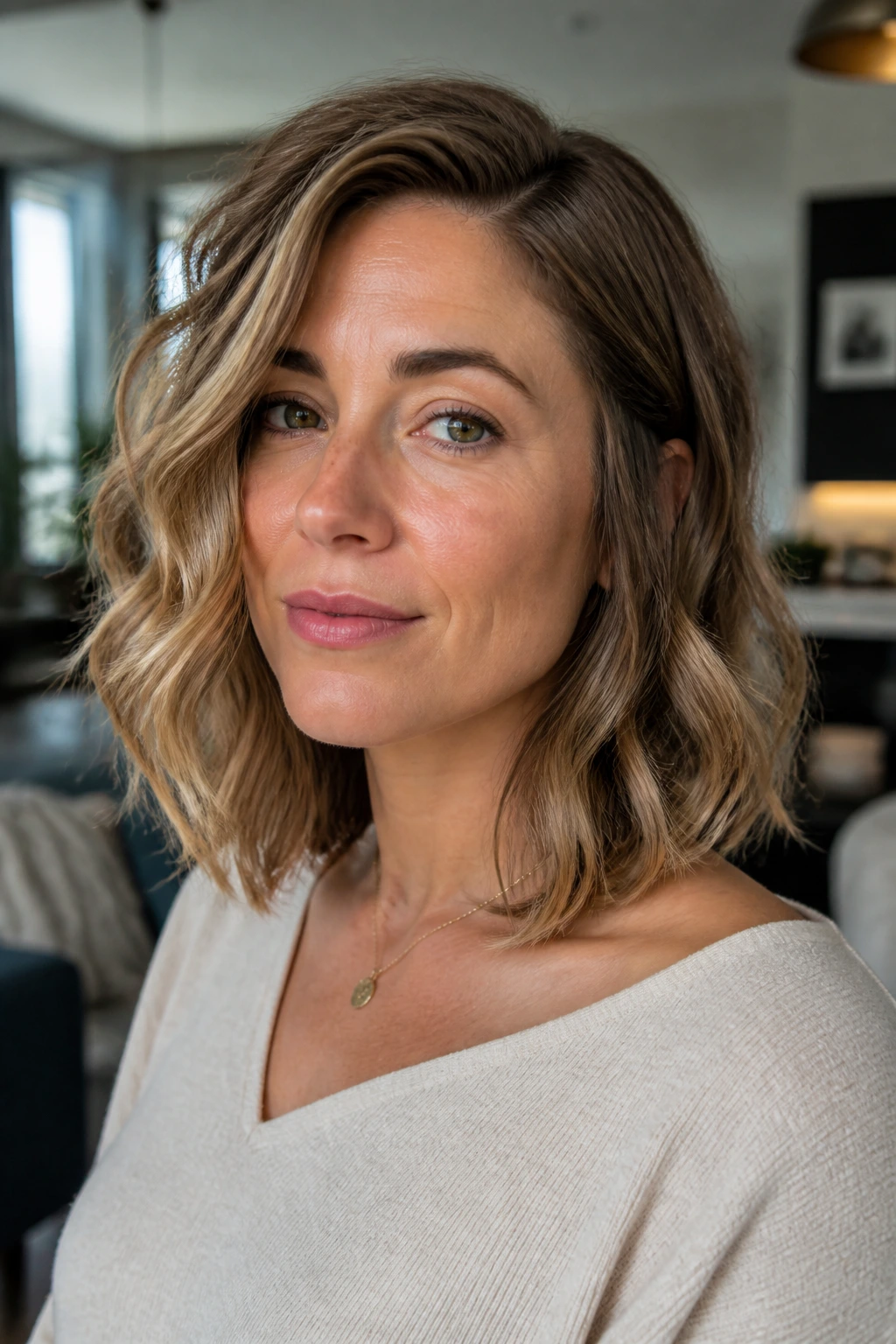
Fine hair at neck length can go flat in a hurry, especially when the curl pattern is loose enough to need a little help but not loose enough to hide a weak cut. Neck length hairstyles for fine hair with loose curls work because the length sits in that narrow sweet spot where the hair still has bounce, the ends don’t drag, and the shape can hold a bend instead of collapsing into a soft sheet.
That’s the real trick here. Not volume sprayed into a sad halo. Shape.
A good neck-skimming cut gives loose curls somewhere to live. A blunt edge makes the perimeter look fuller. Controlled layers keep the curl from turning fluffy and sparse. And when the curl pattern is soft, the whole style reads expensive in the best sense: not fussy, not overworked, and not so long that every ounce of body gets pulled out of it by gravity.
Why These Neck-Length Curls Deserve a Slot on Fine Hair
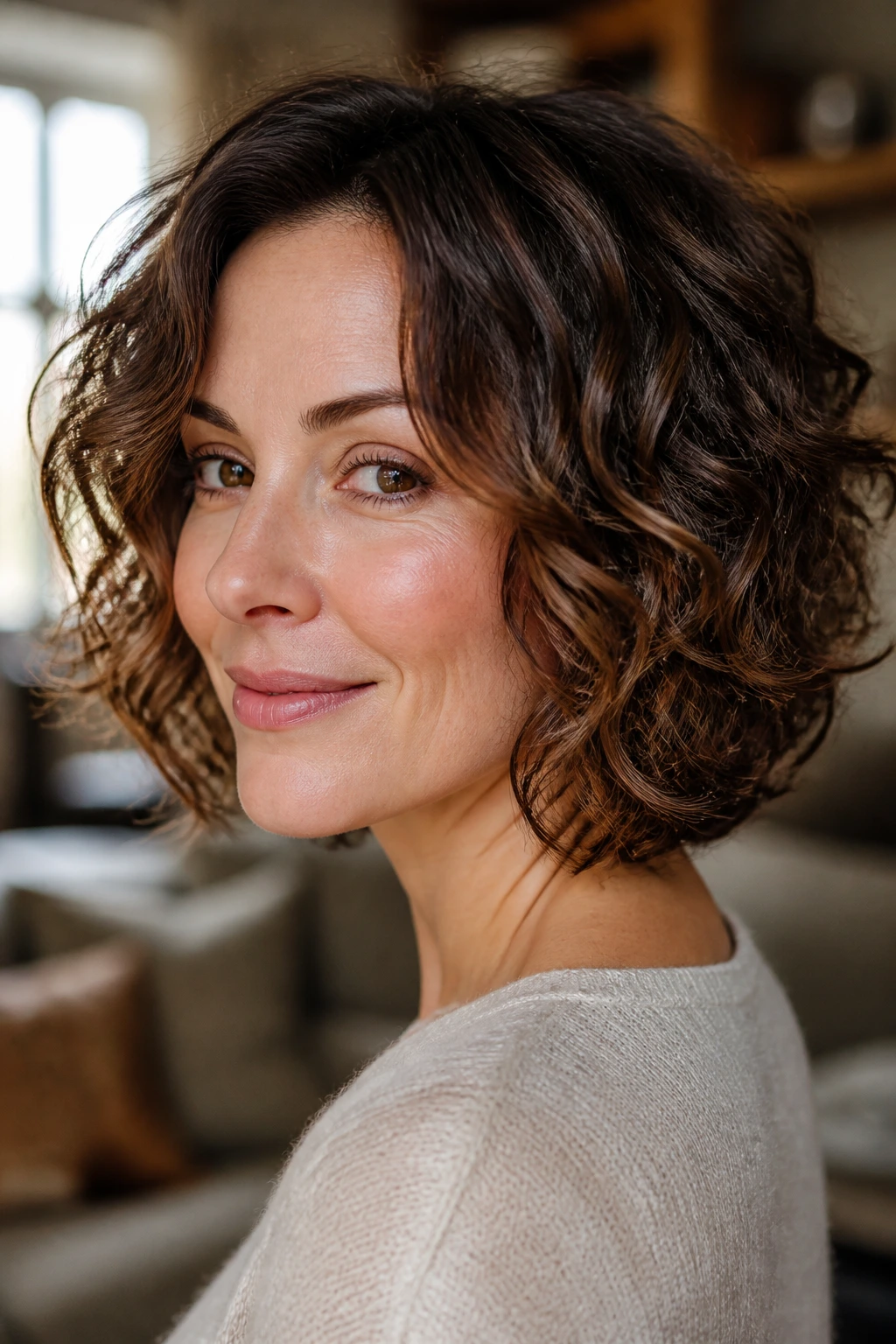
-
Less weight, more bend: Hair that stops around the neck or collarbone keeps loose curls from stretching out under their own length, which means the wave pattern holds its shape longer.
-
A blunt edge looks denser: Fine strands at a clean line look thicker than the same strands cut into too many wispy layers. That edge is doing a lot of visual work.
-
The curl pattern stays visible: Loose curls on fine hair can disappear when the hair gets too long. At neck length, the bend shows up from root to end instead of fading into the background.
-
Styling takes less effort: A 1-inch wand, a round brush, or even a simple blowout bend can change the whole cut. You do not need a mountain of product to get there.
-
The part matters more than people think: A center part, a deep side part, or a soft off-center part changes lift at the root in a way that makes fine hair look fuller without changing the cut itself.
-
It’s easier to keep tidy: Neck-length hair usually stays inside the shirt collar, out of the soup bowl, and away from the ends getting rubbed into nonsense by scarves, bag straps, and winter coats.
1. Soft Blunt Lob with a Center Part
The blunt lob is my first answer when fine hair needs more body without looking overstyled. Kept at the collarbone or just above it, the line is clean enough to make the ends look dense, while the loose curls add movement through the middle so the cut doesn’t feel heavy.
What makes it work is restraint. Leave the bottom inch a little straighter, then wrap the rest around a 1-inch curling iron for 6 to 8 seconds per section. That slight mismatch between straight ends and soft bends gives the hair a fuller outline. A center part keeps the shape calm and balanced, which helps if your crown tends to fall flat the minute you step outside.
I like this version for hair that looks sparse at the tips. It hides less and shows more, which is the point. If you want a cut that can look polished with a gloss spray or more casual with a touch of dry texture spray, this is the one that keeps paying off.
2. French Bob with Curved Ends
A French bob on fine hair has a very particular charm: it sits short enough to feel fresh, but not so short that the curl starts to spring up into a puff. The ends curve in or just kiss the jawline, and the loose curl softens the edges so the cut feels airy instead of sharp.
Why it flatters fine hair
The short length removes drag. That sounds obvious, but it matters more here than on thicker hair. Fine strands don’t need to be weighed down by extra inches, and when the bob stops near the neck, the curl pattern has a better chance of staying lifted through the day.
How to style it
Use a round brush or a 1-inch wand to bend the front pieces away from the face, then let the back sit slightly looser. A light mousse at the roots does the real work here. If you add too much cream, the bob starts to slump and the whole point is lost.
I prefer this cut on hair that has some natural wave, even if it’s a gentle one. It gives the shape a little memory. Without that, you’ll be back at the mirror every morning fixing pieces that refuse to behave.
3. Collarbone Bob with Invisible Layers
This is the style for people who want movement without seeing obvious layers everywhere. The cut lands right at the collarbone, and the layers live inside the shape instead of interrupting the outline. That keeps the perimeter looking fuller, which fine hair usually needs.
Invisible layers are a smart move when you want loose curls that float, not frizz out. The hair can still swing, but the ends hold together. When you curl it, the bends stack in a cleaner way than they do on a heavily layered cut, where the shorter pieces can stick out and make the ends look broken.
A soft side part is the easiest way to wear this one. It gives the roots a little lift and keeps the style from reading too symmetrical. If your hair is thin in density and fine in texture, this is one of the gentler ways to keep some visual thickness without asking the cut to do too much.
-
Best detail: ask your stylist to keep the outer line blunt and place the layering under the top veil.
-
Best styling tool: a curling wand with a 1-inch barrel, used from mid-length down.
-
Best finish: a flexible hold spray that does not leave the hair crunchy.
4. Side-Swept Wavy Bob

A deep side part changes the whole mood of a neck-length bob. It lifts the hair at the crown, lets one side fall with more drama, and gives fine strands a place to break their own flat little habits. On loose curls, the effect is even better because the wave catches the new direction and holds a little more shape.
This cut works especially well if your hair lays too close to the scalp on one side. Sweep the front section over, clip it while it cools, then release it after the rest of the hair is set. That tiny pause helps the lift last. If you skip the clip, the hair tends to relax right back to its old pattern.
The look is softer than a glam wave and less formal than a polished blowout. That middle ground is where it shines. A side-swept bob with loose curls gives you visible body at the roots, and for fine hair that’s often the difference between “styled” and “collapsed by lunch.”
5. A-Line Bob with Airy Bend
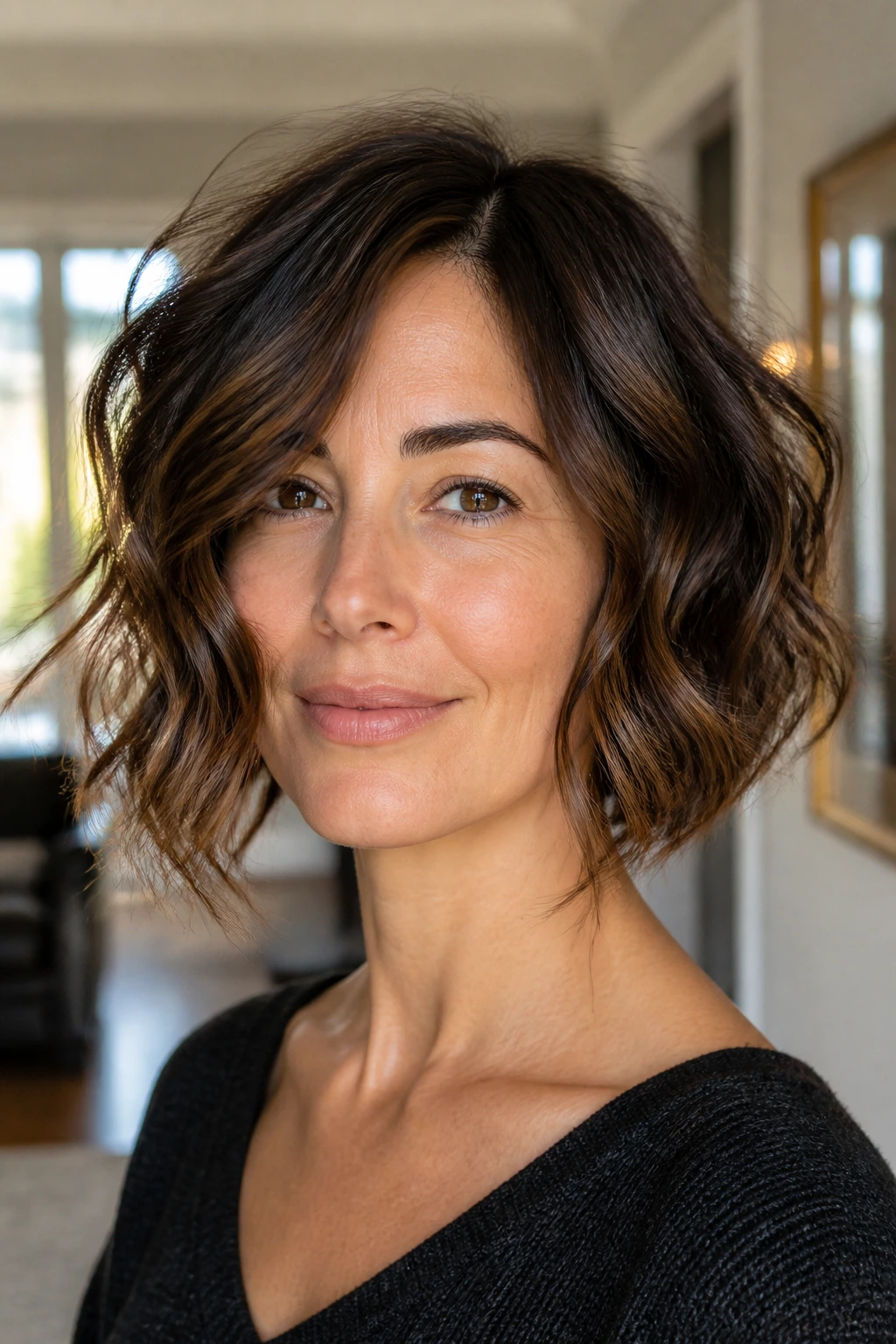
This cut earns its keep the moment the front starts running a little longer than the back. That angled shape builds the illusion of density because the eye reads the front pieces as deliberate and full, while the shorter nape keeps the weight under control. On fine hair, that balance matters.
Loose curls are the right finish here because they soften the geometry. If the bend is too tight, the shape turns puffy at the sides. If it’s too straight, the cut looks severe. Aim for a soft S-pattern: a wrap around the iron, then a brush-out after the curls cool so the bends loosen into a smooth curve.
The back should sit tidy at the nape, almost tucked into the neckline. That little shelf gives the whole cut a cleaner edge. I like this one for people who want structure without stiffness. It has more shape than a plain bob, but it does not ask for daily heroics.
6. Curtain Bang Lob
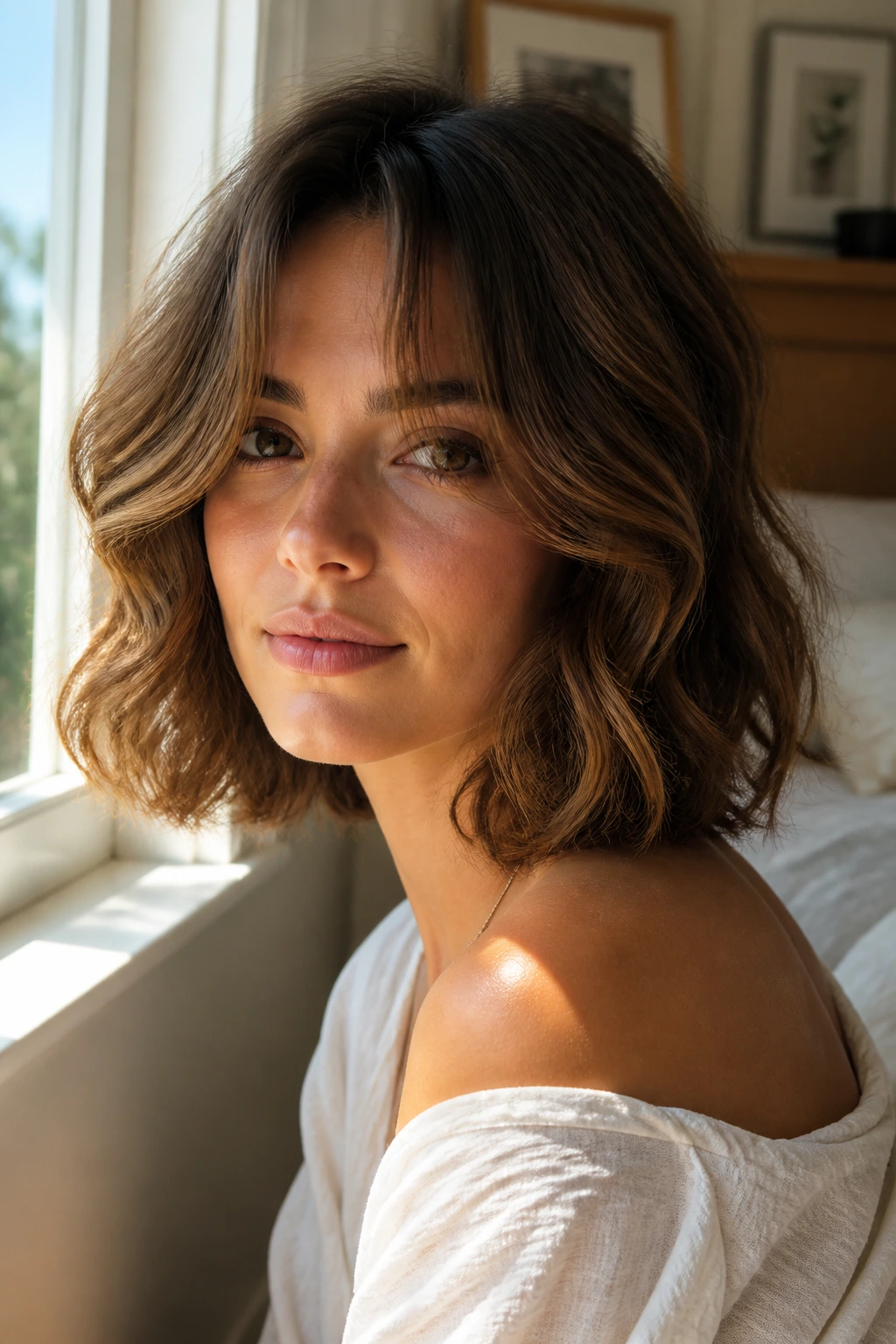
Curtain bangs and a neck-length lob are a strong pair when fine hair needs movement around the face. The bangs draw the eye upward, the lob keeps the ends from looking see-through, and the loose curls make the whole cut feel soft rather than sliced up.
The shape to ask for
Keep the bangs long enough to brush the cheekbones. Short curtain bangs can separate too much on fine hair and end up looking threadbare. A longer fringe gives you room to sweep, part, or curl the pieces away from the face when you want a softer finish.
How to style it without losing volume
Blow-dry the fringe with a round brush first, aiming the roots in the opposite direction from your part for a few seconds. Then bend the rest of the hair with a wand, leaving the bang area looser so it doesn’t look too done. That difference in texture keeps the style from going flat at the crown.
This is a good cut if you like a little face framing but hate the upkeep of a full fringe. You get the effect without the constant trimming drama.
7. Shaggy Neck-Length Crop

A shag can work on fine hair. Not a wild one. Not a chopped-up mess. A controlled shag with neck-length ends and soft, loose curls gives movement where you want it and keeps enough perimeter to avoid that wispy, over-thinned look.
The key is keeping the layers long and the crown lift gentle. Too many short layers near the top make fine hair look smaller, not bigger. A better version keeps the bulk of the shape around the ends, then lets the top pieces feather just enough to show texture. When the curls are loose, the shag reads relaxed; when they’re tighter, it can turn frizzy fast.
I’d ask for this if your hair tends to lie too neatly against your head. The cut gives it a little rebellion. A spritz of texturizing spray at the roots and a light cream on the ends is enough. More than that and the whole thing starts to look damp in the wrong way.
8. Tucked-Behind-the-Ear Lob
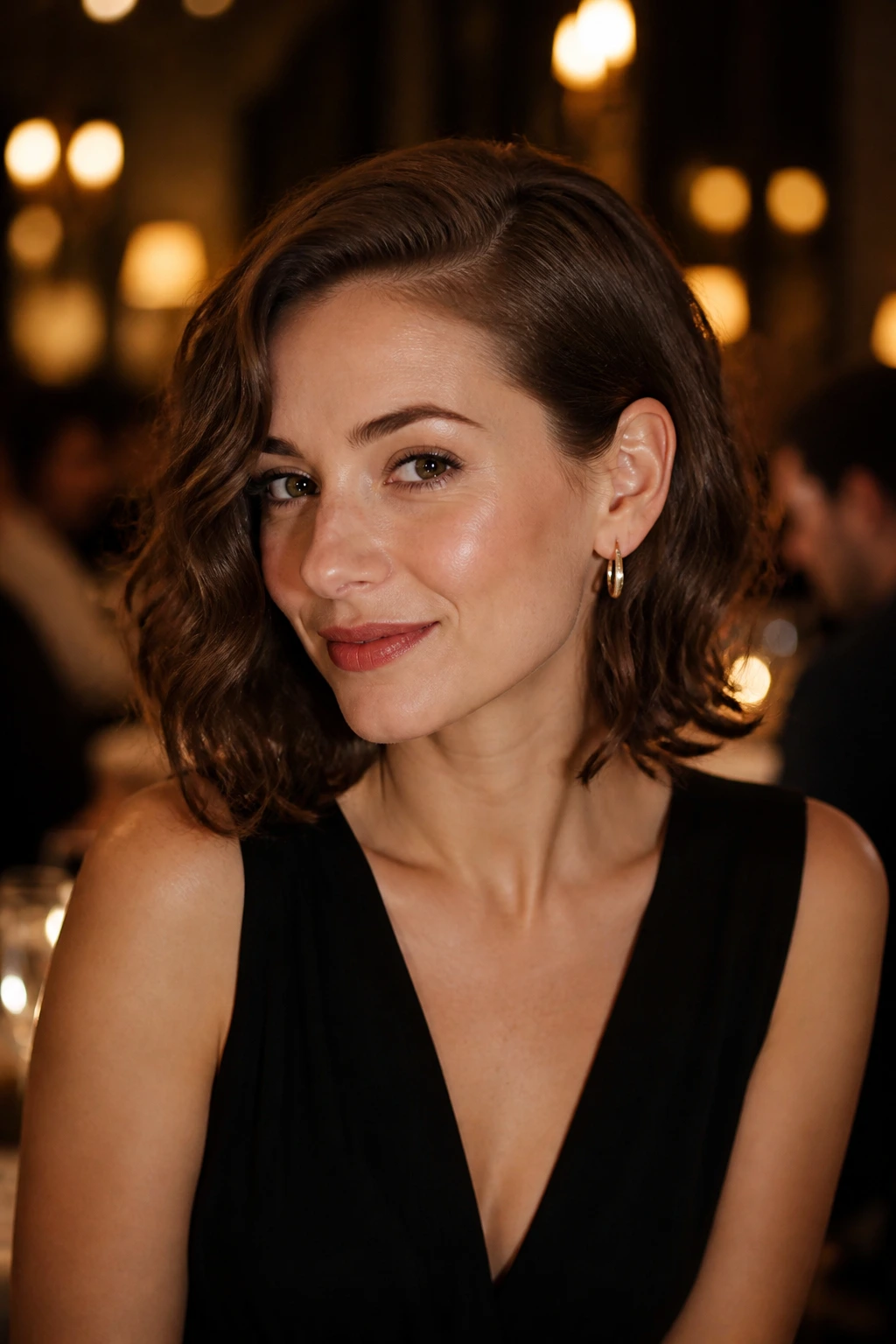
The cleanest look in the group is the one that lets one side disappear behind the ear and keeps the other side loose. That little tuck gives fine hair a sharper line at the face while the loose curls retain softness through the rest of the cut.
It works because the tuck creates contrast. Your eye sees the exposed cheekbone, the curve of the jaw, and the movement of the curls on the opposite side. Fine hair often needs that kind of direction. Otherwise it drifts into one flat shape and disappears against the neck.
Use a small amount of serum only on the ends before styling. Skip the roots. A tuck only looks good when the top stays airy and a little lifted, not slicked down. This is the hairstyle I’d choose for a dinner, a work day, or any moment when you want the cut to look deliberate without looking stiff.
9. Box Bob with Loose Waves
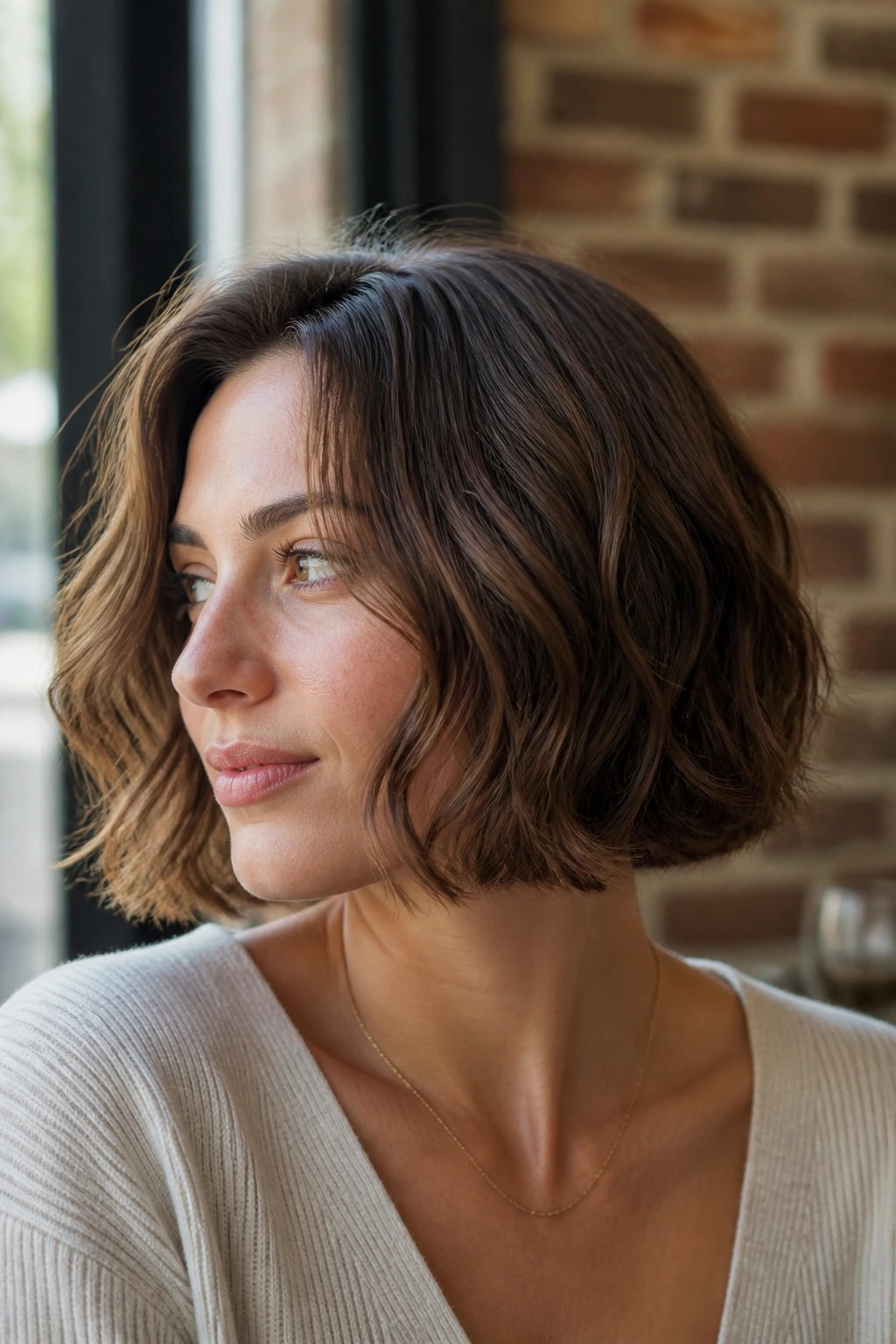
A box bob has a square outline, and that shape is a gift for fine hair. Instead of tapering away at the ends, the cut holds a clean edge all the way around, which makes the hair look thicker where it matters most. Add loose waves and the whole thing stops looking rigid.
The style works best when the waves are wide and soft, not tight and springy. You want the square shape to stay visible. If the curl is too strong, the sides round off and the density trick disappears. A blow-dry with a large round brush can set the movement before you ever reach for a hot tool.
I like this cut for people who want a little graphic shape without the high-maintenance feel of a precision bob. It’s tidy. It’s strong. It also gives fine hair a perimeter it can actually keep.
10. Feathered Flip Bob

A feathered flip bob gives the ends a little outward flick, which is a smart way to keep fine hair from hanging straight and limp. The movement sits at the hemline, not all over the head, so the style keeps its shape even when the curls are loose and soft.
What makes it different
The flip creates width at the neck and cheek area, which can be useful if your hair collapses right where it should look full. You do not need a huge bend. A tiny outward curve at the ends is enough. Round-brush the last inch of each section away from the face, then let it cool before touching it.
Who should wear it
This is good for hair that needs a little lift without looking too trendy or too fussy. It also helps if your strands are fine but not sparse, because the flip gives the illusion of more edge than a plain under-bent bob.
A feathered finish can go too far if the layers are chopped too short, so keep the movement light. Think soft flick, not 1970s pageant hair.
11. Deep Side Part Glam Bob
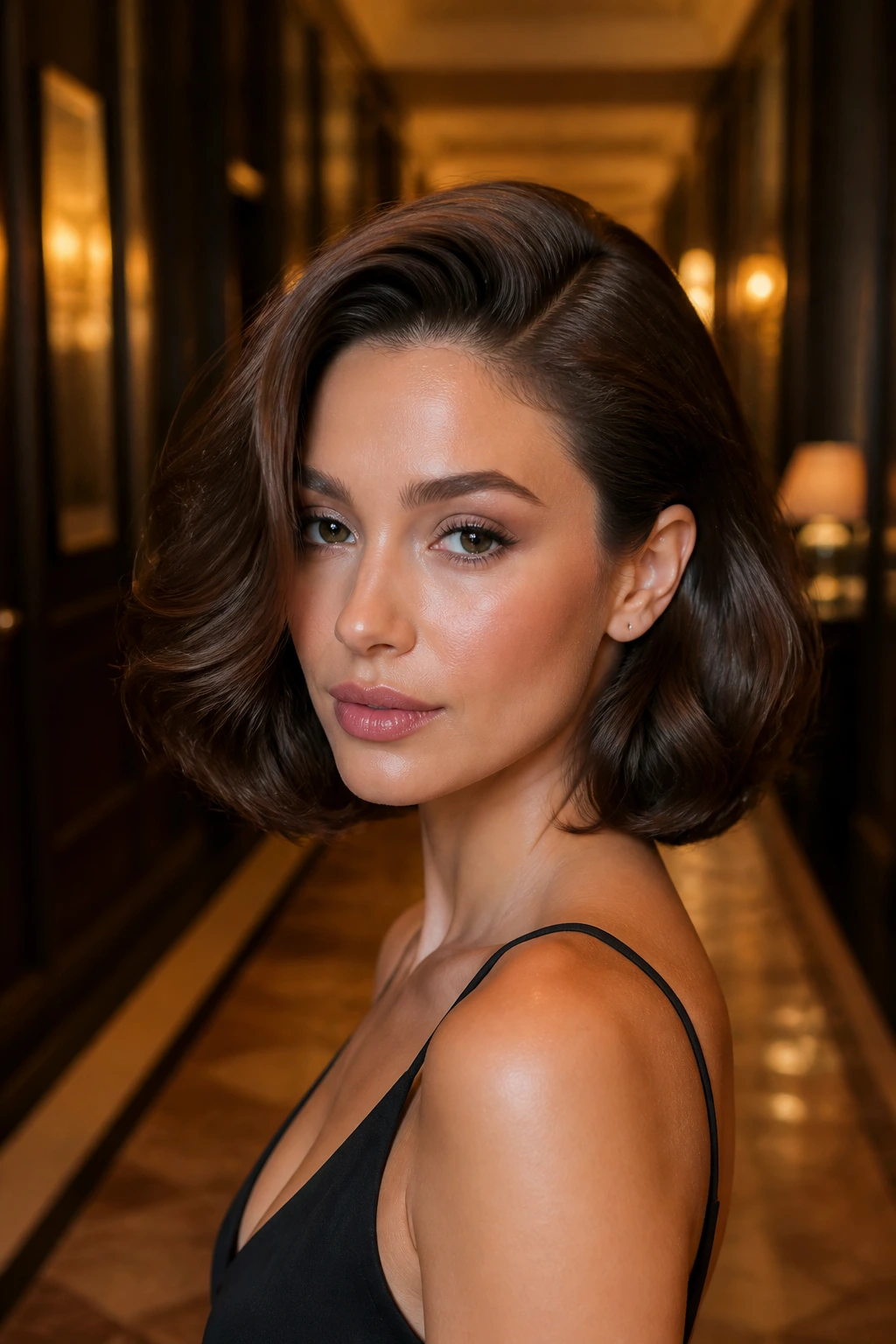
The deep side part does one thing better than almost any other move on fine hair: it makes the roots stand up. That extra lift is what keeps a neck-length bob from lying flat against the head. Once loose curls are added, the style picks up a little drama without needing extra length.
Compared with a center part, this version feels more sculpted. The heavier side creates a fuller-looking crown, while the lighter side lets the curls fall in a cleaner line around the face. If your scalp shows easily at the part, this is also a useful trick because the visible part line moves and softens.
I reach for this shape when the hair needs polish. A little shine spray on the mid-lengths and a clean side part at the arch of one eyebrow is enough to make the look feel finished. Keep the curl direction consistent on the heavier side, though. If pieces point in every direction, the shape loses the elegant line that makes it work.
12. Bottleneck Bang Bob
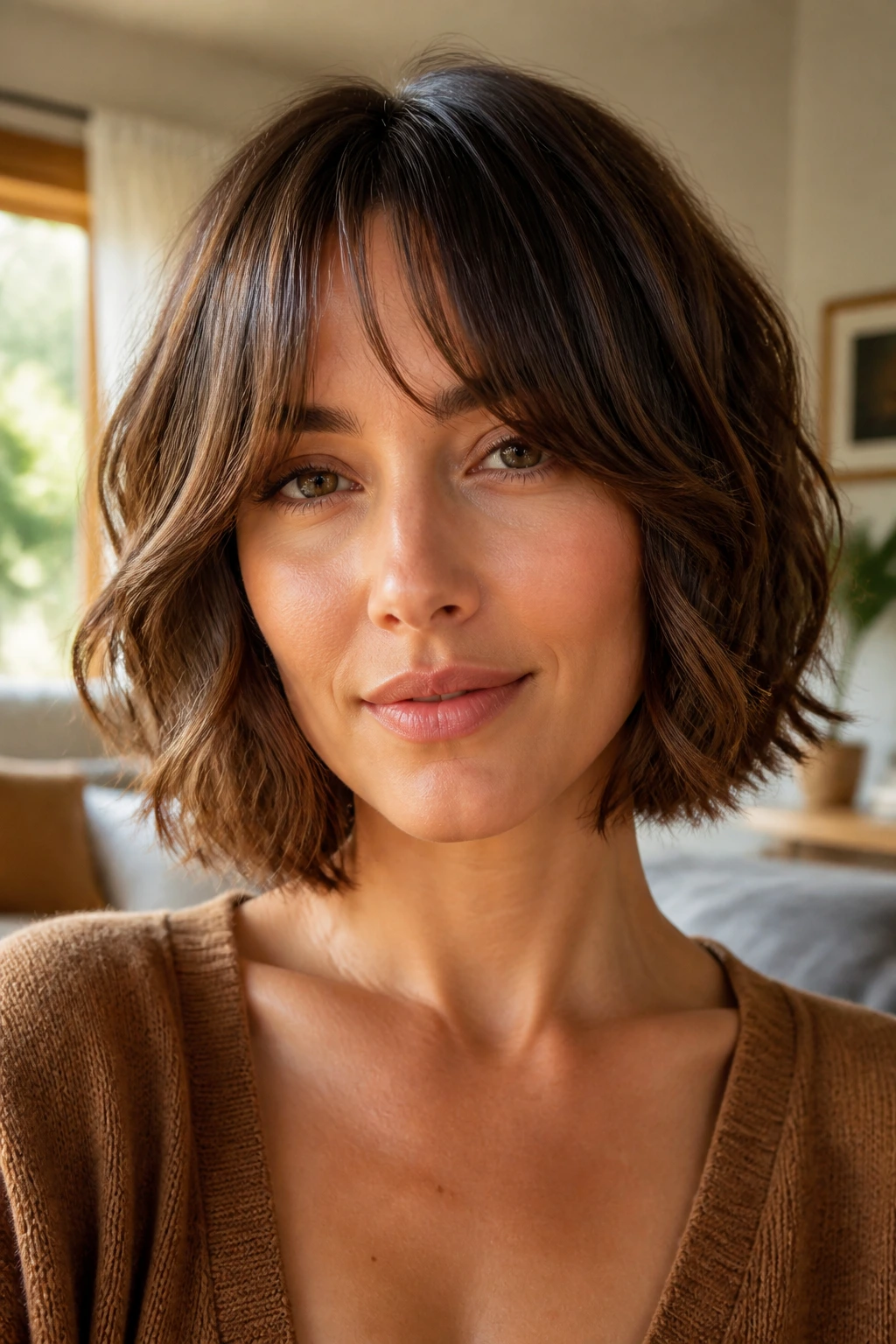
Bottleneck bangs are narrower in the center and a little wider near the temples, which makes them a smart option for fine hair. They give you fringe without the heavy curtain that can swallow a neck-length cut. Paired with loose curls, they soften the forehead and keep the rest of the hair feeling light.
The trick is keeping the bang length a touch below the eyebrow so it can move. Too short and the bangs separate. Too long and they flatten into the cheeks. A soft bend away from the face works better than a tight curl, because the point is to frame, not to compete.
This cut suits people who want something a little more styled than a plain bob but do not want a full bang maintenance schedule. You still need trims, sure. But the fringe grows out more gracefully than a blunt line, which is a mercy on fine hair that already needs delicate handling.
13. Face-Framing S-Curve Lob
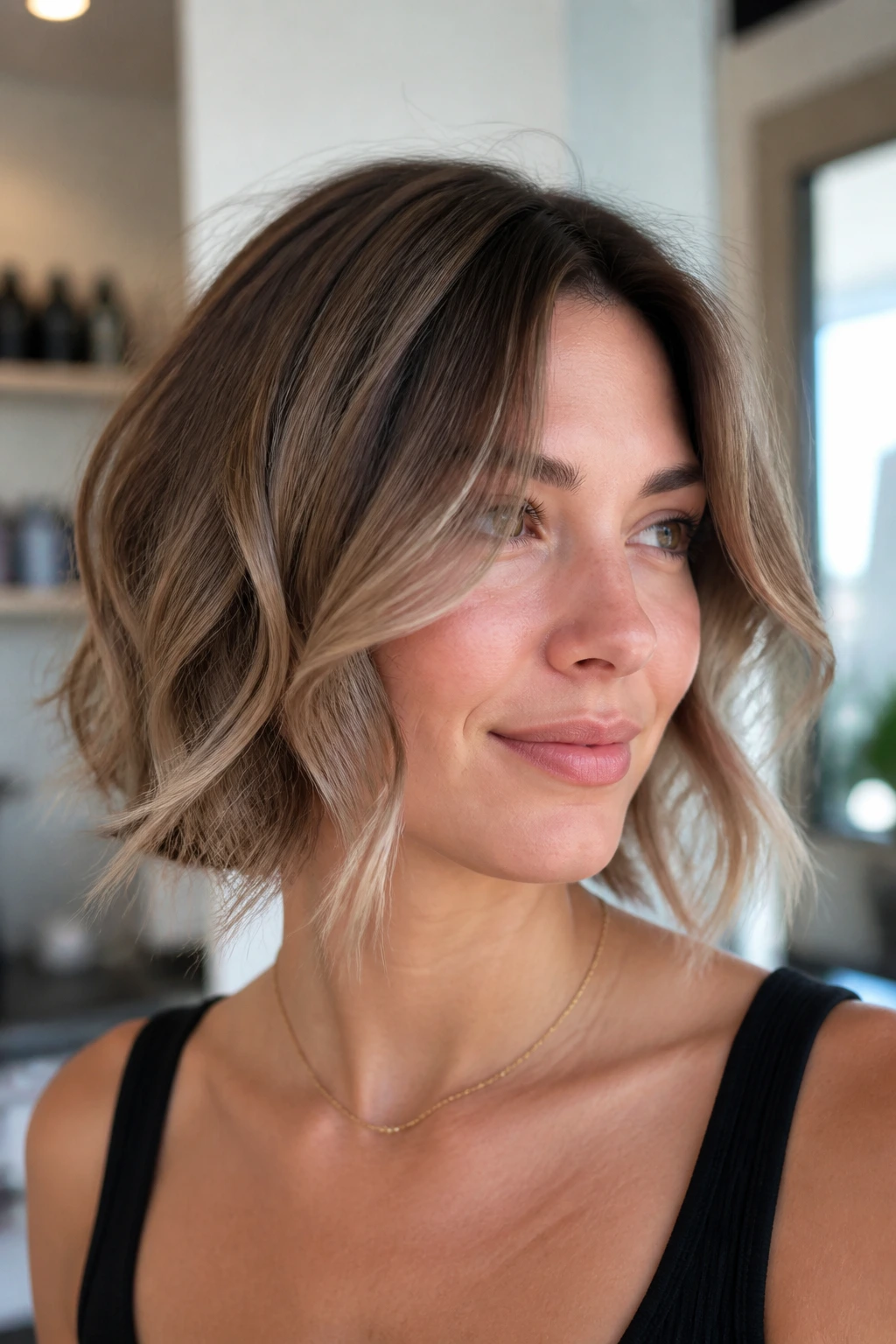
An S-curve is one of my favorite ways to style fine hair because it looks more natural than a perfect spiral. The wave bends one way, then the other, and that little shift creates the impression of movement without eating up volume. At neck length, the effect is clean and soft at the same time.
The shape to ask for at the salon
Tell your stylist you want long face-framing pieces that begin near the cheekbone and blend into the neck-length perimeter. That keeps the hair from looking carved up. You want the front to guide the eye, not chop it up.
How to style it
Wrap sections around a wand, but leave the last inch out on alternating pieces. Once the curls cool, brush them lightly with your fingers or a wide-tooth comb. The curve should feel touchable, not stiff. If the wave is too even, the style starts to look like a set. If it’s too random, the fine hair looks sparse.
This is one of the best cuts for people who want movement near the face but still need a tidy outline at the neck.
14. Rounded Bob with Underlayers
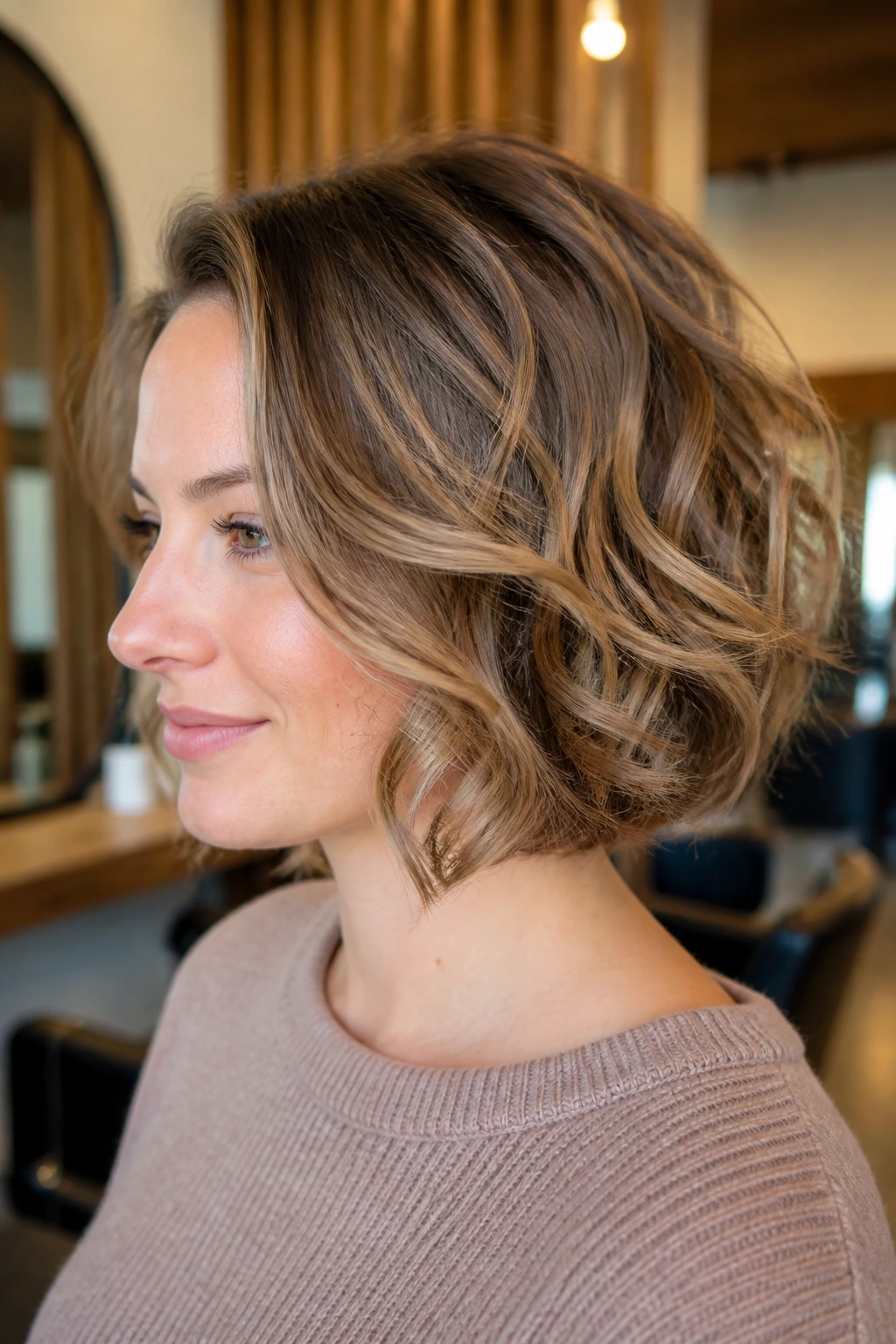
A rounded bob keeps the shape close to the head, which sounds risky for fine hair until you see the underlayers do their work. The outer shape stays smooth, while the hidden layers build lift underneath. That gives the top a little dome of fullness instead of letting it collapse.
Loose curls make this cut feel softer. The rounded line prevents the style from looking too geometric, and the curls keep the ends from appearing hard. This is a good option if you like hair that looks intentionally shaped rather than “messy” in the trendy sense.
The one caution is not to over-thin the bottom. Fine hair needs that perimeter to stay strong. If the ends get razored into nothing, the round shape loses its base and the bob starts looking see-through. Keep the edge full and let the underlayers do the hidden work.
15. Piecey Air-Dried Bob
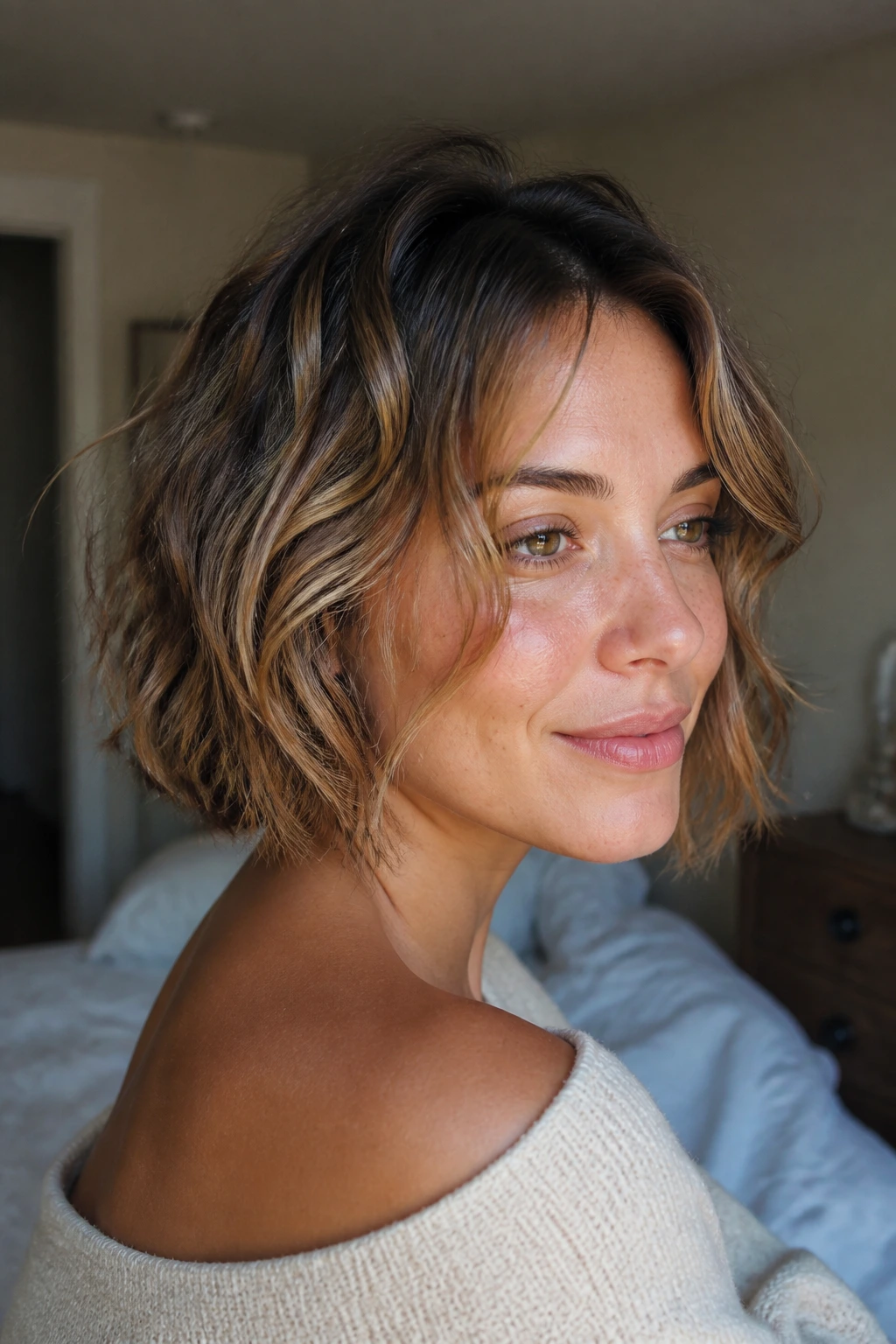
If your hair air-dries into a slight wave, this is the cut that makes that texture useful. The length sits at the neck, the pieces are kept separate enough to show movement, and the finish lands somewhere between soft curl and tousled bend. It is one of the less demanding options here, which I appreciate.
Why it works
Fine hair usually hates heavy styling products. A piecey bob needs only a lightweight mousse or wave cream, then a little scrunching and a few root clips while it dries. The result is not a big curl pattern. It is a broken-up, airy texture that gives the hair width without making it feel overloaded.
What to watch for
If the ends dry too stringy, the cut probably needs less layering at the bottom. If the crown lies flat, you may need to clip the roots while the hair is about 80 percent dry. That small timing window matters. Air-dried styles on fine hair often fail because people touch them too much before they set.
This is the style I’d pick for a low-fuss routine that still wants shape.
16. Tousled Bob with Hidden Layers
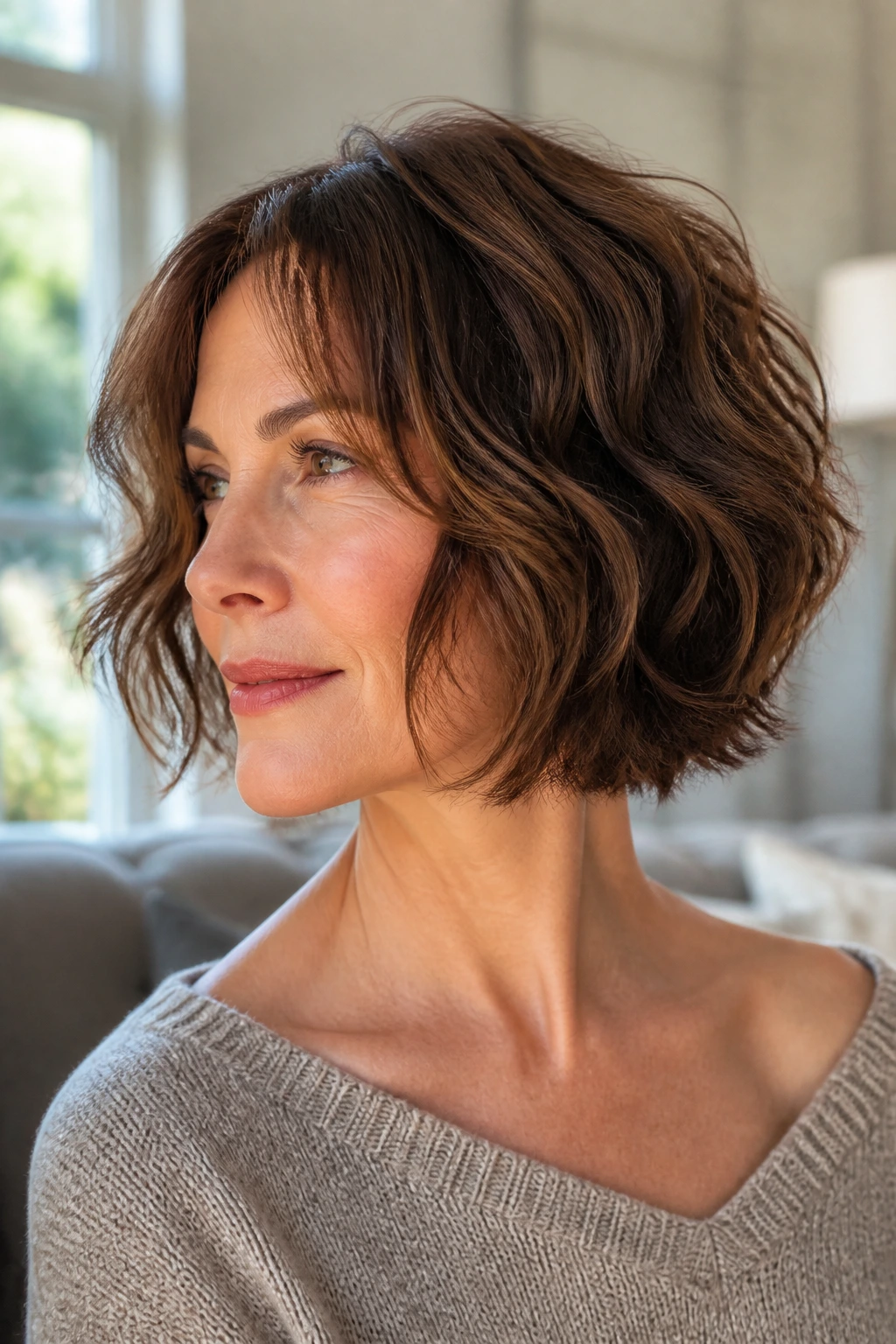
A tousled bob with hidden layers is the quieter cousin of the shag. The perimeter stays visible, the layers live underneath, and the loose curls are what bring the movement to the surface. That makes the style feel full without looking heavily chopped.
Hidden layers are useful when fine hair needs lift but not obvious texture. You get some body at the crown and a little swing through the sides, yet the ends still look connected. That’s a better trade for most fine-haired people than long, dramatic layers that turn the tail end of the cut into fuzz.
I like this for hair that goes flat after a few hours. The hidden support helps the cut keep its outline. A light mist of texture spray at the roots and a touch of flexible hairspray through the mid-lengths is enough. There’s no need to drown it in product. That only weighs down the little bit of lift you worked for.
17. Slick-Root Loose Curl Bob
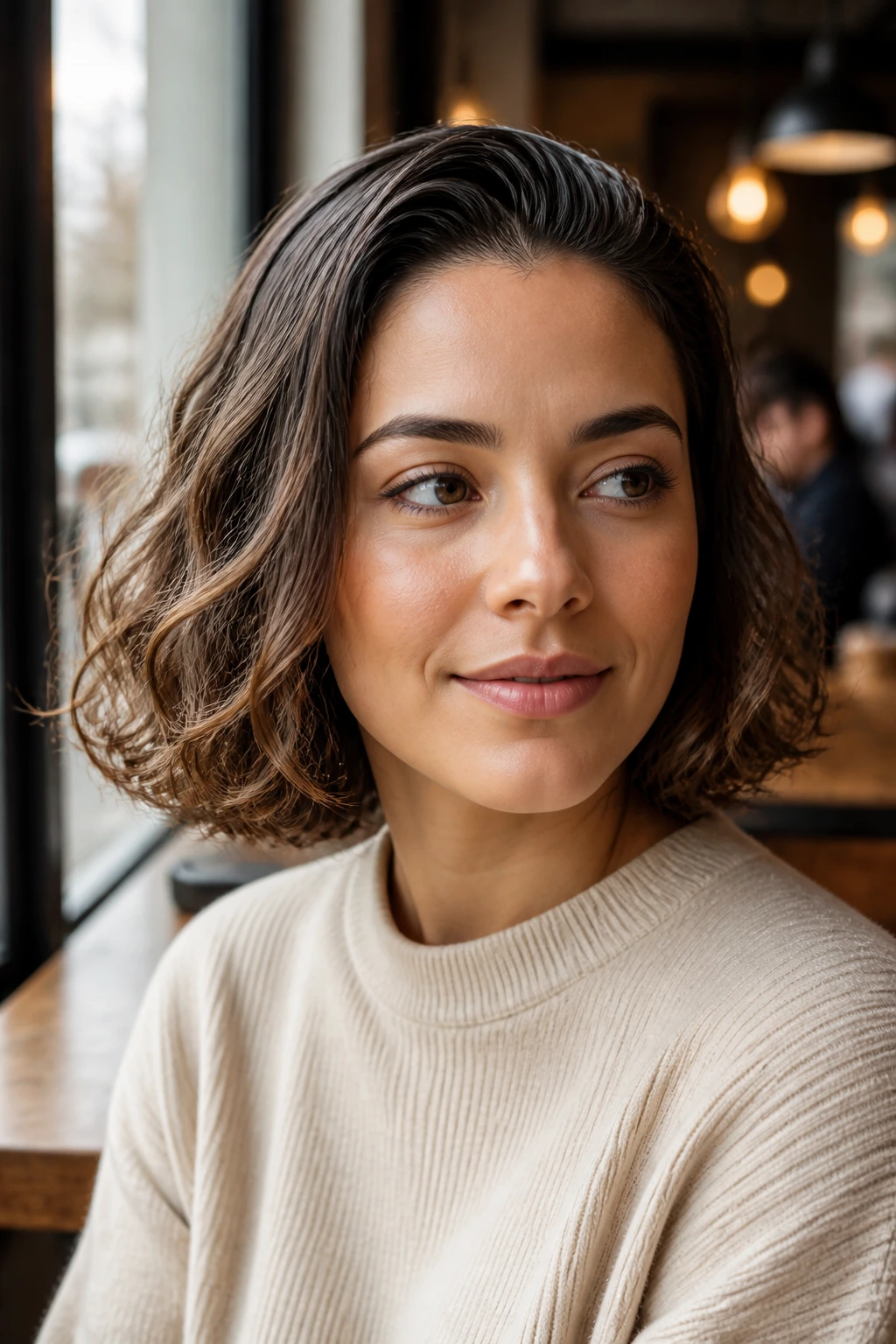
Sleek roots and loose curls can look surprisingly good on fine hair. The smoothness at the scalp keeps the style polished, while the curl through the ends creates body where it’s visible. The contrast also makes the hair look thicker than it is because the eye reads the clean root area as intentional, not limp.
This is a nice option if you hate frizz at the top but still want movement below. A small amount of smoothing cream at the roots, applied sparingly, can help. The trick is keeping it off the lengths so the curls don’t fall flat. Then use a curling iron only from eye level down and leave the ends soft.
The shape feels modern without being severe. If your hair is very fine, this version can outlast a fully textured wave because the root area is not competing with a lot of extra product.
18. Razor-Cut Airy Lob
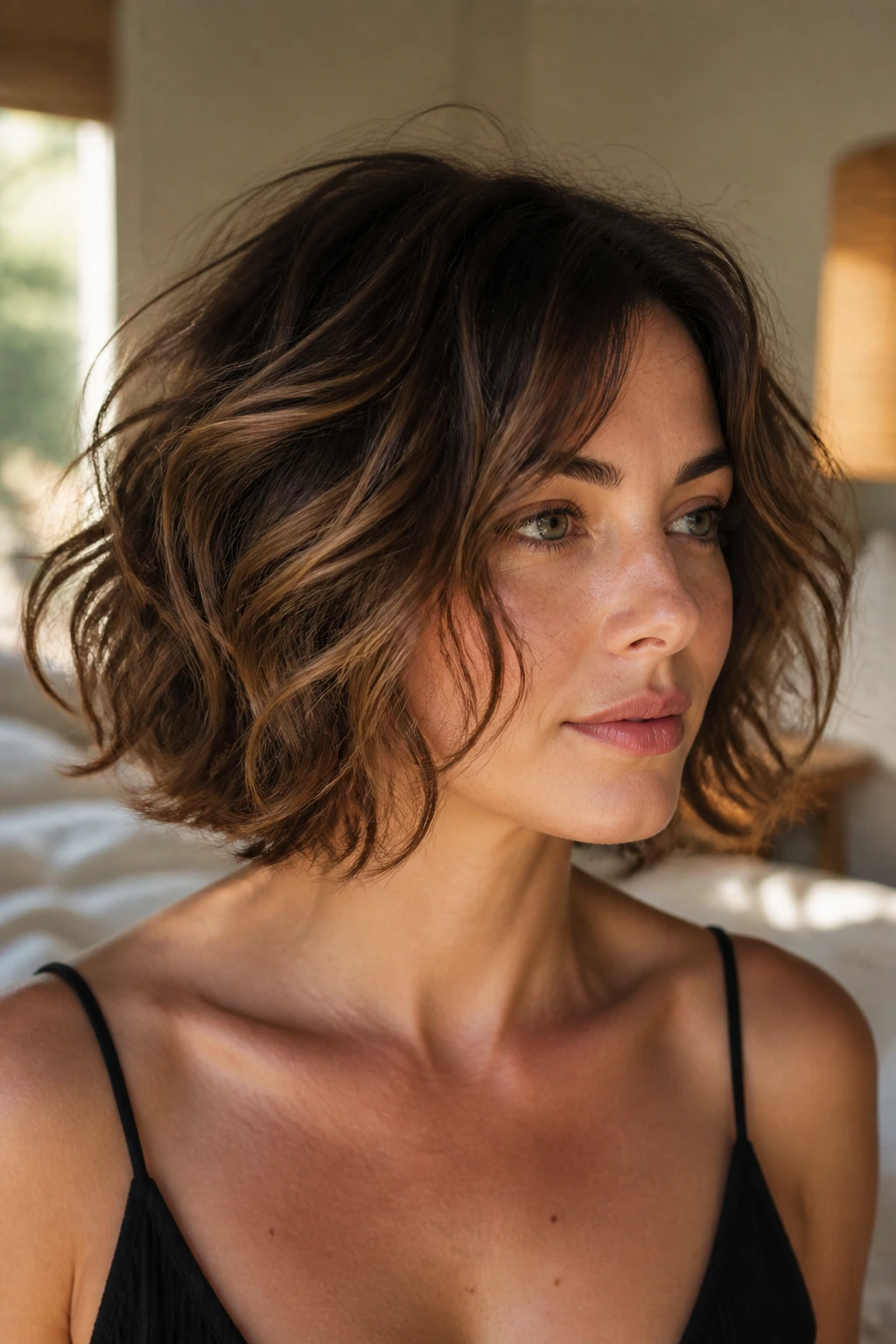
A razor cut gives fine hair a light edge, which can be helpful when the hair feels too blunt and heavy all at once. The ends get a wispy finish, the layers blend in a softer way, and loose curls move through the cut without building up too much bulk.
The upside
The lob stays neck-skimming, but the razor work removes some of the stiffness that a blocky blunt cut can create. That makes the hair feel airier and more touchable. It also helps curls separate in a nicer way, especially if your hair naturally falls into soft bends.
The caution
Razor cuts are not kind to damaged ends. If your hair is already dry or frayed, the feathered edges can look thinner than you want. In that case, a scissor-cut blunt lob is the safer choice. For healthy fine hair, though, this cut has a nice lift and a casual finish that holds up well with a little dry texture spray.
19. Curved-In Neck-Length Bob
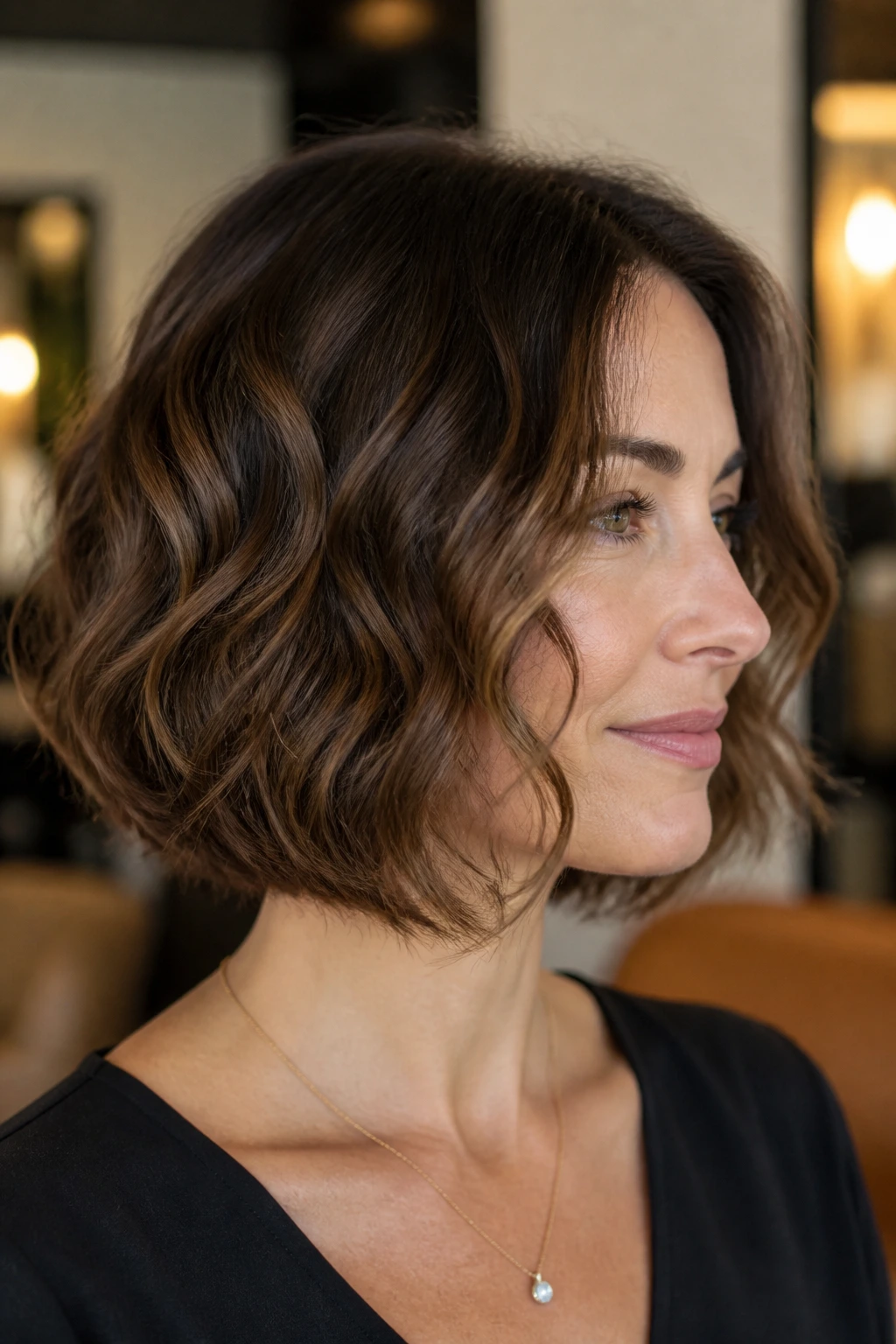
A curved-in bob is one of the easiest ways to make fine hair look fuller. The ends turn inward toward the neck, which creates a neat outline and keeps the silhouette from spreading out too wide. Loose curls soften that inward bend so it does not look helmet-like.
The style works because the curve gives the illusion of density at the bottom edge. Fine hair usually loses that edge first. When the end line stays visible, the whole haircut reads as thicker. A round brush or a blow-dry brush can set the bend fast, and a few loose curls through the top half keep it from looking too formal.
This is the one I’d recommend if your hair looks limp in photos. The curved line catches the shape before the camera flattens it.
20. Textured Bob with Short Fringe
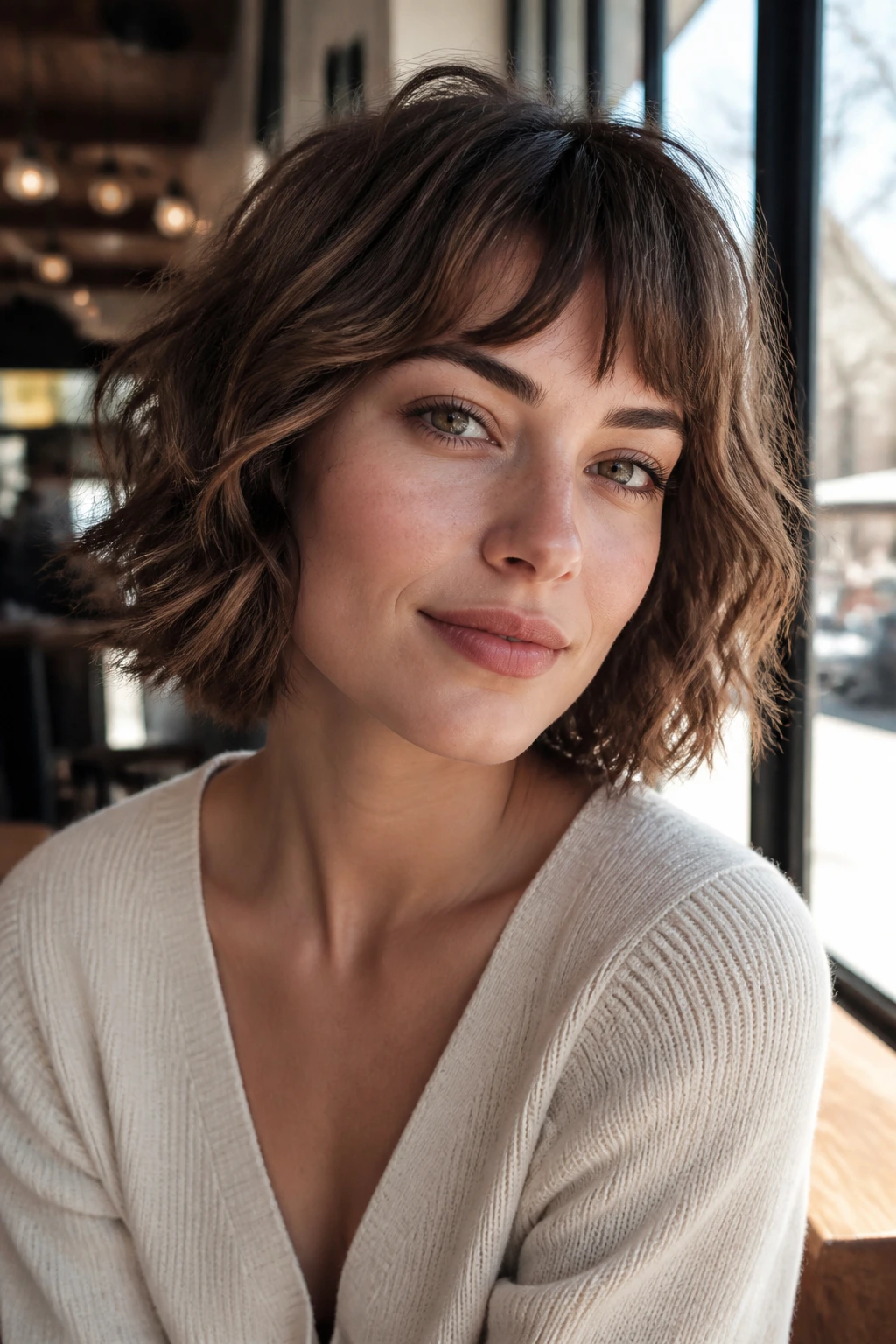
A short fringe can work on fine hair, but only when the rest of the cut is kept tidy and neck length. The fringe gives the eyes a focal point, the texture adds movement through the body, and the bob stops the whole look from becoming too airy.
The biggest mistake here is cutting the fringe too thick. Fine hair needs a light fringe with some separation, not a heavy block that looks sparse after a few hours. Keep the bangs piecey, then let the loose curls around the jaw soften the shape. That contrast is what keeps the style interesting.
I’d choose this if you like a little edge and do not mind some upkeep. The fringe needs more trimming than the rest of the cut. Still, when it’s done well, the style has a crispness that a plain neck-length bob can’t match.
21. Mini Old Hollywood Wave Bob
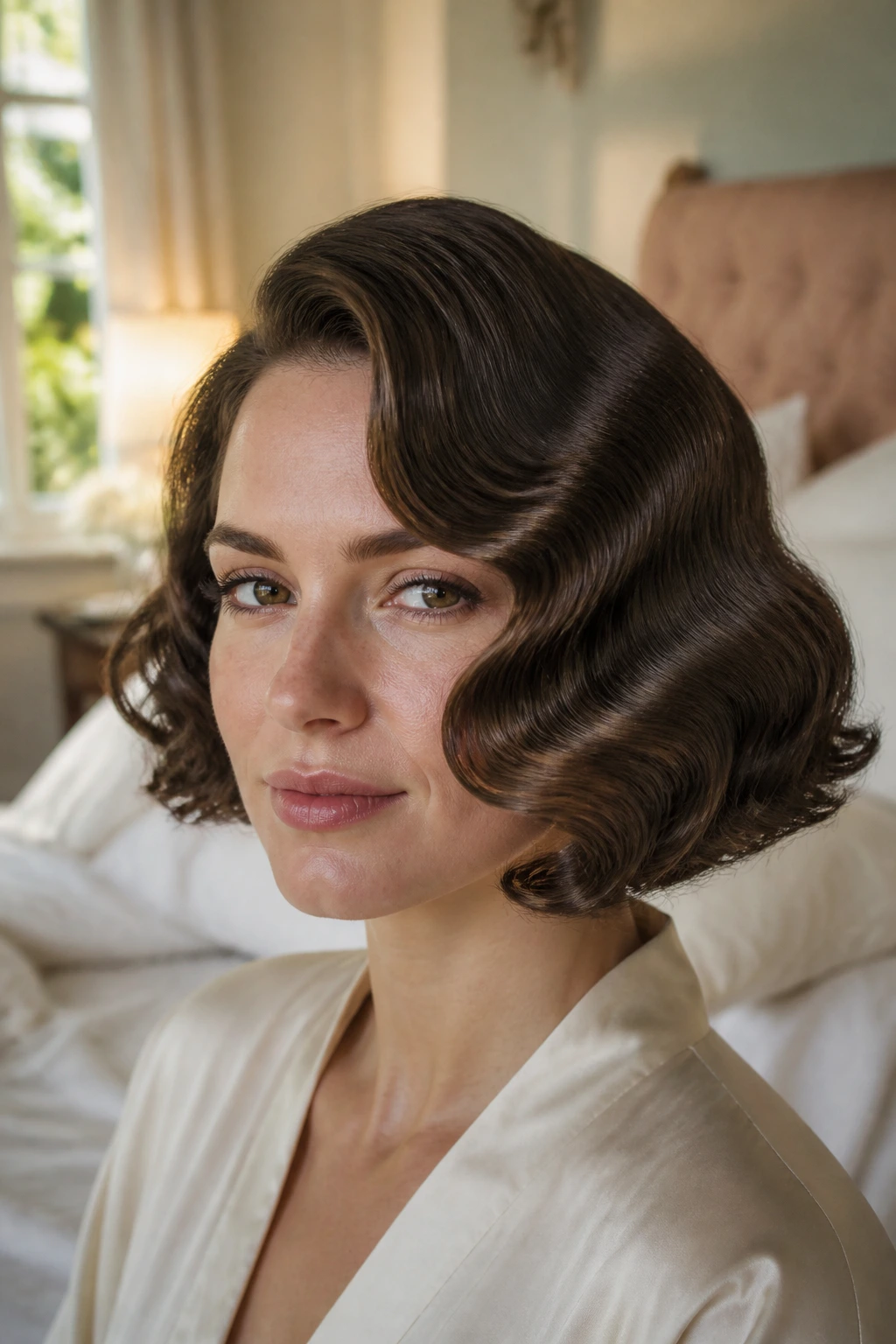
A mini Old Hollywood wave on fine hair gives the illusion of glossy fullness without requiring a lot of actual thickness. The wave pattern is smooth and deliberate, the side part is deep, and the neck-length cut keeps the style compact enough that the wave can hold.
This works because the curls are set in one direction and brushed into a uniform pattern once they cool. That creates a polished ribbon of hair instead of a fuzzy wave. Pinning each bend with a clip for 10 minutes makes the shape last longer, especially around the face where fine hair likes to fall apart first.
It’s a more finished look than the others here, but not a difficult one. A 1-inch iron, a good heat protectant, and a soft bristle brush are enough. If you want a style that looks deliberate at dinner or under a brighter light, this is the one that shows up well.
22. Disconnected Wavy Bob
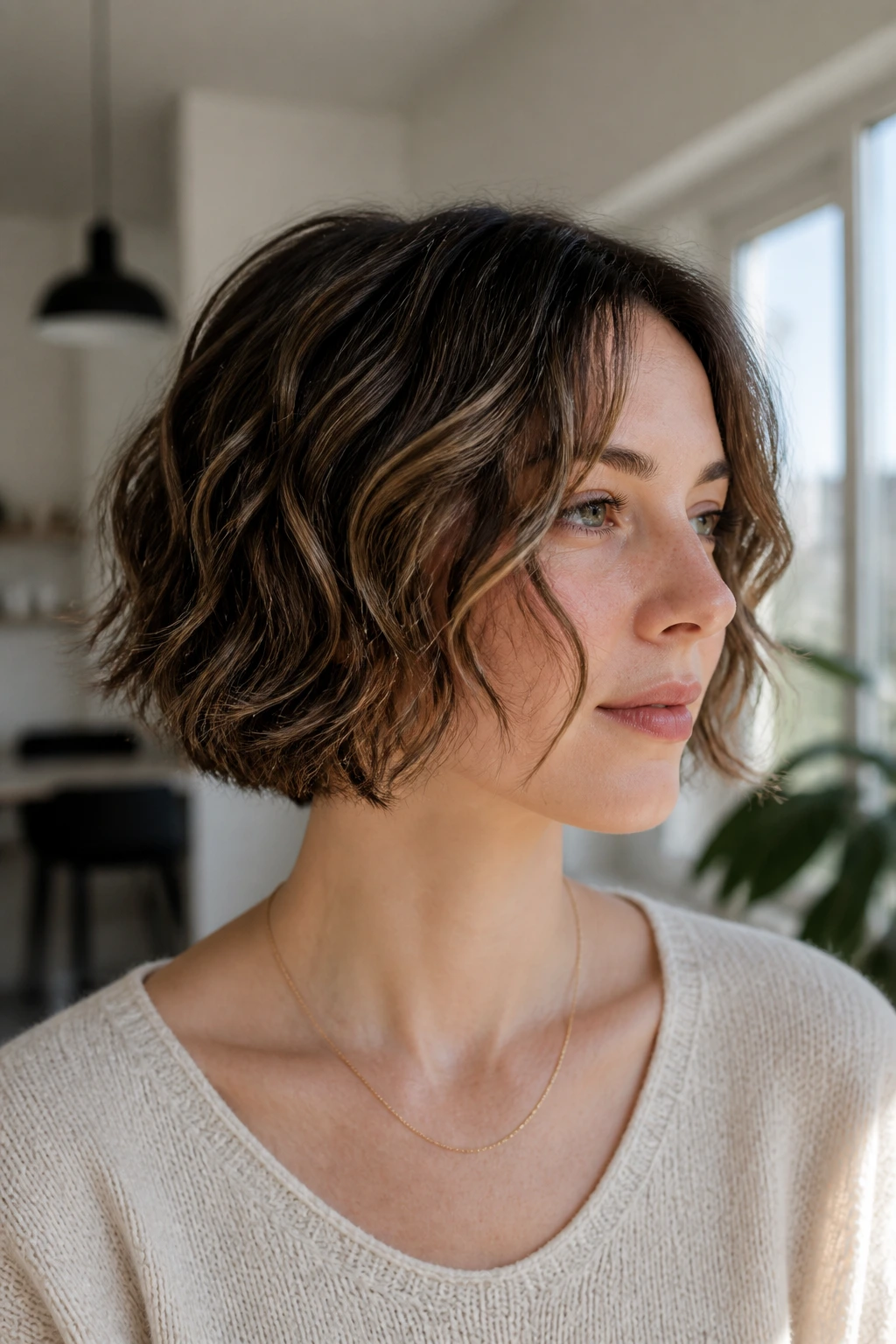
Disconnected bobs can be risky on fine hair, but the right version keeps the disconnect subtle. Think a slightly stronger top layer and a quieter nape, not a dramatic haircut with obvious gaps. The loose curls help the transition between lengths feel soft instead of choppy.
The benefit is movement without total uniformity. Fine hair sometimes looks too polite in a one-length cut. A mild disconnect adds interest and keeps the eye moving through the shape. The danger is overdoing it. If the top gets too short, the cut starts looking unfinished rather than intentional.
I’d use this shape if you want edge and your hair has enough density to support it. If density is very low, stay closer to a blunt lob. That version is kinder and often fuller.
23. Soft Mullet-Inspired Shag

A soft mullet-inspired shag sounds sharper than it actually is. On neck-length fine hair, it means a little more length at the nape, some lift through the crown, and soft face-framing pieces that keep the cut from feeling boxy. The loose curls make the whole thing read casual and modern instead of extreme.
The reason it can work on fine hair is simple: the crown gets help, while the bottom still has enough length to look connected. I would not ask for a heavy, chopped-up mullet shape here. That can drain the ends and leave the cut looking thin. Keep the transition soft and the layers long.
This is a good pick for someone who wants a bit of personality. It has swing. It has shape. It also handles rough-dried texture better than a precision bob.
24. Polished Curls with Long Layers
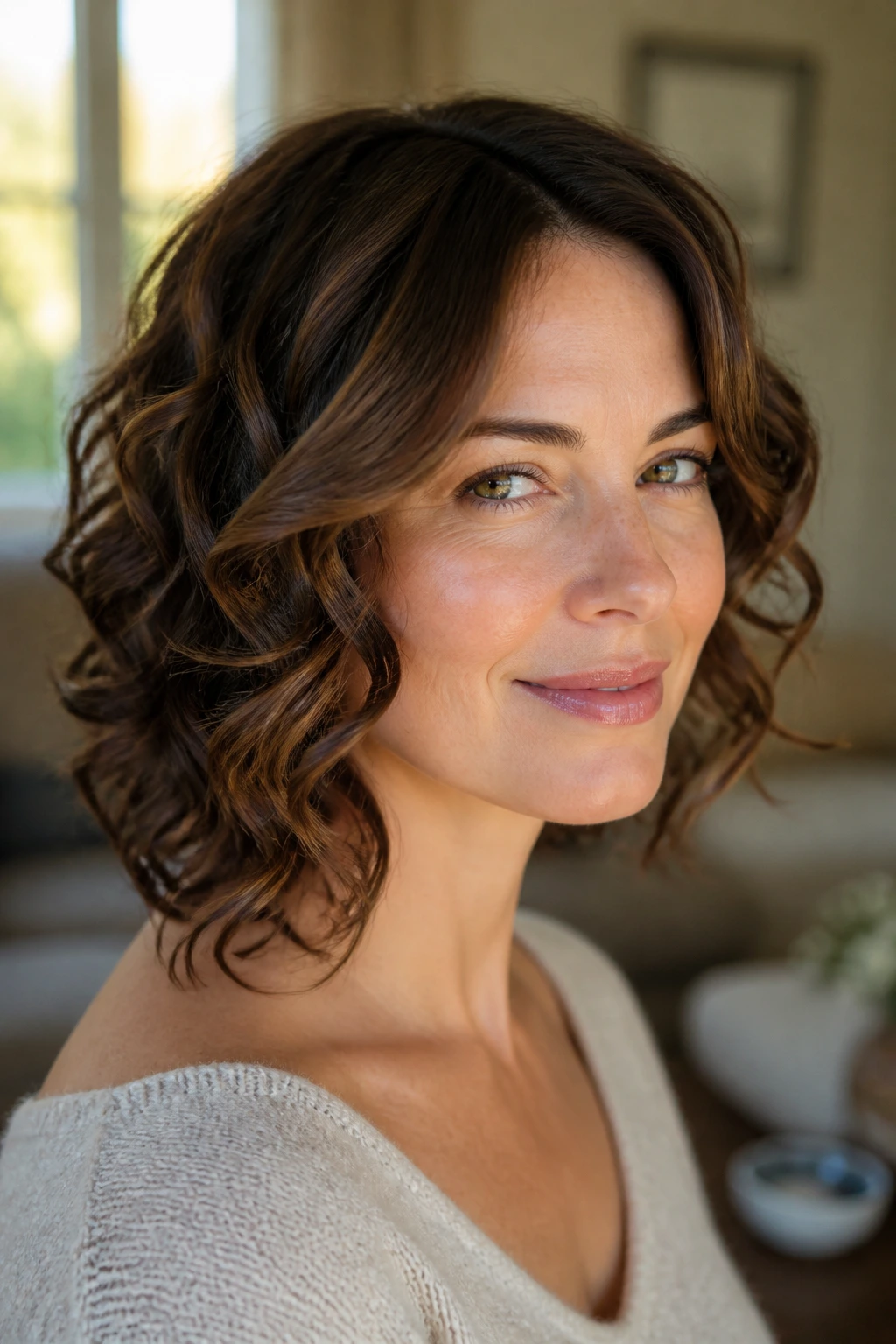
Why does this look hold so well on fine hair? Because the long layers support the curl pattern without stealing too much from the perimeter. The result is a neck-length shape that feels dressed up, but not overdone.
Ask for layers that begin below the cheekbone and stay soft through the bottom third. Then set the curls with a wand and brush them out only after they cool. The idea is to keep the curl broad and glossy, not springy. A tiny amount of shine spray on the mid-lengths helps the light catch the wave without making the root zone greasy.
This is one of the better options for formal events or days when you want the haircut to look cleaner than casual. It feels composed. And on fine hair, that composition is doing a lot of heavy lifting.
25. Low-Maintenance Beach Wave Bob
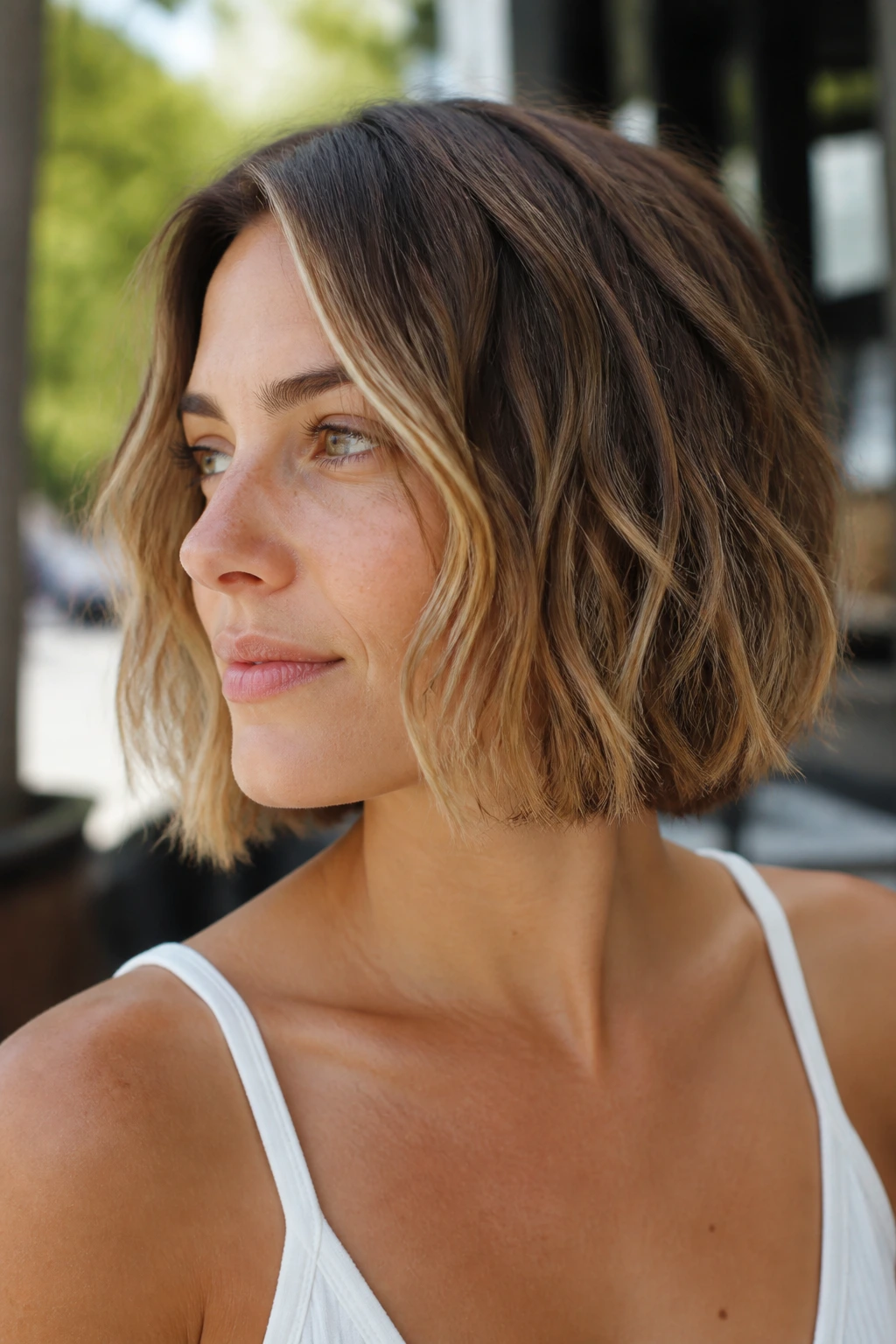
The beach-wave bob is the easiest style in the group to live with, and that counts for a lot. The neck-length cut keeps the hair from getting weighed down, while the loose, broken-up wave gives the illusion of thickness without demanding a perfect finish.
The best version is a touch imperfect. Curl some sections away from the face, leave others straighter, and let the ends move a little differently from the mids. That unevenness stops the style from looking too set. On fine hair, the looseness is what keeps it believable.
I’d recommend this one if you want a style that survives a full day with only a quick refresh. It’s not the most polished choice. It might be the most wearable.
Why Neck-Length Curls Give Fine Hair More Shape

Fine hair behaves differently when it’s shorter. Once the length drops below the collarbone, there’s less weight pulling on the shaft, which gives loose curls a better chance to stay lifted instead of stretching into soft, flat strands. That’s the main reason neck-length cuts keep showing up in good hairdressers’ chair-side advice. They solve a physics problem.
The other benefit is the perimeter. Fine hair often looks thinner at the bottom because the ends take the most abuse. A blunt or gently curved edge restores that visual line. Even when the body of the hair is light, the outline can still look full. That’s why a neck-length bob with loose curls often looks thicker than a longer cut with the same amount of hair.
There’s also a practical piece that gets ignored. Shorter hair is easier to style in controlled sections, which matters when you’re trying to make every curl count. A 1-inch barrel can touch the mid-lengths and ends without having to chase the hair down the back. Less chasing. Better control. Fewer bad angles.
The Tools That Make Fine Hair Hold a Loose Curl
-
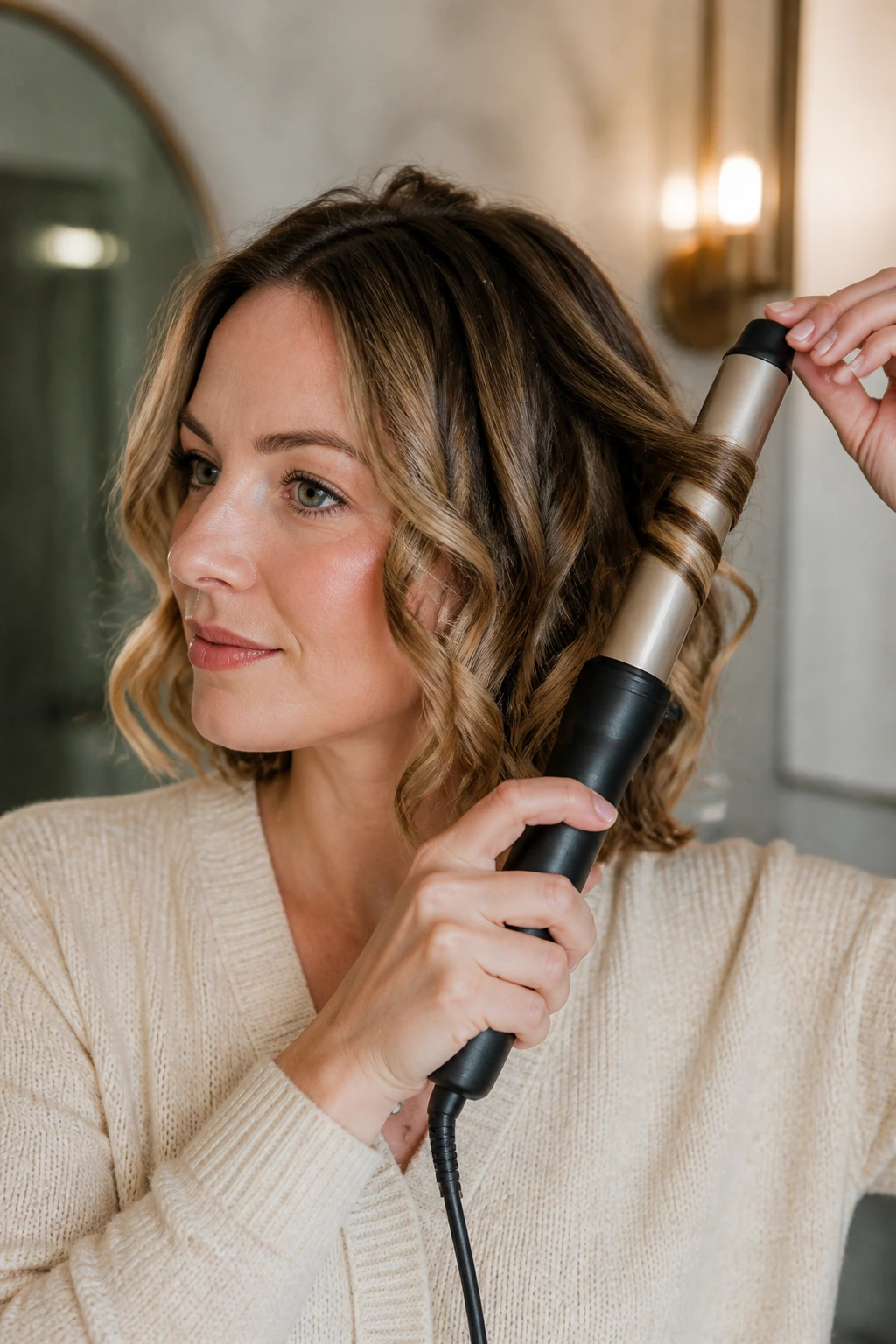
1-inch curling iron or wand: This barrel gives fine hair a loose curl that reads soft instead of tiny and springy. A smaller barrel can over-tighten the bend, which tends to fall out faster.
-
Heat protectant spray: Fine strands burn more easily than people think. A lightweight spray that dries quickly keeps the cuticle smoother and the curl shinier.
-
Volumizing mousse: Apply it at the roots and a touch through the mid-lengths before blow-drying. It gives the style a little structure without turning the hair sticky.
-
Root clips or duckbill clips: Clip the crown while the hair cools to hold lift in the area that usually collapses first. Small clips beat heavy ones here.
-
Round brush: A medium round brush is the easiest way to set the ends inward, outward, or softly curved before you even use hot tools.
-
Dry shampoo: Not only for greasy roots. A fine mist at the part and crown adds grip, which helps loose curls last longer on day two.
-
Flexible-hold hairspray: You want hold, not shellac. The hair should still move when you run your fingers through it.
-
Silk or satin pillowcase: This is the least glamorous tool on the list and maybe the most useful. Less friction means less flattening overnight.
Product Shopping That Keeps Hair Light, Not Limp
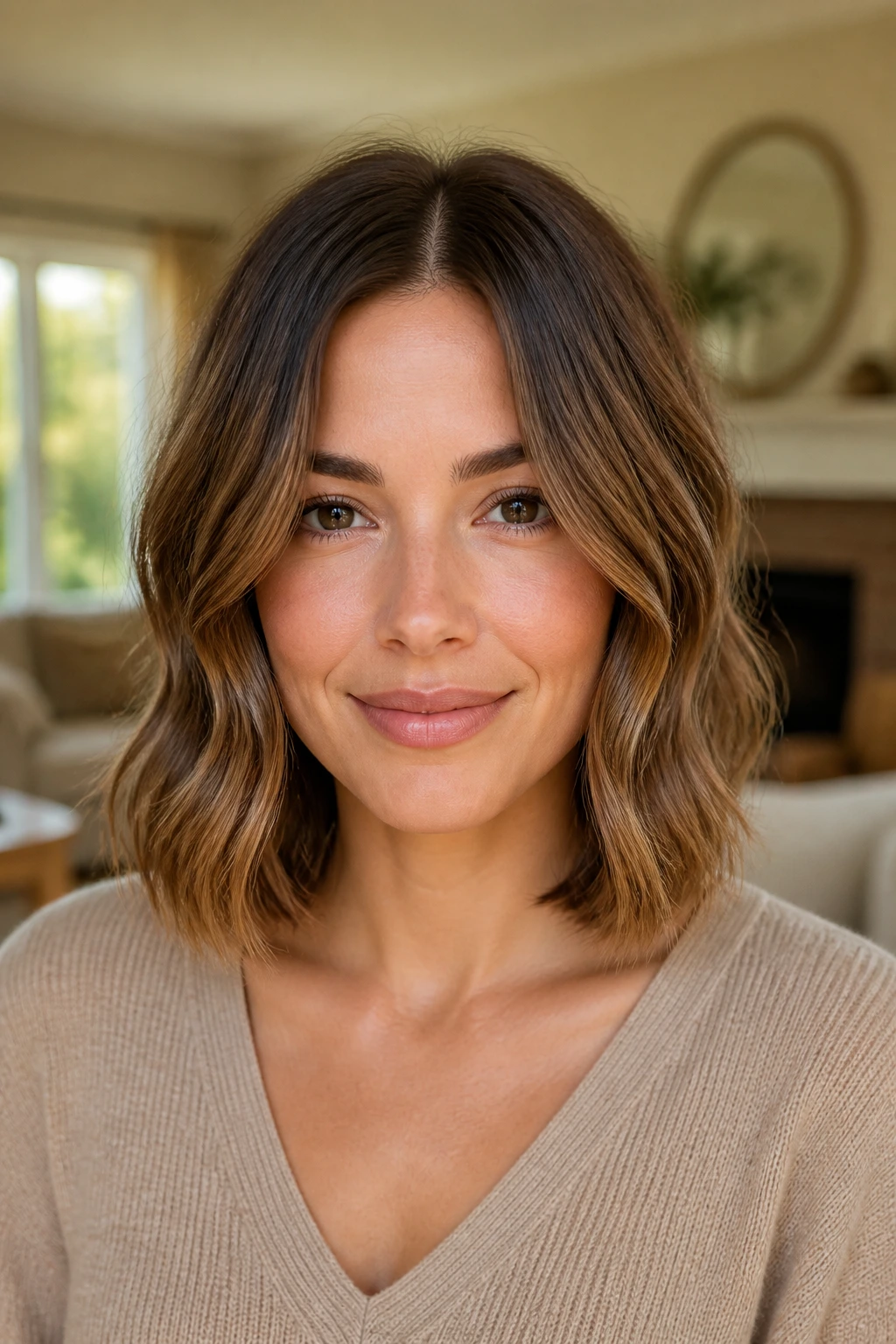
Fine hair does not want a heavy cream party. It wants light structure. That usually means looking for products that dry clean, build a little grip, and disappear into the hair instead of sitting on top of it. Mousse, root spray, light heat protectant, and flexible hairspray are the core lineup. I would start there before reaching for anything richer.
The label matters more than the marketing. If a product promises softness but feels slick on your fingers, it may be too oily for a fine curl pattern. On the other hand, if a mousse dries hard but brushes out clean, that can be useful for neck-length styles where the ends need a little backbone. A lot of people call that “lightweight hold,” and in practice it means the curl can stay up without getting crunchy.
Conditioner deserves the same care. Use enough to smooth the ends, not enough to coat the roots. A small amount from mid-length to tip is usually plenty. If the hair is very fine, a rinse-out conditioner with a lighter feel works better than thick masks every wash. Protein can help when the hair feels limp, but too much leaves it rough. Balance matters more than hype.
How to Wear These Cuts With Different Parts and Finishes
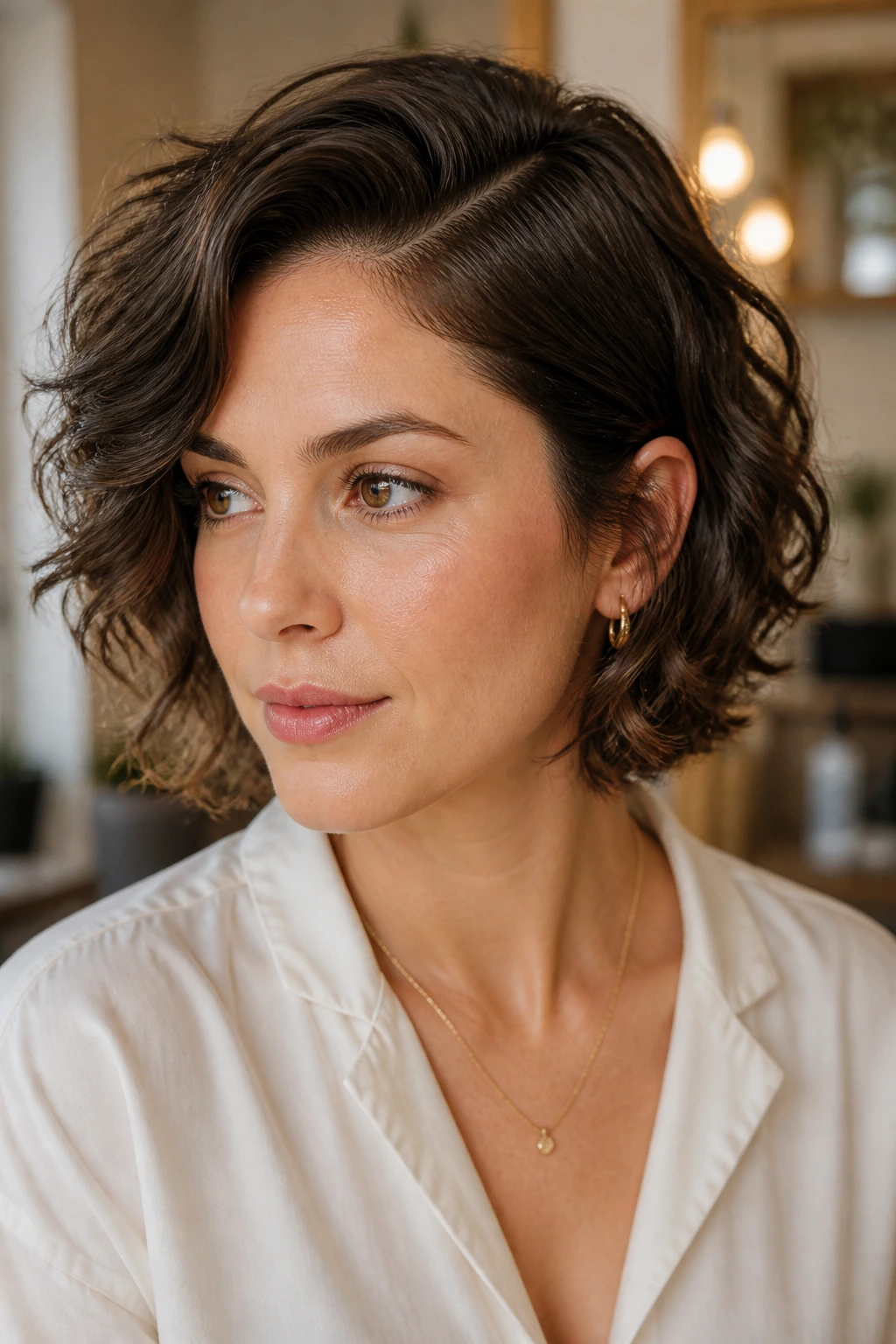
Parting: A center part suits blunt lobs, box bobs, and curved-in shapes because it keeps the line clean. A deep side part adds root lift and works well with side-swept, glam, and rounded cuts. If your scalp shows a lot at the part, shift the line a quarter inch and the whole style can look fuller without a haircut.
Finish: Use a soft, brushed-out wave for polished looks like the Old Hollywood bob or the slick-root version. Reach for a matte, piecey finish on shags, textured bobs, and air-dried styles. Mixing finishes in the same head of hair—sleek roots, soft mids, lighter ends—often looks better on fine hair than trying to force one texture everywhere.
Accessories: Small clips, side pins, and narrow headbands do not fight the shape. Large, heavy accessories can pull fine hair down and flatten the crown. If the hair is tucked behind one ear, a single earring or a minimal barrette keeps the line clean.
Best Match: If your face is round, a deeper side part and a little length at the front help. If it’s square, soft bends and curtain pieces around the cheekbone are kinder. If your jawline is narrow, a rounded bob or a blunt lob can add width where you want it.
Extra Texture Tricks for a Fuller Look
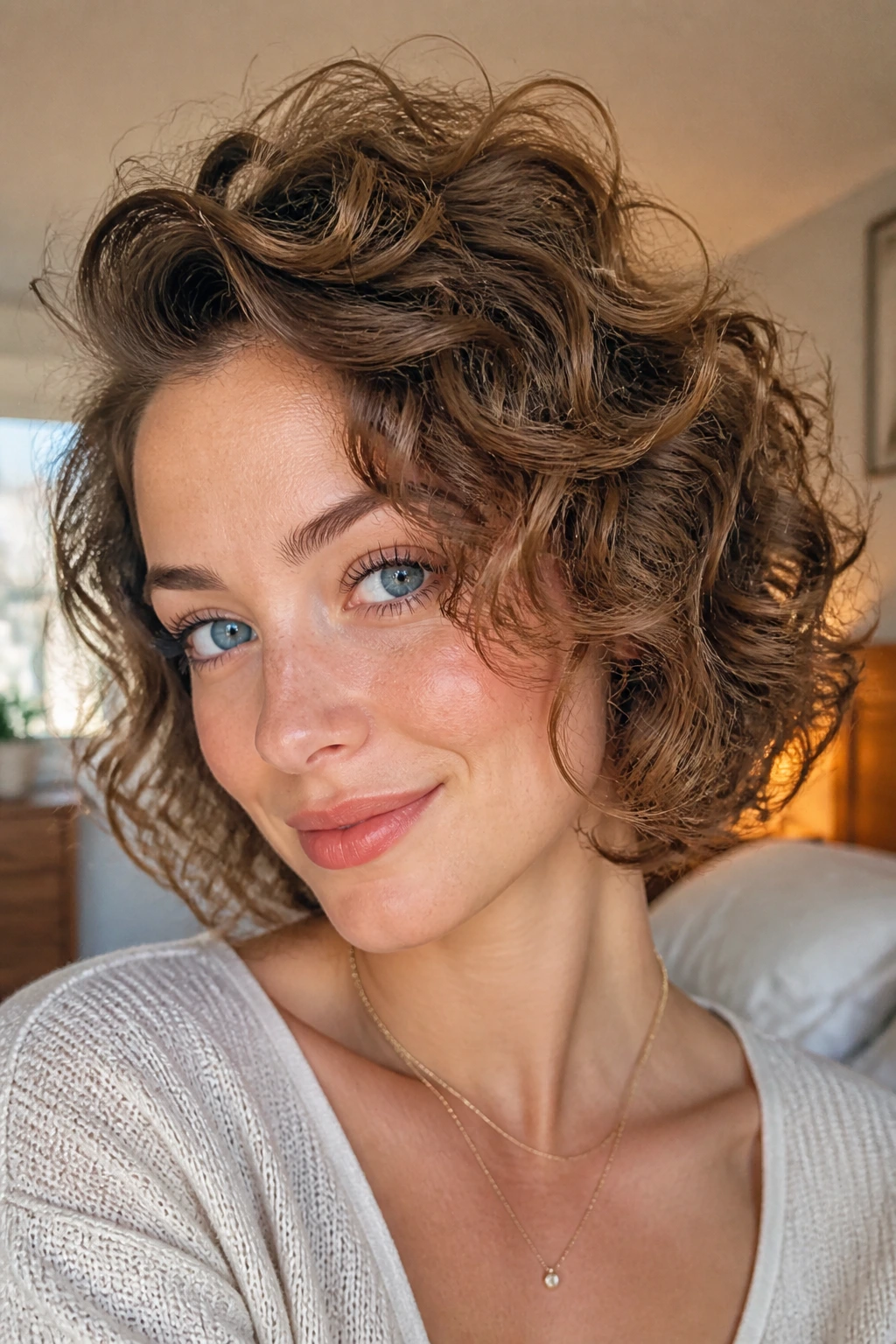
Root Lift: Clip the crown for 8 to 10 minutes while the hair cools, then mist dry shampoo at the roots from 8 inches away. That tiny pause does more for shape than a heavy mousse ever will.
Curl Placement: Start the bend below the ear on the back sections and closer to the cheekbone on the front. That staggered placement keeps the style from looking round and uniform, which can make fine hair feel smaller.
Color Trick: A slightly deeper root shade or a soft face frame with dimension can make neck-length curls look thicker. You do not need dramatic color. A bit of contrast around the crown and ends creates depth that the eye reads as density.
Accessory Trick: A tuck behind one ear or a narrow clip at the temple shifts the shape without adding product. Fine hair often looks fuller when you create a small break in the outline. Too smooth can be the enemy.
Keeping the Shape Fresh for Two or Three Days

Neck-length styles on fine hair usually hold well for a day or two if you treat them gently. The first rule is not to drown the hair in product on day one. Overloaded hair does not refresh well. It collapses and stays collapsed.
Night care
Sleep on a silk or satin pillowcase and avoid tight ponytails. If the style has a stronger wave pattern, pin the front sections in a loose curl and clip the ends away from your face. The goal is to protect the bend, not re-create the whole style in bed.
Morning refresh
Use a light mist of water mixed with a drop of leave-in or a small amount of curl refresher spray on the pieces that look tired. Twist the front sections around your fingers, then hit the roots with dry shampoo if they need lift. Most of the time, you only need to re-bend the top layers and the front.
When to wash again
Fine hair often gets greasy faster than coarse hair, especially at the scalp. If the roots start separating and the waves stop bouncing back by day three, wash it. Pushing too far can make the hair look stringy and much thinner than it is. A fresh wash is sometimes the fastest fix.
Variations and Adaptations to Try
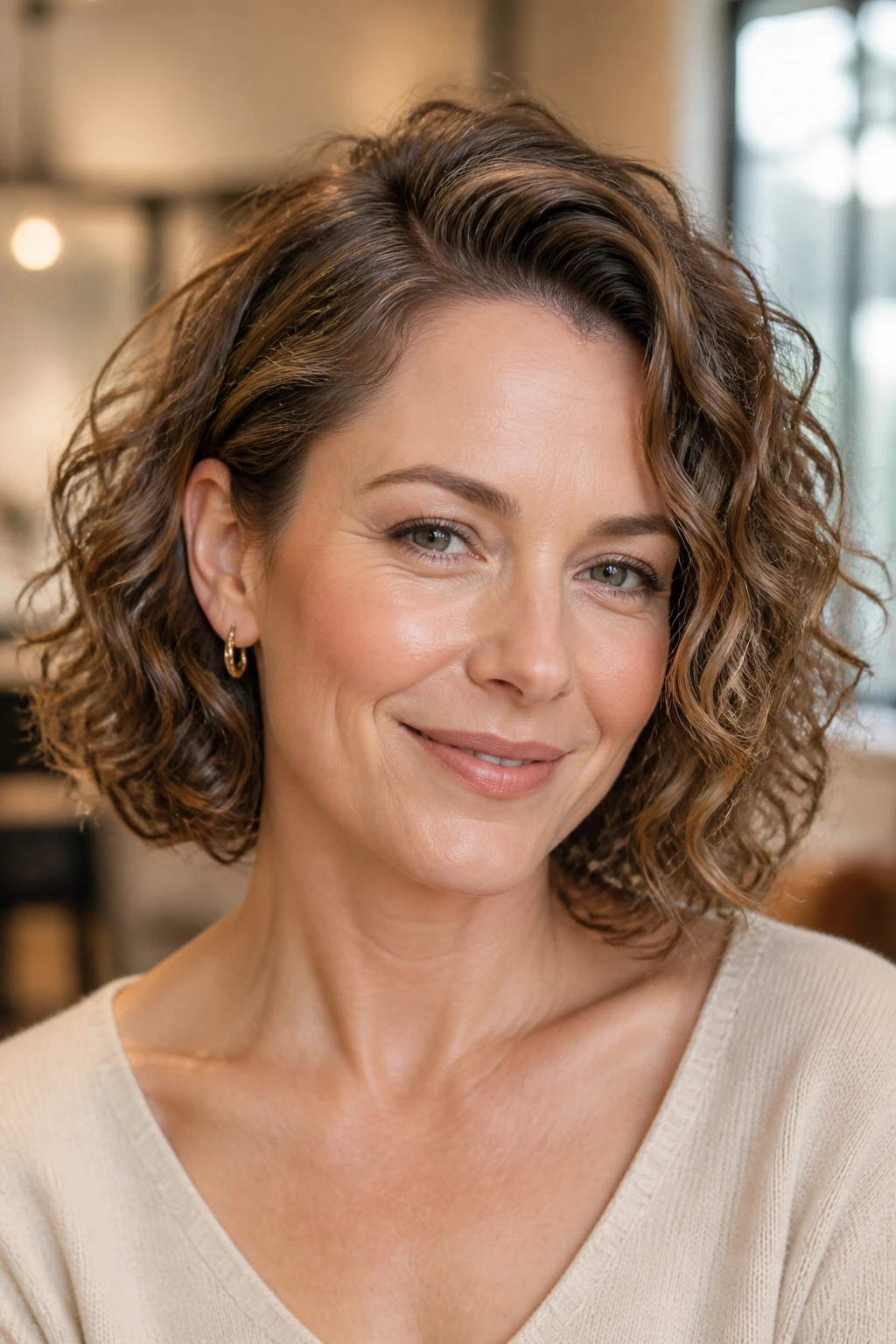
Heat-Free Foam Wave: Use a light mousse on damp hair, scrunch, and clip the crown while it dries. This works best if your hair already has a little bend and you want softer texture without hot tools.
Humidity-Resistant Finish: Choose a neck-length bob with a cleaner perimeter and use a flexible anti-frizz spray only on the mid-lengths. The smoother outline keeps the style from ballooning when the air gets damp.
Extra-Lift Crown Boost: Ask for subtle internal layering at the top and style with a side part. Fine hair that falls flat at the crown often needs direction more than volume product.
Soft Bang Swap: Replace blunt fringe with curtain bangs or bottleneck bangs. The softer fringe grows out better and keeps the front from feeling heavy against the rest of the cut.
Glossy Event Version: Use a round brush, set the curls in one direction, brush them out lightly, and finish with shine spray. The shape stays compact and the curl reads polished rather than beachy.
Common Mistakes That Flatten Fine Hair
-
Too many short layers: Fine hair can lose its edge fast when the cut is chopped up everywhere. The symptom is fluffy ends and a see-through outline. The fix is a stronger perimeter with softer internal layering.
-
Heavy cream at the roots: The hair looks slick for an hour, then collapses. Use cream only on the ends, and choose mousse or root spray for lift.
-
Curling too tight: Tight curls on fine hair usually relax into odd little bumps instead of soft waves. Use a larger barrel and leave the ends out on some sections so the bend looks relaxed.
-
Brushing before the hair cools: Hot curls stretch out immediately when you comb them too early. Let them cool first, even if that means pinning a few sections in place for 10 minutes.
-
Ignoring the part line: A flat part can undo a great haircut. Shift it slightly, rough it up with a tail comb, or dry it in the opposite direction for a minute before settling it back.
-
Overworking day-two hair: Fine strands do not like to be brushed, sprayed, and touched repeatedly. Refresh the front and crown, then stop. More fiddling usually makes the hair look thinner.
Questions People Ask Before They Cut It Short

What neck length is best for fine hair with loose curls?
The most forgiving zone is usually between the jaw and the top of the collarbone. That keeps enough length for movement while preventing the ends from getting dragged down. If your hair is very fine, the shorter end of that range usually looks fuller.
Do blunt ends or layers work better?
A blunt edge usually wins for fine hair because it makes the hair look denser at the bottom. Soft internal layers can help with movement, but too many visible layers often thin the outline and make loose curls fall apart.
Can fine hair hold loose curls all day?
It can, if the cut supports the curl and the styling uses the right amount of hold. A lightweight mousse, a 1-inch barrel, and cool-down time usually matter more than loading on more spray. The curl may soften by afternoon, but the shape can stay intact.
Is a center part bad for fine hair?
Not at all. A center part works well with blunt lobs and box bobs because it keeps the shape balanced. If your roots go flat in the middle, a slight off-center part can give you the same clean look with more lift.
Should very fine hair avoid bangs?
Not if the bangs are soft and long enough to move. Curtain bangs or bottleneck bangs tend to work better than thick blunt fringe because they blend into the rest of the cut instead of sitting like a heavy block on top.
How often should I wash a neck-length style like this?
Most fine hair does best every 2 to 3 days, though oily roots may push that sooner. The real marker is the shape: once the crown loses lift and the curls stop springing back, it is time to wash.
Can I air-dry this haircut and still get shape?
Yes, especially if your hair has a slight wave already. Use a light mousse or wave foam, scrunch, clip the roots, and resist touching it while it dries. Air-dried fine hair usually looks better when the finish is piecey, not perfectly smooth.
What if my curls fall flat by lunch?
That usually means the cut is too long, the product is too heavy, or the roots never got enough lift at the start. Shorten the length a little, switch to lighter products, and set the crown with clips while the hair cools. The fix is usually in the structure, not another coat of spray.
The Shape That Does the Heavy Lifting
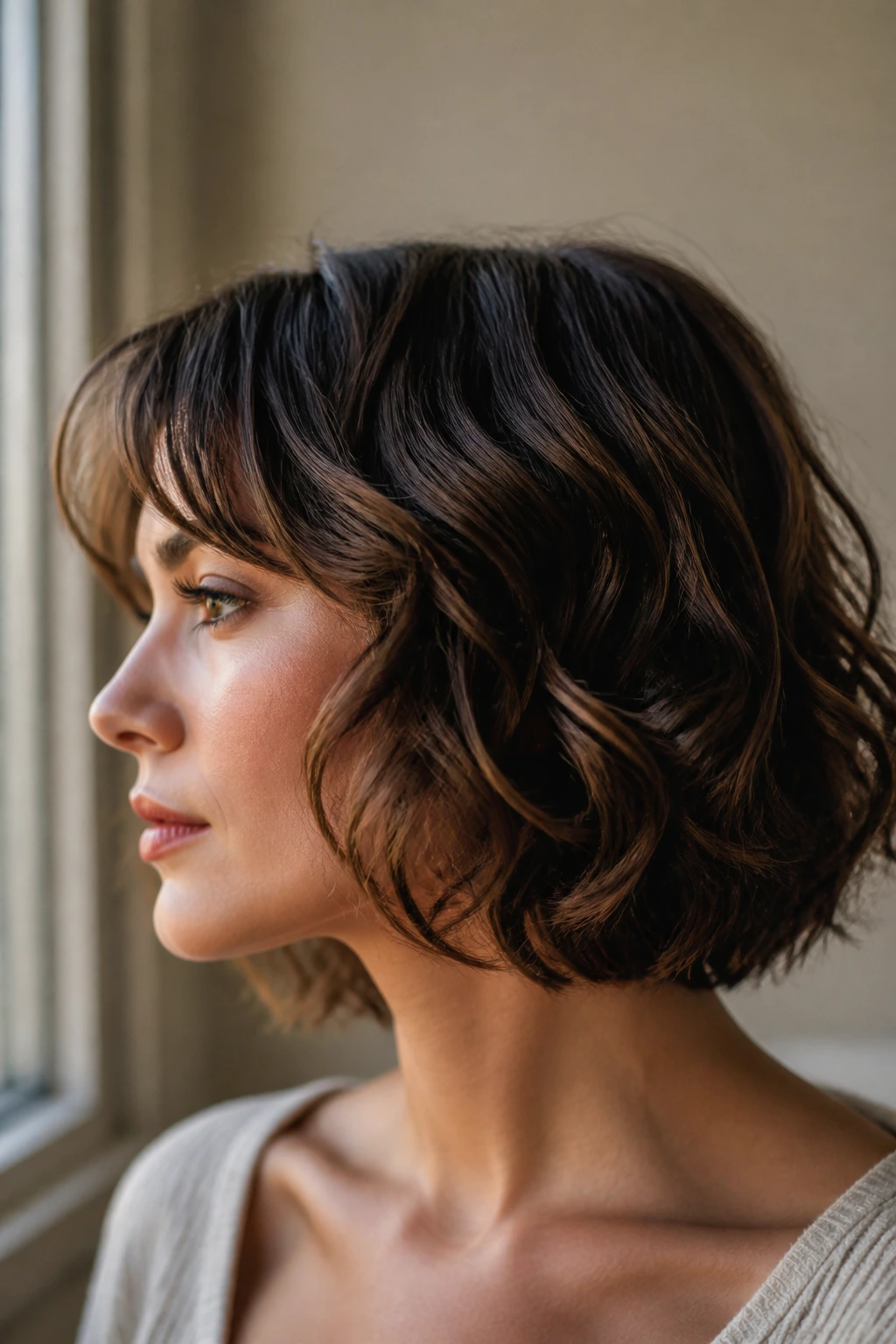
The best neck-length hairstyles for fine hair with loose curls do not ask fine strands to act like thick hair. They work with what’s there: a cleaner edge, less weight, and enough bend to make the cut look intentional from every angle.
That’s why these styles keep holding up. Some are blunt and polished. Some are soft and shaggy. A few lean glam, a few lean casual, and a few sit right in the middle where most people actually live. The common thread is shape. When the haircut is doing its job, the curls do not have to fight for attention.
If your hair has been hanging flat at shoulder length, start with the bluntest version you like and keep the curl loose. Then adjust the part, the fringe, or the finish. Small changes matter here. The right one can make the whole cut look fuller before anyone asks what you did to it.