



Naturally curly hairstyles for short hair work best when the cut respects the curl instead of fighting it. That sounds obvious, until you’ve seen one of those blunt, wet-cut shapes that looked neat in the salon mirror and then puffed up into a triangle by lunch. Short curls have their own physics. They spring, they shrink, they stack, and they change mood the second the weather turns damp.
The good news? Short length can make curls look sharper, denser, and more intentional than longer hair ever does. A chin-length bob can show off a crisp curl pattern. A pixie can turn tight coils into a little crown of texture. Even a shag or a tiny undercut can look polished if the shape is doing its job.
What you want here is not obedience. You want structure. The styles below lean into volume, bend, lift, and edge in ways that make short curly hair feel easier to wear, not harder. Some are clean and soft, some are wild on purpose, and a few are the kind of cuts that look better the messier they get.
Why These Short Curly Looks Hold Up Better Than Straight-Ahead Cuts
Shape matters more than length. Short curly hair sits on the head like sculpture. If the outline is right, you can skip half the styling and still look finished.
Shrinkage becomes part of the design. Tight coils can shrink up 20% to 75% depending on texture and porosity, which is why a style that feels “too short” when wet may land exactly where you want once it dries.
The top gets the spotlight. Short cuts remove weight fast, so the crown can lift instead of collapsing under its own length. That’s one reason a curly bob often feels fuller than a longer curl on the same head.
You can change the mood fast. A middle part, a side tuck, a clip, or a little gel can push the same haircut from casual to polished in minutes.
These styles save real time. With short hair, the difference between “done” and “not done” is often one good product and ten minutes of scrunching, not a marathon styling session.
Why Short Curls Behave Better When the Cut Does the Work
Short curly hair has a built-in advantage: the ends are lighter, so the curl pattern can spring up instead of hanging flat. That means a good short cut doesn’t need to force a shape. It needs to remove the wrong kind of weight and leave the right kind in place.
Here’s the part people miss. Curls don’t need equal length everywhere. They need balance. A round face may want a little height at the crown. A long face may want width around the cheeks. Dense coils often need more internal shaping, while looser curls may need less layer cutting so they don’t frizz into fuzz.
And yes, dry cutting matters more here than with straight hair. Curls lie to you when they’re wet. A section that looks level in the sink can sit crooked once it dries, and then you’re left fixing a shape that should have been checked curl by curl in the first place. That’s why the best naturally curly hairstyles for short hair usually start with a cut that knows exactly where the bulk should live.
One more thing: short curls look strongest when they are allowed to move. Stiff, shellacked curls can work for a night out, but most of the time the better look is touchable and shaped, not frozen.
1. Curly Pixie Cut
A curly pixie cut is one of those styles that can look soft, sharp, or playful depending on how much length you leave on top. Keep the sides and back close, then let 2 to 4 inches sit on the crown and front so the curls have something to bounce off. Too little length and the whole thing disappears; too much and it starts reading like a grown-out crop.
Why it works
The pixie removes bulk everywhere you do not want it. That leaves the top curls to make the statement, which is exactly the point. It also dries fast, and short curl definition is easier to control when you are only working with a few inches.
- Best on: 2C to 4A curls that spring up without much help.
- Shape note: ask for a slightly longer front if your forehead feels wider than you like.
- Styling cue: use a pea-sized amount of curl cream, then finish with a small gel cast.
A curly pixie looks best when the edges are neat but not severe. If the neckline is too sharp and the top is too fluffy, the cut can feel disconnected. Keep the balance soft.
2. Tapered Fade with Defined Coils
A tapered fade with defined coils gives short curly hair real structure. The fade at the temples and nape cleans up the silhouette, while the curls on top stay dense and springy. It’s a strong shape. Not fussy. Not sweet.
What makes it stand out
This cut works because the fade lowers the visual weight around the sides, which makes the coil pattern on top look fuller. It’s especially good if your hair grows wide at the temples or if you want a crisp outline without losing texture. The top can be sponge-defined, finger-coiled, or left in a more natural curl pattern depending on how polished you want it.
- Best for: tighter coils and medium-to-thick density.
- Ask for: a fade that stops high enough to leave a rounded crown.
- Styling note: a light leave-in plus curl sponge gives the top more separation.
I like this cut on hair that grows fast and bulky. It never looks accidental. If the fade is too low, though, the top can look like it is floating. Keep the transition smooth.
3. Rounded Curly Bob
The rounded curly bob is the haircut version of a good silhouette. It sits full through the sides, keeps a soft curve at the bottom, and makes curls look expensive even when the styling took seven minutes. The shape matters more than a razor-clean line here.
A rounded bob is a smart choice if your curls shrink unpredictably. The softness at the edges gives you room to grow into the cut without it turning boxy. It also works well with loose ringlets and medium coils because the shape follows the natural bounce rather than fighting it.
Best way to wear it
Keep the front just a touch longer than the back so the bob frames the face instead of sitting like a bowl. A side part adds even more curve. If you want a polished finish, diffuse until the roots are 90% dry, then let the last bit air-dry so the shape keeps its spring.
The rounded bob is one of those cuts that punishes over-layering. Too many thin pieces and the bottom loses its line. A clean, controlled curve is the whole point.
4. Side-Part Curly Bob
A side-part curly bob changes the whole mood of short curls with one move. Push the part a little off-center and the hair falls into a shape that feels softer, more directional, and usually more flattering around the eyes.
That off-center line creates built-in asymmetry, which is useful when your curls do not all behave the same way. One side can sit a little fuller, the other can tuck closer to the jaw. It also gives fine curls a lift at the roots without making them feel overstyled.
Quick styling notes
- Part placement: start the part just above the arch of the eyebrow for a natural lift.
- Best finish: scrunch in a medium-hold gel and let the curls set before touching them.
- When it shines: second-day hair, when the curl pattern has settled and the part looks effortless.
If your bob tends to flatten at the top, this is a good fix. The side part gives the roots a direction to lean toward. That little change matters more than most people expect.
5. Curly Shag
The curly shag is for anyone who likes movement with a little edge. Layers are cut throughout the head so the curls sit in pieces instead of one heavy block. Done well, it looks airy around the crown and full around the cheeks without feeling overworked.
A shag is especially kind to dense curls, because it removes weight without stealing volume. It also lets looser curls sit with more lift at the top. The trick is balance: enough layering to keep the shape lively, not so much that the ends fray into fluff.
How to wear it
Air-dry for a softer finish, or diffuse upside down for more crown lift. A light mousse can help keep the layers separated without making the hair crunchy. If you want a more rock-and-roll feel, let a few face-framing pieces dry a little crooked. That’s part of the charm.
The shag is not neat hair. It is shape-forward hair. If you want curls that look a little lived in and a little deliberate, this cut earns its keep.
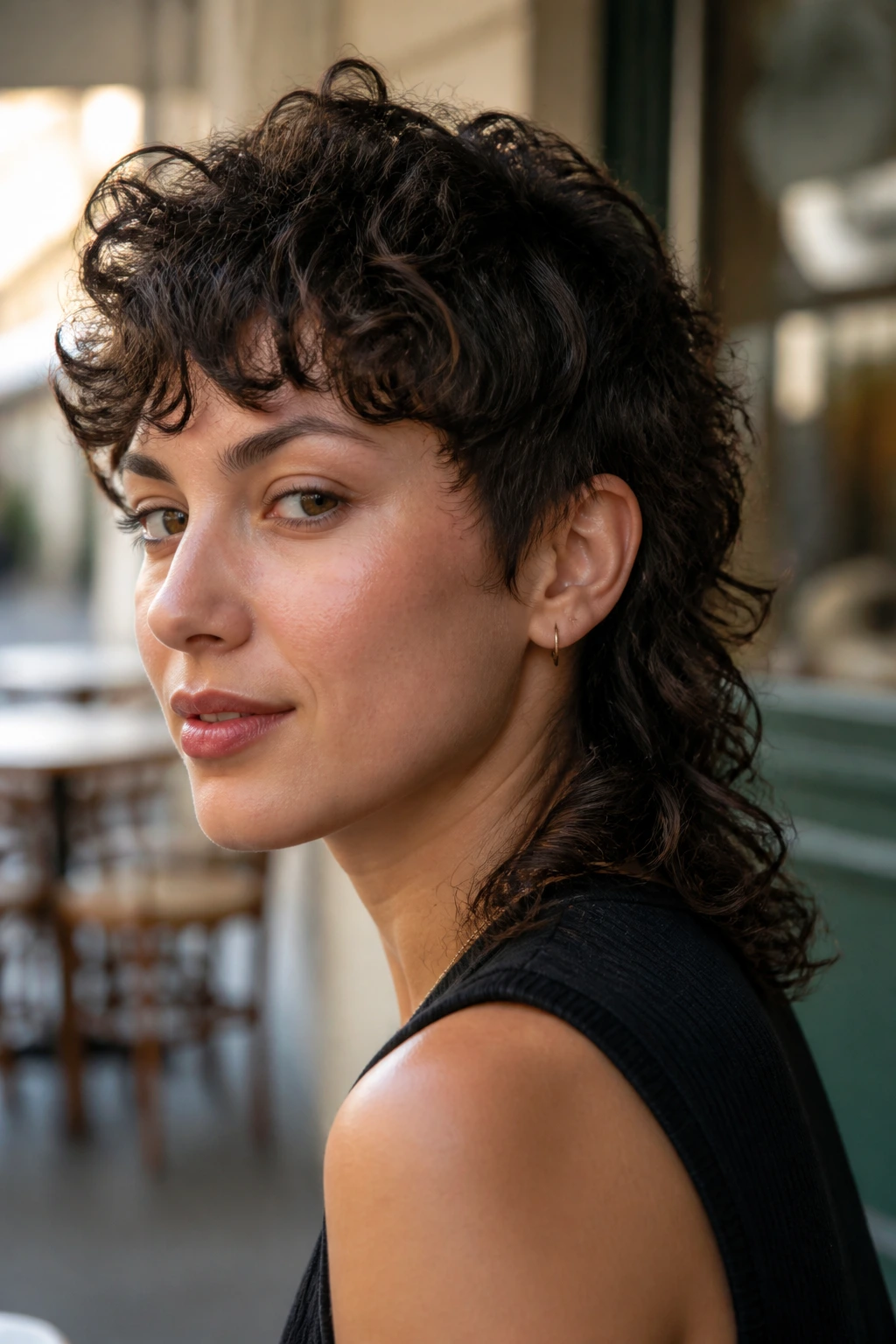
6. Curly Mullet
Yes, the curly mullet works. In the right hands, it looks modern, not costume-y. The front stays shorter and shaped, the sides stay controlled, and the back keeps enough length to show off the curl pattern as it falls toward the neck.
That contrast is what makes it interesting. Short curls can get boring when every section is the same length. The mullet breaks that up and puts the emphasis where you want it. It also gives tighter textures room to expand in the back without making the whole head wide.
If you’re nervous about going all-in, ask for a soft mullet rather than a dramatic one. Keep the transition subtle, with the back only an inch or two longer than the front. That gives you the shape without the shock.
A curly mullet looks best when the curls are defined at the ends and a little looser at the crown. If the top is too flat, the style loses its punch.
7. French Bob for Curls
The French bob on curly hair is cheeky in the best way. It usually sits around jaw length, often with a soft fringe, and it depends on shape more than precision. On curls, that looseness works. A perfectly blunt French bob can feel too hard; a curl-friendly version should move.
What to ask for
Ask for jaw-length or just-below-jaw length with enough room for the curls to spring up. If your hair is dense, a tiny bit of internal shaping can keep the sides from ballooning. If your curls are looser, leave the ends a little fuller so the bob does not disappear into flyaways.
This cut is excellent when you want short hair that still frames the face. It also pairs well with lipstick, strong brows, and hoop earrings, which sounds shallow but matters more than people admit. The haircut has attitude, so let the rest of the look match it.
The key is not to make it too exact. A French bob on curls should look lived in, not helmet-shaped.
8. Jaw-Length Blunt Bob
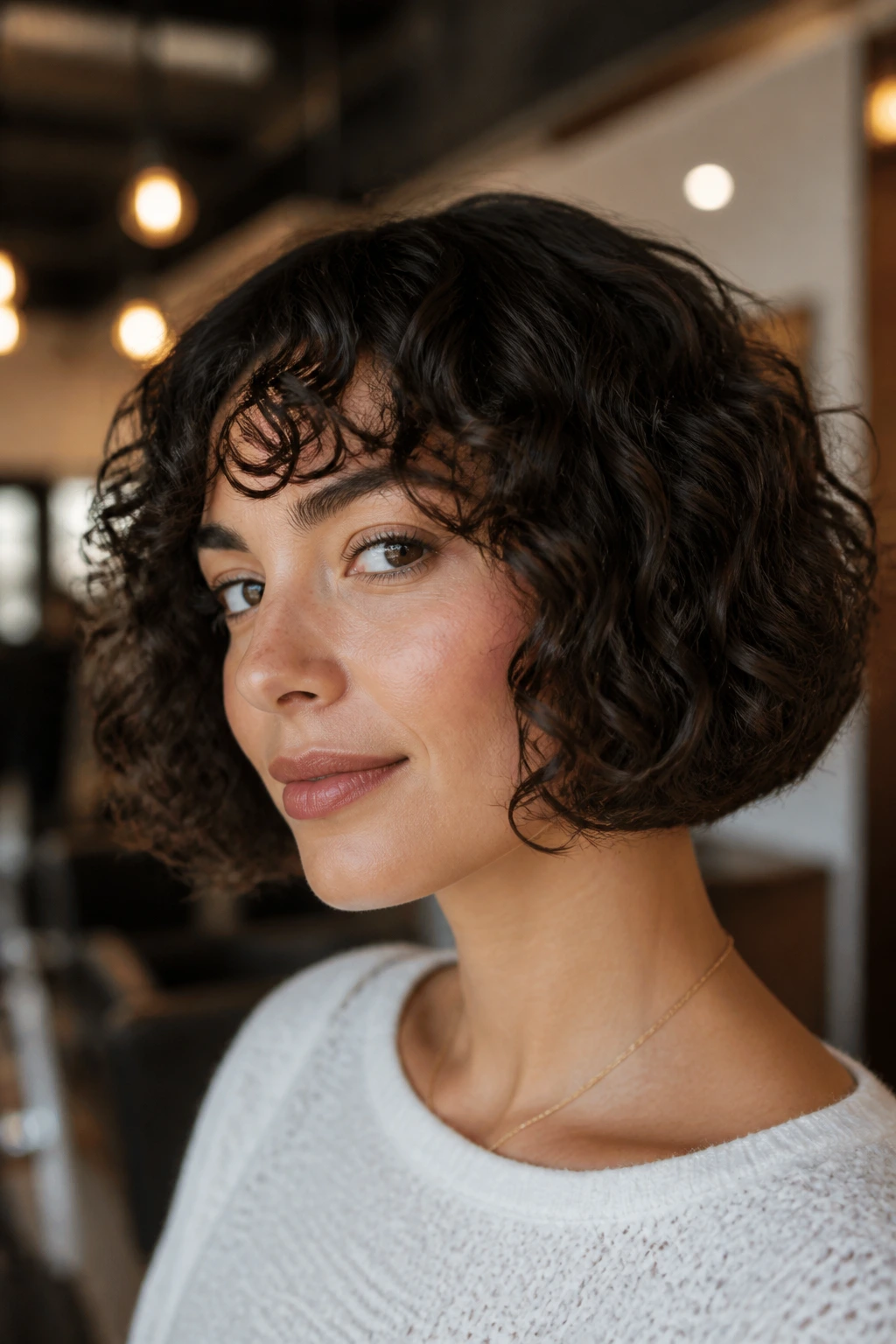
The jaw-length blunt bob brings a cleaner line to curly hair. The cut lands right at the jaw or a touch below, and the bottom edge stays heavier than a shag or layered bob. That weight can be a good thing. It keeps looser curls from poofing out into an awkward triangle.
This style is strongest on hair with some density. Fine curls may need more shaping at the root so the bob doesn’t sit flat. Thick curls, though, get an almost glossy outline when the line is kept even and the ends are not chewed up by too many layers.
Good styling habits
Use enough product to define the curl without weighing down the ends. A small amount of cream, then gel, usually does the job. If you want the bob to feel sharper, tuck one side behind the ear and let the other fall forward.
It’s a clean haircut. That’s the appeal. But “clean” does not mean stiff. The best blunt curly bob still has bend in it.
9. Asymmetrical Curly Bob
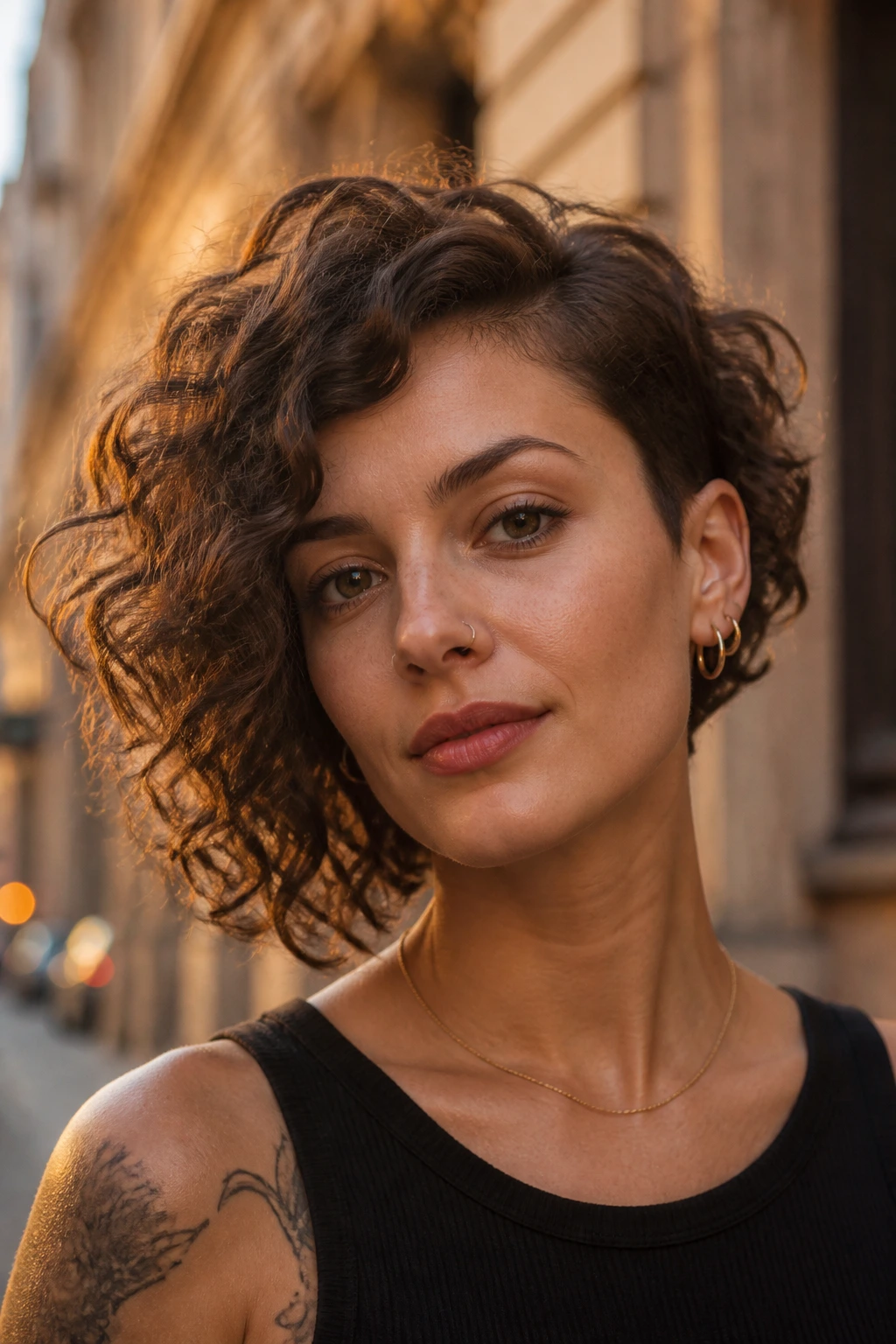
An asymmetrical curly bob gives one side a little more length than the other, and that small difference changes the whole visual line. It makes the face look longer, the curls look more sculpted, and the haircut feel less ordinary.
This is a good choice if one side of your curls naturally grows a bit fuller than the other. Instead of fighting that, the cut leans into it. It also works well for people who like a dramatic shape without shaving anything off.
Best use case
The asymmetry reads best when the longer side falls just past the jaw and the shorter side hits near the cheekbone. Too much difference starts looking costume-like. Keep it subtle unless you want a sharper, editorial shape.
A side part usually helps this cut, but a soft center part can work too if the curls are dense enough to support the line. It’s a good reminder that a short curly style does not need to be symmetrical to look balanced.
10. Curly Fringe
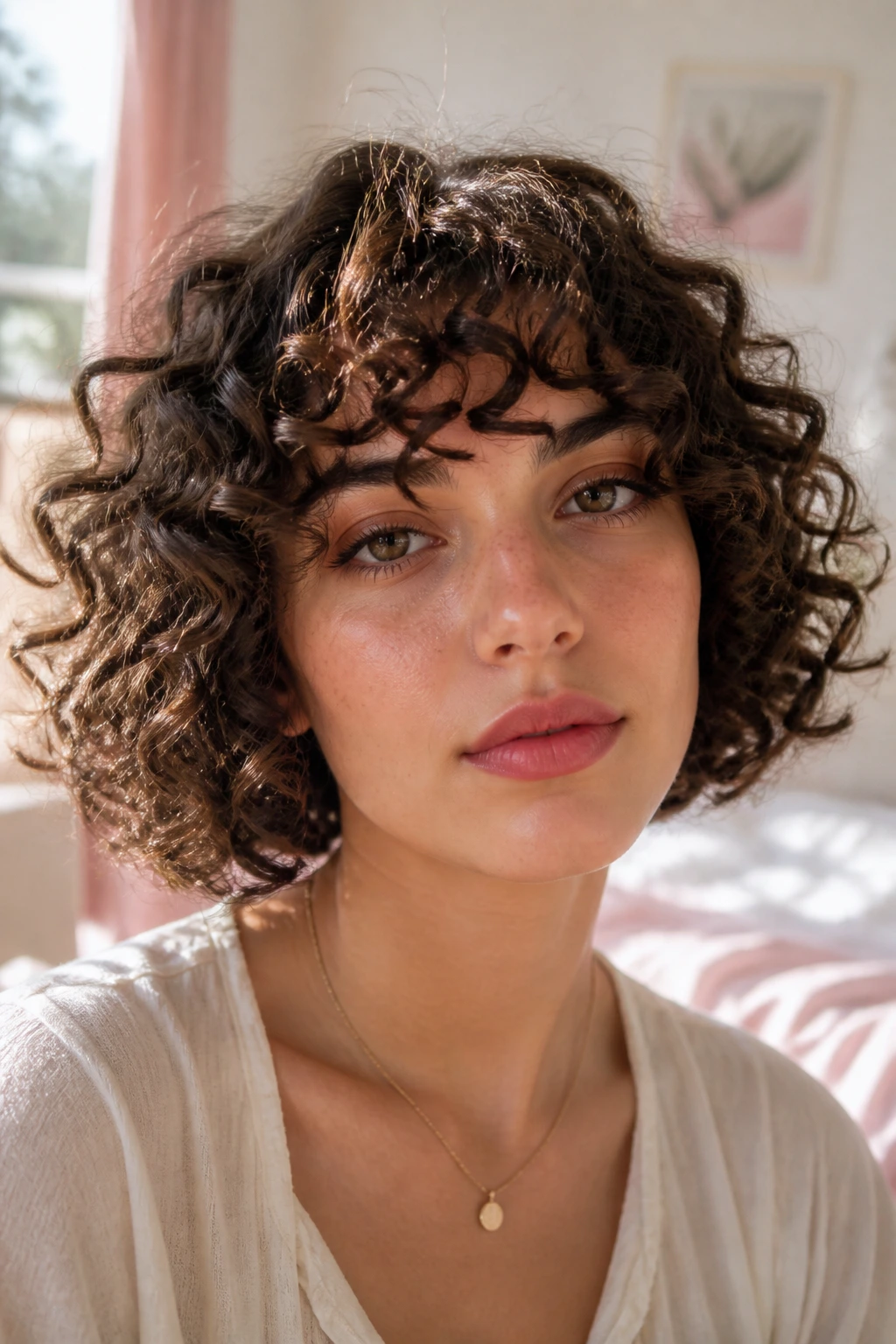
Curly fringe changes a haircut fast. It brings attention straight to the eyes and gives short curls a softer frame, especially when the rest of the hair sits at bob or pixie length. The fringe can be full, wispy, or split a little in the middle depending on how much forehead coverage you want.
A good curly fringe is never cut too short in the salon chair. That is the trap. Curls spring upward after they dry, so a fringe that feels perfect wet can become a tiny shelf later. Leave more length than you think you need, then trim in small passes.
Styling note
A little leave-in on the fringe is enough. Too much gel and the front gets stringy; too little and it frizzes away from the face. If your curls clump naturally, let them fall where they want first, then nudge the shape with your fingers.
This is one of the few short curly styles that can shift the whole personality of a cut without changing the length at all.
11. Teeny Weeny Afro
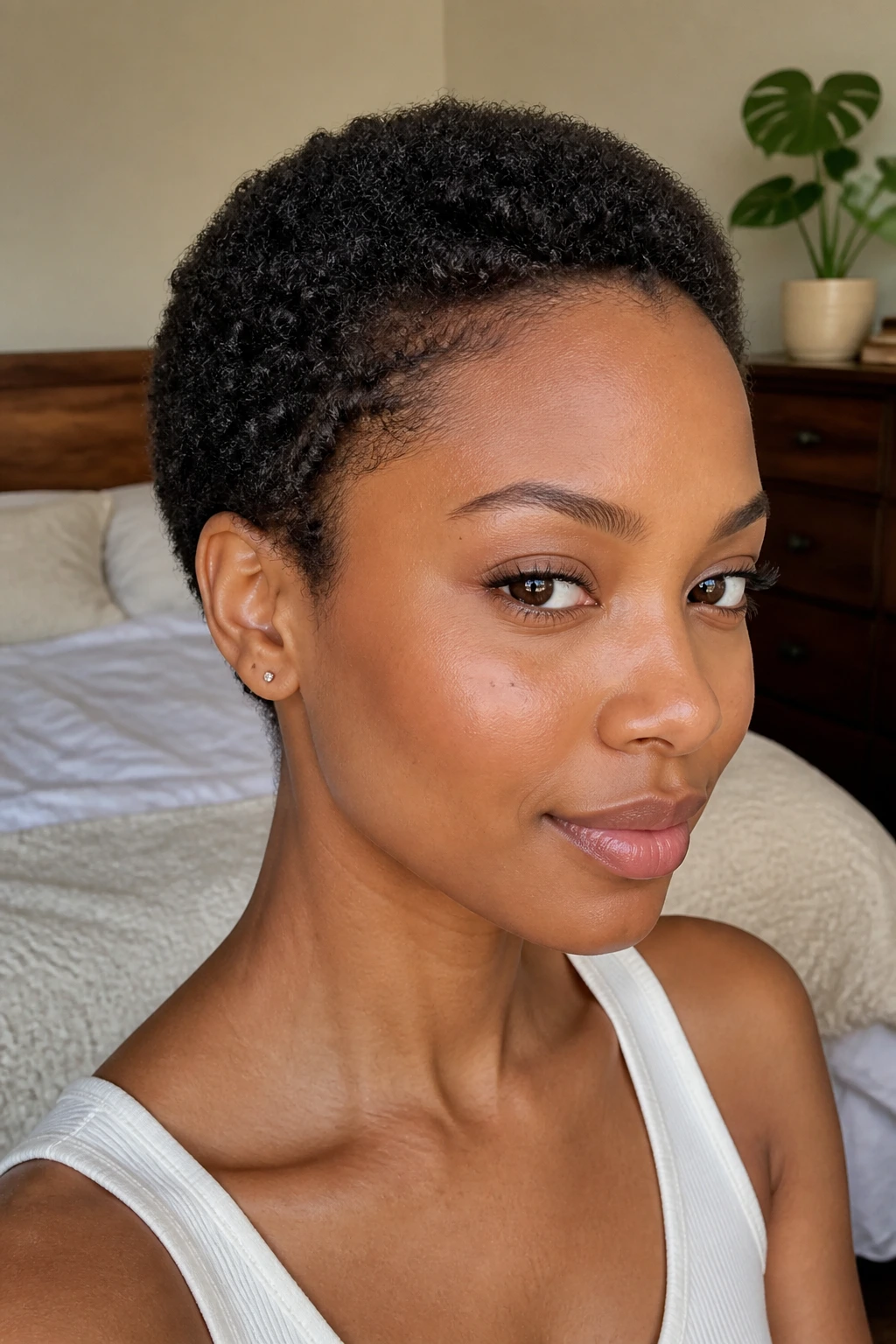
The teeny weeny afro, or TWA, is a clean, powerful shape for tightly coiled hair. It sits close to the head, but it is not flat. That distinction matters. A good TWA has softness at the edges and enough height to show the coil pattern instead of hiding it.
This style is especially good if you want low manipulation. You are not fighting for big volume every day. You are just keeping the shape hydrated, even, and softly outlined around the ears and neckline. A lot of people think a TWA is “no style.” It is the opposite. The shape is the style.
What helps
A light leave-in, a soft oil at the ends, and a regular edge cleanup can keep the whole look neat. If the coils are a little uneven, that is fine. The charm of a TWA is the texture, not perfect geometry.
It’s one of the strongest short curly looks because it has honesty. There’s nowhere to hide, and that’s the point.
12. Finger-Coiled Crop
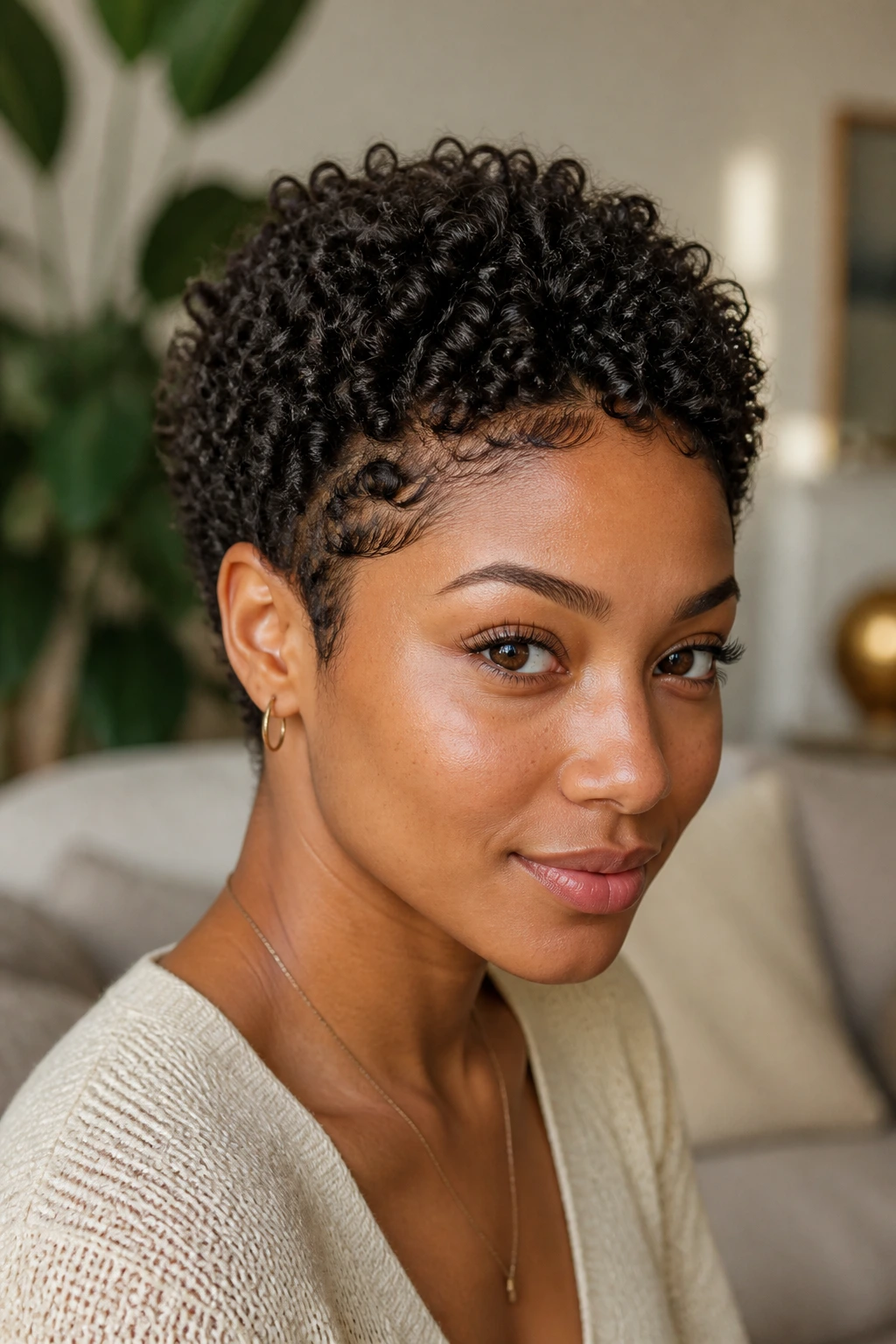
A finger-coiled crop is all about definition. Each curl is encouraged into a neat spiral, which gives short hair a polished, almost tailored look. It takes more time than a wash-and-go, but the result is crisp and very controlled.
This is a smart style for tighter curl patterns that sometimes separate into fuzz when left alone. Finger-coiling gives the curls a direction and a tighter shape, especially around the front hairline and crown. It also works well for special occasions because the finish reads intentional from every angle.
How to think about it
Start on damp hair, not soaking wet. Too much water makes the section slide apart. Use a small amount of cream or gel on each piece, twist it around your finger, then let it set completely before fluffing.
If you want this look to last, do not touch it until it is dry. Seriously. The whole point is keeping the coil pattern clean.
13. Layered Crop with Crown Volume
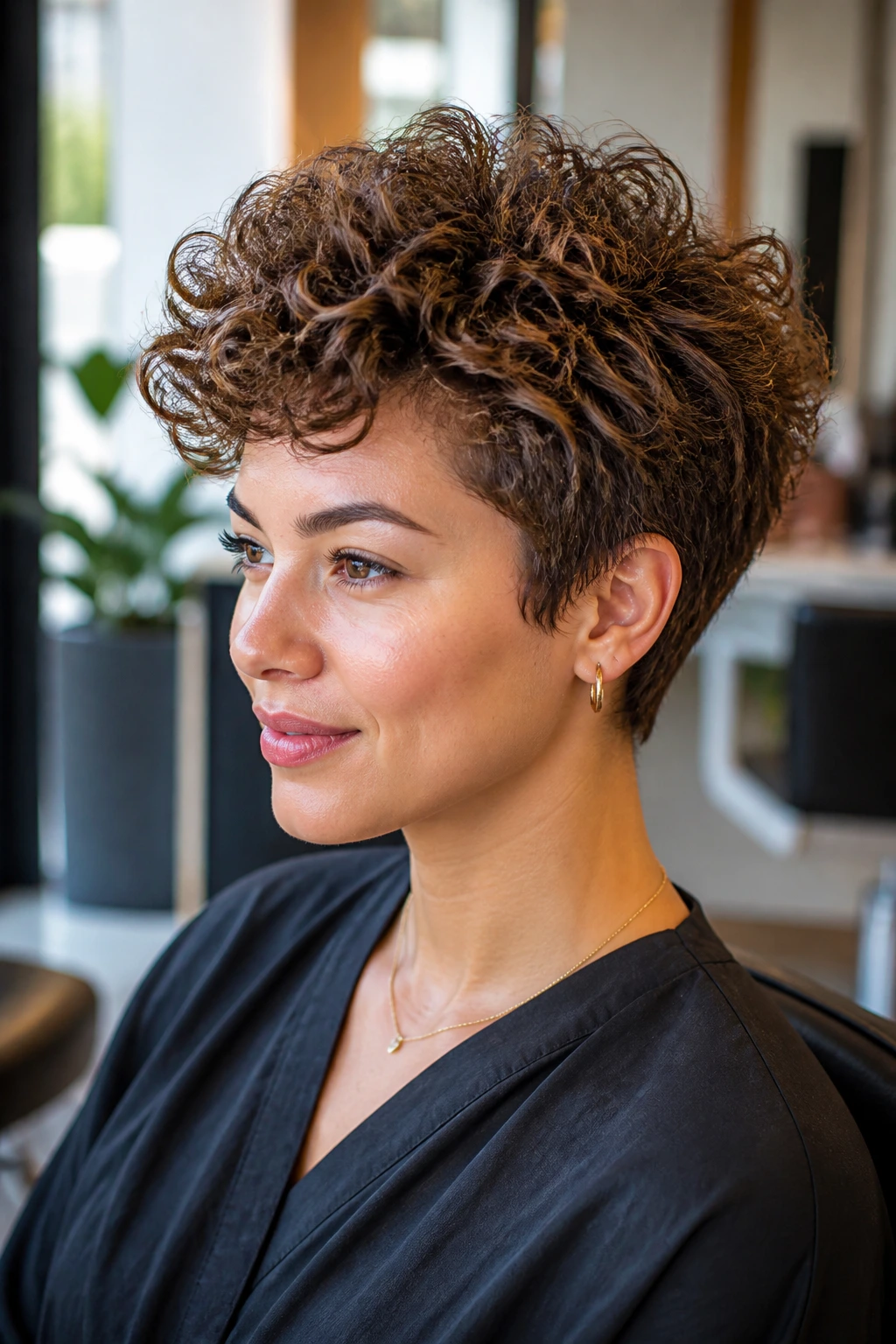
A layered crop with crown volume solves one of the hardest problems in short curly hair: flatness at the top and bulk at the sides. By keeping the crown a little longer and removing weight lower down, the hair can lift up instead of spreading out.
This shape works well on medium-density curls that need help staying awake. It is also useful if you have a naturally low crown or a cowlick that pushes the top in the wrong direction. The layers give the curls somewhere to stack.
The smartest version of this cut keeps the sides soft and the top slightly rounded. If the crown is too short, you lose the lift. If the sides are too heavy, you get the dreaded mushroom effect. Nobody wants that.
A diffuser helps here, but the drying method matters less than the actual cut. If the shape is right, styling becomes simple.
14. Curly Undercut
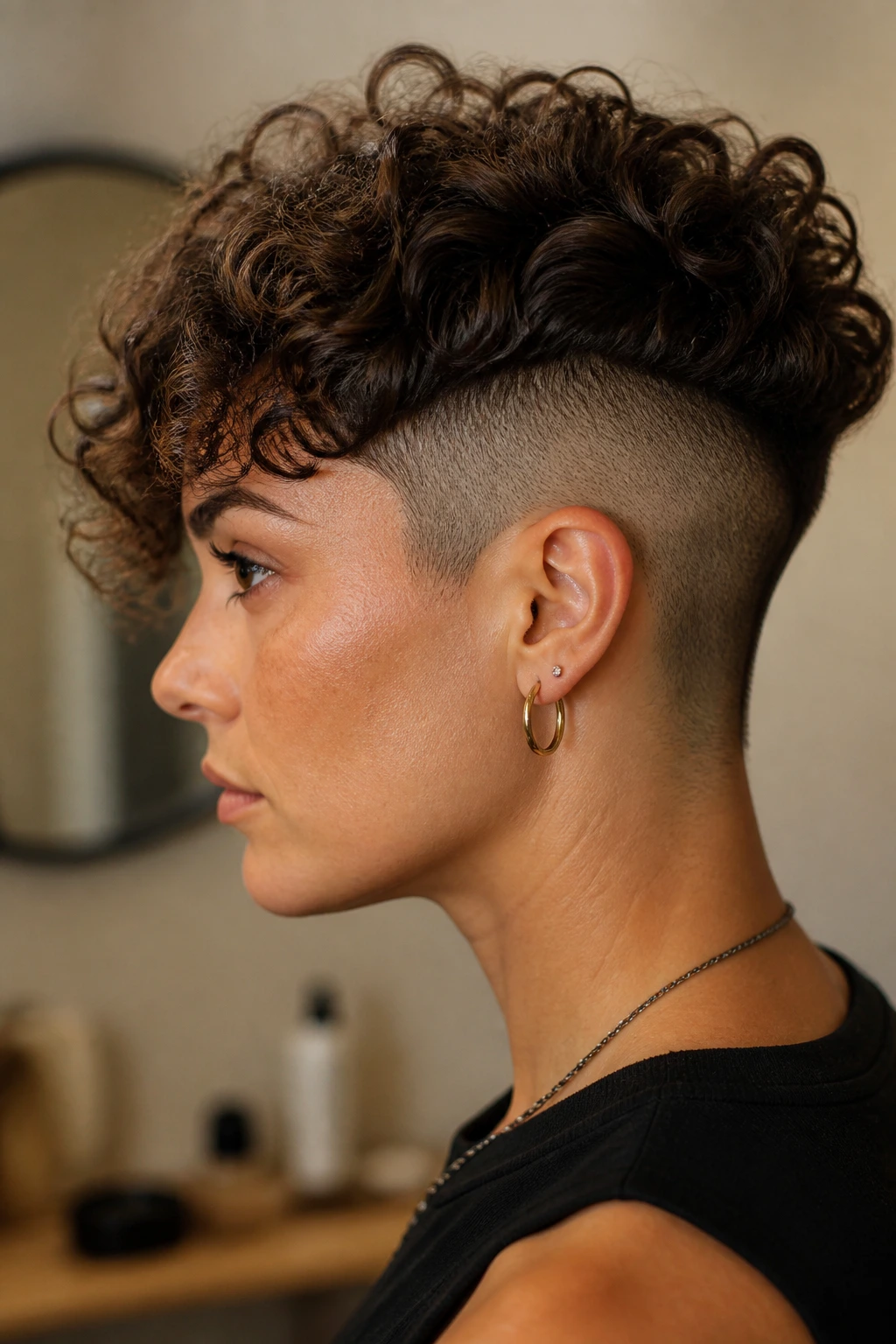
The curly undercut is a pressure release valve. It removes bulk underneath while leaving the top curls free to fall, curl, or fluff the way they want. On dense hair, that can be a lifesaver. On looser textures, it gives the style a sharper edge.
The undercut can be hidden or visible. Hidden undercuts are useful if you want to keep the option of wearing the curls down. Visible undercuts make the haircut louder and more deliberate. Either way, the contrast between shaved or closely cropped areas and the curls above it is the whole story.
Good to know
This style looks best when the top has enough length to move. If the top is too short, the undercut can dominate and make the cut feel choppy. Keep the top at least a few inches long so the curls can fall over the shorter sections naturally.
It is not the most conservative option. It is the one you choose when volume has become a nuisance.
15. Side-Swept Crop
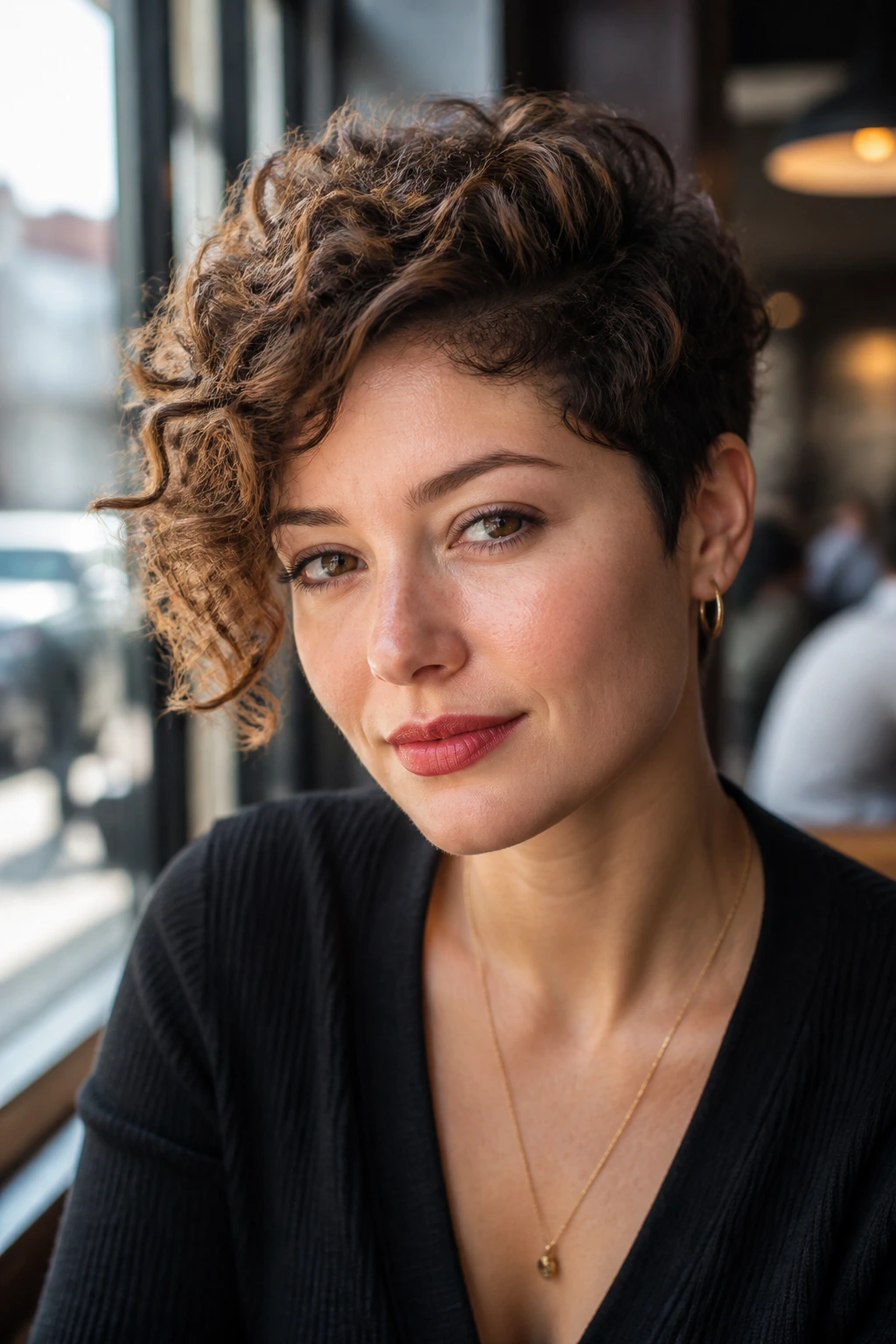
A side-swept crop is a short curly style with a soft bias. Instead of letting the curls sit straight up or straight down, you guide them to one side so the face gets a diagonal line of texture. That diagonal is flattering. It opens the face without making the haircut look rigid.
It works especially well on curls that want to separate at the front. Instead of forcing a perfect center part, let the natural bend do the heavy lifting. A small clip or a bit of gel at the root can keep the front from drifting back into the middle.
If you want more polish, tuck the heavier side behind the ear and leave a few curls loose around the cheek. That small move makes the style look thought-out without feeling overdone.
It’s an easy one to wear on days when you want the haircut to do the talking for you.
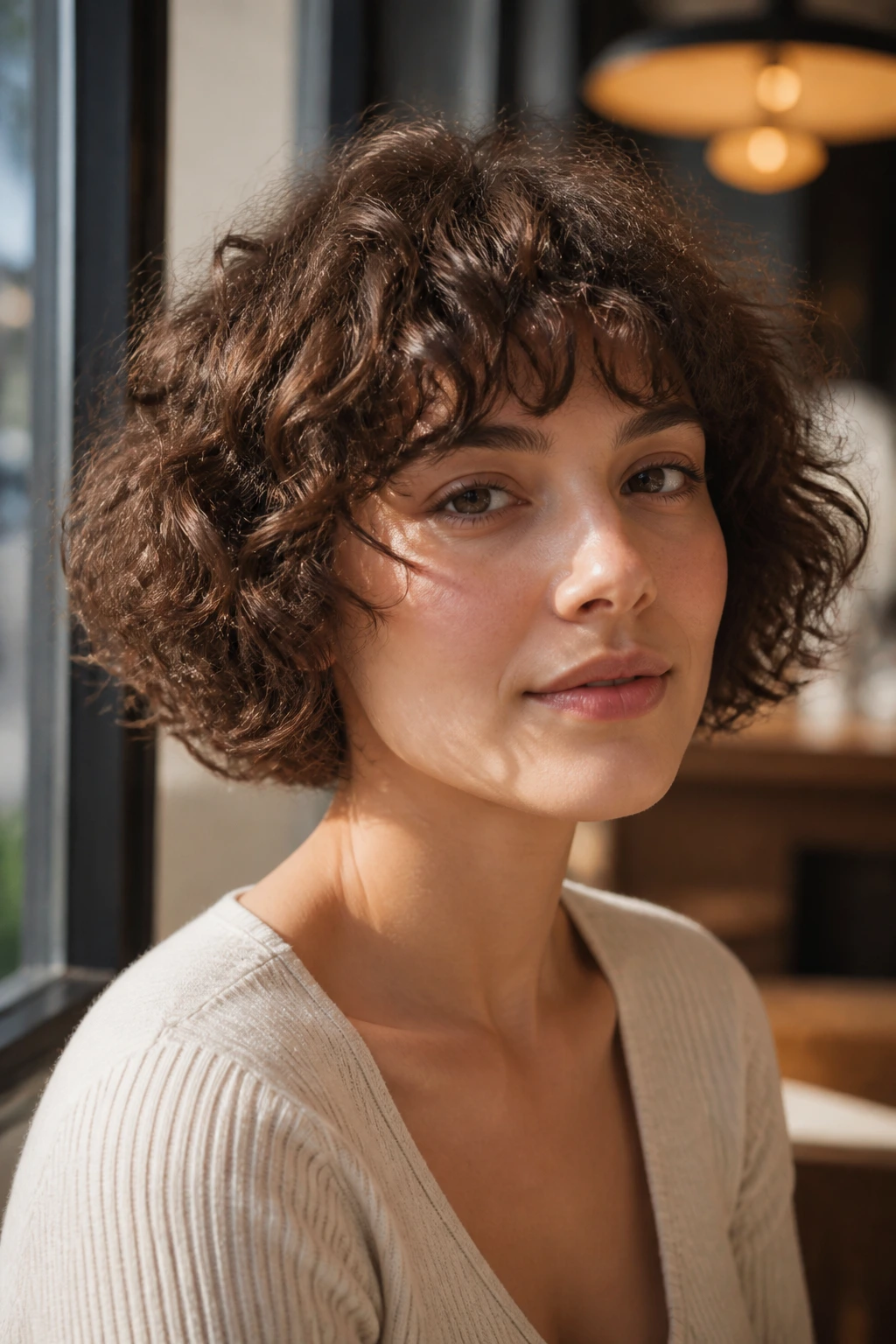
16. Bixie Cut
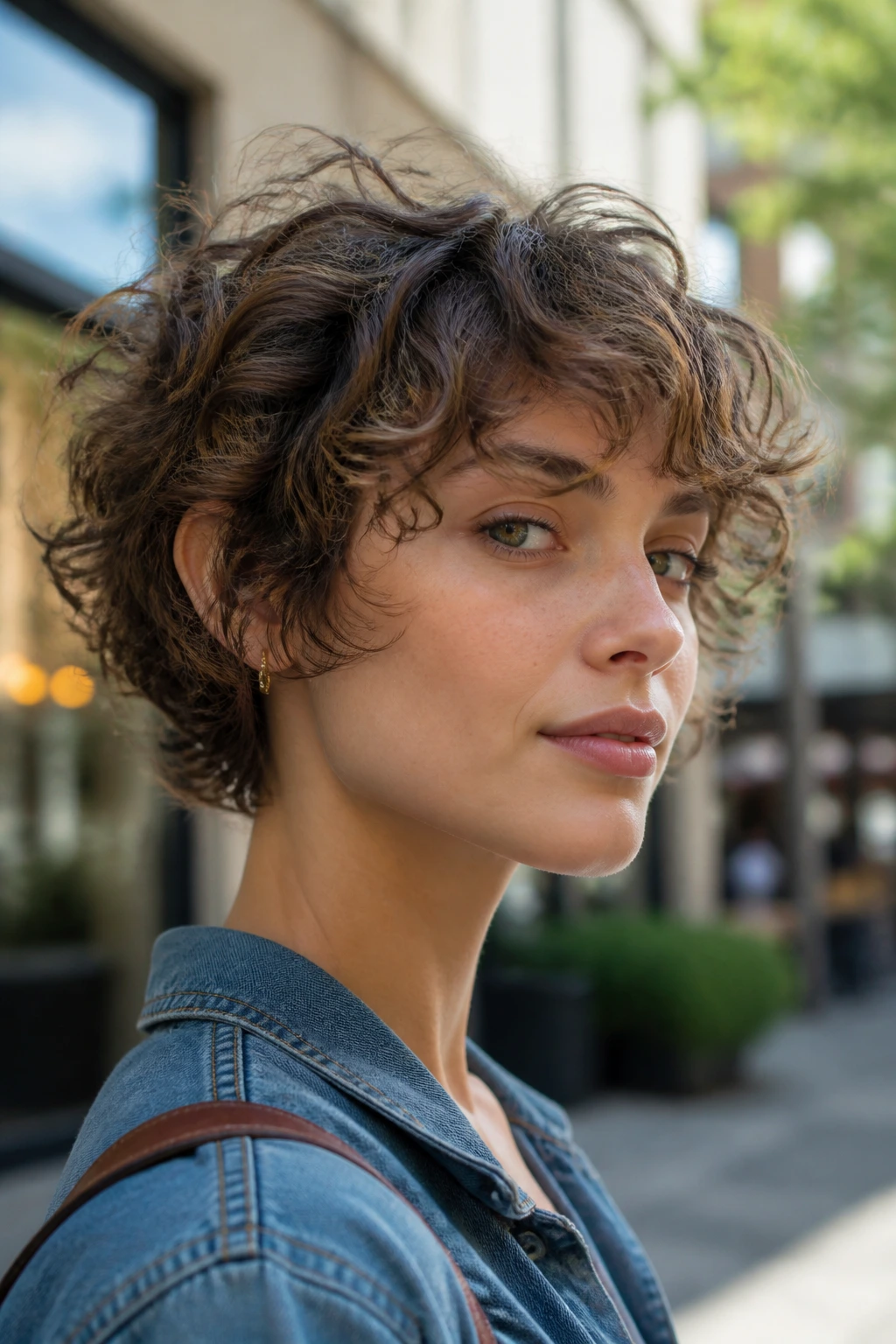
The bixie lives between a bob and a pixie, and that in-between length is exactly why it works so well on curls. It keeps some shape around the ears and jaw while leaving enough length on top to show off texture. It feels lighter than a bob and less severe than a pixie.
This is a smart pick if you want short hair but do not want to lose too much face-framing length. The bixie gives movement, a little volume, and room for a side part or fringe. It can read soft or edgy depending on how the layers are cut.
Styling angle
Use a light mousse if your curls are fine, or a cream-gel combo if they are denser. Blow-drying isn’t required, but a diffuser can help the crown stay lifted. The trick is not to flatten the top while you’re smoothing the sides.
It’s one of the most flexible short curly cuts because it borrows the best part of each length.
17. Soft Wolf Cut
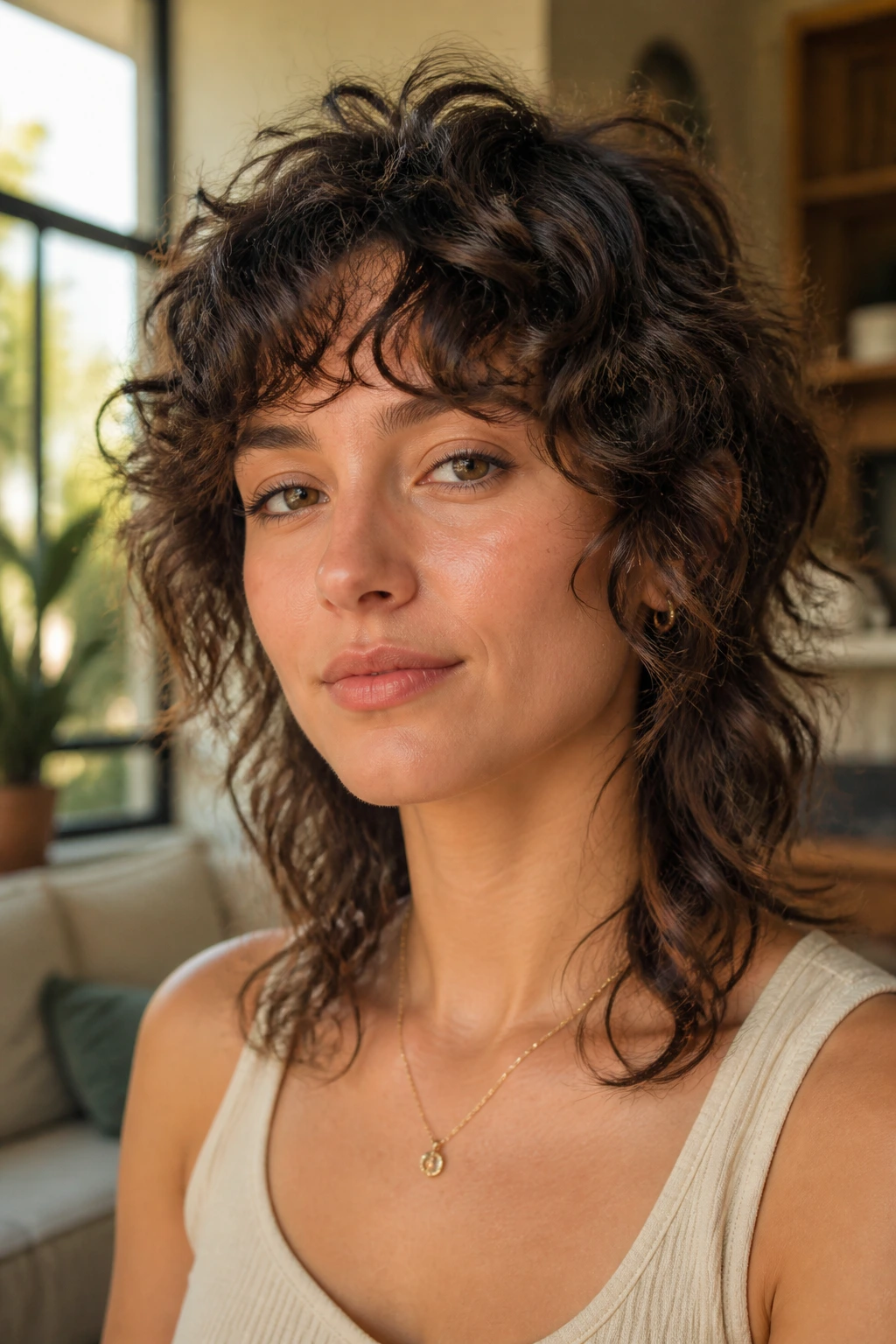
The soft wolf cut is basically the curly shag with more attitude. It has choppier layers, a little extra length in the back, and a shape that likes to look undone. On curls, it can be a very good thing. The texture does half the styling work.
What keeps this version “soft” is restraint. The layers should create movement, not raggedness. If the hair is too heavily razored, the ends can fray fast and lose their curl integrity. Ask for shape, not shredding.
This cut is a good fit if you like volume at the crown and a looser frame around the face. It also grows out better than a lot of precise short cuts, which matters if you do not want to be in the salon every few weeks.
The best wolf cuts on curls look a little wild, but never sloppy. There’s a difference.
18. Wet-Look Short Curls
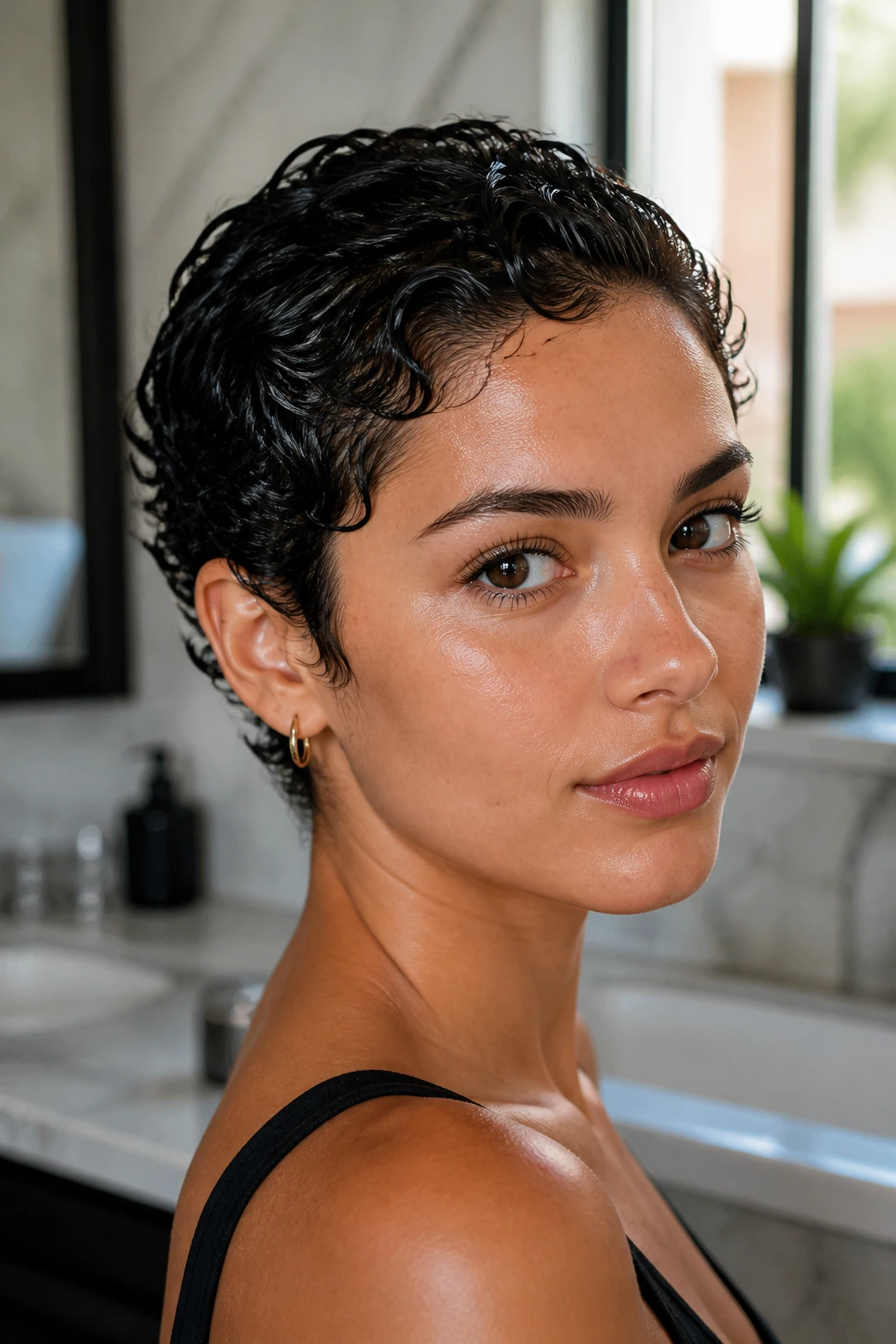
A wet-look finish turns short curls into something sleek and deliberate. The hair is styled with gel while very damp, then left with a glossy, close-to-the-head finish or diffused just enough to lock in the shape. It is especially striking on short hair because the shine stands out.
This style works best when the curl pattern is already good and you want to show it off in a cleaner way. It’s not the look for someone who hates product. You need enough gel to keep the curls together, especially around the front and sides.
When to wear it
This is the one that looks sharp with big earrings, a clean neckline, or a strong brow. It also handles humidity better than a loose fluffy style, which is a useful bonus. The finish can be neat or slightly undone depending on how much you rake through it before the gel sets.
If your curls tend to puff at the first sign of moisture, the wet look can be a solid reset. It locks the shape down before the air has a chance to interfere.
19. Half-Up Mini Pineapple
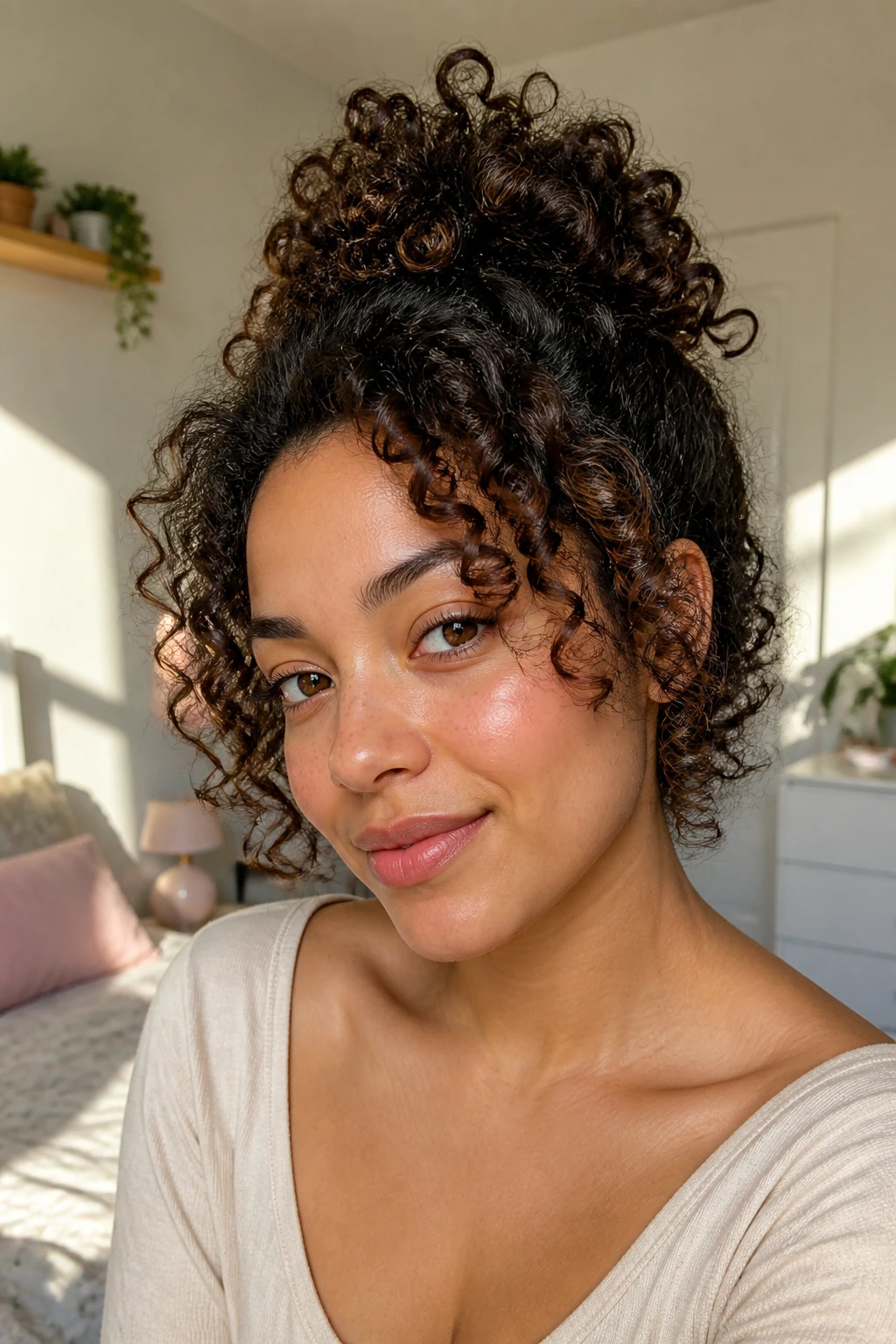
The half-up mini pineapple is one of the easiest ways to shift short curly hair into something playful without changing the cut. Pull the top section up and secure it loosely, then let the lower curls fall around the face and neck. On a short bob, it looks casual. On a grown-out pixie, it looks almost cheeky.
The success of this style depends on not pulling it too tight. Leave the top puffy enough to keep the curl pattern visible. A small satin scrunchie or coil tie works better than a hard elastic because it does not flatten the section as much.
It’s a good weekday style when the roots are a little tired but the ends still look decent. The top gets lifted, the face opens up, and the shape feels intentional again.
One of the nice things about this style is that it makes second-day curls look like a choice instead of a problem.
20. Mini Space Buns
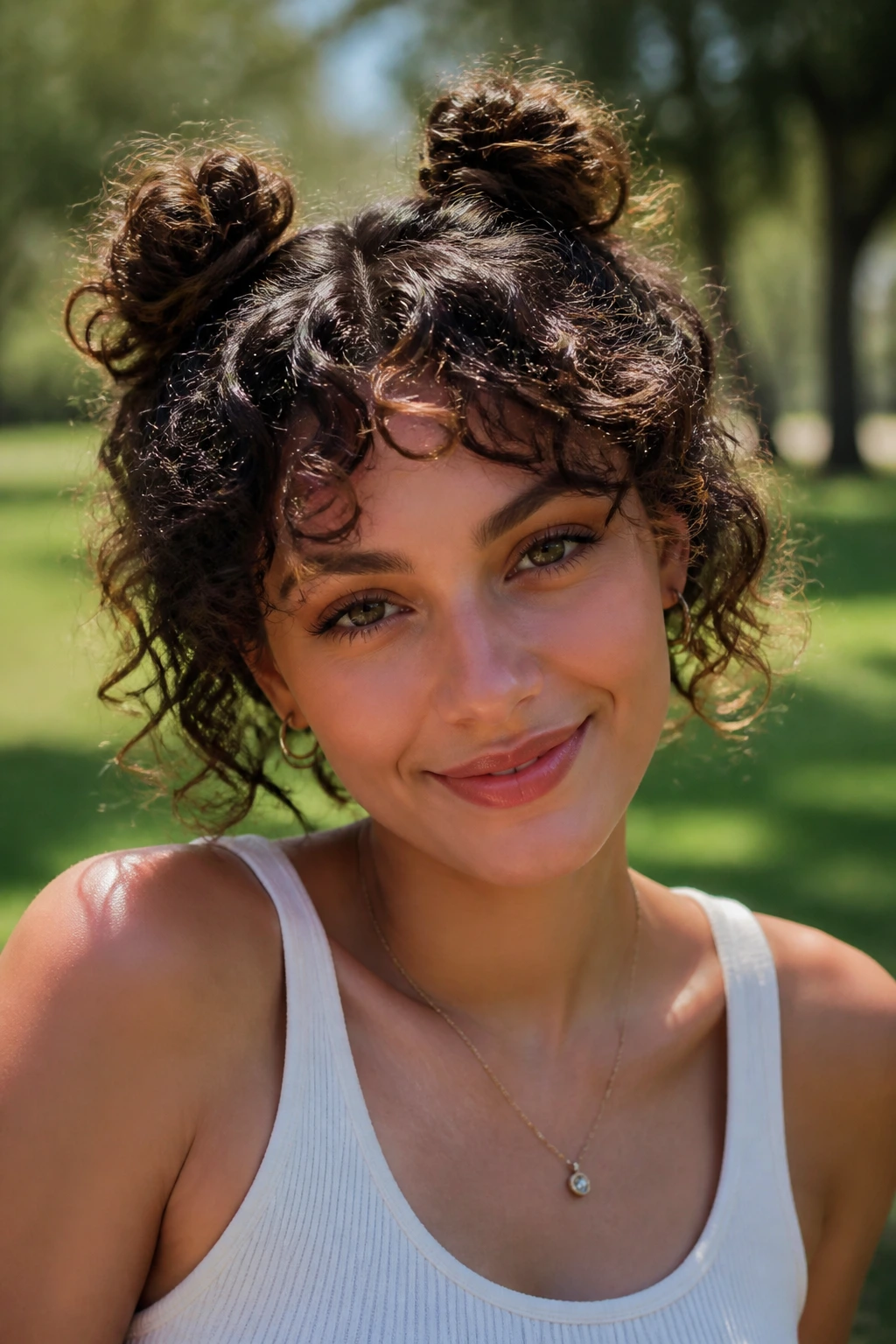
Mini space buns on short curly hair are cute, yes, but more useful than that sounds. They pin the curls up off the face while leaving enough texture in the buns to keep the style from looking too neat. On shoulder-skimming or bob-length curls, the buns sit small and sweet; on shorter cuts, they become more like curled knots.
This style is easiest when the hair has some stretch from a twist-out or a day-old wash-and-go. Freshly washed curls can slip too much. Secure the buns loosely and let a few front pieces fall out on purpose. The shape looks better when it is not perfect.
If your hair is dense, this is a good way to break up the bulk without a full updo. If it is fine, tease the roots a little before gathering so the buns do not collapse.
It is playful hair, but still a shape decision. That’s why it works.
21. Claw-Clip Twist Updo
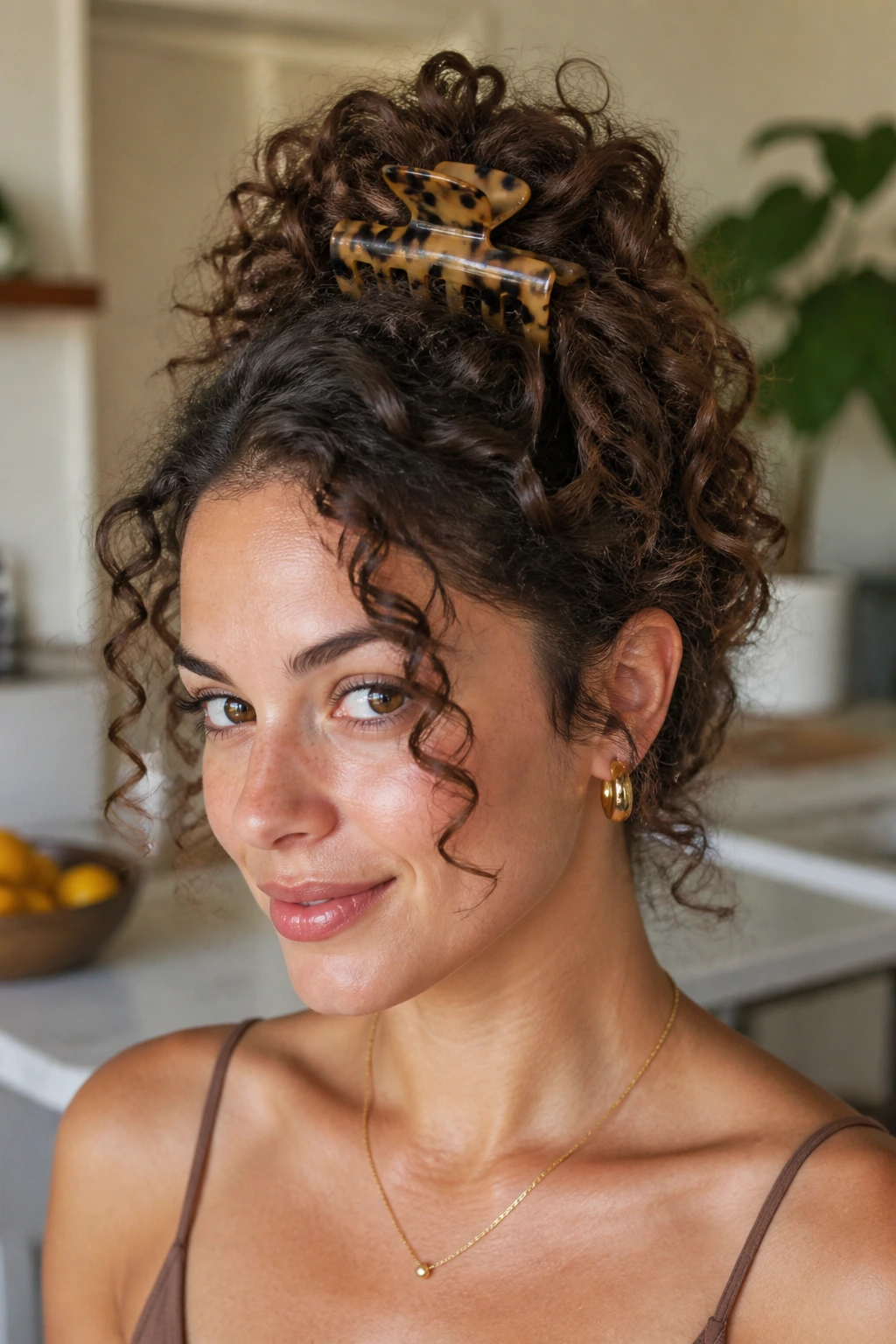
A claw-clip twist updo is the fastest way to make short curly hair feel put together. Twist the hair upward or back, catch it in a clip, and let the ends spill out in a controlled way. It is not a formal style. It is a smart one.
This works especially well on bobs and longer pixie cuts where the back can be tucked in but the top still has enough curl to show. The clip should hold the twist without crushing the texture. A medium clip usually works better than a giant one that slips around.
Why I like it
It keeps the neckline clear, shows off earrings, and takes less than two minutes. That makes it a real-life style, not a photo-only style. A little frizz near the crown is fine here. In fact, it helps the clip look like part of the haircut rather than a rescue mission.
If you need short curly hair to behave for one afternoon, this is one of the first moves to reach for.
22. Pinned-Back Crown Twist
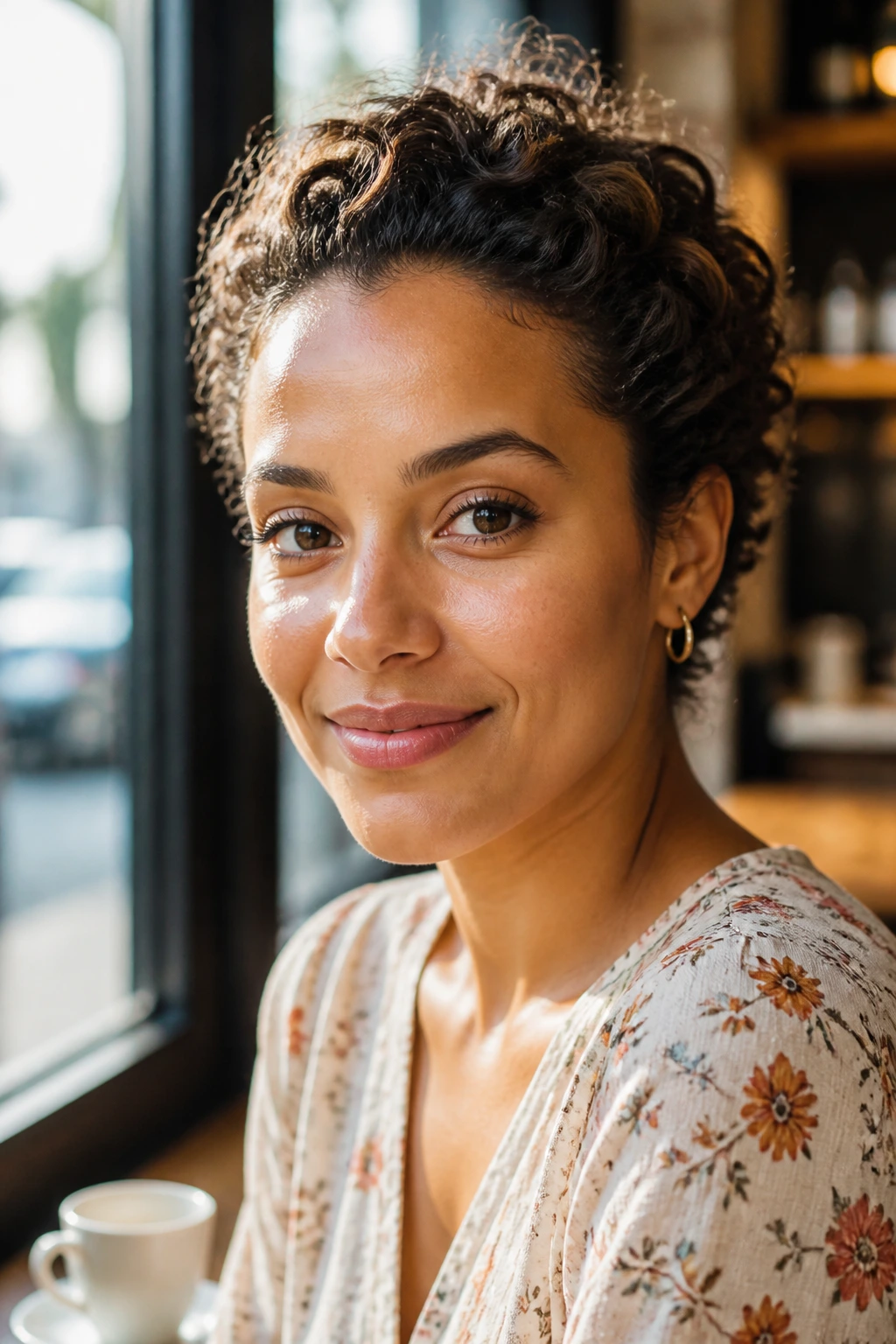
The pinned-back crown twist gives short curls a cleaner, more open face without taking the length away. Twist or smooth the front sections back from each temple, pin them at the crown, and let the rest fall naturally. The effect is simple and sharp.
It is especially useful when the front curls are growing out and refusing to sit together. Instead of trying to force them forward, pin them back and let the rest of the shape carry the style. A couple of matte pins usually work better than shiny ones if you want the look to stay quiet.
This style can skew polished or casual depending on how tidy the twists are. Tight and sleek feels dressier. Loose and a little imperfect feels everyday.
The best part is the face stays open, so the haircut reads intentional even if the rest of the curls are doing their own thing.
23. Twist-Out Bob
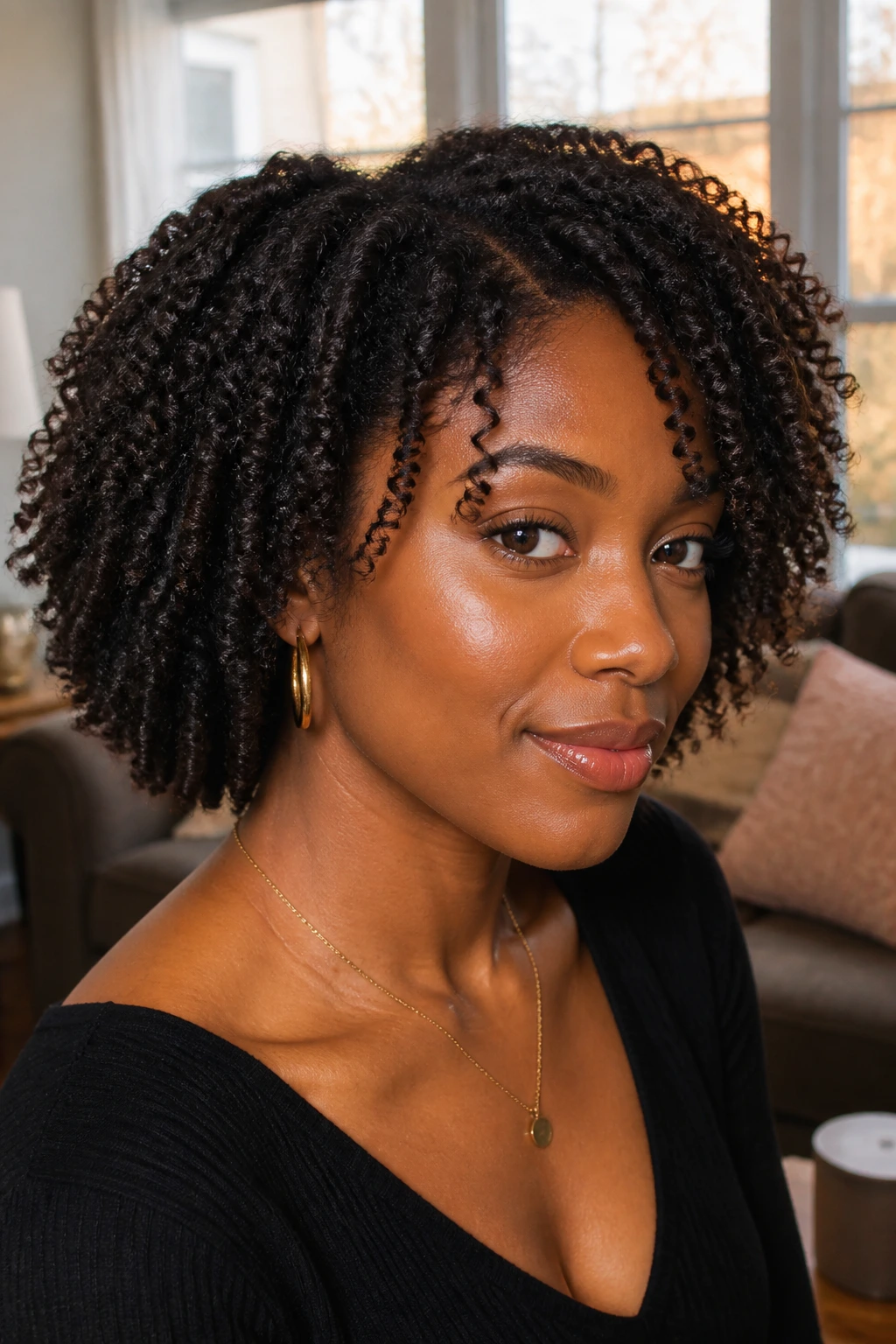
A twist-out bob gives short hair a stretched, defined curl pattern with a little extra length at the ends. The twists are set first, then unravelled once dry, leaving curls that look fuller and more separated than a plain wash-and-go.
This style is a strong answer for curls that need definition but not stiffness. It works well on medium to tight textures because the twist set can hold the shape and reduce shrinkage a bit. It also gives the bob a softer, thicker outline.
How it feels
The finish is touchable but still shaped. If you do the twists in smaller sections, the pattern reads neater; if you do them bigger, the result is fluffier and less uniform. Both are valid. The key is to let the hair dry all the way before taking the twists down, or you lose the whole point.
A twist-out bob tends to age well over a couple of days, which is a nice reward for the extra work up front.
24. Wash-and-Go Crop
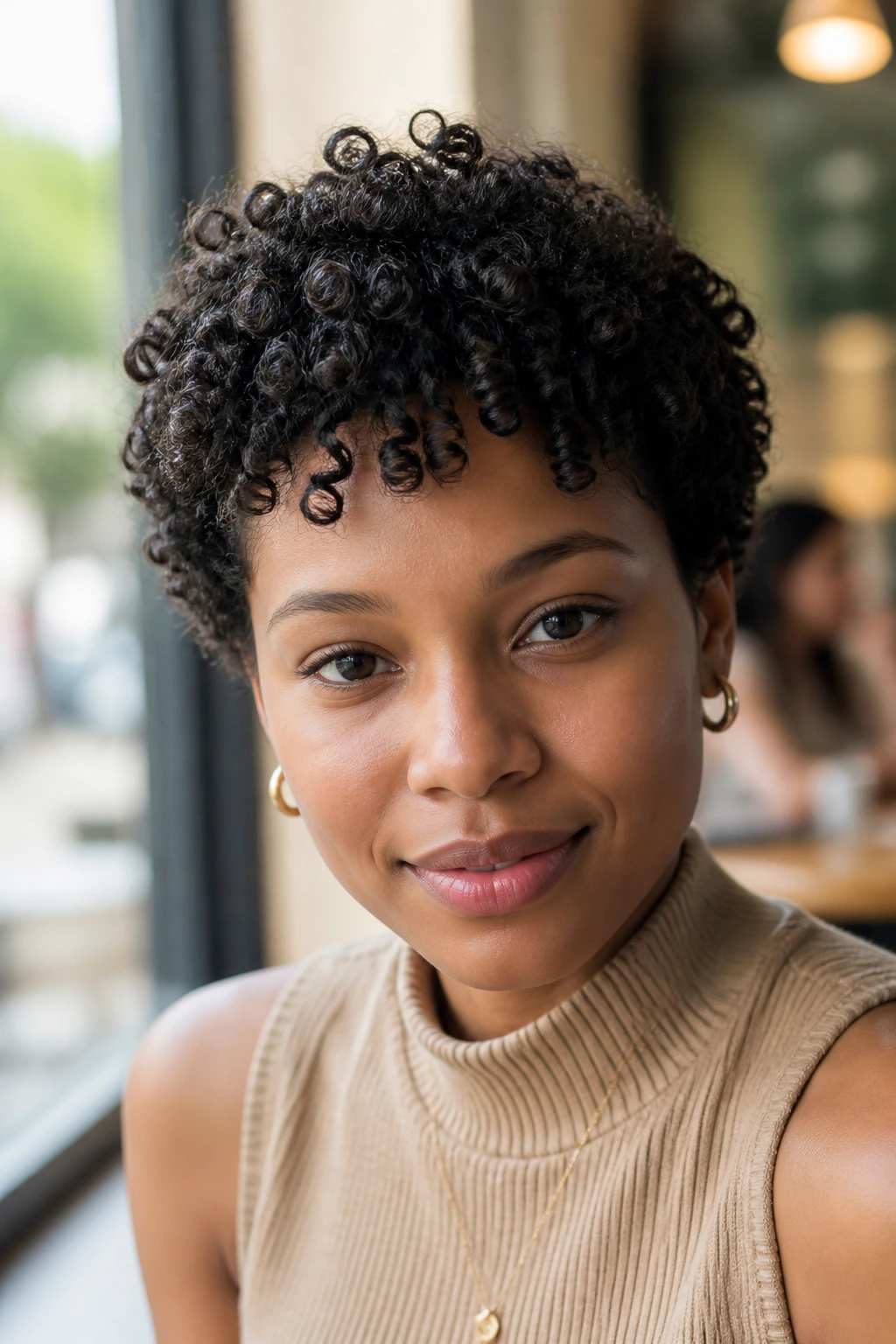
The wash-and-go crop is the simplest short curly style here, and that simplicity is exactly why it deserves a spot. Cleanse, condition, add product on soaking-wet hair, define the curl, and let it set into its own shape. No big tricks. No hidden magic.
It works best when the haircut already has good structure. If the crop is layered badly, the wash-and-go will show every problem. But if the cut is right, this style is efficient and honest, which short curly hair often needs more than anything else.
Small details that matter
Use enough water while styling that the curls clump together instead of frizzing apart. Then keep your hands out of the hair until it is dry. That part is annoying, yes, but it makes the final shape cleaner.
A wash-and-go crop can look minimal or high-shine depending on the product. It is the kind of style that rewards a good cut and a little patience.
25. Side-Shaved Curly Pixie
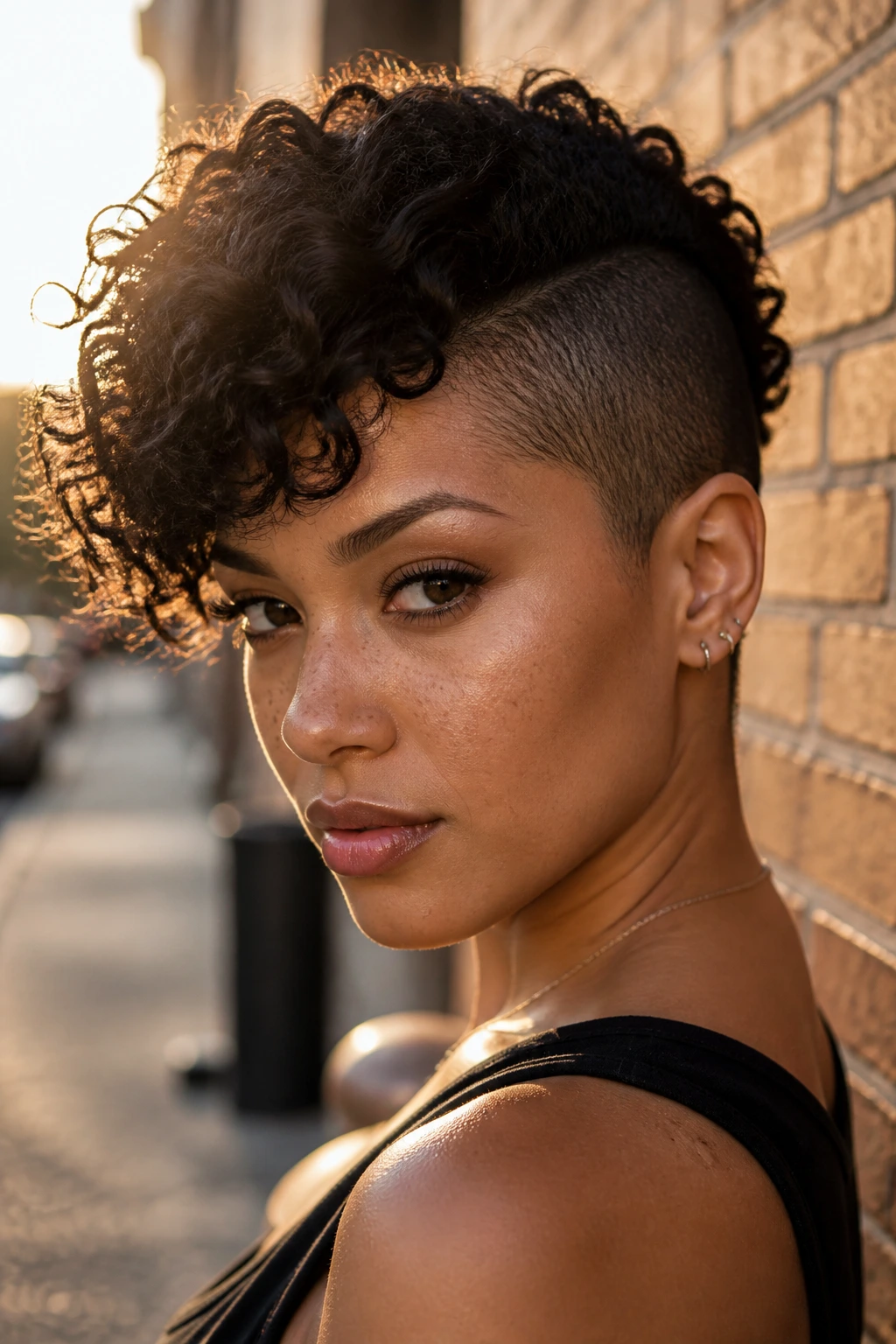
A side-shaved curly pixie is the bolder cousin of the classic pixie. One side or one temple gets clipped close, while the rest of the curls stay longer and more expressive. The contrast gives the haircut a sharper edge and makes the curl texture look even more visible.
This style works best when you want something that feels strong without adding much daily effort. The shave keeps the sides tidy, and the top only needs a quick refresh. It also grows out with a nice shape, which is useful because very short cuts can turn awkward fast if the sides are left unattended.
The styling should stay slightly asymmetric. Let the longer curls fall toward the shaved side a little. That imbalance is what gives the cut movement.
It is not subtle. That’s the appeal.
26. Ringlet Bob with Center Part
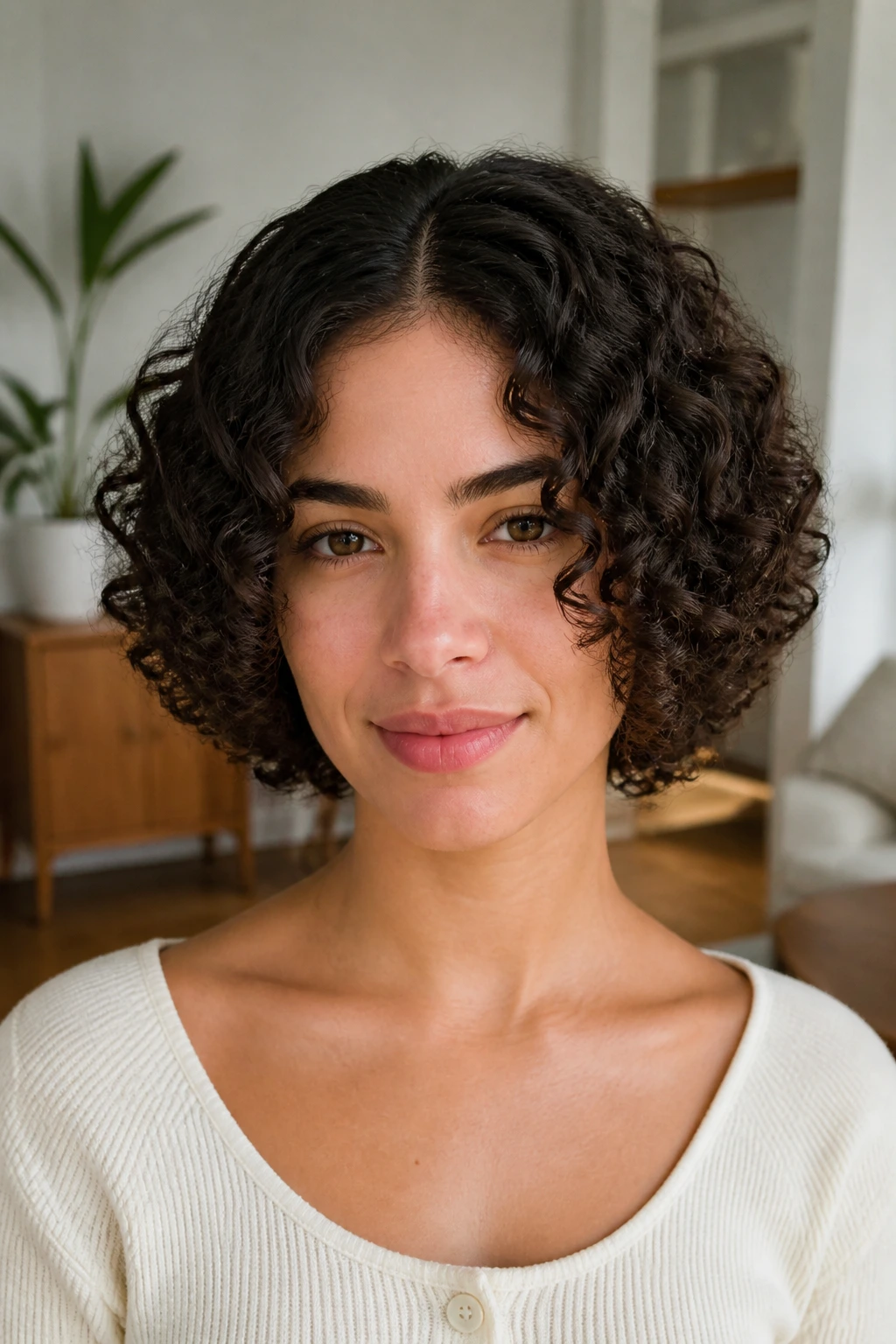
A ringlet bob with a center part is almost old-school in the best sense. The part runs clean down the middle, and the curls fall in even curtains on both sides. On hair that naturally makes ringlets, this can look polished without feeling stiff.
The center part only works if the bob has enough density to support it. Very fine curls may collapse too much at the roots. But on medium or thick ringlets, the symmetry can be beautiful because it lets the curl pattern speak for itself.
Shape tip
Keep the length around the chin or just below it so the ends have room to curl in. If the bob is too short, the center part can make the head look wider than it is. A little face-framing layer around the cheekbone softens that.
This is a good style when you want order. Not boring order. Just the kind that makes the curls look composed.
27. Headband Tuck with Curly Fringe
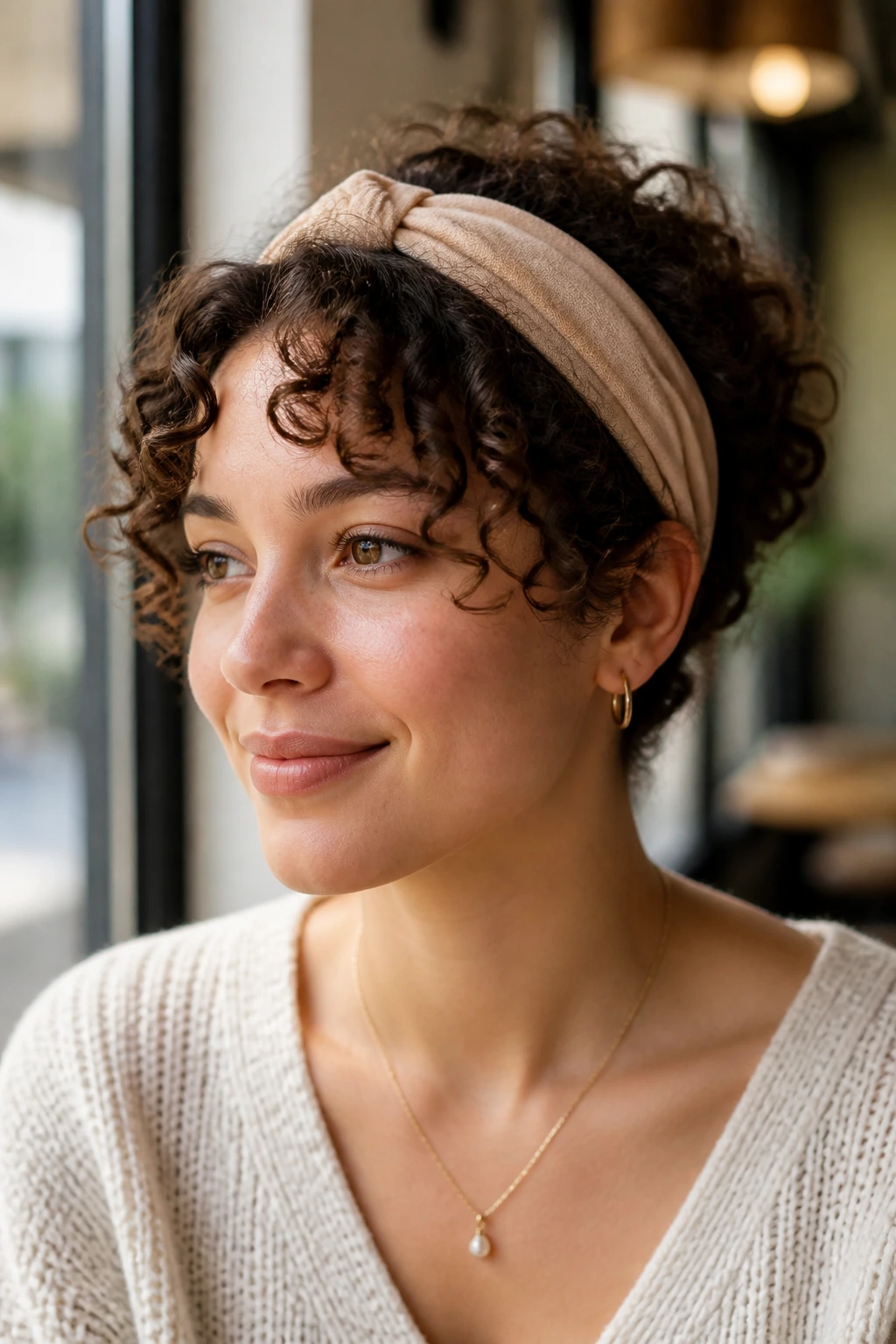
The headband tuck with a curly fringe is one of the easiest short curly styles to pull together when the back is doing fine but the front needs help. Slip on a soft headband, tuck the sides or back under it, and leave the fringe or front curls out so they can frame the face.
This works well on bobs and longer pixies because there’s enough length to tuck without flattening everything. The headband should sit snugly enough to hold, but not so tight that it dents the curls at the temples. Fabric bands usually feel kinder than hard plastic ones.
It’s a neat option for days when the hair is slightly wild but not actually bad. The headband gives the shape, the fringe gives the softness, and the curls do the rest.
If you want short hair to look intentional in under five minutes, this one earns its keep.
28. Curly Faux Hawk
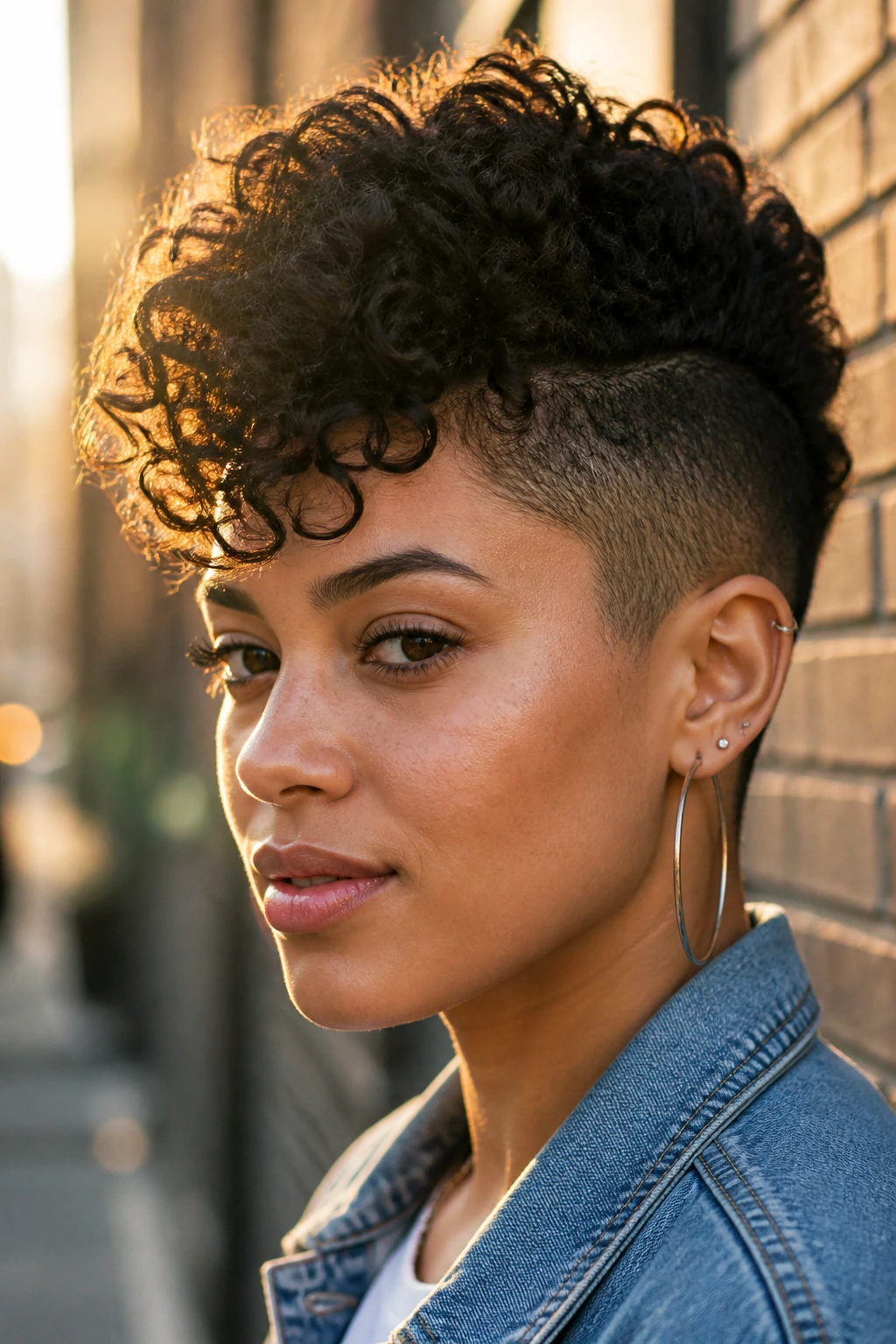
A curly faux hawk pulls the sides tighter and leaves a ridge of curls through the center, which makes short hair look longer and more dramatic than it really is. It can be done with pins, gel, or a shaved side, depending on how strong you want the shape to read.
This style is useful when your curls have width you want to control. By directing everything toward the center line, the faux hawk creates height and movement without needing a lot of length. It also works beautifully on tighter textures because the central strip can stand on its own.
Best use case
Use it when you want the haircut to feel a little louder. Not costume loud. Just enough shape to make people notice the line. A few loose pieces around the temples soften it so it doesn’t look too strict.
It is the kind of style that turns a practical cut into something with a little swagger.
How to Pick the Right Short Curly Shape for Your Curl Pattern
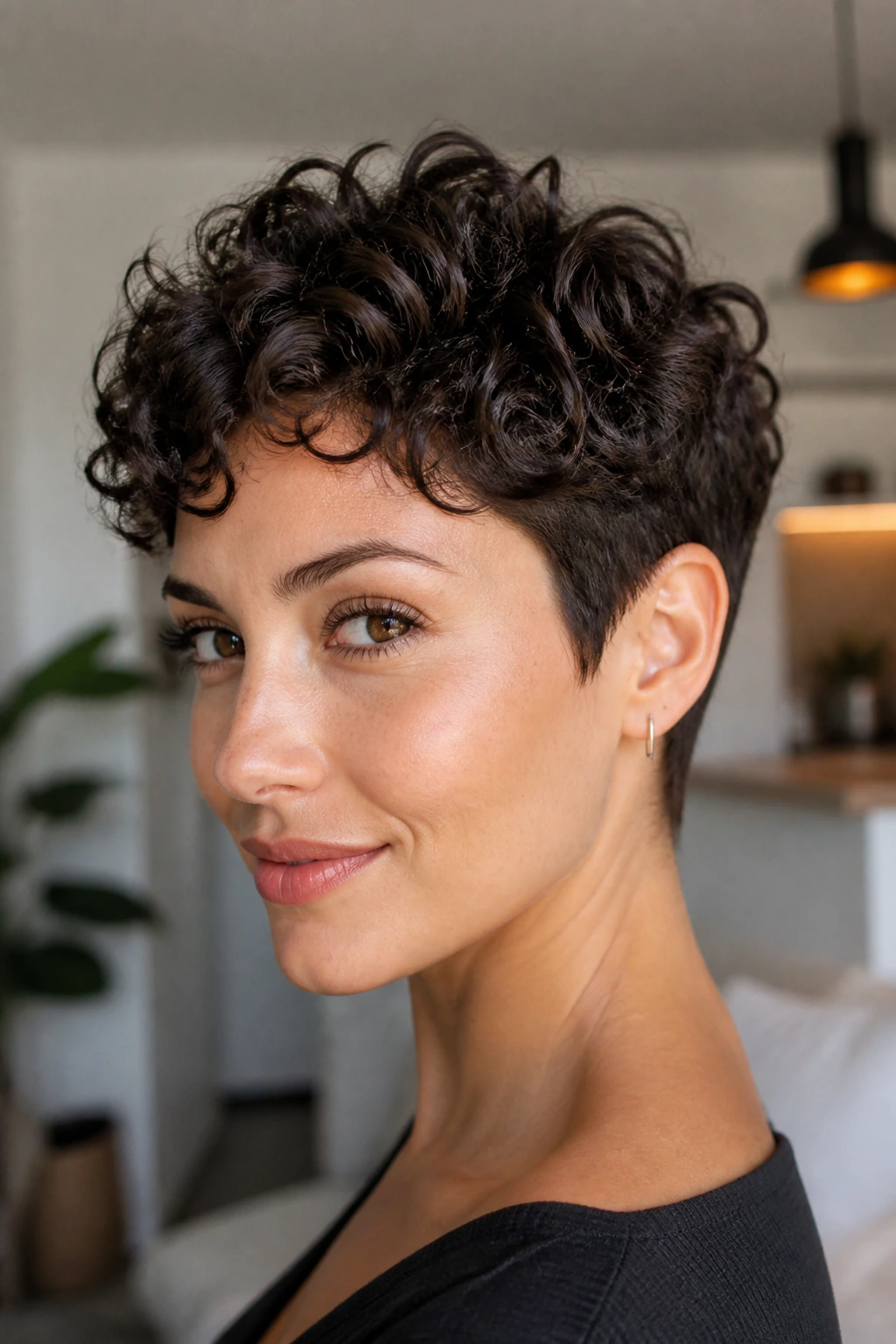
The best short curly style is the one that matches your curl pattern, density, and patience level. That sounds simple, but it saves a lot of regret. Fine curls usually do better with shapes that keep some length at the crown, like a bixie, side-part bob, or cropped shag. Thick curls often need tapers, undercuts, or layered shapes so the bulk does not take over the silhouette.
Face shape matters, sure, but not in the cartoonish way people like to say it does. A round face can handle a pixie if there is height at the top. A long face can handle a bob if there is enough width around the cheeks. The real test is how the curls stack once they dry. That’s the part you need to plan for.
If your hair shrinks a lot, build extra length into the cut. If it stretches and hangs, keep the shape a little shorter than your first instinct. And if you’re not sure, err on the side of leaving more hair on the first cut. You can always take more off. You cannot glue it back on.
Essential Tools for Styling Short Curls
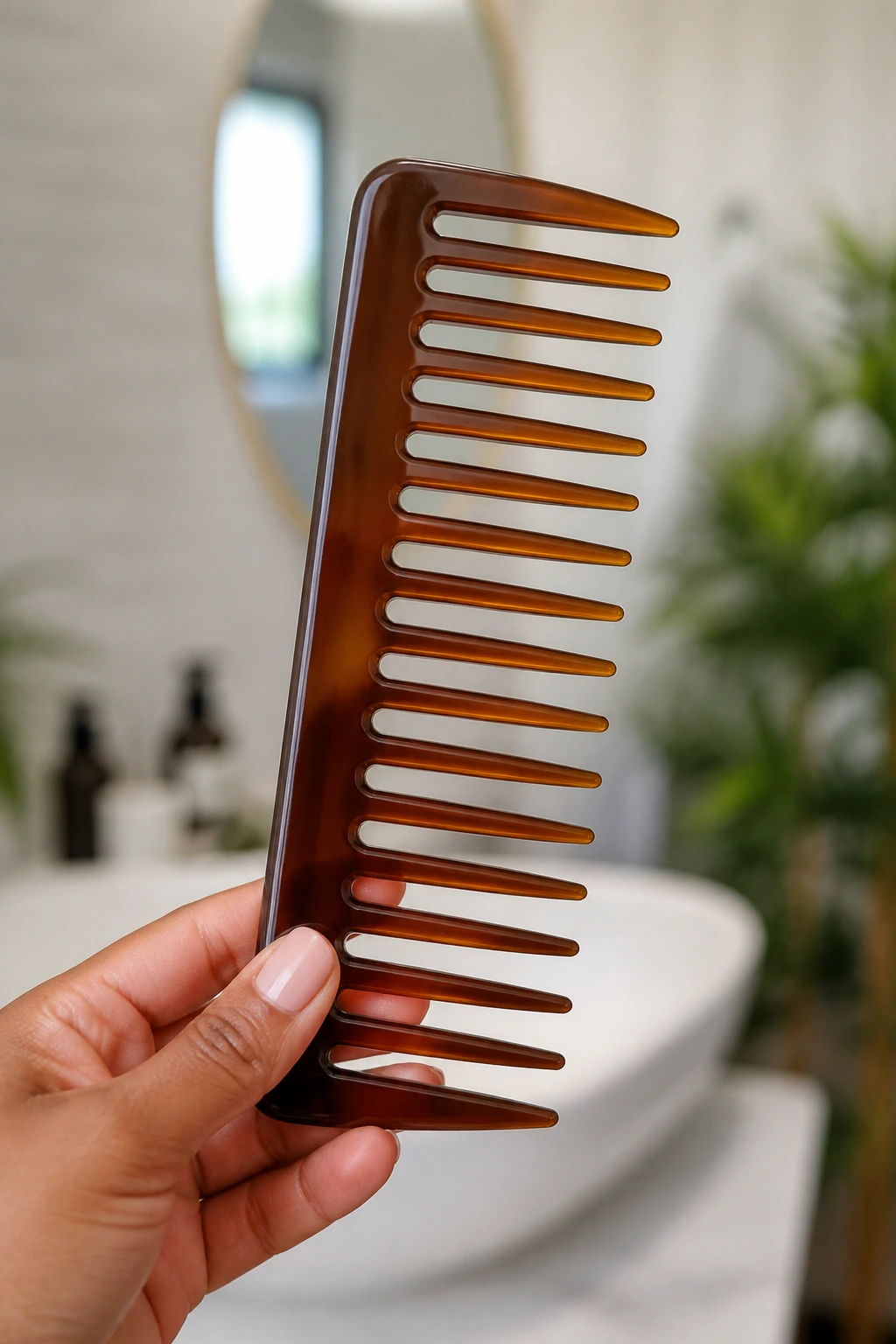
- Wide-tooth comb: Good for detangling wet curls without dragging through the pattern.
- Microfiber towel or soft T-shirt: Helps blot water without roughing up the cuticle.
- Leave-in conditioner: Gives short curls slip and keeps the ends from feeling dry.
- Curl cream or mousse: Cream adds softness; mousse adds lift. Short hair often needs one or the other, not both in heavy amounts.
- Medium-hold gel: Useful for wash-and-go shapes, fringe control, and shine.
- Diffuser attachment: Speeds drying while keeping curl clumps intact.
- Duckbill clips or small section clips: Helpful when shaping a side part, crown lift, or pinned-back style.
- Satin bonnet or pillowcase: Cuts down on friction at night and keeps the outline from frizzing up.
- Rat-tail comb: Good for clean parts and controlled sections on finer hair.
- Small elastics and claw clips: Useful for mini puffs, twists, and half-up shapes on bob-length curls.
Salon Notes That Save a Bad Haircut
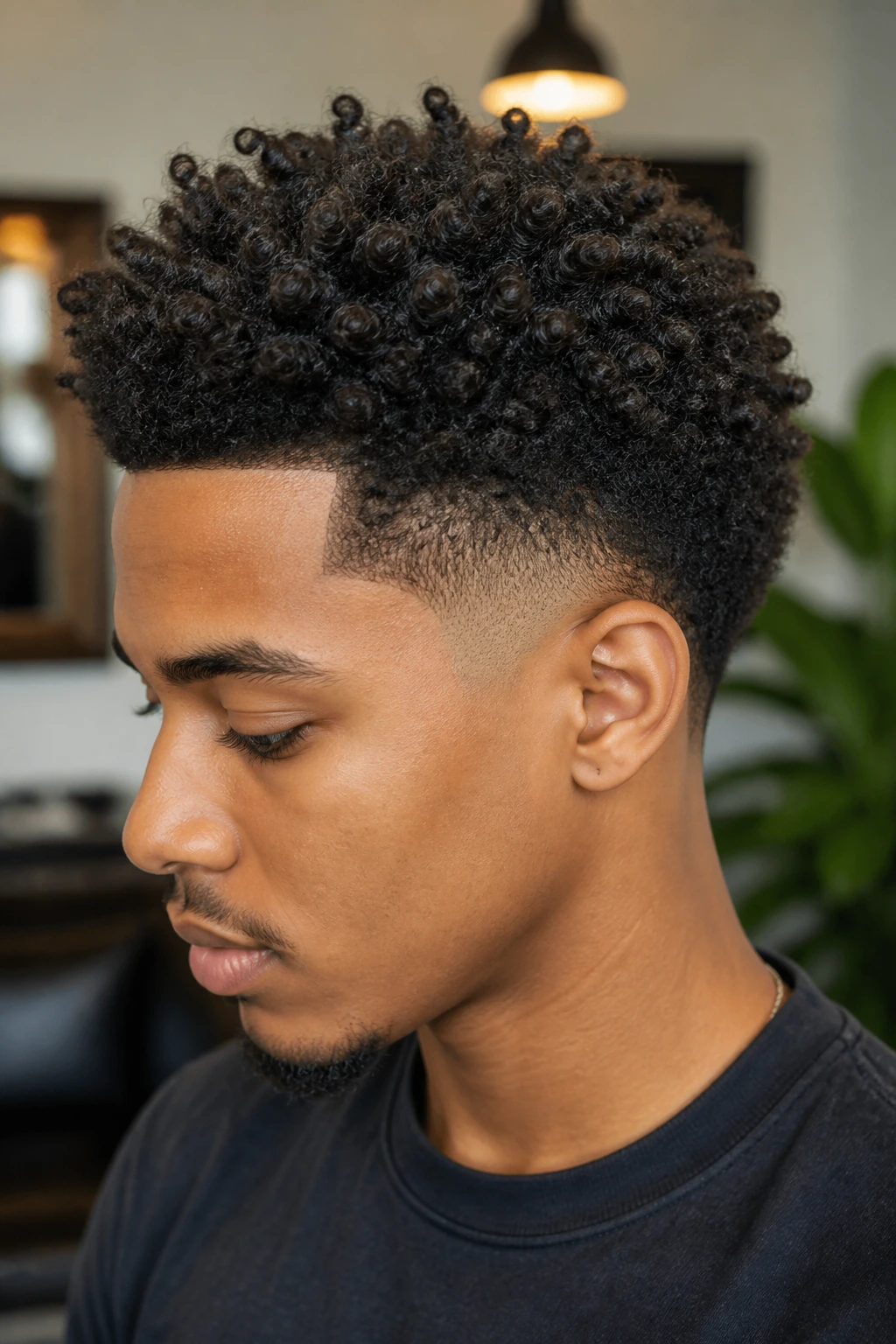
The biggest mistake people make is cutting curly hair the same way they’d cut straight hair. That is how you get a shape that looks tidy when wet and awkward when dry. Ask for the cut to be checked in its natural state, or at least have the stylist dry a few sections before the final line is set.
Bring photos, but bring the right kind. A picture of curls that look nothing like yours is a waste of everyone’s time. Show a similar curl pattern, similar density, and similar face shape if you can. That gives the stylist something real to work from.
Be direct about layers. If your hair is already fine, you probably do not want aggressive thinning. If it is very dense, you may need internal shaping, but there’s a difference between removing bulk and slicing the life out of the curl. A good stylist will know that difference. A sloppy one will just grab the thinning shears and hope for the best.
Ask about maintenance before you sit down. If a style needs trims every 4 weeks, root refreshes every 2 days, and a diffuser every morning, you deserve to know that upfront.
How to Refresh Short Curls Between Washes
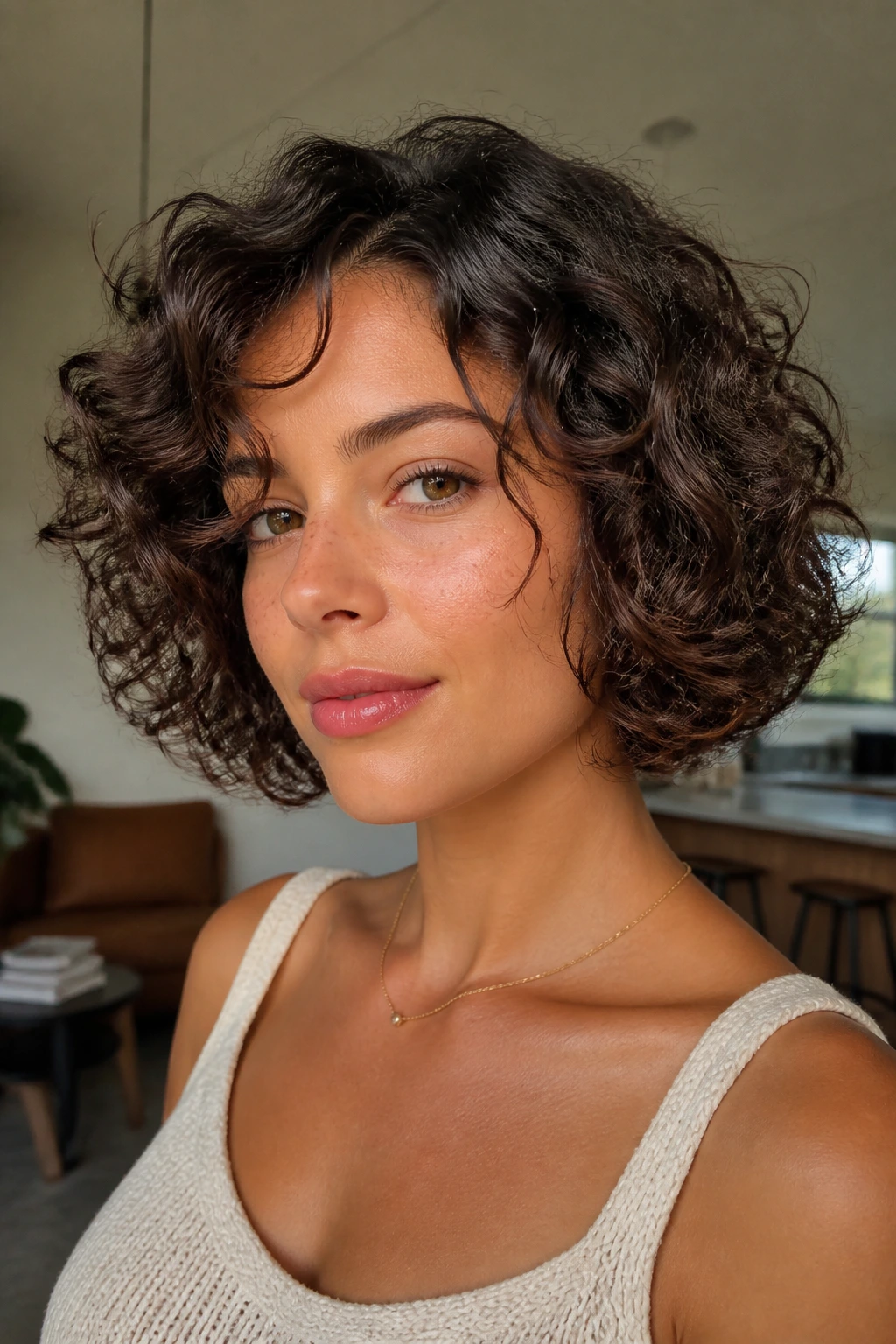
Short curls usually look best when they’re refreshed lightly instead of fully restyled from scratch. Start with a misting bottle and dampen only the pieces that have gone flat or frizzy. A little leave-in on the fingertips, then a small amount of cream or gel, is usually enough to wake the shape back up.
For pixies and crops, use your hands to lift the roots a little after rewetting. For bobs, scrunch the ends back into their curl direction so the outline stays round. If the style has a fringe, pin the front away while it dries so it does not separate into little fuzzy strands.
At night, a satin bonnet is the simplest fix for short hair. If your bob is long enough, a loose pineapple can work, but don’t crush the curl with a tight band. Most of the time, a soft bonnet and a pillowcase cover are easier. Morning refreshes should take 5 to 10 minutes, not half an hour.
Trims matter, too. Short curly hair tends to lose its shape faster than longer hair, so a cleanup every 6 to 10 weeks helps the cut keep its line.
Additional Tips and Styling Boosters
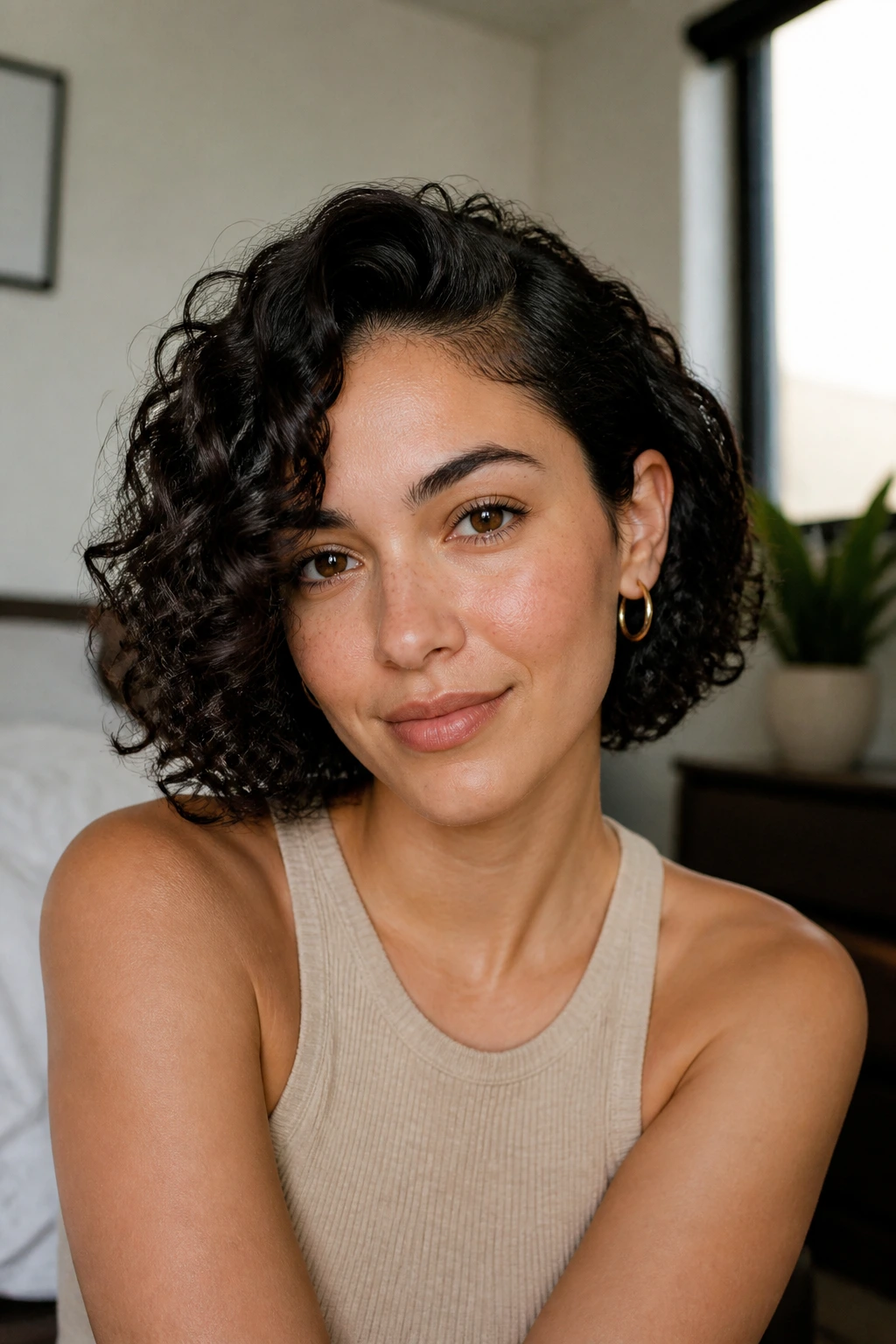
Flavor Enhancement: A tiny bit of lightweight oil or serum on the very ends can make a short curly bob look smoother, but only after the product cast is fully dry. Put it on too early and you’ll flatten the shape.
Customization: If your curls are fine, swap heavy cream for mousse and a touch of gel. If they’re dense or dry, layer a leave-in under a stronger styler so the style holds without feeling brittle.
Serving Suggestions: That sounds silly for hair, but the equivalent is finishing touches. A clean side part, small gold hoops, a narrow headband, or one tucked curl at the temple can shift the whole look.
Make-It-Yours: Straight-haired people don’t get a vote here, but curly heads do. If you love softness, keep the edges rounded. If you like edge, ask for a sharper neckline or an undercut. If you want low effort, choose a wash-and-go crop and let the cut do more work than the products.
Common Mistakes That Make Short Curls Lose Their Shape
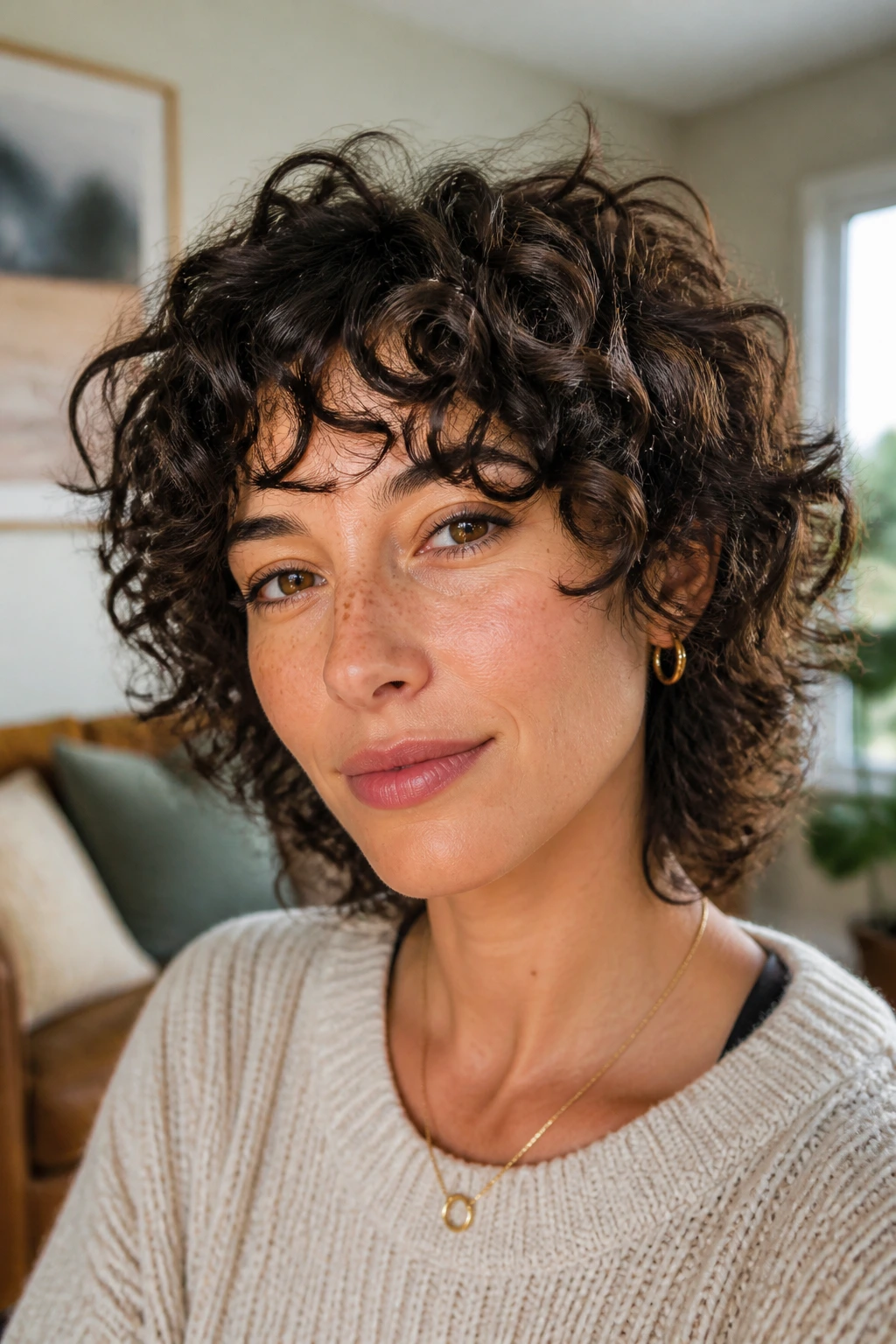
Cutting it too short while it’s wet. Short curls spring up after drying, sometimes by a lot. If the stylist trims the length without checking how the hair settles dry, you can end up with a shape that sits too high or too wide. The fix is simple: leave a little extra room and check the dry outline before the final cut.
Using too much product at the root. Heavy creams near the scalp can make short curls collapse. The symptom is limp roots and sticky-looking sections. Keep heavier products from the scalp down, then use gel or mousse sparingly where you need hold.
Thinning out dense curls with no plan. A few snips for bulk control can help. Over-thinning can create frizz, holes, and ends that look tired within days. Ask for internal shaping, not random thinning.
Brushing dry curls into submission. That’s how you get a puffed-out halo and a lot of broken definition. Detangle wet, reshape damp, and leave dry curls alone unless you’re refreshing them with moisture.
Skipping the crown. Flat roots make even good cuts look sleepy. A little lift at the crown during diffusing or air-drying keeps the entire silhouette alive.
Four Ways to Change the Look Without Cutting It Again
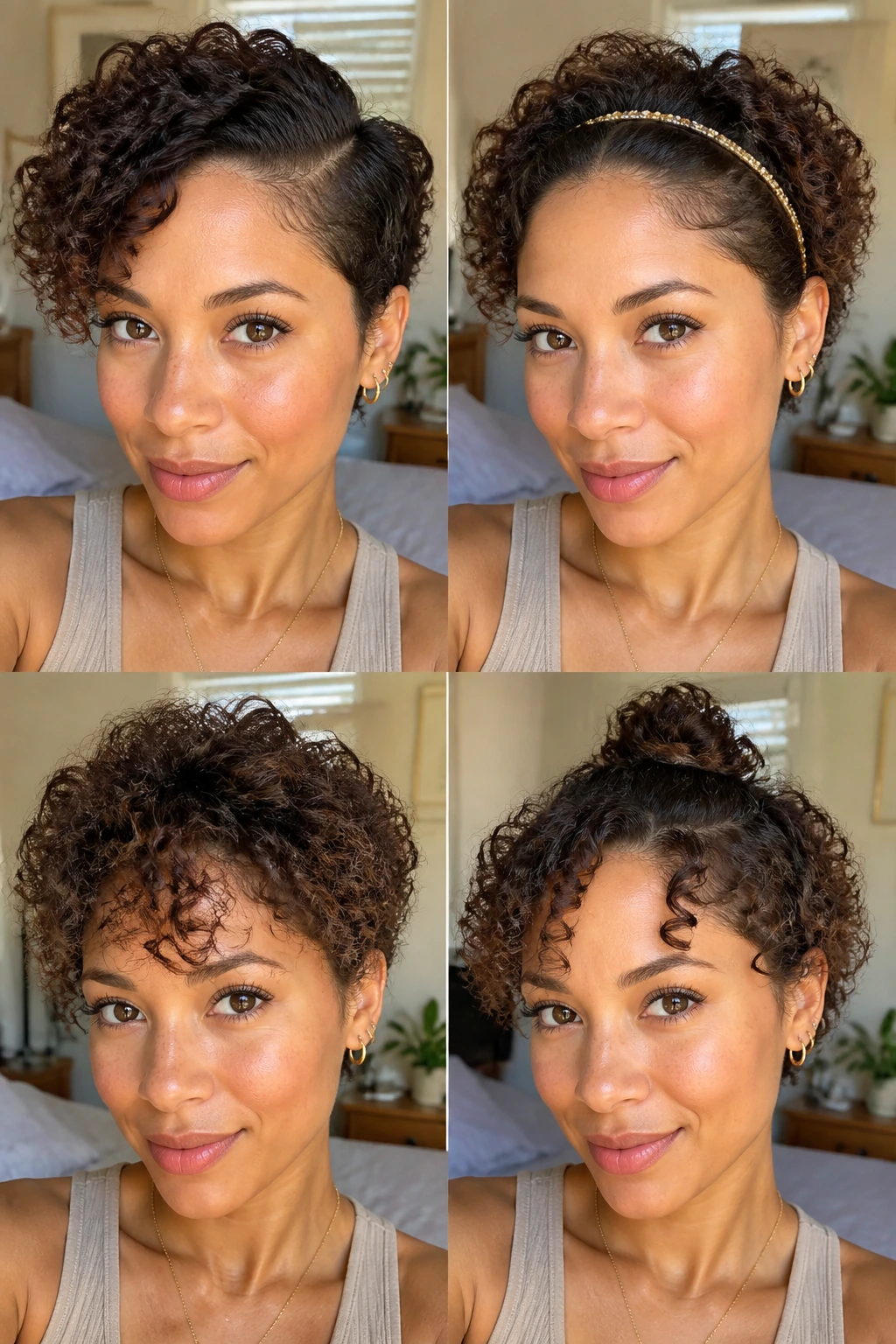
The Side-Part Switch: Move the part a little deeper and the haircut instantly looks softer, taller, or more dramatic. Good for bob and pixie lengths.
The Accessory Reset: A headband, clip, or scarf can change the balance of a short curly style in seconds. Use this when the haircut is fine but the mood needs changing.
The Texture Reset: Swap a cream for mousse, or gel for a softer leave-in finish. The same cut will read polished, fluffy, or defined depending on the product.
The Stretch-and-Set Version: Twist the front sections, do a quick mini pineapple, or set the curls overnight in loose clips. The shape changes just enough to feel new without a salon visit.
Questions People Ask Before Going Short With Curly Hair
Will short hair make my curls look tighter? Usually, yes. Removing weight lets the curl spring up more, which makes the pattern appear tighter and more defined. That can be a plus or a surprise, so build that into the length choice.
What short curly style is best for fine hair? A bixie, side-part bob, or layered crop usually gives fine curls enough movement without stripping away too much body. Very heavy layers can make fine curls look sparse at the ends.
Can curly bangs work on short hair? Absolutely, but they need length. Leave the fringe longer than you think, since curls bounce up once they dry. The best curly bangs sit a little softer and more irregular than straight bangs.
How often should I trim short curly hair? Every 6 to 10 weeks is a good range for keeping the shape clean. Very short cuts or precise bobs may need more frequent cleanup if the neckline gets fuzzy fast.
Should curly hair be cut wet or dry? Dry cutting or a dry finish check is usually better for curls because it shows how the hair truly sits. Wet cutting can still work, but only if the stylist knows how much shrinkage to expect.
How do I keep short curls from puffing out in humidity? Use enough hold at styling time, especially gel or mousse, and don’t disturb the curl once it starts drying. The less you keep touching it, the better the shape holds.
What if my curls are uneven from one side to the other? That’s normal. Short curly hair often reveals asymmetry more than longer hair does. A side part, asymmetrical bob, or cropped style with a little directional shaping can make that look intentional instead of awkward.
Which style is easiest to wear every day? The wash-and-go crop and curly pixie are usually the least demanding. They work because the cut already carries most of the shape, so your morning routine stays small.
Short Curls, Better Shape
Short curly hair does not need to be tamed. It needs a shape that knows where to stop. Once the cut and styling line up, the hair stops feeling like a problem to solve and starts acting like one of the best features on your face.
The sweet spot is different for everyone. Some heads want a tapered fade. Some want a rounded bob. Some want a little fringe, a little asymmetry, or a lot of crown lift. The common thread is the same: respect the curl pattern, keep the outline honest, and let the texture do what it already does well.
Pick the shape that matches your life, not just your mood in the salon chair, and the haircut will keep paying you back long after the first wash.