



Curled bobs for thick hair and round faces work when the cut respects both jobs at once: it has to control bulk, and it has to cheat the eye into seeing more length. That’s a tricky brief. A bob that stops in exactly the wrong place can make thick hair look puffy at the cheeks, while a curl that’s too round can turn the whole shape into a soft little sphere.
The good versions do the opposite. They leave enough length in front to pull the face downward, they remove weight where the hair wants to bloom outward, and they let the curl bend instead of balloon. I’ve always had a soft spot for cuts that look tidy from a distance and a little undone up close, because those are the ones that keep working once you’ve left the salon chair and the real weather shows up.
The best part is that this shape isn’t one note. A curled bob can be sharp, glossy, piecey, airy, polished, or downright glamorous, depending on where the length sits and how the ends are finished. Thick hair gives you options. Round faces give you a reason to be picky. And the sweet spot is somewhere in the middle, where the silhouette feels balanced instead of wide.
Why These Curled Bob Ideas Keep Working

- They use thickness as structure, not a problem to erase: Dense hair holds a bob line with more body, so the cut can look intentional instead of limp.
- They break the widest point of the face: Length in front, side parts, and angled outlines keep attention moving downward instead of parking at the cheeks.
- They still move when the curl loosens: Even if the bend softens by midday, a smart bob keeps its shape because the cut does part of the work.
- They give you room to pick your mood: You can wear the same basic silhouette polished one day and a little messy the next without changing the cut.
- They’re easier to live with than a long style that collapses: A bob with the right weight removal takes less drying time, less product, and fewer rescue efforts with a flat iron.
- They look better when the finish is imperfect: Thick hair often holds a curl in patches, and that unevenness reads as texture, not failure, when the shape is right.
1. Chin-Length Curled Bob With a Deep Side Part
A deep side part does a lot of work on a round face. It creates a diagonal line before the eye even reaches the curl, and diagonal lines are your friend when you want the shape to feel longer.
Why It Works
Chin length keeps the curl near the jaw instead of the cheekbone, which matters more than people think. If the bob ends exactly at the fullest part of the face, the curl can widen the whole look; if it sits a little lower or a little cleaner, the eye drops down and keeps moving.
For thick hair, this version needs a soft hand with the iron. Don’t make every curl springy. Wrap the front pieces away from the face, leave the ends slightly straighter, and break the pattern with your fingers once the hair cools.
- Best for: dense hair that tends to puff at the sides
- Ask for: a chin-grazing perimeter with light internal removal
- Style note: a 1.25-inch iron keeps the bend loose enough to avoid a mushroom shape
Pro tip: pin the front section flat while it cools. That one tiny step keeps the side part from rising up into a helmet.
2. Collarbone Curled Lob With Face-Framing Pieces
If you want the ease of a bob without giving up too much length, the collarbone lob is the forgiving option. It gives thick hair room to settle, and the extra inch or two in front makes round faces look a little longer without trying too hard.
The face-framing pieces should start below the cheekbone, not right on it. That’s the difference between “softening” and “widening.” I prefer a bend that starts mid-length and slips inward around the collarbone, because it keeps the outline slim while still giving you movement.
This one works especially well if your hair dries with a lot of body. The length absorbs some of that fullness, so the finish looks plush instead of bulky.
3. Stacked Curled Bob With a Lifted Nape
This is the cut for thick hair that feels heavy in the back. The stacked nape removes weight where it builds up fastest, so the crown lifts and the outline stops dragging.
What Makes It Different
A stacked bob is not a wedge haircut from the old salon books. You want a softer version, with the back tucked in and the front curved longer, so the curl can fall in a neat arc rather than balloon out like a bell.
The round face benefit is simple: the lift happens at the back of the head, not the sides of the cheeks. That creates height where you want it and keeps the width under control.
- Use this if: your hair gets wide the minute it dries
- Styling move: blow-dry the roots up and back before curling the ends
- Avoid: stacking so high that the back shows a hard shelf
Small truth: the haircut matters more than the curl here. If the nape is too bulky, no iron will save it.
4. French Bob With Soft, Broken Ends

Can a French bob work on thick hair? Yes, but only if the ends are softened enough to move. A blunt little chin-length shape on heavy hair can look charming in theory and boxy in practice.
The trick is in the finish. Ask for light texturizing at the perimeter, not a razor-heavy chop, and keep the curl broken rather than perfect. Think bend, not ringlet. The face looks friendlier when the hair has a few loose pieces near the temples and jawline.
This version suits round faces when the front is just a touch longer than the back. It keeps the cut from reading too square, which is the risk with a very short bob on dense hair.
5. A-Line Curled Bob With Longer Front Pieces

The front length is the whole point here. An A-line bob gives you a diagonal from the back of the neck down toward the collarbone, and that diagonal does a lot to sharpen a round face.
Thick hair loves this shape because the back can be trimmed lean while the front keeps enough weight to lie smoothly. Then you add curl only through the mid-lengths and ends, which means the silhouette stays clean instead of exploding outward at the sides.
I like this one with a soft side part or an off-center part. Center parts can work too, but the front pieces need to be long enough to graze the jaw and keep the face from feeling boxed in.
6. Shaggy Curled Bob With Airy Internal Layers
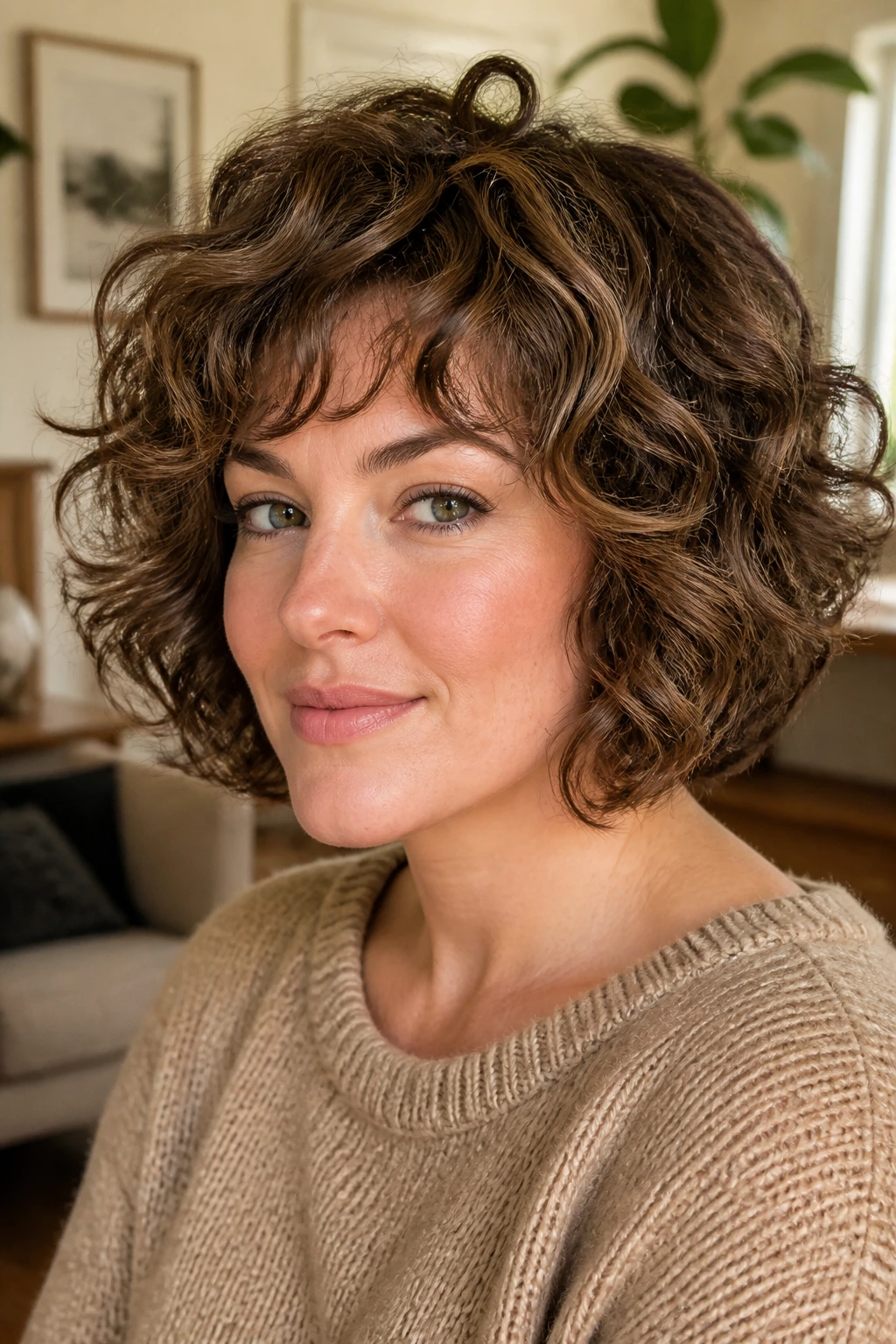
Unlike a neat one-length bob, this cut lets the curl do the talking. The internal layers break up dense hair from the inside, so the shape can move without losing its outline.
That matters a lot for thick hair. When there’s too much weight sitting in one solid block, the curl has to fight to appear. A shaggy bob takes the pressure off and gives the bend room to separate into pieces, which reads as movement rather than bulk.
The round-face win here comes from the messiness. Soft, irregular pieces stop the haircut from forming a perfect circle around the face. It feels less precious. Better, honestly.
7. Polished Side-Swept Curled Bob
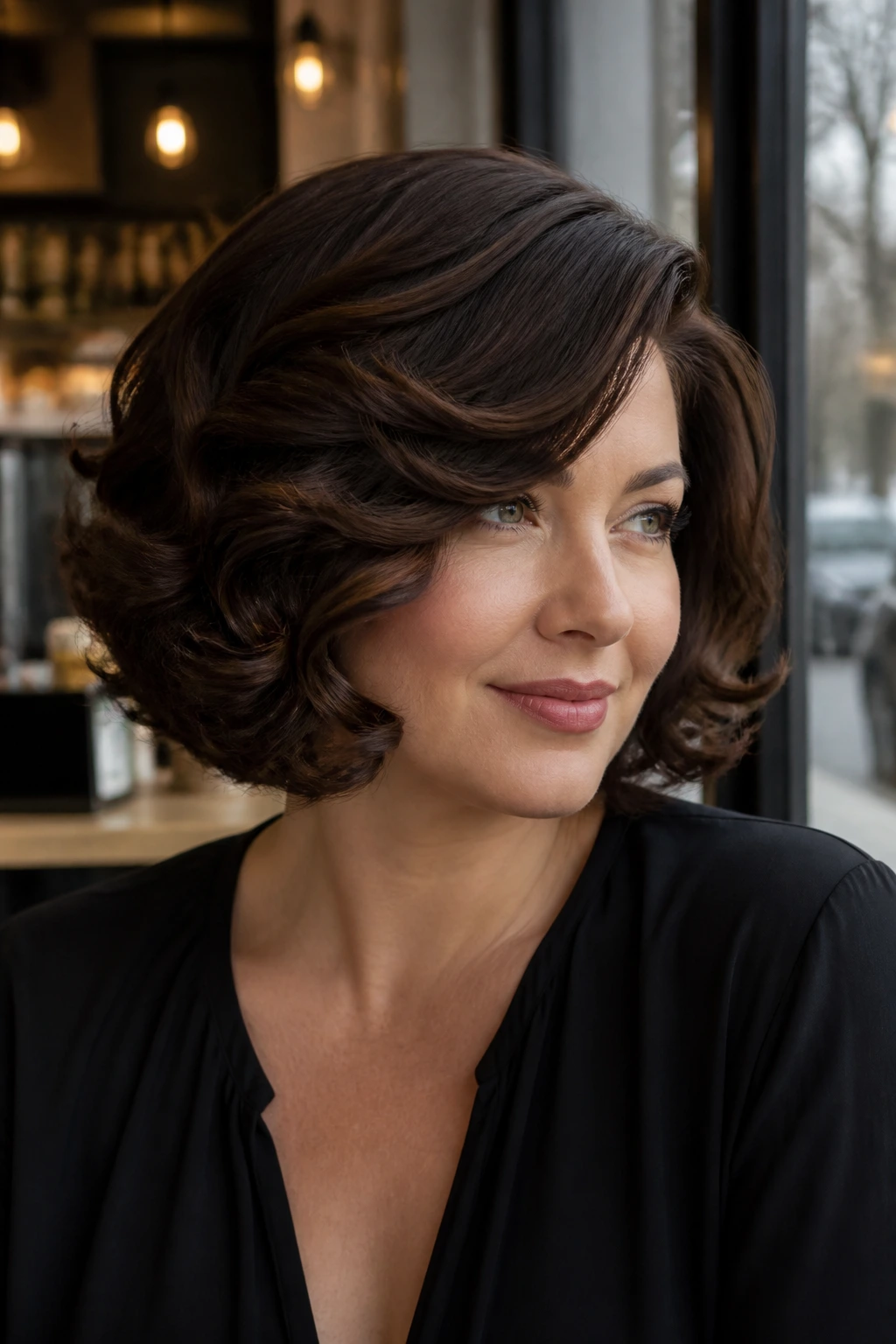
This is the bob I’d pick for a dinner, a wedding, or any moment when you want the curl to look deliberate. The side-swept front opens the face and adds a long line across the forehead, while the rest of the bob stays smooth and shiny.
A polished finish works on thick hair because the density gives the style enough weight to hold the curve. You can set it with a 1.25-inch iron or hot rollers, then brush the curls into a softer wave once they cool. The result is controlled, not stiff.
Styling Clue
Use a light serum only on the ends. If you put oil near the roots, thick hair loses the lift that makes this shape look clean.
8. Curled Bob With Bottleneck Bangs
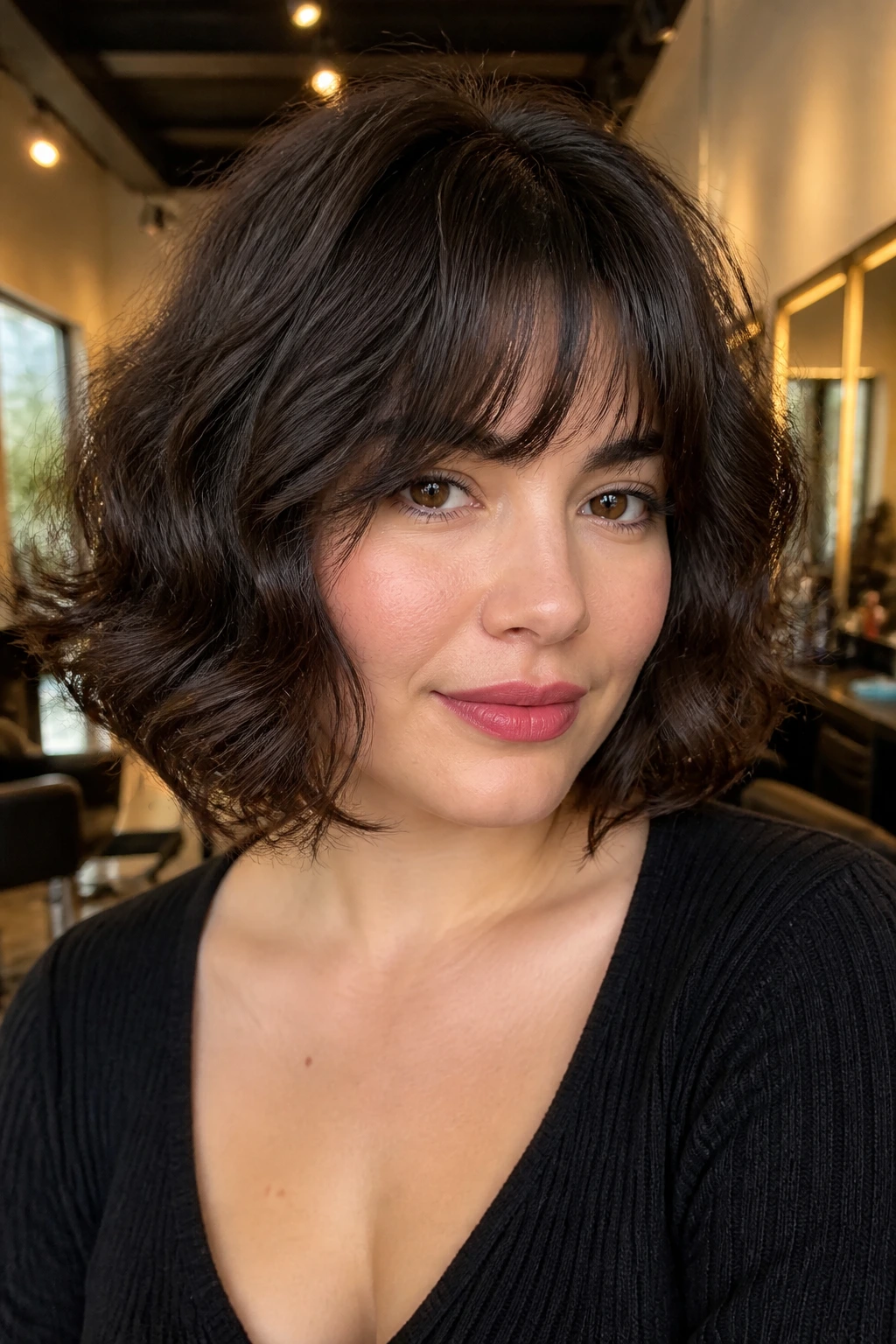
Want bangs without swallowing your face? Bottleneck bangs are the smart answer. They’re shorter in the center and longer at the sides, which helps a round face look a little slimmer without the blunt line of a straight fringe.
This bob works because the fringe and the curl do different jobs. The bangs make the top of the face feel a touch narrower, and the curled bob adds movement below the jaw. Together, they build a shape that feels balanced instead of heavy.
For thick hair, keep the fringe light. If the bangs are too dense, they crowd the forehead and make the whole haircut feel smaller. A little air between the pieces goes a long way.
9. Inverted Bob With Rounded Curls
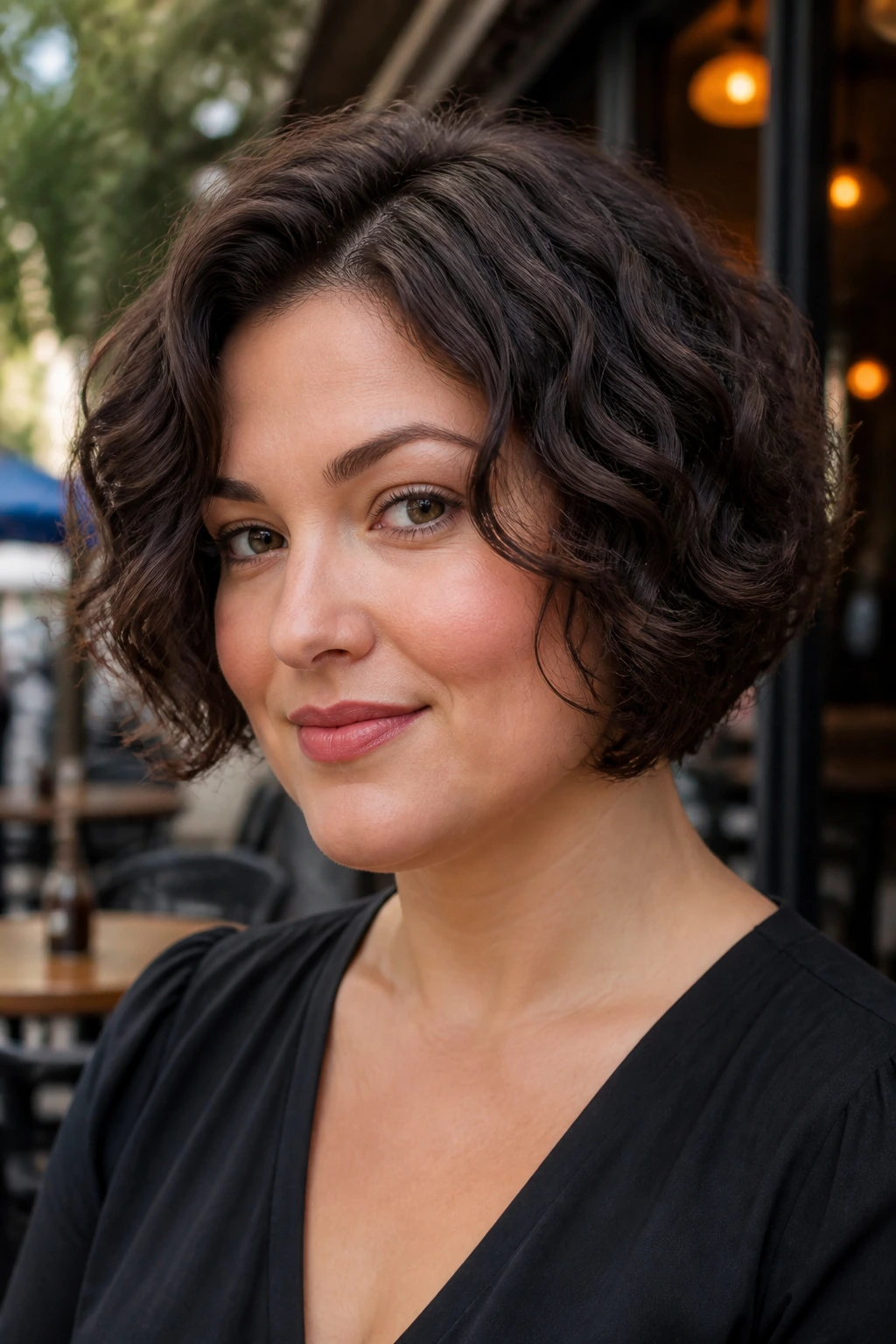
When the back feels heavy, this shape cleans it up fast. An inverted bob narrows at the nape and opens slightly toward the front, so thick hair gets a built-in line instead of one giant block.
The rounded curl matters here. You want the bend to follow the cut, not fight it. If the curl kicks out too much at the sides, the silhouette grows wider than it should, and that undercuts the whole point of choosing an inverted shape.
This one flatters round faces because the shortest point sits behind the ear or slightly below it, while the longer front pieces keep the eye moving downward. It’s tidy. Not fussy.
10. Blunt-Edge Bob With Loose Bend
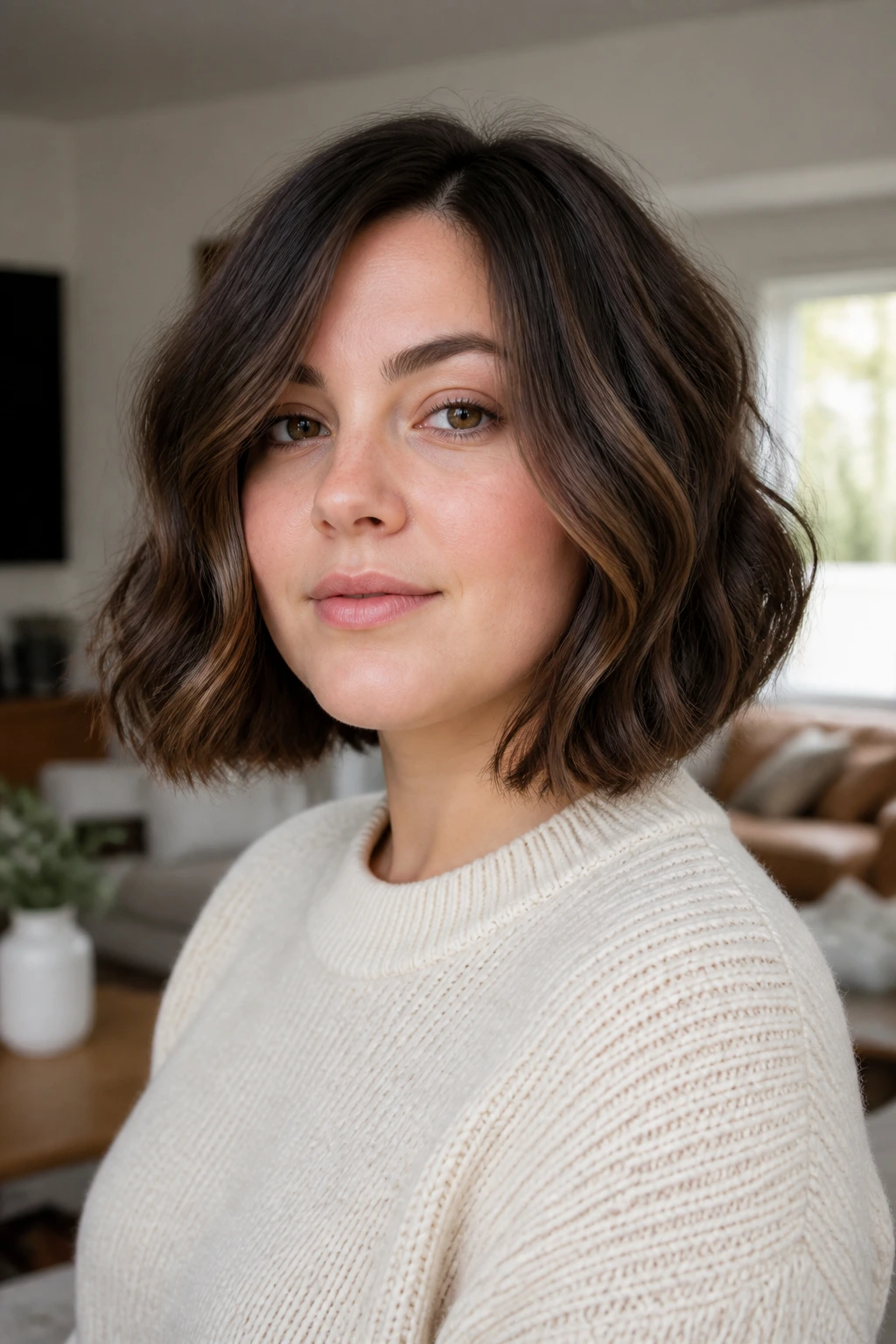
A blunt outline can work on thick hair if you keep the curl soft. That’s the part people miss. The perimeter gives the cut strength, but the bend keeps it from looking like a box.
This style is useful when you like a cleaner, more graphic look. The ends should sit evenly, with only a slight undercurve or wave through the last few inches. If the curl is too tight, the blunt edge gets lost. If it’s too loose, the shape loses its point.
Round faces benefit from the controlled width. The line stays close to the head, which keeps the cheeks from feeling emphasized. And because thick hair already has body, you do not need a ton of layering to make this one work.
11. Curled Bob With Curtain Bangs and a Deep Center Part

Does a center part always widen a round face? Not if the front pieces are long enough to create a narrow opening at the center. Curtain bangs do that beautifully when they fall to the cheekbones and curve away from the face.
This bob is a nice fit for thick hair because the bangs take some of the density off the front line. The rest of the cut can stay fuller, especially through the sides, as long as the curl is kept loose and a little separated.
The length should land around the jaw or just below it. Shorter than that, and the curtain effect loses power. Longer than that, and you drift into lob territory, which is fine too, but it changes the balance.
12. Tucked-Behind-Ear Bob With Small, Defined Waves
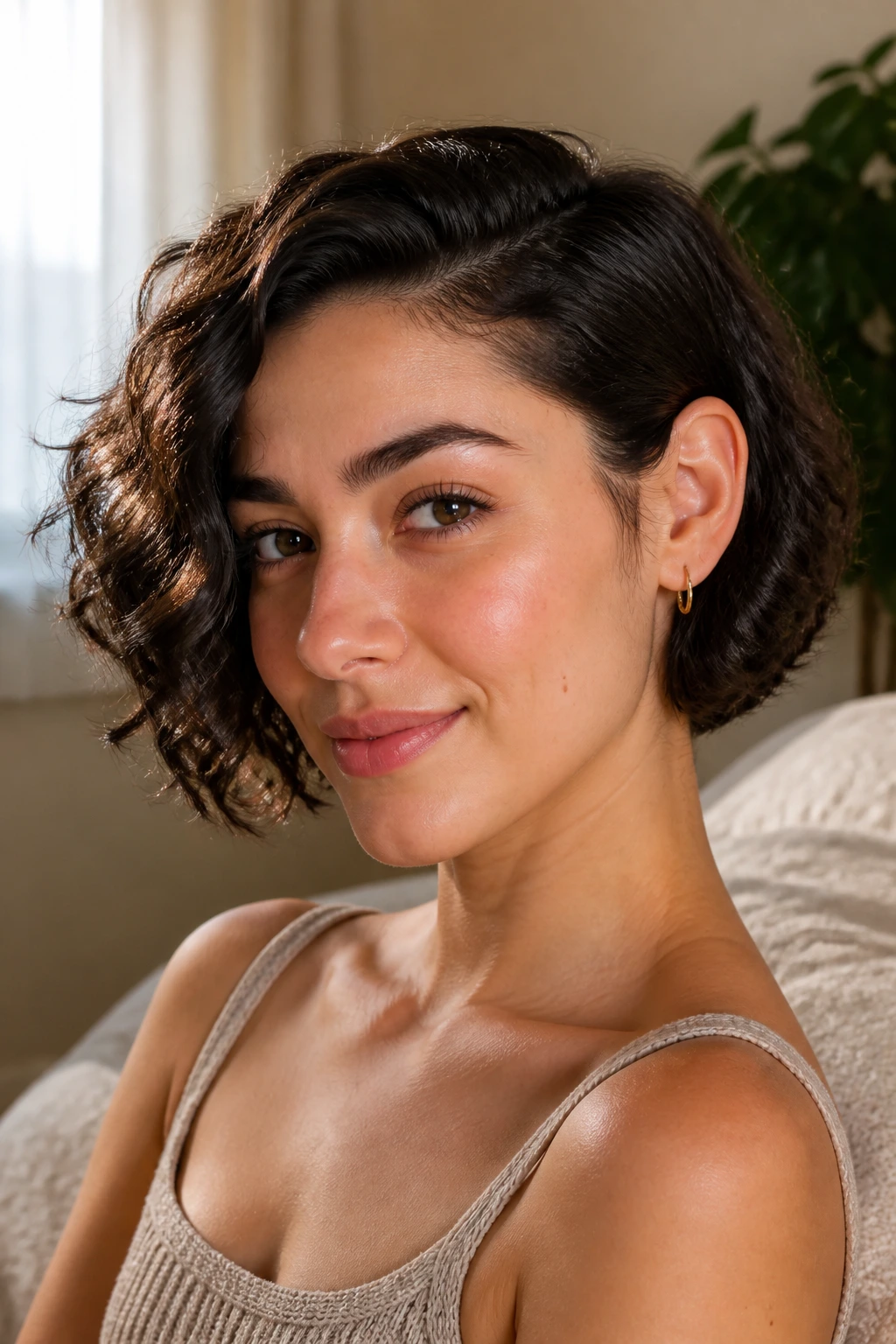
This is the bob for someone who likes one side clean and the other side a little fuller. Tucking one side behind the ear opens the cheek and creates a built-in asymmetry that works hard on a round face.
The waves should be small but not tight. Think defined bends that sit close to the head, not puffy curls that lift the sides out. Thick hair can handle the shape, but it needs product discipline; too much cream and the wave turns soft in the wrong way.
I like this cut because it feels casual without looking lazy. The tucked side adds a bit of edge, and the visible ear keeps the face from feeling covered up.
13. Rounded Curled Bob With Soft Volume at the Crown
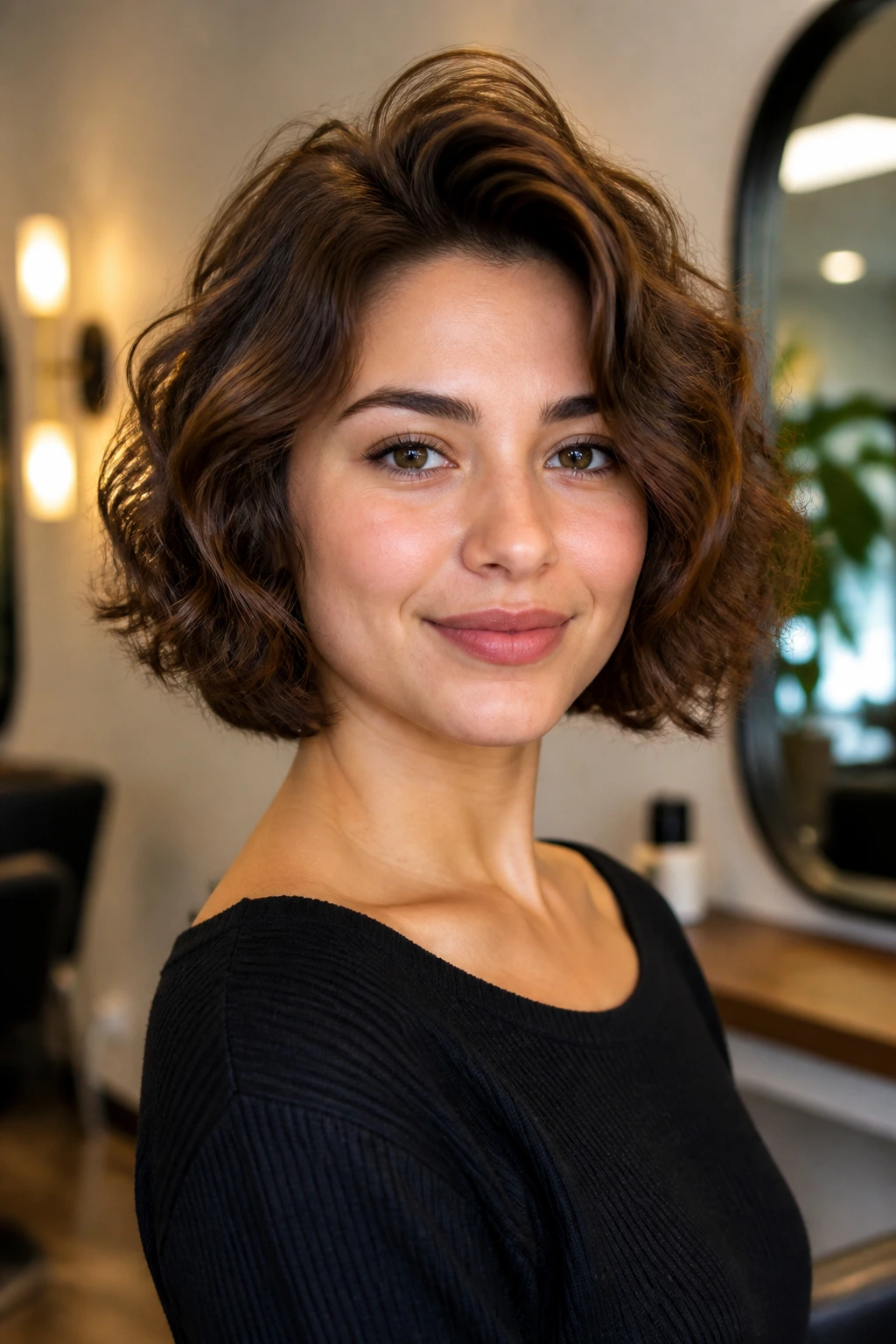
A little crown lift changes everything. It gives the face more vertical space and keeps thick hair from spreading outward where the cheeks are widest.
Why It Helps
The crown is the safest place to add height on a round face. Lift up top, and you draw the eye upward instead of sideways. That’s the whole game here.
To keep the shape from puffing at the temples, ask for fullness on top and a softer outline through the sides. Blow-dry the roots with a round brush, then set the mid-lengths in loose curls.
- Best tool: a large round brush for root lift
- Best product: a root mousse or light volumizing spray
- Styling note: cool the roots before touching the hair
My opinion: this is one of the most flattering versions for dense hair, because it gives structure without flattening the natural body that makes thick hair useful in the first place.
14. Asymmetrical Curled Bob With One Longer Side
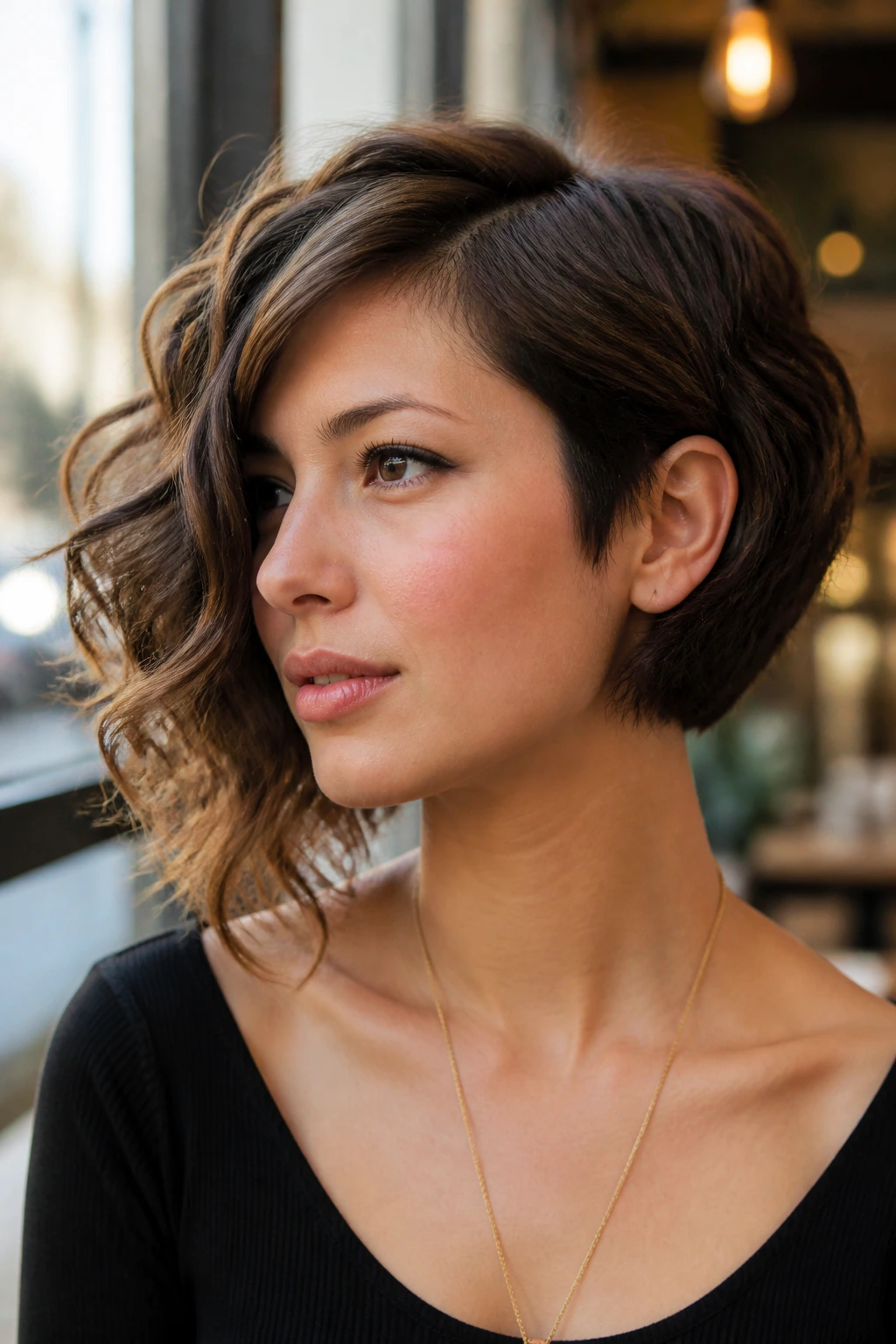
If you hate symmetry, this is your cut. One side falls longer than the other, and that diagonal line gives the face an instant bit of length.
The asymmetry also keeps the style from settling into a perfect round shape. That matters on round faces, because a perfectly even bob can mirror the facial outline a little too closely. A longer side breaks that echo.
For thick hair, keep the shorter side clean and the longer side lightly curled away from the face. You want the haircut to read as intentional, not accidental. The more obvious the length shift, the more polished it looks.
15. Curled Bob With Choppy Ends and Piecey Texture

This one has a little edge to it. The ends are point-cut or lightly chipped, so the curl falls into pieces instead of one smooth wall of hair.
That piecey texture helps thick hair look lighter. It also keeps the bob from sitting flat against the face in one wide shape. On a round face, the irregular ends are useful because they interrupt the curve and stop the outline from feeling too full.
I’d keep the curls looser here, with a bit of separation through the last inch or two. Don’t brush them out too much, though. You want the jagged pieces to stay visible. That’s the point.
16. Old-Hollywood Curled Bob
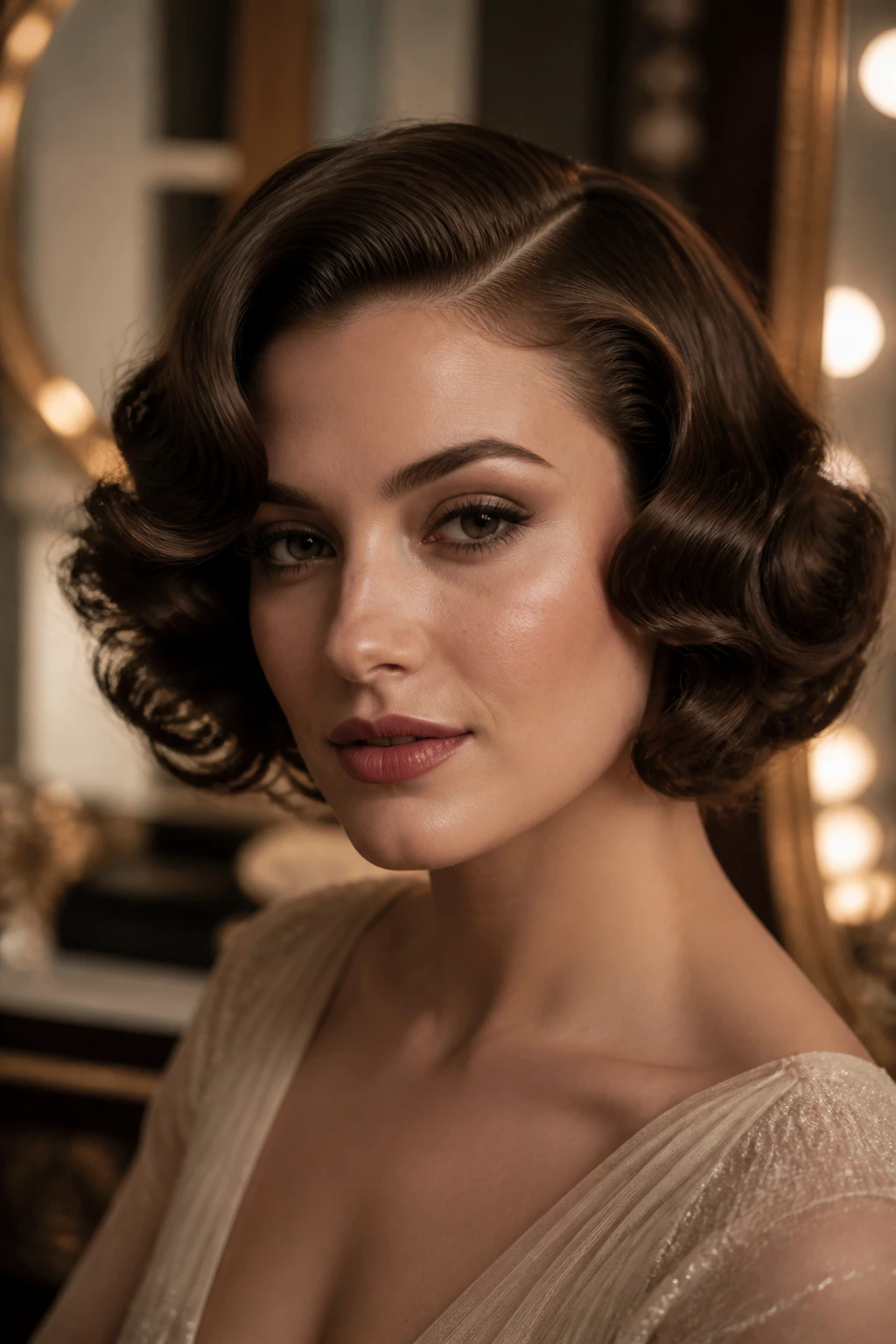
If you like a curl that looks set on purpose, this is the one. The side part, the smooth roots, and the brushed wave all give thick hair a clean silhouette with a little drama at the ends.
The shape works because the volume sits in the right places. There’s lift at the root, control through the cheek area, and a soft sweep across the face that keeps the roundness from dominating. It’s formal, yes, but not stiff when done well.
This is one of the few curled bob styles where shine matters a lot. A little serum on the last two inches makes the wave look polished instead of dry. Too much, and the curl collapses. One drop too many can ruin the whole finish.
17. Jaw-Skimming Curled Bob With a Feathered Fringe
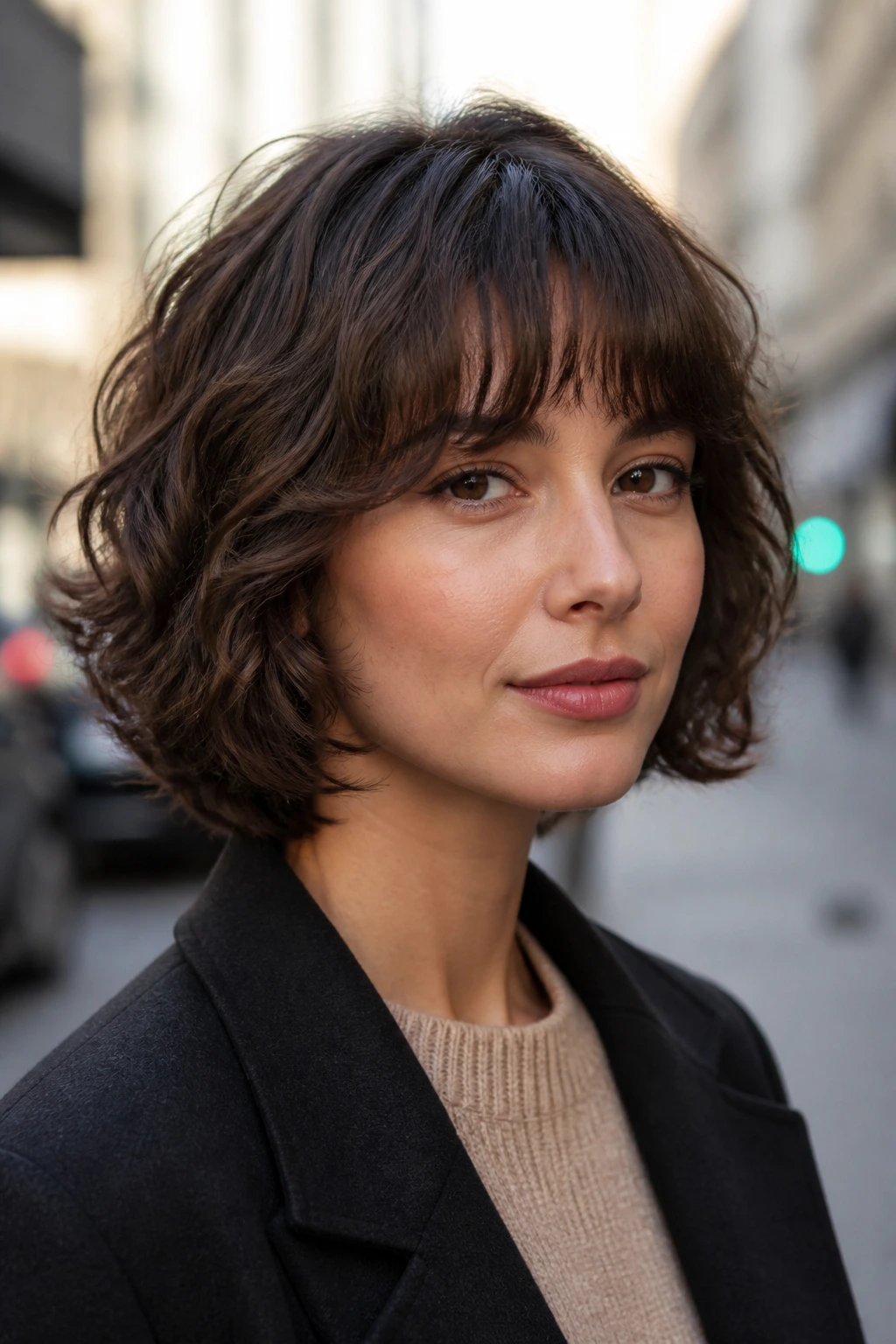
What if the cheekbones are the problem area? A jaw-skimming bob with a feathered fringe is a good answer, because it places movement lower and keeps the fringe soft enough to blur the width at the middle of the face.
The feathering matters. A heavy, blunt fringe can box in a round face, but a wispy front breaks the line and makes the haircut feel lighter. Thick hair can carry fringe well, though it usually needs a little more drying time and a little more patience.
I like this cut with a medium barrel and a slight underbend. It keeps the jawline visible and gives the face a cleaner frame without losing softness.
18. Curled Bob With Underturned Ends
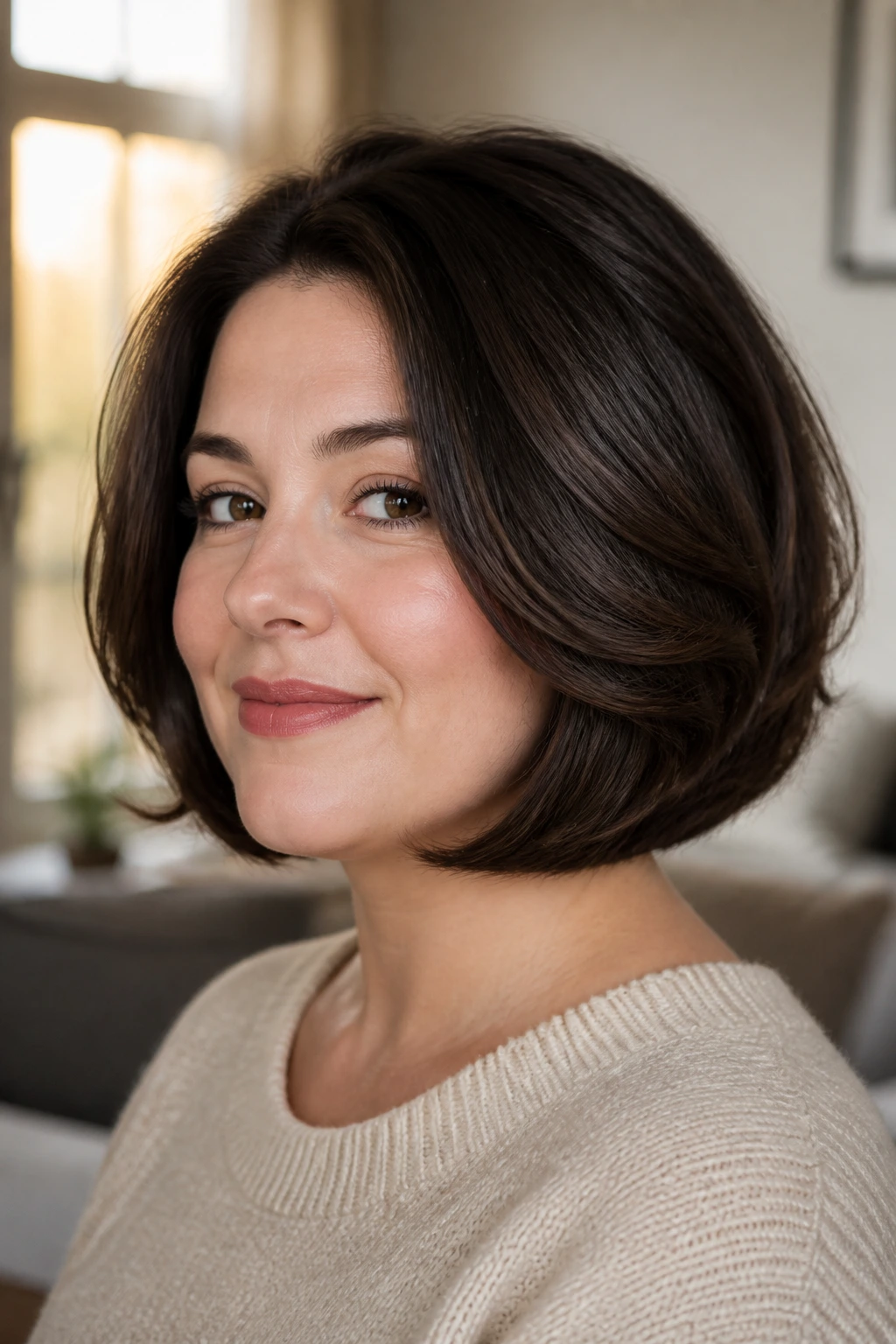
This shape is almost suspiciously simple. The ends curl inward, the outline stays neat, and thick hair stops flaring out at the sides.
That underturn is useful on round faces because it creates a gentle inward line under the jaw. Nothing about it shouts. It just narrows the visual weight a little, which is often enough.
Use a round brush or a curling brush attachment to set the ends under. Then let them cool that way. If you brush them out too soon, the bend loosens before it has a chance to hold.
19. Layered Lob With Big Barrel Curls
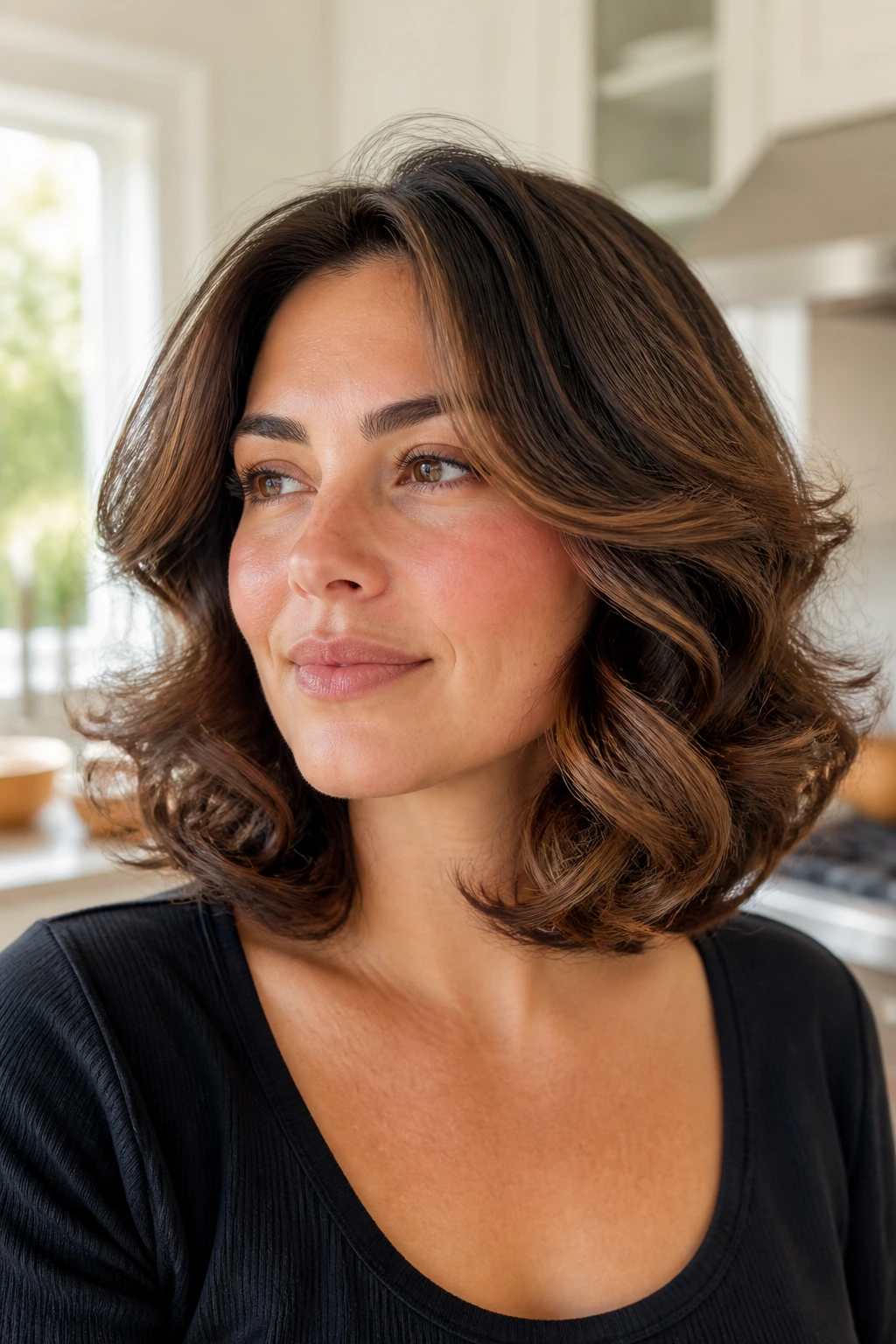
This is the roomiest version of the bunch. If you’re nervous about short hair, a layered lob gives you a safety net while still bringing the bob shape into play.
The big barrel curls are what make it feel current instead of heavy. Thick hair can take a 1.5-inch iron well, especially when the layers are internal and the perimeter stays clean. The result is wide enough to feel lush, but not so wide that it overwhelms a round face.
I’d call this the easiest grow-out option on the list. It still reads as a curled bob, but it gives you more length to tuck, pin, or let fall naturally on humid days.
20. Soft S-Wave Bob With Narrow Face-Framing
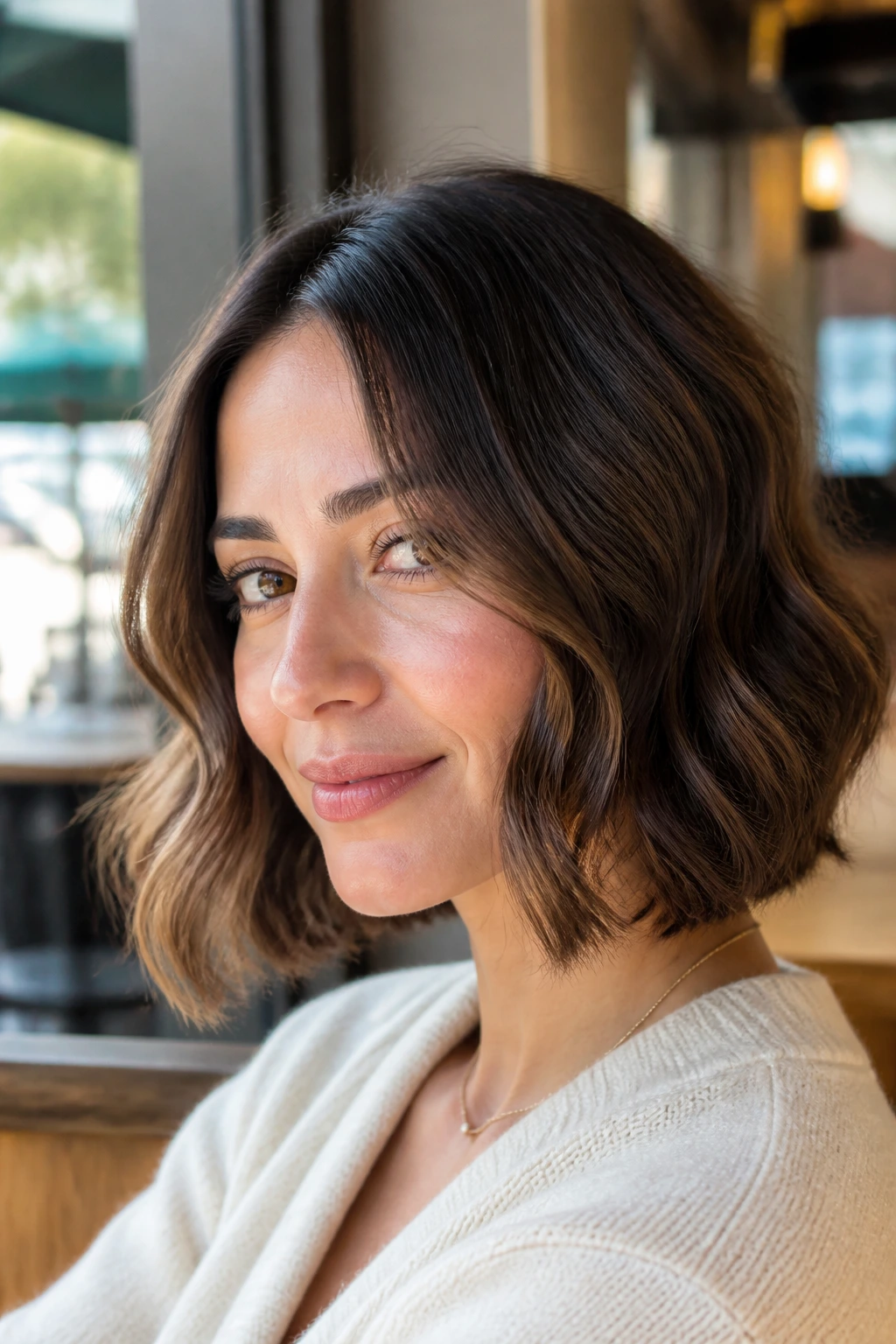
A soft S-wave is less about curl and more about direction. The bend travels in and out rather than springing into a ring, which makes it especially nice for thick hair that can go big fast.
The narrow face-framing pieces keep the sides from widening. They should fall close to the cheeks and then sweep forward a little, almost like the hair is leaning toward the center of the face instead of outward. That small detail changes the whole silhouette.
How It Reads
The shape feels smoother than a full curl and less stark than a straight bob. It’s one of those cuts that looks calm even when the hair has plenty of body.
21. Curled Bob With Hidden Layers for Heavy Hair
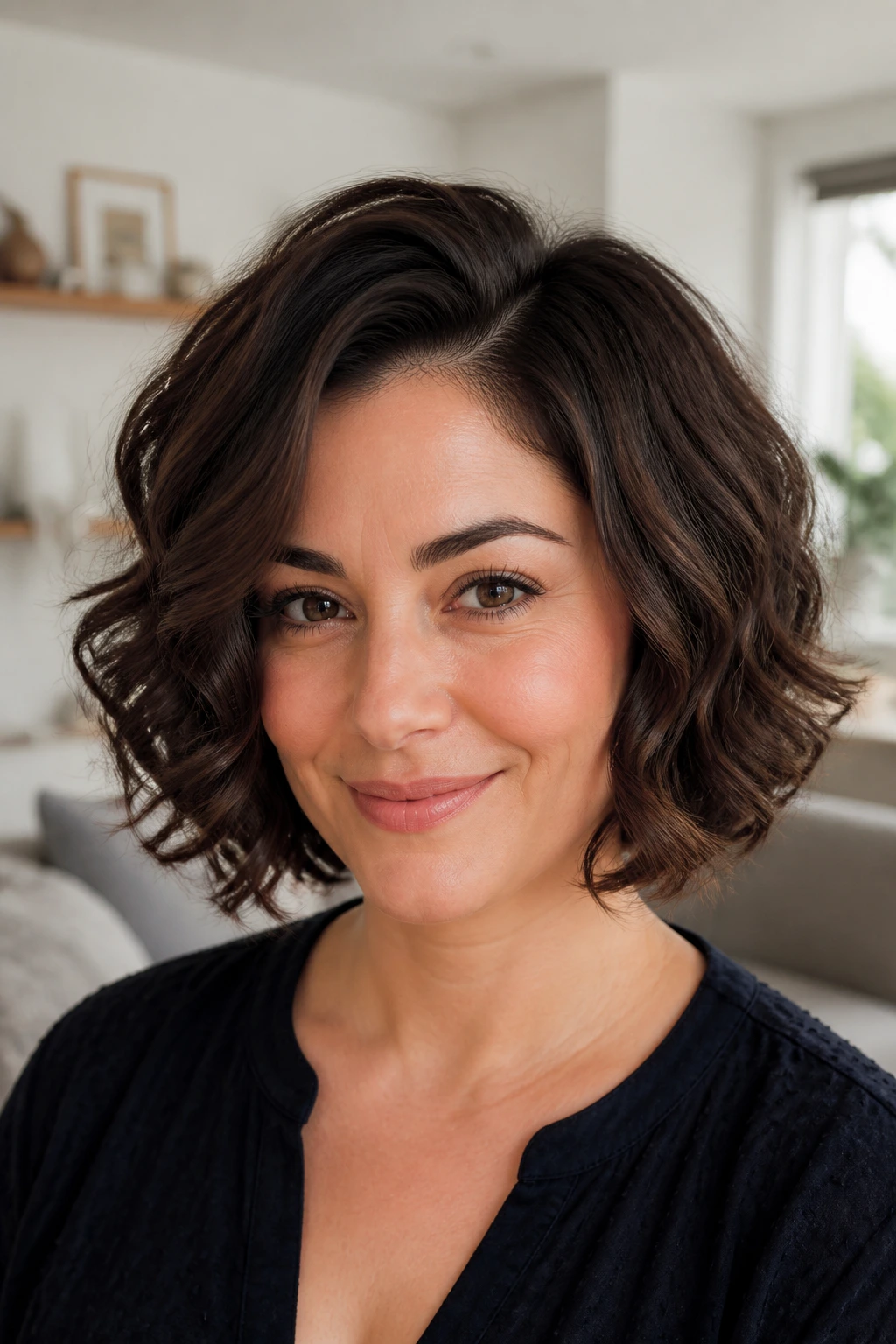
Can a bob look full without looking bulky? Yes—if the layers live underneath. Hidden layers remove weight from the inside of thick hair while leaving the outer line clean.
That’s a nice trick for round faces because the perimeter stays controlled. Nothing puffs out right where the cheeks are widest. The curl sits on top of a smarter shape, which is why the style can feel rich instead of wide.
This is the one to ask for if you hate choppy ends but still need movement. It’s tidy from the outside, which I appreciate. Some cuts try too hard to advertise the layers. This one doesn’t.
22. Wet-Look Curled Bob
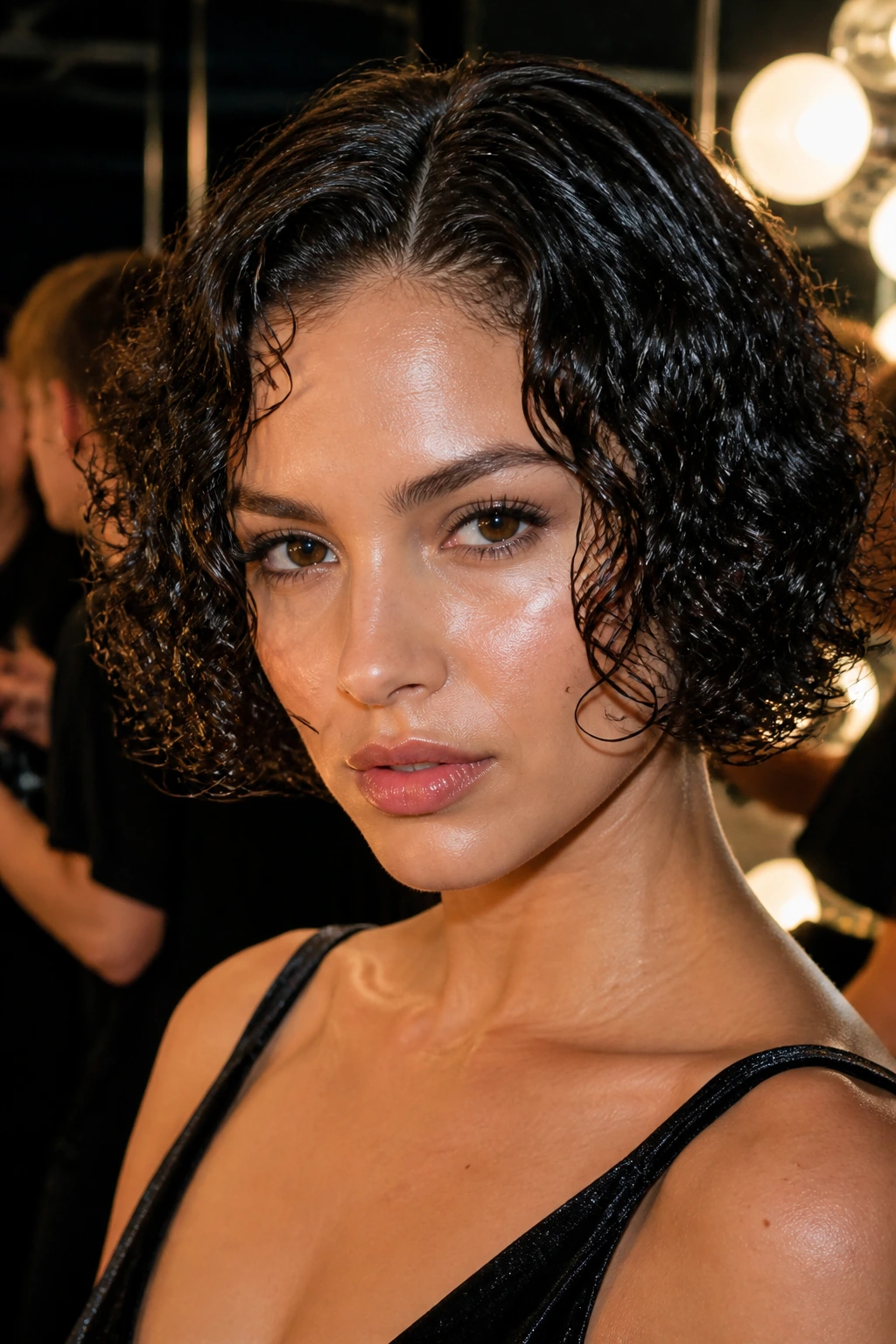
This bob is not about softness. It’s about control. The roots stay sleek, the curl or bend forms lower down, and the finish has that glossy, sculpted look that keeps thick hair from going fluffy.
On a round face, the wet-look finish can be useful because it holds the sides close to the head. That reduces width instantly. The downside is that it needs more product discipline than most styles. Too much gel and the hair looks greasy; too little and the shape loses its sharpness.
I’d wear this one for evenings or warm, humid days when you want the hair to stay close. It’s a strong look. Not a shy one.
23. Air-Dried Curled Bob With Diffused Volume
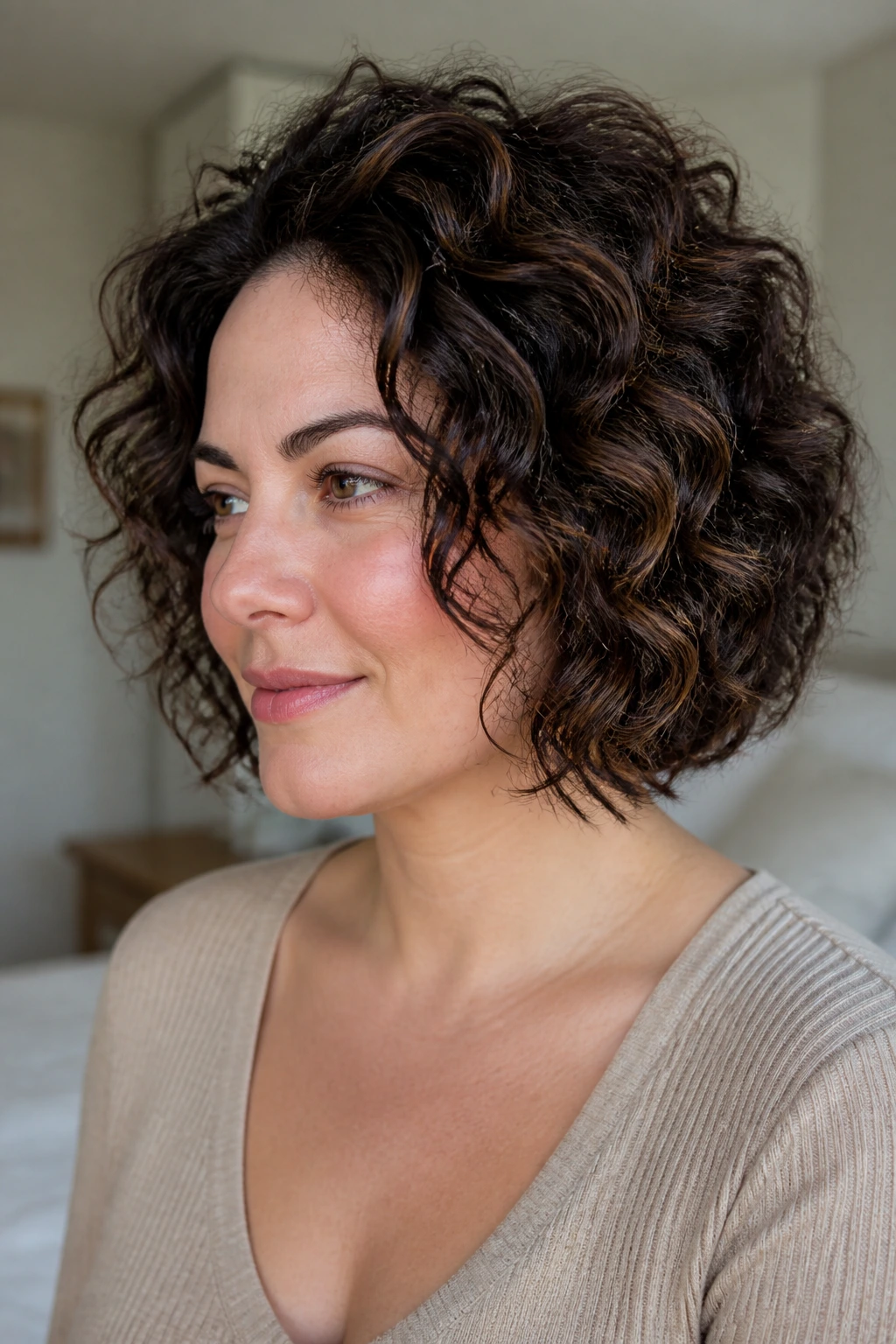
If you hate hot tools, this is the version worth knowing. A diffuser and a little curl cream can give thick hair enough definition to sit in a bob shape without a full blowout.
The point is not perfection. A few uneven bends are fine, even welcome, because they keep the style from turning into one big puff. On round faces, the trick is to keep volume higher at the crown and lighter around the cheeks.
I like this one best when the hair is cut with enough structure to hold its own. Air-dried curls can go sideways fast if the shape is too blunt. The haircut has to do some lifting.
24. Curled Bob With Money Pieces
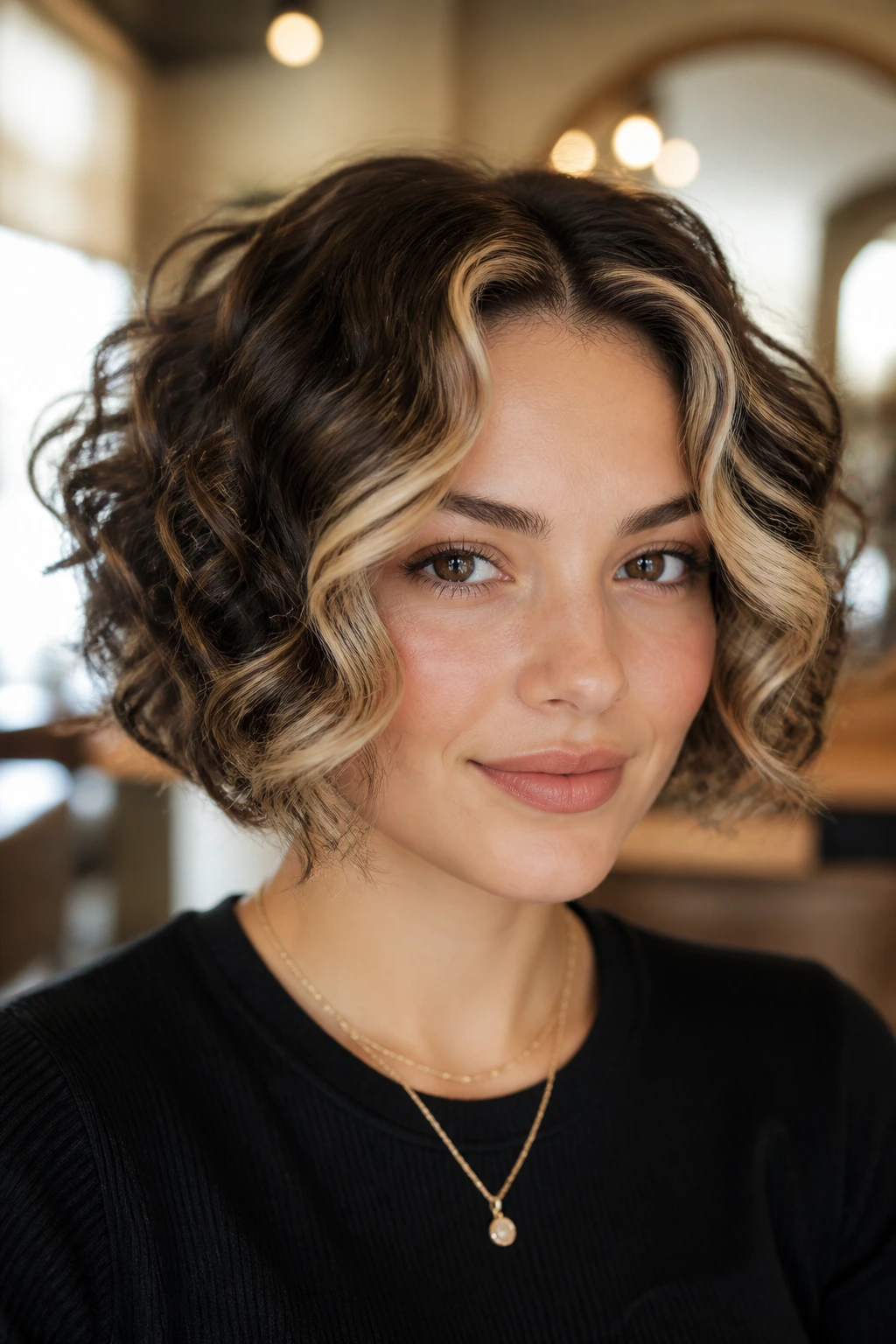
Money pieces at the front can change the whole face frame. A few lighter strands around the hairline catch the eye first, which creates a narrower look through the cheeks.
The curl should be loose and directional, usually away from the face at the front. That keeps the highlighted pieces visible and lets the color do some of the shaping. Thick hair handles this well because the density gives the lighter front sections a solid backdrop.
This is a nice option if you want a bob that feels fresh without changing the cut itself. A little strategic lightness near the front can make the style look sharper, especially when the rest of the hair stays a shade deeper.
25. Ear-Grazing Curled Bob With a Swingy Side Sweep
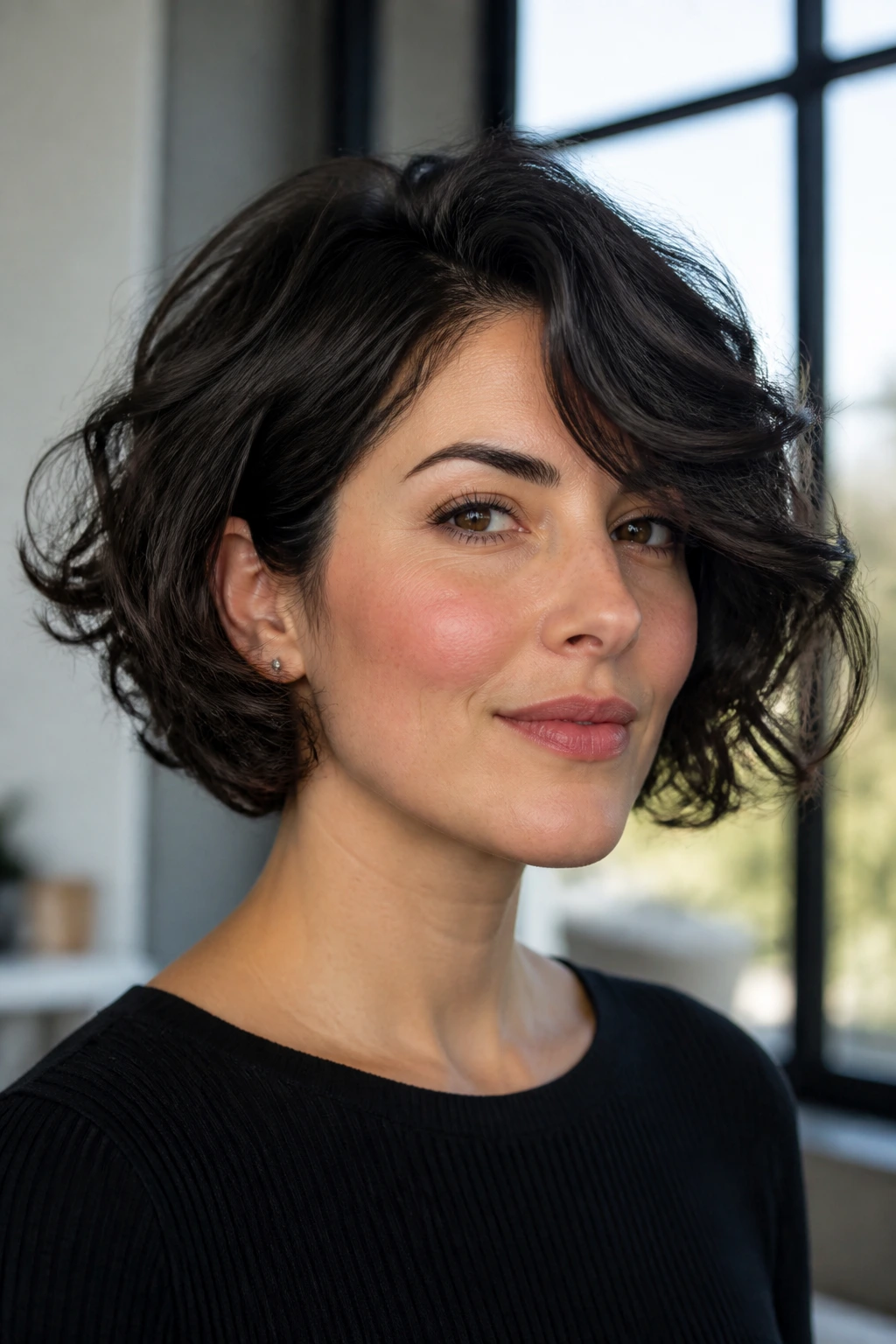
Shorter than most people expect, but the side sweep keeps it from reading boxy. The ear-grazing length opens the jaw, and the sweep across the forehead brings the eye back to the middle of the face instead of the cheeks.
Thick hair can make this cut look lush rather than severe, which is a nice bonus. The curl should stay light and airy, with enough movement to stop the outline from feeling too fixed. I wouldn’t overwork this one with product. The shape is strongest when it can swing.
It’s a good choice if you like the energy of a short haircut and don’t mind regular trims. That’s the price of the clean line. Worth it, if you ask me.
Why Curled Bobs for Thick Hair Need Different Weight Removal
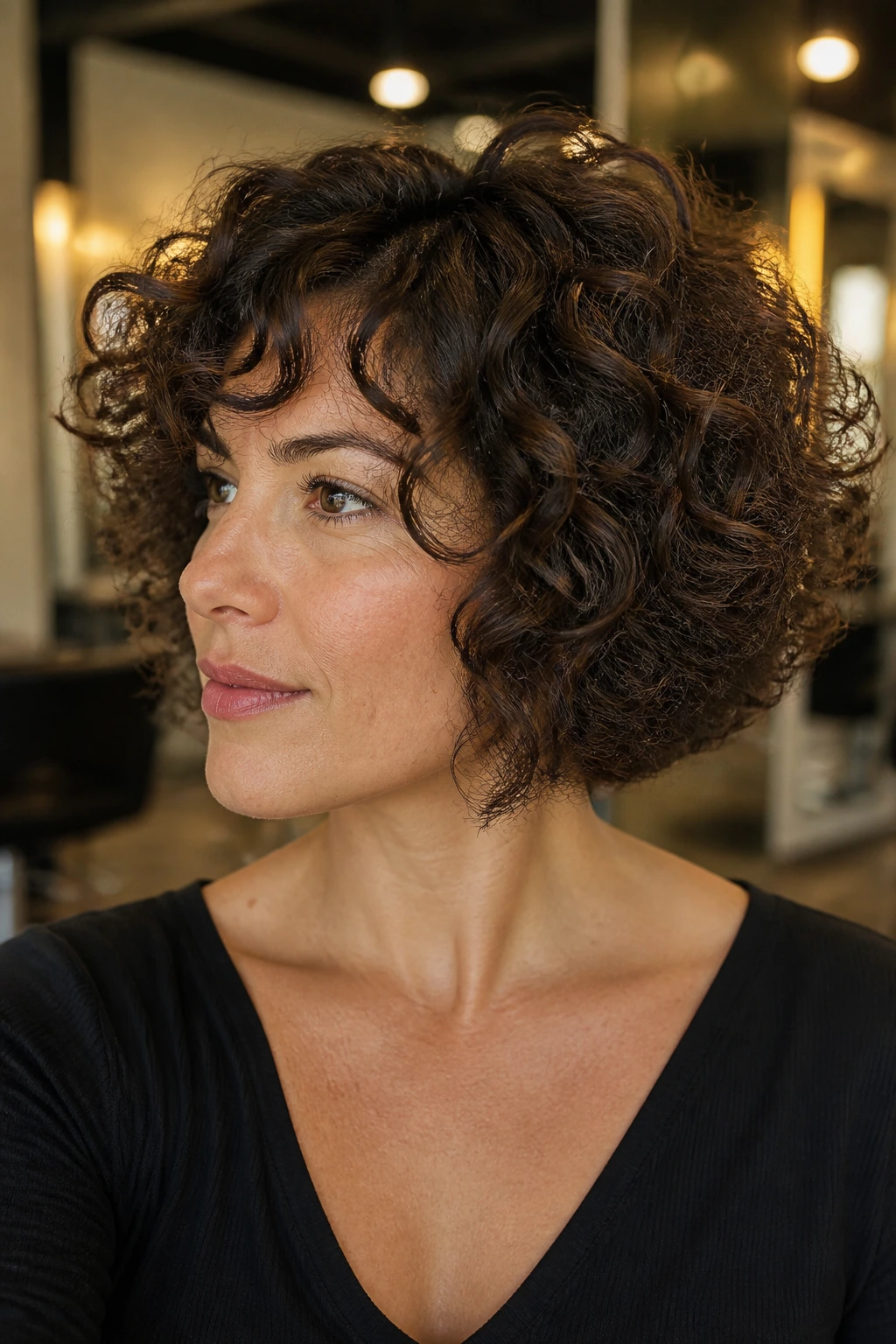
Thick hair does not behave like fine hair, and trying to cut it that way is where a lot of bob shapes go wrong. Dense hair has more internal bulk, more room to swell when it dries, and more resistance when you try to set it into a curved shape. If the cut ignores that, the finished bob can sit out from the head like a little shelf.
Weight removal needs to happen in the right places. The goal is not to thin the hair until it feels wispy; that usually backfires and leaves the outline frizzy. Better versions remove bulk through the interior, keep the perimeter clean, and leave enough density at the ends to hold the curl.
That balance matters even more on round faces. If the sides are too full, the haircut widens the face. If the front is too short, the eye stops too early. A smart curly bob gives you lift, bend, and a bit of length in front so the whole shape feels like it’s moving downward instead of outward.
The Lengths and Partings That Flatter Round Faces
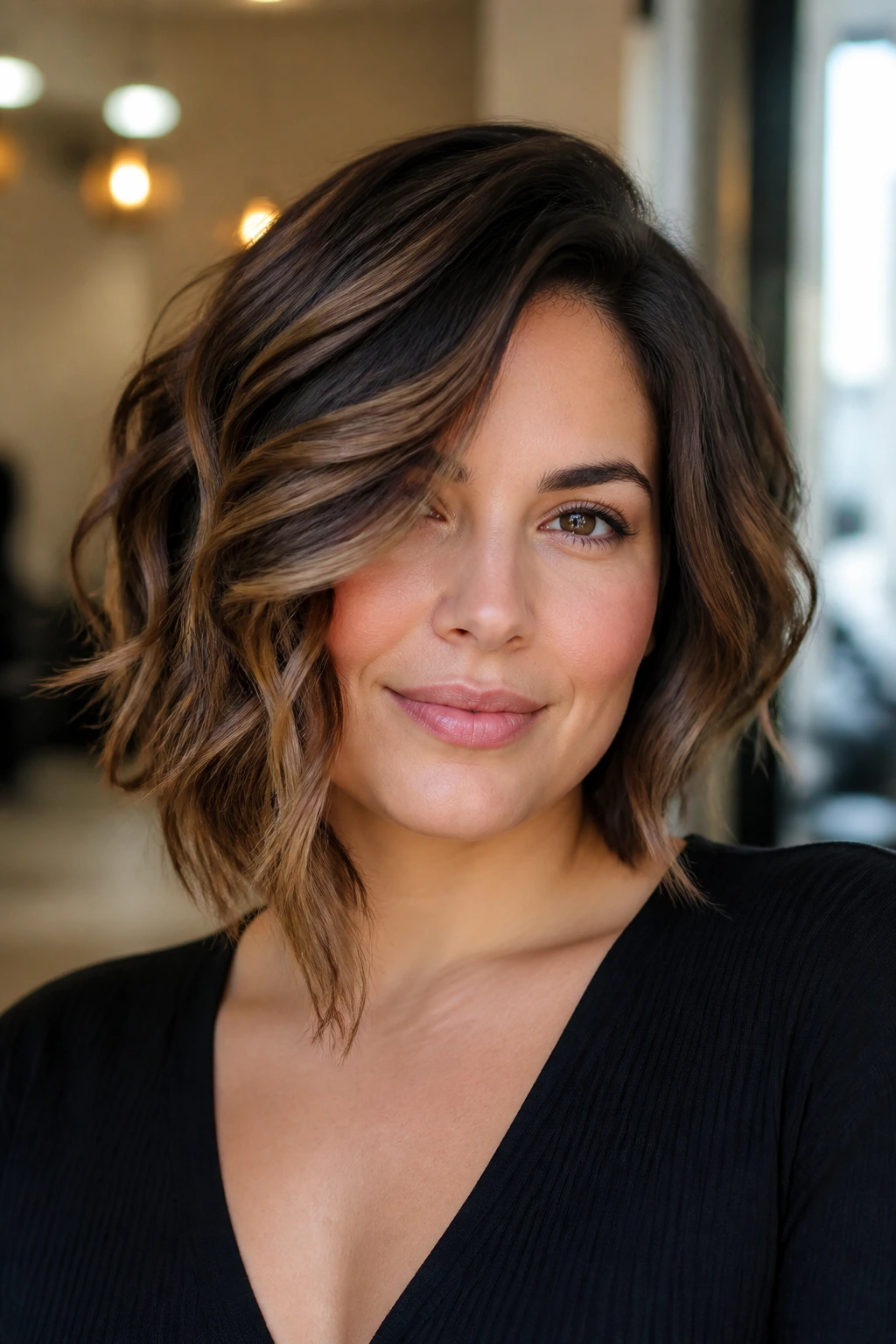
A round face usually looks best when the haircut adds vertical lines or diagonals. That can come from a side part, a deeper off-center part, longer front pieces, or a small asymmetry in the cut itself. What usually does not help is a perfectly even bob that ends right at the cheekbone and curls outward on both sides. That’s how you get width where you least want it.
The safest lengths are usually chin to collarbone, depending on how dense the hair is and how much curl you plan to wear. Chin length can look sharp if the front pieces are elongated. Collarbone length is easier if your hair is extremely thick or naturally puffy, because the extra inch or two gives the shape room to settle.
What I’d Avoid
- A blunt bob that ends at the widest part of the cheeks
- A tight curl pattern that expands the sides
- A center part with short, level front pieces
- A heavy fringe that stops at the brow line and adds width
What tends to work
- Longer front pieces that skim the jaw
- A side part or off-center part
- Curl concentration below the cheekbones
- Soft crown lift rather than side volume
What to Tell Your Stylist Before the First Snip
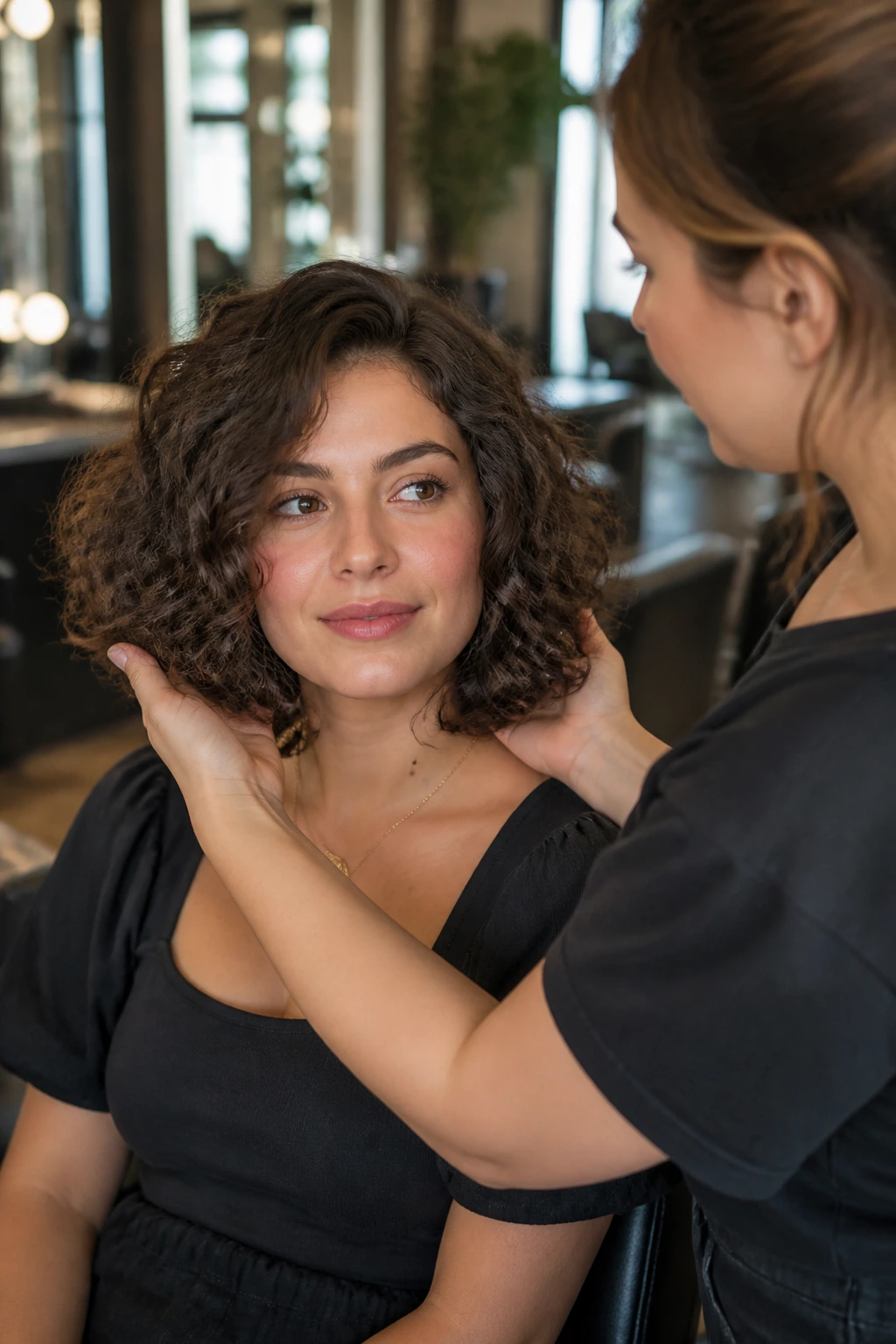
Bring photos, yes, but bring the right ones. Look for cuts with similar density and similar curl pattern, not just the same face shape. Thick hair needs to be judged by weight and movement, and a picture of a fine-haired bob can set you up for disappointment.
Ask for weight removal through the interior, not a hacked-up outline. The perimeter should still look full enough to hold its line. If your stylist reaches for the razor, ask how much they plan to take off and where. A little texturizing can help. Too much can leave thick hair frizzy at the ends.
Say where you want the front to fall. I’d be specific: chin, jaw, or collarbone. That one detail makes a bigger difference than vague requests like “something face-framing.” If you want to curl your bob regularly, say that too. A cut designed to wear straight often behaves badly once you add bend.
The Tools, Brushes, and Products That Make This Easier
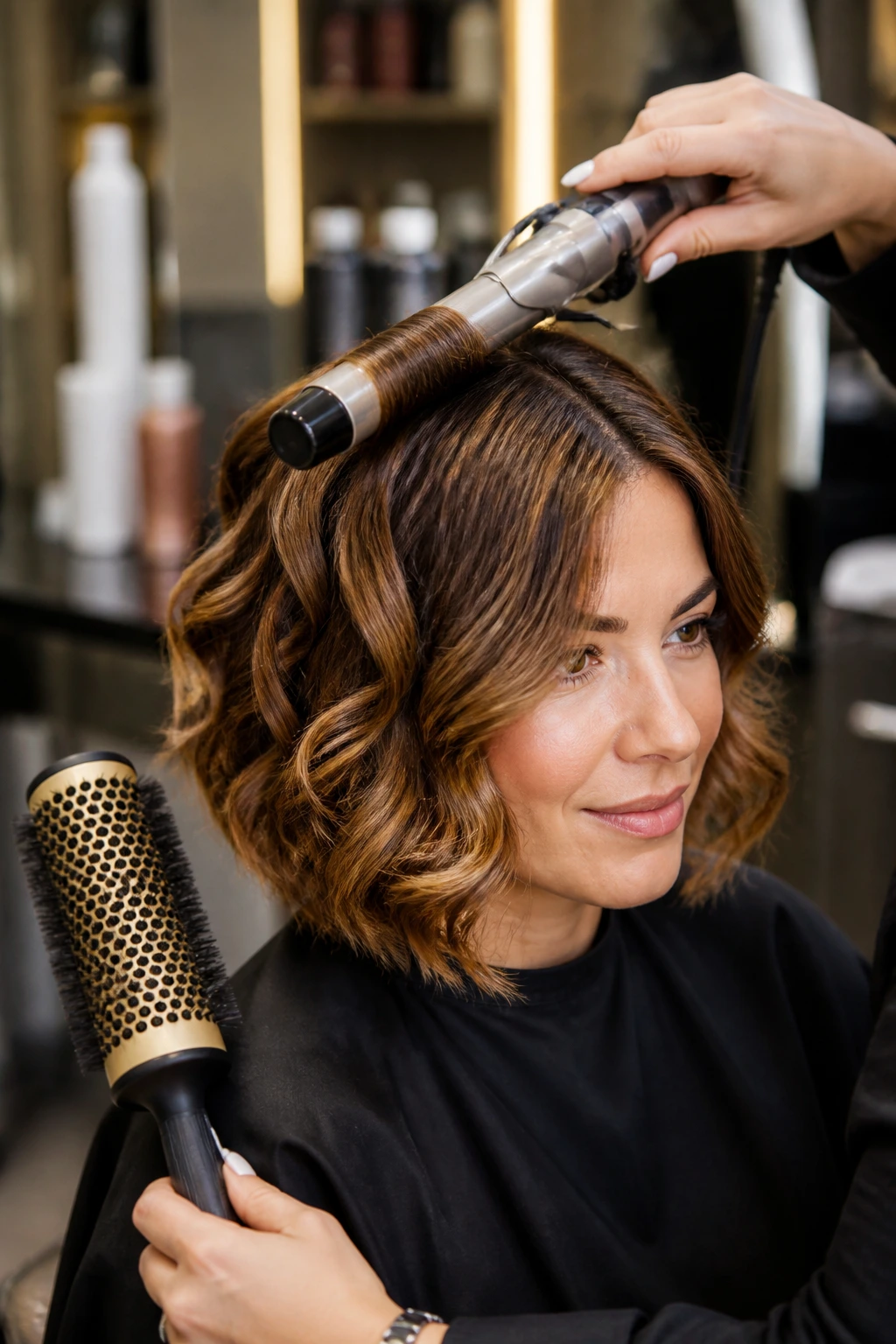
- 1.25-inch curling iron or wand: A good middle size for loose curls and bends that won’t widen the face too much.
- 1.5-inch curling iron: Best for longer bobs and lobs when you want a softer wave with less spring.
- Large round brush: Useful for root lift, underturns, and smoothing thick hair before curling.
- Vent brush: Great for rough-drying dense hair without flattening the body.
- Root clip or duckbill clips: Handy for setting the crown while the roots cool.
- Heat protectant spray: Keeps ends from frying, which matters when thick hair needs repeated heat to shape well.
- Lightweight mousse: Gives hold without the crunch that makes a bob feel old-fashioned.
- Flexible-hold hairspray: Enough to keep the curl in place, not so much that the hair turns stiff.
- Smoothing cream or serum: Use only on the ends or very sparingly through the mid-lengths.
How to Set and Refresh the Curl So It Stays Soft
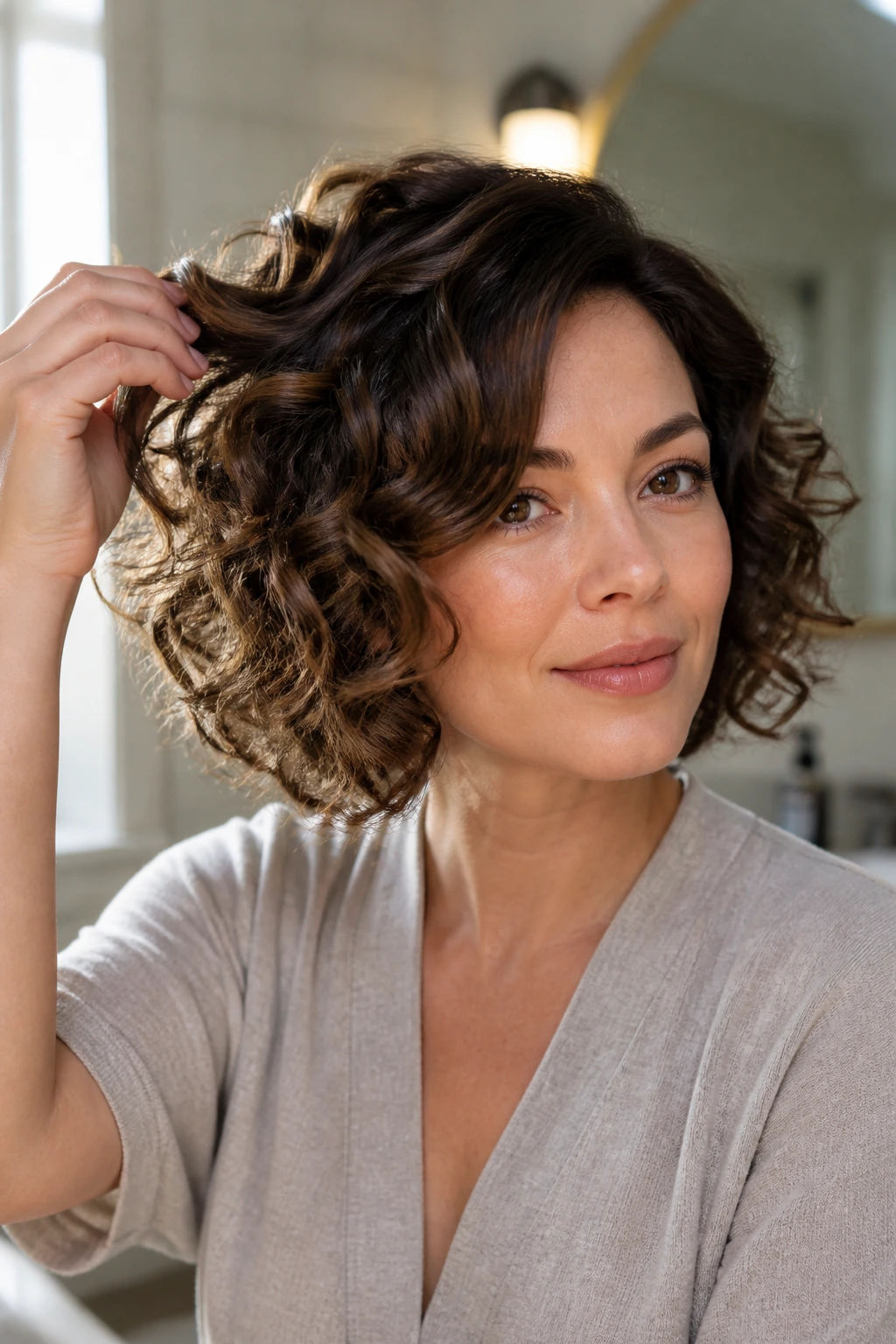
Start with hair that’s fully dry. Damp thick hair can hold heat oddly, and that usually leads to a curl that looks set on the outside but collapses inside an hour. Rough-dry first, then smooth the roots with a brush if you need a cleaner finish.
Wrap the sections in alternating directions, but keep the front pieces consistent so they frame the face instead of fighting each other. On round faces, the front tends to look best when it curves away from the cheeks or bends forward with intention. Random curls around the cheekbone are where the shape gets muddy.
Once the curls cool, break them up with dry hands or a wide-tooth comb. Do not brush them to death. You want separation, not fluff. A tiny mist of flexible hairspray can keep the shape alive without making the bob feel helmet-hard.
For day-two refreshes, mist the ends lightly with water, twist the hair around your fingers, and hit the roots with a cool dryer setting if they’ve gone flat. Thick hair usually needs less product on refresh day than people think. Too much cream and the whole thing gets sleepy fast.
The Traps That Make Thick Hair Turn Boxy
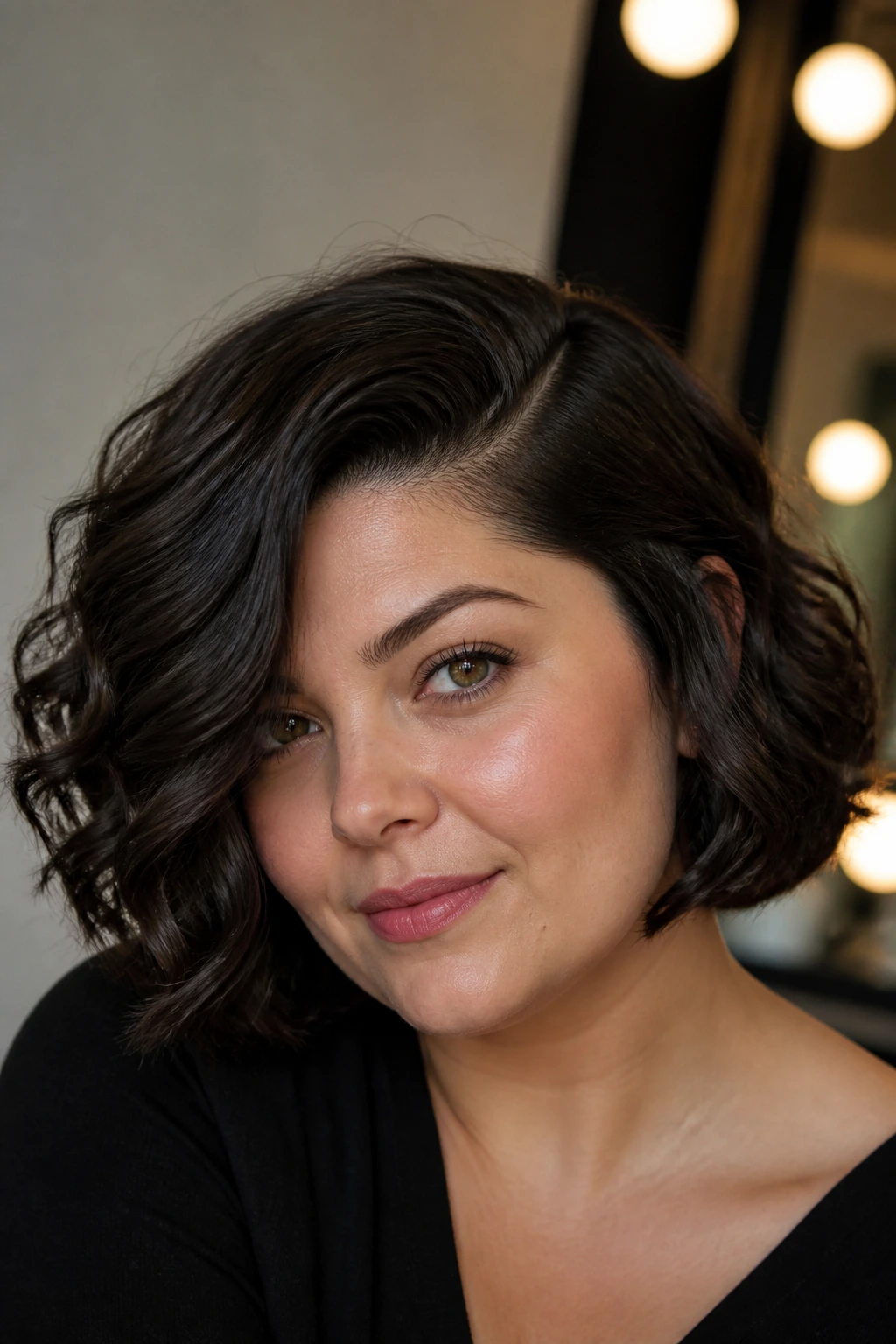
The first mistake is cutting the bob too short at the cheeks. That’s the danger zone. When the curl sits there, the face reads wider and the haircut starts competing with the bone structure instead of flattering it.
The second mistake is over-thinning the hair. People reach for texturizing when the hair feels heavy, but too much removal can leave the perimeter frayed and the curl stringy. Thick hair needs bulk managed, not erased.
Third, watch the curl direction. If every section flips outward, the bob grows wider. If every section turns inward too tightly, it can look dated or overly round. A little variation, especially near the front, keeps the shape alive.
And one more thing. Heavy serum near the roots is a mess. It steals lift from the crown and makes even a good cut feel flat at the top and puffy at the bottom. Keep the shine stuff on the ends where it belongs.
Variations and Adaptations Worth Trying

The Softer Office Bob: Keep the length at the jaw, curl the front pieces away from the face, and use a light hold spray. It reads tidy without looking stiff, which is useful if you want the shape to survive a full workday and still move in the evening.
The Loose Humidity Bob: Choose a collarbone length, use a stronger root mousse, and leave the ends a little undone. This version handles swelling better because the extra length gives the curl somewhere to relax.
The Short Statement Bob: Go ear-grazing with a side sweep and let the curls stay close to the head. It has more personality than a classic chin-length bob and works well if you like a cut that shows off earrings or a strong brow line.
The Grow-Out Lob: Start with a layered lob and big barrel curls. This one is smart if you’re not sure how short you want to go, because it keeps the shape bob-like without demanding a big commitment.
The Sleek-Gloss Version: Use a wet-look finish with gel through the roots and a sculpted bend through the ends. It’s bolder, a little sharper, and good for nights when you want the haircut to read as intentional from across the room.
Keeping the Shape Fresh Between Washes
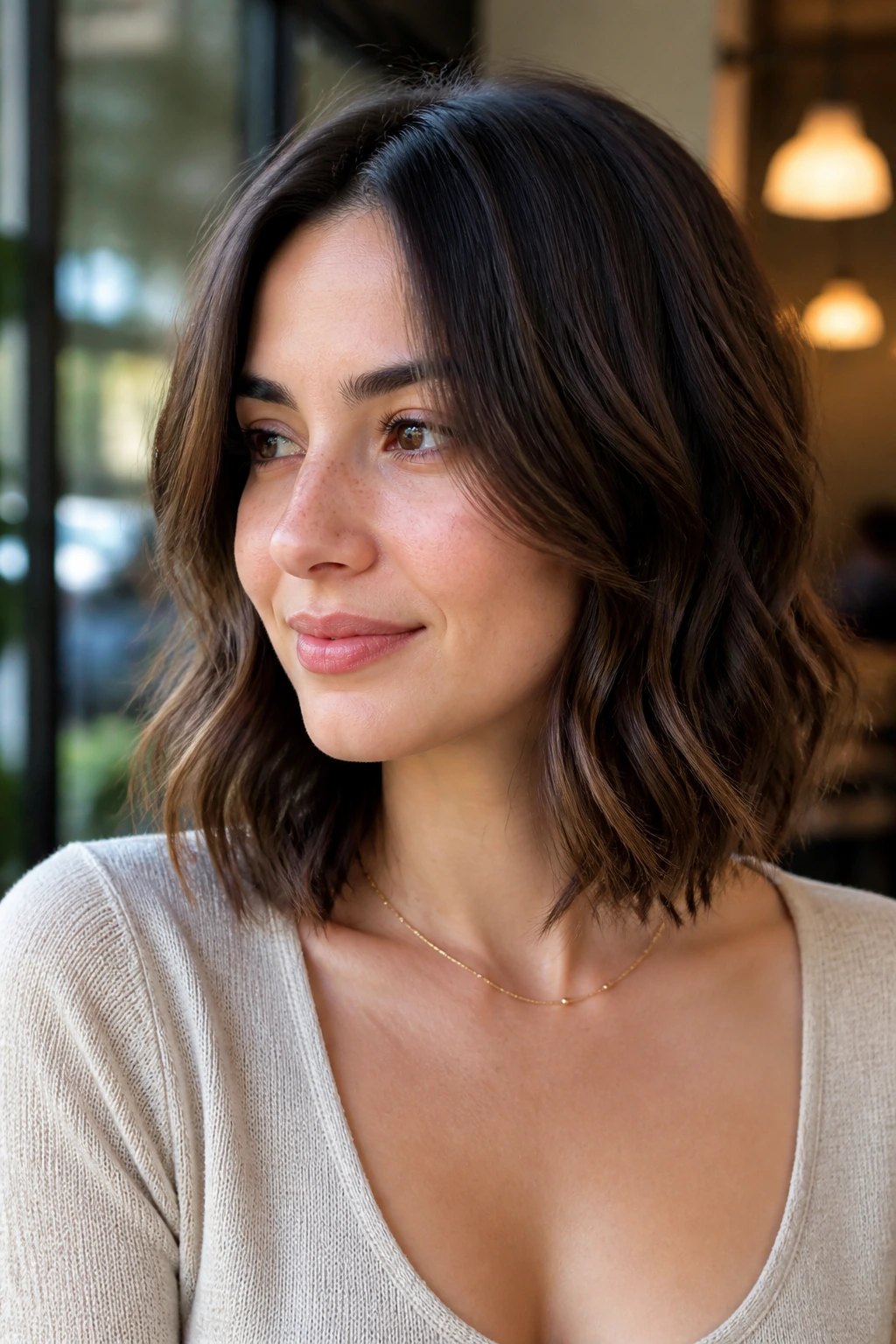
Thick hair usually doesn’t need daily washing, but it does need shape maintenance. A bob like this tends to hold better when you leave the natural oils alone for a day or two and refresh the outline instead of scrubbing everything back to zero.
Plan on a trim every 6 to 8 weeks if you want the line to stay crisp. The more heavily curled and shorter the bob, the sooner the perimeter starts to feel fuzzy or uneven. Longer lobs can stretch a bit farther, but the front pieces still need regular attention.
At night, a satin pillowcase or a loose pin-up on top of the head helps prevent the curl from getting crushed. If the shape is especially polished, clip the front pieces away from your face before bed so they don’t bend into a strange angle while you sleep.
Frequently Asked Questions
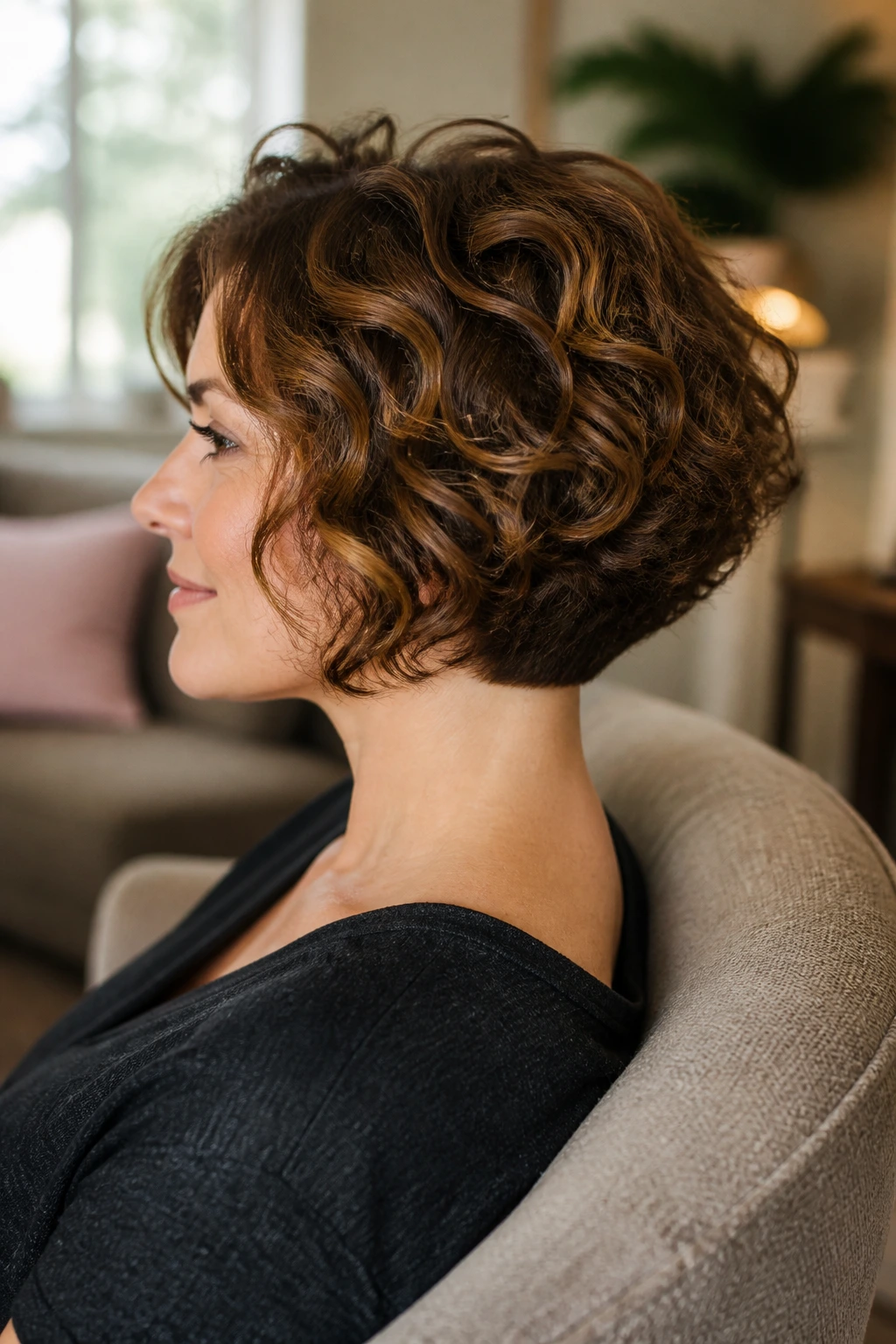
Are curled bobs good for very thick hair?
Yes, as long as the cut removes weight in the right places. Thick hair gives a bob body and memory, but it needs an interior shape so the sides don’t flare out like a bell.
What bob length is most flattering for a round face?
Jaw to collarbone usually works best, depending on how much curl you want. If the bob ends right at the cheekbone and flips outward, it can make the face look wider than it is.
Should I choose a side part or a center part?
A side part is the safer bet because it creates a diagonal line. A center part can work if the front pieces are long enough to fall past the cheeks and the rest of the shape stays narrow.
Can I wear bangs with a curled bob?
Absolutely, but the fringe needs to be chosen carefully. Bottleneck bangs, curtain bangs, and feathered fringe usually behave better on thick hair than a dense blunt bang.
How do I keep the curl from puffing out?
Use a bigger barrel, curl away from the face at the front, and let the hair cool before you touch it. Puffy sides usually come from too much curl near the cheekbone or too much product at the roots.
What if my hair is too heavy for a short bob?
Go longer and add hidden layers instead of forcing a short shape. A collarbone lob with curled ends often gives thick hair a cleaner result than a very short bob that has no room to settle.
How often should I heat-style this cut?
Enough to set the shape, not enough to fry the ends. Many people find that styling two or three times between washes is plenty, especially if the base cut is strong and the refresh routine is simple.
Why This Shape Keeps Paying Off

The nicest thing about a curled bob is that it doesn’t ask thick hair to become someone else. It just asks the cut to do its job properly. Once the weight is placed where it belongs and the front pieces are long enough to soften the face, the style gets easier to wear, not harder.
That’s why these versions keep showing up in real salons instead of disappearing into trend slideshows. They hold up in motion. They work when the curl loosens. They give round faces a little length and thick hair a little discipline without sanding off the character that made you want the cut in the first place.