



Olive skin can make the wrong brunette look flat in a single daylight photo. The right brunette does the opposite: it sharpens the face, clears the complexion, and keeps that green-gold undertone from reading muddy.
That’s why brunette hair color ideas for olive skin need more than a pretty name. A chestnut with a copper thread, an espresso with blue-black shine, a mocha melt with soft ribbons through the mids — each one lands differently depending on whether your olive undertone leans warm, cool, or neutral.
Hair color sits right up against the face. Tiny choices matter here. One shade too orange and the skin can look ruddy. One shade too inky and the whole look can go a little hollow. Get the depth and reflection right, though, and brunette hair does something sneaky-good for olive skin: it makes everything else look more deliberate.
Why These Brunette Shades Work So Well on Olive Skin
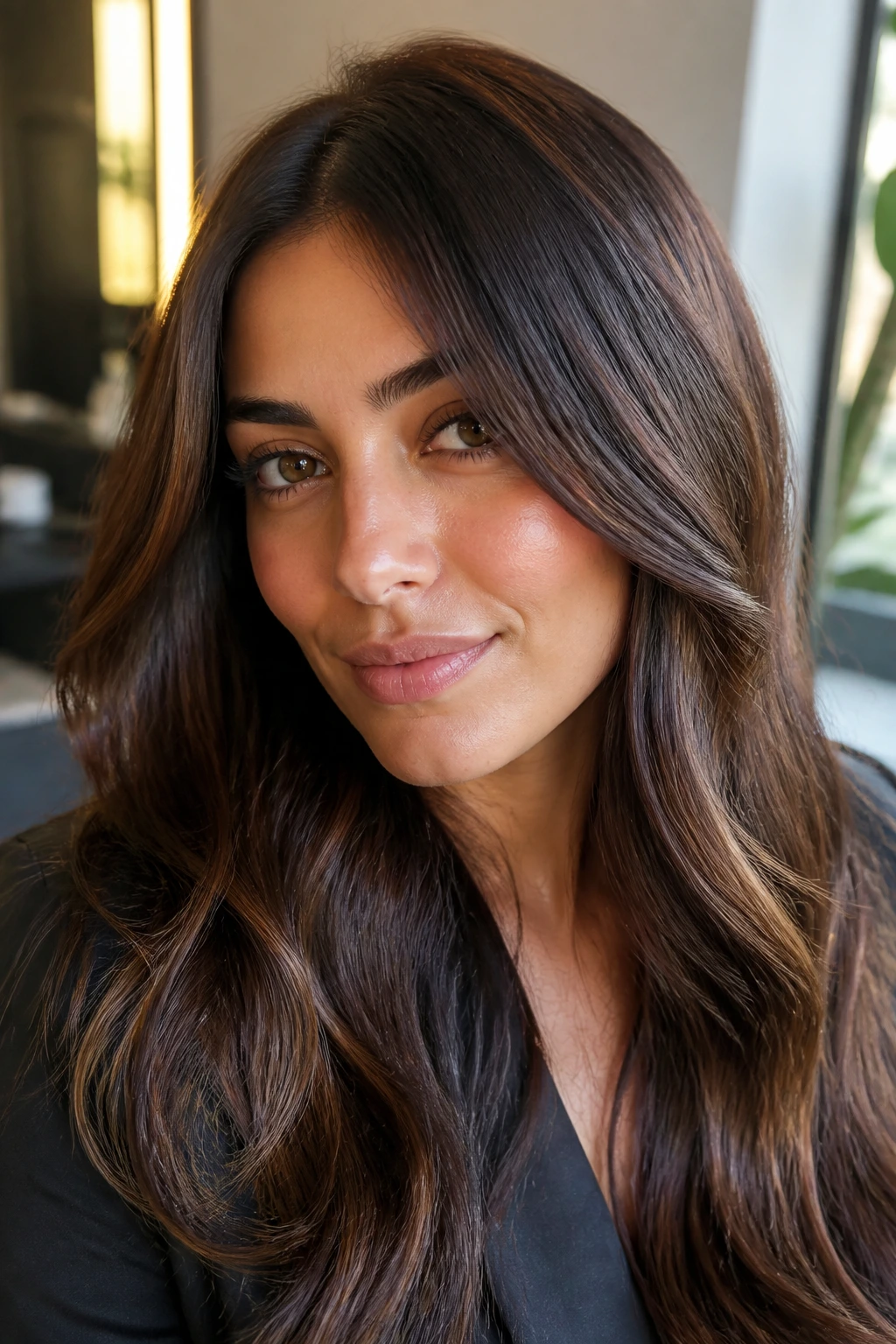
- Depth is your friend: Medium-to-deep brunettes usually give olive skin the cleanest frame because they stop the face from looking washed out in daylight.
- Tone matters more than trend: Warm olive skin can handle chestnut, caramel, and bronze; cooler olive skin usually looks sharper in espresso, ash, and smoky brown.
- Dimension keeps brown from going dull: A flat one-tone brown can swallow the face, while lowlights, gloss, or soft balayage keep the hair moving.
- Gloss is not optional: A demi-permanent glaze or clear gloss can turn a brown shade glassy instead of chalky, which matters a lot next to green-gold undertones.
- Orange is the troublemaker: Too much copper can read brassy fast on olive skin, so the best brunettes usually have control, not noise.
1. Deep Espresso Brunette With a Glassy Finish
Do you want the cleanest, sharpest brunette for olive skin? Espresso is the one I reach for first when someone wants depth without fuss.
Why It Works
Espresso sits in that dark-brown zone where olive skin often looks clearer, not heavier. The trick is shine. A flat espresso can look severe, but a glassy finish — think a clear gloss or a high-shine blowout — gives the shade movement and keeps it from swallowing the face.
This shade is especially good if your eyes are dark brown, hazel, or green-brown. It creates enough contrast to make the whites of the eyes pop, which is one of those tiny things that makes the whole face look fresher.
Best for: medium to deep olive skin, strong brows, and anyone who likes a polished finish.
Ask for: a level 3 to 4 espresso with soft reflective gloss, not blue-black dye.
2. Chocolate Ganache Brunette
Chocolate ganache brunette is rich in a softer way than espresso. It has that deep brown body, but the reflect leans a little warmer and silkier, like melted dessert instead of ink.
This shade flatters olive skin because it keeps the face from going too stark. If espresso is a tuxedo, chocolate ganache is a velvet blazer. Same confidence, less edge.
A good colorist will keep the formula neutral-warm so the brown doesn’t turn red in sunlight. That part matters. Too much red pigment can push olive skin into looking flushed, and nobody wants that.
3. Chestnut Brunette With Copper Threads
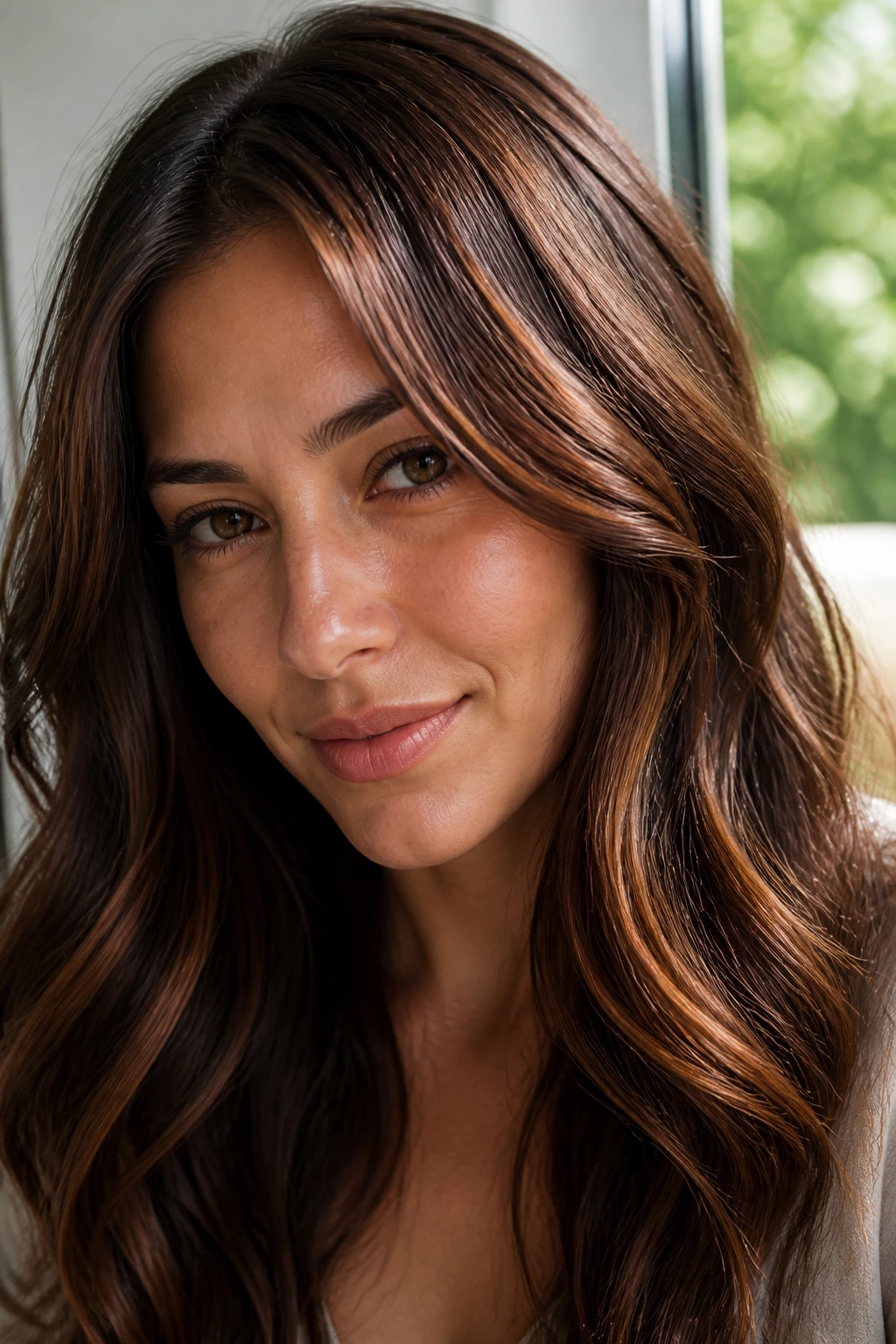
A little copper can be gorgeous on olive skin — if it behaves. Chestnut brunette with fine copper threads gives you warmth without tipping into orange territory.
Picture narrow, hand-painted ribbons through the mids and ends, not chunky highlights. That’s the move. The copper should flicker when light hits it, not shout from across the room.
This shade works especially well on warm or golden olive skin, and it’s one of the best picks if your natural hair already has a bit of auburn in it. Keep the copper muted and the chestnut base rich. That balance is the whole game.
4. Mocha Melt Balayage
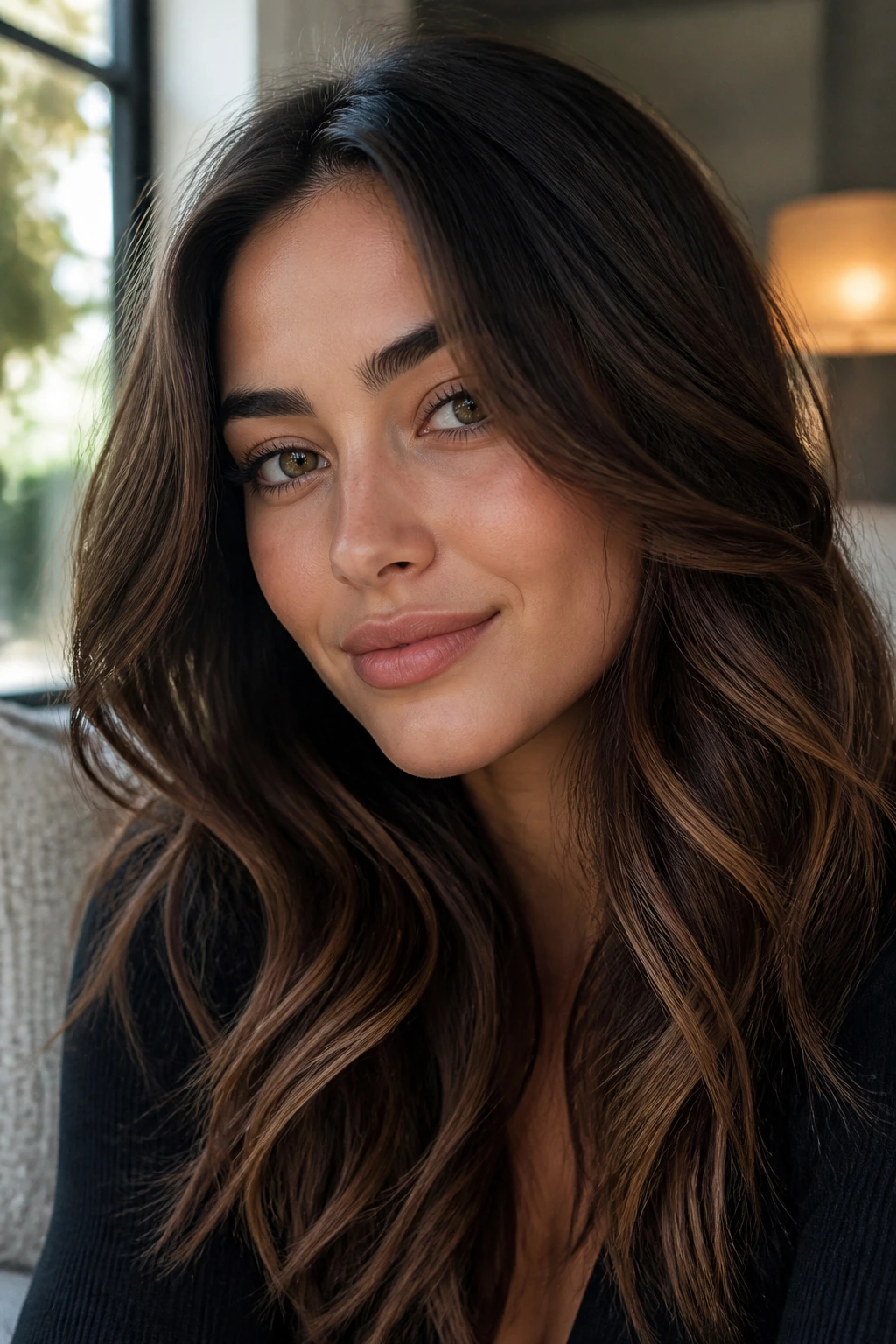
Mocha melt balayage is for the person who wants brunette color ideas for olive skin with movement, not a solid block of brown. The root stays deeper, the mids soften into mocha, and the ends pick up a little lighter brown glow.
What Makes It Different
The root shadow keeps maintenance sane. No harsh line. No obvious grow-out stripe. Just a soft fade that looks expensive because it doesn’t call attention to itself.
Olive skin loves this kind of dimension. The darker root gives the face structure, while the softer mocha ends keep the look from feeling too heavy around the jawline.
Ask for a melt that stays within two to three levels of your natural base. That keeps the blend believable. Too much contrast and the color starts looking striped, which is a fast way to lose the richness you came for.
5. Ash Brunette for Cooler Olive Undertones
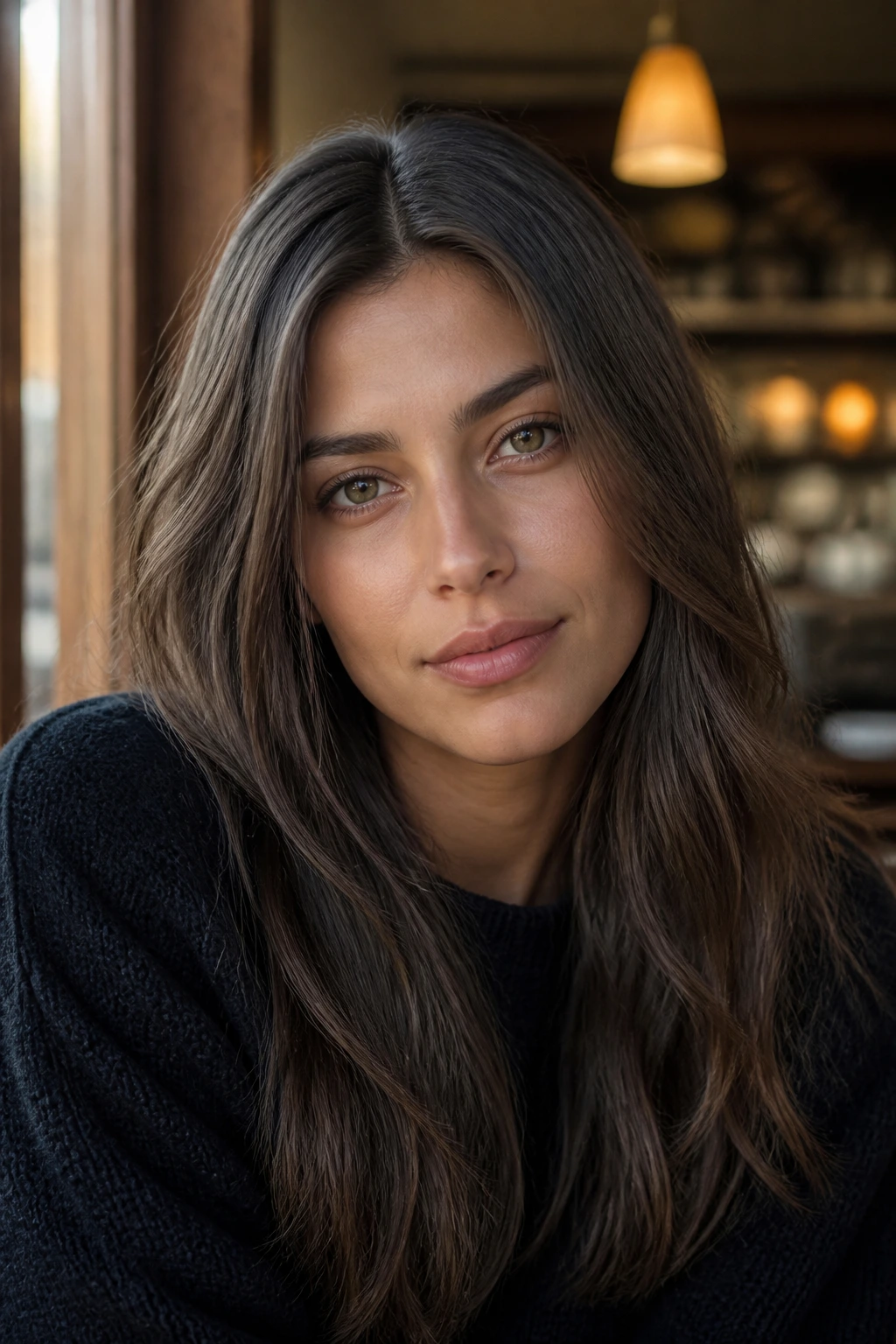
Not all olive skin runs warm. Some of it leans cooler, almost gray-green, and ash brunette can be the exact fix.
Why? Because ash cancels extra orange in the hair, and that calm tone keeps cooler olive skin from looking sallow. It’s one of the few shades that can make the face look rested even on a tired day.
How to Use It
- Ask for a level 5 to 6 ash brown, not a muddy mushroom.
- Keep the finish glossy so the tone looks deliberate, not dusty.
- If you have warm brown eyes, add a few neutral lowlights so the whole look doesn’t go flat.
Ash brunette is not a cozy shade. It’s cleaner than cozy. That’s the appeal.
6. Mushroom Brown With Smoky Dimension
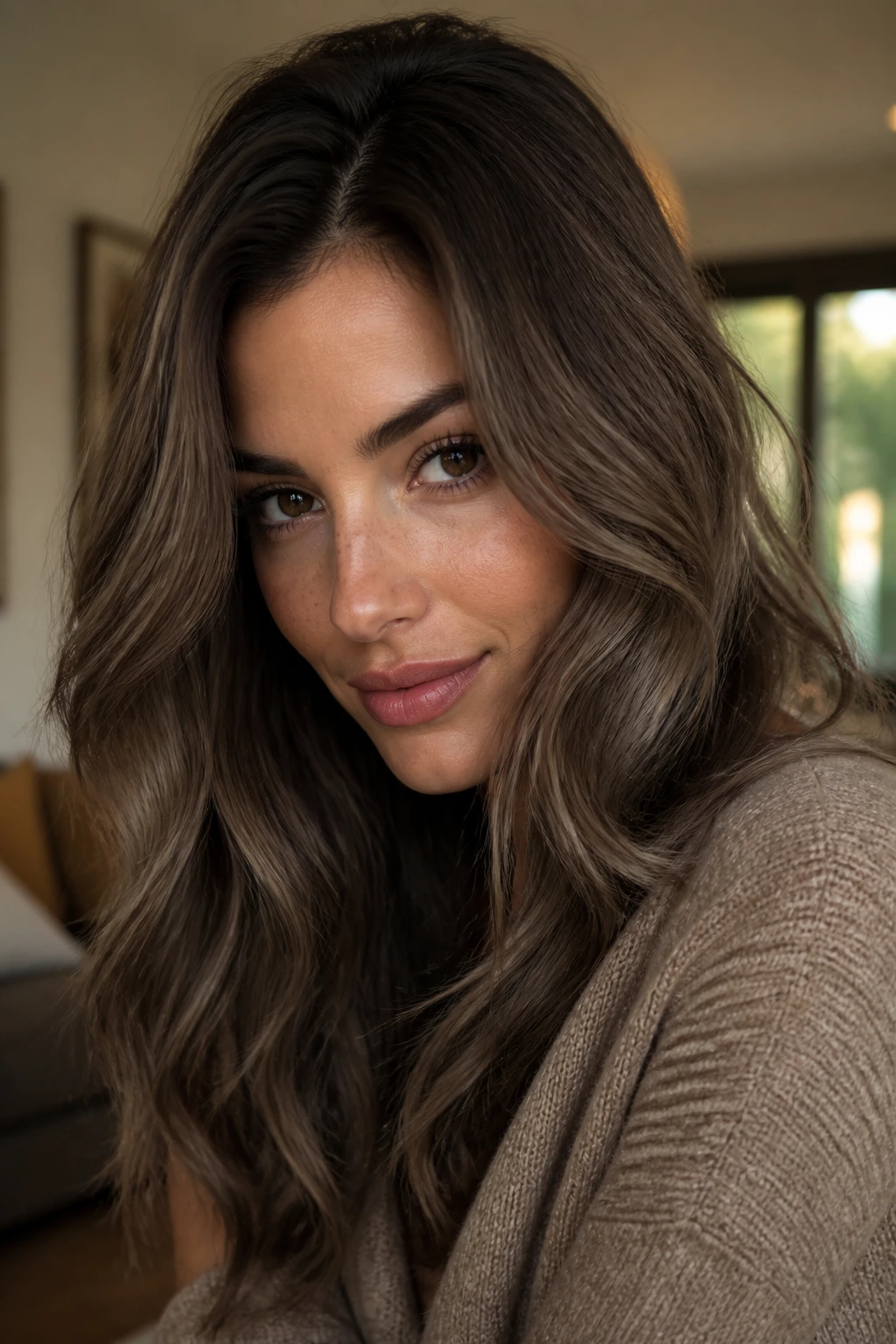
Mushroom brown is the brunette that doesn’t try too hard, which is exactly why it works on olive skin. It sits between taupe, beige, and cool brown, with a smoky cast that feels modern without being loud.
This shade is a favorite for medium olive skin that gets overwhelmed by red-brown or golden-brown tones. It gives the complexion a cooler frame and keeps the face from turning peachy in strong light.
The best mushroom brown has dimension at the ends and a slightly deeper root. Flat mushroom brown can look dull. Smoky layers, on the other hand, make the color read soft and expensive-looking — which is hard to fake with one single tube of dye.
7. Cinnamon Brunette With Warm Shine
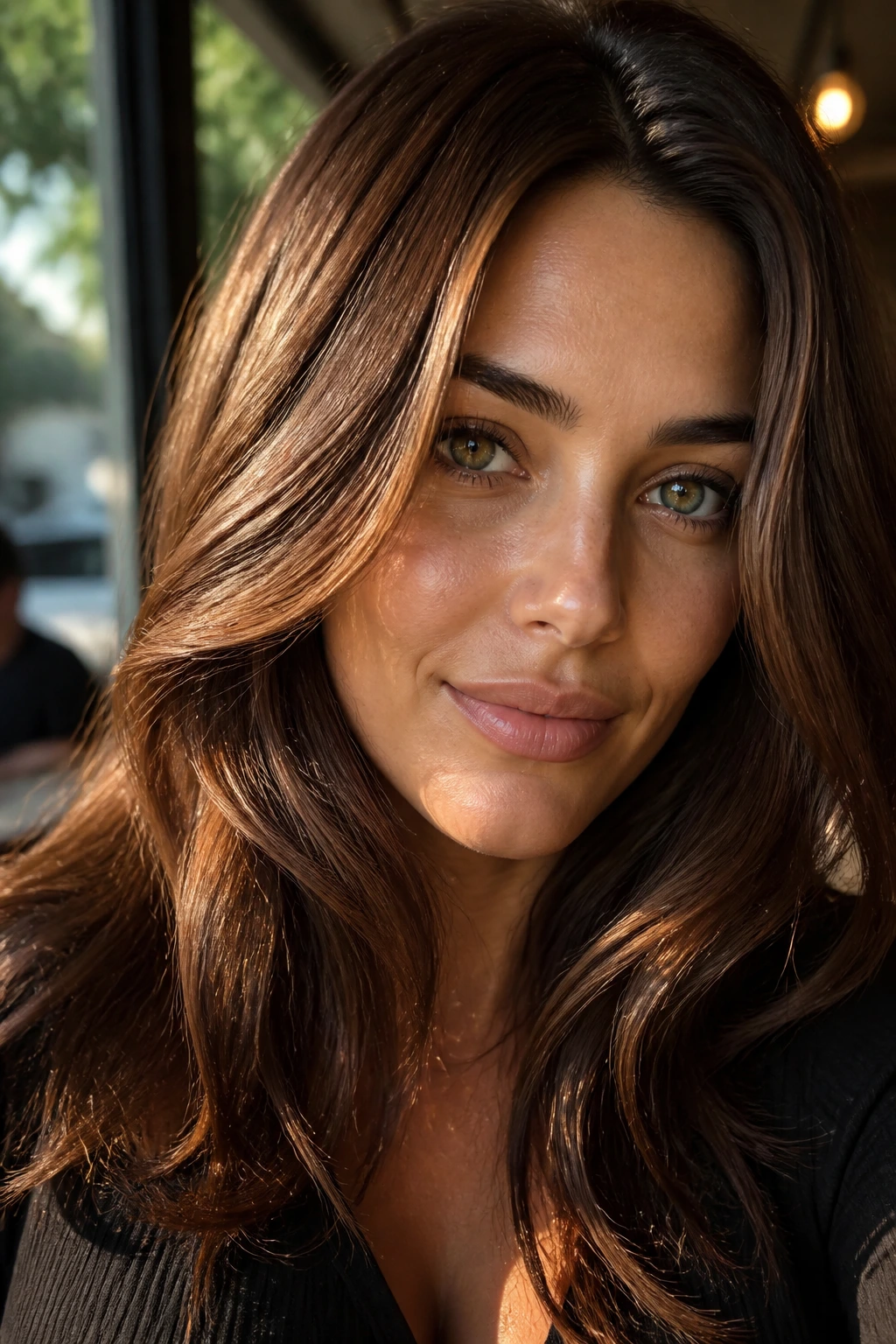
Cinnamon brunette is warm, but it needs restraint. The best version has brown at the base and a red-spice reflect that only shows when the light catches it.
A good cinnamon brown on olive skin should feel like warmth at the edges, not a fire alarm. That means the copper or red pigment stays tucked inside the brown, where it gives the hair life without turning it orange.
This shade looks especially nice with freckles and golden-brown eyes. In sunlight, it gives a soft glow around the hairline, and that little halo can be lovely. If your olive skin leans cool, though, keep the cinnamon muted and ask for more brown than red.
8. Toffee Ribbon Brunette
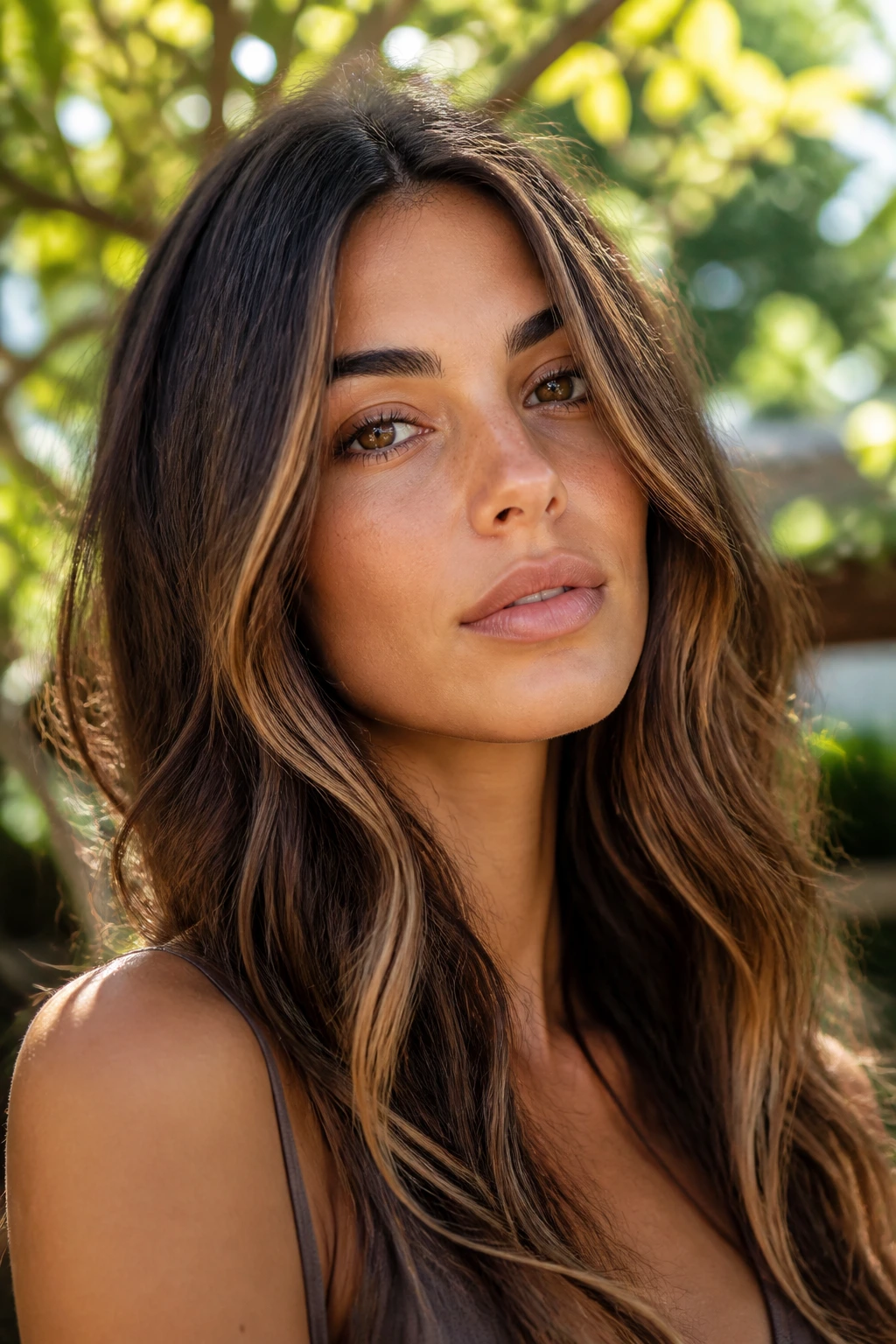
Toffee ribbon brunette gives olive skin brightness without forcing you into full blonde territory. The base stays brunette, and toffee-colored ribbons run through the mids and ends in thin, polished lines.
That’s the key: ribbons, not slabs. A few soft, caramel-toffee pieces around the face can wake up olive skin in a way that a whole-head lightening job sometimes can’t.
This is a good choice if you like dimension but hate obvious streaks. It’s also easier to grow out than a high-contrast highlight pattern. Ask for ribbons placed around the cheekbones and the top layers, where they’ll catch light first.
9. Bronde Brunette With Olive-Friendly Contrast
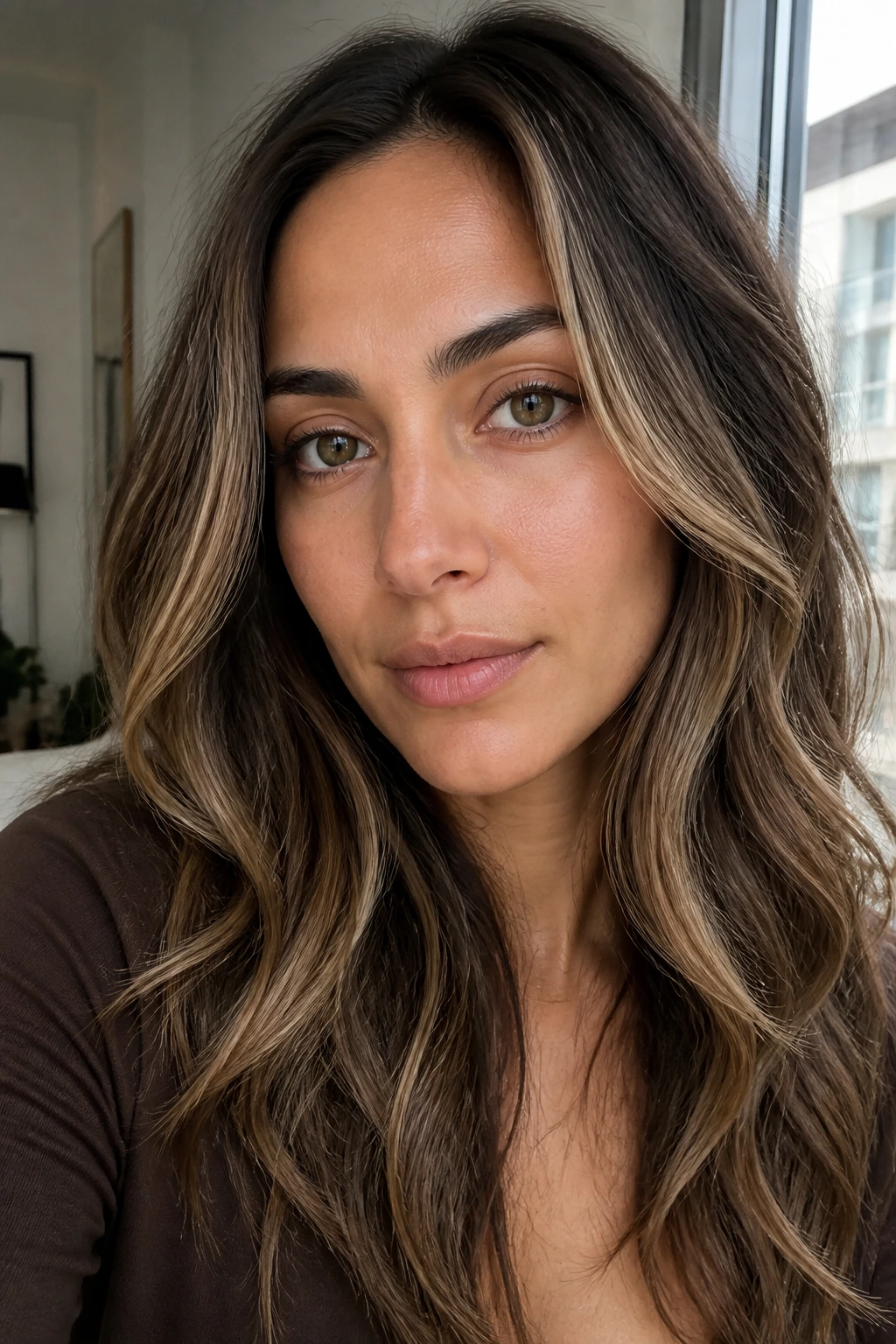
Bronde sits in that middle zone between brown and blonde, and on olive skin it can look especially good when the blonde side is kept beige instead of yellow.
A lot of bronde goes too bright, too soon. Don’t do that. The best version for olive skin keeps the base deeper and the lighter pieces soft, almost sandy, so the skin stays the main event.
This is a smart pick if you want your hair to look lighter without losing brunette depth around the face. A rooty bronde also stretches salon time, which is handy if you hate sitting in the chair every few weeks.
10. Deep Auburn Brown That Stays Grounded
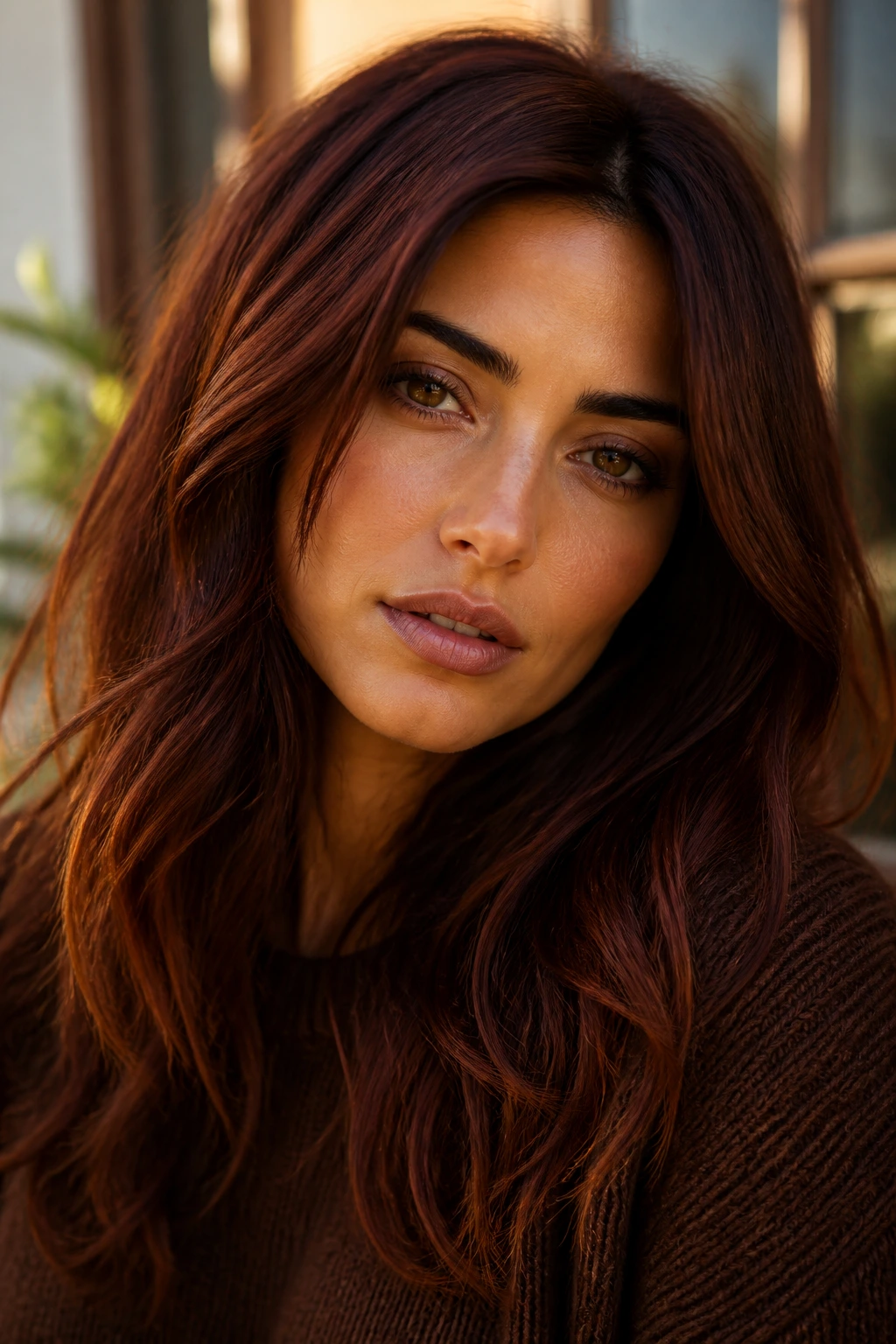
Auburn can be tricky on olive skin, but deep auburn brown works when the red stays smoky and the brown stays in charge.
Think dried maple leaf, not cherry soda. That’s the difference. A muted auburn-brown gives olive skin warmth and richness; a bright red-brown can pull too orange and make the complexion look blotchy.
This shade shines on medium olive skin with dark eyes. It also looks especially good when the ends are slightly lighter than the root, because that keeps the red-brown from feeling heavy. If you like a little drama without going full copper, this is a strong place to land.
11. Sable Brunette With a Soft Black Edge
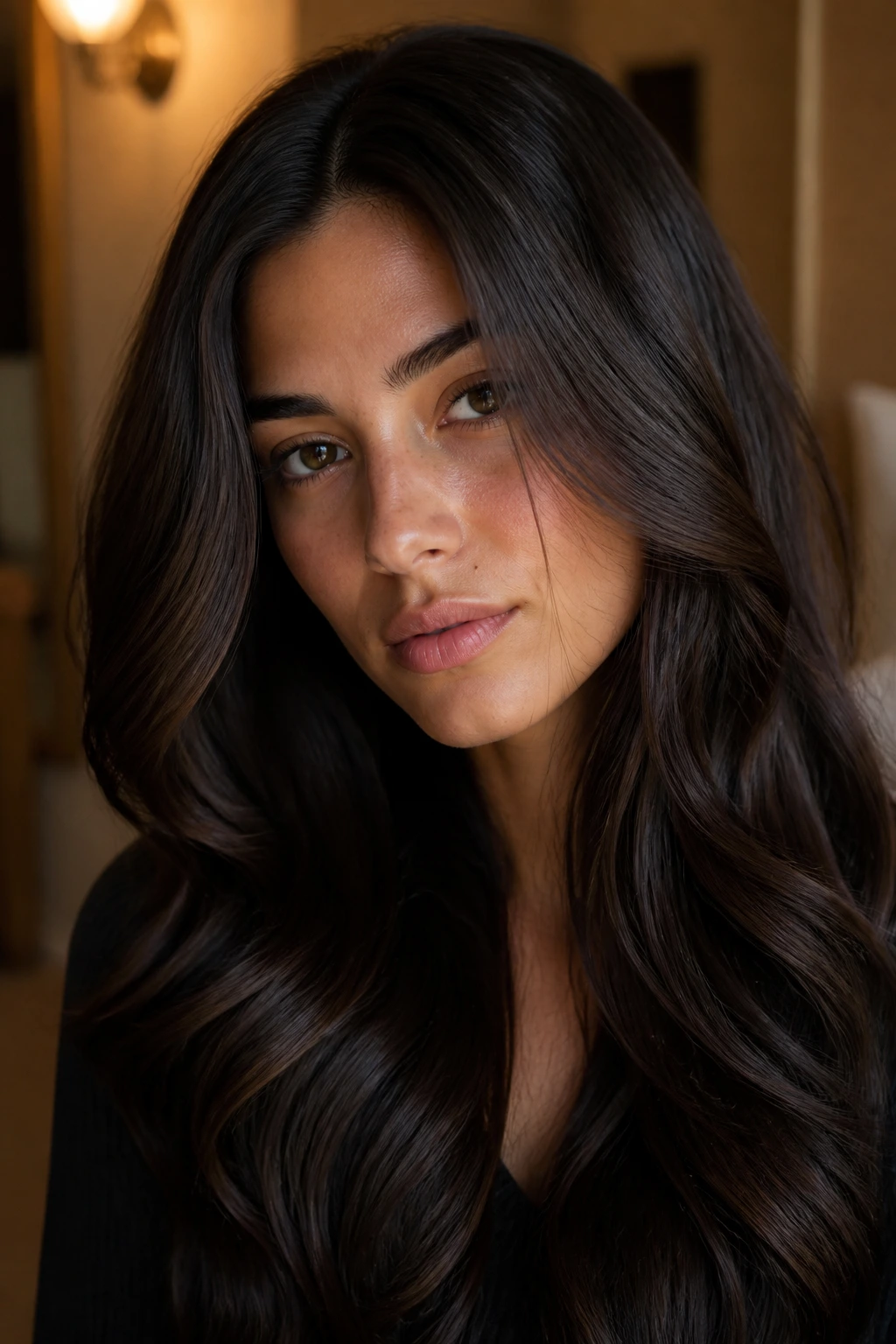
Sable brunette is for people who like their brown hair deep, smooth, and slightly mysterious. It has a soft black edge, but not the hard, flat effect of true black dye.
On olive skin, sable can look elegant because it adds contrast without making the face look washed out. The trick is shine. Sable needs reflective finish more than almost any other brunette on this list. Without it, the color can read heavy.
This is one of those shades that looks especially good with sharp brows and minimal makeup. It gives structure fast. If your olive skin is fair, ask for just a touch more brown in the formula so the look doesn’t go too severe.
12. Cocoa Bean Brunette
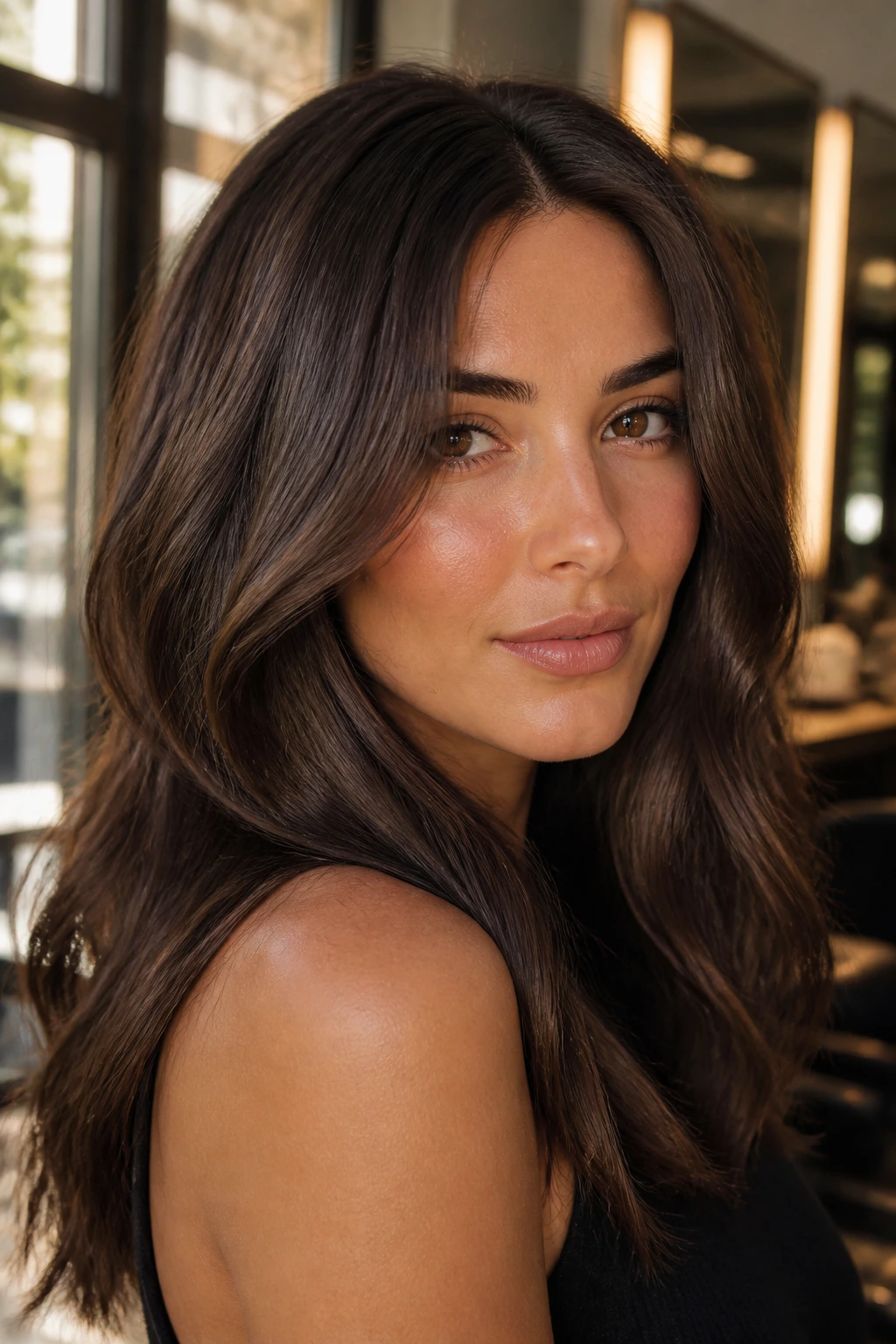
Cocoa bean brunette is deep, warm-neutral brown with a soft powdery richness to it. It’s a little less dark than espresso and a little less red than chocolate, which makes it one of the easiest brunettes to wear on olive skin.
What I like about cocoa bean brown is how forgiving it is. It doesn’t fight your skin tone. It sits beside it. That’s a useful quality if your complexion shifts depending on lighting, makeup, or whether you’ve had enough sleep.
Ask for a gloss finish or a demi-permanent formula if you want the color to stay soft. Hard, permanent brown can look too dense here. Cocoa needs a little slip to look right.
13. Walnut Brunette With Fine Highlights
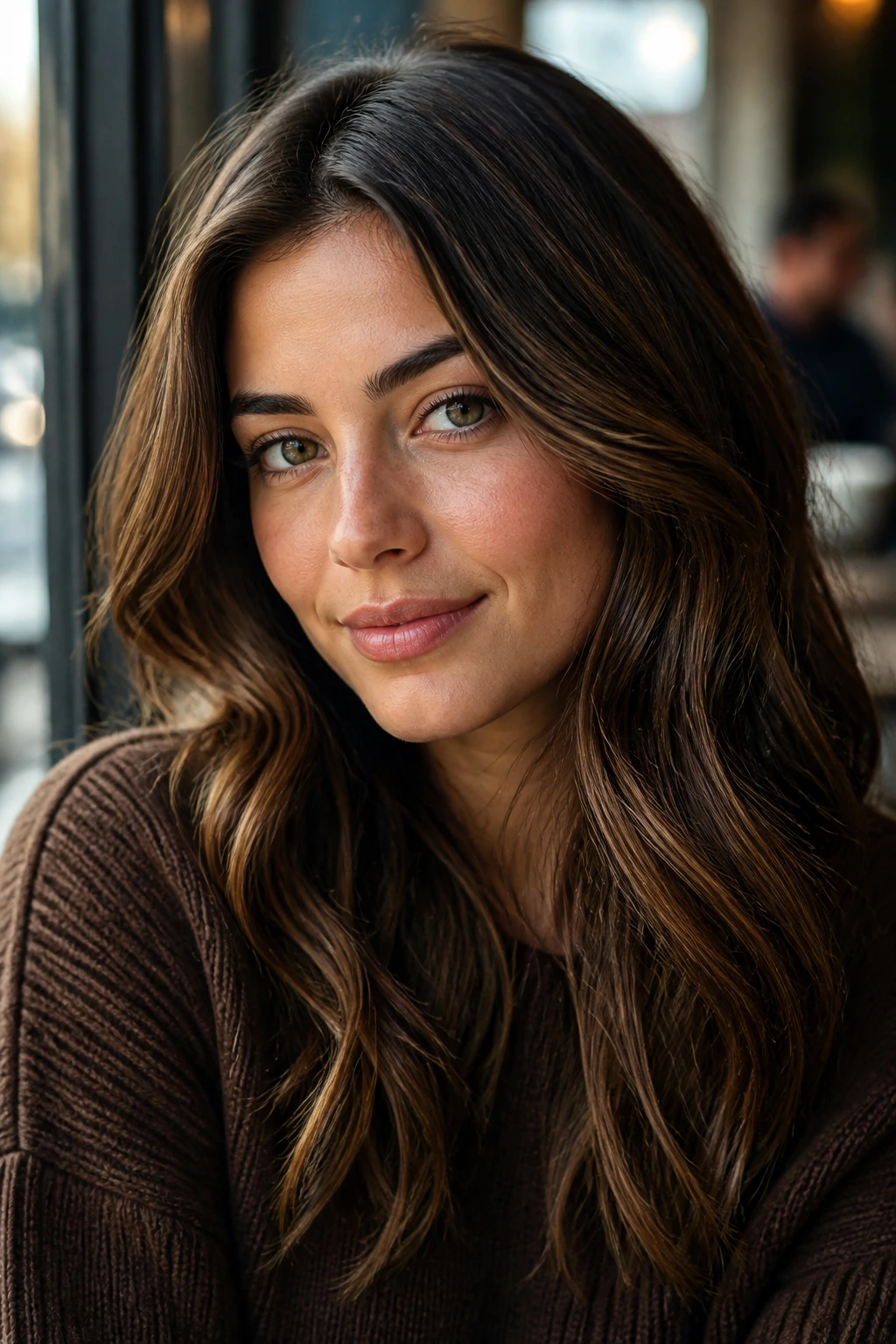
Walnut brunette gives you enough warmth to keep olive skin alive, but it holds back from turning golden. That restraint is what makes it good.
A walnut base with a few fine highlights can bring out hazel eyes and make medium olive skin look more even. The highlights should be small and dispersed. If they’re too thick, the contrast gets chunky, and walnut stops looking refined.
This is a great choice when you want movement but not a big change. It’s also a good bridge color if you’re moving from lighter brown to deeper brunette and don’t want a harsh jump.
14. Caramel Swirl Brunette
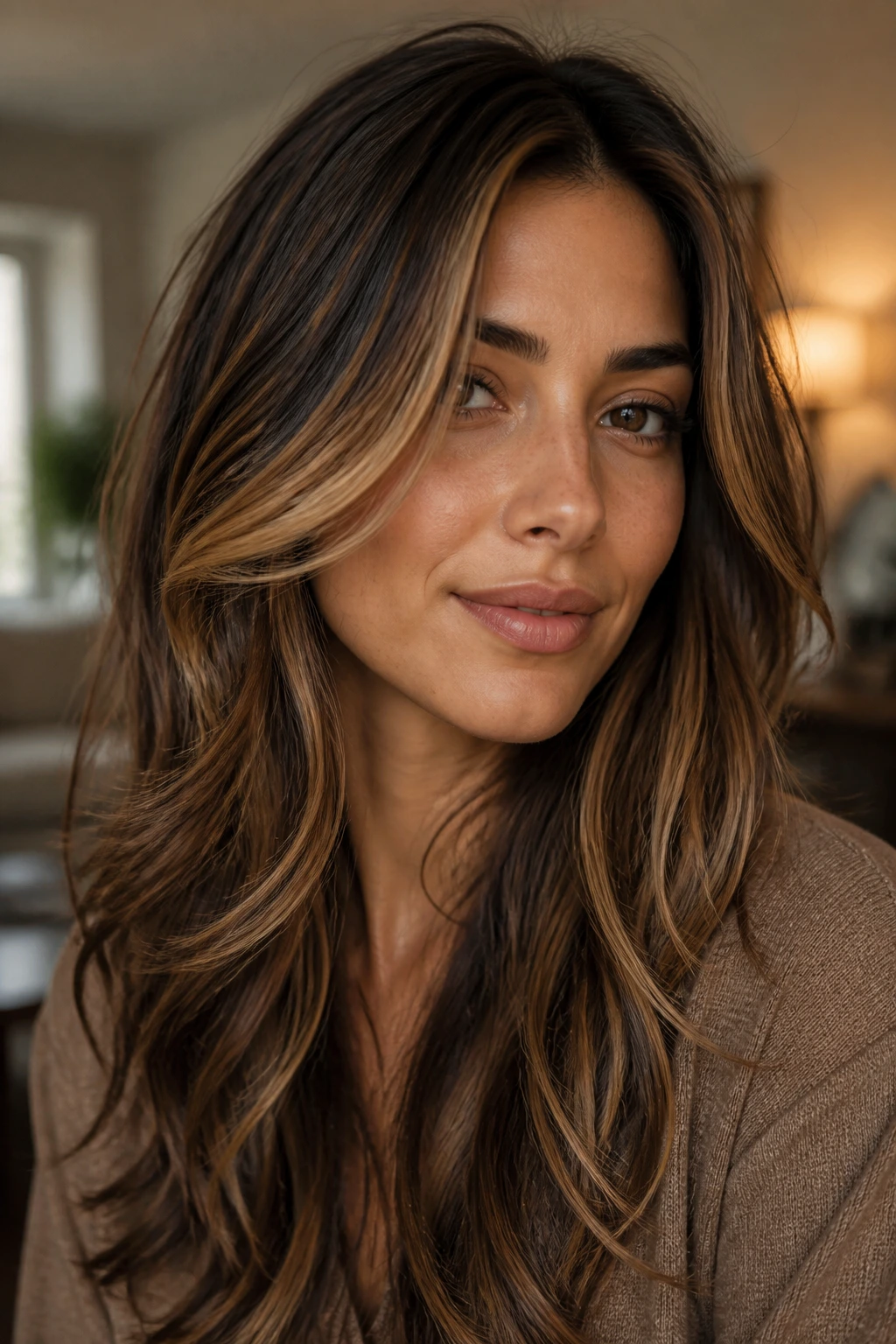
Caramel swirl brunette is the warmest idea on this list, and it can be stunning on golden olive skin when the caramel is kept soft and buttery rather than neon.
The base should still be a real brunette. That part matters. The caramel lives in swirls, face-framing pieces, and light-catching ends. If the whole head goes caramel, olive skin can start to look more yellow than luminous.
This shade works well with layered cuts because the movement shows off the ribbons. A blunt one-length cut can hide the best part of the color. If you want the warmth to read expensive instead of brassy, keep the caramel close to beige-gold rather than orange-gold.
15. Cool Coffee Brunette
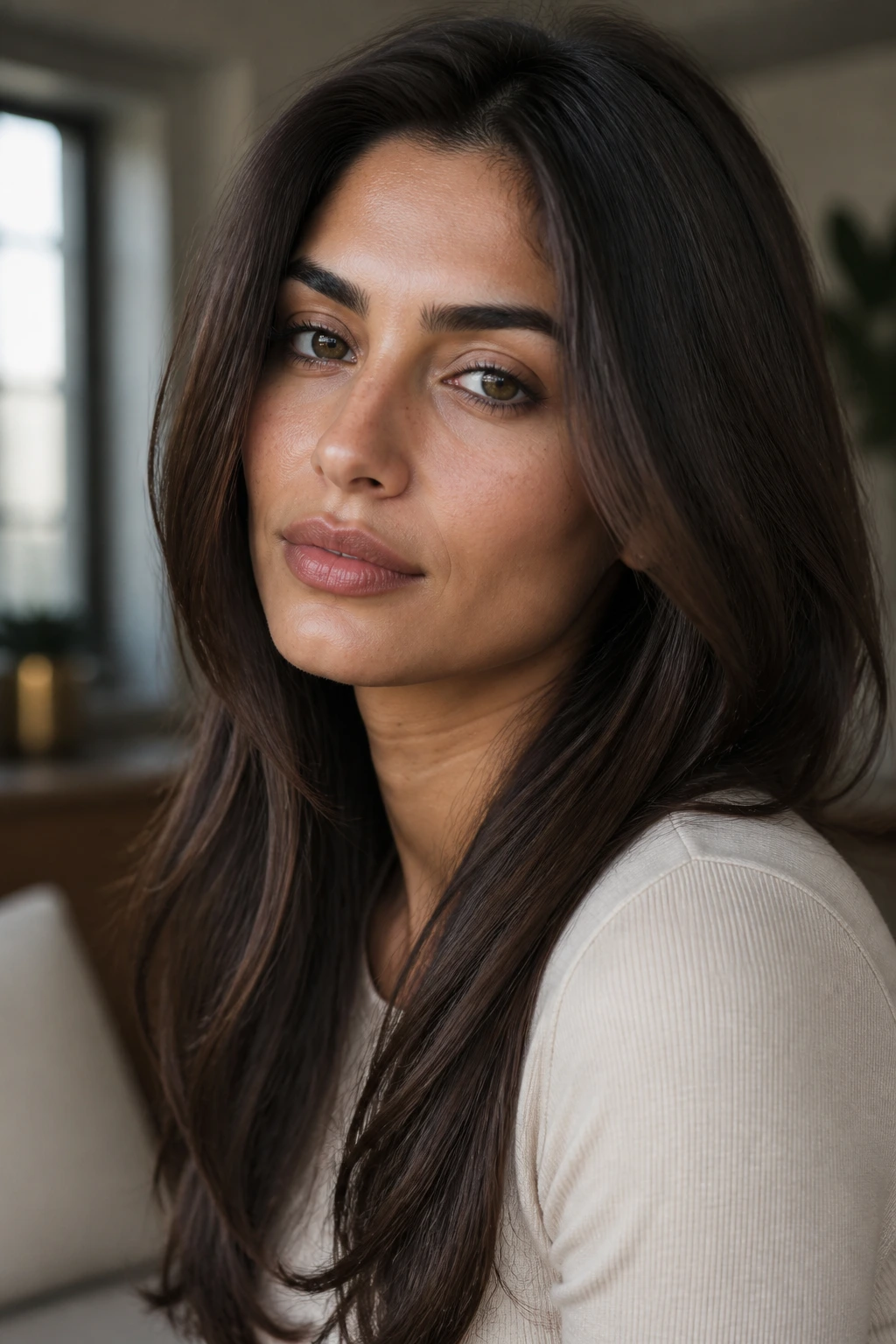
Cool coffee brunette is what I recommend when someone says, “I want brown hair, but I do not want any red in it.”
That sounds simple. It isn’t. Coffee brown needs a careful hand because the wrong formula can drift muddy fast. When it’s right, though, it looks clean and polished on olive skin, especially if your undertone leans neutral or cool.
This shade works because it keeps the brown reflective without pulling warmth into the skin. If you have strong green undertones, cool coffee can make the complexion look calm and balanced rather than flushed.
16. Midnight Brunette With High Gloss
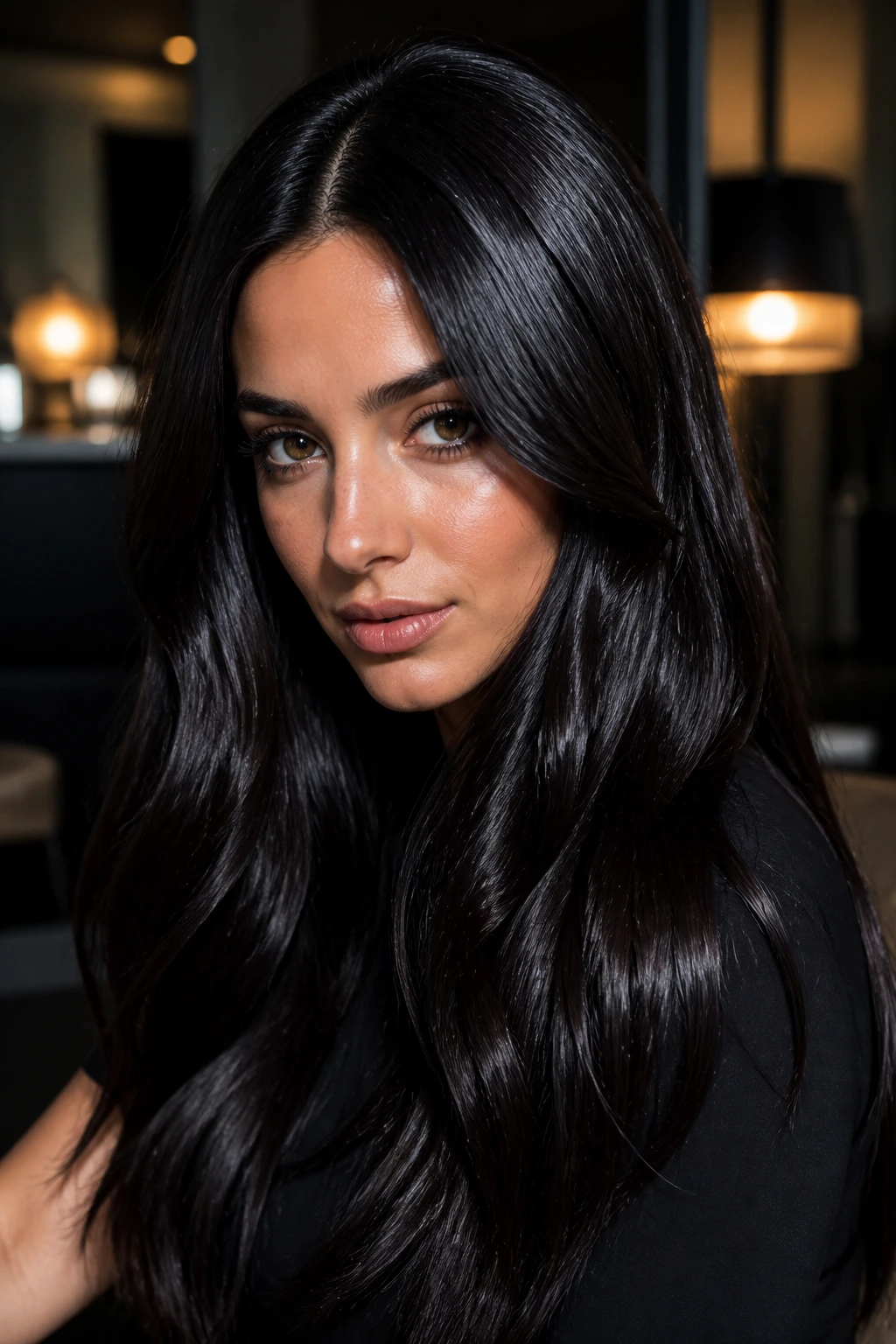
Midnight brunette lives one step below black, which means it has the drama people want from dark hair without the harshness that true black can bring to olive skin.
Here’s the catch: it has to shine. Matte midnight brown can look heavy. High-gloss midnight brown looks sleek, expensive, and cleaner around the face.
This shade makes dark eyes look deeper and gives the hair a nearly liquid finish when the cuticle is smooth. If your olive skin is very fair, keep a few brown notes in the formula so the color doesn’t take over your face. On deeper olive skin, midnight brunette can look gorgeous and very strong.
17. Hazelnut Brunette That Softens the Face
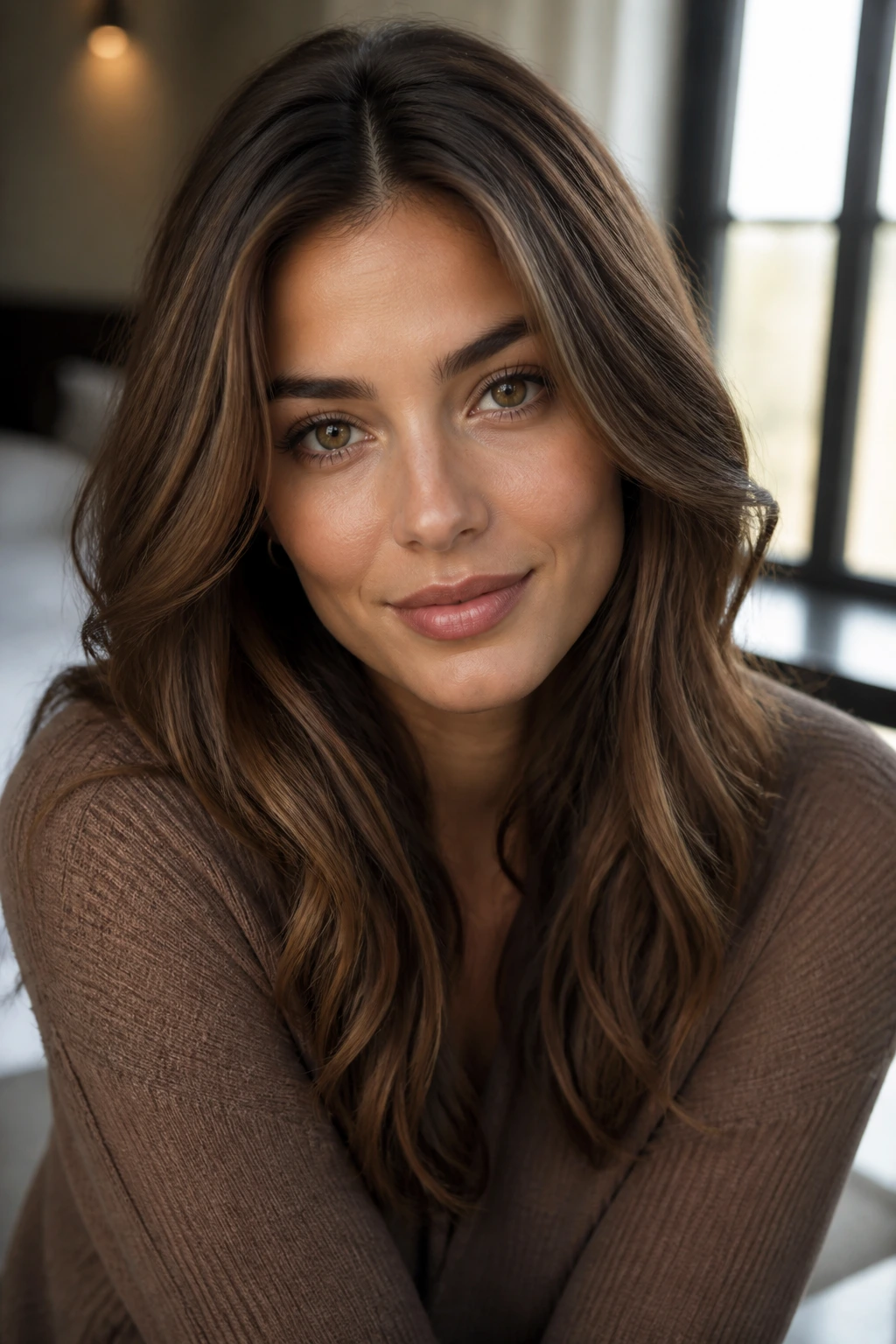
Hazelnut brunette is a little lighter and a little rounder than espresso or sable, which is why it can be such a nice choice for olive skin that wants warmth without heaviness.
Why It Flatters
The nutty tone brings a soft gold-brown reflect that wakes up the skin, especially around the cheeks and temples. That’s useful if your complexion can look a bit dull in winter light or under office lighting.
Ask for hazelnut with micro-lowlights. Too much lightness and it turns sandy; too much warmth and it starts to look orange. The sweet spot sits in the middle, where the brown still reads rich and the face looks lifted.
18. Bronzed Brunette With Sun-Touched Edges
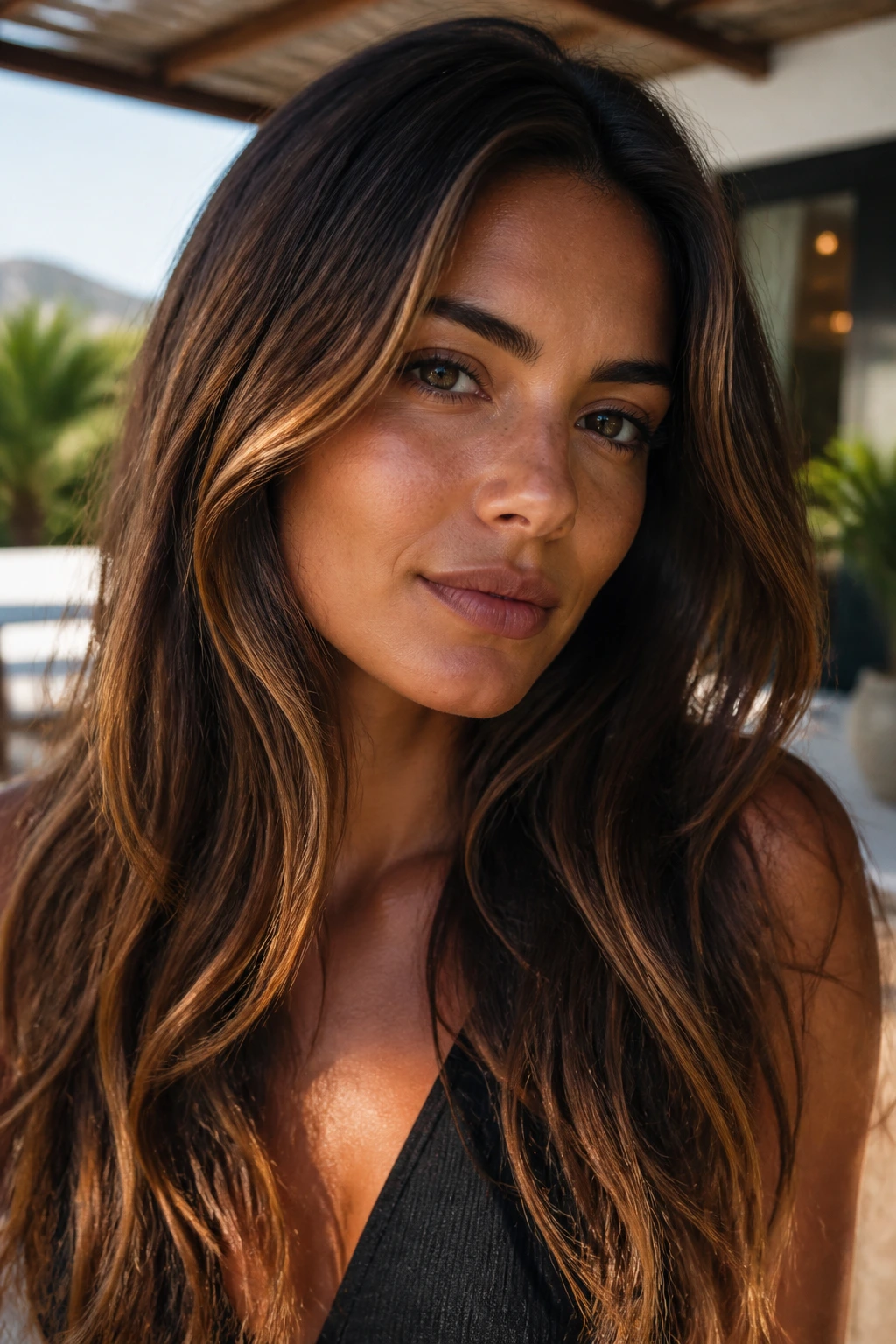
Bronzed brunette is what happens when brown hair catches a little warm light and keeps it. It’s deeper than caramel, lighter than chocolate, and it can look especially good on olive skin with a golden cast.
This is a friendly shade if you want movement around the face without obvious highlight stripes. Bronzed edges near the front and mids can soften jawlines and bring out brown-green eyes.
The important part is balance. The bronzed reflect should look like it belongs in the hair, not pasted on top of it. A good colorist will keep the base rich and let the bronze appear mostly where the sun would hit naturally.
19. Maple Brown With Muted Warmth
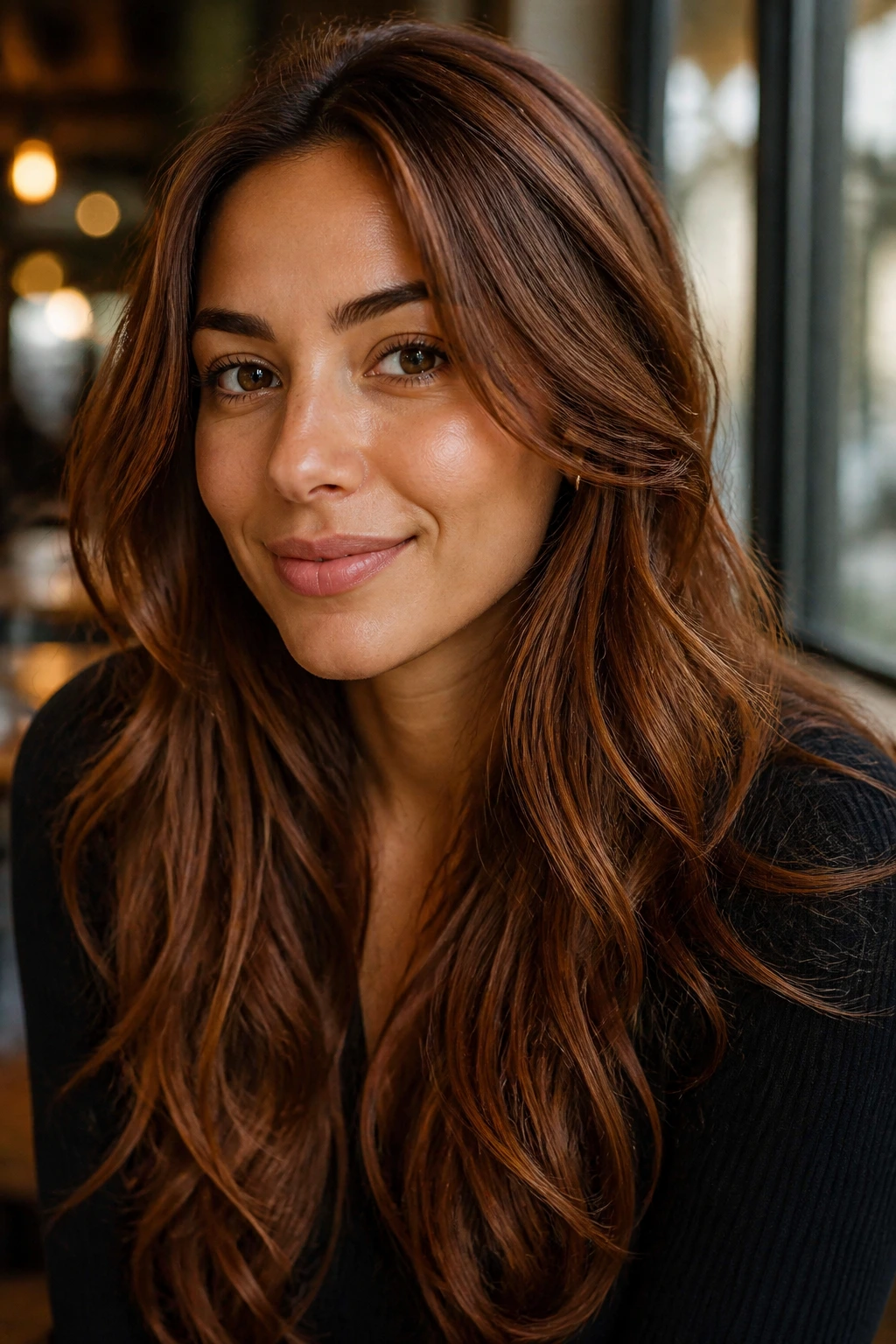
Maple brown gives you warmth, but not the loud, syrupy kind. It’s a softened brown with a woodsy golden-red reflect that can look excellent on medium olive skin.
What makes maple work is its control. The red undertone stays quiet. The gold stays muted. Together, they make the hair look fuller and the skin look warmer without turning either one orange.
I like maple brown on layered cuts and wavy textures because the tone shifts a little as the hair moves. Straight hair can still wear it, but the color really wakes up when there’s some bend in it.
20. Smoky Brunette With Beige Lowlights
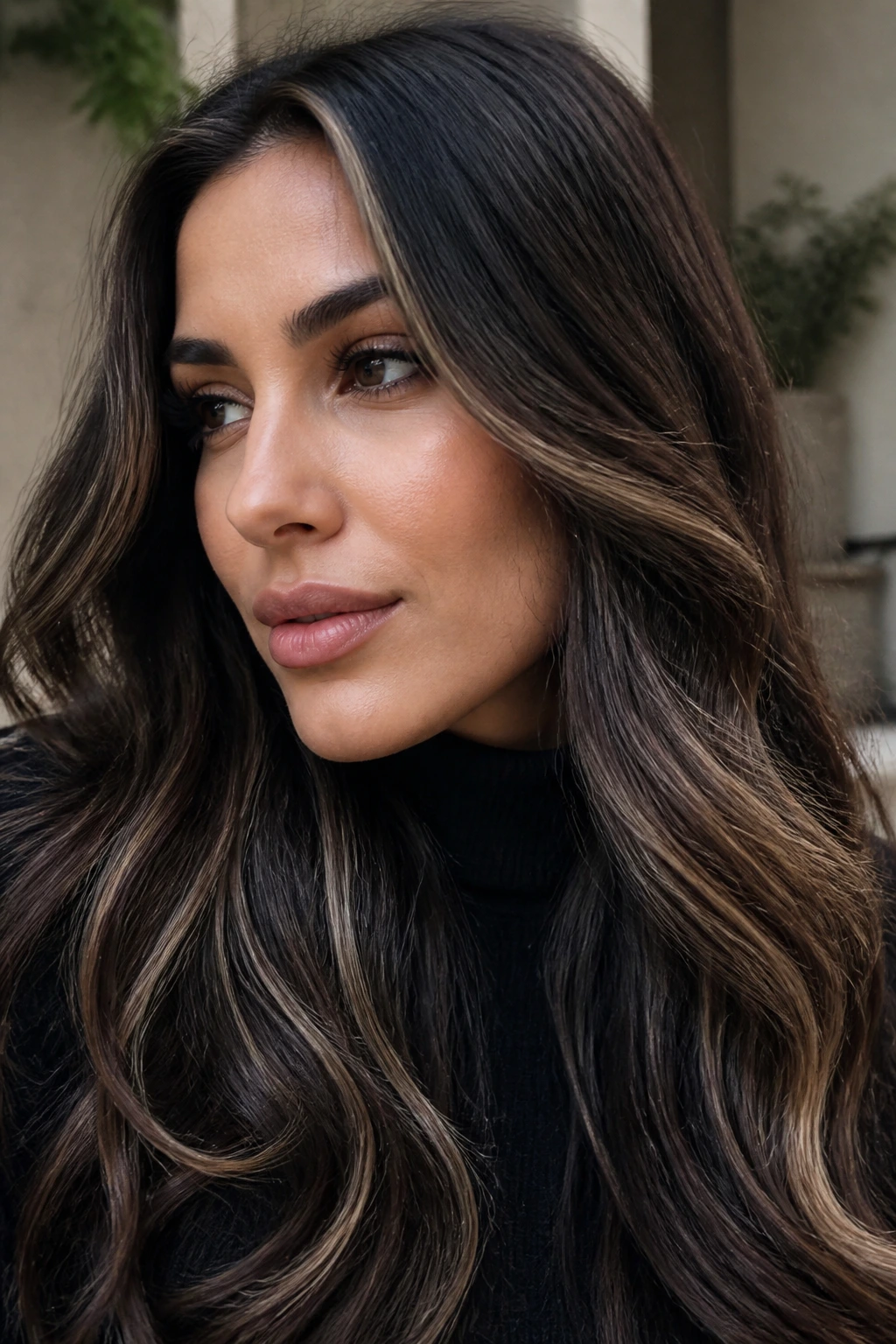
Smoky brunette is a smart answer for olive skin when warm brown shades keep going brassier than you want. It has a muted, cool-beige cast that lowers the temperature of the whole look.
This shade can look almost expensive in a quiet way because it doesn’t rely on shine alone. The smoky lowlights create depth, and the beige notes keep the brown from flattening out.
It’s especially good if your olive skin leans cool or neutral and you want brown hair that feels softer than ash but cooler than caramel. If your face tends to turn pink with heat or red lipstick, smoky brunette can be a nice visual reset.
21. Mahogany Brunette With Controlled Red
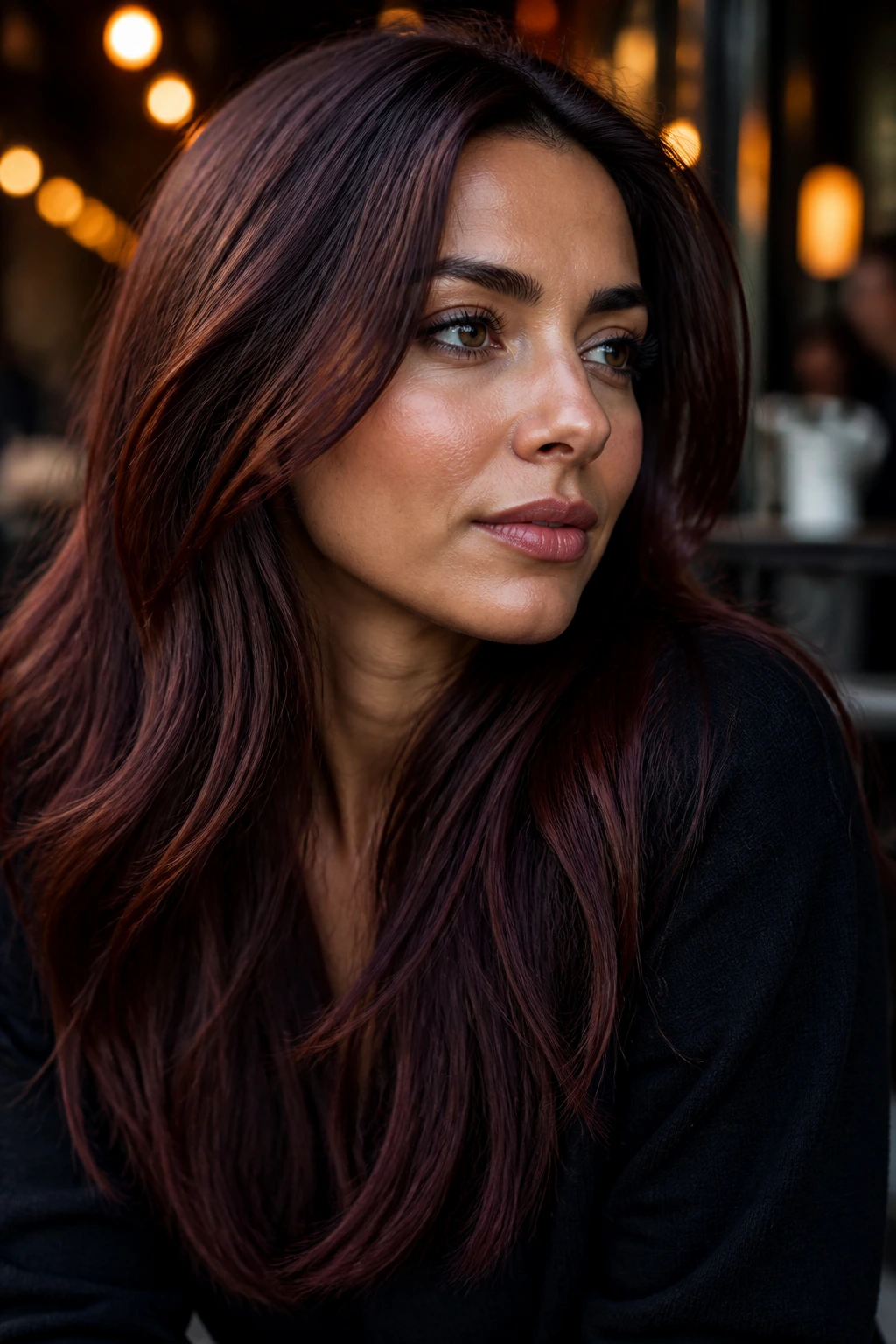
Mahogany is richer than auburn and deeper than cinnamon, which is why it can be a strong choice for olive skin when the red pigment is kept dark and controlled.
Think of mahogany as brown furniture wood, not bright hair dye. That image helps. The red should live inside the brown, giving it depth and a little warmth in certain light, not shouting from the ends of the hair.
This shade is best when you want something a little dramatic but still wearable day to day. On medium to deep olive skin, it can make the complexion look velvety. On fair olive skin, ask your colorist to keep more brown than red so the face stays balanced.
22. Almond Butter Brunette That Brightens Without Bleaching
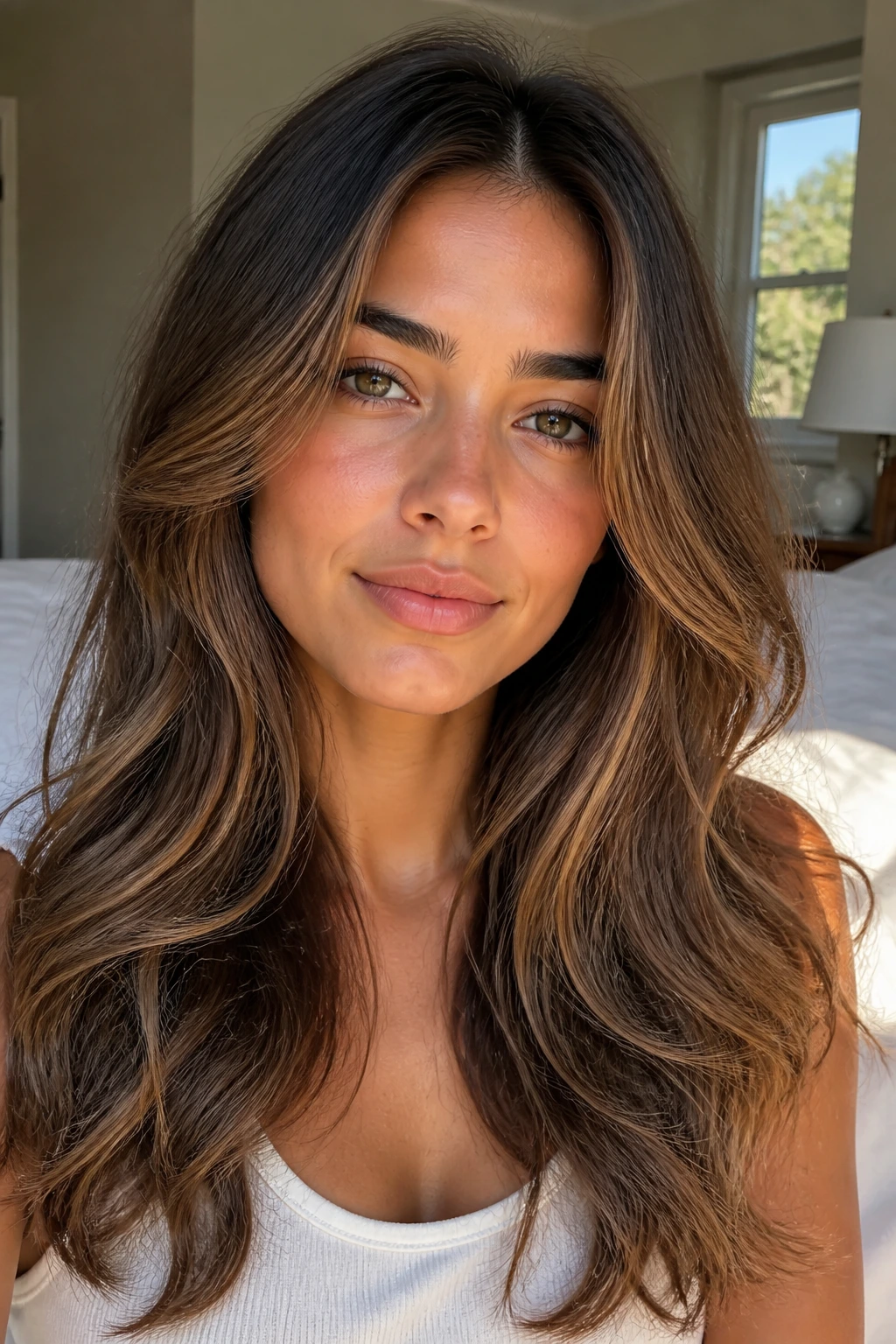
Almond butter brunette is lighter and creamier than most of the shades here. It’s a good option if you want a softer brown that still looks rich on olive skin.
The trick is avoiding yellow. Almond butter should look smooth, not pale or brassy. It works best when paired with slightly deeper roots, which give the shade shape and keep it from disappearing against the skin.
This is a pretty good move for olive skin that wants brightness around the face without a full blonde commitment. It can also be easier to wear if your natural hair is already a medium brown and you want to lighten a bit without overprocessing.
23. Sandalwood Brunette With Beige Balance
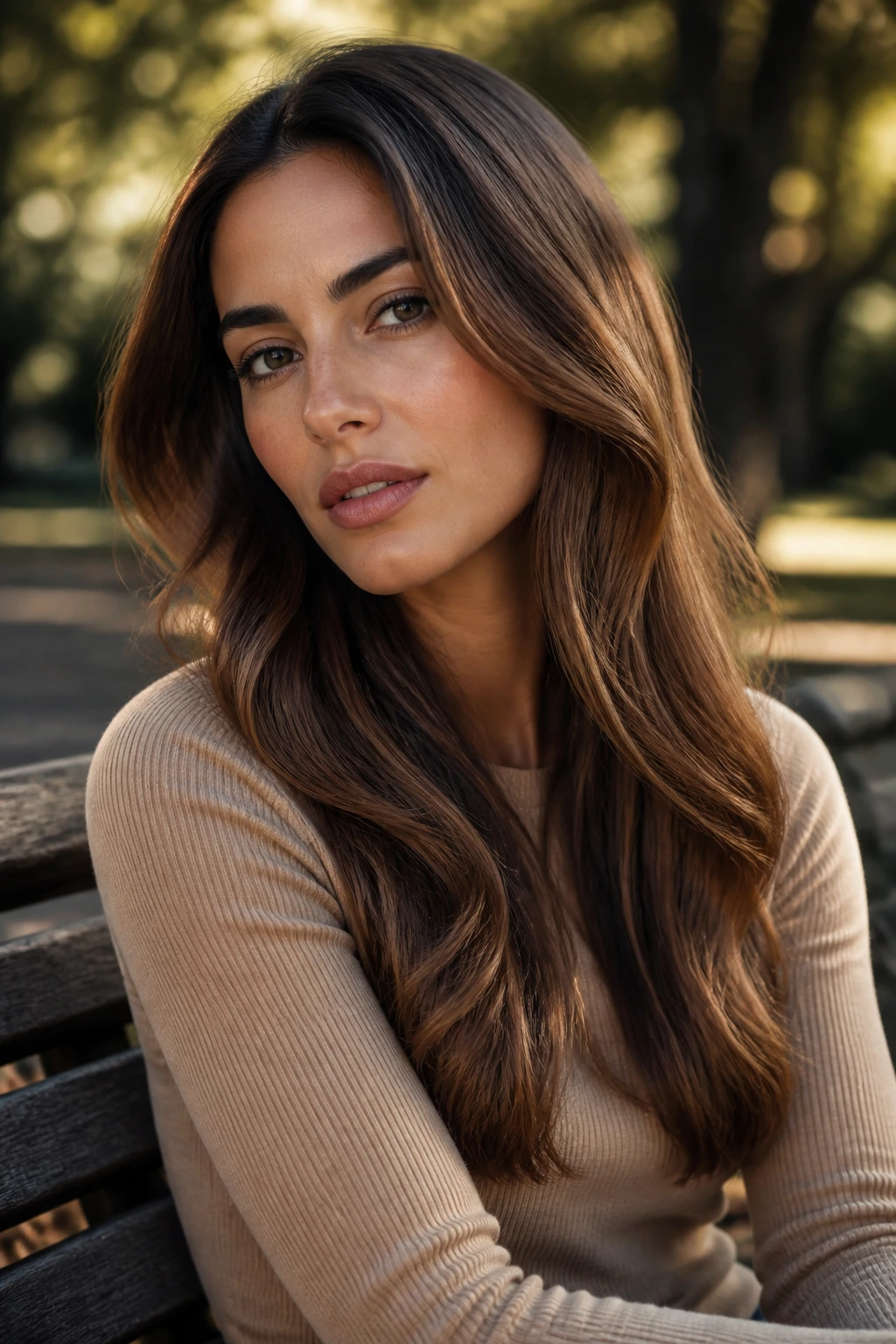
Sandalwood brunette sits in a beige-brown lane that often flatters neutral olive skin beautifully. It’s calm, smooth, and not too warm.
That balance matters. If your olive skin has a green-gray cast, sandalwood can soften it without pushing the hair into orange. If your undertone is warmer, it still works, but only if the beige stays creamy and not too ashy.
This shade is good when you want something lighter than espresso and less sweet than caramel. It’s one of those shades that looks even better after a gloss, because the finish helps the beige-brown stay polished instead of chalky.
24. Velvet Brown With Soft Depth
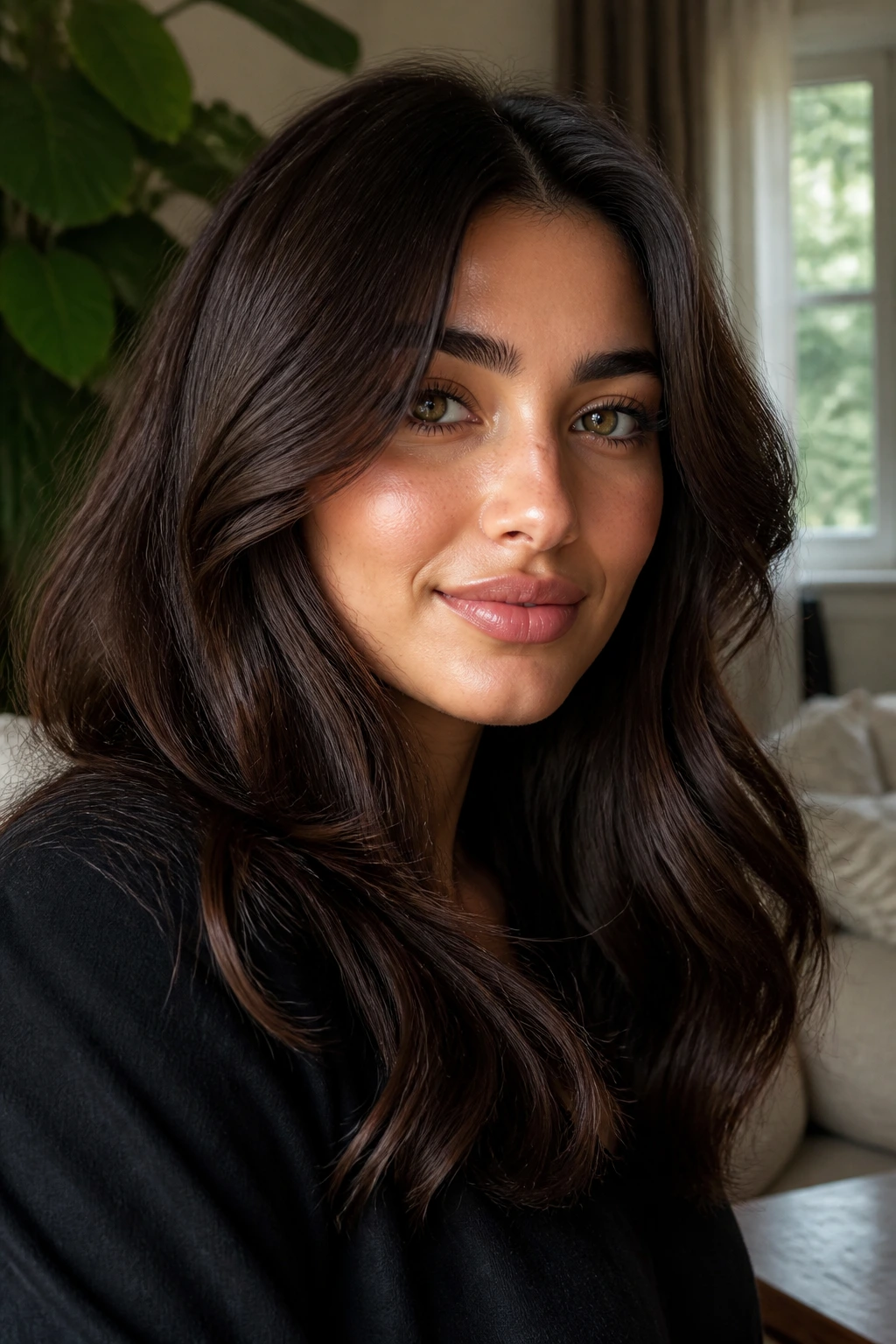
Velvet brown is one of my favorites because it does exactly what the name suggests: it feels plush. Deep, smooth, and a little soft around the edges.
On olive skin, velvet brown gives you richness without the hard contrast of true black or the warmth of chestnut. It sits in that sweet middle zone where the face still has room to breathe.
This shade works especially well if you like low-maintenance color that still looks considered. It doesn’t need loud highlights to hold interest. A good blowout or a clean, shiny wave is enough to show off the depth.
25. Rooted Dimensional Brunette With Soft Contrast
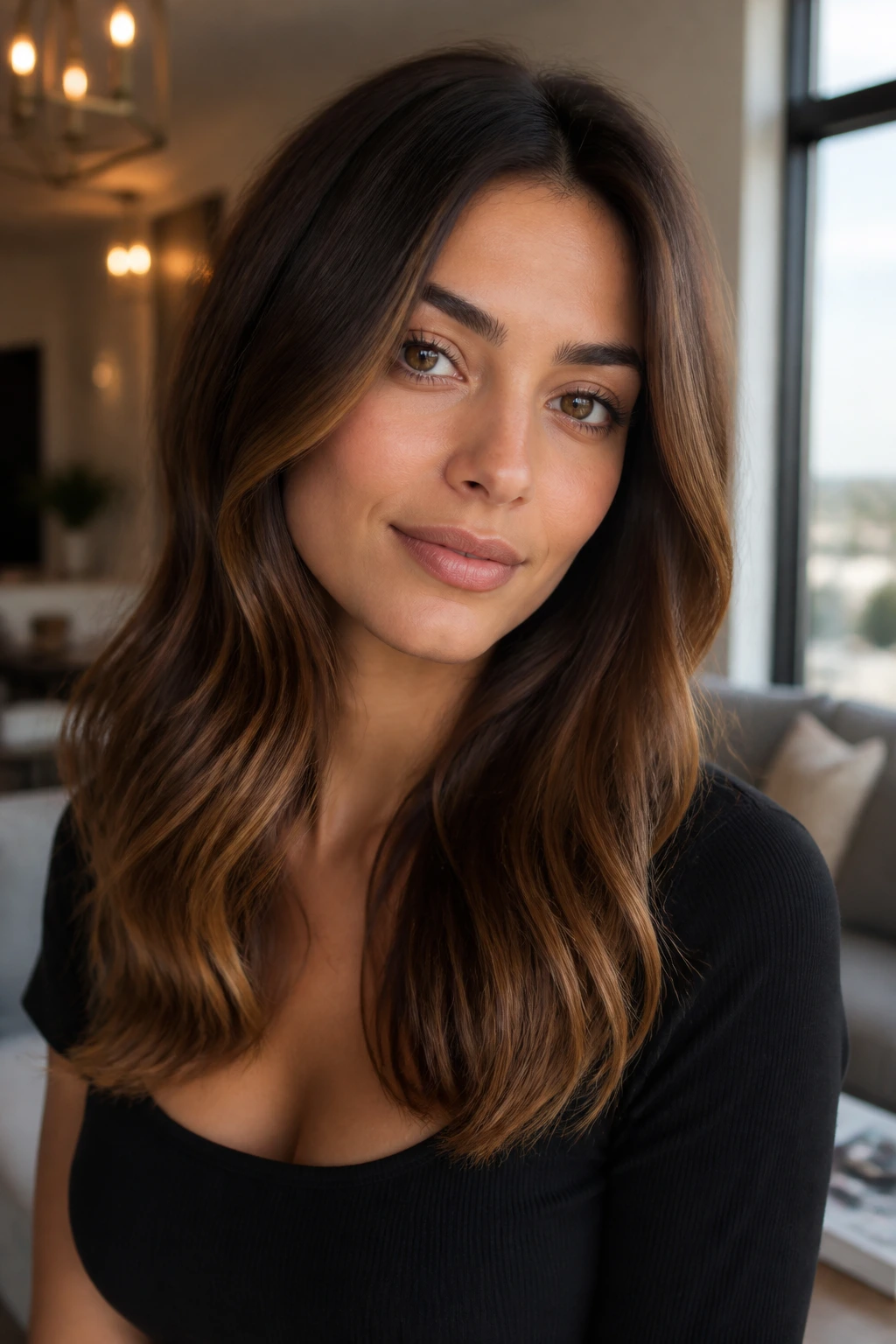
If you can’t decide on one brunette tone for olive skin, rooted dimensional brunette solves the problem without looking indecisive. It keeps the root deep, adds a second brown through the mids, and lets the ends go a touch lighter or cooler.
That variation is what keeps the color alive. Olive skin almost always benefits from a little contrast near the face, but not so much that the hair starts wearing the face instead of framing it.
This is the most flexible option on the list. You can push it warmer with caramel, cooler with ash, or richer with mocha. If you want a brunette that can move between seasons without a full color overhaul, this is the one that travels best.
Why Brunette and Olive Skin Make Such a Strong Pair
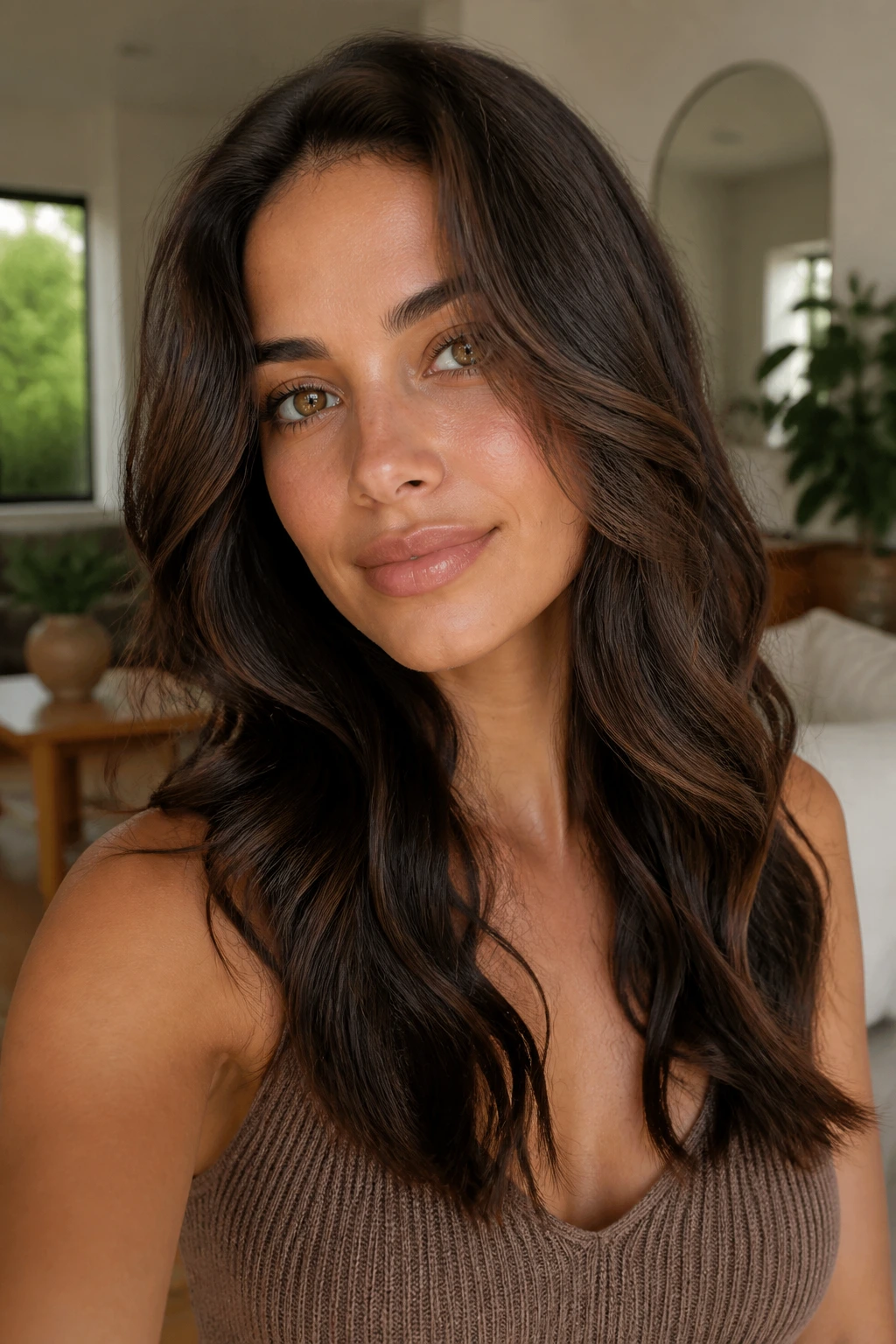
Olive skin has range, and that’s half the fun. It can lean golden, green, neutral, or some strange blend that shifts from one room to the next. Brunette hair gives that shifting skin a frame, which is why brown shades often look more natural on olive complexions than ultra-light blonde or harsh jet black.
The real trick is control. Olive skin usually looks best when the hair has enough depth to ground the face and enough reflect to keep it from going flat. A good brunette shade does both at once. The bad ones are easy to spot in daylight — they turn too orange, too green, or too heavy around the mouth and jaw.
I’d also argue that brunette is the most forgiving color family for olive skin because it gives you room to adjust. Want more warmth? Add chestnut or caramel. Want less? Pull it toward ash, mocha, or smoky brown. That flexibility is worth a lot, especially if you don’t want to repaint your whole head every time the light changes.
Colorist Terms That Matter Before You Sit Down in the Chair
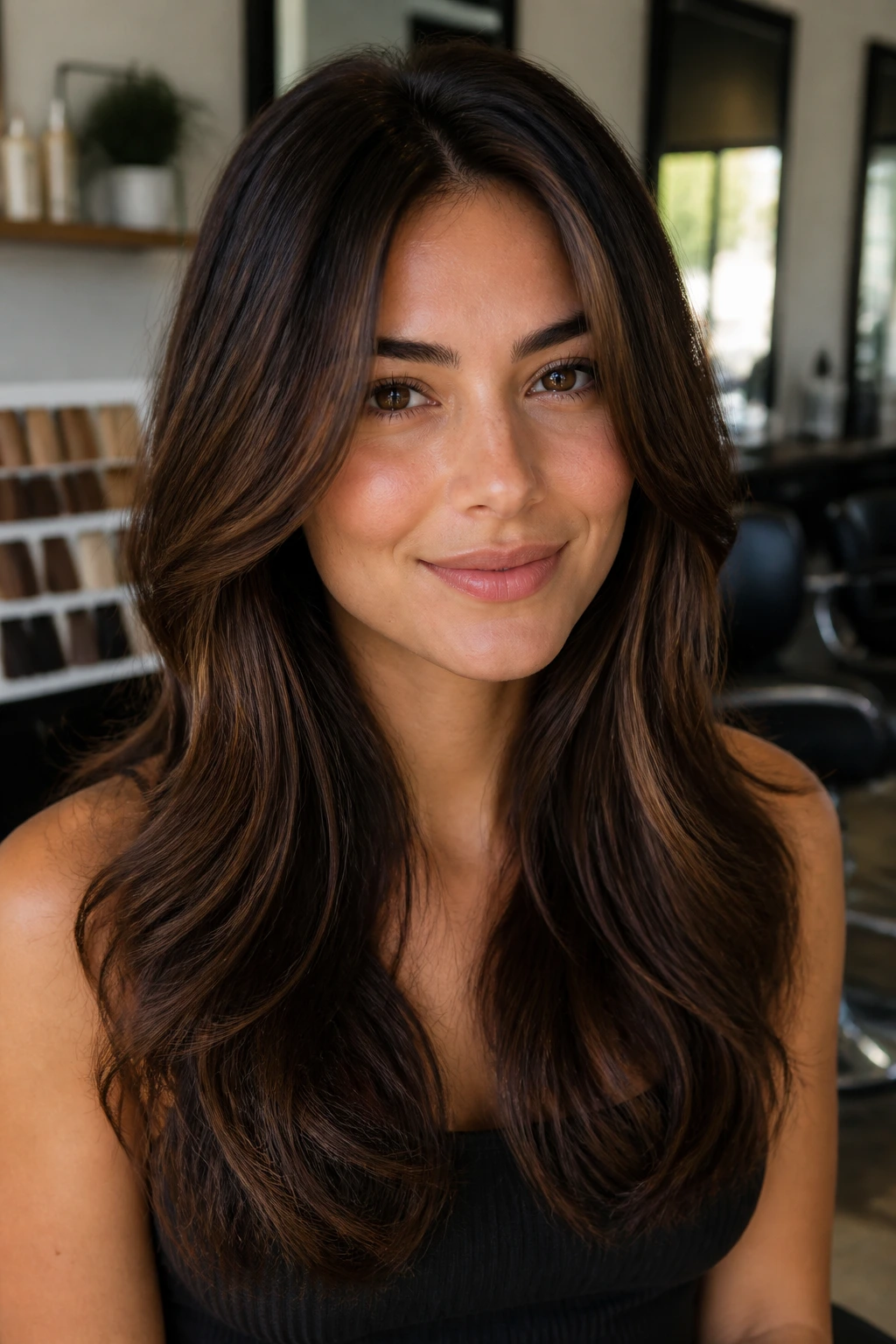
A lot of brunette disappointment comes from bad language, not bad color. If you and your colorist are using different words for the same thing, the result can go sideways fast.
Level Numbers
Hair color levels run from dark to light, usually 1 to 10. A level 3 is deep brown or near-black; a level 5 is medium brown; a level 7 starts looking light brown or dark blonde. If you want rich brunette hair color ideas for olive skin, most of the sweet spot lives between levels 3 and 6.
Tone and Reflect
Tone is the color family you actually see — warm, cool, neutral, coppery, beige, smoky. Reflect is the shine or color that shows up in certain light. You can have a chestnut brunette with a warm reflect or an ash brunette with a cool one, and that tiny distinction changes how olive skin reads.
Demi-Permanent vs Permanent
Demi-permanent color deposits tone without lifting much, which makes it ideal for gloss, refresh, and subtle shifts. Permanent color is for gray coverage or deeper changes. If you’re testing a brunette direction for olive skin, a demi or gloss usually gives you more control and less drama.
Patch Tests and Strand Tests
Do not skip these. Patch testing 48 hours before color is standard allergy safety practice, and strand tests tell you whether your hair will pull orange, red, or muddy before you paint the whole head. That small dry run saves a lot of regret.
Choosing Warm, Cool, or Neutral Brunette for Your Olive Undertone
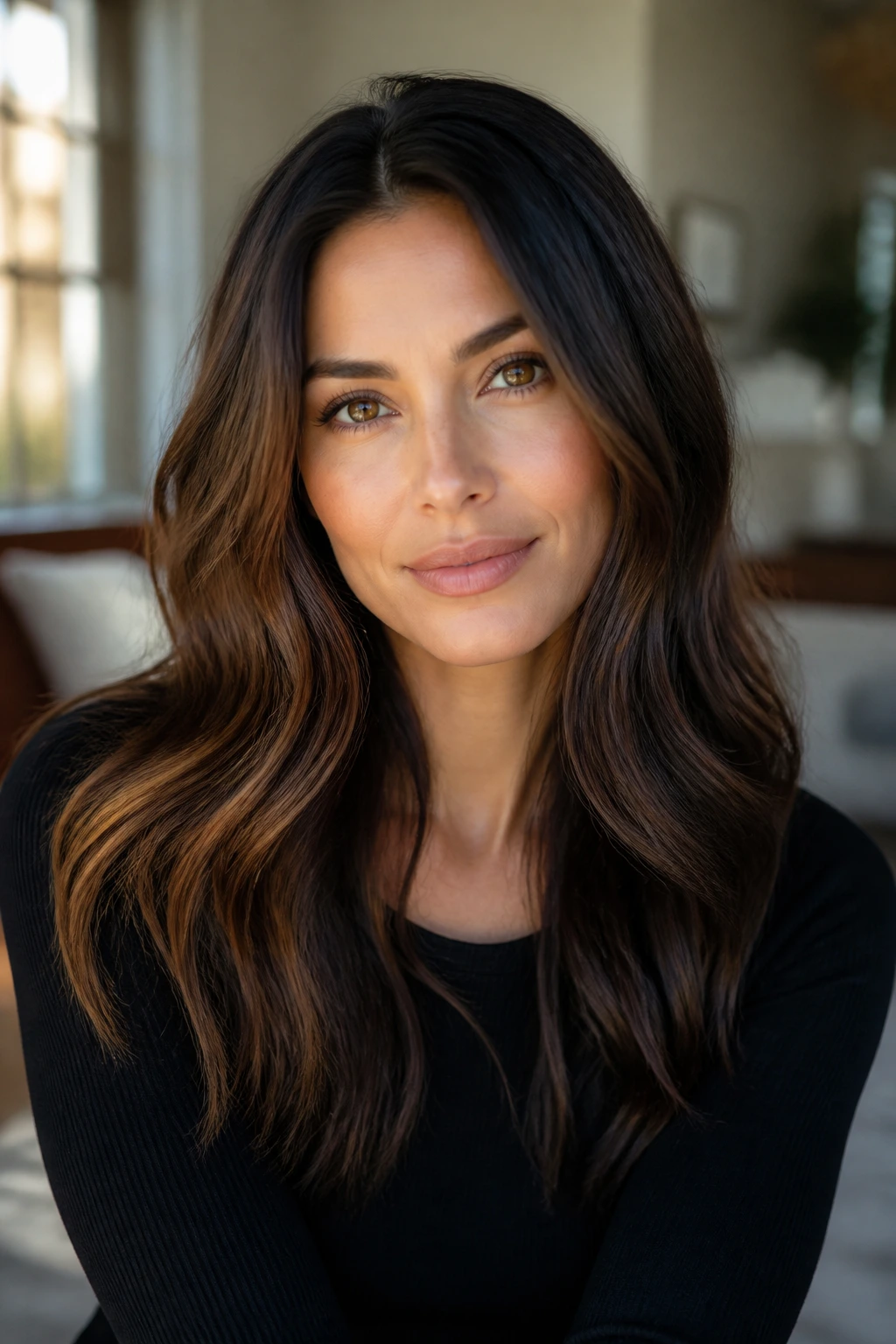
The fastest way to make brunette hair look right on olive skin is to stop guessing and look at undertone. Not all olive skin is the same, and that’s where a lot of color advice falls apart.
Warm Olive Skin
Warm olive skin usually looks best in chestnut, maple brown, caramel ribboning, bronzed brunette, and soft auburn-brown. Those shades echo the warmth in the skin without going orange, which is the line you want to avoid crossing.
Cool Olive Skin
Cooler olive skin often looks clearer in espresso, ash brunette, mushroom brown, cool coffee, smoky brunette, and sable. These tones soften extra redness and keep the complexion from looking flushed or yellowed.
Neutral Olive Skin
Neutral olive skin can go either way, which is why it’s the easiest to overcomplicate. Mocha melt, walnut, cocoa bean, velvet brown, and rooted dimensional brunette tend to be safe because they sit in the middle and let your features do the work.
If you are still unsure, look at your jewelry and your natural flush. Gold usually flatters warm olive, silver often flatters cooler olive, and mixed tones usually point neutral. Not perfect. But helpful.
How to Wear These Shades So They Look Intentional
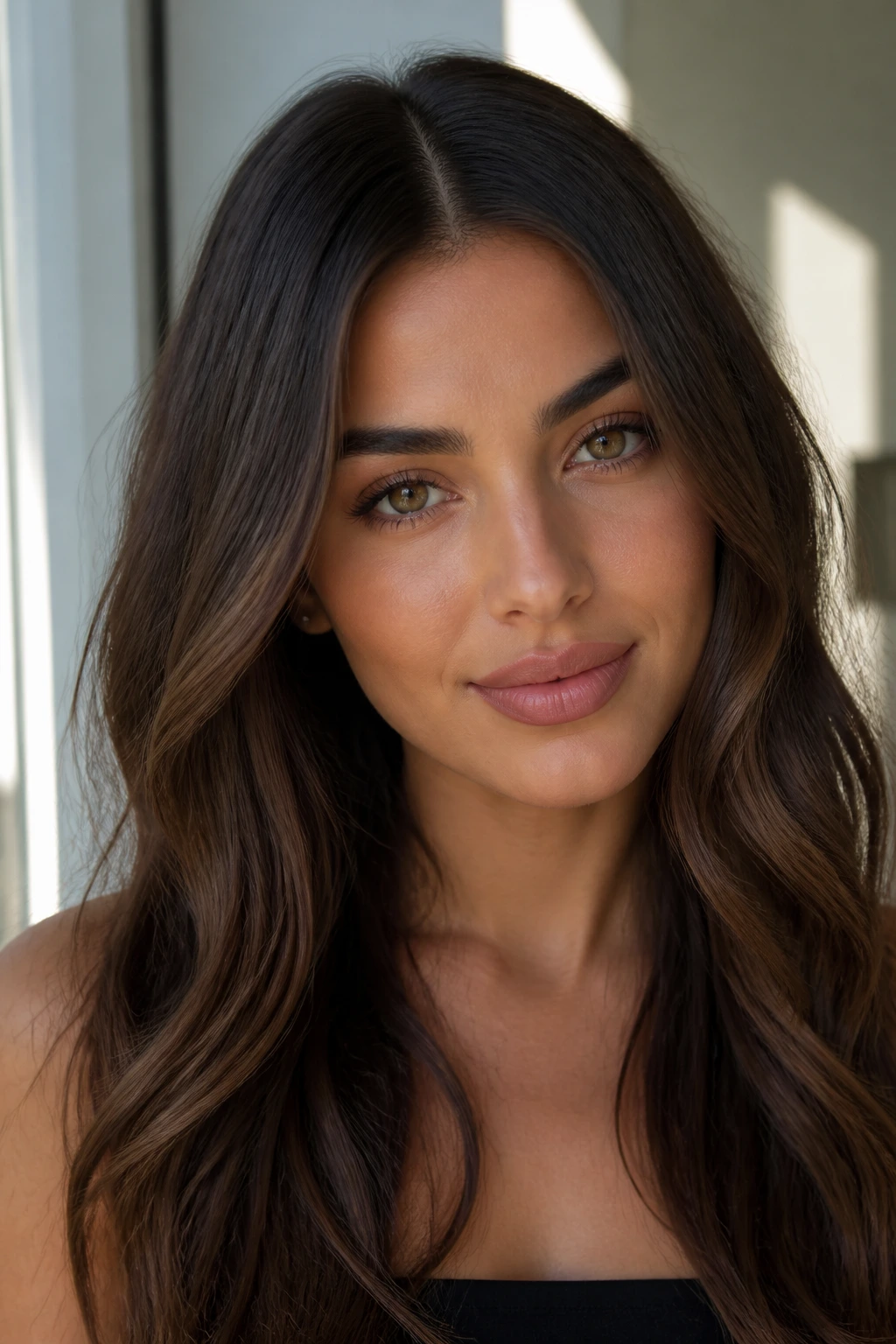
Presentation: A brunette on olive skin looks best when the finish has shape. Soft waves, a polished blowout, or even a clean center part can show off the depth better than rough, puffy texture. If the color is dimensional, give it room to move.
Accompaniments: Makeup can either support the hair or fight it. Peach blush, terracotta lips, bronze shadow, and soft brown liner tend to flatter warm olive skin. Cooler olive skin usually looks better with rose-nude lipstick, taupe shadow, and a brown liner that leans neutral instead of red.
Clothing: Cream, olive green, rust, charcoal, deep navy, and soft black all tend to play well with rich brunettes on olive skin. The wrong pale yellow or chalky beige can drain the face fast. That is annoying, but true.
Lighting: Check the color in daylight, not only under salon bulbs. Brunette tone can shift a full step warmer or cooler near a window, and that’s where the useful truth lives.
Extra Shine, Dimension, and Tone Tweaks
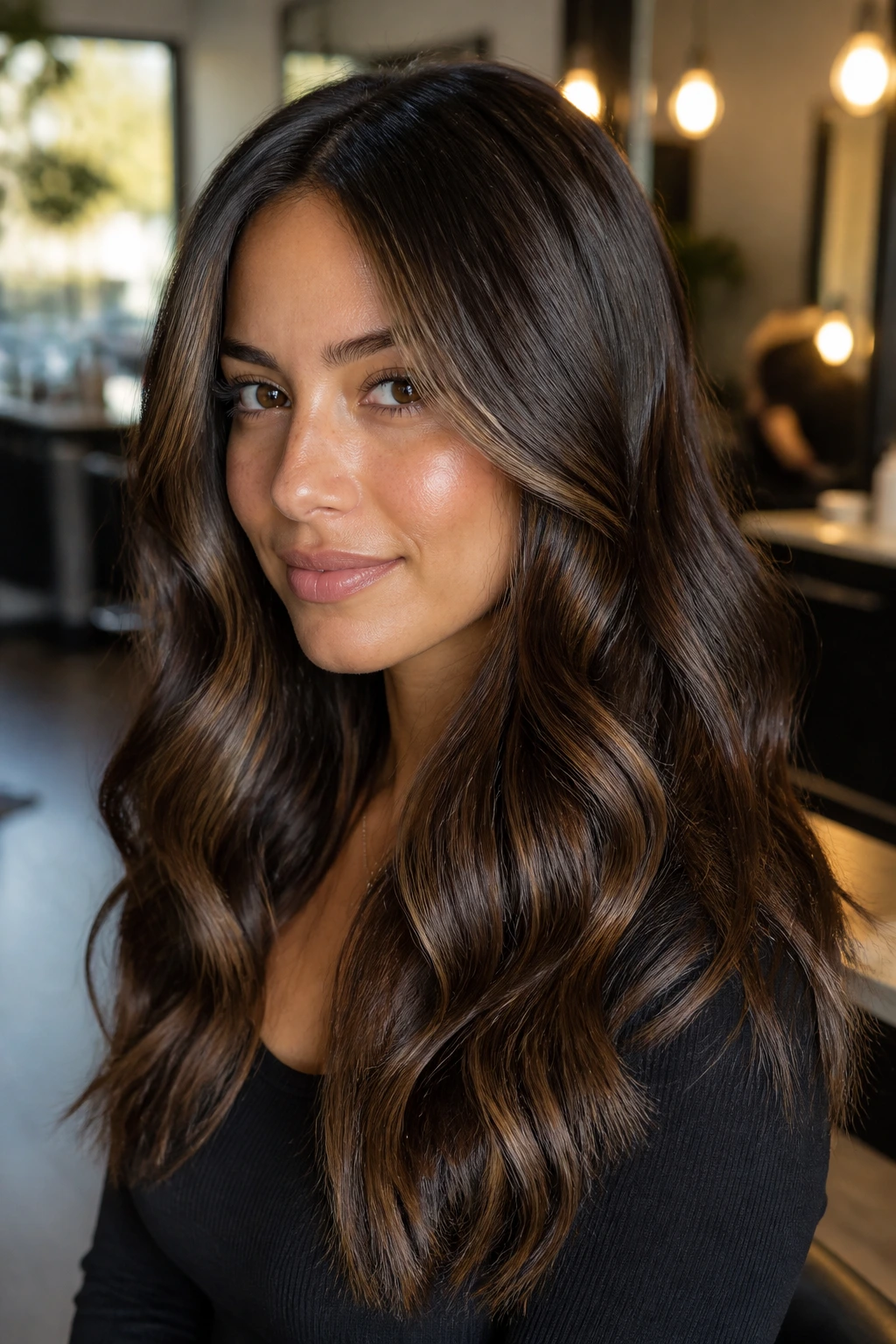
Shine Boost: A clear gloss every 4 to 8 weeks keeps brunette hair from going dusty, especially on olive skin where flat brown can make the complexion look tired.
Dimension Boost: Ask for micro-lowlights one shade deeper than your base if the color needs more depth. Tiny lowlights look more natural than big contrast pieces and hold better as the roots grow.
Face-Frame Boost: Add the lightest pieces around the cheekbone and temple, not all over the head. That keeps the color bright where it matters and avoids a stripey effect.
Make-It-Yours: Warm olive skin usually likes chestnut, caramel, or bronzed tones. Cooler olive skin tends to look cleaner in ash, mocha, and smoky brown. Neutral olive skin can borrow from both camps.
Finish Boost: If your hair feels dull, a lightweight oil on the mids and ends can bring the brown back to life, but use it sparingly. Too much and the color just looks greasy.
Maintenance, Glossing, and Root Touch-Up Timing
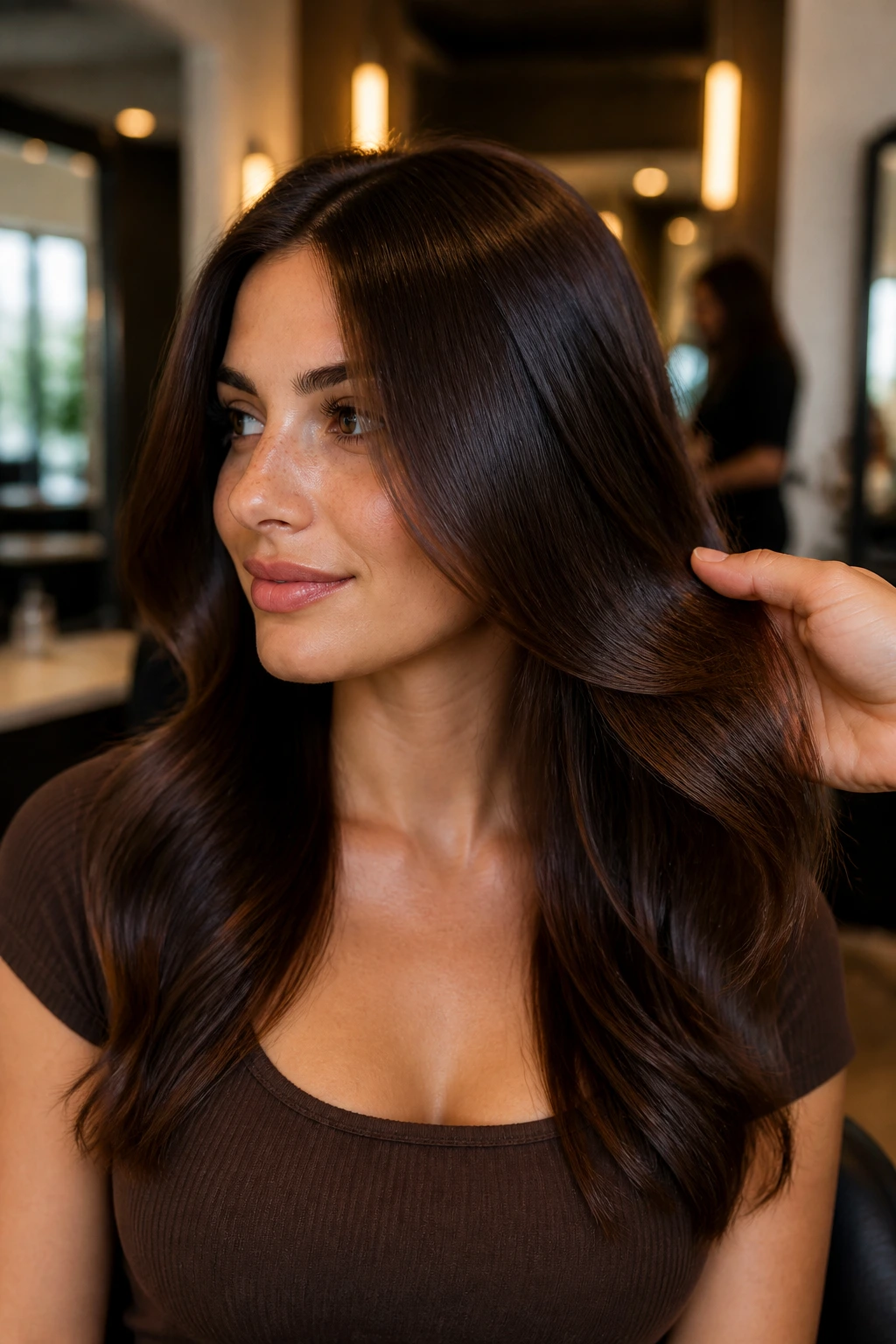
Brunette is easier to live with than blonde, but it still needs care if you want it to stay rich on olive skin. Brown hair goes dull faster than people expect, especially if you use hot tools, wash often, or live with hard water.
A demi-permanent gloss usually needs refreshing every 4 to 8 weeks. That is the sweet spot for most brunette tones that are meant to stay glossy, not permanent forever. If you have permanent roots, plan for touch-ups every 6 to 8 weeks if you want a clean line.
Wash frequency matters more than most people admit. Two to three washes per week is kinder to brunette depth than daily shampooing, especially if you use sulfate-free products and cool or lukewarm water. If your water is hard, a chelating shampoo once every 2 to 4 weeks can help strip mineral buildup that makes brown hair look dull or greenish.
Heat protectant is not a nice extra. It is part of the maintenance. Every blow-dry, flat iron, or curling pass should get a heat shield first. If your brunette has any ash or smoky tone, too much heat can warm it up faster than you’d think.
Common Mistakes That Make Brunette Look Dull on Olive Skin
- Going too red without depth: Bright red-brown can make olive skin look ruddy or blotchy. Fix it by asking for a deeper brown base with muted red reflect instead of a copper-heavy formula.
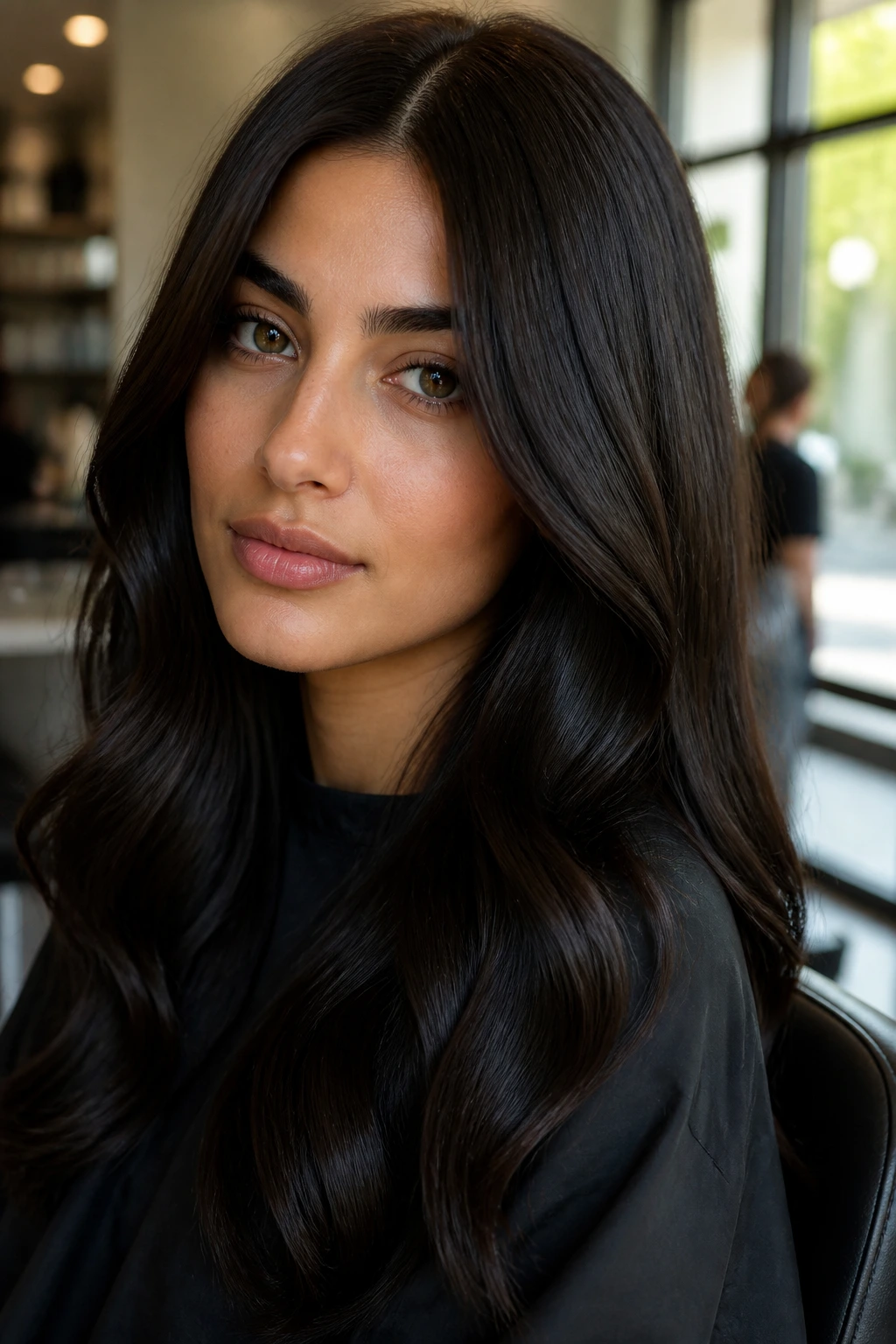
- Choosing black because you want drama: True black can swallow olive skin, especially if your complexion is fair or neutral. A soft sable or midnight brunette usually gives the same impact with more life.
- Skipping glosses: Dull brown hair on olive skin can look muddy fast. A clear or tinted gloss every few weeks keeps the tone crisp and reflective.
- Ignoring brass from hard water: Mineral buildup can turn brunettes greenish or dusty. A chelating wash or salon reset helps bring the color back.
- Lifting too much at home: Brunette hair often turns orange when people try to go lighter without enough control. If you want a softer brown, stay within one to two levels of your base unless a colorist is doing the lifting.
- Forgetting your undertone changes with light: A brown that looks rich indoors can look flat in sun or office bulbs. Check the shade in daylight before you commit to it.
Frequently Asked Questions
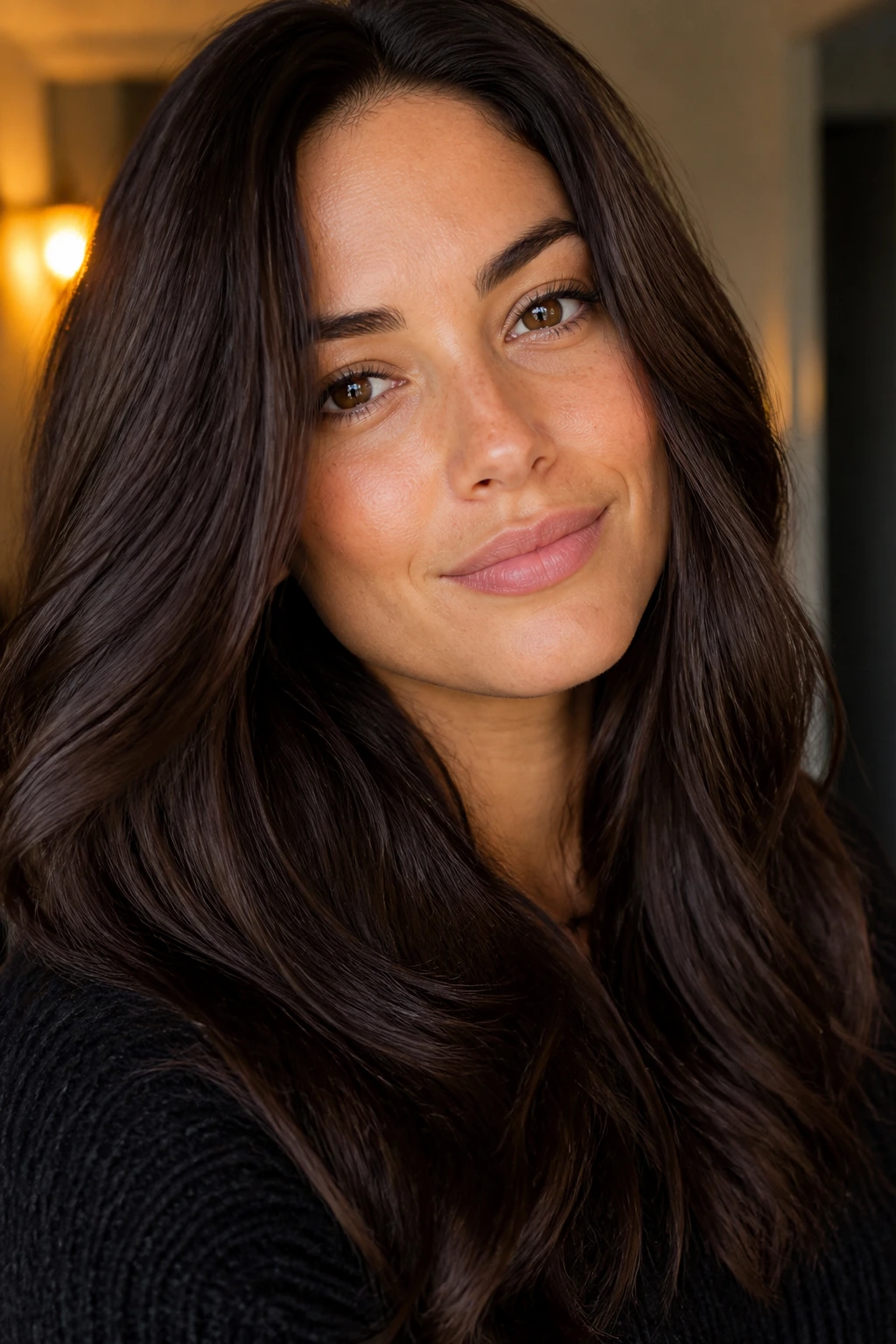
How do I know if my olive skin is warm or cool?
Look at the balance in your face, not just your wrist veins. Warm olive skin usually looks happier in chestnut, caramel, and bronze, while cool olive skin tends to look cleaner in ash, espresso, and smoky brown. If both camps work, you are probably neutral.
Can olive skin wear very dark brown hair?
Yes, but the finish has to be right. Very dark brunettes look best on olive skin when they have shine, a soft brown edge, or a little dimension around the face; otherwise the color can feel heavy.
Is black-brown too harsh for olive skin?
Sometimes. Deep sable and midnight brunette can be gorgeous, but true flat black often looks too hard unless your skin has enough depth and your brows are naturally strong. A brown-black formula is safer than straight black dye.
What brunette shade is easiest to maintain?
Mocha melt, rooted dimensional brunette, and cocoa bean brown usually grow out more gracefully than full-head warm shades. Soft roots and glossed mids hide fade better than a single flat color.
Can I go brunette without bleaching my hair?
Usually, yes. Going darker or staying close to your natural level is easier and gentler than lifting. If your current hair is already light, a colorist can often deposit brunette tone without bleach, depending on the starting point.
Which brunette shade is best for fair olive skin?
Cool coffee, cocoa bean, walnut, and soft espresso are strong choices. Fair olive skin usually needs contrast, but not so much darkness that the face disappears into the hair.
What if my brunette turns orange?
That means the warm pigment is showing too strongly. A cool-toned gloss, blue shampoo for orange brass, or a salon toner can calm it down. If the orange is strong, a colorist may need to refill the base with a deeper brown.
How often should brunette hair be glossed?
Every 4 to 8 weeks is a good range for most brunettes. If your hair is porous, highlighted, or exposed to lots of heat, you may need it closer to the 4-week side to keep the tone rich.
The Shade That Holds Its Shape
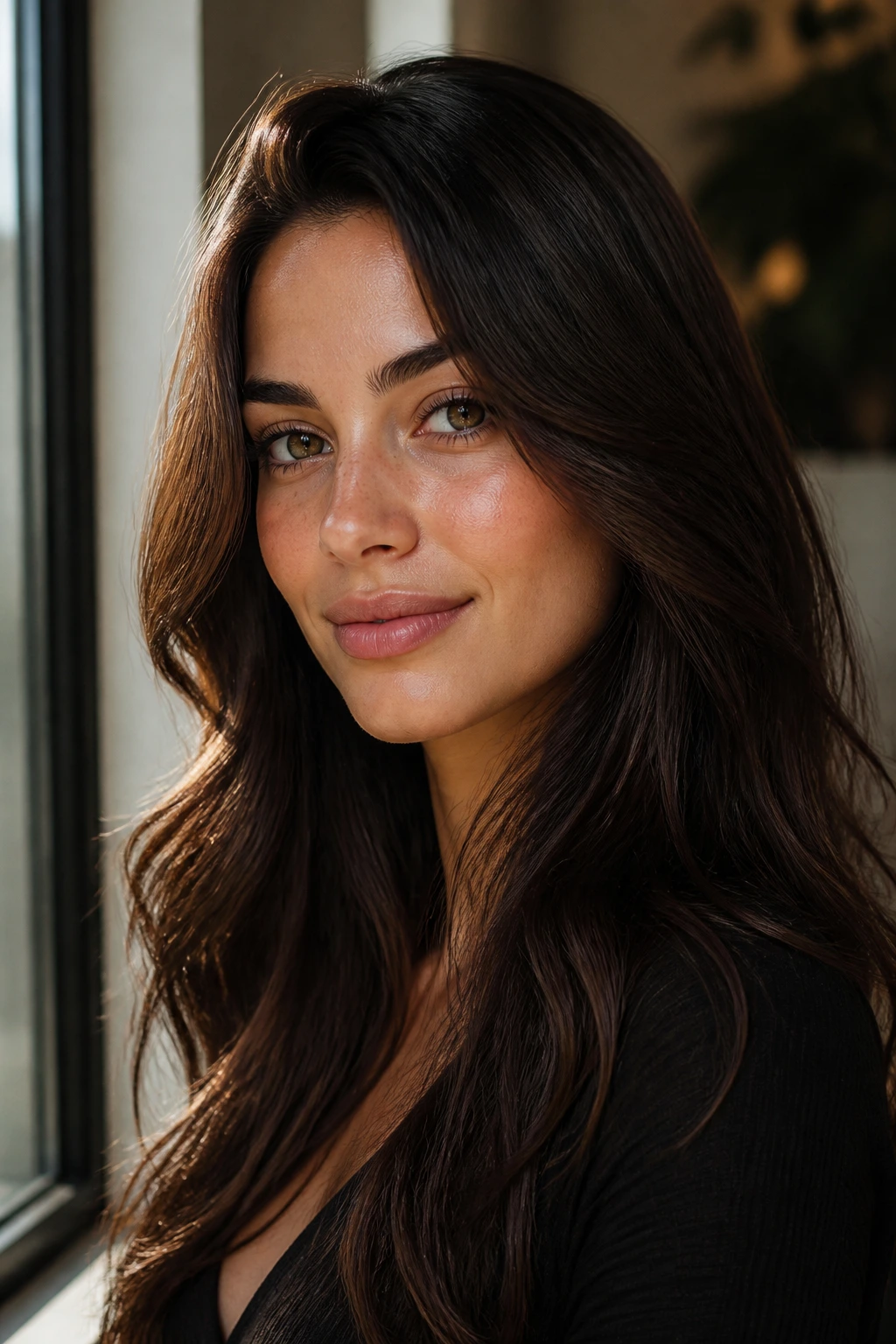
The nicest brunette for olive skin is usually the one that gives your face structure first and shine second. Depth matters. So does undertone. But the real win is when the color makes your skin look calmer without trying to fake a whole different complexion.
If you’re choosing between a few shades, start with the one that sits closest to your natural depth and then nudge the tone warmer or cooler from there. That’s the smartest way to get brunette hair color ideas for olive skin that look intentional in daylight, not only under flattering salon lights.
Pick the depth first. Then let the reflect do the rest.