



Medium curly hair is a sweet spot, and a slippery one. It has enough length to stack into clips, braids, puffs, and low knots, but not so much weight that the curl pattern disappears under its own length. The best hairstyles for medium hair with curly hair use that balance on purpose. They let the curl spring stay visible while keeping the silhouette from going square, puffy, or flat at the crown.
That’s the real challenge with shoulder-length curls. Too blunt, and the ends form a shelf. Too layered, and the shape can feel thin on top and wild at the sides. Too much product, and the curls clump into stiff ropes. Too little, and the whole head expands like a halo that refuses to sit down. Medium length is where all those problems become obvious.
The good news is that this length also gives you room to cheat a little. A deep side part changes the entire mood. A claw clip can turn day-three curls into a deliberate style. A soft shag can make medium curls look expensive in the way only good layers can. The styles below are the ones I keep circling back to because they work with the texture instead of asking it to behave like straight hair with a little bend.
Why These Styles Earn Space in the Rotation
- Shape, Not Just Length: Medium curls need a plan for the crown, the sides, and the ends, and these styles keep all three from fighting each other.
- Fast Refreshes: Most of these looks can be revived with a mist bottle, a little leave-in, and five minutes in front of a mirror.
- Less Heat Dependence: The strongest styles here lean on placement, parting, clipping, and shaping instead of a hot tool.
- Day-Two Friendly: These cuts and updos hide a little frizz at the hairline and let the curls break apart naturally as the day goes on.
- Works With Density: Fine curls, thick curls, loose waves, tight coils — there’s a shape here that respects the hair you actually have.
- Real-World Wearability: These aren’t photo-only ideas. They hold up at a desk, in humidity, under a coat collar, and after you take your sunglasses off.
1. Collarbone Lob With Soft Layers
A collarbone lob is the first shape I reach for when someone wants medium curly hair to look intentional instead of boxy. It lands in that useful zone where curls still have spring, but there’s enough length to tuck one side behind the ear or gather it low on a rushed morning. Keep the layers soft and vertical, not choppy, or the ends will kick out like little hooks.
Why It Sits So Well on Curly Hair
The collarbone is a smart stopping point because it catches the curl at a length where the weight helps, not hurts. On 2C to 3B hair, it keeps the crown from exploding while still letting the lower curls swing. On denser curls, it gives the whole head a cleaner line without making the shape feel severe.
- Ask for layers that start near the chin and drift into the collarbone.
- Keep the front pieces a touch shorter if your face needs softness around the cheeks.
- Use a diffuser until the roots are about 80% dry, then stop touching the hair.
Pro tip: If your ends puff first, scrunch in a pea-sized amount of gel only on the last two inches.
2. Curly Shag With Brow-Skimming Fringe
The curly shag is what happens when curls get room to breathe without losing structure. It has that lived-in look people try to fake with salt spray, except here the shape comes from the cut itself. A brow-skimming fringe can be soft and feathery, but it needs enough length to shrink without turning into a row of baby bangs.
This cut works because it moves the volume upward and inward. Instead of piling everything at the bottom, the shag spreads the shape across the head, which is why it looks so good on medium hair that tends to swell at the sides. If your curls are loose enough to fall around the face, the fringe gives you a focal point. If they’re tighter, the shag keeps the top from getting too heavy.
Skip blunt fringe unless you enjoy babysitting it every morning. A curl that falls just above the brow after drying is usually the sweet spot. Anything shorter can bounce up far more than you expected.
3. Rounded Shoulder-Length Cut
Why do some medium curly cuts look wide and a little boxy? Usually because the bottom line is too flat and the sides are carrying all the drama. A rounded shoulder-length cut solves that by keeping the silhouette soft all the way around the head, with enough curve at the sides to make the hair sit like a dome instead of a shelf.
What to Ask For
Tell your stylist you want a rounded outline, not a blunt perimeter. On curl types with decent density, that small instruction changes everything. The ends still sit at shoulder length, but the shape has movement when you turn your head, which is the whole point.
- Ask for internal layering, not aggressive thinning.
- Keep the front pieces long enough to tuck behind the ear.
- If your curls shrink hard, have the cut done dry so the shape is honest.
A rounded cut is one of those styles that looks calm even when the curls are doing their own thing. That’s a very useful trait.
4. Deep Side-Part Wash-and-Go
A deep side part can rescue a medium curly cut that feels too symmetrical. It shifts the volume, pulls the eye across the face, and lets one side do the heavy lifting while the other lies closer to the cheek. The whole style feels more deliberate, even if you only spent ten minutes on it.
The trick is to set the part while the hair is still damp, not after it dries. Once curls lock in, they’ll resist being moved. Work a little gel or foam along the part line, then clip the heavier side at the root for a few minutes so it lifts instead of collapsing into the forehead. That root support matters.
This style is especially good if your hair puffs at the temples. The deeper part breaks up that width. It also makes day-two curls look less flat, which is a small mercy when the morning is already annoying.
5. Half-Up Puff With Loose Ends
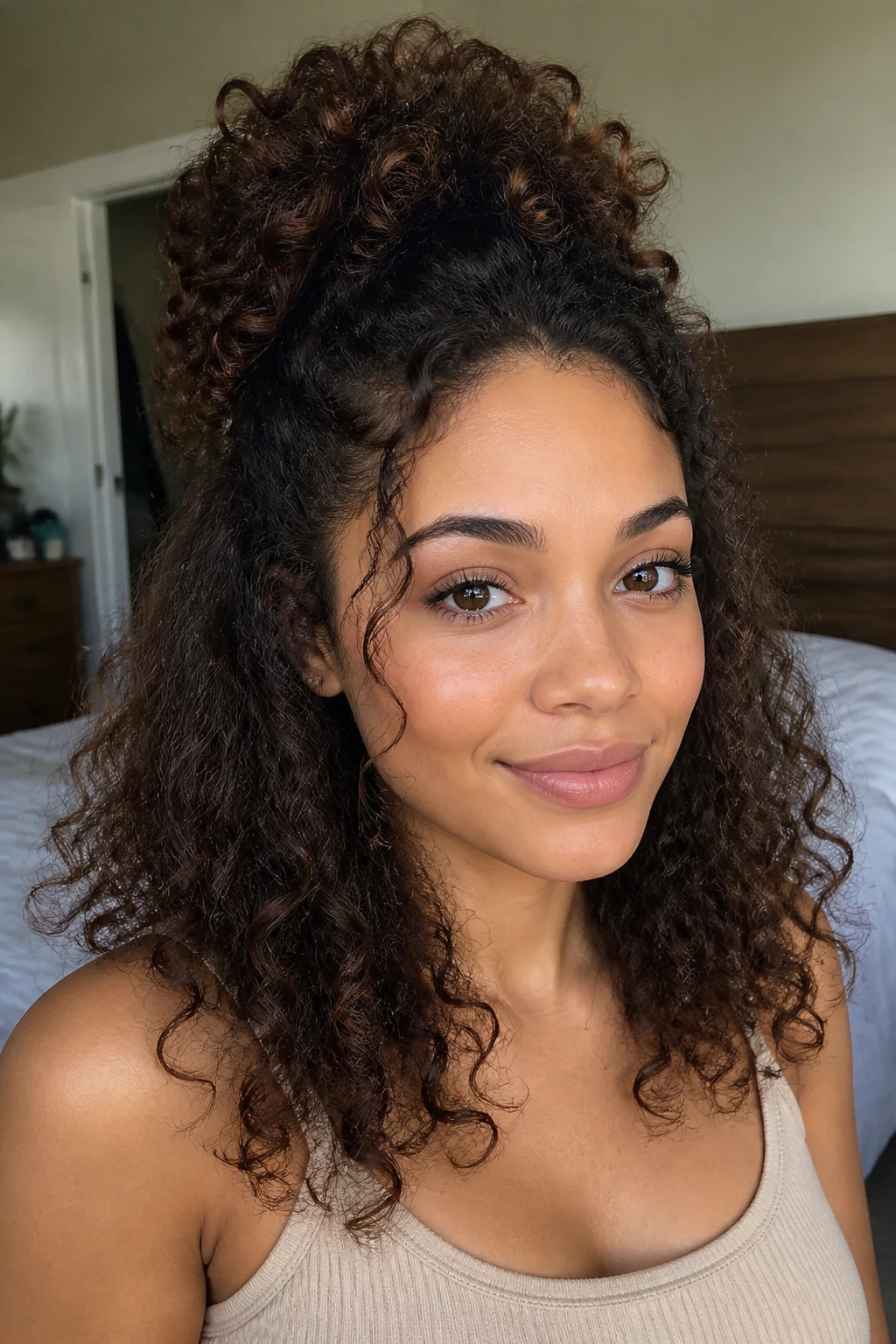
If your curls are doing well at the mid-lengths but the roots need a break, the half-up puff is a clean answer. Pulling the top section up gives the crown lift, while the lower curls stay visible and soft around the shoulders. It’s a little playful, a little practical, and it keeps you from reaching for a full ponytail when the ends still look good.
The best version of this style starts higher than most people think. Too low, and it just looks like a tired half ponytail. Too high, and the shape can look childish. About two inches above the temples is usually a safe starting point, then adjust based on your face shape and curl density.
Use a satin scrunchie or a small coil tie. Regular elastics press a dent into the hair, and medium curls do not forgive that easily. Leave a few curls out around the front so the style reads as soft instead of severe.
6. Claw-Clip Twist at the Crown
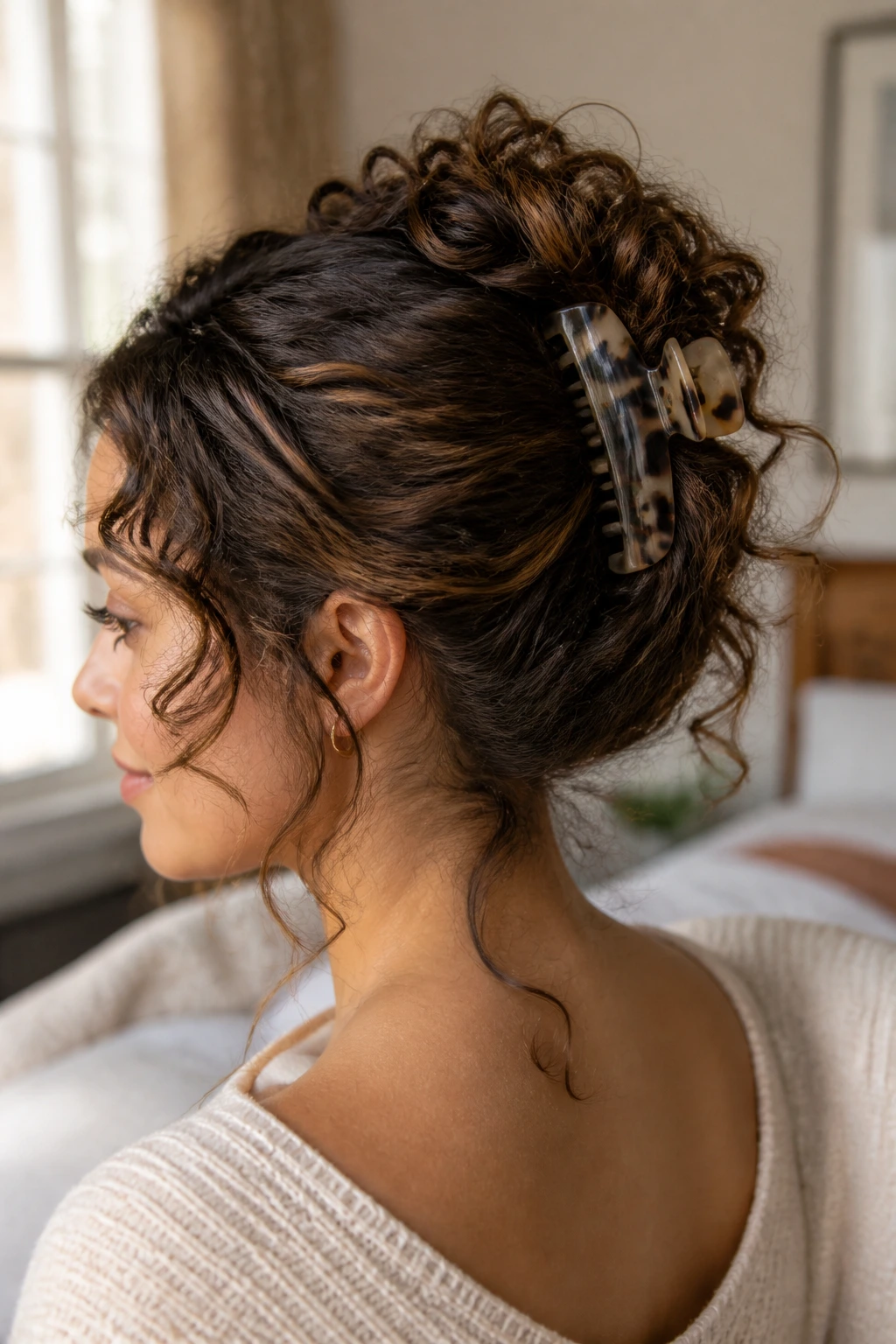
A claw clip is one of the few hair tools that understands curly medium hair. It grabs the bulk without flattening the texture, and it lets the ends spill out in a way that looks deliberate instead of sloppy. Twist the hair once or twice at the back of the head, lift it toward the crown, and clamp it with enough room left in the clip for the curl spring to sit naturally.
The shape works best when the clip sits a little off-center. Dead center can make the style feel stiff. Slightly high and slightly loose gives the crown height and lets the lower curls show off. This is a great option when the ends are still defined but the roots are asking for help.
Choose a claw clip with wide teeth and a strong spring. Tiny decorative clips break on thick curls. I’ve watched that happen more times than I’d like.
7. Curly Wolf Cut With Airy Ends
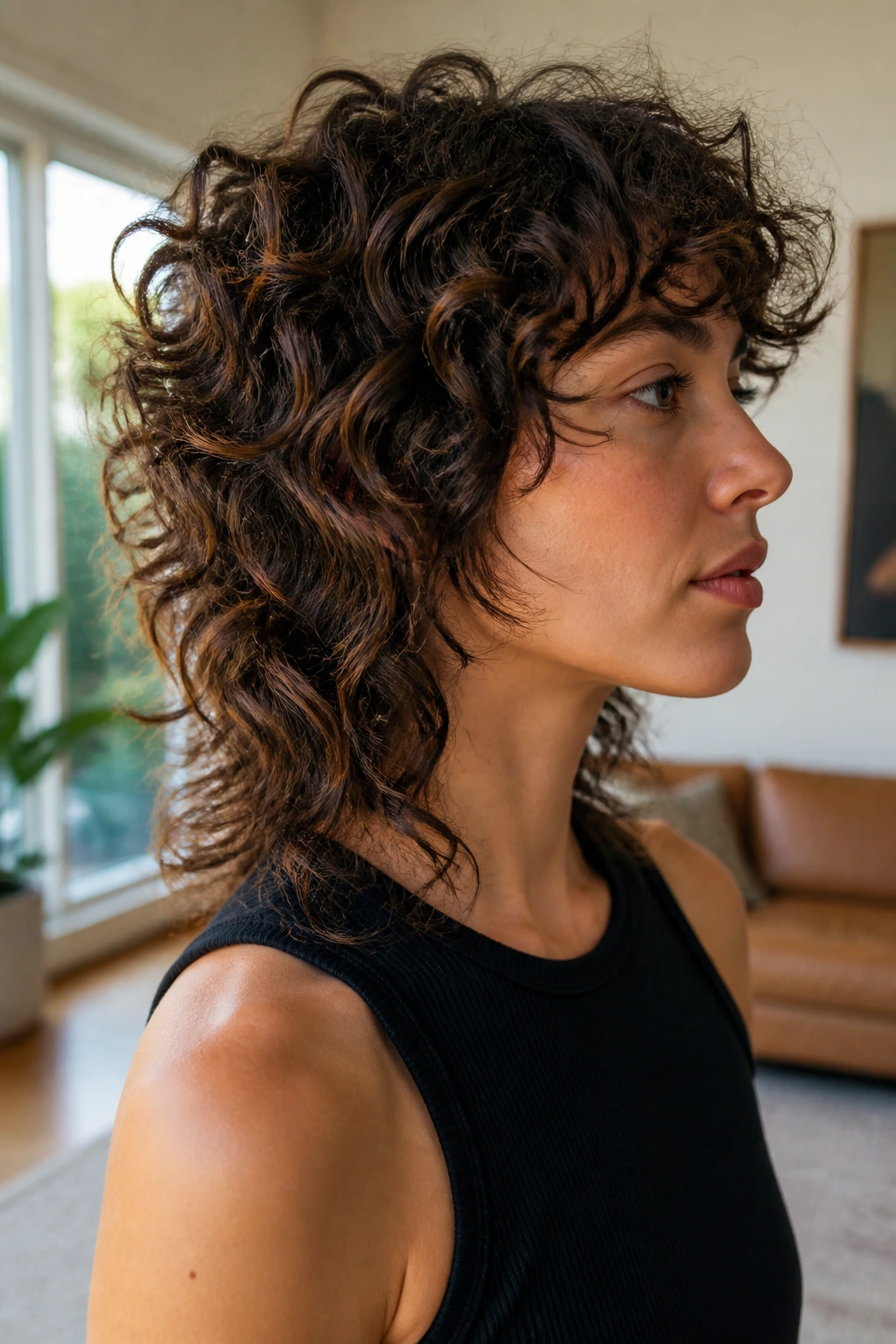
The curly wolf cut solves a problem most medium curls have: too much width at the sides and too much heaviness at the bottom. By keeping the crown shorter and the ends airier, the cut gives the whole head a sharper outline without feeling stiff. On medium length, that matters more than people think. A wolf cut lives or dies by the balance between lift and length.
Who Should Try It
If your curls flatten at the top but balloon at the shoulders, this is the cut that makes the silhouette make sense. It’s also good for hair that gets bulky in humid weather, because the shape has enough broken-up texture to resist turning into a triangle.
Use a light cream or mousse, not a heavy butter. The shape already does a lot of work. You do not need to bury it under product.
8. Halo Braid Over Loose Curls
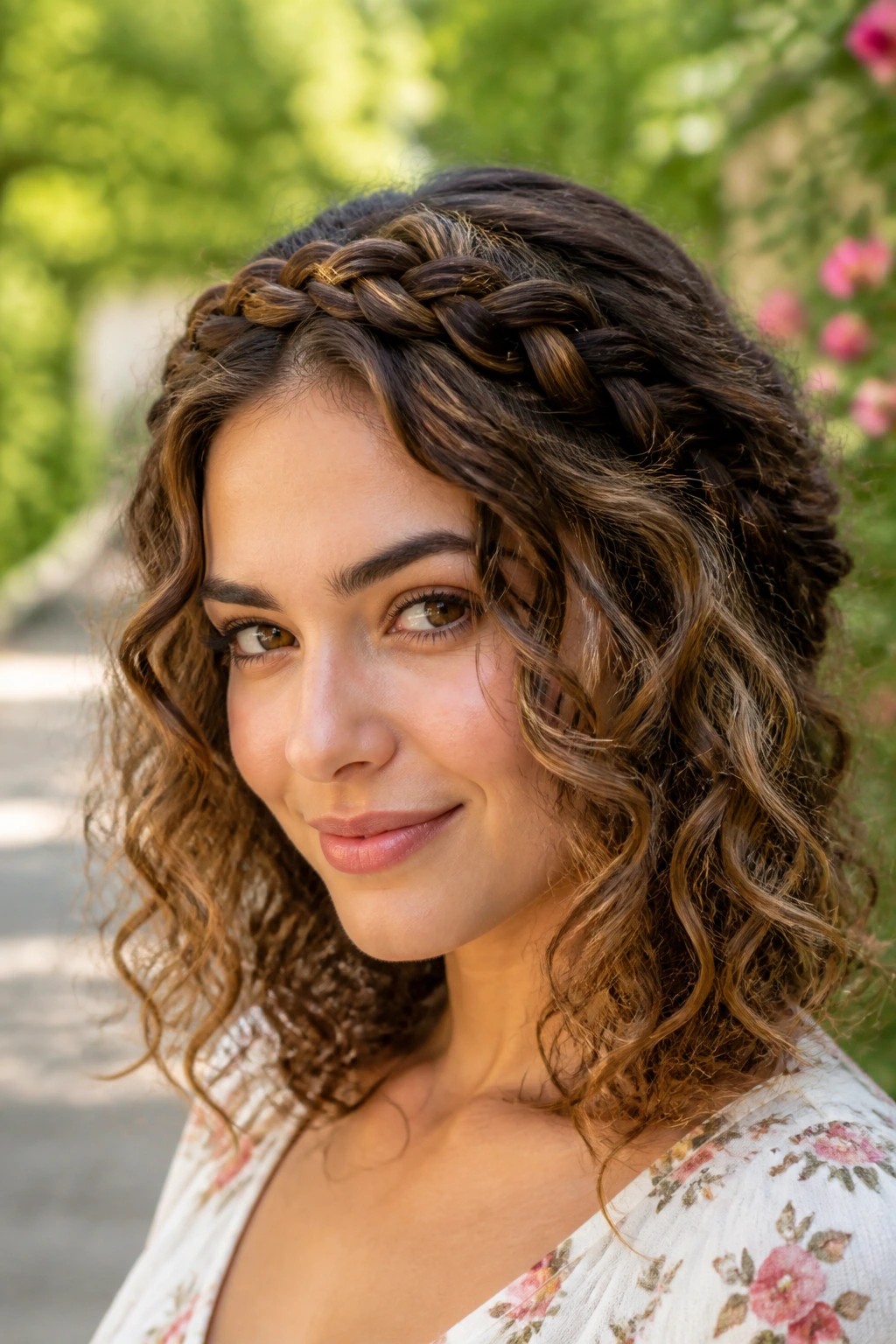
A halo braid gives medium curls a frame. It pulls hair away from the face, keeps the front clean, and leaves the rest of the curls free to do their thing. The result is softer than a tight crown braid, which is why I prefer it on shoulder-length hair that still has enough fullness to fill out the back.
Braid along the hairline, not too far back. If you braid too high, the style starts to look narrow and can expose more scalp than you want. If you braid too low, it loses the halo effect and becomes just another braid with curls hanging under it.
This is a good one for second- or third-day curls. You don’t need freshly washed hair, and a little lived-in texture actually helps the braid hold. Pin the ends under one ear or tuck them into the braid if your layers are short.
9. Low Puff at the Nape
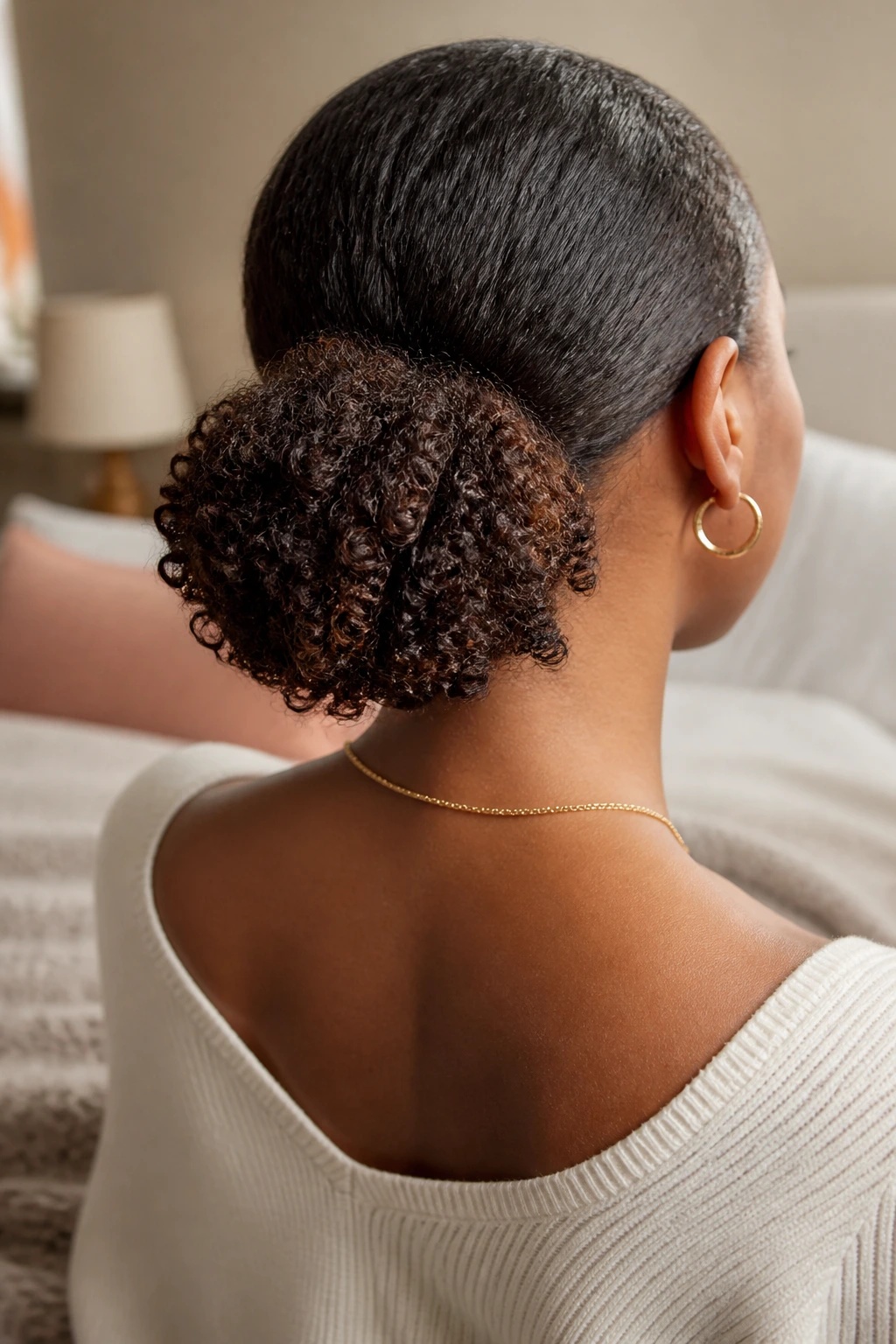
A low puff is the answer when you want your curls gathered but not crushed. It keeps the shape compact at the back of the neck, which makes medium-length hair look neat without losing texture. The style is especially kind to coily hair and dense curls that get bulky in a high ponytail.
The Nape Matters
The position of the puff changes the whole mood. Put it too high and the style starts to swell. Keep it low and snug, and the head shape stays sleek while the curls still feel present. That lower placement also helps if your ends are a little uneven, because the curl bundle sits at a forgiving angle.
- Smooth the sides with a soft brush and a little gel.
- Gather the hair at the nape, not mid-head.
- Use a satin scrunchie or adjustable band, never a thin elastic.
A low puff is one of the easiest styles to keep looking fresh with a quick edge touch-up.
10. Sleek Low Ponytail With Gelled Edges
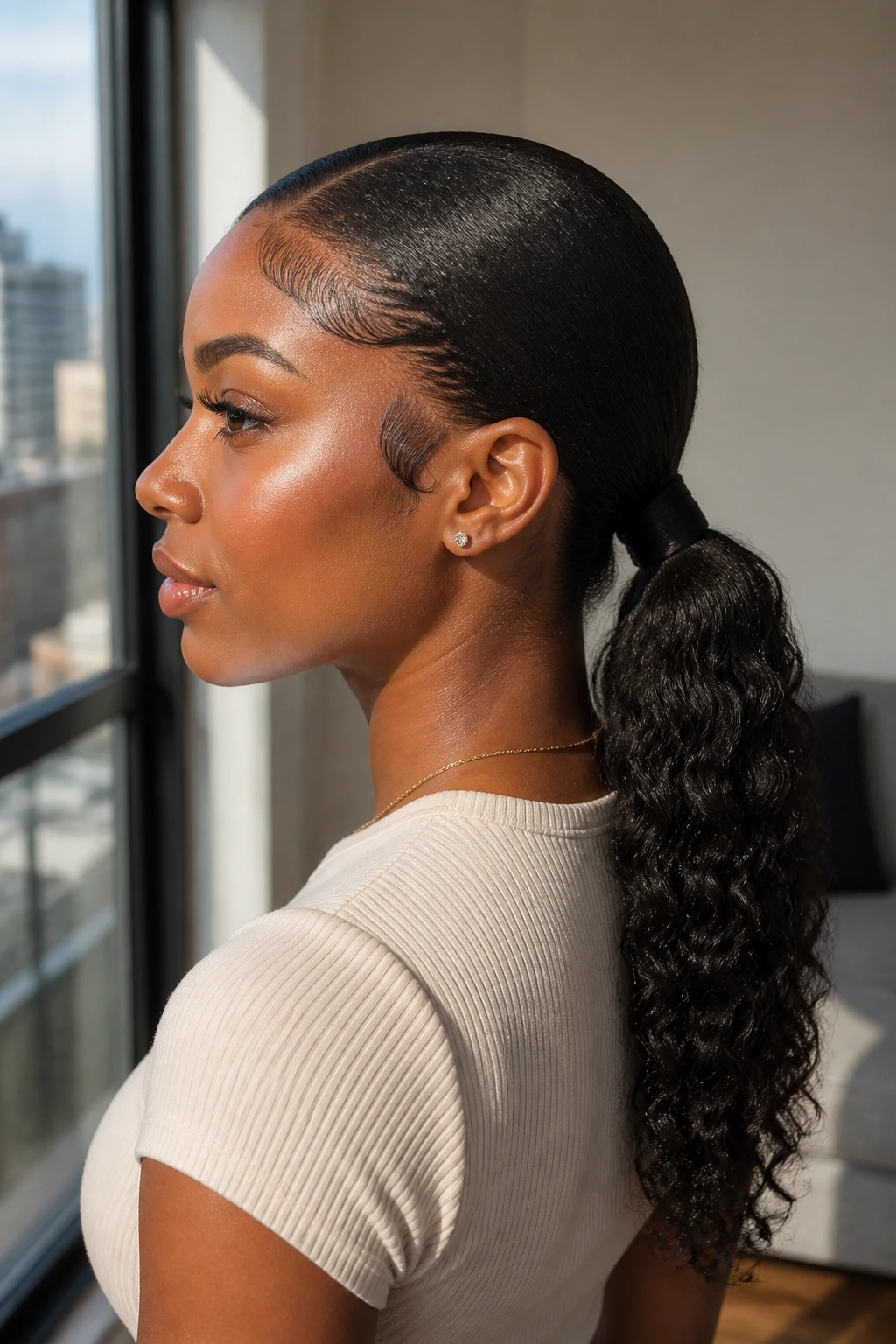
A sleek low ponytail on medium curly hair is less about making the hair straight and more about making the texture look controlled. You keep the roots smooth, the pony low, and the tail textured enough that it still reads as curly. That contrast is the charm. If everything is flattened, the style loses all personality.
Apply gel to the hairline with a small brush, then smooth the crown with your palms or a soft boar-bristle brush. Don’t drag too hard, or you’ll make little ridges that show up in the light. Secure the pony at the nape and wrap a small piece of hair around the band if you want a cleaner finish.
This style works best when the tail has some definition left. I like it with medium curls that are stretched just enough to hang, not blown out into a pin-straight shape. That keeps the look from feeling severe.
11. Space Buns With Curly Tendrils
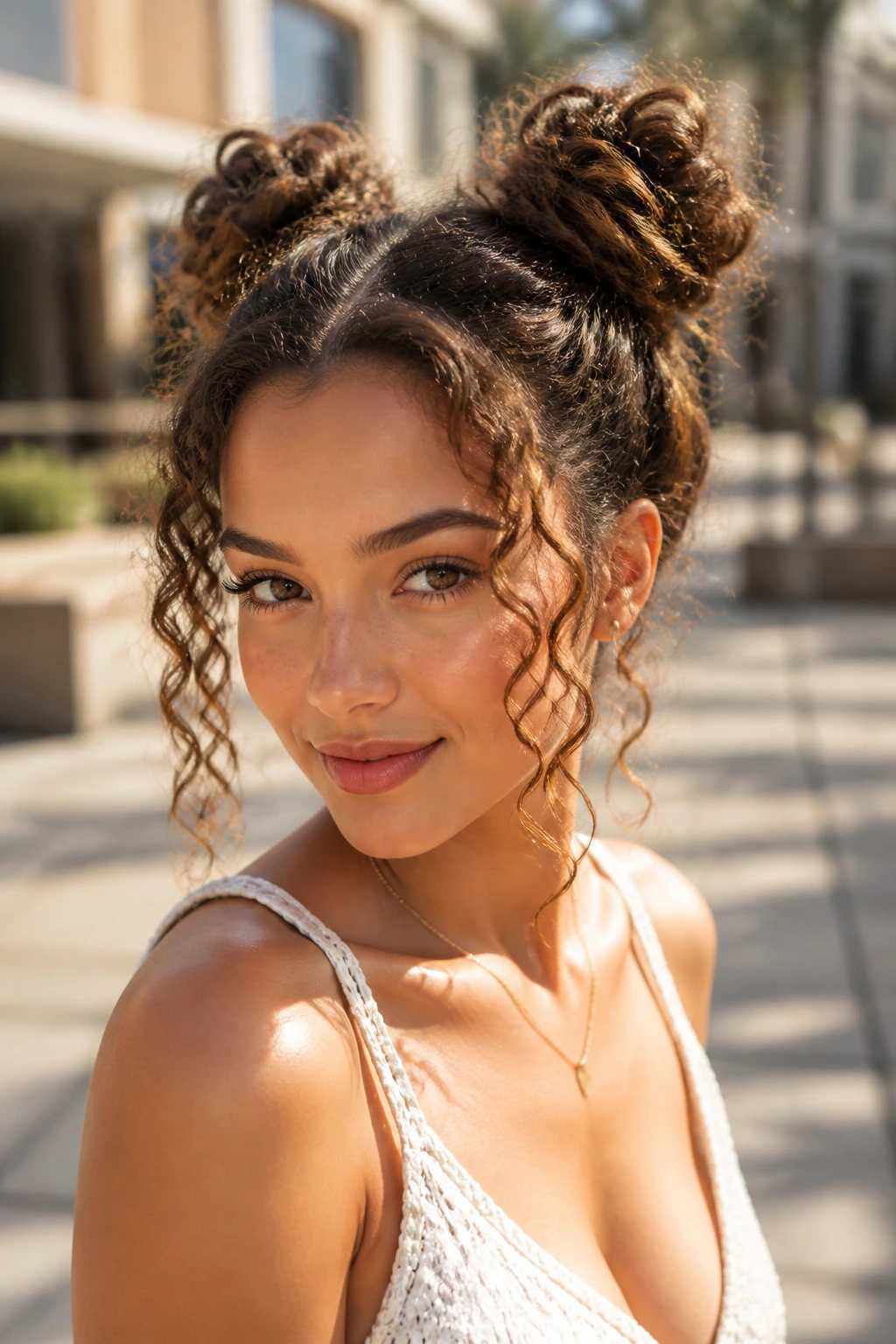
Space buns on medium curly hair are not just a playful look. They’re also a smart way to use your natural volume without asking every curl to behave the same way. Pull the top half or all of the hair into two buns, then leave a few front tendrils out so the style stays soft around the face.
What Keeps Them from Looking Overdone
The buns should sit higher than the ears but not at the top edge of the head. That placement keeps the shape balanced. If they’re too high, the style gets cartoonish fast. If they’re too low, they lose the lift that makes them work.
Use pins instead of over-tight elastics. Curls have memory, and the less you crush them, the better they look when you take the style down later. That part matters if you want a second look the next day.
This is a good style for concert nights, casual weekends, or any time your hair is having one of those “I want attention” days.
12. Tucked Faux Bob
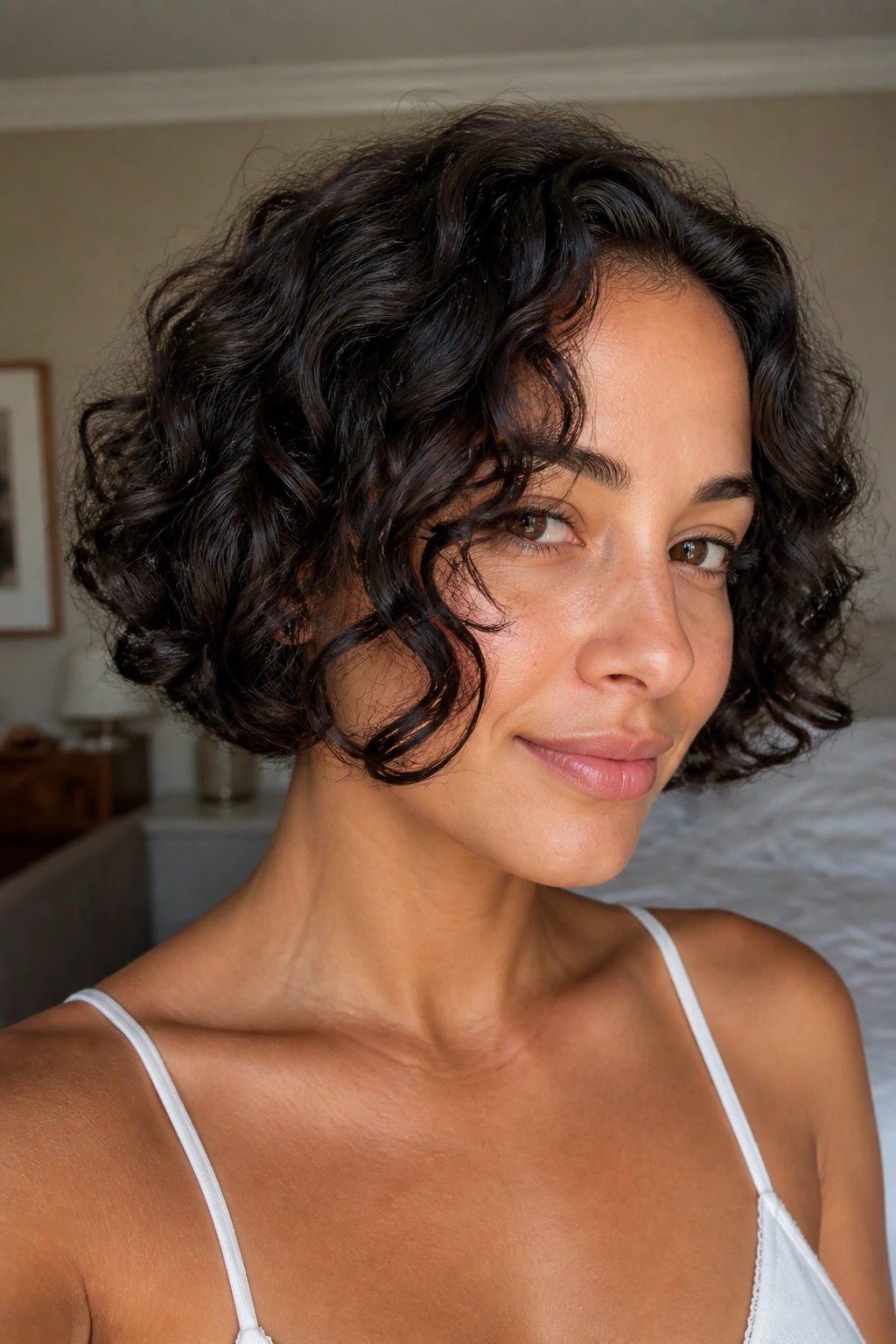
A faux bob is one of my favorite tricks for medium curls because it gives you the short-hair mood without the commitment. Tuck the ends under at the nape, pin them in a few places, and let the front pieces fall in soft curves around the chin. The curls create their own shape, which is half the fun.
The key is not to over-pin. If every curl is glued down, the style looks stiff and obvious. Leave a little movement at the ends so the fake bob has body. Medium hair is long enough to do this without too much trouble, and that’s why it works so well at this length.
It’s a nice option when you want something dressier than a ponytail but less formal than a full updo. Also, it photographs in a way a plain bun never does. Not that everything needs to photograph, but still.
13. Defined Center-Part Wash-and-Go
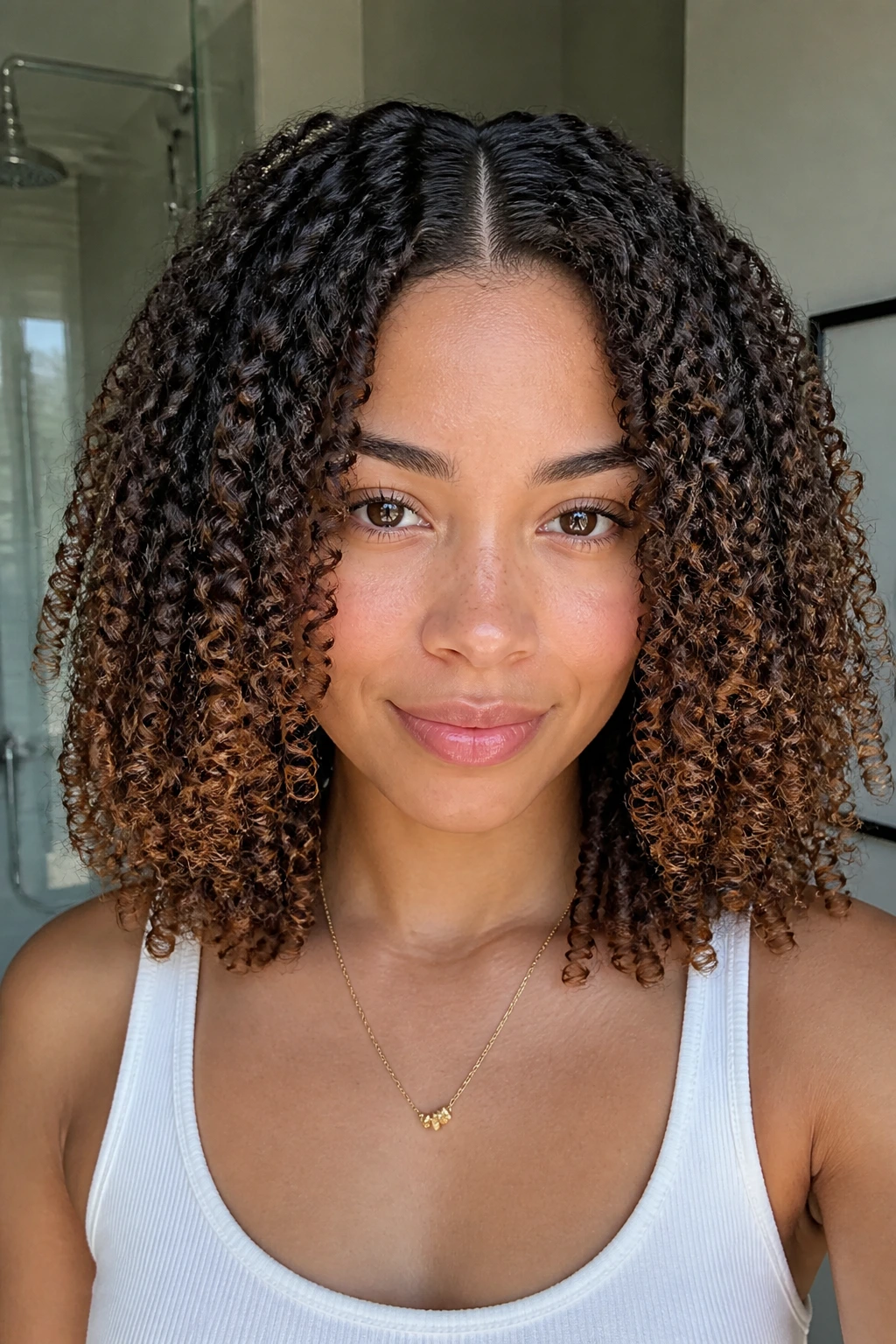
A center-part wash-and-go can look clean and modern on medium curly hair, but only if the crown has enough lift. Without that lift, the part line pulls the face long and the sides collapse toward the cheeks. With it, the curls fall in two balanced curtains that feel neat and easy.
The best versions of this style start with careful sectioning while the hair is wet. Use a wide-tooth comb or your fingers to place the part exactly where you want it, then leave it alone. Constant rearranging is what makes curls frizz around the roots.
This style is strongest on curl patterns that form even spirals from root to tip. If your roots are loose and your ends are tighter, use a mousse at the crown and a stronger gel through the lengths. That keeps the top from going limp halfway through the day.
14. Crown Braid Into Loose Curls
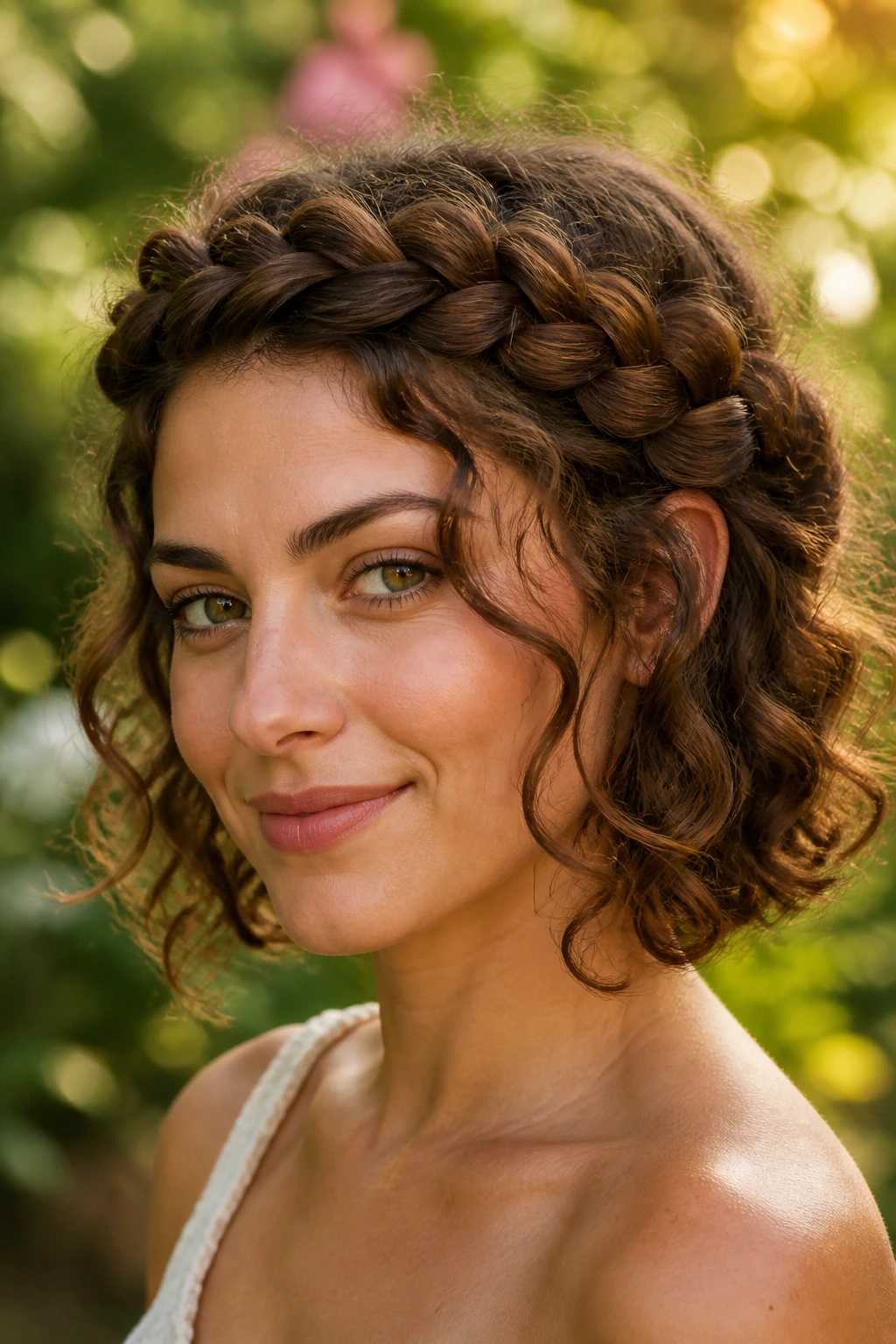
A crown braid into loose curls gives medium hair a built-in frame. It keeps the front under control, opens the face, and lets the lower curls stay soft and visible. It’s one of those styles that looks more complicated than it is, which I never complain about.
How to Place the Braid
Start the braid at one temple and move across the hairline, not deep into the crown. That placement keeps the braid visible and avoids stealing too much hair from the top section. If your hair is layered, tuck the shorter pieces into the braid as you go instead of trying to force them free.
- Keep the braid flat against the head.
- Leave the back curls loose and finger-separated.
- Pin the braid behind the opposite ear with two bobby pins crossed like an X.
The loose curls underneath keep the whole style from feeling too formal. That balance is the point.
15. Mini Twists on Shoulder-Length Curls
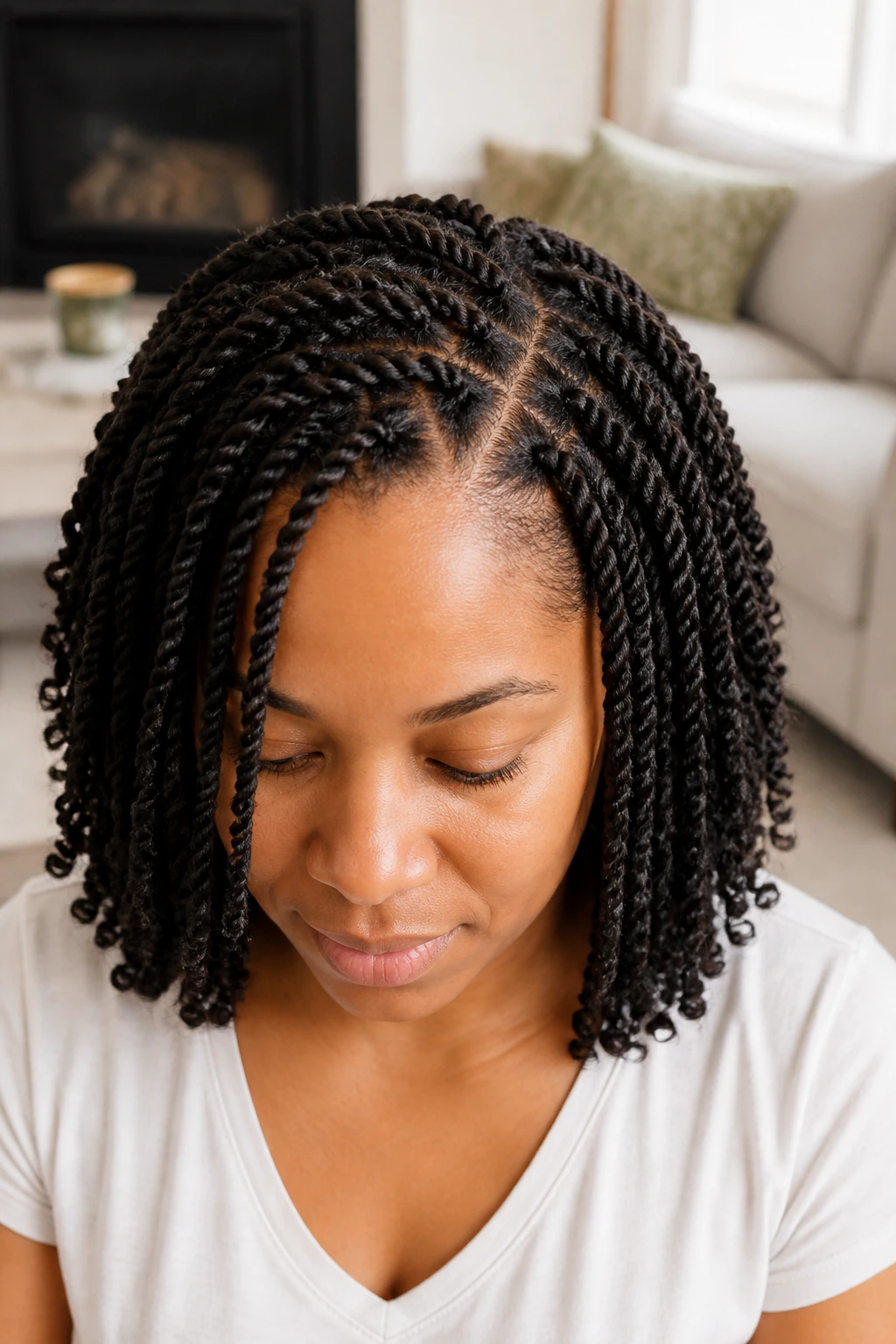
Mini twists are the style I recommend when someone wants medium curly hair to rest a little. They’re protective, they cut down on daily manipulation, and they give the hair a neat pattern that still feels textured. On shoulder-length hair, the twists stop right where they can still swing a bit, which keeps them from looking too stiff.
If your curls are very tight, stretch them a little before twisting so the final look doesn’t shrink past the shoulders. If they’re looser, use a bit more leave-in to keep the twist pattern smooth. The size of the twist matters too: tiny twists take longer, but they hold shape better between washes.
This is not the style for people who want a quick ten-minute fix. It pays you back over several days, though, and that’s where its value shows.
16. Curly Bangs With Collarbone Layers
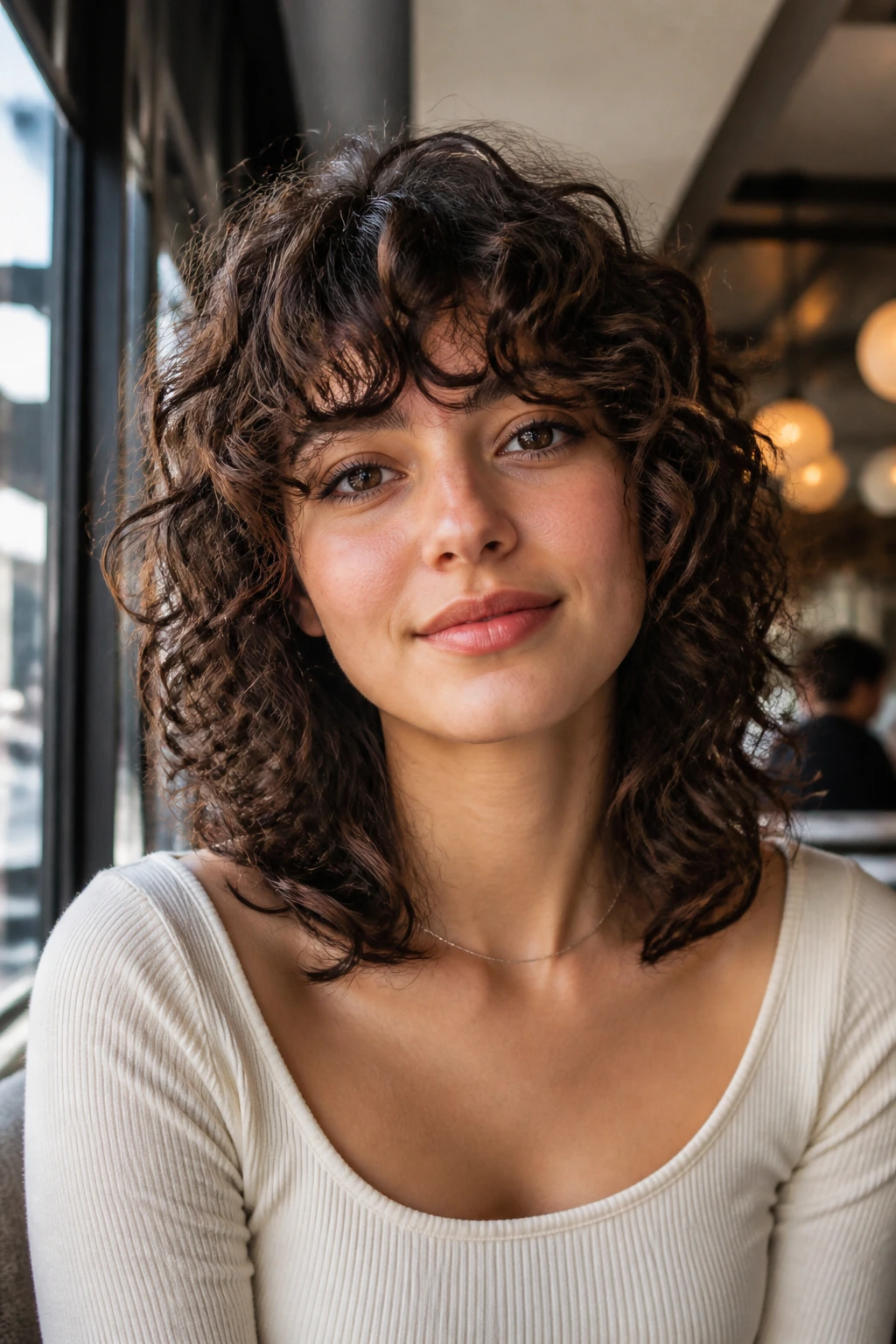
Curly bangs are a bold move only if the cut is wrong. With collarbone layers behind them, they can look soft, face-opening, and a little romantic in the best possible way. The bangs need enough length to shrink, and the layers behind them need enough movement so the front doesn’t become one heavy curtain.
The smart version lands somewhere between the brow and the upper lash line when dry, not when wet. That difference matters a lot more than people think. Curls jump. Sometimes they jump a full inch.
This style is especially good if your face feels hidden by medium curls that all fall to one side. Bangs pull the shape forward and make the cut look intentional even on days when the rest of the hair is doing its own thing. Keep a small curl cream just for the front pieces if they tend to frizz faster than the rest.
17. Messy Top Knot With Texture
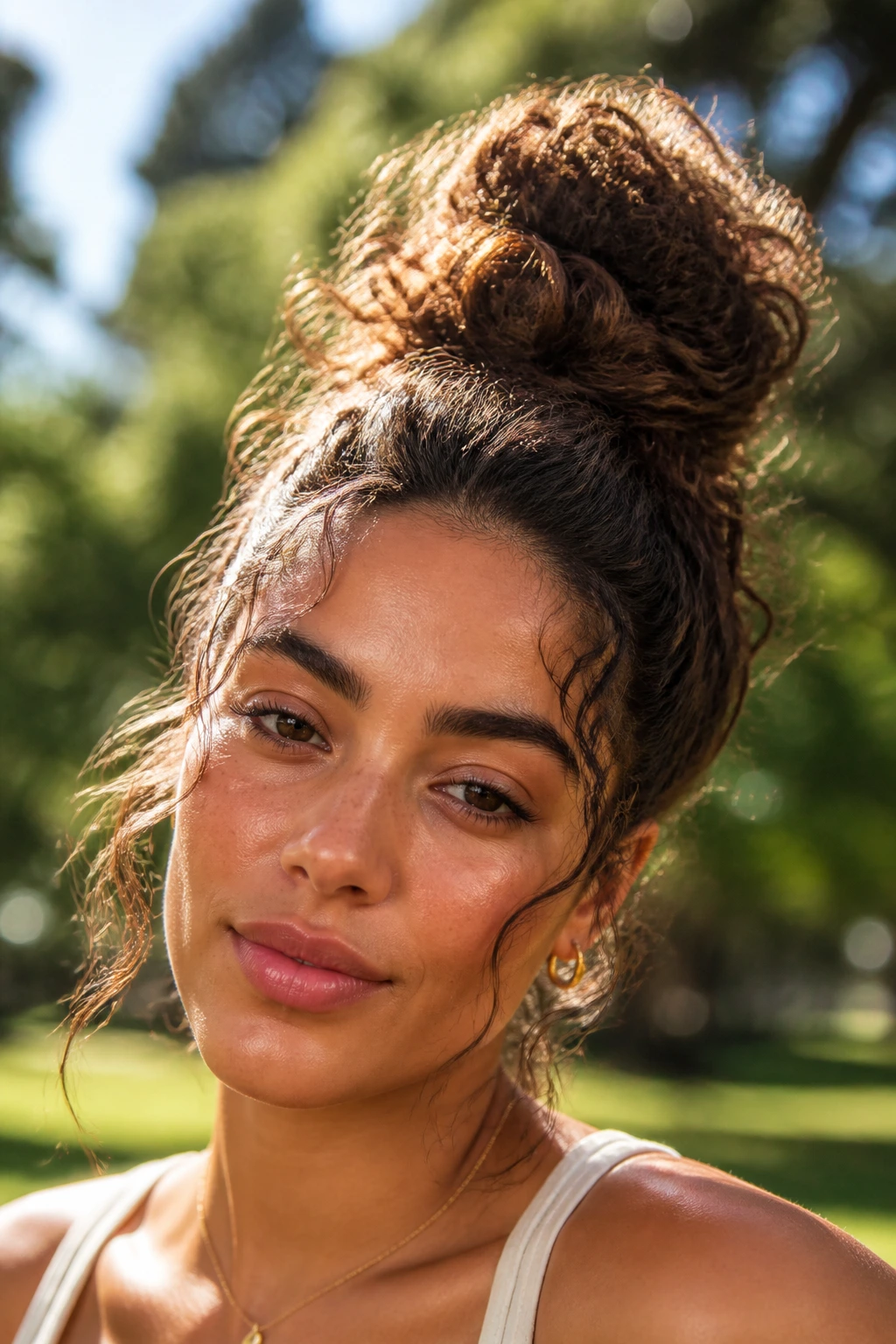
A messy top knot on medium curly hair works because it does not fight the texture. You gather the curls high, twist them loosely, and let the ends stick out a little instead of forcing everything into a smooth bun. That looseness keeps the knot from shrinking into a tiny ball at the top of the head.
The trick is leaving enough volume at the crown before you secure it. If the roots get flattened, the knot can make the whole head look narrow and oddly tight. A few gentle finger lifts before you tie it back will fix that.
This is the style you wear when you want your face open and your hair out of the way, but you still want it to look like curls are part of the plan. A top knot with too much polish loses that charm.
18. Half-Up Space Buns
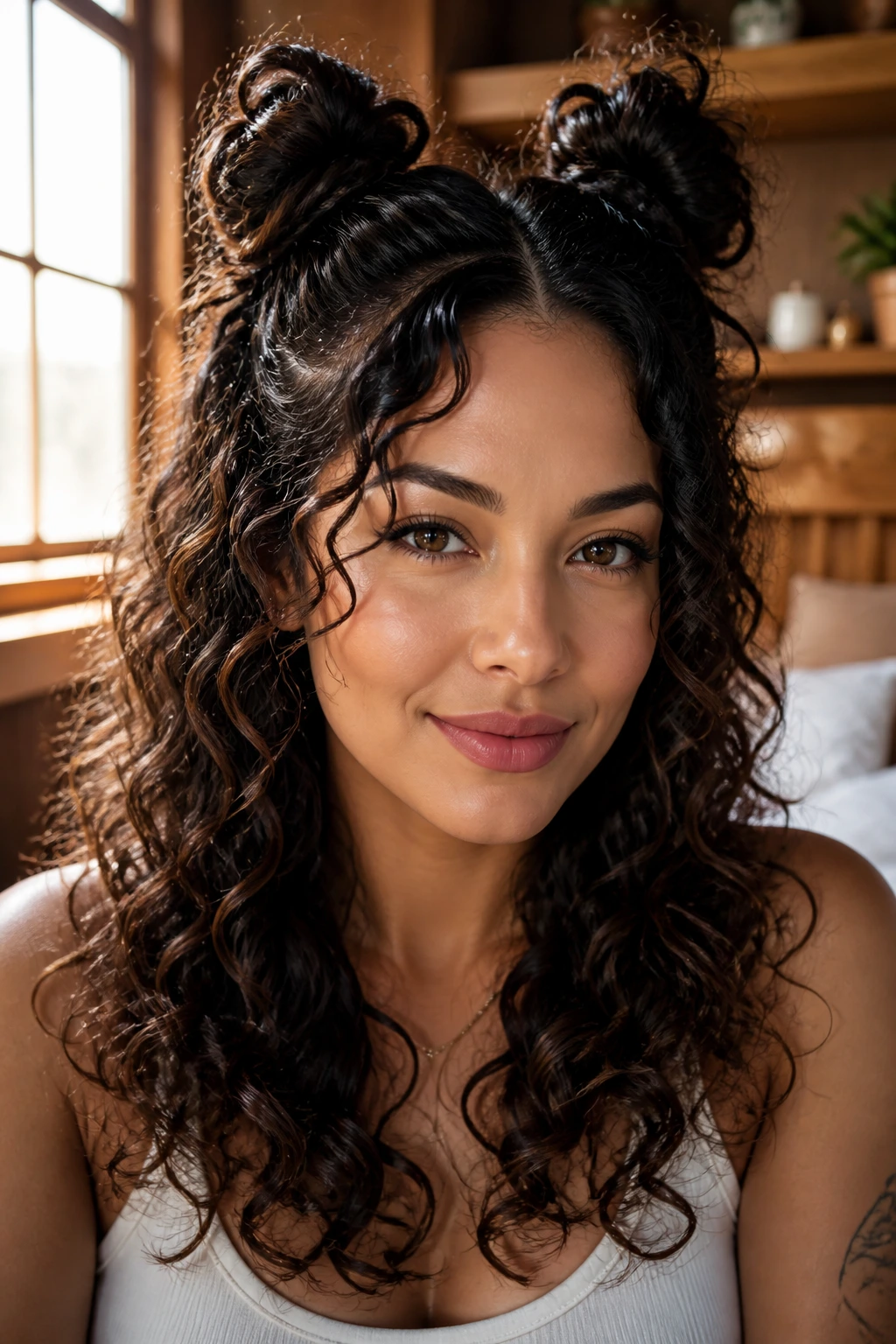
Half-up space buns give medium curly hair a little attitude without asking for a full commitment. The top section becomes two small buns, while the bottom curls stay loose and springy. It’s a nice balance of control and mess, and that balance matters on medium length because the hair can otherwise feel either too short or too bulky.
The buns should be small enough that the loose curls below still matter. If the top section gets too large, the style turns top-heavy. Leave the bottom half textured and full, and the whole shape looks better from every angle.
This look is friendly to day-two curls because a little unevenness only helps it. If one bun sits slightly higher than the other, don’t panic. That tiny asymmetry often makes the style look more natural.
19. Low Chignon With Face-Framing Spirals
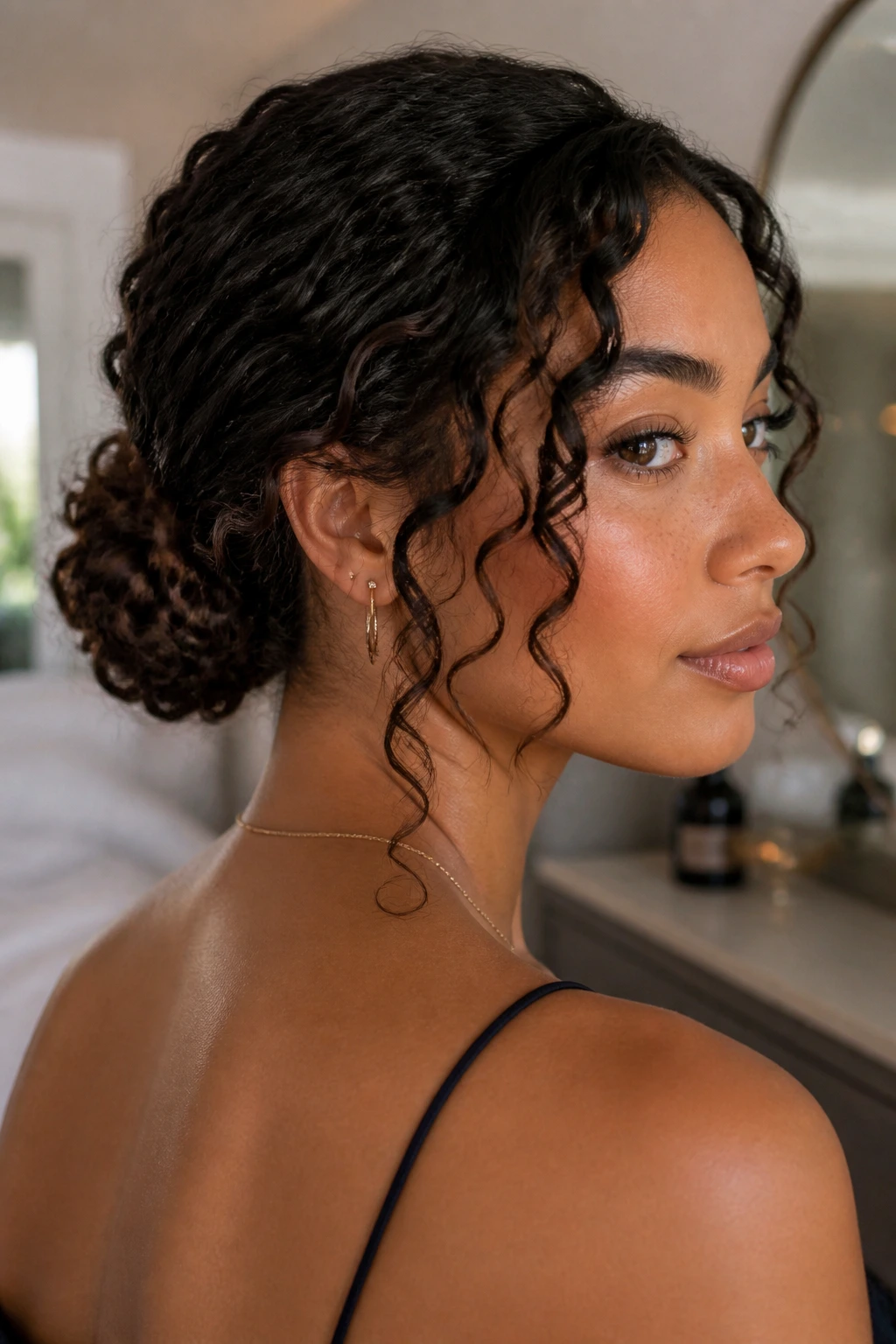
A low chignon is a cleaner, more dressed-up answer for medium curly hair. Twist the length into a soft coil at the nape, pin it flat enough to stay put, and leave a few spirals out around the cheeks. Those loose pieces matter. Without them, the style can feel too strict for curly texture.
The chignon works especially well when the hair has been stretched a little first. You don’t need a full blowout, but a bit of elongation helps the bun sit neatly and keeps the ends from sticking up. If your hair is very dense, split the length into two sections before pinning so the knot doesn’t become bulky.
I like this style for evenings because it keeps the neckline visible and still lets the curls frame the face. That little bit of softness keeps it from feeling fussy.
20. Curly Mohawk With Braided Sides
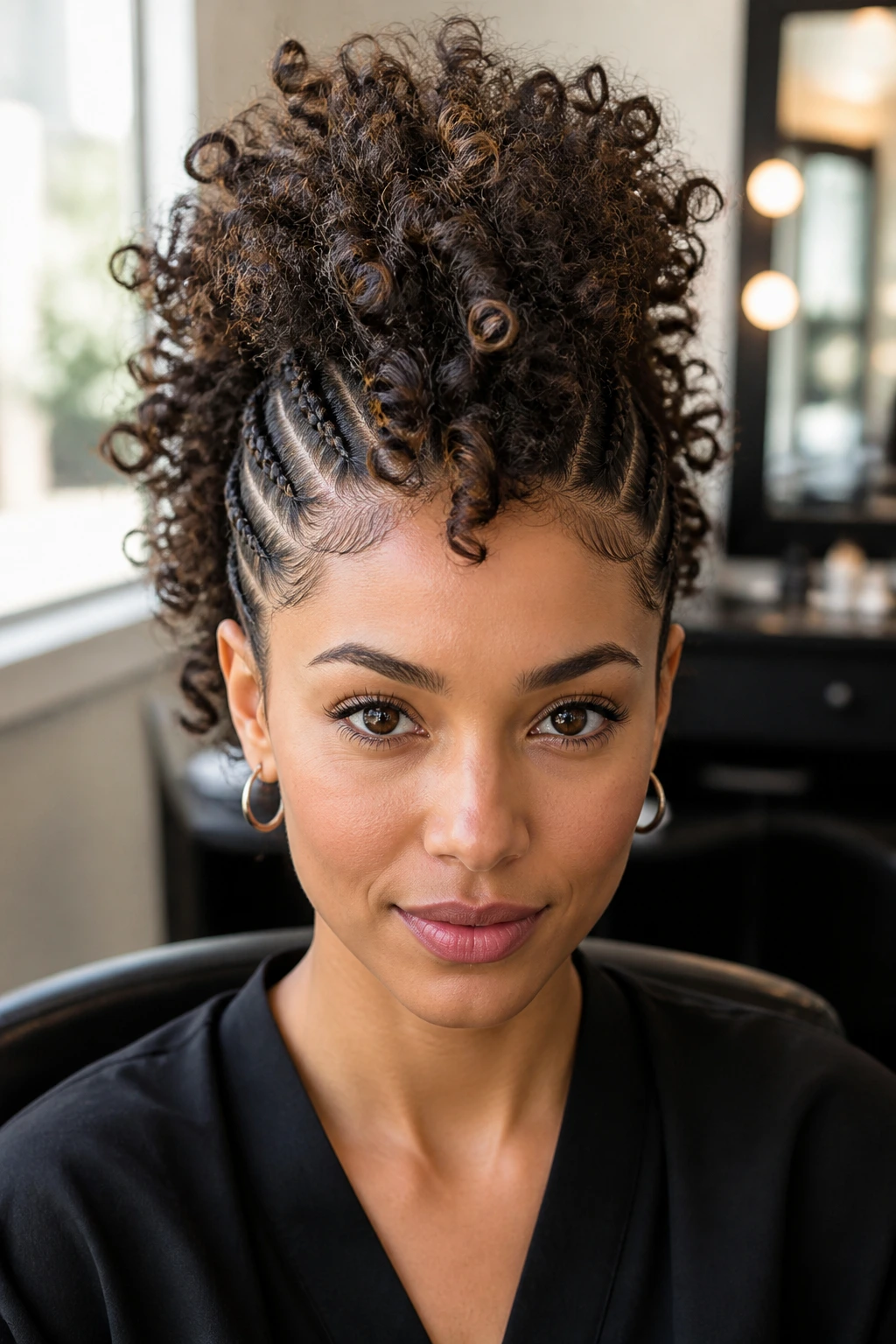
A curly mohawk can look dramatic, but on medium hair it’s mostly a shape trick. The sides are braided or pinned tight, and the center strip of curls is left high and full. That creates a strong silhouette without requiring a huge amount of length.
Where the Shape Comes From
The center section needs lift at the root and definition through the length. If the top lies flat, the whole style loses its edge. Use a bit of mousse at the roots, then finger-coil a few front pieces if the curl pattern at the hairline tends to wander.
- Braid or pin the sides close to the scalp.
- Leave the center curls untouched once they’re set.
- Add a few bobby pins under the mohawk ridge if your hair is heavy.
This style is a little bolder than the rest, and that’s the point. Medium curly hair can handle it.
21. Side Clip Sweep With a Deep Part
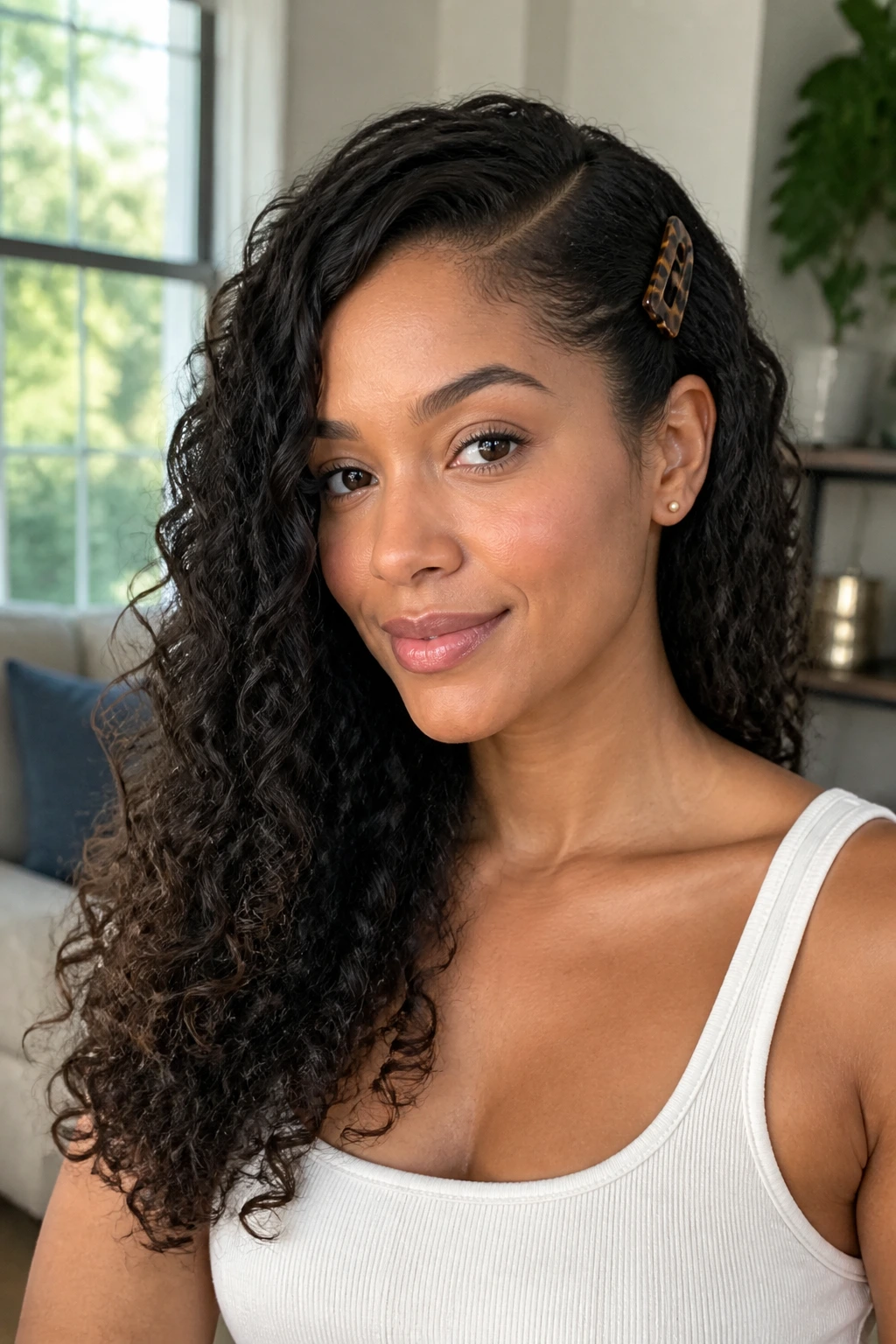
A side clip sweep is the easiest style on this list, and that’s why it earns a place. Make a deep side part, sweep the heavier side back, and pin it with a clip that can hold the weight. The remaining curls fall across one side of the face, which softens the look without hiding the texture.
The clip needs to be strong enough to hold curls that have actual volume. Tiny barrettes slip. A larger metal clip or a wide claw works much better. If your hair is very dense, twist the pinned section once before clipping so it stays put.
This is a good option when you want your curls down but out of your eyes. It takes less time than a full updo and looks more deliberate than simply tucking hair behind one ear.
22. Stretched Blowout With Bent Ends
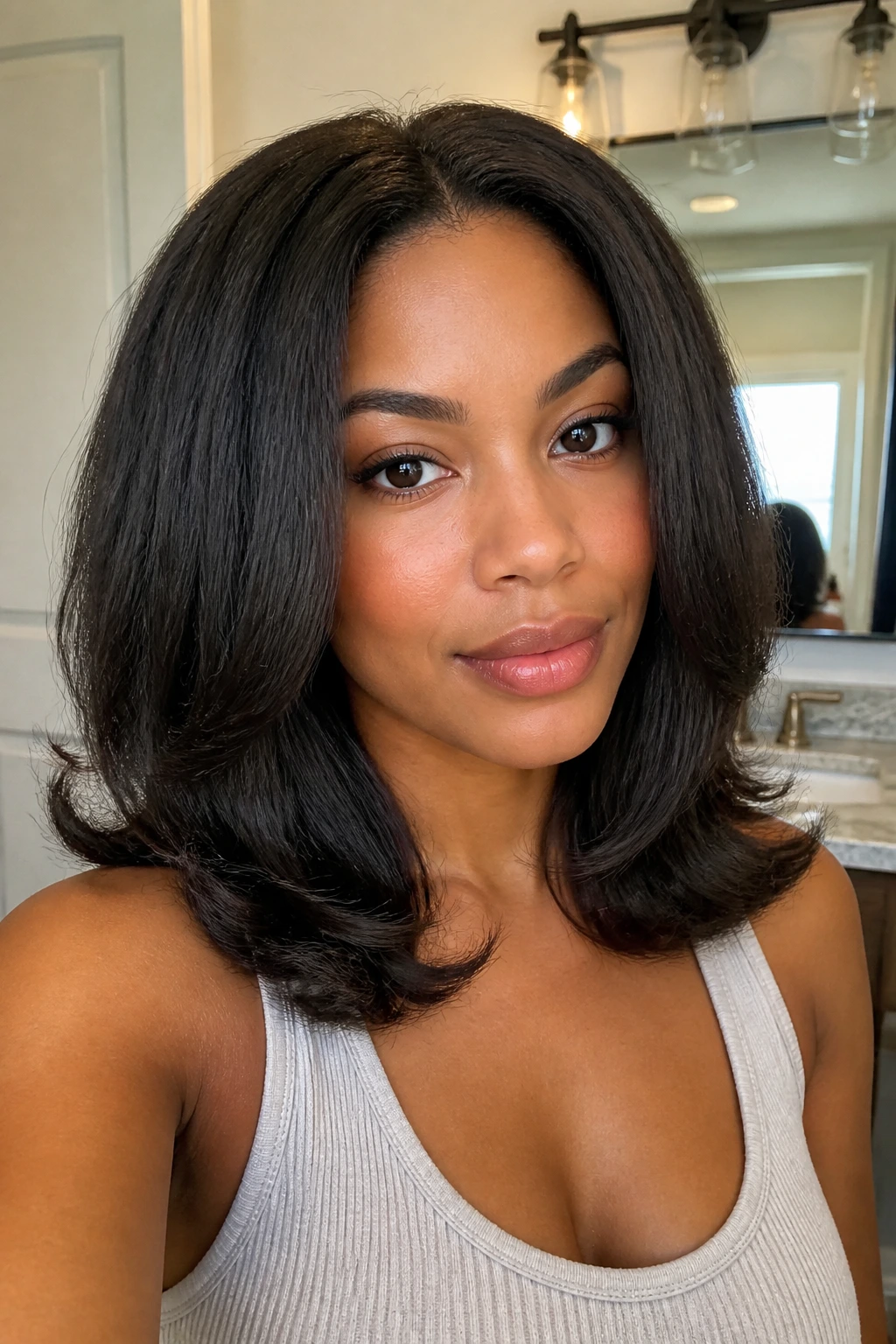
A stretched blowout on medium curly hair is the style you choose when you want length to show. The curl pattern is softened, not erased, so the hair falls lower and the ends flip or bend instead of coiling all the way up. That makes medium hair look longer and gives you a different silhouette for a few days.
This works best with heat protection and low tension. You are not chasing bone-straight hair. You are shaping the curl so it hangs more freely. If the ends are left with a little bend, the style still feels like curly hair instead of straight hair trying on a wig.
It’s a nice change when you’ve worn a wash-and-go for a while and want a different line around the shoulders. Just don’t overdo it with heat. Dry, rough ends ruin the whole point.
23. Wet-Look Curly Set
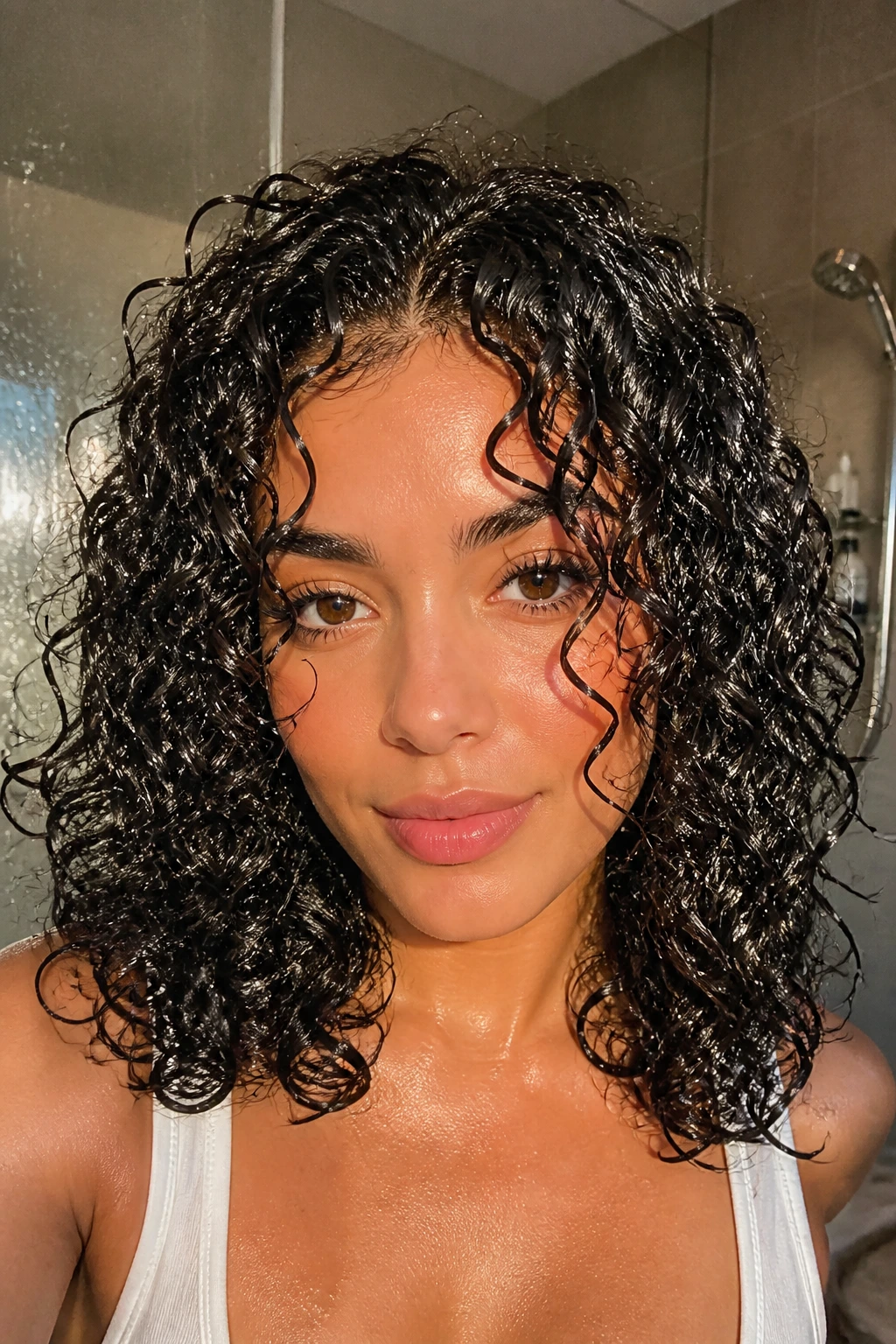
A wet-look set is one of those styles that can look fresh or cheap depending on the product and the amount. The winning version uses enough gel to keep the curls sleek and reflective, but not so much that they turn crunchy or flake. On medium hair, the shine can make the whole shape look sharper.
The Hold Game
Apply the gel to very damp hair, then use your fingers to smooth each curl clump in the direction you want it to fall. If the hair starts drying before you finish, mist it again. Uneven dampness is what causes the top to dry frizzy while the lower sections stay shiny.
- Use a strong-hold gel with a clean finish.
- Keep the curl clumps medium-sized, not tiny.
- Do not touch the hair while it’s drying.
This is a look that asks for patience. The payoff is a smooth, defined curl shape that feels a little editorial without needing a salon blowout.
24. Tapered Shape With Flipped-Out Ends
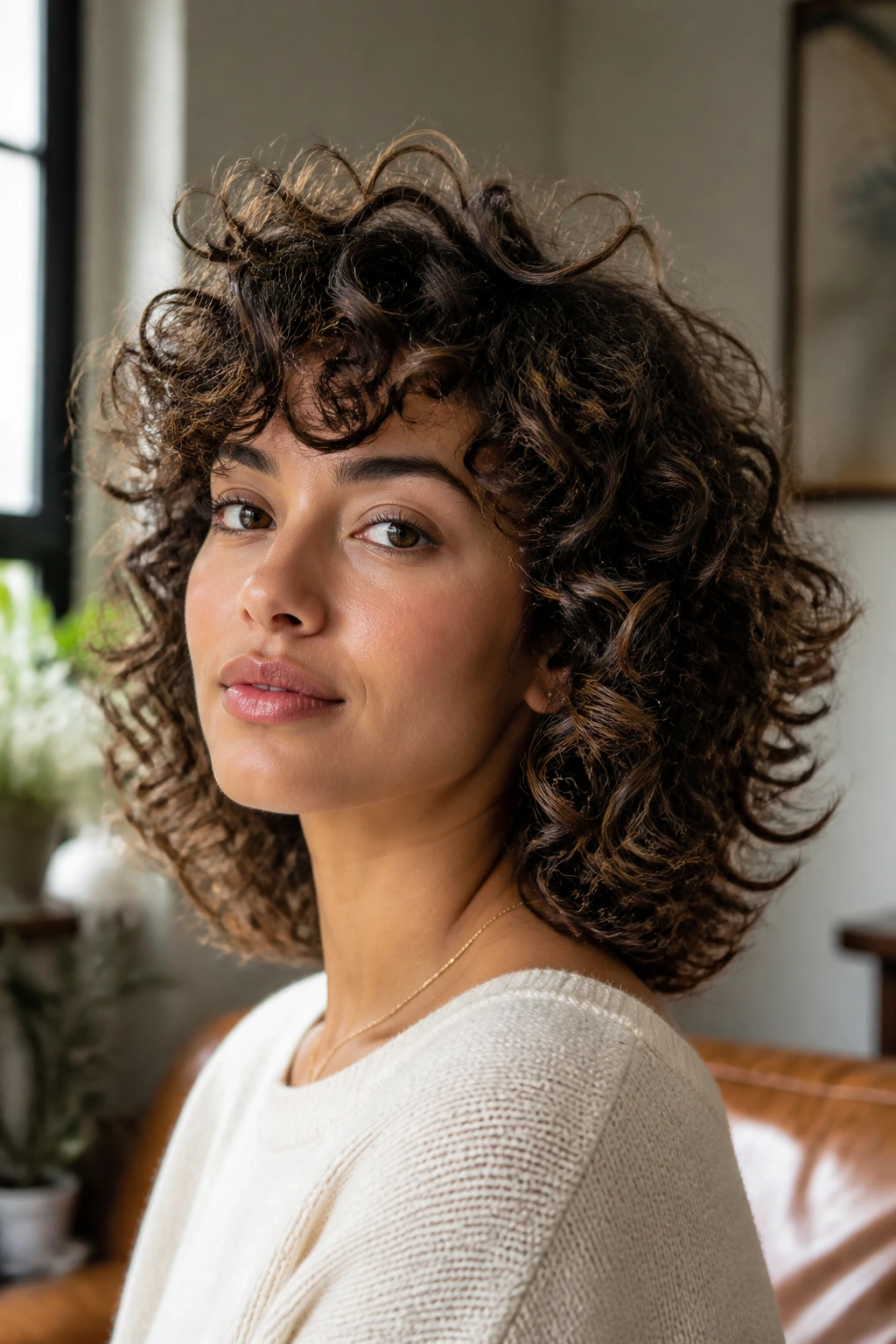
A tapered shape gives medium curly hair a smart outline. The top and crown stay a bit fuller, while the sides and ends taper softly so the hair doesn’t balloon outward in one solid block. When the ends flip out a little, the shape feels alive instead of stiff.
This is one of the better cuts for people whose curls lose direction by the shoulder line. The taper gives the eye a path to follow. The style also responds well to a diffuser and a light cream, because both help the curve of the cut show up.
What Keeps It From Looking Flat
The crown needs lift. The ends need separation. The middle section should be soft enough to move. That sounds obvious, but a lot of cuts miss one of those three things.
- Ask for a tapered outline, not a razor-thinned finish.
- Keep the front around the chin if you want more frame.
- Flip the ends with your fingers while they’re damp.
25. Wide Headband Style With Loose Volume
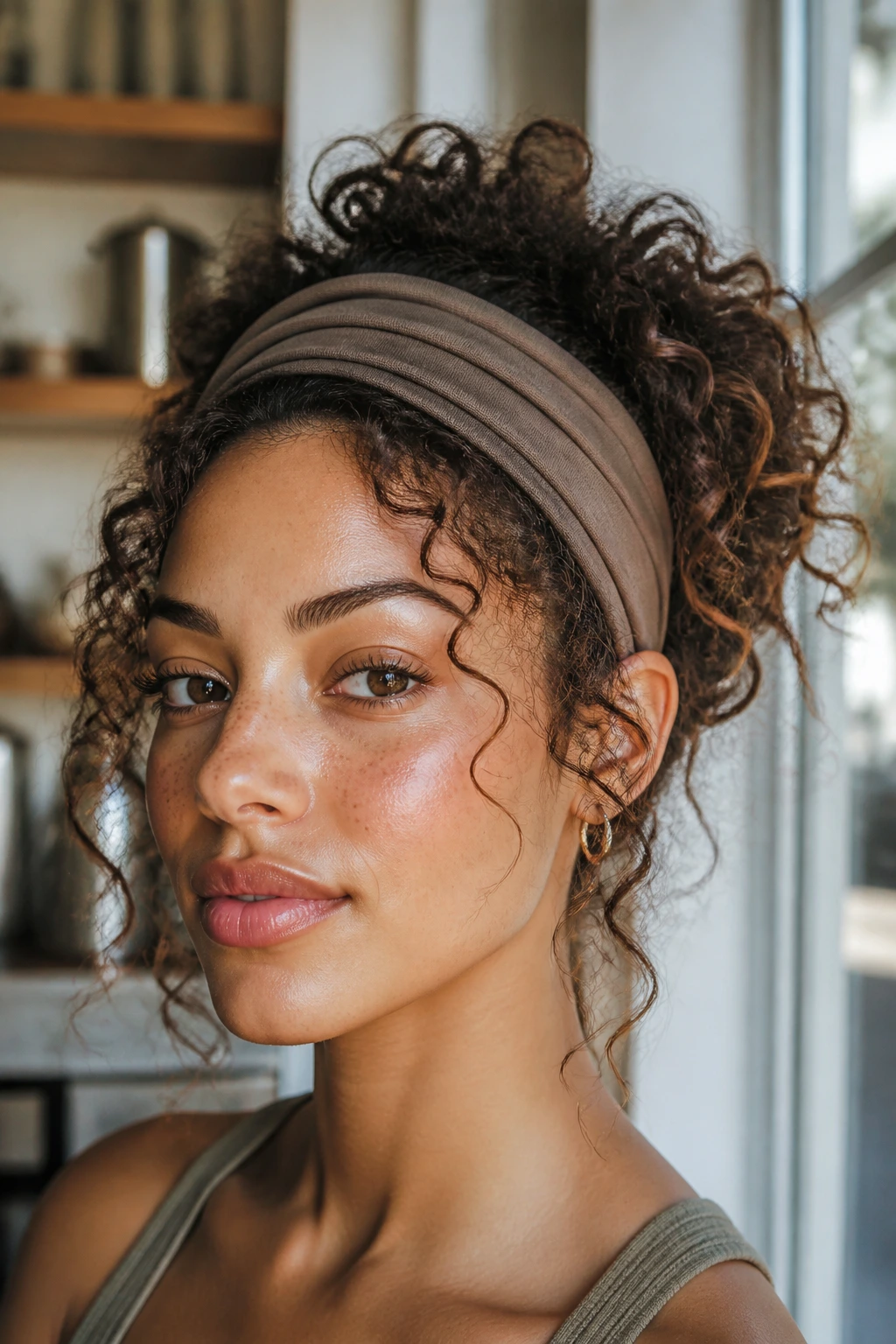
A wide headband is the easiest way to make medium curls look polished without making them stiff. Push the band back from the hairline, let the curls bloom above it, and keep the volume loose around the sides. The style works because it gives the front a clean frame while leaving the rest of the texture alone.
The headband should sit snug enough to stay put but not so tight that it dents the crown. Fabric bands tend to be kinder than hard plastic ones, especially if your curls are delicate or fine. If the hair near the face is short, tuck a few pieces behind the band instead of forcing them flat.
This is the look I’d hand to anyone who wants a quick answer for brunch, school drop-off, or a day when the top layer is behaving badly. It’s simple. It still counts.
How Medium Curls Keep Their Shape at Shoulder Length
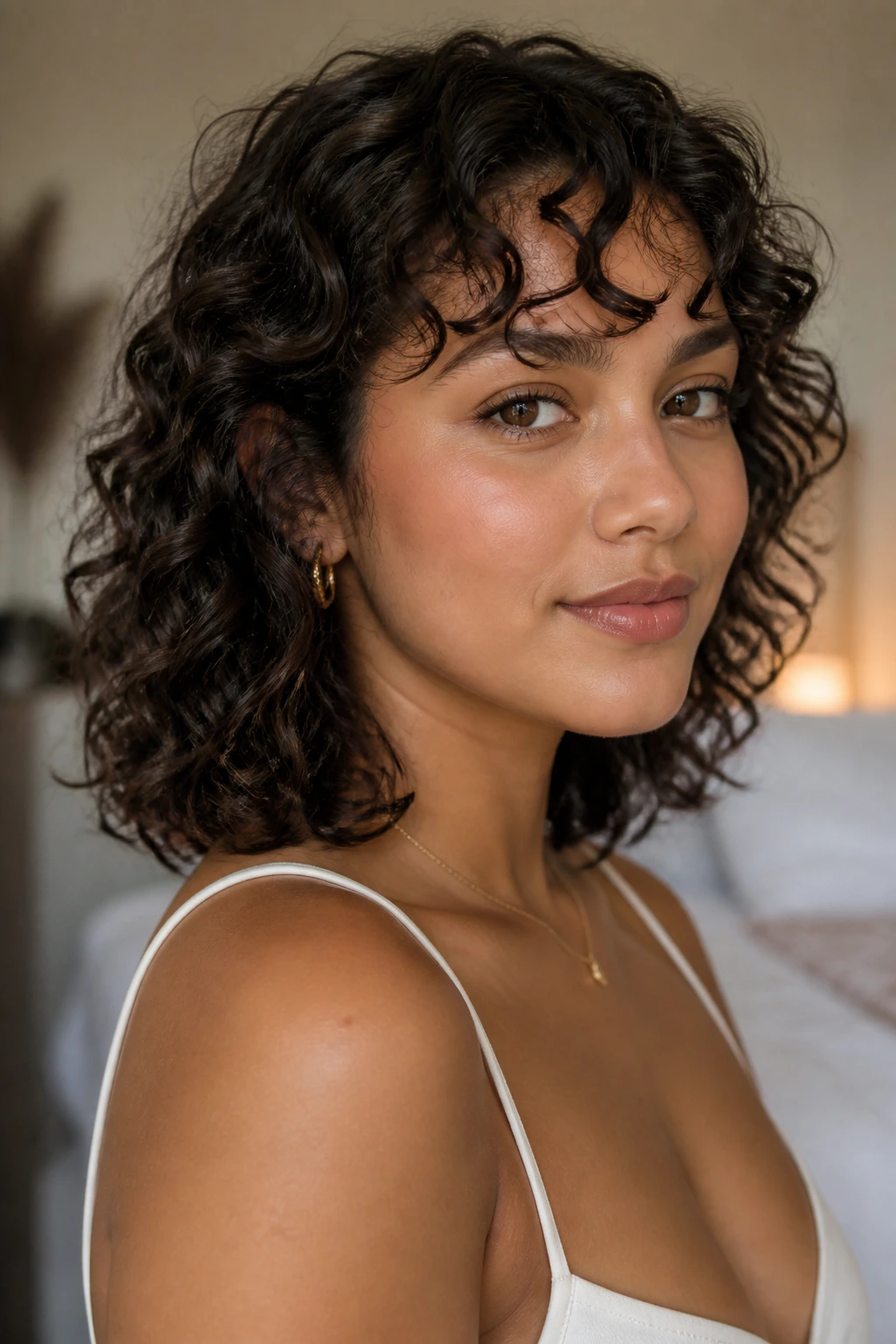
Medium curly hair lives or dies by where the weight sits. That sounds dry, but it isn’t. If the bulk hangs too low, the shape drags. If the crown is too light, the top puffs up and the sides widen. Shoulder length is the point where both problems can show up on the same head, which is why layers, parts, and product placement matter more here than they do on very short or very long hair.
A good medium-length curly shape needs three things: lift at the roots, movement through the middle, and enough control at the ends to keep them from fanning out. That’s why so many of the styles above rely on soft layering, a careful side part, or some kind of pinning. Those small decisions keep the silhouette from feeling unfinished.
Shrinkage plays a role too. A curl that looks like it falls just below the shoulders when wet may spring to the collarbone when dry. If you cut or style only for the wet state, you’ll miss the real shape. Drying the hair in its natural curl pattern, or at least checking a few finished curls while they’re fully dry, gives you a much better read.
The nice part is that medium length gives you options. You can wear it down and full one day, then twist half of it up the next without feeling like you’re wrestling a huge amount of hair. That flexibility is the whole reason this length stays popular with curly hair that wants both shape and movement.
The Tools That Make Curly Medium-Length Hair Easier
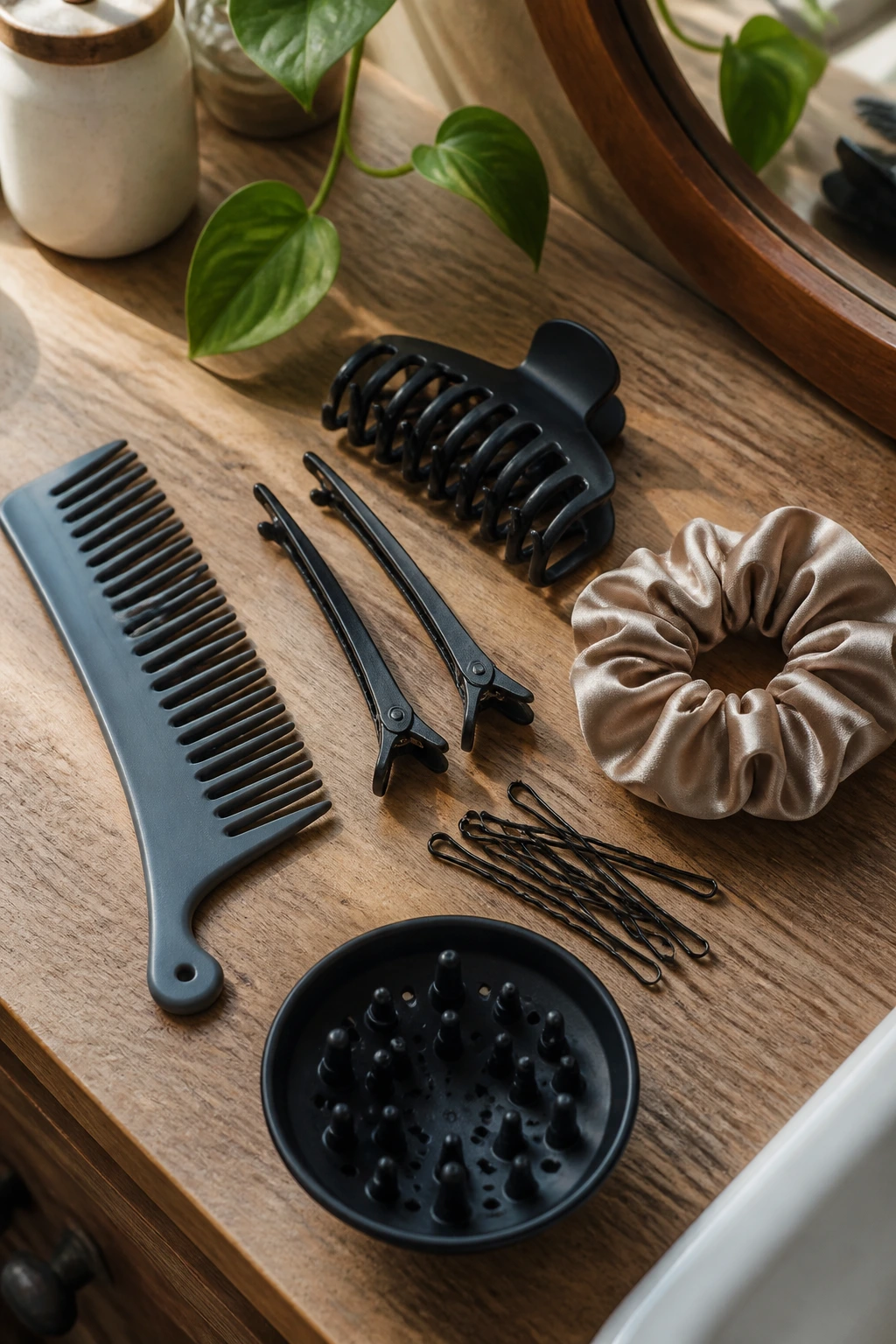
A few well-chosen tools save more frustration than a drawer full of random clips. Medium curly hair is usually dense enough to need grip, but not so long that you need special long-hair gadgets. I’d keep the kit simple and sturdy.
- Wide-tooth comb: Good for detangling in the shower or on wet hair without ripping apart curl clumps.
- Spray bottle: Essential for refreshing parts of the hair that dry too fast while you style.
- Microfiber towel or cotton T-shirt: Cuts down on rough frizz better than a regular bath towel.
- Duckbill clips: Useful for root clipping, setting parts, or holding sections while they dry.
- Claw clip with strong spring: Better than decorative versions that crack under thick curls.
- Satin scrunchies: Safer for puffs, ponytails, and half-up styles because they leave fewer dents.
- Bobby pins in two sizes: Small ones for detail, larger ones for heavier buns and braids.
- Diffuser attachment: Helps support shape without blasting the curl apart.
- Soft brush or edge brush: Handy for sleek styles, low ponies, and smoothing the hairline.
- Satin bonnet or pillowcase: Keeps styles from rubbing rough overnight.
If you have thick curls, prioritize grip. If your curls are fine, prioritize lightness. That one decision changes how every tool behaves.
Product Choices That Actually Change the Result
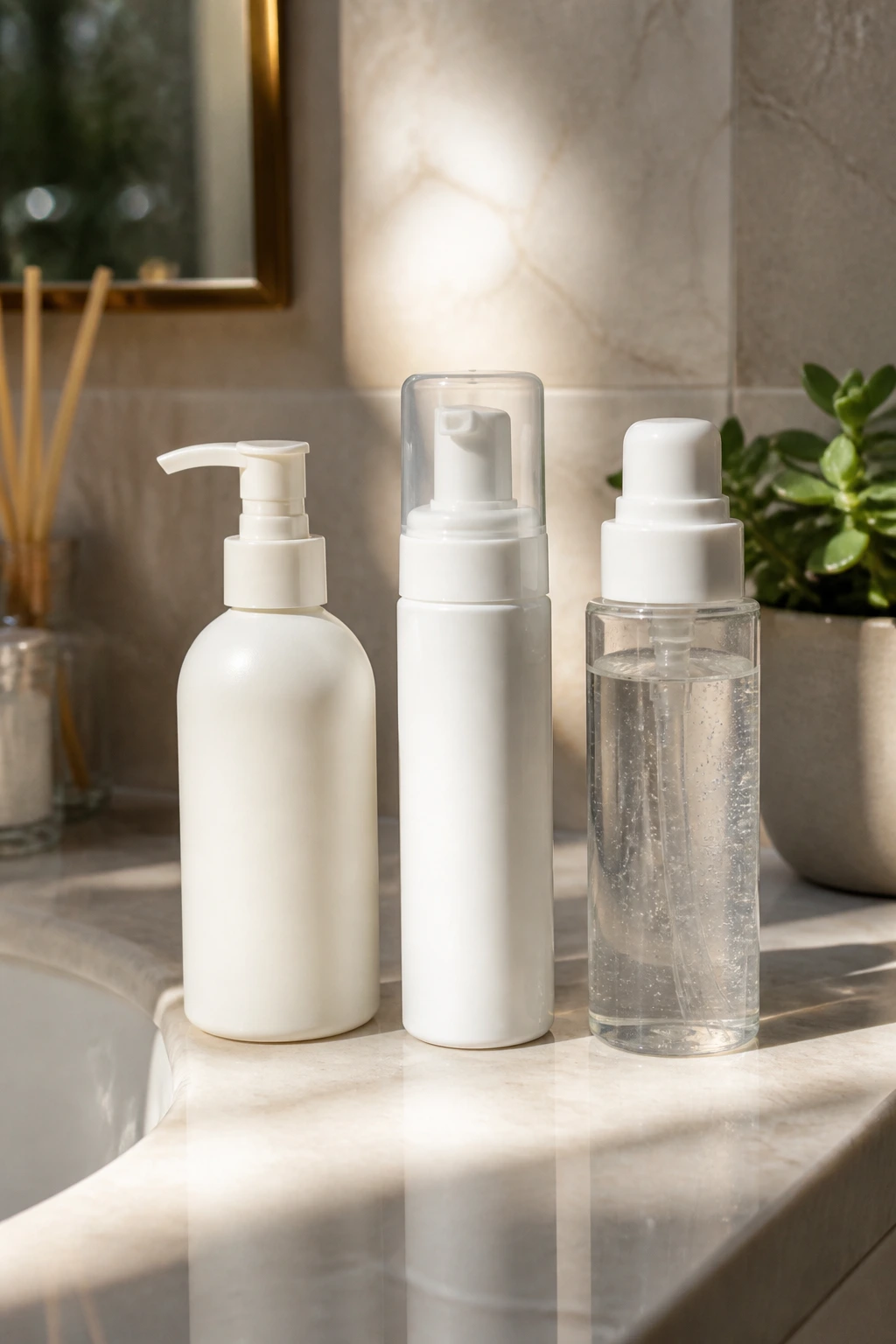
Curly medium hair does not need every styling cream on the shelf. It needs the right mix of hold and slip. Too much butter or oil can flatten the crown by midday. Too little conditioner or leave-in, and the ends get dry and frizzy fast. The sweet spot is usually a light leave-in, then a curl cream or mousse, then a gel if the style needs longer hold.
Mousse is underrated on medium curls. It gives lift without weighing the hair down, which matters a lot for styles like the deep side part, the rounded cut, or the wash-and-go. Cream is better when the hair feels rough or dry, but heavy cream on fine curls can turn the top limp in a hurry. Gel gives structure, especially around parts, braids, slick ponytails, and wet-look sets.
If you want shine without crunch, use a small amount of oil after the hair is fully dry. Not before. Oil can block water and product from setting the curl if you add it too early. That’s one of those mistakes people make because the hair feels soft in the moment and then looks flat an hour later.
Think in layers, not one magic bottle. That approach holds up better than buying five products that all promise the same thing.
How to Get the Most Out of These Styles on Busy Mornings
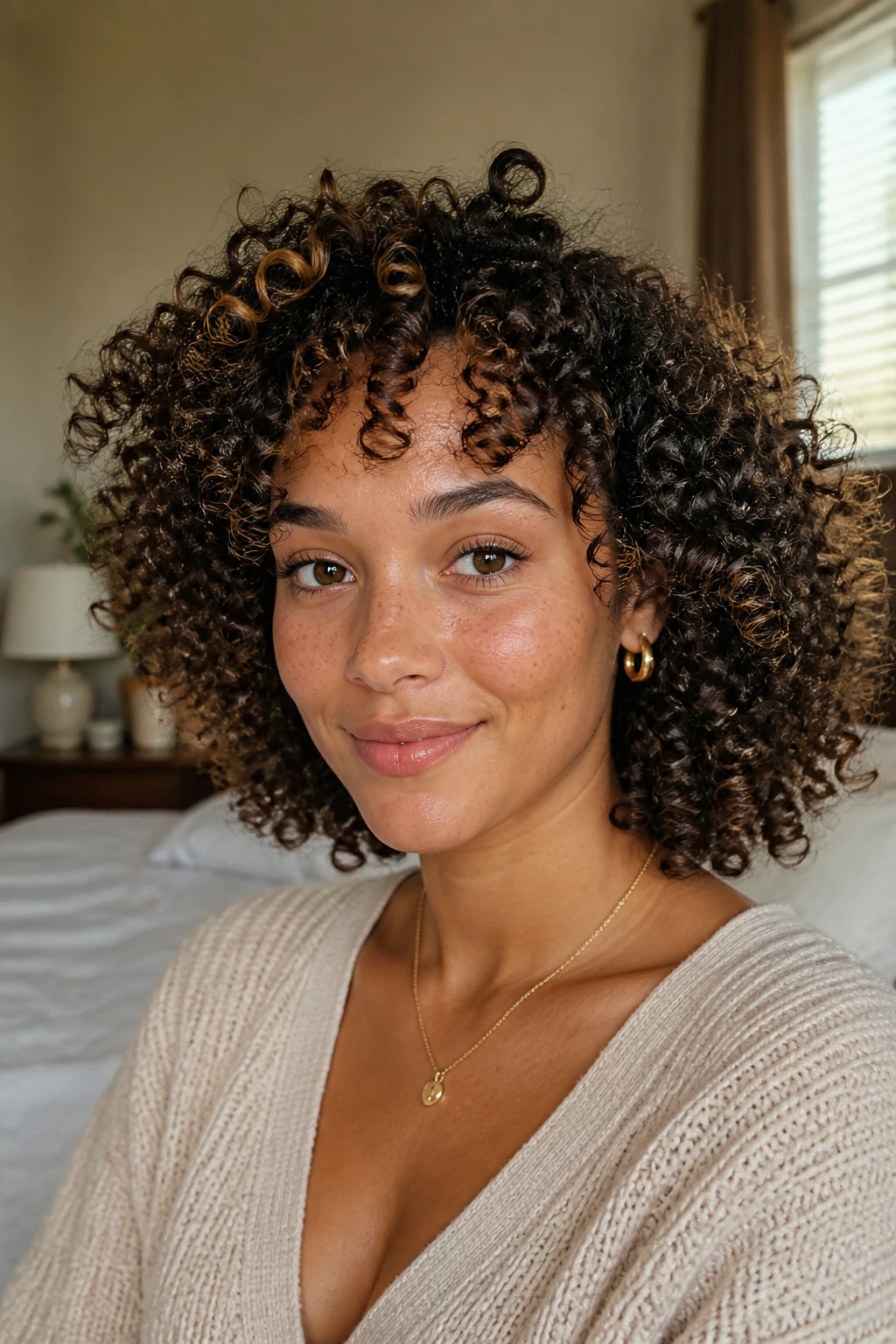
Shape the crown first: If the roots are flat, fix that before you worry about the ends. A few root clips, a quick flip of the part, or a little mousse at the scalp can save the whole style.
Dry in sections: Medium curls dry unevenly, especially around the nape and behind the ears. If you style one side carefully and ignore the other, the finished shape will show it.
Use your hands less than you think: Touching curls while they’re drying breaks the clumps apart. That can be nice on day three, but on wash day it usually just makes frizz.
Keep one rescue product nearby: A small spray bottle with water and a touch of leave-in helps re-knit curls that started to dry too fast. A dab of gel on the hairline fixes the front faster than starting over.
Choose one focus point: If the style is a braid, make the braid crisp and let the curls be loose. If the style is a slick ponytail, keep the crown smooth and let the tail stay textured. Trying to perfect everything at once gets messy fast.
Common Mistakes That Change the Silhouette
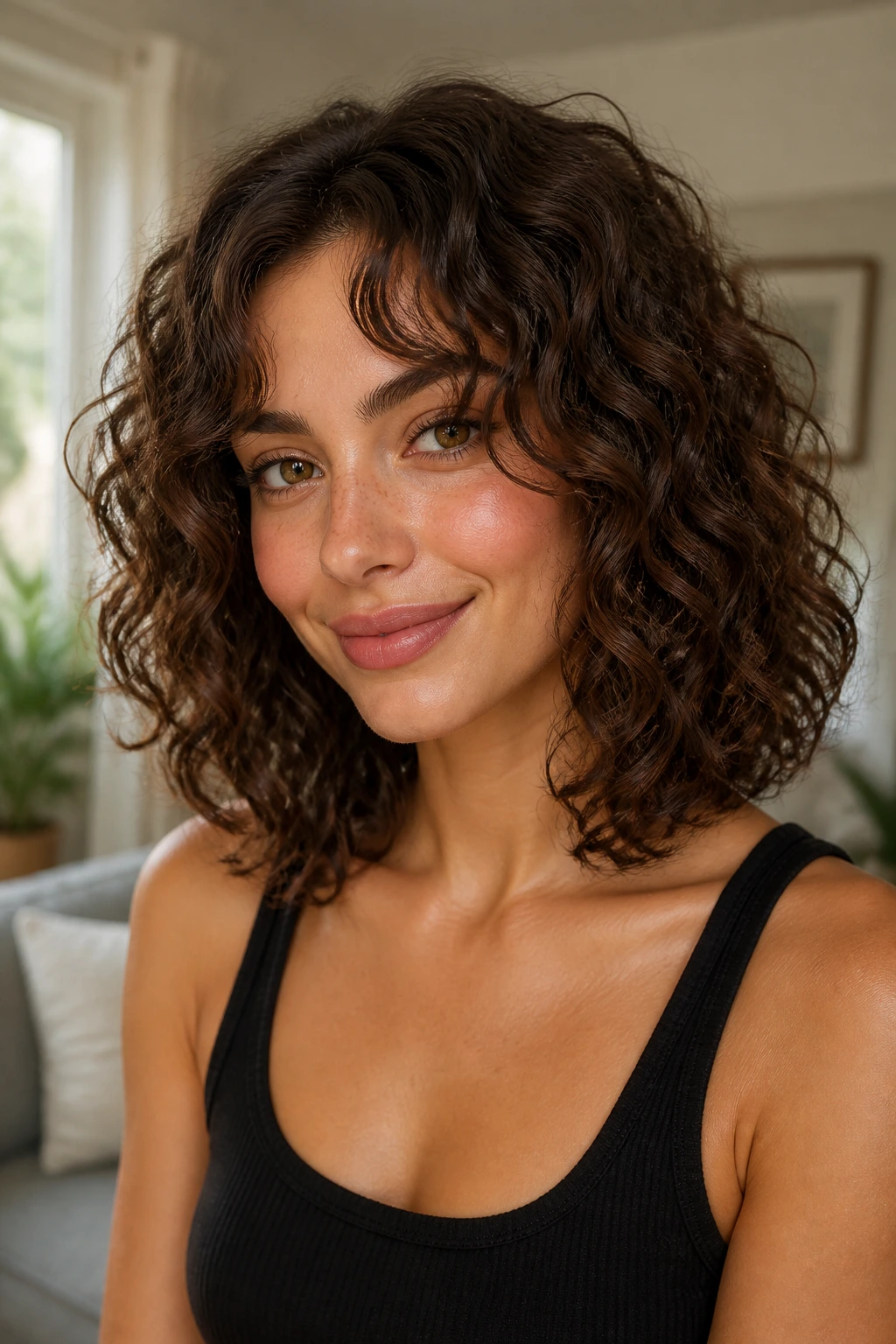
The first mistake is cutting or styling for wet hair only. Wet curls lie to you. They stretch, sag, and hide how much they’ll shrink once they dry. If you don’t check the finished shape, you can end up with bangs that vanish, layers that kick out, or a crown that sits too low.
The second mistake is loading on heavy cream at the roots. That’s how medium curls lose their lift. The hair looks soft at first, then the top collapses and the ends get greasy. Keep richer product through the mid-lengths and ends, not right at the scalp.
Another common problem is making every style too tight. Tight ponytails, tight braids, tight buns — they all pull the curl pattern flat and leave you with dents when you take them out. Medium curls do better with tension that’s secure but not sharp.
People also forget about the part line. A jagged part or a part that shifts after drying can make a good style look accidental. Set the part when the hair is damp and leave it alone while it dries.
Last one: trimming too seldom. Curly medium hair with split or frayed ends loses shape fast. The silhouette needs clean ends to sit right, especially at shoulder length where the edge of the cut is doing a lot of visual work.
Variations to Match Your Curl Pattern and Routine
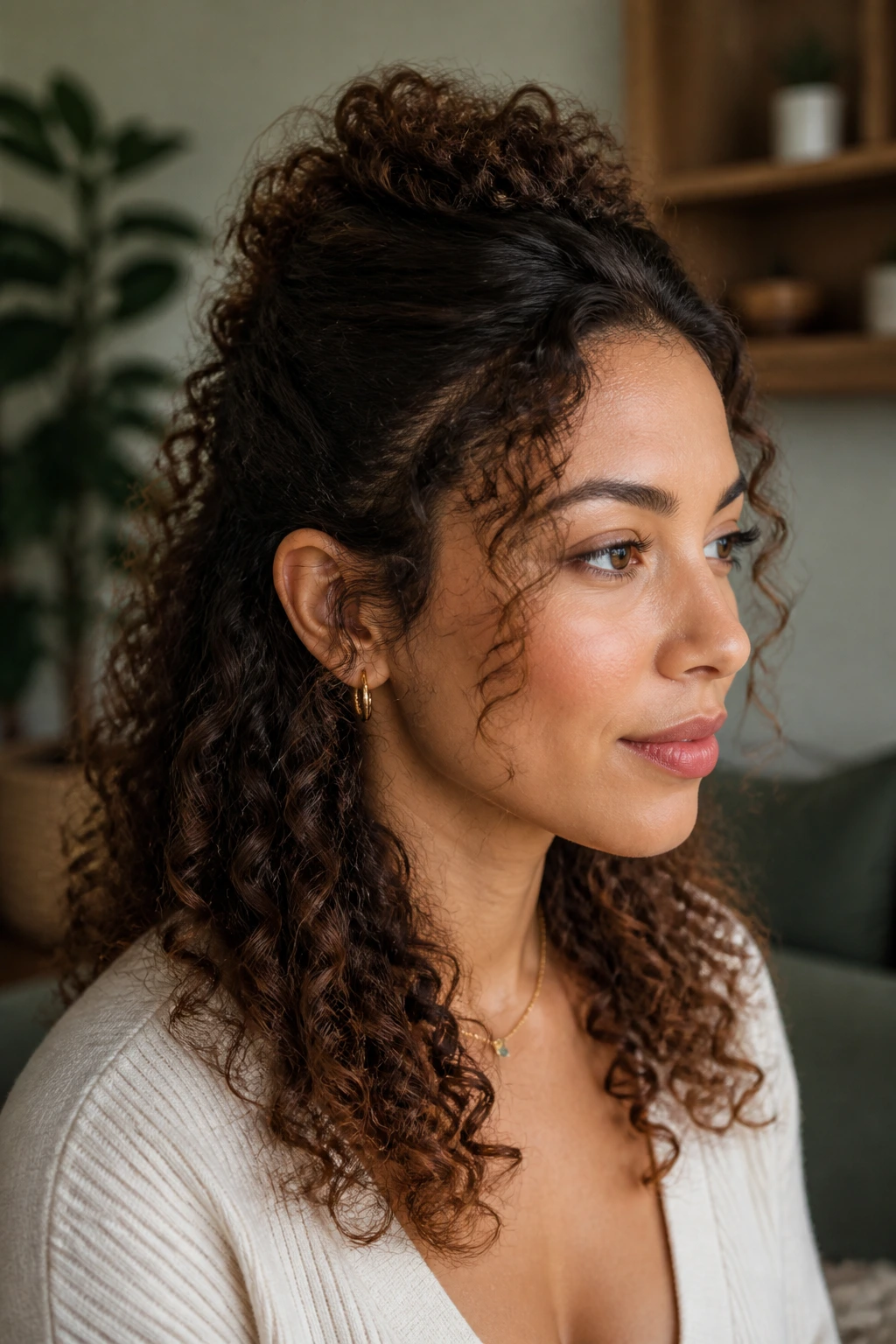
Fine-Curl Lift: If your curls are soft and light, swap heavy creams for mousse and a light gel. The goal is movement without collapse, so keep the crown airy and avoid oversized accessories that drag the hair down.
Thick-Curl Control: Dense curls need stronger clips, firmer elastics, and a little more sectioning. Styles like the low puff, braided crown, and sleek ponytail usually hold better because they gather the bulk instead of fighting it.
Loose-Wave Ease: For 2A to 2C hair, half-up styles, side clips, and the collarbone lob tend to look best. Too much structure can make the hair look overworked, so use softer product and let some strands stay loose.
Tighter-Coil Shape: For 3C to 4A patterns, rounded cuts, mini twists, low puffs, and halo braids keep the profile neat. These styles respect shrinkage instead of trying to flatten it.
Heat-Free Stretch: If you don’t want to use heat at all, try twist-outs, banded stretching, or a stretched blowout created with tension and air drying. That gives you more length on medium hair without sacrificing texture.
How to Keep the Shape Between Wash Days
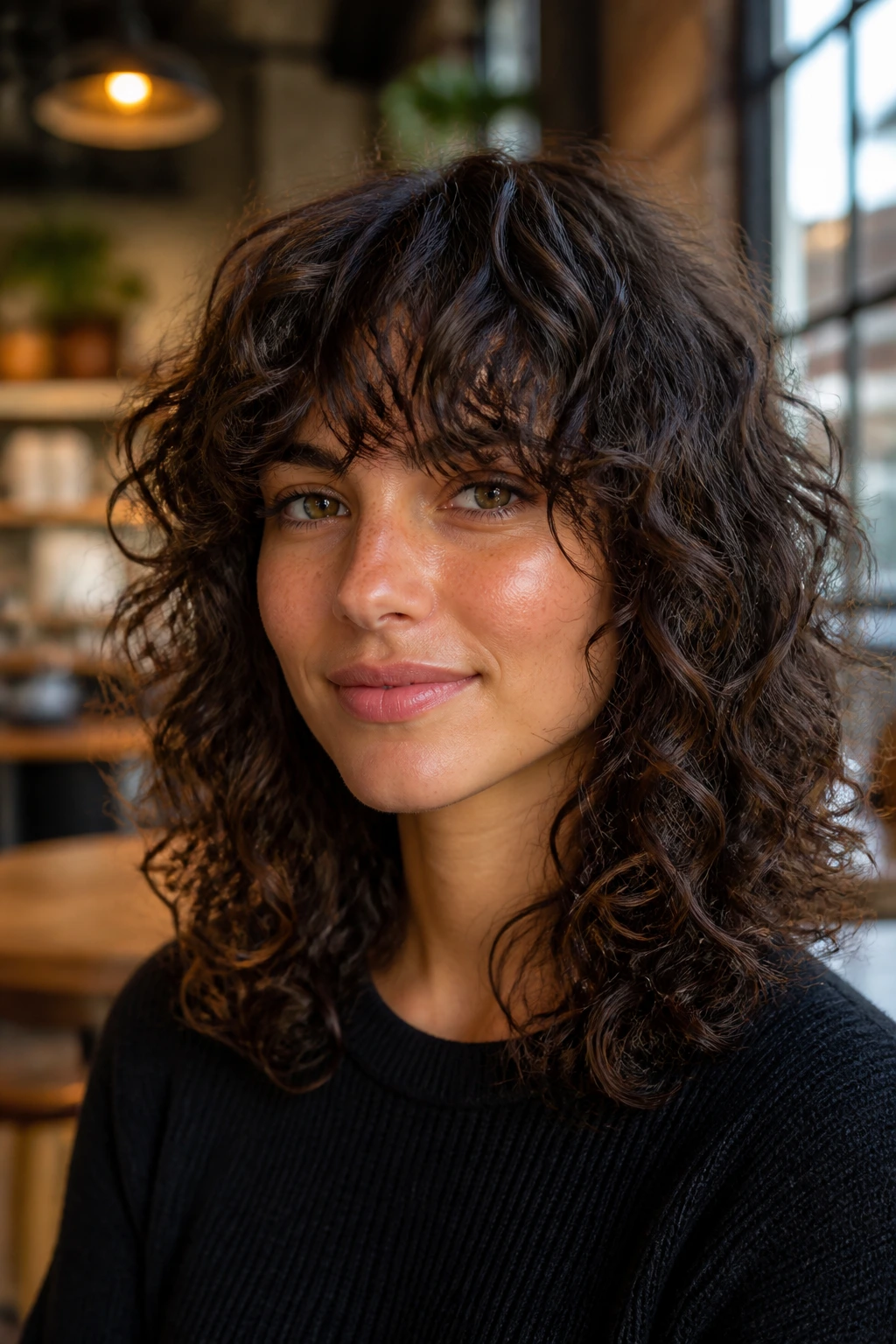
Medium curly styles usually hold their best shape for two to four days, depending on how much product you used and how much humidity the hair faced. Wash-and-go styles often look strongest on day one and day two, then start to widen at the sides. Braided or pinned styles can hold a little longer if the pins stay put and the nape doesn’t rub too much.
Sleep matters here. A satin bonnet works best for loose curls and wash-and-gos. If you hate bonnets, use a satin pillowcase and pineapple the hair loosely at the top of the head with a scrunchie. For low ponies, puffs, and chignons, wrapping the hairline with a silk scarf keeps the edges from roughing up overnight.
Refreshing should stay light. Mist the ends with water, smooth in a pea-sized amount of leave-in, then scrunch the curl back into shape. If the crown is flat, don’t soak the whole head. Lift the top with your fingers, clip the roots for a few minutes, and let the hair reset.
Trims are part of maintenance too. For a precise shape like a lob, shag, or wolf cut, every 8 to 12 weeks keeps the outline honest. For looser updos and protective styles, you can stretch that a little longer, but split ends will still show up where the curl bends around the shoulders.
What to Avoid When Styling Medium Curly Hair
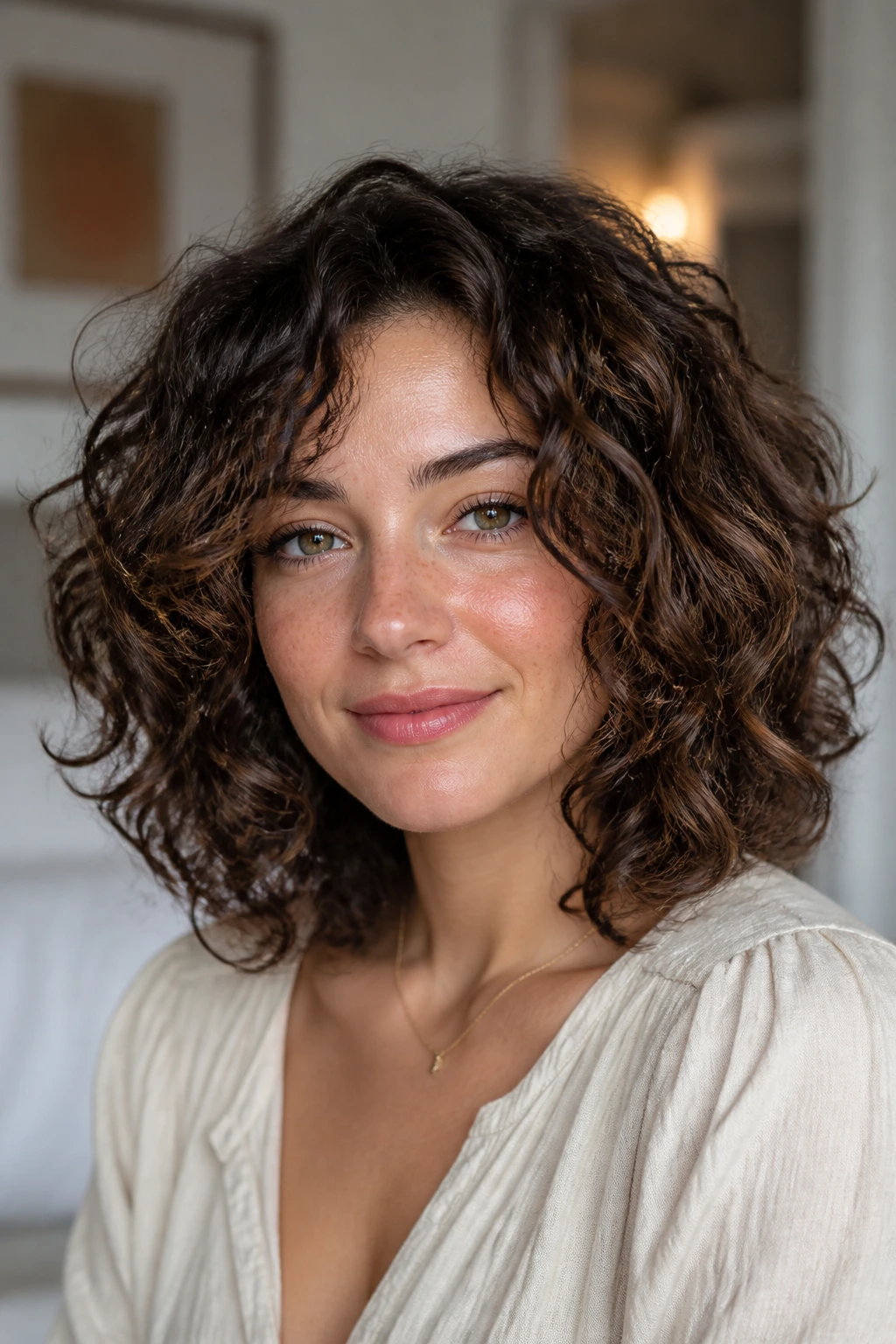
Starting with dry, tangled hair: Medium curls need some slip before you shape them. If you try to force braids or a part into dry tangles, the curl clumps break apart and frizz follows.
Using the same product everywhere: The crown, mid-lengths, and ends do not need identical treatment. The crown usually needs lift, the ends usually need a little more moisture, and the middle needs balance.
Clipping too aggressively: Hard clips and tight elastics leave dents that show for hours. If a style only looks good when it’s painfully tight, it’s probably the wrong style for that day.
Ignoring shrinkage: A style that looks shoulder-length wet can sit several inches shorter dry. That changes where buns, braids, and bangs should land.
Skipping the ends: The ends are what tell people whether the style feels polished or unfinished. If they’re fuzzy, dry, or bent in the wrong direction, the whole look can feel off.
Piling on oil too early: Oil is a finisher, not a base. Put it on before the curl sets, and you’ll block hold right where you need it most.
Questions People Ask About Medium Curly Hairstyles
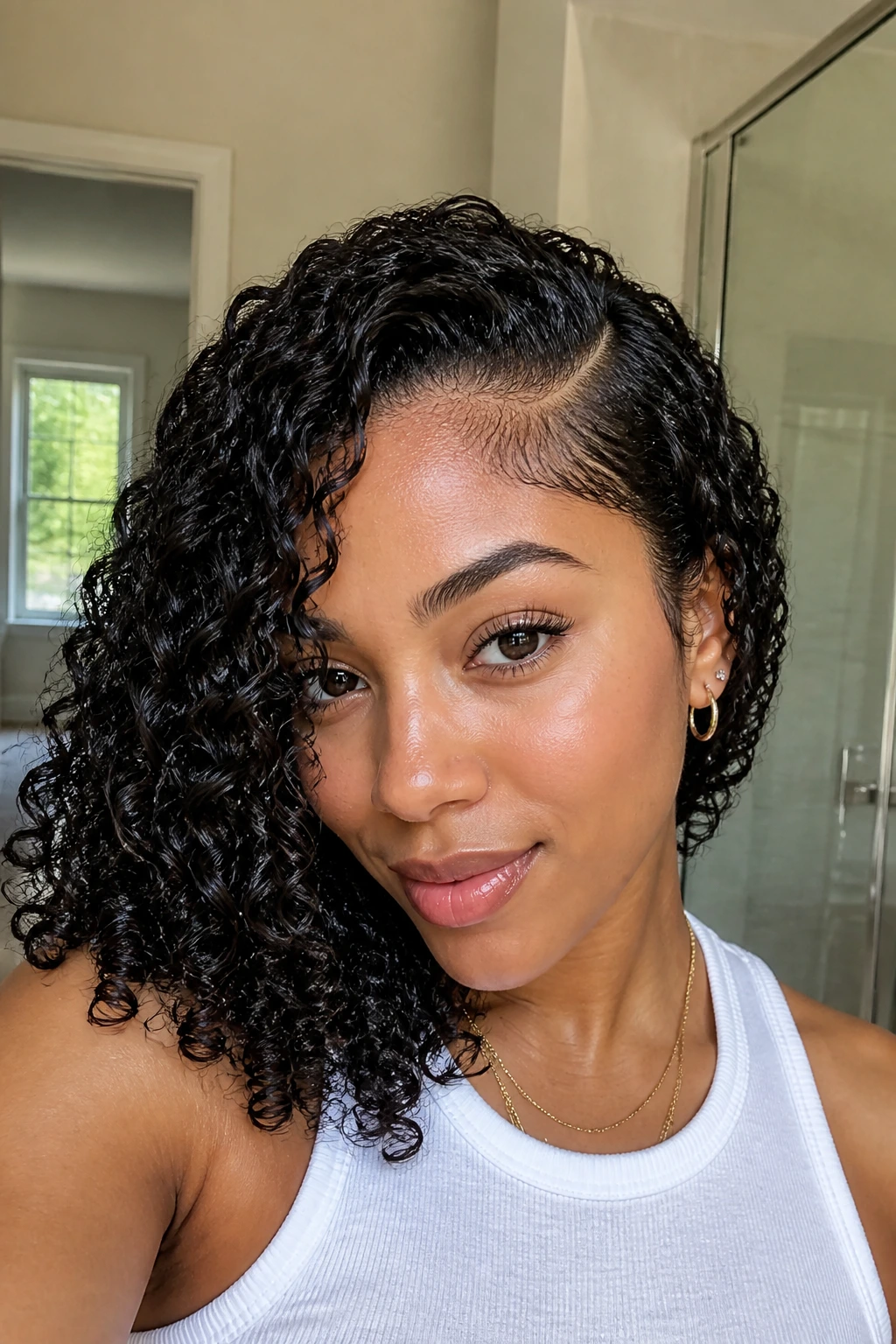
What haircut makes medium curly hair easier to style?
A layered lob or a rounded shoulder-length cut usually gives the best balance of shape and flexibility. Those cuts keep the curls from turning into one heavy block at the bottom, and they still leave enough length for clips, braids, and puffs.
How do I keep medium curls from looking triangular?
You need lift at the crown and less weight at the bottom. Soft internal layers, a side part, root clipping, and a lighter product at the roots all help the hair sit with more curve and less width.
Can these styles work on wavy hair too?
Yes, especially the collarbone lob, deep side part, headband look, half-up puff, and side clip sweep. Wavy hair usually needs less product and more shape placement, because the bend is looser and can flatten faster.
What product should I use first: cream, mousse, or gel?
Start with a light leave-in, then choose mousse for lift, cream for softness, or gel for hold. If your style needs both body and staying power, mousse first and gel second is usually the safest order.
Why does my crown go flat while the ends stay big?
That usually means the hair at the roots is too heavy or too wet for too long. Use less product at the scalp, dry the roots first, and clip them up while the lengths finish setting.
How often should medium curly hair be trimmed?
Every 8 to 12 weeks keeps most medium curly shapes clean, especially if you wear a cut with layers or bangs. If you mostly wear protective updos, you can stretch that a bit, but the ends still need regular cleanup.
Which styles hold up best in humidity?
Low puffs, braids, mini twists, and sleeker styles like the low ponytail or crown braid usually hold better than loose wash-and-go shapes. Humidity loosens curl definition, so styles that control the hairline and gather the length tend to last longer.
Can I do these without heat?
Yes. Most of them were built for natural texture, and a few — like the wolf cut, shag, puff, and twist styles — actually look better without straightening first. Heat can be helpful for stretching, but it is not required.
The Shoulder-Length Sweet Spot
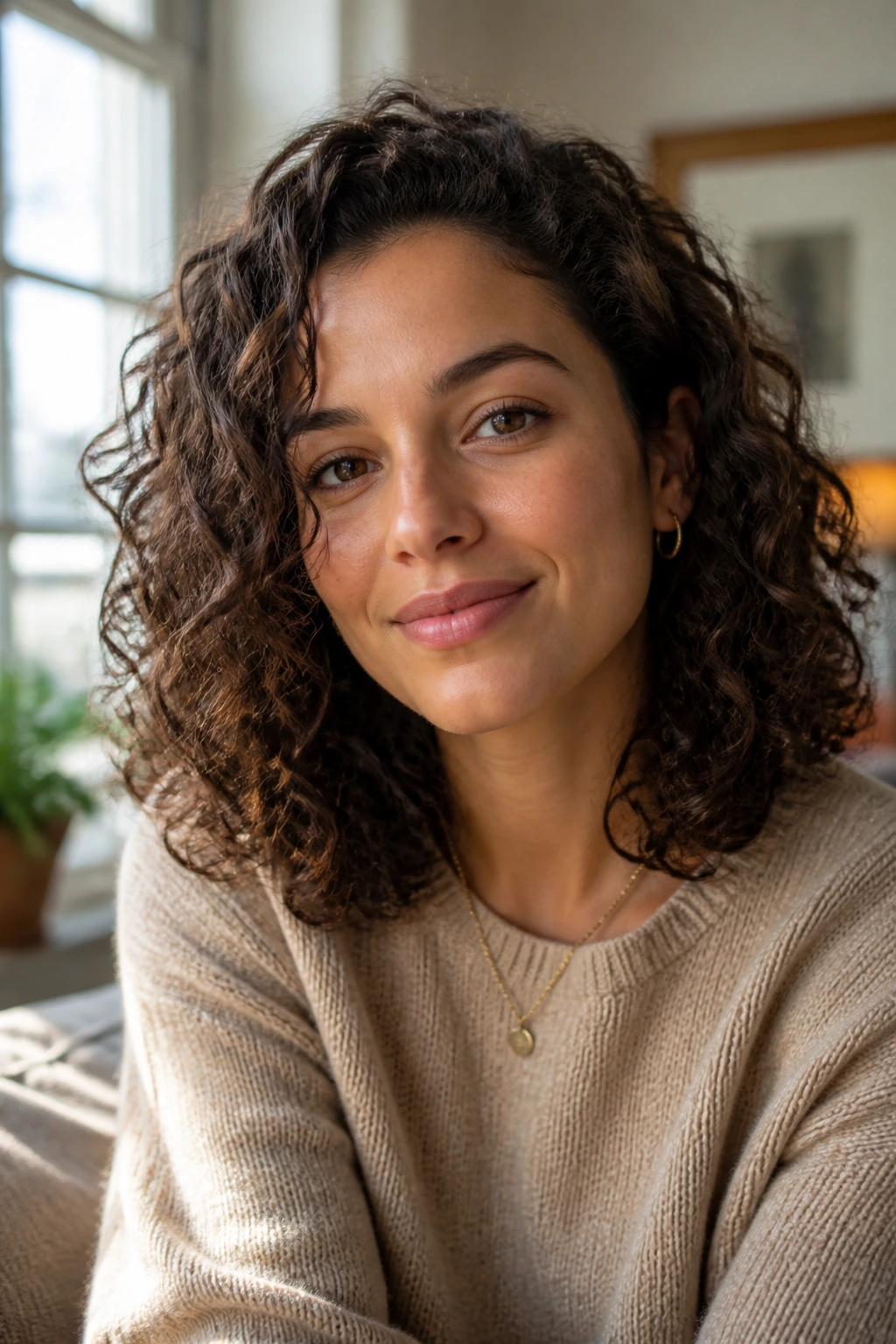
Medium curly hair earns its keep because it gives you choices without demanding a full-time styling job. That’s the part people miss. You can wear the shape full and loose, clip it up, braid it back, or smooth it into something cleaner when the day calls for it. The length is enough to play with, but not so much that every style turns into a production.
If you get the cut right and use the right amount of hold, the whole head starts to behave better. The curls sit where they should, the crown stops fighting the rest of the shape, and the styles above begin to feel less like work and more like options you can reach for without thinking too hard.
Pick one cut that gives you a better outline, then keep one fast updo and one polished style in reserve. That combination tends to cover real life better than chasing a dozen different routines.