



Square faces can carry a lot of hair, but they punish lazy layering. Long lengths that drop straight from the cheekbone to the collarbone can make the jaw read heavier than it is, while the right layers break that line up and let the face breathe.
Lots of layers for long hair and square faces work best when they move around the angles instead of sitting on top of them. The sweet spot is usually somewhere near the cheekbone, below the jaw, or high enough at the crown to give lift without turning the whole cut into a shaggy shelf. Too many people ask for “layers” and end up with the same blunt shape, only busier. Busy isn’t the same as soft.
I’ve always liked layered cuts on square faces when the hair still feels long after the haircut. The best ones don’t steal length. They trim the visual weight, bend the eye upward, and leave the ends with enough density that the whole thing still looks expensive, even when it’s just air-dried and scrunched with a little cream.
Why These Layers Work So Well on Square Faces
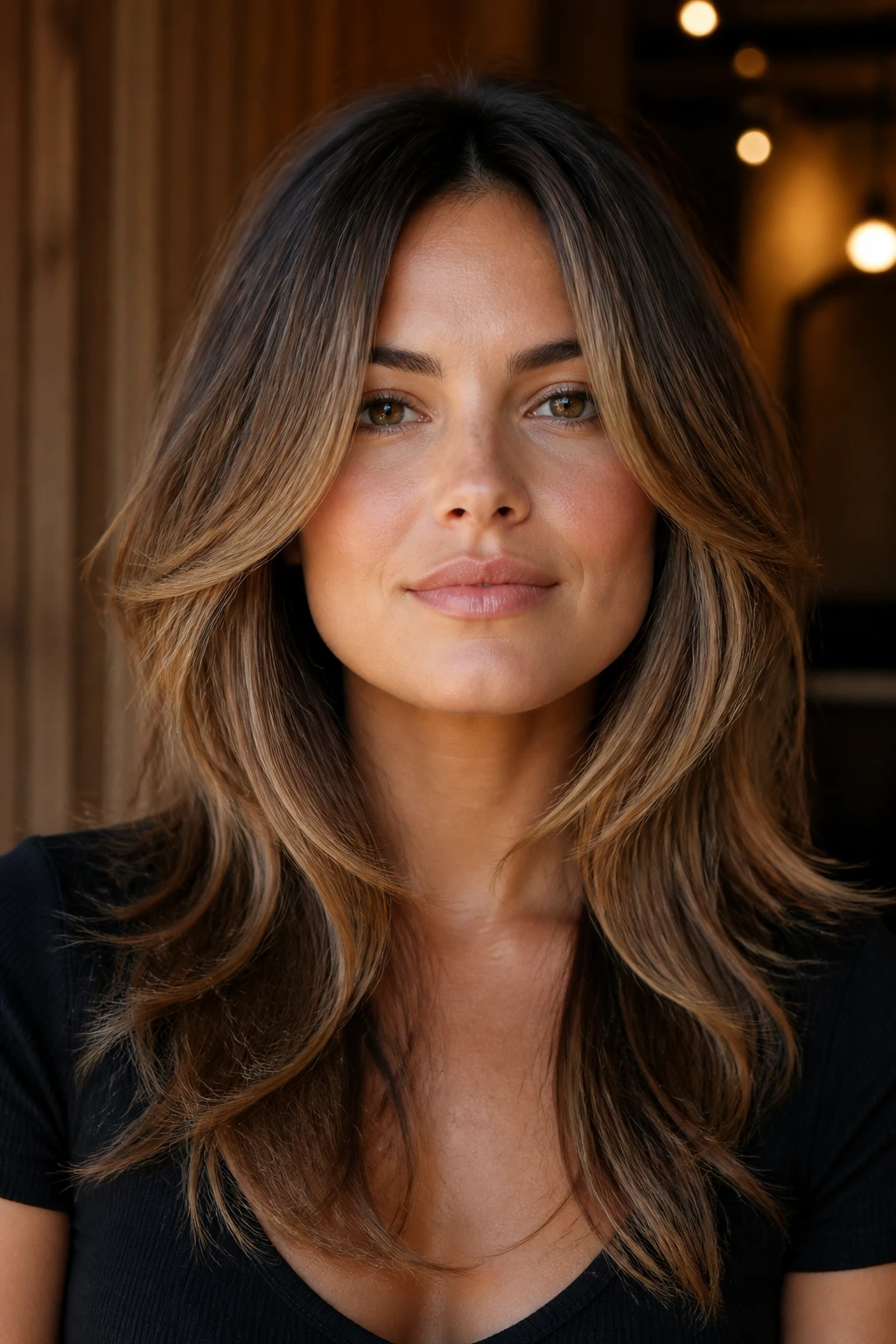
- Jaw-softening: The right layer placement interrupts the horizontal line at the jaw, which is where square faces tend to look strongest.
- Length-preserving: These cuts keep the perimeter long, so you get movement without losing that curtain of hair people usually want.
- Texture-friendly: Thick hair gets bulk removed in the right places, while finer hair keeps enough edge to avoid looking wispy.
- Low-drama grow-out: A good layered shape still looks deliberate after a few weeks, which matters more than people admit.
- Face-framing without the helmet effect: The front pieces should skim, not clamp, around the cheeks and jaw.
- Styling flexibility: You can wear the cut blown out, waved, or rough-dried, and the geometry still reads well.
Square faces don’t need to be hidden. They need the line broken up in a smart place. That’s the whole trick. Layers that begin too low can drag the eye straight across the jaw, while layers that start too high can make the crown look fluffy and the ends look thin. The good versions land in the middle and do their work quietly.
1. Cheekbone-Grazing Curtain Layers
Cheekbone-grazing curtain layers are the cut I reach for first when someone wants softness without losing length. The shortest pieces sit near the cheekbones, then slide down in a long taper so the jaw never gets boxed in. The effect is subtle from the front and much more obvious when you turn your head.
Why It Works
The cheekbone is the right place to interrupt a square face because it pulls attention upward before the jawline takes over. If the first layer lands at or below the jaw, the cut can look squat. If it lands too high, the face can start to feel overexposed. Cheekbone placement is the sweet spot.
Tell your stylist you want the front to open at the cheeks, not sit like a shelf under them. Blow-drying these layers with a round brush and pulling the front away from the face gives the nicest curve. A center part keeps it balanced, but a soft off-center part can make the whole shape feel even easier.
What to Ask For
- Long layers that begin around the cheekbone
- Softly tapered pieces through the front
- No hard line at the jaw
- Light texture on the ends, not thinning shears through the whole head
Best for: medium to thick hair that needs movement without losing density.
2. Collarbone Cascade with a Soft U-Shape
Have you ever looked at a cut and thought the hair was doing too much? That’s what a blunt perimeter can do on a square face. A collarbone cascade fixes that by keeping the longest layer at the collarbone and letting everything above it fall in a gentle U.
The U-shape matters. It rounds the outline just enough to soften the jaw, but it doesn’t make the hair look triangular. I like this on people who want their hair to still feel long from the back. The front pieces can be just a bit shorter, but the real work happens in the way the lower layers curve around the body.
How to Wear It
A smooth blowout shows the shape best, especially if you wrap the ends under slightly with a round brush. Loose waves work too, but keep them bigger than a pencil curl; the cut wants swing, not frizz. If your hair is thick, ask for internal weight removal, not a bunch of chopped-up short pieces near the ends.
3. Butterfly Layers with a Lifted Crown
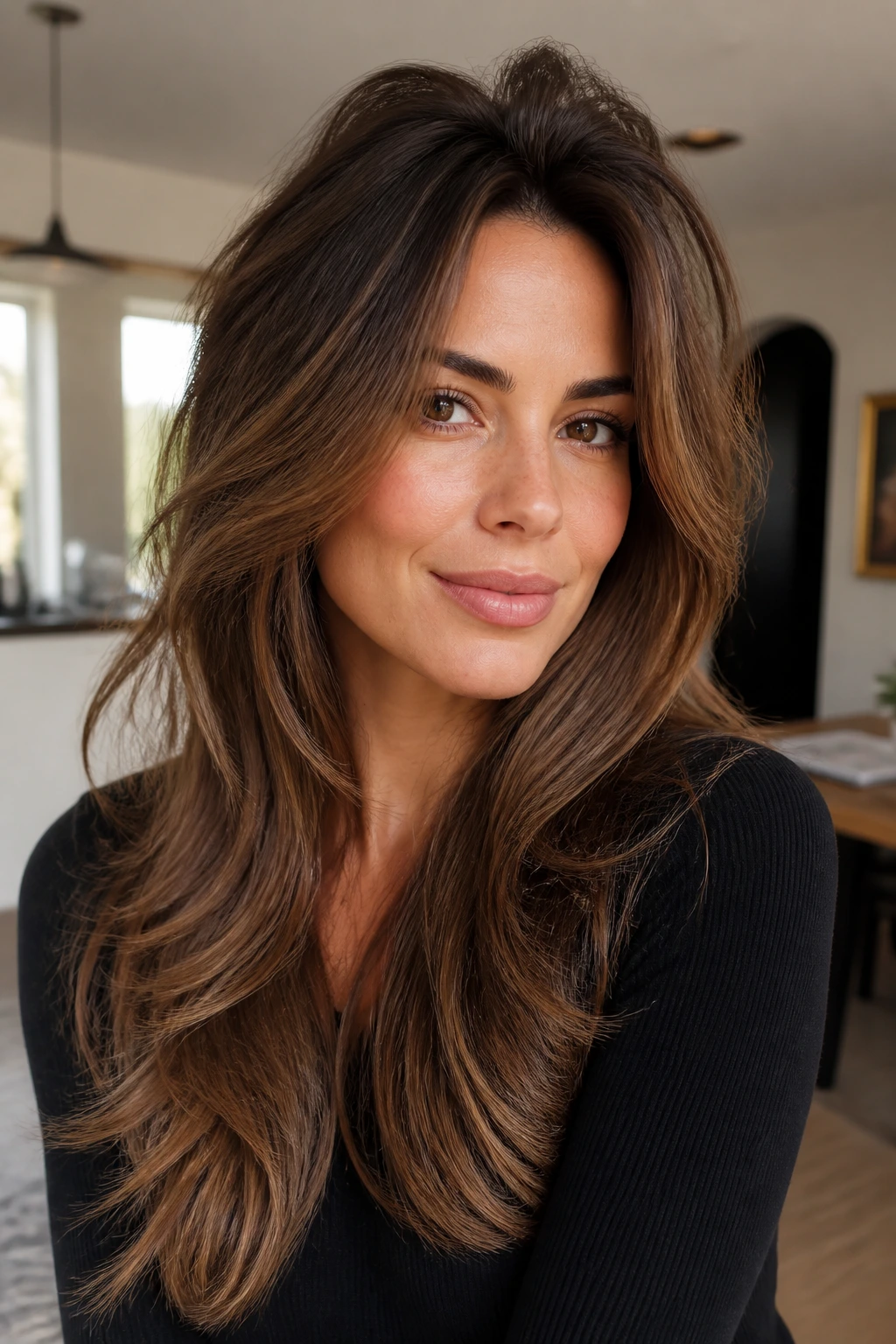
A butterfly cut is basically layered hair with a little drama, and on a square face that drama can be useful. The crown gets shorter, face-framing pieces flick out around the cheekbones, and the length stays intact underneath. It looks like a blowout built into the haircut.
The lift at the crown helps because square faces often benefit from extra vertical energy. You want the eye to go up before it goes wide. Butterfly layers do that beautifully when the shortest top layer is kept long enough to blend, usually somewhere below the chin.
Best Styling Move
Flip the front away from the face with a large round brush or a hot brush, then let the rest fall in big bends. The cut loses a lot of its charm if it’s flattened right down the middle. If you like volume, this is one of the easiest layered looks to fake on a lazy morning with a few strategic clips at the roots.
4. Invisible Internal Layers for Dense Hair
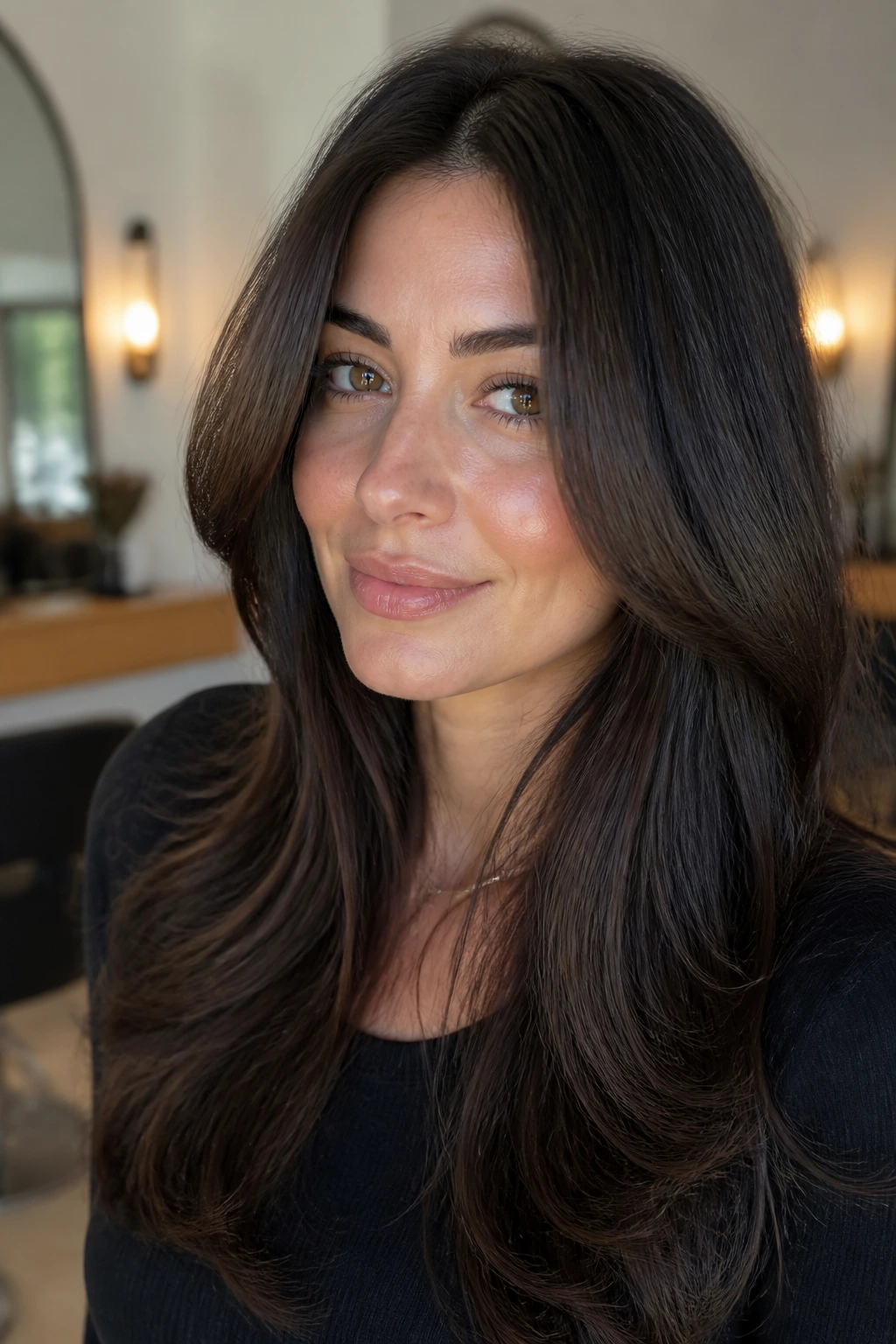
Dense hair can get heavy fast. And when it does, it often drags the face downward and hides every shape you paid for. Invisible internal layers remove bulk from the inside while leaving the outside line long and clean.
That’s the part a lot of people miss. They ask for layers and get short pieces all over the surface, which can make thick hair puff out like a bell. Internal layering keeps the perimeter strong, so the cut still looks polished when it’s down, but it feels lighter when you move.
How to Recognize a Good Version
- The outside outline stays mostly intact
- The inside of the haircut feels lighter when you run your fingers through it
- The hair falls flatter at the sides, not wider
- The ends still look full instead of shredded
This is the cut I’d recommend for thick, straight, or slightly wavy hair that mushrooms at the jaw. It’s practical. No fuss. And the grow-out is kinder than people expect.
5. Deep Side-Part Layers That Break the Jawline

A deep side part can do more for a square face than an extra inch of length sometimes. It cuts the forehead and jaw into softer diagonals, and when you add long layers, the whole head shape reads less boxy. That diagonal line matters. It changes everything.
I like this style when the face needs a little asymmetry. Square faces are strong; they don’t always need more symmetry piled on top. A heavy side part with layered lengths that sweep across the face can make the jaw feel less squared-off without hiding the structure completely.
How to Ask for It
Ask for a long side-sweeping front section that begins near the cheekbone and a layer map that follows the part. The layers should move with the part, not fight it. If the front falls flat, a quick root lift with mousse before blow-drying gives it enough shape to stay put.
6. Feathered Blowout Layers for Straight Hair
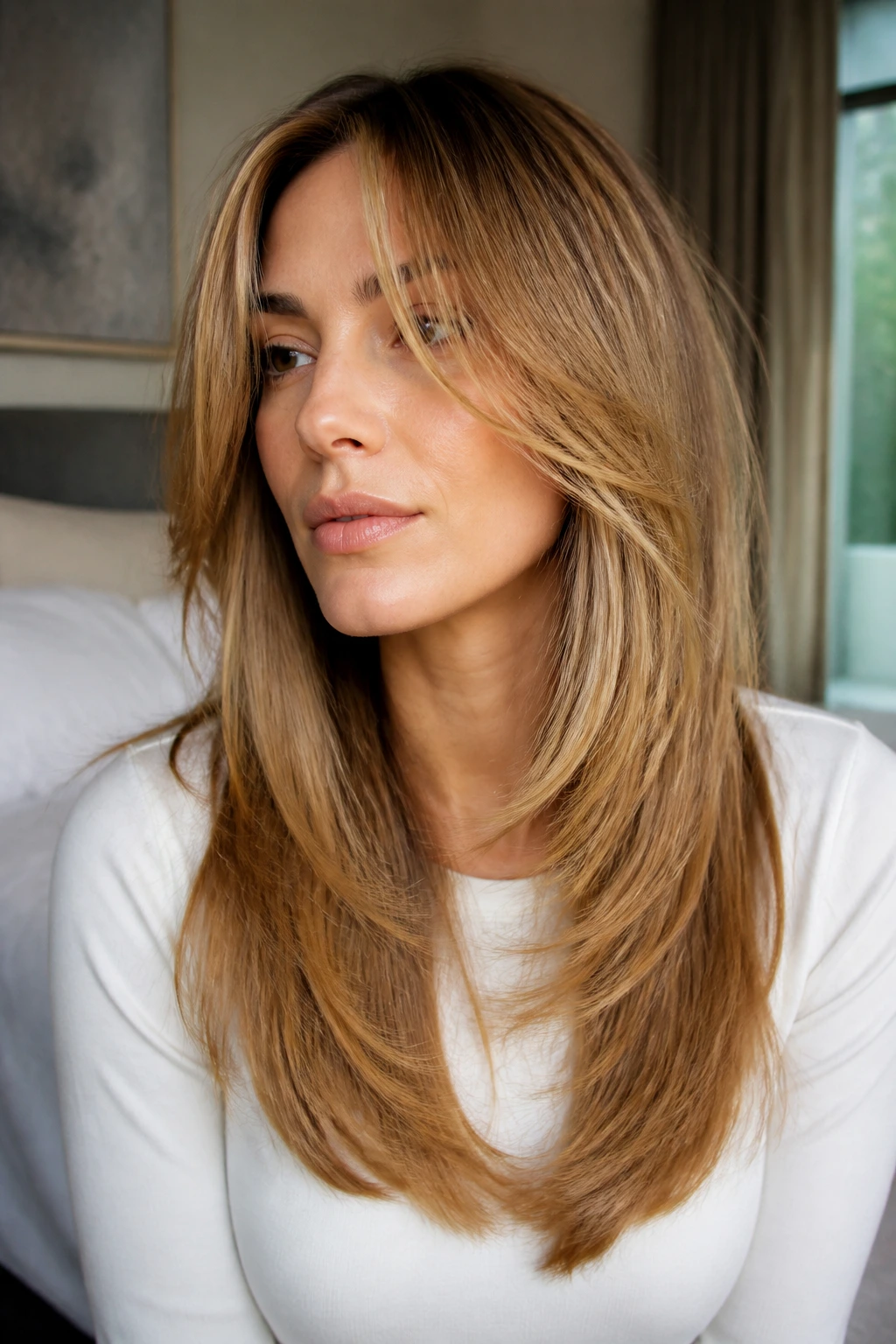
Straight hair gets called “plain” far too often. Usually it’s just cut badly. Feathered blowout layers are what happen when straight hair gets long movement through the mids and ends instead of one hard edge that hangs there like a curtain rod.
The feathering should be soft, not wispy. Think of ends that flick, bend, and separate, not ends that disappear. On a square face, that movement keeps the eye from locking onto the jawline. I especially like this when the hair is dense enough to hold a round-brush blowout for a day or two.
What Makes It Different
The layers are distributed in a way that works with heat styling. That’s the key. If you never blow-dry, this may feel too polished. If you like hair that swings when you turn your head, it’s a smart choice. Use a heat protectant, a medium round brush, and a final cool shot to lock the bend. Tiny details. Big difference.
7. Long Shag Layers with a Soft Fringe
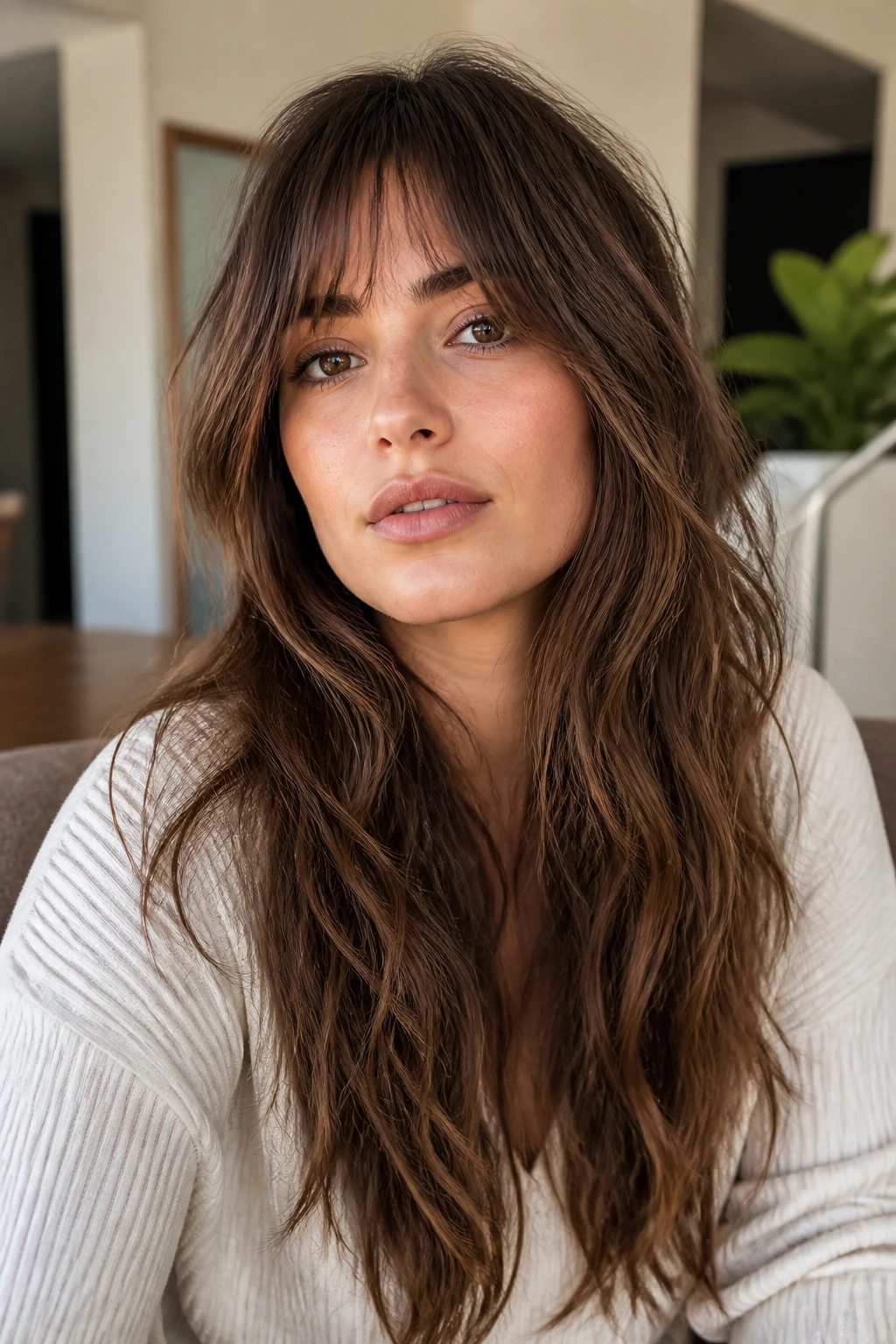
Not every square face needs a polished, glossy haircut. Sometimes the best answer is a long shag that breaks the outline into pieces and lets the face look a little less geometric. The fringe should be soft, though. Hard bangs can make the jaw feel even more severe.
This version works because it keeps the top airy and the length long. There’s a little grit in it, a little movement, a little mess. If your hair likes to live in natural texture, the shag can be a gift. If your hair is very fine and flat, keep the layers longer so the whole head doesn’t collapse.
Best for
People who wear waves, air-dry frequently, or hate spending 40 minutes with a brush. A little texture cream and a diffuser are often enough. The haircut does the rest.
8. Razor-Textured Wavy Layers
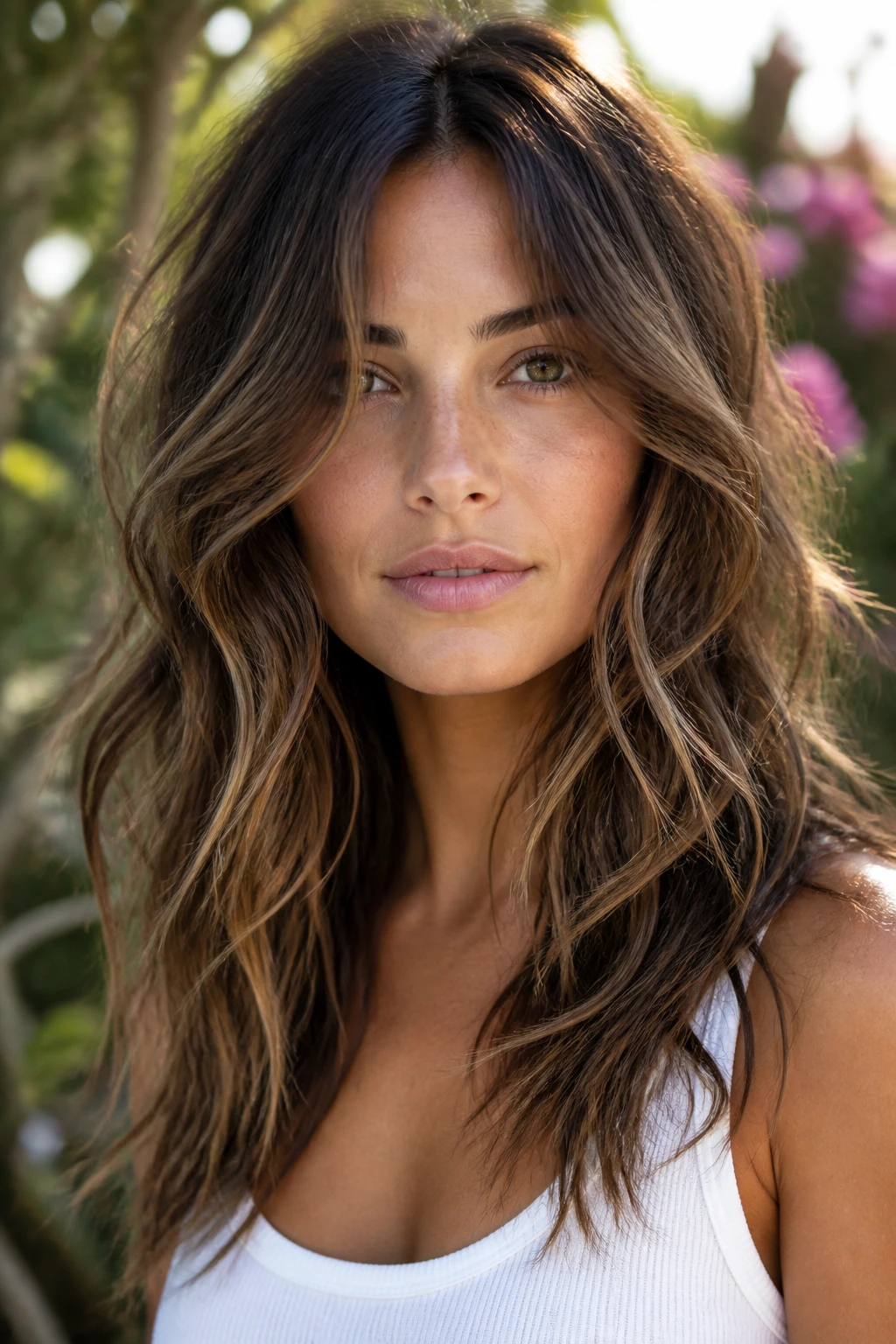
The smell of freshly cut hair with razor texture has its own thing going on — lighter, softer, almost fuzzy at the edges. On wavy hair, razor-textured layers can take out the harshness around a square jaw and make the whole cut look lived-in without being choppy.
The catch is that razor work needs a careful hand. Too much and the ends go frayed. Too little and nothing changes. I like this best when the wave pattern already has some bend, because the razor helps the hair fall in pieces rather than in one blunt curtain.
How to Wear It
Scrunch in a lightweight cream, then let the wave dry without over-touching it. If you want extra separation, use a little texturizing spray at the mid-lengths. Skip heavy oils on the ends; they can take away the airy movement that makes this cut work.
9. Rounded Layers That Keep the Ends Full
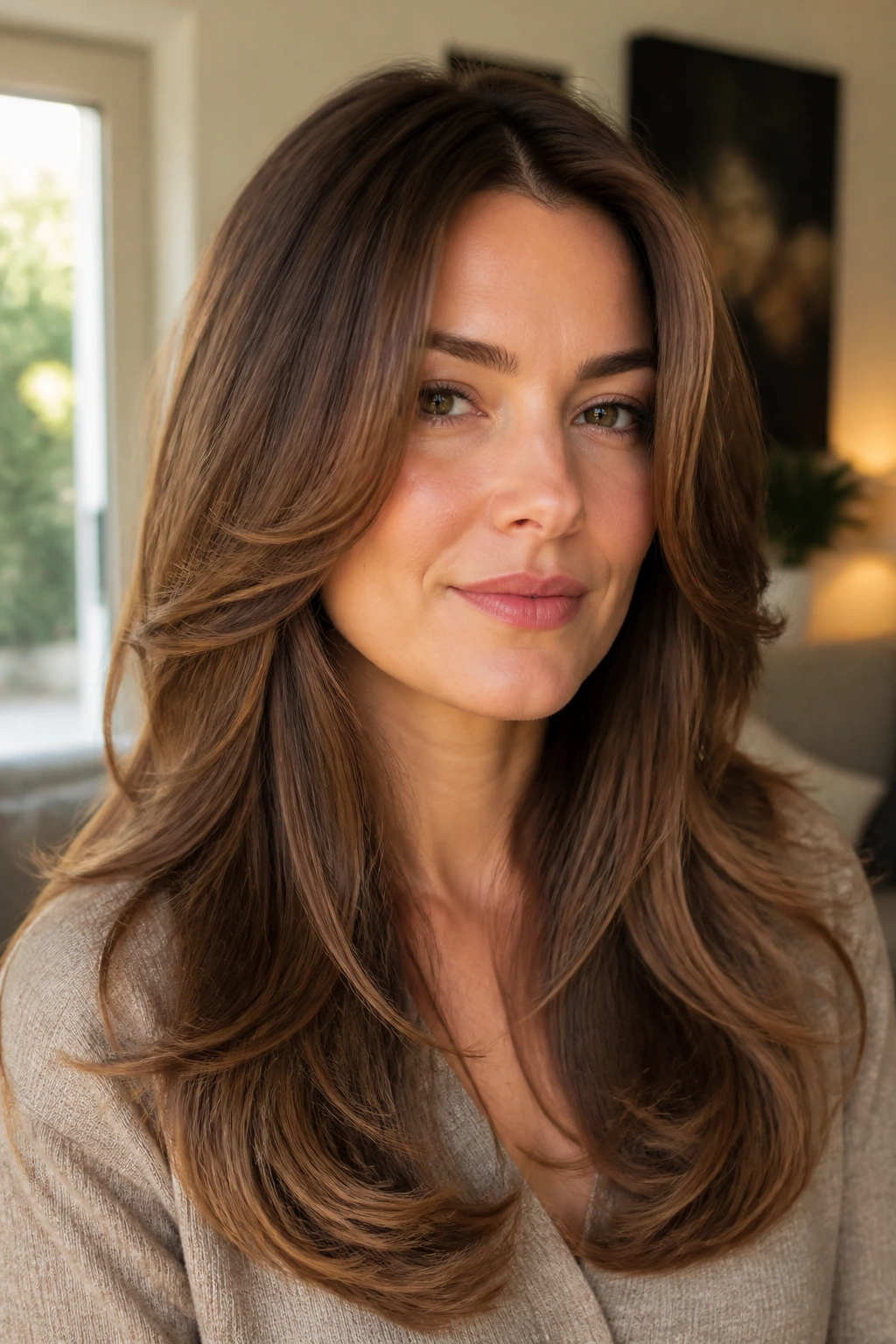
A lot of people think layers mean thin ends. Not if the cut is rounded correctly. Rounded layers keep the perimeter full while still building movement through the middle, which is perfect when a square face needs softness but the hair still needs body.
The rounded shape keeps the silhouette from drifting into a triangle. That’s the whole game with long hair: you want the eye to move in a curve, not stop at a point. This cut is especially nice on hair that gets wider at the sides when it’s all one length.
A Practical Note
Ask for the shortest layer to blend into the rest, not sit separately. If the stylist over-texturizes the ends, the haircut can look stringy in a ponytail and thin when it’s loose. Rounded layers should still feel substantial.
10. Tapered V-Cut Layers
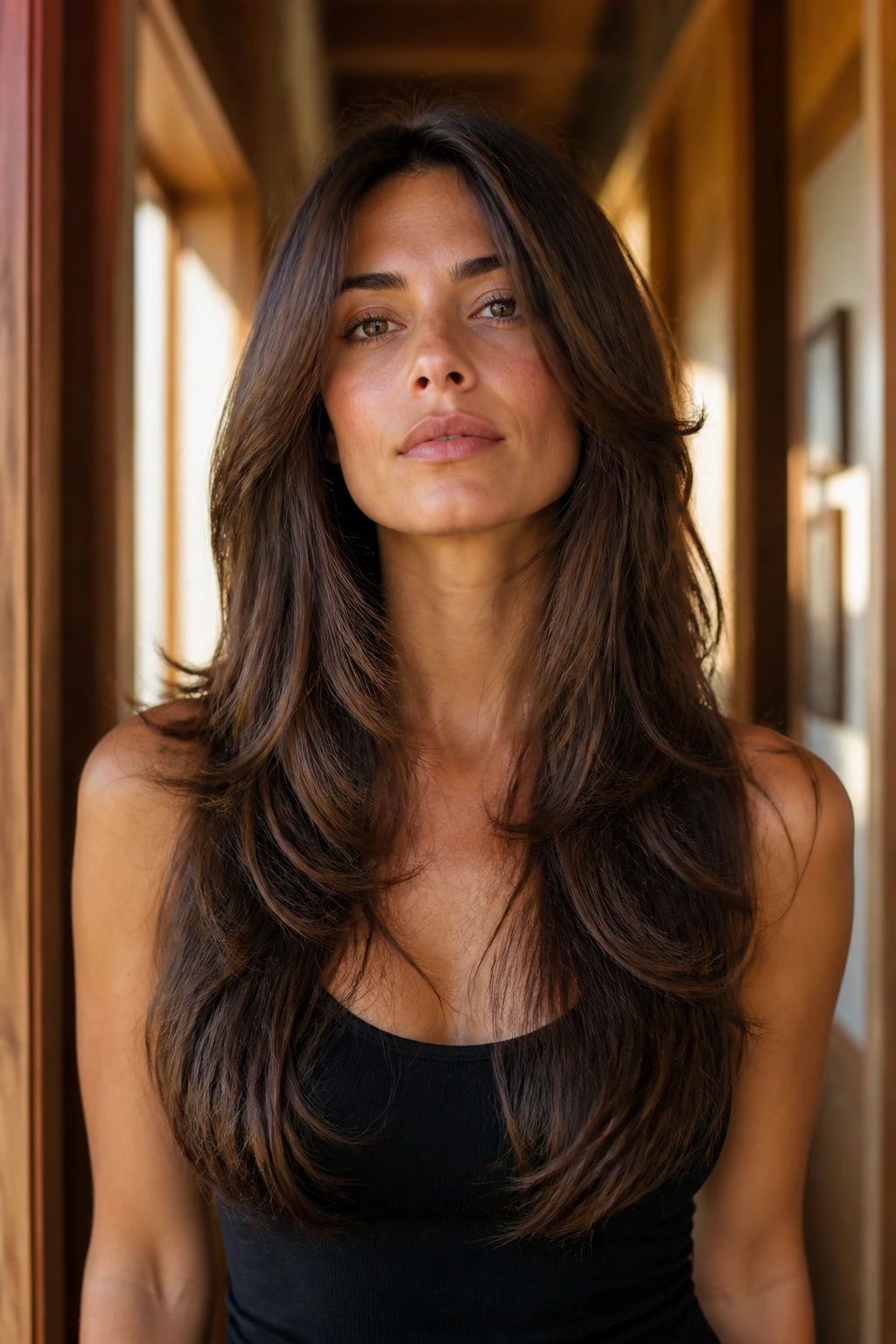
A V-cut can be dramatic in a good way. The back keeps its length, the sides taper inward, and the overall shape points down instead of out. For a square face, that downward motion helps lengthen the whole look.
This isn’t the cut for someone who wants a soft, round outline. It’s sharper. But the sharpness works because it’s controlled. The front layers should still start high enough to soften the cheeks, while the back forms the V that gives long hair a little swing.
Best Styling Move
Wear it blown smooth when you want the shape to read cleanly. Loose bends work if they’re big and spaced out. If you curl every piece tightly, the point of the V gets lost, and you’re left with a lot of volume where you don’t want it.
11. Bottleneck Bangs with Cascading Layers
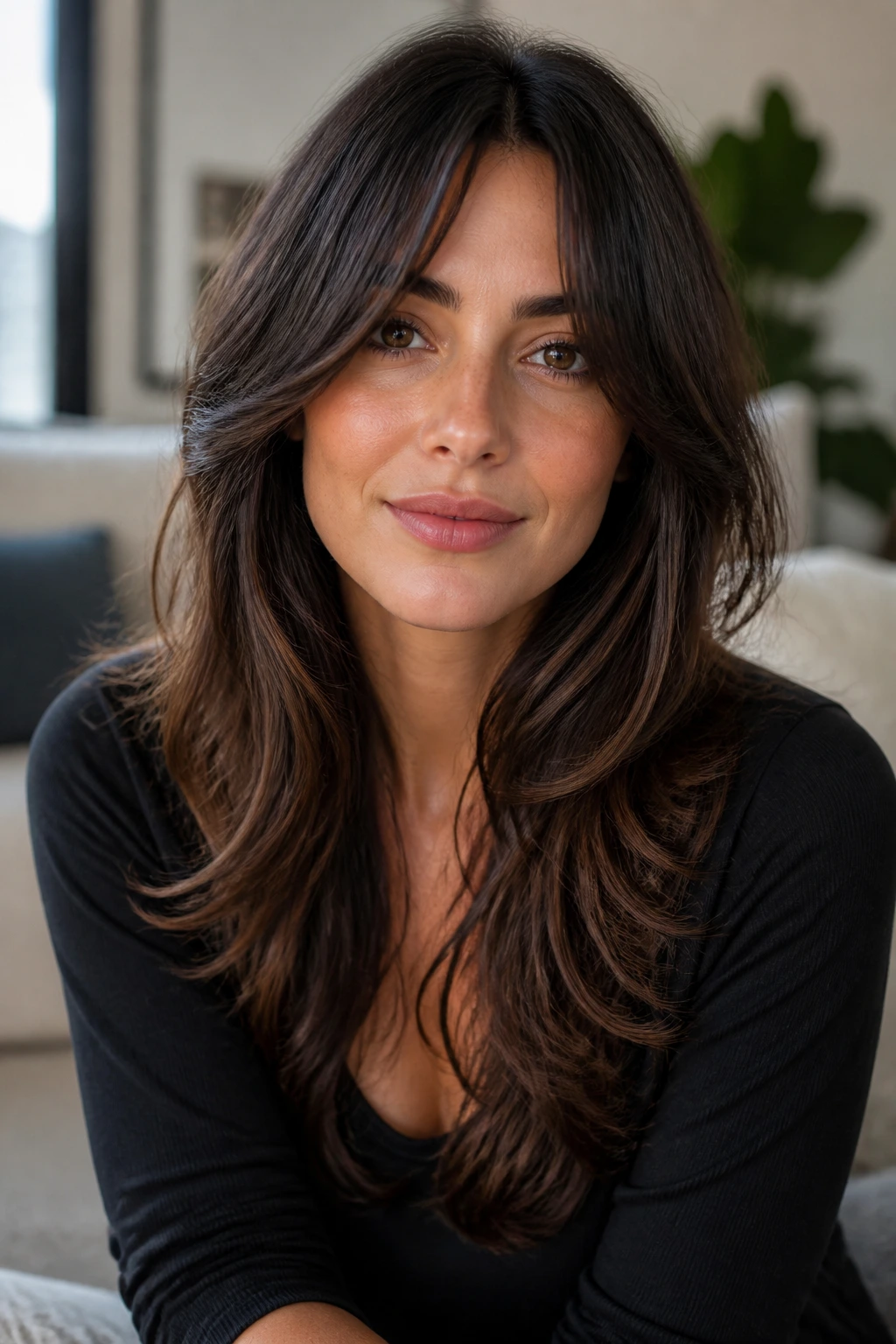
Bottleneck bangs are sneaky good on square faces. They open in the center, skim out toward the temples, and blend into cascading layers instead of stopping as a blunt bar across the forehead. That matters because a hard fringe can make a strong jaw feel even stronger.
The layers underneath should be long and sliding, not chopped. The whole haircut should feel like it was designed to move away from the face. I like this on people who want a little fringe without committing to a full curtain bang that lands too low.
How to Make It Work
Keep the bangs light at the center and longer at the edges. Then ask for the side pieces to continue that line. If the bang is thick and heavy, the cut loses the softness that makes it flattering. Blow-dry the fringe with a small round brush, directing the center forward and the sides outward.
12. Dry-Cut Layers for Curly Hair
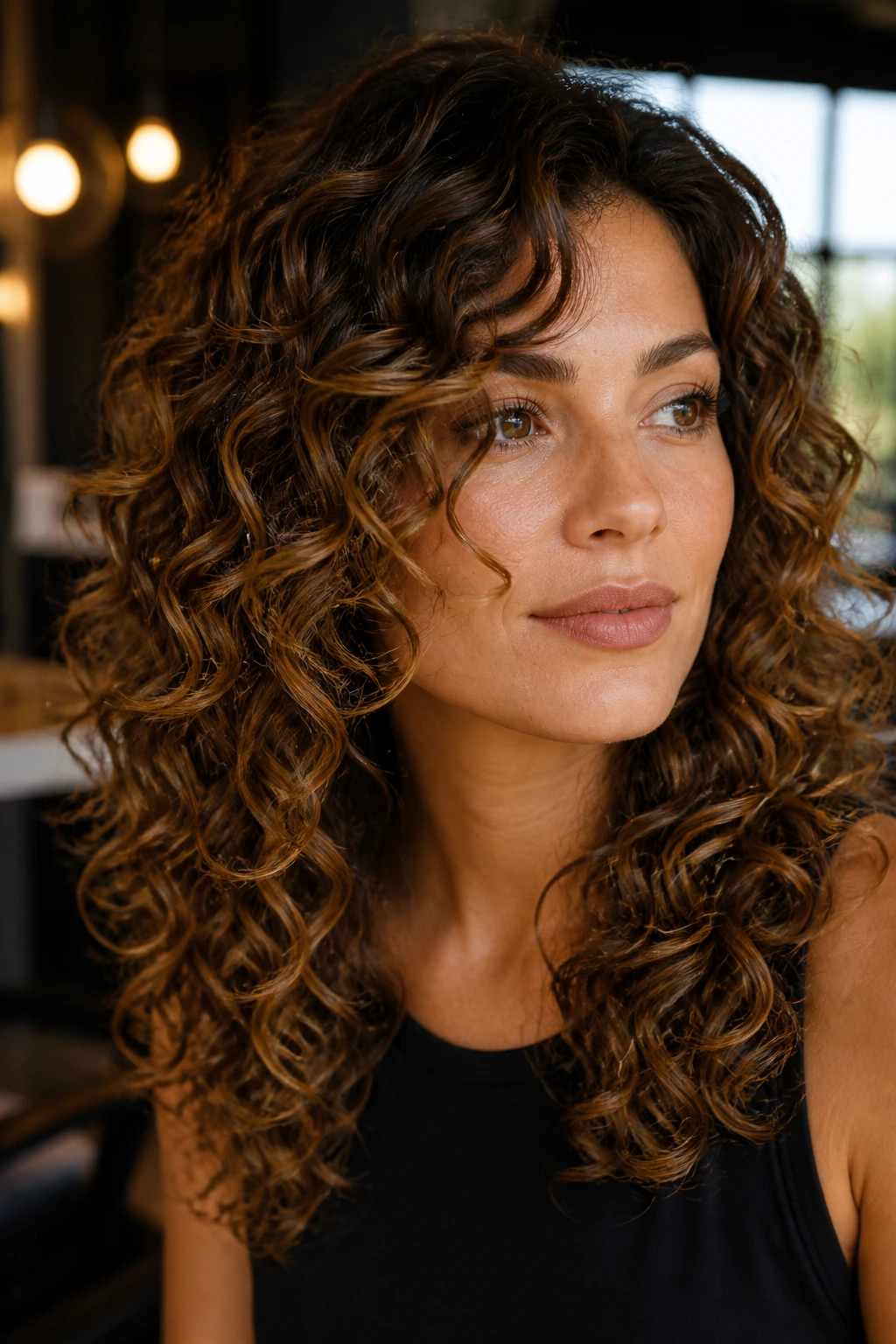
Curly hair has its own rules, and pretending otherwise is how people end up with uneven shelves. Dry-cut layers let the stylist see the curl in its natural spring, which is the only sane way to shape long layers around a square face.
The benefit is simple: the curls can be placed so they soften the jaw instead of bunching there. When hair is cut wet and then shrinks up, the layers can land too high. Dry cutting shows the real length and gives the shape a better chance of falling where you meant it to.
What to Watch For
- The shortest curl should not end right at the jaw
- The sides should keep enough length to drape, not balloon
- The perimeter should stay full enough to avoid a puffy triangle
- Each curl group should be shaped with its own spring in mind
A good curly layered cut looks better on day two than day one if it’s done right. That’s a good sign.
13. Money Piece Layers That Brighten the Face
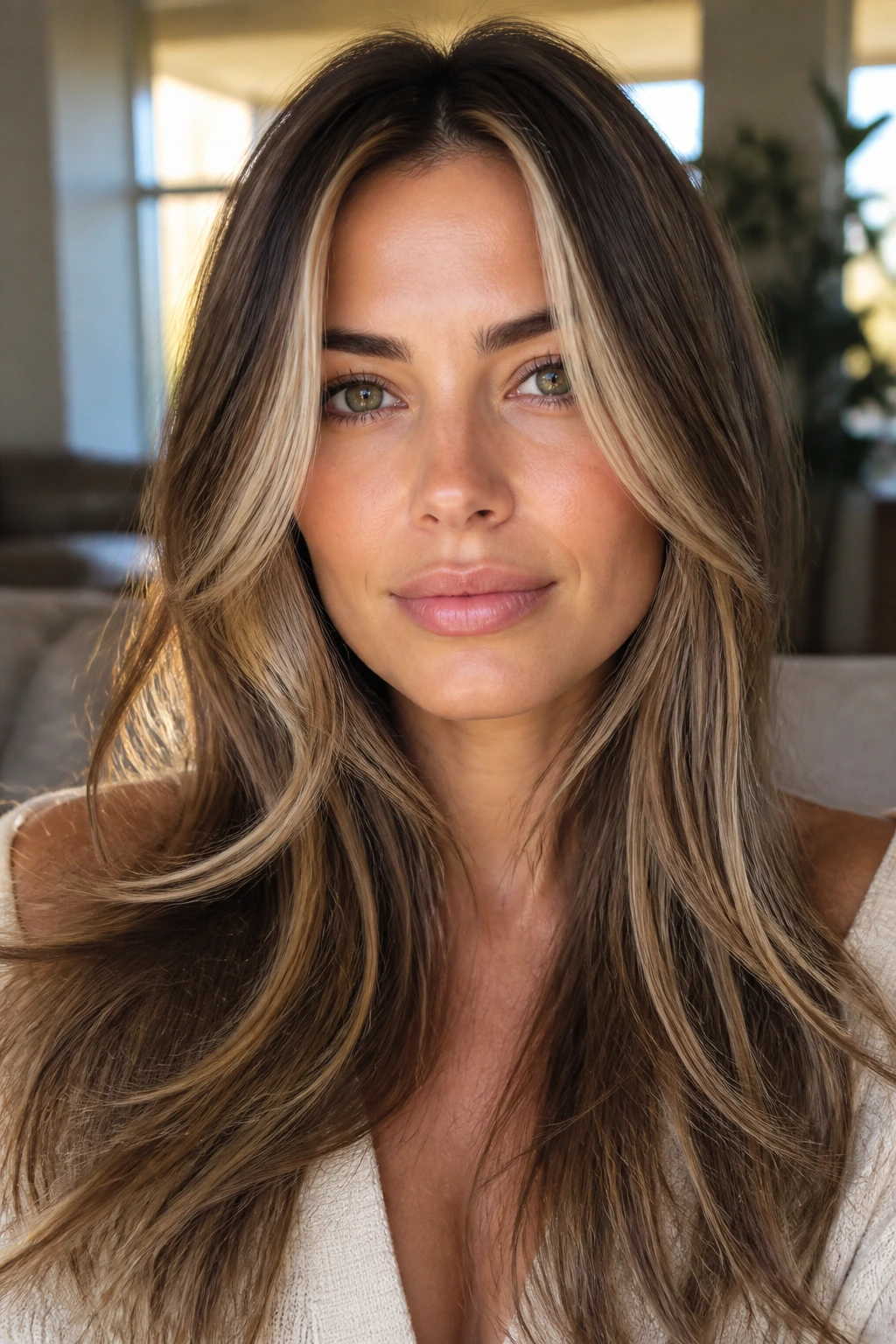
A face-framing color strip — the so-called money piece — can do a lot when paired with layers. On a square face, it pulls attention to the center and upper sides of the face, which helps soften a wider jaw by giving the eye somewhere else to go.
The cut itself still matters more than the color. That part is non-negotiable. But the bright front pieces can make the layers look more intentional, especially if they’re blended from the cheekbone down. If the color is too stripey, it starts looking like a costume instead of a haircut.
Best for
People who wear their hair down a lot and like a bit of contrast around the face. Keep the lighter pieces soft and thin rather than chunky. They should behave like a glow, not a highlighter stick dragged down the front.
14. Crown-Heavy Layers for Volume at the Top
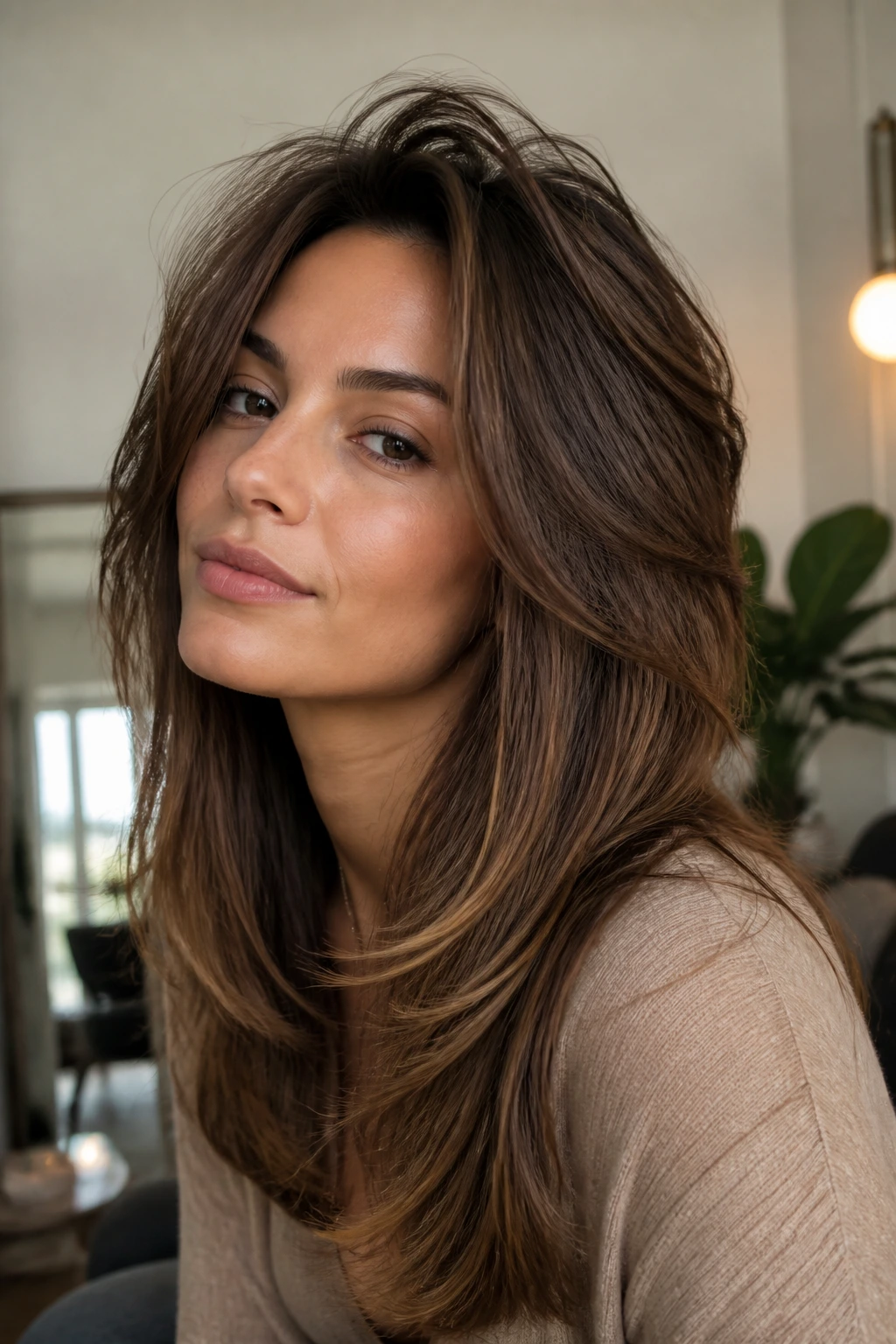
Here’s a useful contradiction: square faces often look better with more volume, just not where people usually pile it. A crown-heavy layered cut gives lift at the top and less width through the jaw, which balances the whole outline.
The idea is to keep the upper layers short enough to create height, then let the lower lengths stay long and smooth. This works well if your face reads widest through the lower half and you want the eye drawn upward first. It can look a little glamorous, honestly, without trying very hard.
Styling Note
Lift the roots with a mousse or a lightweight volumizing spray before blow-drying. Use a round brush at the crown only. Don’t overbuild the sides, or you’ll widen the face where you were trying to soften it.
15. Soft Wraparound Layers
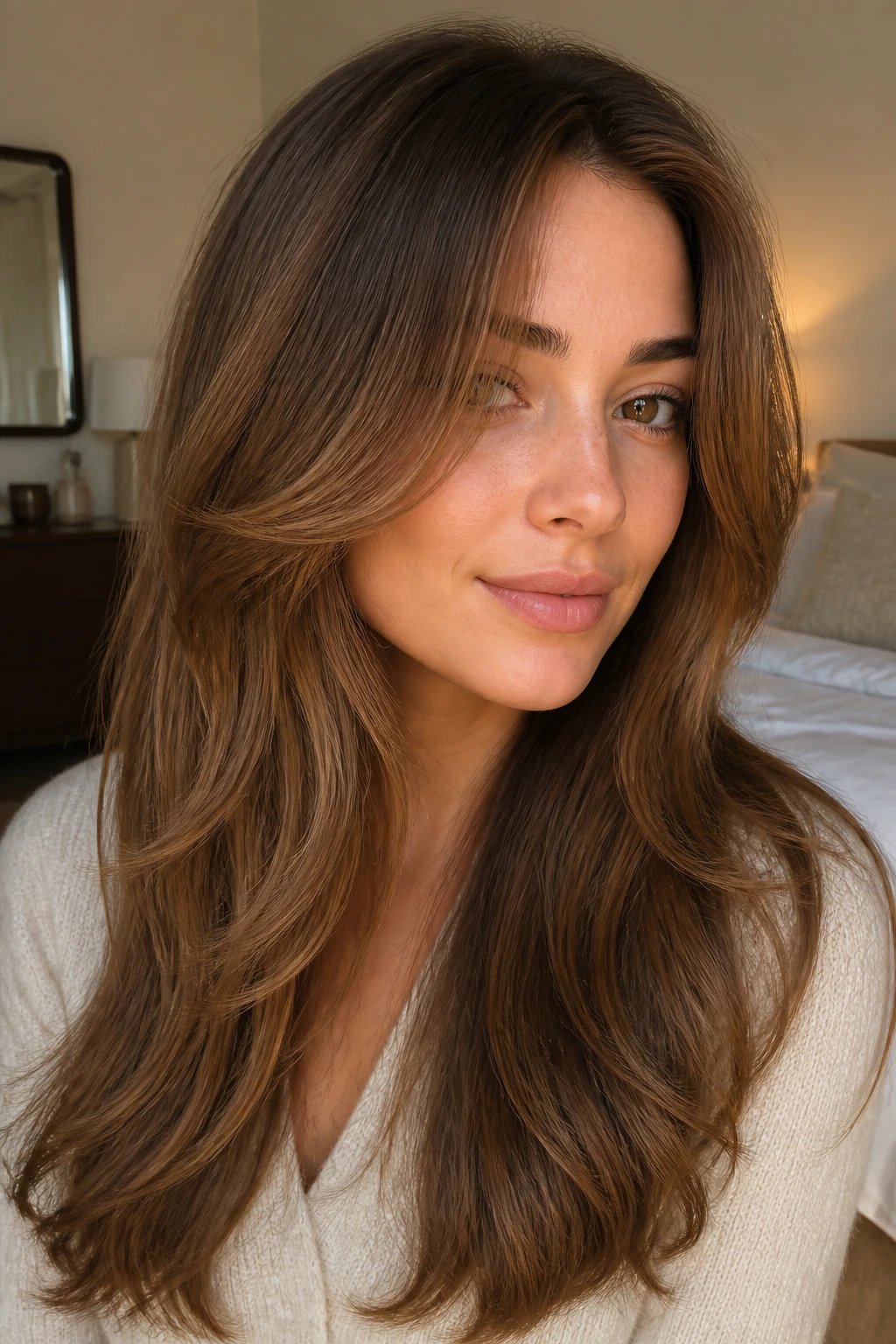
Soft wraparound layers are exactly what they sound like: front pieces that curve around the face and travel back into the length without a hard stop. On a square face, that wrap keeps the corners from reading too blunt.
I like this cut because it behaves well in real life. It’s flattering without needing perfect styling. A loose bend with a flat iron, a blowout brush, or even a rough dry can still show the shape. The pieces around the face should skim the temples and cheekbones, then disappear into the rest of the hair.
How to Think About It
If the shortest piece looks like a border, it’s too short. If it looks like it’s helping guide the eye back into the rest of the hair, it’s right. That’s the balance.
16. Piecey End Layers for a Lived-In Finish
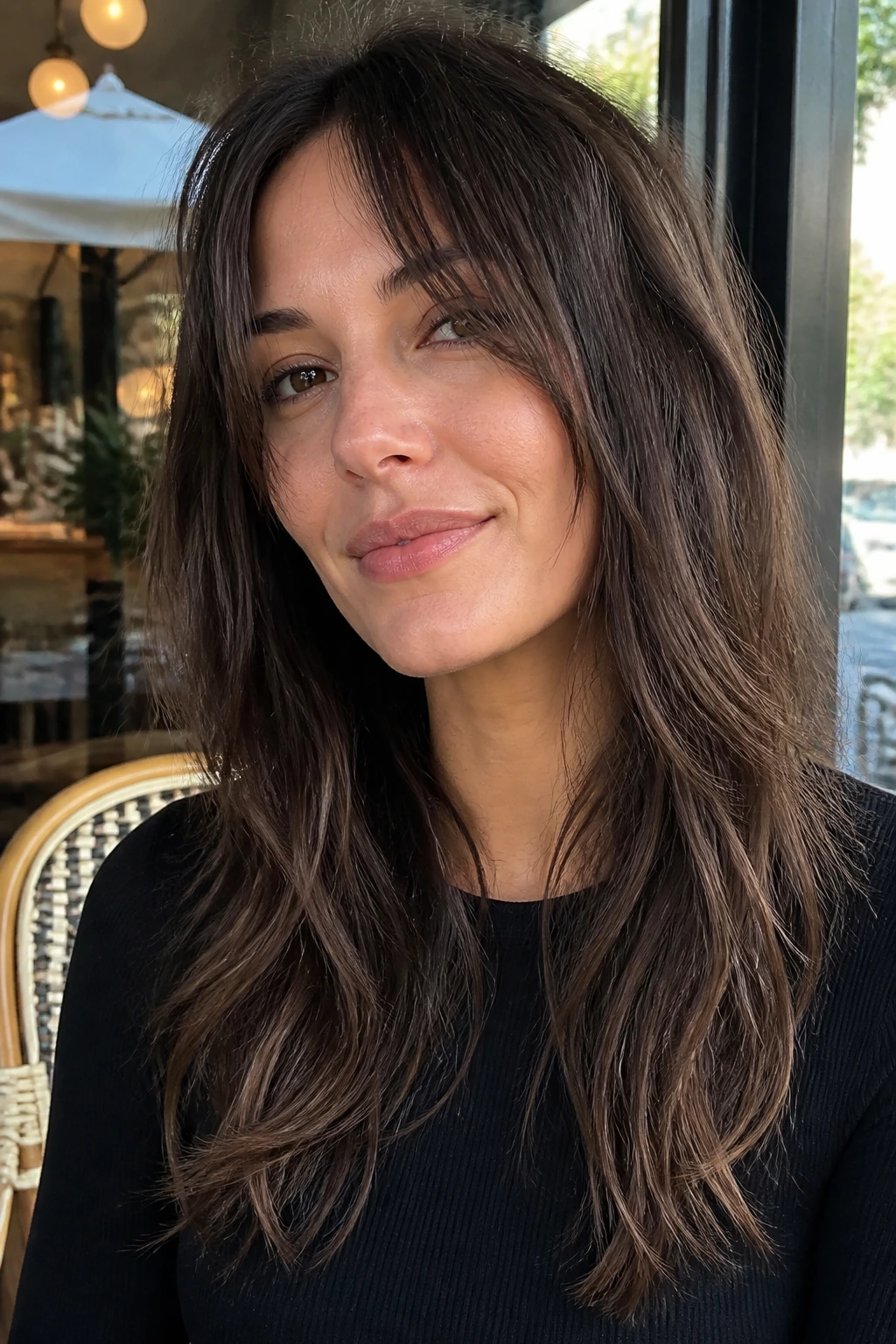
Some cuts look better when they’re a little broken up at the ends. Piecey end layers give long hair a lived-in feel and stop the shape from looking like a heavy sheet. For square faces, that separation can make the jaw read less boxy.
The trick is restraint. You want visible pieces, not shredded ends. On wavy or thick hair, this can be a smart way to keep movement without losing the outline. On fine hair, go lighter, because too much texturizing can leave the ends looking hollow.
Styling Move
Work a pea-sized amount of styling cream through damp hair, then twist a few front sections while they dry. That gives you separation where you want it and keeps the rest of the hair from puffing out. A touch of dry texture spray at the ends finishes the job.
17. Ultra-Subtle Layers for Fine Hair
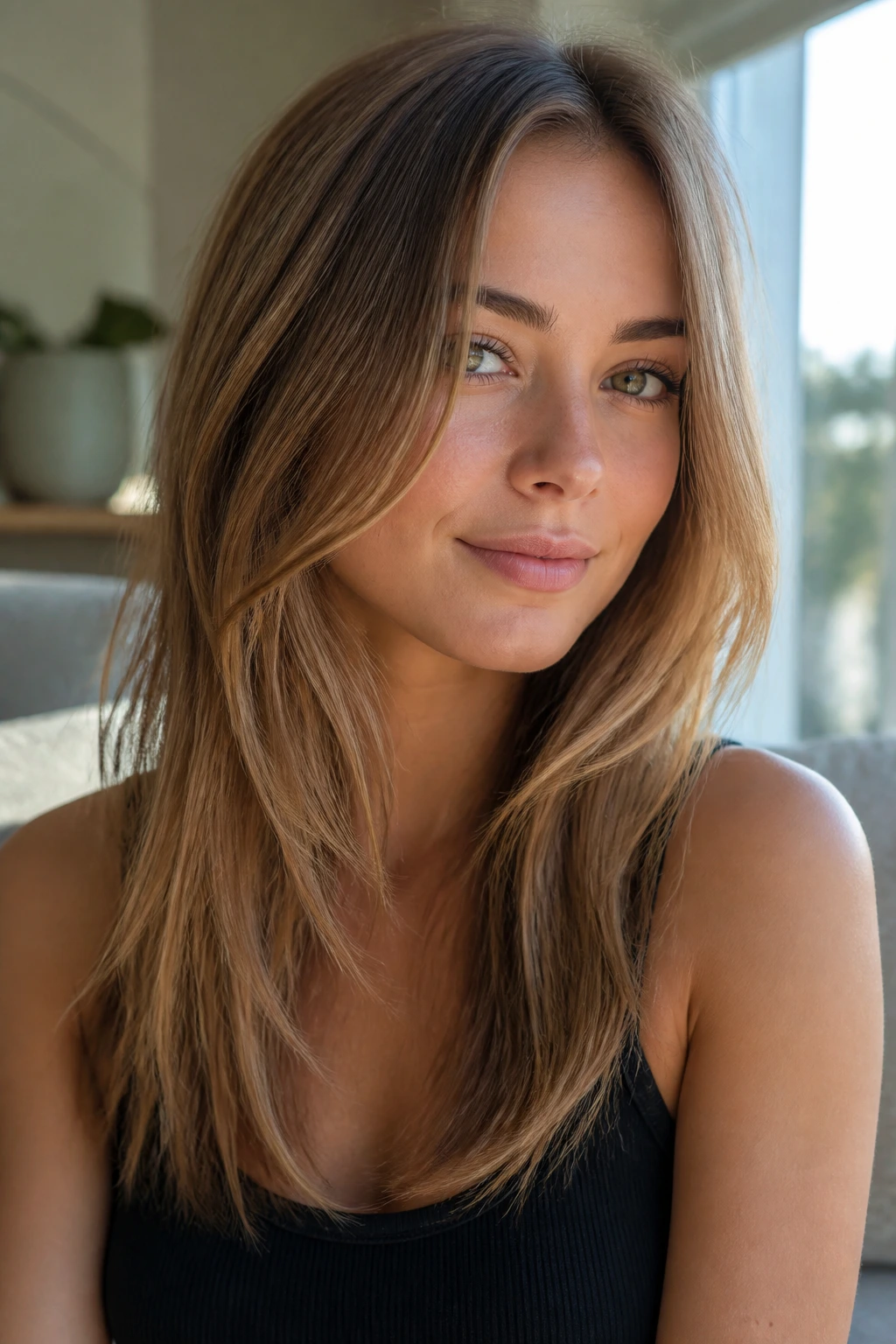
Fine hair doesn’t need a chainsaw. It needs control. Ultra-subtle layers keep the length intact, add just enough bend, and avoid that thin, see-through look that happens when too much hair is removed too high up.
This is the cut I’d choose when someone wants softness but can’t afford to lose density around the shoulders. The front pieces should be longer than people expect, with only slight graduation. The goal is movement, not visible chopping.
What to Ask For
Ask for “long, soft layers” and specify that you want to keep the ends full. If the stylist starts talking about heavy texturizing, push back. Fine hair usually does better with shape built through placement, not through aggressive thinning.
18. Sleek Center-Part Layers
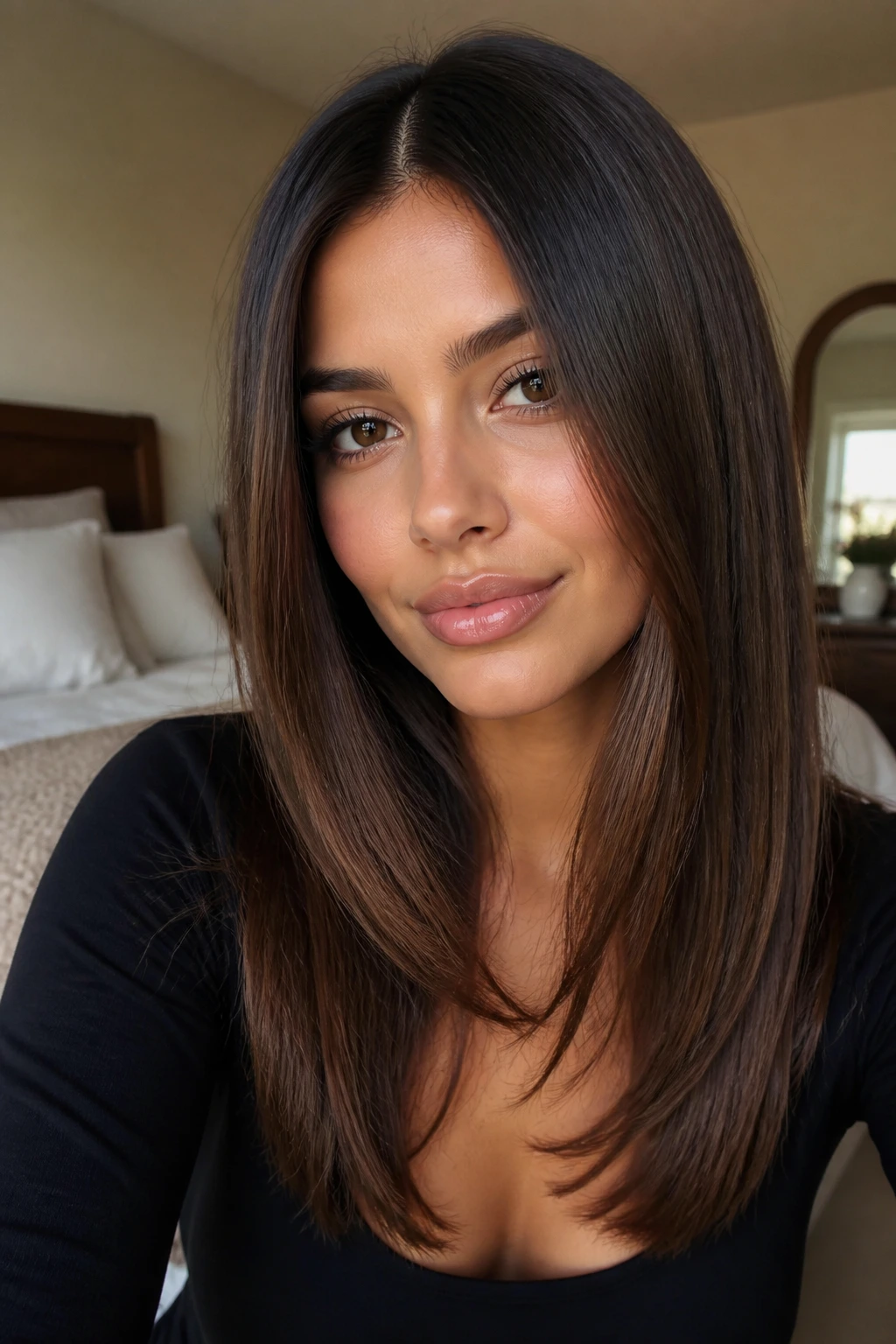
A center part can look severe on a square face if the cut beneath it is blunt. It can also look elegant when the layers are placed properly. Sleek center-part layers work by keeping the front pieces long enough to bypass the jaw and land lower on the neck.
The straight line down the middle gets softened by movement at the sides. That’s the point. You’re not avoiding symmetry; you’re giving it a gentler edge. This version is especially good if your hair is naturally straight or if you like a polished finish that doesn’t take ten tools.
Best Styling Move
Flat iron only the front if the hair is naturally wavy, then bend the ends under or out by a few degrees. A dead-straight sheet can make the face feel boxier. A tiny bend changes the whole read.
19. Long Layers with a Wispy Side Fringe
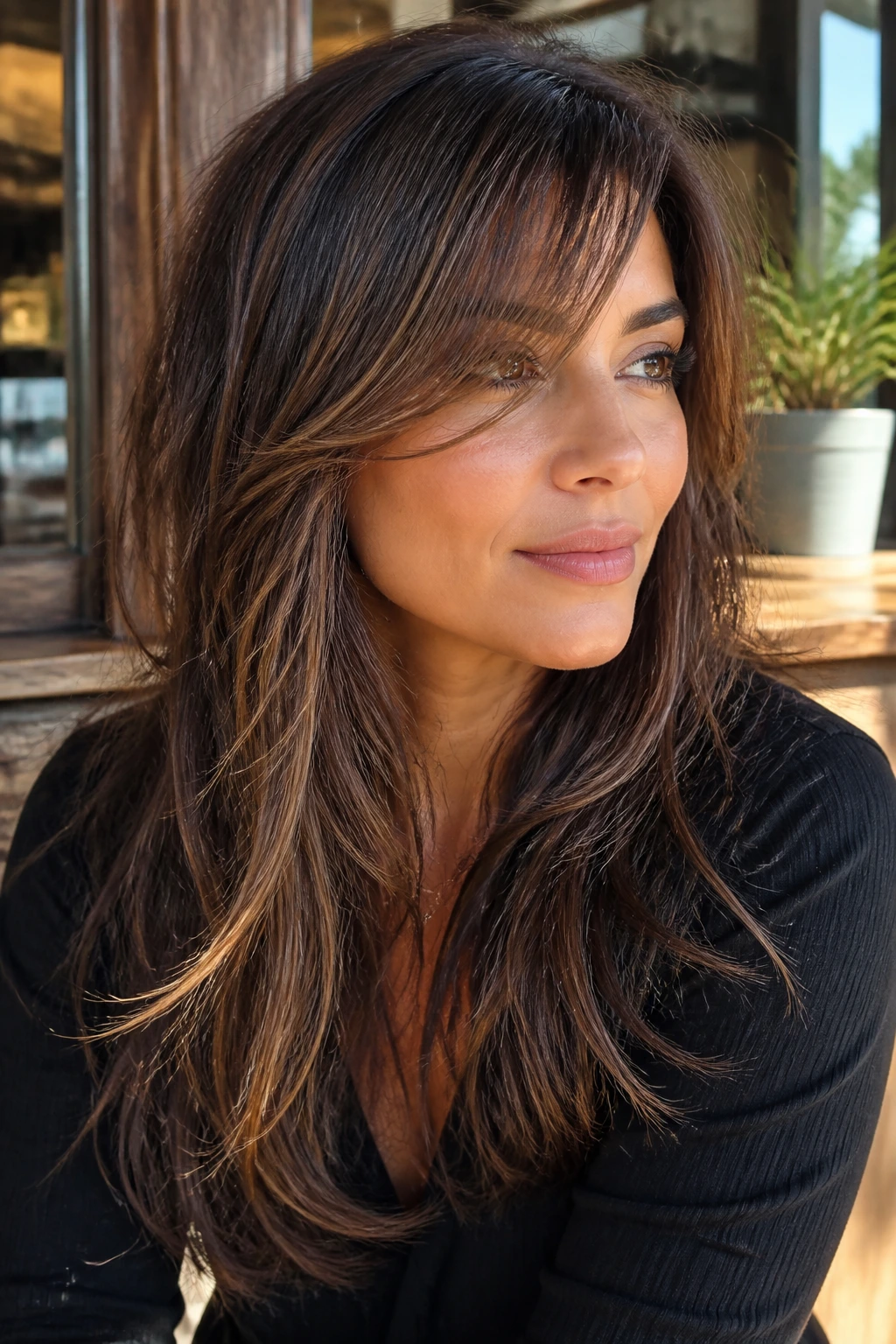
A side fringe can be a strong move on a square face, as long as it stays wispy and long. The goal is to soften one side of the forehead and blur the line into the rest of the layers, not to drop a heavy bang over the eye.
The fringe should travel, not stop. That’s what makes it feel flattering. It draws the eye diagonally, which is useful when the lower face already has strong horizontal lines. Keep the rest of the haircut long and sliding so the fringe doesn’t feel separate from the body of the hair.
Who It Suits
This is a good pick if you like asymmetry and wear your hair with a side part most days. It’s less fussy than a full bang and easier to grow out. Also, it tends to behave better on busy mornings. That counts for a lot.
20. Mermaid Layers with Long, Sliding Ends
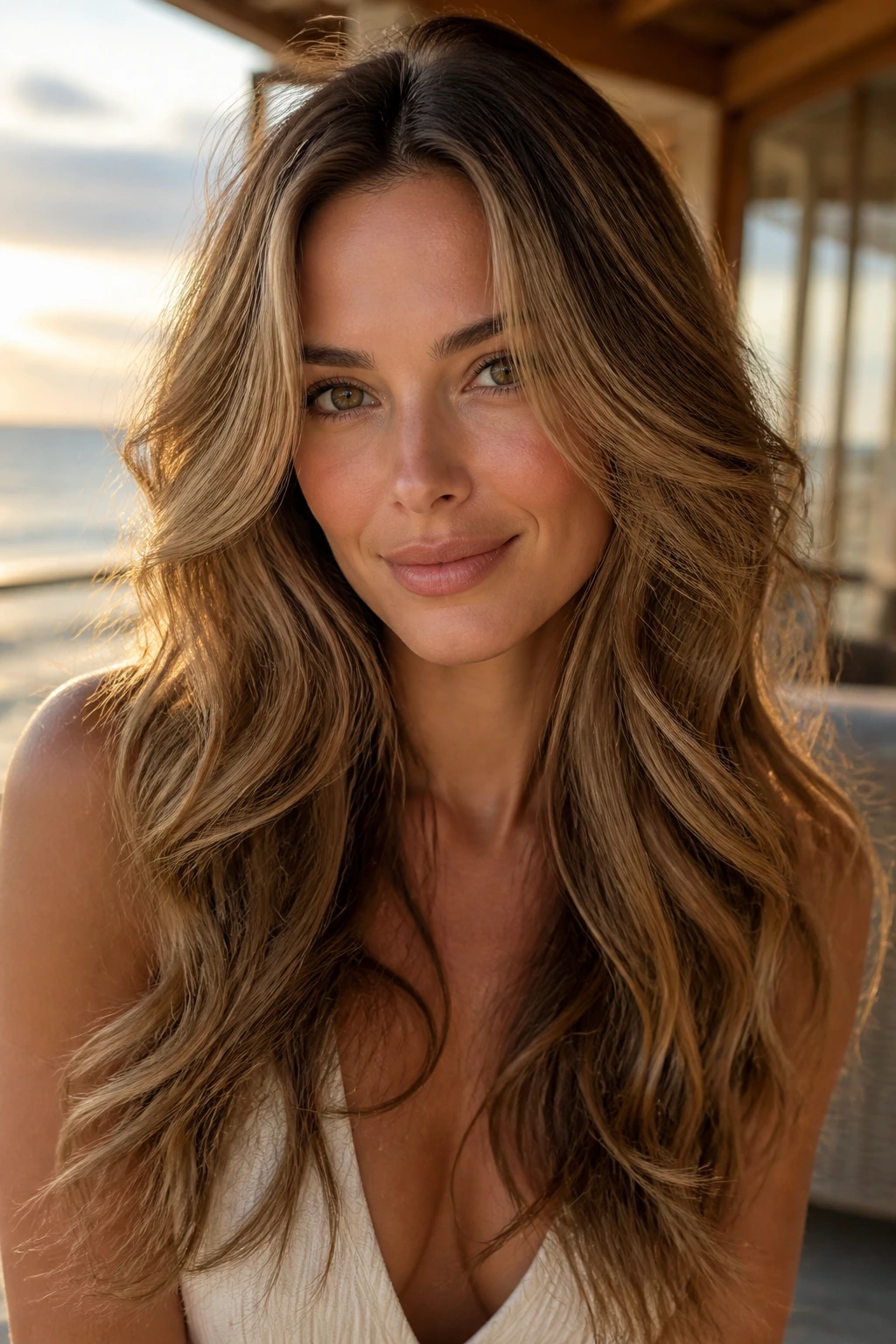
Mermaid hair gets used as a vague idea too often. The version that actually works on square faces has long, sliding layers that move through the length without chopping the silhouette into steps. Think glossy, fluid, and heavy in the good sense.
The layers need to start low enough that the hair still reads as long. If they start too high, the cut turns airy in a way that can widen the head. Keep the face-framing pieces below the cheekbone, then let the rest taper softly into the ends.
How to Wear It
Big waves are better than tight ones here. Tight curls can make the layers jump out and lose that smooth, seaweed-soft flow. If you want the full effect, brush the waves lightly apart with your fingers and add a drop of serum just to the ends.
21. Jaw-Bypassing Face Frame Layers
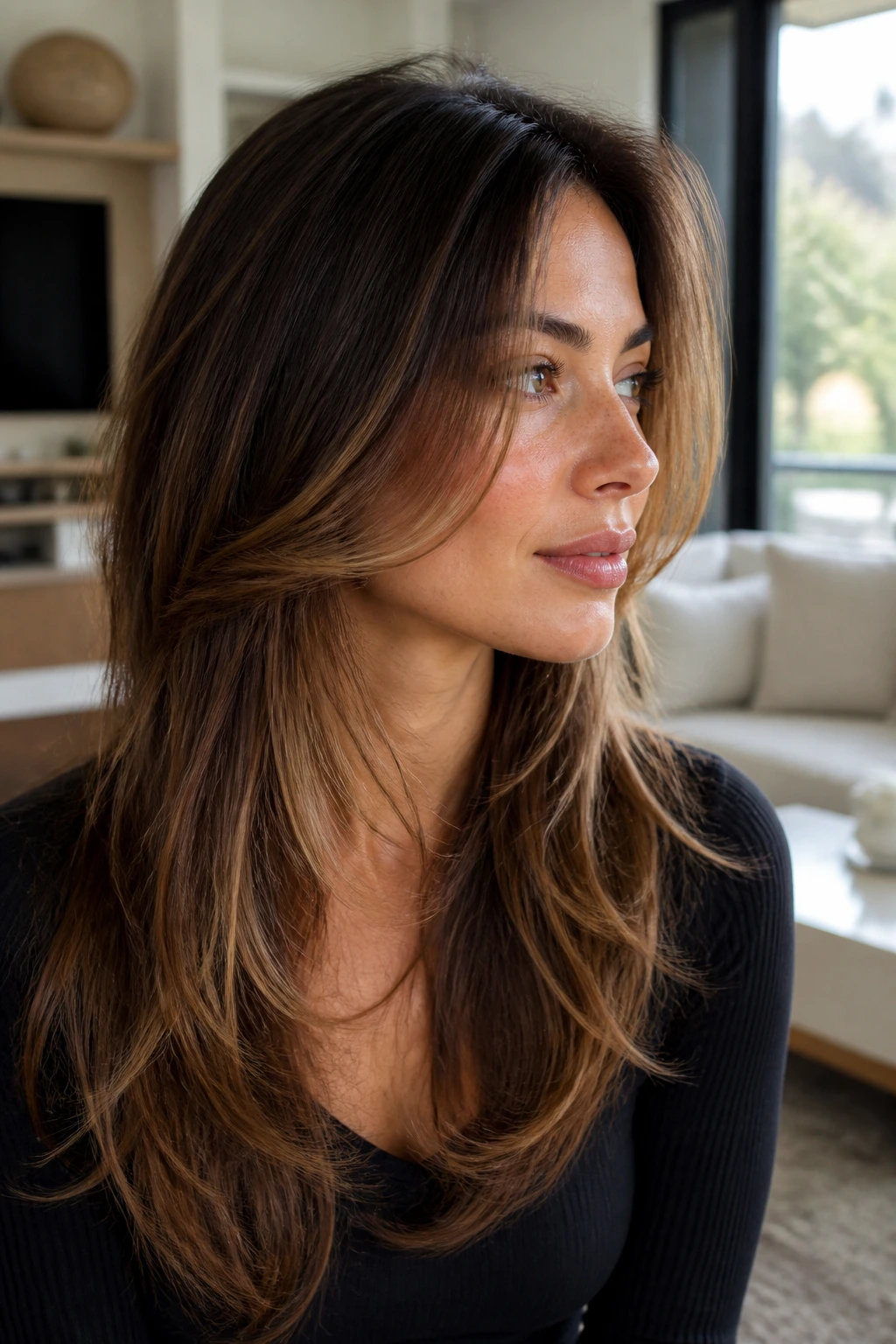
This one is all about placement. Jaw-bypassing layers start high enough to be useful but long enough to move past the jaw instead of landing right on top of it. That one inch of difference changes the whole face shape.
Square faces often look best when the eye can travel down the length of the hair without stopping on a blunt edge. These layers do that. The front pieces should soften at the cheek, skim the jaw, and then join the length below. No hard shelf. No obvious break.
Practical Tip
When you look in the mirror at the salon, the shortest front pieces should already feel a little long. If they look cute on day one but they land directly at the jaw, they’ll probably feel boxy once they settle.
22. Long Layers with a Soft, Airy Perimeter
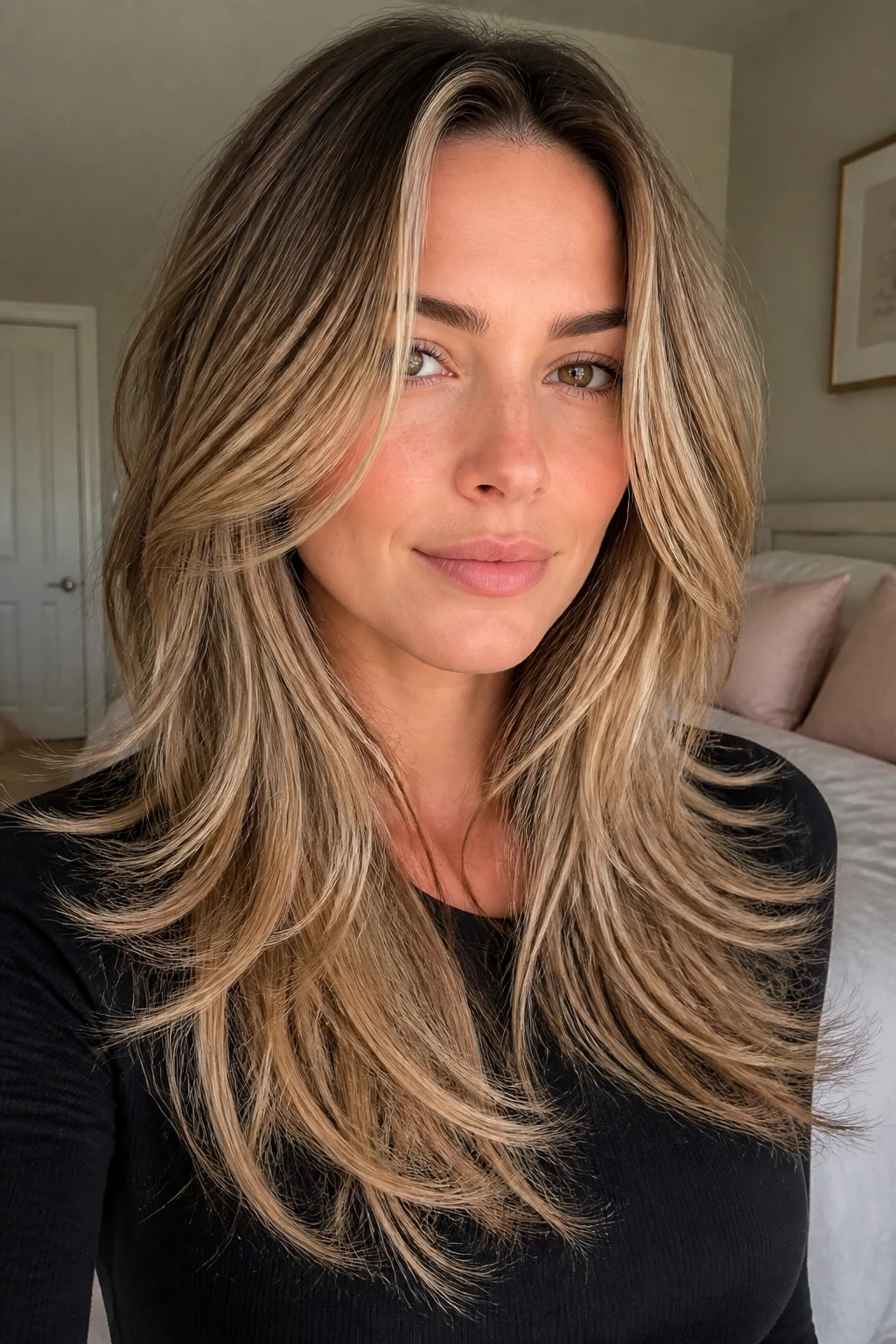
A soft, airy perimeter is the clean finish that ties the whole idea together. The layers are abundant, but the outline still feels controlled. For square faces, that control matters because too much fragmentation can make the haircut feel busy instead of flattering.
This is the style I’d choose for someone who wants movement without obvious “layer haircut” energy. The ends stay light enough to bend, yet full enough that the hair doesn’t look chopped. The front opens the face, the sides taper gently, and the back keeps its length. It’s calm. That’s what makes it work.
If you want one last test, run your hands through the hair after a blow-dry. The shape should feel soft at the sides and substantial at the ends. If it feels hollow, the layers went too far.
Why Lots of Layers Soften a Square Jawline
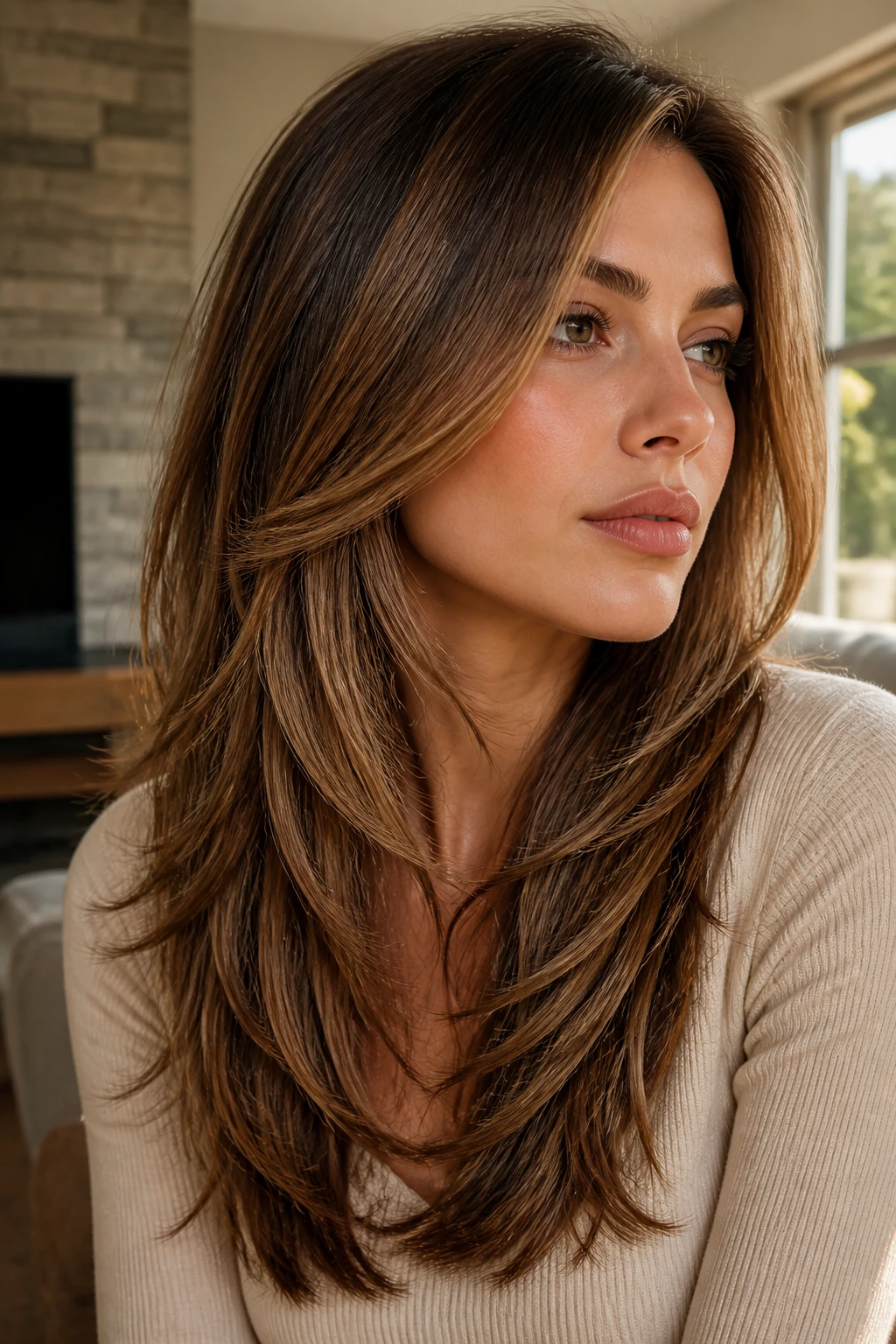
A square face has structure in the best possible sense. The jaw has definition, the forehead usually carries similar width, and the cheek area tends to read clean and firm. That’s attractive shape, but it asks for a haircut that knows how to move around it.
Lots of layers help because they create direction. The hair can travel around the face in curves and diagonals instead of falling in one hard sheet. The more carefully those layers are placed, the less the haircut will fight the bone structure. I like long layers better than short ones here because they keep the length intact while still giving you that soft edge around the cheeks.
The mistake people make is thinking “more layers” automatically means “more flattering.” Not true. A square face looks best when the layers have a purpose: soften the jaw, add vertical lift, or pull the eye toward the cheekbone. Random chopping only adds noise.
The Best Tools for Layered Long Hair at Home
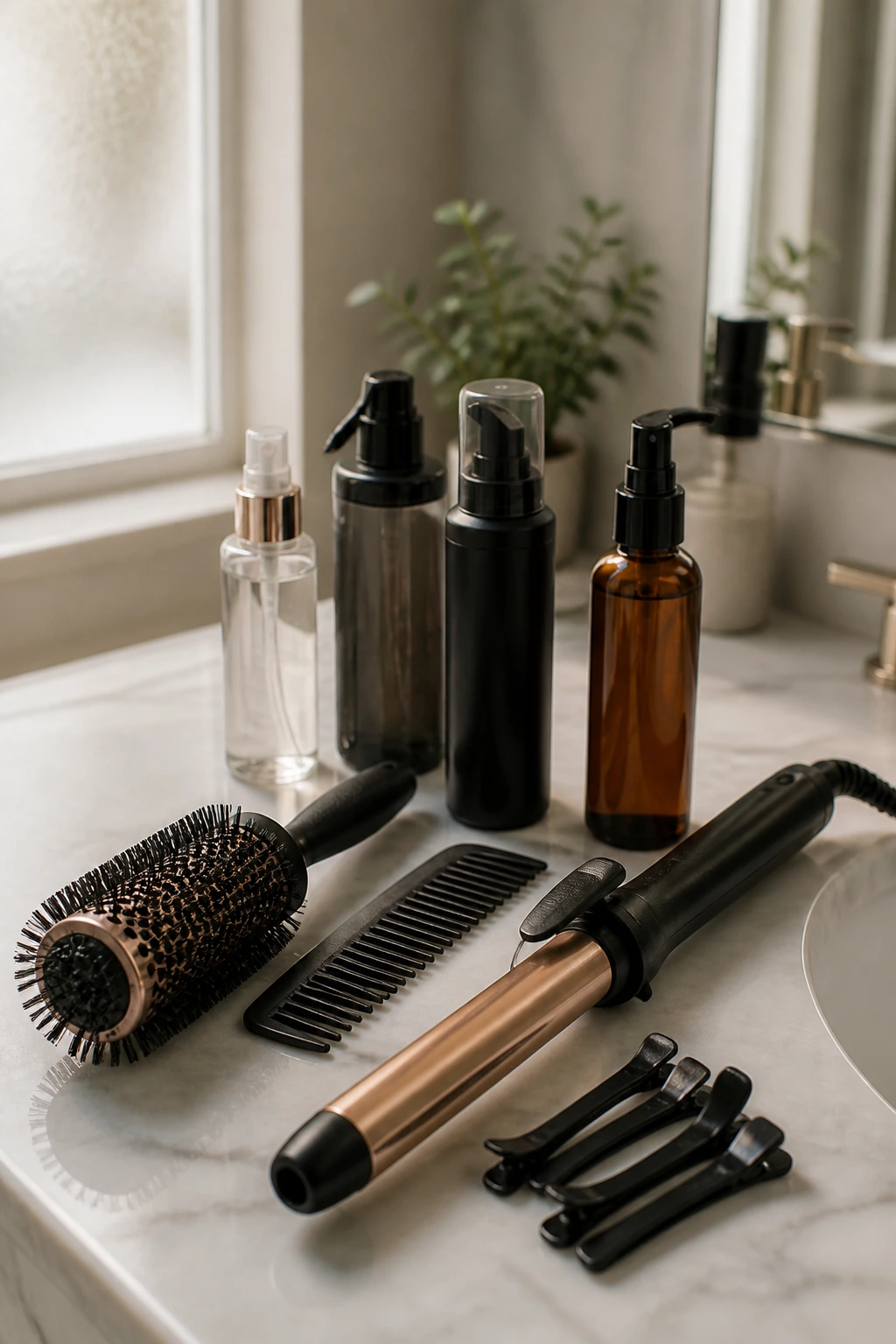
- A 1.25-inch curling iron or wand: Ideal for loose bends that show off the layers without turning them into tight curls.
- A medium round brush: Helps shape the front pieces away from the jaw and build lift at the crown.
- A heat protectant spray: Necessary if you blow-dry or curl, because layered ends show damage faster than blunt ones.
- A wide-tooth comb: Good for detangling long layers without stretching out the natural fall.
- Sectioning clips: Worth having if you want clean blow-dry sections instead of a tangled mess.
- A lightweight mousse or root lift spray: Useful for fine or flat hair that needs height at the crown.
- Texture spray: Optional, but handy when you want piecey separation through the mids and ends.
- A smoothing serum: Best on the ends only, especially for sleeker layered cuts.
You do not need a closet full of gadgets. You need a few tools that respect the shape of the cut. A good brush and one decent heat tool will do most of the work.
How to Talk to Your Stylist Without Ending Up With a Shelf
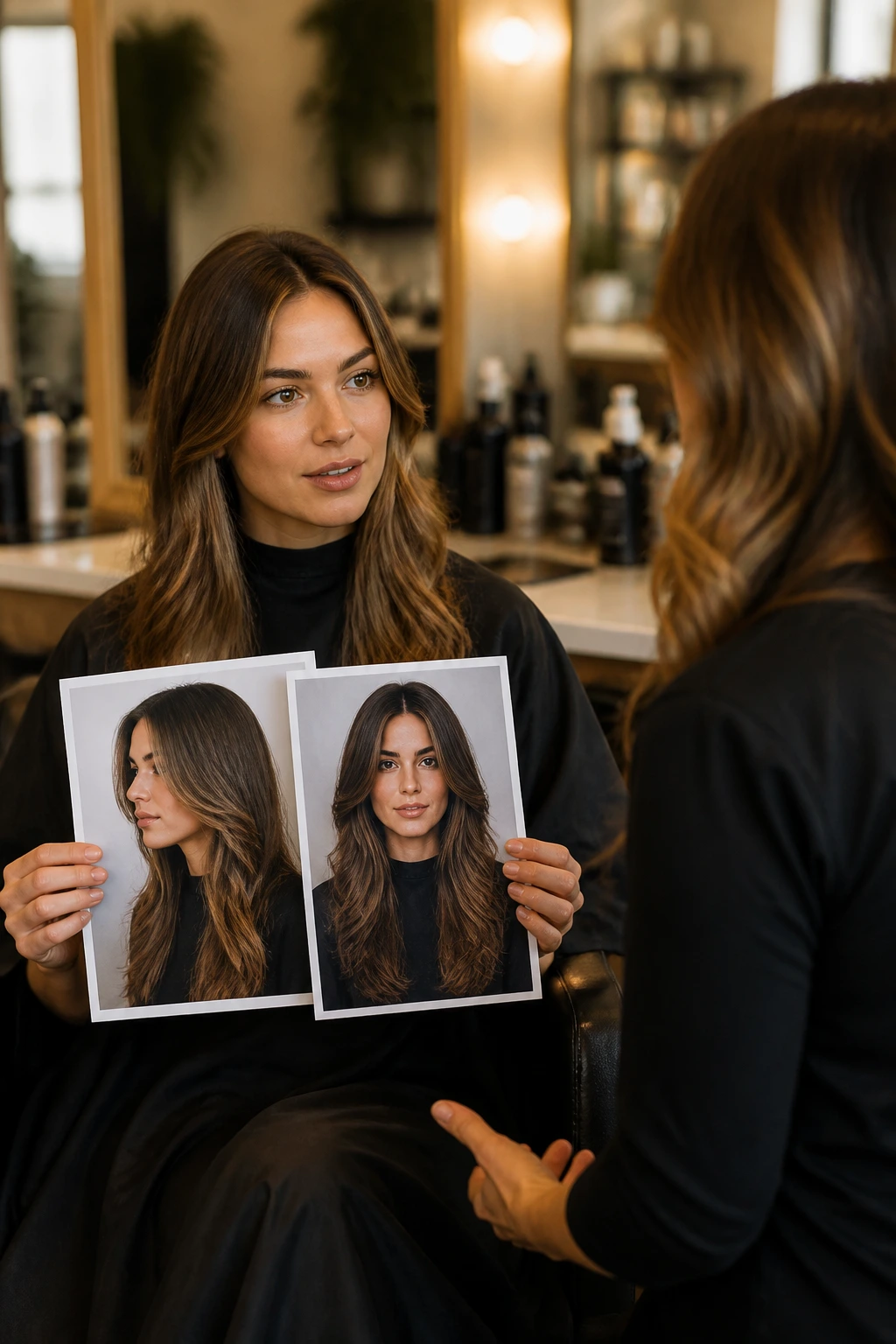
Bring two photos, not ten. One should show the layer placement you like, and one should show the length you want to keep. That keeps the conversation anchored in shape instead of vibe, which is where bad haircuts are born.
Say the words “below the jaw” if you want the front to soften the face instead of widen it. That phrase helps. Also mention whether you wear a center part, a side part, or both. The part changes where the layers need to sit, and a square face can look wildly different depending on that one detail.
If your hair is thick, ask for internal weight removal. If it’s fine, ask for long layers with minimal thinning. If it’s curly, ask whether the cut will be done dry or curl-by-curl. The more specific you are, the less likely you are to walk out with a haircut that sounded flattering in theory and looks boxy in practice.
How to Wear These Layers Every Day
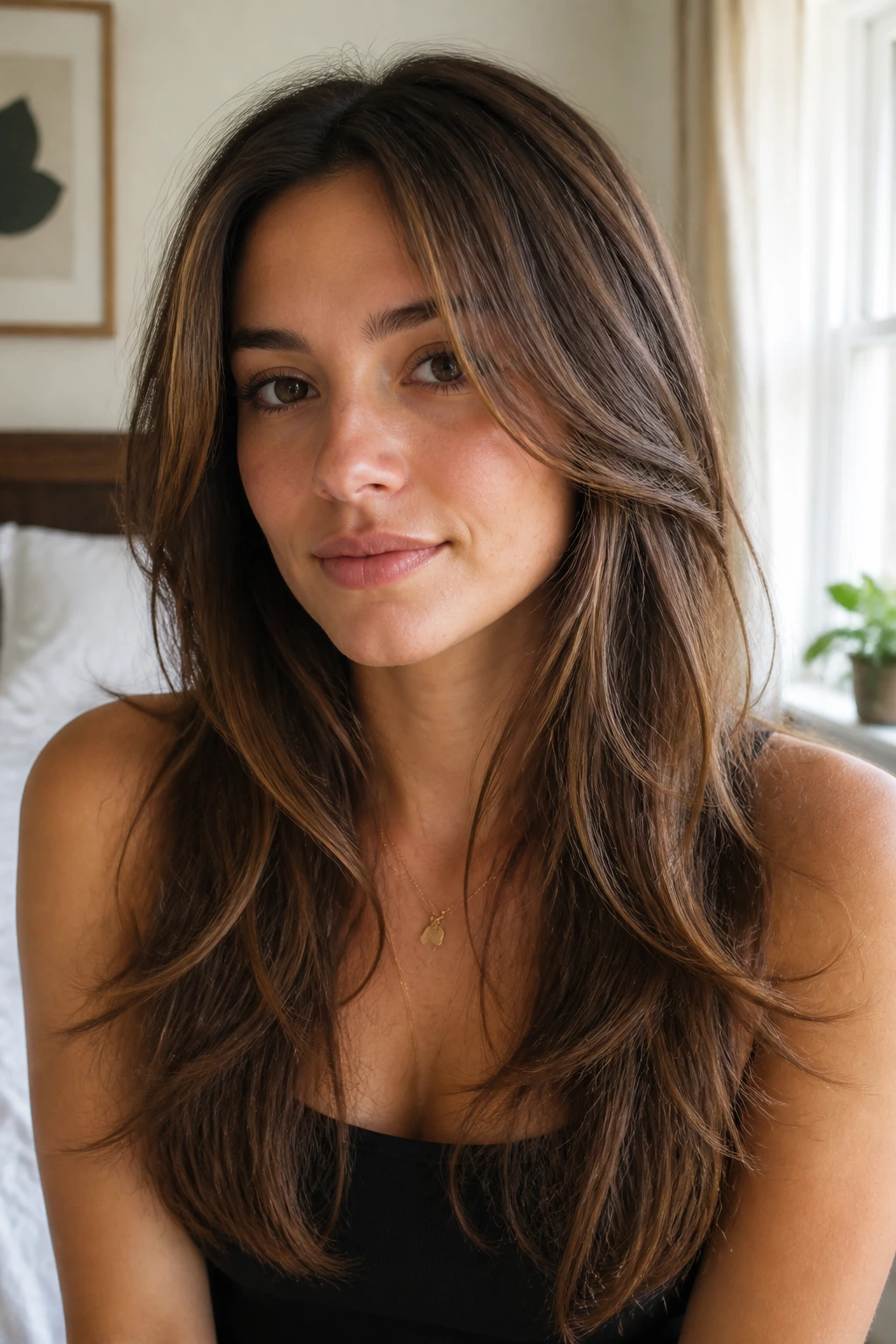
Front View: The shortest pieces should land near the cheekbone or just below it, so the eye softens before it reaches the jaw. That front frame is doing most of the visual work, even when the rest of the hair is left alone.
Best Pairings: Center parts suit the cleaner layered cuts, while soft side parts help the more textured ones. Loose waves, big blowouts, and air-dried bends all show the shape better than tight, repetitive curls. A square face doesn’t need extra width on both sides.
Length Balance: Keep enough density at the ends that the hair still feels long. When layers are too aggressive, the bottom edge can disappear and the whole cut starts looking tired. The best long-layered shapes still have weight.
Finish: A tiny bit of shine serum or light cream on the ends is often enough. Heavy products flatten the lift and drag the sides back down.
Styling Boosters That Make the Shape Read Better
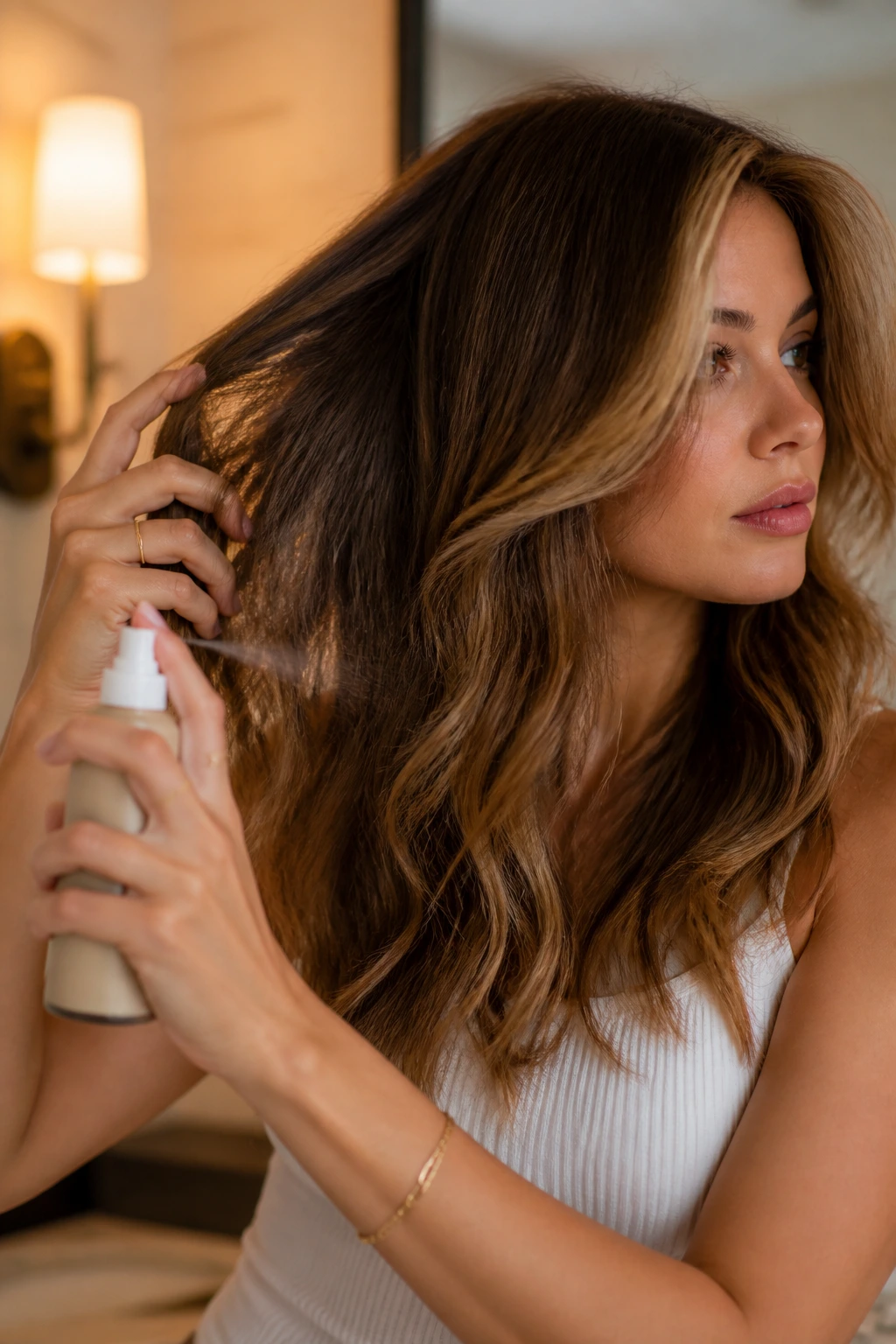
Texture Boost: A 1-inch iron or wand gives long layers separation, which keeps the cut from turning into one flat sheet. Alternate curl directions loosely, then brush through once so the wave looks soft instead of ringleted.
Customization: If you want more softness, move the shortest face-framing piece up by about one inch. If you want the jaw to look narrower, let the front layers fall lower and keep the crown a bit fuller.
Color Trick: A few brighter strands around the cheekbone can make the layers look deeper and more intentional. Keep the contrast gentle; strong stripes around the face can fight the haircut.
Make-It-Yours: Fine hair usually wants fewer, longer layers. Thick hair usually wants more internal shaping. Curly hair wants the cut to respect shrinkage. Straight hair wants a little bend at the ends, otherwise the whole thing can go stiff.
Common Layering Mistakes on Square Faces
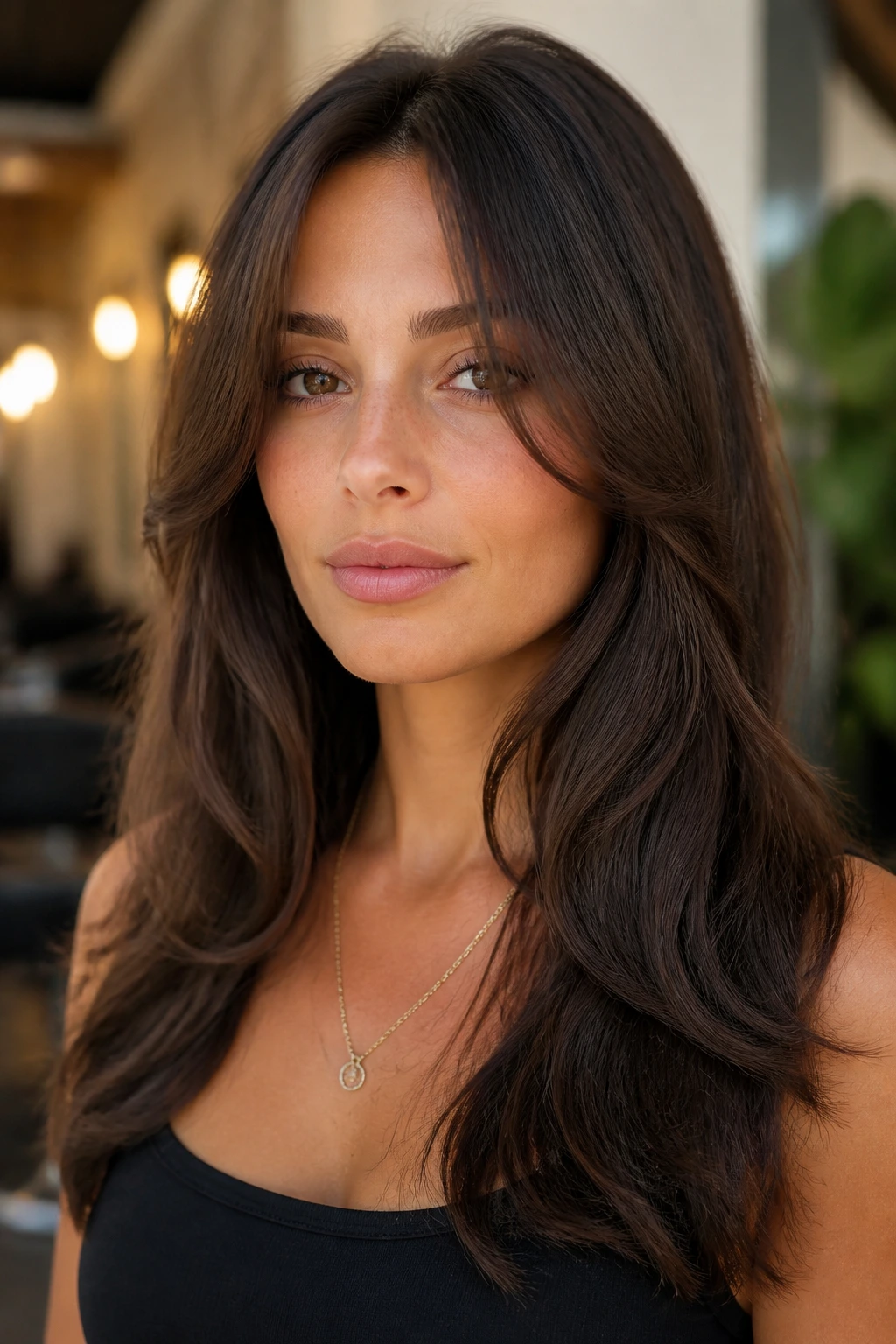
The first mistake is putting the shortest layer right at the jaw. It’s such a common one. The hair ends up sitting on the widest part of the face, which makes the jaw look heavier, not softer.
Second, people over-thin thick hair. The cut feels lighter for a week, then the ends go stringy and the whole shape collapses. Ask for bulk removal inside the haircut, not a shredded perimeter.
Third, the fringe gets too blunt. Heavy bangs can make square features feel boxed in. If you want bangs, keep them airy, split, or side-swept so they travel into the rest of the cut.
Fourth, the front is cut too short for the way the hair is worn. A center part needs different layering than a side part. Ignoring that one fact is how a flattering photo turns into a frustrating mirror.
Finally, people forget that layering should support the texture they already have. A cut that looks gorgeous blown smooth may fight back on air-dry days. If you live in waves and ponytails, the haircut should still make sense there.
Variations and Adaptations to Try
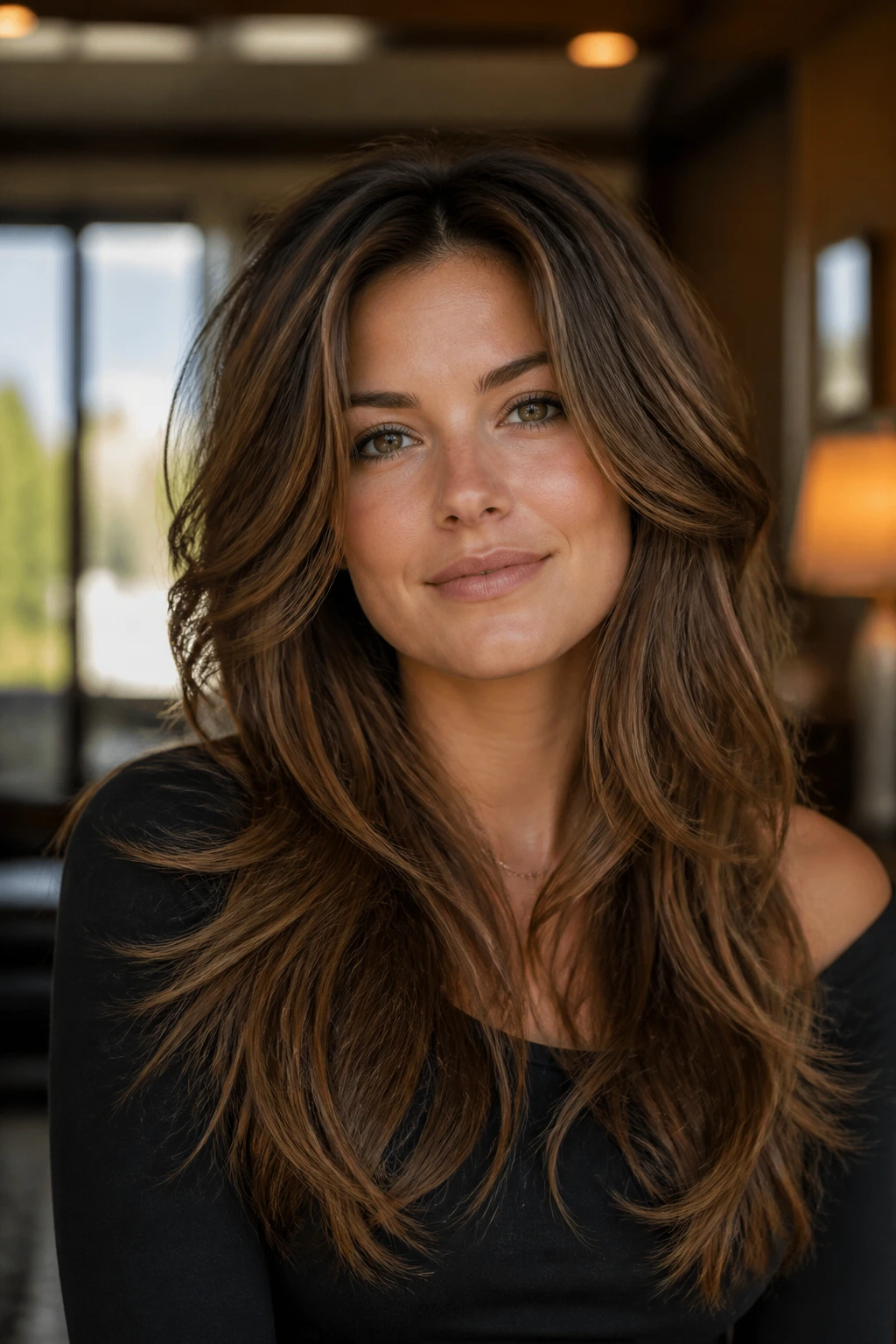
The Air-Dry Soft Cut: Keep the layers longer and ask for low-maintenance shaping that still falls cleanly without heat. This is the one for people who want movement with the least fuss.
The Glam Blowout Version: Build more crown volume and keep the face frame smooth and polished. It suits hair that holds shape after a round-brush finish and makes the cut read more dressed up.
The Curly-First Shape: Let the stylist cut with curl shrinkage in mind, then keep the front pieces long enough to drape past the jaw. This version works best when each curl group is shaped on its own.
The Razor-Softened Version: Add soft razor texturing to the mids and ends for more separation. Use this only if your hair is thick enough to handle it; fine hair can lose too much body.
The Grow-Out Friendly Version: Ask for long layers that blend slowly into the ends so the haircut still behaves when it’s a little grown in. This is the least dramatic choice, and honestly, one of the smartest.
Trims, Washing, and Grow-Out Care
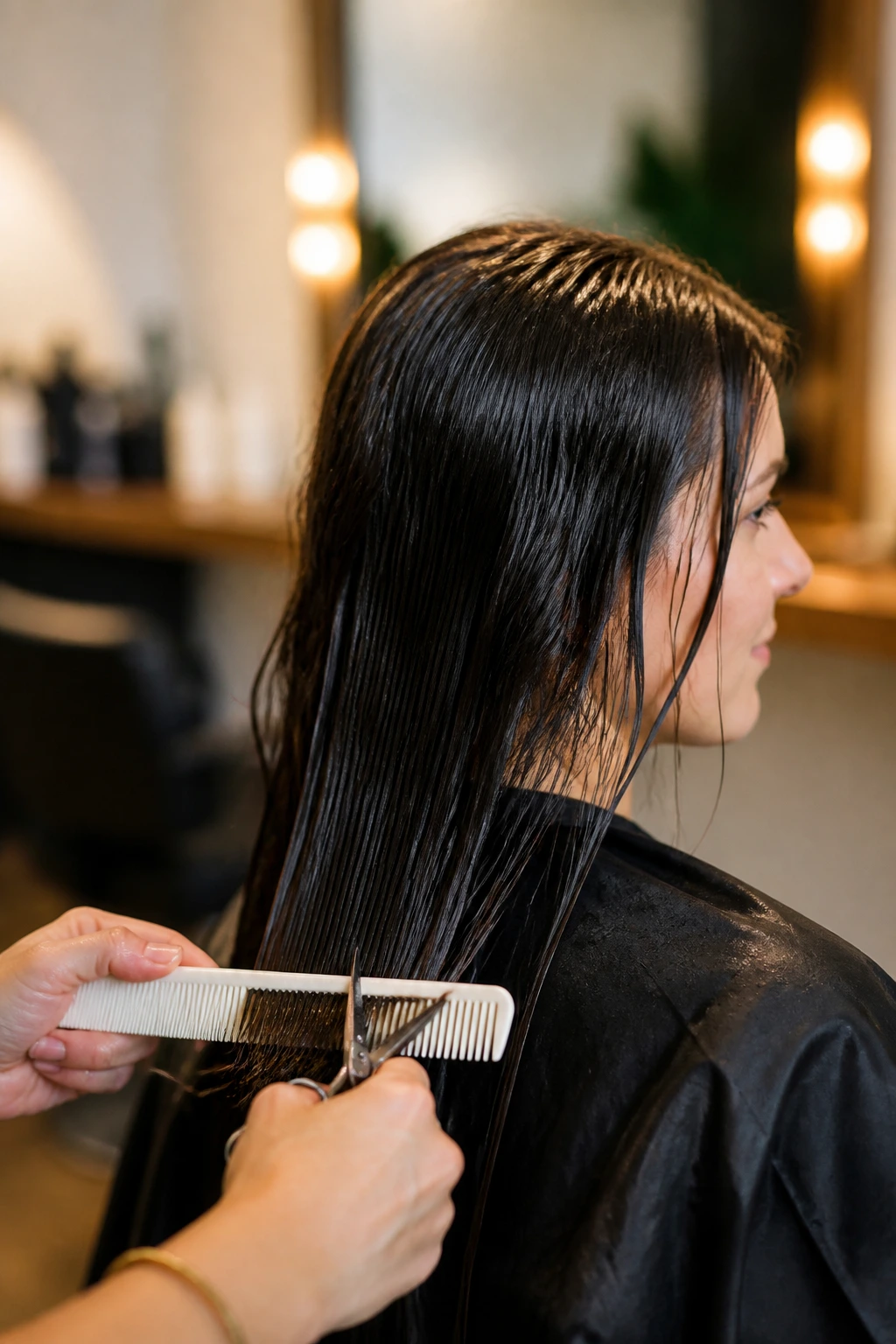
Layered long hair needs trimming more often than blunt long hair if you want the shape to stay visible. A trim every 8 to 12 weeks keeps the ends from going ragged and prevents the face-framing pieces from dropping into the jawline. If your hair is very thick or very layered, closer to 8 weeks is better.
Wash frequency matters too. If your layers are textured or blow-dried, heavy buildup at the roots can drag them flat. A lightweight shampoo at the scalp and a conditioner only from mid-length to ends usually keeps the shape cleaner. Dry shampoo can buy you a day or two, but if it piles up near the roots, the crown loses lift fast.
For overnight care, a loose silk scrunchie or a soft braid keeps the front pieces from kinking. Heat styling doesn’t have to happen every day, but when you do use it, keep the ends protected. Those ends are the part everyone notices first when layered hair starts looking tired.
Frequently Asked Questions
Do lots of layers make a square face look wider?
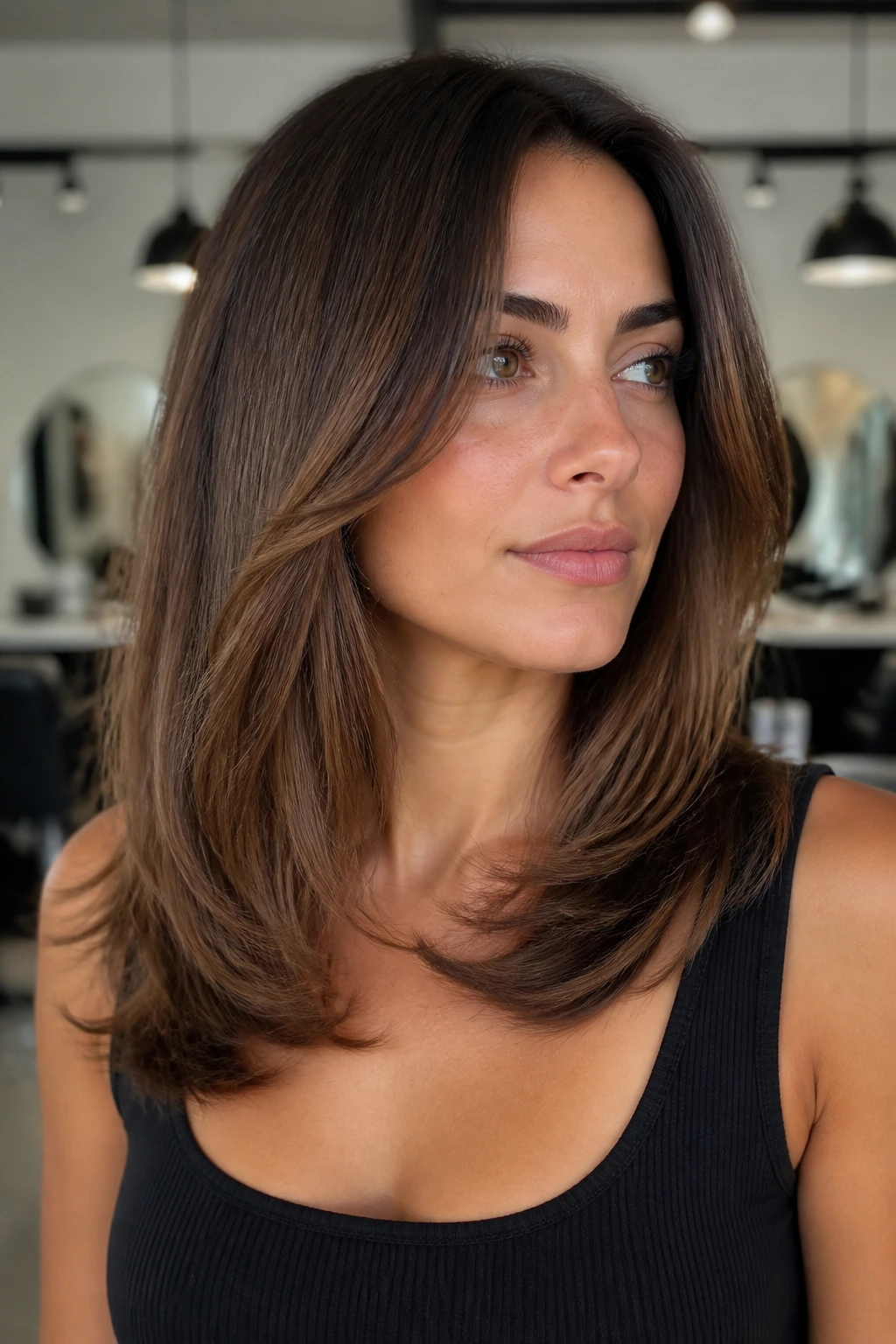
They can, if the shortest pieces end right at the jaw or if the sides are blown outward too much. Layers that start near the cheekbone and taper below the jaw usually do the opposite; they break the boxy line and soften the outline.
Where should the shortest layer start on a square face?
Most of the time, around the cheekbone or just below it is the safest place. That keeps the hair from sitting on the widest part of the jaw while still giving you movement in the front.
Are curtain bangs a good idea with long layers?
Yes, if they’re cut long and soft. Curtain bangs that hit the cheekbone or skimming the jaw can work beautifully, but blunt, heavy curtains can make the lower face feel stronger than you want.
What if my hair is fine and I still want lots of layers?
Ask for long, subtle layers and keep the ends full. Fine hair usually looks better when the layering is mostly hidden inside the cut, not chopped into visible pieces all over the surface.
Can curly hair wear these layered shapes?
Absolutely, but the cut has to respect shrinkage. Dry cutting or curl-by-curl shaping usually gives the best result because the stylist can see where the curls naturally sit around the face.
How do I know if the cut is too short around my face?
If the front pieces land exactly on the jaw and the face feels wider in the mirror, the shortest layer is probably too short. Good layers should soften the face first, then disappear into the length.
Should I wear a center part or a side part?
Both can work. A center part gives a cleaner, more symmetrical look, while a soft side part can break up the jawline more easily. Pick the one that matches how you actually style your hair most days.
What should I do if my layers look choppy after the first wash?
Try smoothing the front with a round brush or a flat brush blow-dry and use less texture spray near the ends. If the cut still feels rough, the layers may have been cut too short or too aggressively, and a tiny trim can help the pieces blend again.
The Shape That Stays Soft
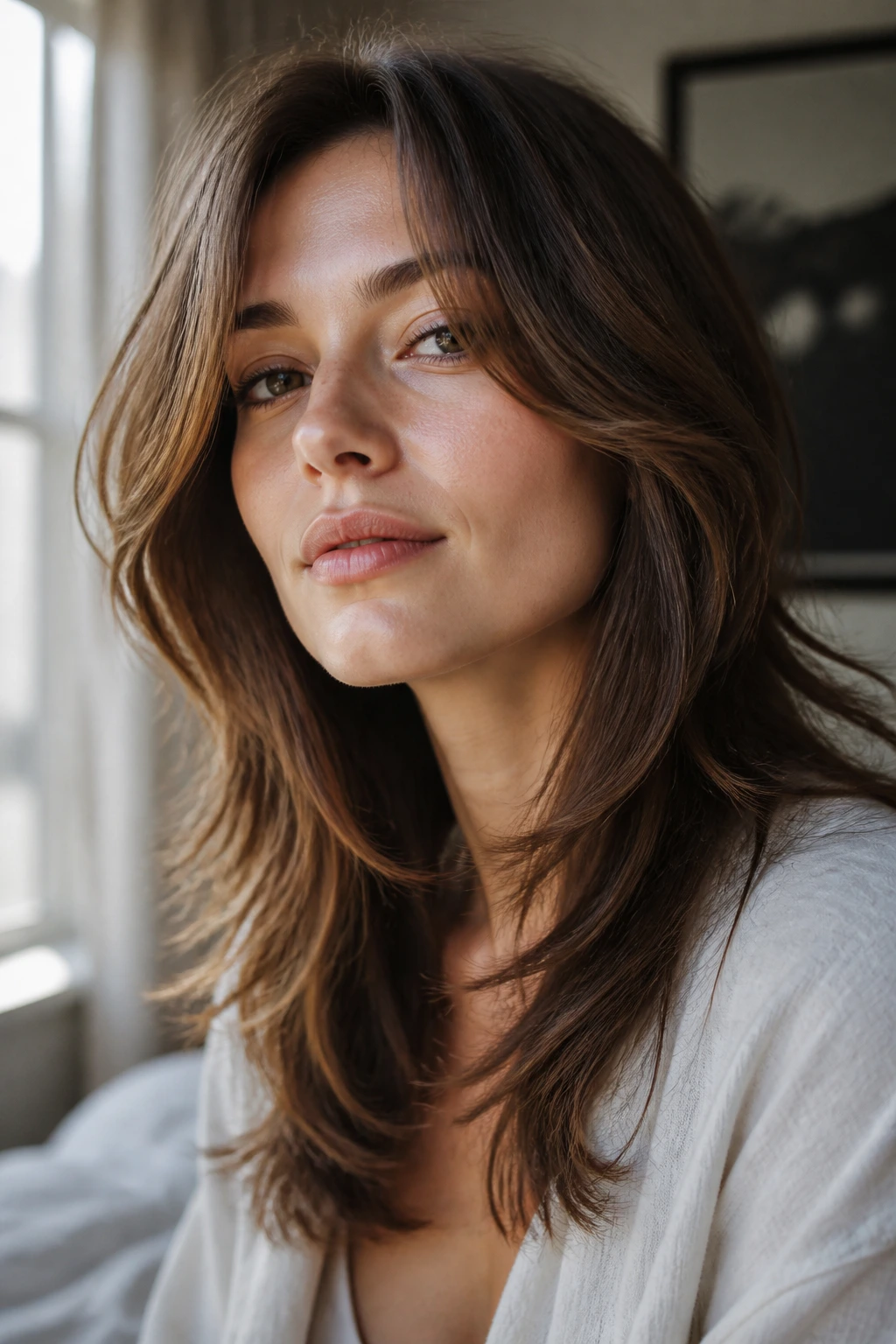
Long hair and square faces are a good match when the layers are doing real shape work instead of just taking length away. The right cut lets the jaw stay strong while the hair around it moves in curves, diagonals, and soft falls. That’s the whole appeal.
The best part is that you don’t need a dramatic haircut to get there. Sometimes one inch of layer placement changes the whole reading of the face. Sometimes it’s the difference between hair that sits there and hair that actually frames you.
Choose the version that fits your texture, keep the front pieces long enough to skim past the jaw, and let the rest of the shape stay calm. That’s where the flattering part lives.