



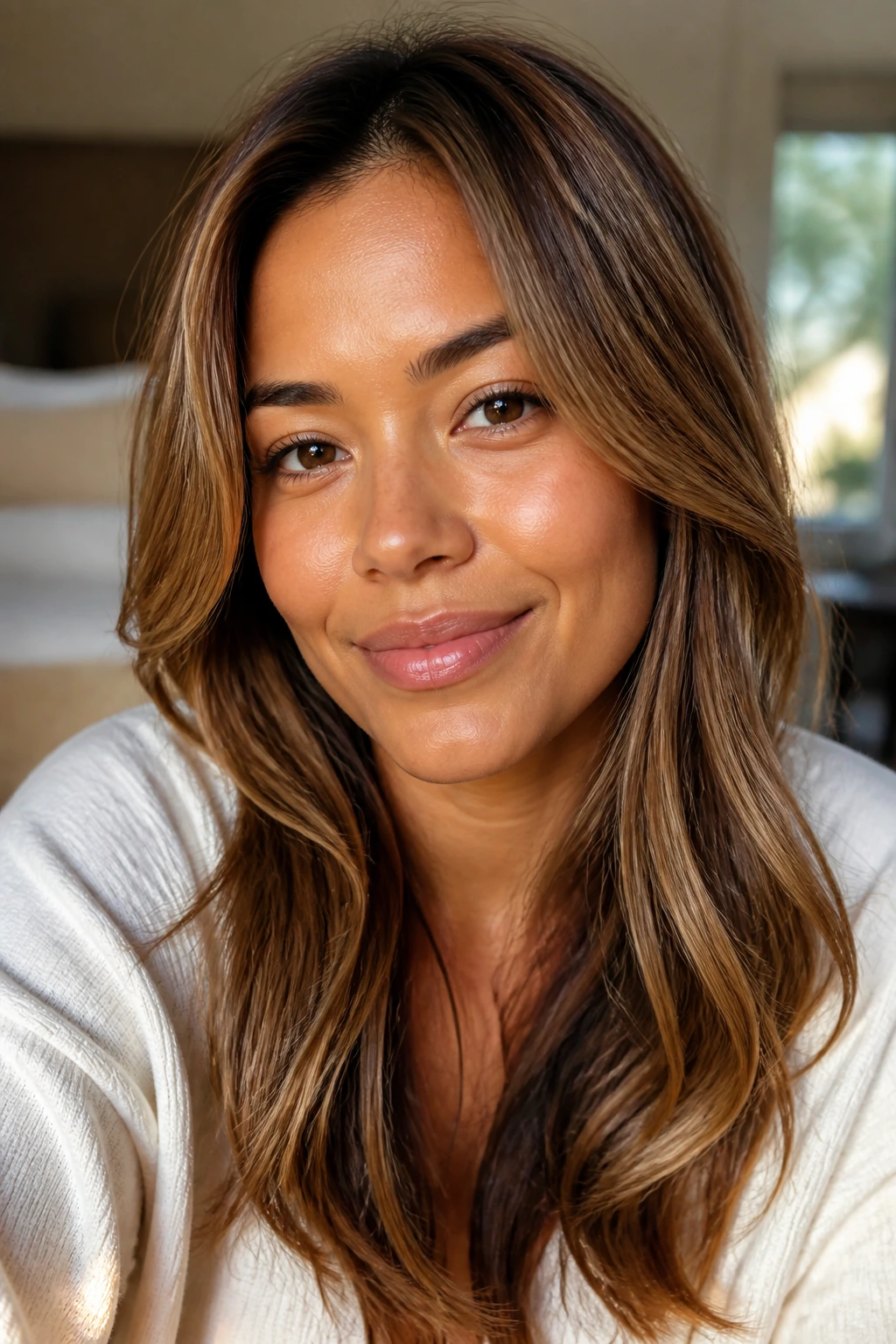
If gold jewelry flatters you more than silver, honey brown hair color ideas for warm skin tones are worth a very close look. This is the family of browns that makes skin look rested instead of sallow, and it does that without dragging you into the full blonde maintenance cycle.
The mistake I see most is going too ash. On warm skin, a smoky brown can look dusty at the roots and flat through the mids, while a honey-brown glaze — especially around level 5 to 7 — gives the face a softer edge and a cleaner glow. The color doesn’t need to scream. It just needs the right kind of light.
Honey brown is not one shade. It can read like liquid caramel on waves, toasted chestnut on straight hair, or a glossy amber ribbon tucked through curls. The best version depends on your undertone, your natural base, and how much regrowth you’re willing to live with.
Why These Shades Work So Well on Warm Skin
-
Gold on gold: Honey, caramel, and amber tones echo the warmth already in the skin, so the face looks brighter without that chalky contrast some cooler browns create.
-
Soft regrowth: Most of these shades live between level 5 and level 7, which means the grow-out line is gentler than it would be with high-lift blonde or a stark red-brown.
-
Texture gets a job to do: Wavy, curly, and coily hair shows off warm ribbons better than a flat one-tone brown, because the bends catch the reflect at different angles.
-
Makeup becomes easier: Bronze shadow, terracotta blush, peach lipstick, and gold hoops stop fighting the hair and start making sense with it.
-
You can go subtle or bold: The same honey-brown family can look like a barely-there gloss, a face frame, a full balayage, or a deeper brunette with warm sheen.
-
Low-light and daylight both work: A good honey brown doesn’t disappear under office bulbs or turn orange in the sun; it keeps a warm, soft depth in both.
How Warm Undertones Change the Shade Chart
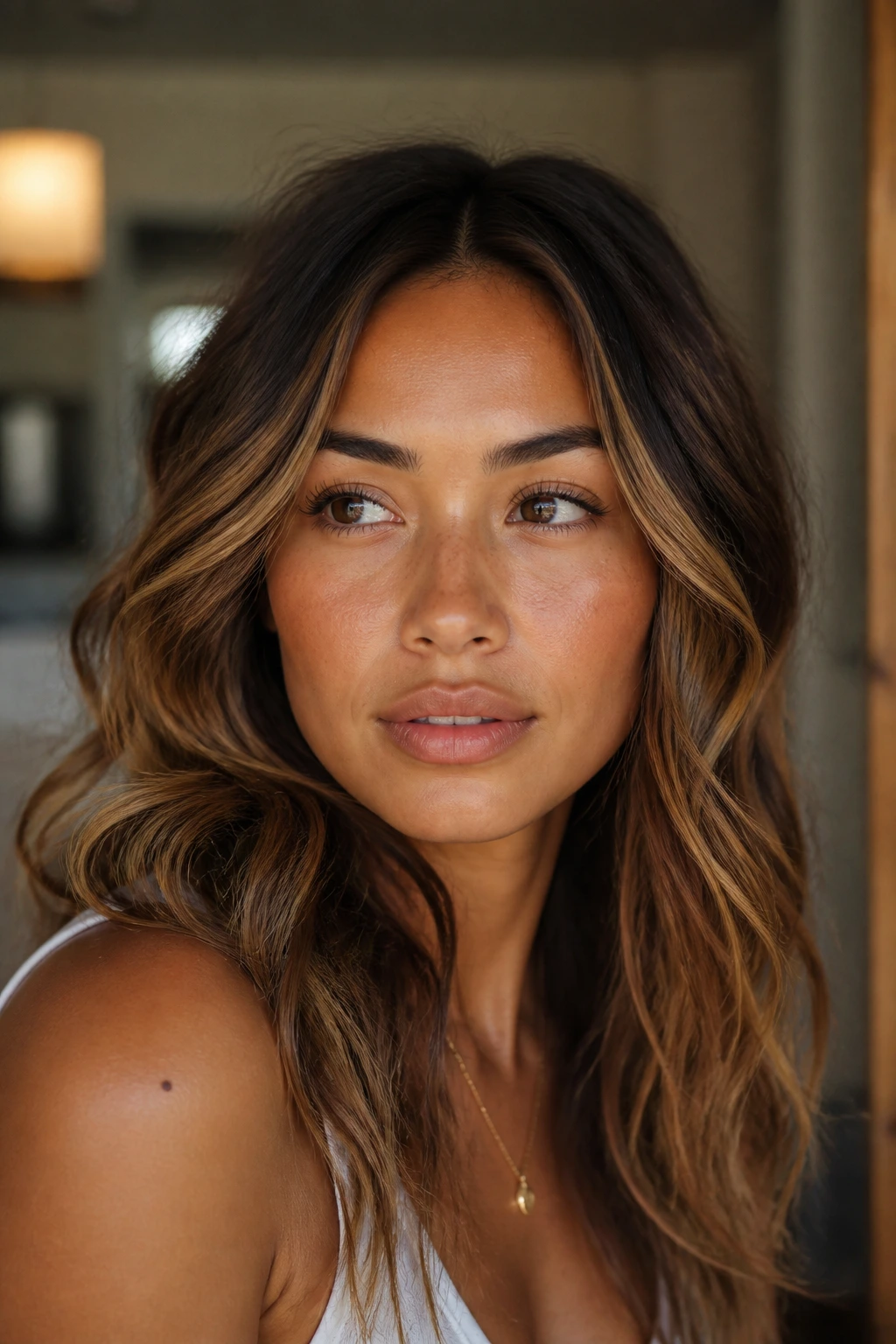
Warm skin isn’t one thing. That’s where people get tripped up. Golden skin, peach-leaning skin, and olive skin all wear brown differently, even if they’re all called “warm” on the color wheel.
Golden undertones want reflection, not chalk
If your skin already has a golden cast, you can usually handle the brightest end of honey brown without looking overdone. Think level 6 to 7 with gold or caramel reflect, not flat beige. The hair should look lit from inside, not painted on top.
Peach undertones need a little softness
Peachy skin can get flushed fast if the hair leans too copper or too yellow. Beige-gold, toasted almond, and soft chestnut usually behave better than a loud orange-brown. You want warmth with some restraint.
Olive warmth likes muted gold
Olive undertones can be the trickiest, because too much orange makes the skin read greenish or tired. A muted caramel, hazelnut, or bronze-brown keeps the face balanced. If you’re olive and warm, muted is your friend. Loud is not.
A good rule: the deeper your natural base, the more the brown can hold depth and still look rich. On lighter warm skin, a softer honey or beige-brown usually looks cleaner than a rusty tone that sits too high on the chart.
1. Classic Honey Brown Gloss
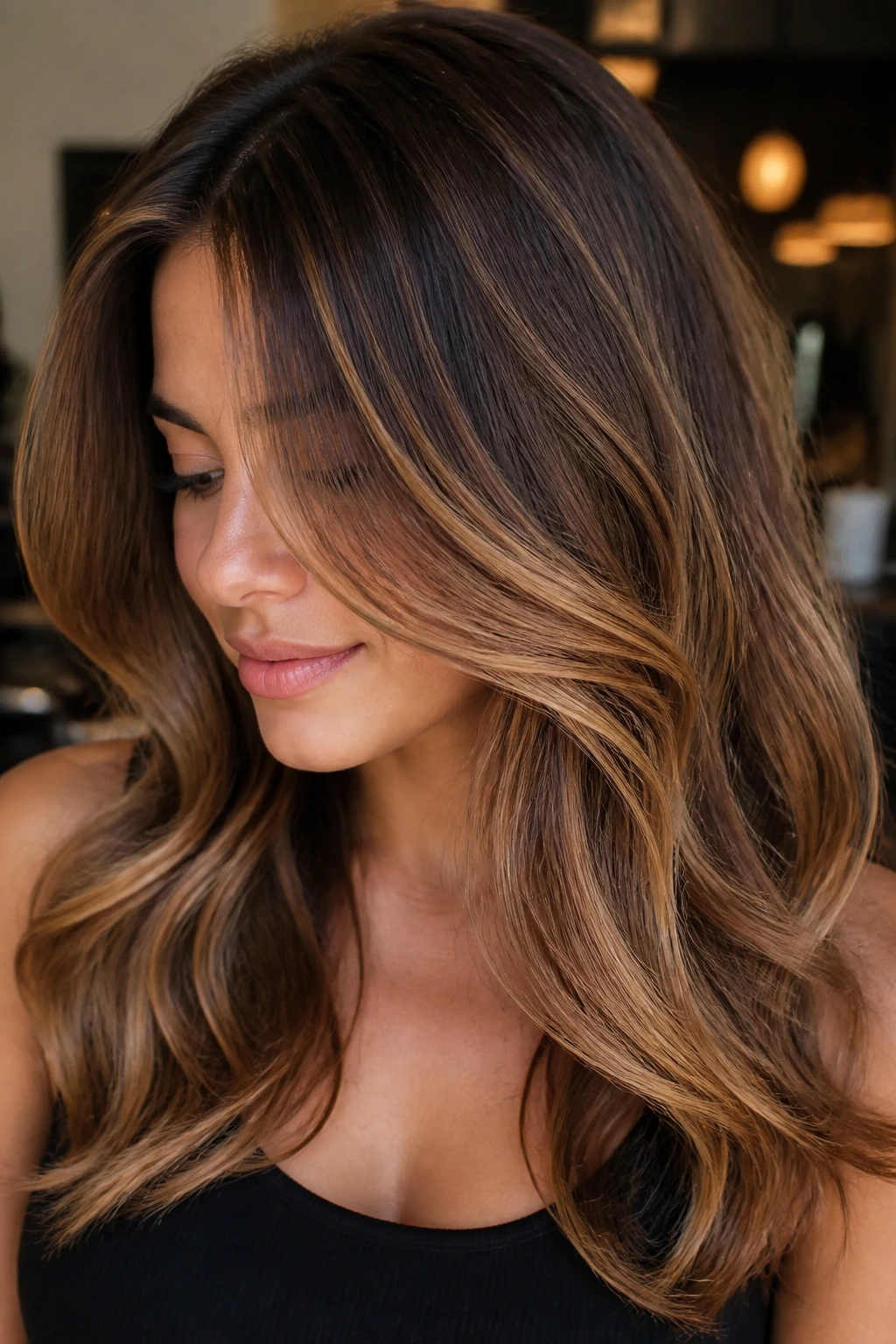
This is the shade people picture when they say honey brown, and honestly, there’s a reason it lasts. It’s a medium brown base washed with golden reflect, so the whole head looks polished rather than streaked. On warm skin, it softens redness around the cheeks and gives the face a smoother frame.
The nicest part is how forgiving it is. If you already have brown hair, a demi-permanent gloss can refresh dull mids and ends without turning the color into a whole production. On straight hair, it reads sleek. On waves, it looks like the light is moving through the strands.
A small note: keep the shine high and the tone warm, but not orange. That’s the line.
2. Caramel Ribbon Balayage
This is the safest way to add brightness without turning the head into a stripey mess. The base stays brown, while hand-painted caramel ribbons sit on the surface and around the face, usually one to two levels lighter than the natural color.
Why it lands so well
The ribbons give warm skin a little lift, especially if the cut has layers or a soft bend. Ask for the lightest pieces near the cheekbones and collarbone, then keep the crown a touch deeper so the whole thing doesn’t flatten out. That contrast makes the hair move.
- Best for: shoulder-length layers, beachy waves, and anyone who wants dimension without obvious regrowth.
- Ask for: caramel pieces that are fine near the part and a bit wider at the ends.
- Skip if: you want one solid color with no brightness around the face.
3. Golden Chestnut Curls
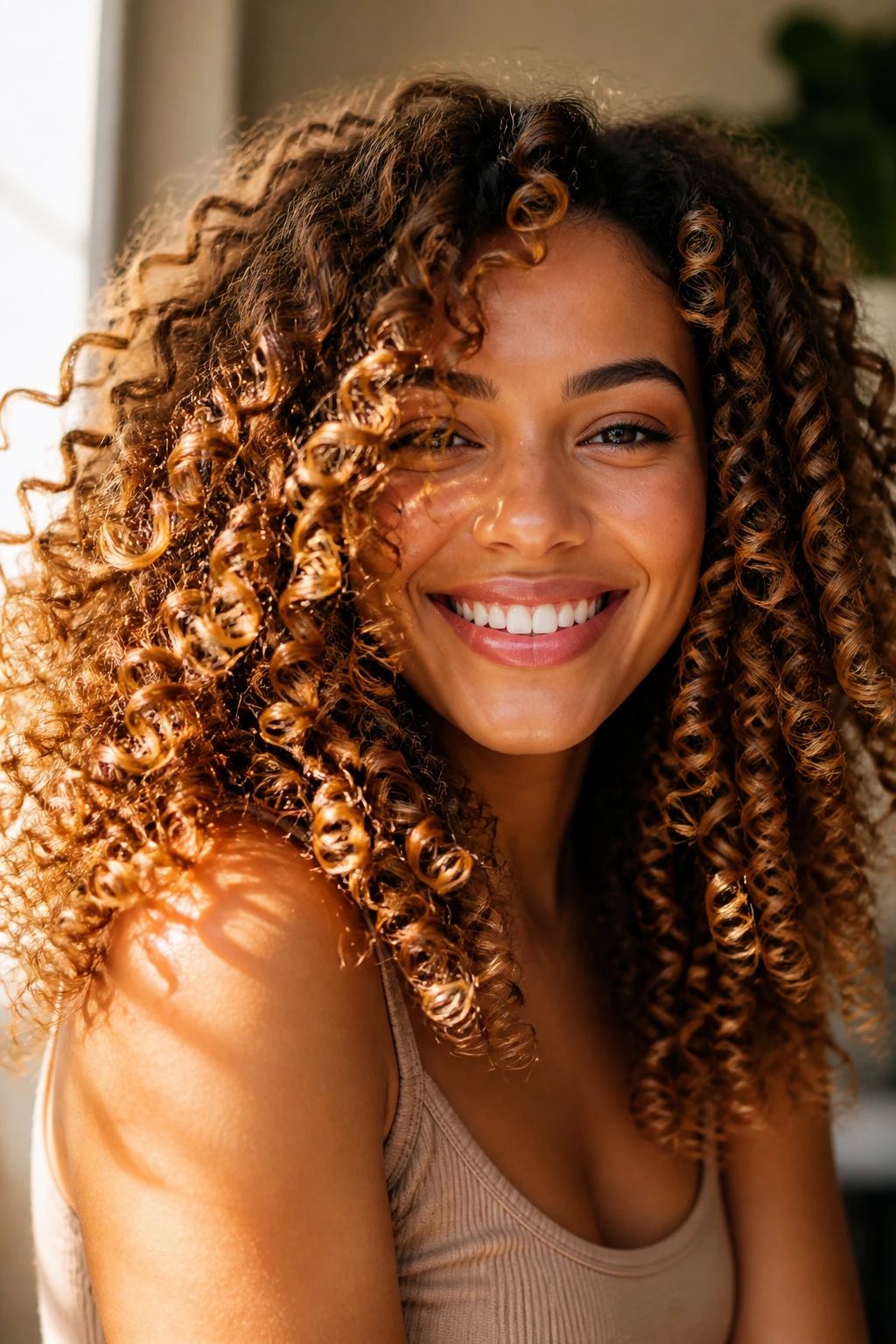
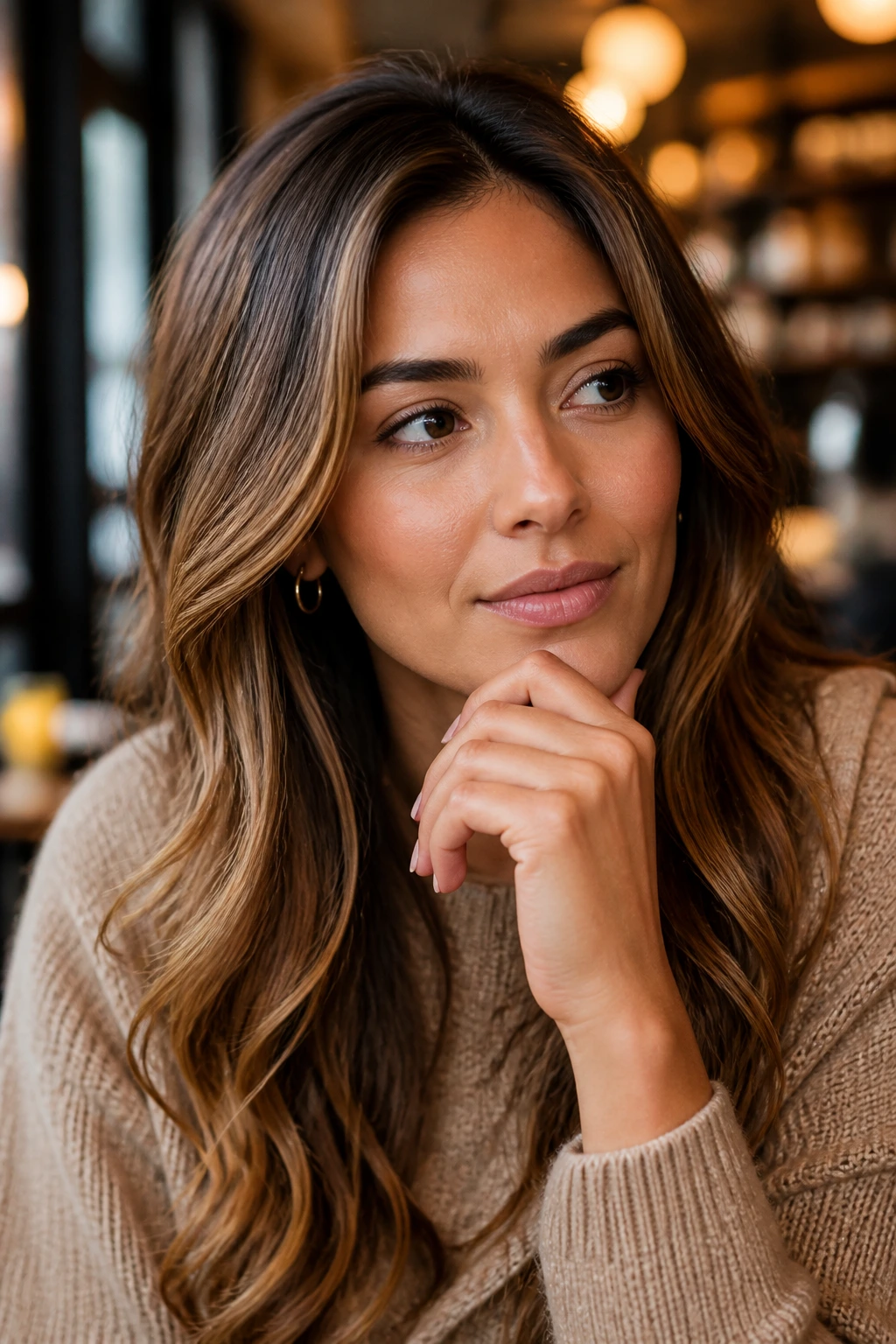
Why does chestnut look richer on curls than on pin-straight hair? Because every bend catches the gold differently. On textured hair, chestnut brown with a golden glaze can look almost molten in daylight, but still deep enough to keep the shape of the curl pattern.
This shade is a favorite on warm medium to deep skin because it doesn’t chase blonde territory. It stays rooted in brown, then flicks just enough gold across the surface to keep the finish alive. The result feels plush, not flashy.
If your curls are dry, this shade gets even better when the ends are sealed with a shine cream. Dull curls swallow color. Glossy curls hold it.
4. Cinnamon Bronde Melt
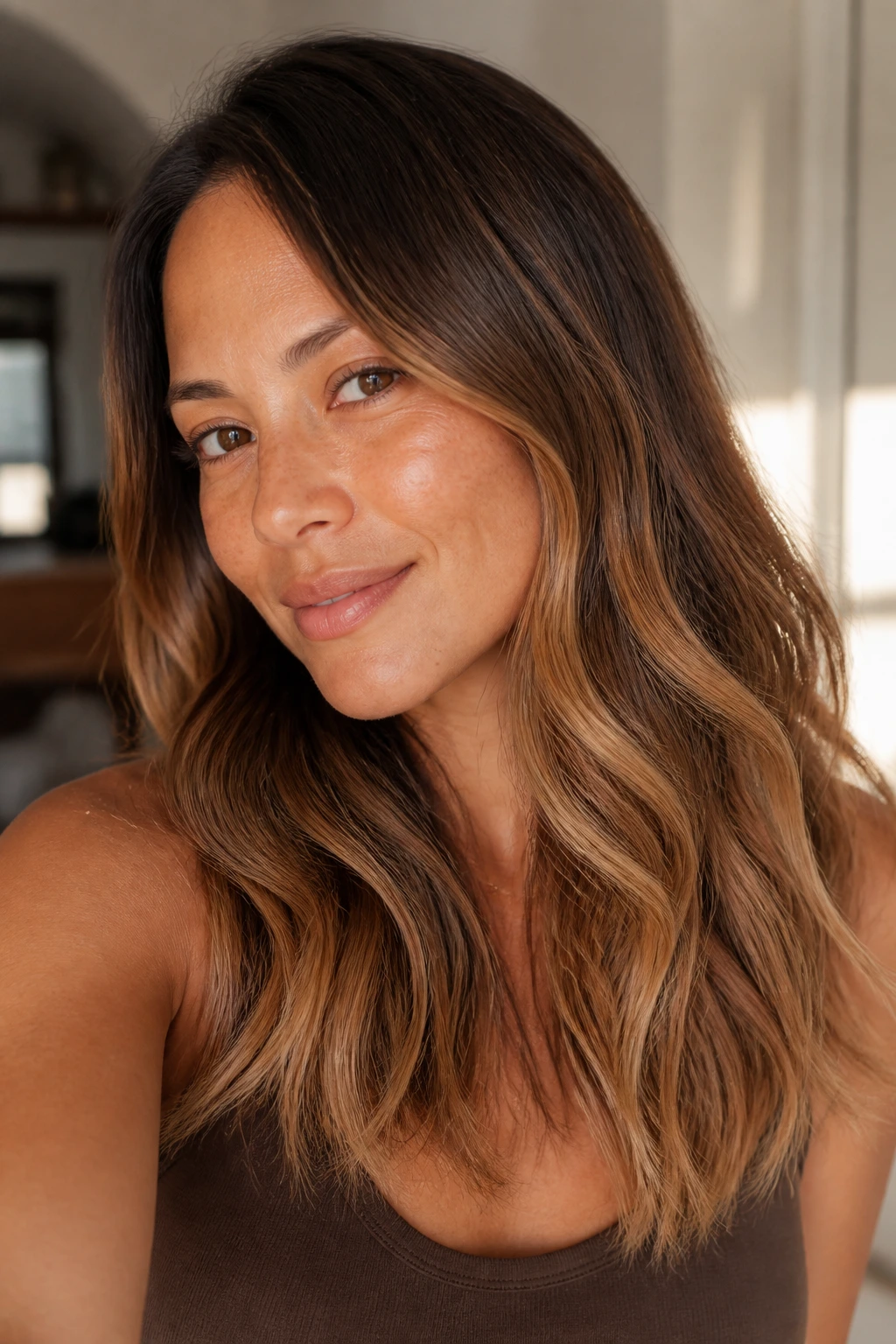
This one is for the person who keeps saying, “I want lighter hair, but I don’t want to look blonde-blonde.” The melt starts with a brunette root, slides through a cinnamon-brown midsection, then opens into bronde ends that still feel warm. Not ash. Never ash.
The reason it flatters warm skin is the middle zone. Cinnamon has enough red-gold to warm the complexion, while the bronde ends stop the color from reading too heavy. It’s a smart choice if your hair is long enough to show a gradient.
Wear it with loose bends. A flat iron can hide the melt, and that would be a waste.
5. Maple Mocha Layers
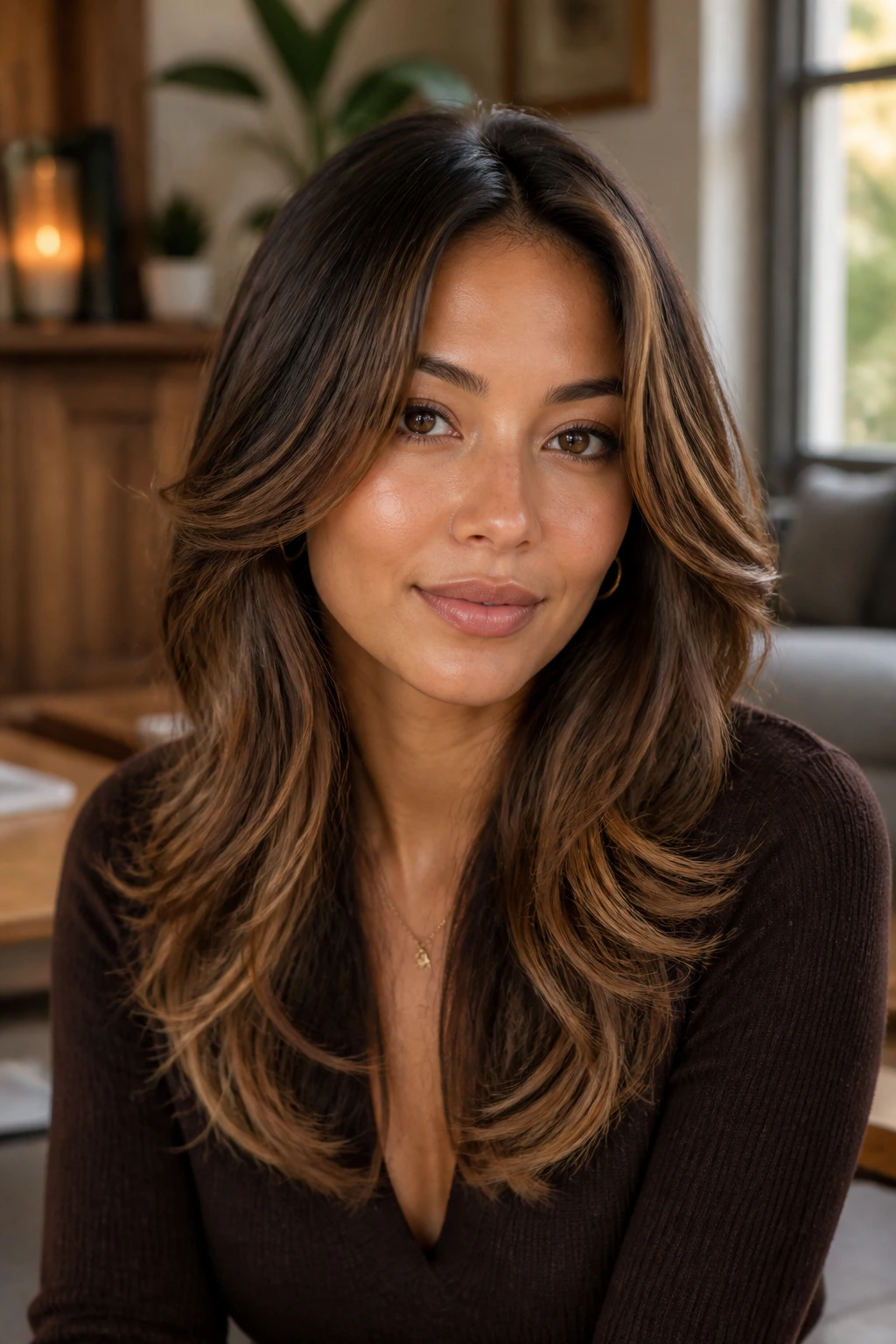
Maple mocha is deeper than caramel and softer than espresso. Think brown with a syrupy maple sheen woven through the layers, especially at the ends and around the face. On thick hair, it keeps the cut from looking like one solid block.
If your hair is layered, this shade earns its keep. The top layers stay rich and dark enough to frame the eyes, while the lower layers catch that warm maple light as the hair moves. It’s especially good for medium to deep warm skin that needs depth more than brightness.
This is also one of the better choices if you live in a world of office lighting and overhead bulbs. It doesn’t vanish indoors. It just turns smooth.
6. Amber Money Piece
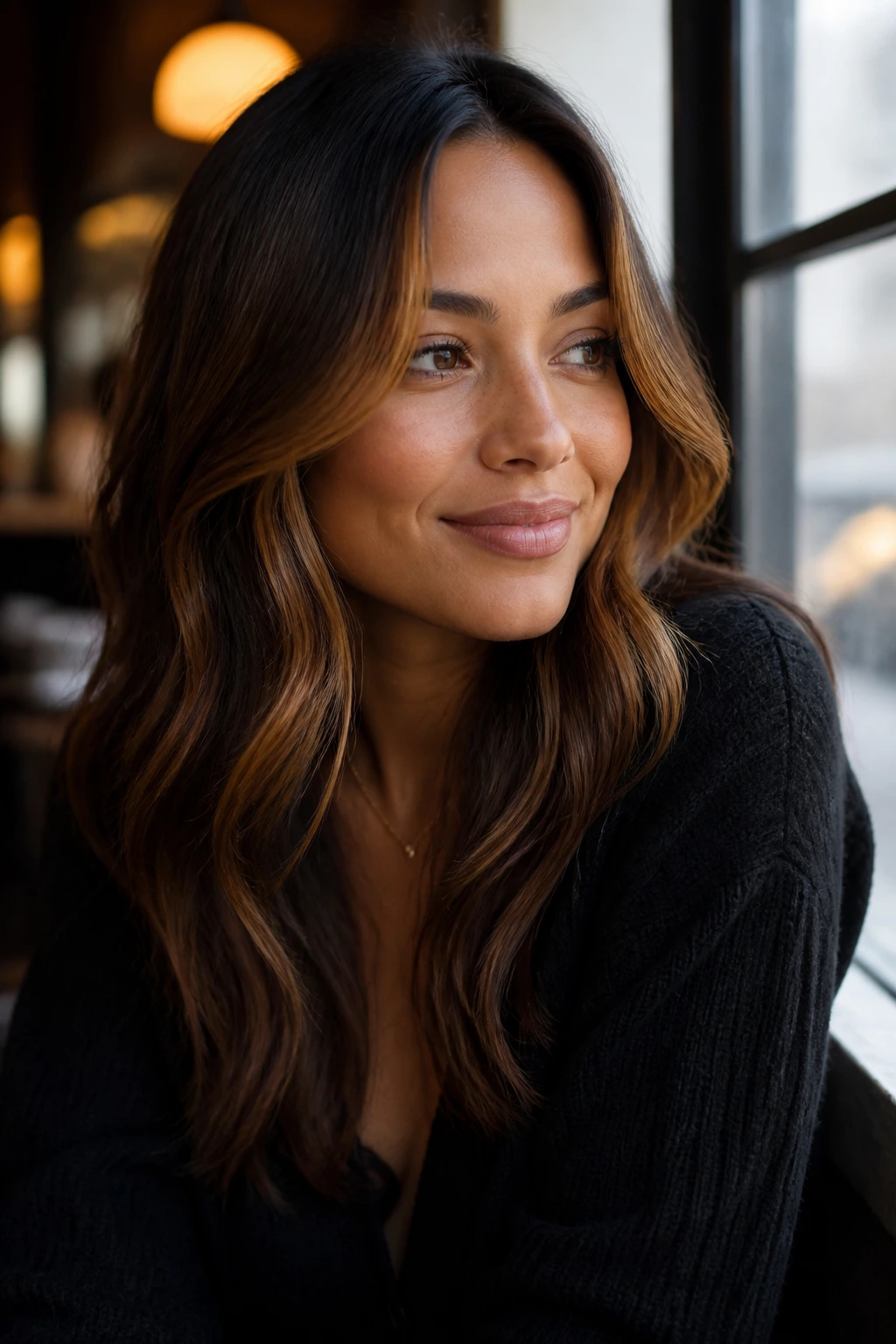
A bright face frame can be quieter than full highlights. That sounds backwards, but it’s true. An amber money piece puts the warmth exactly where warm skin wants it: around the eyes, cheekbones, and hairline.
The rest of the hair can stay a soft brown or chestnut, which keeps the look easy to wear. The front pieces are the statement. Ask for them a shade or two lighter than your base, with a gold-amber finish rather than pure copper.
This works best when you want a visible change that doesn’t touch the whole head. It also plays nicely with ponytails and half-up styles, because the front pieces stay in the conversation even when the rest is tied back.
7. Toasted Almond Brown
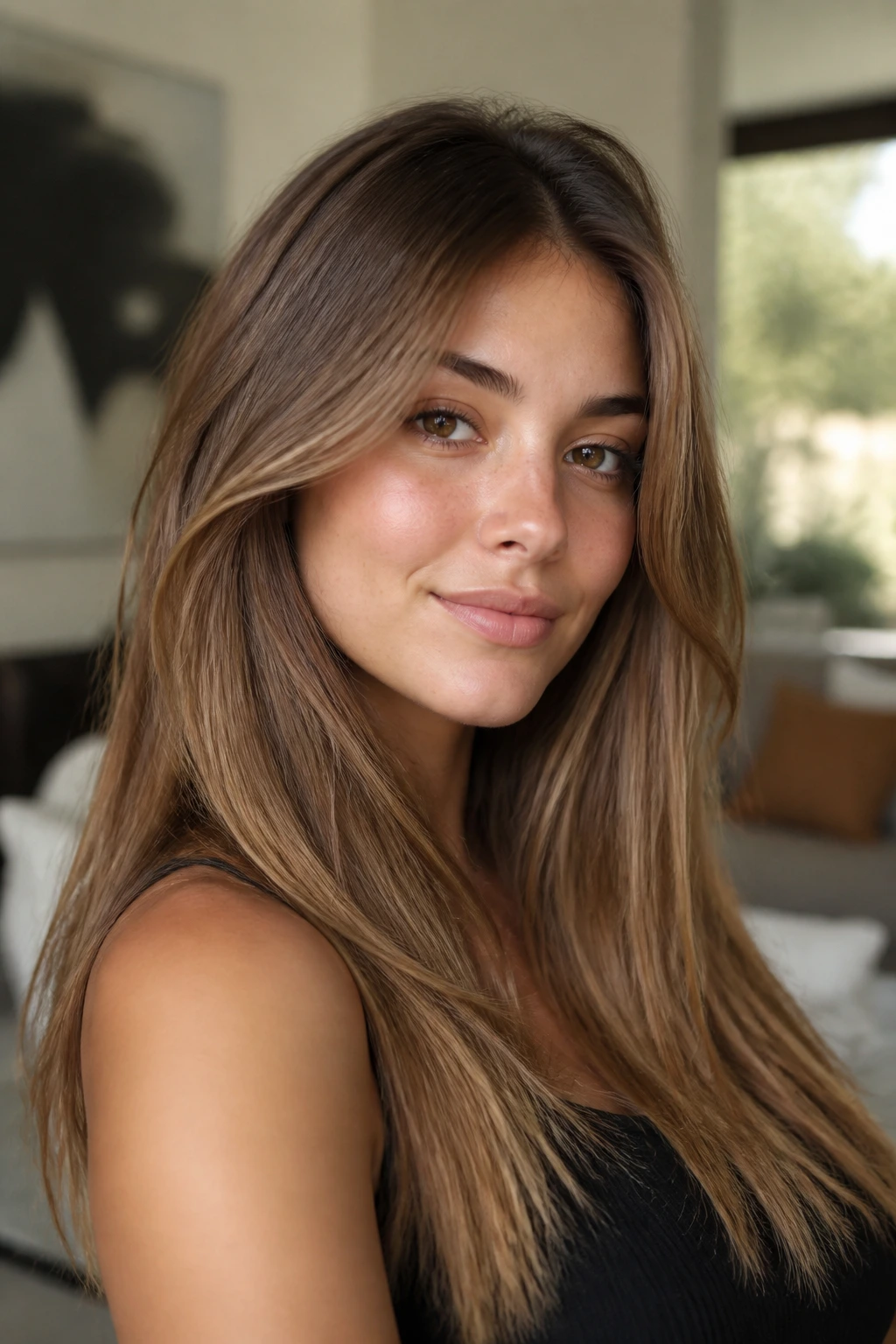
Toasted almond sits in that useful middle zone between beige and brown. It’s warm, but not syrupy. Soft, but not bland. On warm skin, it can look cleaner than a richer caramel if your undertone leans peach or olive and you don’t want too much orange in the mix.
What it looks like in the chair
The shade usually lands around level 6 with a neutral-gold finish. It’s the kind of color that makes a blunt cut look smoother and a layered cut look airier. On fine hair, it can add the sense of thickness without needing chunky highlights.
This is one of my favorite “quiet luxury” browns — not because it’s trying to be fancy, but because it stays calm. That matters when your skin already carries warmth.
8. Espresso Roots, Honey Ends
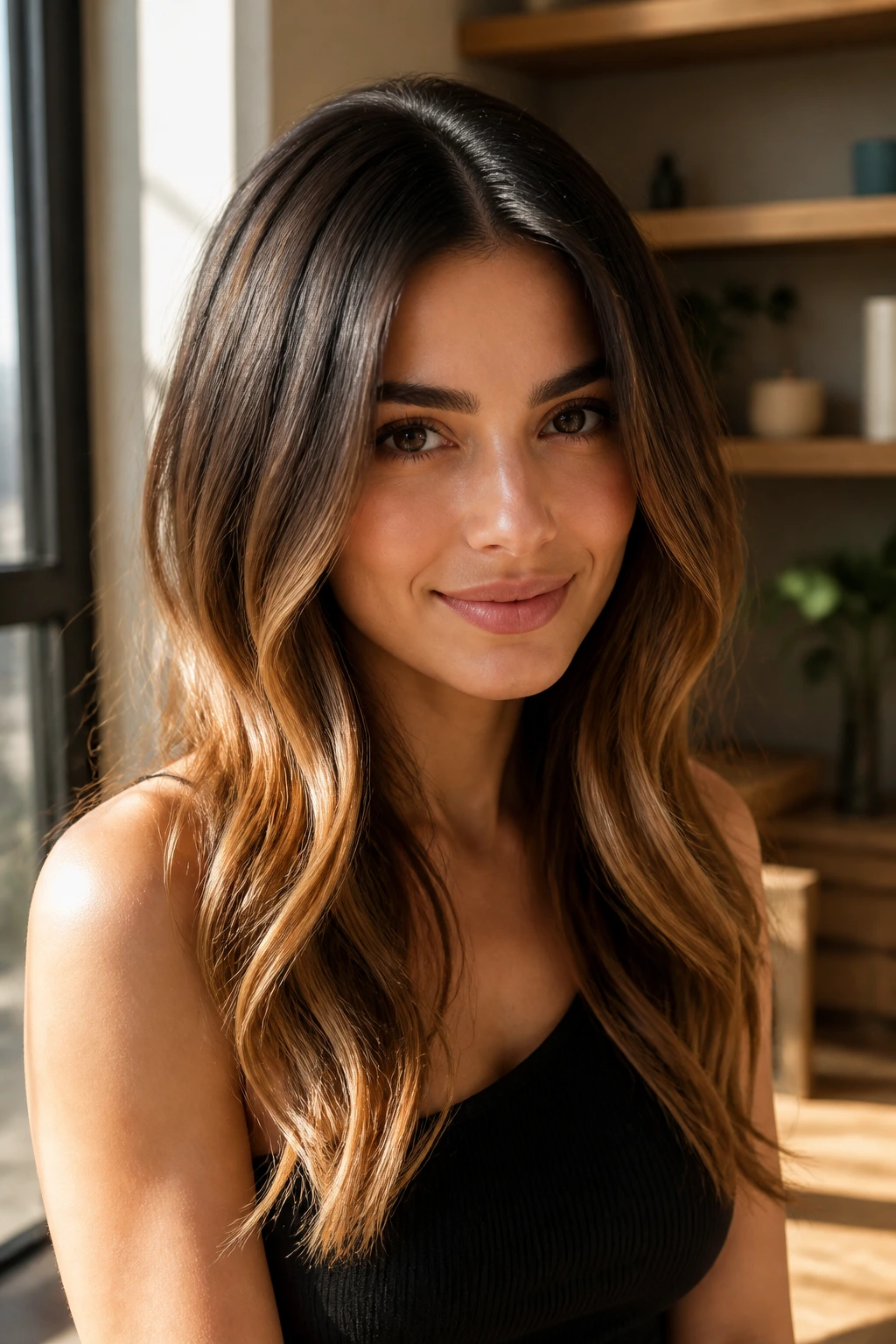
Unlike a full balayage, this keeps the top dark and lets the light live at the edges. That’s the whole appeal. You get the drama of a dark root with the easier maintenance of lighter ends, which also means the hairline can grow out without looking sloppy.
The honey on the ends should be golden, not brassy. The contrast is the point here, so keep the root area rich and the lower lengths warm and glossy. It looks especially good on medium to long hair where the ombré shape can actually stretch out.
If you wear a center part, this shade can look sharper. If you wear a side part, the honey ends feel softer. Small detail. Big difference.
9. Sunlit Cocoa Balayage
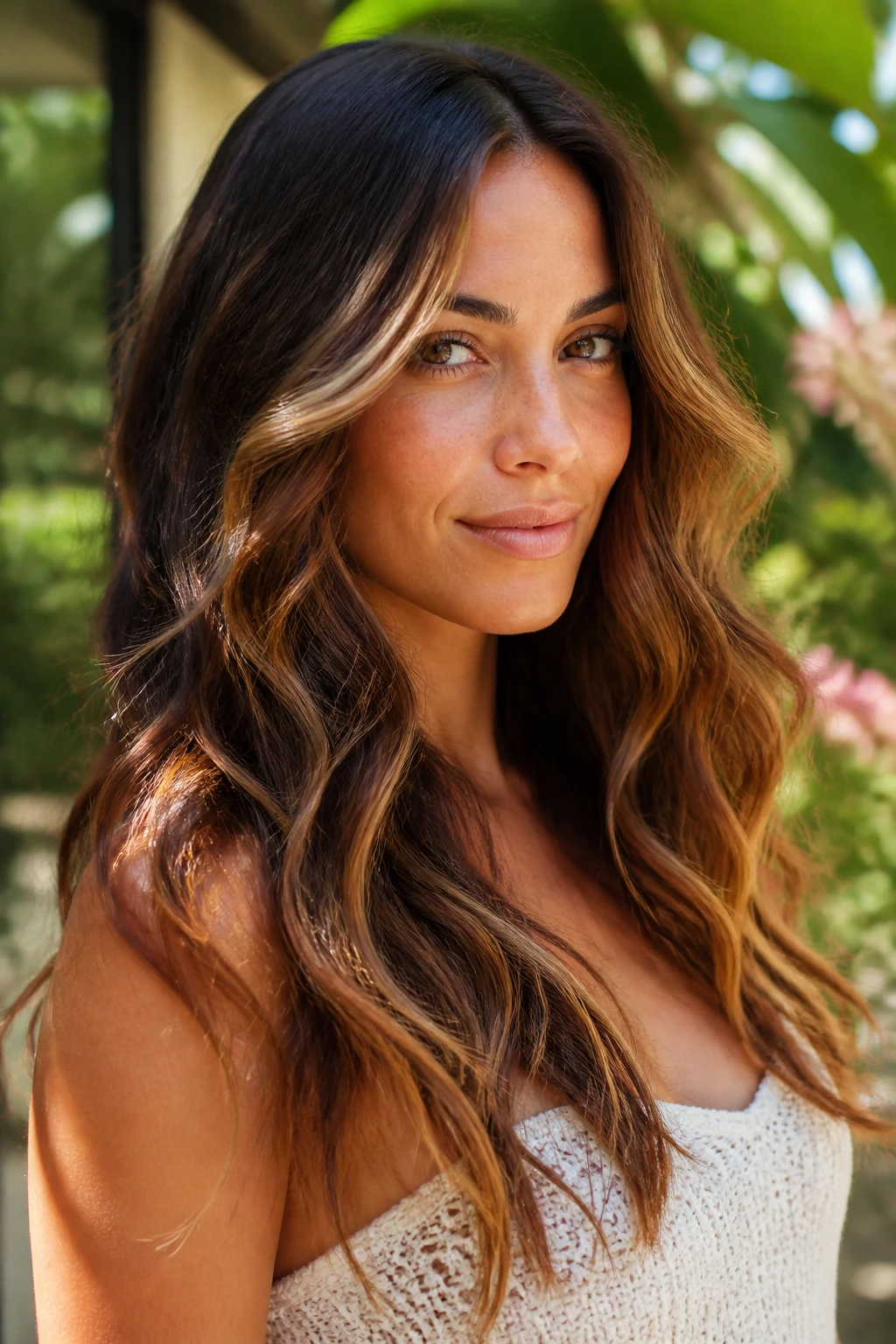
This is the shade that makes brown hair look like it spent time outdoors, even if you mostly spend your life under fluorescent lights and carrying coffee. The base stays cocoa, and the light pieces sit where sun would naturally hit: the surface, the face frame, the ends, and a few hidden bits that move when the hair swings.
The charm is in the restraint. It doesn’t shout “highlights.” It whispers “healthy hair with a little dimension.” Warm skin likes that because the color reads as believable warmth, not a sudden leap into blonde.
Long waves make this shade sing. The ribbons break up the cocoa base just enough to keep the eye moving.
10. Butterscotch Babylights
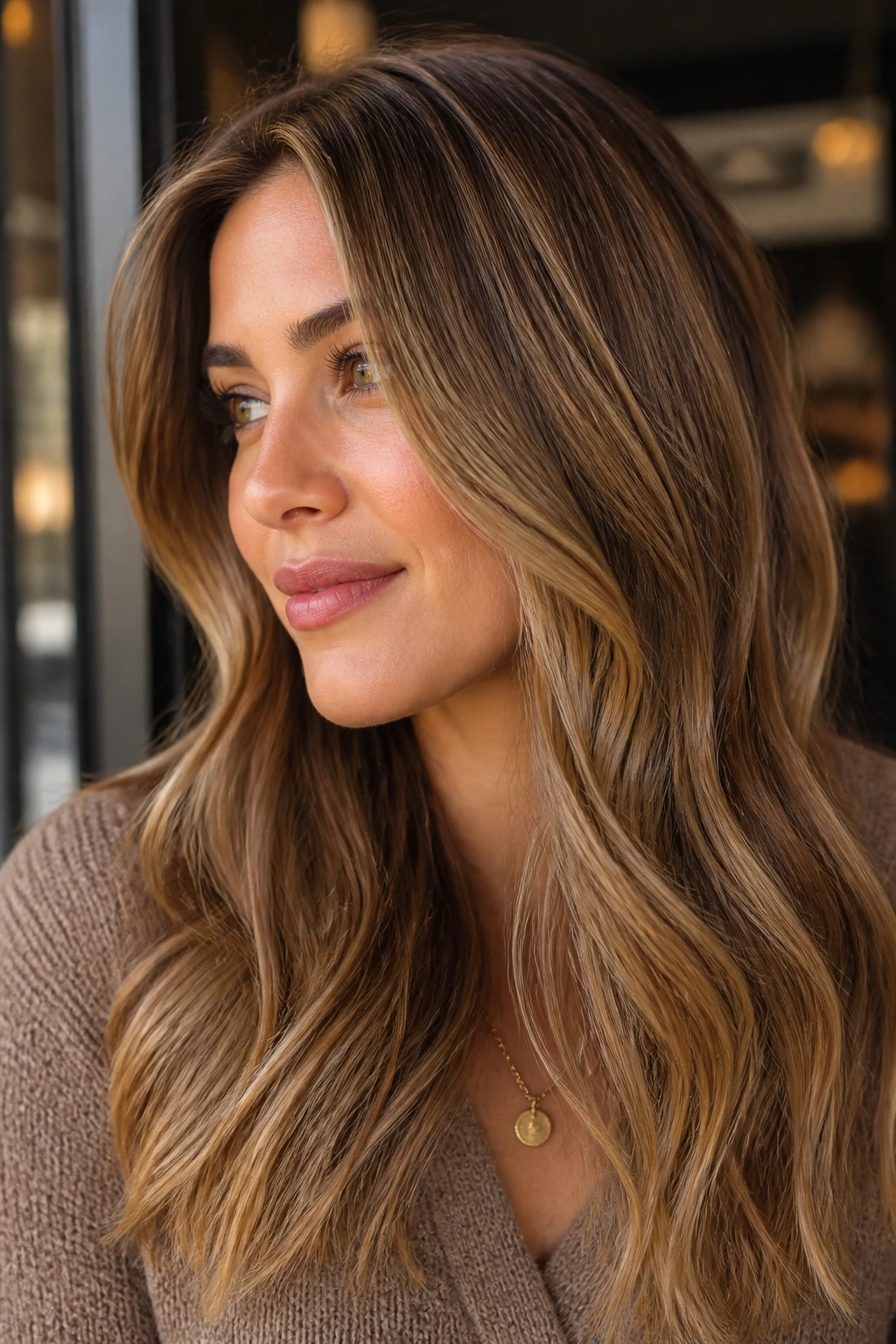
Fine hair and chunky highlights rarely get along. Babylights solve that. These are tiny, closely placed warm pieces that create the sense of shimmer rather than obvious streaks, and butterscotch is the right tone when you want glow without turning yellow.
Because the highlights are so fine, the overall effect is softer than balayage. Warm skin benefits from that softness. The face looks lit, but the color still sits in the brown family. It’s a smart pick if you want the hair to look expensive in a very low-key way.
Keep the root depth visible. If every strand goes light, the whole head loses shape. Babylights should make the brown feel dimensional, not erased.
11. Terracotta Brown Curls
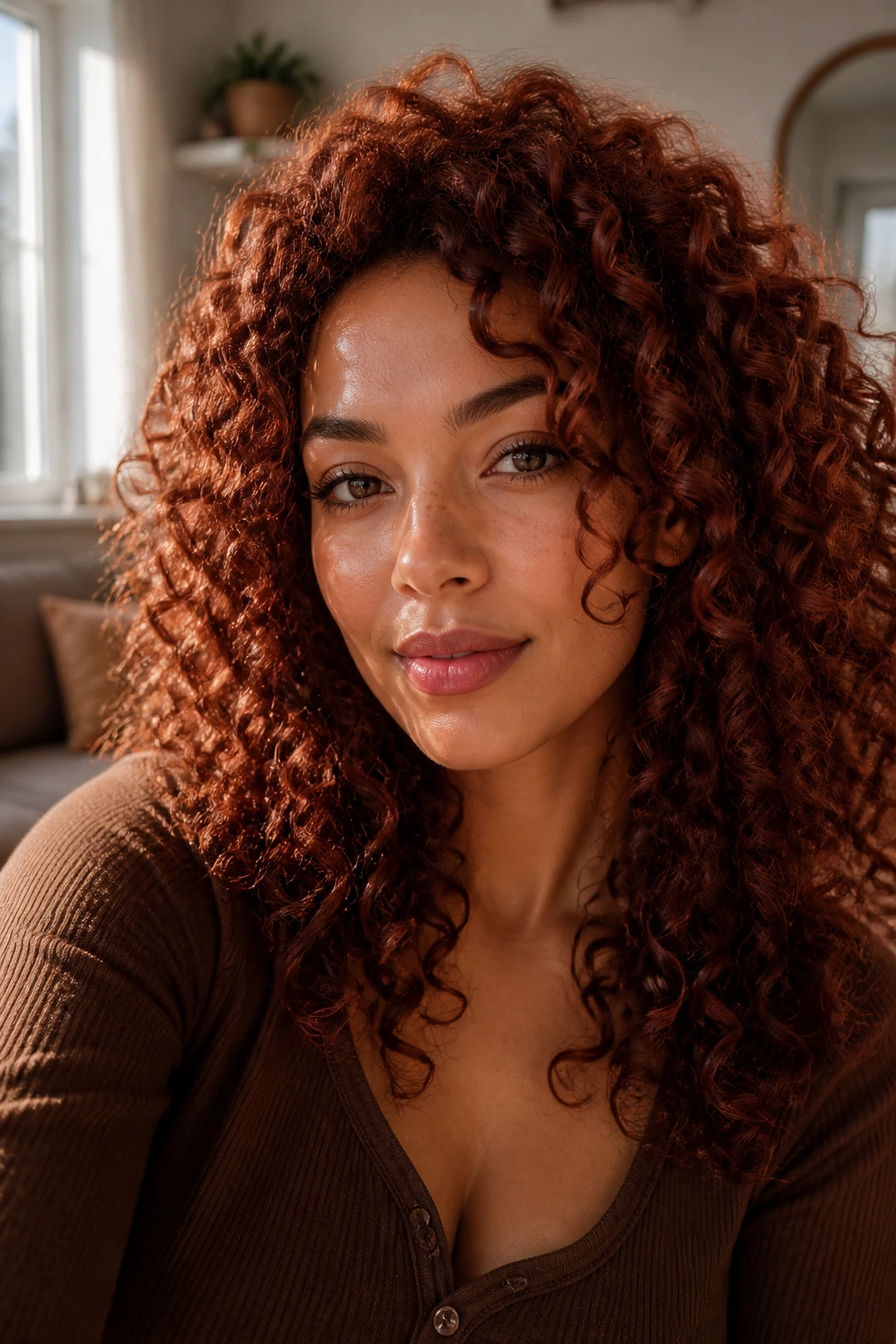
This is brown with an earthy red pulse, and curls wear it beautifully. Terracotta brown has enough warmth to wake up deep warm skin, but it stops short of full copper. That keeps the color rich instead of loud.
- Best for: curly and coily textures that need a little more reflect.
- Ask for: brown with red-orange warmth toned down by a deeper base.
- Watch for: color that turns tomato-red under bright light. That’s too much.
The best terracotta brown looks like clay after rain: deep, warm, and textured. On tight curls, the shade makes the shape more visible. On looser curls, it gives a soft burnished finish that reads polished even when the hair air-dries.
12. Hazelnut Butter Blend
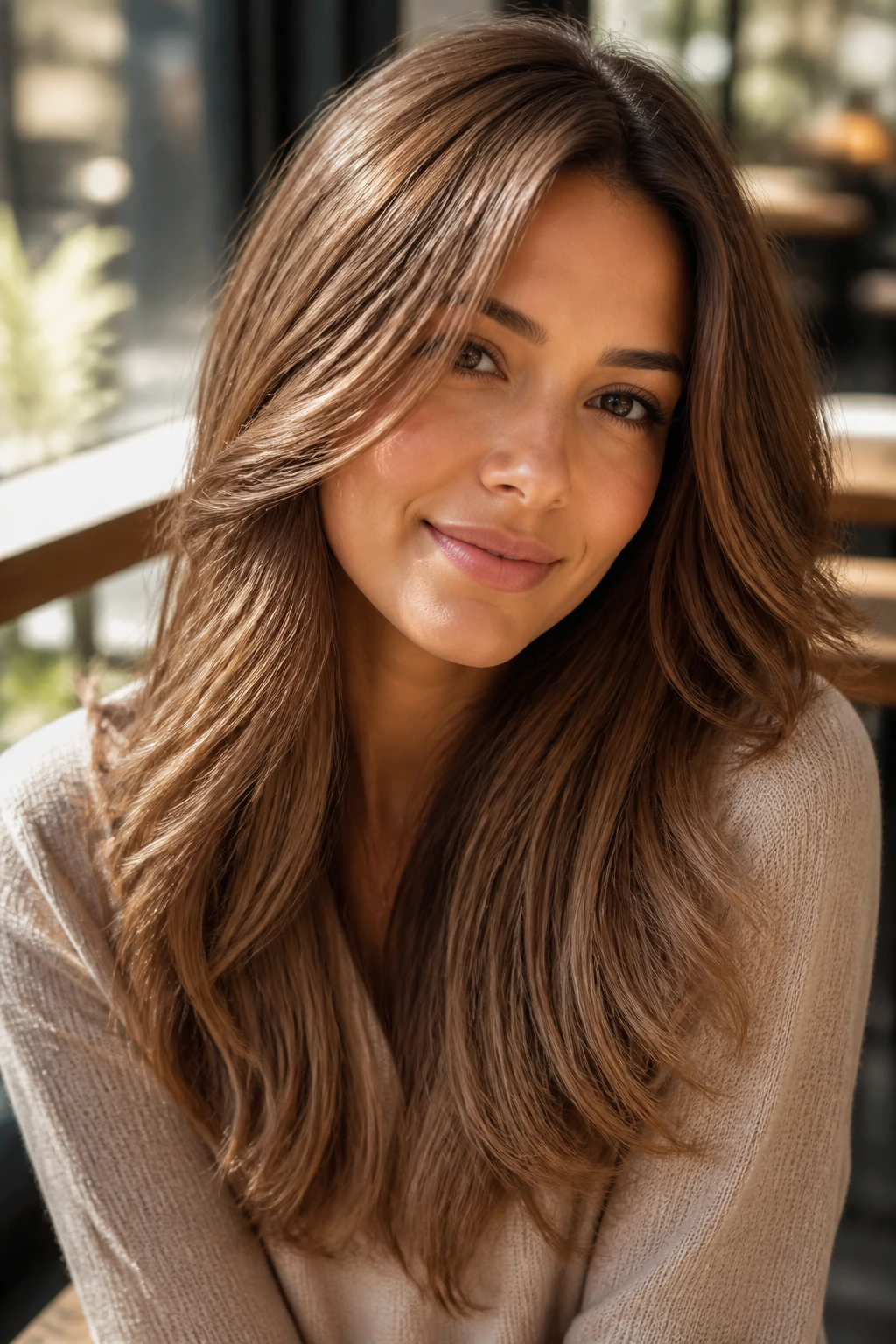
What if you want warmth that feels creamy rather than golden? Hazelnut brown is the answer. It’s softer than chestnut, lighter than mocha, and smooth enough to flatter warm skin without pushing the face into orange territory.
This shade works well on medium-length cuts, especially when there’s some layering around the face. The color has enough depth to keep the roots grounded, but enough softness to keep the mids from looking heavy. It’s also a nice option for someone who wants a brown that looks good with natural makeup and a plain white T-shirt. That sounds small. It isn’t.
The best hazelnut blends don’t chase contrast. They win by staying smooth.
13. Honey Brown Lob with Shadow Root
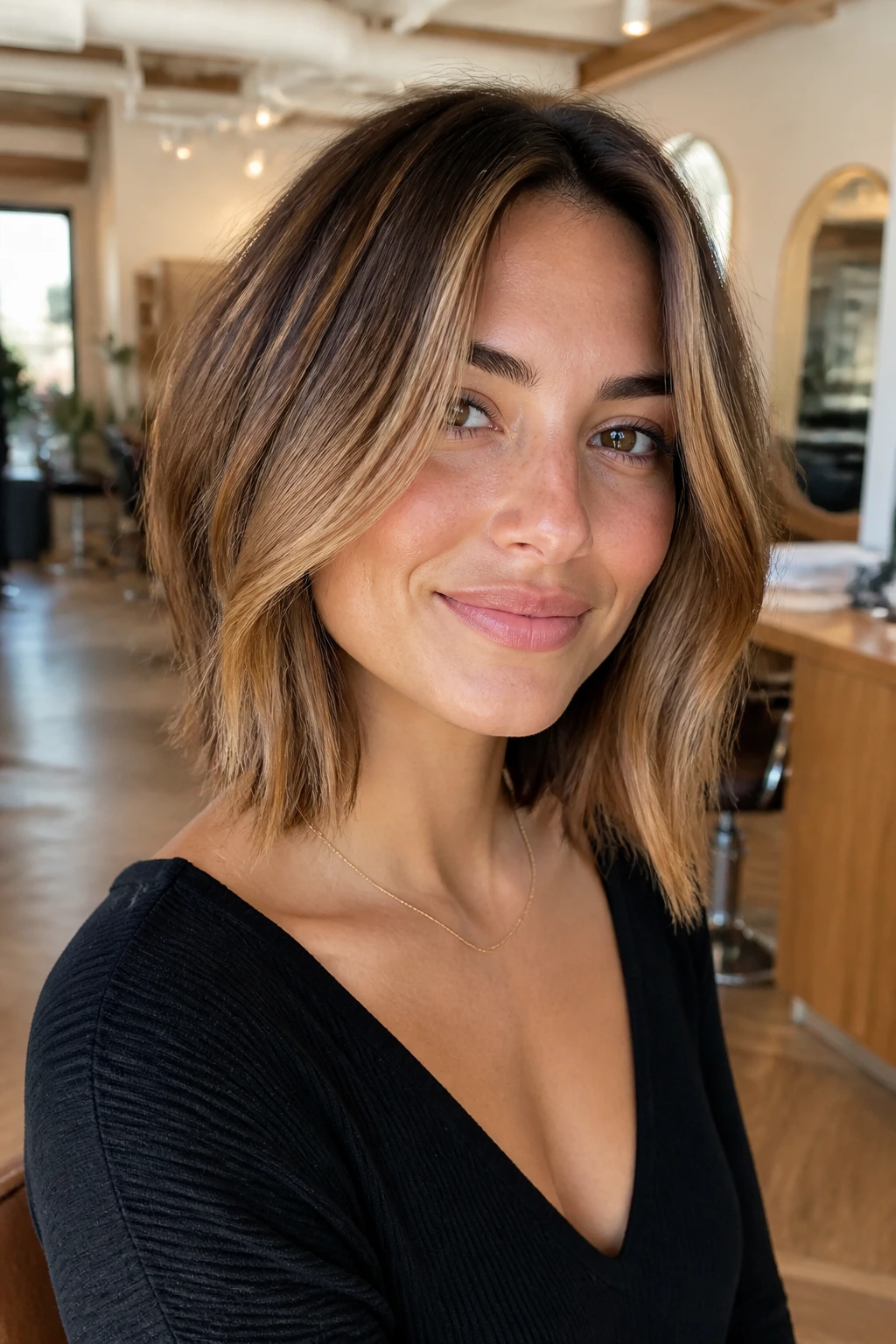
A dark root is not a problem here. It’s the point. The shadow root gives the lob structure, and the honey brown through the mids and ends keeps it from feeling flat or blocky. That mix is especially good if you want a cut that grows out gracefully.
The lob length helps a lot. With hair that sits around the collarbone, the honey pieces have room to show, and the shadow root keeps the color grounded. Warm skin likes this because the face gets brightness where it matters without needing every inch of the hair to be light.
If you want this shade to look clean for longer, keep the root a shade deeper than your natural brown and gloss the ends every few weeks.
14. Chestnut-to-Honey Ombré
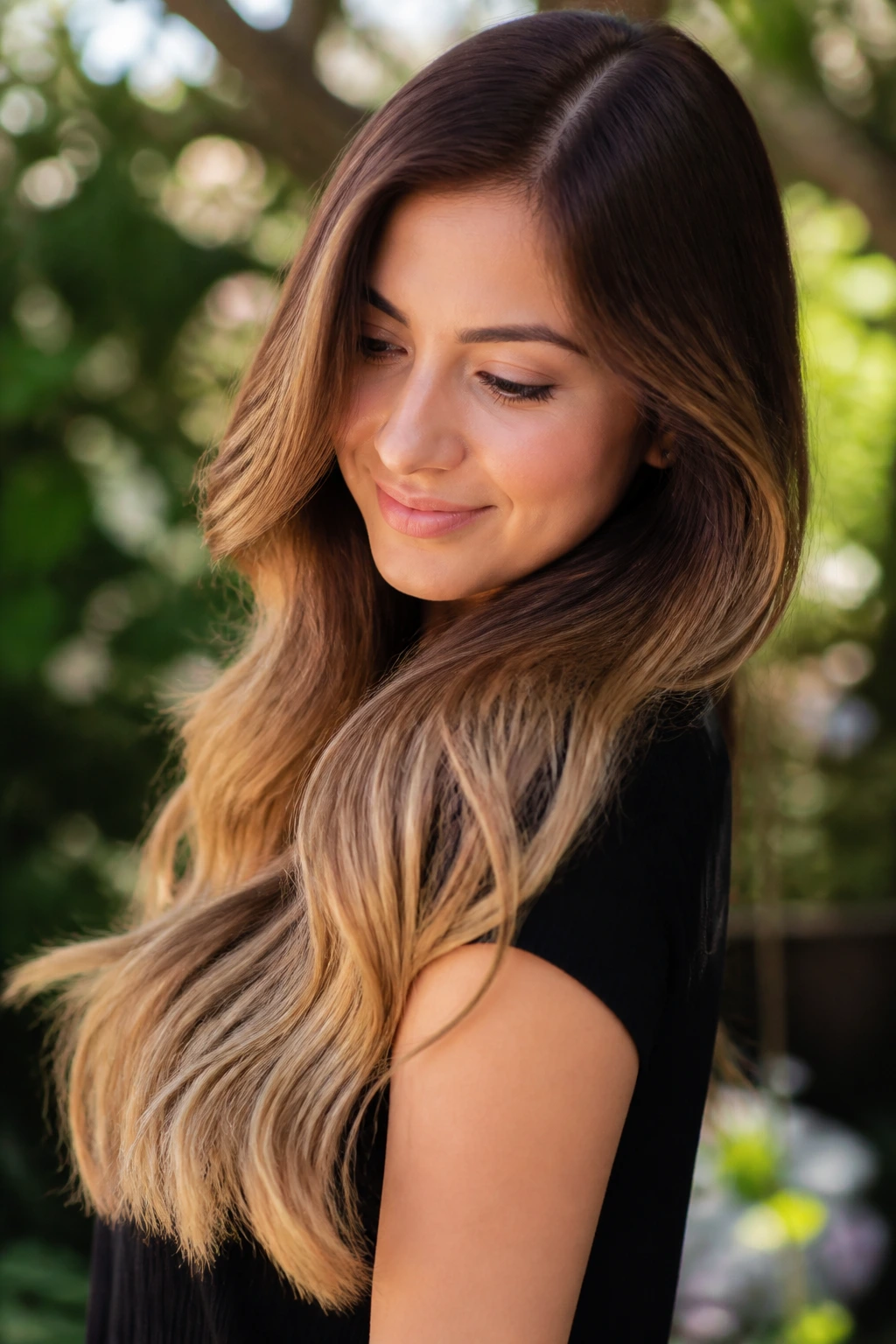
If you want a clear shift from dark to light, ombré still earns its keep. Chestnut at the roots moves into honey through the mids and ends, with the transition blurred enough that it doesn’t look like two separate colors glued together.
This works best on longer hair, where the fade has room to breathe. Warm skin tends to love the lower, lighter half because it keeps the face bright without forcing the whole head into a lighter category. The darker root also makes the honey look richer by contrast.
The trick is to keep the blend soft. A harsh ombré line feels dated fast. A blurred one looks like the sun did the work.
15. Sandy Caramel Waves
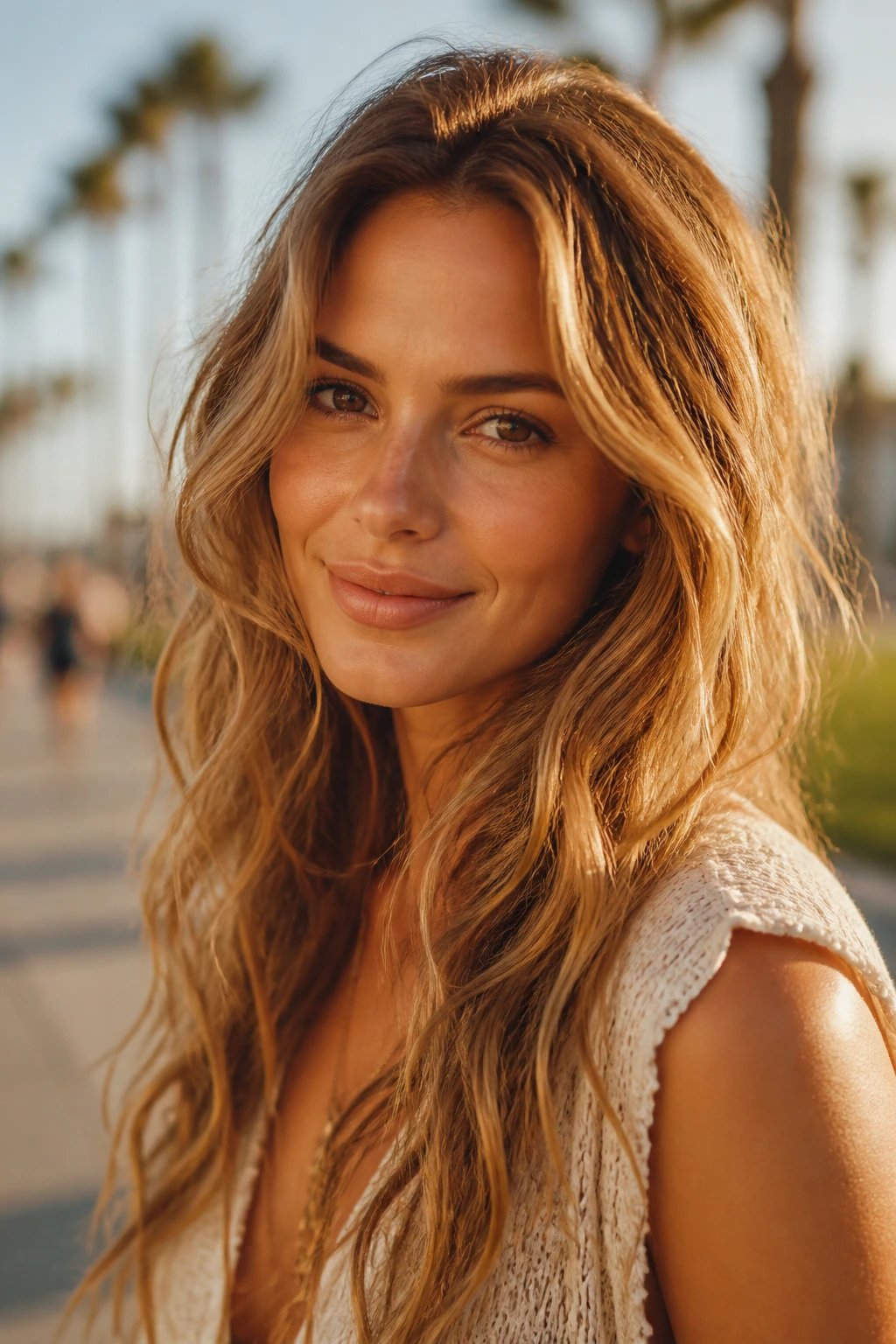
Sandy caramel is lighter and airier than some of the deeper browns on this list, and that’s exactly why it needs the right skin tone. On warm skin with a little natural depth, it gives that soft, sun-touched look that waves carry so well.
The “sandy” part matters. If the caramel is too yellow, it can skew brassy. If it’s too muted, you lose the warmth. The best version sits in the middle: a soft brown-beige caramel that bends in the light instead of flashing at it.
This is one of the best looks for loose, undone waves. The color needs movement to do its job.
16. Bronze Brunette Shine
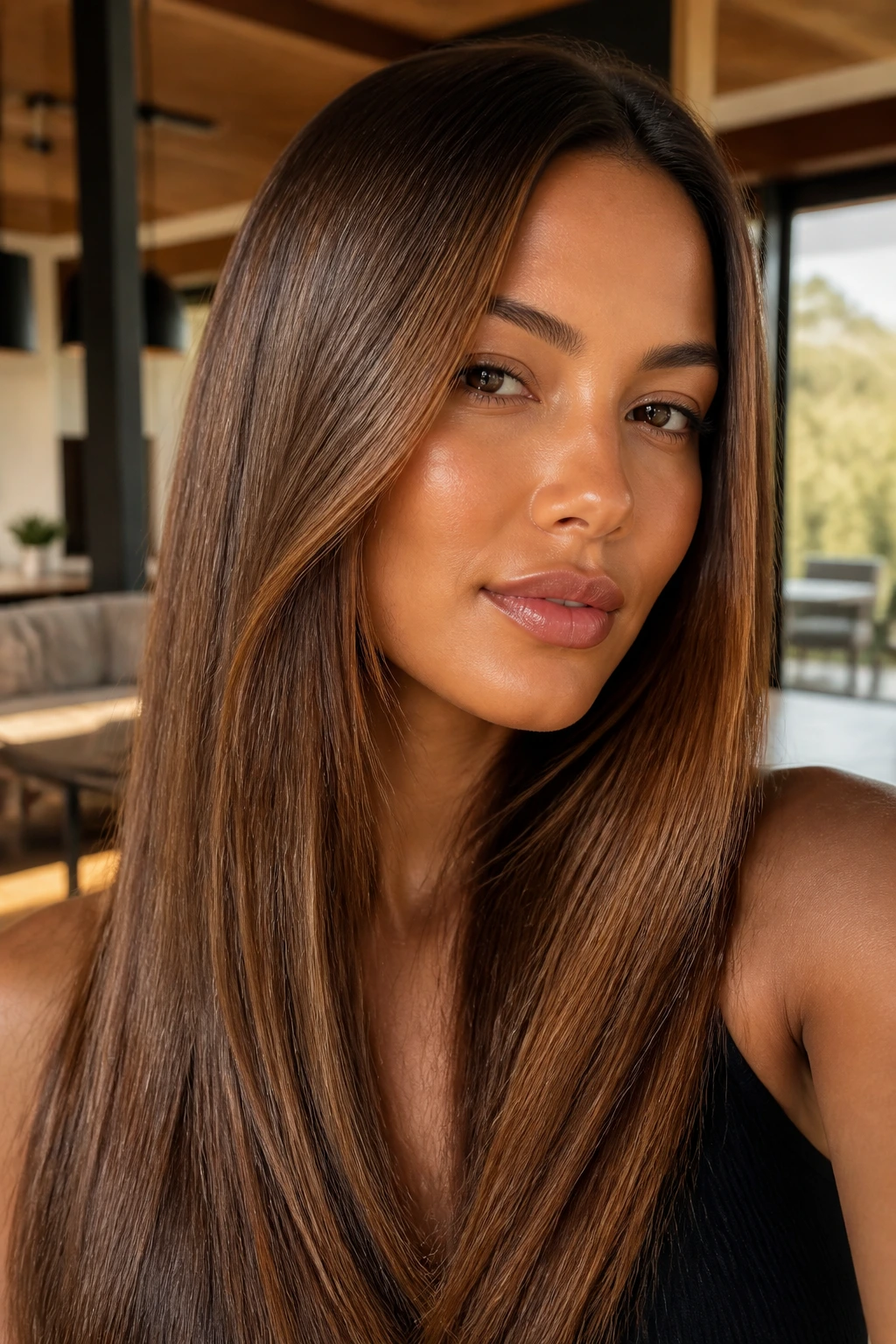
Bronze brunettes are underrated. People talk about caramel and honey all day, but bronze has a smoother, deeper gleam that works beautifully on straight hair and polished blowouts. It’s less about visible highlights and more about the surface reading like warm metal.
That makes it a strong choice for warm skin that likes depth. Bronze doesn’t wash the face out, and it doesn’t fight warm undertones. It adds a reflective layer that can make medium and dark brown hair look far more expensive than the formula actually was.
If you like sleek hair, this shade is a gift. Flat, shiny, and warm. That’s the whole point.
17. Maple Sugar Peekaboo Highlights
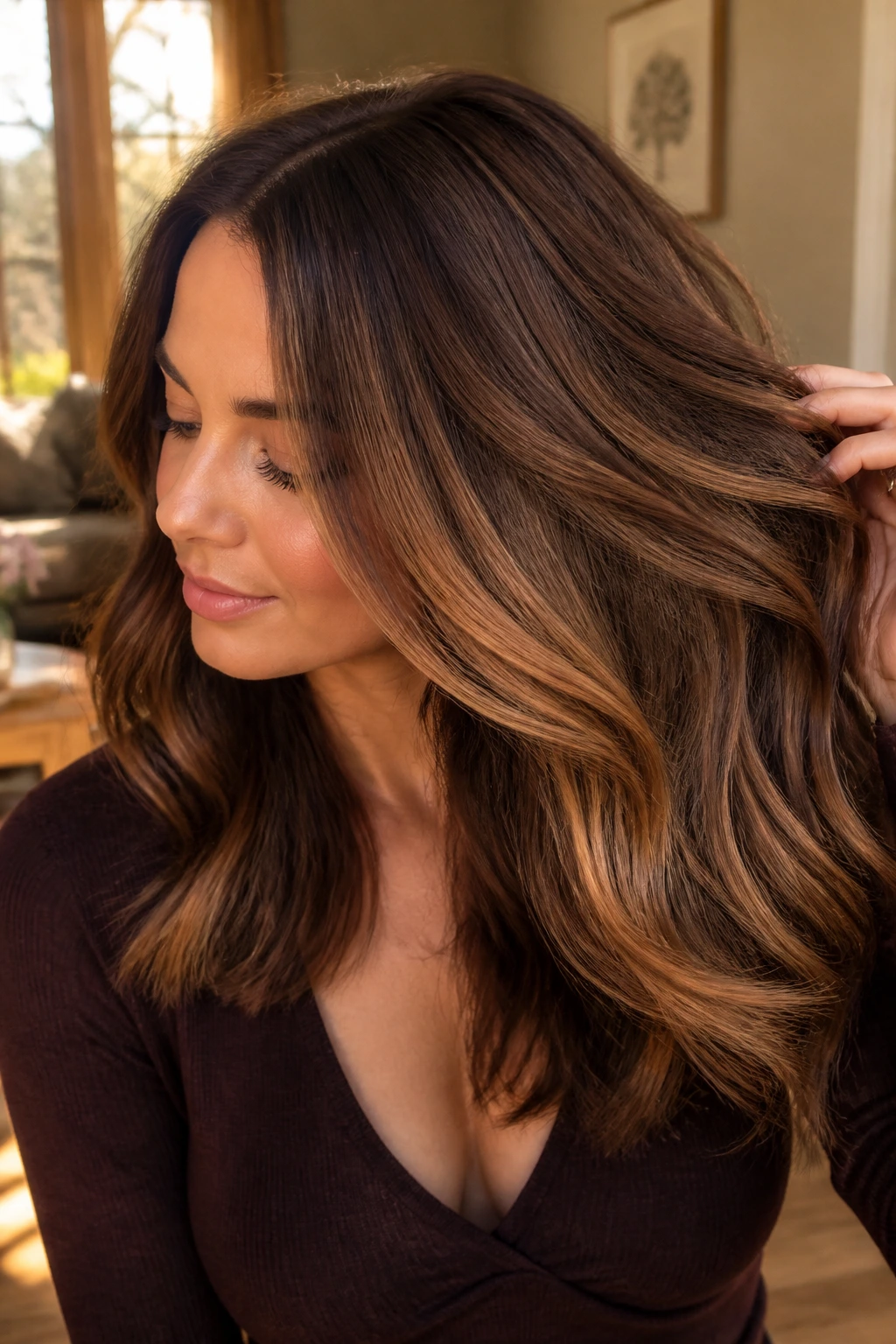
Hidden color has a funny advantage: it surprises people only when you move. Peekaboo highlights sit beneath the top layer, so the warmth shows through when the hair swings, twists, or gets tucked behind the ear. Maple sugar is the right tone when you want that effect to feel soft and sweet instead of loud.
The hidden-color trick
Because the top layer stays brown, this works well in places where you don’t want your hair to announce itself from across the room. The warmth still shows on warm skin, but it does it in flashes. That keeps the look playful.
This is also kind to fine hair. A few hidden ribbons can create the sense of depth without the need for heavy, all-over lightening.
18. Spiced Auburn Brown
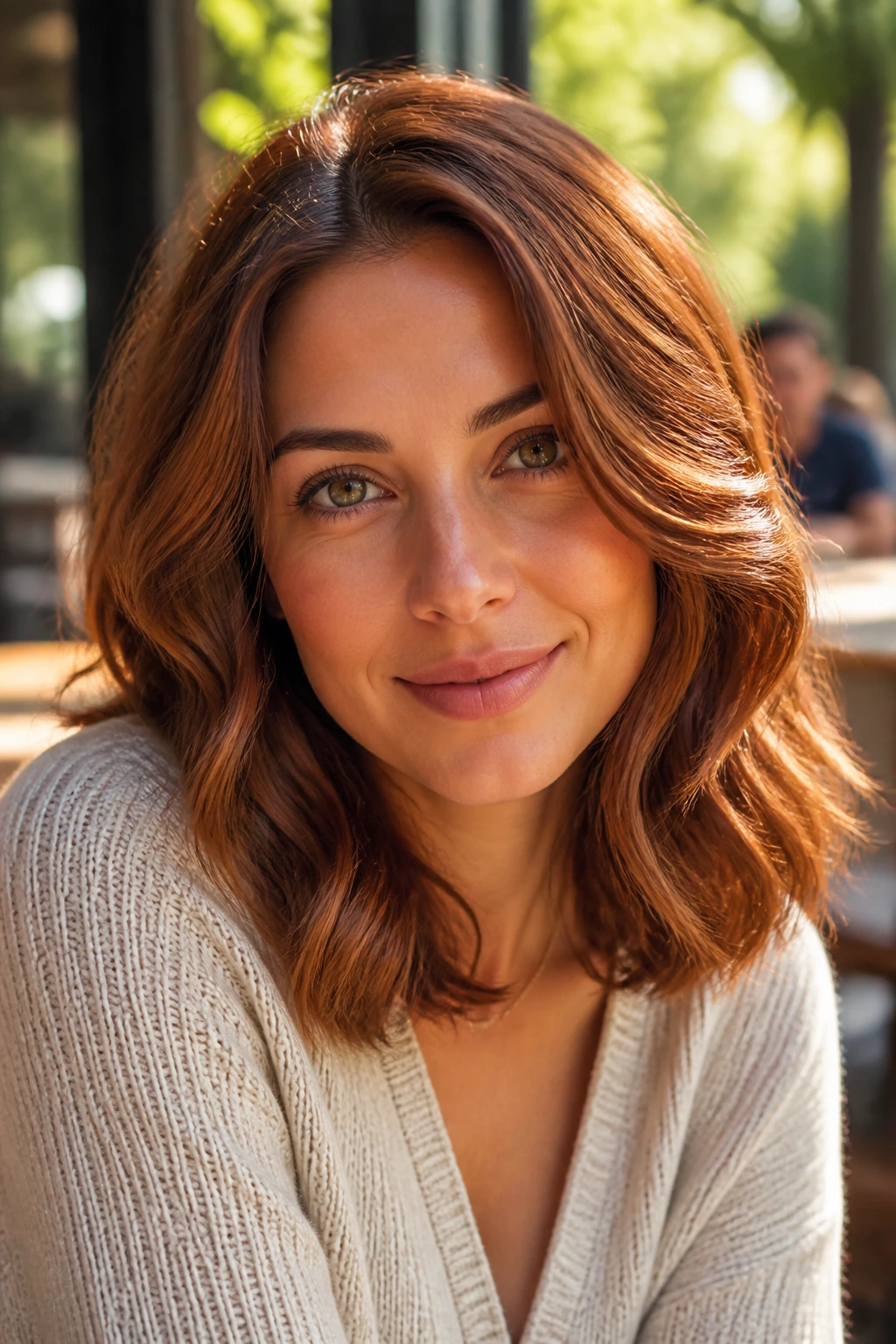
A little red can make brown read richer, not louder, if you keep it in the spice lane. Spiced auburn brown sits in that sweet spot. It’s brown first, auburn second, with warmth that looks deliberate rather than fiery.
Warm skin that has golden or deep peach undertones tends to wear this well, especially if the eyes are hazel, green, or warm brown. The color gives the complexion something to bounce against. It’s lively, but not candy-red.
I like this shade on shoulder-length cuts and soft waves. The movement keeps the auburn from sitting too heavily in one place.
19. Vanilla Latte Brunette
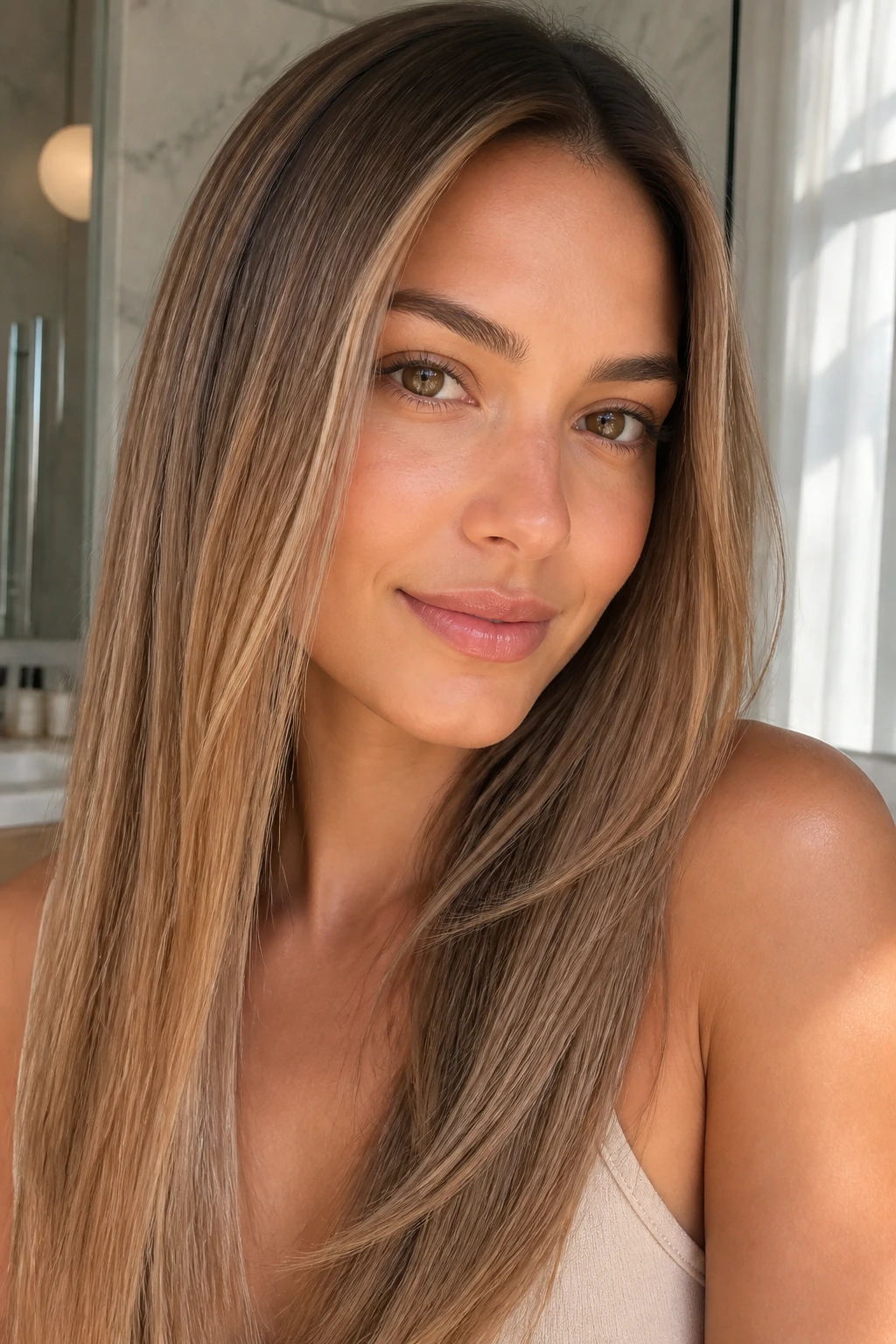
This one feels soft and creamy, like a latte with just enough milk to round the edges. Vanilla latte brunette is a beige-warm brown that stays lighter than many of the deeper shades here, but not so light that it starts looking blonde.
It suits warm skin that leans peach or light golden, especially if you want a softer, more open face frame. The finish matters a lot. Ask for shine, not matte. Without gloss, the color loses the whole vanilla-latte effect and just looks flat.
Straight hair, blowouts, and softly curled ends all work. What doesn’t work is a frizzy finish. The color needs a smooth surface.
20. Copper-Kissed Honey Brown
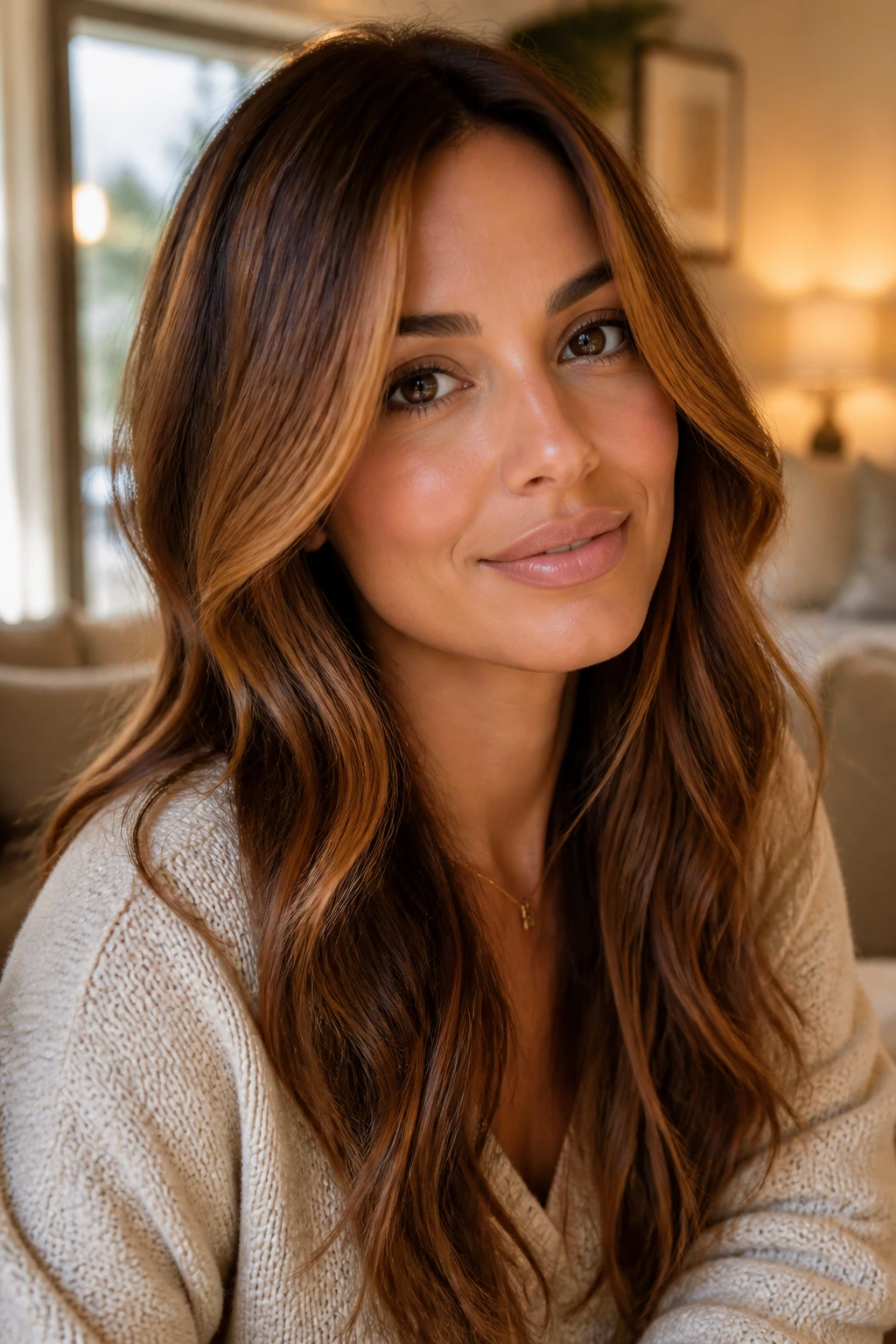
How much copper can warm skin handle before it starts to look orange? Less than most color charts imply. The right answer is a honey brown with a copper kiss, not a full copper spill. That means golden-brown first, with just enough red reflect to warm the surface.
This shade shines on medium to deep warm skin, especially if you already wear warm makeup. Terracotta blush, bronze shadow, and a rust lip suddenly look part of the same plan. The hair and face start speaking the same language.
Keep the copper subtle around the front. Too much at the hairline can make the whole face feel hotter than it is.
21. Dark Chocolate with Gold Veil
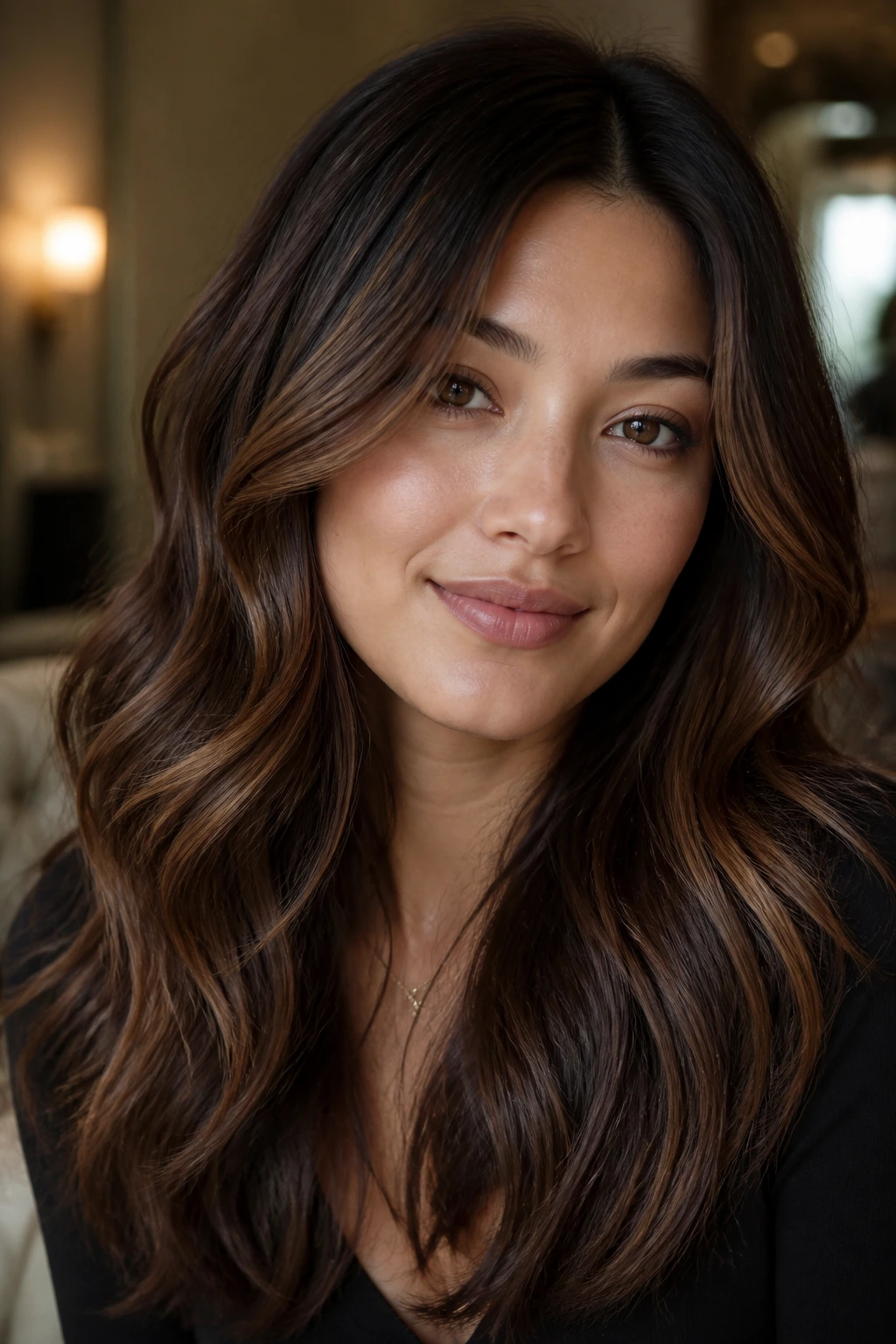
If caramel feels too bright, this is the quieter move. Dark chocolate keeps the base rich and grounded, while a thin gold veil softens the surface. That little touch of warmth can make the difference between “dark brown hair” and “dark brown hair with life in it.”
This is a good choice for someone who likes depth but hates obvious highlights. Warm skin often looks better with this kind of restrained reflect, especially when the hair is thick or naturally dark. The gold doesn’t need to be loud. It just needs to be present.
This shade also ages well between appointments. The regrowth stays civilized.
22. Honey Brown Shag
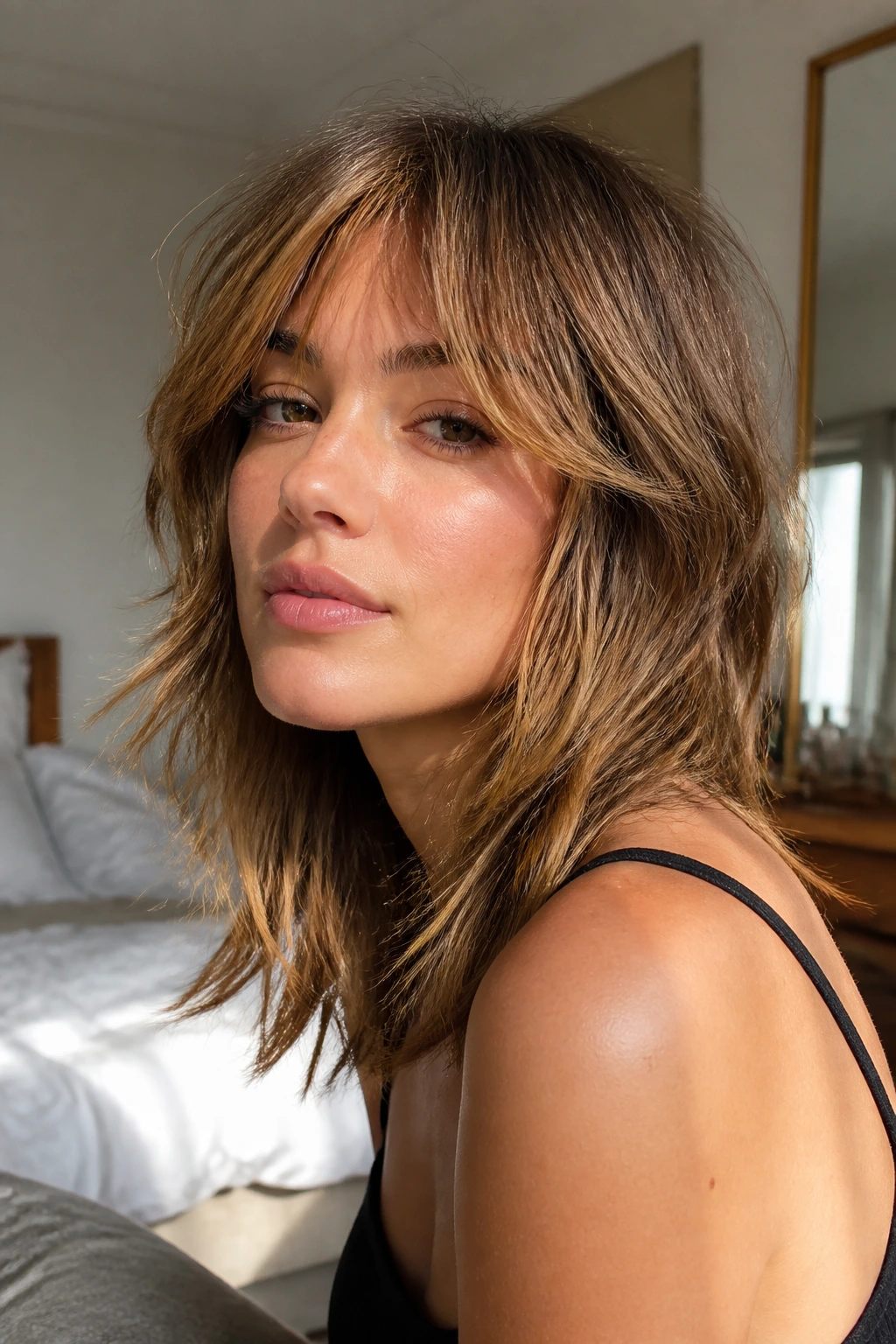
The shag cut does half the work here. Those choppy layers let honey brown pieces catch the light in a way that a blunt cut simply can’t match. The color looks messy in the best possible way — lived-in, moving, never too polished.
Why the layers matter
A shag gives the color room to break up. Without layers, honey can read as one flat band. With layers, you get little flashes of warmth at the ends, around the crown, and near the face. That makes warm skin look bright instead of washed out.
This is especially good if you like texture spray, air-dried bends, and that slightly undone finish. The haircut and color are doing the same job.
23. Toffee Curtain Bangs
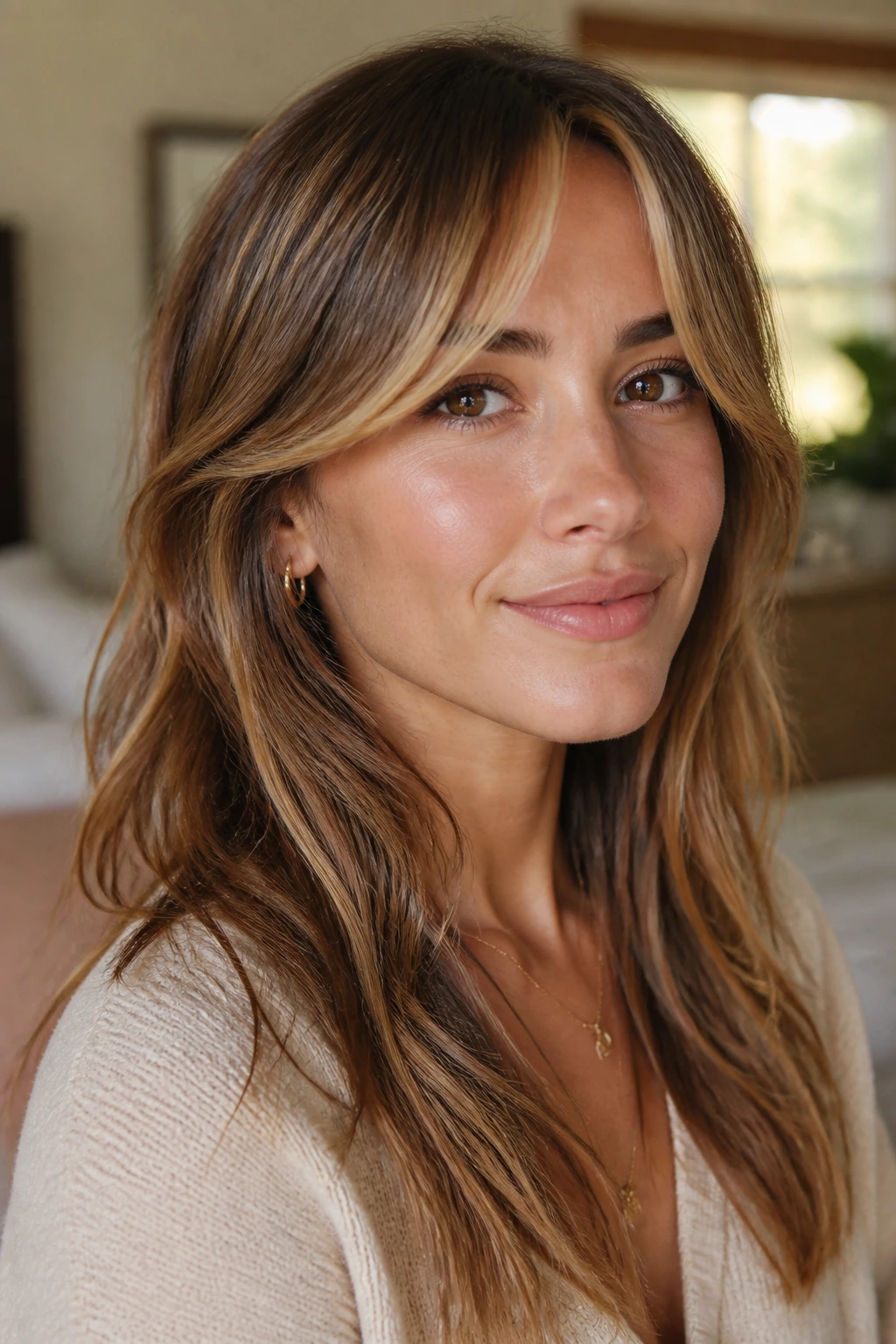
A face frame can change the whole mood of a haircut, and toffee curtain bangs are proof. Keep the fringe a shade lighter than the rest of the hair, with a warm toffee tone that bends softly around the eyes and cheekbones.
The trick is control. Curtain bangs are already a feature, so the color should help them stand out without screaming. On warm skin, toffee makes the face look awake, which is one reason this works so well on layered medium-length cuts.
If your bangs get oily fast, this is one place where color can do some heavy lifting. Clean, warm, and slightly lighter at the front. That’s enough.
24. Mahogany Honey Dimension
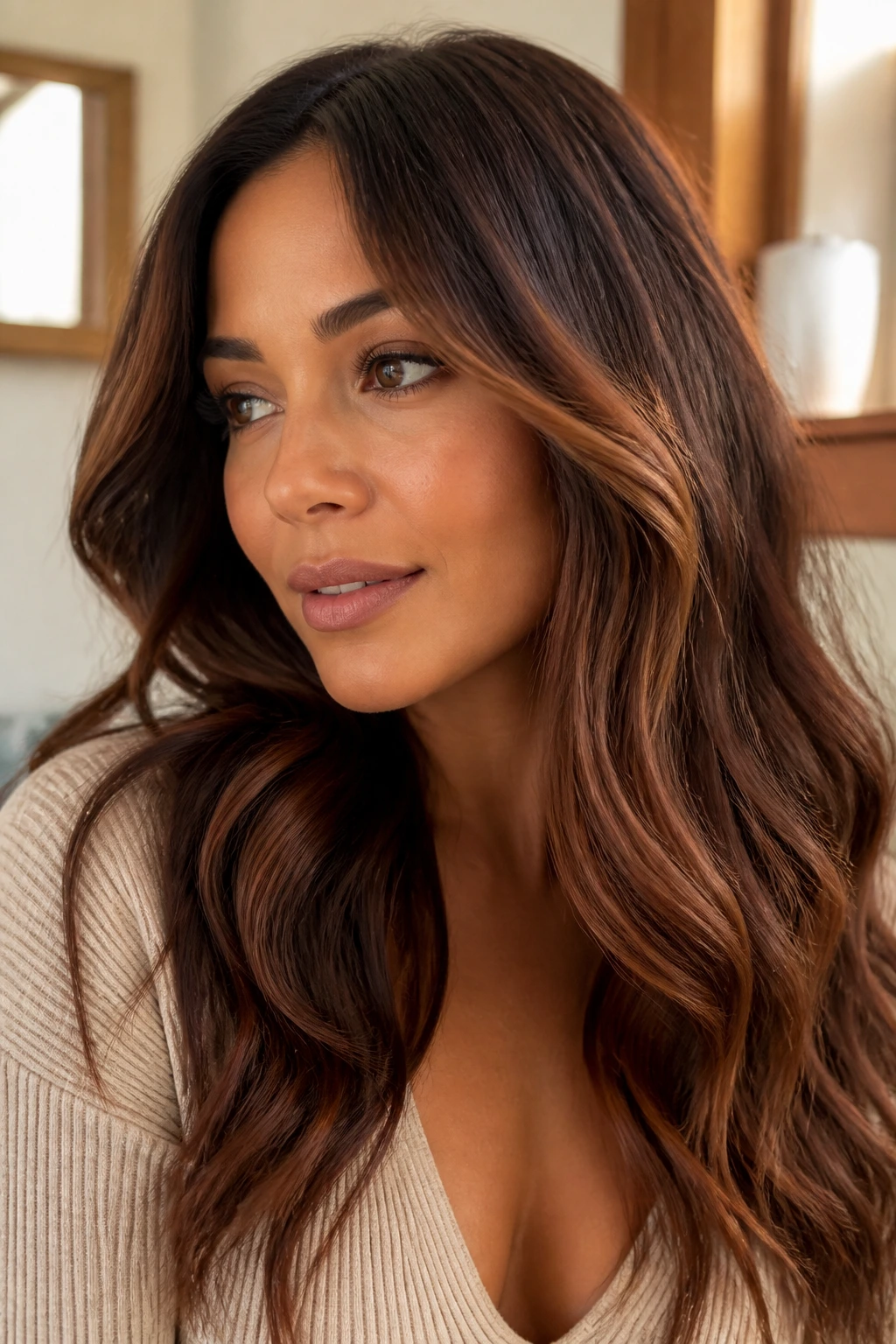
Mahogany can look heavy if it’s left alone, but a little honey dimension changes everything. The deeper red-brown base keeps the shade rich, while the warmer pieces stop it from feeling too dark around warm skin.
This is a strong option for deeper complexions or for anyone who wants a richer brown that still has light movement. It looks especially good under indoor lighting, where the honey pieces show up as a soft glow rather than a flash. The effect is elegant without being stiff.
Ask for dimension, not streaks. Mahogany works best when the warm pieces feel woven in, not dropped on top.
25. Soft Cocoa Gloss
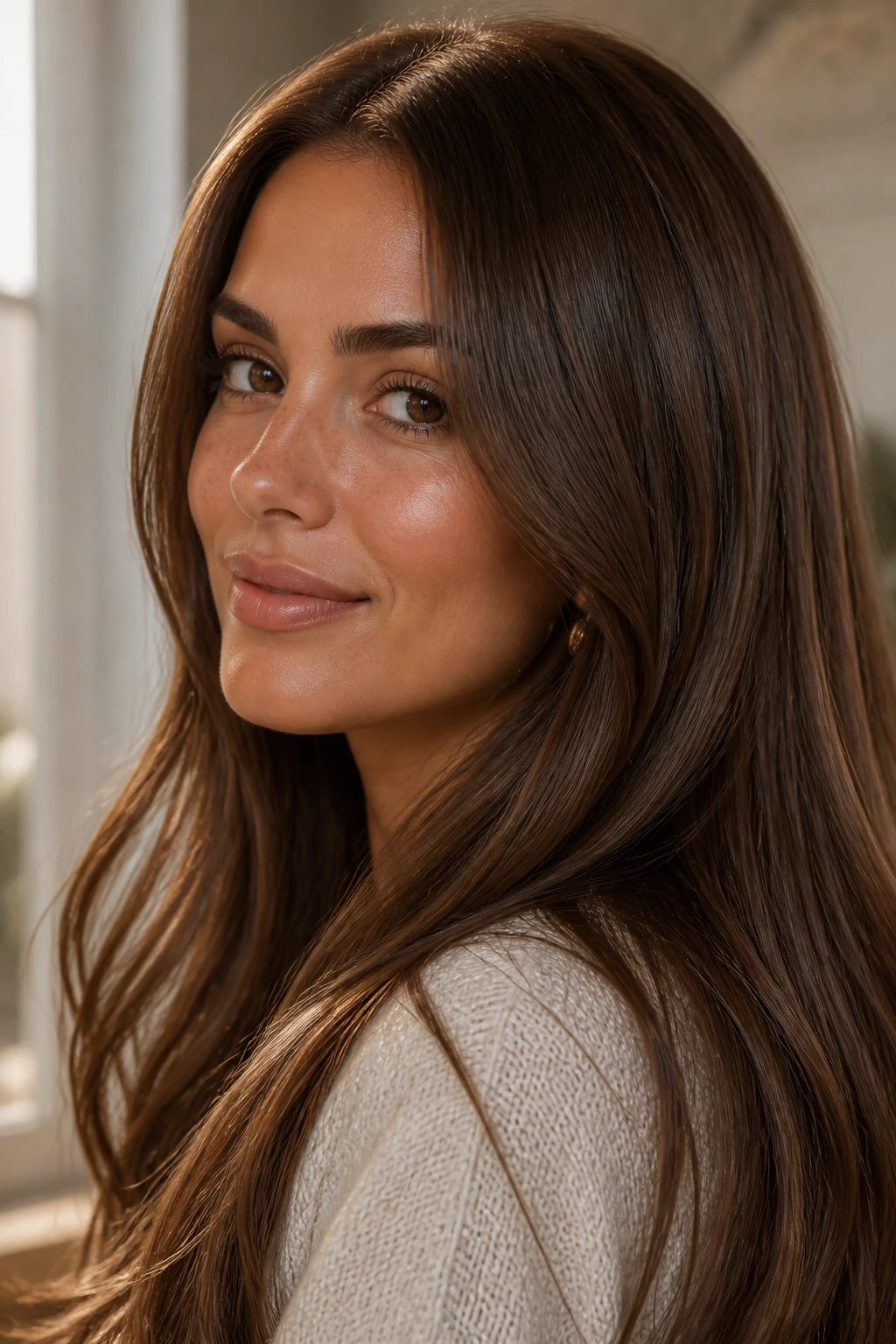
This is the shade I’d hand to someone who wants a near-invisible change that still wakes up warm skin. Soft cocoa gloss stays in the brown lane, but the finish is smoother, richer, and less flat than natural hair usually looks on its own. No big contrast. No drama. Just better hair.
It’s a strong ending shade for this list because it doesn’t try to be a whole new identity. It simply makes brown look cared for. On warm skin, that little bit of sheen can matter more than a much lighter color that doesn’t suit the face.
If you like low maintenance and clean lines, start here. It’s the least flashy option on the page, and one of the easiest to live with.
What Makes Honey Brown Feel Right on Warm Skin
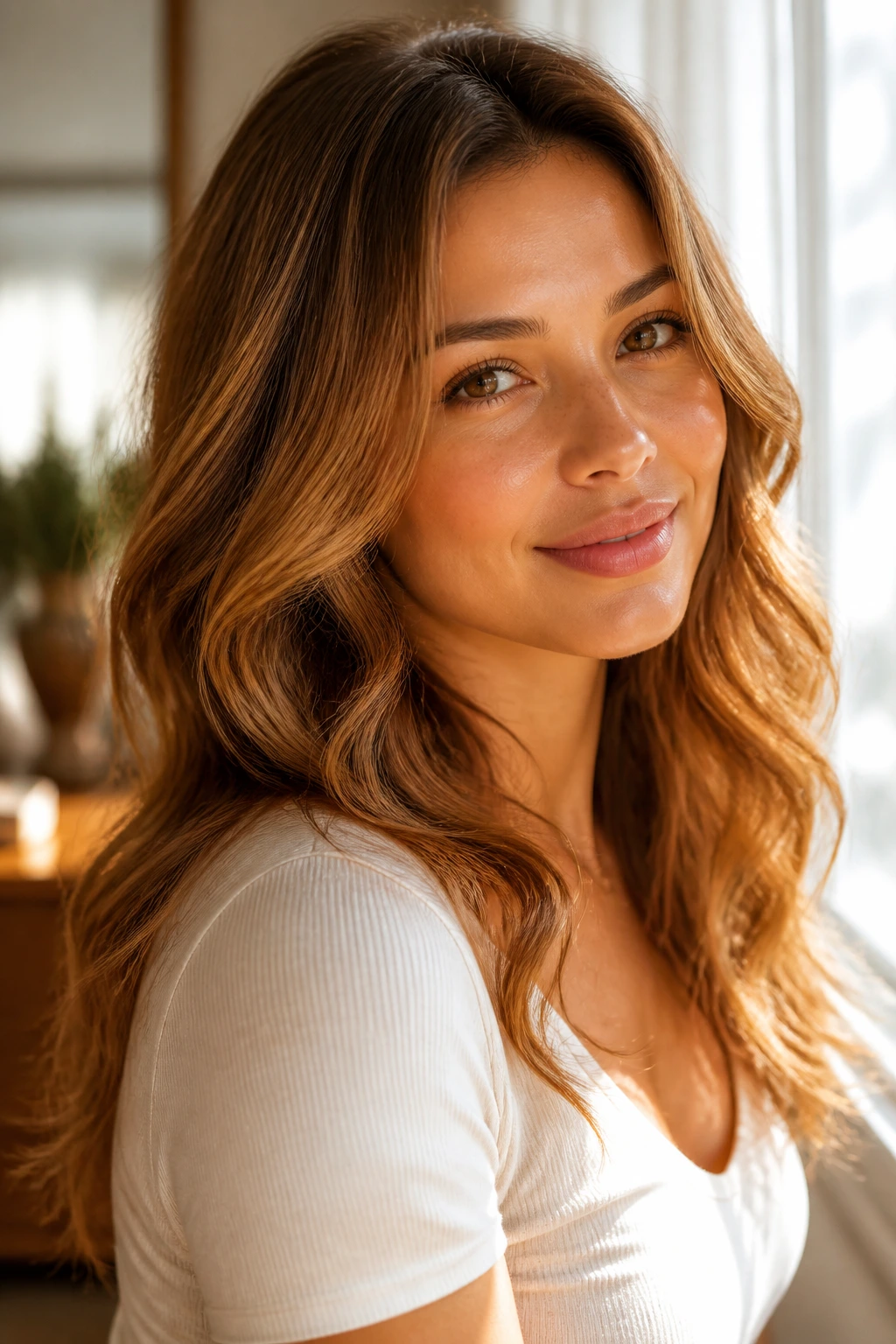
Warm skin tends to look best when the hair color carries some of the same heat, but not all of it at full volume. That’s the balance you’re chasing. A golden-brown gloss can brighten the face because it reflects the same family of tones already sitting in the skin, while a cooler ash brown can make the whole look feel disconnected. Not terrible. Just off.
The finish matters as much as the color. Honey brown with shine reads softer and more expensive than the same color left dry and matte. That’s why a good gloss or toner can make a bigger difference than a bigger lightening job. Warm skin also benefits from dimension — ribbons, lowlights, shadow roots, or even a subtle face frame — because flat color tends to press the features down.
Texture changes the equation too. Waves and curls let warm pieces move. Straight hair needs either a very smooth glaze or a careful highlight pattern so the brown doesn’t become one solid block. That’s the part a lot of people miss. The shade is only half the story. The way it sits on the hair matters just as much.
Tools and Resources Worth Having Before You Book
-
A daylight mirror: Salon lights can lie to you. Check photos and swatches near a window before you commit.
-
Saved inspiration photos in different lighting: One photo under warm indoor bulbs and one outside will show you how the shade actually behaves.
-
Color-safe shampoo: Pick one that’s gentle and sulfate-free so the gloss or toner doesn’t get stripped out in a week.
-
A good heat protectant: If you use a flat iron, blow dryer, or curling wand, this keeps the brown from looking fried and faded.
-
Deep conditioner or mask: Brown hair still needs moisture. Dry mids turn honey shades dull fast.
-
Color-depositing gloss or mask: Useful between salon visits if your brown starts leaning flat or sandy.
-
Wide-tooth comb: It keeps curls and waves from getting rough when you’re detangling after wash day.
-
Chelating shampoo: If your water is hard, this helps remove mineral buildup that can make warm browns look muddy.
How to Choose the Right Formula and Shade Level
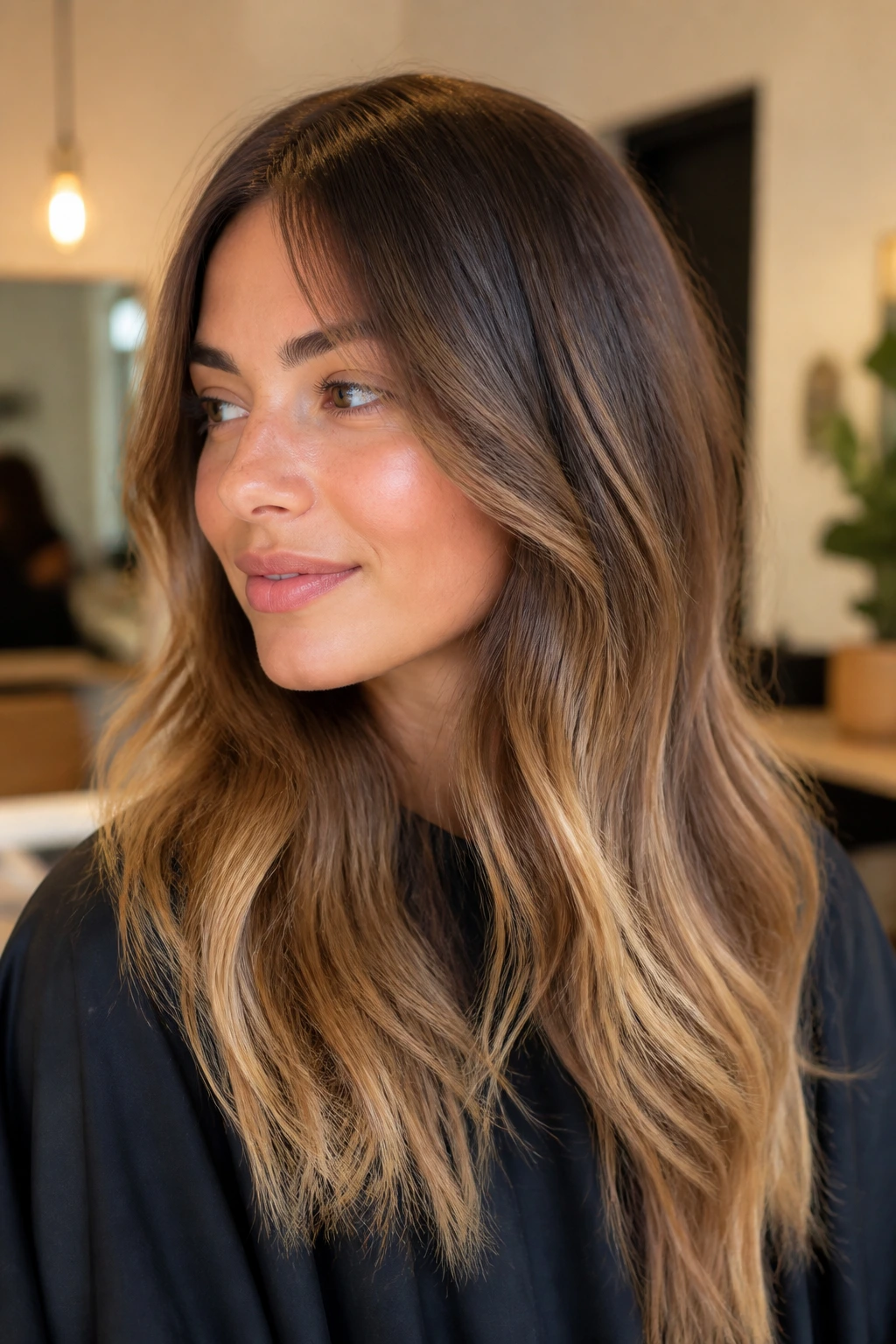
The smartest honey-brown choice usually starts with the formula, not the photo. A gloss gives the softest change. A demi-permanent color gives deeper tone and better gray blending. Permanent color is the bigger commitment, and it makes sense when you need strong coverage or a major shift from dark to warm brown. If you only want shine and a hint of warmth, a gloss is enough. If you want the brown to hold longer and cover scattered gray, demi-permanent usually makes more sense.
Shade level matters just as much. Level 5 is medium brown, level 6 is light brown, and level 7 starts drifting toward dark blonde territory. Warm skin often looks best in the 5 to 7 range because the color still reads brown, but the reflect is bright enough to wake up the face. If your natural color is level 4 or darker, jumping too far in one appointment can push the result orange or brassy before it settles.
Ask for the reflect you actually want. Gold, beige-gold, caramel, amber, and copper-gold all behave differently. Gold and caramel are the easiest starting point. Beige-gold softens peachy or olive skin. Copper-gold brings more energy and works best when you want warmth to be the main event. If you can say, “I want a level 6 golden brown with a soft shadow root and lighter pieces around the face,” you’re already speaking the right language.
How to Wear These Shades So the Warmth Shows Up
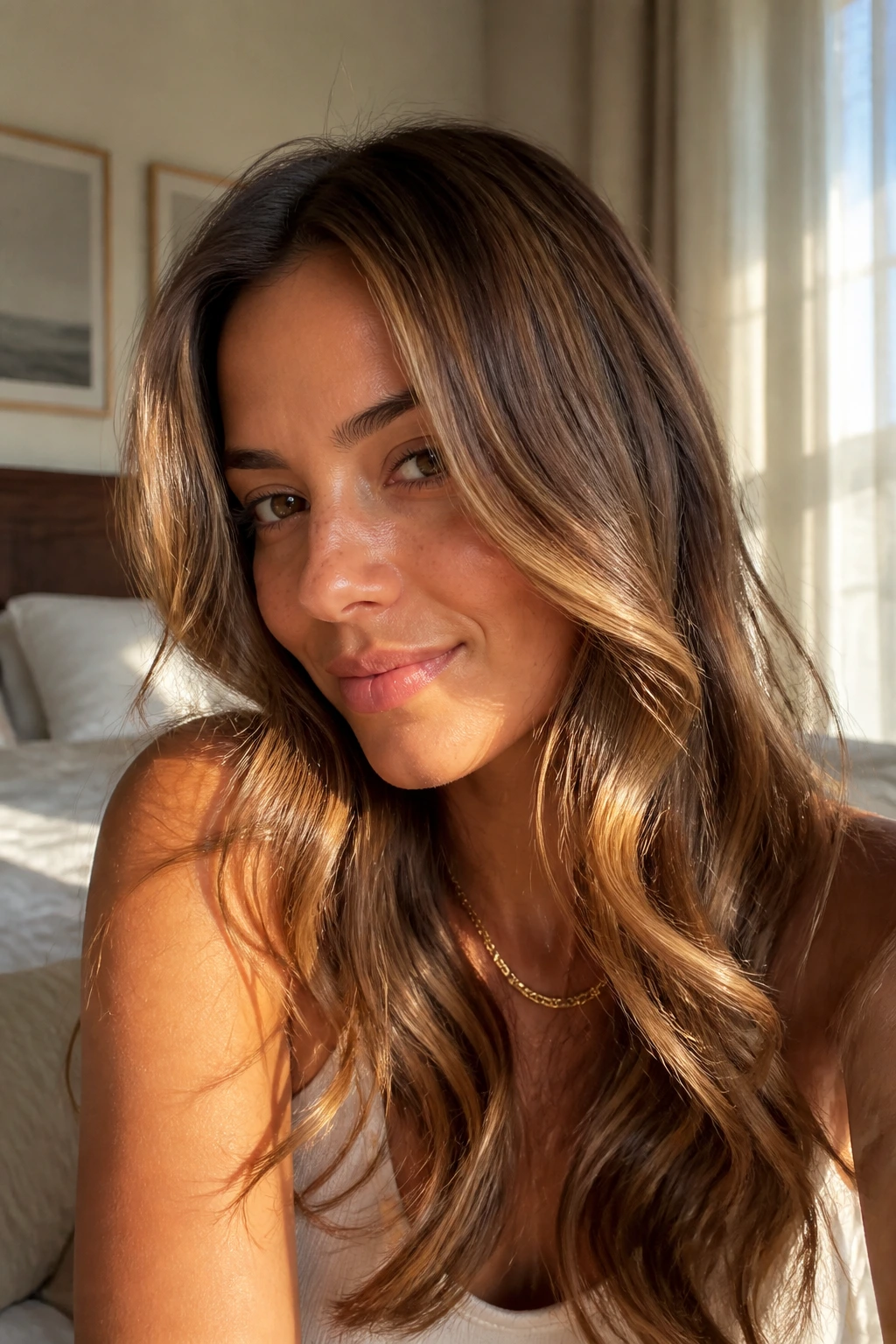
Presentation: Honey brown looks best when the cut and styling let the reflect move. Loose waves, soft blowouts, curtain bangs, long layers, and a clean side tuck all help the warm pieces catch the light instead of hiding under a heavy shape.
Accompaniments: Warm hair loves cream, camel, rust, olive, and gold jewelry. Bronze shadow, peach blush, and a muted terracotta lip help the color feel connected to the rest of your face instead of floating alone.
Portions: If you want a small change, ask for a gloss, a face frame, or a few babylights. If you want a bigger change, move one to two levels lighter through the mids and ends, but keep the root depth visible so the color still reads brown.
Pairing: The best haircuts for honey brown are lobs, shags, layered mids, soft bobs, and any style with movement. A blunt one-length cut can still work, but it needs a smooth finish or the color loses some of its depth.
Small Moves That Make Honey Brown Look Richer
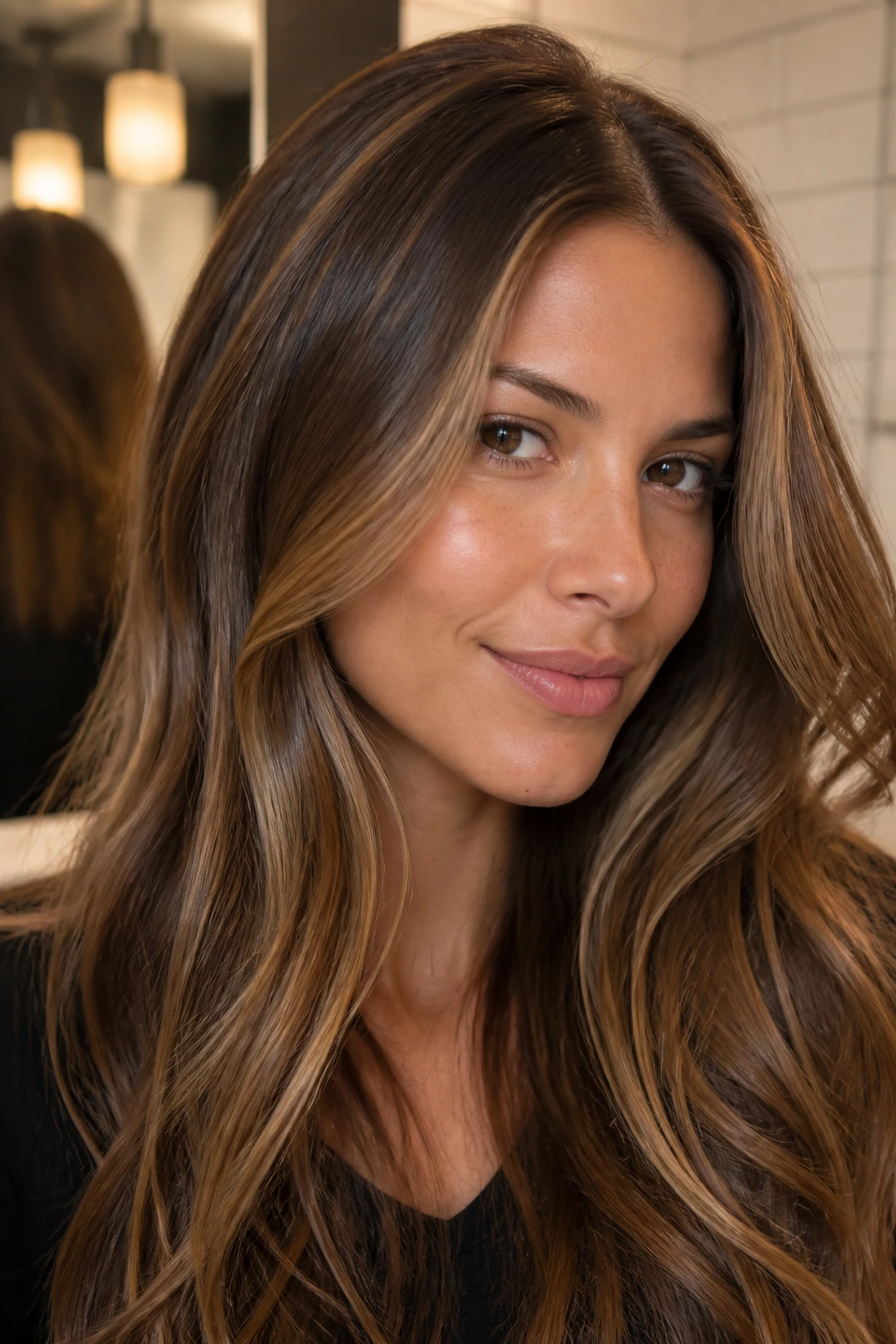
Sheen Boost: Ask for a clear or golden gloss after coloring. On brown hair, shine often matters more than extra lightening, because a reflective surface keeps the shade from looking dusty.
Customization: Add a shadow root, a few lowlights, or a face frame a shade lighter than the rest. Those tiny shifts keep the brown from reading one-note and help the haircut do more of the work.
Styling Trick: Put the smoothest finish on the mids and ends, not the roots. A little serum or lightweight oil at the bottom half of the hair gives the color a polished edge without making the crown greasy.
Make-It-Yours: For curls, use broader ribbons so the color isn’t lost in the pattern. For fine hair, keep the highlight pieces tiny. For straight hair, choose a softer beige-gold so the shade doesn’t read too sharp.
Keeping Honey Brown Fresh Between Appointments
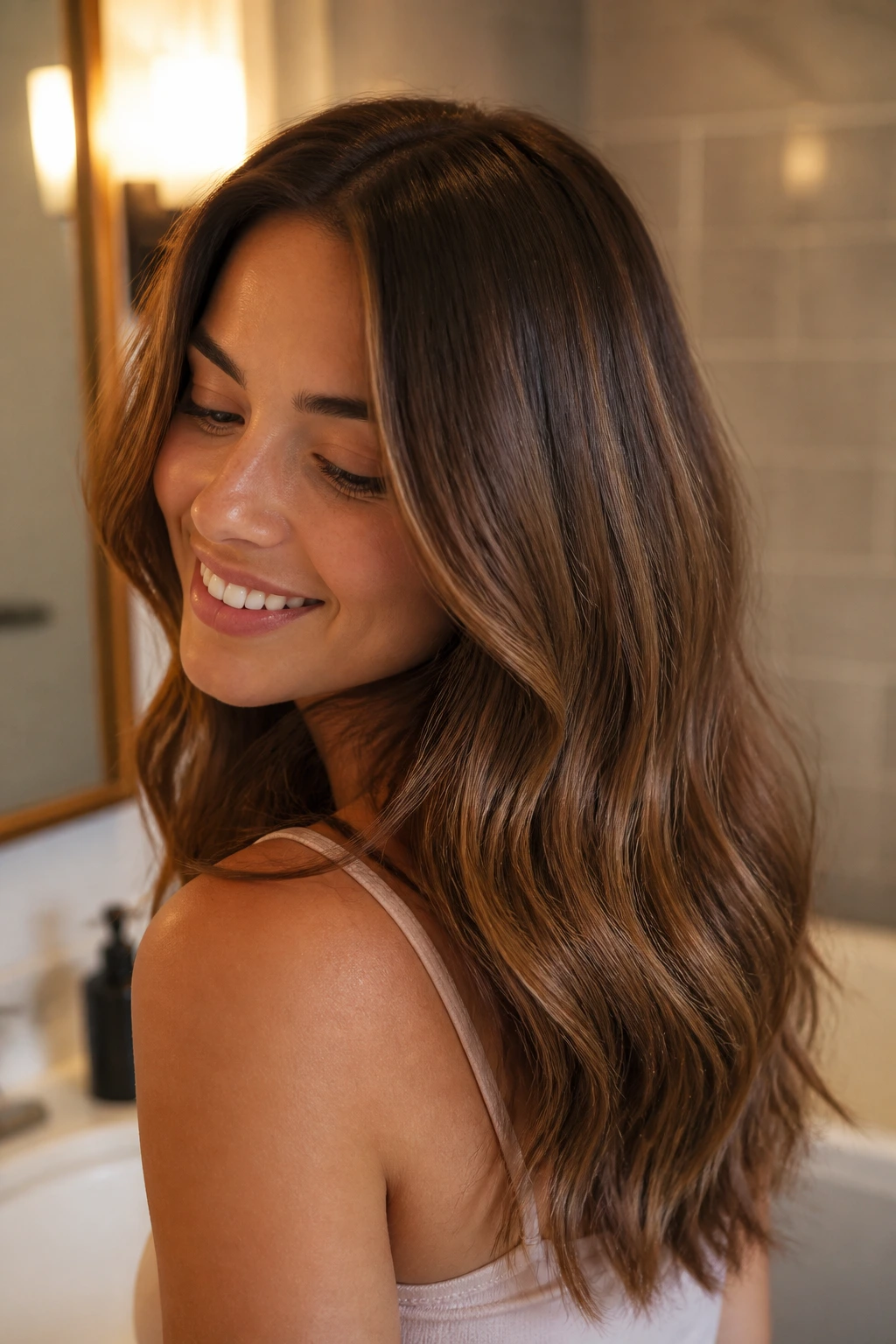
Honey brown stays nicer longer when you treat it like a warm tone, not a throwaway brown. Wait at least 24 to 48 hours before shampooing after a fresh color service unless your colorist tells you otherwise, then wash with lukewarm water and a color-safe shampoo. Hot water is rough on warm browns. It pulls the shine down fast.
For most people, washing two to three times a week is enough. If your hair gets oily, use dry shampoo at the roots instead of scrubbing the mids and ends. A gloss or toner refresh every 4 to 6 weeks keeps the honey from drifting flat. Balayage and highlighted looks usually need a salon glaze every 6 to 8 weeks, while deeper all-over browns can often stretch a little longer.
Hard water and sun exposure can both turn honey brown dull. A chelating shampoo once every 2 to 4 weeks helps if your water leaves mineral buildup. If you swim, rinse before and after the pool, and use a leave-in with UV protection on long days outside. That sounds fussy until you see how fast warm brown can lose its clean shine.
Variations and Adaptations to Try
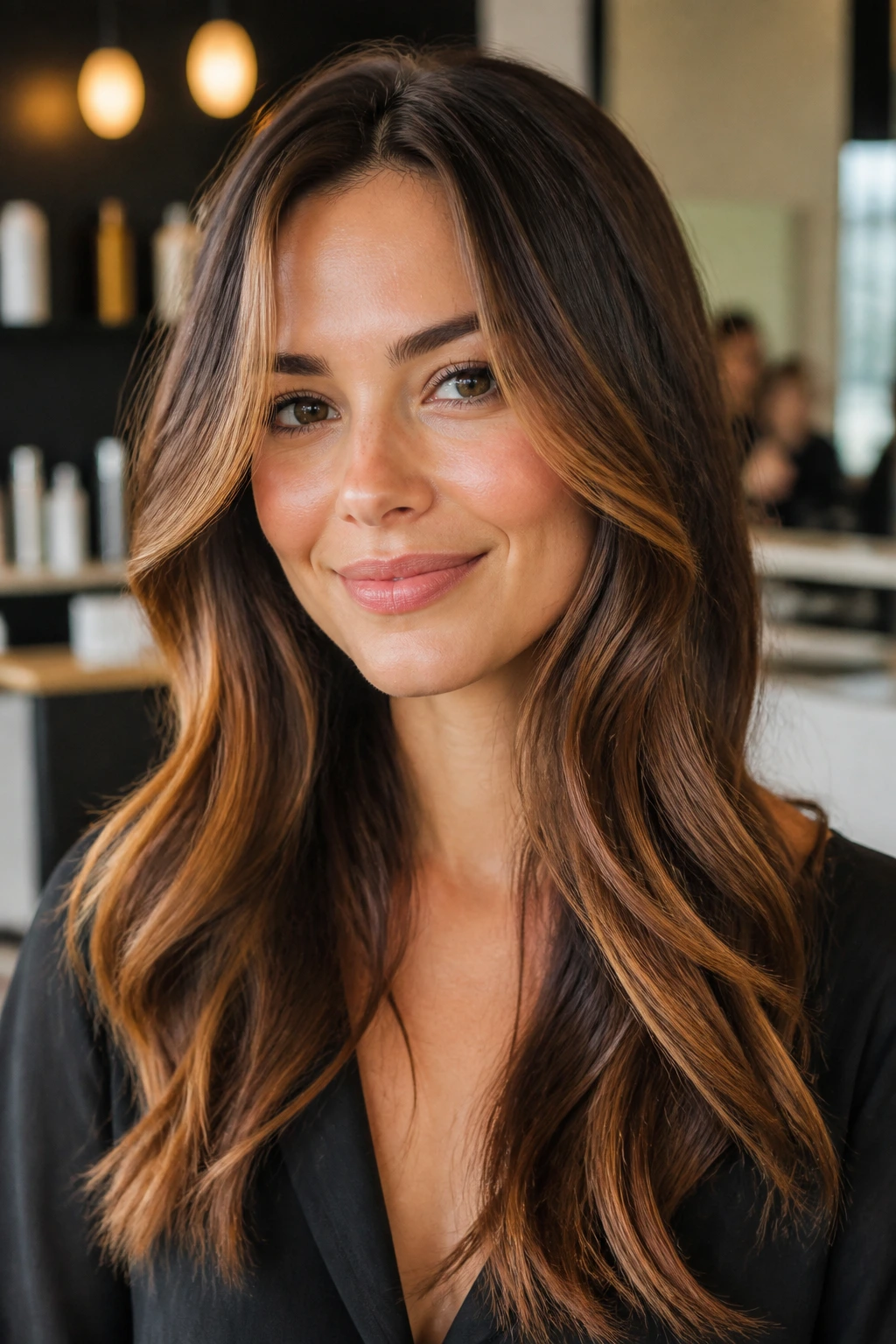
Gloss-Only Glow: If you want nearly zero commitment, stick to a demi gloss in a golden brown range. It adds tone and shine without changing the base much, and it fades softly instead of growing out with a hard line.
Curly Halo Ribbons: On curls, place the lighter pieces around the outer rim and the front sections. That keeps the definition visible without scattering too much brightness into the dense middle of the curl pattern.
Deep Brunette Honey: If your hair is naturally dark, keep the lift minimal and lean on warm reflect instead of lightness. This version works well on deeper skin tones and looks especially good when the goal is richness rather than brightness.
Gray-Blend Caramel: For scattered gray, ask for a demi-permanent caramel-brown with gentle coverage, not a full opaque block of color. The warm tone blends the gray while still letting the hair look soft and dimensional.
Soft Copper Honey: If you like warmth with a little more spark, add a restrained copper note to the honey. Keep it under control. The goal is shimmer, not orange.
Mistakes That Flatten Honey Brown
-
Choosing ash because it sounds safe: Ashy brown can look clean on paper and dull in real life, especially if your skin already leans golden or peachy. Ask for gold, caramel, or beige-gold instead.
-
Lifting too far in one step: Jumping from dark brunette to a pale honey can land you in orange or rough-looking brass. A slower lift or a darker target level usually gives a cleaner result.
-
Skipping a gloss: Highlights and balayage can look dry after a few washes if they’re never glazed again. A salon gloss keeps the warm reflect smooth instead of sandy.
-
Using purple shampoo too often: Purple shampoo is useful for pale highlights, but warm brown hair can turn dull if you use it like a regular cleanser. Save it for the lightest pieces and use it sparingly.
-
Ignoring the haircut: Chunky color on a blunt cut can look heavy, while tiny babylights on a shag can disappear. Placement should match the shape of the cut.
-
Forgetting about water and heat: Hard water, hot showers, and high heat tools strip shine fast. If your honey brown starts looking tired after a week, the problem may not be the color at all.
Questions People Ask Before Choosing Honey Brown
Will honey brown work if my skin is olive?
Yes, but the tone usually needs to stay muted. Beige-gold, caramel, and hazelnut brown tend to look better than bright orange-gold on olive warmth.
What level is best for warm skin tones?
Level 5 to 7 is the sweet spot for most people. Level 5 looks richer and deeper, while level 6 or 7 gives more light and movement.
Can I get honey brown without bleach?
Often, yes, if you’re staying close to your natural level or only adding a gloss. If you want much lighter ribbons, some lift may be needed, especially on dark hair.
Is balayage better than all-over color?
Balayage is better if you want dimension and softer grow-out. All-over color is better if you want uniform tone, gray coverage, or a cleaner shift from dull brown to warm brown.
How do I keep honey brown from turning orange?
Stay within a realistic shade level, ask for beige-gold instead of bright copper, and use a gloss or toner before the color drifts. Heat and hard water can also push warmth too far.
What if my hair is naturally very dark?
A deeper honey brown with golden reflect is usually the easiest place to start. You can always add face-framing pieces later, but a big lightening jump can get brassy fast.
What haircut shows honey brown best?
Layered cuts, lobs, shags, and curtain bangs show off the movement best. A blunt cut can still work, but it needs a smooth finish and a color that isn’t too streaky.
Can warm skin wear copper-kissed brown?
Yes, if the copper stays subtle. The shade should read brown first and copper second, or it can overwhelm the face.
Warm Brown, Soft Light
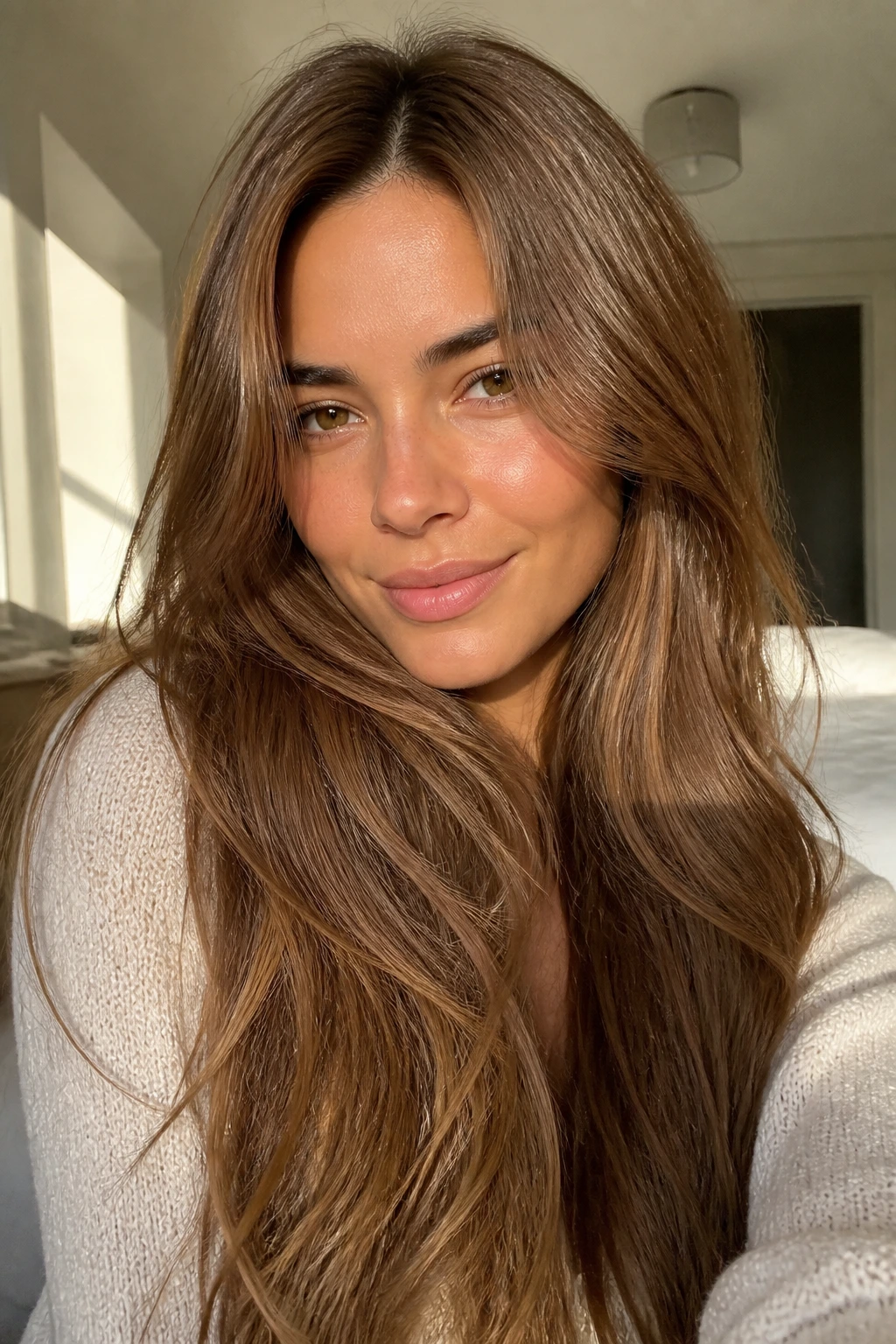
Honey brown works because it doesn’t fight warm skin. It meets it halfway. The best versions feel glossy, dimensional, and human — not flat, not orange, not overworked. That’s why a simple glaze can sometimes beat a bigger color change. It’s cleaner. Easier. More believable.
If you’re choosing between shades, start with the one closest to your natural level and push warmer only as far as your hair and skin can carry it comfortably. A good honey brown should make the face look softer the second you catch it in daylight. That’s the signal worth trusting.