



Golden brown hair color for pale skin works when the warmth looks like sunlight, not a filter. The wrong brown can drain a fair face in one appointment; the right one makes skin look clearer, eyes look brighter, and the whole head of hair read richer without tipping orange.
That balance is the trick. Pale skin can take warmth, but not all warmth behaves the same way. A level 6 chestnut with honey ribbons sits very differently from a flat copper-brown or a muddy ash brunette, and the difference shows up fast in daylight, especially around the hairline where every red or yellow note gets louder.
The shades below are built for that narrow sweet spot: enough gold to keep fair skin from looking washed out, enough brown to keep the color grounded, and enough dimension to keep the result from looking painted on. Some are soft and whispery. Some lean bold. A few are the sort of color you notice only when the light hits the ends just right. That’s the good stuff.
Why These Golden Browns Feel So Wearable
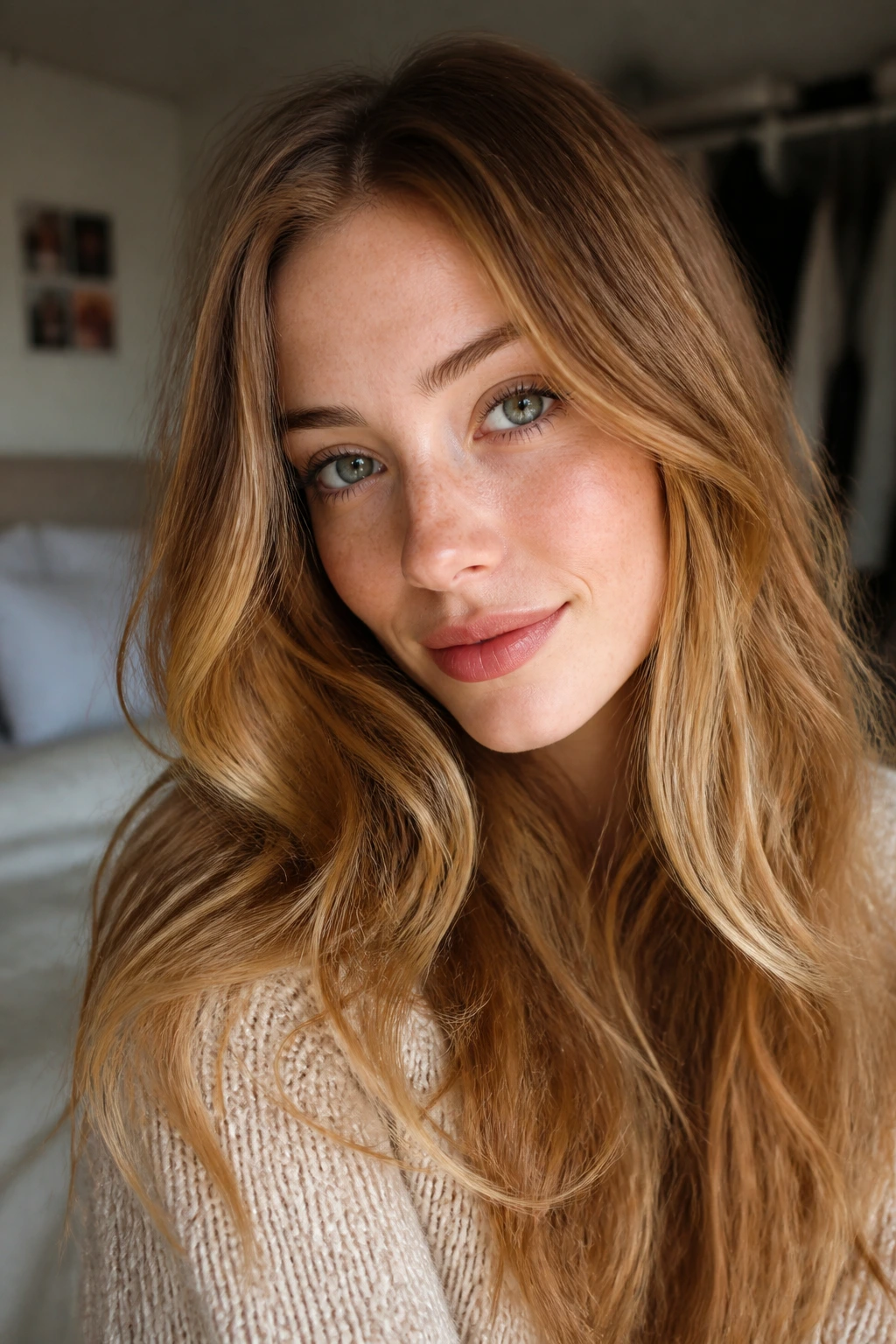
- Warmth without redness: Each idea keeps the gold in check, so pale skin looks fresh instead of flushed.
- Dimension first, flat color second: Ribbons, glosses, and shadow roots keep the shade moving; flat brown is where things go dull.
- Fair-skin friendly contrast: Several looks stay one or two levels deeper at the root, which keeps the face from disappearing into the hair.
- Room for different undertones: Pink, peach, neutral, and freckled skin all get a lane here, not just one type of fair complexion.
- Salon or at-home flexibility: Some looks are a quick gloss; others need balayage or foilyage, so there’s a realistic option for different budgets and hair histories.
- Easy to soften or deepen: A beige-gold glaze can cool things down, while a honey finish can push the warmth a little farther if your skin needs it.
1. Honey Chestnut Melt
Honey chestnut is the kind of brown that looks rich before you even style it. The base stays in chestnut territory, which gives pale skin some needed contrast, while the honey ribbons around the face keep the whole look from sinking into one dark block. On fair skin with peach or neutral undertones, this reads warm and expensive-looking in the plainest, best sense of the word.
Why It Works on Pale Skin
Chestnut keeps the color anchored. Honey lifts it. That’s the whole game here.
Ask for a level 6 chestnut base with level 7 honey balayage placed around the cheekbones, temple area, and ends. Keep the ribbons thin near the front so the color looks soft instead of striped. If your skin leans pink, ask the colorist to keep the honey beige-gold rather than yellow-gold.
Quick note: this shade looks best when the roots stay slightly deeper than the mids. That tiny shadow gives pale skin a clean frame.
2. Toasted Almond Balayage
This is one of the safest golden brown hair color ideas for pale skin, and I mean that in the best way. Toasted almond sits in a beige-brown lane, so it gives you warmth without the orange edge that can make a fair face look ruddy. The balayage placement matters here more than the exact name on the color bowl.
The look shines when the lighter pieces are painted in soft, wide strokes through the mid-lengths and ends. On straight hair, the almond ribbons create movement; on waves, they break up into that soft, sunlit pattern people try to fake with filters. If your skin is cool or pink, this is one of the first shades I’d point you toward.
3. Golden Mocha with a Shadow Root
Want warmth without giving up depth? This is the answer. The mocha base stays dark enough to sharpen pale skin, while the golden mids and ends keep the color from feeling heavy or winter-dry. It’s a particularly good fit if your hair is naturally dark and you don’t want a high-maintenance grow-out line.
What to Ask For
- Base: level 4 to 5 mocha brown with a soft shadow root
- Dimension: fine level 6 golden-brown ribbons through the lower half
- Finish: a beige-gold gloss, not a copper glaze
The shadow root does more than hide regrowth. It also gives the gold somewhere to live. Without it, the lighter pieces can look a little shouty against pale skin. With it, the whole thing reads polished and intentional.
4. Caramel Ribbon Brunette
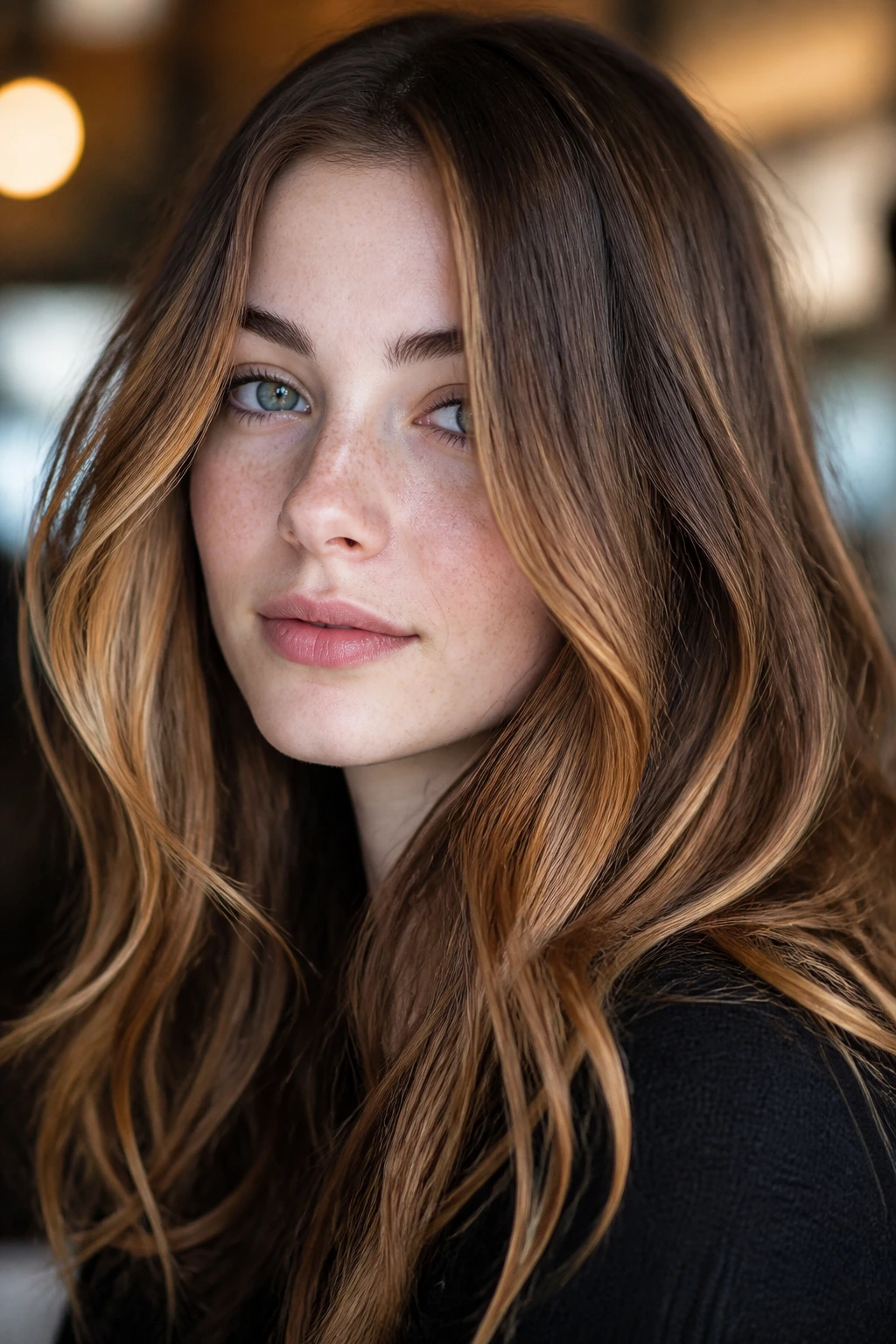
Caramel ribbon brunette is classic for a reason. The brown stays recognizable, but the caramel comes through in thin strands that catch light near the face and through the surface of the hair. On pale skin, those ribbons stop the color from turning flat and give the complexion a softer glow.
This is a good choice if you already wear layered cuts, curls, or a long bob, because the movement shows off the placement. I like it most when the caramel isn’t too orange. A good caramel ribbon is creamy and warm, not pumpkin-toned. That tiny difference changes everything around fair skin.
5. Amber Bronde
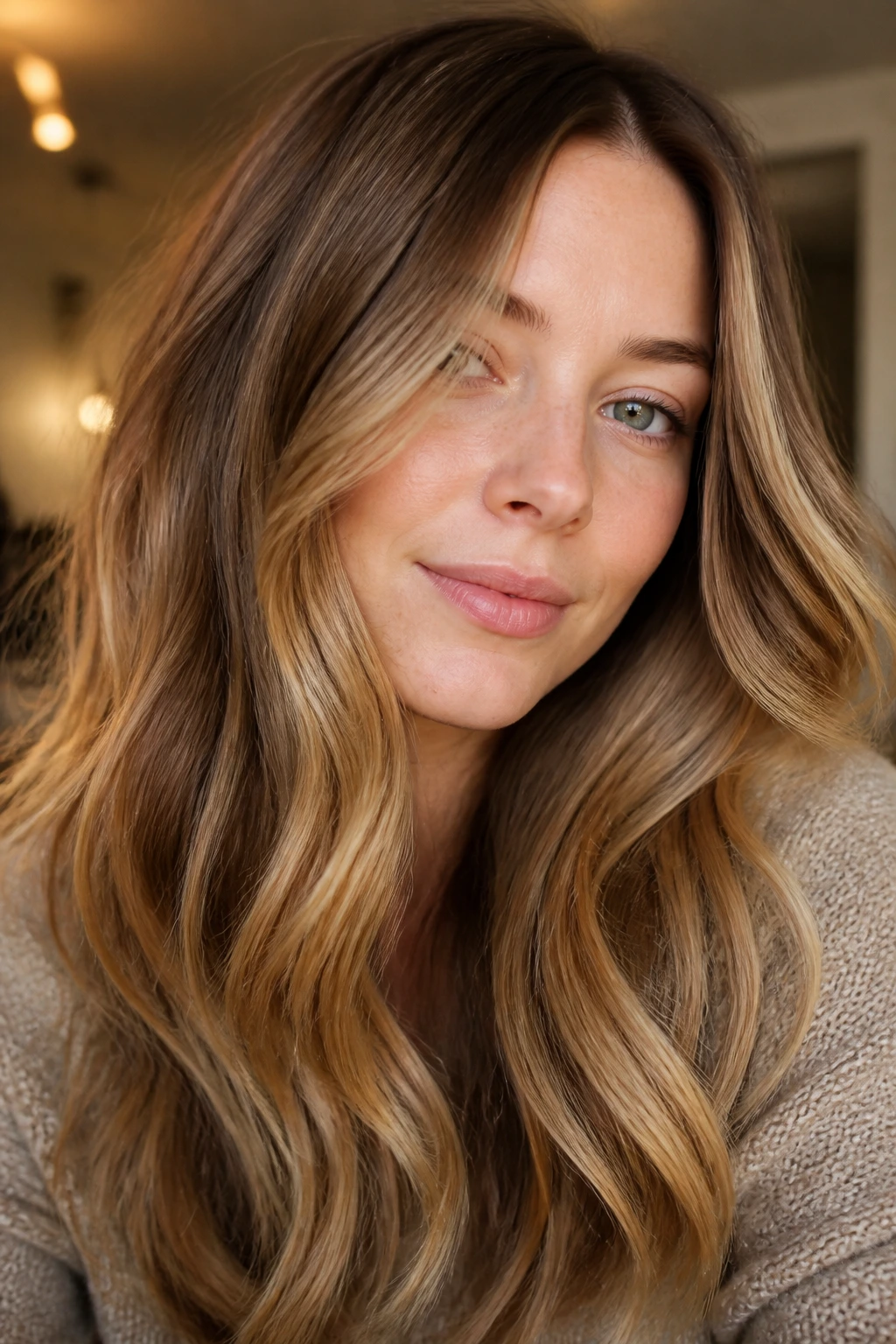
Amber bronde sits right between brunette and blonde, and that’s why it works so well on pale skin. It gives fair features enough warmth to feel alive, but the brown underneath keeps the shade from looking washed out or too bright. If you’ve ever looked at a full blonde and thought it erased your face, this is the more forgiving answer.
The amber piece should live in the mids and ends, with the root kept a shade or two deeper. That contrast is what stops the color from going soft in a boring way. On pale skin with hazel or green eyes, amber bronde tends to light everything up fast.
6. Maple Brown Gloss
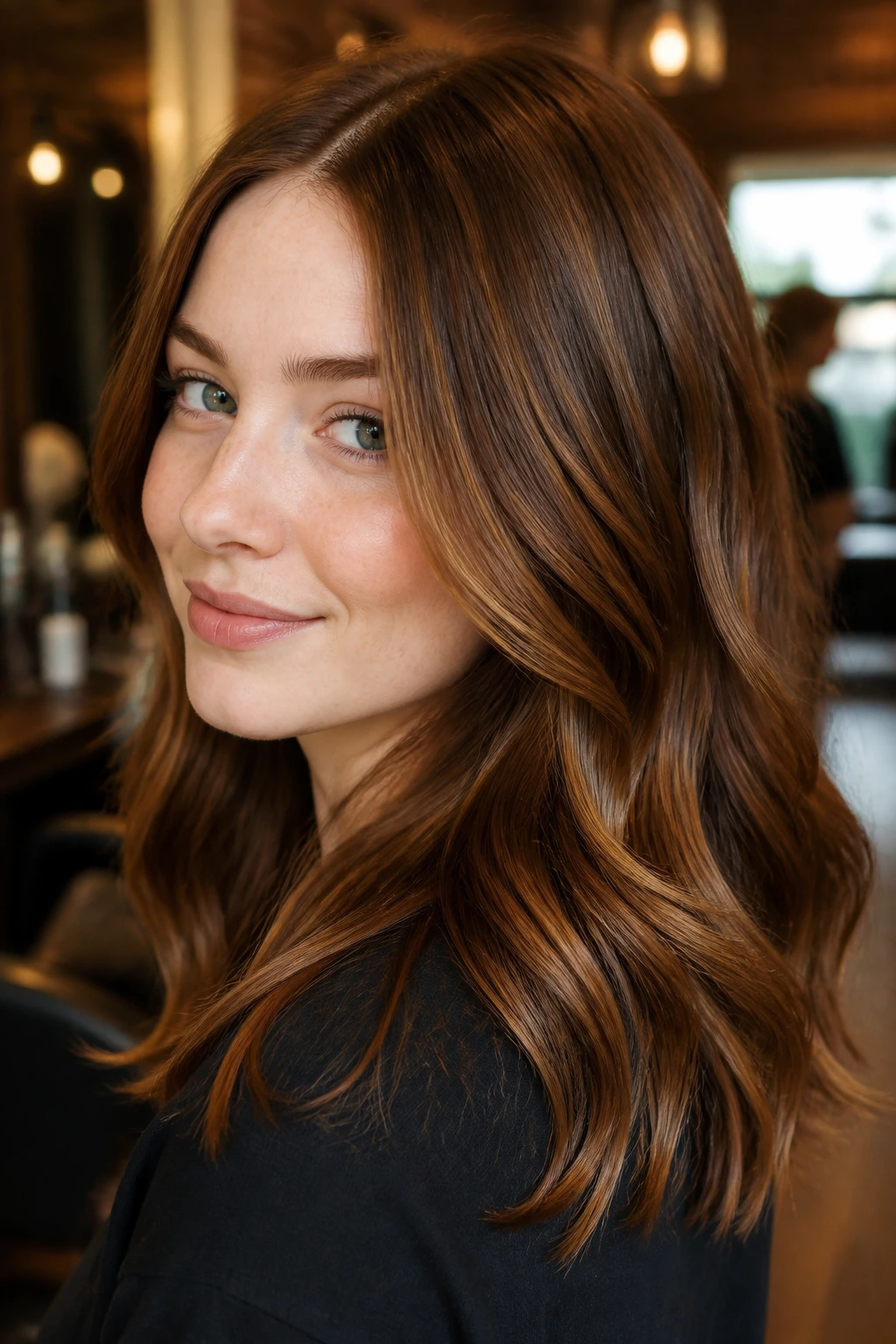
Maple brown is for the person who wants shine more than stripes. It works as a glossed brunette with a syrupy, warm finish that picks up light without asking for a big color overhaul. On pale skin, it reads smooth and healthy when the undertone stays maple-gold rather than red-brown.
The nice thing here is the low drama. If your hair is already around level 5 or 6, a demi-permanent gloss can shift the tone without changing the base too much. The result looks expensive only because it looks natural. Flat gloss color like this is one of my favorite ways to warm up a fair face without committing to heavy highlights.
7. Buttered Espresso
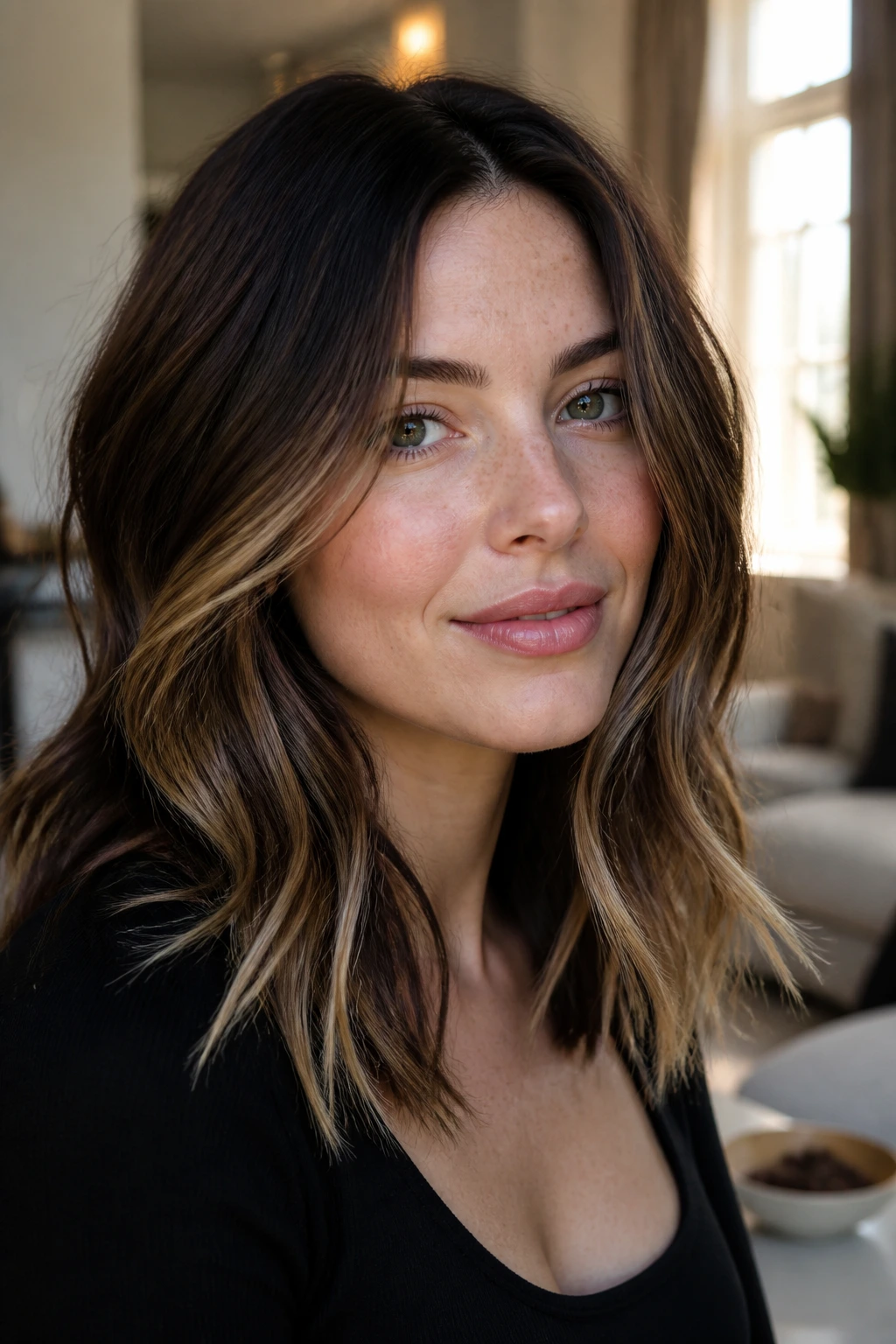
Buttered espresso sounds rich because it is. The base is deep espresso, which keeps pale skin from looking washed out, and the buttery ends soften that darkness so the color doesn’t land harshly. This one is especially good if you like dark hair but don’t want the severe effect that can happen when the color sits too close to black.
A shoulder-length cut or soft waves help here. The lighter ends need movement to show up, or the whole shade can look like one solid block indoors. Under daylight, though, the butter tone shows up as a warm veil rather than obvious highlights. That’s the sweet spot.
8. Sunlit Walnut
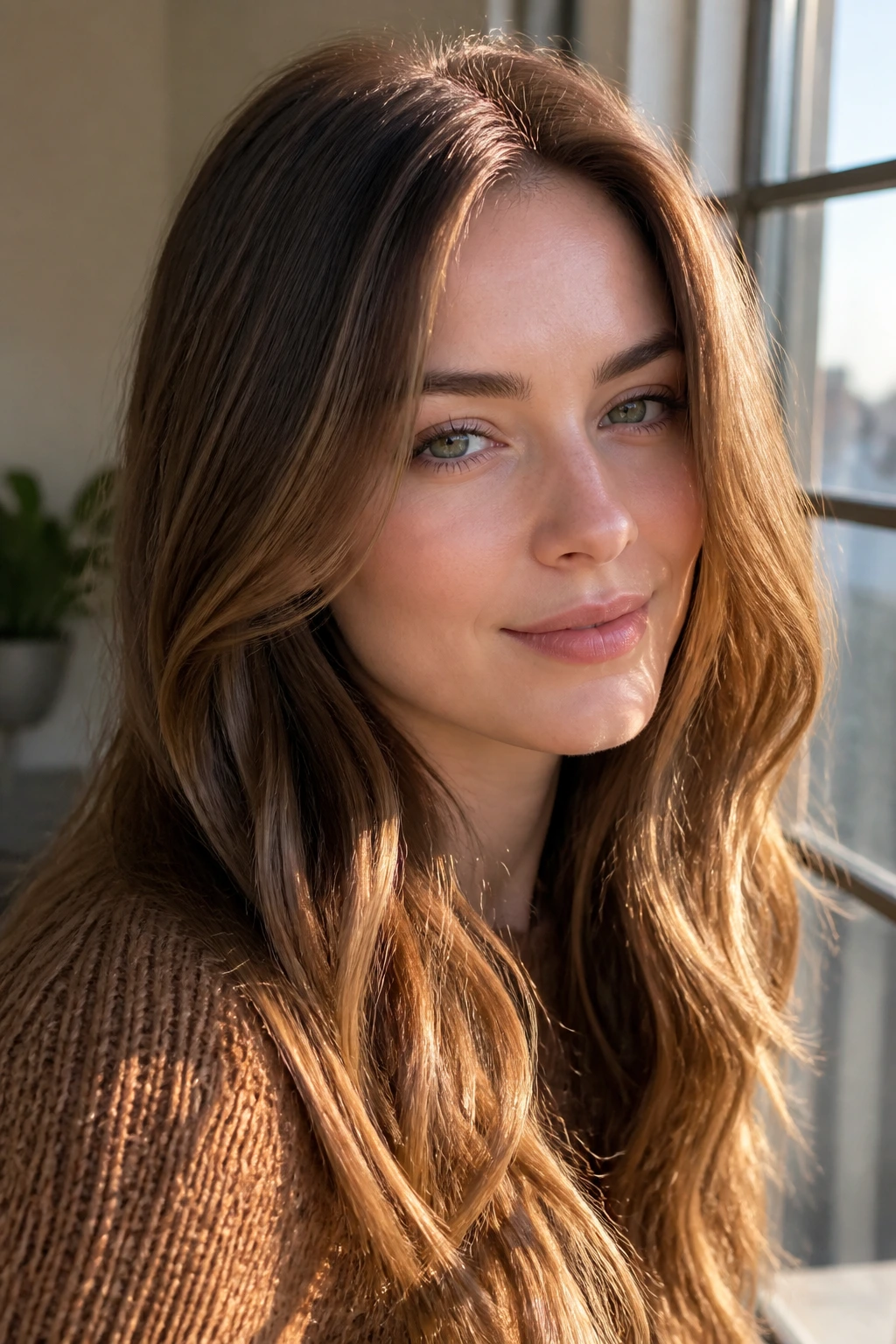
Sunlit walnut is what happens when brown hair gets a little bit of daylight built into it. The walnut base keeps things grounded; the sunlit panels add just enough gold to flatter pale skin without wandering into blonde territory. It’s a calmer look than caramel ribbon brunette, and I think that’s its strength.
Placement Notes
- Keep the brightest pieces around the outer hairline and top layers.
- Leave the underlayers deeper so the color still has weight.
- Ask for soft hand-painted placement instead of chunky sections.
That placement makes pale skin look clearer, not paler. It also grows out in a way that doesn’t scream for a salon appointment every few weeks.
9. Cinnamon Honey Layers
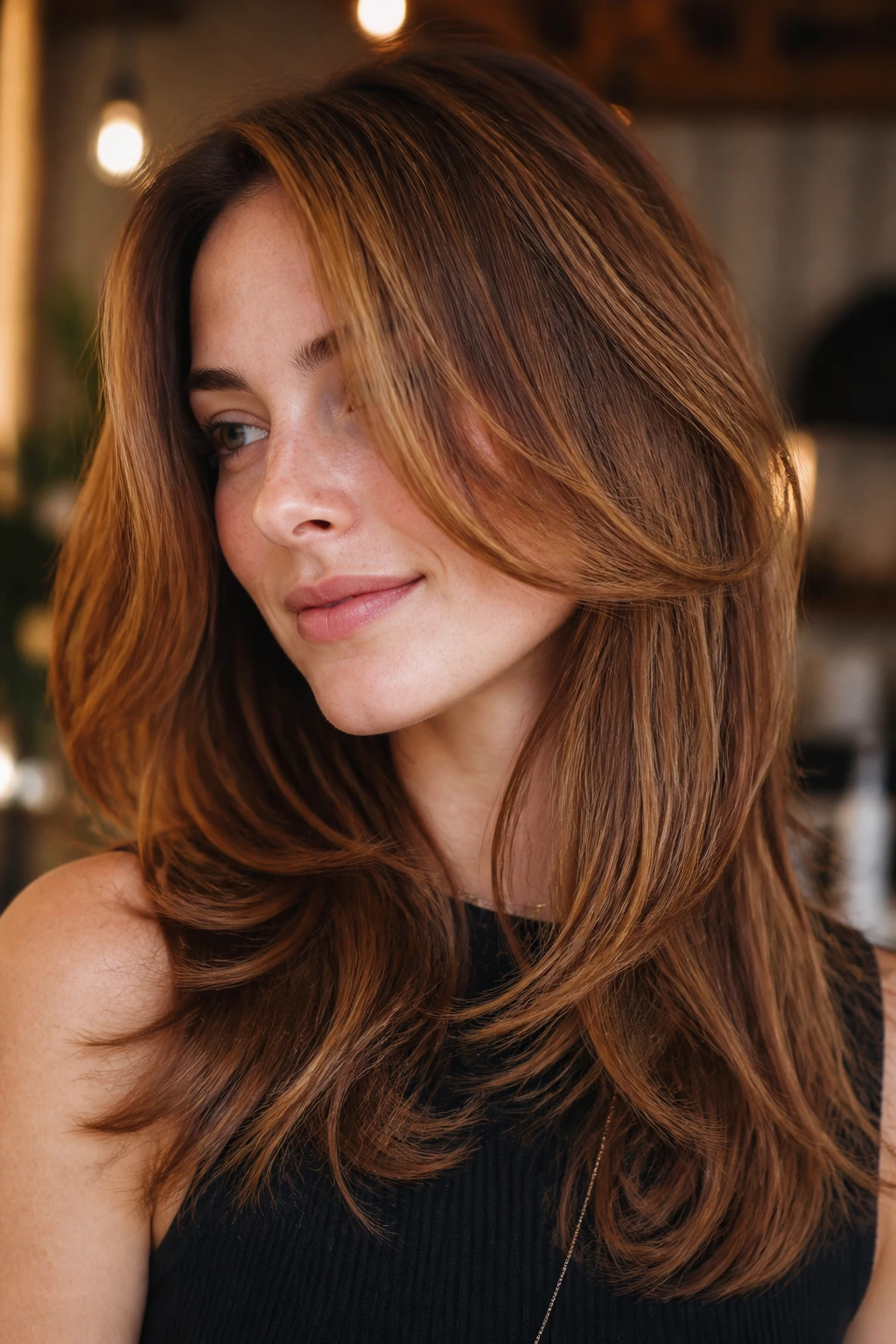
Why does this one look richer than plain brown? Because the layers do half the work. Cinnamon honey gets its depth from a warm cinnamon base with honey glaze threaded through the layers, so every bend in the hair throws a slightly different color back at you.
This is a good fit for pale skin with freckles or warmer undertones, because the color echoes that natural warmth instead of fighting it. Keep the cinnamon soft, not brick red. Too much red at the root can make fair skin look flushed. Put the honey where the layers move, and let the cut do the rest.
10. Beige Gold Brunette
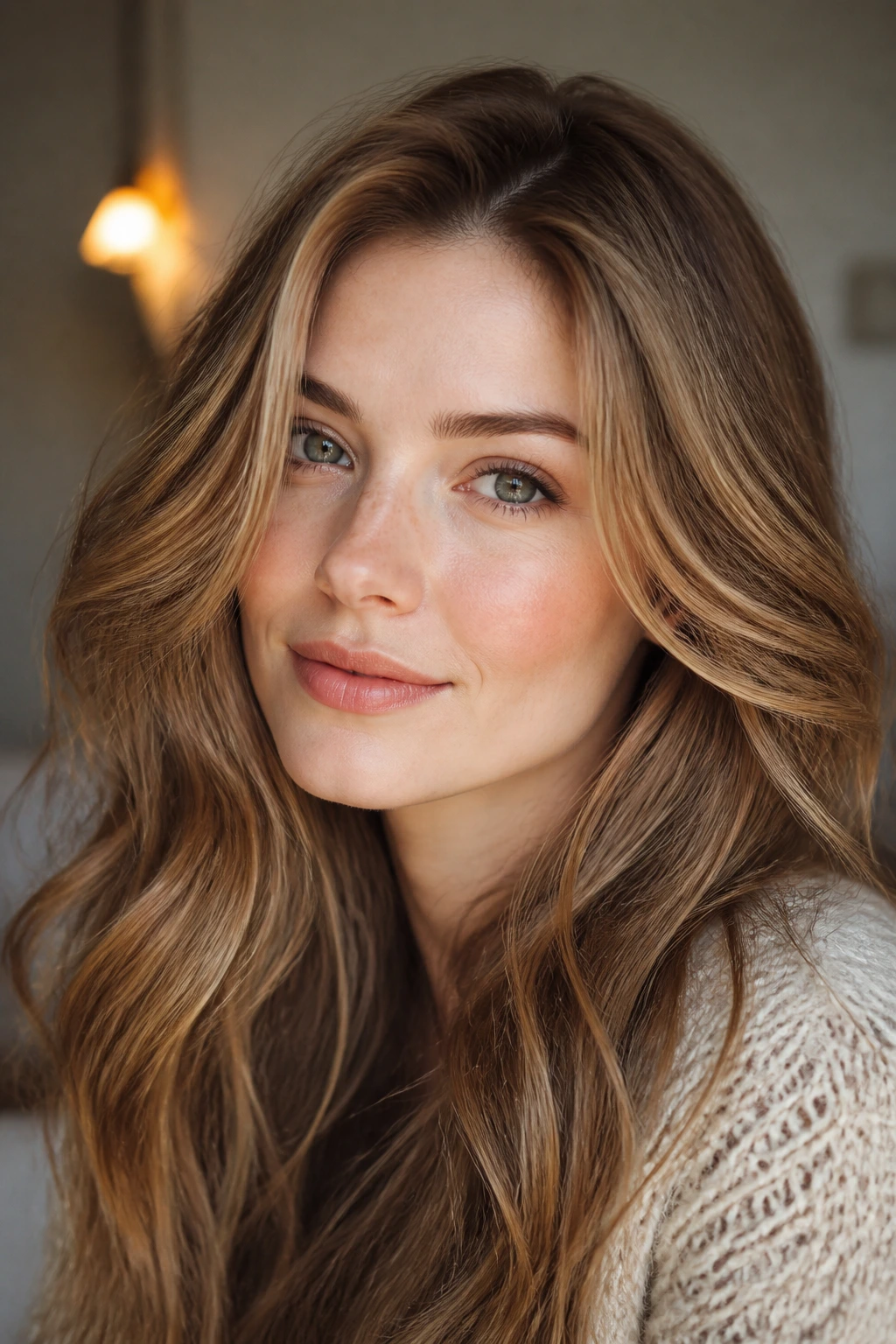
Beige gold brunette is the quiet one in the group, and I mean that as a compliment. It’s one of the easiest golden brown hair color ideas for pale skin because it avoids the two traps that cause trouble: too much orange and too much ash. The beige-gold balance keeps the hair warm, not brassy.
This works especially well on very fair or pink-toned skin. Ask your colorist for a neutral brown base with a beige-gold toner rather than a copper glaze. That tiny shift keeps the warmth creamy. If you want something that still looks good in office light, kitchen light, and outdoor light, this is a smart pick.
11. Bronze Cocoa Waves
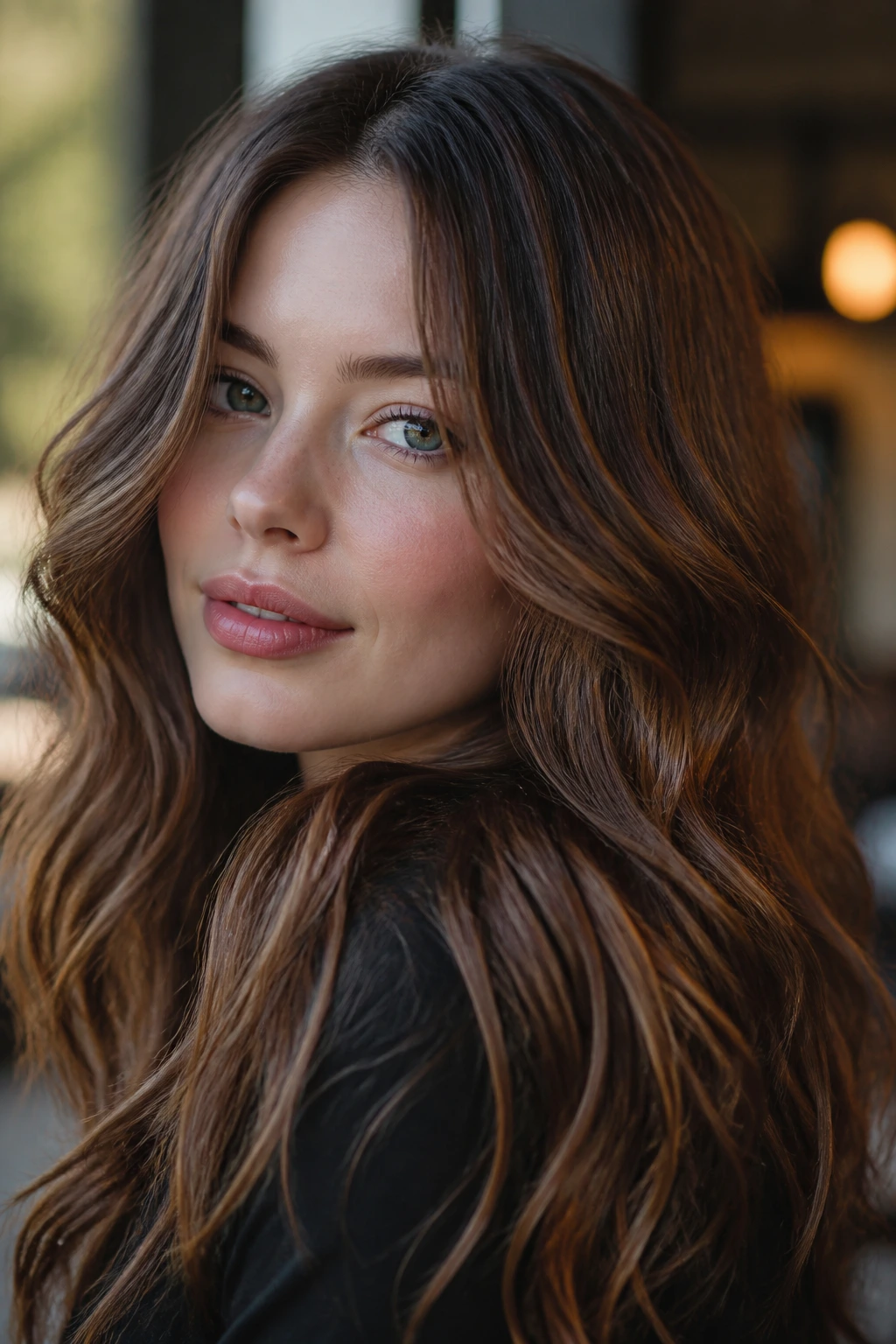
Bronze cocoa is richer than caramel and less sweet than honey, which gives it a more grown-up feel. On pale skin, the cocoa depth keeps the color from floating away, while the bronze sheen adds a metallic warmth that looks especially good in wavy hair. Every bend catches the bronze differently.
This is the shade I’d point to if you want warmth with a little edge. It’s not soft in the way beige gold is. It has more shape. Ask for a deep cocoa base and bronze lowlights or a bronze glaze, then style with a loose wave so the dimension doesn’t disappear.
12. Apricot Brown Face Frame
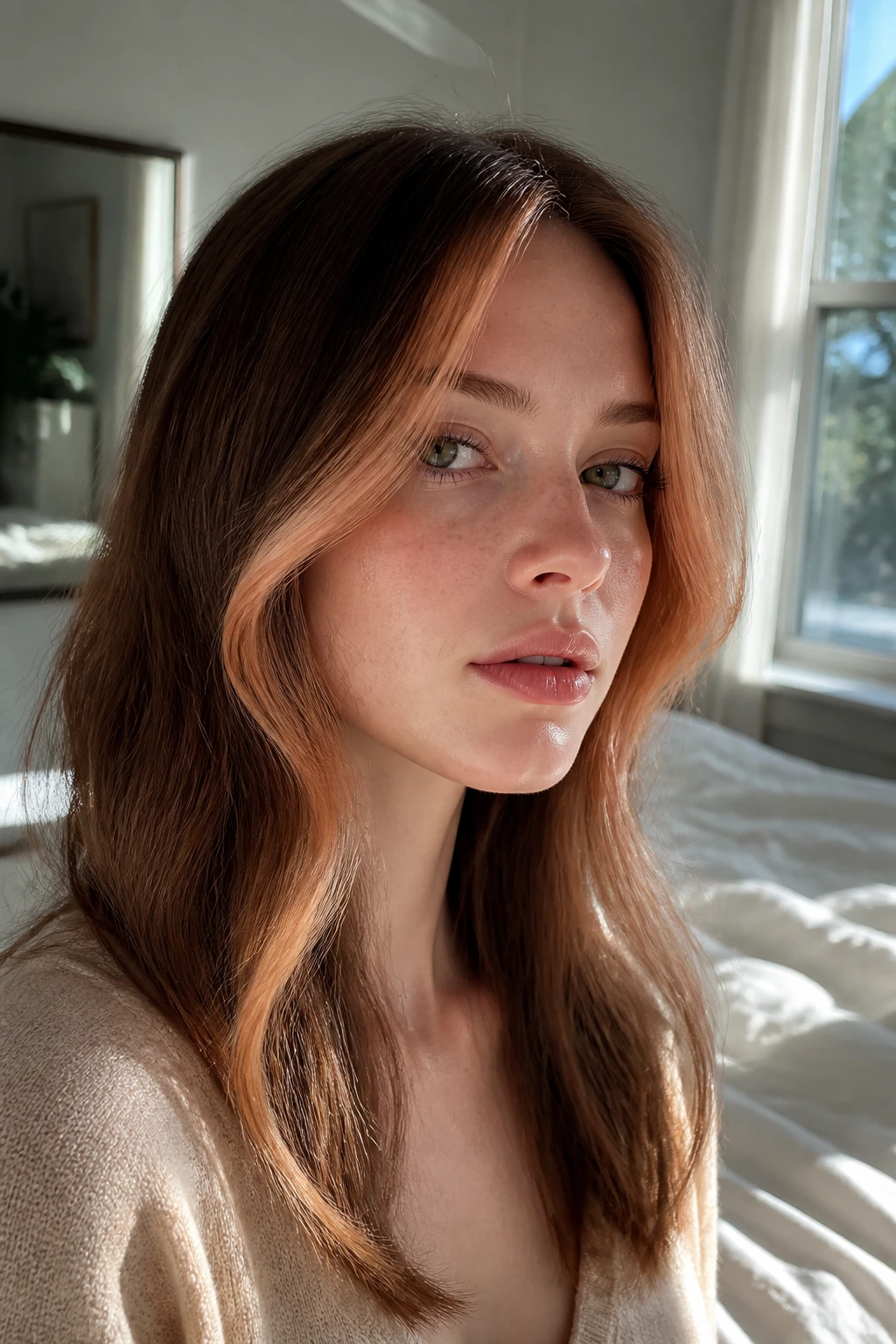
Apricot brown is one of the more playful choices here, but the trick is restraint. The brown base stays calm, and the apricot-gold face frame adds a bright edge around the cheeks and eyes. On pale skin, that front placement can wake up the whole face in one move.
How to Wear It
The apricot should stay soft and slightly muted, not neon. I’d keep the brightest pieces just in front of the ears and around the fringe area. That way you get the lift where it matters most, but the rest of the head still feels wearable. If your skin has redness, ask for apricot-beige instead of apricot-orange. Big difference.
13. Honeyed Mushroom Brown
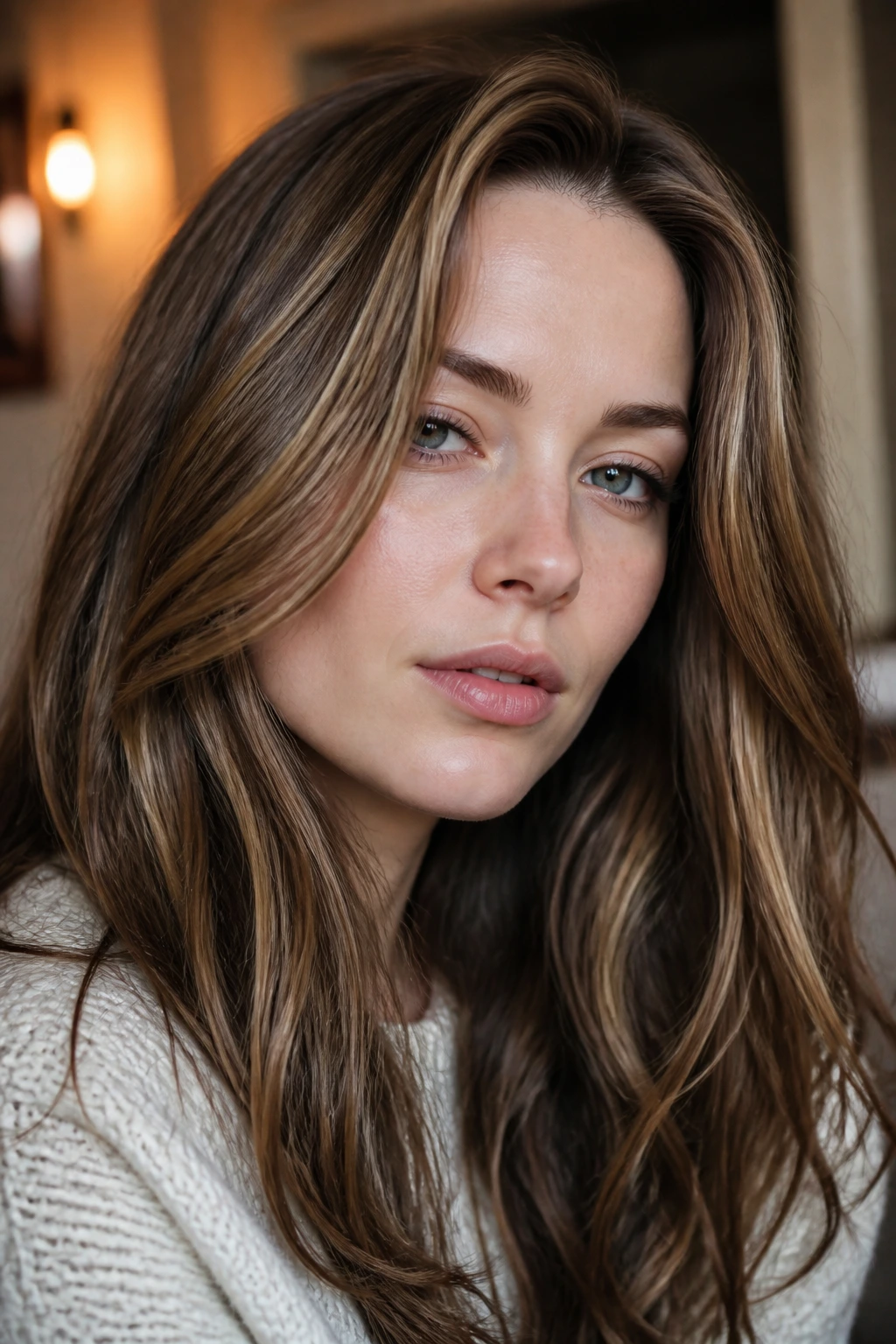
Mushroom brown can look a little cool on its own, which is why the honey glaze matters. This version keeps the smoky base and adds just enough gold to flatter pale skin without washing it out. It’s one of the best options for someone who likes the idea of warmth but doesn’t want the finish to turn sunny.
That balance is useful on fair skin that sits between pink and neutral. The mushroom depth keeps the roots grounded, and the honey in the mids keeps the whole thing from going flat. It’s a smart compromise, and sometimes that’s the most flattering choice of all.
14. Toffee Root Melt
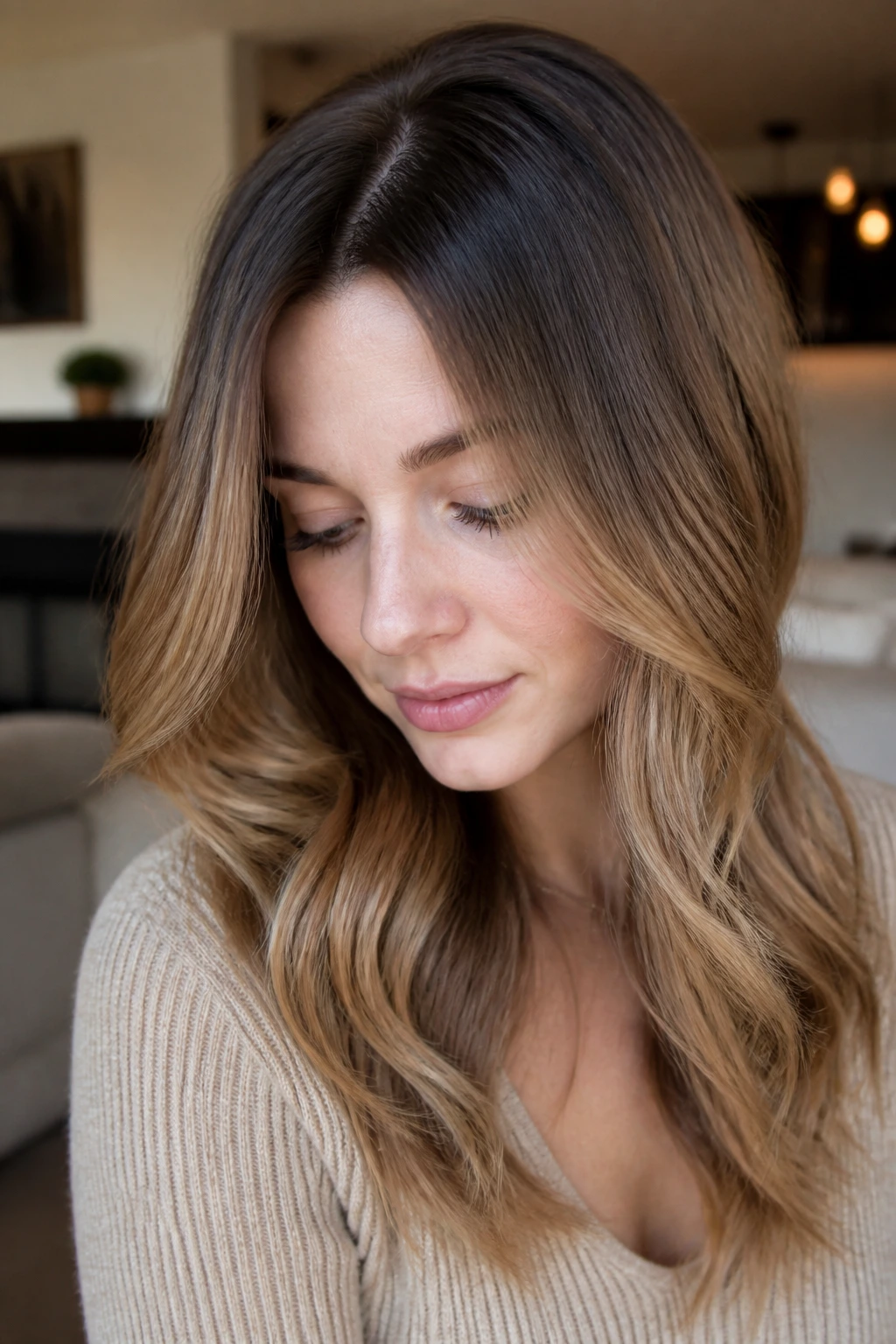
Toffee root melt gives you softness at the top and warmth at the bottom, which sounds simple until you see how much better it behaves on pale skin than a flat light brown. The darker root keeps the face framed, and the toffee mids and ends carry the gold where the eye naturally lands.
This is a good low-maintenance pick if you don’t want harsh regrowth. The root melt makes the grow-out look deliberate for weeks, not days. On longer hair, the toffee shade shows best when the ends are feathered or loosely curled. Straight hair can wear it too, but the movement helps.
15. Warm Chestnut Bob
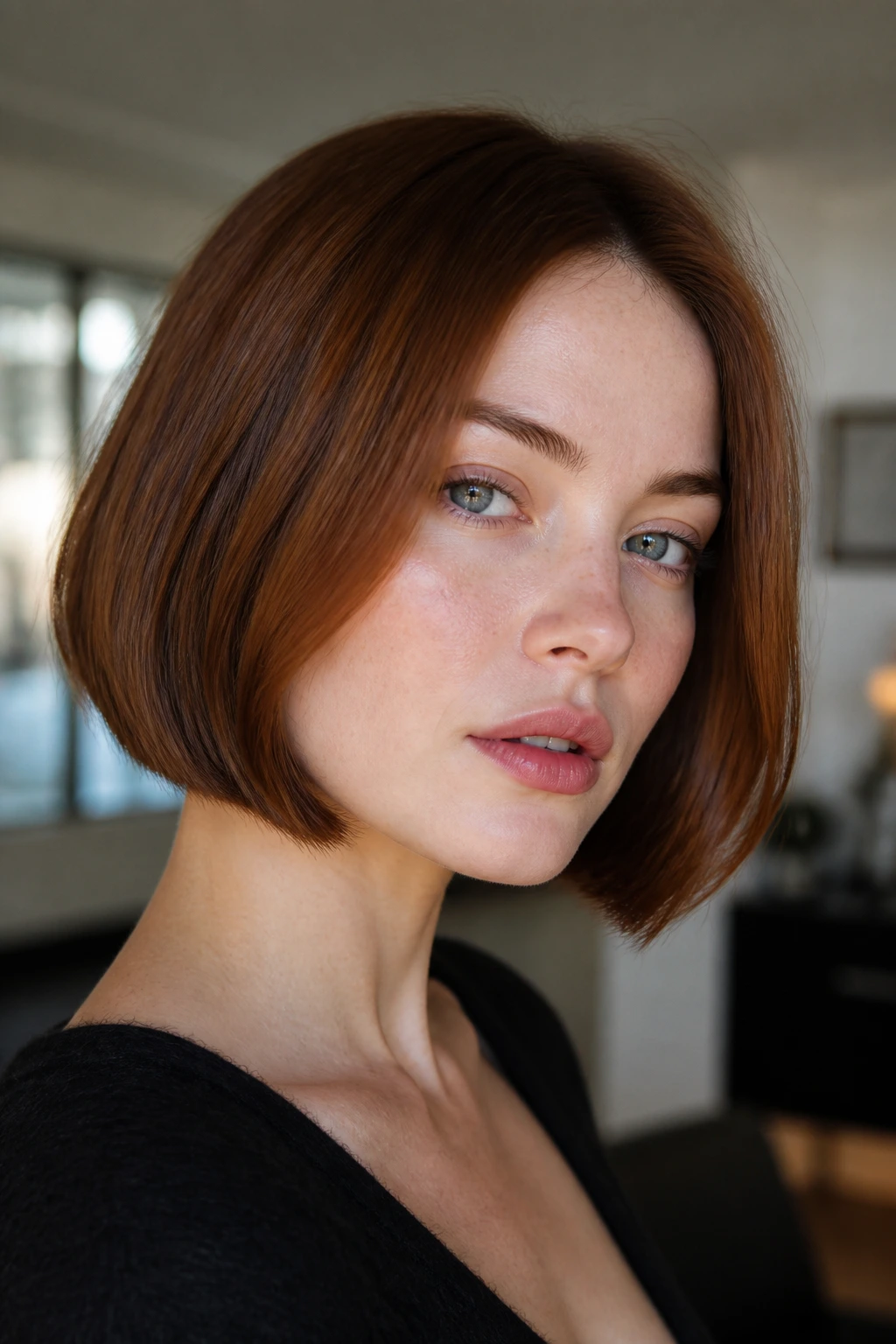
A bob can be brutally honest about color, which is why warm chestnut works so well here. The cut keeps the shade from overwhelming a pale face, and the chestnut warmth adds life without going bright. If you’ve got fair skin and fine hair, this can make the hair look denser at the same time.
Keep the finish glossy. A chestnut bob with rough ends loses the point. I like this shade with a clean line at the jaw or just below it, because the shape and color support each other. It’s neat, direct, and not fussy.
16. Sanded Caramel Lob
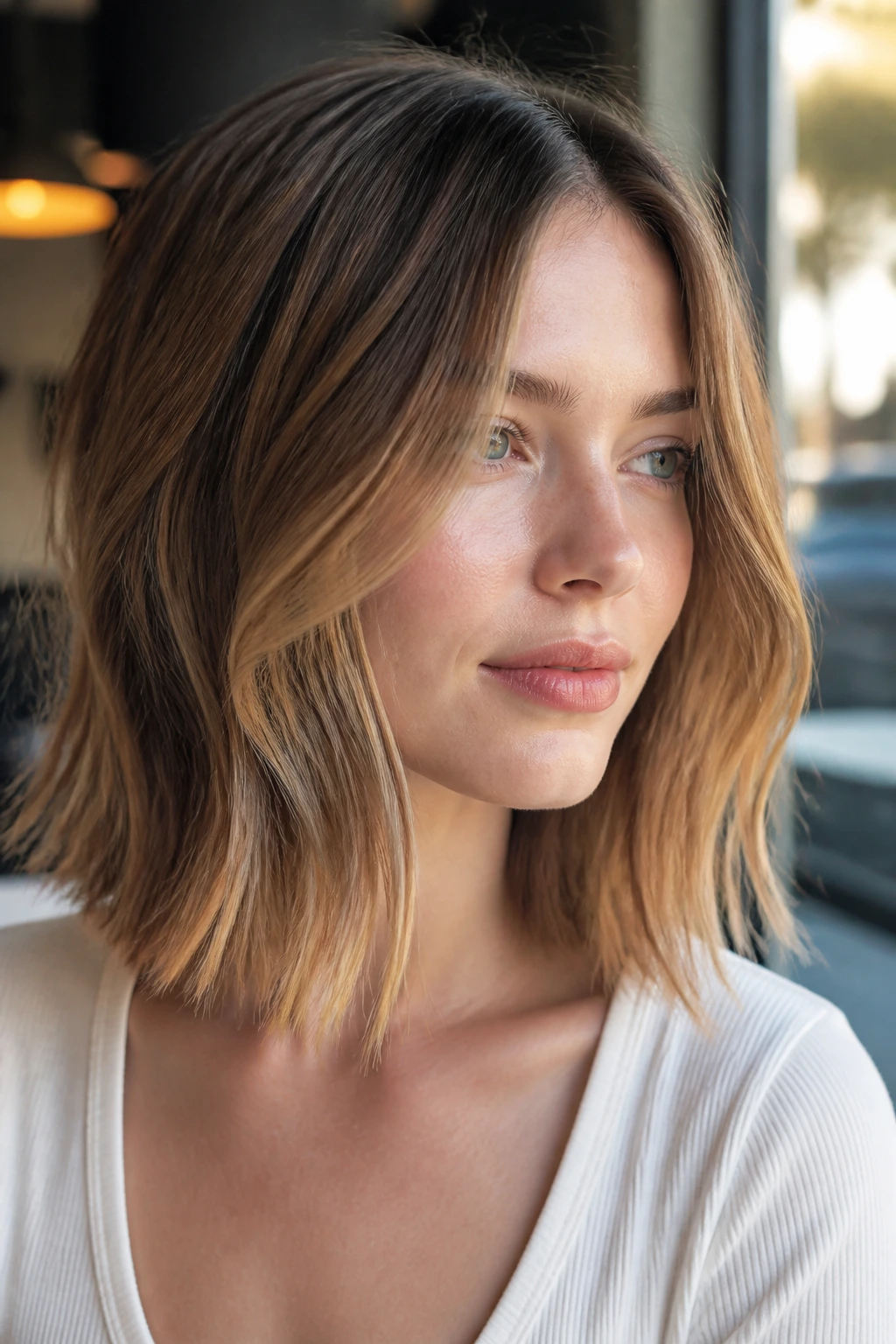
Sanded caramel is caramel after someone took the sugar down a notch. It’s softer, dustier, and less glossy than classic caramel, which makes it better for pale skin that doesn’t love loud warmth. On a lob, the color falls in that sweet spot where it looks sun-kissed but not overly bright.
Use the lightest pieces just below the cheekbone and through the lower half of the hair. That keeps the top from getting too busy near the scalp. This shade is one of the easiest to wear with air-dried texture, because the color already has a soft, slightly unfinished feel.
17. Soft Gold Espresso
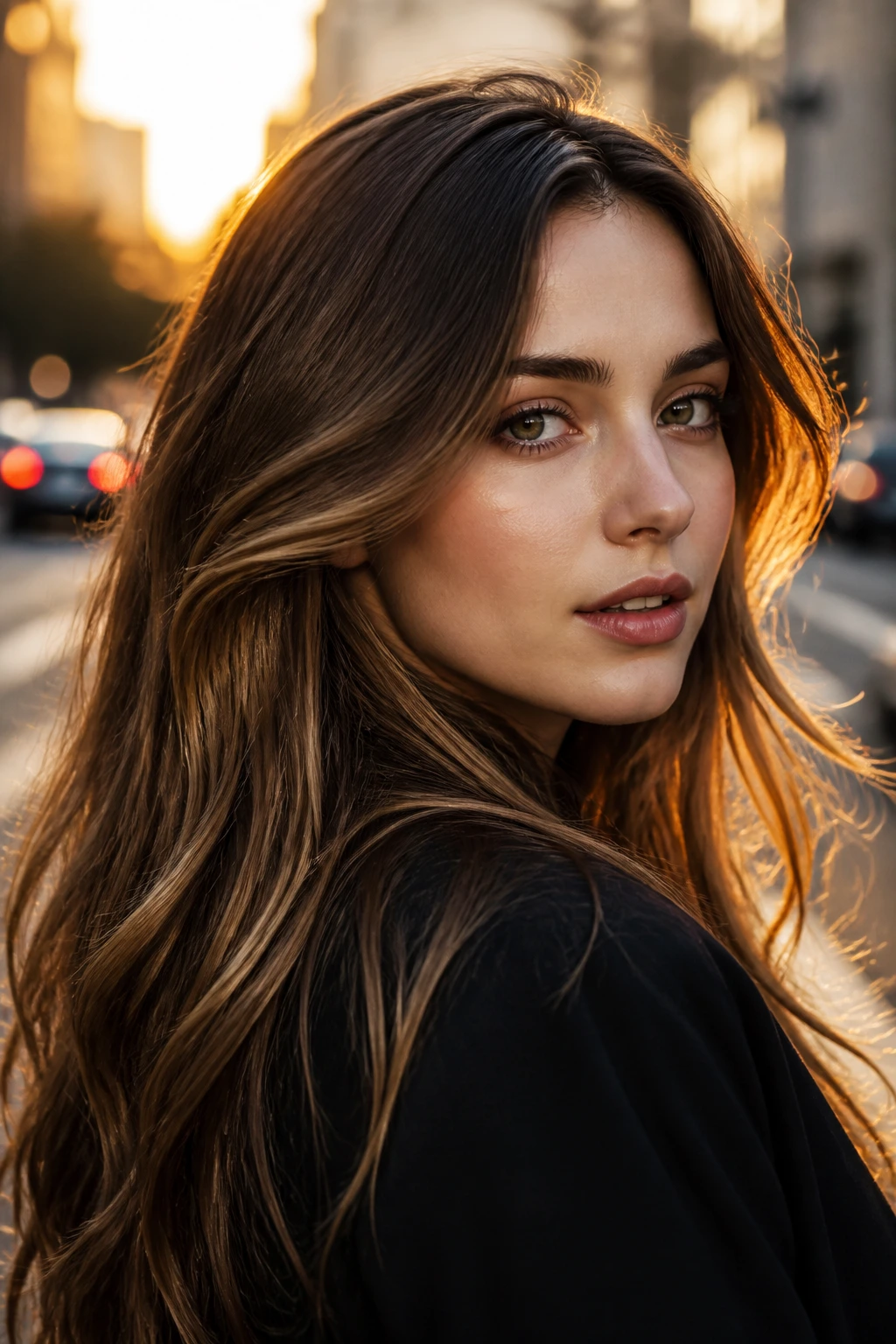
Soft gold espresso is for people who want their brown to glow, not shout. The espresso base gives pale skin contrast, and the gold is held back enough that you notice it in movement and sunlight rather than all the time. It’s subtle in the right way.
This shade is a good fit for straight hair, shoulder-length cuts, or anyone who wears a lot of dark clothes. Without some warmth, deep brown can make fair skin look faint. The soft gold reflection solves that without forcing the color into caramel territory.
18. Sable with Buttery Ends
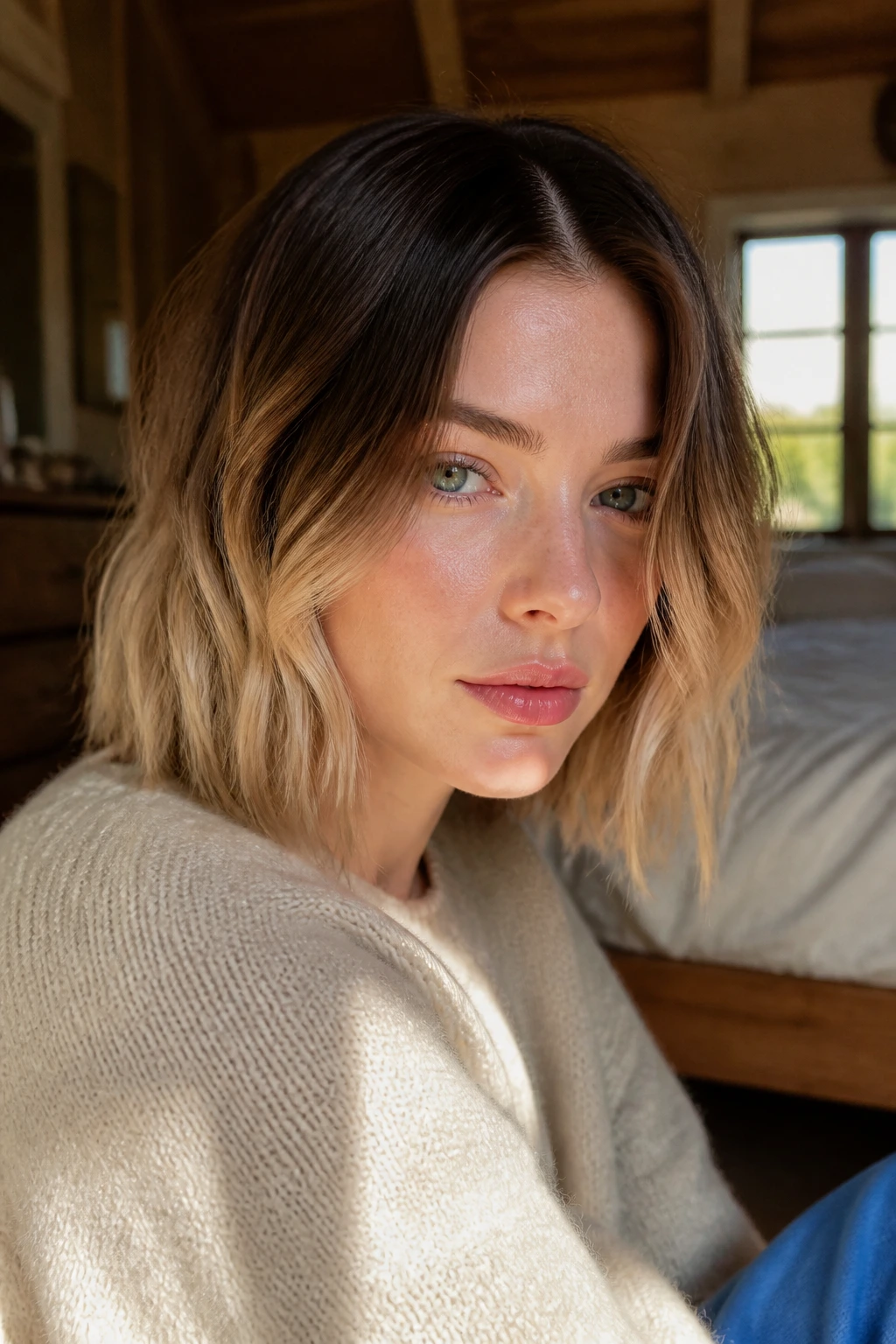
Sable is deep and cool at the root, which is why the buttery ends matter so much. They stop the color from looking severe against pale skin. The contrast is sharper than some of the softer looks here, but the ends keep it wearable.
What Makes It Work
- The dark base gives structure around the face.
- The buttery ends keep the color from turning harsh.
- It looks best on hair with a blunt edge or soft waves.
I’d pick this if you like a little drama but still want warmth. It has a cleaner, more graphic feel than honey chestnut or toffee melt. That can be lovely on pale skin when you want the hair to make a statement before the makeup does.
19. Marigold Brunette
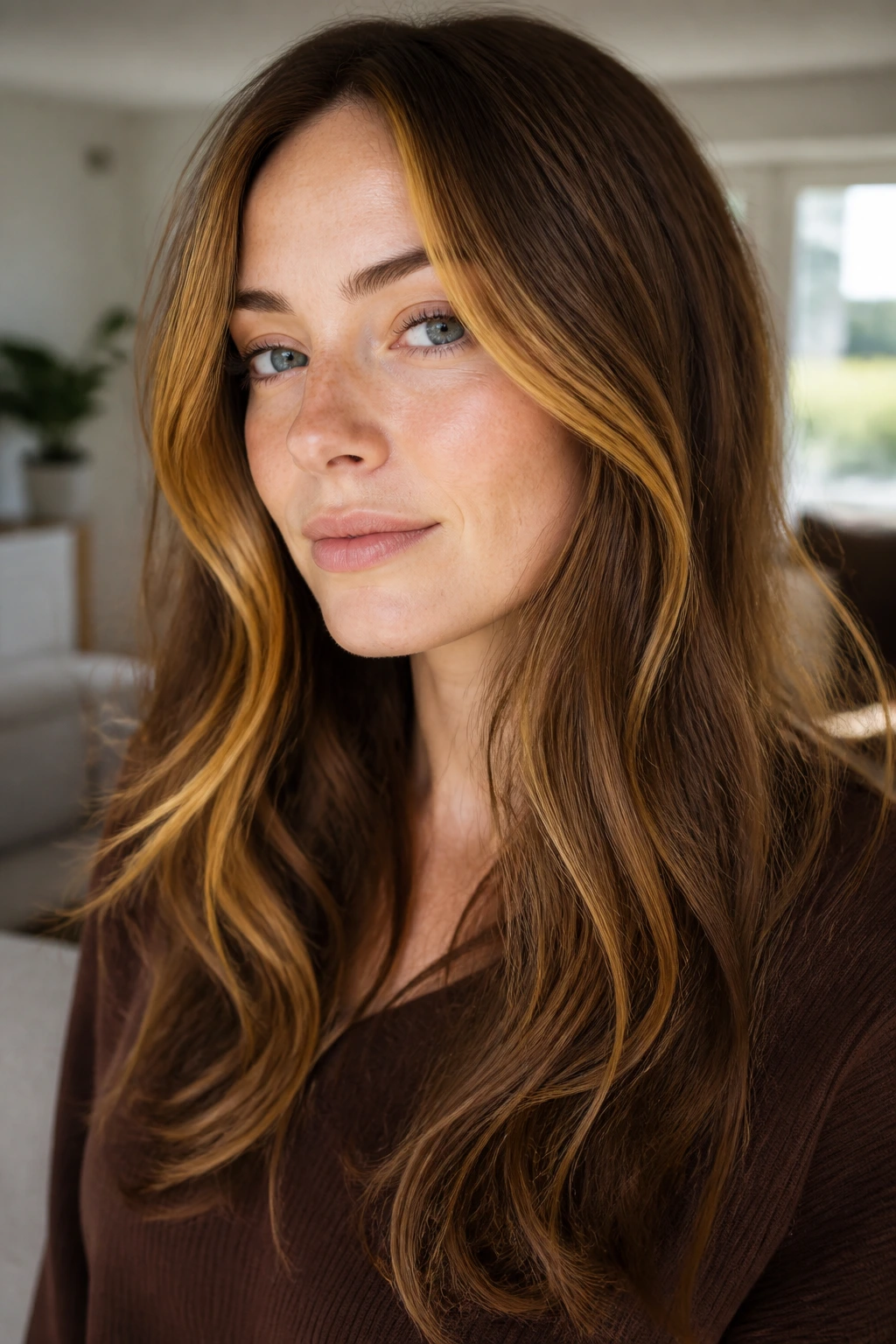
Marigold brunette pushes warmth farther than most of the shades here, and that’s exactly why it can look fantastic on the right pale skin. The marigold note brings a golden-yellow glow through the brown base, which works best on fair complexions that already lean peach or golden.
Use caution if your skin is very pink. Too much marigold at the root can drag the whole face toward redness. Keep the marigold in the glaze or the surface pieces, not the whole head. When it’s placed well, it looks vivid without going loud.
20. Syrup Brown Curls
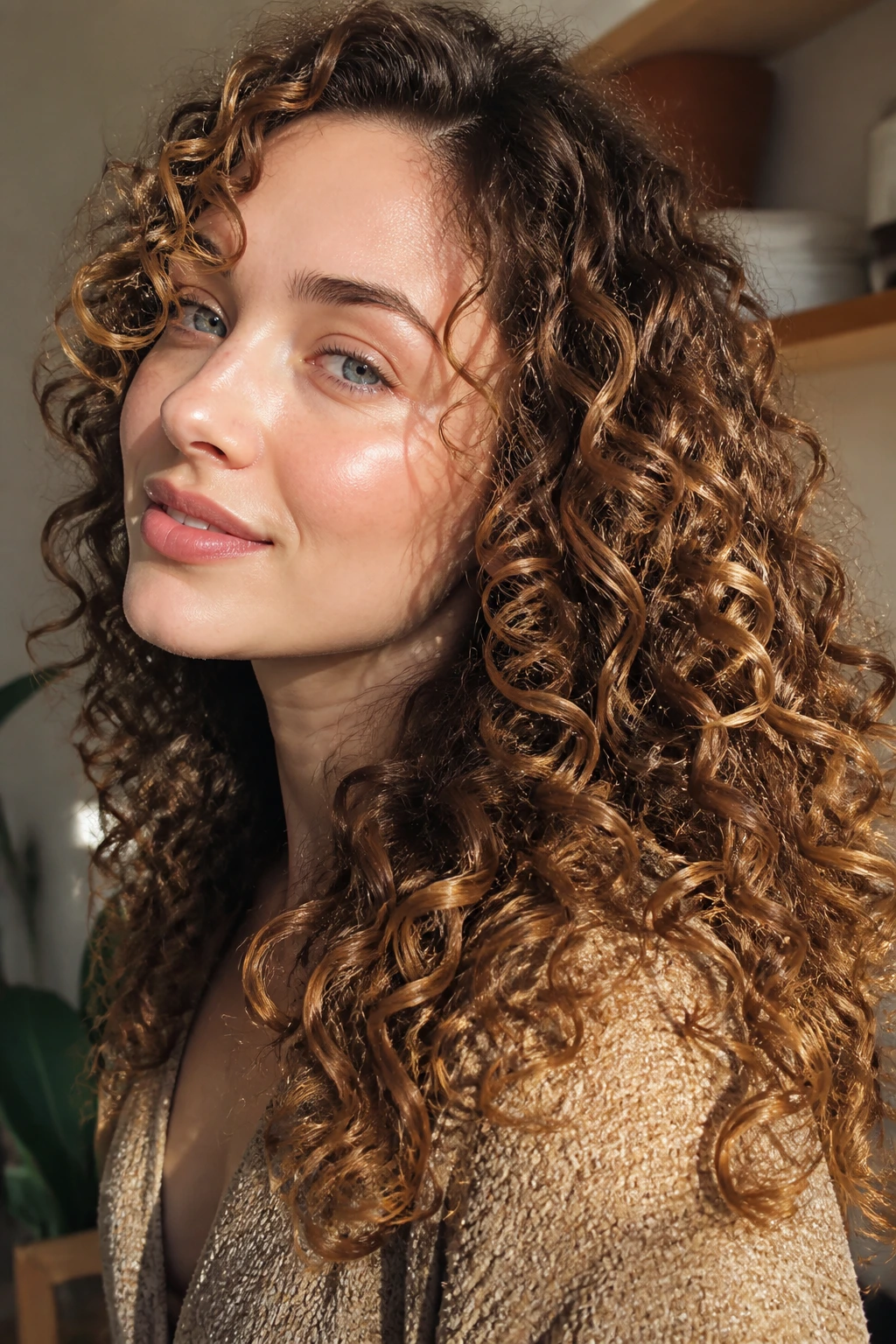
Syrup brown is one of my favorites for curls because curls already do part of the styling work. The warm brown glaze clings to the bends in the hair and picks up light on the ridges, so the color reads deeper and glossier than it would on a flat blowout. On pale skin, that shine keeps the face from looking dragged down by the depth.
This is not the shade for stripey highlights. Curls want softness. Ask for lowlights, a warm brown glaze, and maybe just a few brighter pieces around the front. The goal is movement, not contrast.
21. Hazelnut Halo Highlights
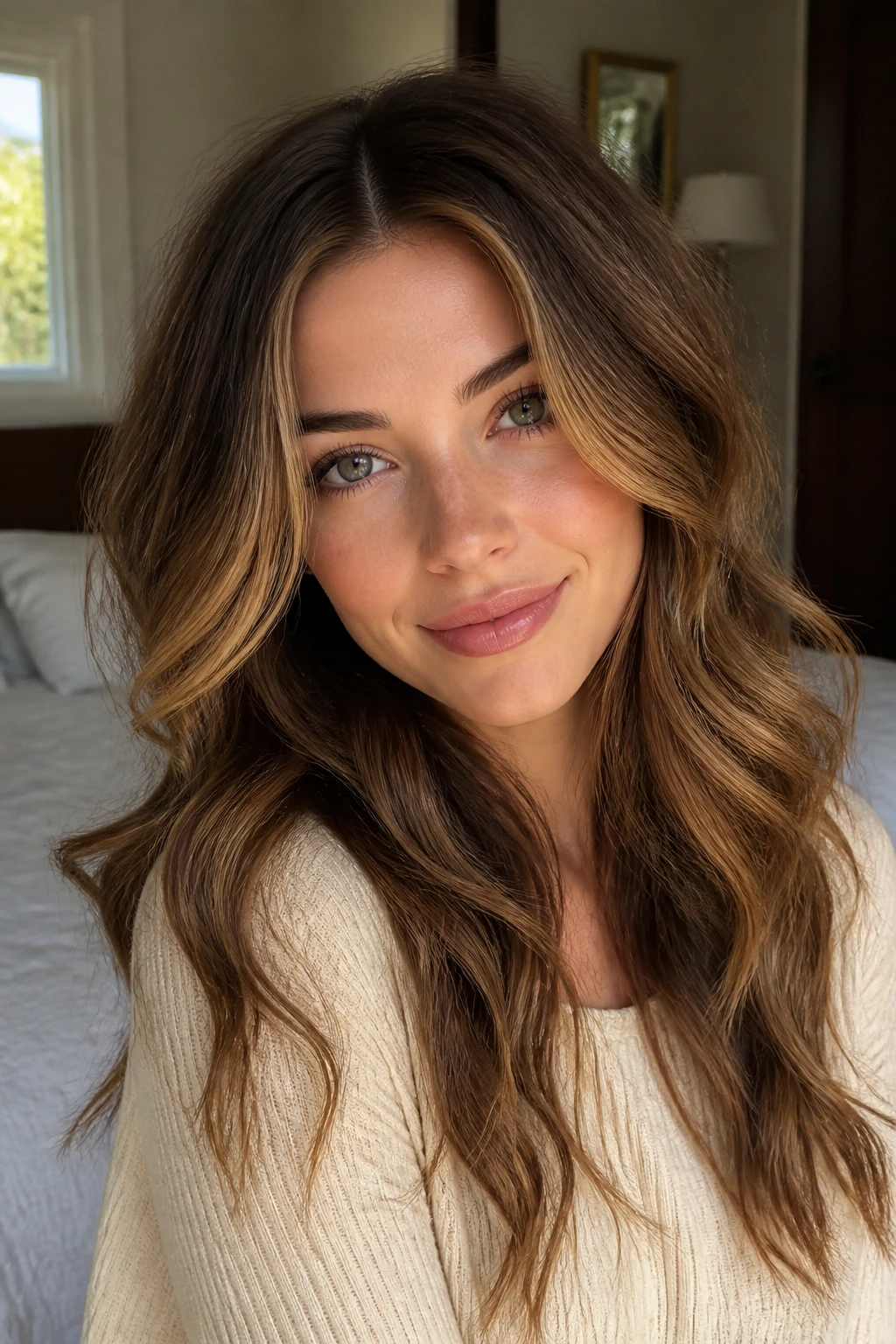
Hazelnut halo highlights sit around the crown and upper layers like a soft ring of light. That placement is especially kind to pale skin because it brightens the area closest to the face without flooding the whole head with gold. It’s a smart option if you put your hair up a lot.
The highlights are also easier to live with than all-over brightness. Even when they grow out, the halo placement still looks deliberate. On darker brown hair, hazelnut highlights give just enough warmth to keep the color from feeling flat. On lighter brown hair, they add polish without pushing into blonde.
22. Burnt Sugar Brunette
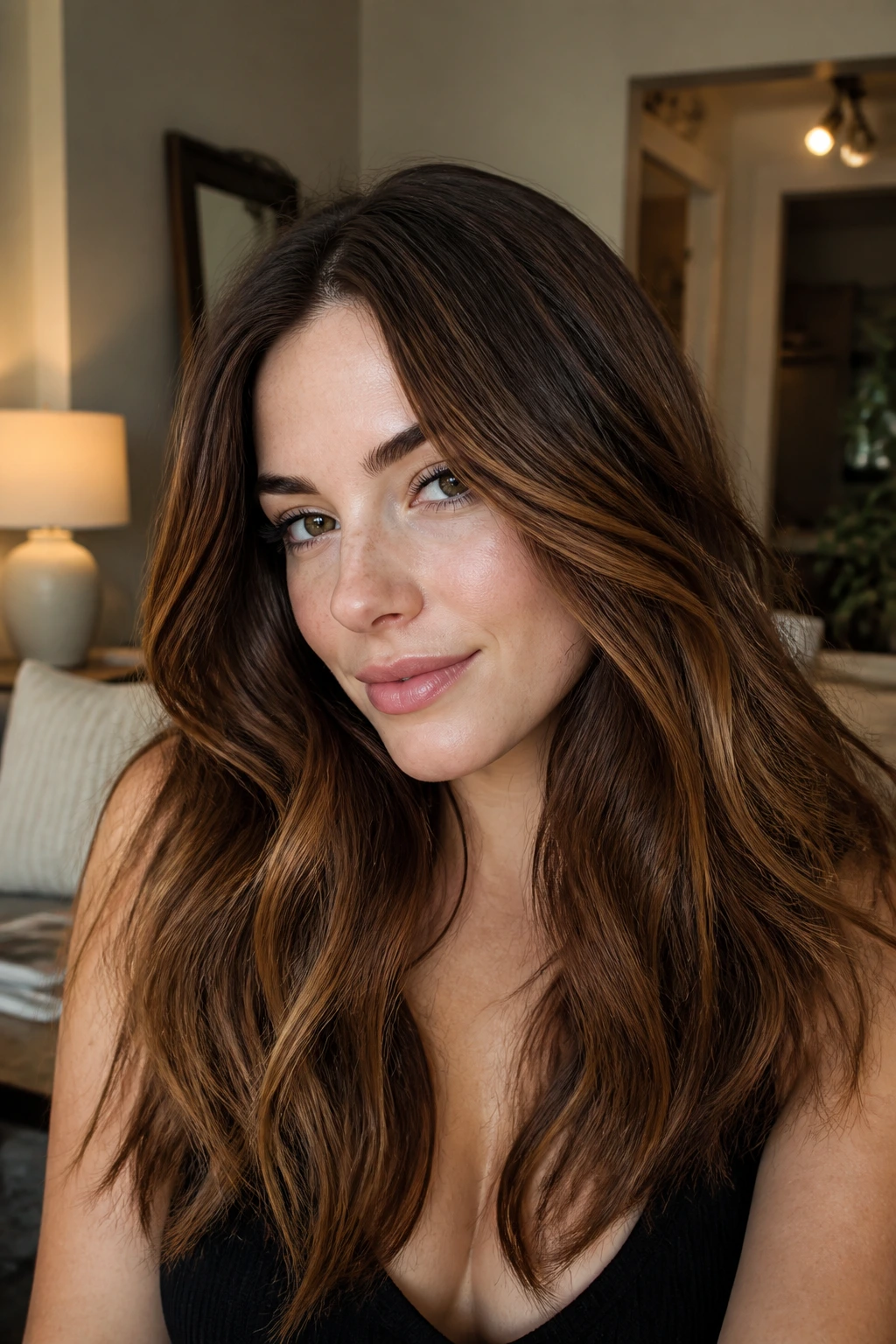
Burnt sugar brunette lives between toffee and copper, but it stays brown enough to behave. The sugar note gives it that caramelized finish that looks especially good against pale skin, because the warmth is deep rather than brassy. It’s one of the better choices if you want a richer, slightly more dramatic brown.
I like this shade on layered cuts and medium-length hair. The movement shows the warm brown surfaces, and the deeper root keeps the color from looking too sweet. If the glaze starts to lean orange, pull it back with a neutral-brown gloss next visit. Small correction, big difference.
23. Golden Cocoa Pixie
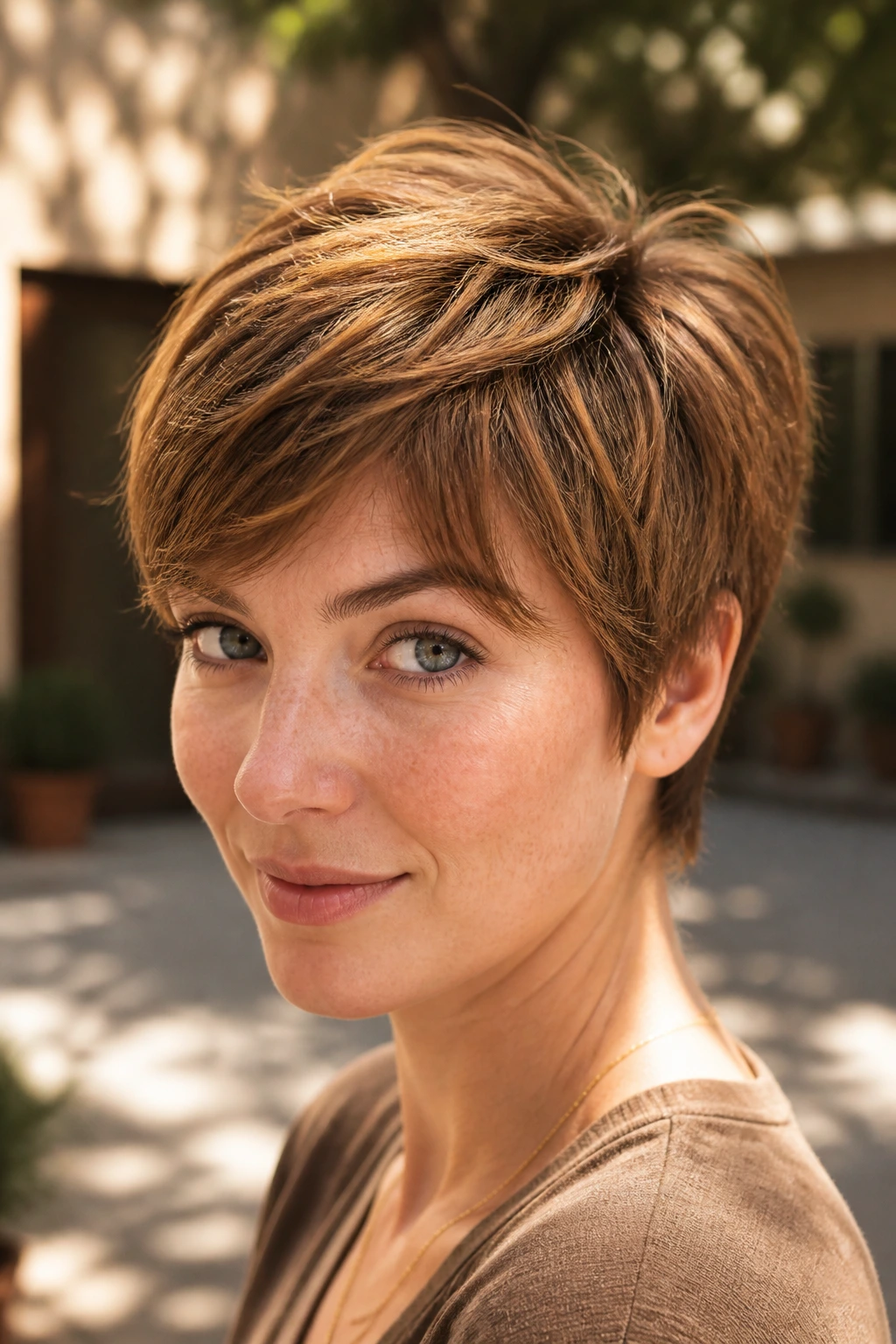
Short hair changes the rules. With a pixie, you don’t have long lengths to carry the color, so the golden cocoa mix needs enough depth to stay interesting and enough gold to show the texture. Pale skin benefits here because the cut is already framing the face; the color just needs to add shape.
Ask for micro-highlights or a soft cocoa glaze with golden reflections on the top layers only. Too much warmth on a pixie can look busy. A little goes a long way. This is one of the easiest ways to wear golden brown if you don’t want the upkeep of long color.
24. Copper-Kissed Brown
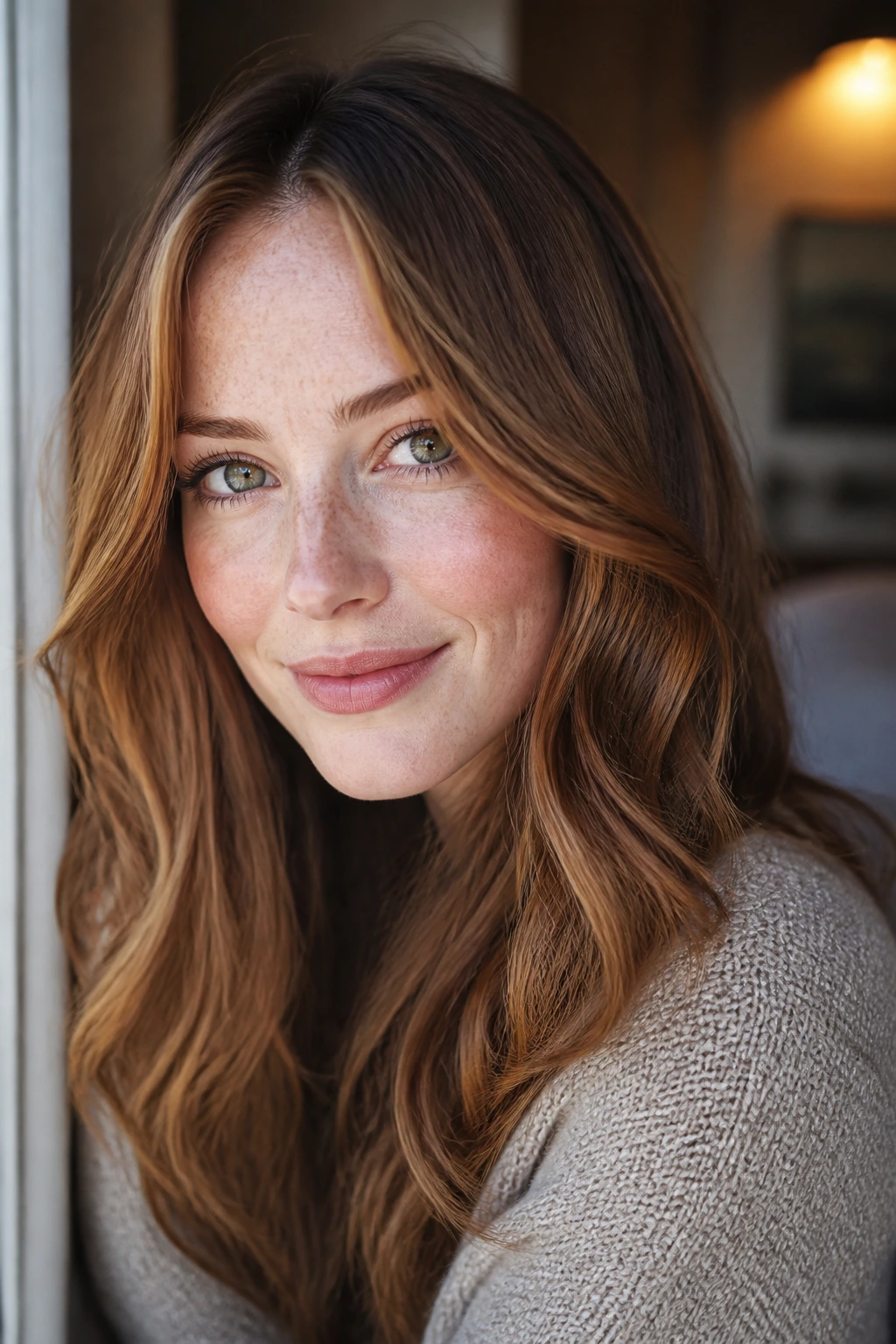
Copper-kissed brown is the boldest shade in this group, and I’d only call it truly pale-skin friendly when the copper stays light. Think kiss, not flood. The brown base keeps it from going full auburn, while the copper-gold threads add edge and warmth around the face.
This works best on fair skin that leans warm or has freckles, because the copper echoes that natural heat. If your skin is pink, I’d keep the copper to the ends or the front pieces only. That way you get the shine without the redness. Used carefully, this shade has a lot of personality.
25. Champagne Brown Balayage
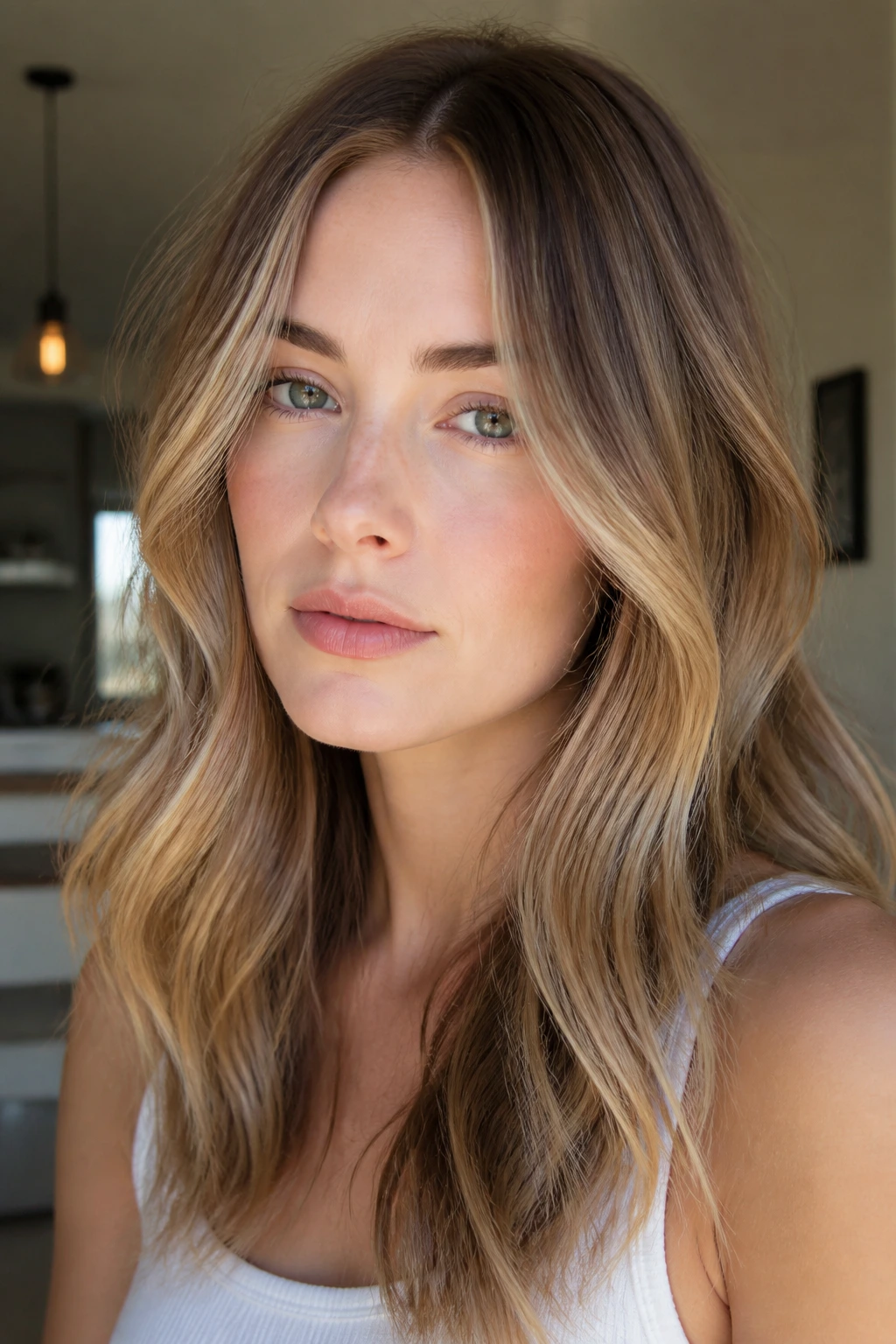
Champagne brown is the softest, airiest finish in the bunch. The brown base stays grounded, and the champagne ribbons add a pale gold shine that flatters very fair skin without taking over the face. It has a light-reflective quality that looks especially good in loose waves or a blunt cut with movement at the ends.
The Colorist Note
Ask for a level 6 brown base with level 8 champagne pieces kept fine and scattered. The goal is brightness, not blonde. If the ribbons are too wide, the whole thing starts to read lighter than brown, and the charm of the shade disappears.
Why Golden Brown Flatters Pale Skin So Well
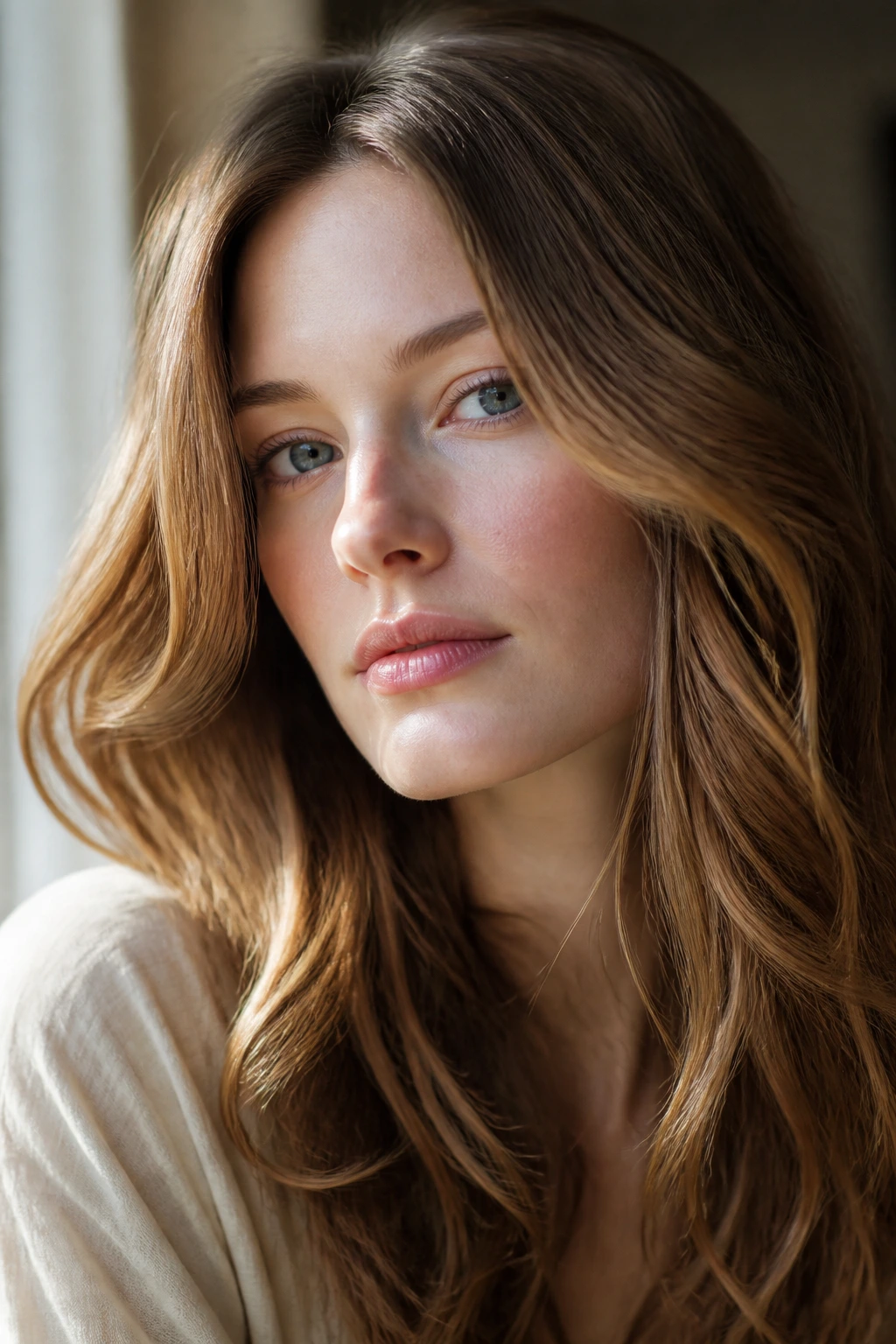
Pale skin usually needs one of two things from hair color: either enough depth to create contrast, or enough warmth to keep the face from looking cool and faint. Golden brown gives you both when the formula is handled with restraint. The brown part frames the face. The gold part keeps it from looking flat.
The mistake people make is assuming “golden” means “more yellow.” It doesn’t. On fair skin, too much yellow can make the hair look brassy and the skin look redder. Beige-gold, honey-gold, champagne-gold, and caramel-gold all behave a little differently, and that difference matters a lot more than the box name suggests. A smart golden brown reads creamy in daylight, not orange under the bathroom mirror.
The Tools That Make These Shades Easier to Wear
- Tint brush and bowl: Useful if you’re glossing at home or applying a toner to selected pieces.
- Sectioning clips: Keep the hair separated so warm pieces don’t blur into one muddy layer.
- Tail comb: Helps with clean partings and fine face-frame placement.
- Color-safe shampoo: Keeps golden tones from washing out too fast.
- Sulfate-free conditioner: Helps porous ends hold onto the glaze instead of sucking it dry.
- Bond-building treatment: Handy after lightening, especially if you’re doing balayage or foils.
- Heat protectant spray: Golden brown can lose shine fast under high heat; protect the cuticle before blow-drying or curling.
- Gloves and an old towel: Not glamorous, but nobody enjoys staining a white sink with honey-brown dye.
Smart Shade Shopping for Golden Brown Hair Color
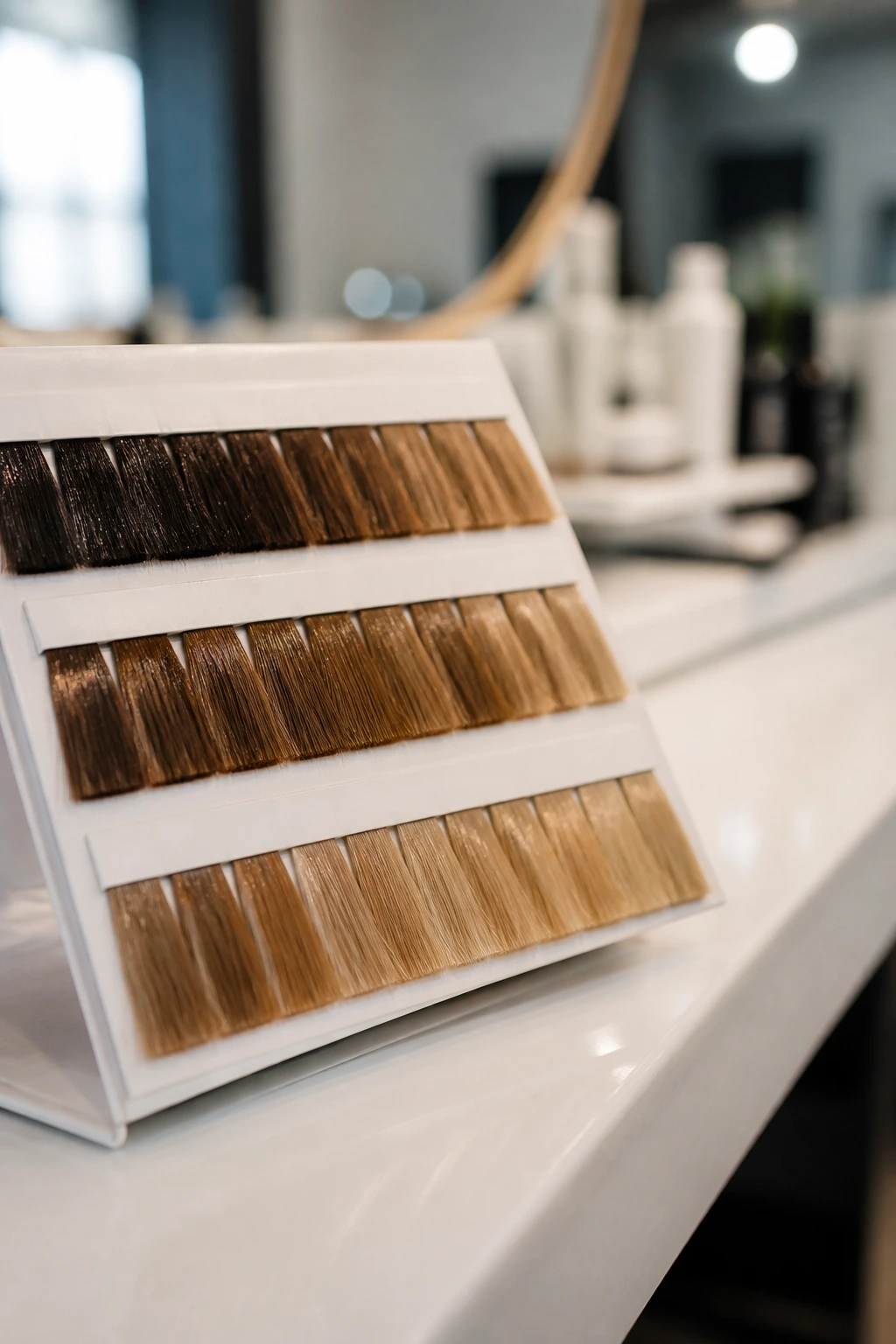
Shopping for hair color is where people get tripped up. The model shot looks soft, the box says caramel, and somehow the result turns orange enough to make your skin look pinker than it is. I’d ignore the cute shade names and look at the level, undertone, and finish.
For pale skin, level 5 to 7 is usually the sweet zone. Level 4 can be gorgeous if you want contrast, but it needs dimension so it doesn’t swallow your face. Level 8 and above can work if the gold is champagne or beige, though too much lift can pull the hair away from the “brown” part of golden brown. If you’re buying color, read the tone notes carefully: honey, beige-gold, caramel, toffee, maple, chestnut, and amber each land differently.
And if you’re sitting in a salon chair, bring photos with similar skin tone, not just similar hair. Same shade on three different faces can look wildly different. I’d rather see one photo where the undertone matches yours than ten perfect-looking photos that don’t.
How to Wear These Shades So They Do the Face Good
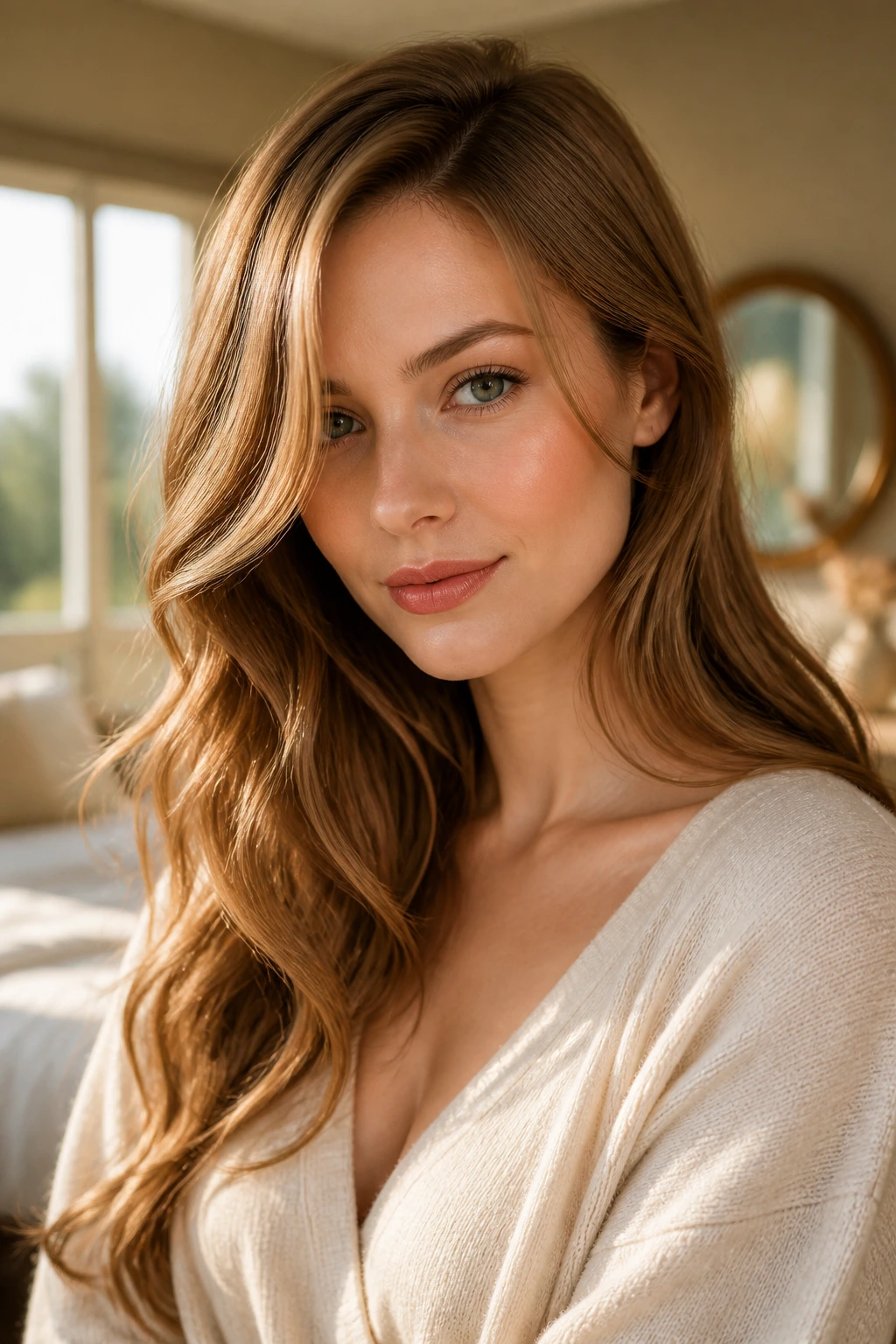
Parting: A side part can soften stronger warmth and let golden ribbons fall naturally across the cheekbone. A middle part makes shadow roots cleaner and works well with beige-gold or champagne-brown shades.
Makeup: Pale skin usually looks best with blush that echoes the hair, not fights it. Peach, rose, soft terracotta, and warm nude lips tend to work well with golden brown hair; very icy makeup can make the warmth in the hair look louder than it is.
Clothes: Cream, camel, olive, dusty rose, navy, and soft black all sit nicely beside golden brown. A harsh yellow top can make the hair feel too yellow too. I’d skip that unless you want the color to shout.
Accessories: Gold jewelry often makes the shade feel richer. Tortoiseshell frames are a sneaky-good match, too, because they echo the same warm-brown range without matching too hard.
Additional Tips and Color Boosters
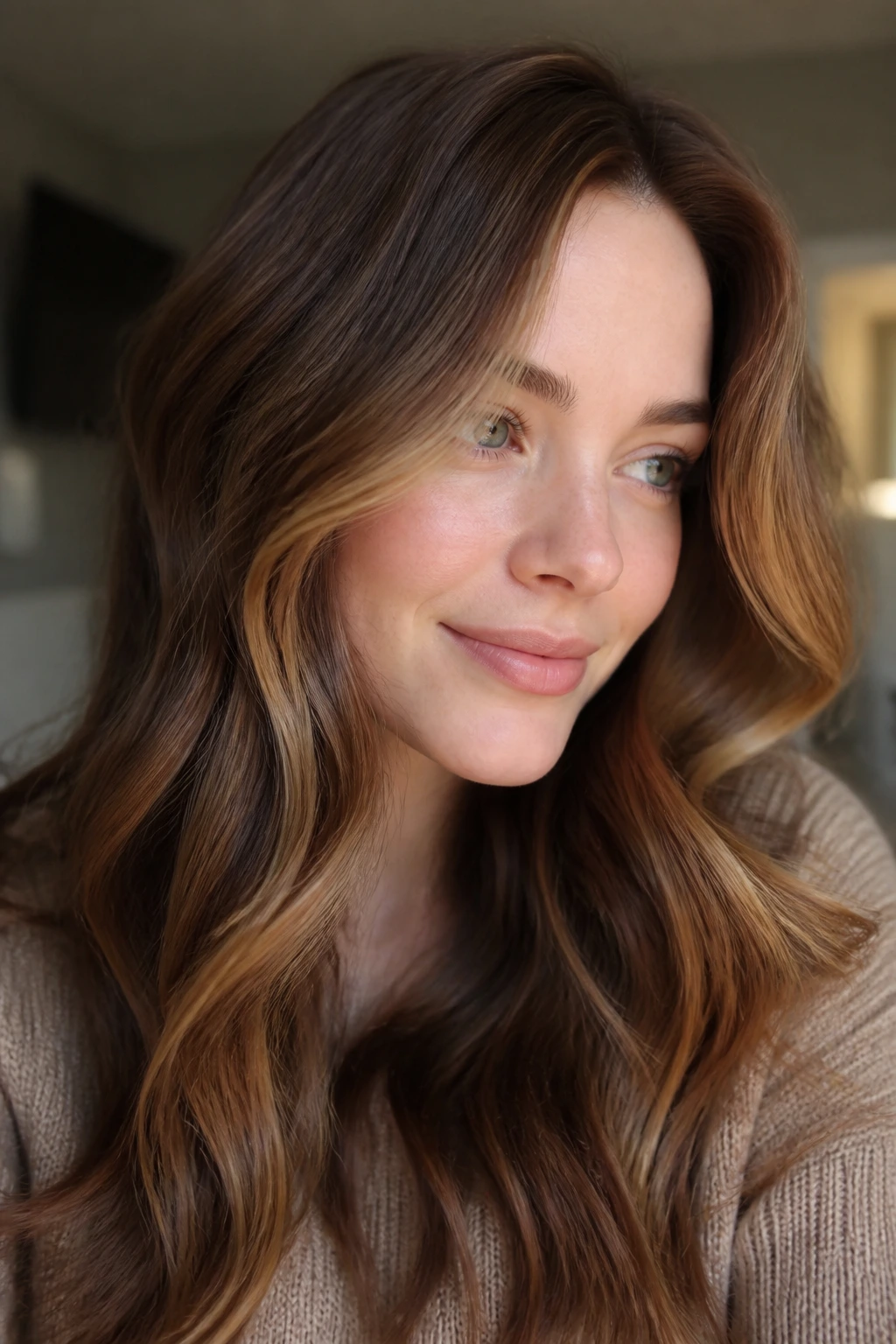
Gloss Trick: A clear or beige-gold gloss every 4 to 8 weeks keeps the color reflective. This matters more than people think, because dull hair can make warm brown look muddy on pale skin.
Tone Control: If the gold starts veering brassy, use a blue or blue-violet shampoo on the lengths once every 10 to 14 days. Don’t scrub it through the roots every wash; that can flatten the warmth you actually wanted.
Depth Trick: Keep the root one shade deeper than the mids if you want your face to look more defined. That’s one of the cleanest ways to keep fair skin from disappearing into the hair.
Make-It-Yours: If your skin is pink, push the gold toward beige. If it’s peach or freckled, honey and amber usually look better. If you wear your hair curly, place brighter pieces where the curl pattern bends, not in blunt blocks that vanish once the hair dries.
Make-Ahead, Maintenance, and Touch-Up Guidance
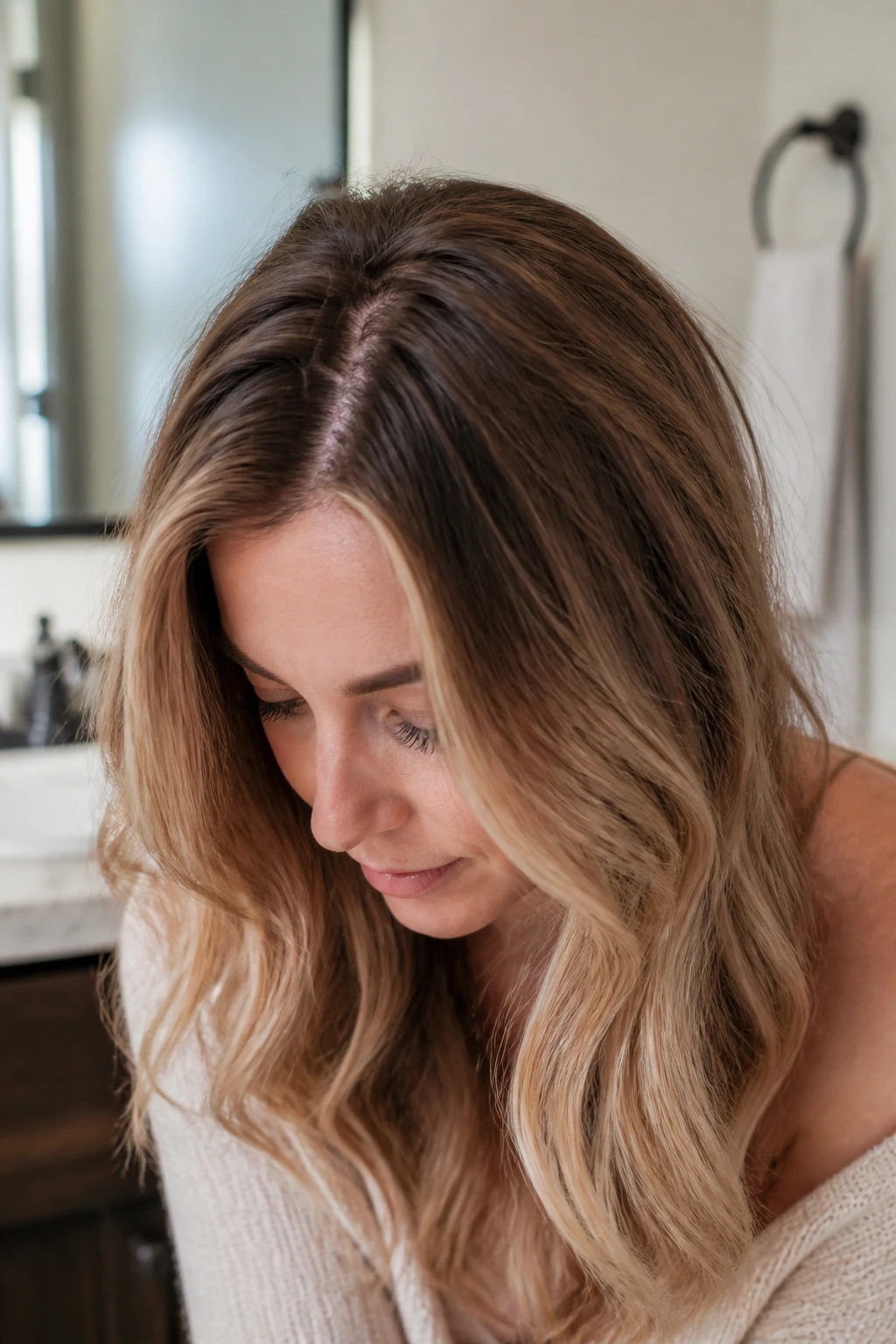
Golden brown hair behaves best when you stop treating it like permanent makeup and start treating it like fabric with a finish. Wash too often and the warmth fades. Use harsh shampoo and the gloss drains out of the mids first, which is usually where the shade does its prettiest work.
For most of these looks, plan on root touch-ups every 6 to 10 weeks if you’ve lightened the hair, or gloss refreshes every 4 to 8 weeks if you’re mostly changing tone. If you’re wearing a shadow root or balayage, you can usually stretch longer. Hair that’s been lightened near the front needs the most attention, because face-framing pieces pick up heat, makeup, sunscreen, and styling products fast.
At home, shampoo 2 to 3 times a week if your hair tolerates it. Use lukewarm water. Hot water strips warm tones quicker than most people realize. A cool rinse on the mids and ends helps seal the cuticle a bit, which keeps that golden reflection around longer. And if the ends feel rough, don’t chase more color first; fix the texture. Dry ends make brown look dusty.
Variations and Adaptations to Try
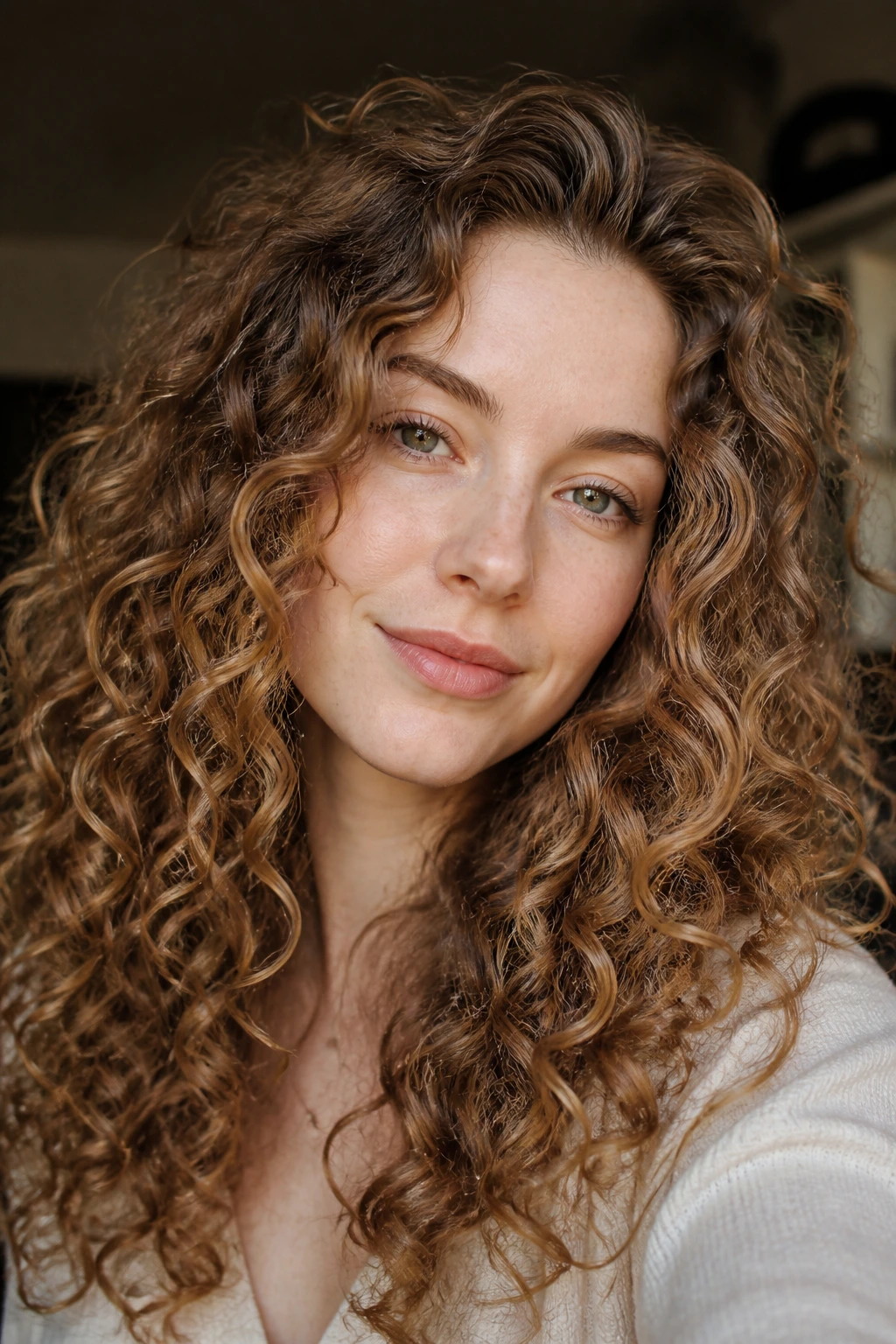
Cool-Pink Skin Softener: Choose beige-gold, champagne, or mushroom-brown versions instead of orange-leaning honey. The goal is warmth that brightens, not warmth that blushes the whole face.
Freckled-Skin Glow-Up: Push the shade a touch warmer with honey, amber, or toffee pieces around the front. Freckles often look best when the hair carries a little sunlit warmth too.
Low-Maintenance Grow-Out: Ask for a shadow root with balayage only on the mid-lengths and ends. This keeps the regrowth line soft and avoids the stripy look that can happen with full-head highlights.
Curly-Hair Dimension: Use ribbon highlights or halo placement rather than wide foils. Curly hair loses detail fast when the color is too blocky, and pale skin tends to like softer transitions around the face.
Fine-Hair Volume Boost: Go one shade deeper at the root and one shade lighter through the surface. That contrast makes the hair look fuller without needing a lot of lightening.
Grey-Blending Warmth: A golden brown glaze over silver strands can soften the contrast without hiding the grey completely. The warm tone makes the grey read pearly instead of stark.
Common Mistakes to Avoid
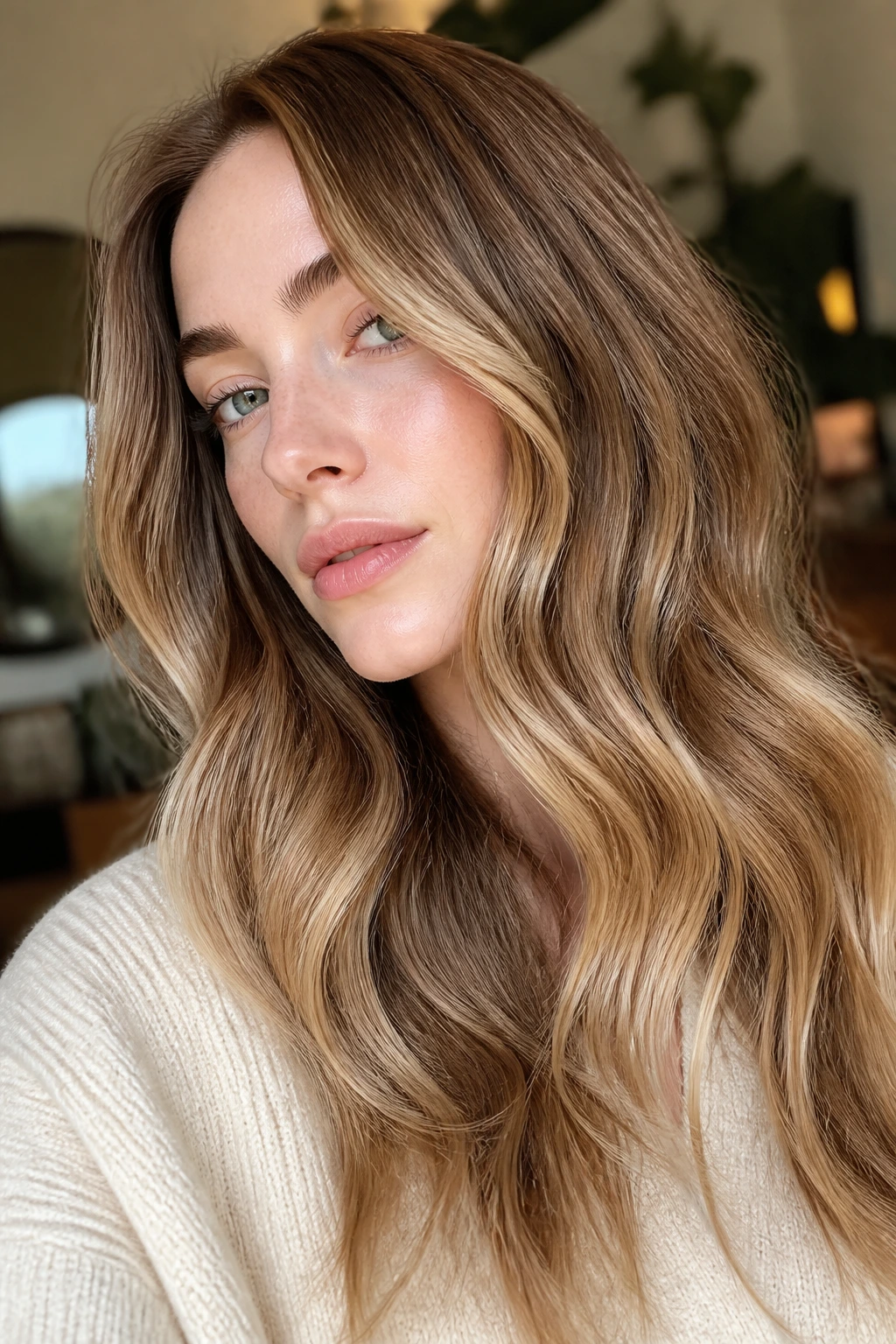
Going too orange at the root: This is the fastest way to make pale skin look red or blotchy. If the warmth is strong, keep it in the mids and ends or break it up with a shadow root.
Choosing one flat shade: Flat brown is where golden brown ideas lose their charm. Pale skin needs some movement in the hair, even if the color is subtle.
Lightening too high on the head: Bright gold near the scalp can make the color look wiggy and can expose every inch of regrowth. Leave the brightest pieces a little lower unless you want a bold money-piece effect.
Ignoring porosity: Damaged ends grab gold faster than healthy roots. The symptom is streaky, over-warm ends that look lighter and drier than the rest of the hair. The fix is a bond treatment, a richer conditioner, and a softer gloss formula.
Overusing purple shampoo: Purple shampoo has its place, but on golden brown hair it can mute the warmth you were trying to keep. Use it sparingly, and only when the gold has drifted yellow.
Frequently Asked Questions
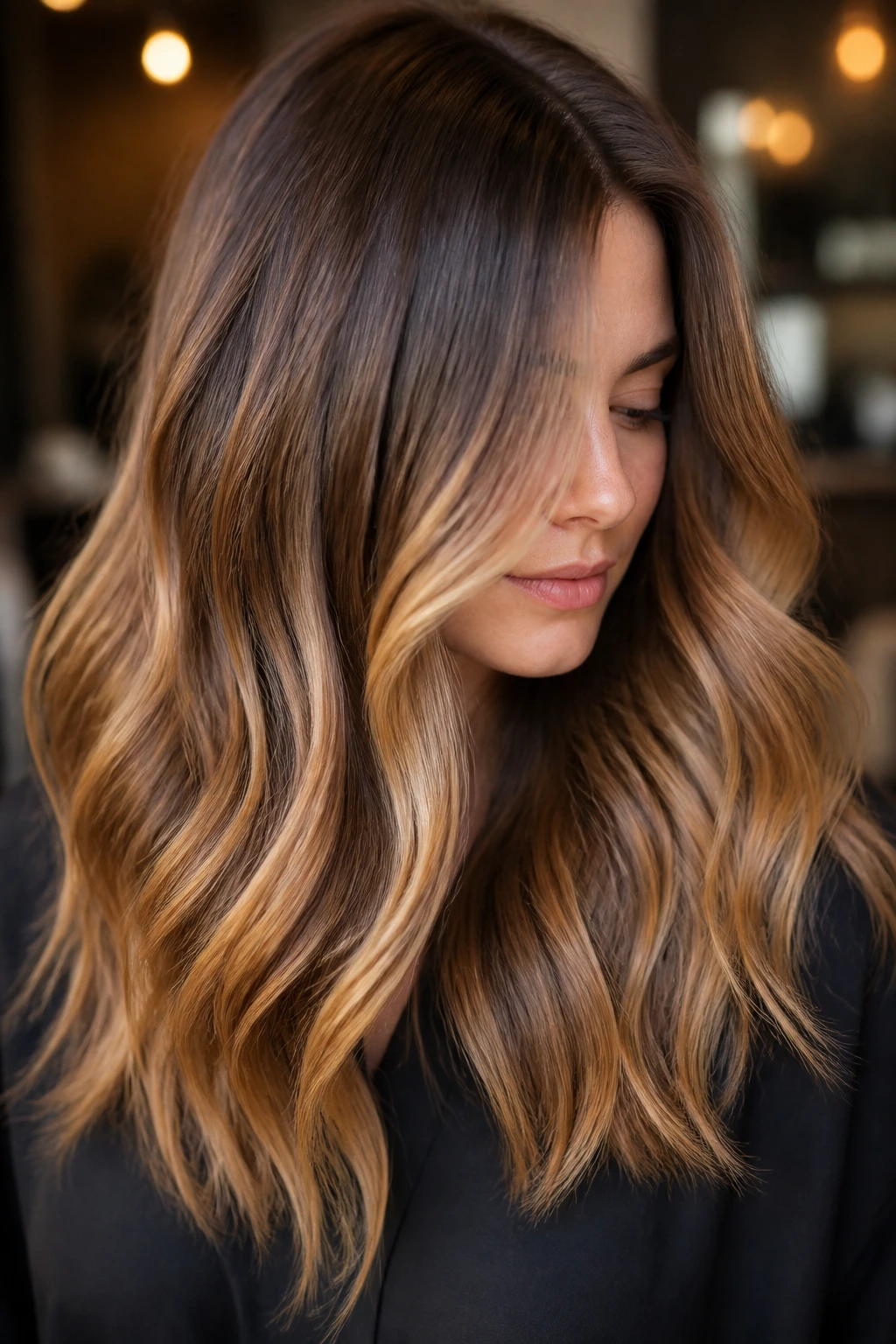
Will golden brown hair color wash out pale skin?
Not if the shade has depth. The brown part gives the face structure, while the gold adds warmth where it helps most. The problem usually isn’t “golden brown” itself; it’s a formula that’s too light, too orange, or too flat.
Is golden brown better for cool or warm undertones?
It can work for both, but the tone needs to shift. Cool or pink skin usually likes beige-gold, champagne, or mushroom-brown versions. Peach, neutral, and freckled skin can usually take honey, amber, or toffee a little easier.
Can I get this look on naturally dark hair?
Yes, and it often looks better than trying to go too light. A shadow root with warm ribbons or a glossy caramel melt keeps the change wearable and cuts down on damage. Dark hair plus pale skin is a strong contrast, so a little gold goes a long way.
What if my color turns brassy?
That usually means the gold has tipped into orange or yellow. A blue-violet shampoo, a neutral-brown gloss, or a salon toner can calm it down. Don’t keep layering warm shampoo on top of it and hoping it fixes itself.
How often do I need touch-ups?
If you’re doing highlights or balayage, expect a gloss or toner refresh every 4 to 8 weeks and root work every 6 to 10 weeks, depending on how fast your hair grows. A shadow root buys you more time. Flat all-over color usually needs more frequent refreshes.
Does golden brown work with blue eyes?
Very much so, especially when the brown stays soft and the gold sits near the face. Blue eyes can pop against honey, beige-gold, and champagne-brown because the warmth sets off the coolness of the eyes.
Can I do this at home, or does it need a salon?
A gloss, demi-permanent brown, or warm toner can be managed at home if your hair is already close to the right level. Balayage, foils, and major lightening are safer in a salon, especially if your hair has old dye, uneven porosity, or a history of brass.
What’s the safest option if I’m nervous about too much warmth?
Beige gold brunette. It keeps the warmth controlled and gives you room to go richer later. If you start soft, it’s much easier to deepen the tone than to pull back an overly orange result.
A Warm Brown That Still Leaves Room for Your Skin
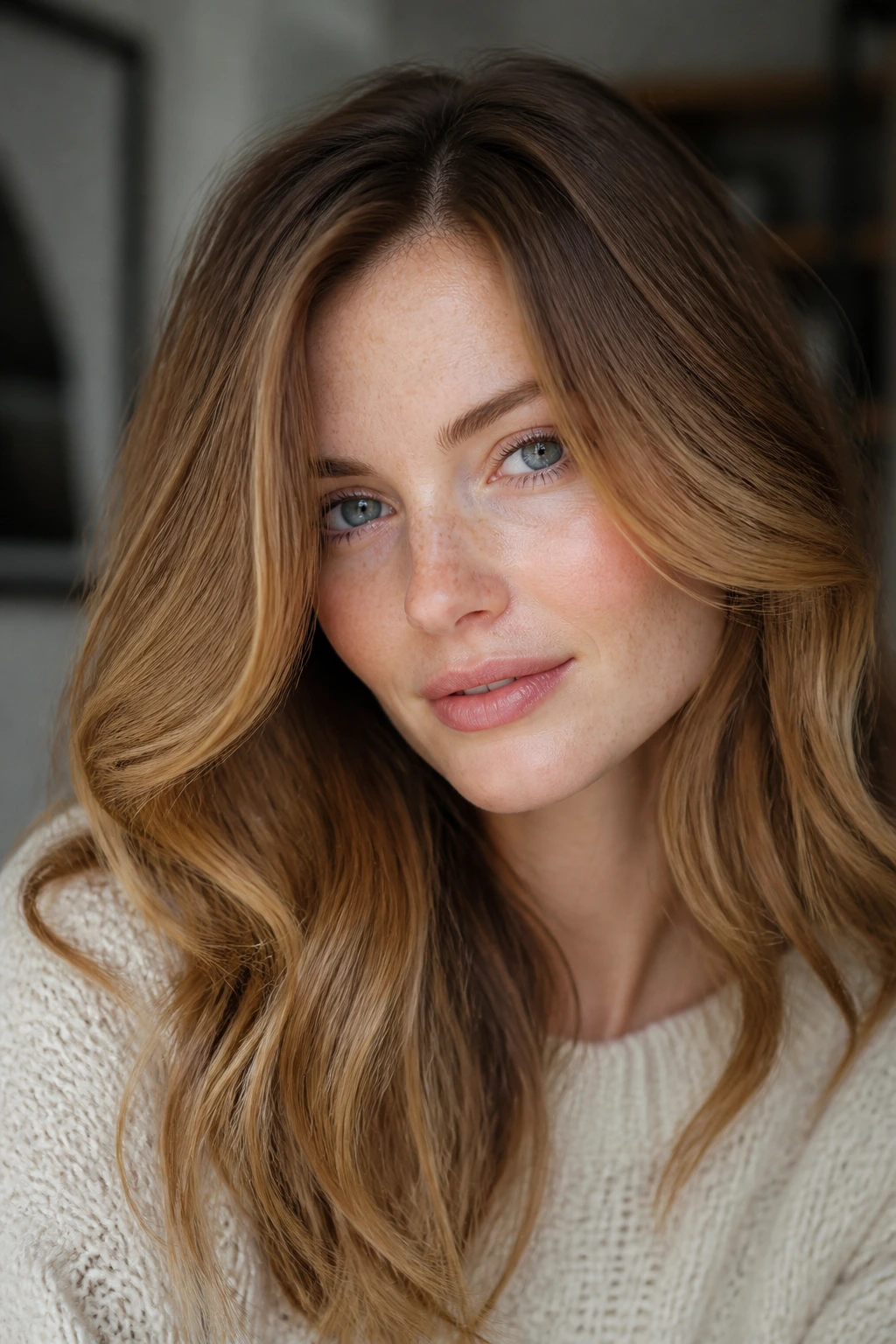
Golden brown works on pale skin when the color respects the face instead of trying to overpower it. The best versions keep a little shadow at the root, a little gold in the mids, and enough softness at the ends that the whole look moves when you turn your head. That’s the difference between a brown that looks dyed and one that looks built into the hair.
If you’re choosing between two shades, pick the one with more dimension and less orange. Every time. A fair complexion usually looks better with warmth that glows from underneath than with warmth sprayed across the whole head, and that small choice changes the way the color behaves in real life, not just in a salon photo.