



If your skin is porcelain, ivory, or the pink-leaning kind that burns before it tans, golden honey blonde can either look soft and luminous or go a little too yellow and flatten the face. The difference usually comes down to three things: how much gold is in the blonde, how deep the root stays, and whether the tone has a little beige, peach, or caramel in it to keep the warmth from turning harsh.
That’s why honey blonde is worth a closer look for pale skin. It isn’t one color. It’s a whole family of shades, from pale buttery gold to deeper maple-honey ribbons, and each one sits differently against fair complexions. Get the right version, and the hair does that flattering thing where the cheekbones look sharper, the eyes look brighter, and the skin stops reading as washed out under indoor light.
I’ve always liked honey shades best when they still look like hair, not frosting. A little depth near the root. A few darker strands tucked underneath. A gloss that catches light in movement instead of screaming from across the room. That’s the sweet spot, and it’s a lot more useful than chasing the palest blonde possible.
Why This Collection Feels Different for Pale Skin
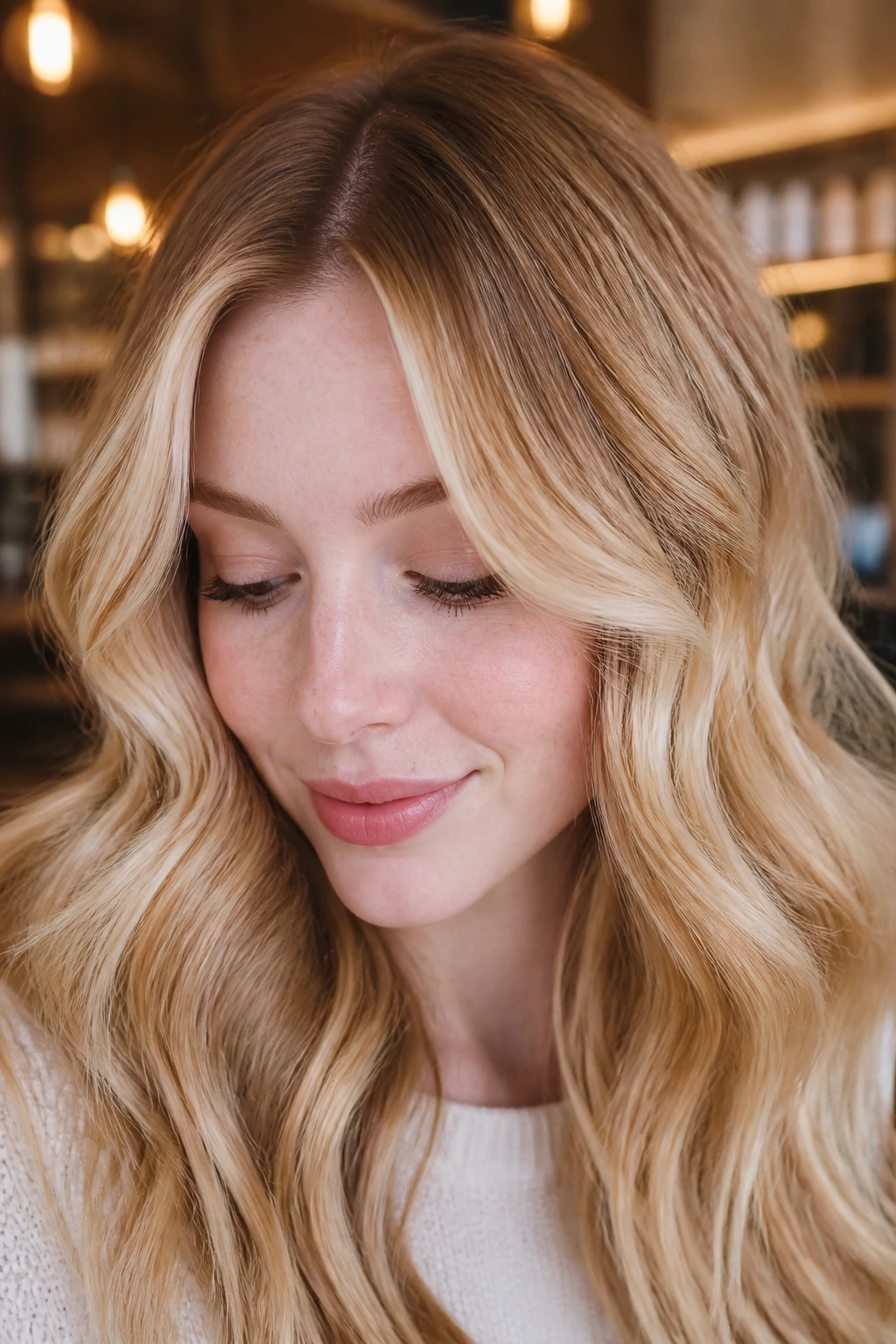
- The warmth is controlled: These looks lean golden, but not all the way into banana yellow, which matters a lot on fair skin.
- The dimension is intentional: Root shadows, lowlights, and face-framing ribbons keep pale skin from looking flat next to one solid blonde note.
- The placement changes the mood: A money piece, a balayage melt, and a honey bob all read differently, even when the color family is the same.
- The grow-out is built in: Several of these ideas are designed so the roots can soften out without looking harsh after a few weeks.
- The finish is wearable: These shades work best when they look glossy and touched by light, not overprocessed and dry.
How to Read Honey Blonde Against Cool, Neutral, and Warm Pale Skin
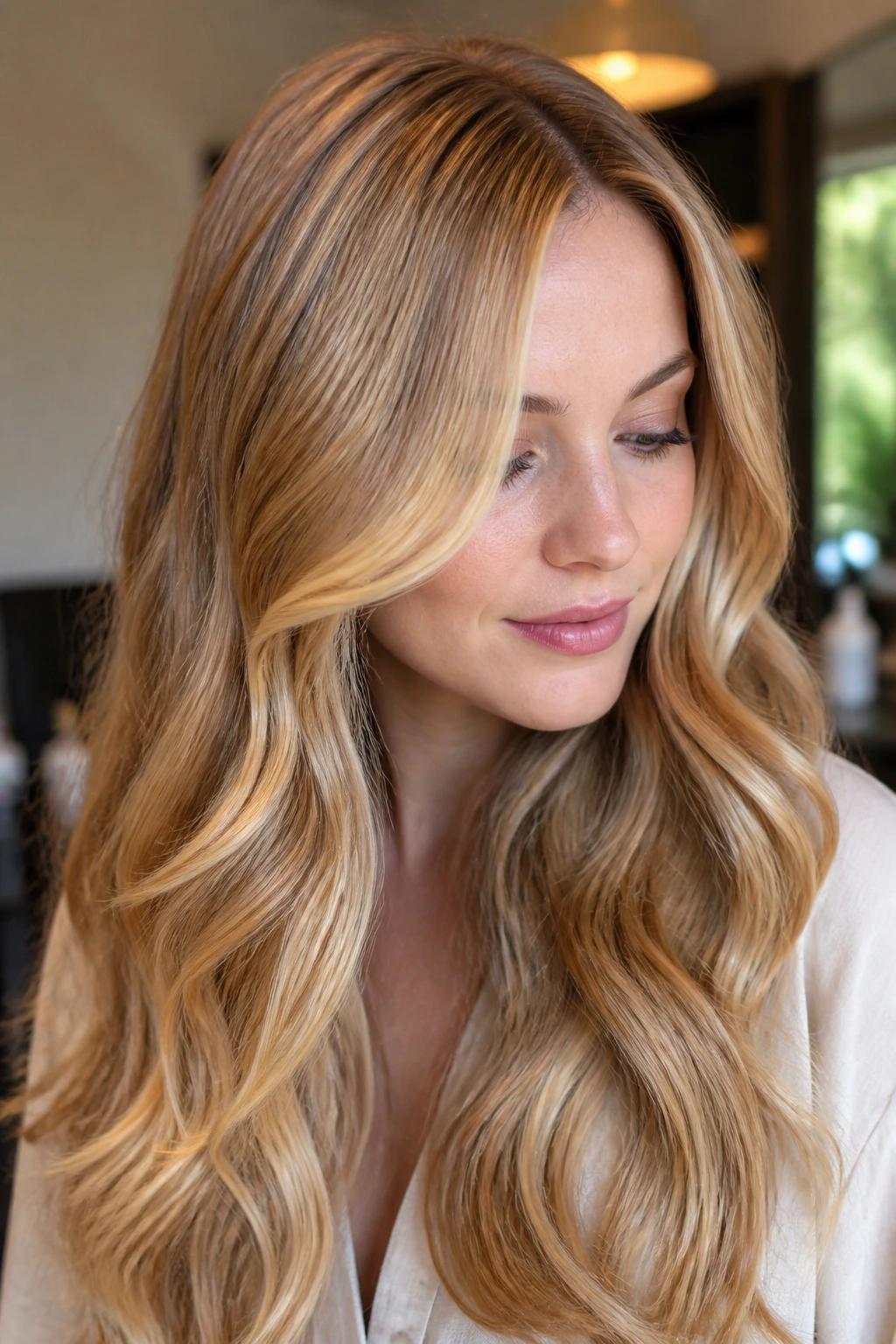
Pale skin is not one thing, and that’s where a lot of bad blonde advice falls apart. Pink-leaning skin often looks better with a honey shade that has beige or peach in it, because pure yellow gold can make the face look sallow. Neutral pale skin can carry a wider range, including brighter golden ribbons, while warm ivory skin usually handles deeper honey and caramel pieces without losing clarity.
Cool Pink Undertones Want Soft Gold
If your skin shows redness easily, or if silver jewelry tends to look cleaner than gold, keep the honey blonde a touch muted. Beige-honey, champagne-honey, and peach-honey usually sit better than a very sunny yellow tone. The trick is to let the blonde warm up the face without making the whole head look like it was dipped in syrup.
Neutral Pale Skin Can Wear More Range
Neutral skin is the easiest place to play. You can wear brighter honey around the face and keep the back a shade deeper, which gives the color some shape. I like this best when the hair has a glossed finish, because the shine keeps the gold looking polished instead of brassy.
Warm Ivory Skin Likes Depth and Contrast
Warm pale skin can take richer honey and more visible lowlight contrast. A darker root, a touch of caramel underlayer, or a honey bronde blend keeps the hair from blending too much into the skin. That contrast matters. Without it, the color can disappear in daylight.
1. Melted Root Honey Blonde
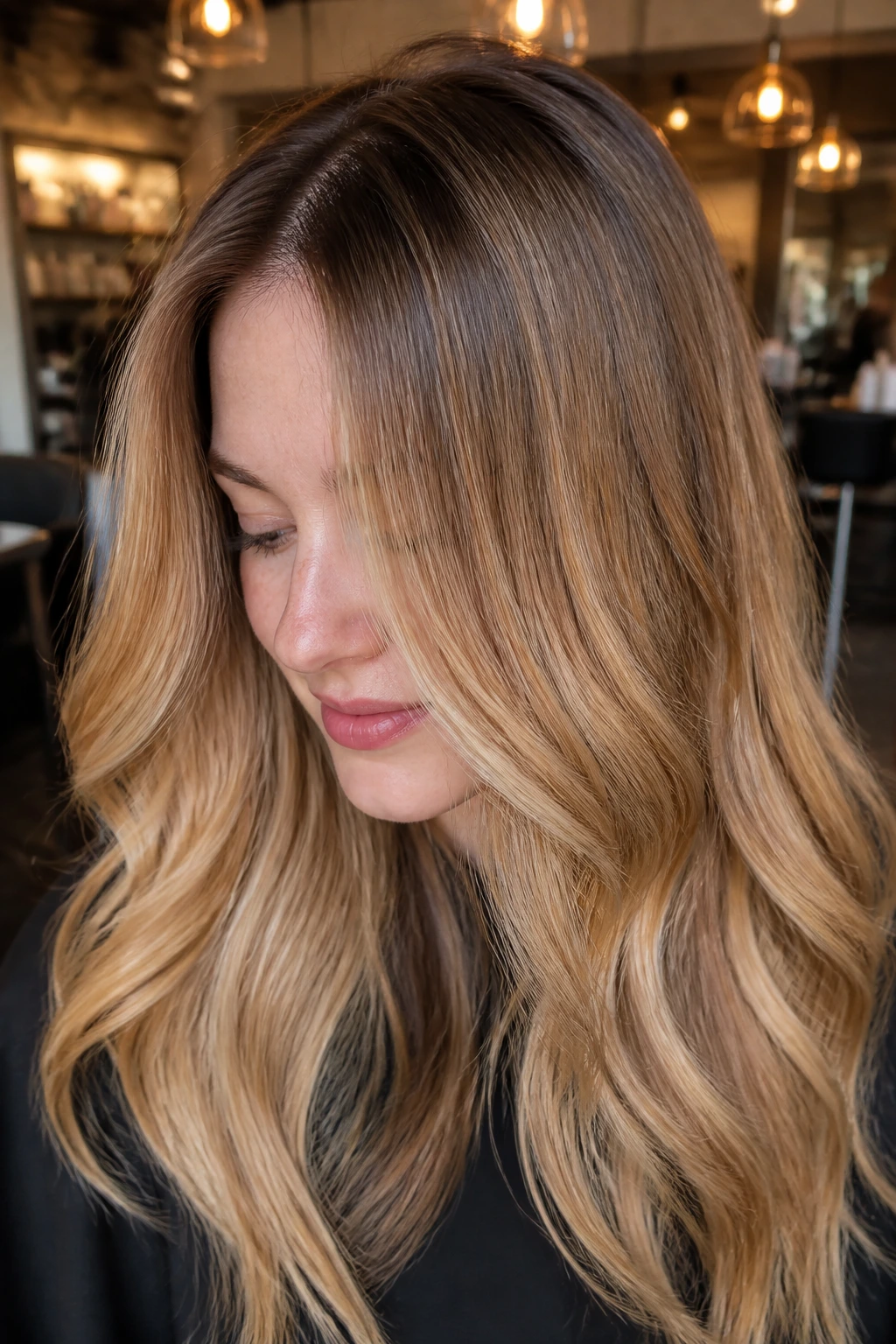
This is the version I’d point a cautious blonde client toward first. The root stays about one to two levels deeper than the mids, so the color has a built-in shadow instead of that hard “bleached helmet” line that can look rough on pale skin.
Ask for a soft melt from dark blonde into warm honey, then finish it with a beige gloss. That beige note is the difference between flattering warmth and shiny yellow. On fair skin, especially the pinker kind, the root depth gives the face some shape before the blonde even starts.
2. Sunlit Face-Frame Honey Ribbons
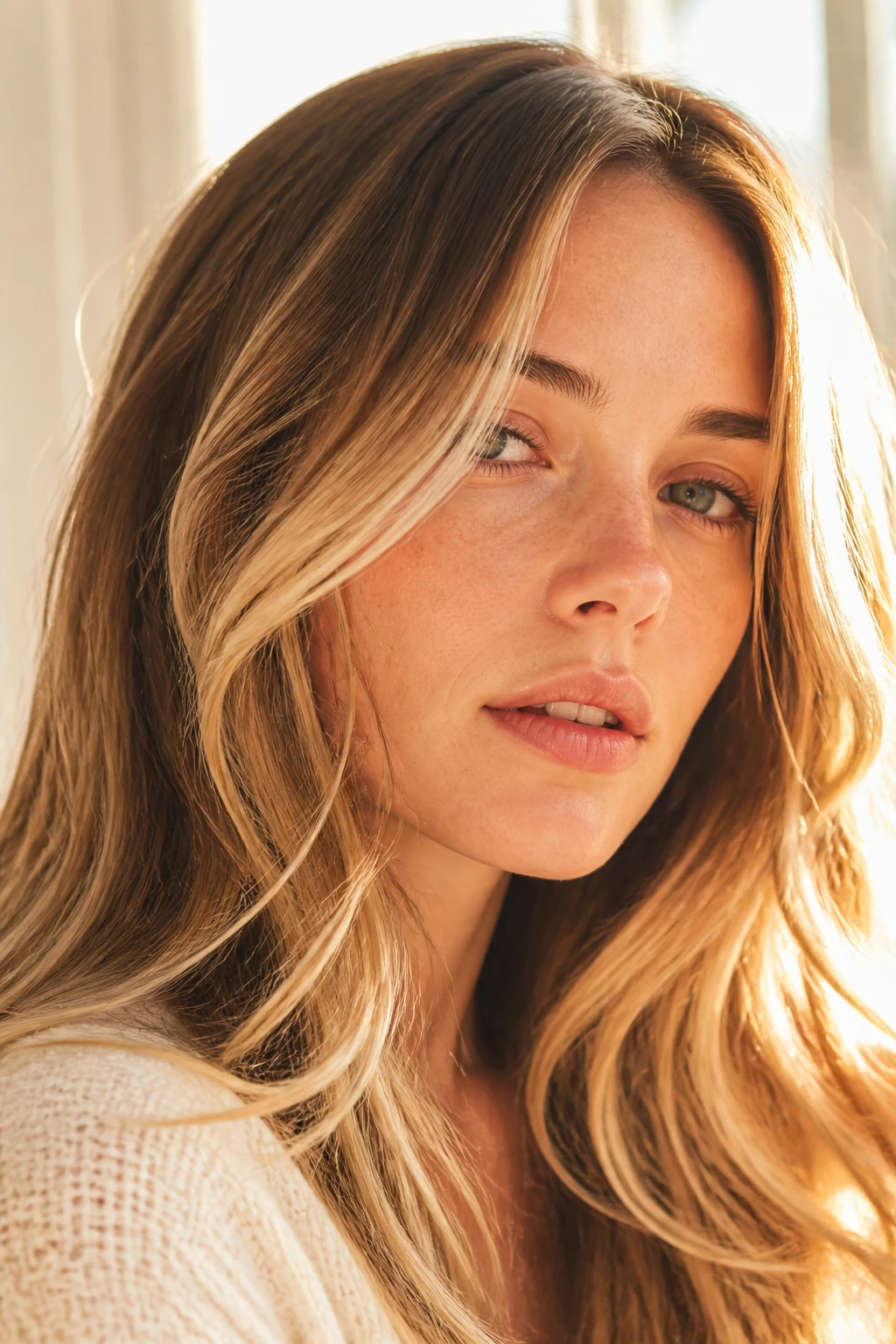
Do you want brightness without committing to an all-over lightening job? Start here. The face frame is lifted a little higher than the rest, with thin honey ribbons placed around the temples, cheekbones, and jawline.
I like this look on pale skin because it creates movement right where the eye lands first. The brightness stays concentrated near the face, while the back and underneath sections can remain softer and a shade deeper. It’s a clean way to get honey blonde without letting the whole head go too pale.
3. Creamy Honey Lob With Soft Ends
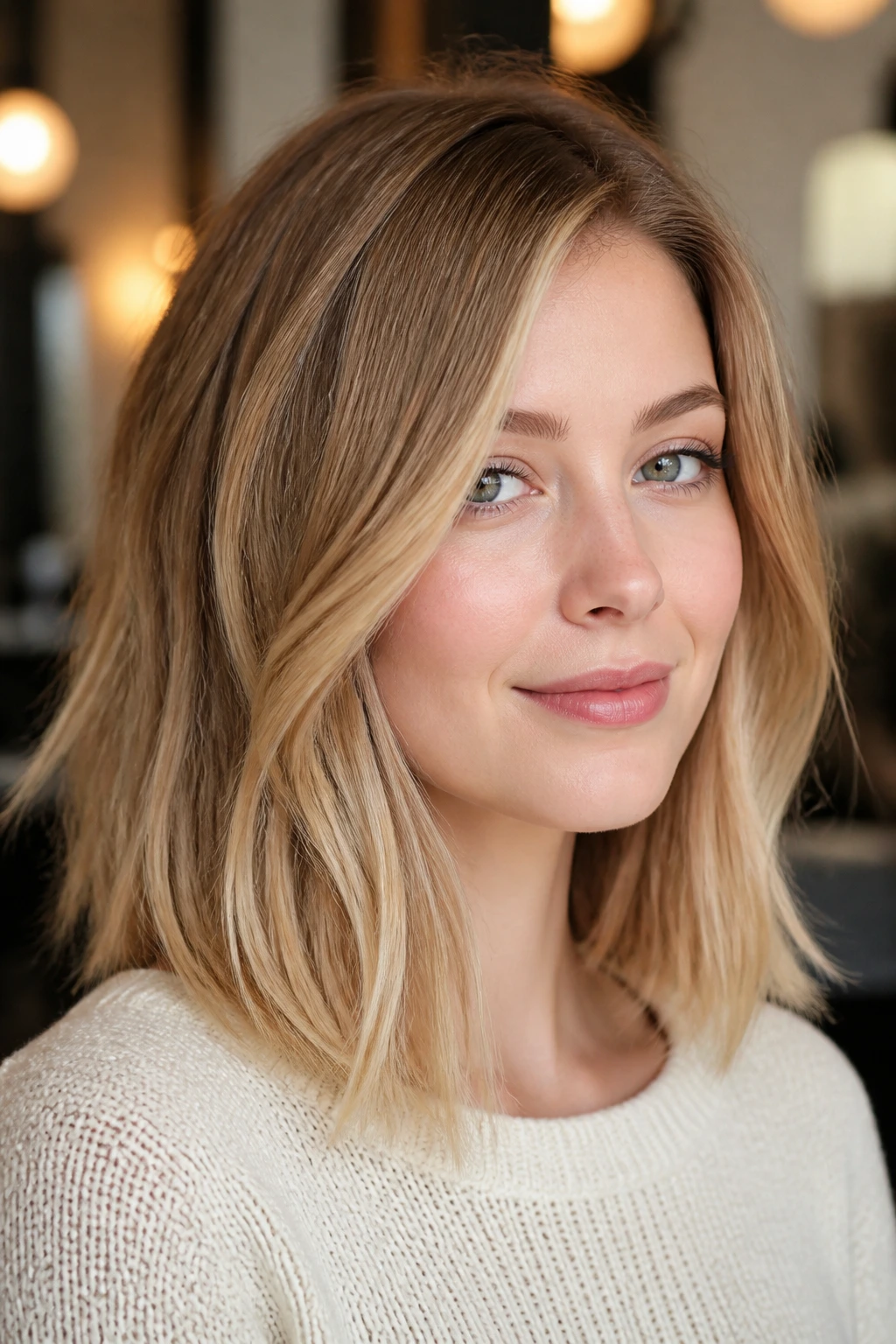
A lob gives honey blonde a place to breathe. On a blunt or softly layered long bob, the color reads creamy and expensive-looking instead of wispy or over-highlighted.
The ends should stay a touch lighter than the mids, but not white. That slight difference keeps the cut from looking blocky, which is useful on pale skin because a very solid blonde shape can flatten the features. This version works especially well if your hair falls straight or has only a little bend at the ends.
4. Beige-Honey Glaze
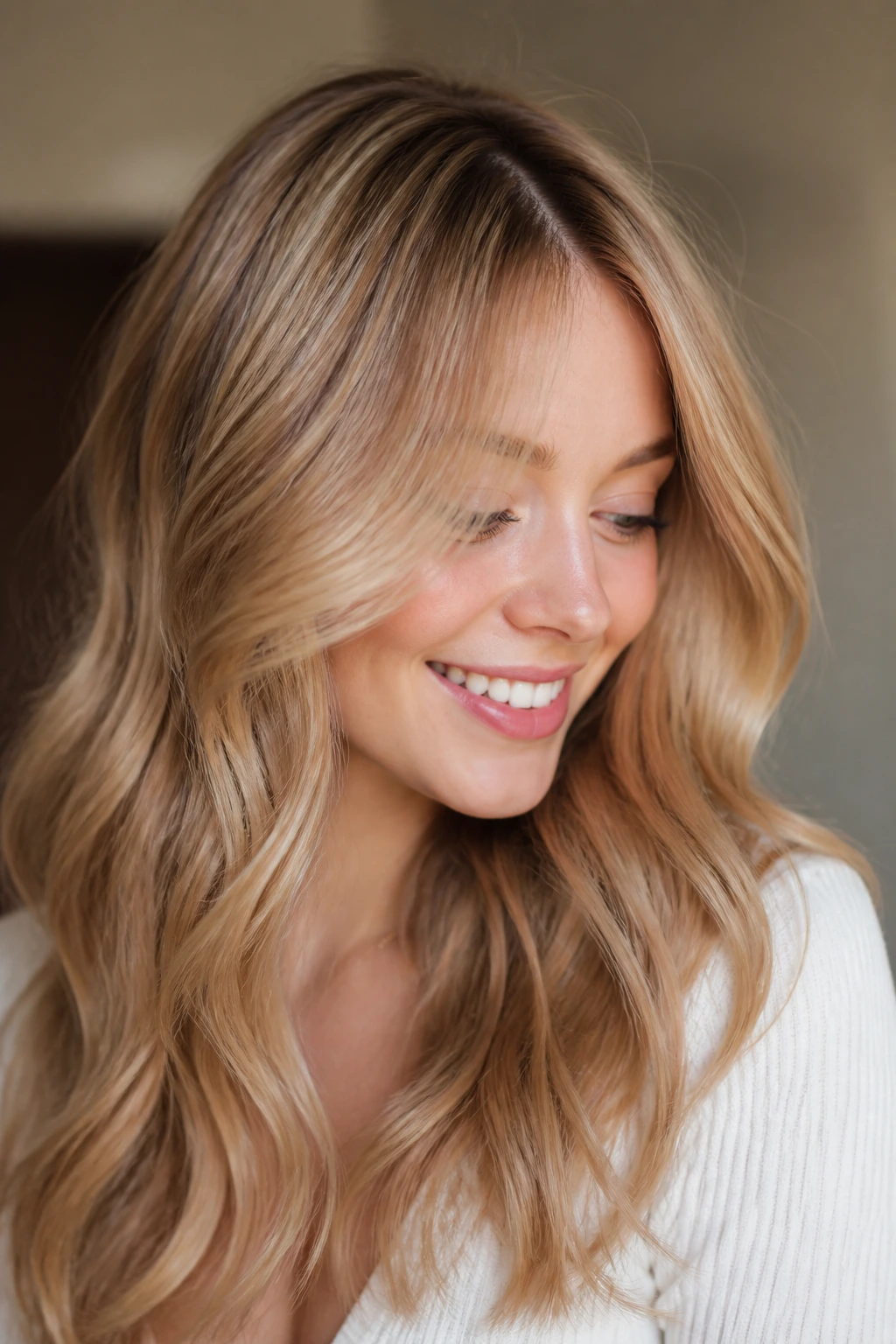
This is the quietest honey blonde in the bunch, and that’s exactly why I like it. Instead of pushing hard toward gold, the color leans beige first, then honey second. That makes it much safer for pale skin that needs warmth but not glare.
A beige-honey glaze is also one of the easiest shades to wear with makeup. Soft taupe eyeshadow, peach blush, even a muted berry lip all sit comfortably next to it. If you’ve ever tried blonde and felt like the color was wearing you, this is the correction.
5. Honey Money Piece With a Deeper Base
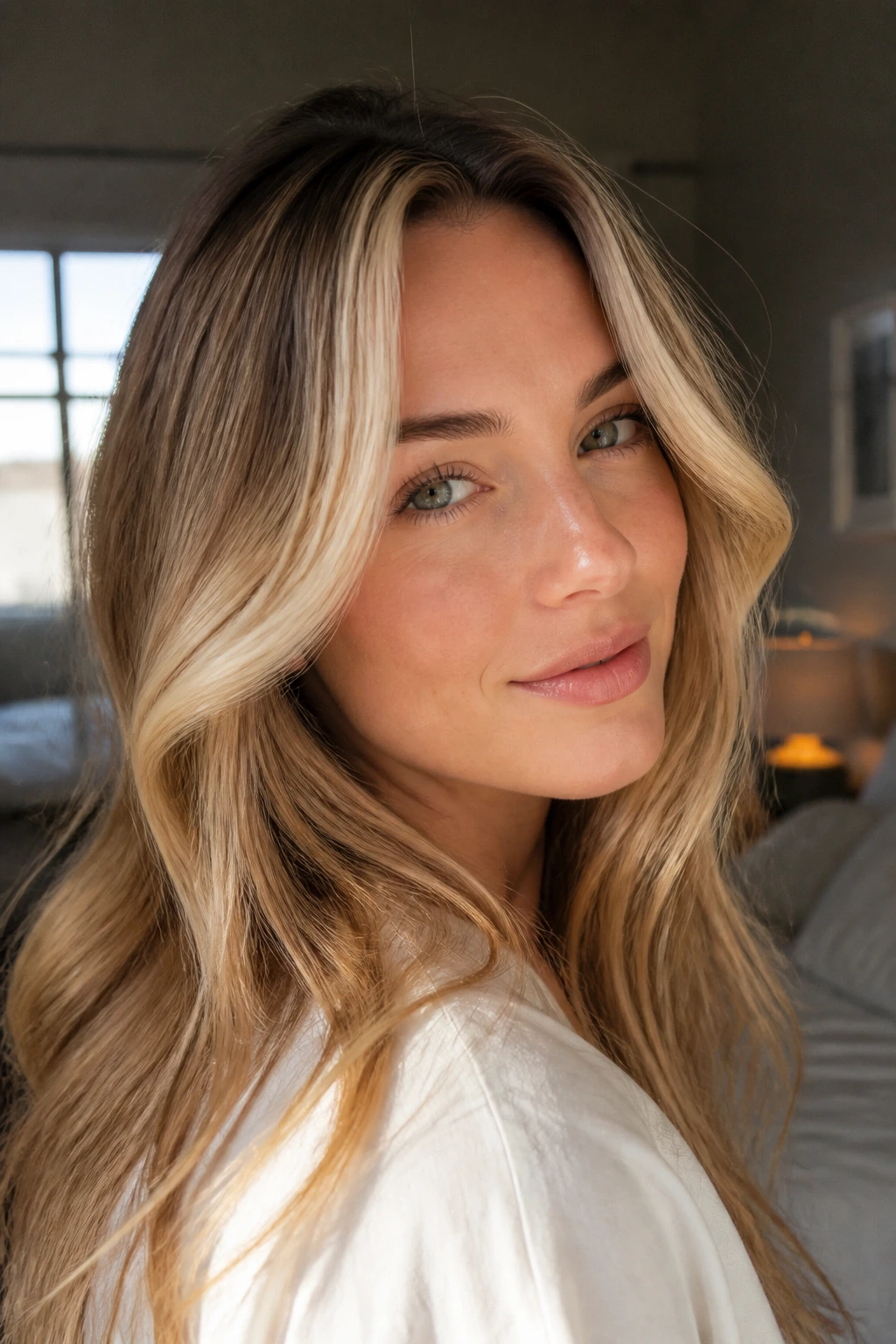
A money piece can do a lot of work if the base stays grounded. Leave the root and underlayer deeper, then place bright honey blonde only through the front sections and a few threads just behind them.
This is one of those looks that feels bolder than it actually is. Pale skin gets immediate lift around the face, but the darker base prevents the overall head from looking too light. It’s a smart choice if you like the idea of blonde front pieces but hate high-maintenance full highlights.
6. Honey Curls With Warm Ribbons
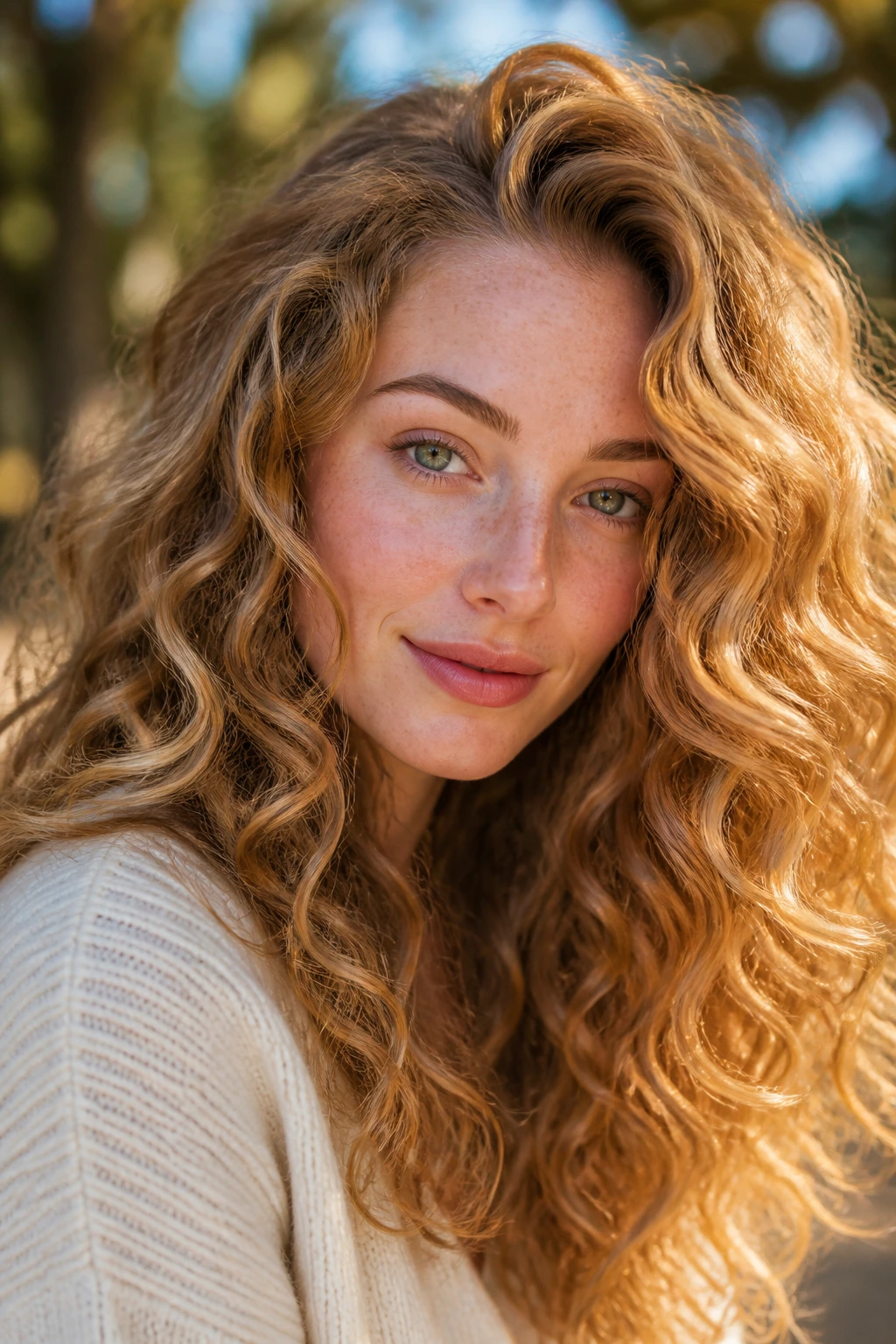
Curls make honey blonde behave in a much prettier way than flat color ever could. The gold catches on the raised parts of the curl, then drops into deeper caramel in the folds, which gives the hair that soft, moving pattern that looks especially good against fair skin.
The key is not to over-lighten every curl. A few brighter ribbons through the outer layers and a deeper tone underneath usually look richer than all-over lightness. If your pale skin is very fair, this contrast keeps the hair from fading into the face.
7. Honey Bronde Melt
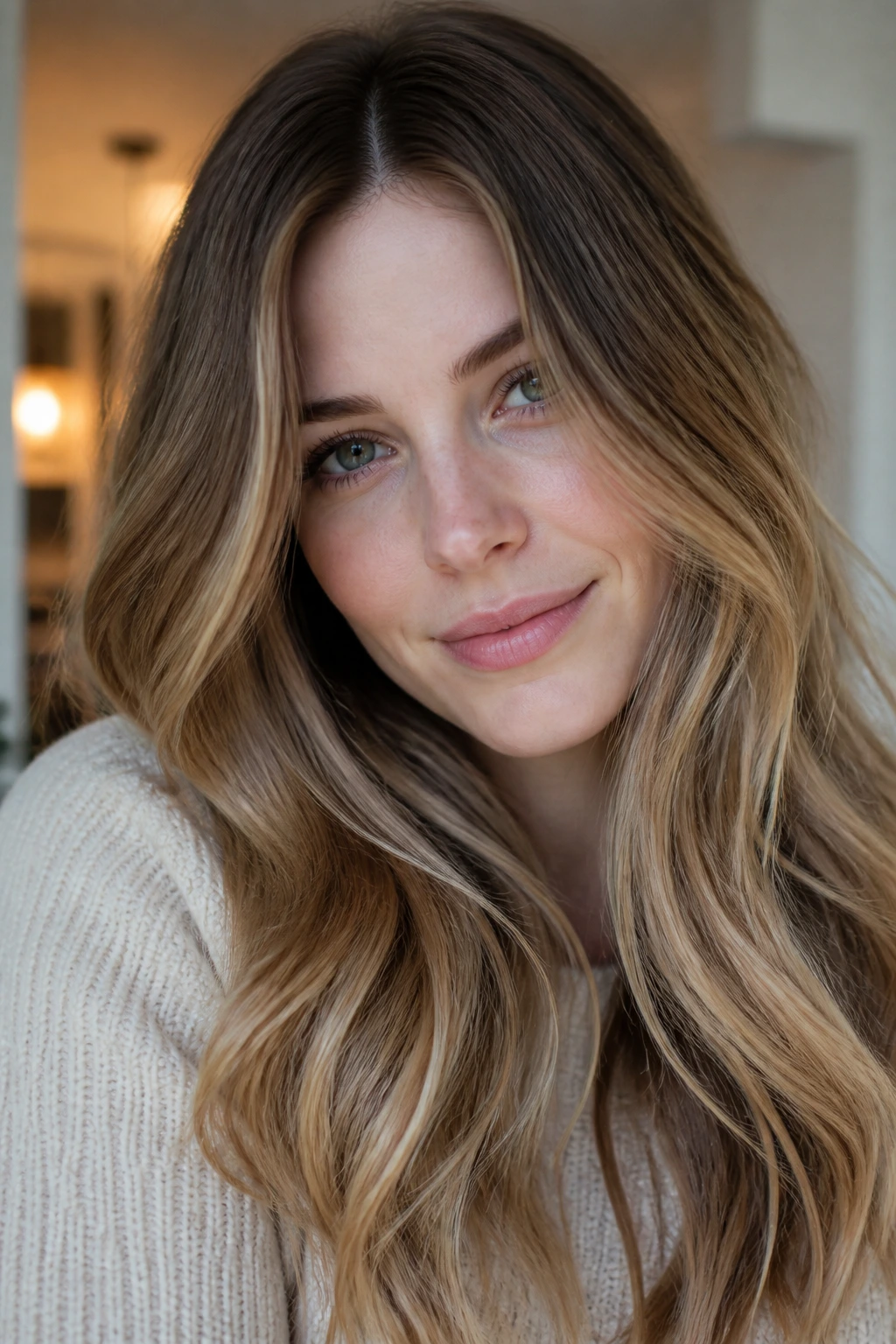
Bronde sits between brunette and blonde, and that middle ground is useful on pale skin when you want warmth without going too light. Honey bronde usually starts with a darker base and fades into golden caramel around the ends and face frame.
This is one of the easiest shades to live with over time. The grow-out is soft, and the color still reads intentionally warm even when the root is longer than you planned. For very fair skin, that built-in depth can look more elegant than chasing a lighter blonde that needs constant toning.
8. Butterscotch Bob
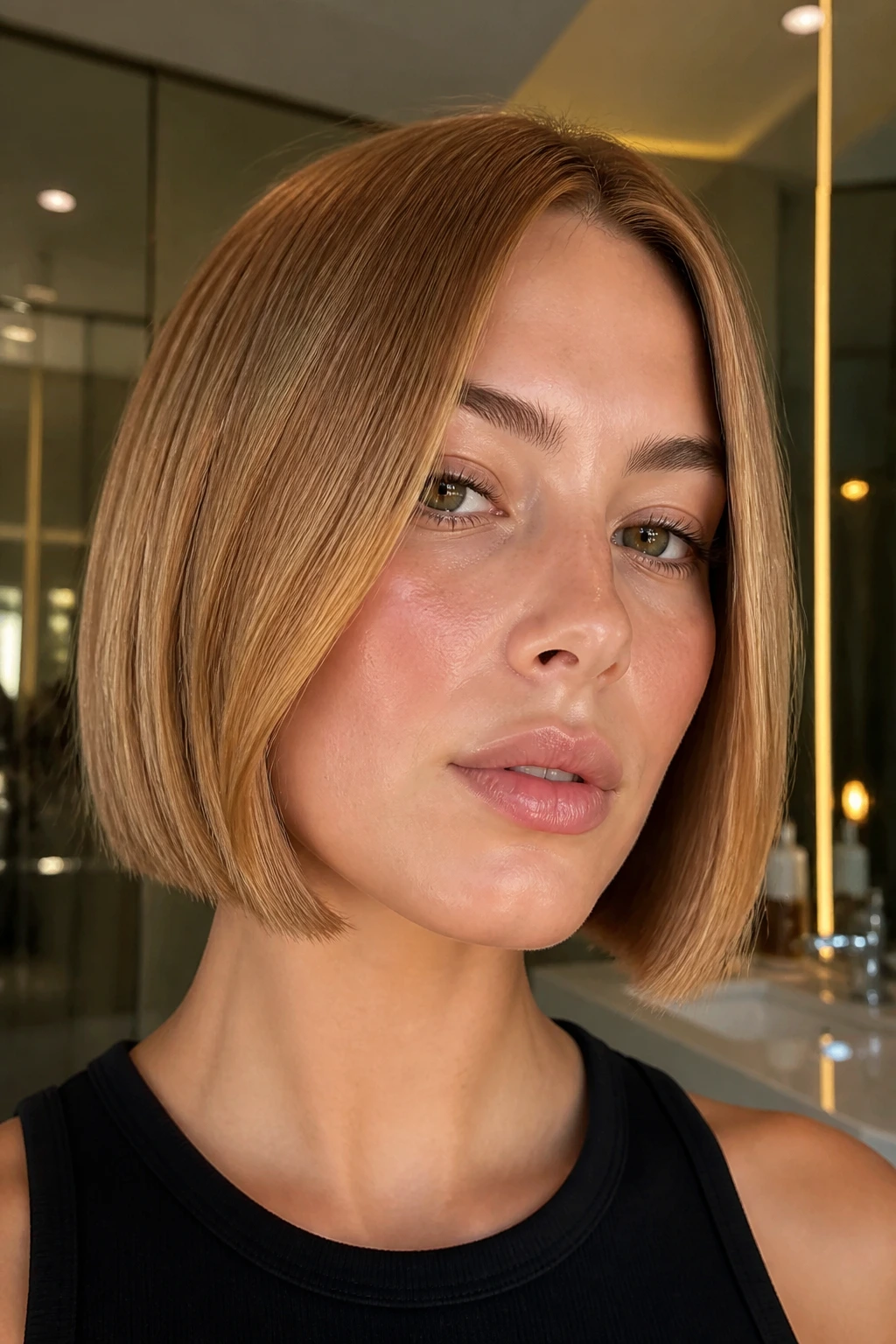
Butterscotch has more richness than classic honey, which makes it ideal if your skin is pale but not paper-pale. A chin-length or jaw-length bob in this shade has a little toasted sweetness to it, and the short shape keeps the warmth from spreading too broadly.
I like this look with blunt ends. It gives the color a clean edge. If you add too many layers, the shade can start to feel busy, and the whole point here is a smooth, glossy finish that frames the face instead of competing with it.
9. Peach-Honey Glaze
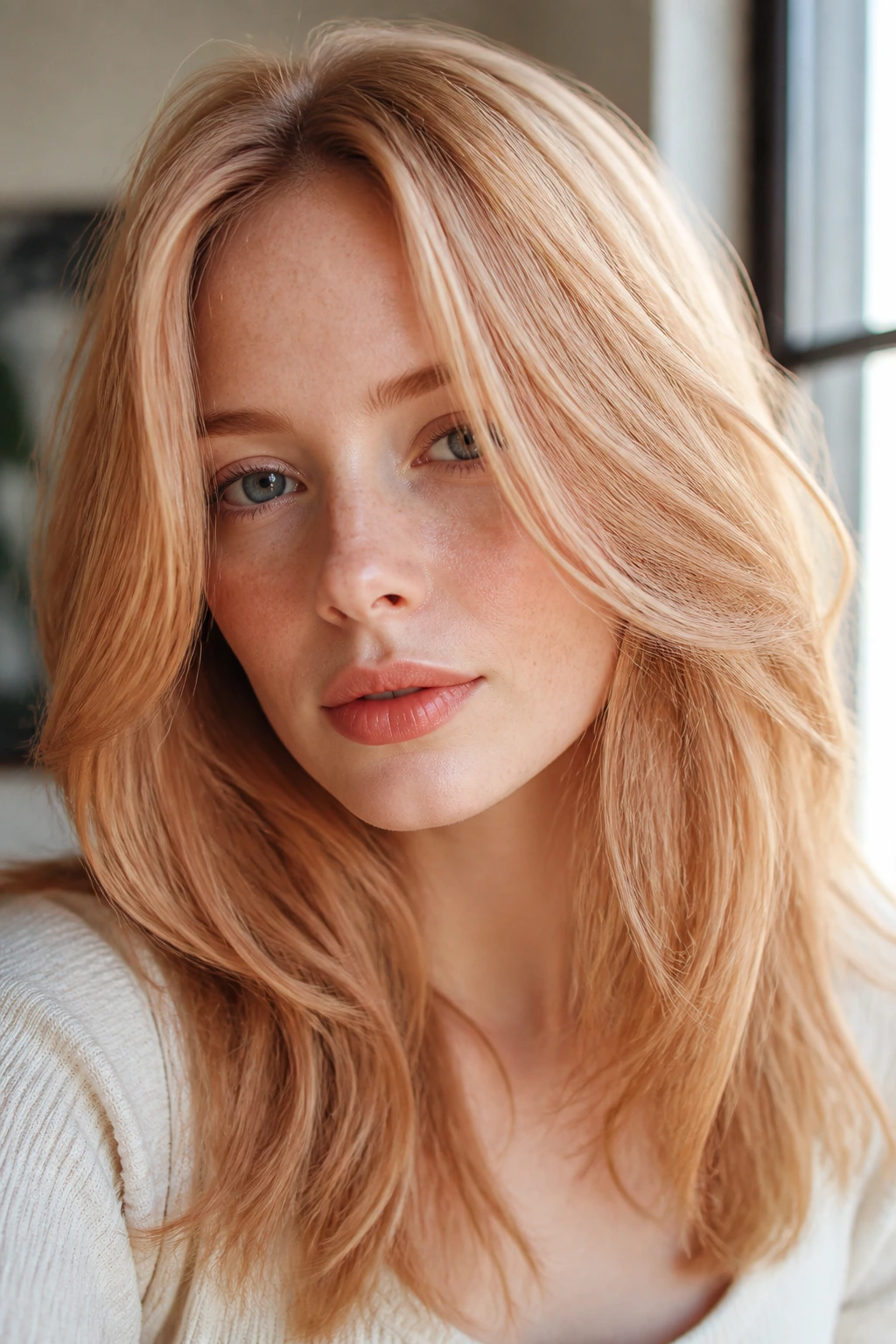
This is my favorite version for cool-leaning fair skin. The peach in the glaze softens the gold and keeps the blonde from turning sharp or greenish against pink undertones.
It’s subtle, which is the point. You’re not trying to make the hair orange. You’re trying to give the blonde a gentle warmth that plays nicely with pale skin and doesn’t make redness more obvious. A peach-honey glaze also photographs well in daylight because it holds a little softness at the edges.
10. Shadow-Root Honey Waves
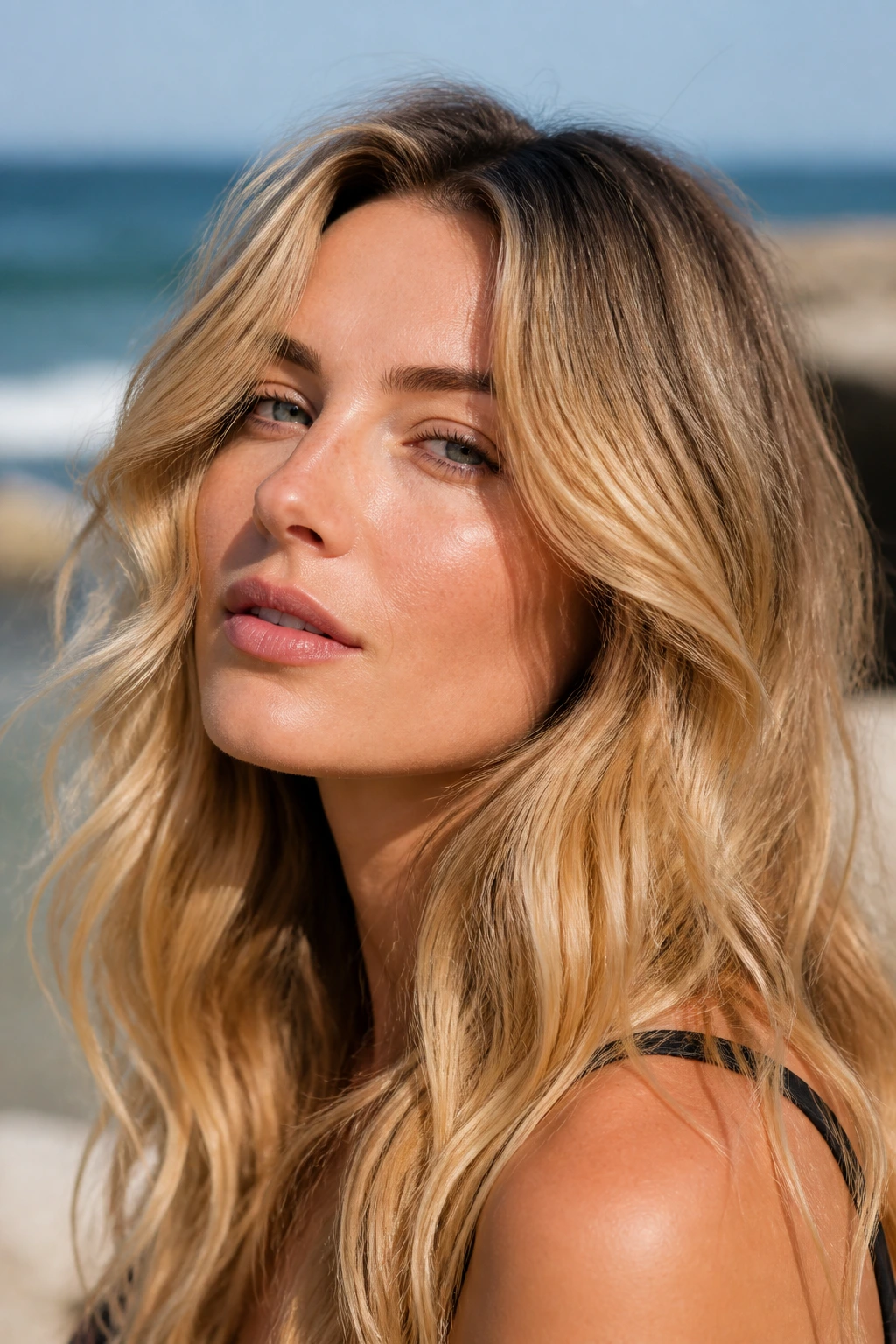
A shadow root changes everything. Leave the first inch or two at the root darker, then carry the honey blonde through the mid-lengths and ends in loose, soft waves.
This is one of the easiest ways to keep pale skin from looking washed out by too much lightness near the scalp. The darker root adds contrast at the crown, while the waves break up the blonde so it doesn’t sit like one solid panel. If your hair is fine, this version also makes it look thicker.
11. Pixie With Honey Micro-Highlights
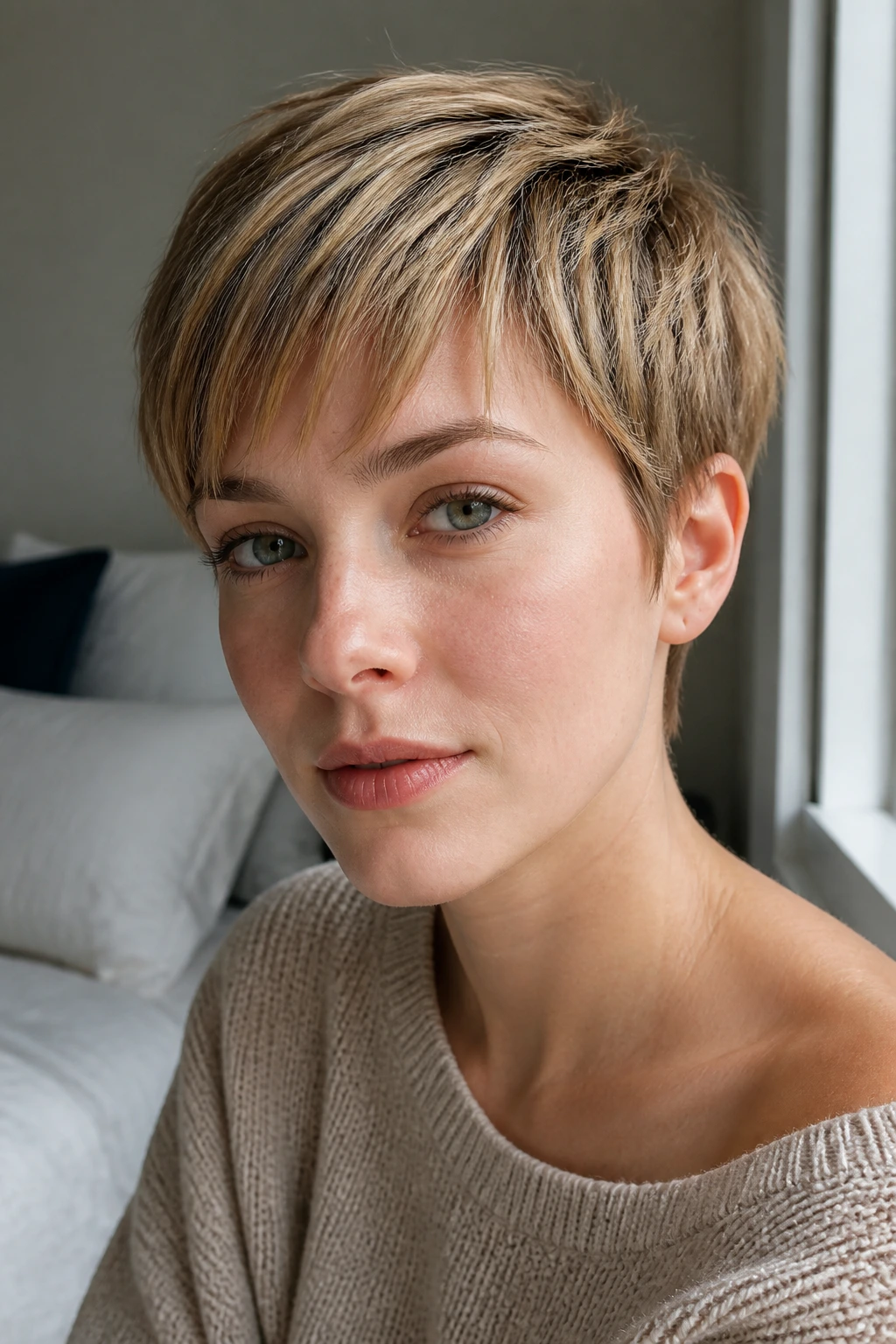
Short hair can wear honey blonde beautifully, but it needs placement with a light hand. On a pixie, the color should come through in tiny micro-highlights, especially at the fringe, crown, and around the ears.
Those small touches keep the cut from looking flat. On pale skin, a fully lightened pixie can sometimes go stark; these little golden bits feel softer and more dimensional. It’s a good choice if you want something polished without the upkeep of longer highlighted hair.
12. Caramel Honey Layers
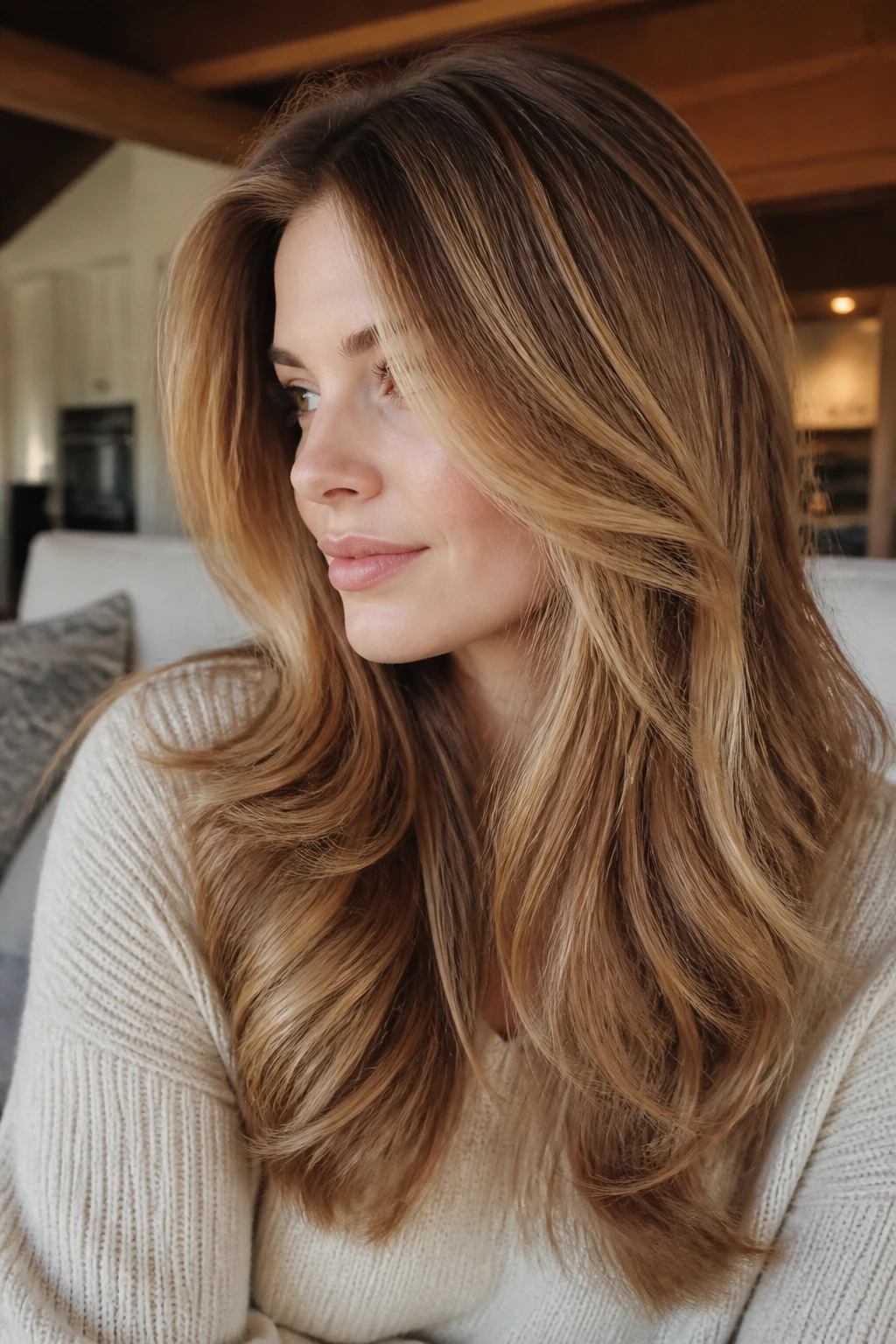
Caramel honey is deeper than classic golden blonde, and that extra depth helps pale skin stay balanced. Long layers especially benefit from it because the color can move from lighter surface pieces to richer undersides without looking stripey.
This is the shade I’d choose for someone who wants warmth but also wants the hair to feel substantial. Very light blonde can disappear into long layers if there’s no contrast. Caramel honey keeps the shape visible, which matters more than people think.
13. Champagne Honey Shine
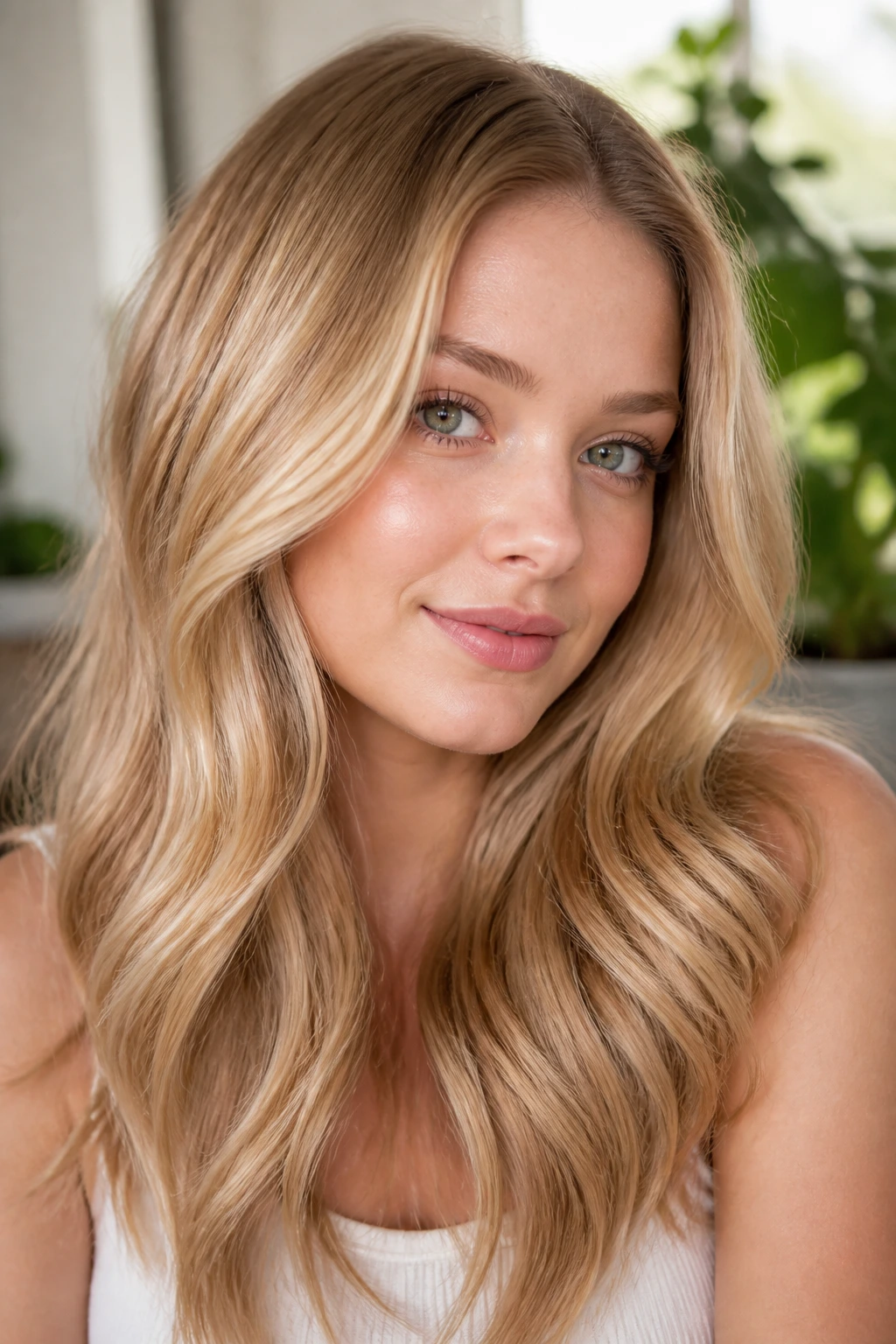
Champagne honey sits on the softer side of the gold spectrum. It’s lighter, cleaner, and a bit more reflective than straight butter blonde, but it still has enough warmth to flatter fair skin.
The finish is the selling point here. Ask for a glossy glaze that leaves the hair shiny rather than chalky. On pale skin, champagne honey can look polished without making the complexion look too flushed, especially if your undertone is neutral or slightly cool.
14. Golden Ribbon Highlights
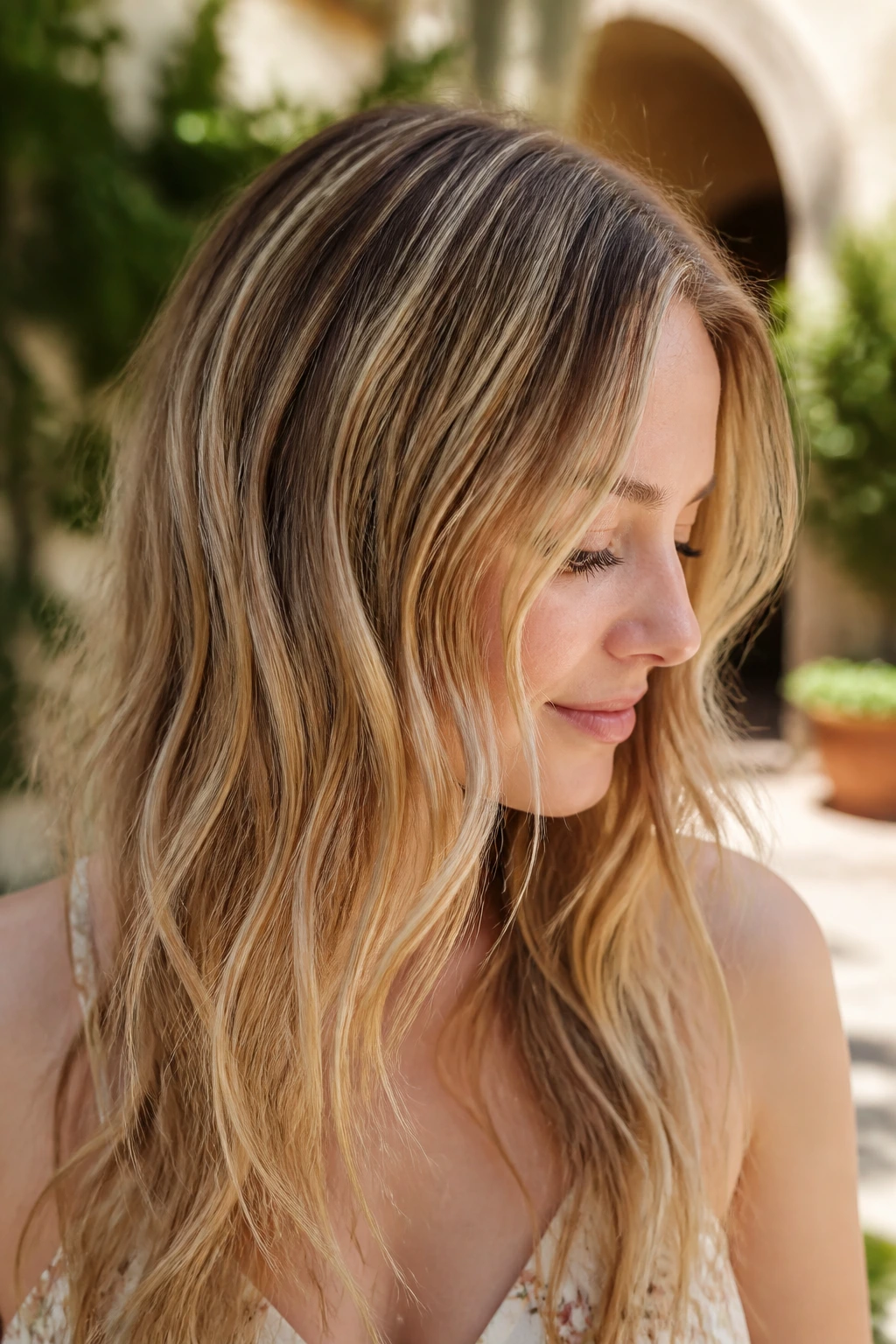
Ribbon highlights are thin, placed with some breathing room between them, and that spacing matters. Instead of saturating every section with blonde, you create narrow golden threads that catch light as the hair moves.
This works especially well on pale skin because the color never becomes one flat block. The darker pieces underneath keep the face looking sculpted, and the gold flashes appear where the sun or indoor light hits. If you like a brighter blonde but not a dense one, this is a clean option.
15. Rustic Honey Shag
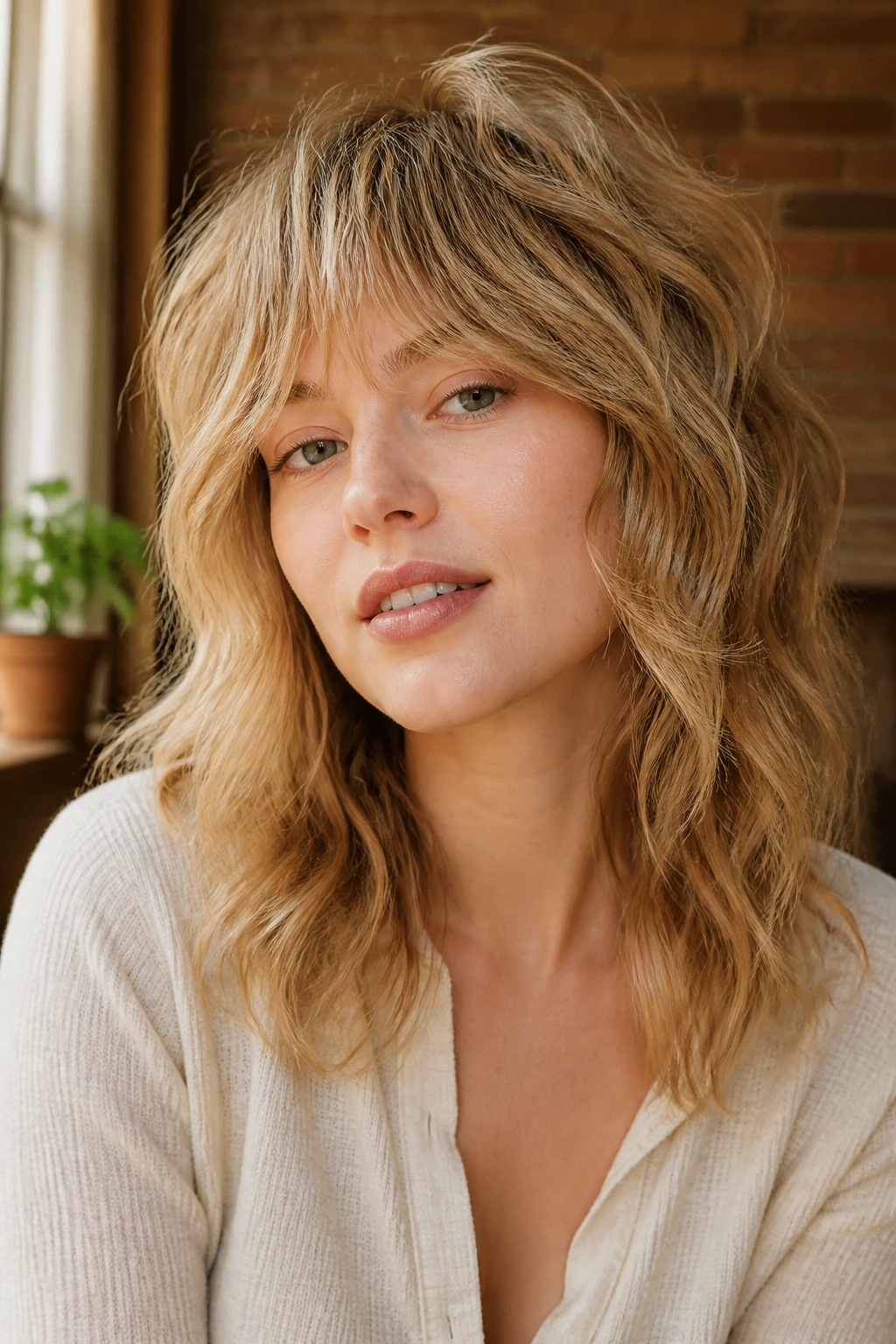
A shag changes the personality of honey blonde fast. The texture gives the color a lived-in feel, and the layers stop the warmth from looking too neat or too school-photo formal.
On pale skin, this rougher finish is useful because it breaks up the gold. You get movement around the face, a little darkness under the top layers, and a softer sense of shape around the cheekbones. It’s not precious. That’s part of its charm.
16. Honey With Cinnamon Lowlights
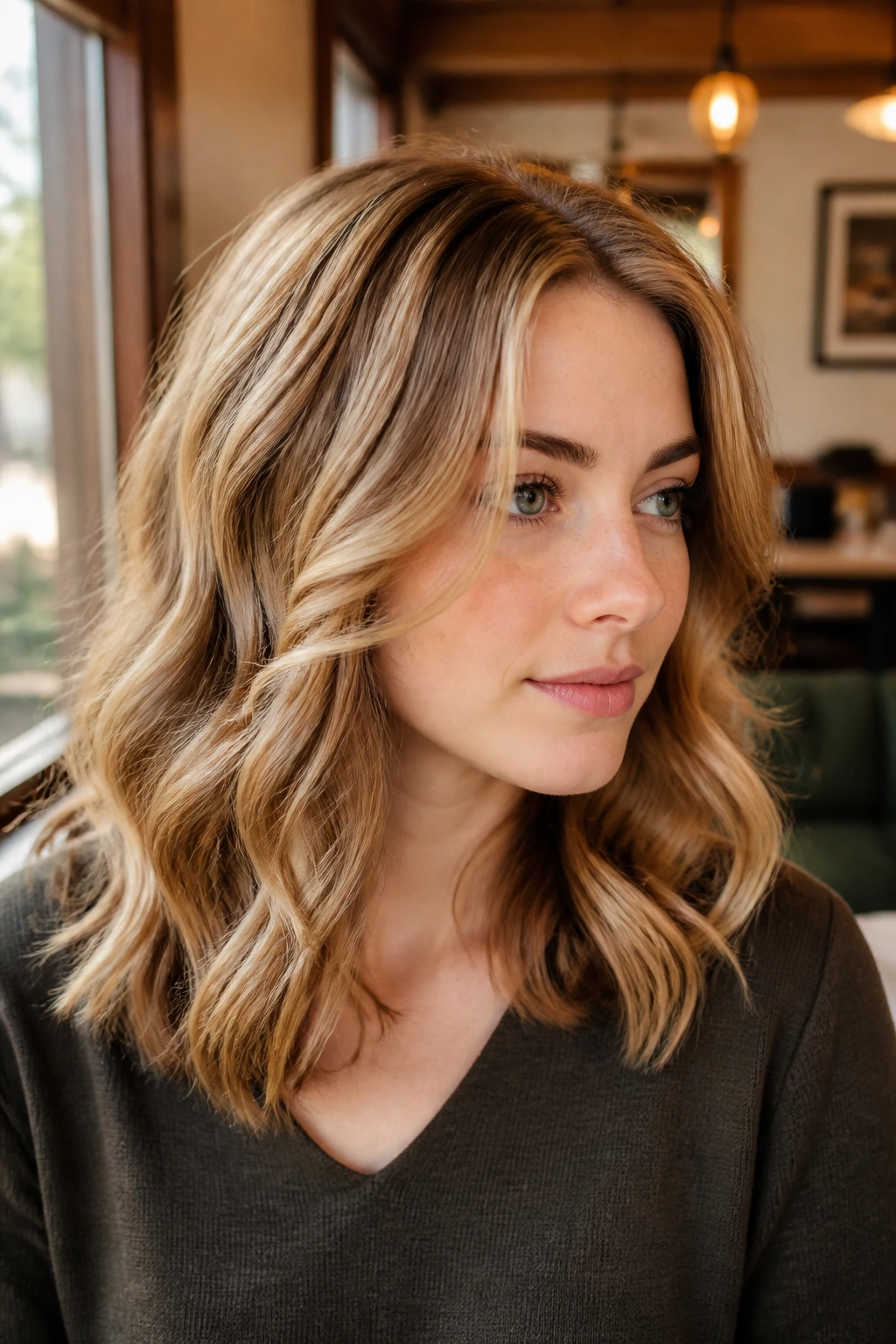
A few cinnamon lowlights can save a honey blonde from looking too pale or too yellow. They add that deeper toasted note underneath the brighter strands, which is a gift if your skin is very fair and needs some framing.
I’d use this approach on medium-length hair with waves or bends, because the color shifts show up better when the hair isn’t pin-straight. The lowlights don’t need to be heavy. A handful of well-placed darker ribbons can do more than a whole extra level of bleach ever could.
17. Vanilla Honey Ends
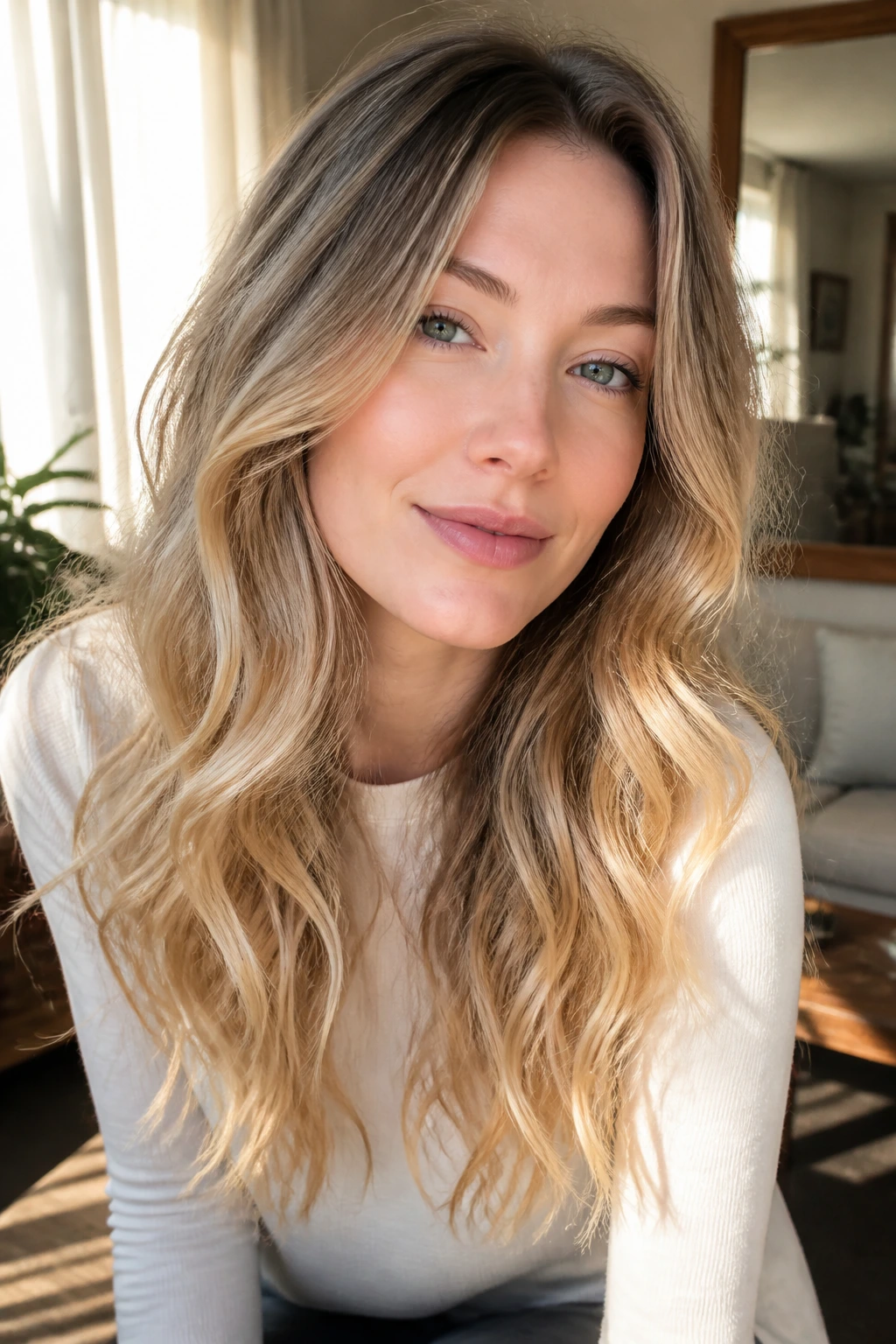
Vanilla honey keeps the mids and ends soft, creamy, and light, while the root and underlayer stay just a little deeper. That balance is especially nice on pale skin because it avoids the sharp contrast that can make a face look harsh.
The finish should feel airy. Not white-blonde. Not orange. More like a warm vanilla custard with a little gold stirred through it. If your hair has already been lightened, this is a lovely direction for a gloss rather than a big color correction.
18. Toasted Honey Lengths
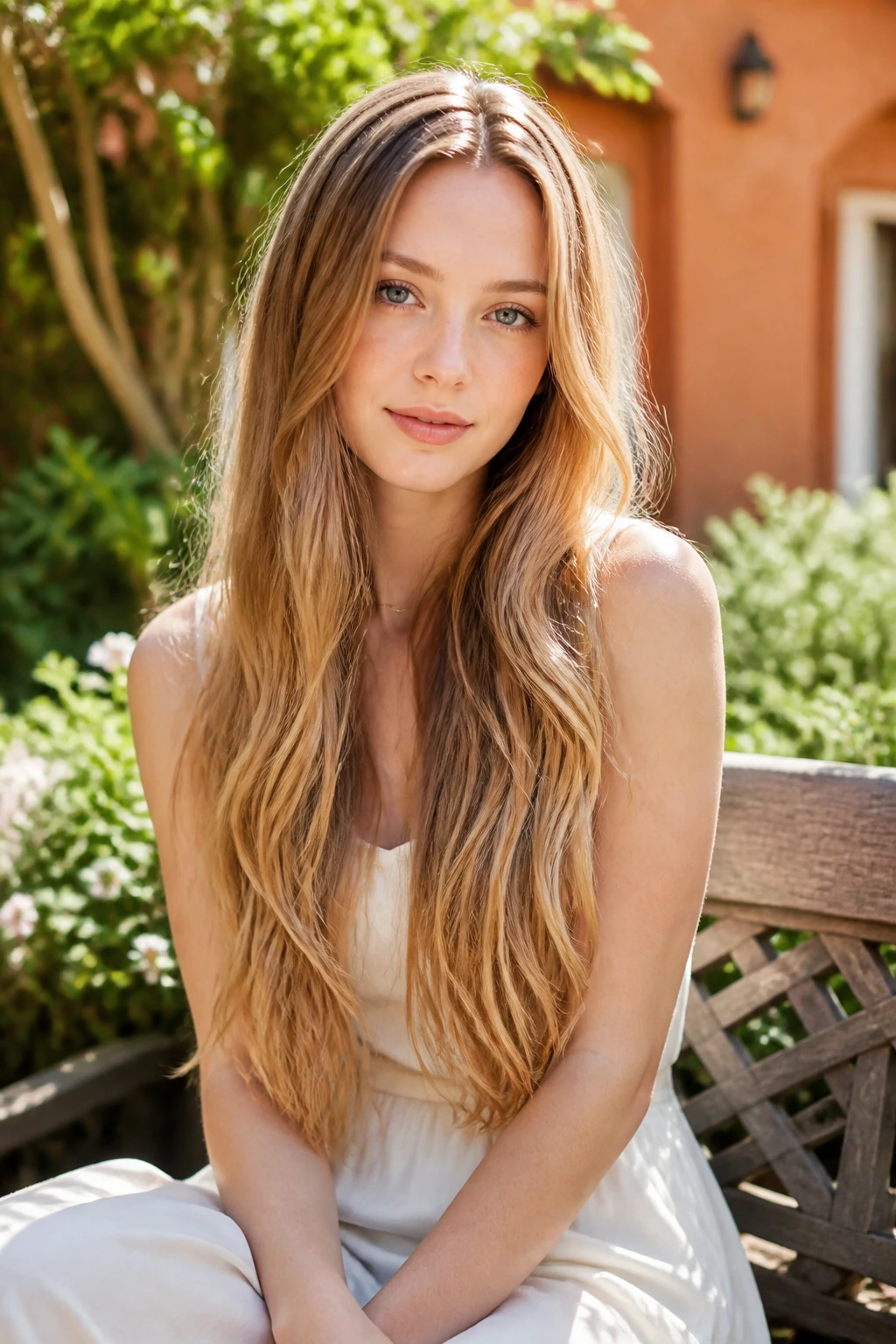
Long hair gives honey blonde room to deepen and brighten at the same time. Toasted honey is a little richer than the usual sunny shade, which keeps the length from looking thin or faded.
This is a good choice if you want the hair color to stay visible even when you wear it in a low bun or half-up style. On pale skin, the richer tone prevents the lengths from disappearing into the face, especially if your features are soft and light. A gloss with a warm gold-beige mix helps here.
19. Curtain Bangs and Honey Glow
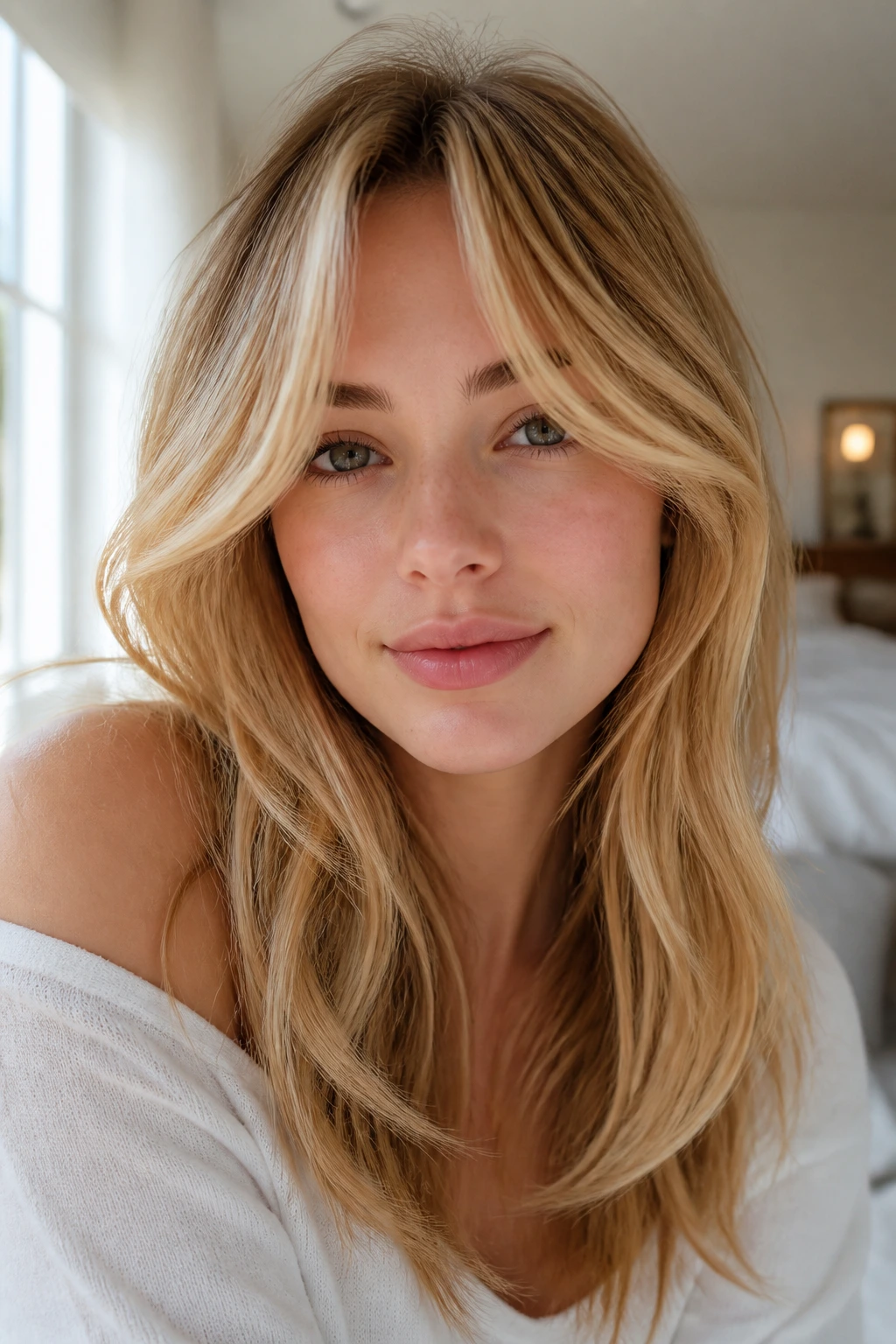
Curtain bangs change how the color reads near the face. They bring the honey blonde forward, right over the forehead and cheekbone area, so the glow becomes part of the haircut instead of an afterthought.
Keep the bangs a shade lighter than the rest, but not so light that they look disconnected. The soft center part lets the color fall around the face in a way that can be very flattering on pale skin. It’s a neat trick when you want brightness without full-head commitment.
20. Honey Melt on Thick Hair
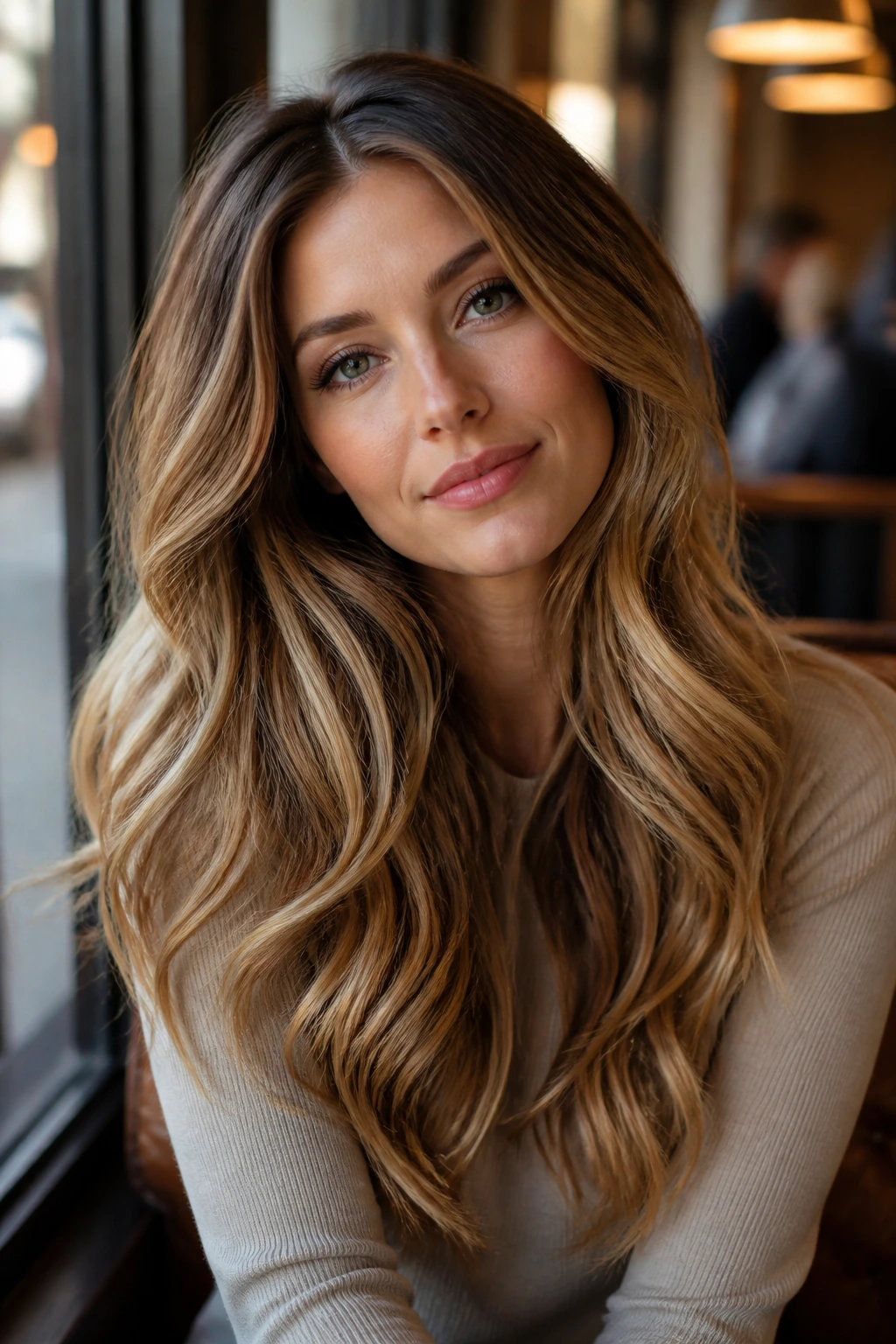
Thick hair can hold more color variation before it looks busy, and that’s why a honey melt works so well here. The root can stay deeper, the mids can sit in golden blonde, and the ends can shift toward a lighter caramel without any single area dominating.
For pale skin, that layering of tones is useful because it keeps the hair from becoming one bright sheet. Instead, the color moves. You see warmth, then depth, then shine. If your hair is dense, this kind of multi-tone honey blonde usually looks better than a uniform all-over blonde.
21. Apricot Honey
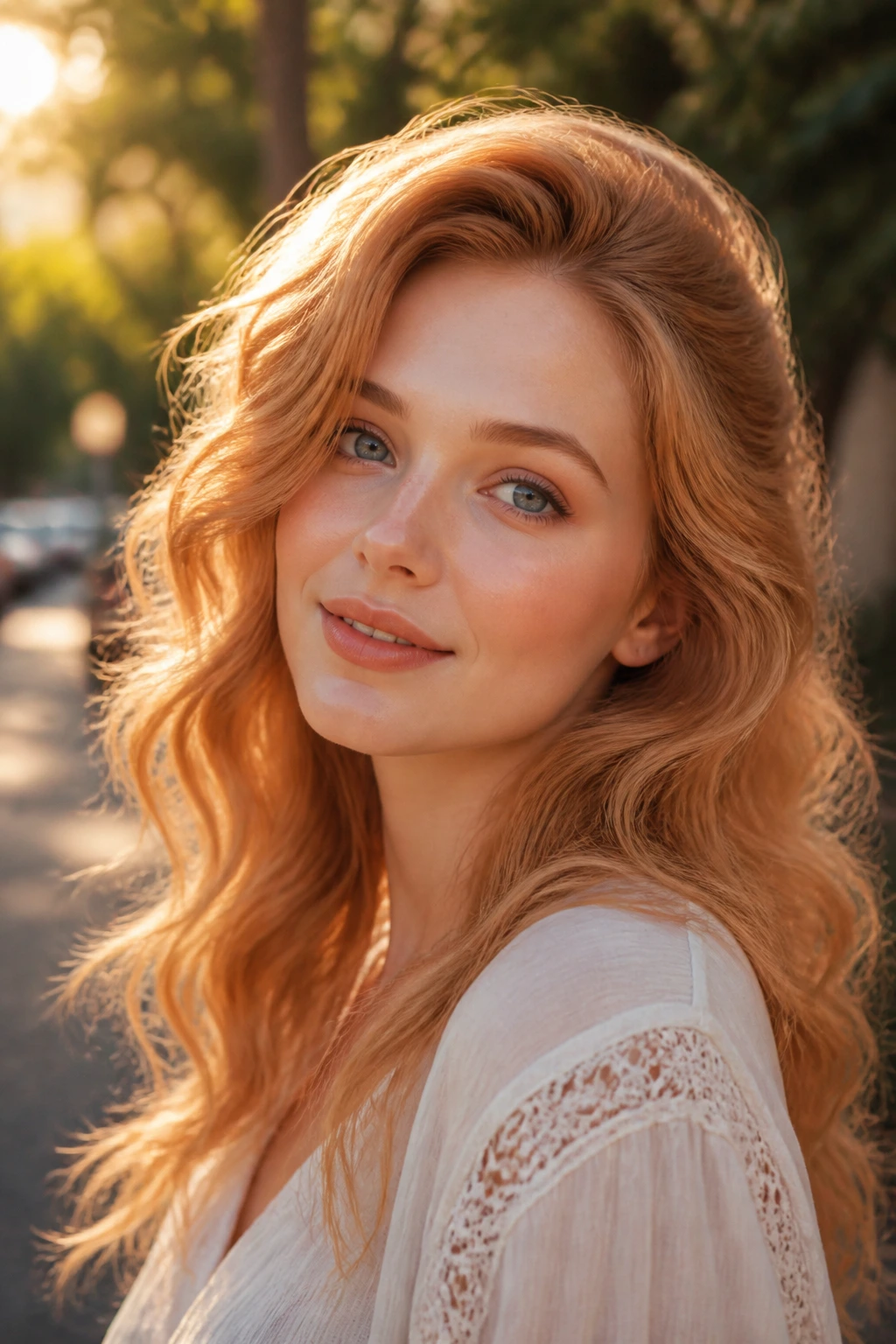
Apricot honey is warmer and more playful than beige honey, but it still sits in a flattering range for pale skin when it’s handled carefully. The apricot note softens the gold and adds a little peachy glow around the face.
I like this shade on skin that flushes easily, because the warmth echoes the skin tone instead of fighting it. It also looks good when the hair is curled away from the face. That gives the apricot-gold mix room to show without making the overall look too saturated.
22. Straight Hair Honey Ribboning
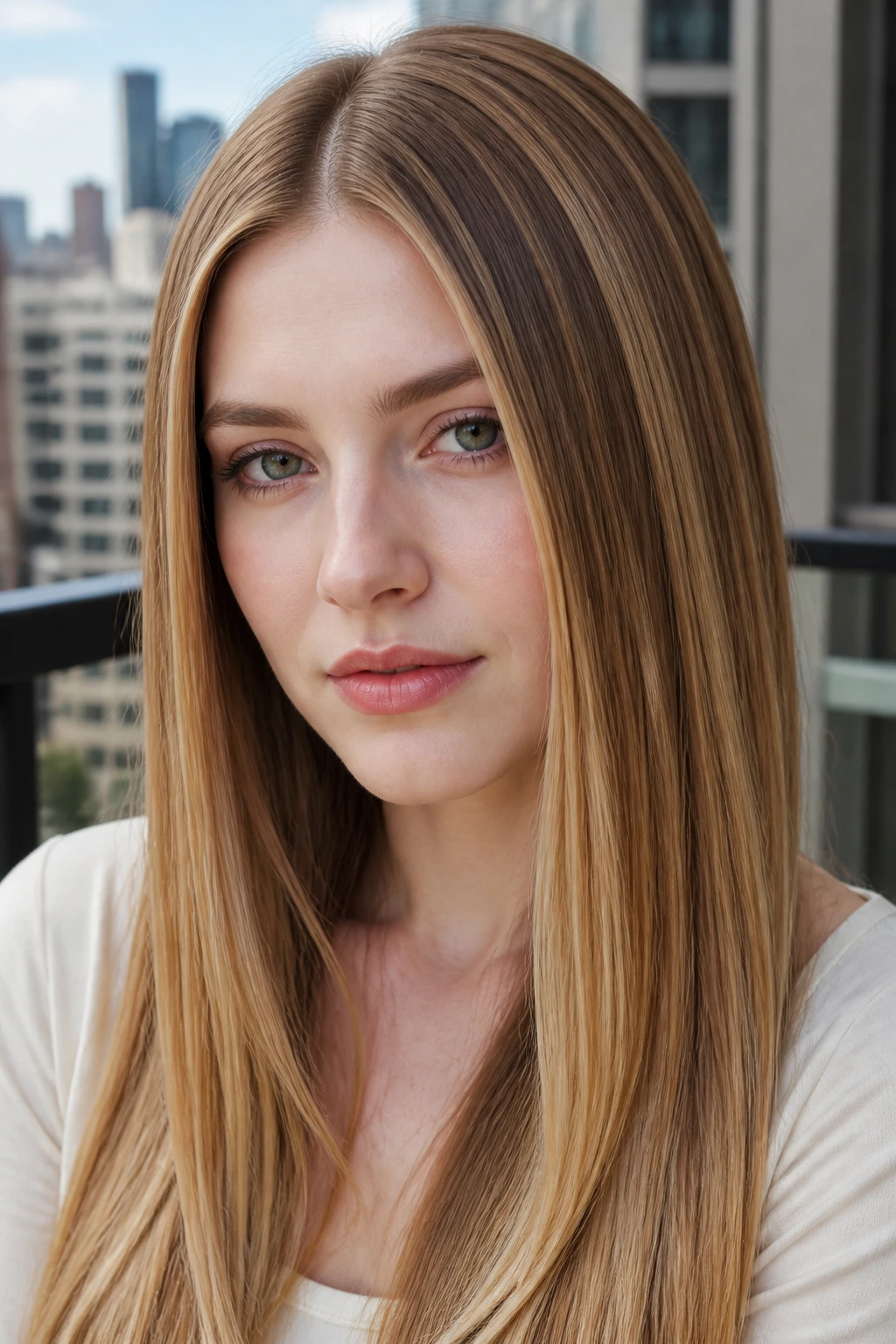
Straight hair can look a little one-note if the highlights are too chunky. Ribboning solves that by weaving thin honey strands through the lengths in a way that creates movement even when the hair is worn smooth.
This is one of the best choices for pale skin if you want sleek rather than beachy. The ribbons catch light cleanly, and the deeper base underneath keeps the face from blending into the hair. A center part makes the placement feel modern, but a side part gives it more softness.
23. Soft Rose-Honey
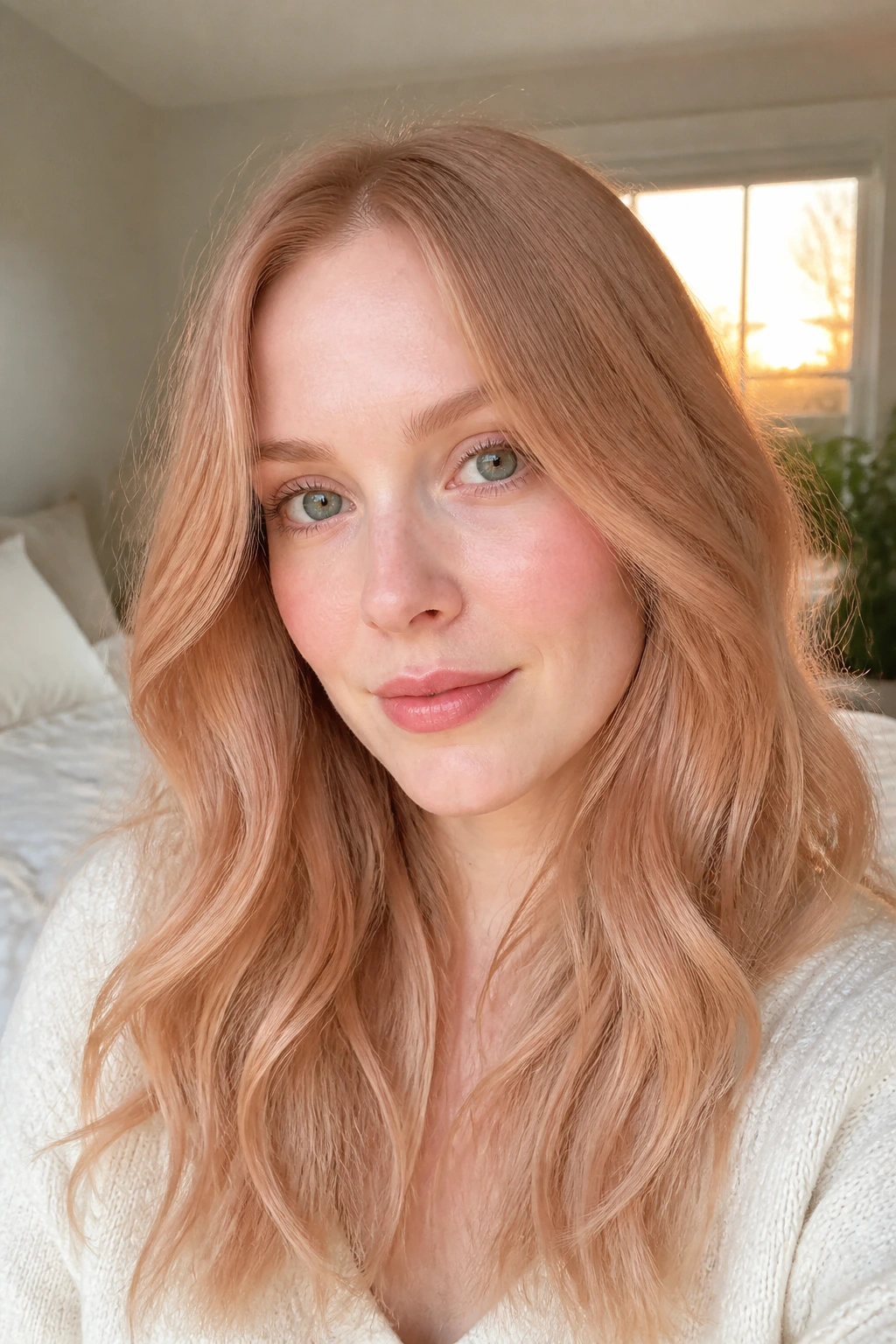
Rose-honey lives in a delicate space between warm blonde and a blushier tone. It’s not pink hair. It’s a honey blonde with enough rosy warmth to flatter cool or pink pale skin without turning yellow.
This shade is especially nice if your complexion gets a little flushed in warm weather or under strong lighting. The rosy undertone works with that natural color instead of against it. Keep the roots soft and the glaze sheer, and the whole look stays light rather than candy-colored.
24. Copper-Veil Honey
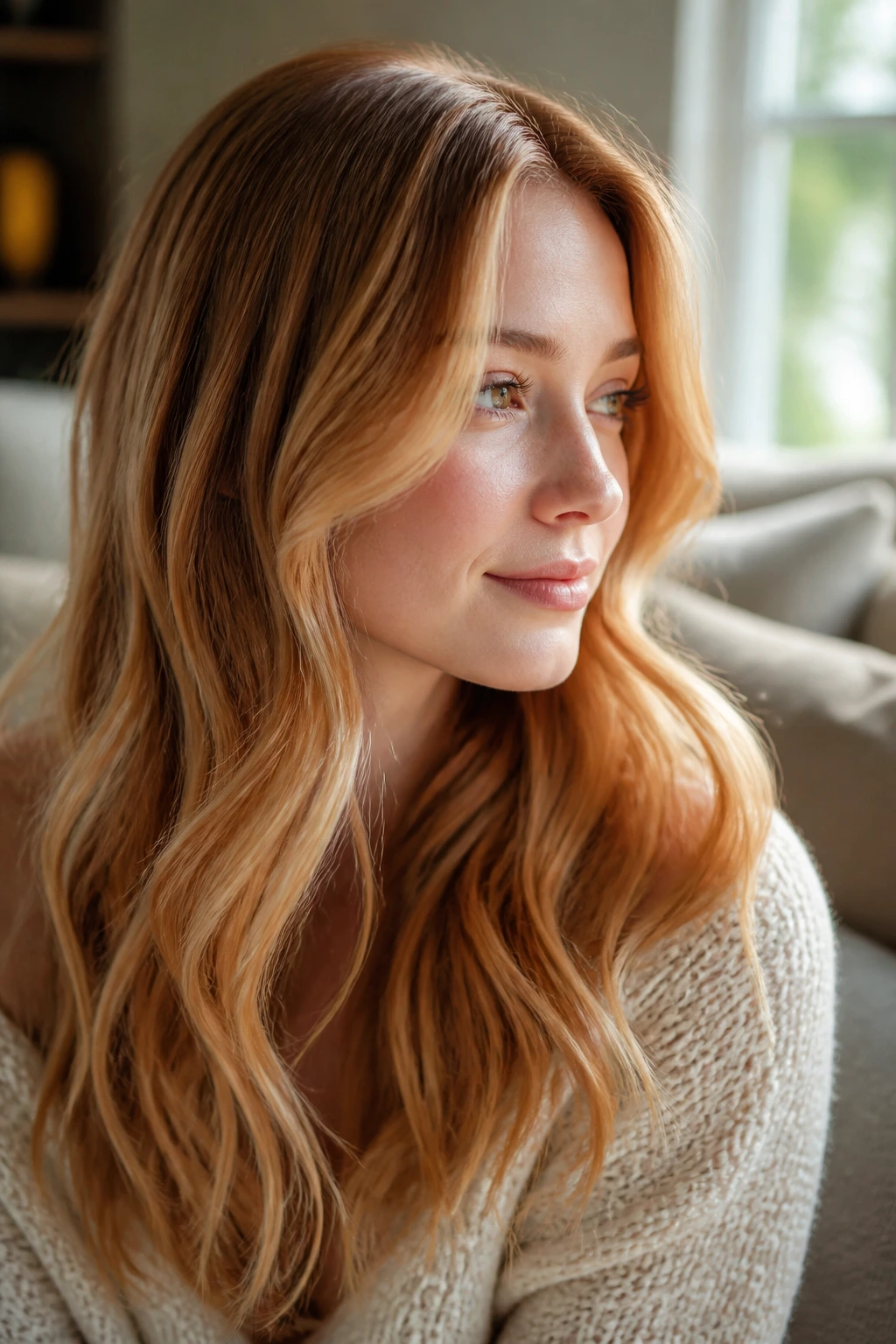
A copper veil is for pale skin that can carry more warmth and contrast. The copper never needs to dominate; it just sits over the honey like a thin layer of toasted light.
Used well, it gives the blonde more body. That’s useful if your natural hair is darker and tends to go flat after lightening. I’d pair this with soft layers or a long bob, because the cut helps the copper-gold shift show up in movement instead of sitting as one flat block.
25. Glassy Honey Lob
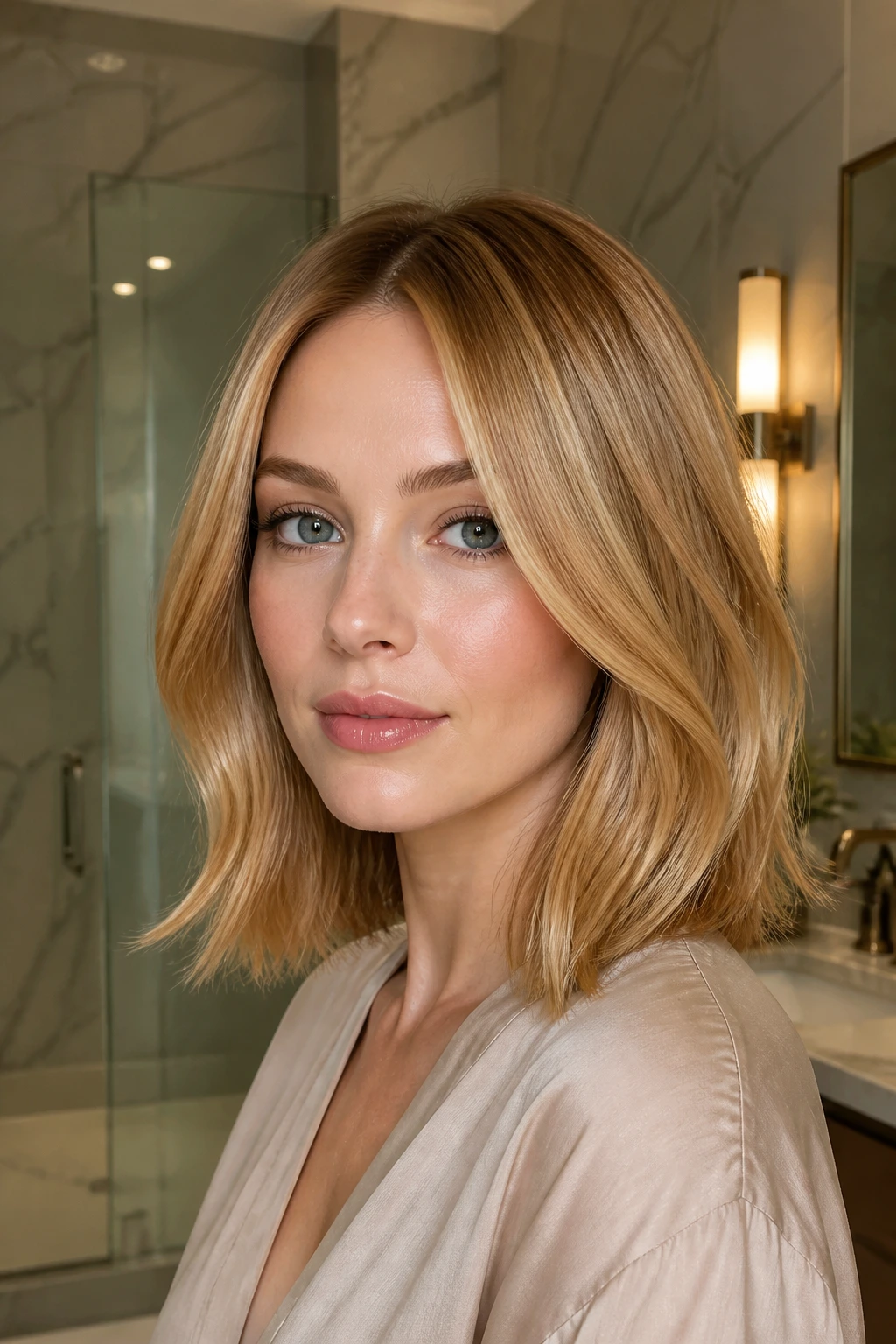
If you want polish, this is the cleanest ending point. A glassy honey lob uses a smooth haircut, a warm blonde glaze, and a glossy finish that reflects light in thin, even bands.
Pale skin benefits from that controlled shine. Too much brightness can look harsh; controlled shine looks intentional. The lob length keeps the color close to the face, which means you get the warmth where it matters most without needing a high-contrast highlight map.
How to Ask for Golden Honey Blonde Without Getting Too Yellow
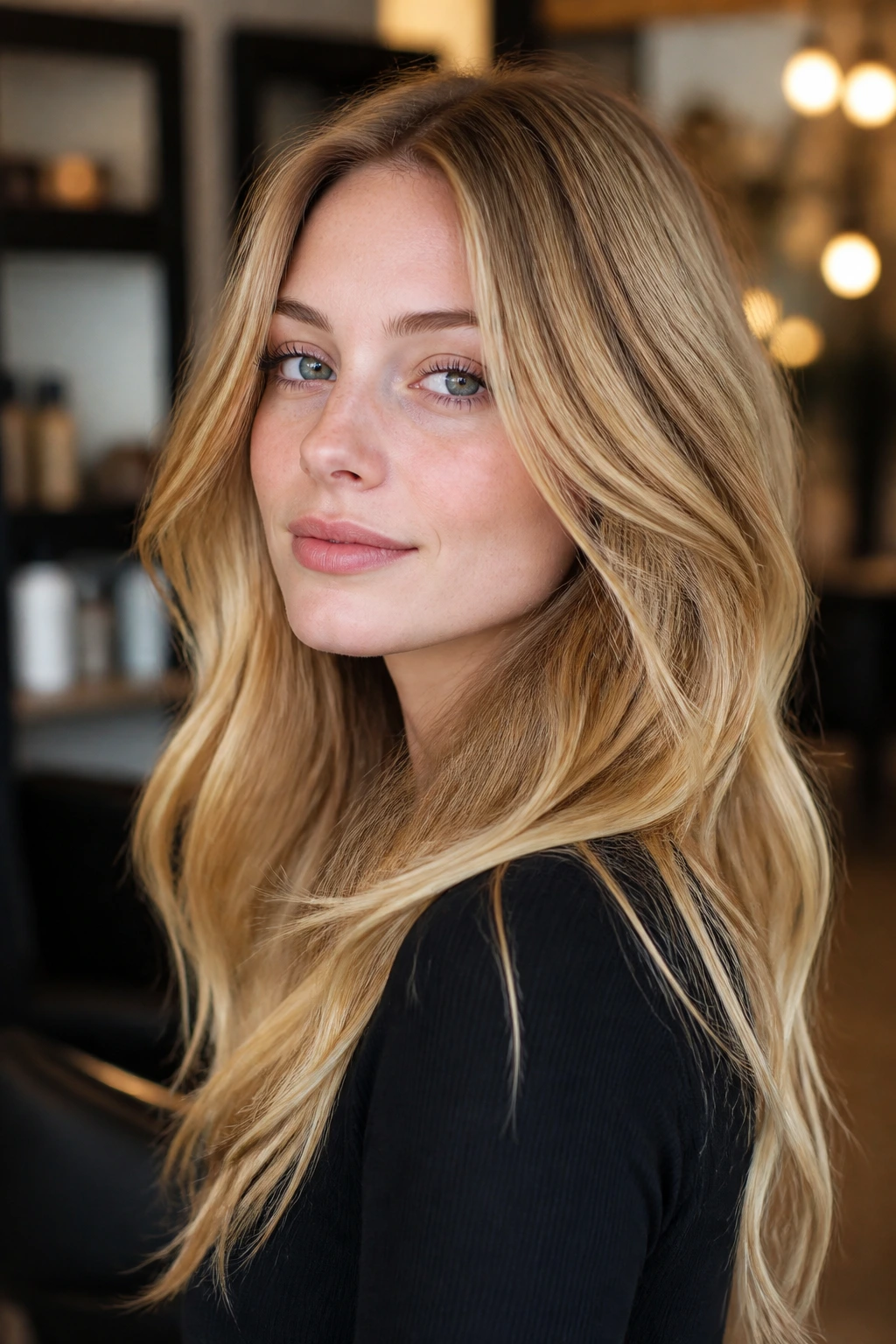
The best salon conversations are boring in the smartest way. Bring photos, yes, but bring photos with similar skin tone and hair depth, not random blondes from across the internet. Then say what matters: the level you want, how warm you want the finish, and whether you want a root shadow or a brighter face frame.
Ask for the level first. If you want honey blonde rather than pale blonde, the goal often lives around level 7 to 9, depending on how light your base starts. That tells the colorist how much lift is needed before tone even enters the conversation.
Name the undertone you want. Beige honey is different from apricot honey, and both are different from yellow-gold. If your skin is pink or very fair, say you want warmth that stays soft, not bright gold that can make the skin look redder.
Talk about maintenance. A glossed root melt buys you softer grow-out. Full foil lightening buys you more brightness but also more upkeep. That trade-off matters more than the photo on your phone.
Common Mistakes That Make Honey Blonde Look Off on Pale Skin
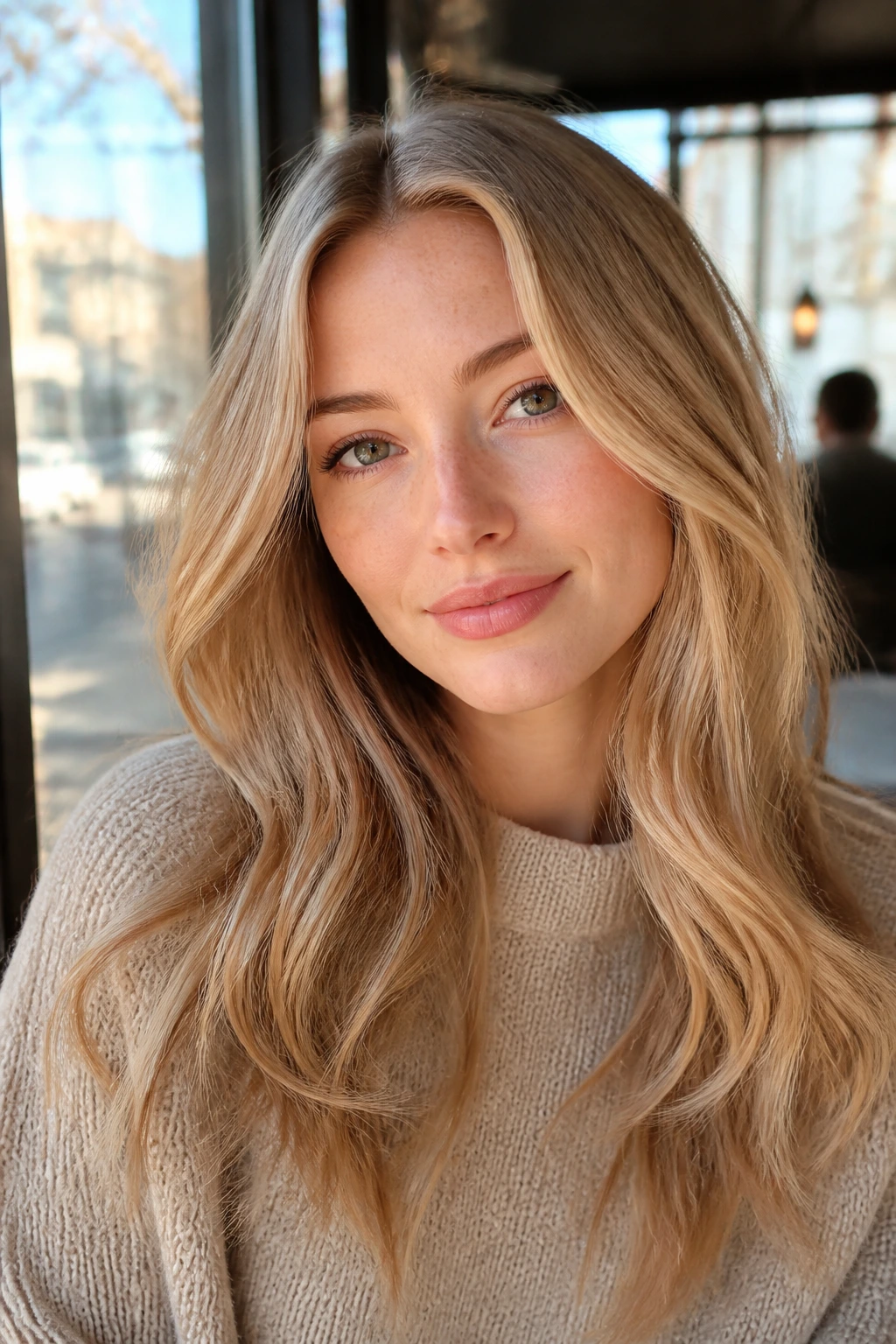
Going too yellow too fast is the fastest way to lose the point of honey blonde. On pale skin, pure yellow can look brassy or even a little wiggy under indoor light. The fix is to keep some beige, peach, or caramel in the formula so the warmth feels rounded instead of loud.
Lightening every strand to the same level makes the head look flat. Honey blonde needs depth somewhere — root, underneath, or lowlight — or the face can start to look disconnected from the hair. A few darker pieces solve more problems than people expect.
Overusing purple shampoo can mute the warmth you actually wanted. Purple shampoo is made to calm yellow, but honey blonde needs some gold left in it. Use it sparingly, maybe once a week or less, and stop as soon as the tone starts looking dusty.
Skipping heat protection dries out the ends and makes the color fade unevenly. Honey blonde shines when the cuticle is smooth. If your hair gets rough, the light scatters, and the blonde starts to look chalky instead of glossy.
Choosing a shade that ignores the haircut is another quiet mistake. A shag can hold more contrast. A blunt bob wants cleaner tone. Long layers need placement, not just color. The haircut changes the whole read of the blonde.
Ways to Adapt the Shade Without Losing the Honey Blonde Feel
- Beige Glow Honey: Soft beige mixed into the gold keeps the shade friendly for pink-leaning pale skin. It’s the safest choice when you want warmth but don’t want the blonde to dominate.
- Apricot Tint Honey: A little apricot or peach in the toner gives the blonde a soft blush cast. This works well if your skin tends to flush and you want the color to echo that warmth instead of fighting it.
- Bronde Honey Melt: Leave more depth at the root and mids, then move into golden ends. This is the easiest path if you want low upkeep and a more natural grow-out line.
- Bright Face-Frame Honey: Keep the perimeter and front pieces lighter, with a shadow root behind them. It makes pale skin look lifted without bleaching the whole head to the same brightness.
- Glossy Honey Bob: Use a shorter cut and a high-shine glaze to keep the color sleek. The shape does a lot of the work here, so the hue can stay soft and wearable.
Essential Tools and Products for Keeping Honey Blonde Fresh
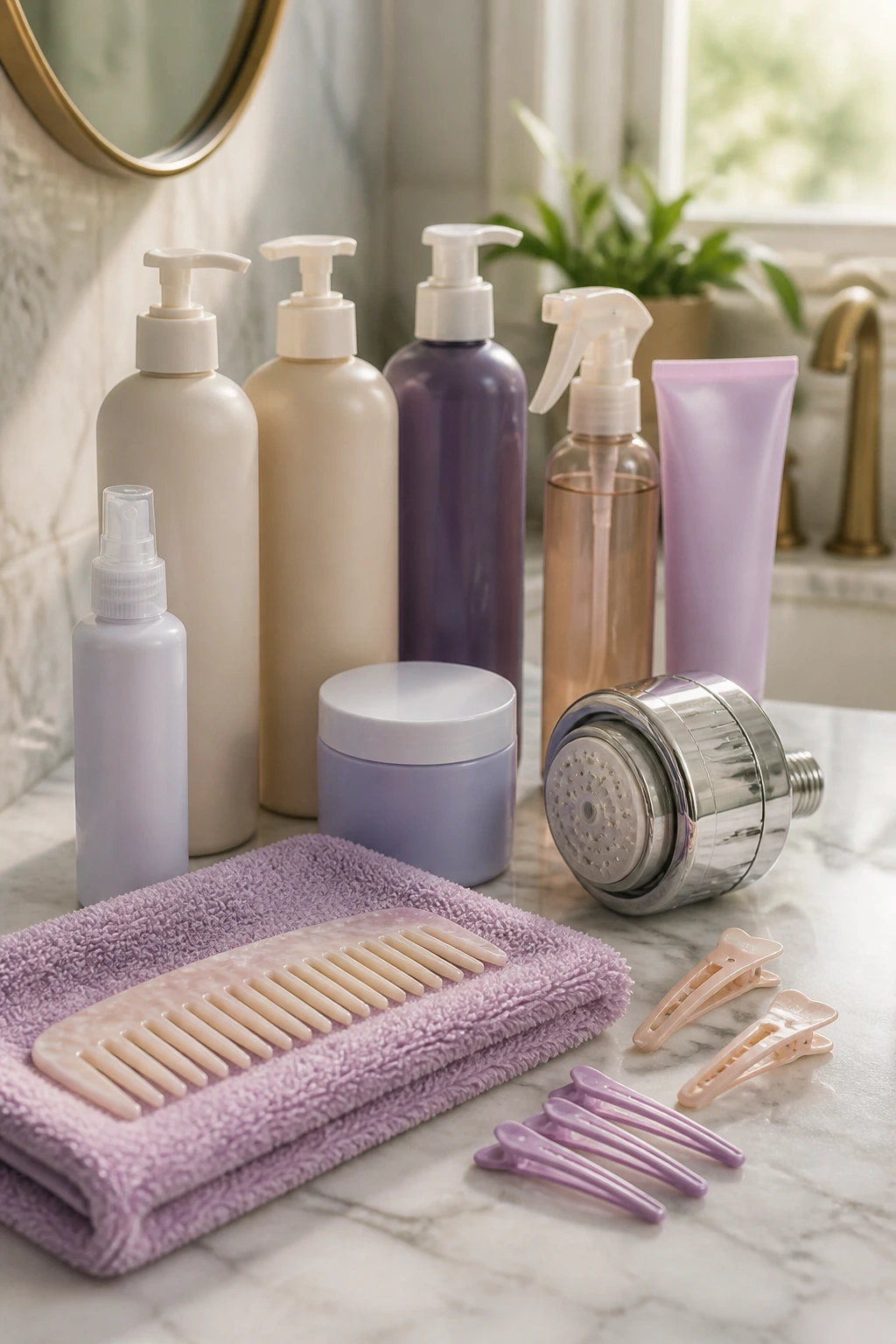
- Color-safe shampoo: A sulfate-free formula helps the warm tone last longer between washes.
- Moisturizing conditioner: Blonde hair gets rough fast, and soft ends keep honey shades looking reflective instead of dry.
- Purple shampoo: Use it lightly and not every wash; too much can mute the gold.
- Heat protectant spray: Apply it before blow-drying, curling, or straightening, every single time.
- Hair gloss or glaze: A clear or warm-toned gloss keeps the shade shiny and controls brass.
- Wide-tooth comb: Useful for detangling without snapping lightened ends.
- Microfiber towel: A gentler dry-down means less frizz, which helps the color read smoother.
- Shower filter: If your water is hard, mineral buildup can push blonde toward dull or brassy.
- Sectioning clips: Handy for at-home mask application or root touch-ups.
- Leave-in conditioner: A small amount on damp hair protects porous ends and keeps the finish soft.
Keeping the Warmth Fresh Between Salon Visits
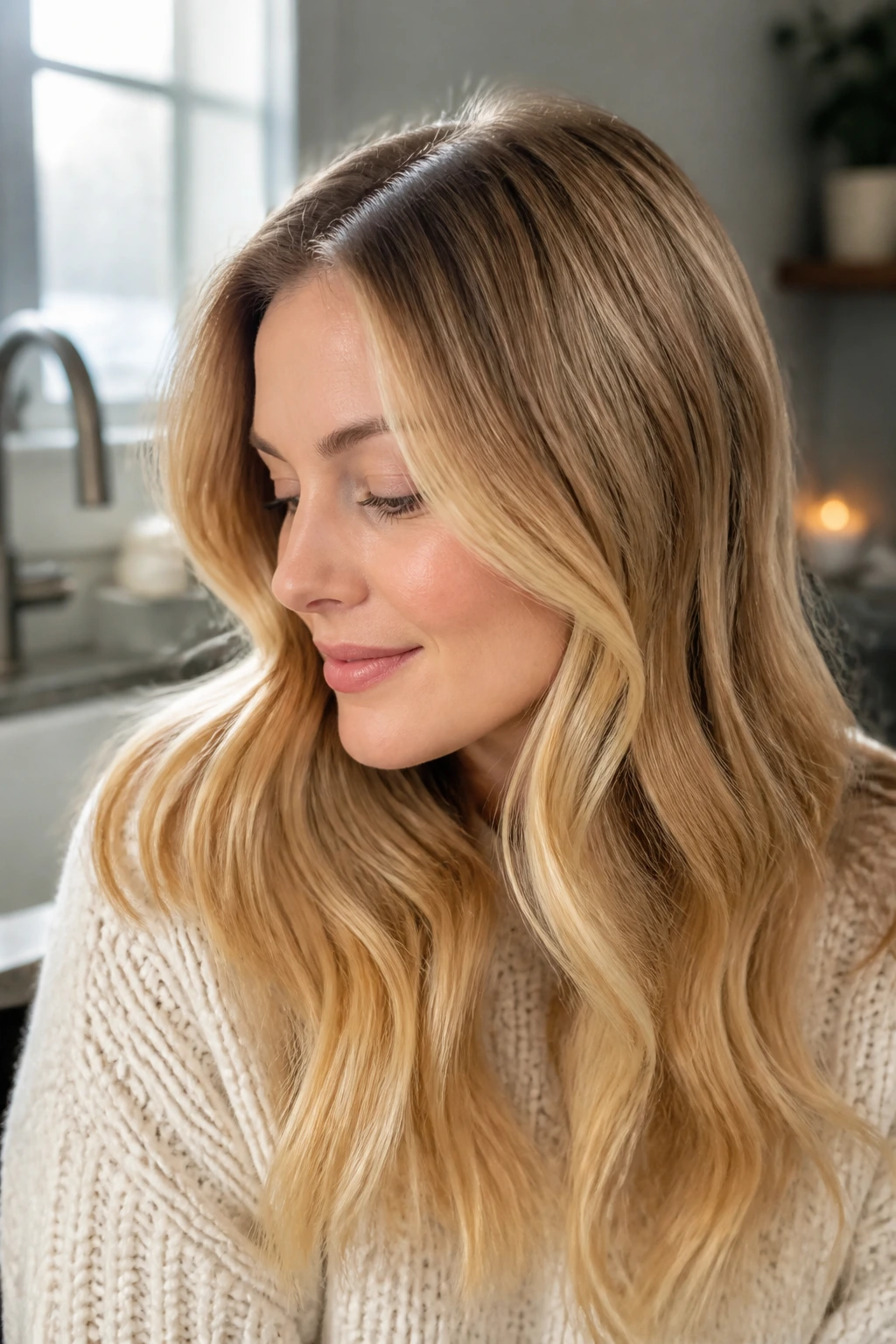
Honey blonde usually holds up best when you treat it like a tone, not a fixed color. That means regular glossing, careful washing, and not waiting until the hair looks dull to do something about it. A good rhythm is a gloss or toner refresh every 4 to 6 weeks if your blonde is light and porous, or every 6 to 8 weeks if the base is deeper and the grow-out is softer.
Wash with lukewarm water, not hot. Hot water lifts the cuticle and lets the gold slide out faster, especially on highlighted ends. Two to three washes a week is usually enough for most honey blondes, and dry shampoo can stretch the time in between without stripping the tone.
Purple shampoo should be a tool, not a lifestyle. Once a week is plenty for many people, and only for 1 to 3 minutes at a time. If the shade starts looking dusty or flat, stop using it and switch to a moisturizing mask instead.
For root touch-ups, all-over honey blonde usually needs more attention than balayage or a shadow-rooted look. Think 6 to 8 weeks for a cleaner salon refresh, or a bit longer if your look is built around contrast and lived-in depth. The more dimensional the color, the easier the grow-out.
Frequently Asked Questions About Golden Honey Blonde on Pale Skin
Will golden honey blonde wash out very pale skin?
It can, if the blonde is too yellow or too light with no depth underneath. A beige, peach, or caramel-leaning honey usually works better because it gives the face warmth without making the complexion look flat.
What honey blonde shade works best on cool undertones?
Beige-honey or peach-honey usually flatters cool undertones better than bright yellow gold. The small amount of softness in the tone keeps red or pink skin from looking sharper than it needs to.
Can I get honey blonde without bleaching my whole head?
Yes. Balayage, foilyage, and face-framing highlights can give you a honey effect without taking everything to the lightest level. That route also tends to grow out more quietly.
How often should honey blonde be toned?
Most honey blondes benefit from a gloss or toner refresh every 4 to 6 weeks if the hair is porous, or every 6 to 8 weeks if the color is deeper and less fragile. If the hair starts looking brassy sooner, the problem is usually sun, hard water, or too much heat styling.
Is honey blonde easier to maintain than platinum?
Usually, yes. Platinum needs constant toner and often more aggressive lifting, while honey blonde can live a little more naturally with a root shadow or softer highlights. The trade-off is that honey can drift warmer faster if the hair is porous.
What if my hair pulls orange instead of honey?
That usually means the lift stopped too early, or the toner was too warm for the base underneath. A colorist may need to lift one more level and then apply a beige or gold-beige gloss to get the warmth to sit correctly.
Does honey blonde work on curly hair?
Very much so, and often better than on straight hair. Curls give the color depth and shadows for free, which helps the gold look dimensional instead of flat. The main thing is not to overlighten every curl.
Can pale skin wear a darker honey blonde?
Absolutely. In fact, a slightly deeper honey bronde or caramel-honey often flatters pale skin more than an ultra-light blonde because the contrast gives the face shape. Lightness is not the whole story.
Soft Warmth That Holds
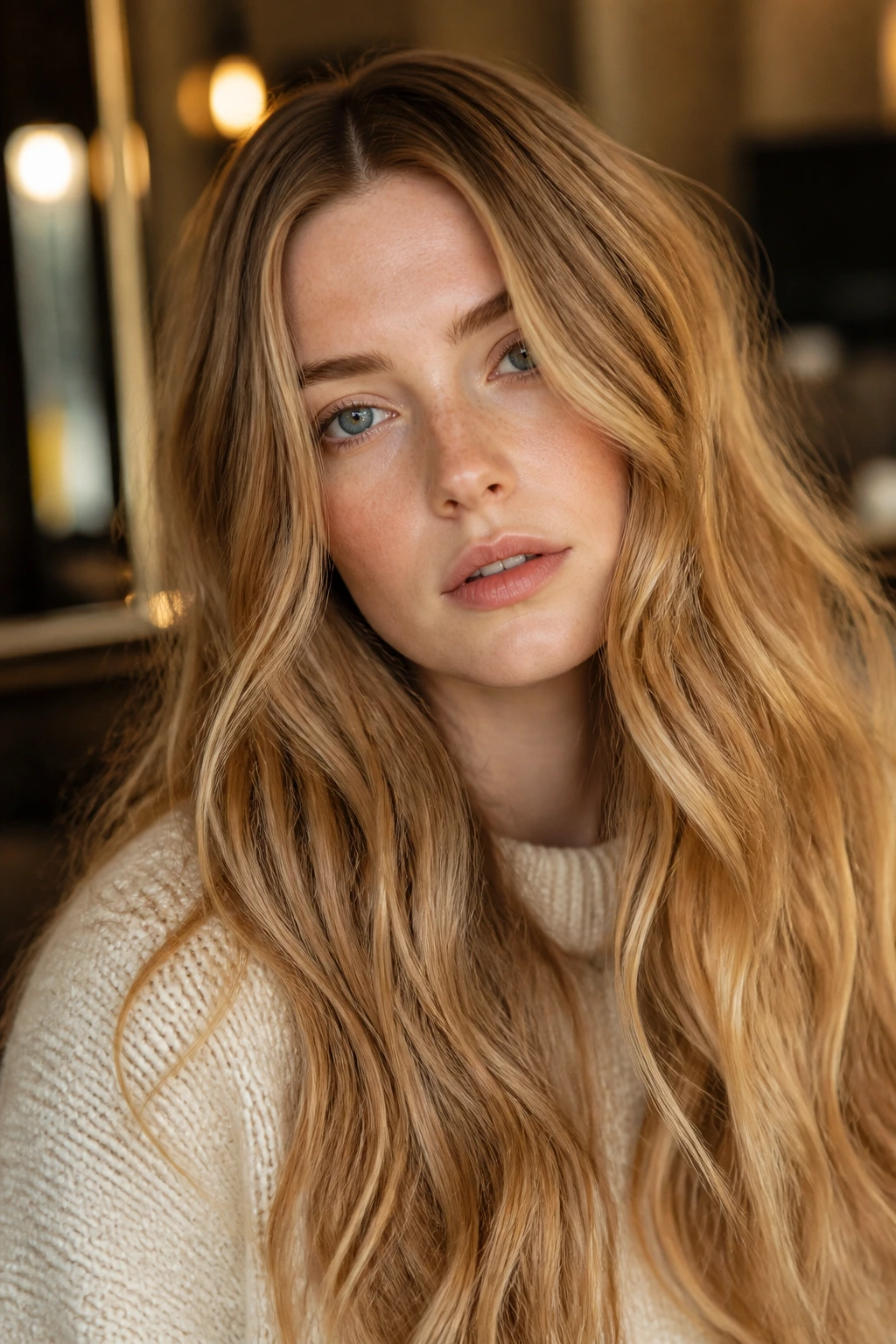
The best golden honey blonde hair color ideas for pale skin don’t chase the palest blonde in the room. They use depth, gloss, and the right kind of warmth to make fair skin look clearer and the hair look fuller. That’s the part people miss when they treat blonde like a single shade instead of a whole set of choices.
If you start with the undertone first and the lightness second, the results usually feel calmer and more expensive-looking. Not loud. Not flat. Just warm enough to wake up the face and soft enough to keep wearing for more than a week.
Start with the version that leaves you a little root depth or a little beige in the toner. That’s often where the prettiest honey lives, and it gives you room to adjust from there.