



Olive skin can do a strange, lovely thing next to brown hair: it makes the right brunette look richer, glossier, and more alive, while the wrong one can go flat fast. Put ash-heavy brown beside a green-gold complexion and the face can look tired. Add a few caramel ribbons, the right root depth, and a little bend through the ends, and suddenly the whole look wakes up.
That’s why sun kissed brunette hairstyles for olive skin sit in such a useful sweet spot. They keep the base brunette, which preserves that depth olive skin usually likes, then add brightness where light would naturally hit—around the face, across the top layer, and through the curves of waves or curls. The result is softer than blonde, less harsh than a heavy single-process brown, and a lot more forgiving when the grow-out starts showing.
I also like this category because it respects the hair instead of fighting it. The best versions don’t scream for attention. They let the cut carry movement, let the color add warmth, and leave enough shadow at the roots so the whole thing feels expensive in the quietest way. There’s a reason some brunettes look dull in photos and others seem to glow even indoors. Placement, tone, and texture matter. A lot.
Why This Collection Works on Olive Skin
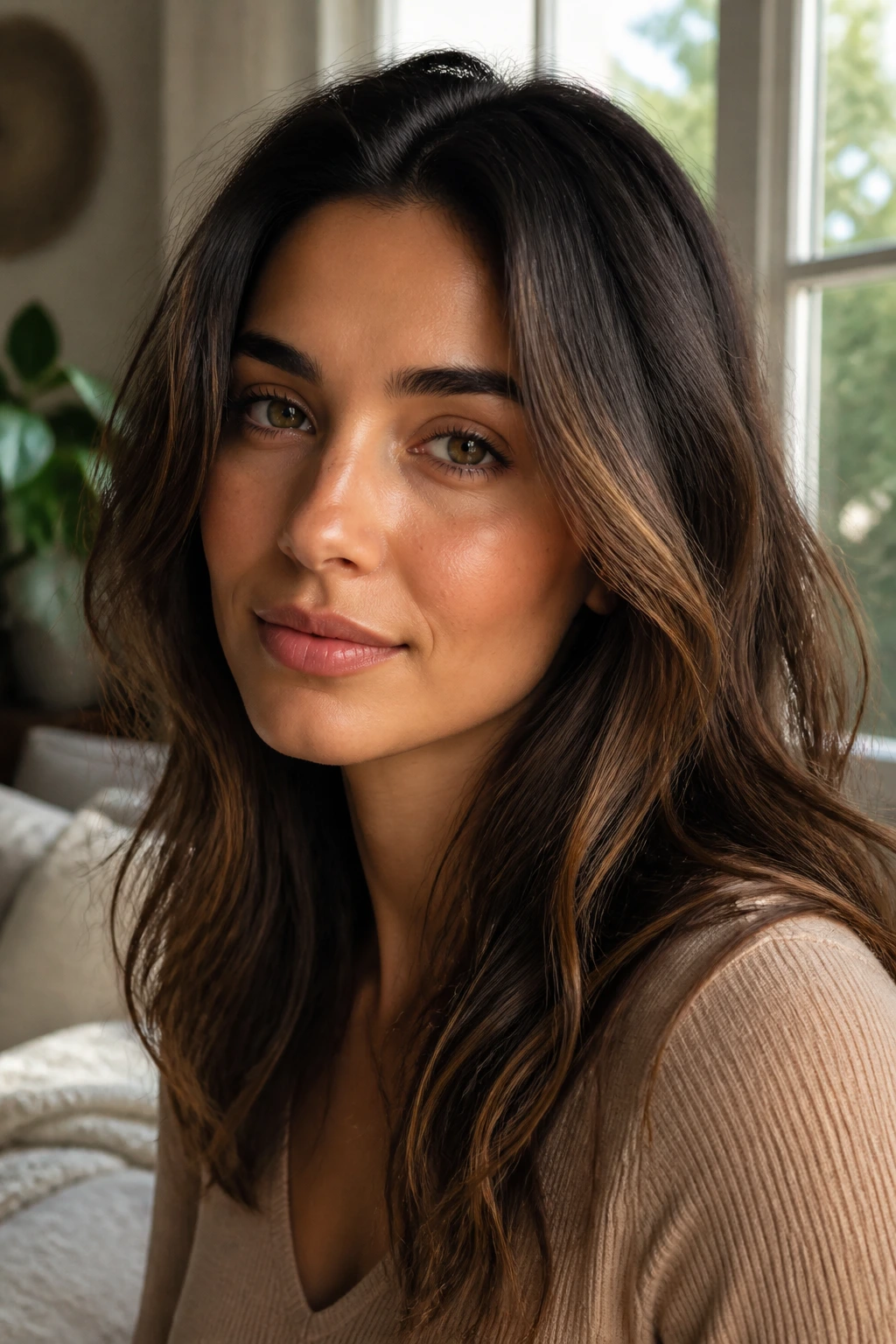
-
Neutral-to-warm brunettes keep the skin from looking gray. Chocolate, chestnut, mocha, and hazelnut shades sit in the lane that makes olive complexions look cleaner and more even.
-
Soft brightness near the face does the heavy lifting. A few lighter pieces around the cheekbones and temples give lift without turning the whole head stripey or loud.
-
Root shadow makes the color feel natural. When the darker base stays visible, the grow-out is softer and the highlights don’t fight the skin.
-
Texture matters as much as tone. Waves, bends, layers, and curls break up the color so the brunette reads dimensional instead of painted on.
-
These looks age well between salon visits. That matters. A good brunette should still look deliberate six weeks later, not like you lost a fight with your toner.
-
Olive skin can handle contrast, but not sloppy contrast. The best versions here keep the jump from base to highlight within a couple of levels, which is enough to glow without looking streaky.
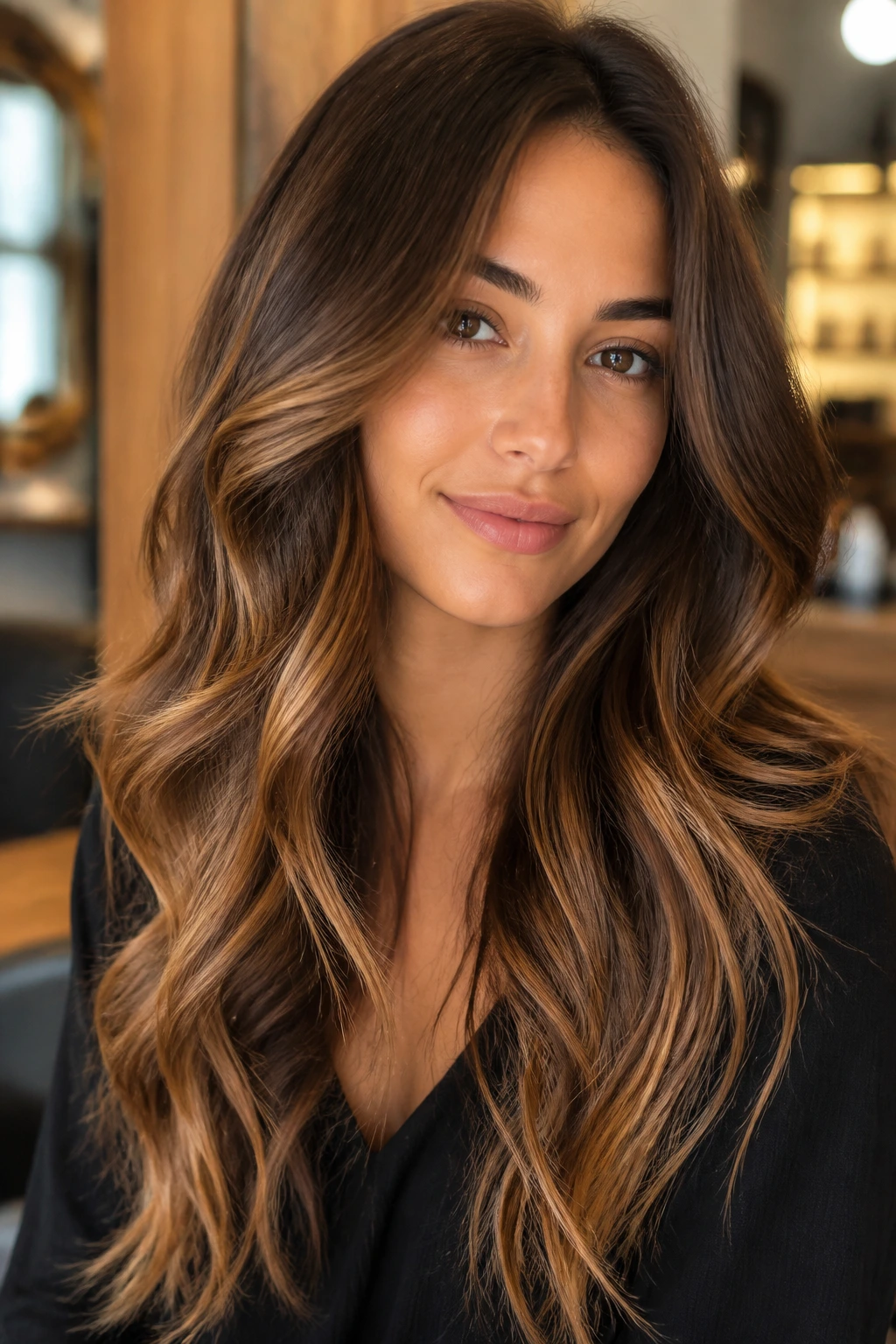
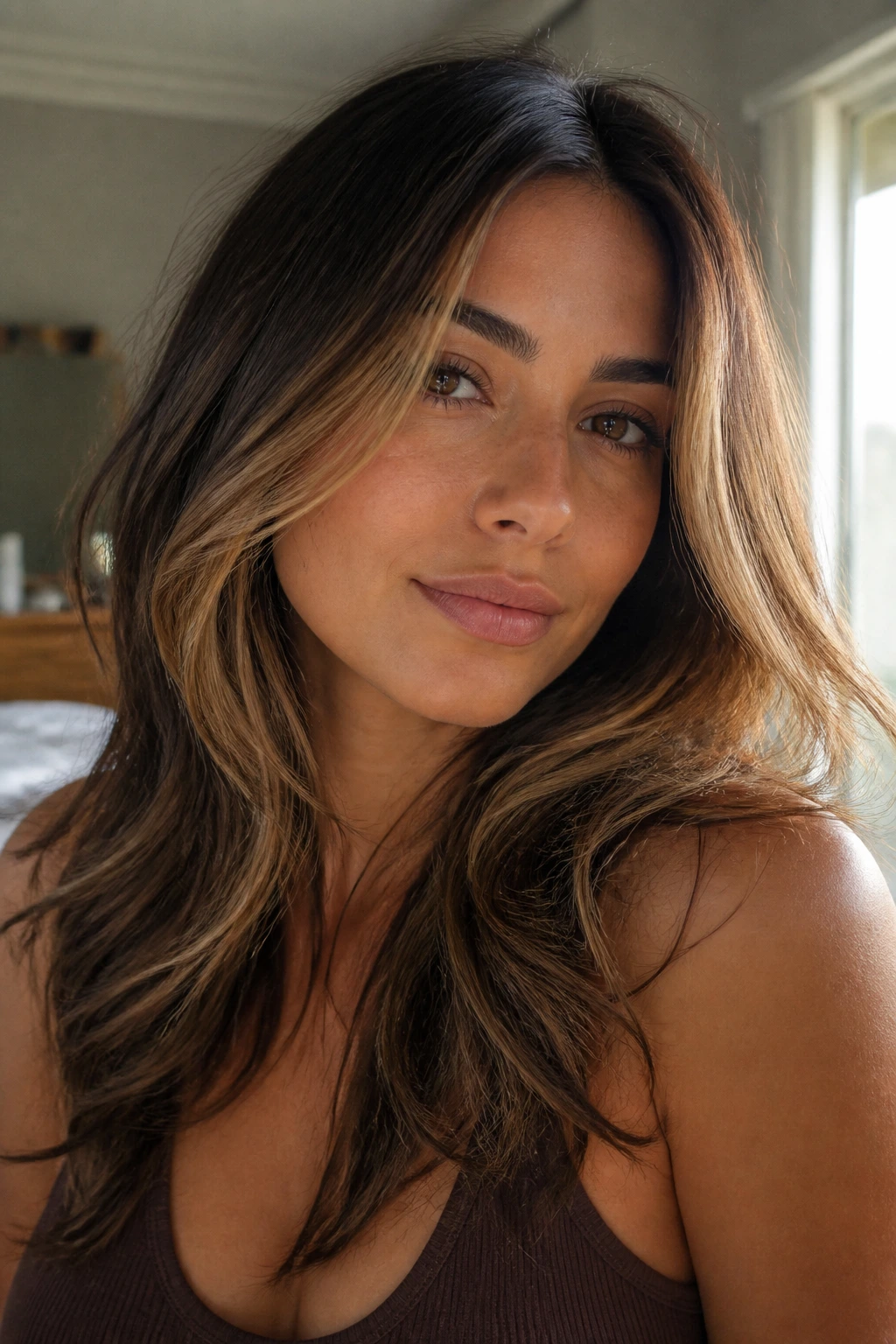
1. Caramel Ribbon Layers
Soft, long layers with caramel ribbons are one of those brunette looks that never seem to miss on olive skin. The movement comes first, then the color slides in like sunlight caught on satin. When the layers are cut well, the caramel pieces don’t sit on top of the hair; they weave through it.
Why It Works for Olive Skin
Ask for a level 5 or 6 brunette base with caramel balayage two shades lighter through the front and upper lengths. That keeps the warmth flattering instead of orange. Olive skin tends to look fresher when the highlight tone is beige-caramel rather than pumpkin-gold, and this cut gives the color space to breathe.
Quick Styling Note
Use a 1.25-inch curling iron and alternate direction on the mid-lengths, leaving the ends slightly straighter. That tiny bit of slack keeps the ribbons visible without making the hair look overdone. A single gloss serum on the ends is enough; too much and the layers clump.
Best for: medium to thick hair that needs movement.
Best mood: soft, polished, and not trying too hard.
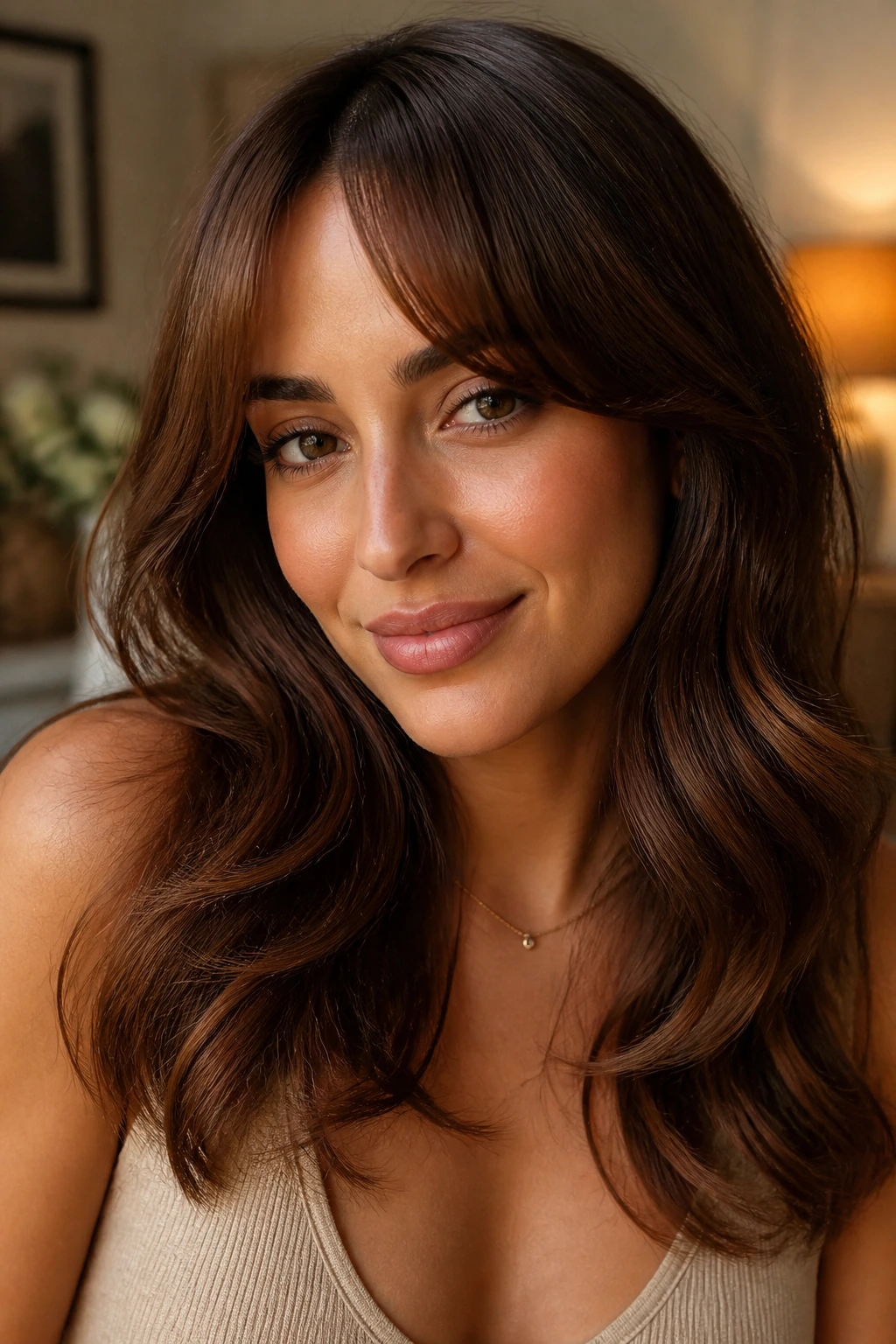
2. Chestnut Curtain Bangs
Chestnut curtain bangs are one of my favorite ways to make brunette hair feel lighter without actually taking the whole head lighter. The bangs open the face, the chestnut shade keeps the warmth grounded, and olive skin gets that subtle halo effect around the eyes and cheekbones.
What Makes It Different
Curtain bangs work because they break the face-framing section into two soft pieces instead of one heavy block. On olive skin, that matters. A solid blunt fringe can box the face in; a parted fringe lets the cheek color and undertones stay visible. Chestnut is the sweet part of the equation—rich enough to avoid flatness, warm enough to flatter.
How to Wear It
Blow-dry the bangs forward with a round brush, then flick them away from the face at the ends. Don’t overwork the root area. A tiny mist of flexible spray is enough, and if the bangs start separating in the afternoon, that’s fine. They look better with a little looseness anyway.
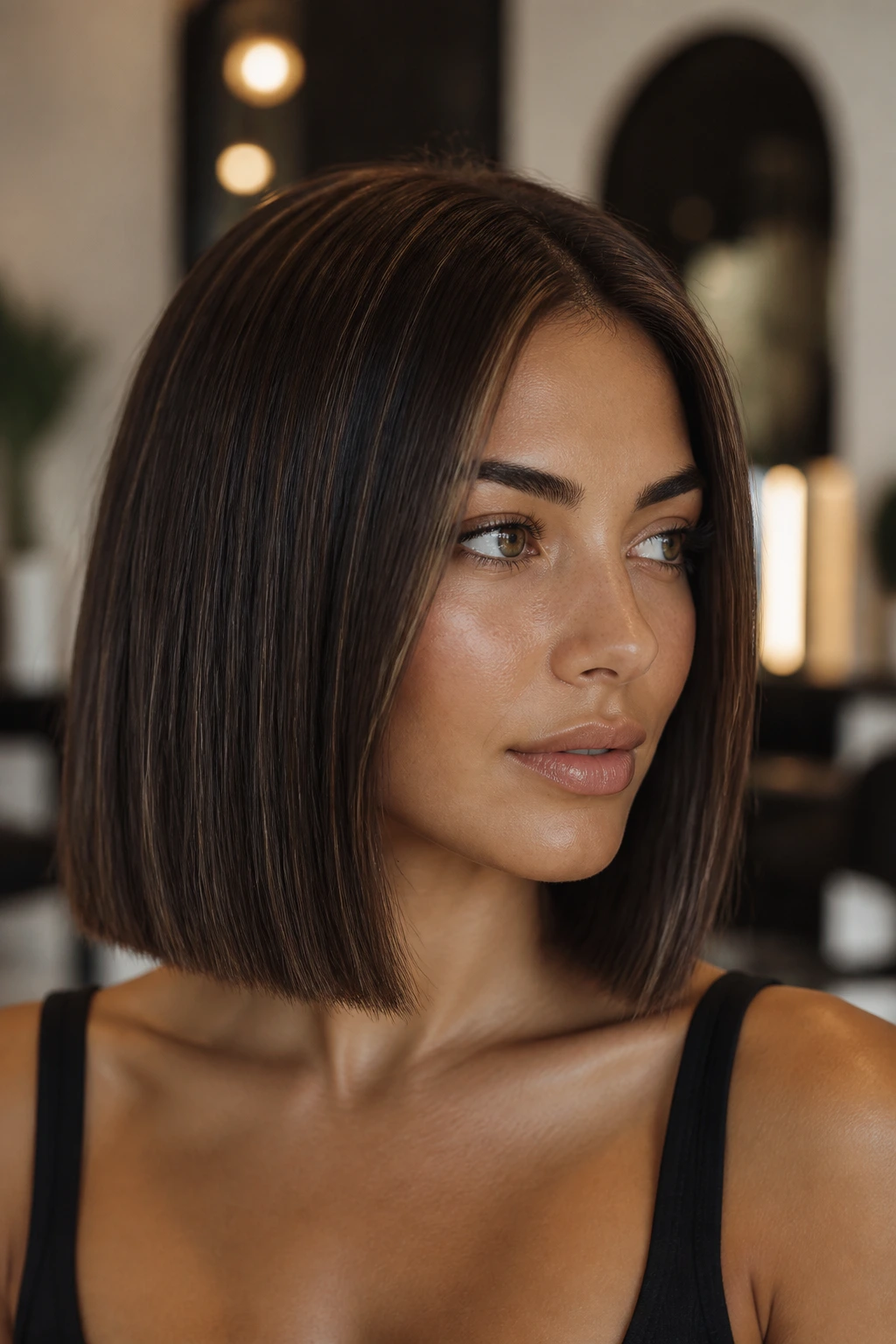
3. Mocha Blunt Lob
A blunt lob in mocha brown has a clean, calm look that olive skin wears beautifully. The cut is strong, the color is smooth, and the finish depends on shine rather than layers. It’s a sharp style, but not a harsh one.
Why It Flatters
The blunt edge gives the brunette shade a solid block of color, which makes mocha look deeper and more expensive. On olive skin, a mocha lob avoids the problem of too much warmth. It sits in that neutral middle ground where the complexion still shows through, which is the whole point.
Ask for This
Tell your colorist you want a deep mocha base with micro-babylights only around the front hairline. Tiny lights, not chunky ones. The color should look like it changed under indoor light, not like you had a highlight appointment and forgot to mention restraint.
This style is especially good if your hair is fine or straight, because the blunt perimeter makes the ends look fuller. Keep the blowout smooth, tuck one side behind the ear, and let the shine do the talking.
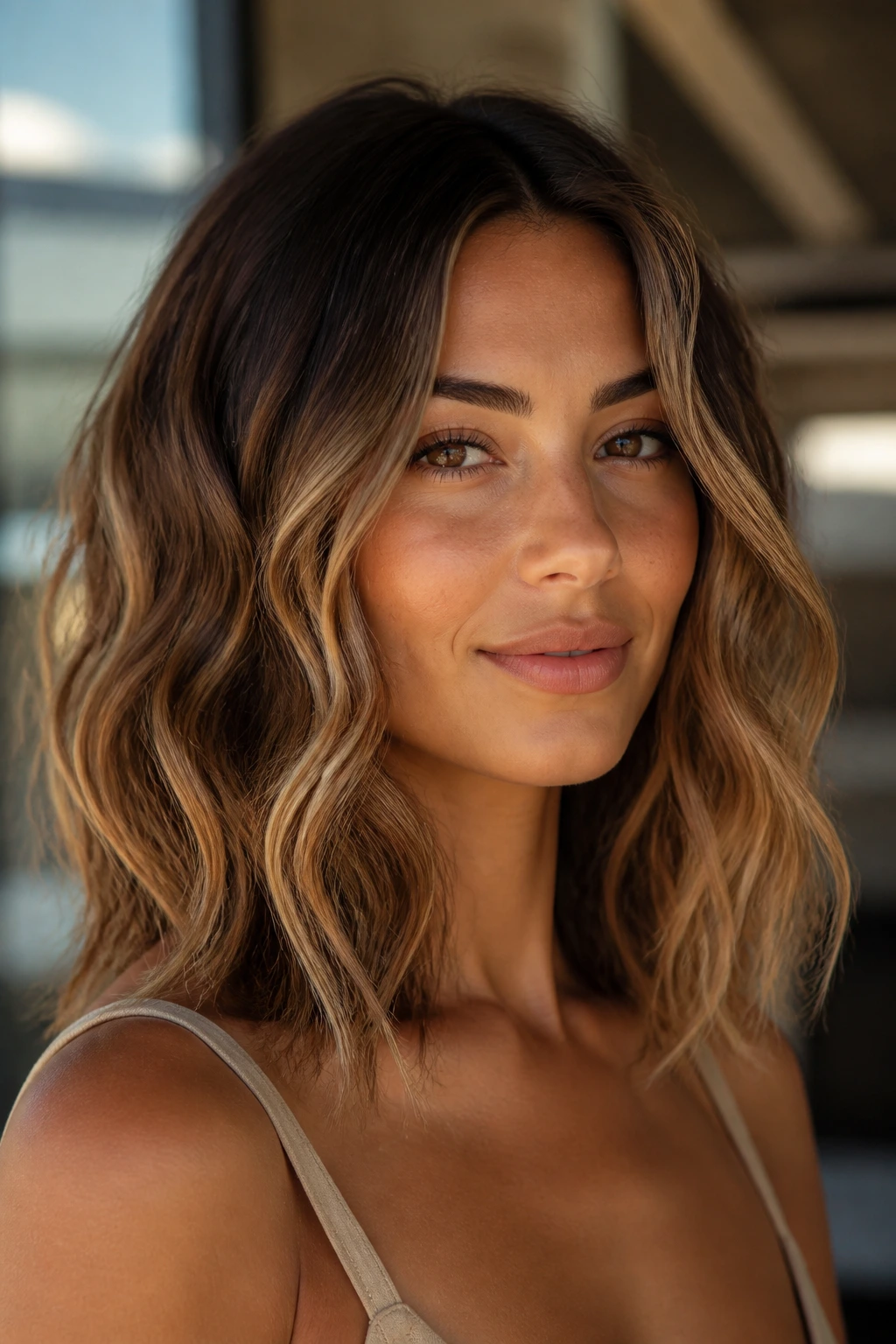
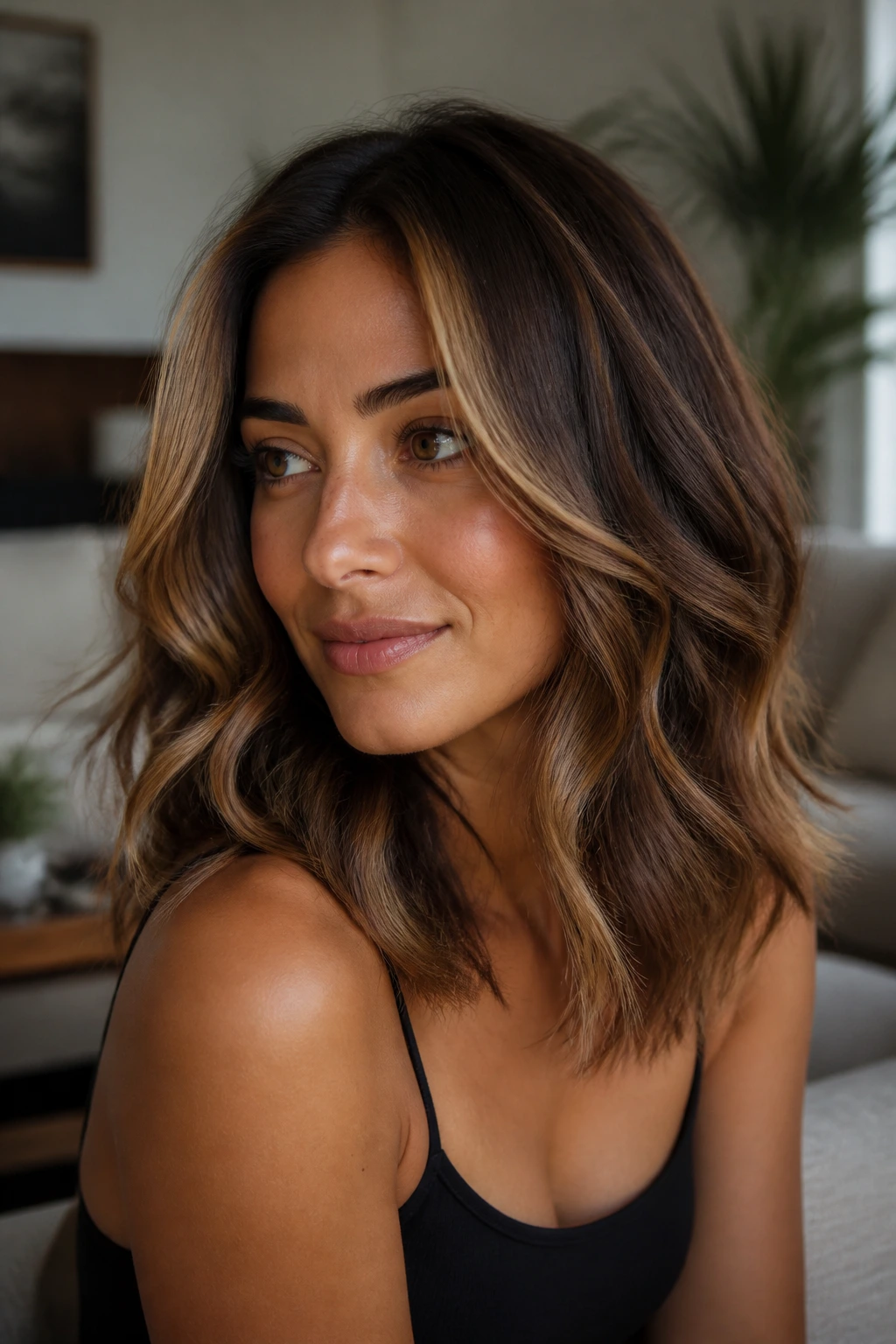
4. Hazelnut Beach Waves
Hazelnut beach waves are the relaxed brunette answer to olive skin that leans warm or neutral. The shade has enough gold to keep the hair from looking dusty, but not so much that it turns orange. The waves do the rest.
Why It Reads So Well
The loose S-bend in the hair breaks the light into little panels, and that makes hazelnut feel richer. This is one of those styles where the color looks more interesting in motion than it does on the hanger, which is a good thing. Olive skin benefits from movement near the face, especially when the wave starts just below the cheekbone.
Styling Cue
Use a salt-free texture spray or a light mousse before blow-drying, then wrap random sections around a wand and leave the last inch out. That undone end keeps the style from looking too beachy in the literal sense. You want softness, not crunchy vacation hair.
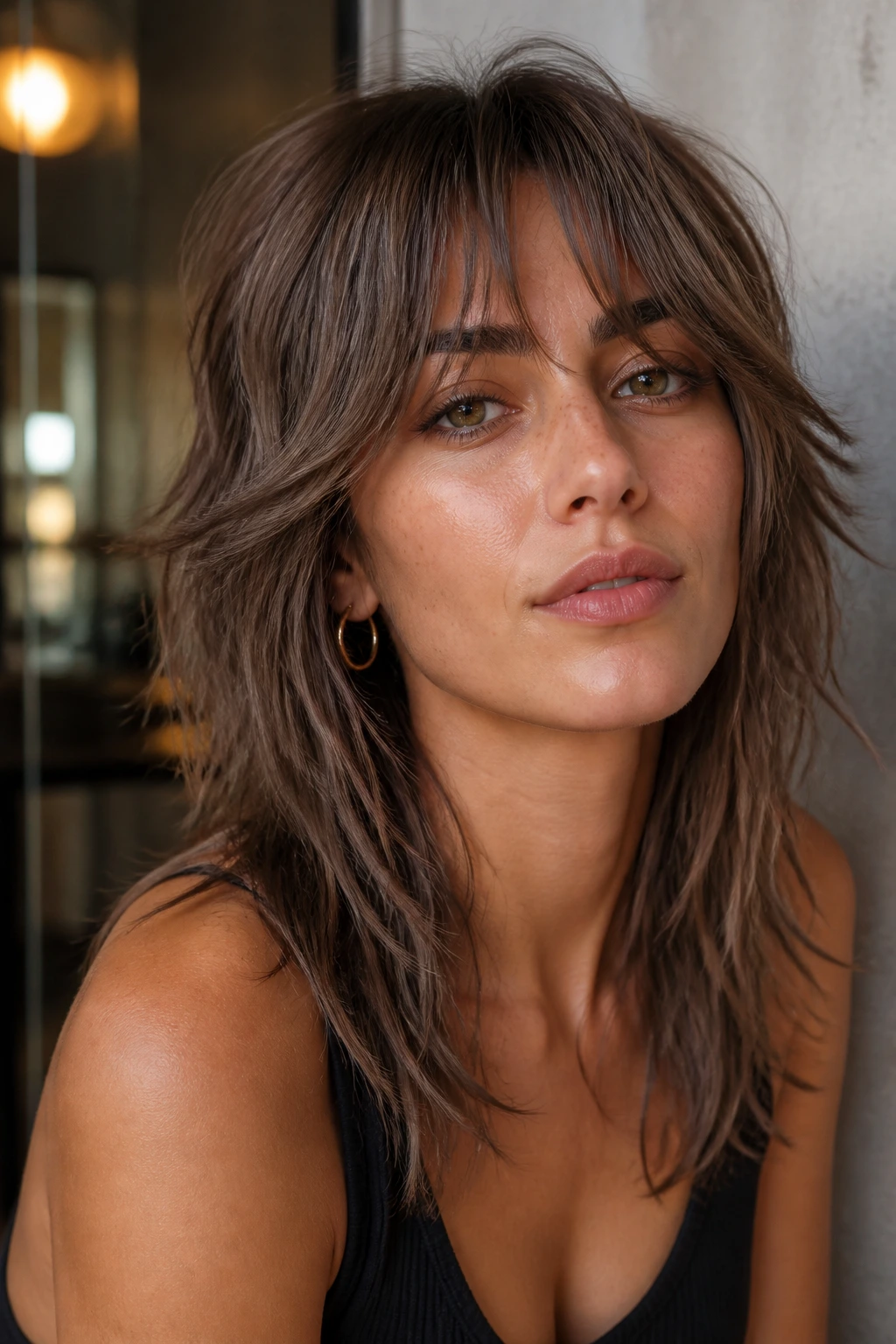
5. Mushroom Brown Shag
Mushroom brown is the cooler cousin in this list, and olive skin can wear it especially well if the complexion has more green-neutral undertones than golden ones. The shag cut keeps the shade from falling flat, because shaggy layers create shadow, movement, and a little edge.
What to Watch For
This is not the place to go heavy on yellow-gold highlights. Mushroom brown works because it’s muted, with a beige-ash cast that still has depth. On olive skin, too much ash can look dull, but too much warmth can look brassy. Mushroom brown lives in the middle, and the shag keeps it interesting.
Styling It Right
Rough-dry the roots, then bend random pieces with a flat iron so the ends kick in different directions. If every wave goes the same way, the cut loses its grit. A little dry texture at the crown makes the whole shape look better than a polished finish would.
6. Honey Face-Framing Layers
If you want the simplest possible glow-up, this is it. Honey face-framing layers keep the brunette base intact and add brightness right where olive skin benefits most: around the eyes, cheeks, and jawline. Nothing about it feels forced.
Why It Works
The color placement matters more than the exact shade name. Honey pieces should live in the front third of the head and along the top layer, then fade into a deeper brown through the back. That keeps the front bright and the rest grounded. It also helps the style look intentional from every angle, not just straight on.
A long layer cut makes this look even better, because the lighter front pieces can curve away from the face instead of hanging straight down. Use a blow-dryer with a concentrator nozzle and direct the front sections back on themselves. It opens the face without looking like a pageant blowout. Slightly softer. Much better.
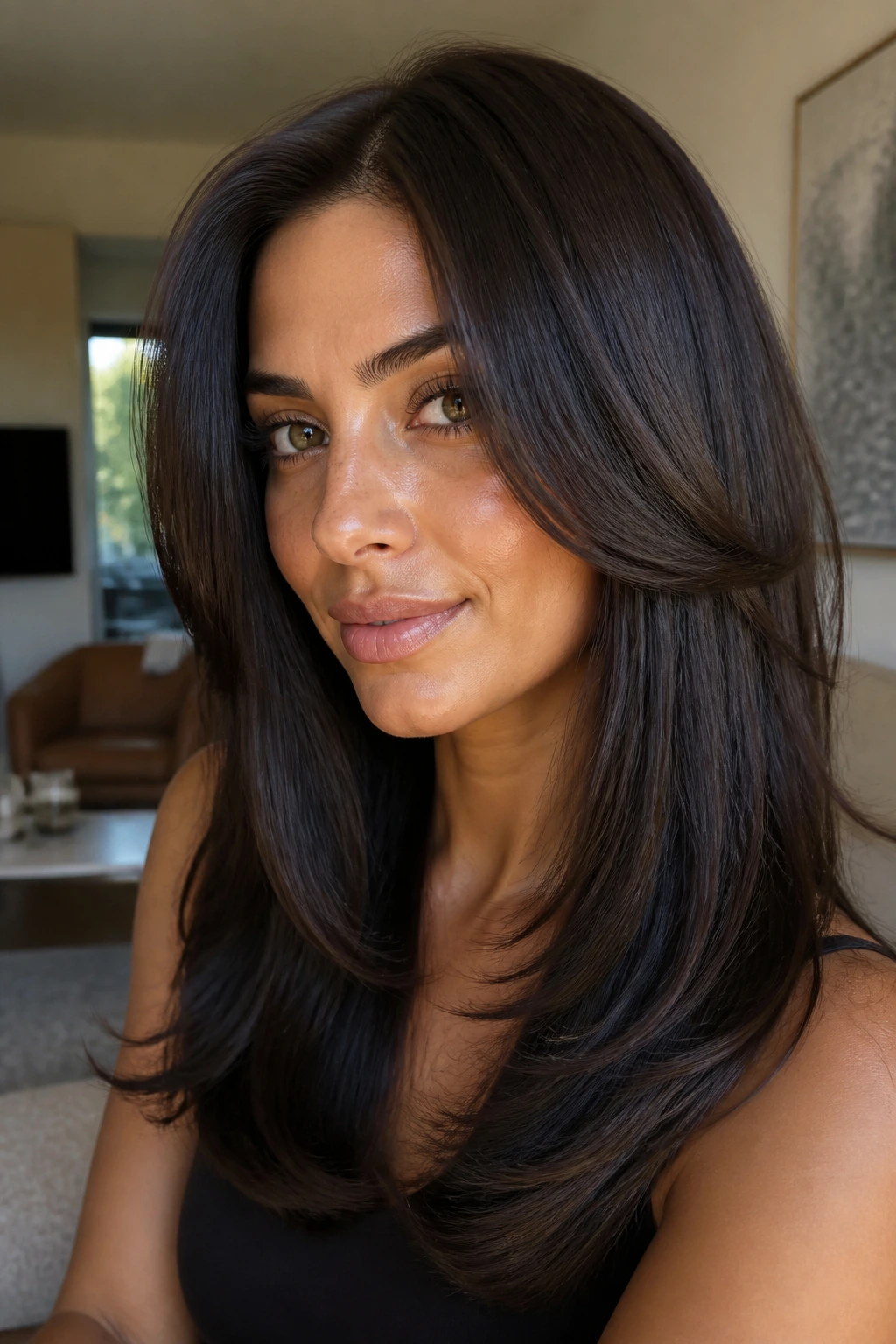
7. Espresso Sleek Blowout
Espresso brown with a smooth blowout is the brunette equivalent of a crisp white shirt. Simple. Controlled. Strong enough to stand on its own. Olive skin often looks especially clean next to a deep, cool-leaning brown like this, as long as the finish has gloss and the cut has shape.
Why It Stands Out
This style relies on contrast, not brightness. Espresso makes olive skin look clearer when the complexion has enough warmth or green depth to hold the dark brown. If the hair is too matte, though, the whole thing can go flat. Shine is not optional here.
Best Styling Move
Use a large round brush or a blow-dry brush and turn the ends under just enough to show shape. A smoothing cream at the mids and a pea-size drop of serum on the ends keep the finish neat. No heavy oils. They’ll drag the silhouette down.
8. Cinnamon Swirl Curls
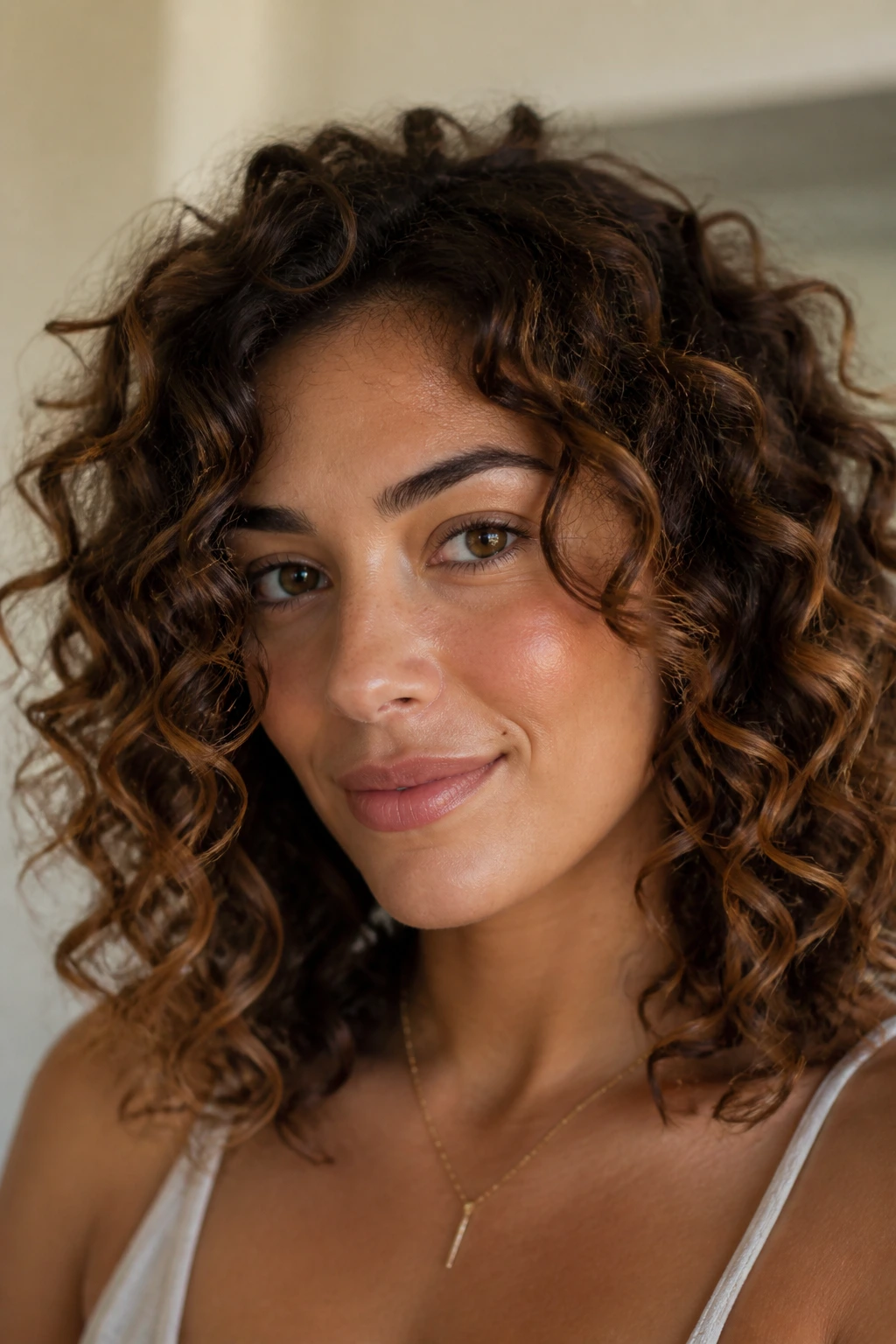
Cinnamon swirl curls bring a little warmth to brunette hair without crossing into copper territory. That’s the difference. On olive skin, especially medium olive, the warmth in cinnamon can light up the complexion as long as the highlights stay soft and the curls stay bouncy.
A Practical Detail
Ask for a brown base with thin cinnamon-toned pieces painted through the mid-lengths, not stripes around the crown. Curls reveal everything, and chunky highlight placement looks rough fast. Soft ribbons layered through the curl pattern read much better.
How to Style It
Diffused curls look best when they’re a bit separated. Scrunch in a cream, diffuse until about 80 percent dry, then let the rest air-dry. Once the curls are set, break them with a tiny bit of lightweight oil on your palms. Not much. Just enough to kill frizz at the ends.
9. Bronde Money-Piece Lob
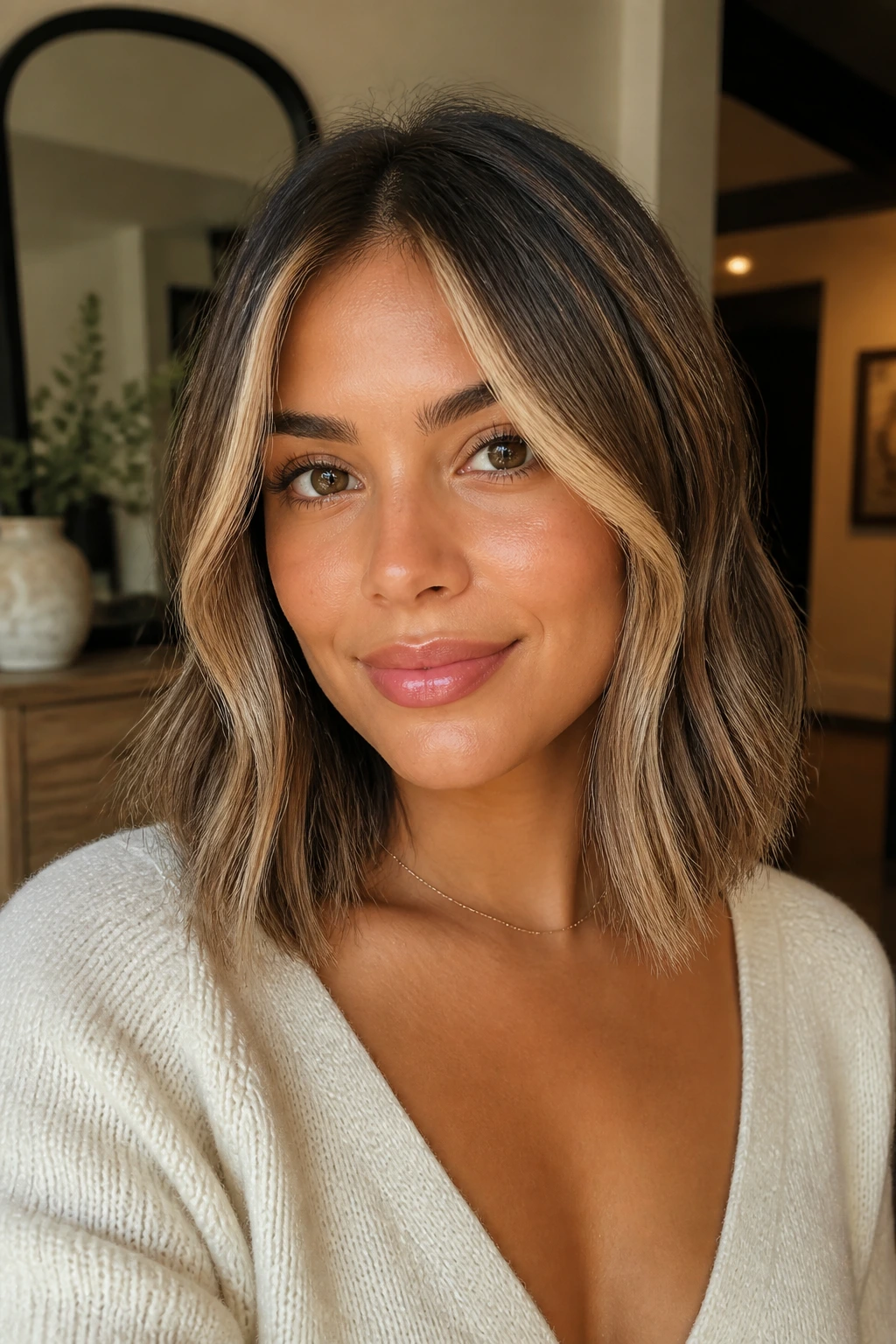
This is the louder sister in the collection, but it still behaves. A bronde money-piece lob gives olive skin brightness right at the front while keeping the rest of the brunette in a wearable zone. The lob length keeps the look modern and easy to manage.
Why It Works
The money piece is the brightening tool here, not the whole story. If you keep the base around level 5 or 6 and lift just the front pieces into a soft beige-gold, the result has lift without losing brunette identity. Olive skin usually likes that front-facing brightness because it catches light where the face needs it most.
Quick Colorist Note
Tell your stylist you want the front pieces brightened, but not bleached all the way to yellow. Beige is the target. If the face frame goes too pale, it can wash the skin out. A subtle shadow root fixes that nicely.
10. Toasted Walnut Butterfly Cut
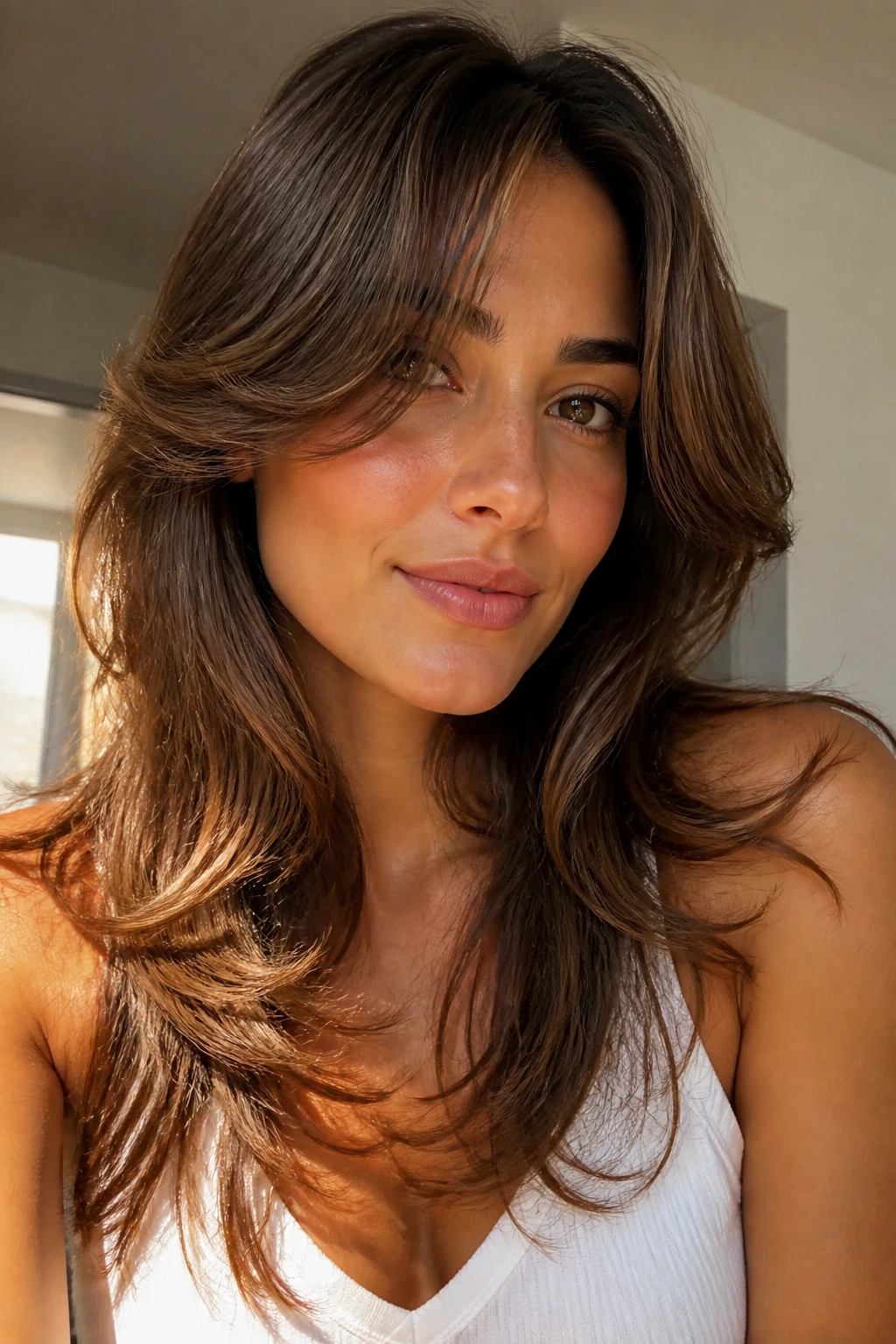
The butterfly cut already gives you movement through the top layers and softness around the face. Add toasted walnut brown, and the whole shape starts to look expensive in a very low-key way. It’s one of the better styles for people who want body without obvious layering.
Why It Flatters Olive Skin
Walnut brown sits between neutral and warm, which is where a lot of olive skin finds its balance. The cut keeps the front pieces long enough to flatter the jawline, while the shorter upper layers give the color dimension. That means the highlights don’t need to work as hard.
A round brush is your friend here, but not in a stiff, salon-perfect way. Flip the top layers away from the face and leave the ends soft. The shape should move when you do.
11. Milk-Chocolate Blunt Bob
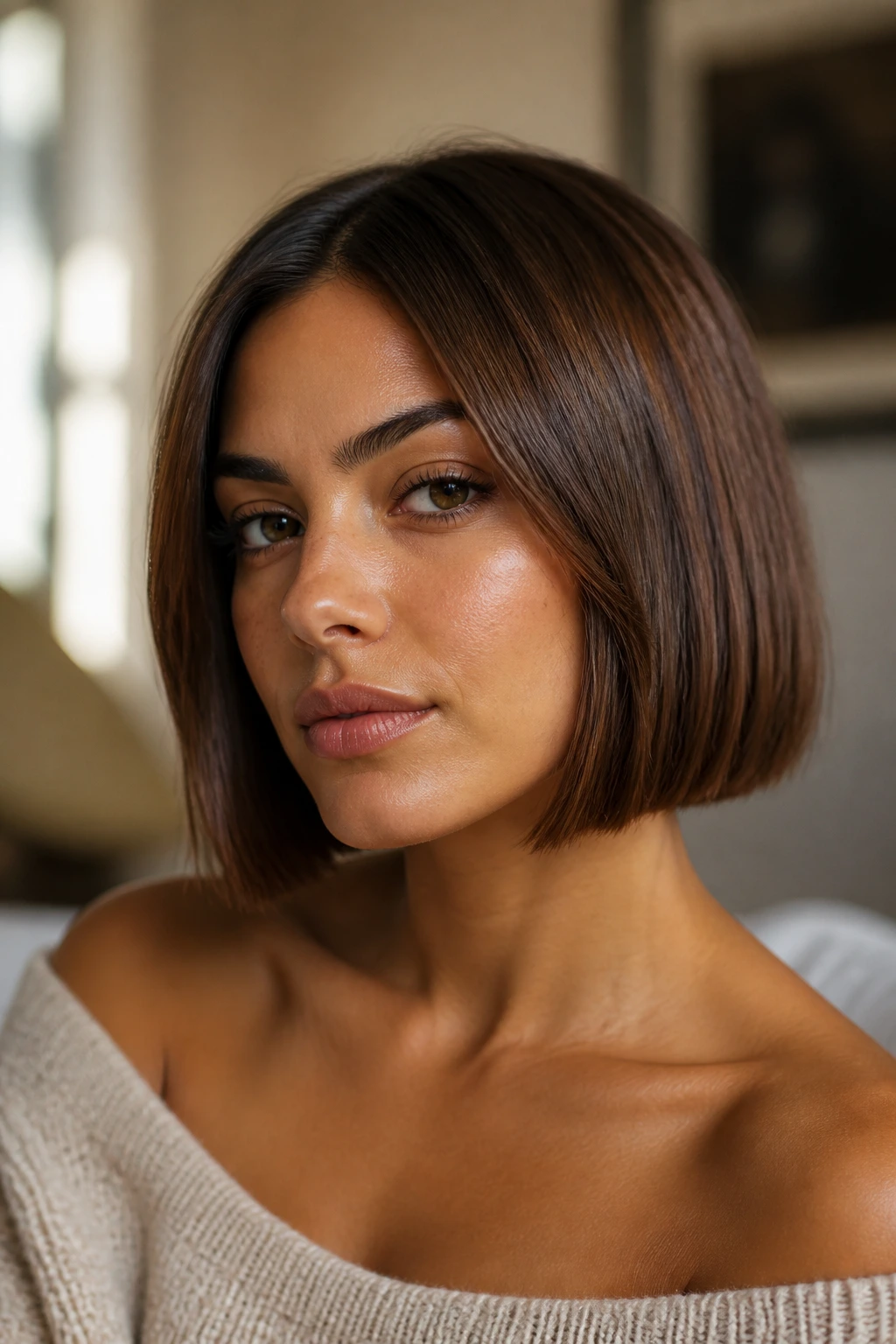
Milk-chocolate brown has a smooth, soft warmth that olive skin tends to love, especially when the cut is short and tidy. A blunt bob gives the color a clean edge, and that edge makes the shade look richer. There’s no clutter. That’s the appeal.
What Makes It Special
Longer hair can sometimes hide a brunette shade under too much movement. A bob puts the color on full display. If your skin leans olive with a neutral cast, milk-chocolate gives you enough warmth to avoid looking washed out, but not so much that it gets red.
Styling It
Keep the blow-dry smooth and the ends tucked just slightly under. A flat iron pass on the top layer can sharpen the line if your hair is wavy. The trick is not to overdo the shine spray. One light mist is enough, or the bob starts to look greasy instead of glossy.
12. Soft Auburn Brunette Waves
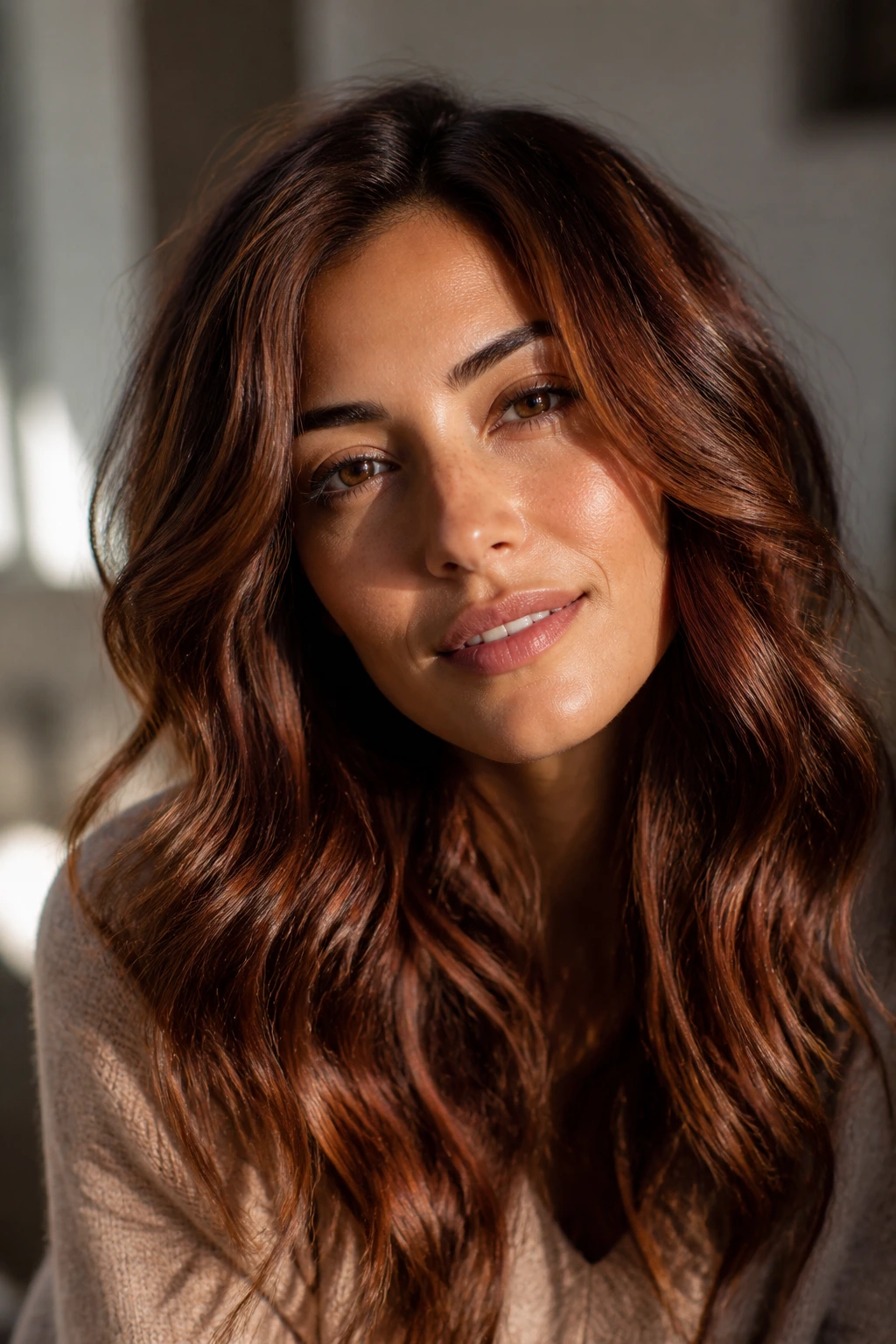
Auburn-tinged brunette can be tricky on olive skin, but when the red is softened and the wave pattern is loose, it can be striking. The key is mute, not bright. Think roasted chestnut with a touch of spice, not copper penny.
Why It Can Work
Olive skin with warmer undertones often looks lively next to a brown that has a restrained auburn cast. The waves help keep the color from reading too red by breaking it into soft shifts. If the auburn is strong and shiny, though, the face can look flushed. Mild is better.
Ask For This
A demi-permanent gloss in chestnut-auburn territory works better than a permanent red-brown blast. That gives you control. If the color feels too loud after the first wash, a brunette gloss can calm it down quickly.
13. Sable Side-Part Layers
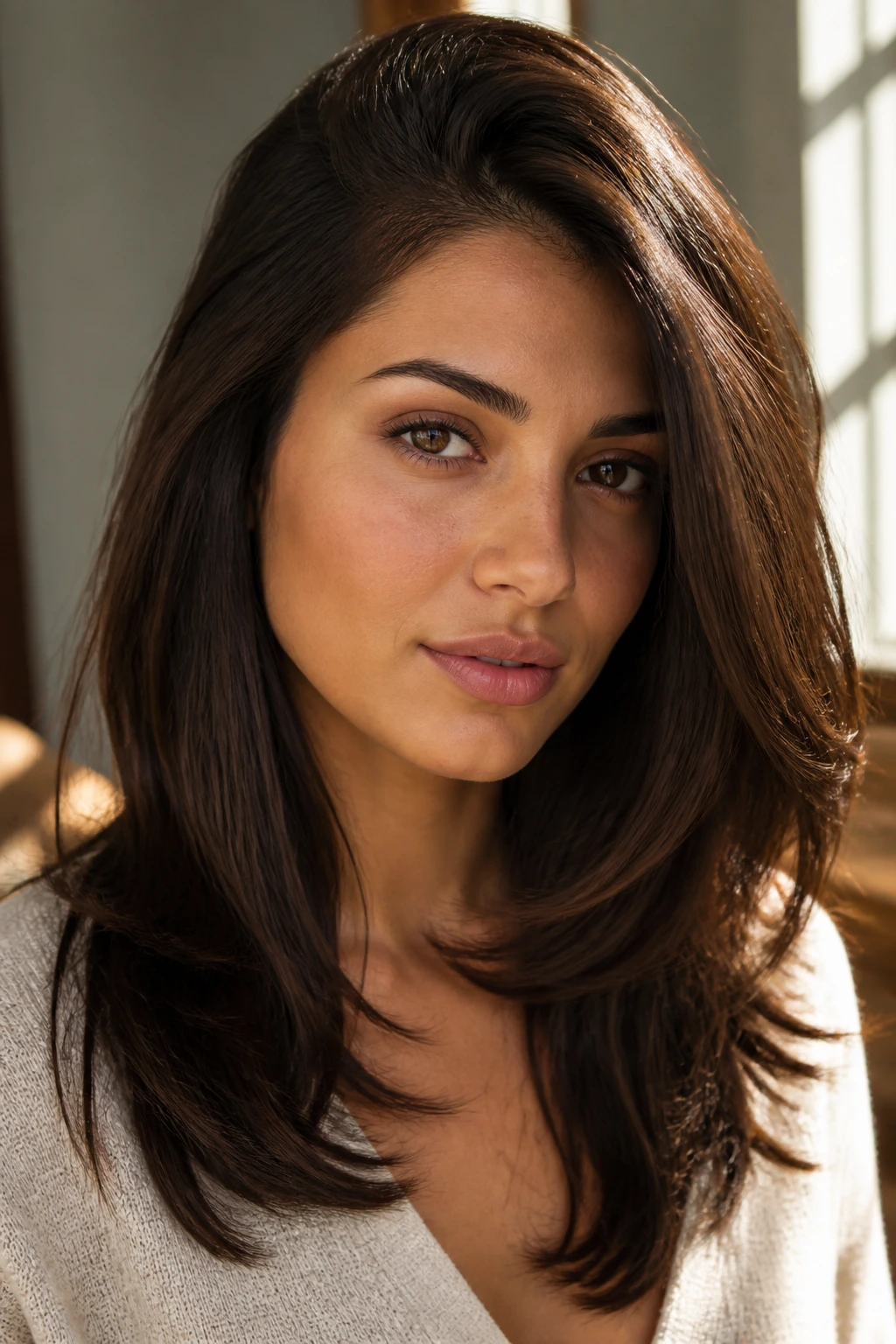
A deep side part changes the whole feel of a brunette cut. On olive skin, sable brown with side-part layers gives the face one strong line to play against, which can make cheekbones and eyes look sharper. It’s understated, but not soft in the boring sense.
The Shape Matters
Side parts are especially good if your hair naturally falls flat in the center. The lift at the root creates volume where the eye lands first. Sable brown, being deep and cool-neutral, keeps the overall look grounded. No obvious streaks needed.
Best Use Case
If you like wearing your hair blown out or tucked behind one ear, this is a strong pick. It also works well for straight hair that needs a little drama without going into full editorial territory. A root-lifting spray at the crown will hold the part better than dry shampoo alone.
14. Maple Brown Mermaid Layers
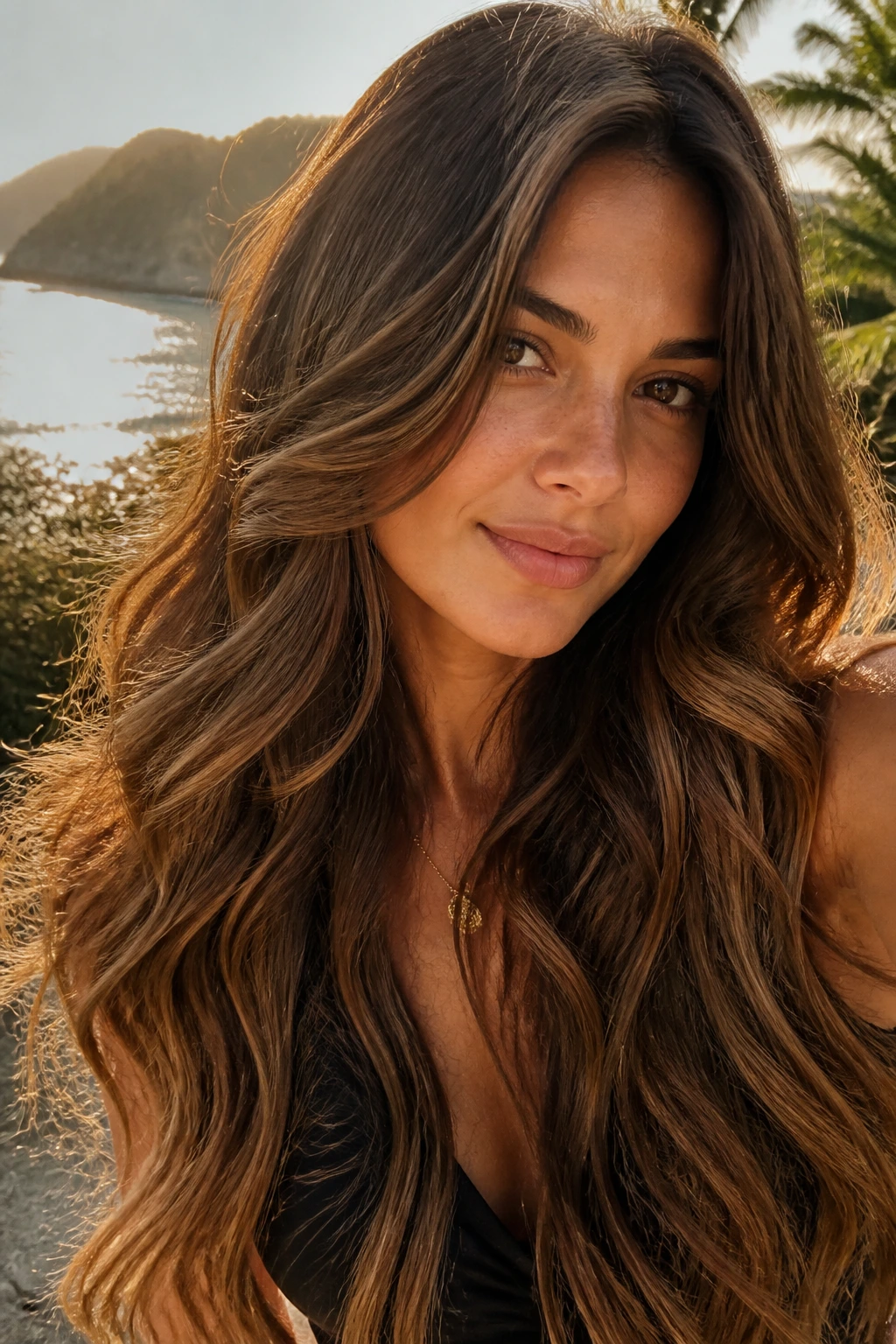
Maple brown carries more warmth than espresso or sable, and the mermaid-length layers give that warmth room to move. Olive skin with golden or neutral undertones often looks especially vivid here. Long hair can look heavy if the color is too flat; maple brown avoids that.
Why It Reads Well
The lighter brown notes show up best through waves and long layers, where the hair catches light from several angles. The shade doesn’t need to be super bright to read as sun-kissed. A little reflective warmth through the mids and ends does plenty.
Styling Tip
Use a 1.5-inch iron or big rollers if you want the waves to stay broad and soft. Tight curls make this color feel busier than it should. And if you have naturally long hair, keep the ends trimmed every 8 to 10 weeks so the layers don’t hang tired at the bottom.
15. Bronze Glaze High Ponytail
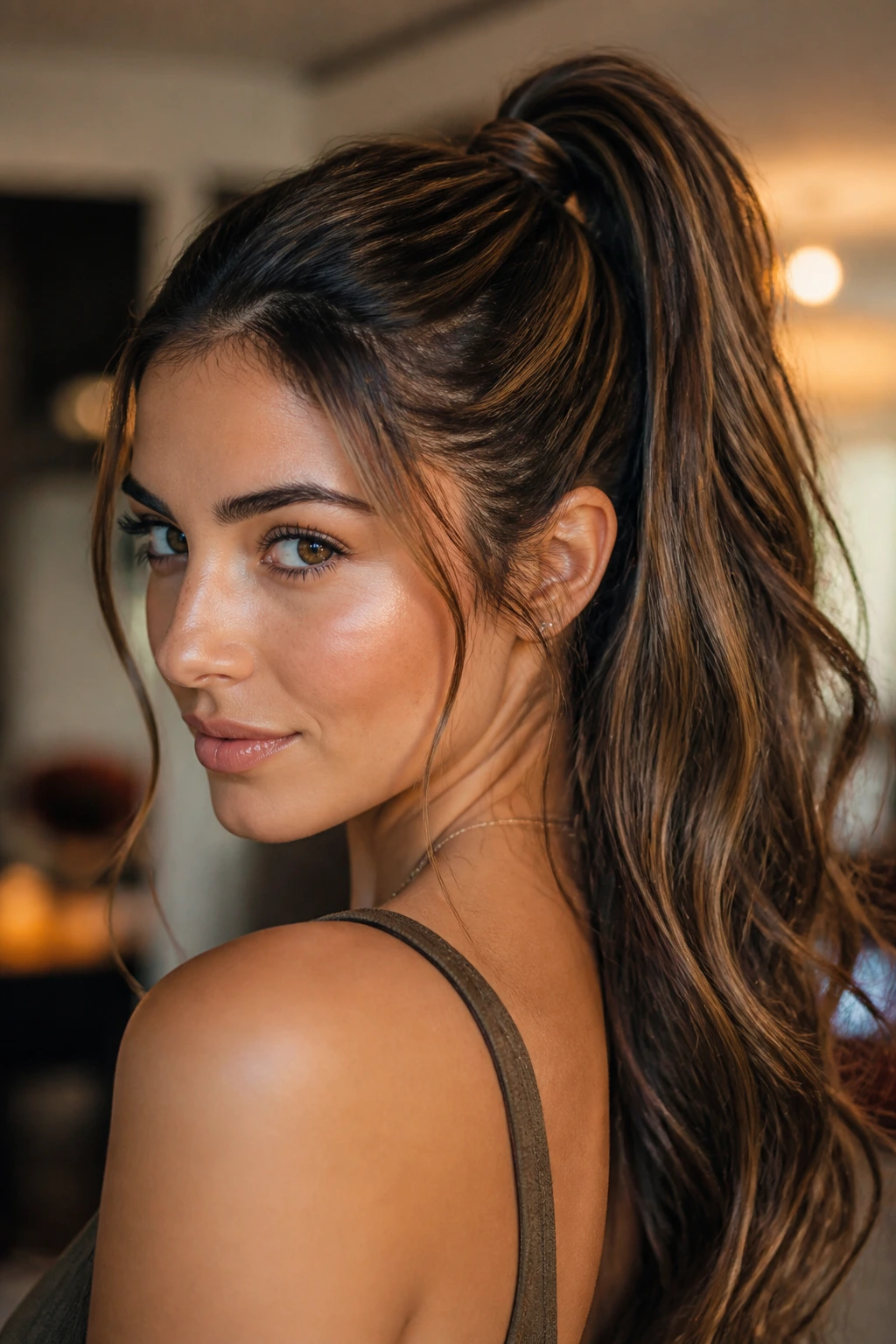
A high ponytail with a bronze glaze is one of those styles that looks like you put in more effort than you did. The lift at the crown gives olive skin a clean frame, and the bronze-toned brunette keeps the pony from looking severe. It’s polished, yes, but still readable from across a room.
Why It Works
The high ponytail exposes more of the face, so the color around the hairline matters. Bronze is warm enough to flatter olive skin without going orange, especially if the shine is kept smooth. If your hair is long and one-length, the ponytail can look heavy; soft face layers fix that immediately.
Style It Cleanly
Brush the hair up with a boar-bristle brush, wrap a small section around the elastic, and smooth the top with a light cream. The pony should feel taut at the crown and soft through the tail. That contrast is what gives it shape.
16. Almond Toned Long Curls
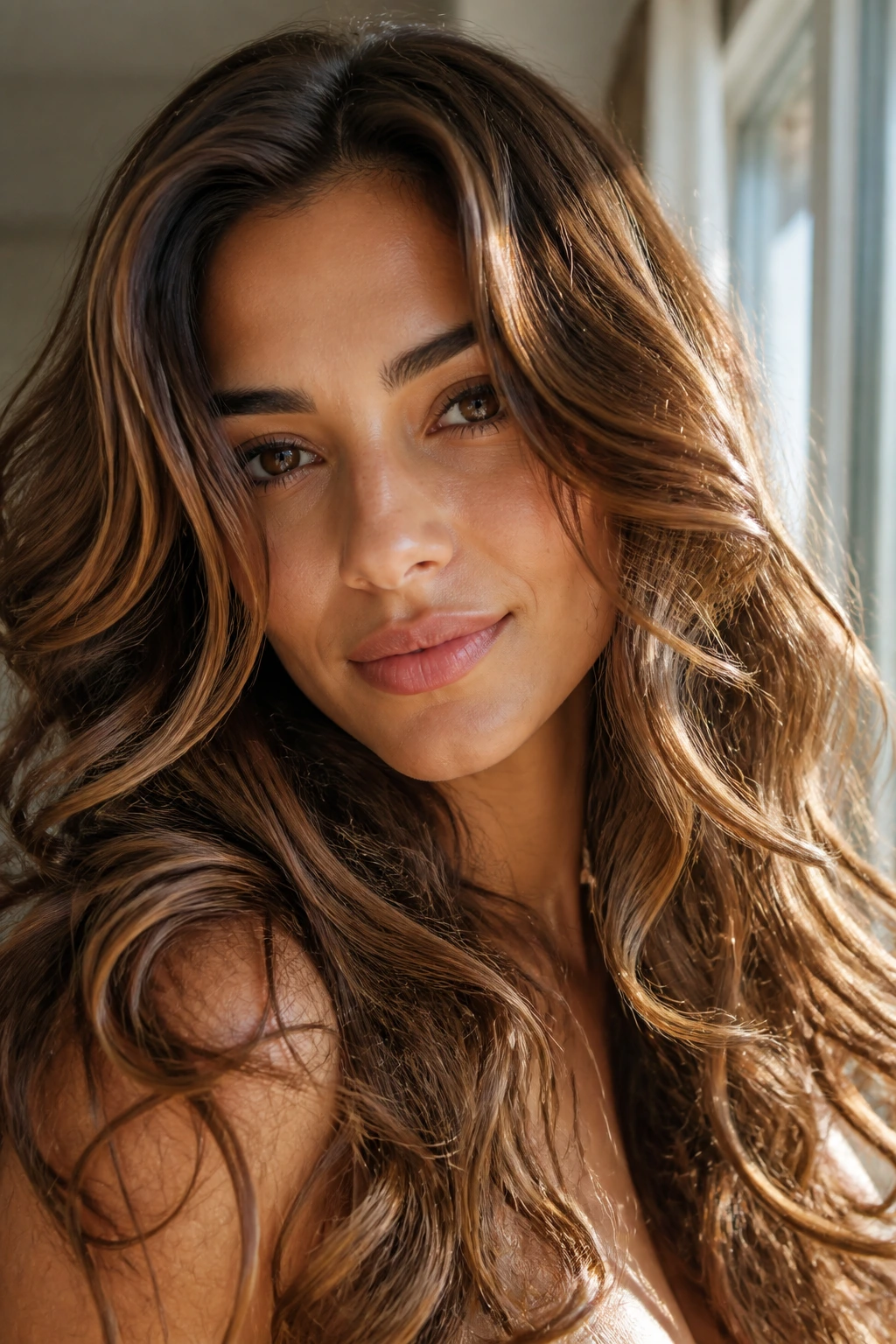
Almond brown sits in a gentle neutral zone that olive skin handles beautifully. On long curls, it gives the hair a soft, creamy depth without the orange edge that can happen with stronger caramel. If you like brunette color that feels airy but not blonded, this is a strong lane.
What to Ask For
Use almond-toned ribbons through the top layer and keep the underside deeper. That creates a natural shadow effect when the curls bounce. It also keeps the hair looking fuller, which matters if your strands are fine or medium.
The curls themselves should be loose and touchable, not springy and stiff. A soft hold cream on damp hair and a medium-barrel wand on dry hair can get you there. Let a few ends stay imperfect. That keeps the look from turning pageant-y.
17. Cappuccino Collarbone Cut
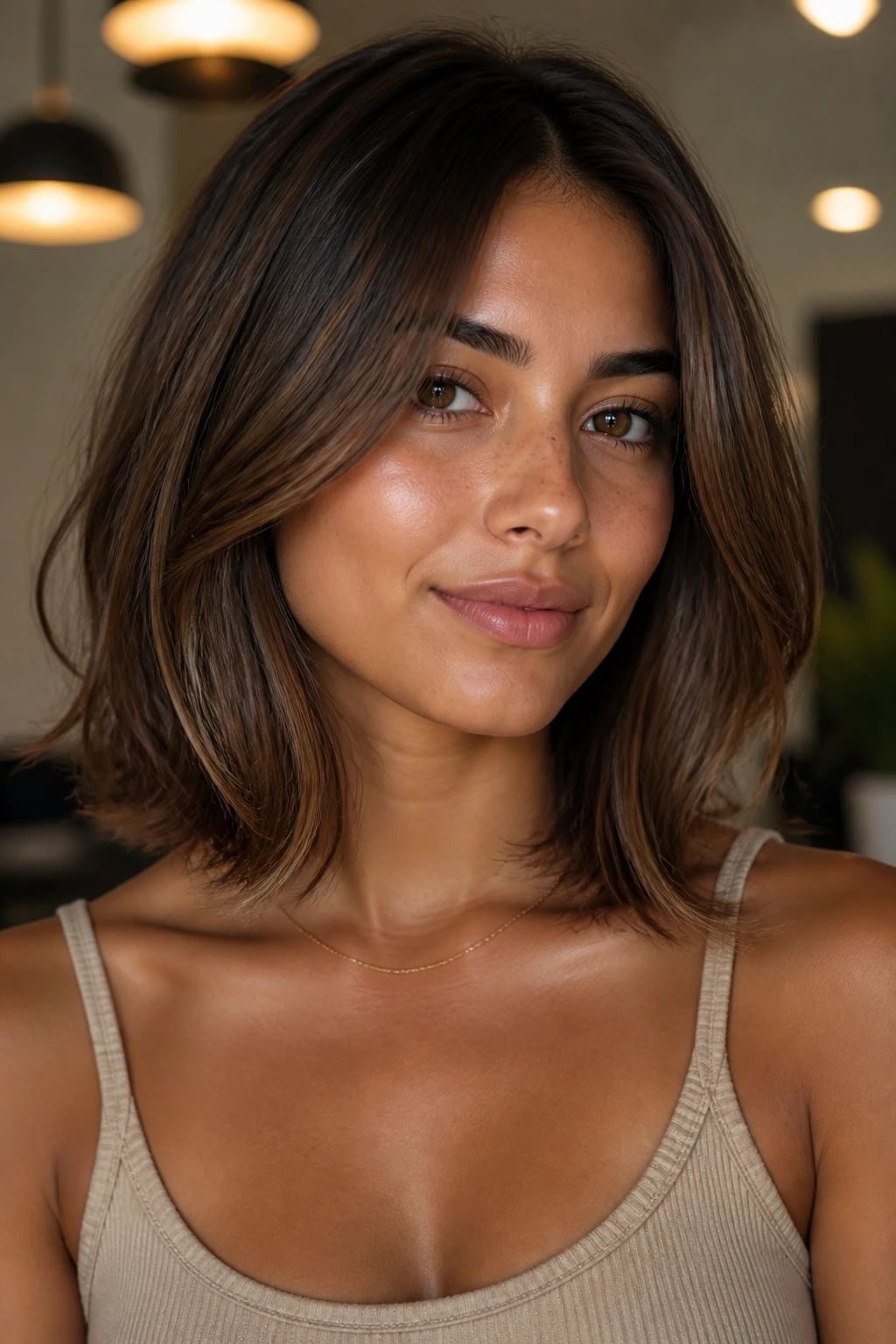
A collarbone cut in cappuccino brown is one of the easiest brunette styles to live with, and olive skin often likes the balance of the tone. It’s not too warm, not too dark, not too shiny in a fake way. The cut lands right where the shoulder line gives it motion.
Why It Flatters
Cappuccino brown usually has a beige-brown softness that keeps olive skin from looking sallow. The collarbone length is a little more forgiving than a blunt bob because the ends can swing and tuck. If you’ve got a broader face or a strong jaw, that little bit of softness makes the cut easier to wear.
Small Upgrade
A slight bend in the front pieces changes everything. One or two curves around the face keep the cut from feeling too plain. And yes, you can air-dry this one if you have decent natural texture. Just scrunch in leave-in first.
18. Deep Roast Wet-Look Waves
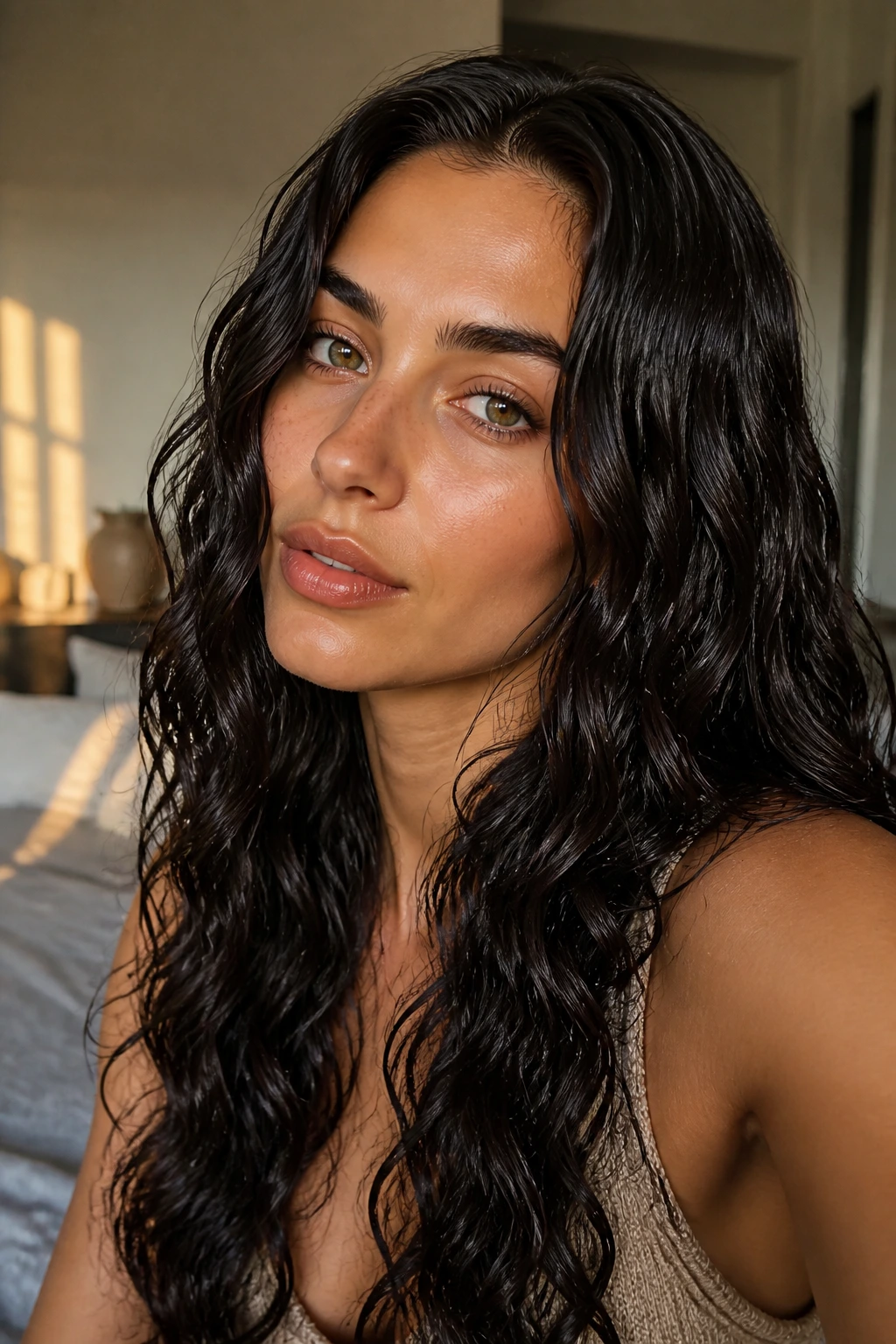
Deep roast brown with wet-look waves is more dramatic than the rest of the list, but olive skin can handle it. The shine and the depth make the complexion look sculpted. It’s the kind of style that reads deliberate even when it’s slightly undone.
Why It Stands Apart
The dark brown base provides a lot of contrast, so the finish needs to be glossy and controlled. Wet-look styling works because it keeps the color unified and reflective. On olive skin, that reflective surface can make the skin look smoother and more even.
Use the Right Product
A gel-cream hybrid or strong-hold mousse on damp hair will give you the slick, separated wave pattern without turning the style crunchy. Pin the part in place while it dries if you want the top to stay flat. Don’t brush it once it’s set. That kills the whole effect.
19. Toffee-Tipped Half-Up Style
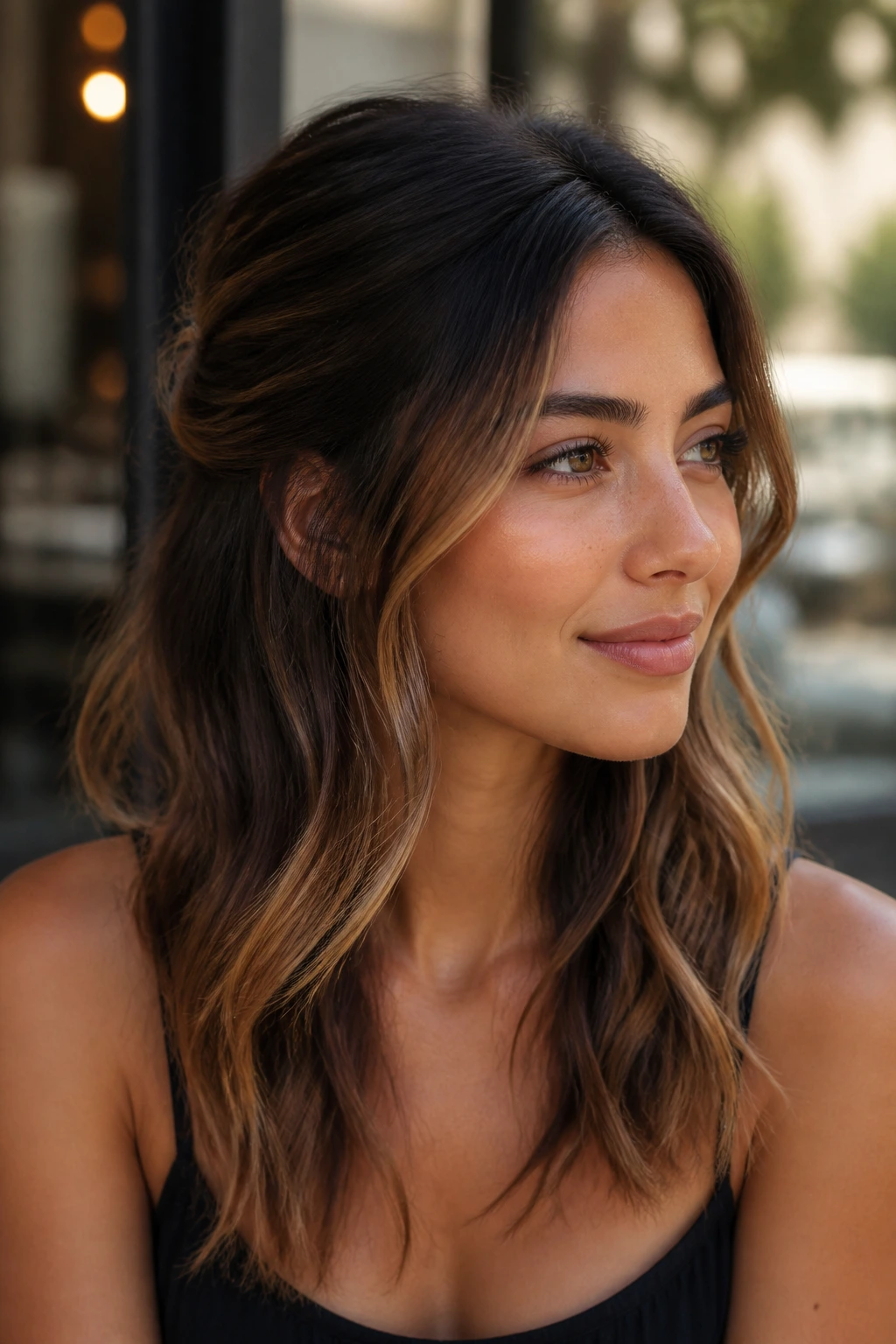
A half-up style with toffee-tipped ends gives brunette hair a light, lifted finish without moving into full highlighting territory. The half-up shape pulls attention to the eyes and cheekbones, while the toffee ends soften the lower half of the hair. It’s easy to wear and easy to tweak.
Why It’s a Good Match
Olive skin often benefits from brightness that sits lower and around the face, not just at the crown. Toffee ends catch the light when the hair moves, which keeps the style from looking dark all the way through. If your base is medium brown, this is an especially nice way to add dimension.
A Good Way to Finish It
Wrap a small section of hair around the elastic and tug a few front pieces loose. That keeps the shape casual. A soft cream through the ends will make the toffee pieces look smoother, but don’t weigh them down.
20. Tawny Textured Crop
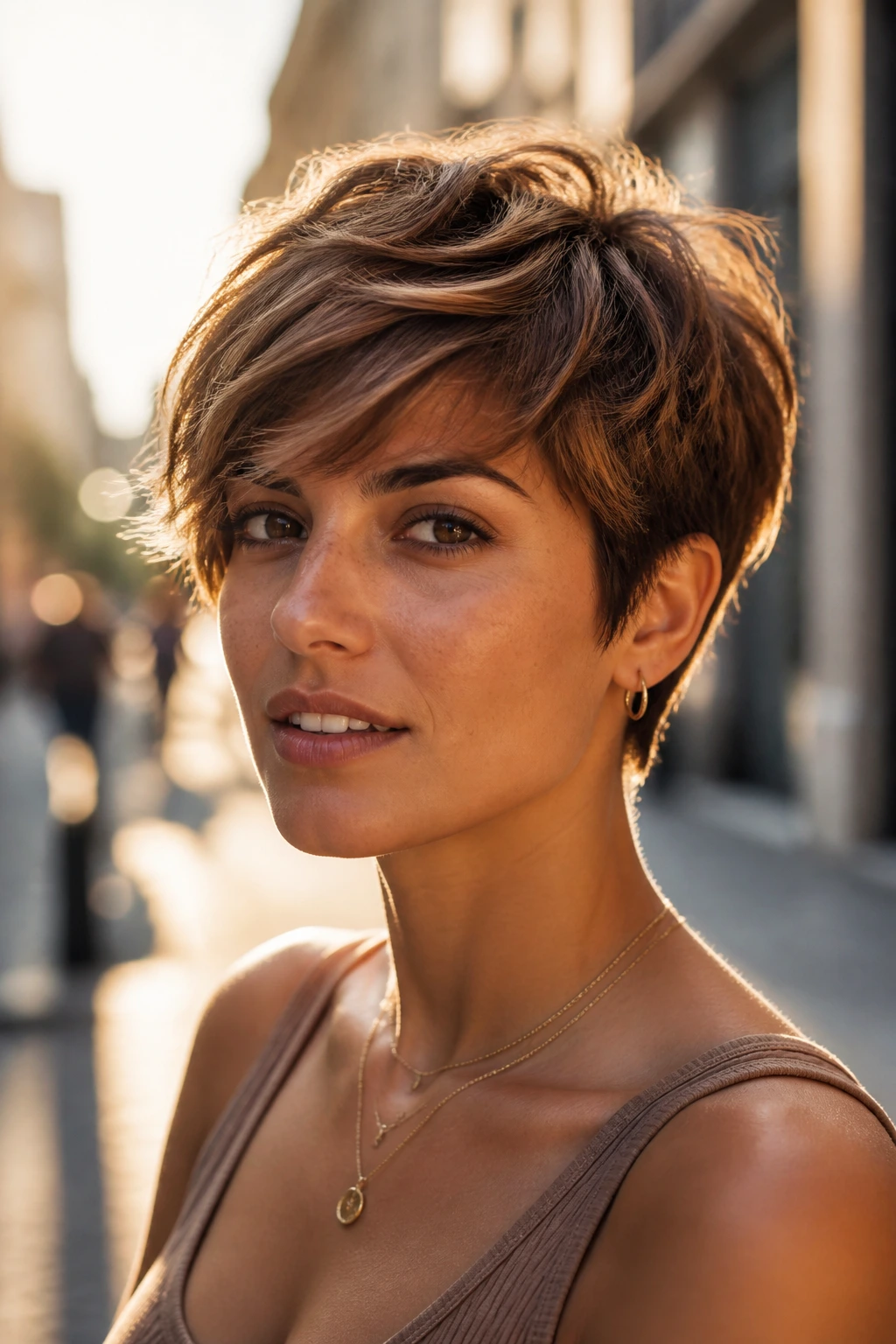
A textured crop in tawny brown can look sharp, warm, and modern all at once. Short brunette styles on olive skin need color that doesn’t vanish into the haircut, and tawny gives just enough warmth to keep the shape alive. It’s short hair with actual dimension.
What to Watch
The cut needs texture, not random choppiness. Ask for pieces that move around the crown and through the fringe area, so the color shows through in little planes. Tawny works best when it has a beige-gold softness instead of a brassy shine.
Styling It
A pea-size amount of matte paste is enough for the ends. Work it through dry hair and pinch the pieces where you want separation. If the hair is too smooth, the style loses character. Short cuts need a little grit.
21. Chestnut French Bob
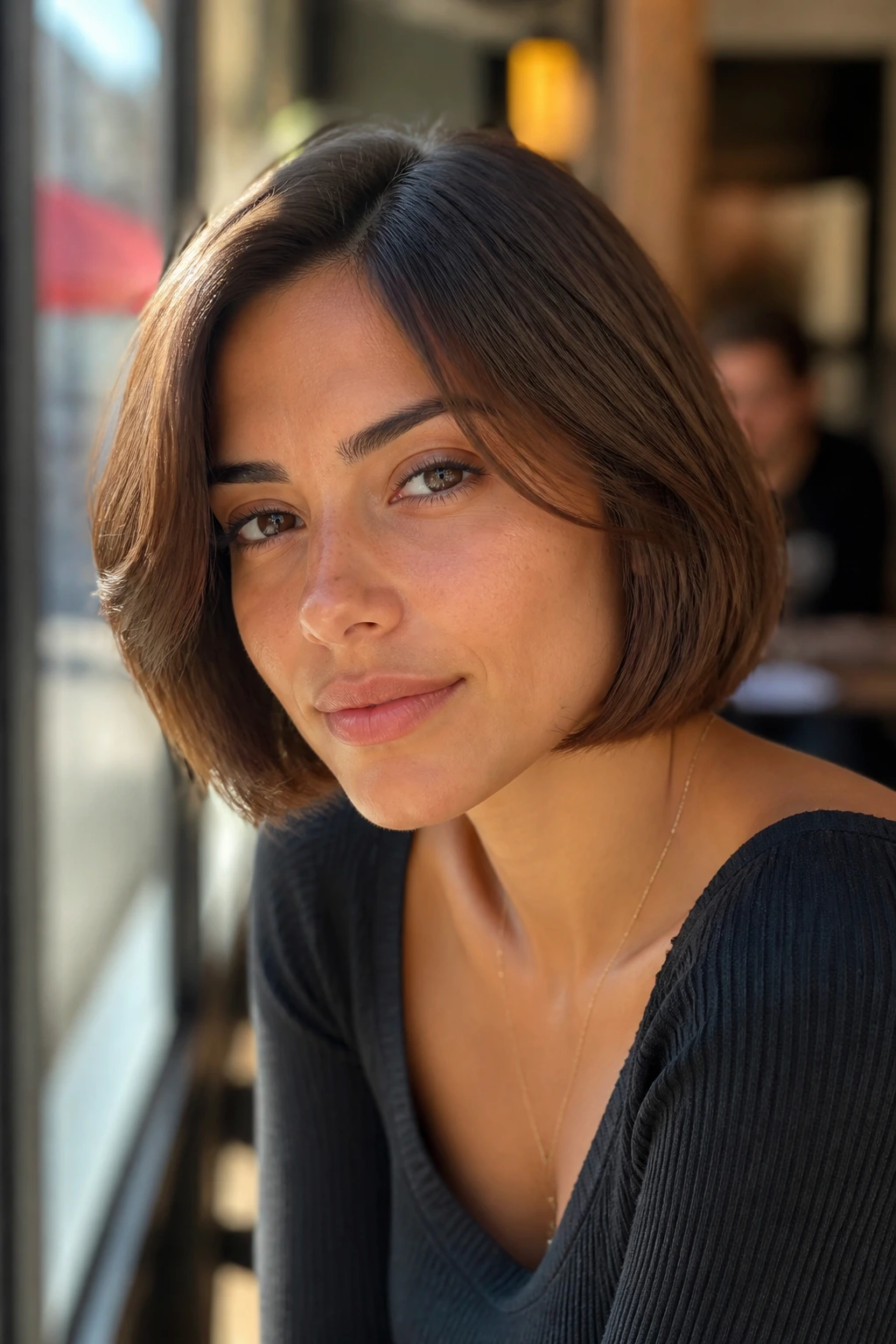
The French bob can be sweet or severe, and chestnut brown keeps it on the sweeter side. On olive skin, that chestnut warmth softens the strong line of the cut. The chin-length shape puts the face at center stage, which is exactly where the color can do its best work.
Why It Works
Chestnut has enough depth to avoid the washed-out problem that sometimes happens with very short brunettes. The bob shape adds crispness, but the color keeps it friendly. If your olive skin leans deeper or warmer, this is one of the most flattering short options in the bunch.
Style Tip
A slight bend under the jaw or a tiny wave near the ends makes the bob feel less rigid. Keep the fringe or front pieces light so the face doesn’t get boxed in. That little bit of softness matters more than people think.
22. Cocoa Braided Crown
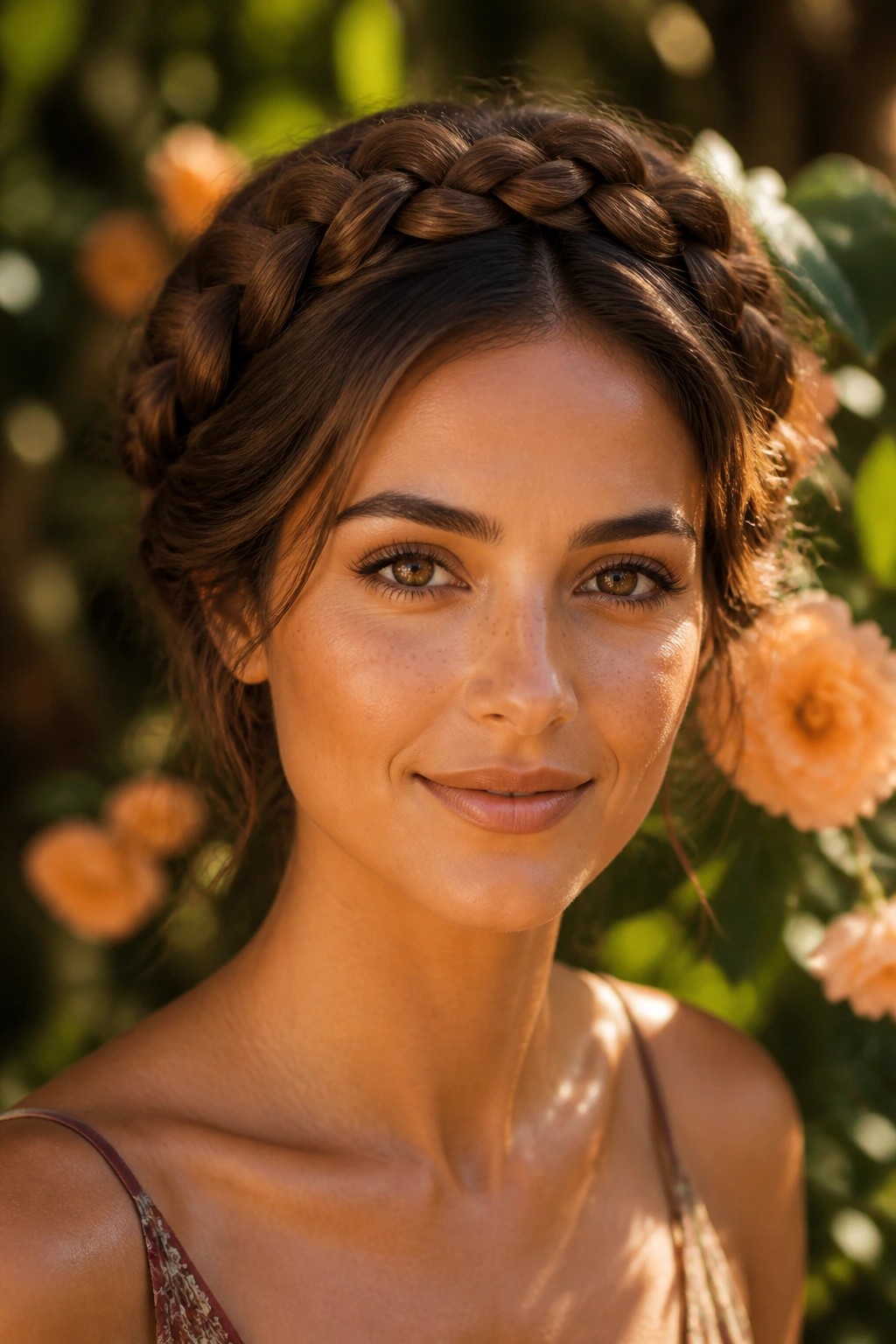
A braided crown in cocoa brown is one of the easiest ways to make brunette hair feel special without changing the cut. The braid pulls the color into loops and ridges, which gives cocoa a lot of depth on olive skin. It works especially well for events, dinners, and days when you want the hair away from the face.
Why It Flatters
Braids show off tone shifts better than almost any other style. If your cocoa brown has lighter ribbons or a subtle gloss, the braid makes those details visible. Olive skin gains from that contrast because the hair frame sits neatly around the face and neck.
Keep It From Looking Flat
Pancake the braid a little by pulling gently at the outer edges once it’s pinned. That gives the crown more width and keeps the style from feeling tight. A tiny mist of shine spray on the braid itself is enough—too much and the strands slip apart.
23. Sandalwood Layered Midlength
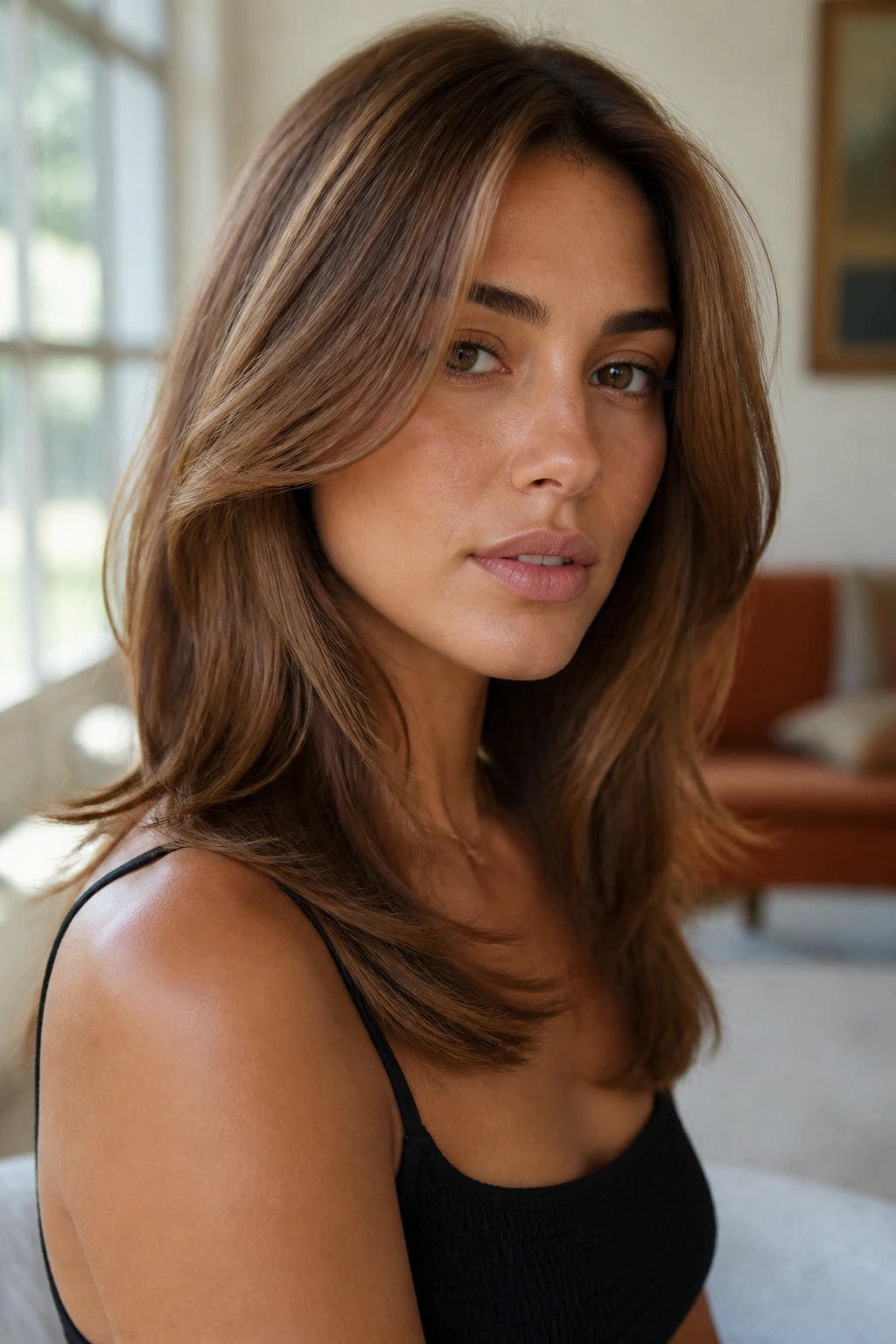
Sandalwood brown sits in a soft beige-brown zone that olive skin can wear without much fuss. On a midlength cut with layers, the tone stays lively and the shape stays practical. It’s one of the easiest “I want brown hair, but make it interesting” answers.
Why It’s Useful
The midlength cut gives enough weight for the color to show, but not so much that the style drags. Sandalwood is especially nice if your olive skin leans neutral. It keeps the face bright without drifting into the yellow-gold territory that can make some brunettes look streaky.
Styling Direction
Try a middle part with a soft bend through the front pieces. That balances the face and gives the color room to show around the jawline. If the ends start looking dry, this is one of the styles that benefits from a lightweight leave-in more than an oil.
24. Rooted Brunette Gloss Blowout
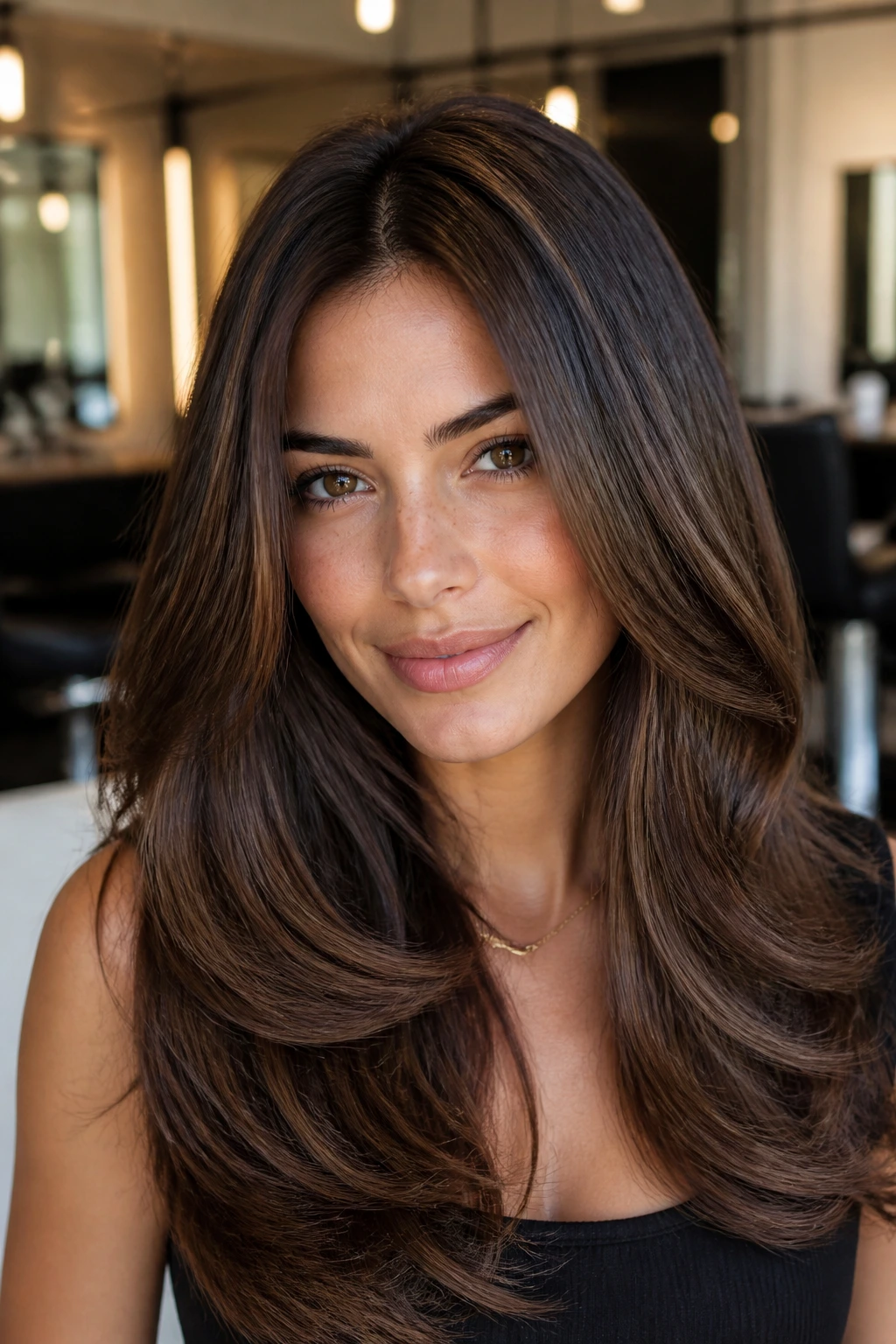
Rooted brunette with a gloss blowout is the cleanest, freshest look in the whole set. Dark roots fade into a softer mid-brown length, and the blowout gives the color a polished finish that olive skin tends to wear well. It’s understated in the nicest possible way.
Why It Works
A rooty blend lets your natural depth stay visible, which matters because olive skin often looks better with some shadow at the base. The gloss keeps the mids and ends reflective. If the brown is too matte, the whole style can flatten out; this avoids that.
Ask for This
Request a root smudge and a clear or tinted gloss over the lengths. The goal is shine and softness, not a dramatic color shift. A round-brush blowout with lifted crown volume makes the blend look expensive without trying to be fancy about it.
25. Golden Ends Soft Curtain Layers
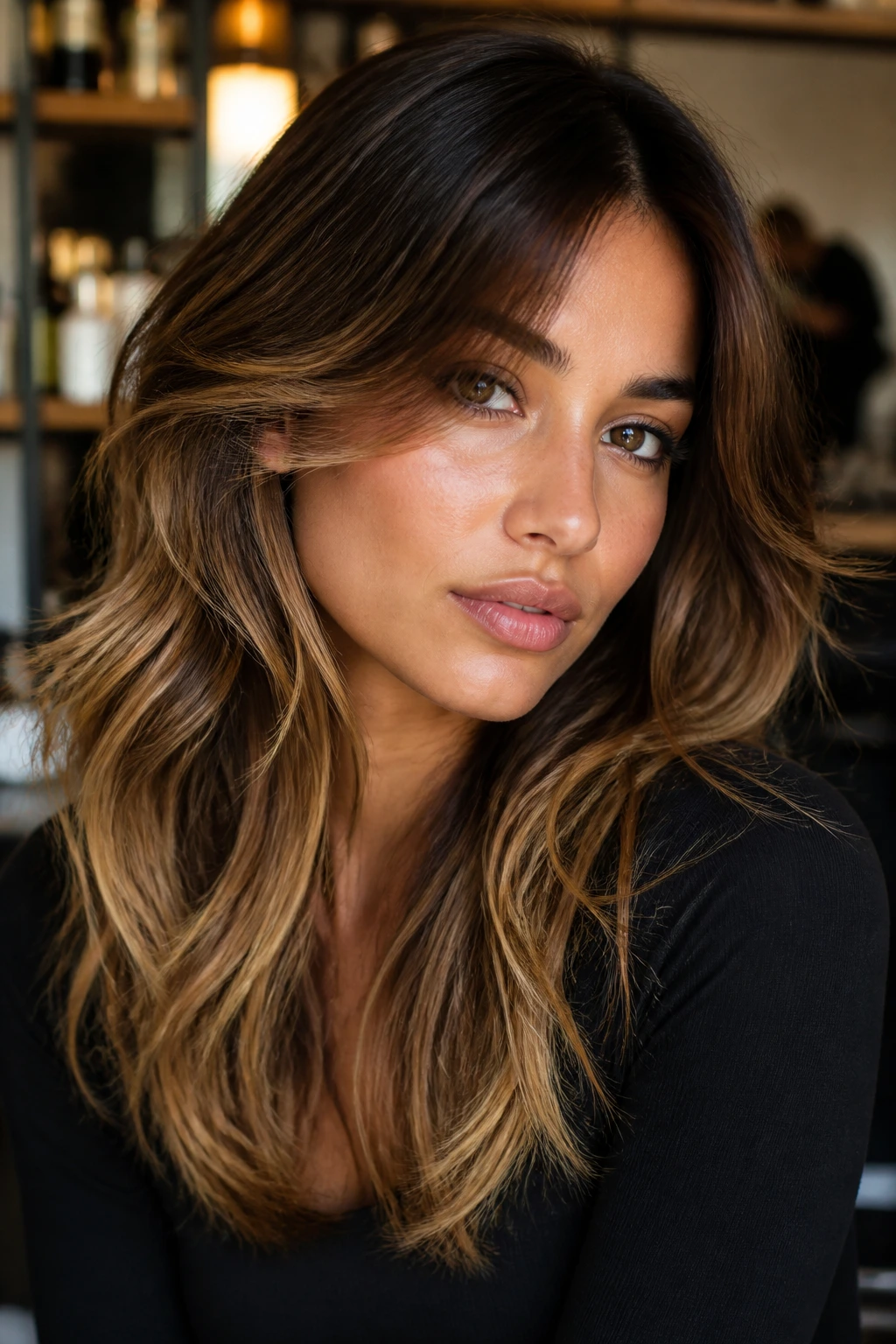
Golden ends can be risky on olive skin if they go too yellow, but softened and placed only at the ends, they can be beautiful. With curtain layers, the gold reads as warm light instead of brass. The face frame stays brown, which keeps the look grounded.
Why It Deserves the Last Spot
The last inch or two of the hair takes the most friction and the most sun, so a lighter finish there can look natural. On olive skin, this works best when the gold is muted and the base stays rich. The curtain layers pull the eye upward, so the lightness feels intentional rather than random.
Best Styling Move
Use a large-barrel curling iron or roller set, then brush the waves out so the ends blur together. That softens the golden pieces and keeps them from looking choppy. If the ends ever turn too bright, a beige gloss or toning mask can cool them back down.
Why Olive Skin Loves Dimensional Brunette
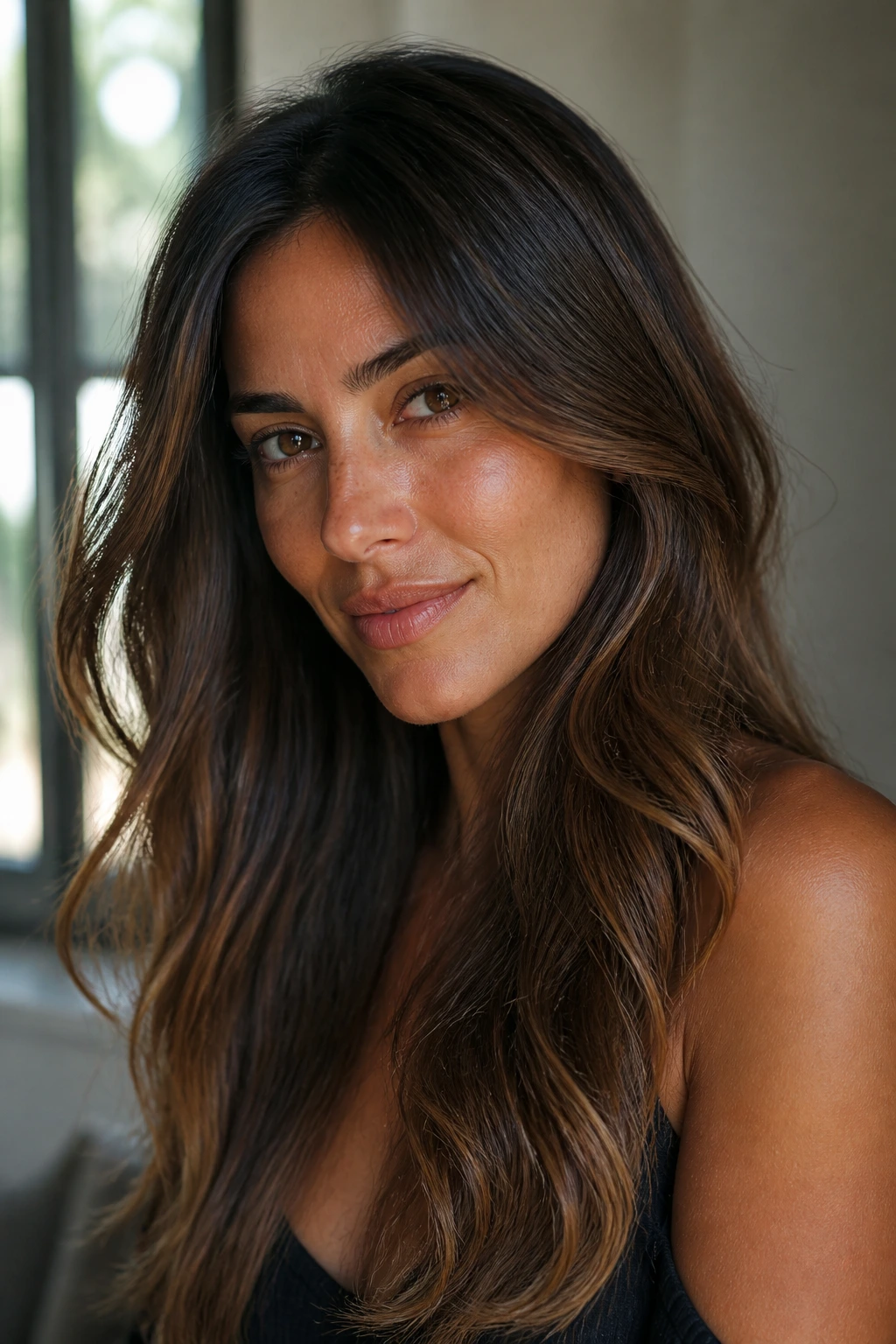
The easiest mistake with brunette color is treating it like a single shade. Olive skin tends to look better when the brown has more than one note: a deeper base, a softer midtone, and a few lighter threads placed where the hair naturally catches light. That’s the difference between hair that looks dyed and hair that looks lived in.
The good versions are also easier to wear. A root shadow buys you time. Balayage softens the grow-out line. Face-framing ribbons keep the complexion from looking muddy. You do not need to go lighter all over to get brightness. In fact, all-over lightness is where a lot of brunettes lose the plot.
There’s also a practical upside. Dimensional brunette can be adjusted for fair olive, medium olive, or deeper olive skin without changing the whole concept. You just shift the warmth, the placement, and the contrast. Small moves. Big payoff.
Essential Tools for These Looks
-
1.25-inch curling iron or wand: The sweet spot for loose brunette waves that show off dimension without turning into tight ringlets.
-
Large round brush: Useful for blowouts, curtain bangs, and soft face-framing flips.
-
Blow dryer with concentrator nozzle: Keeps the cuticle smoother and the finish shinier, which matters a lot on darker brunettes.
-
Heat protectant spray: Non-negotiable if you’re using heat more than once a week; it keeps color looking fresher longer.
-
Lightweight color-safe shampoo and conditioner: Helps prevent the brown from going dull or dragging down the ends.
-
Wide-tooth comb: Better than ripping through curls or waves with a brush when the hair’s damp.
-
Sectioning clips: Make highlights, blowouts, and curling sets much easier to control.
-
Glossing serum or shine mist: One of the fastest ways to make sun-kissed brunette color look cleaner.
-
Dry shampoo: Handy for preserving blowouts and keeping roots from looking oily before wash day.
-
Silk or satin pillowcase: Helps keep waves and curls from getting roughed up overnight.
How to Brief Your Colorist for Olive Skin
A good brunette appointment starts before the cape goes on. Bring two or three photos, but pick them carefully. One photo should show the color you want, and one should show the cut or styling finish, because those are not always the same thing. A glossy brunette on a blunt bob will behave differently from the same color on layered waves.
Say what your skin does in daylight. If your olive skin leans green-gold, warm caramel and chestnut usually sit well. If it leans green-neutral or slightly cool, mushroom brown, mocha, and sable can look cleaner. That one detail saves a lot of bad guessing.
Ask about root shadow, balayage, babylights, or foilyage depending on how much brightness you want. If your hair is dark and you want lighter pieces, do not jump straight to a huge lift in one visit unless your hair has already been tested for it. A softer plan usually looks better and feels better on the hair shaft.
The other thing to ask for is placement. Tell the colorist whether you want brightness at the hairline, through the crown, at the ends, or all three. Olive skin usually benefits most from a lighter front and a slightly deeper back. That balance matters more than the exact brand of dye used.
How to Style These Looks in Daily Life
Parting: A center part makes soft layers and curtain bangs feel modern, while a deep side part adds height and a little drama. If your face is rounder, the off-center part can stretch the shape nicely.
Texture: Soft bends, loose waves, and smooth blowouts all suit this color family, but the finish should match the haircut. A shag wants grit. A lob wants polish. A long layered style can go either way depending on what you’re wearing.
Accessories: Gold hoops, tortoiseshell clips, and deep neutral headbands tend to sit well with brunette tones on olive skin. Very shiny silver can work too, though it reads cooler. Pick the metal that doesn’t fight your undertone.
Makeup Pairing: Brown mascara, peach blush, terracotta lip color, and soft bronze shadow usually look easy with these shades. If your hair leans cooler, mauve and berry can work too. Keep the base skin finish natural rather than overly matte, or the hair will feel heavier.
Extra Ways to Add Shine, Tone, and Dimension
Tone Boost: A beige or caramel gloss every 4 to 8 weeks keeps the lighter pieces from turning yellow or flat. If your highlights start reading too warm, a salon gloss or toning conditioner can pull them back into shape.
Customization: Fine hair usually does better with lighter placement around the face and fewer pieces through the back, because too many highlights can make the color look busy. Thick hair can handle broader ribbons and chunkier face-framing sections without losing softness.
Serving Suggestions: A side tuck, low clip, or half-up twist can show off the color shifts around the temples and cheekbones. Even a tiny change in parting gives brunette dimension more room to show.
Make-It-Yours: For fair olive skin, lean beige, chestnut, and mushroom. For medium olive, caramel, honey, and mocha are strong. For deeper olive, espresso, walnut, and bronze can look especially rich if the shine is there.
Care, Refresh, and Maintenance Between Salon Visits
Brunette color is not as high-maintenance as platinum, but it still needs a routine. Wash too often and the lighter pieces lose their sparkle. Skip care entirely and the brunette starts looking dusty, especially at the ends where the hair is older and drier. Two to three washes a week is a good place for most people, though textured hair may stretch longer.
Use a color-safe shampoo and keep the conditioner on the mids and ends, not the roots. If the hair gets oily at the scalp before wash day, dry shampoo helps, but it should not be the whole plan. A product buildup crown can dull the brightness around the face.
Heat styling needs a little discipline. Put heat protectant on every section you plan to curl, straighten, or blow-dry. If you style daily, lower the heat and let the hair cool in shape before touching it. A curl that hasn’t cooled yet is half-set; brush it too soon and it falls flat in a bad way.
For highlight refreshes, the safest rhythm is usually a gloss or toner touch-up every 6 to 8 weeks, with bigger placement changes farther apart. Trims every 8 to 12 weeks keep layers from fraying. Sleep on silk or satin if you want the finish to stay smooth. It’s a small thing, but it saves the ends.
Common Mistakes That Flatten Olive Skin
Going too ash without enough depth. Ashy brunette can look chic on the right complexion, but on olive skin it sometimes turns the face gray. The fix is to keep some beige or neutral warmth in the mix, or deepen the base a little so the skin still has something to bounce against.
Making the highlights too light and too broad. Thick streaks can overpower the skin and make the color look stripy. Ask for finer pieces near the front and softer painting through the back. Dimension is the goal, not a zebra effect.
Putting brightness only on the ends. That can make long hair look heavy at the face and thin at the bottom. Olive skin usually benefits from some lift near the cheekbones or hairline, even if the ends stay darker.
Using too much orange warmth. Caramel is good. Pumpkin is not. If the brown starts leaning copper or brass, a neutral gloss can pull it back.
Ignoring the haircut. Straight, flat hair with pretty color still looks flat. Layers, bends, fringe, or some kind of movement help the brunette read the way it’s supposed to. The cut is not a side note.
Overloading with styling products. Heavy oils, thick creams, and too much shine spray can make the color look greasy instead of glossy. Use less than you think, then add only if needed.
Variations and Adaptations to Try
Soft Bronze For Warmer Olive: Swap some of the caramel and honey notes for soft bronze and beige-gold. Keep the brightness mostly around the face so the skin gets lift without the ends turning too yellow.
Mushroom Mocha For Neutral Olive: Use a cooler mocha base with beige-ash ribbons and a root shadow. This version works well if your complexion looks better in silver than gold and your hair naturally holds warmth fast.
Curly Brunette Glow: For curls and coils, keep the color pieces wider but fewer, and place them where the curl pattern opens. The contrast shows better when the hair moves, so don’t overload the whole head with lightness.
Low-Maintenance Root Melt: Ask for a darker root smudge that fades into medium brunette lengths. It grows out softly and gives you more time between appointments, which is useful if you hate obvious regrowth lines.
Short Crop With Face Brightening: A pixie or cropped bob can still fit the sun-kissed brunette idea. Keep the brightness around the fringe and sideburn area so the short cut doesn’t disappear into one flat color.
Gloss-Only Brunette Refresh: If you don’t want highlights, ask for a sheer brunette gloss in chocolate, chestnut, or mocha. It adds shine and deepens the tone without changing the hair’s structure much at all.
Frequently Asked Questions
What brunette shade looks best on olive skin?
Chestnut, mocha, caramel-brown, hazelnut, and walnut are usually strong starting points. The best one depends on whether your olive skin leans warm, neutral, or cool, but a little dimension almost always helps.
Are warm highlights or ash highlights better for olive skin?
Usually neutral-warm highlights are the safer bet. Too much ash can make the skin look flat, while too much gold can veer brassy. Beige, caramel, and soft honey tend to sit in the middle and behave better.
Can very dark brunette work on olive skin?
Yes, especially if the hair has shine and a clean cut. Deep espresso, sable, and dark roast shades can look gorgeous on olive skin, but they usually need some reflective finish or subtle face-framing brightness so the look doesn’t go heavy.
How often do sun-kissed brunette highlights need touch-ups?
Most people can stretch gloss refreshes to about 6 to 8 weeks and full placement refreshes longer than that, depending on how fast their hair grows. Balayage and root shadow tend to age more gracefully than blunt highlight lines.
Will these styles work on curly hair?
Absolutely, and curls often show the dimension better than straight hair does. The trick is to place brightness where the curl opens, not in random stripes that get lost when the hair springs up.
What if my highlights turn orange?
That usually means the warmth lifted too far or the toner faded. A salon gloss or a color-safe toning conditioner can calm the brass, but if the orange is strong, a colorist should adjust the tone instead of layering more product on top.
Can I do this look at home with box dye?
You can darken or deepen brunette tones at home more safely than you can lift and highlight them. Sun-kissed dimension is much harder to fake with box color, and olive skin tends to show patchy warmth pretty quickly if the tone is off.
Which styles are lowest maintenance?
Rooted brunette gloss blowouts, mocha lobs, blunt bobs, and root-melted layered cuts are some of the easiest. They grow out softly and don’t rely on highly precise highlight placement to keep the look alive.
Do these shades work for fair olive skin too?
Yes, but the balance shifts. Fair olive usually looks best with more beige, chestnut, and softly caramelized brunette instead of heavy gold or very dark opaque brown. A lighter front frame helps a lot.
The Brown That Fits the Skin
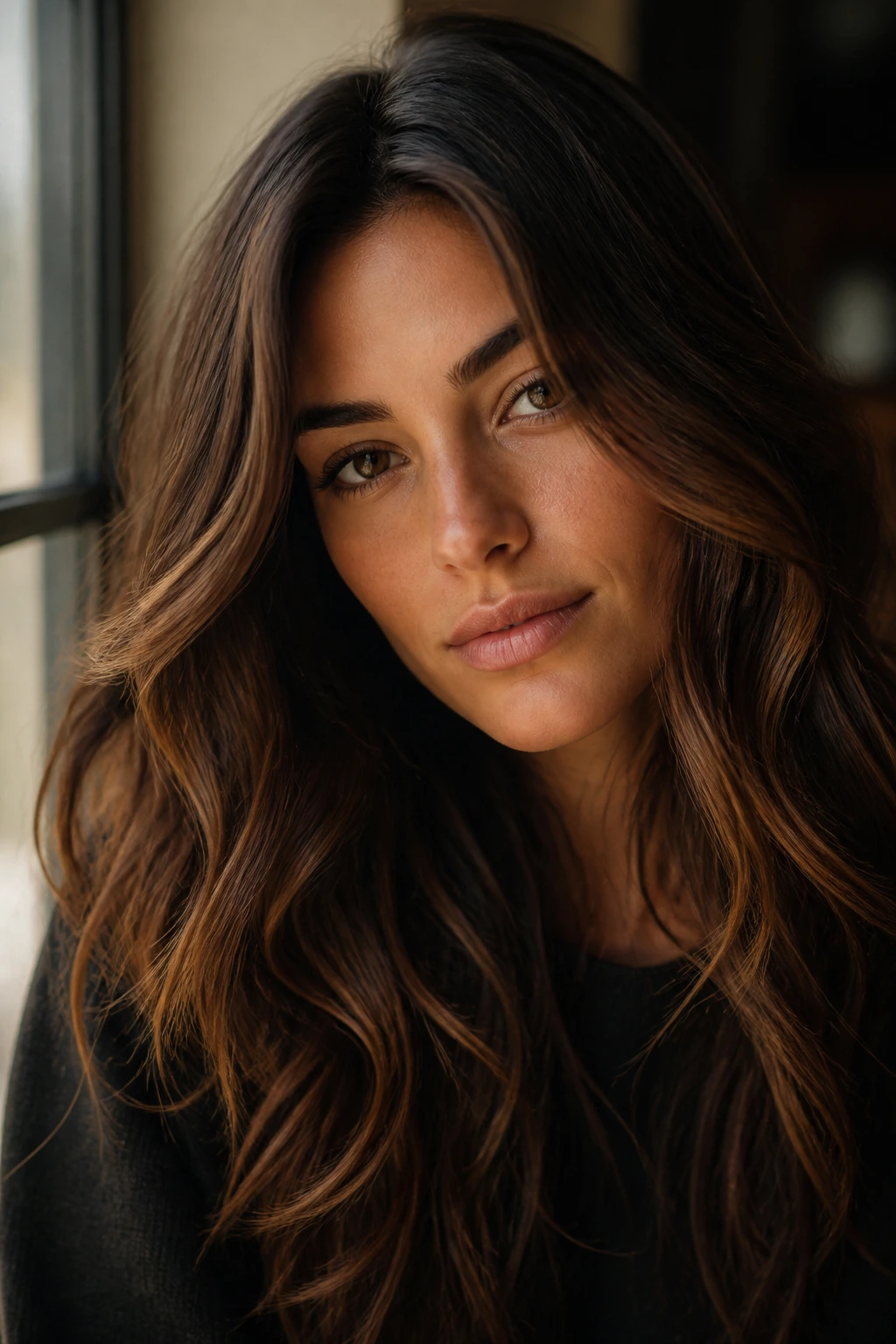
The best brunette on olive skin usually isn’t the loudest one in the room. It’s the one with enough depth to hold the complexion, enough warmth to keep it from going gray, and enough light at the front to make the face feel awake. That balance is what turns a plain brown into something that actually looks designed.
If you’re choosing between two shades, pick the one with better dimension over the one with more drama. A brunette that grows out softly and keeps the skin looking clean will always beat a trendier shade that looks great for three days and then starts arguing with your undertone. That’s the real sweet spot.
So whether you lean toward caramel ribbons, mocha layers, mushroom brown, or a glossy deep roast finish, the winning move is the same: keep the base rich, place the brightness where it helps the face, and let the haircut do some of the work. That’s the brunette formula that keeps paying off.