



Fair skin can make brown hair look either expensive or flat, and the line between the two is thinner than people think. Chestnut caramel sits in that middle ground where depth and warmth can actually help each other, but only when the tone is chosen with a little discipline. Too much gold turns loud. Too little contrast turns muddy.
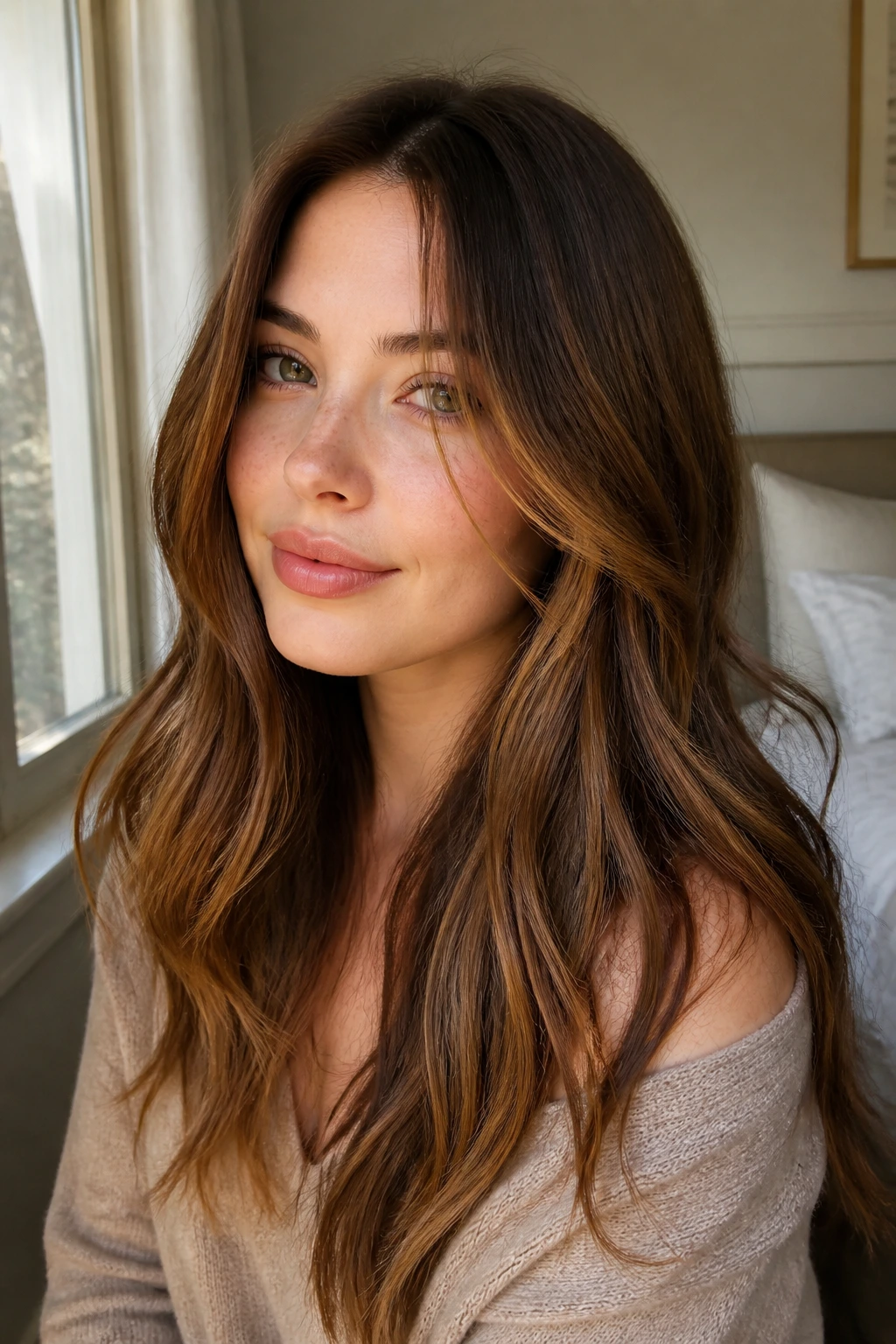
The best chestnut caramel hair color on fair skin usually has a chestnut base somewhere around a level 5 or 6, then caramel placed with intention: around the face, through the mids, or softly melted into the ends. That keeps pale skin from disappearing next to the hair, which is the mistake I see over and over again. If your complexion leans pink, cool beige caramel tends to behave better than sunny gold. If your skin is peachy or warm, a richer caramel can read soft and expensive instead of brassy.
What makes this shade family worth paying attention to is how adjustable it is. A single formula can look calm and subtle on porcelain skin, then feel richer and more dimensional on someone with freckles or a peach undertone. The trick is not chasing the lightest strand in the room. It’s picking the placement, depth, and gloss level that let the color support the face instead of shouting over it.
Why Chestnut Caramel Looks So Good on Fair Skin
-
Soft contrast: A chestnut base gives fair skin enough depth to keep the face from looking washed out, while caramel adds lighter movement where the eye naturally goes first.
-
Undertone control: Beige, honey, mushroom, and copper-leaning caramel all behave differently, which means the shade can be tuned for pink, neutral, peach, or olive-leaning fair skin.
-
Less harsh regrowth: Rooted versions blur the line at the scalp, so the grow-out phase looks intentional instead of obvious.
-
Face-lifting placement: When the lighter pieces sit near the cheekbone, temple, or curtain-bang area, the whole haircut looks more alive without needing a full blonde refresh.
-
Dimension on fine hair: Thin ribbons and glossed ends give fine fair hair more visible texture than one flat brunette block ever will.
1. Soft Chestnut Caramel Balayage
This is the shade I reach for when someone wants brown hair with movement, not a dramatic color overhaul. The base stays chestnut, the caramel is hand-painted through the mids and ends, and the whole thing should look like it grew that way in good light. On fair skin, that softness matters. Hard contrast can look stripy fast.
Ask for narrow balayage ribbons, not chunky panels. The best version keeps the pieces finer around the face and a touch softer underneath, so the color bends instead of shouting. If your skin runs rosy, ask your colorist to keep the caramel beige rather than gold. That small adjustment changes everything.
2. Creamy Face-Framing Chestnut Caramel
Want the fastest way to wake up fair skin? Put the lightest pieces right where the face starts. This look keeps most of the hair chestnut, then adds creamy caramel around the temple, cheekbone, and front layers. It’s a neat trick, and I mean that literally: the eye reads brightness first, so your complexion looks fresher before anyone even notices the rest of the color.
It works especially well with blue or gray eyes because the lighter front strands reflect light back toward the face. Keep the money pieces one level brighter than the rest of the caramel, not three. Too much lift turns the front strip yellow and steals the polish right out of the look.
3. Rooted Chestnut Caramel Melt
A rooted melt is the quiet luxury version of chestnut caramel. The roots stay deeper, the mids soften into caramel, and there’s no obvious line where one shade ends and the next begins. On fair skin, that shadow at the root keeps the color from floating too light and airy.
This is one of the better low-maintenance choices if you don’t want to be in the salon every few weeks. The darker root buys you time, and it also makes the caramel around the face feel more intentional. If your natural color is already brown, this is often the easiest way to get dimension without bleach-heavy maintenance.
4. Mushroom Chestnut with Beige Caramel Ribbons
Cool fair skin needs a cooler color story, and this is where mushroom chestnut earns its keep. The chestnut leans neutral-brown with a little ash, then beige caramel threads through it instead of warm gold. The result is softer than a classic brunette highlight job and much less likely to pull orange against pink or red-leaning skin.
I like this shade on people who love cream sweaters, silver jewelry, and clean makeup. It has that muted, refined look that sits very well next to pale skin. If your hair tends to brass, ask for a beige gloss over the caramel pieces. That final step keeps the tone from drifting into copper when you wash it a few times.
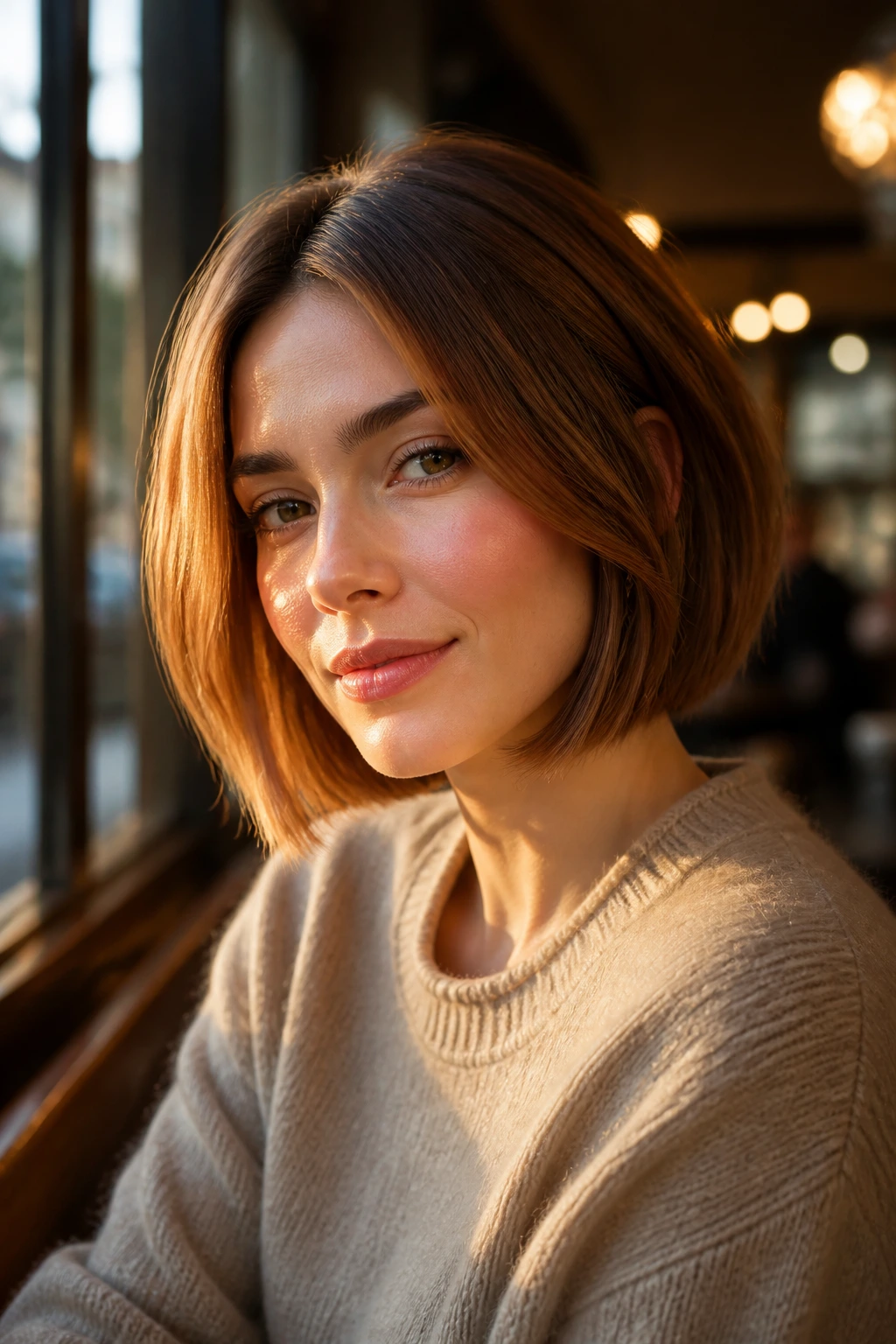
5. Golden Chestnut Caramel Bob
A bob changes the whole personality of chestnut caramel. Once the ends sit near the jaw, the golden pieces have less space to hide, so the color looks brighter and more deliberate. On fair skin, that can be a good thing, especially if your complexion is peachy or has a bit of natural warmth.
The cut matters here as much as the color. A blunt bob makes the chestnut look denser and the caramel look more polished, while a soft undercut or slight bevel keeps the shape from feeling too stiff. If the hair is fine, this is one of the better ways to get the illusion of thickness without going dark all over.
6. Chestnut Caramel Money Piece
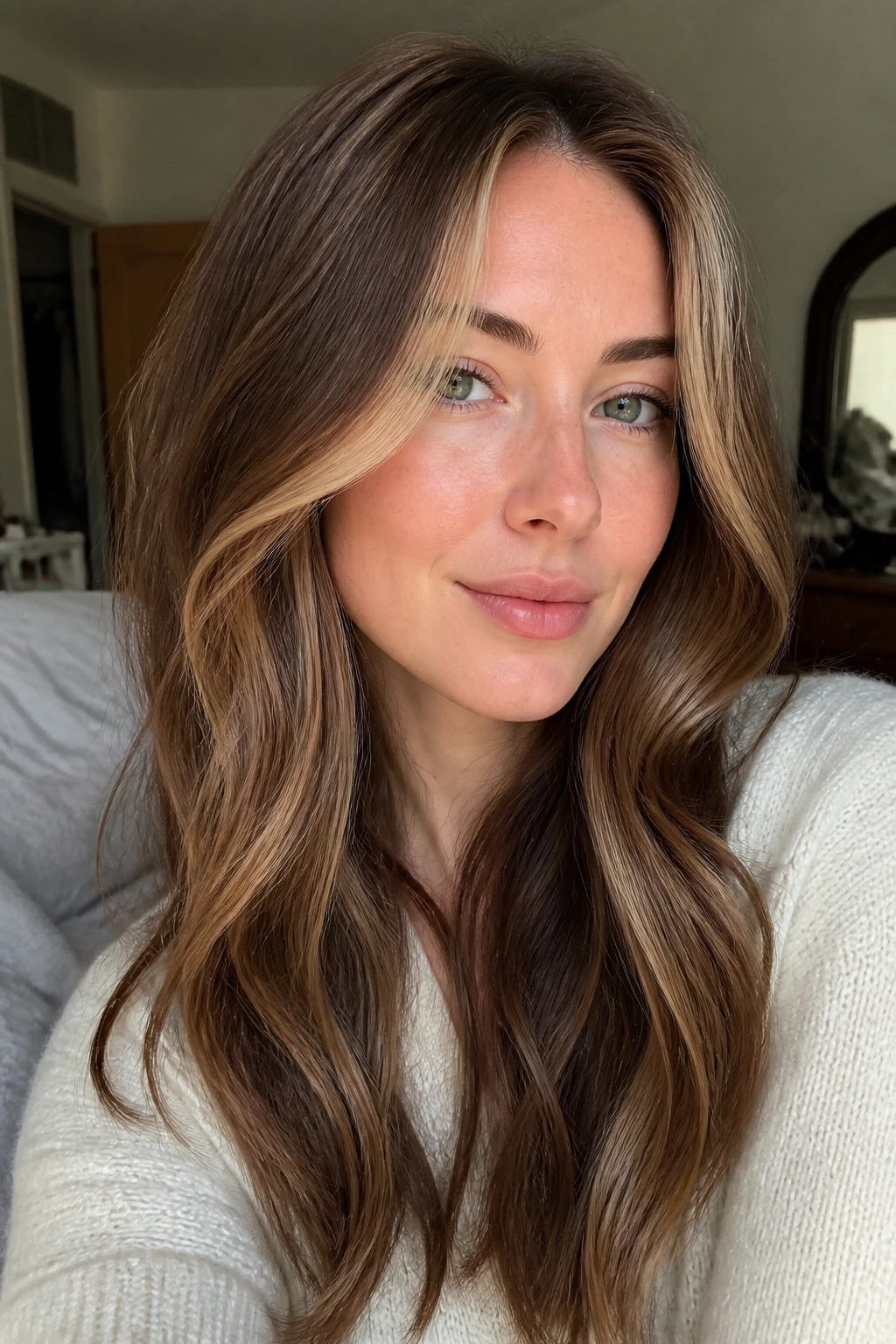
A money piece is the loudest move in the whole chestnut caramel family, which is exactly why it works when you want visible change without committing to a full head of lightening. The front sections are brighter, the rest stays chestnut, and the contrast creates a clean frame for fair skin. That frame is the point. It makes the face look more awake in a way that flat all-over color never does.
Keep the money piece caramel, not buttery blonde. I’d even lean beige if your skin is very fair or pink. If you wear bangs or curtain fringe, this placement becomes even better because the lighter strands break up the line and stop the forehead area from looking heavy.
7. Espresso-Root Chestnut Caramel Lob
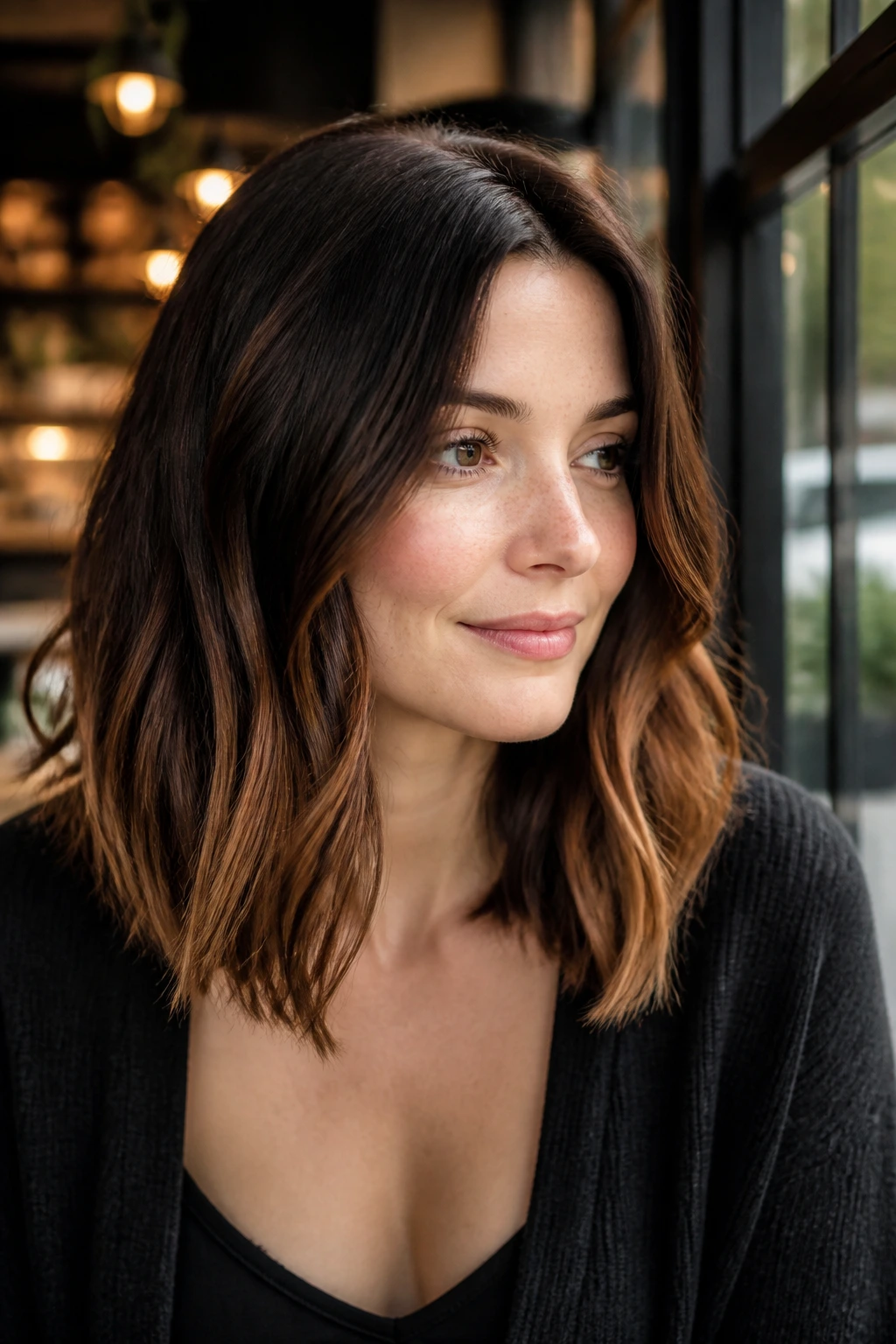
This one has a little more edge. The root sits deep and espresso-toned, the middle stays chestnut, and the caramel lands mostly on the ends and surface layers of a lob. On fair skin, that darkness at the top gives you contrast without making the whole head feel flat or overly warm.
It’s a smart choice if your hair is naturally medium brown and you like a modern, lived-in look. The longer bob gives the color room to show the shift from deep root to lighter tips. If your hair is straight, ask for finely spaced ribbons so it doesn’t look blocky when you tuck it behind the ear.
8. Cinnamon Chestnut with Caramel Ends
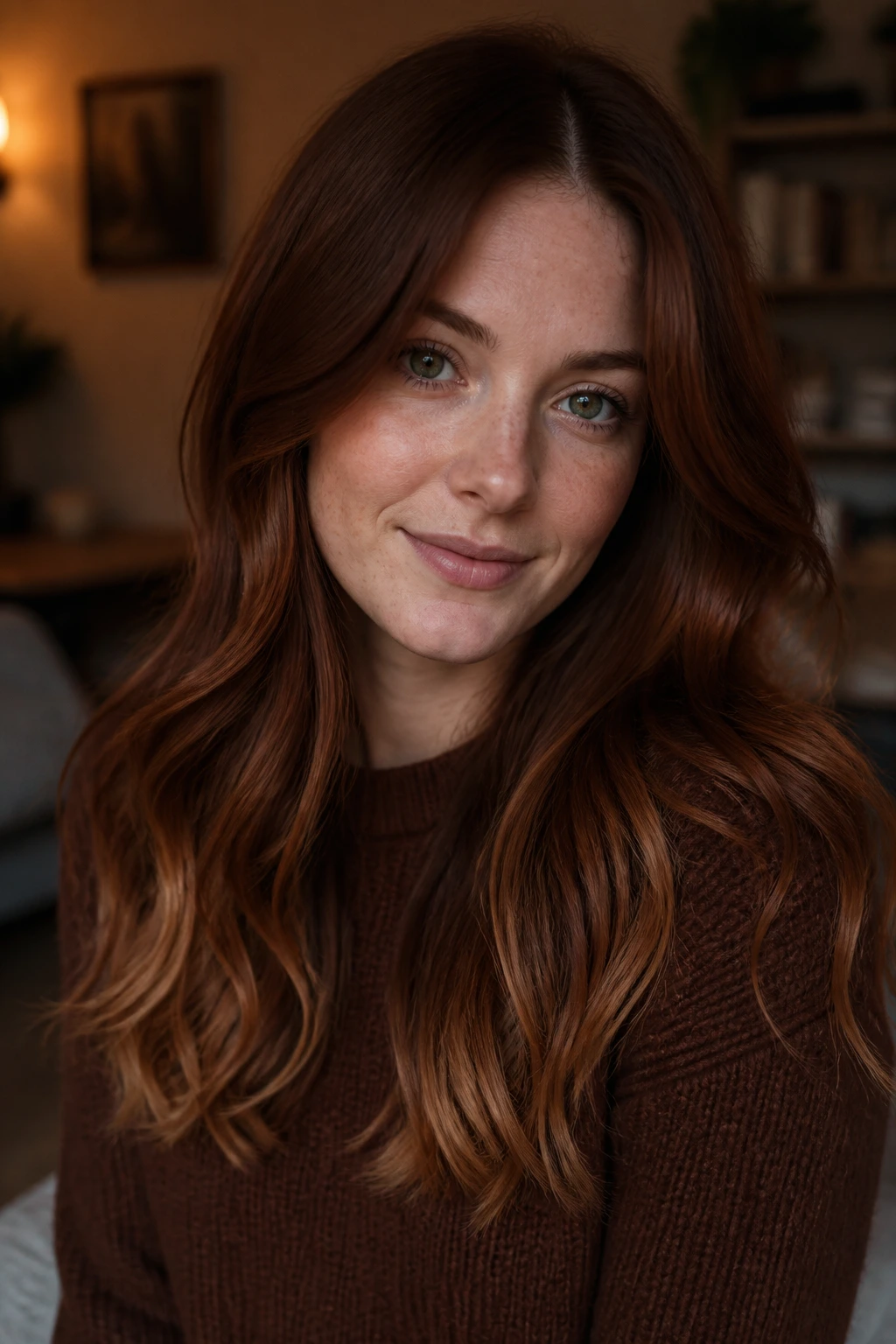
If you like a little red in your brown, this is the shade to watch. Cinnamon chestnut brings in a soft red-brown base, while the caramel stays concentrated toward the ends so the warmth doesn’t crowd the face. On fair skin, that red-brown note can be gorgeous when it’s controlled. Uncontrolled, it can go tomato fast.
Freckles and flushed cheeks usually play nicely with this tone. So do green eyes. The trick is keeping the caramel soft enough that the red stays the main flavor, not the highlight. Think warm wood, not copper penny.
9. Beige Chestnut Caramel Sombre
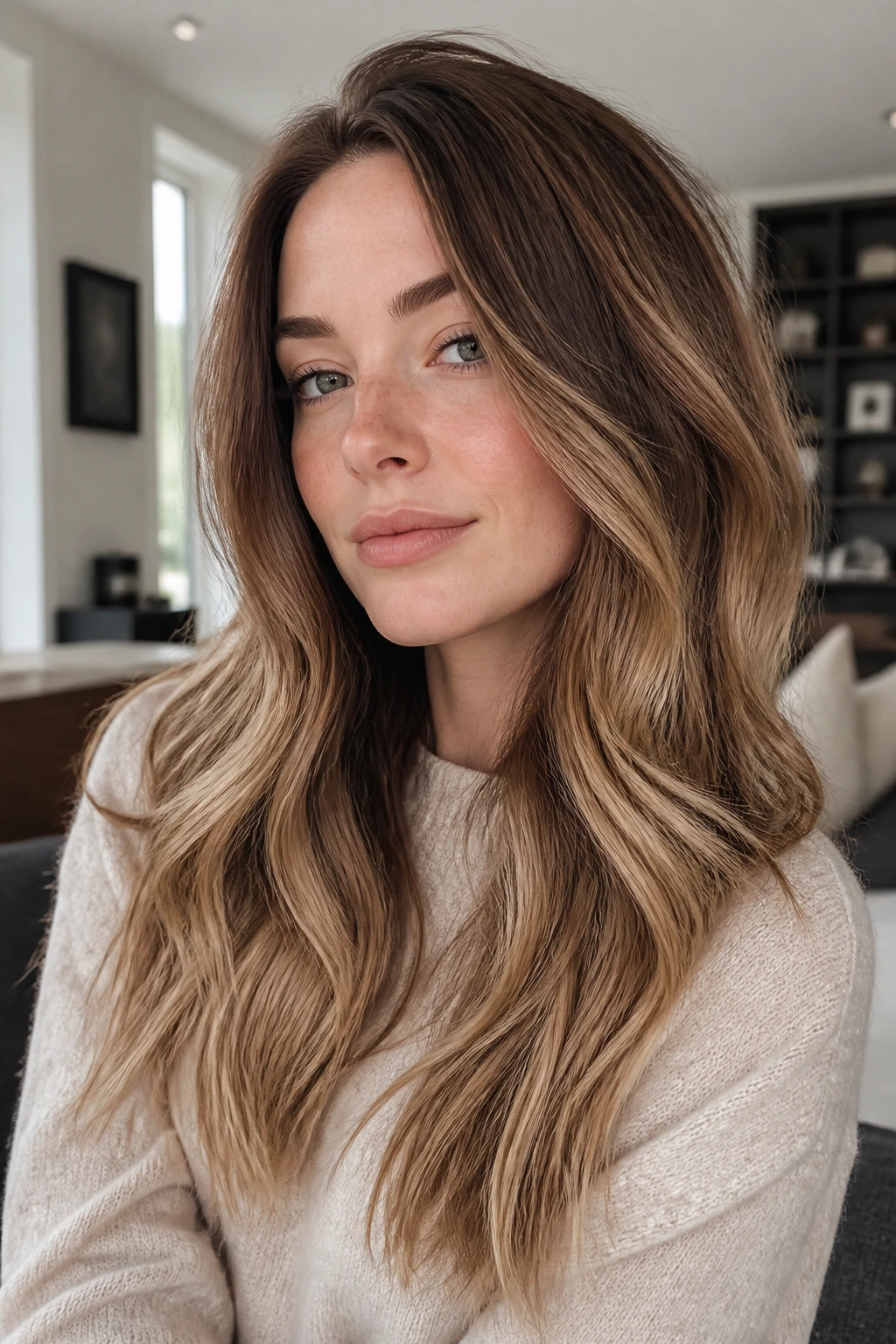
Sombre is the softer cousin of ombré, and that softness is the whole appeal here. The shift from chestnut to caramel is gradual, with enough beige in the mid-lengths that the transition feels blurred rather than painted on. For very fair skin, that low-contrast look can be easier to wear than brighter highlight work.
This is the choice I’d pick for someone who wants dimension but hates obvious maintenance. It’s also kind to fine hair because the lighter ends don’t have to be pushed to a loud blonde to show up. If your complexion is cool, keep the caramel on the beige side and skip the yellow-gold gloss.
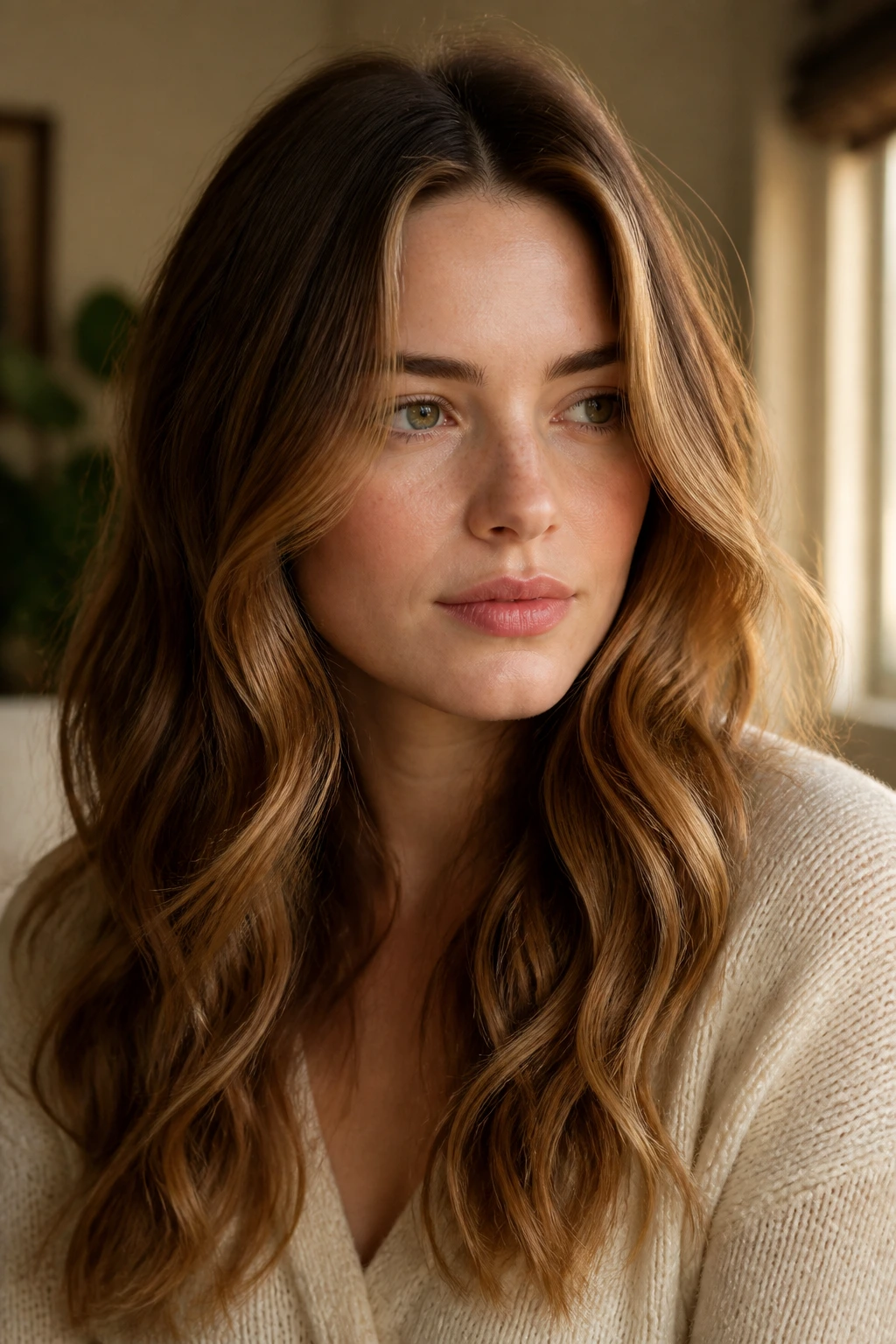
10. Melted Chestnut Caramel Waves
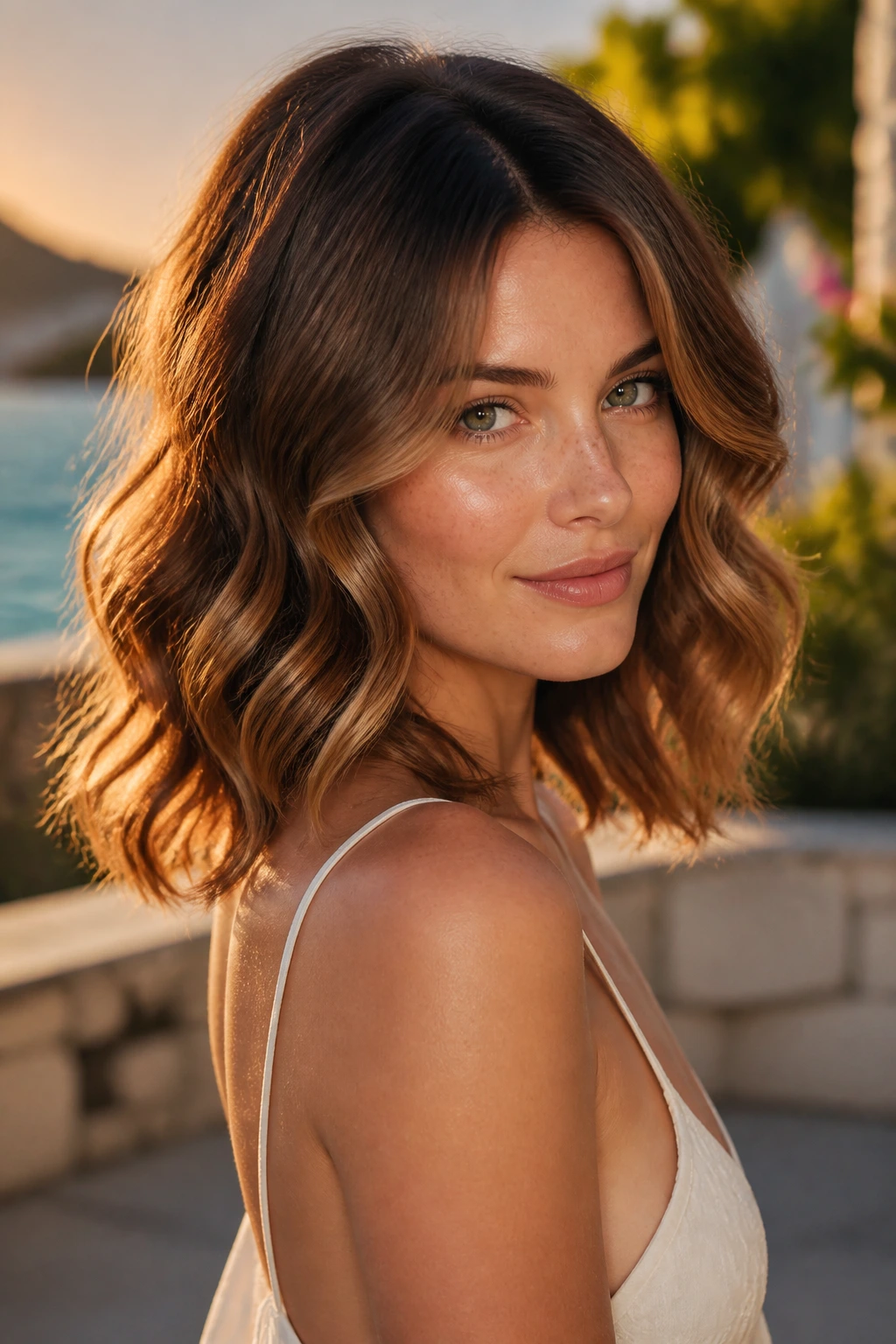
Waves make this color sing. The color melt itself is subtle, but once the hair bends, each curve catches a different shade: chestnut in the shadow, caramel at the crest, then a soft transition in between. On fair skin, that movement keeps the face from looking too stark against the hair.
This version works best when the lengths are at least shoulder length, because shorter hair doesn’t give the melt enough room to show off. Ask for the lightest pieces to land where your hair naturally curves around the face and collarbone. That tiny placement detail does more for the final result than an extra level of lift ever will.
11. Cherry-Chestnut Caramel Dimension
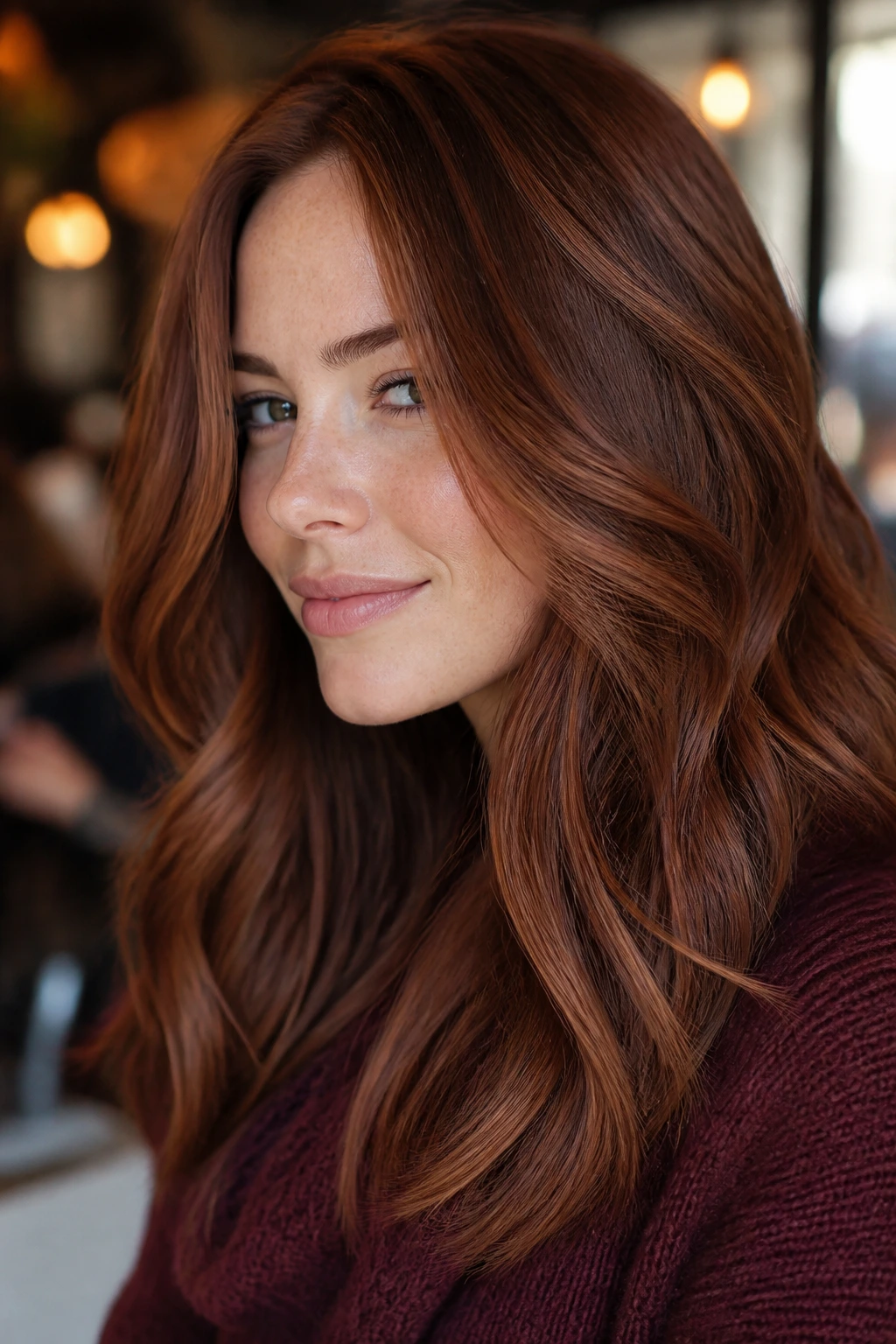
Cherry-chestnut is for someone who wants warmth with a little tension in it. The chestnut leans red-brown, almost like polished mahogany, and the caramel comes in as a muted copper-beige thread rather than bright gold. On fair skin, that mix can look rich and tailored instead of sugary.
I like this tone when the complexion is neutral or when freckles are part of the picture. It gives fair skin a little more color back without tipping into orange. If you’re nervous about red tones, keep the caramel restrained and ask for gloss rather than high-lift highlights.
12. Chestnut Caramel Pixie Glow
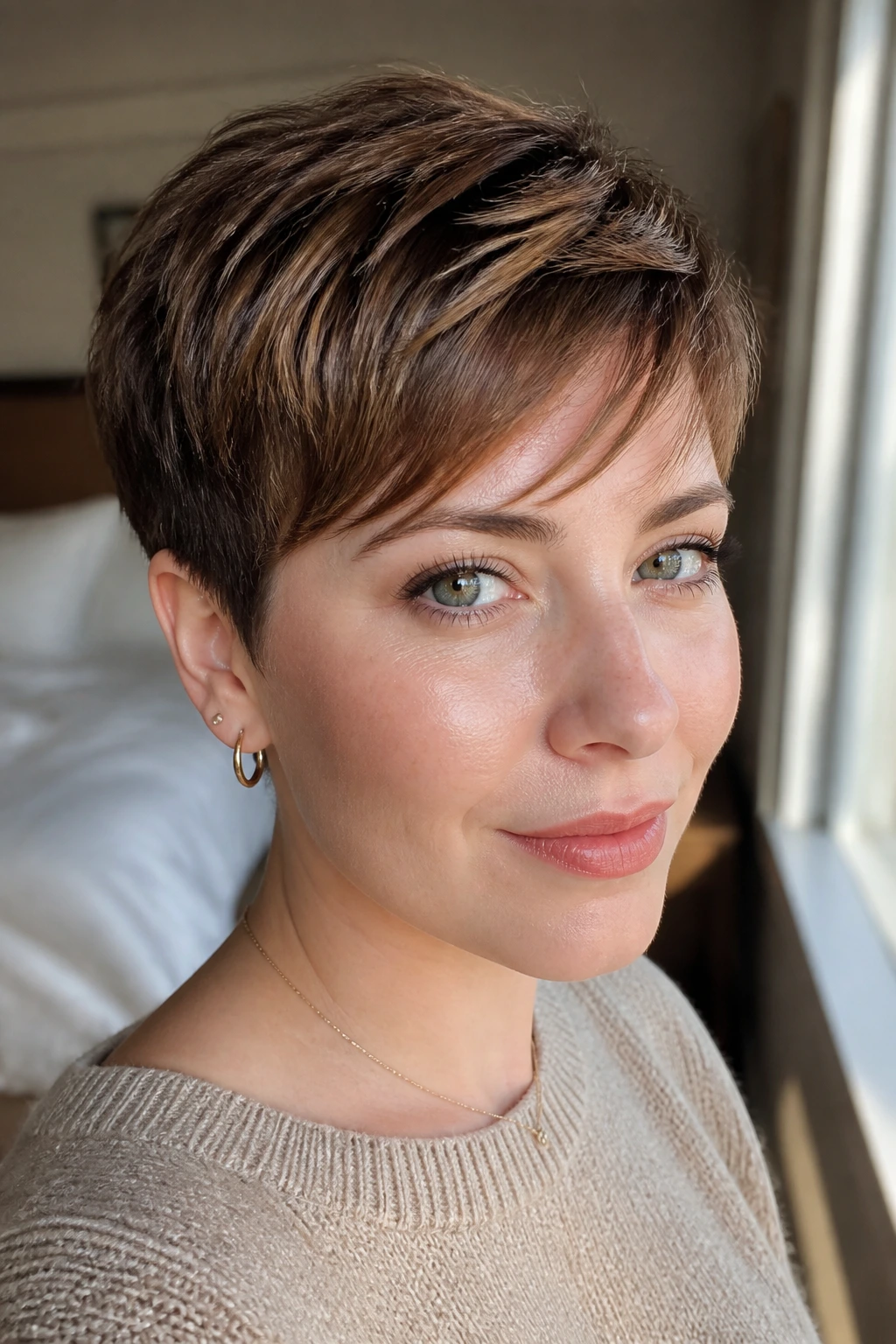
Short hair gets ignored in color conversations way too often, and it shouldn’t. A pixie cut with chestnut caramel needs only micro-ribbons of lightness and a glossy finish to look dimensional. On fair skin, that little bit of contrast is enough to keep the cut from disappearing into one dark shape.
This is especially good if your hair is fine or if you want something polished with almost no bulk. I’d keep the caramel close to the surface and around the fringe, crown, and sideburn area. The shape will do the rest. If you add too much lightness, the cut loses its neat edge and starts looking busy.
13. Warm Chestnut Caramel on Long Layers
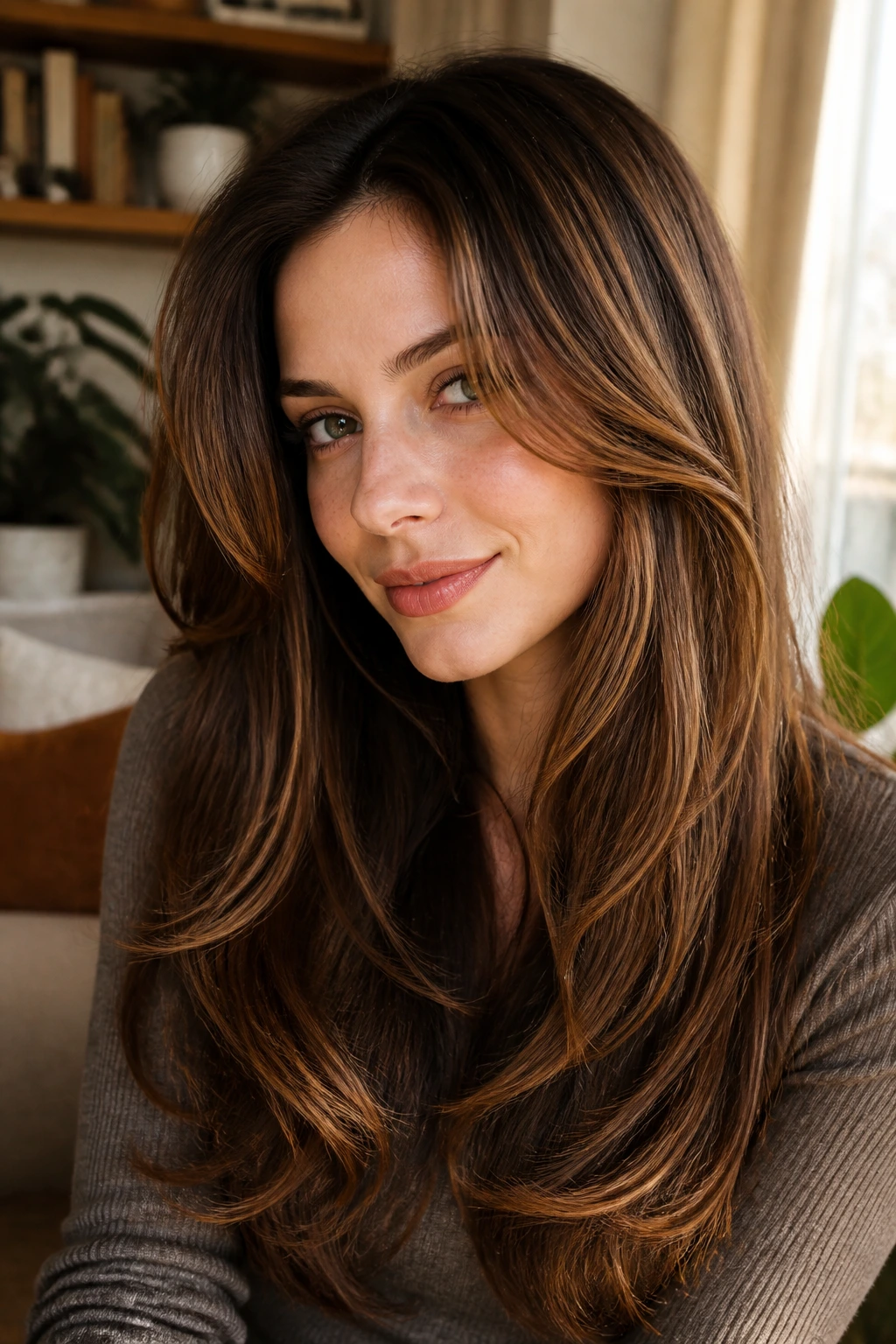
Long layers give chestnut caramel a place to move. Without the layers, the color can sit there and look heavy. With them, the caramel pieces break over different lengths and show off the shape of the haircut. On fair skin, that movement stops the overall look from feeling too solid.
This version is best when the caramel is placed through the face layers and the lower lengths, not just the very top. You want the shade to travel, almost like a soft gradient down the hair. A blowout helps, but loose waves make the dimension easier to see.
14. Chestnut Caramel Curly Definition
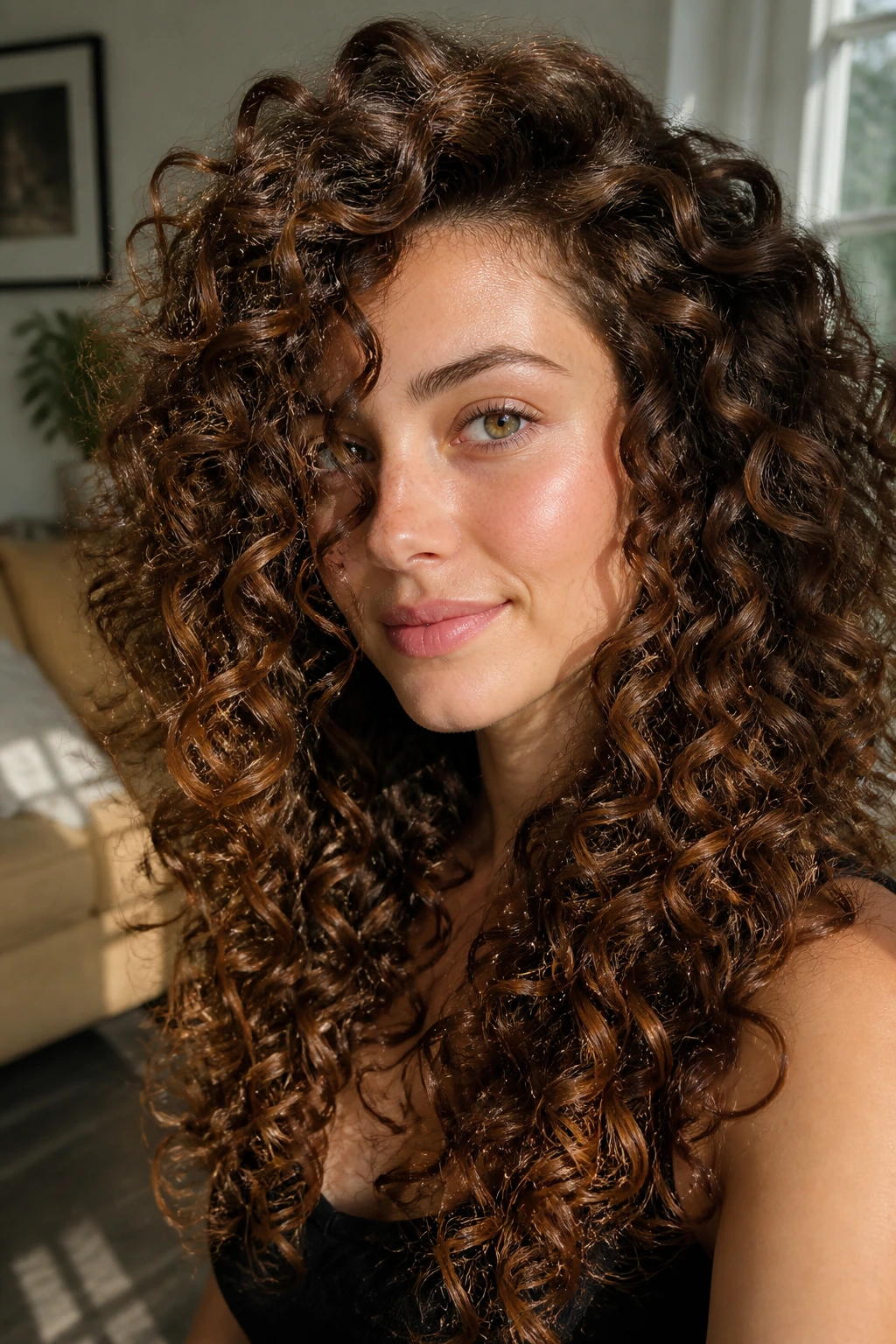
Curly hair needs a different highlight map, and this is where chestnut caramel gets interesting. Instead of painting broad streaks, the color should be placed curl by curl or section by section so the pattern stays natural. Fair skin benefits from the contrast, but the curls need room to breathe.
If your curls are tight, keep the caramel slightly deeper than you would on straight hair. Too light and the shape can start to look frayed. A chestnut base with a few caramel-painted ringlets around the front usually gives the best balance. It’s a color job that respects the curl pattern instead of fighting it.
15. Glossy Chestnut Caramel One-Process Color
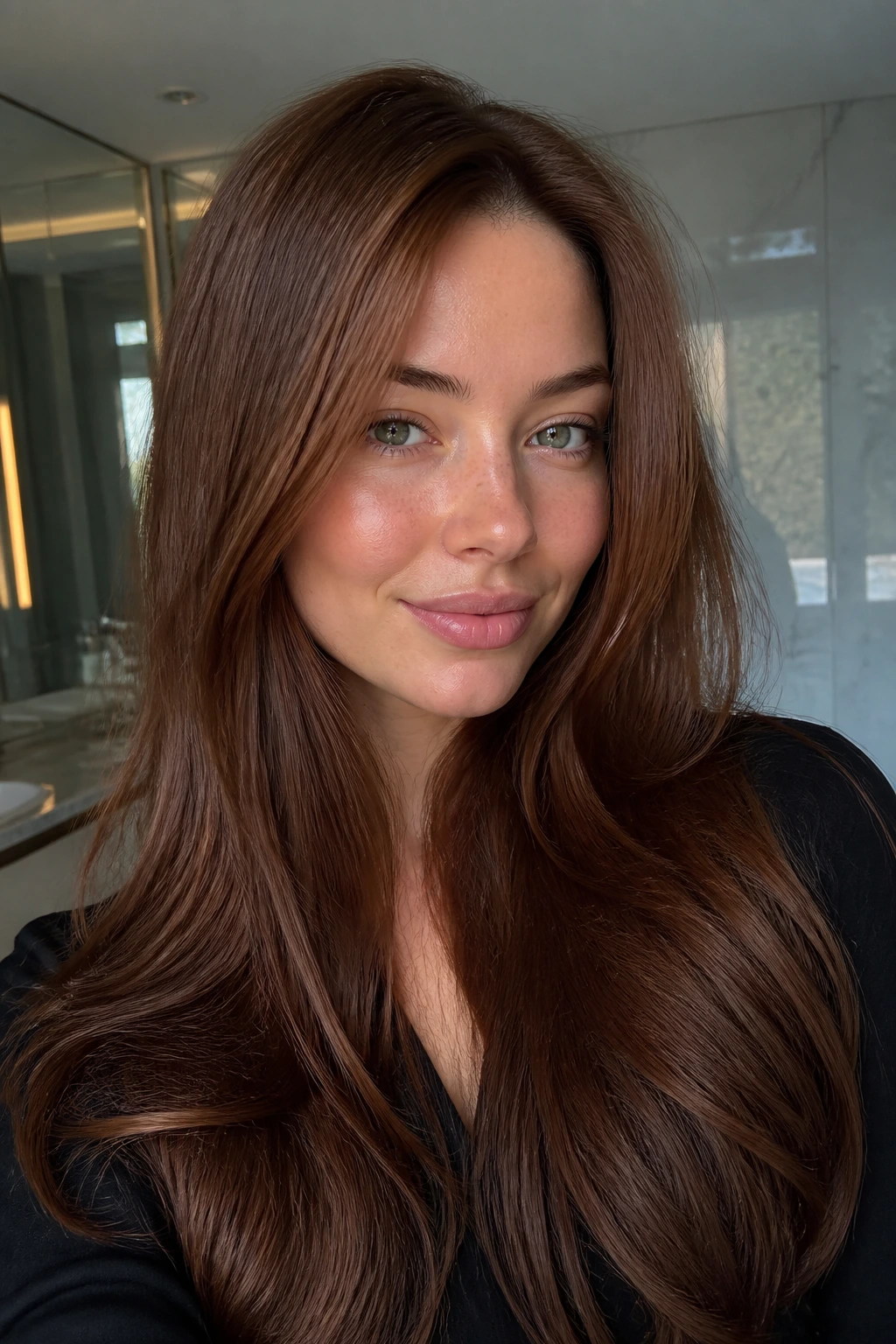
Not every good chestnut caramel look needs a full highlight service. Sometimes a single rich gloss at level 5 or 6, nudged with a little caramel warmth, does the job beautifully. On fair skin, the shine matters just as much as the shade because glossy brown reflects light back into the face.
This is the one I’d choose for someone with naturally light brown hair who wants depth without stripes. It’s also a clean option if your ends are damaged and you don’t want to open the hair up with bleach. The color sits close to the cuticle, which means the finish looks smooth and deliberate rather than streaky.
16. Cool Chestnut Caramel with Toffee Highlights
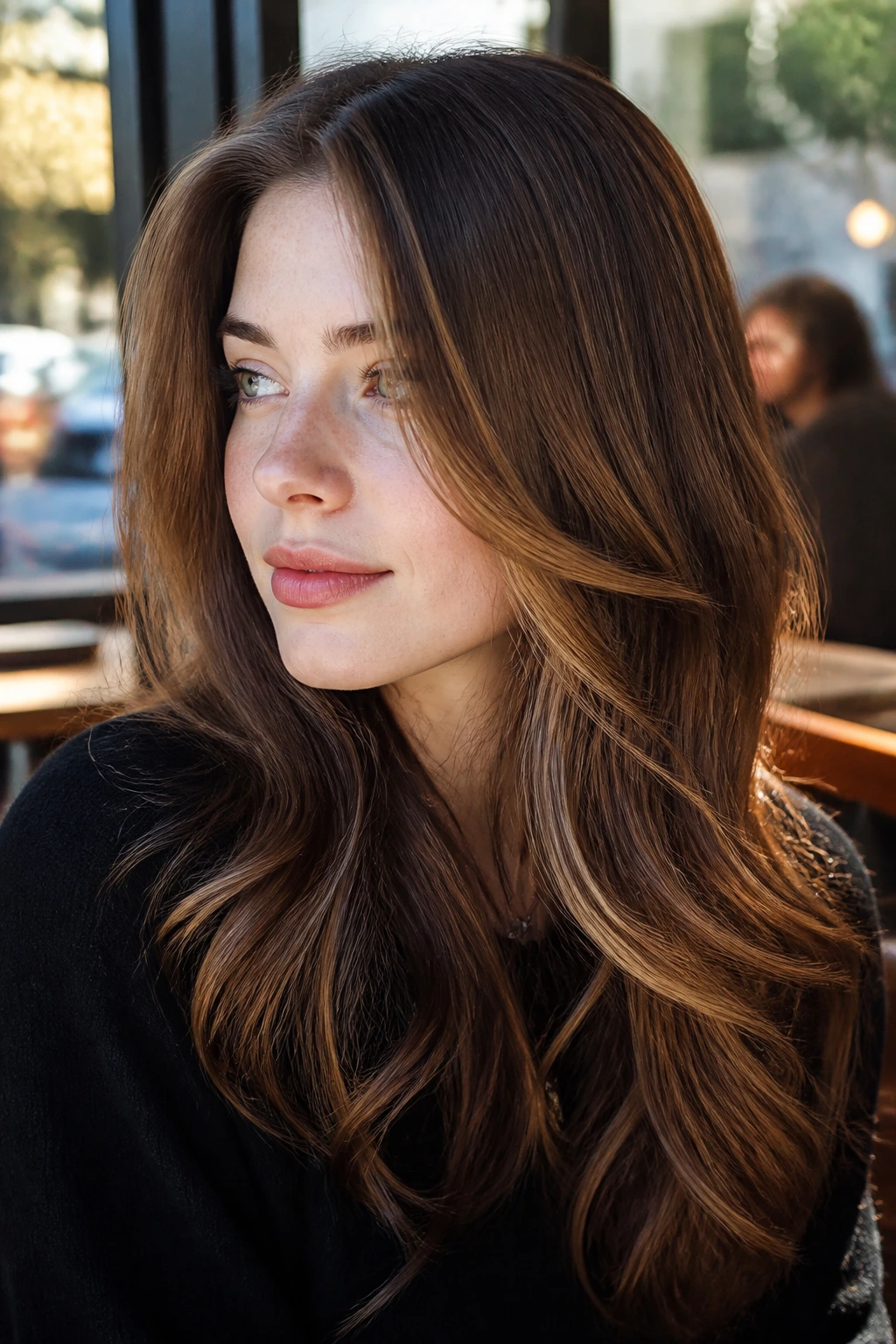
Toffee is sweeter than mushroom, but still calm enough for fair skin if it’s placed with restraint. The base stays cool chestnut, then the toffee highlights thread through the mids and the outer layers. That keeps the warmth from sitting directly under the face where it can clash with redness.
This is one of the better options for someone who wants brown hair that reads softly lit rather than dramatic. The toffee pieces should look thin from the top and a little brighter at the ends, almost like the color opened up in sunlight. Keep the root cooler, and the whole thing holds together.
17. Dimensional Chestnut Caramel Shag
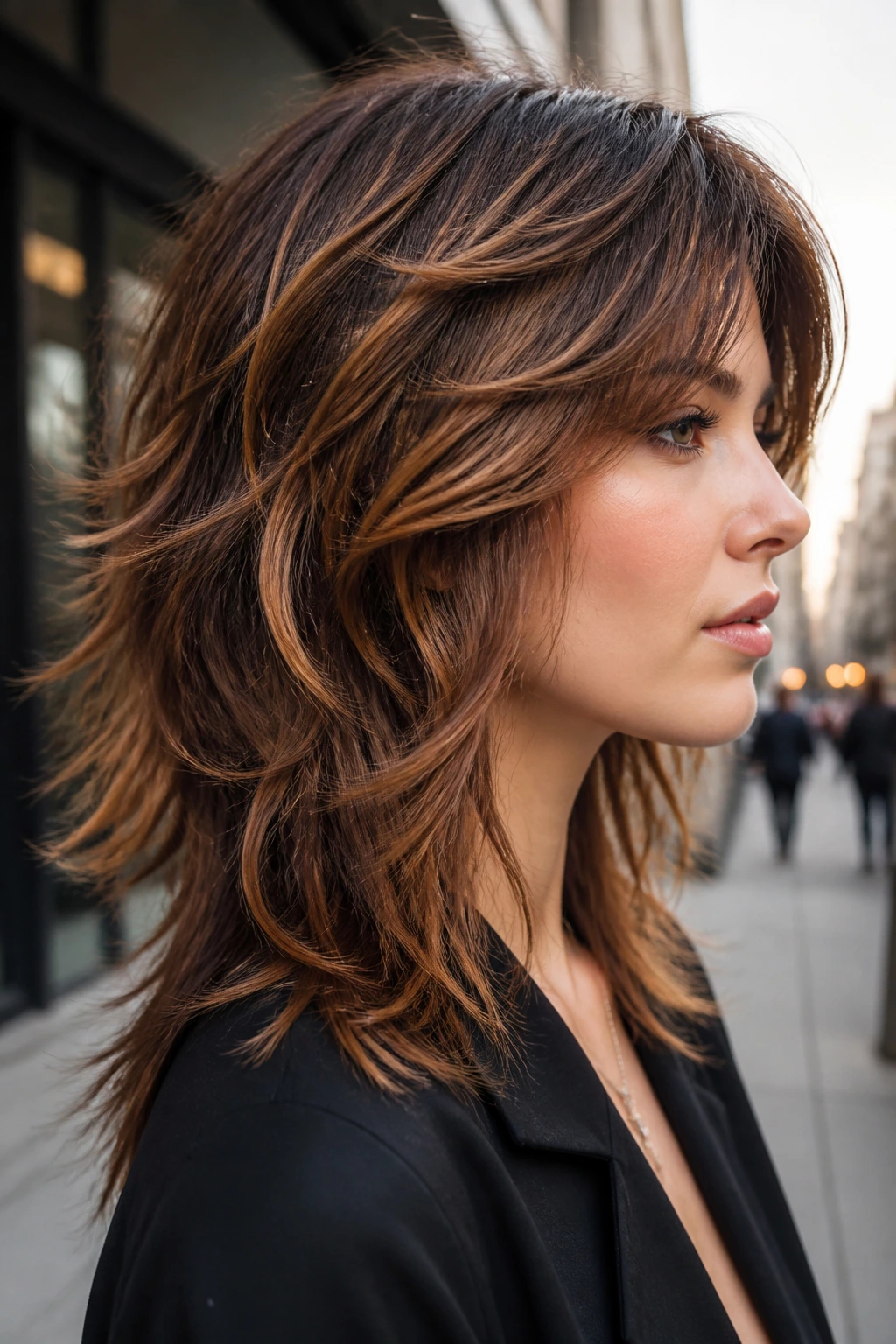
A shag needs color that can keep up with texture. Chestnut caramel does that by creating broken-up ribbons that sit inside the layers instead of over them. On fair skin, the choppiness can look cool and a little undone, but only if the color isn’t too chunky.
This is a good match for air-dried waves, bends from a diffuser, or that slightly piece-y finish people get from a salt spray and a quick scrunch. The chestnut gives the haircut structure. The caramel makes the movement visible. Without both, a shag can look flat in a hurry.
18. Chestnut Caramel with Shadow Roots
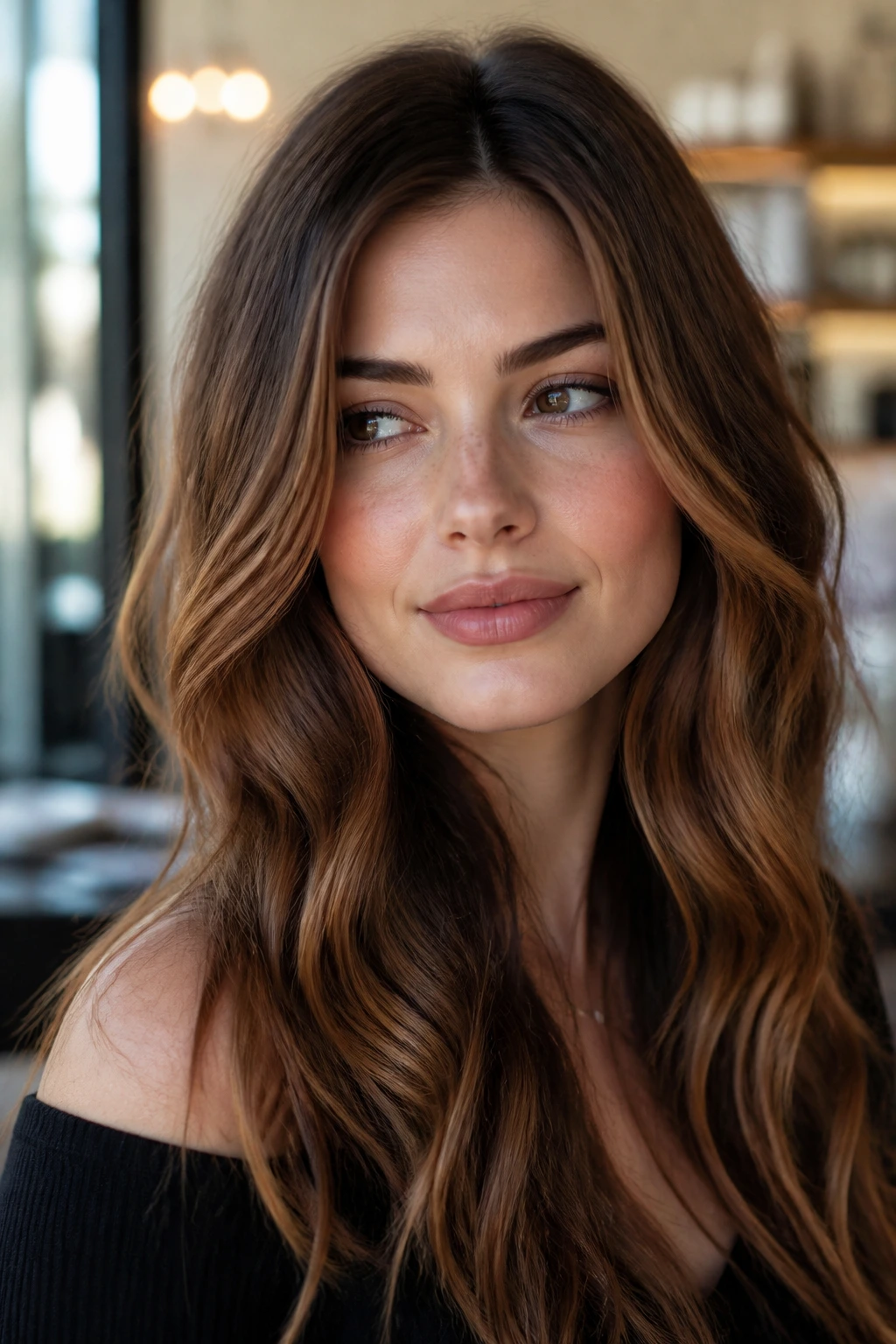
Shadow roots are the quiet way to keep chestnut caramel from getting fussy. The root stays a bit deeper than the mids and ends, which softens regrowth and gives fair skin a touch more contrast at the scalp. That contrast matters more than people think. Pale skin next to pale roots can wash out fast.
This is a strong option if you dislike salon upkeep or if your natural color is already close to chestnut. Ask for the root to stay soft, not painted as a hard band. A good shadow root should blur into the rest of the color when the hair moves.
19. Copper-Kissed Chestnut Caramel
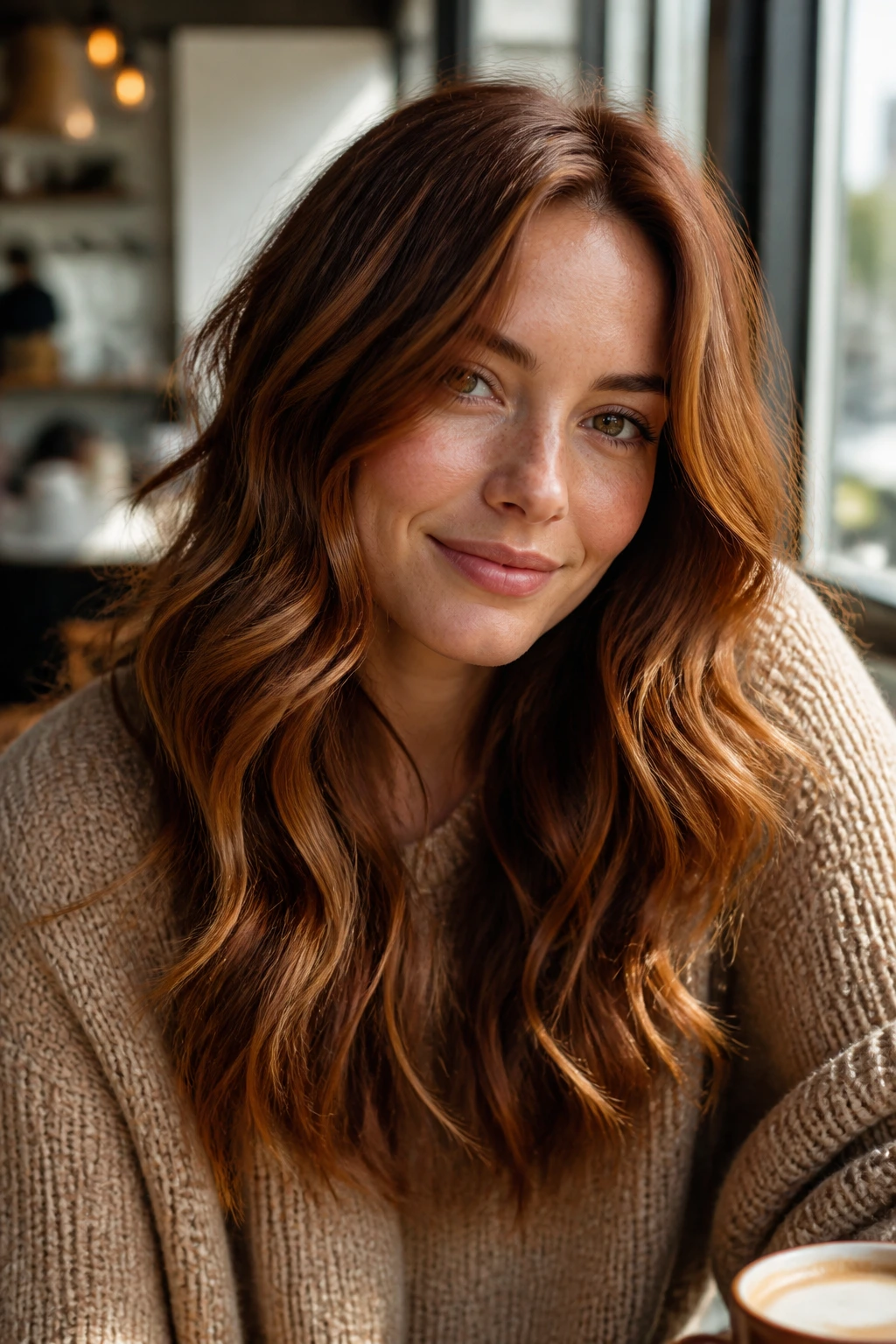
Copper-kissed chestnut caramel is warmer, brighter, and a little more daring. The copper is there as a hint, not as a full red shift, so the shade stays in brunette territory. On fair skin with freckles or golden undertones, that little copper note can make the complexion look alive instead of pale.
I would not push this too far if your skin flushes easily or your natural undertone is very cool. Copper has a way of showing up first on the face, and you want the effect to be flattering, not fiery. Kept subtle, though, it has a lovely polished warmth.
20. Chestnut Caramel Butterfly Cut
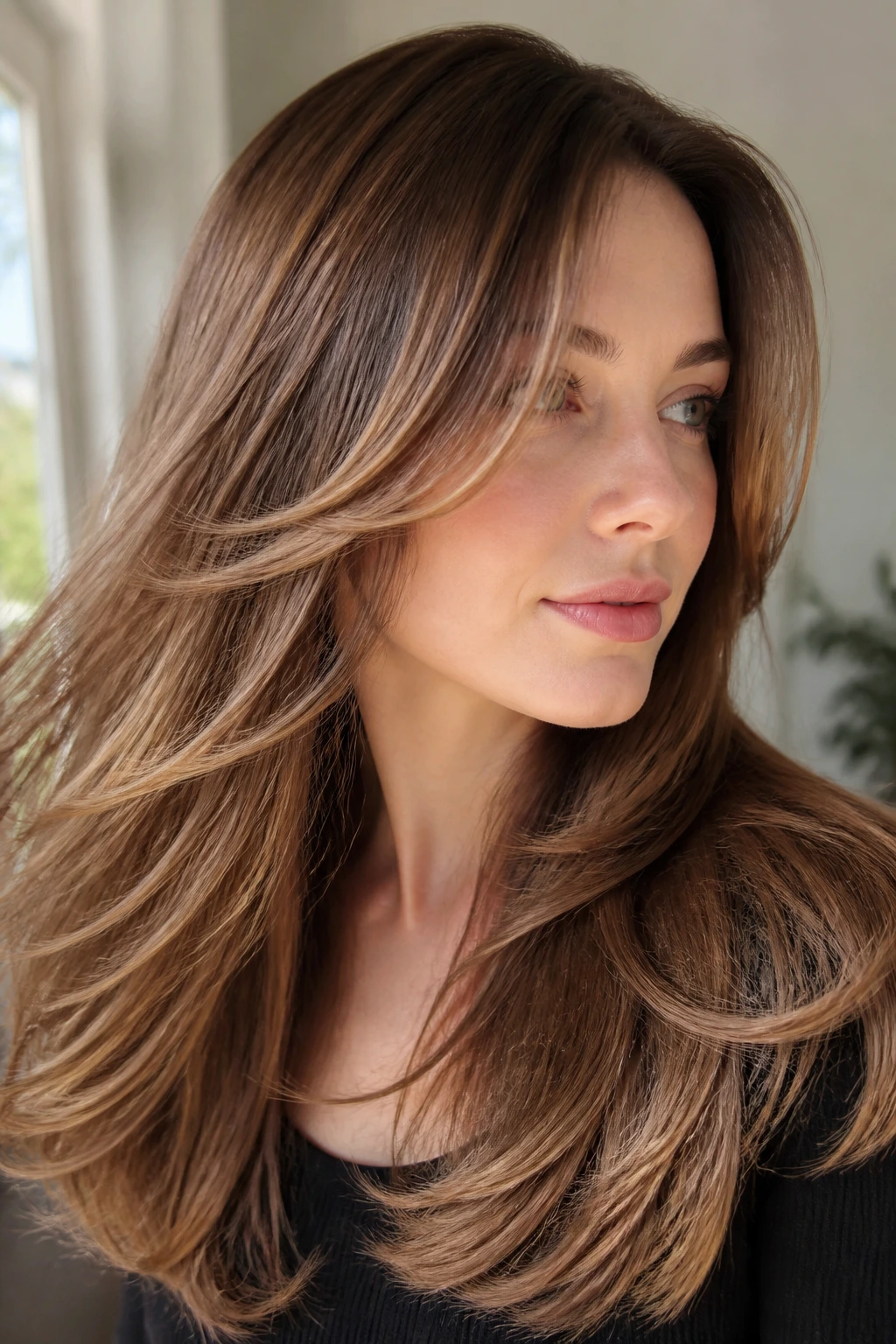
The butterfly cut gives chestnut caramel a stage. Shorter face-framing layers move the lighter pieces up near the cheekbones, while the longer lengths keep the chestnut grounded. On fair skin, that balance is excellent because the face gets lift without losing depth.
This look depends on movement. If your hair is blown out with a round brush or bent in loose sections, the layers show their shape and the caramel comes alive. If you wear your hair flat and one-length most of the time, you won’t get the full effect. That’s just the truth of it.
21. Chestnut Caramel Peekaboo Panels
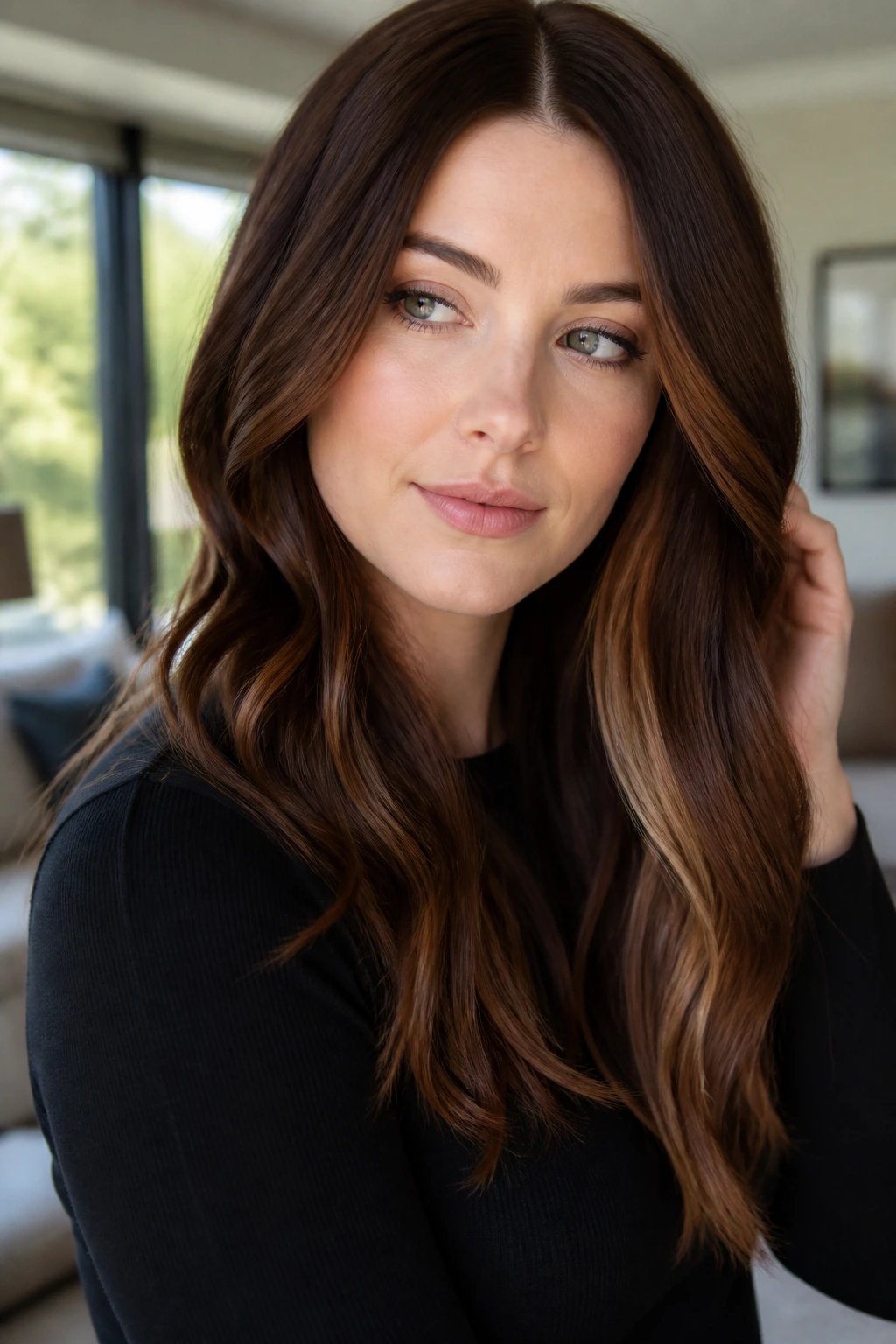
Peekaboo panels are the stealth choice. The color sits underneath the top layer, so the chestnut stays dominant until the hair shifts or you tuck it back. On fair skin, that creates a nice bit of surprise without making the whole head too bright.
This is a good option if you want dimension for yourself more than for the room. It also works well in professional settings where you want the color to stay controlled. Ask for the hidden pieces to be caramel, not pale blonde, so the contrast feels intentional and not a little bit rebellious for the wrong reasons.
22. Chestnut Caramel with Soft Lowlights
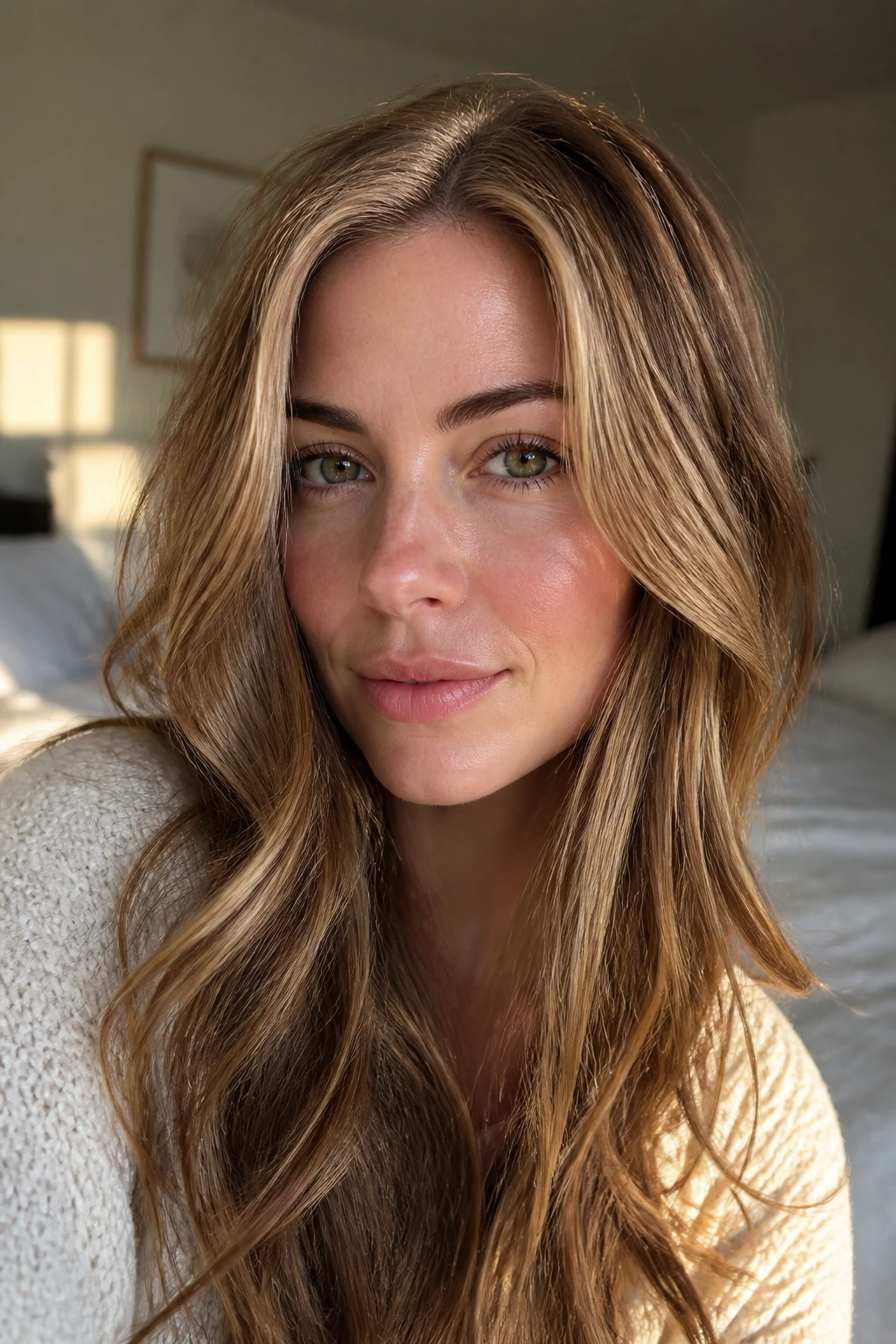
If your hair already runs light, soft lowlights can be the smarter move than highlights. They add chestnut depth back into the color and let the caramel sit as a smaller accent instead of the entire story. On fair skin, that extra depth keeps the complexion from floating.
This is especially useful for natural blondes trying to move toward brunette without losing softness. The lowlights should be thin and scattered, never thick enough to make the head look patchy. When done well, the result reads richer and calmer at the same time.
23. Rich Chestnut Caramel Midi Cut
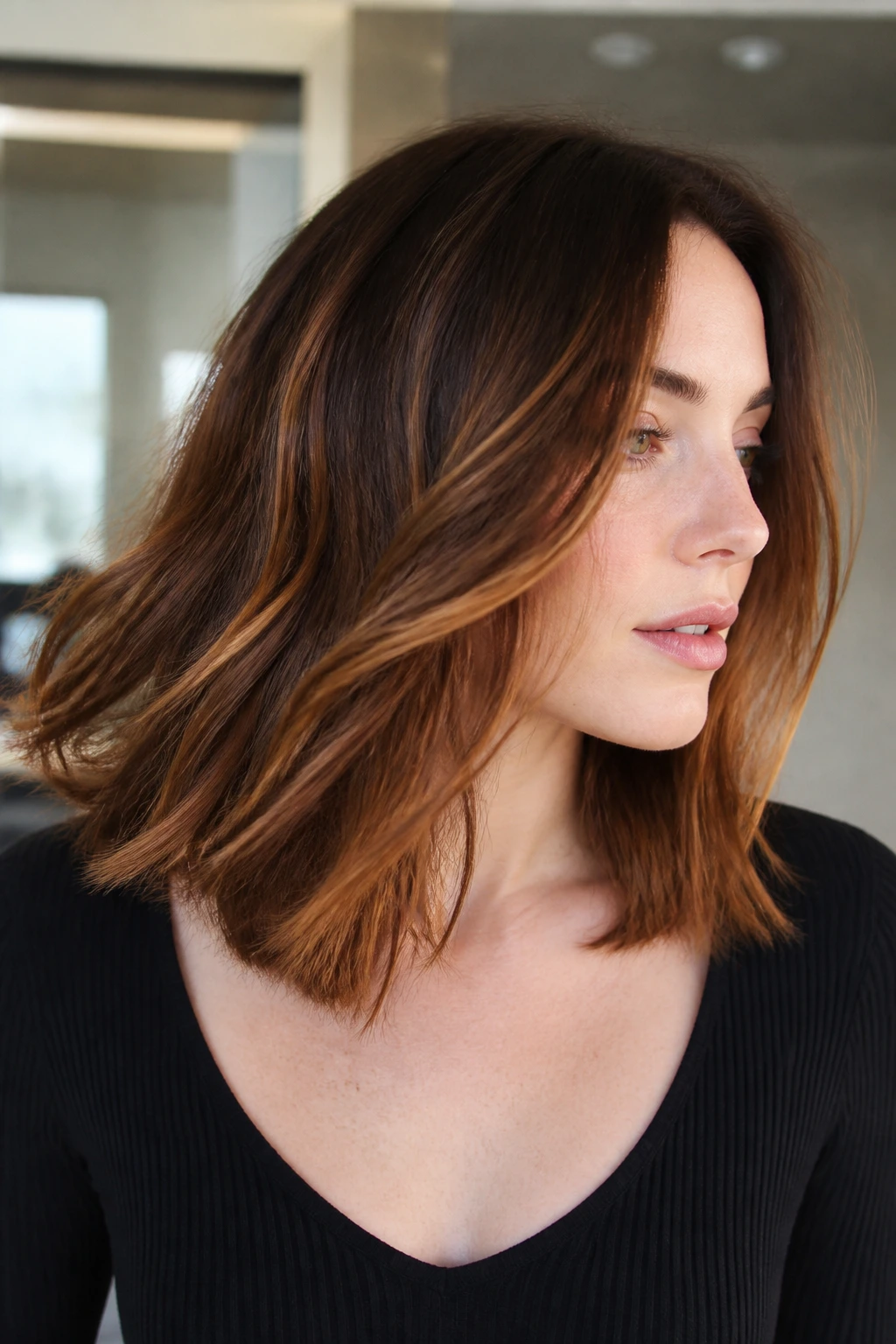
A midi cut lands in that sweet spot between short and long, which makes it easy for chestnut caramel to look balanced. The color has enough length to move, but not so much length that the lighter pieces disappear into the ends. On fair skin, this length tends to look tidy and modern.
I like a slightly blunt perimeter here with soft internal layers. That gives the chestnut a clean frame while letting the caramel show up in motion. It’s the sort of style that looks put together even when the hair is air-dried and a little imperfect.
24. Honeyed Chestnut Caramel Balayage
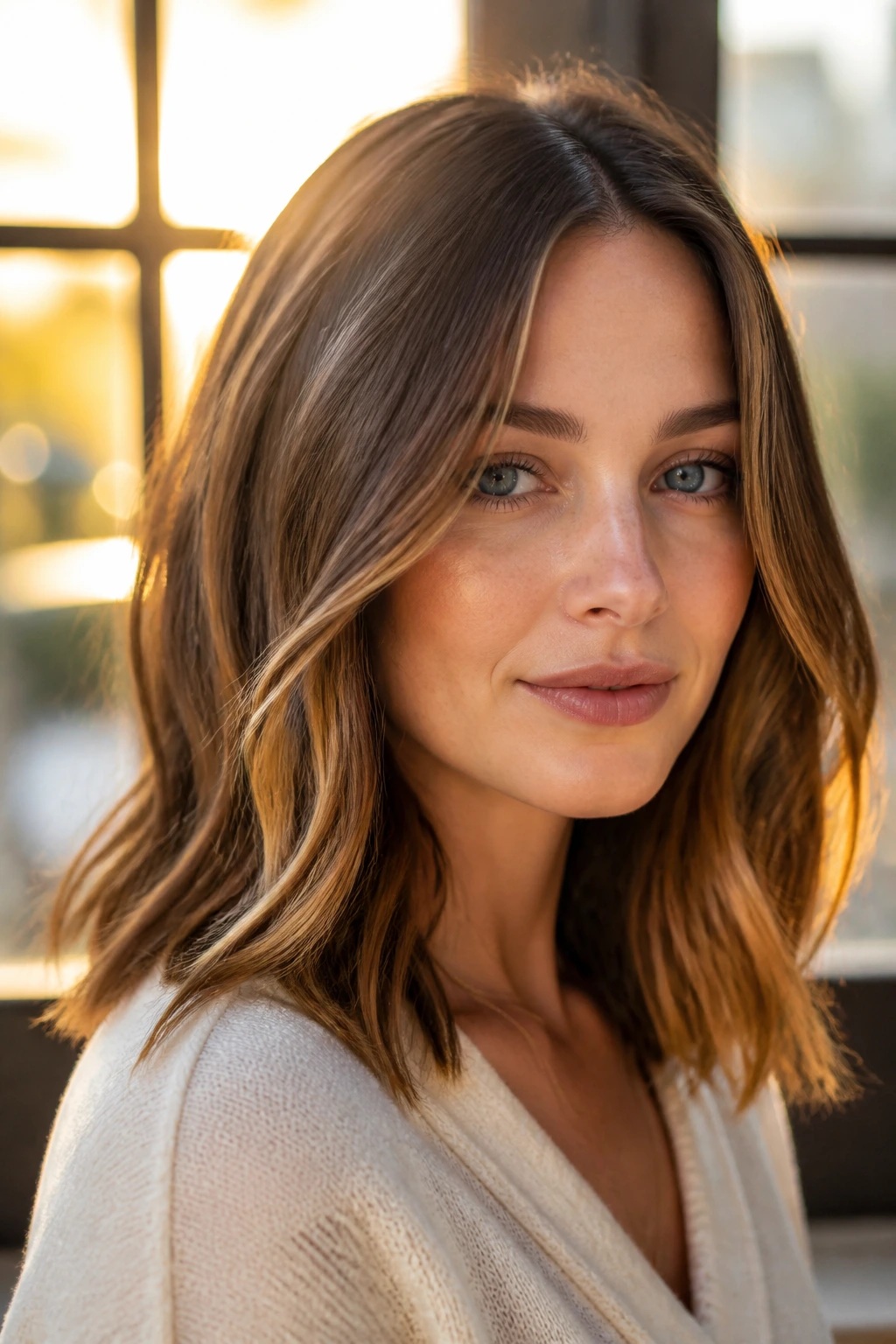
This version leans warmer and sweeter, with honeyed caramel painted over a chestnut base. It suits fair skin best when the complexion has some warmth already—peach, gold, or light olive undertones. Pushed too gold, it can go brassy. Kept soft, it looks sunlit without crossing into yellow.
I’d ask for the honey pieces to stay away from the scalp and concentrate more on the lower mids and ends. That keeps the face from getting overwhelmed by warmth. A beige toner after the lightening service can keep the honey from turning too sharp once the hair starts to settle.
25. Deep Chestnut Caramel Blowout Color
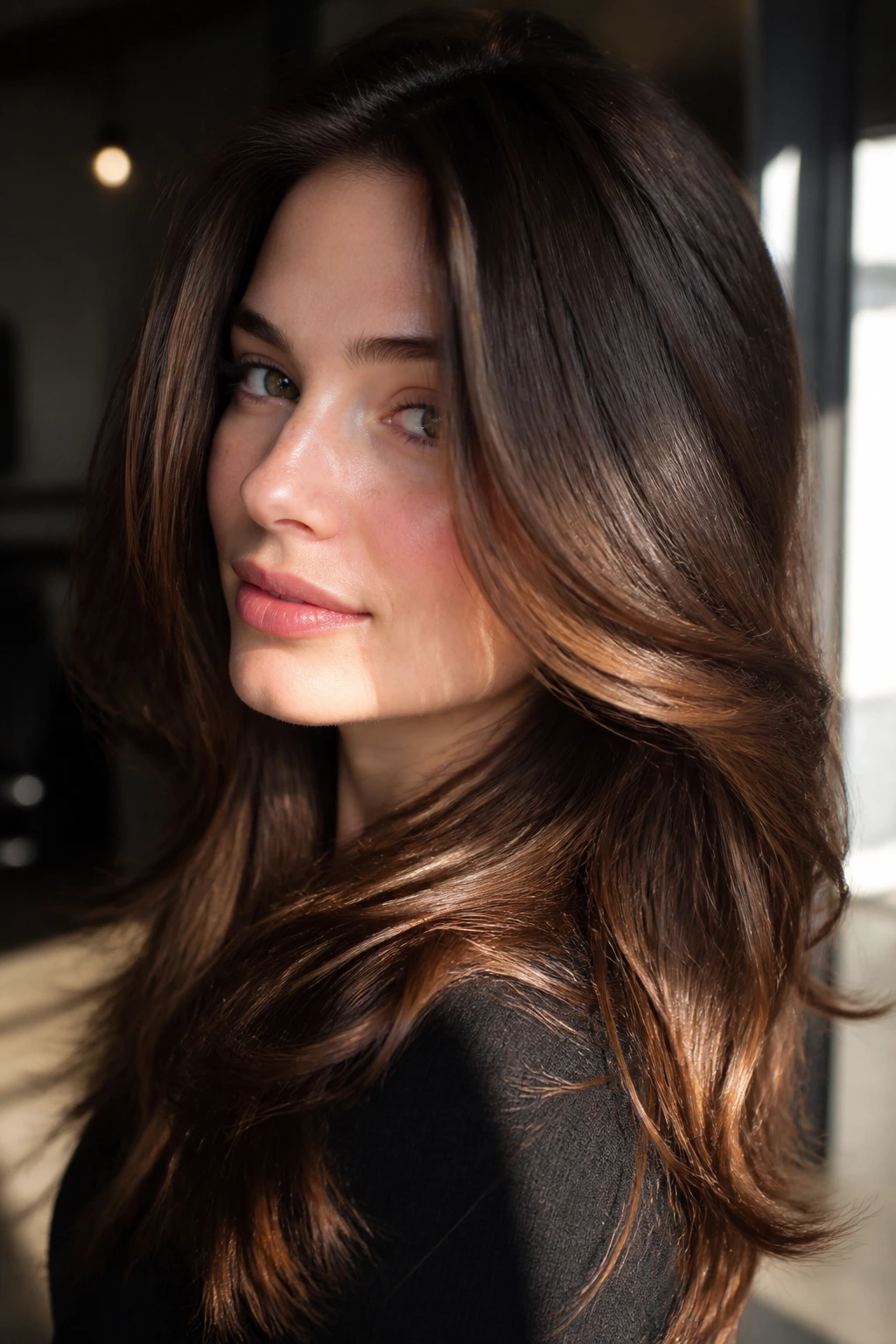
This is the polished version of the whole family. The base is deeper, the caramel is narrower and more controlled, and the finish is meant to look smooth, glossy, and expensive without leaning flashy. On fair skin, the depth keeps the face framed, while the caramel gives the style enough movement to avoid going flat.
It looks especially good on a round-brush blowout or big loose curls. The volume lets the lighter ribbons show up in layers, which is half the point. If you’re choosing one chestnut caramel idea to wear for a long time, this is one of the safest bets because it feels current without being fussy.
Matching Chestnut Caramel to Fair Skin Undertones
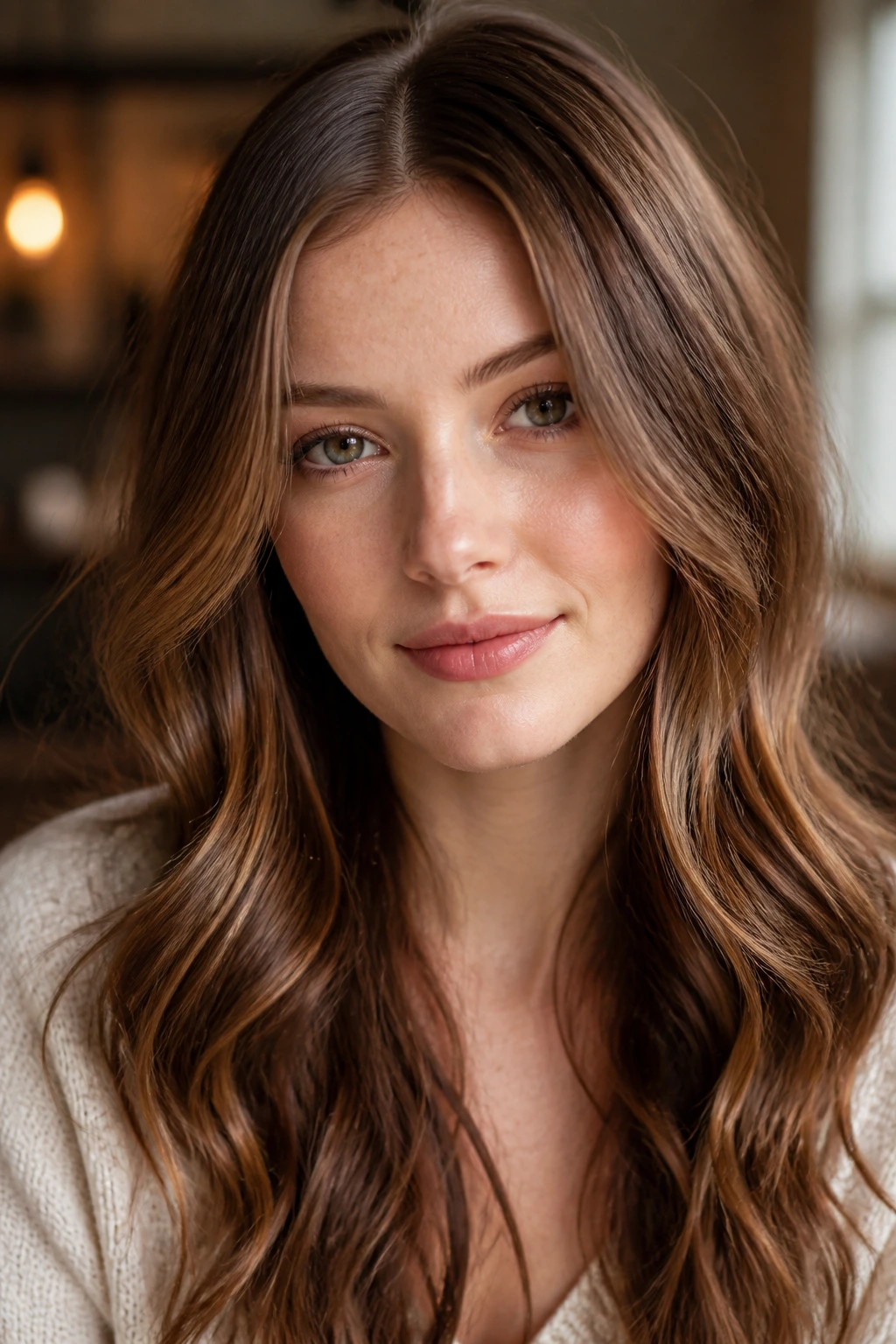
Fair skin isn’t one look. That’s the first thing people get wrong, and it’s why chestnut caramel sometimes lands perfectly and sometimes looks a little off. Pink or cool skin usually needs beige, mushroom, or neutral caramel so the hair doesn’t turn coppery against the face. Peach or golden fair skin can handle more honey and soft amber, especially if the base stays chestnut enough to hold the contrast.
The other thing to watch is brightness. Very pale skin often looks better with dimension than with a lot of blonde lift. A level 5 to 7 color range tends to sit more naturally than a high-lift caramel that’s pushed too light. That doesn’t mean the hair has to be dark. It just means the lighter pieces should feel measured, not sprayed across every strand.
If you’ve ever looked in the mirror after a highlight appointment and thought, “Why do I suddenly look more pink?” that’s usually undertone mismatch. Beige gloss fixes a lot of that. So does moving the lightest pieces farther from the root and closer to the face-framing layers where the color reads softer.
Tools That Make These Colors Easier to Keep
-
Color-safe shampoo: A sulfate-free shampoo helps keep chestnut caramel from fading too fast and stops the caramel pieces from going dull between washes.
-
Moisturizing conditioner or mask: Lightened ends get dry first, so a weekly mask keeps the highlight area from fraying and turning rough.
-
Heat protectant spray: Chestnut can turn brassy faster than people expect if you use a hot tool on dry hair without protection.
-
Wide-tooth comb: Use it on wet hair to keep highlighted sections from snapping or pulling after coloring.
-
Microfiber towel or soft T-shirt: Rough towel-drying can rough up the cuticle and make the warm tones look flat.
-
1.25-inch curling iron or wand: Loose bends show the different brown and caramel shades better than pin-straight styling.
-
Gloss or toner: A beige or neutral gloss is often the thing that keeps the caramel from swinging orange.
-
Satin pillowcase: Less friction means less dullness at the ends, which matters more than most people think.
How to Wear Chestnut Caramel Without Letting It Wear You
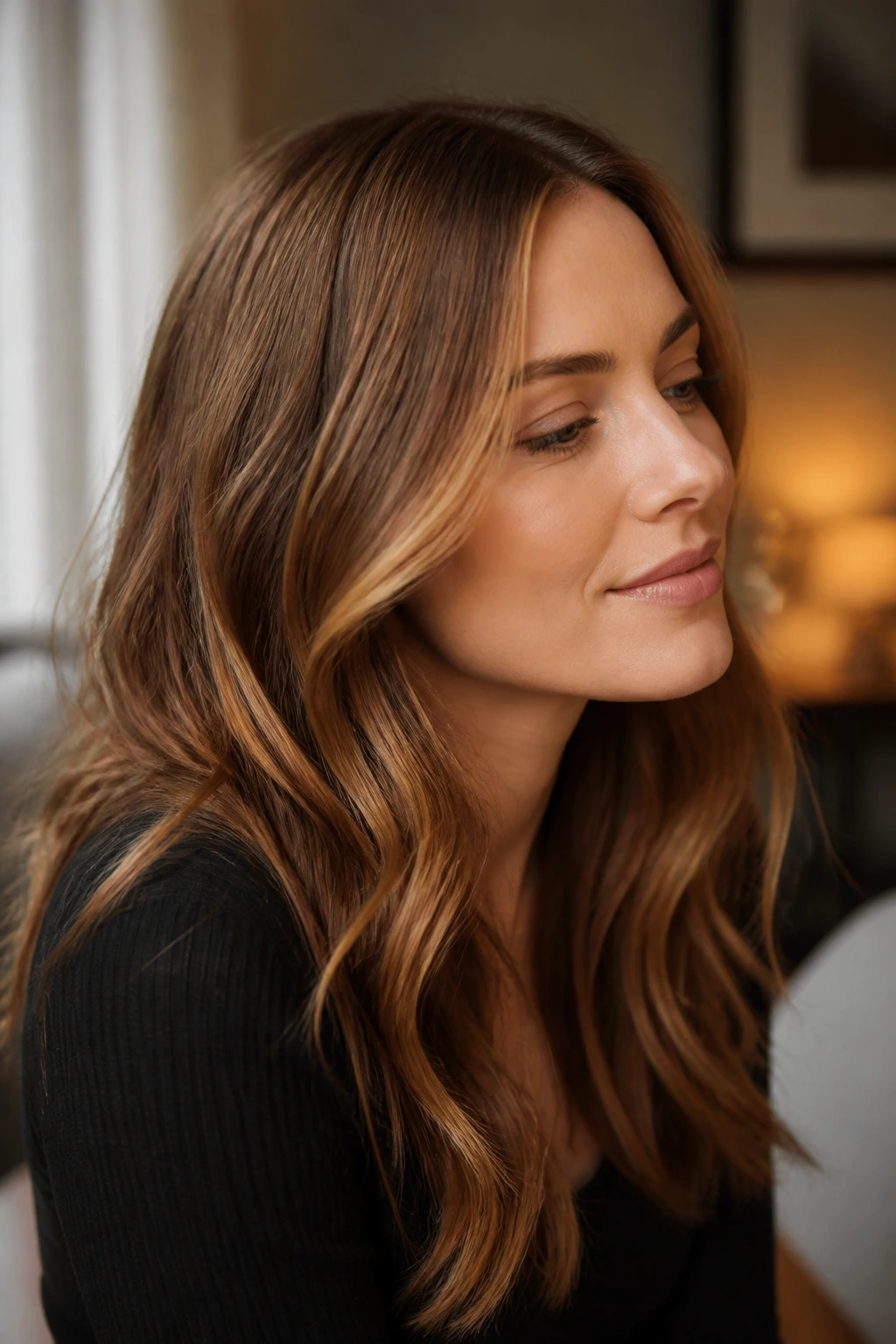
Cut: If you want the color to look clean, a blunt bob or tidy midi length keeps the chestnut base crisp. If you want the caramel to move, long layers, curtain bangs, or a butterfly cut give the lighter pieces room to shift.
Makeup: Taupe shadow, brown mascara, soft peach blush, and a muted berry lip work better than icy pinks or orange-heavy blush. The goal is not to match your hair. It’s to keep the face from competing with it.
Wardrobe Colors: Cream, navy, charcoal, olive, and deep berry make chestnut caramel look richer. Stark white can be sharp on very fair skin; softer off-white tends to be kinder.
Styling Finish: A loose wave, round-brush blowout, or soft bend at the ends shows the dimension. Pin-straight hair can work, but it tends to flatten the lighter pieces and make the color look more one-note than it really is.
Smart Salon Moves and Color Boosters
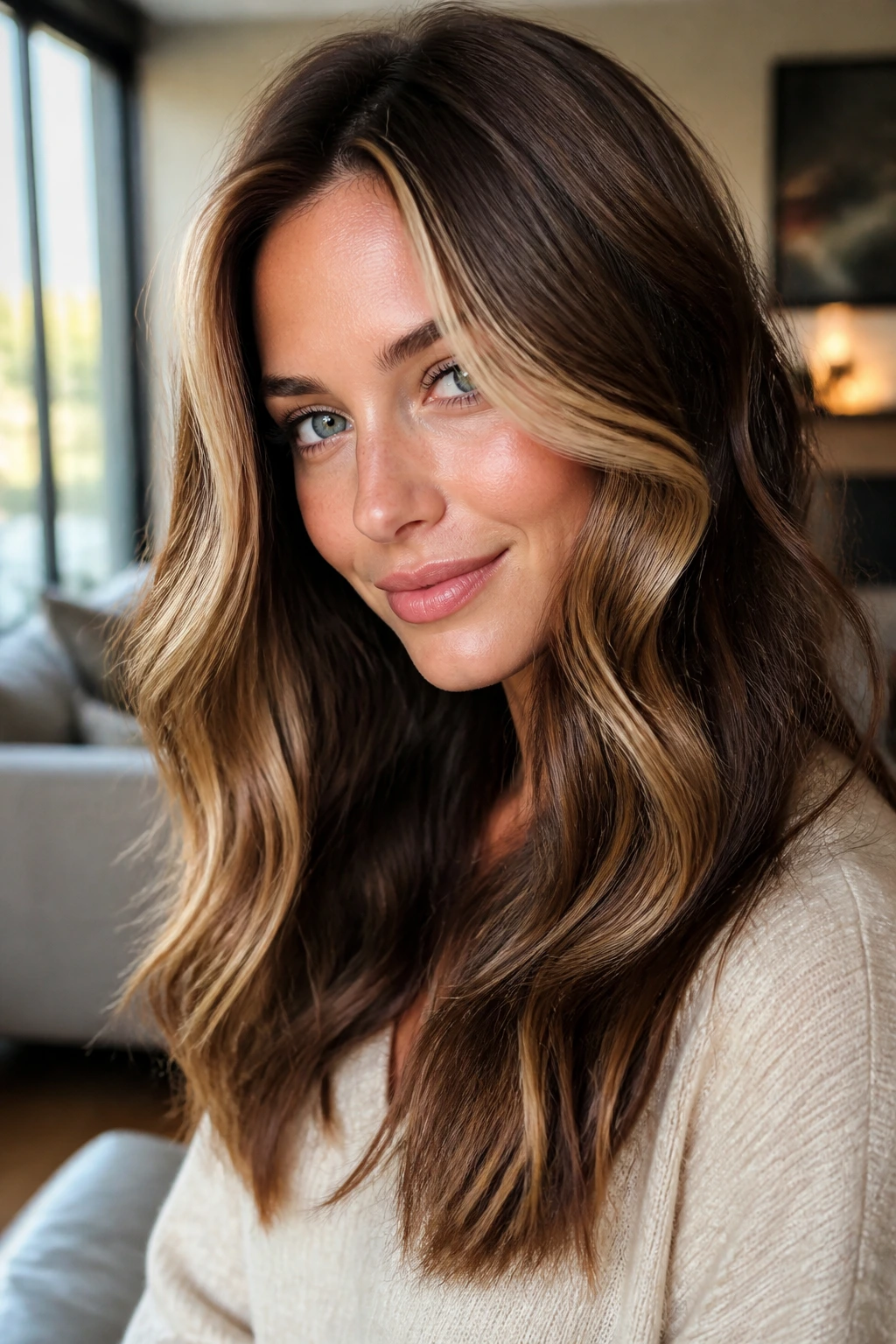
Glossing Move: Ask for a demi-permanent gloss every 4 to 6 weeks if the caramel starts to look tired. A beige or neutral gloss keeps the warmth clean without making the shade darker.
Tone Control: If the caramel starts to drift orange, don’t reach for a stronger highlight. Ask for a tone adjustment first. A lot of brass lives on the surface and can be fixed with glaze, not bleach.
Time Saver: If you want a lower-commitment change, start with face-framing pieces or a money piece. That gives you a read on how chestnut caramel behaves against your skin before you go all in.
Budget-Saver: A chestnut glaze plus a few well-placed highlights costs less than a full-head transformation and still gives fair skin enough contrast to matter.
Make-It-Yours: Cool skin usually does better with mushroom, beige, or cocoa-leaning caramel. Warm or freckled skin can take honey, toffee, or a whisper of copper. If you’re somewhere in the middle, neutral caramel is the safest lane.
Common Mistakes That Make Chestnut Caramel Look Off
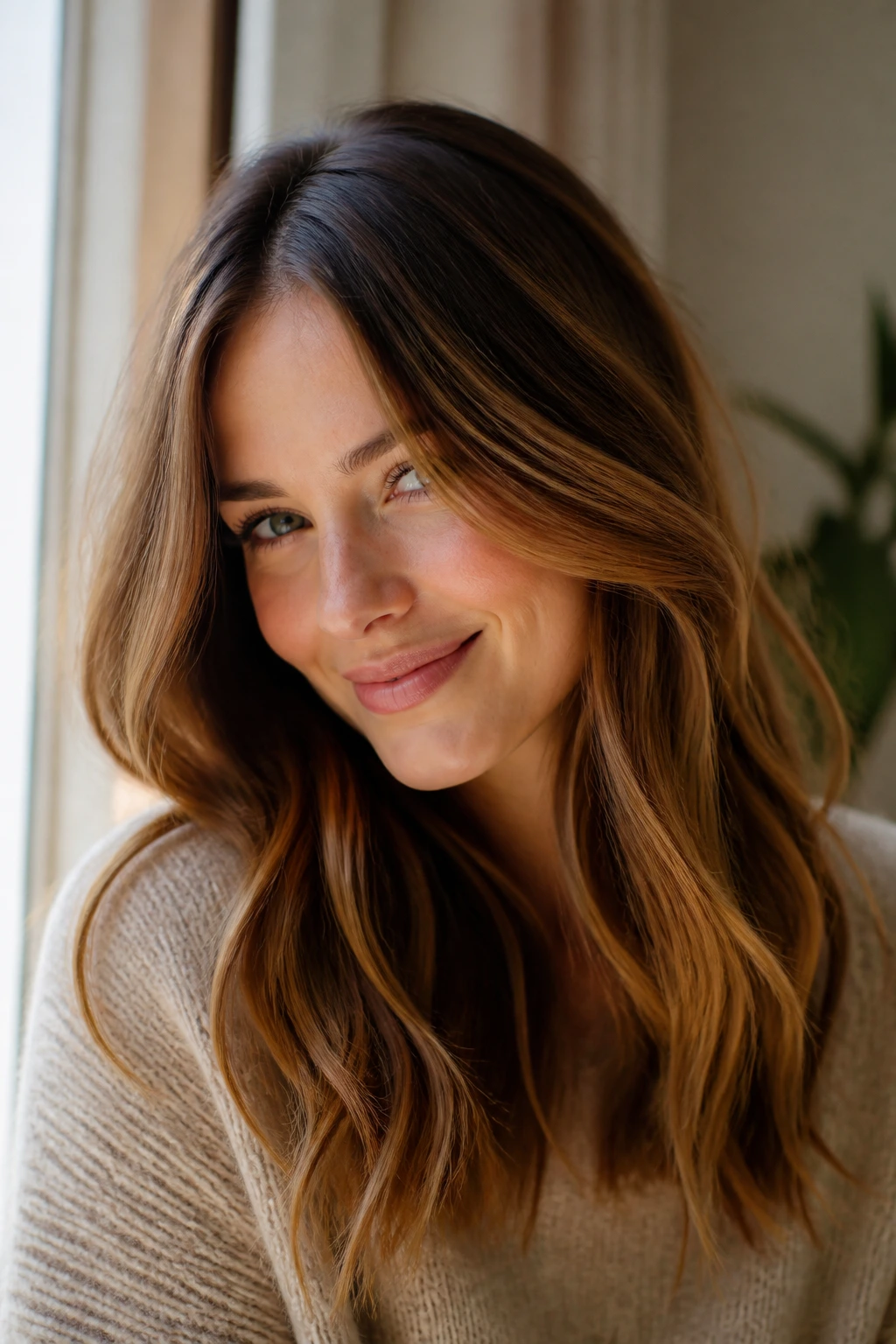
The biggest one is going too light. A lot of people ask for caramel and end up with blonde pieces that fight the fairness of the skin instead of supporting it. If your complexion is pale, high-contrast blonde ribbons can look stripey in bad light. Keep the lift controlled and the placement soft.
Another mistake is skipping the root shadow. Flat, all-over lightness on fair skin often reads weak, not bright. A deeper root or chestnut base gives the eye a place to land. Without it, the color can look unfinished.
Over-brassing is a sneaky problem too. Heat styling, harsh shampoo, and too much sun exposure can push caramel toward orange. That’s why a gloss schedule matters. So does using color-safe products instead of stripping the hair every other wash.
And then there’s chunkiness. Thick, blocky highlights almost always look harsher on fair skin than thin, hand-painted pieces. If the color looks striped when your hair is pulled back, the placement is probably too heavy.
Variations and Adaptations to Try
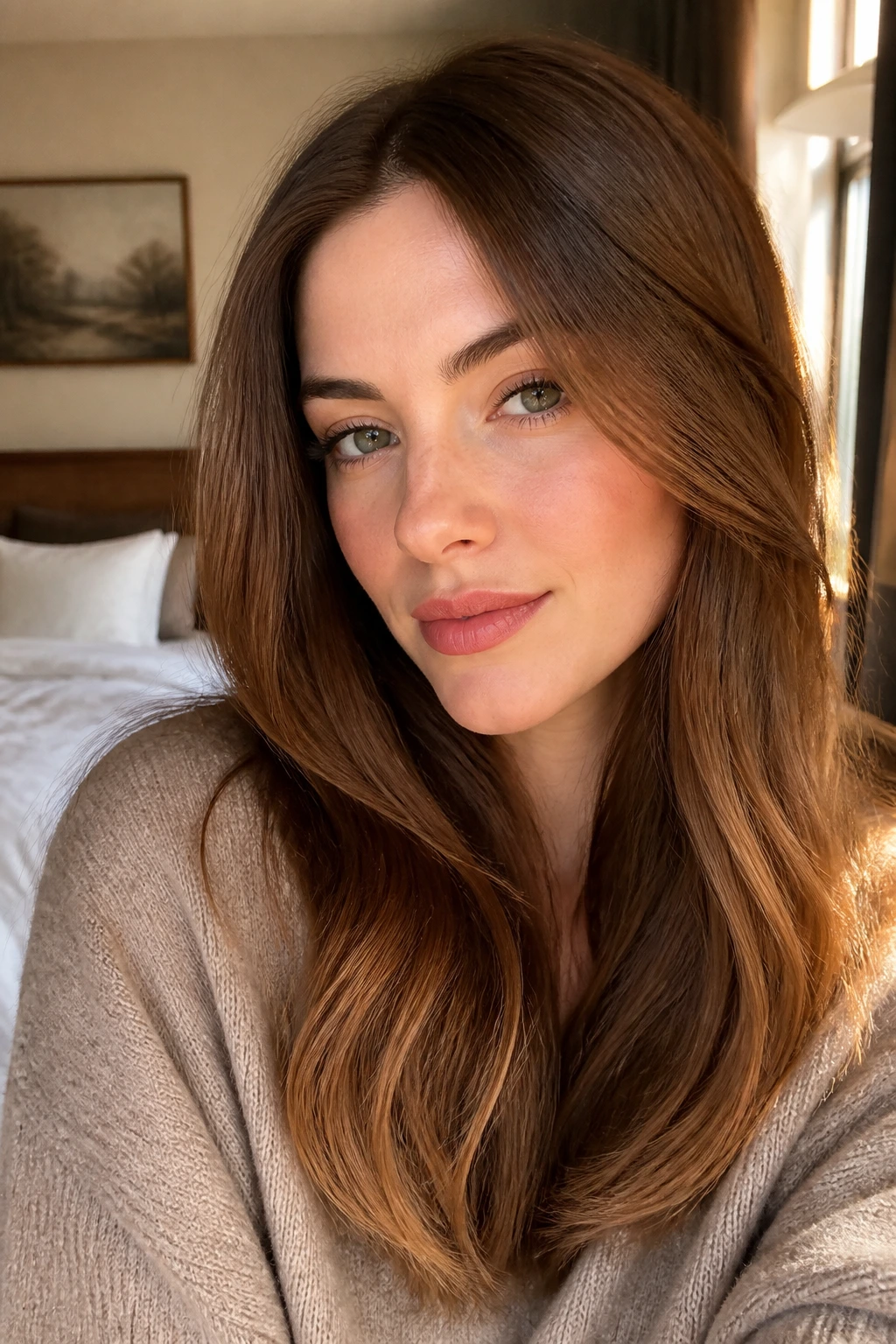
The Barely-There Gloss: Keep the hair mostly chestnut and add a soft caramel glaze only through the mids and ends. This works when you want shine and warmth more than obvious contrast.
The Face-Frame Flash: Brighten only the front pieces and leave the rest of the hair deeper. It’s the fastest way to test chestnut caramel on fair skin without committing to full balayage.
The Mushroom Edit: Shift the caramel toward beige and keep the chestnut cooler. This suits pink or cool fair skin that gets overwhelmed by gold.
The Honeyed Glow: Add a warmer caramel veil to a chestnut base and keep the root soft. It looks best on peachy fair skin or on people who already wear warm makeup tones.
The Red-Brown Twist: Pull in a little cinnamon or cherry-brown warmth for freckles and green eyes. Keep the red underneath the caramel, not all over it, or it can get loud fast.
Make-Ahead, Maintenance, and Touch-Up Rhythm
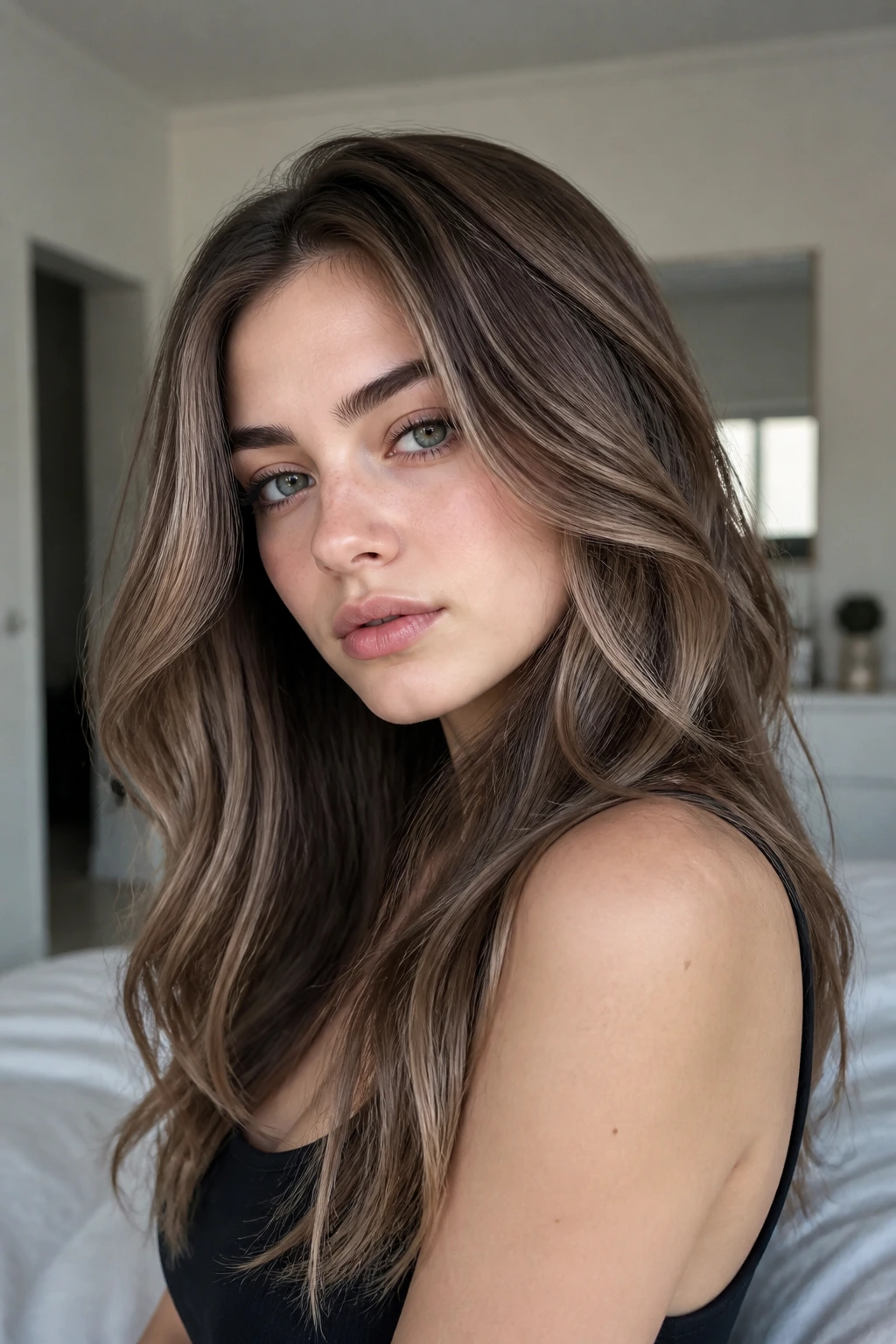
Chestnut caramel usually looks best when it has settled for a few days, not right out of the chair. If your colorist used toner or gloss, wait at least 48 hours before the first wash. That gives the cuticle a chance to close and helps the shade hold its tone longer.
For most balayage or rooted chestnut caramel looks, a refresh every 6 to 10 weeks is enough to keep the finish clean. Gloss-only versions often need a tone refresh closer to 4 to 6 weeks because the shine fades before the color fully disappears. If your hair is porous, expect the warm pieces to fade faster at the ends than at the root.
Wash no more than 2 or 3 times a week if you can stand it. Use cool or lukewarm water, not hot. Hot water opens the cuticle and makes caramel fade quicker, especially around the face where you tend to cleanse more aggressively with styling products. On swim days, wet the hair with clean water before getting in the pool and use a leave-in afterward. It’s old advice, but it works.
Purple shampoo is not the hero here unless the hair has turned too yellow. Beige or color-depositing conditioner usually does a better job of keeping chestnut caramel balanced. Purple can make warm brown shades look dusty if you use it too often.
Questions People Actually Ask About Chestnut Caramel Hair Color
Will chestnut caramel wash out fair skin?
Not if the base has enough depth. Fair skin usually needs some contrast, so a chestnut root or shadow base helps the color feel intentional instead of pale. Keep the caramel near the face or through the mids and it should lift the complexion instead of fading it.
Is chestnut caramel better than ash brown for fair skin?
Ash brown can be good on cool skin, but it can also look flat if the hair has no warmth at all. Chestnut caramel gives you more movement and usually looks softer around the face. If your skin is pink, go beige with the caramel so it doesn’t turn orange.
Do I need bleach for this color?
Not always. If your hair is already light brown, a gloss or demi-permanent formula may be enough. If you want caramel pieces that are a few levels lighter than your base, especially on dark hair, some lightening is usually part of the process.
What if my caramel turns brassy?
That usually means the toner has faded or the hair is being over-washed with harsh products. A beige gloss, color-safe shampoo, and less heat styling often fix the problem better than another round of highlights. If it keeps happening, the initial caramel may have been lifted too warm.
Can very pale skin wear this shade without looking heavy?
Yes, as long as the chestnut isn’t too dark and the caramel is placed where light naturally falls. Face-framing pieces, soft balayage, and a glossy finish all help keep the look airy. A flat one-tone brunette is the thing that tends to feel heavy.
Which version is easiest to maintain?
Rooted melts, shadow-root balayage, and one-process chestnut glosses are the easiest. They grow out more softly and don’t need constant correction. Full-head light pieces take more attention because the contrast is harder to hide.
Does chestnut caramel work with bangs?
Very much so, but the placement matters. Curtain bangs can carry brighter caramel pieces well, while blunt bangs usually look better with a deeper chestnut base and only a touch of lightness around the face. Too much brightness in blunt fringe can look busy.
How often should I refresh the tone?
A gloss every 4 to 6 weeks keeps the caramel clean, especially if you heat-style often. If your shade is rooted or low-maintenance, you can stretch salon visits longer and just focus on shampoo, conditioner, and heat protection at home. The ends usually tell you first when it’s time.
The Shade That Keeps Its Shape
Chestnut caramel works on fair skin because it solves a real problem: how to add warmth without erasing the face. The best versions don’t chase brightness for its own sake. They use depth, placement, and gloss to make the skin look clearer and the haircut look more deliberate.
If you’re standing between “too dark” and “too blonde,” this color family is one of the few that can live comfortably in the middle. Bring a photo that shows the root, the face frame, and the ends in the same light. That’s where the good versions live.