



Caramel hair color can go orange fast, and if your skin leans pink, blue, or porcelain-cool, that slippage shows immediately. The fix is not to give up on caramel. It’s to choose the right version of it: ash-caramel, beige-caramel, mushroom-brown caramel, and the softer rooted looks that keep the warmth tucked under the surface instead of sitting on top of your face like a bright glaze.
That balance matters more than people think. A too-golden tone can make cool skin look flushed or a little tired, while a red-brown caramel can muddy the whole effect and flatten the eyes. The shades that work best are the ones with a neutral base and a smoky edge — the kind that look soft in shade and clean in daylight.
These 25 caramel hair color ideas for cool skin tones are built around that logic. Some are subtle enough for a first color appointment. Others lean bolder, but they all keep brass from taking over. If you’ve ever looked at a caramel swatch and thought, pretty, but not on me, the answer is usually in the toner, the placement, or the amount of contrast — not in abandoning caramel entirely.
Why These Shades Work on Cool Skin
-
They mute brass before it reaches your face. The best cool-toned caramel shades live closer to beige, mushroom, and ash than to gold, which keeps pink and blue undertones from looking overlit.
-
They give dimension without copper glow. Instead of one flat brown block, these looks use ribbons, root shadows, and glosses that create movement without turning the whole head orange.
-
They work on more than one base level. Deep brunette, medium brown, and light brown hair can all wear caramel well when the lift is controlled and the toner stays neutral.
-
They look fresher in daylight. Cool skin tends to show bad warmth fastest under natural light, so the shades here are chosen to stay clean outdoors, not just under salon lighting.
-
They’re easier to keep believable. Root smudges, babylights, and soft contour placement grow out better than heavy all-over caramel, which means fewer harsh lines and fewer expensive rescue appointments.
1. Smoky Ash Caramel Balayage
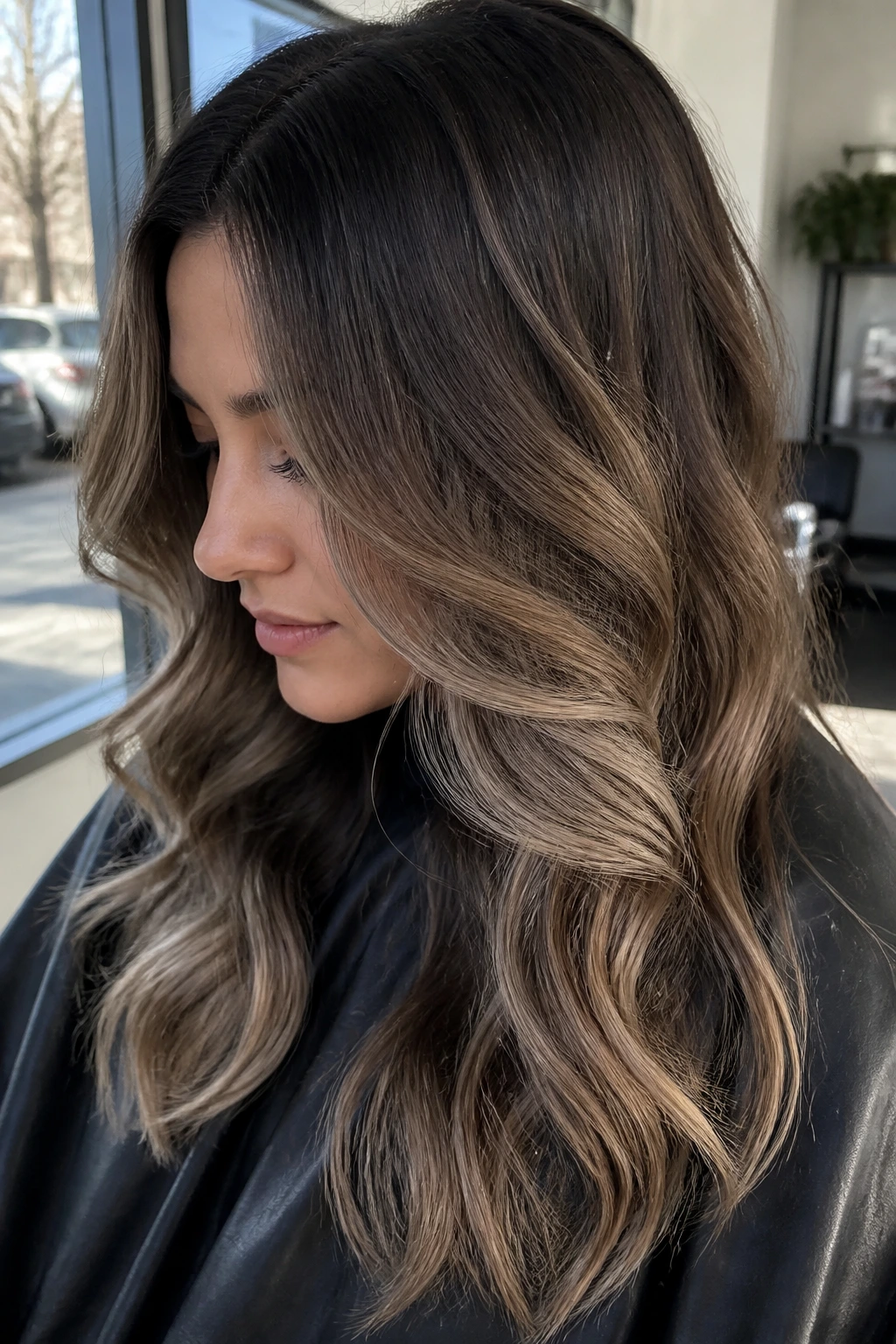
Smoky ash caramel is the safest place to start if your skin runs cool and you still want visible dimension. The ribbons sit on a brunette base, but the toner keeps the caramel in beige-gray territory, so the color never tips into pumpkin. On wavy hair, it has that soft, broken-up look that makes people stare twice without knowing why.
Ask for hand-painted ribbons that start a little below the root, then a cool beige gloss over the finished lift. Level 7 to 8 is usually the sweet spot here; push too high and the warmth gets louder. This looks especially good on medium brunettes who want movement without the stripy, foiled-in look.
2. Beige Caramel Money Piece
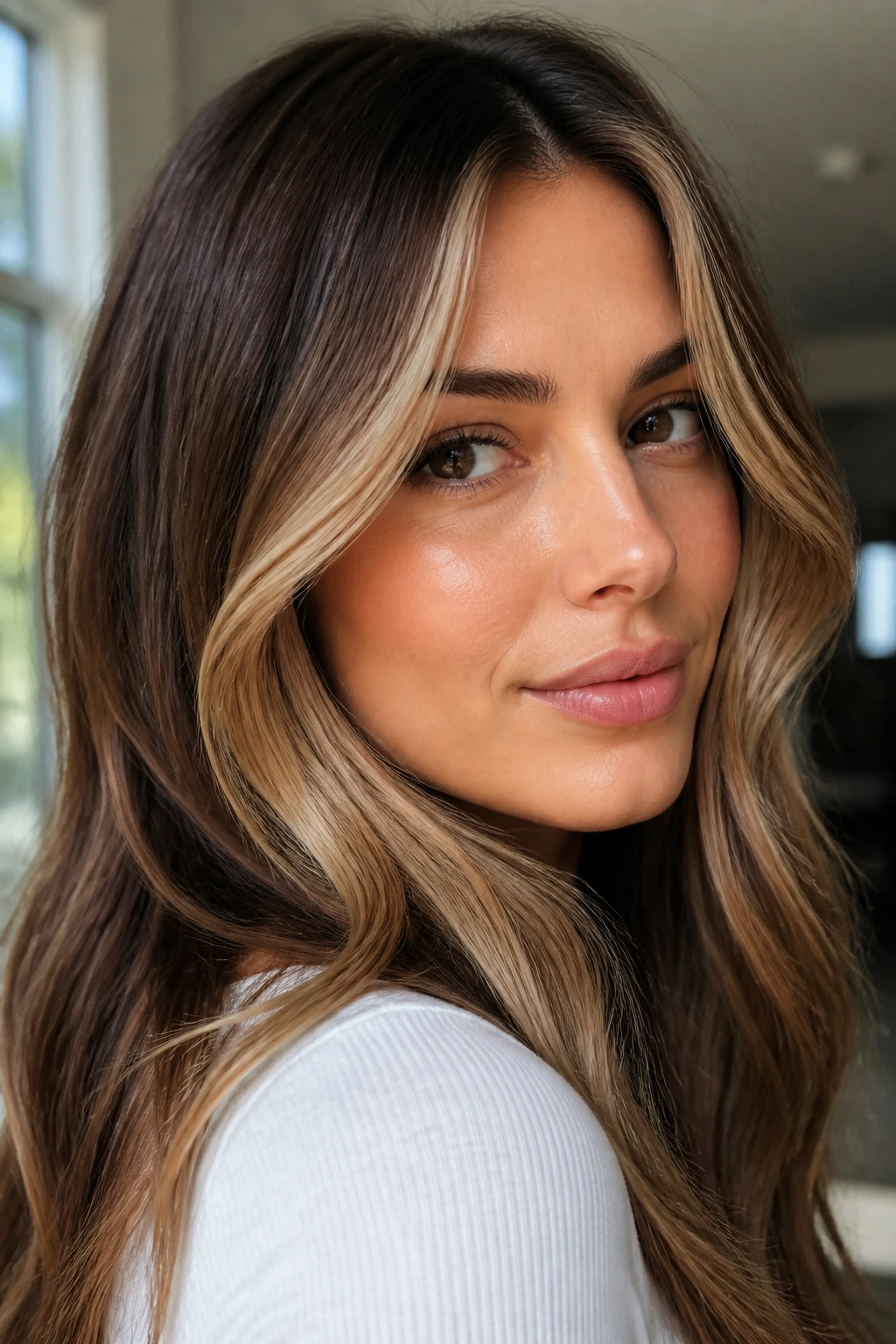
A beige caramel money piece is the quickest way to brighten a face without flooding the whole head with warmth. You get the payoff right around the cheekbones and eyes, where cool skin usually likes a little light, but the rest of the hair can stay deeper and calmer.
Why It Flatters So Well
The trick is contrast. Keep the money piece about one shade lighter than the rest of the hair, then soften the root with a melt so it doesn’t look pasted on. That front placement pulls attention upward, which is useful if your features disappear under one-color brunette lengths.
I like this on collarbone-length cuts and curtain bangs. It gives the front of the hair a little pop while the back keeps the expensive, low-drama feel. If your face turns rosy easily, ask for a beige frame, not a gold one. That single word matters.
3. Mushroom Caramel Melt
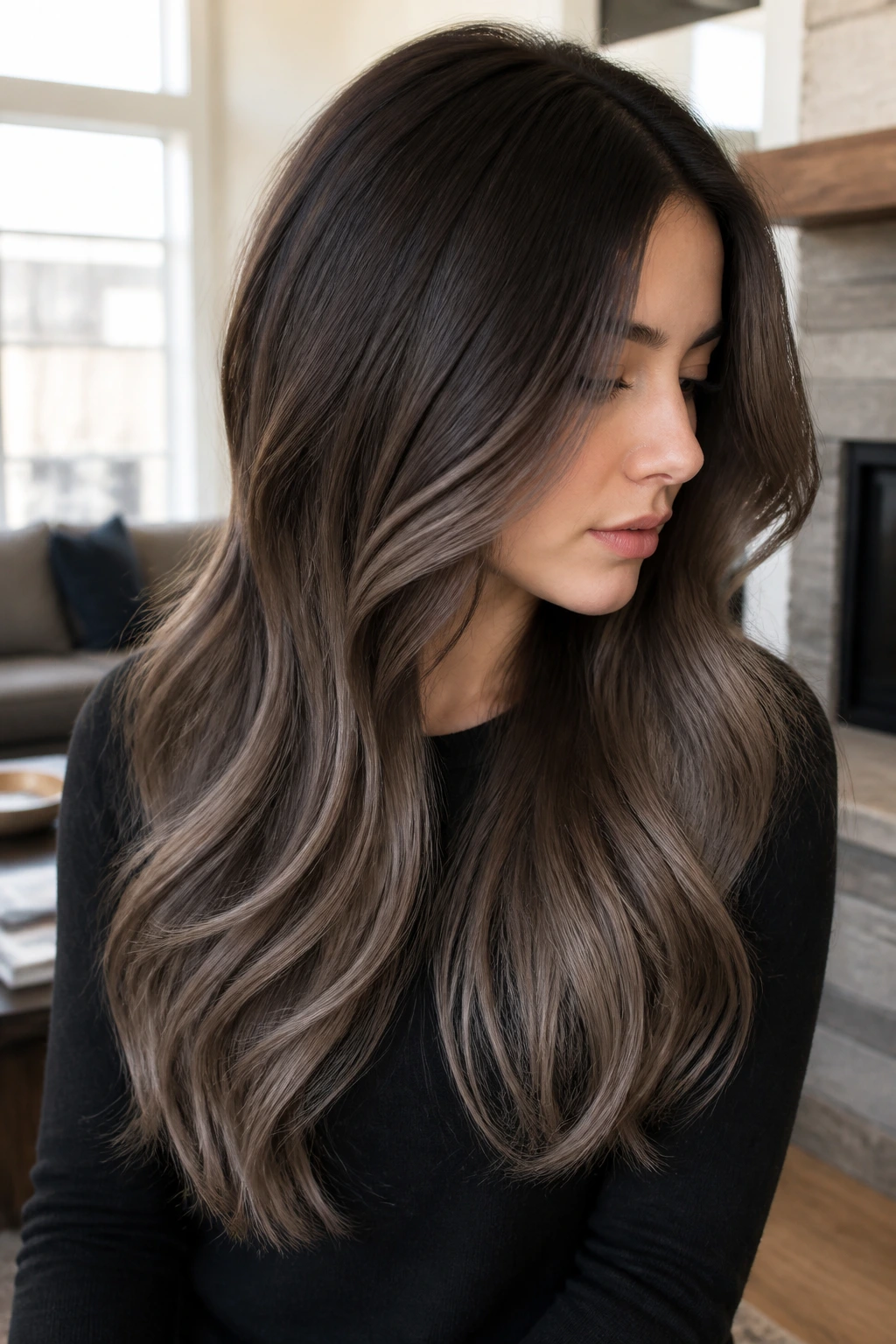
Why does this one work so well on cool skin? Because mushroom caramel sits in that brown-gray space where caramel becomes more smoke than sugar. The root and mids stay deep, and the lighter ends never flash orange, even when the sun hits them hard.
This is one of my favorite choices for anyone who wants low contrast. It’s especially flattering on straight or softly waved hair because the gradient reads smooth rather than choppy. Ask your colorist for a mushroom brunette base with soft caramel pieces only two to three levels lighter through the mids and ends.
4. Iced Caramel Gloss
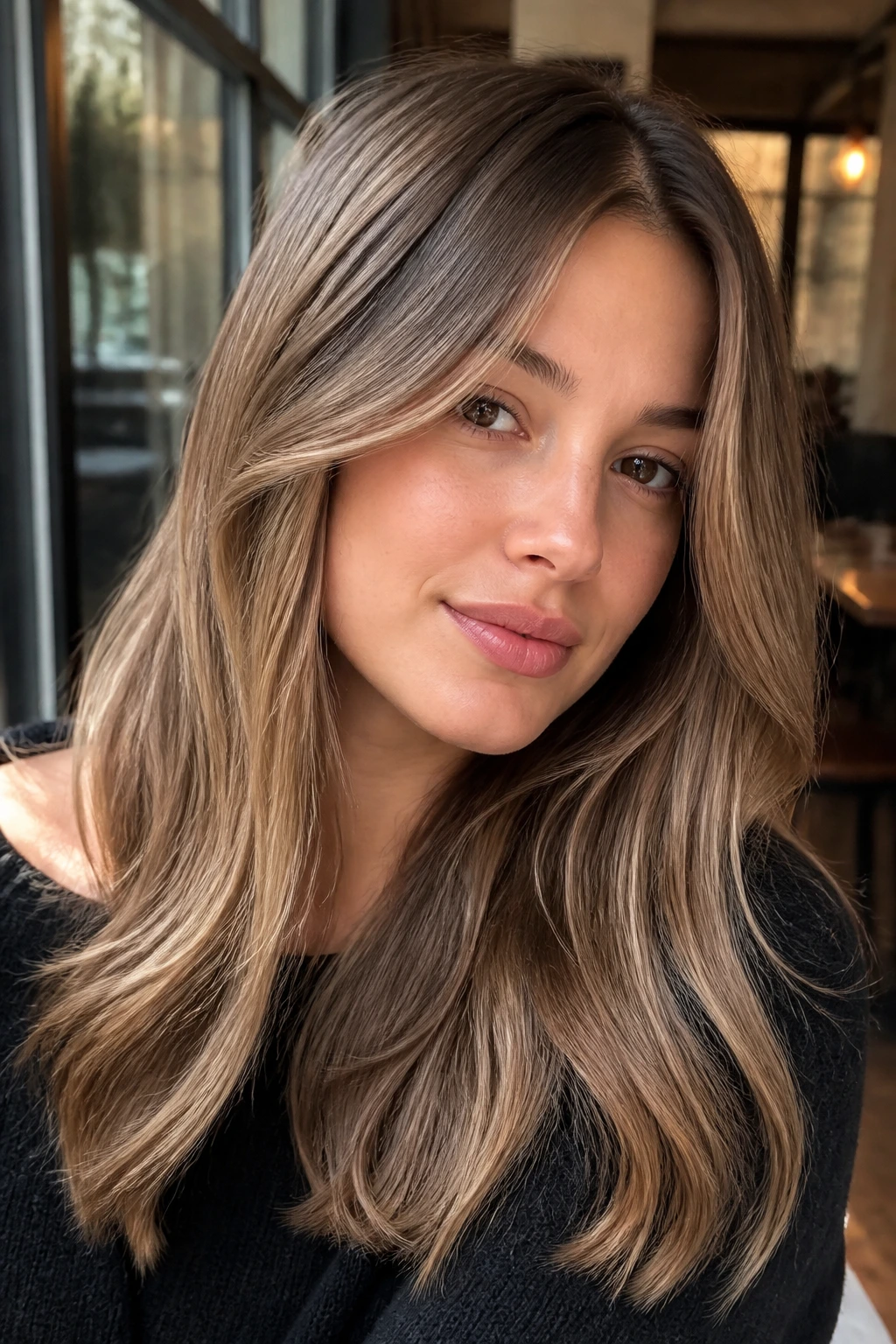
This is the closest thing to caramel that can fool a skeptic. It doesn’t look like chunky highlights at all; it looks like the hair was polished with a cool beige glaze that caught a little light and stayed there. On light brown or dark blonde hair, it’s lovely.
The important move here is gloss, not heavy lift. A demi-permanent beige or ash-beige toner gives you the caramel note without exposing too much yellow. If your hair is already pale, this is the kind of shade that keeps it from going flat and washed-out.
5. Cool Mocha-Caramel Ombré
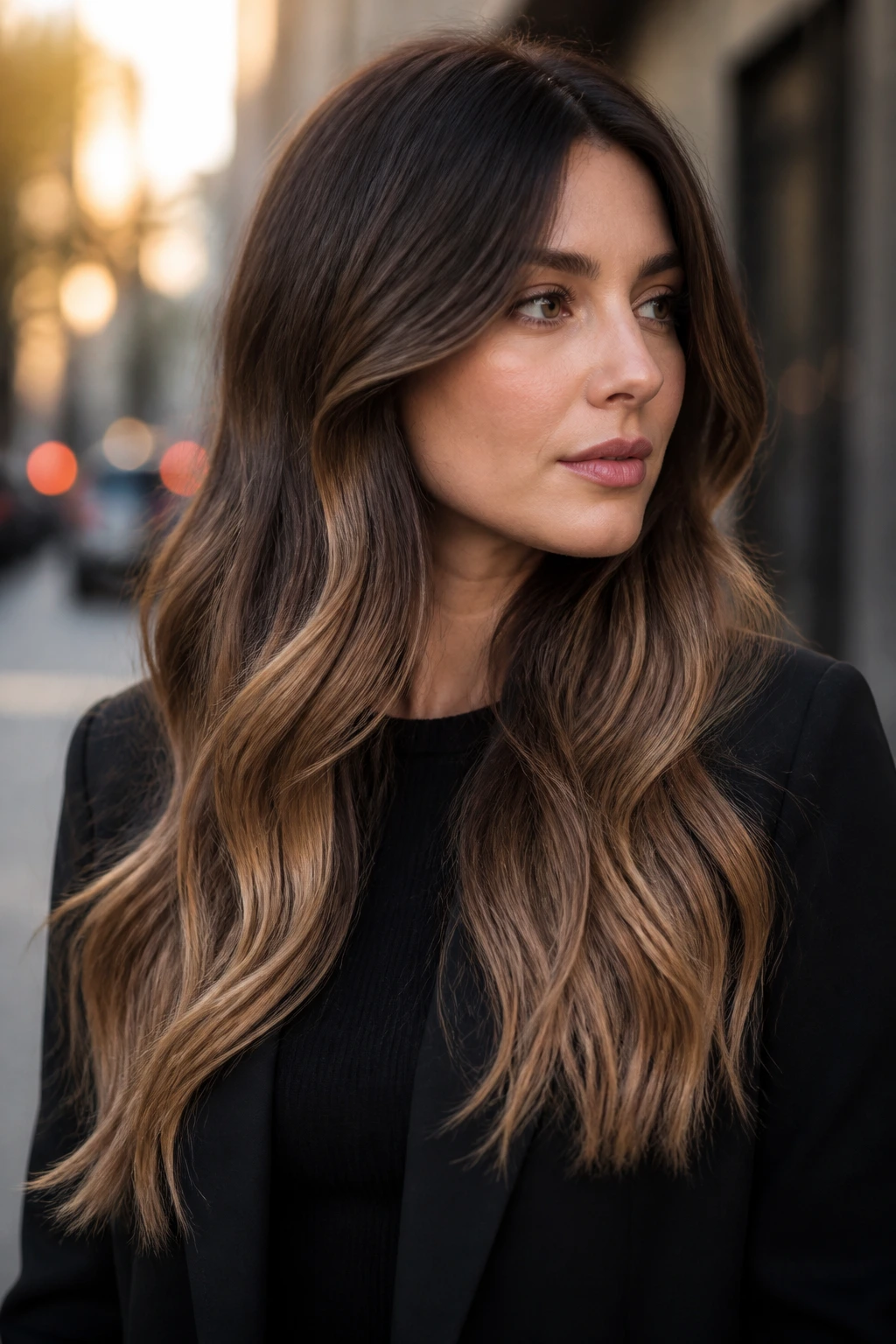
A cool mocha-caramel ombré gives you the depth of brunette roots with caramel only where the hair naturally catches light. The fade is slower and moodier than a classic warm ombré, which is exactly why it sits better on cool undertones. Nothing looks sprayed on.
This one loves long hair. The color can stretch from espresso at the roots to smoky caramel through the lengths, and the shift feels deliberate when the ends hit the shoulders or lower. If you want drama without brass, ask for the transition to happen below the chin so the warmest pieces don’t crowd the face.
6. Taupe Caramel Babylights
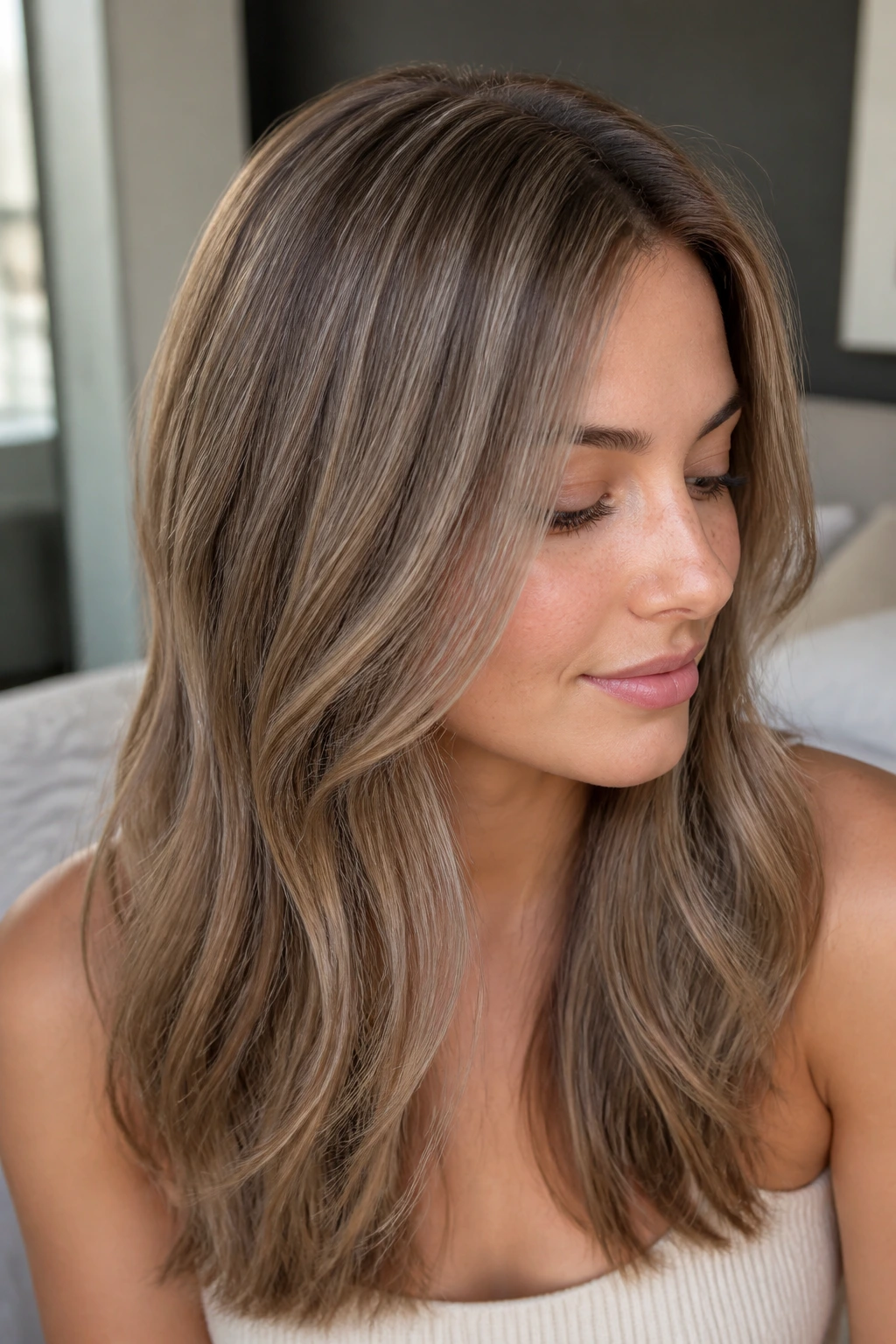
Taupe caramel babylights are tiny, feather-fine highlights that whisper instead of shout. Fine hair tends to love them because the dimension shows up without creating chunky bands, and cool skin gets a softer, more expensive-looking finish than gold highlights would give.
Best for Fine Hair
Babylights should be micro-thin and placed densely enough that the hair looks multi-tonal, not stripey. The toner matters more than the lift here — taupe, beige, and ash-beige all work better than anything that leans honey. If your hair is fragile, this is one of the kinder caramel ideas on the list because it doesn’t require a huge amount of lightening.
7. Espresso Root Smudge with Caramel Ends
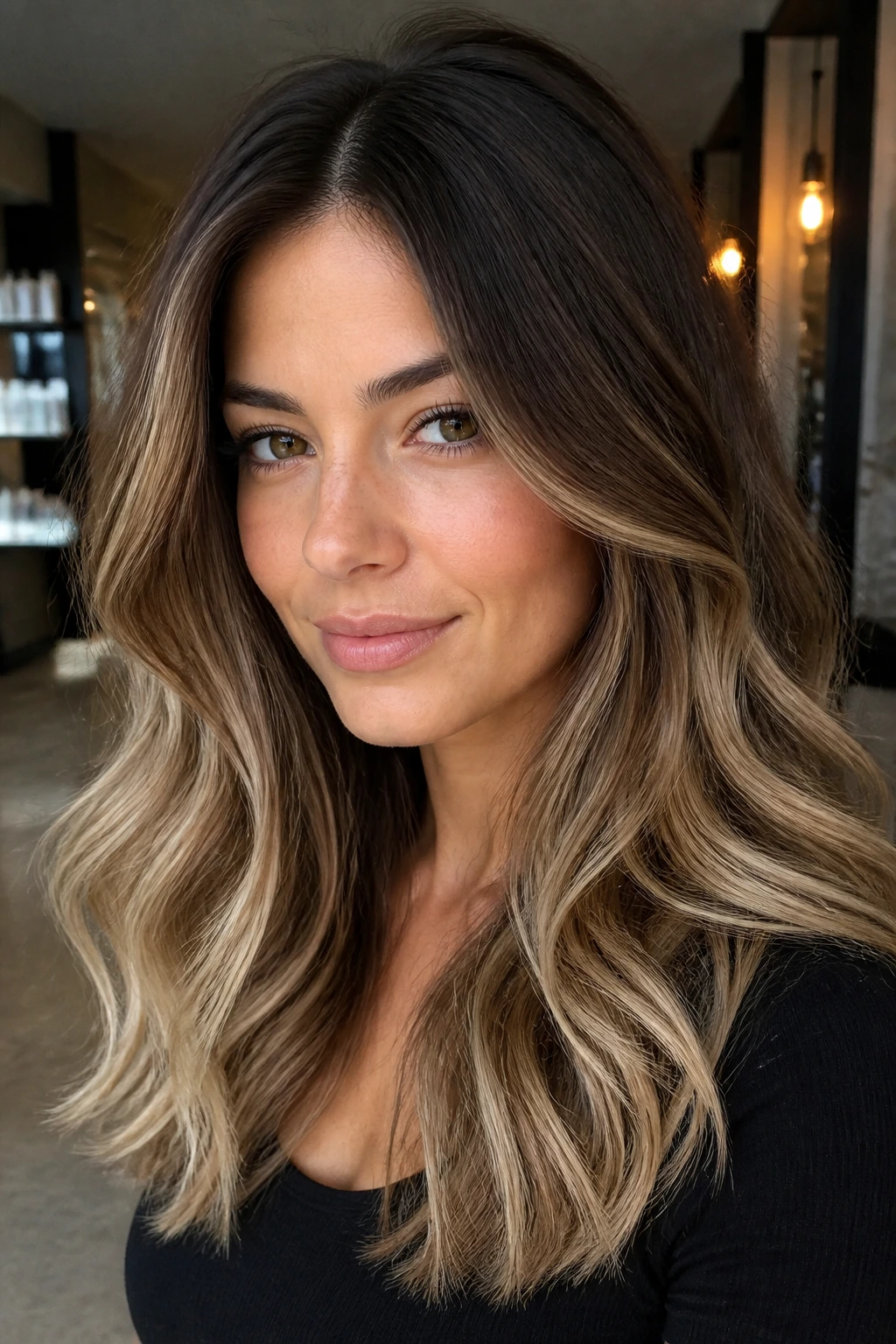
This one is for the person who wants a noticeable change but refuses to sit in a chair every six weeks. The espresso root smudge keeps the base rich and cool, while the caramel ends bring movement and a little softness to the lower half of the hair. It grows out with less drama than all-over highlights.
The move here is restraint. Keep the ends beige-caramel instead of orange-caramel, and let the root shadow stay a little deeper than your natural base. That darker start does a lot of work for cool skin because it frames the face without warming it too much.
8. Sand-Soft Caramel Lob
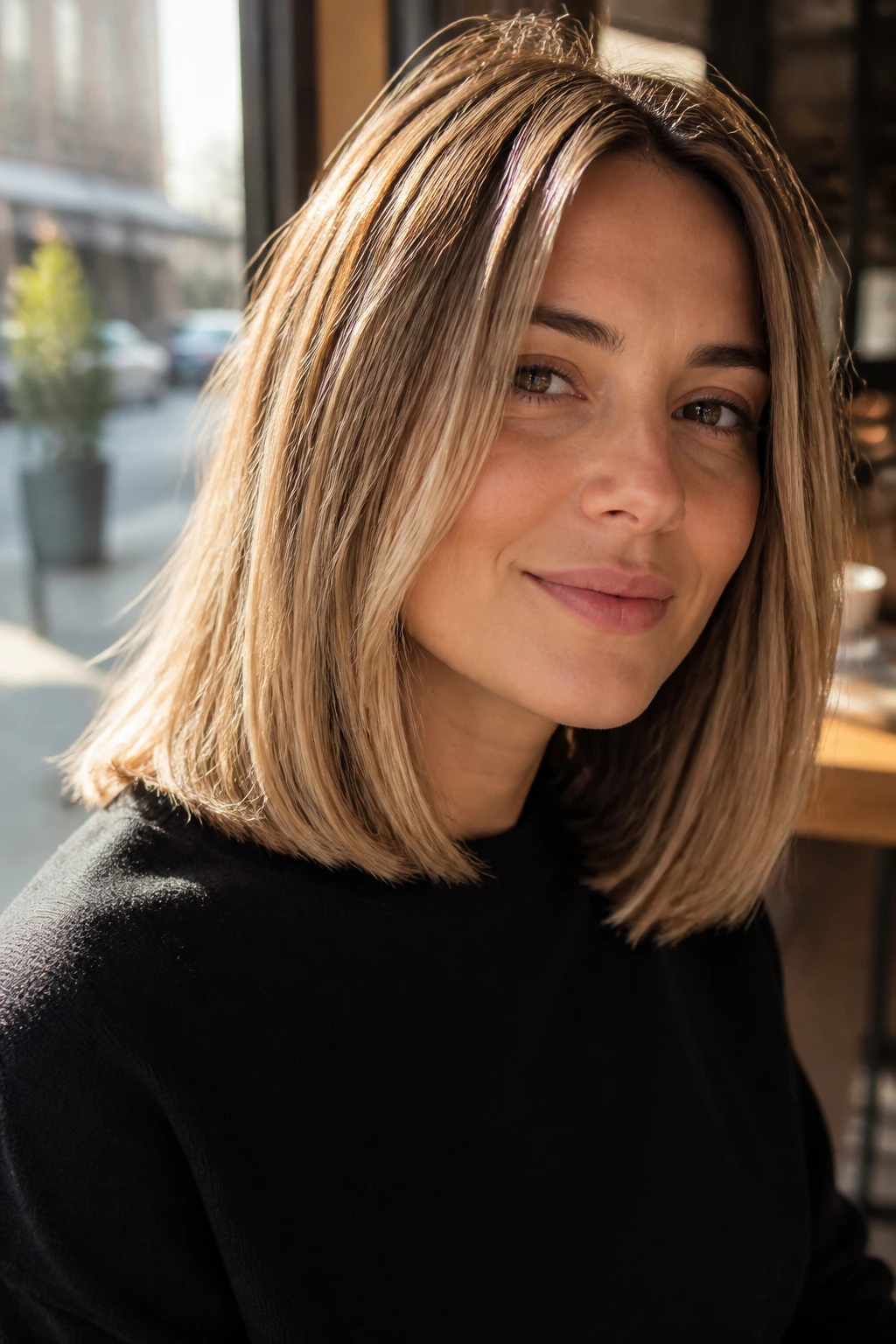
A lob makes caramel look clean. There’s less hair to fight with, which means the shade reads more intentional and less busy. Sand-soft caramel is a neutral version that sits between beige and ash, so it gives cool skin a gentle lift without the shiny gold cast that can make the complexion look flushed.
Ask for balayage through the collarbone length and keep the ends slightly lighter than the mids. On a lob, a loose bend with a flat iron shows off the variation better than tight curls. Straight, the color looks sleek; waved, it looks more dimensional.
9. Caramel Contour Highlights
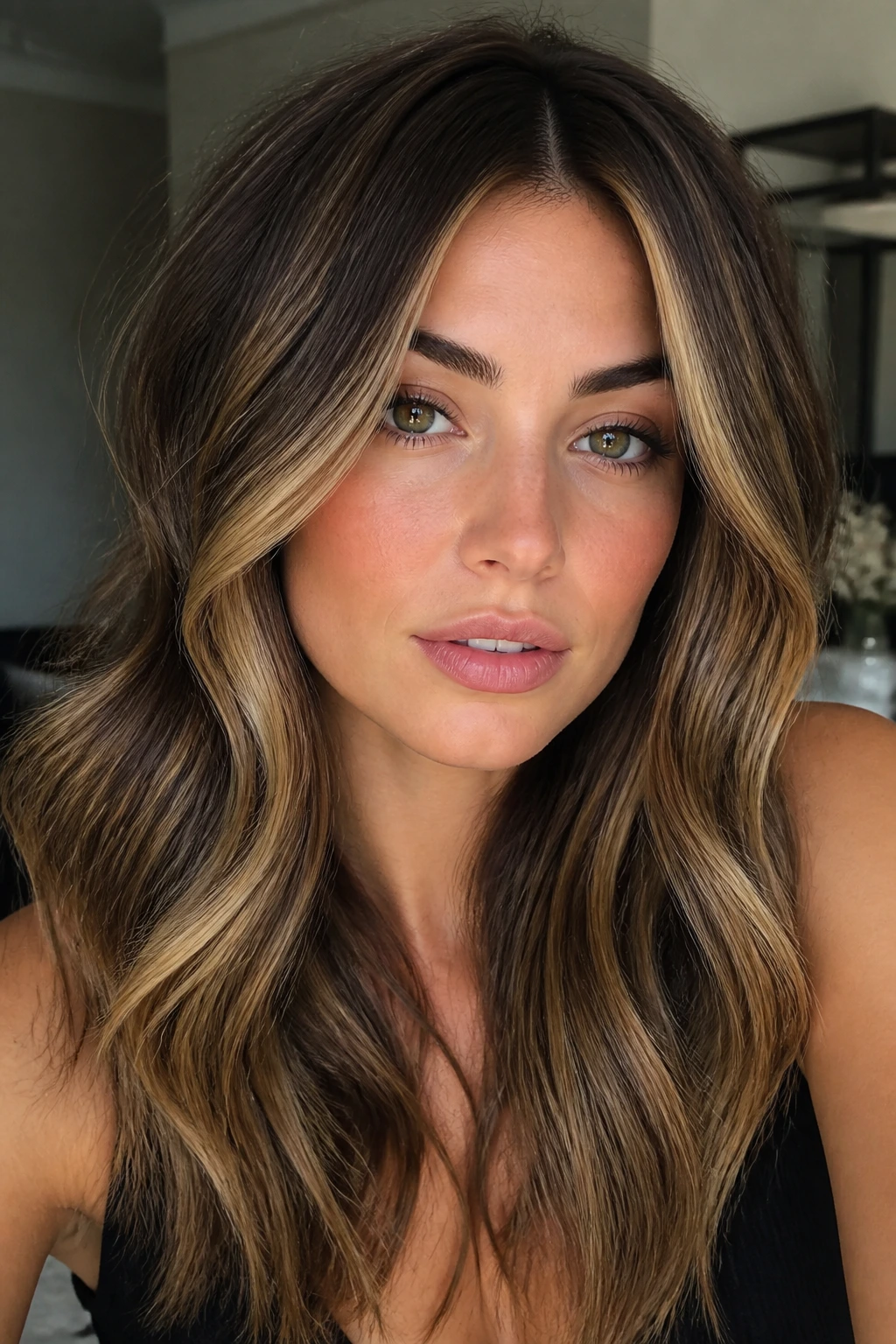
Caramel contour highlights are placed like makeup contour, only for hair. The brighter pieces go around the temples, cheekbones, jawline, and sometimes just under the crown so the shape of the cut looks more sculpted. It’s a smart choice if you don’t want an all-over caramel change.
Cool skin tones like this method because the warmth is controlled and strategic. You’re not flooding the whole head with gold; you’re painting light where it helps the face most. Ask for the front pieces to stay one shade softer than the interior ribbons. That keeps the highlight from looking harsh next to pale or pink undertones.
10. Silver-Caramel Ribbon Lights
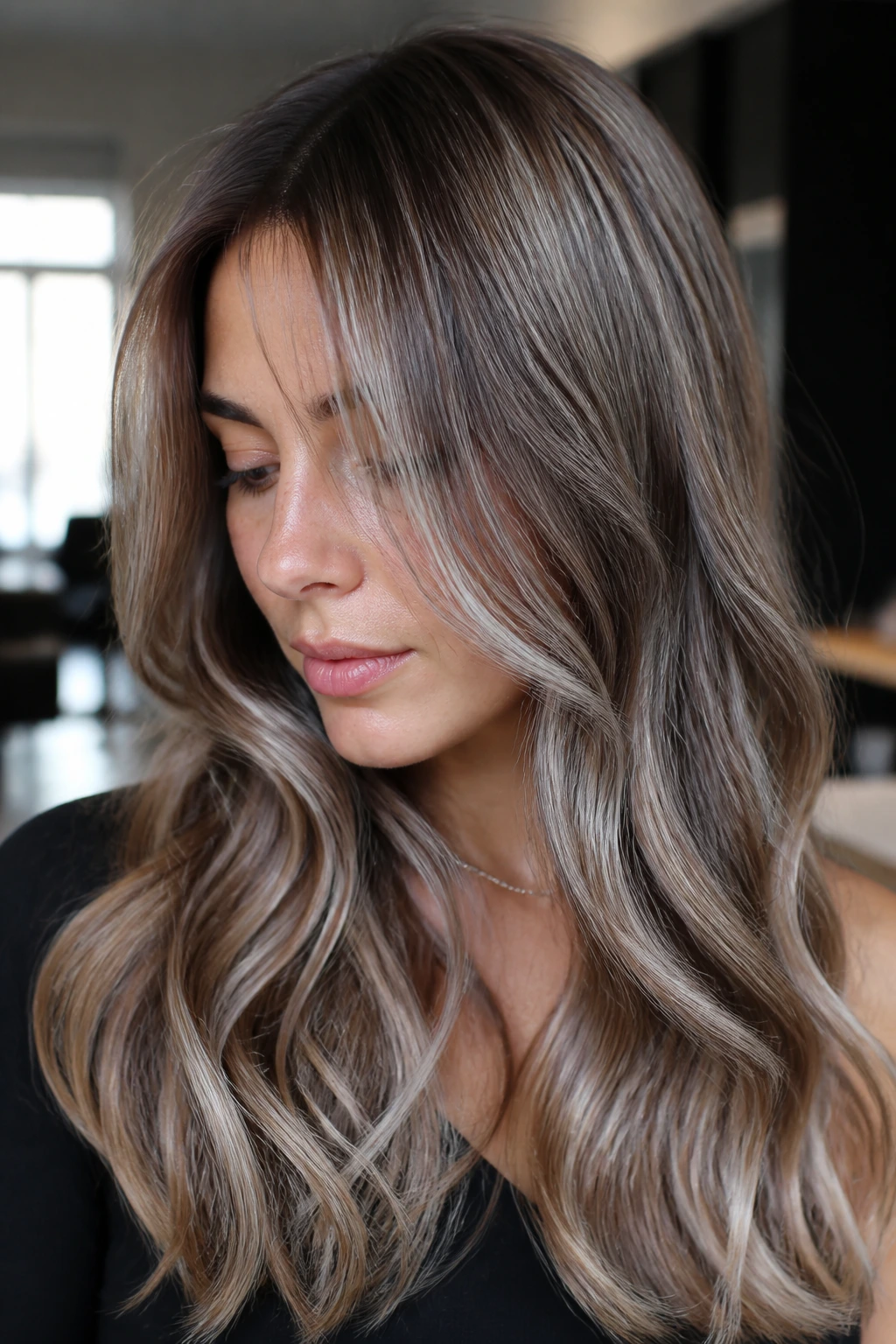
Silver-caramel ribbon lights sound odd until you see them in motion. They’re a mix of cool brown, soft beige, and a whisper of silver-toned gloss that keeps the caramel from reading sugary. The result is more modern than warm highlight sets and far easier on cool skin.
This is a good choice for medium-to-thick hair because the ribbons need room to show. On curls or waves, the cool strands catch light in little flashes, which keeps the look from turning flat. Ask for ribbons, not chunky panels — that difference decides whether the hair looks elegant or dated.
11. Beige-Toffee Face Frame
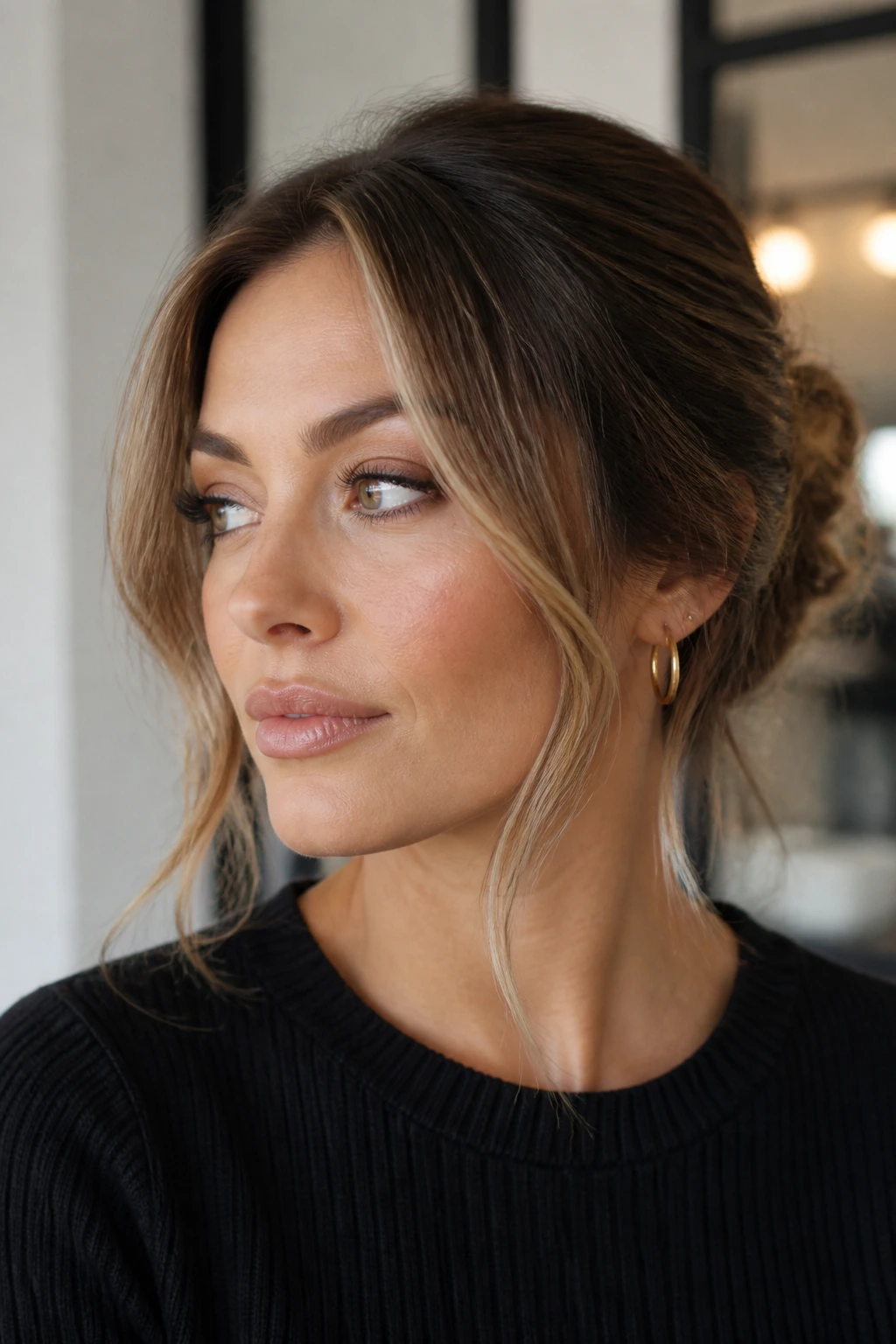
A beige-toffee face frame works best when the toffee is toasted, not syrupy. That’s the whole game. You want a soft caramel note around the face, but you want it pulled back enough that cool skin still looks clear instead of sun-browned.
This shade is handy if you wear your hair up a lot. The front pieces do the visual work while the rest of the hair can stay deeper and calmer. If your face tends to flush, keep the frame a half-step lighter than the rest of the highlight pattern rather than a full bright streak. It blends better and photographs more naturally.
12. Cool Caramel Curls with Dimensional Lowlights
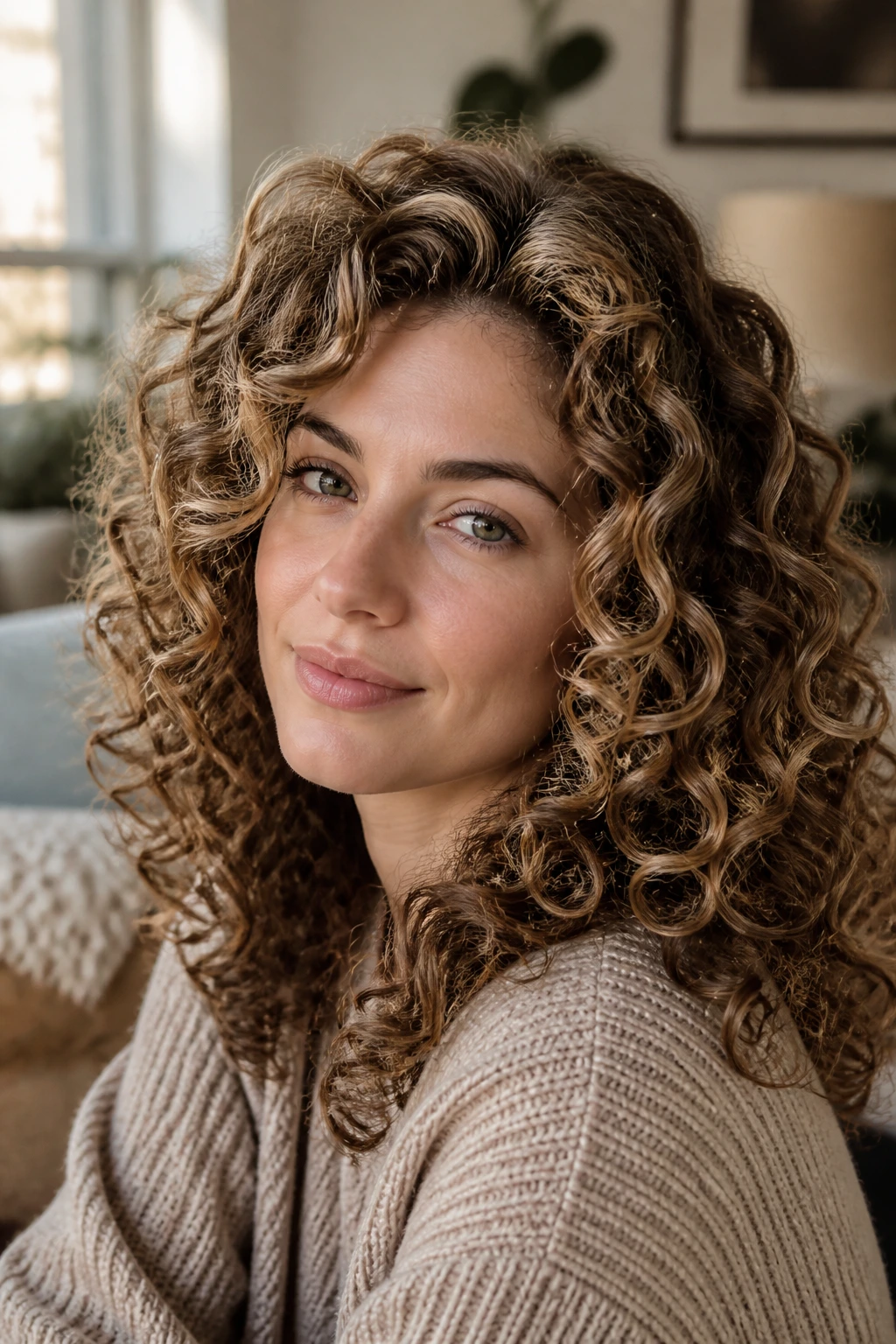
Curly hair needs a different caramel strategy. If you paint curls with one flat tone, the shape disappears. Cool caramel curls work because the lighter ribbons are interrupted by lowlights, which keeps the curl pattern visible and the color from turning fuzzy.
The best version uses beige-caramel pieces through the outer ring of the curls, then a few mocha lowlights tucked underneath. That contrast gives the curl definition without making the hair look overprocessed. It’s especially good for people who want dimension but can’t afford dryness — curls already ask enough from your hair.
13. Creamy Caramel Bob
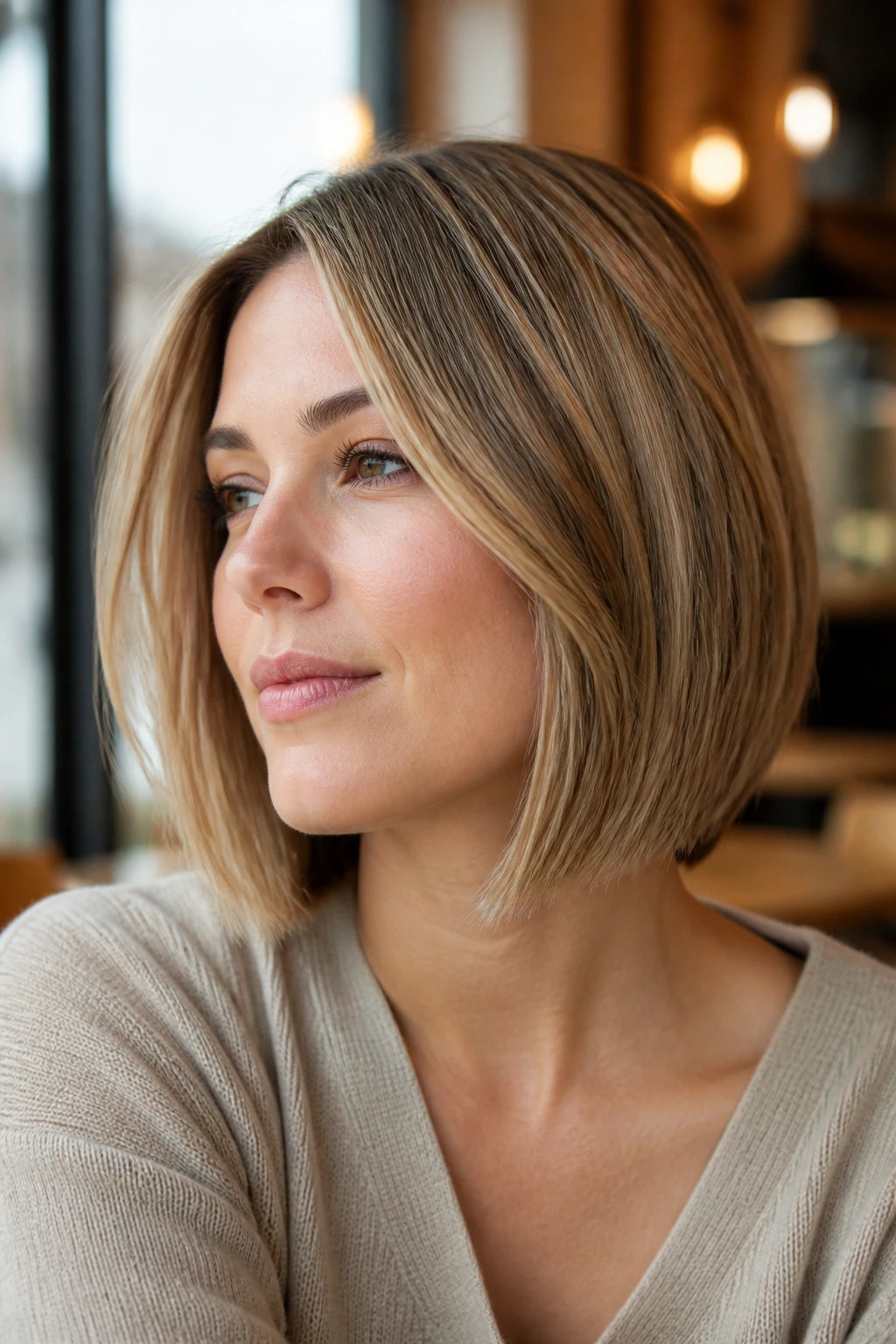
A creamy caramel bob looks crisp in a way longer hair sometimes doesn’t. The cut gives the color a clean edge, and the creamy tone keeps the whole thing from becoming too amber. On cool skin, that neutral softness matters; a gold-heavy bob can make the face look harsher than it is.
This shade works best when the highlights stay subtle and the gloss is opaque enough to soften any leftover yellow. If your bob is blunt, keep the color fine and smooth. If it’s textured, you can let the caramel pieces move a little more, but keep the base rooted. Flat, one-tone caramel on a bob tends to look wiggy. Nobody wants that.
14. Ashy Caramel Pixie Pieces
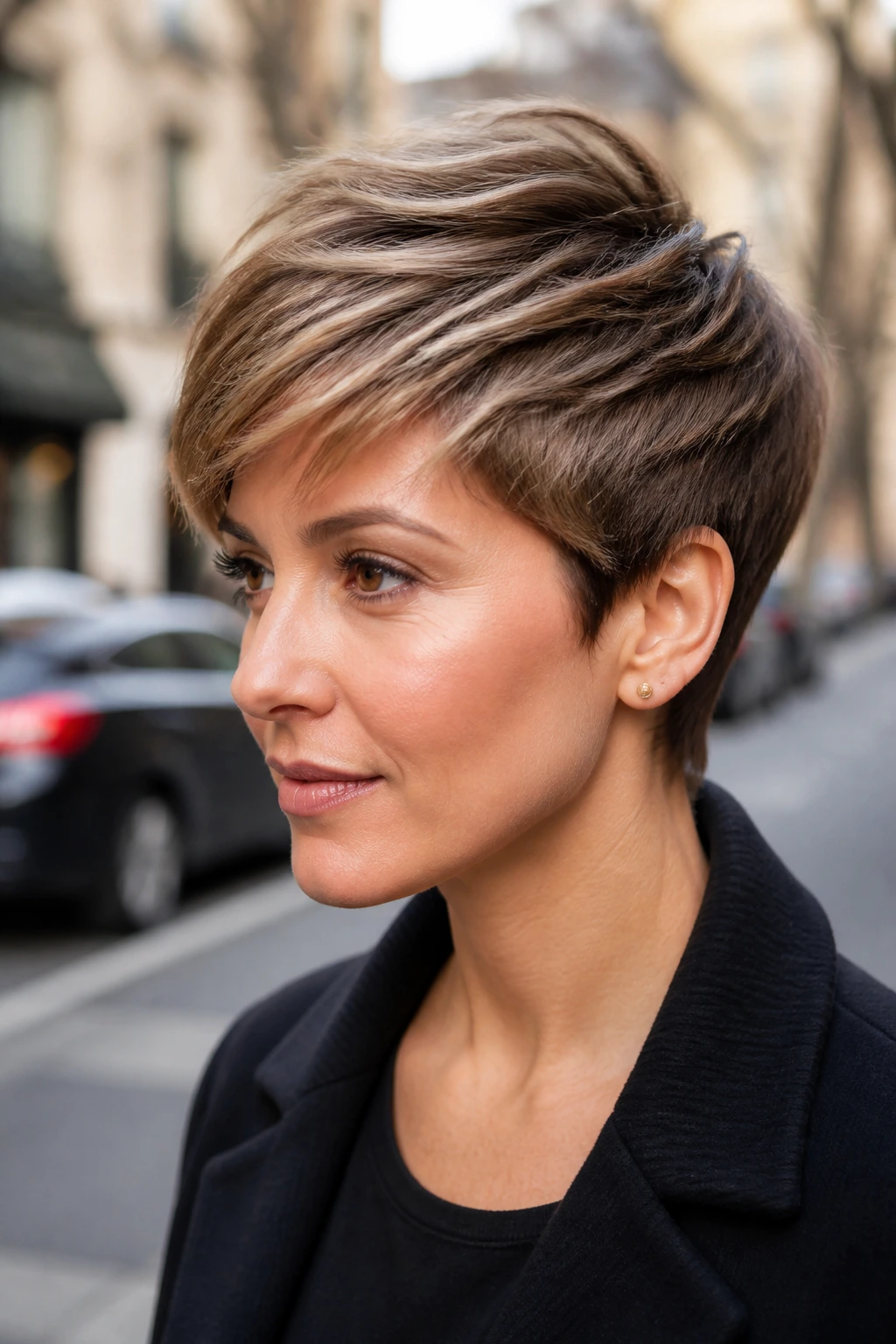
Short hair can wear caramel just fine. The trick is placement, not quantity. With an ashy caramel pixie, the lighter pieces go through the top, fringe, and crown, where movement is strongest. The sides stay deeper so the cut still has shape.
This is a good pick if you want dimension without committing to a full head of color. Ask for fine, pieced-out highlights and a cool glaze on top. On cool skin, the ash note keeps the color from fighting the face, and the short length prevents the caramel from feeling too sweet or heavy.
15. Peekaboo Caramel Panels
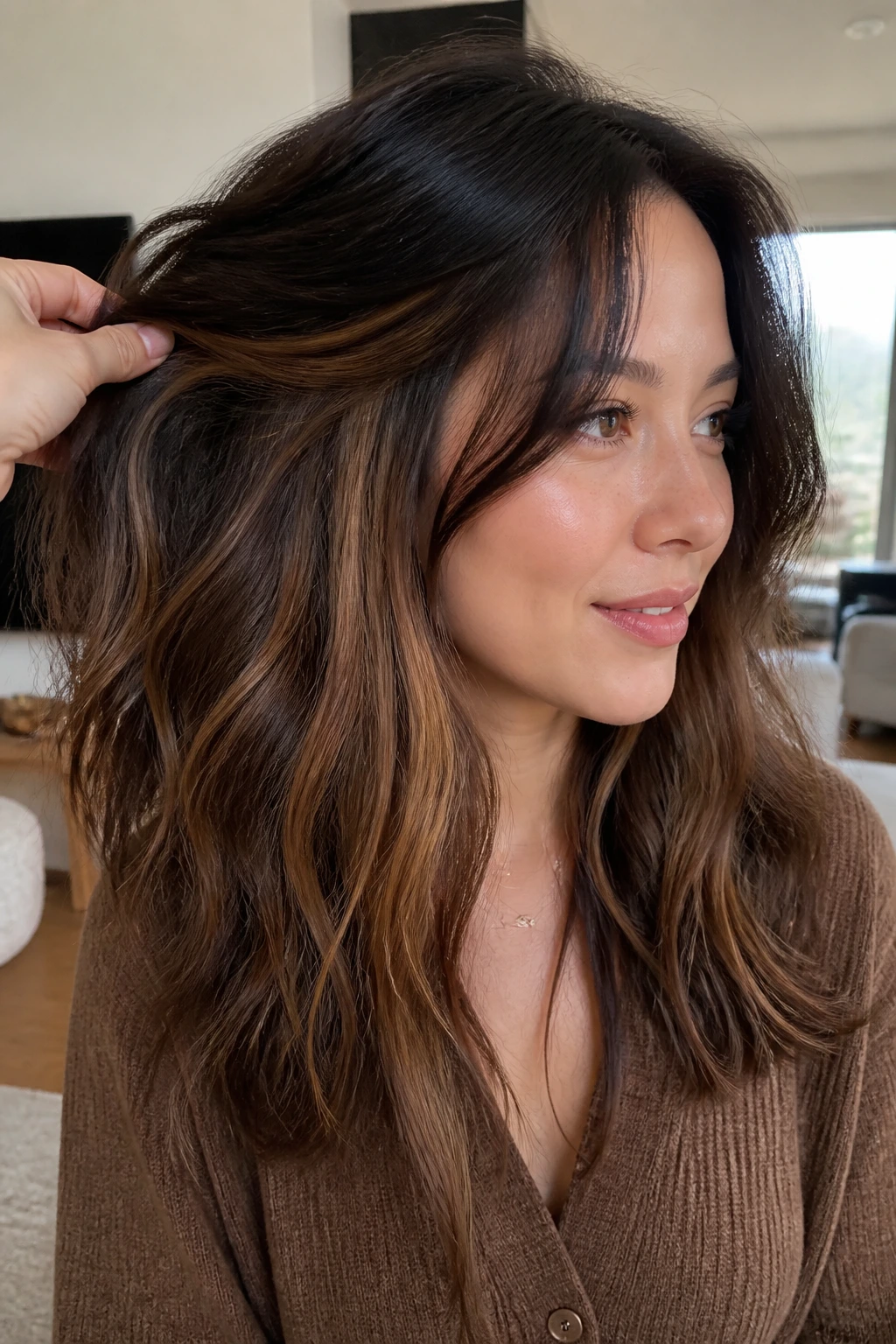
Peekaboo panels are the secret-weapon version of caramel. The brighter pieces sit underneath the top layer, so they flash when you move, tuck your hair behind your ear, or pull it into a half-up style. On cool skin, that hidden placement keeps the warmth from dominating the face.
This one is fun if you like contrast but work in a conservative setting. You can keep the top layer dark and smoky, then add muted caramel beneath it. When the hair moves, the color appears. When it doesn’t, the look stays restrained. That’s a nice compromise, and not many shades manage it.
16. Muted Caramel on a Chestnut Base
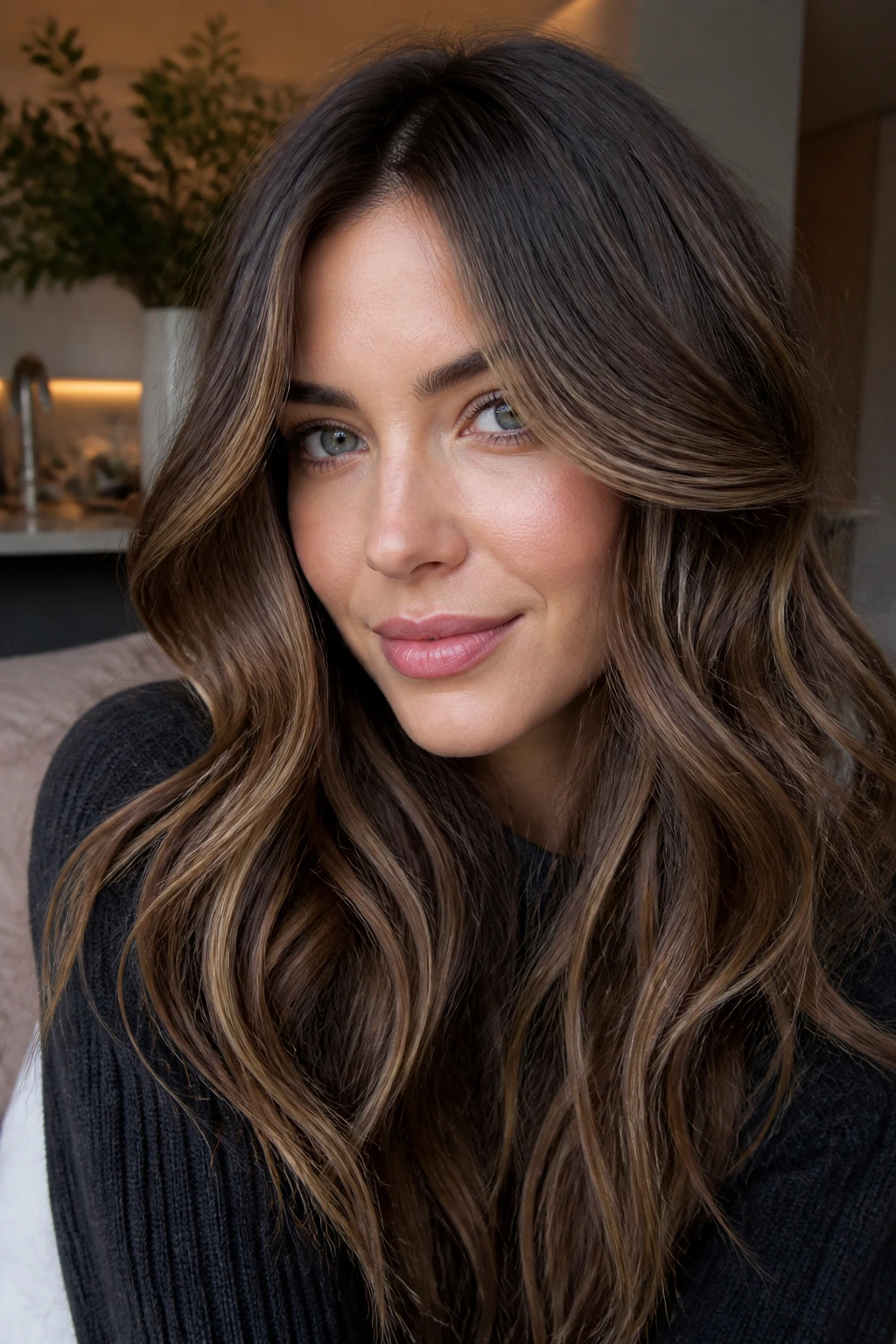
Muted caramel on chestnut hair gives you richness without turning the whole head rusty. The chestnut base holds the depth, while the caramel pieces add enough motion that the hair doesn’t collapse into a single brown block. Cool skin tends to like that balance because the face gets frame and contrast, not heat.
Ask for This
Request chestnut lowlights with caramel ribbons toned toward beige. If the caramel goes too orange, the chestnut suddenly looks redder too, and the whole look changes. Keep the lightness near the mids and ends, and let the root area stay grounded. It’s a cleaner, calmer way to do brunette caramel.
17. Caramel Curtain Bangs
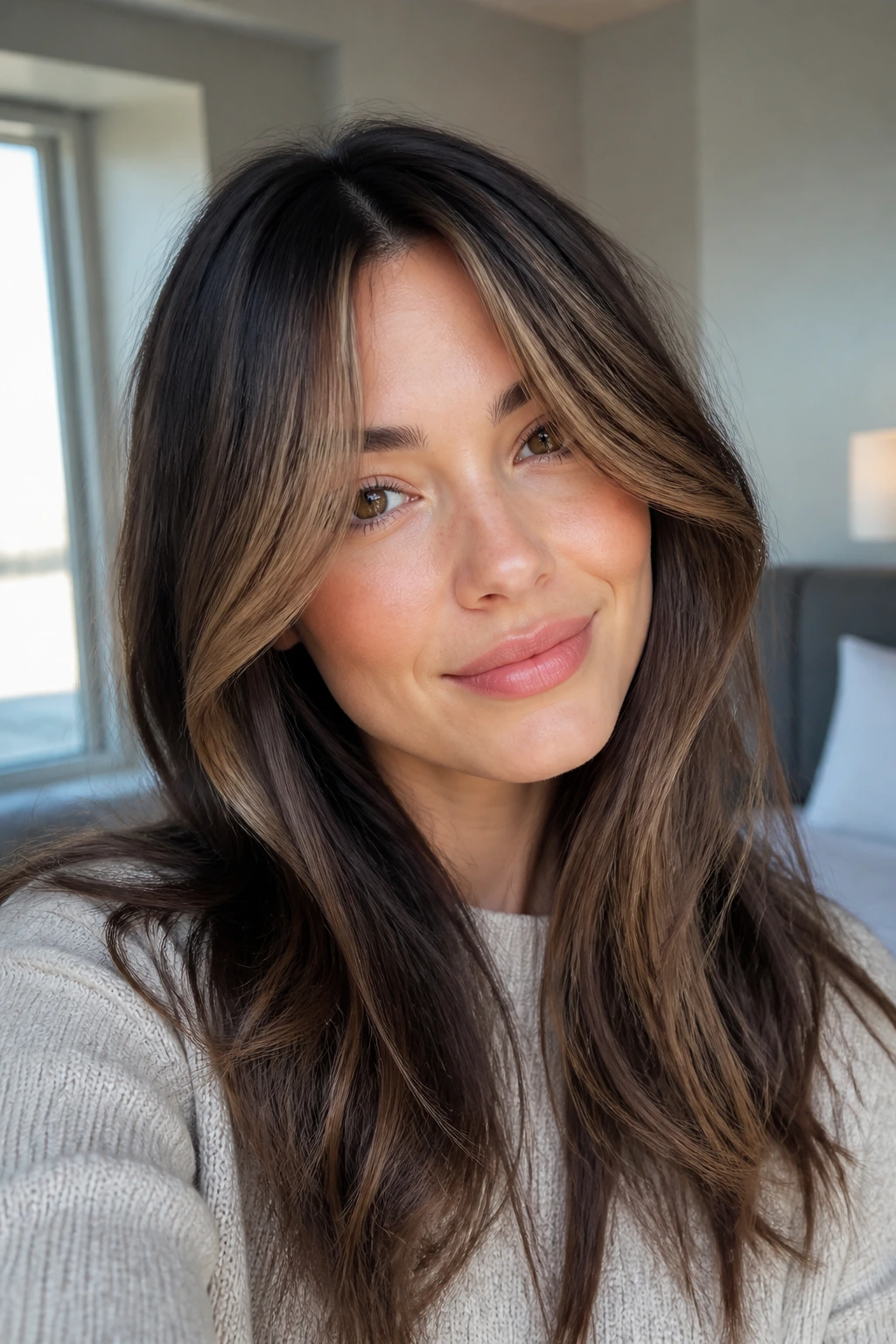
Curtain bangs make caramel feel lighter even when the rest of the hair stays dark. A few beige-caramel pieces around the fringe can brighten the eyes and soften the forehead without forcing you into a full highlight session. It’s a tiny change with a big face effect.
This works especially well with long layers because the bangs become the brightest point, then the color tapers off through the sides. Cool skin benefits from that controlled glow. Keep the bang pieces cool-beige rather than golden, or they’ll start to pull too much warmth straight into the center of the face.
18. Dimensional Caramel for Dark Hair
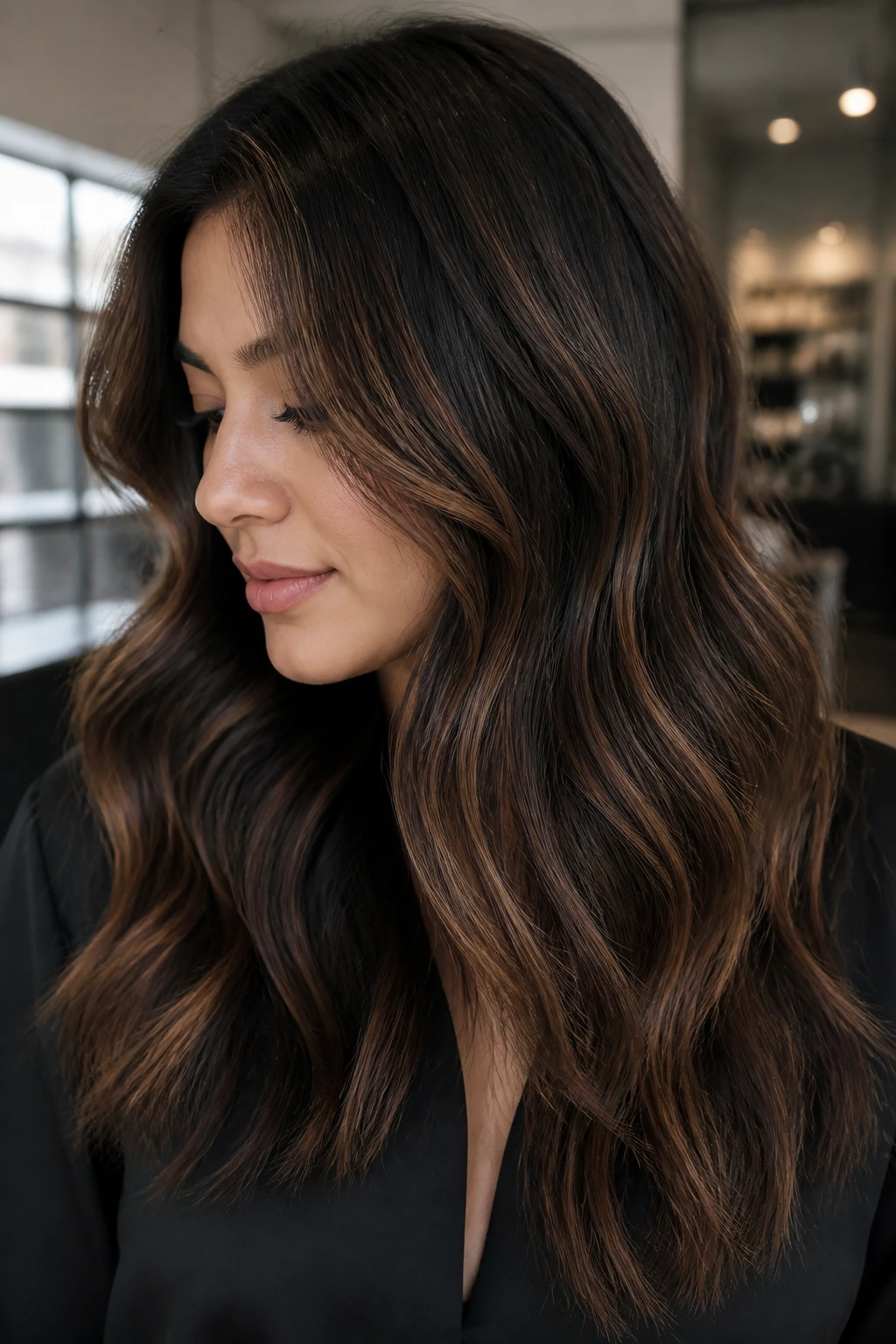
Dark hair can wear caramel, but it asks for patience. If your base is deep brown or close to black, the safest version is dimensional rather than bright. You want caramel ribbons, yes, but also mocha lowlights so the lighter pieces don’t scream against cool skin.
What to Expect
This often takes more than one sitting if your hair is very dark. That’s not a flaw; it’s the price of keeping the caramel clean instead of orange. The best result keeps the lightness in the mid-lengths and ends, with enough depth left at the root that the color still looks believable. If the hair lifts too fast, the warm pigment gets loud fast. Slow is better here.
19. Rooted Beige Caramel Blonde
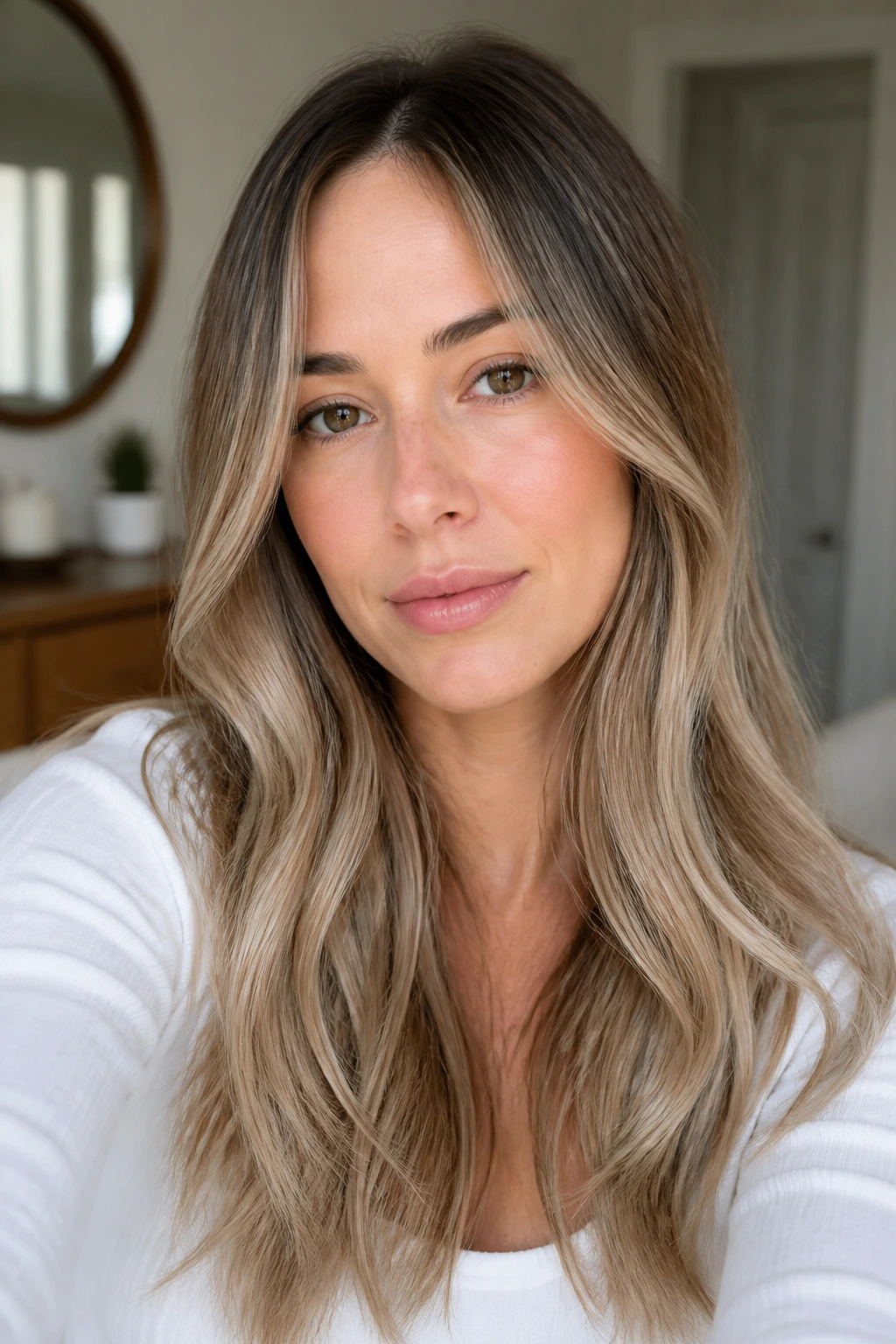
Rooted beige caramel blonde is for the person who wants brightness but not a sun-gold finish. The root shadow keeps the scalp area soft, while the beige caramel through the lengths gives a cool-friendly kind of shine. It works best on dark blonde or light brown hair that can take a gentle lift.
The rooted part is the key. Without it, the color can drift into a flat yellow-blonde that fights cool undertones. A soft shadow root gives the hair a little depth at the top, which makes the lighter ends look intentional instead of over-bleached. I’d choose this before a full light caramel if your skin is very pink.
20. Cocoa-Caramel Melt for Straight Hair
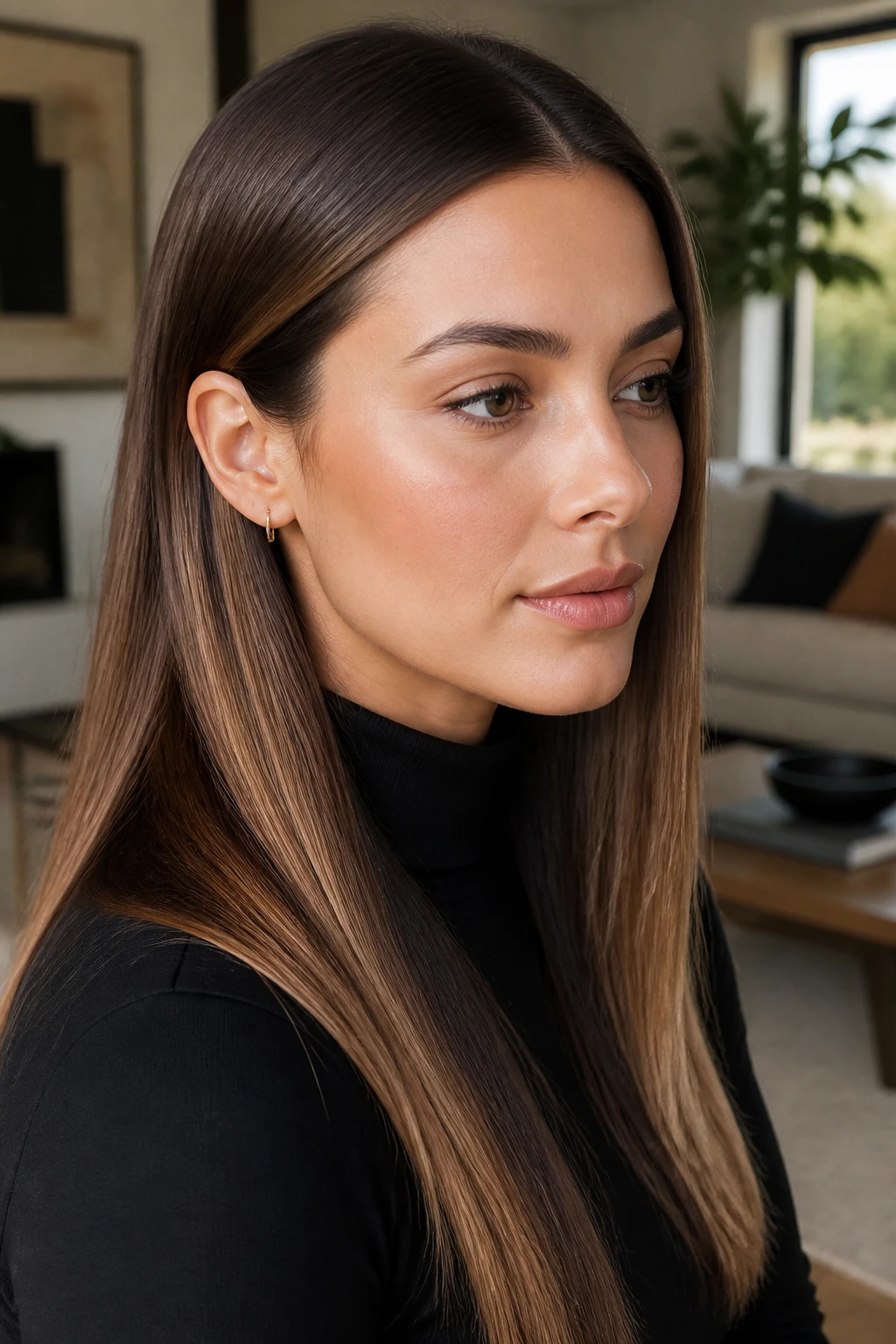
Straight hair can make highlights look blunt if the placement is too bold. A cocoa-caramel melt fixes that by keeping the ribbons thin and the transition gradual. The result looks expensive in a quiet way — dark, soft at the root, then gently warmed through the lengths.
This style is especially good if you wear your hair sleek or tucked behind the ears. Straight strands show every line, so the toner has to stay calm. Ask for a cocoa base with neutral caramel mids and ends, and avoid anything labeled “golden” unless you want warmth to dominate. The flat texture will make that warmth louder than you expect.
21. Satin Caramel Waves
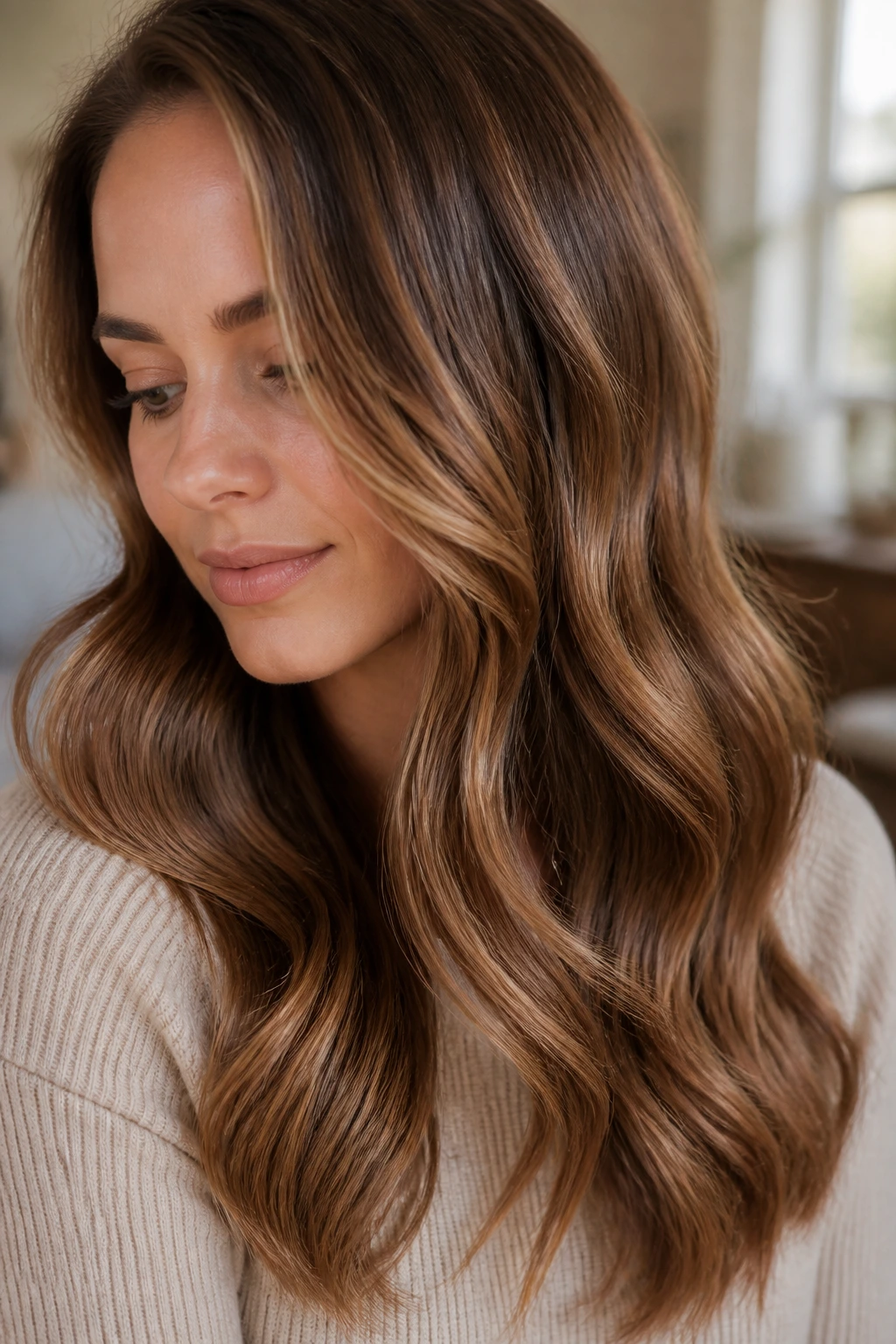
Satin caramel waves are all about finish. The color sits in a medium-neutral brown range, but the gloss is what gives it that smooth, satin look. On cool skin, this works because the shine comes from reflectivity, not from gold pigments doing the talking.
Loose waves are the best way to wear it. They break up the color just enough that the caramel doesn’t look one-note, and the soft bends keep the light moving. If your hair tends to frizz, use a smoothing cream or light oil on the ends only. Too much product at the roots will flatten the waves and make the color feel dull.
22. Chai-Caramel Lowlights
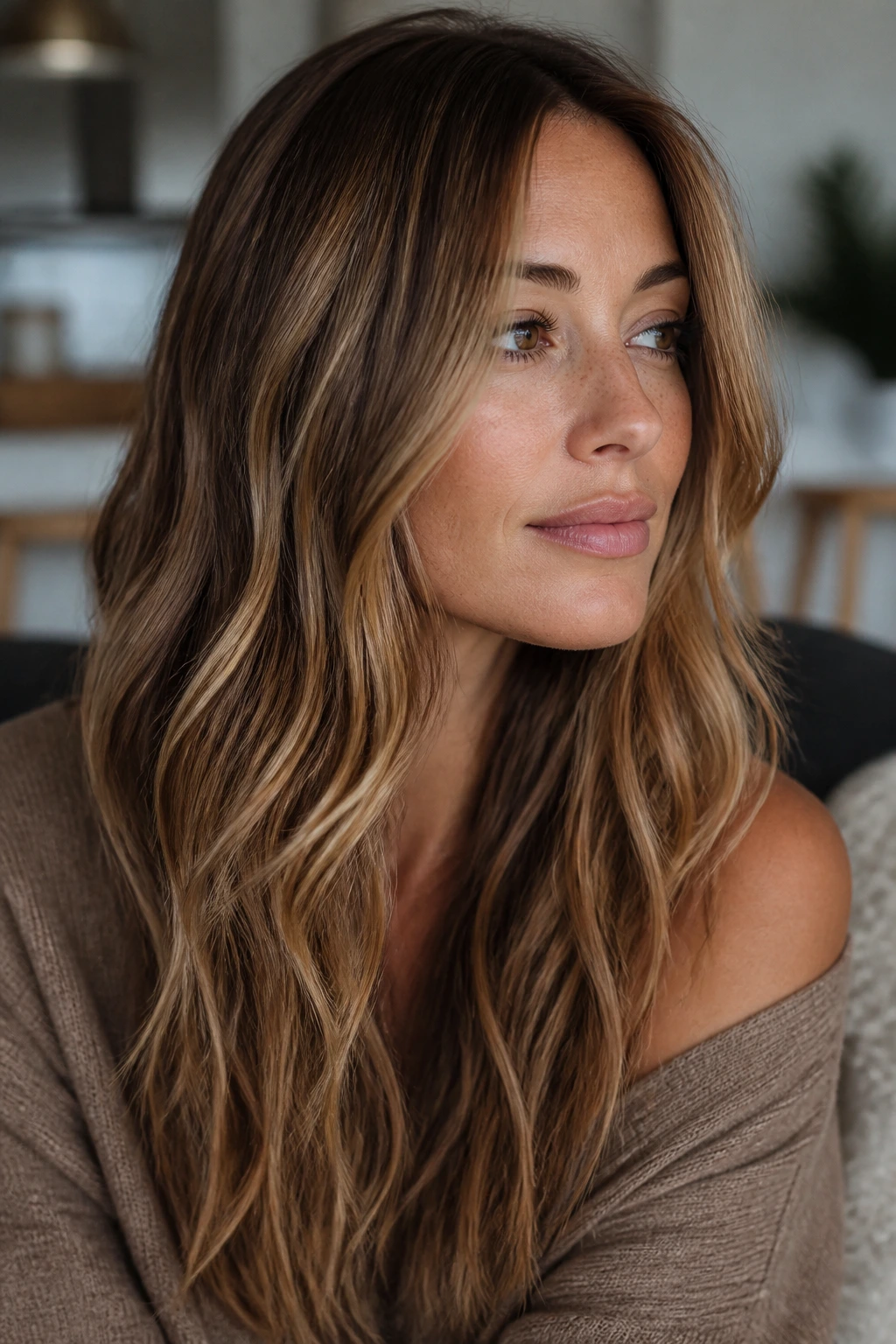
Chai-caramel lowlights are the opposite of the usual highlight obsession, and that’s why I like them. Instead of lifting everything lighter, you add deeper caramel-toned strands into blonde or light brown hair to cool the brightness down and give the hair some shape. Cool skin often looks better this way than with endless light pieces.
The chai note should stay muted — think beige-brown with a hint of spice, not a cinnamon stick. This is smart if your current blonde has gone too bright or too yellow. Lowlights bring the shade back to earth and make the complexion look clearer. A lot of people don’t realize how much better their skin looks once the hair stops shouting.
23. Frosted Caramel Balayage
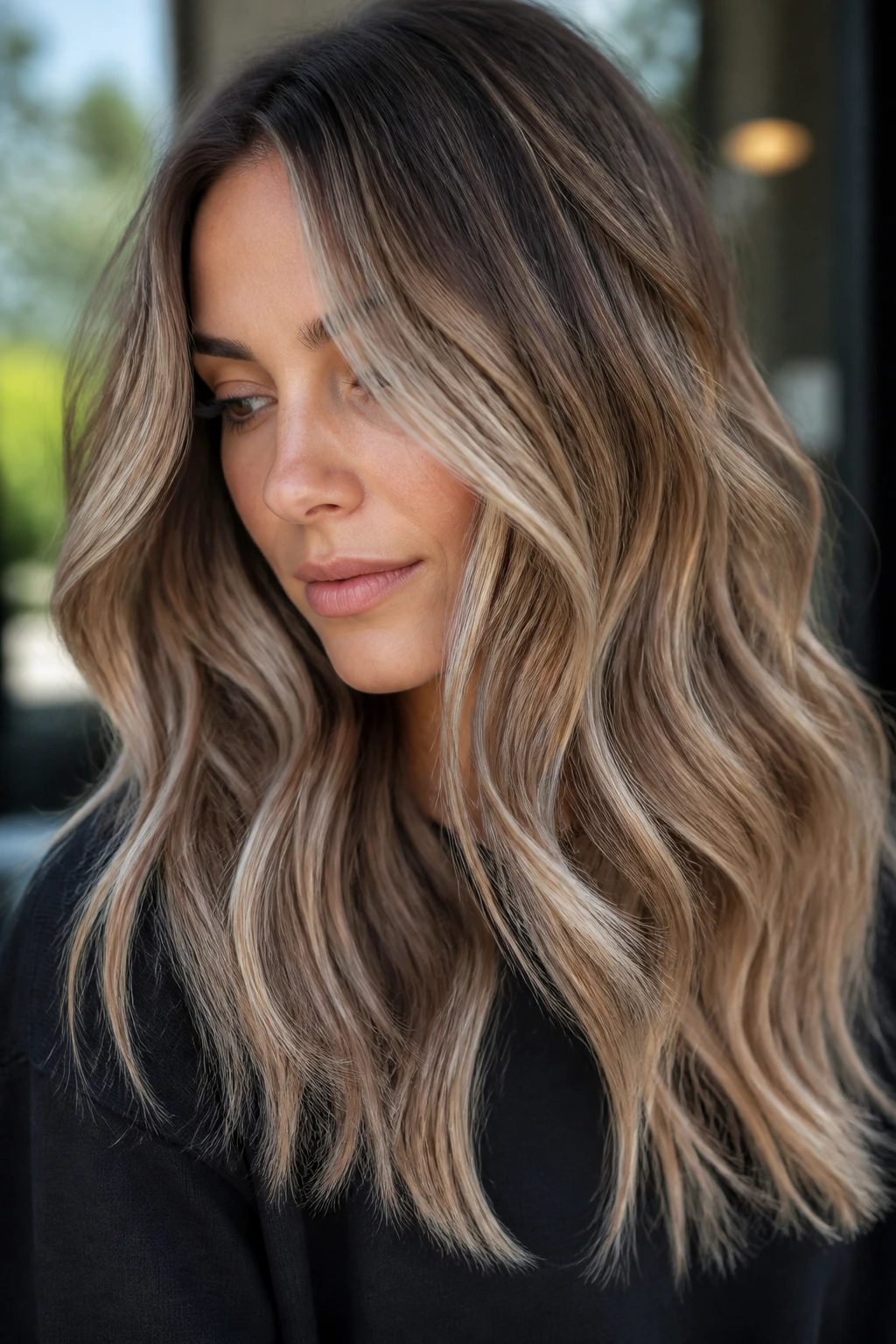
Frosted caramel balayage has a cleaner edge than classic warm balayage. The lifted pieces stay light, but the gloss strips away the honey tone and leaves behind a cooler beige finish. On cool skin, that matters. A frosted caramel tone can brighten without making the face go ruddy.
This works best on layered cuts where the light pieces can move. If you wear your hair in loose curls or waves, the frosted effect comes alive in the bends of the hair. Ask for a cool beige toner over the lifted pieces and a soft shadow at the root. That contrast keeps the look from sliding into blonde territory.
24. Chestnut Caramel with a Cool Gloss
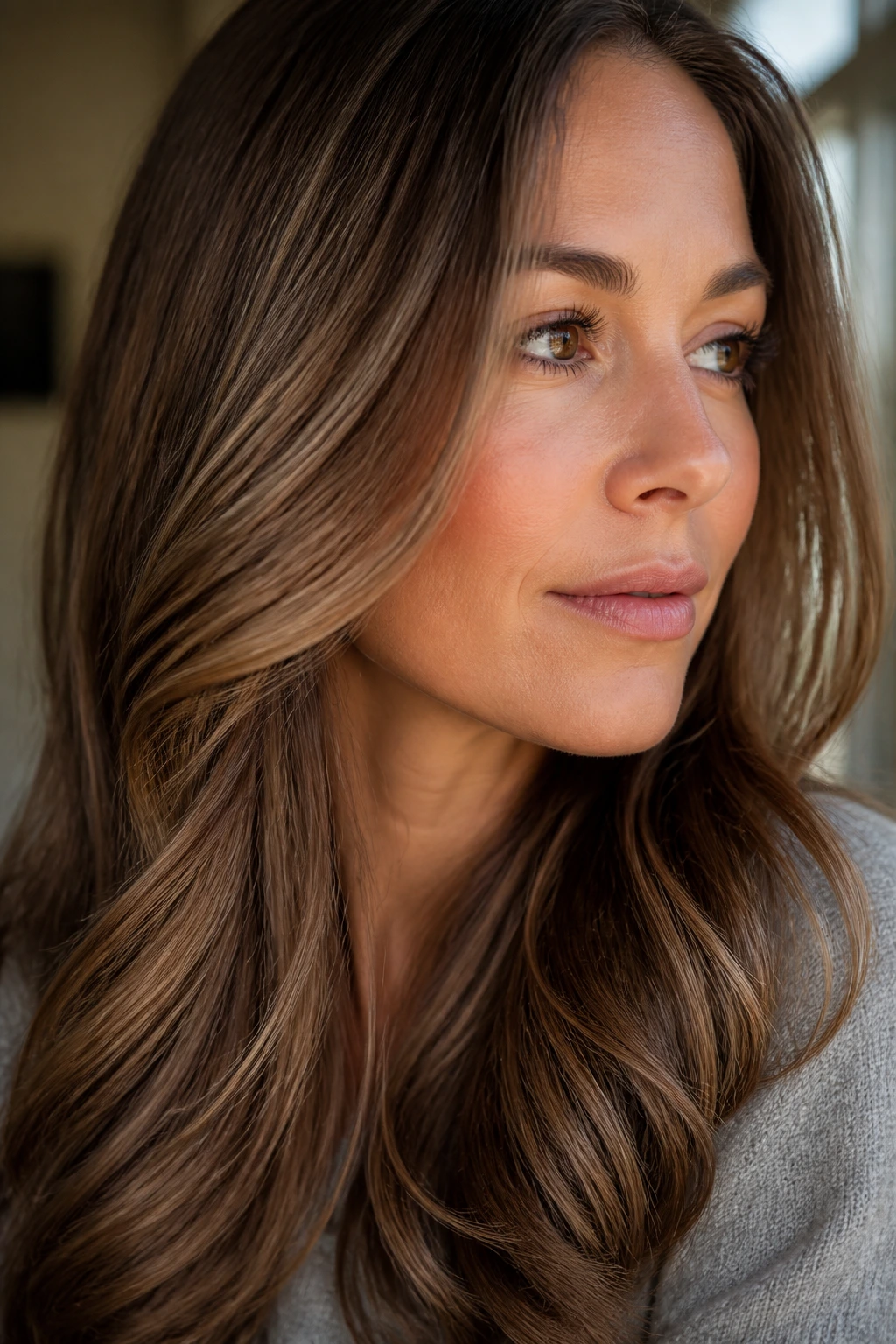
Chestnut caramel is one of those shades that looks richer in person than in photos. The base gives you depth, and the cool gloss keeps the caramel from reading red. That combination is good for cool skin because it creates warmth without the orange cast that can make the face look flushed.
If you’re nervous about commitment, this is a smart mid-step. It doesn’t feel as dramatic as heavy highlights, but it still changes the hair enough that people notice. Gray blending also works well here, especially around the temples and part line, because the chestnut base helps the cooler gloss hide the transition.
25. Ultra-Neutral Caramel Face Frame
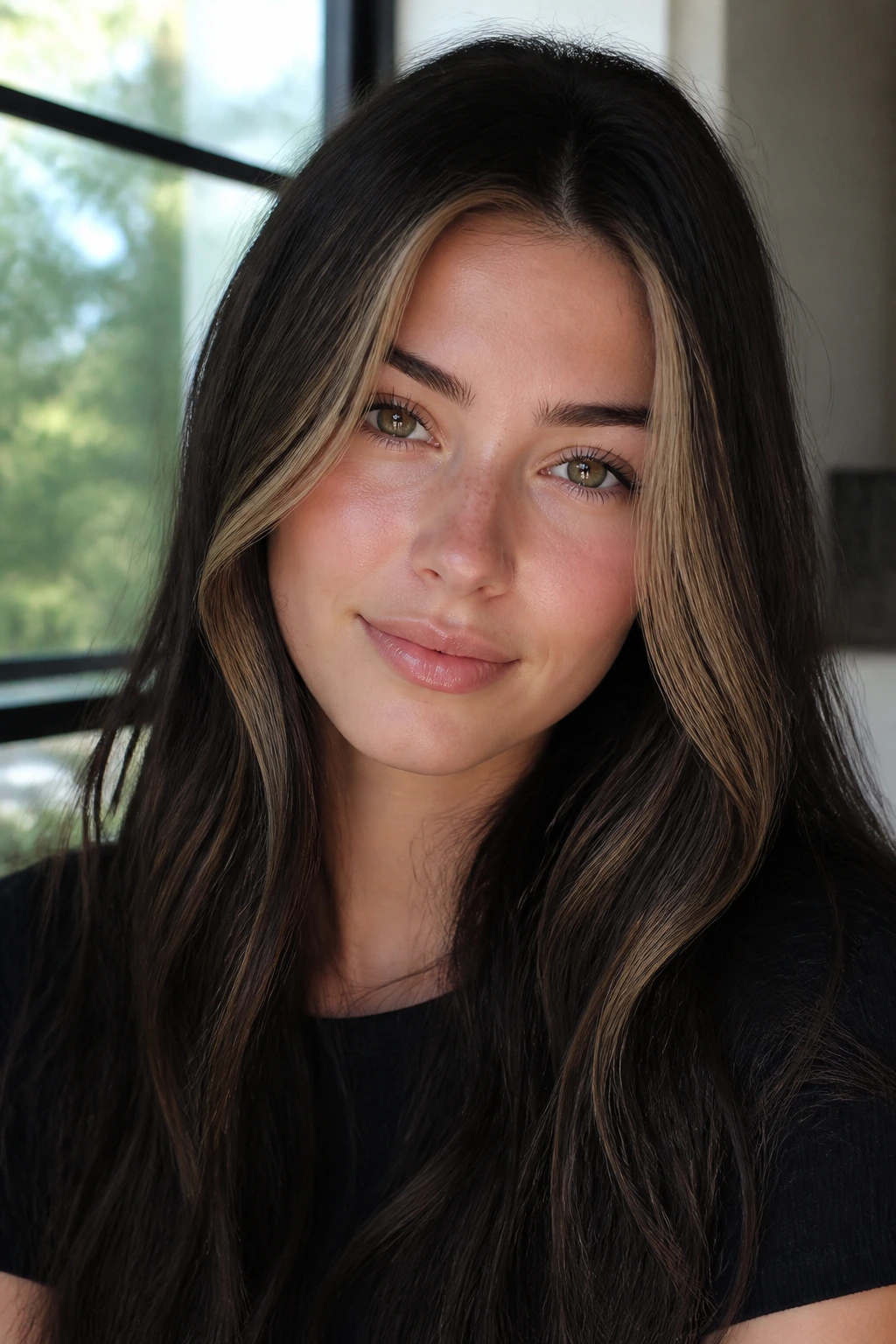
This is the quietest caramel on the list, and sometimes that’s the right move. The ultra-neutral face frame gives you just enough light around the face to soften cool skin without changing the whole head. It reads polished, not flashy.
Ask for a level 7 neutral-beige ribbon at the front, then keep the rest of the hair close to your natural base. If you’re trying caramel for the first time, this is the least risky place to start. It gives you a taste of warmth — but only a taste — and that restraint is what keeps it wearable.
How Caramel Stays Cool Instead of Copper
The difference between flattering caramel and clashing caramel usually comes down to three things: the base level, the toner, and how much light you put near the face. If you lift too far, the hair exposes yellow and orange. If you tone too warm, the result turns maple-colored fast. And if you place all the brightness at the hairline, cool skin has nowhere to hide.
The Toner Logic
Cool-toned caramel lives in beige, ash, mushroom, taupe, and neutral-brown territory. Those words matter. They tell your colorist you want warmth, but not the loud, golden kind that can make pink undertones look flushed. For brunettes, blue shampoo is the better maintenance choice when orange starts showing through. For lighter caramel pieces, purple shampoo helps keep yellow from taking over.
The Placement Rule
Don’t put your brightest pieces everywhere. That’s the fastest way to make caramel look cheap. Face-framing highlights, soft ribboning through the mid-lengths, and a rooted shadow at the top keep the color grounded. Cool skin usually looks better when the hair has one calm anchor point instead of a head full of bright reflective pieces.
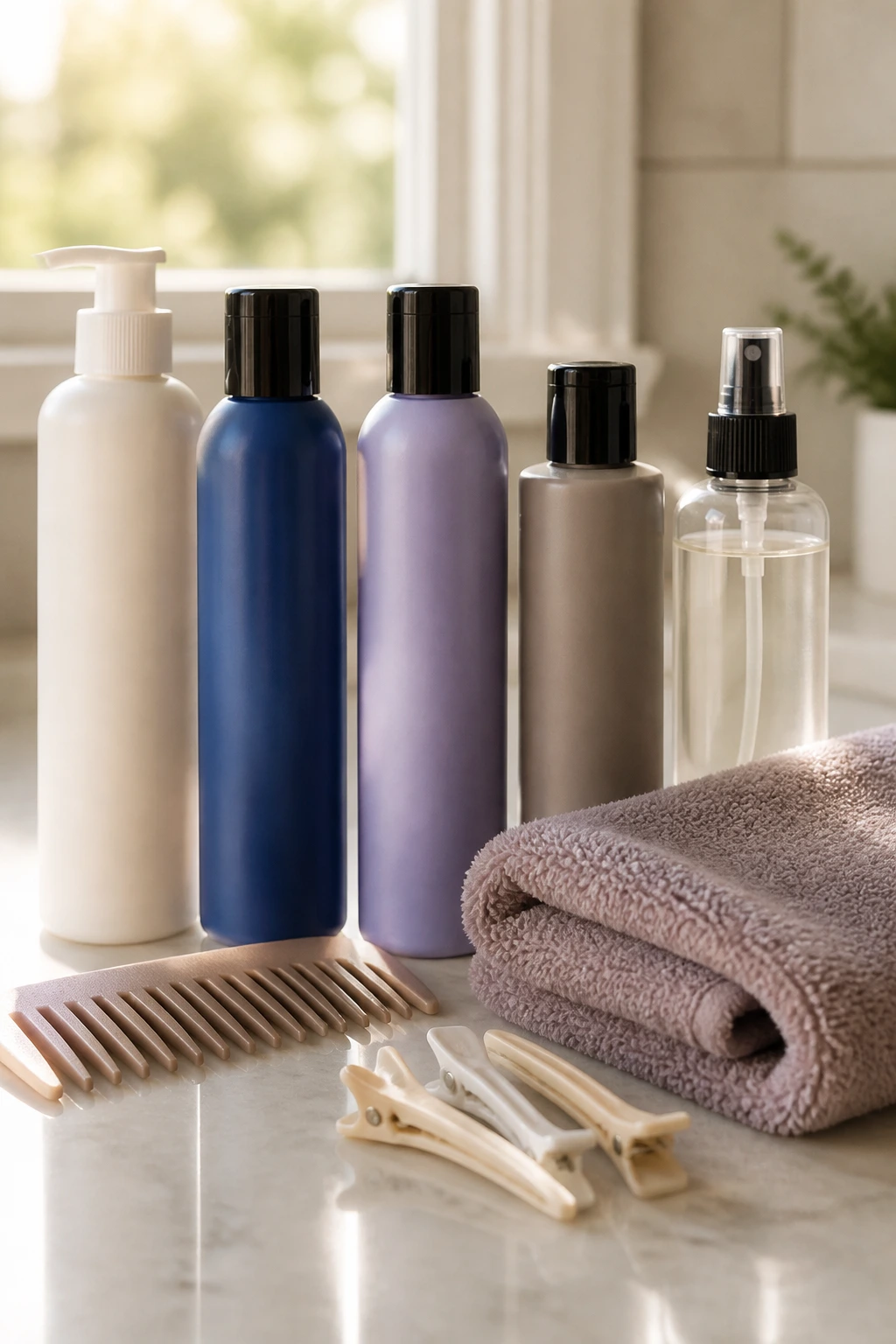
Essential Tools and Products for Keeping the Tone Soft
-
Color-safe sulfate-free shampoo: Keeps the cuticle calmer between washes and slows fading, especially on highlighted brunettes.
-
Blue shampoo: Best for brown-based caramel when orange starts peeking through; use it once a week, not every wash.
-
Purple shampoo: Better for lighter caramel and beige-blonde pieces that drift yellow.
-
Demi-permanent gloss or glaze: Refreshes the tone without a full recolor, which is useful at the 4- to 8-week mark.
-
Heat protectant spray: Straighteners and curling irons can rough up the cuticle and make warm tones look louder.
-
Wide-tooth comb: Less breakage on highlighted lengths, especially if the hair is already dry at the ends.
-
Microfiber towel: A gentler dry-down helps keep caramel gloss smoother than a rough bath towel does.
-
Sectioning clips: Handy for at-home masks, glossing, or a quick check on how the color is fading around the temples.
How to Ask for Caramel Without the Brass
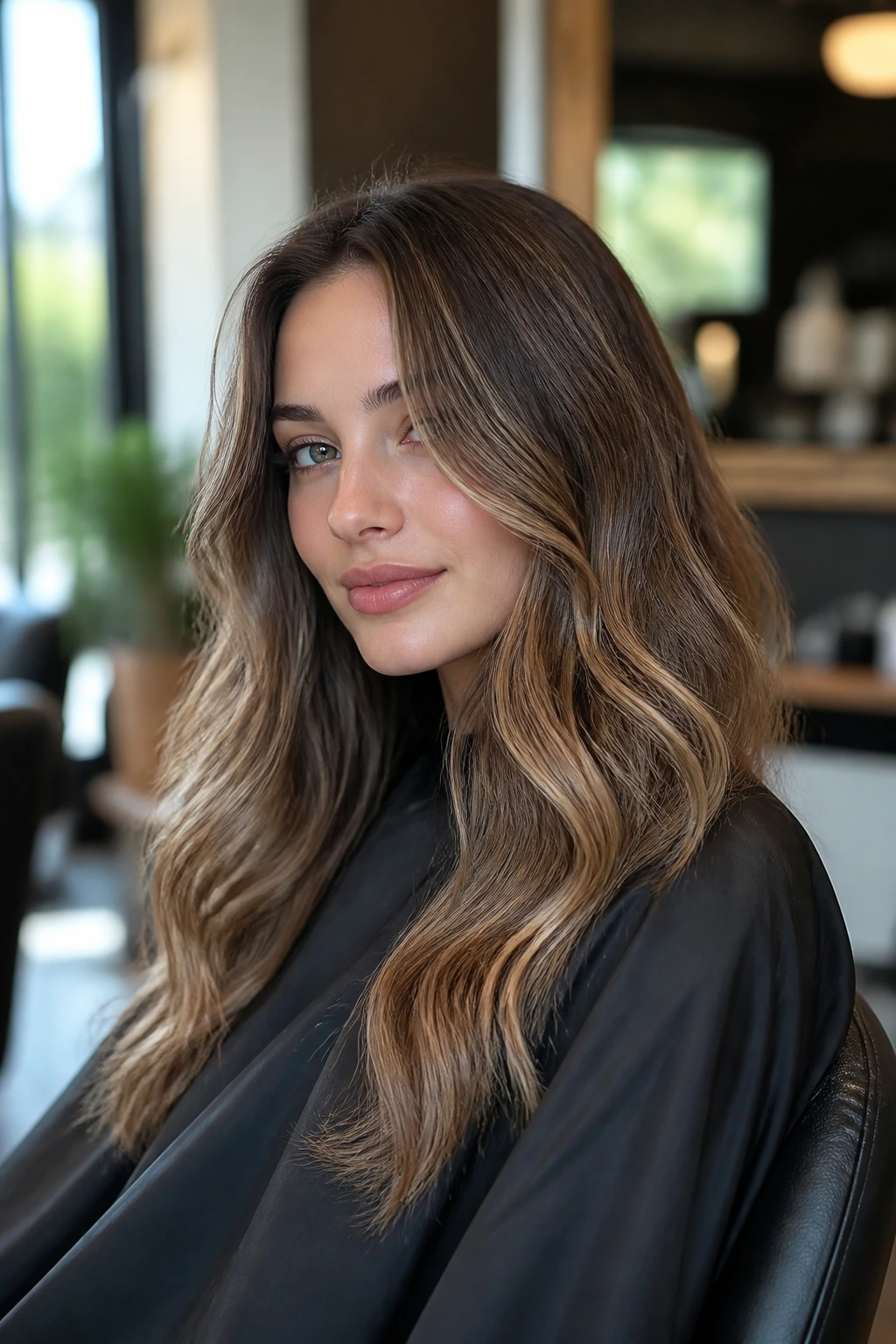
Bring photos, but bring the right kind of photos. Indoor lighting can make almost any caramel look cooler than it is, so try to show your colorist examples taken near a window or outside. If the photo looks orange on your phone, say so. Don’t pretend it’s fine. That’s how people end up with a shade they hate after the first wash.
Use plain words when you talk about it. Say ash-caramel, beige caramel, mushroom brown, neutral gloss, or root shadow. Skip vague requests like “warmer” or “softer” unless you’re ready for the stylist to fill in the blanks. And if your skin is very cool, say that too. A good colorist will adjust the toner family, not just the level.
How to Wear These Shades with Different Cuts and Styles
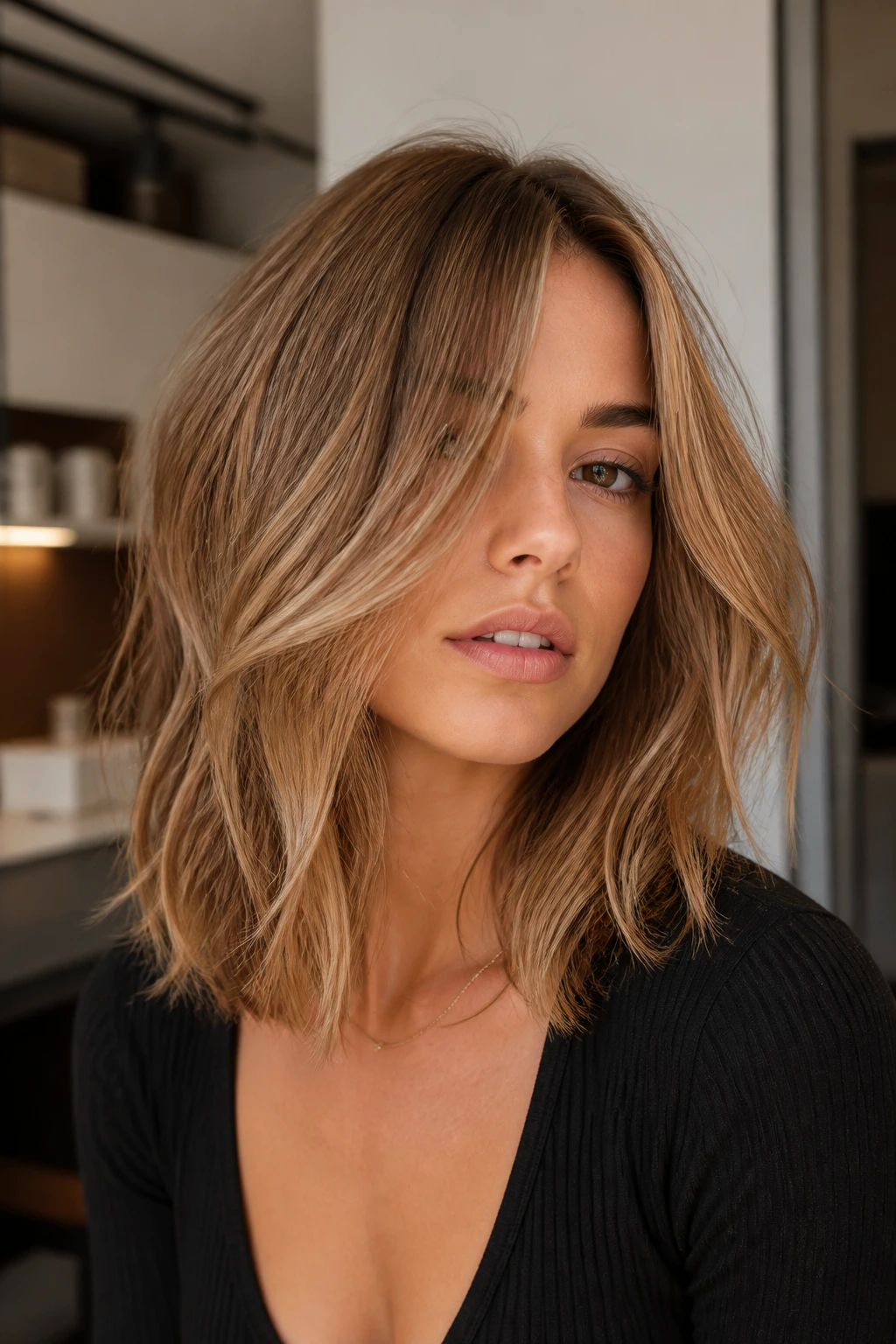
Placement: Caramel looks best when the brightest pieces sit where light naturally hits — around the cheekbones, mid-lengths, and ends — rather than blasting the roots with warmth.
Haircuts: Bobs, lob cuts, curtain bangs, shag layers, and long layers show dimension best. One-length hair can wear caramel, but it needs finer ribbons so the color doesn’t look blocky.
Makeup: Taupe eyeshadow, cool pink blush, berry lipstick, and soft brown liner keep the hair from warming up your whole face. Heavy coral makeup can fight these shades.
Wardrobe: Charcoal, navy, black, soft white, and cool olive make smoky caramel look richer. Bright orange or mustard can pull the hair in a warmer direction than you probably want.
Additional Tips for Softer, Smokier Caramel
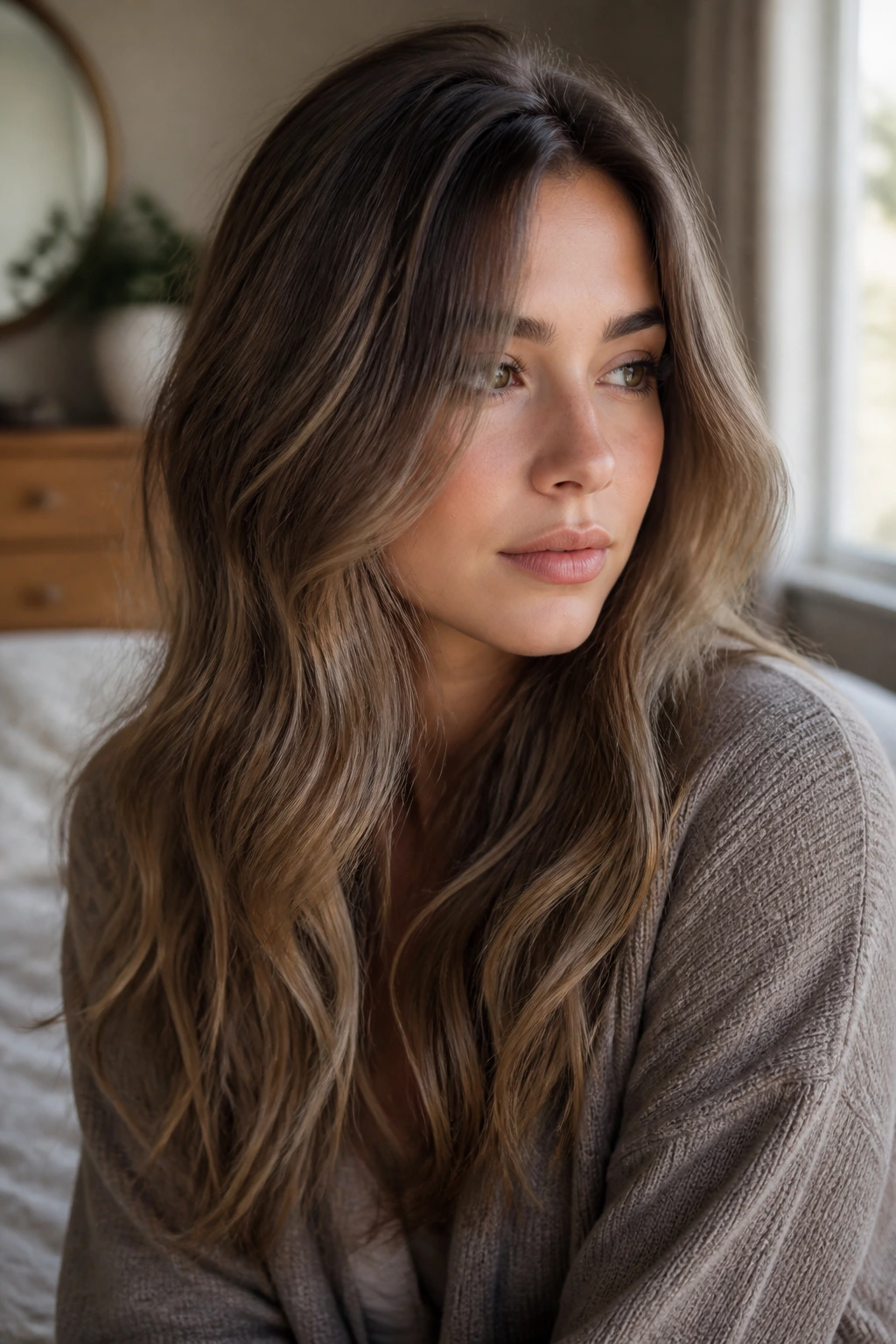
Tone Booster: Ask for a beige or ash gloss every 4 to 8 weeks if the color starts drifting gold. One gloss appointment can save you from a full redo.
Contrast Control: Leave a few deeper ribbons near the part and crown. That little bit of shadow stops the caramel from looking flat under indoor lighting.
Heat Rule: Keep hot tools in the 300°F to 375°F range. High heat above that can rough up the finish and make warm undertones creep out faster.
Make-It-Yours: If your skin is very cool, stay closer to mushroom and ash. If you’re cool-neutral, you can let the caramel lean a touch beige without losing balance.
Maintenance, Fade Control, and Salon Refresh Timing
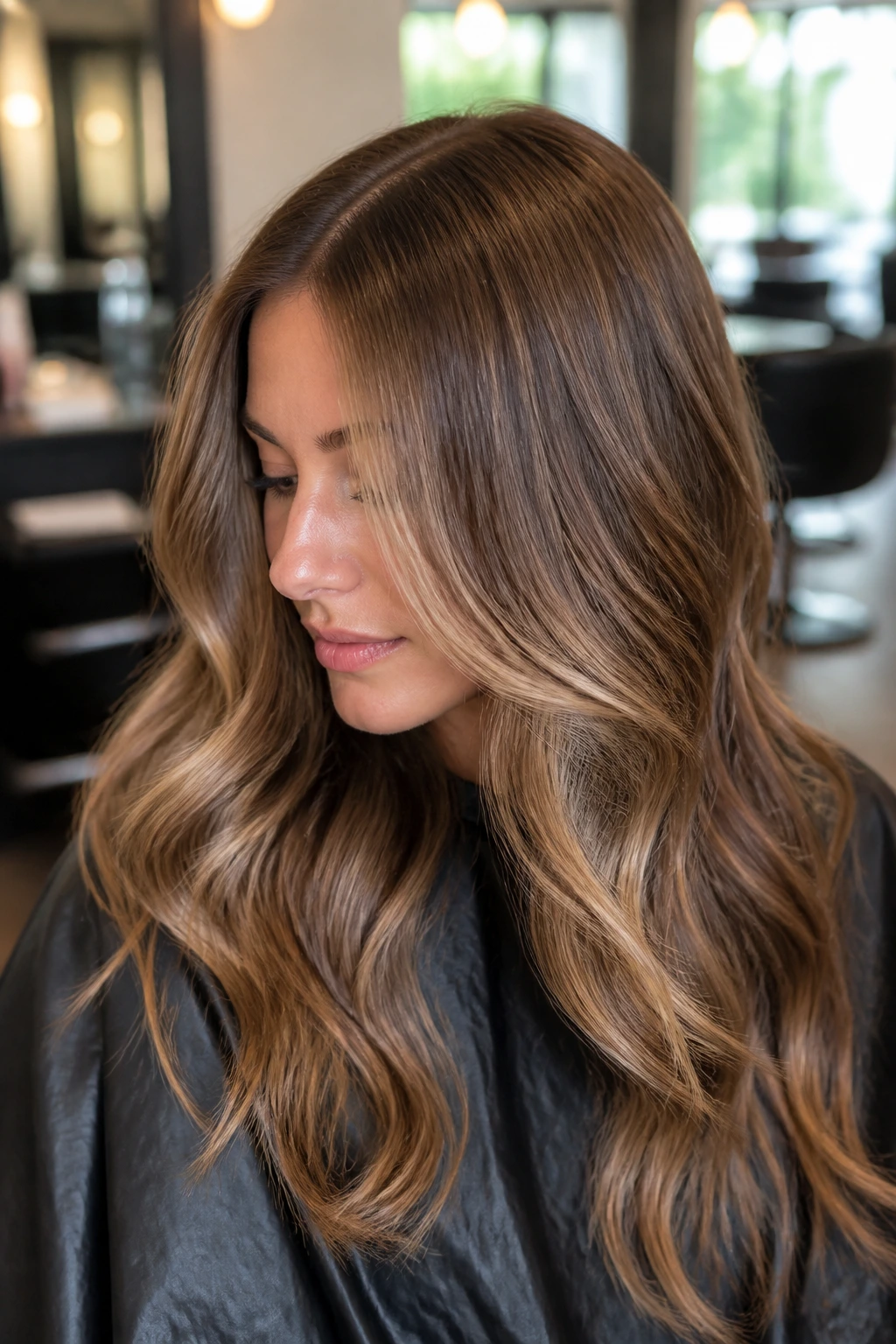
Caramel is not a set-it-and-forget-it color. The first thing to fade is usually the cool toner, not the lift itself, so the hair can slowly drift warmer even when it still looks shiny. That’s why a gloss schedule matters. For most brunette-based caramel looks, a 4- to 6-week gloss keeps the tone soft. If your hair is less porous and you wash only two or three times a week, you can sometimes stretch that to 6 to 8 weeks.
Root touch-ups depend on how much contrast you chose. Rooty balayage and smudged melts can go 8 to 12 weeks between appointments. Higher-contrast money pieces and lighter face frames usually need a little more attention, especially around the hairline where sunscreen, makeup, and frequent washing can change the tone fastest.
At home, use blue shampoo on brunette caramel when orange shows up and purple shampoo on lighter beige caramel when yellow creeps in. Don’t use both in the same week unless your colorist tells you to. That’s how hair gets dull and thirsty fast. A weekly mask helps, but if your ends are already brittle, choose a moisture mask over a heavy protein formula. Too much protein can make highlighted hair feel stiff.
Variations and Adaptations to Try
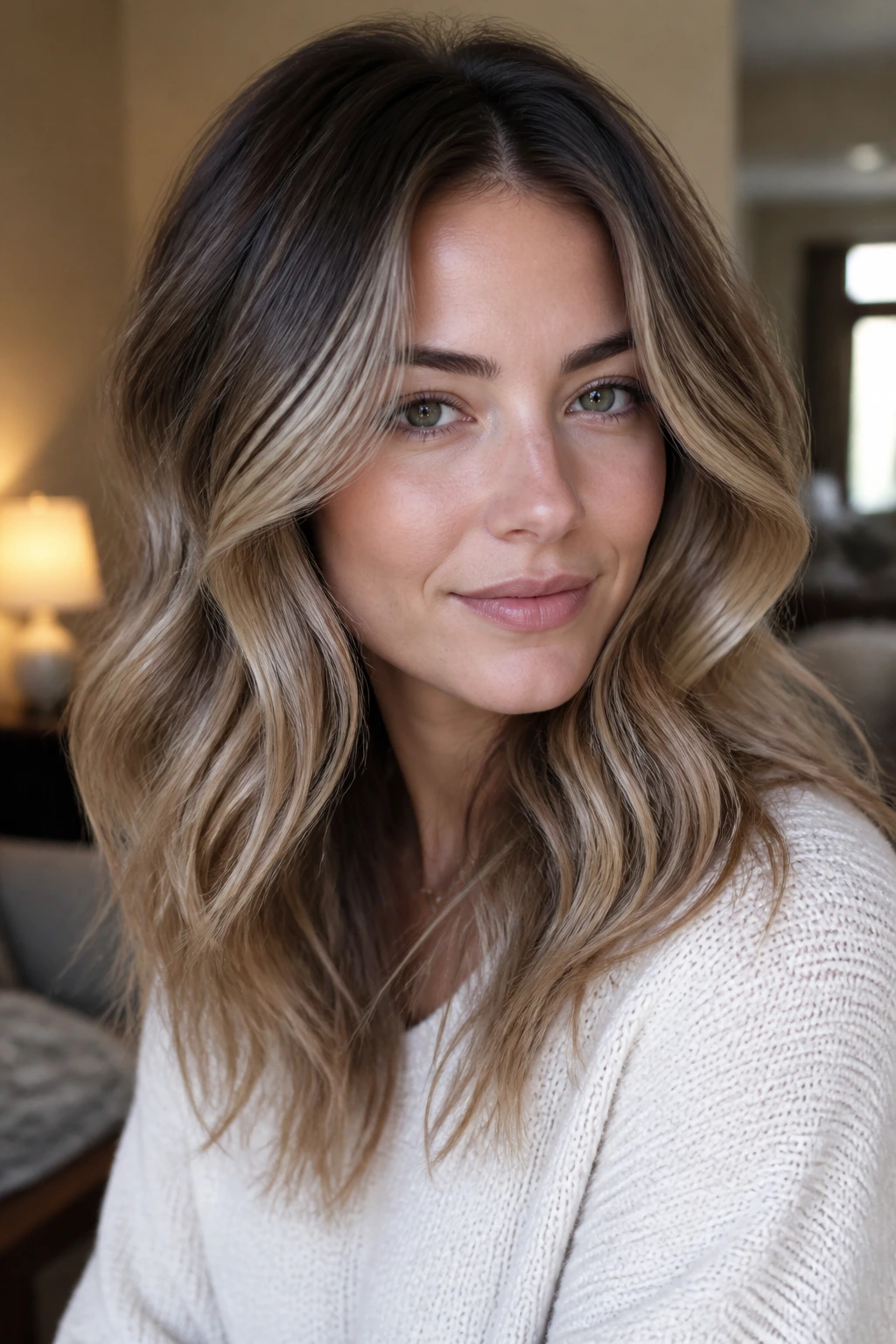
Smoky Root Melt: Keep the root deeper, then fade into ash-beige caramel through the mid-lengths. This works well if you want lower maintenance and less warmth around the face.
Cashmere Beige Caramel: A very soft, almost powdery beige tone with minimal contrast. It’s a nice fit for fine hair and cool skin that gets overwhelmed by stronger highlights.
Muted Caramel for Curly Hair: Use caramel ribbons plus lowlights to preserve curl shape. The added depth keeps the curls from puffing out into one warm halo.
Gray-Blending Caramel: Mix chestnut, beige caramel, and a cool gloss to blur early grays around the temples and part. It looks softer than full coverage and grows out with less visible contrast.
Dark Brunette Caramel Ribboning: On very dark hair, keep the caramel pieces sparse and cool-toned, then add mocha lowlights between them. The result is dimensional without the orange flash that often happens when dark hair is lifted too far.
Short-Cut Caramel Accents: For pixies and bobs, place the caramel in the fringe and crown only. That keeps the shape sharp and gives the color a cleaner read than all-over lightening would.
Common Mistakes That Push Caramel Too Warm
-
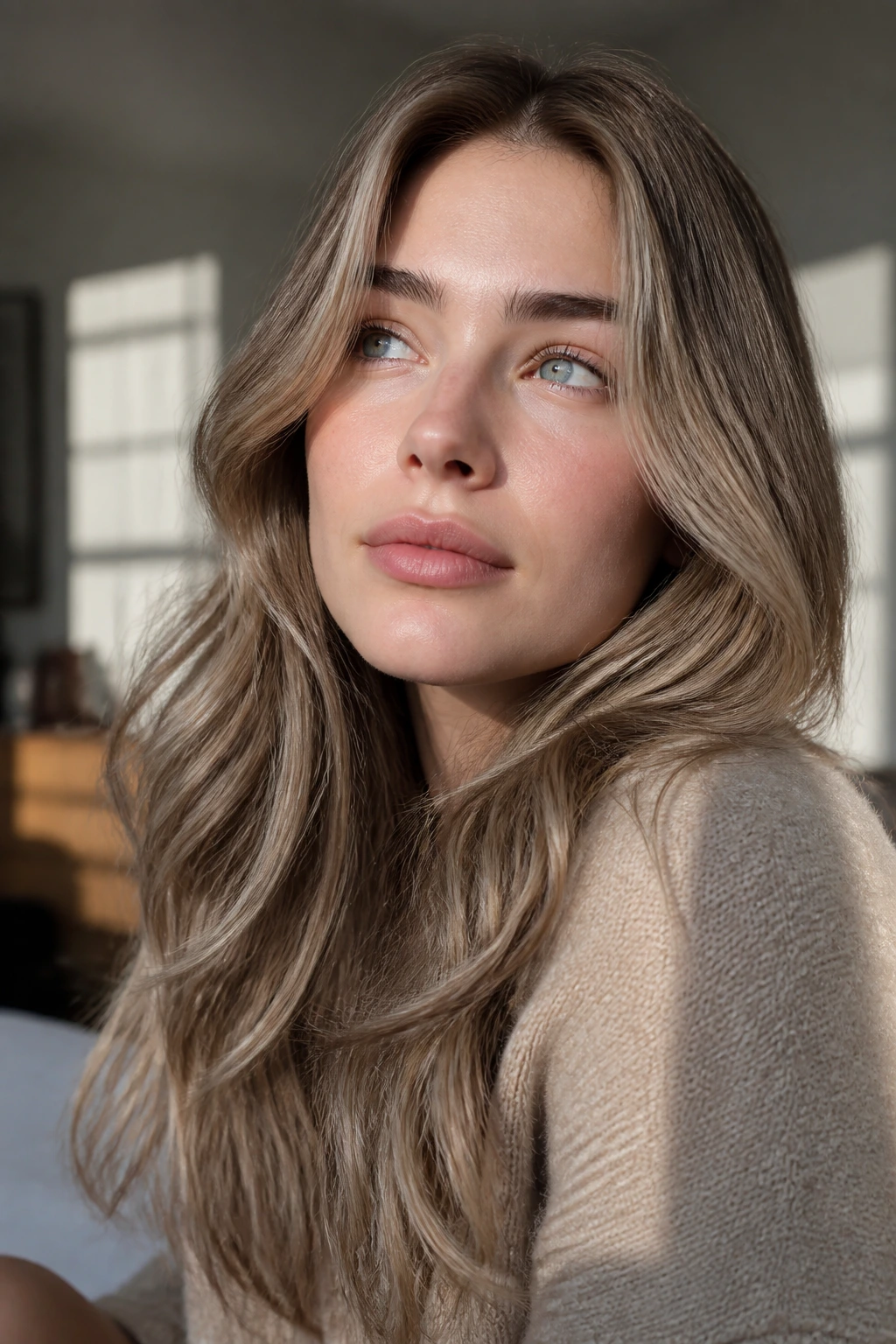
Choosing gold when you want beige. Gold sounds pretty on paper, but on cool skin it can turn ruddy fast. Ask for beige, ash, mushroom, or neutral caramel instead.
-
Lifting too light in one visit. Dark hair that’s pushed too far too fast often lands in yellow-orange territory. Safer caramel usually comes from controlled lift, not maximum lift.
-
Ignoring the root shadow. Flat, all-over light caramel can make the scalp area look harsh and the face look washed out. A deeper root keeps the color grounded.
-
Using the wrong shampoo. Blue shampoo helps brunette caramel stay calm; purple shampoo helps lighter pieces. Using the wrong one won’t ruin your hair, but it won’t fix brass either.
-
Putting the brightest pieces right at the hairline. That can make rosy skin look redder and make cool skin look splotchy. Softer face framing is usually the better call.
Frequently Asked Questions
What caramel shades work best on cool skin tones?
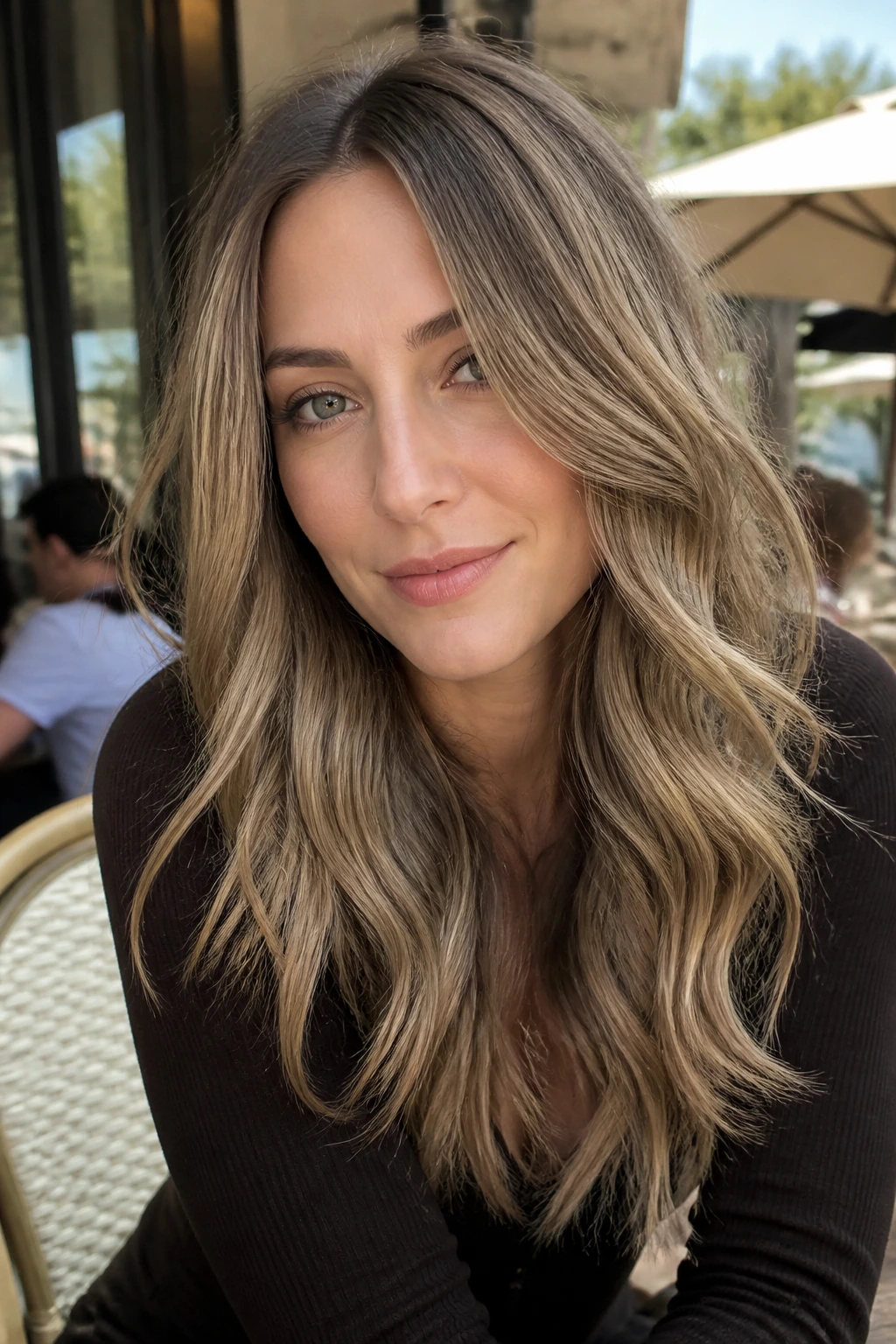
Ash caramel, beige caramel, mushroom caramel, taupe caramel, and neutral-rooted caramel usually sit best. They give you warmth without the orange or copper cast that can fight pink or blue undertones.
Can cool skin tones wear golden caramel at all?
Sometimes, but it has to be controlled. A tiny gold note in a broader beige or ash formula can work; a full golden caramel usually pulls too warm and makes the complexion look flushed.
Is balayage better than all-over caramel for cool skin?
Balayage is easier to control, which is why I usually like it more for cool undertones. The root stays deeper, the warmth stays scattered, and the grow-out looks softer than a full color block.
How do I ask for cool caramel at the salon?
Use words like “beige,” “ash,” “mushroom,” “neutral gloss,” and “root shadow.” Bring a daylight photo and point out whether you want the face frame soft or bright — that changes the whole result.
What if my hair is very dark brown or black?
Start with dimensional caramel ribbons, not an all-over light caramel. Dark hair often needs more than one appointment to lift cleanly, and that slower approach avoids the orange stage that ruins a lot of caramel looks.
How do I stop caramel hair from turning brassy?
Use the right shampoo for the right tone, protect the hair from heat, and refresh the gloss before the color gets too warm. Once brass shows through hard, it’s harder to soften without another salon visit.
Does caramel hair work for gray blending?
Yes, especially when it’s paired with a cool gloss and some chestnut depth. The trick is to keep the caramel muted so the gray doesn’t turn yellow or overly warm next to it.
How often should I refresh the color?
Most cool caramel tones look best with a gloss every 4 to 8 weeks and a bigger color refresh every 8 to 12 weeks, depending on how much contrast you have. Face-framing pieces usually need attention sooner than the rest.
A Softer Finish
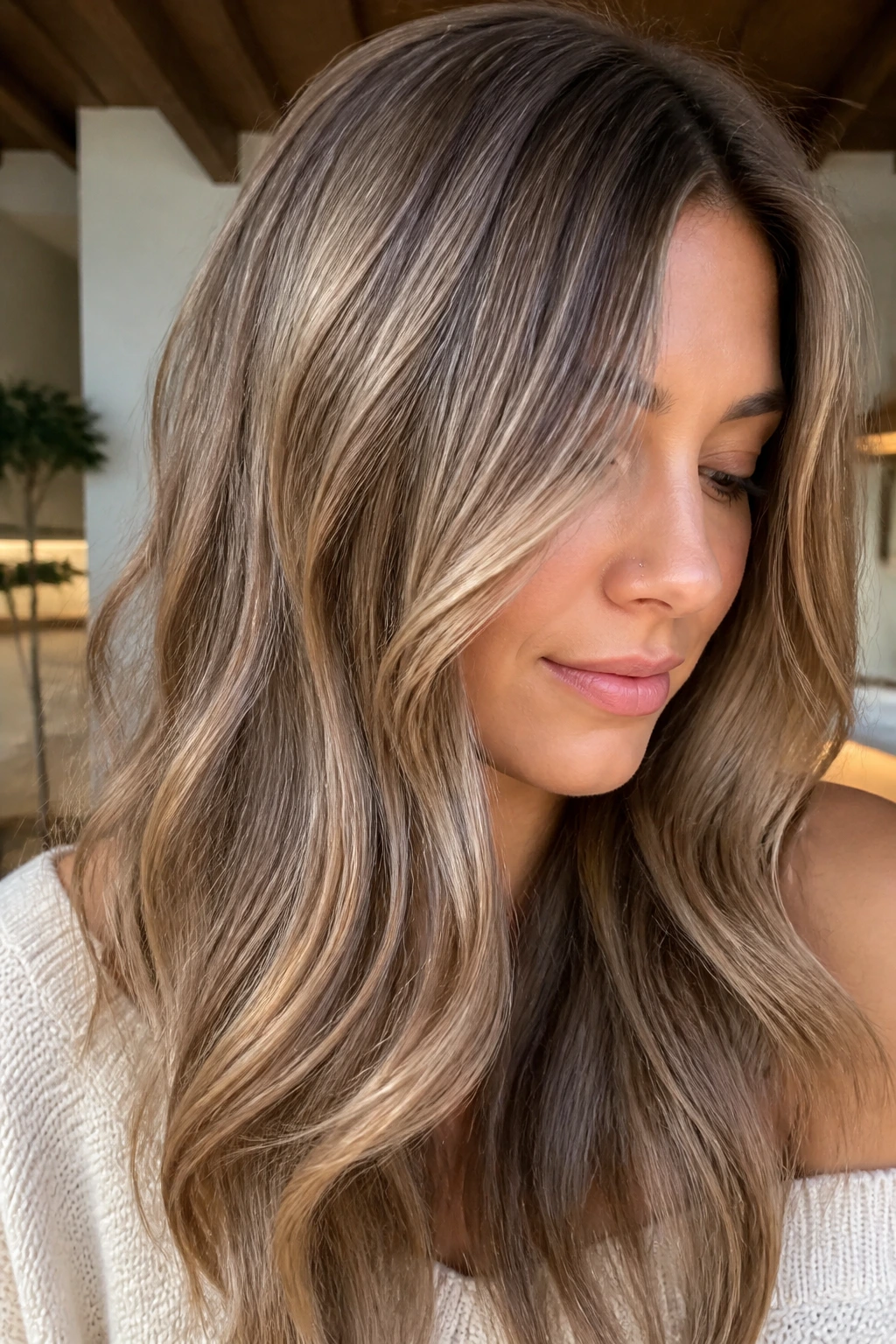
Caramel does not have to mean gold, copper, or anything syrupy. The best versions for cool skin tones are calmer than that. They sit in beige, ash, mushroom, and smoky brown territory, which is why they look polished instead of loud when the light hits.
If you’re taking one idea from this, make it this: the toner matters as much as the shade name. Bring good photos, ask for neutral language, and don’t be shy about saying your skin runs cool. The right caramel won’t fight your face. It will sit beside it and make the whole thing look more alive.