



Caramel hair color ideas for warm skin tones are only worth saving when the warmth is real. Not muddy. Not orange in the wrong light. Real warmth — the kind that looks like honey on a spoon, toasted sugar at the edges, and a soft amber glow where the light hits first. On golden, peach, and olive undertones, the right caramel doesn’t sit on top of the hair. It blends in, then lifts the face a little.
That’s the trick people miss. Caramel is not one shade. It’s a whole family, and the family behaves differently depending on how much gold, beige, amber, copper, or brown you leave in the mix. A warm brunette can wear honey ribbons and look sunlit. A deeper base can take on toffee and bronze and still feel rich. Push the tone too cool and the whole thing can go flat. Push it too bright without depth, and the color starts shouting.
The ideas below are built around that balance. Some are soft and low-commitment. Some are bolder and better if you want the color to show up in curls, waves, or a blunt bob. A few are the kind of shades I’d save for people who say, “I want caramel, but I don’t want to look blonde.” That’s a useful sentence. Keep it handy.
Why These Caramel Shades Are Worth Saving
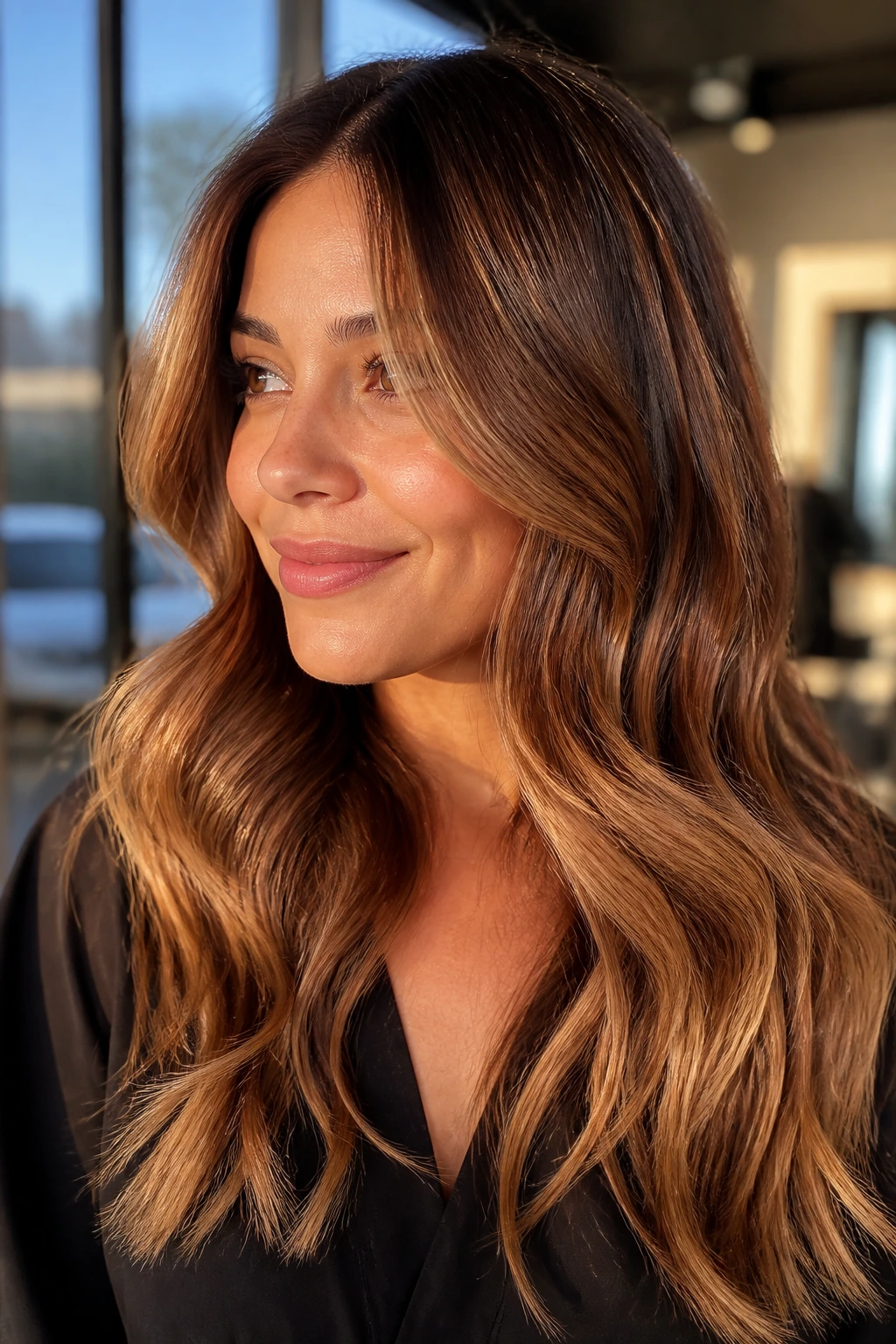
- Warm undertones stay in the same color family: Honey, toffee, amber, and bronze sit naturally beside golden, peach, and olive skin, so the face looks brighter without needing a stark contrast.
- Depth keeps the color from going flat: Leaving darker brown at the root or under the light pieces stops caramel from reading like one washed-out block.
- The grow-out is easier to live with: Balayage, root shadows, and glossed melts leave a softer line as the color fades, which buys you a little breathing room between appointments.
- Texture changes everything: The same caramel can look soft on straight hair, ribboned on curls, and airy on a shag. Placement matters as much as shade.
- There’s a version for every maintenance level: Some looks need a 4- to 6-week refresh. Others can stretch much longer if the gloss is right and the root stays darker.
1. Honey Caramel Balayage
Honey caramel balayage is the classic for a reason. It gives you warmth without turning the whole head into one flat gold sheet, and on warm skin tones it tends to look lit from within rather than painted on top. The best version keeps the base a shade or two deeper than the lightest ribbons, so the color still has shape when you catch it in daylight.
Why it works on warm skin
Honey sits in the same family as golden and peach undertones, which is why it feels easy on the face. If your skin pulls bronze after a little sun, this shade usually plays nicely with that. It’s also one of the lowest-drama ways to wear caramel because the highlights live through the mids and ends instead of starting hard at the root.
- Ask for soft hand-painted pieces starting around the cheekbone.
- Keep the root shadow at least one level darker than the lightest caramel.
- Finish with a beige-gold gloss, not a cool ash toner.
Best for: medium brunettes who want warmth they can still wear in a ponytail.
2. Toasted Almond Caramel Melt
This is the shade I point people to when they say they want caramel, but not “too blonde.” Toasted almond caramel has a beige-brown softness that keeps the look polished. It reads especially well on warm skin that leans golden rather than red, because the tone stays mellow instead of fiery.
What I like here is the melt. The root doesn’t stop abruptly, and the lighter pieces don’t look striped. They slide from brown into a creamy caramel-beige that feels expensive without trying too hard. If your hair already sits at a level 5 or 6, this is one of the easiest caramel directions to grow out.
If you wear sleek blowouts or a blunt cut, even better. The smooth finish shows off the tonal shift, and the almond note keeps it from looking flat under indoor lighting.
3. Caramel Face-Framing Money Piece
Want the fastest way to brighten warm skin without coloring the whole head? Put the light where people actually look first. A caramel money piece at the front can wake up the face, soften the jawline, and make eyes look clearer, especially when the rest of the hair stays a richer brown.
Where the bright pieces should start
For this look, the bright strands should begin around the cheekbone or just below the brow, not right at the scalp. That keeps the grow-out softer and avoids the harsh stripe that can happen when the front sections are lifted too high. Ask for a warm caramel with a touch of honey, not a pearl or icy beige.
- Keep the back and crown darker for contrast.
- Let the front panels be the brightest point.
- Style with a middle part or soft side part so the face frame falls naturally.
This one is especially good if you wear your hair up a lot. Even a messy bun shows it.
4. Chocolate-Caramel Dimension on Dark Brunette
If your base is deep brown and you do not want to lose that richness, this is the move. Chocolate-caramel dimension keeps the overall look grounded while threading in lighter pieces that catch the light instead of taking over the whole head. On warm skin, that balance matters. Too much lightness too high up can make the face look washed. Keeping chocolate in the mix solves that.
The best versions use lowlights as much as highlights. That’s the part people skip, and then the caramel ends up floating on top like a sticker. A few darker ribbons tucked between the lighter ones make the whole thing read fuller and more expensive.
This look is also one of the easiest ways to grow into caramel if you’re nervous. You can start with a handful of placed pieces, then build from there. No need to jump straight into blonde territory.
5. Butterscotch Ends on a Chestnut Base
Butterscotch ends are for the person who wants caramel to look a little softer and a little sweeter. The chestnut root keeps the base grounded, while the ends turn creamy and warm without going pale. On warm skin, that lighter finish can look especially good when your hair has layers or a bit of wave in it.
What makes this one work is the direction of the color. It draws the eye downward, so the hair feels longer and lighter at the ends without needing a lot of highlight everywhere else. If your ends are dry or see-through, get a trim first. Butterscotch shows damage fast. There’s no hiding split ends in a shade this bright.
This is a nicer choice for medium to long hair than for a short crop, because the transition needs room to breathe. On long layers, it looks soft and very wearable.
6. Cinnamon Caramel Ribbon Highlights
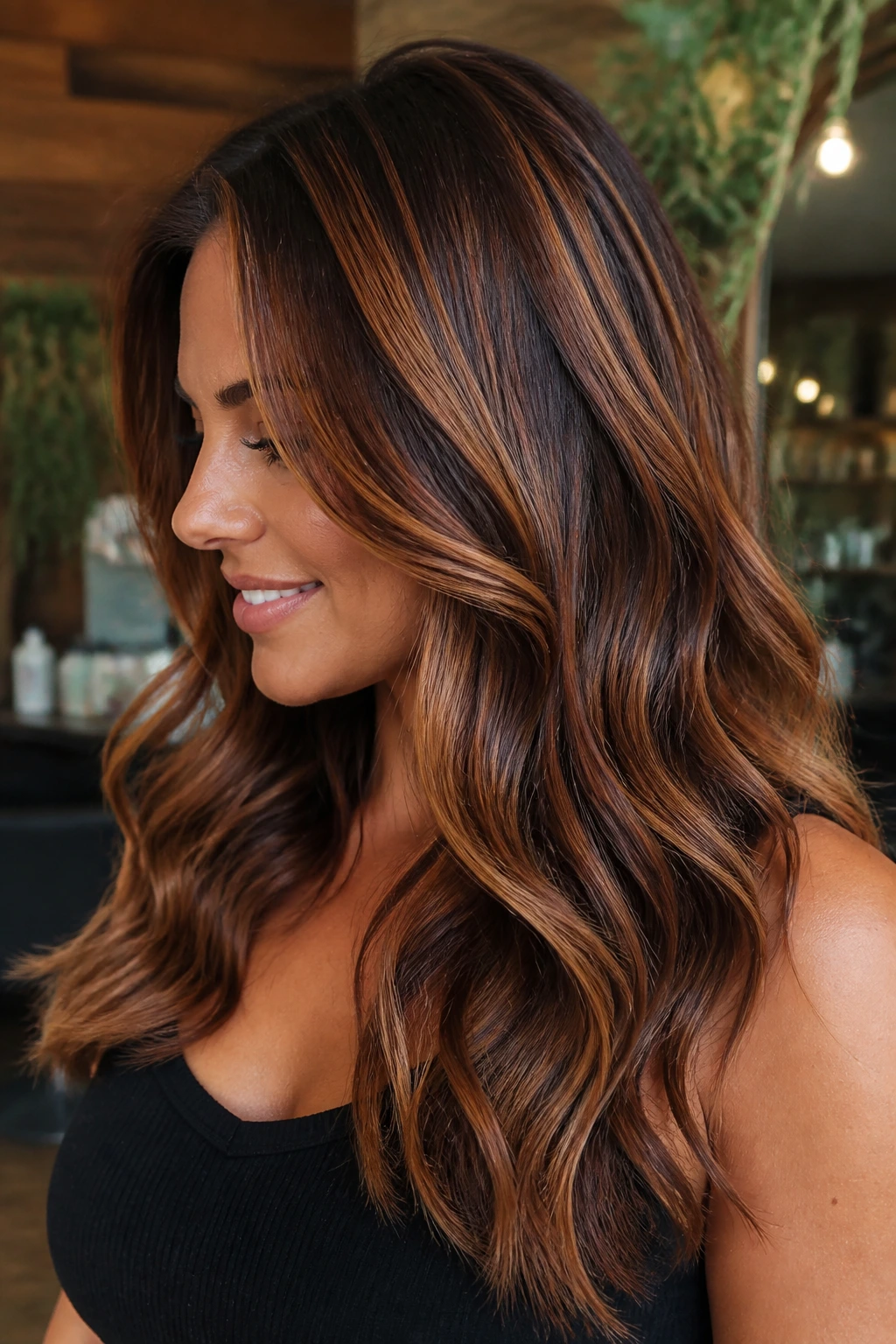
Cinnamon caramel is what happens when honey caramel gets a little spice. The color still belongs in the warm family, but it carries a faint red-brown note that makes the hair look richer. On warm skin, that little shift can be magic if you like deeper lip colors, gold jewelry, or brown eyes that already lean warm.
Unlike honey caramel, this version doesn’t try to be quiet. It wants to show. The ribbon highlights are thicker and more visible, which makes the shade good for layered cuts, curls, and wave patterns that need definition. On straight hair, they give the length a clean, glossy streak.
If you’re nervous about red, keep the cinnamon note subtle and ask for a beige-brown gloss over the top. That tempers the spice and keeps the finish closer to brown caramel than copper.
7. Amber Caramel Gloss
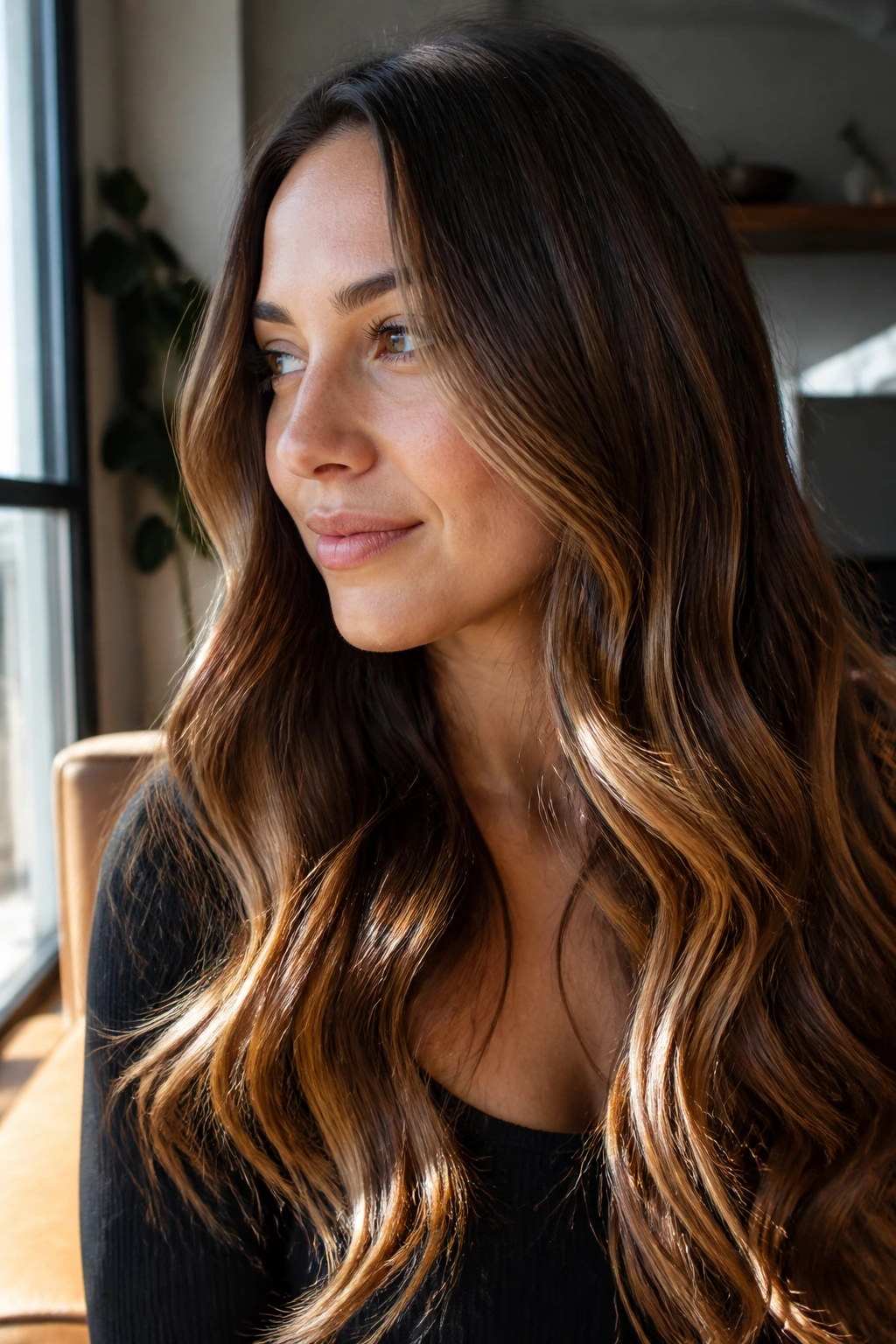
Amber caramel gloss is the low-commitment option that still changes the whole mood of the hair. It works best on brunette bases that already have a bit of warmth, because the gloss enhances what’s there instead of trying to invent a new color from scratch. That makes it especially useful if your hair has faded highlights or a slightly dull tone that needs shine more than lightness.
A gloss like this is less about stripes and more about surface finish. The hair reflects light better, the mids look softer, and the ends stop looking dusty. If your current color has drifted too ashy, amber can pull it back into the warm lane without making it brassy.
Ask for a semi-permanent or demi-permanent glaze in amber-gold, not a bright copper. You want shine and warmth, not a full color change.
8. Caramel Beige Lob
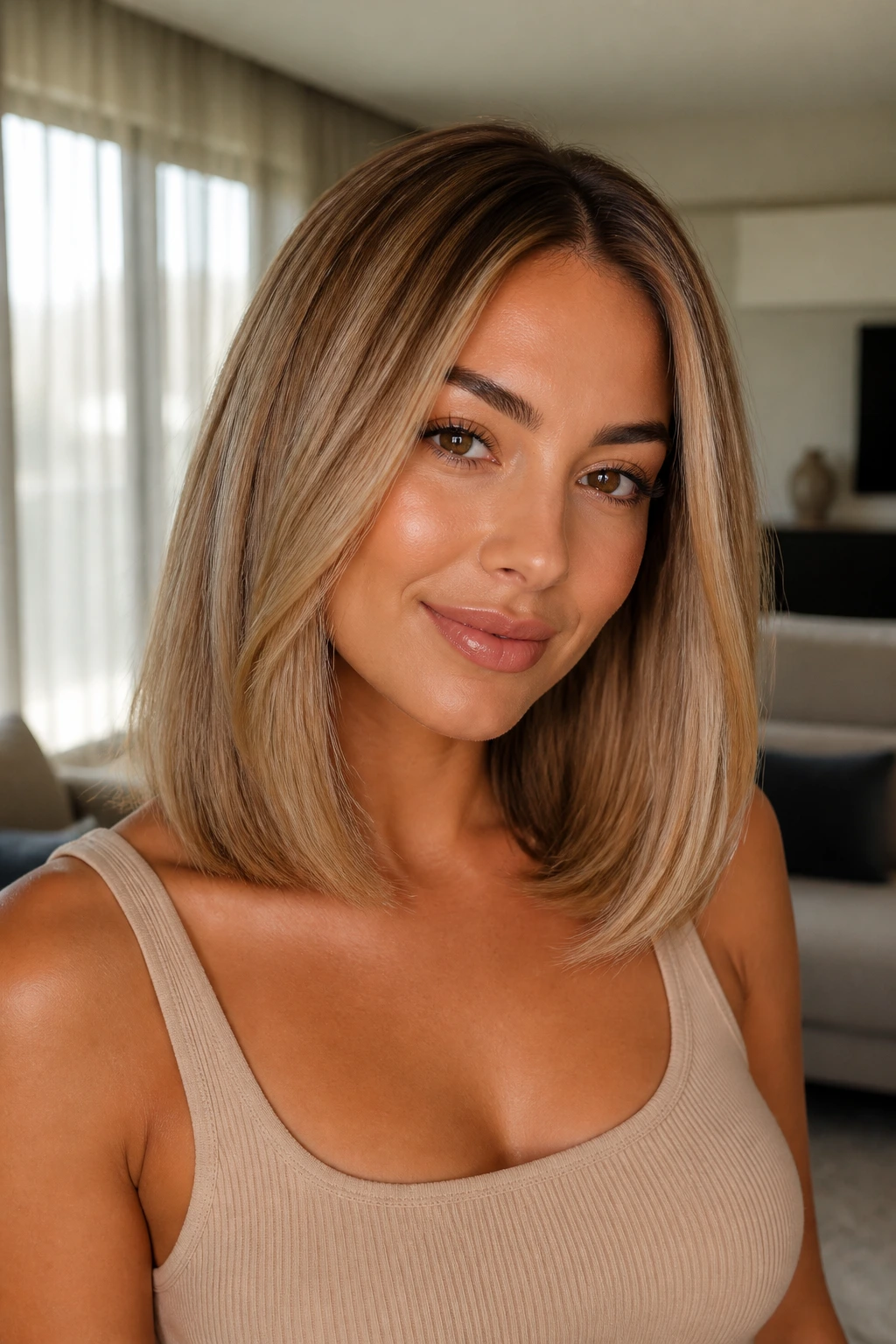
A lob gives caramel room to look clean. That sounds plain, but it matters. On a shoulder-length cut, beige-caramel color can read polished instead of busy, especially if the ends are blunt and the layers are soft. Warm skin gets a nice glow from the beige note, while the caramel keeps the shade from looking flat.
Best cut pairings
- A blunt lob makes the caramel look sharper and more modern.
- Curtain bangs soften the face frame and help the lighter pieces show.
- Subtle internal layers keep the ends from looking heavy.
This is a good choice if you like your hair to look finished without a lot of styling. A smooth bend with a flat iron or a round-brush blowout is enough. The color does the rest.
9. Bronze Caramel Curls
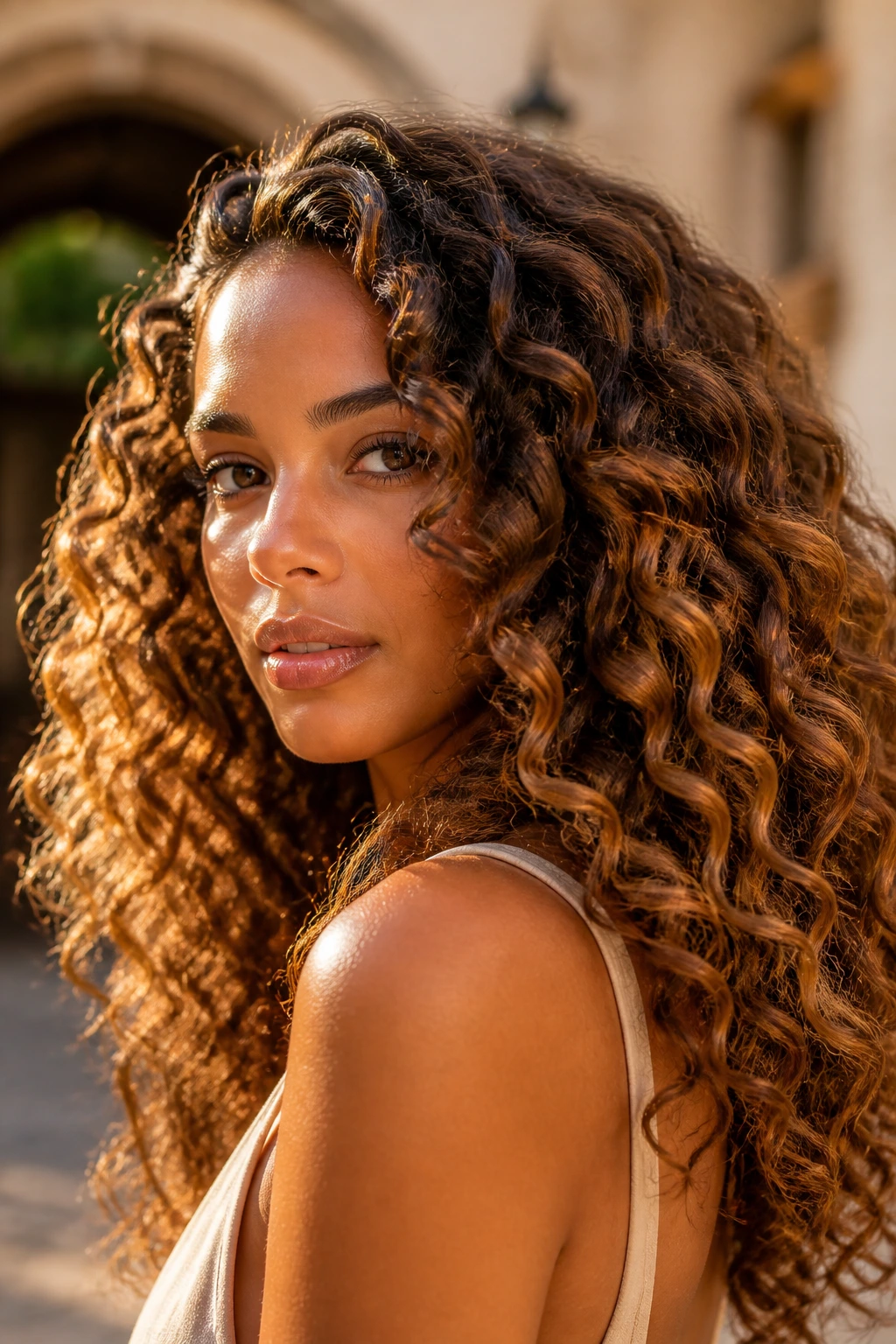
Bronze caramel curls have one job: make texture look expensive. The bronze note gives the caramel more depth, which matters on curl patterns because every bend in the hair catches light differently. On warm skin, the bronze keeps the finish rich instead of sugary.
A curl-specific placement is the real difference here. The lighter pieces should sit where the curls rise and twist, not just in flat streaks. Surface painting and a few well-placed foils can do more than a blanket highlight ever will. When the curl clumps separate, the color looks woven through the hair instead of sitting in it.
This one is especially good if your natural hair is medium to deep brown and you want contrast without losing that full, plush look curls can give. Keep the toner warm. Cool bronze turns dull fast.
10. Maple Caramel Root Shadow
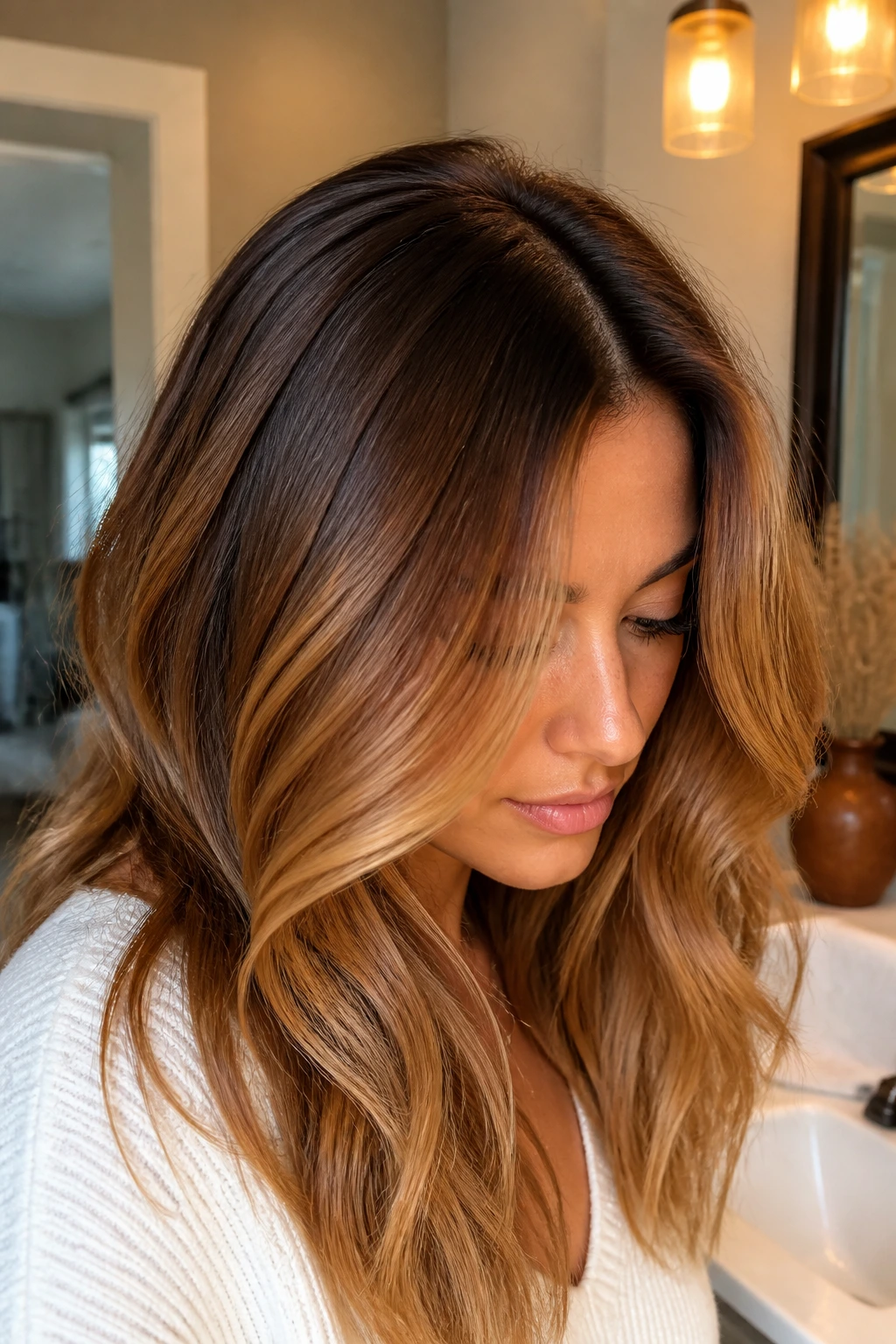
Maple caramel root shadow is for people who like to stretch salon visits. The root stays deeper, the mids turn maple-brown, and the lighter caramel is tucked into the ends and front sections. That gives the hair a softer grow-out line and keeps warm skin from looking too washed out by all-over brightness.
This shade is one of my favorites for brunettes who want caramel but don’t want to babysit it. The darker root makes the lighter pieces feel intentional, not accidental. It also helps if your hair has more than one texture or density on the same head, because the shadow creates visual fullness where the color lifts.
If you’re asking for this in the chair, say you want a root that stays close to your natural depth and a warm maple-caramel gloss through the mids. That tells the colorist exactly where the brightness should live.
11. Golden Caramel Babylights
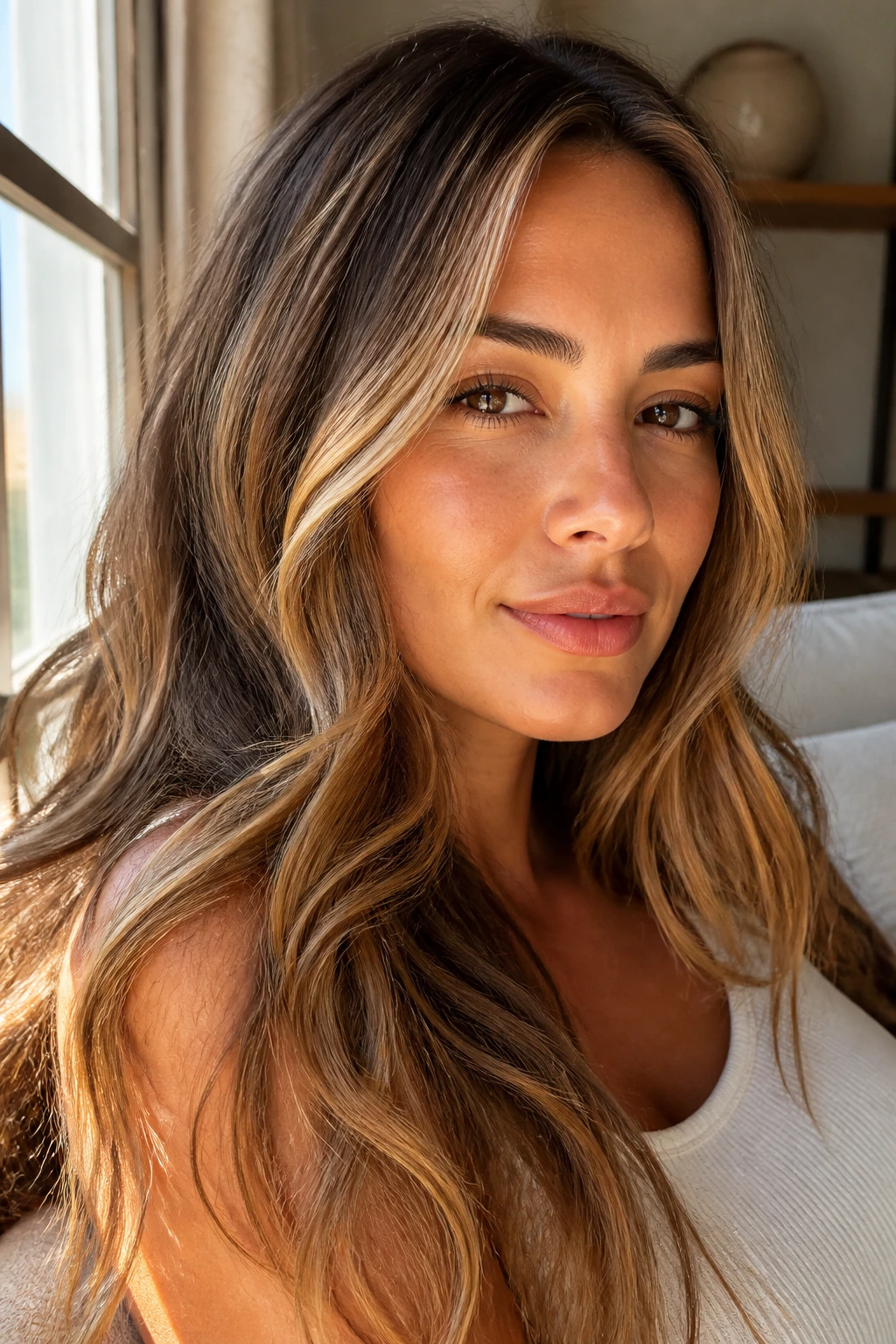
Think of this as sunlight, not stripes. Babylights are tiny, fine highlights that can make caramel look soft and expensive instead of chunky. On warm skin tones, golden caramel babylights are useful because they add brightness without changing the whole personality of the base color.
What to ask for
- Very fine sections so the contrast stays subtle.
- Warm gold-caramel tone instead of ash or pearl.
- Slightly denser placement around the face for lift without a hard money piece.
This style looks especially good on straight or softly waved hair, where the tiny lights can blend into a smooth finish. It’s not the loudest caramel look on this list. That’s the point. It gives you a lot of movement with less obvious regrowth.
12. Toffee Caramel Bob
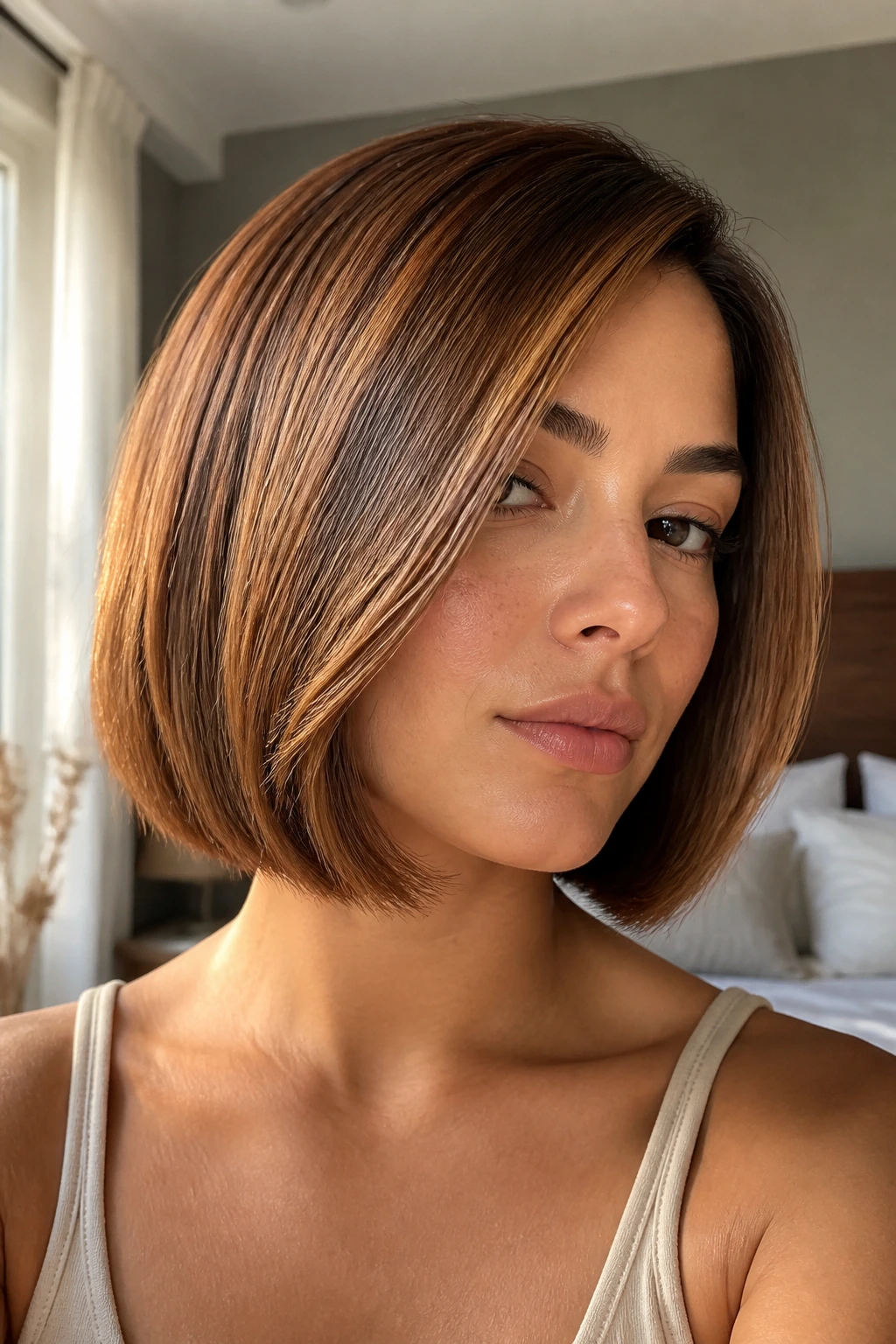
A bob needs a color with enough shape to keep it from going one-note. Toffee caramel has that density. It sits darker than honey and lighter than chocolate, which makes it a smart choice for a neat cut that depends on shine and line. On warm skin, the toffee note feels cozy without looking reddish.
The magic here is in the finish. A smooth bob with toffee caramel can look glossy even when you do almost nothing to it. Blow it out straight and the shade looks sleek. Add a wave and the lighter edges catch just enough light to keep it interesting.
If your bob is one length, this color helps the cut show up better. The tone gives the shape more visual weight, which is especially useful on fine hair.
13. Spiced Caramel Ombré
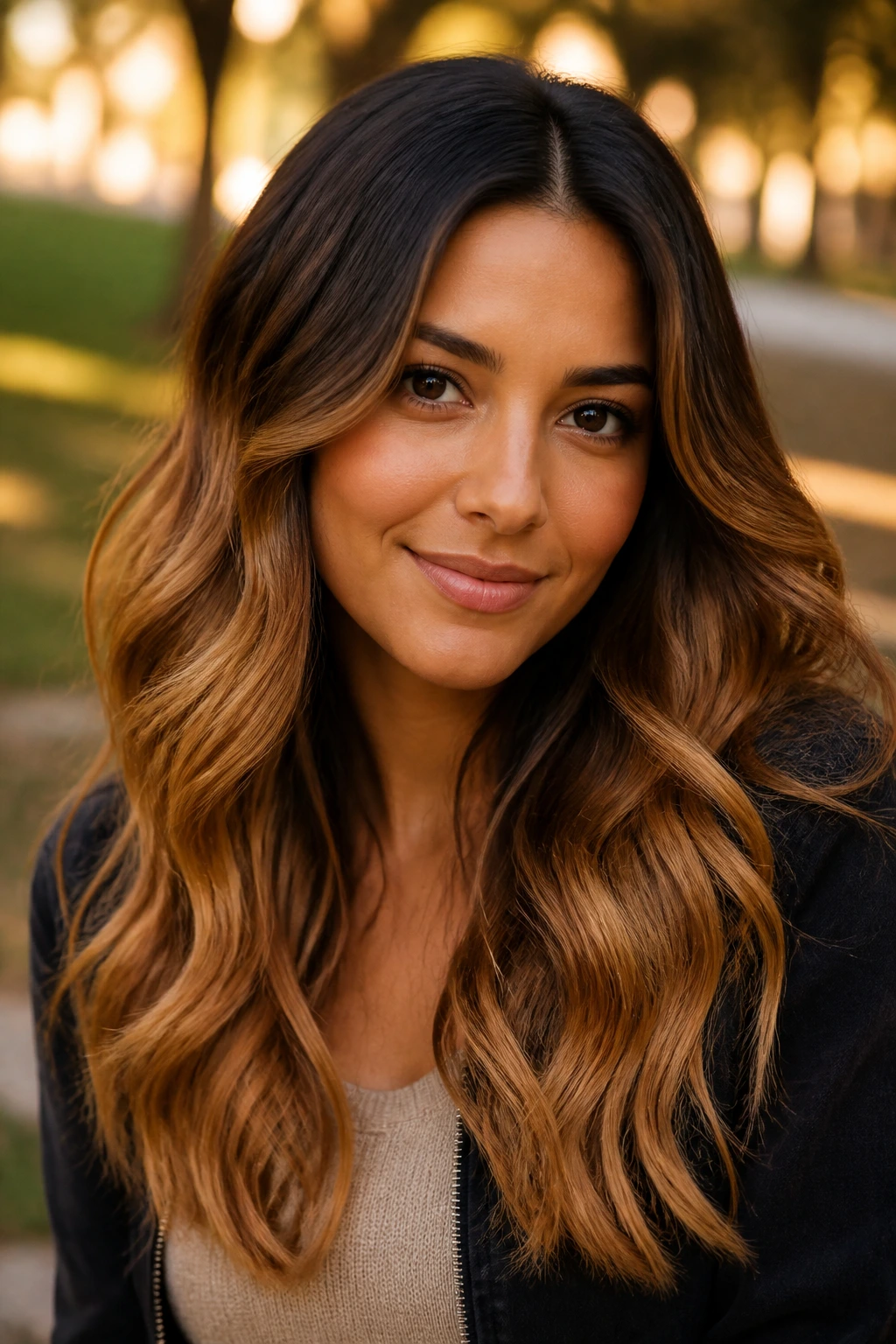
Spiced caramel ombré is for the person who wants a little drama but doesn’t want every inch of the head to be light. The color starts deeper near the roots and moves into a warmer, spicier caramel through the mids and ends. On long hair, that gradient looks deliberate and a little cinematic.
This is one of the more visible caramel ideas, so it works best if you like loose waves, curls, or layered lengths that can show off the transition. The spice note can lean cinnamon or soft copper depending on how much warmth your skin can handle. If you wear warm makeup, the whole thing comes together quickly.
Keep the transition blurred. A hard line between brown and caramel kills the effect.
14. Ginger-Root Caramel Blend
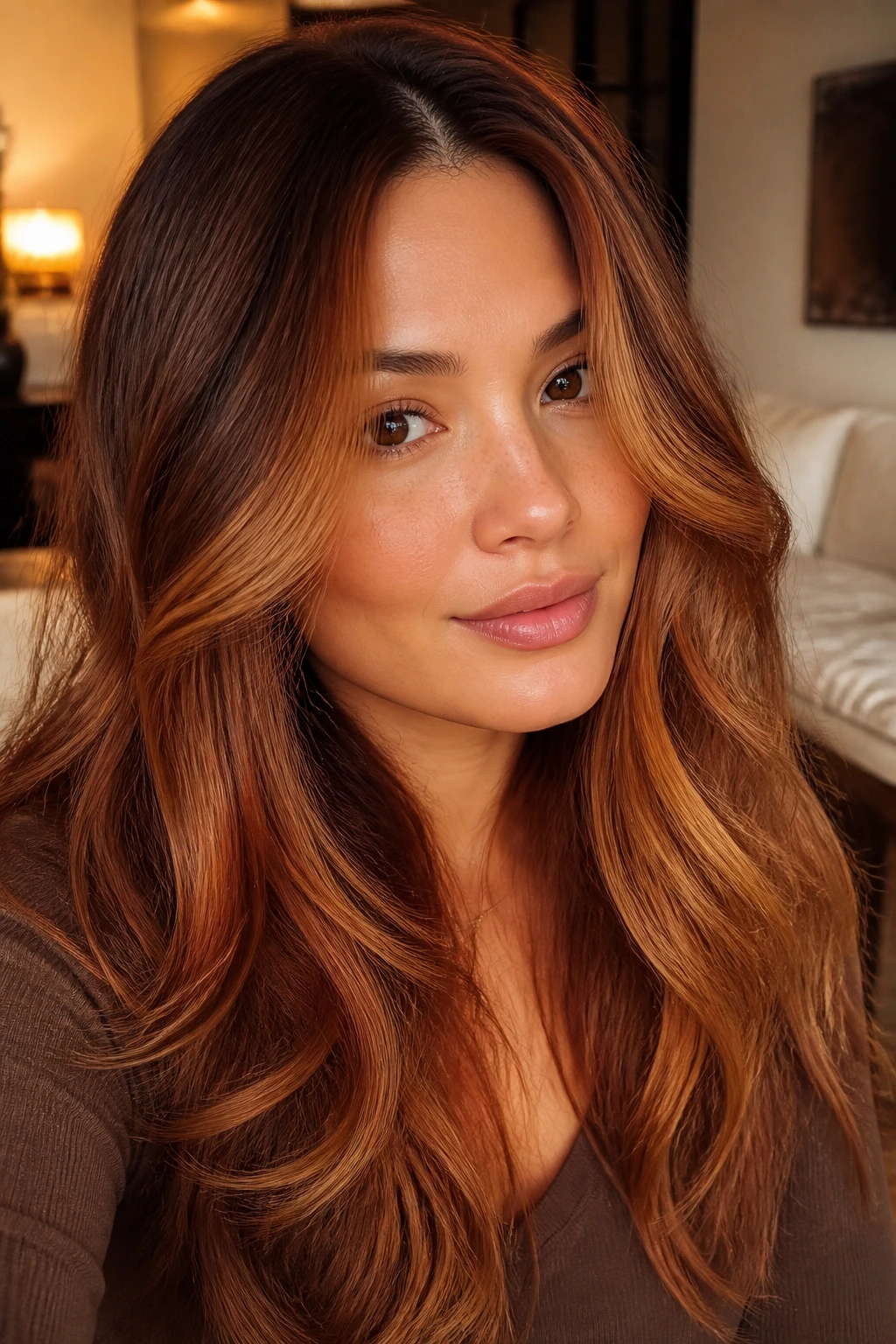
If you like warmth with more edge, this is the move. Ginger-root caramel starts with a deeper copper-brown at the root and softens into caramel through the mids, so the hair never loses its fire. On warm skin, that red-gold balance can look alive in a way plain beige caramel sometimes doesn’t.
Why it works
The ginger note adds enough contrast to matter, but it stays in the same warm family. That’s why it suits freckled skin, golden skin, and deeper warm undertones so well. It also makes brown eyes look sharper and can bring out the color in a warm lip.
- Keep the root ginger-brown, not bright orange.
- Fade into caramel through the mids.
- Finish with a warm gloss so the red and gold stay smooth.
This is not the quietest shade here. It’s one of the most expressive.
15. Latte Caramel with Soft Layers
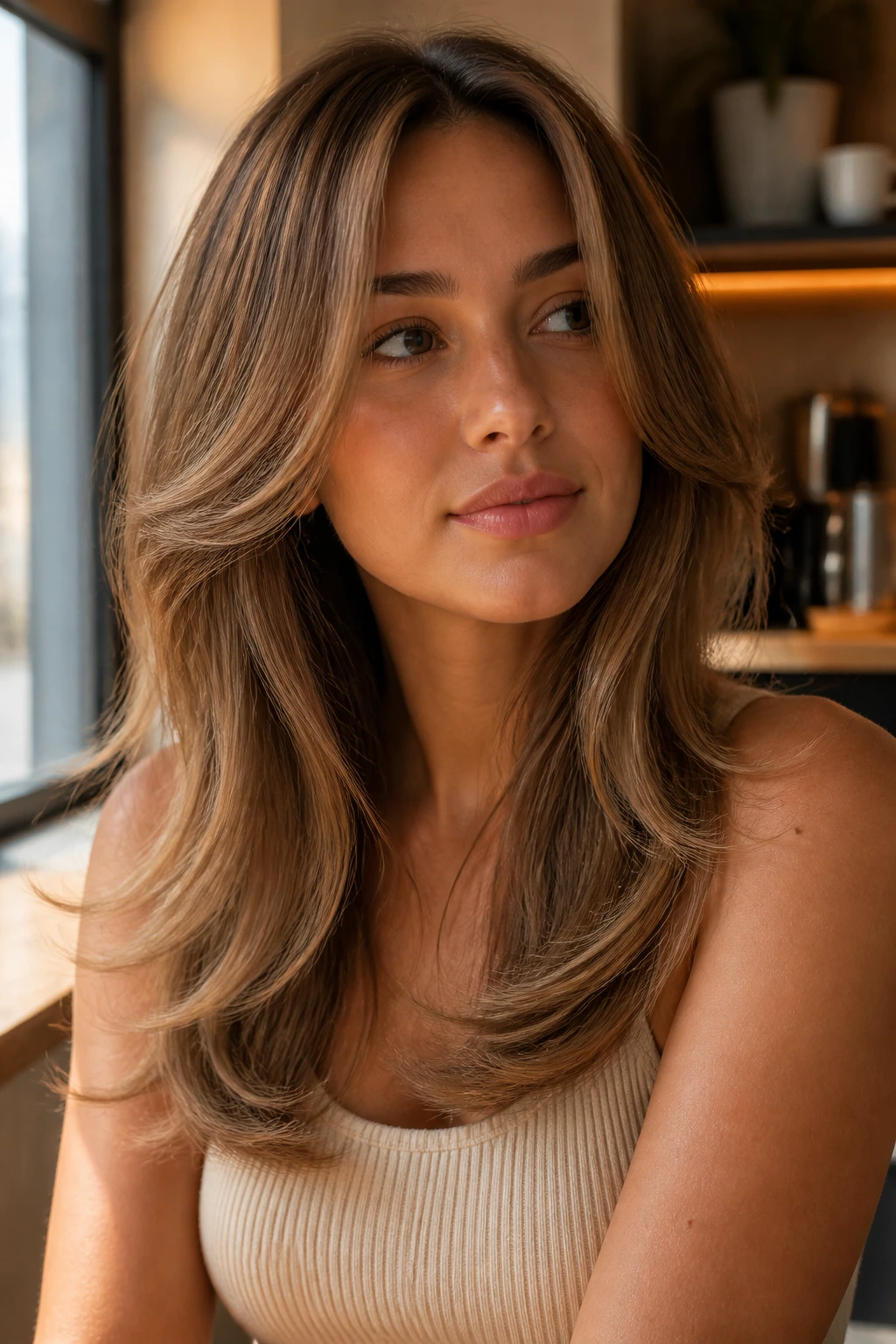
Latte caramel sits between beige and brown, which makes it useful if you want warmth without a strong copper cast. Soft layers help the shade move, and that movement keeps the whole look from turning heavy. On warm skin, the creamy undertone tends to be flattering because it brightens without fighting the face.
What I like about latte caramel is how easy it is to wear with everyday styling. You don’t need a big curl pattern or a dramatic wave to make it work. A bend at the ends, a smooth blowout, even air-dried texture can show the color nicely if the layering is right.
If your hair is medium brown and you want something refined rather than flashy, this is one of the safer choices. It reads soft, not dull.
16. Cinnamon Sugar Caramel Pixie
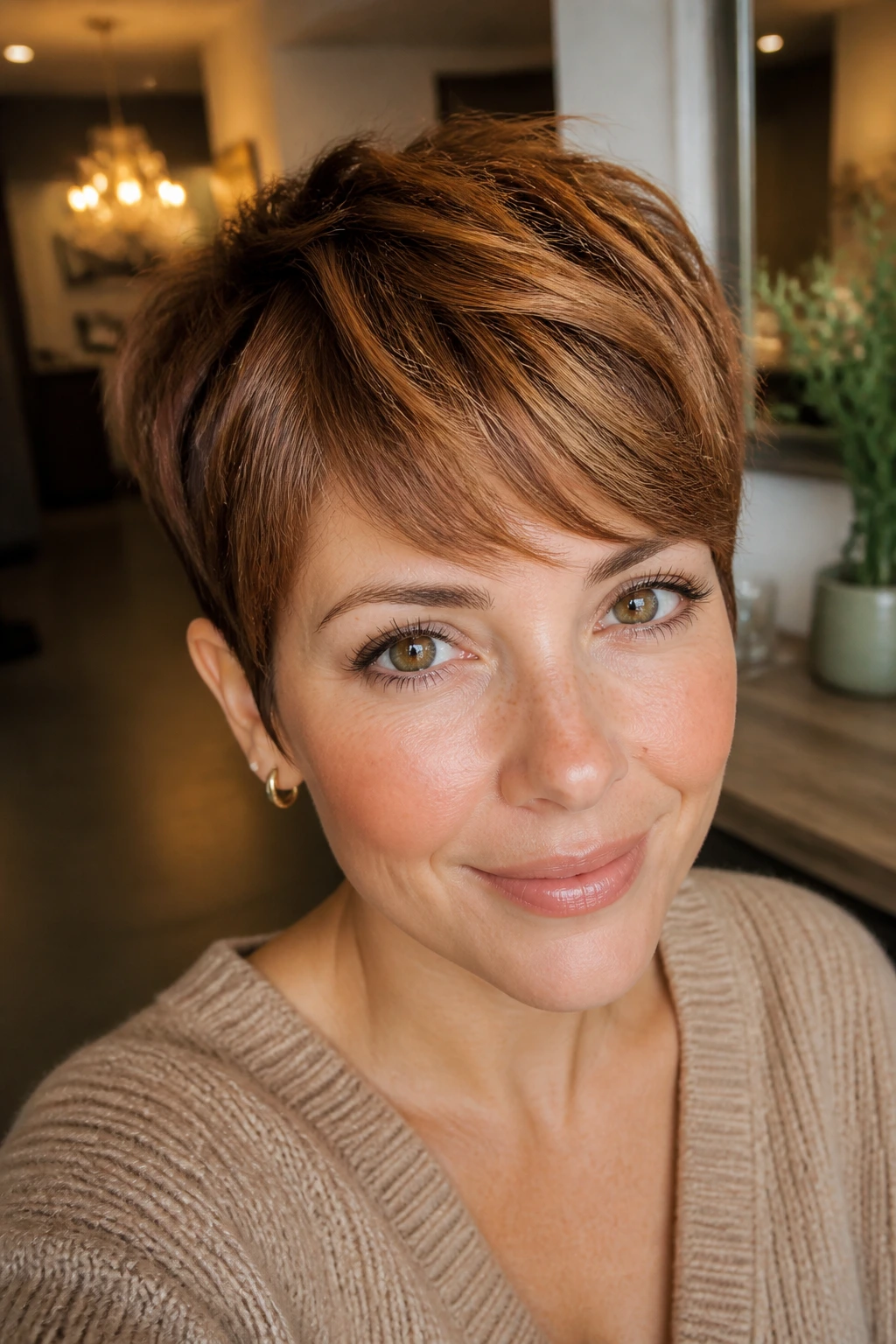
Short hair can carry a lot more color than people think. A cinnamon sugar caramel pixie uses tiny shifts in tone to make the cut look textured and alive. The cinnamon note adds warmth, while the caramel keeps the color wearable on warm skin. With a pixie, that small amount of contrast matters.
The trick is not to overdo the brightness. Too much lightness on a short cut can make the shape look choppy in the wrong way. A few micro-highlights through the crown, a softer glaze around the front, and a deeper root are usually enough. The result is neat, sharp, and a little playful.
This is a good option if you want your hair color to show up fast without living in the salon chair. Short cuts grow out quickly, so a low-commitment warm glaze can be enough.
17. Honeyed Caramel Shag
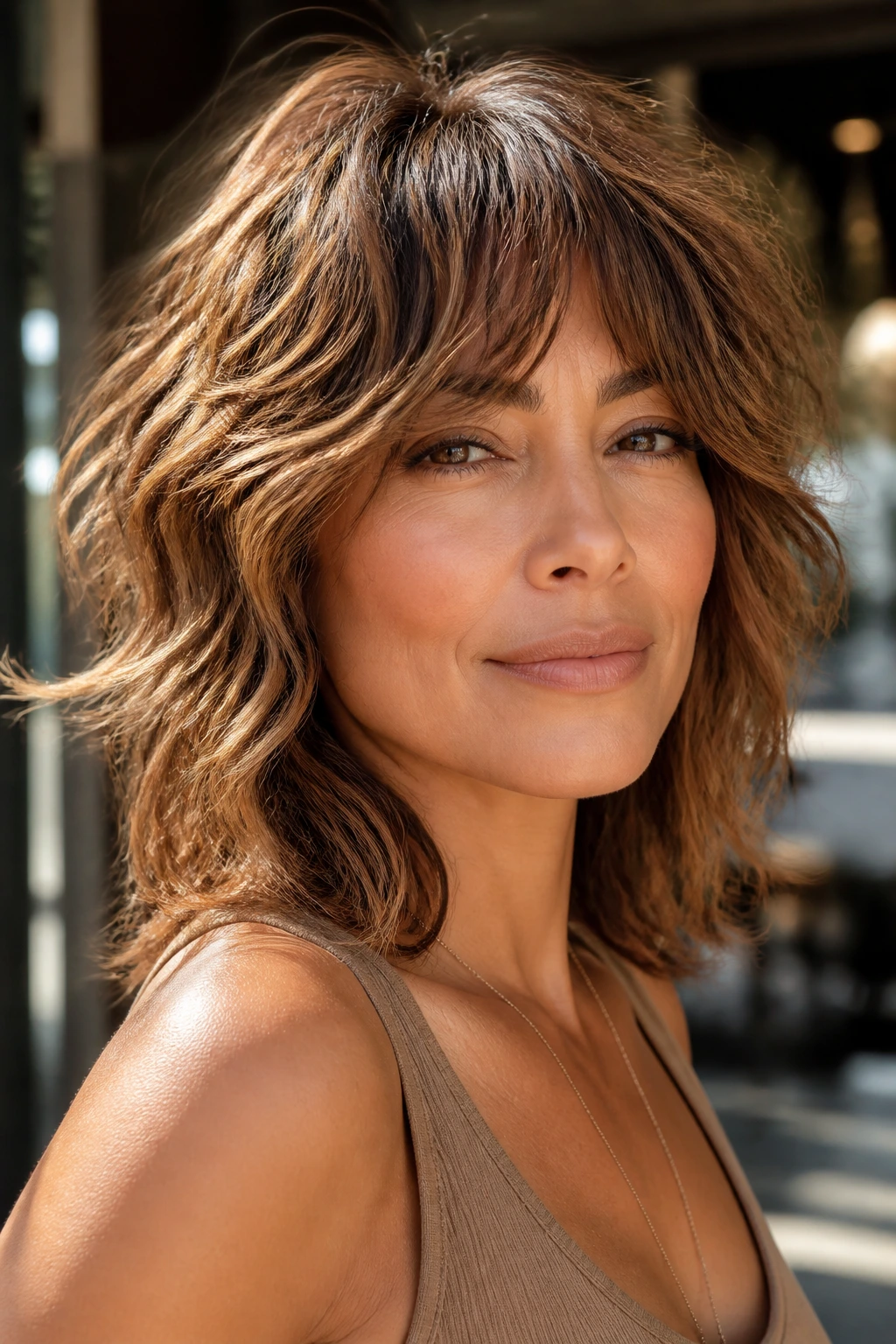
A shag loves dimension. It almost demands it. Honeyed caramel fits because the layers already break up the hair into pieces, and the highlights can sit where the texture moves most. On warm skin, the honey note gives a healthy glow that keeps the cut from looking too dark or too flat.
Why the texture matters
The shag does half the styling work for you. When the pieces are tousled, the caramel highlights separate just enough to show the shape of the cut. That means you don’t need a huge color change to get a visible result.
- Place brightness around the crown and cheekbones.
- Keep a slightly deeper root so the layers don’t blur.
- Use a light styling cream, not a heavy oil, or the texture collapses.
If your hair has some natural wave, this shade is a very easy win.
18. Caramel Foilayage on Deep Brunette
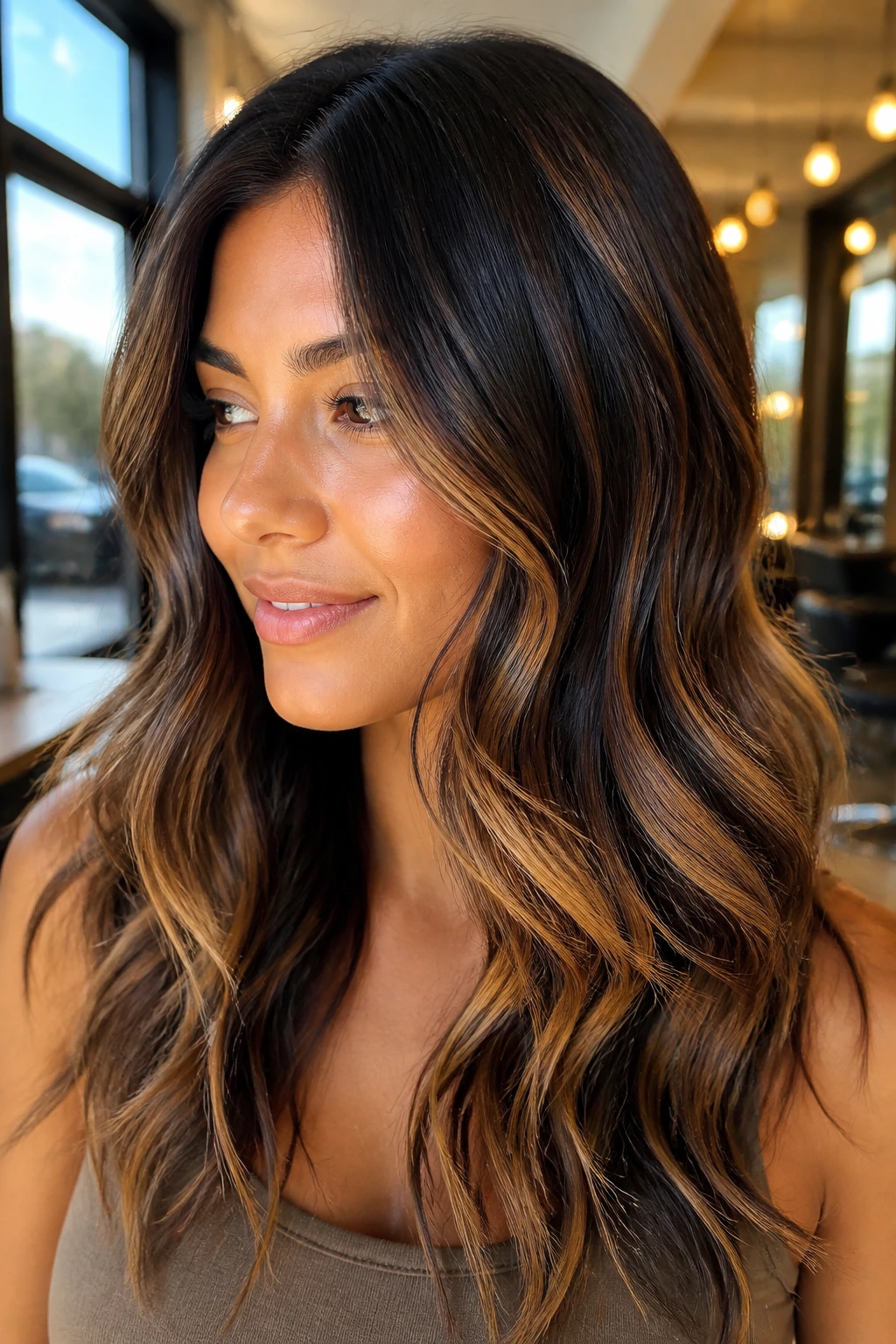
Foilayage is a good middle ground if you want lift and blend in the same appointment. On deep brunettes, caramel foilayage gives the hair enough brightness to show up on warm skin without making the base disappear. The foils help the pieces lift a little more cleanly, while the hand-painted edges keep the result soft.
This is the shade for someone who wants a visible change. Not a whisper. A change. The base stays dark, the caramel appears in strategic ribbons, and the overall effect looks thicker because the contrast is more deliberate.
What makes it different
- More lift than open-air balayage
- Softer edges than classic highlights
- Better brightness on deep brown bases
If you’ve tried balayage before and wanted a little more pop, this is the next step.
19. Burnt Sugar Caramel Streaks
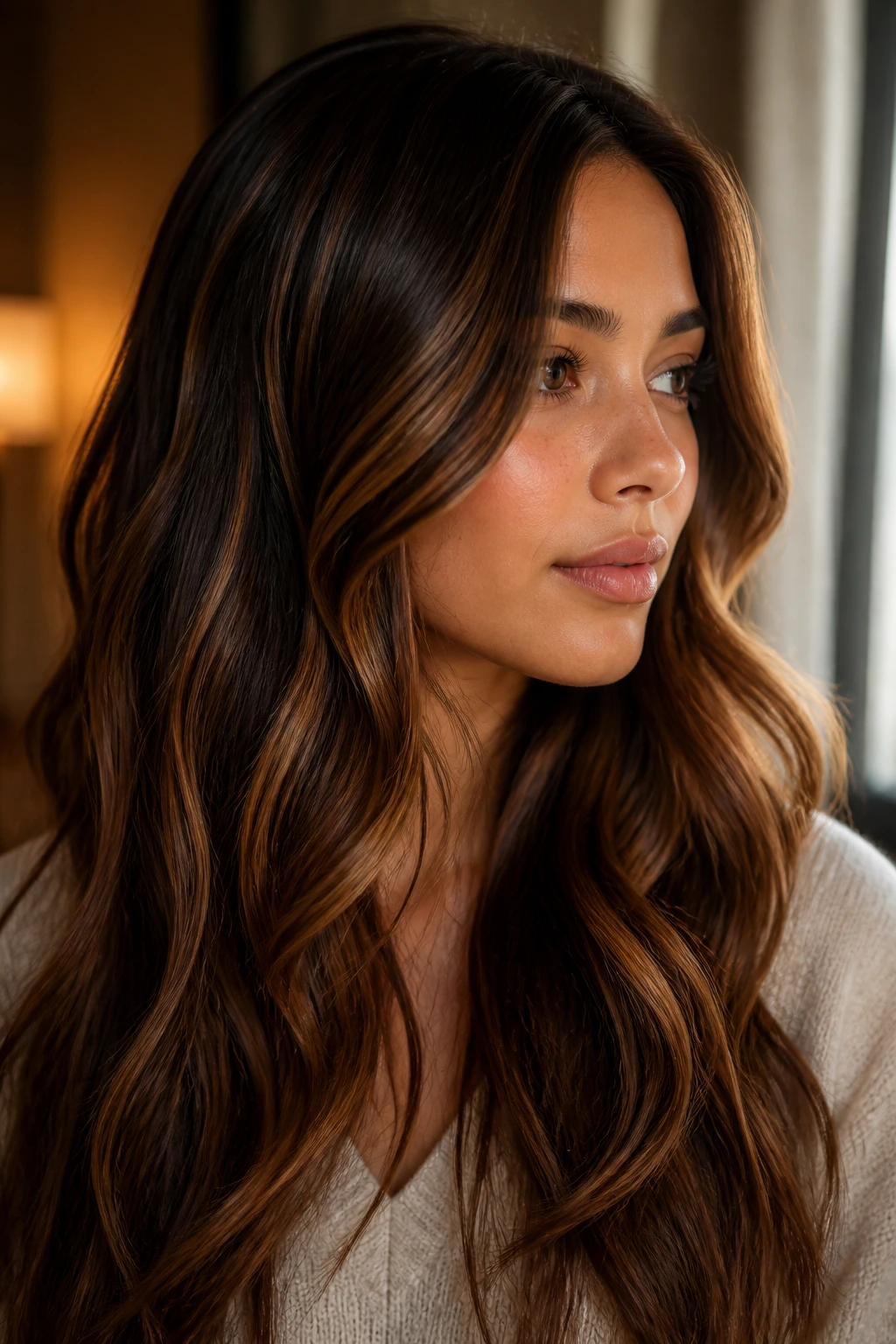
Burnt sugar caramel is darker, moodier, and less sweet than honey caramel. It has the feel of caramel that has just crossed into toastiness, which makes it useful for warm skin that likes depth more than brightness. The color gives you warmth, but it doesn’t flatten the base or pull the hair too golden.
I like this on long hair, blunt cuts, and anyone who likes a darker wardrobe palette. The streaks should be visible enough to matter, but not so bright that they fight the rest of the hair. Think brown sugar, not buttercream. That distinction changes everything.
If you want caramel but refuse to go light, this is the version to bookmark.
20. Warm Beige Caramel Melt
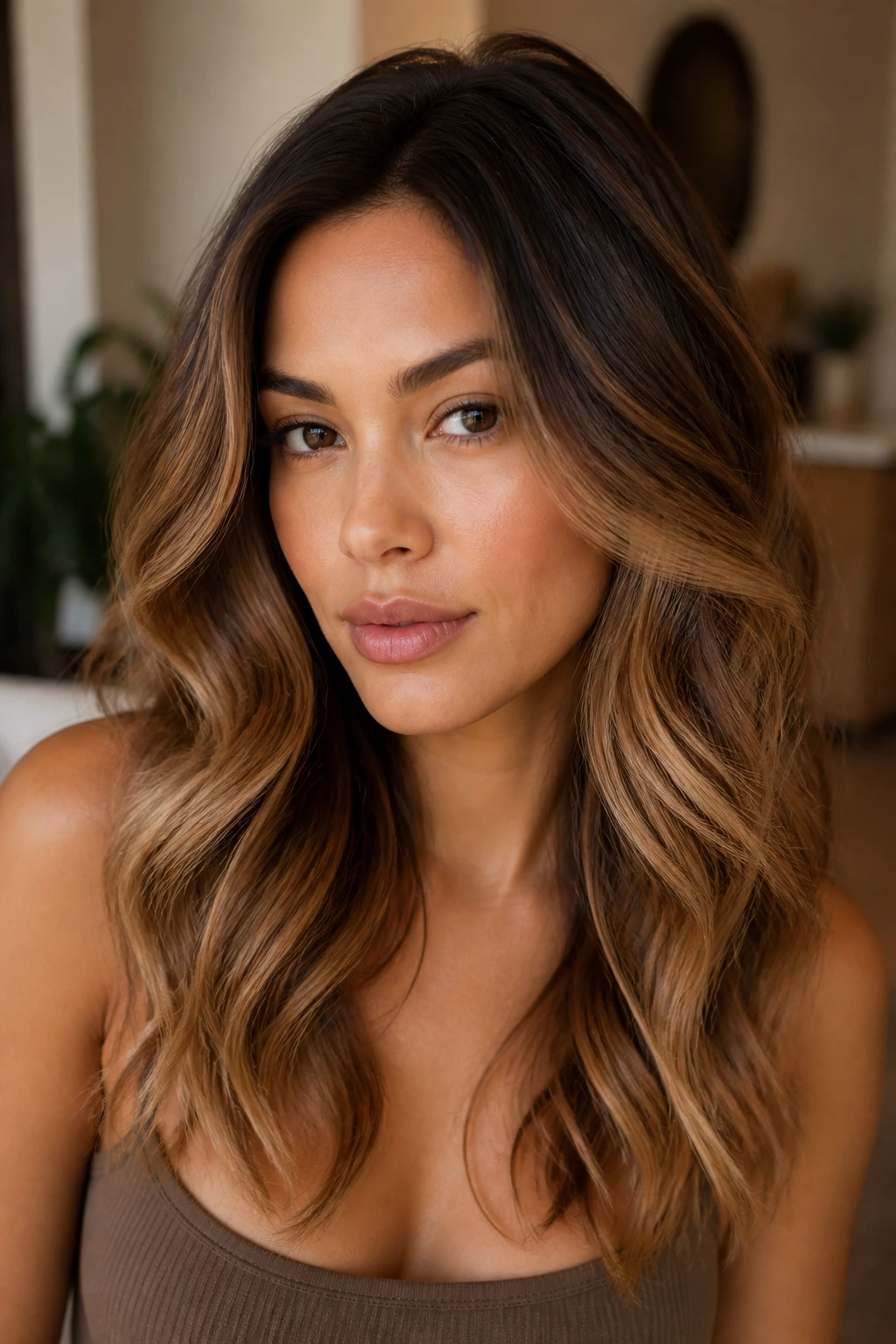
Warm beige caramel is the quiet luxury version of caramel hair. It doesn’t scream gold, and it doesn’t wander into ash. It sits in the middle, which is exactly why it works so well on warm skin tones that want softness rather than a strong blonde effect.
The melt matters here. A smooth fade from a deeper brown root into warm beige-caramel mids creates a clean line of color that looks good in both natural light and indoor light. This is a strong choice if you like minimal makeup or neutral clothes, because the hair adds enough warmth on its own.
It’s one of those shades that can look understated in a mirror and expensive from across the room. Quiet, but not boring. Those are different things.
21. Copper-Caramel Ribbon Highlights
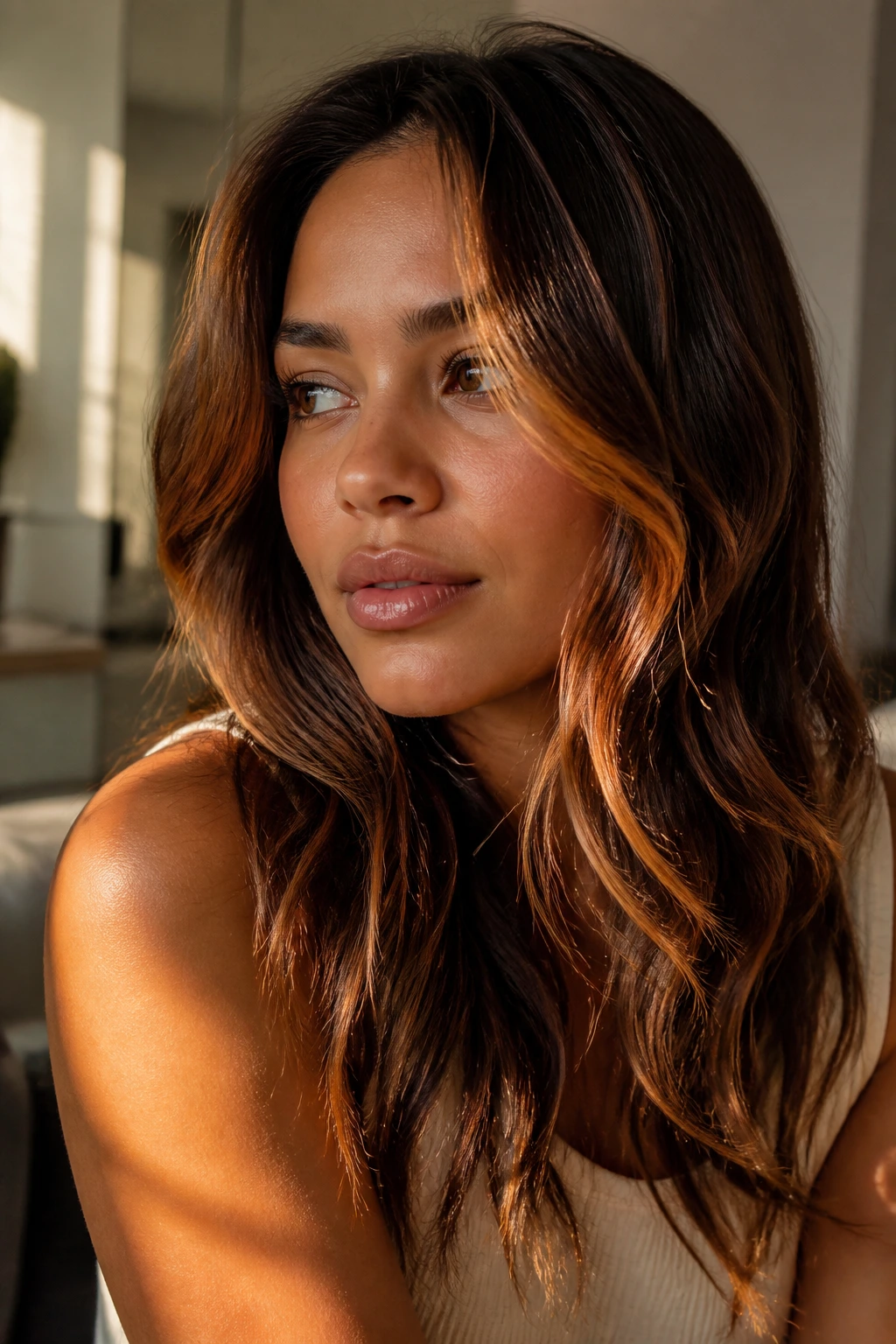
How much copper is too much? Usually, less than people think. Copper-caramel ribbon highlights give you a warmer, more energetic version of caramel without pushing all the way into red. On warm skin, that can be a very flattering line to walk if you already wear gold tones, rust, olive, or terracotta.
Where this shade works best
- Around the front pieces if you want the face to glow.
- Through the mids if you want movement without a strong root line.
- In thicker ribbons if your hair is dense and needs contrast.
If you’re nervous about copper, ask for it to live only in selected pieces, not the whole head. That keeps the look caramel first and copper second.
22. Caramel Curly Cut with Bright Ends
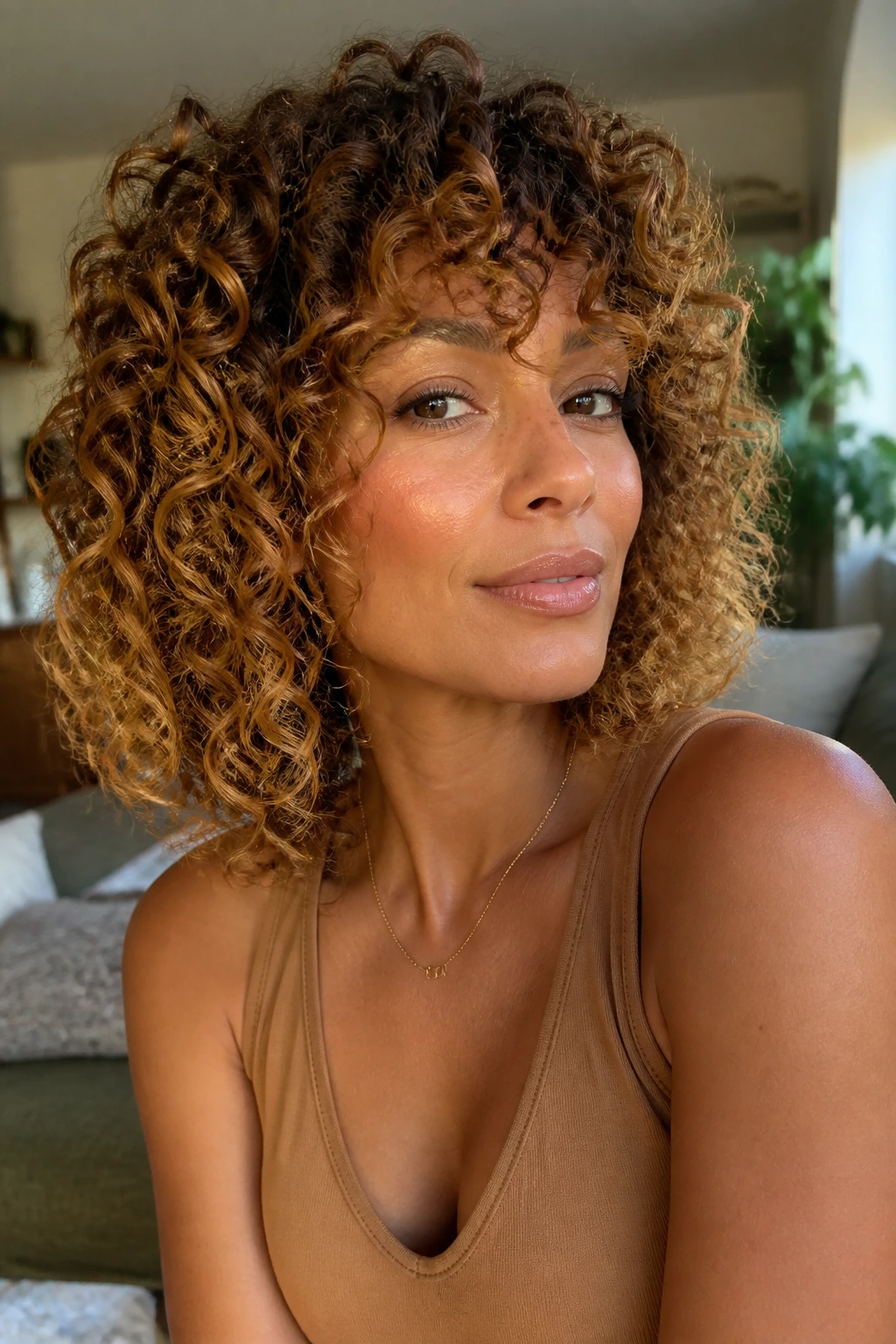
This one is different from bronze curls because the brightness lives lower, closer to the ends. On a curly cut, that creates a springy, lighter finish that keeps the shape from feeling heavy. Warm skin tones tend to like the result because the ends pick up light while the root stays rich and grounded.
The haircut matters here. A curly cut with shaped layers gives the color movement to sit in. If the cut is too blunt, the bright ends can look abrupt. If the curl pattern is well-shaped, the caramel pieces look woven through the hair and the ends look lively instead of dry.
This is a good look if your curls need definition but you don’t want a huge contrast at the scalp.
23. Walnut and Caramel Dimension
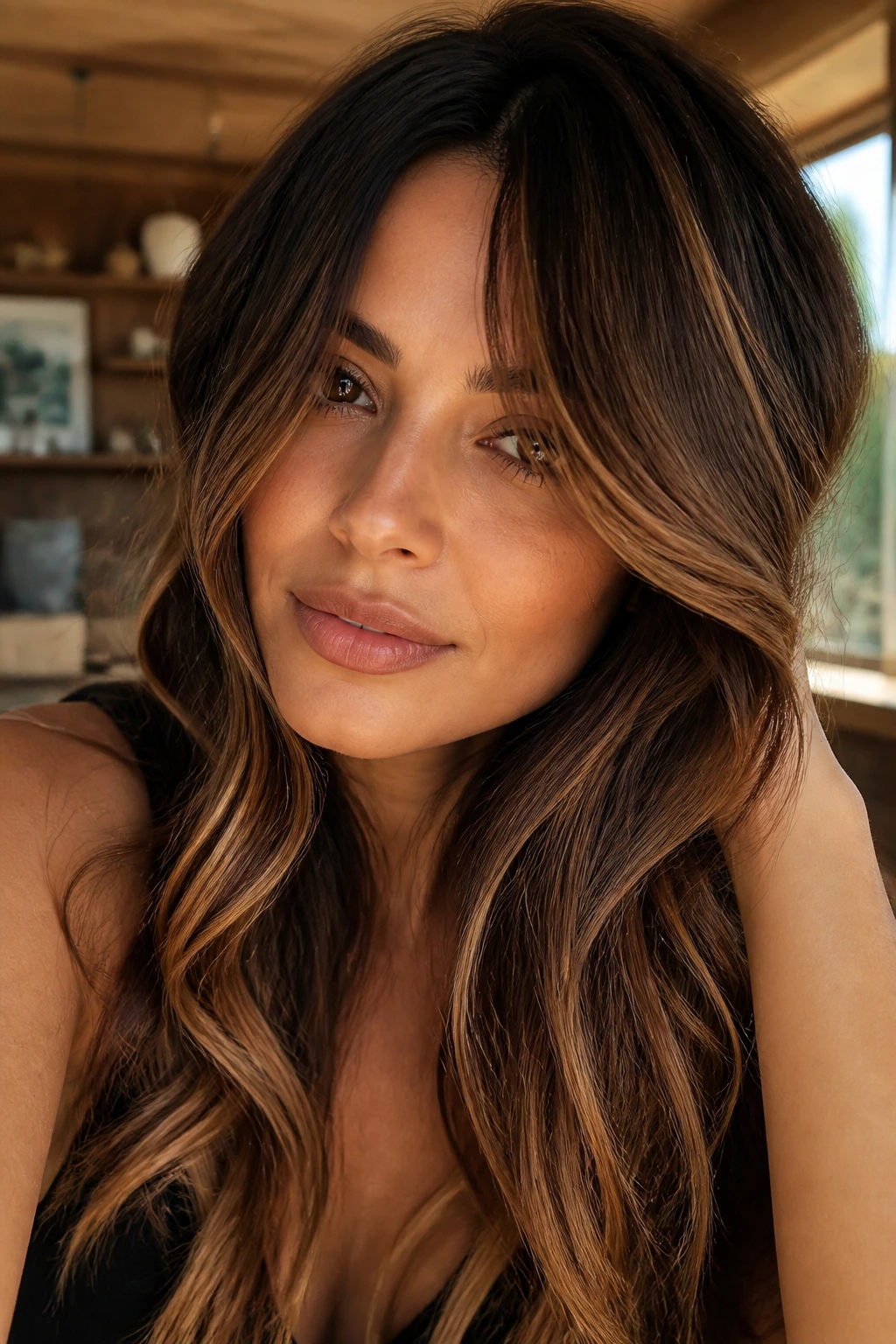
Walnut and caramel is the earthy one on the list. The walnut base keeps the overall effect deep and grounded, while caramel threads through just enough to catch the light. On olive or golden skin, this combination can look especially good because it avoids the washed-out effect that sometimes happens when the hair gets too pale.
What I like here is the restraint. It doesn’t try to be blonde. It doesn’t chase red. It just gives brown hair more shape. That makes it a strong choice for people who wear understated makeup or want color that still feels natural in a close-up photo.
If you’re unsure whether warm caramel is too light for you, this is a very safe place to start.
24. Soft Sunkissed Caramel Waves
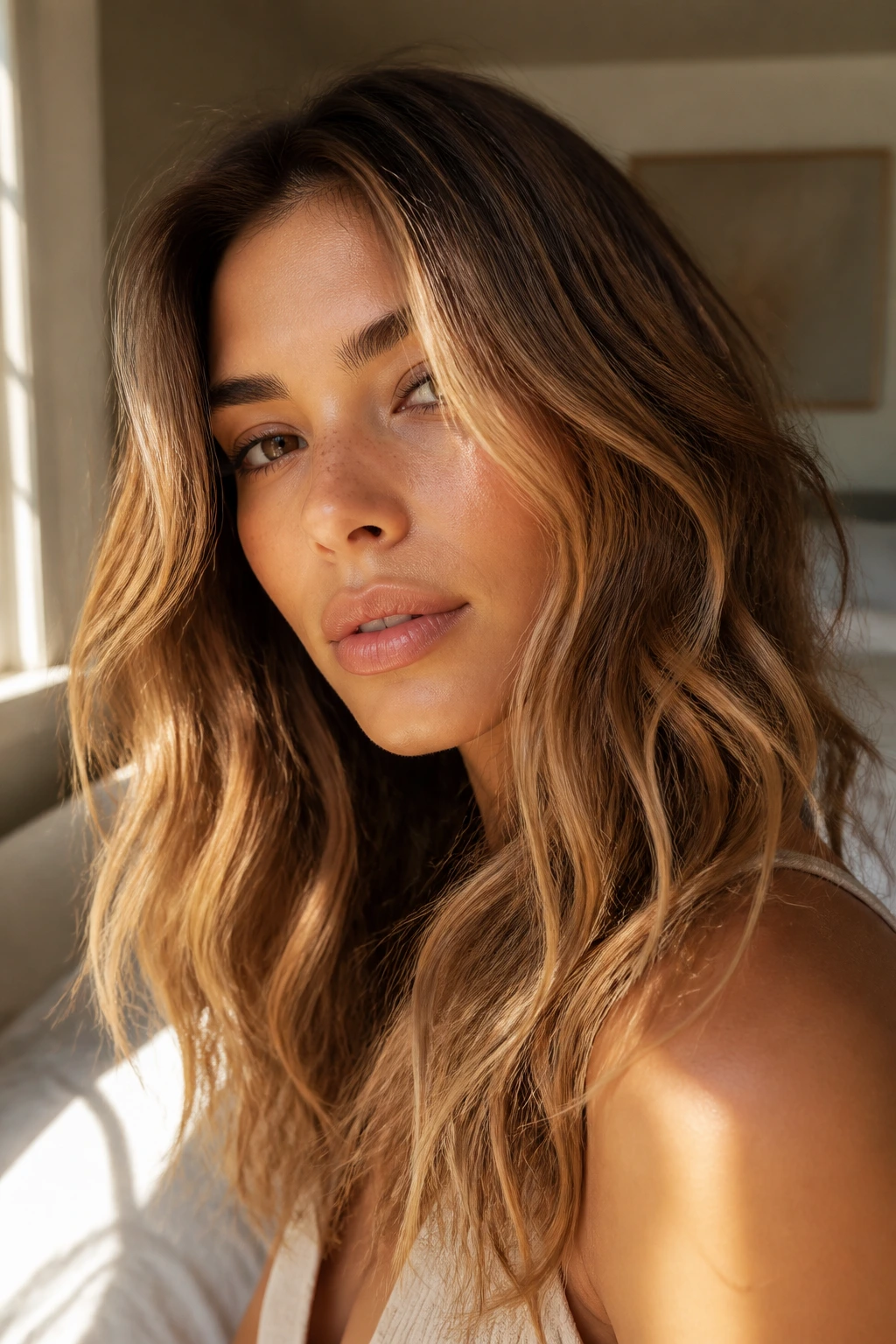
Soft sunkissed caramel waves are the look most people picture when they say they want warm, dimensional hair. The difference is in the placement. Good sunkissed color isn’t random. It sits around the face, through the top layers, and at the wave bends where the light hits first.
How to style it
Loose waves show the color best because the ribbons separate just enough to be seen. A barrel iron, a round brush, or even a braided overnight bend can work if the finish stays soft. Keep the root slightly deeper and the ends a little brighter.
This is one of the easiest caramel ideas to live with because it doesn’t need to look perfect. In fact, it looks better when the waves are a little undone.
25. Glossy Caramel Buttercream Blonde
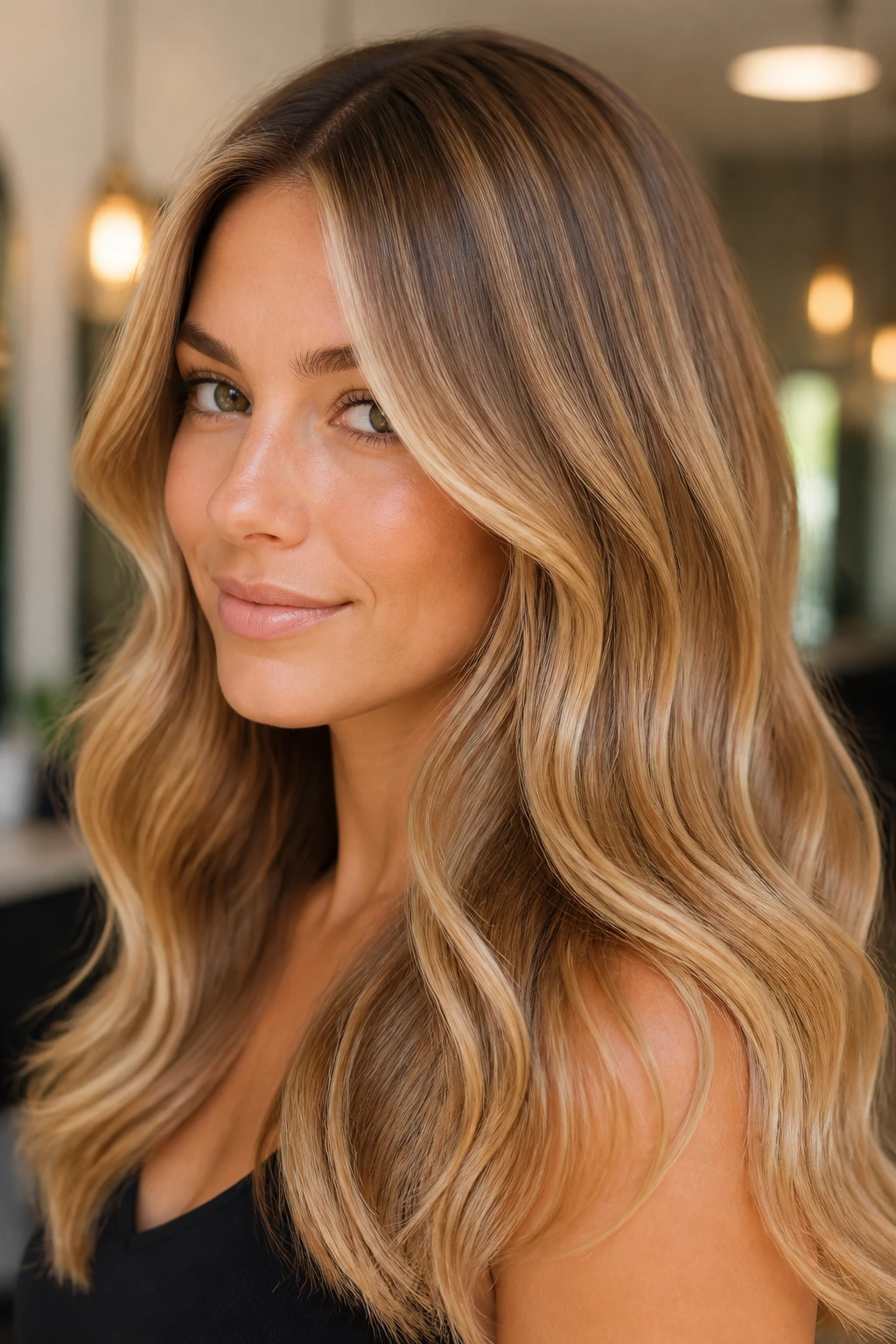
This is the lightest caramel idea here, and it only works if you keep the warmth intact. Glossy caramel buttercream blonde lives at the border between caramel and blonde, but it stays soft by holding on to gold and cream rather than icy beige. On warm skin, that warmth can look gorgeous if the base isn’t lifted too far.
The part that matters most
Do not let the shade drift pale and chalky. That’s where it stops flattering warm undertones. Ask for a buttercream gloss over a warm blonde base, and keep a little depth near the root so the color still has shape.
- Best with a soft root shadow
- Needs a warm gloss refresh every 4 to 6 weeks
- Looks strongest with glossy waves or a blowout
If you want bright but still warm, this is the one to bring to the salon.
How Caramel Hair Color Flatters Warm Skin Tones
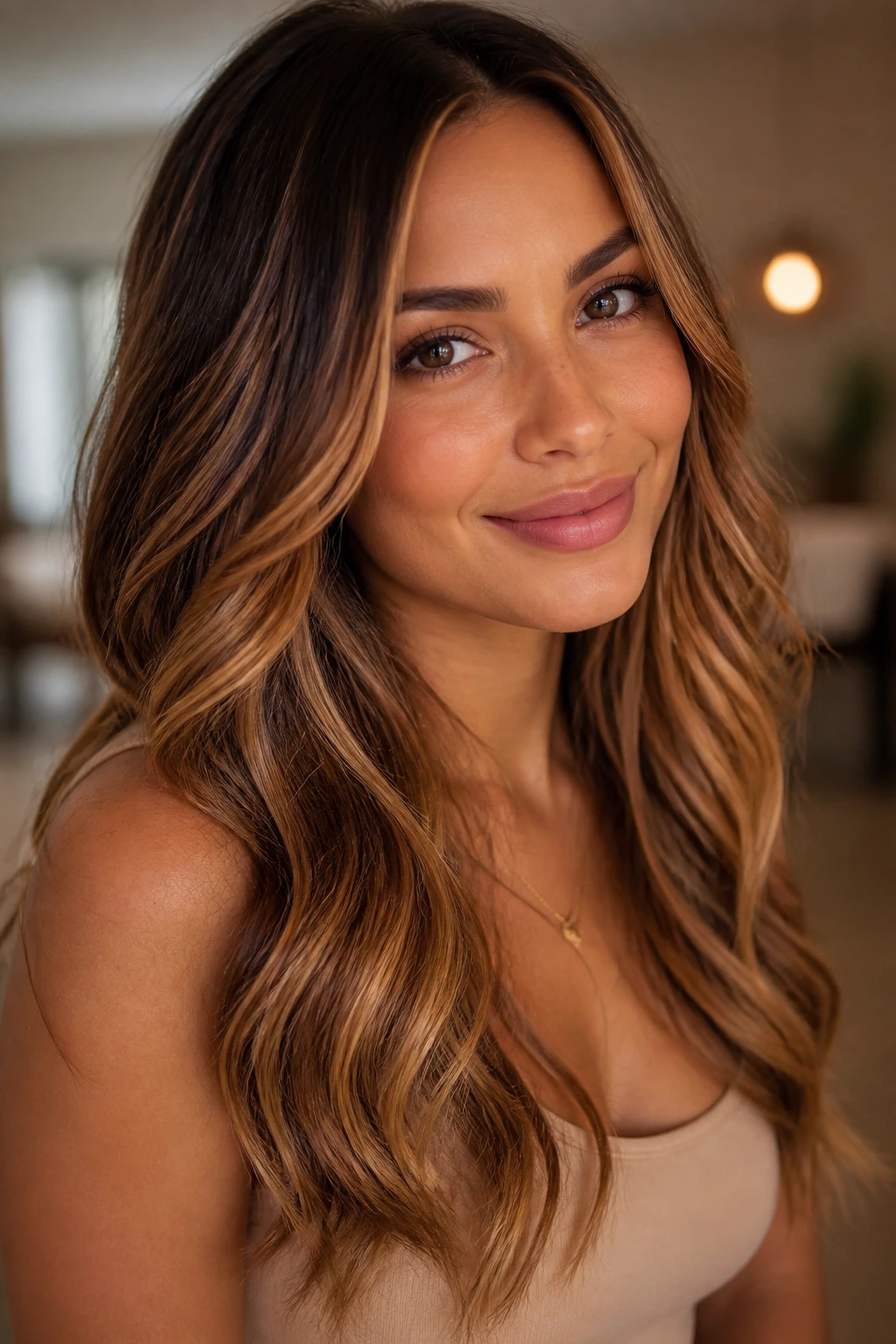
Warm skin tones tend to have gold, peach, bronze, or olive undertones, and caramel works because it lives in the same temperature range. That sounds simple, but it’s the whole point. When your hair color and skin undertone share warmth, the face reads smoother. Cheeks look less flat. Eyes look a little brighter. The whole thing feels connected.
The shades that work best usually have some combination of honey, toffee, amber, or bronze. Those tones echo the warmth already in the skin instead of fighting it. A caramel that is too ashy can look gray against warm undertones. A caramel that is too light without enough depth can make the skin look sallow or overexposed. The sweet spot sits somewhere in the middle, where the hair still has brown underneath and the lighter pieces only take over in strategic spots.
Placement matters just as much as tone. Face-framing brightness can wake up the complexion. A soft root shadow can keep the color from looking loud. On curls and waves, warm highlights move with the texture, which makes the shade feel richer. Straight hair can wear the same tones, but the paneling has to be cleaner or the color can blur into one flat band. Small details. Big payoff.
What to Bring to a Color Consultation
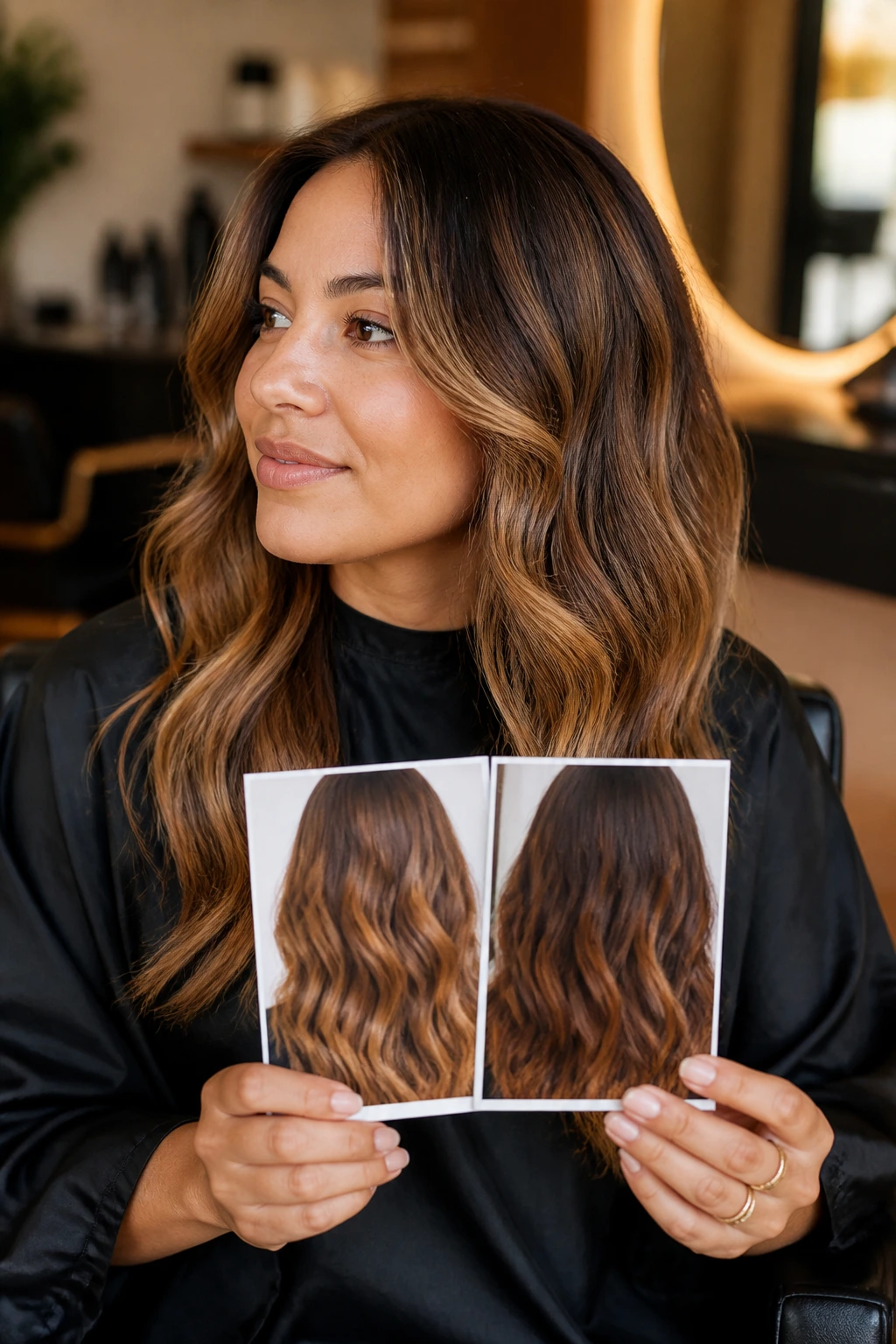
Do not walk in and say “caramel” by itself. That word covers a huge range, from beige honey to copper-brown to buttery blonde. Bring two or three photos with the kind of warmth you want, and make sure at least one photo shows the color in daylight. Salon lighting can make almost anything look prettier than it is.
Say what your base is doing now, too. If your hair is already dark brown, the colorist needs to know whether it has old highlights, box dye, henna, or brass left in it. Those things change how caramel lifts and how it tones. If you want low maintenance, say that out loud. If you want the front pieces brighter and the back softer, say that too. Hair color gets better when the goal is specific.
A useful phrase: “I want warm caramel, not ash, and I want to keep some depth near the root.” That single line does a lot of work. If you want more red, say amber or cinnamon. If you want quieter warmth, say beige-gold or toasted almond. The names matter less than the direction.
The Tools and Products Worth Having on Hand
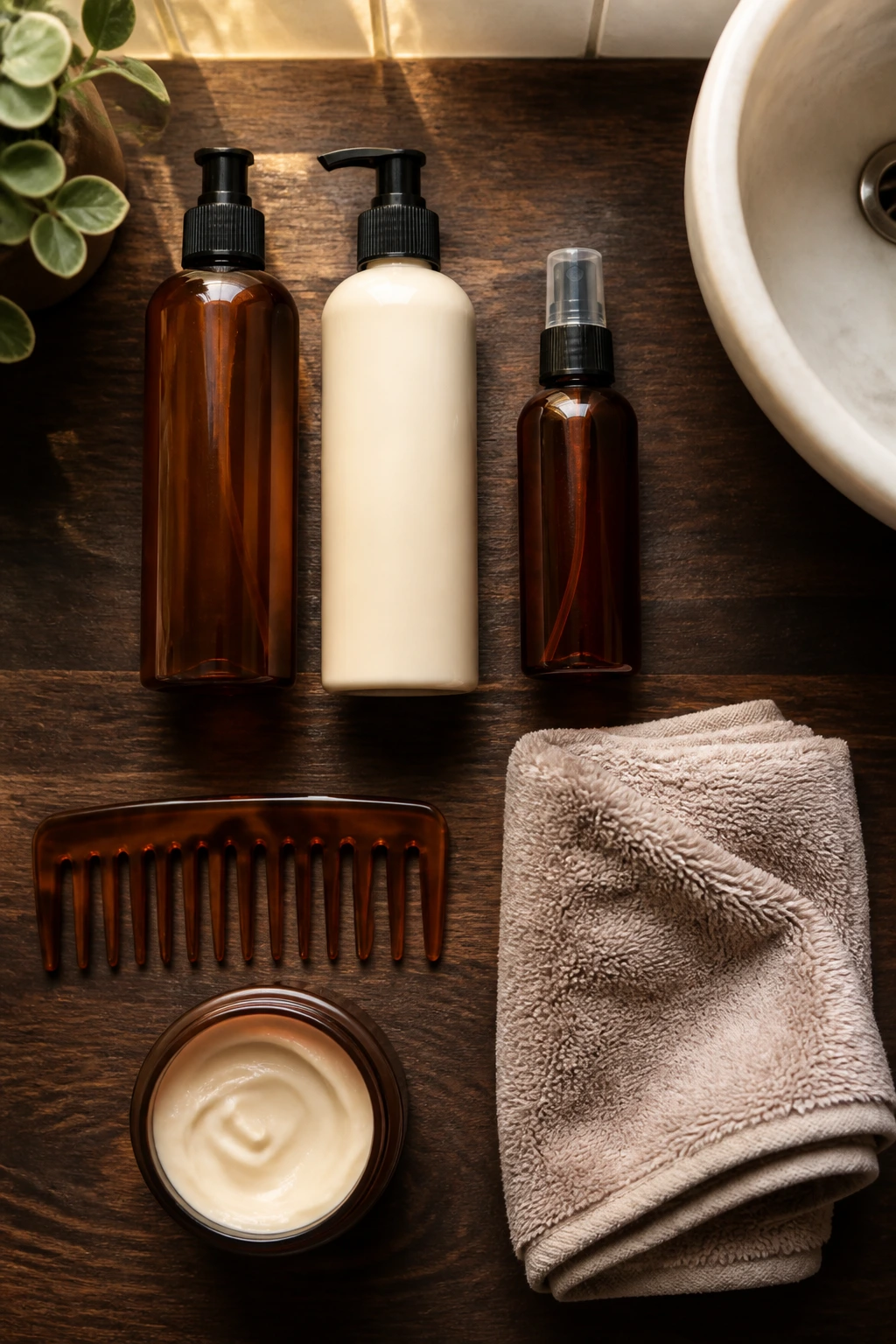
- Color-safe shampoo: Helps keep caramel from fading into dull brown or turning brassy too fast.
- Moisturizing conditioner: Warm blondes and lightened brunettes dry out quickly, and this keeps the ends smoother.
- Heat protectant spray: Caramel loses shine fast under hot tools, especially on highlighted mids and ends.
- Wide-tooth comb: Easier on curled or color-treated hair than a fine brush right after washing.
- Microfiber towel: Cuts down on friction, which matters more than people think when hair is lightened.
- Gloss or color-depositing mask: Useful between appointments if the shade starts looking flat.
- Salon cape or old dark towel: Keeps toner and glaze from staining clothes at home.
- Sectioning clips: Helpful if you’re doing a gloss, styling in sections, or just trying to see where the color actually sits.
If you’re shopping for at-home products, look for words like warm beige, golden brown, honey caramel, or toffee gloss. Skip anything that leans icy unless you’re trying to mute brass on purpose.
How to Style Caramel Hair So the Dimension Shows
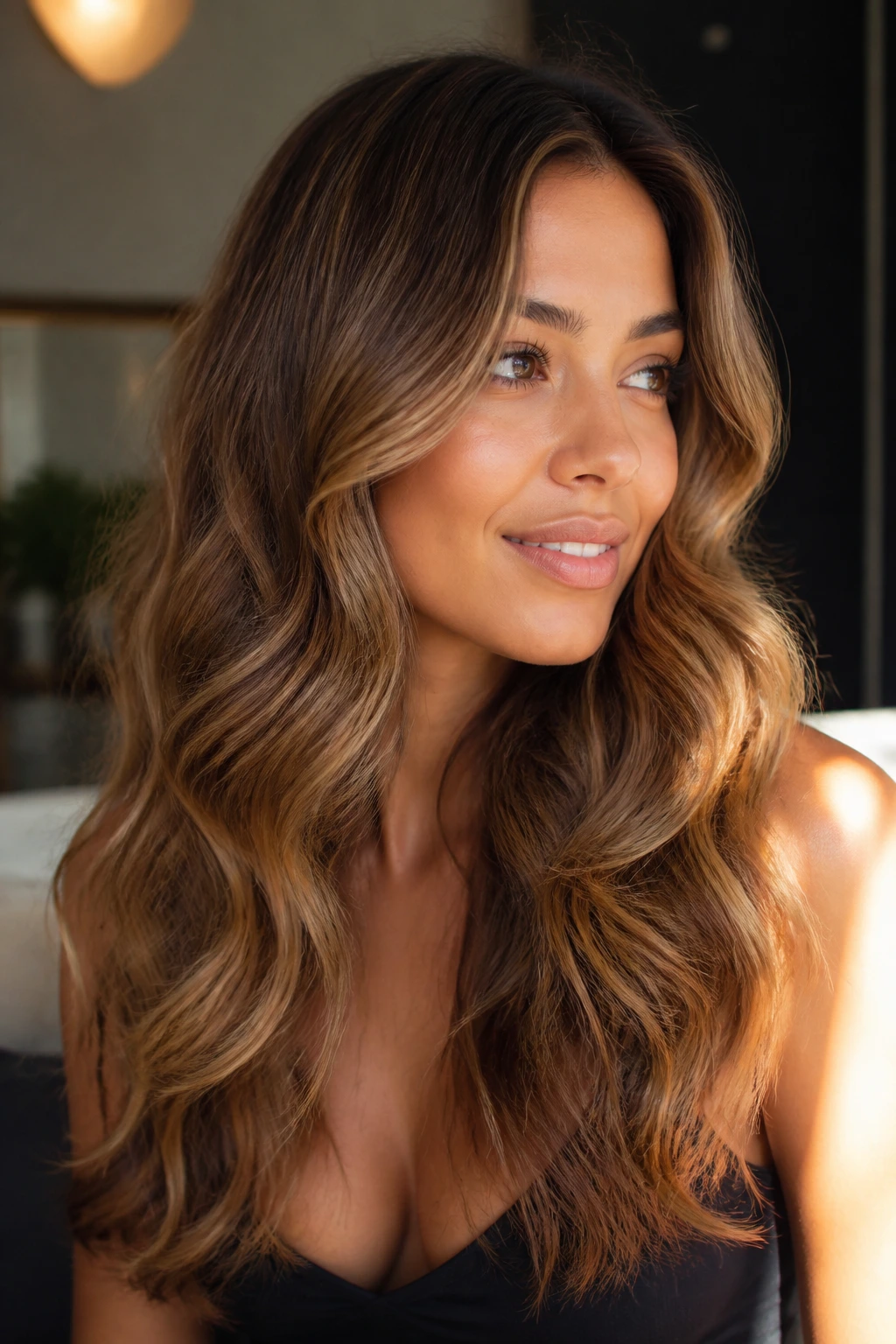
Presentation: Soft waves, a round-brush blowout, or a loose tuck behind one ear shows the lighter pieces better than pin-straight hair. Caramel needs a little movement to show its layers.
Accompaniments: Curtain bangs, soft layers, gold hoops, and warm makeup all help the shade read intentional. A peach blush or bronze liner can make the whole look feel tied together.
Portions: If you want a subtle result, keep the brightest pieces around the face and through the mids. If you want more drama, push the caramel lower and let the ends carry the light.
Finish: A pea-sized amount of shine cream on the ends is enough. Too much oil turns caramel flat and dark, which is a shame after all that color work.
The best styling trick is a simple one. Bend the mid-lengths, leave the ends soft, and don’t crush the hair with heavy products. Caramel needs air.
Extra Shine and Tone Boosters
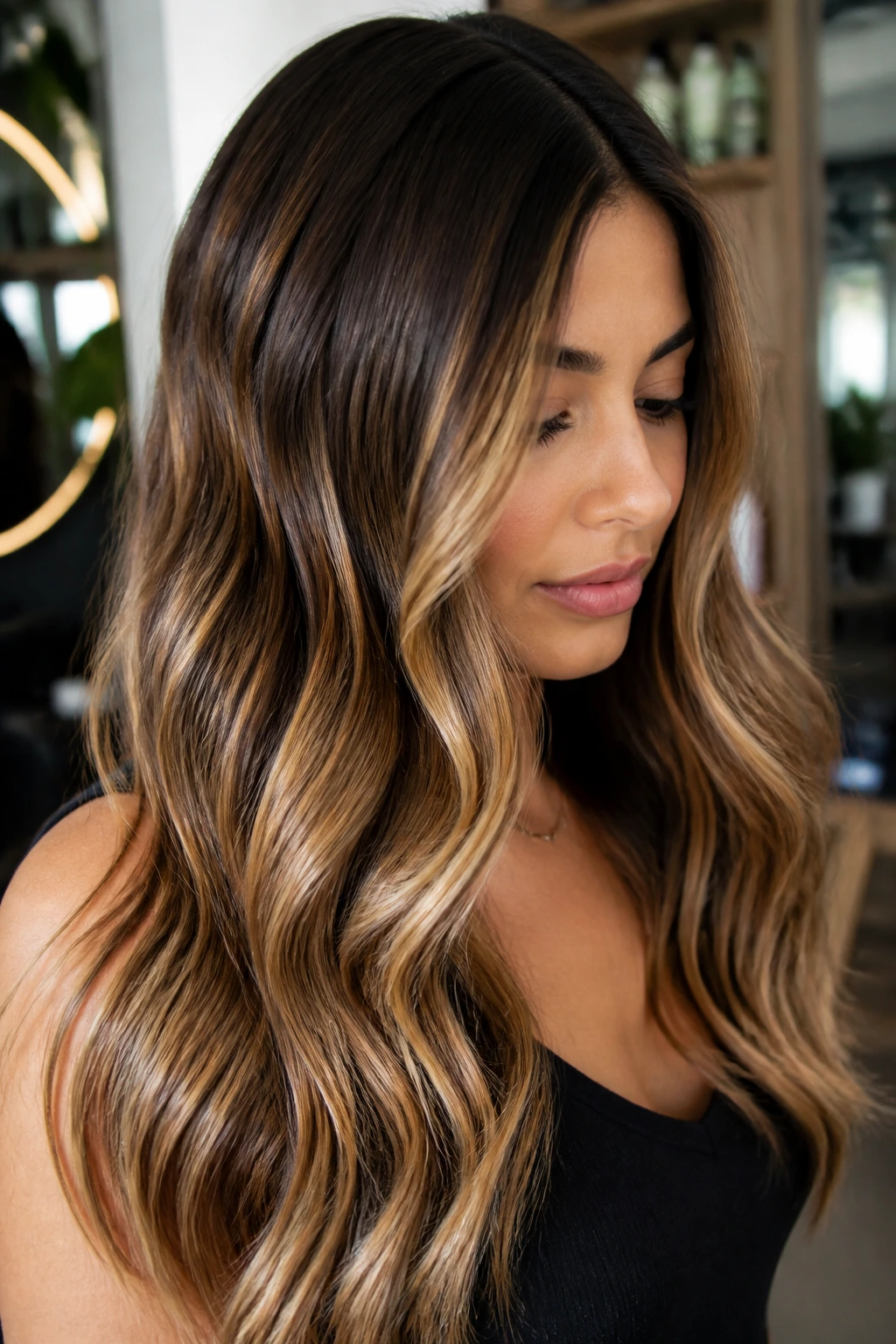
Tone Enhancement: A clear or warm beige gloss every 4 to 8 weeks can keep the caramel from drifting too yellow or too dull. If the color starts looking tired under indoor lights, this is usually the first fix.
Customization: If you want more depth, ask for a few lowlights in mocha or walnut. If you want more warmth, bring in honey or amber around the face. Tiny shifts make a bigger difference than people expect.
Serving Suggestions: Use gold jewelry, warm-brown mascara, and a soft neutral lip when you want the hair to stand out. The color looks especially good against rust, cream, olive, and camel clothing.
Make-It-Yours: For fine hair, keep the highlights sparse and glossy. For thick hair, add more ribbons so the color doesn’t disappear in the density. For gray blending, choose caramel lowlights with a warm root rather than going too light too fast.
Daily Care That Keeps Caramel Warm, Not Worn Out
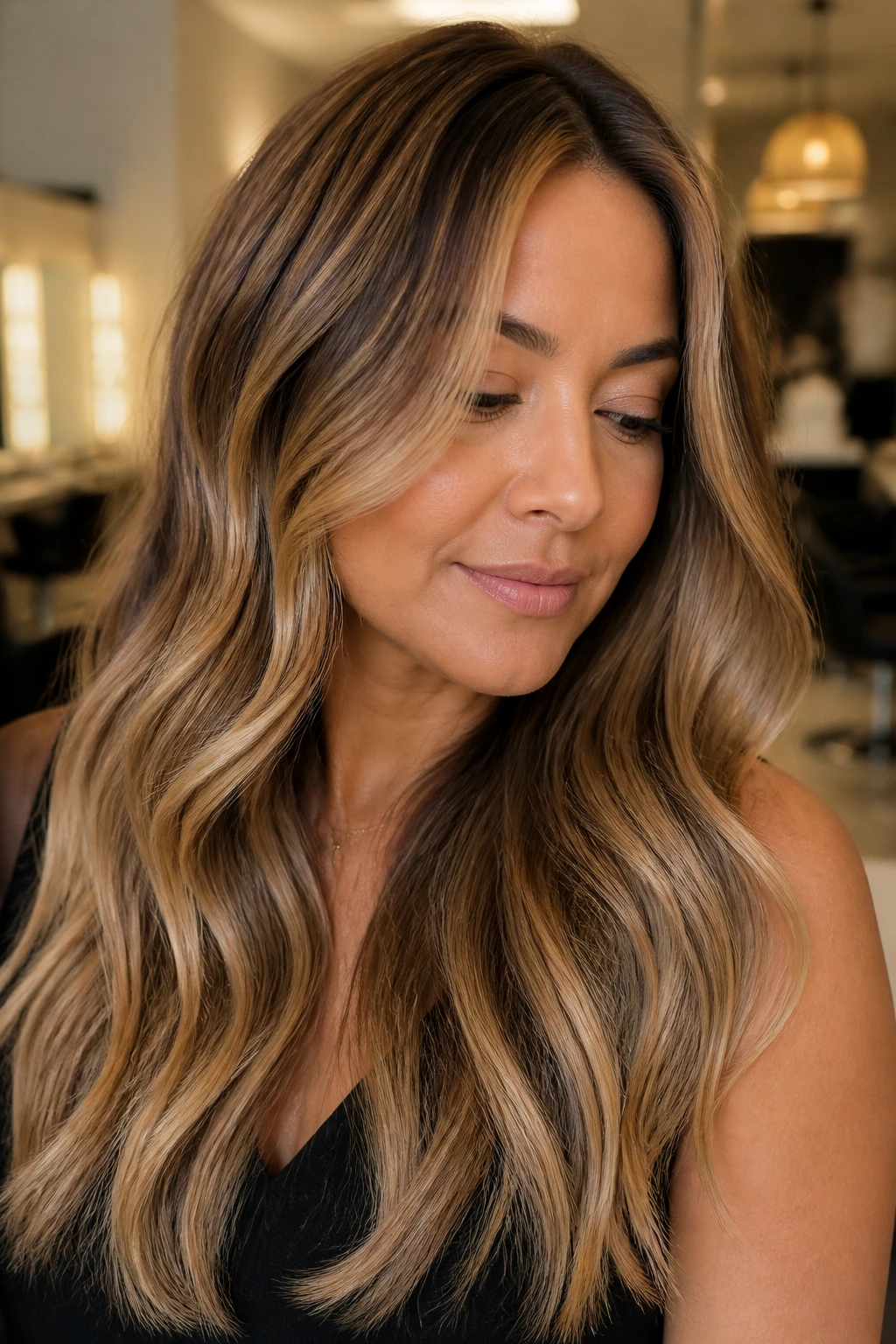
Color-treated hair does not need a complicated routine, but it does need consistency. Wash two or three times a week if you can, and use cool or lukewarm water rather than hot water. Hot water opens the cuticle faster, which means the warm glaze fades sooner and the ends start to feel rough.
Most caramel glosses and demi-permanent tones stay pretty for about 4 to 8 weeks before they need a refresh. Balayage can stretch longer, especially if the root stays deeper. A face frame or money piece usually needs attention sooner, often around the 6- to 8-week mark, because that’s the part people see first and style most often. If the shade starts looking brassy, use a blue-toned shampoo sparingly on brunette-based caramel. If it starts looking flat, add moisture and gloss, not more pigment.
Heat is the other thing that chews through warmth. Use a protectant every time you blow-dry, straighten, or curl. A silk pillowcase also helps more than people think. It sounds fussy until you notice the ends stay smoother and the color reflects better the next morning.
Different Caramel Directions to Try
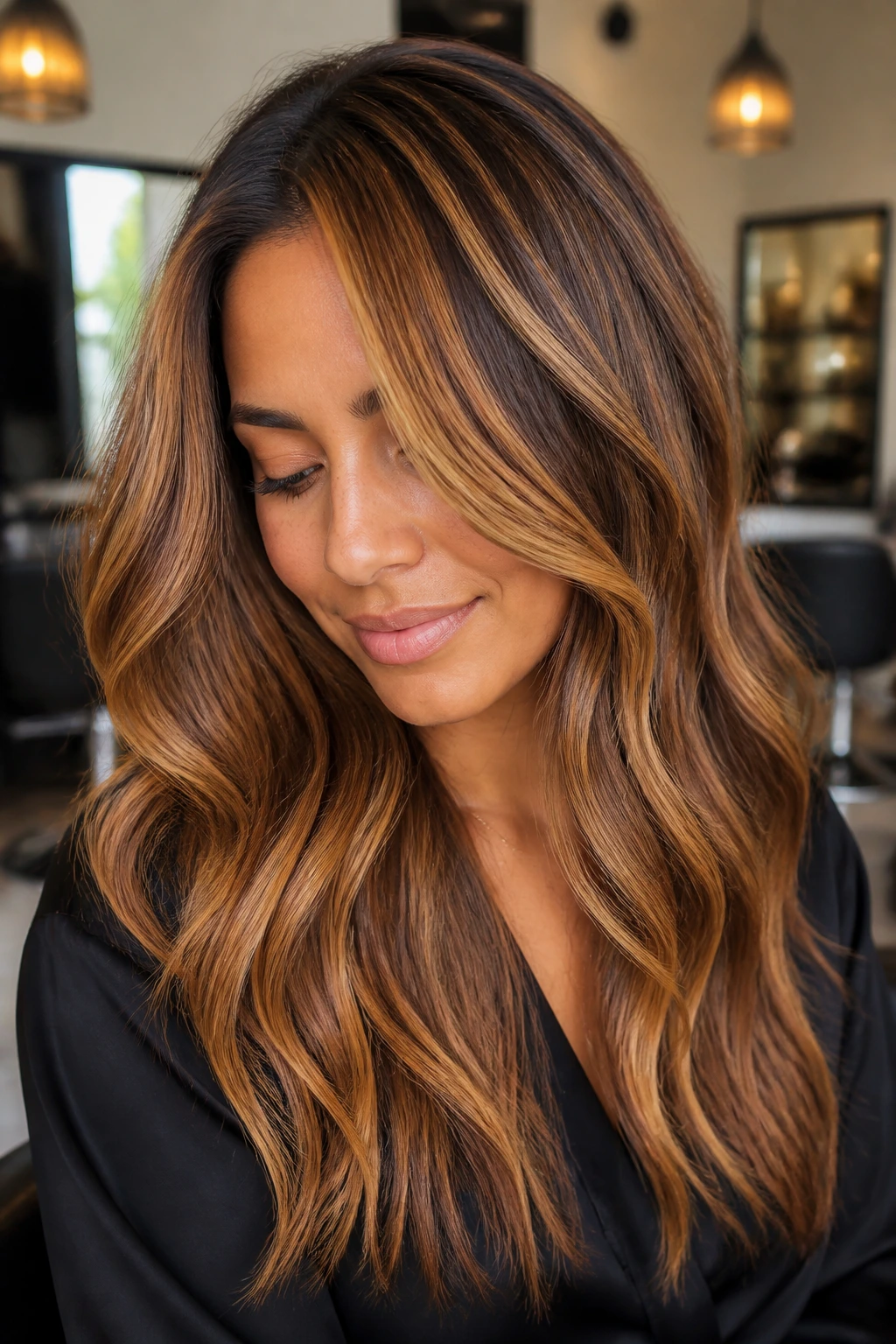
Soft Honey Refresh: Keep the base close to your natural brown and add only a few honey ribbons around the front. This is the least risky way to move into caramel if you’re nervous about lightening.
Copper-Kissed Caramel: Add a faint copper note through the mids for more warmth and edge. It works best if your skin already likes gold, rust, or terracotta.
Deep Brunette Melt: Leave more brown in the formula and let the caramel appear only in the top layers. This is a good fit for people who want richness first and brightness second.
Curly Ribbon Blend: Paint curls in their natural clumps so the shade shows up where the hair bends. This keeps the dimension visible without making the pattern look striped.
Low-Maintenance Gloss Only: Skip full highlights and use a warm caramel glaze over your current brunette. It won’t lighten much, but it can make faded color look polished again in one appointment.
Common Mistakes That Make Caramel Hair Go Wrong
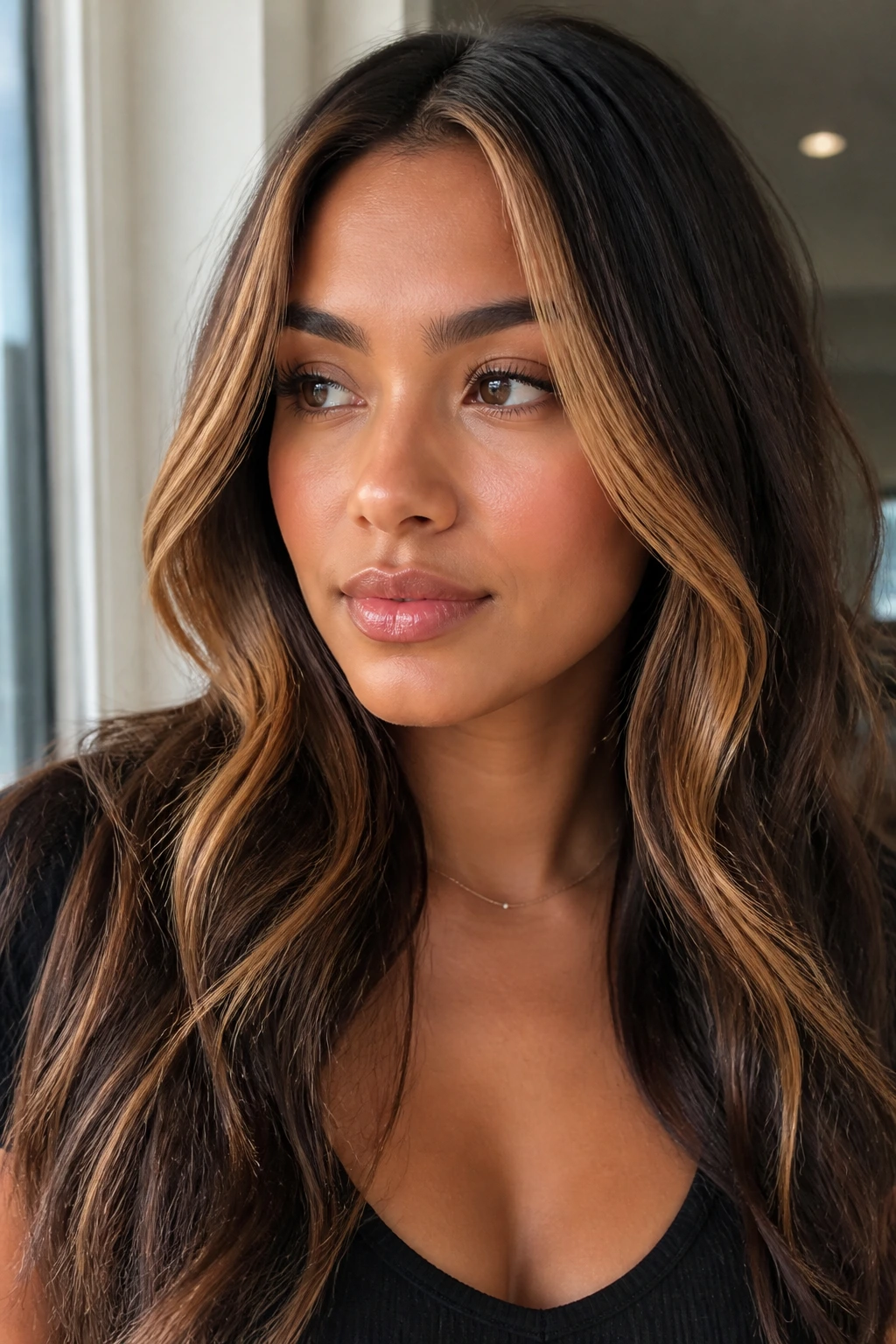
- Going too light too fast: If the caramel jumps three or four levels above your base, warm skin can look a little washed out. The fix is to stay one to two levels lighter than the base and keep the root darker.
- Choosing ash when you wanted warmth: Ashy caramel can turn gray-beige and dull against golden or peach undertones. Ask for beige-gold, honey, or amber instead.
- Putting brightness everywhere: A full head of light caramel with no lowlights can lose shape fast. Leave depth in the root and underlayers so the color has something to sit on.
- Skipping the toner plan: Fresh highlights may look warm in the bowl and turn brassy after a few washes. A gloss or toner schedule matters. So does your shampoo.
- Using too much heat without protection: Flat irons and curling wands can strip the shine right off caramel hair. A heat protectant is not optional here.
- Trying to force box dye over old color: Box color over previous highlights or dark dye often turns patchy. If your hair has layers of old color, a salon correction is safer.
Variations and Adaptations to Try
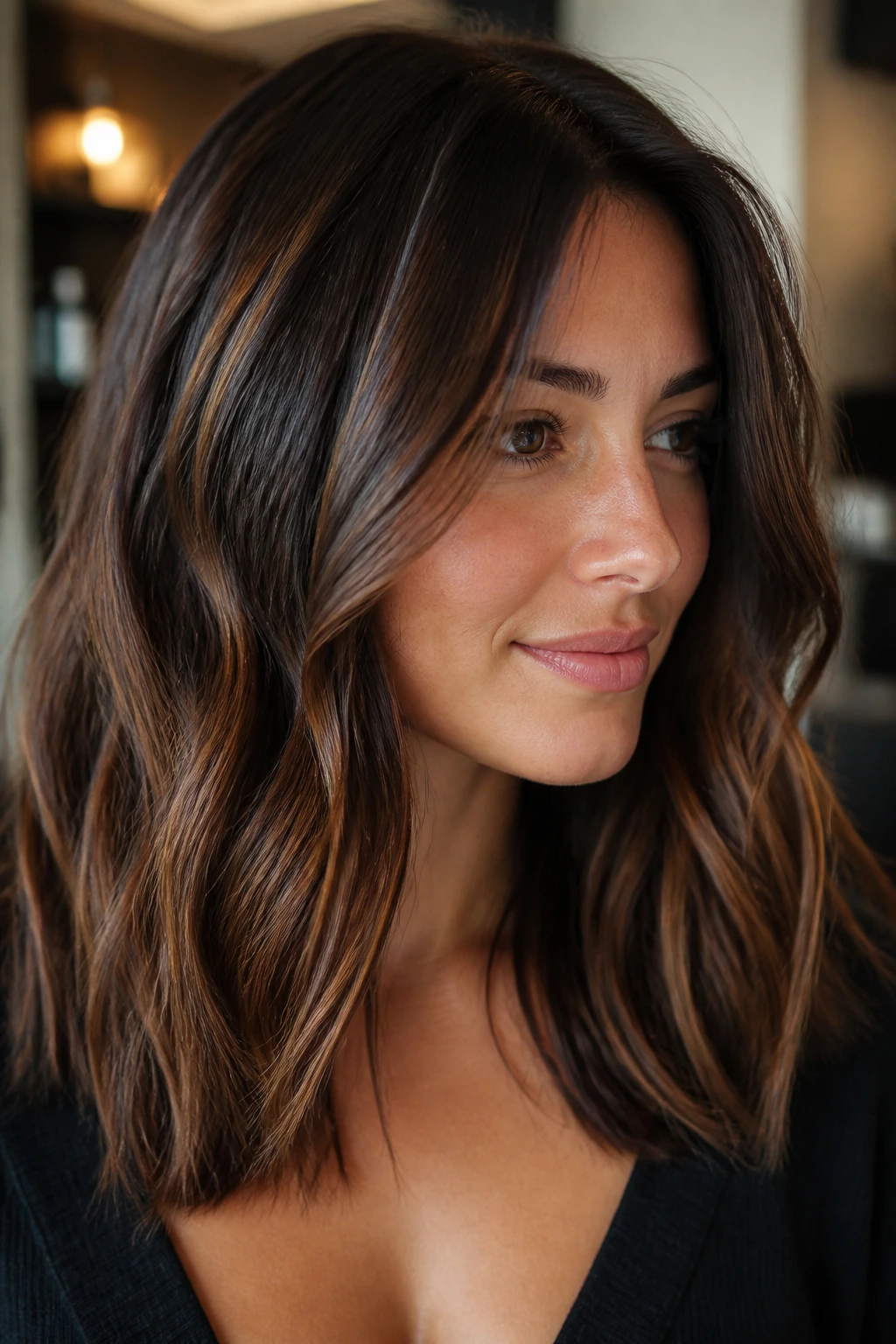
For Deep Brunette Bases: Keep the caramel in ribbons, not all-over lightening. Dark roots with warm mids give you contrast without losing the richness that makes deep brown hair look expensive.
For Curly and Coily Hair: Use painted pieces that follow the curl pattern, then add a warm gloss to the whole head. That keeps the color from looking broken up when the hair shrinks.
For Fine Hair: Babylights and root shadows work better than heavy foils. Fine strands can look thinner if the contrast is too harsh, so subtle placement keeps the hair looking fuller.
For Low-Maintenance Routines: Choose a balayage or foilayage with a deeper root and a gloss you can refresh between visits. That soft line at the scalp is what buys you time.
For More Copper Lovers: Ask for cinnamon, amber, or copper-caramel only in the face frame and top layers. A little red warmth goes a long way on warm skin.
For Gray Blending: Use caramel lowlights with warm brunette coverage at the root. The gray blends better when the overall tone stays close to your natural depth.
Frequently Asked Questions About Caramel Hair Color
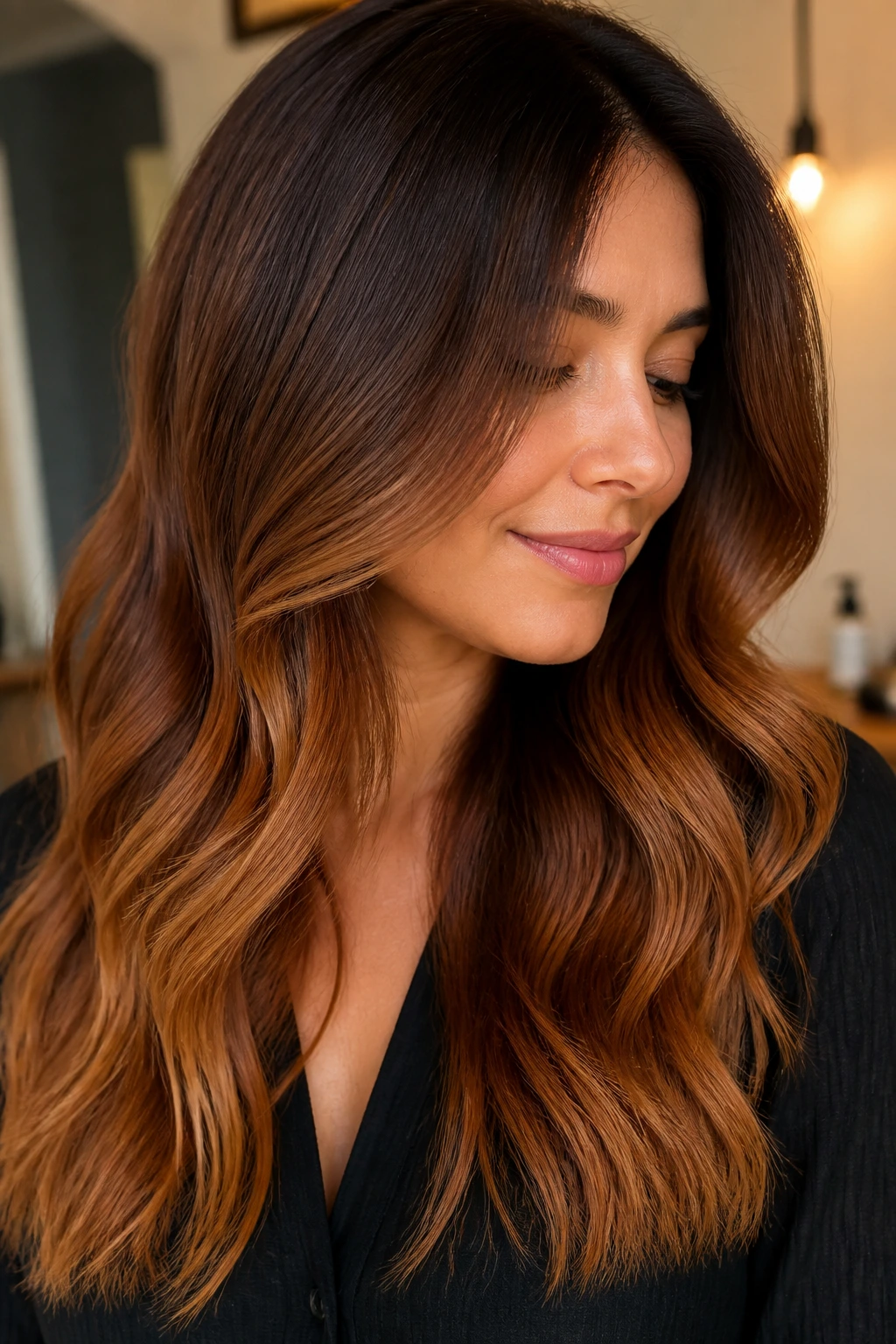
What caramel shade looks best on warm skin tones?
Honey, amber, toffee, and bronze are the safest bets because they echo the warmth already in the skin. If your undertones are more golden or peachy, beige-gold caramel can also work well without getting brassy.
Will caramel hair color look orange?
It can, if the formula leans too copper or if the toner fades fast. The fix is to keep brown in the base and ask for a beige-gold or honey finish instead of a strong copper tone.
Can I get caramel hair if my base is very dark brown or black?
Yes, but the result usually looks best as ribbons, balayage, or foilayage rather than a single all-over color. Dark bases need depth left in place or the caramel will sit too loudly on top.
Is caramel hair high maintenance?
Some versions are. A face frame or bright caramel balayage needs more upkeep than a deeper gloss or root-shadow melt. If you want less maintenance, keep the root darker and the lightness softer.
How do I keep caramel from fading dull?
Use color-safe shampoo, wash with lukewarm water, and add a gloss or warm mask every few weeks. Heat protection matters too, because dry ends make caramel look flat before the color actually disappears.
Can warm skin tones wear ash caramel?
Sometimes, but ash caramel usually needs a good reason. On warm skin, it can mute the face if it gets too gray. Beige-warm is usually safer if you want softness without losing warmth.
What’s the difference between caramel balayage and caramel highlights?
Balayage is painted on by hand, so it usually looks softer and grows out with less of a line. Highlights are often more structured and can look brighter or more uniform, depending on how they’re placed.
What haircut shows off caramel best?
Layered cuts, curtain bangs, lobs, shags, and curls all show dimension well. Flat one-length hair can still work, but it needs cleaner placement so the caramel doesn’t blur into the base.
A Shade That Keeps Its Warmth
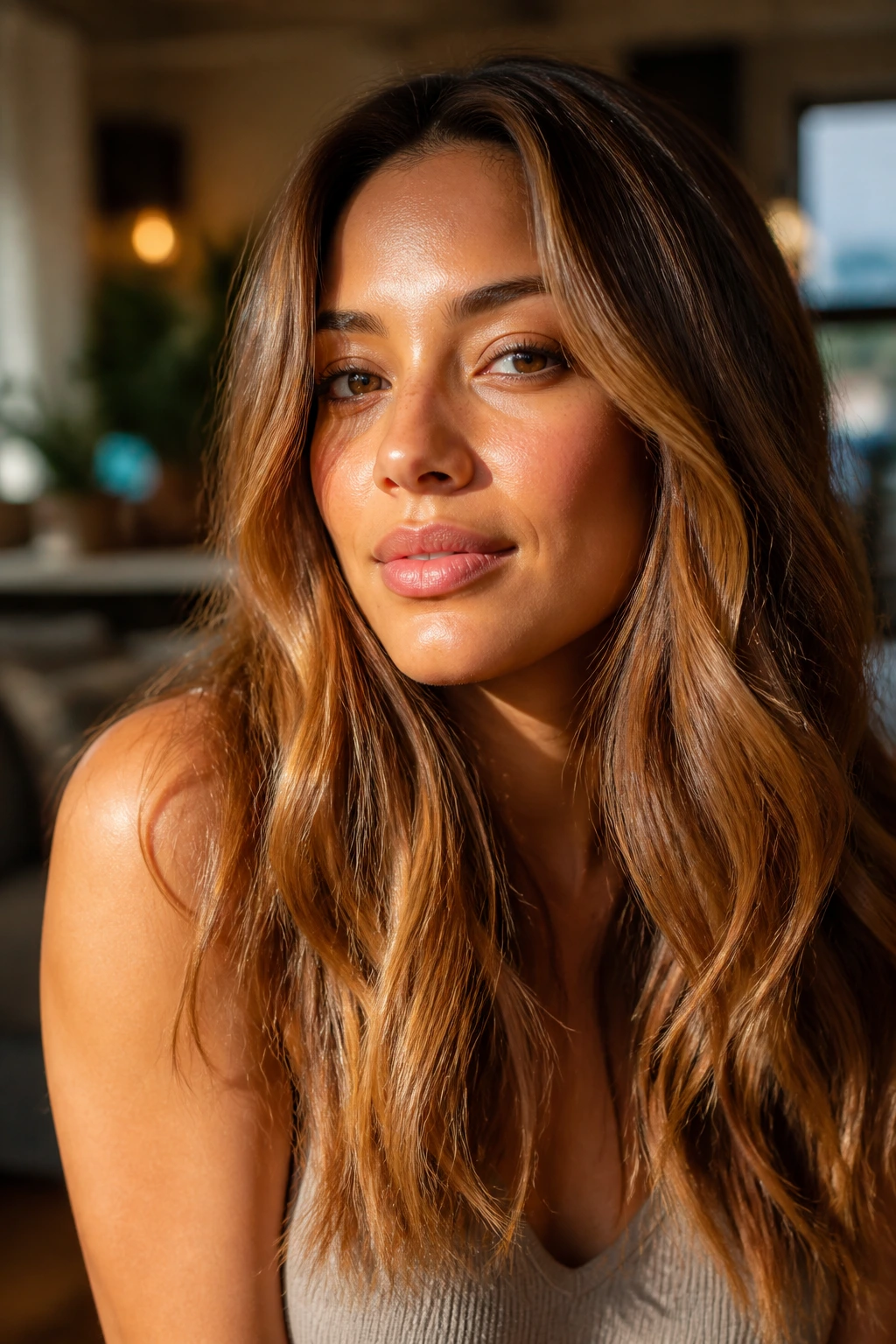
Caramel works best when it still looks like brown hair with light inside it, not blonde hair pretending to be brown. That’s why these shades hold up so well on warm skin tones. They bring out the same golden, peach, and bronze notes already in the face, instead of fighting them.
If you’re choosing between two caramel directions, take the one with more depth and a better plan for grow-out. That’s the version you’ll like on a busy Tuesday, not just in the salon mirror. And if you save one look from this list, make it the one that feels like your skin, your cut, and your routine all decided to cooperate for once.