



Natural wavy bobs for women over 50 work best when the cut still has swing in the ends. Once a bob turns stiff, over-layered, or puffed out at the sides, it starts to feel like a shape that’s wearing you instead of the other way around.
The sweet spot is movement. A little bend around the cheekbone, a soft lift at the crown, and ends that brush the jaw or collarbone without flipping into odd little hooks. That’s the difference between a bob that looks freshly cut and one that needs constant fussing in the mirror.
I keep coming back to beachy waves on a bob because they do something useful that straight styles often miss: they soften the edges without hiding the face. Silver hair gets prettier. Fine hair gets a bit more body. Thick hair loses some of that blunt heaviness. And yes, a good bob still looks good after a scarf, a windy parking lot, and a long lunch.
Why These Cuts Earn Their Place
-
Soft Movement, Not Helmet Hair: Every style here keeps enough bend in the ends that the wave still looks intentional on day two, not just after a fresh blowout.
-
Length That Works With Real Clothes: Jaw, neck, and collarbone lengths behave better with turtlenecks, V-necks, blazers, and scarves than a heavy shoulder-skimmer that keeps snagging on fabric.
-
Gray and Silver Look Sharper: Softer layers and loose texture stop silver strands from reading as frizzy or bulky, which is a common problem when a cut is too blunt.
-
Fine Hair Gets Lift Without Teasing: Several of these bobs rely on internal layers, root lift, or a slight angle instead of old-school backcombing that collapses by noon.
-
Dense Hair Stays Controlled: The thicker-hair options remove weight in the right places so the shape doesn’t balloon into a triangle the second humidity shows up.
-
Low-Fuss Styling Still Looks Polished: A round brush, a 1-inch wand, or a quick scrunch-dry is enough for most of these cuts. That’s the whole point.
1. Collarbone Sweep Bob with Airy Ends
A collarbone sweep bob is the one I recommend when someone wants movement without committing to a short crop. The length sits right in that narrow strip between jaw and shoulder, so it can tuck behind the ear, skim a necklace, and still move when you turn your head.
What makes it work is the perimeter. Keep the base soft and the ends slightly shattered, not chopped into a hard line. On wavy hair, that little bit of softness keeps the bob from kicking out at the bottom and looking boxy by afternoon.
What to ask for
- Ask for a collarbone length that lands just below the chin when dry.
- Keep only light internal layers through the mid-lengths.
- Leave the front pieces a touch longer so the wave has somewhere to fall.
Styling note: A 1¼-inch curling iron or wand, used only on the front half of the hair, is usually enough. You do not need to curl every strand.
2. Chin-Length Curve Bob with a Side Part
Why does a chin-length bob look fresh on one person and severe on another? The side part is usually the answer. When the part sits off-center and the ends curve in softly, the haircut opens the face instead of boxing it in.
This version is especially good if you like seeing your cheekbones. The ends should bend under just a little, almost like the hair is resting into the jaw rather than sitting on top of it. I like it on women with straight-to-wavy texture because it gives shape without demanding much product.
A small blow-dry brush or round brush at the front does the heavy lifting. Keep the crown lifted for only a minute or two, then stop touching it. The more you fuss with the sides, the faster they lose that clean curve.
3. Silver Tousled Bob with Soft Lift
Silver hair has a way of showing everything. That’s why a tousled bob can look better on silver than a perfectly smooth one. The soft lift and broken-up wave keep the color from reading flat, and the texture keeps the cut from feeling too polished or too strict.
I prefer this style when the hair has a little natural bend already. Let the wave do most of the work. A light mousse at the roots, a heat protectant on the lengths, and a quick twist with your fingers after drying are usually enough. The trick is not to chase perfect curls.
One useful habit: use purple shampoo sparingly. Too much can make silver hair feel dry and squeaky, which fights the easy movement this style needs.
4. Feathered-Crown Layered Bob
A flat crown can make even a good bob look tired. Feathered layers through the top fix that without turning the whole haircut into a shag. The lift stays concentrated at the crown, where it matters most, and the perimeter keeps enough weight to look neat.
This is the bob I like for fine or medium hair that collapses near the scalp. The feathering should be subtle, almost invisible when the hair is dry. If the top is thinned too much, the ends start to look wispy and the whole cut loses its shape. That’s the line you want to avoid.
A root-lift spray at the roots and a quick blow-dry with the brush pointed upward can make a bigger difference than another round of layers ever will.
5. French Bob with a Soft Fringe
A French bob has attitude, but the soft fringe keeps it from going hard around the face. The line usually sits around the cheek or lip, and the fringe should look airy, not dense like a block of hair that was dropped across the forehead.
This is one of the best choices if you want your eyes to stay the focus. The fringe can graze the brows, part slightly in the center, or fall with a small bend to each side. For women over 50, that softness matters. A heavy fringe can drag the whole style down. A feather-light one opens it back up.
Best when your hair has…
- A natural bend that shows up after air-drying.
- A forehead you’d like to soften without covering it fully.
- Enough density in front to hold a fringe without splitting.
6. Jaw-Grazing Wavy Bob with Face Framing
A jaw-grazing bob can sharpen the face in the best way. The cut lands where the jawline changes direction, so the wave frames that point instead of hiding it.
The reason I like this shape is simple: it looks deliberate. There’s no question about where the haircut ends. That clean stop gives beachy waves a place to land, and the front pieces can be cut a touch longer to keep the effect soft. If you have a rounder face, this cut gives a little vertical line without making the hair feel severe.
Keep the pieces around the face slightly brighter if you color your hair. Even a soft caramel or silver-beige ribbon makes the movement easier to read.
7. Neck-Length Bob with Hidden Layers
This is the version for someone who hates obvious layers. The hidden layers live inside the shape, so the outside still looks neat, but the inside has enough give to move when you scrunch or bend it with a brush.
It’s a quiet haircut. No drama. No choppy ends. Just a clean line that sits at the neck and softens as it dries. I like this one for hair that gets puffy if you over-layer it. The controlled outside perimeter keeps the bob from wobbling, and the invisible layers stop it from falling dead flat.
If your hair has a cowlick at the nape, ask for a slightly longer neck length. A tiny bit of extra weight back there can save you a lot of daily annoyance.
8. Blunt Bob with a Loose Bend
A blunt bob and beachy waves might sound like opposites, but that tension is exactly what makes this version so good. The line is crisp, yet the wave keeps it from feeling stiff.
This works best when the hair is dense enough to hold a clean perimeter. The trick is to leave the ends blunt and create the movement higher up, around the mid-lengths. If the wave starts too low, the edge loses its impact. If it starts too high, the bob can puff. Somewhere in the middle is the sweet spot.
I’d pick this for someone who wants a little polish without a salon-blown finish. The haircut does the work; the wave just wakes it up.
9. Shaggy Bob with Piecey Texture
Some bobs want to be neat. This one doesn’t. The shaggy bob is all about separated pieces, soft choppiness, and a little roughness around the edges that keeps it from looking overdone.
The reason it flatters mature hair is that it makes texture look intentional. Hair that’s a little wiry, a little bendy, or naturally uneven actually benefits from that pieced-out look. You don’t have to force every section into the same curl pattern. A few twists with a wand, a bit of texturizing spray, and a finger-comb are enough.
What makes it feel modern
- Choppy ends that move instead of sitting in a hard shelf.
- A root area that stays lifted and a mid-length that stays loose.
- Texture that reads as relaxed, not messy.
10. Angled Bob with Longer Front Pieces
An angled bob gives you a little architecture. The back sits shorter, the front stays longer, and the whole shape draws the eye downward in a clean line. That can be useful if you want the neck to look longer or the face to feel a bit slimmer without hiding behind layers.
I like this cut when the wave pattern is slightly stronger in the front. The longer front pieces catch the bend nicely, while the shorter back keeps the bob from looking droopy. If your hair tends to flip under at the ends, the angle helps control that. It gives the flip somewhere to go.
Keep the angle subtle. A dramatic front-to-back difference can look sharp in a salon chair and awkward once you’ve lived with it for a week.
11. Warm Brunette Bob with Caramel Ribbons
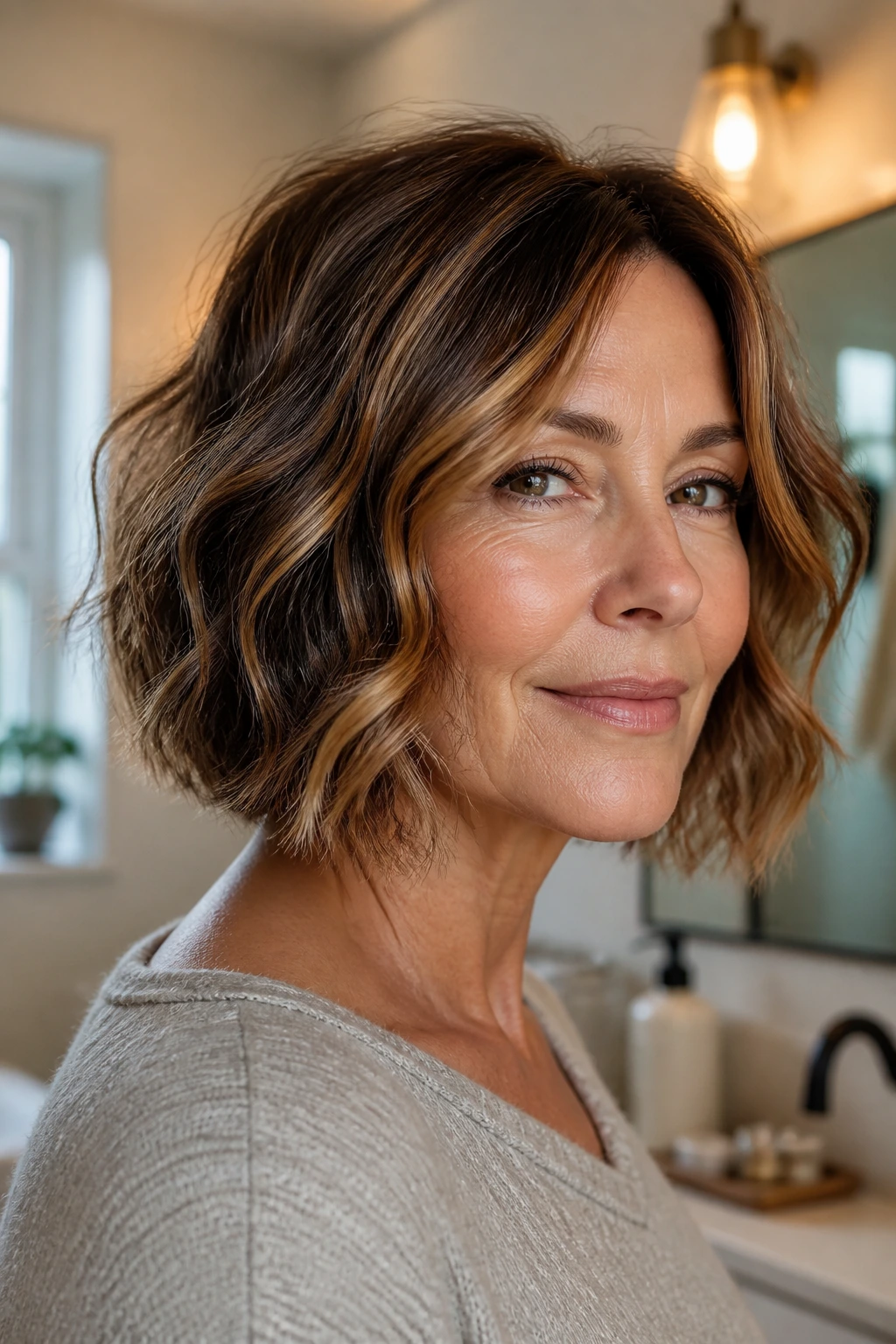
Color changes the whole story of a bob. Warm brunette with caramel ribbons makes the waves easier to see because the light and dark strands break up the surface. On a flat color, the texture can disappear. On a ribboned brunette, every bend shows itself.
This is one of my favorite choices for women whose hair has started to lose shine. The caramel pieces don’t need to be loud. A few ribbons around the face, the crown, and the ends are enough to make the movement read. Keep the haircut soft and the color dimensional, and the bob suddenly has depth.
If you’re leaning into low-maintenance color, ask for painted pieces that grow out softly. Harsh highlights can fight a natural wavy bob; gentle ribbons support it.
12. Salt-and-Pepper Bob with Root Lift
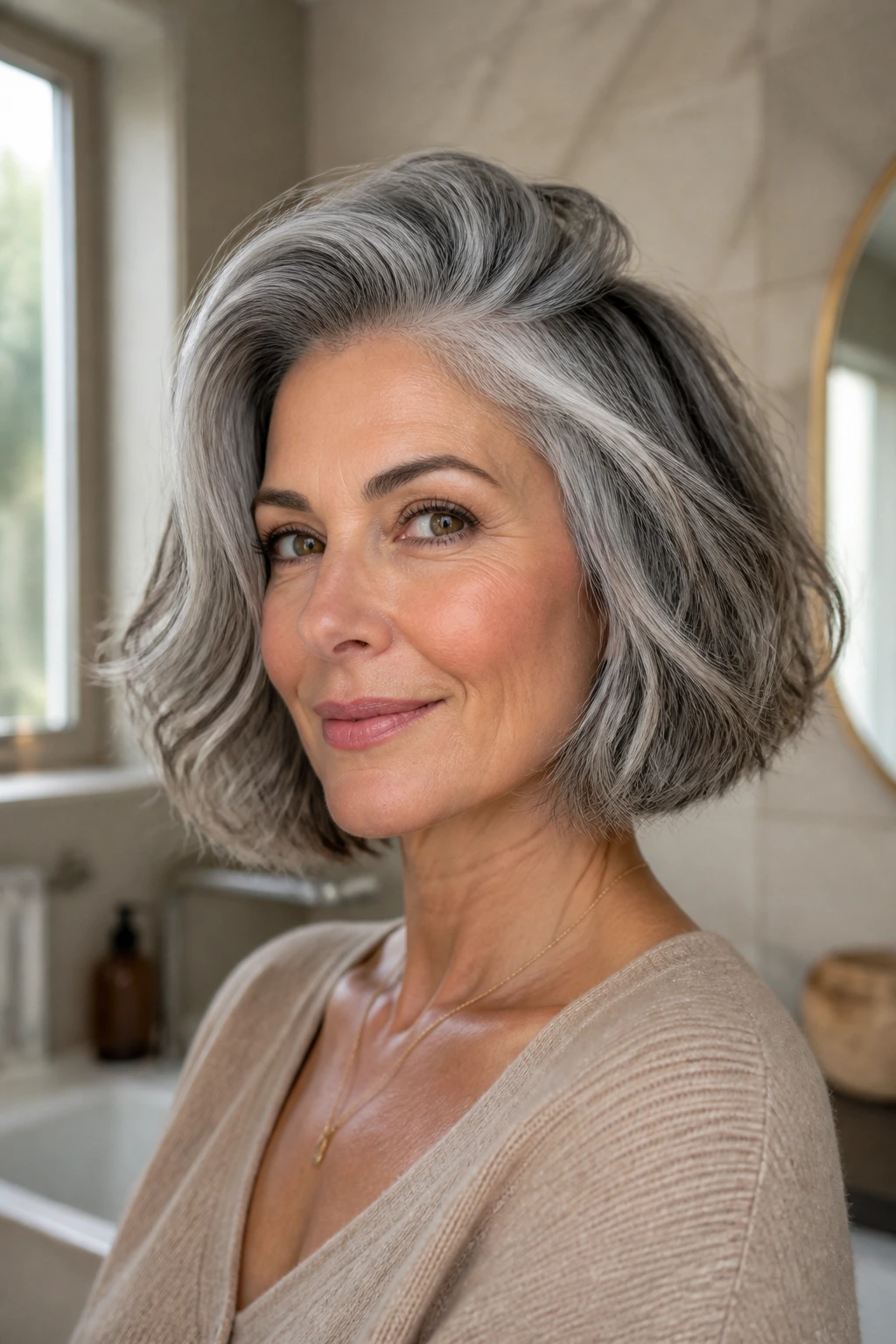
Salt-and-pepper hair looks expensive when it has lift at the roots. Flat roots can make the whole head feel a little saggy, especially if the silver is concentrated around the temples. A soft root lift gives the cut shape before the wave even starts.
This style works because it respects the transition. It doesn’t try to hide the mix of dark and silver; it uses that contrast. The bob can sit at chin, neck, or collarbone length, but the top should stay buoyant. A little mousse at the roots and a small round brush at the crown can change the entire balance of the cut.
My take: if your salt-and-pepper hair is beautiful but unpredictable, keep the ends lighter than the root area. That balance keeps the shape from feeling too heavy.
13. Glasses-Friendly Bob with Tucked Sides

If you wear glasses, you know the struggle. Hair can crowd the frame, sit on the temple arms, or puff right where you don’t want it. A glasses-friendly bob solves that by keeping the sides tucked cleanly and the wave slightly lower.
The best version sits around the jaw or just below it, with the front pieces angled away from the face. That leaves room for the glasses and keeps the style from competing with your frames. I like side parts here because they give the hair a little direction instead of letting it fan straight outward.
A few things that help
- Keep the temple area soft, not bulky.
- Ask for a little weight removal behind the ears.
- Use a light spray, not a heavy cream, so the hair doesn’t cling to the glasses.
14. Long Bob with Soft S-Waves
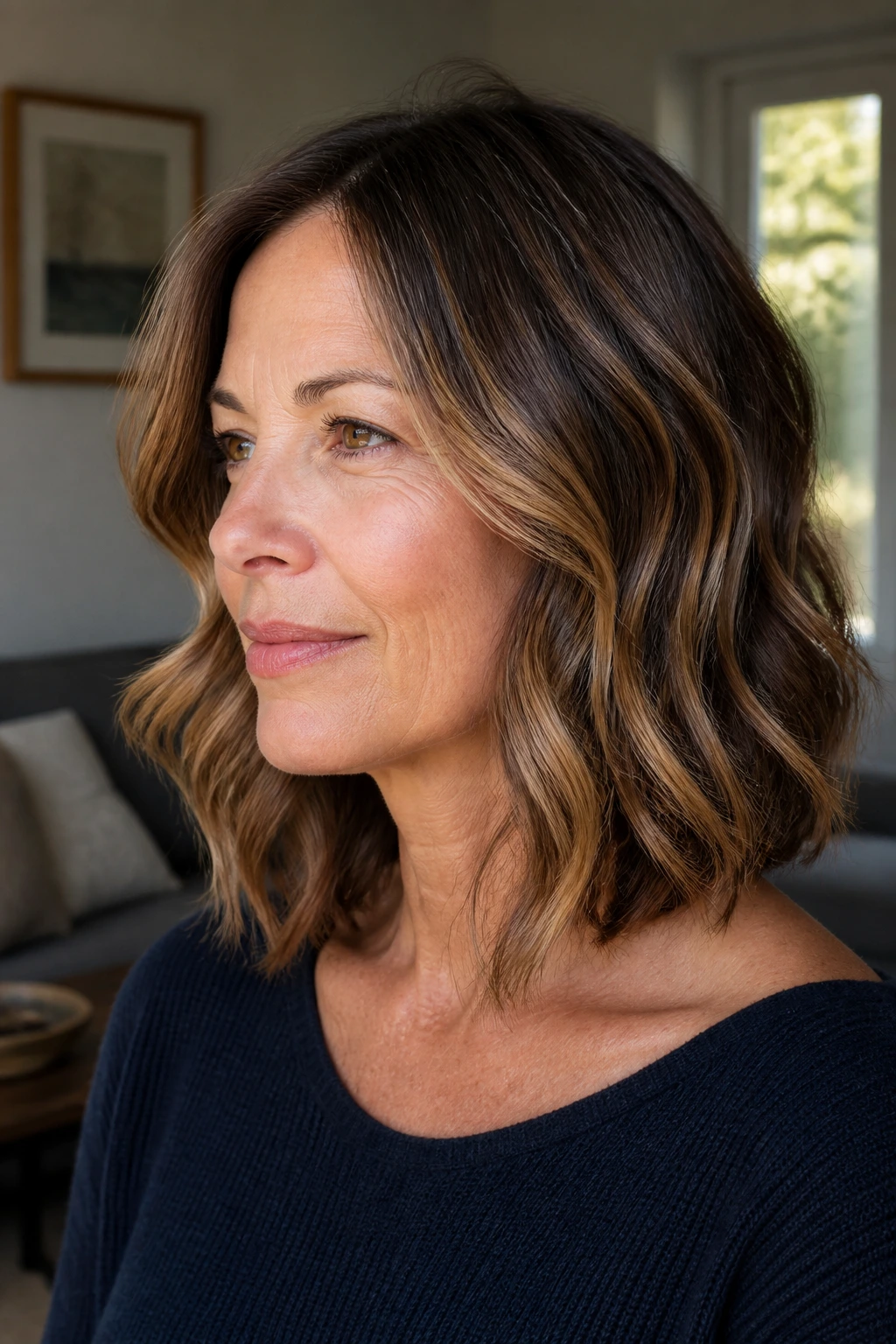
The long bob, or lob, is the safety valve of the haircut world. It gives you enough length to pull back in a clip, enough shape to wear loose, and enough movement to show off soft S-waves without feeling too precious.
This is the cut I suggest when someone says, “I want a bob, but I’m nervous.” Fair. A lob gives you room to test the water. The wave can live through the mid-lengths, and the ends don’t need to be short enough to kick up at the neck. That makes the cut easier on busy days and calmer when the weather gets sticky.
If you want this one to look current without chasing trends, keep the finish soft and the part a little off-center.
15. Wavy Bob with Curtain Bangs
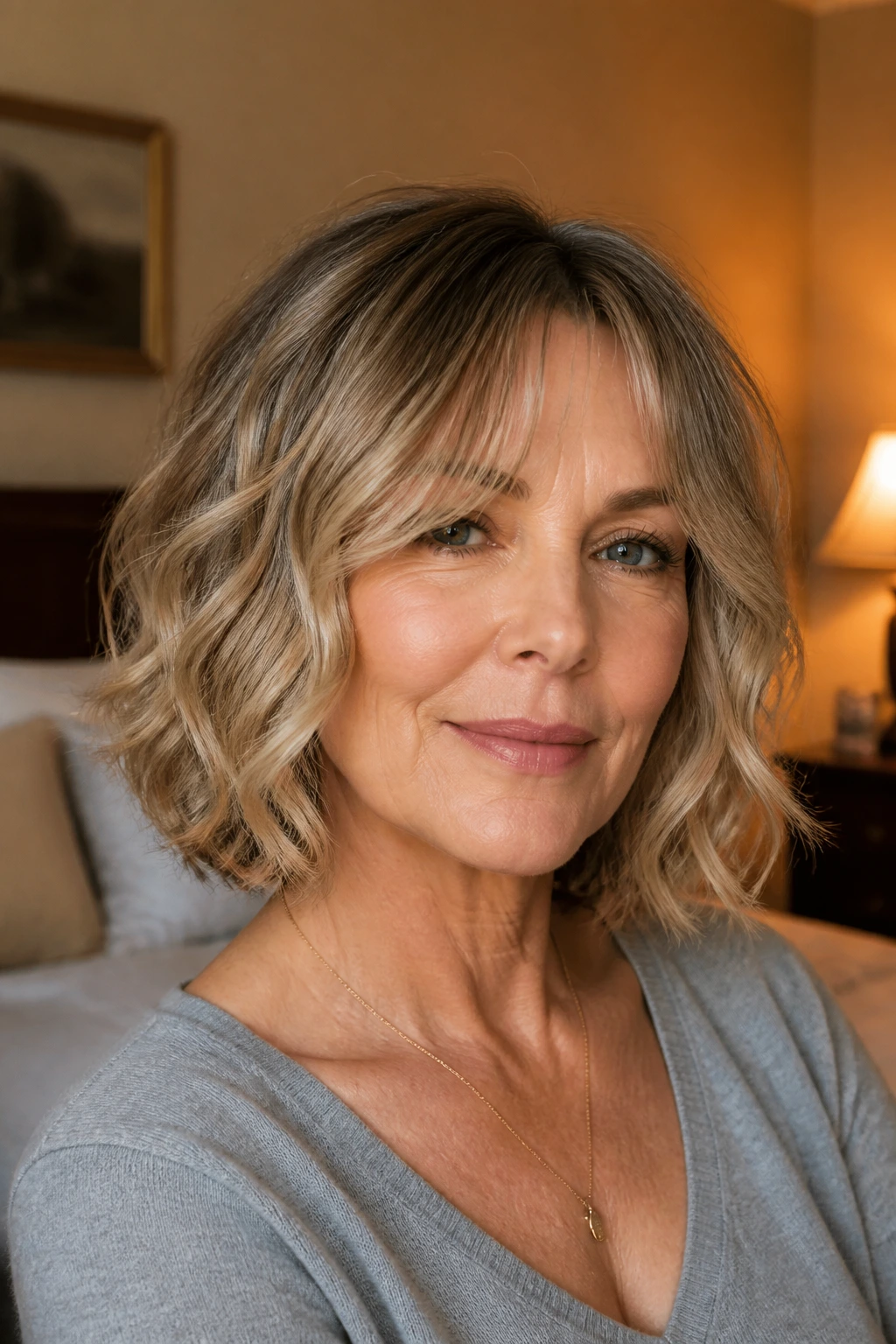
Curtain bangs can do a lot for a wavy bob. They soften the forehead, bring the eye inward, and blend into the sides so the haircut feels connected instead of chopped into sections.
The key is length. Curtain bangs that are too short lose the easy sweep and start acting like a separate style. The better version brushes the brows or cheekbones and then curves outward into the bob. That movement is what makes the whole cut feel balanced.
I like this option for faces that need a little width near the eyes or a little softness through the forehead. If your hairline is changing, curtain bangs can be kinder than a blunt fringe. They don’t announce themselves. They just sit there and flatter.
16. Tapered Bob for Fine Hair
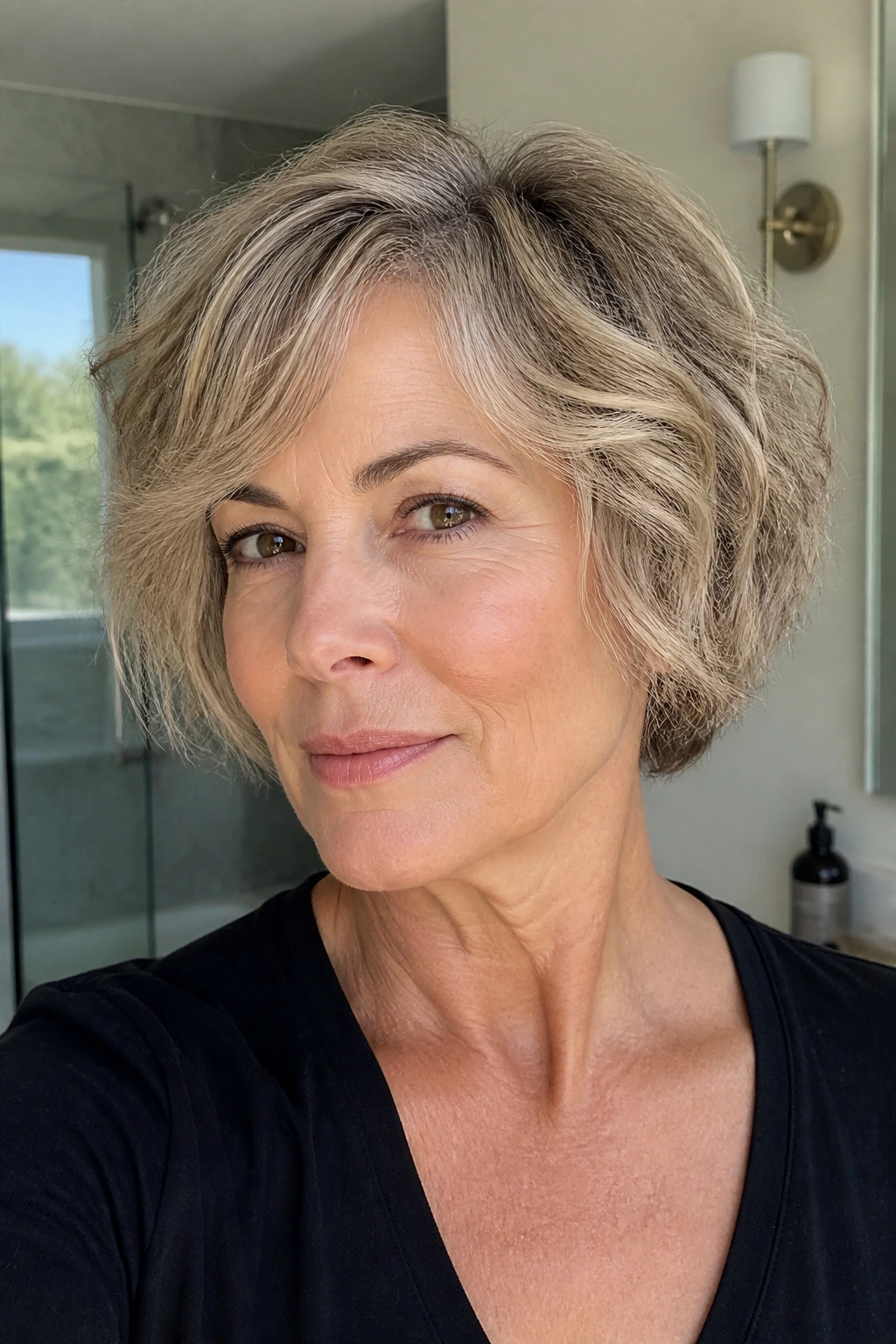
Fine hair needs shape, not punishment. A tapered bob gives it that by keeping the perimeter neat while gradually reducing some weight toward the neck and sides. The result is a cut that looks fuller at the top and cleaner at the bottom.
This is not the place for aggressive thinning shears. Fine hair turns stringy fast when too much is removed. Ask for controlled tapering and a little crown lift instead. The bob should feel airy, not sparse.
A lightweight foam on damp hair can help the shape hold. I’d rather see a small, tidy bob with movement than a big fluffy one that collapses after an hour.
17. Rounded Bob for Thick Hair
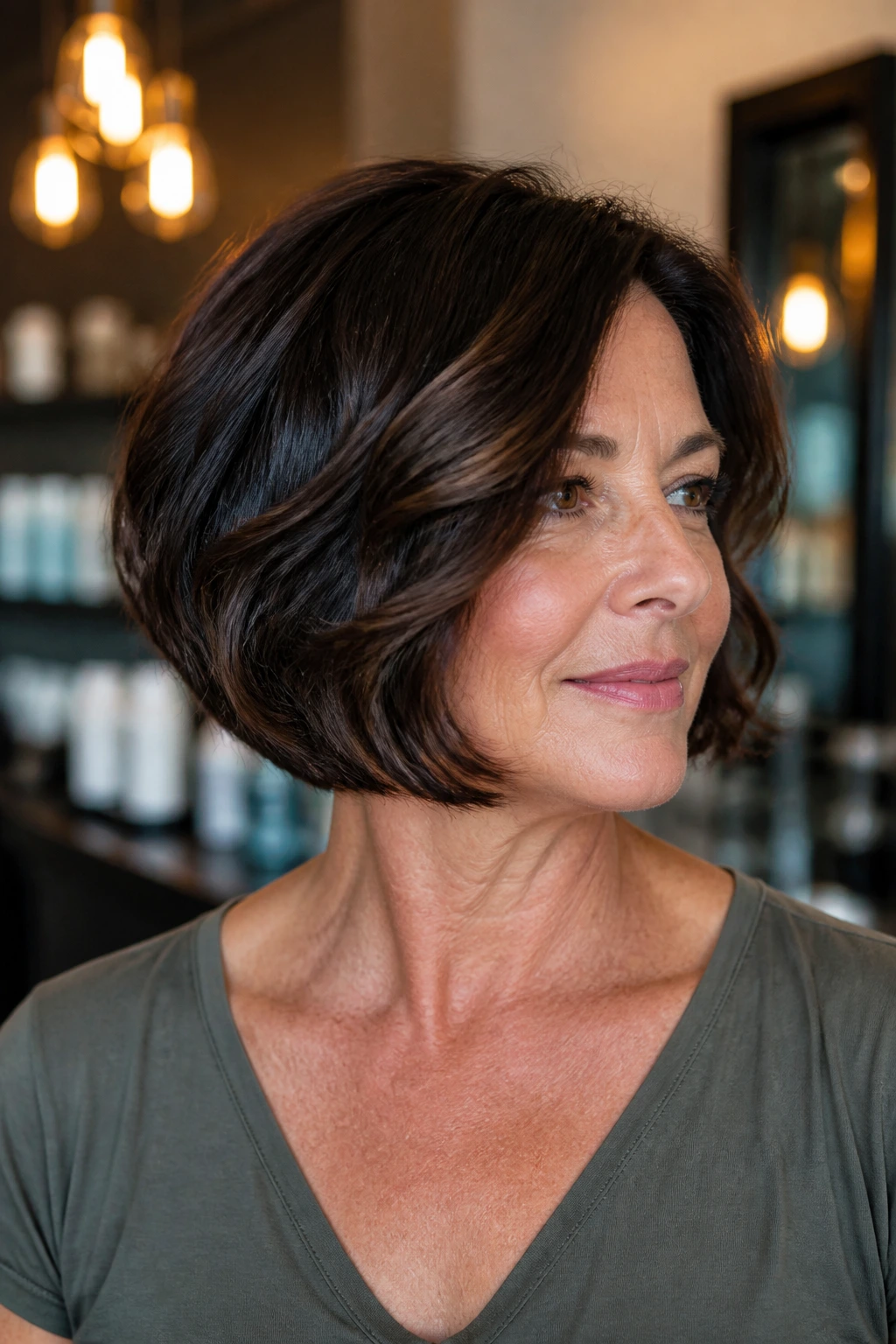
Thick hair can make a bob look wide if the shape is cut too straight across. A rounded bob fixes that by curving the silhouette inward so the bulk sits where you want it, not where gravity decides.
This shape is especially useful if your hair swells in humidity. The rounded outline keeps the ends from kicking out and gives the whole cut a smoother fall. You still want movement, though. The inside should lose enough weight to keep the hair from puffing into a helmet.
Ask your stylist for
- Internal weight removal, not just thinning at the ends.
- A rounded perimeter that follows the head shape.
- Soft face-framing pieces that keep the front from looking too heavy.
18. Choppy Bob with Razor Ends
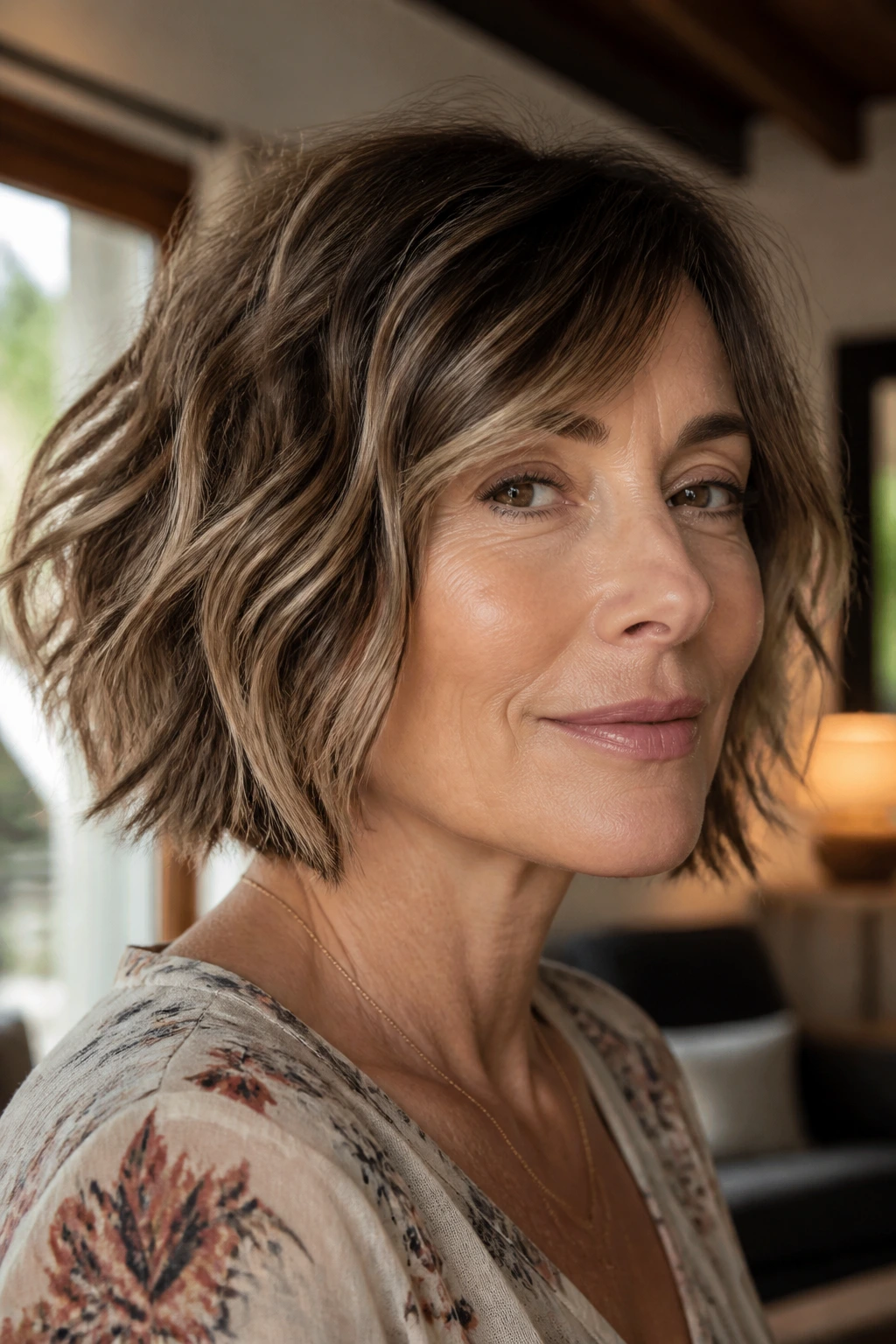
Choppy ends can look sharp in a good way, but only when they’re done with restraint. Razor cutting or point cutting through the ends creates a lighter edge that works well with beachy waves because the wave catches on the uneven pieces.
This is a cut with opinions. It likes texture, it likes a little mess, and it does not love over-smoothing. If your hair is naturally coarse or a bit resistant to styling, the choppy bob can make it feel more cooperative. If your hair is already very frayed, though, keep the razoring minimal. Too much can make the ends look tired instead of cool.
I’d call this one a better fit for women who want movement with a little edge.
19. Minimal-Product Bob for Busy Mornings

Not everyone wants a shelf of styling products on the bathroom counter. Fair enough. A minimal-product bob relies on the cut and your natural wave pattern, then asks for only a leave-in spray, a dab of mousse, or a tiny amount of texturizer.
The trick is to keep the haircut honest. If the bob is cut well, you do not need to drown it in cream. Let it air-dry to about 80 percent, scrunch the front, and touch up only the pieces that matter around the face. That is usually enough.
This version works best when your hair already has some bend. If it’s pin-straight, you may still need a wand on a few front sections. But the daily routine stays short, and that’s the appeal.
20. Deep Side-Part Beachy Bob
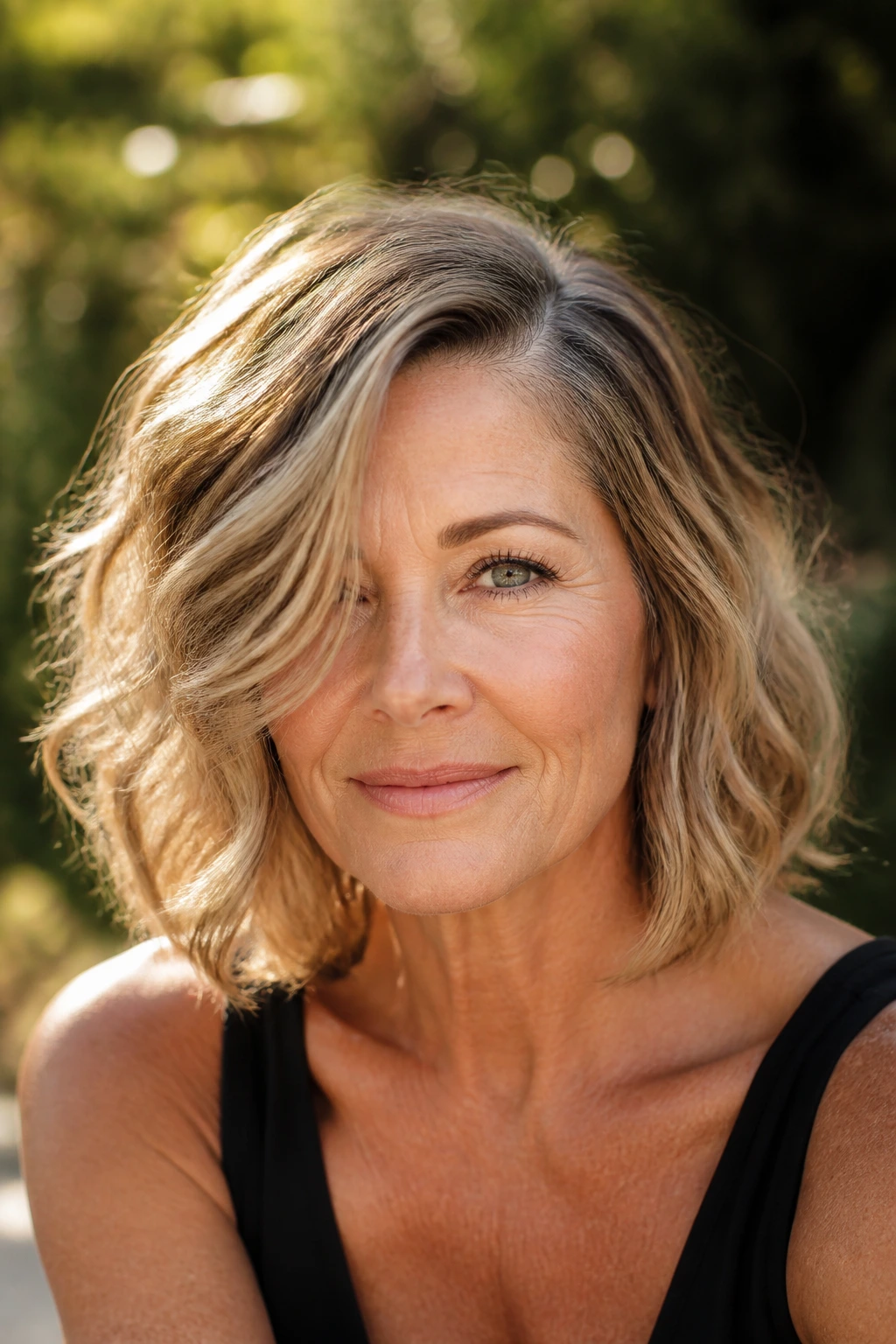
A deep side part changes the energy of a bob fast. It gives the roots lift on one side, creates a bit of drama near the eye, and lets the waves fall in a softer sweep across the face.
I like this look when a bob needs a little more presence. It’s especially good for hair that lies too flat at the crown. A deep part creates instant volume without teasing or heavy product. The beachy wave then softens the effect so it doesn’t look too styled.
Keep the heavier side from getting puffy. A light mist of flexible spray and a quick pinch of the ends is usually enough.
21. Layered Gray Bob with Brushed-Back Volume

Gray hair often looks best when it’s moved away from the face instead of sitting flat against it. A layered gray bob with brushed-back volume does exactly that. The back and crown get lift, the sides stay soft, and the face stays open.
This is a good choice if you want to show off the silver instead of hiding behind fringe. The brushed-back top keeps the shape elegant without making it stiff. A wide brush and a blow-dryer nozzle can help, but you don’t need a salon-level finish. You need direction.
How it behaves
- It lifts the eye upward.
- It keeps the fringe area light.
- It makes silver strands look intentional, not accidental.
22. Micro-Layer Bob with Soft Ends

Micro-layers are the quiet fix for hair that needs movement but cannot handle obvious choppiness. They’re tiny, almost sneaky, and they live inside the cut so the surface still looks smooth.
This bob is useful when you want beachy waves to show without losing the outline of the haircut. The ends stay soft, the interior gets just enough help, and the whole style feels polished without being overly neat. It’s one of those cuts that looks like not much happened, even though a lot of thought went into it.
If your hair is medium density and you hate bulky ends, this is a good direction to take.
23. Asymmetrical Wavy Bob

An asymmetrical bob has one side a little longer than the other, and that tiny difference gives the haircut movement even before you style it. It feels modern without needing a pile of product.
I like this option when someone wants a bob that looks deliberate from every angle. The longer side can skim the jaw or collarbone, while the shorter side keeps the neckline clean. Beachy waves soften the asymmetry so it doesn’t read as sharp or theatrical. That matters. A little imbalance is interesting; too much becomes costume hair.
This shape works especially well with side parts and a tucked-behind-one-ear finish.
24. Wispy-Bang Bob with Air-Dried Texture
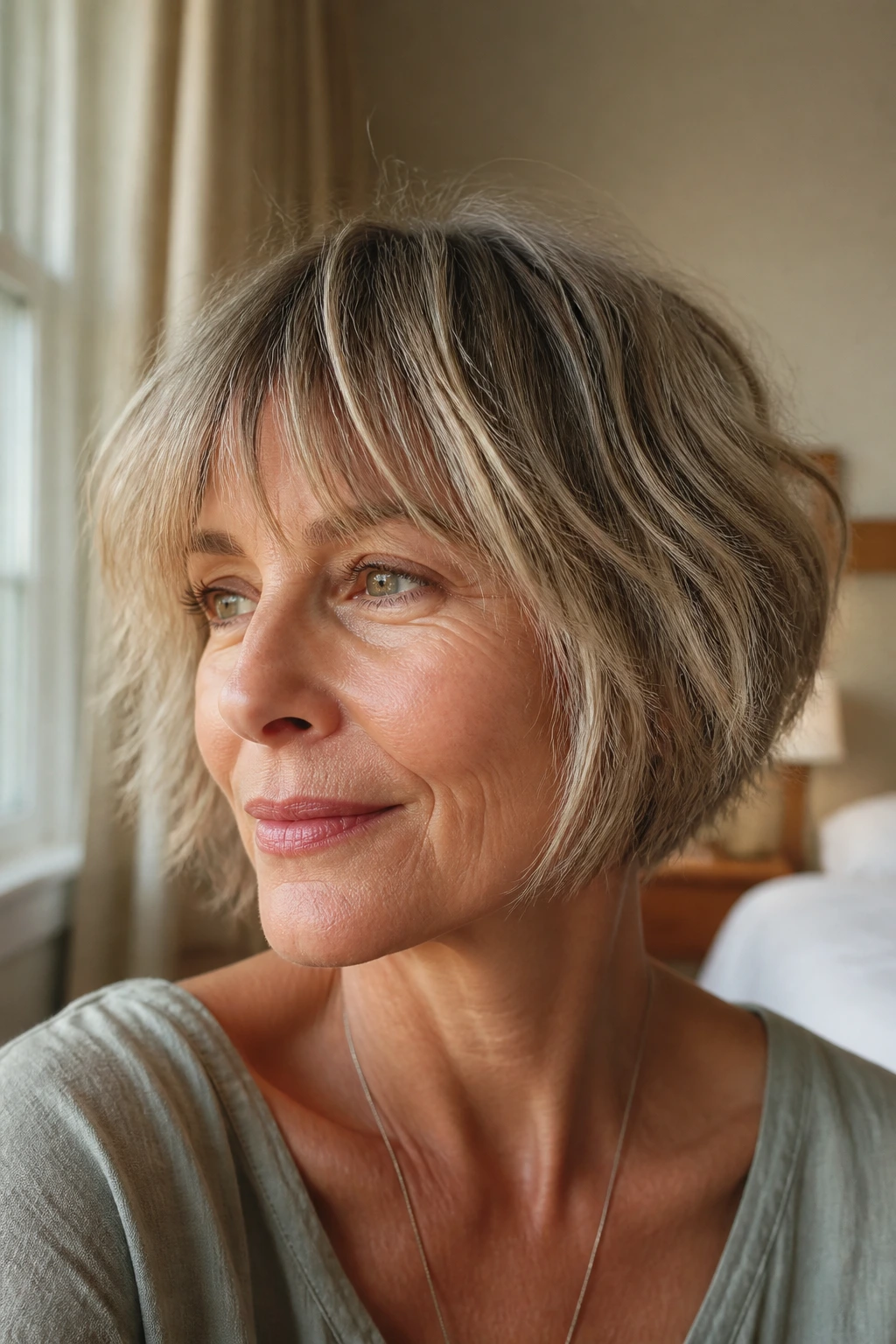
Wispy bangs are a relief if you like fringe but do not want the weight of a full curtain. They move. They separate a little. They don’t sit there looking like a curtain rod.
This bob looks best when the hair is allowed to air-dry with only a bit of help. Scrunch the fringe, leave the ends a little imperfect, and let the cut do the softening. The bangs help balance the face, while the air-dried texture keeps everything feeling relaxed.
If your forehead area gets oily faster than the rest of your hair, this style can be practical, too. The fringe gives you a reason to refresh the front without restyling the whole head.
25. Low-Maintenance Mid-Length Bob with Undone Ends

This is the bob I’d hand to someone who wants to look like she has time, even when she doesn’t. The length sits between bob and lob, the ends stay undone rather than sharp, and the wave pattern doesn’t need to be perfect to make sense.
The beauty of this cut is its grow-out. A few extra weeks between trims won’t wreck it. The shape is soft enough to stretch, and the bent ends keep it from feeling too polished for daily life. I like this one for active schedules, humid climates, and anyone who would rather spend five minutes than fifteen in front of the mirror.
If you’re unsure where to start, this is the safest place to land. It’s not boring. It just behaves.
Why Natural Wavy Bobs for Women Over 50 Work So Well
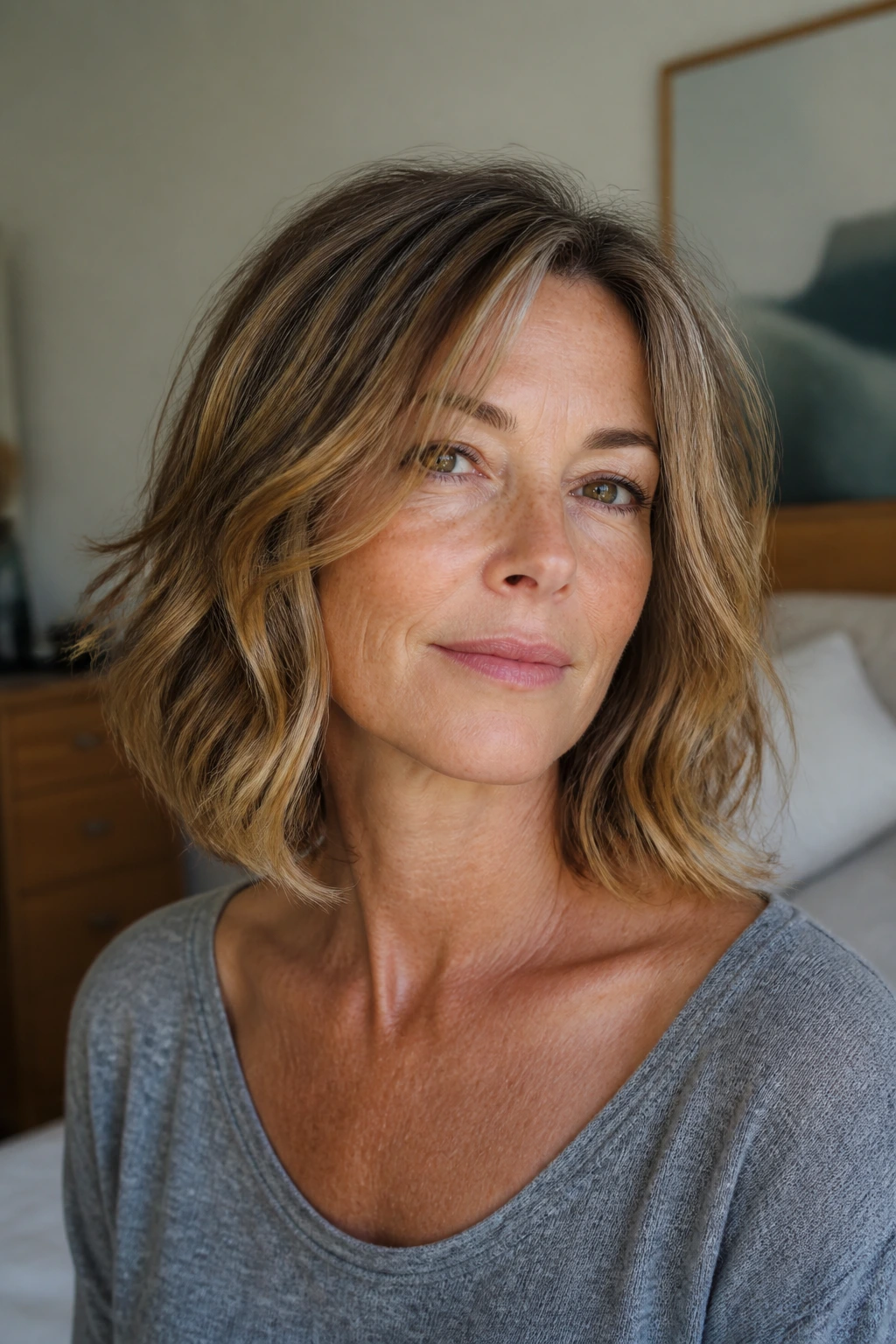
Hair changes with age, and a bob that understands that tends to look better than one that fights it. The texture may get finer in some spots, coarser in others, or a little more porous after coloring and heat styling. A natural wavy bob gives those changes somewhere to go. The bend adds softness, and the length removes the drag that longer hair can create when it gets tired.
There’s also a face-framing advantage that people underestimate. A bob can lift the eye line, show the neck, and keep the jaw area from disappearing under too much length. That does not mean everyone needs a short cut. It means the clean edge of a bob often works better than a long, weighed-down style that has lost its shape.
The best part is how forgiving these cuts are on day two. Beachy waves do not need to be perfect to look good. A little muss at the front, a little lift at the crown, and the haircut still reads as deliberate. That’s a much nicer relationship with your hair than fighting it every morning.
Essential Tools for These Looks
- 1-inch curling wand or iron: Best for loose bends and piecey front sections without turning the whole head into curls.
- 1¼-inch round brush: Useful for lifting the crown and curving the ends under just enough.
- Blow dryer with a nozzle: Helps direct air at the roots and keeps the bob from puffing out sideways.
- Diffuser: A smart pick if your wave is natural and you want to keep the texture while cutting down frizz.
- Heat protectant spray: Keeps the ends from drying out when you use hot tools more than once a week.
- Root-lift mousse or spray: Gives the top section a little structure so the bob doesn’t collapse at the scalp.
- Light texturizing spray: Adds grip and separation to beachy waves without making them crunchy.
- Microfibre towel or old T-shirt: Better than a rough bath towel for scrunching hair without roughing up the cuticle.
- Sectioning clips and a fine comb: Helpful for clean parts, controlled styling, and a neater finish around the face.
How to Choose the Right Cut and Products for Your Hair
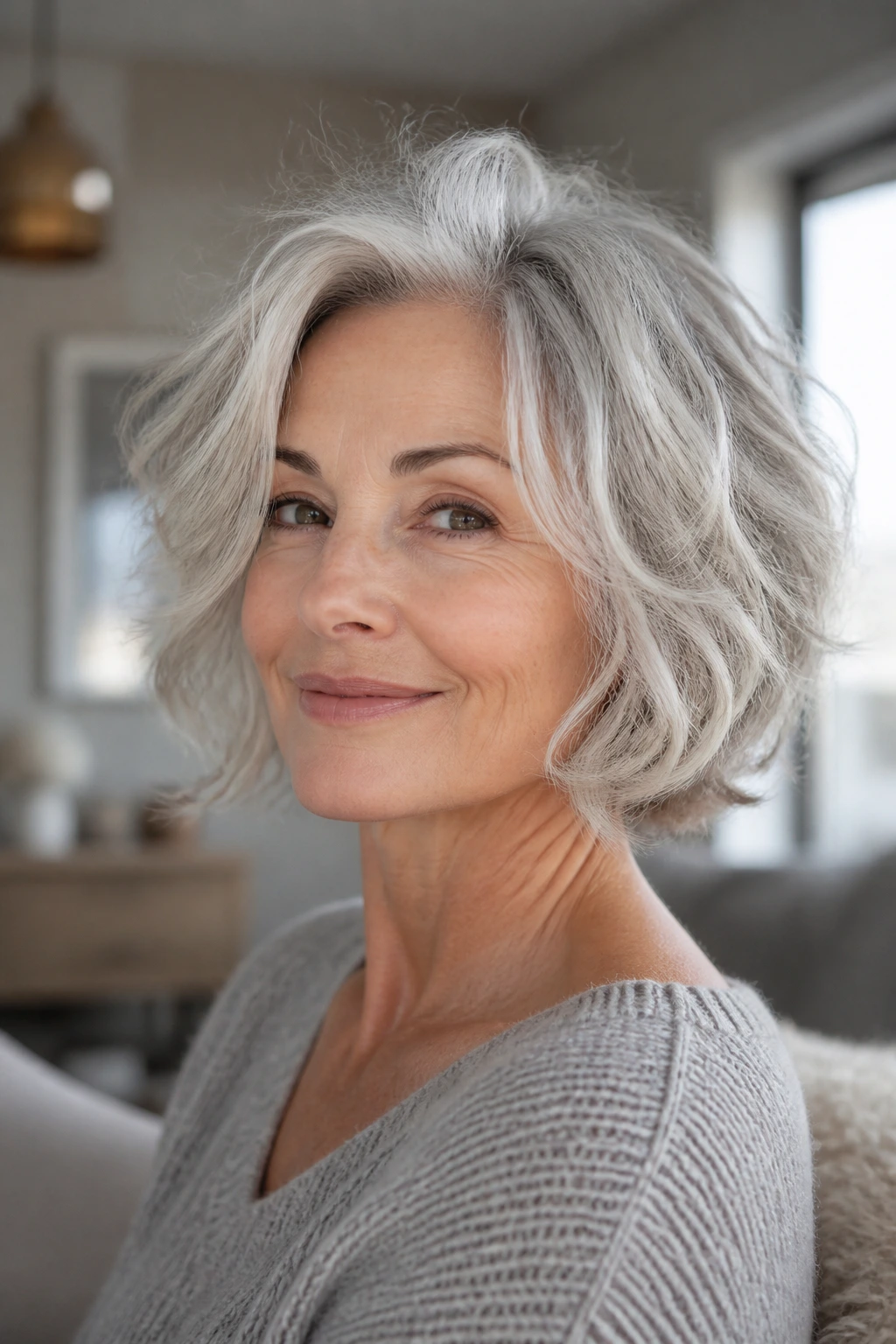
If you’re bringing photos to a salon, bring more than one. One front view is not enough. You want a shot of the side, a shot from the back, and ideally one that shows how the hair sits when it’s worn a little imperfectly. That’s the stuff that matters with a wavy bob, because the silhouette is half the haircut.
Texture should lead the decision. Fine hair usually needs less layering and more lift at the root. Thick hair needs weight removed from the inside so the perimeter doesn’t swell out. Gray hair often benefits from softer edges and less heavy product, because silver strands can go dull fast if you coat them. If your wave pattern is uneven, ask whether the cut should be done dry or partly dry so the stylist can see how the hair behaves in real life.
Product shopping matters more than people think. Look for a lightweight mousse if your hair is fine, a creamier leave-in if it’s dry or coarse, and a flexible texturizer if you want the ends to separate without becoming stiff. A lot of women overdo oil at the front. That’s the quickest way to make a bob fall flat and look older than it is. Use oil on the ends only, and only a drop or two.
How to Wear These Bobs With Glasses, Earrings, and Necklines

Presentation: Keep the bob’s strongest line near the jaw, cheekbone, or collarbone so the shape shows even when the hair is tucked behind one ear. A soft side part usually gives more movement than a dead-center part, especially with beachy waves.
Accompaniments: Small hoops, collar-grazing necklaces, scarves, and glasses all change how the haircut reads. A bob with clean sides looks sharper with frames; a softer fringe looks better with rounder glasses; and longer pieces near the collarbone play nicely with V-necks and open collars.
Portions: For finer hair, keep the length a little shorter so the wave doesn’t drag the silhouette down. For thick hair, leave enough length to hold weight at the bottom. The wrong “portion” of length is how a bob turns into a triangle or a puffball, and neither one is doing anyone any favors.
Beverage Pairing: A mug of coffee or tea works fine here while you shape the front sections and decide whether the part needs another inch. Slightly ridiculous label, useful habit.
Additional Tips and Texture Boosters

Texture Enhancement: Mist damp hair with a light sea-salt spray only through the mid-lengths, then scrunch from the ends upward. Too much at the roots makes the bob feel dry and rough.
Time-Saver: If you’re short on time, curl only the two front panels and the crown pieces. That’s where people look first, and the rest of the hair can stay air-dried with a little bend.
Pro Move: Flip the part from one side to the other while the hair cools. It keeps the root from collapsing in one direction and adds a softer, more natural lift.
Cost-Saver: Skip heavy smoothing creams if your hair is fine. A pea-sized leave-in, a touch of mousse, and a texturizer will usually do more for a wavy bob than a whole cocktail of products.
Make-It-Yours: For humidity, keep the ends light and the product flexible. For dryness, use a richer leave-in on the bottom half of the hair, but leave the crown alone or it will go limp.
Common Mistakes That Flatten a Good Bob
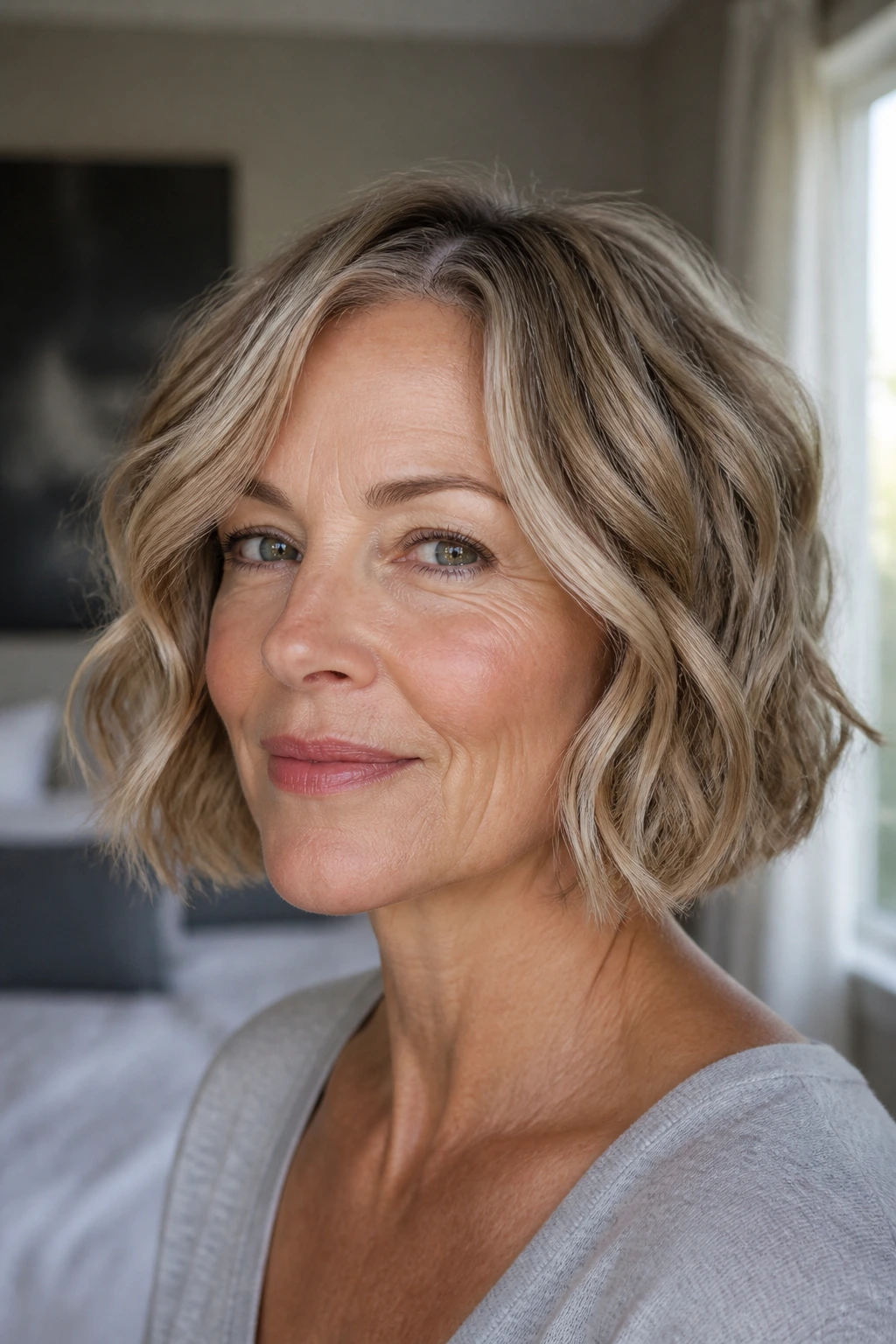
The first mistake is cutting the bob too blunt and too short at the same time. The symptom is a wide, shelf-like shape that sticks out at the sides. The fix is simple: keep the perimeter cleaner, but leave enough length for the wave to drop instead of exploding outward.
Another problem is loading the hair with oil or serum from roots to ends. That gives the hair a slick, stringy look and kills the beachy movement. Use those products only on the last couple of inches, and use less than you think you need.
Over-curling is another classic misstep. If every section is curled in the same direction, the result can look formal or dated, not relaxed. Alternate direction on the mid-lengths, leave the ends out on some pieces, and shake the waves apart with your fingers.
A fourth issue is ignoring the crown. Flat roots make even a good bob look tired. A little mousse, a round brush, or a side part is usually enough to fix it. If the top is dead flat, the whole haircut loses its shape.
And then there’s the fringe problem. Heavy bangs can swallow a bob whole, especially if the rest of the cut is short. Keep bangs wispy, curtain-style, or lightly textured so they blend instead of closing off the face.
Variations and Adaptations to Try
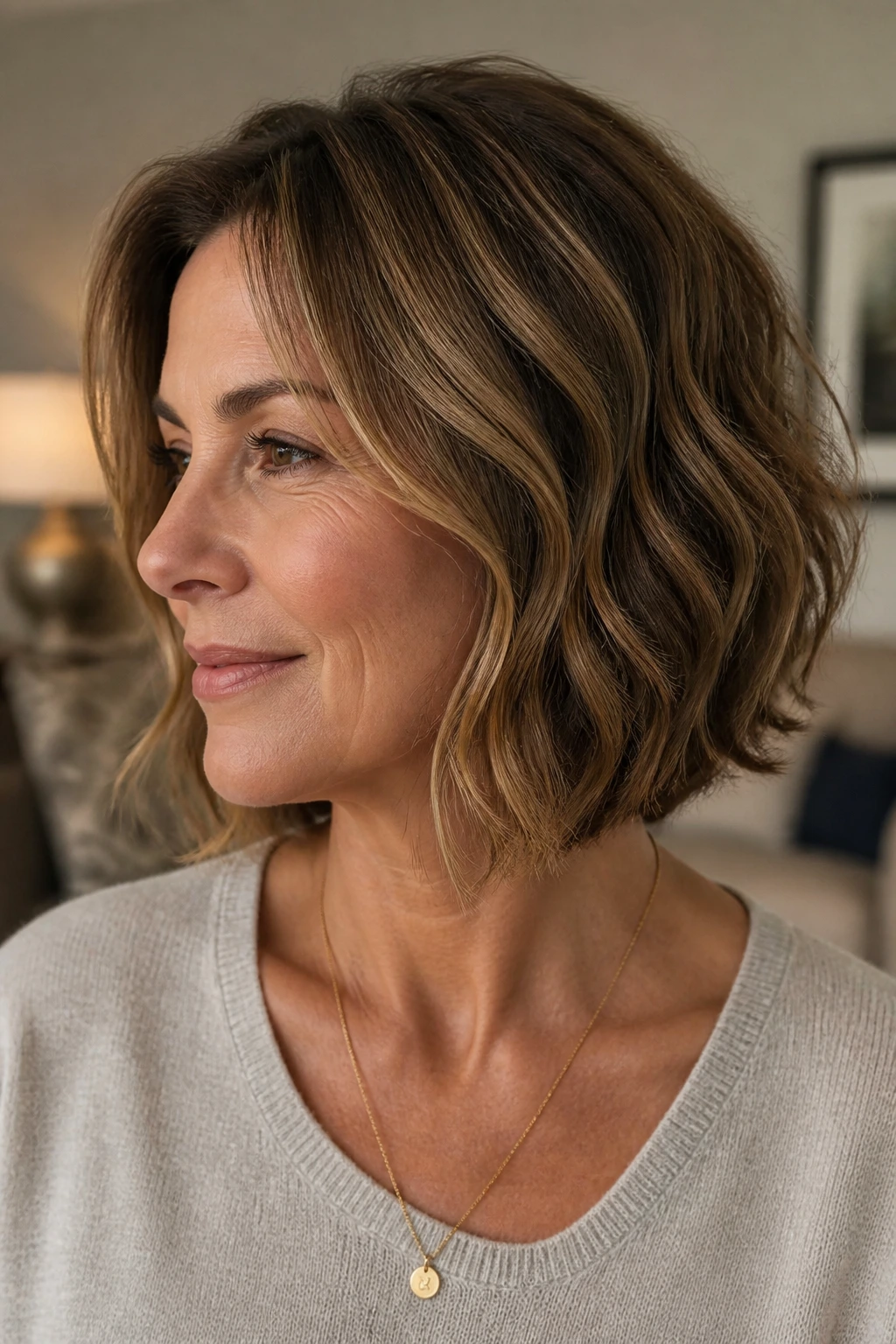
Silver-First Bob: If your gray is the feature, not the thing to manage, ask for a softer perimeter and fewer heavy products. A light gloss or a purple shampoo used sparingly keeps the silver bright without drying the hair into a straw-like feel.
Fine-Hair Float: For hair that collapses fast, shorten the bob slightly and keep the layering subtle. The goal is lift, not airiness that turns see-through at the ends.
Thick-Hair Sweep: For dense hair, ask for internal weight removal and a slightly longer front. That keeps the shape from ballooning while still letting the wave sit softly.
Glasses-Ready Shape: If you wear frames every day, keep the temple area clean and the front pieces angled away from the face. This prevents the haircut from bunching up around the arms of your glasses.
Humidity-Hush Finish: In damp weather, use a flexible anti-frizz cream on the ends only, then let the bob dry with a diffuser or natural bend. Heavy smoothing serums can make the wave collapse instead of calm down.
Keep the Shape: Maintenance, Trims, and Day-Two Styling
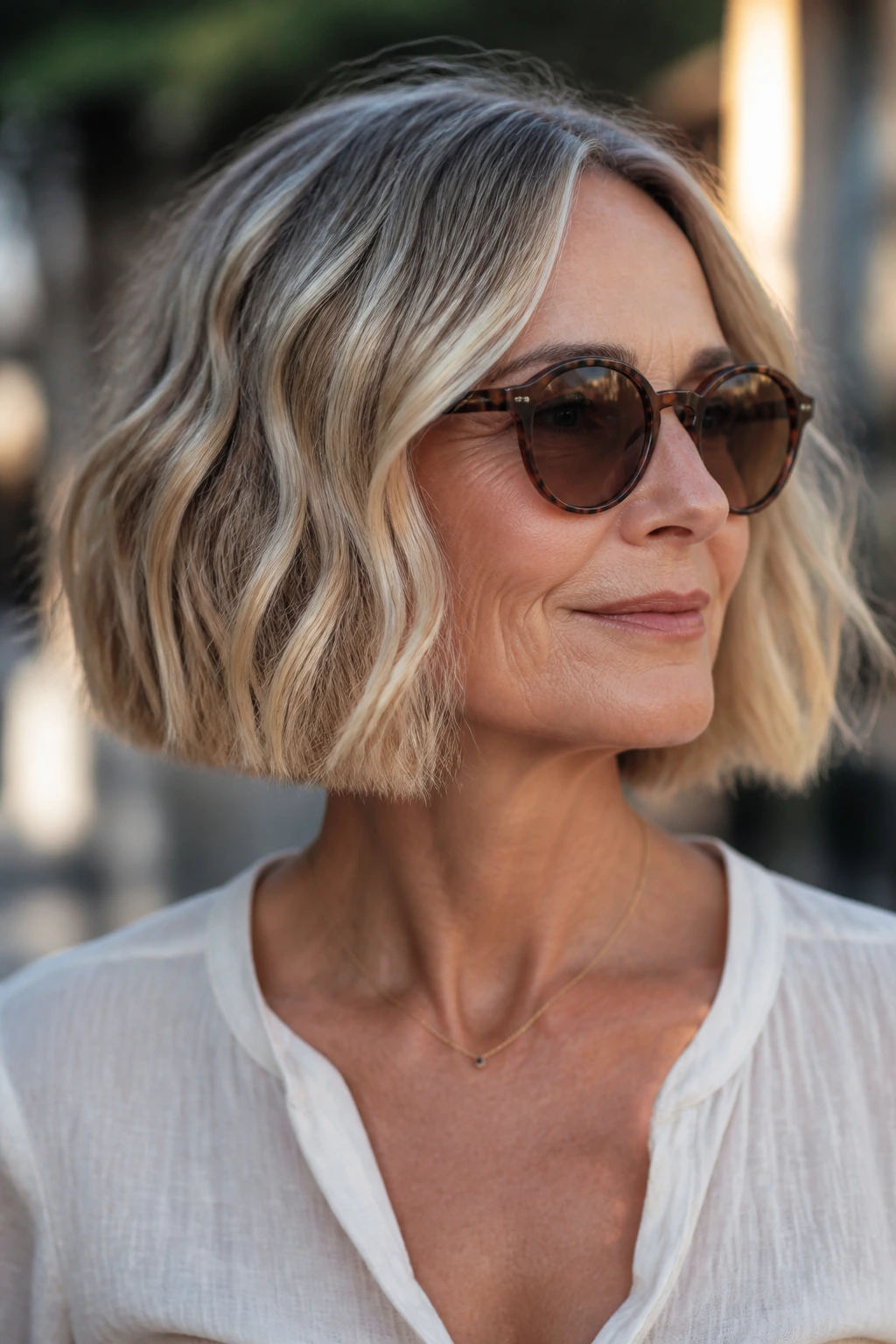
Shorter bobs usually want a trim every 6 to 8 weeks if you want the line to stay sharp. Lobs can stretch a little longer, often 8 to 10 weeks, especially if the cut is soft and the ends are meant to look undone. If your hair grows fast around the neck, don’t wait until the whole silhouette feels bulky. That’s when the style starts to look accidental.
Night care matters more than people think. A satin pillowcase reduces friction, and a loose clip keeps the bob from getting mashed flat at the back. If you wake up with a crease, mist the area lightly with water, add a drop of leave-in, and twist the front pieces back into shape with your fingers. No need to start over.
Day-two styling should be fast. Dry shampoo at the roots, a quick lift at the crown, and a few seconds with a wand on the front sections usually bring the shape back. If the ends feel dry, skip the urge to drench them in oil. A tiny bit of cream or texturizer is enough. Too much and the whole bob goes soft in the wrong way.
Frequently Asked Questions

Which bob length is most flattering after 50?
The most flattering length is the one that works with your hair density and your neck line. Collarbone, jaw, and neck-length bobs all can look excellent; the right one is the one that keeps movement in the ends and balance at the crown.
Do beachy waves work on fine hair?
Yes, but the wave has to stay loose and the layers have to stay controlled. Fine hair usually looks better with a soft bend and root lift than with tight curls or too much texturizing.
Can I wear a bob with glasses?
Absolutely. A glasses-friendly bob usually keeps the temples a little softer and the front pieces angled away from the frame. Side parts and chin-to-jaw lengths tend to behave best.
What if my hair is naturally straight?
You can still wear this look. Use a blow-dryer brush for the front pieces and a 1-inch wand on only a few sections. The haircut matters more than curling every strand.
How do I stop the waves from getting frizzy?
Keep product light, dry the hair with a microfiber towel or T-shirt, and avoid rubbing the ends once they’re dry. Frizz often comes from too much handling, not too little product.
How often should I trim a wavy bob?
Most short bobs need shaping every 6 to 8 weeks. Longer bobs can go a bit longer, but if the front starts to lose its bend or the back gets bulky, it’s time.
What should I ask for at the salon?
Ask for the length by feature, not only by inches. Say where you want the bob to hit — jaw, neck, collarbone — and mention whether you want soft layers, hidden layers, or a blunt edge with texture.
Can I air-dry it and still look polished?
Yes, if the cut is right. Air-dry the roots a little lifted, scrunch the mid-lengths, and touch up only the front pieces. That usually gives enough shape without making the hair look too styled.
The Bob That Moves With You
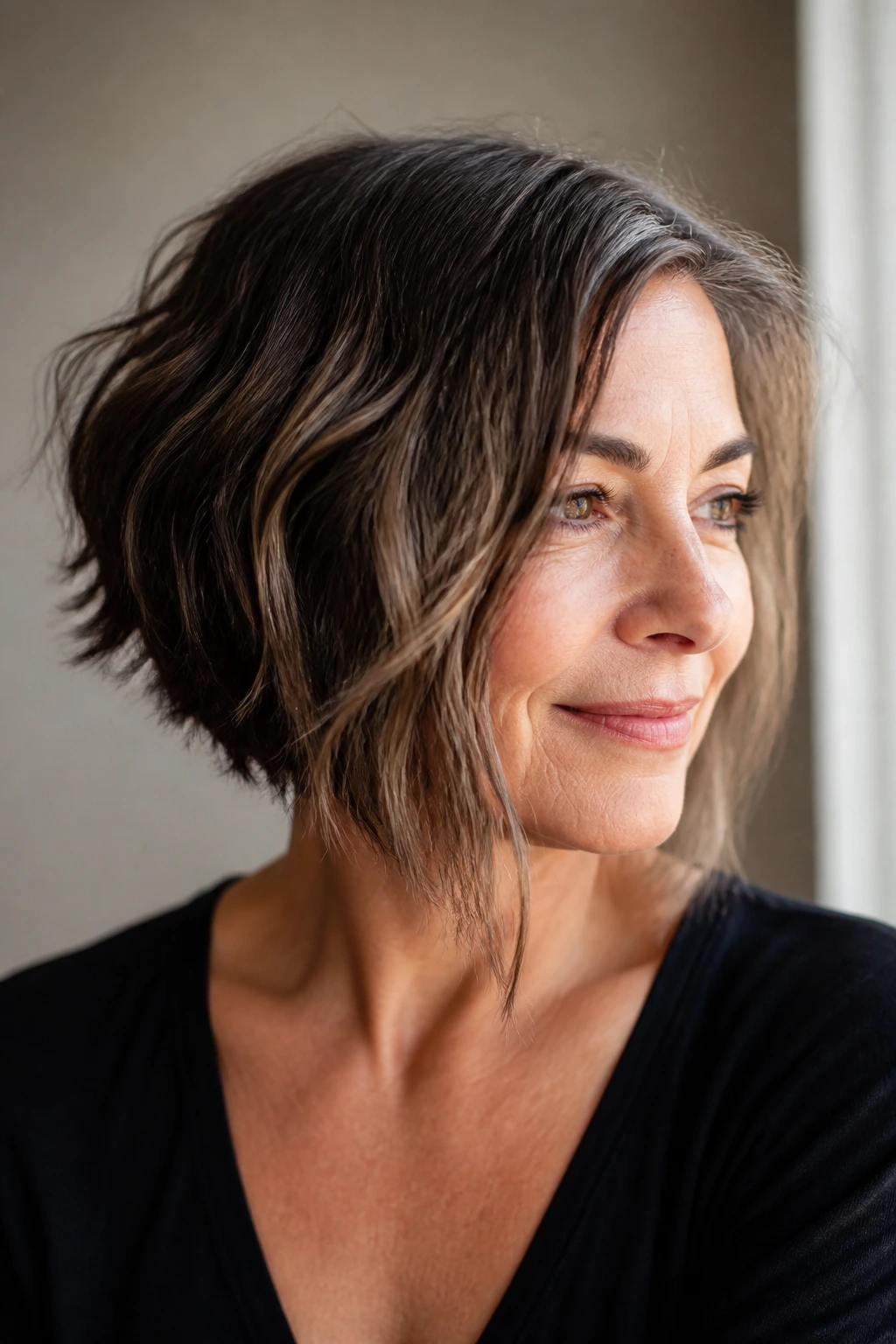
The nicest thing about a good wavy bob is that it doesn’t ask you to perform for it. It falls into place, bends when it wants to, and keeps enough structure to look deliberate even when the day gets busy. That’s a very good trade.
If you’re choosing one of these cuts, think less about chasing a “big change” and more about finding the shape that behaves on ordinary days. The best bob is the one that still looks like you after a scarf, a nap, a little humidity, and one too many times tucking it behind your ear.