



Short layered haircuts for round faces with fine hair live or die on shape. Put the weight in the wrong place and the cheeks look wider. Strip out too much bulk and the ends go wispy, the part collapses, and the whole cut starts looking tired before lunch.
The sweet spot is a cut that pulls the eye upward and downward at the same time. That usually means a little height at the crown, softness around the jaw, and face-framing pieces that begin below the cheekbone instead of cutting across the widest part of the face. Fine hair needs support, not punishment.
The cuts below do that in different ways. Some are polished. Some are a little edgy. A few are quiet little shapeshifters that look simple until you realize they’re doing a lot of work. All of them respect the same rule: keep the silhouette lean, keep the ends alive, and never bury a round face in a puffball.
Why These Cuts Earn Their Keep
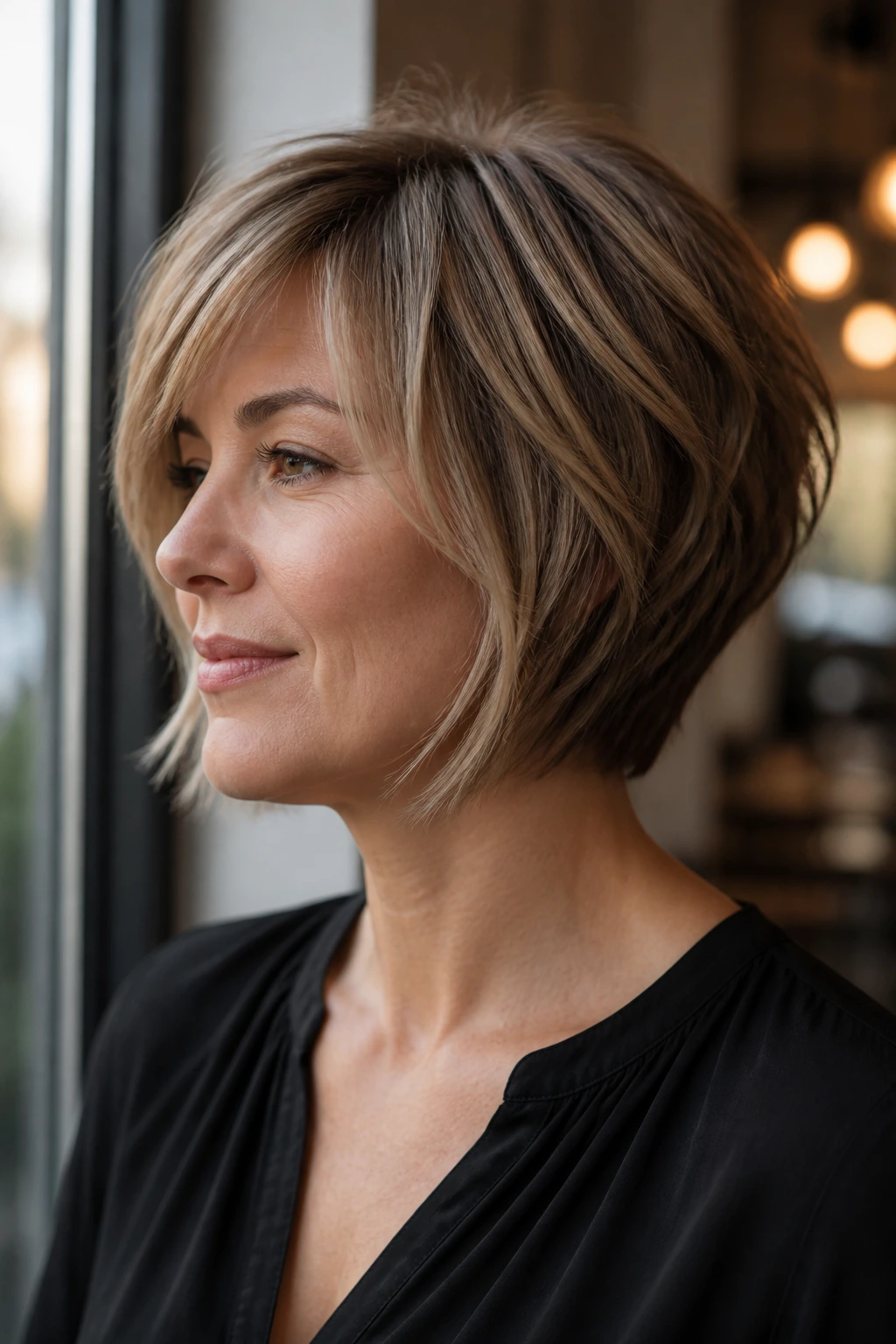
- Face length gets built in, not faked: The right layers create vertical movement from crown to chin, which keeps the face from reading as a full circle.
- Fine hair keeps some muscle: A good cut leaves enough weight at the perimeter so the ends don’t look see-through the second you brush them.
- Morning styling stays sane: Most of these shapes need a quick bend, a round brush, or a finger-dry with mousse — not a wrestling match with three hot tools.
- Growth looks softer: These styles don’t fall apart in a week. As they grow, the shape usually just gets a little looser, not messy.
- They work with real texture: Straight hair, a small wave, or a faint bend all have a place here. The cut does most of the heavy lifting.
- You get options, not one look: Some of these lean sweet and soft, some sharp and modern, and some sit right in the middle.
What the Right Shape Needs Before the First Snip
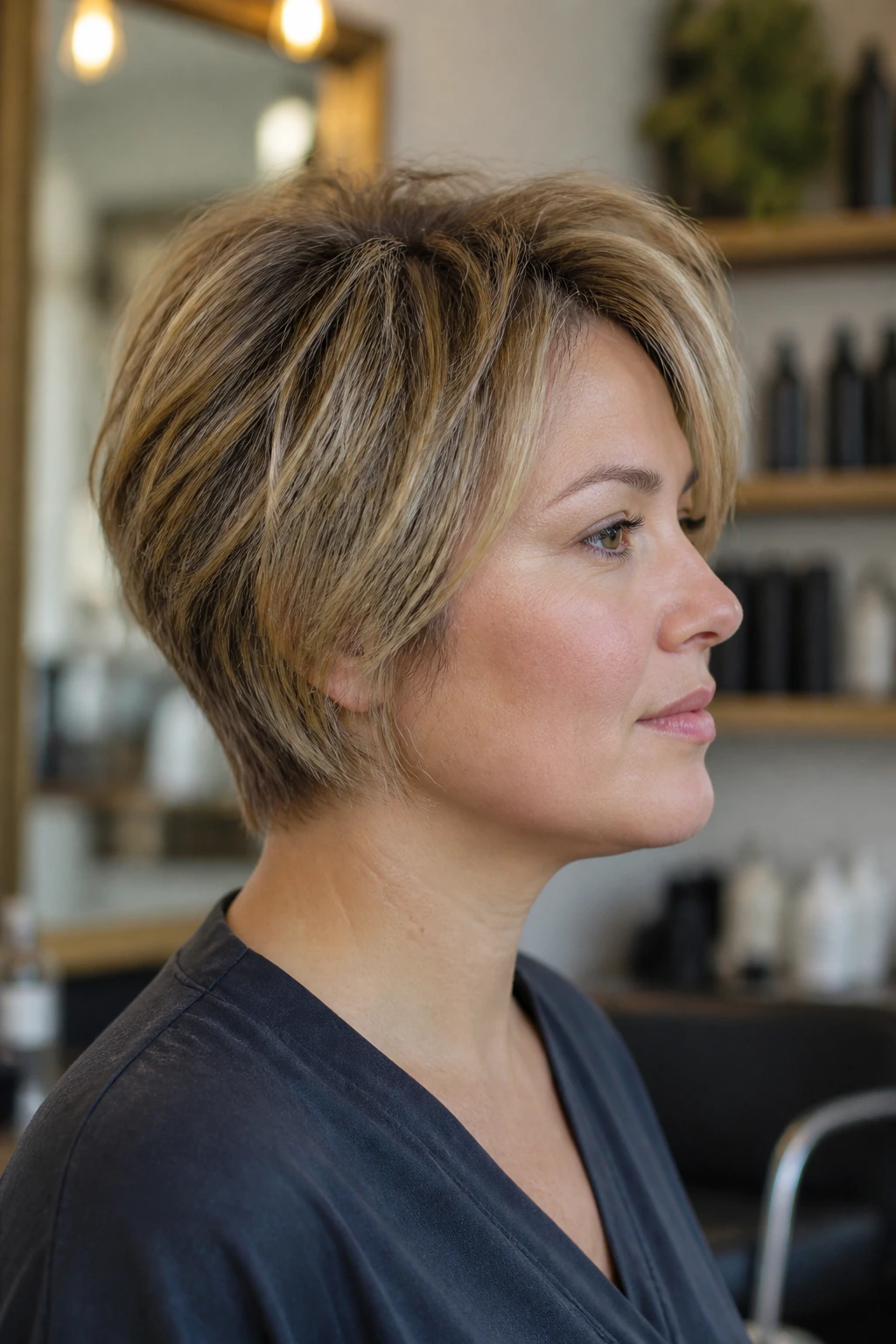
A round face does not need more width. It needs angles, movement, and a little breathing room around the cheeks. That’s why the best short layered cuts rarely start their shortest pieces right at cheek level. Once a layer lands there, the eye gets stuck on the widest part of the face, and the whole effect turns puffy instead of lifted.
Fine hair adds another layer of trouble. Too many layers can make it airy in the wrong way, which is a polite way of saying thin at the ends and flat at the roots. What you want is a cut that removes weight where the head needs shape, while leaving a clean edge somewhere lower down so the style still looks intentional. Blunt is not the enemy. Over-thinning is.
If I were standing behind the chair with scissors in hand, I’d think in lines. A diagonal line can slim. A side part can break up symmetry. A little crown height can stretch the face. A soft bend at the ends can keep the cut from feeling too severe. That’s the whole trick, and it’s why some of these styles look more expensive than they are. They are doing geometry, not just hair.
1. Side-Parted Textured Bob
This is the quiet workhorse of the bunch. The length sits around the chin, the part is off-center, and the ends are lightly textured so the bob doesn’t sit like a helmet. On a round face, that side part breaks the circle fast. On fine hair, the soft texture gives movement without hollowing out the shape.
Ask for the front pieces to graze just below the jawline, not right on top of it. That small difference matters. If the front stops too high, the face can look wider; if it lands lower, the whole silhouette pulls downward in a good way.
A little mousse at the roots and a round brush are enough here. Dry the hair with the part already set, and direct the crown up and back for height. Flat roots are the enemy.
What to watch for
If your stylist razors the whole perimeter too hard, the ends can look frayed in daylight. A gentle point-cut on the interior is usually enough.
2. Soft French Bob with Airy Fringe

A French bob can go wrong on fine hair if it gets too blunt and too short. The version that flatters a round face is softer: chin-ish length, a whisper of fringe, and edges that are beveled instead of boxy. It has that slightly undone look, but the shape still feels tidy.
The fringe should not be a heavy curtain that lands straight across the forehead. That’s the part that can widen the face visually. Keep it airy, parted a touch off center, and a little longer at the sides so it melts into the cheekbones instead of sitting like a shelf.
How to style it
Air-dry 70 percent of the way, then use a small round brush or a 1-inch brush with the dryer to tuck the ends under just a bit. A pea-size amount of lightweight cream at the tips is enough. More than that, and the fringe starts to separate in a greasy way.
This cut suits people who like polish but don’t want a fussy blowout every morning.
3. Long Pixie with Crown Lift
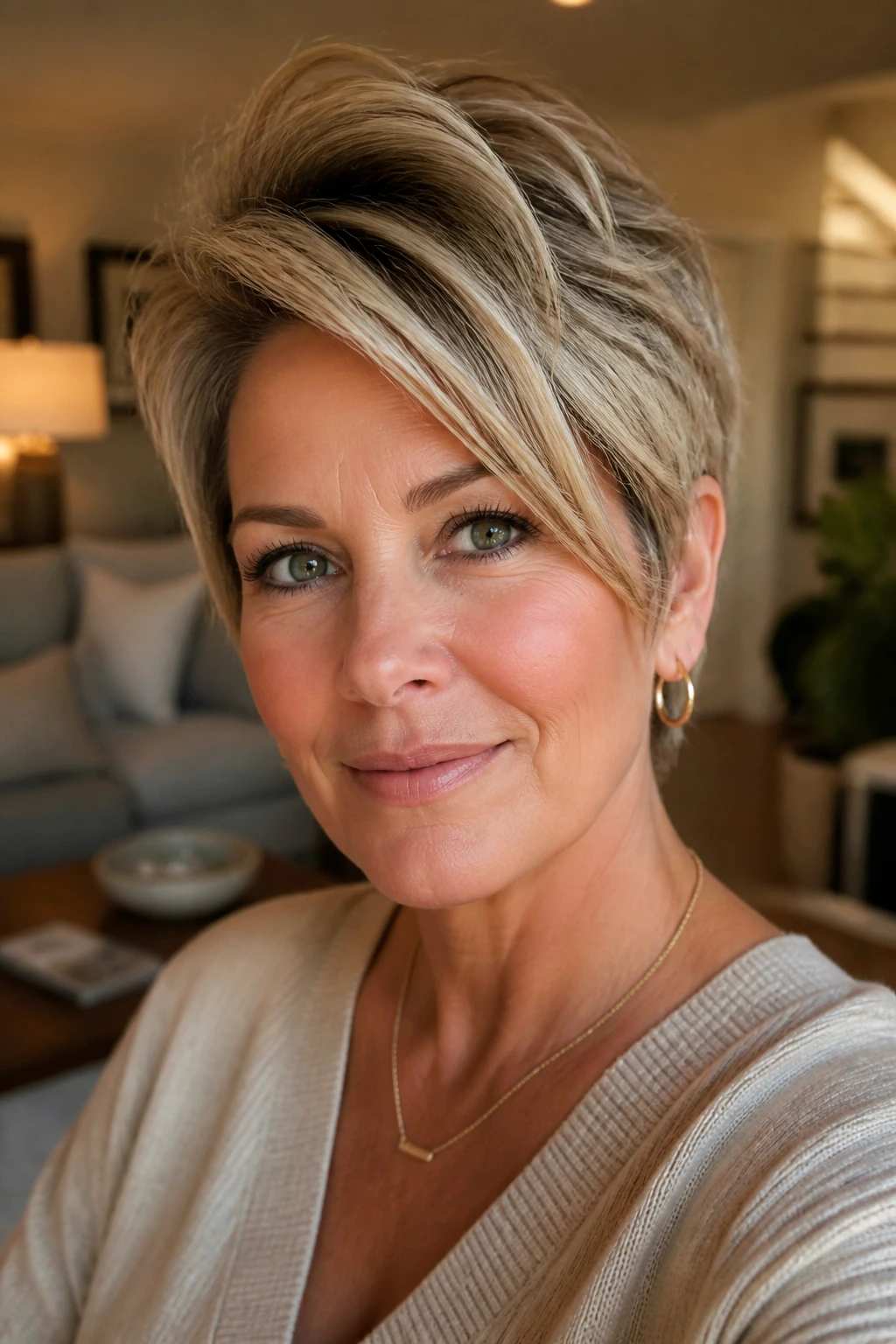
A long pixie is one of the best shortcuts for fine hair that falls flat. The sides stay neat, the top keeps 3 to 4 inches of length, and the fringe sweeps to one side so the face gets a clean diagonal line. That diagonal is what keeps a round face from feeling boxed in.
The real magic is in the crown. Without a little lift there, the cut can read too close to the head and flatten the face. With it, the whole shape gets taller, lighter, and more interesting. Keep the nape snug, but don’t shave the top down to nothing.
This one is for the person who does not want to fuss with a brush for half the morning. A bit of mousse, a quick blow-dry with fingers, and a small dab of paste at the ends usually does it. That’s enough.
If your hair is very soft, ask for point-cut texture on top instead of heavy thinning. The wrong kind of thinning can make a pixie look sparse fast.
4. Angled Bob with Tapered Nape
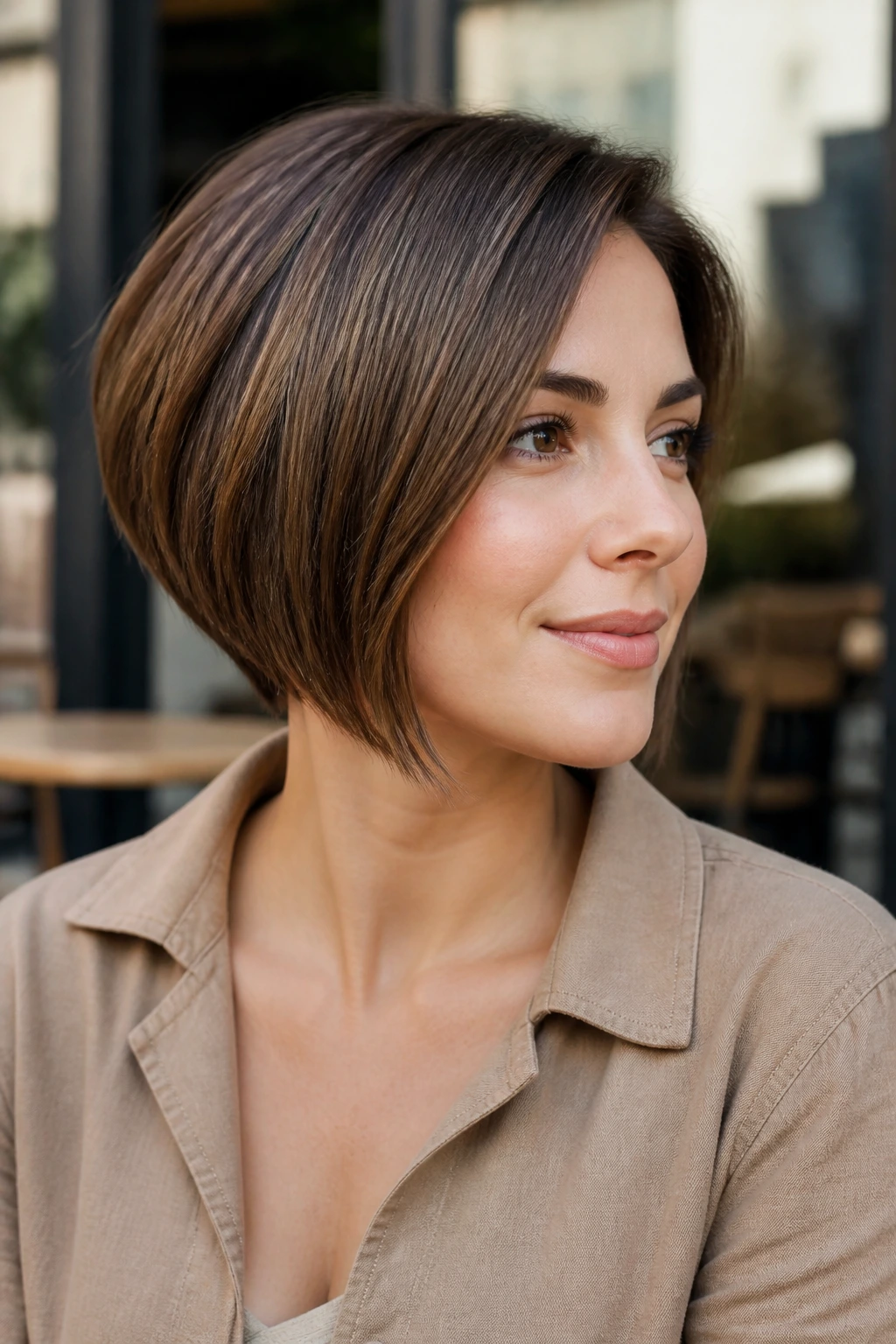
The angled bob is a smart cut when you want short hair with a little edge. It’s shorter in the back, longer in the front, and the line falls forward toward the collarbone or jaw. That forward motion slims a round face in a way a straight bob often does not.
The key is moderation. A dramatic angle can feel severe, especially on fine hair that does not have much internal density. Keep the slope subtle, and ask for a tapered nape so the back lies close to the head without stacking too high. Too much stacking can puff the back out like a little cap.
This cut looks best when the front pieces are smooth and slightly curved in toward the cheek. That little inward bend keeps the shape sleek. It does not need a hard curl. Just enough bend to show there was a brush involved.
A side part sharpens the effect, though a very deep side part can make it feel more dramatic than some people want.
5. Invisible-Layer Lob
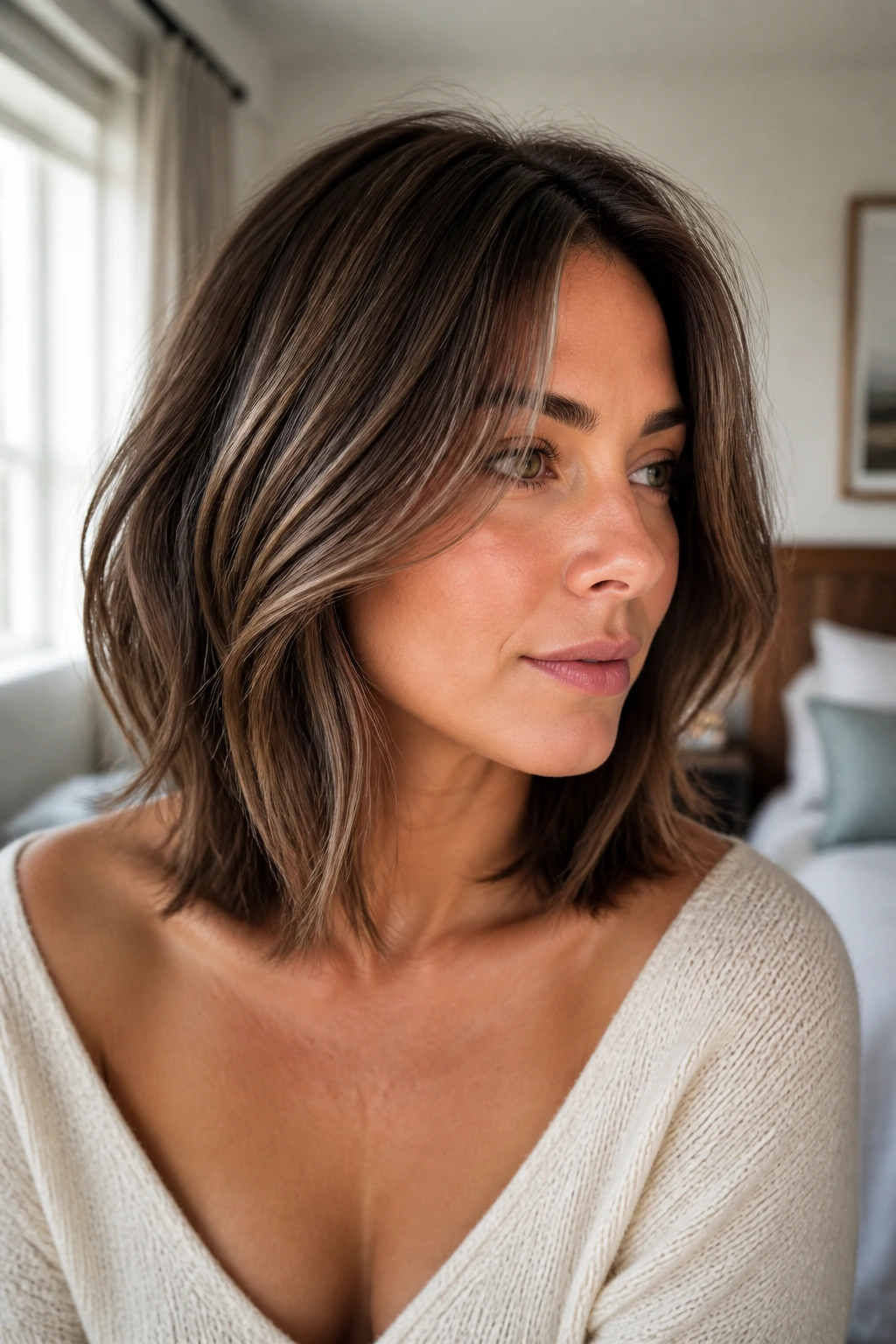
Not every short cut needs to sit at the jaw. Sometimes the smartest move is a collarbone-length lob with hidden layers inside the shape. That’s especially true if your fine hair needs density at the perimeter. The outside line stays clean, while the internal layers remove bulk where the head wants movement.
For a round face, this length is forgiving. It falls below the cheeks, which helps elongate the face without making the style feel heavy. The trick is to keep the front pieces a little longer than the back so the eye travels downward. Straight across at collarbone length can be nice, but a whisper of angle usually works better here.
This one loves a loose wave. If your hair already bends a bit, you can air-dry with mousse and a few twists. If it’s pin-straight, use a flat iron to add a slight turn at the ends, not a full curl. A tiny bend is enough.
It’s one of my favorites for people who want short-ish hair without losing the option to tie it back on lazy days.
6. Curtain-Bang Shag

A shag can be gorgeous on a round face, but only if the layers are controlled. The version that works here keeps the length short and the curtain bangs soft, opening in the middle and sweeping down toward the cheekbones. That opening makes the face feel less circular right away.
Fine hair benefits from the shag’s movement, but it can’t be over-chopped. You want airy layers, not a shredded mess. The ends should still have enough weight to swing. If the stylist goes wild with the razor, the cut can lose shape by the second day.
Styling note
Blow-dry the bangs forward first, then split them and push them outward with a round brush or your fingers. The center should stay a little lighter than the sides. That’s what gives the face room.
This cut is for someone who likes a bit of softness around the eyes but does not want a heavy fringe touching the brows all day.
7. Jaw-Length Piecey Bob
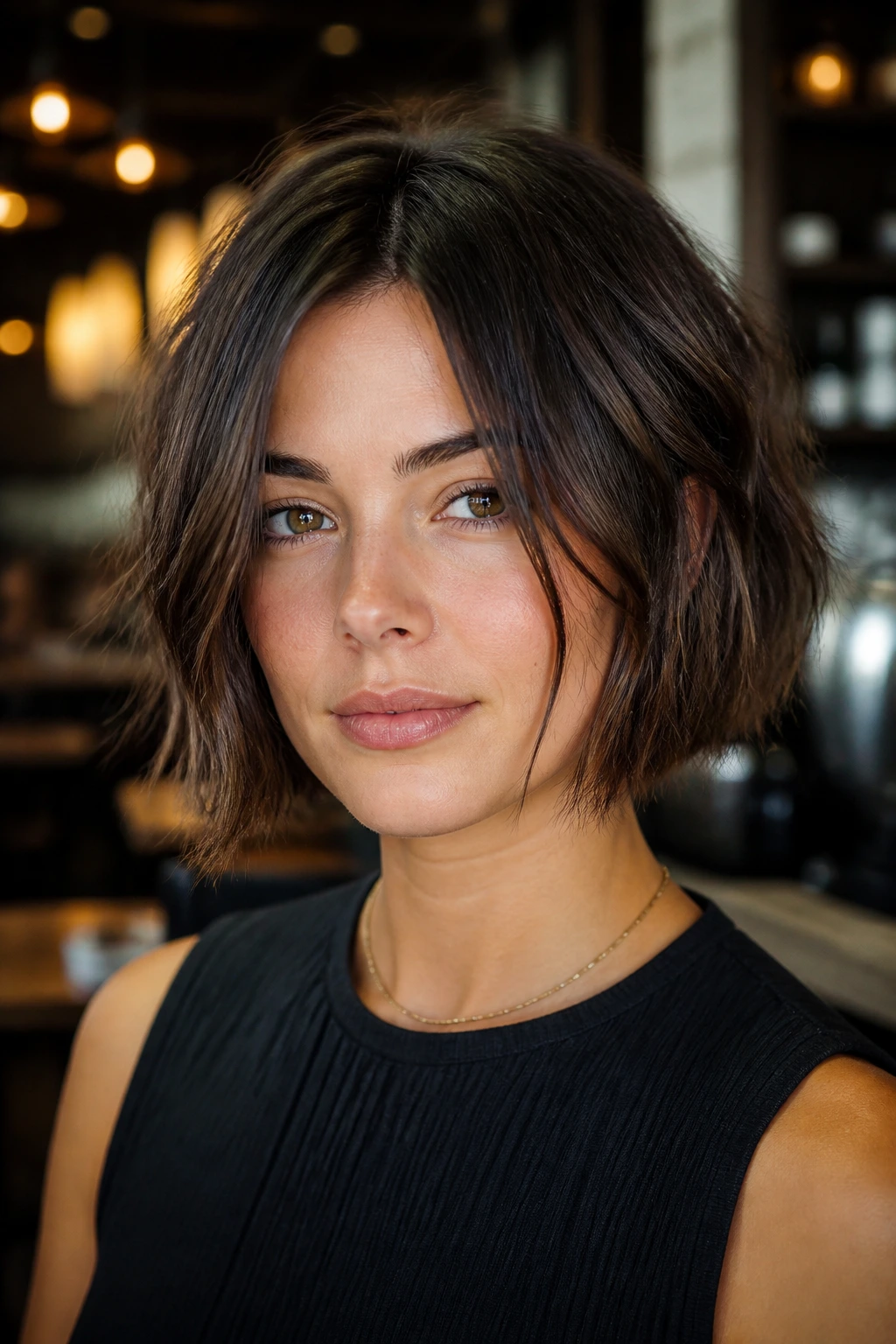
A jaw-length bob sounds like a risky choice for a round face, and honestly, it can be. But when the pieces are broken up just enough, the cut creates texture instead of bulk. The line sits sharp, the ends look airy, and the face gets a little bite.
The reason this works is contrast. Fine hair can look fuller when the perimeter is defined, and the piecey interior keeps it from going blocky. The front should be a touch longer than the back so the jaw is not the only thing the eye sees.
This is not the place for heavy side volume. Keep the crown soft and let the ends do the talking. A small amount of texturizing spray on dry hair can separate the pieces and stop the bob from clumping together.
If your hair tends to puff in humidity, this one needs a little more discipline. A smoothing serum at the mid-lengths — not the roots — keeps the outline from frizzing.
8. Soft Inverted Bob
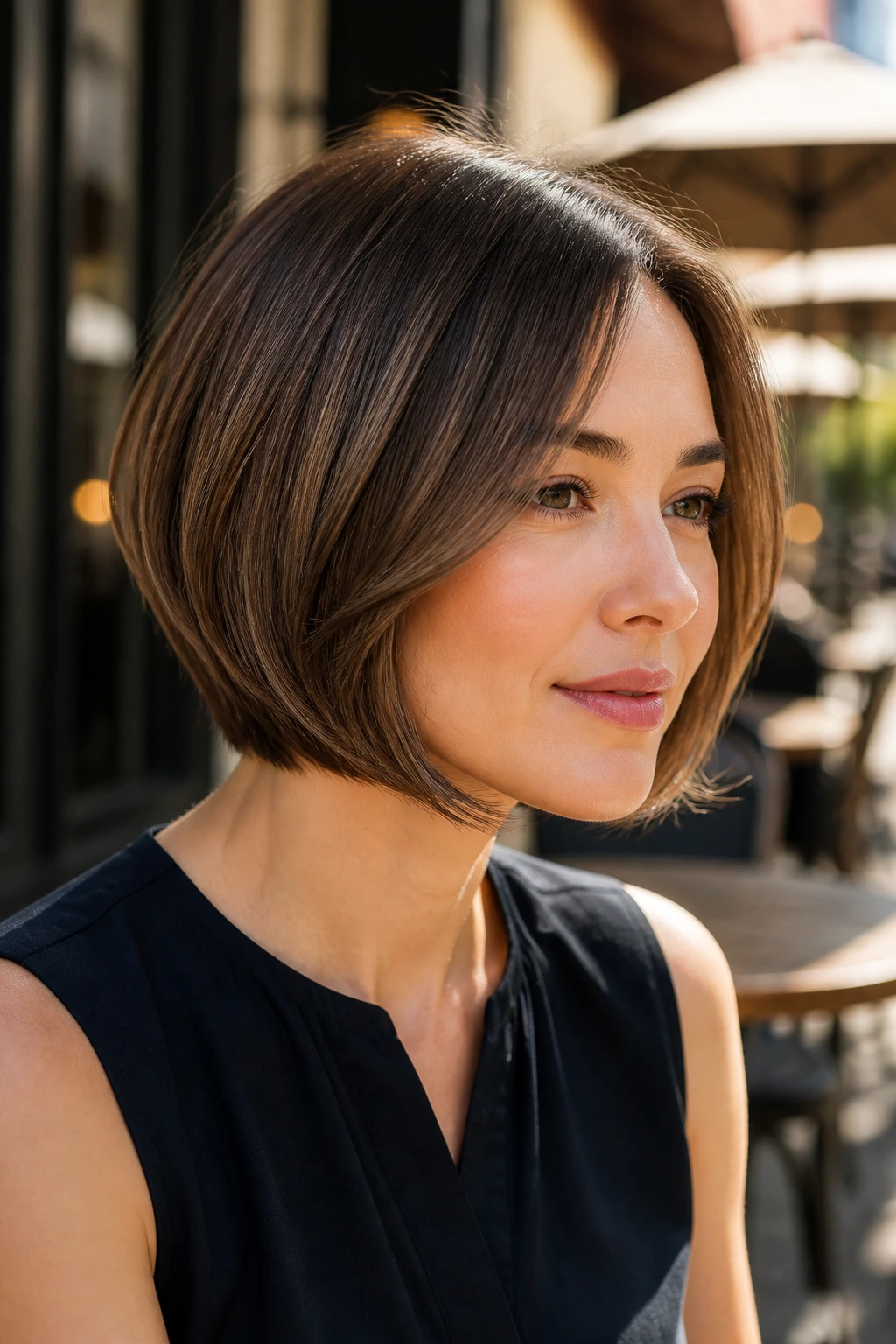
The inverted bob gives you lift at the back and a longer front that hugs the face. That shape can work beautifully on a round face because it builds a slim line from the nape forward. On fine hair, the shorter back helps the style hold a little more structure.
The version I like best is soft, not stacked to the sky. You want a gradual slope, not a sharp shelf. The back should sit close to the neck; the front can brush the jaw or dip a little lower. That difference in length is what makes the cut feel purposeful.
What it needs
- A clean, narrow nape.
- A front that lands lower than the cheekbone.
- Light internal texture, not aggressive thinning.
- A side part if you want the face to look less symmetrical.
Style it with a round brush and keep the brush moving forward as you dry the front sections. That little bit of direction keeps the shape sleek instead of fluffy.
9. Bixie with Swept Fringe

The bixie sits between a bob and a pixie, and that’s exactly why it works for fine hair. You get the lightness of a short cut with enough length on top and at the fringe to keep the face from looking too round. The swept fringe is the part that does the lifting.
The sides should stay tucked in fairly close, while the top keeps piecey texture. If the fringe is too blunt, it can flatten the face. If it’s too wispy, it loses purpose. A side sweep that curves over the forehead and ends near the temple is the sweet spot.
This is a good cut if you want movement without spending ten minutes sculpting it. Dry it mostly with your hands, then use a small amount of paste or cream to separate the top pieces. Keep the product off the roots.
A bixie can get shaggy fast, though. It looks best when the nape is kept neat and the top is trimmed before it starts to flop over the eyes.
10. Razor-Textured Crop
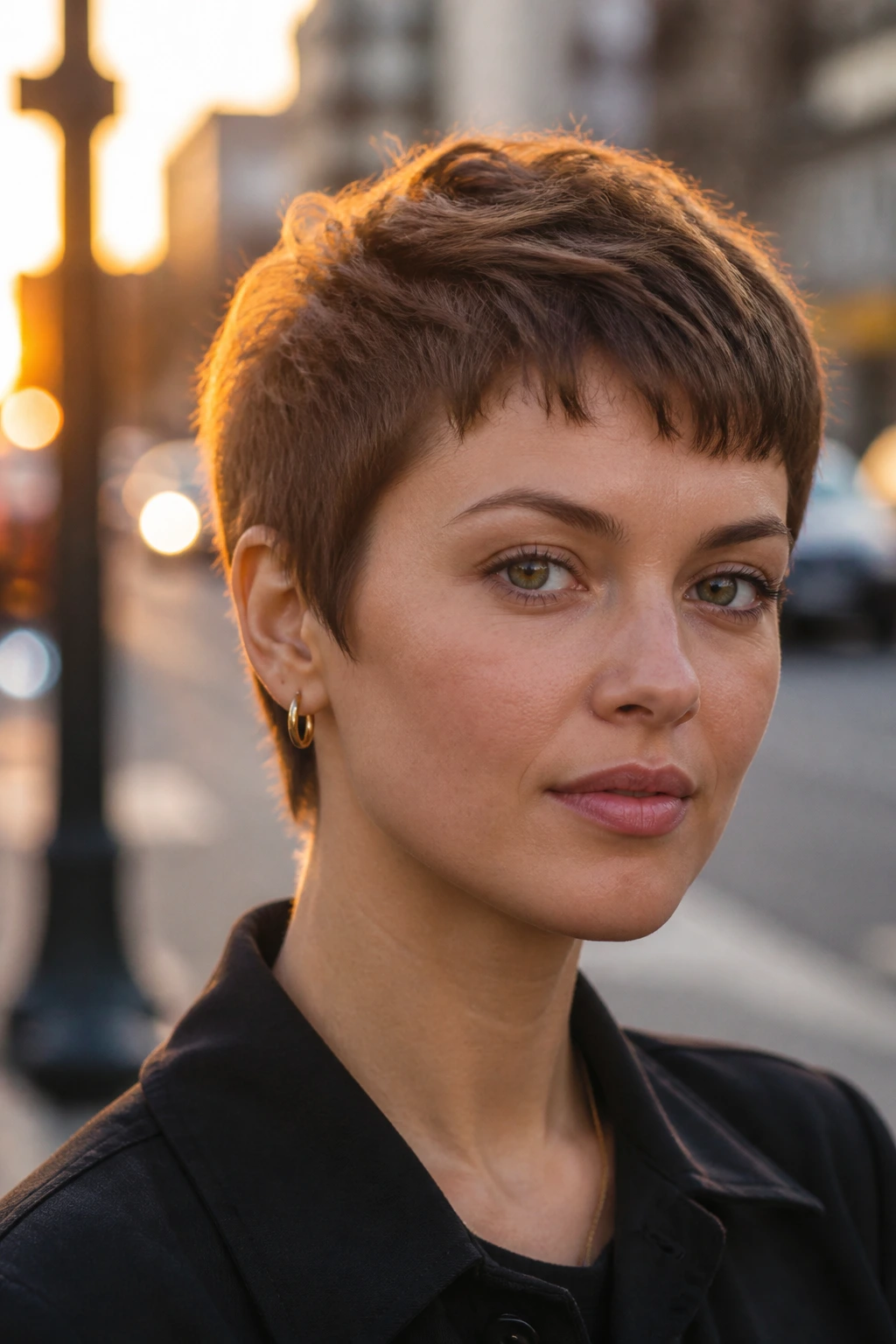
Razor cuts get a bad reputation because they can be too soft on damaged hair. On healthy fine hair, though, a carefully used razor can create a clean, airy crop that moves instead of sitting in one flat sheet. That movement matters on a round face because it keeps the silhouette from feeling too heavy.
The crop should stay short at the sides and a little longer on top, with the texture concentrated through the crown and fringe. Do not let the razor take the perimeter apart completely. You still need a line somewhere. Without that, the cut gets fluffy and vague.
This style looks best when the hair is naturally straight or only slightly bendy. If your strands are fragile, over-lightened, or split at the ends, ask for scissors instead. A rough razor pass on weak hair can make the tips look moth-eaten.
I’d call this the cool-girl option, but that sounds lazy. What it really does is make fine hair look intentionally light, not accidentally thin.
11. Asymmetrical Bob
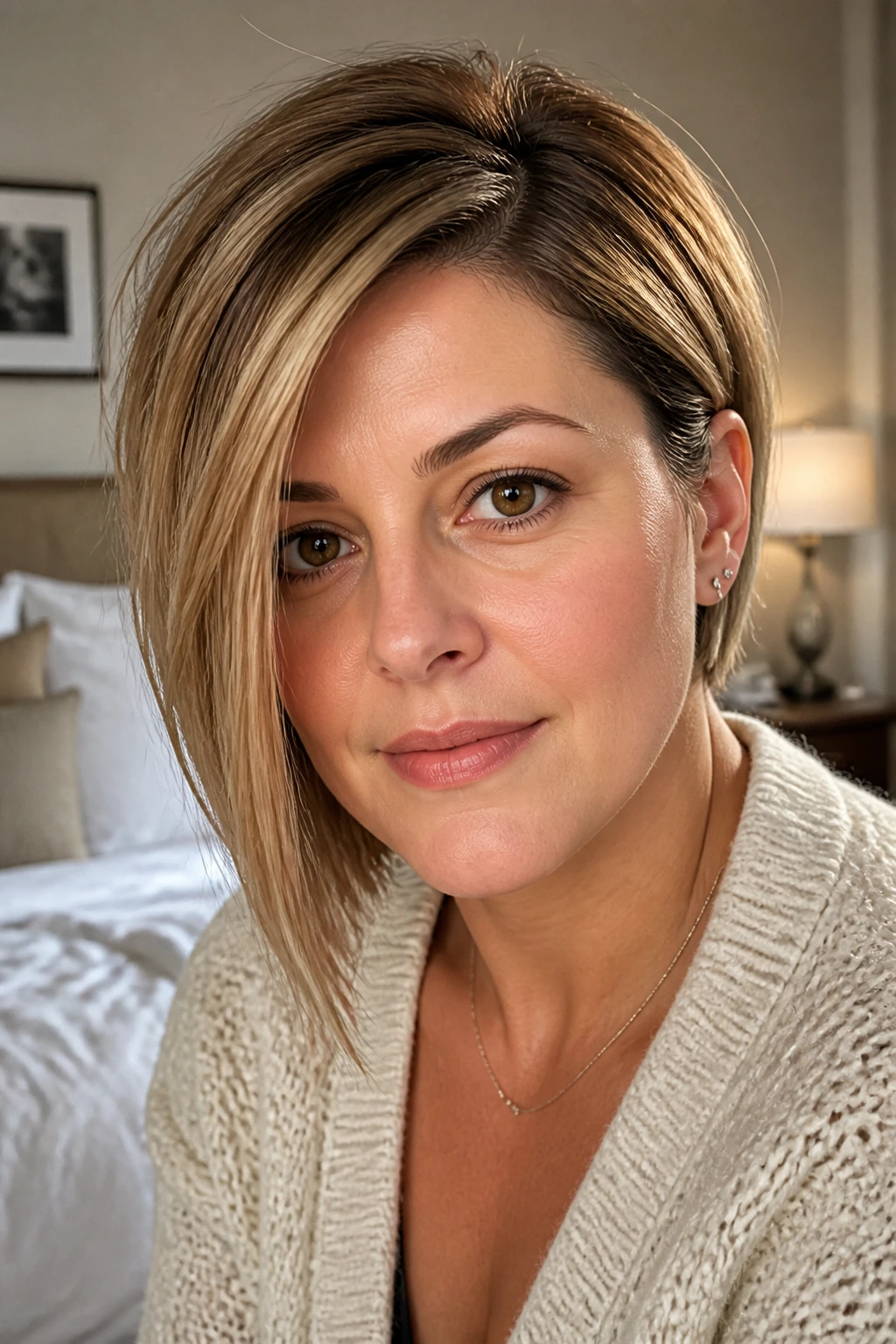
A little asymmetry changes everything. One side is longer, the other side sits shorter or more tucked, and the line gives the face a diagonal shape that round faces often need. It’s subtle enough to wear every day, but sharp enough to feel fresh.
Fine hair likes this cut because the asymmetry creates the illusion of more density. The longer side gives you a little weight where you need it, and the shorter side keeps the hair from puffing around the cheeks. The part should be deep enough to matter, but not so deep that it drains all the volume from one side.
This is one of those cuts that looks best when it’s not over-styled. A flat iron bend at the ends, alternating directions, keeps the line alive. If you curl both sides the same way, the bob can lose its edge.
It also grows out in a tolerable way. The shape softens instead of turning weird overnight, which is more than I can say for some sharper cuts.
12. Tucked Crop with Temple Length
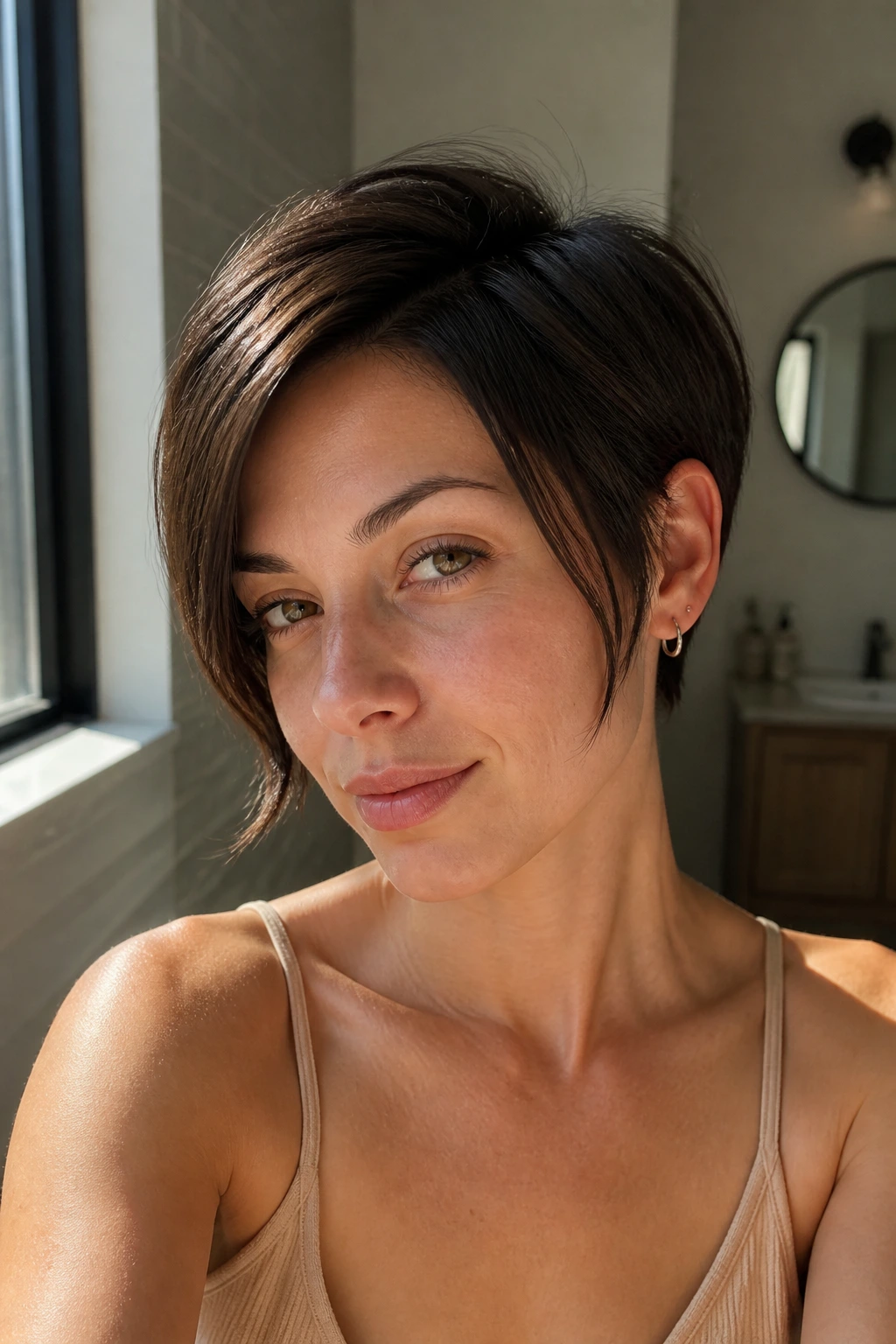
This one is short, neat, and better than it sounds. The sides are cropped enough to tuck behind the ears, but the temple pieces stay a little longer so the face still has framing. On a round face, that tucked effect opens the cheeks without making the cut look severe.
Fine hair can struggle when it’s left all one length around the ears. The tucked crop solves that by placing movement exactly where the face needs it. The temple length keeps the style from looking too boyish unless that’s the goal. If you want softness, ask for a feathered top with a gentle fringe.
A tiny amount of pomade or cream goes a long way here. Work it between your fingertips and pinch the ends, rather than smoothing it all over. Too much product makes the crown collapse, and then the whole point of the cut disappears.
It’s a clean, smart shape for people who wear glasses, too. The lines don’t compete with the frames.
13. Feathered Crop with Crown Lift
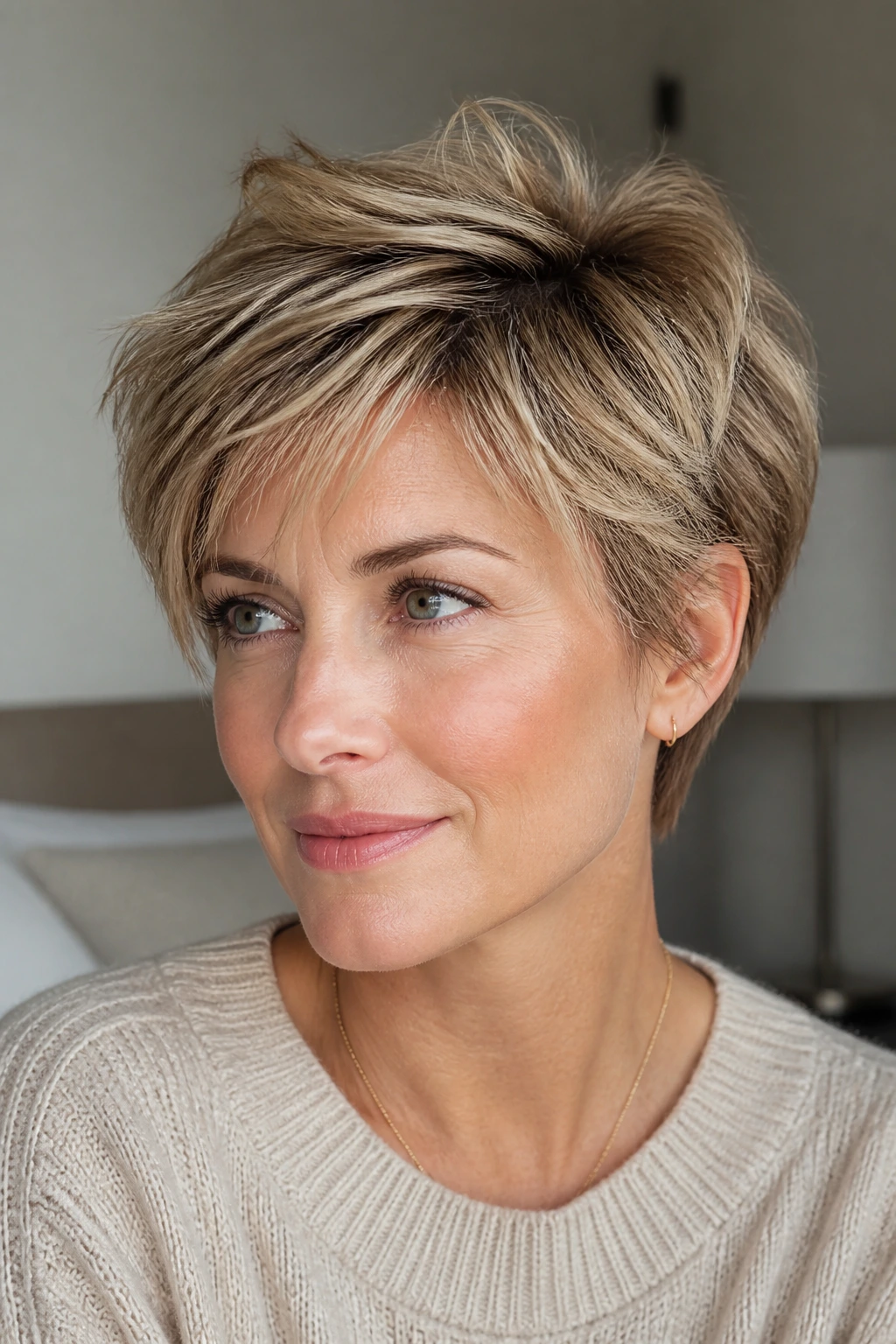
If your fine hair lies flat no matter what you do, this is the cut I’d hand you first. The top is feathered to create lift, the crown stays buoyant, and the sides are kept light enough to avoid widening the face. It has movement built in.
The mistake people make with feathered cuts is asking for too much thinning. That is how you get wispy, weak ends. The better version keeps feathering mostly on the upper layers and leaves the perimeter with enough structure to stay visible. That visible edge matters on fine hair.
A round face benefits from the crown lift more than the cheek area. Once the top rises a bit, the whole face reads taller. Dry the roots upward with a nozzle and a small round brush, then let the ends settle on their own.
This cut has a soft, almost air-dried look when done right. It should feel light, not flimsy.
14. Sliced Lob with Face-Framing Pieces

A sliced lob keeps the base line fairly clean while the front pieces are cut to frame the face in a softer way. That combination is gold for fine hair. The blunt-ish base gives the illusion of thickness, and the face-framing layers slim the cheeks without taking too much density out of the rest of the cut.
The front pieces should start below the cheekbone, preferably near the nose or mouth, depending on face length. That keeps the shortest point from landing where the face is widest. If your face is very round, a slightly longer front piece can help more than a cheek-length one.
This is a cut that behaves well with a quick blowout. You do not need tight curl or pin-straight polish. A bend through the front and a smooth crown is enough. Keep the ends soft and the line clear.
If you like hair that can tuck behind the ear on one side and still fall forward on the other, this is a nice middle ground.
15. Mini Wolf Cut
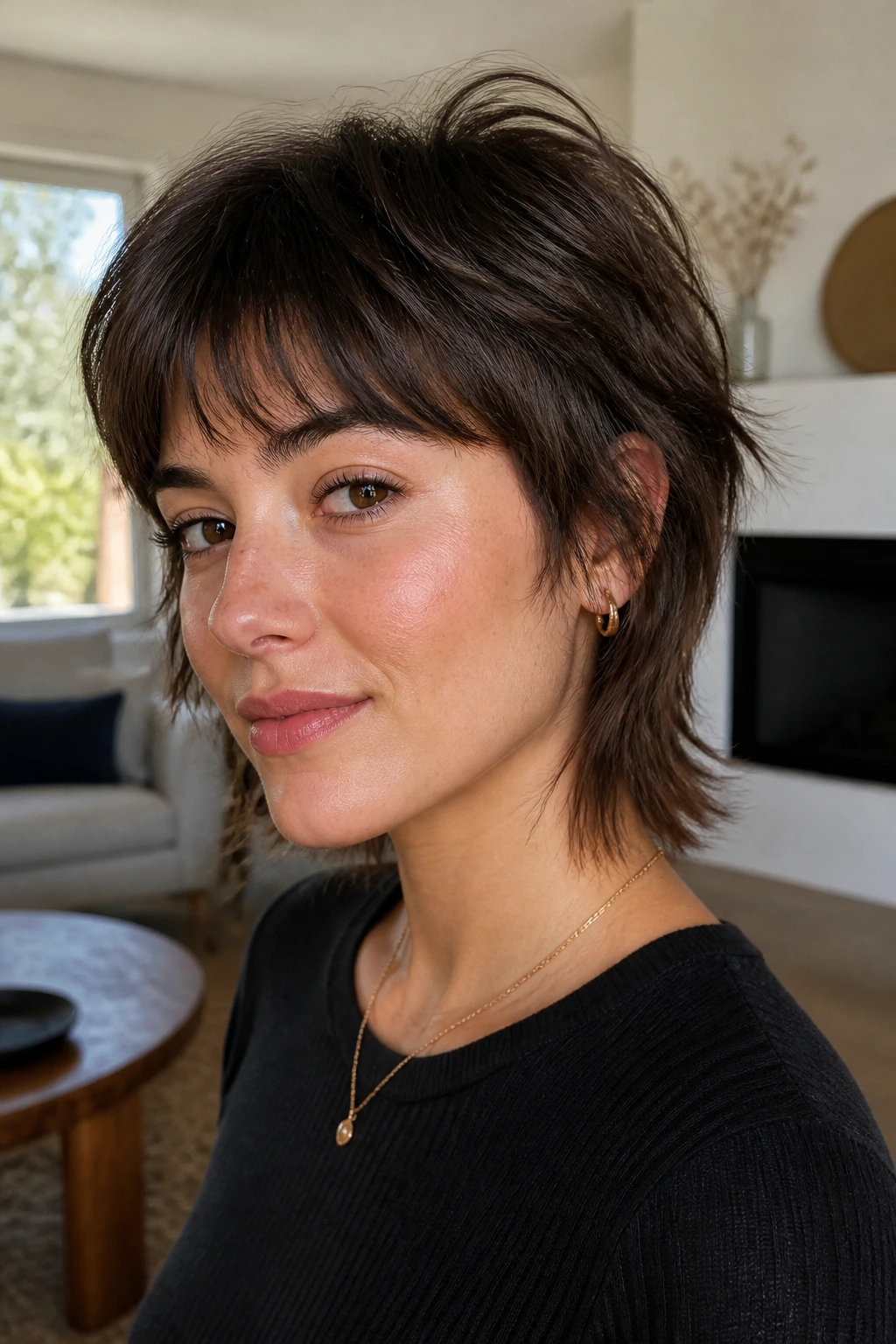
A full wolf cut can overwhelm fine hair and make a round face look larger if the layers are too wild. The mini version keeps the attitude but dials down the chaos. The top has movement, the nape stays lighter, and the fringe softens the forehead without closing it in.
The best mini wolf cut for this face shape keeps the longest face-framing pieces below the cheekbone and the crown a little taller than the sides. That gives you the lifted, rockerish shape without turning the head into a puff. I prefer this when there’s at least a little natural texture in the hair. Even a slight wave helps.
How to ask for it
Ask for a soft shag shape, not a choppy mullet. Those words are not interchangeable. The difference shows up fast once the scissors come out.
A little sea-salt spray or texture spray is enough to bring this one to life. Too much product and the pieces stick together in clumps, which is exactly what fine hair does not need.
16. Graduated Bob with Soft Ends
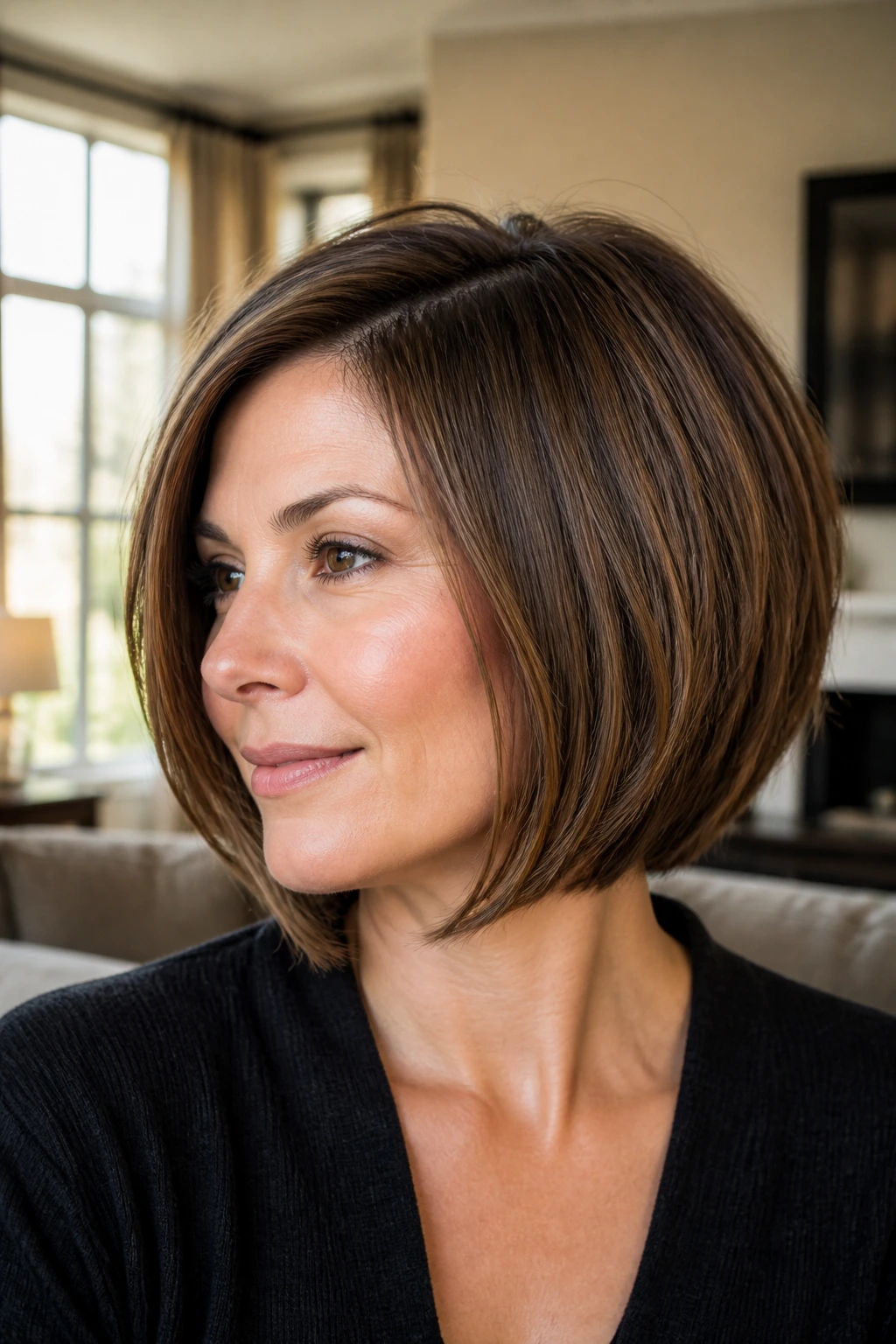
Graduation can be a gift on fine hair if it is controlled. A slightly shorter back gives lift, while the longer front keeps the face from getting too round. The difference here is the word soft. You want shape, not a stacked wedge from the old salon-school era.
This version is clean and wearable. The ends should be softened, not shredded, so the perimeter still looks full. On a round face, that clean line below the chin helps stretch the face down. On fine hair, the lifted back gives body without needing a lot of styling tricks.
I like this cut best when the part is not dead center. A side part shifts the visual weight and helps the face look a touch longer. Blow-dry the crown first, then sweep the back toward the nape with the brush so the graduation lies flat instead of flaring out.
If you want structure without looking severe, this is a solid pick.
17. Side-Swept Crop with Temple Volume
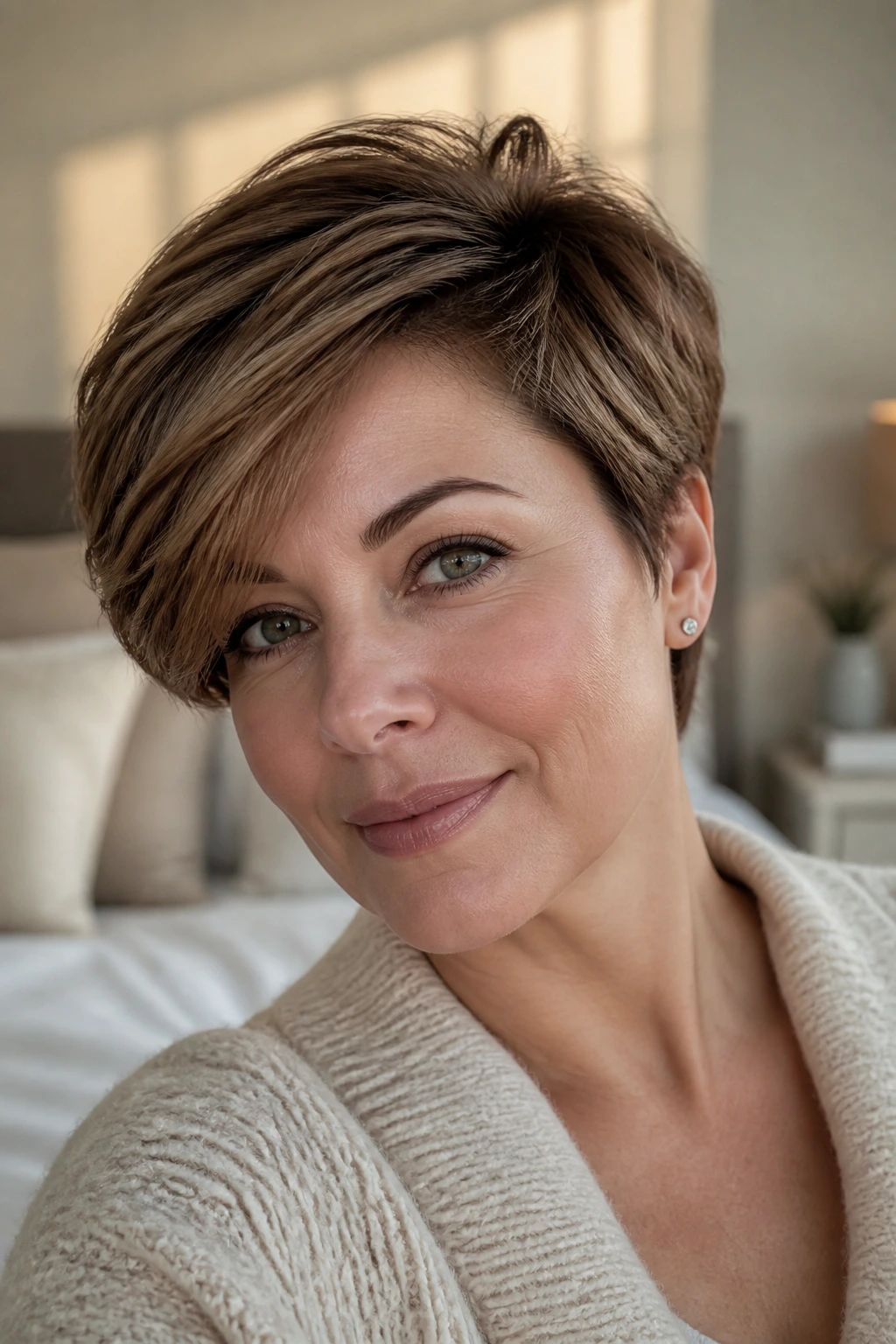
Temple volume is underrated. Most people chase height at the top and ignore the sides, but for a round face, a little lift near the temples can change the whole outline. This crop keeps the hair short, the side sweep long enough to soften the forehead, and the temple area alive.
Fine hair benefits from the compact shape. There’s less length to weigh it down, but enough movement up front to keep it feminine and modern. The sides should not be puffed out; they should sit close and lift only where the part demands it.
Use a root-lift spray at the temples and comb the hair away from the face while drying. Once it sets, the style holds better than you’d expect. A little touch of dry shampoo the next morning can wake it back up without making it dusty.
This is a smart cut for people who want a short shape that still reads soft around the face.
18. Soft Mullet with Wispy Nape
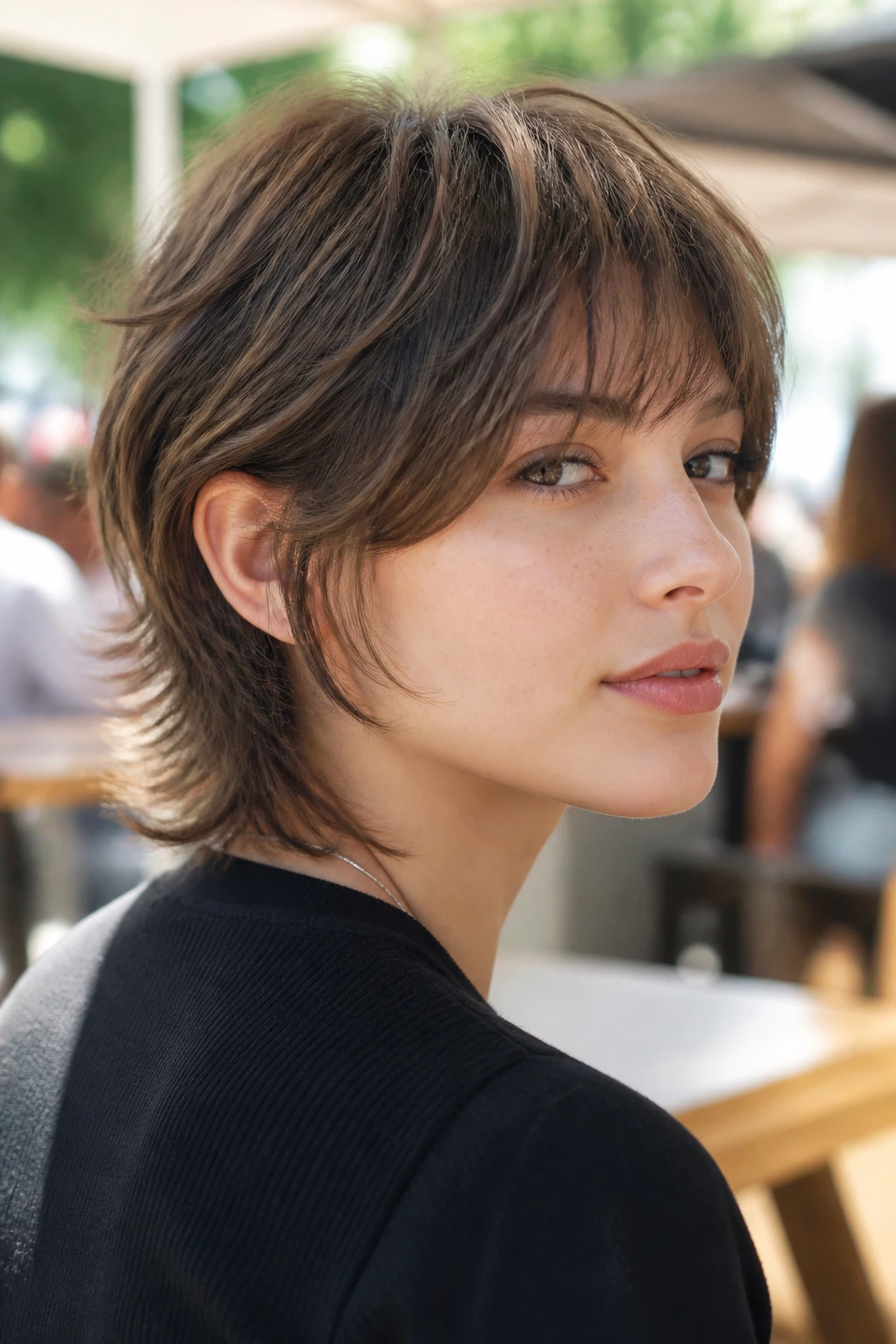
A soft mullet can be brilliant on round faces when it’s kept quiet. The front pieces frame the face, the top has some lift, and the nape gets a light taper so the whole cut stays modern without getting too sharp. Fine hair actually likes this if the layering is careful.
The danger is going too short in the front. If the fringe sits above the cheekbone, the face can look broader. Keep the front bits longer and wispy, and let the nape stay feather-light. That contrast helps the face look longer.
This cut wants a bit of grit. A light texturizing spray and a rough dry with your fingers are enough. It should never look slicked or over-polished. The charm is in the movement, not the perfection.
If you’re nervous about a full mullet but want something with shape and edge, this is the safer lane.
19. Wave-Enhanced Bob
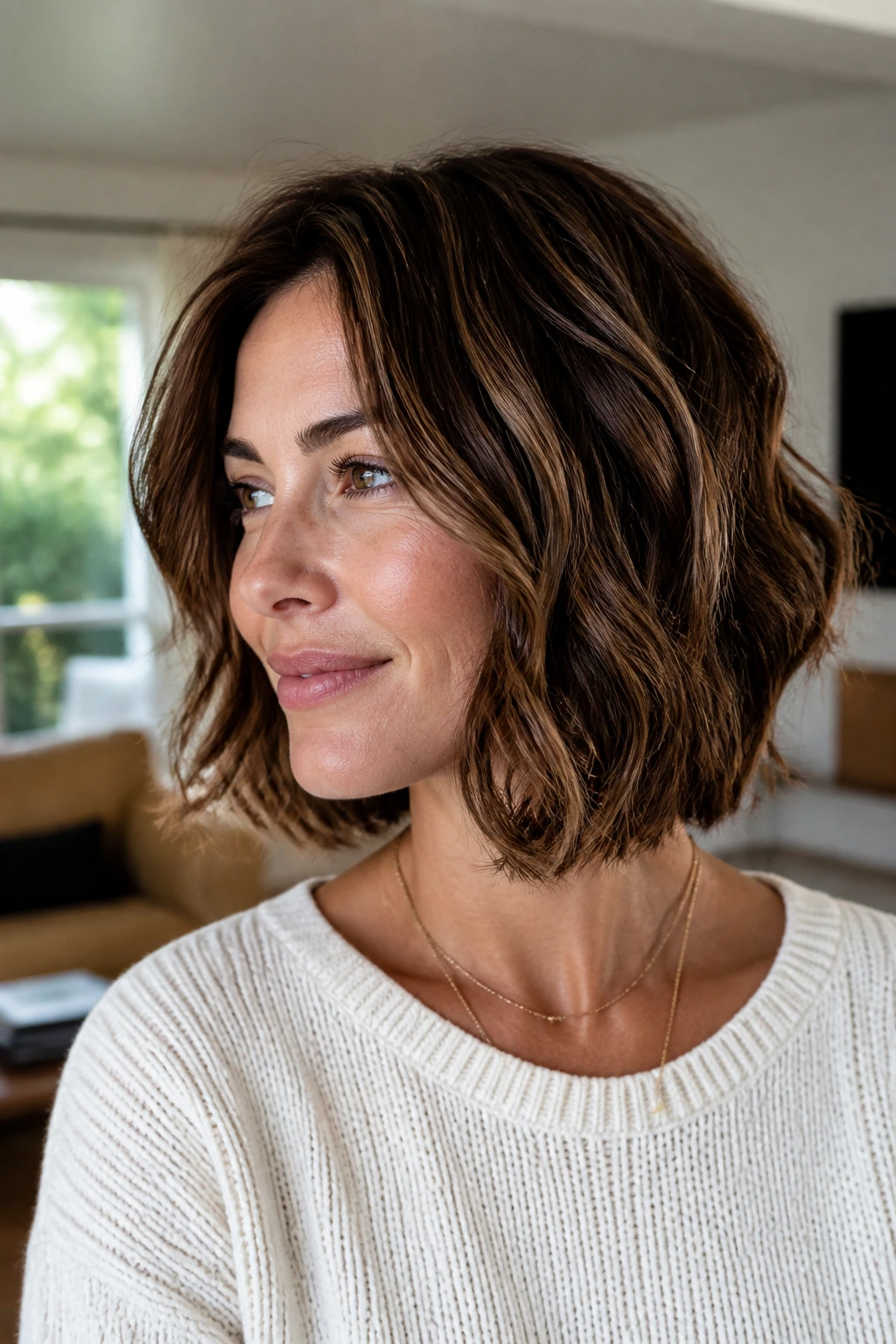
Some hair does not need to be forced into shape. It needs to be cut in a way that lets its own bend do the work. A wave-enhanced bob does exactly that. The length usually sits between the jaw and collarbone, with subtle layers that encourage the wave pattern rather than fighting it.
For a round face, the goal is to keep the wave from puffing at cheek level. That means the layers should start lower, and the front pieces should fall past the widest part of the face. Fine hair with a bend can look fuller than straight fine hair because the texture creates its own shadows.
Best for
- Natural wave, even if it is slight.
- Hair that frizzes a little but holds shape.
- People who dislike a fully blow-dried finish.
Scrunch in a lightweight mousse, air-dry halfway, and finish with a diffuser if needed. This cut can look effortless in the right way, which is different from looking like you forgot to brush it.
20. Choppy Crop with Deep Side Part
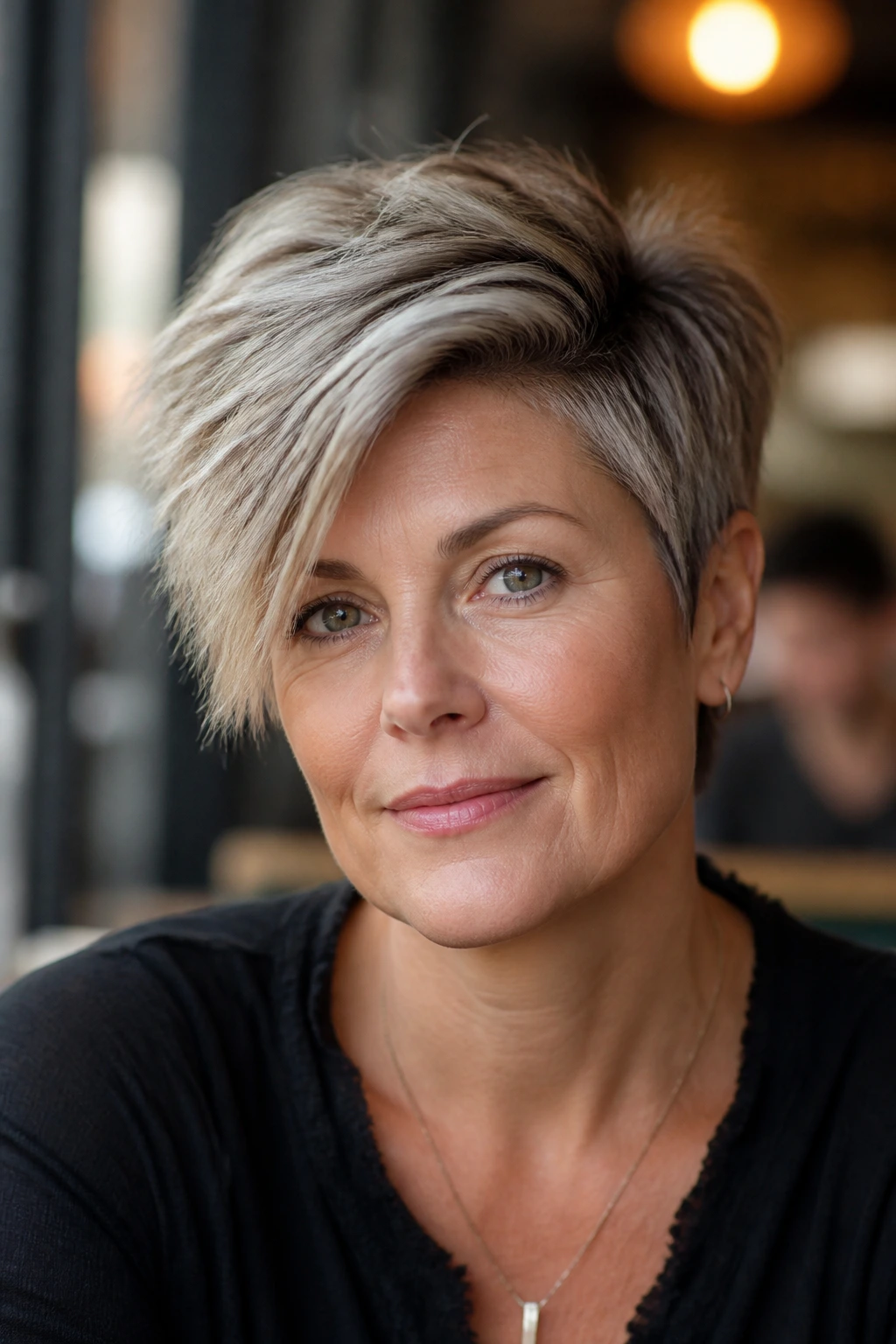
This is the haircut for days when you want movement and a little attitude. The deep side part breaks the symmetry of a round face, and the choppy ends keep fine hair from lying flat against the head. It’s short, but not severe.
The beauty of a deep side part is that it creates instant height where the hair naturally wants to fall. That lift pulls the eye upward. Pair it with texture through the top and shorter sides that stay close enough to the head to keep the silhouette clean.
Do not overdo the chopping. Choppy is not the same as shredded. A few irregular pieces are enough to make the cut feel lived-in. Too much texture at the bottom can make the shape fuzzy, and round faces do not need fuzz near the cheeks.
This cut looks especially good with a tiny bit of matte paste worked through the crown and fringe. Keep it light. The pieces should separate, not spike.
21. Neck-Length Shattered Bob

A neck-length bob gives you a little more length than chin-grazing versions, and that can be a relief if you want a slimmer face without going too short. The shattered finish keeps it from feeling heavy. Fine hair benefits from the extra line, while the shattered ends keep movement alive.
This is a very useful cut for round faces because the length lands below the cheeks and near the neck, which changes the visual proportions fast. It also works if you wear your hair behind one ear a lot, because the shape still looks deliberate when tucked.
Ask for shattered ends, not a giant amount of thinning. The point is to soften the edge, not erase it. A little bend at the front and a smooth crown are enough to keep the style sharp.
If your hair is prone to puffing outward at the sides, this cut needs a little more blow-drying discipline than a lob. Still worth it.
22. Layered Bixie with Soft Fringe
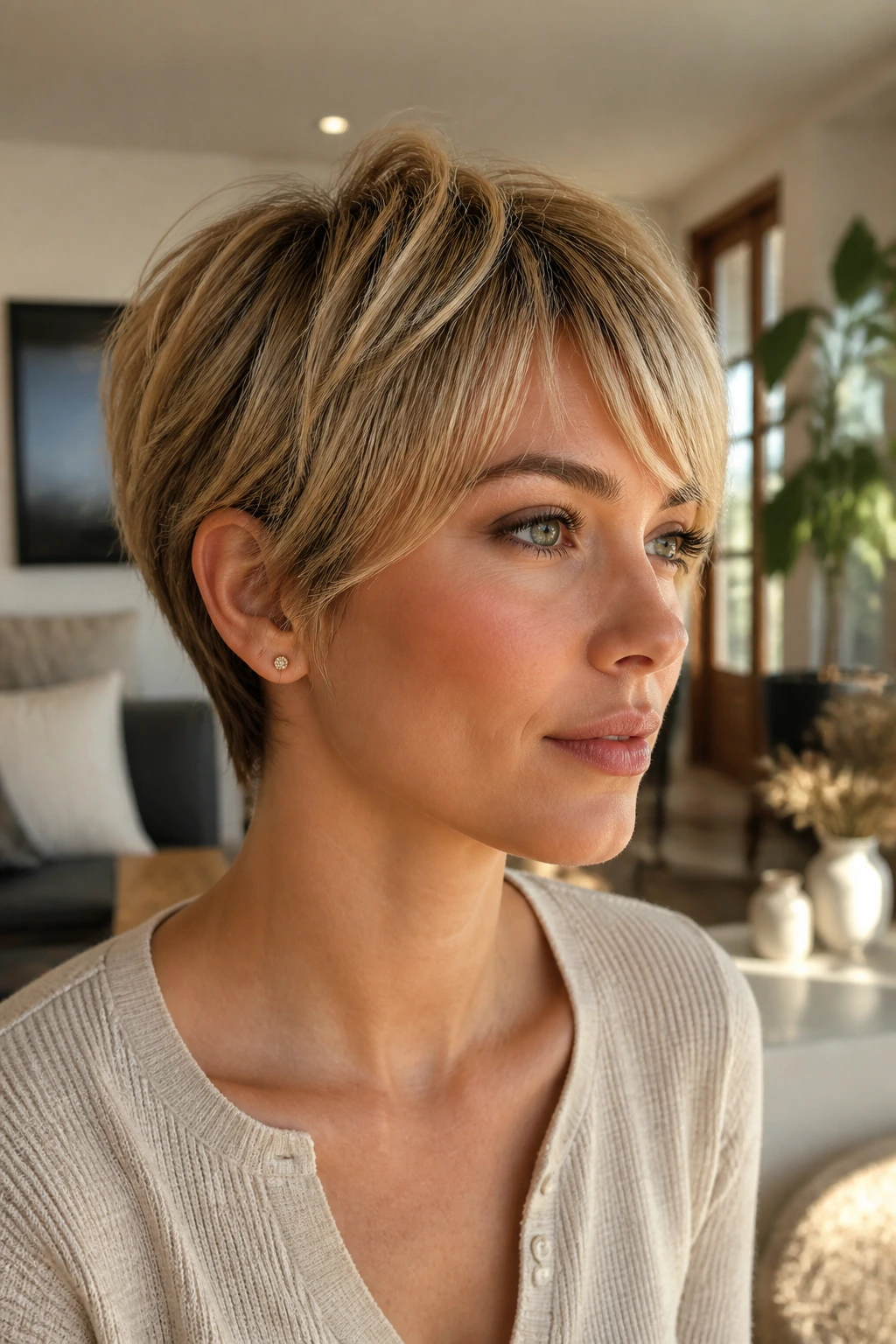
A bixie with a soft fringe is one of the easiest ways to wear shorter hair without losing face-framing softness. The layers are short enough to keep fine hair buoyant, but the fringe and top pieces leave room for movement around the face. It’s friendly, not fussy.
The fringe should be feathered and a touch longer at the outer corners. That detail keeps the face from feeling boxed in. The top layers can be piecey, but the sides should stay contained so the cut does not balloon out at cheek level.
I like this shape for people who want a short haircut that still brushes the forehead and ears in a flattering way. It grows out cleanly, too, which matters more than people admit. A cut that looks good for six weeks instead of two is a better use of your time.
A small round brush at the fringe and a dab of styling cream through the top are enough. No drama.
How to Ask for Short Layers Without Ending Up Wider
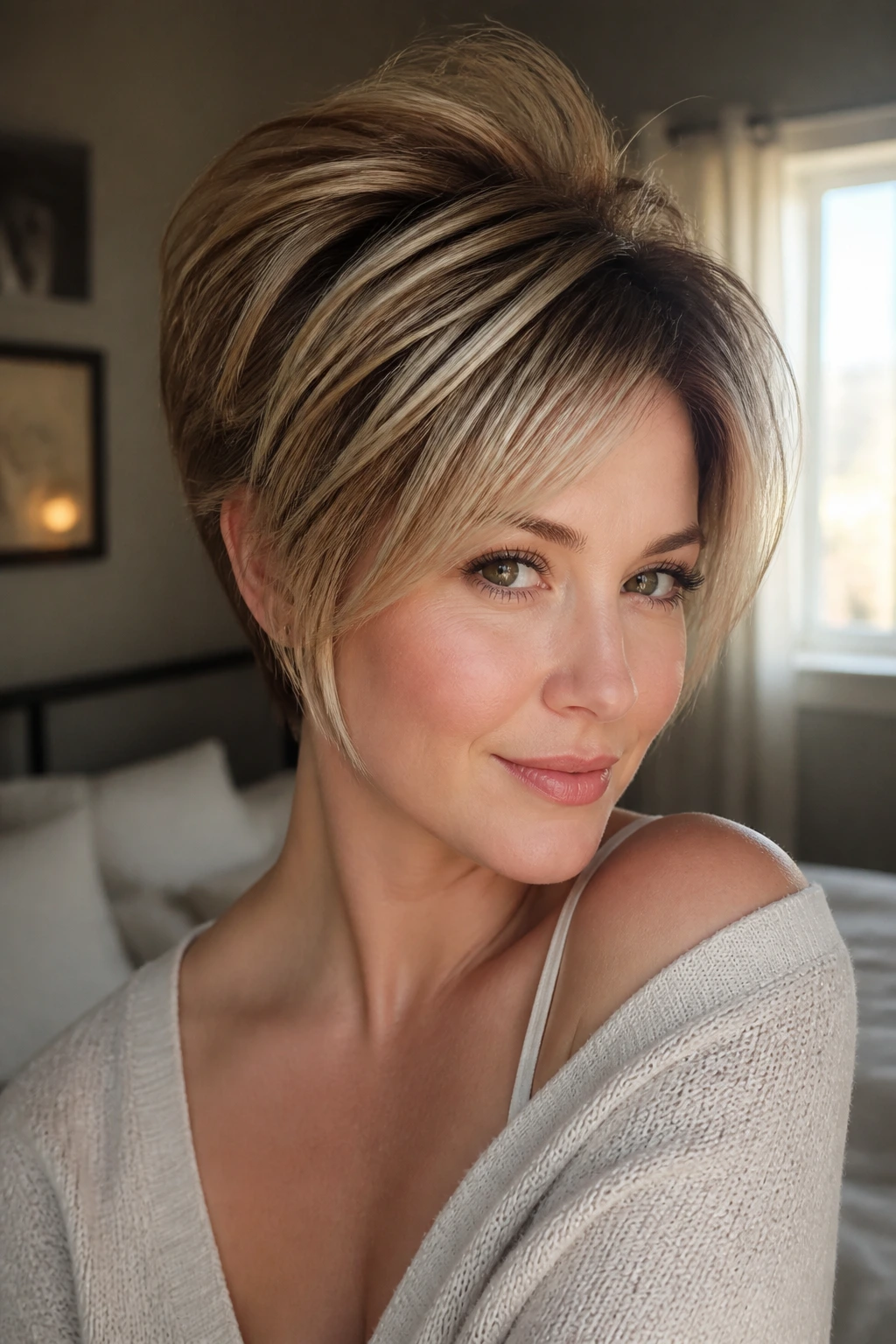
The salon conversation matters more than people think. If you walk in saying you want “lots of layers,” you might get a cut that removes all the wrong weight and makes fine hair look thinner. What you want to ask for is placement: where the shortest layers start, how much weight stays at the edge, and whether the front pieces fall below the cheekbone.
Bring photos, but point out the parts you like. Say, “I like the crown lift here,” or “I want this front length, not the volume at the cheeks.” Those details save everyone time. A good stylist will translate your words into face-shaping geometry.
The Best Tools for Fine Hair That Needs Shape
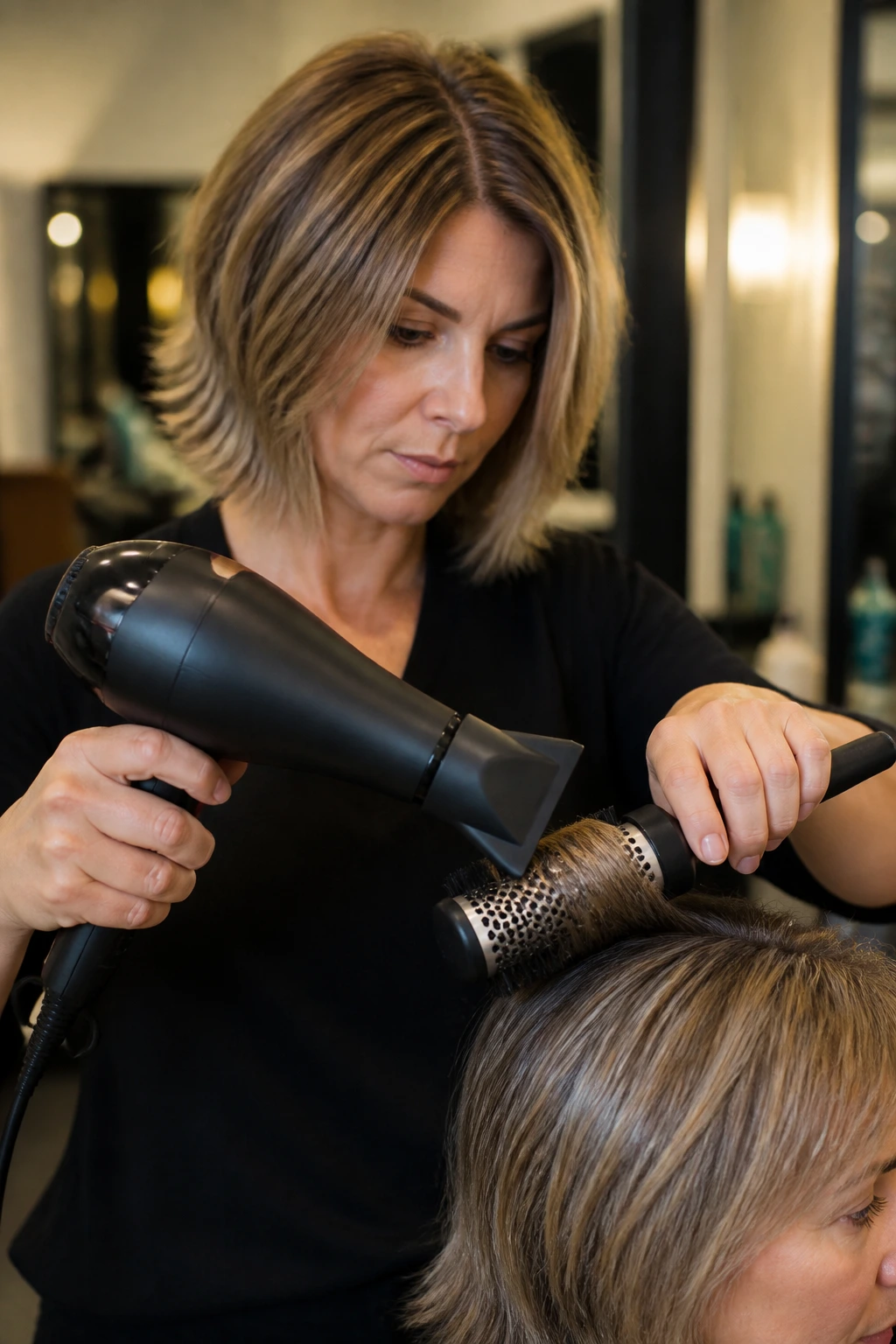
- A blow dryer with a concentrator nozzle: Directs air where you want lift and keeps the cut from fluffing out.
- A small round brush, 1 to 1.5 inches: Good for bending the front pieces and lifting the crown without creating giant curls.
- Lightweight mousse: Gives fine hair body at the root without sticky residue.
- Root-lift spray: Best sprayed at the crown and temples before drying.
- Texturizing spray: Helps piece out the ends once hair is dry.
- Duckbill clips: Useful for setting the part and keeping top sections lifted while they cool.
- Flat iron or small curling iron: Handy if your cut needs a soft bend rather than a full blowout.
- Heat protectant: Non-negotiable if you use hot tools more than once a week.
How to Wear These Cuts Day to Day

Everyday Style:
For most of these cuts, a side part and a quick root lift are enough. Dry the hair 80 percent of the way with your head tilted slightly, then finish with the brush so the crown does not collapse. The goal is lift at the top and softness around the jaw, not a perfectly round shape.
Best Products:
Go light. Mousse at the roots, a little heat protectant on the mids and ends, and a touch of texture spray when the hair is dry. Heavy oils and thick creams usually drag fine hair down, especially at chin length.
Parting:
A center part can work on some faces, but a slight offset is safer on rounder ones. Even moving the part a half inch off center changes the balance. It’s a small shift. Big payoff.
Quick Finish:
If the ends start to flop, wrap only the last inch of hair around a flat iron or brush them under with a round brush for a soft bend. You do not need polished curls. You need direction.
Additional Tips That Make the Cut Work Harder
Lift First, Polish Second:
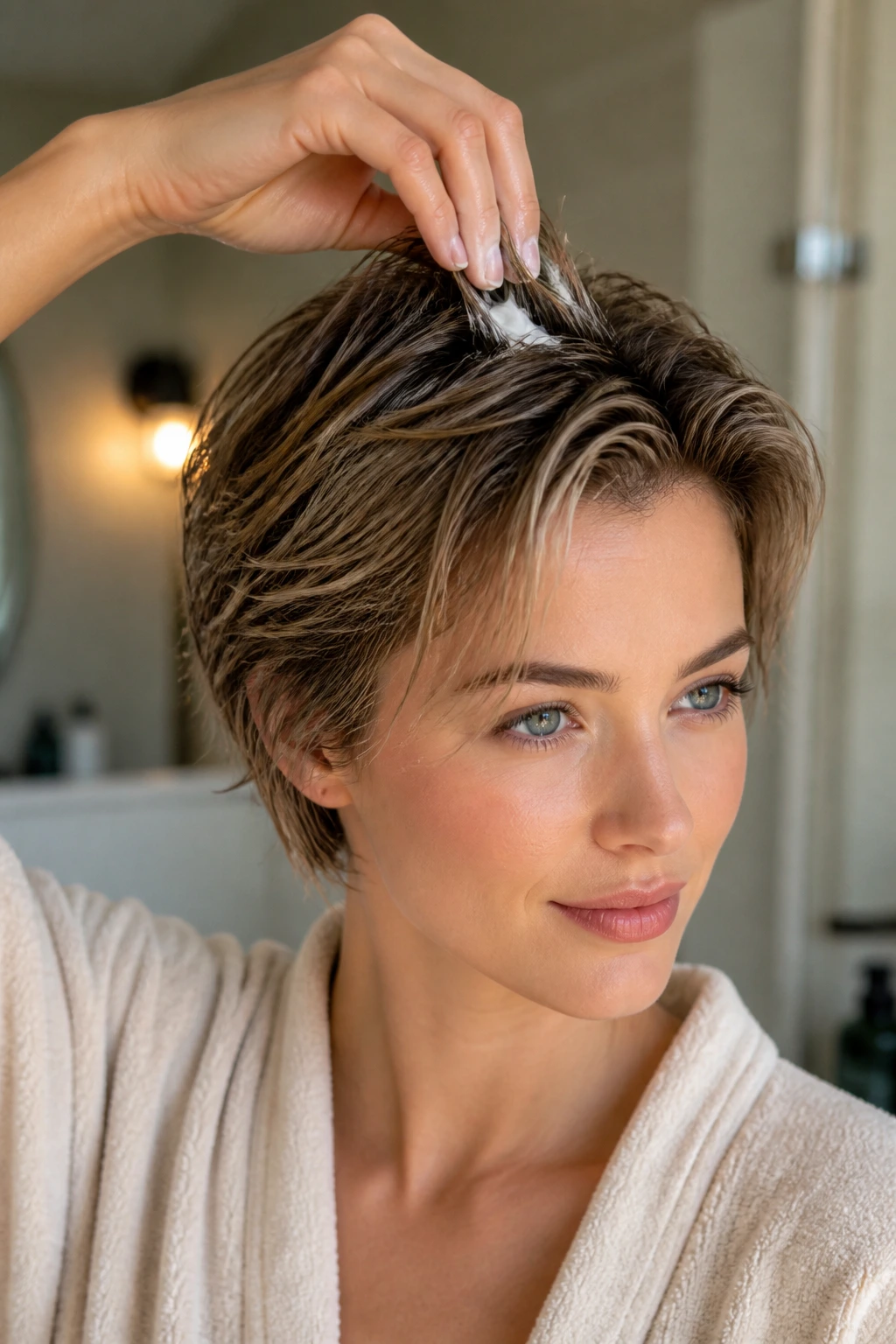
Fine hair often gets smoothed too early. Dry the roots first, set the part while the hair is damp, and only then work on the ends. If you smooth the perimeter before the crown has shape, the whole cut falls flat.
Don’t Load the Cheeks:
Face-framing pieces are useful, but if they puff out at cheek level, they add width. Keep the shortest face-framing layer below the cheekbone unless the stylist is deliberately carving a cheekbone sweep.
Use Less Product Than You Think:
Fine hair punishes generosity. One extra pump of cream can flatten a bob that was behaving ten minutes earlier. Start small, then add only if the hair still feels dry.
Trim the Right Places:
When these cuts grow, the nape and the front edges change shape first. A tiny trim there can keep the whole cut looking intentional without taking off much length.
Mistakes That Make a Round Face Look Wider
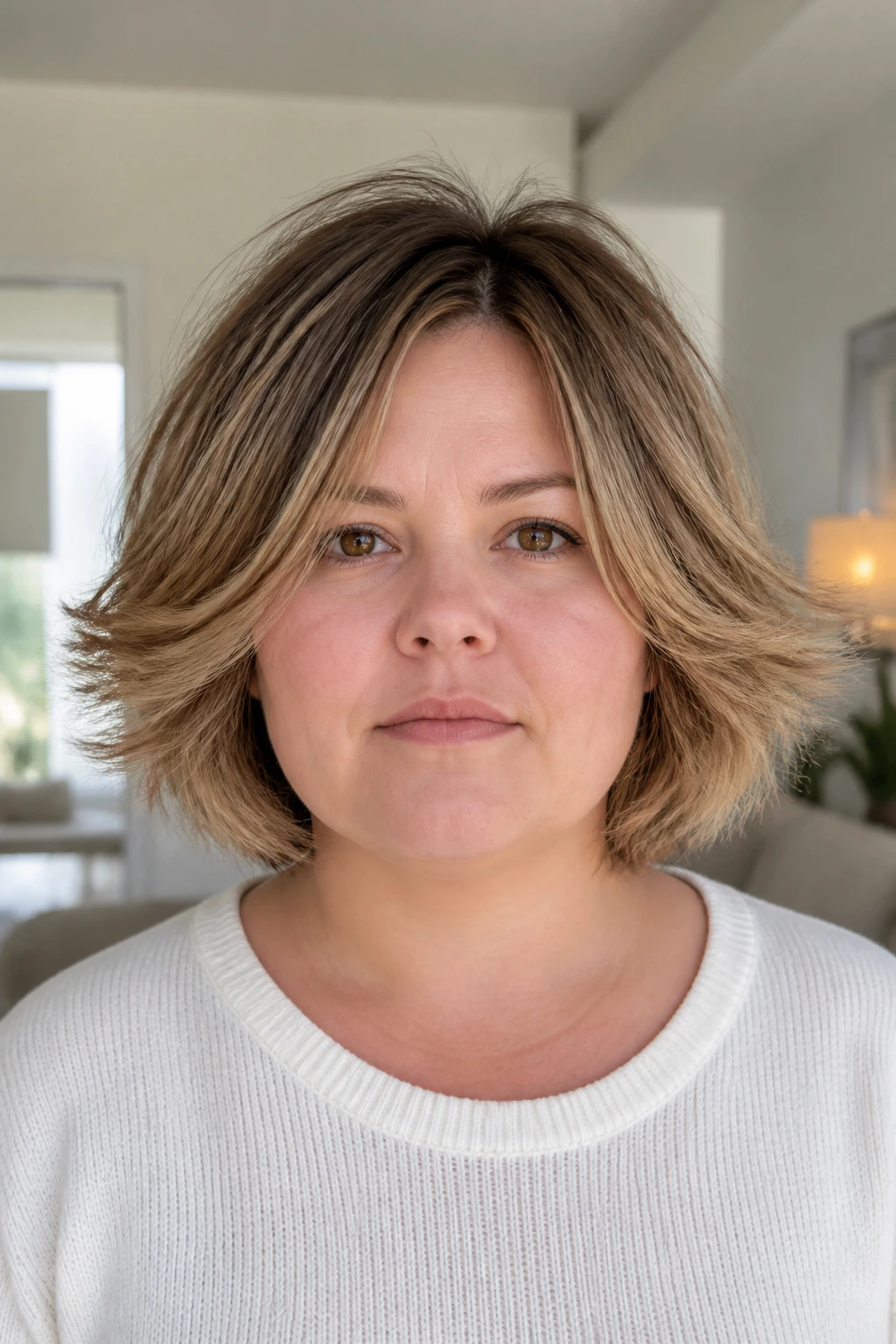
- Starting layers too high at the cheeks: The symptom is a puffed-out side line that makes the face look broader. The fix is to start the shortest face-framing pieces lower, usually around the mouth or below the cheekbone.
- Over-thinning the ends: If the hair looks see-through under bright light, the cut has gone too far. Keep density at the perimeter and ask for softer interior layering instead.
- A dead-center part on flat roots: This often creates a helmet effect on fine hair. Shift the part slightly off center and lift the crown while drying.
- Too much volume at the sides: A round face does not need extra width near the ears. Build lift at the top, not out at the cheek line.
- Using heavy oils or creams everywhere: The roots collapse, the ends string out, and the style loses shape. Put heavier product only on the driest ends, and use less than feels polite.
- Choosing a shape that is too short for your density: Very fine hair can look sparse when cut too close without structure. If in doubt, keep a little more length in front or at the nape.
Variations and Alternatives to Try

The Glasses-Friendly Crop:
Keep the temples neat and the fringe slightly longer so the frames do not compete with the haircut. This works well if your glasses already add structure near the cheeks.
The Air-Dry Bob:
Ask for a length that behaves well without much heat, with soft internal layers and a perimeter that still looks full when dried naturally. Best for slight wave, not stick-straight strands.
The Softer Edge Cut:
If you like a little attitude but not a sharp line, choose a bixie or mini wolf cut with less contrast between the top and the nape. It keeps the shape lively without looking severe.
The Low-Maintenance Lob:
A collarbone lob with hidden layers is the safest choice if you want fewer salon visits and less daily styling. It still slims the face, but it is less demanding than a very short crop.
The Extra-Lift Version:
If your hair falls flat by noon, ask for more crown layering and a narrower nape. That extra internal lift helps the style keep its shape longer.
Keeping the Cut in Shape Between Appointments
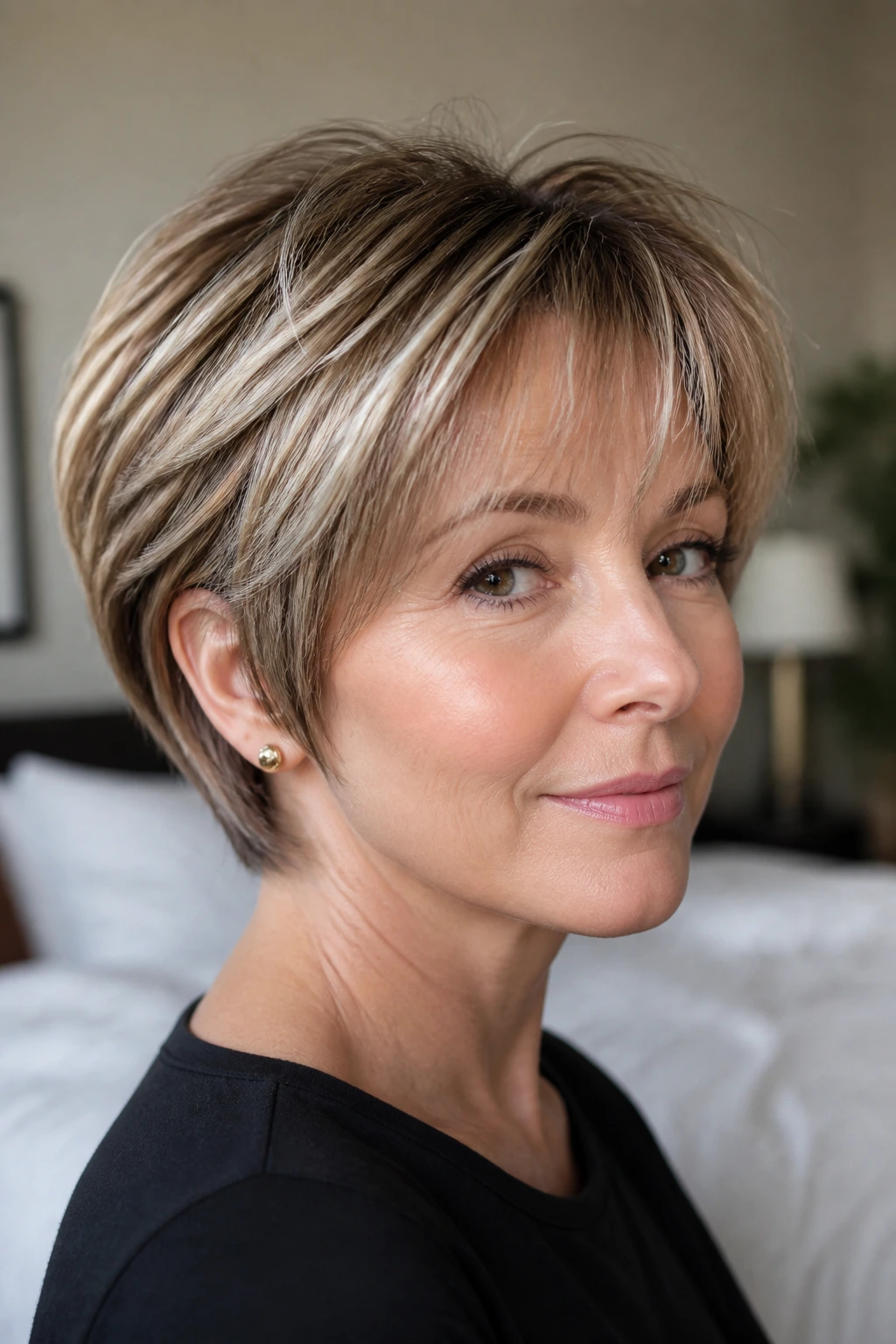
Fine hair shows growth fast, but that does not mean you need to panic the second a fringe touches your lashes. What matters is where the shape starts to blur. For most of these cuts, a trim every 5 to 8 weeks keeps the perimeter clean and the crown from sagging. A pixie or bixie usually wants the shorter end of that range; a lob can stretch longer.
At home, dry shampoo is useful, but not as a rescue for greasy roots alone. It also gives the hair a bit of friction, which helps flat layers stay separated. A light mist at the roots on day two or three can revive the cut without making it dusty. If you overdo it, the hair turns dull and stiff. There is a narrow window. Use it.
Night care matters more than people admit. A silk or satin pillowcase keeps the top layers from roughing up and sticking out at odd angles. If your hair bends easily, pinning the front pieces away from your face before bed can help the fringe keep its shape. Nothing fancy. Just enough to stop the shape from getting mashed overnight.
Heat protection is worth repeating because fine hair burns fast. If you use a flat iron or round brush blowout more than once a week, a protectant helps the ends stay cleaner-looking. That’s one of those boring habits that pays for itself.
Frequently Asked Questions
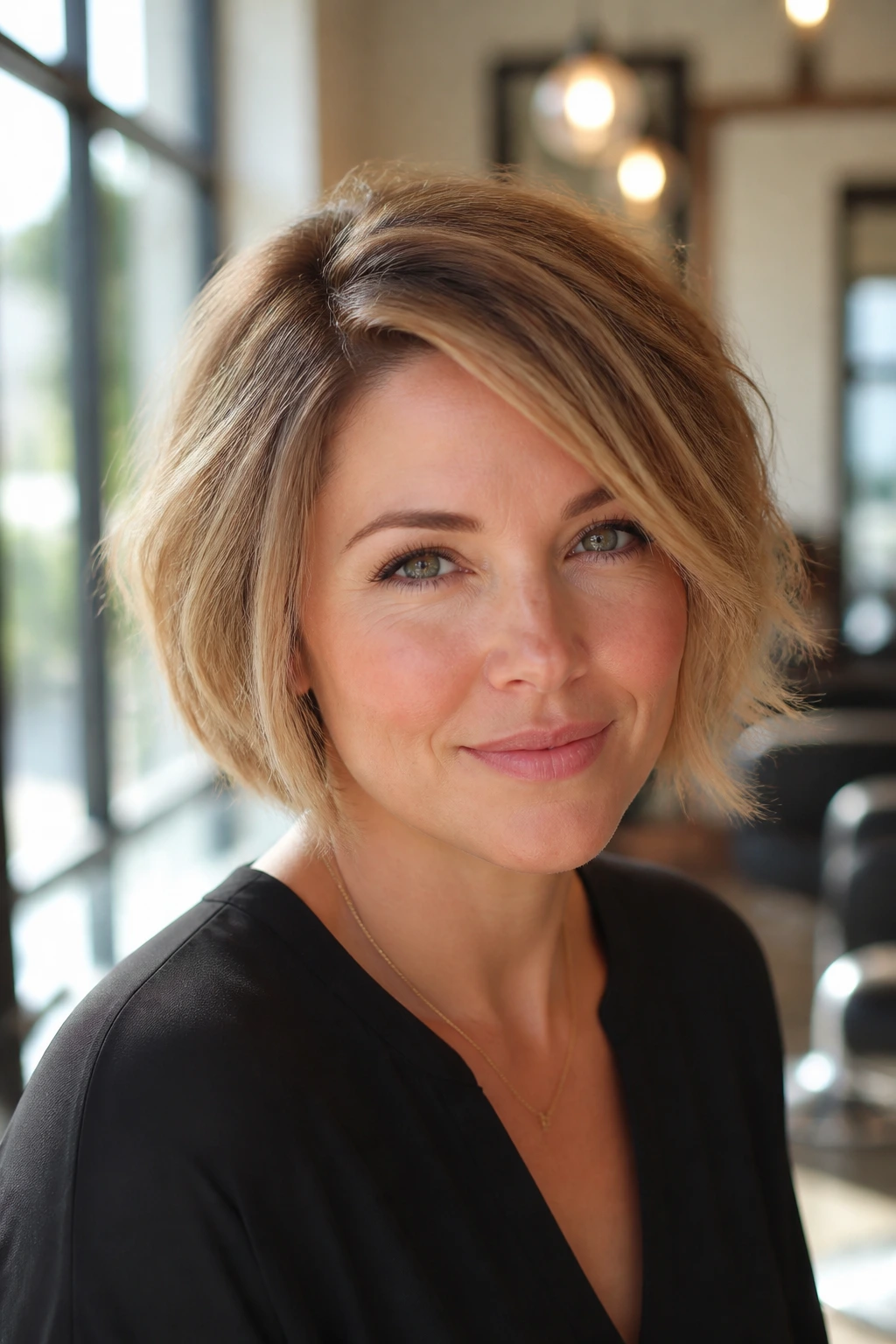
What length is best for a round face with fine hair?
The safest lengths usually land between the jaw and the collarbone. That range keeps the face from reading wider while still leaving enough hair to build some movement and keep the ends full.
Do layers make fine hair look thinner?
Bad layers do. Good ones remove bulk in the middle while keeping the perimeter strong, which can make fine hair look fuller because the shape has more lift and better outline.
Is a blunt bob ever a good idea here?
Yes, if the blunt line sits below the jaw and the hair has enough density to hold it. A blunt cut that’s too short or too high can make the face look broader, so the length and placement matter.
Should I avoid bangs if my face is round?
Not at all. The wrong bangs can widen the face, but soft curtain bangs, side-swept fringe, or wispy fringe can work well. The trick is keeping the center lighter and the sides longer.
What if my fine hair is also a little wavy?
That usually helps. A gentle wave gives the cut more body, and styles like the wave-enhanced bob, curtain-bang shag, or soft inverted bob can look fuller without extra product.
Can I wear these cuts without heat styling?
Some of them, yes. The mini wolf cut, soft shag, and wave-enhanced bob can air-dry well if your hair has any natural bend. A very straight bob usually needs at least a little root lift or bend at the ends.
How do I stop a short layered cut from puffing out at the sides?
Keep the shortest layers away from the cheek line, and dry the crown upward instead of blasting air sideways. A little smoothing cream on the mids, not the roots, can help the sides stay closer to the head.
What should I tell my stylist if I want something slimming but not severe?
Ask for face-framing pieces that start below the cheekbone, a little crown lift, and a perimeter that stays full enough to hold its shape. Those three things keep the cut soft without making it bulky.
How often should I trim a bixie or pixie?
Usually every 4 to 6 weeks. Shorter cuts lose their shape fast once the nape grows out and the top starts tipping forward, so regular cleanup matters more than people expect.
The Cuts That Do the Quiet Work
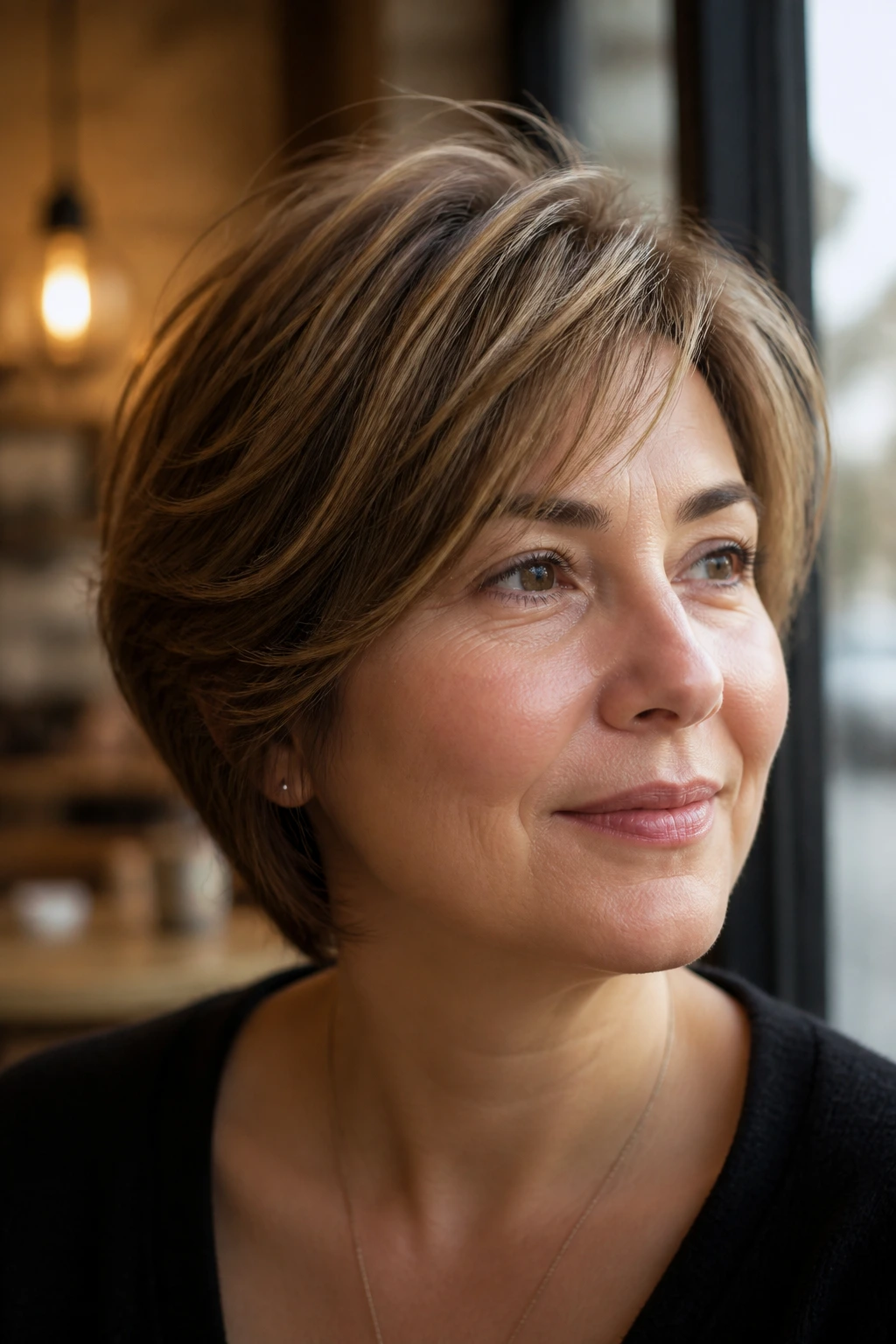
The best short layered haircuts for round faces with fine hair do not scream. They shape. They stretch. They keep the hair from collapsing into a flat sheet or puffing into a circle. That is the real win here, and it shows up in the mirror on ordinary mornings when you do not have time to fuss.
Pick the version that fits your hair’s natural bend and how much styling you’ll tolerate before coffee. The right cut should make the face look a little longer, the ends look a little fuller, and the whole thing feel easier to live with. That’s the mark of a good shape.