



Dark hair and waves do half the work for you. Add the right blonde, and the whole head starts moving like there are two or three different colors woven through it, not one flat lift. That’s the reason blonde hairstyles for dark hair with wavy hair can look so striking: the waves catch the light, the dark base keeps the color grounded, and the contrast makes even a simple cut feel styled.
The trick is not blasting the hair into the lightest blonde on the chart and calling it done. That usually turns brassy, thirsty, or stripey. The smarter move is tone: caramel, beige, ash, honey, pearl, champagne, butter, mushroom, toffee. Each one changes the mood of the same dark base in a different way, and waves change the reading again. Loose bends can make a few ribbons of blonde look expensive; tighter, uneven waves can make the same placement look busy.
The smartest blonde hairstyles for dark hair with wavy hair rarely start at the brightest end of the spectrum. They start with shape, placement, and a tone that works with the base instead of fighting it. If you’re standing in front of a salon mirror trying to decide whether to go warm, cool, rooted, or bright, the best answer is usually the one that lets your waves show off the color instead of swallowing it whole. Start there, then move toward the bolder looks if you want more contrast.
Why These Blonde Tones Work on Dark Wavy Hair
- Soft lift beats harsh contrast: Dark roots give the blonde somewhere to live, so the color reads in ribbons instead of hard stripes.
- Waves do the blending for you: An S-wave breaks light across the hair shaft and keeps highlights from looking like one flat band.
- Tone changes the whole mood: Honey reads warm and sunny, ash reads smoky and cool, beige sits in the middle, and pearl feels softer than either.
- Face-framing pieces do a lot of heavy lifting: A bright money piece can make dark hair feel lighter near the face without lightening every strand.
- Grow-out is easier with depth left behind: Root smudges, balayage, and color melts buy you more time between salon visits.
- Dark hair needs a plan, not a wish: The best blonde styles on a deep base usually build brightness in stages, which is kinder to the hair and better looking in motion.
1. Caramel Balayage on Long Dark Waves
Caramel balayage is the one I’d hand to someone who wants blonde without losing that deep brunette backbone. The caramel sits in soft ribbons through the mid-lengths and ends, and on long waves it looks almost like sunlight got trapped in the hair. It’s warm, glossy, and easier to live with than an all-over lift.
Why It Works
The darker root keeps the hair looking full, while the caramel pieces warm up the wave pattern instead of fighting it. Ask for hand-painted pieces that start a little below the cheekbone so the brightness doesn’t bunch up at the scalp. If your natural base is level 4 or 5, this is a sweet spot.
Quick Notes
- Best for: long, layered dark hair with a loose S-wave.
- Tone to ask for: caramel, golden beige, or soft toffee.
- Maintenance: gloss every 6 to 8 weeks; the grow-out stays soft for months.
Pro tip: Keep the brightest pieces on the outer layer and around the face. That’s where the wave catches the light first.
2. Mushroom Blonde Lob with Soft Bends
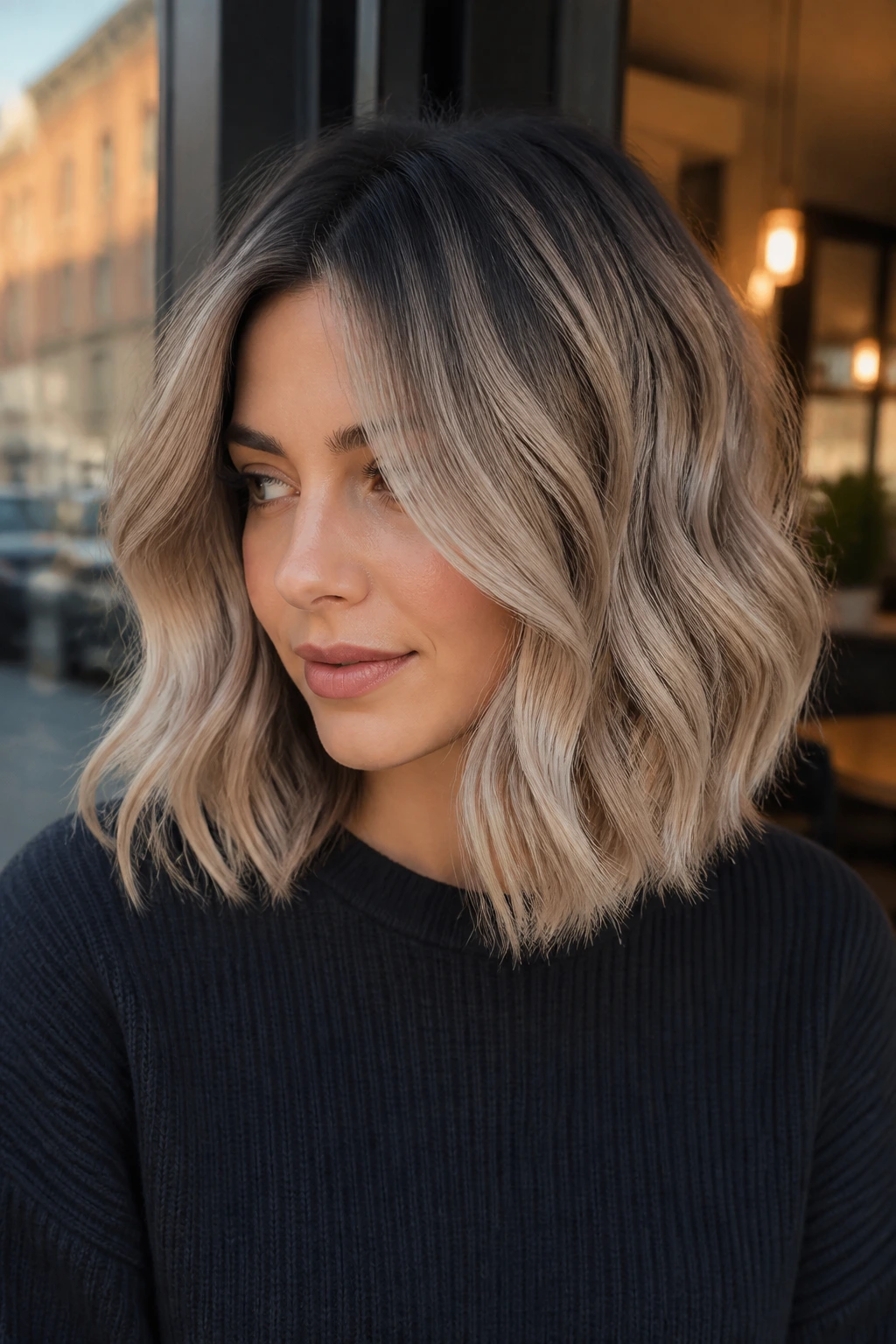
Want something cooler and a little more editorial? Mushroom blonde on a lob gives dark hair a smoky beige cast that never tips into orange if the toner is handled well. The collarbone length keeps the color visible, and the soft bends stop it from looking too severe.
Mushroom blonde is the answer when honey feels too warm and ash feels too flat. It sits in that muted middle space that looks polished in daylight and still calm under indoor light. I like it best on hair that already has some movement in the cut.
What to Ask For
Tell your stylist you want a taupe-beige blonde with a dark root shadow and no chunky contrast lines. Keep the bends loose, not tight, or the color can start looking dusty instead of dimensional. A gloss refresh every 4 weeks helps this tone stay clean.
3. Honey Money Piece with Curtain Bangs
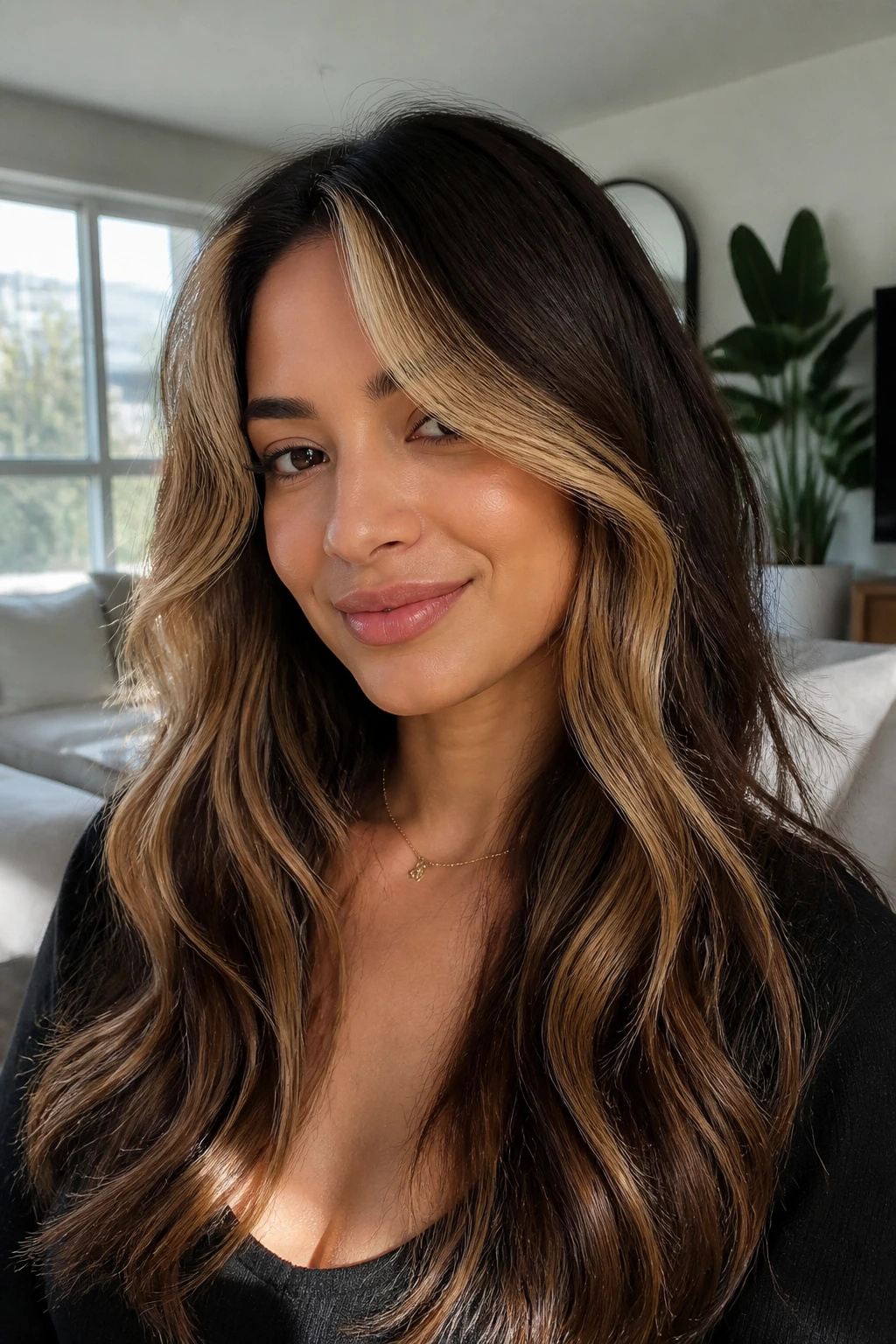
A honey money piece can change a dark wavy haircut in about ten seconds flat. The front sections go lighter and warmer, the curtain bangs open in the middle, and suddenly the whole face reads brighter without touching the rest of the head much. It’s simple. It works.
This is the look I recommend when someone wants a visible blonde shift but doesn’t want the upkeep of full highlights. Because the rest of the hair stays dark, the honey tone around the face looks even richer. The waves help the lighter pieces arc away from the cheekbones instead of sitting heavy.
Best For
- Heart and oval face shapes that can handle a bright frame.
- Hair that parts naturally in the middle.
- Anyone who wants contrast without a full color overhaul.
Small warning: If the money piece is too thick, it starts to look like a stripe. Keep it soft and feathered.
4. Ash Beige Ombré on Midlength Hair
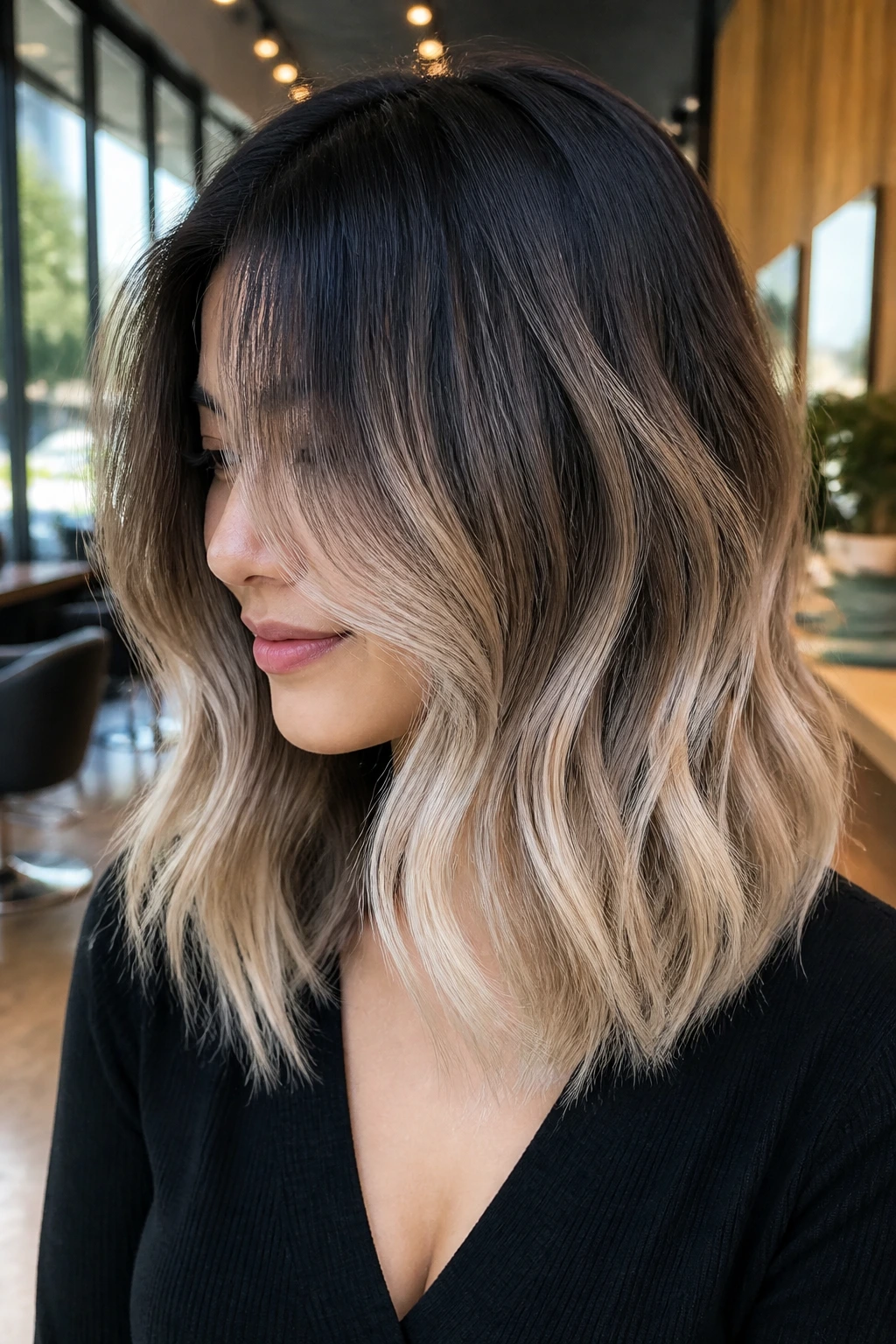
Ash beige ombré works best when you want the transition to be obvious but not loud. The dark root melts gradually into a muted blonde end, and on midlength hair the fade has room to breathe. On waves, the ombré edge disappears in a flattering way.
What I like here is the control. You get blonde at the ends, where you usually want movement anyway, and the root keeps things grounded. If your base is naturally deep brown, this can look modern without screaming for attention.
A Better Ask at the Salon
Request a soft root-to-end gradient with beige-cool tones, not a yellow blonde. The lighter part should feel airy, not chalky. If your hair is thick, ask for the blend to begin lower so the top doesn’t puff out in one block of color.
5. Creamy Vanilla Face-Framing Layers
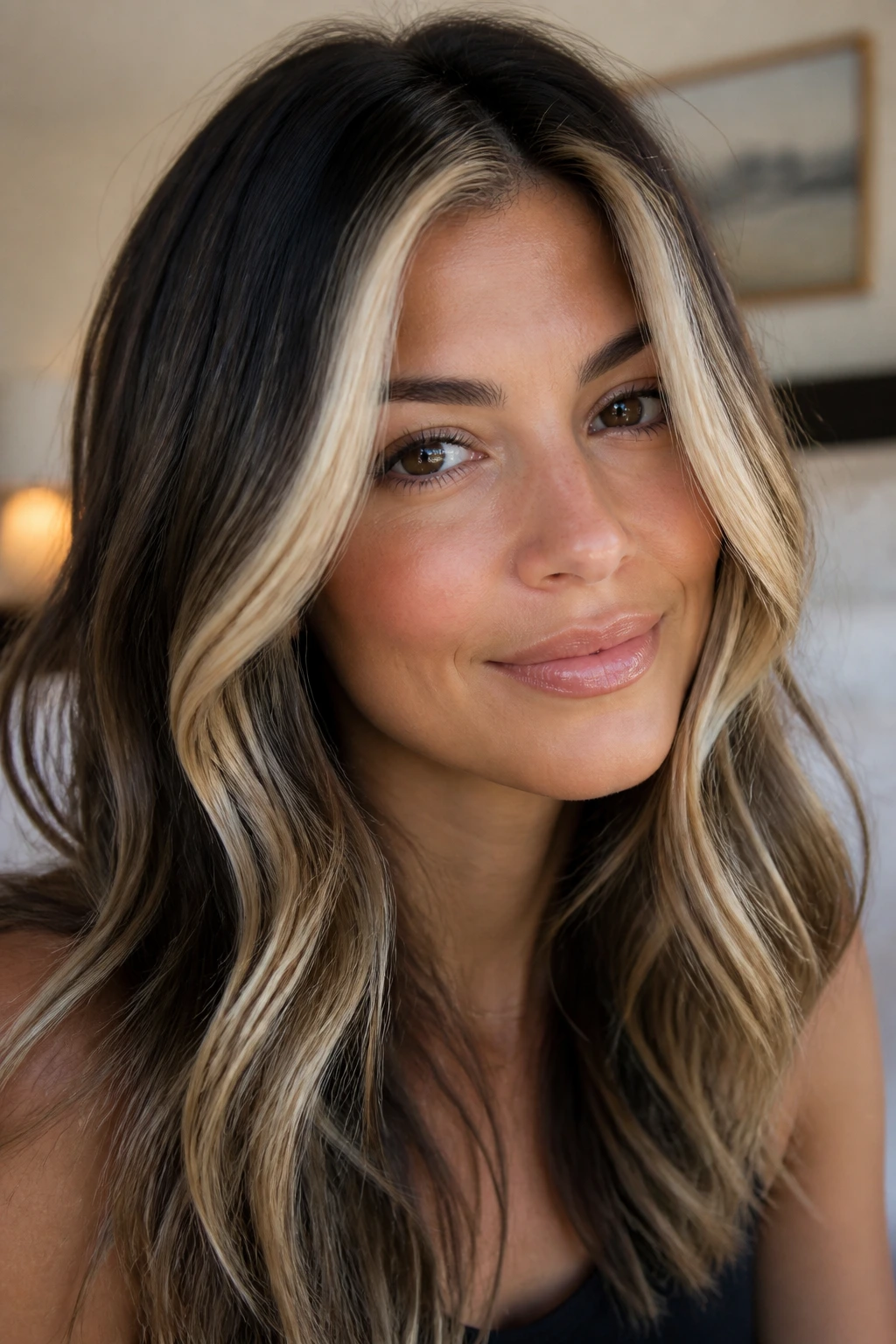
Creamy vanilla pieces around the face make dark hair look brighter without turning the whole head into a light project. The color sits on the front layers and a few top sections, so every bend in the wave shows a little flash of cream. It’s a clean, crisp blonde, but not icy.
This is one of the smartest choices if you wear your hair down most of the time. The front pieces do the work when the hair moves, and the darker underneath keeps the style from looking dry. You get light where people look first.
Who It’s Best For
It suits medium to long layers, especially if the haircut already has movement around the cheekbones. Ask for soft saturation near the front, not a solid block of blonde. The difference matters when the wave falls across the face.
6. Bronde Melt with Loose, Glossy Waves
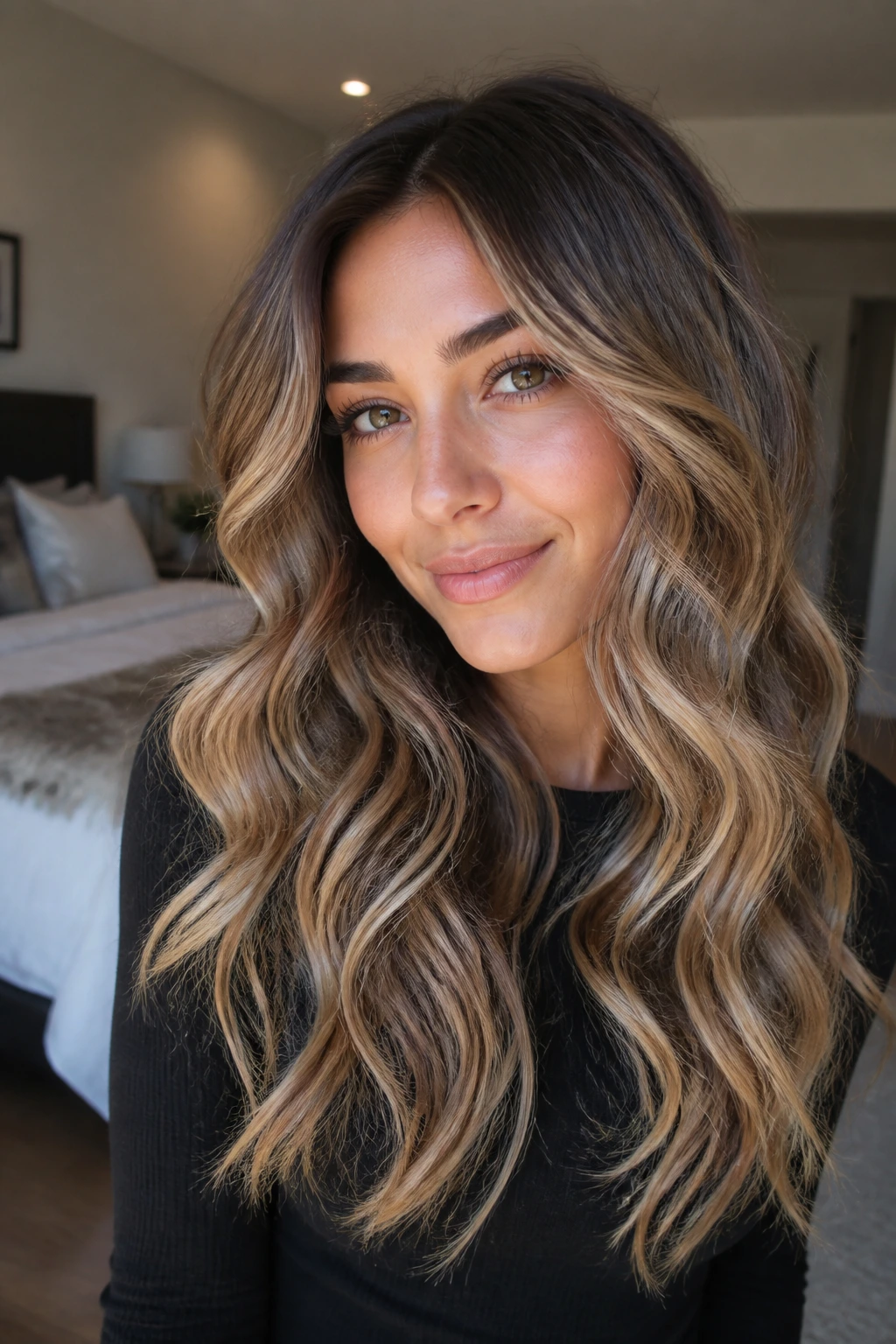
Want blonde without really leaving brunette behind? A bronde melt is the answer. The shade slides from dark brown into a warm-neutral blonde so gradually that the line between colors almost disappears, especially once the waves are brushed out and softened.
Why It Works
This look depends on a good color melt, not obvious chunks. The waves make the brunette and blonde tones mix visually, which is exactly why this style suits dark bases so well. It gives you brightness, but the base still reads strong.
Ask Your Colorist For
- A brunette root kept close to your natural level.
- Mid-shaft ribbons in beige or honey.
- A soft gloss to unify the tone at the ends.
My bias? This is one of the best low-drama blonde styles you can wear on dark hair.
7. Sandy Blonde Lob with Choppy Ends
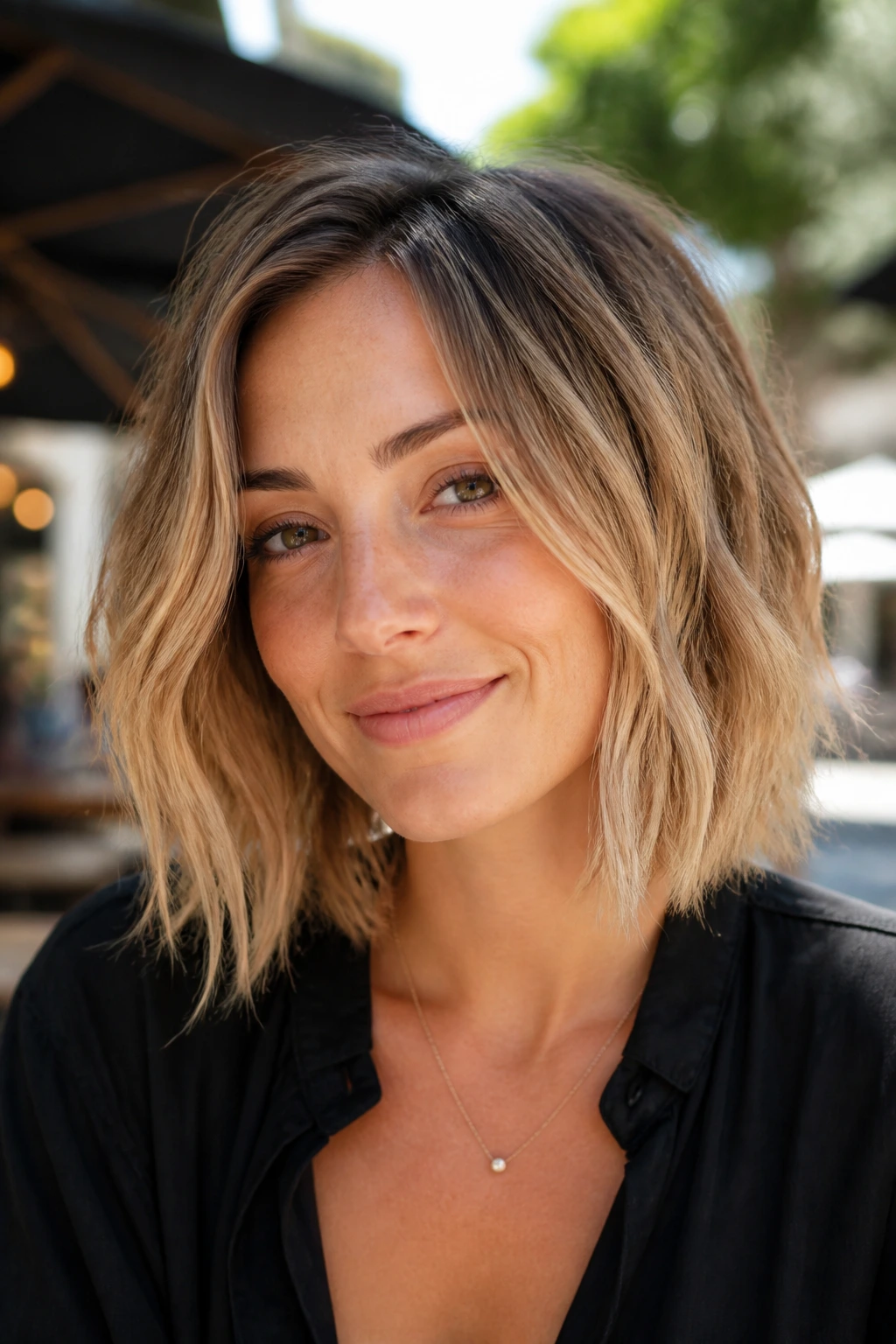
A sandy blonde lob has that beachy, slightly undone feel that works when you don’t want the blonde to look too polished. The tone sits between beige and warm gold, and the chopped ends keep the wave pattern from getting too round. It feels casual in the best way.
The lob length matters here. Too short and the lighter pieces can bunch up; too long and the sandy tone can get lost. At collarbone length, the color sits right where the eye expects movement. That’s why it works.
Styling Note
Use a light sea-salt spray or a soft texturizing mist, not a stiff product. You want the bends to stay touchable. If the hair feels crunchy, the sandy tone loses its easy, sun-worn look.
8. Champagne Highlights on Long Layered Hair
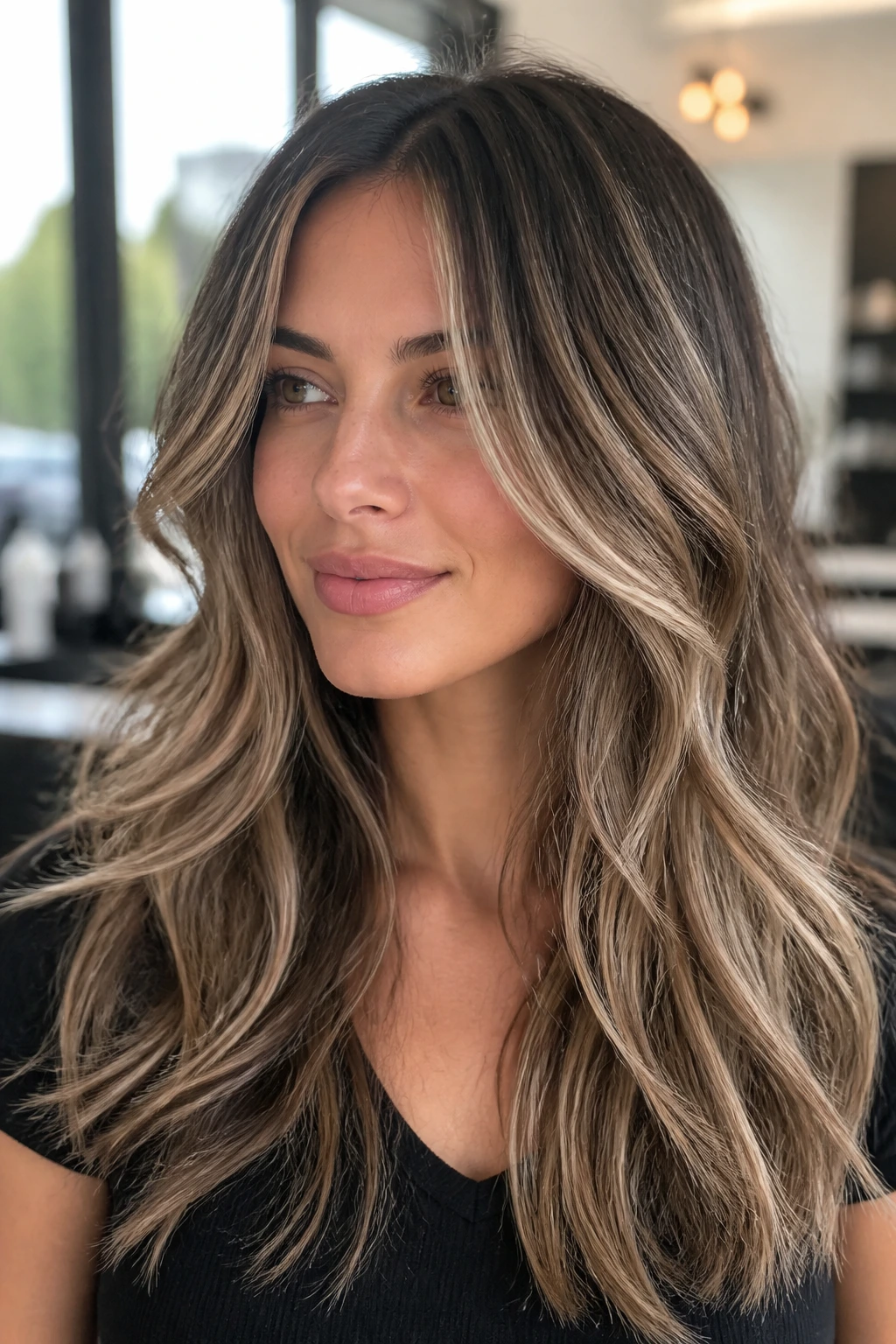
Champagne highlights have a brighter, cleaner edge than honey, but they stop short of icy. On long layers, that little bit of sparkle goes a long way because the layers expose the light in different places as the waves shift. It’s a nice choice when you want blonde that reads a bit more refined.
The best version of this style uses fine highlights rather than thick panels. Thick pieces can turn loud fast on dark hair. Fine champagne ribbons, spread through the top half and around the face, give you lift without turning the cut into a zebra.
9. Buttery Blonde Ends with Dark Roots
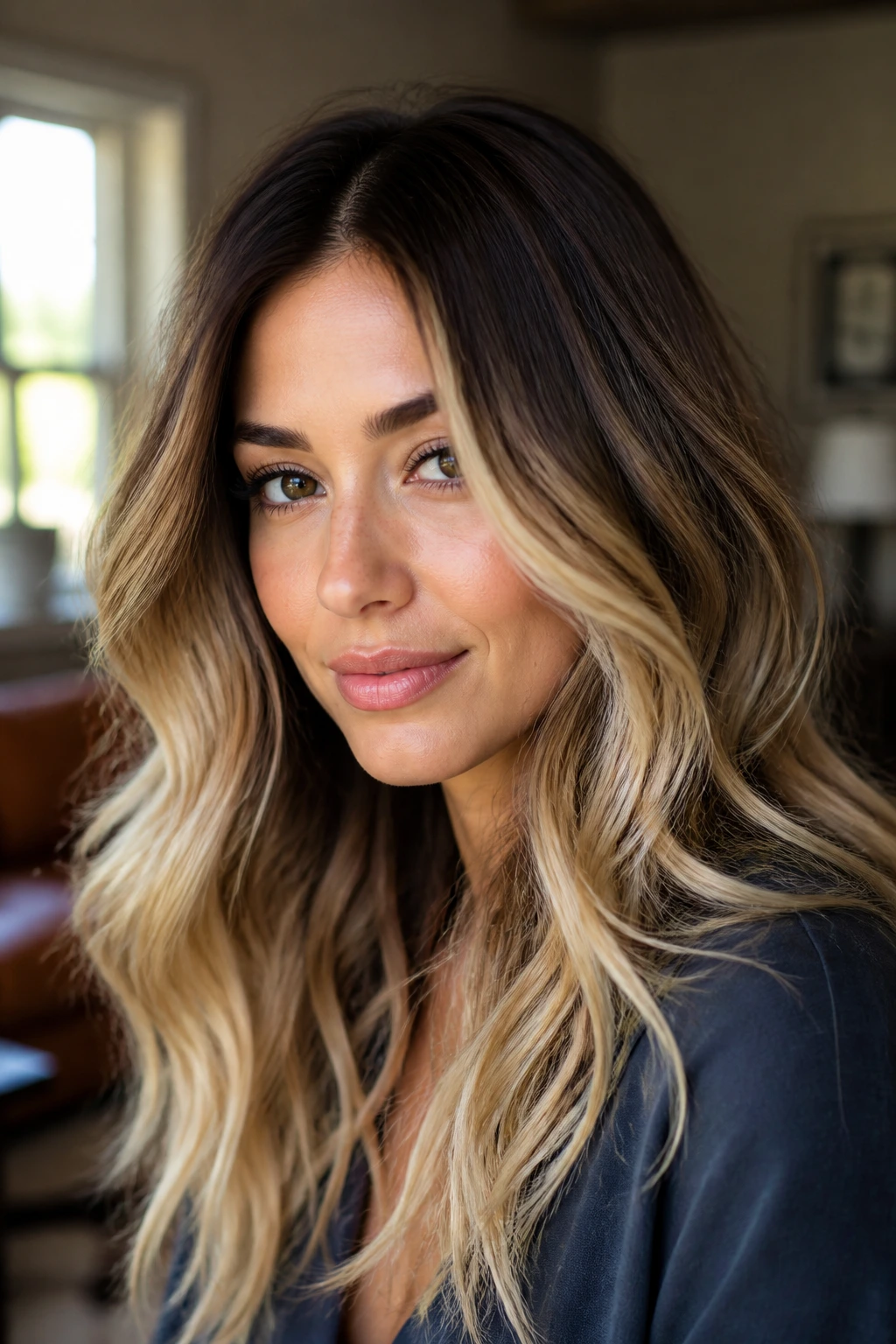
Buttery ends on dark roots make a strong contrast look soft instead of harsh. The root keeps the scalp area deep and rich, while the lighter ends carry the movement. On waves, the butter tone softens the line between dark and light, which is why the style feels smoother than it sounds.
This one works especially well on thicker hair. The lighter ends help reduce that heavy, blocky look thick dark hair can get once it’s curled. Just don’t let the ends dry out. Butter blonde looks generous when it’s healthy and frazzled when it isn’t.
Practical Tip
Ask for a trim before or right after the color service if the ends are already fragile. Freshly lightened blonde shows split ends in a way dark hair often hides.
10. Smoky Silver-Blonde Waves
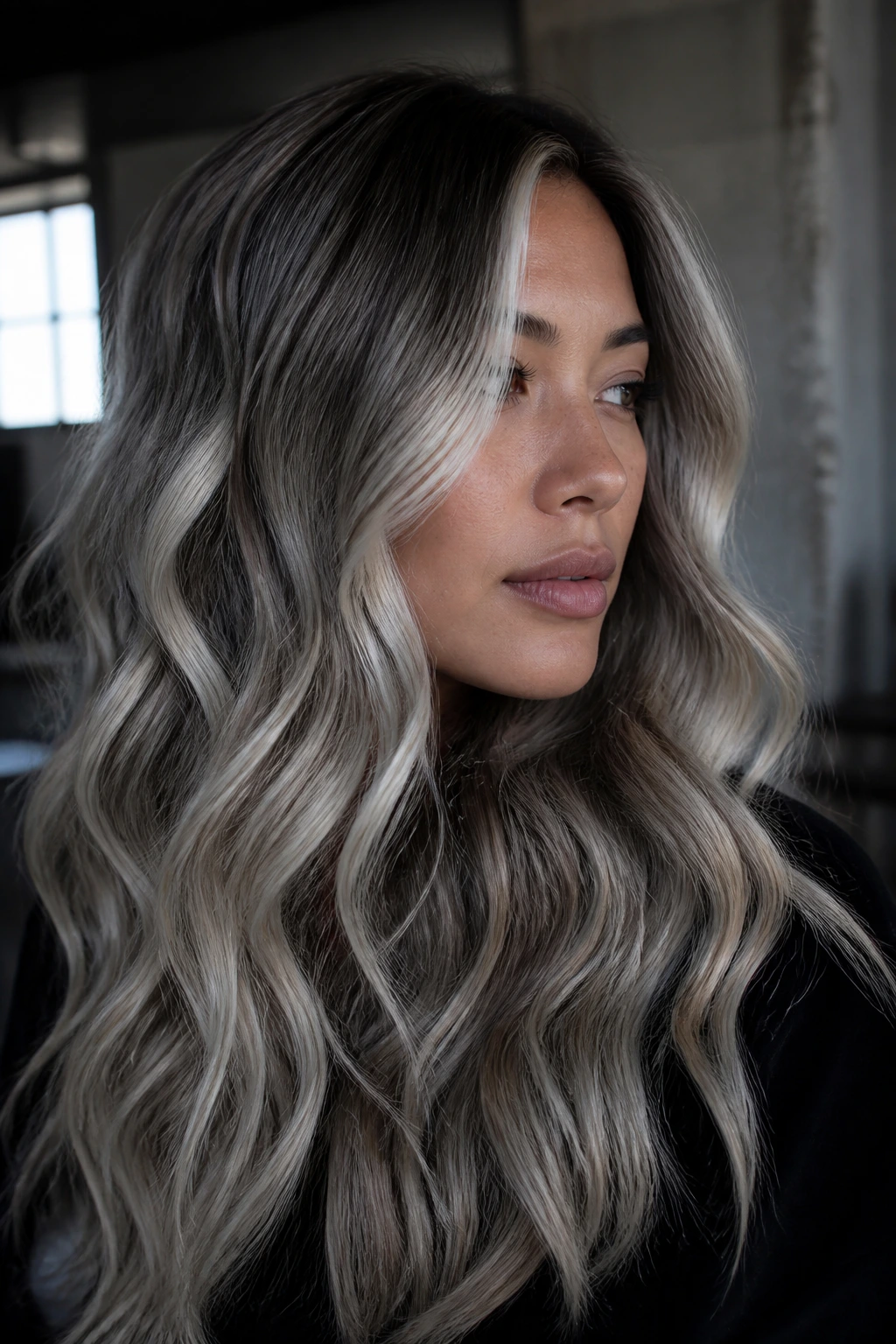
Smoky silver-blonde is for the person who wants the cool side of blonde to show up hard. It has a pale, steel-like finish, but the “smoky” part keeps it from looking white or flat. On waves, the cool tone catches in the curves and creates a polished, slightly dramatic finish.
This is not a low-effort look. Dark hair has to be lifted enough to take the toner cleanly, and the toner itself needs maintenance. But the payoff is sharp. If your wardrobe leans black, gray, denim, or crisp white, the contrast is excellent.
What to Watch For
Too much purple shampoo will push this shade dull and chalky. Use it sparingly, usually once a week or less, and keep the contact time short. The goal is clean silver-blonde, not violet fog.
11. Toffee Ribbons Through Thick Waves
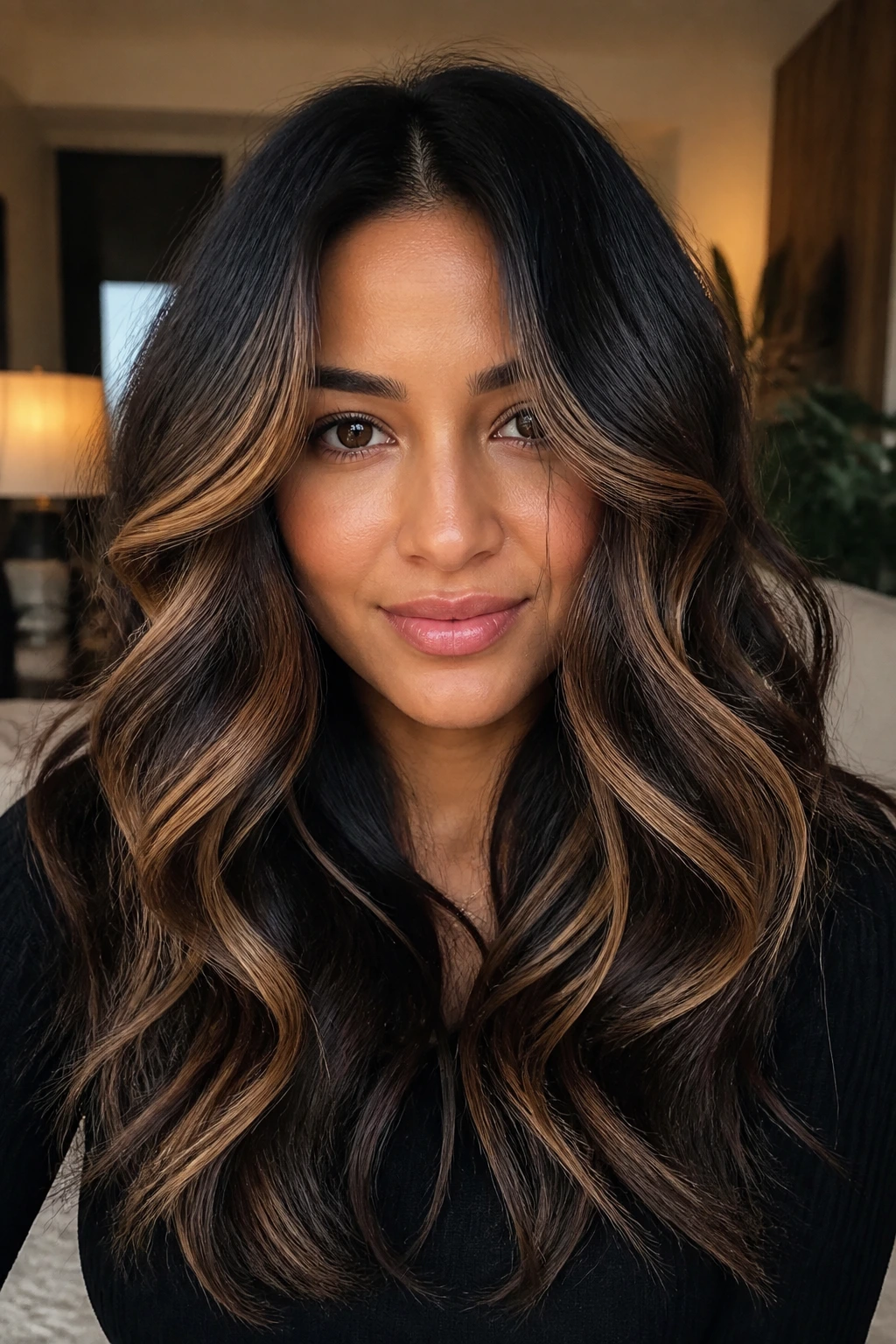
Toffee ribbons are a gift to thick dark hair. The warm, golden-brown blonde pieces break up density and make the wave pattern easier to see. Without them, thick hair can look like one giant mass when it’s wavy. With them, the shape opens up.
How It Reads Best
The ribbons need to be wide enough to show through the wave. Tiny highlights get swallowed by very thick texture. Ask for medium-sized painted sections through the mid-lengths and ends, with a few brighter pieces around the front so the color doesn’t disappear when the hair is down.
Pro move
If your waves are naturally loose, ask your stylist to place the ribbons where the hair bends, not just where it lays flat. That’s how you get the movement people notice from across the room.
12. Icy Beige Peekaboo Pieces
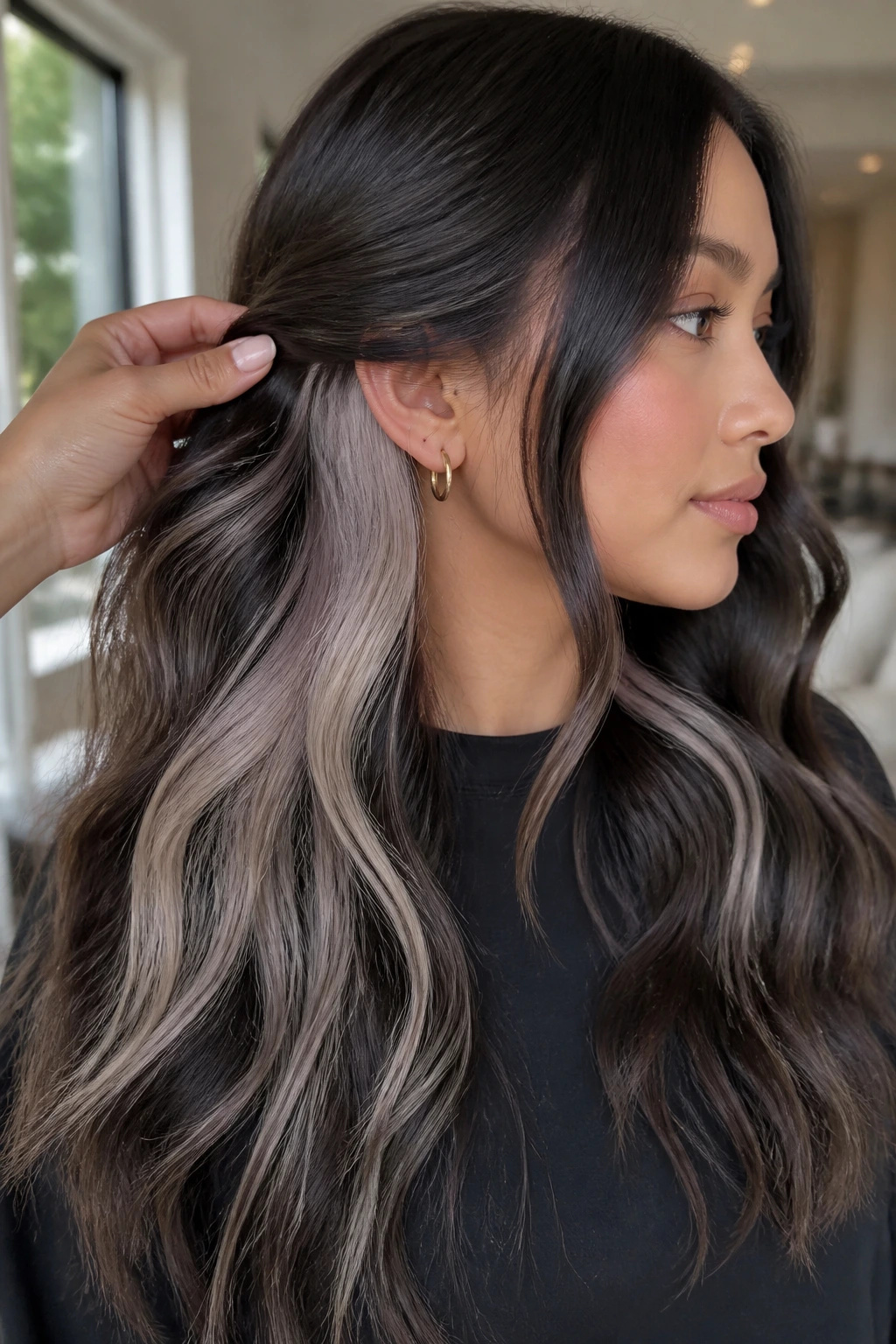
Peekaboo blonde is a smart move when you want cool color but don’t want it screaming from the top layer. The icy beige pieces sit underneath the darker top section, so they show when the hair moves, gets tucked behind the ear, or is pulled into a half-up style. It’s a little sneaky. I like that.
Because the lighter hair hides under the surface, the maintenance feels easier than a full cool blonde. You still need toner and moisture care, but the grow-out is far less obvious. On wavy hair, the peekaboo pieces flash in and out as the layers shift.
Best For
People who want a cooler blonde option for work-friendly or conservative environments. The effect is there, just not loud. It also works nicely if you like to wear clips, claws, or half-up twists.
13. Golden Beach Waves with Sunlit Highlights
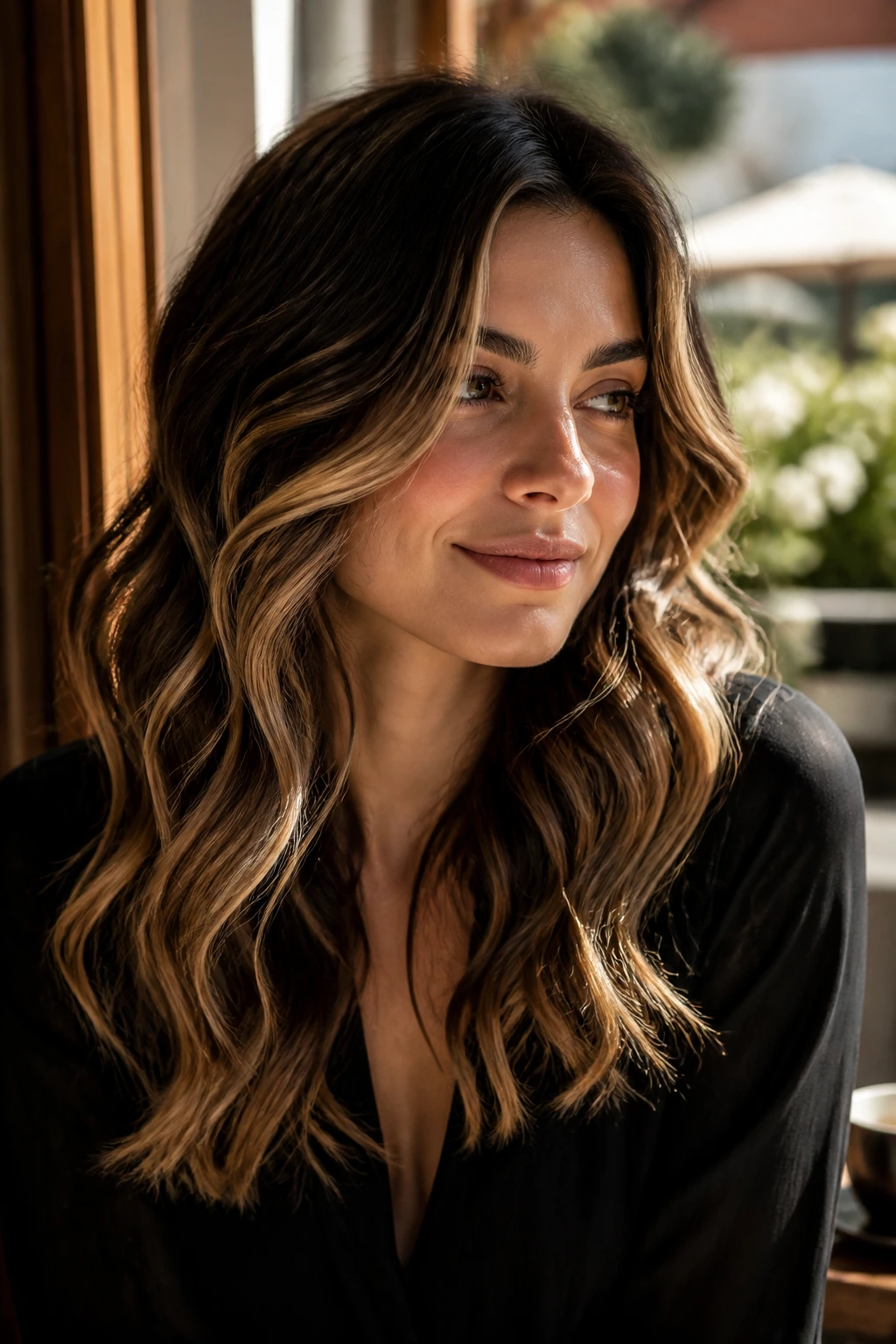
Golden beach waves are what many people picture when they hear “blonde,” but this version works because the highlights are placed with some restraint. The color is warm, sunlit, and open, not streaky. On dark hair, the golden pieces lift the wave pattern instead of flattening it.
The best part is the way it ages. Even as the root grows, the highlights still read intentional because the overall tone stays warm and relaxed. If you live in loose layers and air-dried bends, this look feels easy to wear.
A Small Styling Detail
Curl different sections in alternating directions. If every piece bends the same way, the highlight pattern can start to look too neat. A little mess helps this one.
14. Mocha-Blonde Curtain Bangs
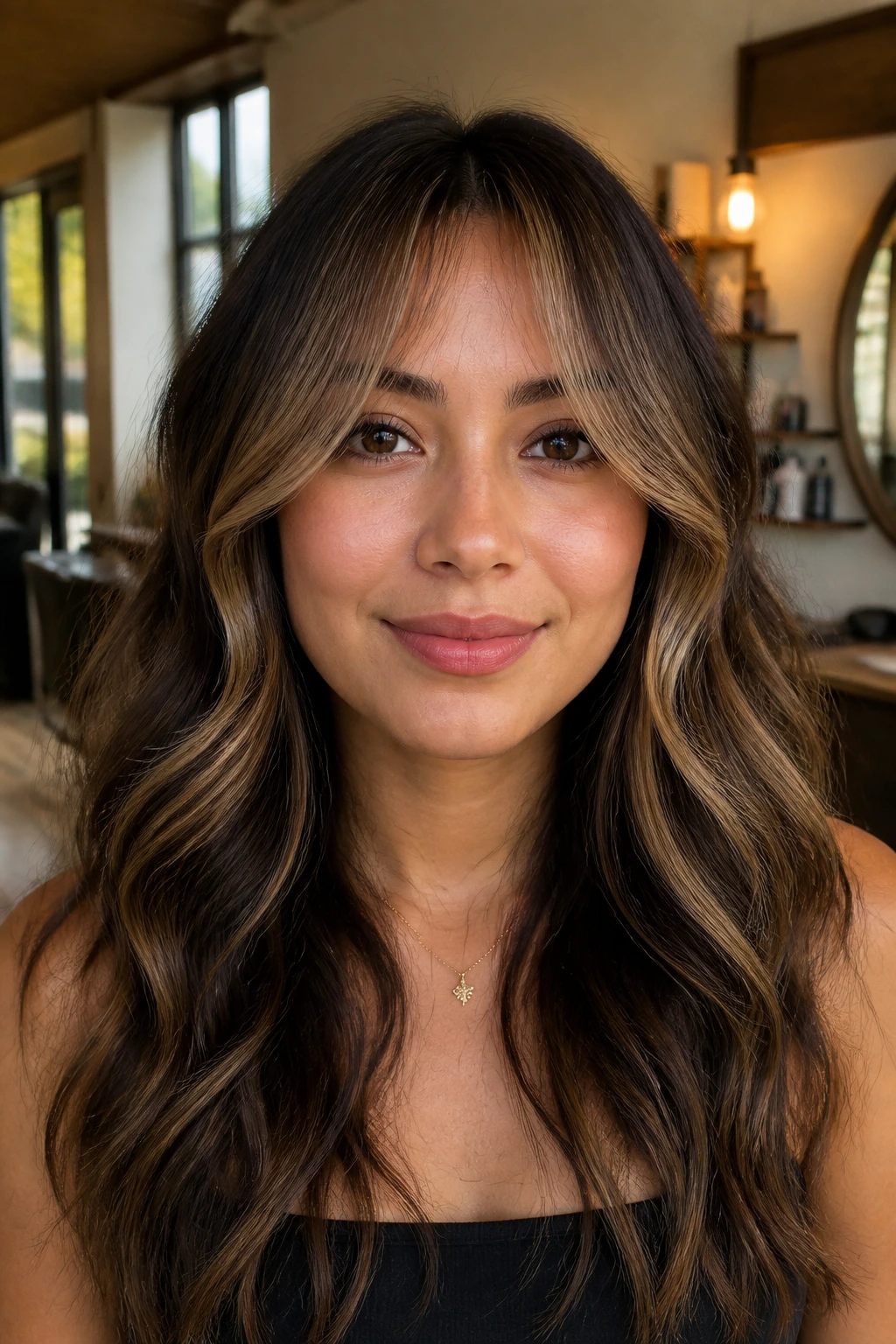
Mocha-blonde curtain bangs are a good answer when you want blonde to live at the front without turning the whole head light. The bangs and face-framing pieces soften the dark base, while the rest of the hair stays moody and deep. It’s a flattering split personality, honestly.
This look suits people who like the idea of blonde but love brunette depth. The color around the eyes and cheekbones does the brightening work, and the curtain shape keeps the transition soft. On wavy hair, the bangs blend into the rest of the cut instead of sitting on top of it like a separate piece.
Why It Works
The mocha tone keeps the blonde from clashing with the dark base. If you go too light in the bangs, the contrast can feel abrupt. Mocha sits in the middle and lets the haircut do the framing.
15. Pearl Blonde Balayage on Midlength Layers
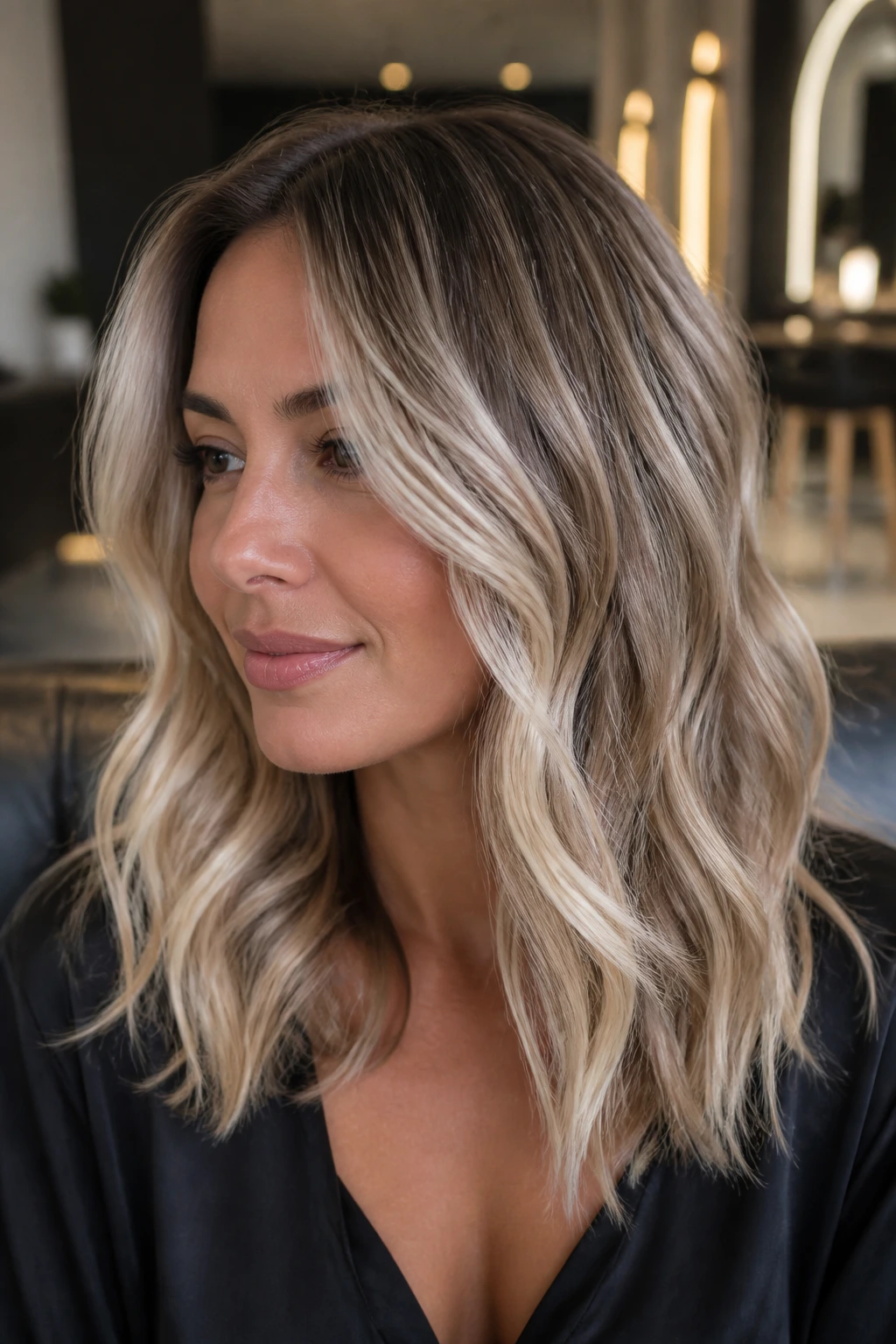
Pearl blonde has a soft sheen that sits between beige and cool cream. It looks especially good on midlength layers because the cut exposes enough surface for the tone to show without making the hair feel overprocessed. On waves, it has a clean, almost satin finish.
What Makes It Different
Pearl blonde is softer than platinum and less sunny than gold. That middle ground matters on dark hair. You get brightness, but the overall look stays calm and smooth, which is a relief if you’ve ever seen pale blonde on dark bases turn loud in bad light.
Ask For
A neutral-light blonde finish with a soft gloss, not a blue toner-heavy result. Pearl should look clean, not frosty.
16. Cinnamon Blonde Wavy Shag
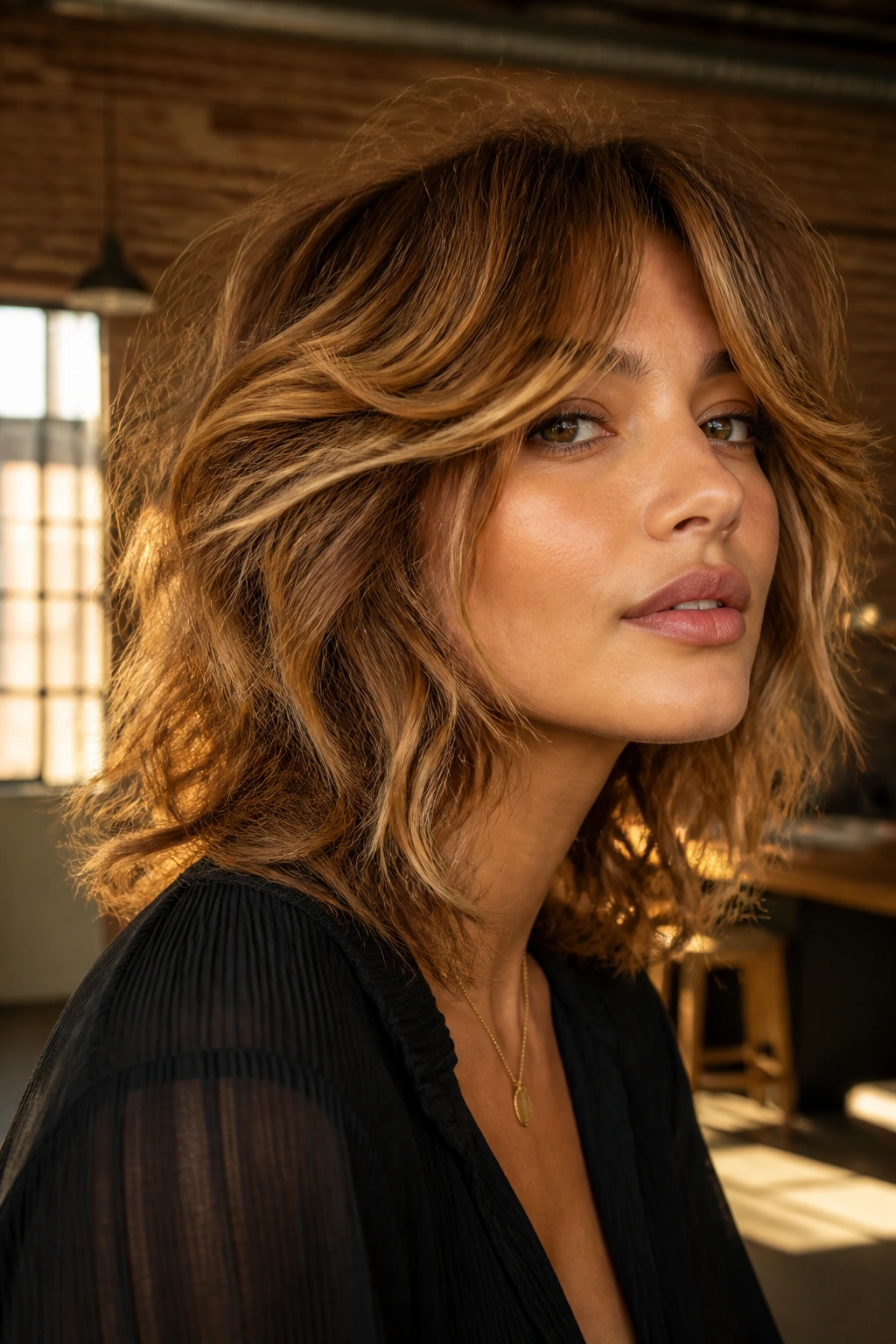
A cinnamon blonde shag has edge baked into it. The shaggy layers create movement on their own, and the cinnamon tone adds warmth that reads alive rather than brassy. On dark wavy hair, that combination can look almost effortless, though of course the haircut is doing a lot of the work.
This is one of the best options if you like texture. A shag wants a piecey finish, and blonde placement along those layers makes every bend look deliberate. It’s especially good if your hair falls a little flat at the crown.
17. Beige-Blonde Babylights on Dark Hair
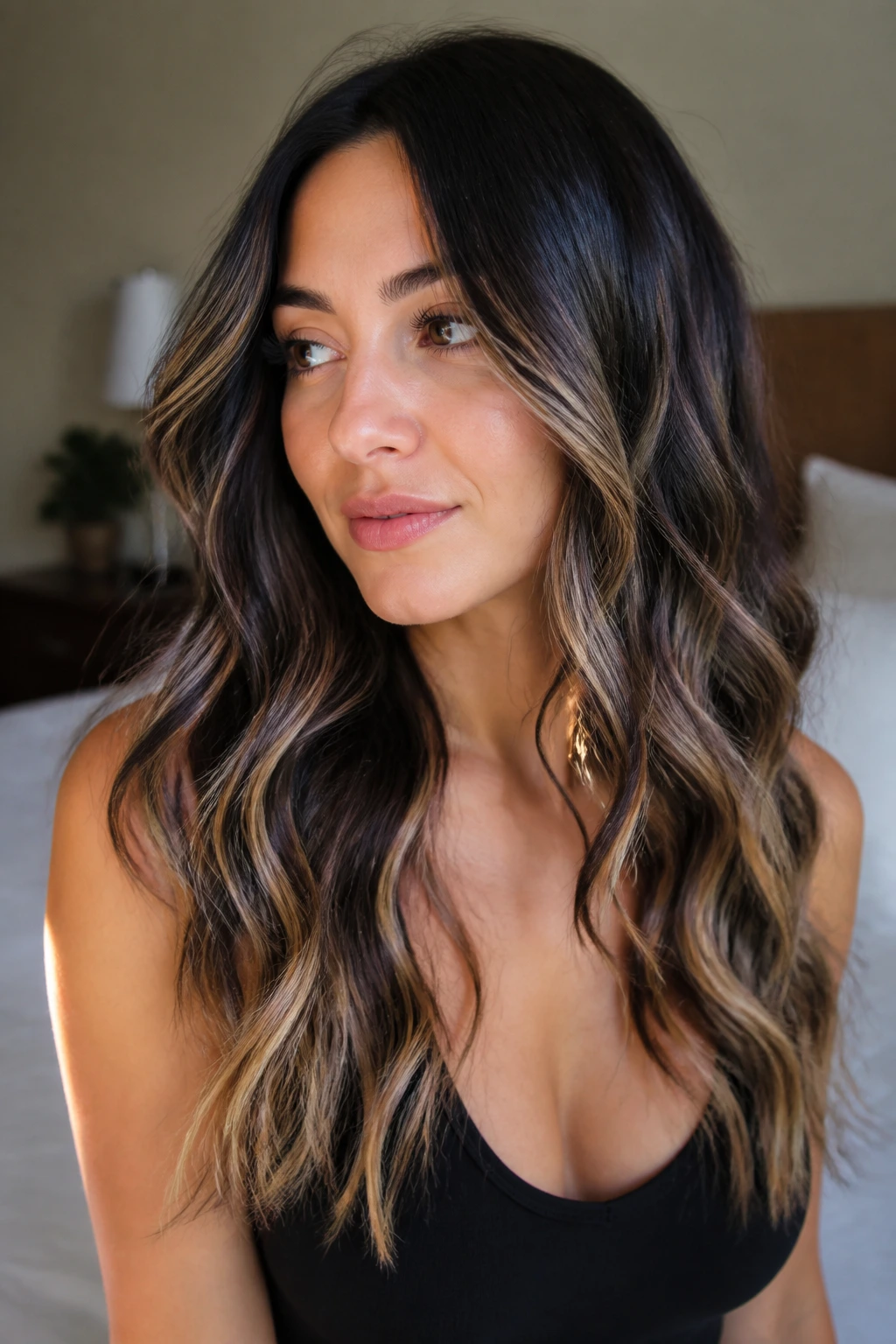
Babylights are tiny, fine light pieces that mimic how hair might lighten naturally over time. On dark hair, beige babylights add brightness without changing the overall identity of the color. The result feels delicate rather than dramatic.
Best For
Fine to medium hair, or anyone who wants dimension without obvious highlight stripes. Because the pieces are so small, the color shifts with movement instead of sitting in one fixed place. That makes it a strong choice for waves that are loose and soft.
One Caveat
Babylights can disappear if the base is extremely dark and the lift is too slight. A beige gloss on top usually helps them stay visible instead of muddy.
18. Rooted Platinum Ends
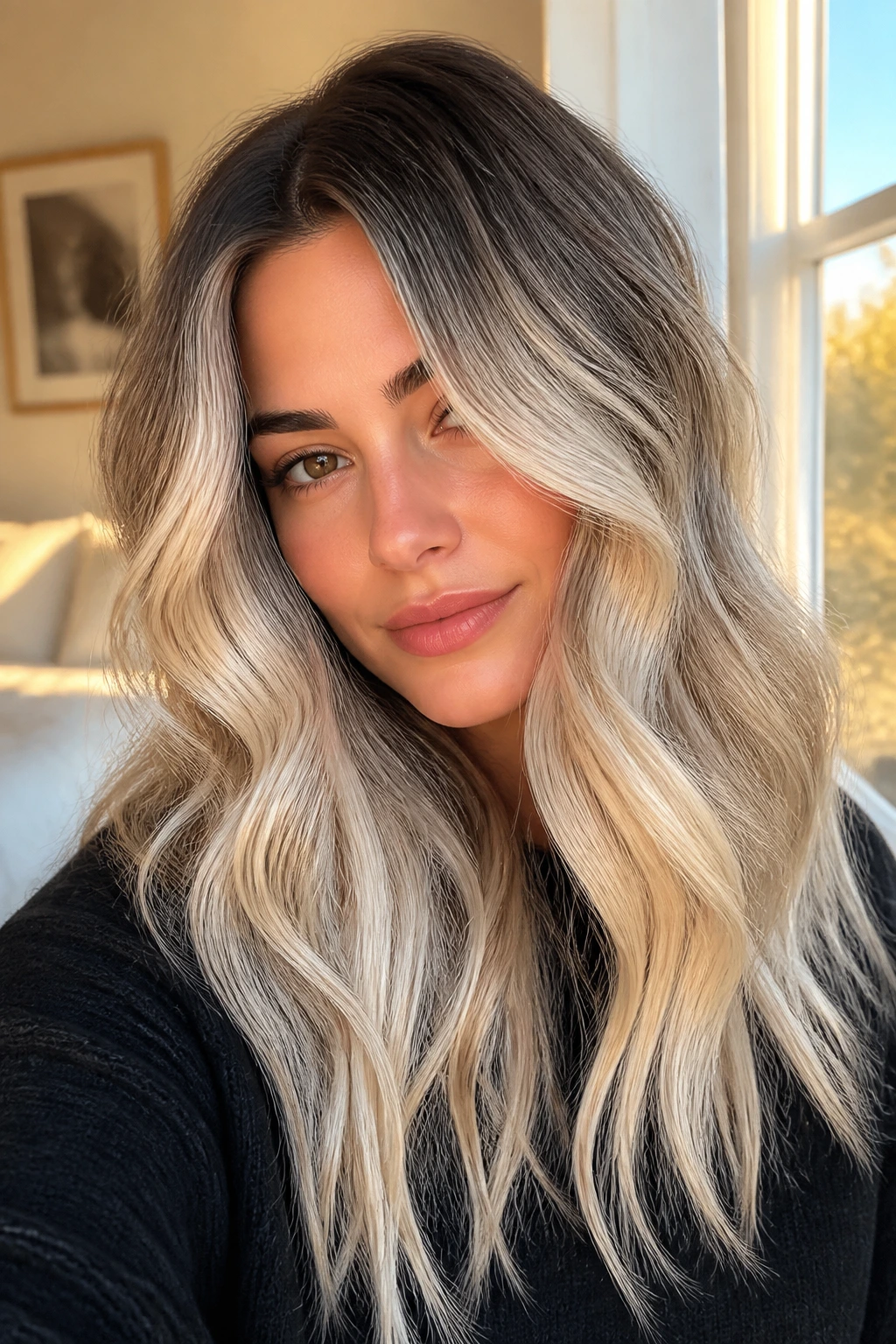
Rooted platinum ends are not shy, and they shouldn’t be. The dark root gives the platinum room to shine, while the lighter ends bring the drama. On waves, the contrast looks cleaner than it does on straight hair because the bends break up the brightness.
This is the look with the most maintenance in the group, so it should only happen if you’re ready to care for the hair. Bond repair, heat protection, trims, and patience matter here. If the ends are already fragile, I’d skip the platinum and go beige or champagne first.
Reality Check
Platinum on dark hair usually takes more than one lightening session. Rushing it is how people end up with snap-prone ends and a toner that fades in a week.
19. Sunlit Half-Head Highlights
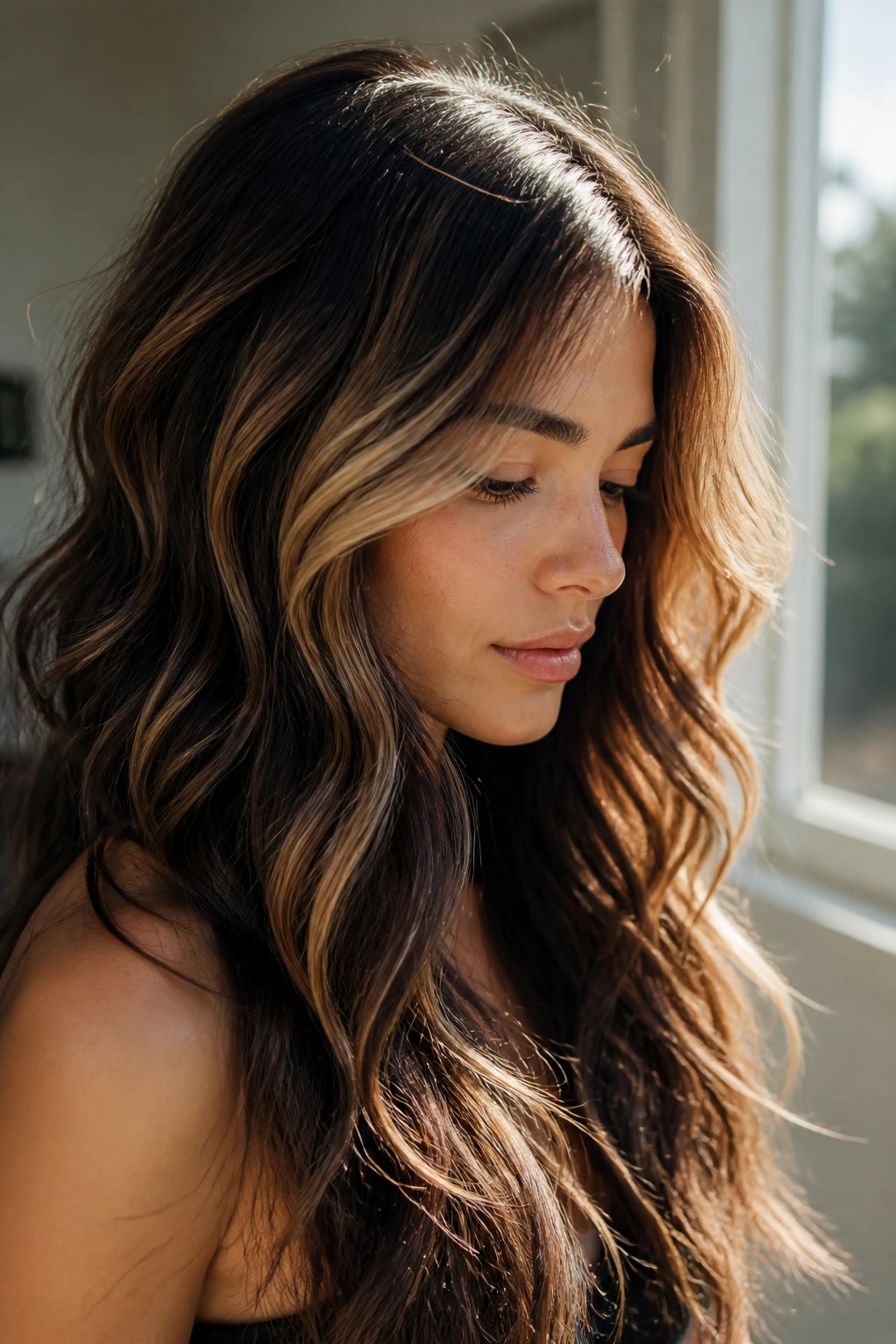
Half-head highlights are one of those salon terms that sound old-fashioned until you see the result. Only the top section gets brighter, so the canopy of the hair catches light while the underneath stays darker and richer. On wavy hair, that split creates serious depth.
The style feels efficient, too. You get the visible blonde where it matters most, and the underlayers keep the haircut from floating away. It works well if you wear your hair mostly down but still like the idea of dimension when you tie it back.
20. Warm Wheat Blonde with S-Curls
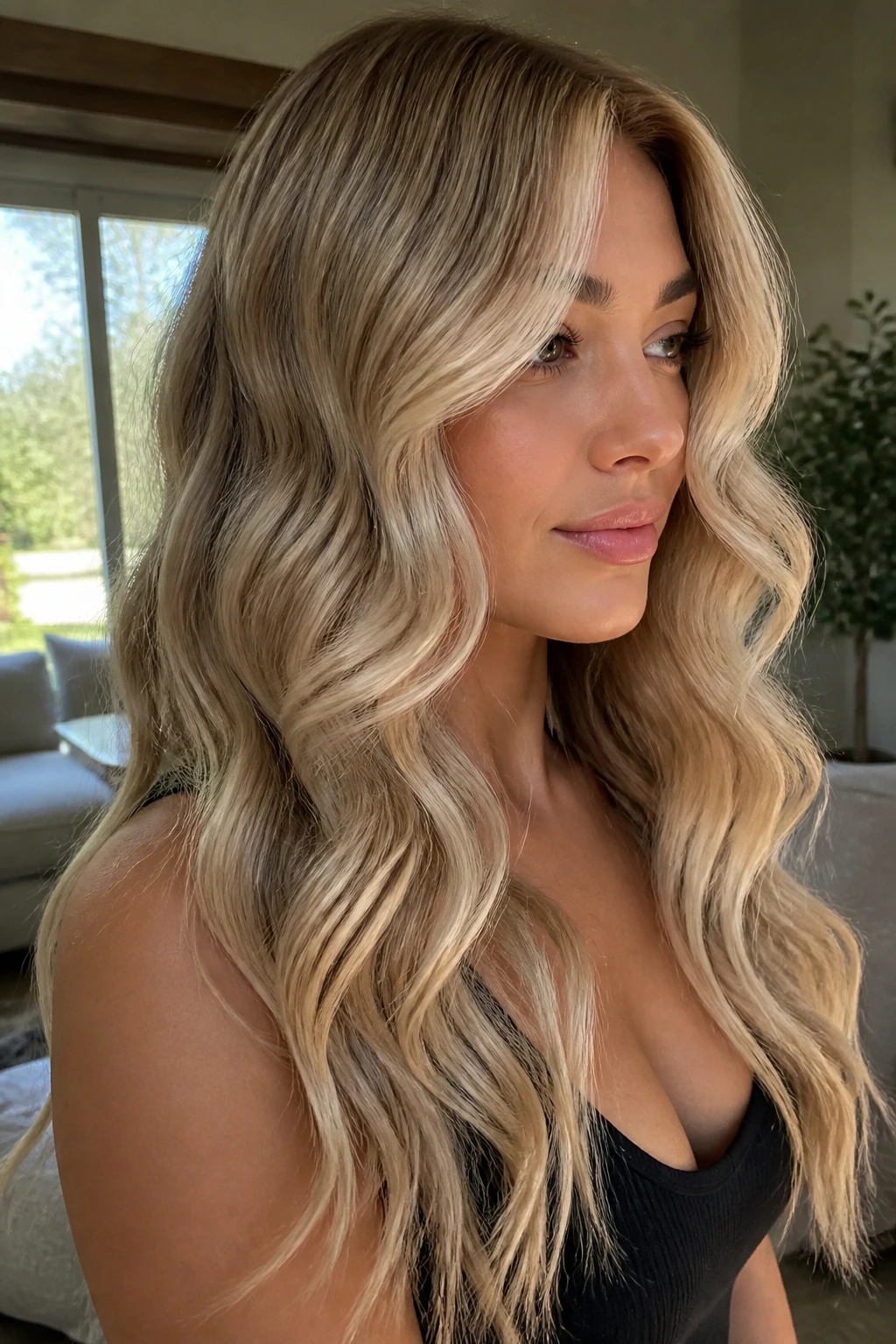
Warm wheat blonde sits softer than honey and less orange than gold. It has that pale grainy warmth that looks natural on dark waves, especially when the curl pattern is more S-shaped than ringlet-tight. The tone reads gentle, which is a nice change from high-contrast blonde.
Why It’s a Good Middle Ground
If honey feels too rich and ash feels too flat, wheat blonde lands in the safer center. It brightens the hair without making every highlight shout. The waves help the color read as soft texture instead of block color.
Styling Cue
Use a larger barrel or a wave iron if your natural wave is weak. Wheat blonde loves movement, but it looks dull if the hair is too stretched out.
21. Soft Foilayage on Midlength Waves
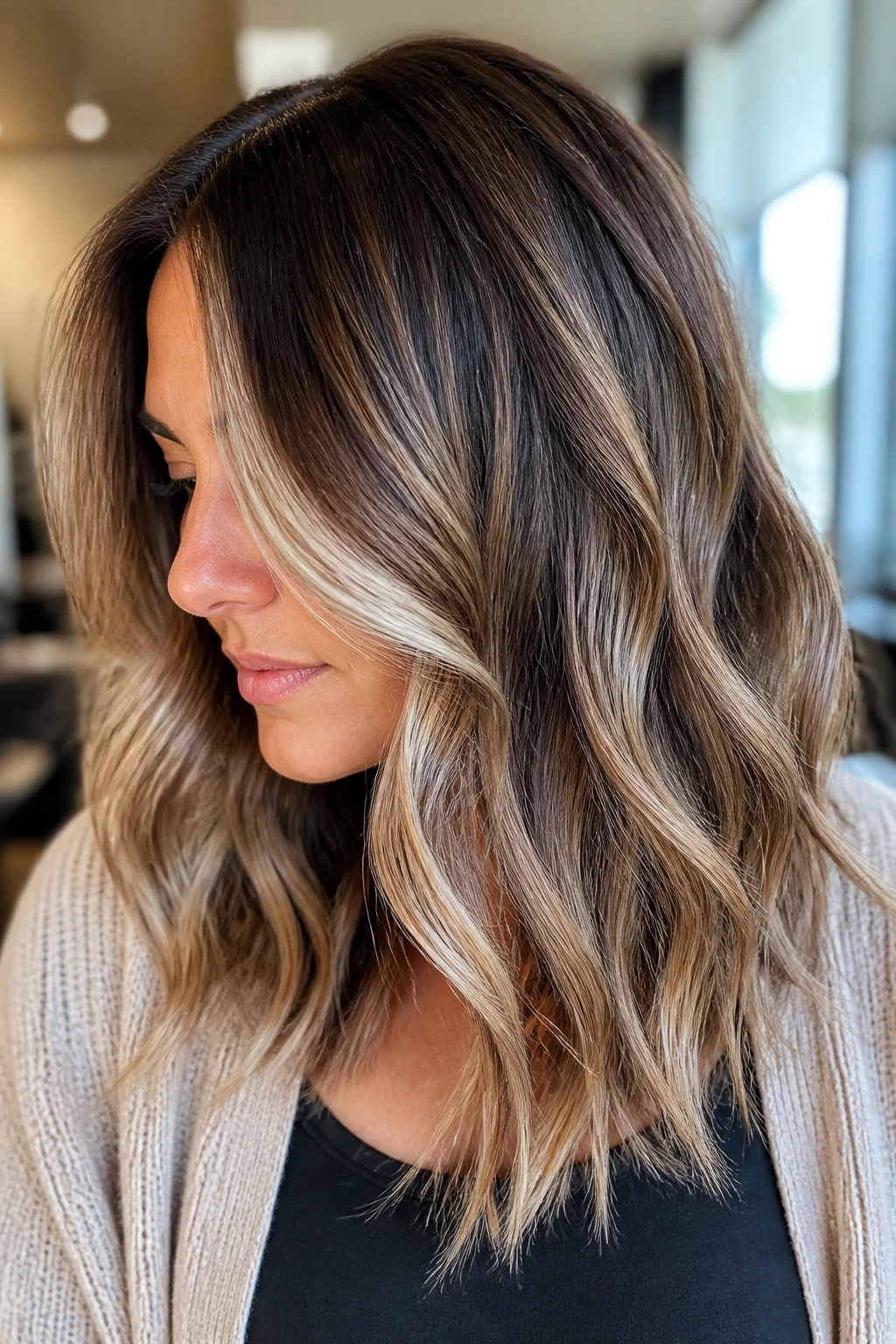
Foilayage is what you reach for when balayage alone won’t give enough lift. The foil helps the hair get brighter, while the painted placement still keeps the result soft. On midlength waves, that balance is useful because the color can show without turning harsh.
This is one of the better answers for dark hair that resists lightening. You can get more brightness at the mid-shaft and ends without ending up with blunt highlight bars. It feels more tailored than a standard highlight schedule.
What to Ask For
Tell your colorist you want the brightness to live in the wave pattern, not as straight vertical stripes. That single detail changes the result a lot.
22. Chestnut and Blonde Contrast Waves
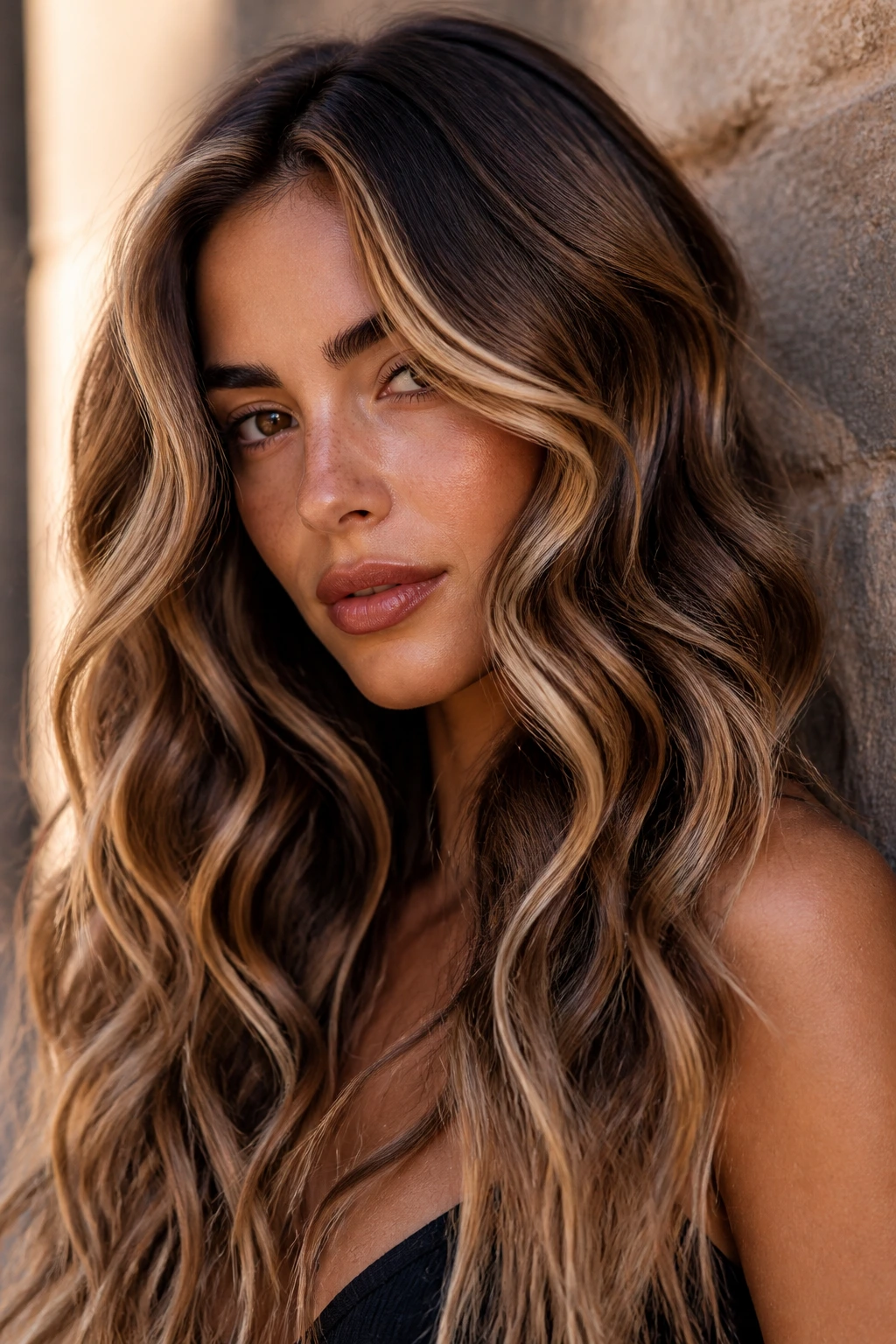
This look is for people who like a bit of tension in their color. The chestnut base stays deep, and the blonde pieces sit on top in visible contrast. It’s bolder than bronde and more obvious than balayage, but on wavy hair the pieces still feel connected.
The reason it works is simple: waves keep the contrast from looking rigid. If the hair were straight, the separation could feel blocky. With movement, it becomes dimensional.
Best For
Someone who wants the blonde to be seen from across the room, not just in good daylight. If you like a little edge in your hair color, this is one of the stronger options in the list.
23. Buttercream Money Pieces
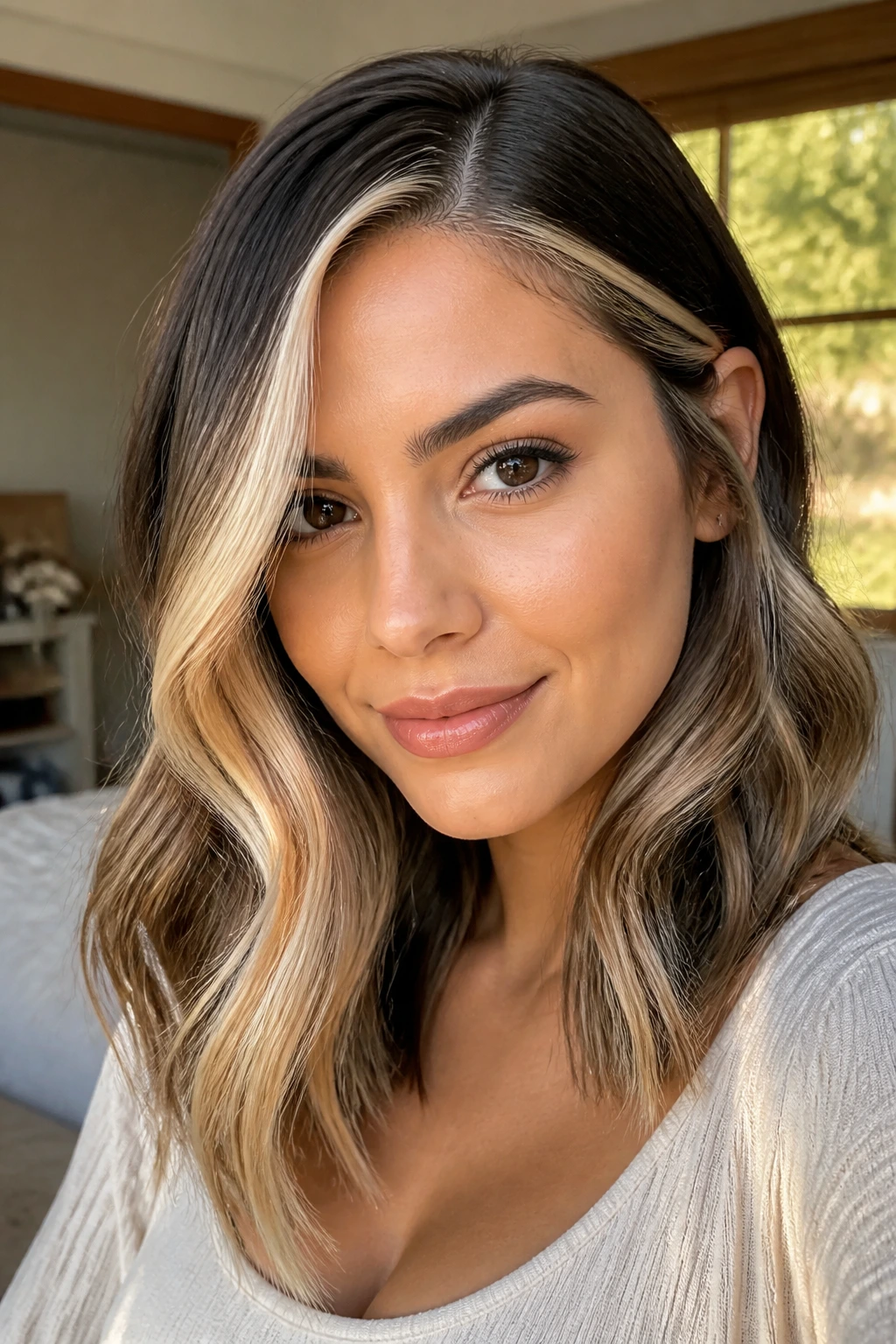
Buttercream money pieces bring brightness right where the eye lands first. The tone is pale, warm, and soft enough to flatter dark hair without turning it harsh. Around a deep base, that buttery frame makes the face look lighter and the waves look fuller.
I like this more on side parts or loose curtain pieces than on super-straight middle parts. The movement helps the face frame blend into the rest of the haircut. If your hair is around shoulder length or longer, the effect is especially pretty.
Small Styling Trick
Tuck one side behind the ear after styling. It exposes the buttercream piece and makes the contrast feel intentional, not accidental.
24. Shadow Root Blonde Lob
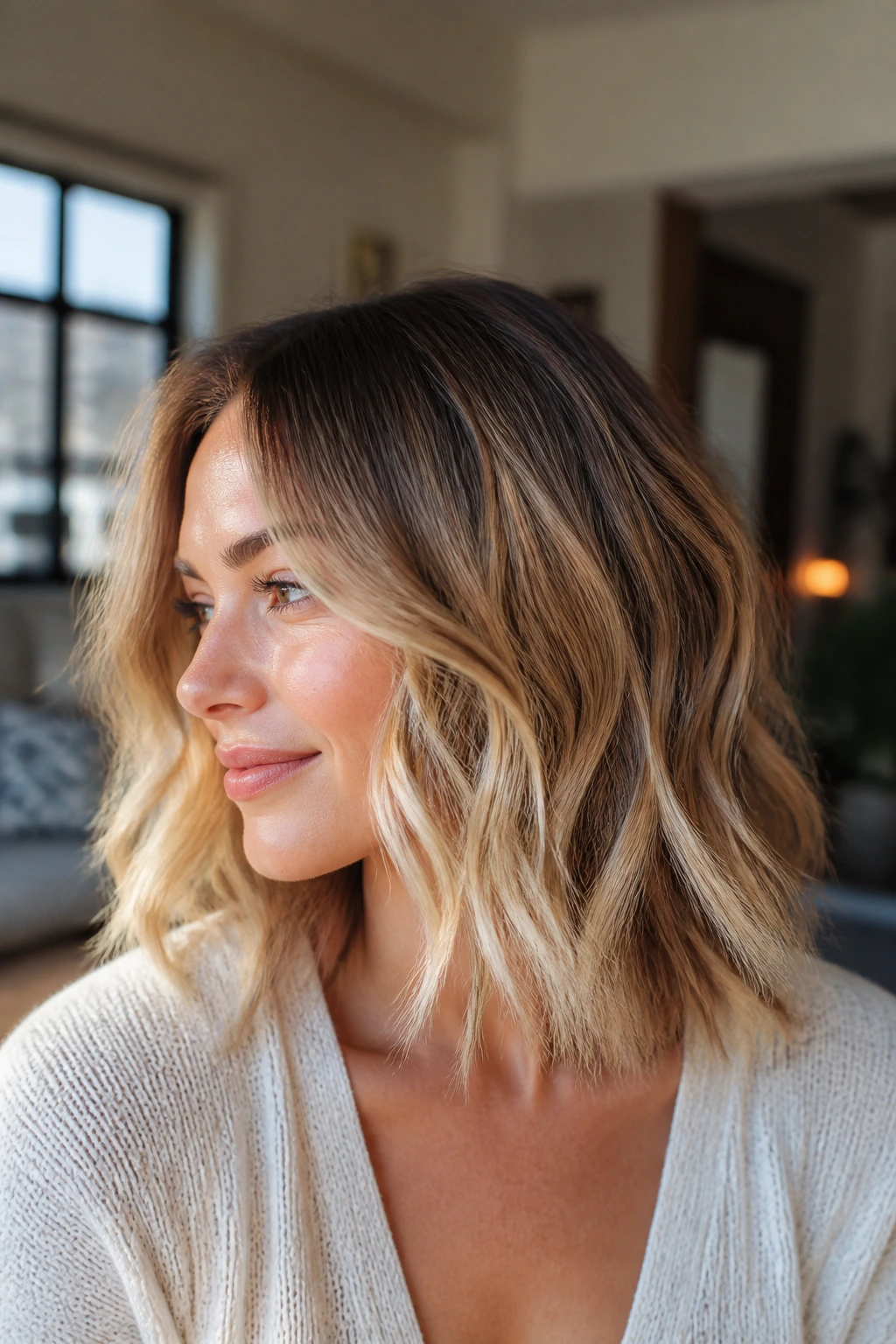
A shadow root is one of the easiest ways to wear blonde on dark hair without babysitting it. The root stays deeper, the blonde starts lower, and the lob length gives the lighter pieces enough room to show. It’s clean and practical.
This is the version I’d recommend if you want a blonde look that can survive real life. The grow-out is soft, the color stays dimensional, and the lob keeps the edges from looking over-lightened. On waves, the shadow root disappears even more smoothly.
25. Honey Bronde with Layered Movement
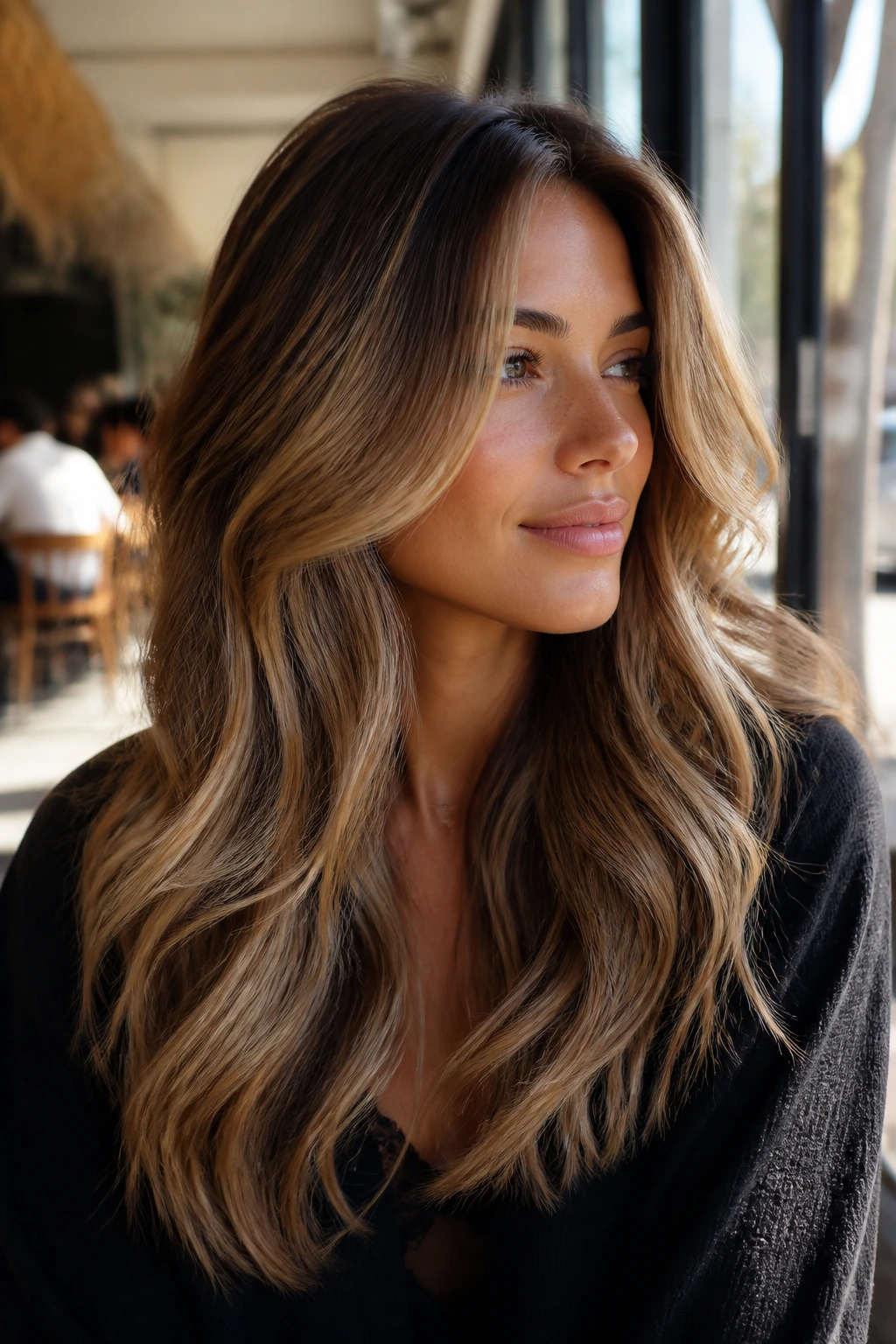
Honey bronde is the middle ground that people keep coming back to for a reason. It has enough blonde to shift the hair visibly, but enough brunette left behind that the look never feels disconnected from the base. Layers make it better, because the color can sit in different zones.
Why It’s Such a Safe Bet
Honey bronde flatters dark hair that doesn’t lift evenly. The darker pieces can stay where the hair is strongest, and the honey can live where the light reflects best. That makes the whole style feel balanced instead of forced.
Who It Suits
Pretty much anyone who wants a warm, wearable blonde with fewer upkeep headaches than a full highlight set.
26. Smoke-and-Ash Balayage
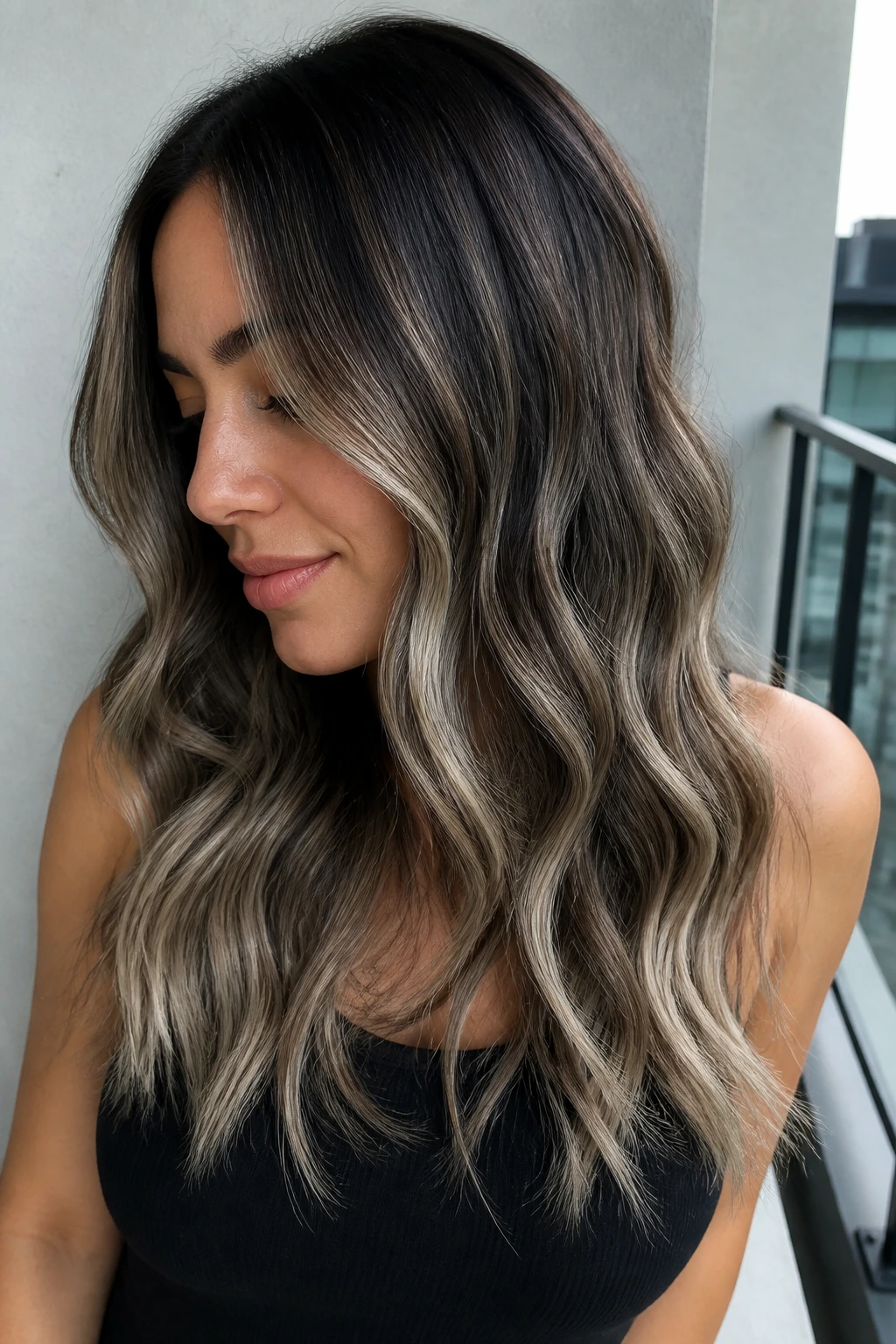
Smoke-and-ash balayage has a cool, muted finish that looks sleek and modern on dark waves. The shade sits between ash brown and pale blonde, which keeps the result from looking too icy or too dirty. The trick is restraint. Too much ash can flatten the hair fast.
How to Wear It Well
Use a soft wave, not a super tight curl. The cooler the tone, the more you want movement in the cut. That keeps the color from disappearing into one gray block.
Who Should Skip It
If your skin leans warm and you love gold jewelry, this can feel too cool. In that case, beige or mushroom usually makes more sense.
27. Toasted Almond Blonde Waves
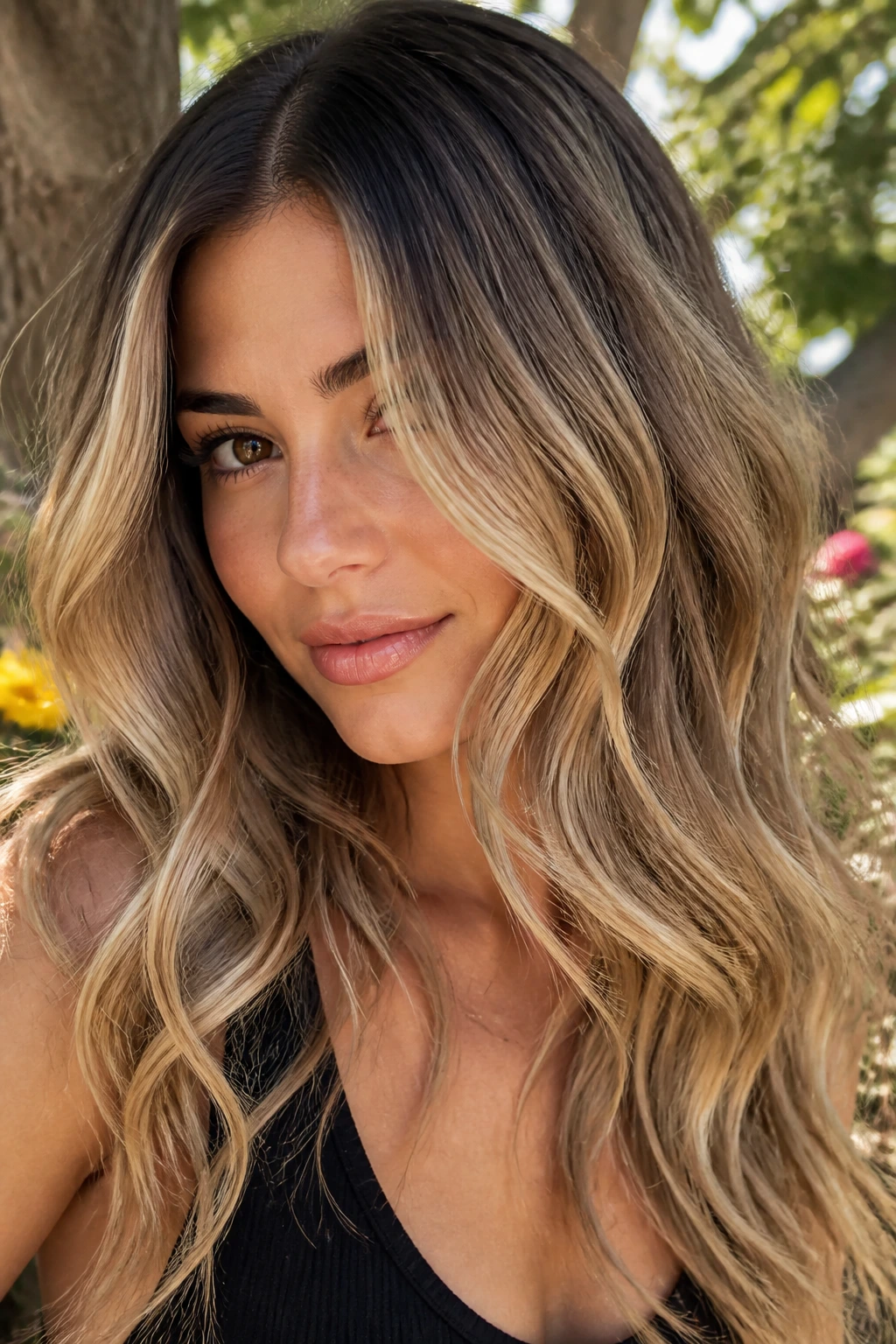
Toasted almond blonde gives you a warm-cool balance that’s easy to wear. It has the softness of beige with just enough golden warmth to keep it from feeling icy. On dark wavy hair, it reads calm and polished.
The waves matter here because they stop the color from looking one-note. As the light shifts, the toasted almond pieces pick up tiny changes in tone. That makes the hair look more expensive than a single-process blonde ever could.
28. Vanilla Beige Waves with Deep Side Part
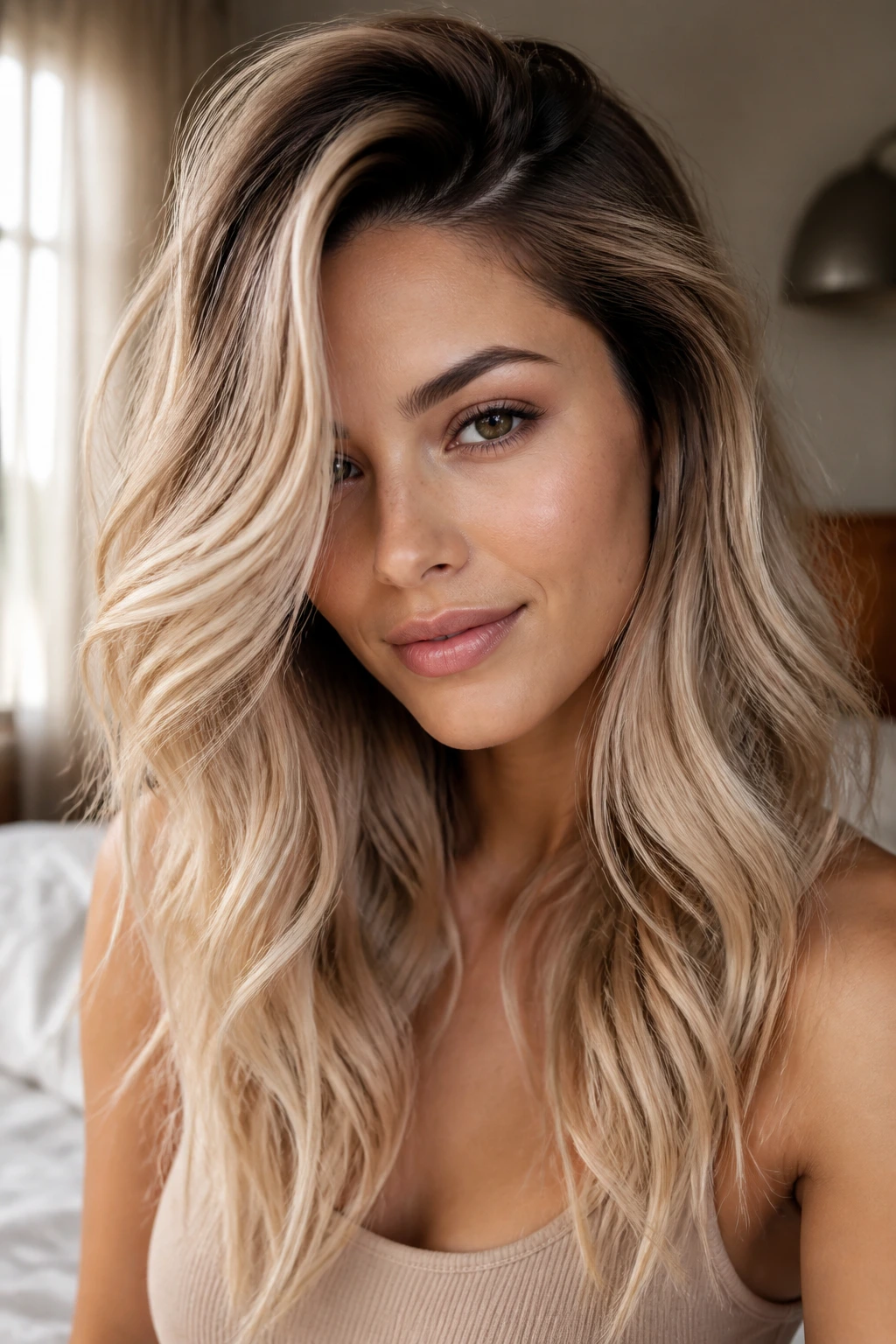
A deep side part can do more for blonde placement than another round of lightening. It shifts the volume, throws more hair to one side, and lets the lighter front pieces sit higher on the face. Vanilla beige works well here because the tone is soft enough to move with the parting.
This style is especially kind to finer waves. The part creates lift at the crown, and the beige tone keeps the brightness airy rather than flat. If your waves fall heavy on a middle part, this is a very good switch.
29. Bright Butter Blonde Ends with Dark Interior
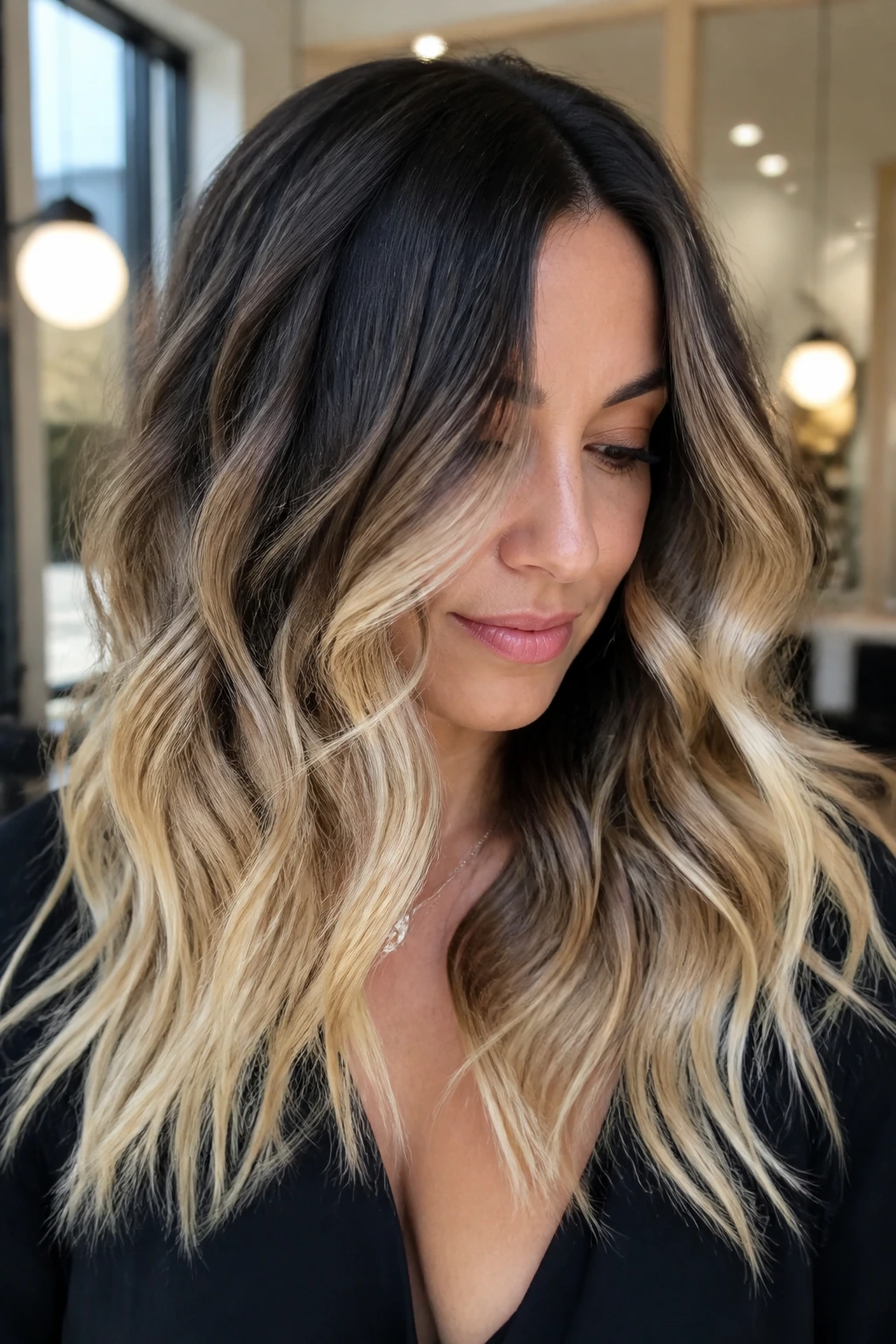
Bright butter ends with a dark interior is a color trick that feels more dramatic than it sounds. The outside layers carry the light blonde, while the interior stays deep and brunette. That contrast gives the hair dimension from every angle, especially when the waves separate.
It’s a strong choice if you like hair that changes as you move. From one side it looks blonde-forward; from another it reads dark and rich. That kind of movement is exactly why wavy hair makes this style sing.
My Take
This is one of the most photogenic blonde placements for dark bases because the contrast isn’t trapped in one stripe. It’s spread out, which makes the cut look fuller.
30. Multi-Tonal Blonde Cascade
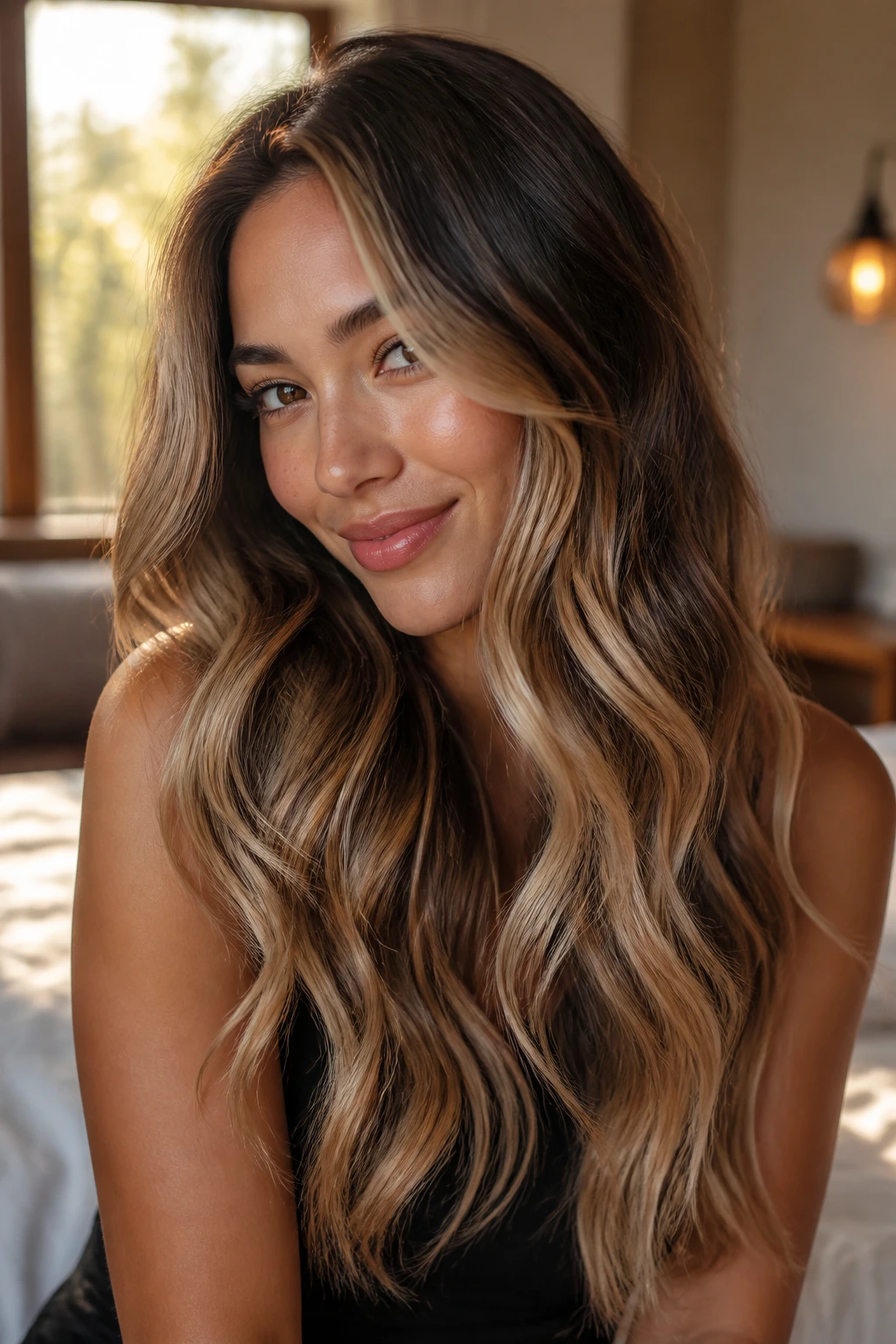
Multi-tonal blonde cascade is the richest-looking option in the bunch. Instead of one blonde, you get honey, beige, cream, and soft gold moving through the waves like separate threads. On long dark hair, that mix keeps the style from looking flat at any angle.
Why It Feels Full
Different tones catch different light. That sounds obvious, but it matters here. A single blonde can disappear on dark hair if the wave falls the wrong way; several tones keep the color alive from root to end. Ask for the brightest pieces around the face and on the top layer, with softer warmth underneath.
Best For
Anyone with long hair who wants the color to look expensive without looking uniform. This is the version that gives you the most dimension, and waves are the reason it works.
Why Wavy Texture Makes Blonde Placement Look Softer
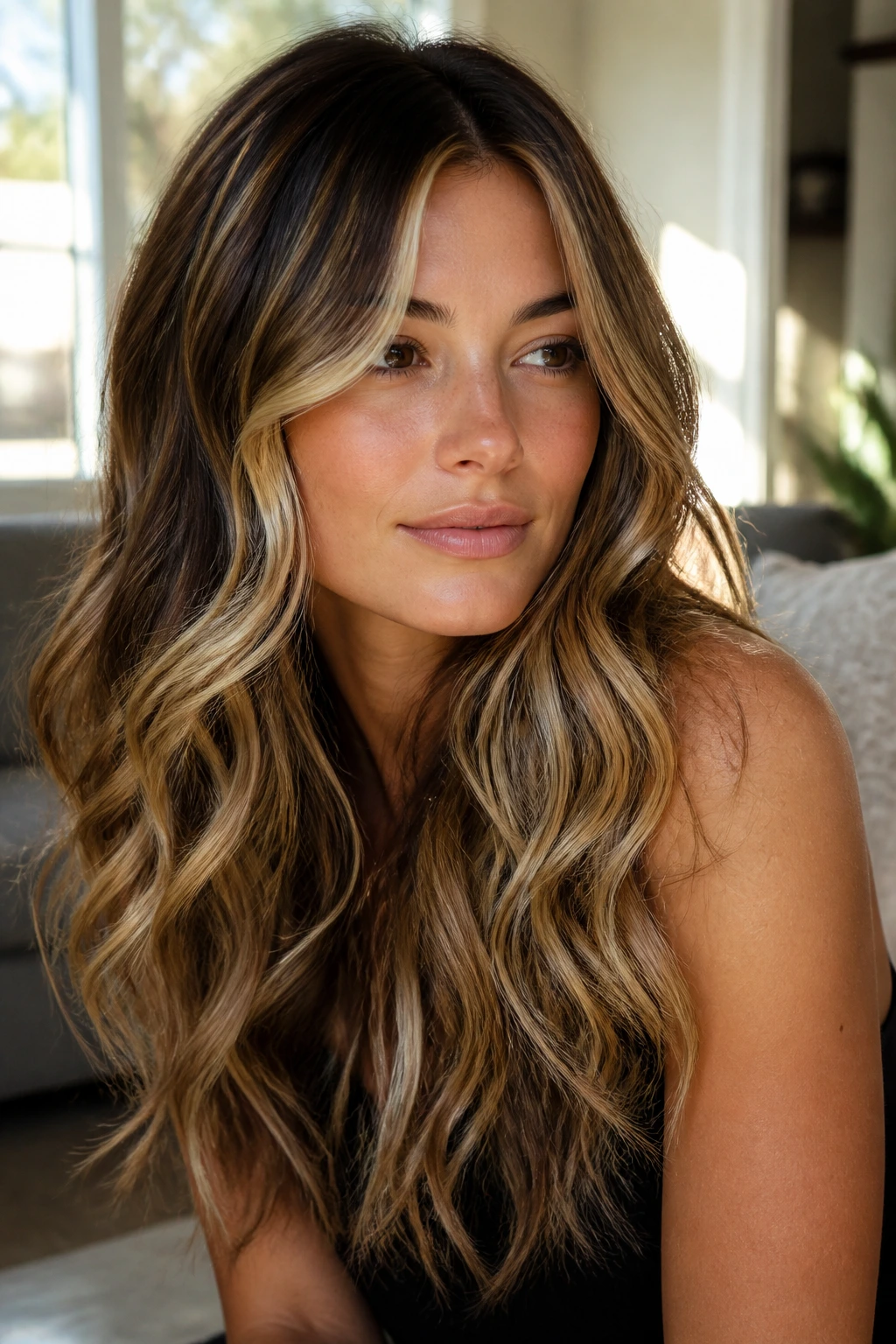
Waves are the reason these tones read as ribbons instead of stripes. Straight hair shows every highlight edge in one long line, which can be unforgiving on a dark base. Waves bend the light. They break up the line of demarcation, blur the transition, and make softer colors like beige, caramel, honey, and pearl look more dimensional than they would on a flat finish.
That’s also why placement matters more than brightness. A few well-placed lighter sections around the face, through the top layer, and at the ends can do more than a full head of lightness that sits in the wrong spots. If the waves are loose, the blonde feels airy. If the bends are more defined, the color reads a little more graphic. Either way, the texture is doing part of the blending for you.
Dark hair also gives you a built-in frame. That’s the part people often miss. The brunette base makes the blonde look brighter than it is, so you can stop a level or two earlier and still get visible contrast. That usually means healthier ends, easier maintenance, and a color that still looks good when the salon gloss starts to fade.
Essential Tools for Styling and Color Care
- Sulfate-free shampoo: Keeps the blonde from stripping out fast and helps the dark base stay glossy.
- Purple or blue toning shampoo: Use purple for pale blonde, blue for orange brass on deeper brown-to-blonde blends.
- Bond-building mask: Helpful if you’ve lightened dark hair more than once; it keeps the ends from feeling rough.
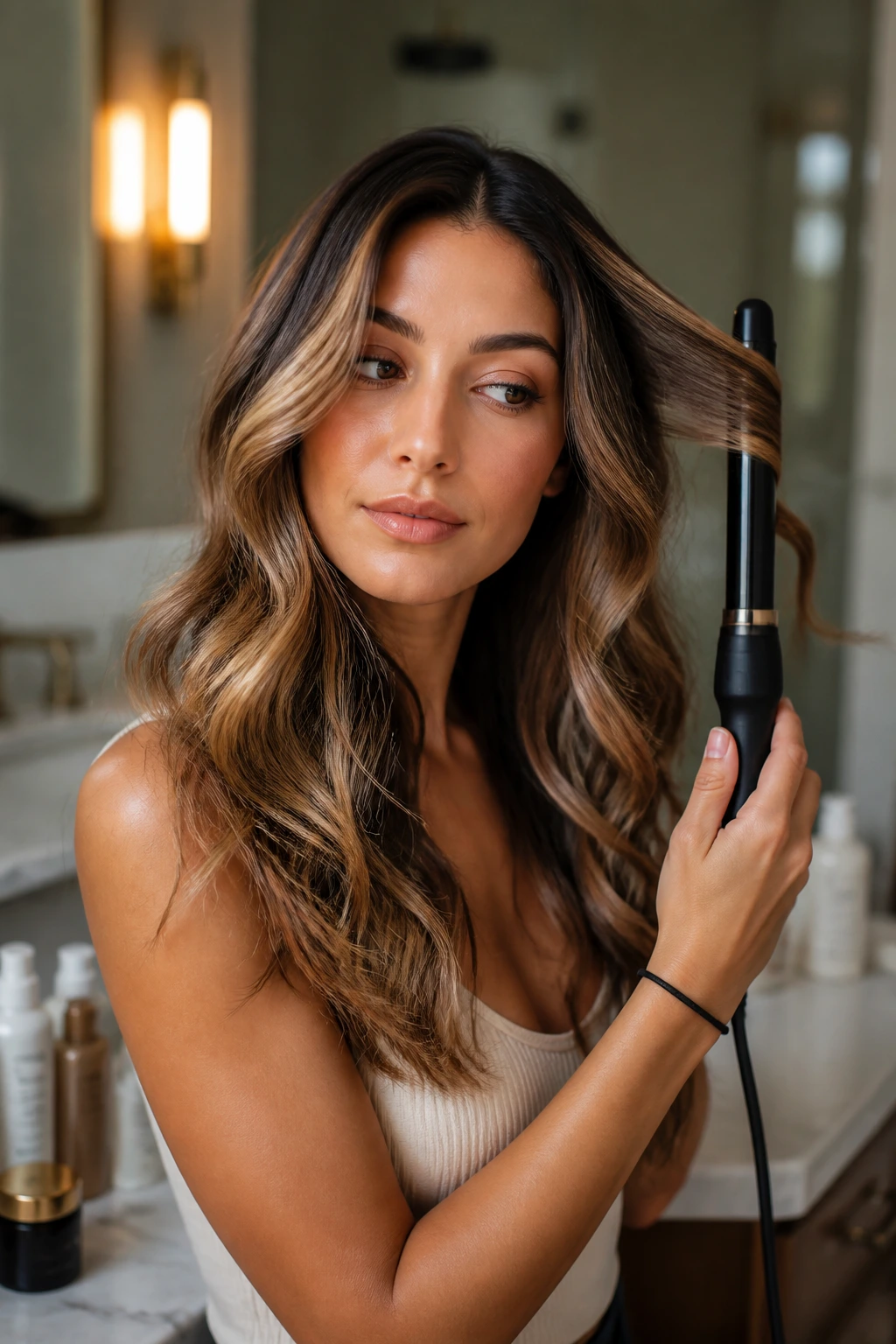
- Heat protectant spray: Non-negotiable before curling, waving, or even rough-drying.
- 1 to 1.25-inch curling iron or wand: The sweet spot for loose waves that show off blonde ribbons.
- Wide-tooth comb: Better than a brush for loosening waves without turning the blonde into frizz.
- Microfiber towel or soft T-shirt: Cuts down on roughing up freshly toned hair.
- Sectioning clips: Make it easier to style the top layer without missing the underlayers.
- Color-safe gloss or mask: Helps keep beige, champagne, honey, and ash tones clean between salon visits.
- Silk or satin pillowcase: Reduces friction, which matters more once lightened ends are in the mix.
How to Pick the Right Blonde Tone for a Dark Base
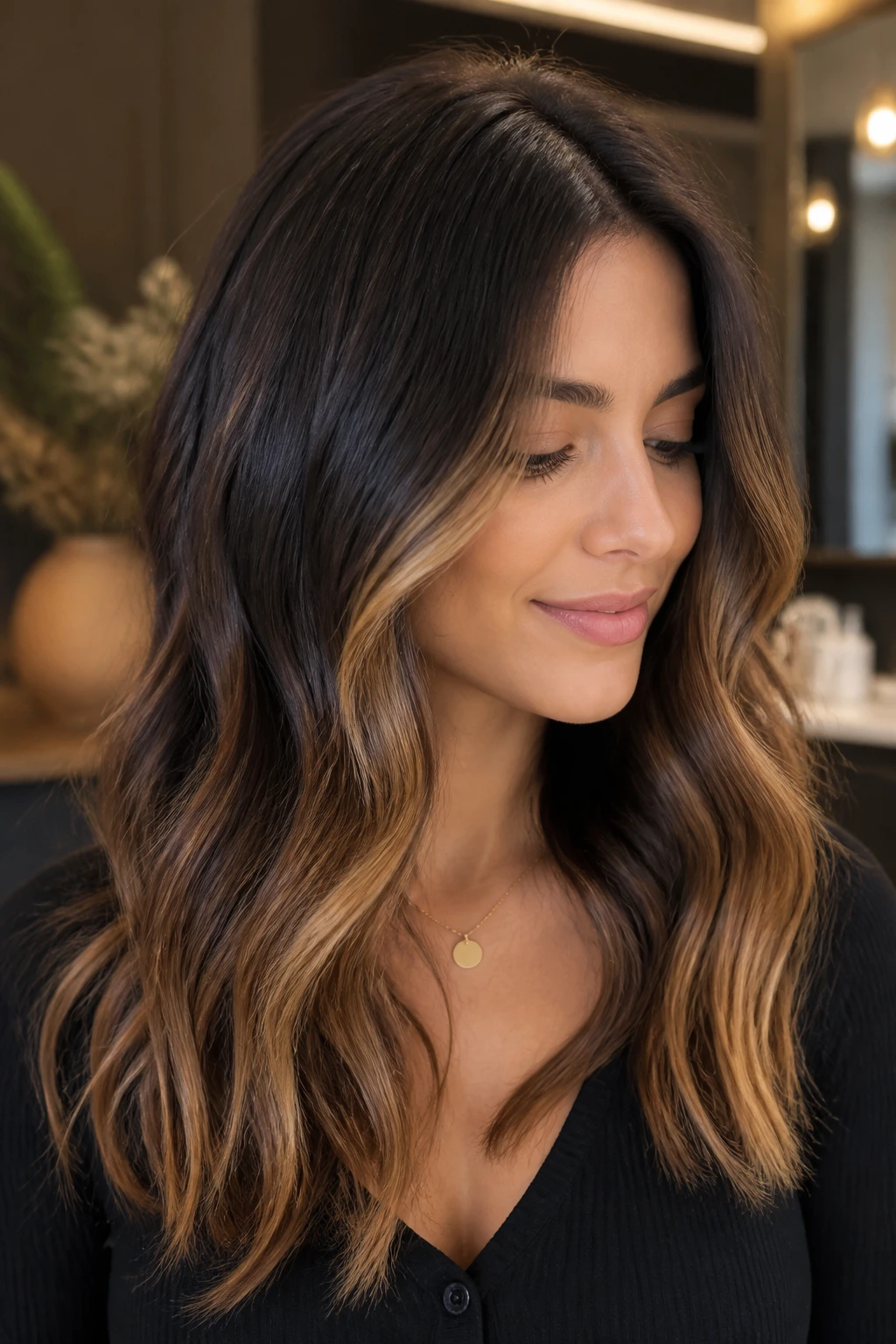
How light should you go? That’s the real question, and the answer depends on your starting level, your skin undertone, and how much upkeep you’re willing to live with. Dark brown hair can wear caramel, honey, and beige with very little drama. Medium brown hair can usually handle sandy, champagne, and pearl tones if the lift is controlled. Very deep brown or black hair often looks best with rooted balayage, money pieces, or lighter ends rather than a full all-over blonde.
Warm undertones usually sit well next to honey, caramel, butter, wheat, and toffee. Cool undertones lean better toward mushroom, ash beige, smoky blonde, pearl, and silver-blonde. Neutral undertones can wear either side, which is both convenient and mildly dangerous because it makes every swatch look tempting. Pick the tone that will still make sense when the color softens after a few washes, not just on day one.
Hair health should decide the ceiling. If your ends are already porous or your hair has gone through repeated lightening, stop short of platinum and silver. Beige, bronde, and rooted looks can give you the lightness you want without forcing the hair to hold a tone it can’t support. That usually ends up looking better anyway.
How to Wear These Shades So They Show Up
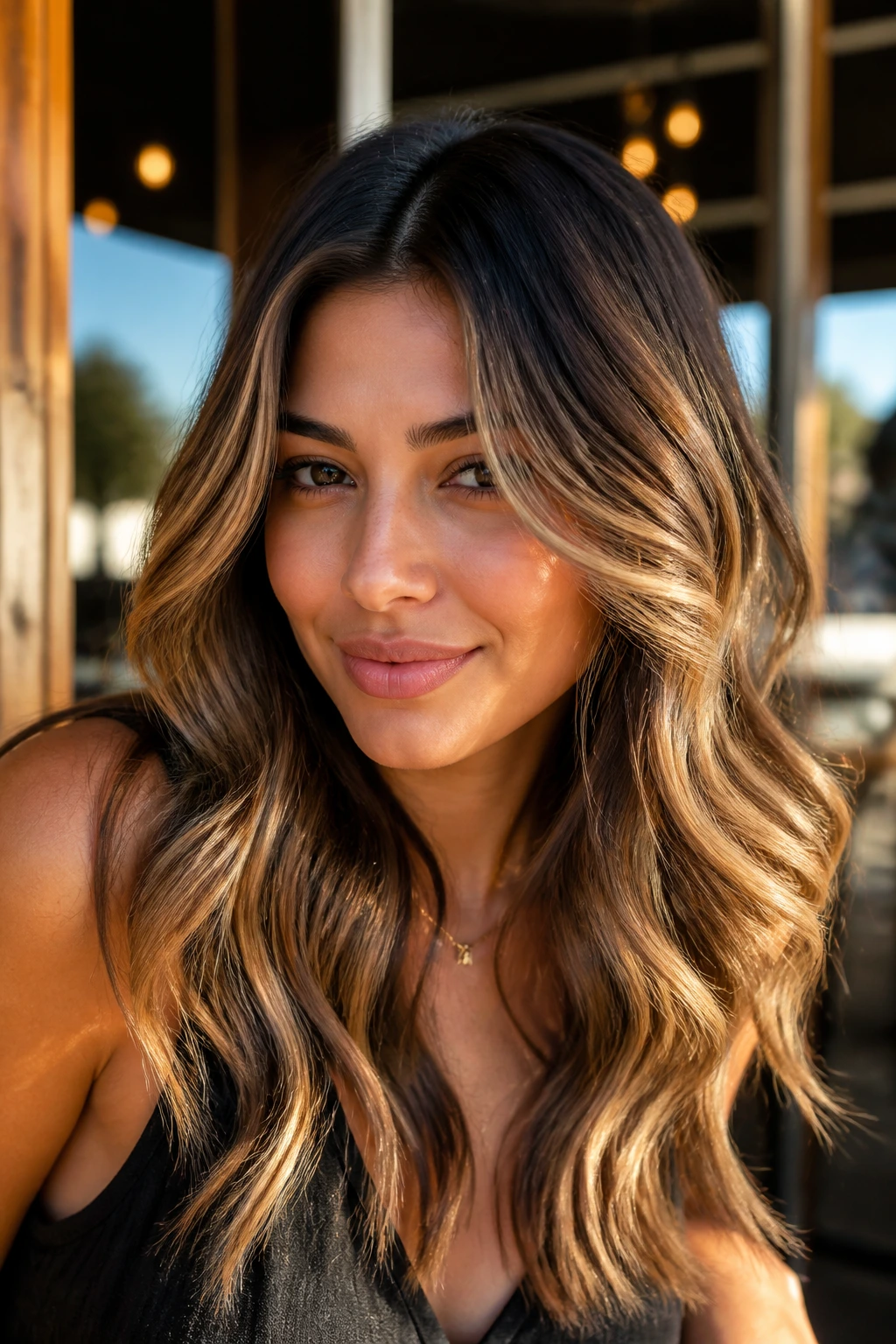
Presentation: Part the hair where the blonde has the most movement. A center part shows symmetry and face-framing pieces, while a deep side part gives the crown some lift and makes lighter layers pop on one side.
Accompaniments: Choose cuts that let waves move: long layers, curtain bangs, lobs, and shags all show off blonde placement better than one heavy block. If your haircut is blunt, keep the highlights softer and closer to the face.
Scale: Fine hair usually looks best with narrower ribbons and babylights. Thick hair needs broader placement or it can swallow the blonde. Medium density hair can sit in the middle and handle most of these looks cleanly.
Best Match: Match the finish to the tone. Warm blonde wants a soft wave and a little shine serum. Cool blonde looks cleaner with a smoother bend and less texture spray. Too much grit can make pale tones look tired.
Extra Styling Moves and Tone Boosters
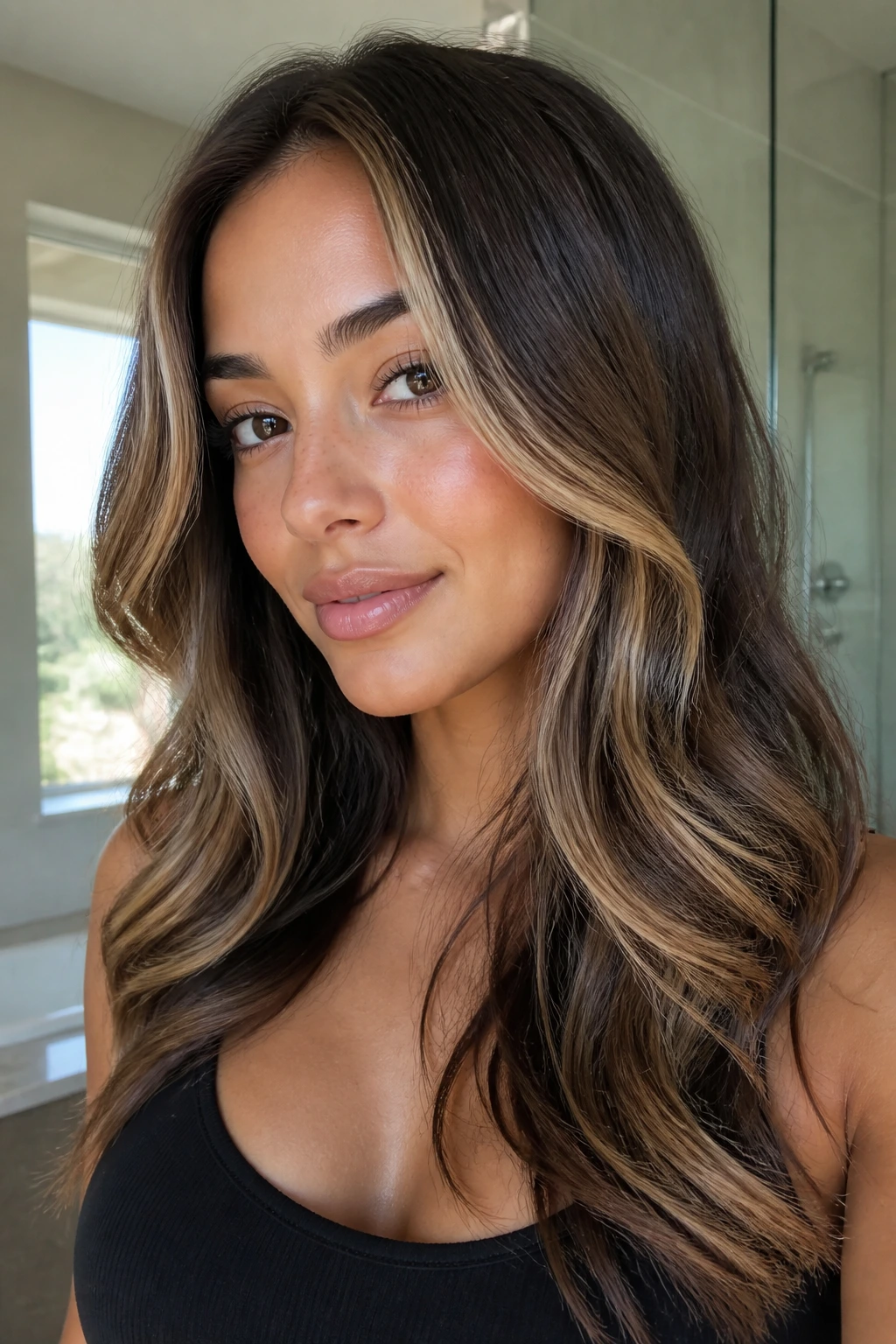
Gloss Boost: A clear or tinted gloss every 4 to 6 weeks keeps beige, champagne, and honey tones from drifting brassy. It also makes the waves reflect light in a cleaner way, which matters more than most people think.
Customization: Add a money piece if you want more face brightness, or keep the lighter pieces lower if you want the color to stay subtle. The same base formula can look very different depending on whether the blonde lives at the front, the ends, or under the top layer.
Serving Suggestions: Finish with a pea-sized amount of serum on the ends, not the roots. If the hair is fine, use a dry texture spray at the crown and leave the blonde pieces softer. If the hair is thick, a light cream can tame puffiness without dulling the color.
Make-It-Yours: For low maintenance, stay rooted and keep the blonde around the face and ends. For maximum contrast, choose brighter ribbons and a stronger fade. For warmer skin, keep the tone in caramel, honey, or butter. For cooler skin, steer toward beige, mushroom, ash, or pearl.
Make the Tone Last Between Salon Visits
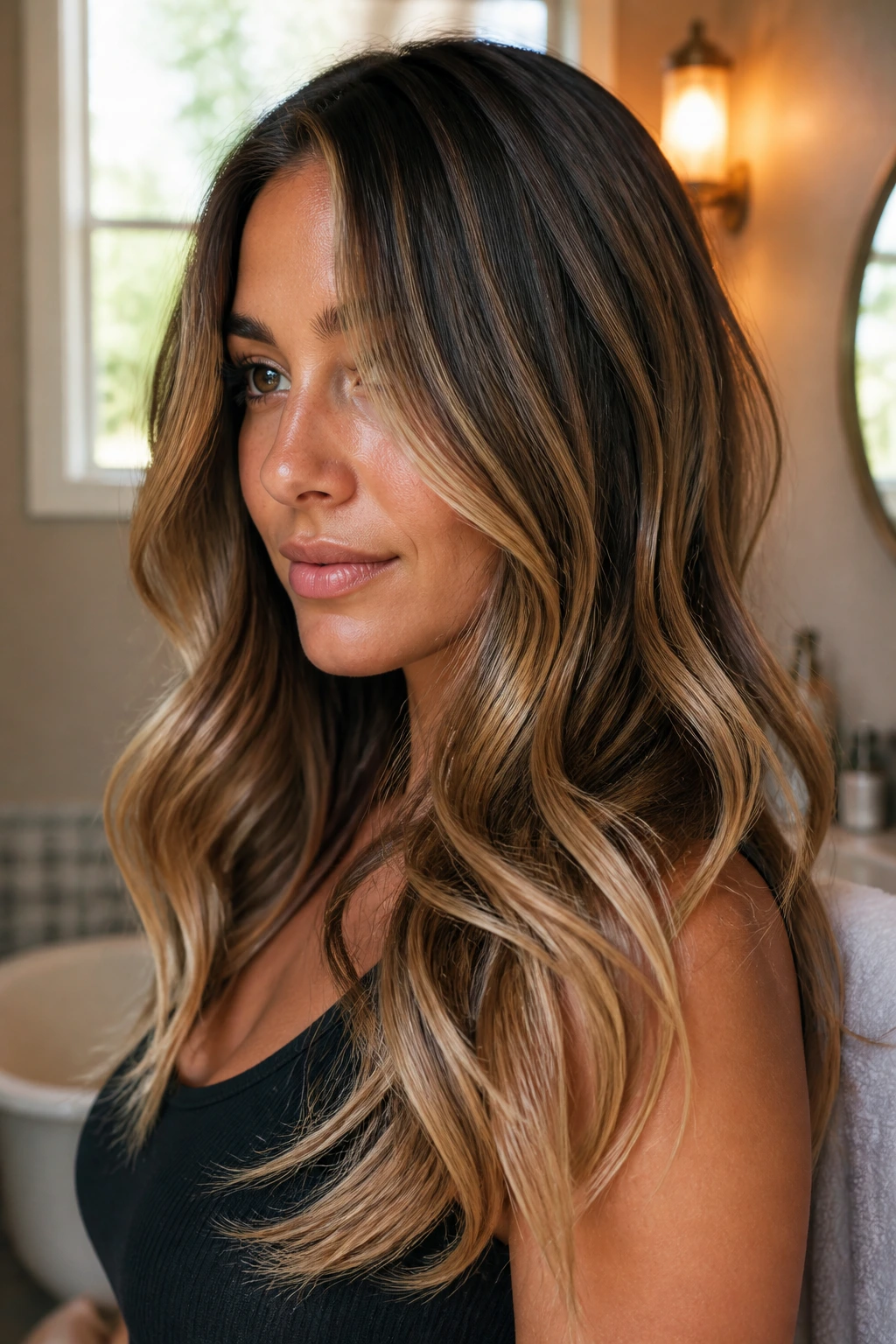
Fresh blonde on dark hair looks best for the first few washes, and then the real work starts. Wait at least 48 hours before the first shampoo after coloring if your stylist allows it. After that, wash two or three times a week instead of daily if you can get away with it. Hot water strips tone fast, and hot showers are not kind to lightened ends.
Use purple shampoo only when the blonde starts to drift yellow, not on every wash. Once a week is enough for most beige, pearl, and ash shades; honey and caramel usually need even less. If the ends start looking dry before the tone changes, swap in a hydrating mask instead of more toner. That’s the mistake people make most often: they try to fix dryness with more pigment.
Glosses and salon toners usually hold their shape for about 4 to 8 weeks, depending on how light the blonde is and how often you heat-style. Rooted balayage can stretch longer, sometimes 10 to 12 weeks, if the grow-out is soft. Platinum, silver, and icy beige need more attention. They fade faster, and they do not forgive neglect.
Common Mistakes That Flatten the Color
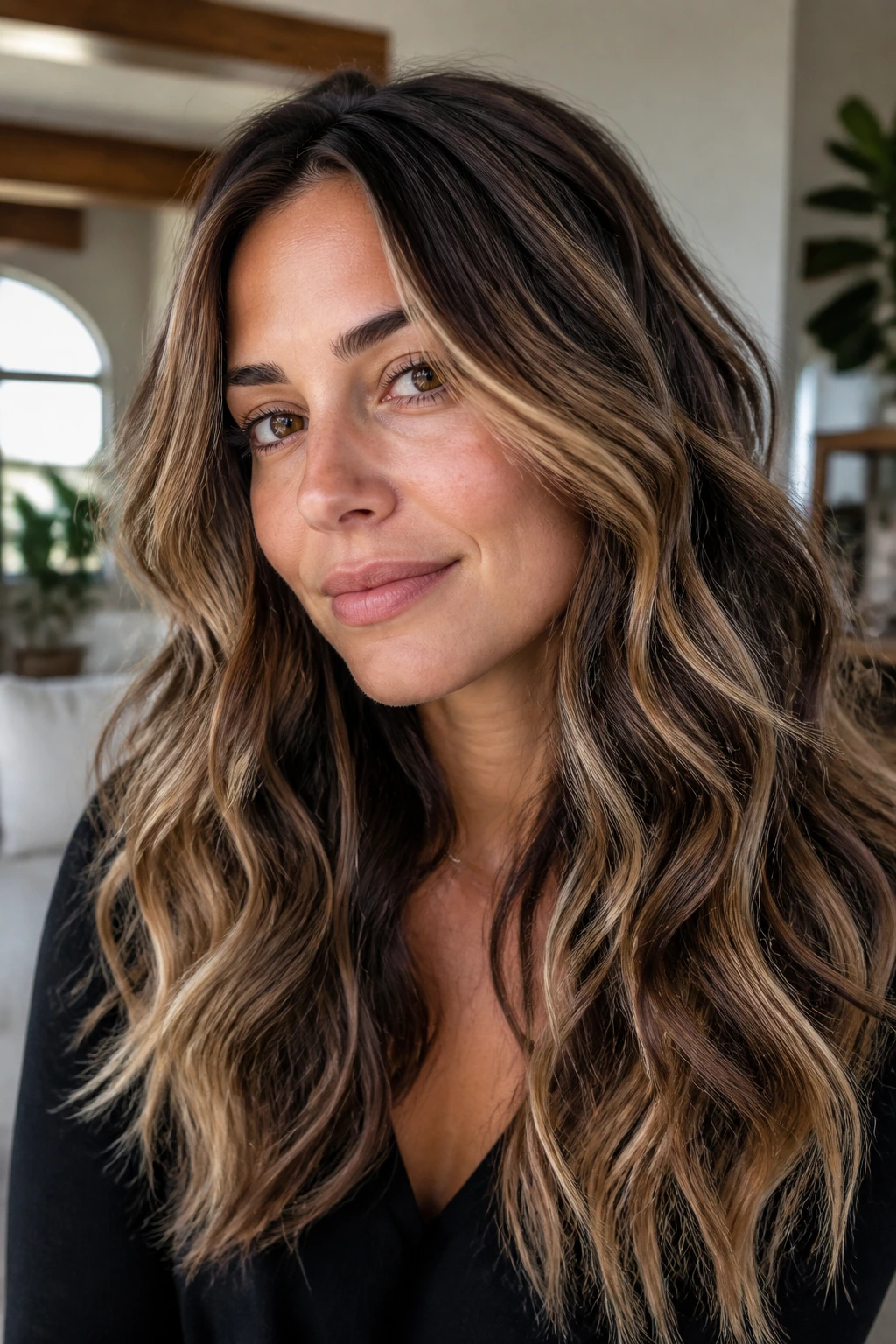
- Going too light too fast: Dark hair that is pushed straight to platinum or pale ash often turns brassy and rough. Build up to brighter blonde in stages if the hair is deep brown or previously colored.
- Forgetting the root shadow: A solid bright blonde from scalp to ends can look harsh on dark bases and shows regrowth fast. A shadow root or soft melt keeps the style cleaner for longer.
- Using purple shampoo like a daily shampoo: Overdoing it can leave beige and honey tones dull or muddy. Use it sparingly and follow with a moisturizing conditioner.
- Choosing tiny highlights for very thick hair: Fine ribbons can disappear inside dense waves. Thicker sections or foilayage usually show up better.
- Styling every wave in the same direction: Uniform curls can make highlights look striped instead of blended. Alternate direction and break the pattern with fingers or a wide-tooth comb.
- Skipping trims on lightened ends: Blonde ends show damage first. If the tips start to fray, the whole style looks older than it is.
Variations and Adaptations to Try
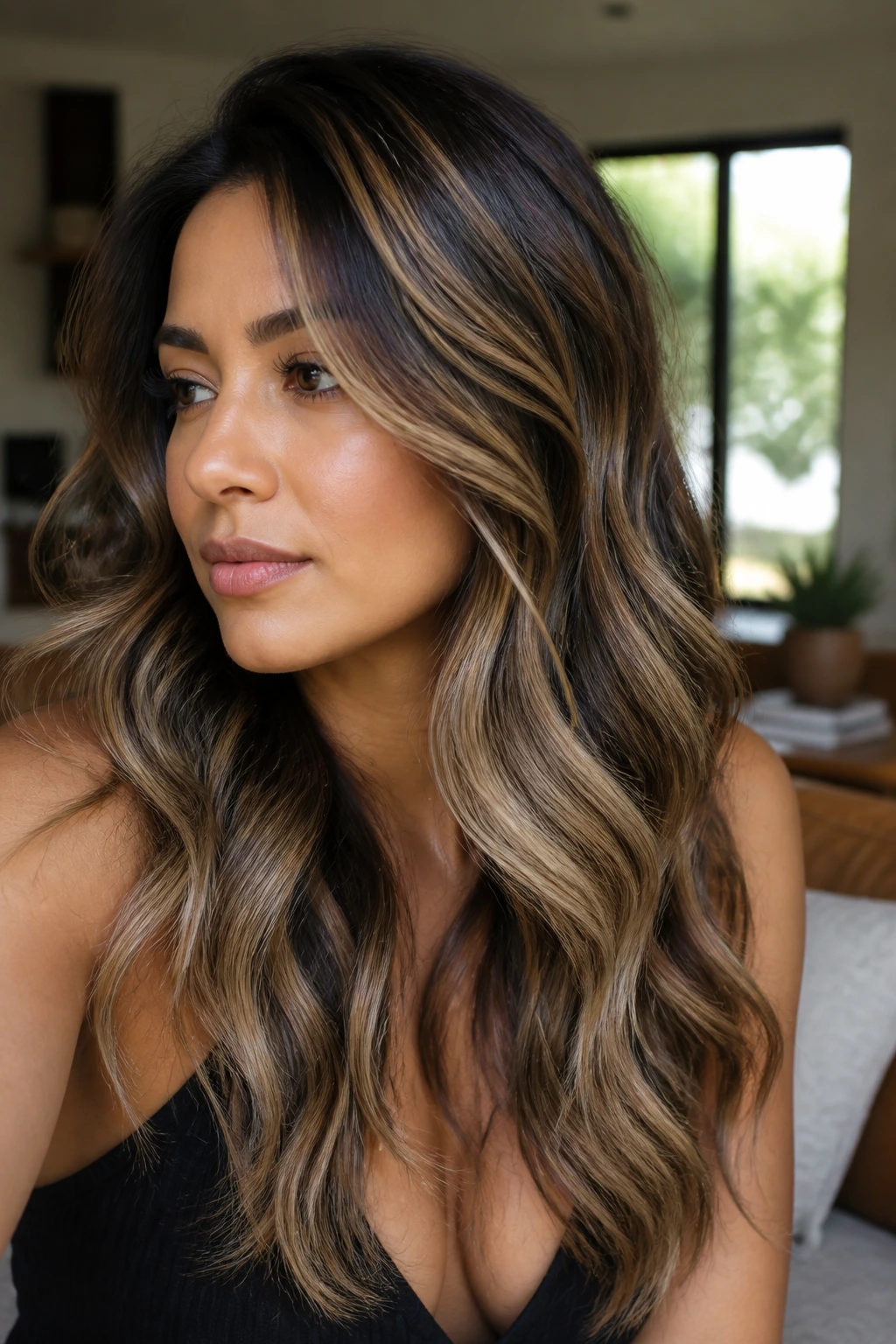
Low-Maintenance Root Melt: Keep the base close to your natural dark color and let the blonde start lower, around the mid-lengths. This works well if you want soft grow-out and less frequent salon visits.
Warm Honey Edit: Swap ash, beige, or pearl for honey, caramel, or butter. It’s a strong choice if your skin leans warm or you like your blonde to look sunny rather than smoky.
Cool Smoke Edit: Use mushroom, ash beige, smoky silver, or pearl instead of gold. This gives the color a cleaner edge and suits people who wear cooler makeup and jewelry.
Short-Hair Version: On lobs and shags, keep the blonde concentrated around the face and top layer. Shorter cuts need tighter placement because there’s less length for the color to stretch.
Thick-Hair Version: Widen the highlighted sections and place them deeper into the wave pattern. Thick hair can swallow delicate pieces, so the blonde needs room to show.
Fine-Hair Version: Use babylights, a money piece, or a soft bronde melt. Fine hair usually looks fuller when the contrast is gentle and the color shifts are smaller.
Frequently Asked Questions
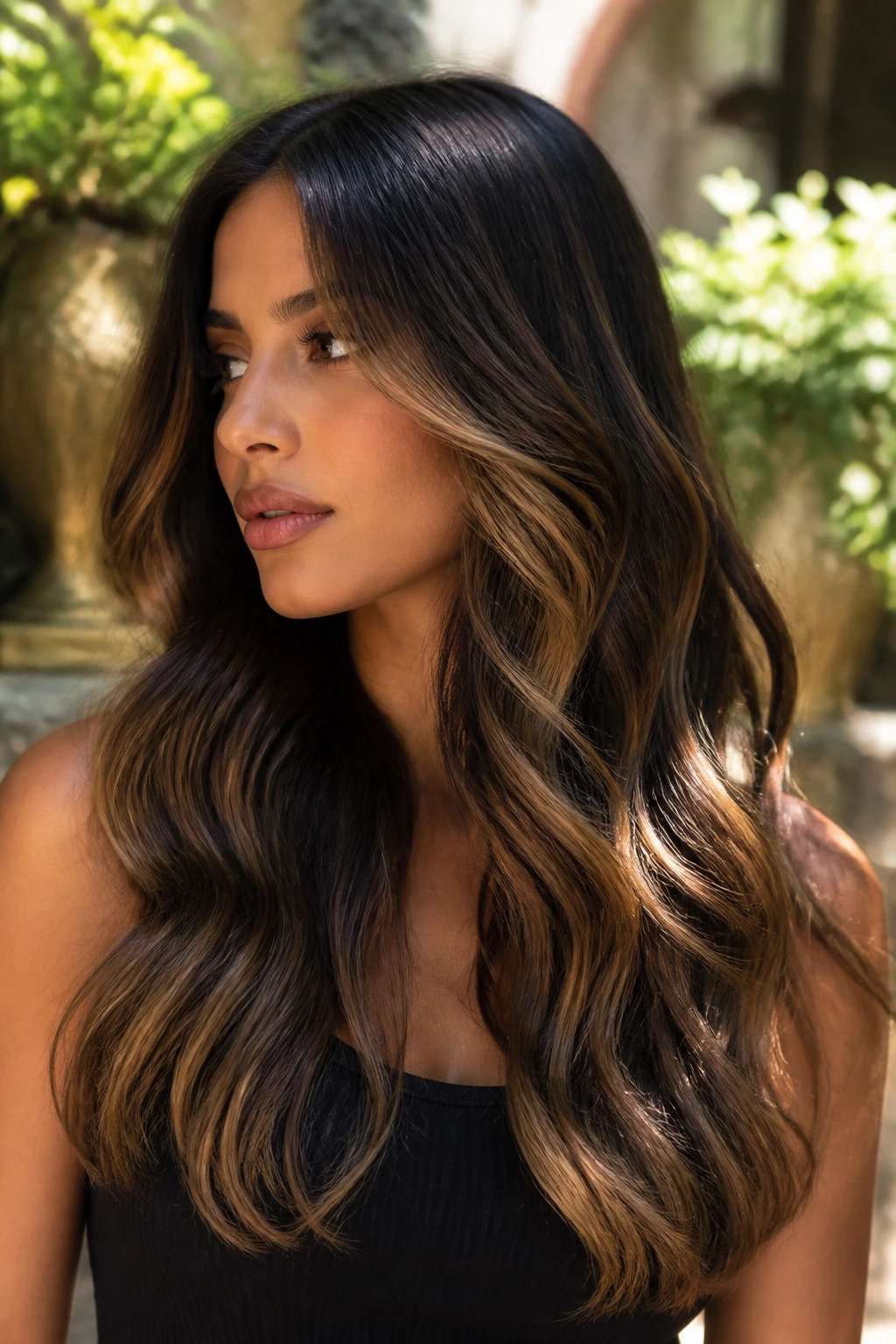
Can dark hair really go blonde without looking damaged?
Yes, but the path matters. Dark hair usually looks best when the blonde is built with balayage, foilayage, money pieces, or rooted melts instead of a full all-over lift in one go. That keeps the ends from taking the whole hit.
What’s the lowest-maintenance blonde for dark wavy hair?
Rooted balayage, bronde melts, and shadow-root lobs are the easiest to live with. They grow out softly and don’t force you into constant toner appointments.
Should I choose warm or cool blonde?
Warm tones like honey, caramel, and butter suit warm skin and give dark hair a richer look. Cool tones like ash, mushroom, and pearl feel cleaner and more muted. If you’re stuck, beige usually sits in the middle without looking too gold or too gray.
Will blonde highlights make wavy hair look frizzy?
They can if the hair is over-lightened or if the ends are dry. Healthy lightening, regular trims, and a light serum on the ends keep the wave pattern smooth enough to show the color properly.
How often will I need toner?
Pale blondes like silver, pearl, and icy beige usually need toner more often, often every 4 to 6 weeks. Honey, caramel, bronde, and beige tend to stretch longer because their tones fade more gently.
Can I get blonde if my hair is very dark brown or black?
Yes, but the result is usually better when you choose placement over all-over lightening. Money pieces, sunlit highlights, rooted balayage, and bright ends give you contrast without demanding a full pale blonde from the whole head.
What if my highlights look stripey after styling?
Change the wave direction, brush the curls out a little more, and soften the ends with a touch of serum. If the stripes are from placement rather than styling, the color may need a gloss or a better blend at the next appointment.
Do these looks work on shorter hair too?
They do, but the placement has to be tighter. Lobs, shags, and layered bobs show off blonde best when the brightness sits near the front and top, where the eye lands first.
A Better Kind of Blonde
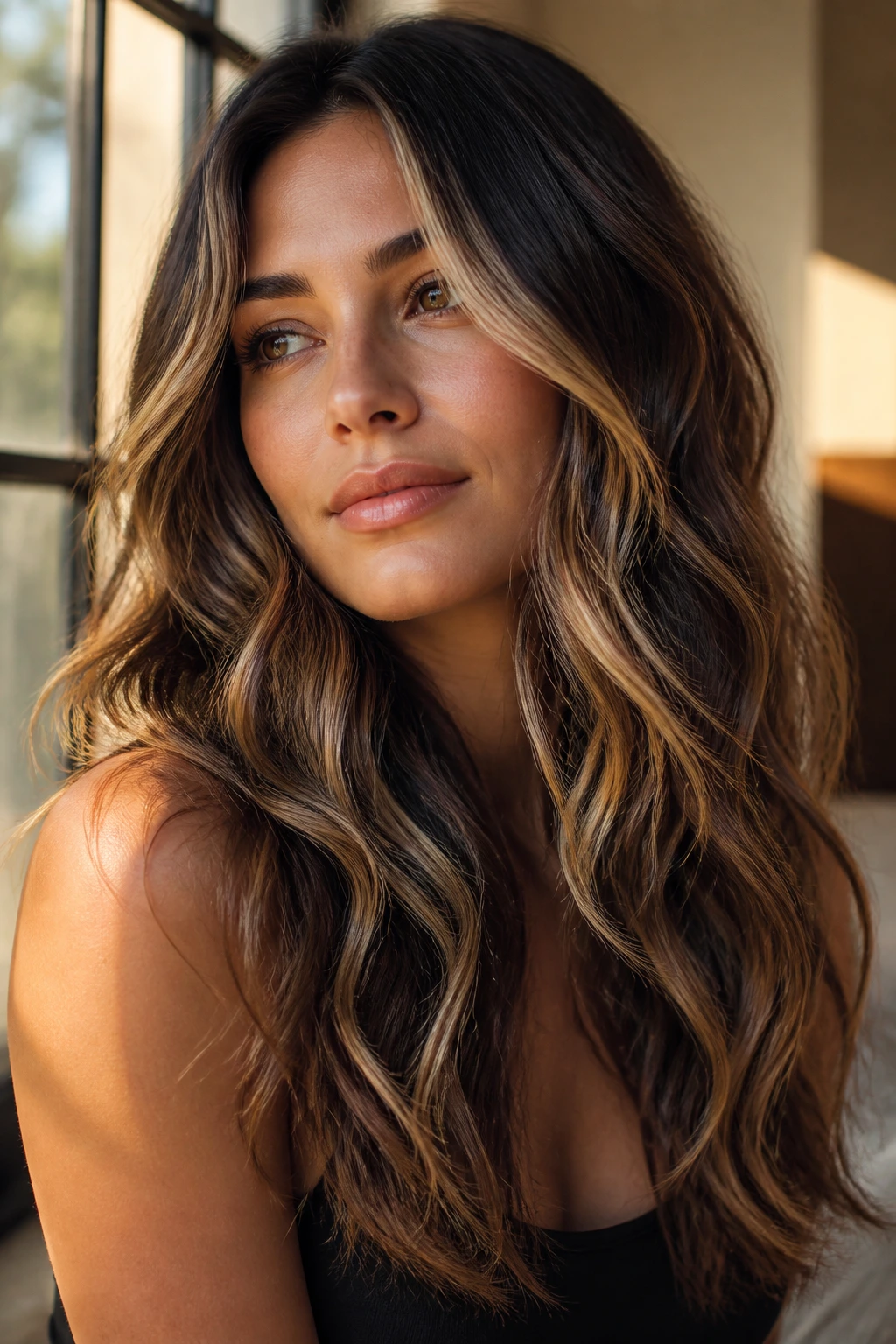
The best blonde on dark wavy hair is rarely the lightest blonde in the room. It’s the one that keeps the dark base doing some of the work, lets the waves break up the color, and leaves enough depth behind so the style still looks good when the gloss softens.
That’s why caramel, honey, beige, mushroom, pearl, and bronde keep showing up again and again. They let the hair move. They let the light change the color from one bend to the next. And they make blonde feel like part of the haircut instead of a layer sitting on top of it.
Pick the tone that matches your upkeep, your base, and the amount of contrast you actually want to see when you catch yourself in a mirror. Then let the waves do their job.