



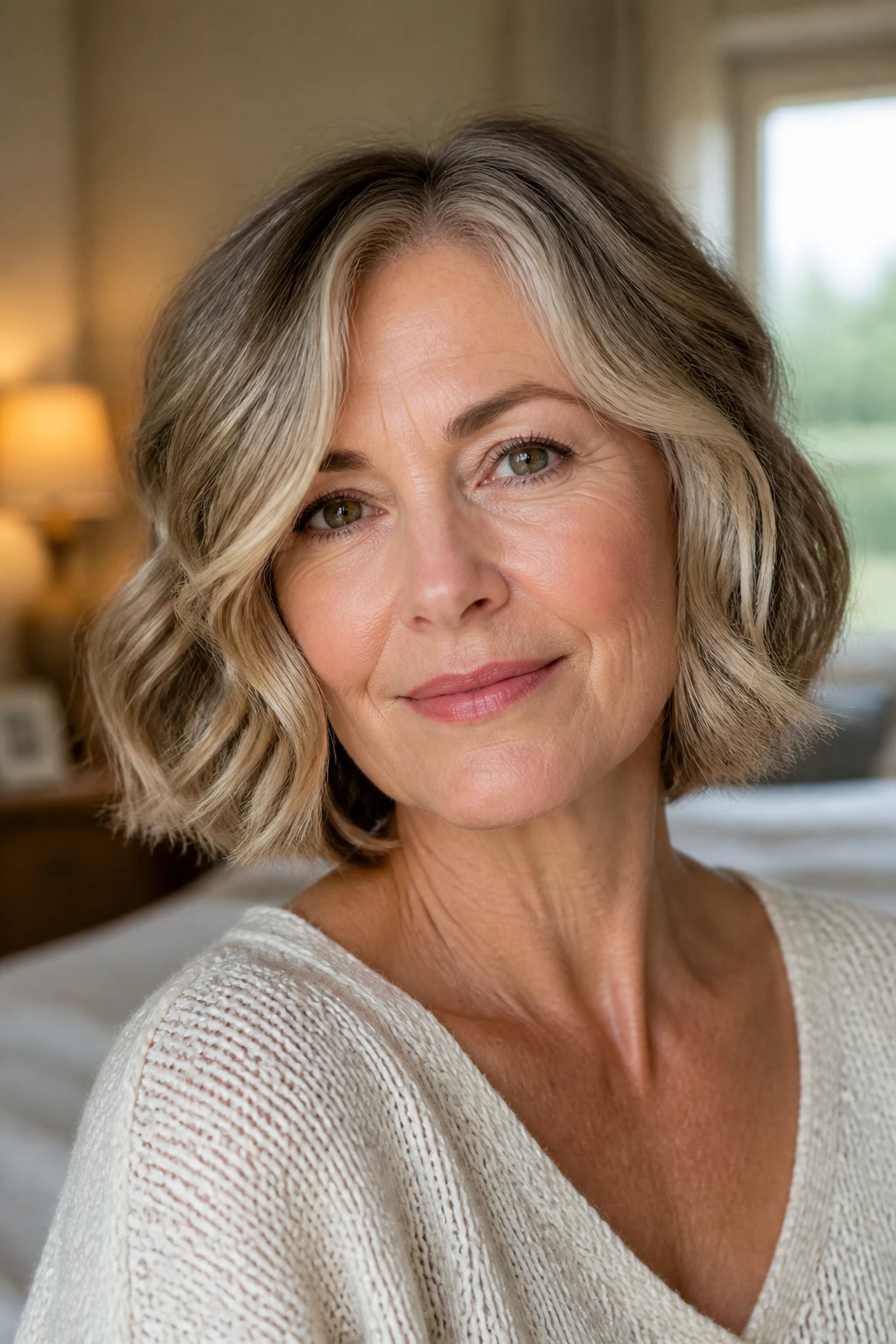
A soft wavy bob can do a lot of quiet work on a heart-shaped face. It can take the visual weight off a broad forehead, bring softness around the cheekbones, and keep the chin from looking sharper than it is. On older women, that matters even more, because hair often loses a little density at the sides while the crown needs some lift to avoid looking flat and tired.
The sweet spot is movement, not fluff. A hard, blunt bob can look sharp in the mirror and harsh in motion. A wavy bob, though, bends with the face. It catches light along the bends, gives the ends a little air, and keeps the whole shape from sitting like a block. That’s the difference between a haircut that fights your features and one that works with them.
Heart-shaped faces usually carry their widest point around the forehead and temples, then taper through the jaw. That means the best bobs often add width lower down — around the cheekbones, not the chin — and keep the front pieces soft enough that the face doesn’t feel top-heavy. The 25 ideas below all play with that balance in different ways, from chin-grazing bends to shoulder-skimming lobs with a loose, lived-in wave.
Why These Soft Wavy Bobs Work So Well
-
They shift attention to the cheekbones: A bend that starts near the mid-face draws the eye away from a wider forehead and toward the strongest part of the face.
-
They soften the chin without hiding it: The right bob gives the lower face some movement, which keeps a narrow chin from looking pinched or too pointed.
-
They suit hair that has changed with age: Softer texture, lighter density, and a bit of crown lift are easier to manage in a bob than in long hair that drags the face down.
-
They can be styled with low effort: A few waves, a side part, and a bit of root lift can do more than a complicated blowout that falls apart by lunch.
-
They work with silver, brunette, blonde, or highlighted hair: The wave pattern shows off dimension, so even a simple color looks richer when the light hits the bends.
-
They leave room for personality: You can go neat, messy, glossy, airy, or piecey without losing the core shape that flatters a heart face.
1. Chin-Skimming Bob With a Soft Bend
A chin-skimming bob is one of those cuts that looks simple until you see it on the right face shape. On a heart-shaped face, the chin line can feel delicate on its own, so the trick is to let the bob hover right around it — not sit above it, not drop past it. A soft bend through the mid-lengths keeps the line from feeling severe.
This version works well when the front is a touch longer than the back, with waves that curve away from the jaw rather than under it. That little detail matters. If the ends curl inward too much, the whole cut can bunch at the narrowest point of the face. Keep the wave loose, almost lazy, and let the movement live mostly from the cheekbone down.
Ask for a clean perimeter with a soft interior texture. Not a choppy mess. Not a helmet. Just enough bend to make the haircut move when you turn your head.
2. Side-Parted Bob With Cheekbone Waves
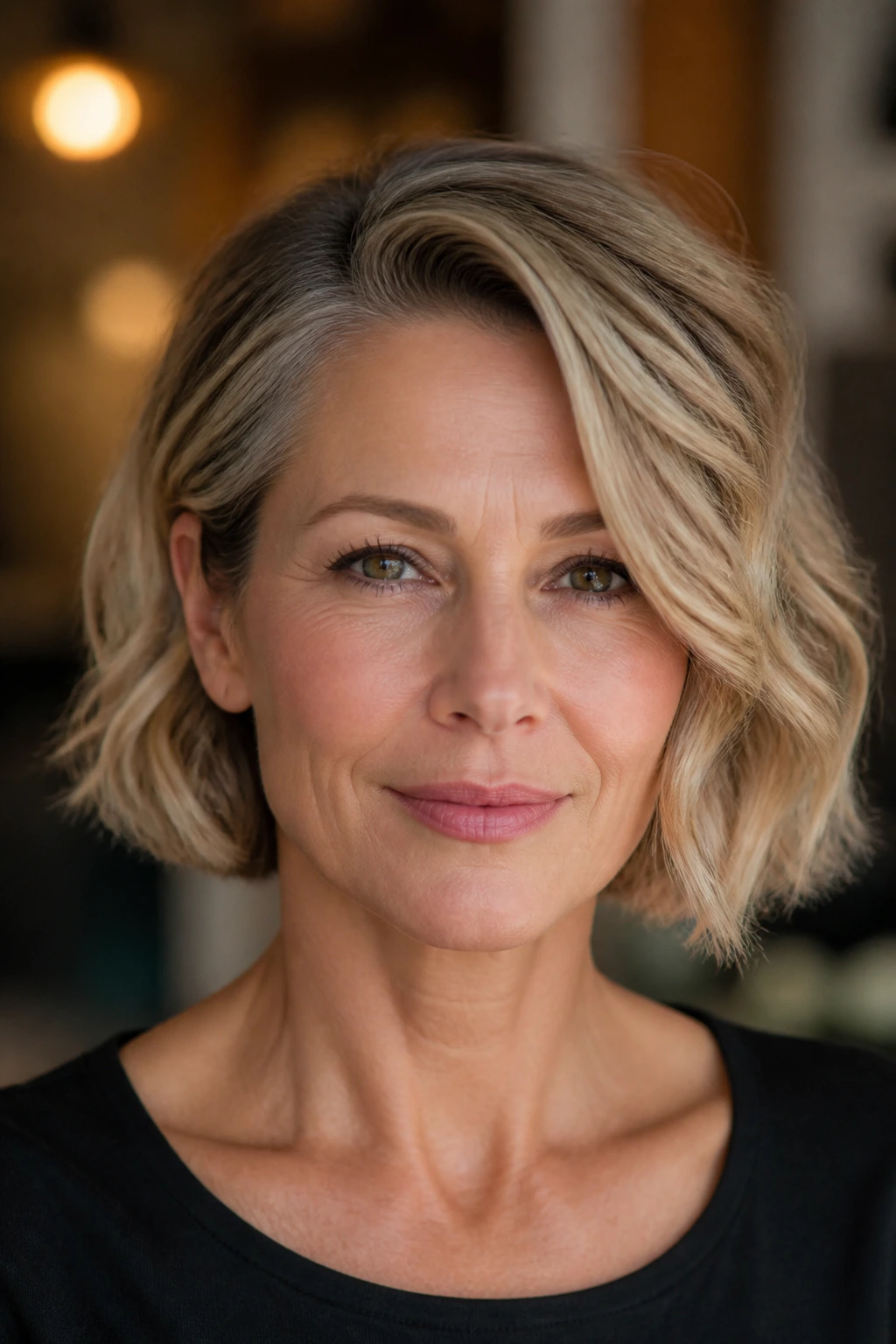
A side part is your friend when the forehead needs less visual width. On a heart-shaped face, that alone can make the haircut feel calmer and more balanced. The deeper side also gives the roots a little push, which is useful when hair has gone finer and flatter than it used to be.
The best version has waves that land at the cheekbones, not at the jaw. That’s the sweet spot. Cheekbone-level movement creates width where the face can use it, and it makes the lower half feel less pointy. I like this cut especially with a soft, brushed wave — not a tight curl, not a flat bend.
A quick note for styling: blow-dry the roots first, then set the wave pattern. If you curl the hair before the roots are dry, the whole style goes limp faster. Annoying, yes. Fixable, too.
3. Curtain-Bang Bob
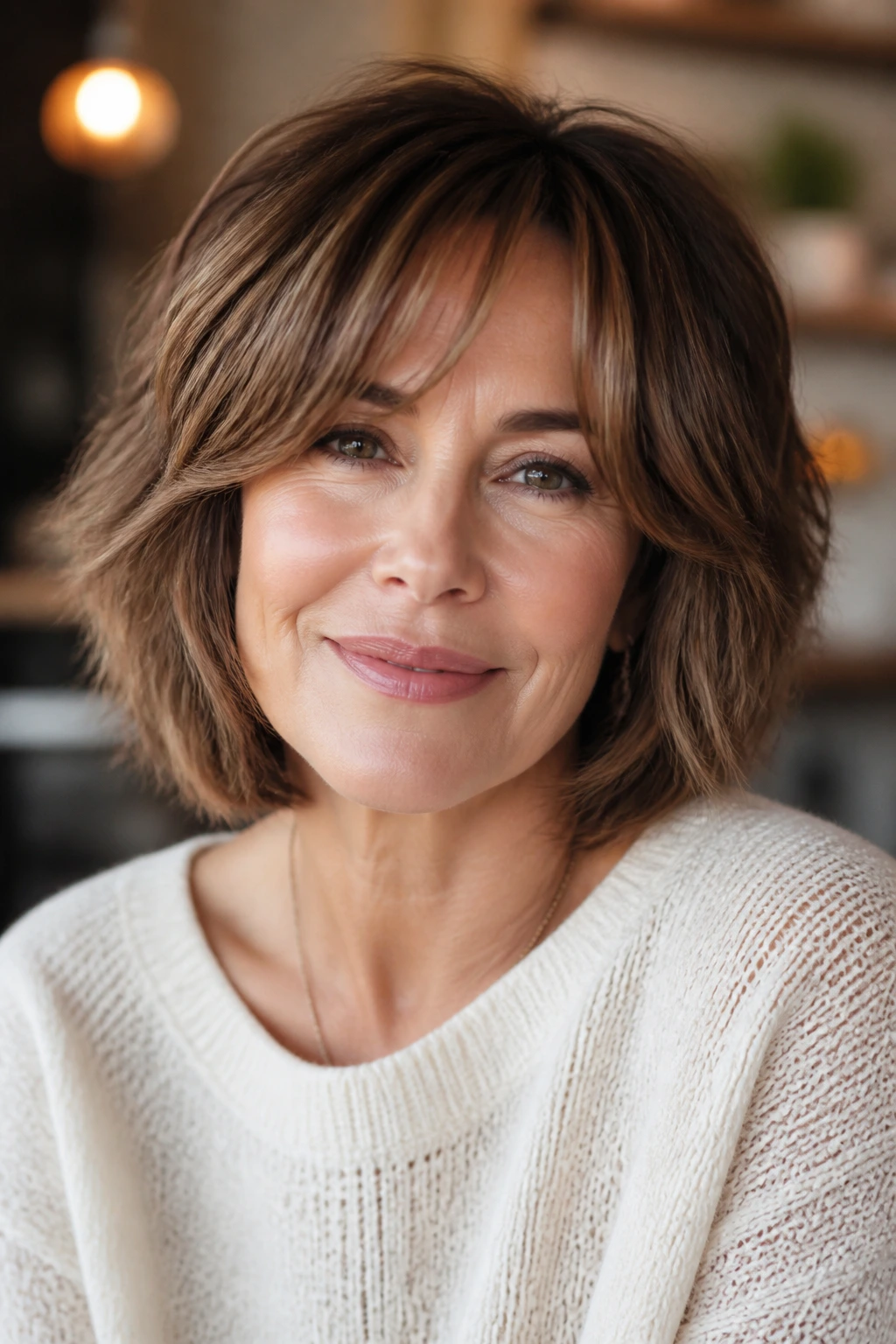
Curtain bangs can be a small miracle on a heart face. They break up forehead width without turning the front into a solid wall of fringe. With a bob, they also give the haircut a softer start point, which matters when the jaw is narrower than the upper face.
The trick is to keep the bangs piecey and a little longer at the sides, so they blend into the bob instead of sitting on top of it. If the shortest point hits too high, the face can look front-heavy. If the bangs are too heavy, they compete with the wave pattern and the whole thing gets stuffy fast.
This style is good for women who want some face coverage but don’t want to live under a dense fringe. It has a bit of motion, a bit of polish, and none of that old-school “frozen helmet” feeling that some bang cuts still carry around.
4. French-Inspired Cropped Wave Bob
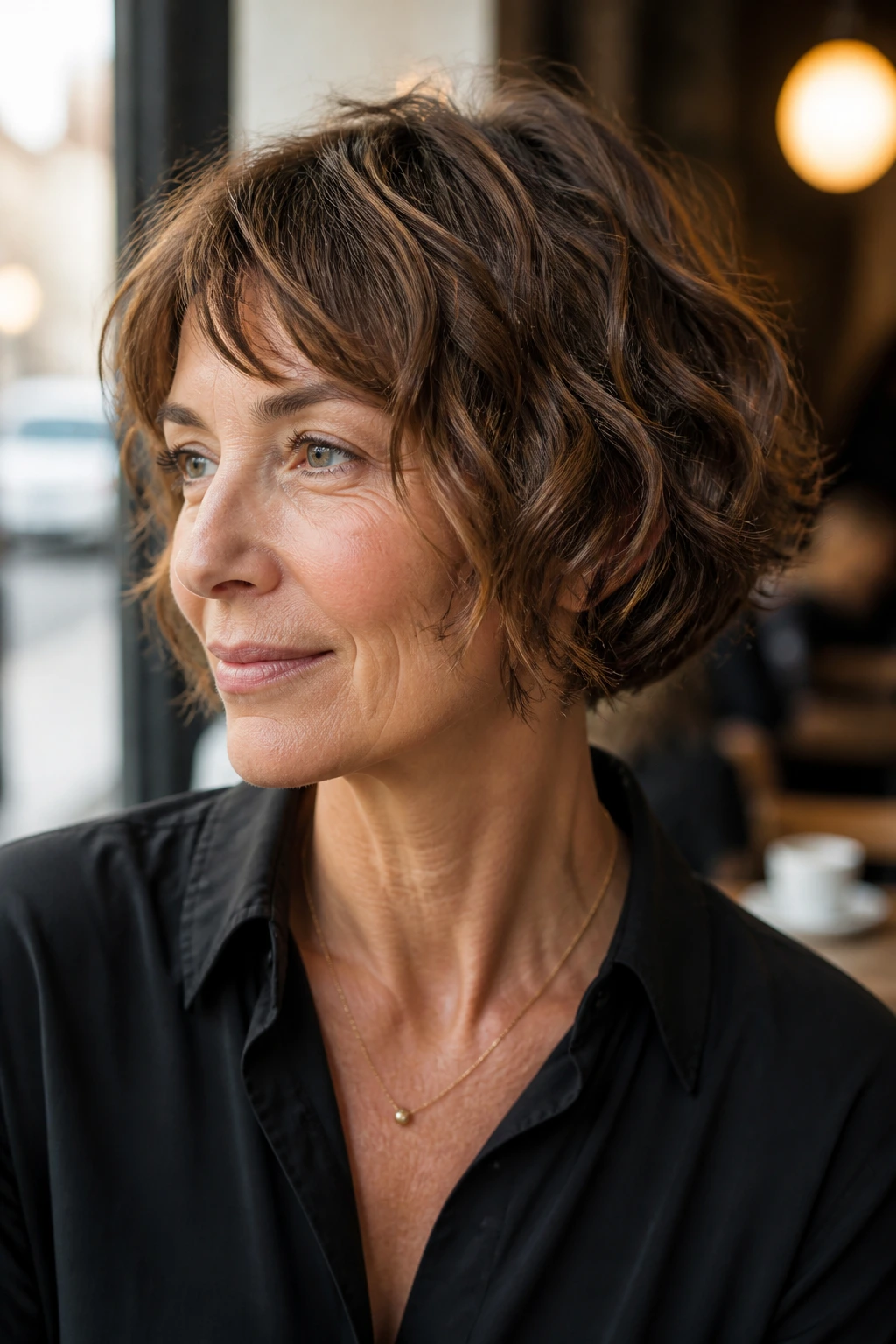
Shorter bobs can look chic on a heart-shaped face when they stay airy. The French-inspired version works because it doesn’t cling to the head or dump extra weight at the chin. It sits close, bends softly, and leaves enough neck and jaw visible that the face doesn’t disappear inside the cut.
The texture here should feel touchable. A bit roughed up. A little imperfect. That’s the point. If the ends are too neat, the haircut turns into a box. If they’re too random, it starts reading as unfinished. You want the middle ground — the kind of wave that looks like it happened because the hair has good bones.
This is one of my favorites for silver or salt-and-pepper hair. The short length gives the color room to show, and the soft wave stops it from looking severe.
5. Rounded Bob That Brushes the Jaw
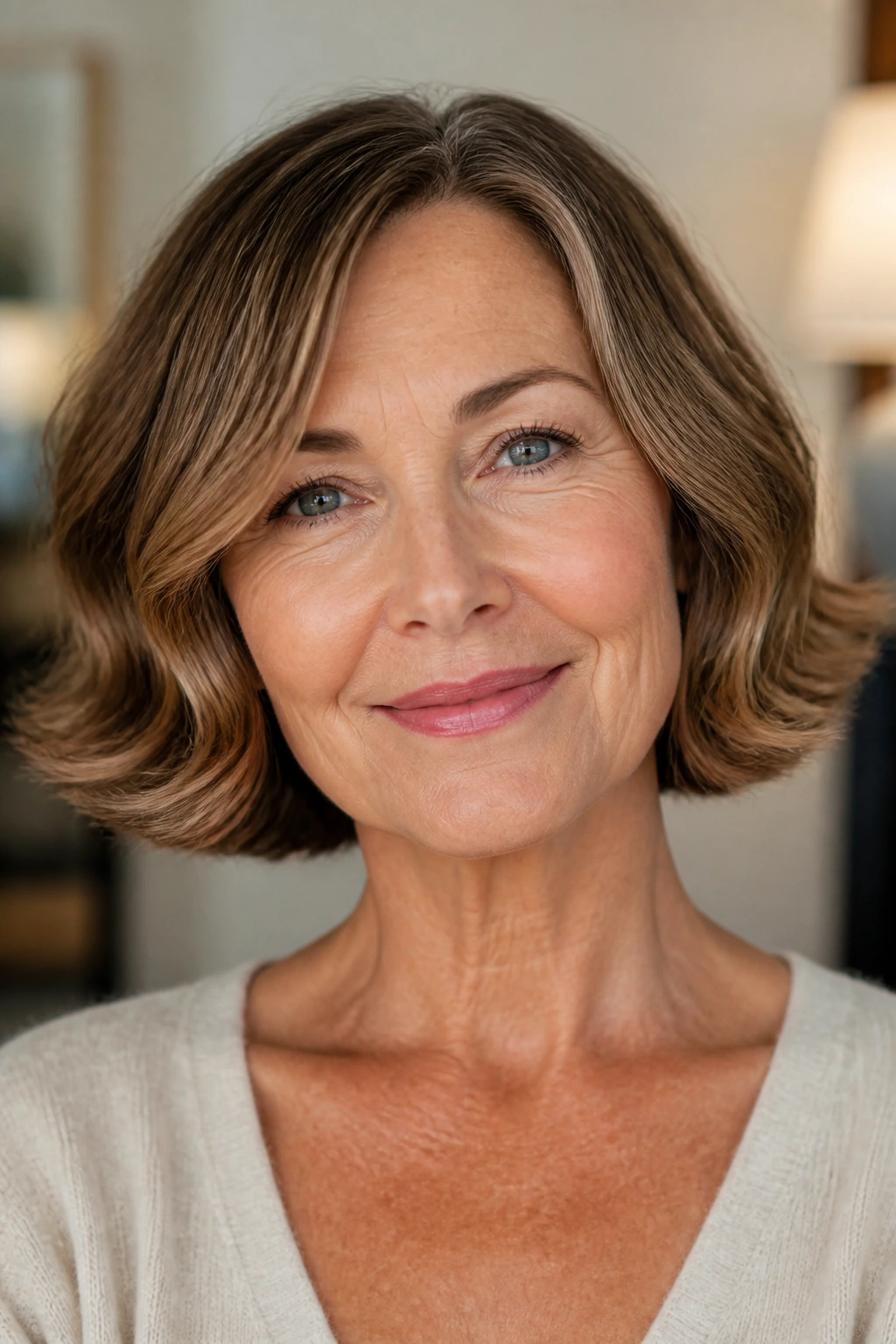
A rounded bob can sound old-fashioned, but on the right face shape it works because it follows the natural curve of the face instead of cutting across it. For a heart-shaped face, the key is to keep the roundness gentle and the length right at or just below the jaw.
That little drop makes a difference. If the curve rises too high, the cut can flare at the cheekbones and exaggerate the widest part of the face. If it drops too low, you lose the balance and drift into lob territory. A soft wave through the ends keeps the shape from looking like it was set in place with a ruler.
This cut likes a round brush or a wide curling iron bend at the ends — nothing too tight. Think arc, not curl. That’s the whole game.
6. Stacked Bob With Gentle Lift
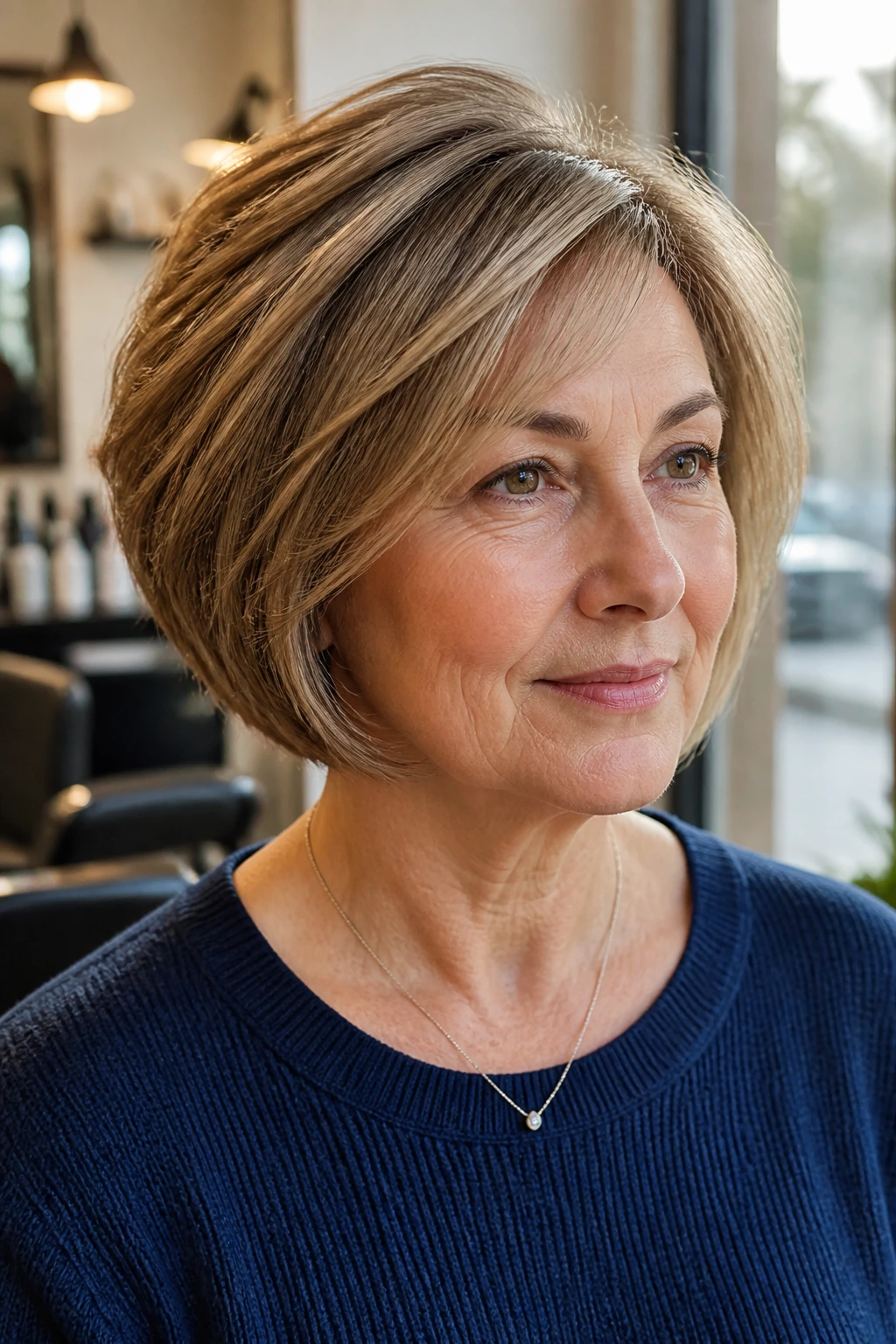
A stacked bob can be a smart answer when the back of the head needs more shape, especially if the hair has thinned at the crown. The stacking gives lift without forcing the front to get bulky. On a heart-shaped face, that matters because the volume stays where it can support the profile instead of crowding the jaw.
The best version keeps the layers hidden enough that the shape feels smooth, not slicey. Too much stack and you get that puffy line at the back that can make the face look top-heavy. Keep the length in the front soft and slightly longer, then add loose bends so the eye moves downward.
It’s a tidy cut. Not severe, not flat. If you like the back of your hair to feel controlled and the front to feel lighter, this one sits in a nice spot.
7. Collarbone Lob With Airy Layers
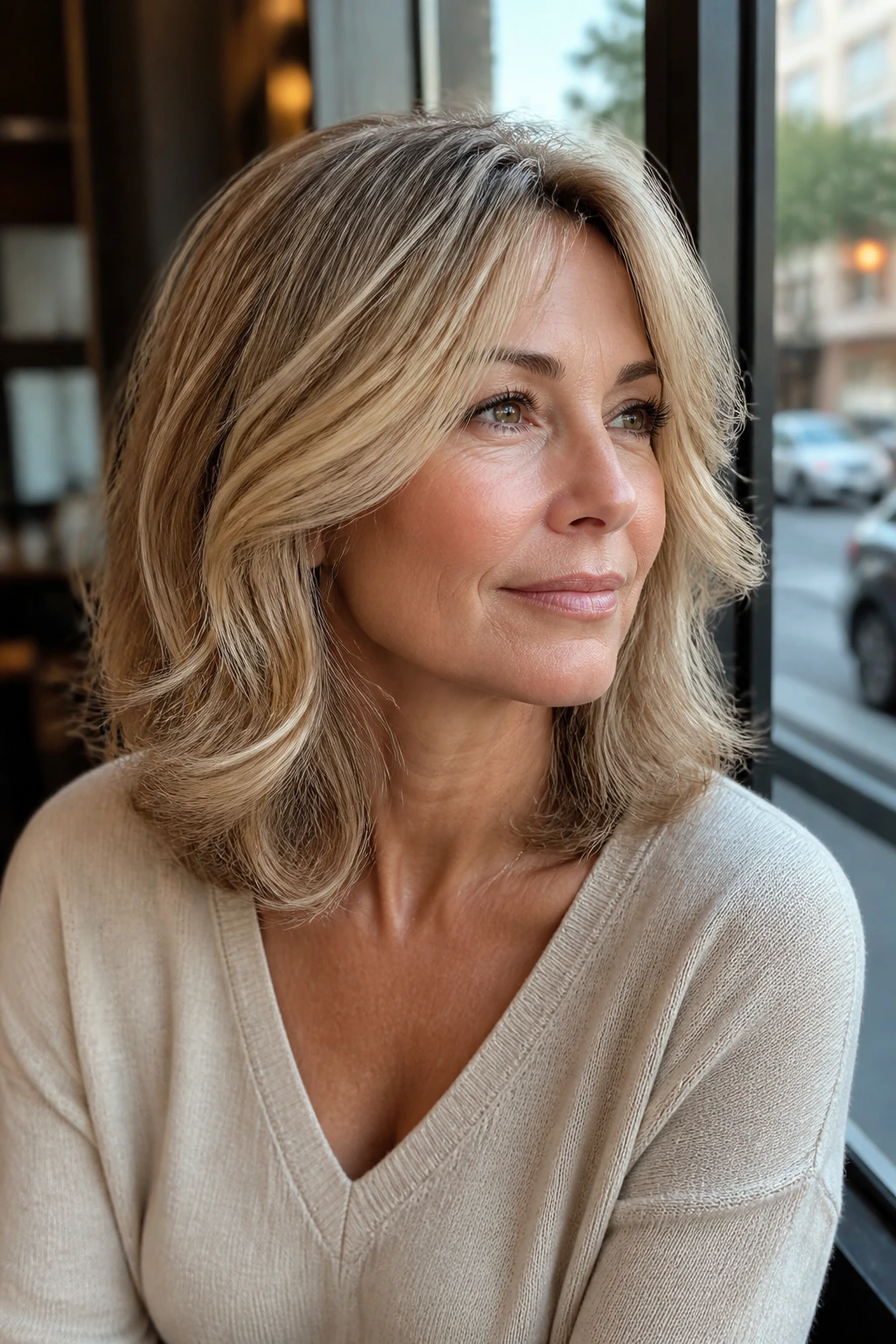
A collarbone lob gives you more room to move, which is useful if you like the feeling of hair on the shoulder but do not want long hair dragging down the face. On a heart-shaped face, that extra length can soften the jaw while airy layers keep the whole thing from feeling heavy.
The wave pattern should be loose and stretched. Think S-waves with a slight bend around the middle, not a curl that stacks on itself. Too much wave at the bottom can widen the wrong place. The goal is to leave the forehead and temples visually lighter while creating motion around the lower face.
This is a good cut for women who want a little more styling flexibility. You can tuck one side, clip it back, or wear it loose. It never feels trapped in one mode.
8. Inverted Bob With Feathered Front Pieces
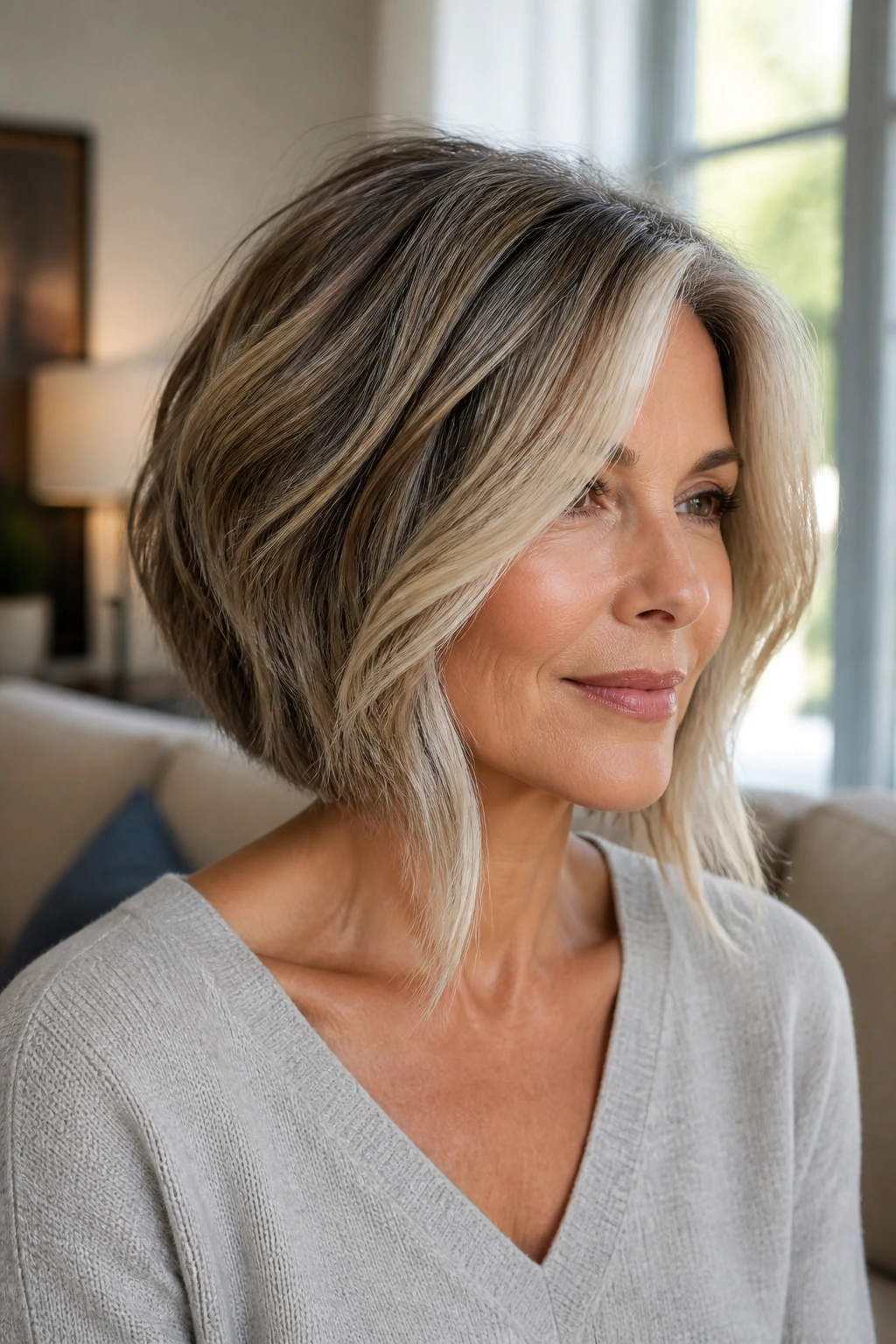
An inverted bob works nicely on a heart face when the front is long enough to skim past the chin and the back stays neat. That front length matters because it creates a soft diagonal line, which helps a tapered face feel less narrow at the bottom.
Feathered front pieces keep the style from looking rigid. They also take the edge off the forehead width because they break up the outline near the temples. If the front is too blunt, the haircut can feel bossy. If it’s too wispy, it loses shape. Feathering is the middle path.
I’d keep the waves soft and slightly pushed away from the face. That keeps the profile clean and stops the front pieces from clumping together. Small detail. Big payoff.
9. Silver Wavy Bob With Tucked Ends

Silver hair can look sharp in a bob, but soft waves keep it from reading as hard or dry. The tucked-ends version is especially useful when the face shape needs a little lower-half fullness without bulk. The ends bend inward just enough to hug the neck and jaw line, then loosen before they get stiff.
A silver bob lives or dies by shine. If the texture looks dull, every line in the cut gets louder. That’s why I like a light wave here — it gives the color something to catch without making the hair look frizzy or overworked.
This cut is also forgiving on busy mornings. A side part, a little smoothing cream, and a few tucked strands can make the shape look intentional in under ten minutes. Not fancy. Just clean.
10. Shoulder-Grazing Lob With Loose S-Waves
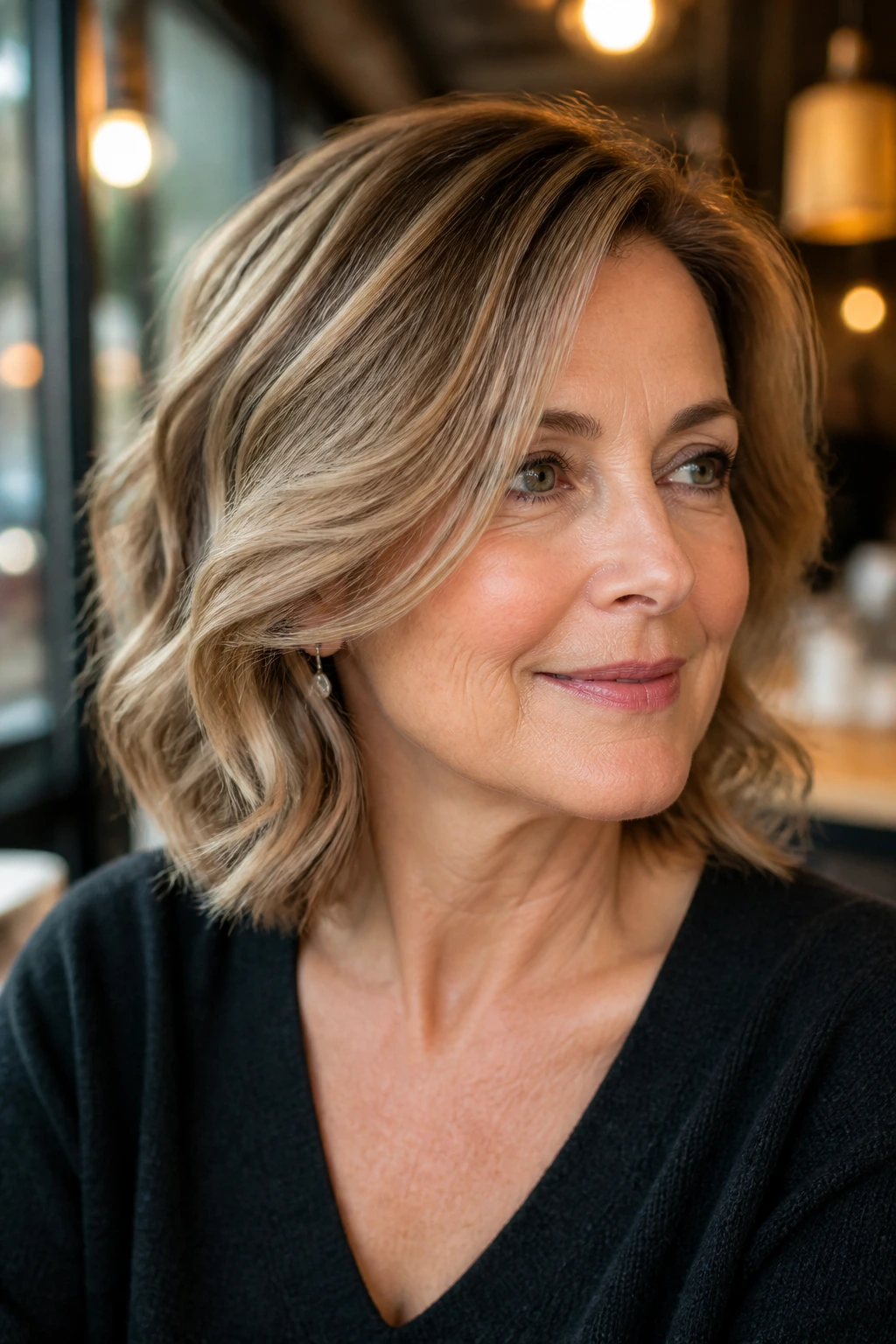
A shoulder-grazing lob is often the safest bet when a woman wants movement but doesn’t want to lose length too fast. On a heart-shaped face, it helps because the ends land below the chin and calm the narrow lower half. The loose S-wave keeps it from feeling flat or long in a straight line.
There’s a nice softness to this length. It doesn’t crowd the face, and it doesn’t expose every little asymmetry around the jaw. That can be a relief if you’ve spent years trying to force shorter cuts to behave.
What to ask for
- A blunt-ish perimeter with soft internal layers.
- Waves that begin below the ear, not at the root.
- A side part or off-center part to reduce forehead width.
That combination keeps the lob from drifting into middle-of-the-road territory. A boring lob is easy. A lob that actually flatters the face takes a little thought.
11. Deep Side-Part Bob With Soft Volume
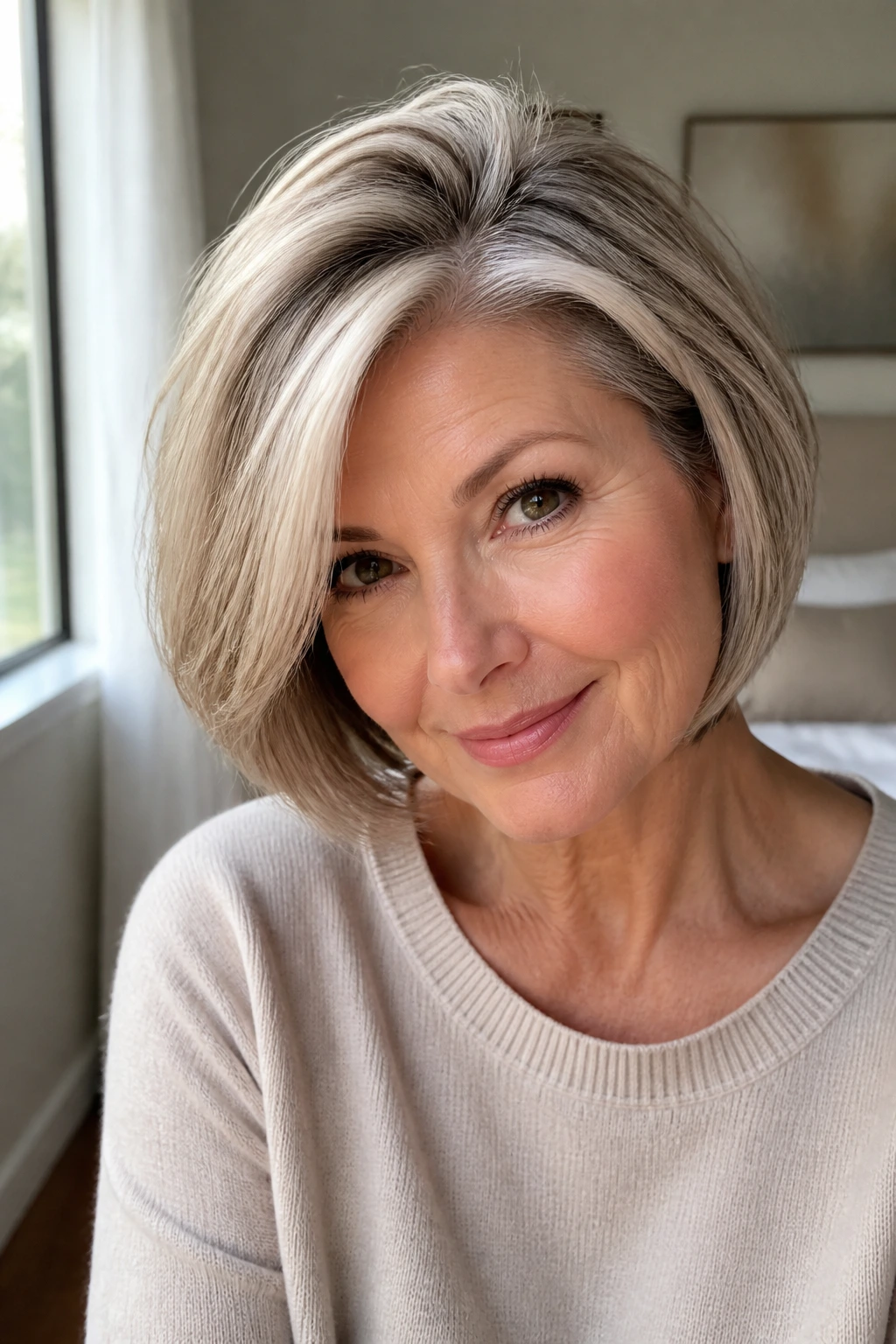
A deep side part can change the whole mood of a bob. On a heart-shaped face, it cuts the visual width at the forehead and gives the top a little asymmetry, which is often more flattering than a dead-center part. The result feels lighter and less front-loaded.
Soft volume is the key phrase here. Not height for the sake of height. Just enough lift at the roots to keep the shape from collapsing into the temples. You want the hair to stand a bit at the top, then fall in loose waves through the sides.
This is the kind of style that looks good when the ends are not too neat. A few flyaways are fine. A little edge around the crown gives the bob life, and honestly, that’s often better than trying to smooth every strand into place.
12. Blunt Bob Broken Up With Waves
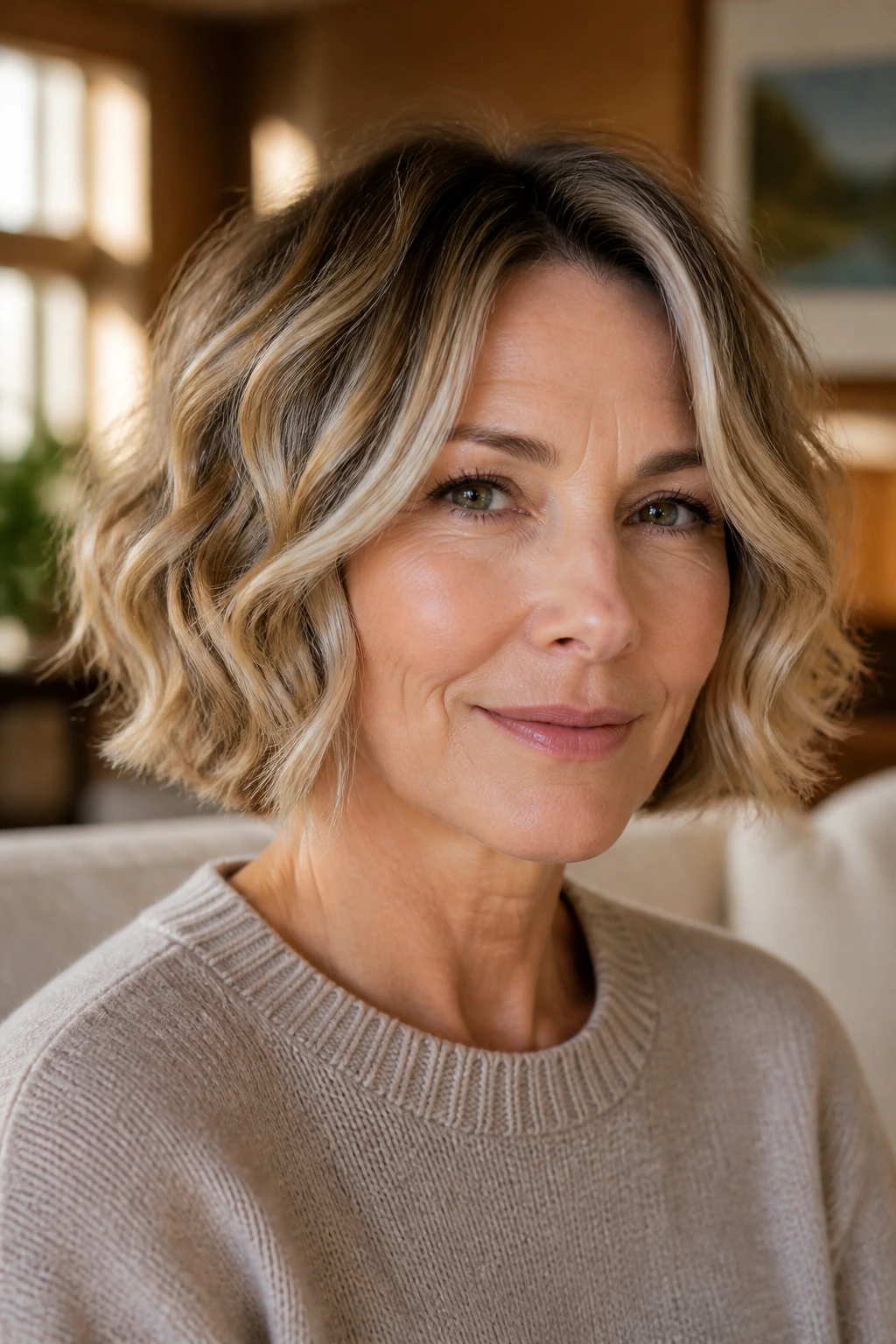
Straight-across bobs can scare people, and I get why. On some faces they look severe. On a heart-shaped face, though, a blunt line can work if the wave pattern breaks up the stiffness. The blunt edge gives the hair body; the waves keep it from turning boxy.
The important part is where the waves start. Too high, and the top gets puffed out. Too low, and the cut loses its shape. A bend that begins around the cheekbone or just below it gives the bob a soft frame without making the forehead look wider.
This one suits women who like a stronger outline but still want movement. It’s a little sharper than the other cuts in this list, but the softness keeps it wearable.
13. Air-Dried Wave Bob for Fine Hair

Fine hair often behaves better in a bob than in long layers, because a shorter shape gives the strands more lift at the root. An air-dried wave bob works especially well when you do not want to spend forever with a hot tool. The hair bends naturally, the ends stay light, and the whole cut looks less forced.
The trick is product. A light mousse or cream through damp hair gives the waves something to hold onto, but too much turns fine hair stringy. Keep it modest. Scrunch, then leave it alone. The less you touch it while it dries, the better the texture usually looks.
For a heart-shaped face, this style keeps the lower half soft without dragging the crown flat. That combination is rare, and worth keeping.
14. Wispy-Bang Bob With Forehead Softening

Wispy bangs can be useful when the forehead feels broad and you want something softer than a full fringe. On a heart-shaped face, they take the visual edge off the upper third without hiding the face. With a bob, they also keep the cut from looking too sleek or too serious.
The bangs should move. That’s the point. If they sit heavy, they make the face look shorter and narrower through the chin, which is the opposite of what most heart faces need. Keep them lightly textured and a little longer in the center so they can split and shift.
This is a nice option for women who wear glasses, too. Wispy bangs don’t crowd the frames the way thick fringe can. Much easier.
15. Layered Bob for Dense Hair
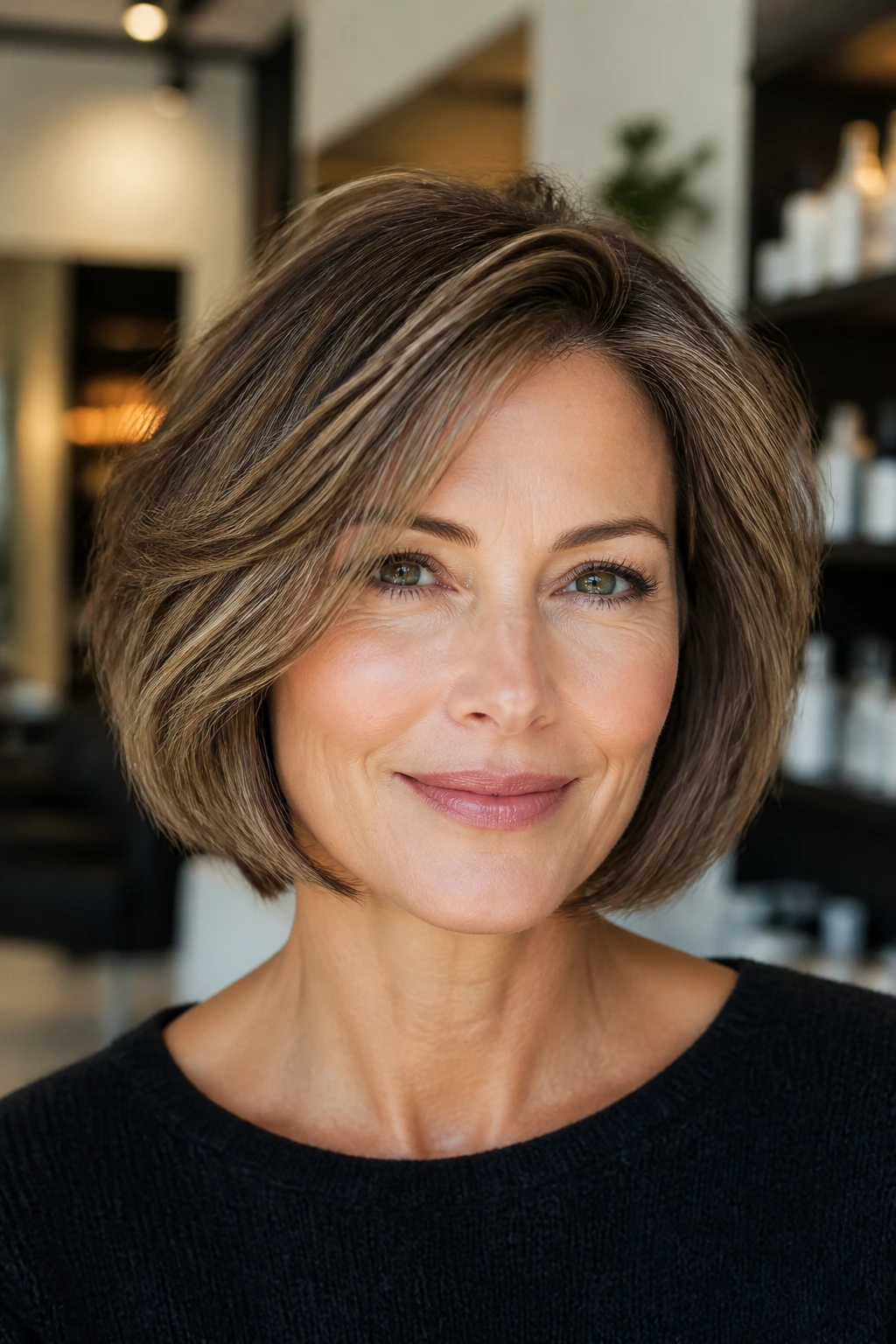
Dense hair needs discipline. A plain one-length bob can balloon outward fast, especially around the jaw, and that is not the look you want on a heart-shaped face. Soft layers remove weight, let the wave pattern sit closer to the head, and keep the silhouette from turning into a triangle.
The layers should be internal, not shredded through the ends. A cleaner edge with hidden reduction works better than obvious choppy bits. That keeps the hair from looking frayed as it grows out. The wave then has room to move without puffing up in the wrong places.
If your hair holds shape well, this is one of the easiest cuts to live with. It has enough structure to stay put, but enough softness to avoid the stiff, helmet-like finish that dense hair can sometimes create.
16. Soft Wedge Bob With a Clean Neckline
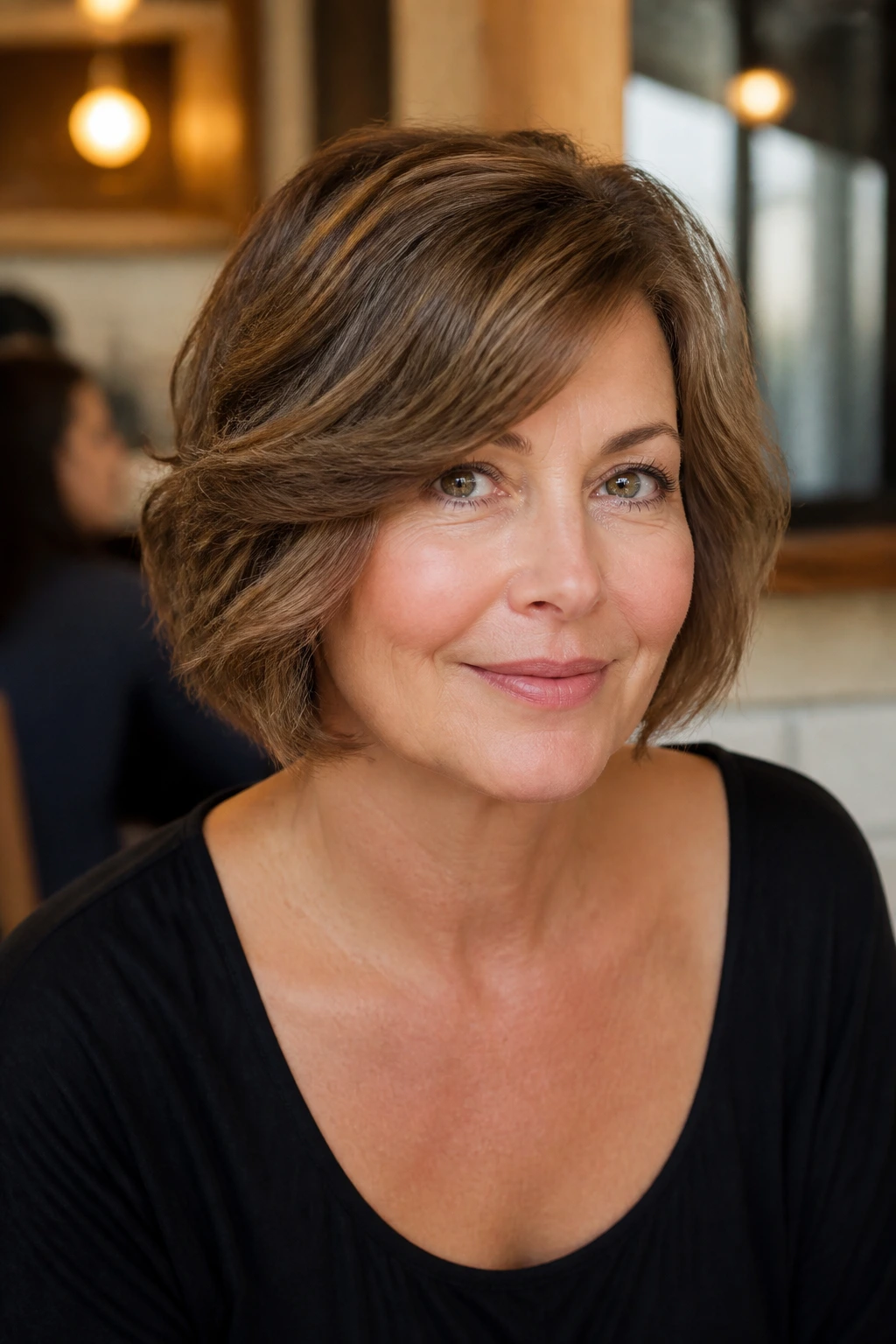
A wedge bob gives a neat shape at the back, and the clean neckline can feel very fresh on mature hair. The softer version of this cut avoids the sharp angularity that makes some wedge bobs feel dated. Instead, it uses a gentle slope and loose texture in the front.
On a heart-shaped face, that slope helps direct the eye down and away from the forehead. It also gives the lower face some presence, which matters when the chin is narrow. Keep the front pieces a little longer and break them up with waves so the cut does not read as too geometric.
This is a practical haircut if you like order. It stays tidy. It also behaves well on days when you don’t feel like styling much, which is more often than people admit.
17. Highlighted Bob That Pulls Focus to the Cheeks
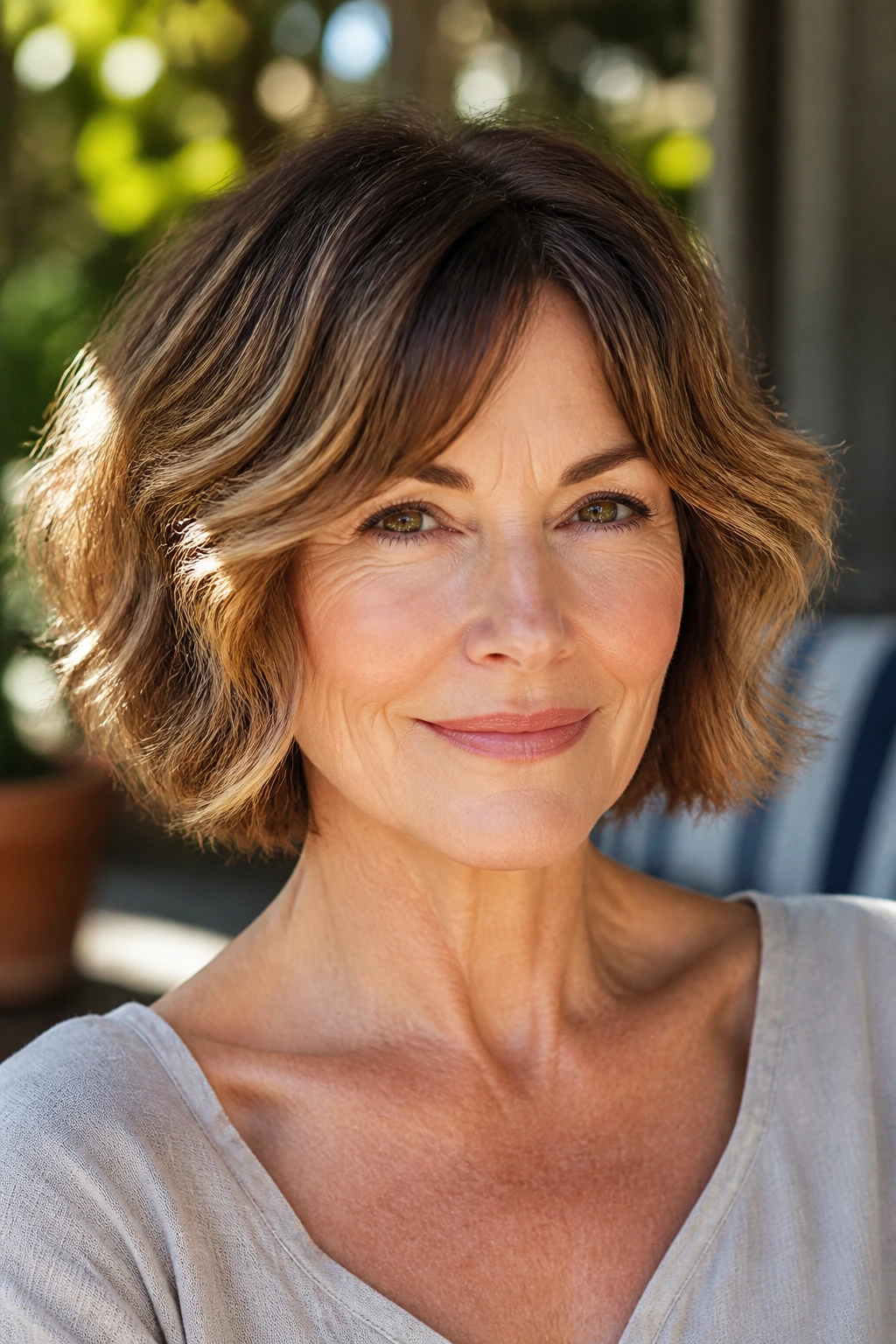
Color can do some of the face-shaping work, and this bob proves it. Soft highlights placed around the cheek area create a light path that moves the eye away from the forehead and toward the center of the face. Pair that with a waved bob, and you get movement plus a little brightness right where a heart face benefits from it.
The haircut itself can be simple. The color does the heavy lifting. I like this approach when someone wants a softer look without changing the structure too much. A few lighter ribbons near the front pieces can make the wave pattern more visible and give the hair more dimension.
Be careful with chunky streaks. They can look stripy and older than subtle dimension does. Fine, blended pieces work better here.
18. Curly-Texture Bob With Loose Definition

Not every wave needs to be ironed in. If your hair leans curly, a bob with loose definition can still flatter a heart face as long as the shape stays controlled around the crown and fuller around the cheekbones. The goal is softness, not a halo of frizz.
This cut works when the curls are encouraged to clump in moderate sections. Too many tiny pieces make the face look busier. Larger, softer groups of hair create a wave pattern that feels modern and easy. Diffuse lightly if you use heat. Or air-dry with curl cream and stop touching it.
The lower half of the face benefits from that extra texture. A heart-shaped face often looks better when the hair has some weight around the sides, and curls can provide that without sitting heavy.
19. Side-Tucked Lob With a Longer Front Piece
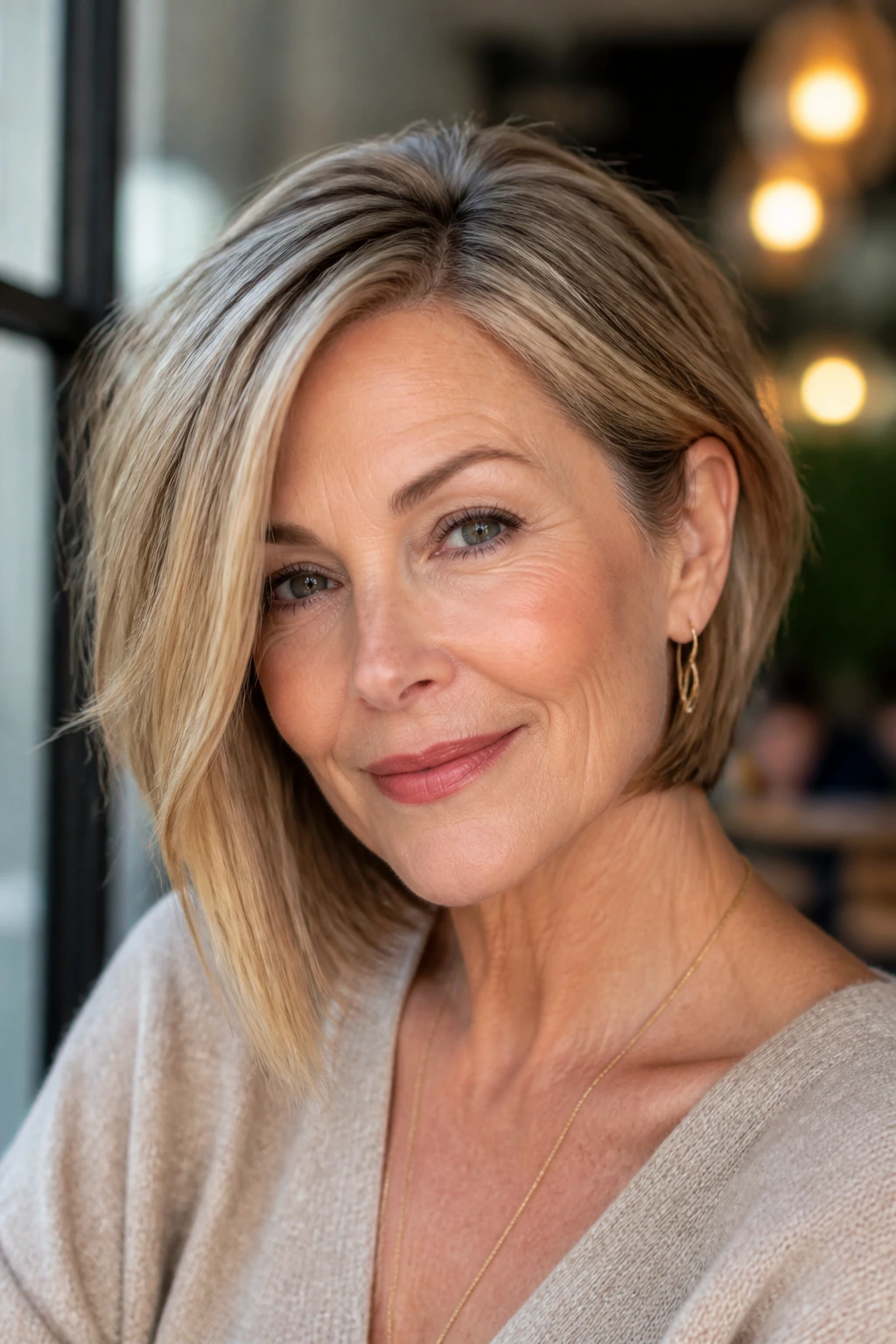
A side-tucked lob is one of those low-drama styles that still does real face-shaping work. The longer front piece extends past the chin, which helps lengthen the lower face, while the tucked side opens up the cheekbone area. That asymmetry looks relaxed, not fussy.
The wave should be gentle enough that the tucked side doesn’t puff out. A clean tuck behind the ear works best when the hair has just enough bend to stay in place. If it’s too sleek, the style can look overdone. If it’s too curly, the tuck collapses and the balance goes missing.
I like this one for everyday wear. It has built-in polish without forcing you to look styled from every angle.
20. Feathered Jawline Bob
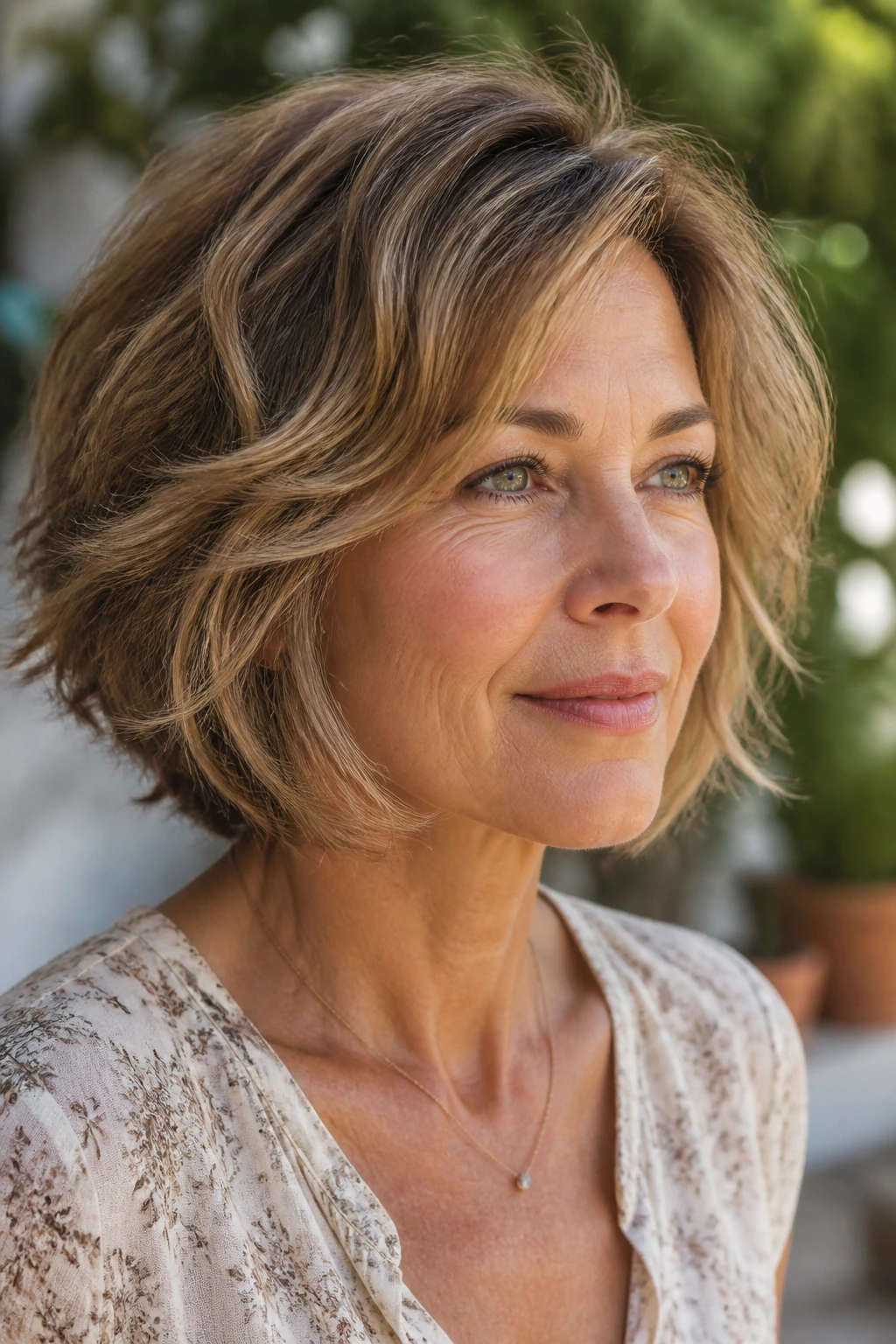
Feathering around the jawline is useful when a heart-shaped face needs softness right where the face narrows. Instead of a blunt edge that stops abruptly, the hair breaks into lighter pieces that move when you turn your head. That motion keeps the jaw from looking too sharp.
The wave pattern should stay modest. If the hair gets too big at the sides, the forehead-to-chin contrast can actually look stronger, which defeats the purpose. Keep the feathering controlled and let the ends bend in a loose, airy way.
This is a cut that rewards a good stylist. The difference between feathered and thin is real. You want movement with backbone.
21. Piecey Bob With Micro-Layers at the Crown
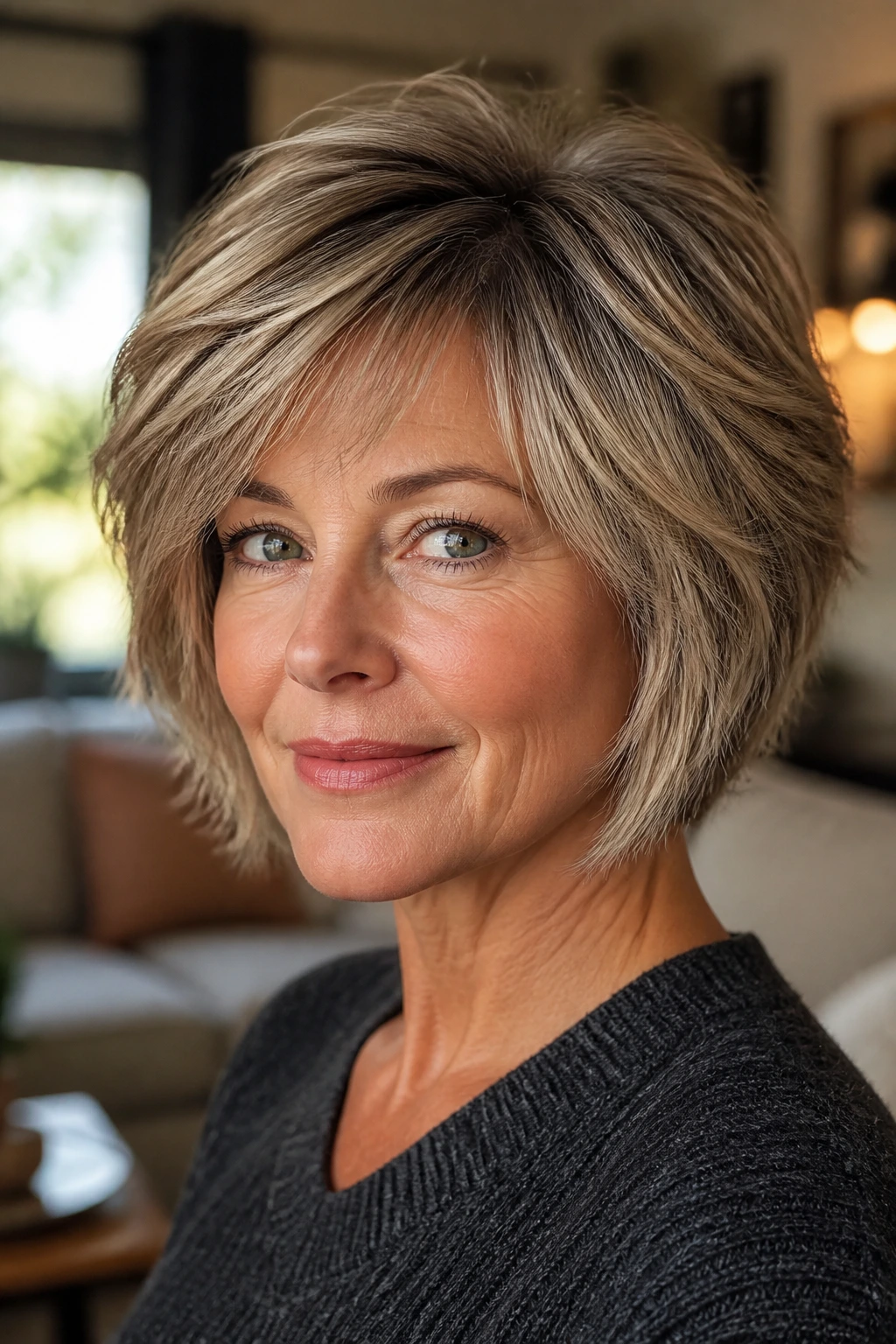
Micro-layers at the crown are a quiet fix for flat roots. On older women, crown lift can make a bob look fresher in a way that is hard to fake with styling alone. The rest of the cut stays soft, while the top gets just enough internal height to avoid collapse.
Piecey ends stop the style from feeling too neat. A little separation through the wave gives the haircut texture and keeps the face from reading as overly round or overly narrow. It’s a nice middle ground if your hair wants to fall limp but you still want movement.
A root spray helps here. So does a small round brush and a few seconds of lift at the part line. Tiny effort. Noticeable result.
22. Asymmetrical Bob That Still Feels Soft
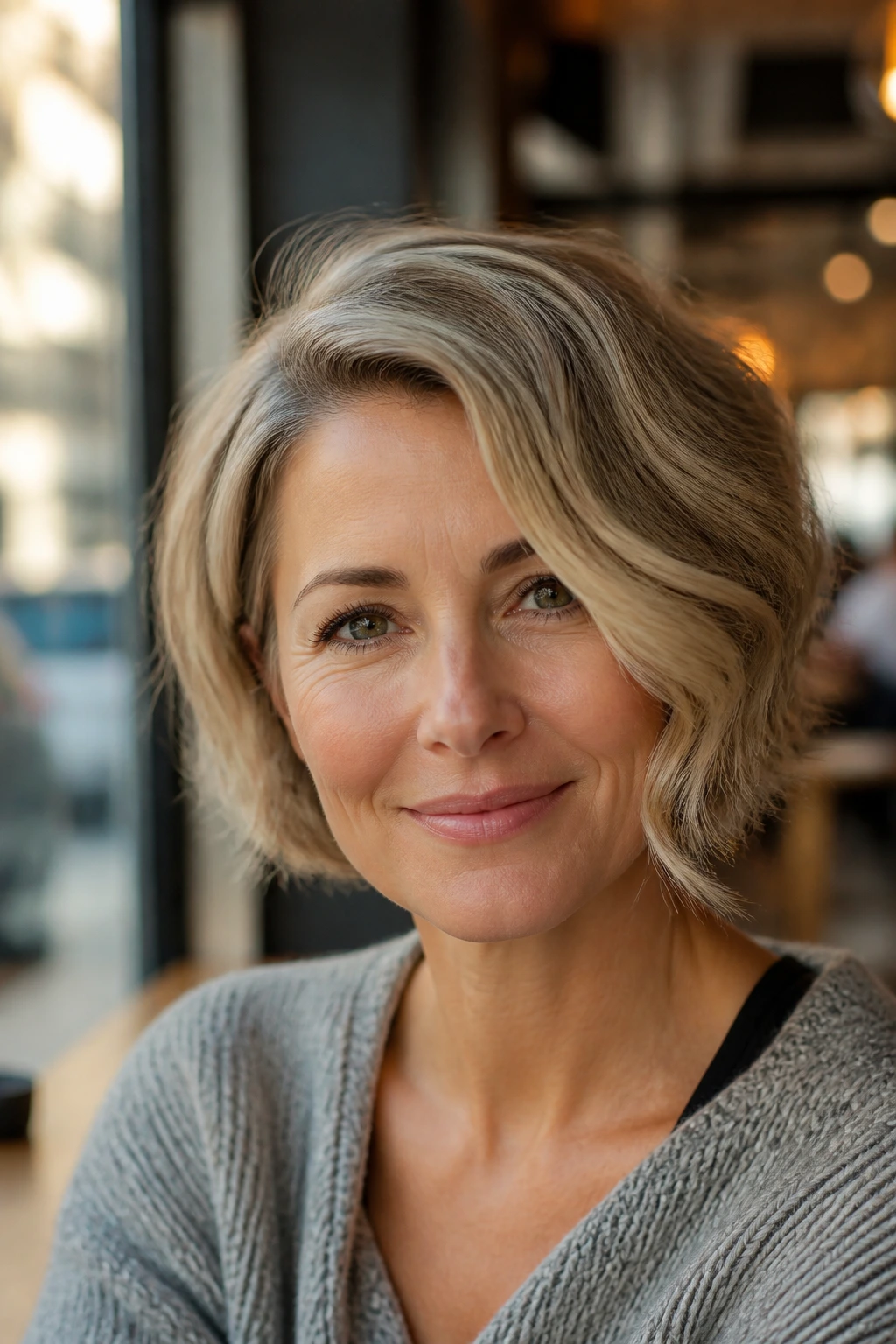
Asymmetry can look severe if the line is too sharp. But if the length difference is subtle and the waves stay loose, an asymmetrical bob can flatter a heart-shaped face by breaking up the symmetry around the forehead. The eye lands on the longer side, which softens the top-heavy feeling some heart faces get from uniform cuts.
The front should not be dramatically different from side to side. A small shift is enough. One side can skim the chin while the other stays a touch shorter. That creates interest without making the face look lopsided.
This style has a little attitude. Not a lot. Enough to feel fresh, not enough to feel like you’re trying too hard.
23. Shaggy Bob-Lob Hybrid
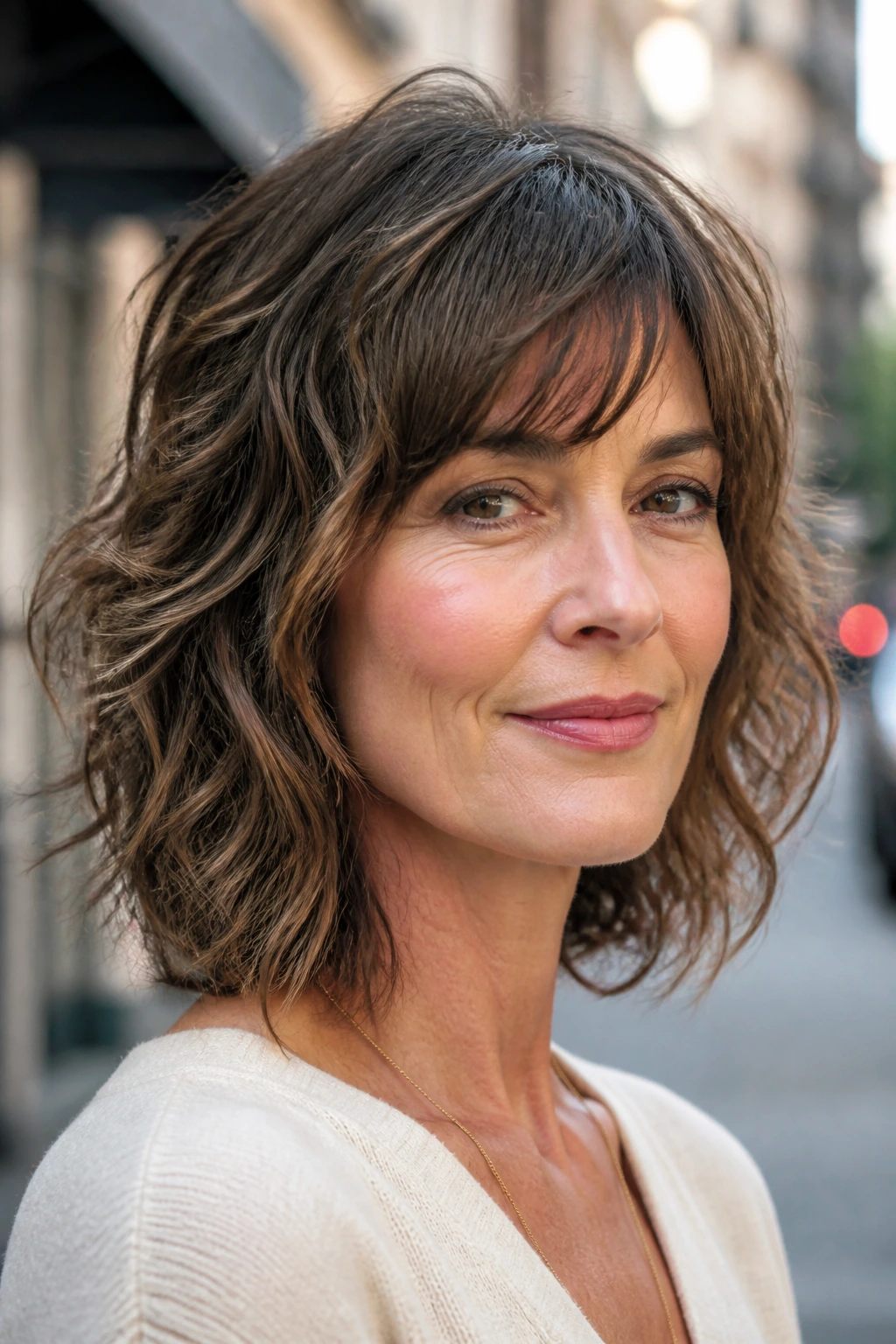
A bob-lob hybrid gives you movement without the commitment of a short bob. The shaggy texture is useful when hair has become less dense or when you want the cut to do some of the styling work for you. On a heart-shaped face, the texture breaks up width at the top and adds softness through the lower half.
The length can sit between the jaw and the collarbone, depending on how much balance the face needs. I prefer this cut when the front is lightly layered and the ends are piecey, not wispy. Too much shagginess turns the shape ragged. Too little, and it loses its point.
This is a good choice for women who want a relaxed, slightly undone look that still has enough structure to feel deliberate.
24. Glossy Waved Bob With a Polished Finish
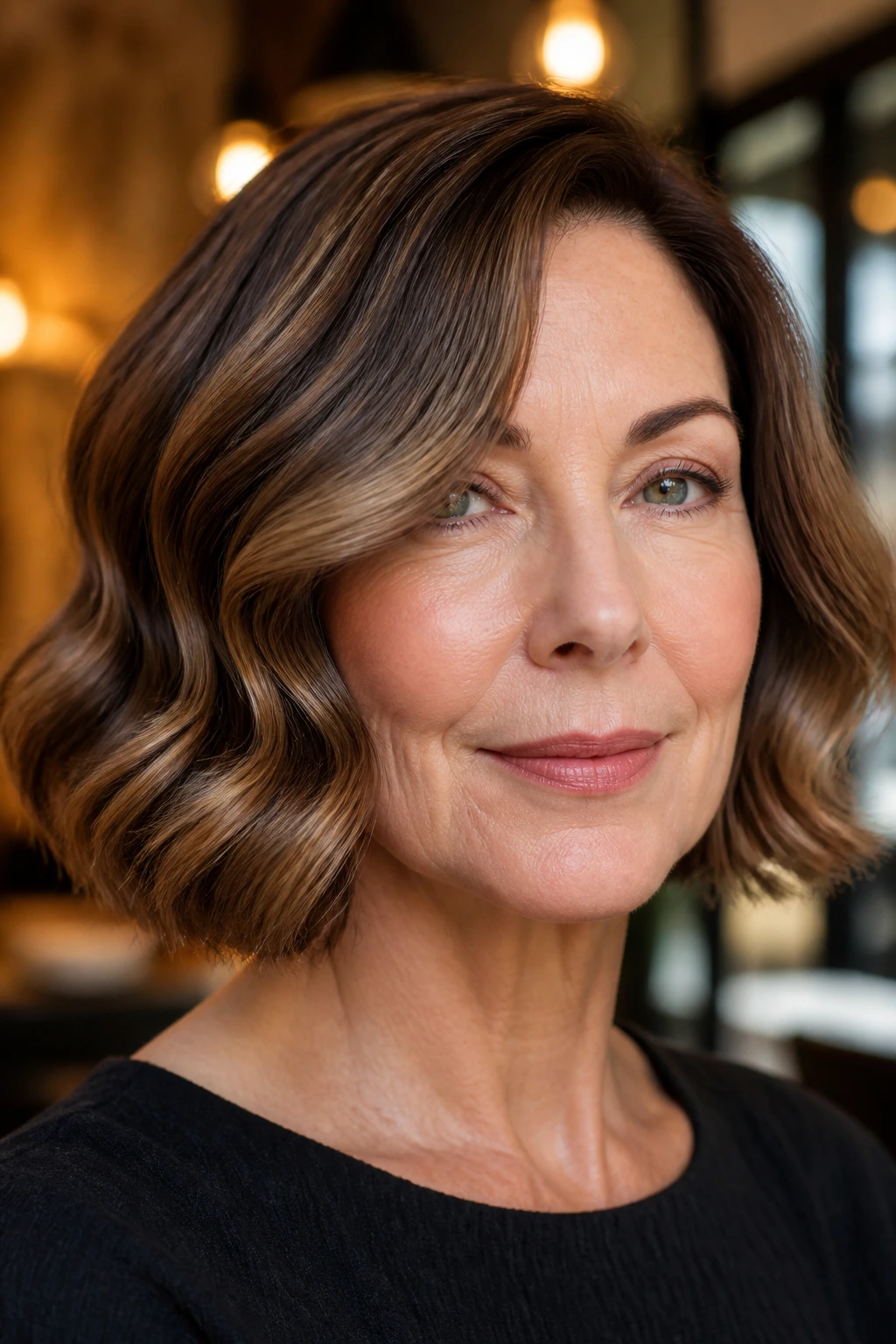
A glossy bob changes the mood immediately. The same face shape can look softer, brighter, and more awake when the wave pattern reflects light instead of swallowing it. On mature hair, shine makes a bigger difference than people expect. Dry ends tend to exaggerate every line. Smooth, reflective ends calm that down.
The cut itself can be simple. What matters is the finish. Use a smoothing cream on the mid-lengths, keep the wave broad, and avoid piling on heavy oil near the roots. A soft side part helps the shine fall across the face in a flattering way.
This is the bob for dinners, events, or any day when you want the hair to look cared for without looking stiff. It’s neat. It has polish. It still moves.
25. Easy Weekend Bob With Minimal Heat

Some haircuts are built for effort. This one is built for life. The easy weekend bob works because it accepts a little frizz, a little bend, and a little irregularity. That relaxed texture suits heart-shaped faces well, since the softness around the face keeps the forehead from taking over.
The length can vary from chin to collarbone, but the styling stays low-key. Airdry partway, twist two damp sections away from the face, and let them set while you get dressed. Done. You’ll end up with waves that are imperfect in the best possible way — loose, touchable, and not overstyled.
This is the style I’d hand to someone who is done fighting her hair every morning. It doesn’t ask for much. That’s the charm.
Why Soft Waves and a Bob Suit a Heart-Shaped Face

The geometry here is almost rude in how well it works. A heart-shaped face brings width through the forehead and temples, then tapers toward the chin, so a haircut that adds a little softness lower down helps the whole face settle visually. Soft waves do that without adding bulk where it’s not needed.
A bob also keeps the hair from dragging the eye downward in one heavy line. Long, straight hair can make the face look longer and sharper at the chin. A bob breaks that line. A wave breaks it again. That double interruption is why these cuts feel balanced without looking engineered.
The age piece matters too, and not in a fake-cheerful way. Hair often gets finer, drier, or less predictable as it changes texture over time. A good bob respects that. It can be tucked, waved, air-dried, or smoothed, and it still holds shape better than many longer cuts do when the hair stops behaving like it did at 30.
Essential Tools for These Cuts
-
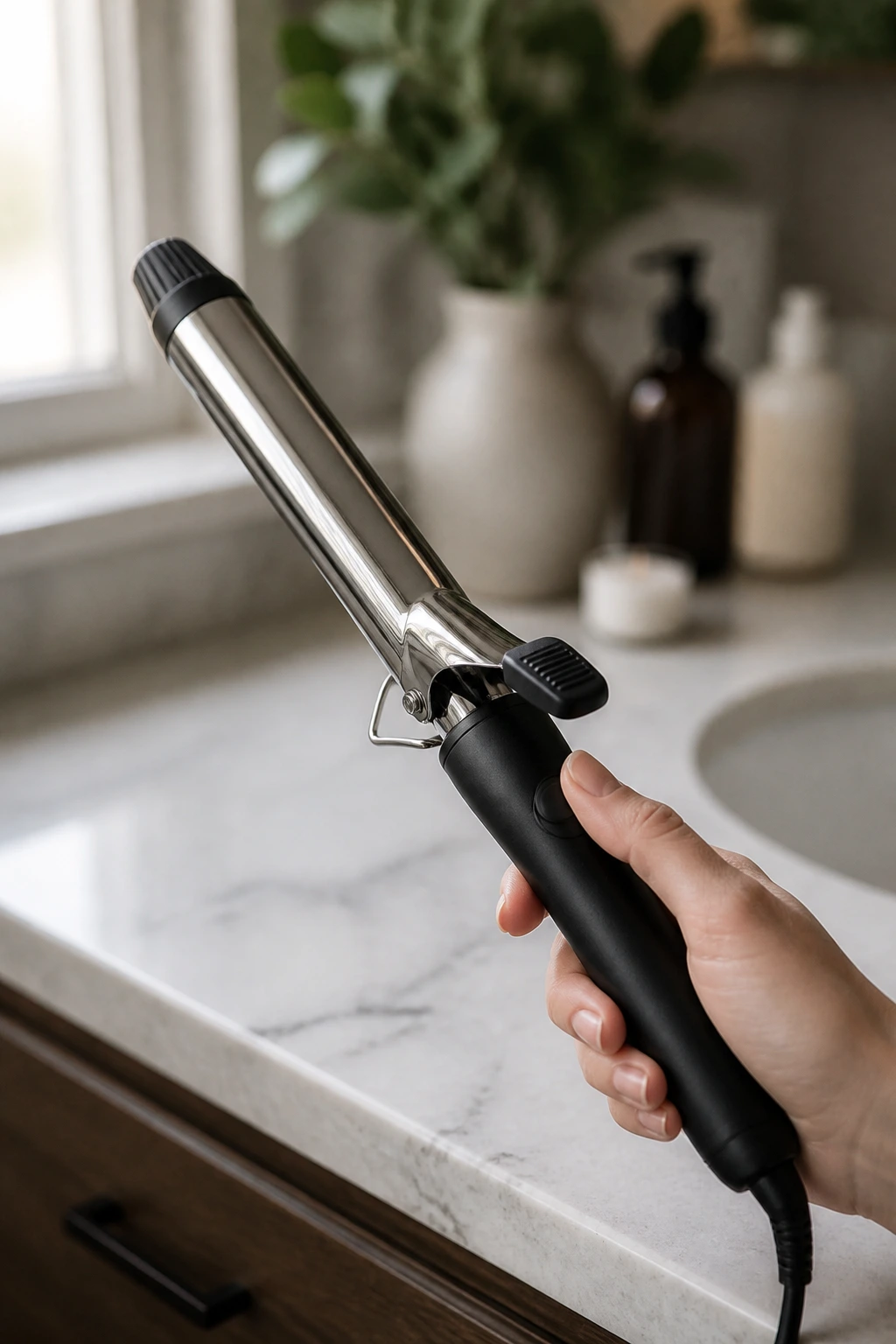
1-inch curling iron or wand: Best for creating soft bends that do not look tight or ringleted.
-
Flat iron with rounded edges: Useful if you like S-waves or a soft polish through the ends.
-
Round brush, medium size: Helps lift the crown and smooth the front without flattening the shape.
-
Blow-dryer with a concentrator nozzle: Gives you control over the roots and keeps the cut from puffing in odd places.
-
Lightweight mousse or root lift spray: Good for fine hair that needs a little body without stiffness.
-
Heat protectant spray: Non-negotiable if you use hot tools more than once a week.
-
Texturizing spray: Adds separation to waves that feel too tidy.
-
Wide-tooth comb: Better than a brush once waves are set, because it keeps the pattern from turning into fluff.
-
Clips or sectioning clamps: Makes it easier to control the front pieces and crown while styling.
-
Silk pillowcase or smooth sleep bonnet: Optional, but it keeps day-two waves from getting crushed flat.
Smart Cut and Product Notes to Bring to the Salon
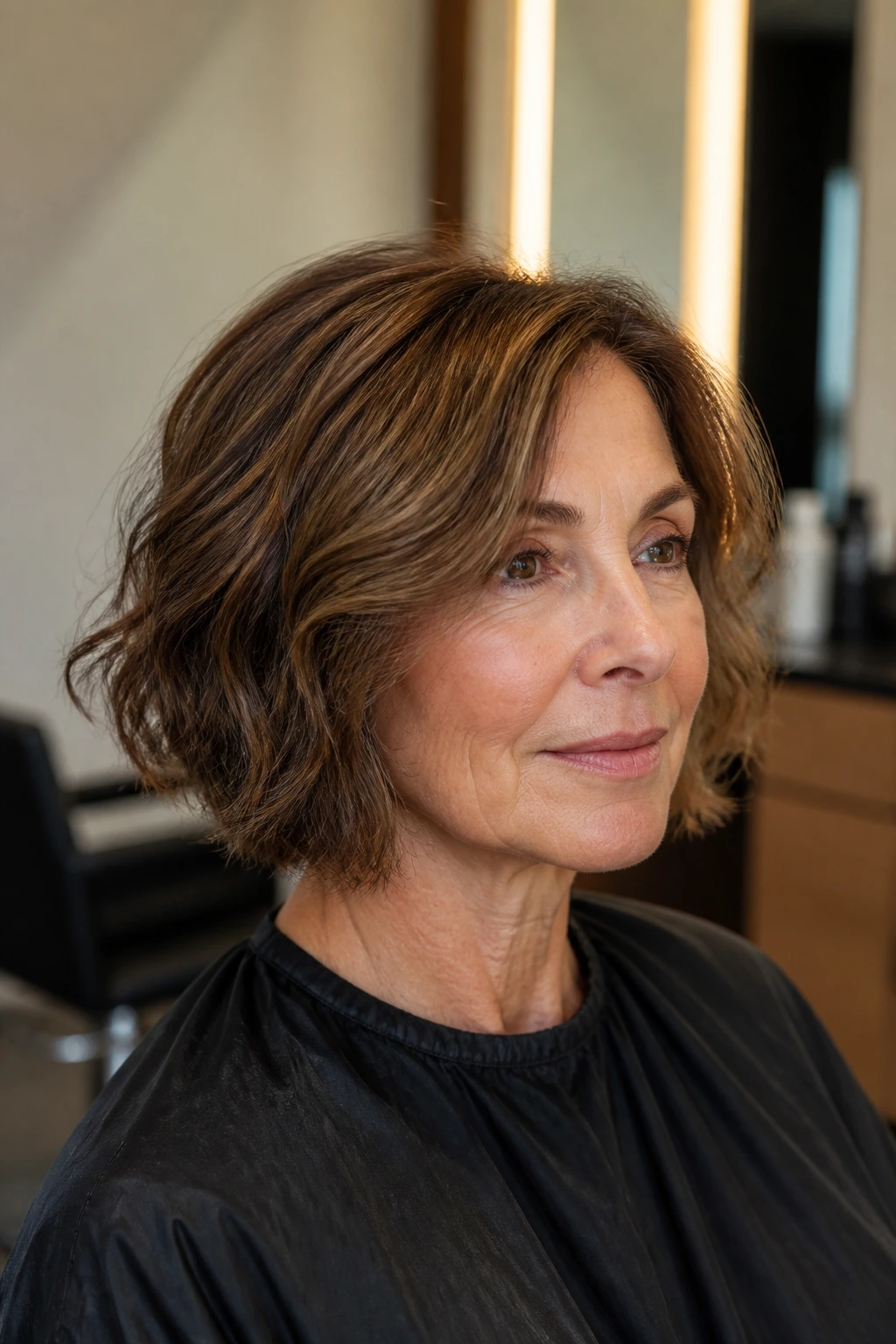
A good salon conversation is shorter than people think. You do not need a speech. You need a few clear points: where you want the length, how much forehead you want covered, and whether you want the front to hit the chin, the jaw, or the collarbone. That’s the part that changes the whole haircut.
If your hair is fine, ask for internal texture rather than a lot of removed weight. Fine hair with too many layers can look see-through at the ends. If it is dense, ask where the bulk should come out, because dense bob hair can puff at the sides fast. And if your waves tend to collapse, say that out loud. A stylist can build more support near the crown and leave the ends a touch longer so the style does not fall limp after one wash.
Product-wise, I’d keep the shelf simple. One heat protectant, one mousse or root spray, one texture spray, one smoothing cream. That’s enough for most of these cuts. A bathroom drawer full of half-used bottles usually means the haircut and the products are fighting each other.
How to Wear These Cuts in Daily Life

Presentation: Keep the wave pattern loose enough that the haircut moves when you turn your head. The best versions of these bobs look like they belong on a real day, not only under salon lights, so let a few pieces fall forward and one side tuck behind the ear.
Accompaniments: Small earrings, glasses with clean frames, and collars that don’t crowd the neck work especially well with these cuts. A soft V-neck or open collar helps the bob sit in the outfit instead of getting swallowed by it. Heavy turtlenecks can work too, but they need a little more lift at the crown.
Portions: For a shorter bob, a little volume goes a long way. For a lob, you can let the waves stretch wider and sit lower around the shoulders. If your face is especially broad at the forehead, keep the front side pieces long enough to skim the cheekbones instead of stopping high above them.
Beverage Pairing: Strong coffee, dry sparkling water, or a cold herbal tea sounds odd in a style article, but there’s a reason I mention it: a haircut feels better when the rest of the getting-ready routine is calm and unhurried. That half-finished mug on the counter is part of the ritual, whether anyone admits it or not.
Extra Ways to Make the Style Yours

Shape Boost: If your face needs more balance at the lower half, keep the wave pattern around the cheeks and let the ends turn under just slightly. If the forehead needs less attention, shift the part off-center and keep the front pieces longer.
Texture Upgrade: Fine hair usually benefits from a bit of mousse at the roots and a very light wave through the mids. Dense hair tends to need weight removal in the right spots, not more product. Those are different fixes, and mixing them up creates trouble fast.
Color Lift: Subtle highlights around the front pieces can make the wave pattern easier to see. Silver, ash brown, and warm blonde all show movement well when the color has a little dimension.
Make-It-Yours: If you prefer a softer, more feminine finish, keep the ends rounded and the bangs wispy. If you like something sharper, hold the perimeter cleaner and use the wave only to break the line. If you want a low-maintenance version, choose a lob and style only the front and crown, leaving the rest to air-dry.
Common Mistakes That Make a Bob Work Against a Heart Face
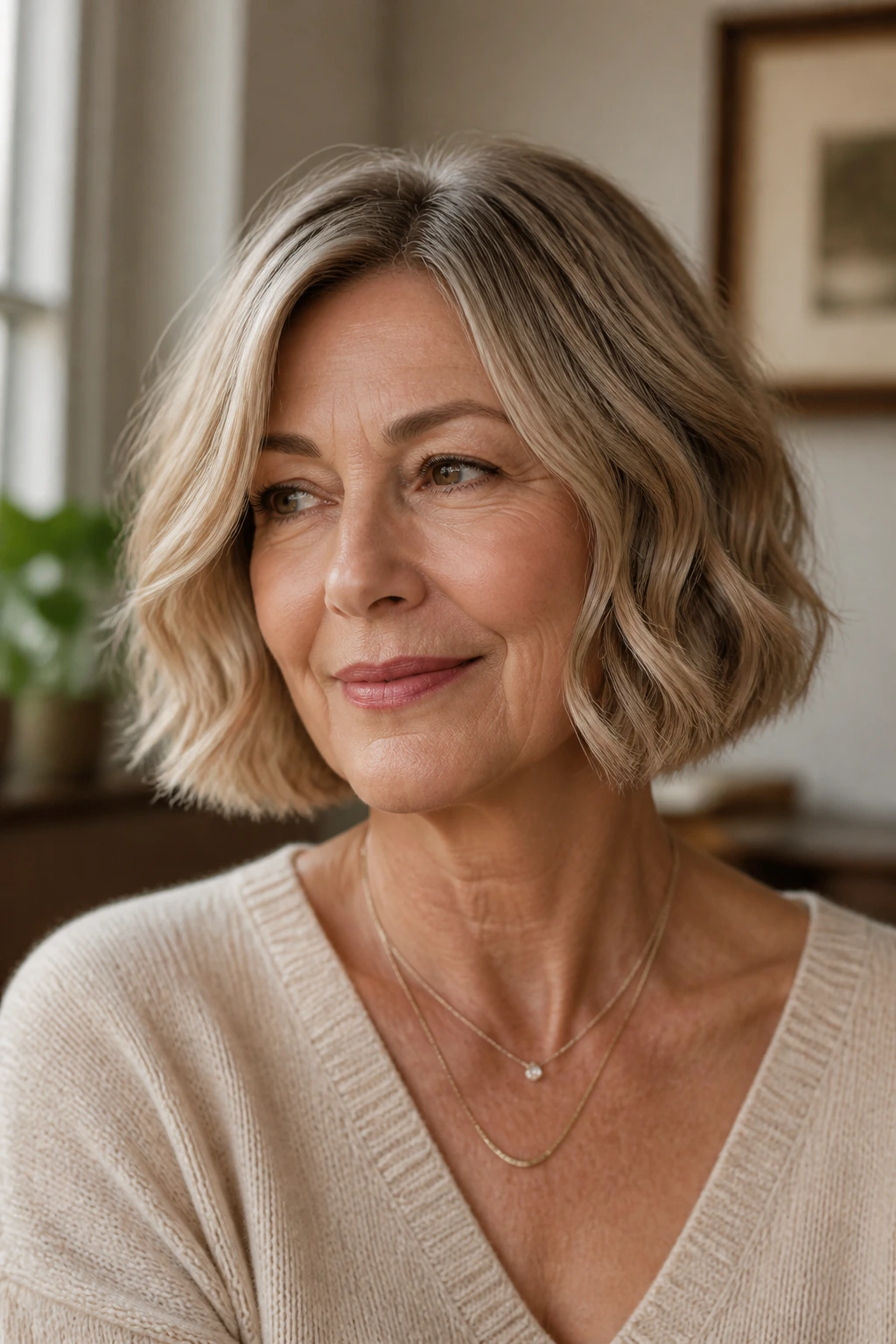
The first mistake is packing too much width into the wrong spot. If the bob balloons out at the jaw or the temples, it can make the forehead look broader and the chin look even smaller. The fix is usually a softer interior shape and waves that sit lower on the face.
Heavy bangs are another trap. Thick fringe can crowd the forehead and make a heart-shaped face feel boxed in. Wispy bangs or curtain pieces are safer because they break up the top without shutting it down.
A third issue is cutting the bob too blunt at the chin. That hard stop can make the lower half of the face feel abrupt. A slightly longer front, or even a tiny bit of feathering, helps the cut flow instead of chop.
Then there’s the over-styled problem. Too much curl, too much product, too much polishing — it all pushes the cut into helmet territory. Soft waves need air between the bends. If the hair looks glued into place, back up and use less.
Finally, people let the trim schedule slide. A bob that was balanced six weeks ago can turn into a triangle or a droopy shape if it grows out too far. The line matters. Once it starts wandering, the whole face shape changes with it.
Variations and Adaptations to Try

The Salt-and-Glow Bob: Keep the cut short and the waves loose, then lean into silver, white, or salt-and-pepper tone with a shine cream. It works well when you want the hair color to carry some of the style instead of relying on a complicated finish.
The Soft Fringe Lob: Add curtain bangs to a collarbone-length lob and keep the ends stretched into broad S-waves. This is one of the easiest ways to soften a wider forehead without giving up too much length.
The Air-Dry Bob: Use mousse, twist two or three damp sections away from the face, and let the rest dry naturally. This version is for women who want movement without heat, and it looks best when the texture is allowed to be a little imperfect.
The Highlight Frame: Place subtle lighter strands around the cheekbones and front pieces, then keep the bob simple. The color gives the waves depth, and the haircut does not need to do all the talking.
The Sleeker Evening Version: Smooth the crown, keep the wave broad, and tuck one side behind the ear. It’s the same haircut, just a cleaner finish for dinners or events when you want the shape to look more dressed up.
How to Keep the Shape Between Salon Visits
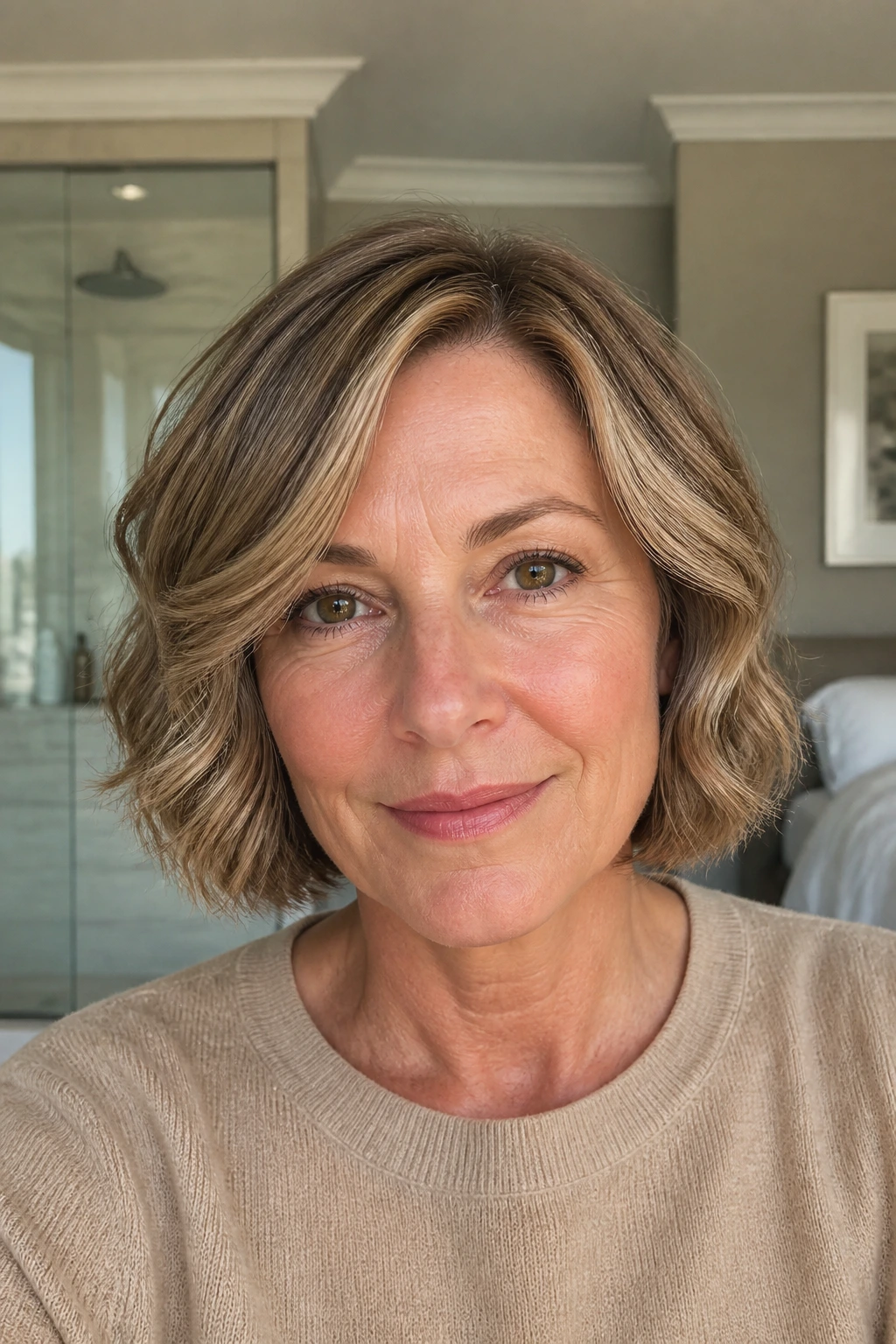
A bob starts losing its line the moment it grows. That sounds dramatic, but it’s true. Shorter versions usually need a trim every 5 to 7 weeks if you want the ends to stay crisp and the balance to hold. Lobs can stretch a little longer, around 7 to 10 weeks, because the extra length gives the cut more room to grow.
At home, wash only as often as your scalp needs it. Most wavy bobs look better with a bit of natural oil at the root than with squeaky-clean hair that has no grip. If the ends get dry, use a small amount of cream from mid-length to tip. Not near the scalp. That turns the crown flat fast.
Day two is often easier than day one. A mist of water, a touch of leave-in, and a few scrunched pieces can bring the wave back without rebuilding the whole style. If the roots collapse, a little dry shampoo at the part line usually helps more than more hot tools do. And at night, a silk pillowcase or loose clip keeps the wave from getting mashed into a weird half-bend.
Questions People Ask Before Choosing One of These Cuts

What bob length is most flattering for a heart-shaped face?
The safest choices are usually chin-length to collarbone-length, because they give the lower face some visual weight without crowding the jaw. If your chin feels especially narrow, a lob that lands at the collarbone can be easier to wear than a very short bob.
Are bangs a good idea with a heart-shaped face?
Yes, if they are soft. Curtain bangs and wispy fringe work better than a dense, blunt bang because they break up forehead width without boxing in the face. Heavy bangs can work on some people, but they ask for more styling and more upkeep.
Can fine hair wear a soft wavy bob without going flat?
It can, and often better than long hair can. The trick is to keep the layers controlled and use a small amount of root product so the crown stays lifted. Fine hair in a bob usually needs less length and more shape.
What if my waves fall out fast?
Build the style around the roots first. A solid base at the crown, plus a lighter bend through the ends, tends to hold longer than curling every inch. A little texture spray after styling can help, but too much product will make the hair droop.
Is a lob better than a chin-length bob for older women?
Often, yes, if the hair has lost density at the sides or if the chin feels narrow. A lob gives more softness and can be easier to tuck, but a chin-length bob can look sharper and fresher if the face can carry that shorter line.
Does gray hair work well with waves?
Very well, if the cut has enough shape. Gray hair can look wiry or flat depending on the day, and loose waves help it look intentional instead of random. Shine products matter more here than they do on darker hair.
How do I stop the bob from looking too round?
Keep the volume off the widest point of the face and use a side part or off-center part. If the wave starts too high, the shape can puff out at the temples. Move the bend lower and the cut settles down.
The Shape That Keeps Paying Off
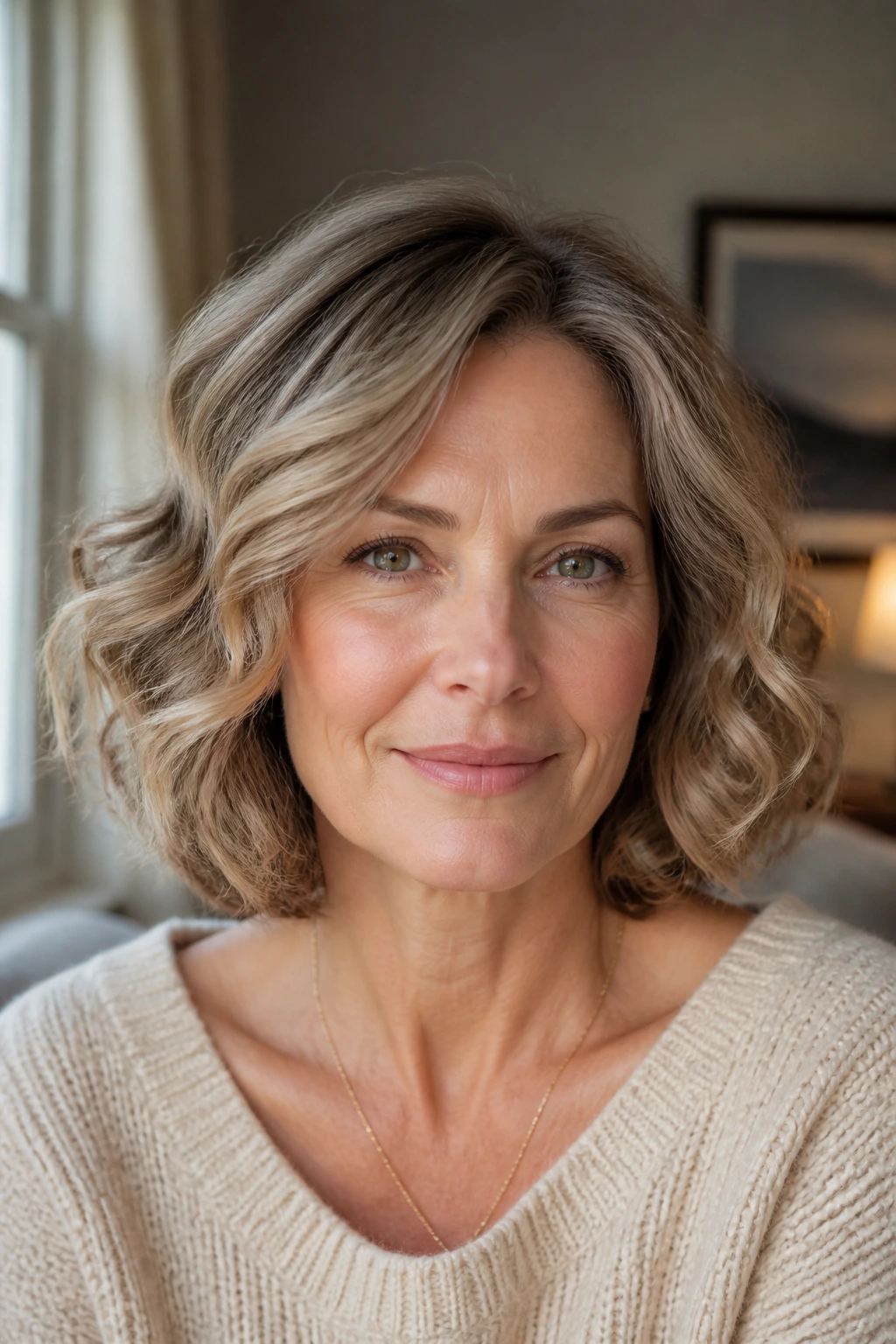
A good bob does not shout. It solves. That’s the part I like most about these soft wavy versions for heart-shaped faces: they do the balancing work quietly, without making the hair look stiff or overthought.
If you have spent years fighting your forehead width, your narrow chin, or hair that has changed texture in ways nobody warned you about, the right bob can feel like a reset. Not a reinvention. A better fit.
And once you find the version that sits on your face the right way, you stop thinking about the haircut every five minutes — which is usually the point.