



Fine hair can go limp in a blink, and oval faces can make almost any style look close to right — which is why the sweet spot is narrower than it sounds. Blonde waves for fine hair and oval faces work when the bend is soft enough to keep the hair light, but structured enough to stop it from collapsing by lunchtime. Too much product and the hair goes flat. Too little, and the wave falls out before you leave the driveway.
The styles that hold up best all do the same quiet job: they create the look of more hair without stuffing the head full of mousse and hope. A clean root, a controlled barrel size, and a little face-framing bend can change the whole read of the cut. On an oval face, that extra movement around the cheeks and jaw is doing real work. It softens length, opens the features, and keeps the face from looking too long under a heavy center part.
And blonde color helps in a way dark hair doesn’t. The light catches the bends, so even a gentle wave reads as fuller. Beige, champagne, honey, and icy tones each change the mood a little, but the trick stays the same: let the wave show enough shape that the hair looks deliberate, not accidental. The best versions feel airy in the hand and look like they were styled with a light touch, not a can of product and a prayer.
Why These Waves Feel Different on Fine Hair
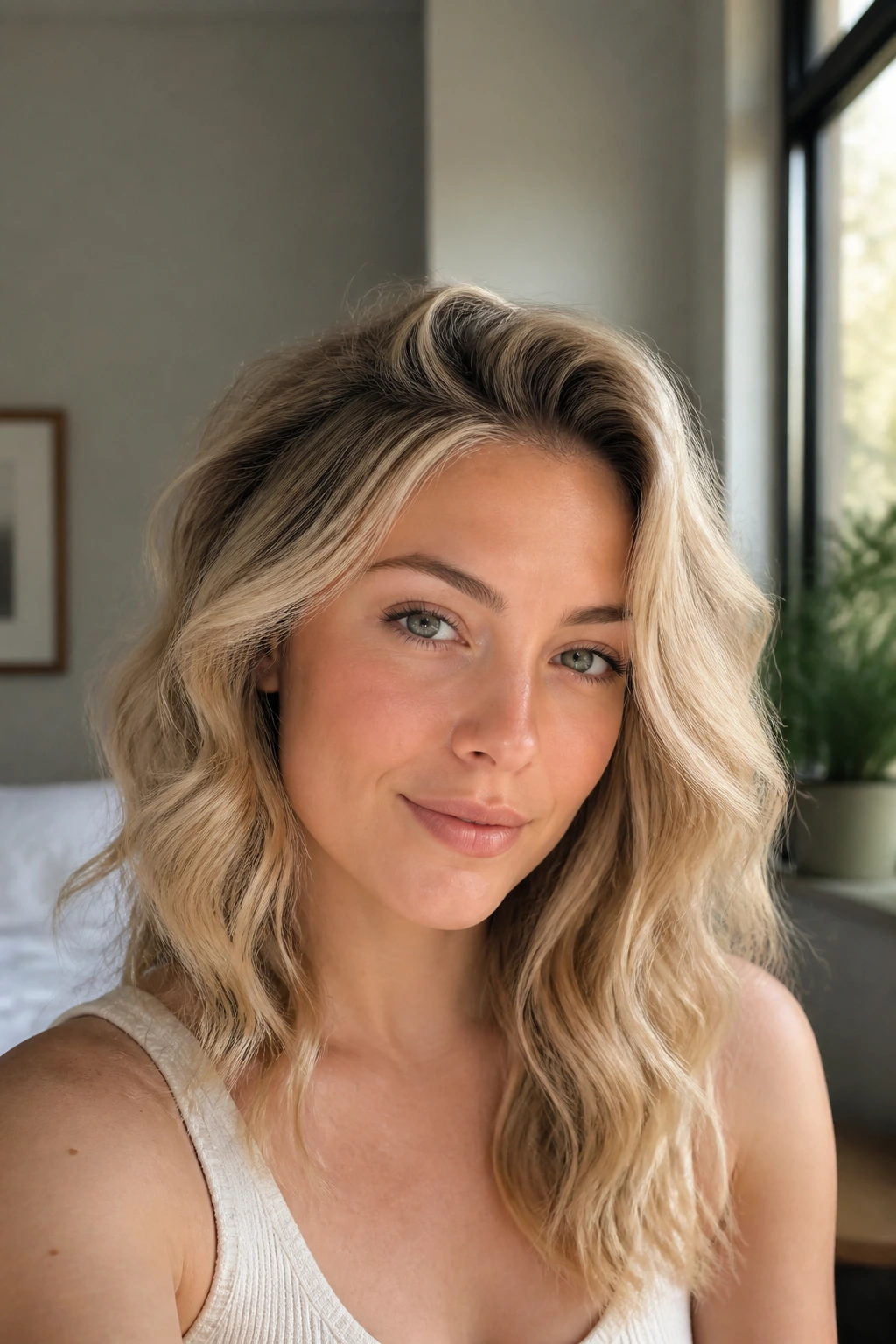
- Root lift matters more than tight curl: Fine strands lose shape fast, so styles that start with volume at the crown keep the whole look from sinking into the scalp.
- Oval faces can handle more parting options: A center part, off-center part, or deep side sweep all work here, which gives you room to change the mood without changing the cut.
- Blonde tones show movement better: Beige and champagne shades catch the bend in the hair, so even soft waves look fuller than they would in a flat single-tone color.
- Loose ends keep the shape from looking sparse: Heavy curl through the very ends can make fine hair look stringy; a softer finish keeps the line cleaner.
- Texture spray beats heavy cream: A light mist gives grip and separation without turning the hair sticky or muddy, which is the fastest way to bury fine hair.
1. Root-Lifted Beige Blonde Waves
A little lift at the crown changes everything. Beige blonde waves on fine hair work because the color stays soft while the root area carries the volume, and that keeps the style from sinking into the scalp by noon.
Why This Style Works
The beige tone is a quiet win for fine hair. It reflects light without looking brassy, and that means the waves read as soft movement instead of chunky curls.
For oval faces, a center part with a bit of crown lift is the cleanest move. It keeps the face open, but the height at the top stops the length from feeling too long. Use a 1.25-inch curling wand, wrap only the mid-lengths, and leave the last inch of the ends out so they stay light.
Quick Styling Notes
- Blow-dry with a volumizing mousse at the roots.
- Clip the crown up while you finish makeup or dressing.
- Curl away from the face on both sides.
- Pin each wave for 5 to 10 minutes so it cools in place.
- Break the bends with your fingers, not a brush.
Best for: shoulder-length cuts, long bobs, and layered styles that need a little backbone.
2. Chin-Grazing Champagne Waves
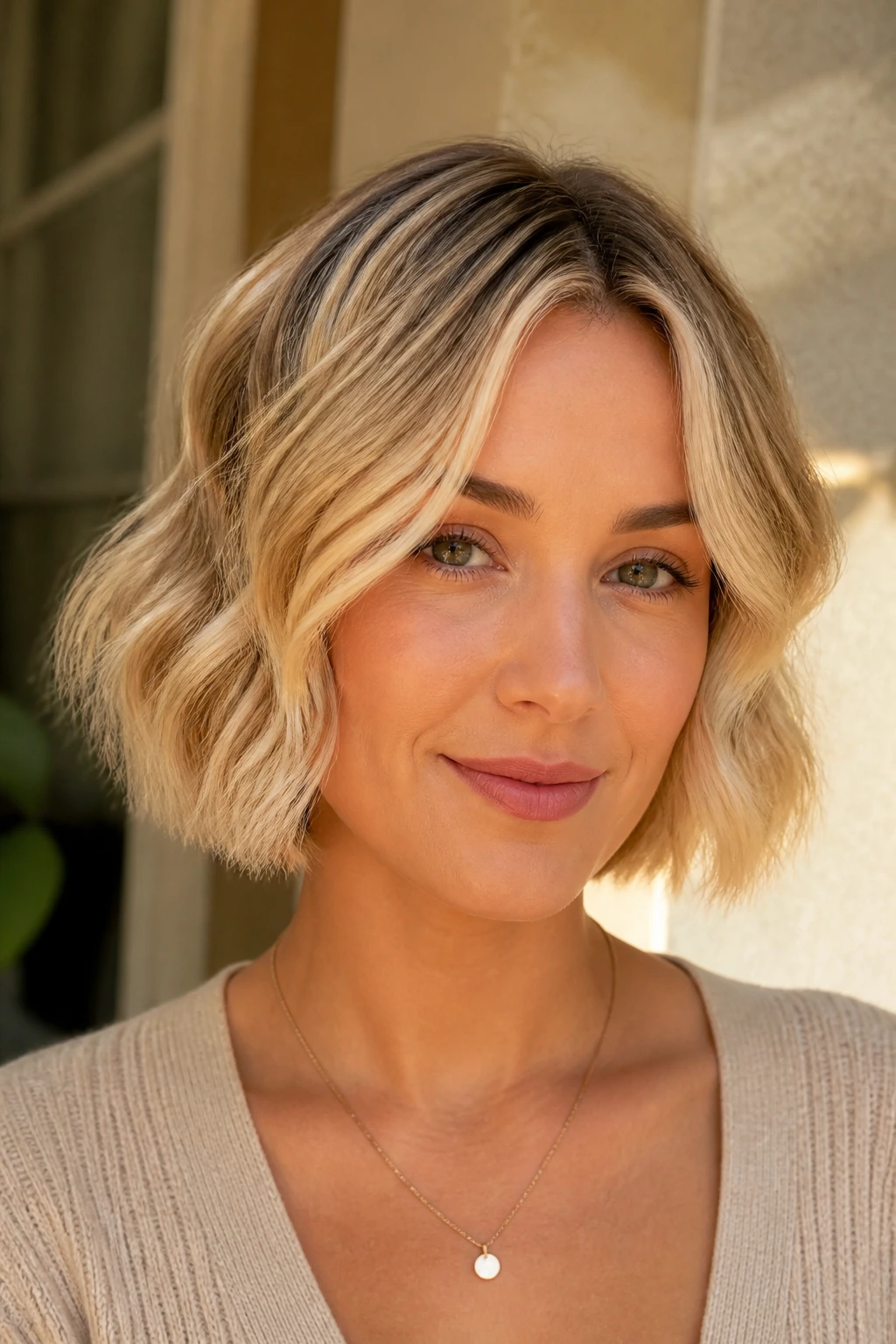
A chin-grazing length can look expensive in the best sense of the word when the waves are soft and the blonde is bright enough to keep the ends from disappearing into the hair.
Why the Length Matters
Fine hair often looks thicker when it stops around the chin or just below it, because the eye reads that compact shape as fuller. Champagne blonde helps by bouncing light along the lower edge of the cut, which gives the illusion of density where you need it most.
How to Get the Shape
Use a 1-inch iron and take smaller sections than you think you need — about 1 inch wide, no more. Keep the wave loose near the top and add a slightly more defined bend around the jawline. That little bit of curve is what flatters an oval face without stretching it.
- Mist heat protectant through dry hair.
- Curl the front pieces away from the face.
- Leave the very tips straight.
- Spray texture mist at the mid-lengths only.
- Shake the roots with your fingers after cooling.
One caution: if the cut is too blunt and the ends are wispy, don’t overcurl them. They’ll look thinner, not fuller.
3. Side-Part Old Hollywood Waves
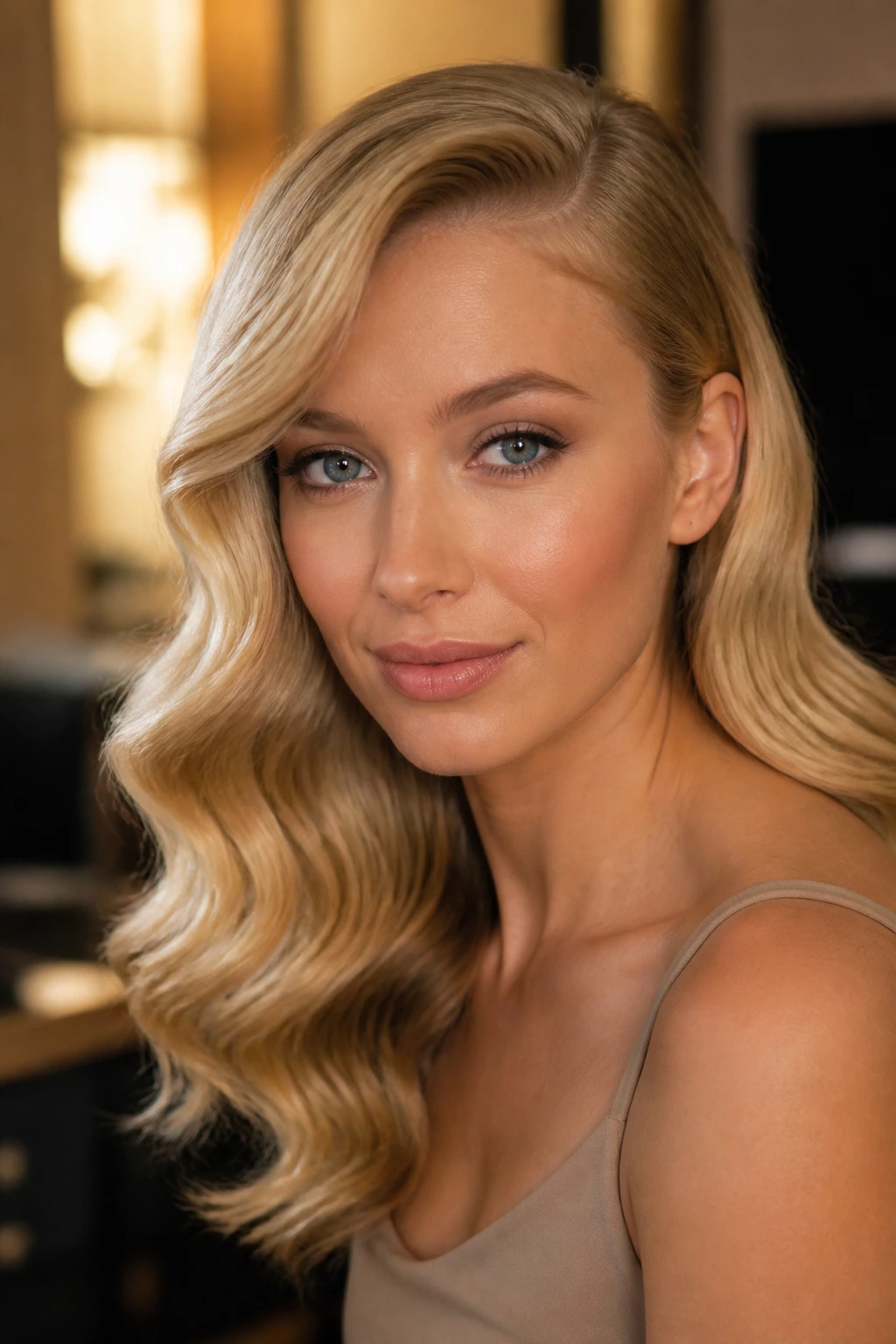
This is the glamorous option, but it still works on fine hair if you don’t overdo the curl. A deep side part gives oval faces an instant shape shift, and the waves can be brushed into a smooth pattern that looks polished rather than puffy.
The key here is control. Use a 1-inch curling iron, curl all sections in the same direction on each side, then pin them flat against the head while they cool. Once they’re set, brush through with a soft bristle brush until the wave joins into a single S-shape. That brushing step matters. It turns separate curls into the slick, even wave pattern that gives this style its name.
I like this version on fine hair because it doesn’t rely on volume alone. It relies on direction. The hair looks denser when the wave lays in one clean line, and the side part creates enough asymmetry to keep an oval face from reading too long.
Wear it with: a tucked ear on the lighter side, a glossy lip, and a clean neckline. It’s a sharp look.
4. Soft S-Bend Waves with Shadow Root
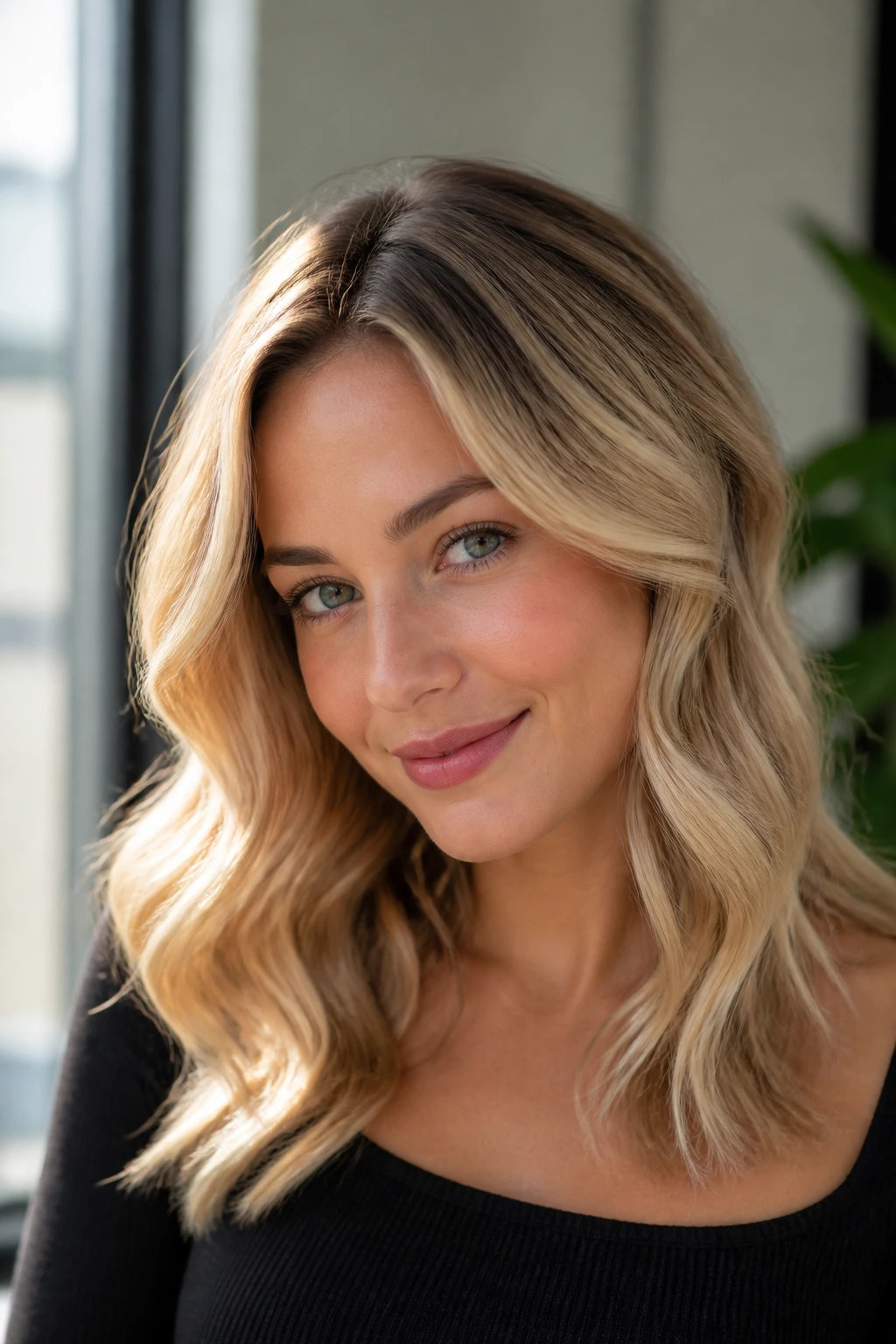
Why does this one work so well? Because it leans on shape instead of curl. An S-bend wave gives fine hair movement without making the ends look frayed, and the shadow root keeps the color dimensional right where the eye lands first.
The Styling Logic
Use a flat iron, not a curling wand. Clamp a 1-inch section near the roots, then bend the iron back and forth in a slow S motion as you slide down the hair. Keep the bend loose near the crown and a touch tighter through the mid-lengths. The result feels modern, but it doesn’t eat hair width the way tight curls can.
For oval faces, an off-center part makes this shape especially good. The bend falls around the cheekbones and jaw, which gives a gentle frame without cutting the face in half.
Best Details to Notice
- The roots stay smooth.
- The mid-lengths carry the movement.
- The ends remain slightly straight.
- The color looks deeper near the scalp.
- The whole style feels light in motion.
Pro tip: if your hair is especially fine, let the iron do less work. Two soft bends per section are enough.
5. Collarbone-Grazing Honey Blonde Waves
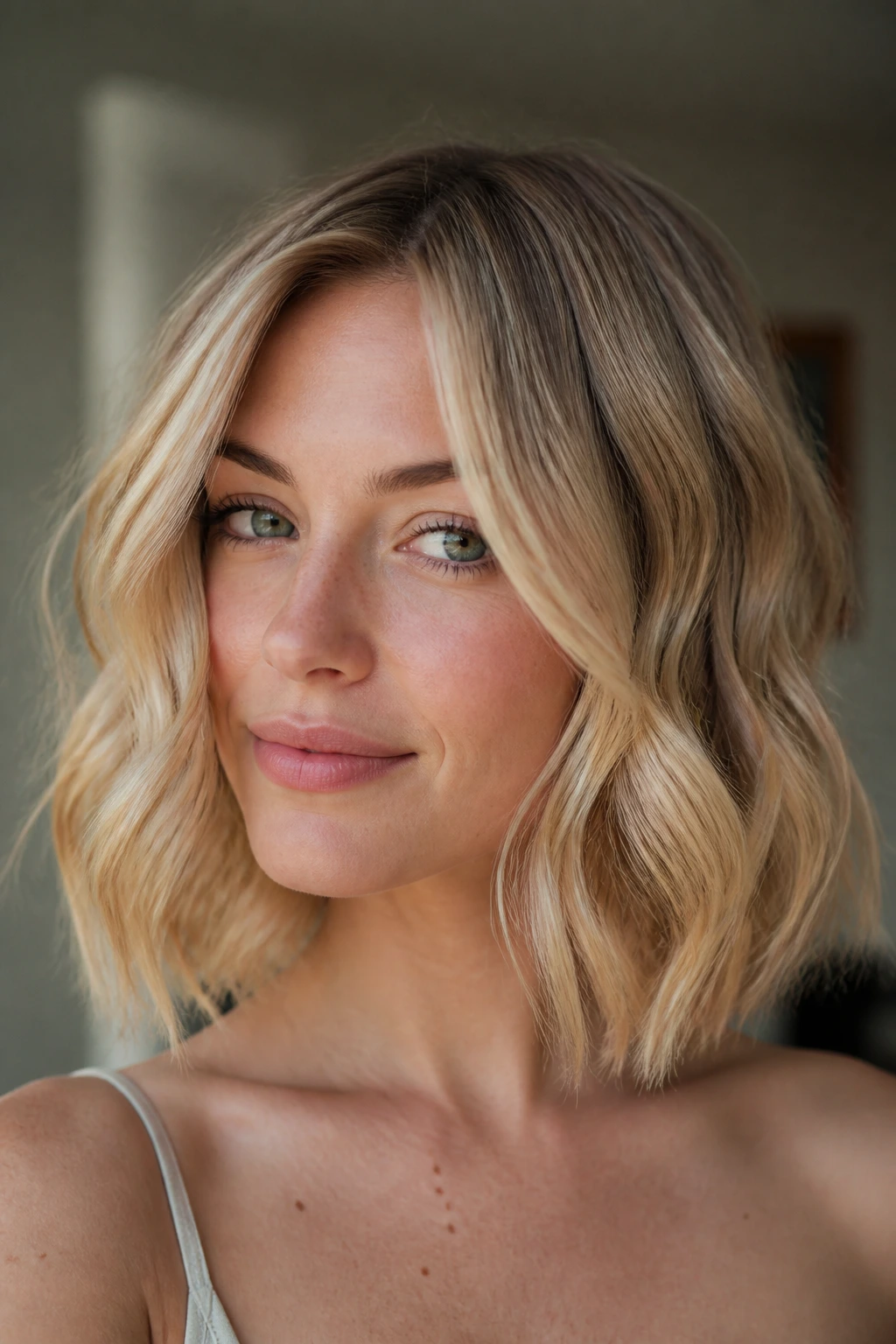
Collarbone length is one of my favorite spots for fine hair. It gives the wave enough room to move, but it never drags the whole shape down, and honey blonde keeps the look warm without turning heavy.
This style has a more relaxed feel than Old Hollywood waves. The bend starts around the mid-shaft, then loosens toward the ends so the hair swings a bit when you move. On an oval face, that length lands right where it should — around the collarbone and upper chest — which keeps the face open while still adding softness.
Use a 1.25-inch wand and alternate curl direction every section. That little switch stops the style from clumping into one flat pattern. Finish with a pea-size dab of lightweight serum rubbed between your palms, then press it only onto the ends. Not the roots. Never the roots.
It’s one of those styles that looks easy in person and even easier in daylight. That’s the charm.
6. Beachy Wave Lob with Piecey Ends
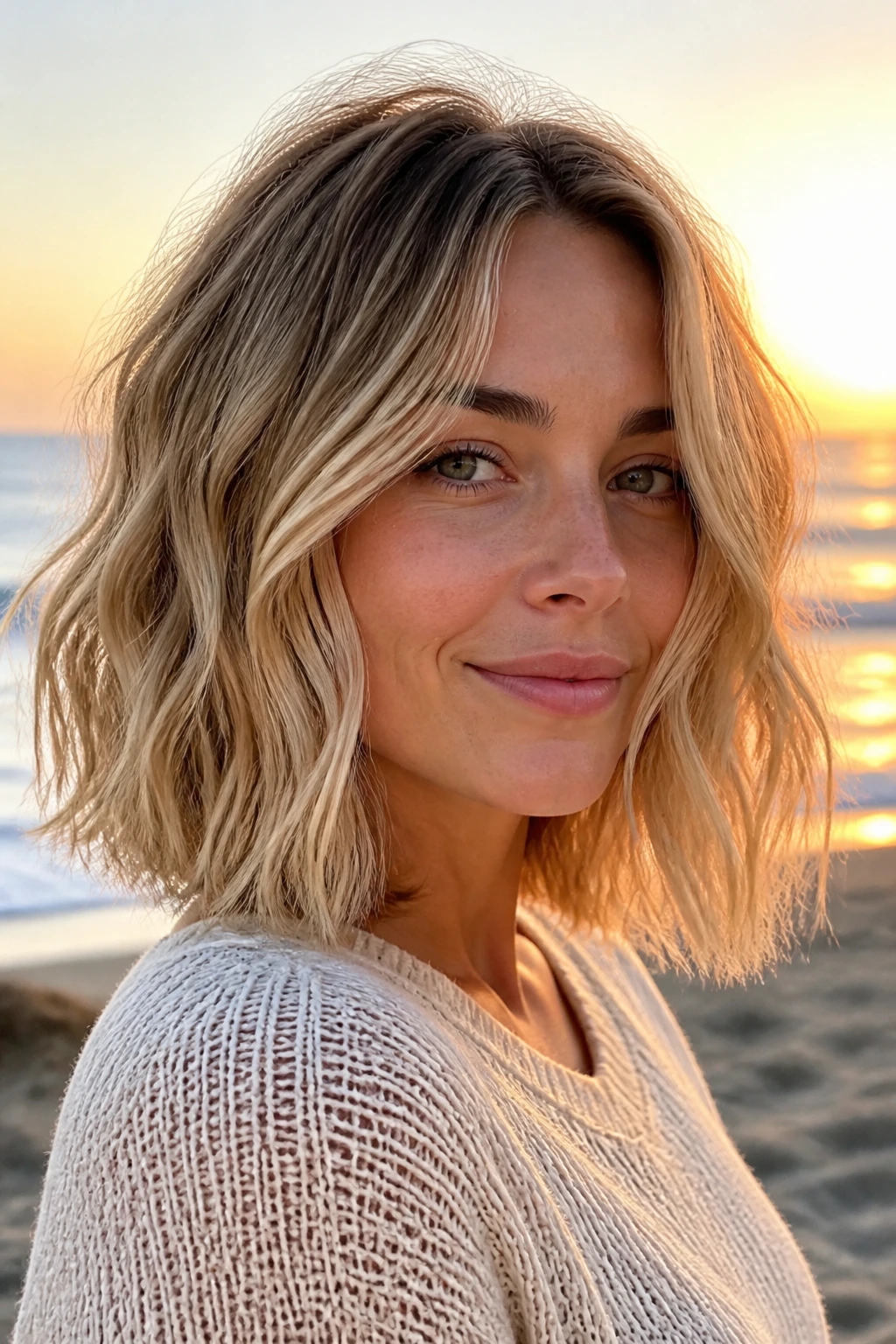
A beachy lob sounds casual, but the trick on fine hair is precision. If the waves are too uniform, the hair looks thin. If they’re too rough, the cut starts to fray. The sweet spot is a blunt-ish lob with separated ends and just enough bend to keep the blonde moving.
What Makes It Different
This version leans on piecey texture. That means the wave is stronger in the middle section and more relaxed at the bottom, so the hair doesn’t look like one solid curtain. A sandy or soft beige blonde makes the separation visible in a nice way, especially near the face.
How I’d Style It
- Use a wave spray before drying, but keep it away from the roots.
- Curl larger sections with a 1.25-inch iron.
- Leave the bottom 1 to 2 inches straighter.
- Scrunch in a dry texturizing spray after the hair cools.
- Pinch a few face pieces for separation.
Best for: oval faces that want a more casual edge and fine hair that needs shape without looking overstyled.
7. Polished Gloss Waves
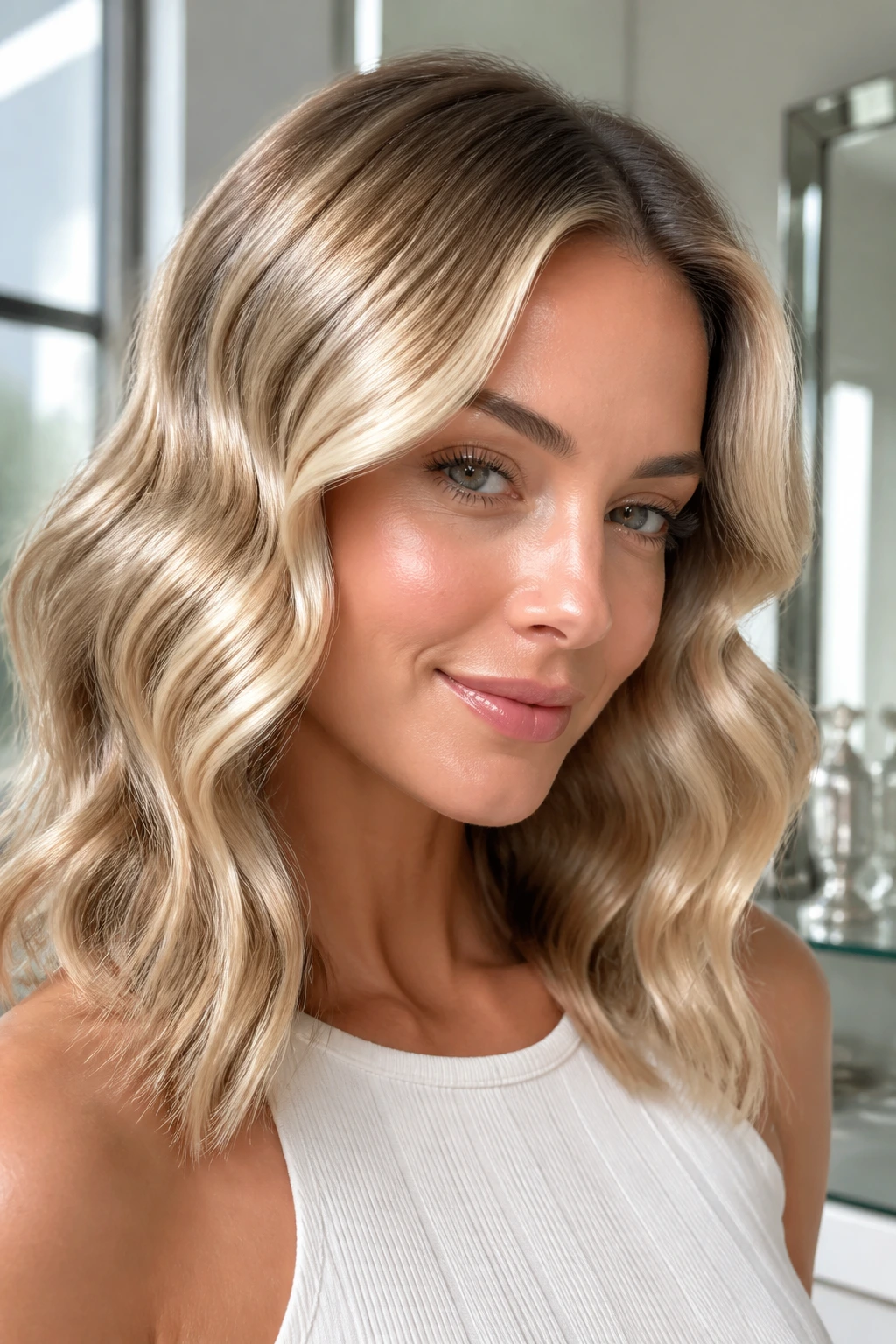
Gloss changes the whole mood. When fine hair has a smooth reflective finish, the waves look denser because the light hits each bend instead of getting lost in fluff.
This style is less about loose texture and more about a controlled, glassy bend. Use a 1.5-inch wand for softer curves, then brush the waves out very gently once they’ve cooled. The brush should glide, not fluff. If it puffs the hair out, stop. You’ve gone too far.
Oval faces can wear this with a center part or a slight off-center shift. I prefer the off-center version when the hair is below the shoulders, because it keeps the style from feeling too symmetrical. A tiny bend inward at the front layers is enough to frame the cheekbone and stop the length from pulling the face down.
Finish with a lightweight shine spray from arm’s length. Too close, and you’ll get wet-looking patches. Nobody needs that.
8. Airy Curtain-Bang Waves
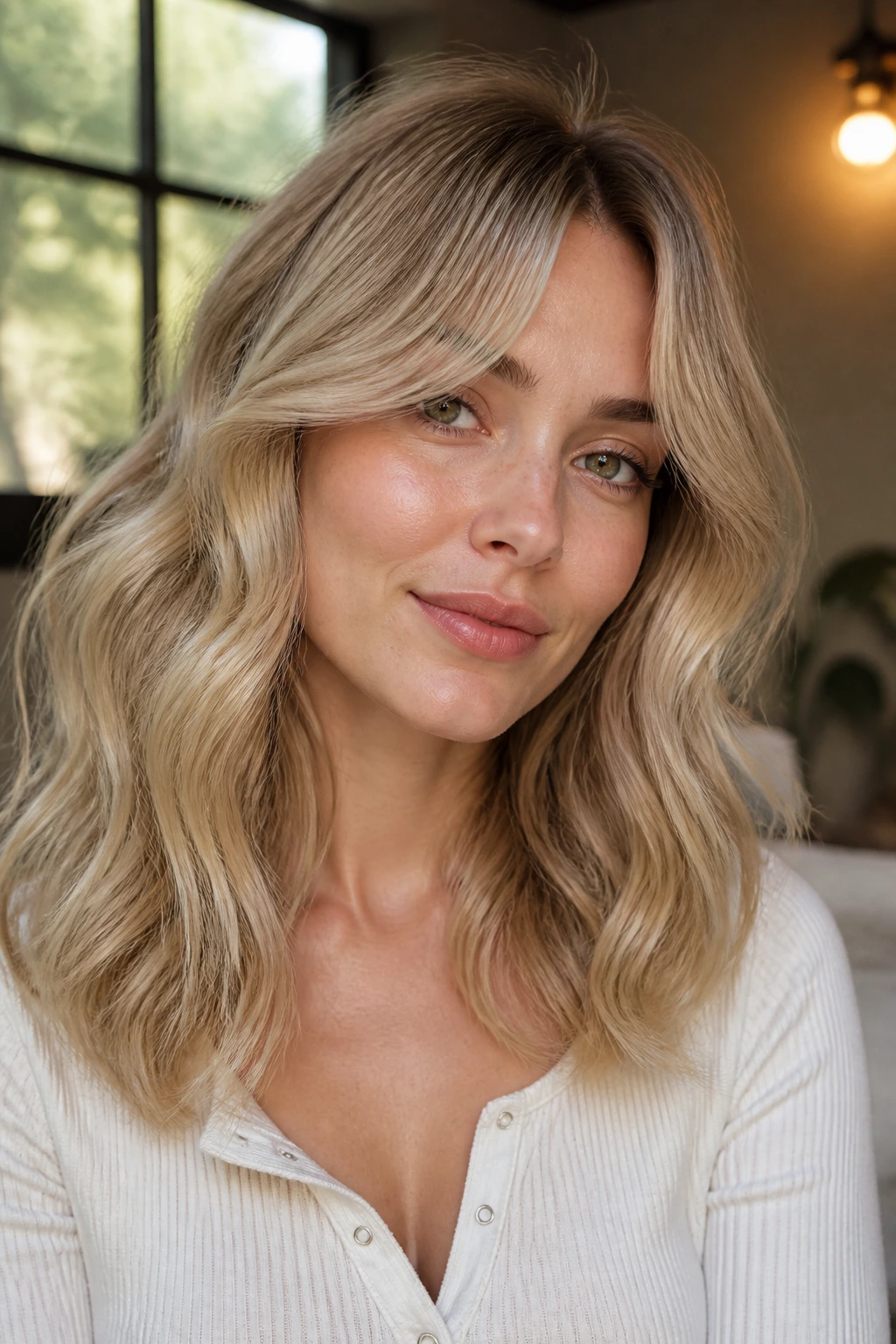
Curtain bangs can be a gift or a mess on fine hair. The good version is soft, feathered, and light enough to sit with the wave instead of fighting it.
Why It Flatters Oval Faces
An oval face can handle curtain bangs without losing balance, because the bangs add width at the cheekbones while the waves keep the length soft. The goal is not a heavy fringe. It’s a split, airy frame that opens in the middle and drifts back at the sides.
Use a round brush or a large curling iron on the bang pieces only. Pull them away from the face, then roll them back just a little so they curve instead of sticking out. The rest of the hair can stay in loose blonde waves with a 1.25-inch barrel.
- Keep the bangs a touch shorter than the cheekbone.
- Dry them first so they don’t flatten later.
- Use less product on the fringe than on the rest of the hair.
- Let the front wave blend into the bang, not sit under it.
That blend is the whole look.
9. Tousled Butterfly Layers with Blonde Bends
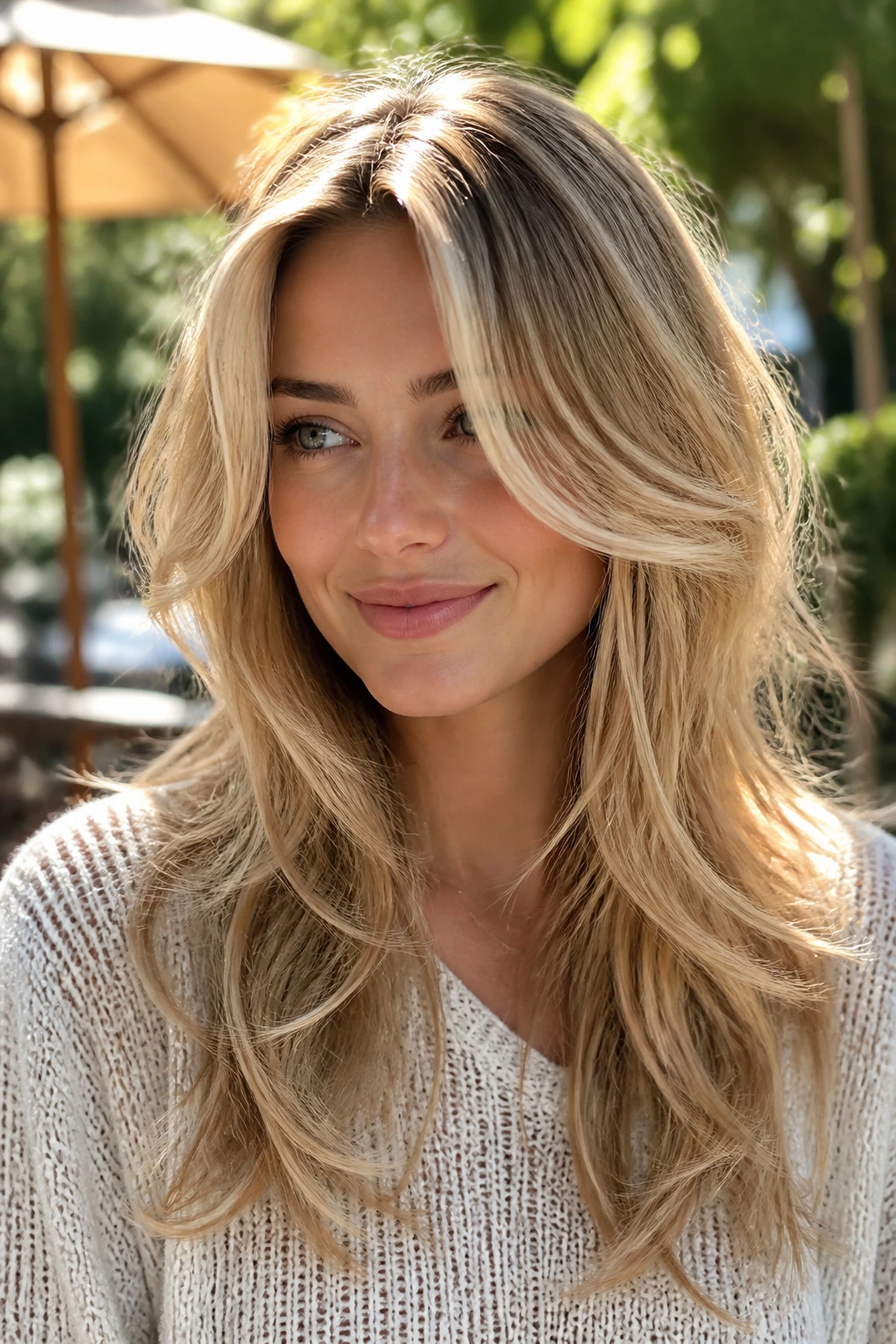
Butterfly layers can be a bit much on fine hair if the cut gets too airy, but when the layering is restrained and the waves are loose, the result has real movement. The face pieces swing. The back keeps its line. That matters.
How the Cut Changes the Wave
The butterfly shape gives you shorter face-framing layers that lift around the chin, while the longer length stays intact underneath. On an oval face, those shorter pieces create a slight width at the cheek area, which is flattering without trying too hard.
Use a large curling wand — 1.5 inches if the hair is long enough. Wrap only the face-framing layers and the mid-lengths of the top section. Leave the underlayers softer so the style doesn’t look overworked. A buttery blonde or beige blonde color shows the layered movement nicely, especially when the front pieces are lighter than the ends.
My take: this works best when the waves are a little imperfect. If every bend is the same, the cut loses its airiness.
10. Loose Barrel Waves on Long Blonde Hair
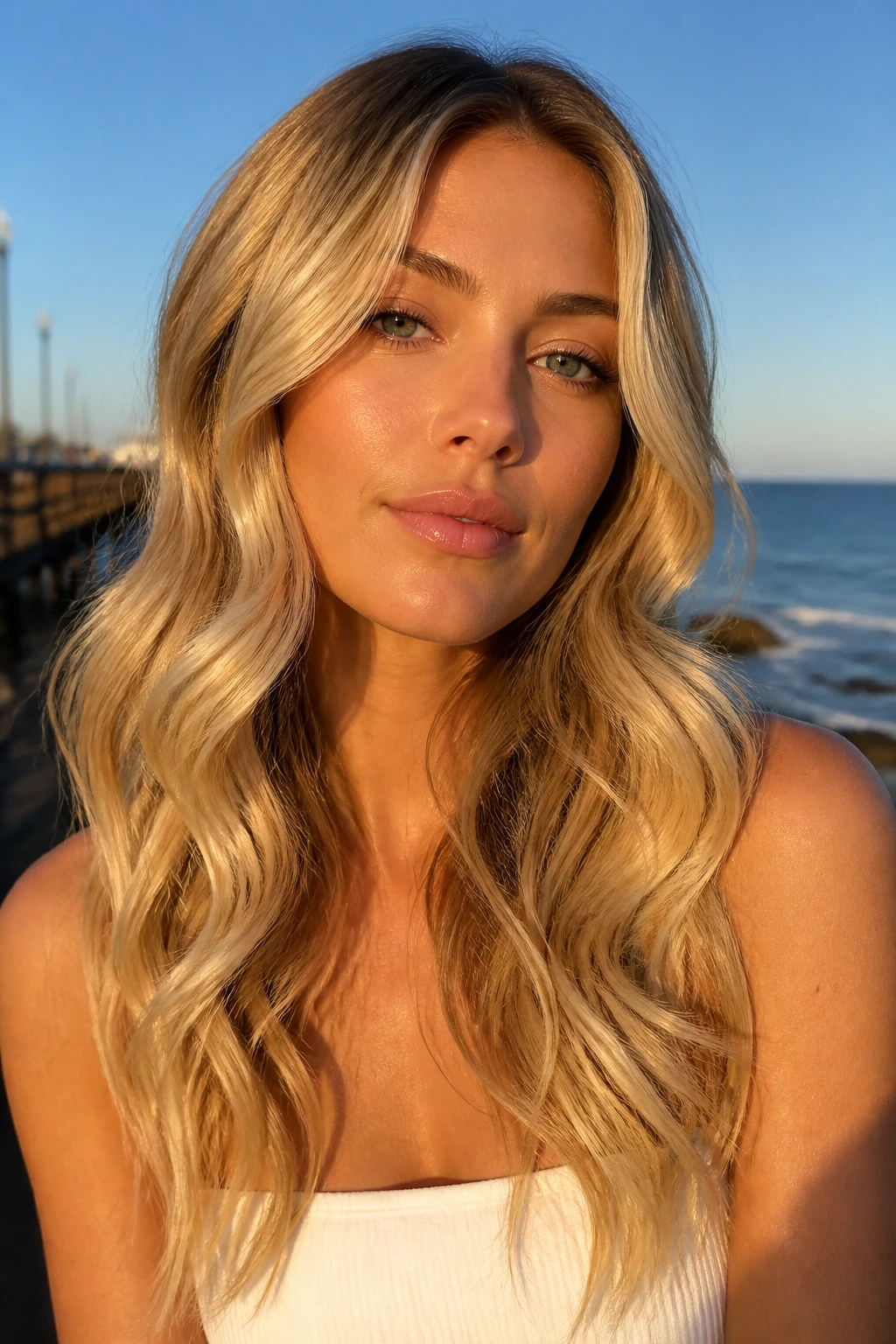
Long fine hair can turn stringy fast, so the barrel size has to be chosen with care. Loose waves on long blonde lengths are about creating width in the middle of the strand, not turning the ends into little corkscrews.
The best tool here is a 1.5-inch barrel, and you should wrap large sections — around 1.5 inches wide — for no more than 7 to 9 seconds each. Longer than that and the hair can take on a too-perfect bend that makes fine strands look sparse. This style is especially kind to oval faces because the waves fall in long vertical lines, which keep the face open while adding softness around the jaw.
Brush them out once they’re cool. Not before. If you brush while the hair is warm, the shape falls too soon and you lose the structure that gives the style its fullness.
A champagne or butter blonde tone makes this look especially pretty because the light catches the width of the wave rather than just the curl pattern. That’s the whole point.
11. Textured Bob Waves
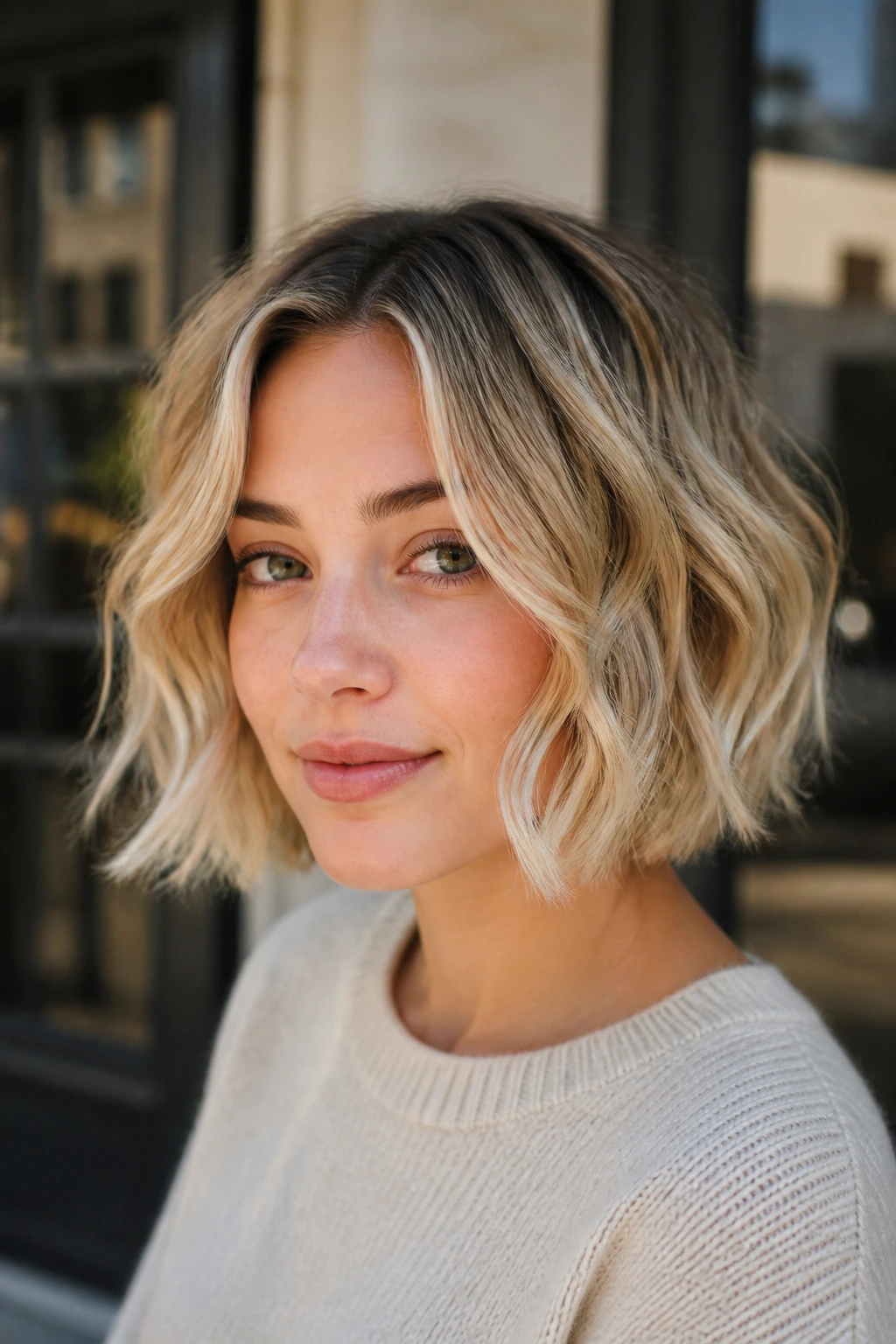
A bob with waves can look chic or sloppy, and the line between those two is thinner than most people think. On fine hair, the better choice is a textured bob with a clean perimeter and just enough bend to keep the ends from looking thin.
Start with a 1-inch wand and curl only the top layer and the front sections. Leave the underlayer straighter so the bob keeps its shape and doesn’t balloon out. This gives the illusion of thickness without making the hair puff up at the sides.
Why Oval Faces Like It
Oval faces can handle bob length at the jaw or just below it because the shape is already balanced. The wave adds a little width at the cheek area, which keeps the cut from feeling too narrow.
A soft beige blonde or sandy blonde works well here, especially if the ends are a touch brighter. That subtle brightness at the perimeter makes the bob look cleaner and fuller.
One sentence advice: don’t over-layer the back. Fine hair needs a little weight to stay shaped.
12. Half-Up Volume Waves
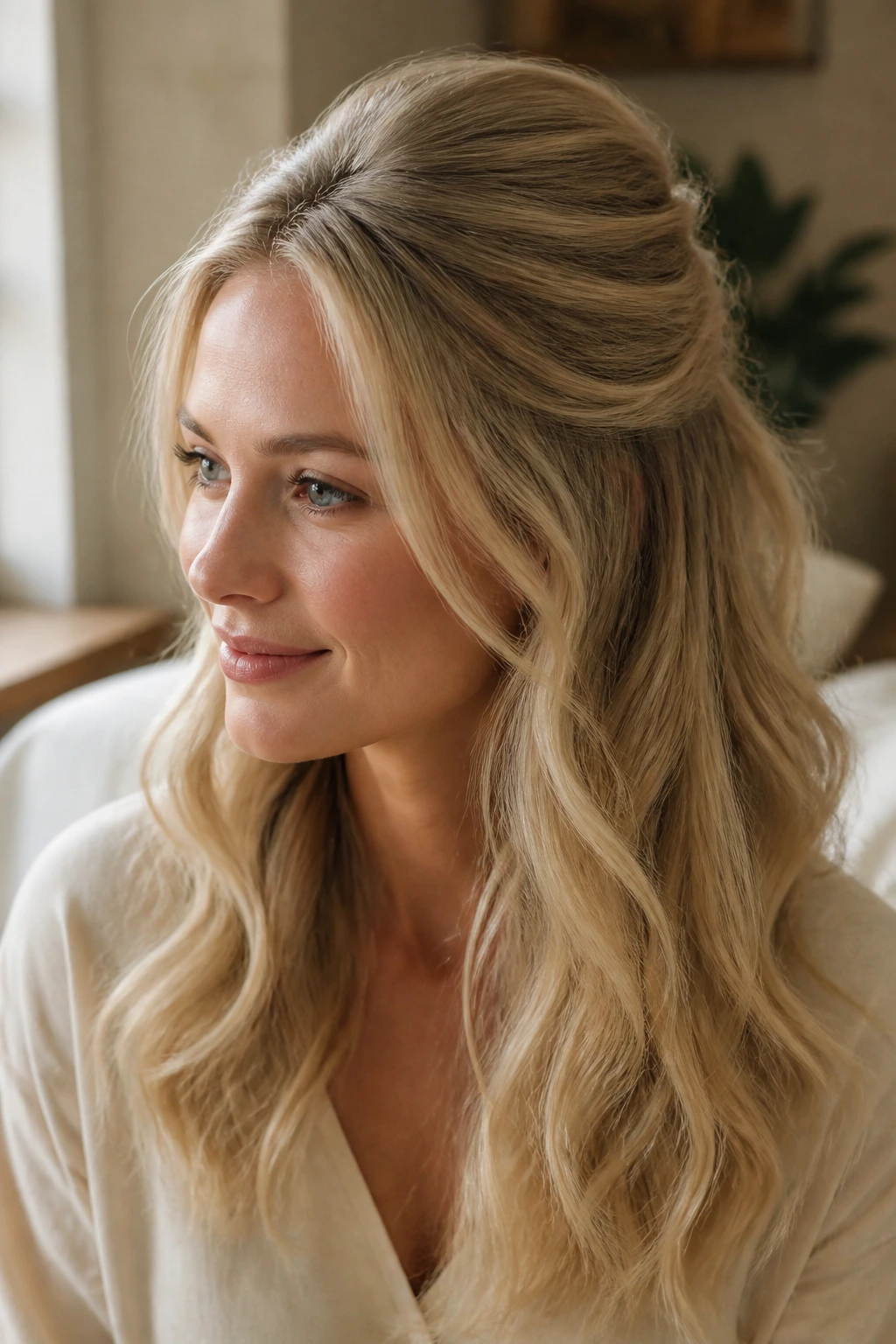
Half-up styles are a gift for fine hair because they let the crown cheat a little. You keep the wave through the lengths, then pull just enough hair back at the top to give the illusion of extra density.
The Shape to Aim For
The top section should be lifted gently, not yanked tight. Leave a soft puff at the crown, then secure it with a small clip or a hidden elastic. The bottom half stays in loose blonde waves, preferably with a 1.25-inch iron so the bend stays soft and visible.
Oval faces do well with this because the lifted crown balances the face length while the front pieces stay free enough to frame the cheekbones. Keep a couple of wave pieces loose around the temples. That stops the style from looking too neat.
- Tease the crown lightly with a tail comb.
- Mist the top section with flexible hairspray.
- Leave the back half textured, not brushed flat.
- Hide the elastic with a wrapped strand if you want polish.
The result is easy to wear, but it doesn’t look like an afterthought.
13. Face-Framing Money Piece Waves
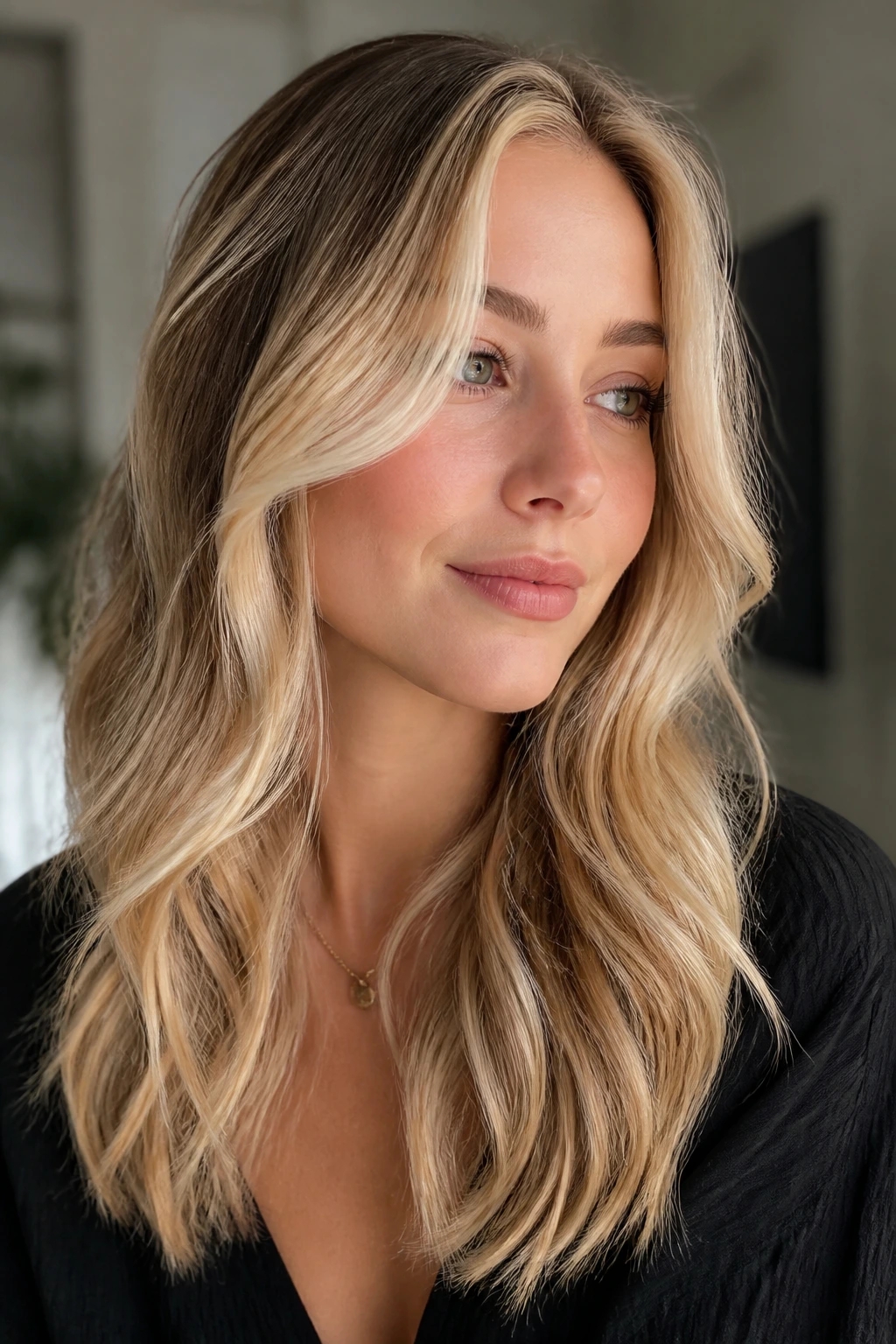
If the color is doing half the work, the wave can stay soft. That’s why money-piece blonde waves are so useful for fine hair: the brighter front sections draw the eye, so the rest of the hair doesn’t have to be overstyled to make an impact.
The face-framing pieces should be bent away from the face, then softened through the ends. On an oval face, this gives a clean opening around the cheekbones and jaw. It’s flattering because it directs attention outward instead of down. That matters more than people think.
Keep the back and underlayers a touch darker or deeper blonde for contrast. The dimension creates the impression of more hair. A flat, one-note blonde can make fine hair look thinner, especially in bright light.
Use the smallest amount of shine cream on the front pieces only. Too much, and those bright sections separate into skinny strings. You want them smooth, not greasy.
14. Mermaid Waves with Soft Ends
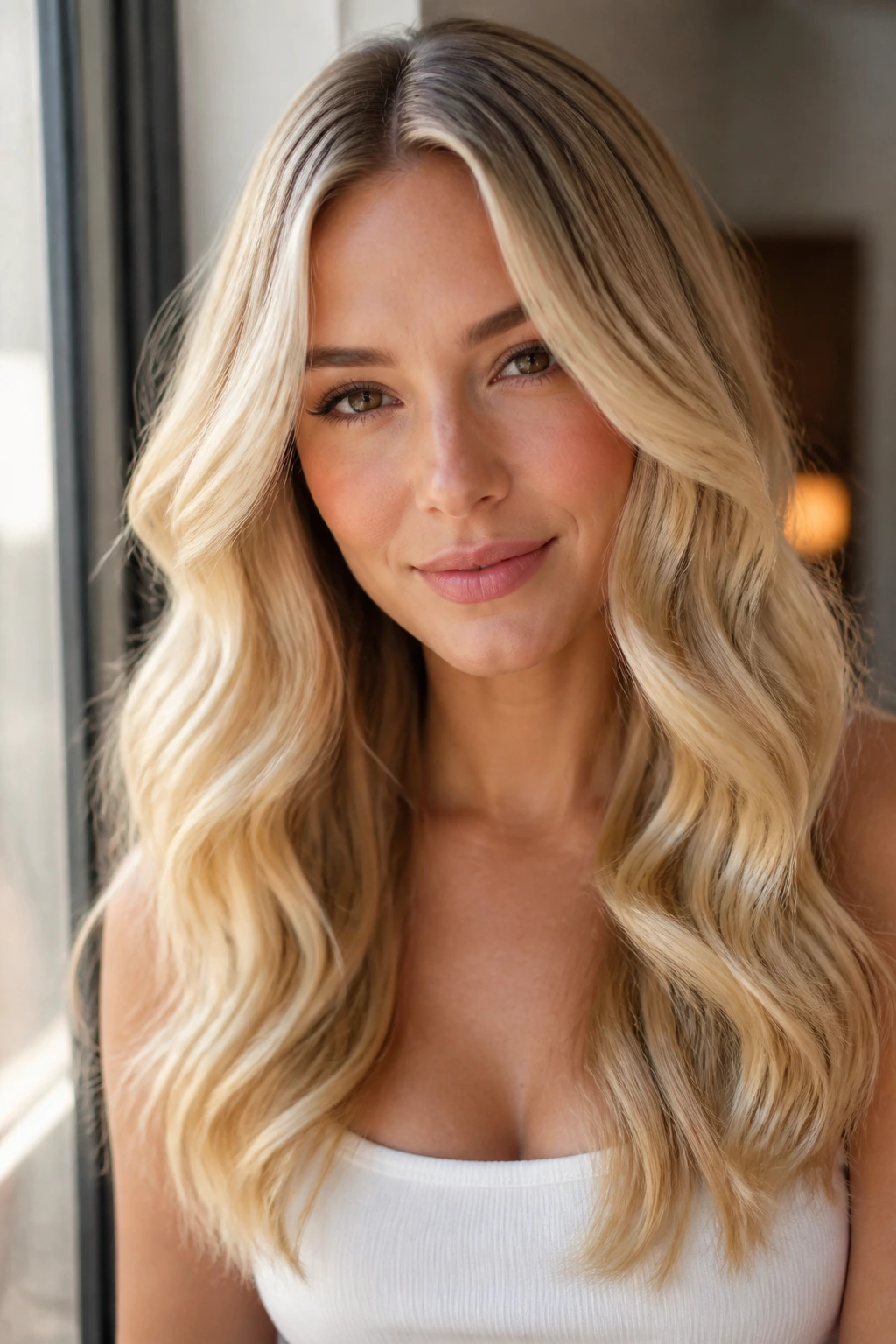
Mermaid waves are often too much for fine hair when they’re done with heavy texture, but a softer version can work well if the bends stay broad and the ends remain loose. The whole look is more ribbon than curl.
Use a triple-wave iron only if your hair can handle it without getting crimped-looking. A flat iron version is often better: press, bend, release, repeat. Keep the bends large and slightly offset so the wave pattern doesn’t look stamped on. Champagne blonde or pearl blonde makes the pattern visible without turning the hair into a shiny sheet.
Best for Longer Oval Faces
Oval faces can wear the elongated movement easily, especially when the waves start below the cheekbone. That keeps the upper face open and lets the bend fall through the lower half of the hair, where it creates width.
This style likes a center part, but I’d soften it with a little lift at the roots. Otherwise, the hair can slide flat at the top and the length starts to drag.
15. French-Girl Undone Waves
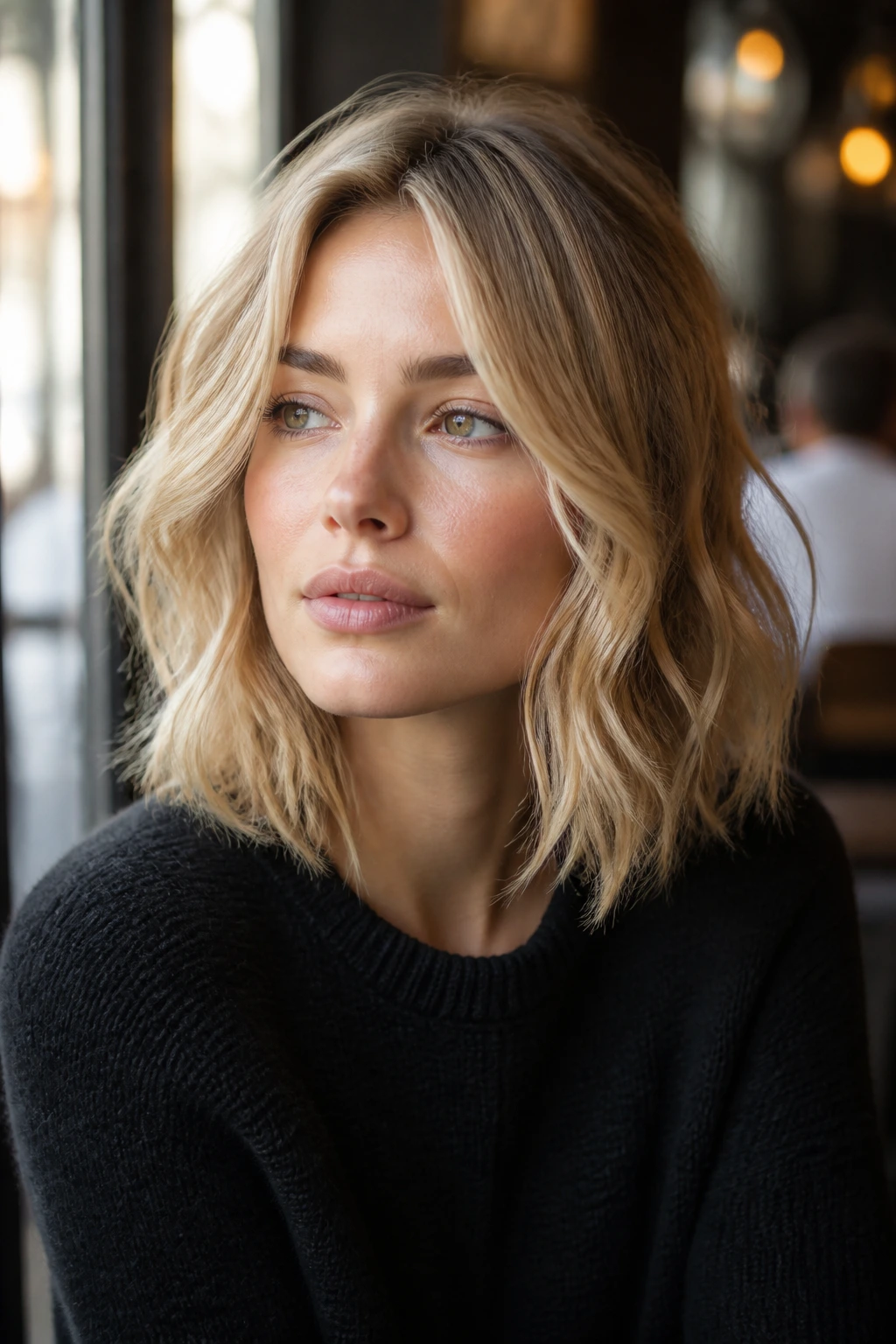
There’s a reason this look keeps coming back. It doesn’t ask for perfect styling, and fine hair often looks better when it’s touched less, not more.
Why It’s a Good Match
An undone wave with a slight bend at the front and softer movement through the mid-lengths gives the hair a lived-in feel without making it fuzzy. For an oval face, an off-center part and cheekbone-grazing front pieces keep the proportions easy. You want the hair to move when you turn your head.
Use a texturizing mist before heat, then twist sections loosely around a curling wand instead of wrapping them tightly. Stop short of the ends. The whole point is to keep the line a bit irregular. That irregularity hides fine strands in a way a uniform curl never will.
A soft sandy blonde or beige blonde works best. Clean color makes the messy texture feel intentional rather than unfinished.
16. Frosted Icy Blonde Waves
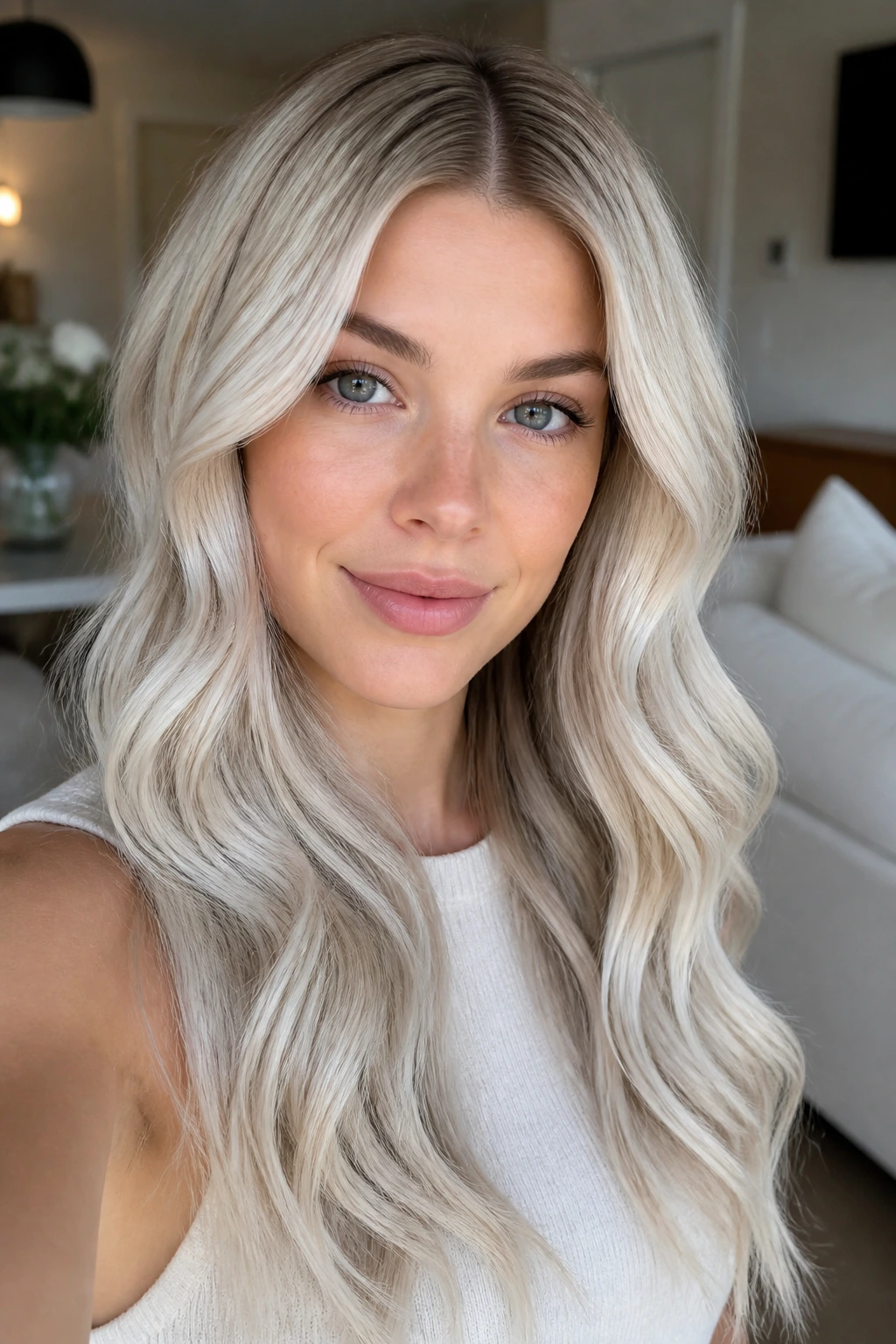
Icy blonde can look severe if the texture is too tight, so the wave has to stay soft and loose. That contrast is what keeps the style elegant instead of brittle.
The cold tone helps fine hair appear crisp and airy, especially when the waves are brushed into long bends. Use a 1.25-inch barrel and keep the sections broad. If the curl is too small, the light blonde shade can start to look puffy instead of sleek.
A Good Match for Oval Faces
The shape of an oval face lets you wear a middle part with this color without adding heaviness. A little extra bend around the jaw softens the cooler tone, which can otherwise feel sharp near the face.
- Keep toner fresh so the blonde stays clean.
- Use purple shampoo sparingly.
- Finish with a lightweight gloss spray.
- Avoid heavy oils that yellow the tone.
My preference: I like this best when the roots are slightly deeper than the ends. It gives the wave a cleaner edge.
17. Sandy Blonde Scrunched Waves
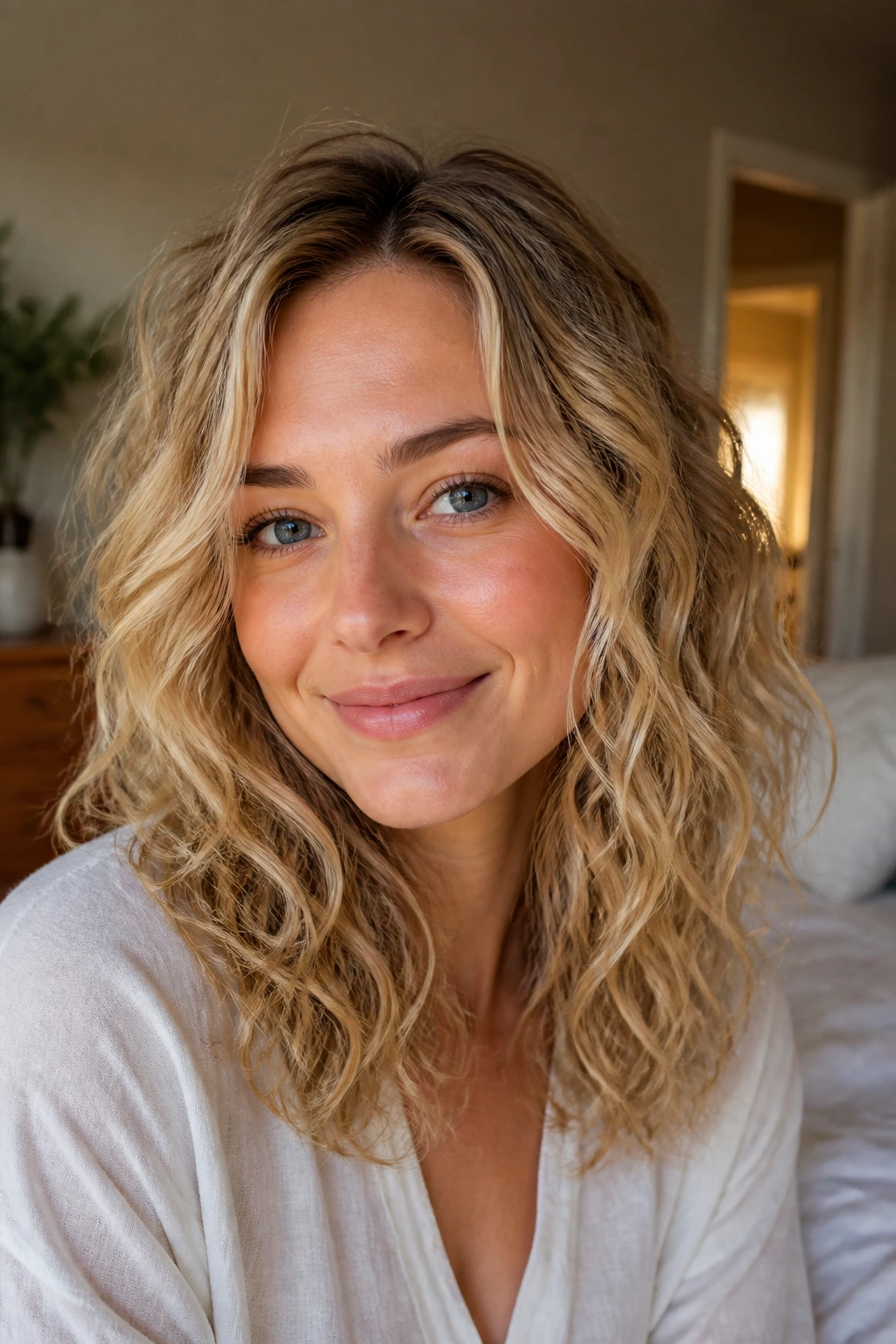
Scrunched waves can look too beachy on fine hair if you use the wrong products, but a dry, airy version is a different story. Sandy blonde gives the hair enough warmth that the texture reads as soft, not crunchy.
Dry the hair about 80 percent first, then scrunch in a light foam or wave cream from the ears down. Finish with a diffuser on low heat if you have natural bend already. If your hair is straight, use a curling wand for a few pieces around the face and crown, then let the rest stay relaxed.
Oval faces work well with this because the shape never gets too rigid. The softness around the cheeks and temples keeps the face open. It’s casual, but not careless.
A quick word: if your hair is very fine, skip heavy sea salt sprays. They can make the ends feel dusty and thin. Light foam is safer.
18. Subtle Crimp-Back Waves
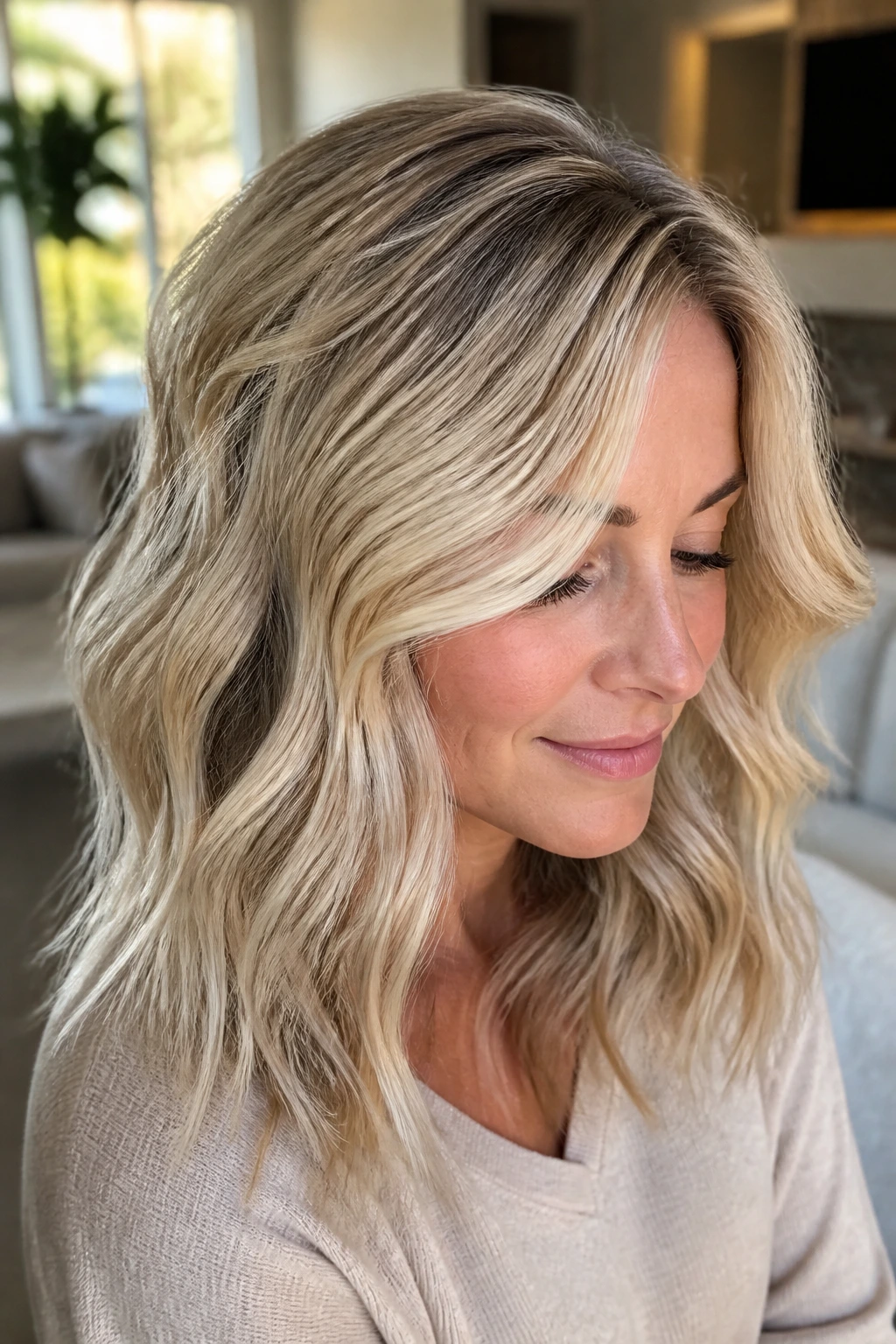
Here’s the trick nobody talks about enough: a little hidden texture underneath can make the top layer look fuller without anyone seeing the mechanism.
This style uses subtle crimping or deep-texture styling on the underlayers only, while the top stays smooth and waved. That gives the hair grip and body where it needs it, but keeps the surface soft. On an oval face, the smooth top layer and soft front wave keep the look polished.
A beige blonde or dimensional balayage blonde makes the hidden texture work better because the highlights show through the bends. It’s not about looking crimped. It’s about using texture below the surface to stop fine hair from lying flat.
Use it when:
- Your hair loses volume by the second hour.
- You want shape without obvious curl.
- You need a little extra hold for an event.
The upper layer should still move like a regular wave. That’s the point.
19. Retro Pin-Curl Waves
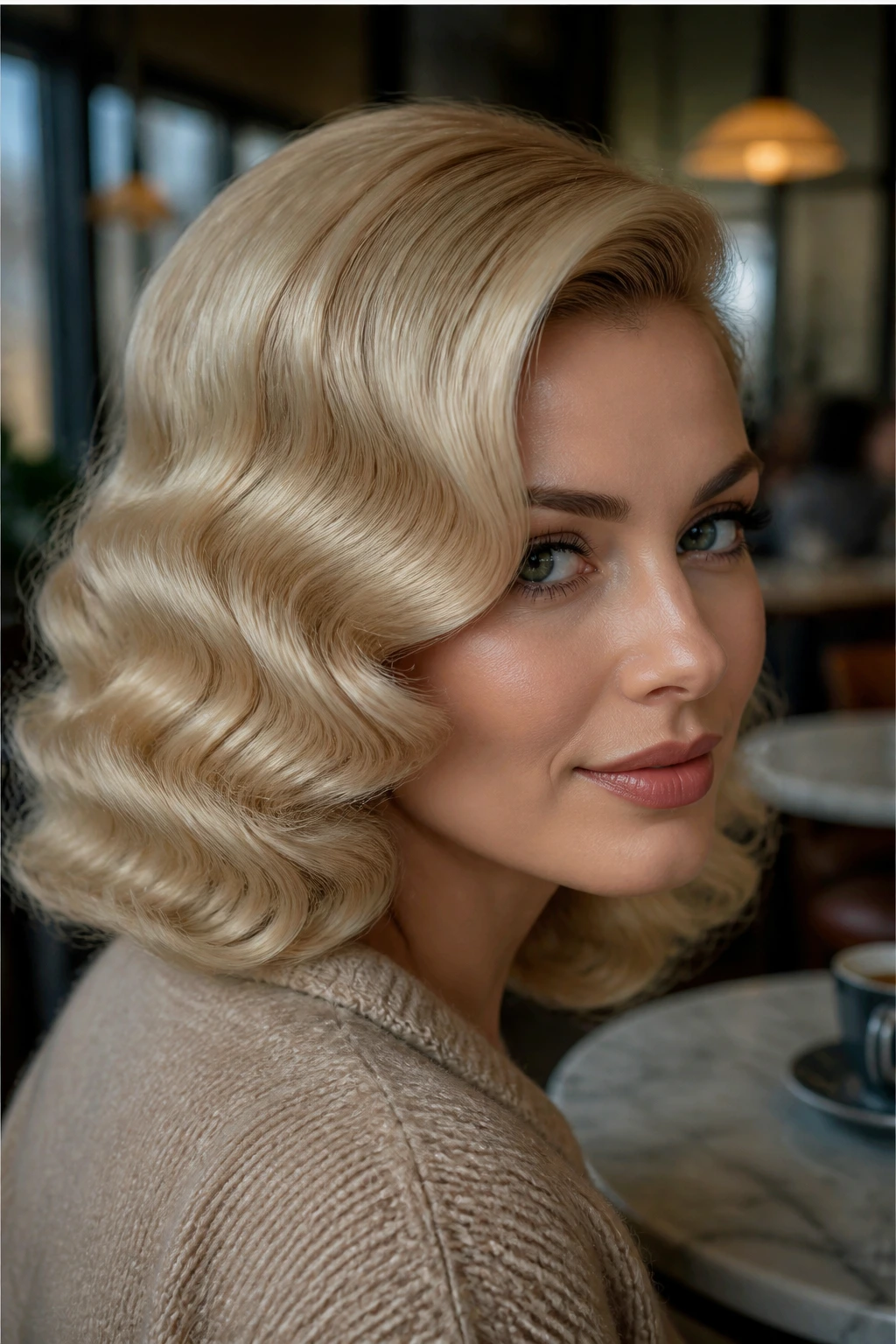
Pin curls sound old-fashioned because they are, and that’s exactly why they still work. Fine hair often holds a pin curl better than a big loose curl because the set cools in a compact shape first.
Wrap 1-inch sections around a 1-inch iron, then pin each curl flat against the head while it cools completely — 10 minutes at minimum, longer if the hair is dense. After you take the pins out, brush the waves into one smooth pattern. The result is soft, sculpted, and fuller-looking than a loose barrel wave.
Oval faces can wear this beautifully with a deep side part or a clean middle part. The wave sits close to the head at the top, then opens through the lengths, which keeps the face shape balanced instead of overwhelmed.
Champagne blonde really shines here. The bent pieces reflect light in stripes, and that gives the style a richer look than the hair texture alone would suggest.
20. Deep Side-Sweep Glam Waves
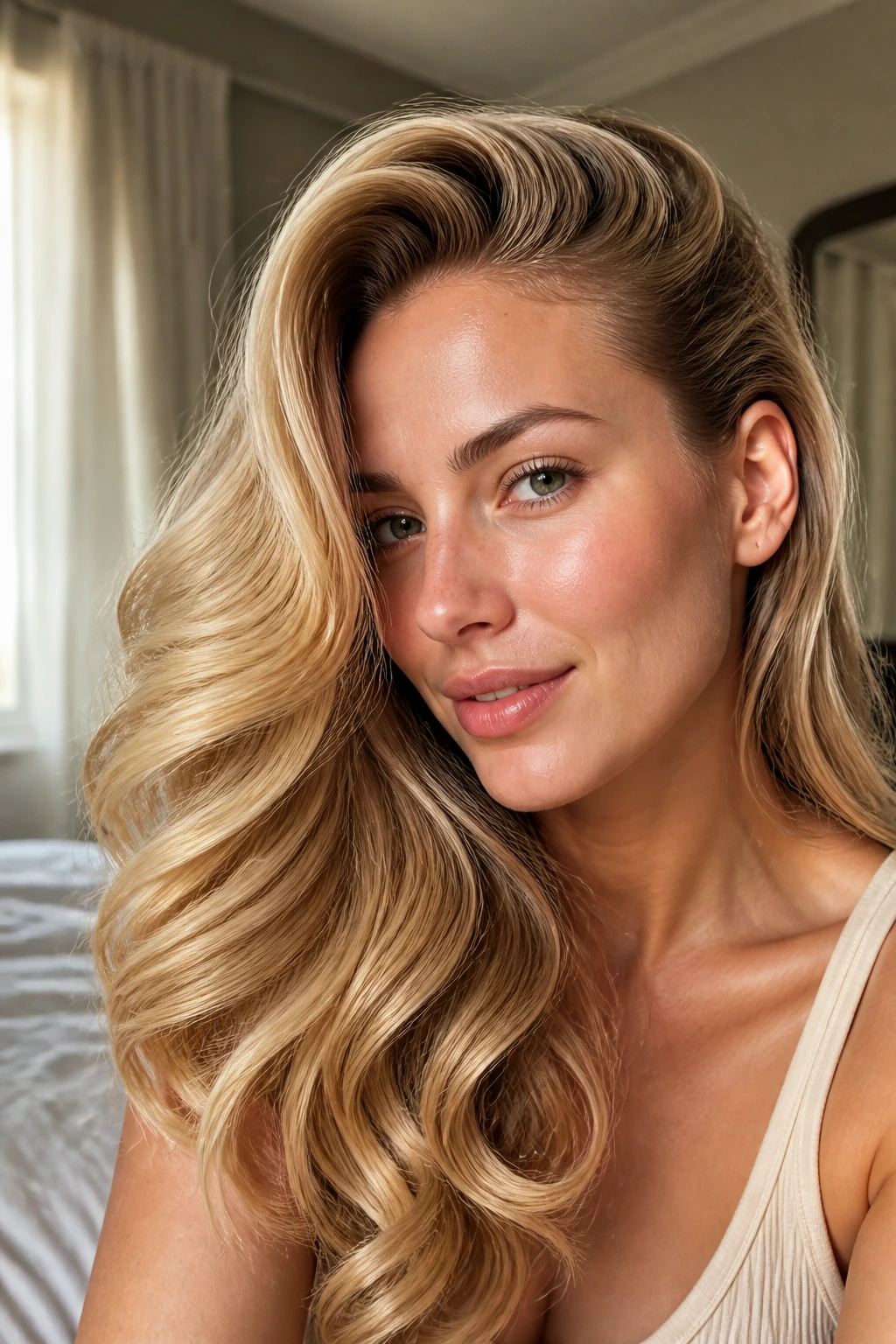
A deep side sweep gives fine hair a built-in lift because all the visual weight moves to one side. That asymmetry is flattering on oval faces, which can wear the sweep without looking top-heavy.
This style works best with large, brushed-out waves rather than tight curls. Think 1.25-inch iron, wide sections, and a finish that stays smooth at the root. The side with less hair should be tucked behind the ear or pinned close to the head. The fuller side gets the wave and the volume.
Why It Holds So Well
The wave pattern is doing two jobs at once: creating body and directing the eye. That makes the hair feel thicker because the shape is less predictable. A cool beige blonde or soft honey blonde keeps the sweep from feeling too formal.
- Set the part before drying.
- Dry the heavier side away from the face.
- Use a clip at the root while the hair cools.
- Finish with flexible hairspray only on the wave line.
The result has a little drama, but it’s not stiff. That’s the difference.
21. Dimensional Balayage Waves
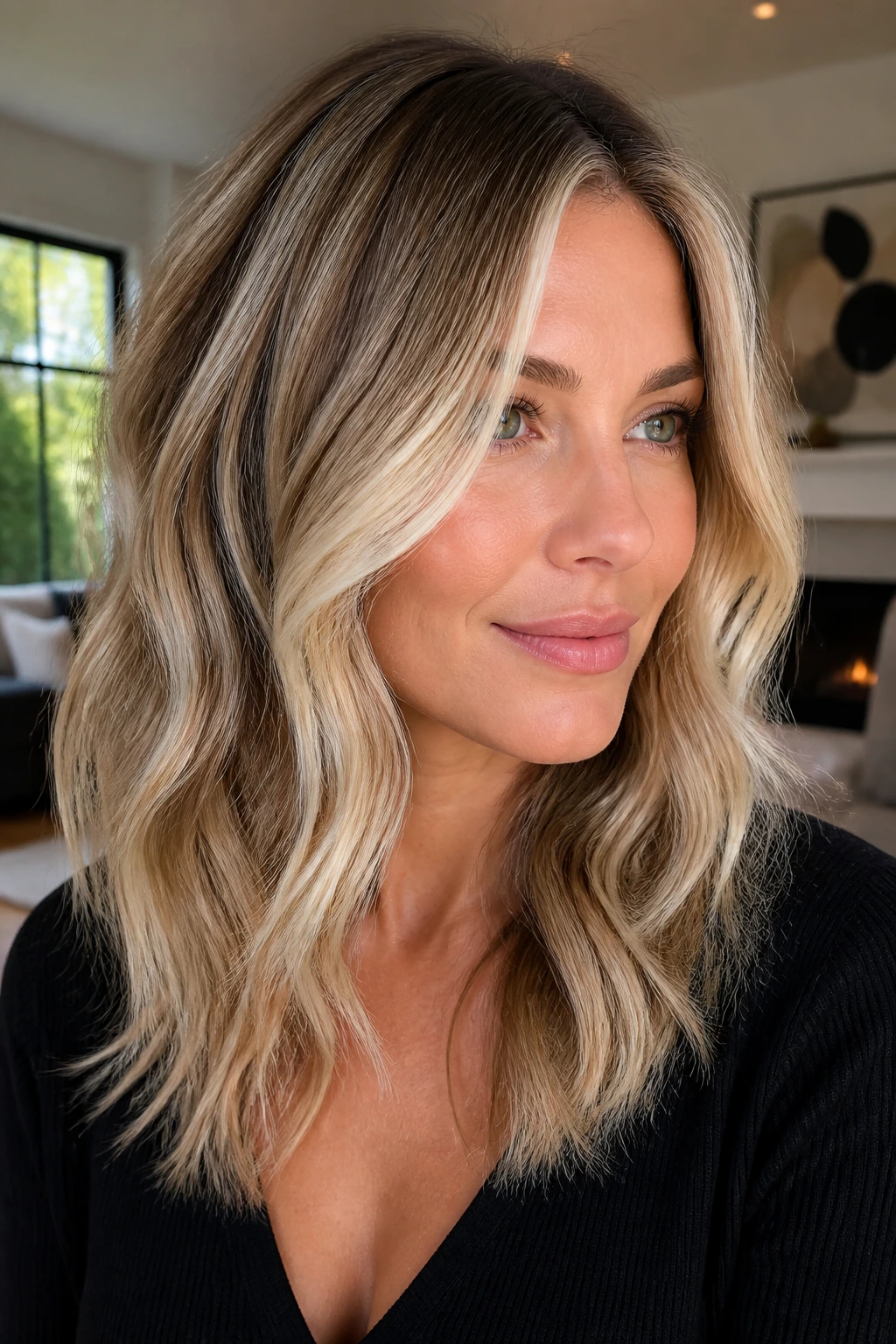
Dimensional balayage and loose waves are a good pair because the color placement follows the movement of the hair. Fine hair gets a visual boost when the light and dark pieces alternate through the bend.
The trick is not to curl every strand the same way. Alternate direction, leave the ends softer, and let the lighter face-framing pieces sit where they catch the most light. Oval faces love this because the brighter sections around the front widen the face slightly at the cheek area, while the deeper underneath pieces keep the shape from going flat.
Where this style wins
It gives the illusion of thickness without needing a ton of product. The darker lowlights act like shadow, and the blonde ribbons sit on top like highlights in motion.
Good choice if: your hair is fine, but you don’t want a style that looks overly polished or heavily curled.
22. Soft Spiral-to-Wave Blend
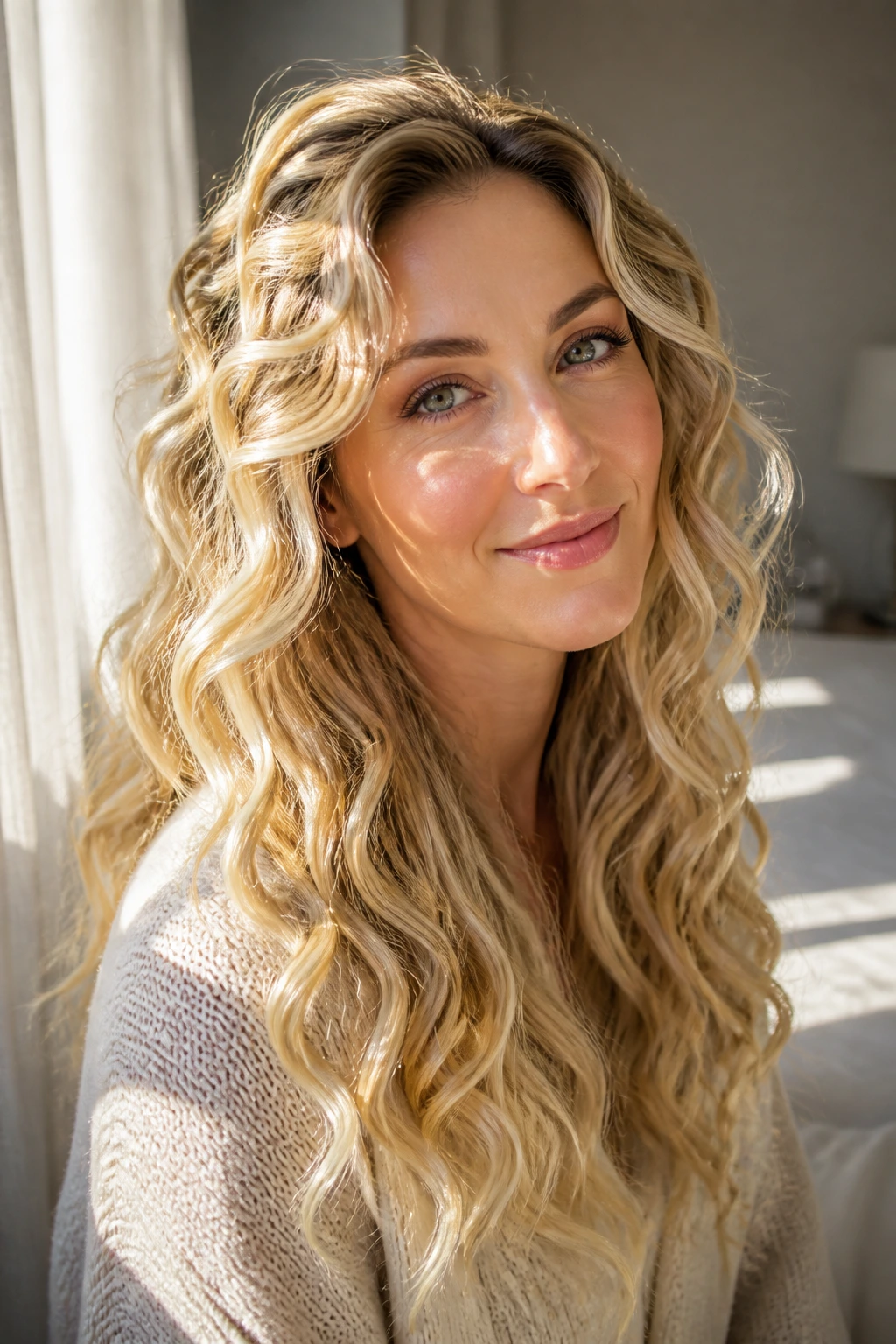
Why pick between curl and wave when you can soften one into the other? A spiral-to-wave blend gives fine hair a little grip at the top of each bend and a softer fall through the bottom, which can look fuller than a single uniform wave.
Use a narrower barrel — about 3/4 inch to 1 inch — on only the top two-thirds of the strand. Then brush the curl out just enough that it relaxes into a wave instead of a ringlet. This is one of my favorite tricks for long fine hair because it keeps the style from disappearing in humidity.
Oval faces do well with the extra curve around the cheekbones. It’s not harsh, and it doesn’t pull the eye down. A creamy blonde or butter blonde tone keeps the style soft.
A little word of caution: if the hair is heavily layered, don’t overdo the curl at the front. You’ll get too much bounce and not enough shape.
23. Off-Center Low-Heat Waves
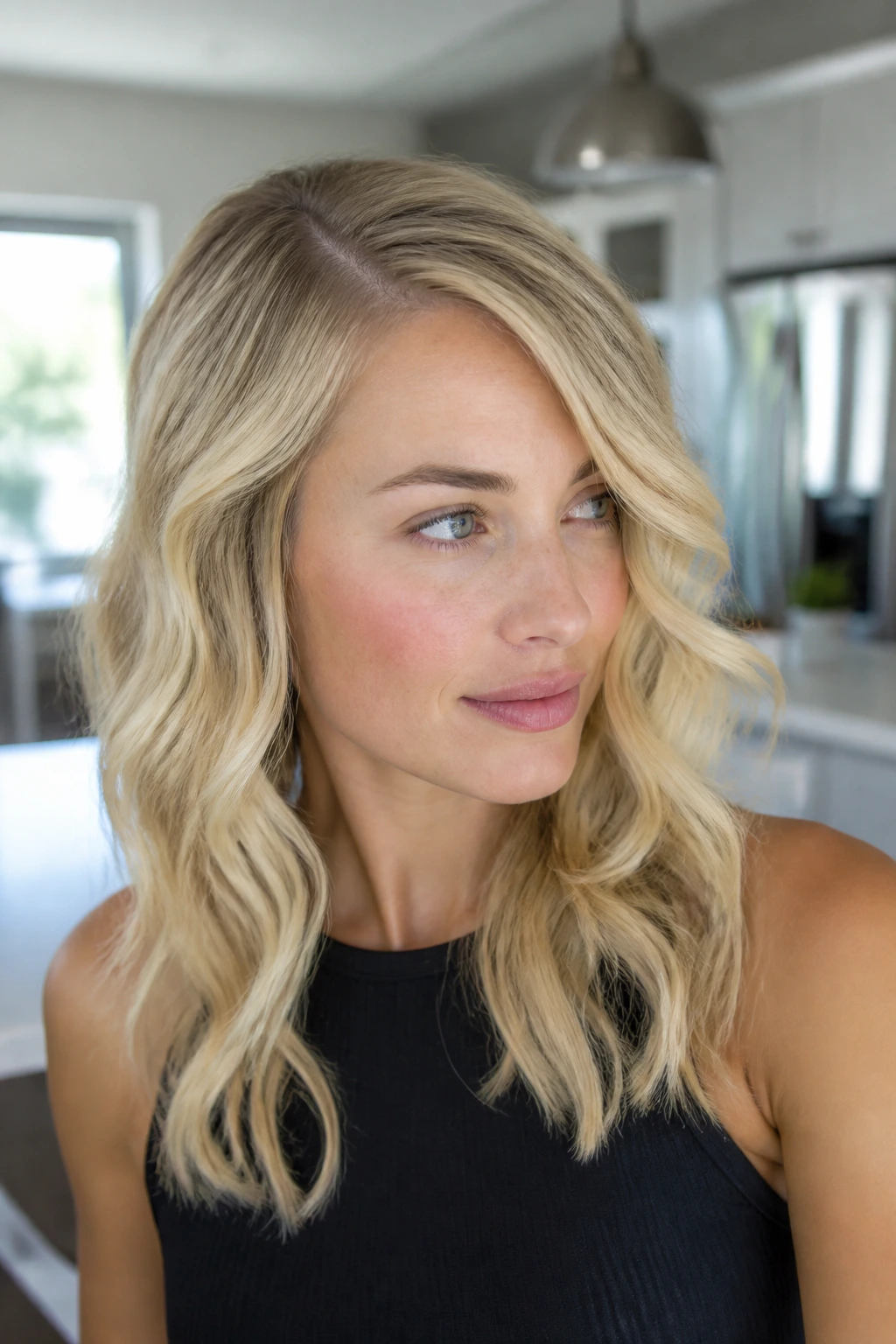
Low heat can save fine hair from that dry, fuzzy finish that too many hot tools leave behind. Off-center waves made with a lower temperature are softer, shinier, and less likely to snap the ends into awkward angles.
Use a tool set around 300°F if your hair is delicate, and keep each section wrapped for only a few seconds. Let the wave form, then move on. The off-center part gives the style a little asymmetry, which suits oval faces without making the whole head look tilted.
This style is a good pick for finer blonde hair that gets rough when overheated. A touch of shine spray at the very end helps the light blonde reflect evenly, which makes the waves read as fuller. That reflective finish is a sneaky advantage.
Short version: less heat, more control, better hair texture.
24. Glossed Blowout Waves
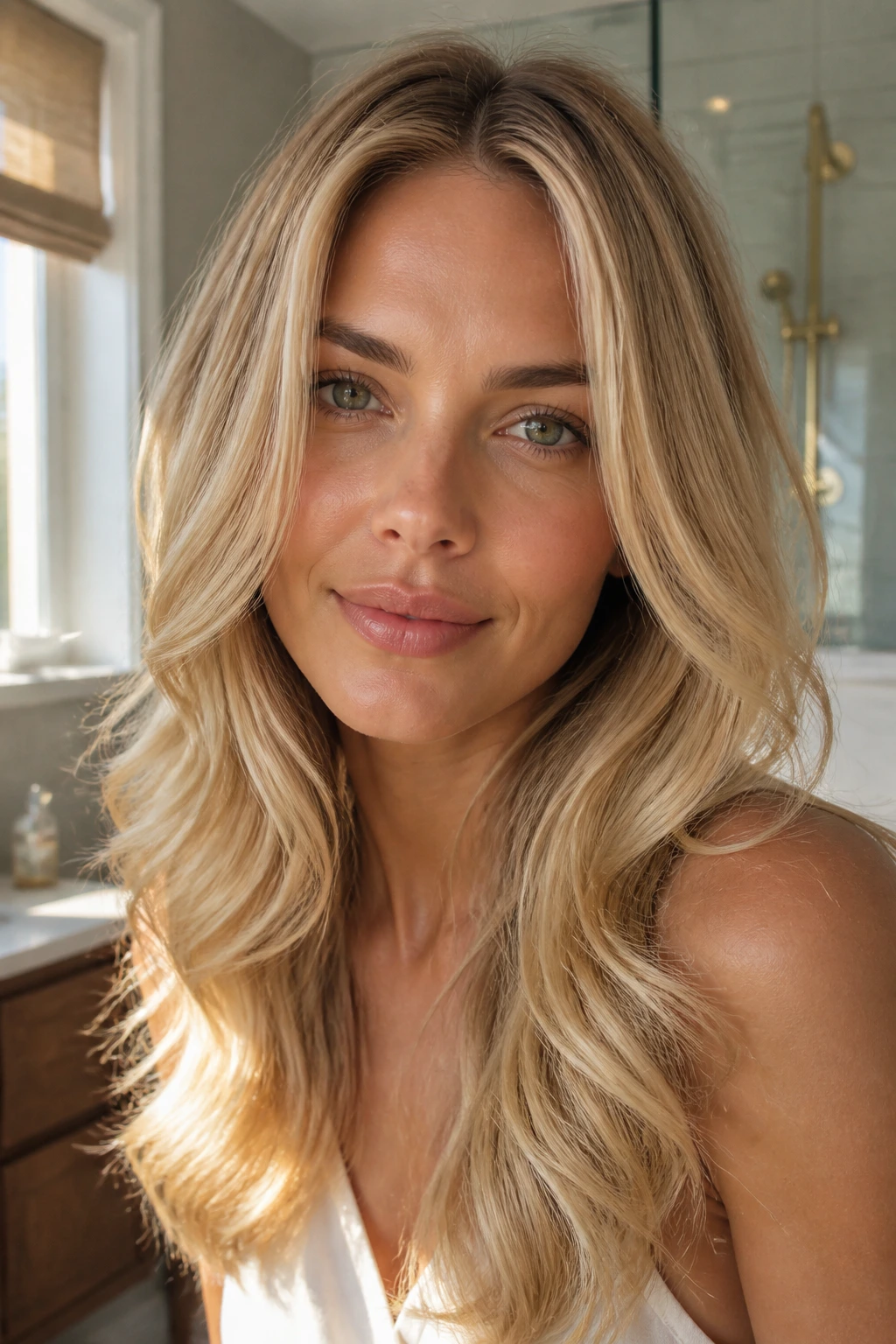
A blowout wave sits somewhere between a salon finish and a loose bend. Fine hair often responds well to this because the round brush builds volume at the root while the ends stay soft and curved.
Dry the hair with a round brush, turning the brush just at the bottom third of each section. You do not need a full curl. Just a bend. That bend gives the illusion of movement without making the hair look overstyled. On an oval face, the little outward curve around the cheek and jaw is enough to soften the line.
A warm blonde tone like honey or buttery beige works especially well here because the gloss from the blow-dry adds another layer of shine. If the hair is too cool-toned, the blowout can look a little flat under indoor light.
Small detail, big payoff
Clip the crown while you finish drying the lengths. That one move gives the top a quieter lift and keeps the style from collapsing as soon as you step outside.
25. Casual Weekend Texture Waves
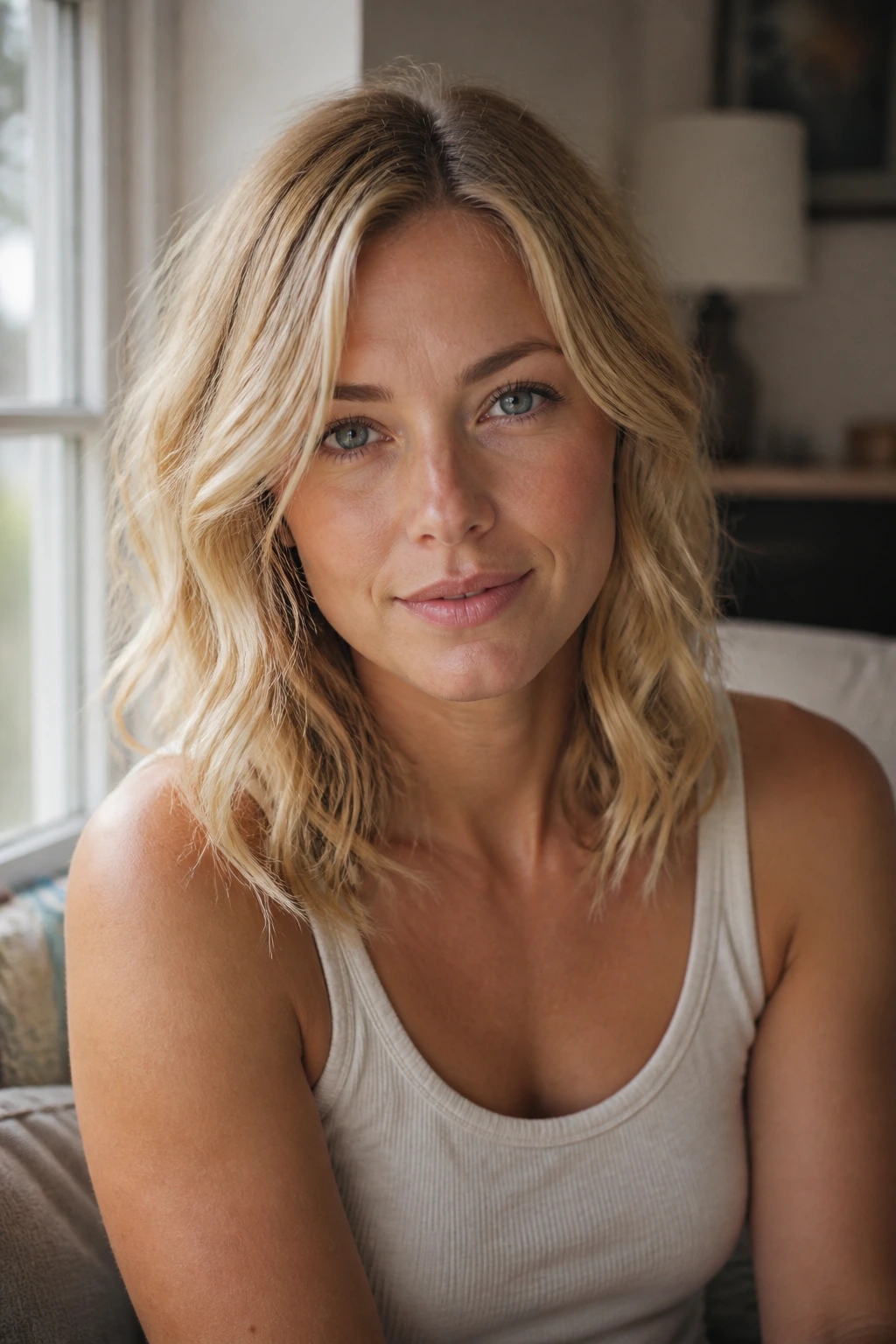
The last style is the least fussy, and honestly, that’s the point. Casual texture waves on fine blonde hair work when the hair keeps some of its own shape instead of being forced into a uniform curl pattern.
Start with a light mousse at the roots, rough-dry the hair upside down for a bit, then finish with a few wand bends in random spots — around the face, through the mid-lengths, and near the ends. Don’t touch every section. Leaving some pieces straighter keeps the style from looking too done.
Oval faces are forgiving here because the irregularity doesn’t fight the face shape. A side tuck, a loose part, or a fringe piece falling by the cheekbone all work. Sandy blonde, beige blonde, and soft honey tones all suit the loose finish because they make the texture visible without shouting for attention.
This is the one I’d choose on a day when you want movement more than polish. It behaves.
Why Fine Hair and Oval Faces Make Such a Good Pair for Waves
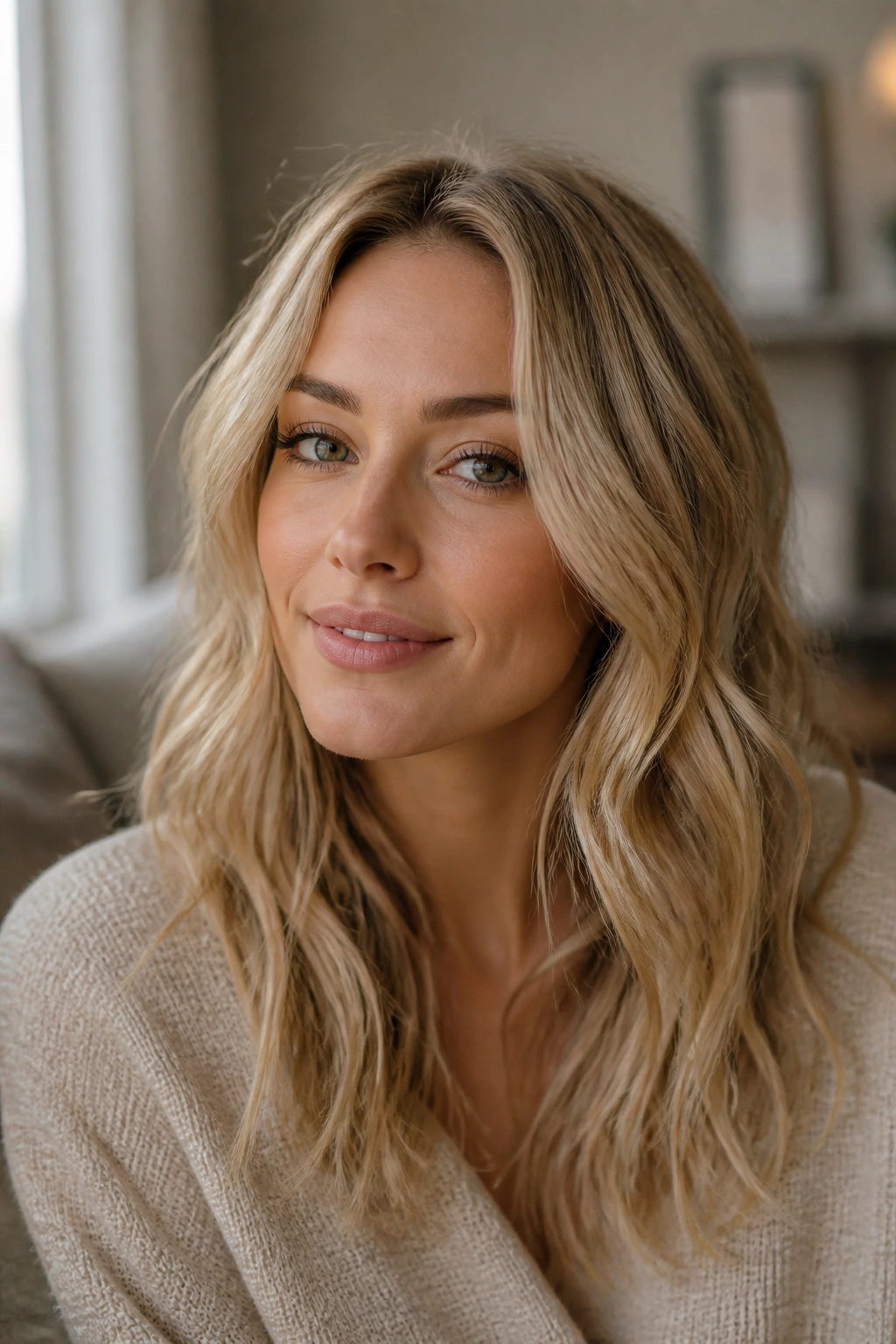
Fine hair needs help at the root and restraint through the ends. Oval faces give you room to play with parting, width, and length without the shape getting awkward. That combination is why blonde waves can look so good here when they’re built with a little thought.
The face shape does not need correction in the heavy-handed sense. It needs framing. A wave that lands at the cheekbone, jawline, or collarbone can change the whole balance of the look without making it feel crowded. And because blonde shades reflect light so well, the shape shows up even when the wave is soft.
The real mistake is chasing volume in the wrong place. If you load product into the mids and ends, the hair will just sink. If you raise the crown, keep the wave loose, and let the color do part of the work, the style lasts longer and looks fuller in motion.
The Tools That Make These Waves Easier
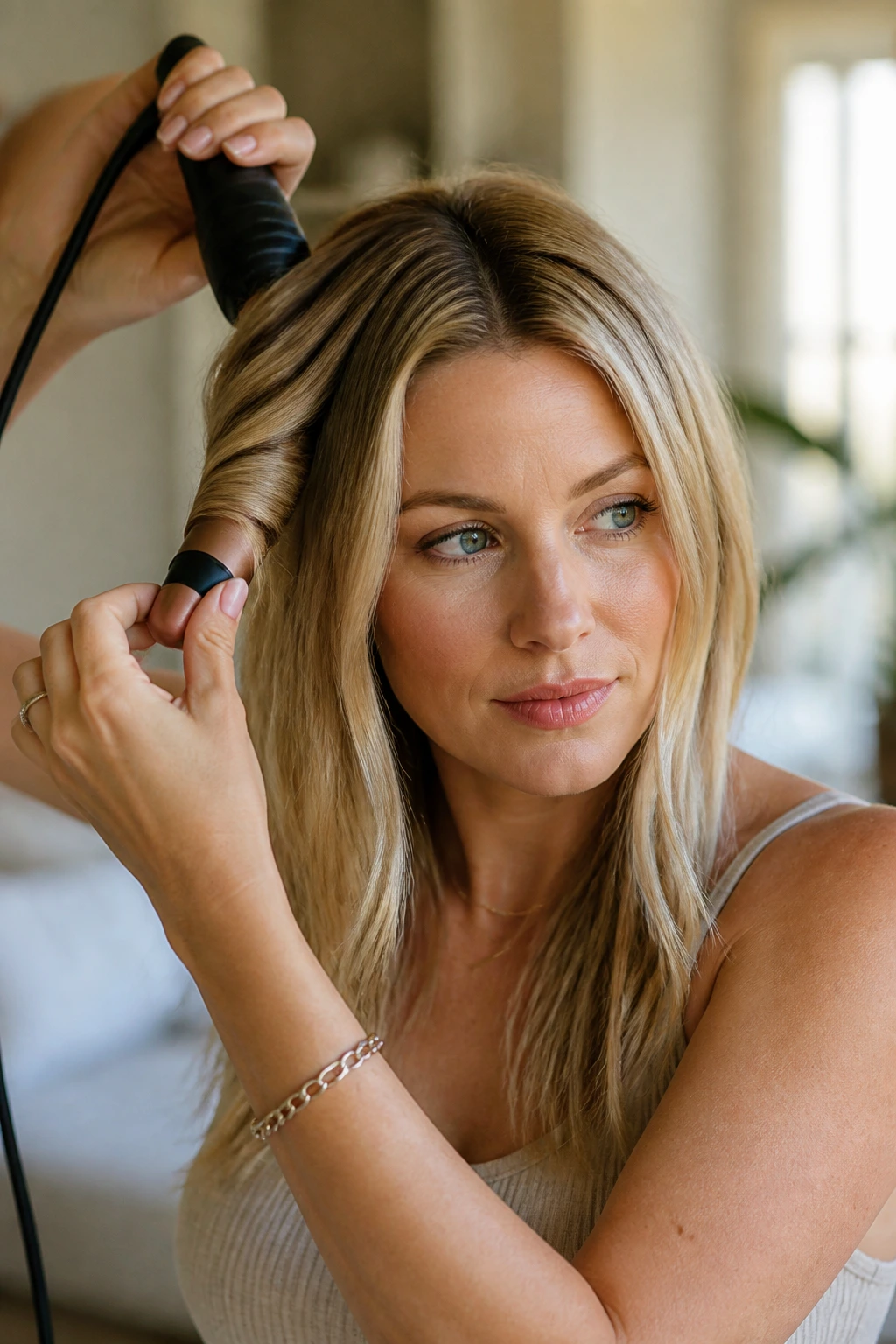
- 1-inch curling iron: Best for controlled waves, pin curls, and brushed-out glamour styles.
- 1.25-inch curling wand: My default for most fine-hair blonde waves; it gives a soft bend without a tight ringlet.
- 1.5-inch barrel: Useful for longer lengths, glossy finishes, and relaxed blowout waves.
- Flat iron: Handy for S-bends, low-heat styling, and a smoother finish around the face.
- Heat protectant spray: Non-negotiable. Fine hair shows heat damage fast, especially on pale blonde ends.
- Volumizing mousse: Use at the roots before blow-drying to give the crown a little backbone.
- Light texture spray: Adds grip and separation without drowning the hair.
- Flexible-hold hairspray: Keeps the wave in place while still letting you brush it out.
- Tail comb: Good for clean parts and crown lift.
- Sectioning clips: Worth using every time. They keep the sections even and prevent rushed, uneven curls.
Picking the Right Blonde Products for Fine Hair
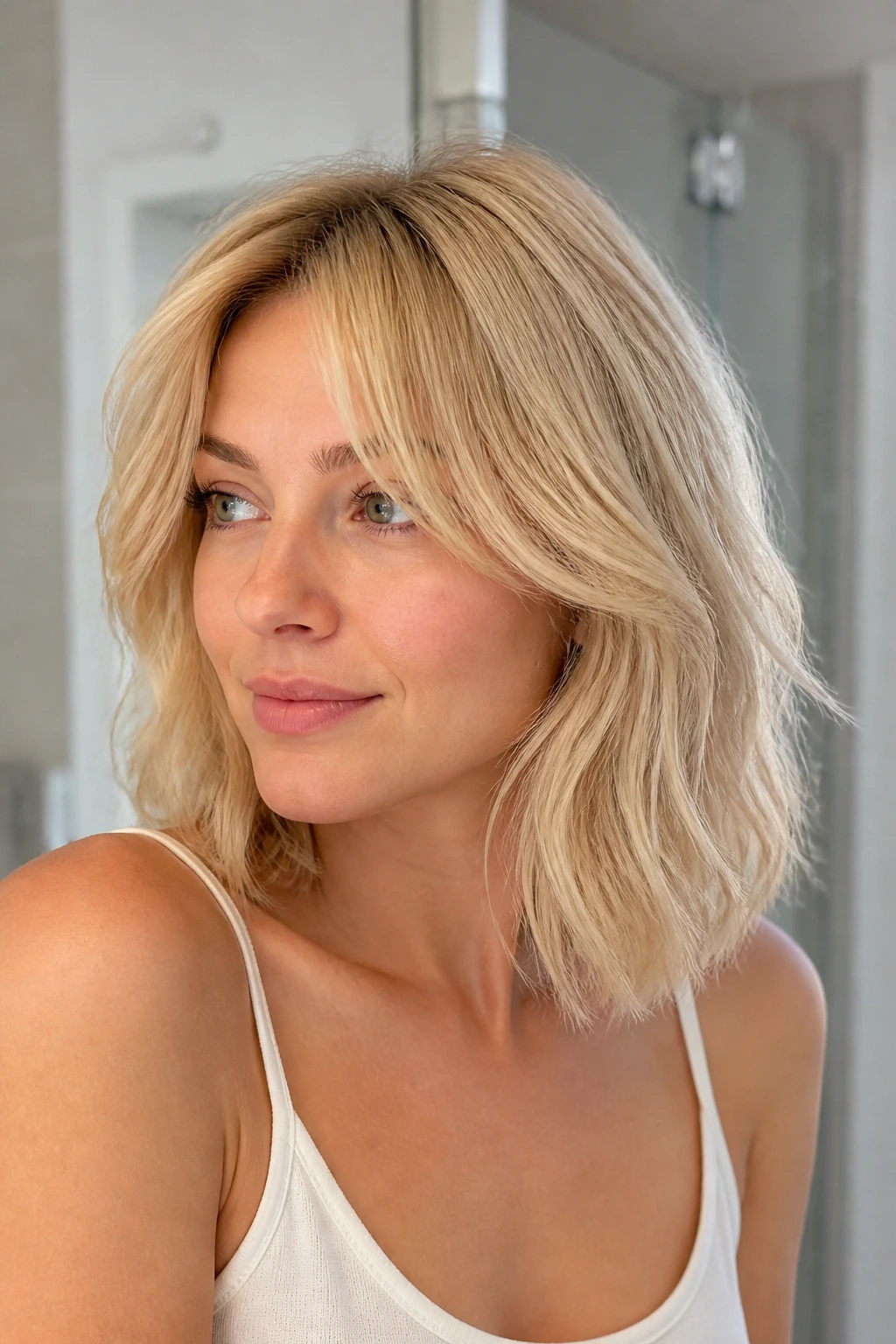
Fine hair is picky about product weight. Heavy creams, thick oils, and sticky serums can flatten the root before the style even has a chance. That means your shopping list should lean light: a mousse or root spray for lift, a heat protectant with a dry finish, and a texture spray that doesn’t feel gritty after one hour.
Color matters, too. Beige blonde and champagne blonde tend to show wave definition well because they sit between warm and cool. I like honey blonde when the hair needs more softness around the face, and icy blonde when the cut is clean and the texture is smooth. If the blonde has too much yellow, the waves can look dull under indoor light. If it is too ashy and the hair is already very fine, the style can look flat. The sweet spot is dimension.
Ask for a lighter face frame and some shadow at the root if the color feels too one-note. That contrast makes the wave pattern read better. It is not about dramatic roots. It is about a little depth near the scalp so the blonde doesn’t wash out the shape.
How to Wear These Waves
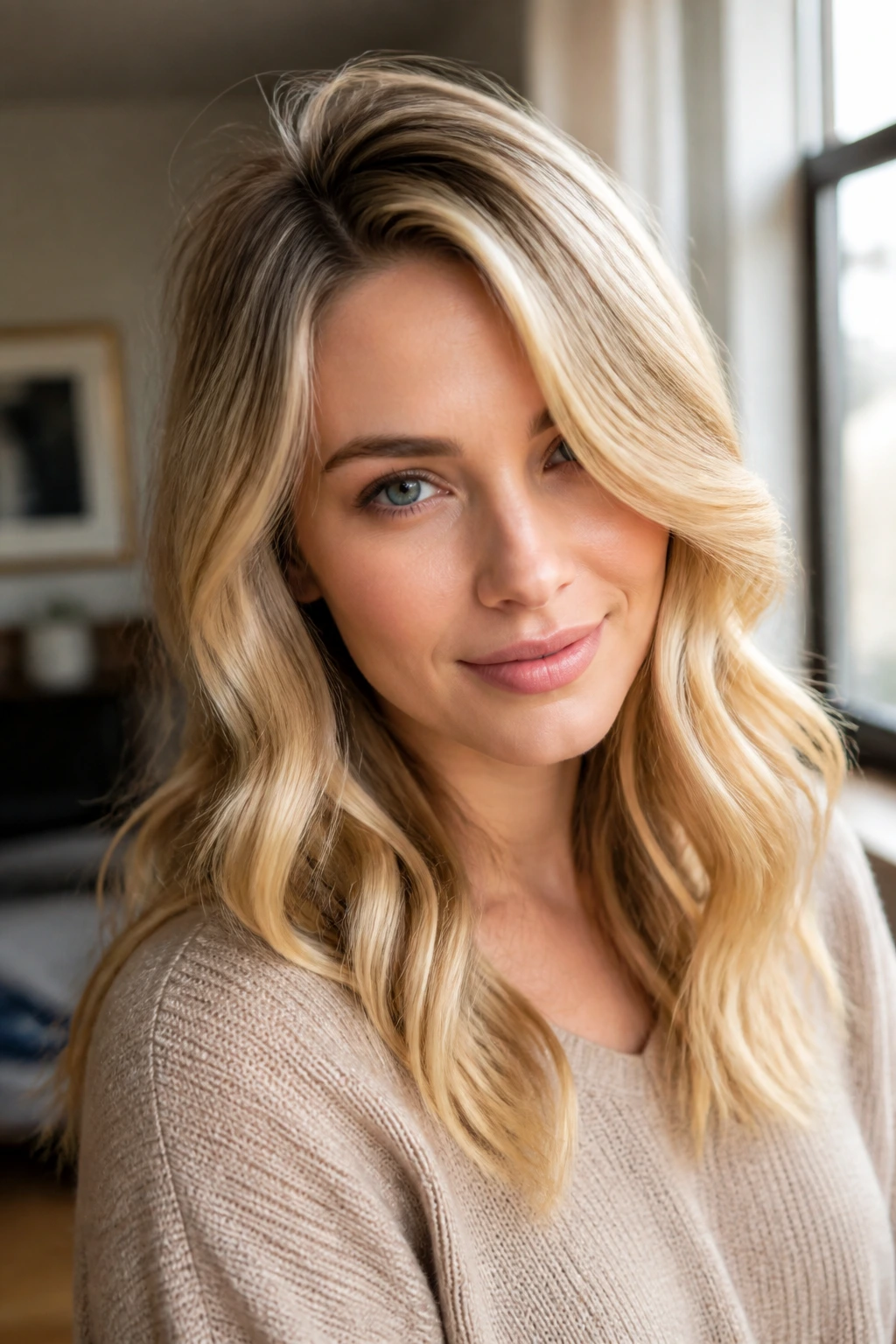
Presentation: Keep the crown lifted and the front pieces soft. On fine hair, that contrast does more than an all-over curl ever will, because it gives the style shape at a glance.
Accompaniments: A clean middle part, a soft off-center part, or a deep side sweep all work here. Choose the part based on how much width you want across the cheekbones; the deeper the part, the more drama you get.
Portions: For day wear, keep the texture light and separated. For evening, brush the waves together a little more so the finish looks smoother and the blonde reflects more evenly.
Beverage Pairing: A strong outfit helps, oddly enough. Sharp collars, simple earrings, and necklines that show the hair’s movement let the waves do their job without fighting for attention.
Additional Styling Tweaks That Make a Real Difference
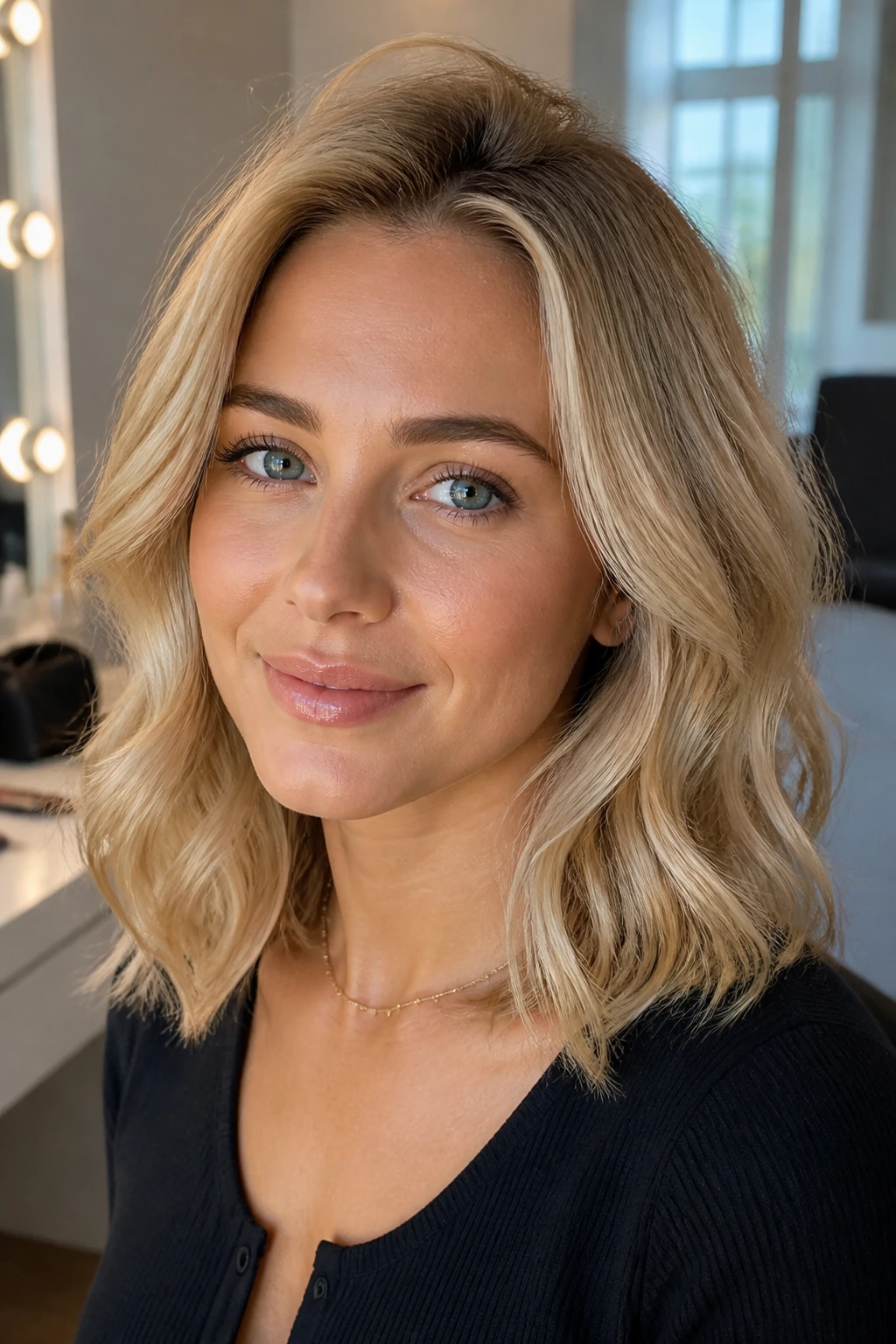
Root Boost: Clip the crown for 5 to 8 minutes after drying, even if you’ve already styled the lengths. That small pause helps fine hair keep lift where it matters most.
Texture Boost: Spray texture product into your hands first, then work it through the mid-lengths. Spraying straight onto the hair can overdo one section and leave another flat.
Smooth Finish: If the ends look dry, warm a drop of serum between your palms and press it on the bottom third only. That gives the hair a cleaner line without collapsing the root.
Make-It-Yours: If you like more polish, brush the waves out. If you like more movement, keep them separated with your fingers. Same style. Different personality.
How to Keep Blonde Waves Looking Good Longer
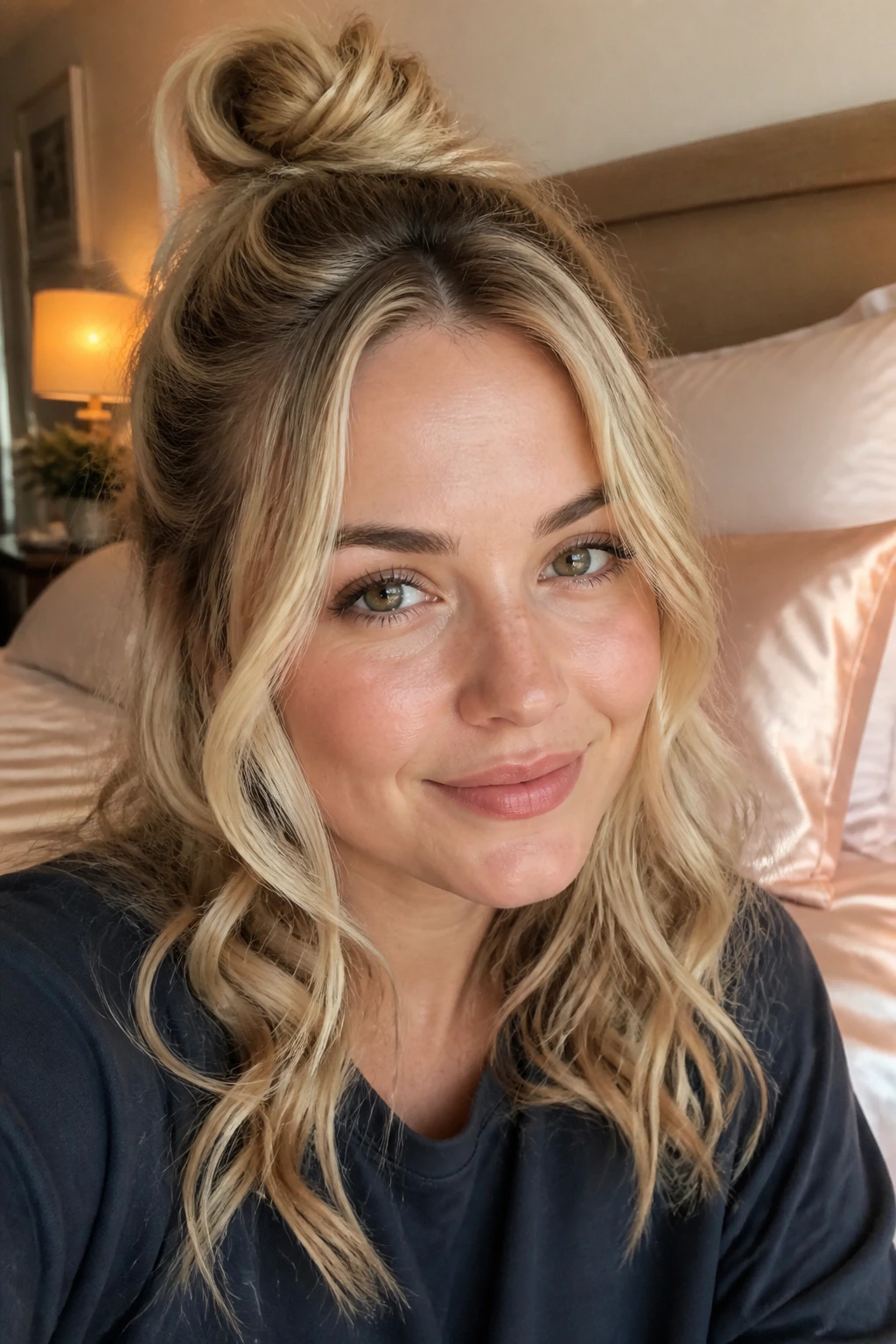
Fine hair loses shape faster than thicker hair, so the way you sleep matters. A loose topknot with a soft scrunchie can keep the wave from getting crushed overnight, but don’t tie it too tight or you’ll mark the hair at the crown. A silk pillowcase helps reduce friction, and that means fewer frizzy ends the next day.
Day-two refresh is where most people go wrong. They grab too much dry shampoo and spray the roots until they feel chalky. That buys you volume for about ten minutes and then the hair turns dull. Use a light mist at the root line, let it sit for a minute, then massage it in with your fingertips. If the wave needs help, wrap the front pieces around your finger for a few seconds and mist them lightly with water before re-drying.
For event wear, set the style with clips while it cools, then let it sit for 15 minutes before brushing. That cooling time is not optional if you want the wave to last through the evening. Fine hair needs the set.
Variations and Adaptations to Try
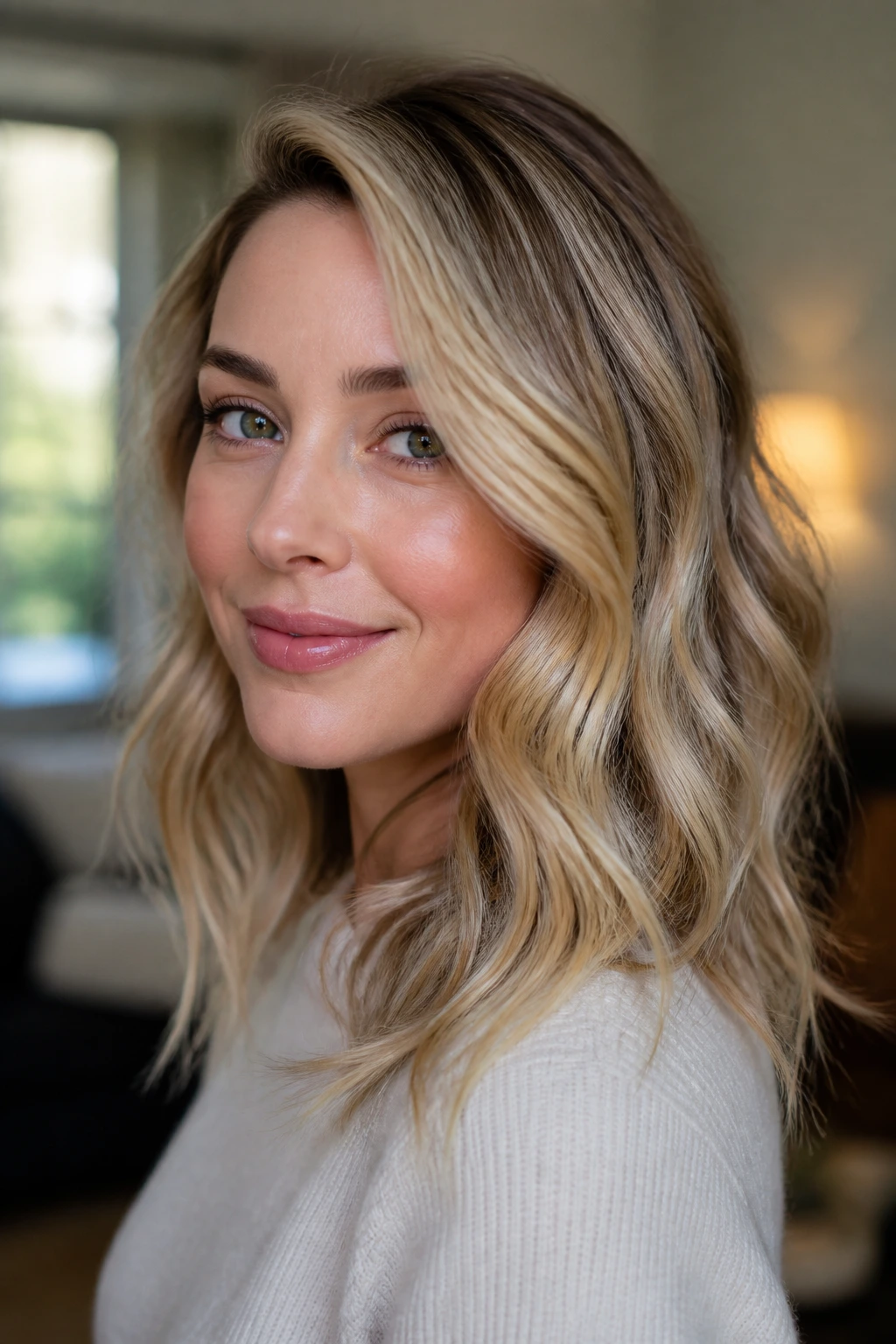
Soft Honey Glow: Swap a cooler blonde for a warm honey shade and keep the waves loose. This works especially well if your skin tone likes warmth around the face, and it makes the texture read a little softer in daylight.
Cool Beige Sweep: Use a beige or mushroom-blonde tone with a deep side part and brushed-out waves. The cooler color gives the style a cleaner edge, which is useful if your hair tends to get fluffy.
Heatless Overnight Bend: Twist damp hair into loose sections and secure them with soft ties or pins before bed. The result is gentler than hot-tool waves, and fine hair often holds the bend well if you use a light setting lotion first.
Big Barrel Glam: Choose a 1.5-inch barrel and brush the curls into broad, loose bends. This is the move when you want more polish and less separation, especially on collarbone-length hair.
Piecey Texture Edit: Add a texture spray only to the lower half of the hair and pinch out a few front strands. That creates separation around the face without turning the whole style rough.
Common Mistakes to Avoid
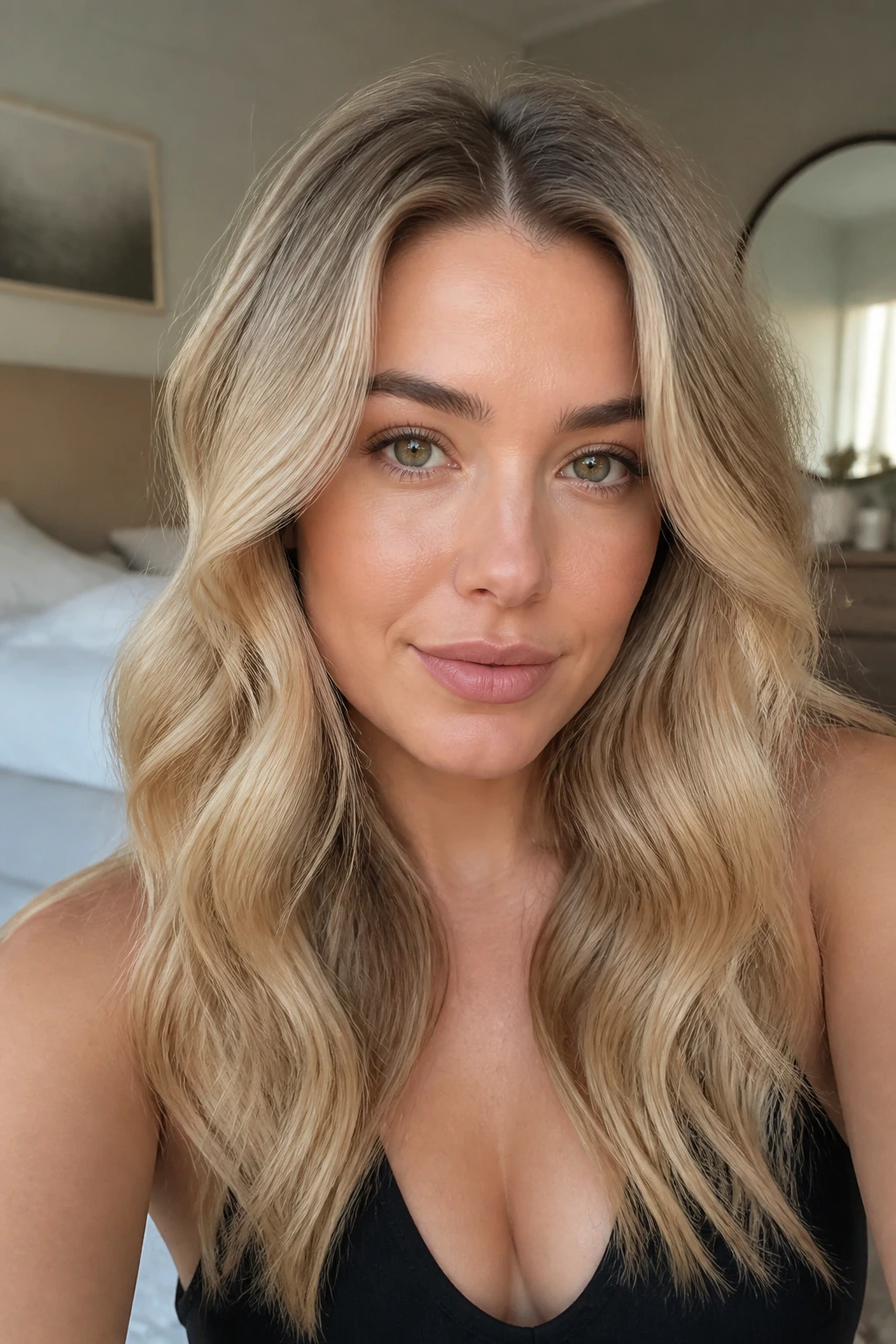
The first mistake is using too much product at the root. Fine hair cannot carry a heavy cream or oil near the scalp without losing lift. If your waves fall flat an hour later, that’s usually the reason. Keep root products light, and save heavier shine products for the ends.
Another problem is overcurling the ends. Fine hair already has less visual thickness at the bottom, so tight spirals can make the ends look stringy instead of full. Leave the last inch out, or bend it only slightly.
A third one: brushing too early. If you brush hot waves before they cool, the shape drops before it sets. Pin or clip the curls first, let them cool, then brush or finger-comb.
The fourth is trying to make every section match. Uniform waves can look stiff on fine hair. A little variation in curl direction and section size gives a softer, fuller result. It looks less engineered, which is a good thing here.
And yes, overusing dry shampoo can dull a blonde wave fast. It gives temporary lift, but too much leaves the hair chalky and rough. Use less than you think, then build if needed.
Frequently Asked Questions
Which wave size works best for fine blonde hair?
A 1-inch to 1.25-inch barrel is the safest place to start. Smaller than that can look too curly and eat up length, while larger barrels may drop too fast unless your hair already holds shape well.
Should oval faces always wear a center part?
No. Oval faces can wear center, off-center, or deep side parts. The choice depends on the effect you want: center parts feel clean and open, while side parts add more lift and asymmetry.
Do blonde waves make fine hair look thicker?
They can, if the wave is loose and the color has some dimension. Flat one-tone blonde usually looks thinner than a layered blonde with a little root depth and light-catching bends.
What product holds waves without making fine hair sticky?
A light mousse at the roots, heat protectant through the lengths, and a flexible-hold hairspray at the end is usually enough. Texture spray helps too, but keep it mid-length to ends so the crown stays airy.
Can I do these styles on shoulder-length hair?
Yes, and some of them work even better there. Chin-grazing, lob-length, and collarbone waves often look fuller on shorter fine hair because the weight stays balanced.
Why do my waves fall out so fast?
Usually one of three things: the sections were too large, the hair wasn’t cooled before brushing, or the product was too heavy. Fine hair often needs smaller sections and a cooler set than thicker hair.
Is heatless styling worth it for fine hair?
It can be, especially if your hair gets brittle from hot tools. Heatless bends work best when the hair is only slightly damp and set with a light foam or lotion; otherwise the wave may dry flat.
How do I keep the color from looking brassy under waves?
Use color-safe shampoo, a gentle purple cleanser when needed, and avoid heavy oils that can mute the blonde. If the tone starts to look yellow at the front, a quick gloss or toner touch-up helps restore the contrast that makes the waves pop.
The Wave That Actually Holds
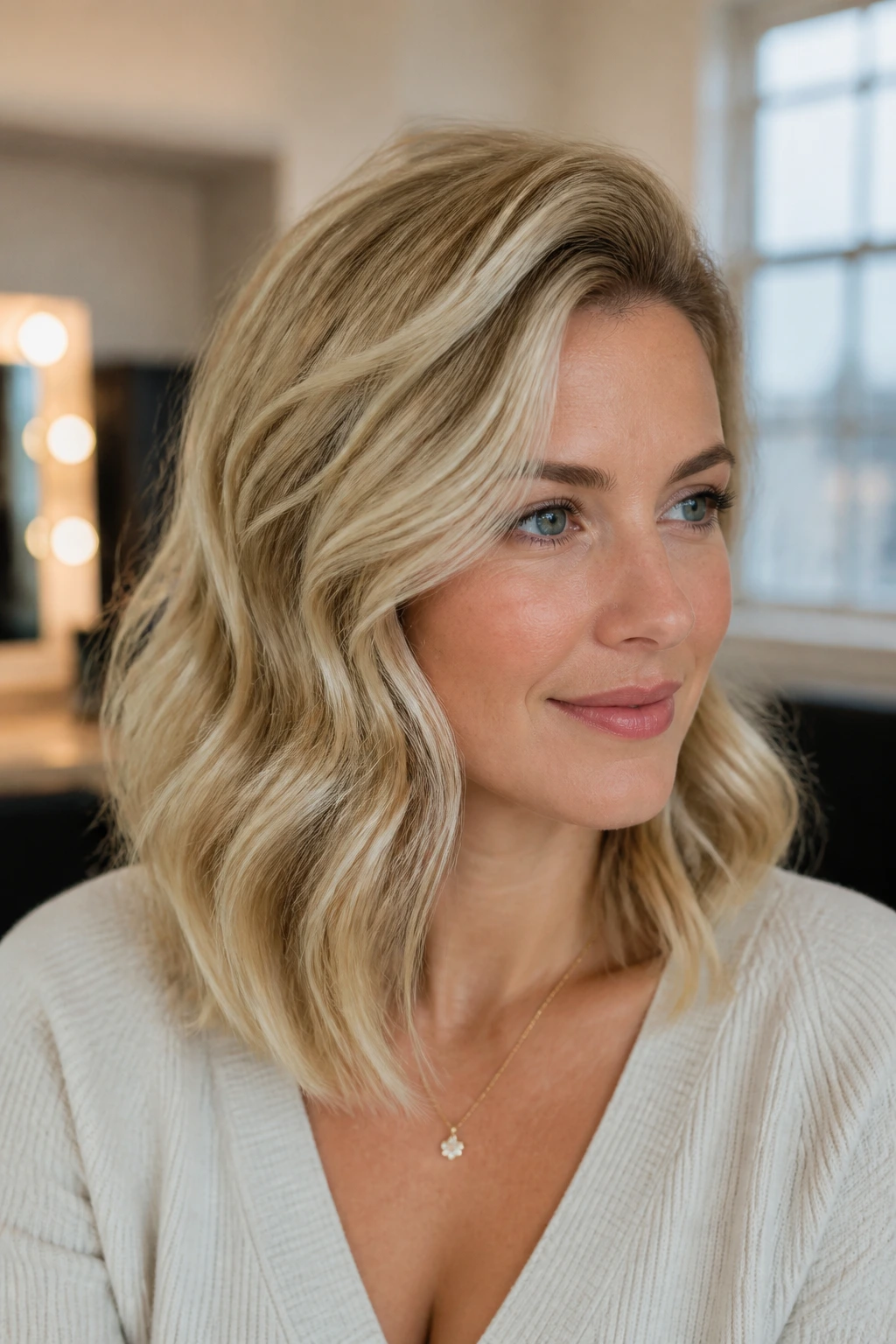
The best blonde waves for fine hair and oval faces are not the most dramatic ones. They’re the ones that understand the job: lift the crown, keep the ends light, and let the color show the movement. When those three things line up, the hair looks fuller without feeling overloaded, and the face gets a soft frame that never looks forced.
That’s the part I keep coming back to. Fine hair does not need more hair on top of it. It needs shape, a little control, and a wave pattern that respects how quickly the strands lose weight. Pick the version that suits your length and your mood, then keep the product light enough for the hair to stay alive.
The styles above give you plenty of room to play, and the good ones have a habit of looking better when you stop fussing with them.