



Olive skin and honey caramel hair color have a useful little secret: the right warmth makes your face look clearer, brighter, and more alive, while the wrong warmth goes muddy fast. That’s the entire balancing act in one sentence. Honey caramel can flatter olive undertones better than icy blonde or flat brown because it sits in that sweet spot between gold and beige, with enough softness to keep the skin from looking sallow.
The catch is placement and tone. A heavy orange caramel near the hairline can fight with olive skin’s green-gray cast. Too much ash, and the whole look drains out. The good versions have dimension, a rooted base, and a gloss that reads more like warm sunlight than brass from a box dye aisle.
I’ve always thought this color family works best when it looks expensive in a quiet way. Not boring. Quiet. The shine should be there when the light hits, the ribbons should move when you turn your head, and the face-framing pieces should do a little lifting without shouting for attention. That’s where the good stuff lives, and the ideas below are built around that exact balance.
Why Honey Caramel Flatters Olive Skin
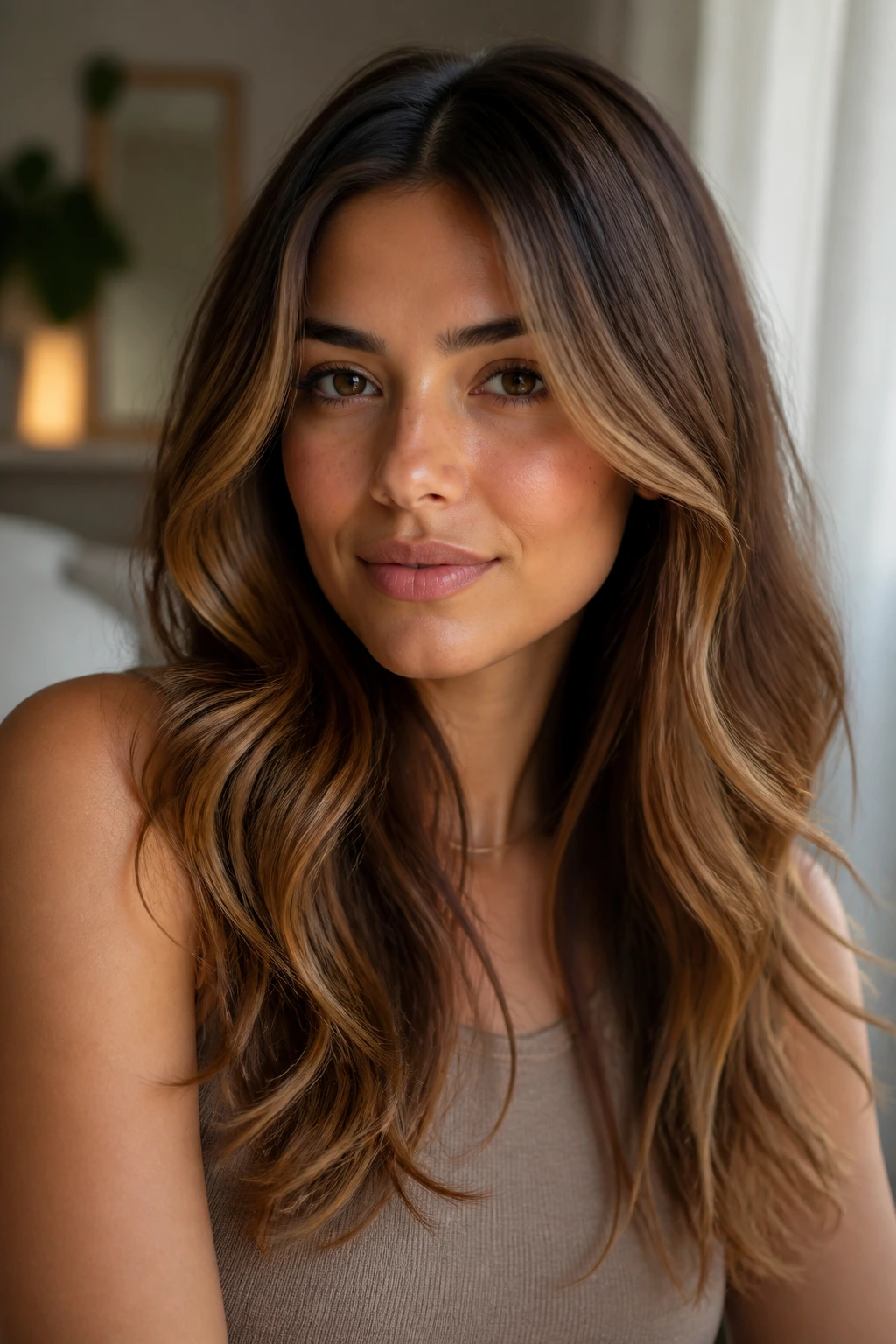
Warmth with restraint: Honey caramel adds enough golden tone to wake up olive skin, but the best versions stop short of orange. That matters because olive undertones can turn red or muddy if the hair color is too copper-heavy.
Soft contrast: Olive skin usually looks best when the hair has dimension instead of one flat block of color. Caramel ribbons, a shadow root, or a glossed melt gives the face more shape and keeps the skin from blending into the hair.
Flexible across depths: Light olive, medium olive, and deeper olive skin can all wear honey caramel, but the placement changes. Lighter olive usually likes softer beige honey, while deeper olive can handle richer caramel and a little more contrast at the ends.
Easy to tune: A good colorist can shift honey caramel toward gold, beige, amber, or mocha depending on your undertone. That’s the real trick. The family is broad enough to be adjusted without losing the warm, glossy effect.
Looks better with movement: Waves, curls, and layered cuts show the color’s multi-tone finish much better than a dead-straight, one-length cut. You want the light to catch different pieces at different moments.
1. Soft Honey Caramel Balayage
Soft balayage is the safest way to get honey caramel onto olive skin without risking a stripey, salon-fresh look that fades awkwardly. The color is hand-painted in sweeping pieces, so the lighter strands sit where the sun would hit them first — around the top layers, mid-lengths, and a few ribbons near the front.
What makes this version work is the root depth. Keep the base one to two levels darker than the lightest caramel pieces, and the whole thing keeps its shape. On olive skin, that shadow at the root keeps the warmth from floating too high and making the face look washed out.
If your hair is medium brown or dark blonde, this is a clean first step into honey caramel hair color. It grows out without a harsh line, and it looks even better after a week or two when the gloss settles in. I like it best with loose bends, not tight curls. Tight curls can break the dimension into tiny flashes; soft waves let the caramel read as one smooth movement.
2. Honey Caramel Face-Framing Money Piece
Can a few bright strands around the face do more than a full head of highlights? Absolutely. A well-placed money piece can lift olive skin faster than a heavy all-over blonde shift, and it usually looks fresher for longer.
The key is width. Keep the face-framing pieces thin enough to blend at the roots, then let them brighten just under the cheekbone or jawline. That little move draws light toward the center of the face and makes the skin look less flat. On olive tones, especially medium olive, that extra brightness helps the eyes and cheekbones do more work.
What to ask for
- A beige-gold lift, not a pale yellow blonde.
- Brightness concentrated near the front, with softer pieces just behind it.
- A root shadow that melts into the rest of the color.
This style loves a middle part if your features are symmetrical, but a slight off-center part can be kinder if your face is rounder or your forehead is strong. And yes, it looks good pinned back. That’s the nice part: when the front pieces are done well, even a messy clip-up style looks intentional.
3. Smoky Brown Base with Honey Caramel Ends
When olive skin leans deeper, the smartest honey caramel move is often to keep the base smoky and let the ends do the talking. A level 4 or 5 brown root with honey caramel ends gives contrast without throwing the whole head of hair into bright territory.
This is not a beachy blonde look. Good. It shouldn’t be. The appeal is the gradual shift from espresso or cocoa at the crown into a warm caramel glow below the ears. That dark-to-light movement frames olive skin nicely because the top stays grounded and the ends supply the lift.
This works especially well on straight or softly waved hair. If the ends are too blunt, the lighter color can look pasted on. Ask for soft layering or long face-framing pieces so the transition has somewhere to breathe. And if your hair tends to pull orange when lightened, insist on a beige toner at the finish. A smoky base with orange ends is a fast way to make olive skin look tired.
4. Creamy Caramel Melt on Dark Olive Skin
A creamy caramel melt is one of my favorite versions because it behaves like a good espresso drink: dark, layered, and smooth instead of sugary. On dark olive skin, the color should not jump from black-brown to bright blonde. It should slide.
That means a deep brunette base, a softened midsection, and caramel ends that read creamy rather than yellow. The finish matters here more than the individual highlight. If the toner is off, the whole style can swing too warm and lose that polished effect.
This version is best for people who like shine. The more reflective the hair, the better the melt looks. Curly hair also holds this shade well because the bends create natural shadows between the caramel pieces. If you want a low-drama color that still looks deliberate, this is the one I’d put near the top of the list.
5. Dimensional Honey Highlights on Chestnut Brown
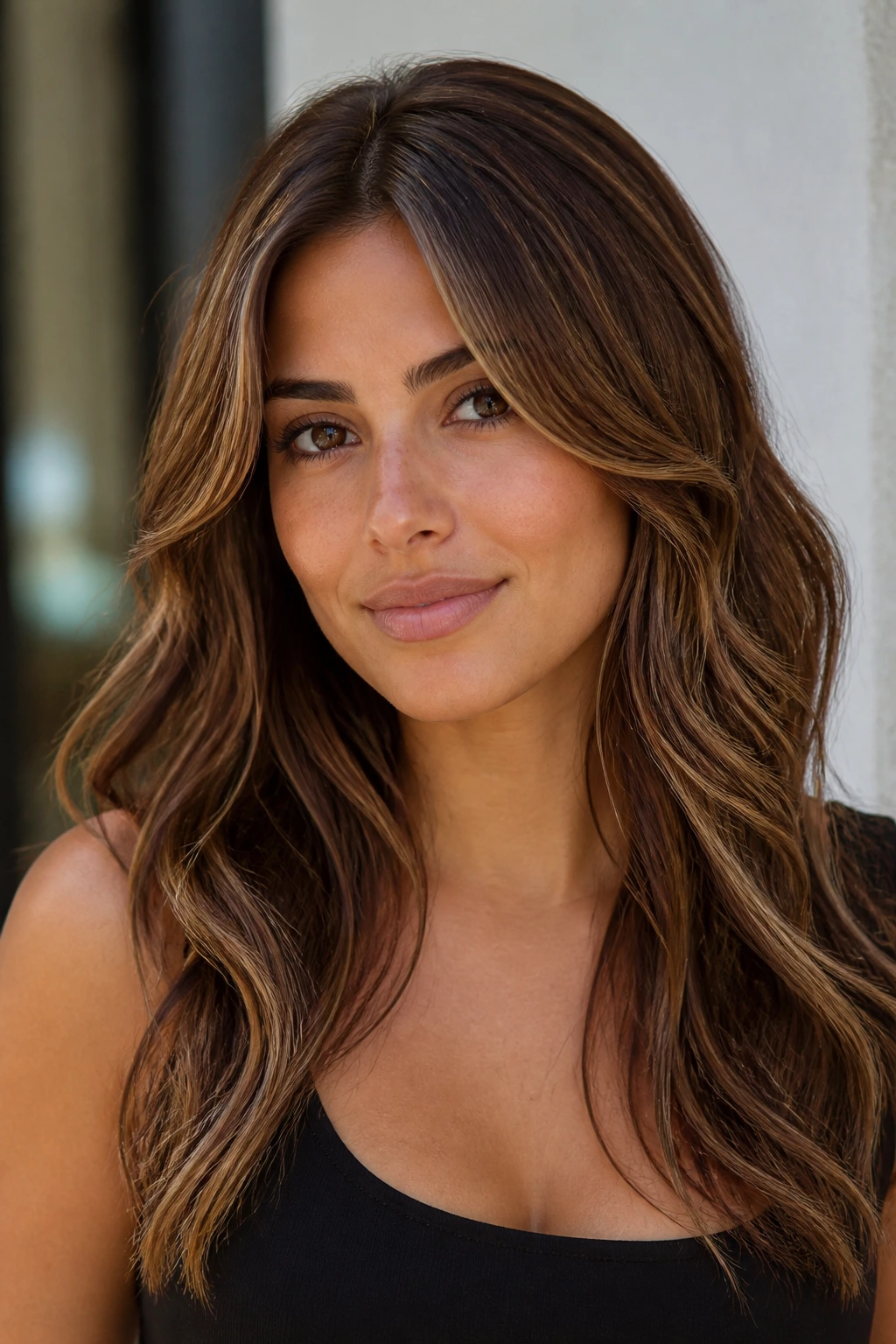
This is the version I recommend when you want the least drama and the most polish. Chestnut brown already has warmth, so a set of fine honey highlights can add brightness without forcing a big color shift.
The trick is to keep the strands thin. Think microlights, not chunky stripes. Olive skin usually looks better with scattered light than with obvious ribbons, especially when the hair is mid-brown already. The dimension should show when you move, not when you stand under one bathroom bulb and stare at the mirror.
A chestnut base also gives you room to play with makeup. Brown liner, gold hoops, a soft peach blush — none of it fights the hair. And if you’re the kind of person who likes your color to age quietly over time, this shade family is forgiving. The highlights blur into the base instead of announcing themselves every two weeks.
6. Warm Bronde with Honey Caramel Veils
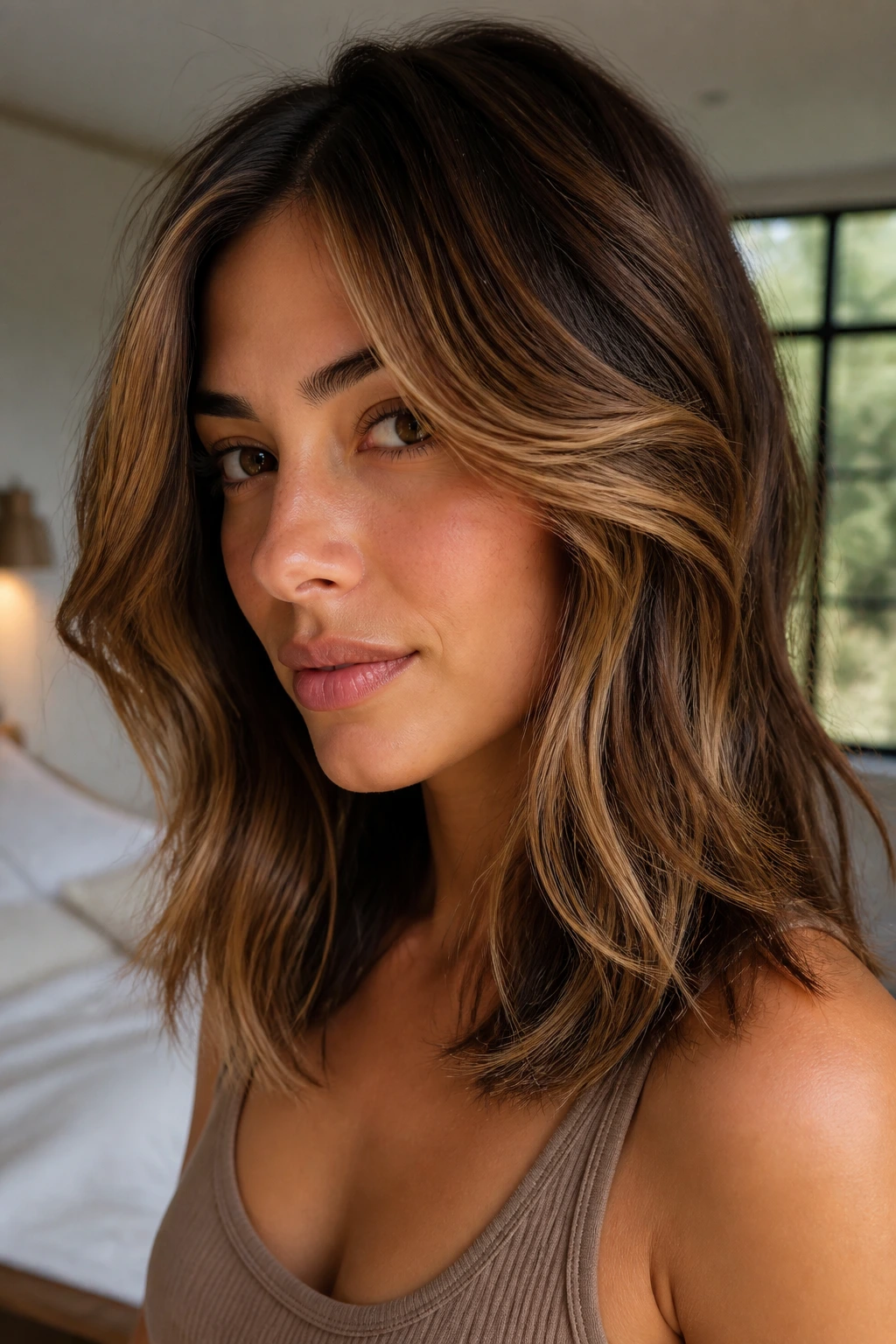
Bronde is one of those words people throw around loosely, but a good bronde is very specific: brunette first, blonde second, and never evenly colored. Honey caramel veils on top of a medium brunette base give olive skin enough light to look fresh while keeping the overall impression soft.
Unlike a standard blonde, bronde doesn’t flatten the face. The darker base keeps some contour under the cheekbones and around the jaw. That’s especially helpful if your olive skin has a muted, neutral cast and you don’t want the hair to steal all the attention.
I like this look on shoulder-length layers because the veils move. Shorter hair can make bronde feel too dense; longer layers let the lighter strands separate and fall in a way that looks easy. Ask for honey rather than gold if your skin is cooler olive. If you run warmer, a little more amber in the gloss helps the whole thing glow.
7. Honey Caramel Bob with Glossy Ribbons
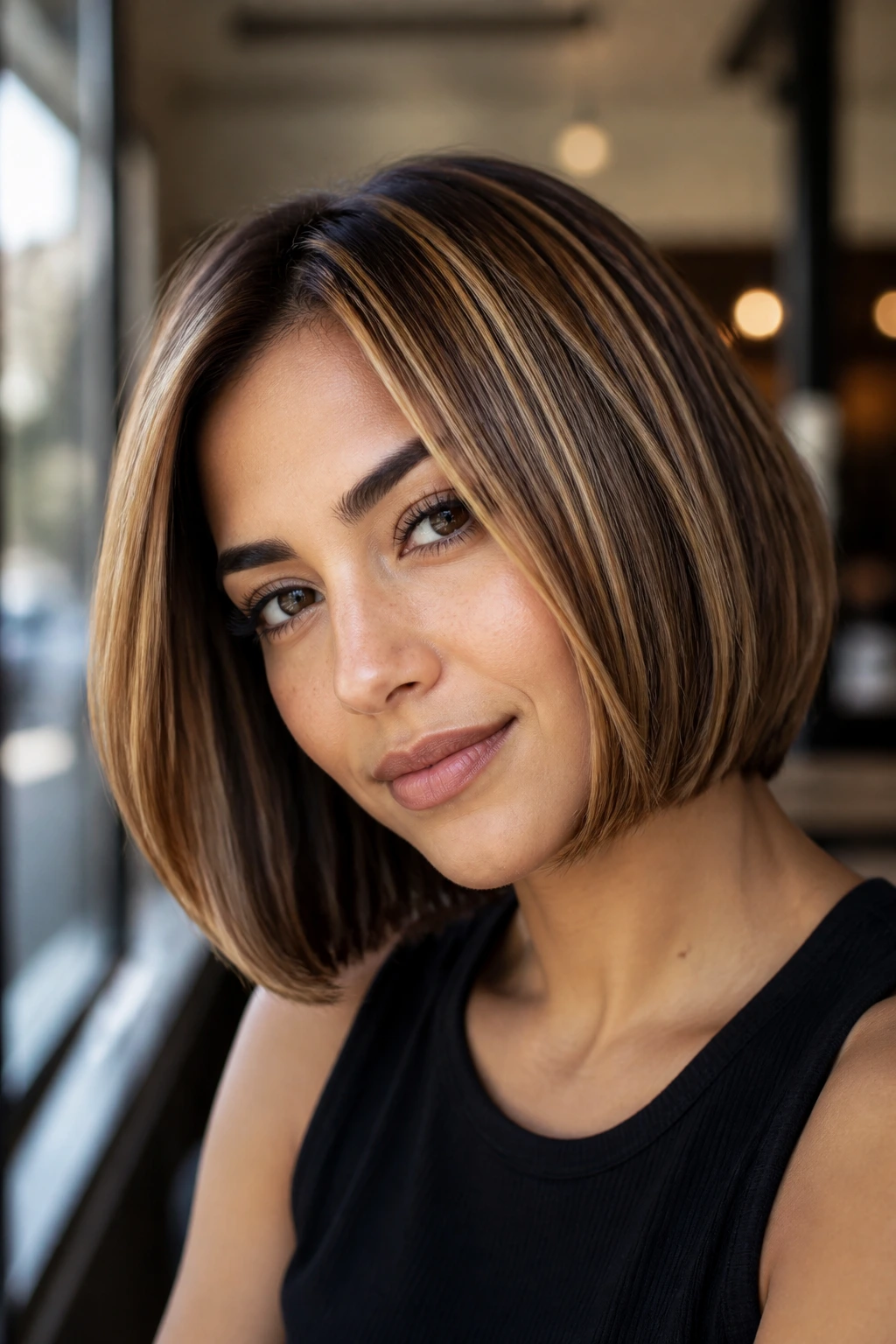
A bob needs precision, so the honey caramel has to be placed with a bit of discipline. Glossy ribbons through the surface layers keep the cut from looking heavy, and olive skin benefits because the brightness stays clean instead of spreading too far.
This is where slice highlights make sense. You want enough width for the color to show on a blunt line, but not so much that the bob starts to resemble a stripey helmet. A soft side part can be useful here, because it lets one side carry slightly more brightness and gives the haircut movement.
Best pairing
- Chin-length or jaw-skimming bobs.
- Straight styling with a slight bend at the ends.
- A demi-permanent gloss every few weeks to keep the ribbons shiny.
The biggest win here is contrast. On olive skin, a bob with caramel ribbons around the temples and front layers can sharpen the whole face. It looks neat, not fussy. That’s the charm.
8. Buttery Caramel Lob with Shadow Root
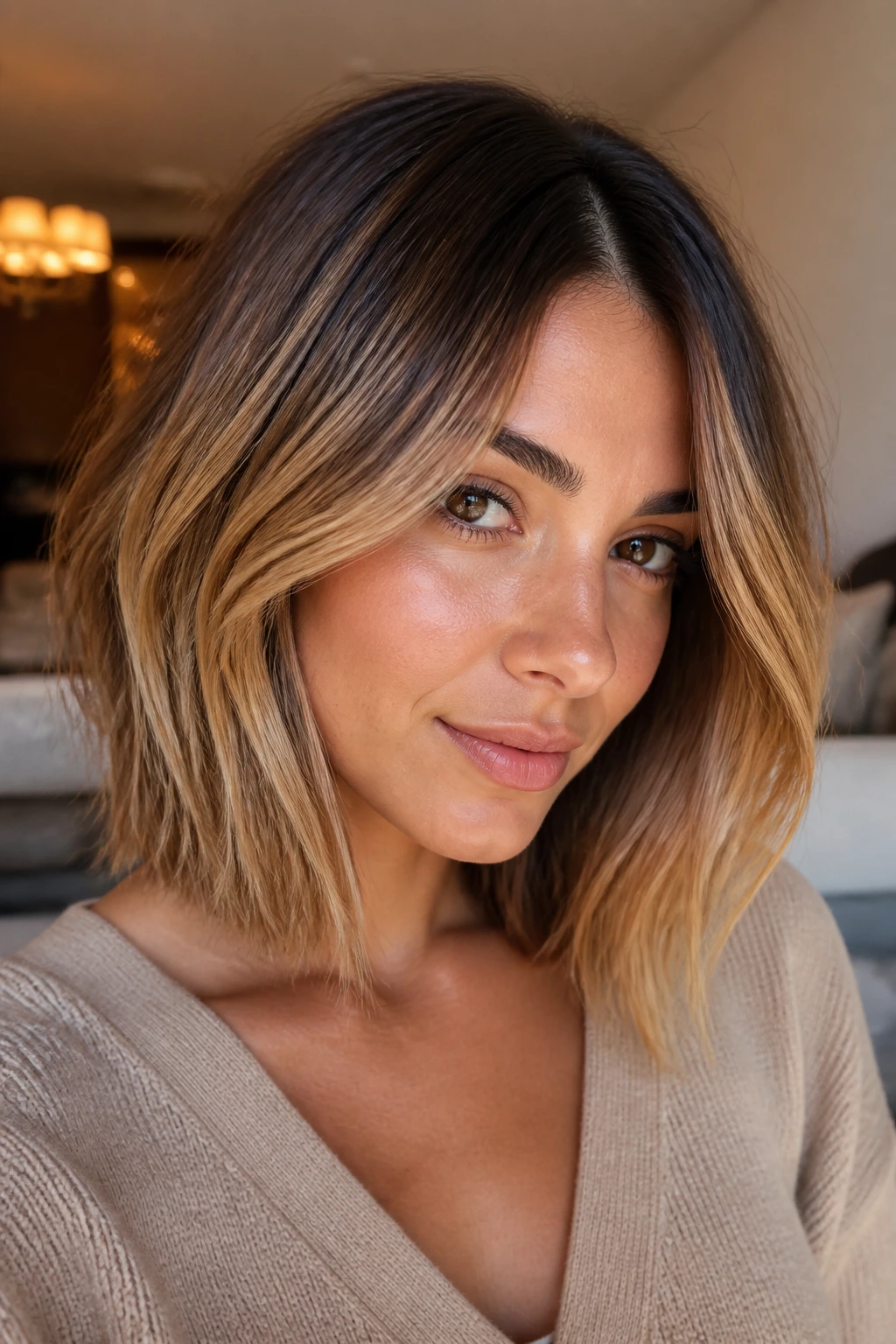
Why does a lob make honey caramel look easier to wear? Because the cut itself does half the work. A lob gives the color room to travel, and a shadow root keeps the grow-out from looking harsh or patched.
This style is especially kind to olive skin that sits in the middle — not especially warm, not especially cool. The buttery caramel ends soften the face, while the root shadow holds the tone steady at the crown. If you have fine hair, this is a smart choice because the darker root gives the illusion of depth at the scalp instead of see-through lightness.
9. Cinnamon-Brushed Honey Caramel Curls
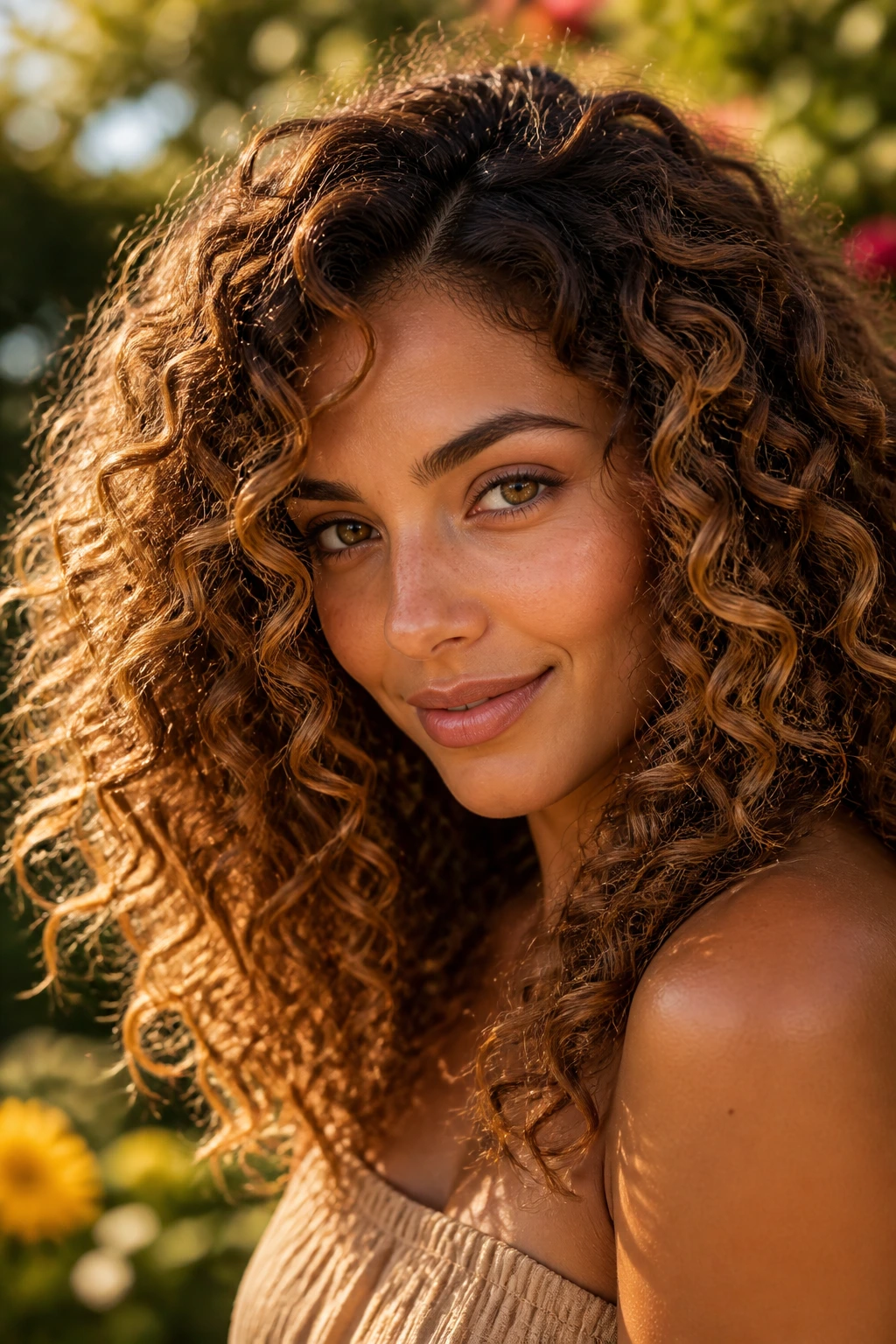
Curls change everything. They break up the light, and that means honey caramel can look richer, darker, and more dimensional than it does on straight hair. A cinnamon-brushed version adds just a touch of spice, which works beautifully if your olive skin can handle a little warmth near the face.
The important part is restraint. Too much cinnamon, and the color slides into copper. That can be lovely on the right person, but olive skin needs balance, not a burnished orange glow. Keep the caramel on the surface curls and leave some lowlights underneath so the curl pattern still reads as separate rings or waves.
Best texture match
- Loose curls that stretch enough to show multiple tones.
- Medium to thick density, where the color can hide and reveal itself.
- A gloss with beige-gold or soft amber, not bright copper.
Use a curl cream that defines without dulling the shine. Honey caramel on curls should look plush. If it looks chalky, the toner is too cool or the product is too heavy.
10. Golden Honey Caramel Pixie Accent
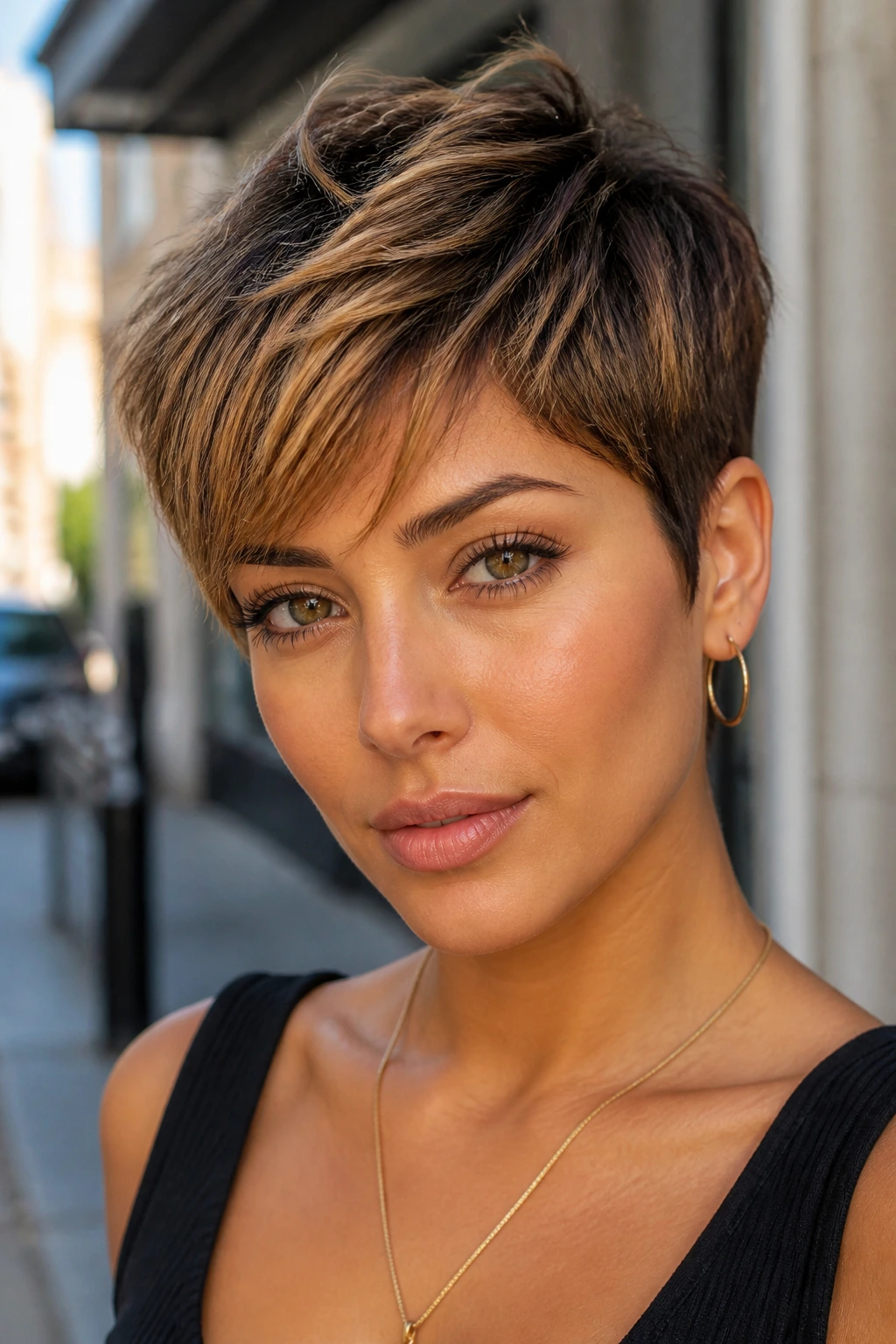
Short hair can carry honey caramel better than people expect. A pixie with golden caramel accents looks sharp because the color has nowhere to hide. Every piece shows, which is exactly why placement matters so much.
Keep the lightest strands on top, around the fringe, and maybe at the crown where the head catches the most light. Olive skin gets a nice lift from this because the brightness sits near the eyes and brows. That can make the whole face look more awake, especially if the haircut is textured and piecey.
This is not the place for messy warmth. A pixie can go brassy in a hurry if the blonde is too yellow. Ask for a soft gold-beige accent instead, then style it with a matte paste or light wax so the shape stays separated. A little shine serum on the tips is enough. Too much, and the cut loses its edge.
11. Espresso Base with Subtle Honey Caramel Peekaboo
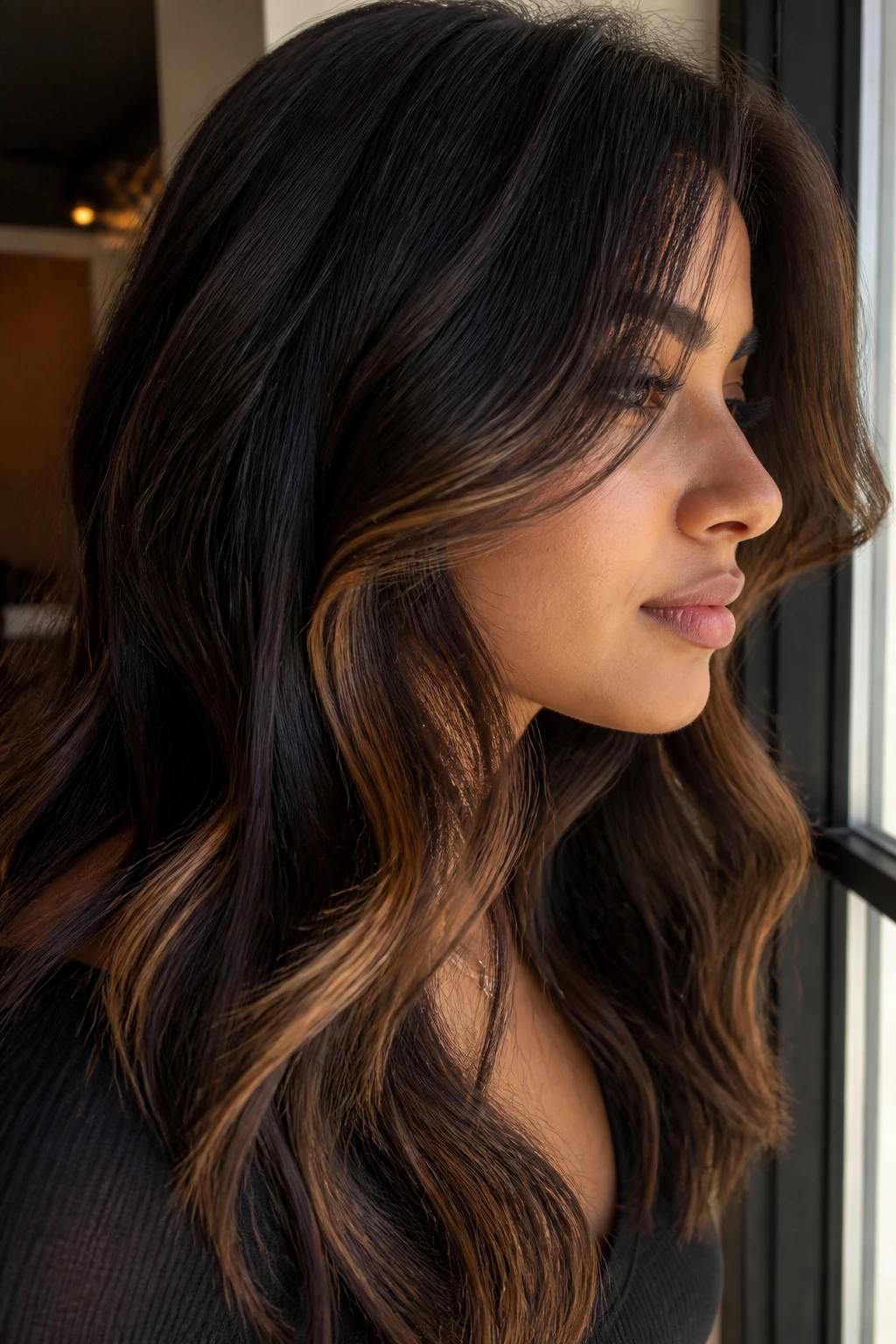
Not everyone wants the lighter color on full display. Peekaboo honey caramel is a good answer for that, and honestly, it’s one of the more underrated ideas on olive skin because it gives you color movement without changing the entire look.
The lighter panels hide under the top layers, so you catch them when the hair moves or is worn half up. That makes the shade feel a little more private and a little more expensive. The contrast is there, but it doesn’t scream. If your work life or dress code is conservative, this kind of placement is a gift.
It also solves a common olive-skin problem: too much brightness around the face can sometimes make the skin look ashy or green. Peekaboo pieces let you enjoy the honey caramel effect while keeping the face framed by the deeper espresso base. Good compromise. No fuss.
12. Toffee and Honey Ribboned Waves
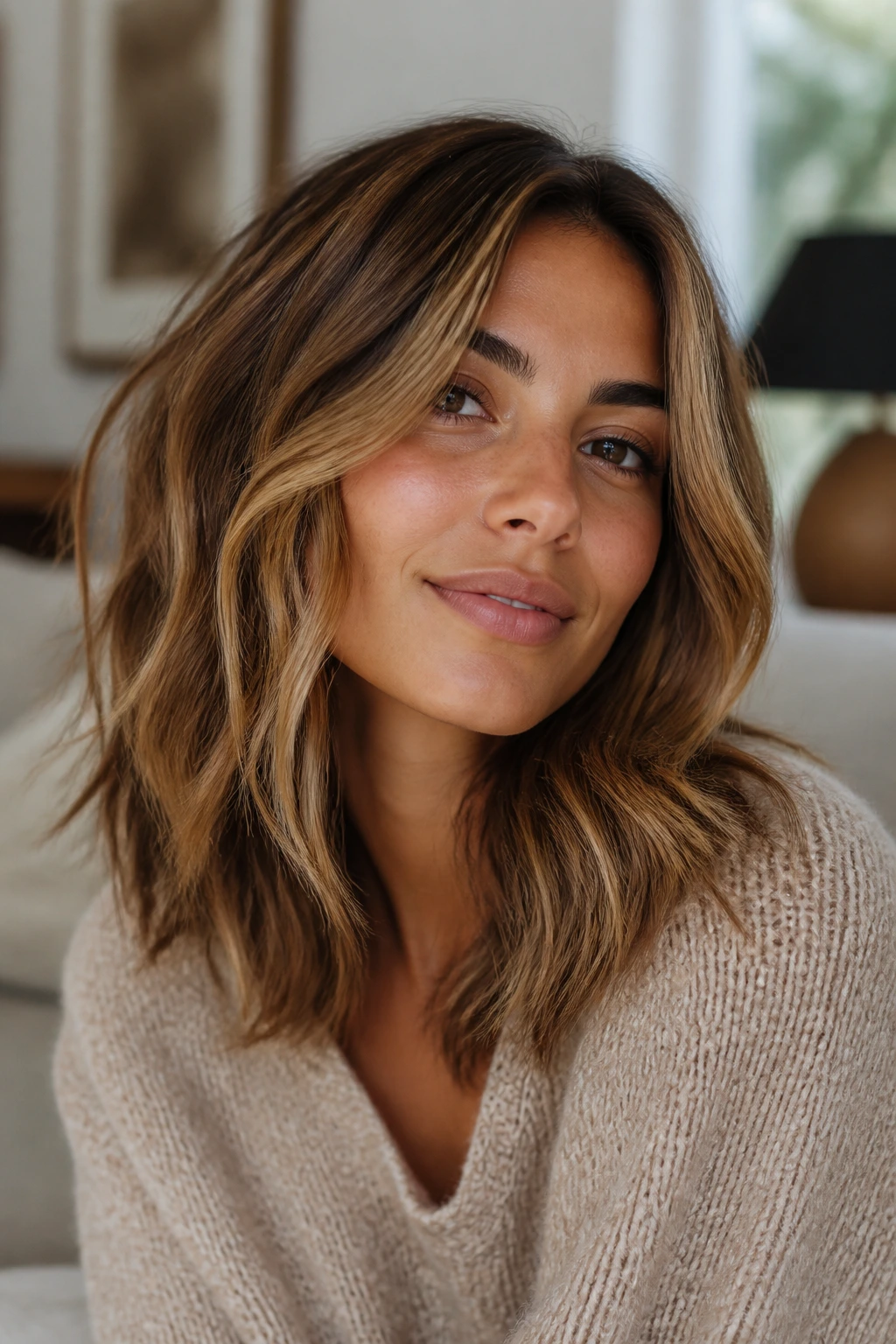
This version is all about visible contrast. Toffee and honey ribboning gives the hair that “I can see every strand” effect, but the color needs to be blended enough to avoid a zebra look. On olive skin, that ribboned finish can be gorgeous because the warm tones echo the skin without disappearing into it.
Waves are non-negotiable here. Straight hair can make ribbons look abrupt unless the placement is very fine. Soft S-waves let the toffee and honey fold into each other as the hair moves, which is what keeps the style from looking too hard.
I prefer this look on medium-thick hair with a blunt or softly layered cut. Fine hair can still wear it, but too many ribbons can make the ends look thin. Ask for a glaze that pulls the honey slightly beige if your skin is cooler olive. If you’re warmer, the toffee can stay a touch deeper.
13. Honey Caramel with Auburn Undertones
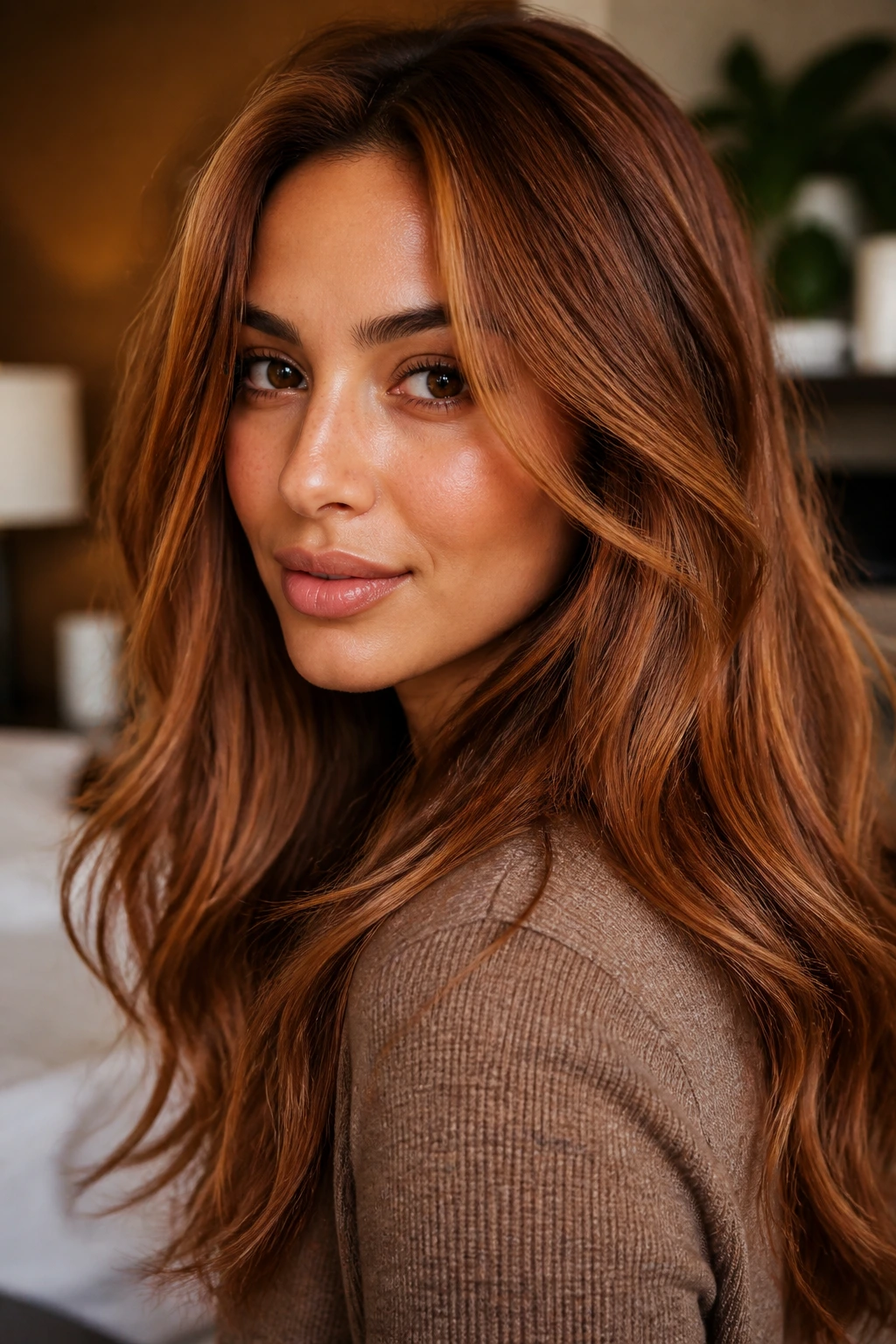
This is the warmest version in the bunch, and it can be beautiful on olive skin that already has a bit of golden or peachy cast. The auburn undertone gives the caramel depth, so the hair doesn’t read flat or overly blonde.
But the line is thin. Too much auburn, and the color drifts into copper territory fast. That works for some faces, sure, but not every olive undertone wants the extra heat. The better version stays in the brown-gold family, with just enough red to make the caramel feel richer.
If you wear a lot of earthy colors — olive, rust, camel, deep cream — this is a strong match. It pairs well with layered cuts because the red-gold flashes show when the light hits the ends. It’s one of those shades that looks best when you don’t over-style it. A soft blowout, loose bend, or naturally smooth texture is enough.
14. Soft Ombre from Chocolate to Honey Caramel
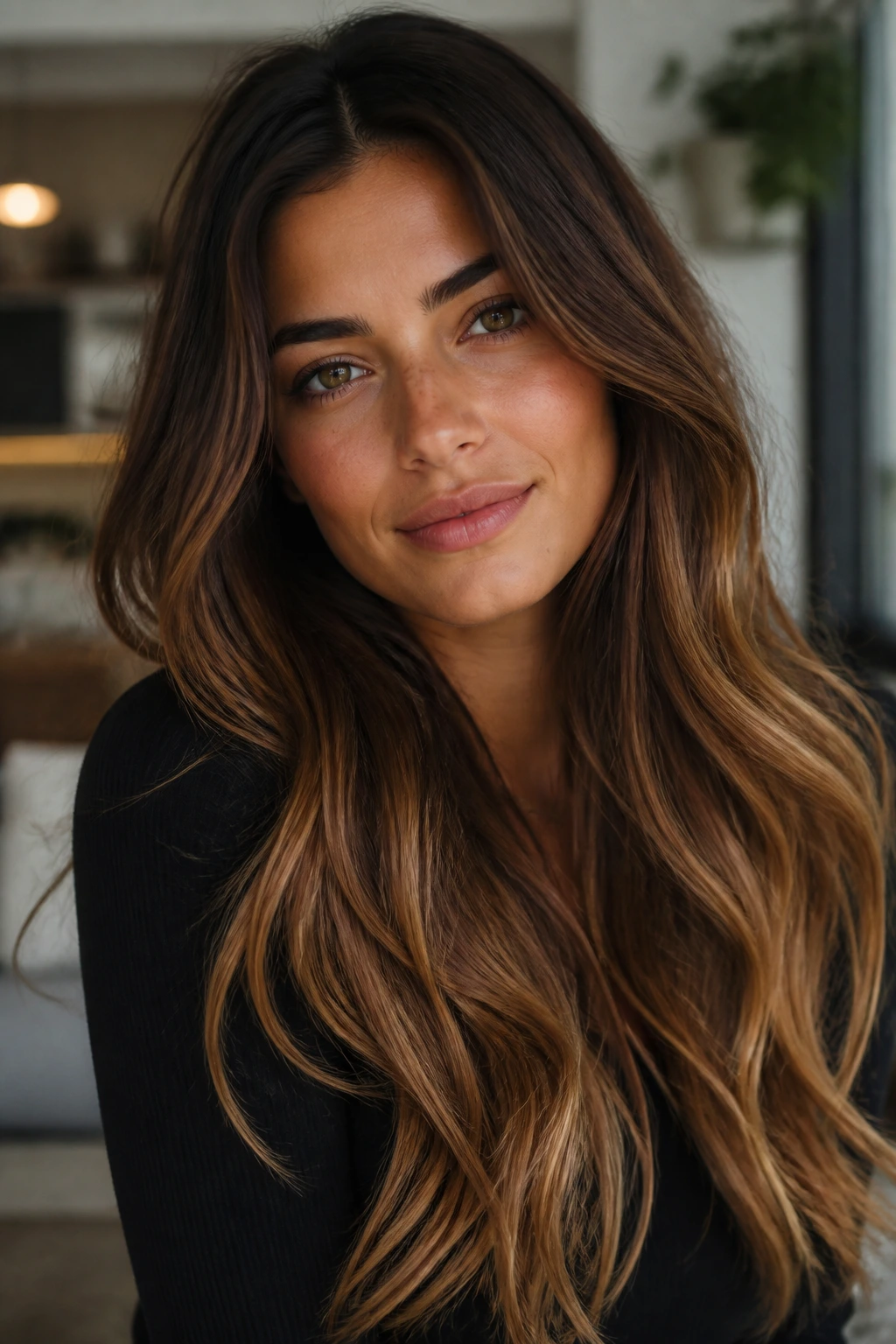
A soft ombre gives olive skin a nice frame because the darker top anchors the face while the caramel lengths create movement below. The gradient matters more than the contrast. You want chocolate at the roots, medium brown through the mids, and honey caramel that turns on gradually near the lower third.
This is a good answer for long hair that tends to look heavy. Ombre lightens the visual weight without forcing highlights all over the head. It also buys you some grow-out time, which is useful if you hate touching up every six weeks.
What I like most here is how forgiving it is. If the ends fade a little, the color still reads as intentional. If they stay a touch darker, you still have depth. Olive skin benefits because the face keeps its contour, and the caramel ends act like a soft spotlight rather than a floodlamp.
15. Sunlit Honey Caramel Curtain Bangs
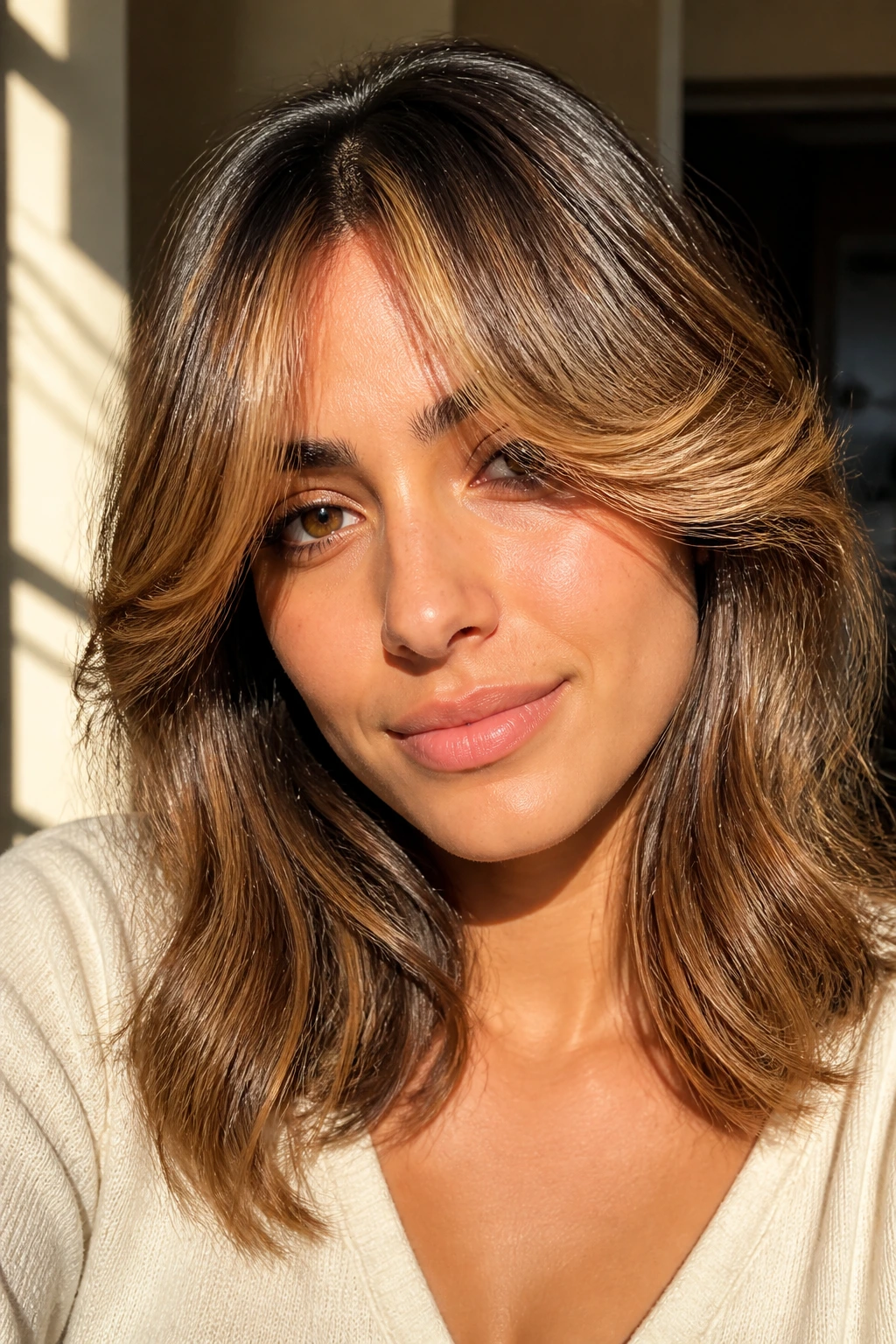
Curtain bangs can make honey caramel look almost unfairly flattering. The bang shape already draws attention to the eyes and cheekbones, and a few lighter strands through the front make that effect stronger.
The trick is not to go too bright. Keep the curtain bangs in the honey-caramel family, not platinum territory, or the face can start to lose warmth. On olive skin, that little bit of gold sitting near the brows and temples does a lot of lifting.
This style works particularly well with shoulder-length cuts and soft layers, because the bangs blend into the rest of the hair instead of sitting there like an add-on. If you wear your hair half up often, the front pieces stay visible and the color keeps doing its job. It’s a small detail. Small details are where hair color gets smart.
16. Muted Honey Caramel for Cool Olive Skin
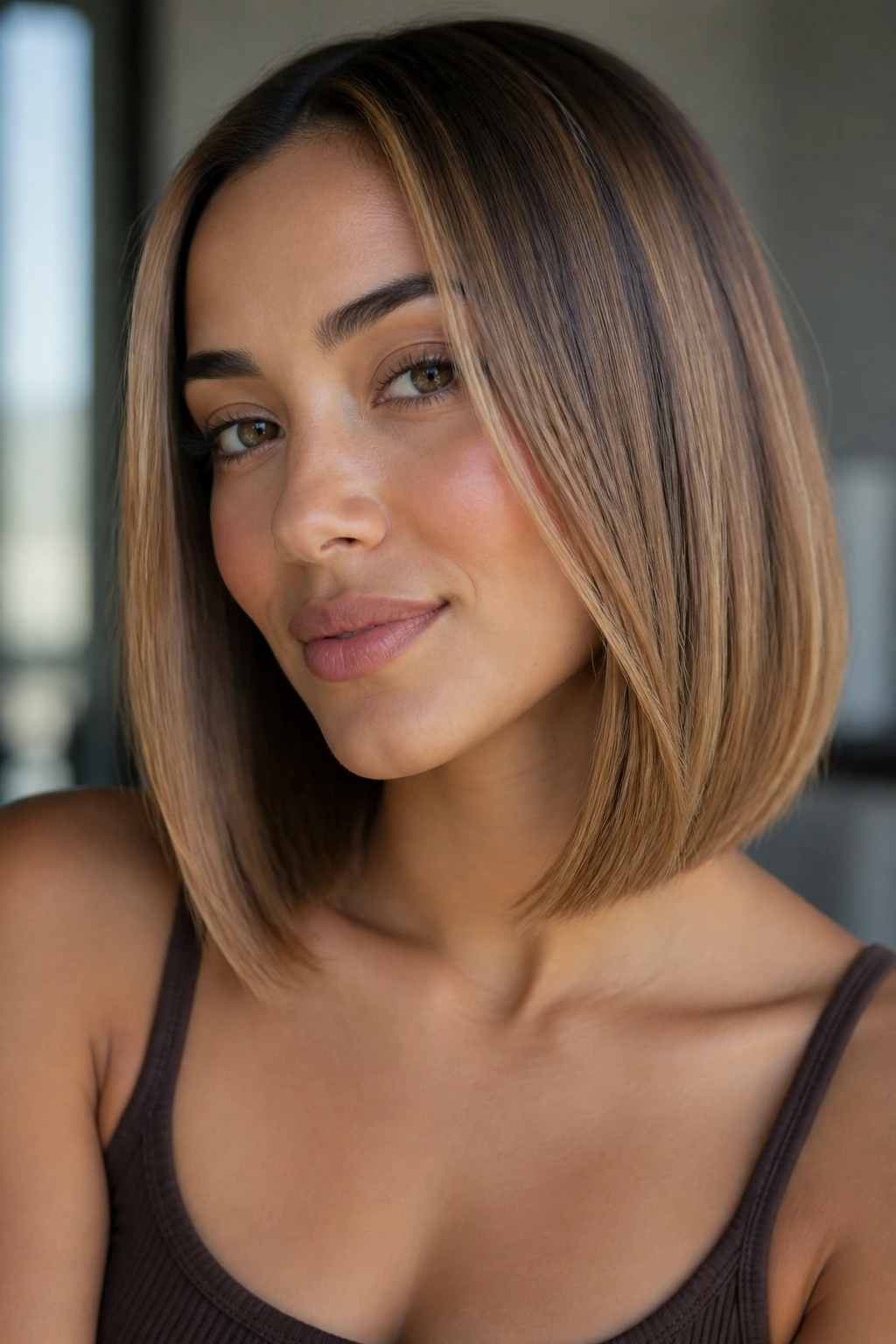
If your olive skin leans cool, the bright-gold versions can misbehave. They often go too yellow and make the complexion look a bit tired. A muted honey caramel — more beige, more soft gold, less orange — is the safer and better-looking choice.
If your olive skin reads cooler
- Ask for a beige toner or neutral gloss.
- Keep the base soft brown, not reddish brown.
- Skip chunky yellow highlights near the face.
- Leave some smoky depth at the root.
That muted finish still gives you warmth, but it keeps the warmth under control. I like it on straight hair and sleek bobs because the tone reads cleanly. On cooler olive skin, clean is the key word. You want glow, not heat.
17. High-Contrast Honey Caramel on Black Brown Hair
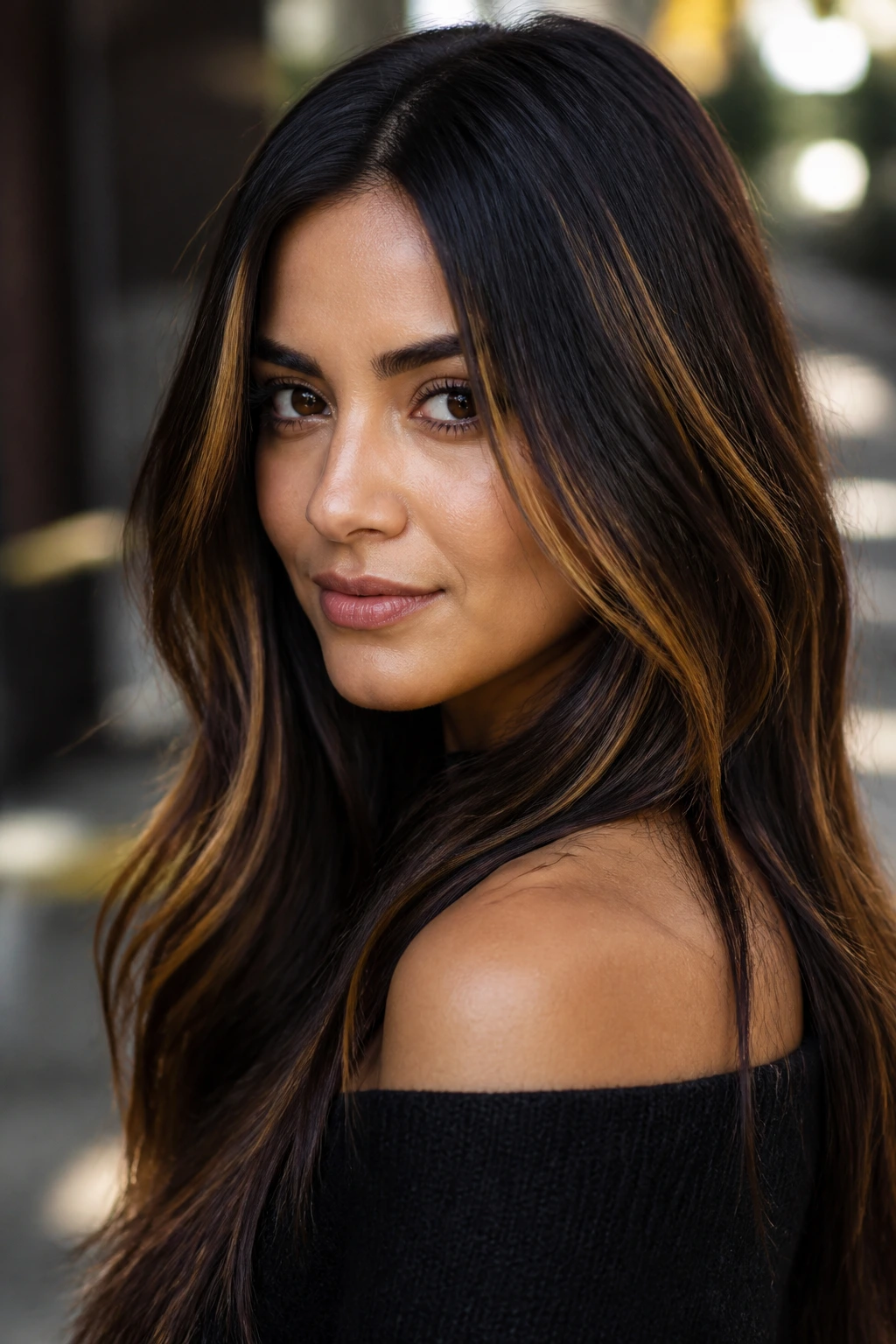
Black brown hair can carry honey caramel in a way lighter brunettes can’t. The contrast is sharper, and that can be dramatic in a good way if the caramel pieces are kept narrow and glossy.
The danger is obvious: too much orange, and the contrast turns harsh. On olive skin, especially deeper olive, a better choice is a controlled caramel that sits closer to amber-beige than pumpkin gold. The darker base protects the color from getting busy.
This style likes long layers or a shaggy cut where the light pieces can break up over movement. If the hair is all one length, the contrast can feel blocky. A few face-framing accents near the cheekbones help soften the look and keep it flattering. It’s a bolder choice, but not a reckless one when it’s done well.
18. Honey Caramel Sombre for Low-Maintenance Wear
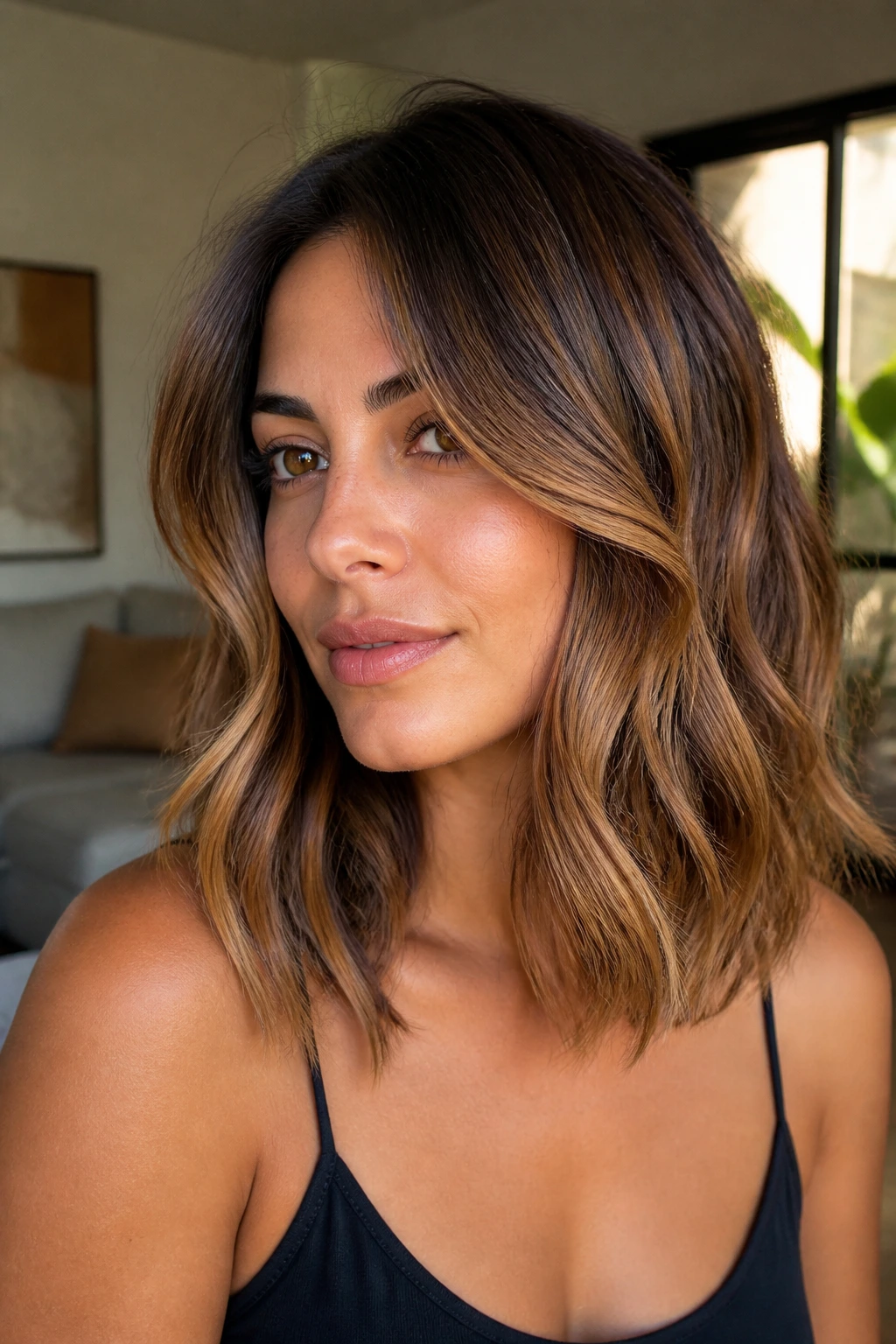
Sombre — the softer cousin of ombre — is where honey caramel gets quietly smart. The lightening is gentle, the transition is blurred, and the grow-out is easy on the eyes. For olive skin, that softness can be a real advantage because the color never gets a chance to overstate itself.
This is the choice for people who want dimension but don’t want obvious highlight lines. Keep the end lightness close to one or two shades above the midlengths, not five shades above. That tiny difference is enough to wake up the hair without making the color look forced.
The finish should be glossy, not dry. Sombre can look a little dull if it’s not toned correctly, especially on medium olive skin. A clear gloss or beige-gold glaze keeps the edges soft and the movement visible. If you’re tired of high-maintenance color, this one is a sensible favorite.
19. Face-Lifting Honey Caramel Layers
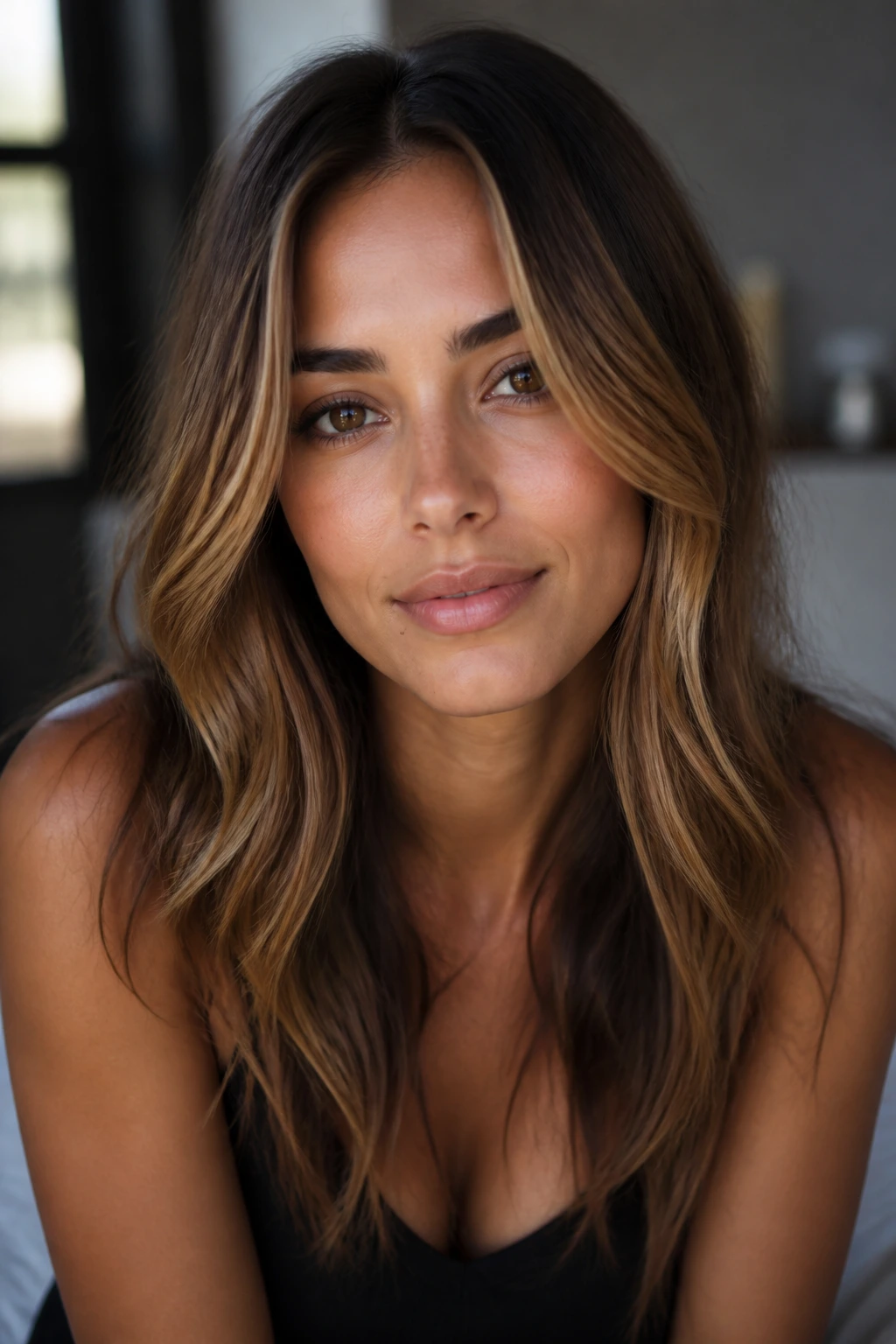
This is less about the exact shade and more about where the color sits. Face-lifting layers use the honey caramel pieces to guide the eye upward and inward — around the temples, cheekbones, and jawline.
That placement works because olive skin usually benefits from brightness that isn’t spread evenly everywhere. You don’t need light all over. You need it where the face naturally wants shape. A few well-placed ribbons through the front layers can do more than twenty scattered highlights in the back.
Where to place the brightest pieces
- Just below the part line for a soft top lift.
- Around the cheekbone for movement near the face.
- A few lower ribbons to keep the ends from feeling heavy.
This looks especially good on layered cuts with blowouts or loose bends. The lighter pieces catch the curve of the cut and pull attention to the face in a clean, flattering way. It’s subtle. It works because it’s subtle.
20. Beige-Honey Caramel Blend for Neutral Olive Skin
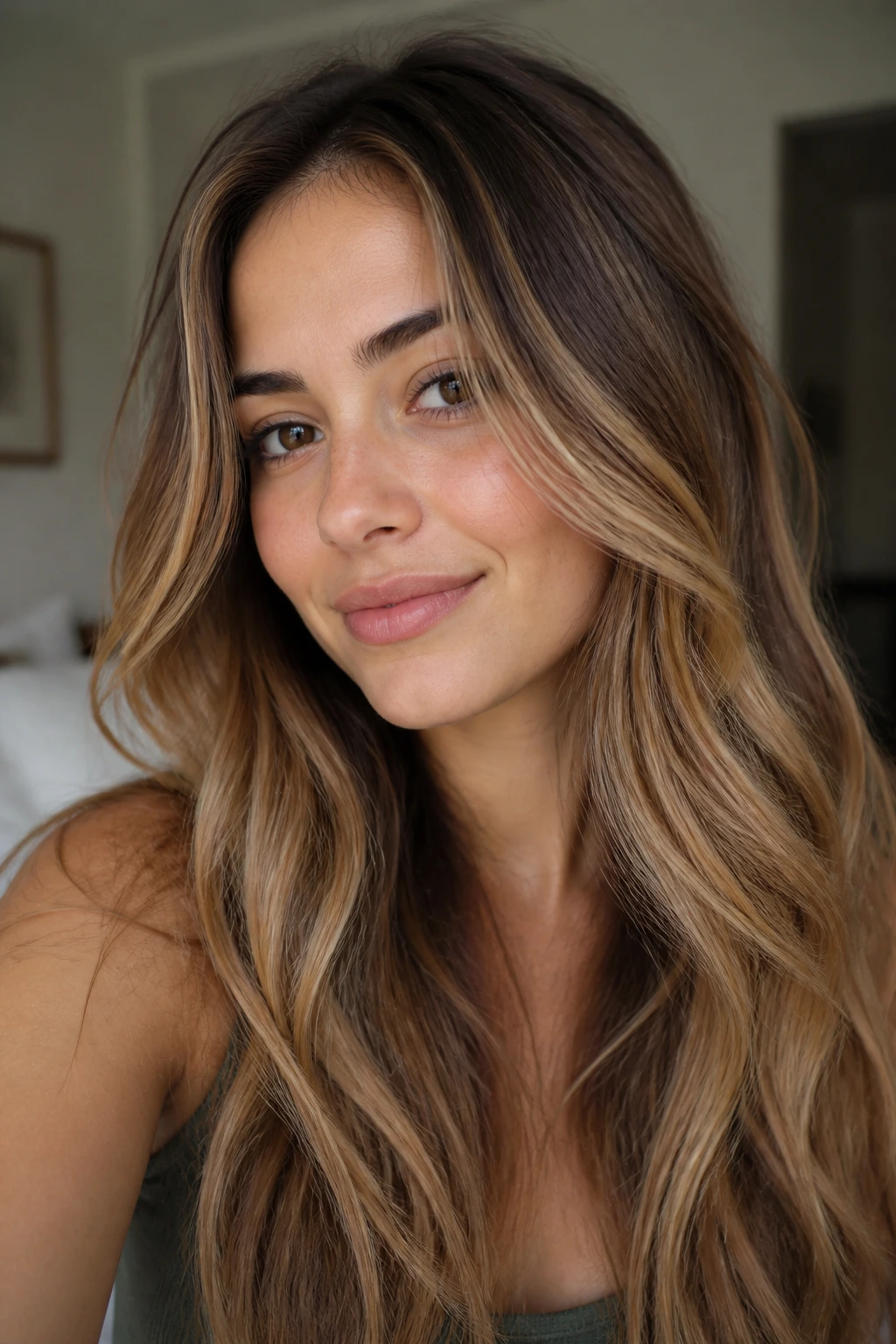
Neutral olive skin is the easiest to overcomplicate. Too warm and it looks golden in the wrong way; too cool and it goes flat. A beige-honey caramel blend solves that by splitting the difference.
The base should stay a soft medium brown, then the lighter pieces can drift between beige and honey depending on where they sit. Around the face, a touch more beige keeps things fresh. Lower down, a touch more honey adds shine and movement. That mixed finish can look incredibly natural, especially in daylight.
This is a shade for people who don’t want their hair to announce itself before they walk into the room. The color should be noticed, not identified from across the street. If your wardrobe leans cream, denim, taupe, black, or muted green, this is one of the easiest honey caramel shades to live with.
21. Honey Caramel with Glossy Mushroom Brown Base
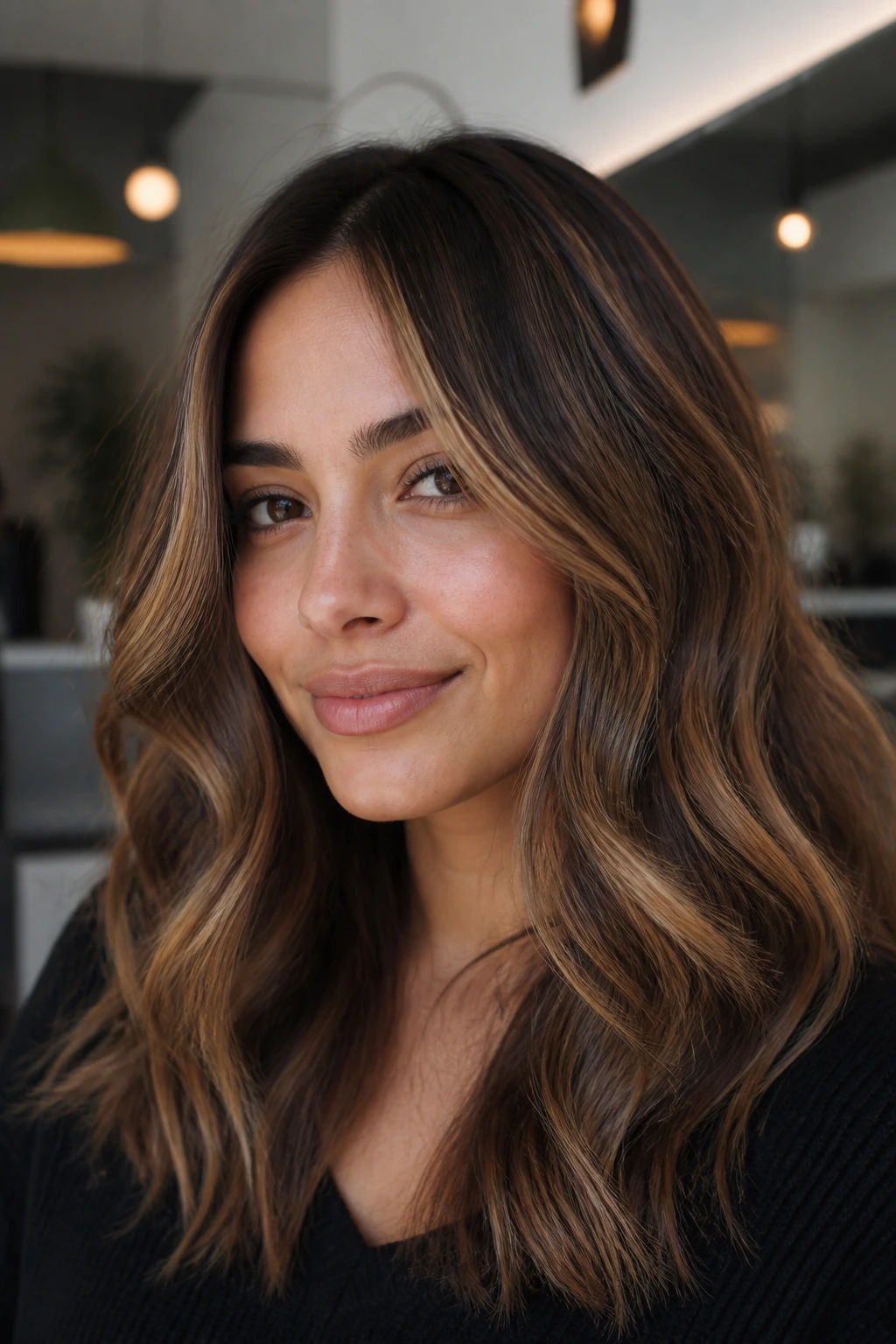
Mushroom brown has a cooler, taupe-heavy base, and that makes it a strong partner for olive skin that tilts cool or muted. Add honey caramel on top, and the whole thing starts to breathe.
The point is contrast, but not the loud kind. Mushroom brown keeps the look grounded, while the honey pieces bring in just enough warmth to keep the face from fading. This is one of the few caramel ideas that can look both soft and modern at the same time.
It does ask for careful toning. If the honey gets too yellow, it fights the mushroom base. If the brown turns too flat, the whole look loses life. The right version feels very textured, especially on long layers or a collarbone cut. It’s a good match for anyone who likes smoky makeup, silver jewelry, and muted clothing tones.
22. Rich Walnut Brown with Caramel Microlights
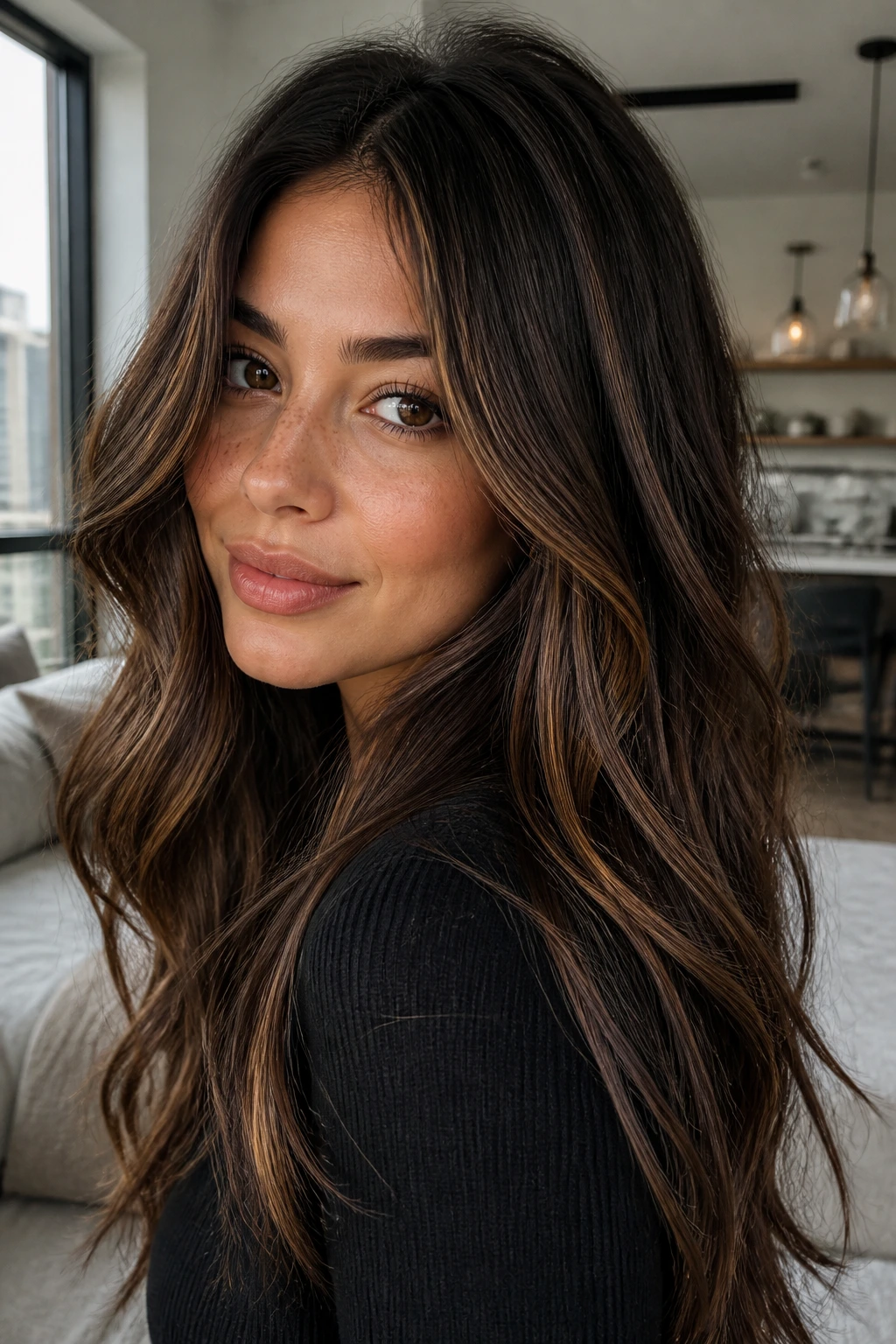
Microlights are tiny highlights, and they matter more than people think. On walnut brown hair, tiny caramel strands create a shimmer effect that reads expensive because it’s so fine. No striping. No loud contrast. Just depth.
Olive skin likes this because the color doesn’t overwhelm the face. Instead, it adds small reflections that show up when you move. If you’ve ever looked at hair and thought, “Something about this is pretty, but I can’t tell what,” that’s the microlight effect working.
This is a smart option for fine hair, too. Large highlights can make fine strands look thinner by comparison. Microlights keep the surface busy enough to feel rich without revealing every scalp line. A neutral gloss over the top helps everything settle into one polished finish.
23. Honey Caramel Money Piece on Long Layers
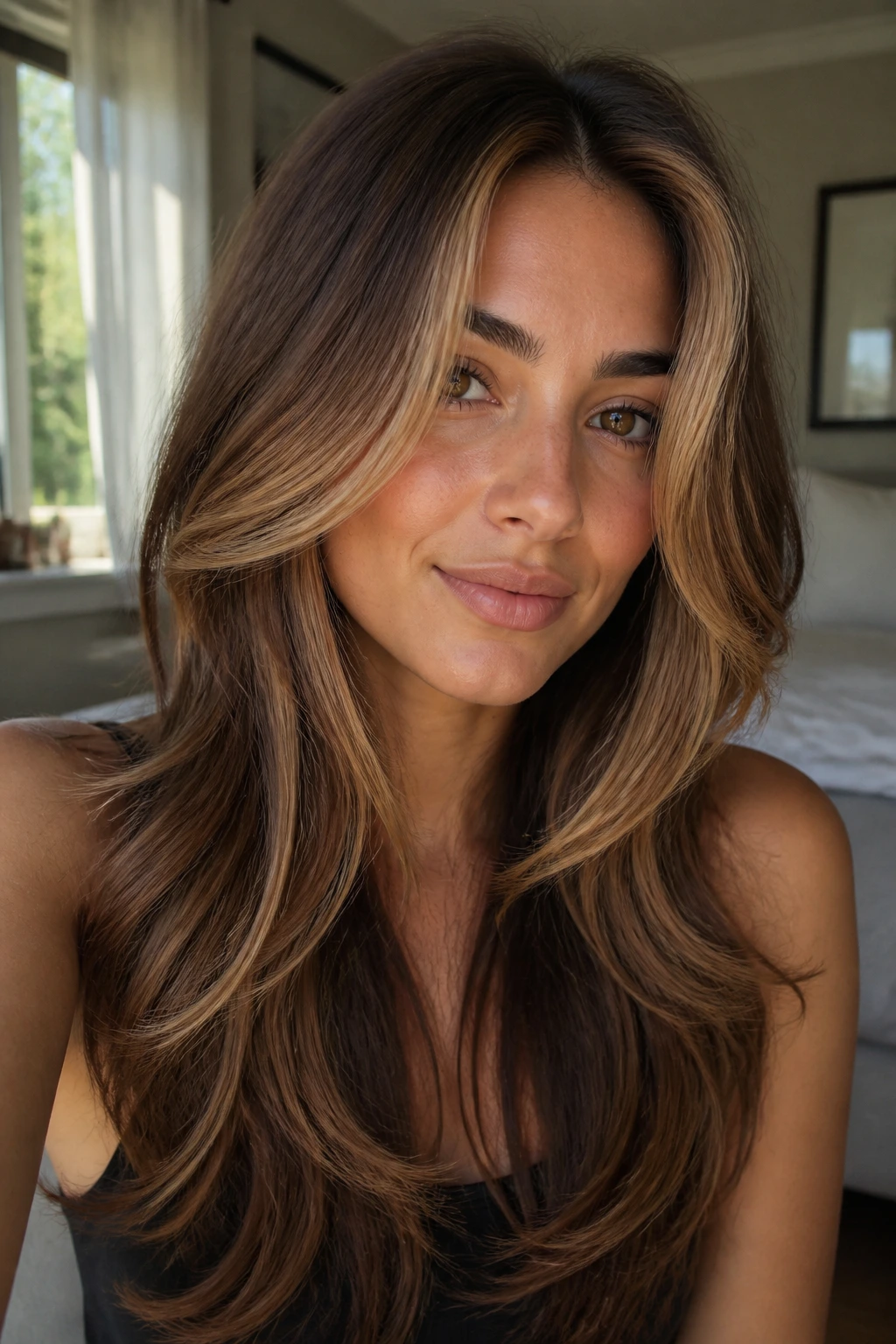
Long layers are useful because they let the color travel. A money piece on long hair gives you a bright frame in front, then honey caramel ribbons that fall through the rest of the lengths without looking repetitive.
The face frame should start where the cheekbone wants attention, not right at the roots. That keeps the look soft and flattering on olive skin. If you go too light too close to the scalp, the color can look disconnected from the rest of the hair. And yes, that little detail matters. A lot.
This version is a nice middle ground between full highlight commitment and tiny accent pieces. It looks good with hair worn down, half-up, or pinned back. If your face is longer, keep the money piece a bit wider. If your face is rounder, keep it narrower and let the layers do more work.
24. Warm Honey Caramel Shag
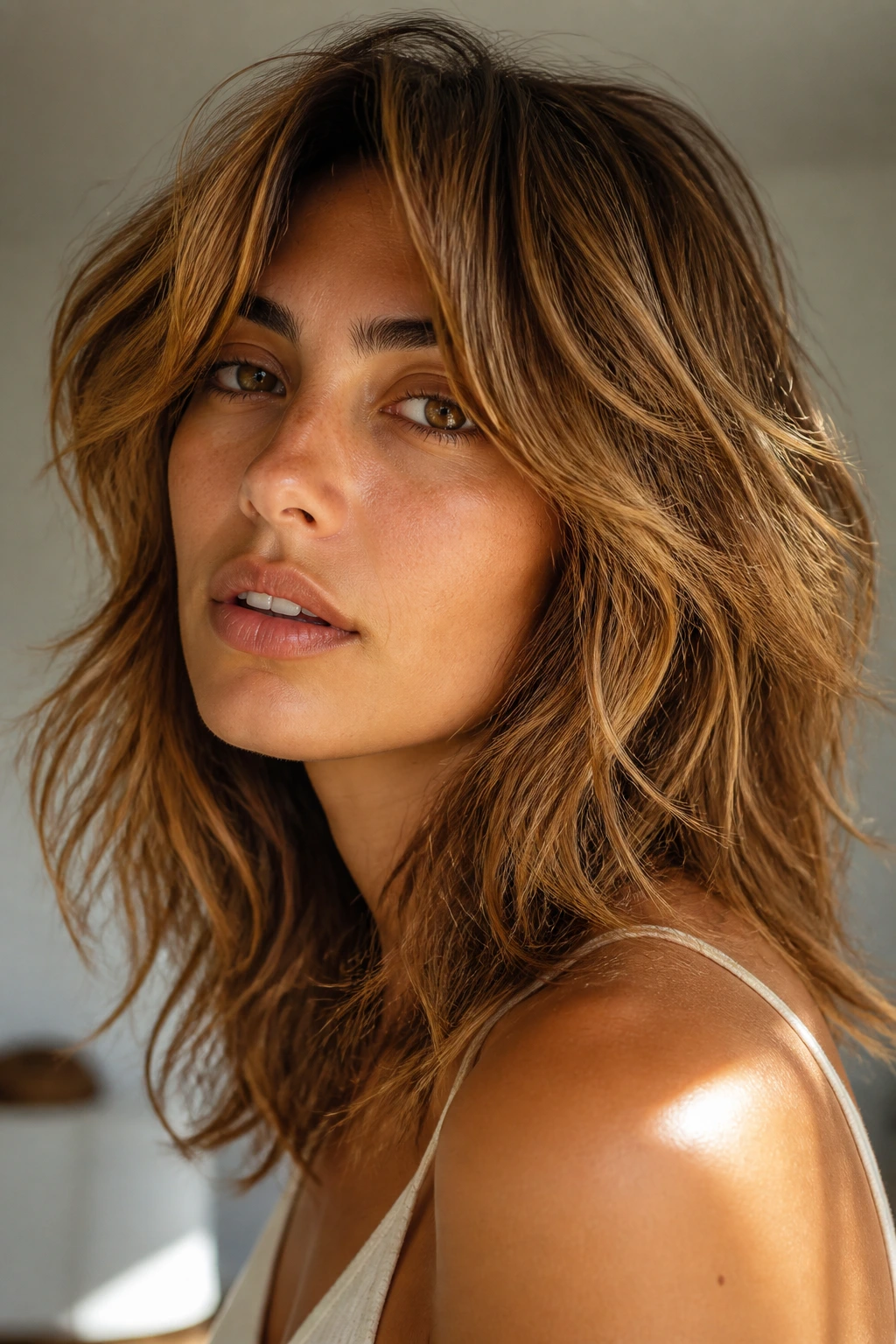
A shag gives honey caramel a place to move. The choppy layers make the color feel casual and piecey, which is useful because too much polish can make caramel look stiff on olive skin.
This cut likes texture cream, not heavy oil. You want the layers separated enough to catch the light, with the lighter pieces sitting on the surface rather than buried in the bulk of the hair. Honey caramel reads especially well here because the shag’s messiness gives the warmth a lived-in quality.
I’d call this one the most personality-driven option in the group. It looks best when it isn’t trying to be perfect. If your olive skin leans warm, the tone can go a little richer. If you’re cooler olive, keep the caramel beige and the base slightly smoky. Either way, the cut carries a lot of the style.
25. Creamy Honey Caramel Curls with Shadow Root
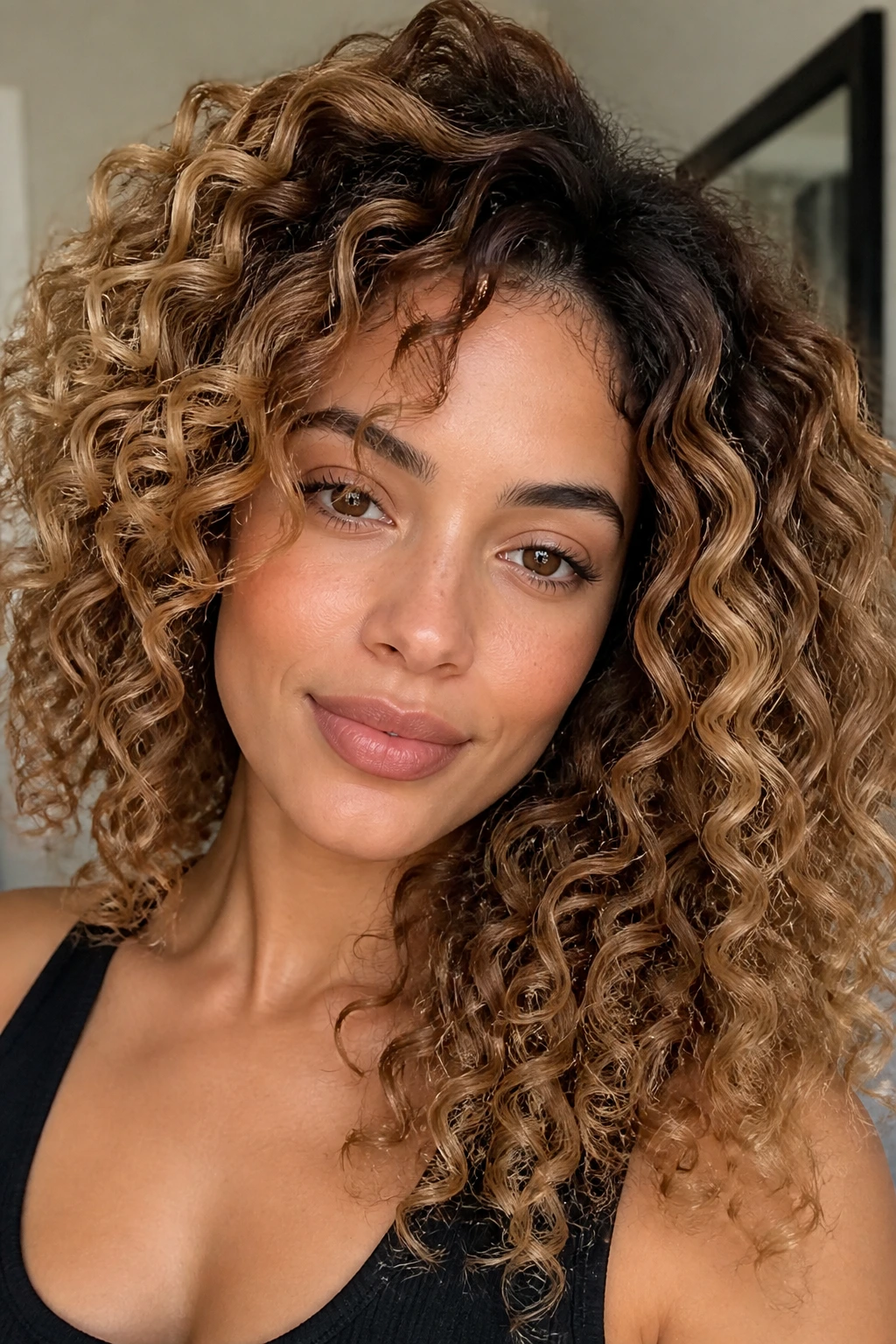
Creamy honey caramel curls with a shadow root feel like the polished finish of the whole group. The root keeps the style grounded, and the creamy caramel on the curls turns each coil or wave into its own tiny highlight.
The shadow root matters because curls can expand the brightness faster than straight hair does. Without that anchor, the color can float and look too pale on olive skin. With it, the curls keep shape and the lighter pieces feel soft instead of scattered.
This is the version I’d point curly-haired readers toward first if they want visible color but hate constant touch-ups. The grow-out is kinder, the shine lasts longer, and the tone can be adjusted toward beige-gold or amber-beige depending on your skin. When the gloss is right, the whole head looks like it has depth from every angle.
How to Read Your Olive Undertone Before You Pick a Shade
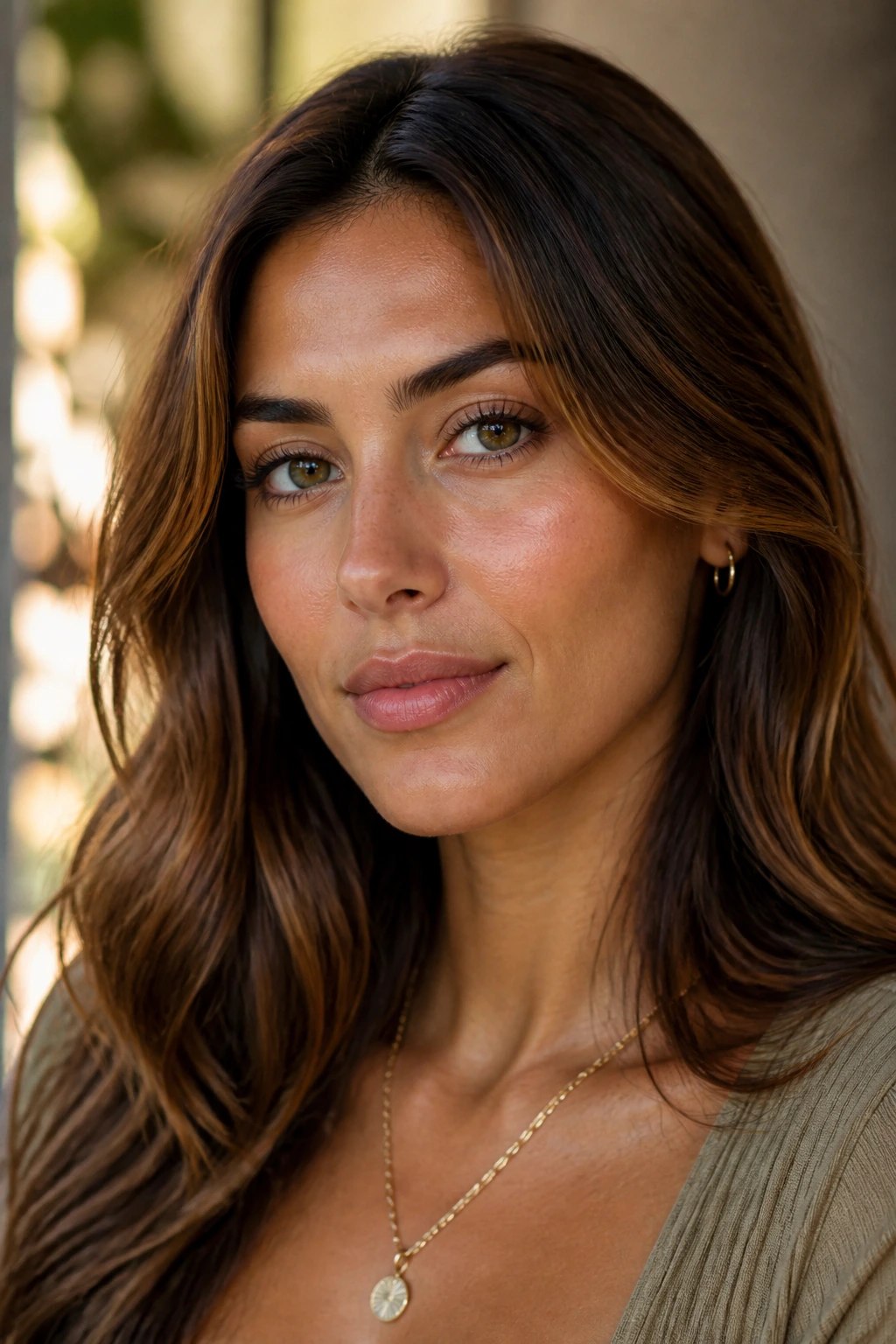
Not all olive skin behaves the same way. Some olive complexions lean warm and take gold beautifully. Others lean cool or muted and need more beige, mushroom, or smoky brown in the mix. That difference matters more than hair color charts usually admit.
The easiest way to sort it out is to look at your face in daylight, not in bathroom bulbs. If your skin looks clearer with gold jewelry and warm cream shirts, you probably want a warmer honey caramel. If silver jewelry, soft white, and dusty rose make your skin look calmer, lean toward beige-honey or mushroom-brown blends. Neutral olive can float between the two, which is both a gift and a trap. It gives you more options, but it also means a colorist can steer the tone too warm if you do not speak up.
I’d be careful with anything that’s too yellow on olive skin. Yellow can make the skin look greenish. Too much ash can make it look flat. The sweet spot is usually a gloss that softens the highlight, a root shade that stays one or two levels deeper, and a ribbon placement plan that keeps brightness around the face instead of everywhere at once. That’s how honey caramel keeps its shape.
Essential Tools for Color Day and Maintenance
- Daylight mirror or window light: Hair color shifts a lot under indoor bulbs, so check the shade in natural light before you decide it’s too warm or too cool.
- Salon consultation photos: Bring 2 or 3 examples — one for placement, one for tone, one for finish. One photo is never enough.
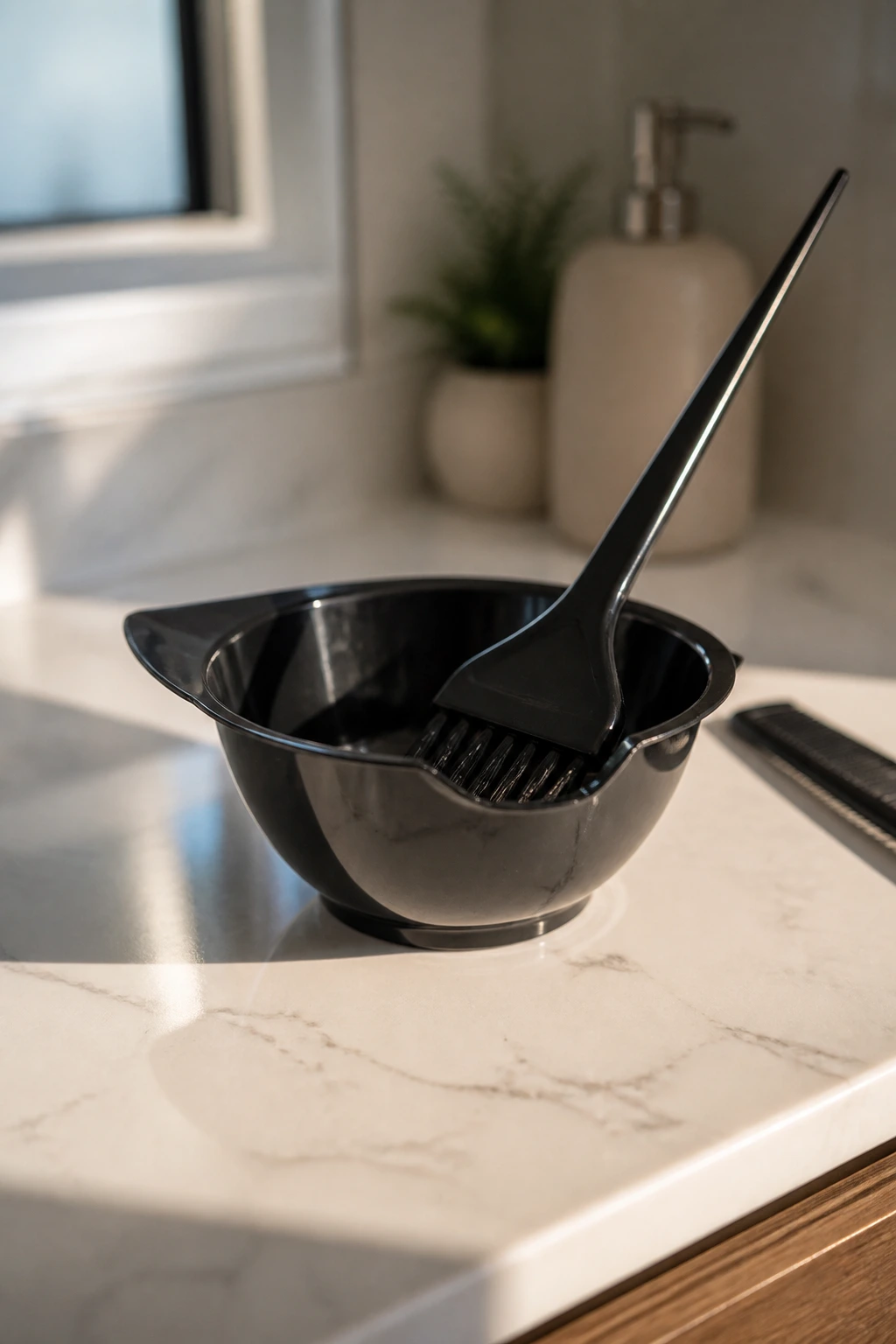
- Tint brush and bowl: Useful if you’re doing a gloss or root melt at home, or if you want to apply a toning mask evenly.
- Sectioning clips: Hair color placement gets messy fast without clean sections, especially for face-framing pieces or microlights.
- Wide-tooth comb: Helps spread conditioner, mask, or gloss without ripping through highlighted strands.
- Color-safe shampoo and conditioner: Sulfate-free formulas help the honey caramel stay warm and shiny instead of dull and stripped.
- Blue or purple shampoo: Blue helps when brunette caramel pulls orange; purple helps when lighter pieces go too yellow. Use lightly, not every wash.
- Heat protectant: Lightened hair shows heat damage fast, especially around the face where the color is brightest.
- Microfiber towel or T-shirt: Less friction means less frizz and less fade along the lighter strands.
- A good deep conditioner or bond treatment: Especially useful if you’ve lifted dark hair to caramel levels.
What to Ask for at the Salon or Look For in At-Home Color
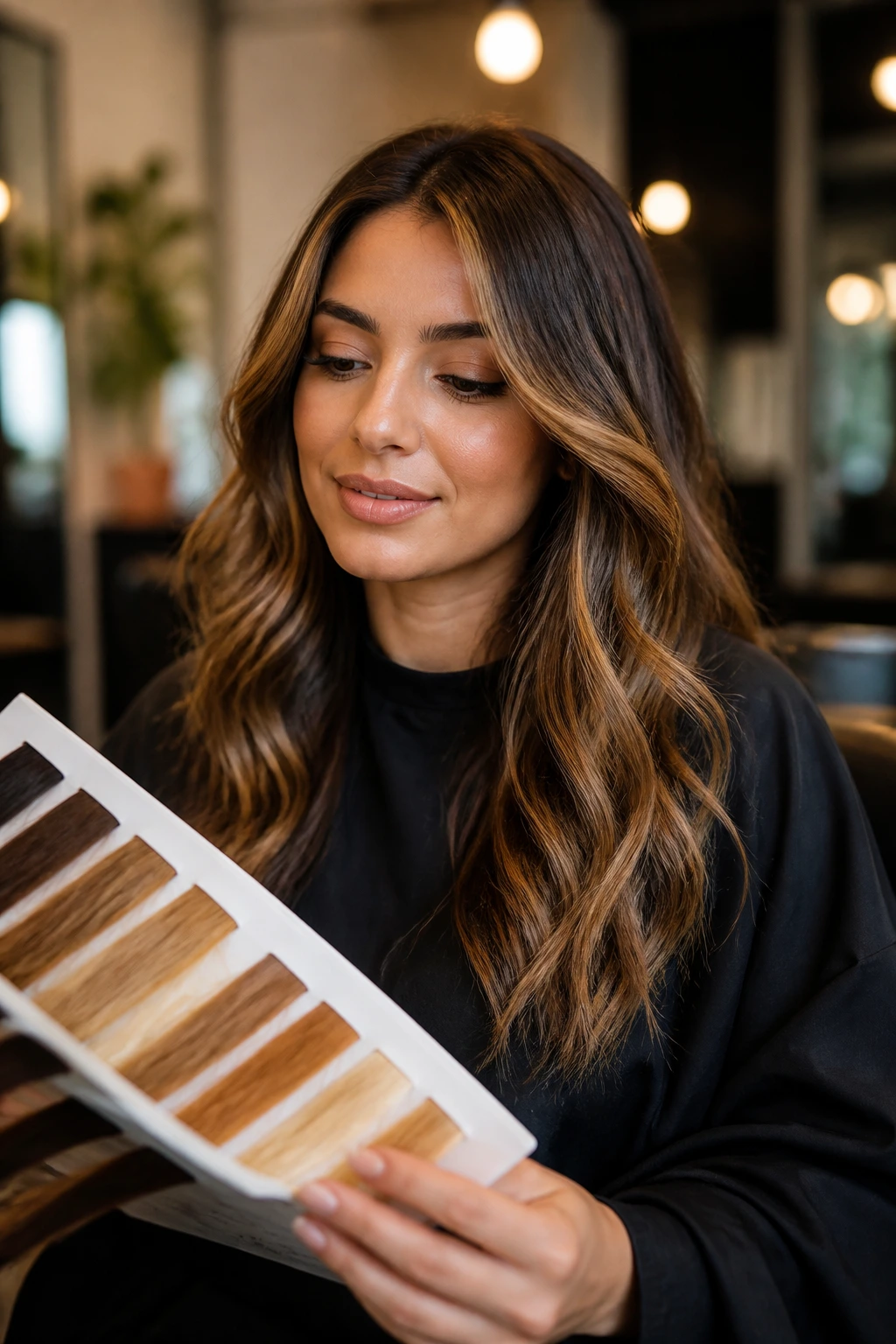
Color jargon can get slippery, so bring specifics. Ask for honey caramel, but also say whether you want it beige, golden, amber, or smoky. That one word can change the entire result. A beige-gold gloss on olive skin is a very different animal from a straight-up yellow gold glaze.
If you’re going lighter, keep the lift realistic. A brunette base usually looks best when the lightest pieces land around level 7 or 8, not pale blonde. That range gives you caramel warmth without pushing the hair into lemony territory. If your hair is naturally dark, ask whether the color needs a pre-lighten first or whether a demi-permanent gloss is enough. You do not want to guess on that part.
At home, strand test first. Always. Dark hair, porous hair, and previously colored hair all behave differently, and honey caramel is the kind of shade that can surprise you by turning brassier than the box picture. If you color at home, use the smallest believable shift first, then build more warmth later if needed. That’s safer than trying to drag the whole head lighter in one shot.
How to Wear These Shades So the Color Reads Intentional
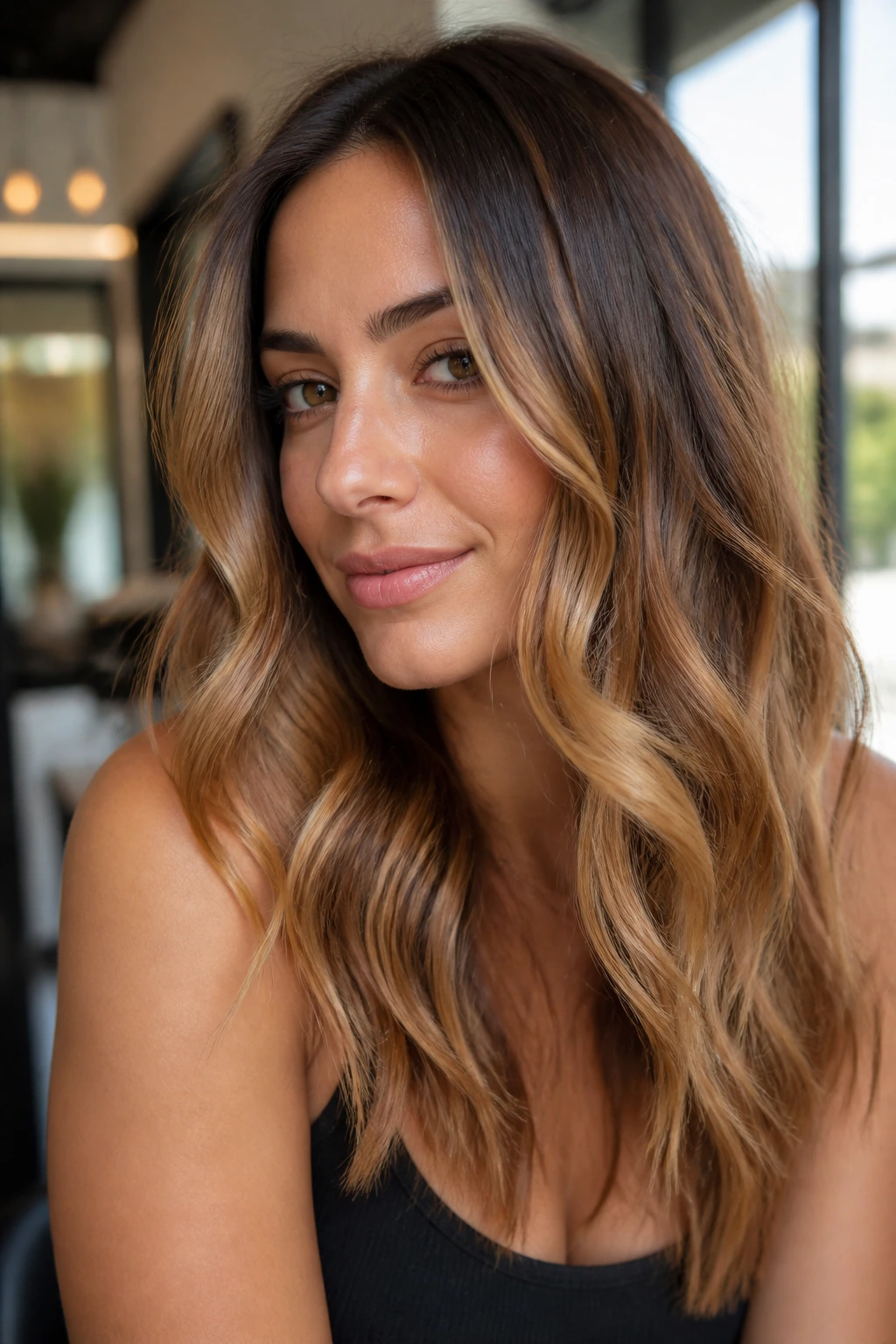
Presentation: Loose waves, soft bends, or a clean blowout show honey caramel best because the lighter pieces can catch light at different angles. A center part gives symmetry; a slight off-center part gives more lift at the crown.
Accompaniments: Olive skin usually likes rich neutrals — cream, camel, deep green, black, chocolate, muted rose, and warm taupe. Gold jewelry tends to echo the caramel tones, while smoky eye makeup keeps the look from turning too sweet.
Portions: If your hair is fine, keep the brightest pieces to about a third of the visible surface so the color doesn’t look stringy. If your hair is thick, you can add more ribbons and still keep the look soft. The goal is enough contrast to define the cut, not so much that the whole head starts shouting.
Beverage Pairing: This sounds silly, but the mood matters. A warm latte, cinnamon tea, or even a sparkling citrus drink matches the same honey-caramel feel — soft, bright, and a little bit glossy.
Small Tweaks That Make the Color Look Richer
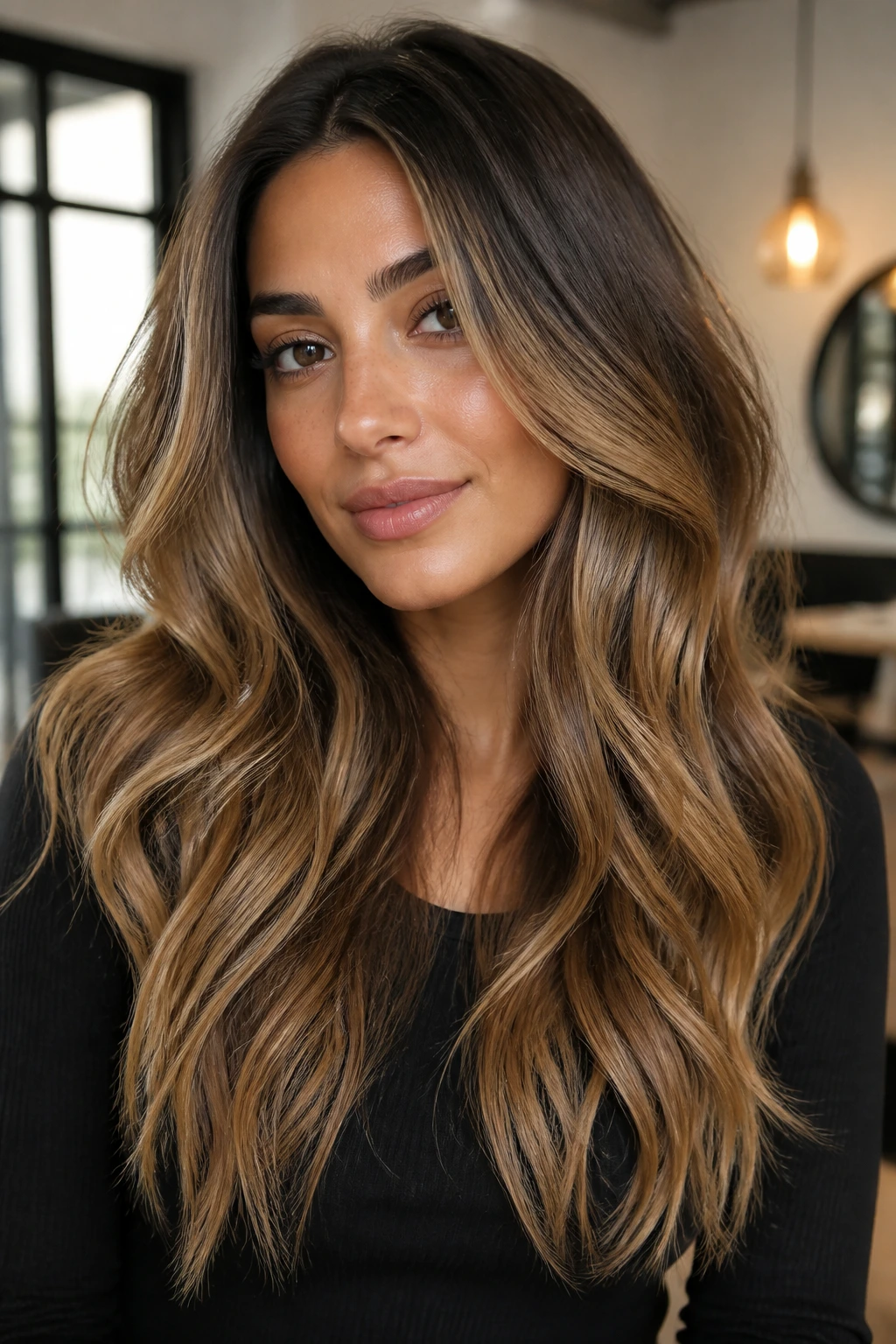
Tone Enhancement: A clear gloss or beige-gold demi glaze every 4 to 8 weeks keeps the caramel from drifting too orange or too pale. I prefer gloss to more lightening when the hair is already where it should be.
Customization: Add a few lowlights if the honey starts to dominate the face. A tiny bit of mocha or walnut in the mix can make olive skin look more defined, especially around the temples and underneath the top layer.
Serving Suggestions: Wear the hair with texture. Even a polished blowout should have a bend through the mids or a little flip at the ends. Honey caramel gets flat fast when every strand lies the same way.
Make-It-Yours: For curly hair, ask for painted ribbons that follow the curl pattern instead of straight foils. For straight hair, ask for finer slicing near the face. For gray blending, ask for a beige-brown base with scattered caramel lights instead of full coverage.
Common Mistakes That Make Honey Caramel Fall Flat
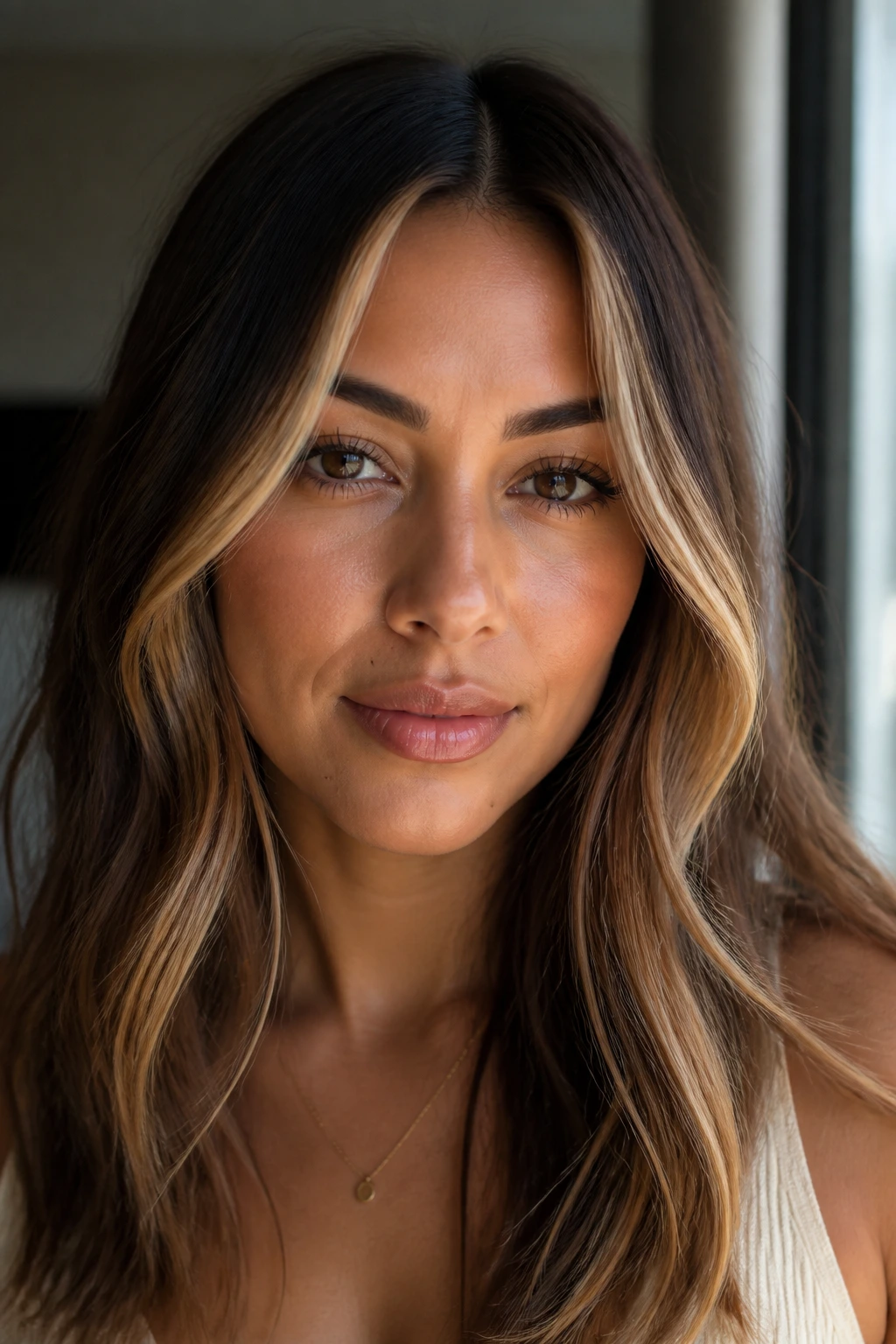
Going too yellow: Yellow-gold highlights can make olive skin look sallow or greenish. The fix is a beige or soft amber toner, especially around the face.
Lifting the front pieces too high: When the money piece goes too blonde, the face loses warmth and the contrast gets harsh. Keep the face-framing strands within the honey-caramel family unless your skin is very warm.
Ignoring the root: A flat, one-tone blonde strip from root to tip can make the hair look overprocessed and the skin look dull. A shadow root or deeper base keeps the color grounded.
Skipping maintenance: Honey caramel is only gorgeous when the gloss stays clean. If the hair turns brassy or dry, the whole shade reads cheaper. Use heat protection, tone when needed, and do not wash it to death.
Picking the wrong undertone on purpose because the photo looked pretty: Photos lie. Lighting lies. If your skin is muted olive, a bright copper caramel can look wild in person even if it looked gorgeous on a screen.
Variations and Adaptations to Try
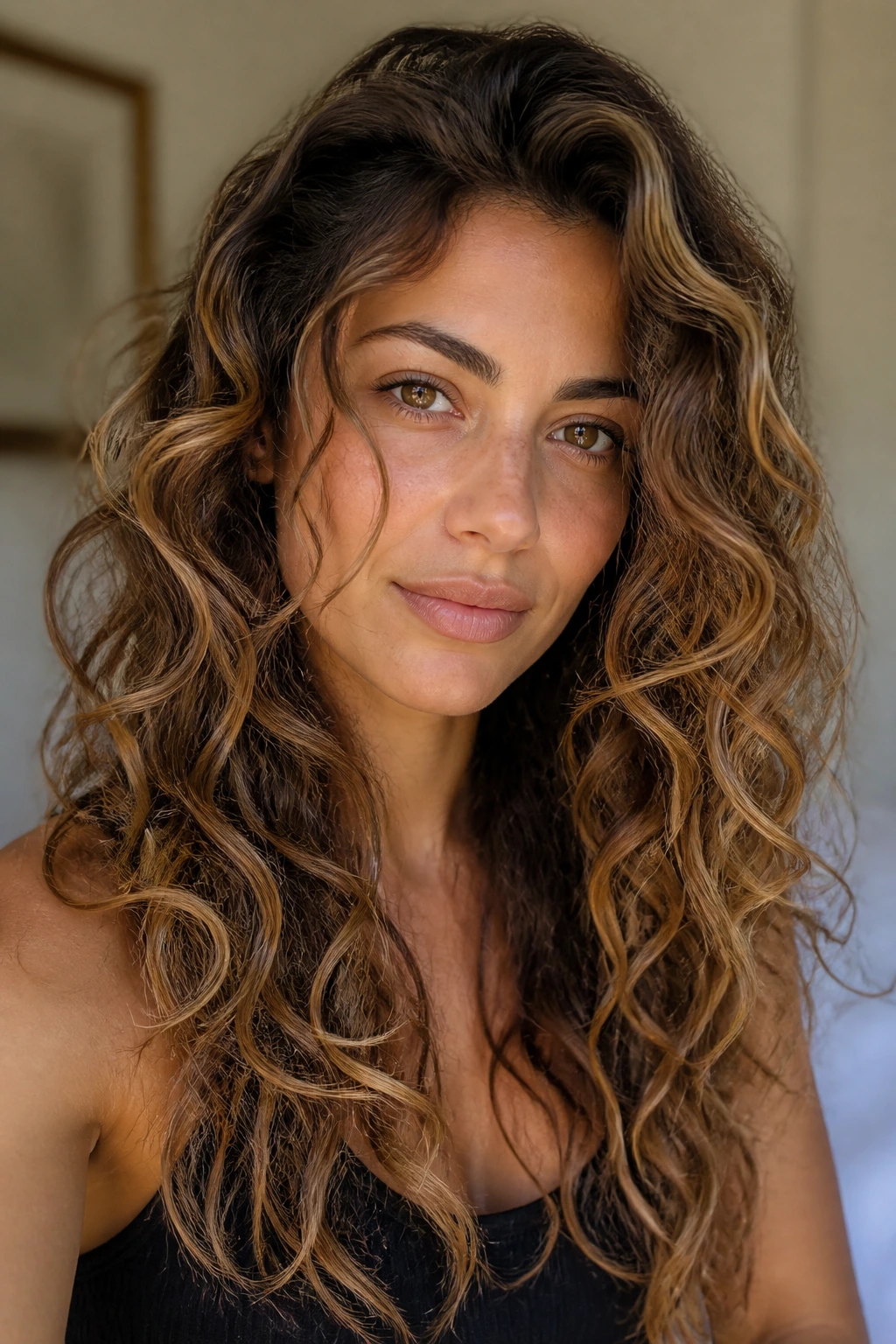
The Cool Olive Edit: Swap bright gold for beige-honey, then keep the base slightly smoky. This version is quieter and usually more flattering on skin that leans gray-green instead of golden.
The Curly Ribbon Upgrade: Ask for painted ribbons that follow your curl pattern and skip chunky highlight blocks. The color will read softer, and the curls will hold the caramel movement better.
The Gray-Blend Version: Use a neutral brown base with honey caramel lights woven around the part and temples. This is one of the smartest ways to soften gray without going full coverage every four weeks.
The Low-Maintenance Sombre: Keep the roots deep, ease the mids lighter, and stop the lightness before the ends get too blonde. It grows out quietly and usually stays flattering longer than a high-contrast highlight job.
The High-Drama Gloss: Build a darker brunette base, then add thicker caramel ribbons and finish with a high-shine glaze. Best for people who want the color to be visible from across the room but still smooth.
Keeping the Tone Fresh Between Appointments
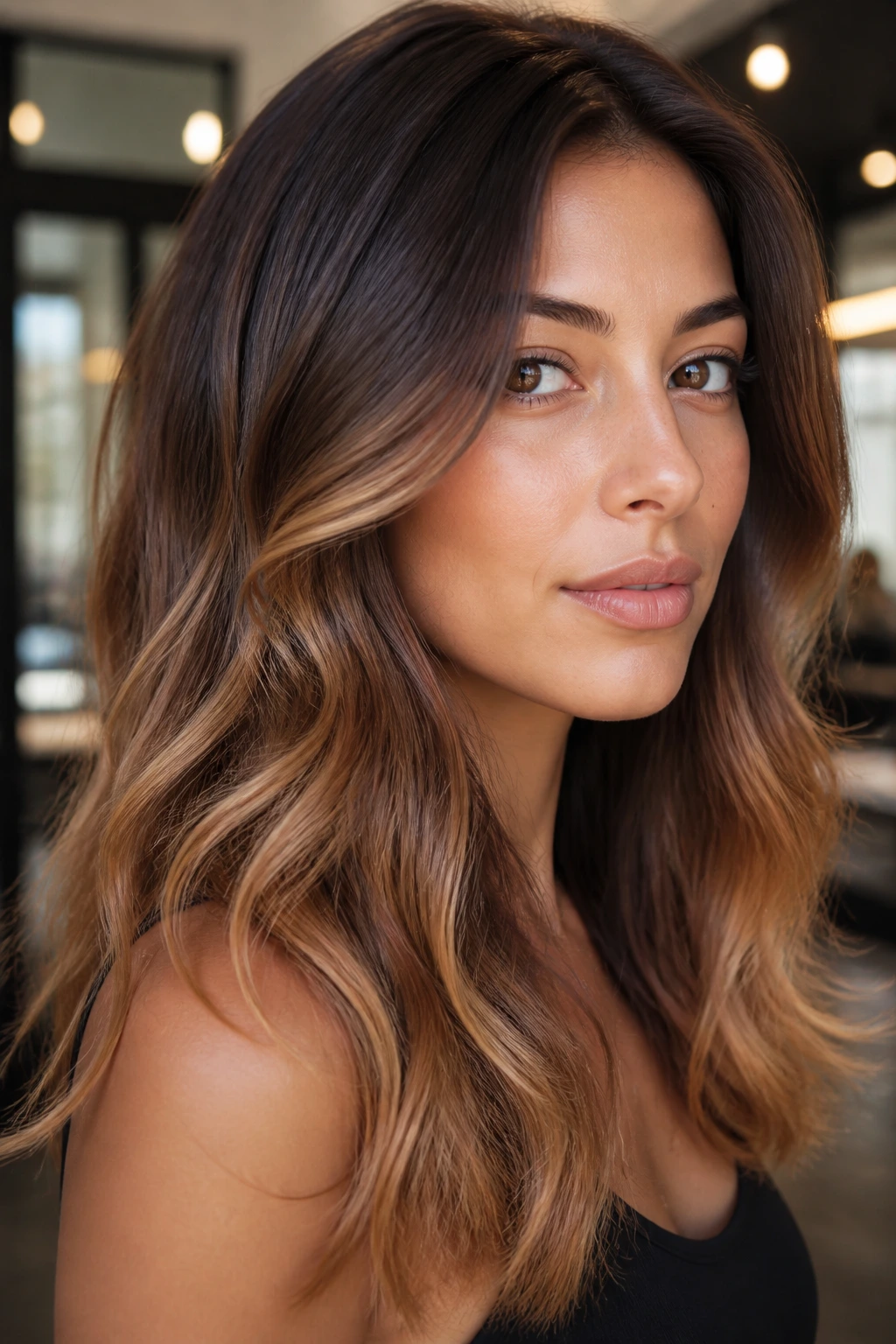
Honey caramel lasts longer when you stop treating it like regular brown hair. Wash it less often if you can, and when you do wash it, use lukewarm water instead of hot water. Hot water opens the cuticle too much and lets the warm pigment slide out faster.
A color-safe shampoo twice a week is often enough for most people. If the highlights are bright, use a purple shampoo sparingly when they start to go yellow. If the brunette base is drifting orange, a blue shampoo once every week or two can help, but don’t overdo it. Too much blue shampoo can make the hair look dull or smoky in a way you didn’t ask for.
Glosses matter. So do trims. Dry ends make caramel look ragged, and ragged ends make the whole head look lighter than it is. If your hair tends to be porous, a deep conditioner once a week helps the tone stay smoother. And if your roots grow fast, a root smudge or mini-gloss refresh every 6 to 10 weeks usually keeps the whole look tidy without a full redo.
Frequently Asked Questions
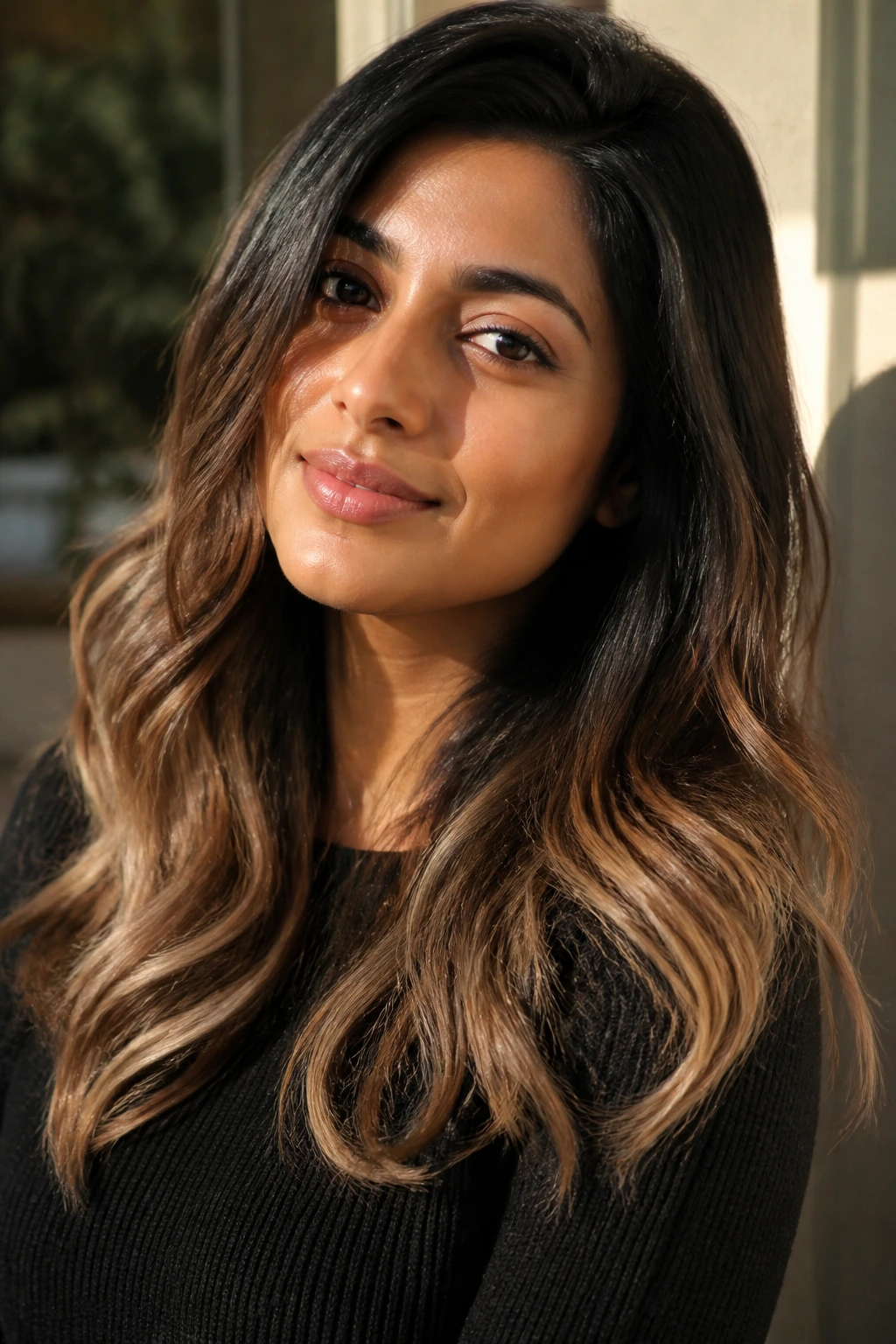
Does honey caramel hair color work on light olive skin?
Yes, but the shade should stay soft. Light olive skin usually looks best with beige-honey or soft gold rather than strong orange caramel, because the lighter skin can make harsh warmth stand out too much.
What if my olive skin leans cool instead of warm?
Choose a muted honey caramel with beige, mushroom, or smoky brown undertones. Cool olive skin usually needs less gold around the face and more neutral depth at the root so the color doesn’t read yellow.
Is balayage better than highlights for olive skin?
Balayage is often easier to wear because the placement is softer and the grow-out is gentler. Highlights can still work, but they need careful toning so the contrast doesn’t get too sharp against olive undertones.
Can I wear honey caramel if my hair is very dark?
Yes, but the best result usually comes from a darker base with caramel ribbons, not a full blonde lift. Very dark hair needs more planning, and the final tone should stay within the brown-gold family or the warmth can look brassy.
How often should honey caramel be toned?
Most people do well with a gloss every 4 to 8 weeks, depending on how porous the hair is and how often it’s washed. If the lighter pieces start turning yellow or orange, tone sooner.
What if the color turns orange after a few washes?
That usually means the tone was too warm to begin with or the hair is pulling brass as it fades. A blue shampoo can help if the orange sits in brown sections, but a salon gloss is the cleaner fix for stronger brassiness.
Will honey caramel cover gray hair?
It can blend gray beautifully, but it usually won’t erase every silver strand unless you go with a permanent base color. For a softer look, ask for gray blending with caramel lights instead of full coverage.
A Shade That Knows Where to Sit
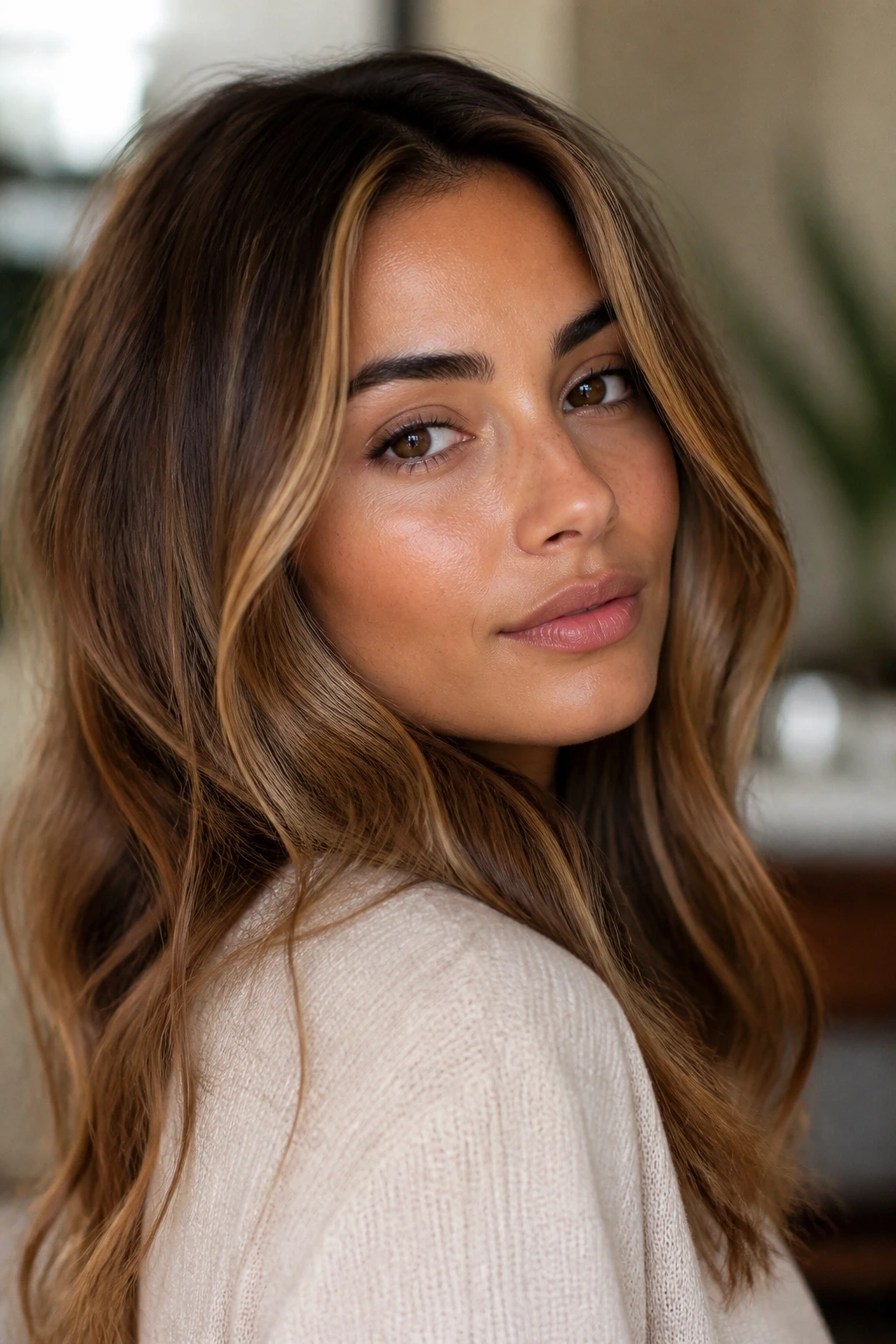
The best honey caramel on olive skin never looks accidental. It has a root that keeps the face grounded, a warm tone that doesn’t turn orange, and enough dimension to move when you do. That’s why the same shade can look soft on one person and muddy on another — placement and undertone do the heavy lifting.
If you’re choosing between two versions, pick the one with a little less gold and a little more beige. Olive skin tends to reward restraint. A glow is enough. You do not need the hair doing cartwheels to get the effect.
And that’s the part I’d keep in mind when you sit down for the appointment: ask for warmth with shape, not warmth with noise. That’s the version that keeps working when the lighting changes, the roots grow out, and the mirror stops being flattering for no reason at all.