



Dark grey hair color ideas for pale skin work best when the grey has smoke in it, not chalk. A flat ash can make porcelain skin look tired in harsh daylight, while charcoal, graphite, and mushroom-grey tones add outline and keep the face from disappearing into the hair.
That balance is the whole game. Pale skin can take dark grey beautifully, but the shade has to do more than sit there looking moody in a bottle photo. It needs depth, a little reflection, and enough undertone to keep the complexion from reading bluish, greenish, or washed out under indoor lights.
The good versions are never one-note. They move. They look softer near the face, denser at the ends, and a touch more expensive when they catch a window or a car mirror. Some of the best looks are barely grey at all until you notice the cool graphite sheen; others are bolder, with blue-black shadows or silver smoke ribbons that make fair skin glow by contrast. The details matter more here than almost anywhere else.
Why These Dark Grey Shades Work on Pale Skin
-
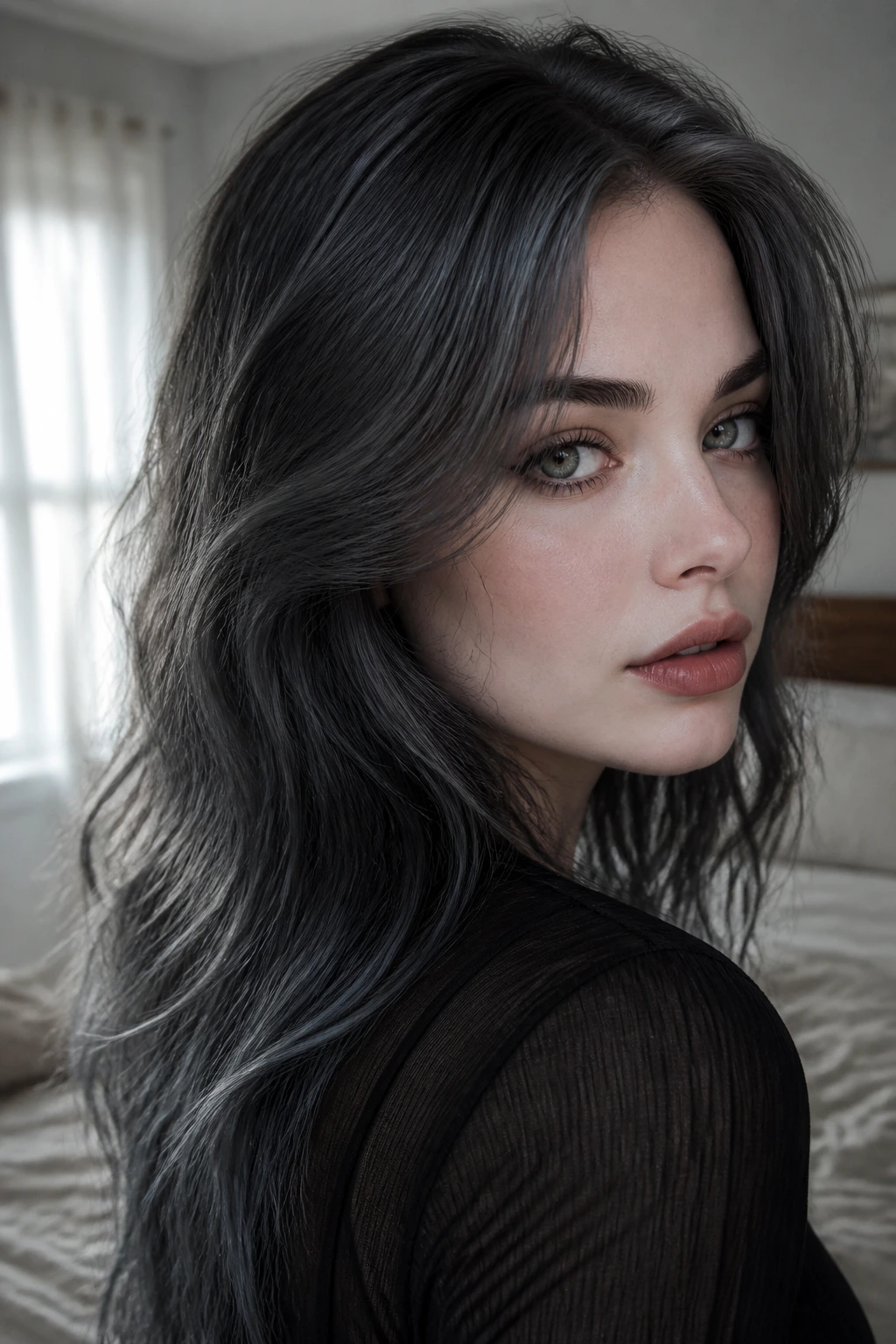
Porcelain-friendly contrast: Dark grey frames pale skin the way a fine pencil line frames a sketch, giving the face shape without the hard edge of jet black.
-
Built-in flexibility: Charcoal, slate, mushroom, pewter, and blue-black all live in the same family, but each one changes the mood a little, so you can go softer or sharper without changing the whole idea.
-
Less flat than solid black: A good grey has reflection in it. That tiny bit of sheen keeps very fair skin from looking cut off at the hairline.
-
Easy to match with makeup: Rose blush, berry lips, taupe brows, and a soft brown liner all sit well beside dark grey, so the hair doesn’t force you into a completely new face.
-
Works across cuts and textures: A blunt bob, a shag, a pixie, or loose curls all show grey differently, which is why the same shade can feel elegant on one person and edgy on another.
-
Good range for salon or gloss-based color: Some of these ideas need lift and toner, while others are just a smart gloss over a brunette base, which gives you more room to choose your maintenance level.
1. Smoky Charcoal Lob
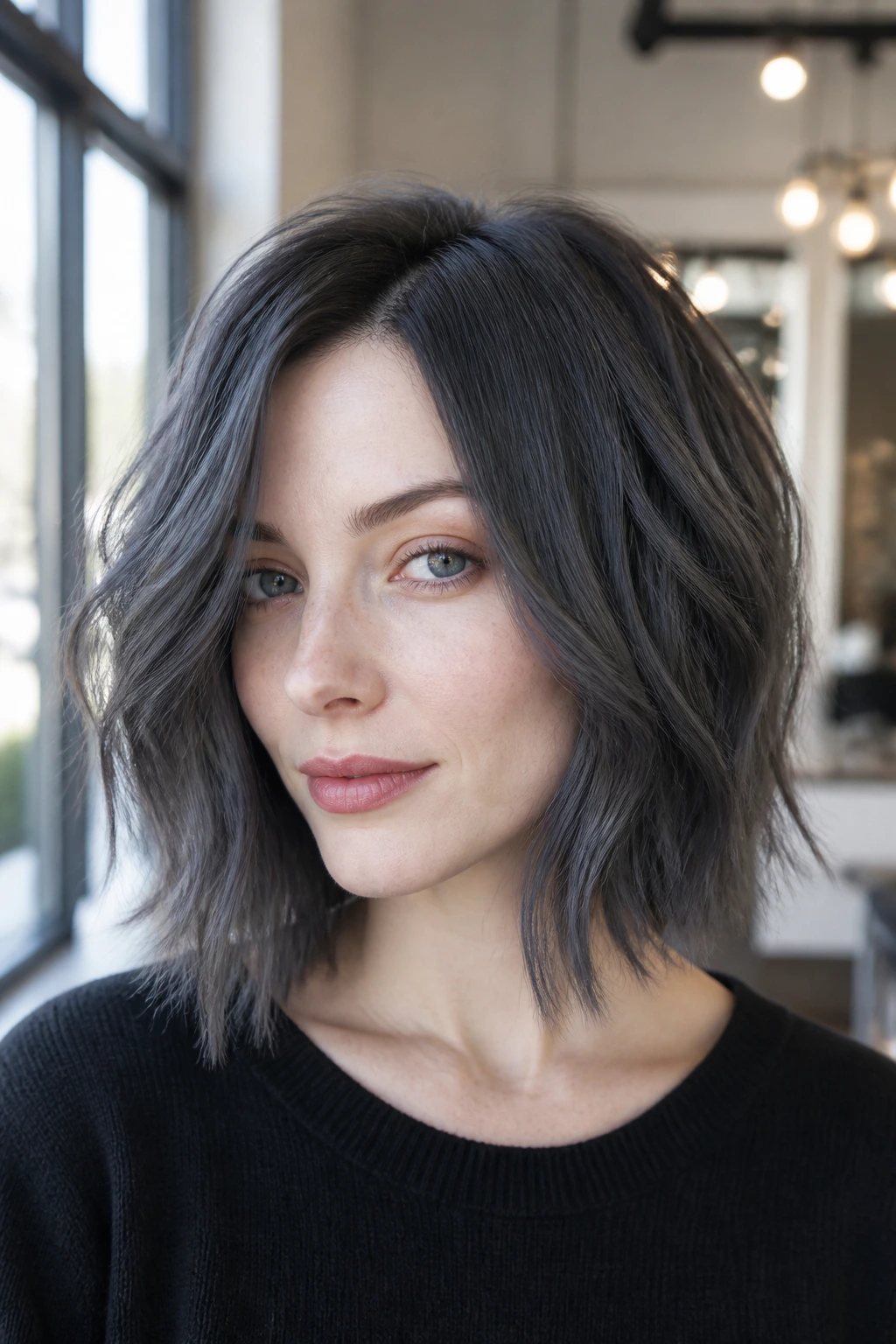
A smoky charcoal lob is the color equivalent of a tailored coat: clean, easy to wear, and far less fussy than it first appears. The grey sits in that deep middle ground where pale skin gets contrast without looking iced over. On a shoulder-grazing cut, the shade has enough length to move and enough darkness to keep the style from feeling fragile.
Ask for a charcoal gloss over a level 4 or 5 base, with the root kept a shade deeper than the mids. That extra root shadow matters. It keeps the color from going chalky near the part, which is where pale skin can start looking a little too stark if the grey is too flat.
A slight bend through the ends helps too. Straight hair can make charcoal read heavier than it really is, while a loose wave catches the sheen and gives the color a more lived-in finish.
2. Mushroom Grey Shag
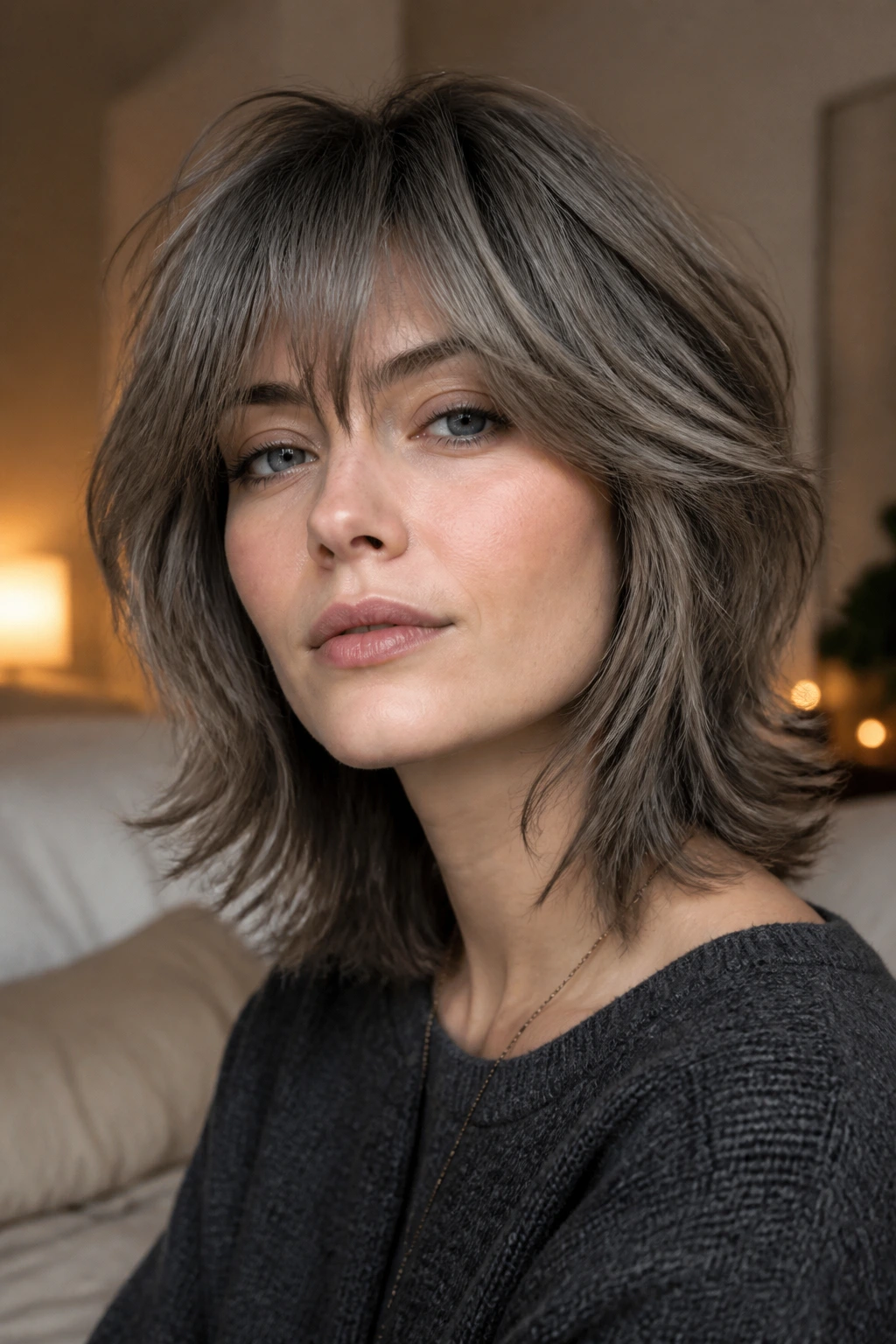
Why does mushroom grey look softer than plain ash? Because it keeps a beige note under the grey, and that tiny warmth saves pale skin from looking drained. The shag cut adds another layer of softness by breaking the color into pieces instead of one solid sheet.
This is the one I’d point to if someone wants grey but hates the idea of looking severe. The shag’s texture does the work for you. Ask for feathery layers around the cheekbones, then keep the grey smoky rather than icy. If your skin leans pink, that beige-grey balance is a gift.
- Best for: Very fair skin with pink or neutral undertones.
- Ask for: A mushroom gloss with soft beige lowlights.
- Style with: Texture spray and a rough blow-dry, not a flat iron finish.
3. Gunmetal Pixie Cut
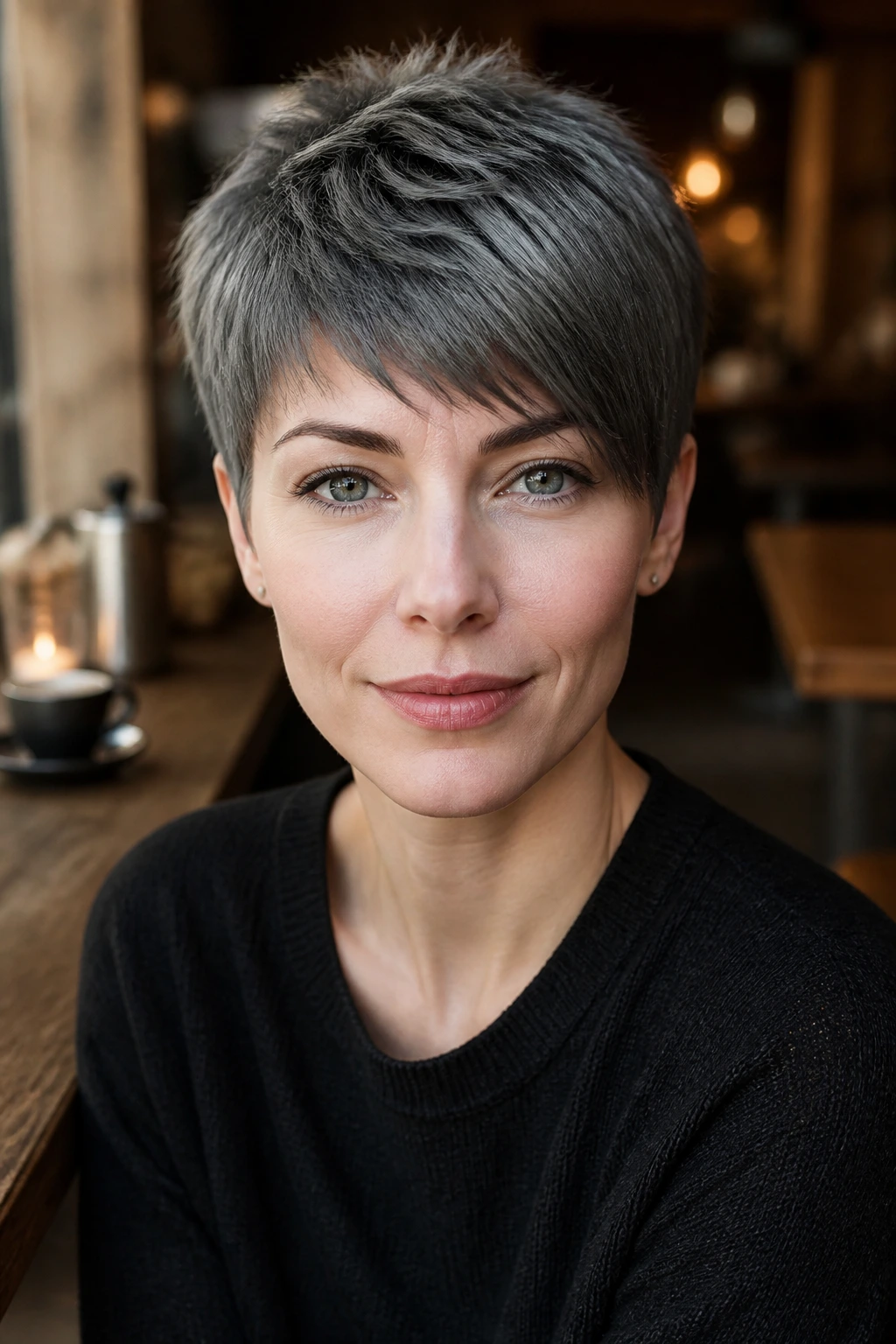
Gunmetal on a pixie cut has a sharpness that can look almost architectural. The short length keeps the dark grey from swallowing the face, and the metallic finish adds enough reflection that the color never sits dead. On pale skin, this works because the hairline stays visible; you see contrast, not a helmet.
The best version has tiny, choppy layers at the crown and a slightly longer fringe that can be pushed forward or swept over. That movement matters. Gunmetal with no texture can look severe in a hurry, especially if your skin is very fair and your brows are light.
Use a matte paste at the ends and a light shine spray near the crown. Too much gloss will make the short shape look slick instead of deliberate.
4. Graphite Money Pieces
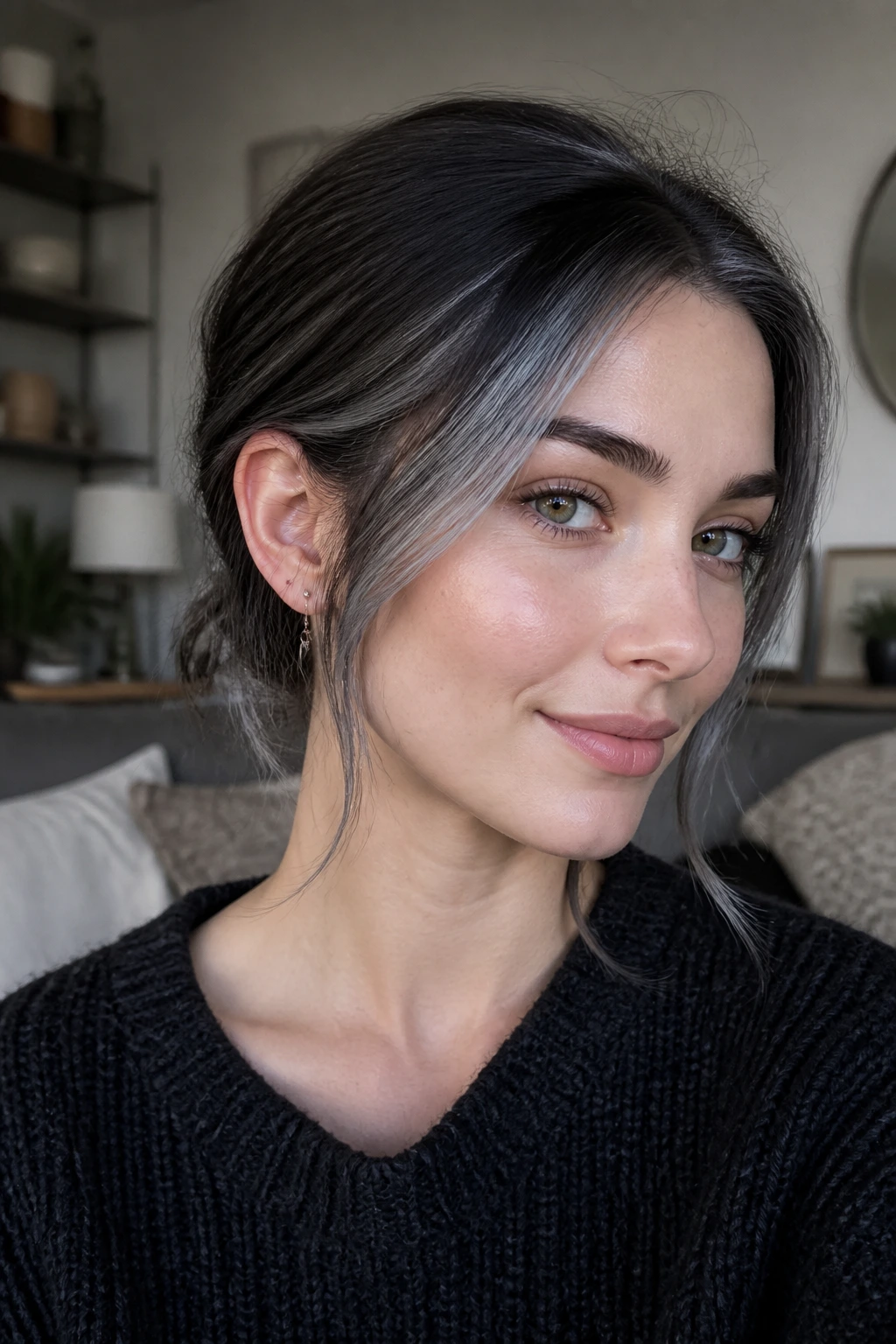
Graphite money pieces are for people who want the grey to show up the second they tuck their hair behind one ear. A dark brunette base keeps the color grounded, while the graphite ribbons around the face create that neat little halo of contrast pale skin loves. It is a strong look, but not a loud one.
This is also one of the easiest ways to test whether dark grey suits you before committing to an all-over shade. The face frame does the talking. If your complexion has a lot of pink, keep the graphite slightly smoky rather than blue. If your skin is neutral, you can push the tone colder and still keep the look balanced.
The key is placement. Put the brightest grey pieces at the temple and cheekbone, not right at the hairline, so the face keeps a little warmth.
5. Silver Smoke Balayage
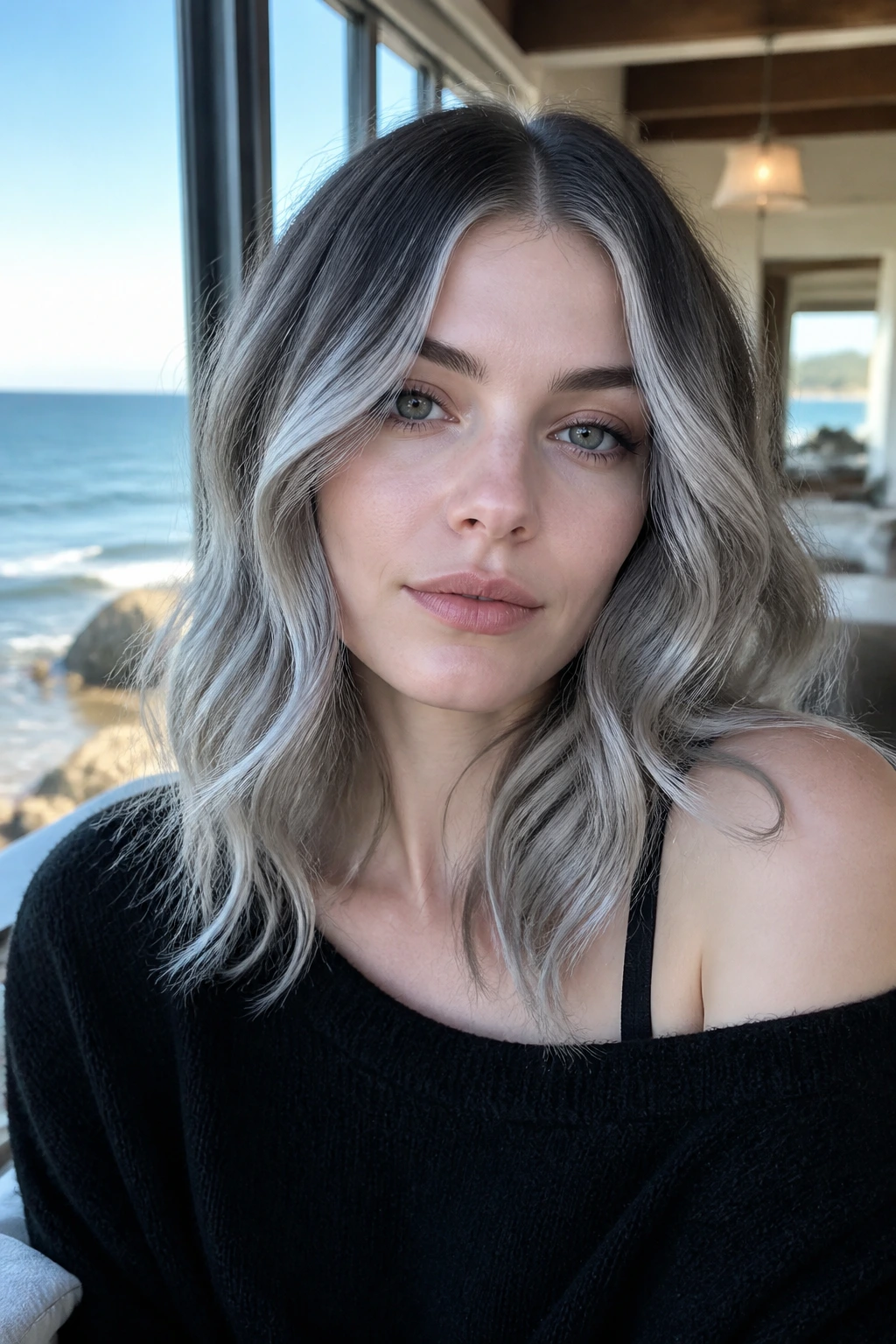
Silver smoke balayage gives you the drama of grey without the bluntness of a single-process color. Dark roots melt into silver-smoked lengths, and that fade is what keeps the shade flattering on pale skin. The eye reads movement first, not pigment.
This version works especially well if you want something that still looks dimensional after a few weeks of grow-out. Balayage does not panic when the roots appear. It welcomes them. Ask for a shadow root and hand-painted smoke through the midlengths, leaving the ends a touch lighter so the whole head has a gentle, misty finish.
Loose waves are the best friend here. They break the color into ribbons and stop the silver from reading too metallic or cold.
6. Blue-Black Smoke Bob
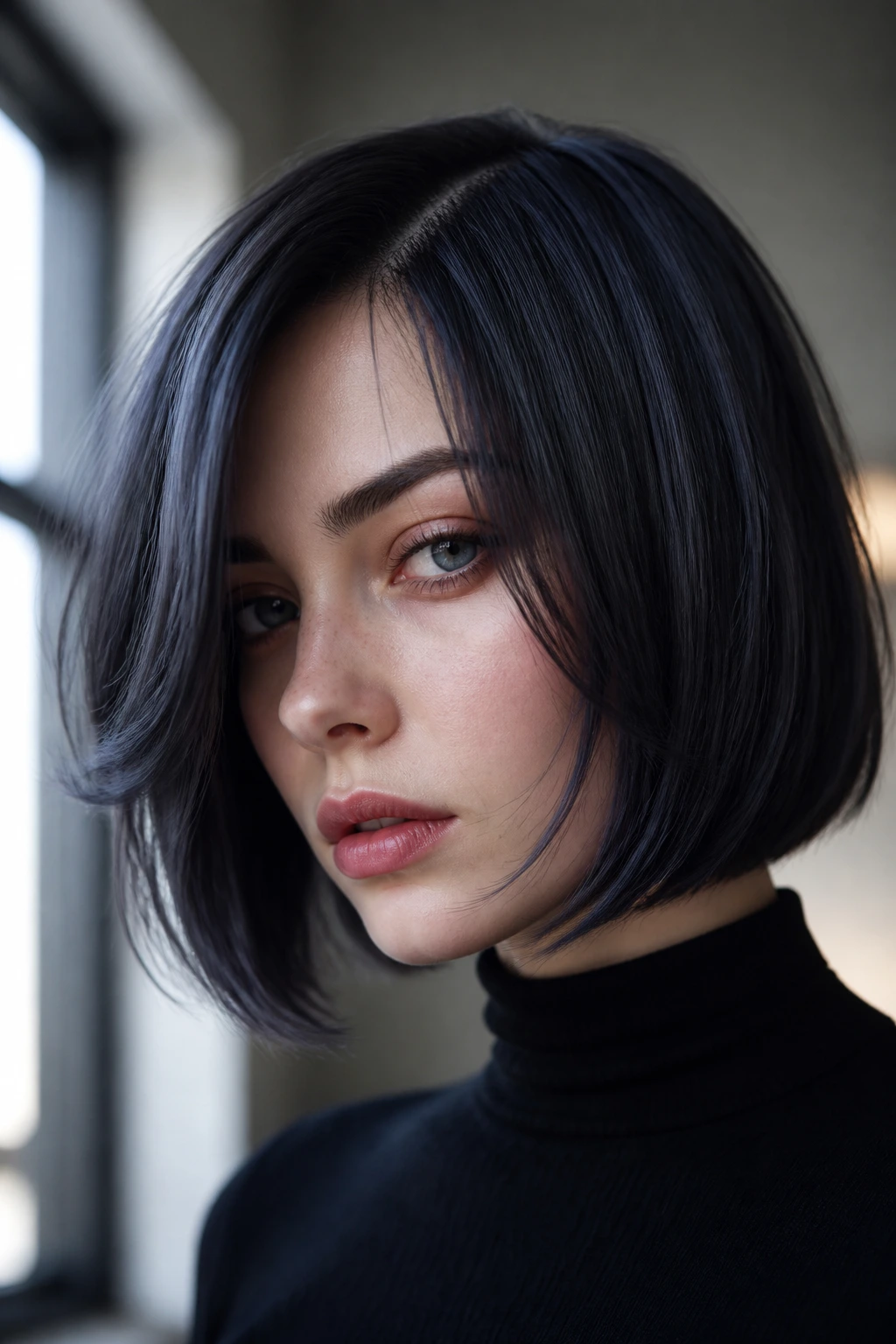
Blue-black smoke on a bob is one of my favorite answers for very pale skin that can handle a bit of edge. The blue note keeps the hair from looking flat black, and the bob length keeps the color near the face where it actually matters. Shorter cuts need less reflection to stay interesting.
The trick is to keep the blue submerged, not obvious. You want the hair to look nearly black indoors and then flash cool smoke in daylight. That makes the color feel richer. If your skin flushes easily, this is often kinder than a pure jet black because the blue-black tone softens the contrast a touch.
Wear it sleek with tucked ends for a crisp finish, or bend the front pieces inward for a softer line around the jaw.
7. Slate Ombré Waves
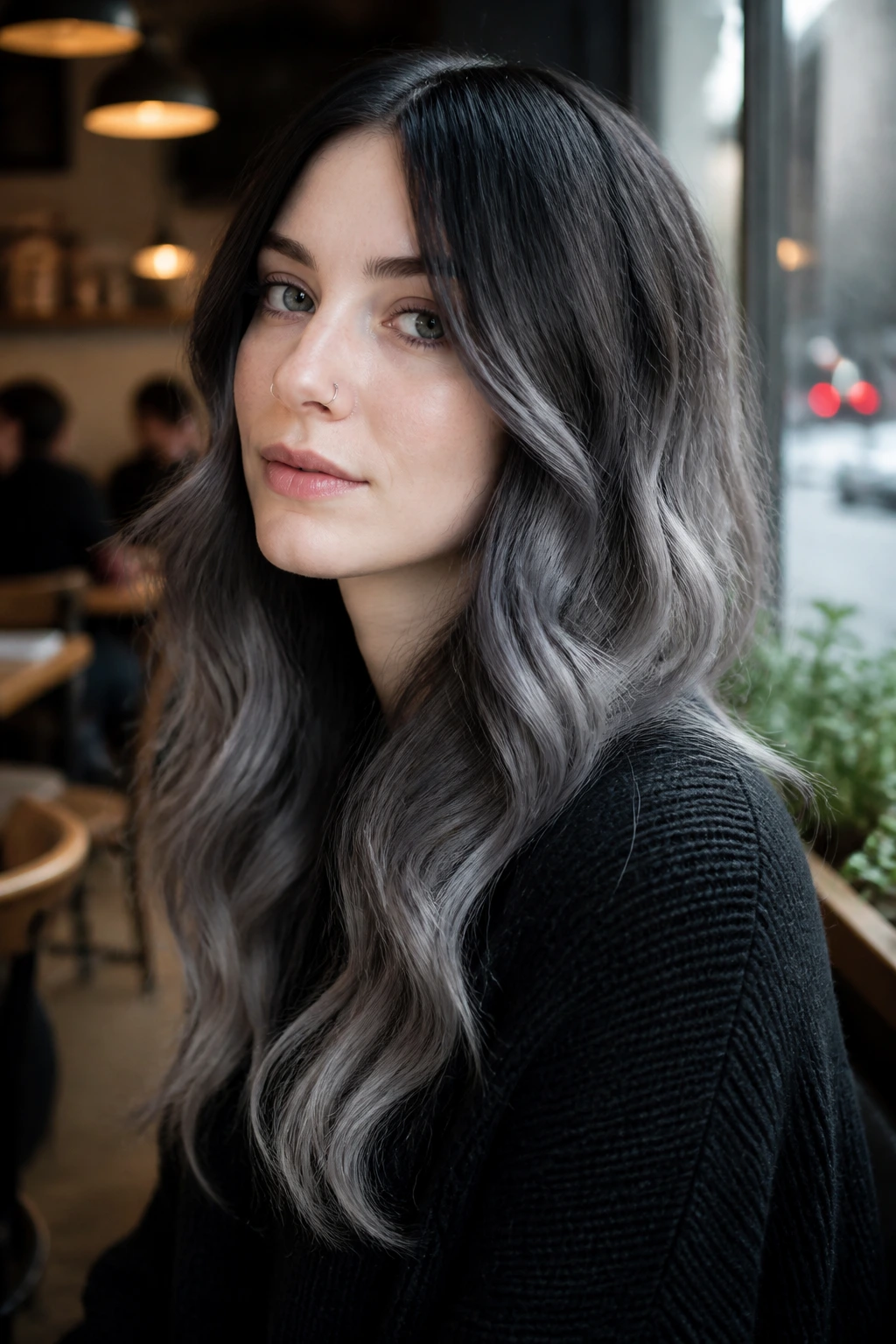
Slate ombré works because it gives pale skin a gradual transition instead of a sharp dark-to-light jump. A deep root fades into smoky slate mids and ends, which keeps the whole look softer than a blocky grey. Waves are what make this shade come alive.
A solid ombré can read a little old-fashioned if the blend is too obvious. Slate avoids that by staying cool and muted. Ask for the fade to begin below the ear, not right at the crown, so the top of the head keeps enough depth to frame fair skin properly.
How to wear it
If your hair is long enough to curl, use a 1.25-inch iron and leave the very ends a bit straighter. That mix gives the grey a more natural flow. The result should feel cloudy, not striped.
8. Ash Espresso Melt
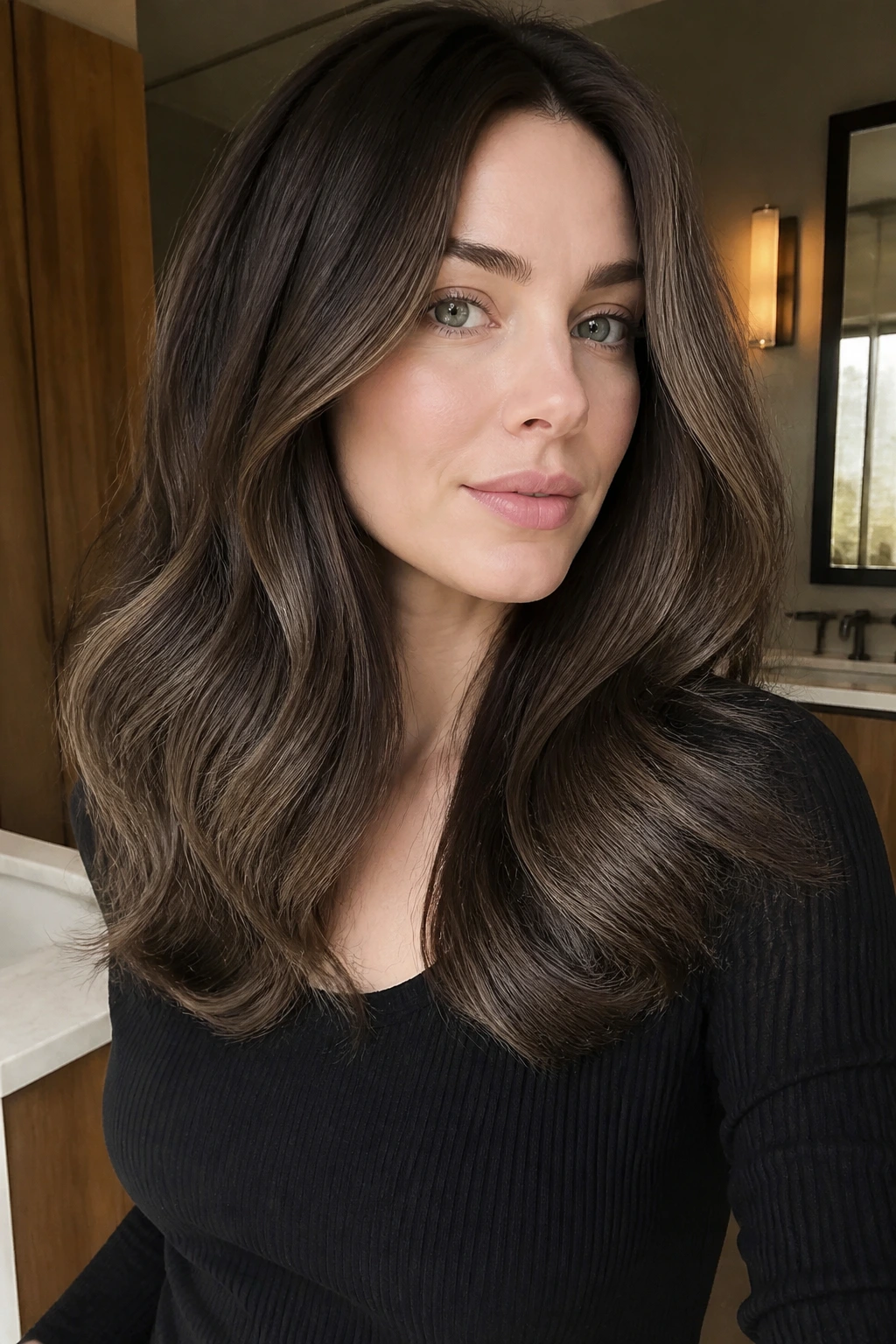
Ash espresso melt is the answer for anyone who wants dark grey but isn’t ready to leave brunette behind. The espresso base keeps the look wearable, while the ash-grey melt on the mids and ends gives the shade its cool edge. On pale skin, that blend can be beautiful because it never becomes too stark.
This is one of the smartest choices if your hair is naturally dark brown and you don’t want the maintenance of a full lightening job every few weeks. The brunette depth does half the work. Tell your colorist you want the grey to look like smoke sliding through coffee, not like obvious streaks.
The best styling move is a soft blowout with rounded ends. It keeps the color from looking too severe and makes the grey catch light in thin, elegant ribbons.
9. Pewter Curtain Bangs
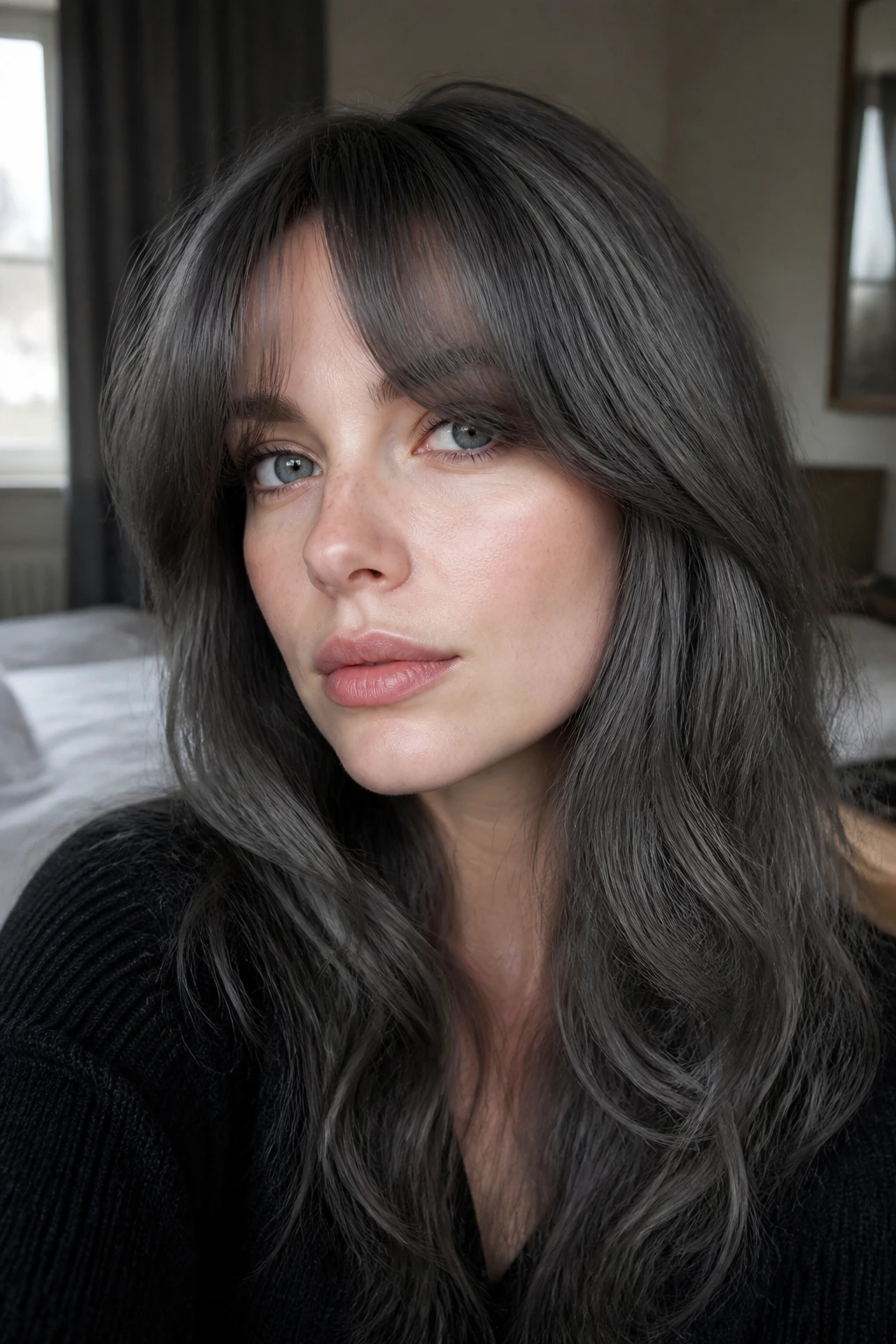
Pewter curtain bangs are a small change that makes a surprisingly big difference. The bangs draw attention to the eyes and cheekbones, which is useful when pale skin needs a little framing around a dark shade. Pewter is a nice middle tone, too—cool, but not icy enough to flatten the face.
This is a good pick if you like softness around the forehead. Curtain bangs break up the contrast between skin and hair in a way blunt fringe doesn’t. Ask for the grey to be a touch deeper at the roots and a little lighter through the curtain pieces so the bangs don’t disappear against the rest of the cut.
Keep them airy. Dense bangs can make the color feel heavier than it is, and no one needs that with grey hair.
10. Steel Blue Layers
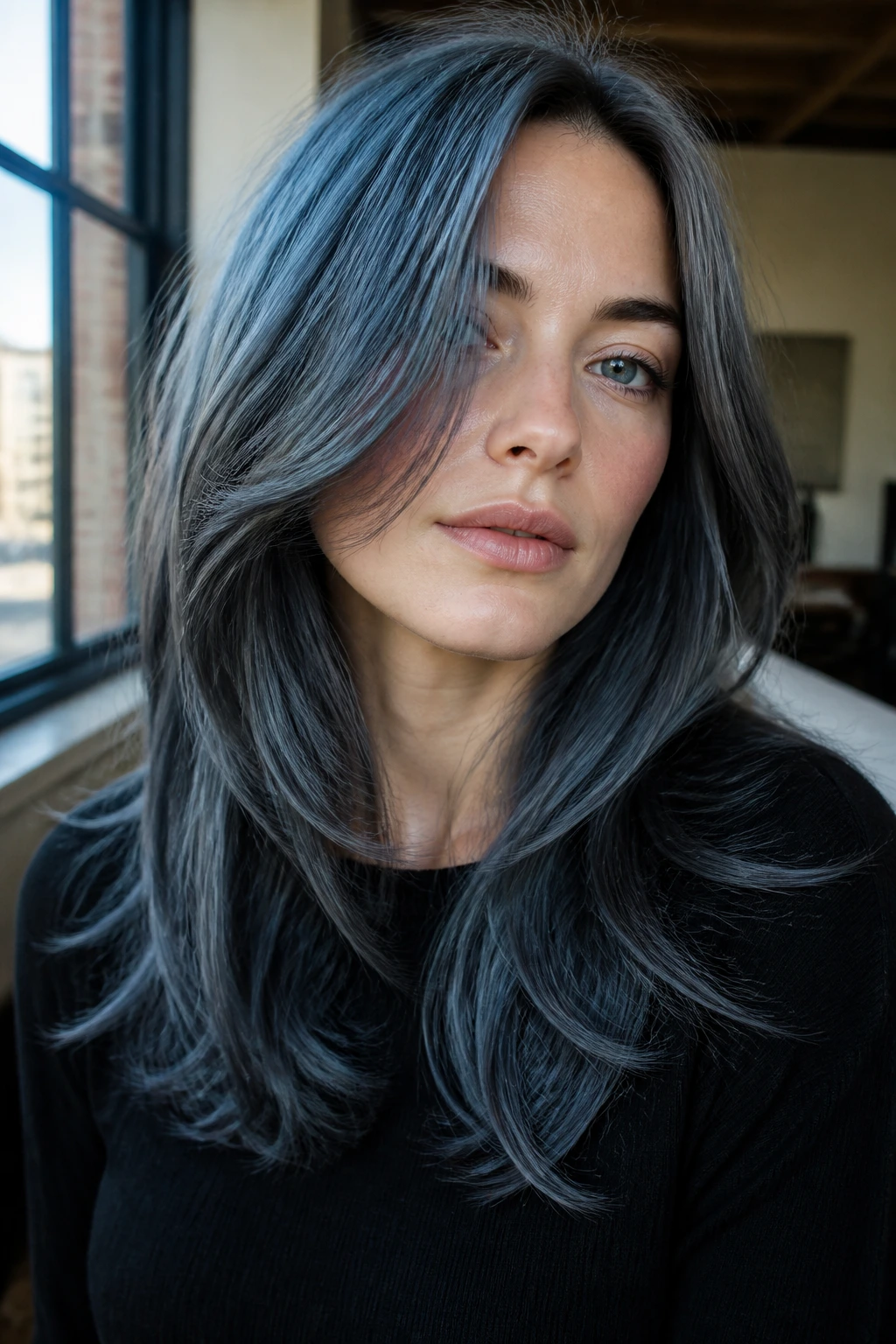
Steel blue layers are for someone who wants the grey family to lean a little colder and more polished. The blue note gives the hair a metallic edge, while the layers keep the shape from becoming too solid. Pale skin gets a nice clean contrast here, especially if the complexion is neutral or slightly rosy.
This shade looks best when the layers are long enough to move. Short, heavy layers can make steel blue feel boxy. Ask for a cool gloss rather than a bright blue dye; the goal is a faint steel cast, not a costume color. Daylight will pull out the blue. Indoor light usually leaves you with a deeper graphite read.
A side part makes this look feel a little more grown-up and less editorial. That matters if you want the color to work in real life, not just in a mirror.
11. Frosted Curls
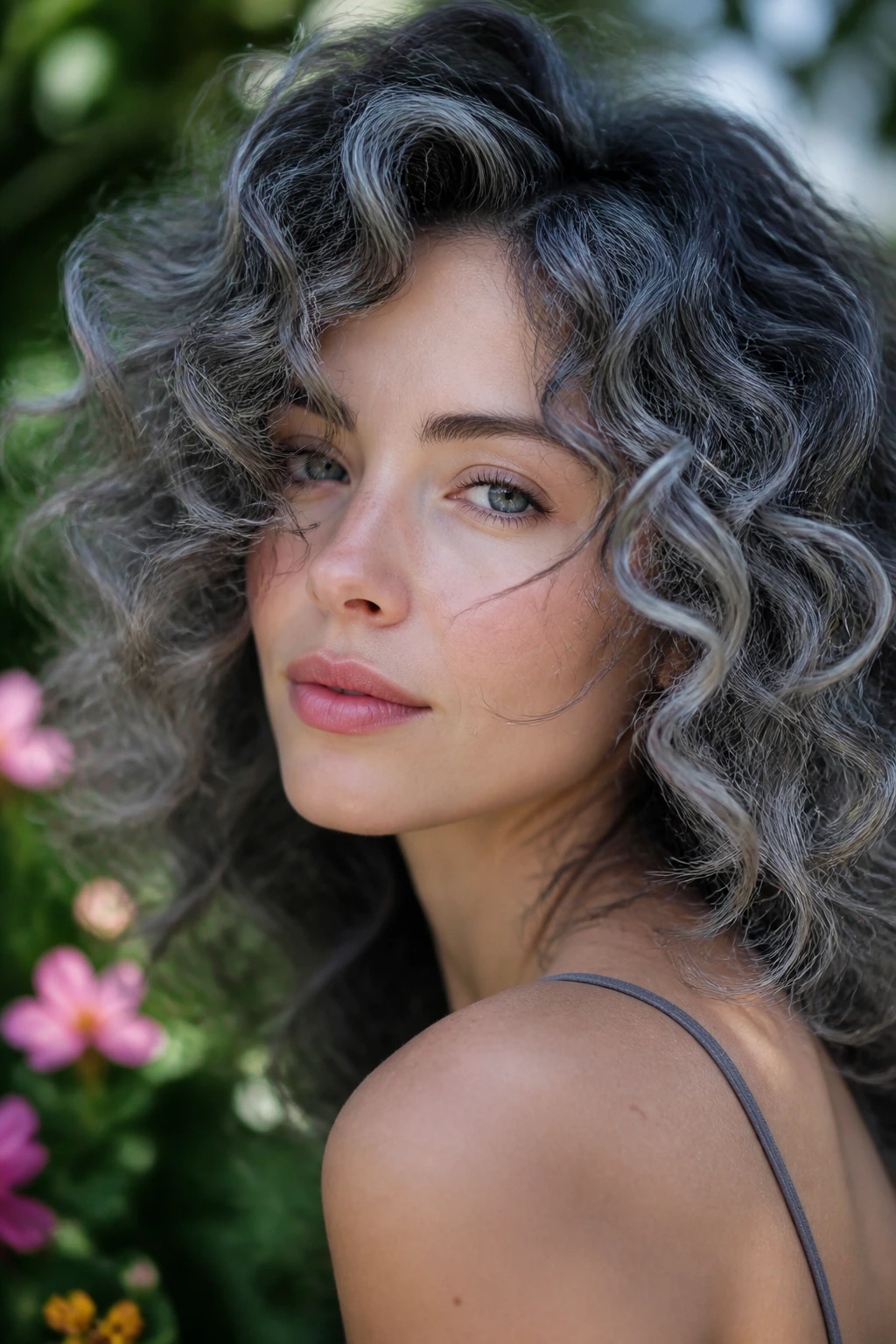
Frosted curls are one of the easiest ways to make dark grey feel softer on pale skin. The curl pattern breaks the color into highlights and shadows, so the grey never lands as one flat block. It looks especially good on medium and tight curls, where the texture does half the visual work.
The frosted effect should be woven through the curls, not painted in neat stripes. Think of it as a misting of silver over a darker base. If you go too uniform, the curls can lose that airy, dimensional look and start reading stiff. Keep the grey a step darker near the roots and brighter on the outer coils.
A curl cream with a light hold works better than crunchy styling products here. You want the shape to stay soft enough for the grey to move.
12. Lavender Smoke
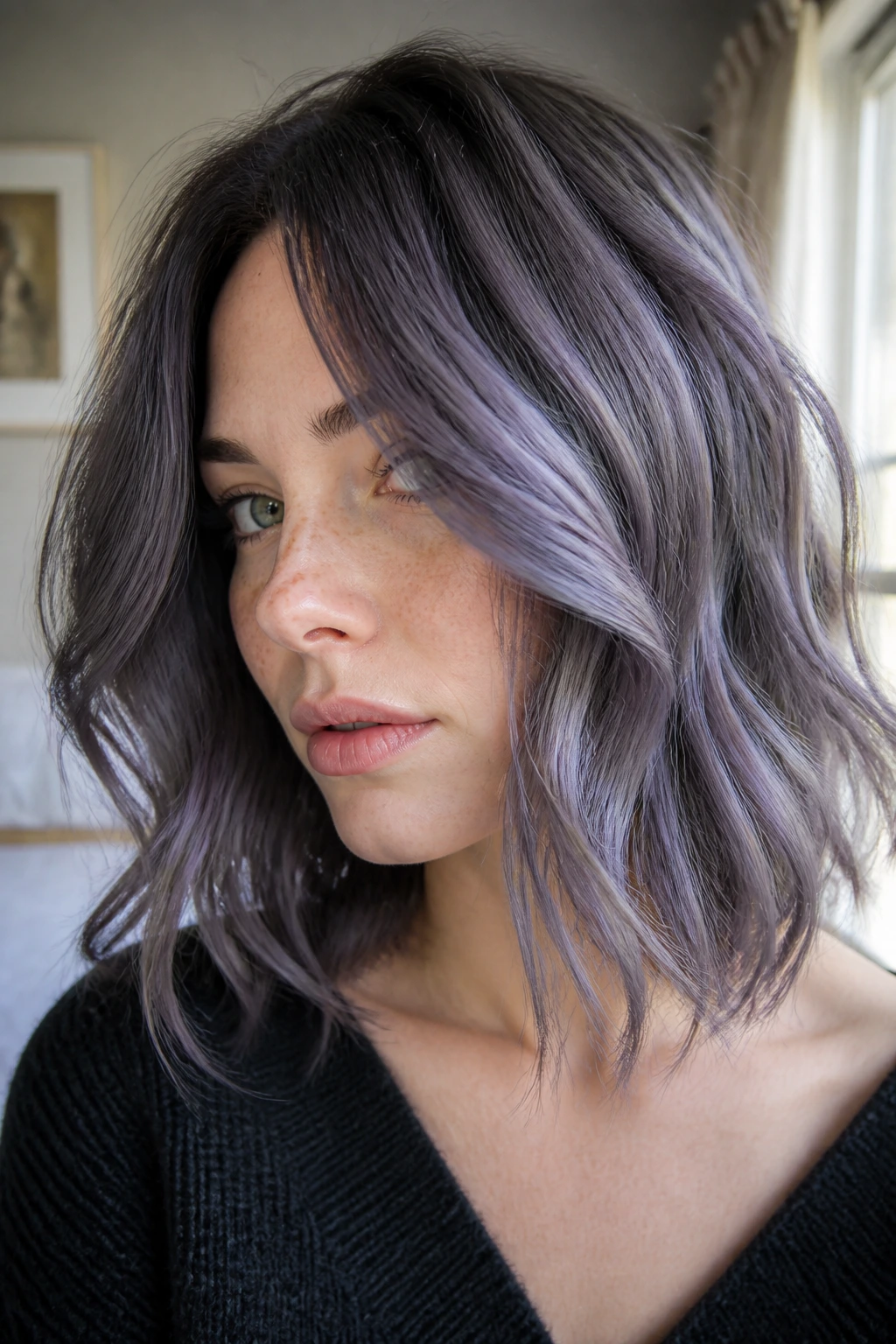
Lavender smoke is a smart detour if pure grey makes your skin look too cool. The violet undertone softens pale complexions that have a lot of pink in them, and it keeps the whole look from reading flat under bathroom lighting. It is still dark grey at heart, just with a faint lilac haze.
This shade is especially nice when you want something unusual but not neon. Ask for a grey base with a muted lavender glaze, not a purple dye dump. The difference is huge. One reads elegant; the other reads like a festival wig. On pale skin, the softer version is the one that makes sense.
Wear it with loose, brushed-out waves so the lavender only appears when the light hits the hair at an angle. That keeps it interesting without making it feel loud.
13. Rose-Grey Tint
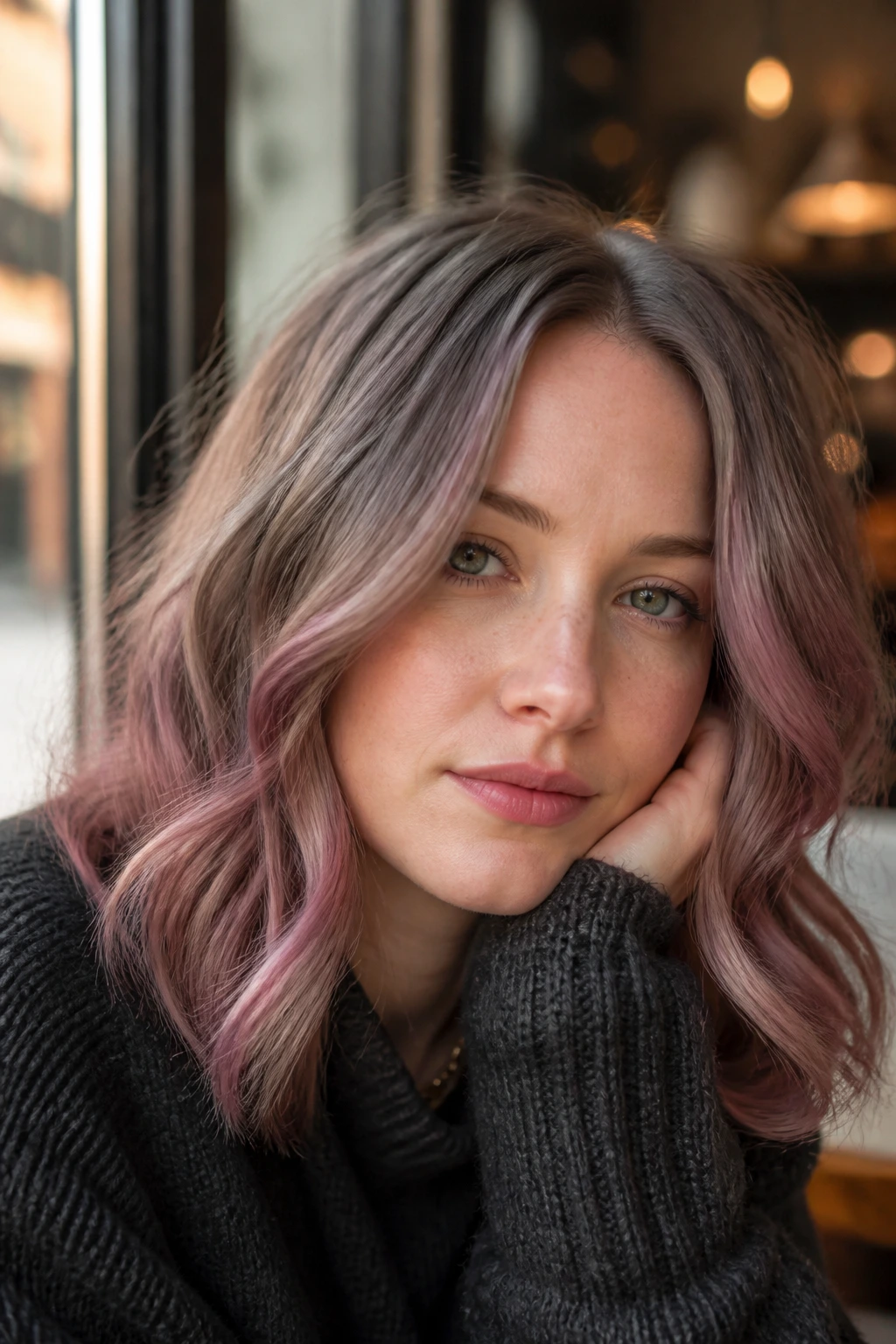
Rose-grey hair has a gentler edge than silver or blue-grey, and that’s exactly why it works on some pale complexions. The dusty rose note brings warmth back into the face while the grey keeps it from getting sugary. It’s subtle, but the effect on the skin is not subtle at all.
This is the pick for anyone who wants dark grey ideas without going into icy territory. Ask for a grey base with a faded rose glaze on the mids and ends. The rose should look like the color in an old velvet chair, not bubblegum. That little bit of softness makes the hair feel human instead of metallic.
Best worn with a loose bend or soft waves. Straight, glossy hair can make rose-grey look too polished and lose that muted charm.
14. Midnight Charcoal Gloss
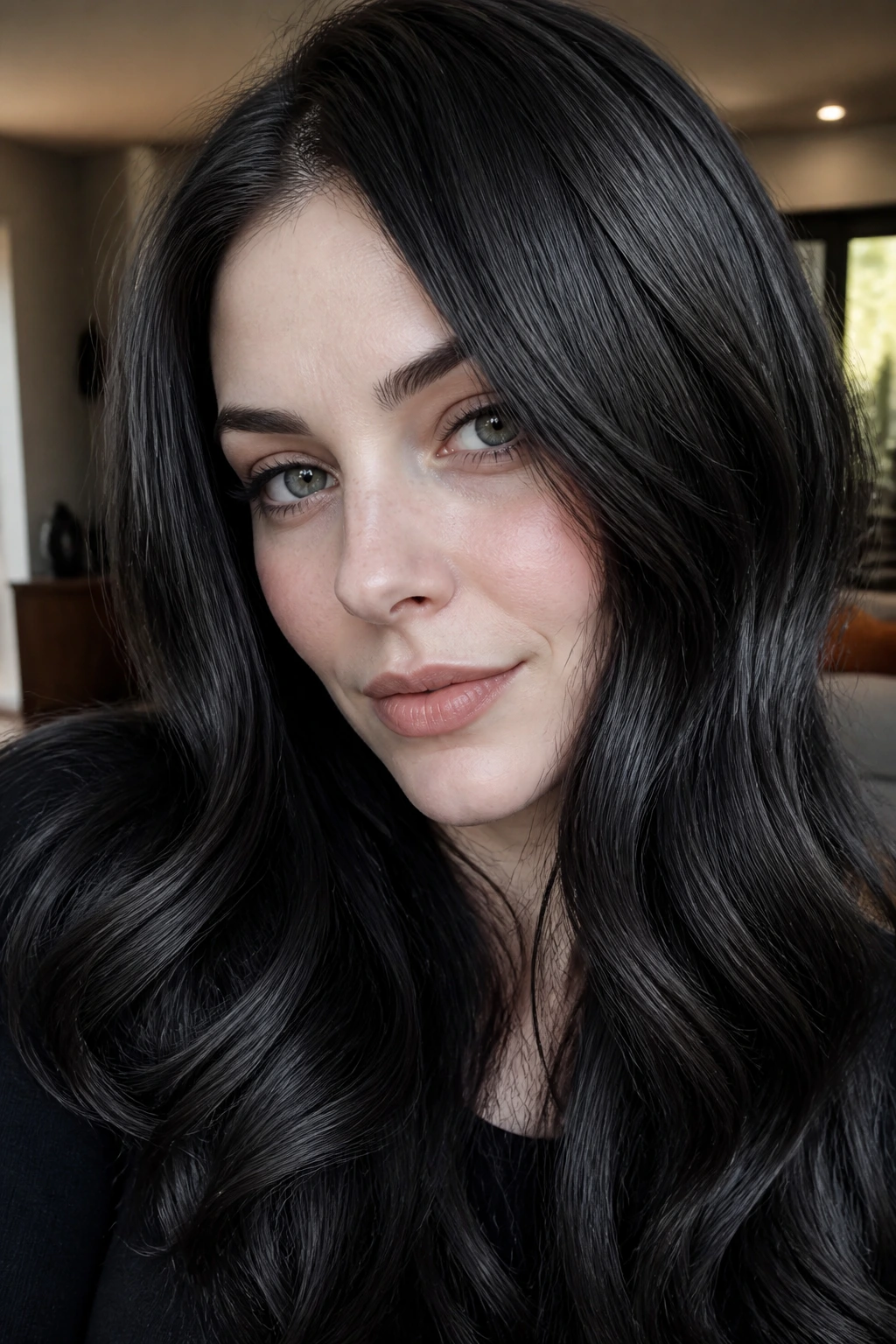
Midnight charcoal gloss is the closest thing to black that still reads as grey. The gloss is what makes it work. Under indoor light, it can look almost inky; in daylight, the charcoal sheen shows up and keeps the face from going hard around the edges.
If you like low maintenance, this is one of the smartest choices in the group. The color grows out quietly and fades into a softer charcoal rather than a glaring root line. It suits pale skin because the depth stays close to black without the blunt severity that pure black can create. If your brows are dark, this is especially flattering.
The finish should be reflective, not greasy. Use a lightweight shine serum only on the midlengths and ends.
15. Granite Blunt Cut
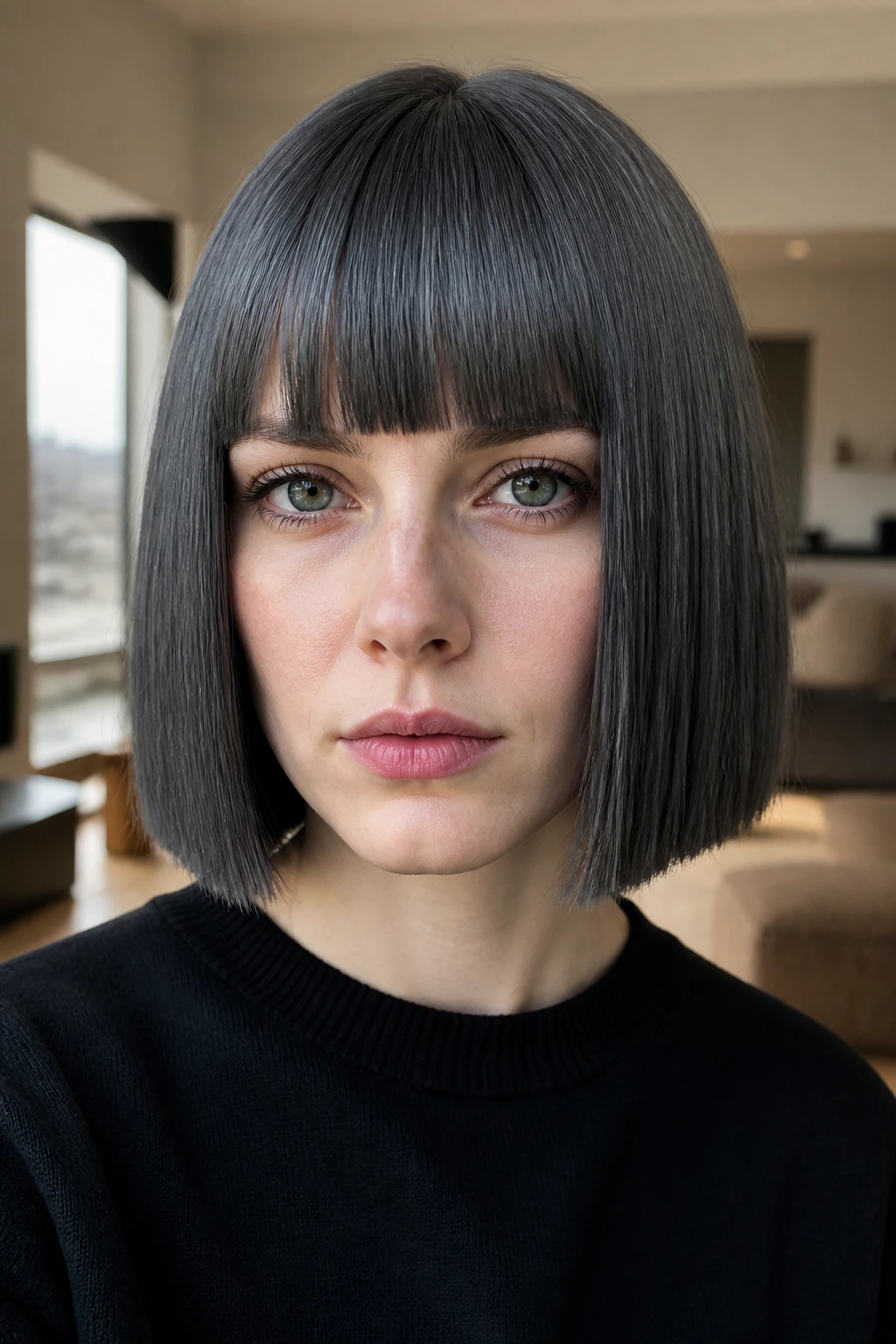
Granite on a blunt cut is strong. Very strong. The one-length edge makes the dark grey look crisp, and the mineral tone adds just enough coolness to keep pale skin from being overwhelmed. There is no hiding here; the cut and color both show up.
This look works best when the cut is exact. A sloppy blunt cut ruins the whole point. Ask for a line that sits at the jaw, collarbone, or just below, depending on how much contrast you want. Granite has less shine than silver, so the shape matters more than the gloss.
What makes it work
- Clean edge: The blunt perimeter gives the grey a graphic frame.
- Cool mineral tone: Granite sits between ash and charcoal, which helps fair skin look bright instead of drained.
- Best styling: Flat iron the ends only if you want a sharper finish; otherwise, keep it slightly bent under.
16. Clouded Root Smudge
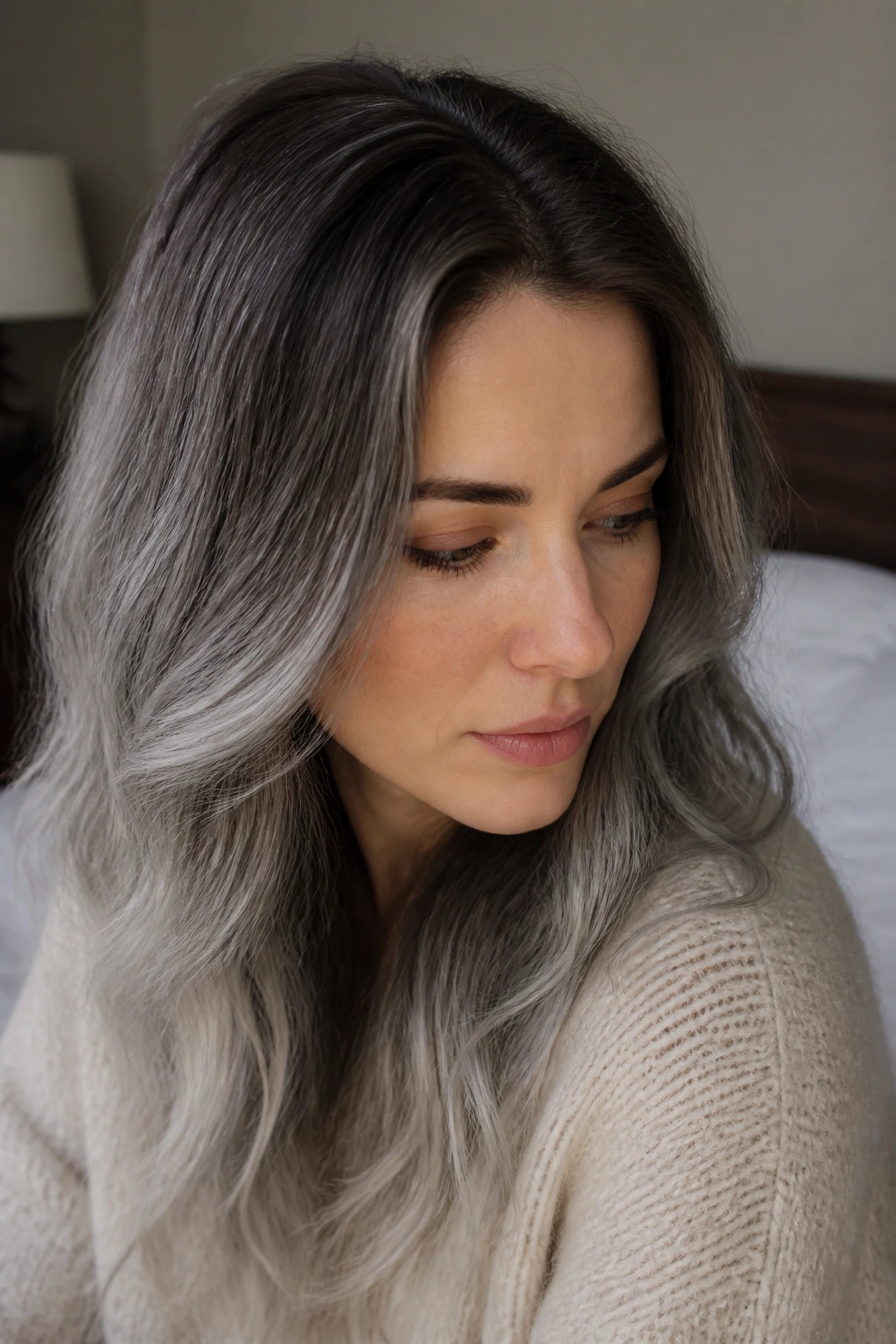
A clouded root smudge is one of those quiet looks that gets better the longer you wear it. The root stays deeper, almost smoky brown, while the rest of the hair fades into a cloudy grey. On pale skin, that contrast at the scalp keeps the hair from looking pasted on.
This is a lovely choice if you hate obvious grow-out lines. The smudge makes maintenance gentler and gives the whole style a misty finish. Tell your colorist you want the root blurred, not streaked. The difference is subtle in a chair and huge on your head a week later.
The best texture here is soft and touchable. A straight, shiny finish can make the clouded effect look too deliberate. Slight waves keep it believable.
17. Ashy Silver Pixie Bob
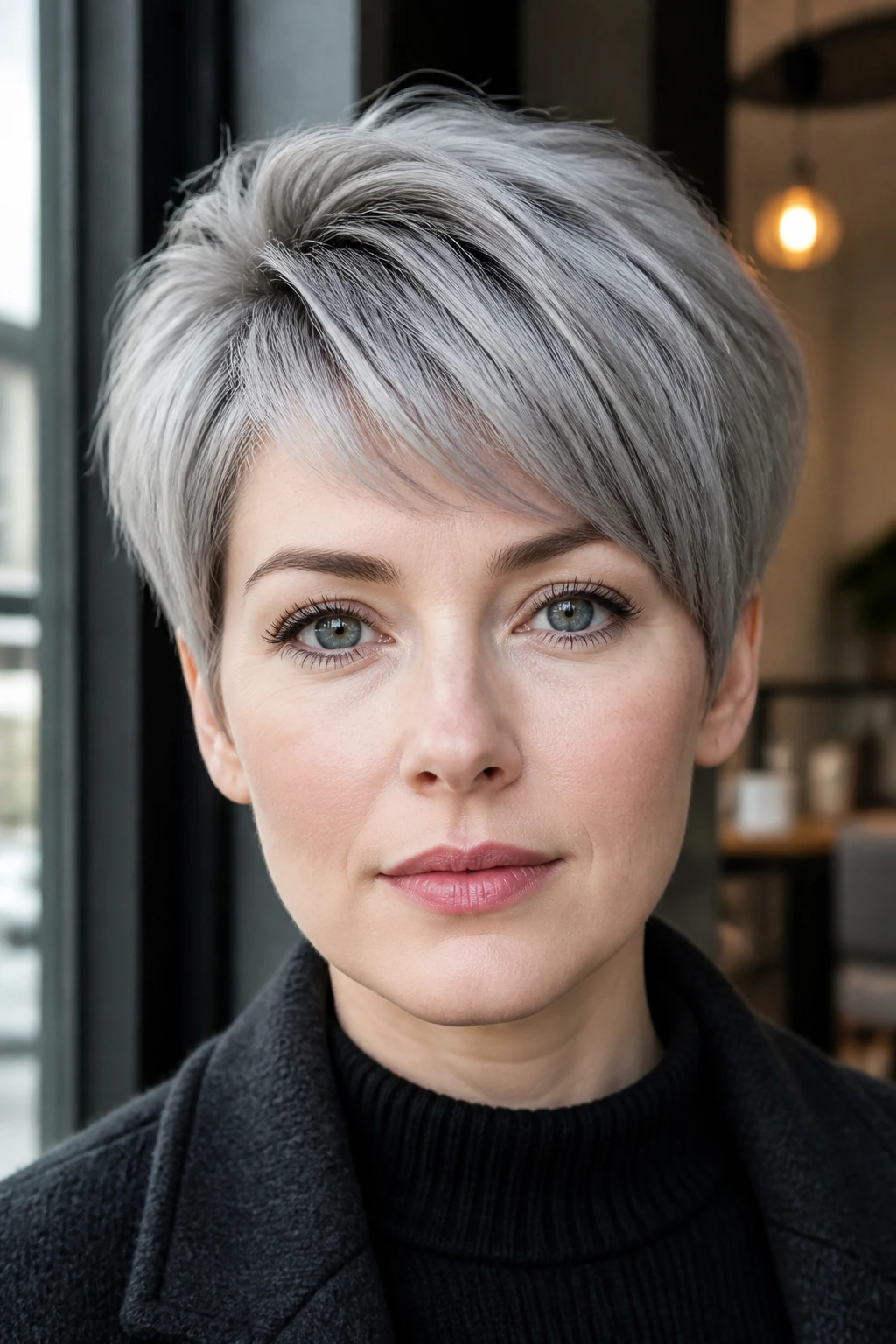
An ashy silver pixie bob sits right between polished and playful. The shortness gives it bite, while the bob length keeps enough hair around the face for the silver to show off. On pale skin, this shape keeps things balanced because the color never takes over the whole head.
This cut is especially good if you want lift at the crown and a little length around the ears and nape. Ask for internal layers so the top has movement. The grey should stay ashy rather than bright white-silver, unless your skin is very cool and you want high contrast. A tiny amount of root shadow helps the look stay grounded.
A paste or cream with separation works better than a heavy wax. You want piecey definition, not a helmet.
18. Smoke-and-Mirror Balayage
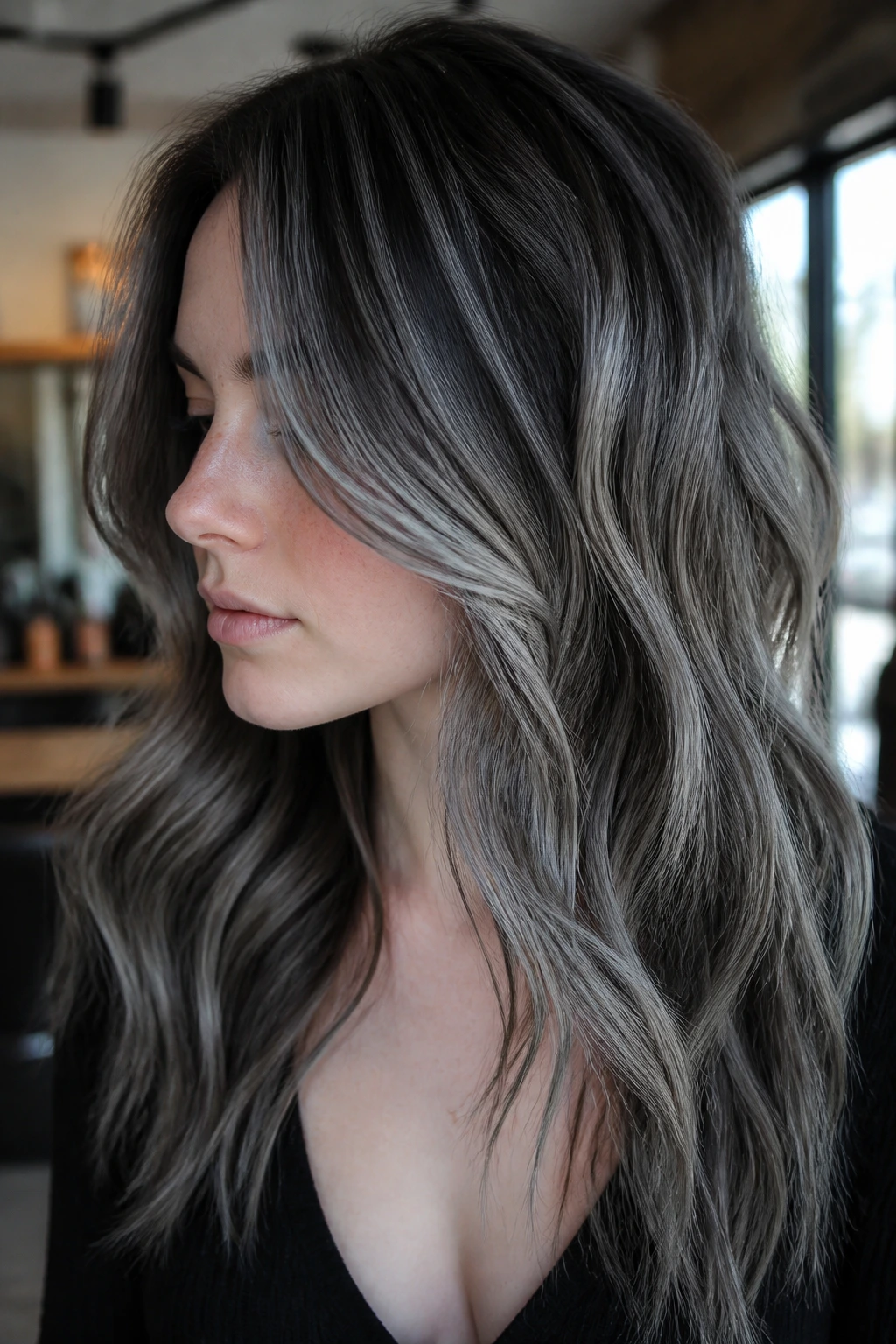
Smoke-and-mirror balayage is for anyone who wants the hair to look expensive in the least flashy way possible. The color uses multiple grey depths—graphite, pewter, slate, maybe a whisper of silver—so the hair shifts when you move. Pale skin benefits from that because the face is framed by variation, not by one flat tone.
This is one of the best choices for medium to long hair. The longer the canvas, the more the color can do. Ask for cool lowlights under brighter smoke ribbons, and keep the placement loose around the face. Too much uniform grey turns the look one-dimensional fast.
If you wear your hair in waves, the color will do most of the talking. If you wear it straight, the contrast gets cleaner and a little sharper.
19. Taupe Grey Lob
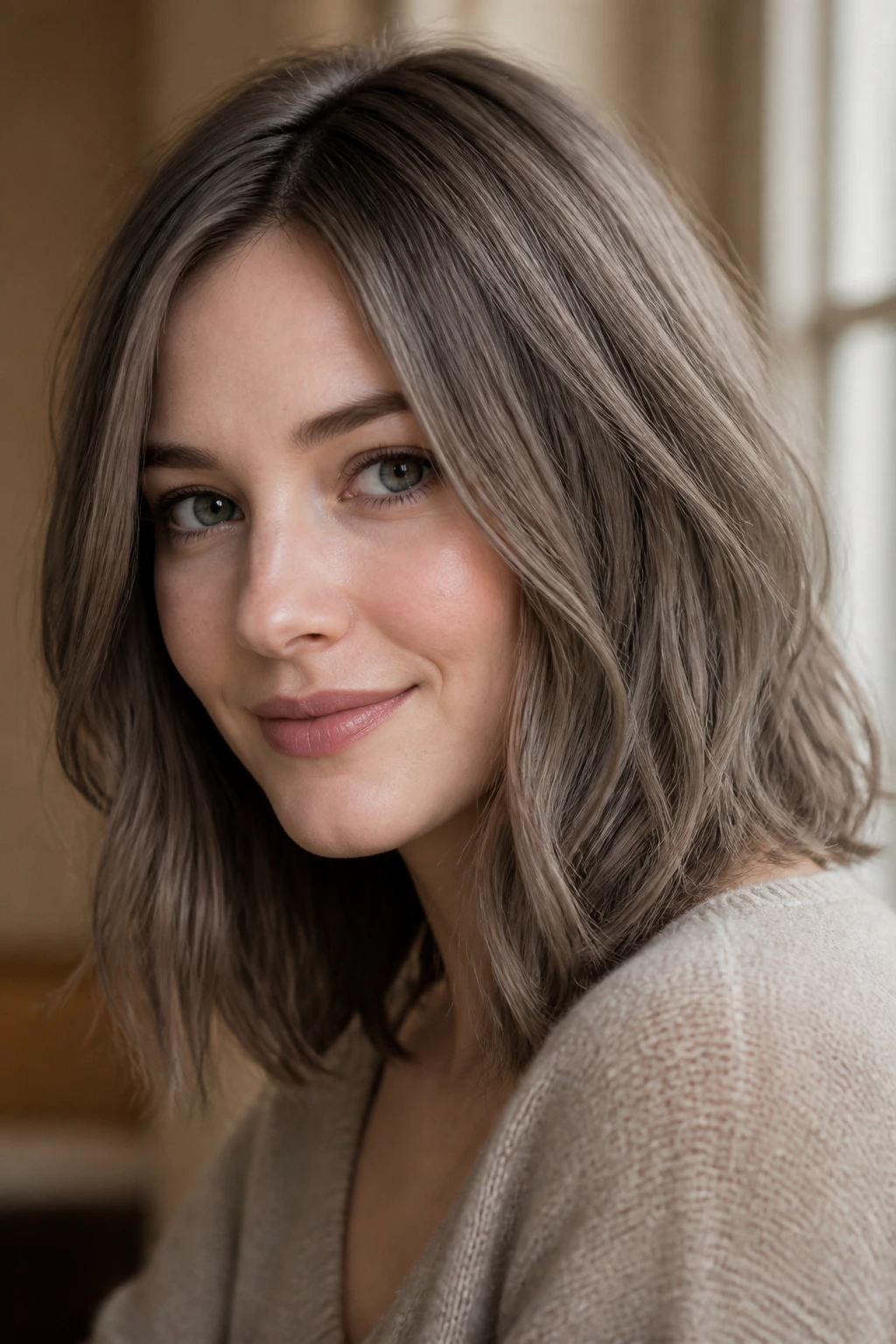
Taupe grey is the quieter cousin in the group, and I mean that as praise. It keeps the grey family grounded with a soft, beige-brown base that sits well against pale skin without making the complexion look cold. On a lob, the tone feels modern without trying too hard.
This shade is useful if pure cool grey usually looks too icy on you. It has enough warmth to keep the skin alive, but not so much that it drifts into brown. Ask for taupe-grey ribbons over a dark base, or a gloss that shifts the brunette just enough toward smoke.
Best if you want
- A wearable grey: Taupe grey doesn’t scream for attention.
- A softer face frame: It flatters pale skin that flushes easily.
- Less upkeep: The warmer edge fades more gently than a hard ash.
20. Ice-Edge Fringe
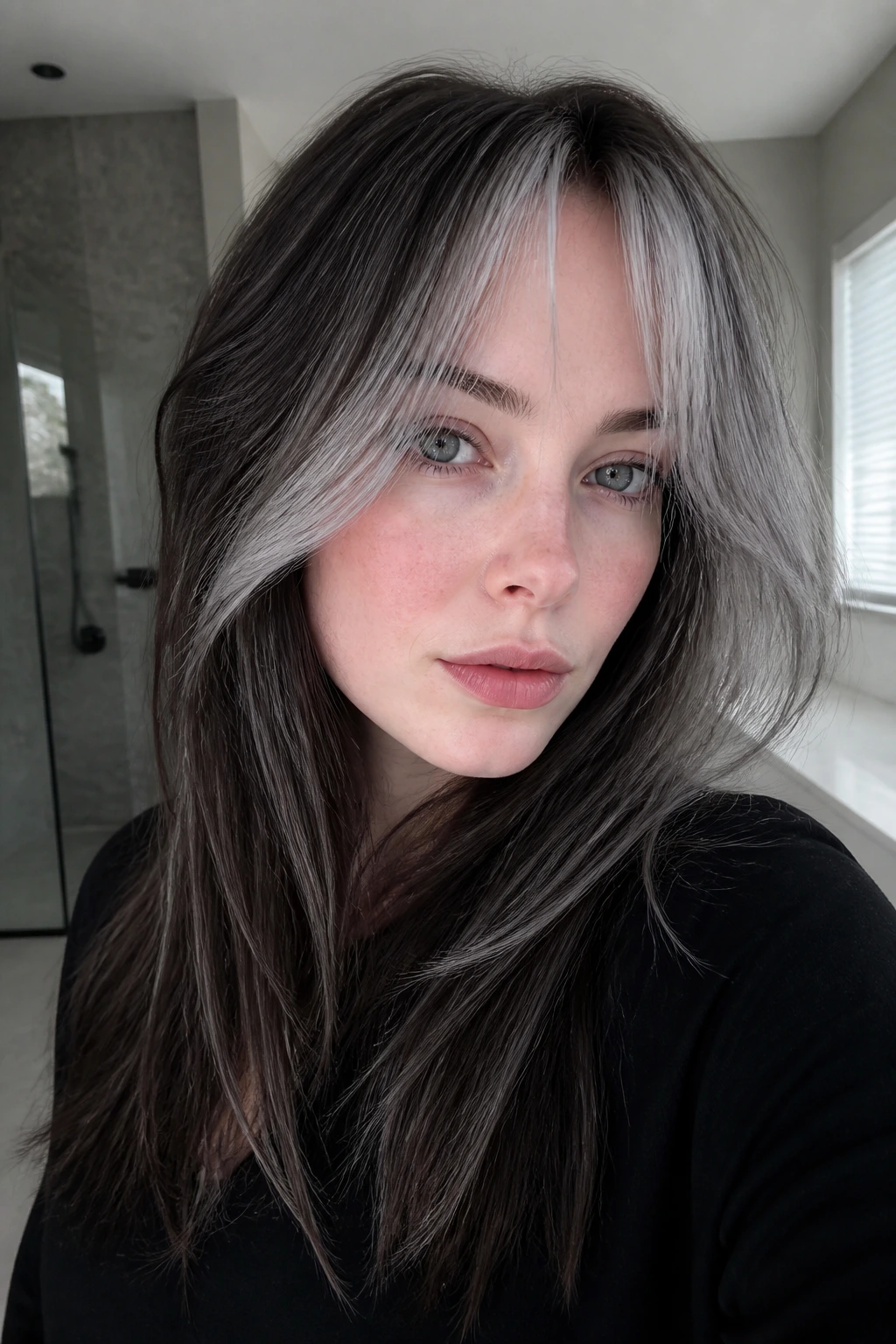
Ice-edge fringe is a face-framing move, not an all-over commitment. That makes it a smart one if you like pale skin against dark grey but don’t want the whole head to go cool. The fringe is lightened to a smoky silver, while the rest of the hair stays deeper and darker.
This works best on cuts with some front movement—bobs, shags, long layers, even a soft pixie grow-out. The point is to bring the eye upward. If your complexion is very fair, the lighter fringe can brighten the face without washing it out, as long as the rest of the hair has enough depth to balance it.
Keep the fringe airy and slightly separated. A heavy, blunt band can look harsh next to bright grey, and the contrast gets less flattering fast.
21. Soft Pewter Waves
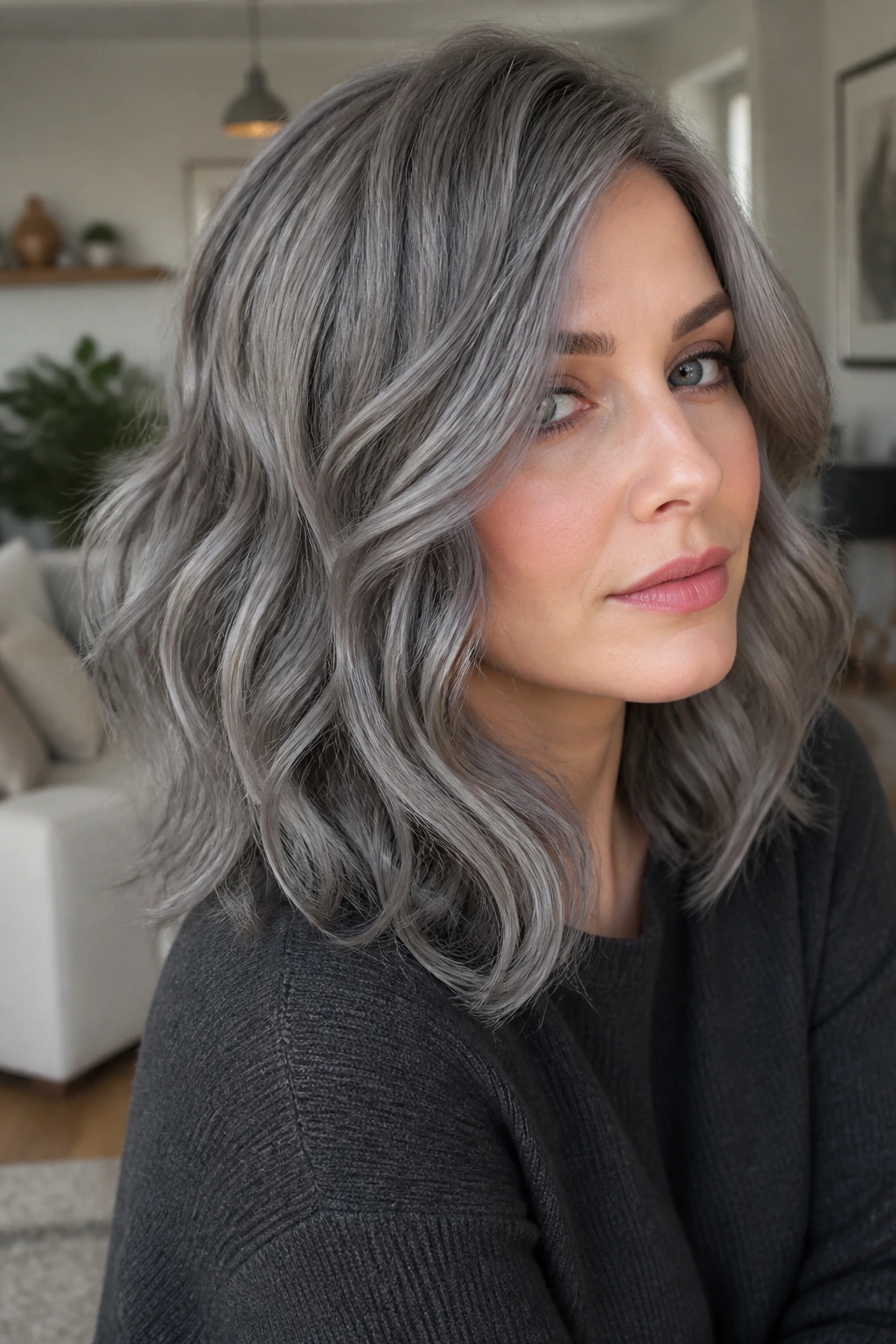
Soft pewter waves give you all the appeal of metallic grey with none of the sharpness. The shade lands between silver and charcoal, which makes it one of the more forgiving choices for pale skin. Waves keep the color moving so it doesn’t sit there like a sheet of paint.
I like this on medium-length hair because the waves can stack and overlap. That overlap creates depth without needing five different dye formulas. Ask for a pewter glaze over a smoky base and keep the tone a little darker under the top layers. That subtle shadow is what keeps the hair from going flat.
Use a wide-barrel iron or a brush-set blowout. Tight curls can make the tone look busier than it needs to be.
22. Inked Ends
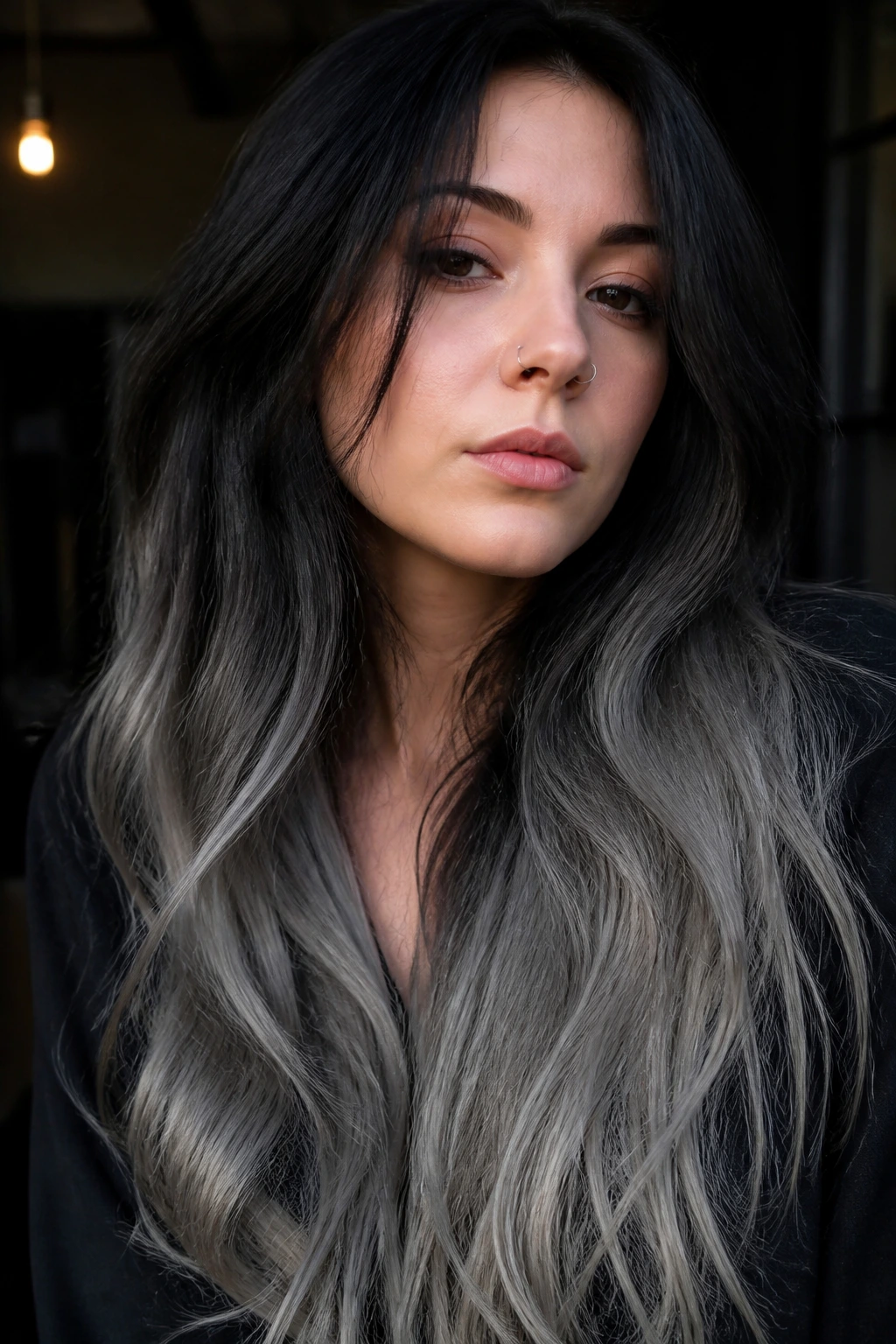
Inked ends are a nice option when you want dark grey ideas for pale skin but don’t want the color near the roots to do all the talking. The roots stay dark and natural-looking, while the ends shift into a smoky, inked grey. It feels modern, slightly undone, and easier to grow out than people expect.
This style is especially good if your hair is long enough for the fade to show clearly. The bottom third of the hair becomes the focal point. Ask for a soft transition, not a hard ombré line. The whole point is that the ends should look dipped in smoke, not painted with a ruler.
A few face-framing pieces can echo the end color, but don’t overdo it. A little grey near the front is enough.
23. Smoky Orchid Grey
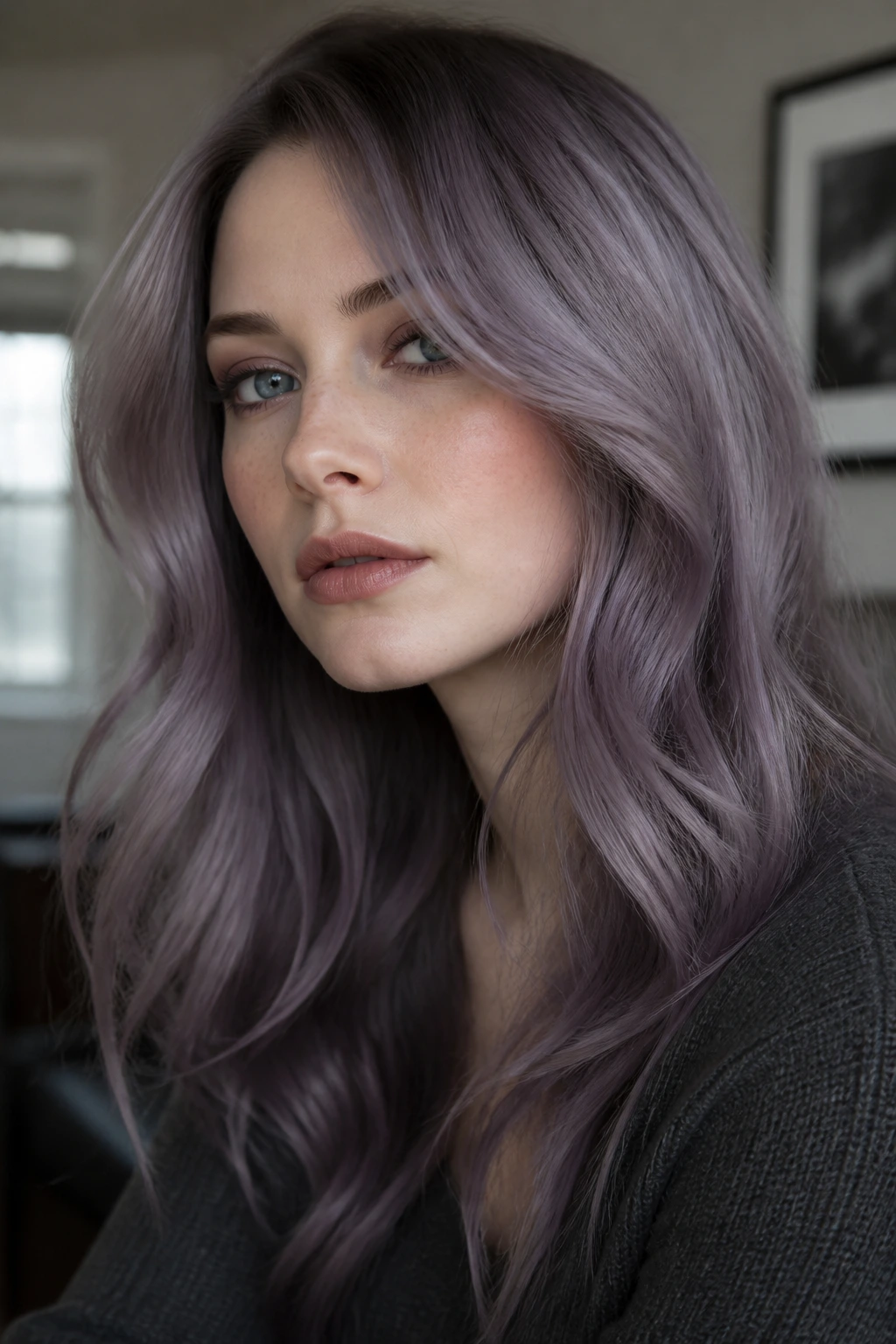
Smoky orchid grey has a faint floral undertone that keeps it from feeling cold and clinical. The orchid note is muted, almost dusty, which is why it still reads as dark grey rather than purple. On pale skin, that tiny bit of softness can be magic, especially if your complexion has pink or rosy undertones.
This look works well when you want something more romantic than gunmetal or charcoal. It is not flashy. It is quieter than that. Ask for a grey base with a soft violet glaze, and keep the saturation low so the orchid stays hidden until light catches it. In dim rooms, it should look like a moody grey. In daylight, the purple sigh should appear.
Loose bends through the hair help the color shift. Straight hair can mute the orchid effect more than you’d think.
24. Storm Cloud Shag
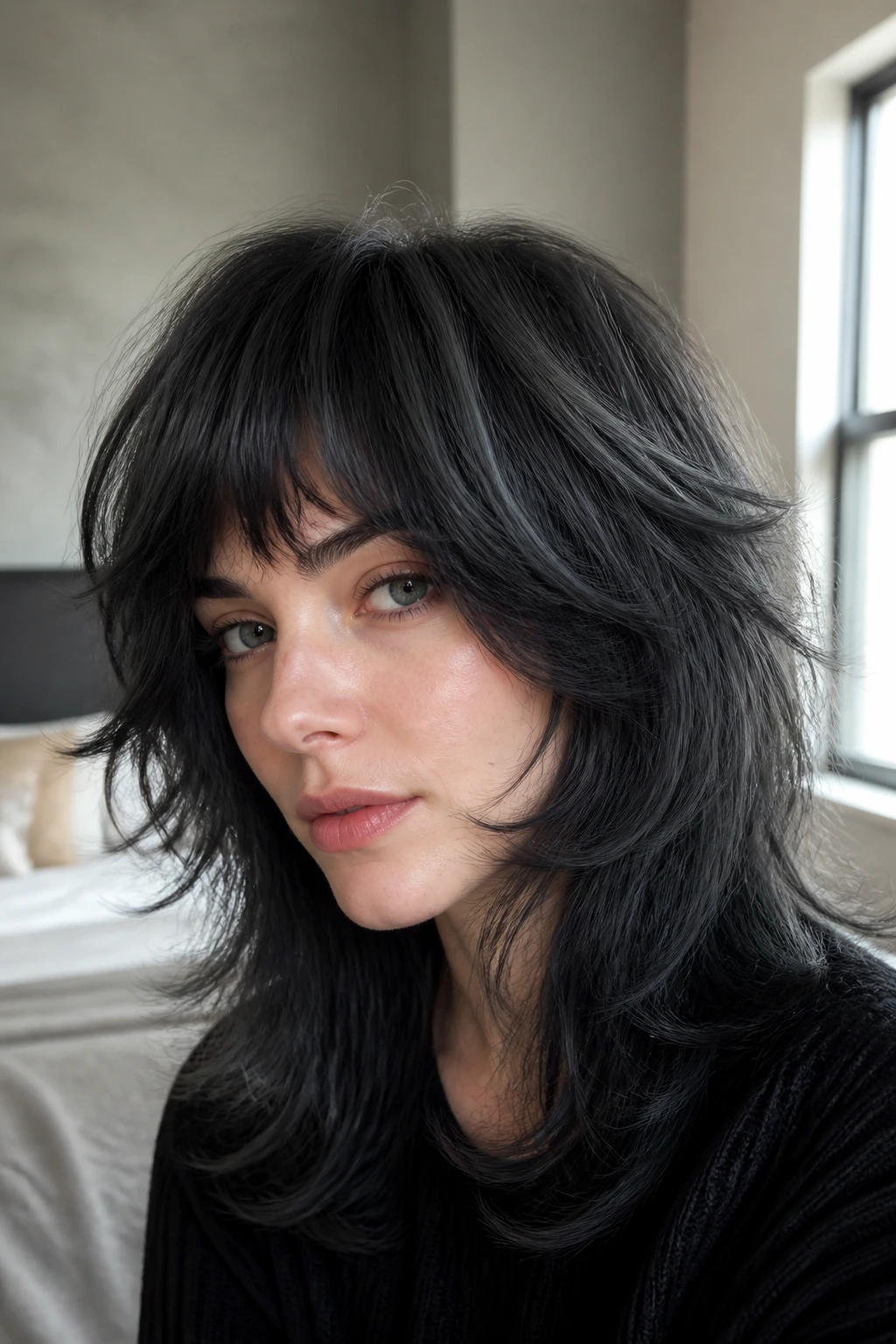
Storm cloud shag is what happens when texture and grey stop fighting each other. The layers are messy on purpose, the color is moody, and the whole thing works because nothing is too perfect. Pale skin benefits from the broken-up shape; the face gets framed by movement, not by a single dense block of color.
If you’ve got natural wave, this is a strong choice. If your hair is straight, the cut still works, but you’ll need a bit of styling to keep the layers from lying flat. Ask for a smoky charcoal base with scattered slate highlights through the top layers. That keeps the shag from becoming too dark at the crown.
A salt spray or texturizing spray near the midlengths can make this look feel effortless. Not sloppy. Just a little lived-in.
25. Charcoal Tapered Cut
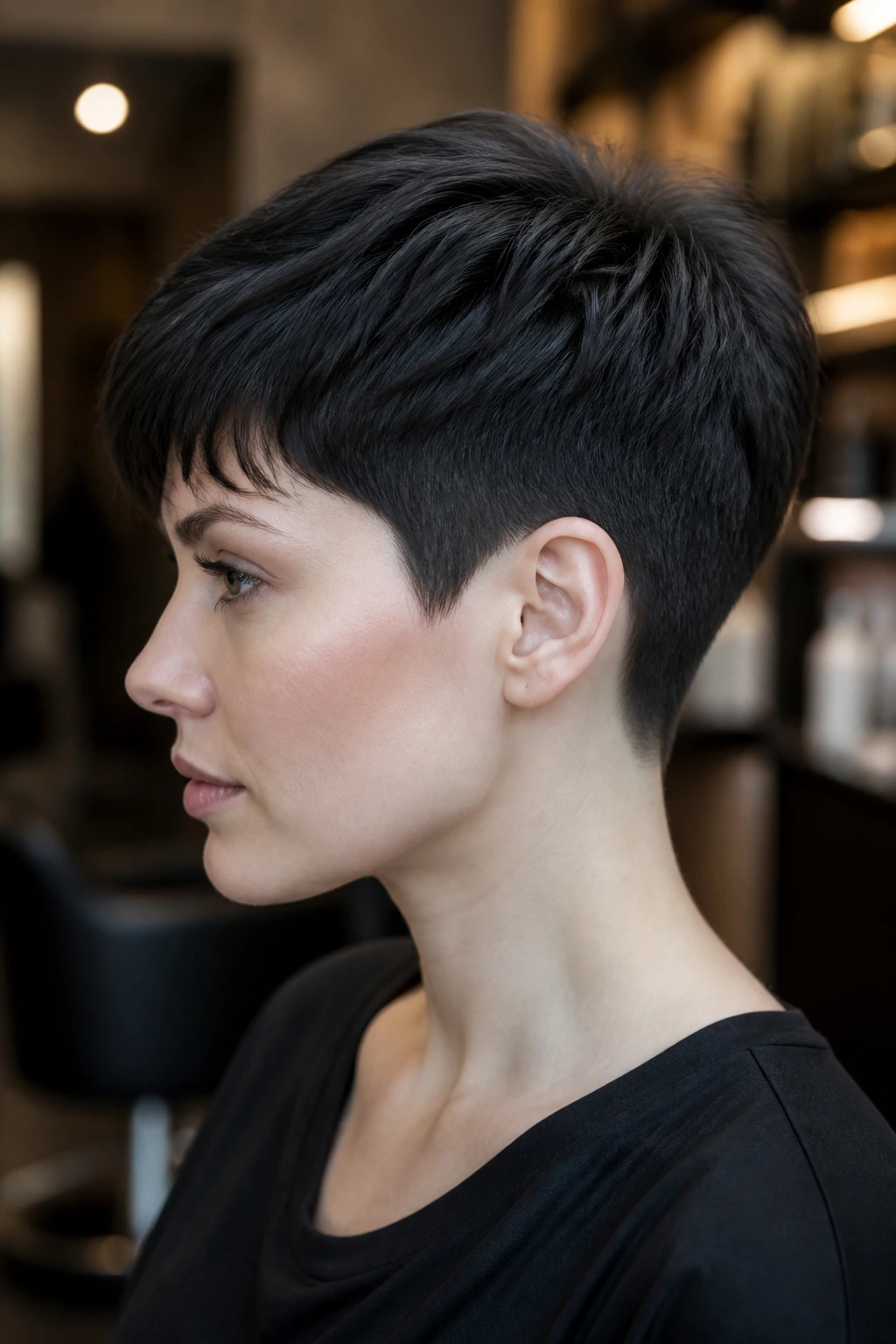
A charcoal tapered cut is short, precise, and more flattering on pale skin than people expect. The taper keeps the silhouette clean around the neck, and the charcoal tone adds enough depth to avoid that washed-out short-hair problem. This is especially good if you like your features to do some of the work.
The shape matters a lot here. A tapered cut should narrow neatly at the nape and stay slightly fuller through the crown, which gives the charcoal color room to breathe. Ask for a deep charcoal gloss rather than a blue-black finish if your skin already runs cool. Too much blue can make the whole look feel colder than intended.
This cut looks best with a little separation at the top. A tiny bit of matte paste keeps the contour visible.
26. Satin Steel Lengths
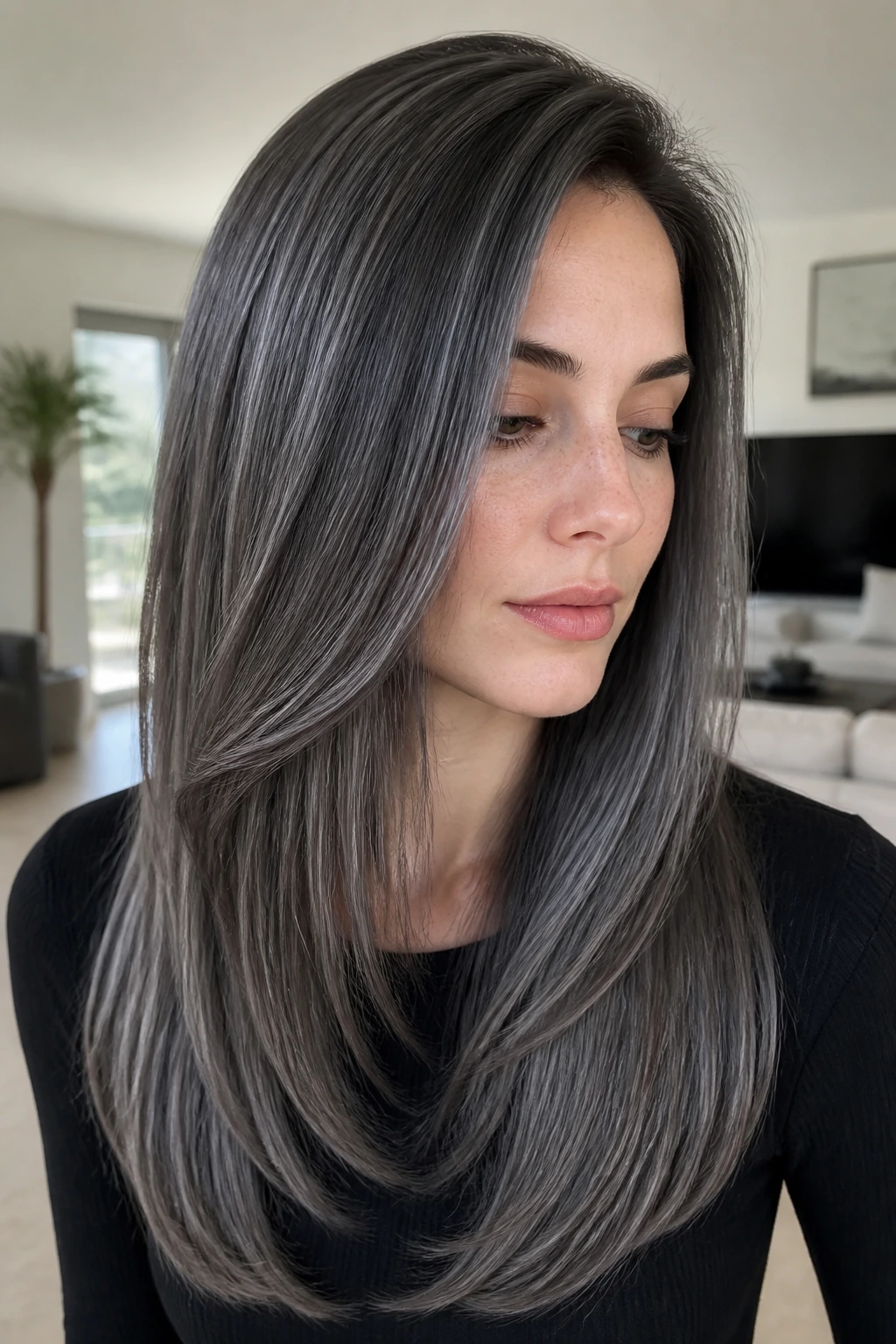
Satin steel lengths are for people who want grey hair to look smooth instead of rough. Long hair lets the satin finish show up, and the steel tone gives the color a clean reflective edge. On pale skin, this looks crisp without going harsh, which is a narrower lane than it sounds.
The word here is finish. The shade needs shine, but not the greasy kind. A straight blowout or a soft C-bend at the ends makes the lengths read as polished and cool. Ask for steel-grey highlights over a deep base, or a gloss that shifts the mids toward metal without turning the whole head silver.
This one is lovely when the hair is thick enough to hold some weight. Fine hair can still wear it, but you’ll want to avoid making the ends too light.
27. Velvet Grey Curls
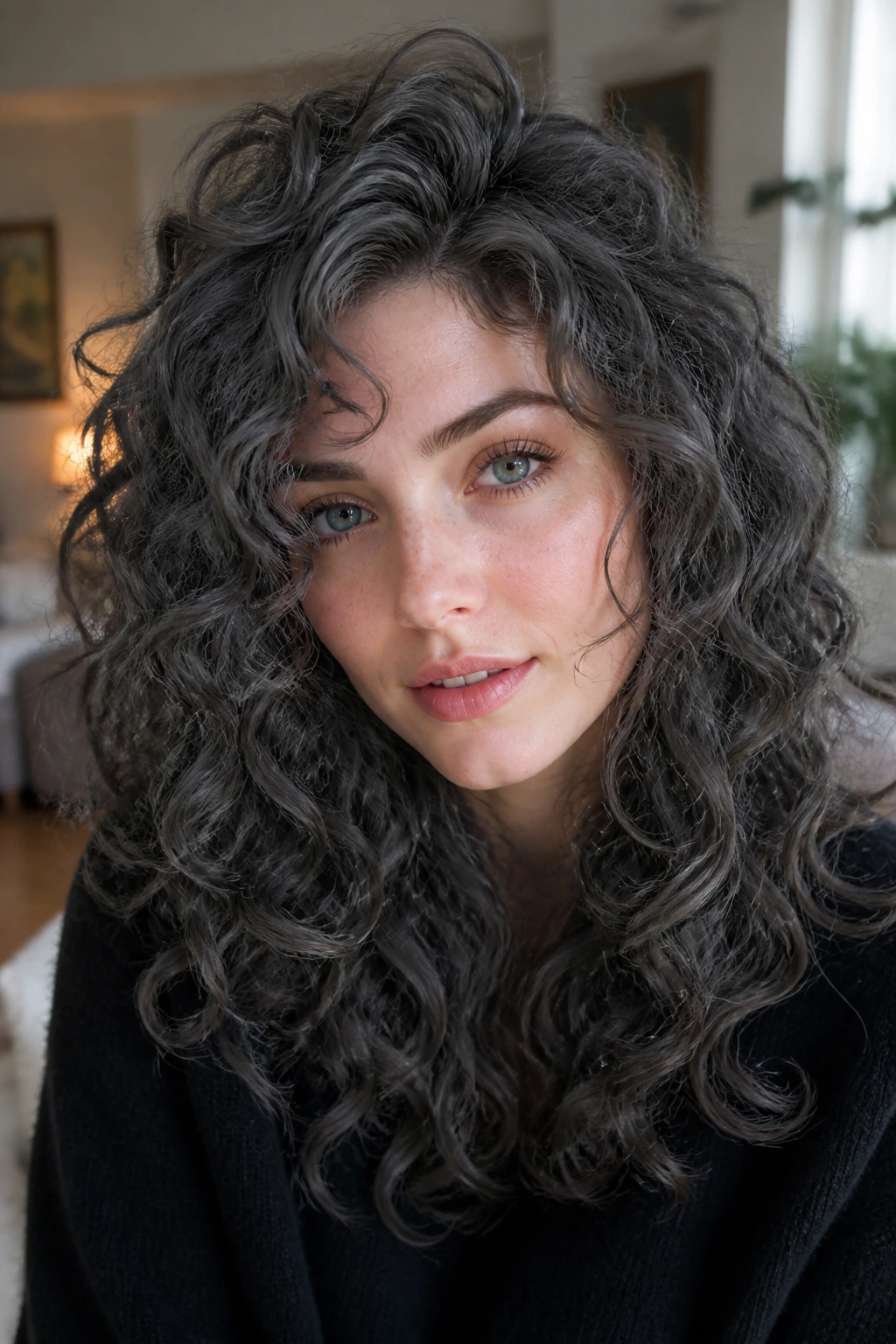
Velvet grey curls have a richness that straight styles sometimes lose. The curls make the grey feel plush instead of severe, and the darker base keeps the whole thing from drifting into silver-white territory. On pale skin, that plushness matters. It keeps the face from looking disconnected from the hair.
If your curls are tight, ask for dimension rather than a full solid tone. A few dark ribbons under the lighter grey pieces will make the curls pop. If your curls are looser, a velvet finish can lean more smokey and less metallic. Both work. The key is depth.
Use a curl cream that leaves some movement. Hard hold can flatten the velvet effect and make the grey look stiff.
28. Moonbeam Grey Undercut
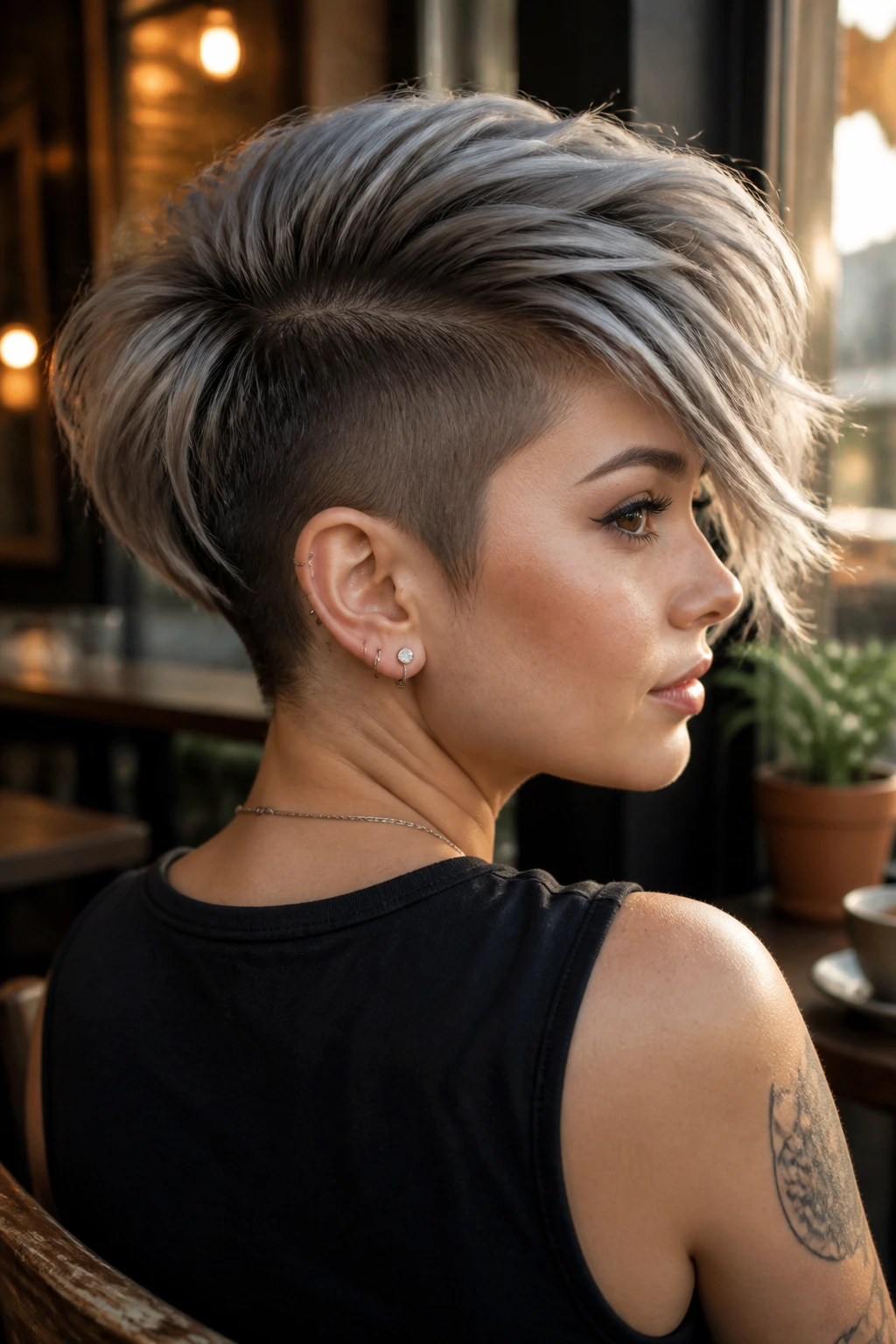
Moonbeam grey undercut is the most playful version here, and it has a real point beyond looking cool in a mirror. The undercut removes bulk, so the grey top layer stands out more sharply against pale skin. When the hair moves or is tucked back, the contrast looks deliberate and a little cheeky.
This is a good choice if you like the idea of dark grey but want part of the look hidden until you choose to show it. Ask for a smoky grey top with a deeper, darker undercut. That contrast keeps the style from turning into one flat note. If you wear your hair down, it reads softer. If you pull it up, the undercut becomes the surprise.
A light texturizing spray on the top layer keeps the moonbeam effect visible. Too much product will dull the contrast, and this cut lives on contrast.
Why Dark Grey and Pale Skin Work When the Tone Is Right
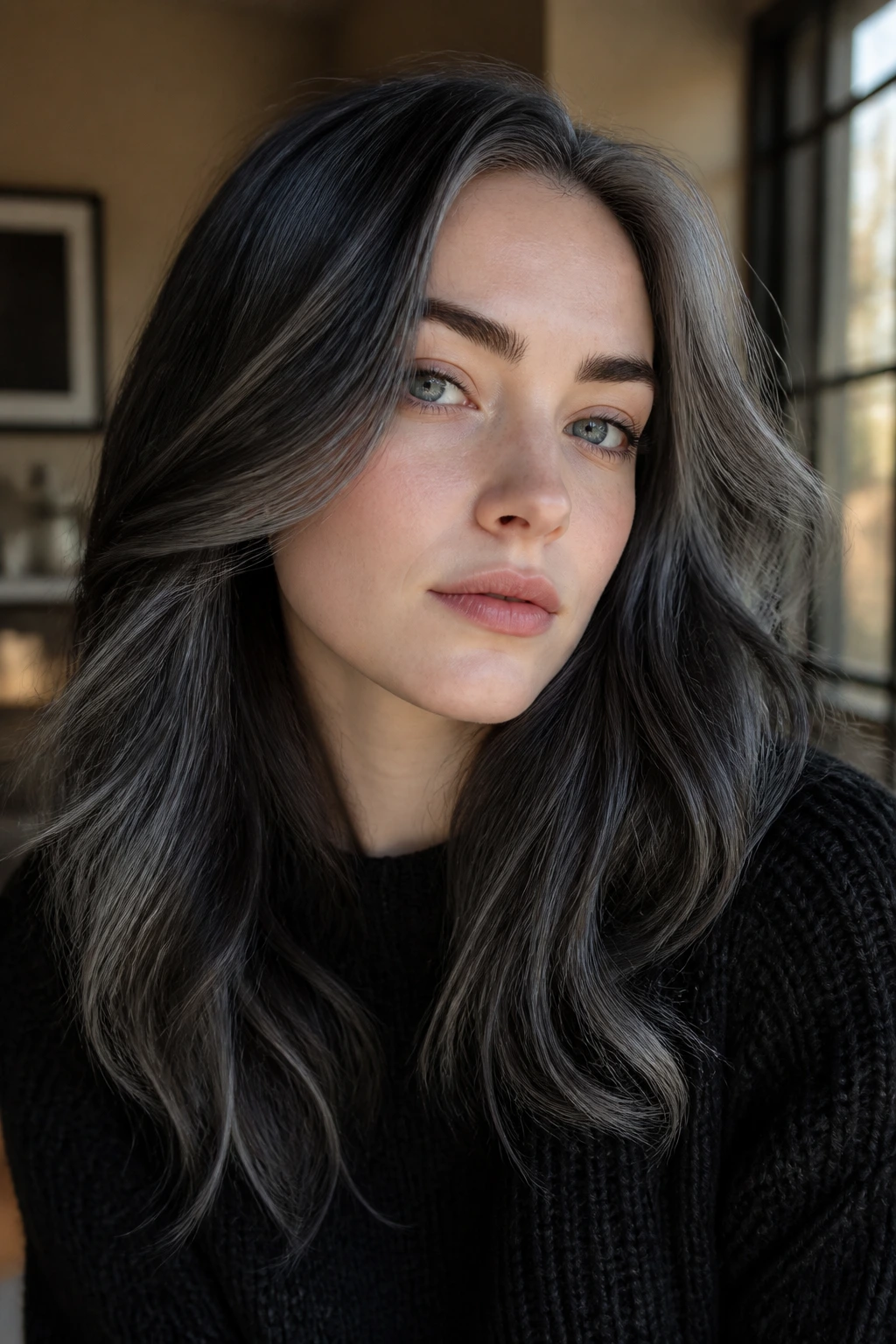
Dark grey can be a beautiful match for pale skin because it gives the face structure without forcing the features to fight the hair. The trick is not choosing the darkest possible version. It is choosing the grey with enough depth to frame the face and enough movement to keep the color from feeling frozen.
Pink-leaning pale skin
If your skin flushes pink, mauve, or rosy in daylight, flat ash can be rude to it. A mushroom, taupe, rose-grey, or smoky orchid version usually behaves better because it softens the contrast. The grey still shows up, but it doesn’t turn the face into a color correction project.
Neutral or porcelain skin
Neutral pale skin can wear the widest range of these shades. Graphite, charcoal, pewter, and blue-black all sit comfortably here because there isn’t a strong undertone that the hair has to fight. Even then, a gloss or root shadow helps. Pure flat grey is the one that tends to look like a mistake.
Warm or freckled pale skin
Warm pale skin, especially with freckles, often needs a little beige or taupe in the mix so the grey doesn’t look detached. That is why mushroom grey, taupe grey, and ash espresso melt matter. They keep the complexion looking alive. The grey can still be dark. It just cannot be so cold that it erases the skin’s warmth.
Essential Tools and Products for Keeping Grey Hair Clean and Crisp
-
Sulfate-free color shampoo: Harsh detergents strip tone out of grey fast, and this is the easiest place to stop the fade.
-
Blue or purple shampoo: Use whichever matches your problem tone; purple helps yellowing, blue helps orange-brown warmth, and both should stay on the hair only as long as needed.
-
Color-depositing mask in slate, charcoal, or silver smoke: A good mask helps stretched-out grey stay rich between salon visits.
-
Deep conditioner: Grey hair often feels drier after lightening, so one weekly moisture mask keeps the texture from turning rough.
-
Tint brush and mixing bowl: Useful if you’re refreshing a gloss at home; the brush gives you cleaner sectioning than fingers alone.
-
Sectioning clips: Grey tone needs even application, and clips keep the back from becoming an afterthought.
-
Heat protectant spray: Grey reflects light best when the cuticle lies flat, and heat protection helps prevent that frayed, dull look.
-
Wide-tooth comb: Better than a fine comb for wet, lightened hair, especially if the strands are already a bit fragile.
-
Light shine serum or oil: A drop on the ends is enough; too much turns charcoal into limp grease.
-
Silk or satin pillowcase: Not glamorous advice, but it cuts down on friction, which matters when the color is expensive and the texture is dry.
Smart Shade Selection and Salon Talking Points
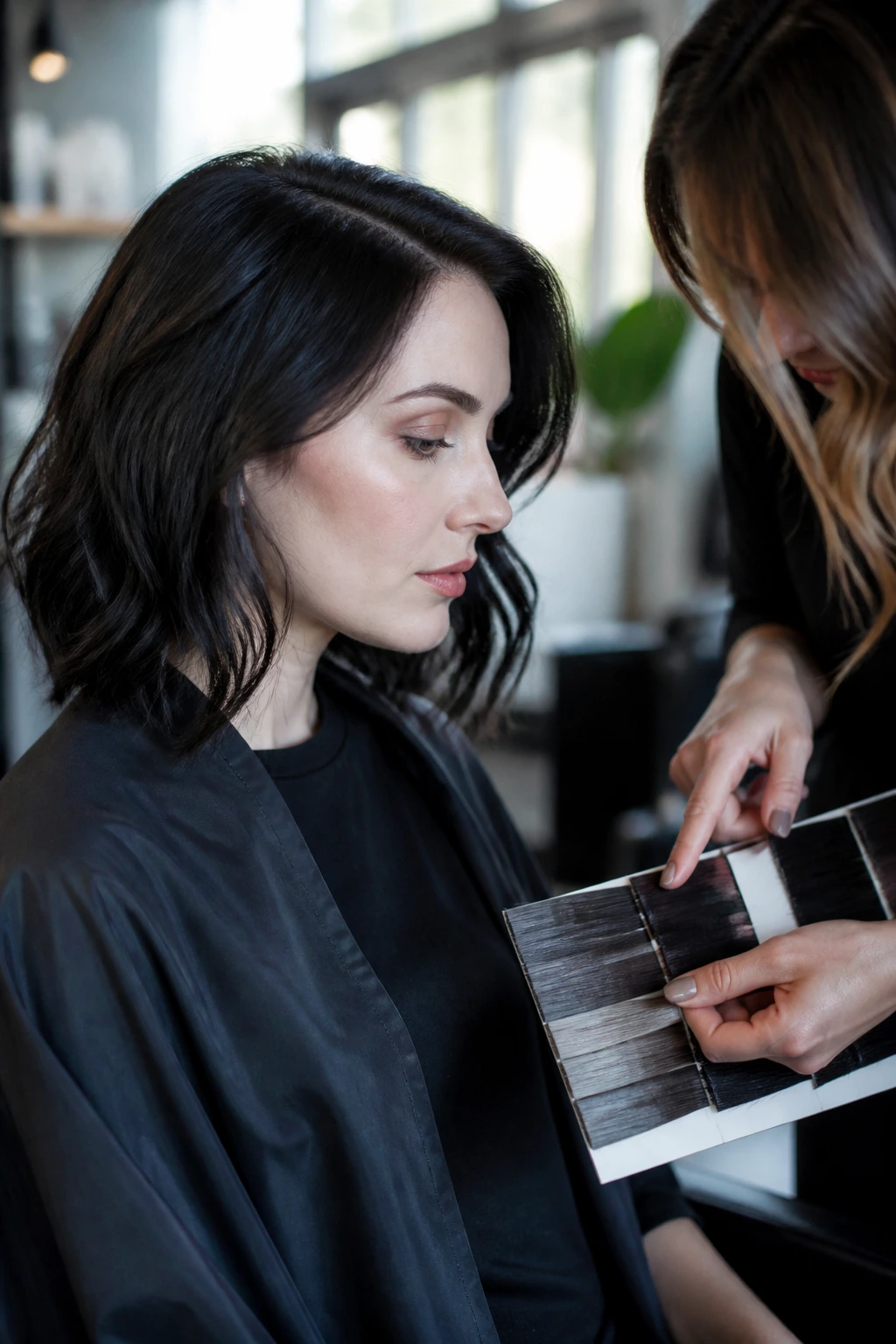
The best way to shop for dark grey is to stop thinking in one color and start thinking in tone. A level 3 charcoal, a level 5 mushroom grey, and a blue-black smoke are all “dark grey” in the broad sense, but they behave differently on pale skin. One can look soft and misty. Another can look sharp and polished. Another can read almost black until daylight hits it.
Bring daylight photos, not just mirror shots
Salon lighting flatters everything. Daylight tells the truth. Bring photos of the tone you want taken outdoors, then point out what you like: the depth at the root, the coolness through the mids, the brightness around the face, or the softness in the ends. That conversation is more useful than saying “I want grey.”
Ask about the undertone, not just the color
If the grey is too blue, some pale faces will look redder. If it is too ash-heavy, the same face can look chalky. Mushroom, graphite, pewter, and taupe each solve a different problem. A good colorist will usually adjust the tone before they make it brighter.
Decide how much maintenance you can live with
A full silver smoke balayage needs more upkeep than a charcoal gloss over brunette roots. That isn’t a flaw. It’s just the trade-off. If you’d rather not touch up every few weeks, ask for deeper roots, softer placement, or a glossed version that grows out quietly.
Never skip a strand test if you’re lightening
This is where people get impatient and then regret it. Grey shades can turn muddy if the base is lifted unevenly, and the patch test tells you what the hair will actually do. A single tested section is cheaper than fixing a whole head that went green or orange.
How to Wear Dark Grey Hair So It Frames the Face
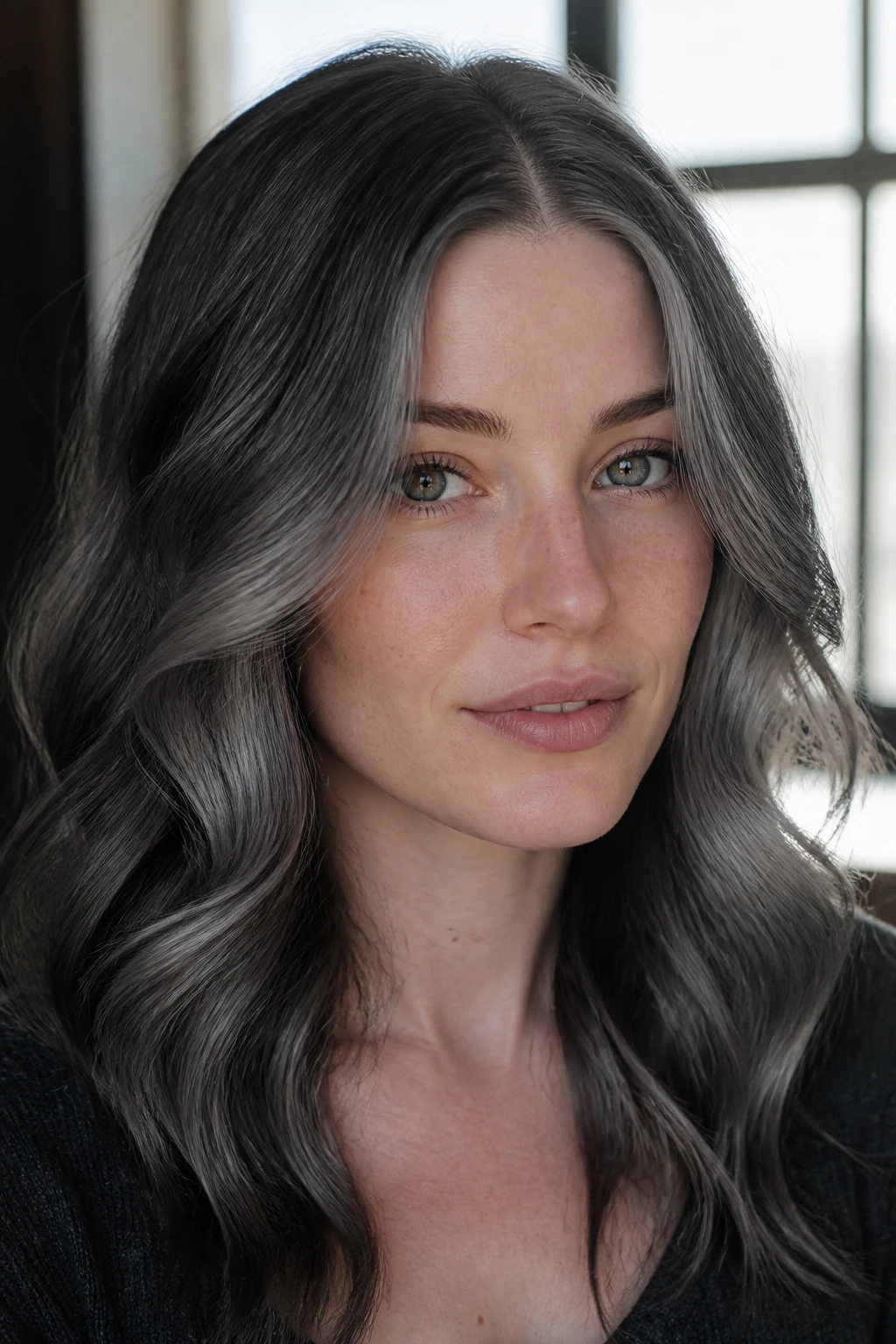
Presentation: Dark grey looks best when the finish has some movement or shine. A blunt cut keeps it crisp; waves keep it soft; curls keep it dimensional. If the hair is very straight and very dark, the shade can seem heavier than it really is, so even a slight bend at the ends helps.
Accompaniments: Pale skin usually benefits from makeup with a little color back in it. Rose blush, berry lipstick, muted mauve, and soft taupe brows are reliable choices. Silver jewelry works, but if the hair is already icy, a touch of warmth in the lips can keep the face from looking drained.
Contrast Level: You do not need the darkest possible grey to make the look work. If you want something soft, keep the root shadow deeper and the mids slightly smoky. If you want more punch, ask for a brighter face frame or a blue-black base with grey ribbons around the cheekbones. That contrast reads cleanly on pale skin without turning harsh.
Finish: Gloss matters. A dull grey looks older and flatter than it should. A satin or glassy finish makes the color seem intentional, even when the haircut is relaxed.
Extra Shine and Depth Tricks for Grey Hair
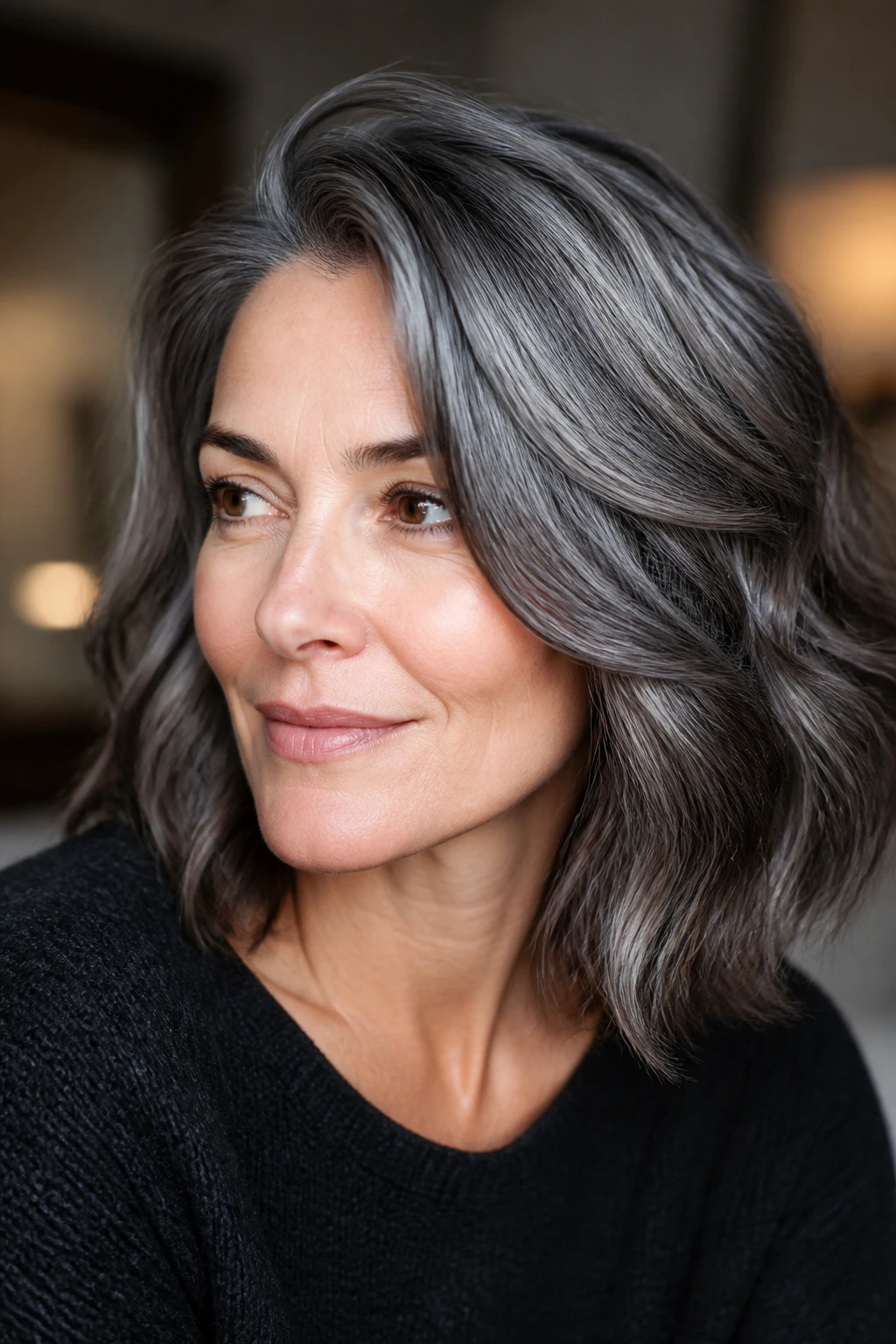
Gloss Enhancement: A clear or smoky gloss every 4 to 6 weeks can keep dark grey from turning dusty. That is one of the least dramatic changes you can make, and also one of the most effective. The color needs reflection to stay alive.
Texture Boost: If your grey is one solid tone, add shape instead of adding more dye. Soft waves, bends, or a layered cut can do more for the color than another toner session. Grey hair looks richer when the light has somewhere to land.
Customization: Pale skin with pink undertones usually likes mushroom, taupe, rose-grey, or smoky orchid. Cooler porcelain skin can handle graphite, blue-black, steel blue, and silver smoke. If you are stuck between two options, pick the one that has a tiny bit more depth at the root.
Make-It-Yours: If you want a low-commitment version, ask for face-framing pieces or a smoky gloss instead of full-head lightening. If you want a bolder version, go sharper with blue-black roots, brighter money pieces, or a crisp blunt cut. The color can move from subtle to striking without changing families.
Common Mistakes That Make Grey Hair Look Flat
-
Choosing ash with no depth: Pure ash can make pale skin look chalky, especially indoors. The fix is adding a root shadow, a mushroom note, or a little graphite in the mix so the color has body.
-
Going too blue on already cool skin: Blue-black can be gorgeous, but too much of it can make the complexion look red by contrast. If your skin already runs cool, ask for smoke, charcoal, or pewter instead of a heavy blue cast.
-
Skipping gloss maintenance: Grey hair loses shine fast if it is not refreshed. Once the gloss goes, the color can look dusty, and that flatness reads more like neglect than style.
-
Overwashing the hair: Grey tones fade faster when the shampoo bottle gets too much action. Washing two or three times a week is usually enough for most people, and cooler water helps the cuticle stay smoother.
-
Ignoring brows and blush: Dark grey changes the frame around your face. If the brows and cheeks stay bare, the hair can overpower the features. A touch of brow definition and a soft blush bring the face back into balance.
-
Trying to force silver from dark hair in one go: That usually ends with uneven lift and rough texture. A slower process, or a brunette-to-grey melt, tends to look cleaner and feel better on the hair.
Variations and Adaptations to Try
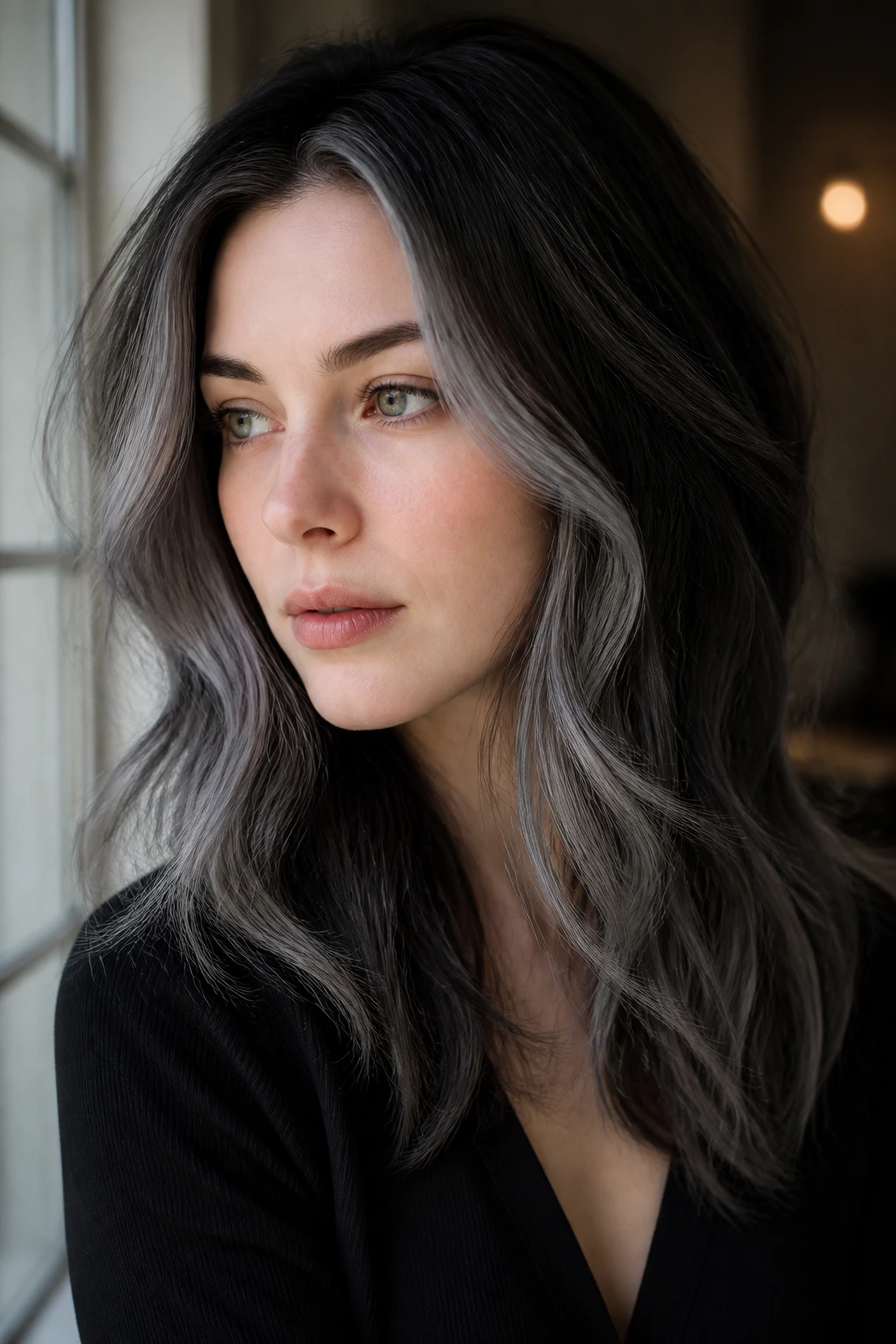
Soft Smoke Edit: This version keeps the grey muted, with shadow roots and a demi-permanent finish. It is the most forgiving option if you want the idea of dark grey without the maintenance of a high-contrast silver. On pale skin, it reads calm and polished rather than icy.
Blue-Black Lean: Push the grey toward midnight blue if your complexion can handle cool contrast. This is the sharpest reading of the shade family and it makes very fair skin look luminous in a slightly dramatic way. Keep the haircut simple so the color stays in charge.
Mushroom Neutral: Add beige and taupe to the grey if pure ash usually leaves you flat. This is a nice middle path for freckles, rosy cheeks, or skin that shifts between cool and warm depending on the light. It still looks dark. It just behaves more gently.
High-Contrast Moonlight: Brighten the money piece, fringe, or face frame while keeping the rest deep charcoal. That gives pale skin a clear outline without needing the whole head to go lighter. It is especially useful if you like visible contrast but not a full silver head.
Curly-First Grey: If your hair is curly or coily, focus on dimension instead of one solid tone. Grey ribbons, darker underlayers, and glossy ends will show the curl pattern better than a flat all-over dye job. The texture becomes part of the color story.
Wash Schedule, Toning, and Grow-Out Care
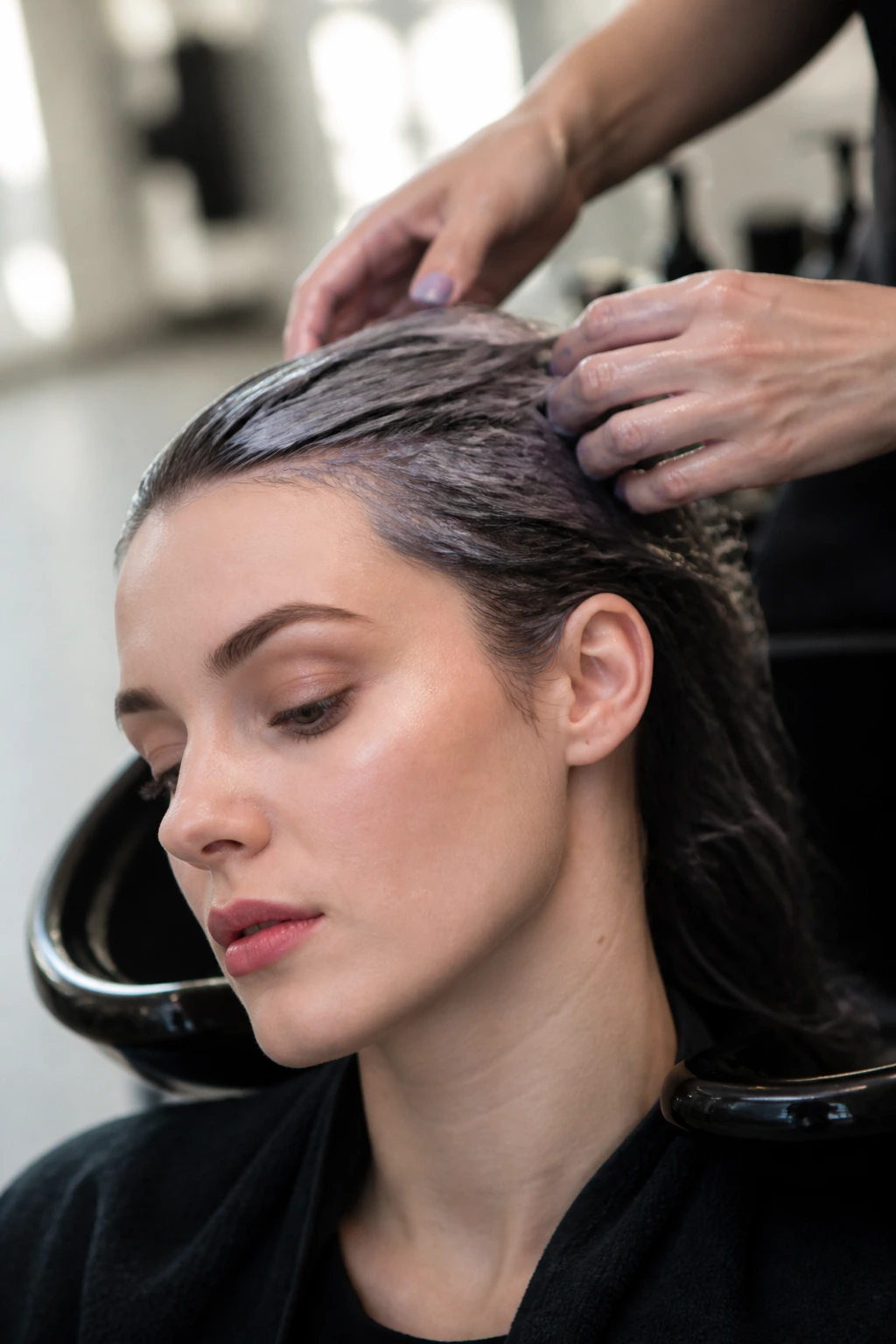
Grey hair behaves better when you stop treating it like a fresh permanent color and start treating it like a fabric that needs care. Wash it too often, and the tone dulls. Use too much purple shampoo, and the hair can grab an odd violet cast. A little restraint goes a long way.
In the first two weeks after coloring, keep shampooing light and use cool or lukewarm water. That helps the cuticle stay smooth so the grey keeps its sheen. After that, aim for two or three washes a week unless your scalp needs more. Dry shampoo can buy you a day or two, but do not let product build up so badly that the roots turn dusty.
A gloss or toner refresh every 4 to 6 weeks is a good rhythm for most dark grey shades. If your look is more charcoal or mushroom, you may stretch it longer because those tones fade more softly. If the color leans blue, silver, or lavender, watch it more closely; those cooler notes can vanish or shift faster.
Between appointments, sleep on satin, use heat protection, and keep the ends moisturized. That trio does more than people expect. Grey hair looks costly when it reflects light cleanly, and rough ends kill that effect in a hurry.
Frequently Asked Questions
Will dark grey hair wash out pale skin?
Not if the tone is chosen well. The shades that usually flatter pale skin have some depth at the root and a little movement in the mids, which keeps the face from looking faded. Flat ash is the problem, not dark grey itself.
What undertones work best with dark grey hair?
Pale skin with pink undertones often likes mushroom, taupe, or smoky orchid. Neutral or porcelain skin can wear graphite, charcoal, pewter, and blue-black with fewer issues. If your skin runs warm, keep a touch of beige or brown in the mix so the grey doesn’t look detached.
Do I need bleach to get dark grey hair?
Sometimes, yes, especially if your hair starts out dark brown or black and you want the grey to read clearly. If your base is already lighter, a gloss or toner may be enough for some shades. A strand test is the safest way to find out how much lift your hair needs.
How often should dark grey hair be refreshed?
Most dark grey shades benefit from a gloss or tone refresh every 4 to 6 weeks. If the color is more charcoal or smoke-based, you may get a little more time. If it leans silver, blue, or lavender, it will usually need attention sooner.
What if the grey starts looking green?
That usually happens when cool ash sits on top of leftover yellow or when hard water leaves mineral buildup. A clarifying wash, followed by a warm-neutral gloss or a color mask with a little beige in it, usually helps bring the tone back. Do not keep stacking purple shampoo on top of the problem; that often makes the hair duller.
Which style is lowest maintenance?
A charcoal shadow root, a mushroom grey melt, or a brunette-to-grey balayage tends to grow out the most quietly. Those looks do not depend on a hard line, so regrowth blends in rather than shouting for attention. That matters more than people think.
Can dark grey work on curly hair?
Absolutely. In fact, curls often make dark grey look better because the texture breaks the color into highlights and shadows. A one-tone grey on curls can look flat; a dimensional grey with ribbons, lowlights, or a smoky glaze usually looks richer.
What makeup pairs best with dark grey hair on pale skin?
Rose blush, berry lipstick, soft brown liner, and a defined brow are dependable choices. They bring enough warmth back to the face that the hair can stay cool without making the skin look washed out. If the grey is blue-black, a touch of mauve can help balance the coolness.
The Shade That Still Feels Like Hair
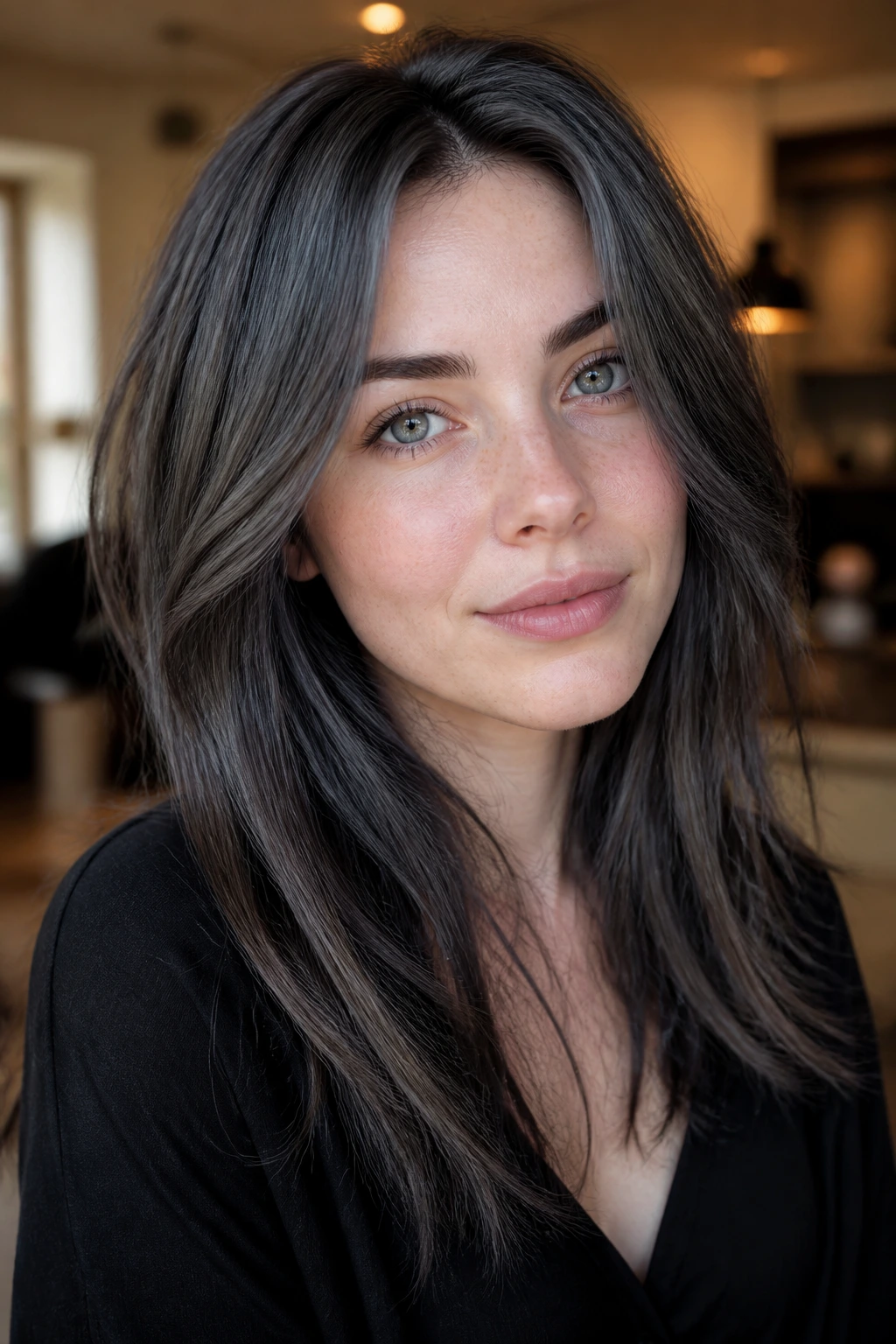
Dark grey works on pale skin when it looks like hair first and color second. That means depth at the root, some movement in the mids, and enough gloss to stop the shade from turning dusty or flat. The best versions do not scream for attention. They make the face look sharper, brighter, and a little more finished.
If you are deciding where to start, choose the version that matches how much upkeep you can live with, not the one that looks most dramatic in a screenshot. A smoky charcoal lob, a mushroom shag, or a graphite money piece is usually easier to wear than a full silver transformation, and easier to love three weeks later when real life has happened to it.
The safest move is also the most useful one: pick the grey that still leaves your skin looking awake in daylight. Start there, and the rest of the shade family opens up fast.