



The best blonde hair shades for deep skin tones with fine hair are rarely the loud, icy blondes that flood mood boards. The shades that work hardest are usually the ones with depth at the root, cream through the mids, and a little warmth or smoke in the toner so the hair still looks plush instead of see-through. On fine strands, that difference is not cosmetic fluff. It changes how full the hair looks at the part line, how shiny it reads under daylight, and how much damage you have to put up with to get the color there.
Deep skin gives blonde a lot of room to play. Honey, caramel, bronze, butterscotch, beige, and champagne tones can sit against rich skin and look expensive without trying too hard. Cooler blondes can work too, but they need more thought: a deeper base, a softer toner, and usually some kind of root shadow so the color doesn’t turn chalky or harsh. Fine hair is the other half of the equation, and it’s the part people ignore. Heavy lightening on delicate strands can leave the ends looking dusty and the shape looking thinner than it really is.
So the trick is not “how blonde can you go.” It’s “which blonde keeps the hair looking dense, glossy, and alive.” Thin ribbons often beat chunky highlights. A level 8 honey glaze can read richer than a full head of pale bleach. And a rooted beige blonde can do more for the illusion of thickness than a flat platinum sheet ever will. The shades below are the ones I’d actually reach for when the brief is deep skin, fine hair, and a result that looks intentional in sunlight and under bad indoor lighting.
Why These Shades Work on Deep Skin and Fine Hair
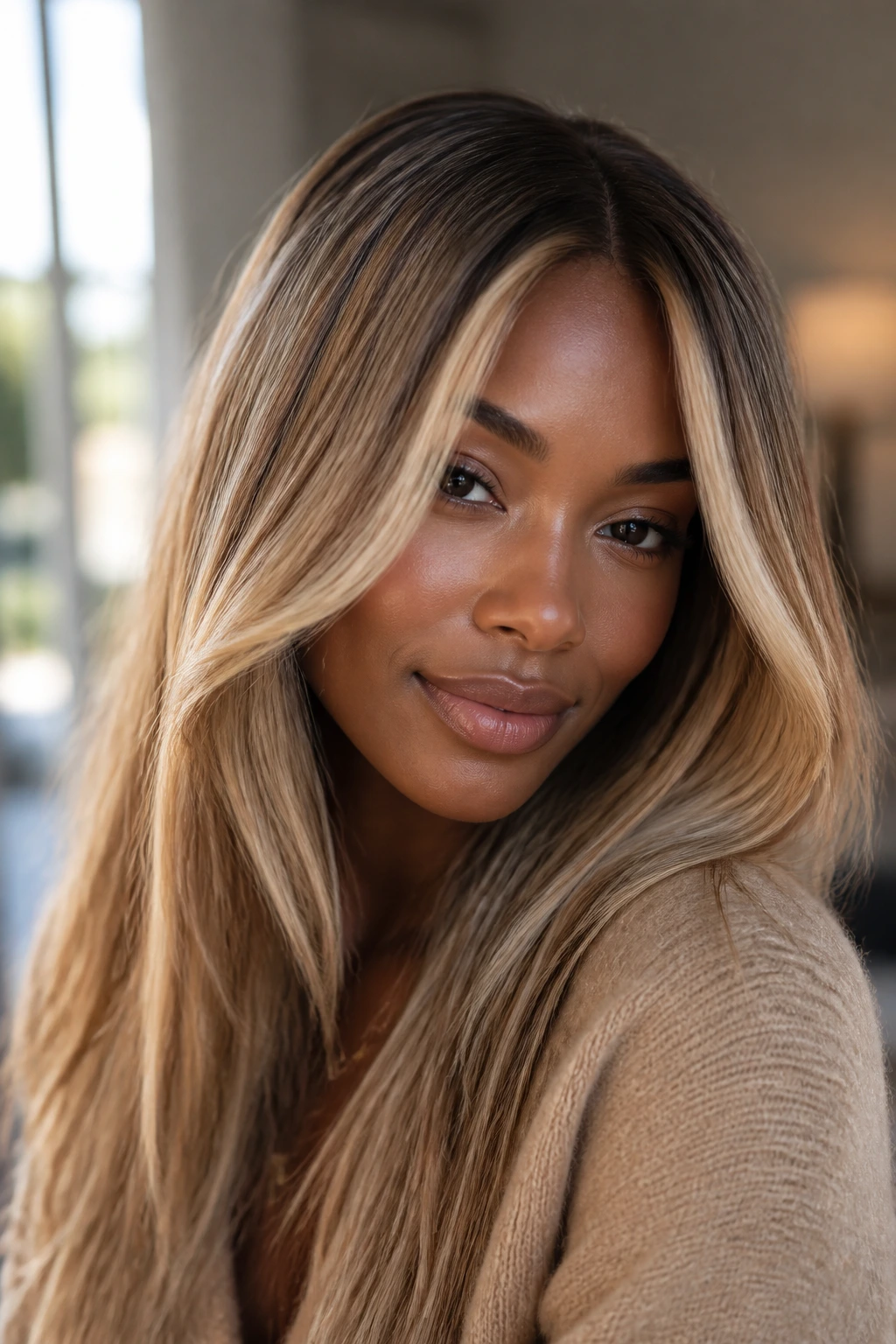
-
Dimension beats flatness: Fine hair usually looks fuller when the blonde is broken into ribbons, melts, and soft roots instead of one single bright block from scalp to ends.
-
Warmth usually plays nicest: Honey, caramel, butterscotch, bronze, and beige-gold shades sit close to the natural warmth in deeper skin, so the color reads rich instead of washed out.
-
Lower lift can look smarter: A shade that lives around level 7 to 9 often gives enough brightness without pushing fragile strands into the brittle zone that level-10 all-over blondes can create.
-
Root shadow helps more than people think: A deeper root gives the grow-out a softer edge and makes the crown look denser, which matters when the hair itself is fine.
-
Tone carries the whole result: Two blondes can both be called “caramel,” and one will look orange while the other looks glossy and soft. Ask for the tone family, not the label alone.
-
Placement matters as much as color: Face-framing pieces, babylights, and soft balayage usually beat thick foils on fine hair because they create brightness without exposing every strand.
1. Honey Blonde Ribbons
Honey blonde is the shade that makes sense fast. It has enough gold to sit comfortably on deep skin, but it doesn’t go brassy if the toner is kept in check. On fine hair, I like it best as thin ribbons woven through a deeper base, because that keeps the overall look lush instead of stripy.
What to ask for at the salon
Ask for a level 8 honey blonde glaze with a soft root melt and very fine highlights around the face and crown. If your hair is fragile, keep the lift limited to pieces that frame the head, not every single strand. The color should look warm when the light hits it, not orange when you turn your head.
Honey blonde loves movement. Waves, bends, and a loose blowout make the ribbons separate just enough to show the depth under them. Straight hair can wear it too, but the finish needs gloss. Otherwise it can look flatter than it should.
2. Caramel Blonde Melt
Caramel blonde is one of the easiest shades to get right on deep skin, and I mean that in the best way. It has brown in its bones, so it flatters richer complexions without fighting them, and it gives fine hair a bit of visual weight. The result feels softer than traditional blonde, which is exactly why it works.
Best for: people who want blonde without the shock of a pale finish.
Ask for: caramel balayage, a shadow root, and mid-length brightness rather than all-over lightening.
The melt matters here. If the caramel starts too high and gets too pale too fast, fine hair can look skimpy at the ends. Keep the transition gradual, and let the hair hold a little depth near the root. That darker base is doing real work.
3. Golden Beige Blonde
Golden beige blonde is the quiet achiever of the bunch. It sits between warm and cool, which makes it a smart choice if your undertones are mixed or if you’ve tried golden blondes before and thought they looked too yellow. On deep skin, beige-gold reads soft and polished, not washed out.
A clean beige blonde usually looks better when the lightening stops around level 8 or 9, then gets toned with a beige-gold gloss. That leaves enough warmth to keep the skin glowing, but not so much that the color turns honey-heavy. Fine hair benefits from that restraint. Less aggressive lift means less frizz and fewer see-through patches at the ends.
4. Butterscotch Blonde
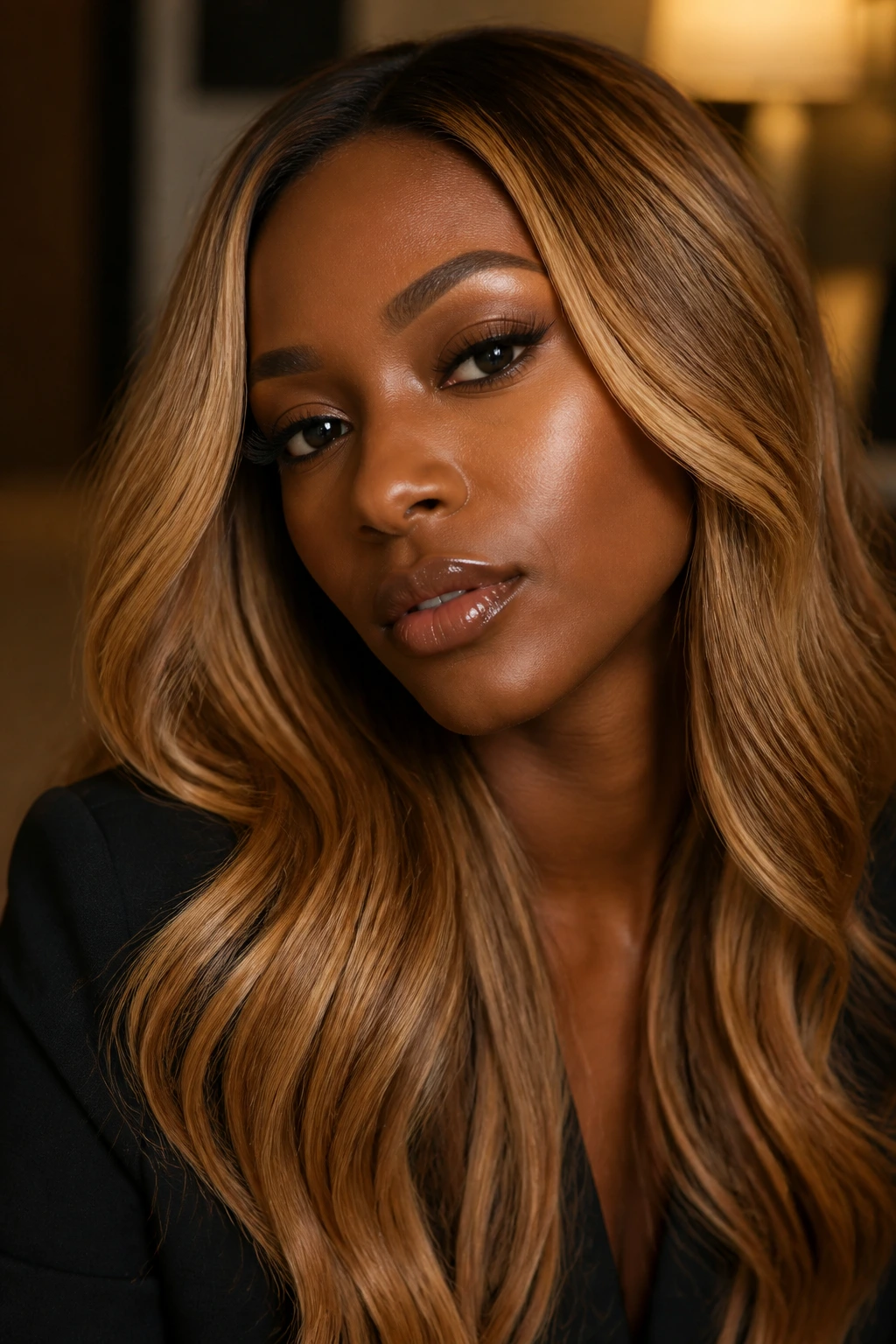
Butterscotch blonde is richer and warmer than honey, with a little toasted depth that gives it a plush feel. If your skin leans golden, this shade can be gorgeous. It has that melted-candy look without going orange, as long as the toner stays balanced.
This is a good one for someone who wants the blonde to feel noticeable from across the room but still soft enough to wear every day. Fine hair likes the warmth because it makes the strand look a touch thicker and shinier. Keep the highlights delicate and the root slightly deeper. A flat butterscotch sheet can look heavy; a broken-up version looks expensive.
5. Sand Blonde
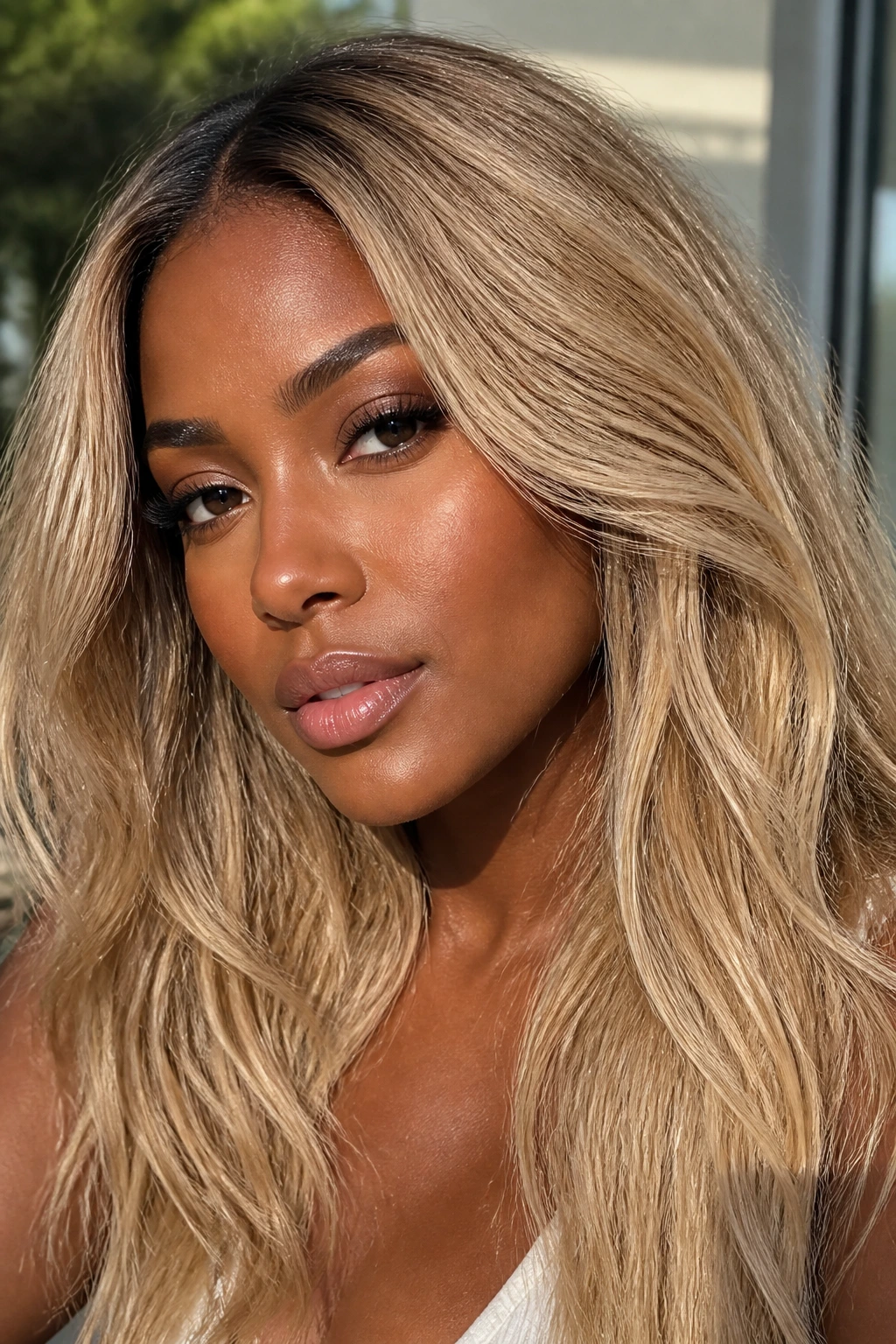
Sand blonde is the shade I’d point to when someone says they want blonde, but not the obvious kind. It has a sun-washed, muted feel, like the color has been softened by time rather than pushed by bleach. On deep skin, that subtle warmth keeps it from looking pale or chalky.
The best version is usually built with a soft hand: thin babylights, a beige toner, and a root shadow that keeps the crown grounded. Fine hair benefits because sand blonde doesn’t need to be scream-bright to register. The tone does the work. And that means less aggressive lifting, which your ends will appreciate.
6. Champagne Blonde
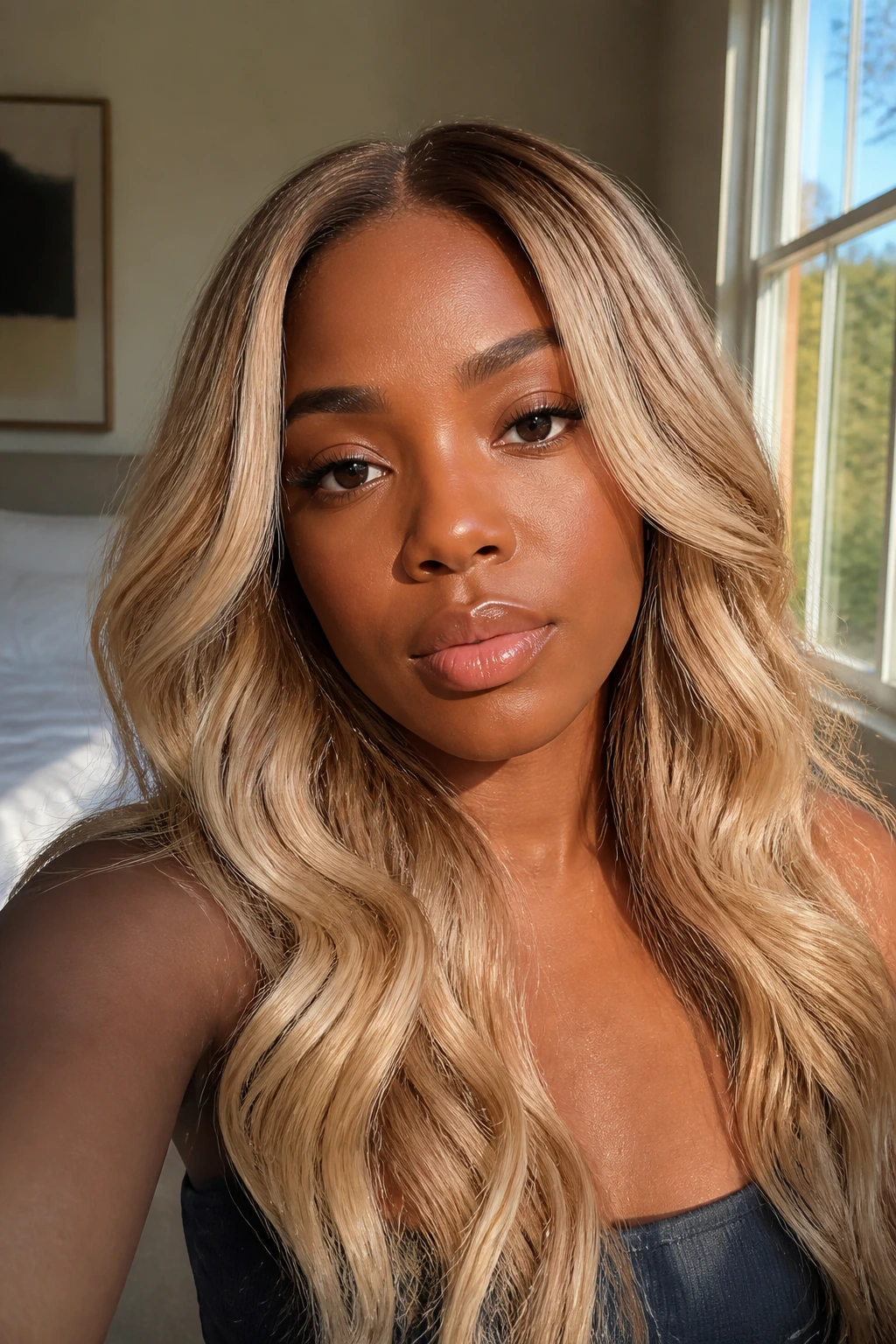
Champagne blonde has sparkle without screaming for attention. It’s cooler than honey, lighter than beige, and a little creamy at the same time. On deep skin, especially if your undertones lean neutral or cool, it can look sharp and elegant rather than icy in a harsh way.
The trick is keeping the root soft. A champagne blonde with no shadow can turn flat against deep skin, while a deeper base gives it contrast and stops the whole thing from drifting too pale. Fine hair usually looks better with this shade when the colorist concentrates brightness around the face and the surface layers. That keeps the overall look airy, not overprocessed.
7. Beige Blonde
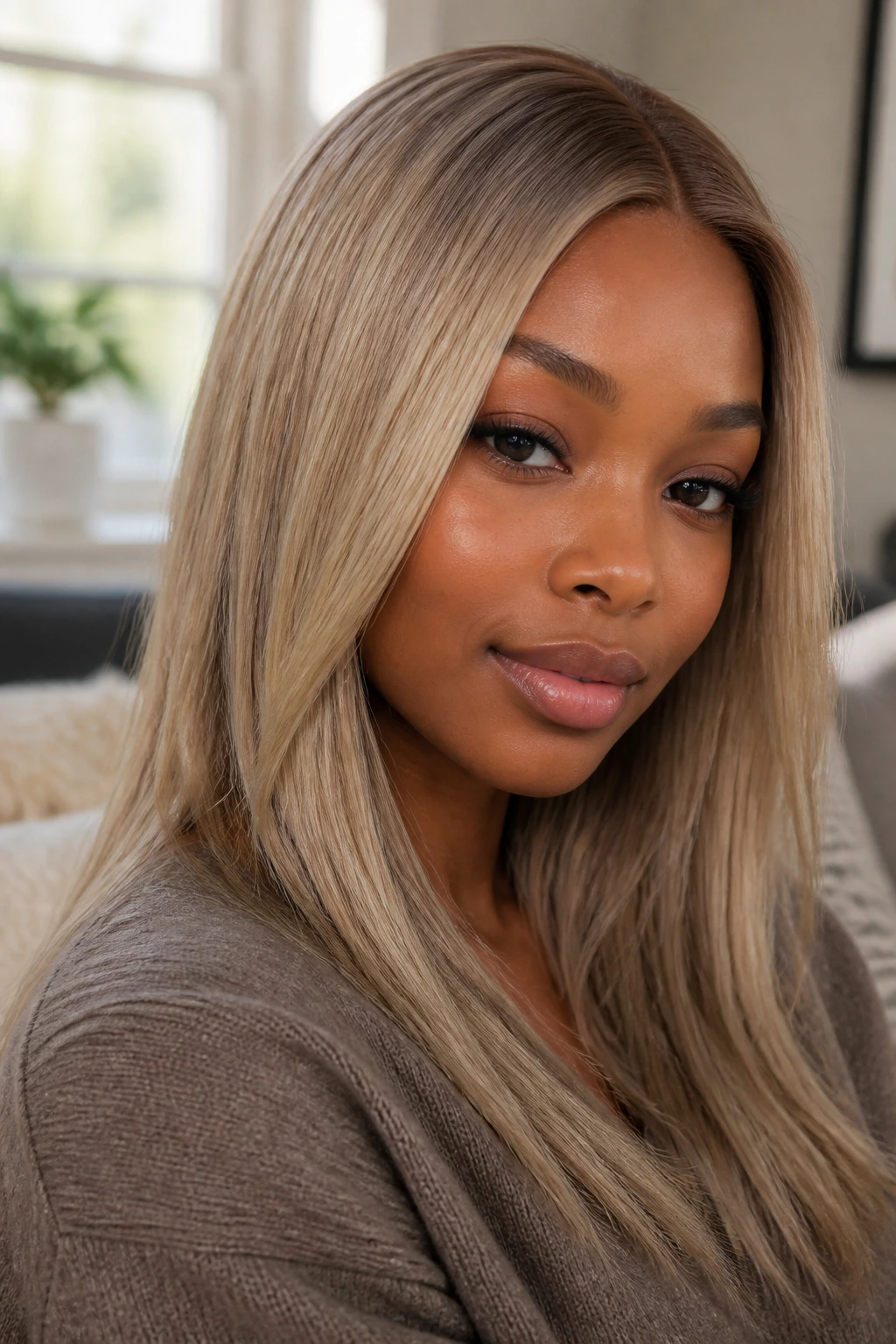
Beige blonde is one of my favorites because it’s not trying to be anything dramatic. It sits in that creamy middle ground where the tone feels calm and expensive, not loud or brassy. Deep skin can wear it beautifully when the base has enough depth to hold the color in place.
On fine hair, beige blonde is useful because it doesn’t need to be super pale to look finished. A level 8 lift with a beige gloss can be enough. That’s a much kinder process than forcing the hair to level 10 and then trying to rescue it with toner. If your hair is already porous, this is the safer move.
8. Bronde With a Root Shadow
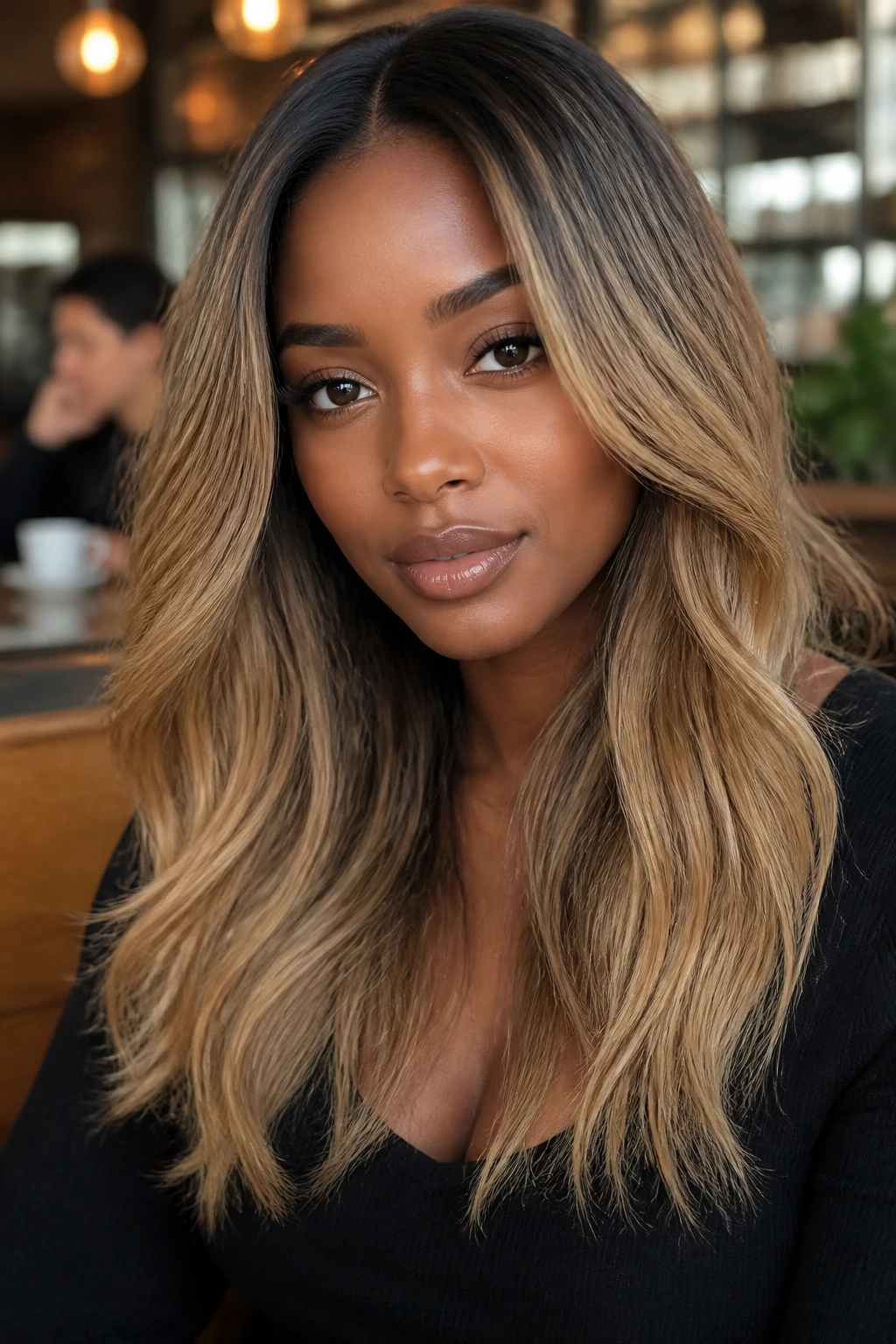
Bronde is the shade for people who want the blonde family but refuse to give up depth. It’s brown, blonde, and shadow all at once, which sounds vague until you see it on fine hair. Then it makes sense immediately. The darker pieces create the illusion of density, and the lighter ribbons give the lift.
This is probably the most forgiving option in the whole list. It flatters deep skin because the brown base keeps the tone anchored, and it flatters fine hair because it never asks the hair to be uniformly light. If you wear your hair in a bob, a lob, or long layers, bronde gives the cut more body than a flat blonde ever would.
9. Mushroom Blonde
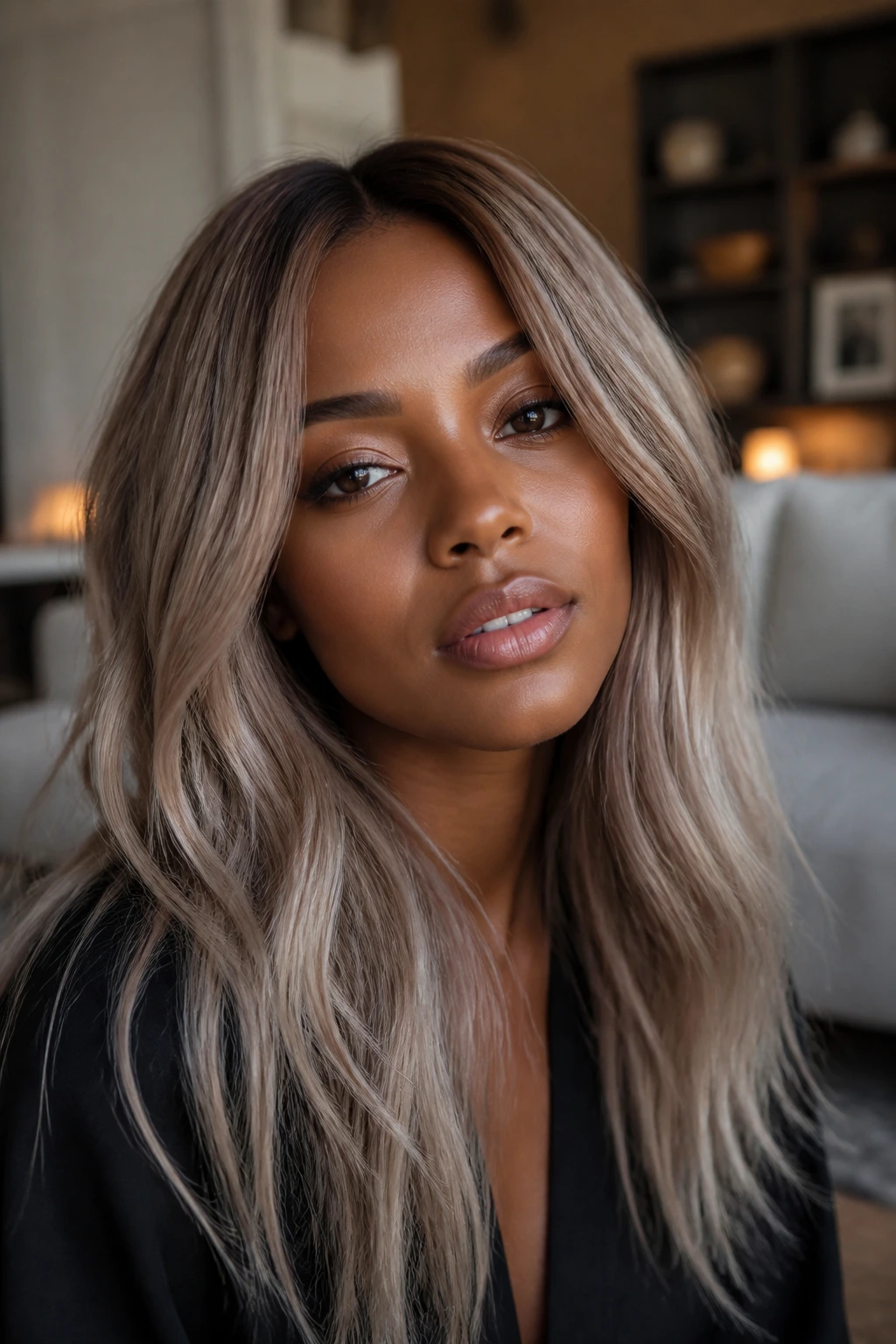
Mushroom blonde is cooler, smoky, and a little earthy. It has beige-brown softness rather than silver brightness, which matters on deep skin. Done right, it looks modern and expensive. Done wrong, it looks muddy. So tone placement matters here.
I like mushroom blonde best when the colorist leaves the root depth alone and only softens the mids and ends with smoky beige ribbons. That keeps the finish dimensional. Fine hair can actually wear this beautifully because the darker smoke creates visual texture. A blunt cut or a sleek lob is a strong match.
10. Toffee Blonde
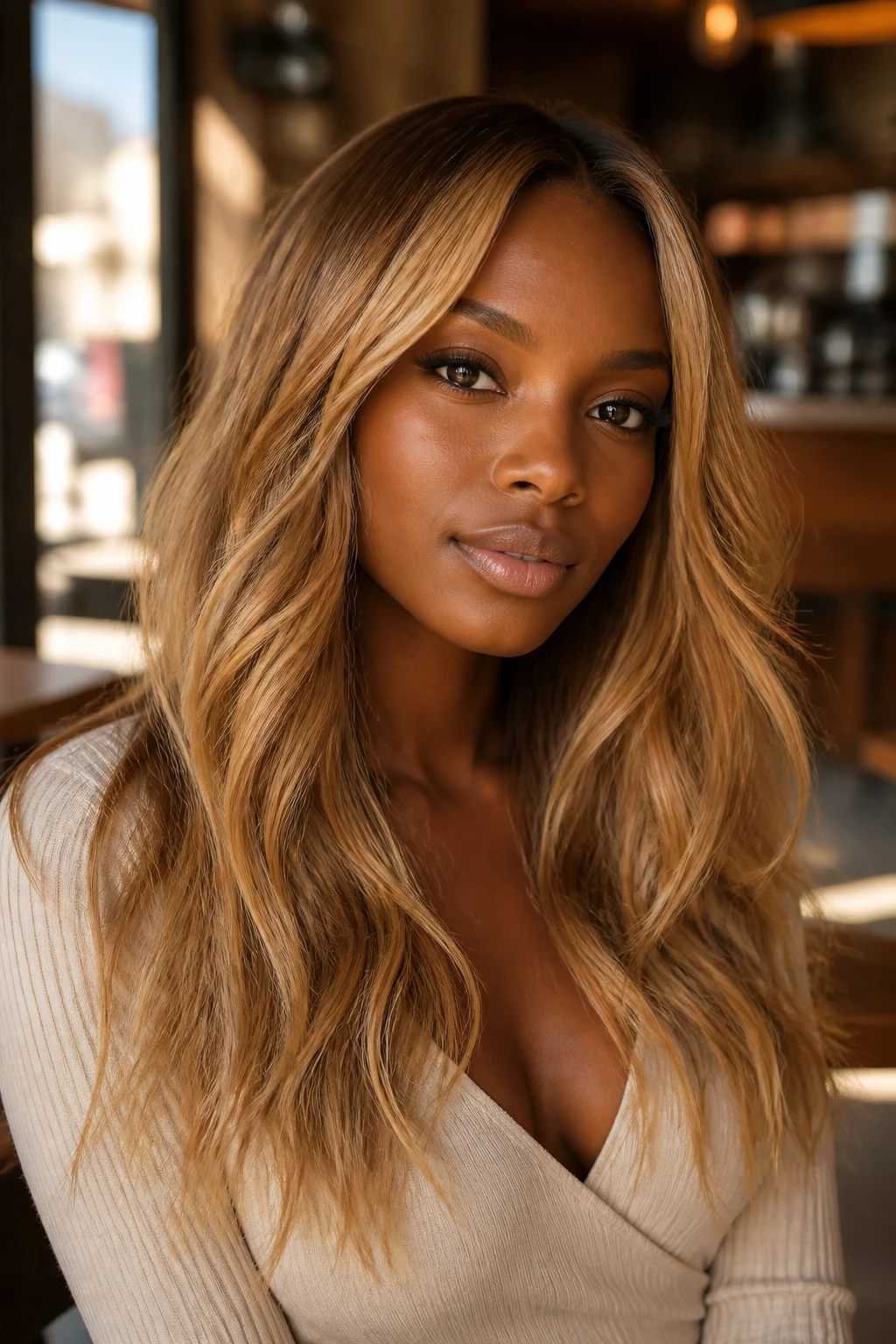
Toffee blonde is warm in a way that feels rounded and smooth, not sugary. It has a deeper caramel-brown base with golden lift through the mids, and that extra depth is a gift for fine hair. Hair that isn’t naturally thick often looks better when the color has some dark-to-light movement built into it.
This shade is especially good if you want the blonde to blend into your natural depth instead of sitting on top of it. On deep skin, that makes the color read rich and deliberate. Ask for a toffee glaze with face-framing brightness and a softer finish through the back, where fine hair can get wispy fast.
11. Bronze Blonde
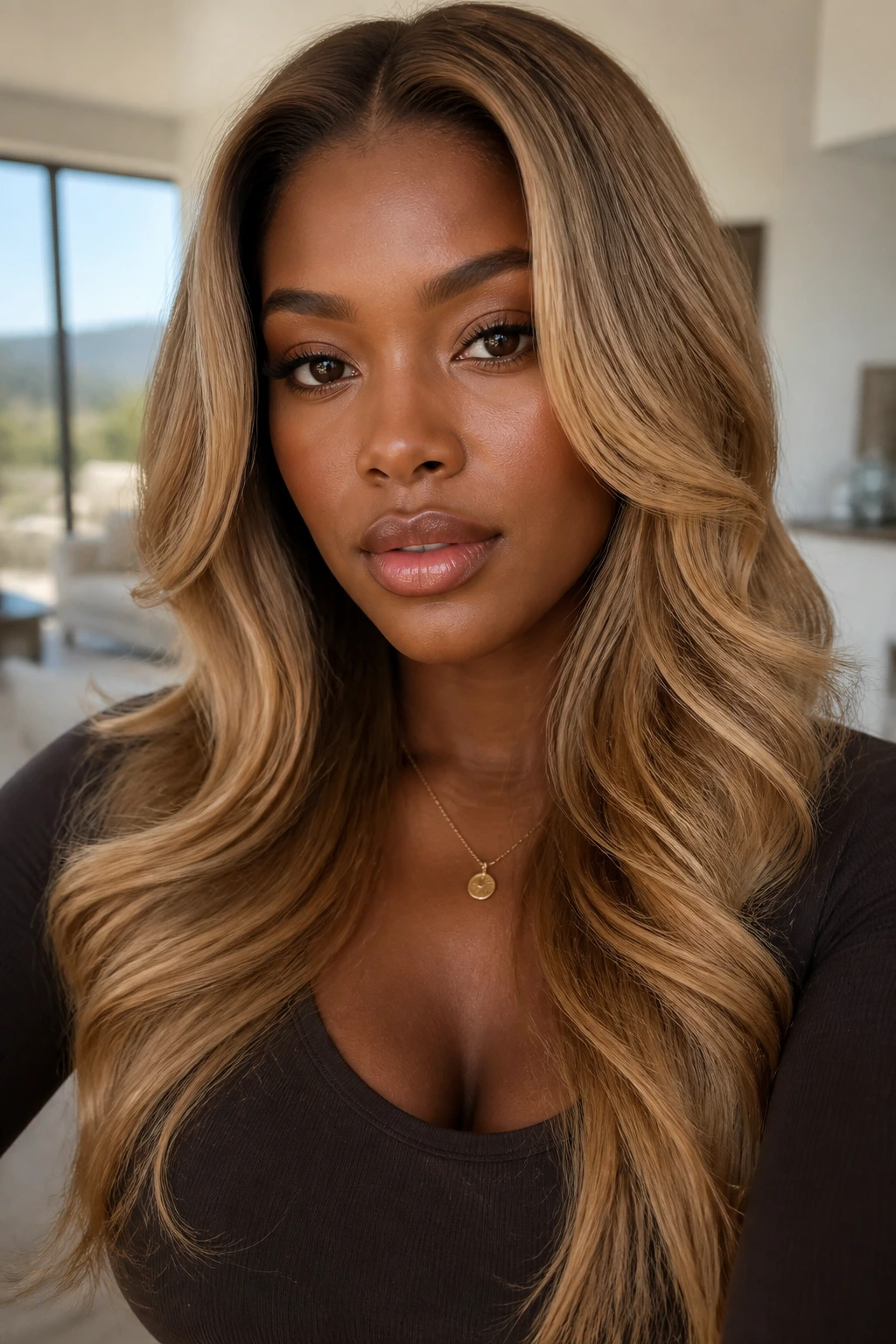
Bronze blonde sits in the sweet spot between warm brunette and blonde shine. It has a metallic glow, but it’s not flashy. Against deep skin, it can look rich and polished, especially if your undertones lean golden or olive. The warmth in bronze keeps the face from looking drained.
Fine hair benefits because bronze doesn’t depend on extreme lift. A lot of the visual impact comes from tone, not just how light the hair gets. That means less stress on fragile ends and a result that still reads blonde in daylight. If you want gloss with warmth, this is a smart pick.
12. Cinnamon Blonde
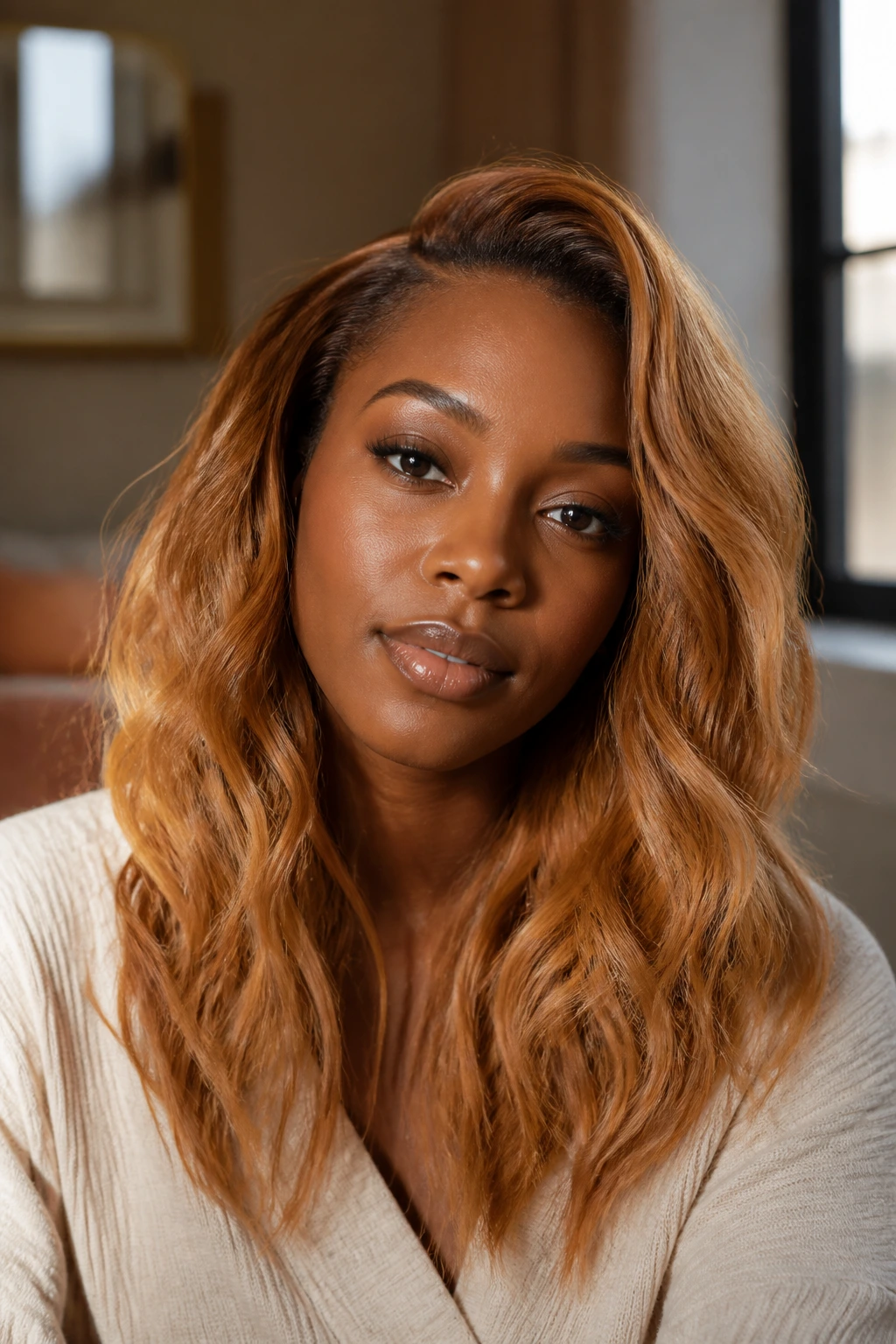
Cinnamon blonde brings a spicy warmth that works especially well on deep skin with red, gold, or neutral undertones. It has a little copper, a little gold, and enough depth to avoid looking like a costume color. I like it on textured hair because the warmth catches the bends and curls in a very flattering way.
Fine hair can wear cinnamon blonde when the lightening is controlled. You do not need every strand pushed pale. A warm gloss over lighter ribbons can give you the same effect with less breakage. Keep the root shade a little deeper and let the cinnamon show in the mids and ends. That gives the hair shape.
13. Chestnut Blonde
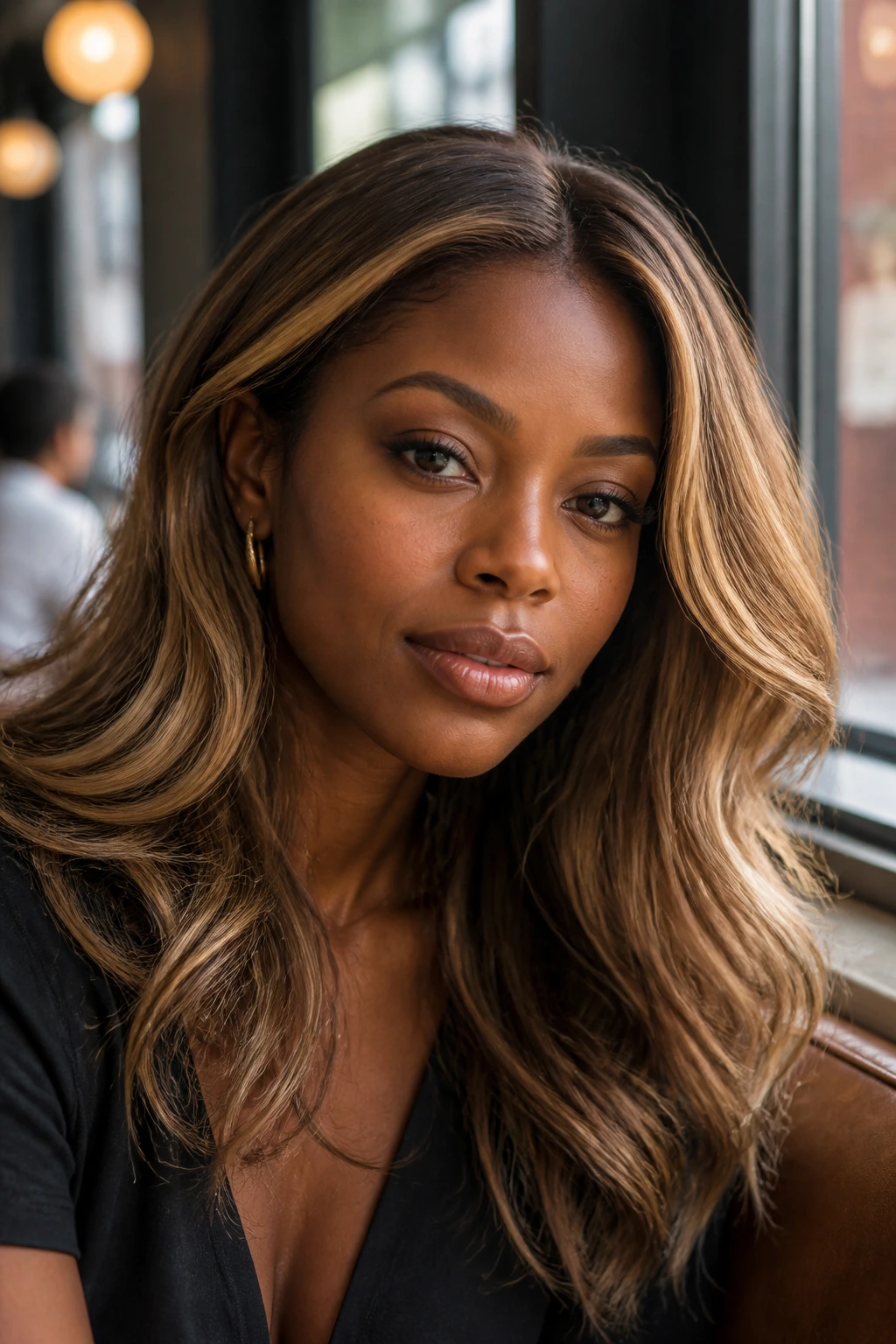
Chestnut blonde is blonde by way of brunette. It’s deeper, softer, and much more believable on fine hair than a bright all-over blonde. The shade reads as dimensional rather than obvious, and that is a win when the hair density is on the delicate side.
Deep skin can wear chestnut blonde because the darker base keeps the color grounded. If you’re nervous about maintenance or breakage, this is one of the safest places to start. A few lighter threads around the face are enough. You get lightness where it matters and depth where the hair needs support.
14. Rooted Platinum Blonde
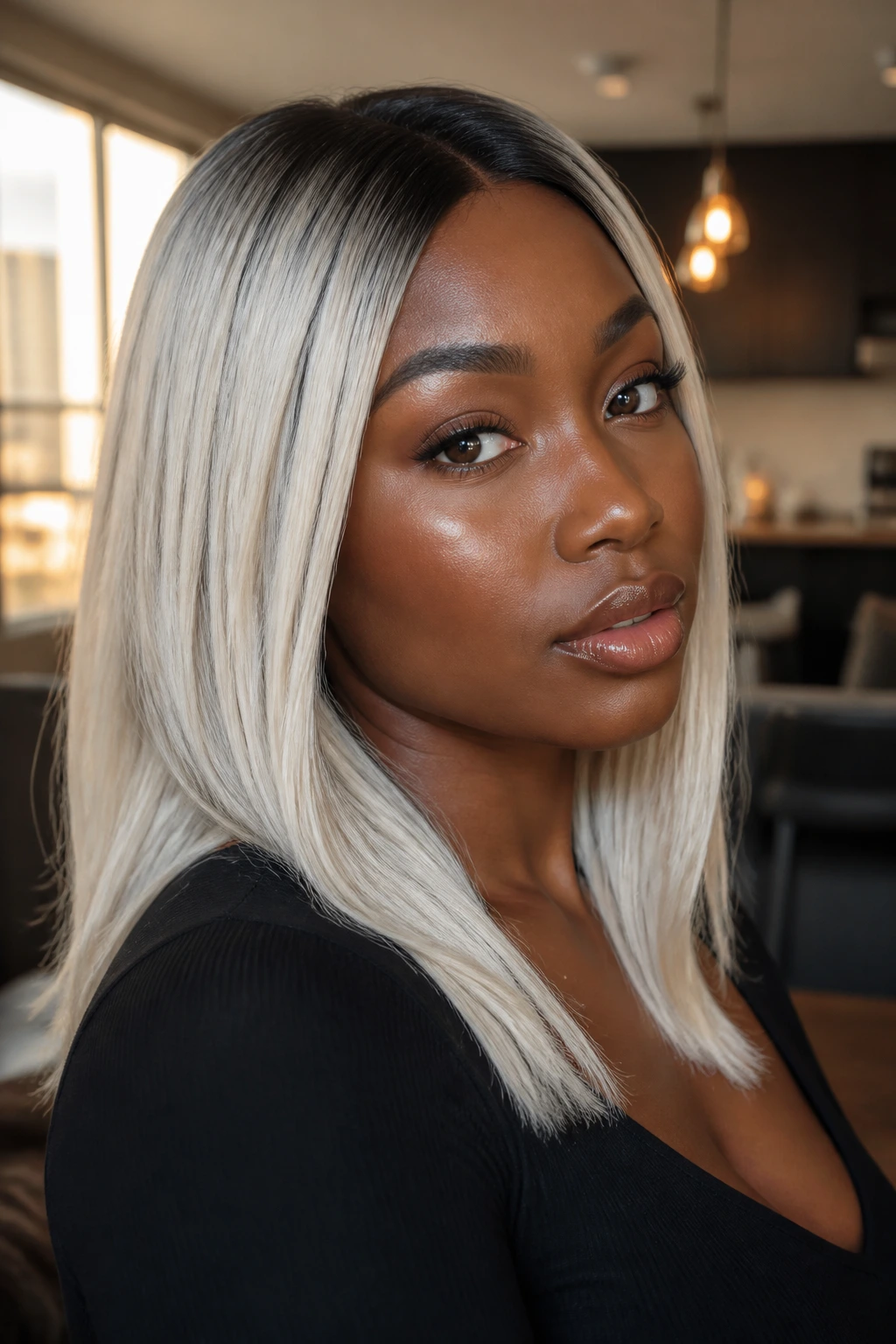
Rooted platinum is not for the shy, and that’s fine. On deep skin, the contrast can look striking, especially when the root is kept deep and the platinum is used with intention instead of sprayed everywhere. Fine hair can wear it too, but the placement has to be smarter.
I’d keep this version to face-framing brightness, top layers, or a carefully controlled money piece if the hair is fragile. Full-head platinum on fine strands can look dry fast, and the grow-out can turn harsh. The rooted version solves half that problem by giving the scalp some depth and the eye a place to rest. It’s a cleaner look.
15. Icy Beige Blonde
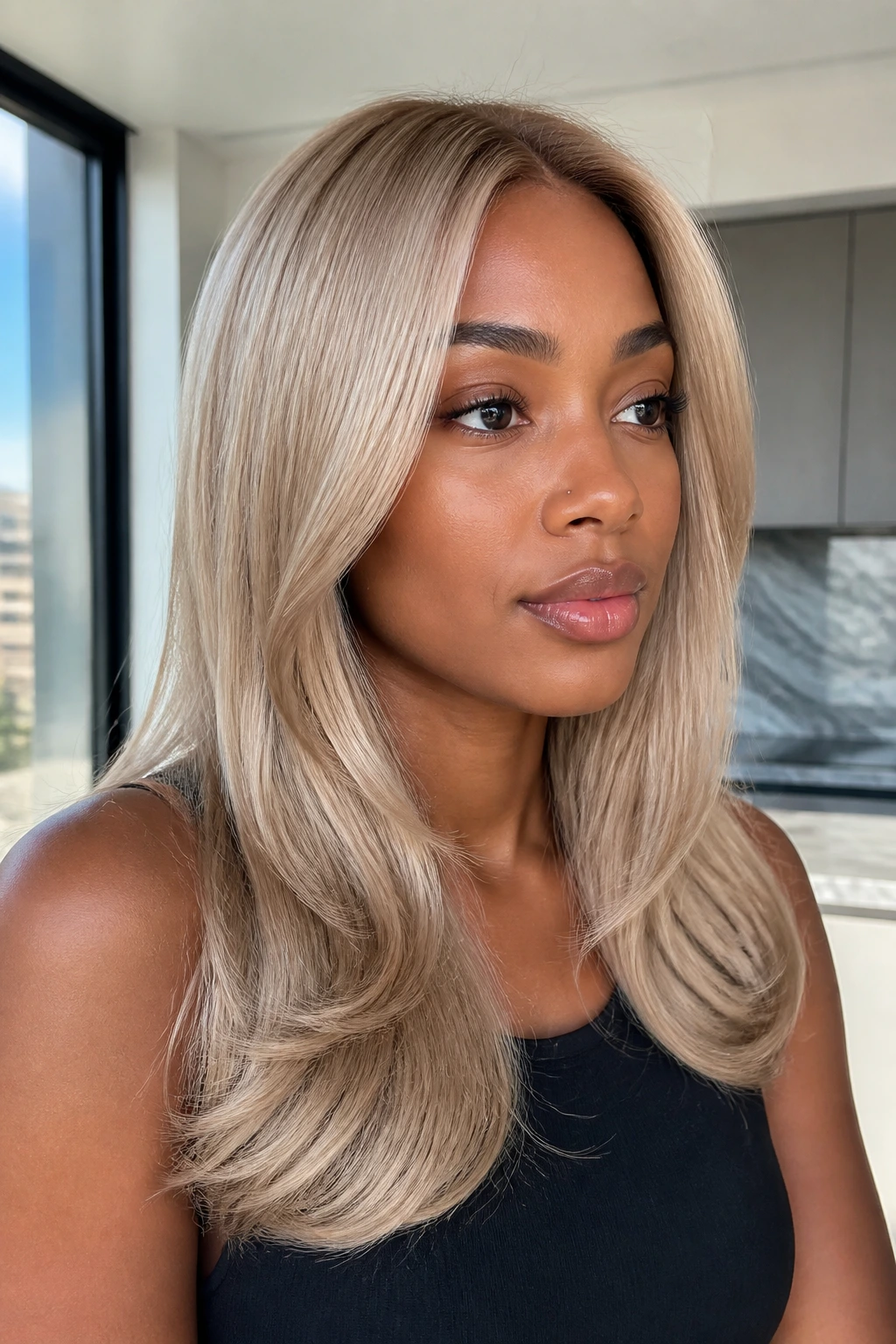
Icy beige blonde lives between cool and creamy. It has the brightness of an icy tone, but the beige keeps it from turning flat or chalky against deep skin. That balance is the whole point. Too much ash and the color goes dull. Too much gold and it stops being icy.
This shade works best when the stylist leaves a slightly darker base and tones the lightened pieces to a soft pearl-beige. Fine hair likes that because the finish looks light without screaming for maximal lift. It’s also one of the better choices if you want a cooler blonde but hate the harshness of pure silver blonde.
16. Pearl Blonde
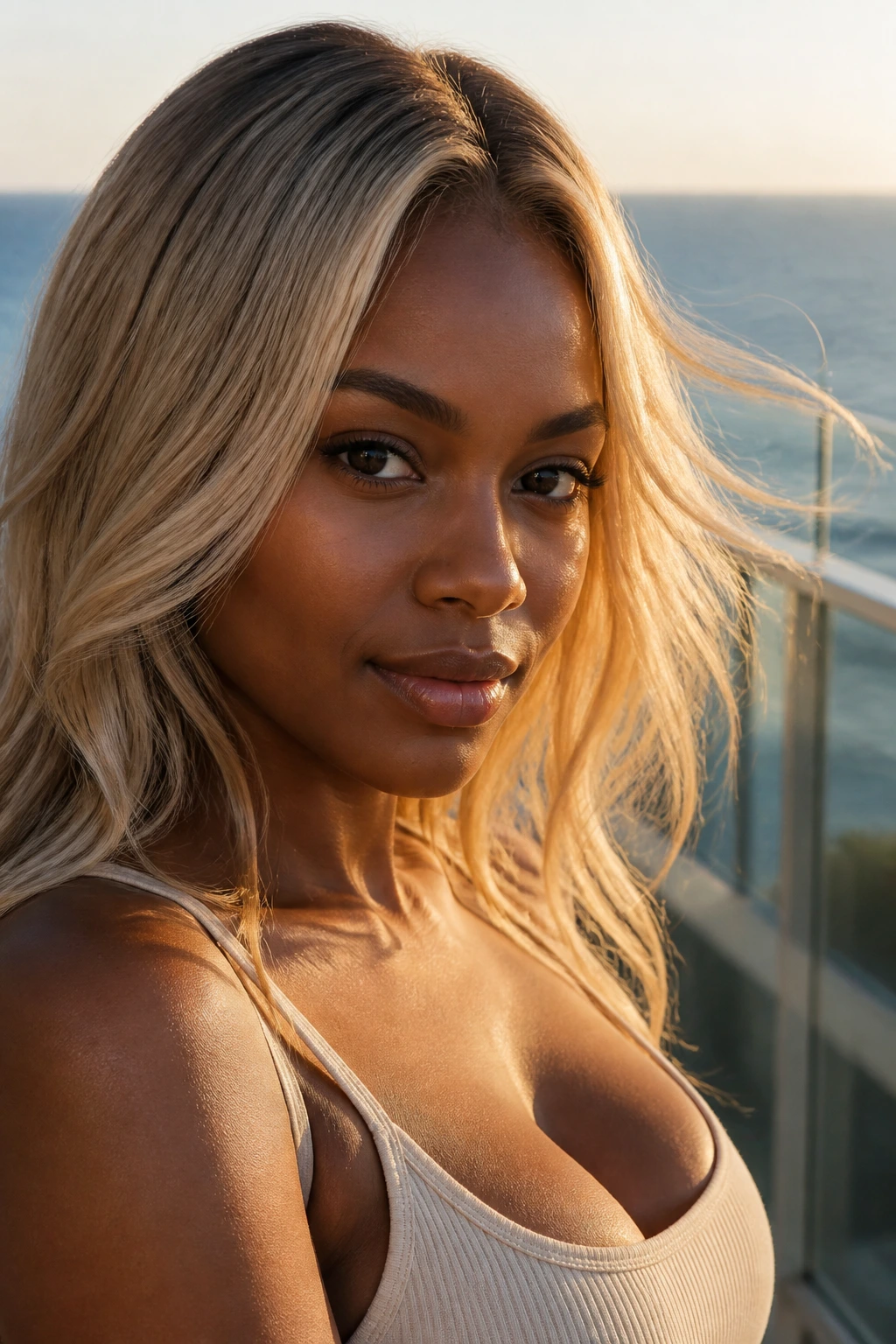
Pearl blonde is smoother and more luminous than icy blonde, with a soft sheen that almost reads as milky. On deep skin, it can look very elegant if it’s built over enough depth. I wouldn’t ask for it one-note from root to tip. That’s where it gets thin and fussy.
A pearl glaze over fine babylights is usually the nicest route. It gives the hair a reflective finish without stripping all the warmth out of the overall look. If your undertones are neutral, pearl can be a smart middle ground. It feels cleaner than honey and softer than silver.
17. Vanilla Cream Blonde
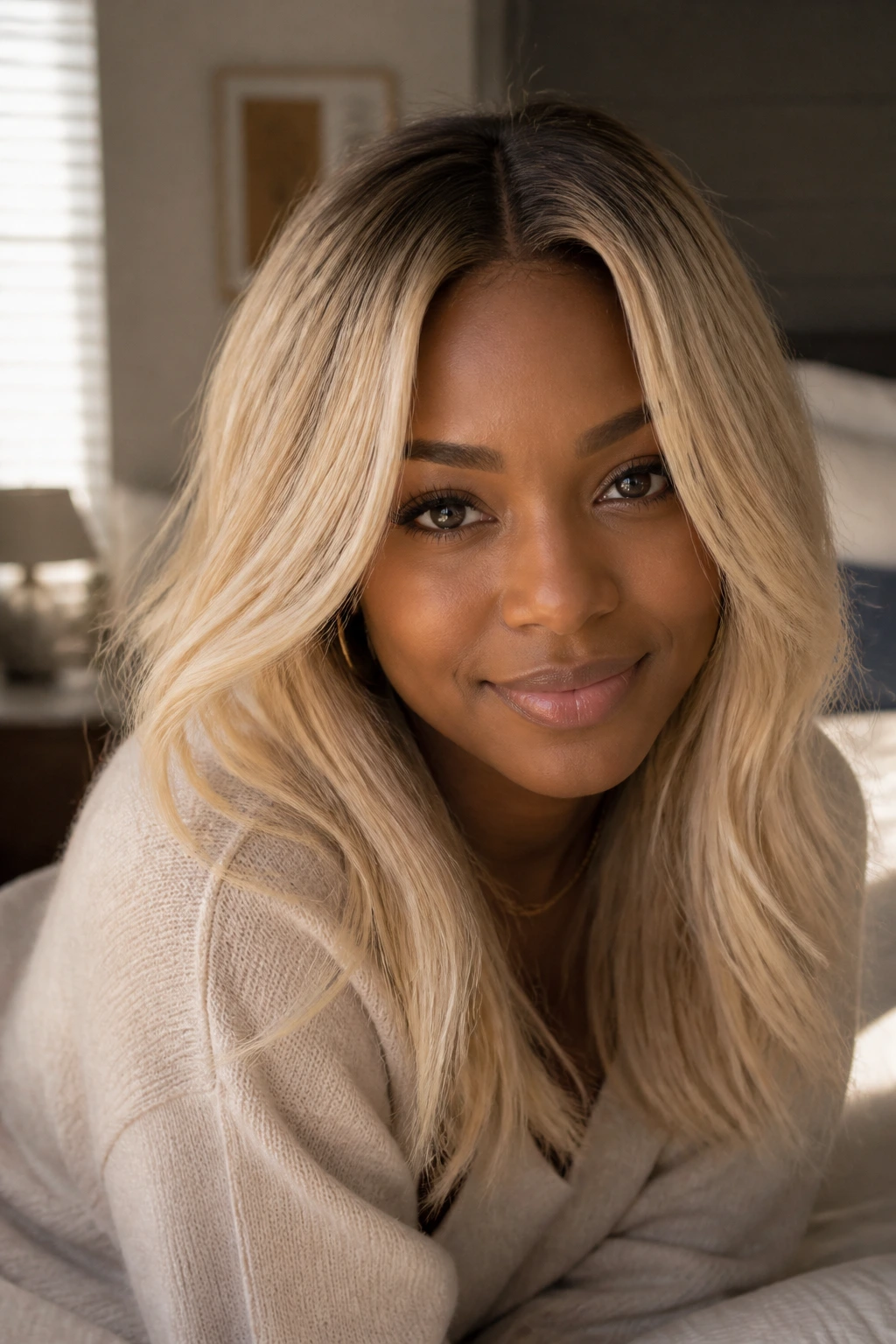
Vanilla cream blonde is the soft-focus version of blonde. It’s creamy, warm, and gentle around the edges, which makes it easier to wear on deep skin than a pale yellow blonde. The tone keeps the hair looking plush, and plush is the word I care about most with fine hair.
Ask for a creamy toner, not a raw lift that gets slapped with purple shampoo later. That’s usually how the color starts looking dull. Vanilla cream is best when there’s still a little softness left in the hair. A root shadow and a few brighter pieces around the face keep it from going flat.
18. Strawberry Blonde
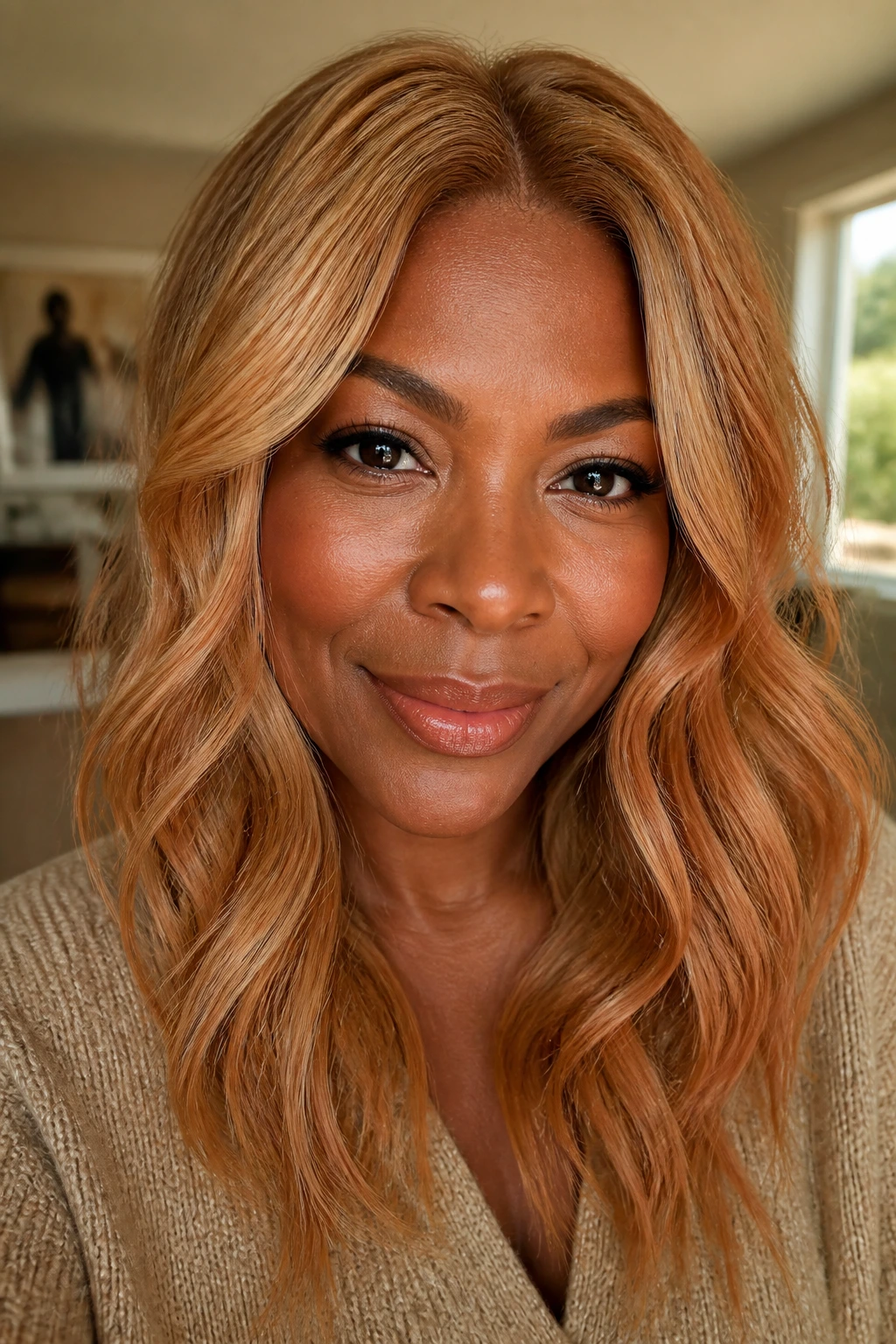
Strawberry blonde deserves more credit on deep skin than it gets. When the rose-gold warmth is handled with restraint, it can look gorgeous—fresh, warm, and a little unexpected. Fine hair can wear it because the tone itself brings energy, which means you don’t need to push the lift so far.
The best version is usually a glaze or a soft wash of copper-gold over lightened pieces, not a full bleach job all over. That keeps the shade wearable and protects the ends. If your skin has warmth or a gold undertone, strawberry blonde can look less “red hair pretending to be blonde” and more like a smart warm blonde with personality.
19. Almond Blonde
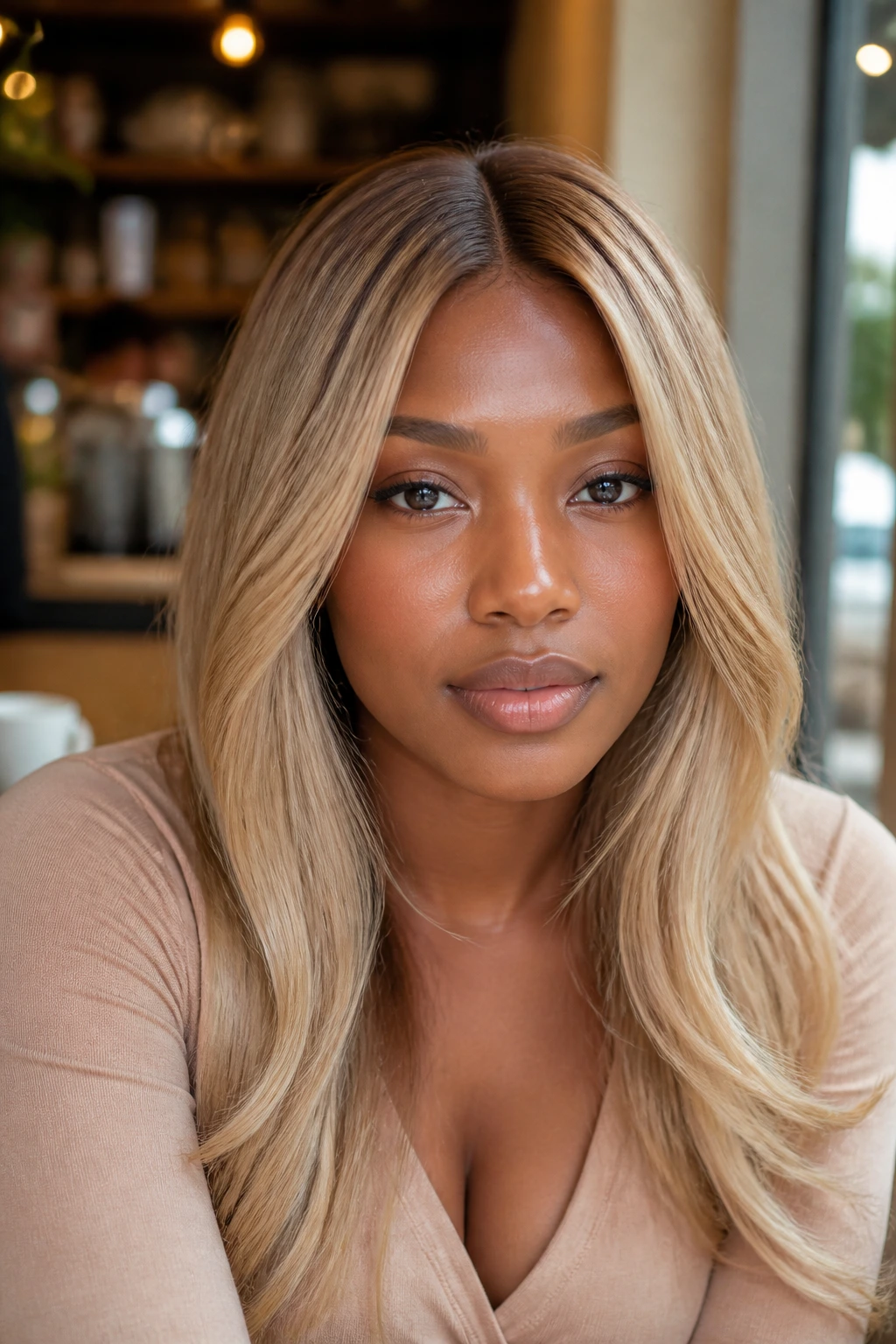
Almond blonde is nutty, soft, and low-key. It sits in the beige-brown-blonde family, which makes it easy to wear on deep skin without needing a dramatic contrast. Fine hair likes it because it does not expose every thin strand the way a pale blonde can.
This is the shade I’d point to if someone wants blonde that looks believable at work, in photos, and in regular daylight. It doesn’t shout. It just looks finished. Ask for almond tones through the mids and a bit of lighter framing near the face so the color still catches the eye.
20. Maple Blonde
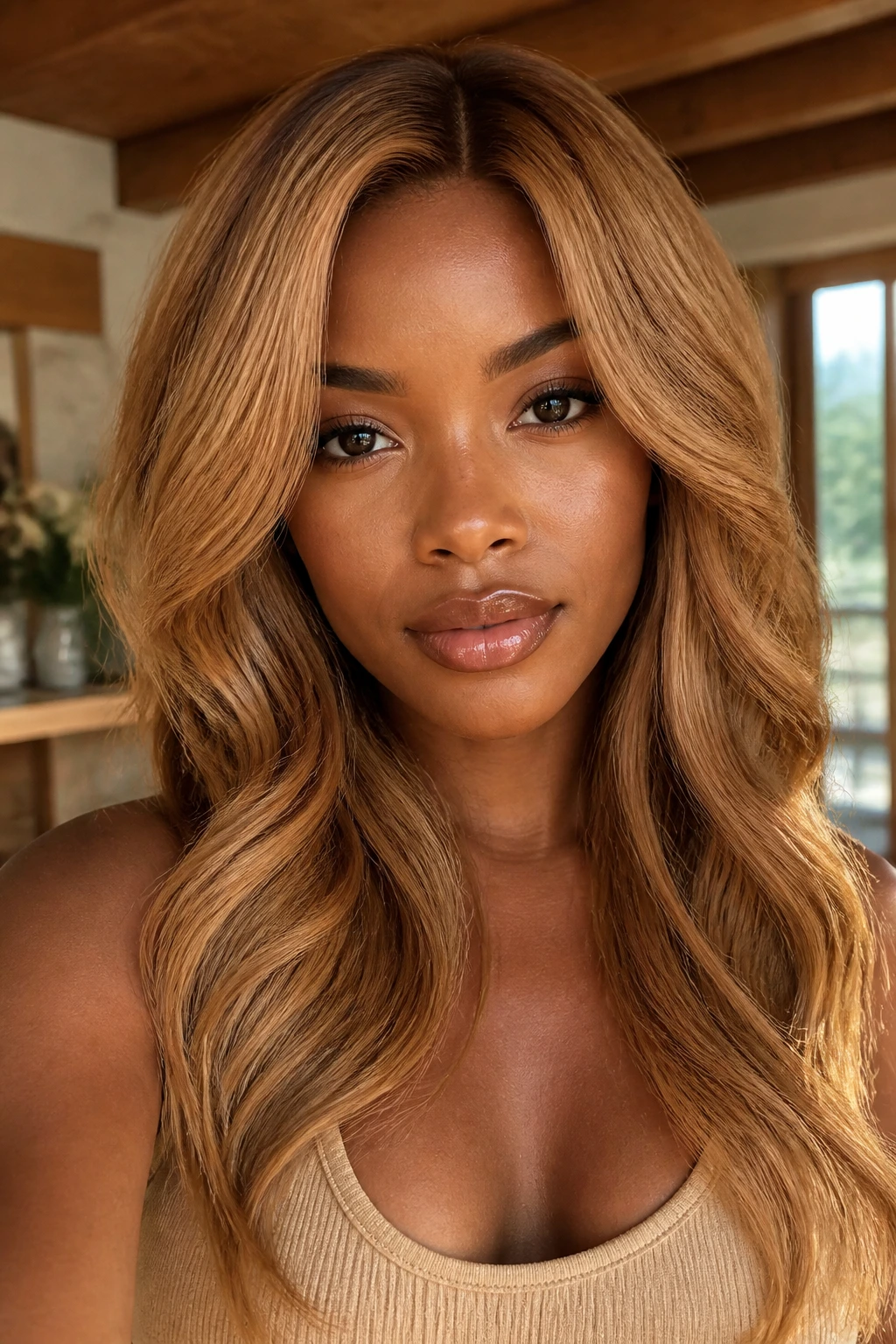
Maple blonde has a warm amber base that feels rich rather than sugary. On deep skin, the warmth can be stunning, especially if your undertones lean golden. The shade has enough depth to keep fine hair from looking sparse, which is why I think it’s one of the better warm blondes in the lineup.
It also ages well. Grow-out tends to look softer because the color family already lives close to brunette. That matters a lot if you do not want to be in the salon every few weeks. A maple gloss can keep the tone lively without forcing a harsh bleach cycle.
21. Butter Blonde
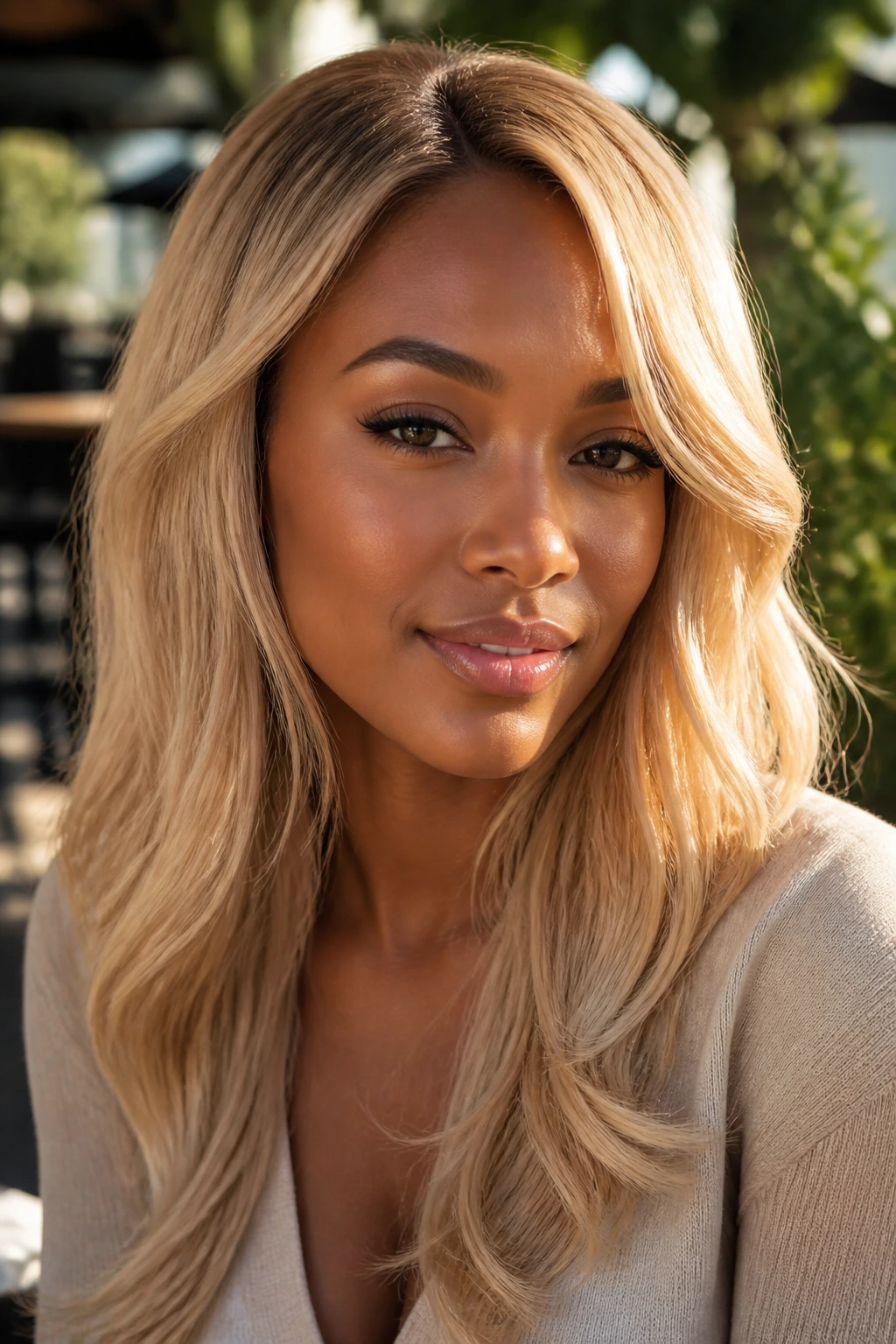
Butter blonde is brighter than vanilla and softer than high-beam platinum. It has a creamy yellow-gold feel that can light up deep skin when the base underneath is still grounded. I like this one on fine hair when the bright pieces are concentrated around the face and top layers.
The danger is overdoing the brightness. Too much pale butter and the hair starts looking patchy if the density is low. Keep the ends a touch deeper, or pair the blonde with lowlights. That gives the hair enough contrast to look fuller.
22. Walnut Blonde
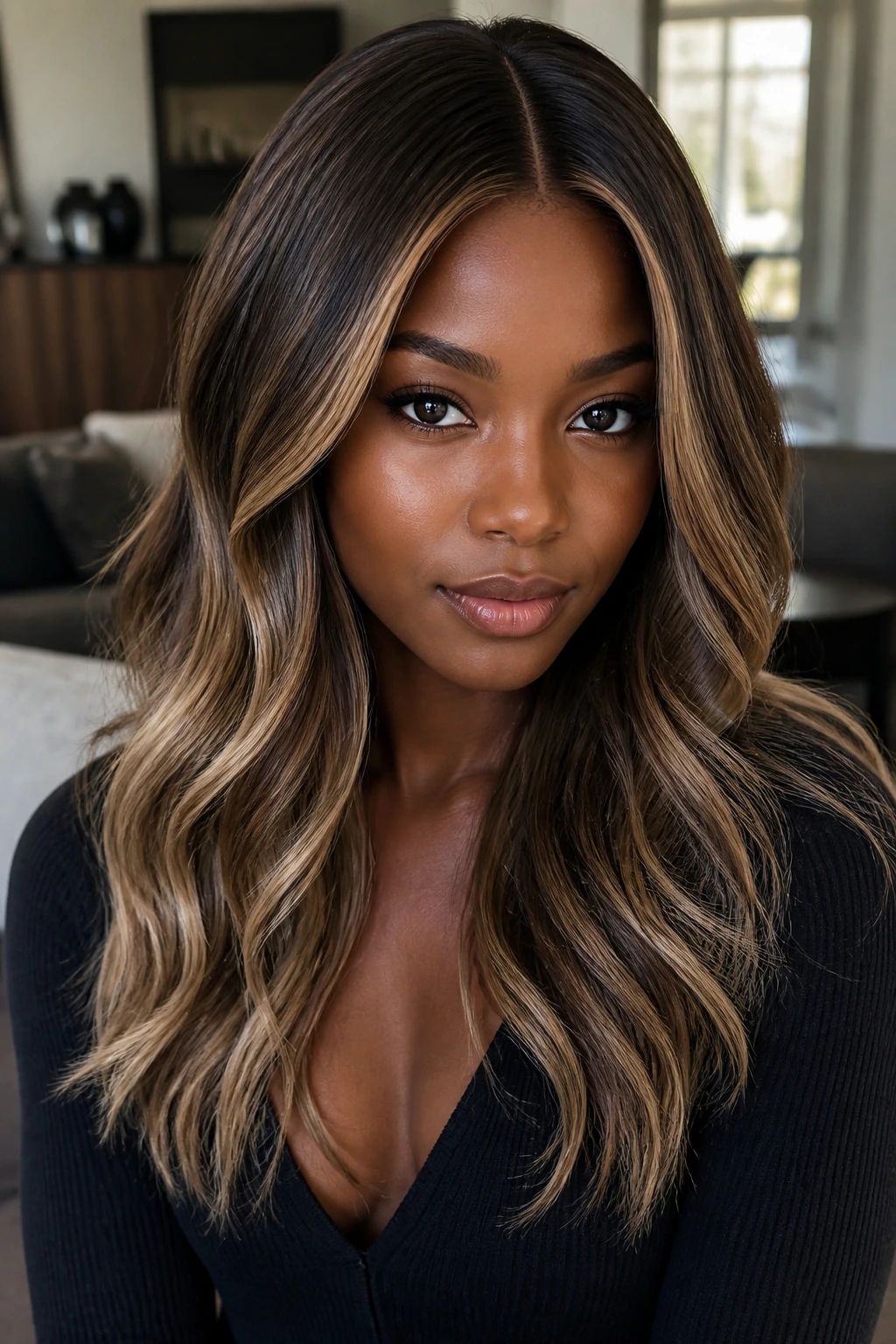
Walnut blonde is a cool, deep brunette-blonde hybrid with enough light pieces to call it blonde, but enough brown to keep it anchored. On deep skin, it creates a sophisticated contrast. On fine hair, it’s one of the best choices because the darker base makes the whole style look thicker.
This shade is a good escape hatch if you’ve been tempted by blonde but do not want the maintenance that comes with pale color. You still get brightness, especially if the lighter threads are placed around the crown and face. The rest stays deep, glossy, and full.
23. Soft Ash Blonde
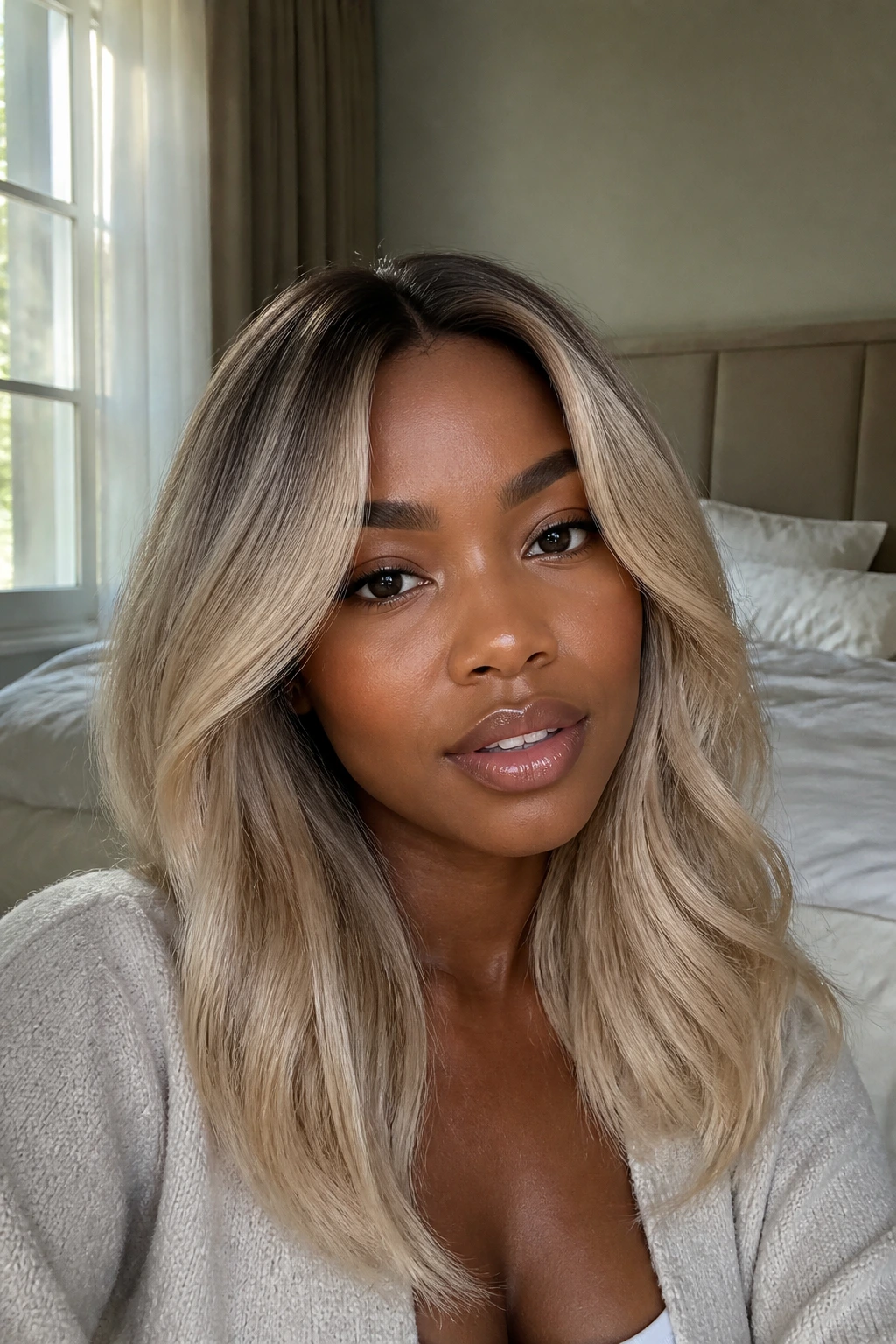
Soft ash blonde can work on deep skin, but it has to be soft. Not dusty. Not gray in the wrong light. The reason it works is that a gentle ash tone can create a cool contrast that looks sleek and polished, especially if your undertones are neutral or cool.
Fine hair needs a little extra caution here. Pure ash can make the hair look flat if there is no dimension under it. So the move is a darker root, a beige-to-ash toner, and just enough brightness through the front to keep the style from disappearing. That keeps the color chic instead of tired.
24. Smoky Taupe Blonde
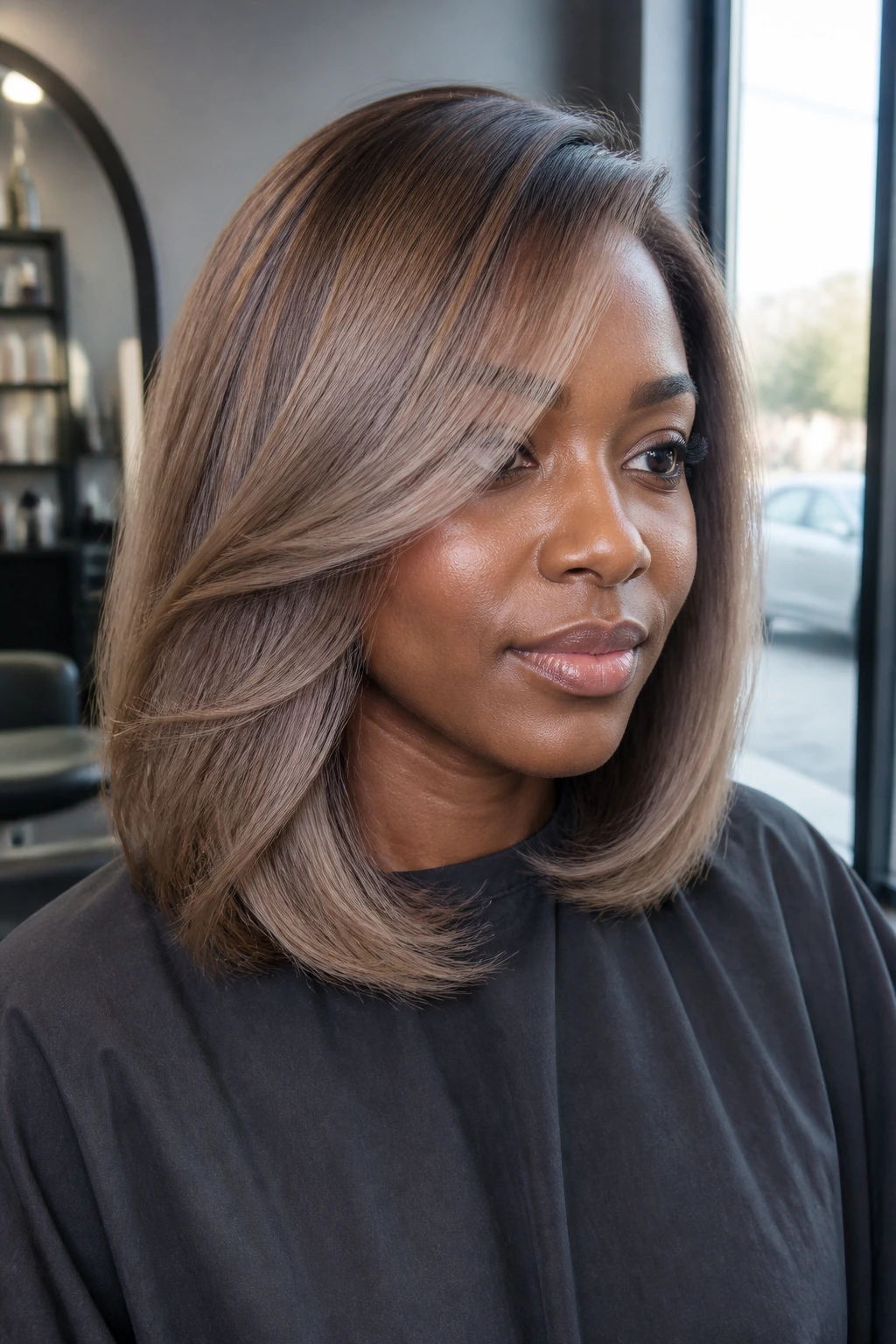
Smoky taupe blonde is one of those shades that looks subtle in the chair and expensive in daylight. It has a little brown, a little beige, a little ash. On deep skin, that balance can be beautiful if you like muted color rather than a sunny blonde.
For fine hair, smoky taupe is useful because it hides the scalp a bit better than a super pale blonde and gives the illusion of thickness through the shadowed tones. I’d especially like it on short cuts, blunt lobs, or layered curls. It has enough darkness to support the hair and enough lightness to qualify as blonde.
25. Sunkissed Honey Bronde
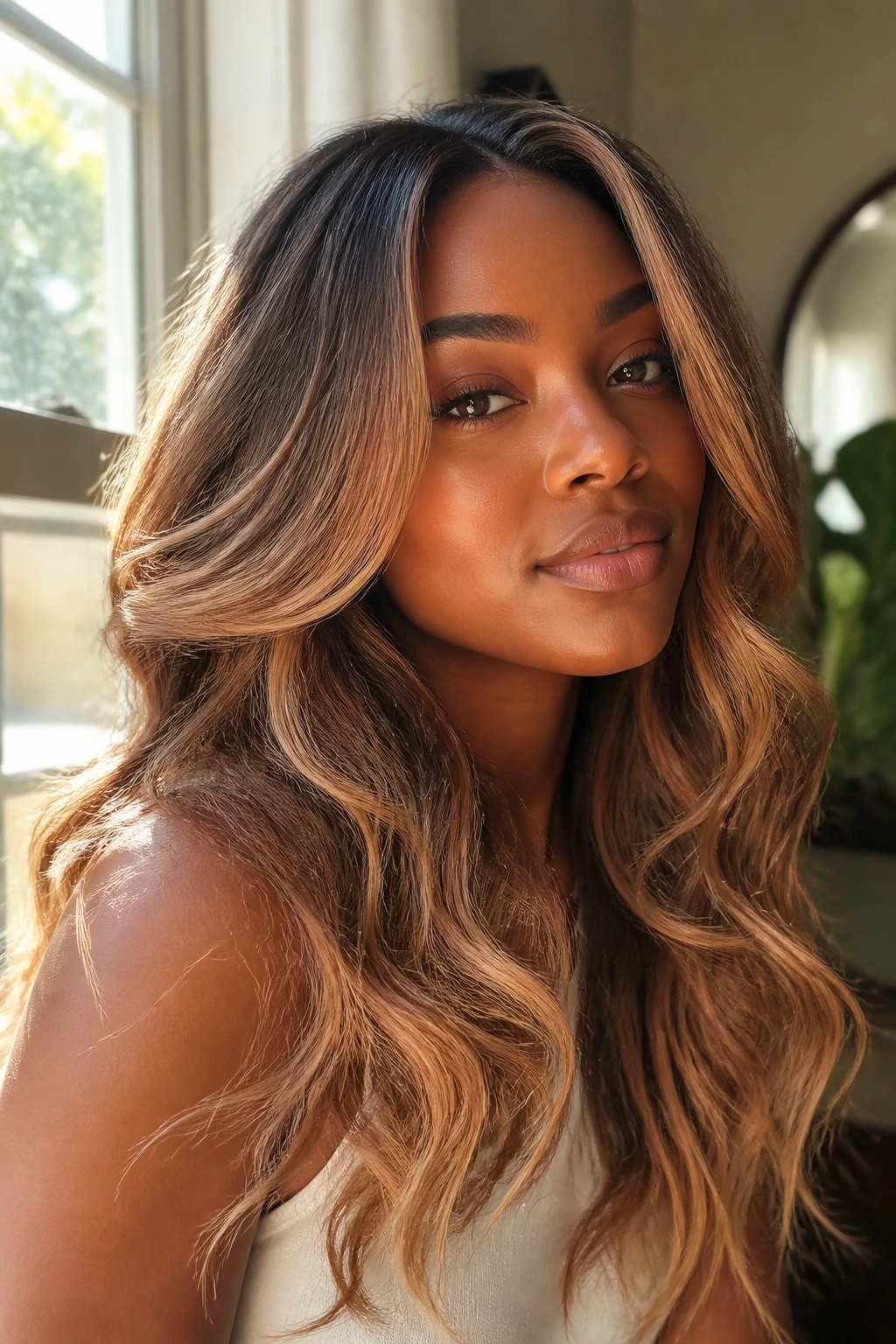
Sunkissed honey bronde is the easygoing finish people ask for when they say they want “blonde, but not too blonde.” The brown base keeps it rooted in deep skin tones, while the honey pieces bring enough brightness to read as a real color change. On fine hair, this is a strong closer because it balances light and density better than a flat blonding job.
This shade works best with face-framing lights, soft mid-length ribbons, and a deeper root that grows out without a hard line. It’s the kind of color that can live with waves, curls, or a sleek blowout. Nothing precious about it. Just good balance.
How Blonde Reads on Fine Hair Before You Choose the Shade
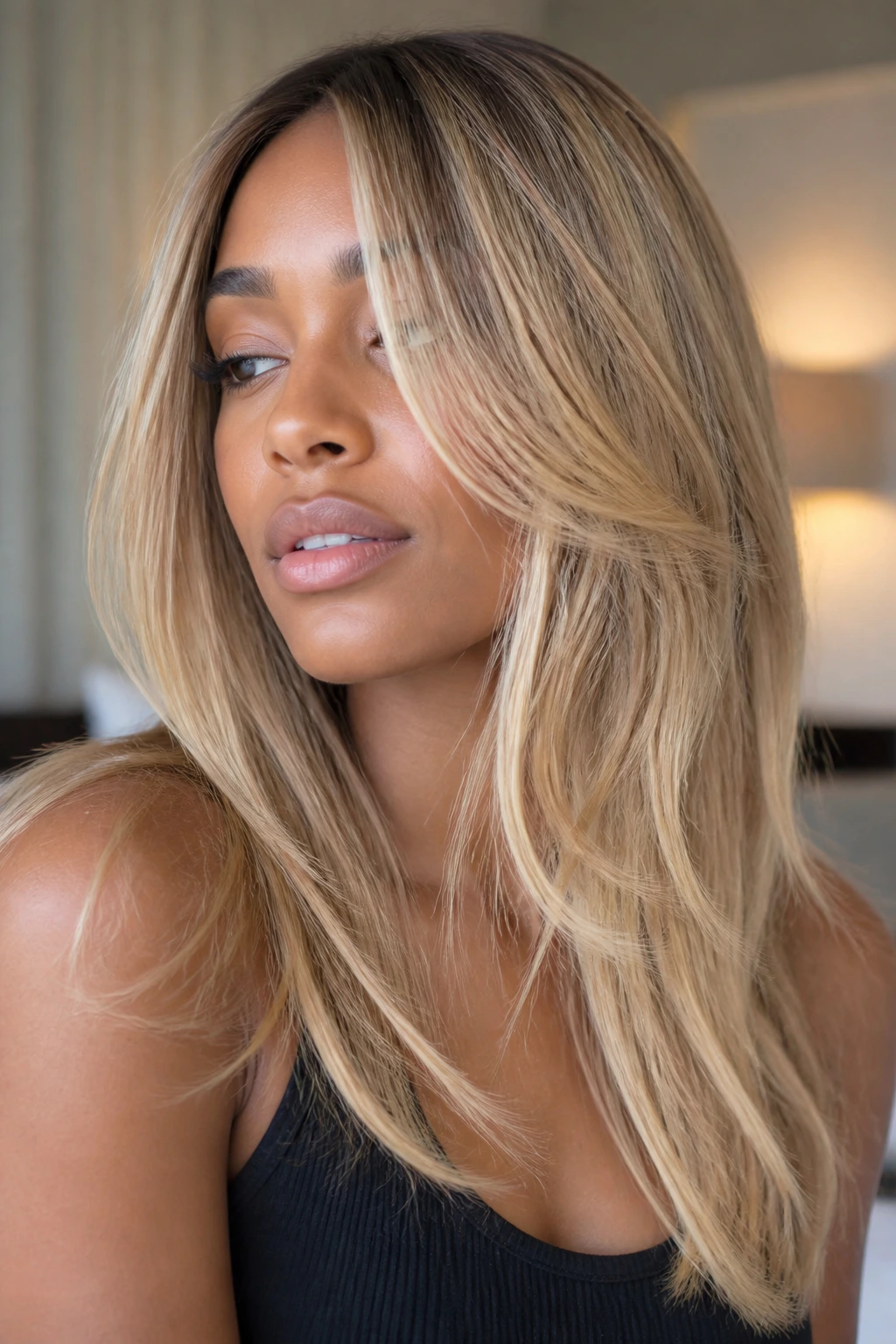
Fine hair changes the rules. Loud blonde is not automatically better, and a lighter lift does not always mean a nicer result. What matters most is the way the color sits on the strand. A single pale shade can make fine hair look thinner because every gap between hairs shows. A layered blend of light and dark does the opposite. It creates texture where the hair doesn’t naturally have much.
That is why placement matters so much. Thin highlights around the face, soft root shadow, and lowlights through the interior usually help more than a blanket of bleach. Even a bright blonde can look thicker if the hair underneath still has some depth. People hear “blonde” and think only about brightness. On fine hair, contrast is the real magic.
Another thing that gets missed: fine hair often turns porous faster than coarse hair during lightening. The cuticle can rough up, which means the strand loses shine and starts reflecting light in a dull way. So a shade that requires heavy lifting may need more repair work afterward than it’s worth. A level 8 or 9 blonde with a good gloss often gives a better visual payoff than chasing a level 10 that the hair can’t hold cleanly.
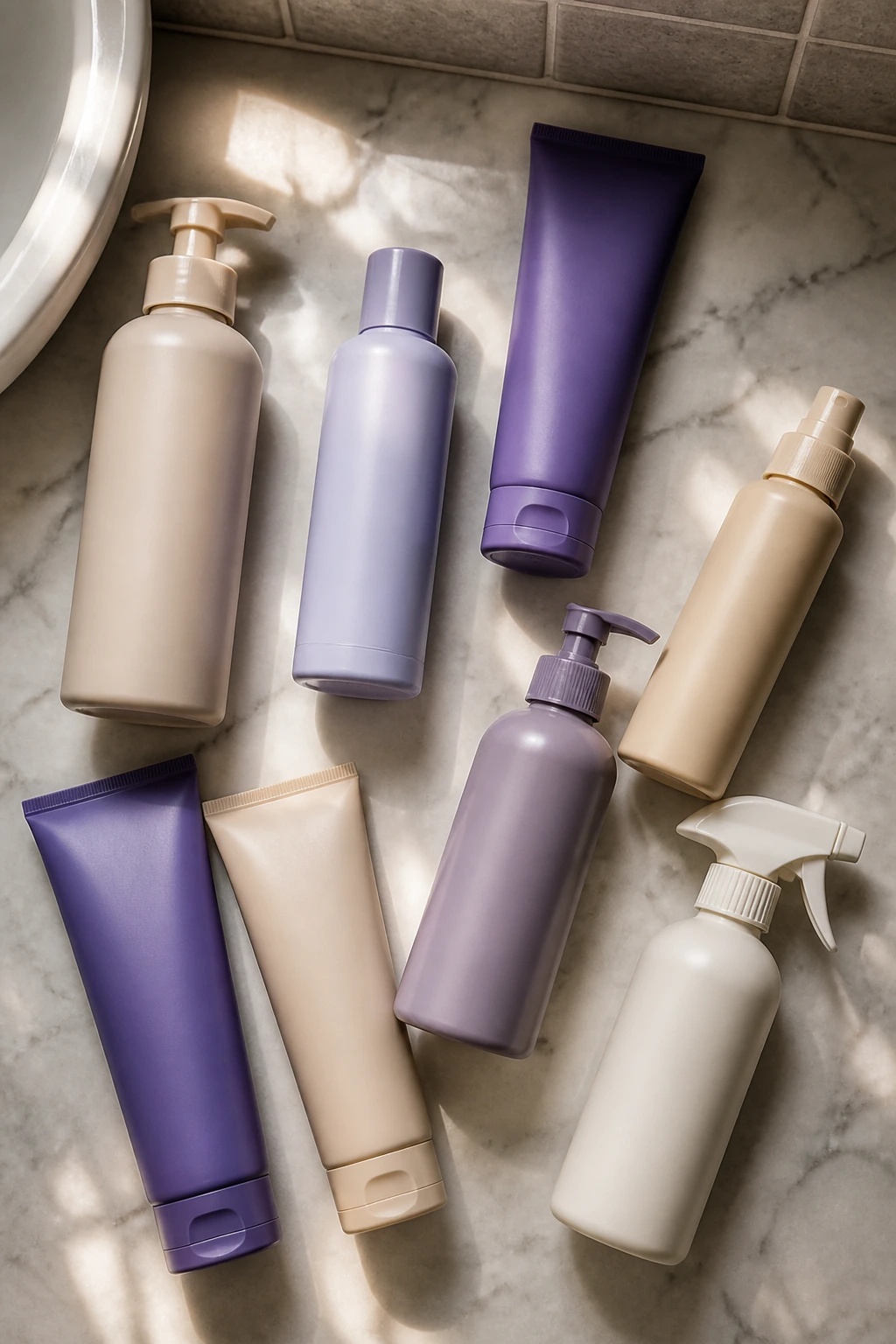
Essential Tools and Products for These Shades
-
Color-safe sulfate-free shampoo: Keeps the blonde from fading too fast and helps the tone stay softer between salon visits.
-
Bond-building treatment: Useful if you’re lightening fine hair; it helps the strand feel less stretched and brittle after bleaching.
-
Purple shampoo: Best for beige, pearl, icy, or ash blondes, and only once in a while so the hair does not turn dull.
-
Moisture mask: Fine hair still needs conditioning, but choose a lighter mask so the hair doesn’t go limp at the roots.
-
Heat protectant spray: A must if you blow-dry or flat-iron; blonde shows heat damage fast because the surface loses shine first.
-
Wide-tooth comb: Easier on fragile wet hair than a brush, especially after washing out toner or treatment.
-
Silk pillowcase or bonnet: Helps reduce friction so the ends stay smoother and the blonde reflects light better.
-
Gloss or toner appointment notes: Not a product, but worth keeping. Write down the shade family, root depth, and toner finish that worked so you can repeat it without guessing.
How to Style These Shades So They Don’t Fall Flat
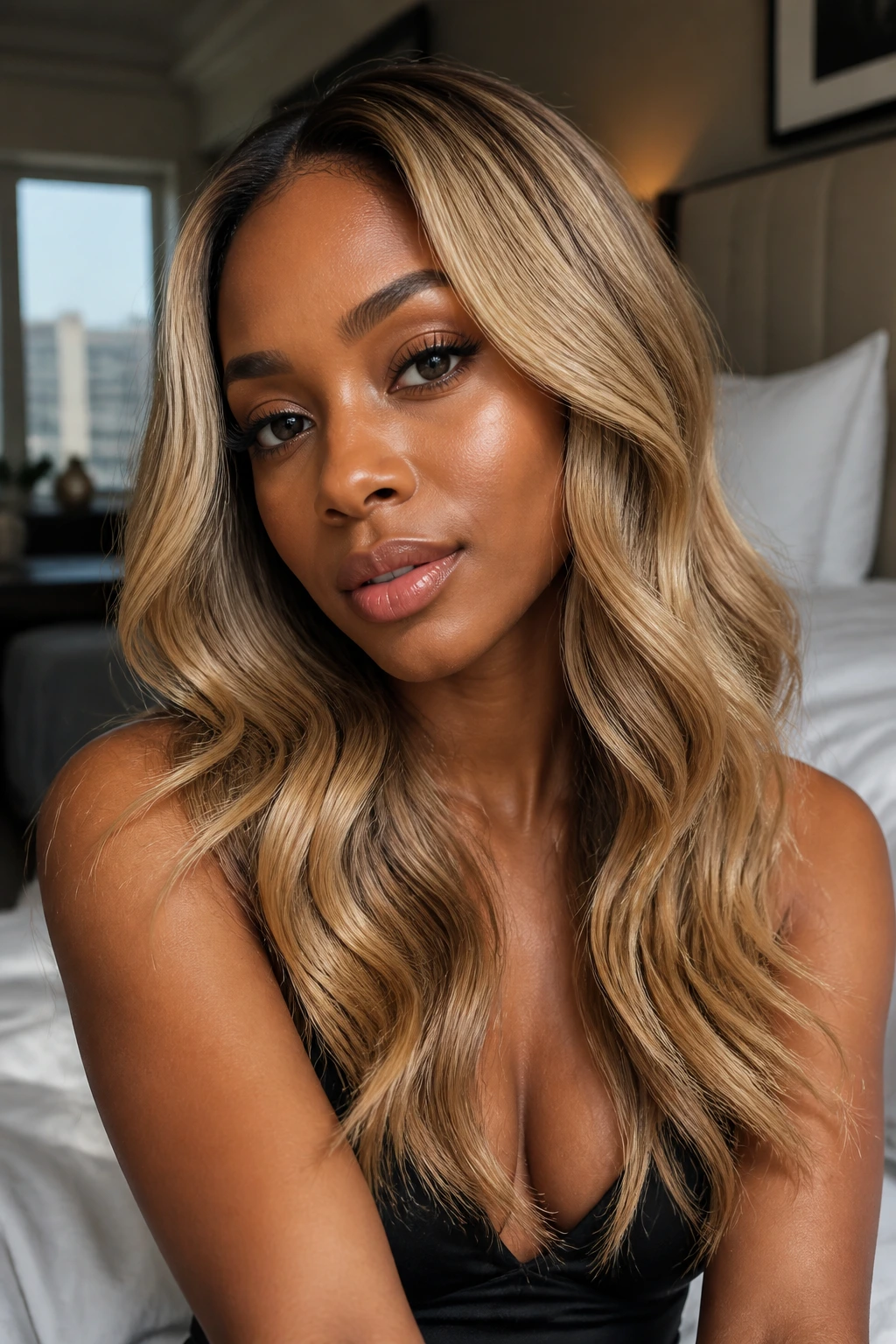
Sleek styling is a friend to cooler blondes like champagne, pearl, and soft ash because the shine makes the tone look intentional instead of dusty. A center part can sharpen bronde and mushroom blonde, while an off-center part softens honey, caramel, and toffee shades. Small thing. Big difference.
Loose waves are the easiest way to show dimension on fine hair. They separate the ribbons just enough to make the darker and lighter pieces move against each other. If your hair is bone-straight, a round brush or a set of large Velcro rollers can give the same effect without a full curling session.
The haircut matters too. Blunt ends can make the blonde look denser, while soft layers can help lighter shades feel airy without looking sparse. If the hair is very fine, I usually prefer a shape that keeps some mass at the perimeter and lets the color do the brightness work. Too many feathered layers plus too much light blonde can make the whole head look tired.
Additional Tips for Fine-Hair Blonde That Still Looks Full
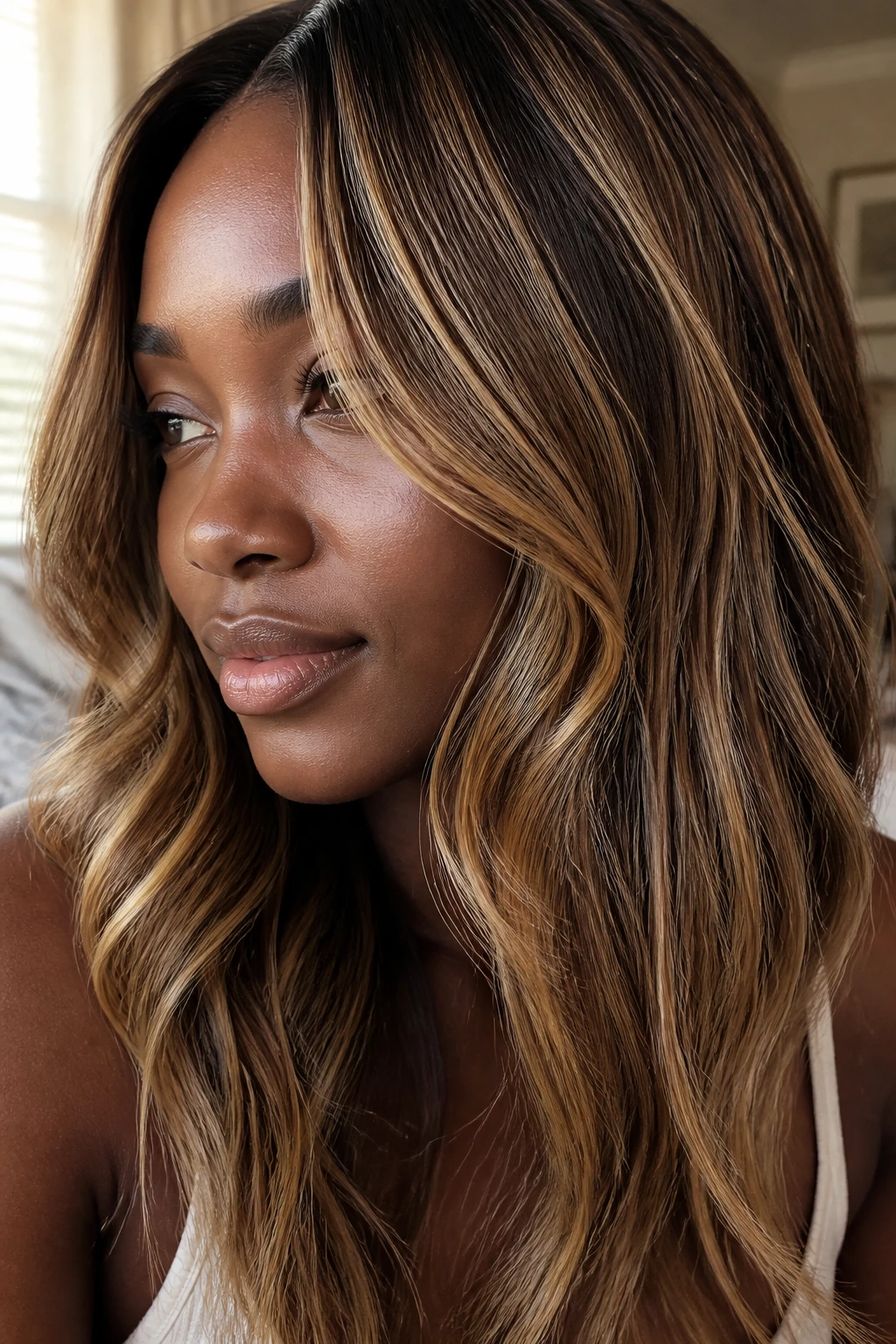
Tone Choice: If your skin runs warm, reach for honey, caramel, bronze, toffee, or maple before you reach for ash. If your undertones are cooler, beige, pearl, champagne, or smoky taupe usually give a cleaner result.
Dimension: Ask for lowlights that are one to two levels deeper than the blonde. That small shift is often what keeps fine hair from looking see-through at the ends.
Placement: Keep the brightest pieces around the face, crown, and part line. The back can stay a touch deeper so the color looks fuller from every angle.
Maintenance: Book gloss refreshes before the tone goes brassy. Once the blonde drifts too far, you end up chasing it with stronger toner than you needed in the first place.
Common Mistakes That Flatten the Look
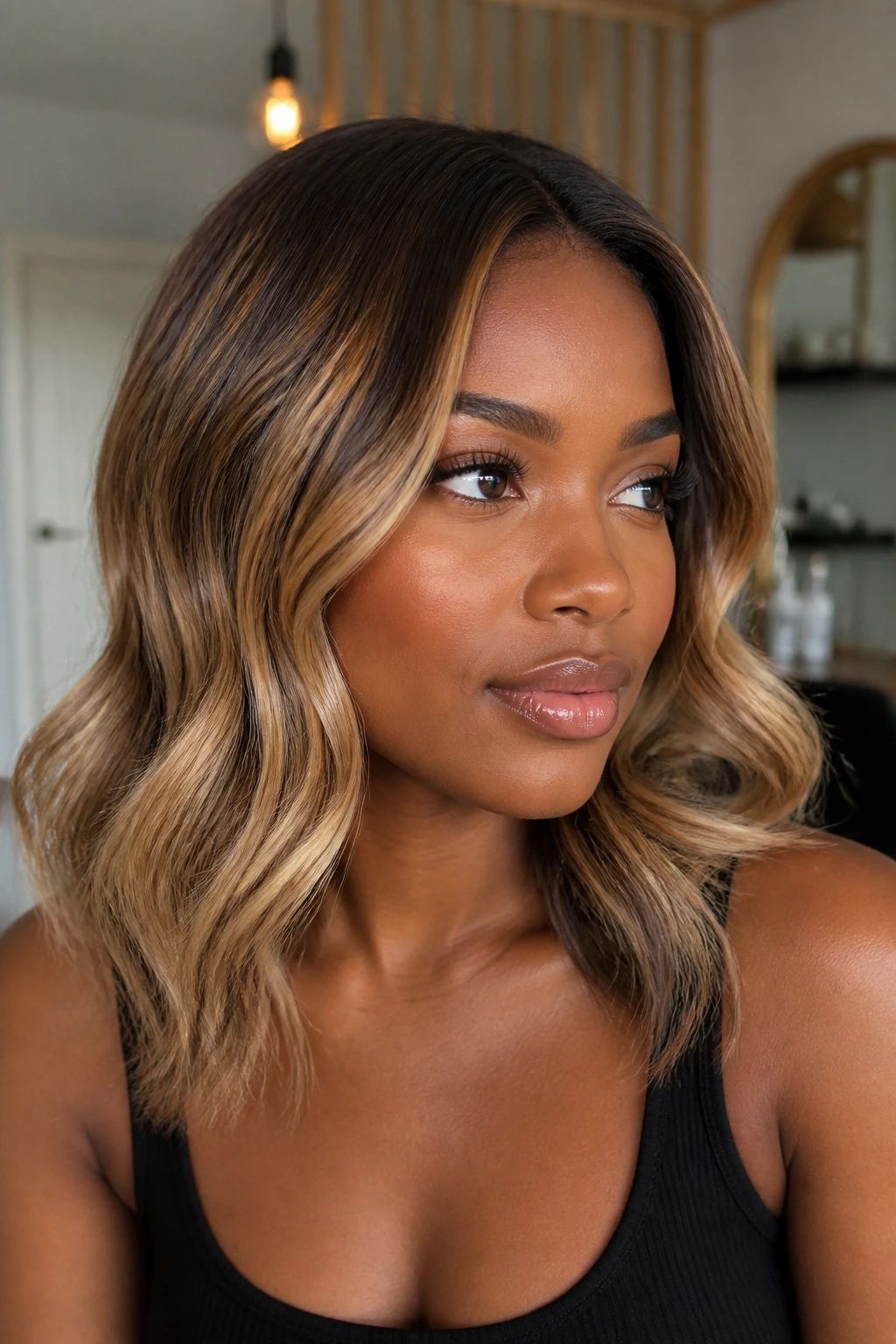
The first mistake is going too pale too fast. A full head of level-10 blonde can look impressive in the chair, then harsh against deep skin and a little flimsy on fine hair once the gloss starts fading. A softer lift with shadow at the root usually looks better in real life.
Second, people pick a shade name instead of a tone family. “Caramel” can mean warm gold, orange-brown, or beige-gold depending on the colorist. Ask what undertone they mean, and ask to see it against your skin if possible. Shade names are slippery.
Third, overusing purple shampoo is a trap. Fine blonde hair can turn dull, chalky, and flat if you strip the warmth out every wash. Use purple shampoo only for true yellowing, not as your daily cleanser.
Fourth, ignoring porosity leads to patchy color. The most porous pieces grab toner harder and go dark or muddy faster, while healthier sections stay bright. If your ends have been lightened before, tell your stylist. That changes the formula.
Variations and Alternative Blonde Directions to Try
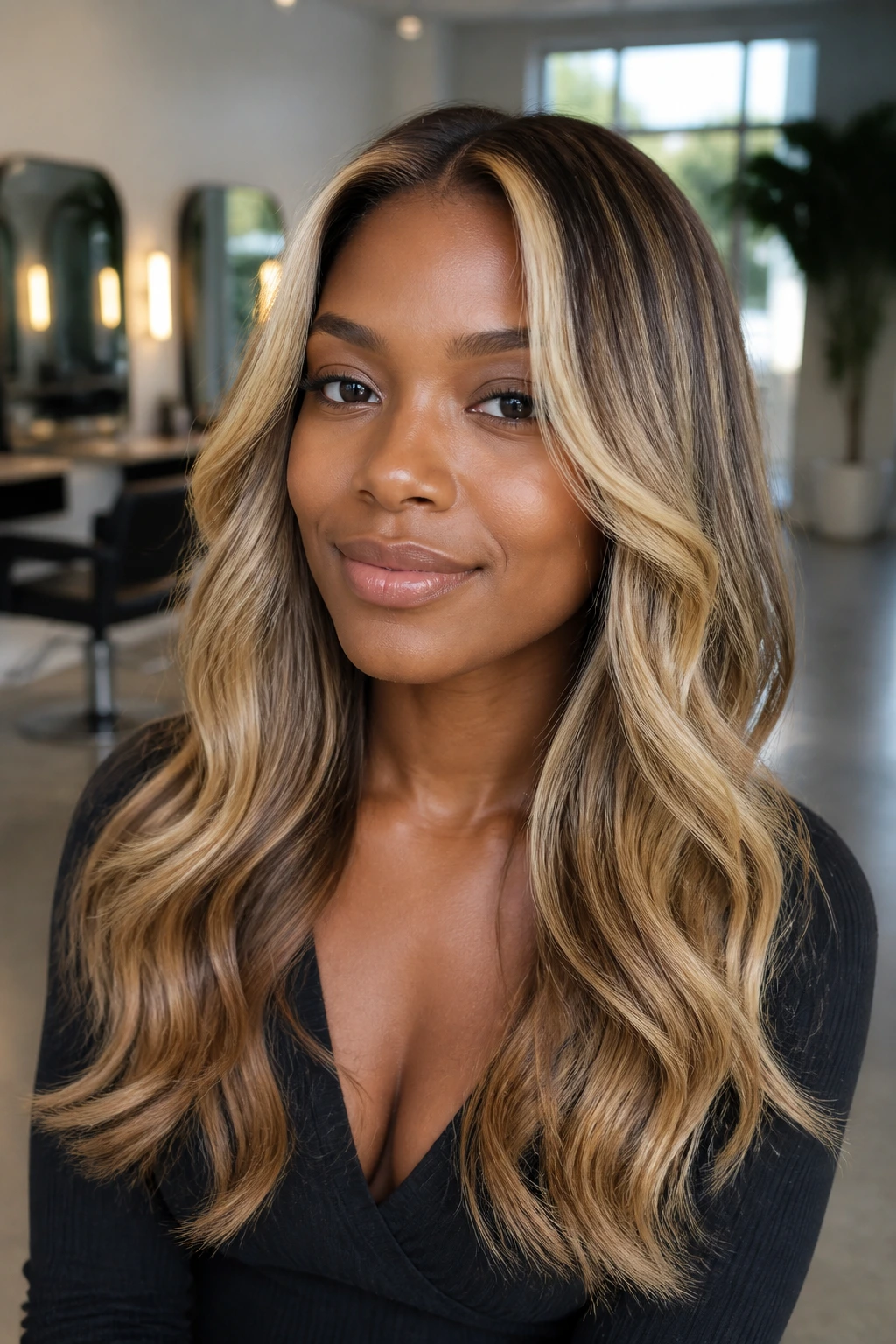
Soft Balayage Melt: This version keeps the root deep and the blonde hand-painted through the mids and ends. It’s the easiest way to get movement on fine hair without a hard regrowth line.
Money Piece Brightness: If you want a bigger change without full-head lightening, keep the back deeper and brighten only the front panels. Deep skin often looks especially good with this because the contrast frames the face instead of washing it out.
Gloss-Only Warm Blonde: Start from an already lightened base and refresh it with honey, beige, or caramel gloss instead of bleaching again. That’s a smart choice when the hair is fragile and you want shine more than lift.
Cool Smoke Blend: Use mushroom, taupe, or soft ash tones with a dark root and light beige ends. This works best if your undertones are neutral-cool and you want something quieter than honey blonde.
Curly Ribbon Blonde: Keep the light pieces narrow and place them where the curl clumps separate naturally. On fine curls, this creates the illusion of more hair without flooding the whole head with bleach.
Frequently Asked Questions
Which blonde shade is safest for fine hair?
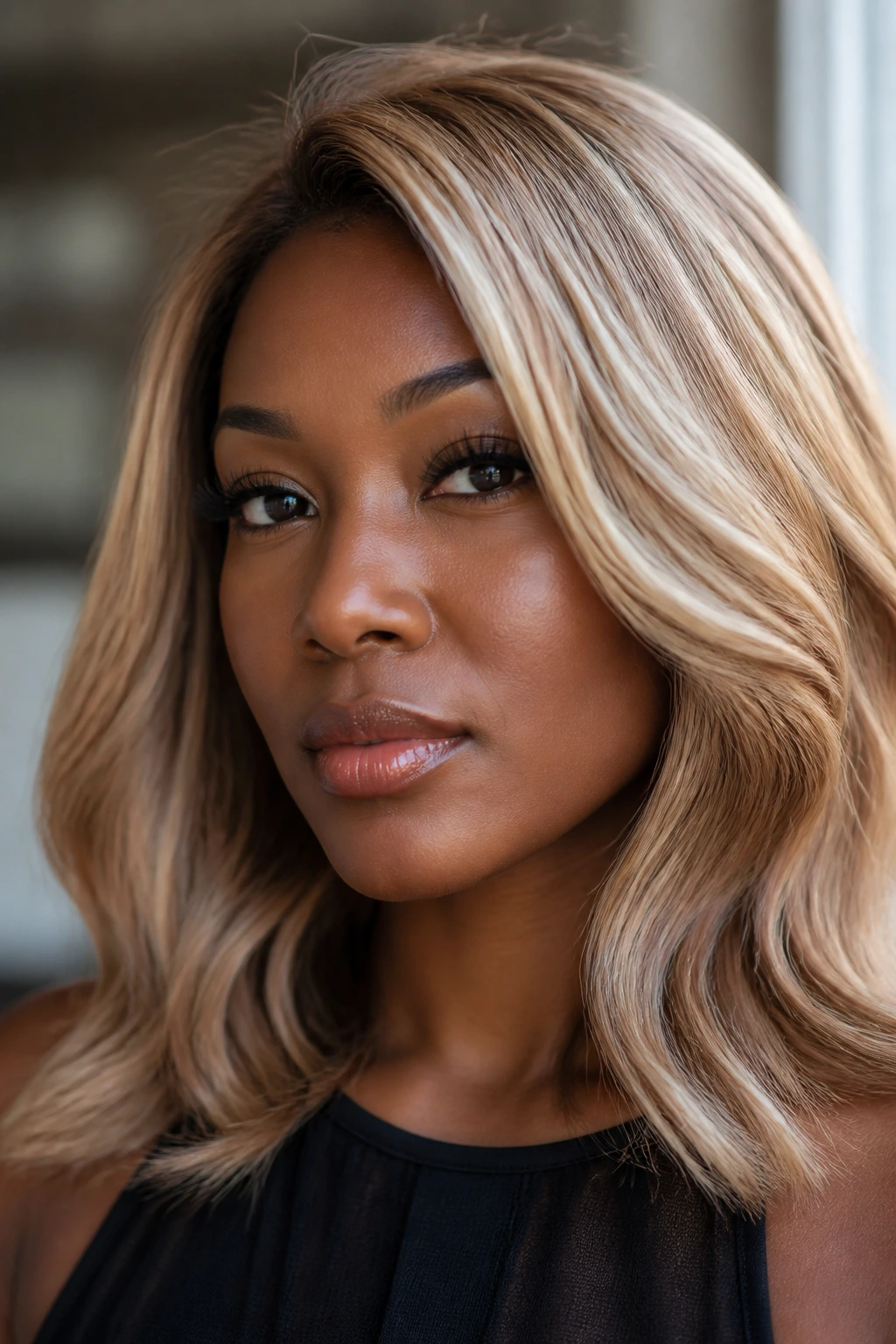
Bronde, almond blonde, chestnut blonde, and honey blonde ribbons are usually kinder than full platinum because they rely more on dimension than extreme lift. They still brighten the face, but they don’t demand the same level of chemical stress.
Can deep skin wear ash blonde without looking washed out?
Yes, but ash blonde needs depth around it. A soft ash or smoky taupe with a shadow root usually works better than a flat ash from root to tip, especially if your skin has warm or neutral undertones.
Does blonde make fine hair look thinner?
It can, if the color is too pale and too uniform. The fix is to leave some depth in the root, add lowlights, and keep the brightest pieces where the eye naturally goes first.
How often should blonde hair on fine strands be toned?
Most shades need a gloss or toner refresh every 4 to 8 weeks, depending on how fast they fade and how much warmth you want to keep. Cooler blondes usually need closer attention because brass shows faster.
Is platinum a bad idea for deep skin and fine hair?
Not automatically, but it’s the most demanding option on this list. A rooted platinum or face-framing platinum is usually smarter than an all-over bleach job if the hair is delicate.
What if my blonde turns orange?
That means the underlying warmth is showing through, which is common after lightening dark hair. A blue-based gloss or toner can help, but if the hair is fragile, a salon glaze is better than trying to fix it at home repeatedly.
Can I get these shades without losing my natural depth?
Yes. Ask for balayage, babylights, or a root shadow. Those methods keep the base color visible, which is often what makes the blonde look richer on deep skin.
The Blonde Shade That Feels Like You
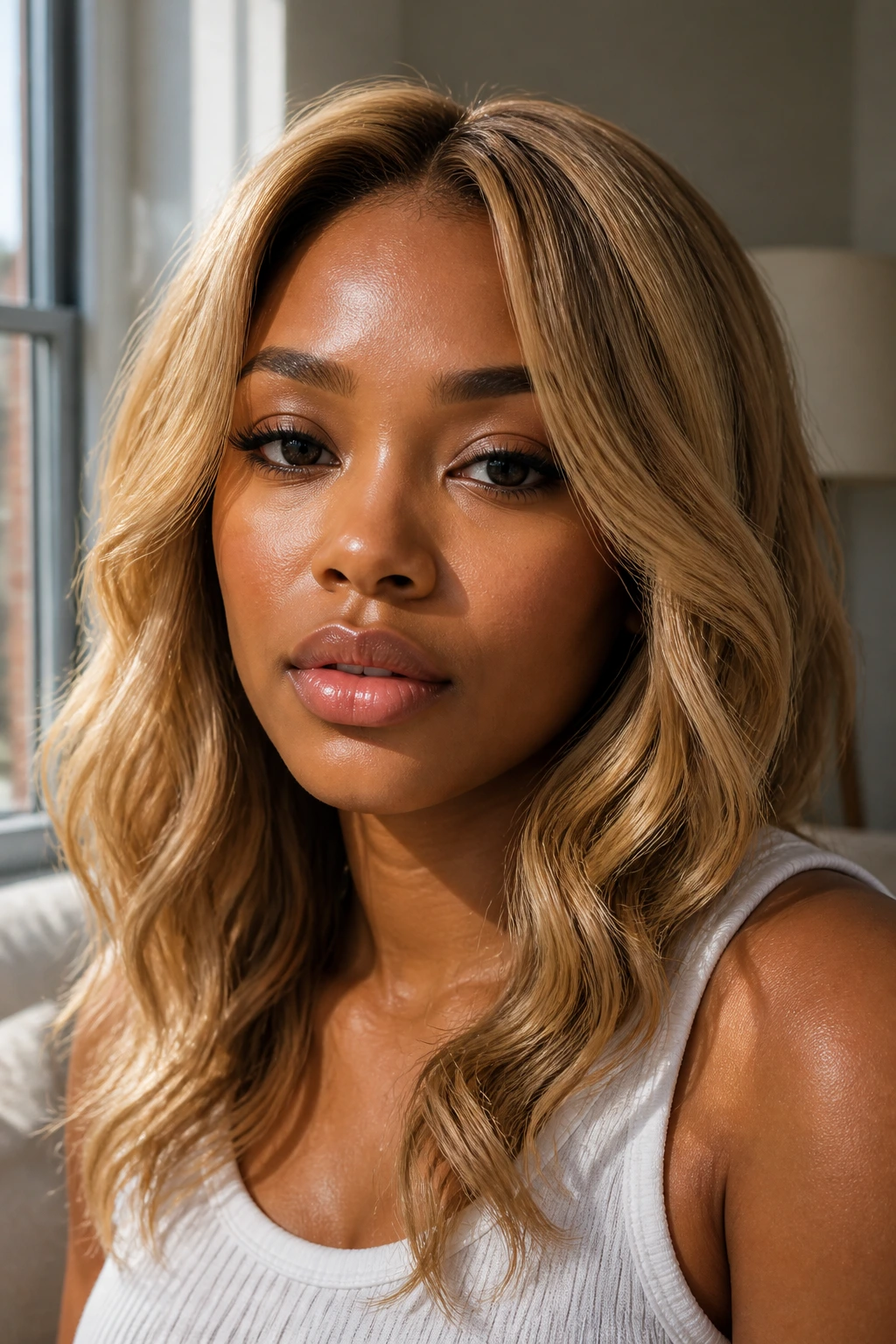
The best shade is the one that makes your skin look lit from underneath and your hair look like it has more body than it started with. That’s the real test with deep skin and fine hair. Not how pale the blonde is. Not how dramatic the before-and-after shot looks. How the color lives once you walk out into daylight and the hair falls where it wants to fall.
Honey, caramel, beige, bronze, bronde, pearl, and smoky taupe all give you different versions of that effect. Some are warm and sunlit. Some are cool and glossy. Some are soft enough to wear every day without feeling precious. If you keep the root depth, respect the hair’s fragility, and choose tone with some care, blonde stops looking like a gamble and starts looking like a custom color job that was built for you.