



Brown caramel hair color for deep skin works best when the brown stays rich and the caramel stays warm enough to look intentional. That sounds obvious until you see the wrong version: pale, stripy highlights that sit on top of the hair like disconnected threads, or a muddy brown that swallows the lighter pieces whole. The sweet spot is deeper than people expect. Think espresso, mocha, chestnut, toffee, bronze, amber, honey—shades that glow against rich complexions instead of fighting them.
The reason this palette lands so well is simple. Deep skin can carry contrast without looking harsh, and caramel gives you movement without draining the life out of the base. A level 4 or 5 brown with level 6 to 8 caramel placement usually has enough lift to show dimension, but not so much lightness that the color turns chalky or brassy. That balance is where the good looks live. And yes, placement matters as much as shade choice; a money piece around the face behaves very differently from soft balayage through the mids and ends.
What I like about this color family is that it can be as subtle or dramatic as you want. Some versions barely whisper. Others walk into the room first. The tricky part is choosing the right brown and the right caramel for your undertone, your texture, and the amount of upkeep you’re willing to live with. So let’s get into the shades that actually make sense on deep skin—starting with the ones I reach for first.
Why Brown Caramel Shades Keep Working on Deep Skin
Warmth without apology: Caramel brings gold, amber, and toasted sugar tones that sit comfortably against deep skin instead of flattening it. The trick is keeping the brown base rich enough that the lighter pieces have something to bounce off.
Contrast you can control: You can go soft with a few hand-painted ribbons or stronger with a front money piece and brighter ends. That control matters, because a tiny shift in placement can change the whole mood of the hair.
Works across textures: Loose curls, coils, silk presses, braid styles, and layered blowouts all catch caramel differently. On tighter textures, thicker painted sections usually show better; on straighter textures, finer ribbons keep things from looking streaky.
Less harsh than blonde: Caramel gives you brightness without the severe line that platinum or very light blonde can create on deep bases. If you want dimension but hate the “striped” look, this is the safer lane.
Easy to personalize: You can tilt caramel honey-gold, bronze, cinnamon, ash-caramel, or butterscotch depending on undertone and maintenance goals. That range is why this palette keeps showing up in salons that know how to color deep hair well.
1. Espresso Base with Soft Caramel Ribbons
The espresso base is the backbone here. Deep, glossy, and nearly black in low light, it gives the caramel ribbons a place to glow instead of disappearing into a medium brown that feels flat. This is one of my favorite looks for deep skin because it looks expensive without trying too hard.
Why It Works
The contrast stays controlled. Thin ribbons of caramel woven through a level 3 or 4 espresso base create movement when you turn your head, but the overall look still reads dark and rich from across the room. That matters on deep skin, where overly light streaks can look disconnected.
Ask for ribbons that are slightly wider around the face and softer through the back. That gives you brightness where it counts and keeps the rest of the hair from looking busy. If your hair is curly or coily, this version catches light in the bends of the curl. On straight hair, the ribbons lie cleaner and look more polished.
A gloss in warm brown or neutral caramel keeps the finish from turning dull after a few washes. Without that shine, espresso can start to look dusty. Nobody wants that.
2. Chocolate Brown with Cinnamon Balayage
Chocolate brown gives the whole style a warmer, softer base than espresso, and cinnamon balayage brings in a red-brown warmth that flatters deep skin in a very specific way. It feels richer than plain gold caramel. More dimensional, too.
What Makes It Stand Out
Cinnamon lives in that sweet middle zone between copper and caramel, so it doesn’t scream “highlight” from a mile away. Instead, it gives the hair a warm flicker that shows up most when the sun hits it or when you run your fingers through the ends. That movement is the point.
This is a smart choice if your skin has golden or red undertones, or if you usually wear warm makeup. A chocolate base with cinnamon balayage also grows out gracefully because the transition is soft. If you want something that won’t scream for a touch-up the second your roots appear, this one is hard to beat.
How to Wear It
Loose bends, big curls, and layered blowouts show this color best. A blunt cut can hide the movement a little, while feathered ends make the cinnamon look more alive. If your stylist paints the lighter pieces only from mid-length to ends, the look stays grounded instead of sliding too far into auburn territory.
3. Dark Mocha with Honey Face Frame
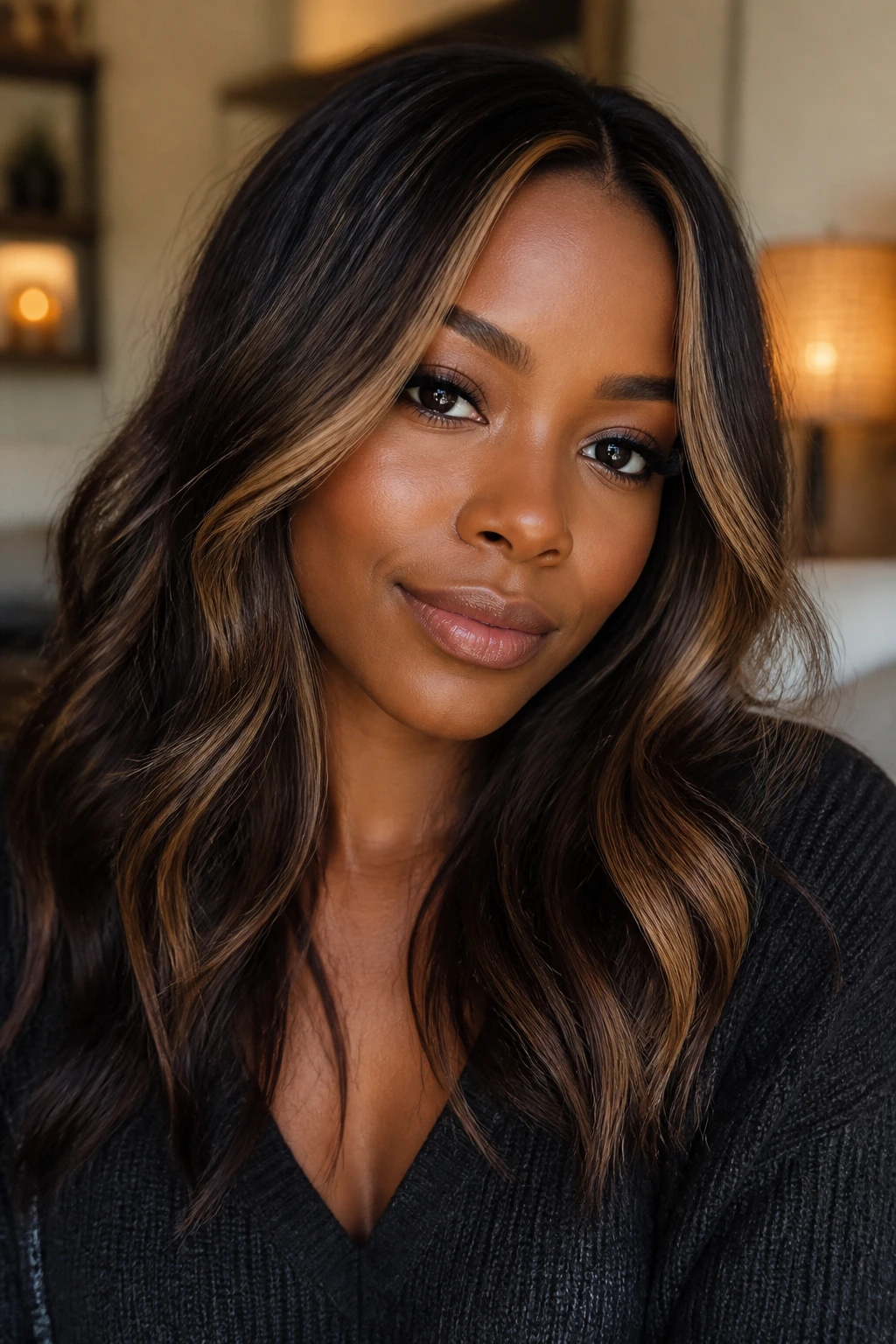
If you want brightness near your face without giving up a deep base, this is the move. Dark mocha keeps the overall tone cool and grounded, while the honey face frame drops in just enough light to lift the features. It’s a clean, sharp look when the placement is done well.
The face-framing pieces should start softer at the root and get brighter around the cheekbone. That keeps them from looking like two disconnected strips. Honey is warmer than beige blonde, which is exactly why it behaves better on deep skin. It doesn’t fight the complexion. It wakes it up.
I like this on medium-length cuts, shoulder-length layers, and long curls pulled over one shoulder. The face frame becomes the focal point, so you do not need a ton of color everywhere else. That’s the beauty of it. One smart placement can do more work than a whole head of random highlights.
4. Chestnut Melt with Buttery Ends
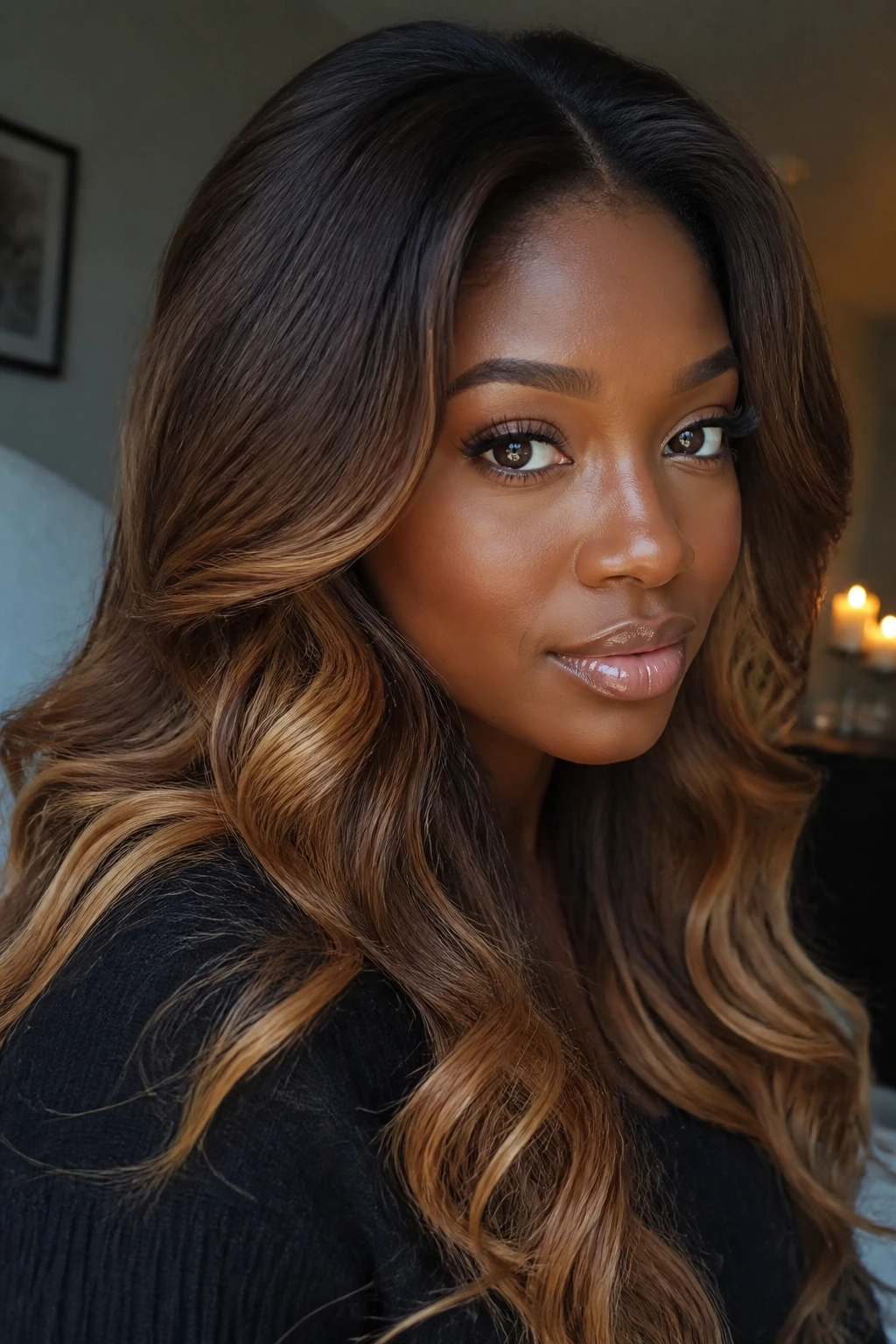
Chestnut is one of those shades people overlook because it seems tame on paper. It isn’t. On deep skin, chestnut has enough warmth and reddish depth to feel polished, and when you melt it into buttery ends, the whole style turns soft at the edges.
A Softer Gradient
This is a good option if you hate a hard line between brown and caramel. The melt should start near the roots with a deeper chestnut, then move into a smoother caramel-brown blend through the mids before the ends go lighter and creamier. It should look gradual, not painted in obvious bands.
Buttery ends can be tricky. Too light, and they pop against the base in a way that feels disconnected. Too dark, and the melt loses its payoff. The middle ground is a warm beige-caramel that still belongs to the chestnut family.
Best For
Long layered cuts, silk presses, and soft curls all carry this well. It also works nicely on thicker hair because the gradient has room to breathe. If your hair is fine, keep the lightening focused lower so the crown stays full and rich.
5. Smoky Brown with Toffee Money Piece
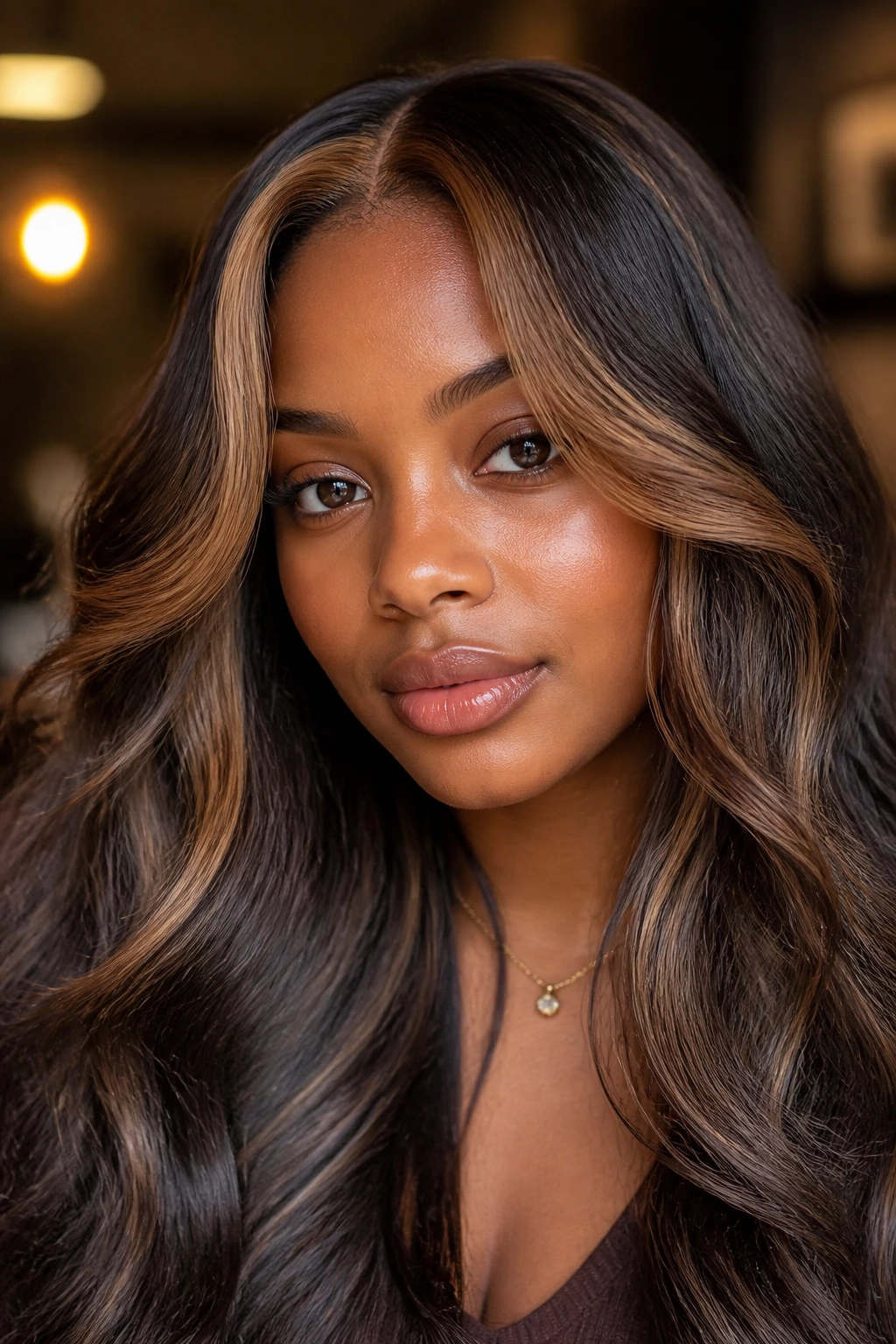
Toffee money pieces can look loud in the wrong setting. Paired with a smoky brown base, though, they become much more wearable. The contrast is there, but it’s softened by the cool-leaning brown underneath.
This is the shade for someone who likes a little drama around the face and doesn’t want to commit to a full head of highlights. The front pieces should be bright enough to show on camera and soft enough to blend when your hair is tucked behind your ears. That little balance is everything.
I prefer this on straightened styles, soft waves, and high ponytails. The money piece gets to do the talking. Keep the rest of the color quieter and the whole style looks deliberate rather than busy.
6. Cocoa Curls with Bronze Light
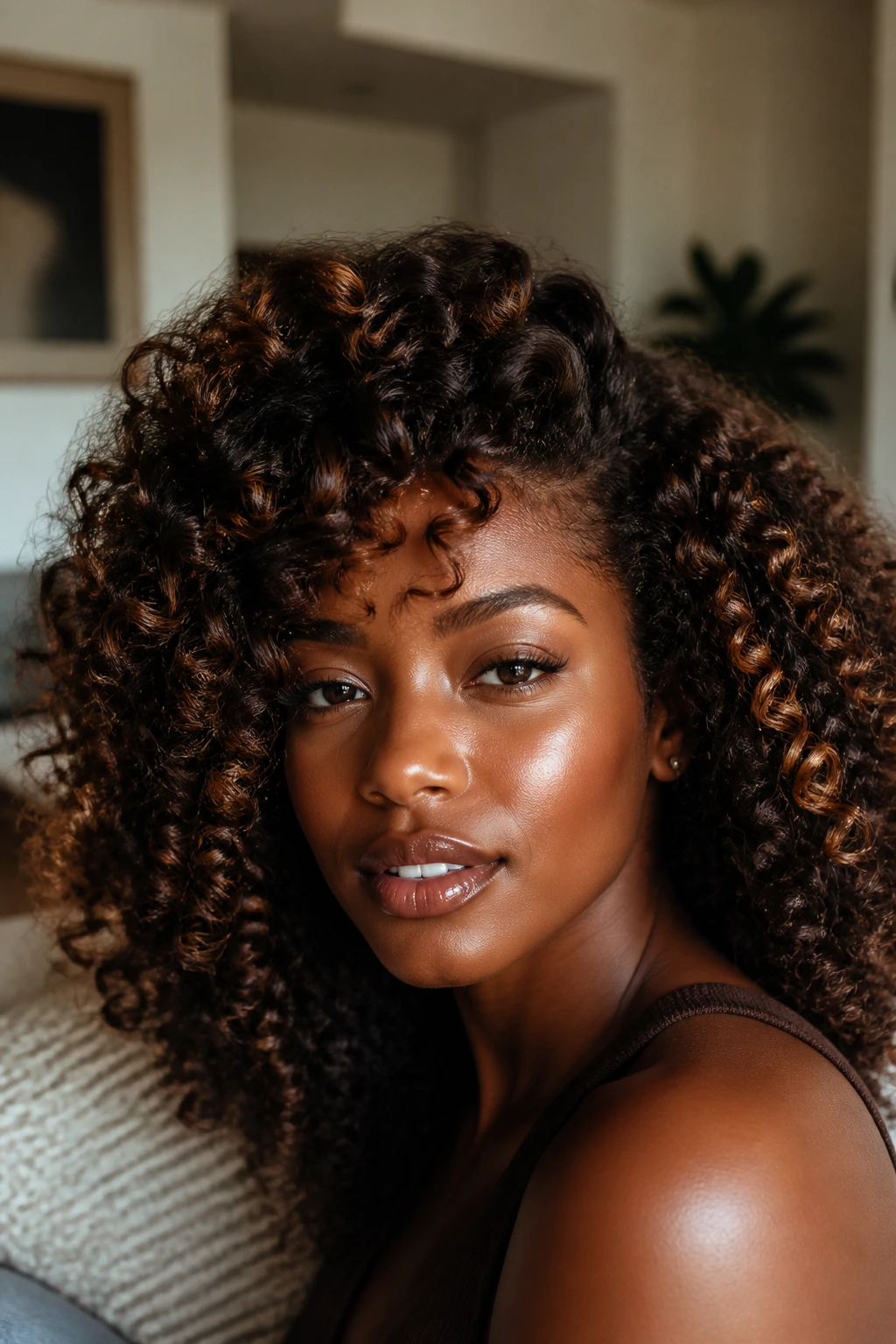
Cocoa curls need color that moves with the curl pattern, not against it. Bronze light does that job well because it sits between gold and brown, which means it catches on the ridges of each curl without looking stripey.
The best version of this look uses painted sections that are a touch wider than you’d expect. Tight curls compress the color visually, so tiny highlights disappear. Bronze shows up better when it’s placed where the curl naturally opens and bends. That creates a shimmer effect instead of a spotted one.
This is one of the prettiest options for dense, textured hair because it makes the shape of the curl more obvious. If you wear twist-outs, braid-outs, or wash-and-gos, bronze will give you definition without making the hair look overly light. It’s warm, but it still feels grounded.
7. Walnut Brown with Golden Babylights
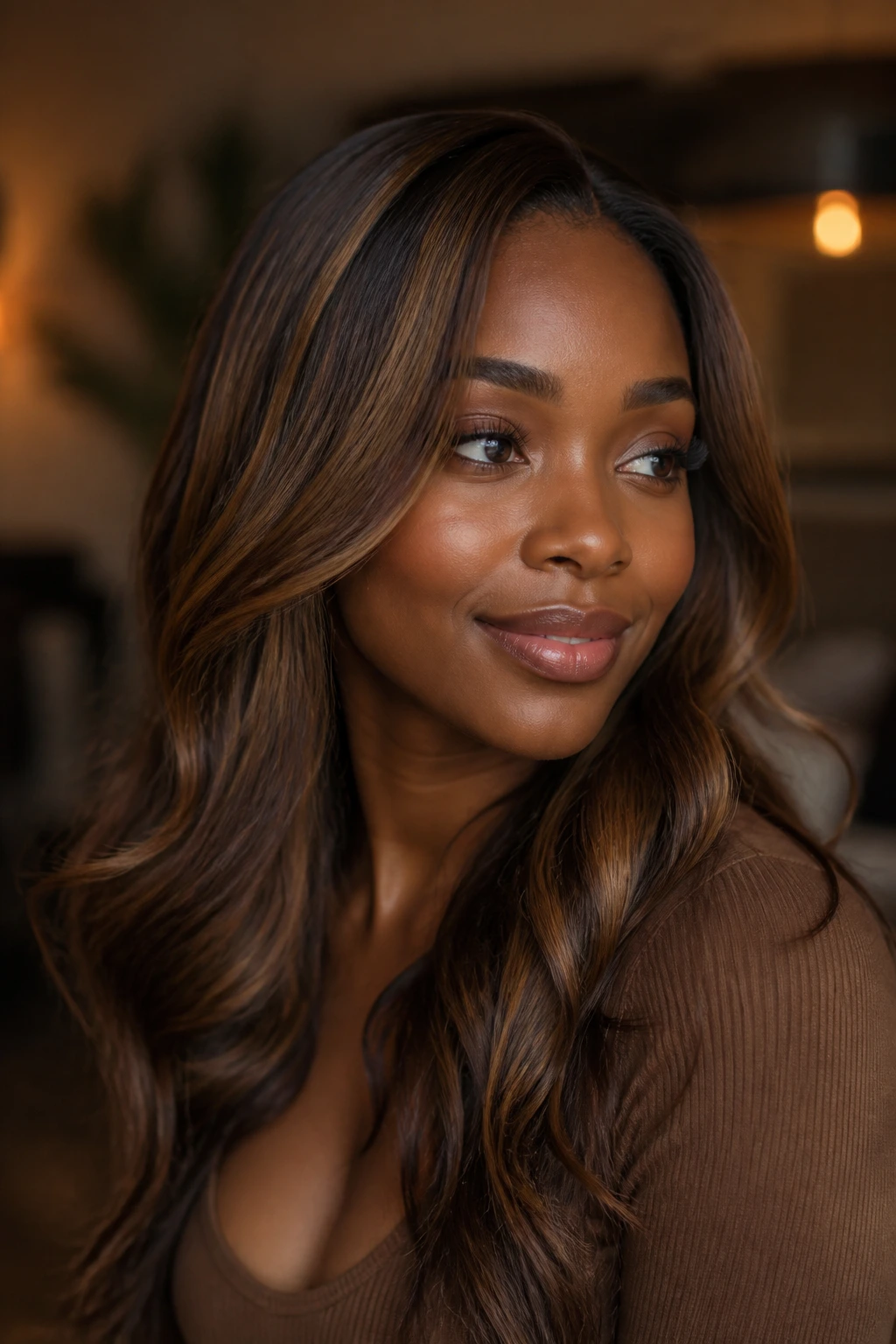
Walnut brown sits in that polished middle ground between dark brown and medium brown, and golden babylights are the quiet detail that makes it interesting. The pieces are thin on purpose. You should notice them as movement before you notice them as color.
That’s why this works so well on deep skin. Babylights can go wrong when they’re too pale or too chunky. Here, they stay delicate and warm, so the overall effect is soft brightness rather than obvious striping. If you like color that looks like sunlight found its way into the hair naturally, this is the one.
Tiny Details Matter
- Ask for golden babylights, not pale beige strips.
- Keep the spacing close near the crown and looser through the ends.
- Add a warm gloss every few weeks so the gold stays gold and not yellow.
8. Deep Brunette with Amber Peekaboo Panels
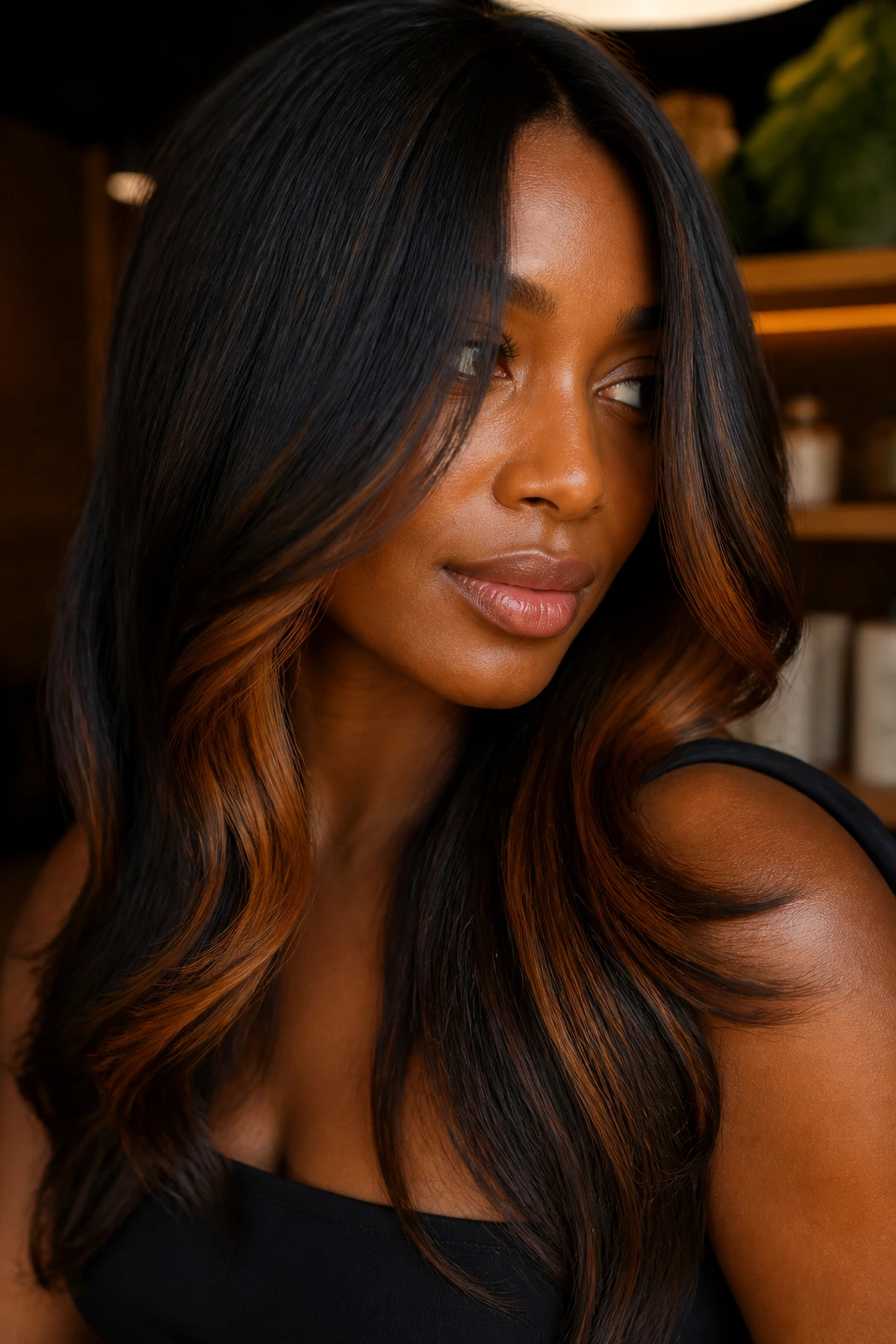
Peekaboo panels are for the person who wants color with a little mischief in it. The amber lives underneath the deep brunette, so you only see flashes when the hair moves or when you tuck one side back. It’s subtle, but not boring.
Amber has a more jewel-like feel than standard caramel. On deep skin, that warmth can look especially rich because it glows under the darker top layer rather than sitting on top of it. The result is dimensional in a way that makes you keep turning your head to catch it.
This works best on layered hair or any cut with enough swing to reveal the hidden color. If the hair is very short and blunt, the peekaboo effect can get lost. Give it some movement, and it wakes up.
9. Jet Brown with Caramel Dip-Dye Ends
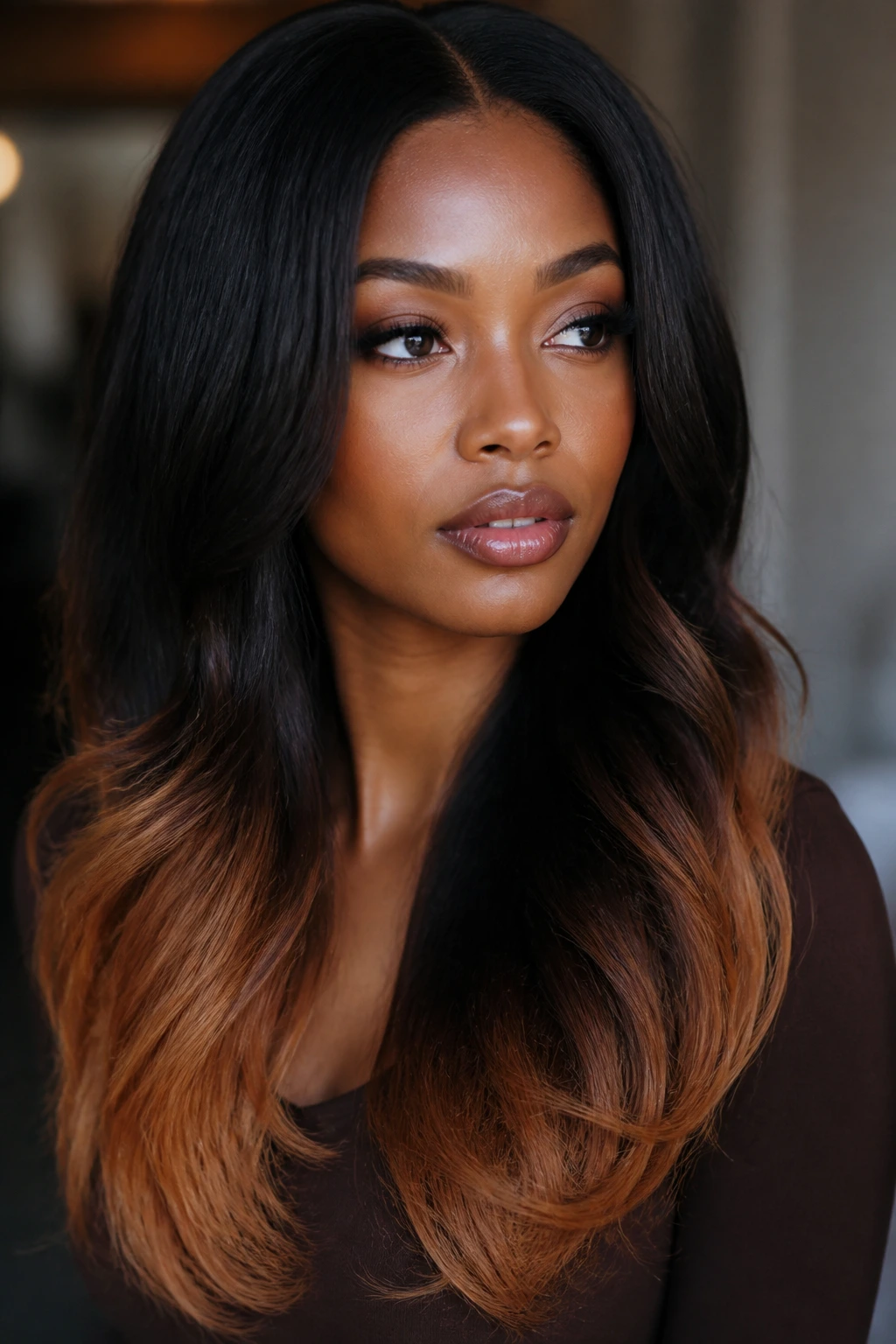
Dip-dye can go cheap fast if the transition is harsh or the ends are too light. But on a jet brown base with caramel dipped through the lower half, it gets a sharper, more editorial feel. The trick is keeping the fade soft and the end color warm.
This is one of the boldest options in the group. The contrast starts low and ends bright, so the eye travels straight down the hair shaft. On deep skin, that can look gorgeous when the caramel is rich enough to feel like toasted sugar rather than blonde.
It’s especially good on long hair where the ends have room to show. A blunt cut will make it look stronger, while layers make the dip feel more blended. If you want color that says something from across the room, this is a strong pick.
10. Sunkissed Coffee Balayage
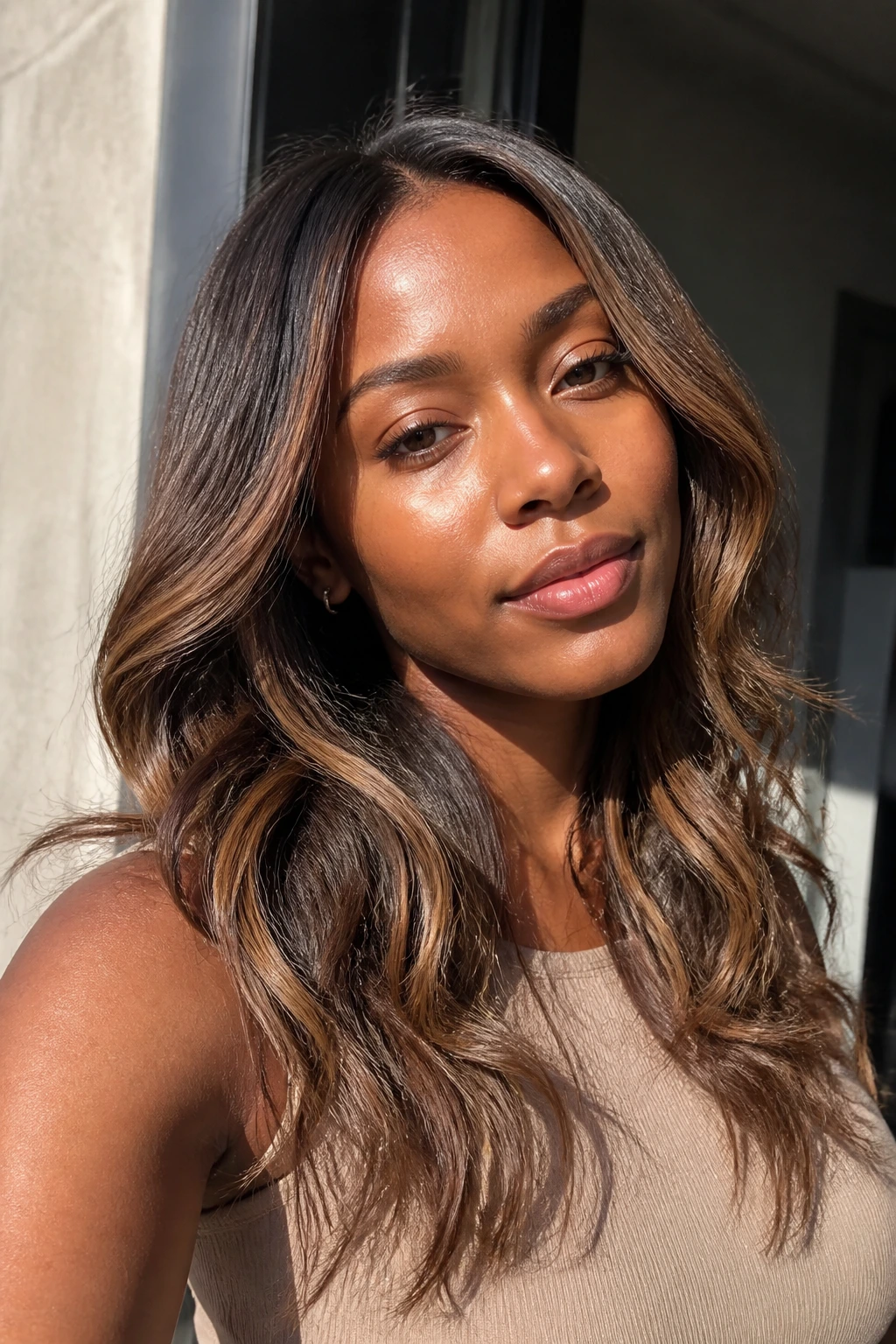
Coffee brown is such a useful base because it’s not too red, not too cool, and not so dark that it loses depth. Add a sunkissed balayage on top and you get a look that feels lived-in from the first day. No hard lines. No obvious start points.
Balayage is strongest when the light pieces are painted where the sun would hit naturally: around the face, along the top layers, and softly through the ends. On deep skin, that placement keeps the brightness believable. The strands look lifted instead of bleached for the sake of being lighter.
I like this on long layers, curly shags, and blowouts with movement. It’s one of the easier brown-caramel combinations to grow out because the transition is soft and the root can stay dark without looking like a mistake.
11. Almond-Caramel Highlights on a Dark Base
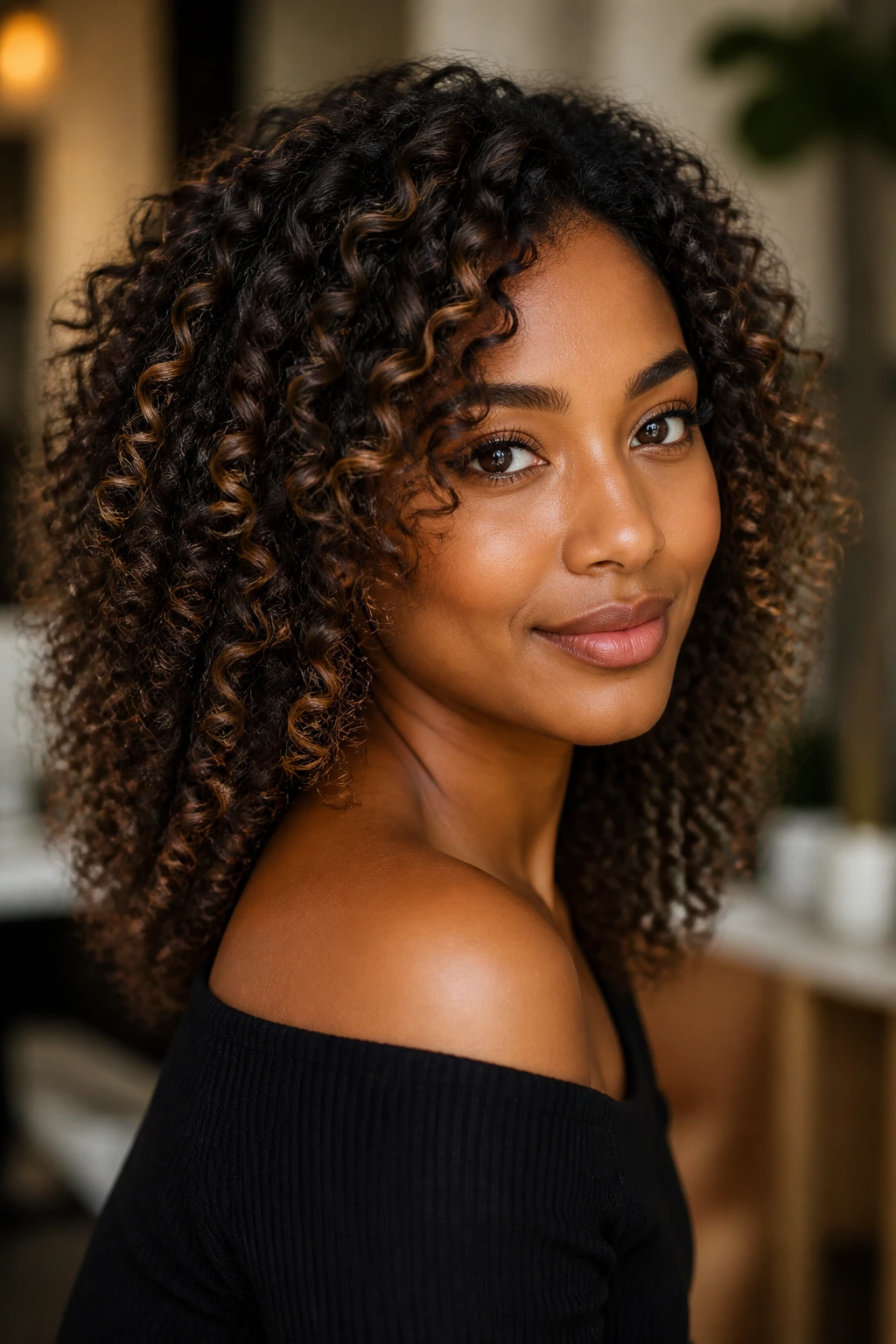
Almond caramel sits lighter and creamier than standard toffee, but on a dark base it still reads as a brown-family color rather than a full blonde shift. That distinction matters. On deep skin, almond tones can look luxurious when they’re used sparingly and blended well.
This is a good choice if you want a noticeable change but don’t want the maintenance that comes with very light highlights. The dark base carries the style, while the almond pieces bring lift through the mids and around the crown. If you’re wearing your hair in curls, the light catches in the texture and makes the dimension look fuller than it is.
Keep the highlights thin if your hair is straight or relaxed. On coily textures, a few thicker panels are often better because they survive the visual shrinkage. Tiny almond streaks can disappear fast in dense hair.
12. Warm Mahogany with Caramel Glaze
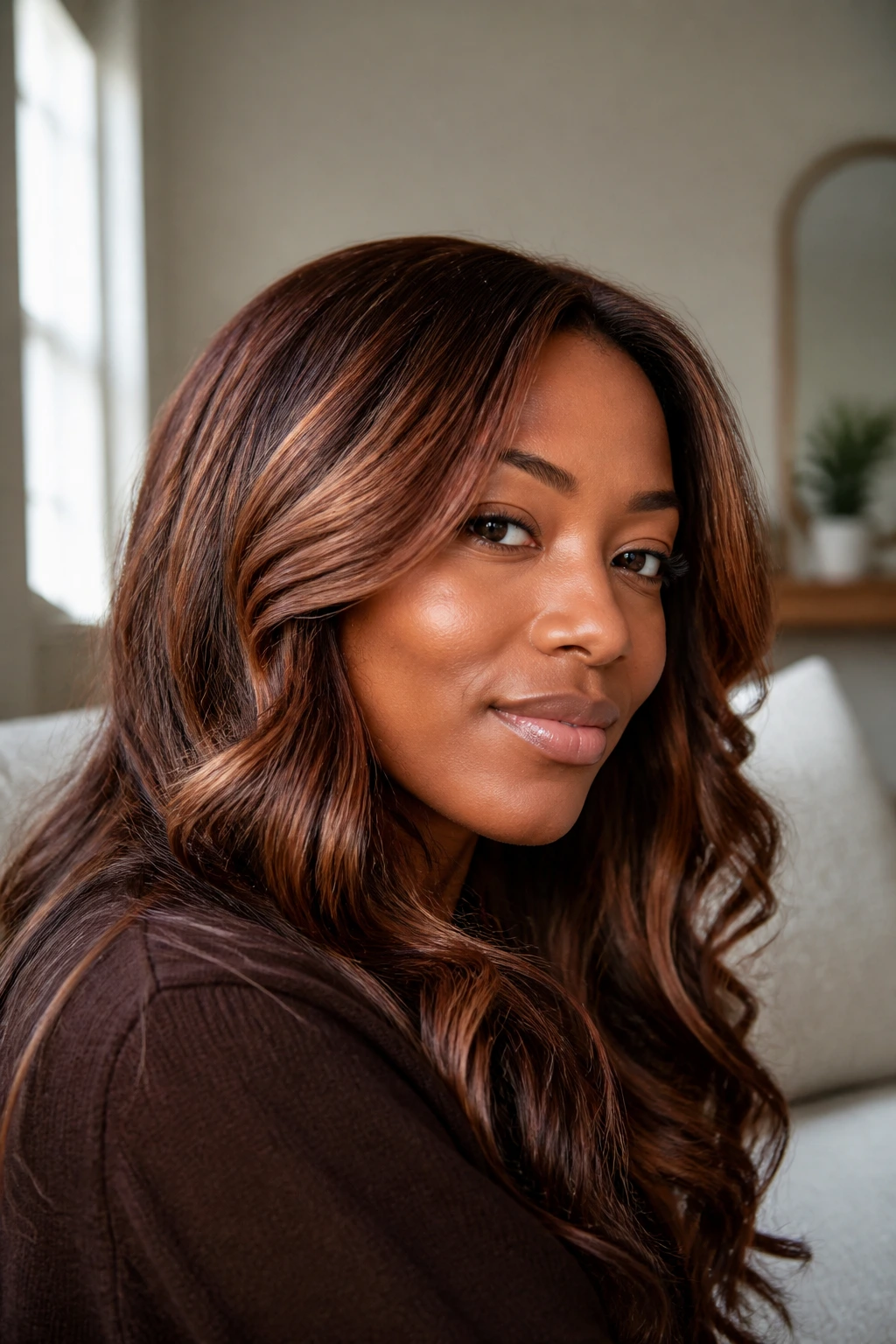
Mahogany is one of those colors that people either ignore or fall hard for. I’m in the second group. It brings a red-brown depth that works beautifully on deep skin, especially when a caramel glaze softens the edges and keeps the tone from reading too dark.
The glaze is the important part. Without it, mahogany can feel heavy or wine-dark. With it, the color gets a warm sheen that looks almost reflective in natural light. That sheen gives the caramel its job: to keep the overall look warm, not flat.
This is a strong option if you like richer, slightly redder hair shades and wear warm lip colors or gold jewelry. It’s a little moodier than straight caramel, which makes it feel more special. Not louder. Just deeper.
13. Cool Cocoa with Ash Caramel Ribbons
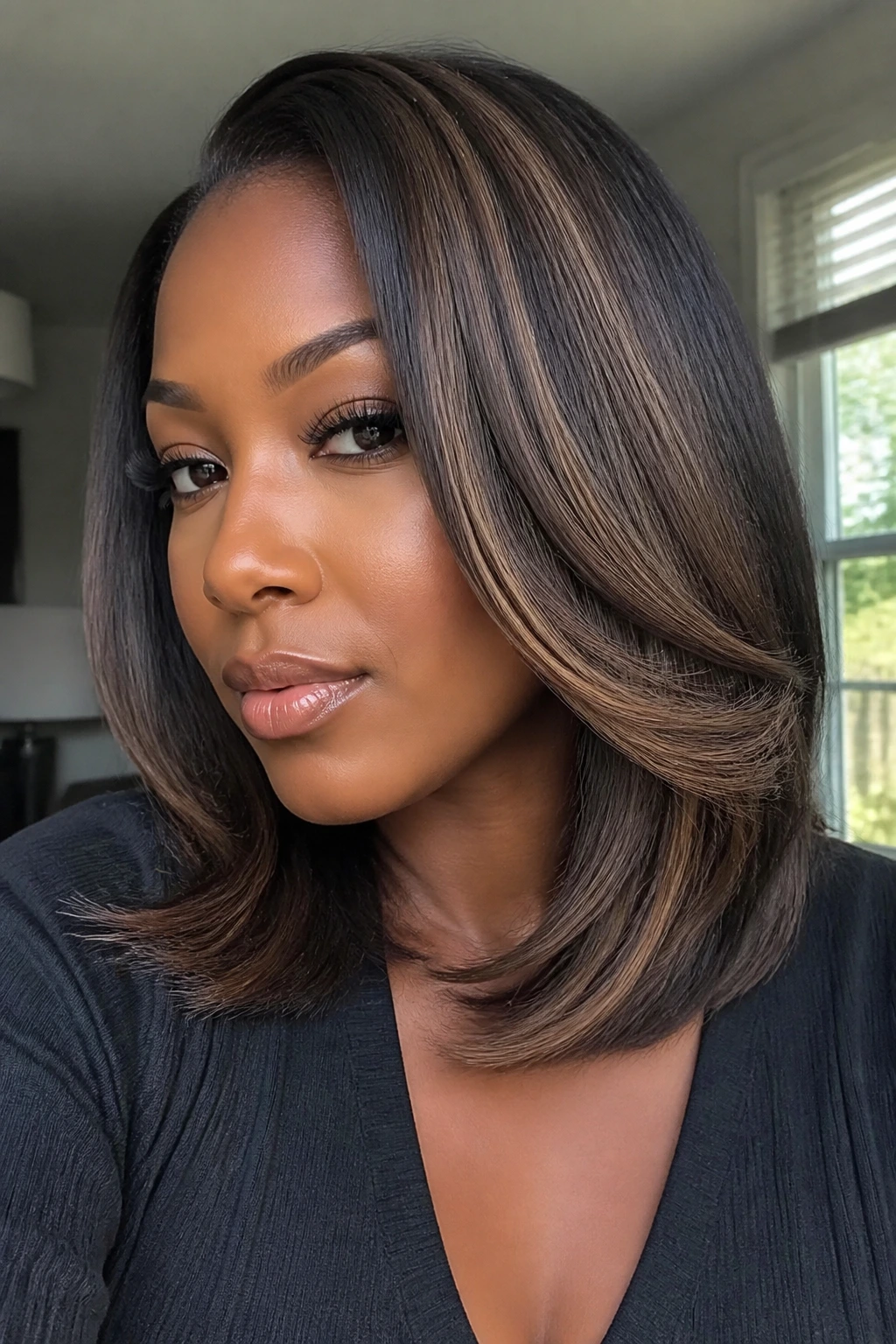
This one is for people who want caramel but don’t want copper or gold pulling the whole look too warm. Ash caramel is tricky on deep skin, but it can work when the base is cool cocoa and the placement stays soft. The result has a smoked finish that feels modern without looking gray.
You need the right balance here. Too much ash, and the hair looks dull. Too much warmth, and the whole point disappears. The ribbons should sit in a muted beige-caramel zone, enough to brighten, not enough to glow orange. That makes this style especially good on people with neutral or cooler undertones.
I prefer this in sleek blowouts and shoulder-length cuts where the cooler ribbons can frame the face. On very curly hair, ash tones can get lost if the pieces are too fine. Ask for slightly larger painted sections if your texture is dense.
14. Brunette Ombre with Maple Ends
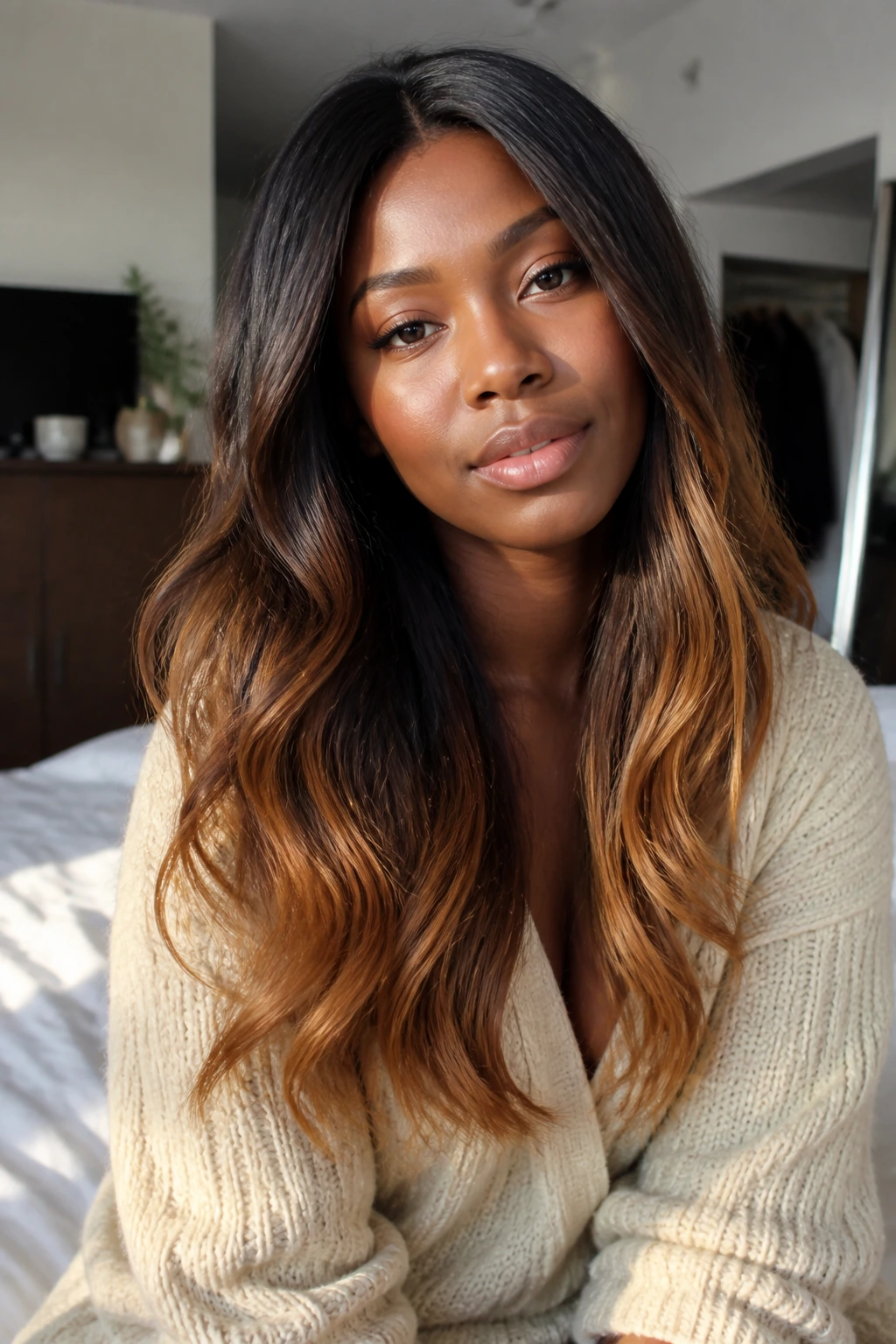
Maple ends have a toasted, syrupy warmth that makes ombré feel less beachy and more grown-up. On a deep brunette base, the fade can be stunning when it starts low and stays soft through the mids. You want the transition to feel brushed, not painted.
This is a good pick if you like color that starts quietly and ends with a little drama. The roots stay nearly untouched, which makes maintenance easier, and the ends carry the brightness. On deep skin, the maple tone keeps the lighter hair from looking disconnected. It still belongs to the brown family.
Long hair is where this really sings. The gradient has room to stretch, and the ends get enough space to show the color change. If your hair is shorter, keep the fade tighter so it doesn’t feel like the color runs out too quickly.
15. Rich Sable with Biscotti Highlights
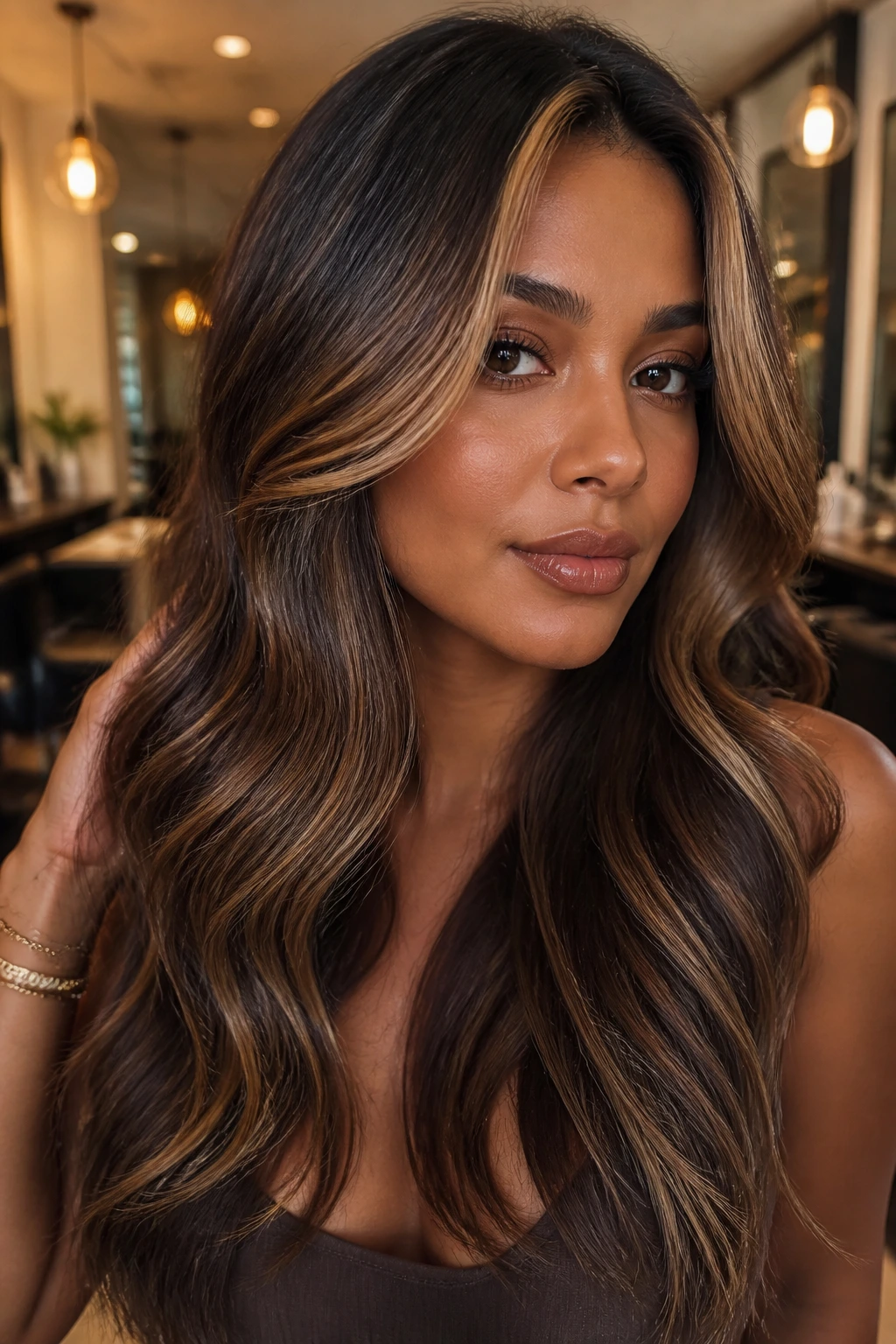
Sable is a glossy dark brown with a touch of softness, and biscotti highlights add a creamy, toasted contrast that doesn’t go too yellow. This is one of the more polished looks in the whole list. Clean. Warm. Easy to wear.
Biscotti works because it sits in a beige-caramel lane without turning pale. On deep skin, that means you get brightness instead of chalk. The best placement is through the top layers and around the face, where the lighter pieces can show without taking over the whole head.
This is one of my favorite versions for straight styles and smooth blowouts. The shine matters here. If the hair is dull, the whole look loses impact. A good gloss or shine serum on the mids and ends changes the whole mood.
16. Burnt Sugar Balayage on Dark Brown
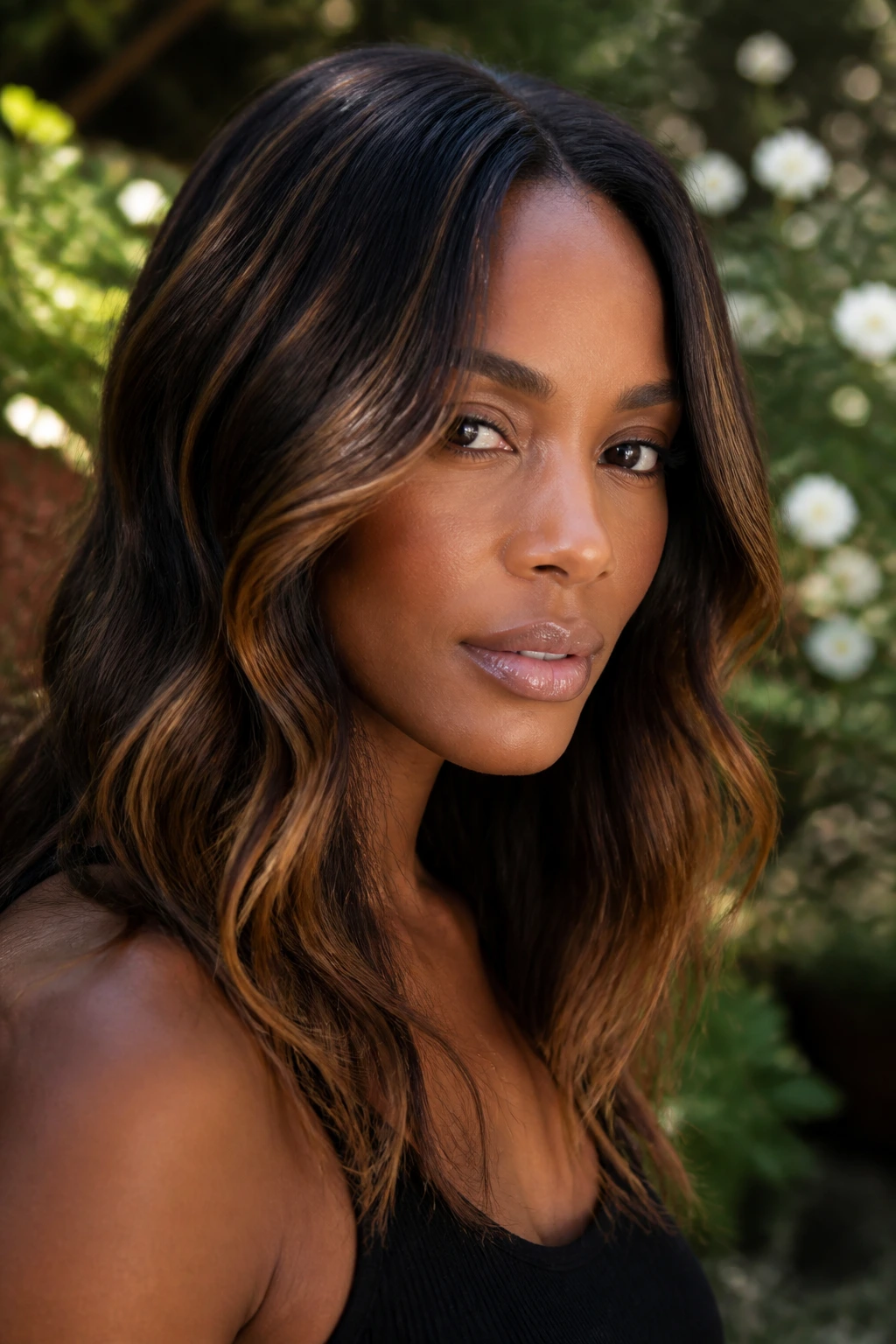
Burnt sugar is caramel with a little edge. It has that warm, cooked-sugar tone that sits somewhere between gold and amber, and on dark brown hair it gives a rich, almost glowing finish. The balayage placement keeps it soft enough to wear every day.
This shade works because it does not try to be blonde. That’s the mistake a lot of people make with caramel on deep skin. They push the color too light and end up with streaks that never quite blend. Burnt sugar stays warm and deep, which is the reason it looks so at home on richer complexions.
If you want something that shows in sunlight but still looks subtle indoors, this is a solid choice. It’s especially pretty on layered cuts with movement at the ends. The color appears and disappears as the hair shifts.
17. Mocha Bronde with Lived-In Dimension
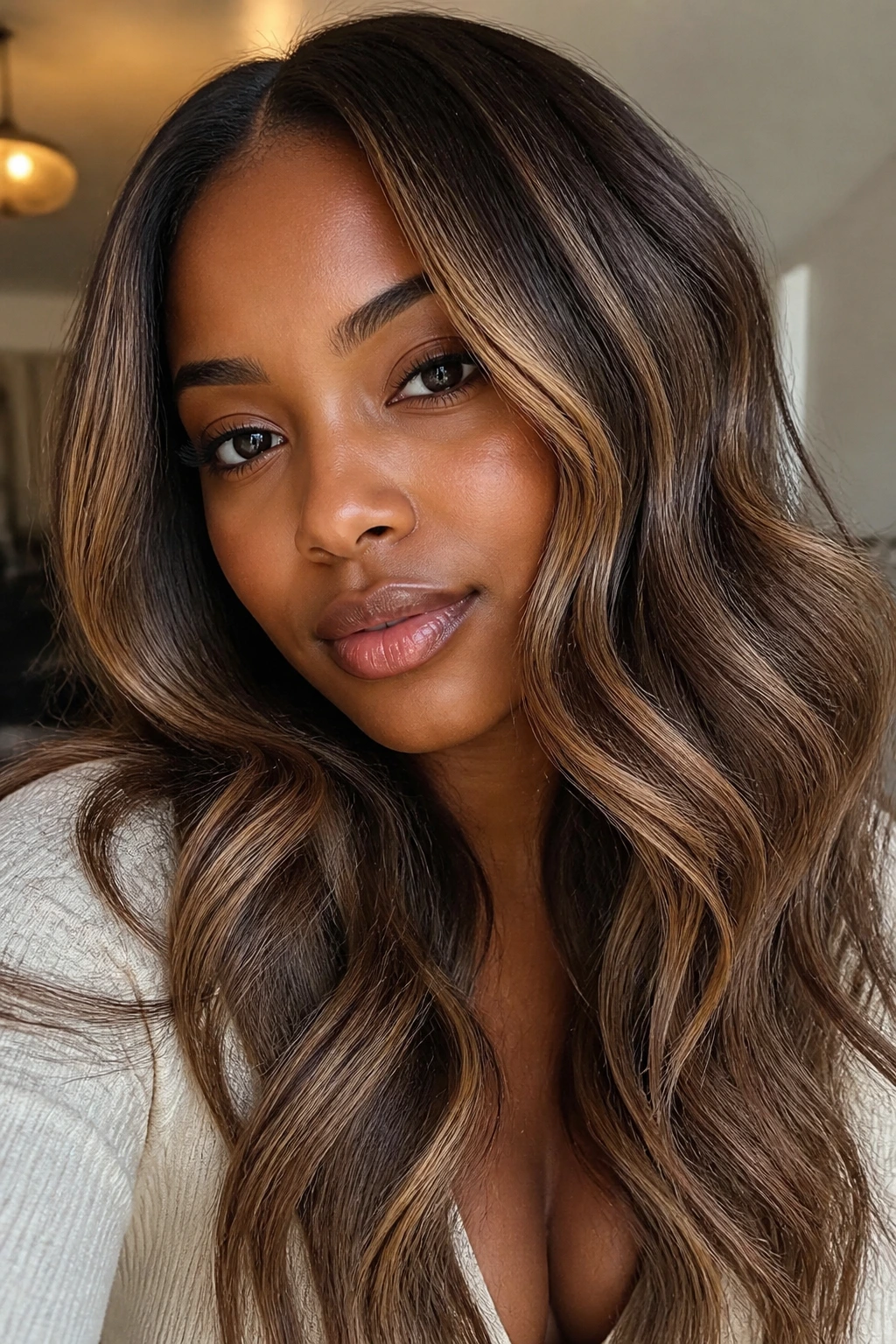
Bronde is a slippery word, and half the time it gets used for anything medium-colored. Here, I mean a mocha base with caramel-beige dimension that sits between brown and blonde without abandoning either side. On deep skin, this version works when the brown remains dominant.
The lived-in part matters. You do not want bright, equal-width highlights from roots to ends. You want a base that does most of the work, with lighter pieces that look sun-touched and a little imperfect. That softness keeps the color believable.
This is a good fit if you like frequent wear, not frequent appointments. It grows out well because the base is intentionally part of the look. If you’ve ever felt like highlights made your hair look too “done,” this version usually fixes that.
18. Chocolate Cherry with Caramel Flash
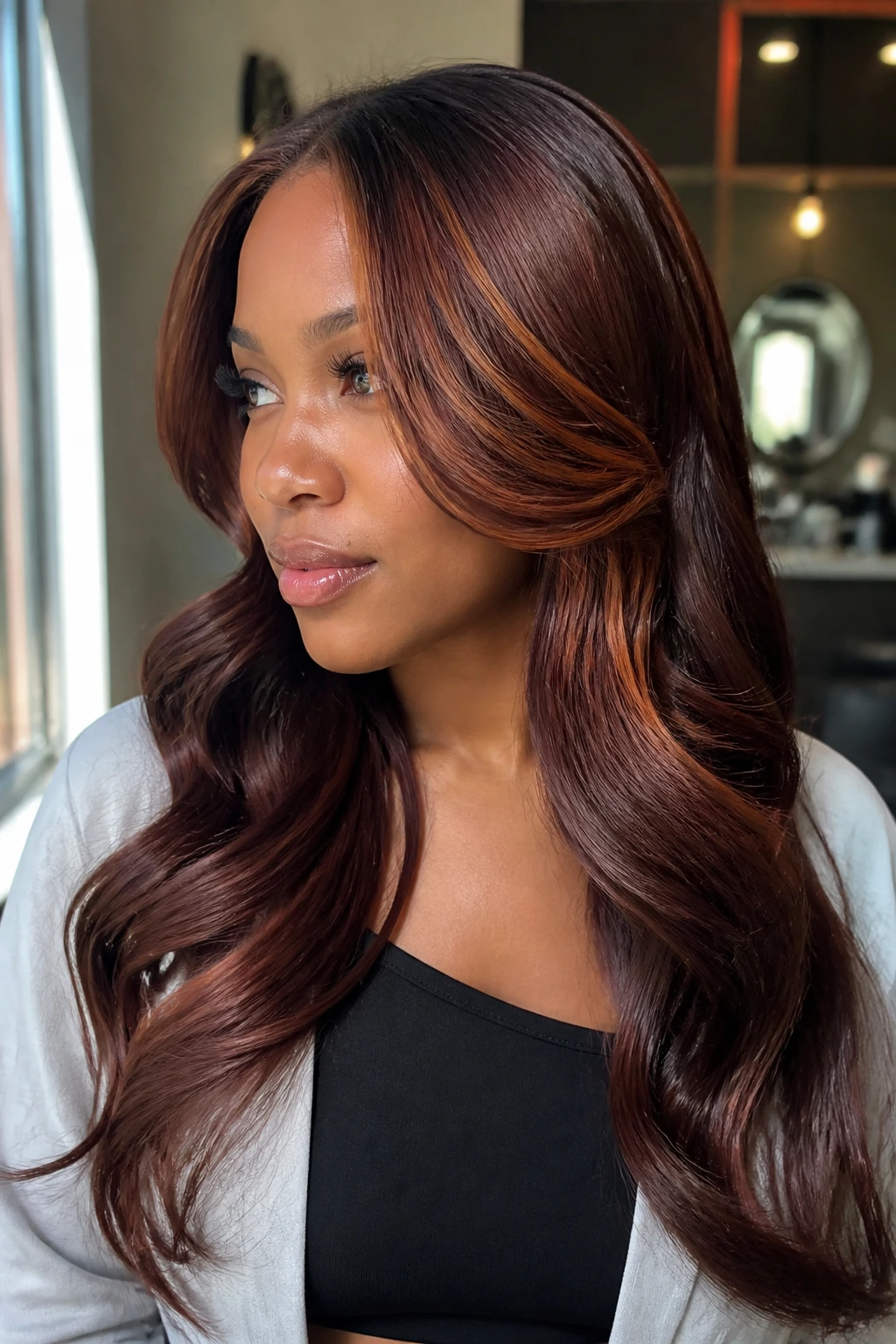
Chocolate cherry leans red in a way that can be gorgeous on deep skin, especially when caramel flash pieces break through the darker red-brown base. The contrast feels rich, almost glossy. It’s one of the more playful options here, but still grown-up.
The caramel flash should be selective. A few well-placed streaks near the front or through the top layers are enough. Too much, and the red-brown base loses its charm. Too little, and the style just reads as dark brown with no movement.
This is a smart pick if you like warmer makeup or wear bold lipstick. The cherry undertone makes the caramel glow more. It’s a little dramatic, but in a way that still feels wearable on a regular Tuesday.
19. Dark Root Melt into Latte Ends
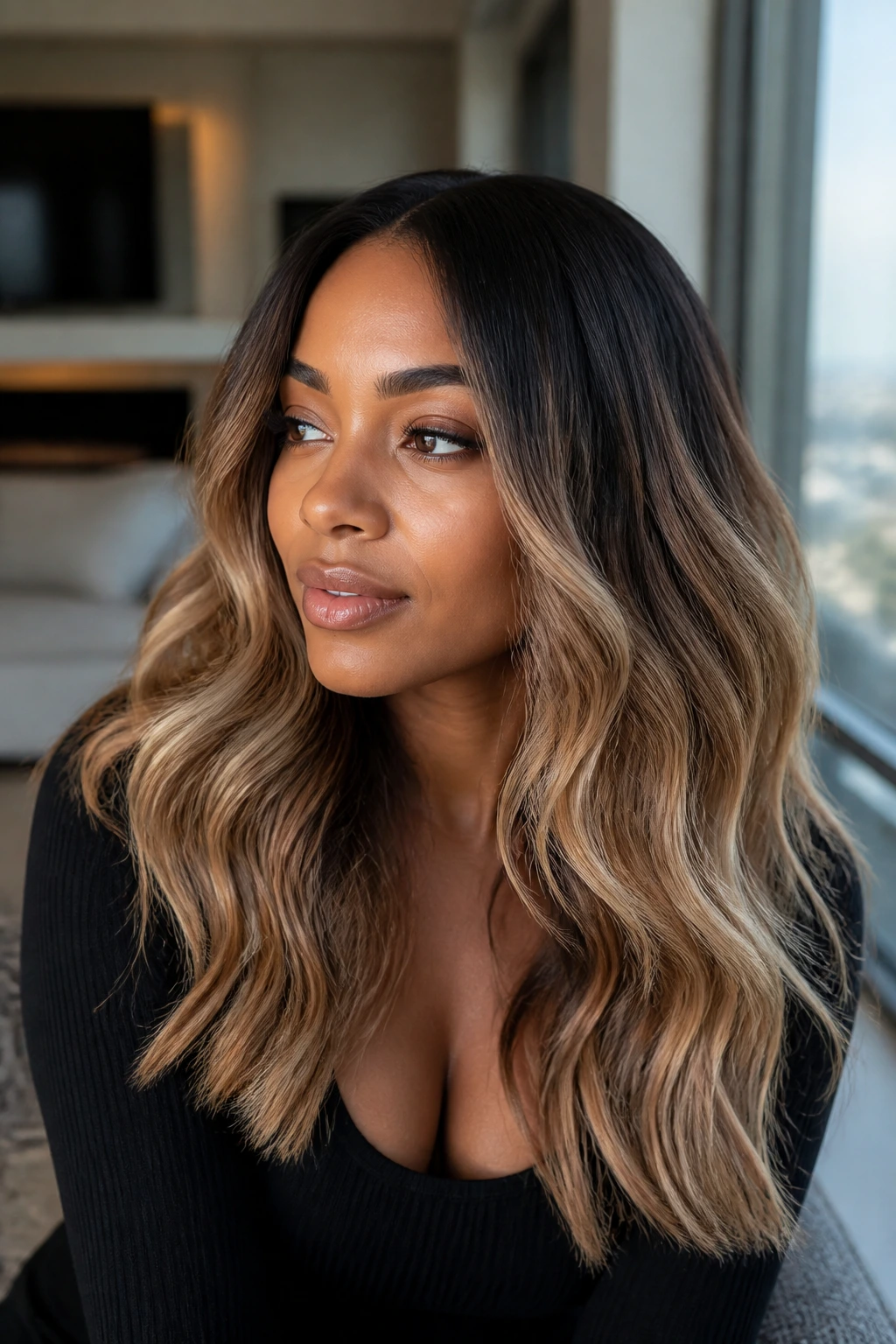
A dark root melt is one of the most forgiving ways to wear caramel on deep hair. The roots stay almost untouched, then the color slowly opens into latte ends that are creamy, warm, and soft around the edges. It looks expensive because the transition does not shout for attention.
The important thing here is the melt. If the root line is too crisp, the whole effect turns patchy. If the ends are too pale, the contrast gets harsh. Latte ends should sit in a beige-caramel range that looks milky, not blonde. That keeps the style flattering on deep skin.
This is an easy yes for anyone who wants lower-maintenance color. The root melt buys you time between appointments, and the softer ends keep the hair bright. It’s one of the best options if you like your hair to look finished but not overly styled.
20. Caramel Stripe Bob on Deep Skin
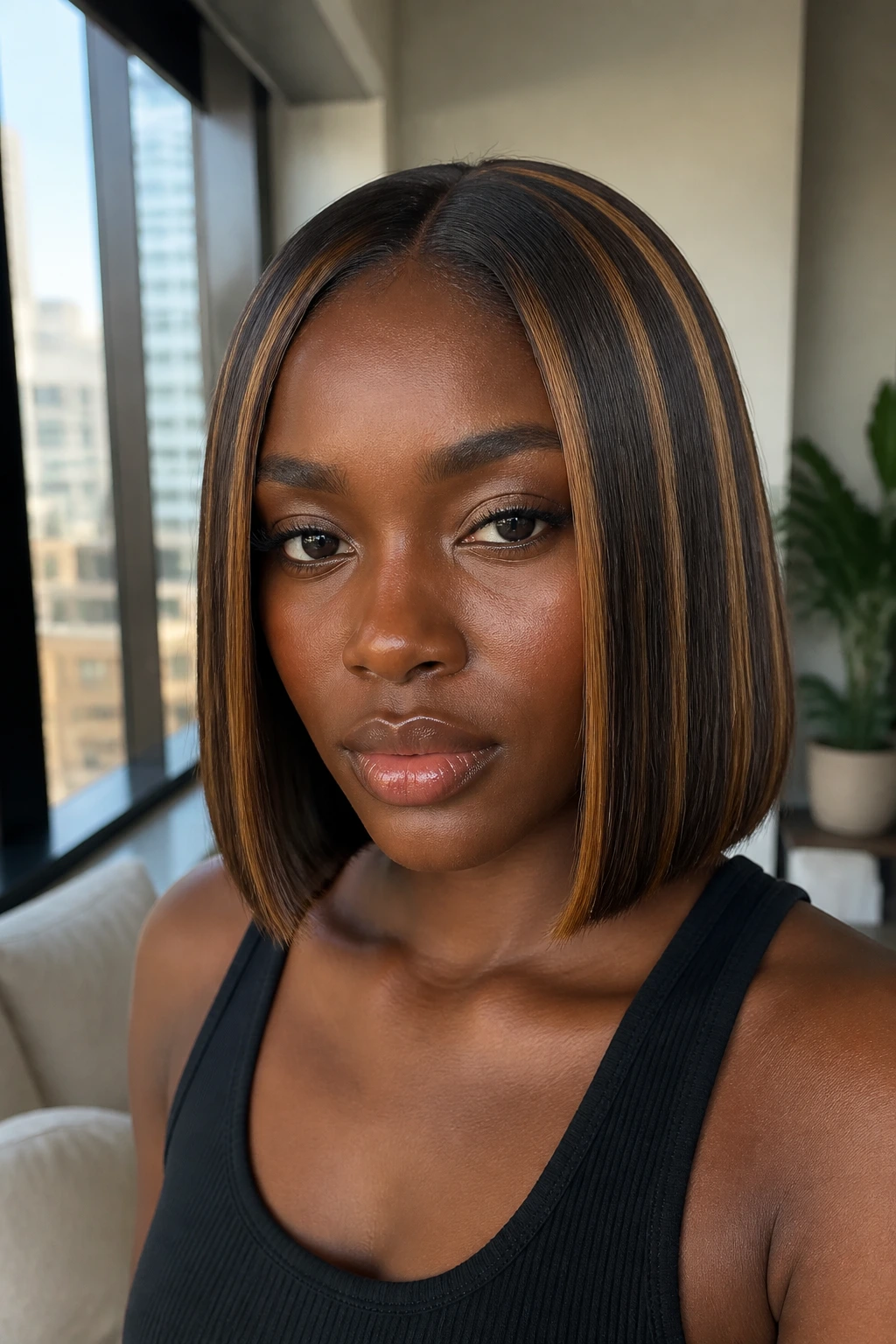
A bob with caramel stripes has to be handled carefully. Too many stripes and it looks dated. Too few and you miss the point. The best version uses clean, well-spaced caramel bands on a dark brown or espresso bob so each line has a job.
On deep skin, the contrast can look striking when the stripes are warm enough to feel like caramel, not yellow. The bob shape helps because the sharp line of the cut gives the color a modern edge. This is one of the few times I actually like a more graphic placement. The haircut can carry it.
It’s strongest on straight bobs, angled cuts, and blunt lobs. If the hair is curly, keep the stripe widths a little softer so the color doesn’t disappear in the curl pattern. A blunt bob with caramel lines is not subtle. That’s the appeal.
21. Curly Fro with Honey-Taffy Ringlets
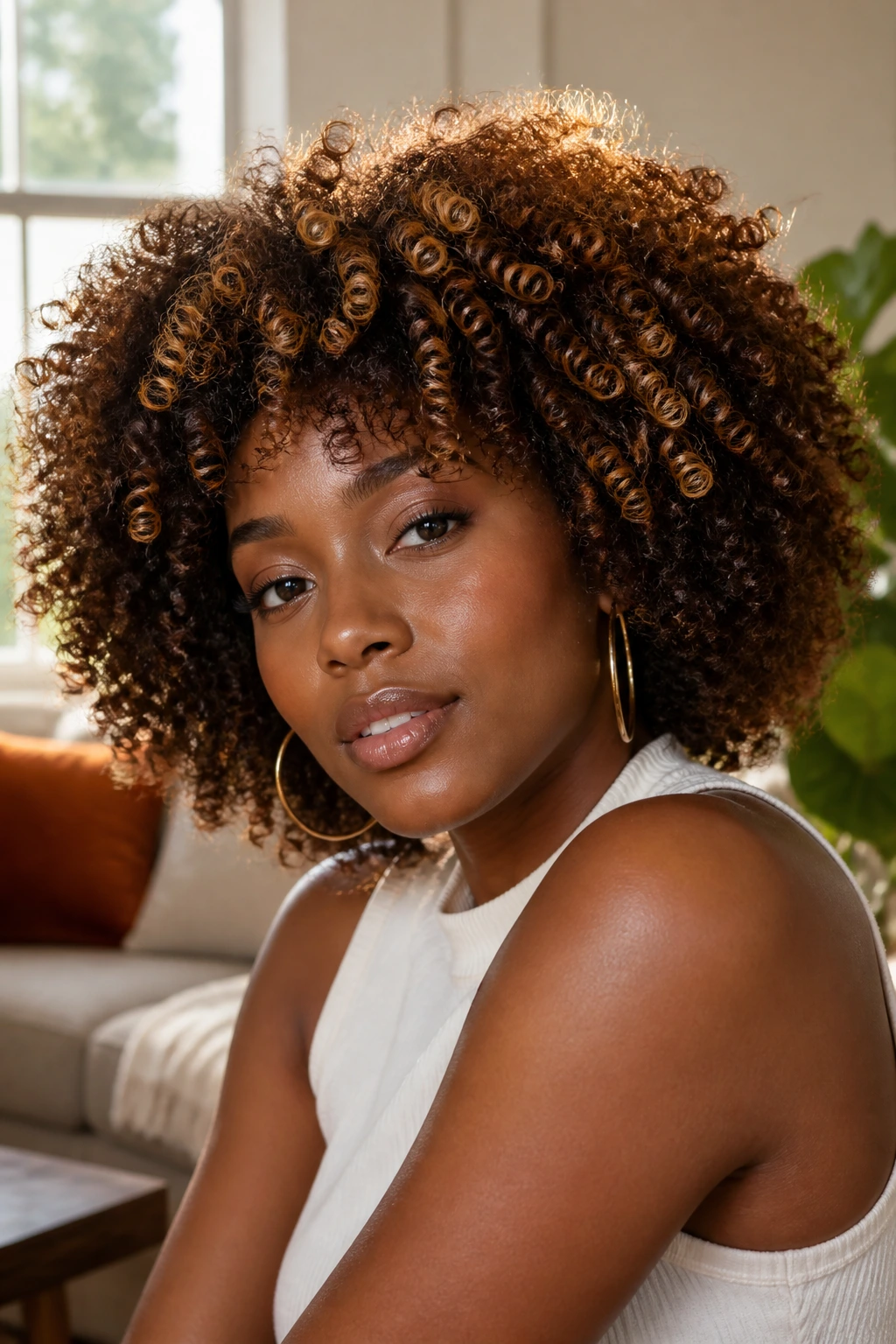
Honey on curls can go beautiful fast when the tone stays warm and the pieces follow the curl pattern. The “taffy” part of this look means the lighter color has a chewy, stretchy look—not stringy, not pale, just sweet and glossy against the darker base.
This is one of the best caramel ideas for natural texture because the color shows through volume. Instead of trying to change the whole head, you’re highlighting the curl architecture. The result can be lively and soft at the same time.
Ask for the lightest pieces to sit where your curls open up most: the outer crown, the front curls, and the upper sides. That keeps the face bright without bleaching out the whole shape. And yes, a good curl cream matters here. Dull curls hide color.
22. Silk Press with Thin Caramel Veils
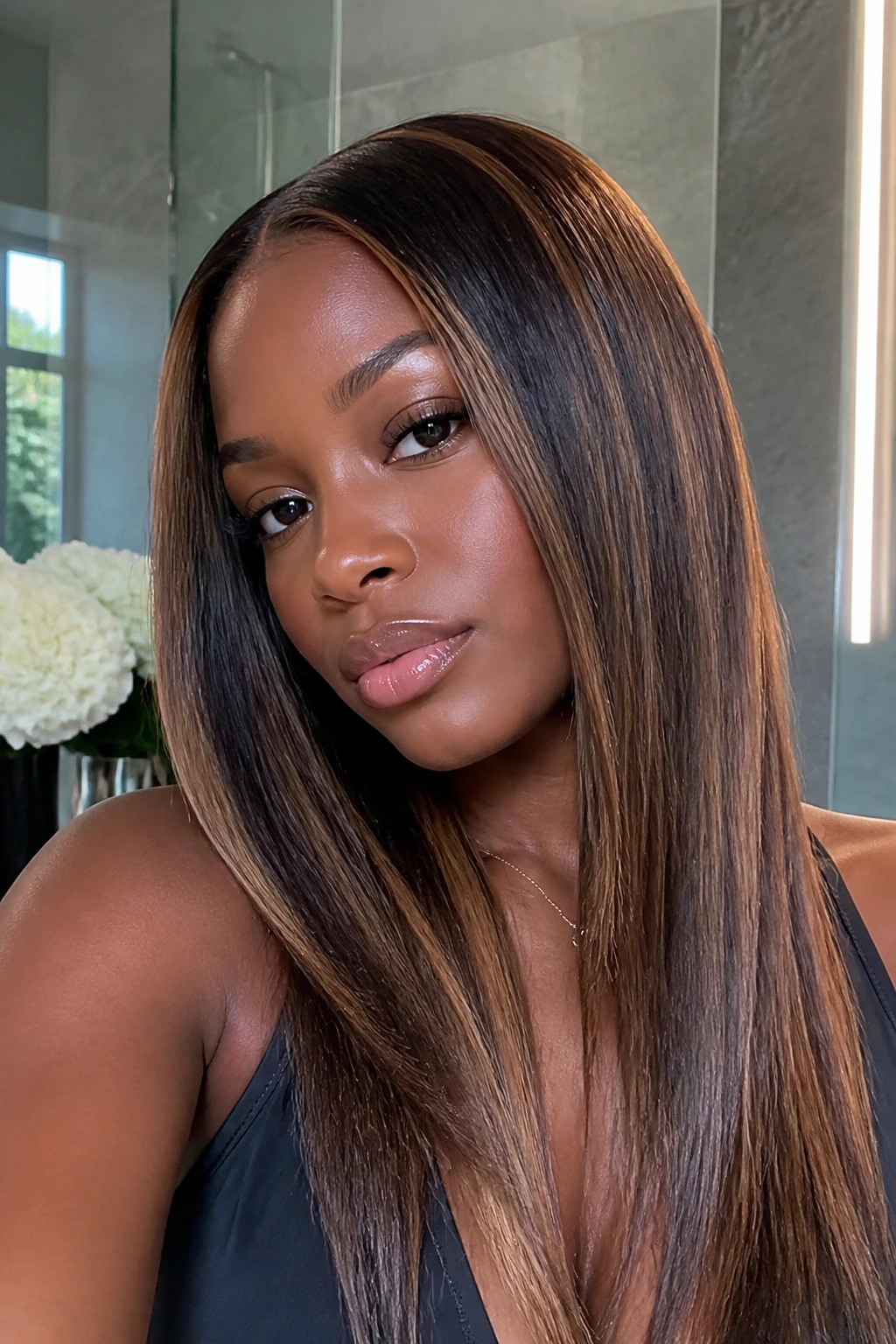
Thin caramel veils on a silk press look sleek in a way thicker highlights never will. The hair has a smooth surface, so even a slight shift in tone shows up. That’s why this style works best when the caramel is applied in very fine sections and blended well.
The “veil” idea is important. You want the lighter strands to skim across the dark base, not sit on top like blocks. On deep skin, that gives you brightness with a softer line. If the caramel is too heavy, the press starts looking striped. Keep it airy.
This is the version for people who love clean parts, sharp edges, and that reflective silk-press finish. It’s polished without being stiff. Very few styles show shine this well.
23. Twist-Out with Bronze Crown Pieces
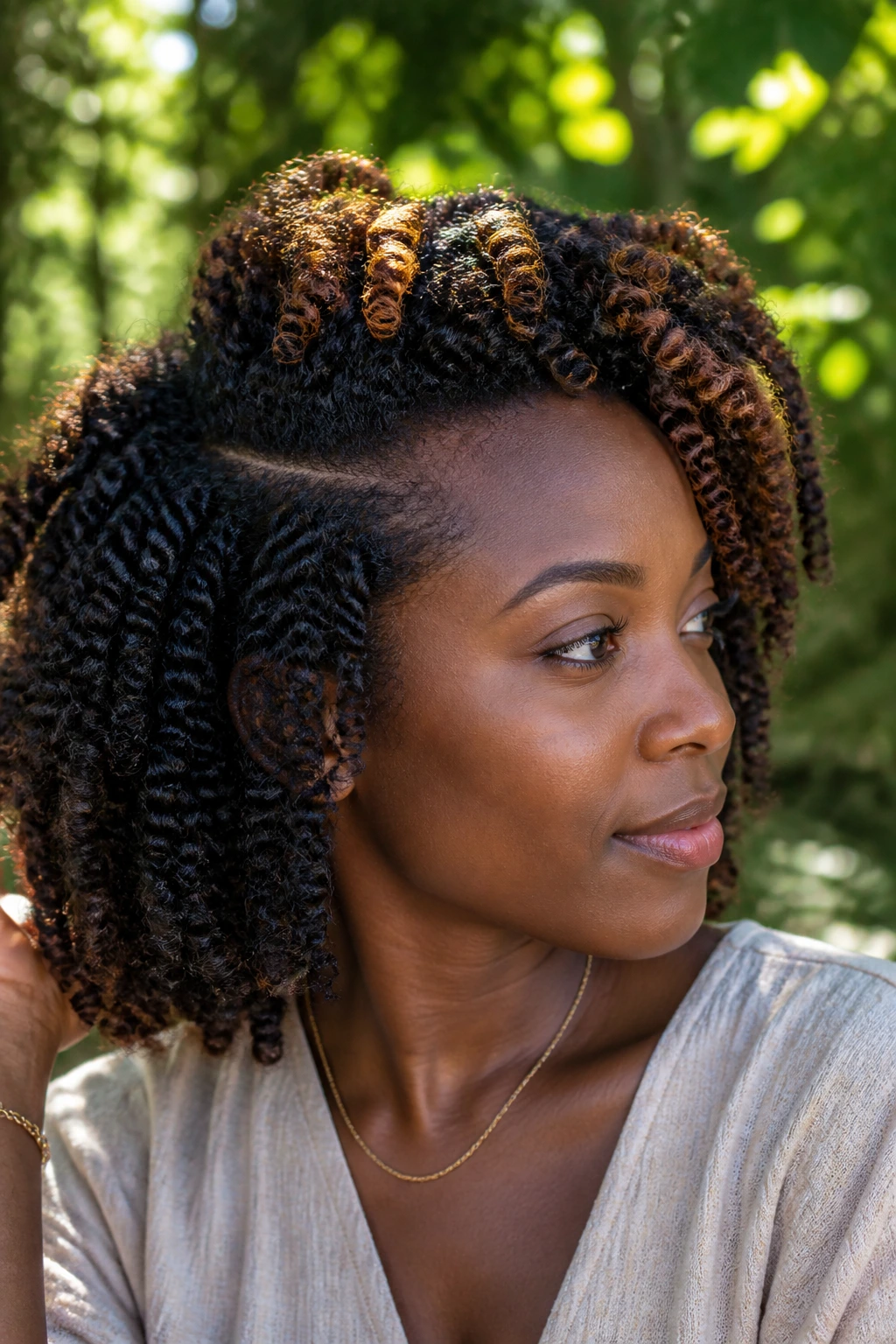
Bronze crown pieces add just enough lift to a twist-out without stealing the show from the texture itself. The crown is where the eye goes first, so a little brightness there changes the whole style. Bronze is a smart choice because it has warmth and depth at the same time.
I like this for people who want color but don’t want constant all-over maintenance. The twists do most of the visual work, and the bronze pieces give the top of the style some lift. If your hair is dense, the crown pieces should be a bit thicker so they don’t vanish once the twist-out expands.
This works especially well with side parts and half-up styles. The bronze sits like a halo without becoming a full-blown highlight job. Subtle, but not shy.
24. Braids with Caramel Feed-In Threads
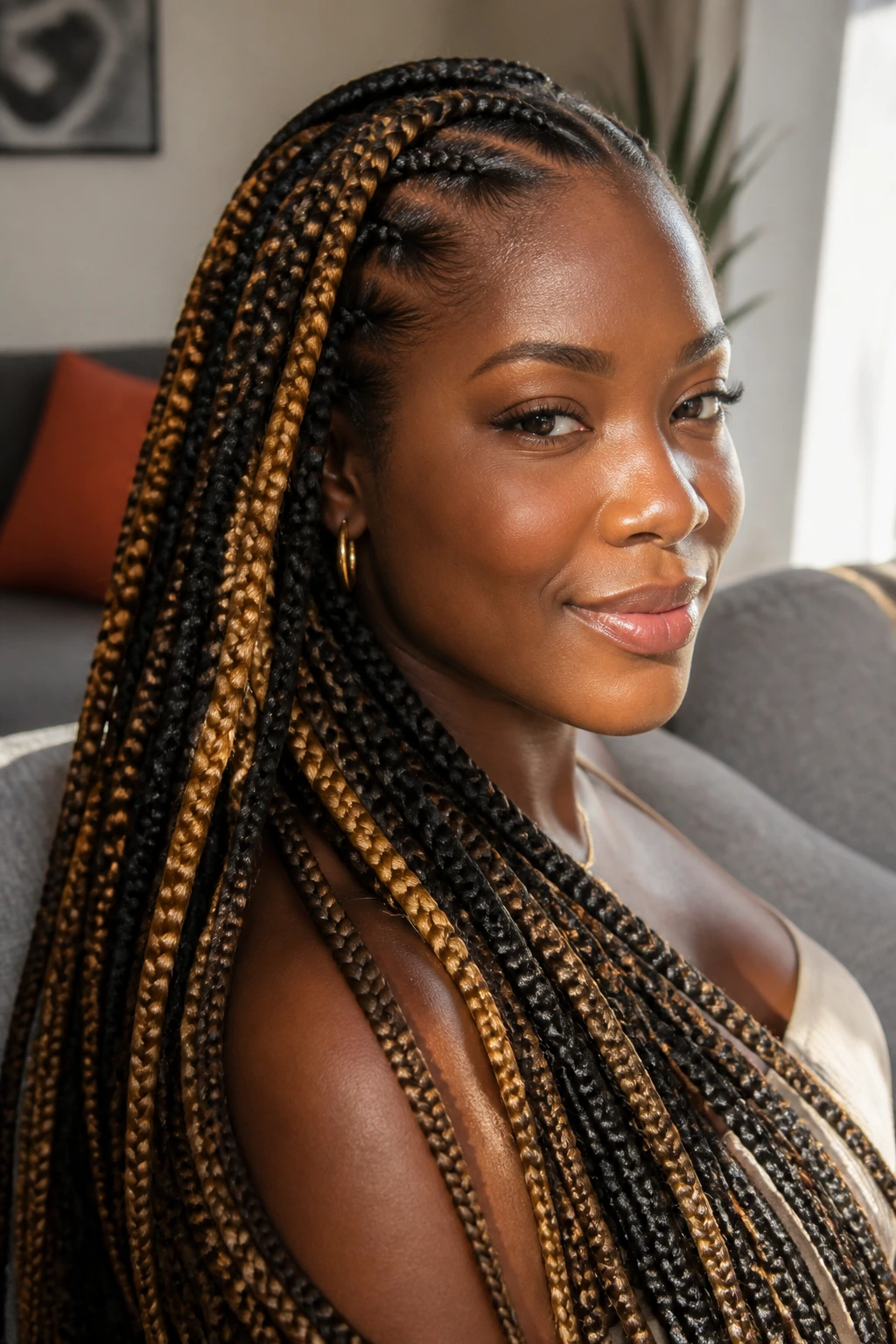
Caramel feed-in threads are one of the easiest ways to bring warmth into braid styles on deep skin. The color doesn’t have to cover the whole braid to make an impact. A few warm strands threaded through the braids can be enough to catch light and keep the style from feeling flat.
The shade choice matters here. A golden caramel or bronze caramel usually looks better than a pale blonde piece, which can read too stark against deep skin and synthetic braid hair. Keep the contrast warm and the whole style looks smoother.
This is a great option if you want color without altering your natural hair at all. It also works well for protective styling because the lighter threads can be swapped out the next time you redo the style. Low commitment. High payoff.
25. Glossy Chestnut with Creamy Babylight Halo
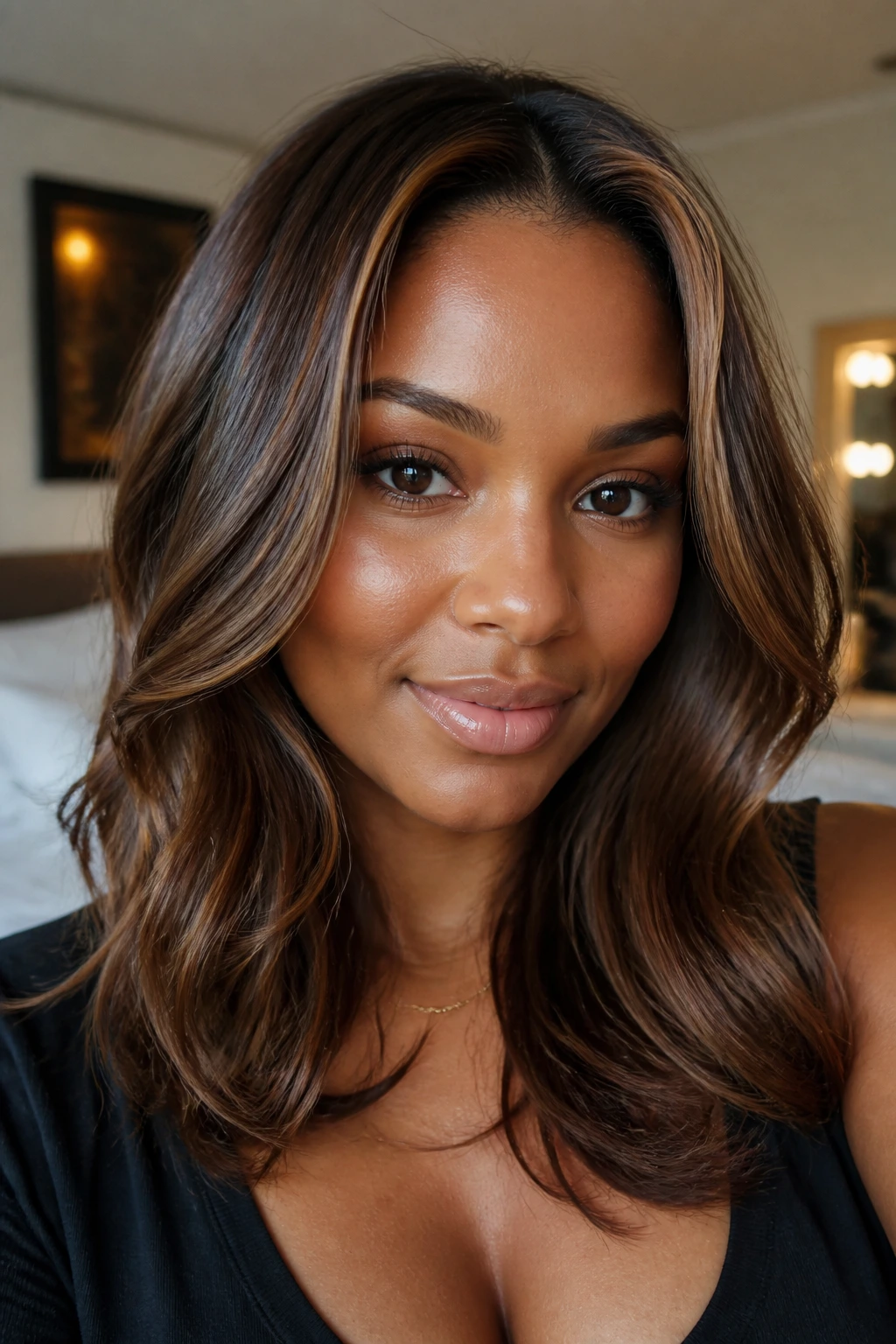
A chestnut base with a creamy babylight halo has a softer finish than most of the stronger caramel looks in this list. The halo should sit around the hairline, crown, and the outer curve of the head so the light follows the shape of the style. It gives you brightness without losing the richness of the chestnut underneath.
This is one of those colors that looks expensive because the transition is so controlled. Creamy babylights can easily go too light, but when they’re kept warm and thin, they lift the entire look. On deep skin, that subtle halo can be more flattering than a full set of highlights because it keeps the depth intact.
I like this especially for shoulder-length cuts and face-framing layers. The halo shows up when the hair moves, then settles back into the deeper base. Quiet. Pretty. A little addictive.
What Makes the Brown-Caramel Range So Reliable on Deep Skin
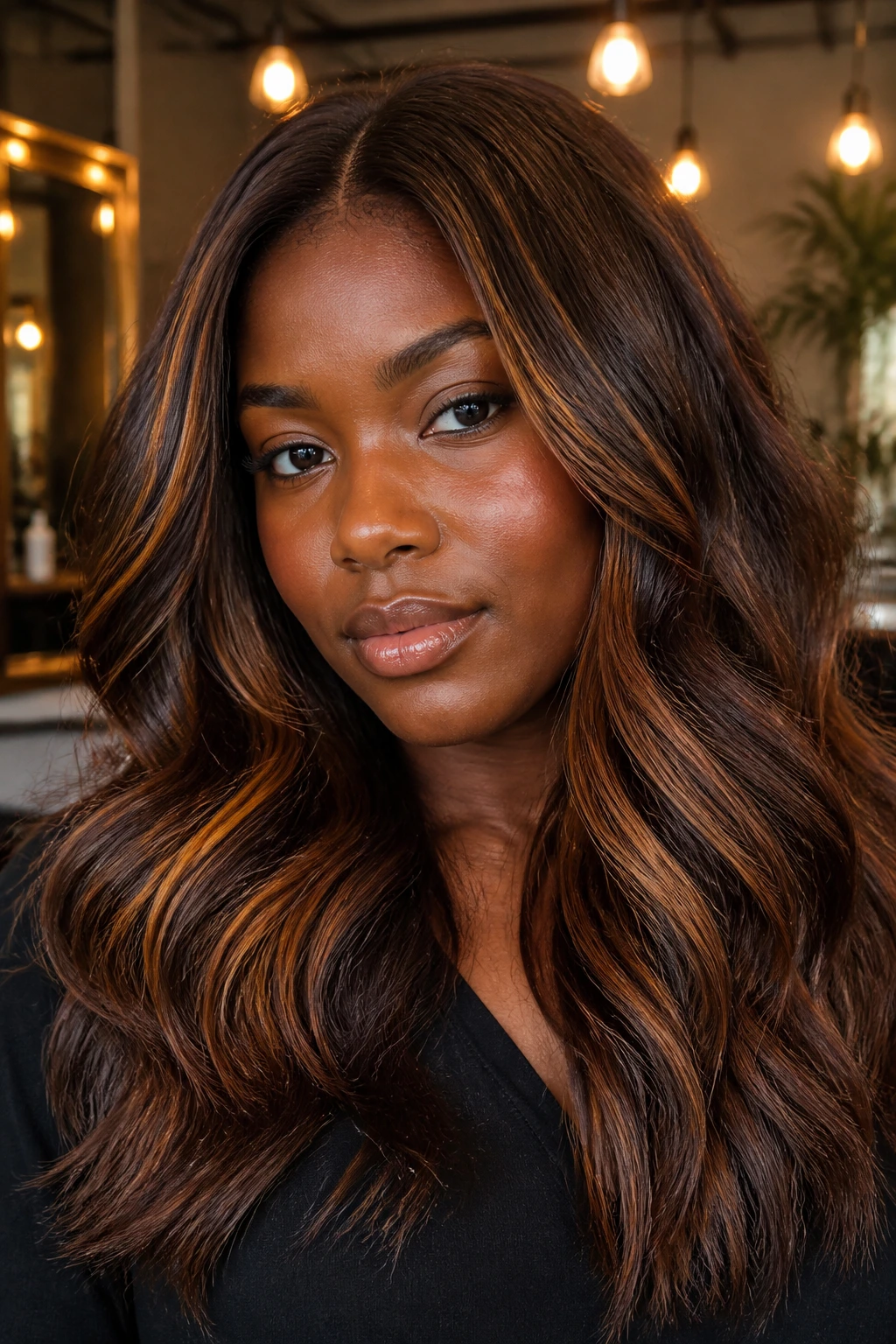
The reason this palette keeps showing up in good salons is that it respects depth. Deep skin does not need hair color that competes with it; it needs tones that echo the richness already there. Brown caramel hair color ideas for deep skin work when the brown stays saturated and the caramel leans warm, toasted, or amber rather than washed-out beige.
Placement does half the work. A caramel money piece can sharpen the face. Balayage can soften the edges. Babylights can give the illusion of thicker hair, while ombré and root melts make maintenance easier. The same shade can look completely different depending on whether it sits on curls, a silk press, braids, or a blunt bob.
Texture matters, too. On coils and curls, wider painted sections hold their own. On straighter hair, finer sections stop the color from looking chunky. If a stylist treats all hair the same, the result usually looks off. Texture-specific placement is the difference between flattering and forgettable.
What to Ask for Before You Sit in the Chair
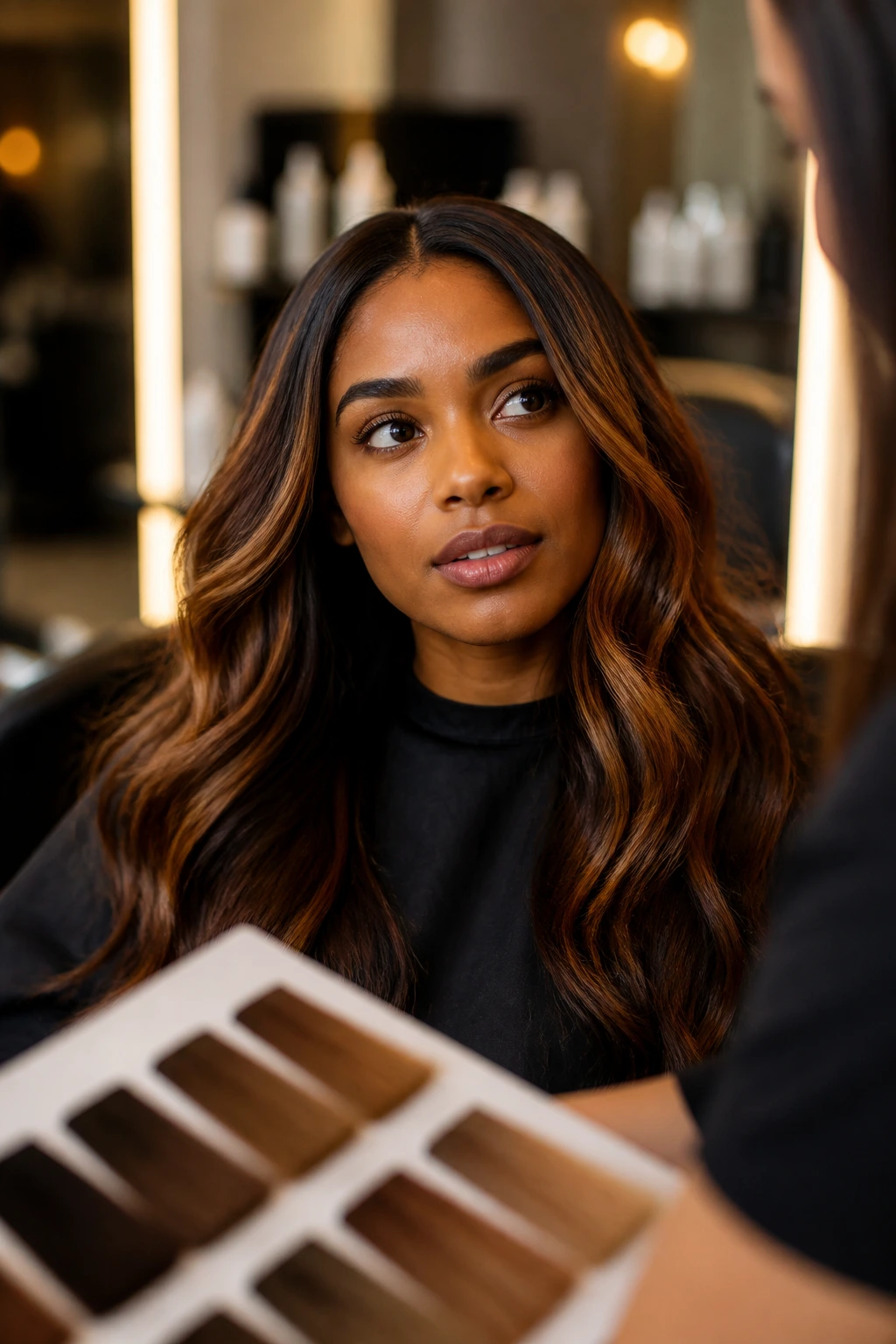
Color gets easier when you know how to talk about it. Bring photos, sure, but bring the right kind of photos: the exact brown depth you want, the exact caramel warmth you want, and the amount of contrast you can live with when the sun isn’t hitting your hair. One photo is never enough. Three or four is better.
Ask for a level reference, not just a shade name. A brown that sits at level 3 or 4 behaves very differently from a level 5 or 6 brunette. For caramel, ask where it lives on the chart—golden, amber, honey, bronze, beige-caramel, or cinnamon. The words matter because “caramel” can mean almost anything in a salon conversation.
If your hair is dark and you want lighter pieces, ask how much lift is needed and whether a gloss or toner will be used after lightening. That part gets skipped in casual conversations, and then the finish looks too yellow or too flat. A good color plan includes the end tone, not only the lifting step.
The Little Choices That Make These Shades Look Better
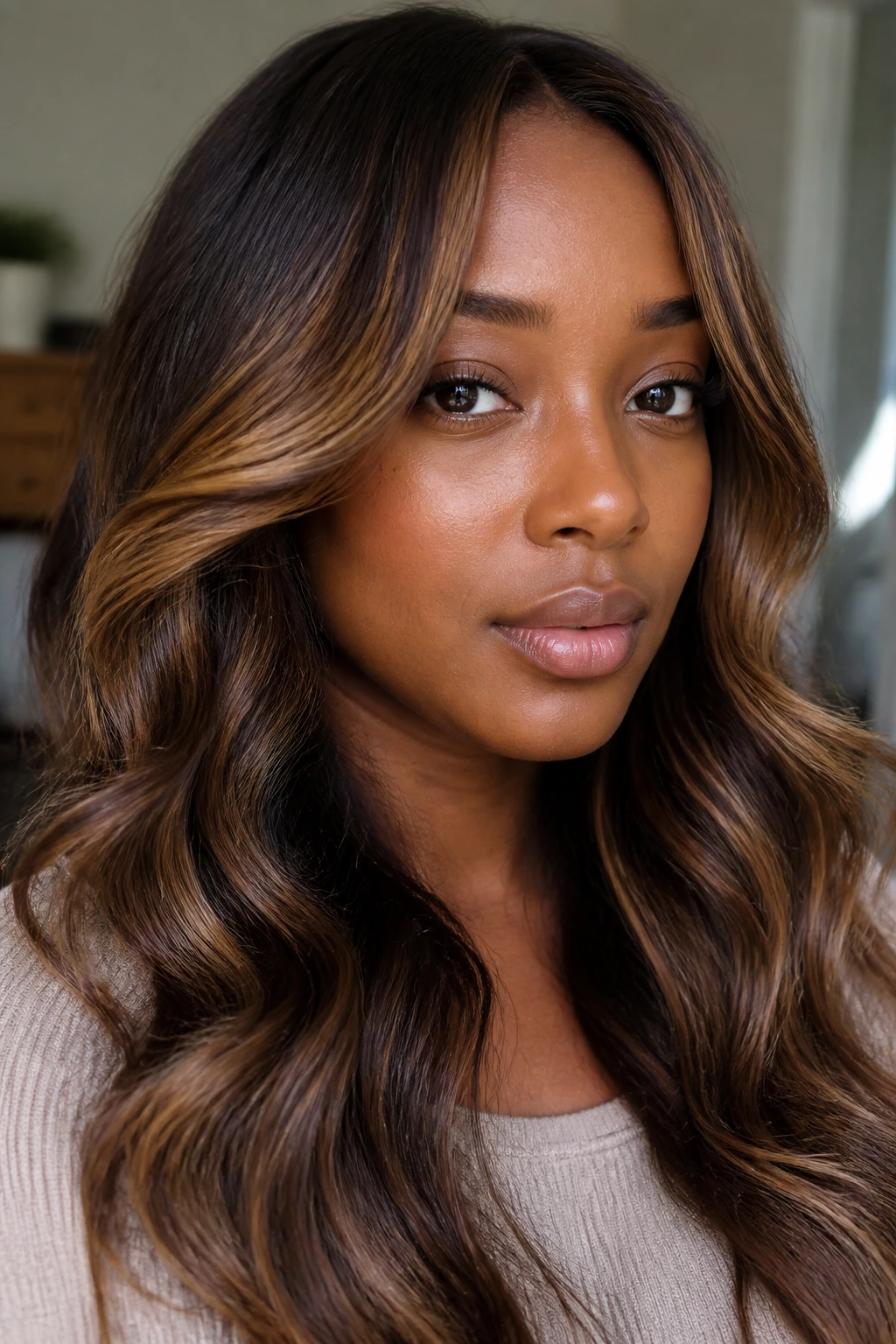
Placement is the real luxury move. A single face frame around the cheekbone can do more than twenty scattered streaks, especially on deep skin where the eye responds to clean contrast.
Warm glosses save the day. Caramel can drift brassy or dull after a few washes. A warm demi gloss every few weeks keeps the shade rich and keeps the brown from looking tired.
Texture changes everything. Thick curls want broader painted sections. Silk presses want finer ribbons. Braids want warm threads. If the placement ignores the texture, the shade loses half its value.
Make it your own. If you want low-maintenance, ask for balayage or a root melt. If you want sharper contrast, ask for a money piece or a brighter halo around the perimeter. If you want softness, keep the caramel closer to toffee and honey than blonde.
What Usually Goes Wrong With Caramel on Dark Hair
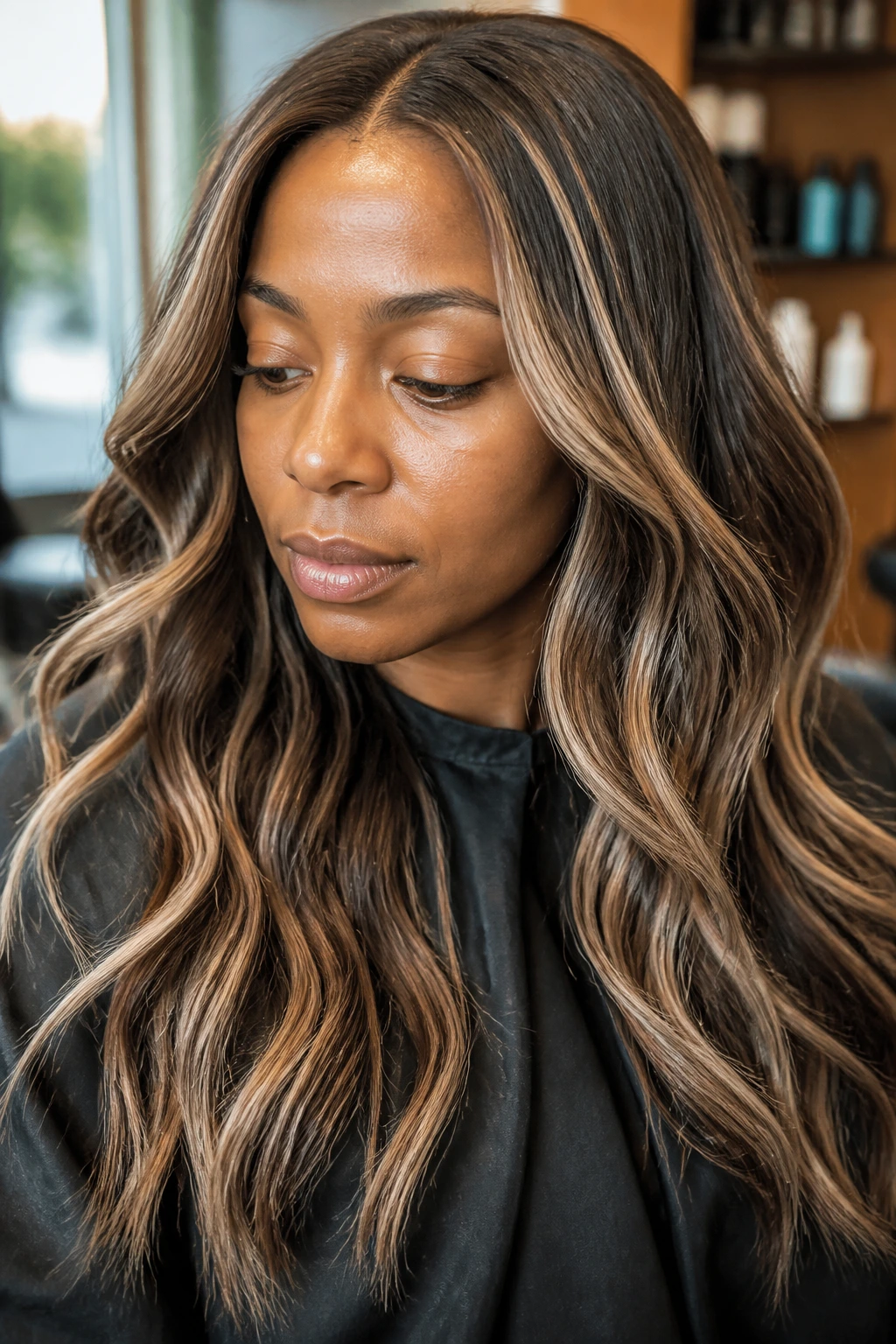
The most common problem is chasing blonde when caramel is the better answer. Once the lighter pieces get too pale, they stop reading as brown-caramel and start looking like disconnected blonde stripes. The fix is simple: stay warmer and stop a level or two darker than your first instinct.
Another mistake is ignoring undertone. Ashy beige caramel can work, but if the brown base is already cool, the whole head can turn muddy. A warm base with a cooler highlight, or a cooler base with a warmer highlight, usually needs a stronger plan than a one-shade-fits-all formula.
People also underestimate upkeep. A light caramel money piece near the face needs more toning than a soft balayage buried in the mids and ends. If you want low maintenance, ask for placement that grows out cleanly instead of one that depends on perfect freshness.
Maintenance That Keeps the Color Rich, Not Rusty
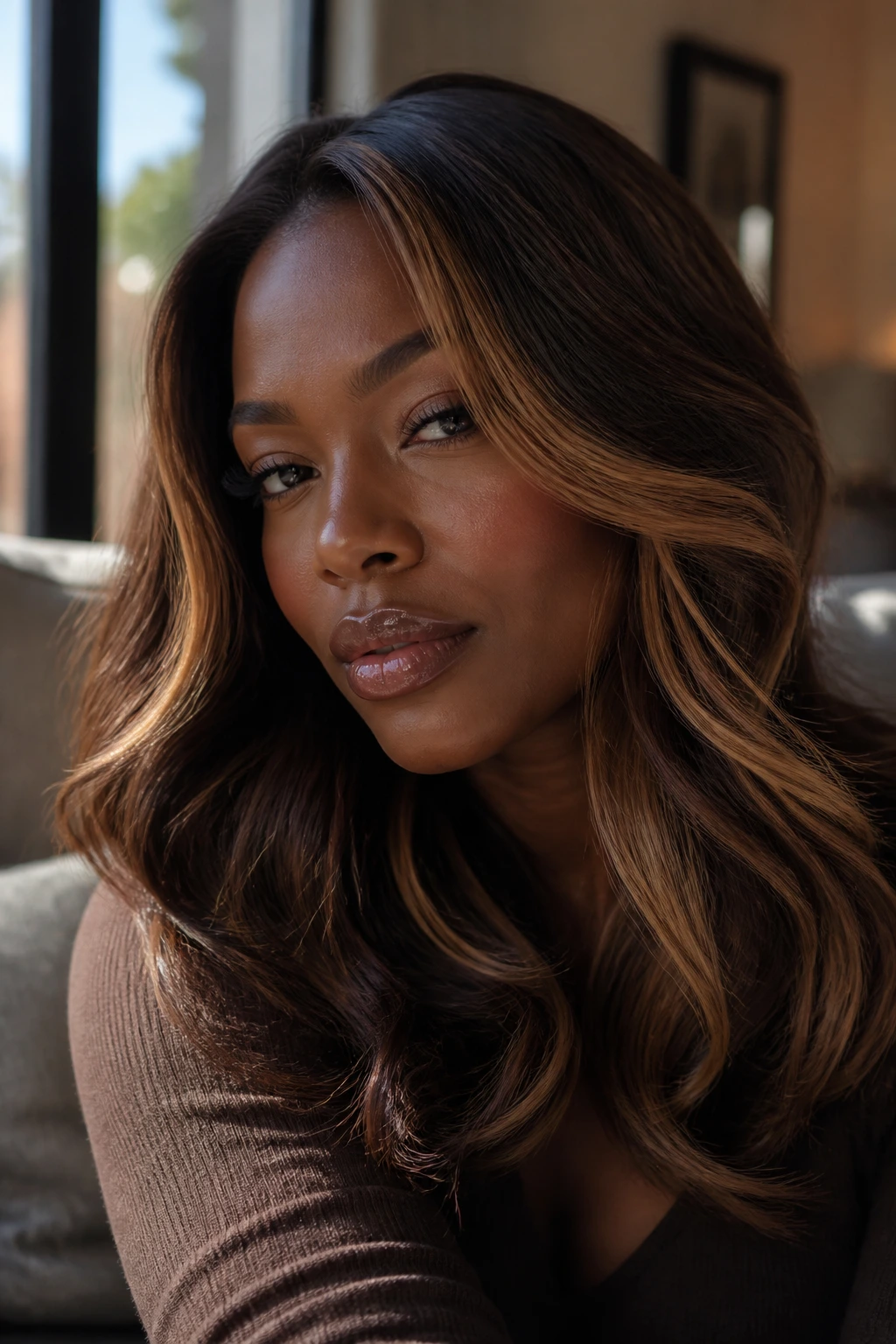
Treat the color like something that needs a tune-up, not a miracle. Wash with color-safe shampoo, preferably sulfate-free, and keep the water lukewarm. Hot water pulls tone faster than most people expect, and caramel is the first to show it.
If your hair was lightened, wait at least 48 hours before the first shampoo so the cuticle has a chance to settle. After that, space washes as far apart as your scalp allows. For curly and coily hair, stretching washes often helps the color last longer because you’re not constantly stripping the shaft.
Glosses and toners usually need refreshing every 4 to 6 weeks if you want the caramel to stay warm and polished. Root melts and darker bases can go 8 to 12 weeks before they feel visibly grown out. Keep your heat under control, sleep on satin, and use a leave-in conditioner that does not leave a heavy film on the lighter pieces.
What to Bring to the Appointment
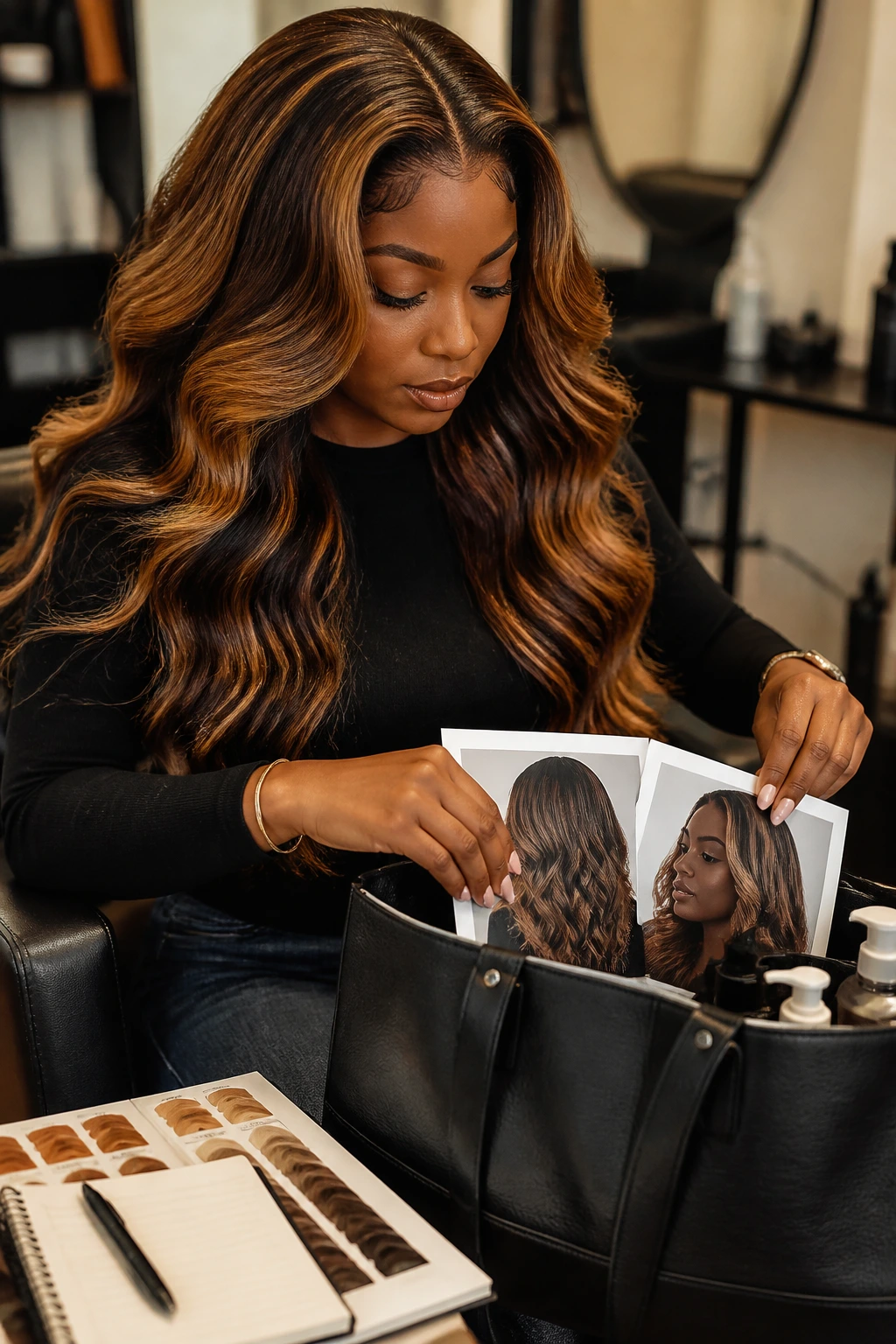
- 4 to 5 reference photos — Bring images that show base depth, highlight warmth, and the amount of contrast you want.
- A note on your hair history — Previous box dye, henna, relaxers, bleach, or heat damage changes the lifting plan.
- A level chart or shade notes — Even a simple screenshot helps your colorist talk in specific terms instead of guesswork.
- A clean photo of your hair in natural light — This shows your actual starting shade, which indoor lighting hides.
- A stylist who works on your texture — Especially with curls, coils, braids, or silk presses, the placement needs to match the way your hair falls.
- Color-safe shampoo and conditioner — Keep them ready before you leave the salon so the first wash doesn’t strip the new tone.
- A silk bonnet or pillowcase — Color stays shinier when the hair isn’t roughened up against cotton every night.
How to Wear Brown Caramel Hair So It Shows Up
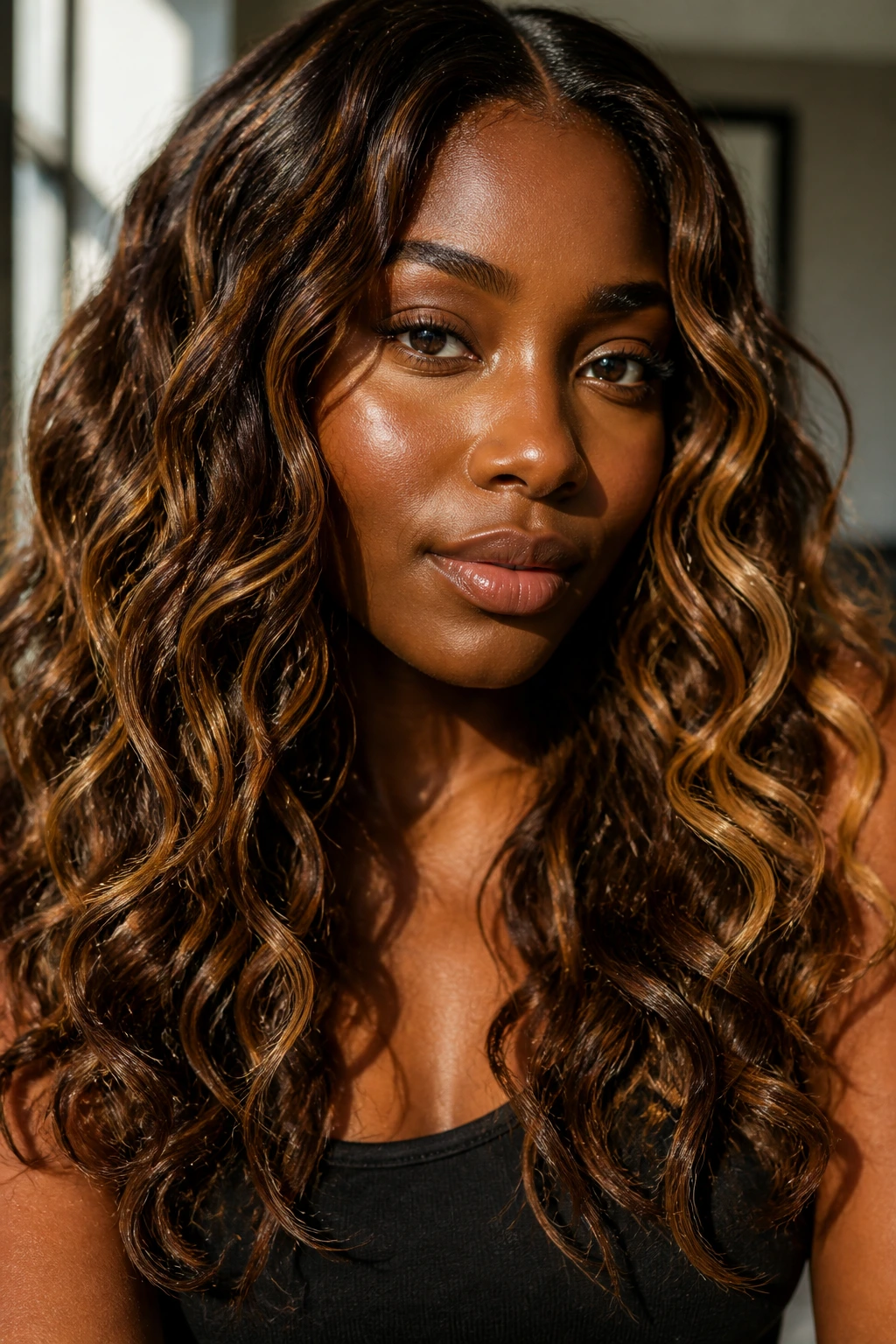
Presentation: Loose curls, soft waves, twist-outs, and rounded blowouts show caramel ribbons best because the color catches on movement. If your hair is straight and sleek, thin veils and face-framing pieces usually look cleaner than thick streaks.
Wardrobe Pairing: Cream, camel, olive, chocolate, rust, burgundy, and black all play well with brown caramel hair on deep skin. Gold jewelry keeps the warmth going. Bright white can look striking, but ivory and soft cream are easier on the eye.
Placement Balance: If you want subtle, ask for a partial balayage or a few face-framing pieces. If you want a fuller change, ask for mid-length dimension plus a brighter money piece. If you want drama, go for stronger ends or a more visible halo around the crown.
Lighting: Natural daylight is the kindest light for caramel shades. Bathroom bulbs can flatten the warmth or make the light pieces look too yellow. If you’re taking photos, turn your head slightly instead of facing the light head-on. That angle shows the ribbons and keeps the base rich.
A Few Extra Moves That Make the Color Look Better
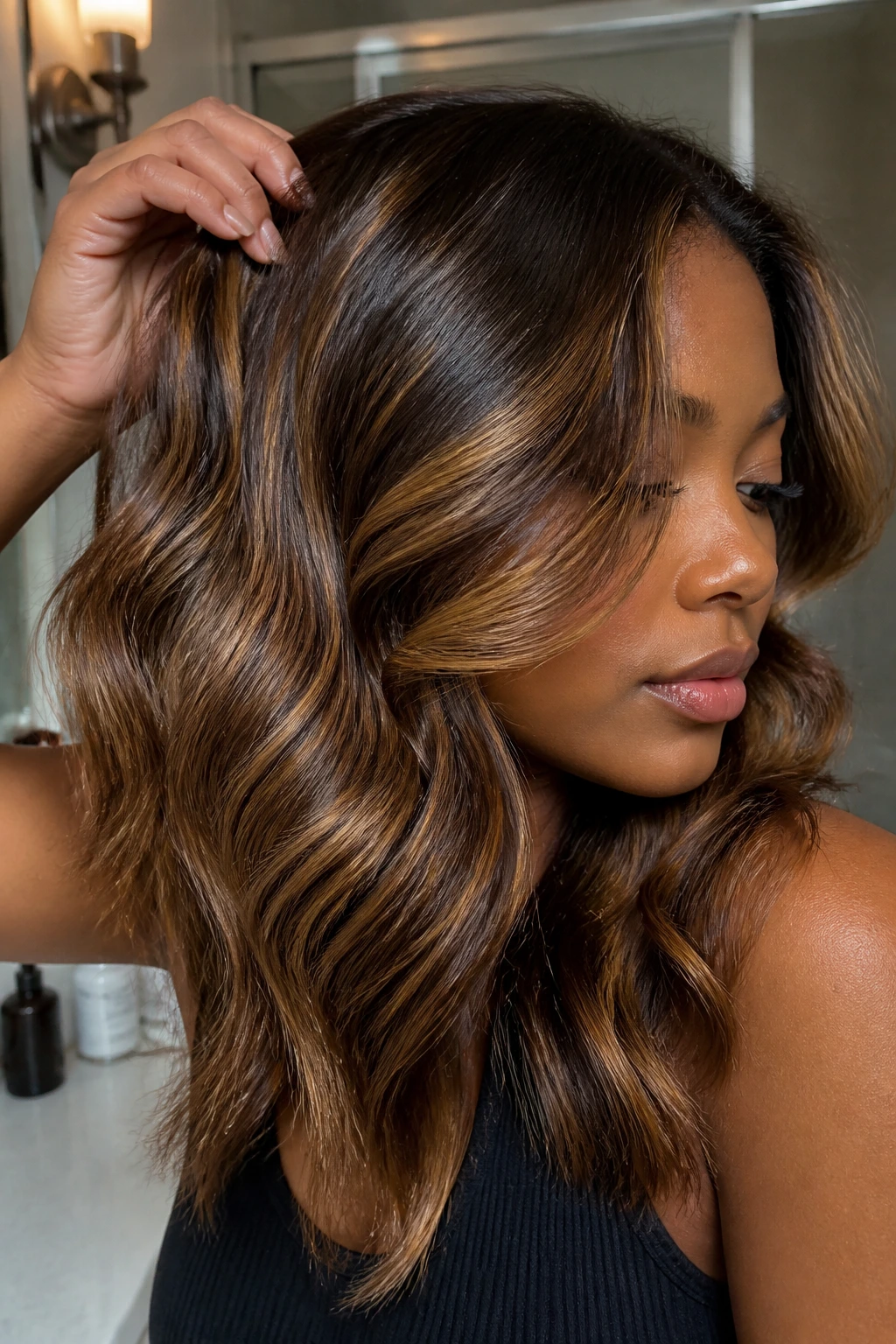
Tone Boost: A warm glaze or demi gloss in the caramel family can keep the light pieces from drifting brassy. It also gives the hair that polished finish people notice before they know why.
Customization: If your style leans low-key, ask for painted highlights that stay under the top layer. If you want the color to pop, ask for a money piece or brighter ends. Same palette. Different mood.
Serving Suggestions: Soft layers, side parts, curtain bangs, and face-framing curls all help the color read clearly. So does a clean hairline and a little shine serum on the mids and ends. I skip heavy oils on the lightest sections; they can dull the color faster than you’d think.
Make-It-Yours: For a conservative workplace, keep the caramel in the honey-to-toffee lane. For more contrast, choose bronze or amber pieces. For the most low-maintenance version, stay with a root melt and balayage instead of full-head highlights.
Common Mistakes That Make Caramel Look Off
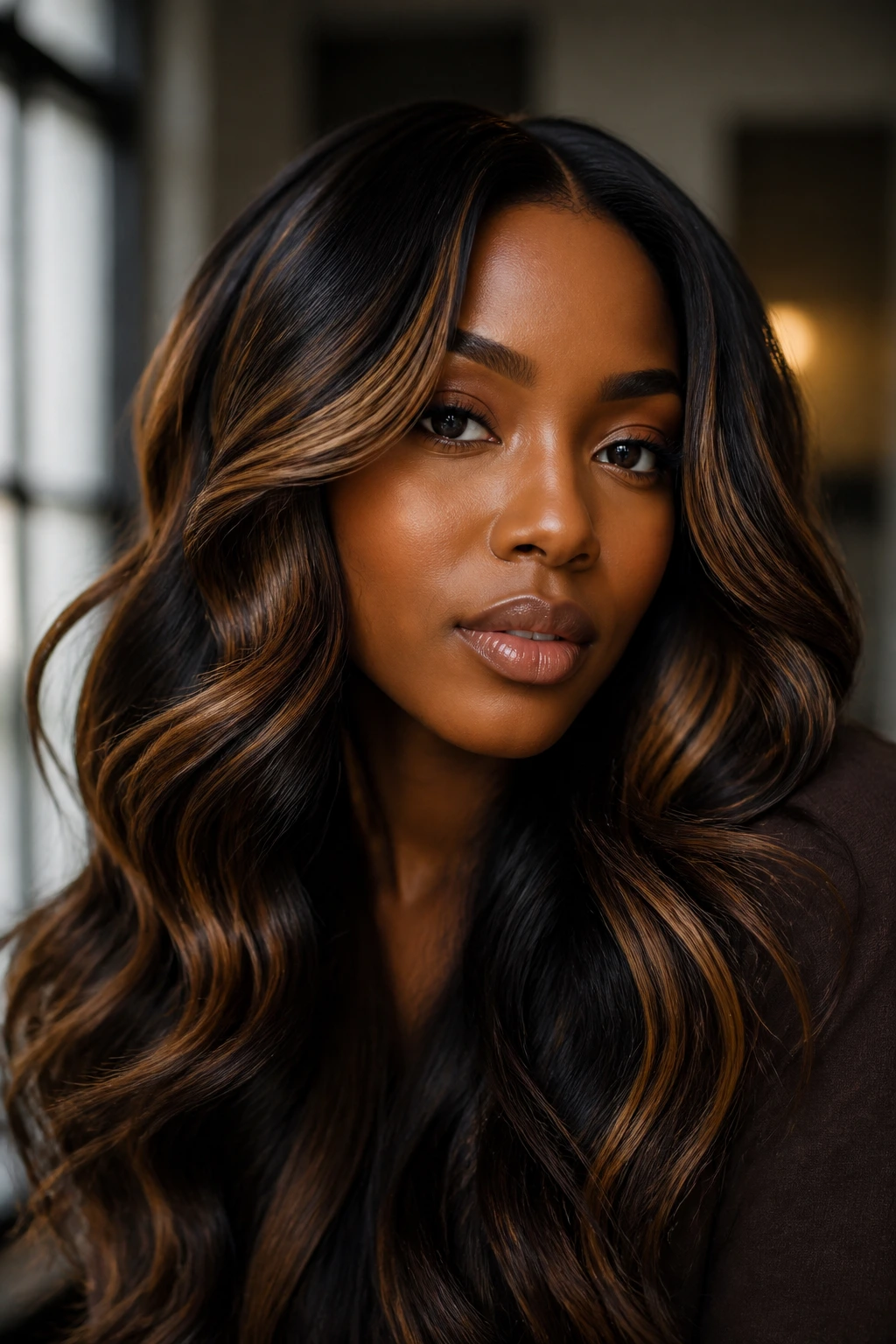
Going too light too fast: Pale highlights can look harsh against deep skin if the base isn’t rich enough. The fix is to stay within a believable brown-caramel range and keep the warmth visible.
Using chunky stripes everywhere: Thick, evenly spaced stripes can make the hair look dated fast. Better to vary the placement: finer around the face, softer in the back, and brighter where the hair moves.
Ignoring undertone: A cool ash caramel on a cool brown base can look flat, while an overly gold caramel on a warm red base can turn brassy. Match the undertone to the existing brown, not to a random picture online.
Skipping toning and glossing: Lightened hair changes tone fast, especially if you wash often or use heat. A gloss every few weeks keeps the caramel readable and keeps the brown from looking dry.
Forgetting texture: Coily hair needs different highlight spacing than straight hair. If the placement was drawn for a flat, straight photo and not your real texture, the color may disappear in the shape of your hair.
Variations Worth Trying
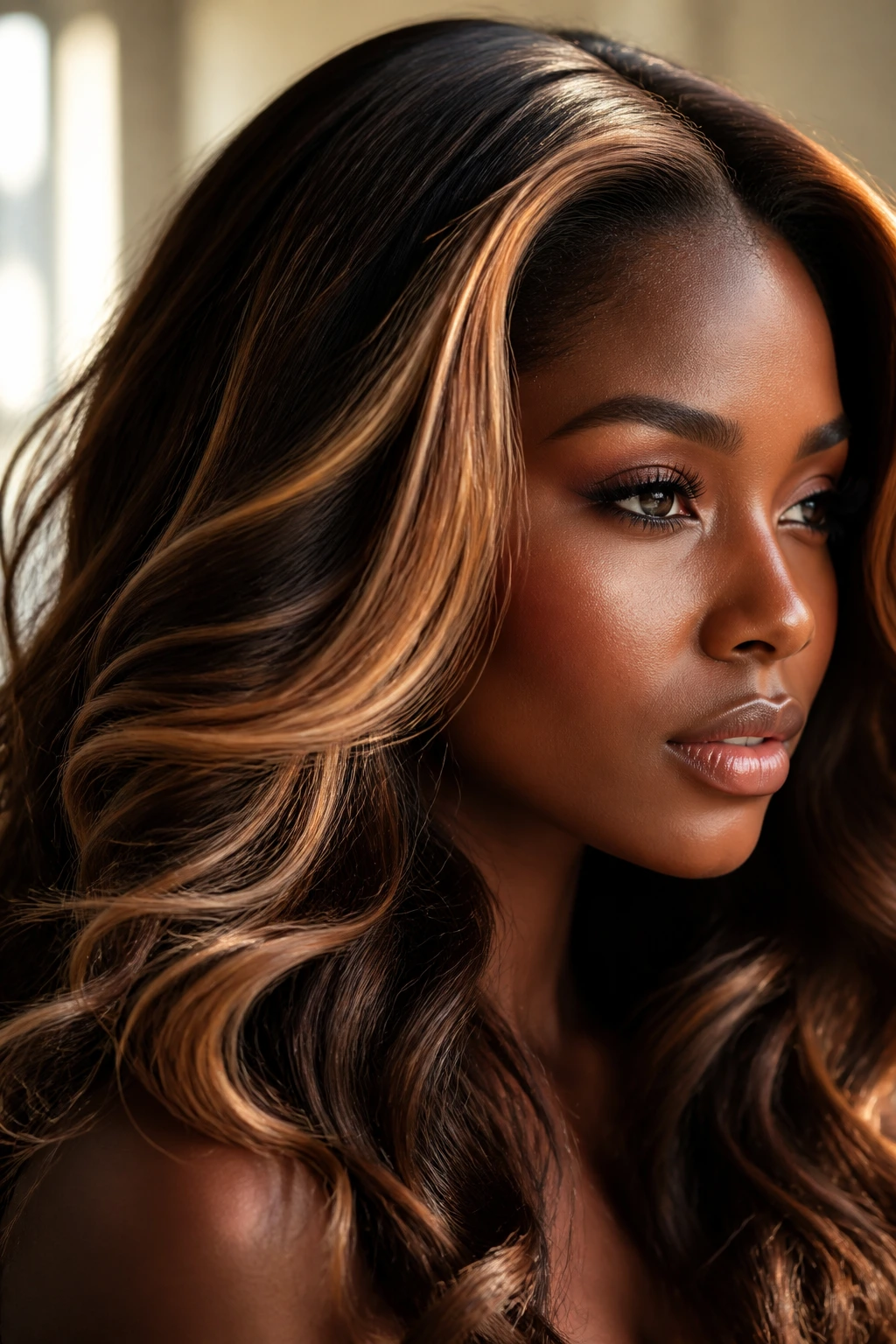
Honey Fade: This version keeps the base deep and pushes the caramel slightly lighter at the ends. It’s softer than a dip-dye and easier to grow out.
Bronze Halo: Brighten only the top perimeter and hairline. The result is subtle from the back and warm around the face.
Cinnamon Lift: Add a red-brown tilt to the caramel for a richer, spicier finish. It works especially well if your skin has gold or copper undertones.
Ash-Caramel Smoke: Use a cooler caramel on a mocha base if you prefer muted tones. Keep the highlight thin so the shade stays dimensional, not gray.
Braided Caramel Threads: Perfect for protective styles. Thread warm caramel pieces through braids or twists instead of coloring the natural hair underneath.
Frequently Asked Questions
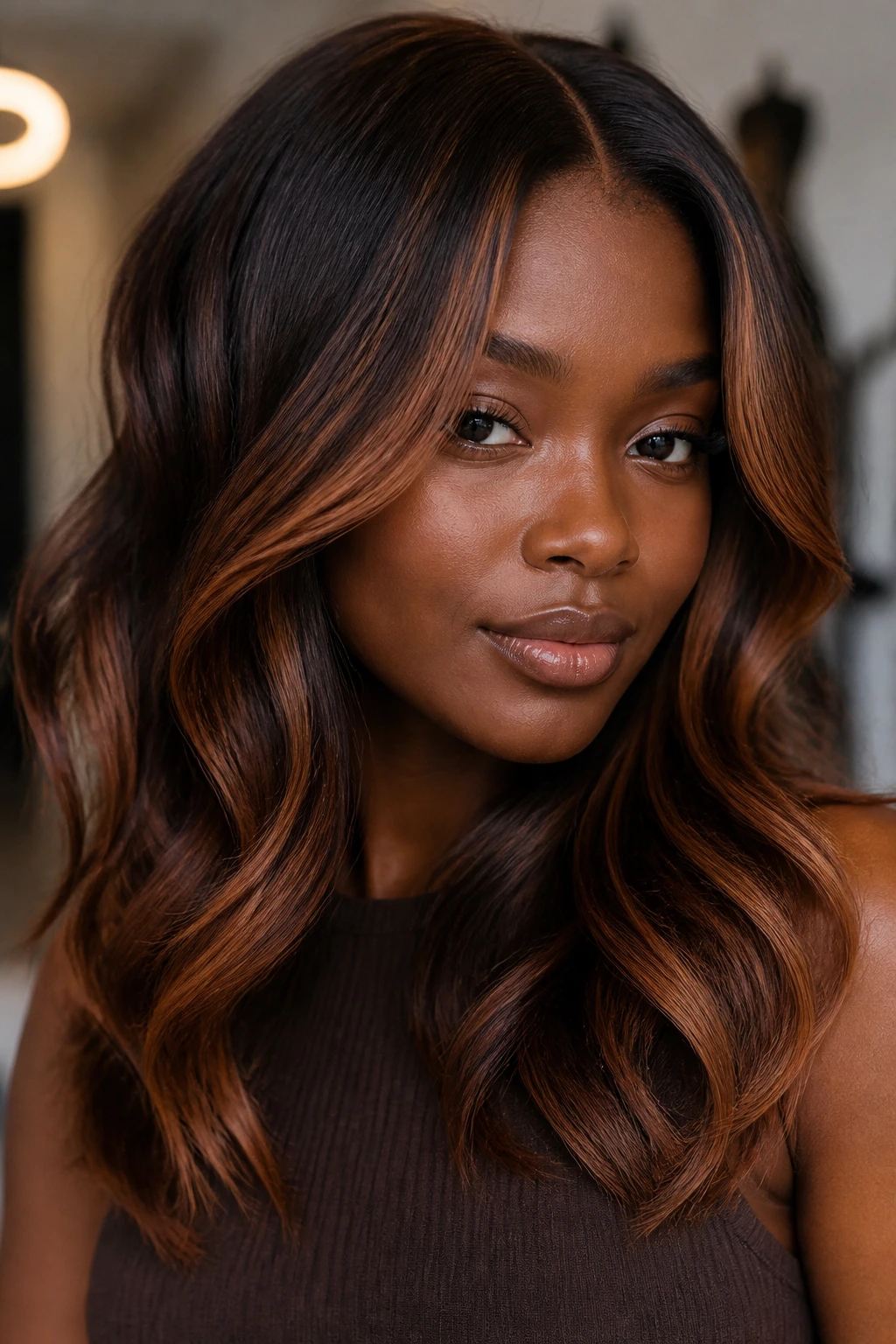
Does caramel hair color actually flatter deep skin?
Yes, when the caramel is warm enough and the base stays rich. The best versions keep enough depth in the brown that the lighter pieces look like dimension, not contrast for its own sake.
Do I have to bleach my hair to get caramel highlights?
Usually, yes, if your starting hair is dark and you want visible caramel. The amount of lift depends on how light you want the result, how dark your base is, and whether you’re going for balayage, babylights, or a money piece.
What brown base works best for caramel on deep skin?
Level 3 to 5 brunettes usually give the prettiest results. Espresso, mocha, chocolate, chestnut, and walnut bases all work, but the best choice depends on whether you want warmth, softness, or contrast.
Which caramel shade is lowest maintenance?
A soft balayage or root melt is usually the easiest to live with. The grow-out is softer, and you can go longer between salon visits because the root line is part of the look.
Can this work on natural curls or coils?
Absolutely, and it can look gorgeous. The key is placement that follows the curl pattern, with enough width in the lighter pieces so they don’t disappear once the hair shrinks up.
How do I keep caramel from turning orange?
Use color-safe shampoo, avoid very hot water, and ask for the right toner or gloss after lightening. If the shade starts leaning brassy, a salon gloss can usually bring it back faster than home fixes.
Can braids or locs carry caramel well?
Yes, and warm caramel threads or extensions usually look better than pale blonde pieces. On deep skin, the warmth keeps the style looking rich instead of stark.
How often should I refresh the color?
Glosses usually need a refresh every 4 to 6 weeks if you want the tone to stay polished. Root touch-ups and balayage maintenance can stretch longer, often 8 to 12 weeks, depending on how fast your hair grows and how visible you want the contrast to be.
The Caramel Shade That’s Worth the Chair Time
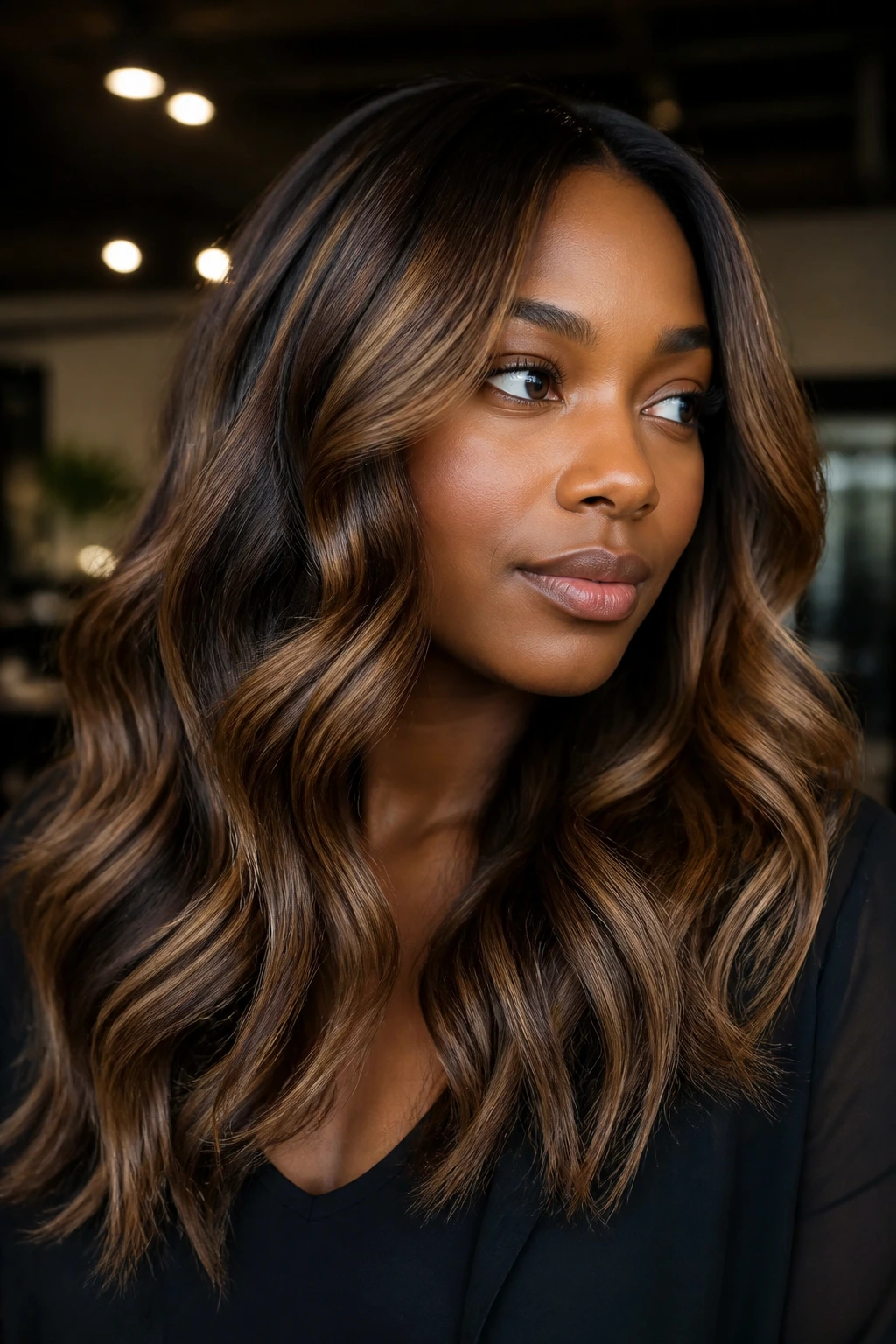
The best brown caramel hair color ideas for deep skin are the ones that respect depth first and brightness second. That’s the whole secret. Keep the base rich, keep the caramel warm, and let placement do the heavy lifting. Once you do that, the color stops looking pasted on and starts looking like it belongs there.
If you’re taking this to a colorist, bring photos that show depth, warmth, and texture—not just a pretty color on someone with a completely different starting point. A good plan gives you shine, contrast, and grow-out that doesn’t make you panic at week four. That’s the version worth saving.