



Neutral undertone blonde hairstyles for tan skin can look startlingly right when the tone sits in that middle lane between icy and golden. Too cool, and the hair starts fighting the skin; too warm, and the whole look can slide into brass, especially after a few washes. The sweet spot is beige, mushroom, sand, champagne, and soft taupe—shades that let tan skin keep its depth while the hair reads bright and polished, not loud.
The part people miss is that the haircut matters almost as much as the color. A beige blonde on a blunt bob reads very differently from the same beige blonde on loose waves or a feathered shag. One gives clean lines and shine. The other gives movement and a little air around the face. Same color family. Completely different effect.
I’m a big believer in keeping tan skin away from flat, one-note blondes. A little root depth, a little shadow at the base, and a shape with some bend or lift usually does more for the face than the palest blonde in the chair ever could. The looks below are built around that idea: soft contrast, useful dimension, and blonde shades that sit naturally against tan skin without looking forced.
Why These Blondes Sit So Well on Tan Skin
Tan skin likes balance: Beige, mushroom, sand, and champagne blondes sit between warm and cool, so they don’t make the complexion look sallow or over-bright.
Root depth does real work: A shadow root that’s just 1-2 levels darker than the mids keeps the style from looking stripey and makes grow-out easier to live with.
Movement matters: Waves, layers, and soft bends break up the color so the blonde looks dimensional instead of painted on.
These shades age better: A little fade still looks decent because the tone stays neutral rather than swinging hard yellow or hard gray.
The haircut can do the heavy lifting: A blunt bob, shag, lob, or long layered cut changes how light hits the hair and how the blonde reads next to tan skin.
1. Mushroom Blonde Beach Waves
Mushroom blonde beach waves are one of my favorite neutral blonde hairstyles for tan skin because they keep the whole look grounded. The color has that cool-beige, slightly smoky finish that stops tan skin from looking too golden, and the loose wave pattern keeps it from feeling heavy.
Ask for a soft root shadow and a beige mids-and-ends blend, not a chunky highlight pattern. The wave should be loose enough that you can still see the color shift—think a 1.25-inch iron, brushed out after cooling, with the ends left a little undone. On tan skin, that muted finish looks calm, not flat.
- A level 7 root melt keeps the grow-out soft.
- A beige toner stops the blonde from veering yellow.
- Dry texture spray at the ends gives the wave some separation.
The style works especially well if your hair has a little natural bend already. You’re not fighting the hair. You’re just coaching it.
2. Beige Blonde Collarbone Lob with Soft Bend
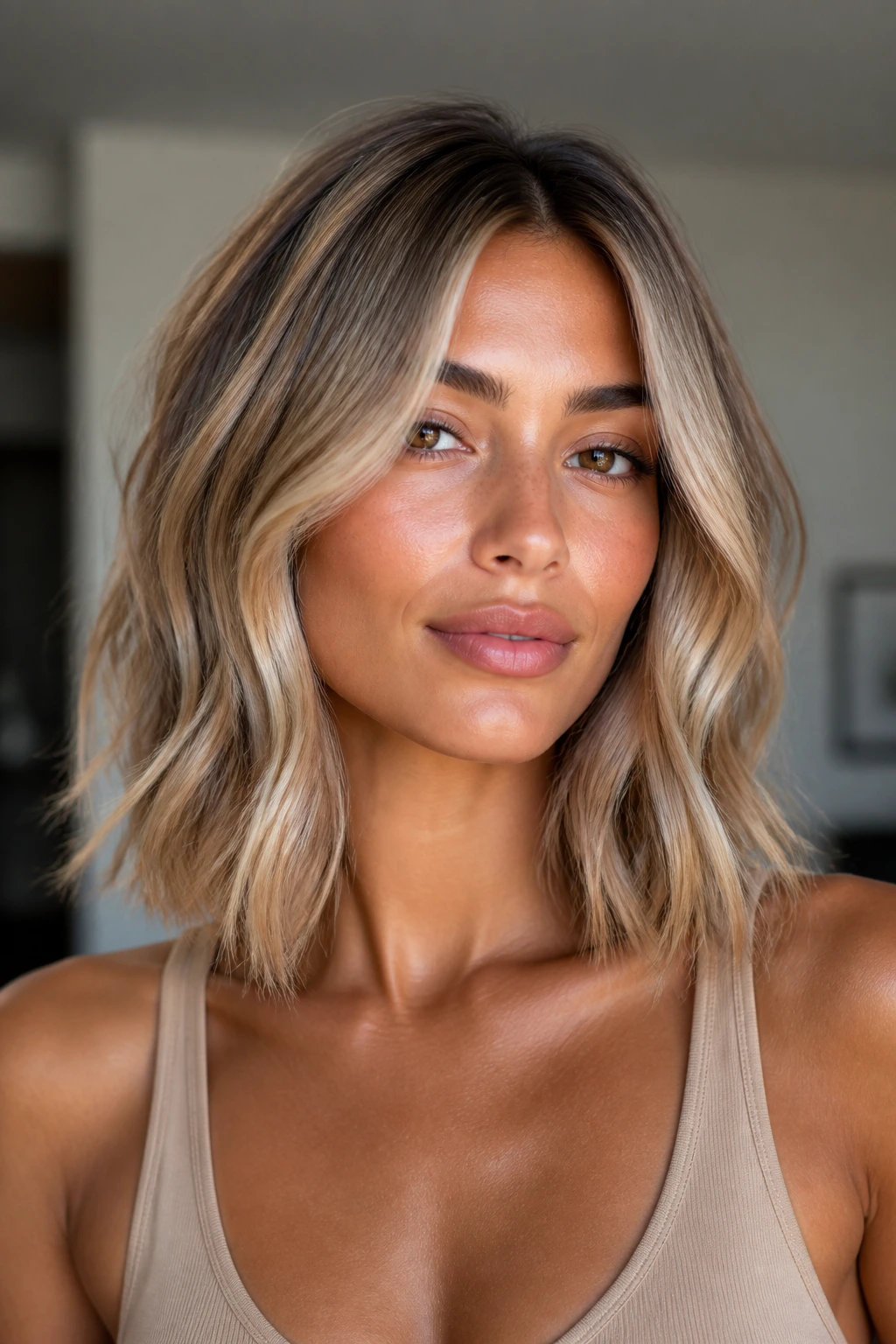
Why does a collarbone lob keep showing up in blonde hair conversations? Because it gives the color somewhere to land. Tan skin and beige blonde together can look almost too polished if the cut is long and one-length; the lob breaks that up with a clean edge and just enough movement at the shoulders.
The soft bend is the part that matters. Not tight curls. Not straight as a board. A gentle S-wave through the midlengths makes the blonde feel fuller, and fuller hair always looks richer against tan skin. I’d ask for a slightly darker root, beige ribbons through the mids, and ends that stay a touch lighter so the line doesn’t vanish.
What makes it work
A collarbone cut gives enough length for softness, but it still feels sharp. That sharpness keeps the neutral blonde from reading dull. If your hair is fine, this cut gives the illusion of density. If it’s thick, it keeps the ends from ballooning out.
3. Smoky Champagne Curtain Layers
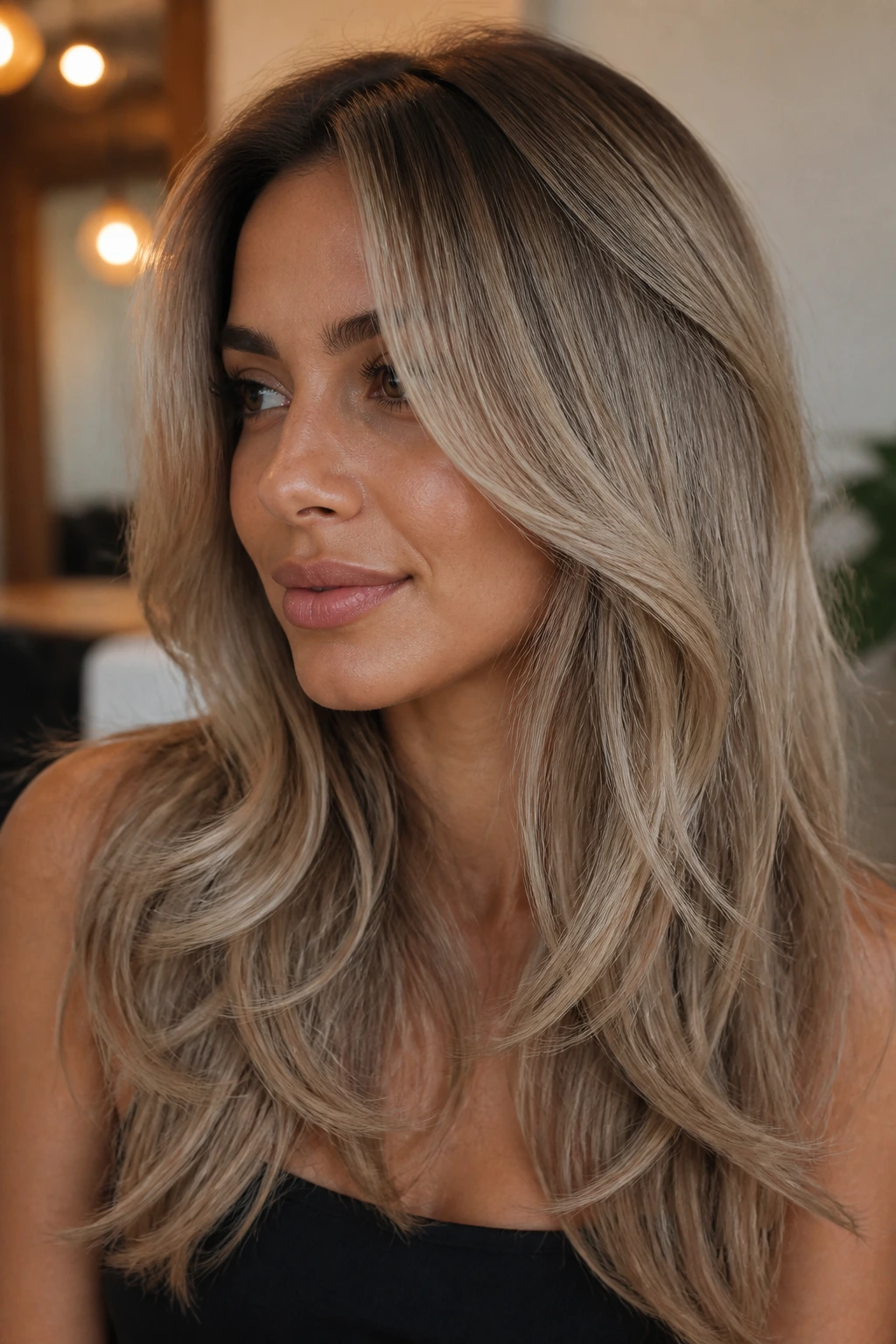
Smoky champagne curtain layers are for someone who wants blonde that looks expensive without screaming for attention. The champagne tone brings a little glow, but the smoky base keeps it from turning sweet or brassy on tan skin. That balance is the whole trick.
Curtain layers help here because they drape around the cheekbones and open the face without hard lines. The color can be brighter around the front—just a notch lighter than the rest—while the back stays a touch deeper. That little contrast keeps the haircut from collapsing into one flat color.
A strong round-brush blowout makes this style behave. Lift at the roots. Curve the ends inward. Then let the layers fall apart a little. Perfect hair is boring here; a little movement is what makes the champagne tone look alive.
4. Sandy Balayage Long Layers with Face-Framing Pieces
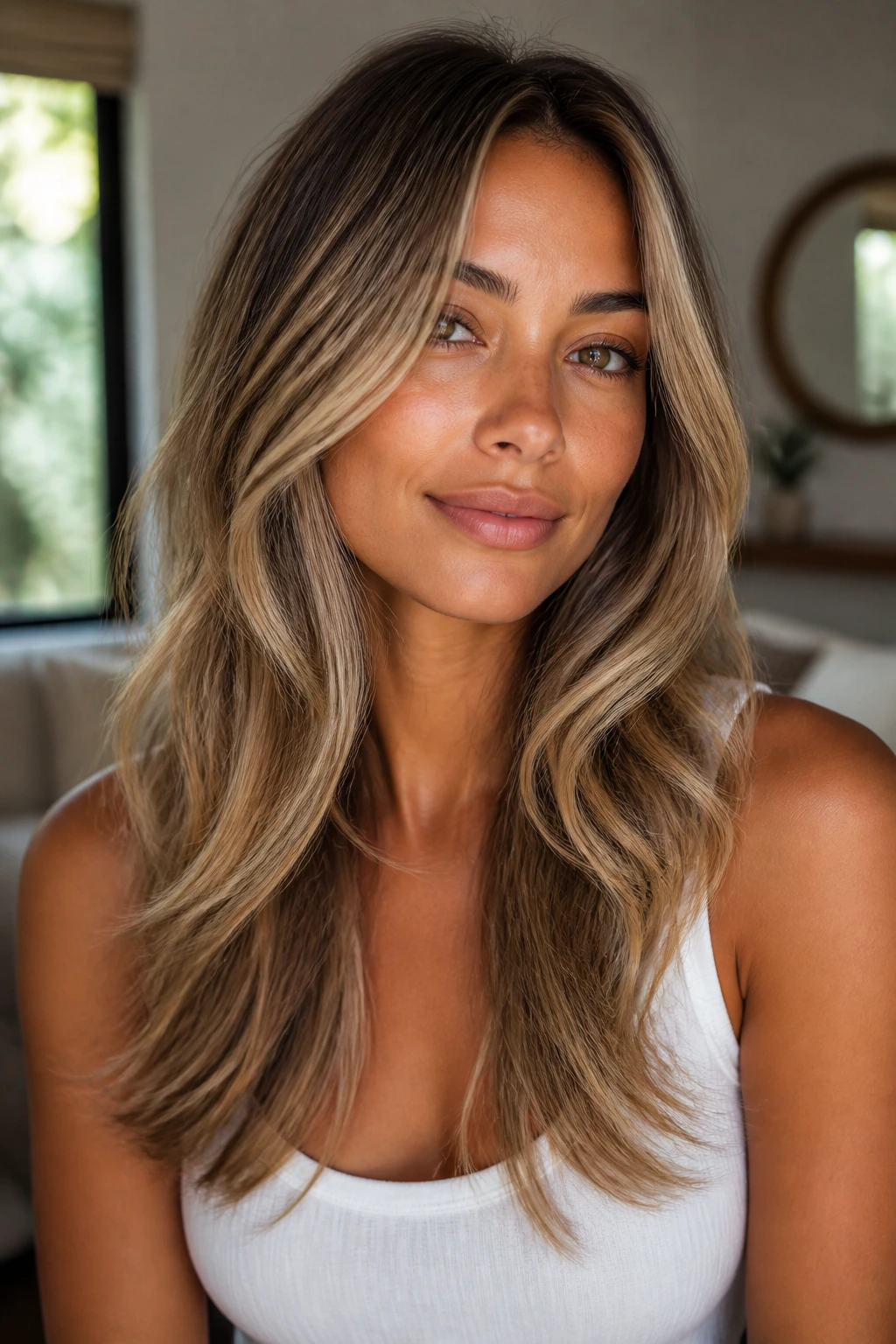
This is the version I’d hand to someone who likes long hair but doesn’t want the blonde to take over the whole head. Sandy balayage stays soft on tan skin because the highlights are painted in broad, natural strokes instead of packed in from root to tip. The face-framing pieces give brightness right where it helps most.
The best part is how forgiving it is. Long layers keep the color from sitting in a heavy curtain, and the darker base underneath lets the sand tone do its job without looking chalky. If your tan leans warm, ask for more beige than ash. If your tan has an olive cast, let the stylist cool the front pieces a little more.
- Keep the brightest pieces around the cheekbones.
- Leave the root area deeper for a cleaner grow-out.
- Style with a wide bend, not tight curls.
This one looks best when it moves. Still hair dulls it down fast.
5. Neutral Blonde Sleek Blunt Bob
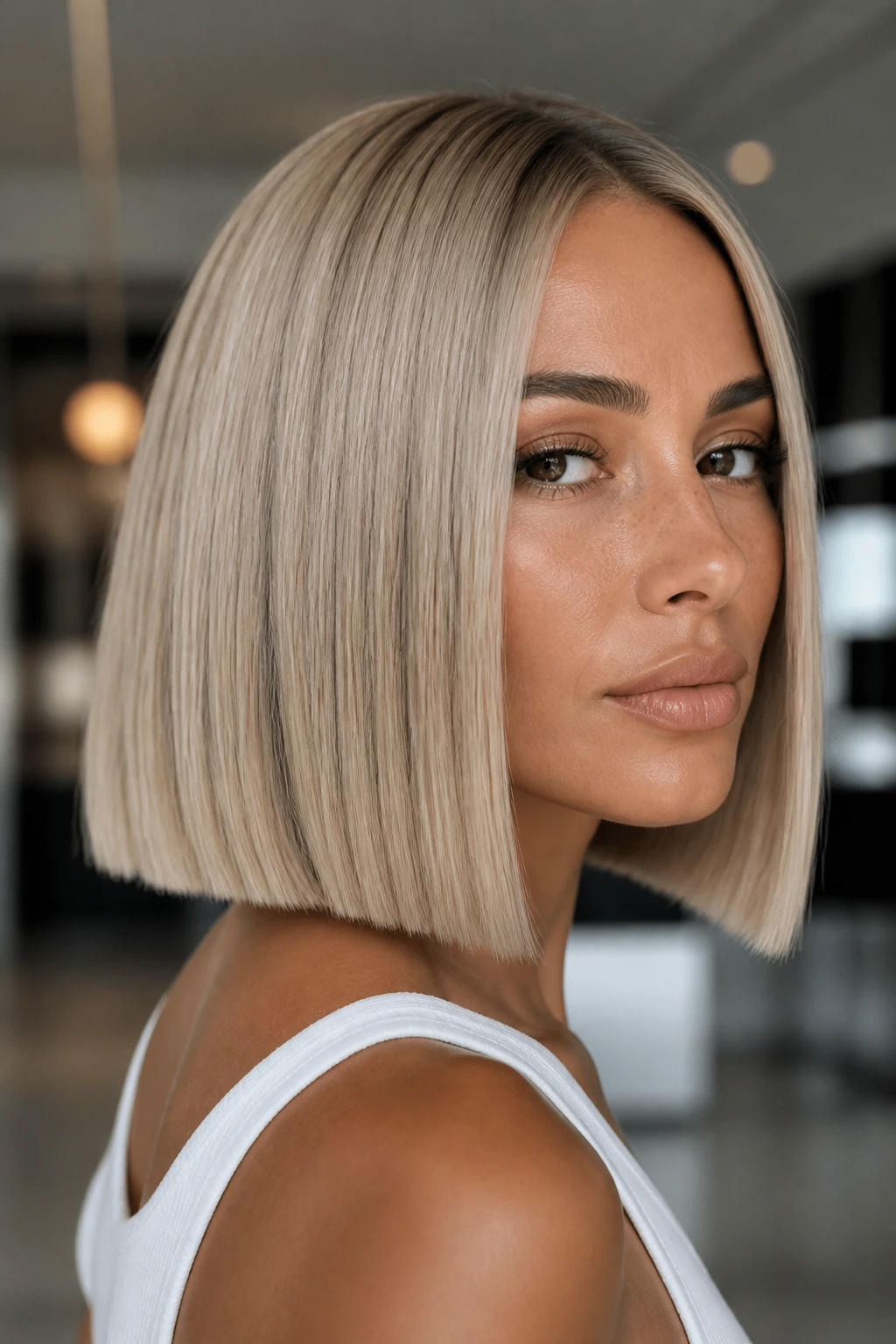
A sleek blunt bob is the opposite of airy beach hair, and that’s exactly why it works. Tan skin can carry a very crisp beige blonde if the cut has enough edge. The blunt line makes the hair look denser, which stops neutral blonde from reading washed out.
The trick is shine. You want the cuticle smooth, the ends clean, and the part precise. Middle parts make the shape feel modern; a deep side part softens it a little. Either way, keep the color in the beige family rather than going icy. A neutral blonde bob with too much ash can start looking flat under indoor light.
One-sentence truth: this is not the place for fuzzy ends.
A gloss every few weeks keeps the blonde reflective, and a flat iron pass on low heat—just enough to smooth the top layer—makes the whole thing look deliberate.
6. Ash-Beige Shag with Wispy Fringe
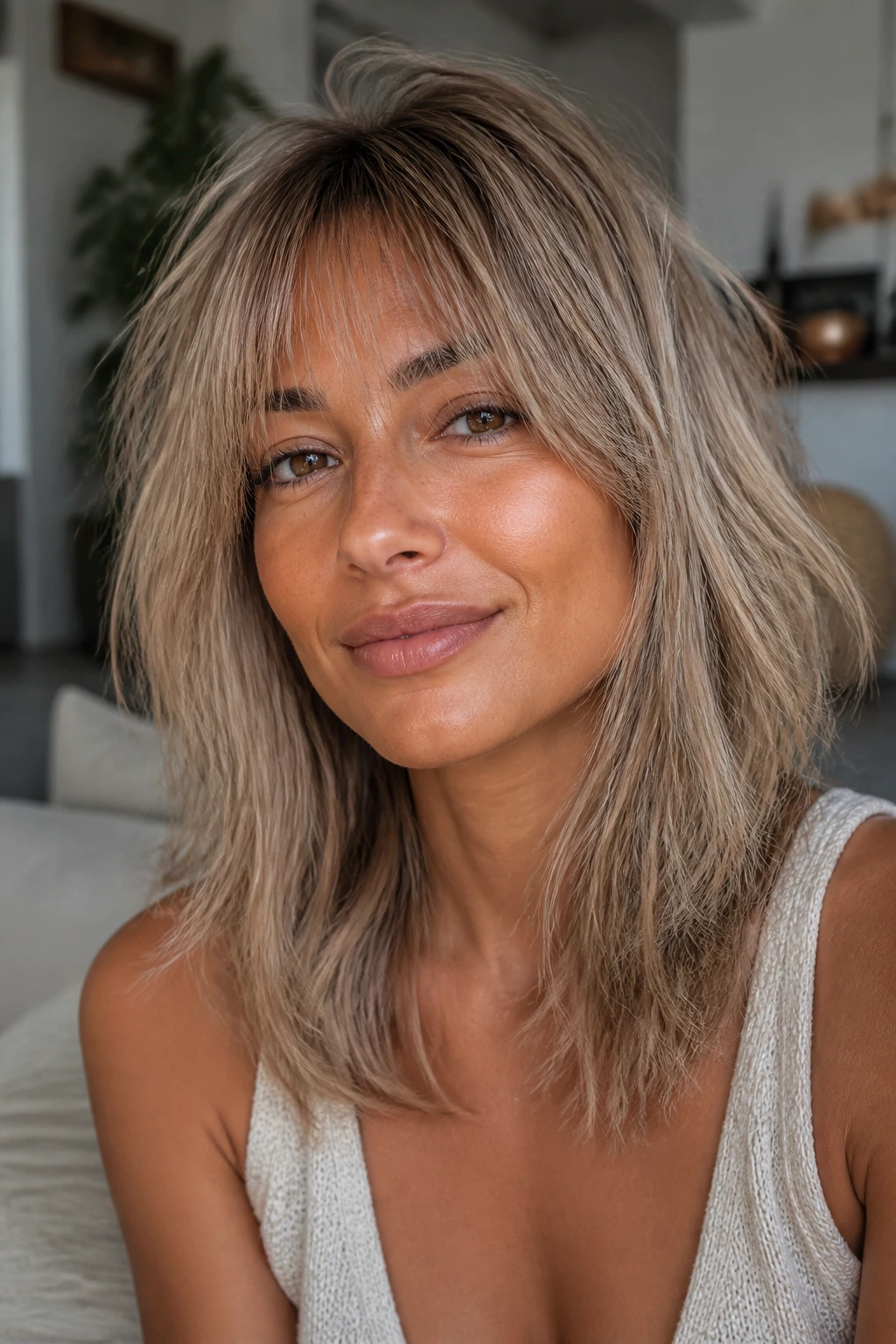
The ash-beige shag is where neutral blonde gets a little personality. On tan skin, the cool-beige tone prevents brass, but the shag cut keeps the look from feeling precious. It has that easy, broken-up texture that makes the color look lived-in rather than salon-perfect.
Wispy fringe helps because it softens the forehead and keeps the face from being surrounded by too much light at once. That matters more on tan skin than people think. If the front is too bright and too blunt, the blonde can wear you instead of the other way around. Wispy pieces interrupt that.
I like this one on hair that naturally wants a bit of chaos. Fine hair gets lift from the shag. Thick hair gets shape. Curly hair can wear it too, but the fringe needs to be kept longer so it doesn’t spring up too much. A little mousse at the roots and a diffuser are enough. More than that, and you’ll lose the softness.
7. Creamy Root-Melted Blowout
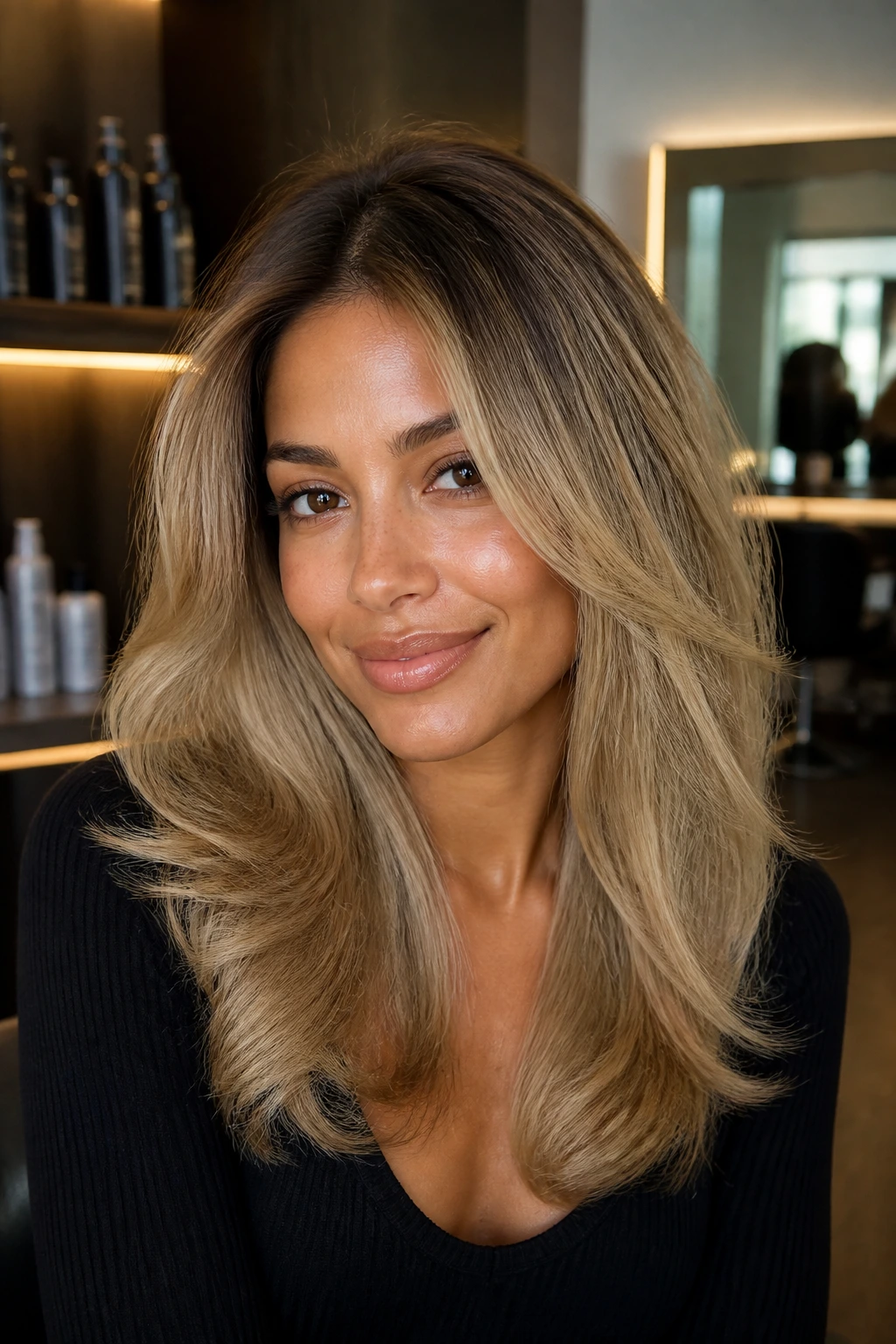
Creamy root-melted blowouts have that polished, expensive look without relying on a pale platinum finish. The root melt keeps the scalp area darker and softer, which is a gift on tan skin. Instead of a hard line of demarcation, the blonde eases out of the root and into creamy mids that reflect light in a gentler way.
A round brush is doing a lot here. So is the blow-dry cream. You want volume at the crown, smoothness through the lengths, and just enough bend at the ends to keep the shape from looking like a pageant blowout. The color should feel blended all the way through; if it looks stripey, the point of the style is gone.
Styling note
Clip the top section while the lower layers cool. That little pause keeps the root lift from collapsing in the first ten minutes. Tan skin looks especially good with this shape because the volume around the face adds warmth without adding orange.
8. Dimensional Vanilla Blonde Curls
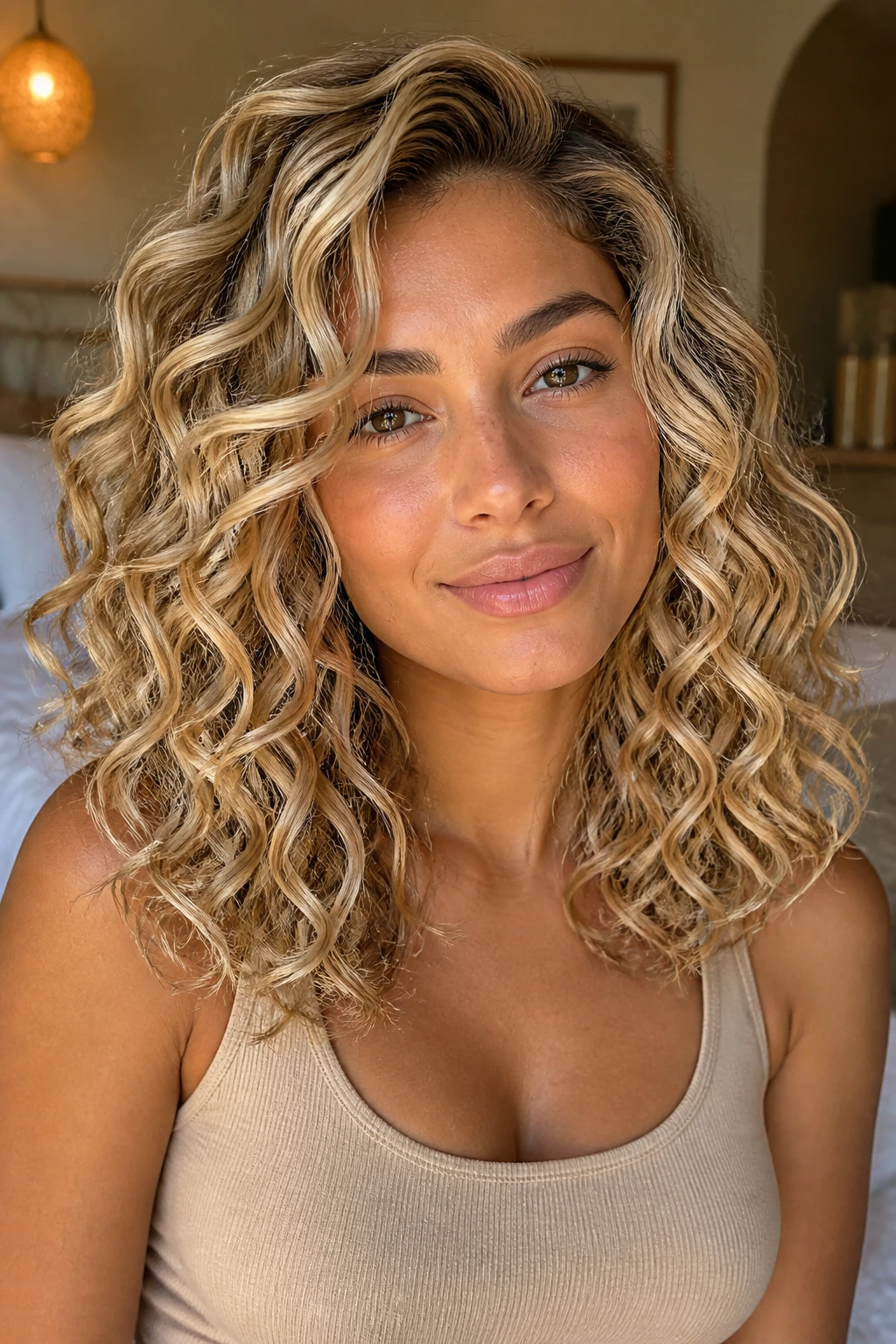
Vanilla blonde curls have a softer sweetness than champagne or beige, but they still sit in the neutral lane when the colorist keeps the ribbons mixed properly. The curls are what make this work on tan skin. They scatter the light, so the vanilla tone never lands as a single flat sheet.
I’d keep the curl pattern medium, not tiny. Loose to medium curls show the color shift better. If the strands are too tightly curled, the blonde can look busy instead of dimensional. The best version has a few brighter ribbons around the face and slightly deeper blonde underneath, so the style reads creamy, not chalky.
A curl-defining cream helps, but don’t drown the hair in product. Vanilla blonde can get dull fast if you overload it. A curl-by-curl scrunch, then a light diffusing pass, usually gives enough shape. The result is soft, touchable, and—this is the useful part—still flattering after the curls relax a little.
9. Tan-Skin-Friendly Money Piece Layers
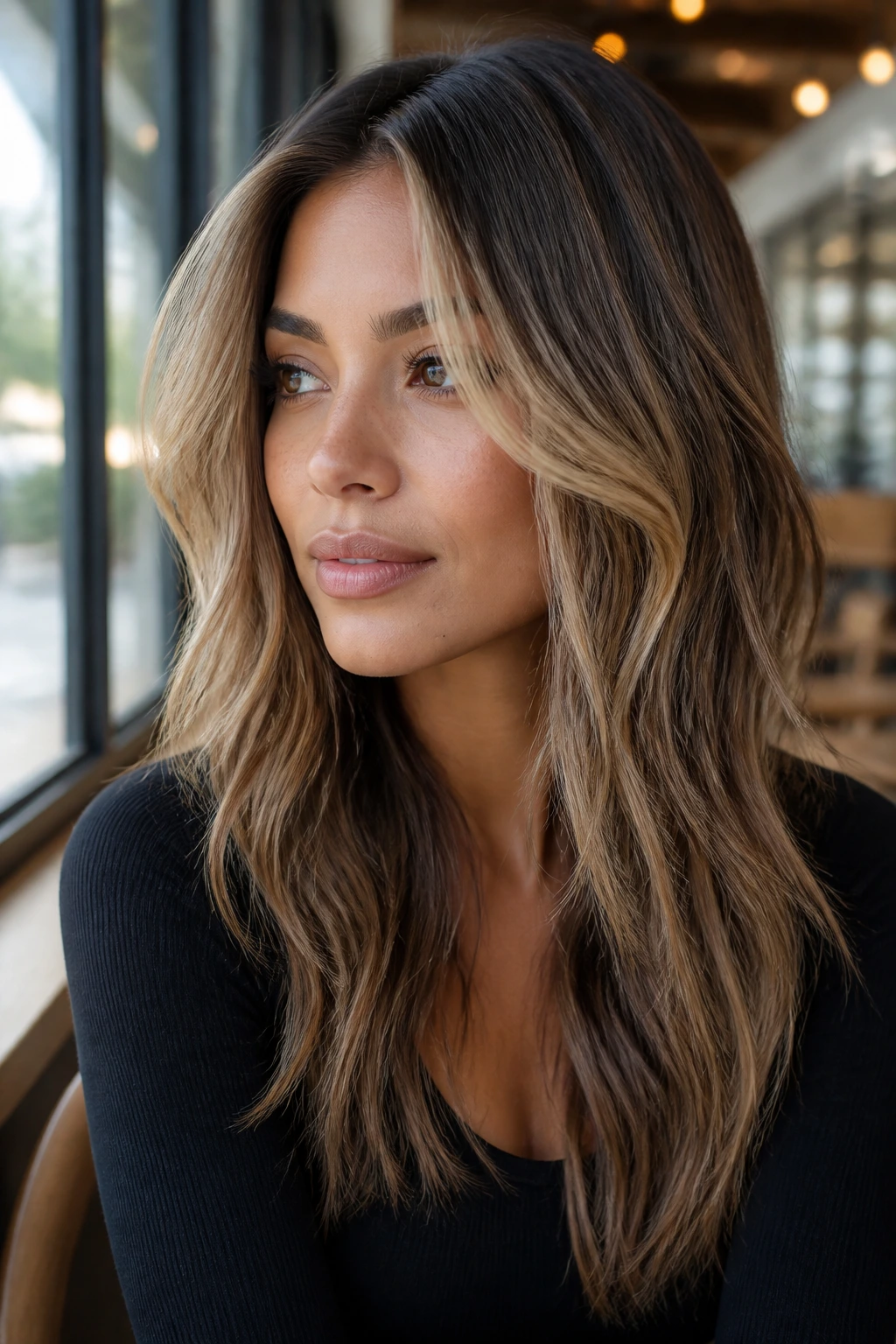
A money piece is the fast answer when someone wants brightness but not an all-over blonde commitment. On tan skin, it works best when the front strands are only a couple of levels lighter than the rest, not blown out to white. That keeps the face lifted without making the hairline look disconnected.
Layered lengths help the money piece blend back into the rest of the cut. Long layers, in particular, keep the front brightness from sitting there like a pair of stripes. I prefer a soft beige or champagne front piece over a hard ash blonde one, because tan skin usually looks happier with a little warmth in the brightest spots.
This style is also forgiving if you don’t want salon visits every six weeks. Grow-out is softer. The front still matters, though. If the money piece gets too wide or too pale, it starts doing too much work. Narrower and softer is the better call.
10. Oyster Blonde Pixie with Textured Crown
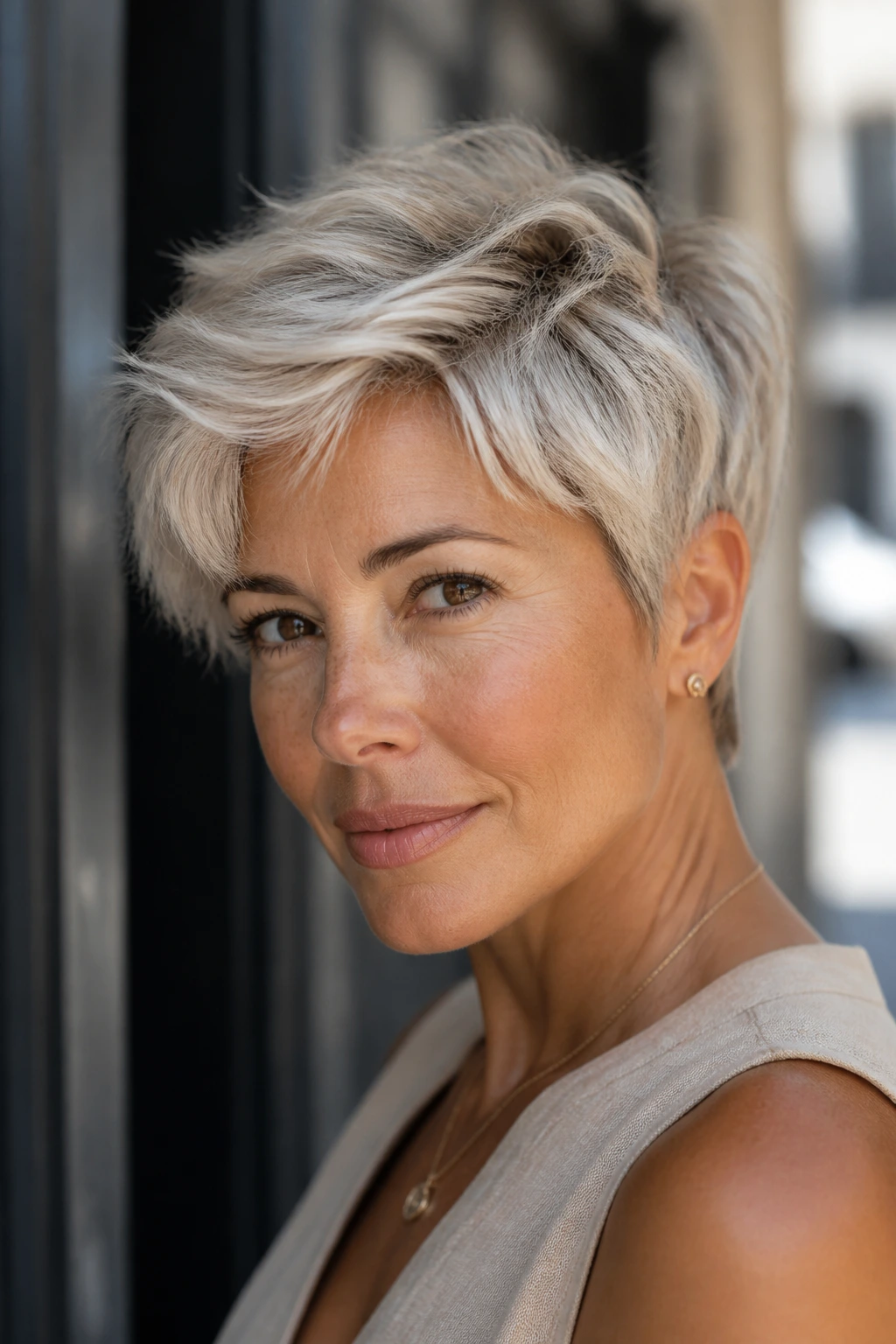
Can a pixie work on tan skin? Absolutely—if the blonde has enough depth. Oyster blonde is one of those tones that sits right between beige and cool pearl, and the textured crown gives it enough movement that it doesn’t look severe.
This cut needs a bit of attitude. The sides stay close, the top stays soft and piecey, and the color should be slightly darker at the base so the lightness on top has somewhere to live. Too much platinum on a pixie can flatten tan skin fast. Oyster blonde avoids that because it keeps one foot in the neutral camp.
- Use a matte paste or lightweight clay.
- Push the crown up with fingers, not a brush.
- Keep the neckline neat so the texture looks intentional.
The whole style is sharper than the long looks, but that contrast can be really good on tan skin. It frames the face cleanly.
11. Soft Caramel-Beige Wavy Lob
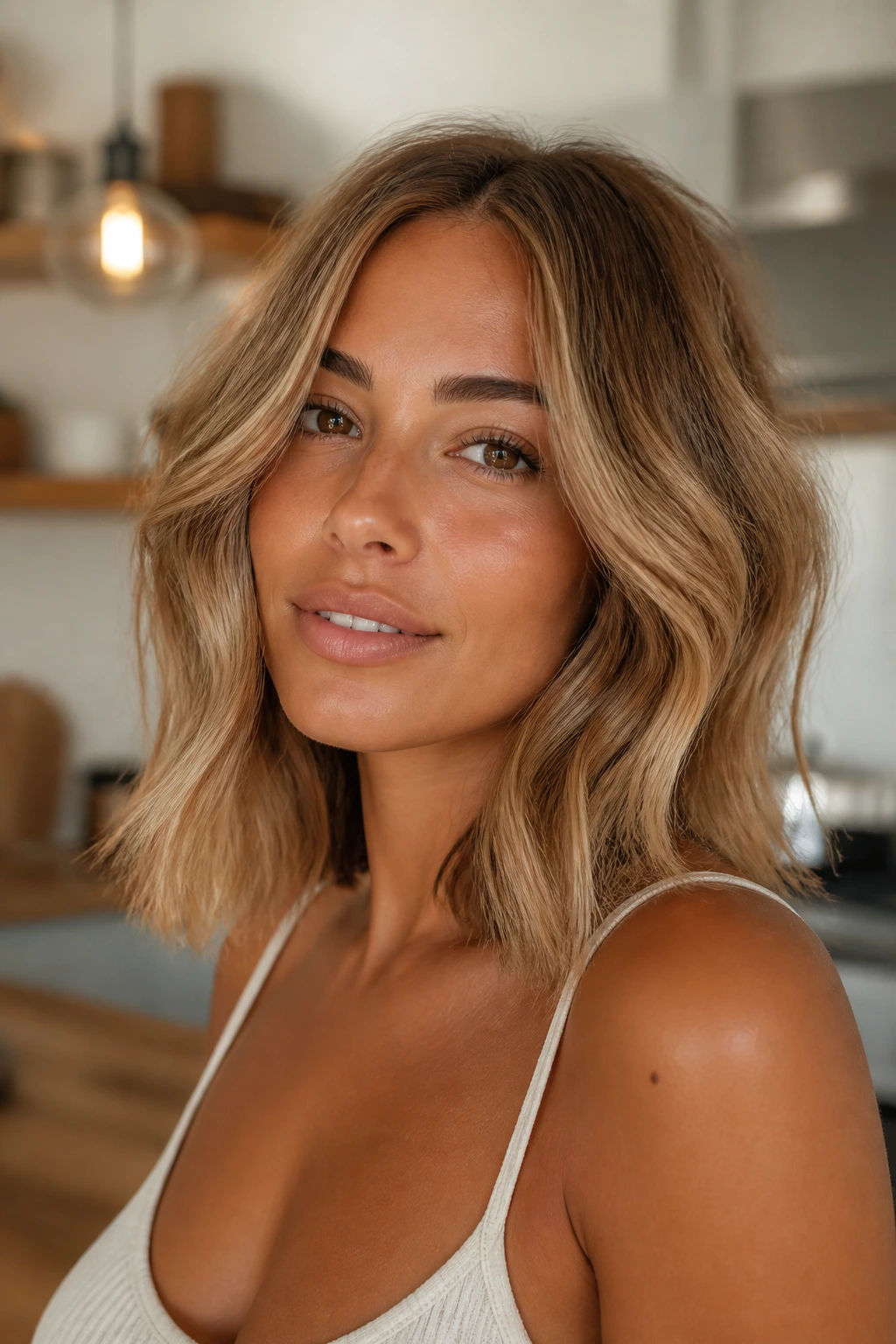
Soft caramel-beige is where the neutral spectrum gets a little warmer, and tan skin usually likes that. The key is keeping the caramel muted. If it tips too gold, the blonde starts fighting the complexion. If it stays beige with a whisper of warmth, the result is rich and easy to wear.
A wavy lob makes the shade feel relaxed. The waves don’t need to be perfect; in fact, a little irregularity helps the highlights blend. I like this style for people who want blonde that looks lived-in but not overly beachy. It has more polish than a shag and more texture than a sleek bob.
This is one of those cuts that benefits from a clean neckline and slightly softer ends. The color becomes the focal point, but the shape keeps it honest. If your tan leans golden, this is one of the friendlier options. It doesn’t ask the skin to change. It just sits beside it.
12. Feathered Neutral Blonde Butterfly Cut
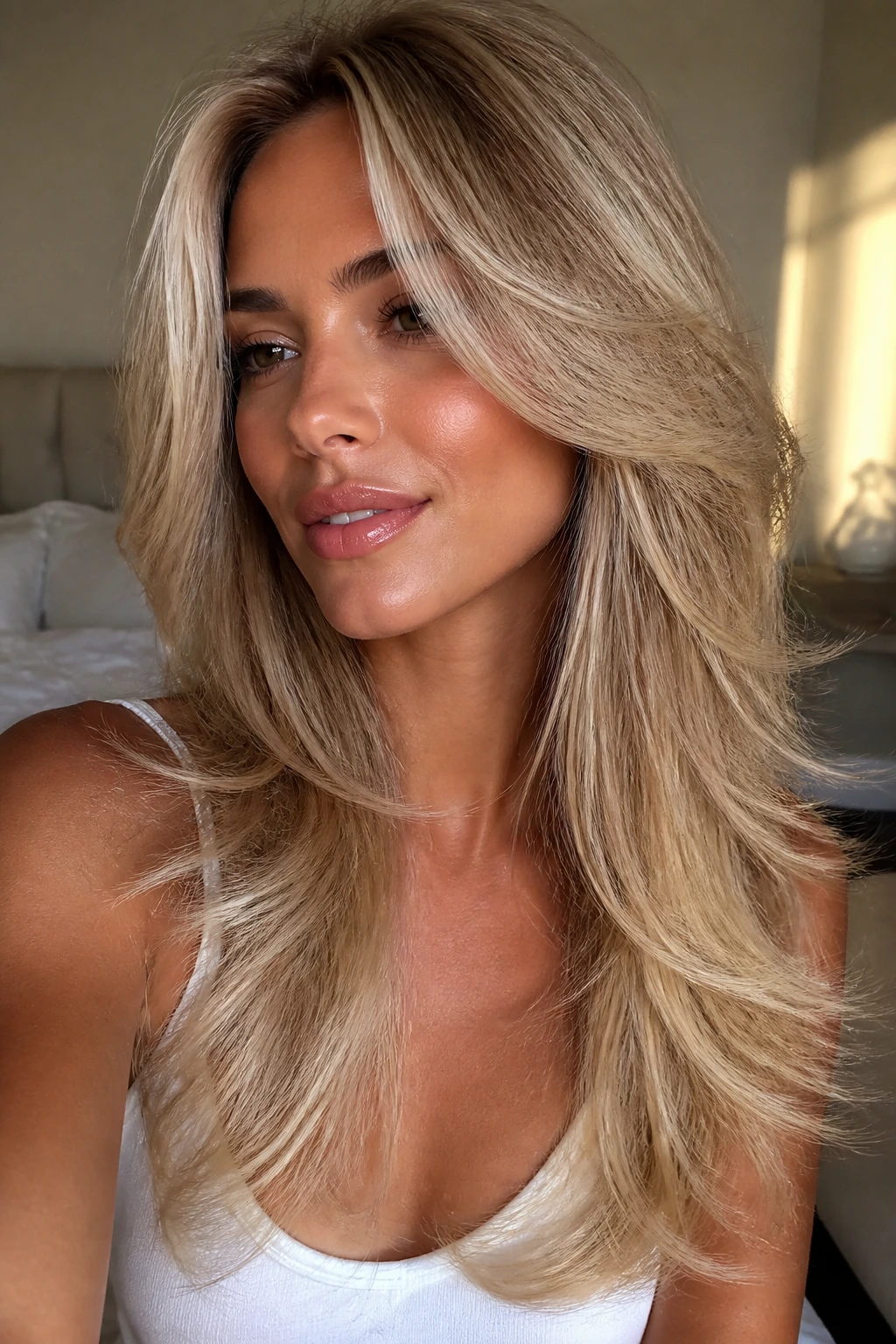
The butterfly cut gives you movement where it counts: around the face and through the lower lengths. On tan skin, that matters because neutral blonde can look heavy when it’s all one layer. Feathering breaks it up and keeps the lighter pieces floating rather than sitting in one block.
The short layers around the face do one thing especially well—they make the blonde feel airy. The longer layers underneath keep the overall length and stop the style from getting too fluffy. That balance suits beige and sandy blondes because the cut itself carries the drama, not the color.
If you blow-dry this with a round brush and a touch of smoothing cream, the layers fold back in a very clean way. Airy, yes. Messy, no. The butterfly cut can get away with a softer toner too, since the movement keeps the tone from reading flat.
13. Glossed Beige Straight Hair with a Center Part
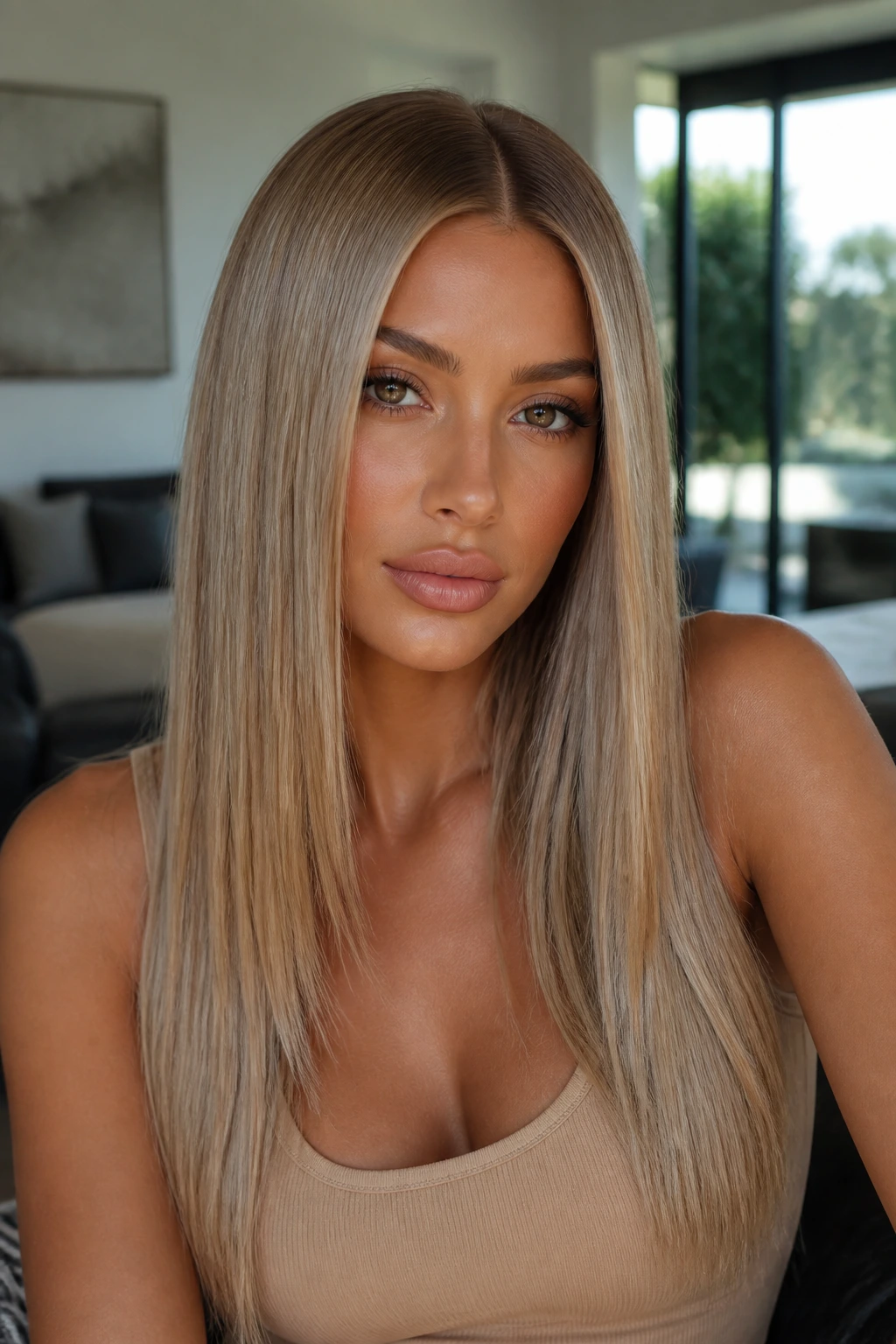
Straight beige blonde hair can look like glass when the gloss is right. That’s the whole appeal. On tan skin, the center part gives a straight line down the face, and the beige tone keeps it from becoming too stark or too white.
A good gloss does more here than color alone. It smooths the cuticle, softens any yellow that shows up near the ends, and gives the whole sheet of hair a cleaner finish. If the hair is long, a tiny bit of face framing—just a few narrow pieces—keeps the straight shape from feeling severe.
What to ask for
A level 8 beige blonde with a soft root shadow is usually the move. You want the mids and ends to look polished, not frosted. Tan skin picks up the shine and makes the color look richer than it would on a cooler complexion.
14. Brushed-Out Champagne Ringlets
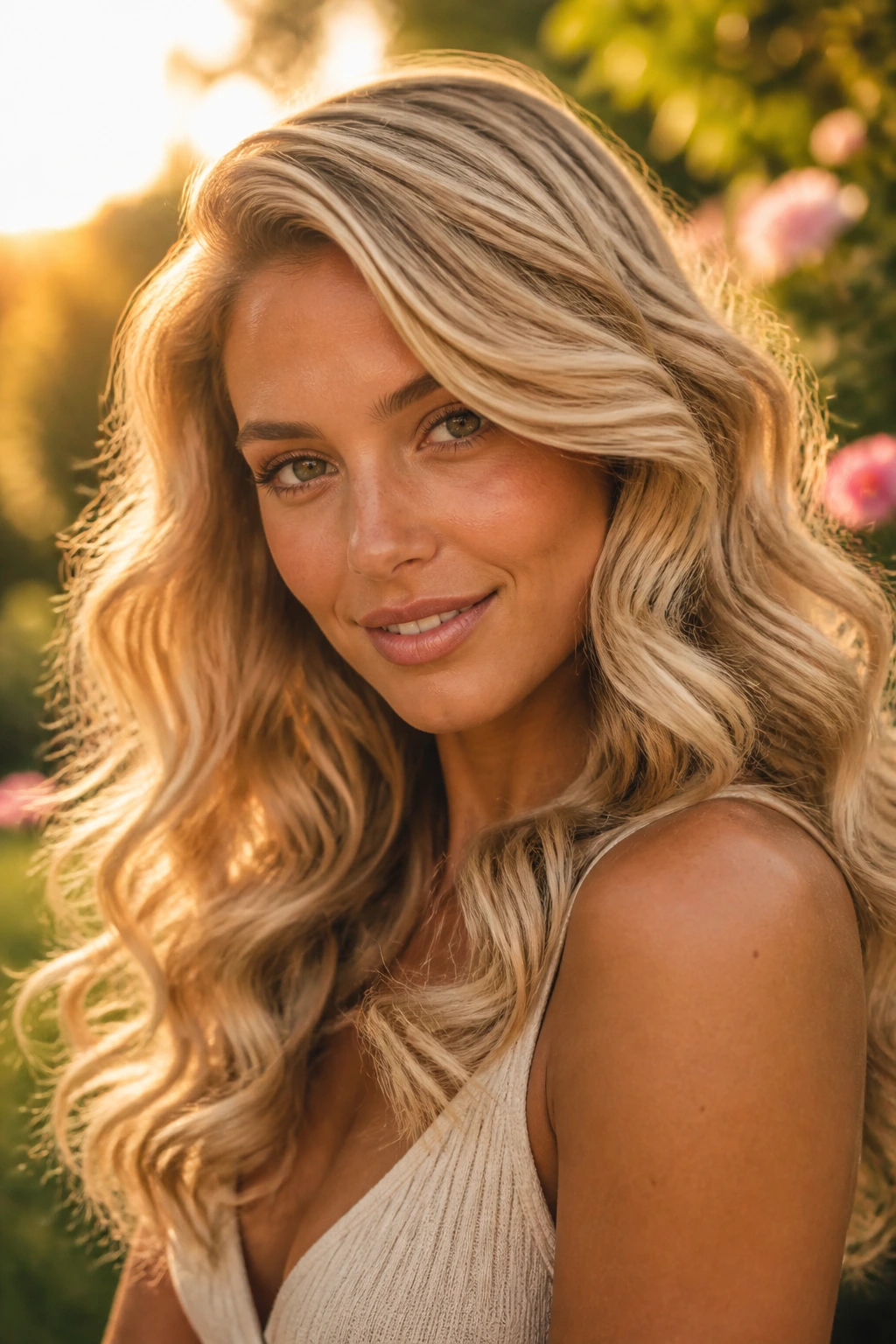
Brushed-out ringlets sit in that sweet spot between glamour and softness. The champagne tone gives enough brightness to feel dressed up, but the brushed-out finish stops it from looking stiff. On tan skin, that combination keeps the hair luminous without turning it icy.
Start with defined ringlets, let them cool fully, then brush them gently into wider waves. That step matters. If you skip it, the curls can look too busy against warm skin. Once brushed, the style gets a soft halo effect around the face, which is exactly where champagne blonde shines.
A side part gives this look a little old-school shape, but a middle part works if you want the color to stay more symmetrical. Either way, keep the root slightly deeper. The contrast makes the champagne tone feel deliberate, not like a wig.
15. Beachy Neutral Blonde Half-Up Twist
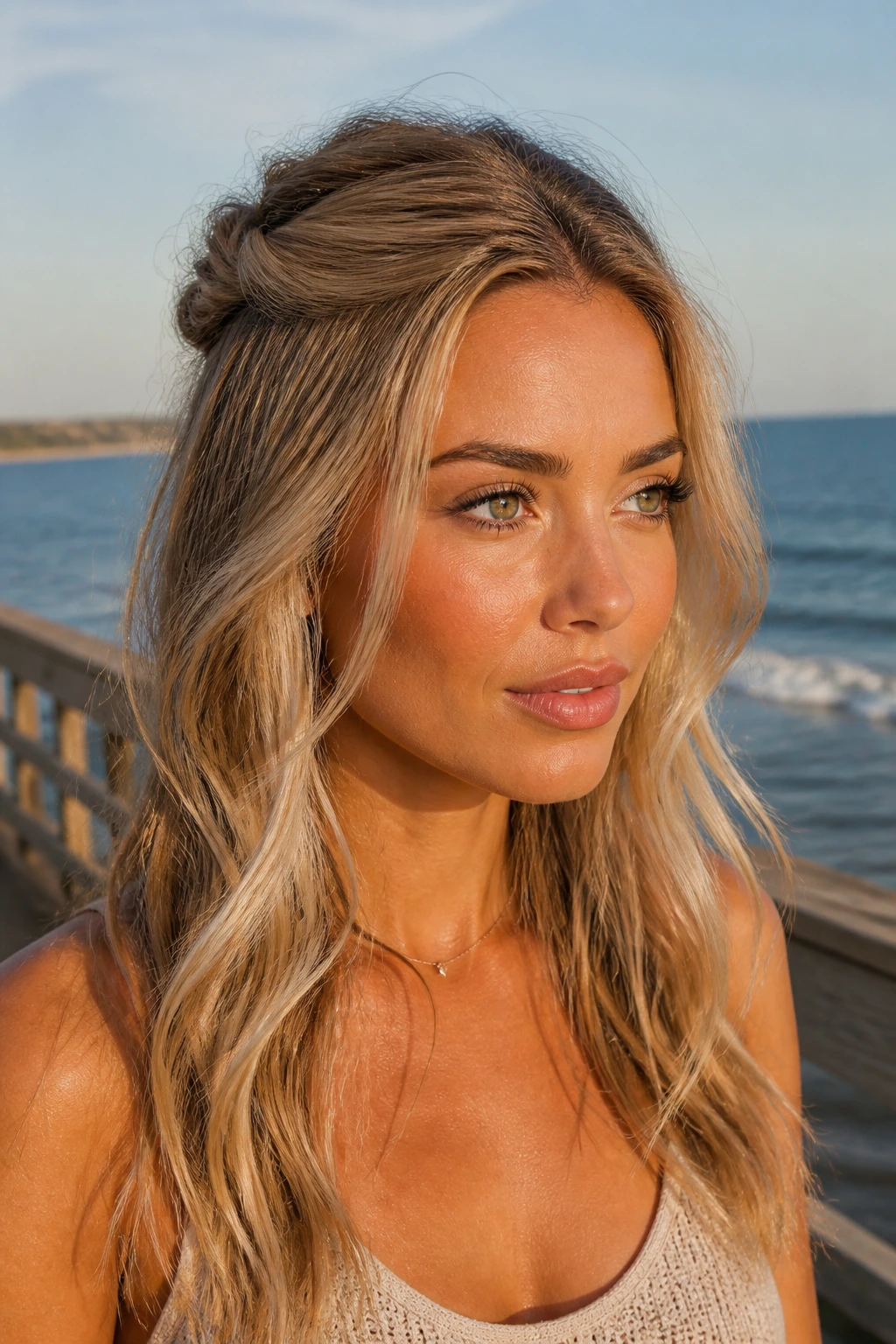
Why does a half-up twist keep coming back? Because it solves two problems at once. You get lift at the crown, and you get to show off the blonde through the loose lengths below. On tan skin, that blend of structure and softness looks easy in the best way.
The twist itself can be tiny—just enough to pull the top sections back and create shape. Leave the rest in loose waves or bends. A neutral beige-blonde mix works best here, especially if the lighter pieces sit around the face and at the ends. That keeps the style from looking heavy up top.
This is one of the easiest styles to wear with second-day hair. A few drops of dry texture spray through the crown, a quick twist, and a pin or two are enough. No need to overthink it.
16. Rooted Beige Braided Crown
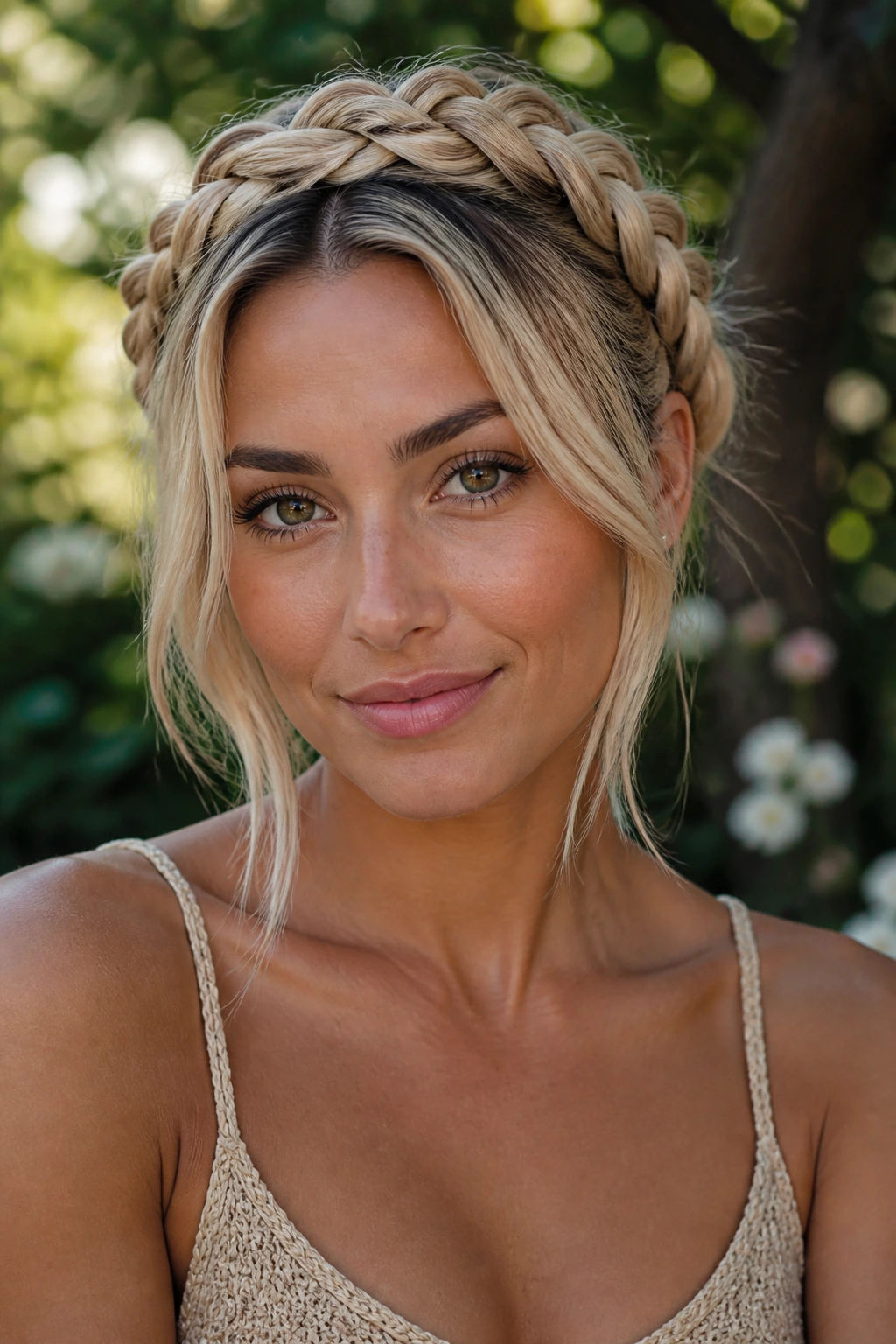
A braided crown turns blonde into texture first and color second, which is useful on tan skin because the braid does the visual work. The rooted beige tone helps the woven sections show up clearly instead of disappearing into one pale mass.
I like this style when the color has some depth at the base and just a little brightness around the face. The braid needs contrast to read well. Without it, the whole thing can go soft in the wrong way. With it, you get a shape that feels romantic but still grounded.
- Keep the braid a little loose so the dimension shows.
- Pull a few strands near the temples to soften the hairline.
- Use bobby pins that match your root depth, not your ends.
If your hair is layered, braid a touch lower and pinch the plait open after securing it. That keeps the crown from looking too tight.
17. Smoky Blonde Low Bun with Soft Tendrils
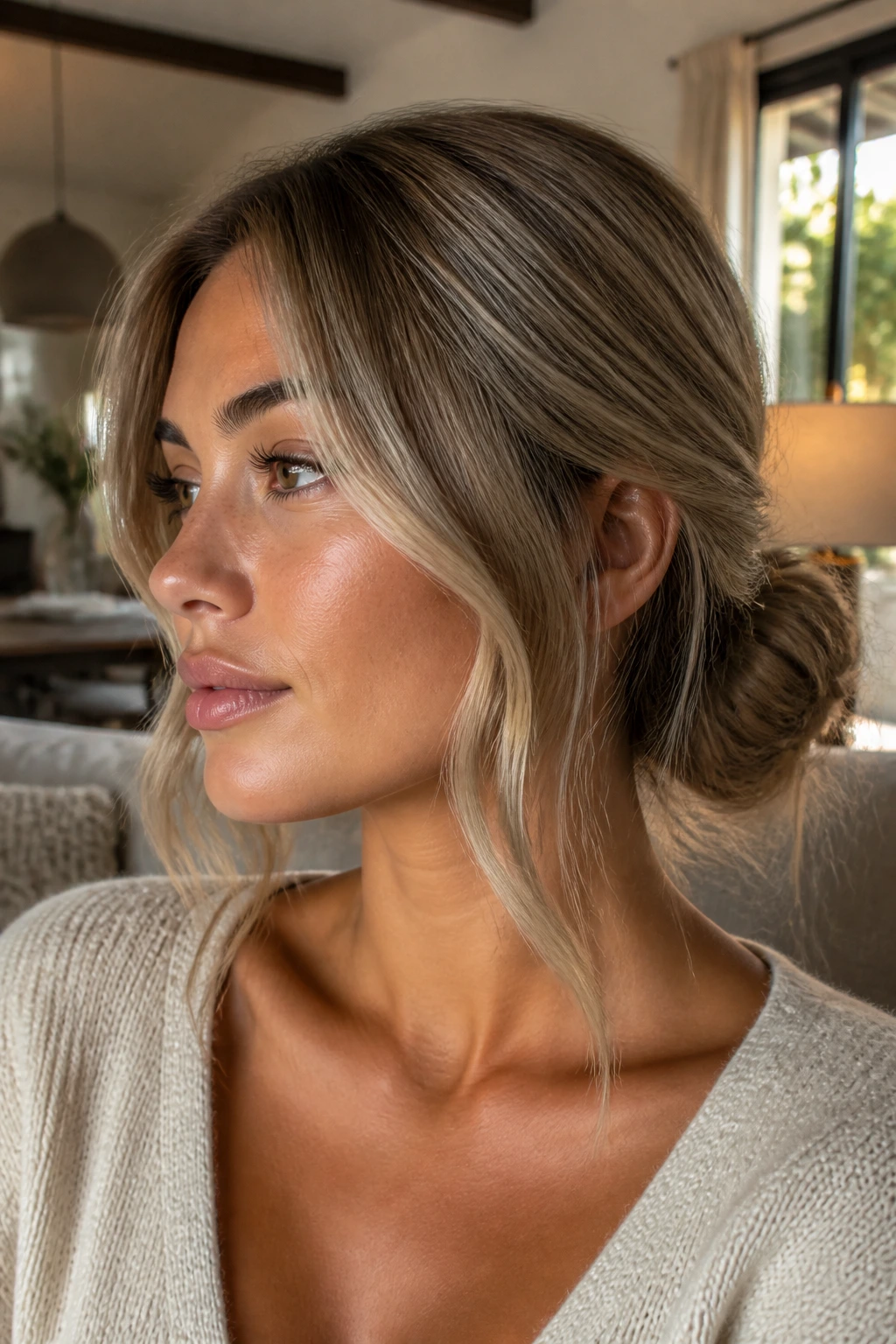
A low bun sounds simple, but smoky blonde gives it some real character. The neutral smoky tone keeps tan skin from losing warmth, while the bun’s shape does the face-flattering work. Add a couple of soft tendrils, and the whole thing stops feeling too severe.
The bun should sit low, almost at the nape, with a loose twist rather than a tight knot. That softness keeps the blonde from looking overdone. The tendrils around the cheeks and temples should be left a little piecey, not curled into perfect spirals. That small messiness is what makes the style work.
This is a good option when you want your hair up but don’t want the color hidden. Smoky blonde catches light along the folds of the bun, and on tan skin those folds have more depth than they would in an ultra-pale blonde.
18. Platinum-Neutral Bob with Shadow Roots
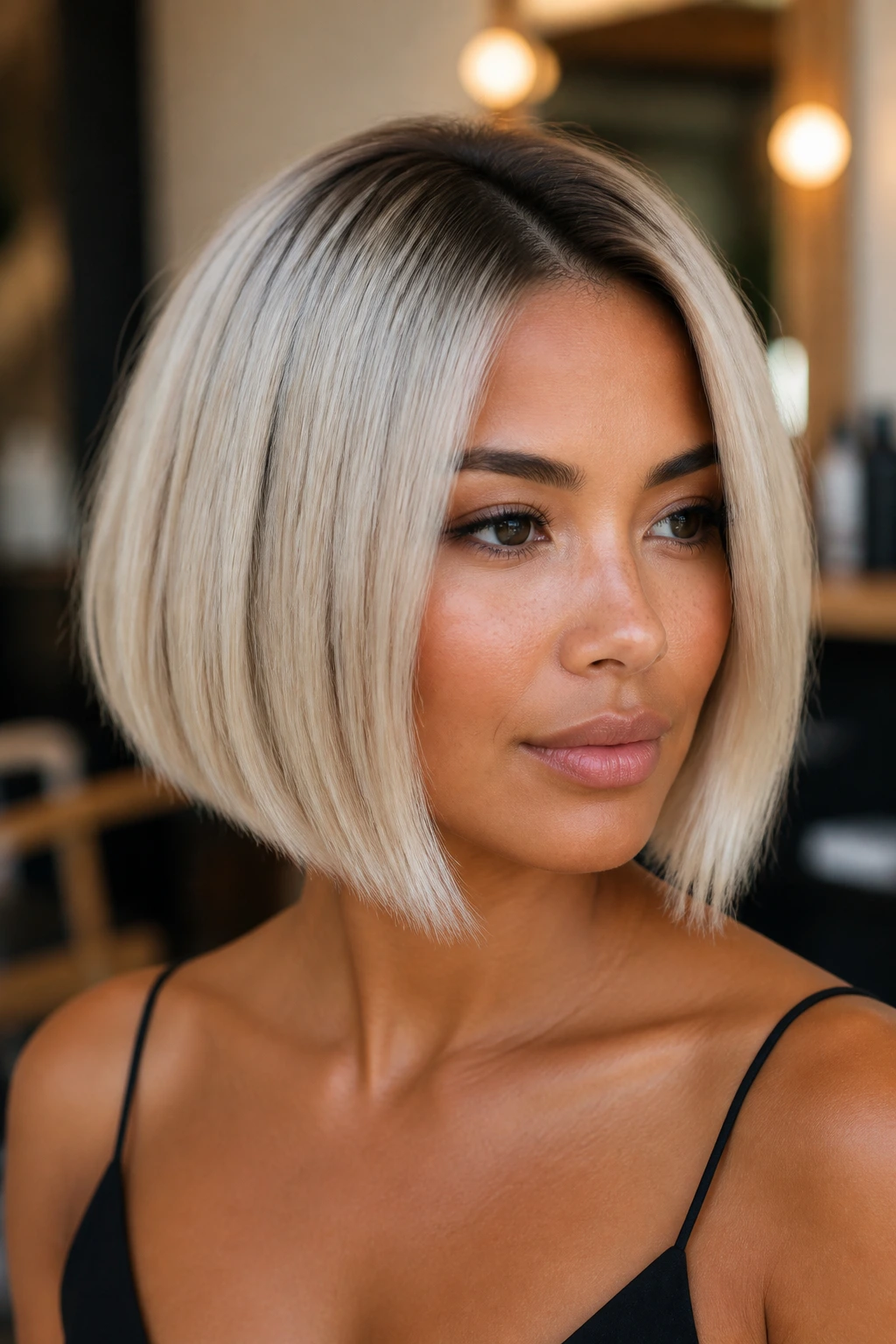
Platinum can work on tan skin, but only when it isn’t trying to be cool for cool’s sake. The neutral version—more pearl than silver, more beige than white—reads cleaner. Shadow roots are non-negotiable here. Without them, the cut can look harsh fast.
A bob gives platinum something solid to sit on. The line is crisp, the color is bright, and the shadow root keeps the scalp area from turning into a bright white band. That tiny bit of depth is what saves the style. It also makes the grow-out less punishing, which matters because this look needs maintenance.
This is a sharper, more high-contrast choice than the softer blondes above. If your tan skin has a strong olive cast, the shadow root becomes even more useful. It keeps the platinum from making the face look washed out under indoor lighting.
19. Buttery-Beige Wolf Cut
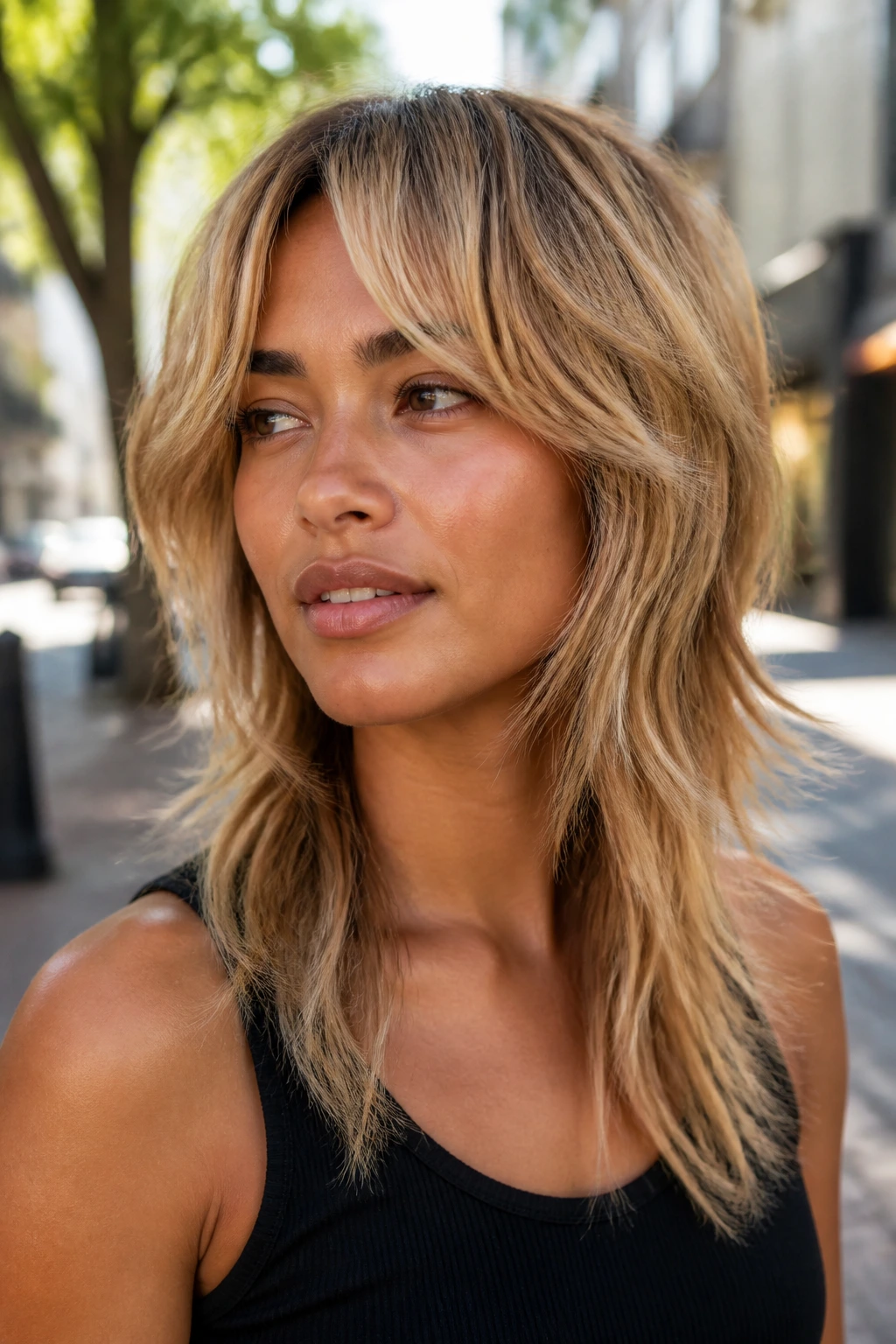
A wolf cut wants texture, and buttery-beige gives it enough softness that it doesn’t turn punky in a hard way. On tan skin, the beige keeps the warmth balanced. The layers bring movement. The whole thing feels a little rebellious, but not chaotic.
Why it works
The wolf cut has short, choppy layers up top and longer ones below, which means the blonde lands in different planes. That’s a gift for tan skin because the color doesn’t sit in one flat block. You see depth. You see shape. You see a little edge.
If your hair is thick, this cut removes bulk. If it’s fine, it creates the illusion of it. Keep the toner neutral, not gold, or the shaggy pieces can start looking brassy instead of buttery.
20. Sunlit Neutral Blonde Ponytail with a Wrapped Base
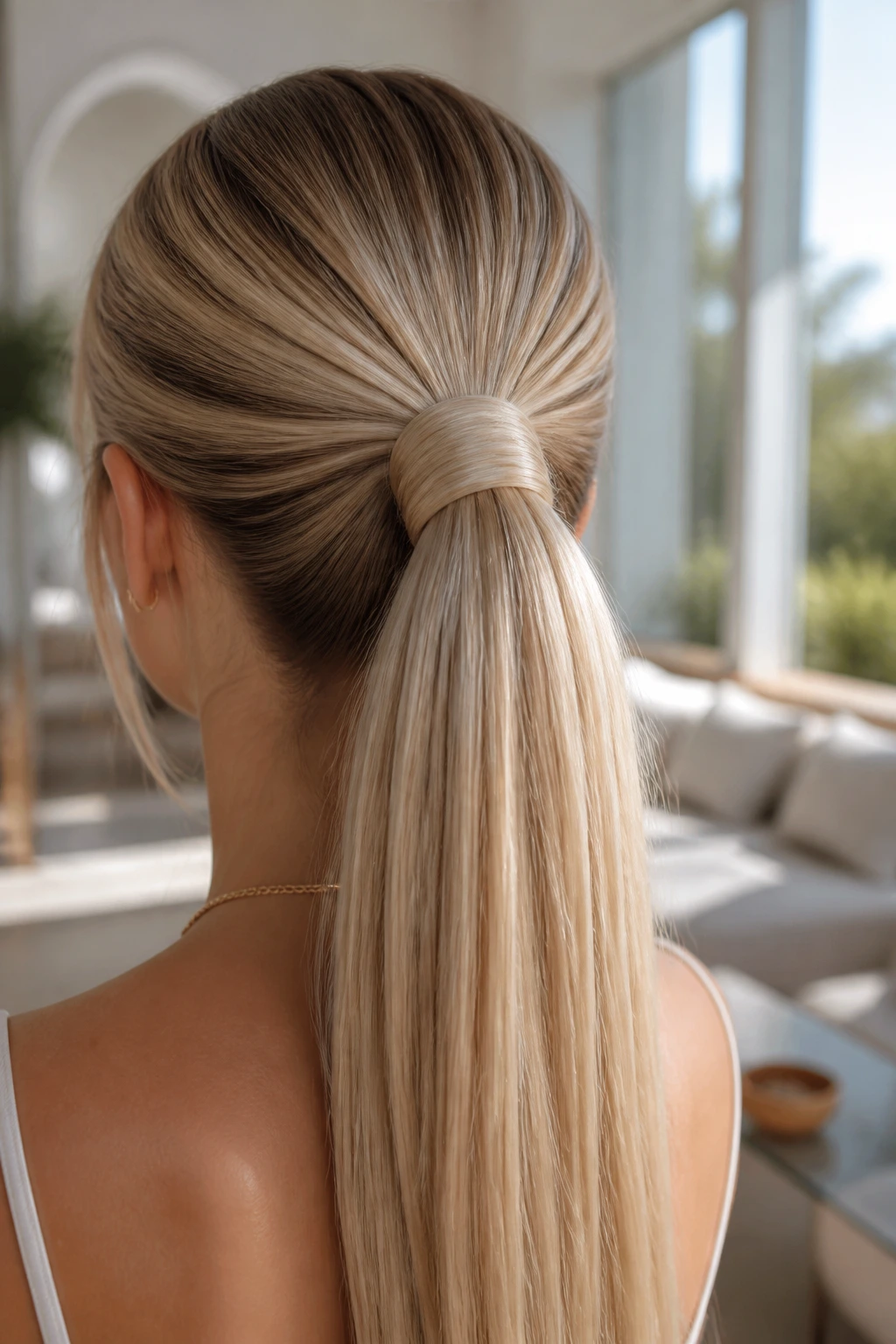
A ponytail doesn’t have to be plain. In neutral blonde, it can look sleek and polished if you pay attention to the base. Wrapping a strand around the elastic hides the hair tie and gives the style a cleaner finish. On tan skin, that little bit of control keeps the look from feeling too sporty.
The blonde should have some gradient through the length so the ponytail doesn’t look like a single color tube. Neutral highlights around the crown and lighter ends make it read sunlit. If your hair is long enough, curl the tail slightly or bend it with a flat iron so the finish isn’t too stiff.
This is one of those looks that benefits from shine spray and a toothbrush-sized edge brush for smoothing flyaways. Tiny details. Big difference.
21. Face-Framing Beige Highlights on Long Curls
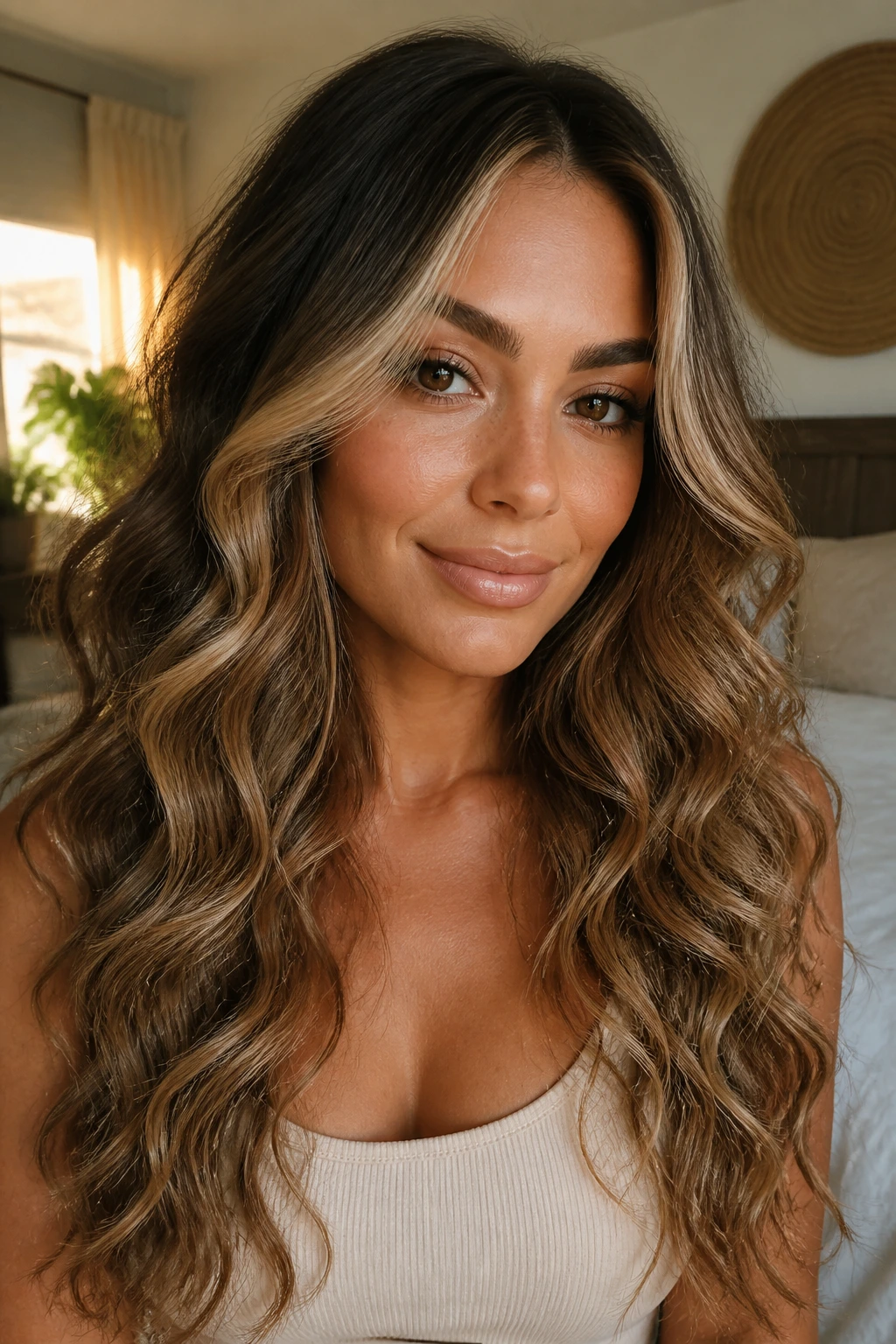
Does a full head of blonde always help tan skin? Not always. Face-framing beige highlights often do more with less. They brighten the cheek area, lift the eyes, and keep the rest of the hair deeper and richer, which is usually kinder to warm skin.
Long curls give those highlights room to move. The lighter pieces weave through the front and midlengths, then disappear into deeper beige underneath. That contrast keeps the style dimensional. It also means the grow-out is softer, because the blonde never starts at the scalp in a hard, obvious line.
This look suits people who want brightness without a major commitment. It’s especially useful if your natural base is dark blonde or light brown and you want the face to pop a little more. Keep the highlight width modest. Too wide, and the whole thing loses its softness.
22. Honey-Beige Shoulder-Length Layers
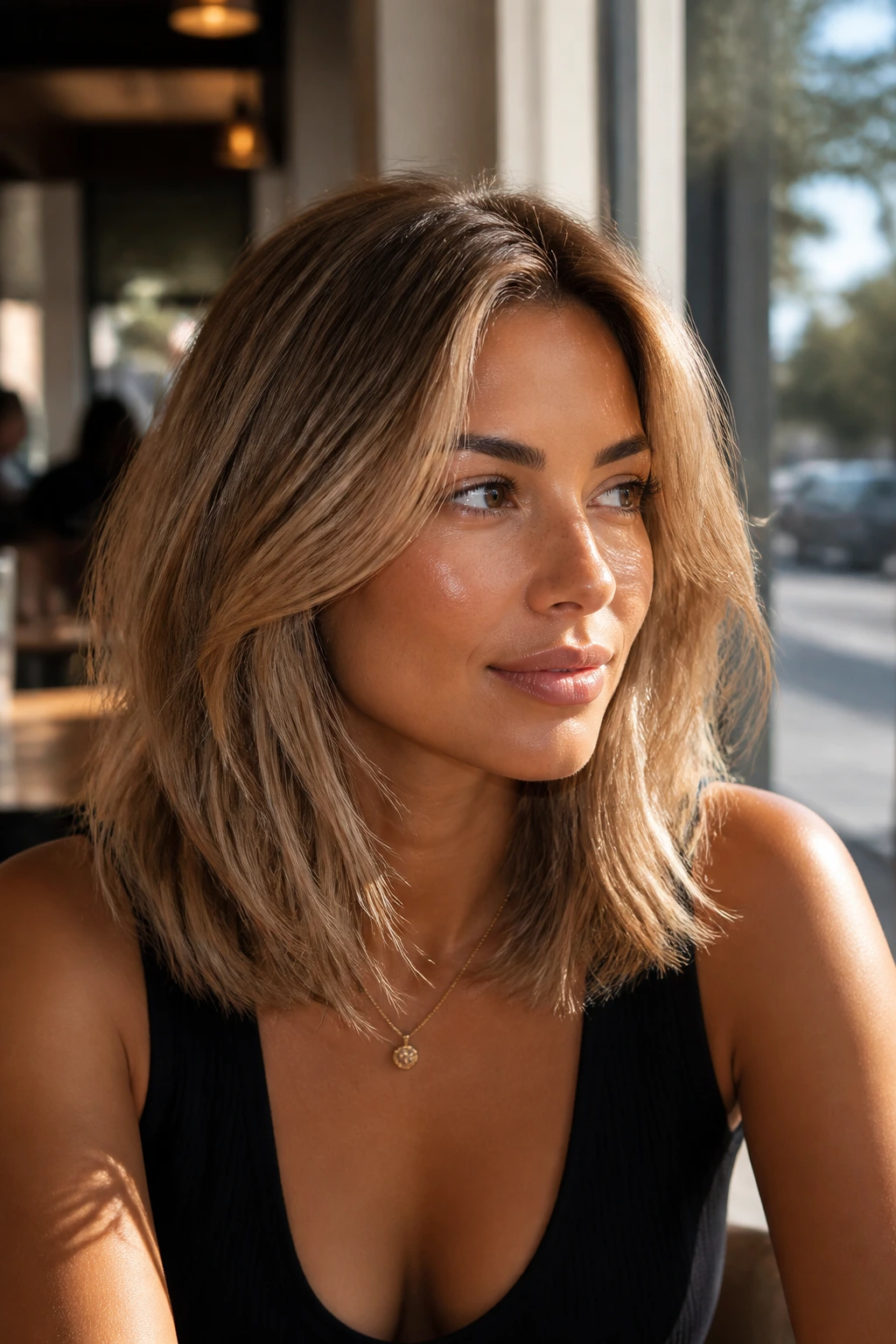
Honey-beige is the warmer end of neutral, and shoulder-length layers handle it well. On tan skin, the gentle warmth can look flattering if it’s kept in check. The beige part stops the honey from turning syrupy. The layers keep the cut light enough that the color doesn’t sink into the shoulders.
Shoulder-length hair is practical in the best sense. It still swings, still moves, still gives the blonde room to breathe, but it doesn’t need the maintenance of longer hair. If your hair tends to go flat, add a few shorter face layers. If it tends to puff up, keep the ends softly tapered.
This is a nice middle road for someone who wants a softer finish than ash blonde but doesn’t want full golden blonde either. It feels wearable. And that matters. A shade you can wear every day usually looks better than one you save for photos.
23. Soft Taupe Blonde Waterfall Waves
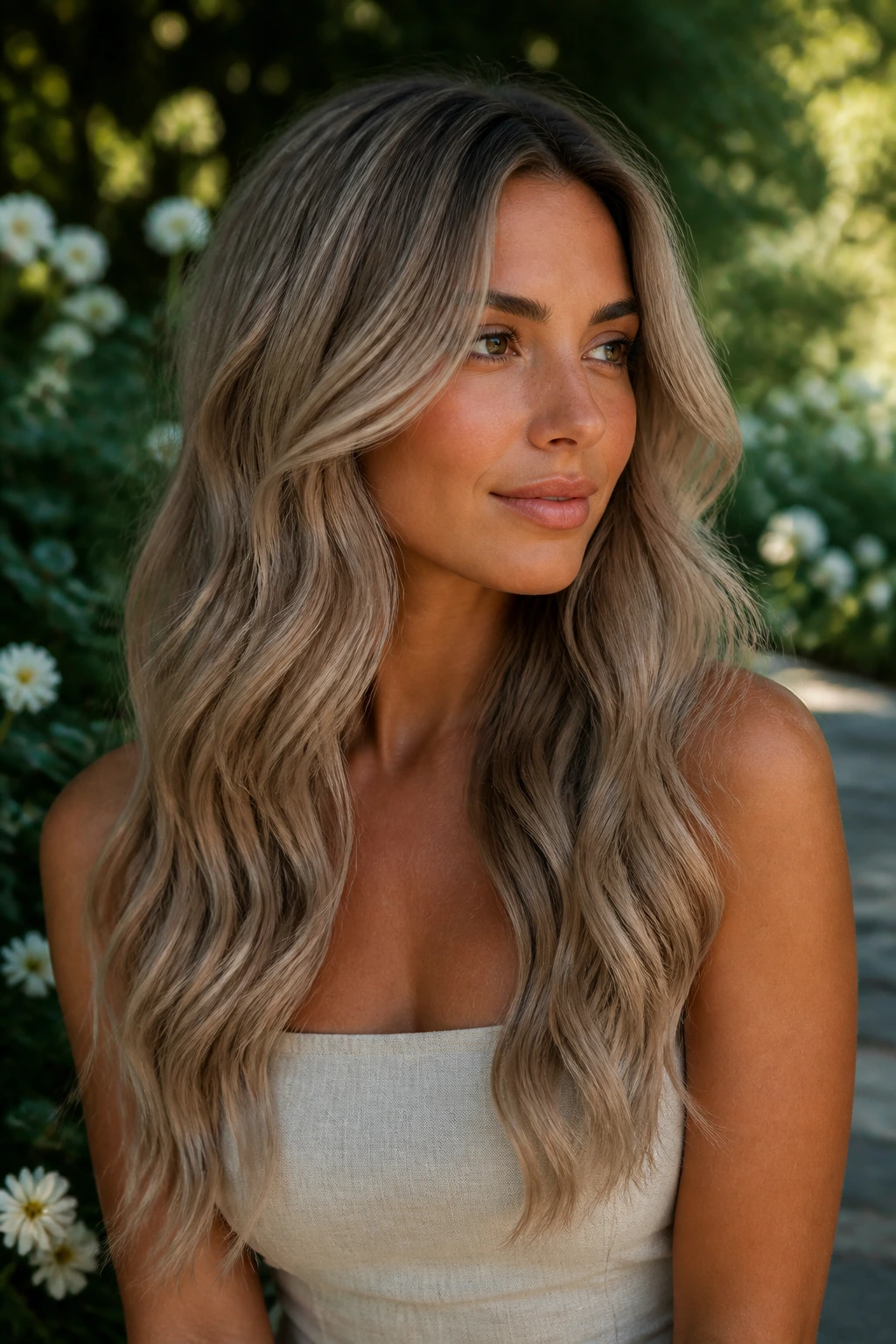
Soft taupe blonde sits in the smoky, neutral zone that olive-leaning tan skin often loves. It has enough coolness to keep brass out, but enough beige to avoid turning gray. Waterfall waves make the tone slide in layers, which is where this color starts looking really good.
The wave pattern should be flowing rather than tight. Think a cascade, not a curl set. That lets the taupe tone show up as a gradient instead of a block. The darker root and lighter ends help, too. They keep the style from feeling blunt.
If you like understated color, this is a smart pick. It doesn’t shout. It just looks clean, soft, and a little bit smoky. That can be harder to pull off than a brighter blonde, but on tan skin it often lands better.
24. Textured Neutral Blonde French Bob
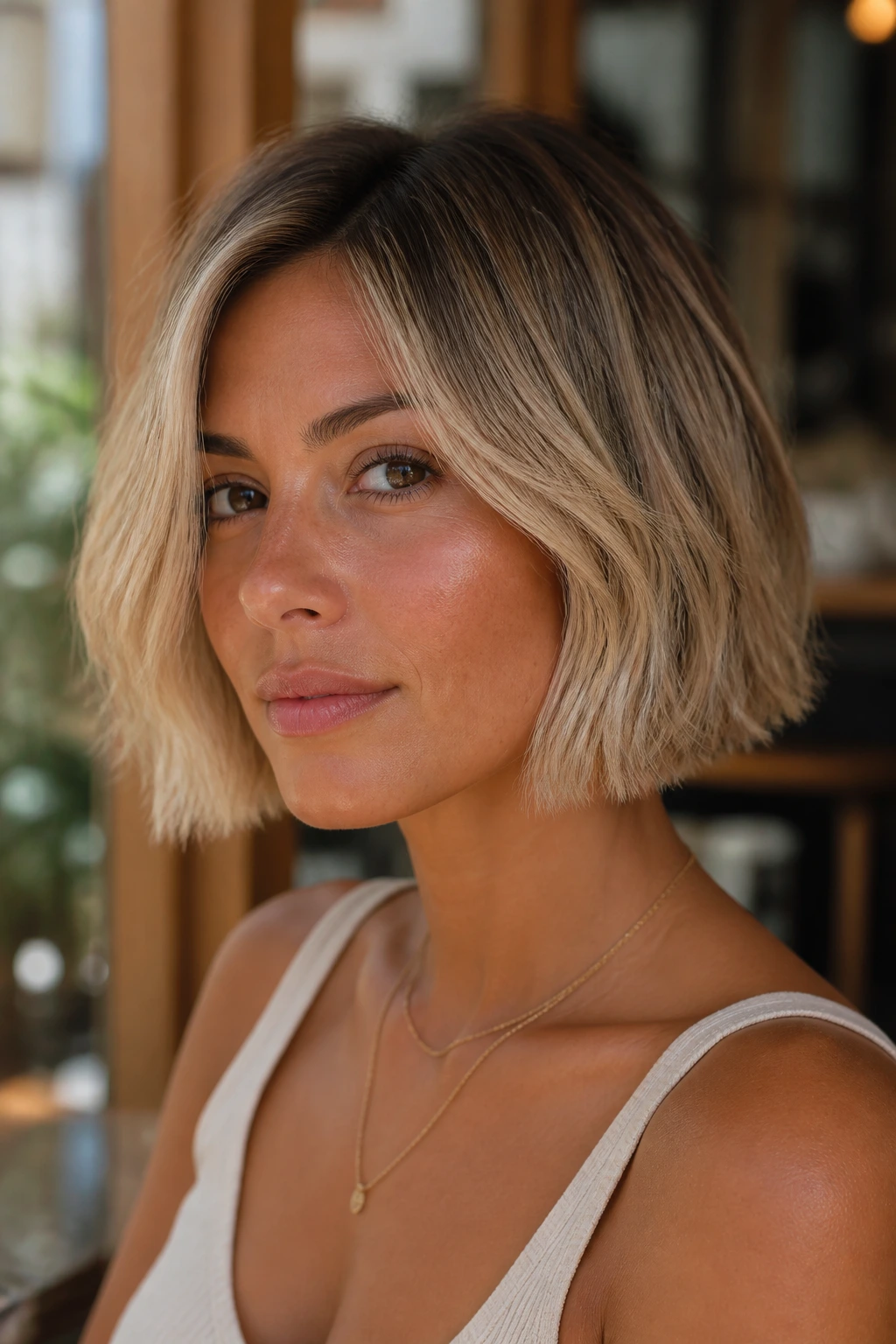
The French bob has attitude built in. Add a textured neutral blonde, and you get a style that looks crisp without being severe. Tan skin works well with it because the bob’s short length keeps the color close to the face, while the texture stops it from feeling rigid.
A little bend at the ends is enough. You do not want this bob too polished or it can look helmet-like. Keep the tone beige or oyster, and leave the root a touch deeper. That shadow keeps the shape from floating away from the face.
- Best on hair that can hold a bit of body.
- Works with a side part or a loose middle part.
- Looks best when the ends are slightly tucked under, not flipped out.
It’s a small haircut with a strong presence. That’s the appeal.
25. Rooted Vanilla Long Layers with Curtain Bangs
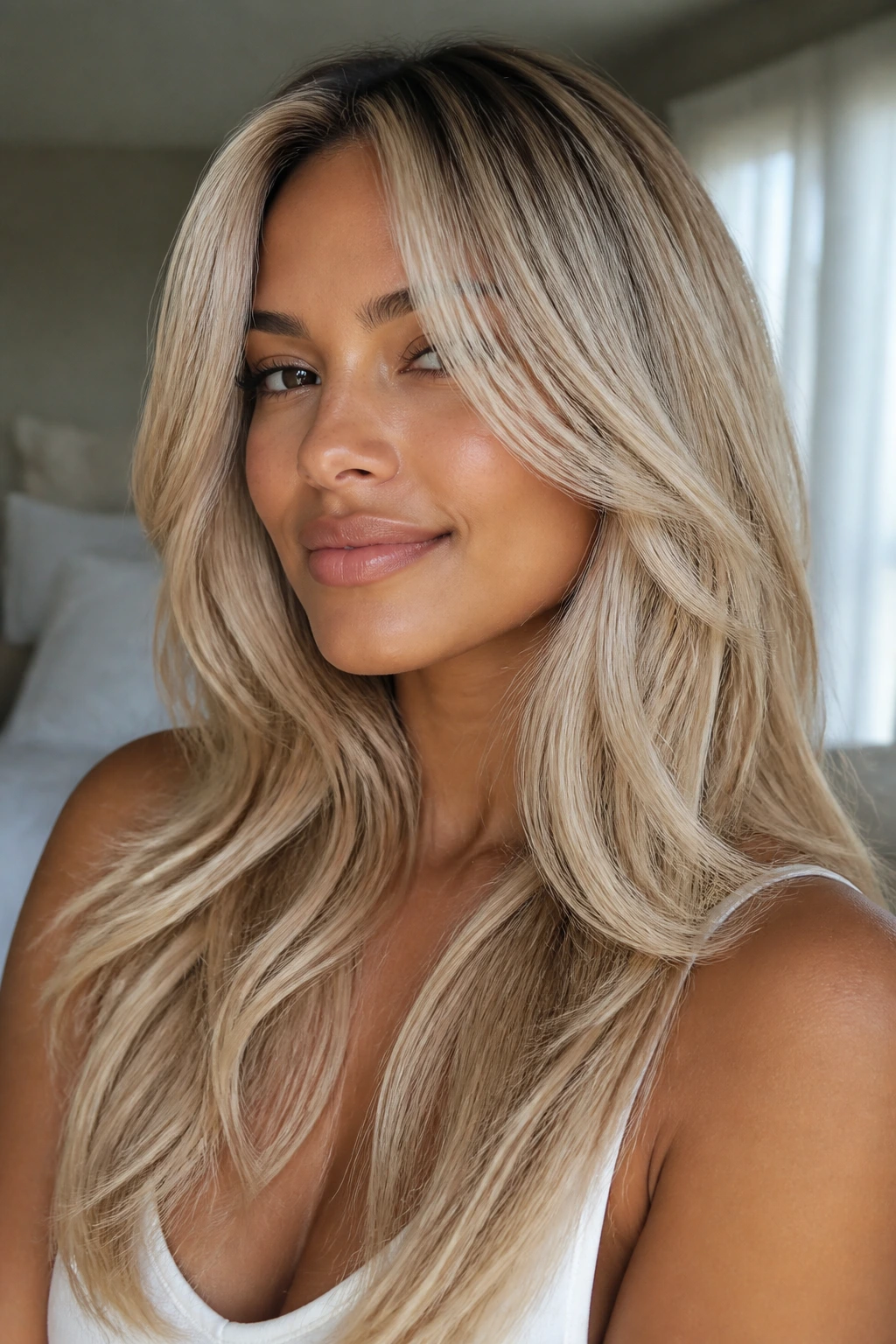
Rooted vanilla long layers are soft, bright, and a little romantic without turning sugary. The root shadow keeps tan skin from losing its depth, and the vanilla lengths add light where you want it most. Curtain bangs finish the job by opening the face in a way that feels easy rather than staged.
The layers should start high enough to move, but not so high that the ends get thin. Vanilla blonde can look fragile if the cut is too wispy. Curtain bangs help because they frame the face and break up the length. They also give you a way to wear the blonde without putting every bit of brightness around the perimeter.
This is one of the prettiest options if you like hair that looks soft in motion. The color and the cut work together. Neither one has to carry the whole load.
26. Airy Beige Blonde Pinned-Back Waves
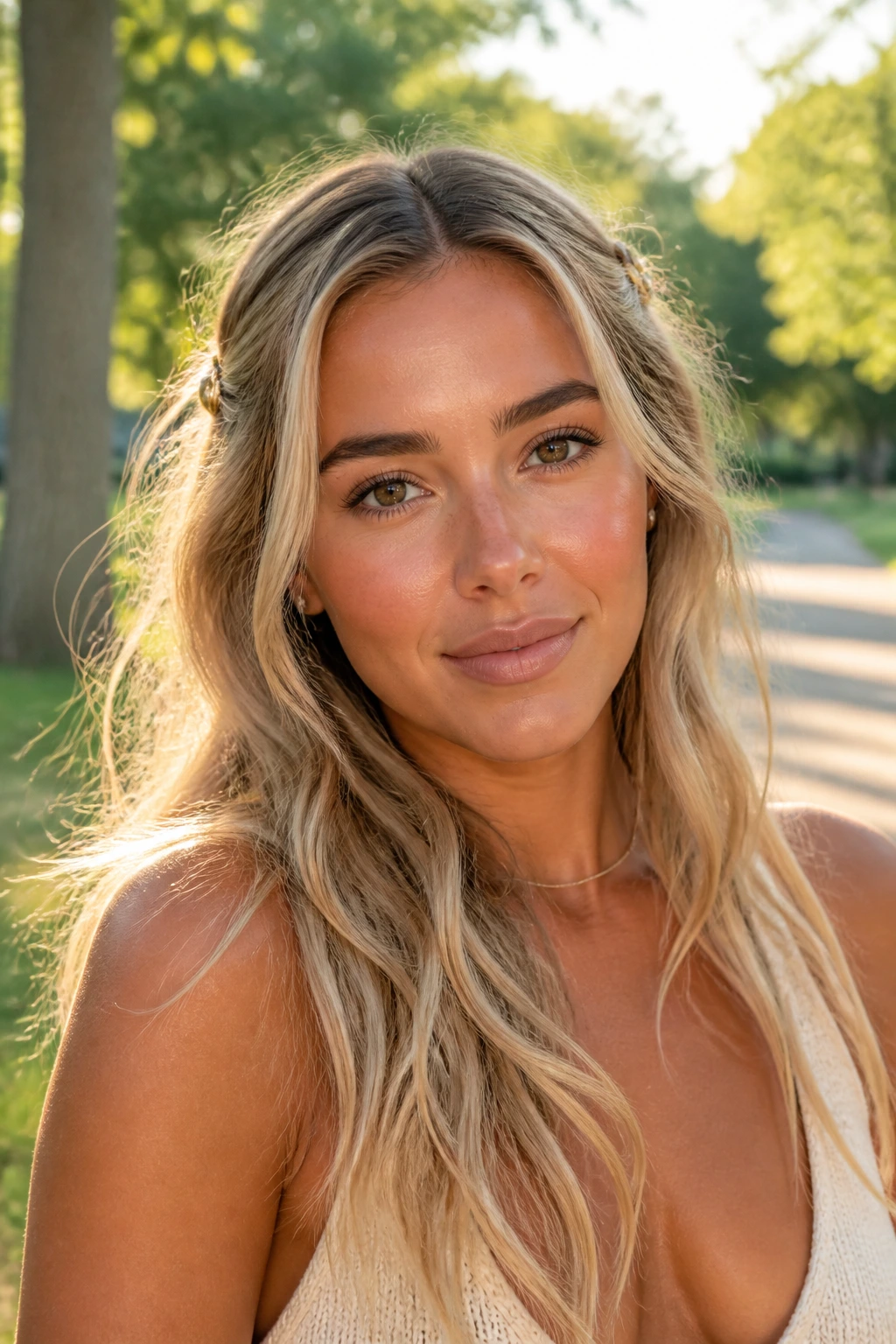
Pinned-back waves are the kind of style that quietly solves a lot of problems. You get the softness of loose waves, but the pinned sections keep the face open. Beige blonde makes the whole thing feel gentle, not overly dressed.
The best version uses two or three hidden pins near the temples or just above the ears. Pull the front pieces back loosely, then let the rest of the hair fall. That little lift gives tan skin a clean frame and lets the beige tone glow without competing with the face.
I like this style for days when you want the hair out of your eyes but still want visible movement. It’s also kind to medium-thick hair, because the pins give the crown a bit of shape. A mist of flexible hold spray is enough. No helmet.
27. Smoky Sand Blonde Top Knot
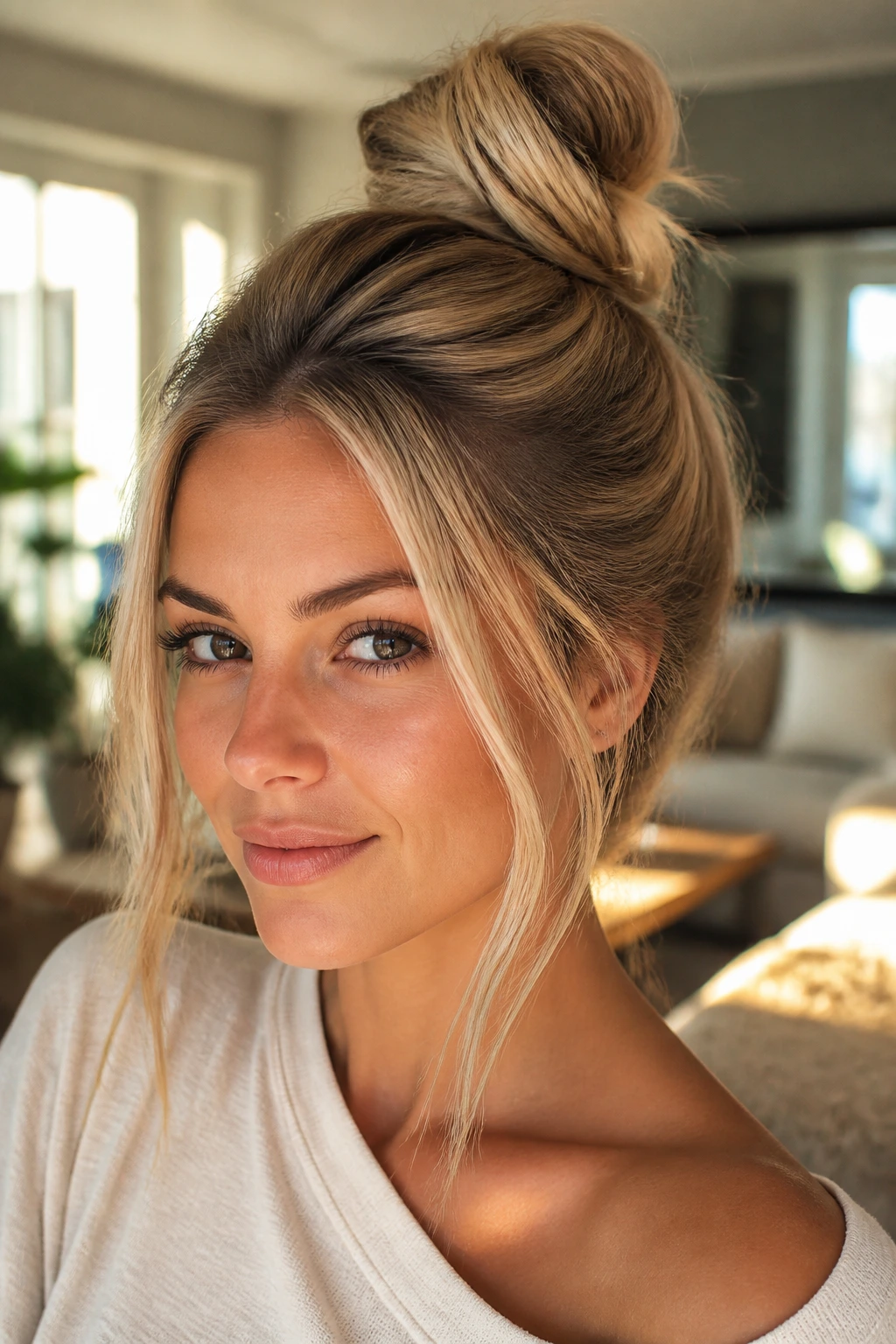
A top knot can look bare or it can look intentional. Smoky sand blonde helps it land in the second category. The neutral tone keeps the bun from looking too gold or too flat, while the height at the crown gives tan skin a little lift.
The top knot should not be slicked so tight that the face loses softness. Leave a bit of volume at the crown and a few lighter pieces around the hairline if you can. That makes the neutral shade feel part of the look, not an afterthought.
This is the kind of style that works on clean hair, second-day hair, and half-clean hair. A good dry shampoo at the roots helps. A few pieces left loose around the ears keep it from feeling severe. Easy. Useful. Done.
28. Polished Neutral Blonde Old-Hollywood Waves
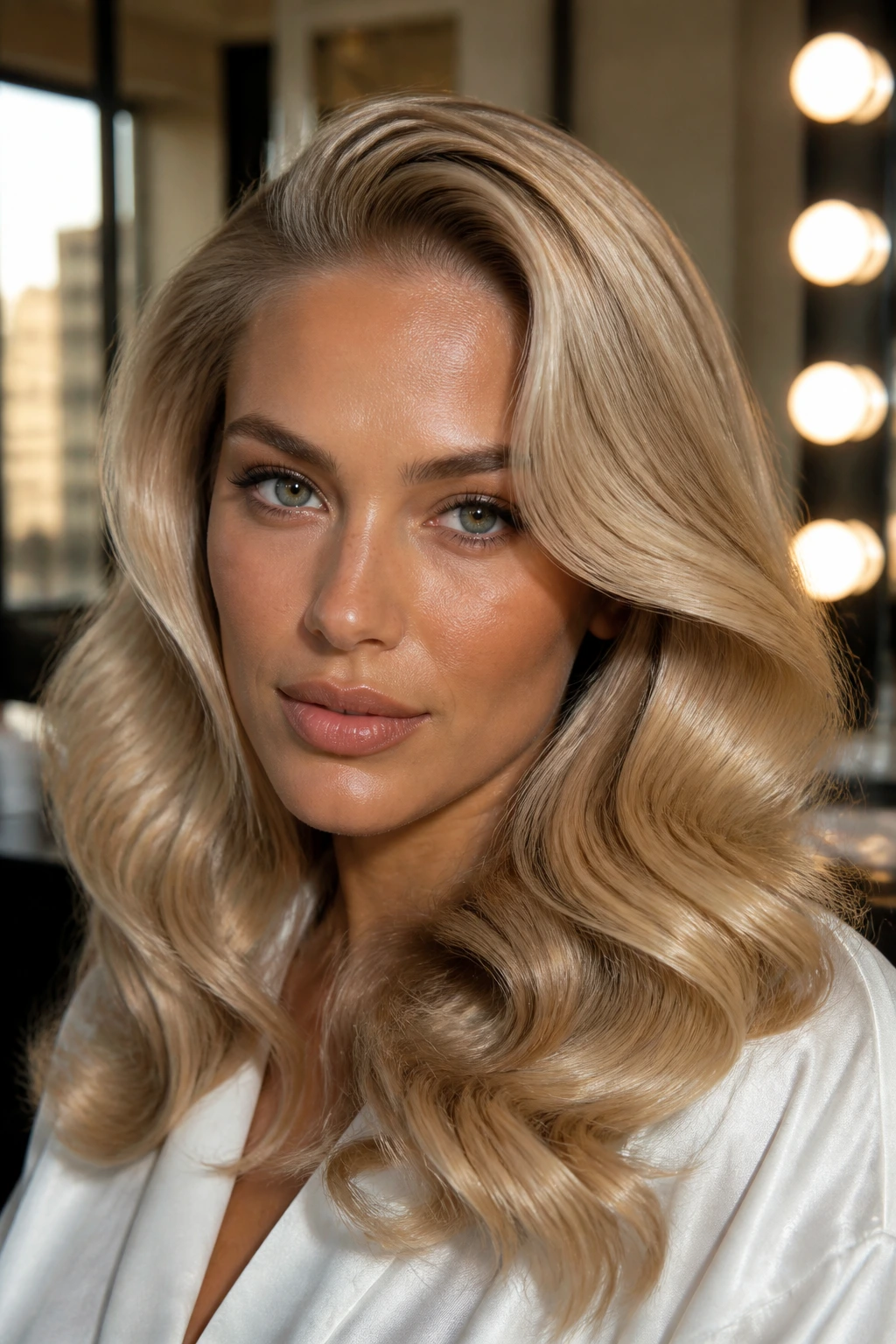
Old-Hollywood waves may be the most dramatic option here, but a neutral blonde keeps them from becoming costume hair. Tan skin and creamy, brushed waves have a nice conversation going on: the hair brings structure, the skin brings warmth, and the tone stays right in the middle.
A deep side part gives the wave its classic shape. The bend should be smooth and broad, not crunchy. The color works best when there’s enough beige and champagne in it to reflect light, but still enough root depth to stop the style from looking stark. That balance is what makes the waves feel rich.
This is the style I’d pick for a formal event or any time you want hair that reads polished from ten feet away. It’s glamorous, yes, but the neutral tone keeps it grounded. And on tan skin, grounded usually wins.
Why Neutral Blonde Needs the Right Shape
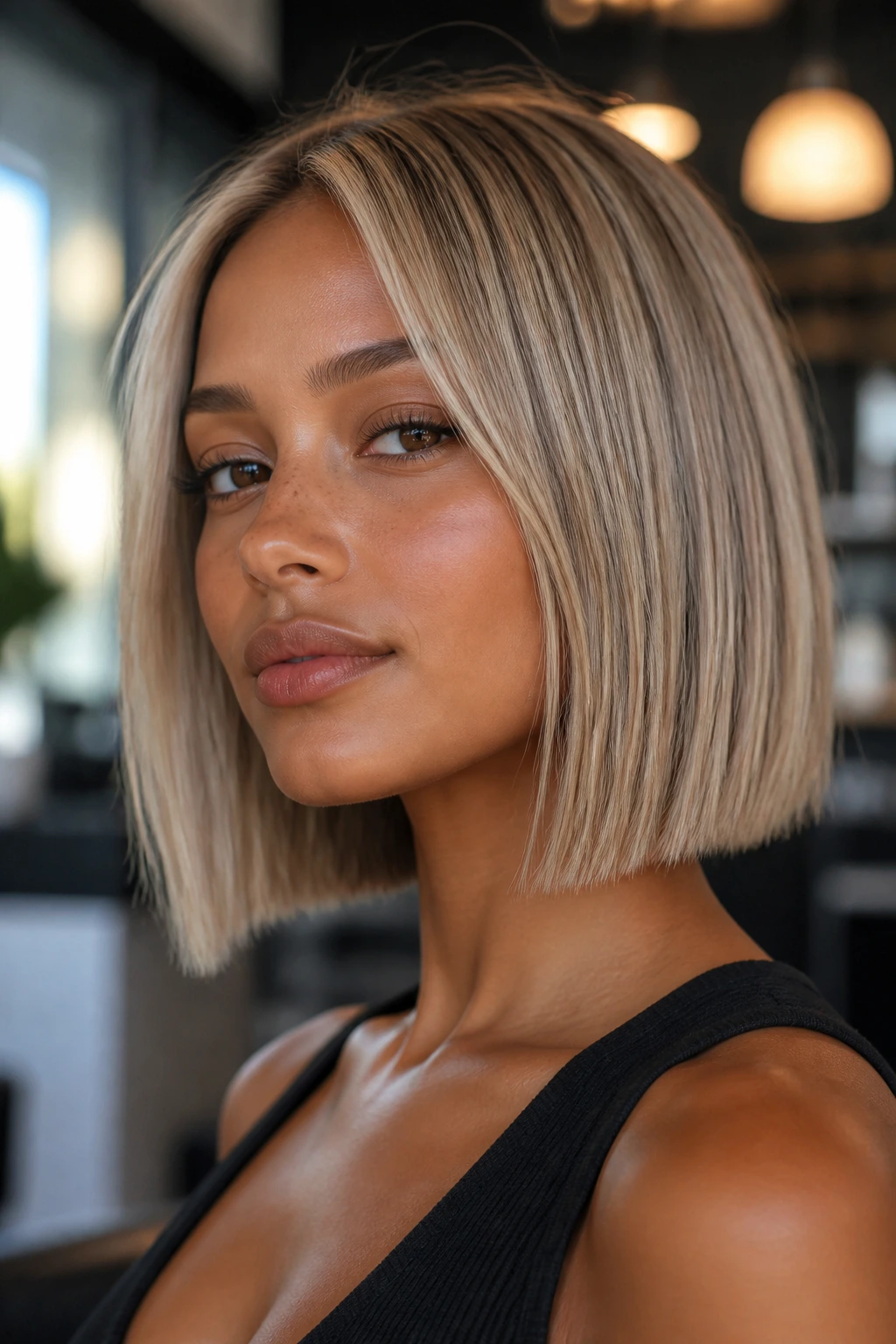
Color alone can only do so much. That’s the part people learn the hard way after leaving the salon with a pretty blonde that somehow still feels off. On tan skin, the shape around the color matters because the haircut controls where light lands.
A blunt bob gives beige blonde a sharper edge. Layers make mushroom blonde feel softer. Waves break up champagne tones so they don’t overwhelm the face. A root melt buys you distance between the scalp and the lightest pieces, which helps the whole style feel lived in instead of pasted on. I keep circling back to that because it’s the thing most people underthink.
The good news is you don’t need a dramatic cut to fix the problem. Sometimes it’s a face frame. Sometimes it’s a softer gloss. Sometimes it’s just making the lighter pieces a half-tone less bright. Small moves matter here.
Smart Ways to Keep the Tone Clean, Not Cranky
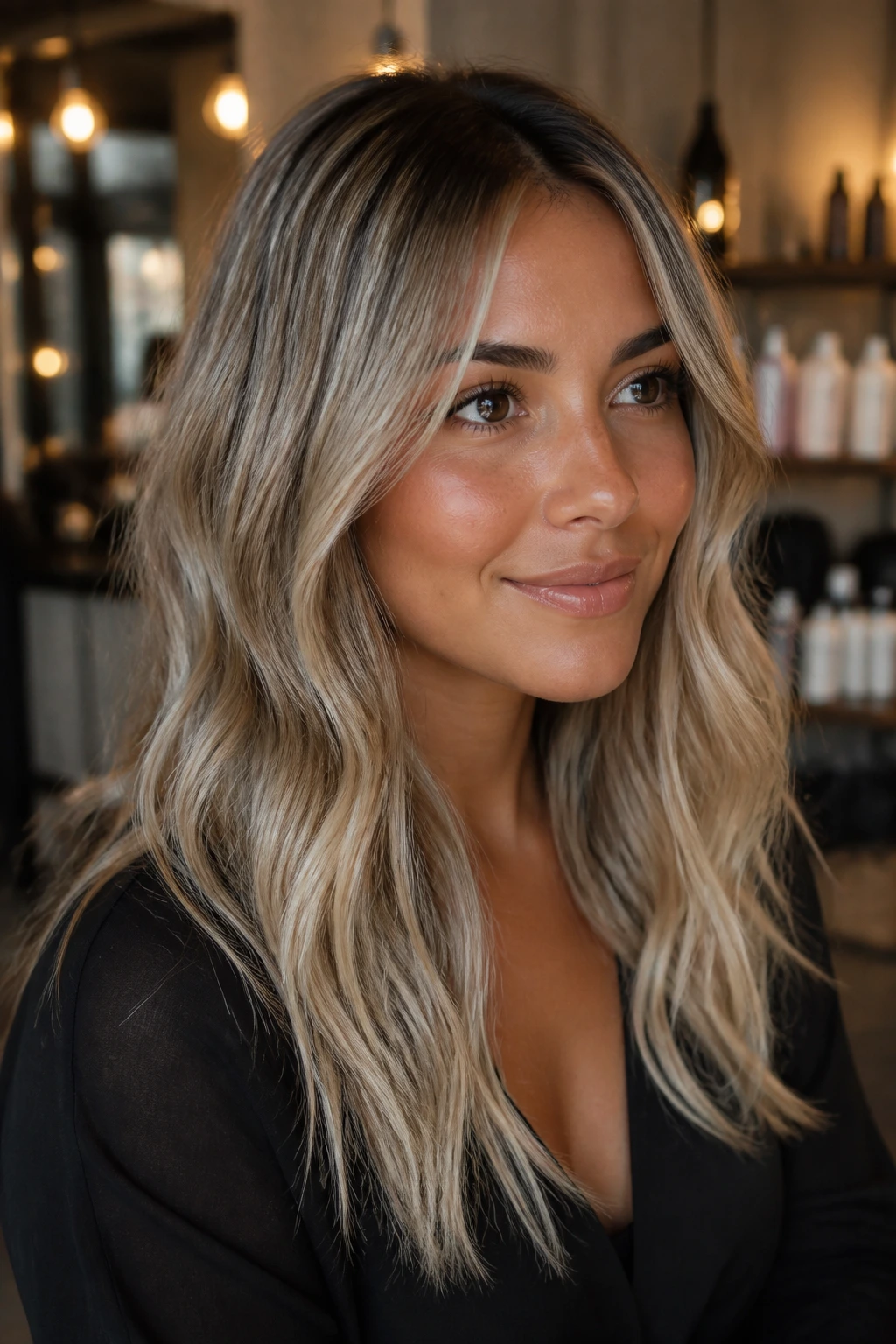
Gloss is cheaper than regret: A neutral blonde usually looks better after a gloss than after another round of highlights. Ask for a beige or neutral beige glaze every 4-6 weeks if the tone starts drifting yellow.
Root depth is your friend: A shadow root that’s one level deeper than the mids keeps tan skin looking rich. If the roots are too light, the hair can float away from the face.
Heat should be gentle: Use a protectant every time you blow-dry or curl. Beige blonde shows damage fast, and frizz scatters the light that makes the color look expensive.
Texture changes everything: A wave, bend, or feathered layer can make the same shade look softer and more flattering than a pin-straight finish. Style the haircut you have, not the one you wish you had.
Purple shampoo is not a hobby: Once every 7-10 days is usually enough. Overusing it can turn neutral blonde gray and make tan skin look dull beside it.
Common Mistakes That Make Tan Skin Look Dull
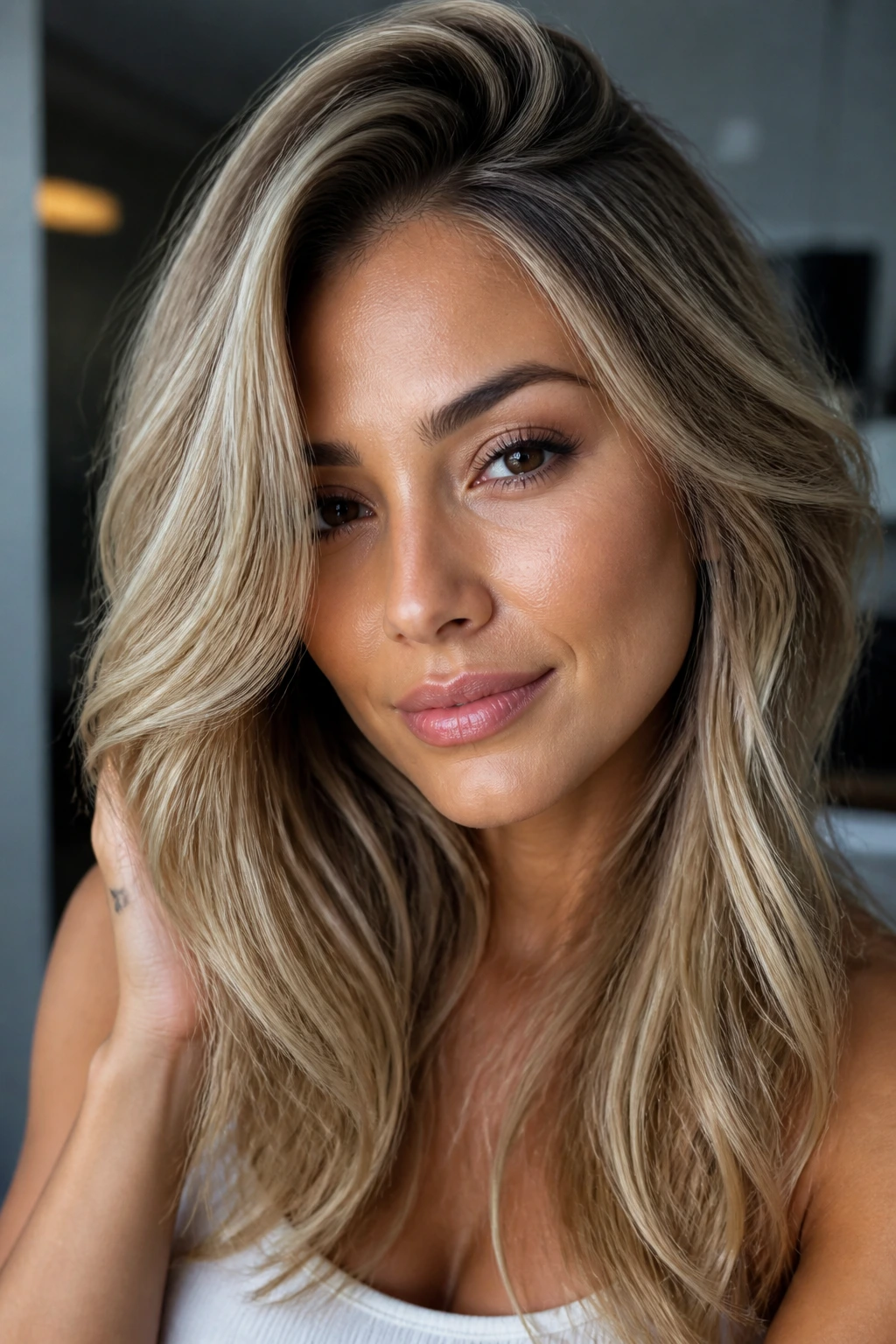
The first mistake is going too pale too fast. A lot of people ask for a super-light blonde and then wonder why their face looks flat. The fix is boring but effective: keep the root slightly deeper, and ask for beige or mushroom mids instead of white-blonde ends.
The second mistake is a single-tone blonde with no lowlight. Tan skin usually needs some variation around it. Without that, the color can look like a sheet. Add a shadow root, add a few lowlights, or choose a cut with enough layers to break it up.
Third, people over-tone. Purple shampoo is useful, but too much of it strips the warmth that makes neutral blonde flattering in the first place. If the hair starts looking smoky in a sad way rather than a chic way, back off for a wash or two.
Another miss: matching every blonde to every tan skin tone. Not all tans are the same. Olive tans often like mushroom and taupe. Golden tans usually look better with beige and champagne. Same family. Different branch.
Variations and Shade Swaps to Try
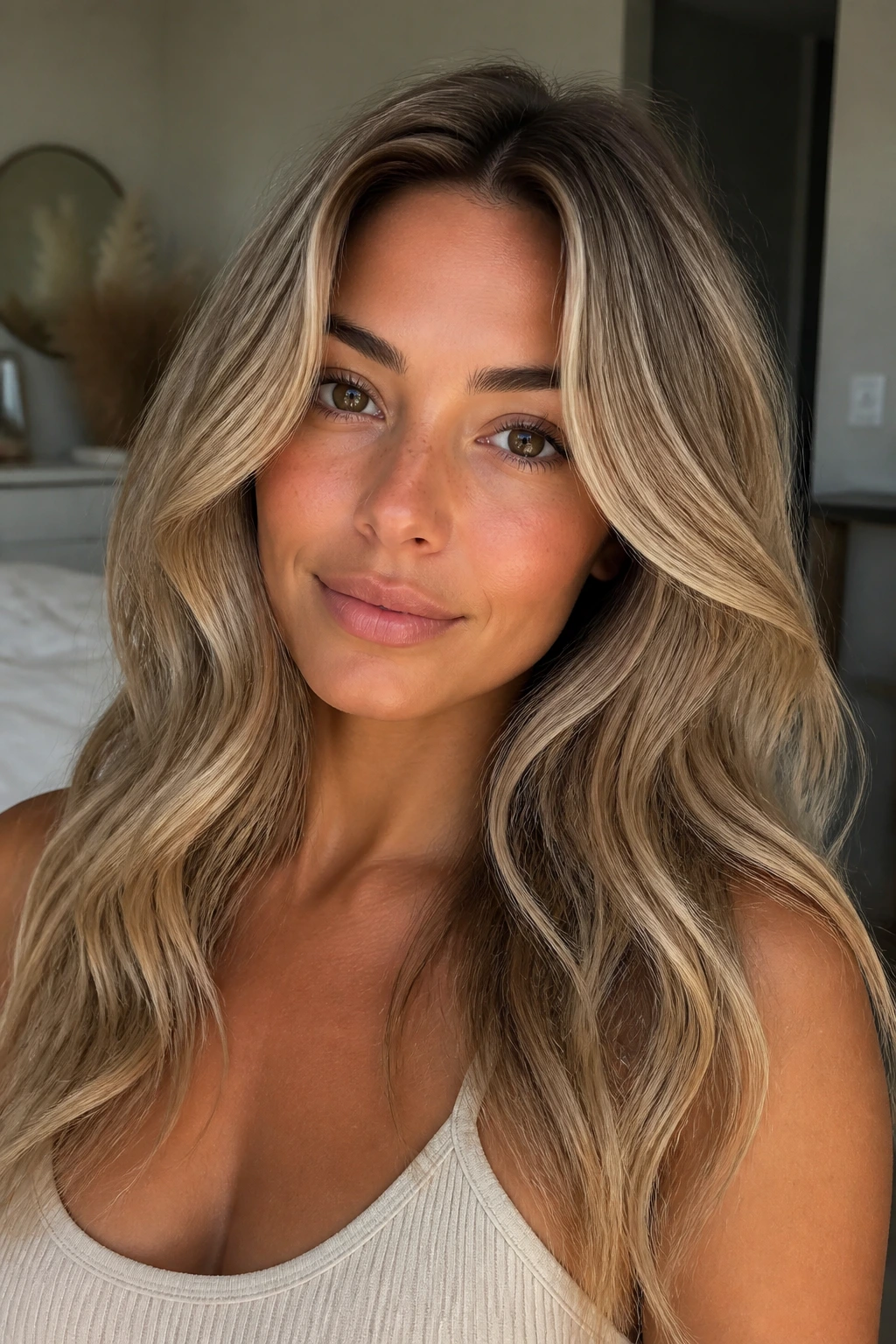
Mushroom-to-Beige Blend: If mushroom blonde feels too cool, add a little beige through the mids. It keeps the smoky effect but stops the hair from reading flat on warmer tan skin.
Champagne Brightener: Keep the base neutral and brighten only the face frame with champagne ribbons. That gives you lift without going full platinum, and it’s a smart move if you want the skin to look fresher.
Low-Maintenance Root Melt: Push the root shadow a little deeper and keep the highlights mostly from eye level down. This version stretches longer between salon visits and still looks intentional.
Soft Beige Curly Edit: On curly or coily hair, ask for thicker highlight ribbons instead of fine slices. Bigger pieces show up better in texture and keep the blonde from disappearing inside the curl pattern.
Short-Cut Switch: Any of the longer looks here can be shortened into a bob or pixie with the same neutral color family. The tone stays the same, but the haircut gives the face a cleaner frame.
Tools and Products That Make Styling Easier
- Color-safe shampoo: Keeps neutral blonde from fading too fast and helps the tone stay clean.
- Purple shampoo: Use lightly when yellow starts creeping in; too much can dull beige tones.
- Sulfate-free conditioner: Helps keep the cuticle smoother, which matters when the hair is lightened.
- Heat protectant spray: Non-negotiable before blow-drying, curling, or flat ironing.
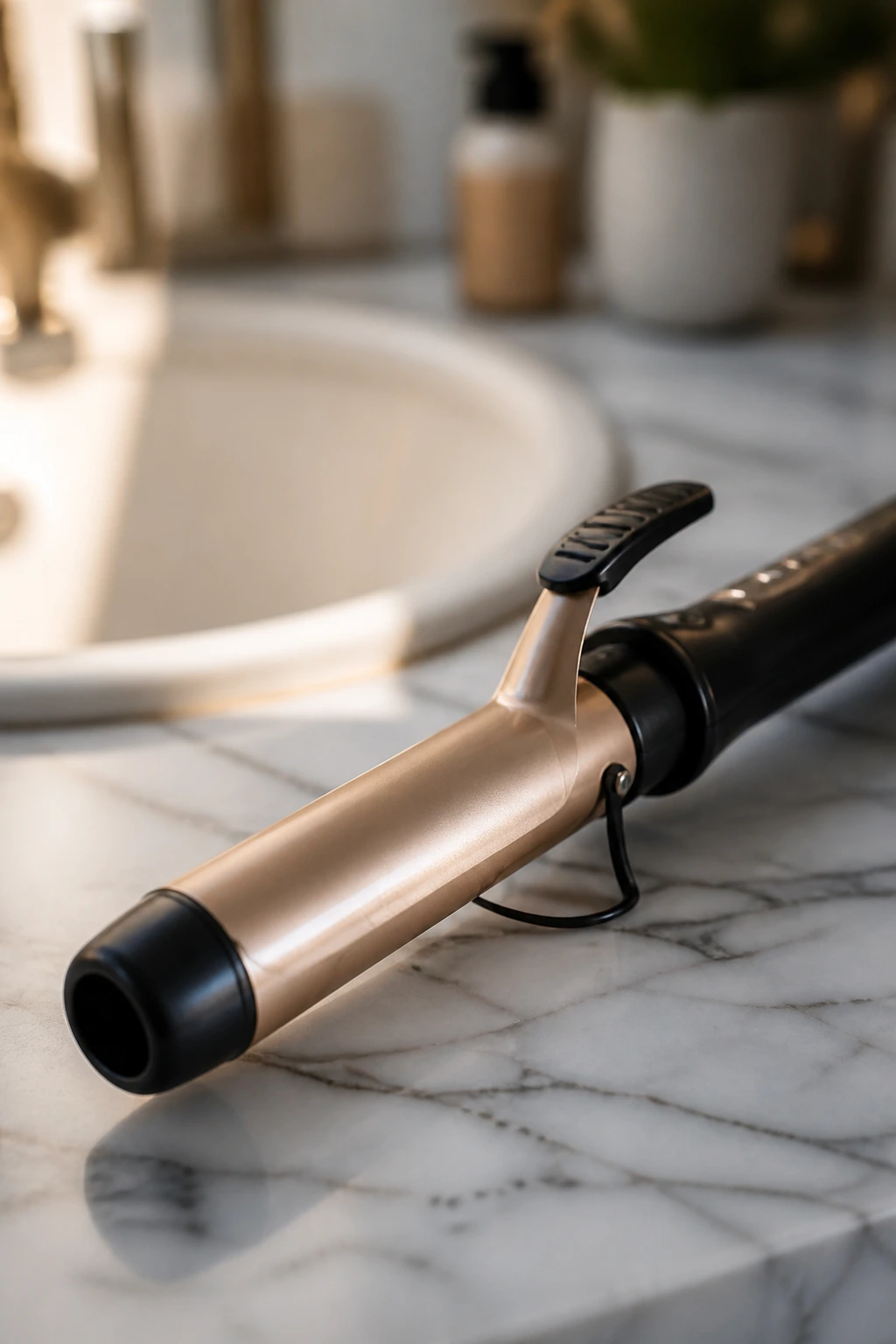
- 1.25-inch curling iron or wand: Best for soft waves, brushed-out curls, and face-framing bends.
- Round brush: Useful for blowouts, crown lift, and smoothing the ends.
- Wide-tooth comb: Gentle detangling without pulling out the wave pattern.
- Sectioning clips: Make highlights, blowouts, and braids easier to manage.
- Satin pillowcase: Helps reduce friction so blonde ends stay smoother.
- Light gloss or shine spray: Adds reflection without making the hair greasy.
Keeping the Color Fresh Between Appointments
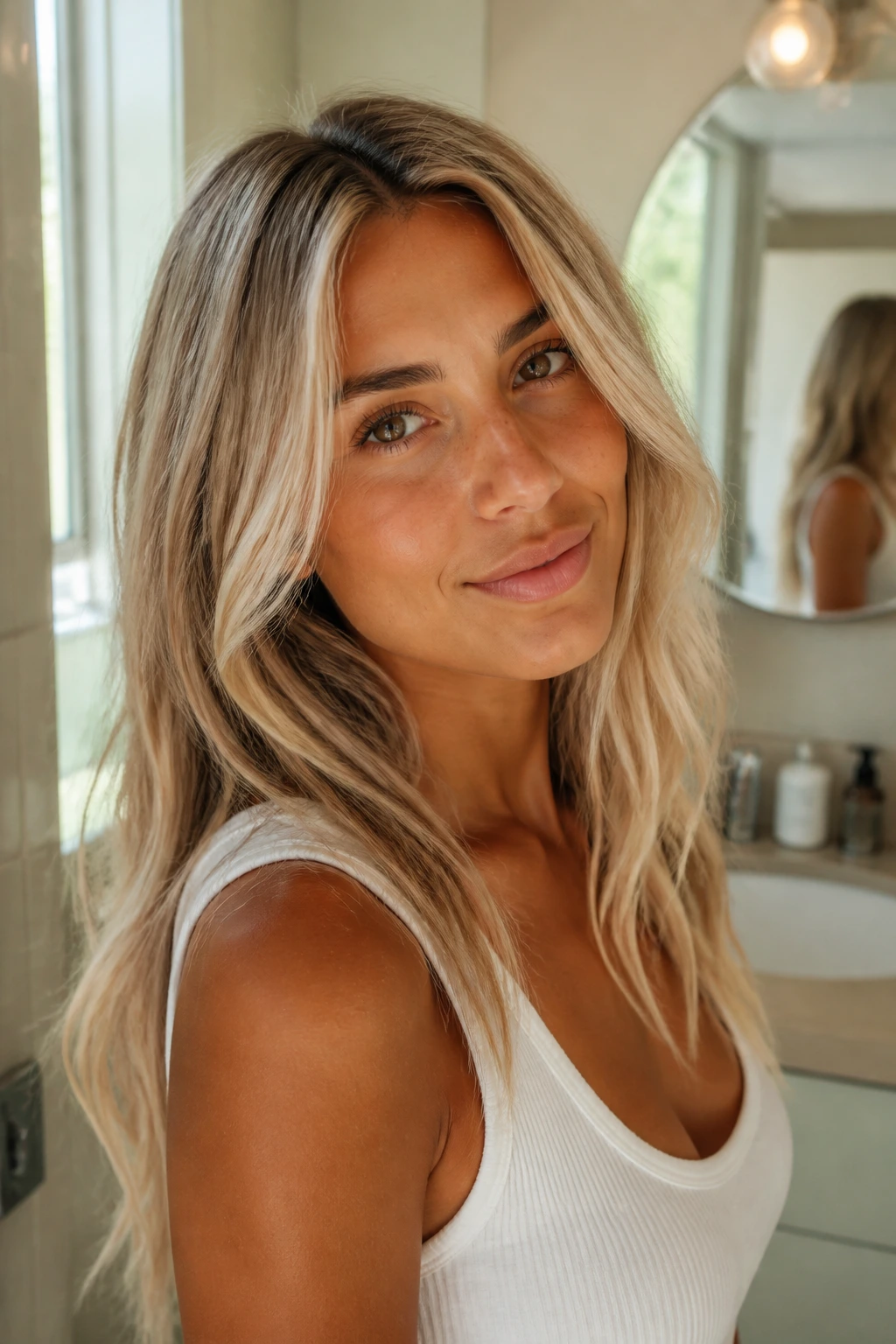
Neutral blonde looks best when the tone stays soft and the cut stays shaped. Most people do well with a gloss or toner refresh every 4-6 weeks if the blonde is light, or every 6-8 weeks if the base is deeper and the grow-out is intentional. Root touch-ups usually land in the 8-12 week range, though root-melt styles can stretch a little longer.
Wash less often if you can. Two to three shampoo days a week is enough for many people, especially if you use dry shampoo at the roots. When you do wash, keep the water lukewarm rather than hot. Hot water opens the cuticle and seems to drag the tone out faster, which is annoying and avoidable.
If you use heat a lot, the ends will show it first. A trim every 8-10 weeks keeps long layers from looking scraggly and keeps bobs from losing their shape. One more thing people skip: if you swim, wet the hair with clean water first and add leave-in before the pool. Chlorine is rough on neutral blonde, and it can tip beige tones toward weird greenish-yellow fast.
Frequently Asked Questions
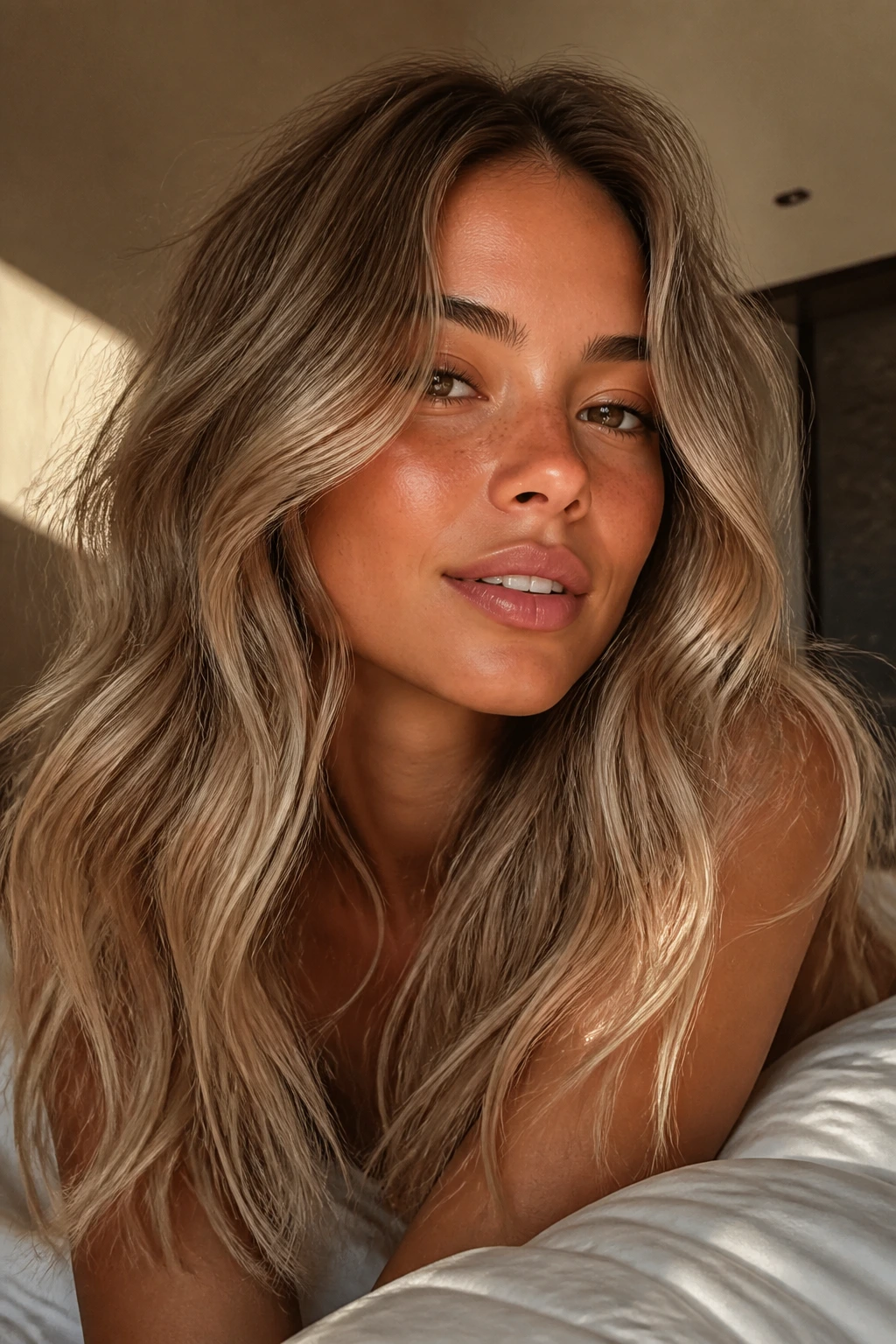
What blonde shade looks best on tan skin?
Beige blonde is the safest starting point, with mushroom blonde and champagne blonde close behind. If your tan leans olive, go a little cooler; if it leans golden, keep more beige in the formula.
Is ash blonde too cool for tan skin?
Not always, but full ash can flatten warmer tan complexions if the haircut has no movement. Ash-beige or smoky blonde usually works better because it keeps the tone clean without draining the face.
Can tan skin wear platinum blonde?
Yes, but it usually needs a shadow root and a soft cut so it doesn’t look stark. A neutral platinum with pearl-beige notes is easier to wear than a very white, icy blonde.
Do I need highlights, or can I go all over blonde?
Highlights are easier to live with if you want dimension and a softer grow-out. All-over color can work, but it needs a root shadow or deeper lowlights so tan skin doesn’t end up looking disconnected from the hair.
How often should neutral blonde be toned?
Most people need a gloss or toner every 4-6 weeks, though deeper beige blondes can often wait a bit longer. If the hair starts turning yellow or smoky in the wrong way, it’s time to refresh.
What if my hair is dark brown and I want one of these looks?
Start with a balayage or face-frame highlight plan rather than trying to jump straight to all-over blonde. Tan skin can handle the lighter result, but the hair will usually look better if the lift is gradual and the root stays darker.
Which cut makes neutral blonde look thickest?
A blunt bob or a collarbone lob usually makes the hair look denser because the ends stay clean. If you want length, long layers with a root shadow are the next best thing.
How do I stop blonde from turning brassy?
Use sulfate-free shampoo, tone only when needed, and keep heat styling gentle. Beige and mushroom blondes also stay cleaner when you avoid over-washing and use a gloss before the color gets too warm.
The Soft Beige Sweet Spot
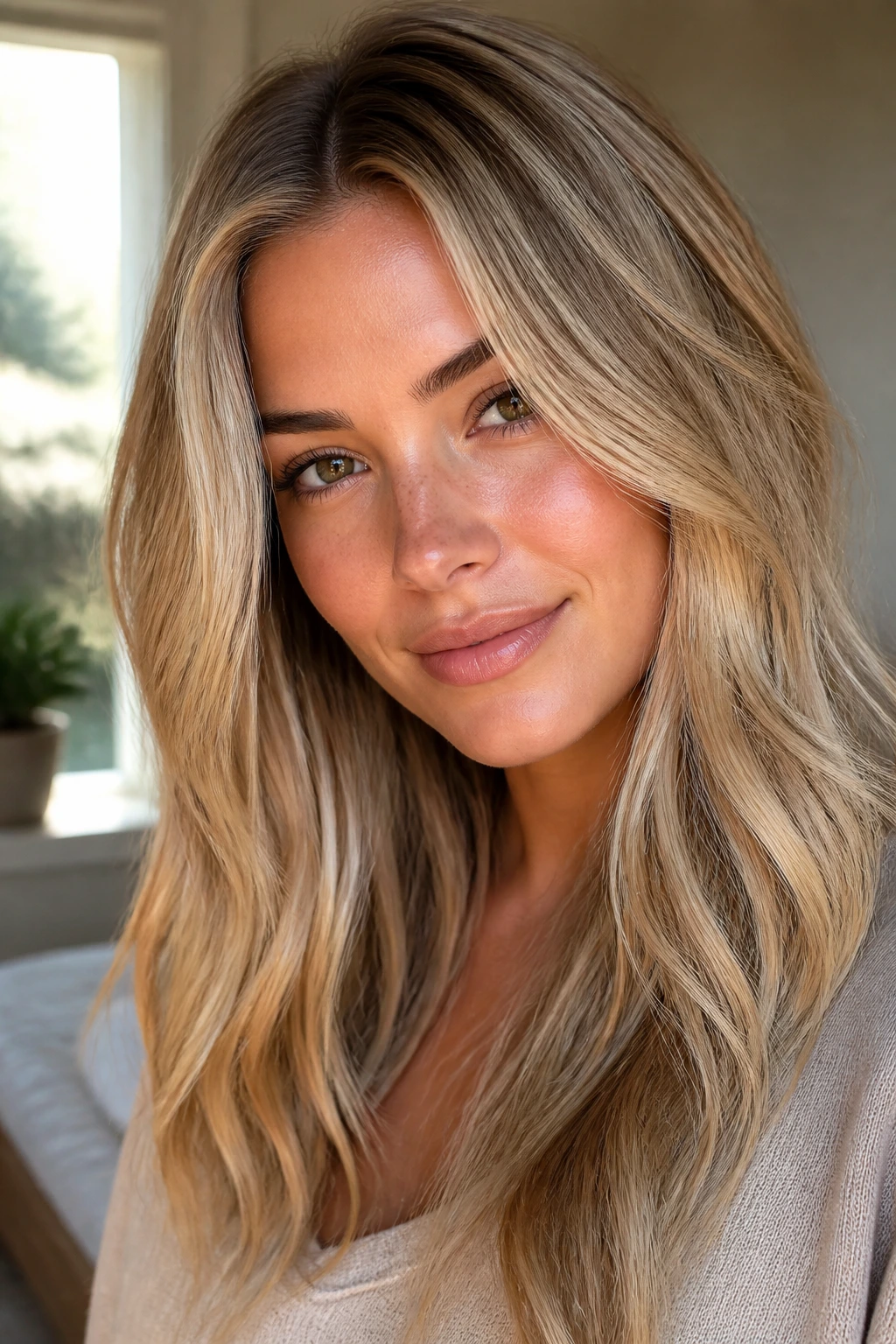
The smartest blonde on tan skin is usually not the lightest one in the room. It’s the one with a little shadow at the root, a little beige through the mids, and a haircut that knows where to put the movement. That combination keeps the skin looking warm and the hair looking expensive without leaning too hard in any direction.
If your old blonde felt too yellow, too white, or too dull, the fix may be simpler than you think. Shift into the neutral lane, keep the shape clean, and let the tone support your skin instead of competing with it. The right version looks calm on purpose. And that’s the part worth chasing.