



Wavy hairstyles for curly hair and heart-shaped faces work best when the cut stops fighting the face and starts balancing it. A heart-shaped face usually gives you a wider forehead, strong cheekbones, and a narrower chin, so the wrong shape can make the top half feel louder than the rest. Put too much volume at the crown and the whole style tips upward. Put a little movement at the jaw, though, and the face suddenly looks calmer and more even.
That’s why a lot of generic “curly hair inspo” falls flat here. A style can be pretty and still be wrong for your face. I’ve seen plenty of waves that looked fine from the back and then went a little odd from the front because the shortest layer sat too high, or the fringe ended exactly where the face already narrows. Small choices. Big difference.
The sweet spot is usually a mix of softness and direction: side parts, curtain pieces, collarbone lengths, jaw-skimming ends, and layers that start low enough to let the hair fall instead of puffing outward. Wavy and curly texture already brings movement, so the real trick is deciding where that movement should live. The 25 styles below cover short, long, polished, undone, and somewhere-in-between looks, so you can pick the shape that suits your hair instead of forcing your hair into the shape someone else photographed well.
Why These Styles Earn Their Keep
-
They move the eye downward. Side parts, face-framing pieces, and jaw-level texture keep a heart-shaped face from reading top-heavy.
-
They let texture do the balancing. Loose bends and curls create width where the face narrows, which is exactly the part that needs help.
-
They don’t require glassy-straight ends. A little frizz, a little bend, a little imperfect curl clump often makes these looks better, not worse.
-
They work at different lengths. Short bobs, mid-length lobs, and long layers can all flatter the same face shape if the layers start in the right place.
-
They survive second-day hair. Several of these styles look better after the product sets and the wave pattern settles.
-
They are easy to tweak. Change the part, pin one side, or shift where the front layers fall and the whole silhouette changes fast.
1. Side-Parted Loose Waves
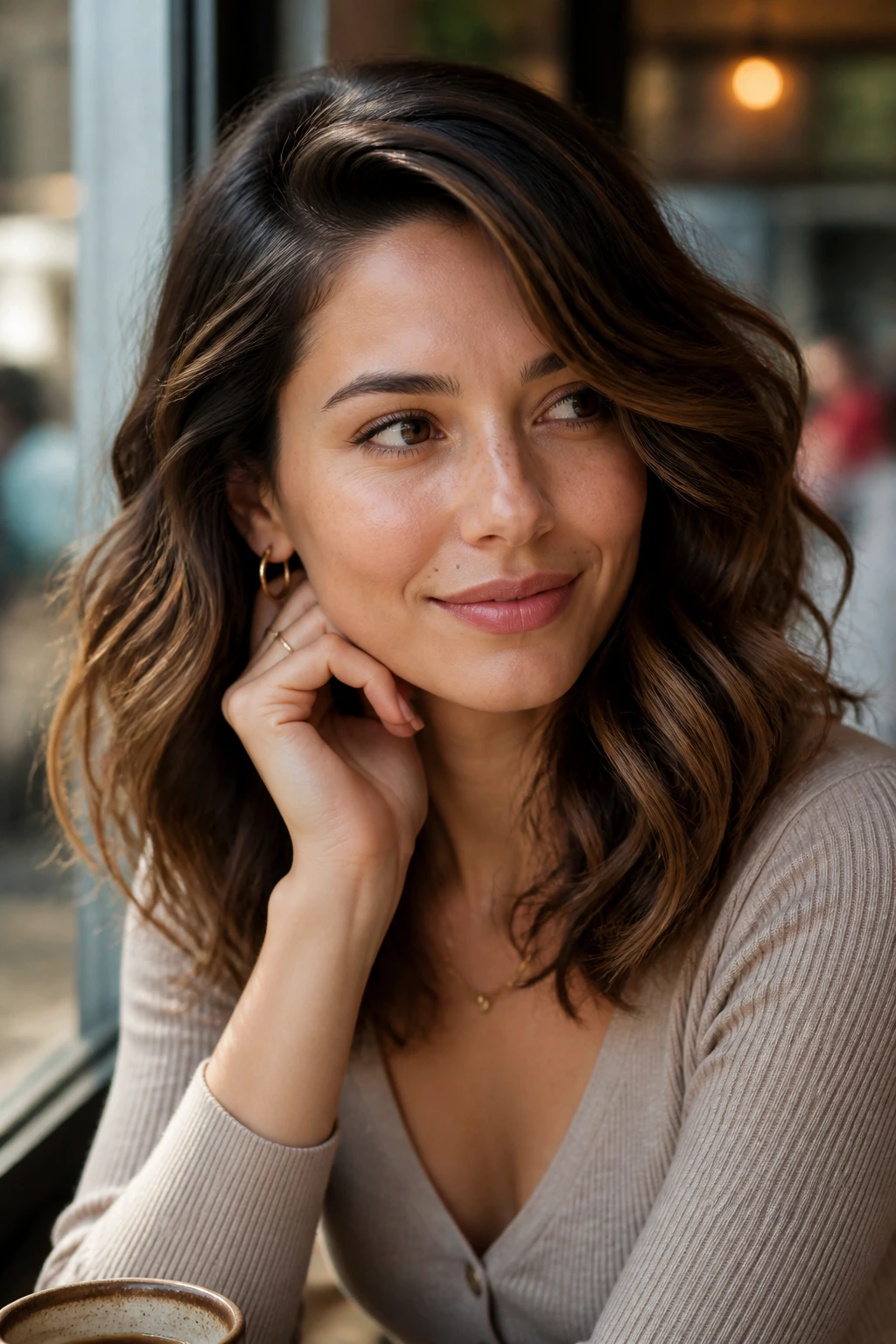
A deep or even moderate side part is one of the fastest ways to quiet a broad forehead on a heart-shaped face. The line itself creates a diagonal, and diagonals are your friend here. They pull the eye down and across instead of letting it sit and stare at the widest part of the face.
Keep the waves loose, not brushed into a cloud. I like this look best when the front pieces land around the cheekbone or just below it, with the rest grazing the collarbone. If your hair is naturally curly, diffuse until it’s about 80 percent dry, then let the last bit air-dry so the pattern stays soft instead of puffy.
Why It Works
The side part gives the style shape before the first wave even shows up. That matters. A heart-shaped face can handle volume, but it usually looks better when that volume sits below the temples rather than right on top of them. Ask for long layers, not choppy ones, so the bend stays smooth.
A light mousse at the roots and a pea-sized curl cream through the ends is usually enough. Too much product here weighs the waves down and kills the movement that makes the style look expensive without trying too hard.
2. Curtain Bangs and Collarbone Waves
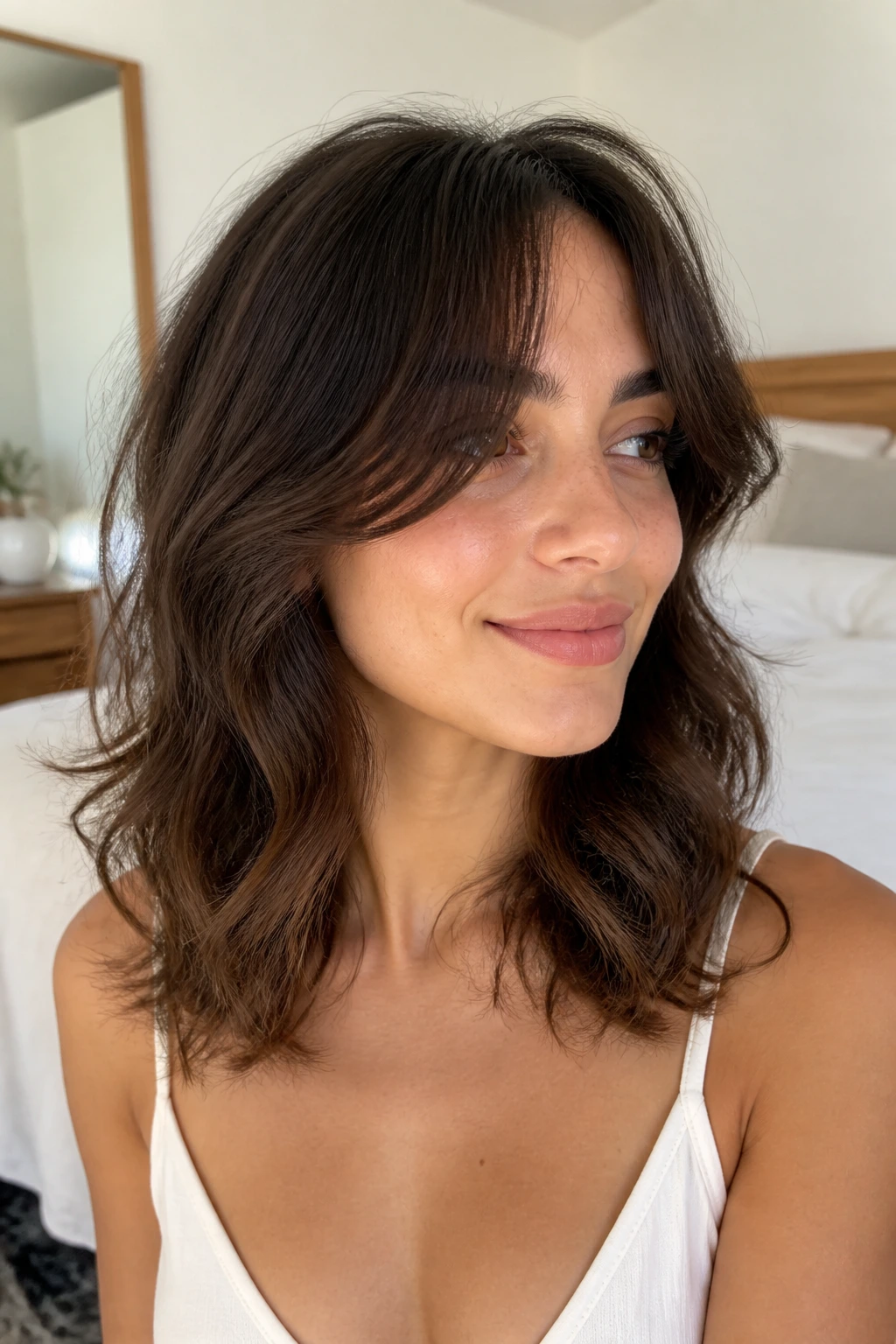
Curtain bangs are the obvious answer for a reason: they break up forehead width without boxing the face in. On curly or wavy hair, the better version is not a blunt, heavy fringe. It’s a split fringe that starts near the bridge of the nose and opens at the cheekbones.
Pair that with collarbone-length waves and you get a shape that feels soft around the top and fuller where the face narrows. I like this cut especially when the front layers are a touch longer than the bangs themselves. That little overlap keeps the style from feeling chopped up.
Styling Note
Dry the bangs first, or at least separate them from the rest of the hair while diffusing. If they dry in the wrong direction, they’ll fight you all day. A round brush can help, but so can your fingers if the wave pattern already knows where it wants to go.
3. Chin-Length Curly Bob with Soft Ends

A chin-length bob can work on a heart-shaped face, but only if the ends are soft and the shape has room to breathe. I am not a fan of a hard, blunt bob that stops right at the jawline here. That can make the chin look sharper and the forehead look wider by comparison.
The better version sits at or just below the chin, with a little taper at the ends and enough texture to keep the outline from turning boxy. On curly hair, this cut looks best when it’s shaped dry, curl by curl, so the stylist can see where each coil springs.
What to Ask For
Ask for a bob that preserves width around the lower face. If your curls spring up a lot, you may want the initial cut to look a half-inch longer than the final shape you want. That saves you from ending up with a bob that bounces into the jaw and stays there.
4. Long Face-Framing Layers
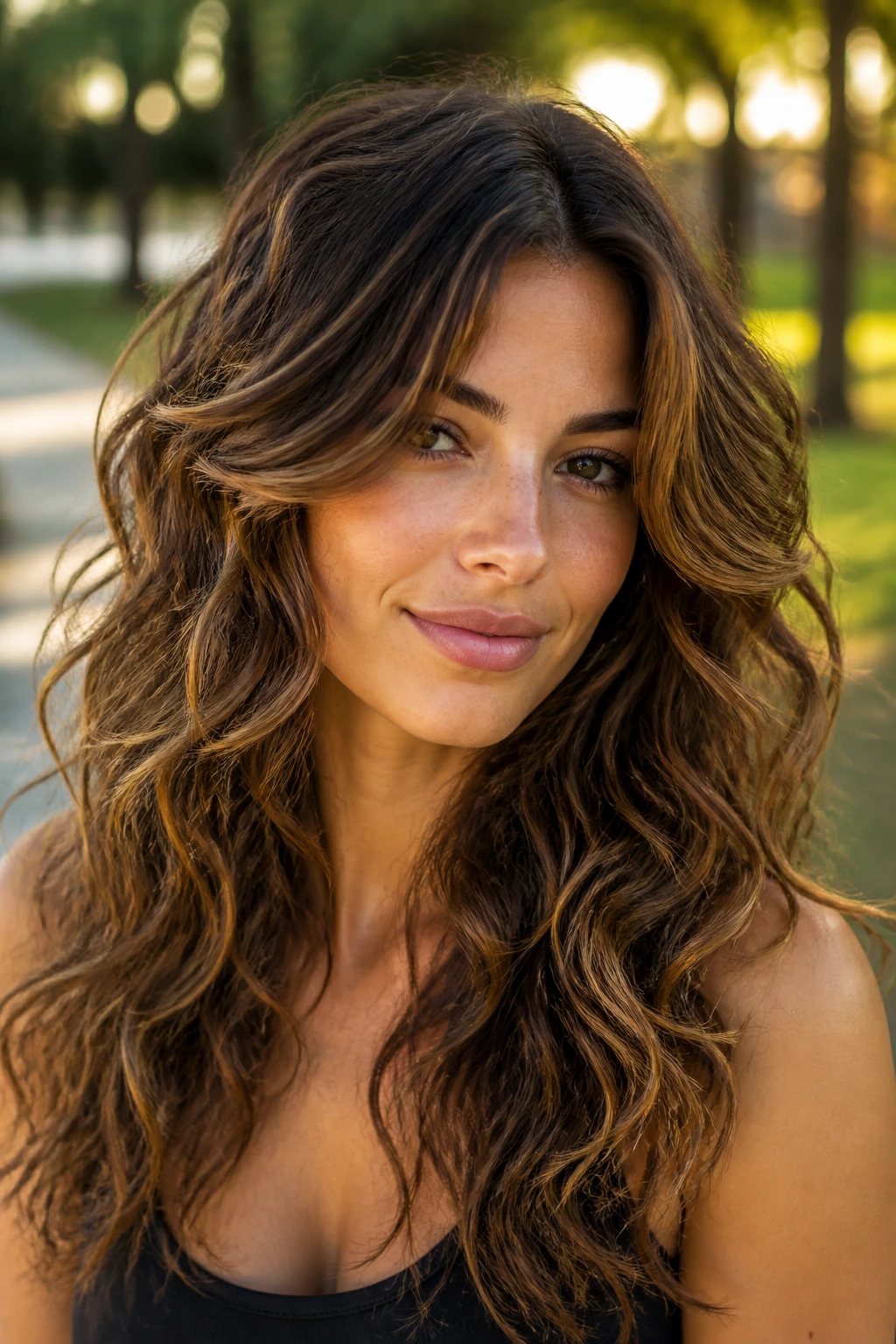
Long hair on a heart-shaped face needs a little help, or it can hang straight down and ignore the face entirely. Long face-framing layers fix that. The key is placement: the shortest layer should start around the cheekbone, lip, or just below the nose, not high up near the temples.
That gives the face a soft border without stealing too much density from the back. On wavy hair, these layers create movement when you walk. On curly hair, they prevent the bottom from turning into a heavy curtain.
Good to Know
If your hair is thick, ask for internal layers rather than a lot of surface chopping. You want shape, not holes. Too much texture at the surface can make the ends look thin even when the overall hair is dense.
5. Half-Up Twist with Loose Tendrils
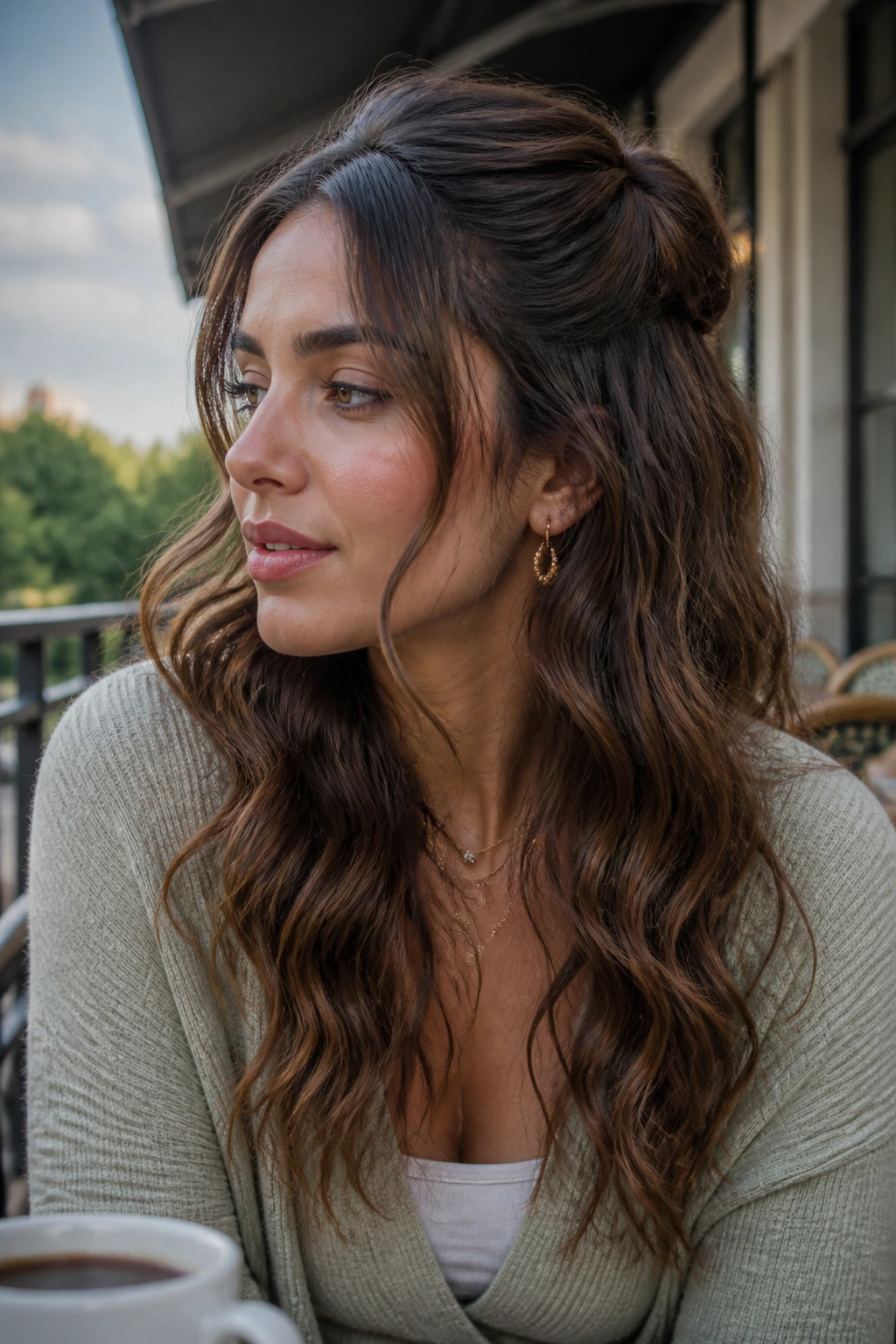
A half-up twist is one of those styles that looks more deliberate than it actually is. Pulling the top half back opens the face, which is nice for heart-shaped faces, but the trick is leaving a few loose pieces near the temples and jaw. Those tendrils stop the style from reading too severe.
This works especially well when the waves are second-day soft. Freshly washed hair can be a little too slippery for a twist to hold. Hair with some grip stays put and gives the style a lived-in finish that feels less like a prom updo and more like a smart, easy choice.
A couple of flat clips or small clear elastics are enough. Don’t yank the front sections tight. That defeats the whole point.
6. Deep Side Part with Glam Waves
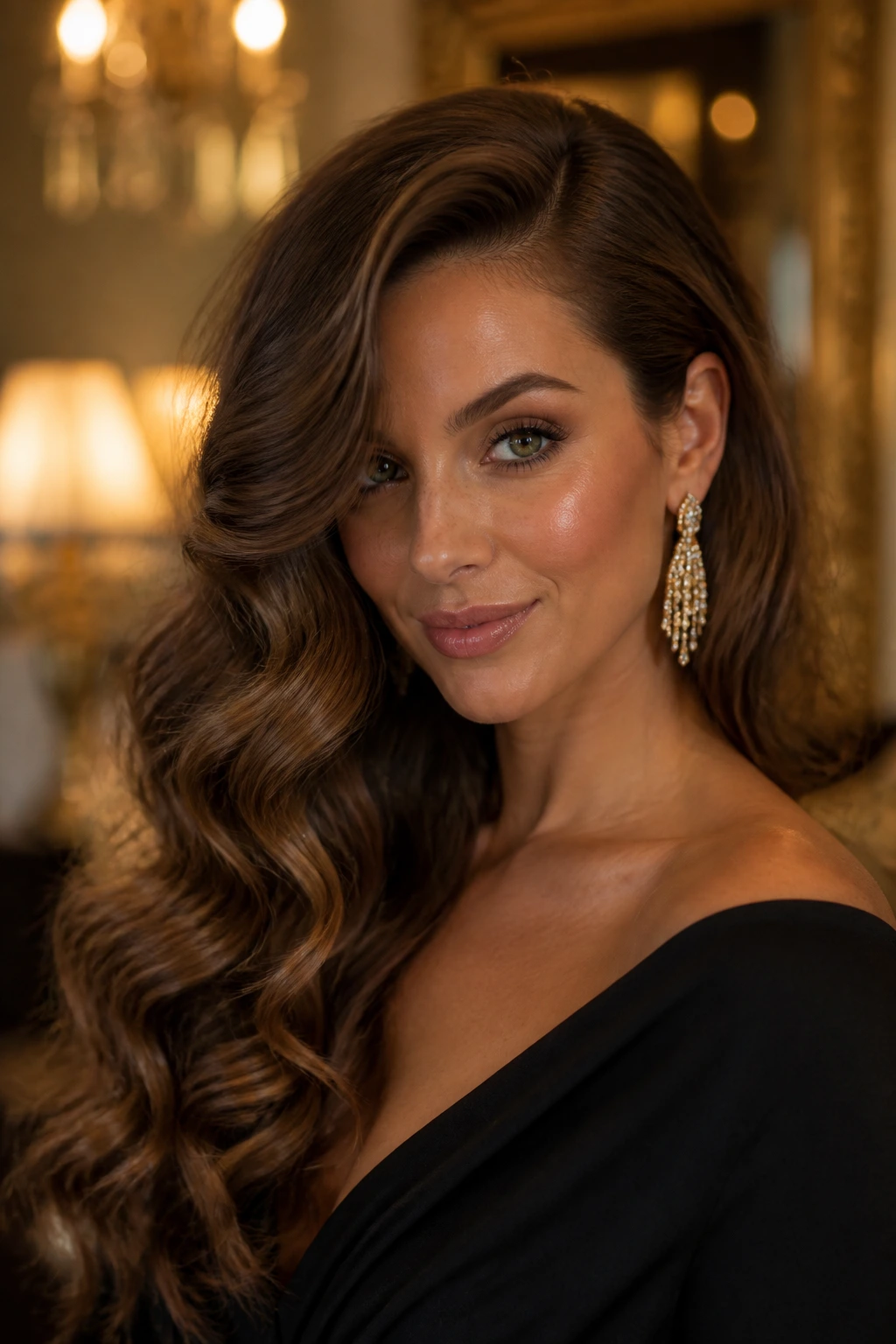
This is the dressier cousin of the loose side-parted wave, and it has a little attitude. A deep side part creates a strong line across the forehead, then the waves sweep across the face in one long curve. On a heart-shaped face, that sweep is doing real work: it softens the width at the top and gives the lower face more visual weight.
I like this style brushed out just enough to show an S-wave, not a puffy halo. A curling wand around 1 to 1.25 inches helps, especially if you alternate the direction of the curls and then pin them until they cool. That cooling step matters. Skip it and the wave drops fast.
Best For
This one shines for evening events, photos, or any day you want the front of the hair to do some of the talking. It looks sharp with a single earring on the open side. Small detail. Big payoff.
7. Wolf Cut with Airy Texture
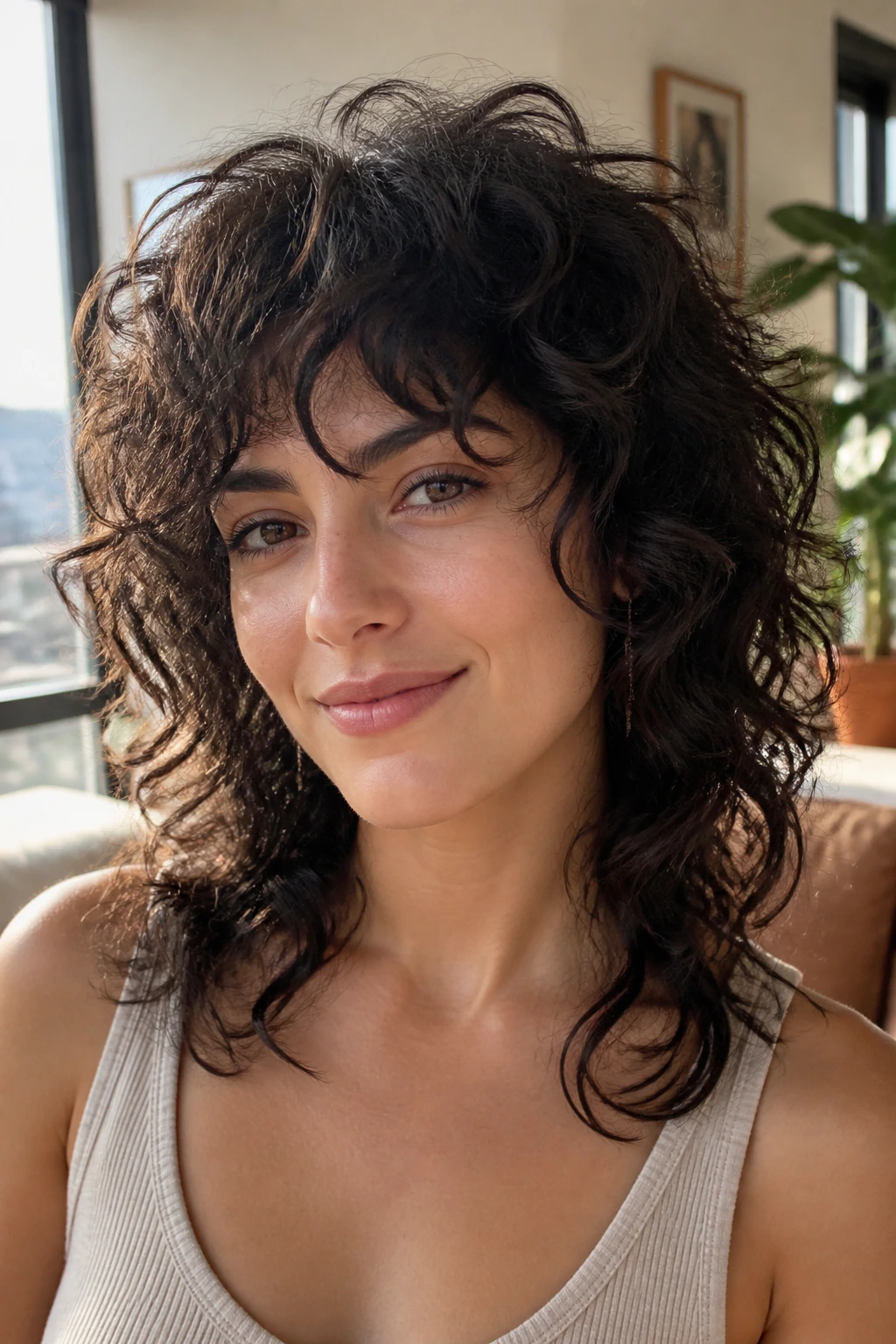
The wolf cut can be messy in the wrong hands, but on curly or wavy hair and a heart-shaped face, the right version is excellent. It builds texture through the mids, not just the crown, so the face doesn’t feel top-heavy. The best wolf cut here keeps the top soft and lets the bulk fall around the cheekbones and jaw.
Do not let someone razor the ends to death. That is how you get frizz that spreads out instead of hair that moves. Ask for airy layers with enough length to keep the outline from turning into a triangle.
Why It Flatters
A heart-shaped face needs width lower down. The wolf cut gives you that without forcing the hair to lie flat. It has a little roughness, which suits curls and waves far better than a cut that demands symmetry every second of the day.
8. Soft Shag with Curly Fringe

A soft shag is the more civilized version of the wolf cut. Less edge. More wearability. The layers are shorter around the face and crown, but not so short that they spike upward. The fringe can sit at the brow or just below it, depending on your curl spring.
This is one of my favorite options for hair that needs movement without looking overworked. It gives you that slightly undone shape that works with a heart-shaped face because it adds interest around the eyes and cheekbones. The face reads softer almost immediately.
If you wear glasses, keep the fringe a little longer so it doesn’t fight the frames. Friction is real. So is a bang that keeps touching your lenses.
9. Clipped-Back Crown with Open Waves
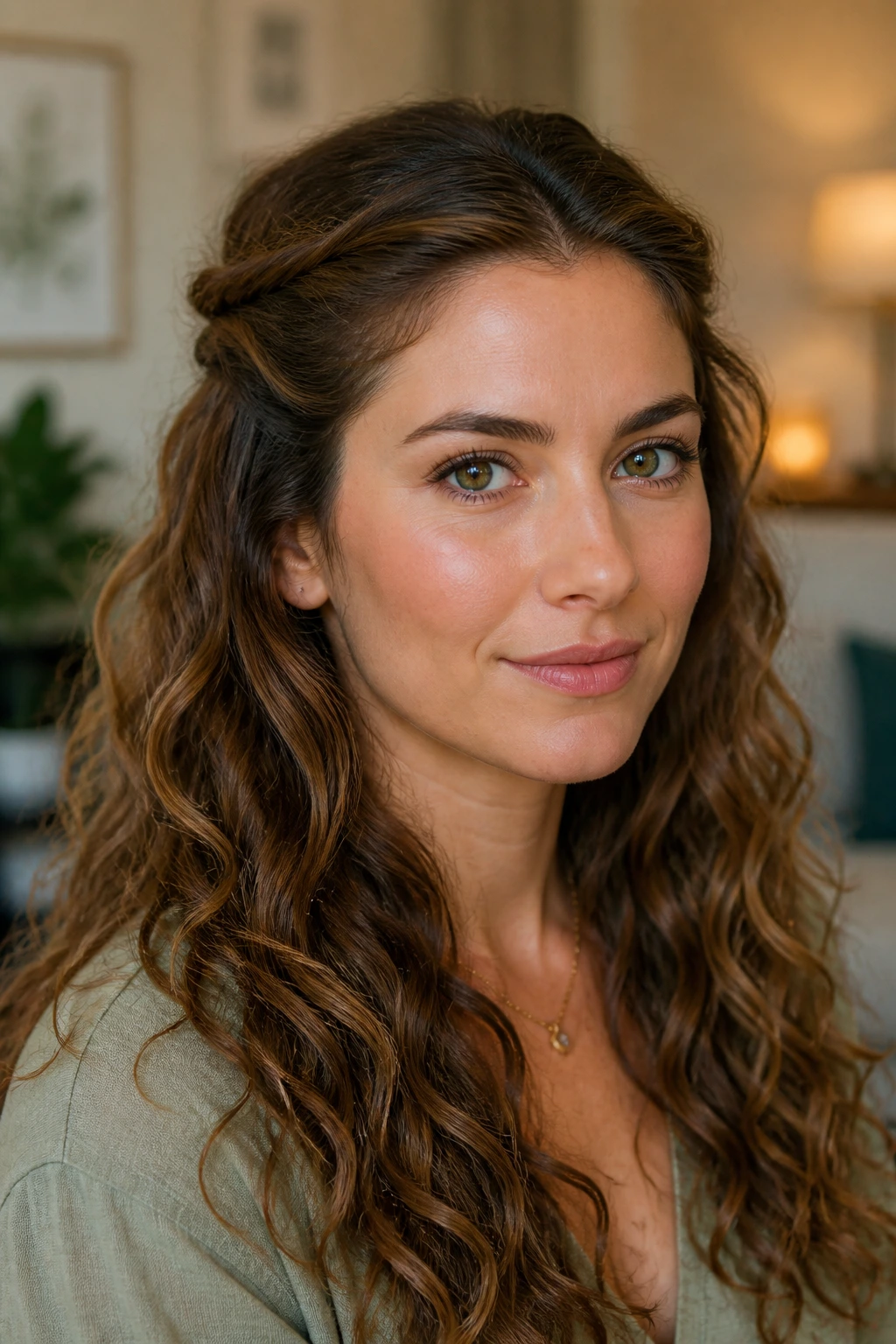
Sometimes the fix is not a haircut at all. A clipped-back crown can change the proportions of a heart-shaped face in about ten seconds. By pulling a small section from each temple back and leaving the rest of the waves loose, you open the forehead without exposing the whole top section.
This works best with wave patterns that already have some bend. If your hair is too straight, it can slip. If it’s too curly, use a matte clip with teeth or two crossed bobby pins so the hold isn’t flimsy.
Tiny Styling Move
Leave a soft piece in front of each ear. That detail keeps the lower half of the face from disappearing into the hair. It’s a small thing, but the visual balance changes fast.
10. Shoulder-Length U-Cut
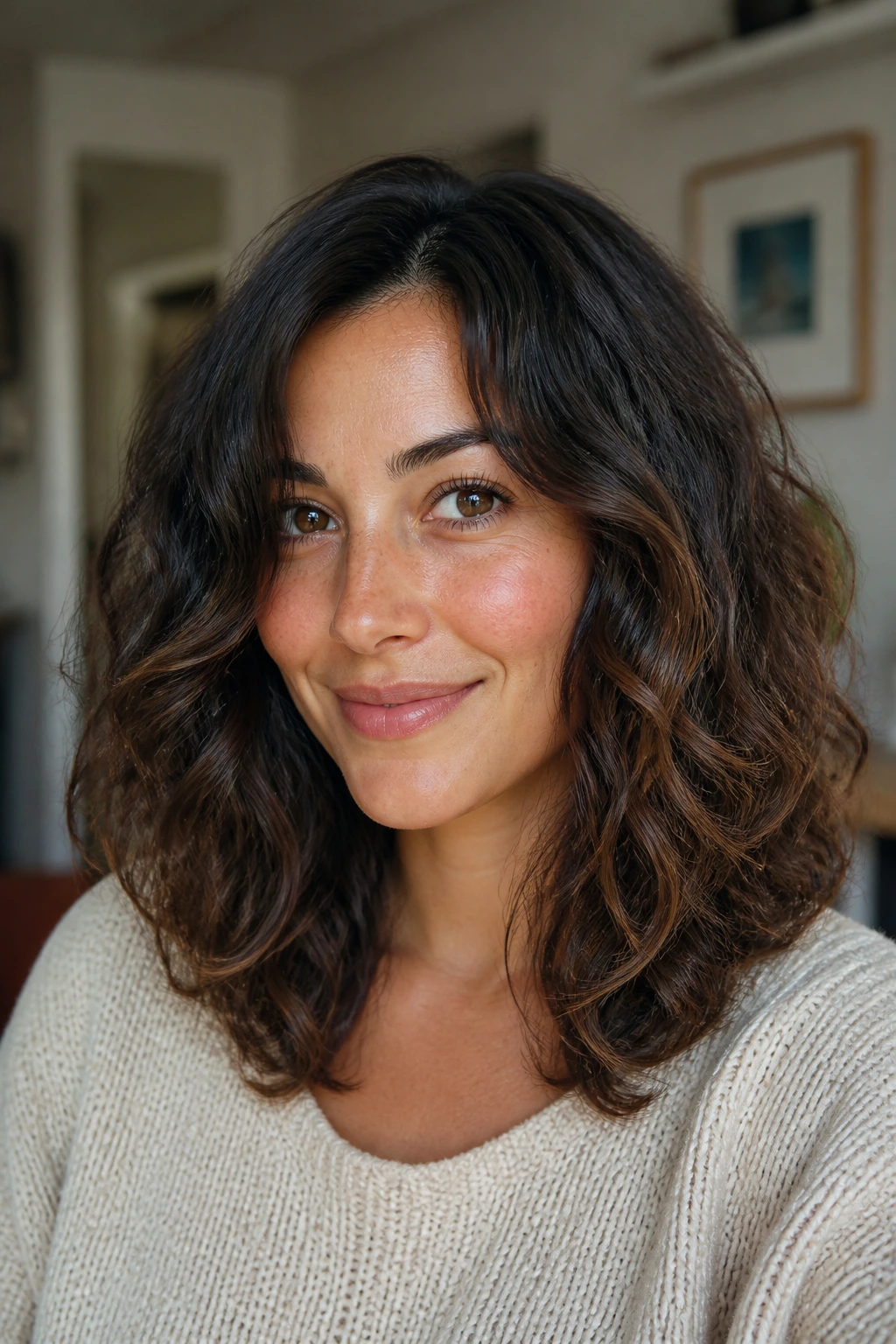
The U-cut is one of those shapes that looks gentle even before you style it. The back keeps its length, while the sides curve down in a soft arc toward the front. On a heart-shaped face, that curve matters because it prevents the style from ending in a blunt horizontal line right at the jaw.
Shoulder length is the sweet spot for many wavy and curly textures. Long enough to move. Short enough to keep the shape visible. A U-cut also lets you tuck one side behind the ear without losing the line of the haircut.
A lot of people ask for layers when what they really want is shape. This is shape.
11. Mermaid Waves with Long Layers
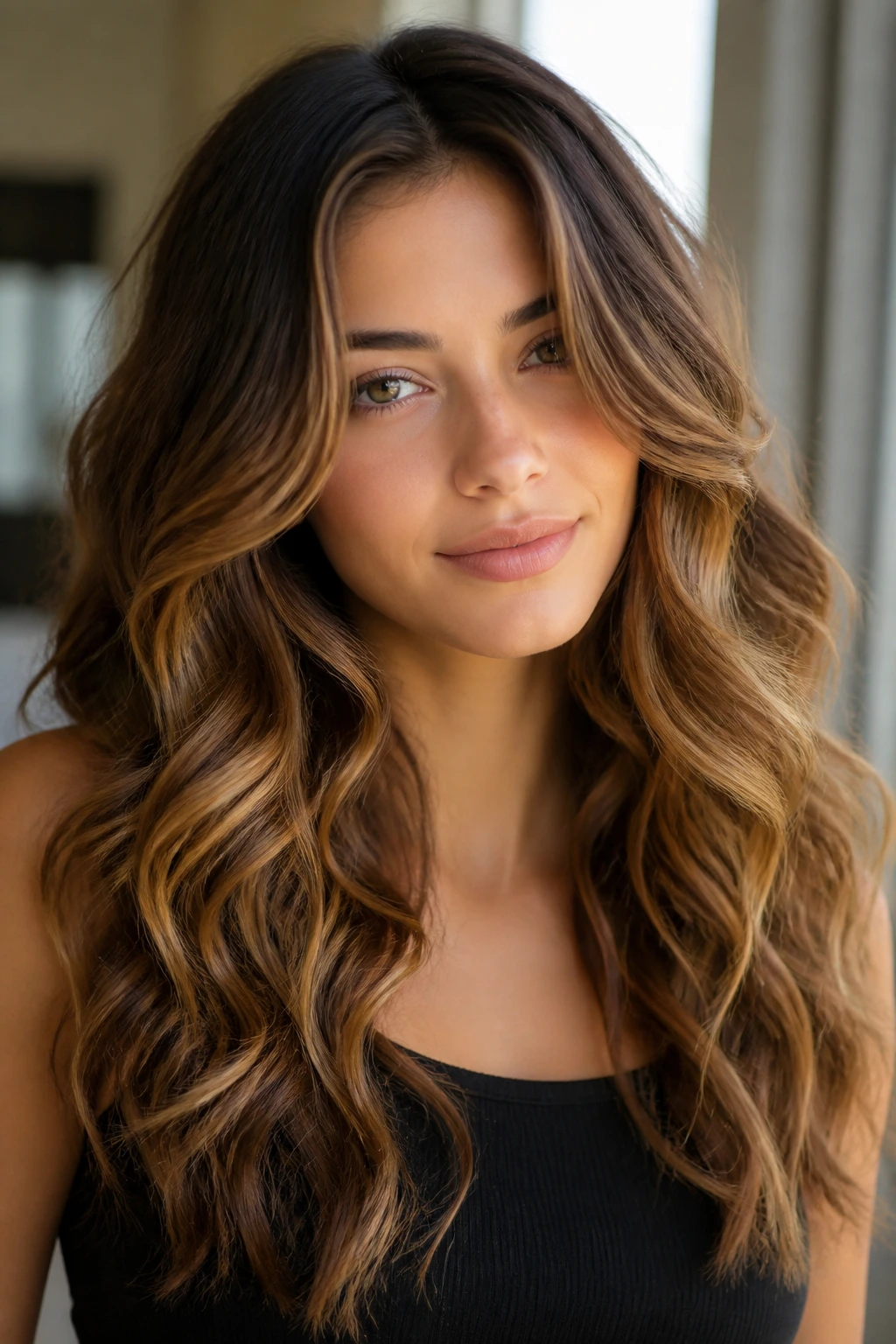
Mermaid waves can look like costume hair if they’re too uniform. The version that works here uses long layers so the waves don’t balloon at the ends. Think soft, mixed movement through the mid-lengths and a slightly fuller finish around the lower third of the hair.
Heart-shaped faces do well with this style because the long wave pattern draws the eye straight down the line of the hair, which balances the narrower chin. It also gives the forehead a less dominant role, which is half the battle with this face shape.
Use a larger wand, around 1.25 to 1.5 inches, or braid-dry the hair if you want the bend to stay soft. Smaller curls can make the style read too busy.
12. Low Ponytail with Wrapped Base
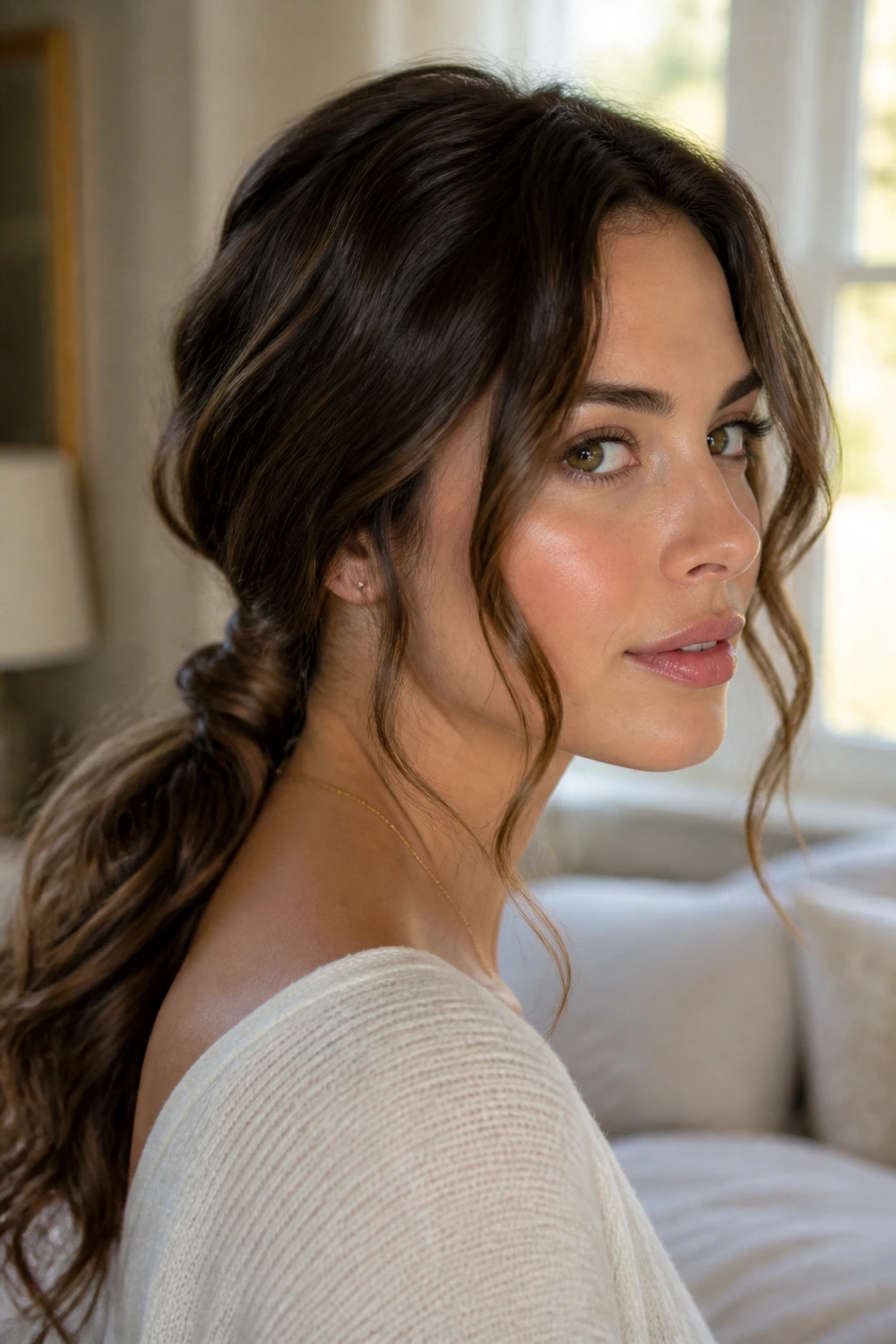
A low ponytail is boring only when it’s done carelessly. On a heart-shaped face, it can be excellent when the hair is parted slightly off-center and the top is kept smooth without being plastered down. The ponytail should sit at the nape, not halfway up the back of the head.
Wrap a strand around the elastic or use a small barrette to hide the tie. Then pull two soft tendrils free near the cheekbones. That keeps the forehead from feeling too open and the jaw from getting lost.
This is the style I reach for when the hair needs to stay put but still look like someone made an actual decision. Simple. Not plain.
13. Braided Crown with Free Ends
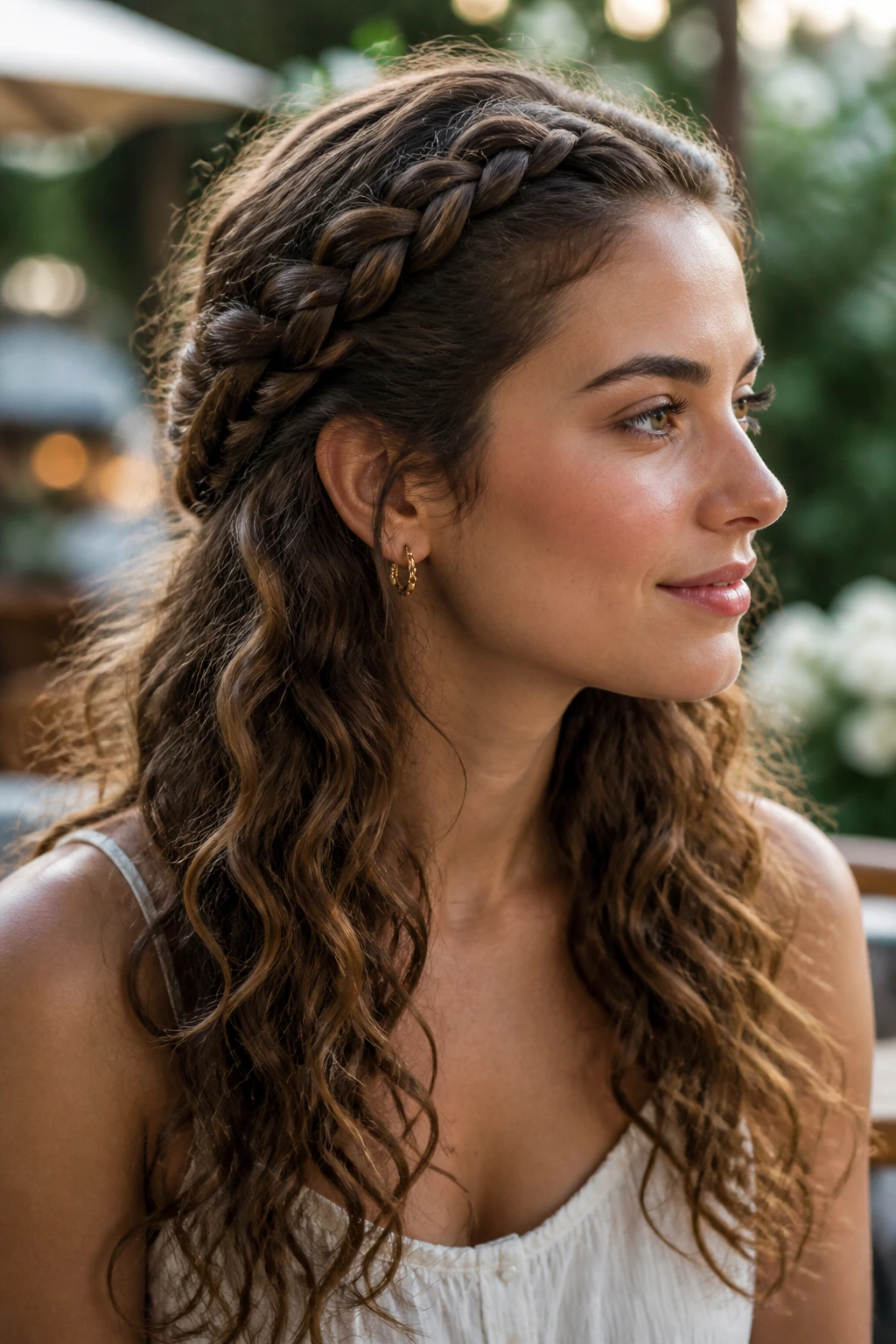
A crown braid can be too much on top if it starts high, so shift it lower and let it travel from just behind the ear instead of from the hairline. That keeps the upper face from becoming the focal point. On a heart-shaped face, that matters more than people realize.
Leave the rest of the waves down in loose ends. The contrast between the braid and the open texture keeps the style from looking stiff. A little fuzz around the braid is fine, even helpful. Perfect braids on curly hair can look unnaturally hard.
Pro Move
Pancake the braid gently by pulling the outer loops wider. Do not overdo it. Two or three small tugs are enough to make the braid feel softer without collapsing it.
14. Asymmetrical Lob
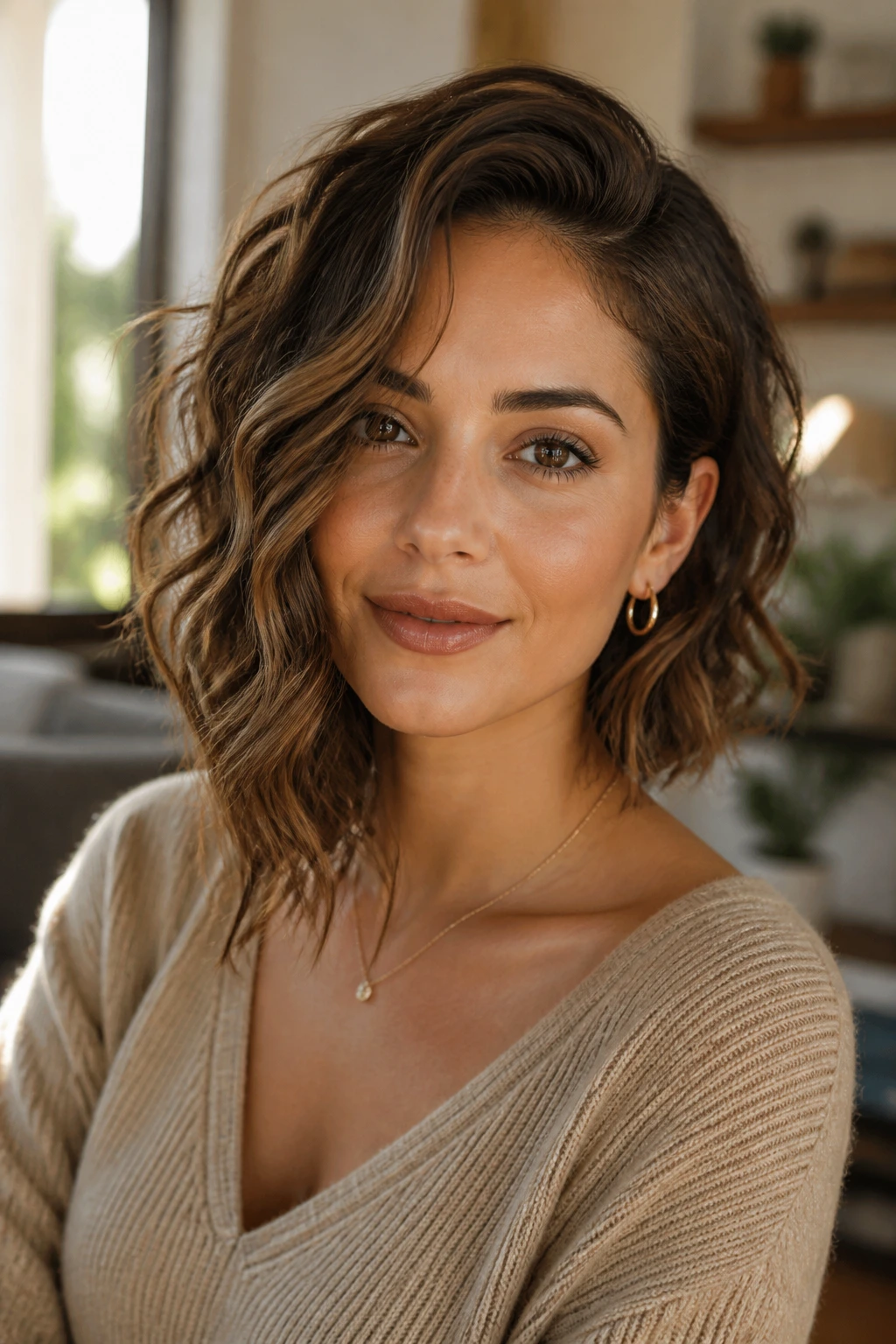
An asymmetrical lob gives you movement with intention. One side lands a little longer than the other, which creates a diagonal shape across the face and gives a heart-shaped face a more balanced outline. The difference does not need to be dramatic; even half an inch can change the way the cut reads.
This style is especially good if your waves have one side that tends to fall flatter than the other. The asymmetry feels designed rather than accidental. It also looks good tucked behind one ear, which lets you show off a necklace or a pair of earrings without needing a full updo.
If you like your hair with a little edge but not too much drama, this is a nice middle ground.
15. Diffused Pixie-Bob
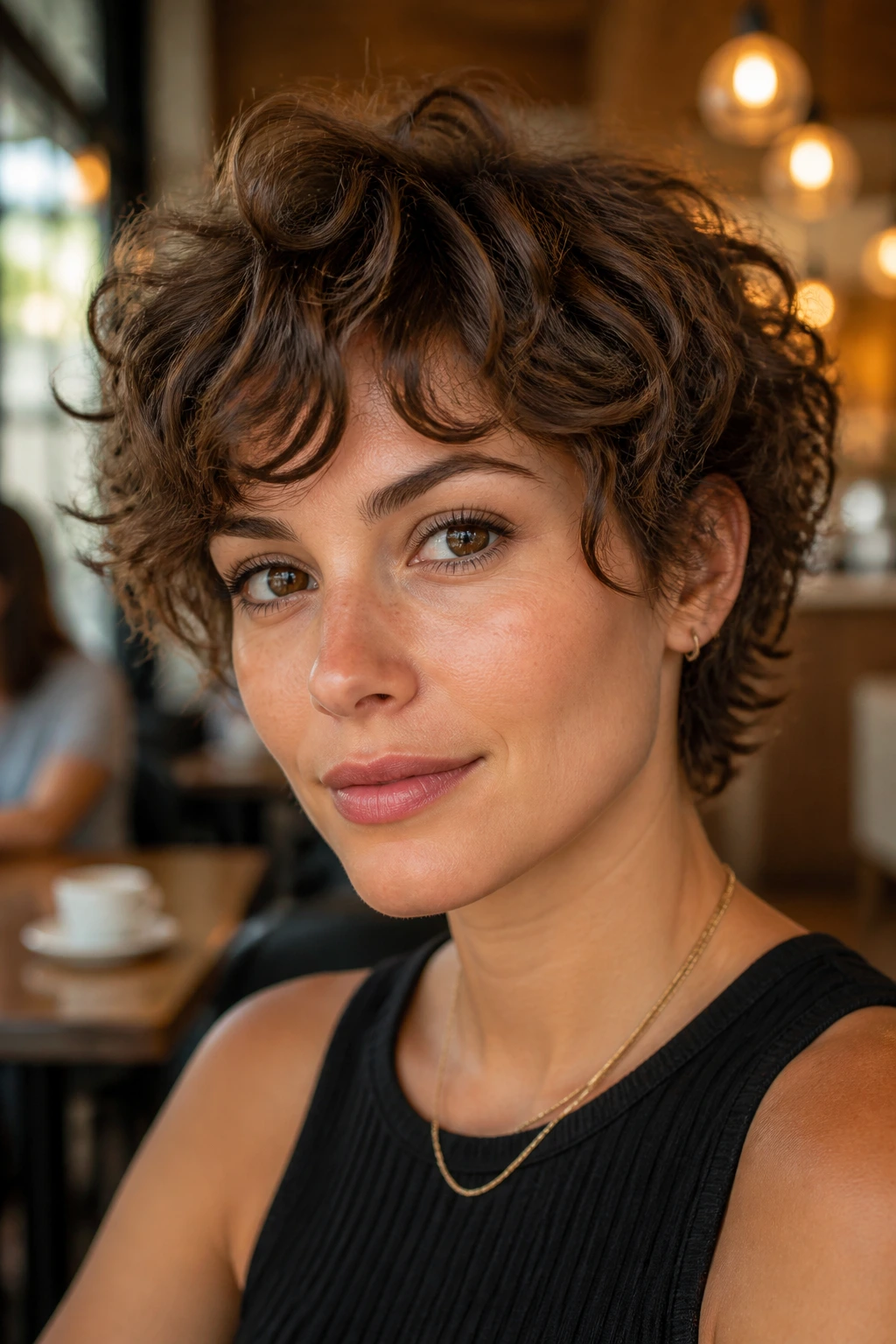
Short hair on a heart-shaped face is all about placement. A diffused pixie-bob keeps length on top and around the front while tapering the nape so the cut doesn’t puff out in the wrong places. It’s short, yes, but it still respects the face shape.
The front should stay soft enough to sweep sideways or forward. That’s the part that keeps the forehead from feeling exposed. If your curls are springy, the shape should be cut a touch longer than you think; short curly pieces can bounce up more than expected.
This is not a wash-and-go if you want it polished. A little cream, a little mousse, and a diffuser make the difference between cute and chaotic.
16. Flipped-Ends Lob
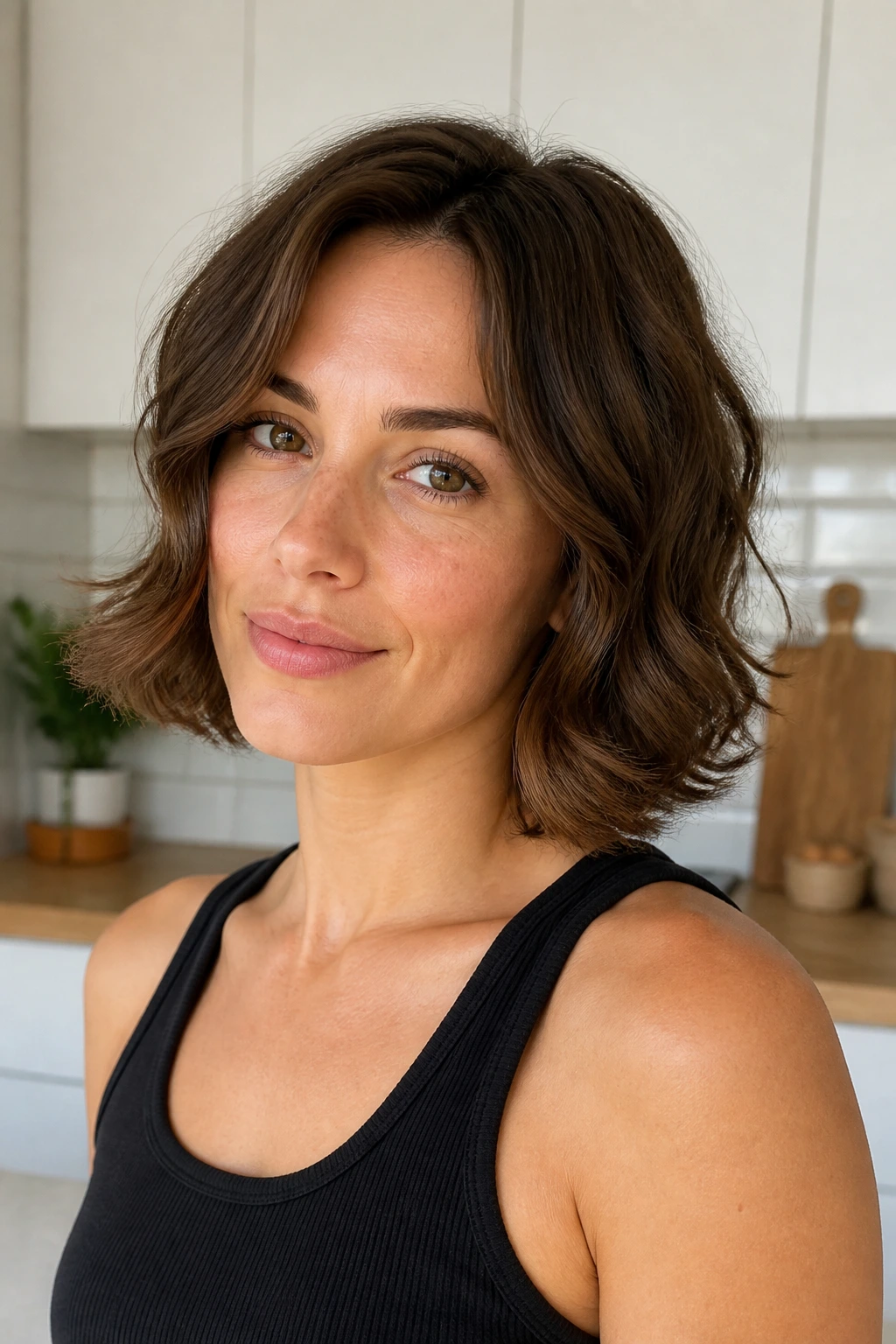
A lob with flipped-out ends has a bit of old-school charm, but it works here for a very practical reason: it adds visual width near the shoulders and jawline. That helps a heart-shaped face feel more anchored at the bottom.
Keep the waves loose through the mid-lengths, then bend the ends out with a round brush or a large iron. The shape should look playful, not puffy. If your hair is already naturally wavy, you may only need to flip the last inch or so.
What Makes It Different
Most lobs hover around the same level all the way around. The flipped-end version adds motion to the perimeter, which is exactly where a narrower chin benefits most. It’s a small adjustment that changes the whole silhouette.
17. Wet-Look Side Sweep
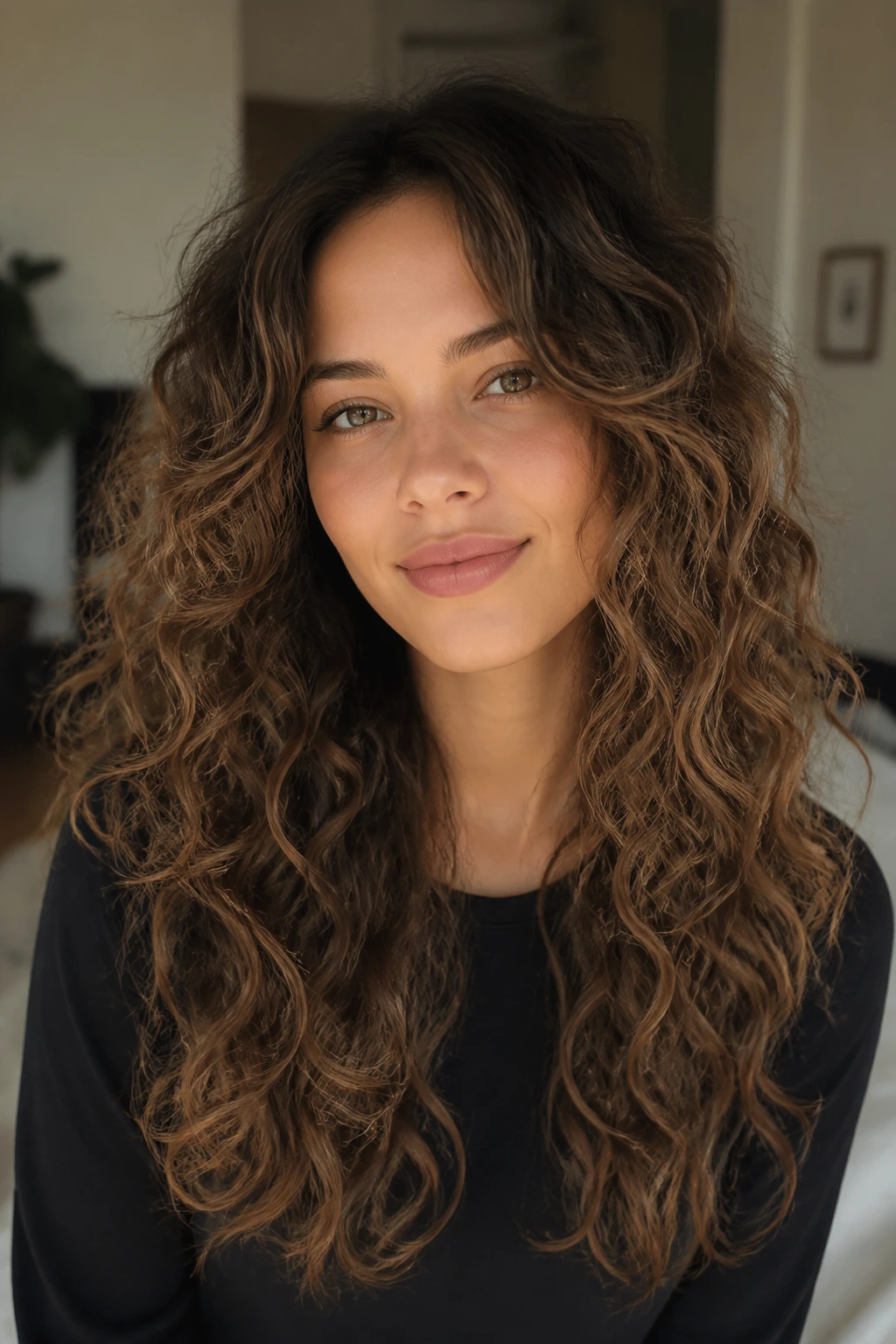
A wet look can be a lifesaver when you want control. For a heart-shaped face, a side-swept wet finish keeps the forehead open but not exposed, and it pins the attention to the sweep of the hair rather than the width of the top half of the face.
Use strong-hold gel on damp hair and comb the part in place with a fine-tooth comb. Then smooth one side back and let the other side carry a heavier line across the face. The finish should look sleek, not crunchy. If the ends go hard, you used too much product.
This style is especially useful in humidity. It doesn’t fight the air. It makes use of it.
18. Space Buns with Loose Texture

Space buns are not just for festival outfits if you keep them low, loose, and textured. On a heart-shaped face, the key is not stacking the buns too high. Place them a little lower, closer to the midpoint of the head, so the top doesn’t feel exaggerated.
Leave several face-framing pieces out around the temples and cheekbones. That softens the look and keeps the forehead from becoming the only thing you see. Wavy or curly hair helps here because the loose pieces have texture built in. Flat hair can make this style feel too neat.
A small satin scrunchie or soft elastic is better than a hard tie. It looks less severe. And it’s kinder to the hair, which is not a tiny point.
19. Twisted Half Crown
The twisted half crown is the elegant answer when you want the face open but not bare. Twist sections back from the temples and secure them behind the crown, then leave the rest of the waves down. For a heart-shaped face, those front twists act like a frame that narrows the forehead visually without hiding it.
This style is less fussy than a full braid and often holds better on wavy hair because the twist grabs the texture. If you’re doing it on freshly washed hair, rough-dry the roots first. Slippery roots make twists slide.
A few flyaways around the hairline help. Too neat can feel severe here.
20. Shoulder-Grazing Blunt Cut
A blunt cut can scare people with heart-shaped faces because “blunt” sounds boxy, but shoulder-grazing length changes the game. When the ends hit just above or just below the collarbone, the line still feels clean without sitting right on the jaw. That matters.
The trick is to keep the bluntness at the perimeter and softness inside the shape. On wavy hair, that means the outer edge looks full while the interior bends and moves. The face gets structure without the haircut becoming stiff.
I would not place this cut right at chin length unless your hair is very dense and you know it can take the width. Shoulder grazing is safer and, honestly, prettier in motion.
21. Retro Pin-Curled Waves
Pin curls are not difficult once you stop treating them like a museum skill. Wrap sections around your fingers or a curling iron, then pin each curl flat against the head until it cools. The result is a smoother, more sculpted wave pattern with a lot of control at the front.
That control helps heart-shaped faces because the style can be directed where needed. You can keep the crown tidy while letting the lower wave pattern fan out near the jaw. It has a touch of old glamour without turning rigid.
Where It Shines
This is a strong choice for events, portraits, or any day you want waves that hold their form better than air-dried hair usually does. The pins do the shaping. The cooling does the setting. Rush either step and the pattern softens faster than you wanted.
22. Air-Dried Layered Cut
Some hair looks best when you leave it alone after the wash. An air-dried layered cut is built for that. The layers should be placed so the hair dries into shape instead of ballooning out at the sides. Around a heart-shaped face, that usually means keeping the shortest pieces around the cheekbones and jaw.
Use a light leave-in, then a mousse or soft gel through the mids and ends. Scrunch once. Then stop touching it. Over-handling air-dried waves is where people get into trouble. They flatten one piece and frizz another.
This is the style for people who want hair that behaves without a full production. It’s not lazy. It’s efficient.
23. Defined Ringlets with a Wide Side Part
If your “wavy” hair leans more curly than loose, a wide side part with defined ringlets can be a strong look on a heart-shaped face. The part creates that same diagonal effect as the loose side-parted wave, but the curl definition brings more texture around the cheeks and lower face.
Use a curl cream first, then a gel that holds the clumps together while they dry. Once the hair is fully dry, break the cast gently with a small amount of oil or serum. If you do this while the hair is still damp, you’ll lose the shape.
The style works because it gives the eye a place to go. The ringlets are the place.
24. Soft Updo with Loose Tendrils
A soft updo is more forgiving than a tight bun, and that matters on a heart-shaped face. Pull the hair up loosely, but leave a few face-framing pieces around the cheekbones and a little softness near the neck. The goal is lift without severity.
This look can sit low or mid-height. I prefer low for this face shape because it keeps the top from feeling too crowded. A twist, a pinned bun, or a loose knot all work as long as the front remains gentle.
If your hair is curly, let a few curl clumps stay visible. They make the style look intentional. A perfectly smooth updo on textured hair can feel out of place fast.
25. Long Curly Cascade with Invisible Layers
Long hair can be beautiful on a heart-shaped face, but only if it has hidden structure. Invisible layers remove bulk from the inside of the shape so the hair falls in a soft cascade instead of a triangle. That’s the real goal.
The front should still be framed. A few layers around the cheekbones and collarbone keep the long length from becoming a flat sheet. The back does the heavy visual work, but the front keeps the face balanced.
This is the style for people who want length without weight. It is also the one most likely to look better after a proper trim than after you try to “grow it out” forever. Hair gets heavy. Heavy hair drops shape. Simple as that.
Why Wavy Hairstyles for Curly Hair and Heart-Shaped Faces Need a Different Shape Map
A heart-shaped face is not hard to style, but it does want a little strategy. The forehead usually carries the width, the cheekbones sit high, and the chin narrows quickly. If the hair adds even more width at the top, the face can look top-heavy. If the hair adds all its volume at the bottom, the shape can start to feel bottom-heavy instead. The sweet spot lives in the middle.
Wavy and curly hair helps more than straight hair here because it naturally makes soft width around the cheekbones, jaw, and neck. But that same texture can also puff at the wrong height if the layers are too short or the products are too heavy. A cut that respects your bend pattern will sit differently than one that was planned for straight hair and then “adapted” later. That half-step matters.
I also think people get hung up on the wrong thing. They chase a perfect curl pattern and ignore the outline. The outline is what your face sees first. If the edge of the haircut is balanced — collarbone, jaw, cheekbone, side sweep, soft fringe — the texture can do almost anything it wants inside that frame.
What to Ask for at the Salon Before the First Snip
Bring photos, yes, but bring a few notes too. Photos show the mood. Notes explain the mechanics. Tell your stylist where your hair bends, where it frizzes, and which side usually falls flatter. That last part helps more than most people realize.
Ask for the layer starting point. On heart-shaped faces, the shortest front layer usually works better at cheekbone, lip, or collarbone level than at the temples. That keeps the upper face from getting extra width.
Ask how the cut behaves dry. If your hair is curly or highly wavy, a dry cut or at least a dry check before the final trim can save you from a shape that bounces too short. Wet hair lies. Dry hair tells the truth.
Ask for movement, not thinning. Thinning shears used badly can leave ends frayed and frizzier than before. What you want is shape control, not a fuzzy perimeter that disappears in humidity.
If you wear a side part every day, say so. If you love center parts, say that too. A good cut should support your habit, not force a new personality on you.
The Products and Tools That Actually Help
A good shape is easier to keep when the tools match the texture. Fine waves usually need lighter product and a diffuser. Thick curls usually want a bit more moisture control. In both cases, the goal is the same: keep the root from puffing and let the lower half of the style carry the silhouette.
-
Wide-tooth comb: Best for detangling in the shower or distributing conditioner without wrecking the wave pattern.
-
Microfiber towel or cotton T-shirt: Cuts down on rough friction when you scrunch out water.
-
Diffuser attachment: Gives curls and waves lift without blasting them into frizz.
-
Duckbill clips: Handy for setting a side part, pinning bangs, or holding roots while they dry.
-
Curl cream or leave-in conditioner: Good for mids and ends, especially if the hair feels dry or coarse.
-
Mousse or foam: Better than heavy cream for fine or low-density waves that collapse fast.
-
Light gel: Keeps the front sections and part line from expanding in humidity.
-
Small round brush: Useful for curtain bangs, face-framing pieces, and polishing the ends of a lob.
-
Satin pillowcase or bonnet: Helps preserve shape overnight and cuts down on frizz at the temples.
How to Wear Wavy Hairstyles for Curly Hair and Heart-Shaped Faces
Presentation: Let the widest part of the style sit around the cheekbones, jaw, or collarbone. That’s the visual anchor. If you tuck one side behind the ear, keep the other side loose so the face still has softness.
Accompaniments: Earrings matter more than people think. Small hoops, drops, or anything that adds a little length works well with these shapes. High collars and stiff necklines can make a heart-shaped face look even more compact, so softer necklines usually feel easier.
Portions: If your hair is dense, you can handle more layering and width. If it’s fine, keep the layers lower and the product lighter so the style doesn’t collapse by noon. Short styles need more outline control; long styles need more internal movement.
Best Setting: Side-parted waves and curtain bangs work for daily wear. Glam waves, pin curls, and wet looks fit dressier settings. The low ponytail and soft updo are the quiet workhorses for days when you need your hair off your face but still want shape.
Small Tweaks That Change the Whole Look
Volume Control: If the crown feels too tall, diffuse the roots while holding the head slightly to the side instead of upside down the whole time. That keeps lift from collecting in one place.
Face-Framing: A front piece that starts at the cheekbone and curves inward does more for a heart-shaped face than a piece that just hangs straight down. Bend it with your fingers while it’s still warm.
Accessory Move: One well-placed clip near the temple can shift the eye line farther down the face. It sounds tiny. It isn’t.
Make-It-Yours: If your hair is fine, lean on mousse and lighter layers. If it’s thick, use a stronger gel at the roots and keep the ends soft so the style doesn’t balloon out. If you wear glasses, keep the bangs a touch longer. If you love earrings, open one side of the face more than the other.
Common Mistakes That Throw Off the Shape
Cutting the shortest layer too high. The symptom is a face that suddenly looks wider at the top than it should. The fix is simple: keep the shortest front layer at cheekbone, lip, or collarbone height unless your texture is very loose and your stylist has a specific reason to go shorter.
Building all the volume at the crown. That makes a heart-shaped face look top-heavy fast. Ask for lift at the roots only where it helps the silhouette, not everywhere at once.
Letting the ends stop right at the chin. That can sharpen the jaw instead of softening it. A little below the chin or a little above it is usually safer. The exact point matters more than people think.
Brushing curls dry without rewetting them. That turns clean waves into puff. Use a mist bottle, a little leave-in, and your hands instead.
Using one heavy cream on fine hair. The hair goes flat at the roots and stringy at the ends. Fine waves usually need foam or mousse first, with cream only on the lower lengths.
Ignoring the part line. A center part can be beautiful, but if it lands straight through a broad forehead with no soft front pieces, it can feel stark. Shift it a half inch and the face often relaxes.
Keeping the Style Fresh Between Wash Days
Most of these looks improve a little overnight if you protect them properly. Sleep on a satin pillowcase or tie the hair in a loose pineapple if it’s long enough. For shorter cuts, a soft wrap or bonnet can stop the front pieces from flattening into odd bends.
In the morning, don’t soak the hair. A light mist is enough. I like to wake the shape up with water first, then add a pea-sized amount of leave-in or foam to the dryest sections. If the roots are greasy, use dry shampoo at the scalp only, not through the mids where the waves need movement.
Fringe and face-framing pieces usually need the most attention. They are the first to separate and the first to go flat. A quick finger twist around each front section while it’s damp can reset the shape in under a minute.
Shorter cuts and layered bobs usually need a trim every 6 to 10 weeks if you want the outline to stay clean. Longer layers can stretch farther, but if the front starts swallowing your face, it’s time to shape it again. Don’t wait until the haircut has no memory left.
Questions People Ask Before They Cut the Bangs
Can a center part work on a heart-shaped face? Yes, but it works best when the front pieces are soft and the part isn’t laser-straight and severe. If the forehead already feels wide to you, a slightly off-center part usually looks gentler.
Are curtain bangs good for curly hair? They are, as long as the bangs are cut with curl spring in mind. A stylist should leave room for shrinkage so the fringe doesn’t bounce too high and sit in the middle of the forehead.
What if my hair is fine and wavy? Go lighter on product and keep the layers lower. Fine hair can look airy and pretty with these shapes, but too much thinning or too many short layers will make it lose body fast.
What if my hair is thick and frizzy? Ask for controlled layering and a perimeter that still feels full. Heavy thinning can make thick curly hair puff out in strange places, especially around the temples.
Do short cuts work for heart-shaped faces? Absolutely, but the shape needs softness around the front. A chin-length bob, pixie-bob, or tapered curly crop can look excellent if the top is not the only place with volume.
How do I stop my waves from looking triangular? Keep the weight from collecting at the bottom by asking for layers that start inside the shape, not only at the ends. Product choice matters too; too much cream and not enough hold often creates that triangular spread.
How often should I trim face-framing pieces? Bangs and front layers usually need attention every 6 to 8 weeks if you wear them forward. If they’re longer and more blended, you can often stretch that to 10 or 12 weeks.
The Shape That Does the Balancing
The best haircuts for this face shape do not shout. They balance. A side part, a curtain fringe, a long layer at the cheekbone, a bob that misses the chin by half an inch — these are small moves, but they change the whole read of the face.
What I like about these styles is that they respect the hair’s natural bend instead of pretending texture is a problem to solve. That is a waste of time. The better goal is shape, not control for its own sake.
If you are deciding where to start, pick one style that changes the part and one that changes the length. That gives you a clean comparison without making the whole head feel unfamiliar at once. Then watch where the waves want to fall. They usually tell you more than the mirror does.