



Colored tips do something on deep skin tones that full-head color often misses: they catch the eye without stealing the whole show. A strip of honey at the end of a braid, a cobalt curl at the fringe, a burgundy point on a twist — those little flashes sit against rich brown skin like jewelry with movement.
I’m partial to tip color for a simple reason. The root stays dark and healthy-looking, the shape stays intact, and the color lands right where the hair swings, flips, or rests on a shoulder. On melanin-rich skin, that contrast doesn’t look accidental when the shade is chosen well. It looks deliberate. Clean. Expensive without trying to act expensive.
The real trick is matching the hairstyle to the color, not just picking a pretty shade and hoping for the best. Neon on a sleek ponytail reads differently from neon on a fluffy puff; copper on box braids feels warmer than copper on a silk press; plum on locs has a different personality than plum on twist-outs. That’s the fun of it. One idea, twenty-eight ways, and a lot of room to make it look like you.
Why These Styles Hit So Well on Deep Skin Tones
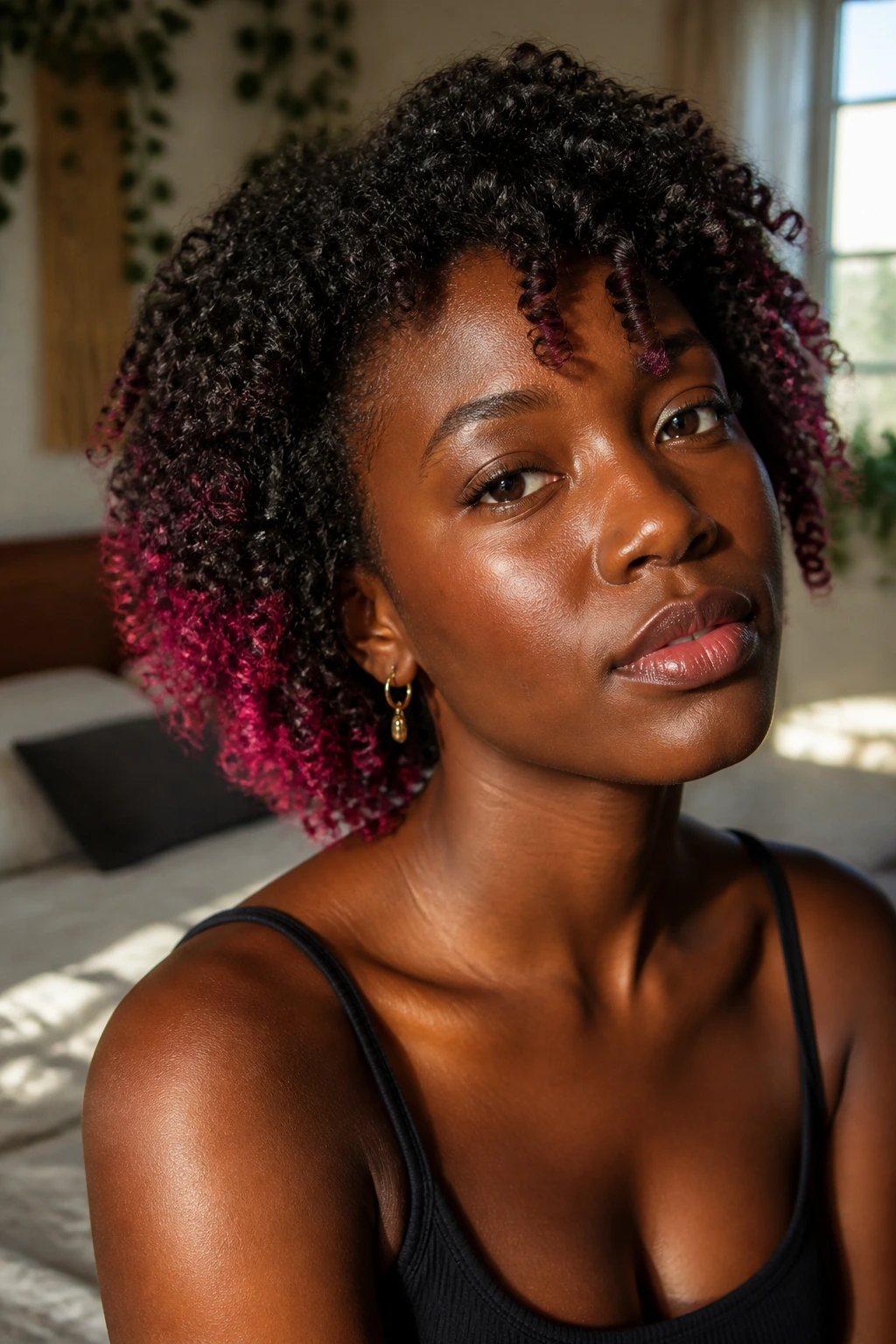
High contrast looks sharper on deeper complexions. A bright tip against dark hair and deep skin doesn’t have to fight for attention; the edge is already there, so the color reads cleanly from a few feet away.
Warm shades feel especially rich. Honey, copper, amber, cinnamon, and rose gold don’t sit flat on brown skin. They echo the warmth in the complexion and make the ends look like they were dipped in light.
Jewel tones hold their shape. Sapphire, emerald, teal, and violet keep their depth even under indoor lighting, which matters when the hairstyle is already doing a lot of visual work.
The color can stay small and still matter. On braids, locs, curls, and layered cuts, the last two or three inches are often enough. That tiny zone is where movement lives.
You get room to adjust the boldness. A deep burgundy tip is calm next to a neon green one, but both can look right on deep skin when the placement is intentional.
1. Box Braids with Honey-Orange Ends
Honey-orange ends give box braids that warm, sunlit finish that looks especially sharp on deep skin. The braid body can stay jet black, espresso, or dark brown, while the last two inches carry the color and move when you walk. That little dip at the bottom keeps the style from feeling heavy.
The best version keeps the braids neat at the scalp and lets the color show only where the ends swing. If you want a smoother finish, ask for pre-colored braiding hair or a blended extension shade so the transition doesn’t look chopped. A light mousse pass every few days helps the tips stay smooth instead of fuzzy.
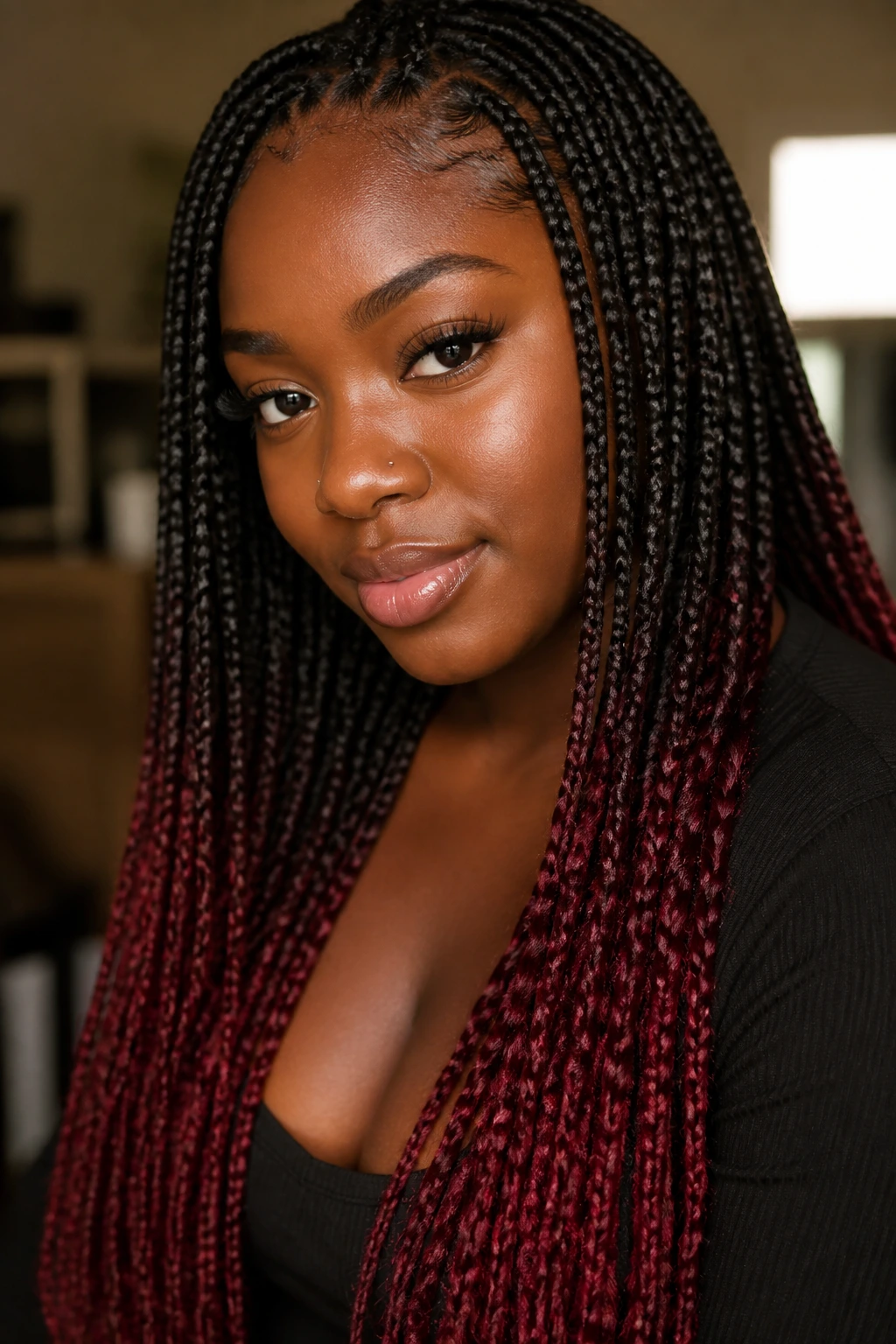
2. Knotless Braids with Burgundy Tips
Why does burgundy work so well here? Because it’s rich enough to show, but not so loud that it fights the braid pattern. Knotless braids already look soft at the root, and burgundy tips keep that softness going all the way down.
I like this style when the goal is color that feels grown, not costume-y. Keep the shade in wine territory rather than bright cherry, and the result sits beautifully against deep skin. A little braid sheen on the ends keeps the color looking deep instead of dusty.
3. Senegalese Twists with Copper Ends
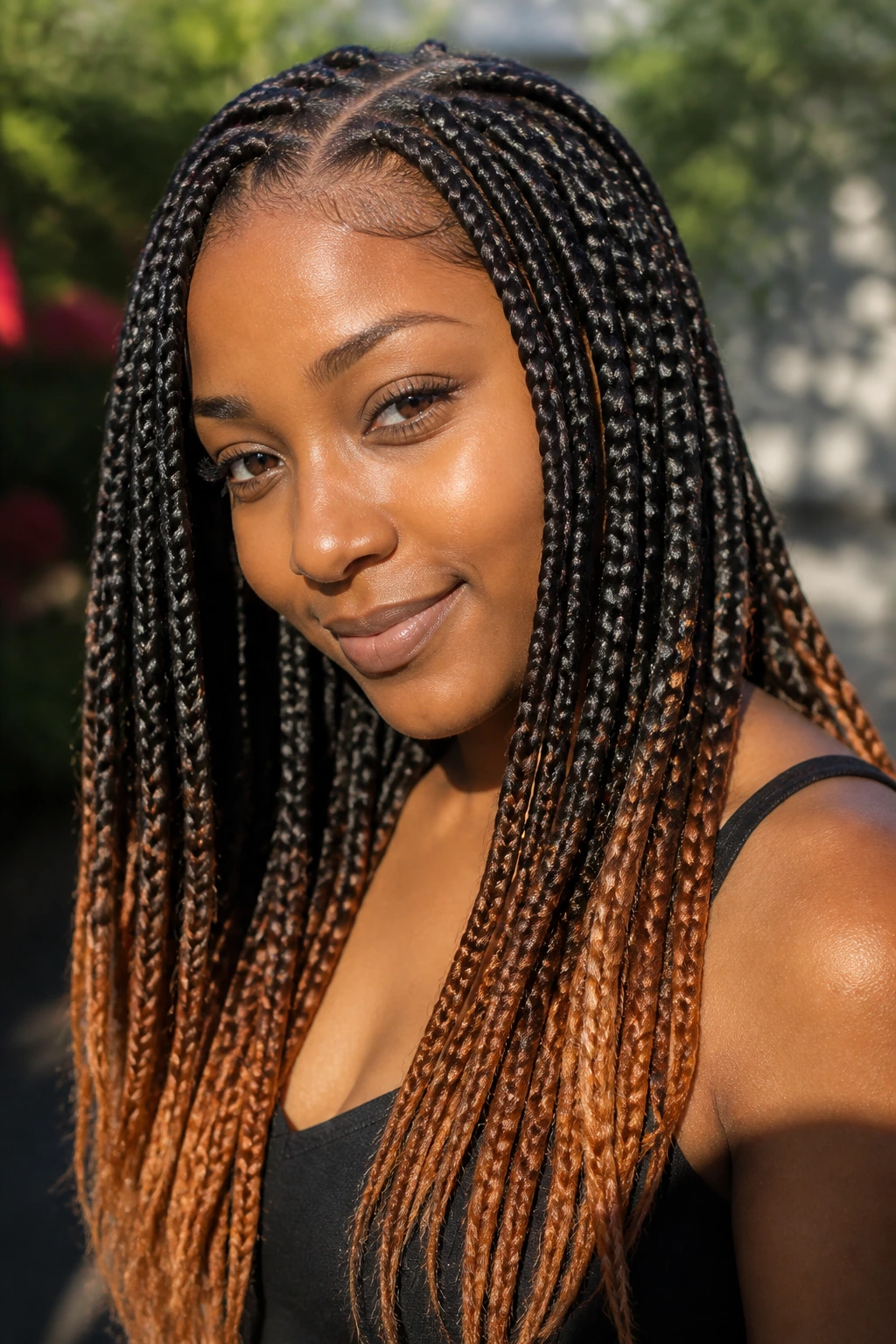
Senegalese twists are built for shine, and copper ends make that shine obvious. The rope-like texture catches light in sections, so the colored tips don’t just sit there — they flicker as the twists move. On deep skin, copper reads warm and polished without looking flat.
This style works best when the color is concentrated at the last inch or two. Too much copper and the whole look can blur; just enough and the twists keep their clean line. Use a foam setting lotion after install, then smooth the ends with your palms while they dry.
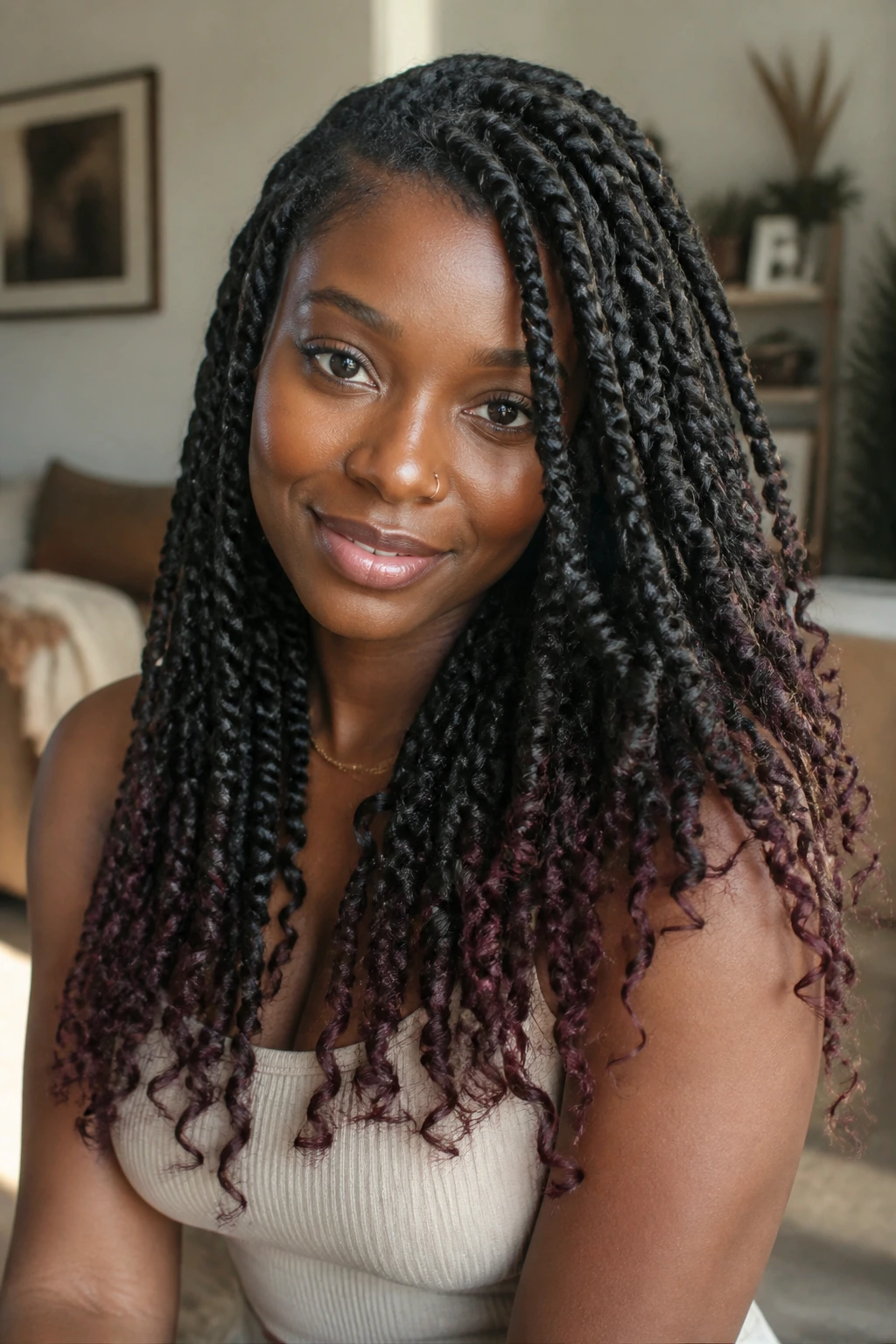
4. Passion Twists with Plum Tips
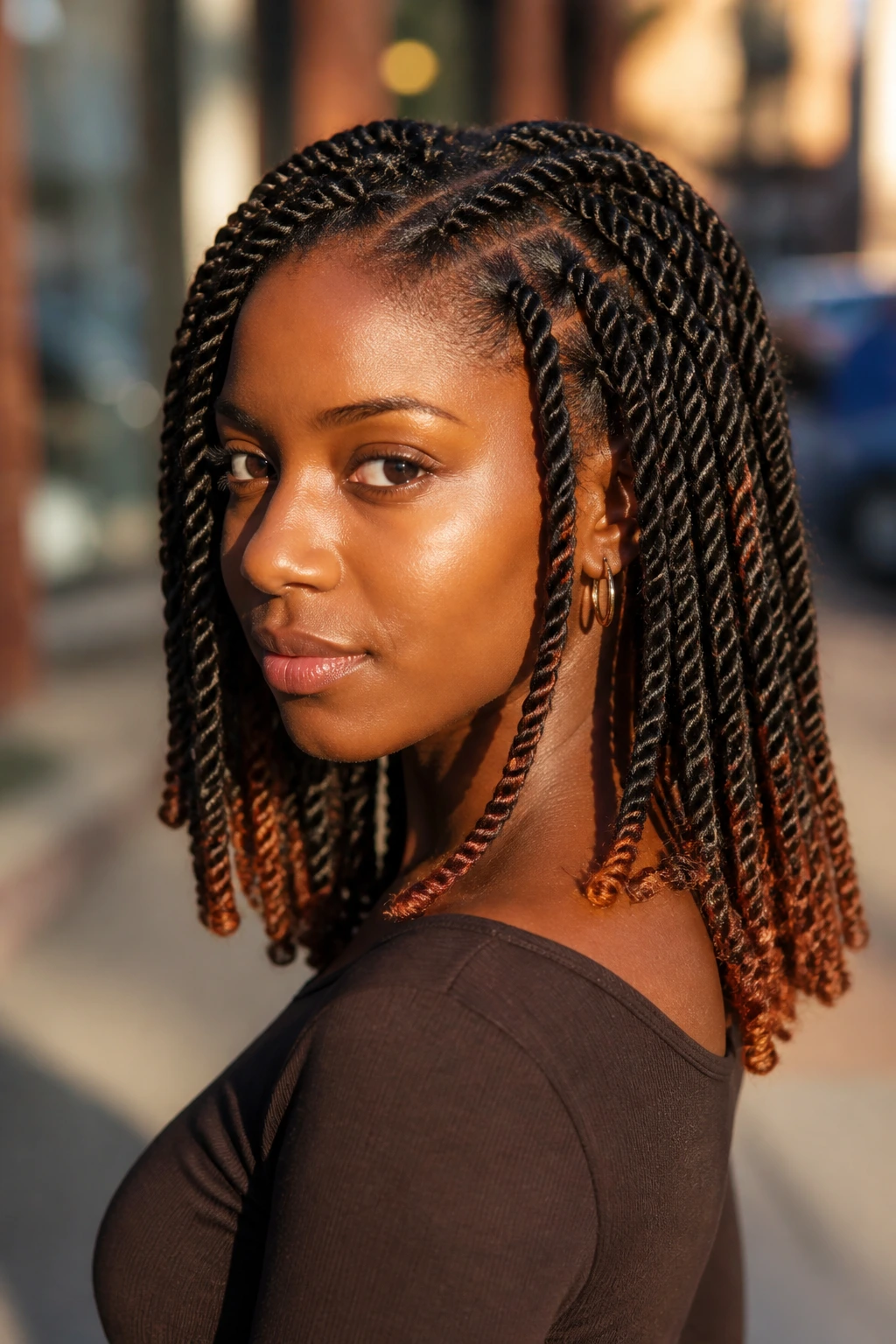
Passion twists have a softer, looser feel than Senegalese twists, and plum tips match that mood. The texture is airy, a little shaggy around the edges, and the color gives those edges a deliberate finish instead of letting them wander. Against deep skin, plum looks plush rather than loud.
If you want the shade to show without looking harsh, choose a plum with a red base, not a blue-violet base. That warmer plum tends to sit better on brown skin in indoor light. A light mist of mousse keeps the coils defined and prevents the tips from separating too much.
5. Faux Locs with Golden Blond Ends
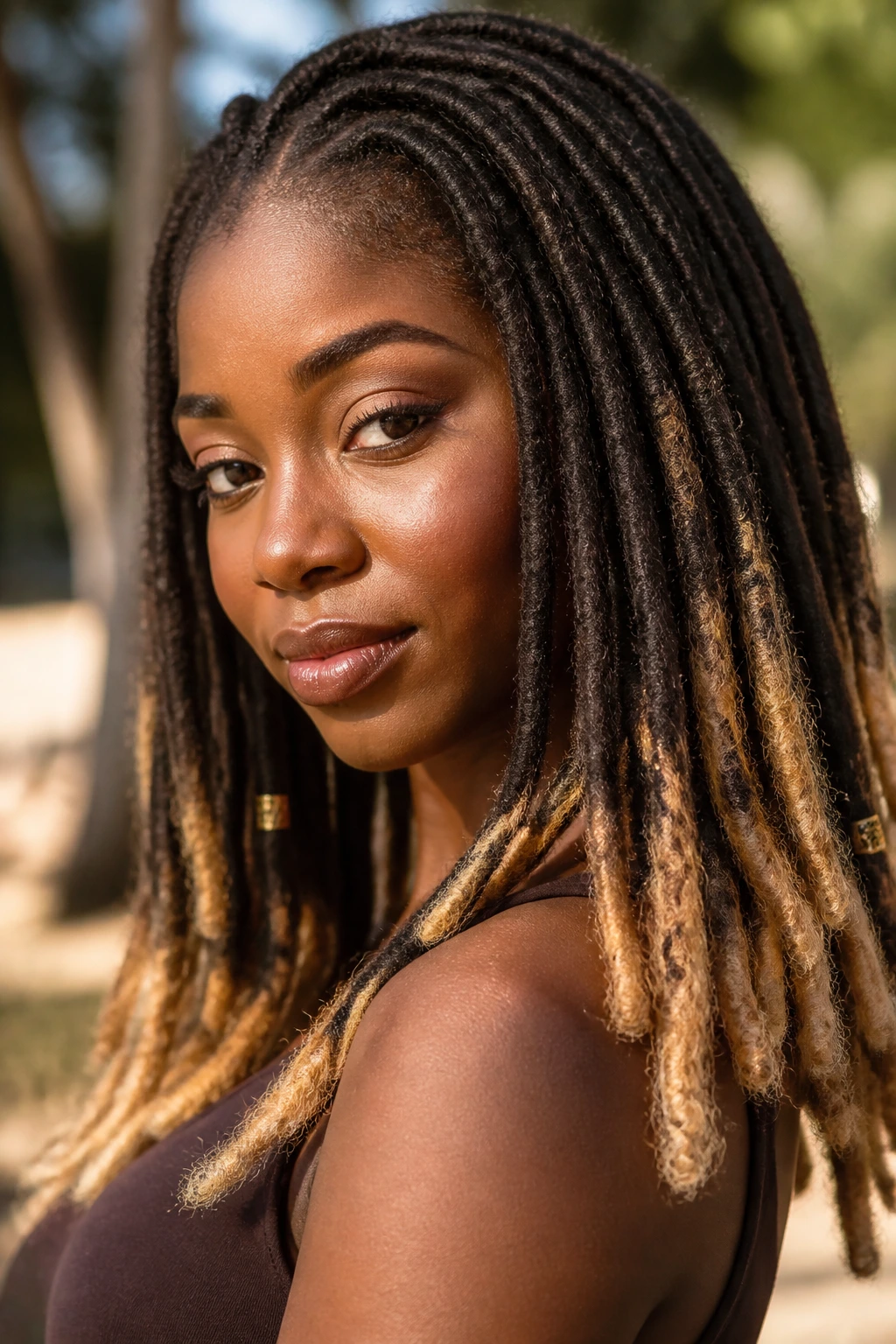
Golden blond ends on faux locs can look stunning on deep skin when the blonde is warm rather than icy. Think butter, sand, toast, champagne — not that pale, almost-white blonde that can feel disconnected from the rest of the style. The loc texture gives the color structure, so the ends don’t need to be screaming bright to matter.
This is a good move if you want contrast but still want the hair to feel grounded. Add a few gold cuffs near the front and the whole style feels finished without needing more color. Keep oils light at the ends; too much product turns that blonde dull fast.
6. Butterfly Locs with Burnt Copper Tips
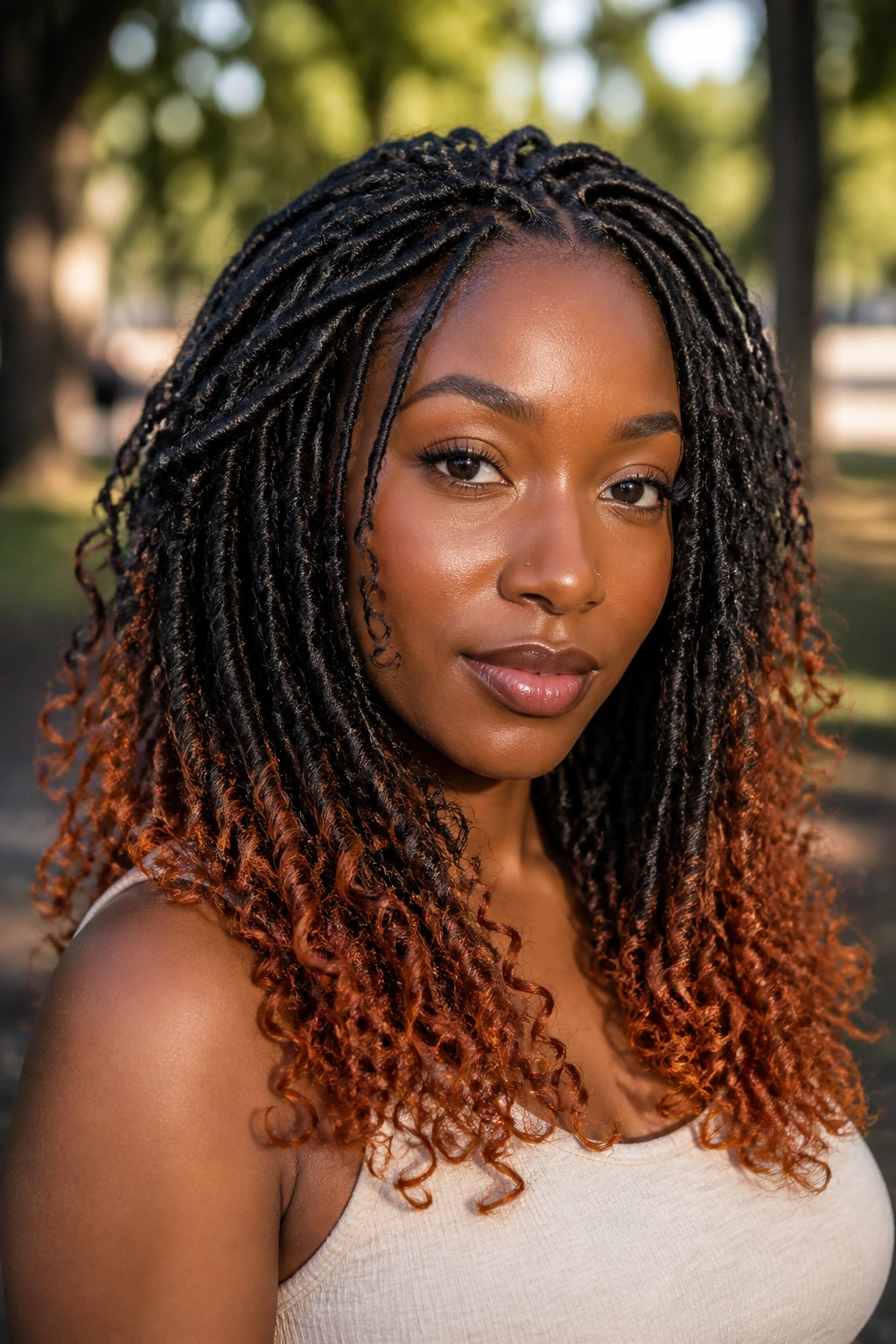
Butterfly locs already have those soft loops and frayed pieces that make them look lived-in, and burnt copper tips play right into that texture. The color lands as a warm edge rather than a hard line. On deep skin, burnt copper has enough depth to hold its own without tipping into orange overload.
I prefer this shade when the locs are medium to long and the loops are visible. The color draws the eye to the movement in the strands instead of just announcing itself. A little wrapping foam around the perimeter keeps the fuzzy bits under control, which matters more than people think.
7. Fulani Braids with Amber-Dipped Ends
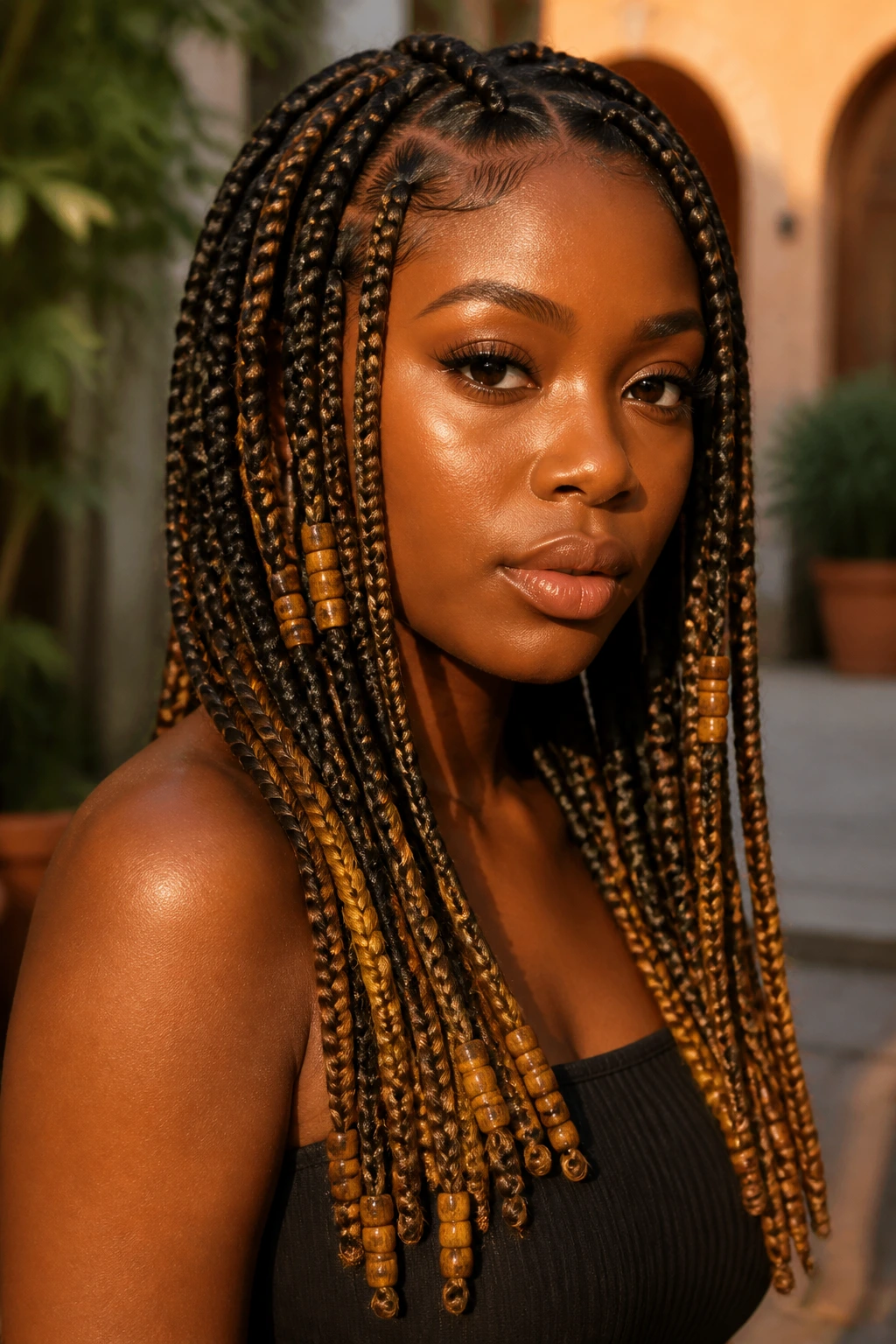
Fulani braids love a little color because the pattern already gives your eye places to land. Amber-dipped ends work especially well when the braid design includes a center part, side braids, or a few beads, since the color can echo the accessories instead of fighting them.
What I like most here is the balance. The braid pattern stays rooted and clean, and the amber makes the final line feel finished. If you add beads, keep them in wood, gold, or clear tones so they don’t compete with the dip. The ends should look like the last note, not the whole song.
8. Cornrows into a Braided Ponytail with Neon Green Tips
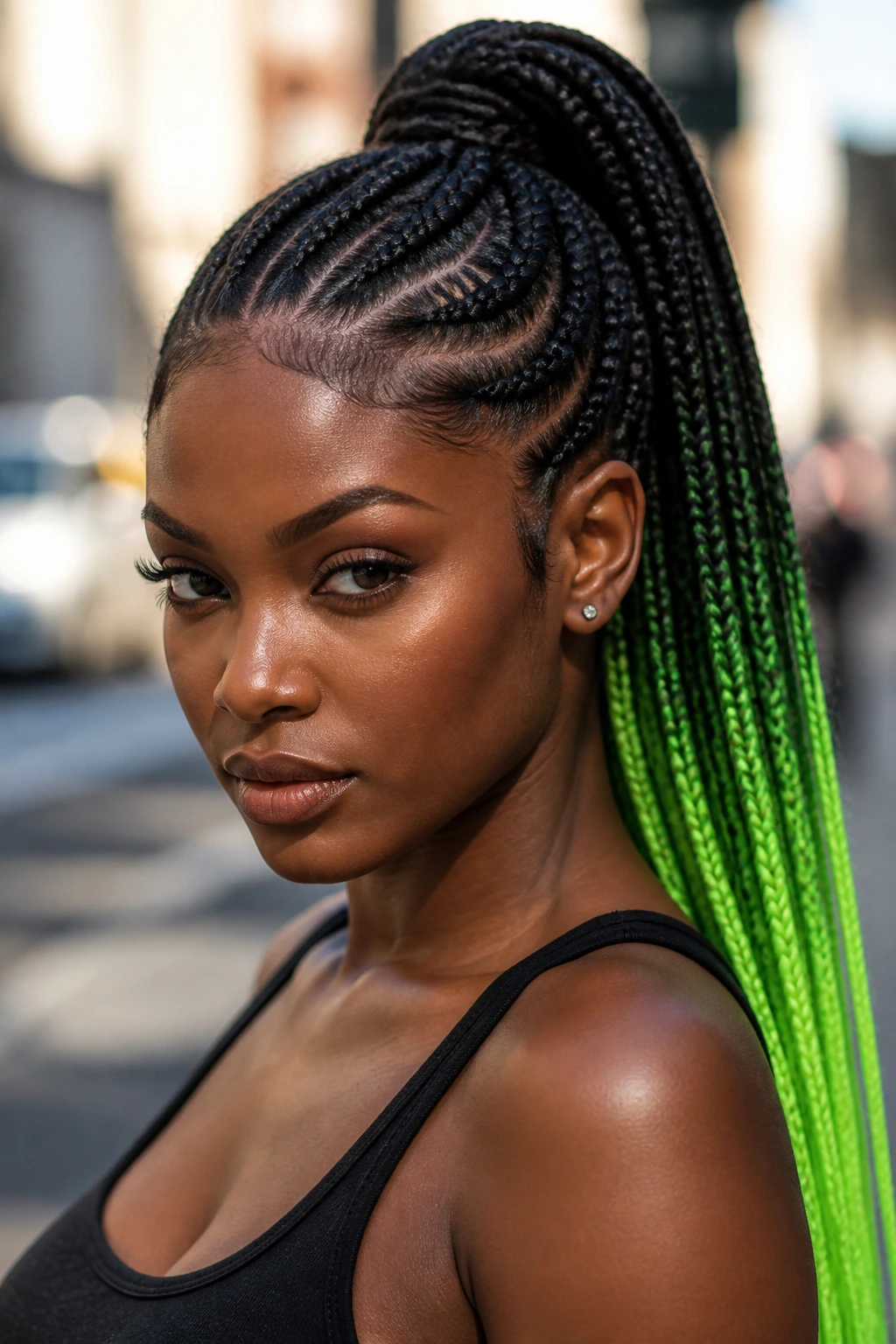
Neon green tips on a braided ponytail are not shy, and that’s the point. The cornrows at the scalp give you a tidy, graphic base, then the ponytail carries all the color. On deep skin, neon reads crisp because the contrast is direct — there’s no weird gray cast, no murk.
This style is strongest when the color lives on the ponytail only. That keeps the look controlled instead of busy. If you want the tips to stay clean, use a gloss or shine spray on the braid hair first, then finish with a light foam so the ends don’t fray into fuzz.
9. High Puff with Sunset Ombre Tips
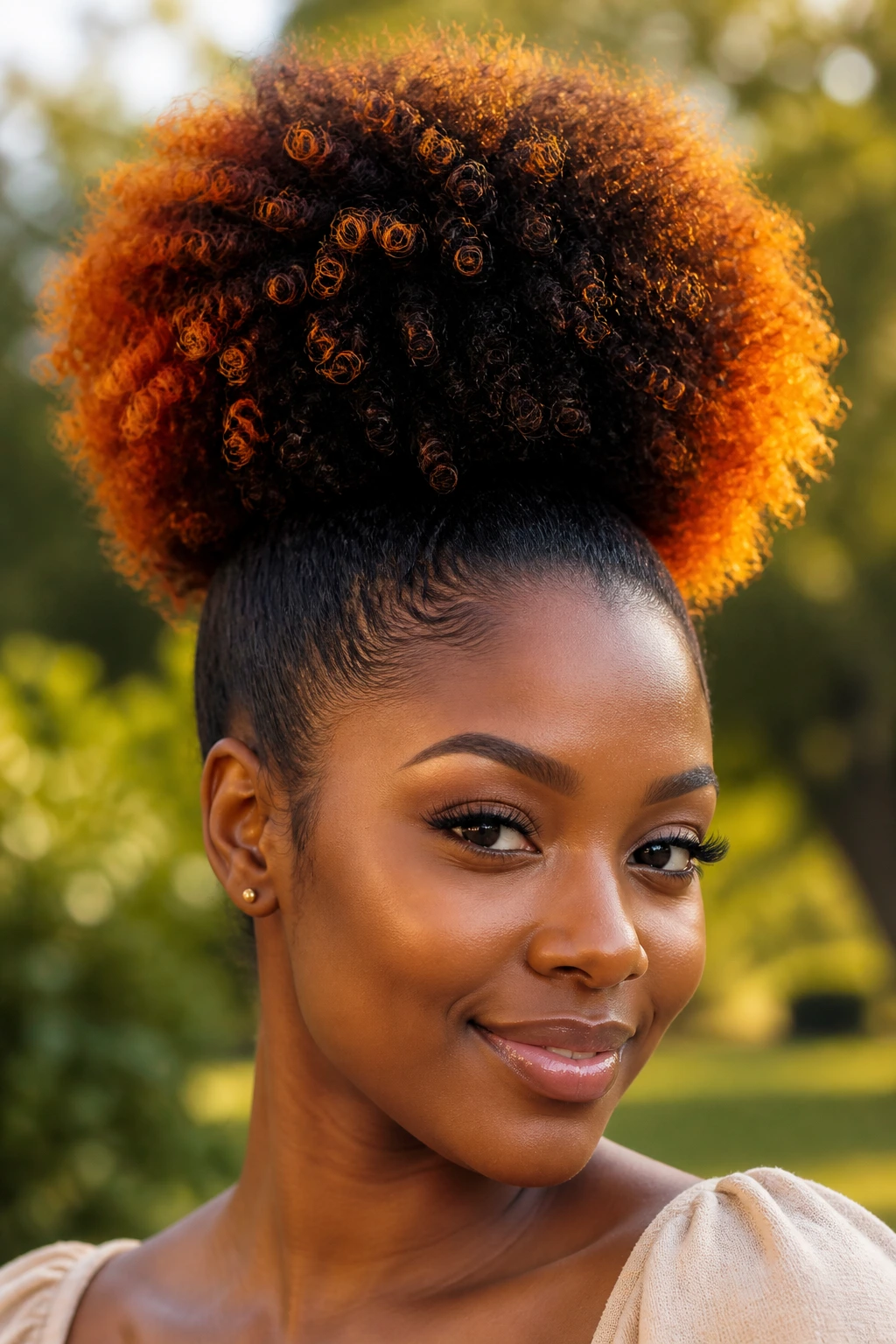
A high puff with sunset ombre tips gives you a big shape first and color second, which is exactly why it works. The puff frames the face, and the orange-to-gold gradient hangs around the outer edge like a halo. On deep skin, that sunset palette feels warm rather than cartoonish.
This one depends on curl definition. The better the curls clump, the cleaner the color reads at the ends. A curl cream with hold plus a diffuser on low heat usually gives enough structure for the tips to show without looking stringy.
10. Tapered Cut with Electric Blue Tips
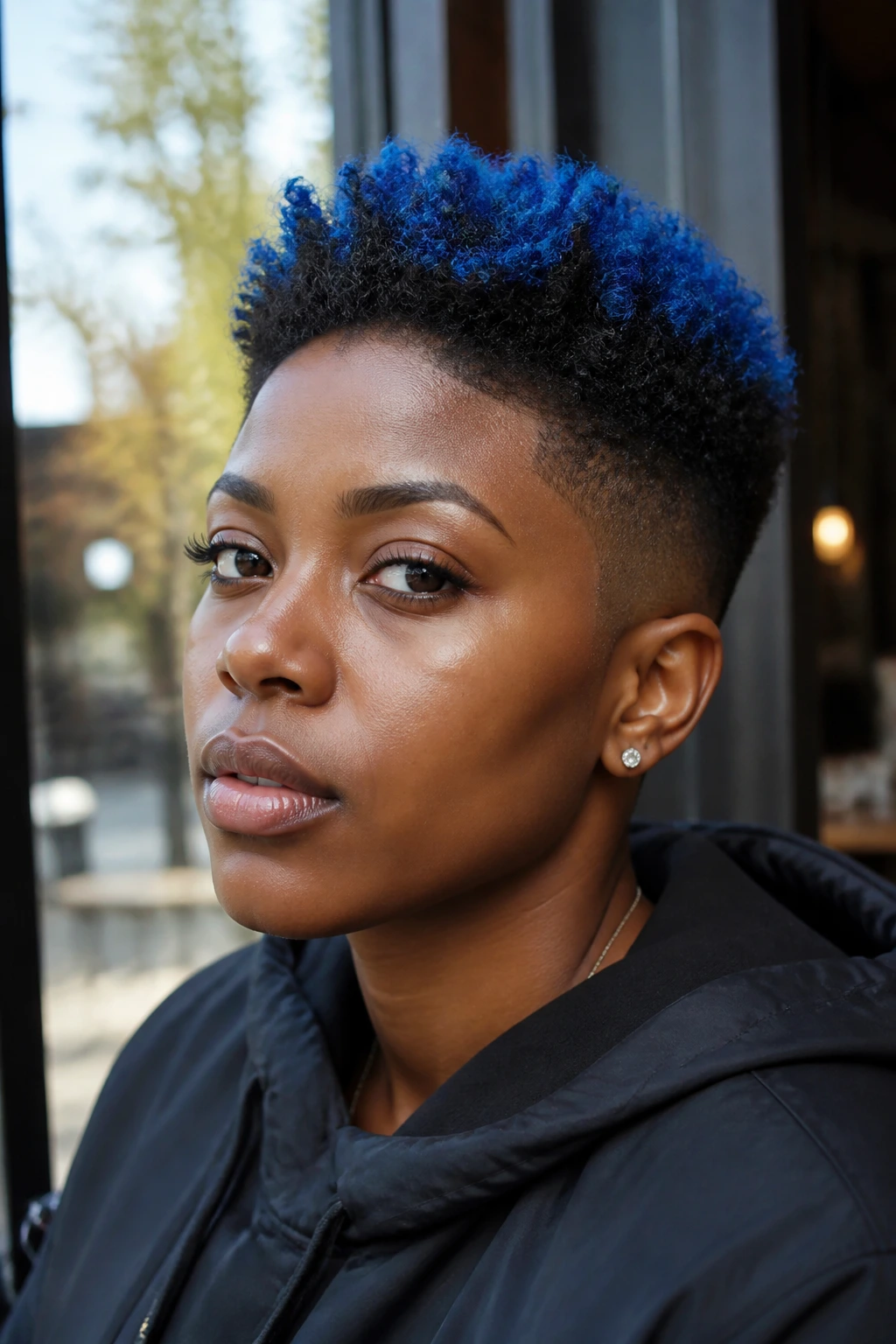
A tapered cut with electric blue tips is one of the cleanest short-hair color ideas you can wear on deep skin. The sides stay close and sharp, and the longer top carries the blue where the shape needs it most. That contrast keeps the cut from disappearing in the back.
I’d keep the blue on the tips of the top curls or twists, not scattered everywhere. The line stays clearer that way. Because short cuts show every shape detail, a crisp line-up every two to three weeks helps the color look intentional instead of grown out.
11. Wash-and-Go Coil Cut with Lime Tips
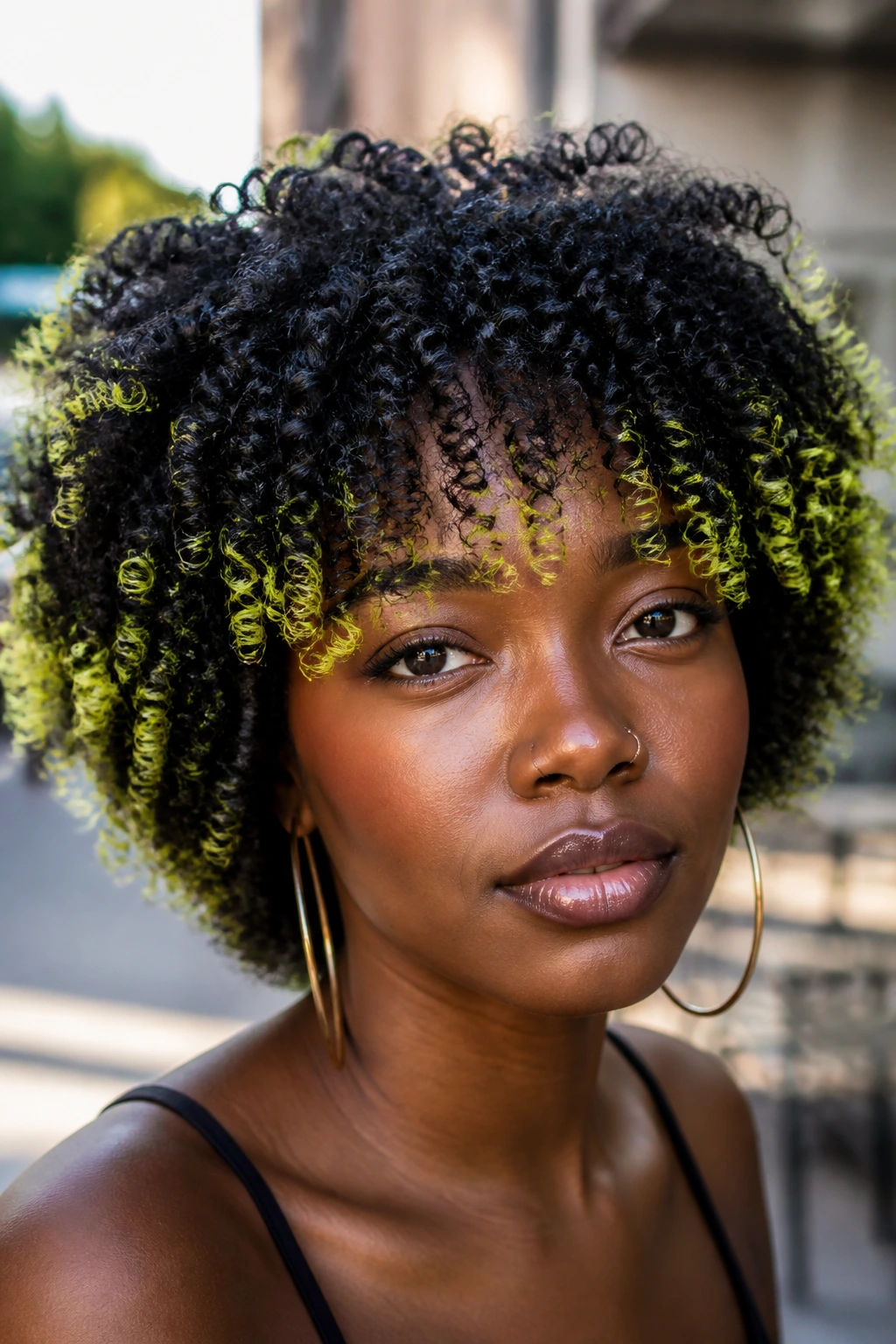
Lime tips on a wash-and-go coil cut look best when the coils stay defined and separate. The bright green lands on the outer curls and gives the whole shape a sharper edge. On deep skin, lime can look electric in a good way, especially when the base is glossy and dark.
The risk here is fuzz. If the hair is rough or dry, lime can look muddy fast. Keep the color to the outermost coils or the perimeter, then use a leave-in and a light gel to make sure the curl pattern holds all the way through the day.
12. Layered Curly Bob with Teal Tips
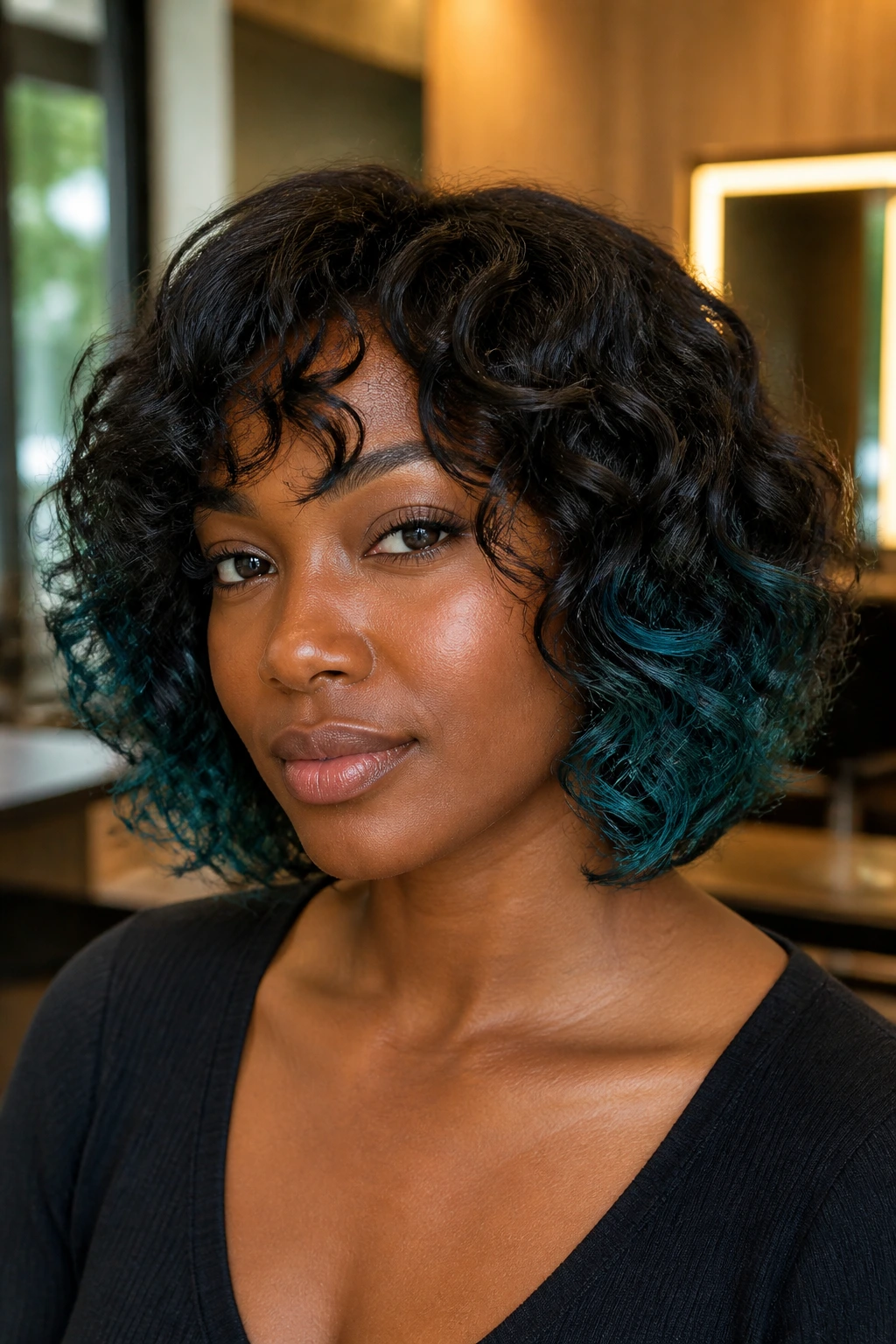
A layered curly bob is built for colored tips because the ends are already staggered. Teal catches on the bottom of each layer, so the eye sees movement even when the hair is still. On deep skin, teal feels cool and polished without turning harsh.
This cut looks especially good when the curls are medium-sized and not too tight. Smaller curls can swallow the color; larger curls let it sit on the edge cleanly. A curl cream with light hold and a quick diffuse will keep the layers separated enough for the teal to show.
13. Half-Up Half-Down Curls with Cherry Red Tips
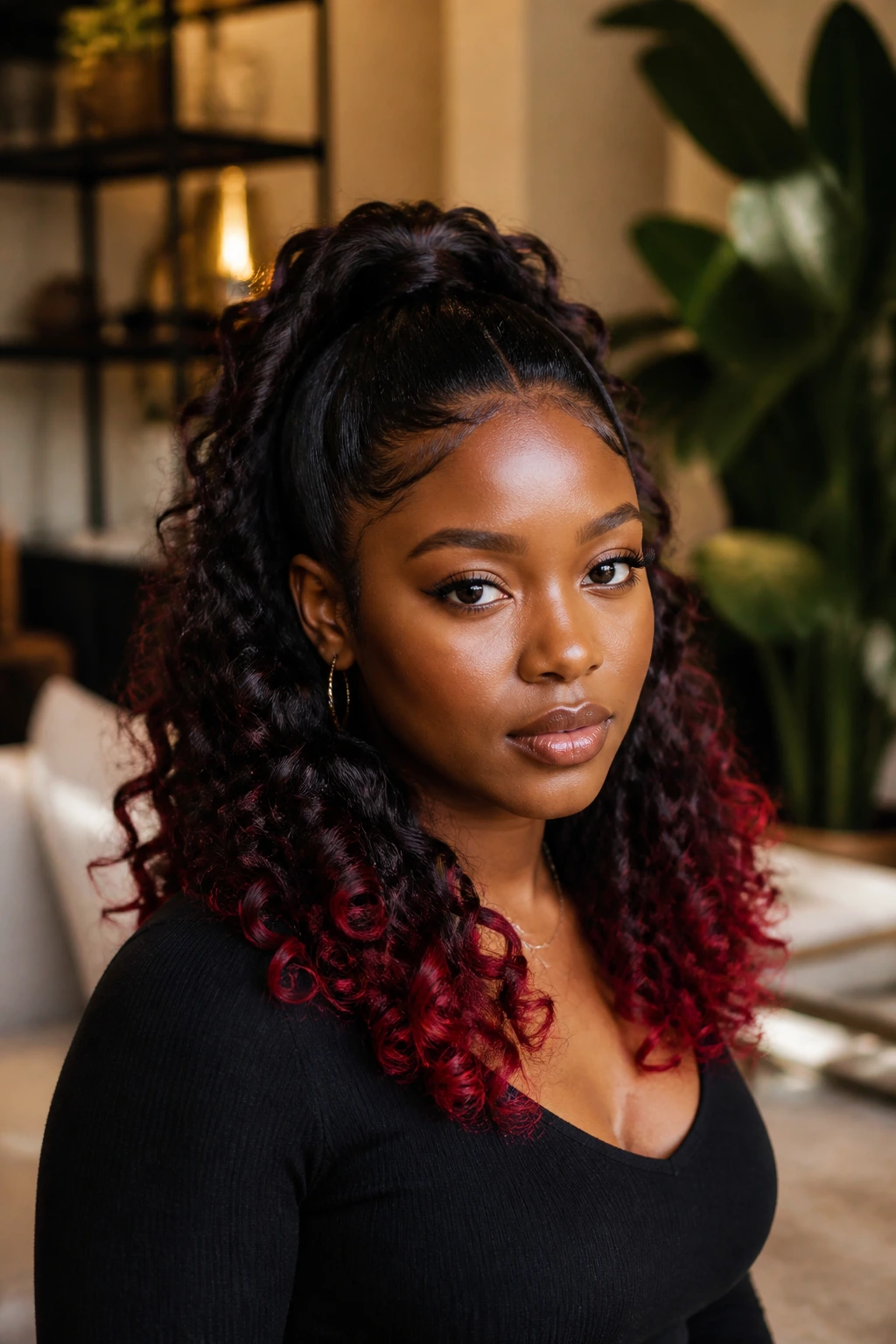
Cherry red tips on a half-up half-down style give you a little drama at the bottom and a clean frame at the top. The pulled-back section keeps the face open, while the lower curls carry the color like movement at the hem of a dress. Against deep skin, cherry red feels rich and warm, not shouty.
This is a strong choice for events because the color shows when the hair moves, not only when you pose. Keep the top half smooth and let the red live mostly in the lower half; that contrast does half the work for you. A shine spray on the ends helps the red look deep instead of matte.
14. Silk Press with Caramel Flip-Out Ends
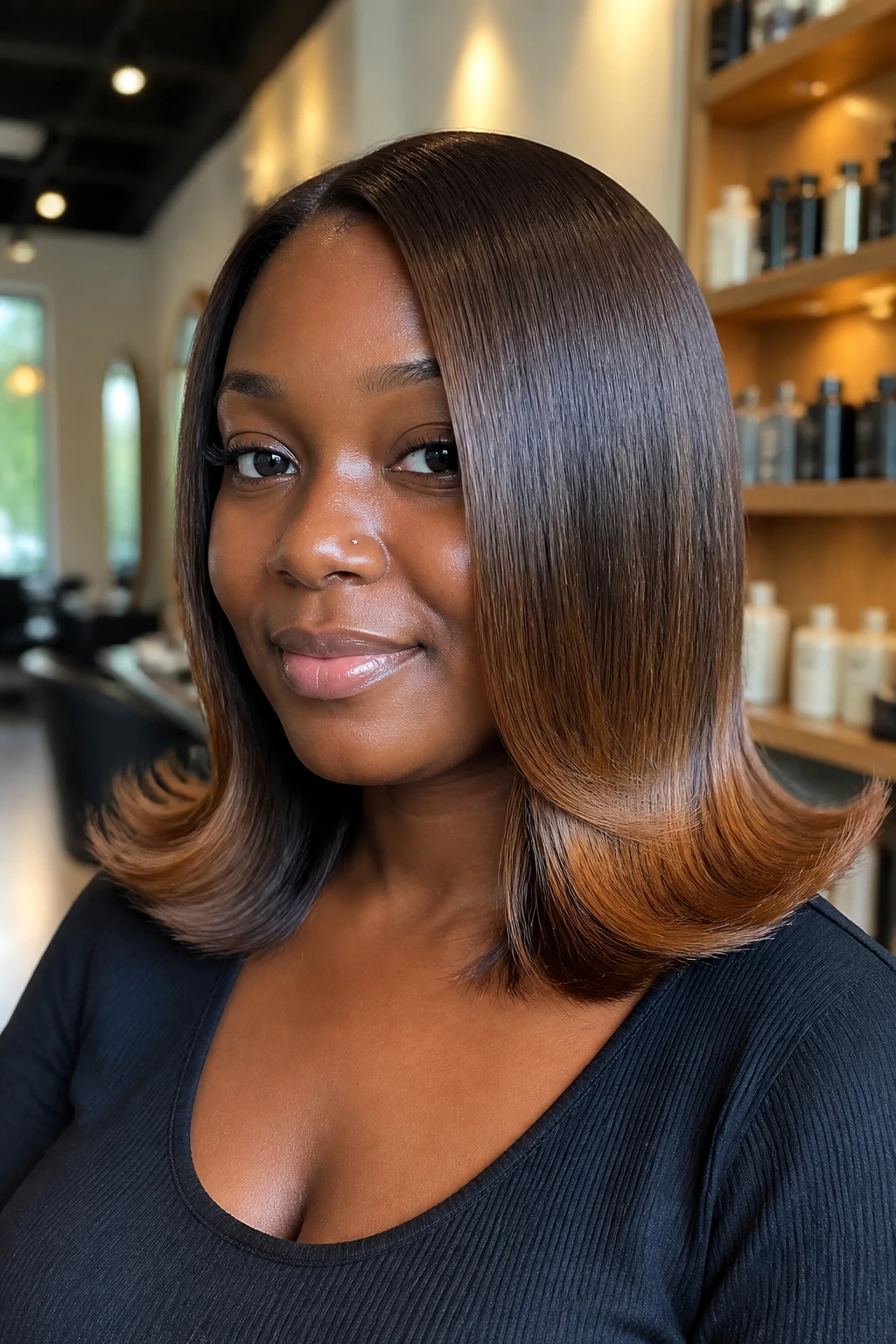
Caramel flip-out ends on a silk press have a clean, swingy finish that looks especially good on deep skin. The straight length keeps the style polished, then the flipped ends add a little movement at the shoulders. Caramel is warm enough to blend with brown skin without vanishing into it.
The trick is not to overdo the flip. One small bend at the ends is enough; too much curl and the shape gets busy. Heat protectant is non-negotiable here, and a nightly wrap keeps the caramel ends from bending in strange directions overnight.
15. Flipped-Out Lob with Apricot Tips
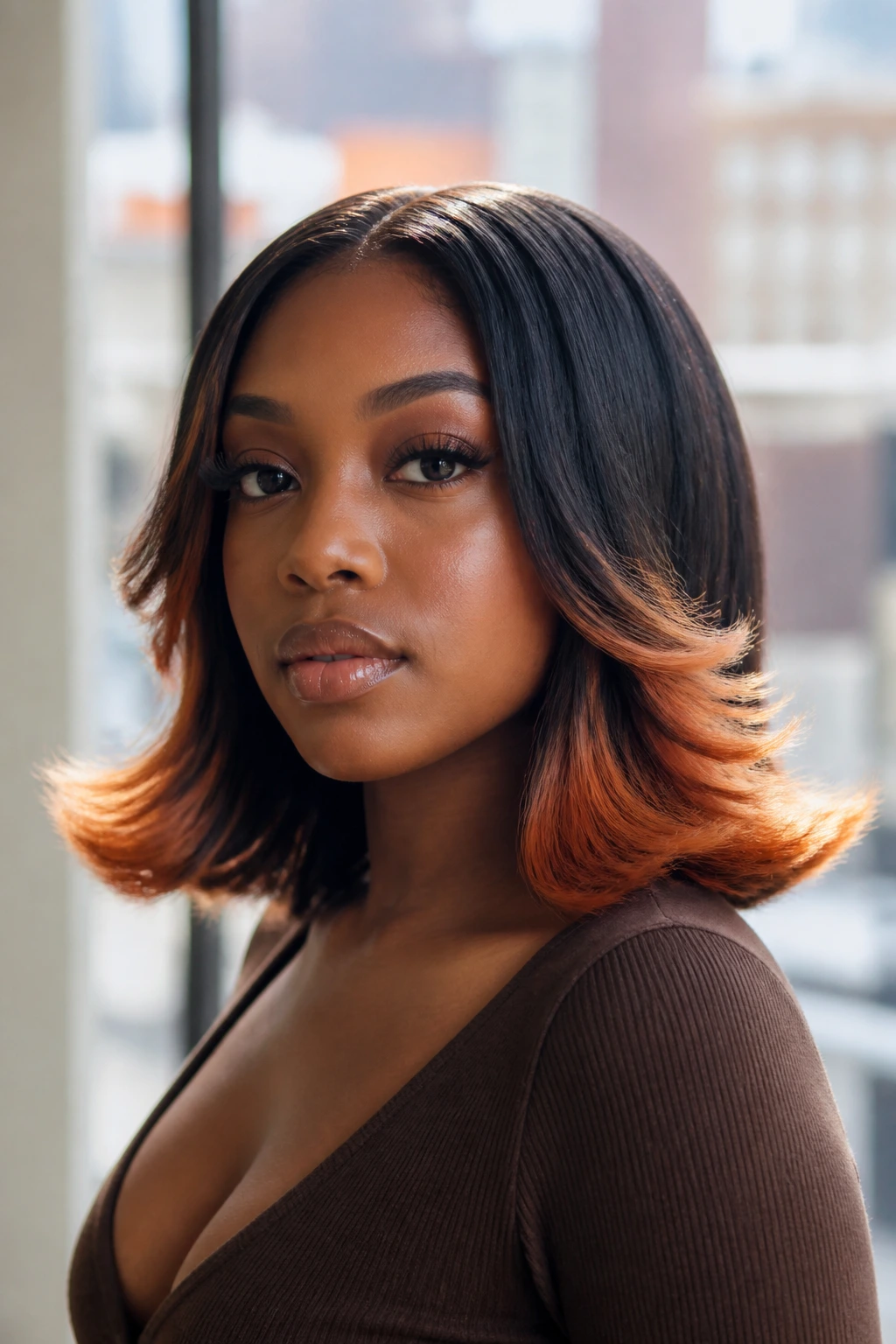
An apricot-tipped lob sits right between soft and playful. The length is short enough to feel sharp, but long enough for the color to show in the flicked ends. On deep skin, apricot looks warmer and more orange than it does on lighter skin, which is exactly why it works.
If you want the color to read cleanly, keep the flip out loose rather than tight. A round brush or large-barrel tool will give you that bend without making the ends look stiff. This is one of those styles that benefits from a light gloss on the last inch.
16. Shaggy Curly Mullet with Peach Tips
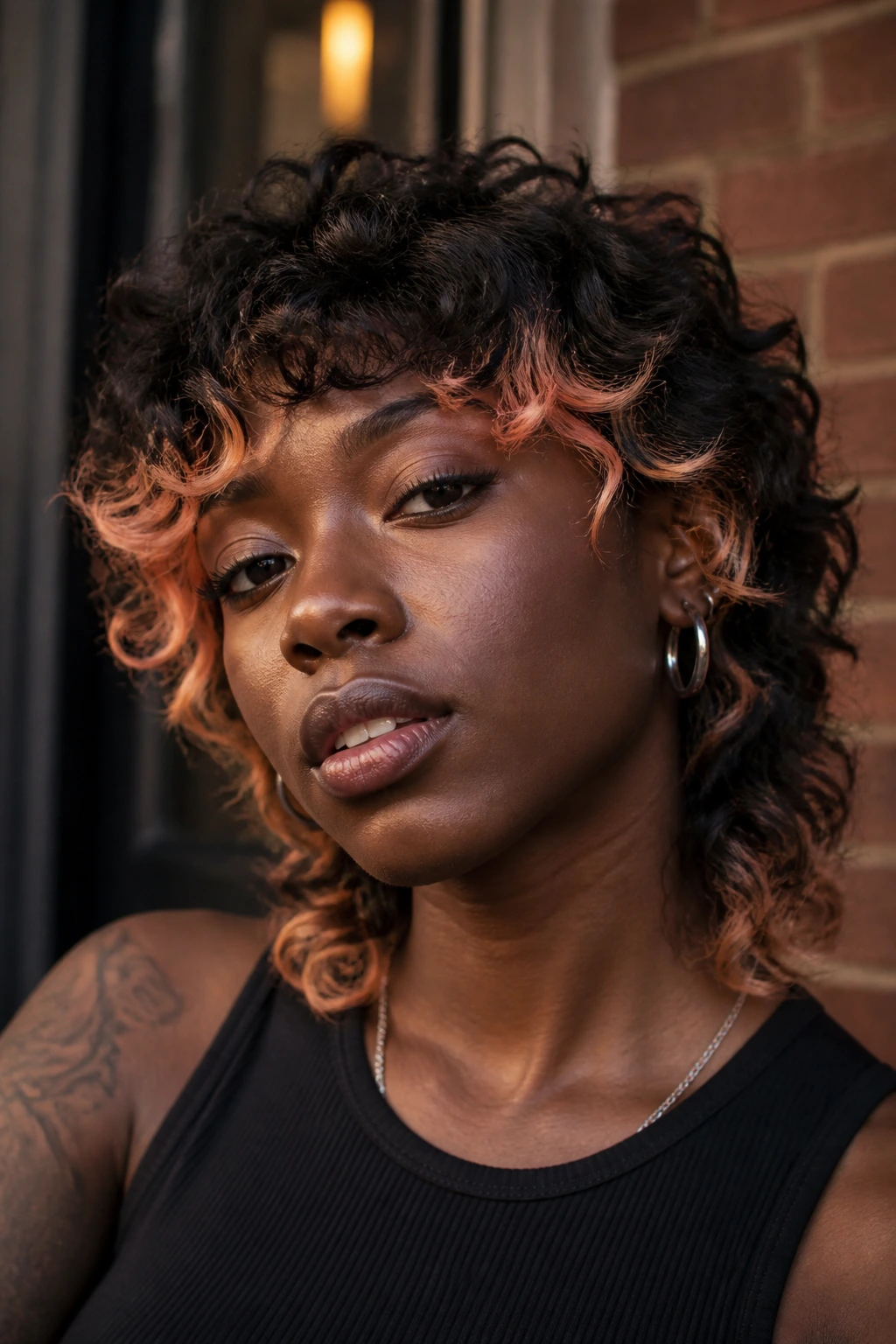
A shaggy curly mullet already has attitude, so peach tips fit without trying too hard. The front pieces stay a little shorter, the back hangs longer, and the peach catches on the outer curls where the layers taper. On deep skin, peach feels softer than neon coral but still bright enough to matter.
I like this look when the curl pattern is loose to medium and a little unruly. Perfect symmetry would kill it. The brighter pieces should live near the front and around the cheekbones; that’s where the cut needs contrast most.
17. Bantu Knot-Out with Magenta Tips
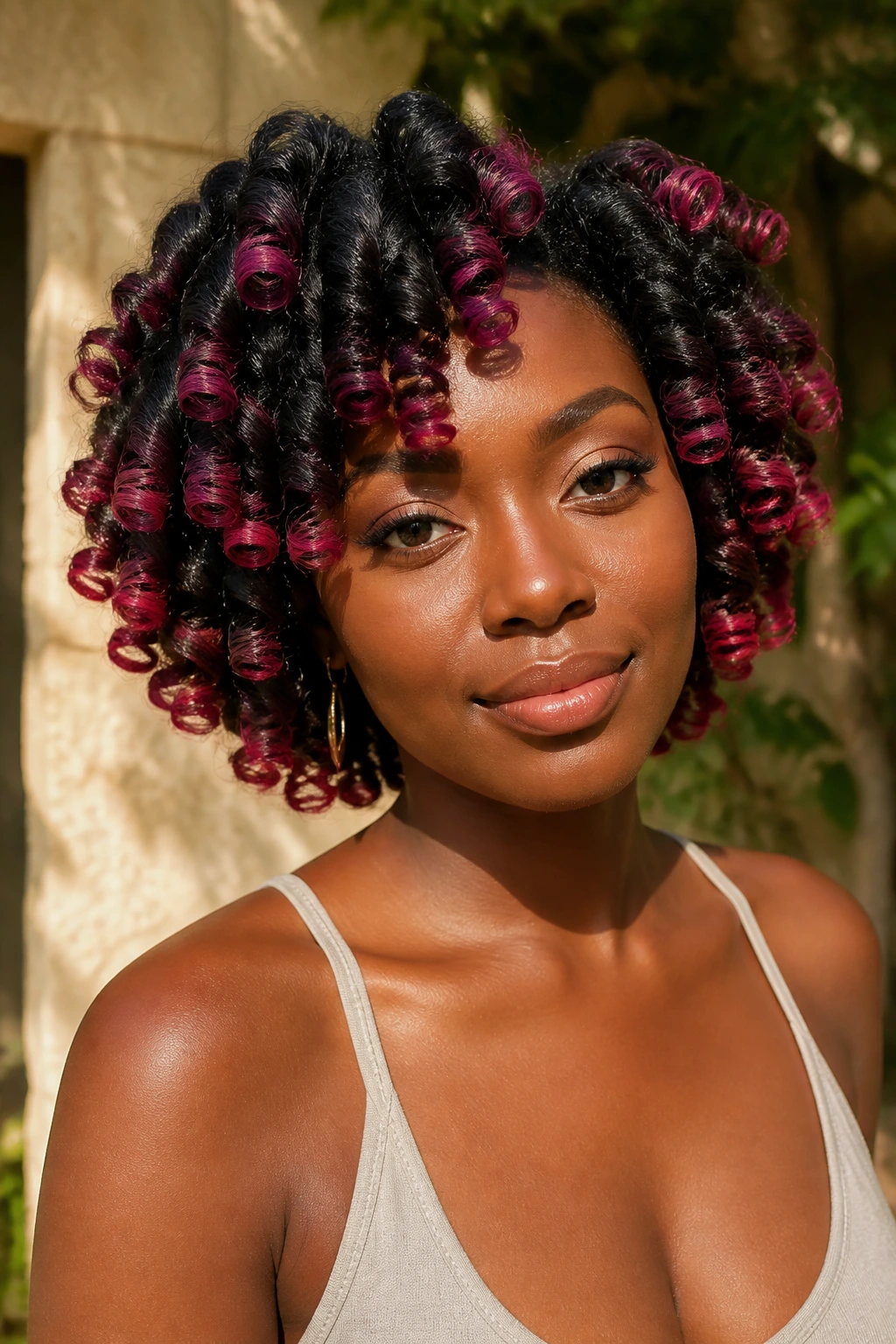
Magenta tips on a Bantu knot-out make the coil pattern look even springier. The style already has roundness and lift, so the color lands on the ends of each curl like a small burst. Deep skin handles magenta well because the shade has enough red in it to stay rich.
Separate the curls gently with a little oil on your fingertips, not a heavy palm full of product. Too much oil at the ends makes magenta look slick in a bad way. The color should feel plush and defined, not greasy.
18. Sisterlocks with Violet Tips
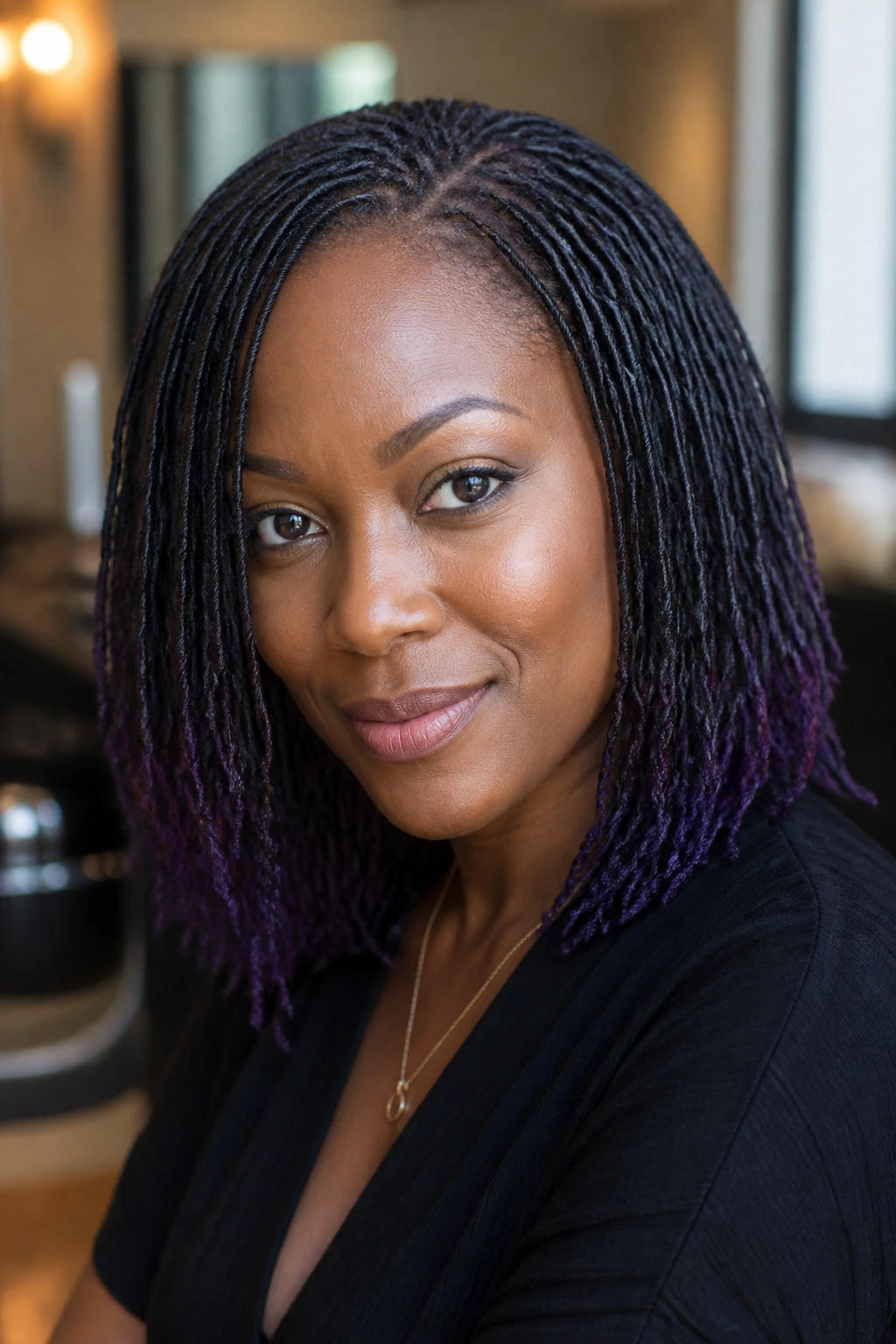
Sisterlocks are tiny enough that violet tips read like a fine line of color rather than a big block. That makes the style feel subtle from far away and detailed up close. On deep skin, violet can look elegant in a quiet, sharp way, especially when the locks are neat and freshly maintained.
This is a good move if you want color but do not want your whole head announcing itself from across a room. Keep heavy creams away from the tips; they can make the violet dull and separate the lock pattern. A light mist and a satin wrap are enough most nights.
19. TWA with Frosted Platinum Tips
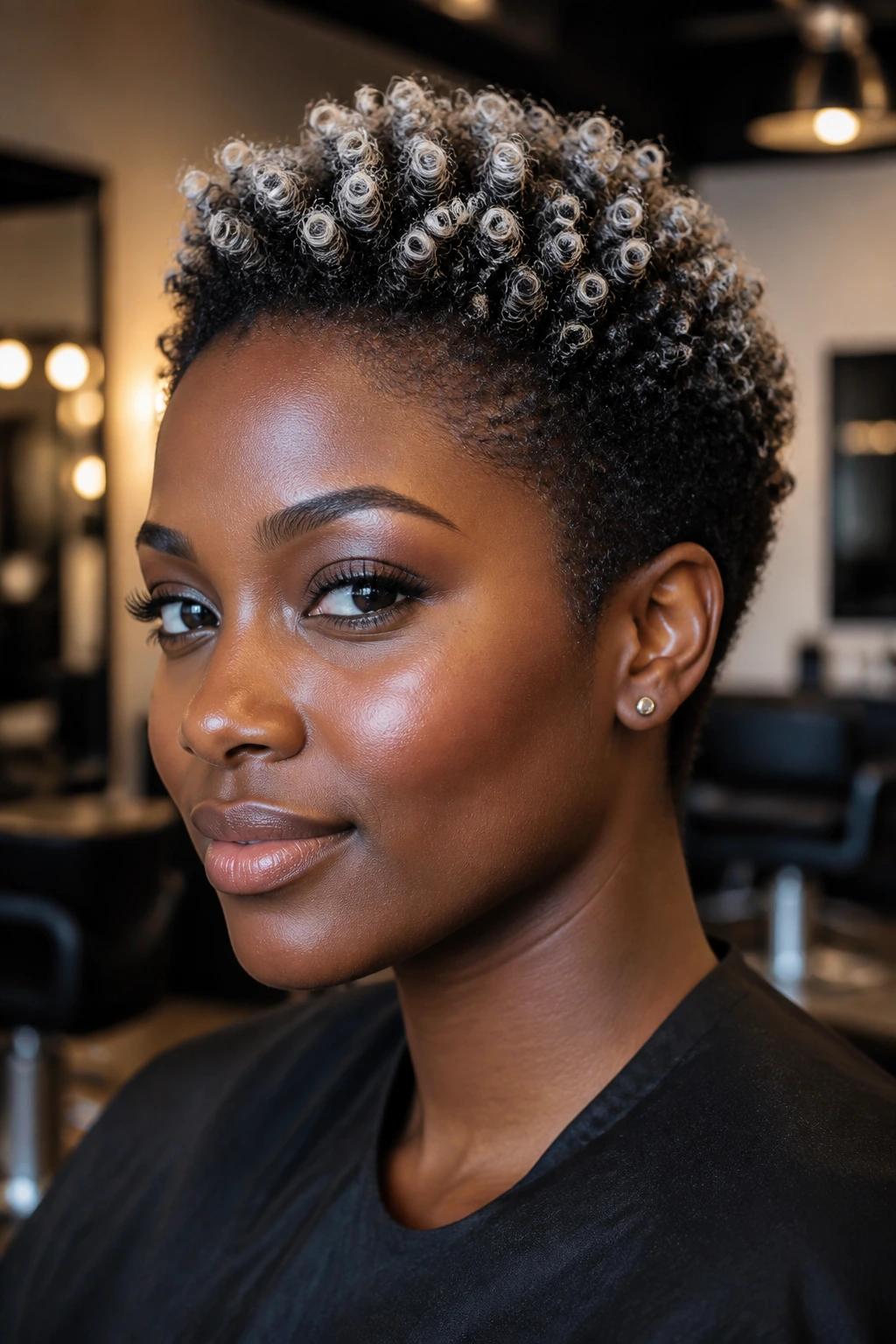
A TWA with frosted platinum tips is a bold, no-apologies look. The short length keeps the color concentrated, and the platinum catches on the curl tops and edges in a way that feels clean rather than messy. On deep skin, the contrast is strong enough to look graphic without needing extra styling tricks.
The important part is toning. Platinum that leans yellow can read unfinished next to deep skin, while a cooler frost reads much cleaner. Because the hair is short, regular maintenance matters; you’re not hiding any rough spots behind length.
20. Braided Bob with Multi-Color Tips
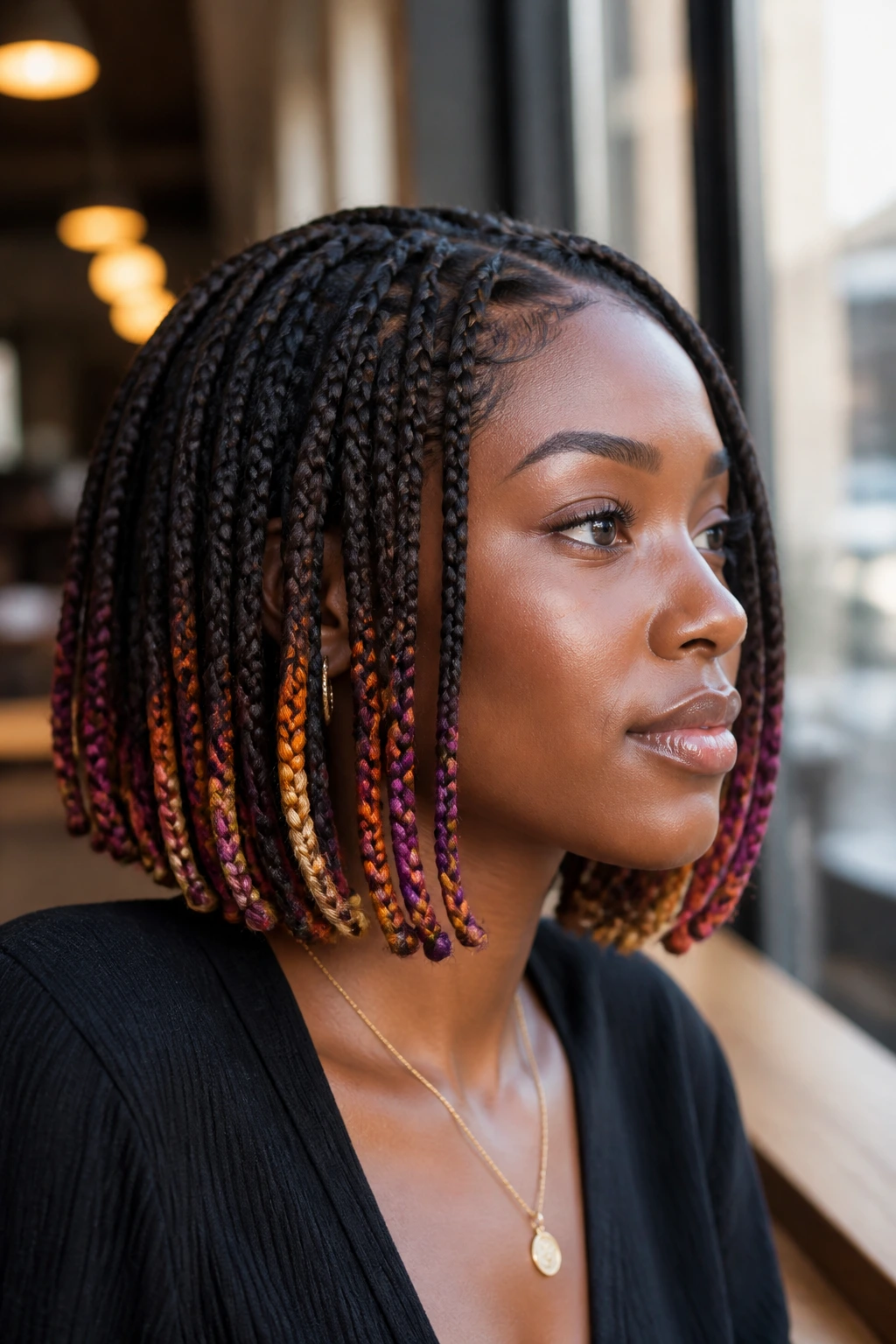
A braided bob can handle more than one color at the ends because the length keeps everything compact. Copper, gold, berry, and even a little violet can live together here without the whole style turning noisy. On deep skin, multi-color tips work best when one shade leads and the others support it.
I’d repeat the colors in a pattern instead of scattering them randomly. That one move makes the look feel planned, not improvised. Since the bob sits near the face, a clean part and neat braid bases matter just as much as the color.
21. Jumbo Twist Bun with Rose-Gold Tips
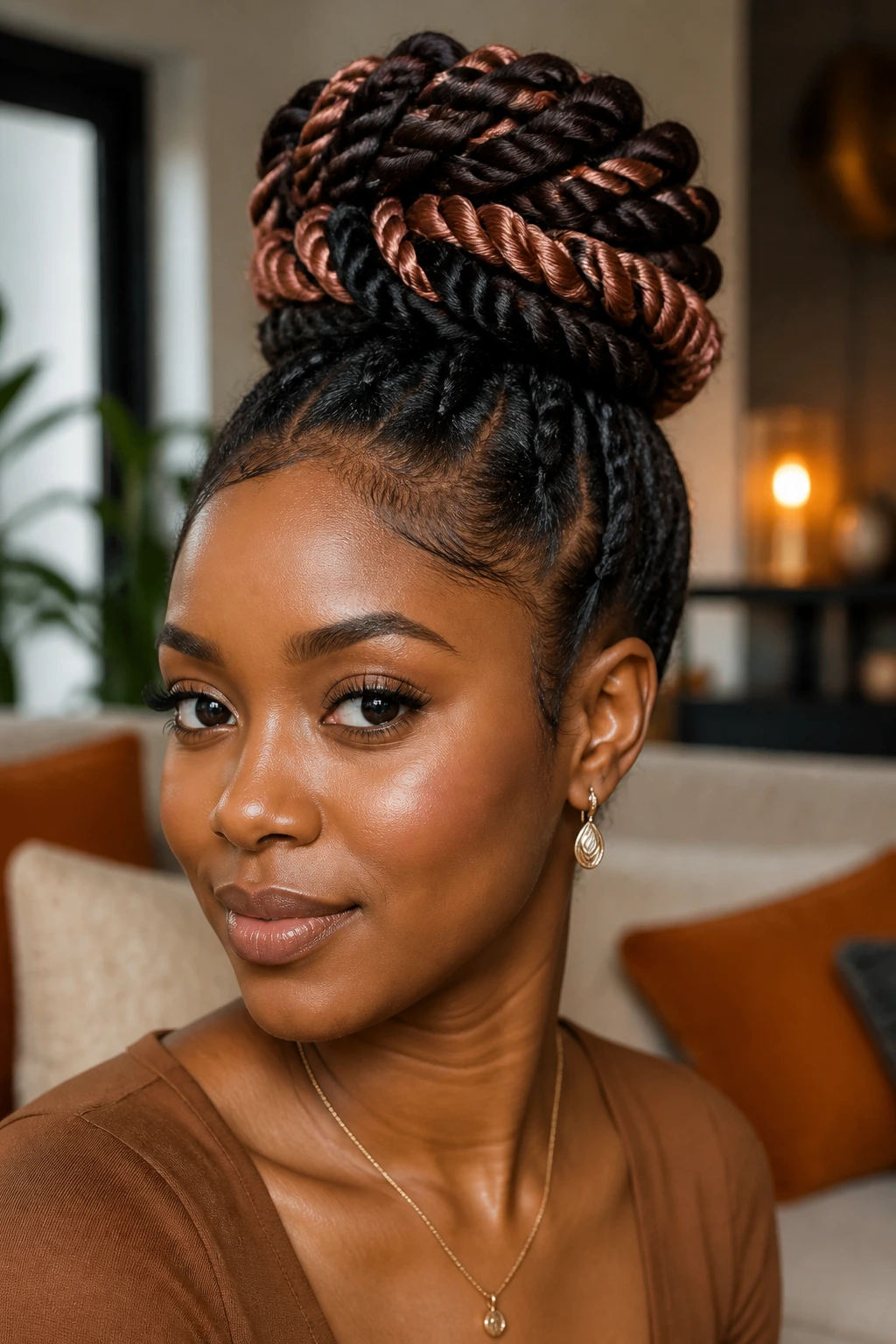
Rose-gold tips on a jumbo twist bun are for when you want the color to act like jewelry. The bun keeps the hair off the neck and gives the tips a place to fall in soft arcs around the crown or the bun base. On deep skin, rose-gold reads warm, soft, and a little glossy.
Keep the bun sleek so the ends get all the attention. If the base gets too puffy, the rose-gold loses its edge. A touch of mousse on flyaways and a scarf wrap while the hair sets will make a big difference.
22. Micro Braids with Caramel-Blonde Tips
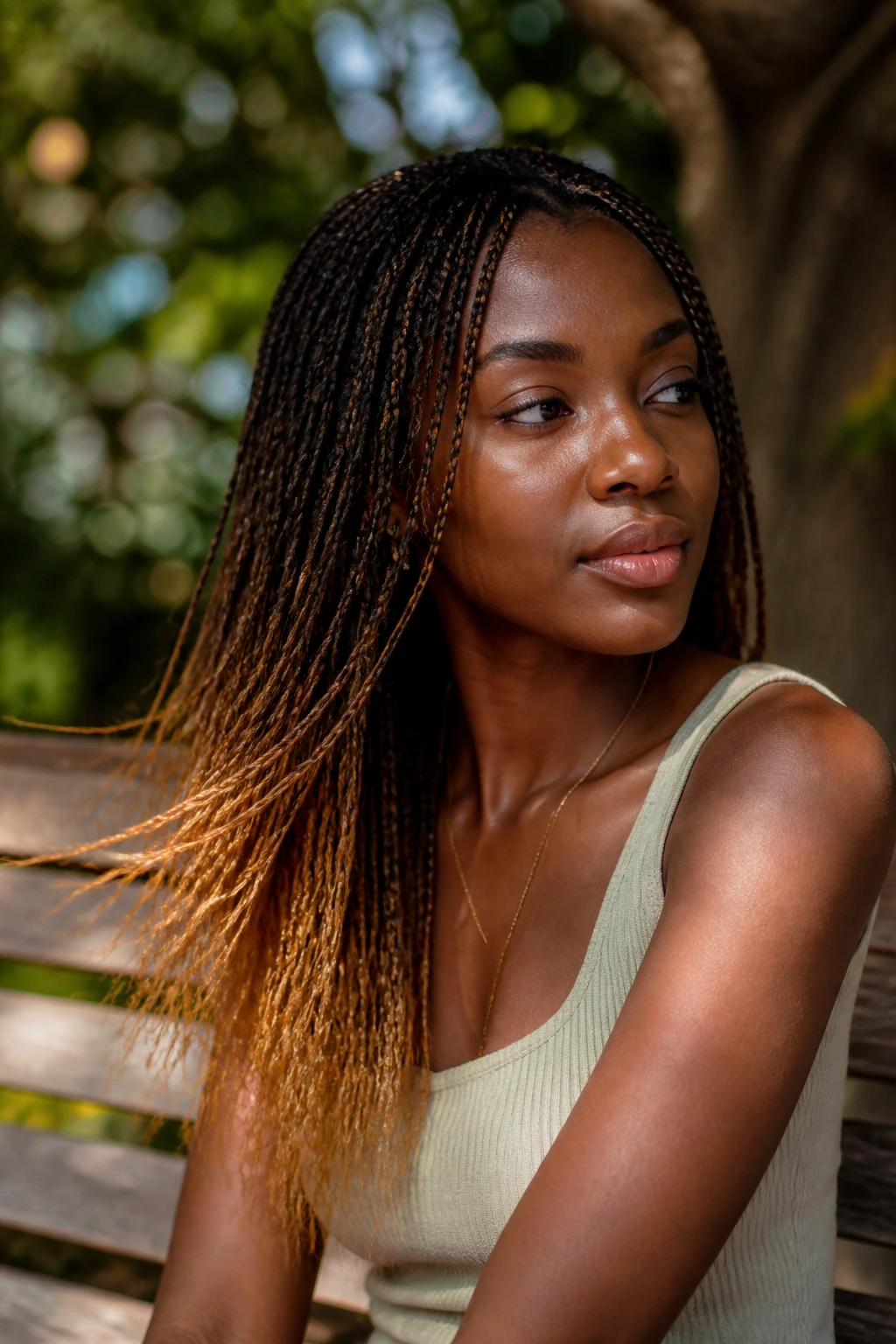
Micro braids with caramel-blonde tips create a soft halo effect, especially when the hair moves. Because the braids are tiny, the color appears in a fine fringe across the ends rather than as one big chunk. On deep skin, caramel-blonde is usually kinder than a stark bleach blonde; it keeps some warmth.
Sealing the ends matters here. Frayed tips make micro braids look tired faster than almost any other braid style. If you want the color to stay crisp, keep oils light and avoid dragging a heavy cream down the length every day.
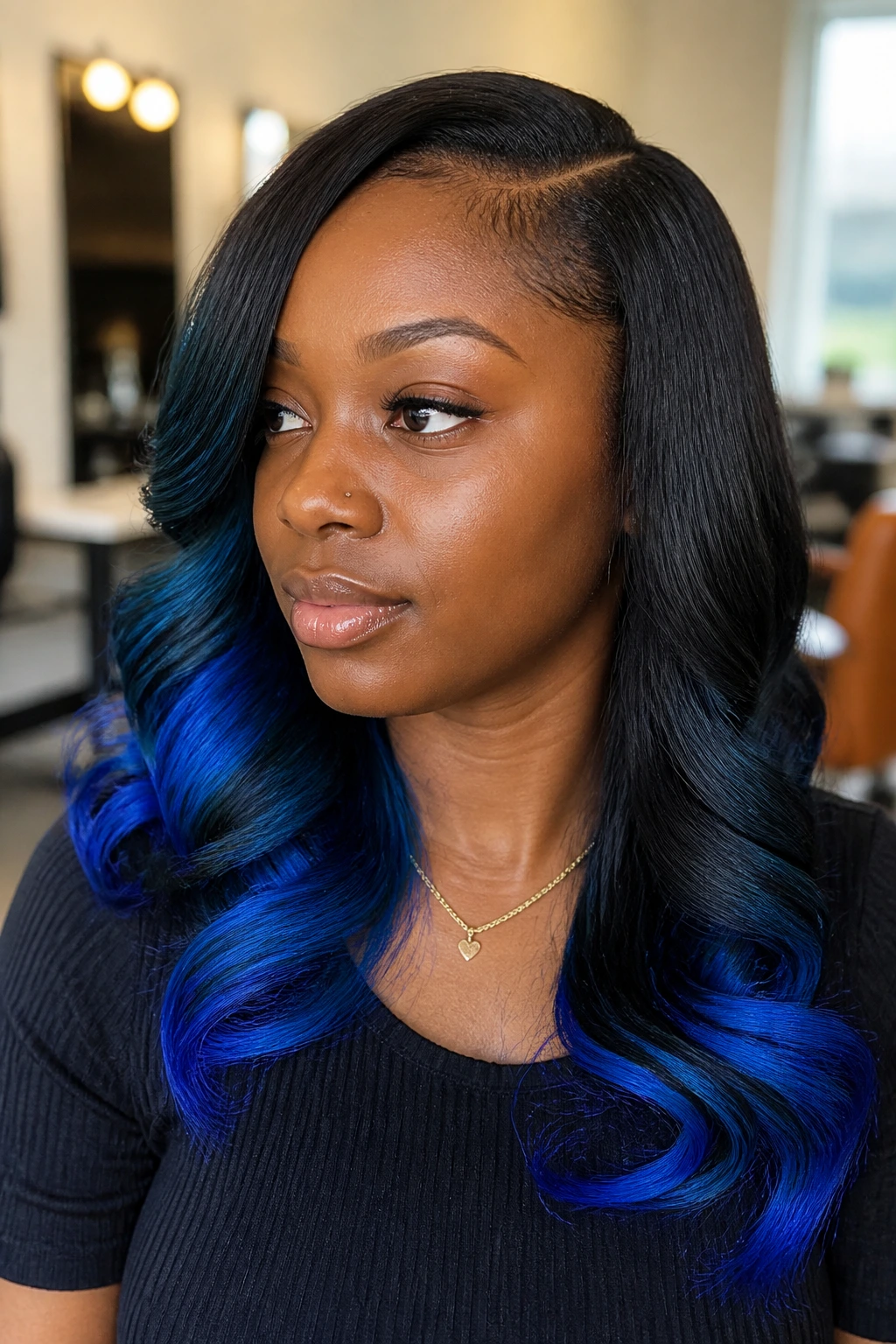
23. Side-Part Sew-In with Sapphire Tips
A side-part sew-in gives sapphire tips a sharp frame. The clean part, smooth roots, and layered bundles create a polished base, and the color at the ends provides the movement. On deep skin, sapphire has enough cool depth to stand out without clashing with the complexion.
You can go all in with dyed bundles, or keep it quieter with just a few face-framing pieces colored at the bottom. Either way, the side part is doing half the visual work. Keep heat low and use a silk wrap at night so the tips don’t lose their swing.
24. Faux Hawk with Emerald Tips
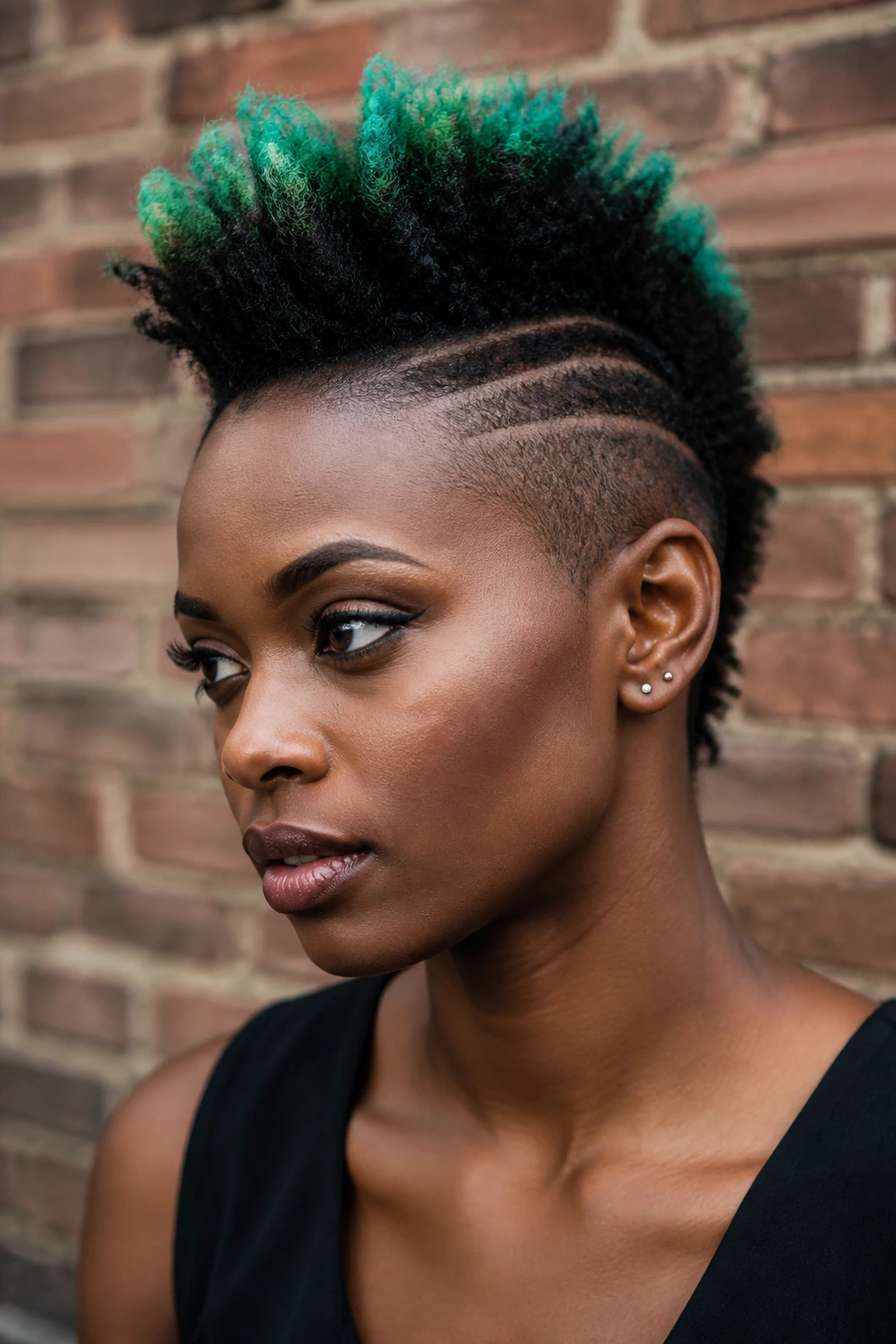
The faux hawk is already dramatic, so emerald tips feel like a natural extension of the shape. The sides stay pinned or braided close, and the center ridge gets the color where the eye should travel. On deep skin, emerald reads rich and saturated, not flat or costume-like.
This style works especially well when the tips sit along the crest, not all over the head. Too much color can hide the architecture. Keep the sides crisp, the ridge lifted, and the emerald concentrated where the profile view is strongest.
25. Braided Space Buns with Lavender Tips
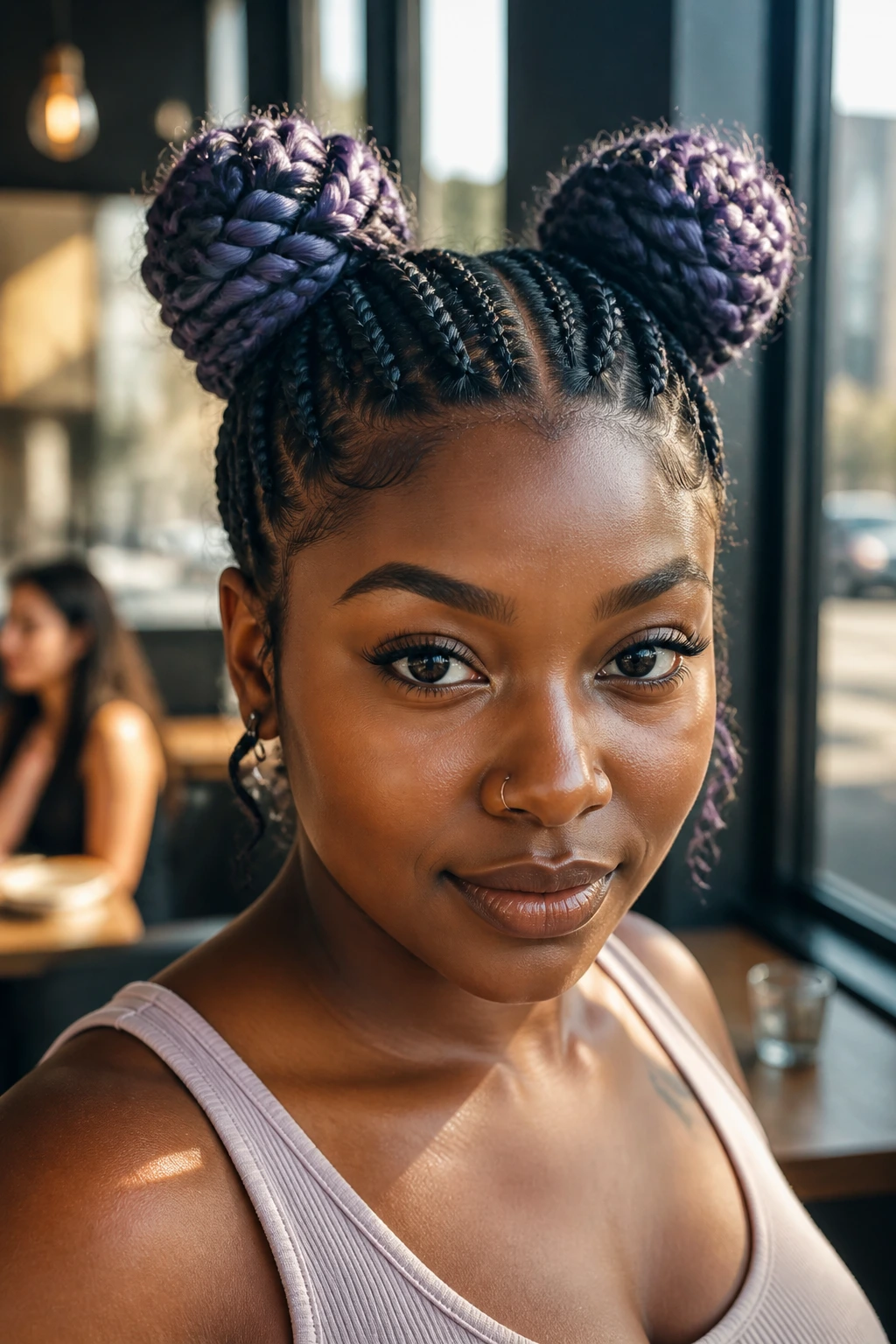
Braided space buns with lavender tips are playful, but they don’t have to look childish. Lavender is soft, sure, but when it’s saturated enough, it sits beautifully against deep skin and gives the style a cool edge. The braided tails or dipped ends make the color feel intentional rather than random.
I’d keep the buns even and high enough to show the tips clearly. If the buns sit too low, the color disappears under the head shape. Silver cuffs or clear beads can work here, but only if you stop after one or two accents.
26. Long Blowout Layers with Cinnamon Tips
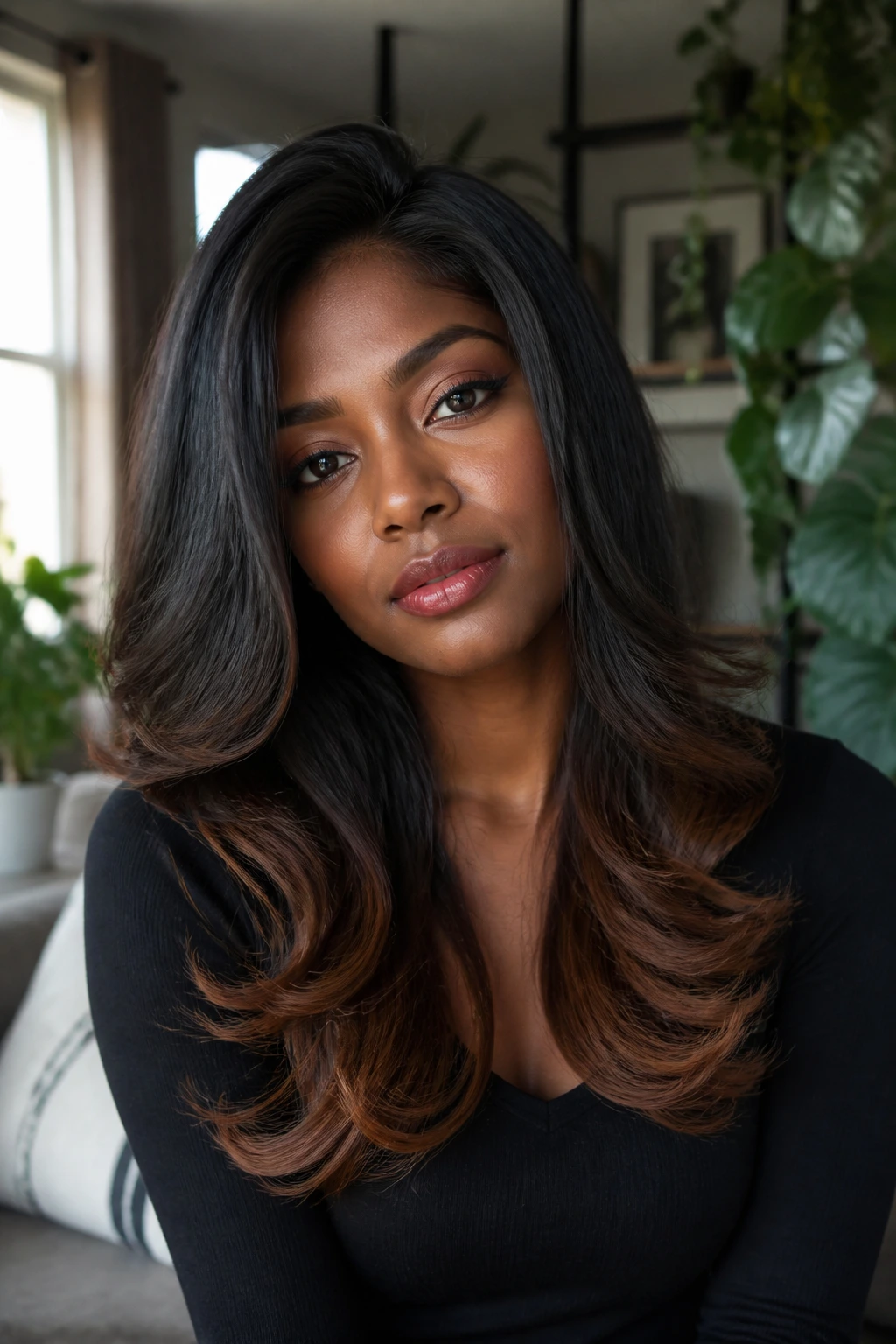
Long blowout layers with cinnamon tips are one of the easiest colored-end looks to live with. The layers feather out, the color sits on the last few inches, and the whole shape moves in a way that feels natural. On deep skin, cinnamon reads warm and believable, almost like an upgraded version of a highlight.
This style depends on a smooth finish. Too much oil makes the cinnamon tips slump; too little and the ends look dry. Use a small amount of serum, then keep the layers wrapped or pinned loosely at night so the ends stay from bending in odd places.
27. Curly Ponytail with Berry Tips
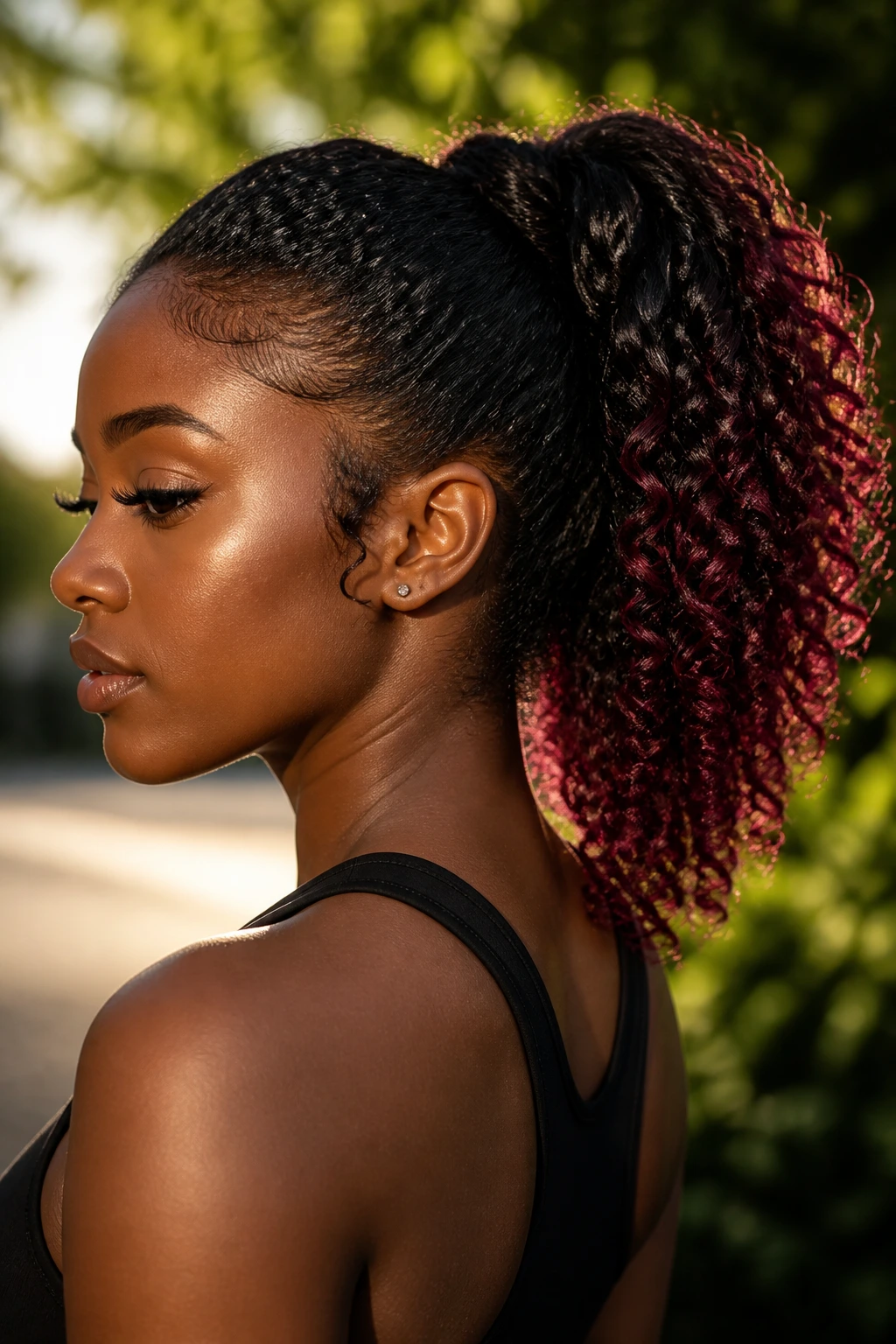
A curly ponytail gives berry tips room to show off, especially when the tail swings. Raspberry, blackberry, and deep berry shades all work here because they hold richness without needing to go neon. On deep skin, berry feels lush and wearable at the same time.
Wrap the base with a strip of hair or a small section of your own hair so the ponytail looks clean from the front. That one detail makes the colored ends feel finished instead of tacked on. A light scrunch of curl cream on the tail keeps the berry tips from drying out and frizzing up.
28. Goddess Locs with Chocolate-Cherry Tips
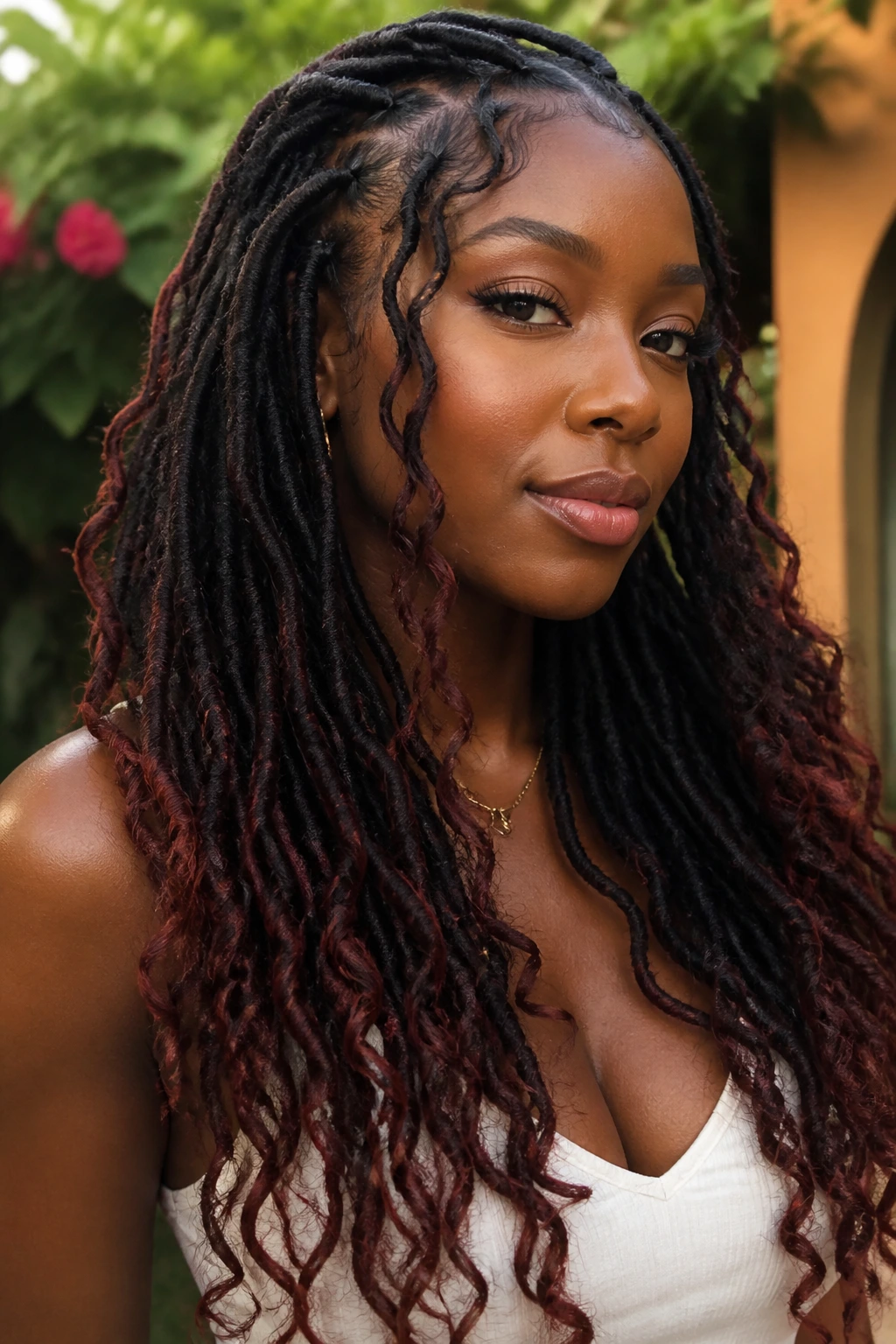
Goddess locs with chocolate-cherry tips feel romantic without being soft in a boring way. The curly tendrils and wrapped loc texture already bring dimension, and the cherry color at the ends makes the whole style look richer. On deep skin, the deep red-brown mix sits in a very flattering place — bold, but not loud.
This is a good choice if you want color that still feels grounded. Keep the base a dark brown or black-brown so the cherry ends have somewhere to live. A little mousse on the loose curls and a satin scarf at night will keep the finish clean.
Why Colored Tips Change the Whole Silhouette
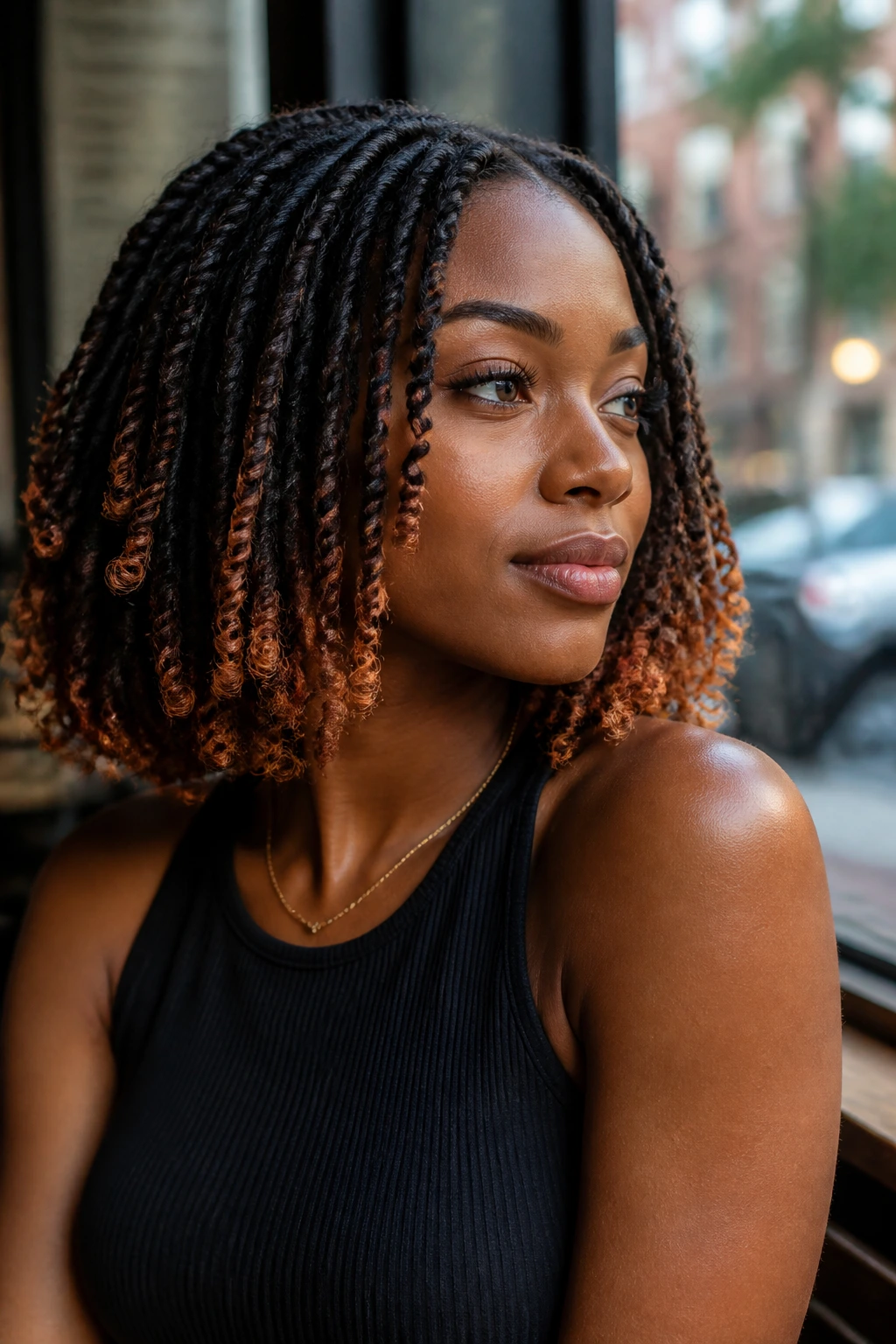
The biggest reason colored tips work is simple: the eye follows the edge of a shape first. On braids, locs, curls, and layered cuts, the bottom few inches are where the movement shows, so that’s where the color lands with the most force. A dull root can still be a good root. The ends are where the personality shows up.
On deep skin tones, that effect gets stronger because rich melanin creates a darker frame for the hair color. A warm copper tip doesn’t just sit there; it gets lifted by the contrast around it. A jewel tone doesn’t flatten out the face; it sharpens the silhouette. That’s why the same shade can look timid on one complexion and magnetic on another.
There’s also a practical side to the whole thing. Full-head color can be a commitment, and not every haircut or protective style needs that kind of drama. Colored tips let you change the mood without wrecking the base. Keep the roots dark, keep the shape clean, and let the edges do the work.
Essential Tools for Colored-Tip Styles
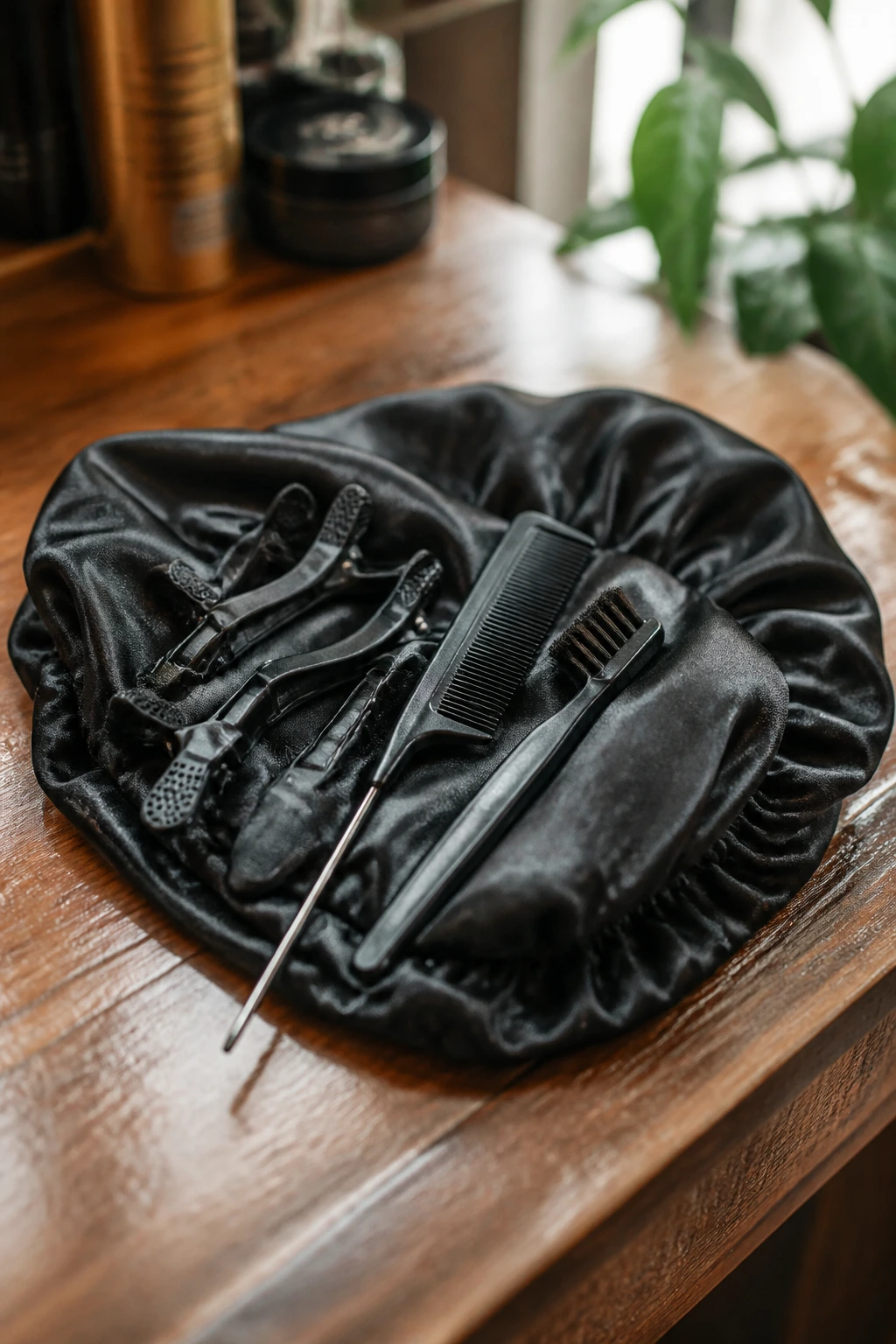
- Rat-tail comb: Useful for crisp parts, clean sections, and separating the colored ends from the root area.
- Sectioning clips: Keep braids, curls, or layers organized while you work, especially if you’re doing any color placement yourself.
- Edge brush: Helps keep hairlines tidy without disturbing the colored tips.
- Mousse or setting foam: Good for braids, twists, locs, and curls because it smooths frizz and helps the ends keep their shape.
- Leave-in conditioner: Keeps the final inches from looking thirsty, which matters a lot on dyed ends.
- Color-safe shampoo: Slows fading on semi-permanent color and keeps warm tones from turning dull fast.
- Heat protectant: Non-negotiable for silk presses, blowouts, and flipped-out styles.
- Diffuser or hooded dryer: Useful for curls and puffs when you want the color to sit on defined texture rather than frizz.
- Small dye brush and mixing bowl: Only needed if you’re tinting tips at home. Clean tools make cleaner color.
- Satin bonnet or scarf: Keeps colored ends smooth overnight and reduces rubbing on braids, twists, and locs.
Smart Color Picking and Hair Prep
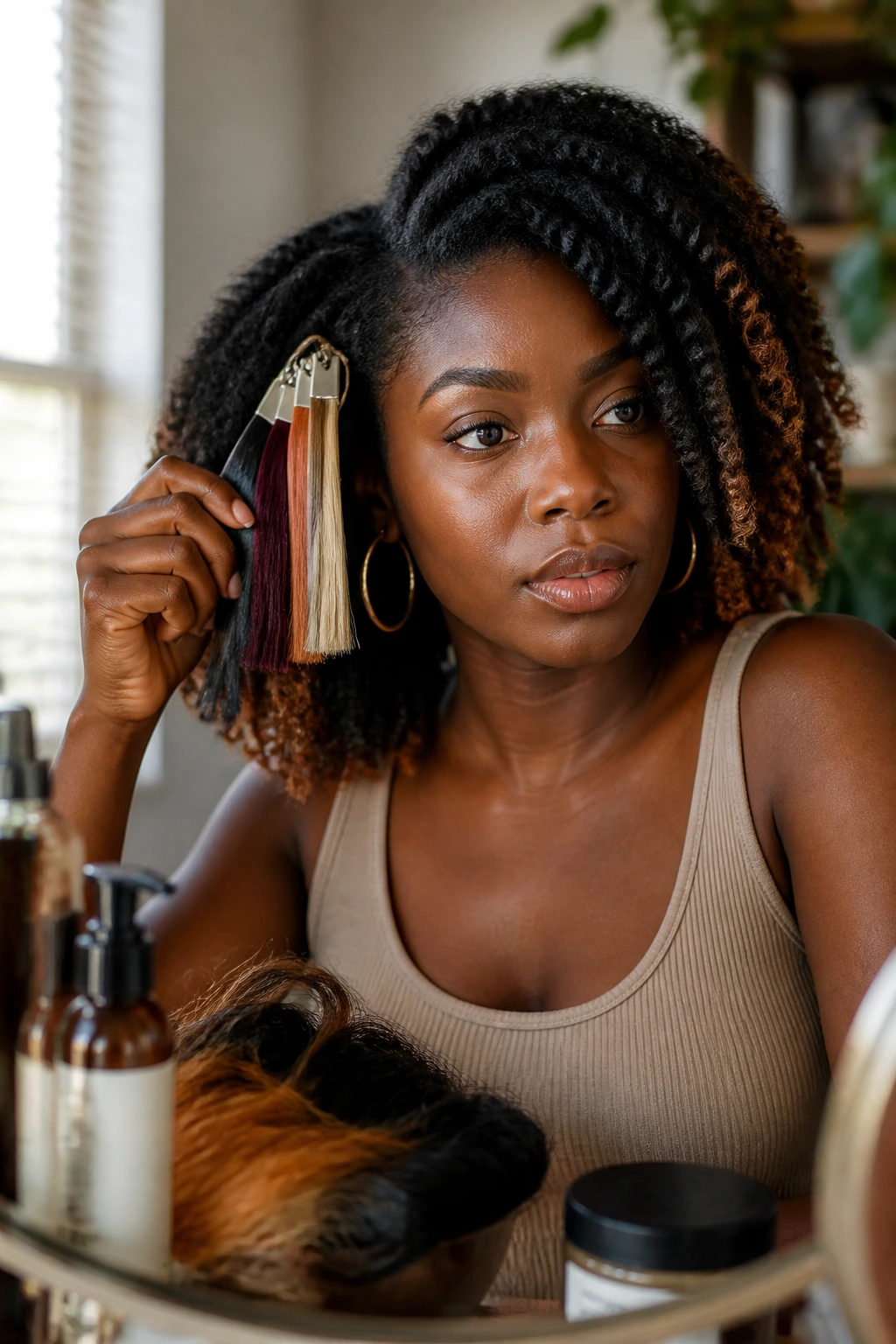
The shade matters, but so does the finish. Warm tip colors — copper, honey, amber, cinnamon, rose-gold, apricot — tend to feel easy on deep skin because they echo the warmth already in the complexion. Cool shades like teal, sapphire, emerald, violet, and electric blue create a sharper edge and read more graphic. Both work. The mistake is picking a shade that looks dusty, gray, or washed out next to rich brown skin.
If the style uses extensions, buying pre-colored hair is usually smarter than trying to bleach everything later. Synthetic braiding hair, human hair bundles, clip-ins, and loc extensions all behave differently, and the color payoff is easier when the fiber starts near the shade you want. For braids and twists, pre-dipped or pre-blended ends save a lot of fuss.
Natural hair needs more care. Bright blond, platinum, and some pastels usually require lifting the hair first, which means the ends need extra moisture and a strand test before the full process. Don’t push dark hair all the way to pale yellow unless you know the hair can handle it. A clean gold or warm copper lift often looks better on deep skin anyway, and the strands usually stay happier.
How to Wear These Looks
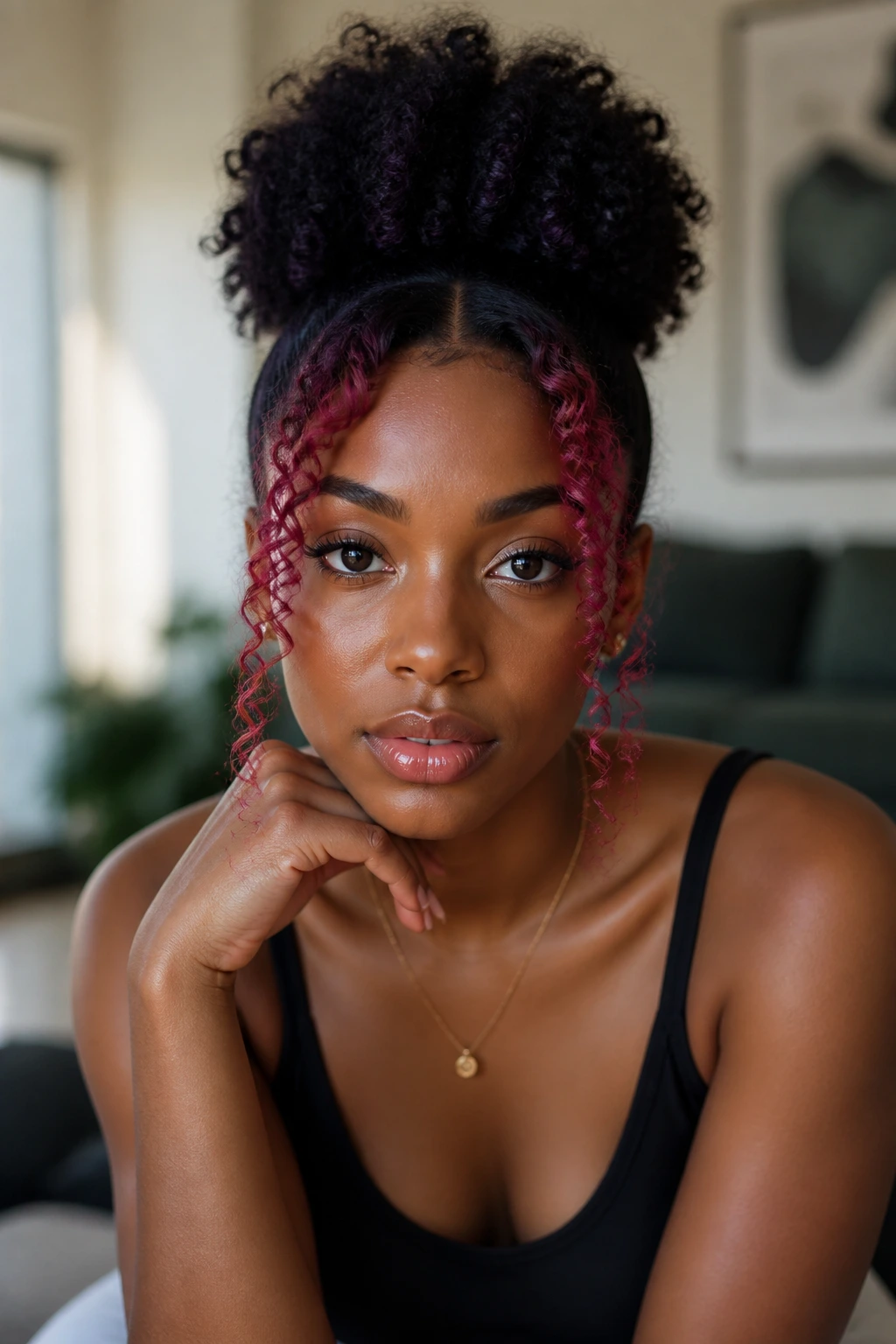
Presentation: Put the brightest color where the eye lands first — at the front braids, the outer curls, the top ridge of a faux hawk, or the swinging ends of a ponytail. If you want the style quieter, keep the color lower and farther back.
Accessories: Gold cuffs, thin hoops, a satin scarf, and one clean clip usually do enough. Heavy extras can make neon tips feel crowded, especially on braids and locs.
Balance: Loud tips like lime, neon green, or electric blue pair well with simple clothing lines and clean makeup. Softer shades like caramel, honey, apricot, or cinnamon let you wear more texture, more jewelry, and a bit more print.
Scale: Short hair needs only a thin colored edge. Long braids, twists, and locs can handle a deeper dip — two to four inches — before the color starts swallowing the shape.
Additional Tips for Sharper Color and Better Shine
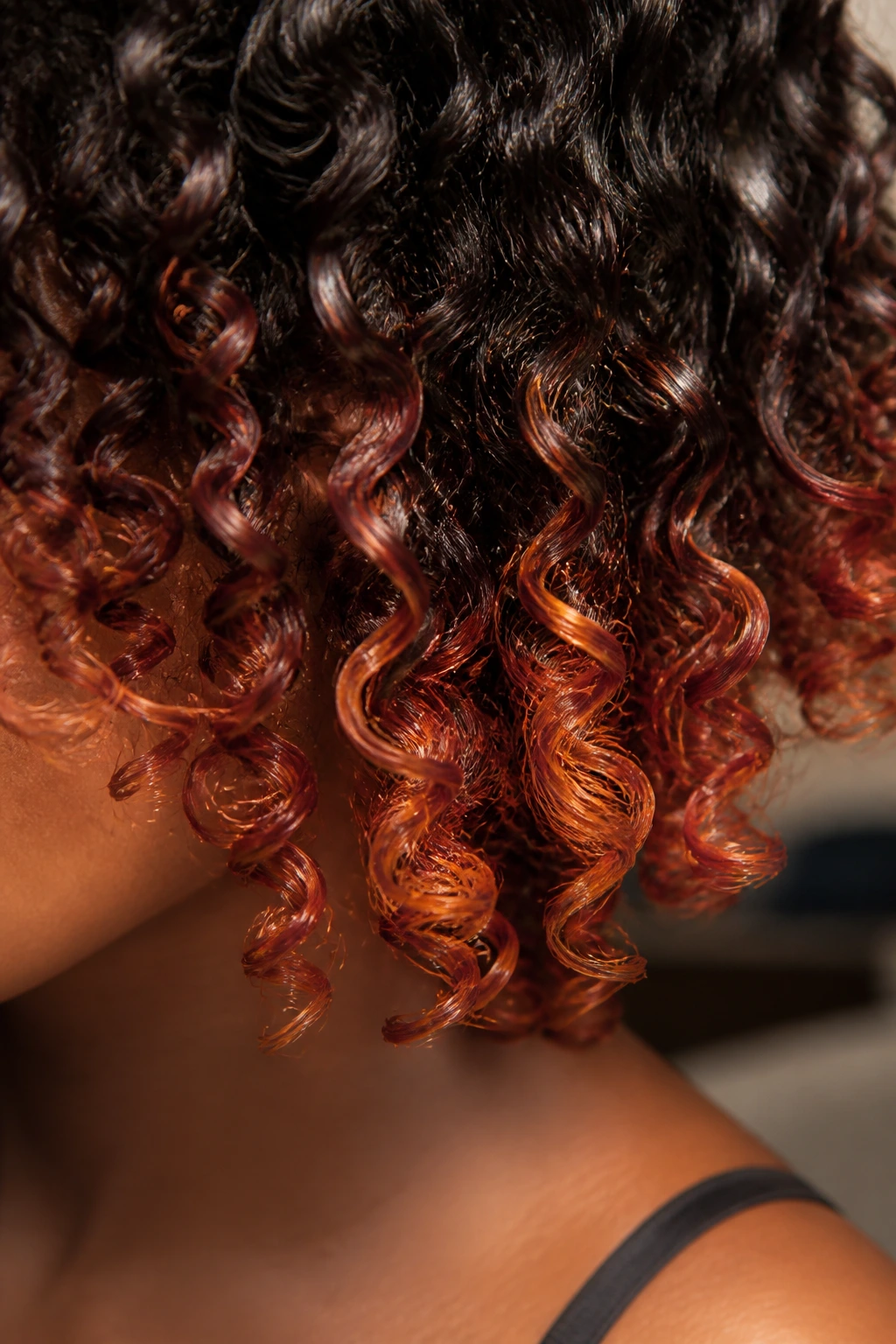
Contrast Boost: A light gloss or shine spray on the base and the colored ends helps the shade look richer under indoor light. Matte color can go flat fast on deep skin, especially if the shade is pale or cool.
Customization: Blend two close shades at the tips instead of stopping at one flat color. Copper into gold, plum into violet, berry into cherry — that little shift adds depth without adding clutter.
Face-Framing: If the color is bold, keep the brightest pieces near the temples, cheekbones, or the front edge of a braid pattern. That’s where people actually notice it first, and it saves the rest of the style from looking busy.
Make-It-Yours: If you want low maintenance, stay inside one shade family and let the tips fade a little. If you want drama, pair a warm tip color with a cool base, or use one shade on the front pieces and a second shade on the back.
Keeping Colored Tips Fresh Without Fuss
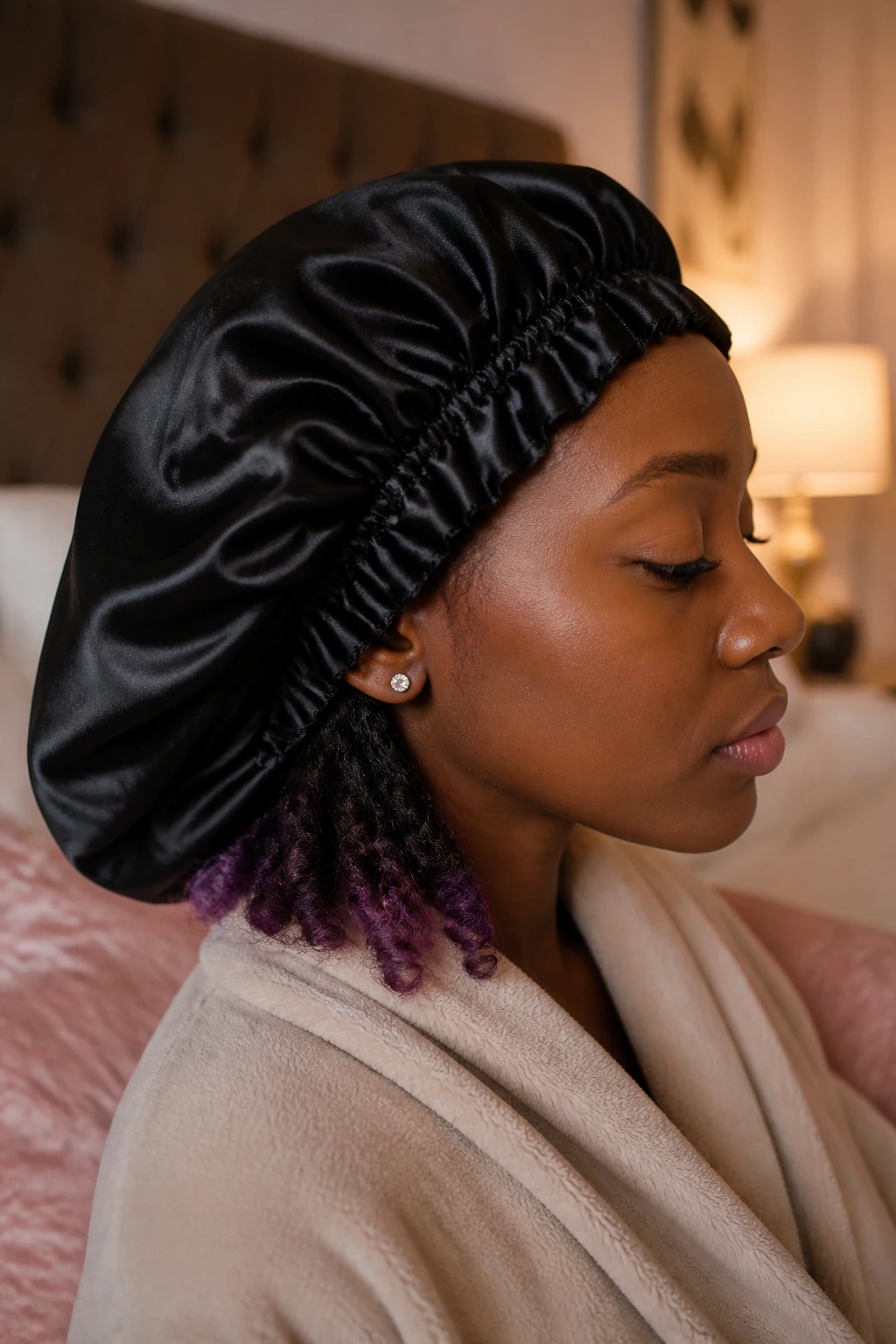
Braids, twists, and locs like a night routine. A satin bonnet or scarf keeps the ends from rubbing against cotton pillowcases, which is where a lot of frizz starts. Every week or so, a little mousse along the tips and a palm-smoothing pass can keep the color line clean. Protective styles usually wear best for four to eight weeks, but the color at the ends starts looking tired before the style itself is done if you skip wrapping it up.
Curls, blowouts, silk presses, and layered cuts need a different rhythm. Pineapple the curls, wrap the silk press, or loose-pin the blowout so the ends do not kink at the wrong angle overnight. A water-and-leave-in spray mix can revive curls, while a tiny bit of serum can help flipped-out or blowout ends stay shiny. Semi-permanent color usually fades faster on porous tips, so expect to refresh sooner if the shade is bright red, copper, or pastel.
Dyed ends and extension hair need a lighter touch than most people use. Heavy oils make color look dark and heavy, not glossy. Cool water, color-safe shampoo, and careful drying help the shade stay clean longer. If the ends start looking dry, trim a little or refresh the color instead of piling on more product.
Variations and Adaptations to Try
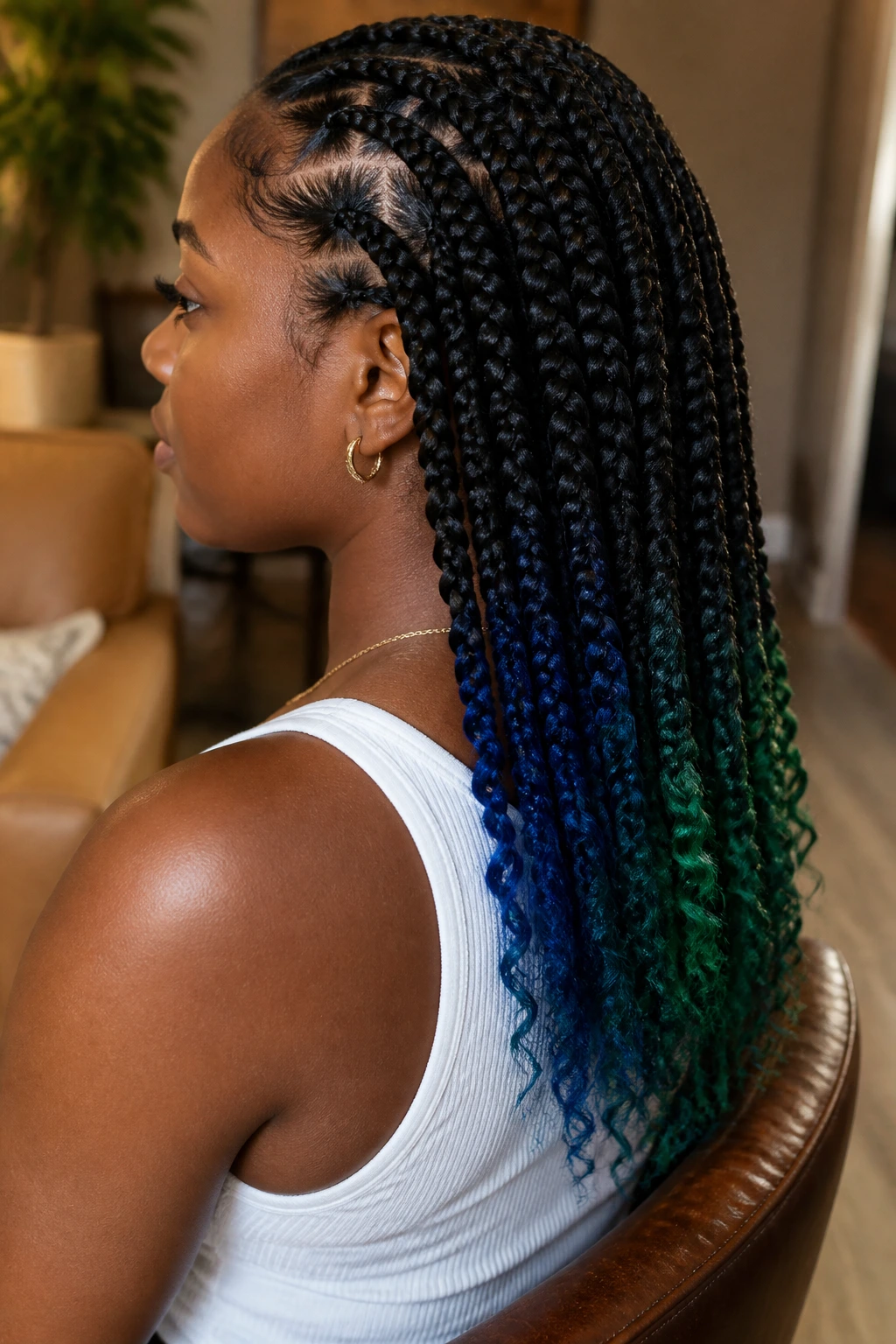
Soft-Copper Everyday Edit: Keep the color to copper, honey, or cinnamon and keep it on the last inch only. This version fits almost any braid, twist, or blowout style and feels easy to wear at work or on a low-key day.
Neon Weekend Switch: Pick one loud shade — lime, electric blue, neon green, or magenta — and put it only on a ponytail, faux hawk ridge, or the bottom of braids. One loud zone is usually enough.
No-Bleach Extension Version: Use pre-colored braiding hair, dyed bundles, or clip-ins instead of trying to lighten natural hair. This gives you the same tip effect with less damage and less maintenance.
Short-Hair Edge Version: On TWAs, tapered cuts, and pixie-length styles, keep the color at the top curls, fringe, or sideburn area. A tiny amount of bright color goes a long way when the cut is short.
Two-Tone Jewel Blend: Mix two colors that sit near each other — sapphire and emerald, plum and violet, berry and cherry. The blend gives you depth at the ends without making the style look busy.
Common Mistakes to Avoid
-
Choosing a shade that’s too pale for the base. The symptom is color that looks dusty or disconnected from the hair, especially in indoor light. Fix it by choosing a richer version of the same family — butter blond instead of icy platinum, berry instead of dusty pink, teal instead of washed-out mint.
-
Bleaching natural hair past what the ends can handle. The hair starts feeling mushy, fraying, or snapping at the tips. Stop earlier and tone the lift, or switch to colored extensions if you want a brighter finish.
-
Letting the color spread too far down the hair. The style loses its shape and starts looking like a full dye job that forgot its purpose. Keep the color limited to the last 1-3 inches unless the style really needs a deeper dip.
-
Skipping hold product on textured styles. Braids fuzz out, curls separate, and the color looks dull before the style is actually old. Use foam, mousse, or a light gloss depending on the texture.
-
Overloading the look with extra accessories. Too many beads, clips, scarves, and earrings can swallow the colored tips. Pick one or two accents and let the shade do the visual work.
Frequently Asked Questions
What colored tips flatter deep skin tones the most?
Warm shades like honey, copper, amber, cinnamon, and rose-gold are easy wins, but jewel tones like sapphire, emerald, teal, and burgundy also look strong. The best choice usually depends on how much contrast you want, not on some rigid rule.
Do I need bleach to get colored tips?
Not always. If you’re using braiding hair, extensions, wigs, or clip-ins, you can buy pre-colored pieces and skip bleach entirely. Natural hair is different; bright blonds and some pastels usually need lifting first, which is where damage can creep in.
Are pastel tips too light for deep skin?
They can be, if the pastel is chalky or washed out. A deeper, richer pastel with a stronger base — think lavender instead of pale lilac, peach instead of powder pink — tends to sit better on deep skin.
Which hairstyles keep colored tips visible the longest?
Braids, twists, locs, and sew-ins usually hold colored ends the longest because the shape stays intact. Curls and blowouts show the color beautifully too, but they need more frequent refreshes and nightly care.
How do I keep the tips from looking dry?
Use a light leave-in, a satin wrap at night, and a color-safe wash routine. Heavy oils can make the ends look dark and dull, so use them sparingly and only where the hair actually needs slip.
Can I wear colored tips on short hair?
Absolutely. Tapered cuts, TWAs, pixies, and short curly bobs can wear color at the fringe, the top layer, or the outer edge. The trick is keeping the color placement small and deliberate so the cut stays sharp.
What if my braids or locs start frizzing at the ends?
That usually means the ends need smoothing, not more color. A foam pass, a satin wrap, and a careful trim of loose fuzz can clean up the look fast. If the color itself has faded unevenly, a fresh dip or replacement pieces may be the better fix.
Can I mix warm and cool tip colors in one style?
Yes, but keep one shade dominant. A braided bob with copper, gold, and berry tips can look rich; a head full of unrelated colors usually looks noisy. Repetition is what makes mixed color feel planned.
Color at the Ends, Character at the Roots
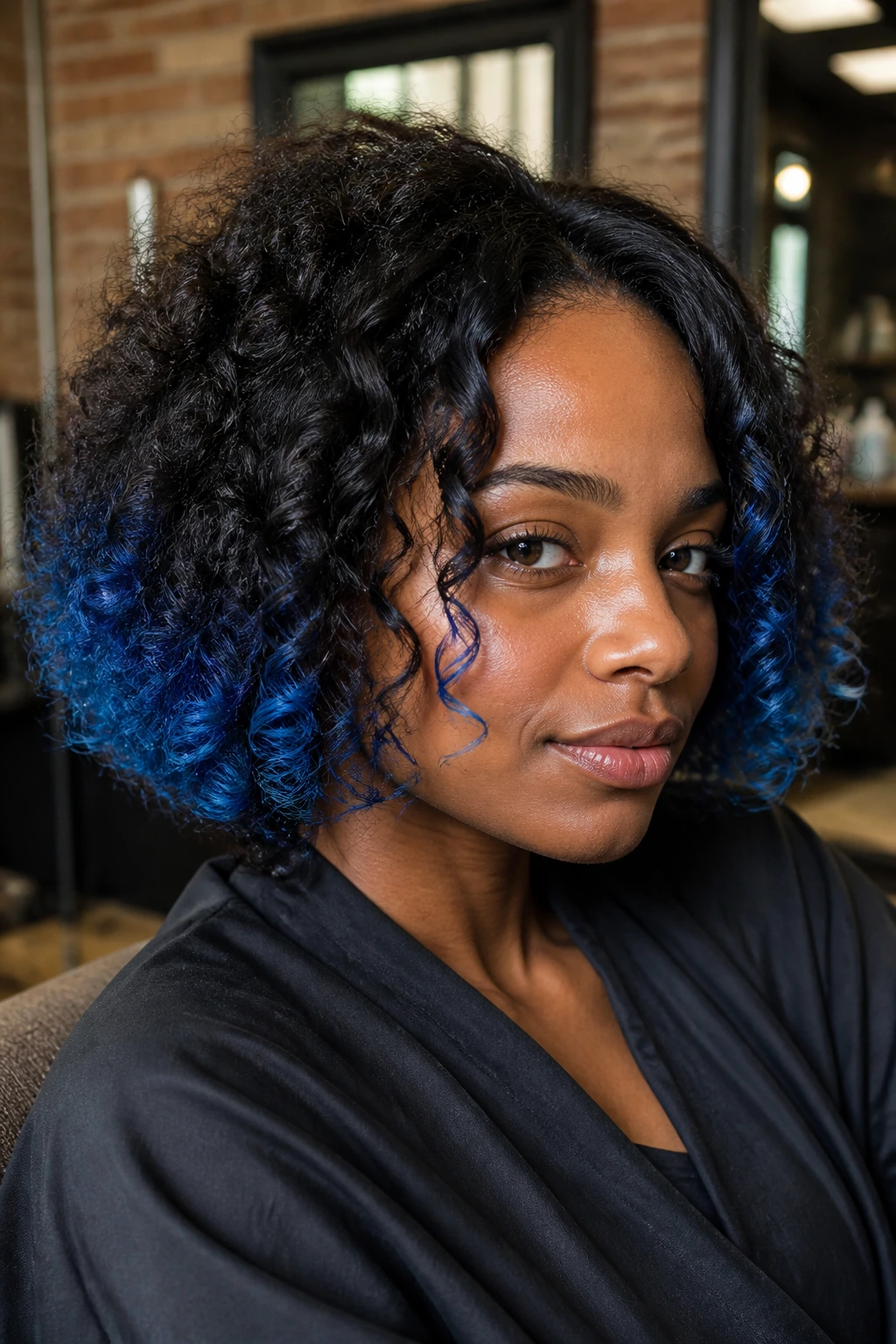
The best colored-tip styles on deep skin tones don’t try to overpower the face. They frame it. That’s the part people sometimes miss. The roots stay grounded, the shape stays tidy, and the color lands right where the hair moves, which is why a tiny dip of copper or cobalt can feel stronger than a whole head of softer dye.
Start with one shape you already like, then choose the shade that gives it a cleaner edge. A braid set, a puff, a tapered cut, a loc style — they all behave differently, and that’s the fun of it. Pick the version that fits your life, keep the tips healthy, and let the color do what it does best: catch the light, then move on.