



Brunette hair can go flat fast when every strand reads the same shade. Add caramel mocha tones, and the whole head starts to move — not in a loud, stripy way, but in soft ribbons that show up when the light catches the mid-lengths, the ends, and that little bend around the cheekbone. That mix of milk-chocolate depth and warm caramel shine is exactly why caramel mocha hair color ideas for brunettes keep showing up in salons and on mood boards.
What makes this family of shades so useful is the balance. Mocha keeps the base grounded. Caramel brings lift without pushing the hair all the way into blonde territory. You can go subtle with a root smudge and a few hand-painted pieces, or lean brighter with babylights, foilyage, or a face-framing money piece. The sweet spot depends on your starting level, your texture, and how much time you want to spend at the sink with toning shampoo. That part matters more than people think.
Some brunette color ideas look pretty for one straight blowout and then disappear into the hair. Caramel mocha is better than that. It survives a messy bun, a twist, a braid, and a second-day wave pattern. The best versions still look brown first, but with enough warmth and contrast that the color feels awake.
Why These Caramel Mocha Ideas Work on Brunettes
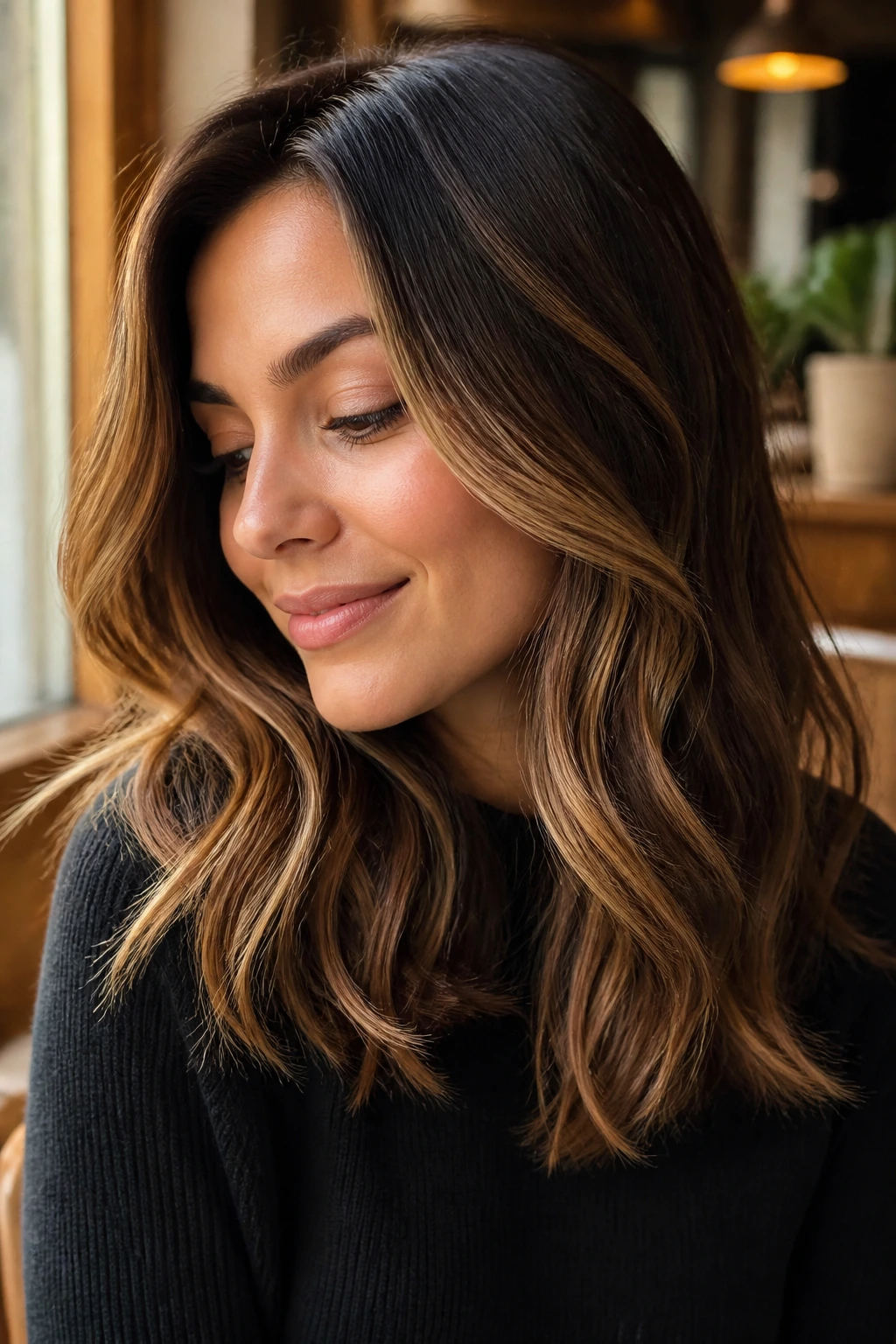
- The contrast stays soft: Caramel usually sits a few levels lighter than a brunette base, so you get visible dimension without that harsh stripe effect that can happen with chunky blonding.
- Mocha keeps the roots believable: A deeper brown root shadow helps the lighter pieces feel attached to the hair instead of pasted on top.
- Warm and cool options both exist: Some versions lean amber and honey, while others pull beige or smoky, which makes this color family flexible for different skin tones.
- Grow-out is easier to live with: A soft balayage, melt, or babylight pattern fades in a gentler way than full-head lightening.
- Texture changes the whole read: Waves, curls, and layered cuts show the caramel ribbons faster than one-length hair, which is why placement matters so much here.
1. Soft Ribbon Balayage
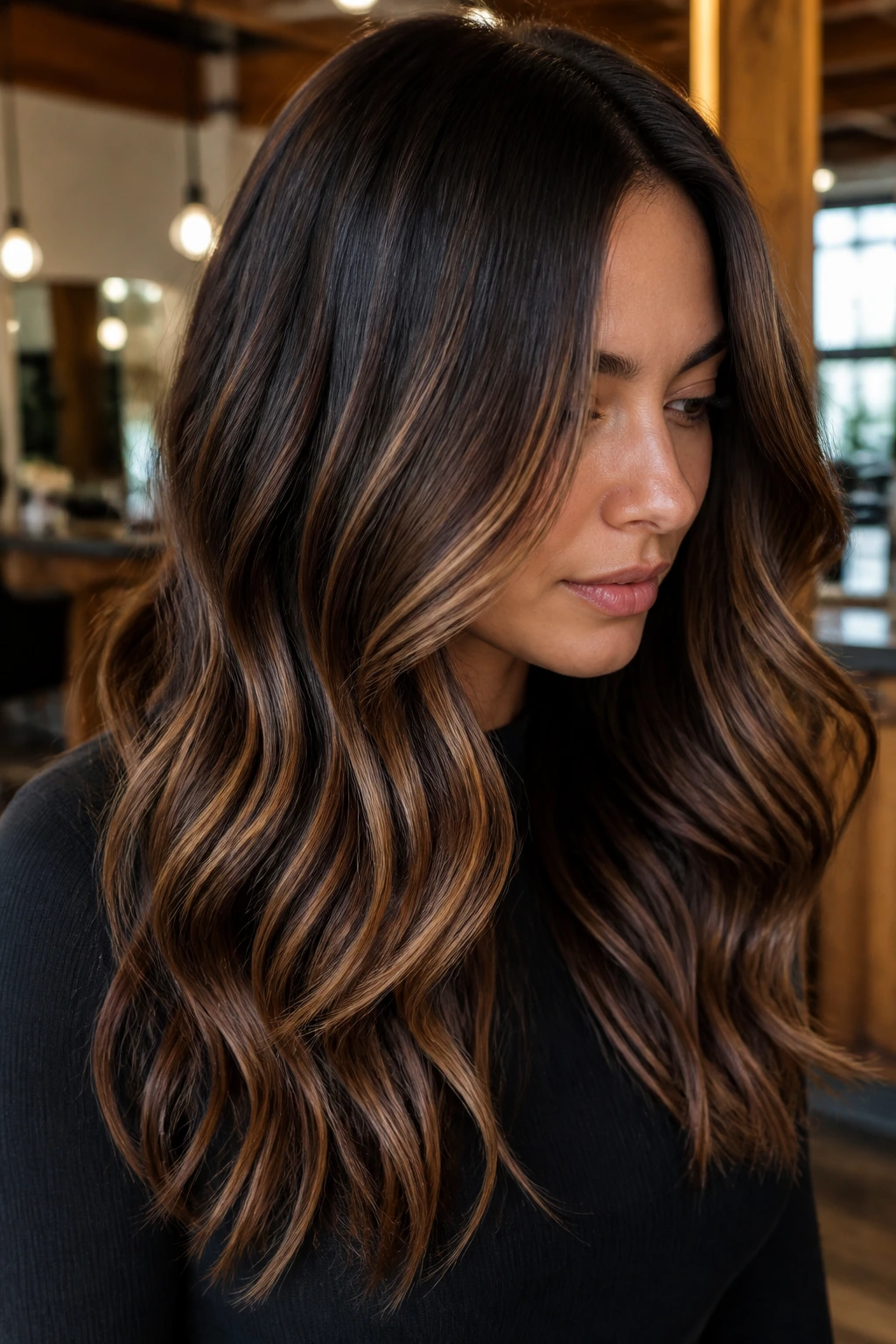
Soft ribbon balayage is the version I’d hand to someone who wants brunette hair with movement, not a dramatic color story. The caramel pieces are painted in narrow, fluid ribbons through the mid-lengths and ends, usually leaving the root area deeper so the whole look stays grounded.
It works because the eye reads the hair as multi-tonal, not highlighted in blocks. On a level 4 or level 5 brunette base, those ribbons can sit just light enough to catch daylight without fighting the natural brown underneath. Ask for soft hand-painted pieces, not chunky sections, and you’ll keep the result plush instead of streaky.
A blowout shows the ribbons in long curves. Loose waves make them dance a little. Straight hair still benefits, but the effect is quieter. If you want a first-color move that doesn’t shout, this is the one.
2. Mocha Melt with Caramel Ends
Want the color to look like it grew that way? A mocha melt with caramel ends is the move. The root starts rich and cool, the mids soften into a brown that still has weight, and the ends open up into warm caramel, almost like the shade got sun-kissed without getting bleached to bits.
The reason this works is simple: the eye follows the fade. There is no hard line. No awkward demarcation. Just a slow shift from dark to light that feels expensive because it looks natural, even when the process behind it is carefully planned.
This is a strong choice if your hair is long enough to show the gradient. Shoulder-length hair can wear it too, but the effect becomes clearer on longer layers, where the melt has room to stretch. Keep the caramel toward the lower third of the hair if you want the root to remain the star.
3. Face-Framing Money Piece
If you want brightness fast, put the light where people actually look: around the face. A caramel money piece gives brunettes instant lift at the front while keeping the rest of the head darker and easier to maintain. It’s the color equivalent of opening a curtain and letting sunlight hit the cheekbones.
Ask for two to four brighter foils on each side, blended into softer pieces behind them so the front doesn’t look cut out. The best money piece is not bleached to the moon. It’s usually just two or three levels lighter than the base, then toned into a warm caramel or beige caramel so it doesn’t flash orange.
Best for:
- Layered cuts that need the face to pop.
- Updos, ponytails, and half-up styles.
- People who want noticeable brightness without coloring every strand.
If you wear your hair back a lot, this is one of the smartest brunette color choices. The brightness stays visible even when the rest of the hair is pinned or tied.
4. Cinnamon Swirl Brunette
Cinnamon swirl brunette leans warmer, spicier, and a little richer than basic caramel. Think brown sugar with a copper whisper. The tone sits somewhere between amber caramel and soft cinnamon, which makes dark brown hair look fuller and more dimensional rather than just lighter.
This one is especially good when your skin already runs golden or peachy. The warmth in the hair echoes warmth in the face, and the whole look feels connected. If your natural brunette base is a little dull, adding cinnamon tones wakes it up fast.
The trick is keeping the red undercurrent controlled. Too much copper and the color veers into auburn. Too little and it loses the cinnamon personality. A gloss or toner with warm brown and gold-beige notes usually does the job without tipping into orange.
5. Espresso Root with Honey Caramel
This is the look for someone who likes contrast. The root stays deep espresso, almost inky in some lighting, while the mids and ends pick up honey caramel pieces that are brighter and a touch sweeter than standard mocha.
It’s a cleaner, sharper brunette idea than a full melt. You can still see separation between the dark root and the lighter ends, but the transition should be soft enough that it doesn’t feel skunk-striped. The honey tone matters here. It keeps the light pieces from reading muddy next to a very dark base.
On thick hair, this style creates a strong sense of body. On fine hair, it creates the illusion of it. Either way, the contrast gives the cut more definition. If your layers disappear when you style them, this is a good fix.
6. Chestnut Mocha Lowlights
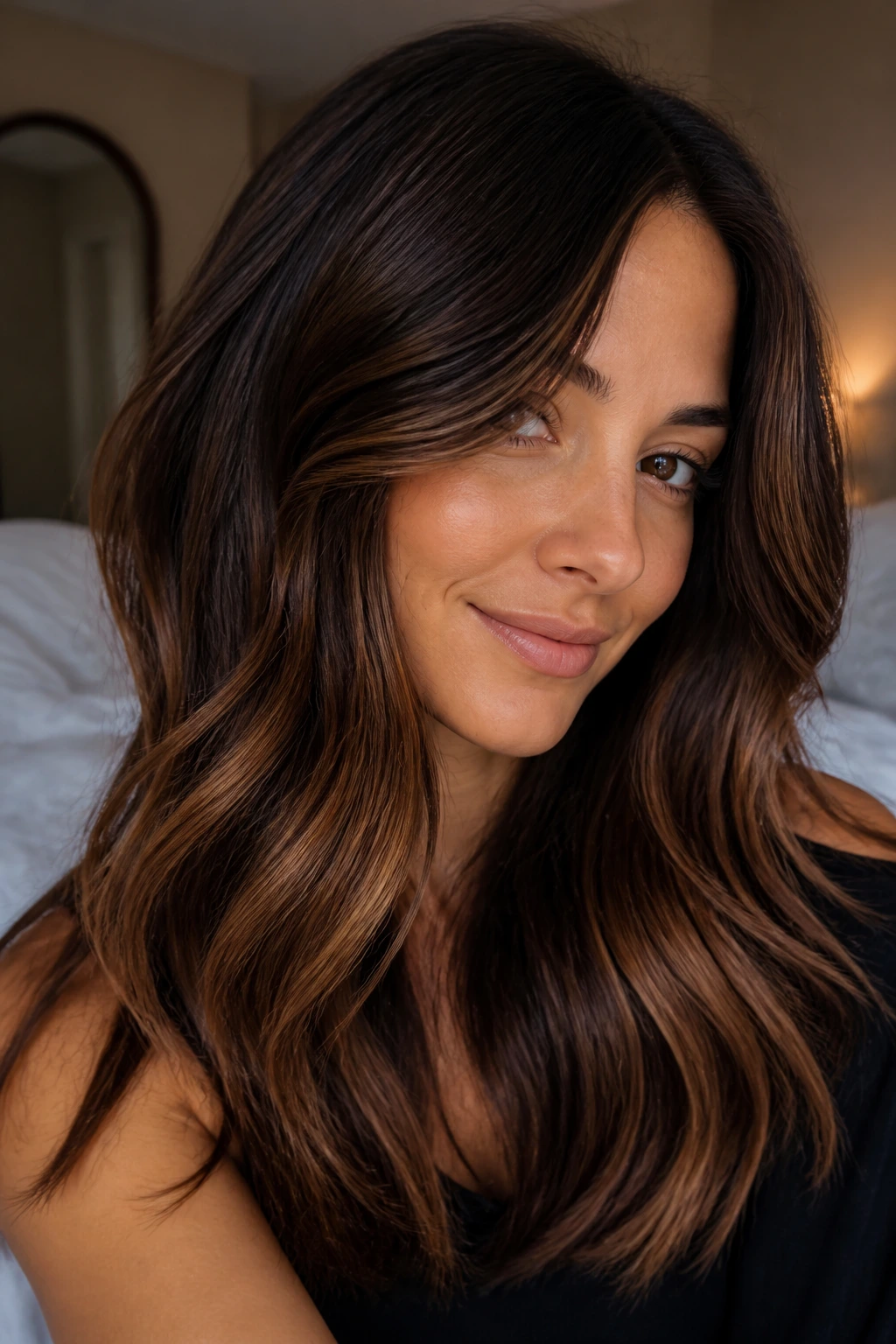
Most people talk about highlights first, but lowlights can do a lot of the heavy lifting. Chestnut mocha lowlights are perfect when brunette hair has gone a little too flat or a little too light from previous coloring. The deeper pieces weave through the hair and restore depth without taking away softness.
I like this version on medium brunettes who want dimension but don’t want to go lighter overall. The chestnut tone adds warmth; the mocha adds shadow. Together they make the hair look denser, which is a gift if your strands are fine or naturally sparse at the ends.
What to ask for:
- Deeper brown lowlights placed under the top layer.
- A chestnut tone that still has brown in it, not red.
- A clear leave-out around the face so the hair doesn’t feel heavy.
This is one of those looks that quietly fixes a bad color job. No drama. Just better brown.
7. Caramel Babylights on Dark Brown Hair
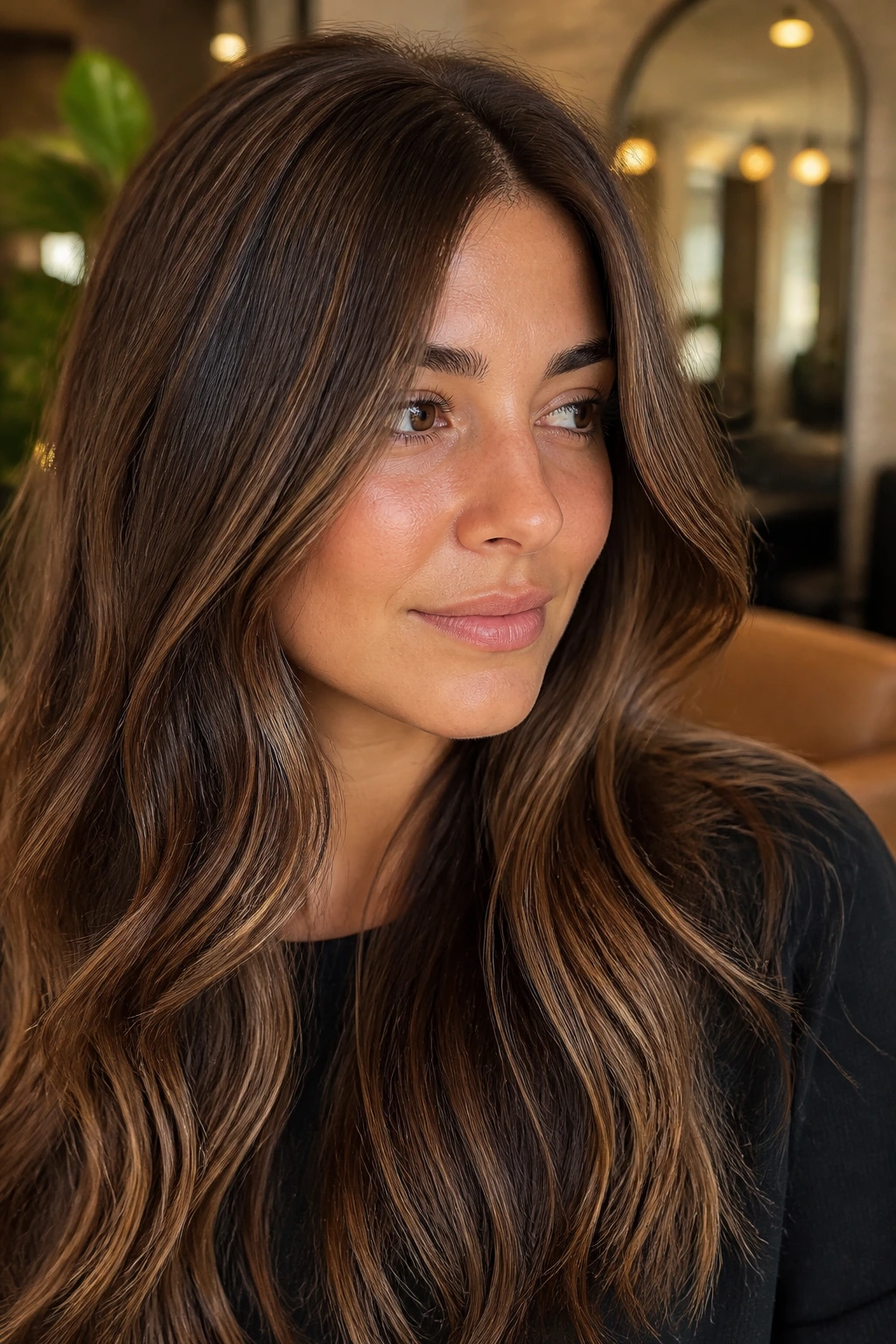
Babylights are the whisper version of highlights, and that whisper is often enough. On dark brown hair, caramel babylights create tiny flashes of warmth that move with the hair instead of sitting on top of it like obvious stripes. The result is softer, finer, and more polished than chunky highlight work.
The reason babylights look so good on dark brunettes is scale. The sections are tiny, usually woven in very narrow slices, so the lightening reads as a shimmer rather than a patch. That makes them especially good for people who want something subtle enough to grow out for a while.
They also look lovely on straight styles because the micro-ribbons show up in a clean line. On wavy hair, they turn into a glow. If your goal is “people notice my hair looks nicer” rather than “people notice I colored my hair,” babylights belong near the top of your list.
8. Toasted Toffee Foilyage
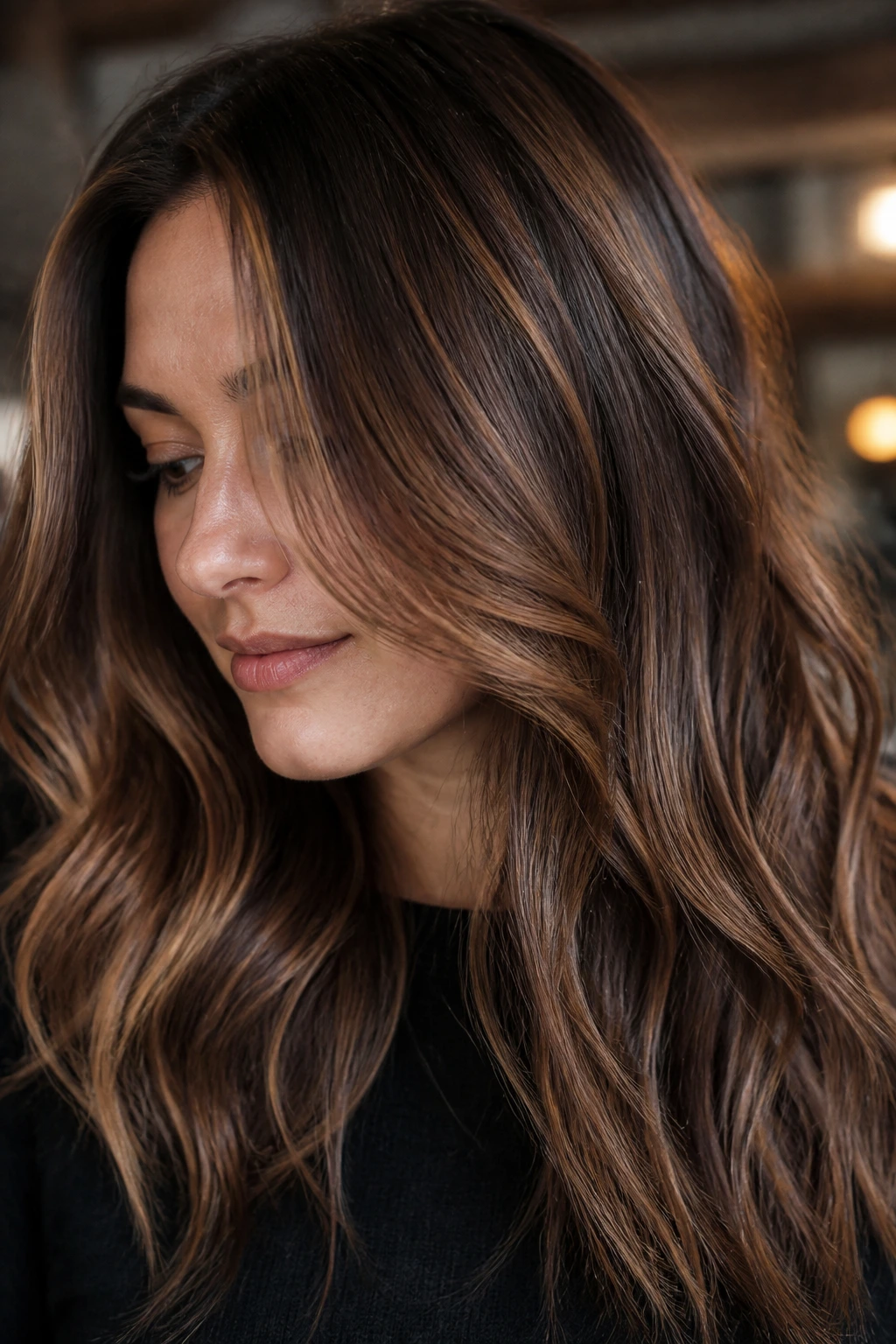
Foilyage gives you the sweep of balayage with the lift of foils, and that combo matters when you want caramel to show up on a darker brunette base. Toasted toffee foilyage usually means brighter pieces around the crown and face, with softer, lower pieces underneath so the whole head still feels brown.
This is a strong choice for hair that doesn’t lift easily. Foils trap heat, which helps the lightener work more evenly, and the painted placement keeps the result from looking too rigid. The toffee tone adds a warm, cooked-sugar feel that sits nicely on medium to dark brunettes.
It’s one of the more photogenic looks in the group, but what I like most is how it behaves when the hair moves. The brighter pieces catch light at different points, so even a simple braid can show depth. If your hair has layers, this one comes alive fast.
9. Glossy Cocoa with Beige Caramel Veils
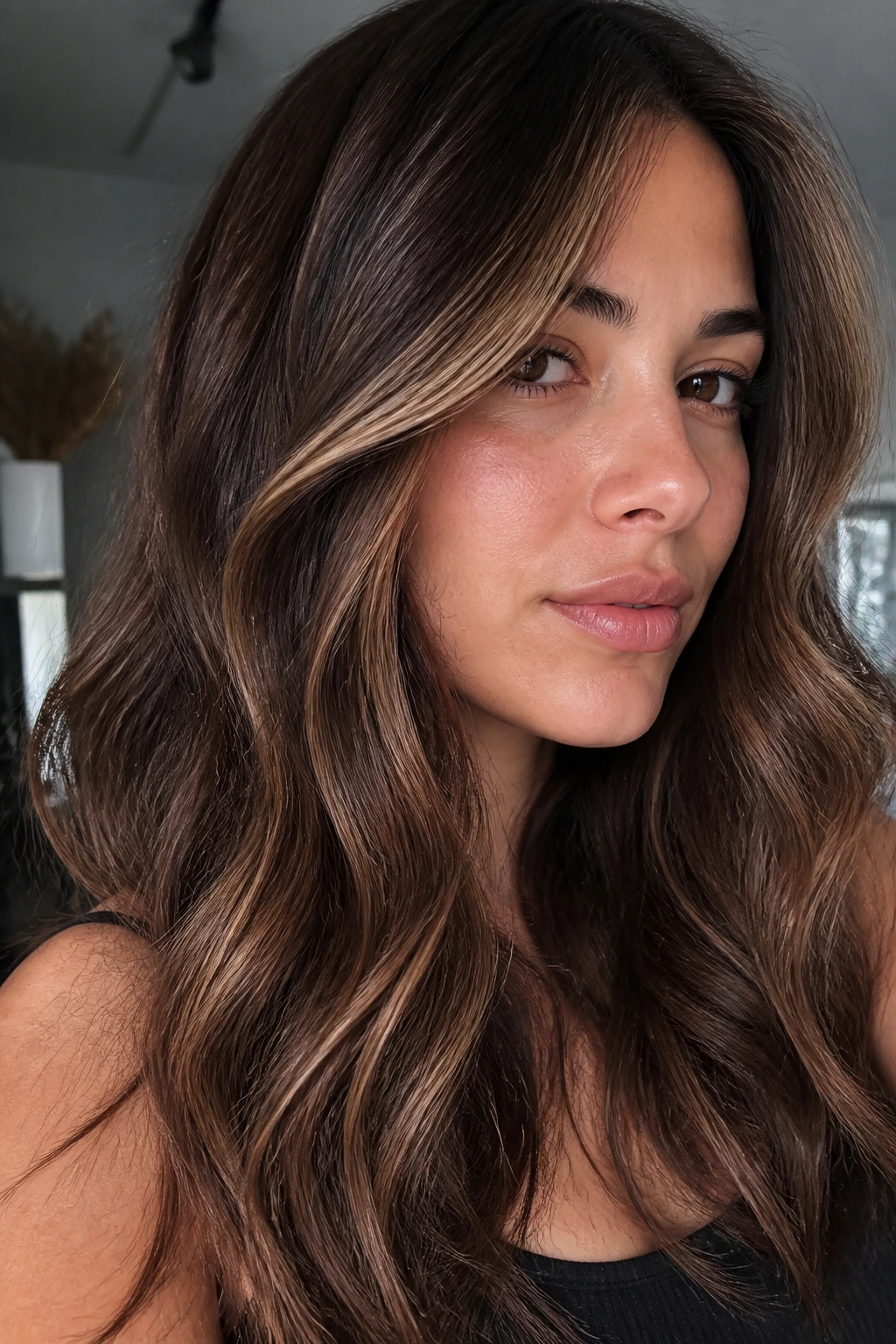
Not every caramel mocha look needs to lean golden. A glossy cocoa base with beige caramel veils keeps things softer and slightly cooler, which is a nice change if golden highlights have made you look too yellow in the past.
The beige note is what makes this work. It softens the warmth just enough to keep the hair from screaming “highlighted.” The veils are thin enough to feel airy, and they sit in the hair like light smoke instead of obvious streaks.
This is a good fit for brunettes who want dimension but prefer a cleaner finish. It looks especially nice on straight blowouts and smooth waves, where the beige pieces trace the shape of the cut. If you like your color understated but not dull, this is the lane.
10. Bronzed Brunette Lob
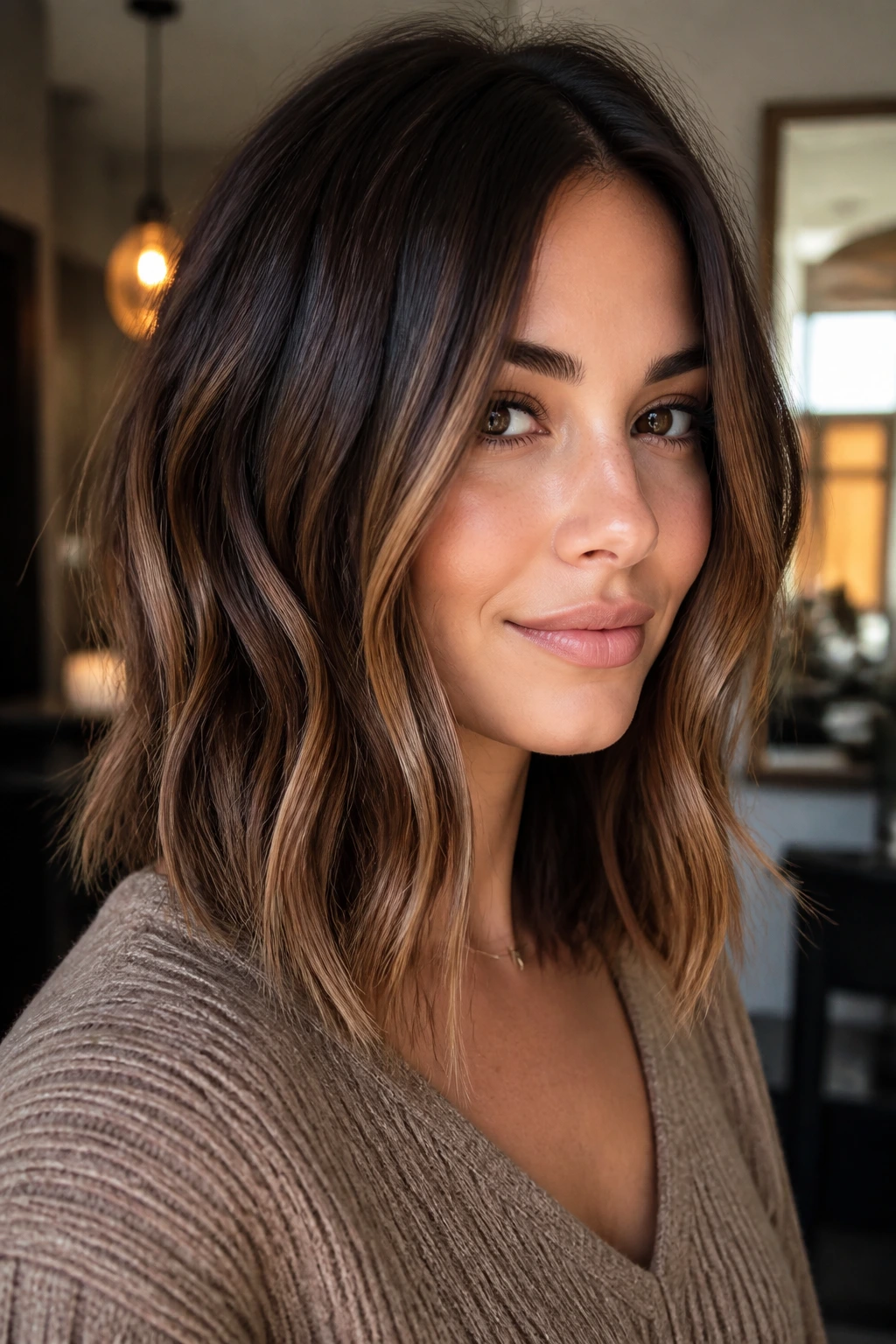
A lob gives caramel mocha room to breathe. On shoulder-length hair, bronzed brunette tones show quickly because the cut ends sit in a narrow zone, which means the color changes feel immediate instead of buried in long layers. The bronzed finish adds a warm, reflective quality that works well on blunt or softly textured lobs.
This is one of the easiest ways to modernize a brunette bob without overcomplicating the color. Keep the root a touch deeper, then place bronzed caramel through the mid-lengths and outer layers. The color should look like it belongs to the haircut, not like it was added after the fact.
If you use a round brush or a big curling iron, the bronzed ribbons show off the bend in the cut. If you wear it straight, the effect turns sleeker and more graphic. Either way, the lob gives you a clean stage for the color.
11. Dimensional Curly Caramel Mocha
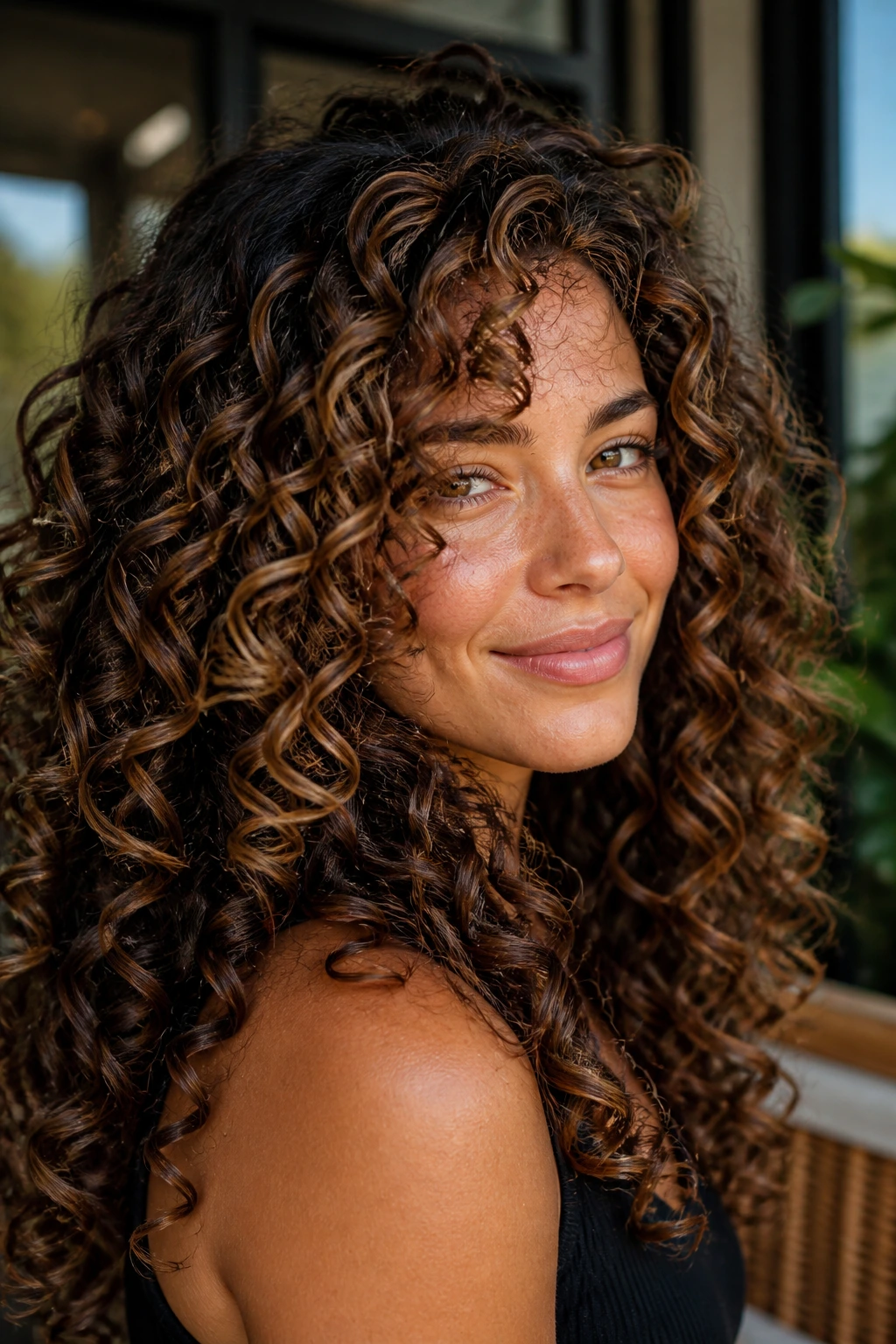
Curly hair loves dimension, but it needs it placed with a little more thought. A dimensional curly caramel mocha uses ribbons and lowlights inside the curl pattern so the spiral itself does the work. Bright pieces sit where the hair bends, not just on top of the surface.
That placement matters. Curly hair shrinks and moves, which means a flat blonding pattern can vanish or look uneven. When caramel and mocha are layered through the curl, each ringlet picks up a slightly different shade and the whole head looks fuller.
This is one of the best ways to keep brunettes curly without making them look weighed down. Ask for color that respects the curl family — lighter pieces around the face, a few brighter ribbons in the crown, and deeper brown underneath to anchor the shape. It’s a better result than trying to force uniform lightness through the whole head.
12. Deep Mocha Shadow Root
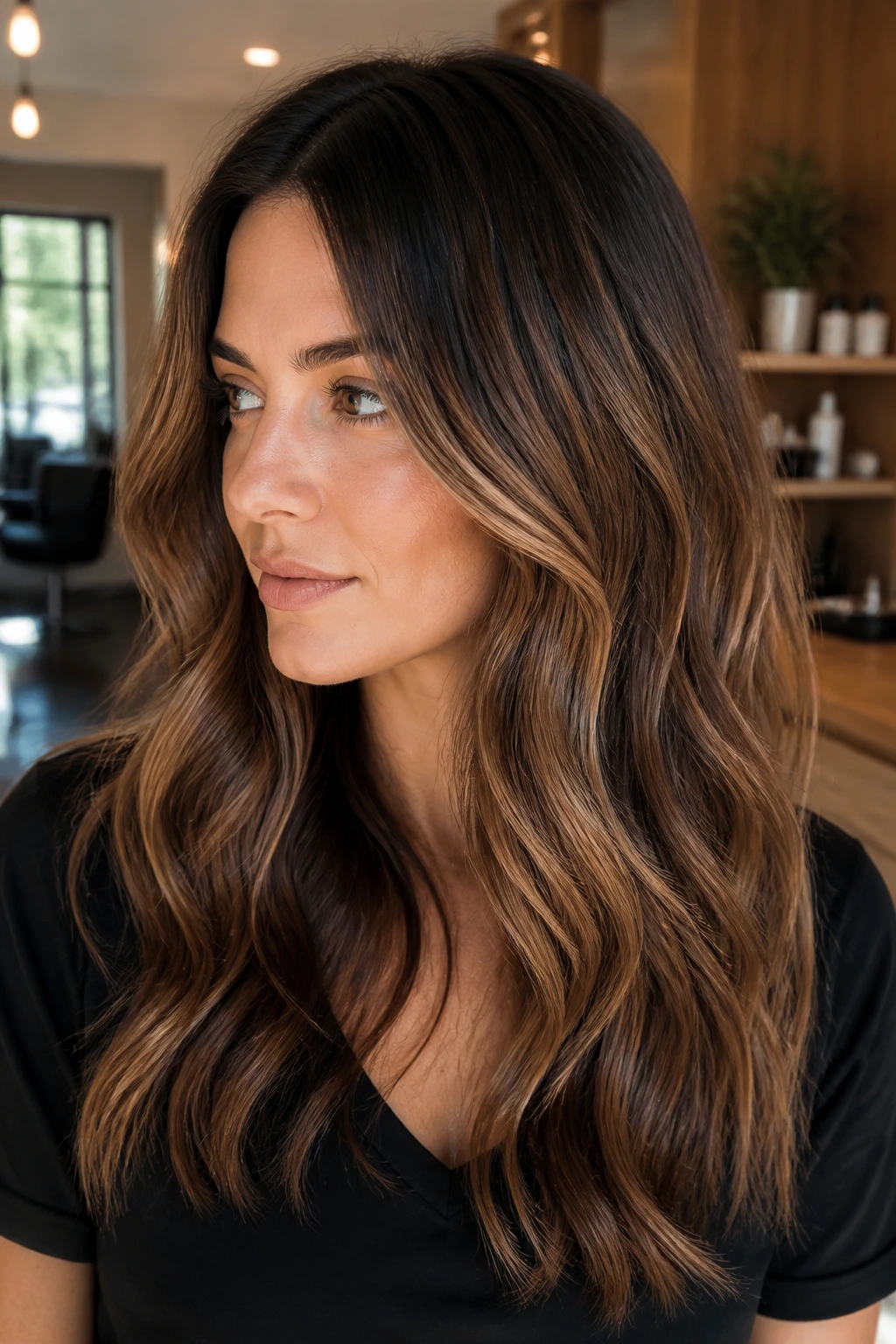
A shadow root isn’t just a grow-out trick. Done well, it gives caramel hair a built-in frame. On a deep mocha base, the root area stays darker for one to three inches, then the caramel opens through the mids and ends in a smooth fade.
This works because it mimics natural regrowth in a more polished way. Instead of fighting the root, the color uses it. That means less obvious demarcation and more time between salon visits, which is useful if you hate the look of hard grow-out lines.
It also keeps the lighter pieces from taking over. Some brunette colors get too blonde too fast; this one resists that. The mocha shadow keeps the whole thing reading as brunette first, caramel second. That order is what makes it feel rich.
13. Peekaboo Caramel Panels
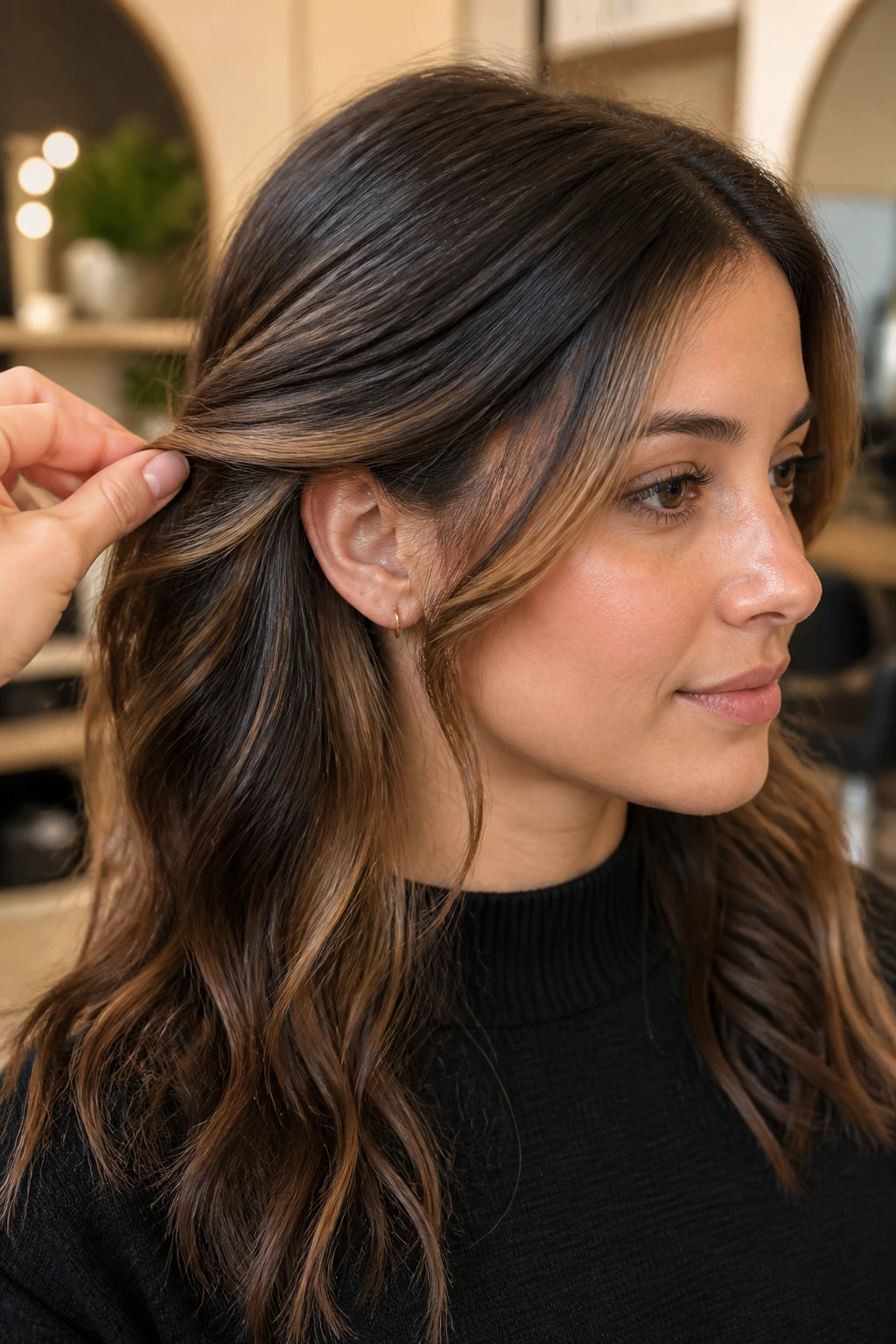
Peekaboo panels are for people who like a little surprise in their hair. The caramel is hidden under the top layer, so it only flashes when the hair swings, gets tucked behind the ear, or is worn in a half-up style. It’s playful without being loud.
Because the lighter tone sits underneath, you can keep the outer layer a bit deeper and more conservative. That makes the color easier to wear at work or in settings where you want dimension but not a full-on highlight story. A medium caramel works well here; too pale and the hidden panels stop feeling secret.
I like peekaboo pieces on layered cuts and on hair with movement. The color shows in the bend, which is half the fun. It’s also a nice option if you’re easing into lighter tones and want to test the waters before committing to more visible blonding.
14. Mushroom Mocha with Warm Ends
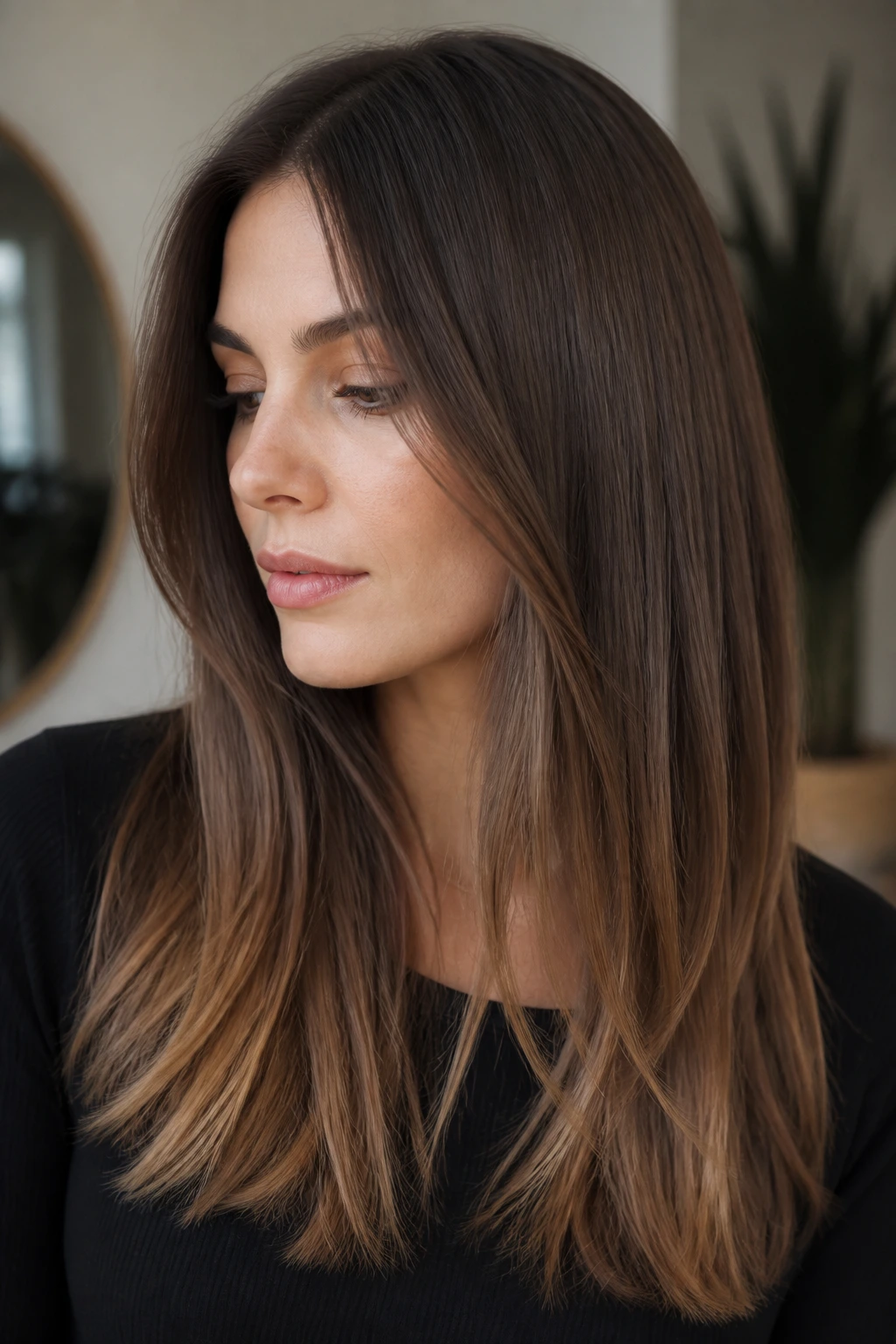
Mushroom mocha is the cool-toned cousin in this group. The base leans taupe-brown, which can look especially good on brunettes who feel overwhelmed by gold. Then the ends pick up a restrained caramel warmth so the hair doesn’t go flat or muddy.
That little warm finish saves the look. Without it, mushroom brown can slide into dull territory. With it, the color keeps some life at the ends and some softness through the mids. It’s a nice compromise if you want a cooler brunette but still want that caramel mocha family feeling.
This shade tends to look polished on straight hair and softly textured layers. It’s less sunny, more smoky. If your closet skews black, gray, cream, and denim, this may fit your wardrobe better than an amber-heavy color.
15. Milk Chocolate Balayage
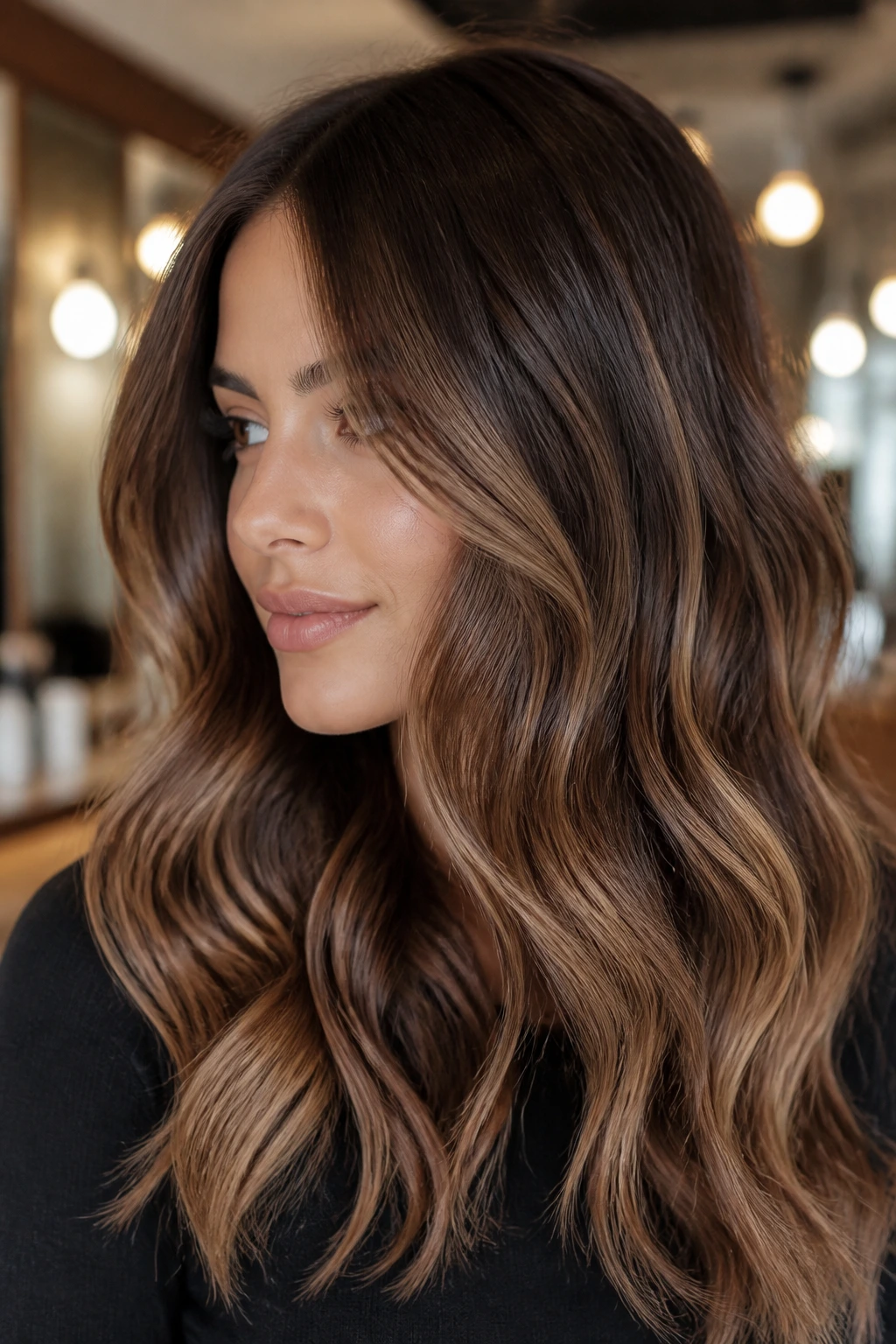
Milk chocolate balayage has a creamy center that sits between dark mocha and warm caramel. It’s not as high contrast as espresso-and-caramel, and it’s not as pale as bronde. That middle ground is the reason it works so well on brunettes who want softness more than drama.
The color usually starts with a milk chocolate base or gloss, then lighter caramel pieces are painted from mid-lengths to ends. The result is rounder and sweeter than a stark brunette. It makes the hair look touched by light, not stripped by it.
If you wear a layered cut, this shade is especially kind. The layers show the different tones, and the hair keeps its brown identity. It’s the brunette answer to wanting something brighter without losing the richness that makes brown hair interesting in the first place.
16. Sliced Highlights on Long Layers
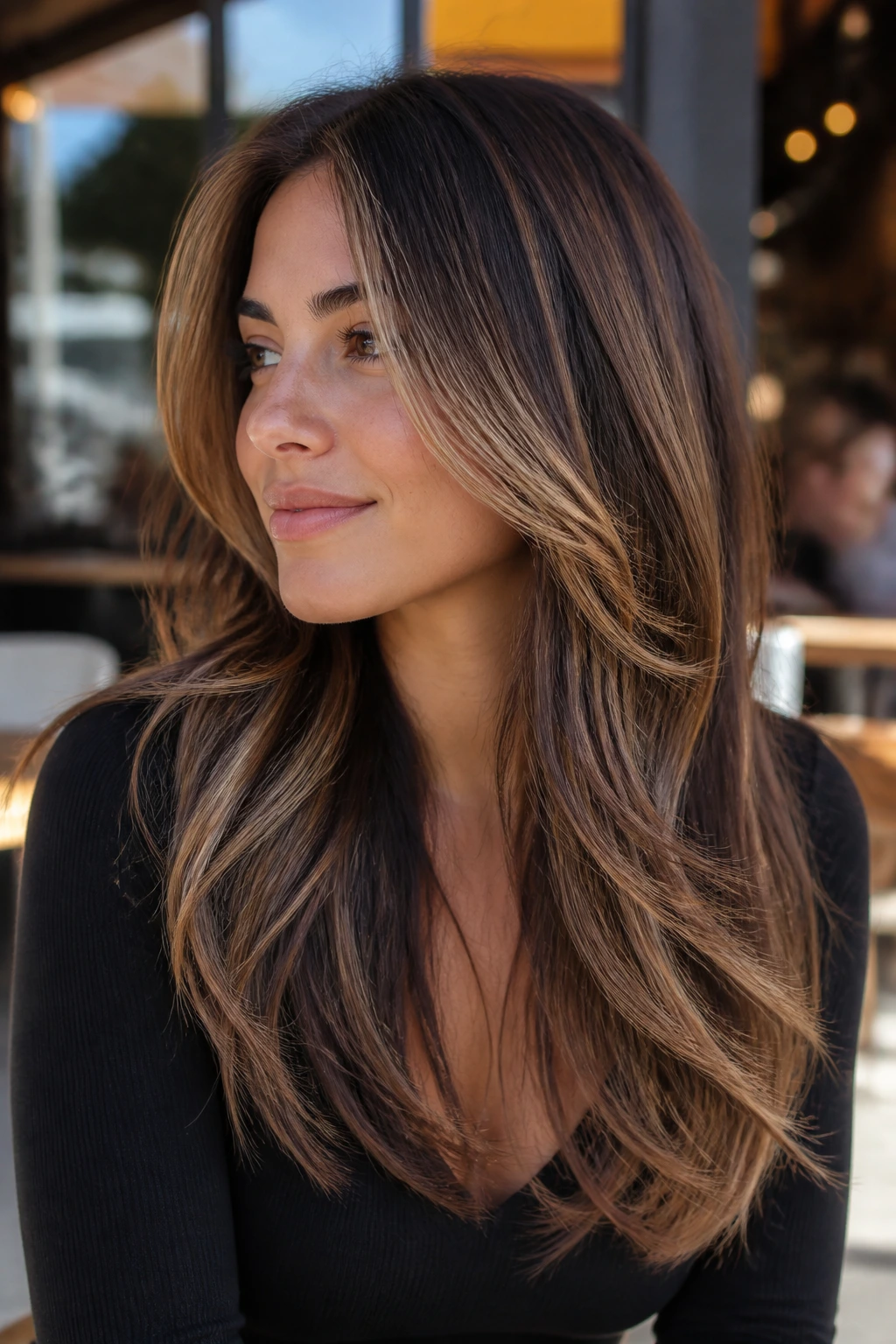
Sliced highlights are bolder than babylights and cleaner than random chunks. On long layers, they create strong bands of caramel that follow the movement of the cut, which gives brunettes a crisp, deliberate look. This is the one to choose if you want the highlight pattern to be seen, not just sensed.
The key is spacing. Slices should not be packed too tightly, or the hair starts to look overworked. A good colorist will leave enough brown in between so the mocha base still shows through. That contrast makes the highlight shape readable from a distance and up close.
Long layers love this treatment because they can handle the visible structure. Loose curls show the slices in arcs. Straight hair shows them in neat ribbons. If you like a more styled, more intentional look, this is a strong option.
17. Caramel Mocha Bob
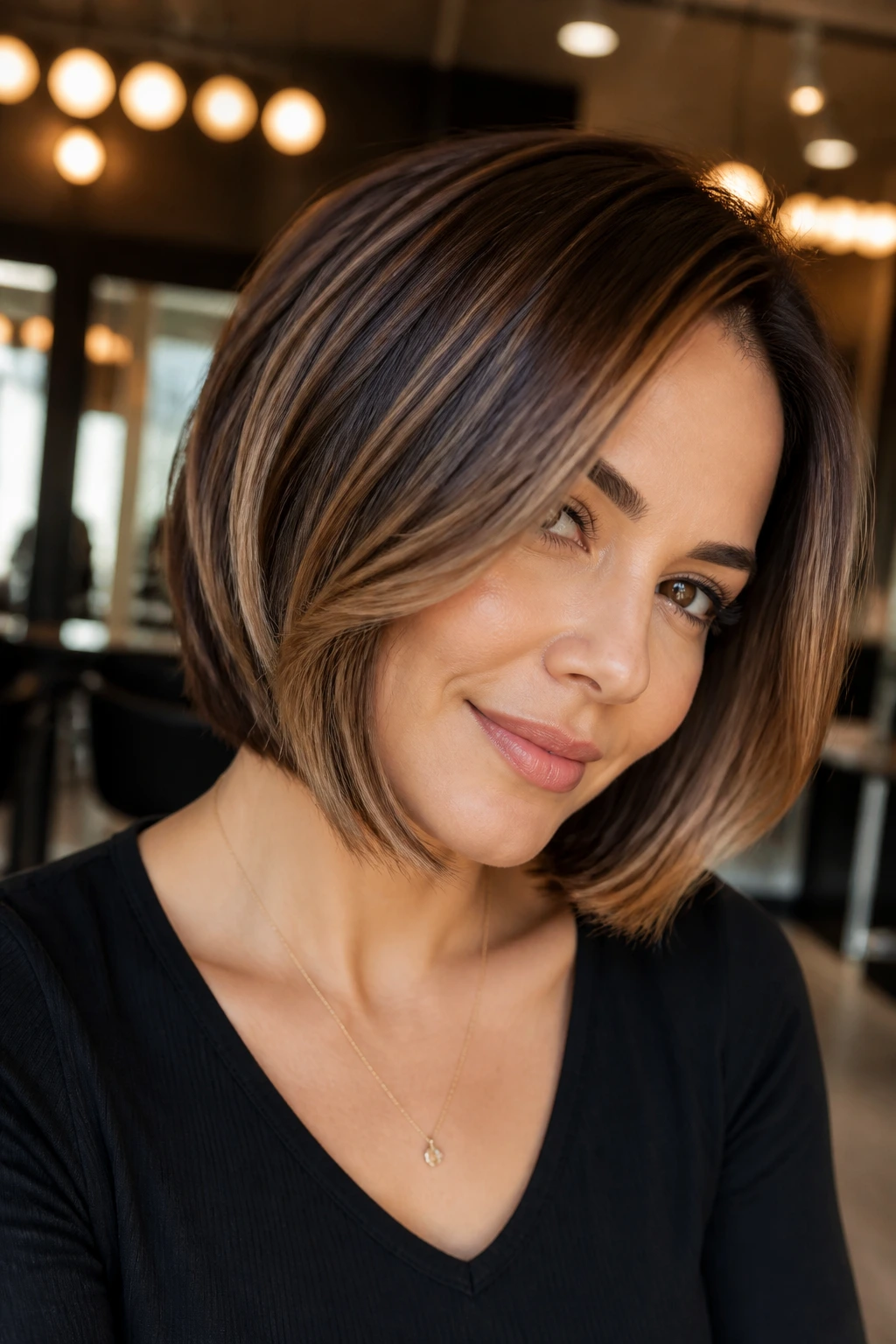
A bob can look severe if the color stays one flat shade. Caramel mocha fixes that fast. With the right placement, a bob gets depth at the nape, brightness around the face, and movement through the top layer so the cut feels lighter on the head.
The shorter length means the color has to work harder. You usually want the caramel pieces concentrated where the hair swings — around the front, near the part, and through the top third of the cut. Too much lightness underneath can get hidden by the shape of the bob.
This style looks sharp with a smooth finish, but it also softens nicely with a bend at the ends. If your bob has a blunt line, the color keeps it from feeling too hard. If the cut is layered, the dimension helps the shape read from every angle.
18. Walnut Brown with Gold Notes
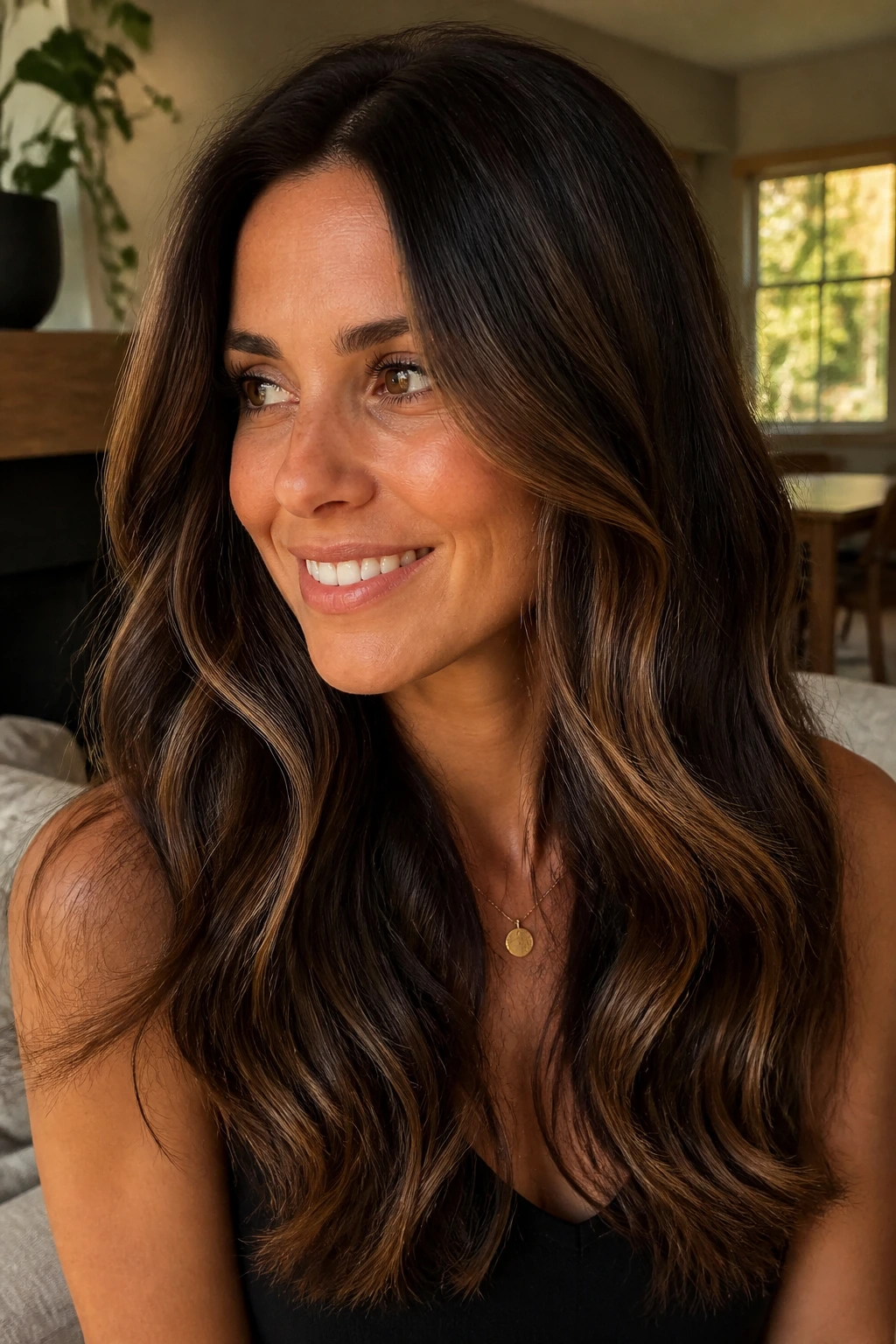
Walnut brown is a beautiful starting place when you want the caramel mocha family to stay on the richer side. The gold notes are subtle, not flashy, and they sit inside the brown rather than on top of it. That makes the overall color look plush.
This is a good look for someone who wants warmth but not brass. The gold should be softened into the walnut base so the color stays elegant and dimensional. I prefer this version on medium brunettes or on hair that has already been tinted darker and needs some life added back in.
It’s a shade that shows best in sunlight and warm indoor light. Under harsh overhead lighting, it still reads brown, which is a nice thing. The point isn’t to scream caramel. It’s to make the brunette look deeper and more expensive without actually changing its identity.
19. Smoky Brunette with Amber Ribbons
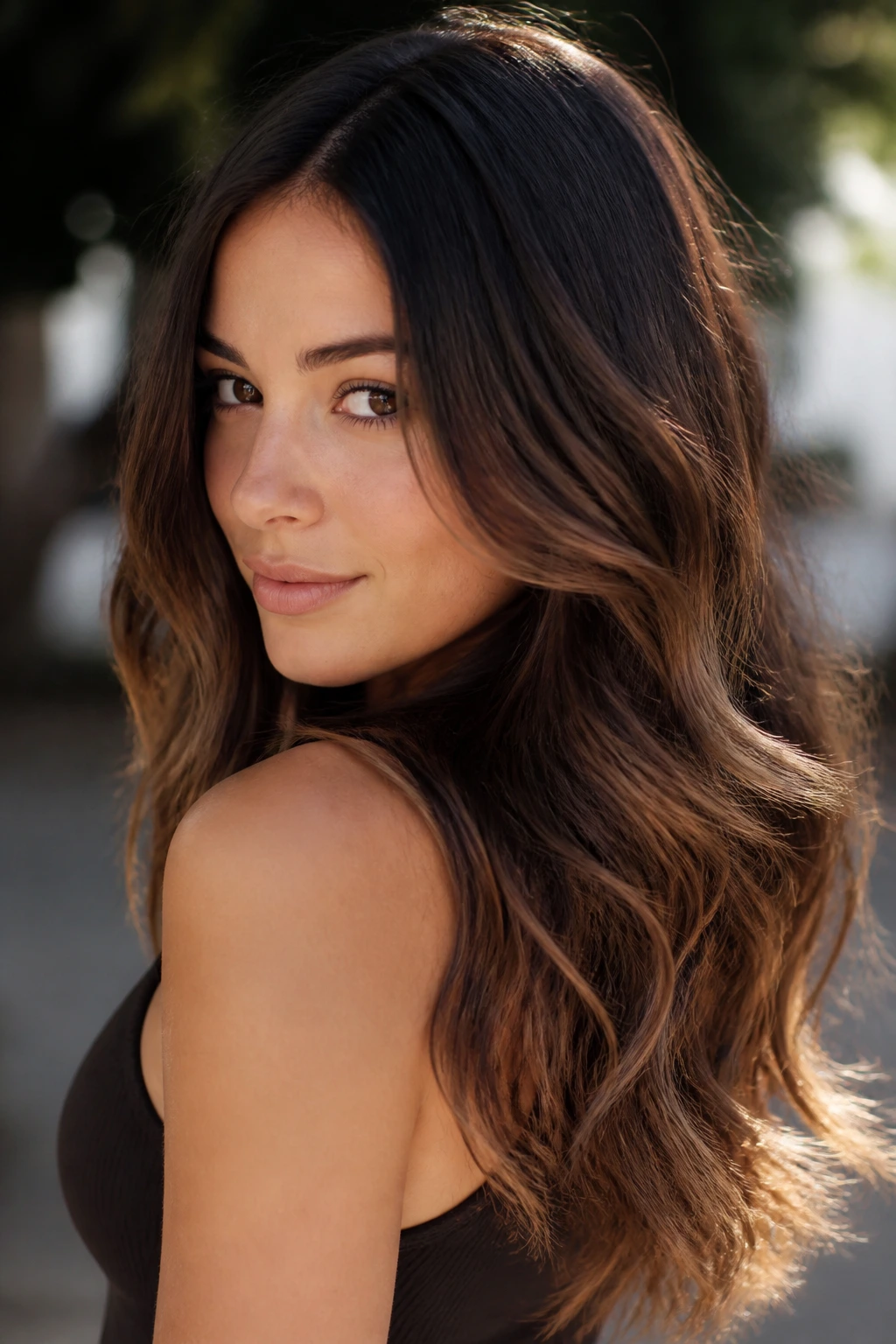
This one has a little attitude. Smoky brunette brings the base cooler and darker, then amber ribbons snake through the length to warm things back up. The contrast between smoky and amber gives the hair a shadowed, glossy feel that works especially well on wavy cuts.
The trick is not making the amber too thick. You want ribbons, not panels. The lighter pieces should appear where the light would naturally hit — around the front, through the top, and at the bend of the wave. That’s what keeps the color from feeling disconnected.
I like this shade when brunettes want warmth without going fully golden. The smoky base calms the amber. The amber keeps the smoky base from looking flat. Nice balance. Simple equation.
20. Chai Latte Brunette
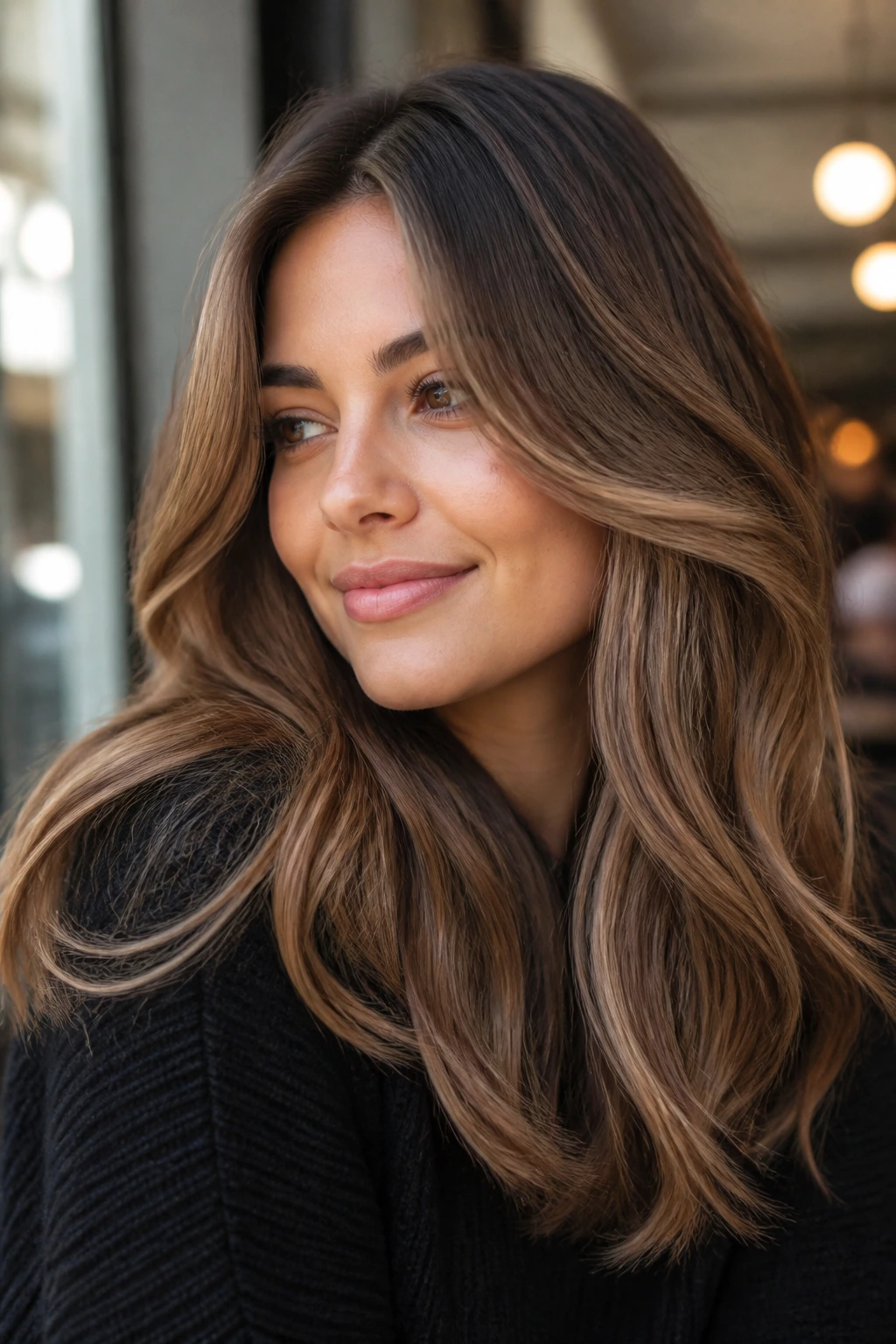
Chai latte brunette sits in that soft, spiced zone between beige, brown, and honey. It’s warmer than mushroom brown, cooler than cinnamon swirl, and calmer than bright caramel. If your skin likes neutral tones, this is one of the easiest shades to wear.
The color usually works best when the highlights are blended into the base with a gloss. That keeps the brown creamy rather than patchy. A chai-latte finish also tends to flatter layered cuts because the color changes are gentle enough to follow the hair without making every layer look separate.
It’s a good salon ask if you want brunette color that feels fresh but not loud. Bring photos with a soft beige-brown finish, because “chai” can mean different things to different colorists. That little bit of clarity saves time in the chair.
21. Soft Copper-Caramel Mocha
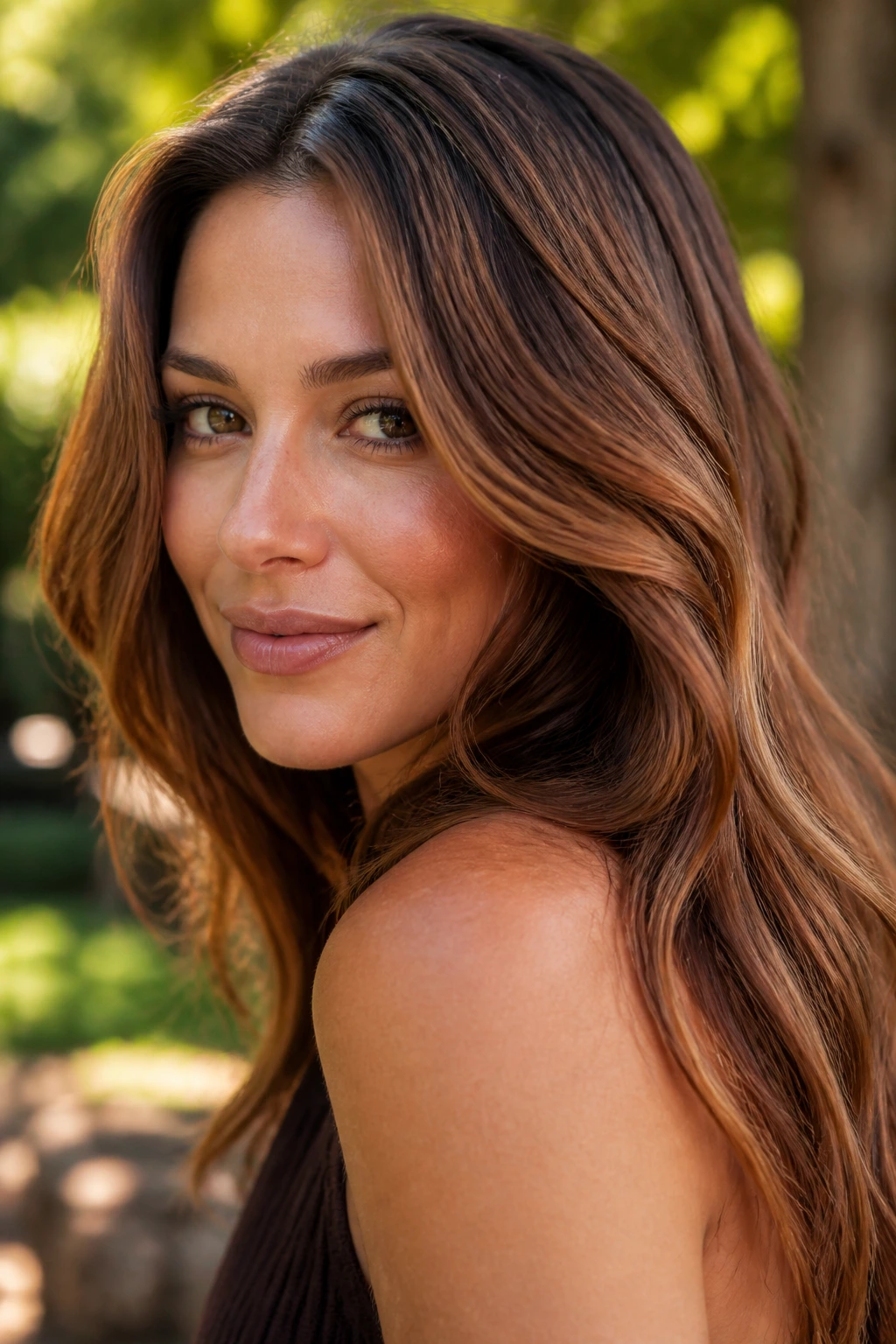
This is the warmest shade in the group, and I’d keep it for someone who knows they like a little fire in the hair. The copper note gives caramel more edge, while the mocha keeps it from drifting into full auburn. The result is lively, glossy, and unmistakably brown-based.
The beauty of this version is the light it throws back. Copper tones can make brunettes look especially bright in natural light, but they need control. Too much red and the brunette foundation disappears. The mocha anchor prevents that.
It works well on medium-length hair and on cuts with movement around the face. If your wardrobe has rust, olive, cream, or black in it, the copper-caramel mix will feel at home. If you prefer cooler makeup or very icy clothing tones, this may be more color than you want.
22. Lived-In Bronde for Dark Brunettes
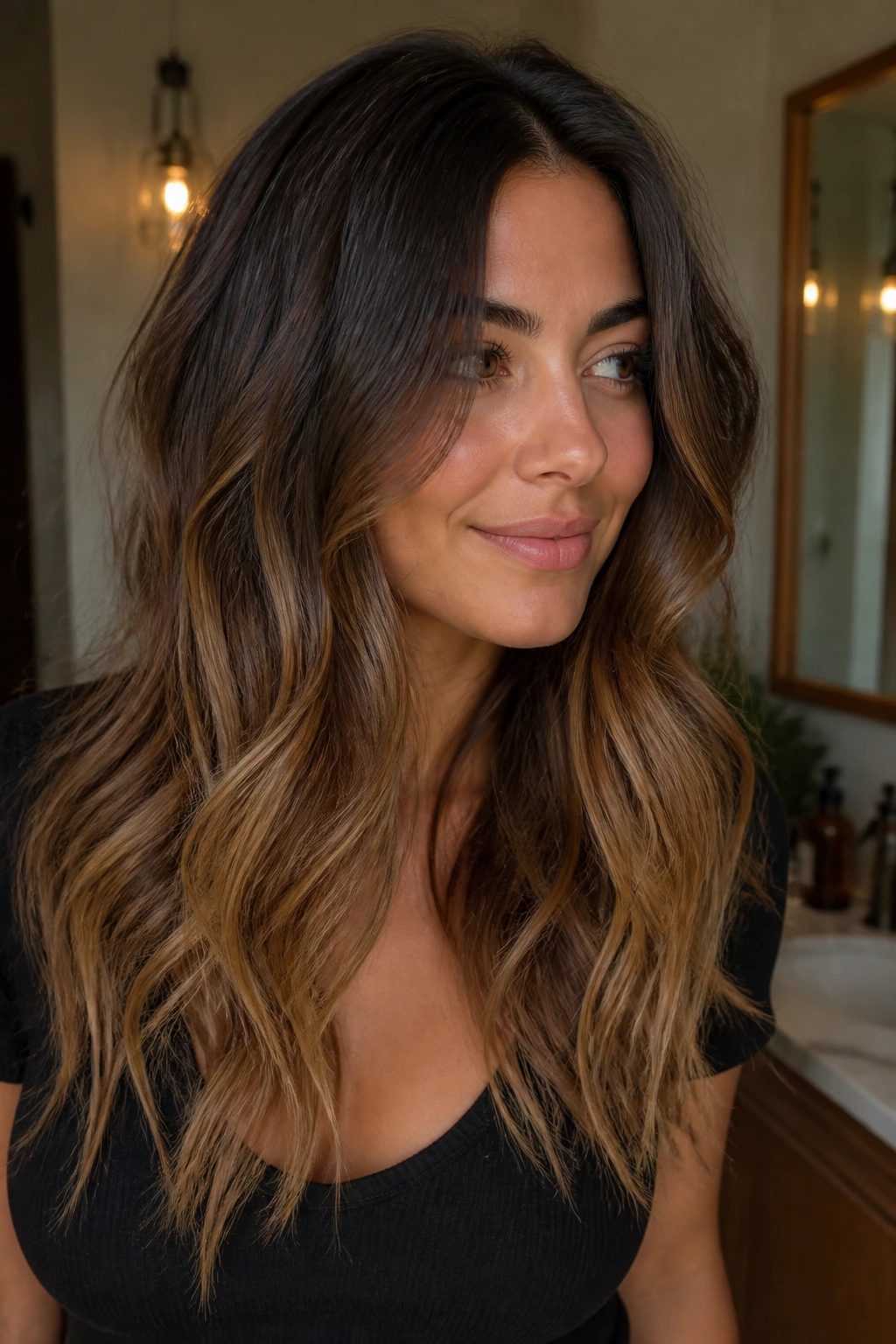
Bronde gets thrown around a lot, and plenty of it looks too blonde for a true brunette. The lived-in version keeps the roots deep and places the caramel only where the hair can carry it. That means a dark brunette base, a softer mid-length transition, and light ends that still read brown at the core.
The best part is the grow-out. Because the root stays grounded, you can go longer between appointments without the line turning harsh. It’s especially useful if your natural color is close to level 4 or 5 and you want a lighter finish without sacrificing depth.
This is not the place for overprocessing. The magic lives in restraint. Keep the caramel strategic, not everywhere, and the result stays believable. Too much lightness and bronde stops being bronde.
23. Halo Highlights Around the Hairline
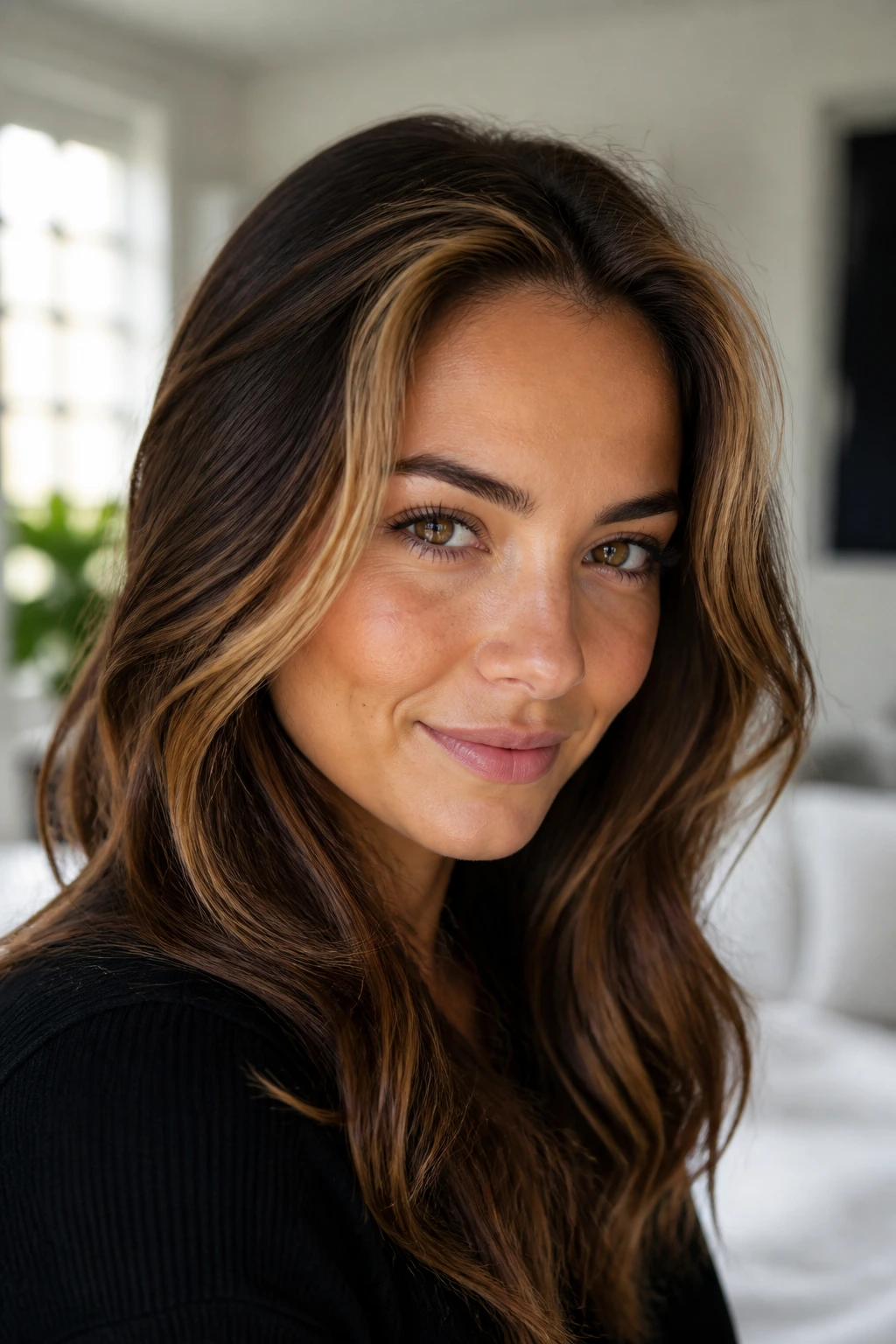
Halo highlights are a quieter cousin to the money piece. Instead of brightening the whole front section, the color is placed in a soft arc around the hairline and part, where it creates a glow without dominating the rest of the head.
This is one of the cleanest ways to brighten brunette hair with a small amount of color. The highlights frame the face and give the illusion of more light around the skin, while the length stays deep mocha or chocolate. It’s subtle, but not boring.
Why it works:
The eye goes straight to the perimeter of the hair. That means a few carefully placed caramel pieces around the face can change the whole read of the color.
If you wear your hair down more than up, this is a smart choice. The halo stays visible from the front and doesn’t require a dramatic root change. It’s also friendly to people who want brightness but don’t want to schedule constant touch-ups.
24. Melted Chestnut Curls
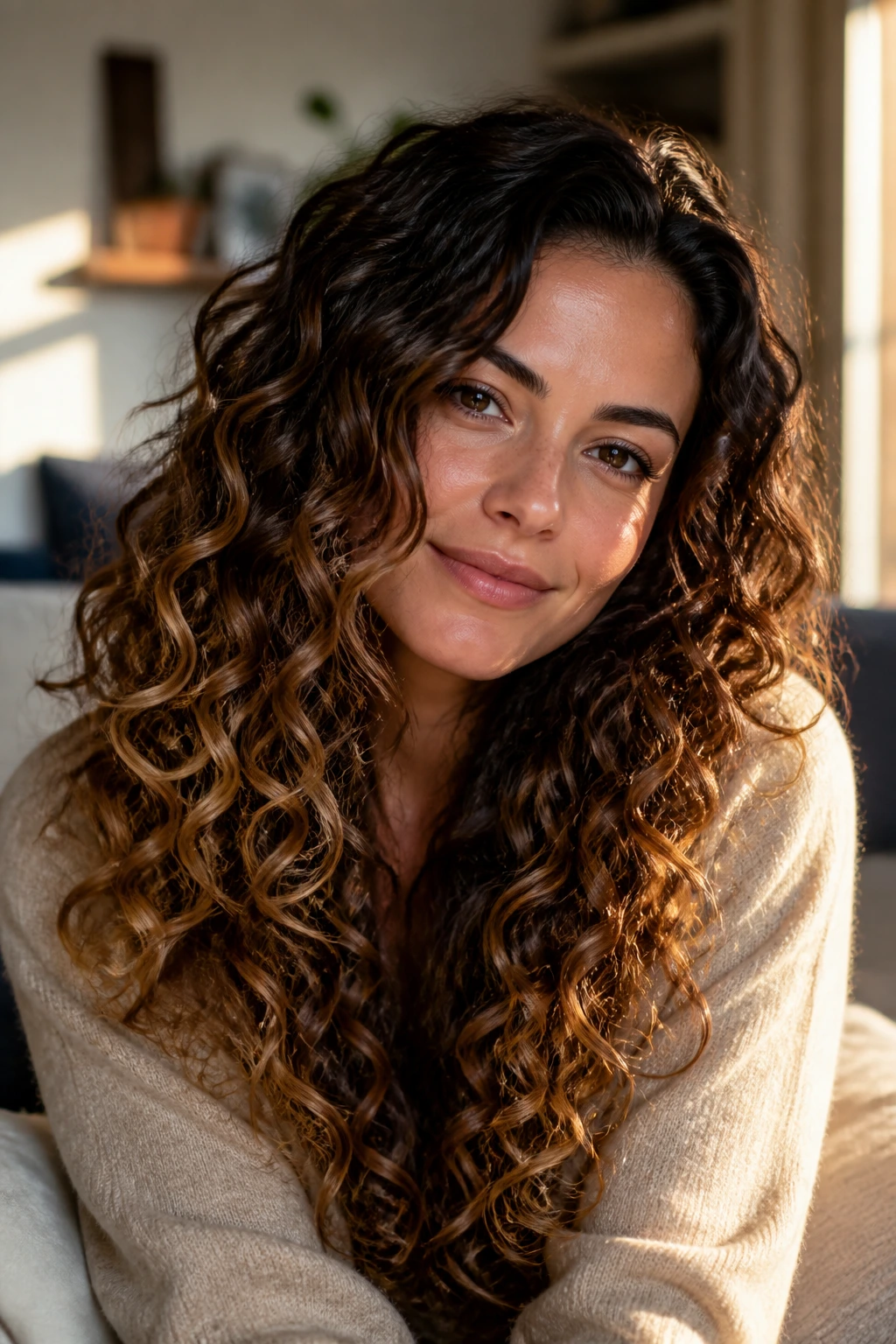
Chestnut and curls have a natural chemistry. The warm brown sits comfortably in the curl pattern, and when it melts into caramel toward the ends, each ringlet gets a little depth and a little glow. Nothing feels forced.
This works because curls already create shadow and light through shape. You do not need a heavy highlight map to get dimension. A melted chestnut base with caramel placed where the curls separate can be enough to make the hair look denser and more defined.
It’s a lovely choice for hair that tends to frizz when overlightened. Keeping the root and interior chestnut-rich protects the body of the curl. The caramel can then live on the outer curve, where it reads through movement instead of flattening the texture.
25. Espresso and Toffee Contrast
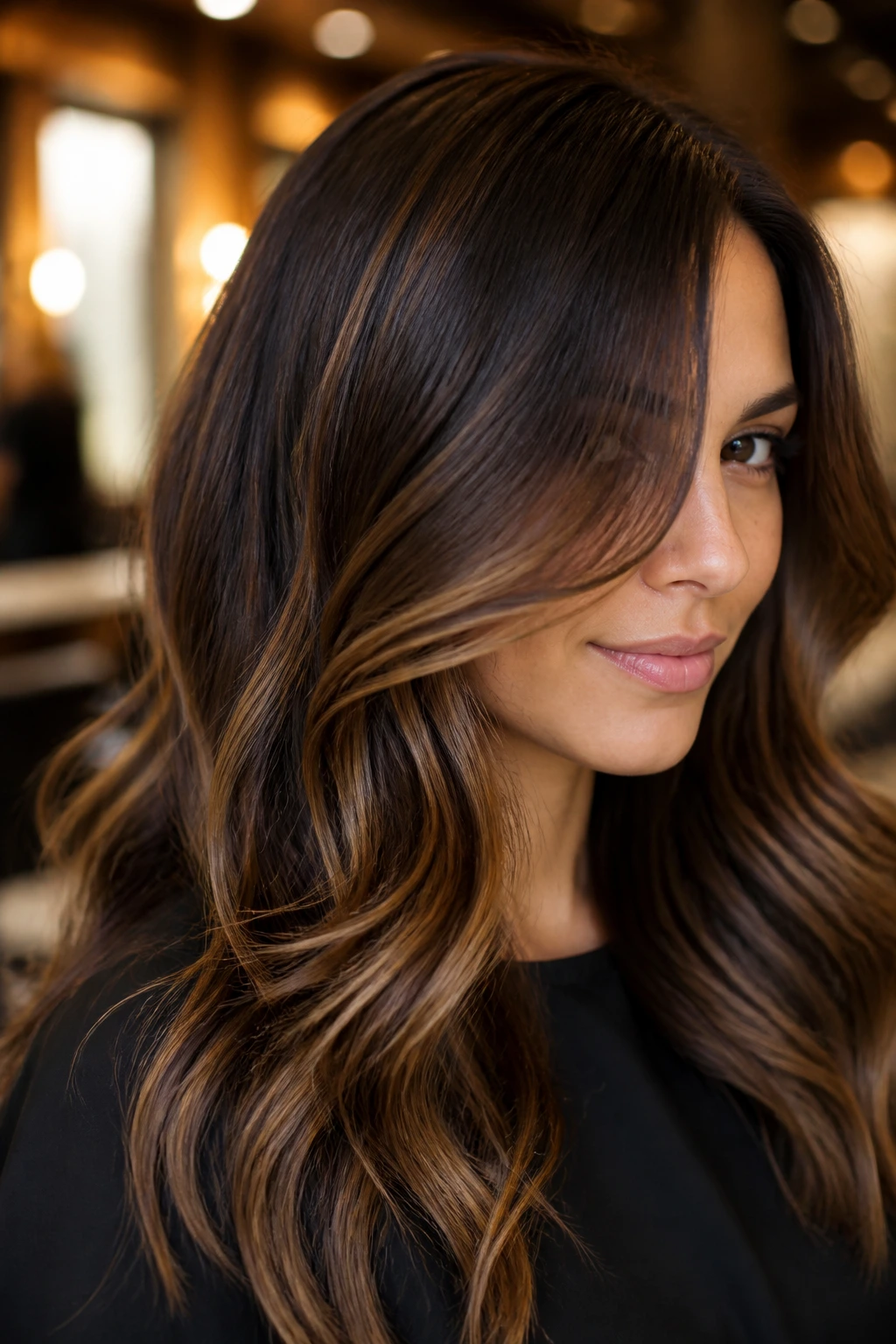
This is the high-contrast option. Espresso keeps the base deep and polished, while toffee pieces brighten the mids and ends with a sweeter, slightly buttery warmth. The gap between the shades is bigger here, which gives the hair a bolder, more visible dimension.
It suits brunettes who want the color to show even when the hair is worn straight. The darker espresso pieces create a frame. The toffee pieces lift the shape. Together, they make layers, waves, and curls stand out more clearly.
I’d keep the tone of the toffee on the golden side rather than peachy. Golden toffee sits more naturally against espresso and avoids a red cast. If you want people to notice that your hair looks richer, not just lighter, this is a strong pick.
26. Caramel Veils on a Wavy Lob
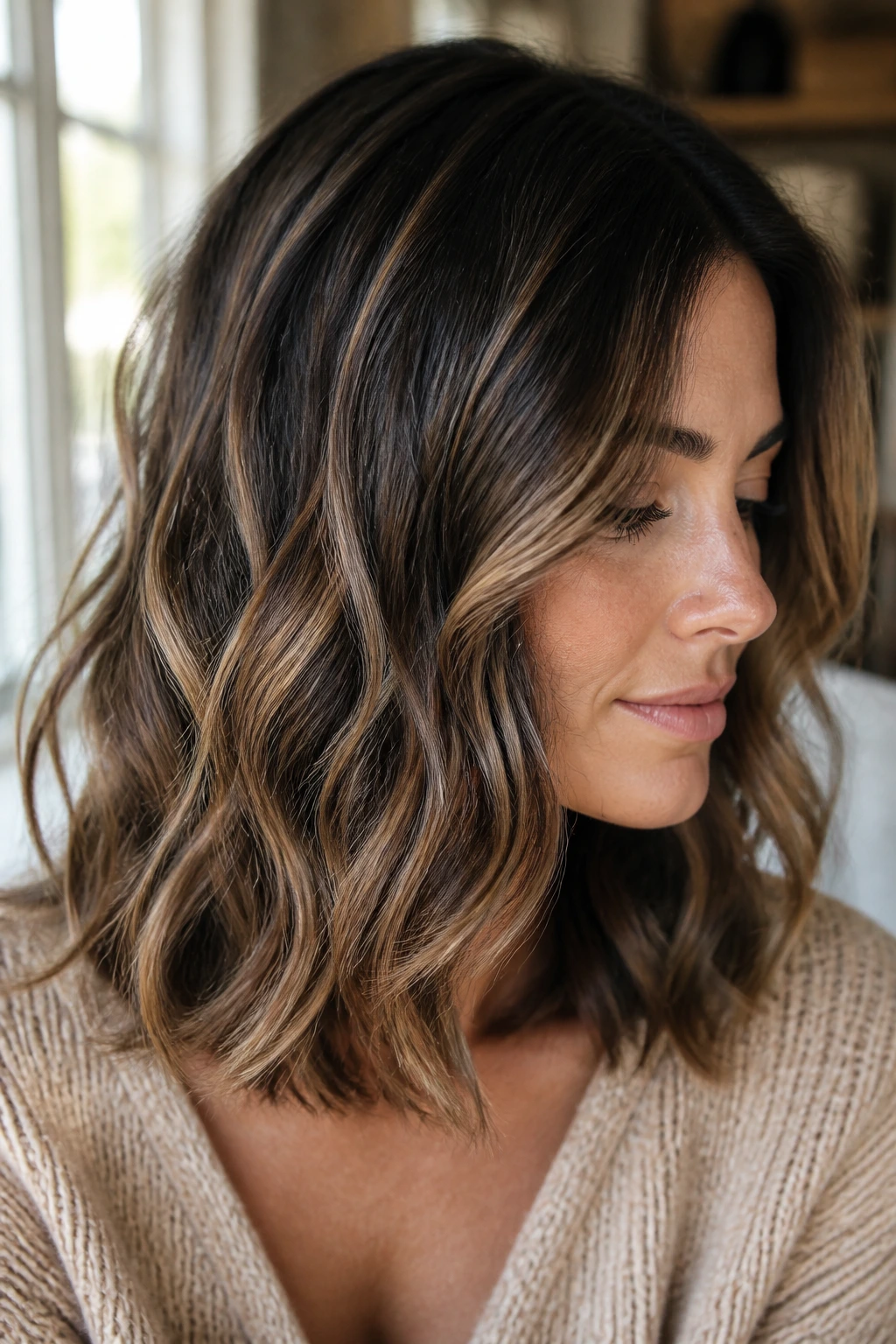
A wavy lob is already a little relaxed and undone. Add caramel veils, and the hair gets that soft, airy movement that makes the color appear fuller without looking heavy. The veils are thin enough to blend into the wave pattern, so the color shows when the hair bends and disappears just enough when it falls flat.
This style works because the lob gives the highlights a clear stop point. The ends aren’t so long that the color gets lost, and the waves help break up the placement. If you want the hair to look thicker around the mid-lengths, this is a smart route.
It’s also one of the better choices if you like casual styling. You don’t need a perfect blowout for the color to make sense. A rough wave and a bit of mousse are enough. That’s worth something.
27. Warm Beige Mocha Gloss
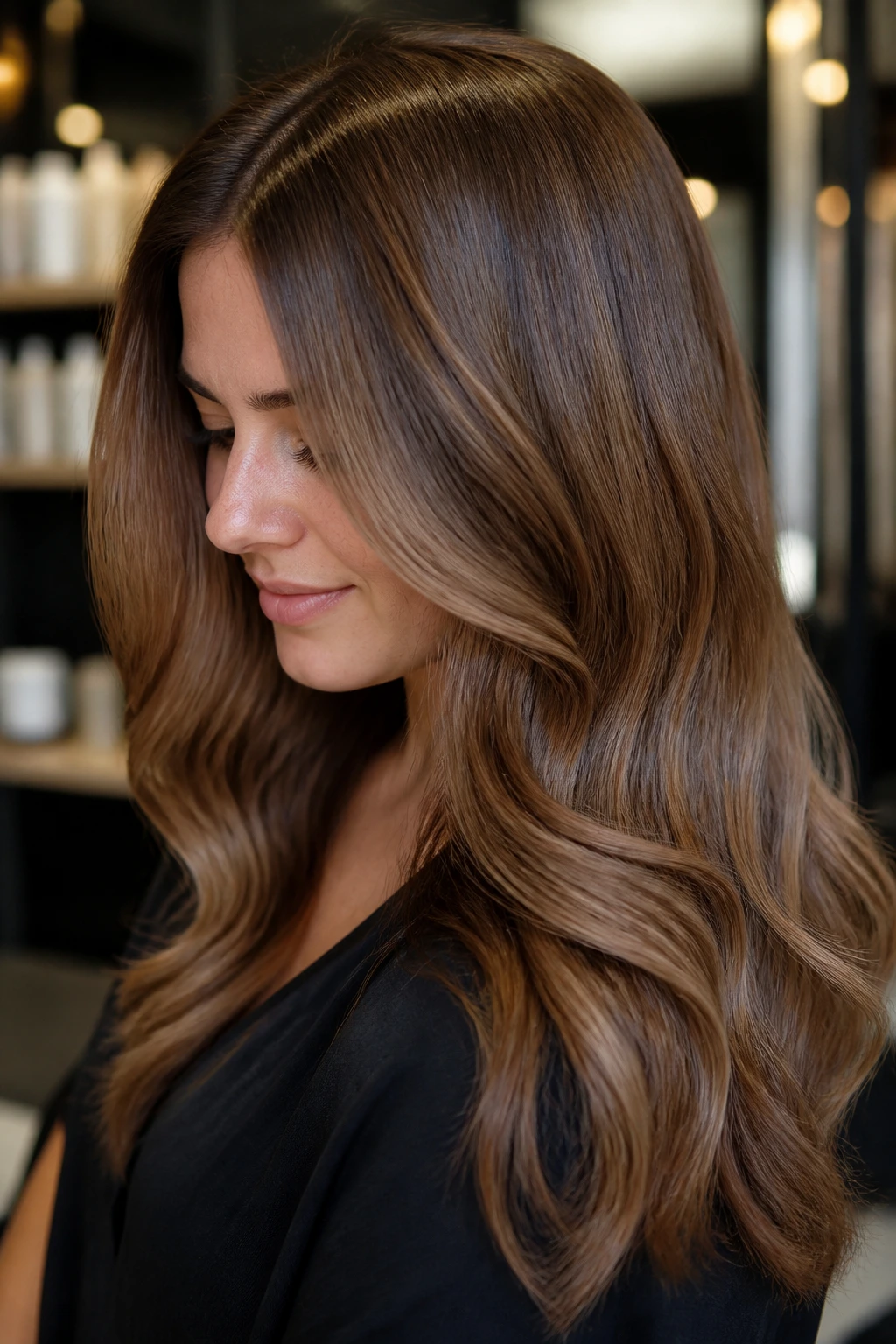
Sometimes the best brunette color idea is not a full highlight job at all. A warm beige mocha gloss can soften the entire head, reduce dullness, and give the hair a smoother, more polished read with almost no visible stripe pattern.
This is a good option when the brunette already has dimension from old highlights or natural variation, but the tone has gone too flat. A gloss pulls the pieces together and adds that beige warmth that sits between caramel and brown. It’s subtle, but on healthy hair it can be gorgeous.
Ask for a beige-brown glaze rather than a bright caramel toner if you want the result to stay low-key. The effect is especially nice on shine-heavy blowouts, where the reflective finish does half the work. Sometimes all brunette hair needs is better tone.
28. Low-Maintenance Caramel Mocha Root Melt
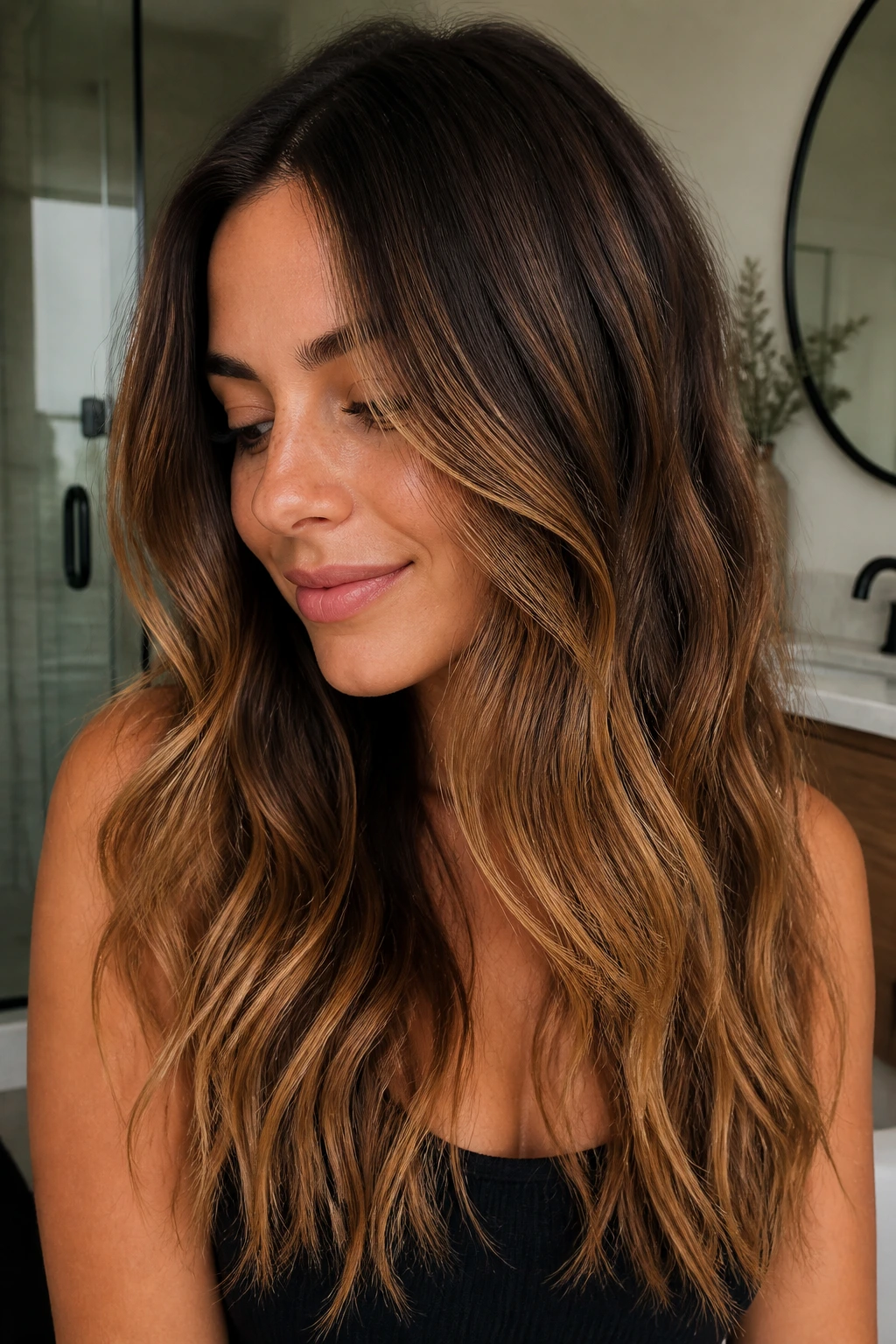
If you want a brunette color that does not demand attention every three weeks, this is the one to save. A low-maintenance root melt starts with a deeper mocha root and blends into caramel mid-lengths and ends in a way that softens new growth as it appears. The grow-out is the point, not the problem.
It works on a lot of base shades, but it’s especially kind to medium and dark brunettes who want dimension without a hard upkeep schedule. The root stays dark enough to hide regrowth, and the caramel lives lower on the hair where it can fade gracefully instead of turning liney.
A good root melt should still have movement. It should not look muddy. The colorist needs to leave enough contrast at the ends so the caramel still earns its place. Get that balance right, and you can stretch appointments while the hair keeps its shape.
What Makes Caramel and Mocha Look Rich Instead of Flat
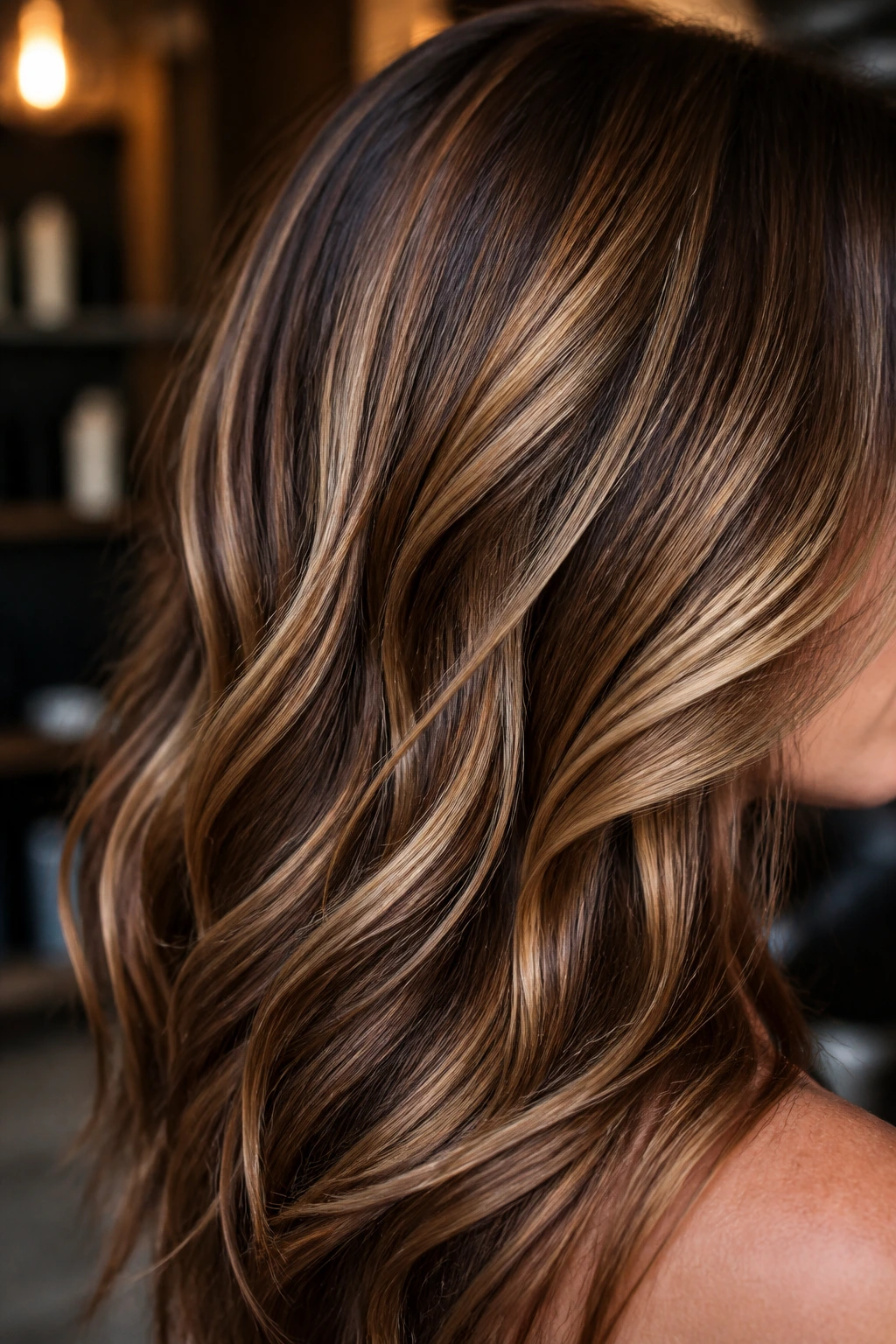
The shade family works because brunette hair already carries depth. Caramel is not being asked to do all the work. It only has to open up a few areas — the face-framing pieces, the bend in the wave, the bottom third of a long cut, the top layer where the sun would land. That restraint keeps the color believable.
Level matters, too. A level 4 base does not need the same brightness as a level 6 base. Push dark hair too far too fast and the caramel starts shouting. Keep the lift controlled, and the brown stays the lead.
Tone is the other half of the equation. Honey, amber, beige, chestnut, toffee, and mocha all read differently once they hit real hair. A good caramel mocha brunette color uses at least two of those notes, not one. That’s where the movement comes from.
The Tools Your Colorist Will Reach For
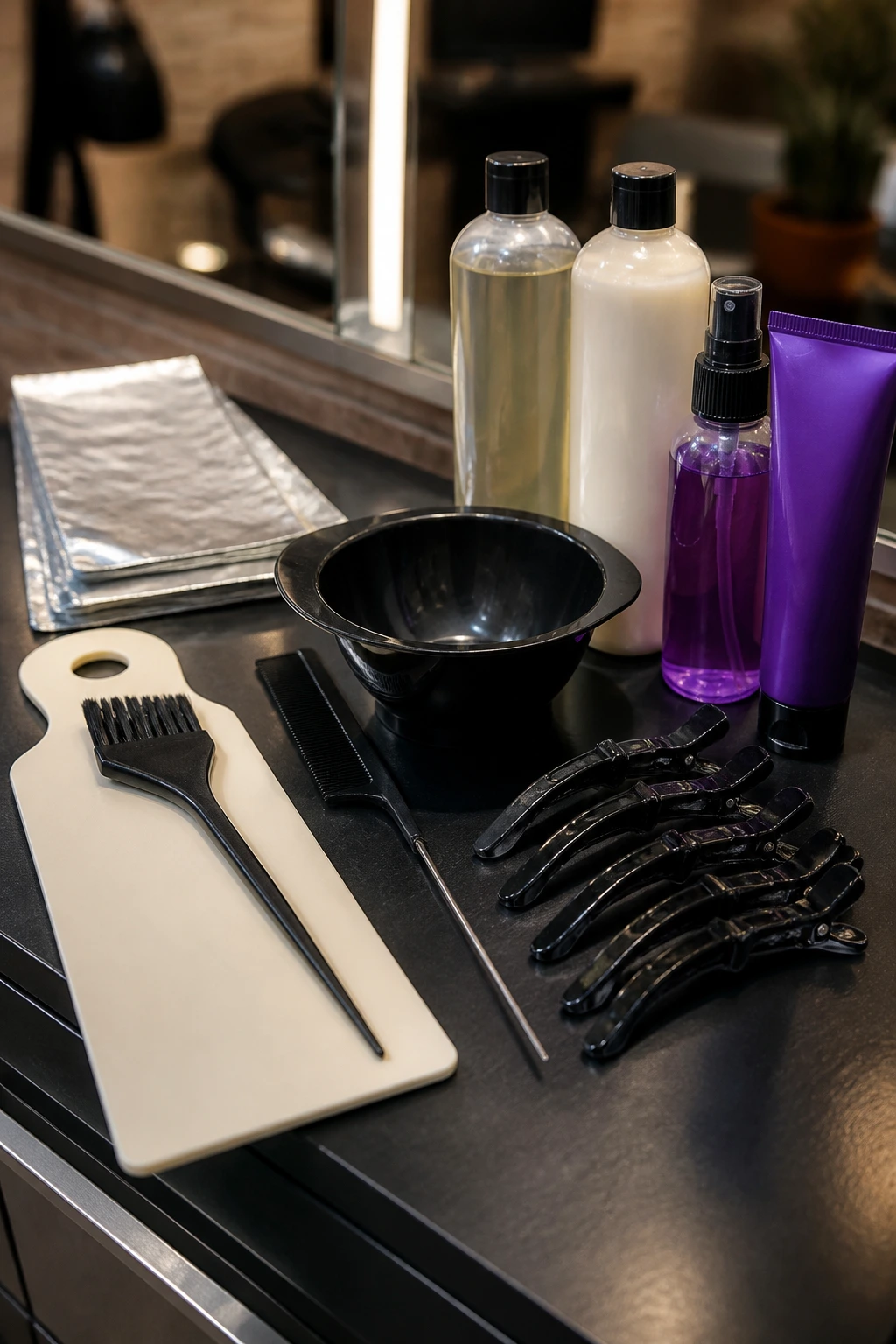
- Balayage board: Helps paint soft, sweeping lightener onto longer pieces without harsh lines.
- Foils: Useful for stronger lift, especially on darker brunettes or pieces that resist lightening.
- Tint brush and bowl: For applying gloss, toner, or root shadow with control.
- Pintail comb: Used to weave tiny babylights, slices, or fine face-framing pieces.
- Sectioning clips: Keep the hair organized so the placement stays even.
- Clarifying shampoo: Helps remove buildup before coloring so the tone reads clean.
- Color-safe shampoo and conditioner: Keeps caramel from fading too fast and prevents the brown from going dull.
- Heat protectant: Necessary if you wear waves or a blowout; caramel shows damage faster than dark brown does.
- Purple or blue toning product: Optional, and used carefully, depending on whether the caramel turns yellow or orange.
How to Choose the Right Caramel and Mocha Undertones
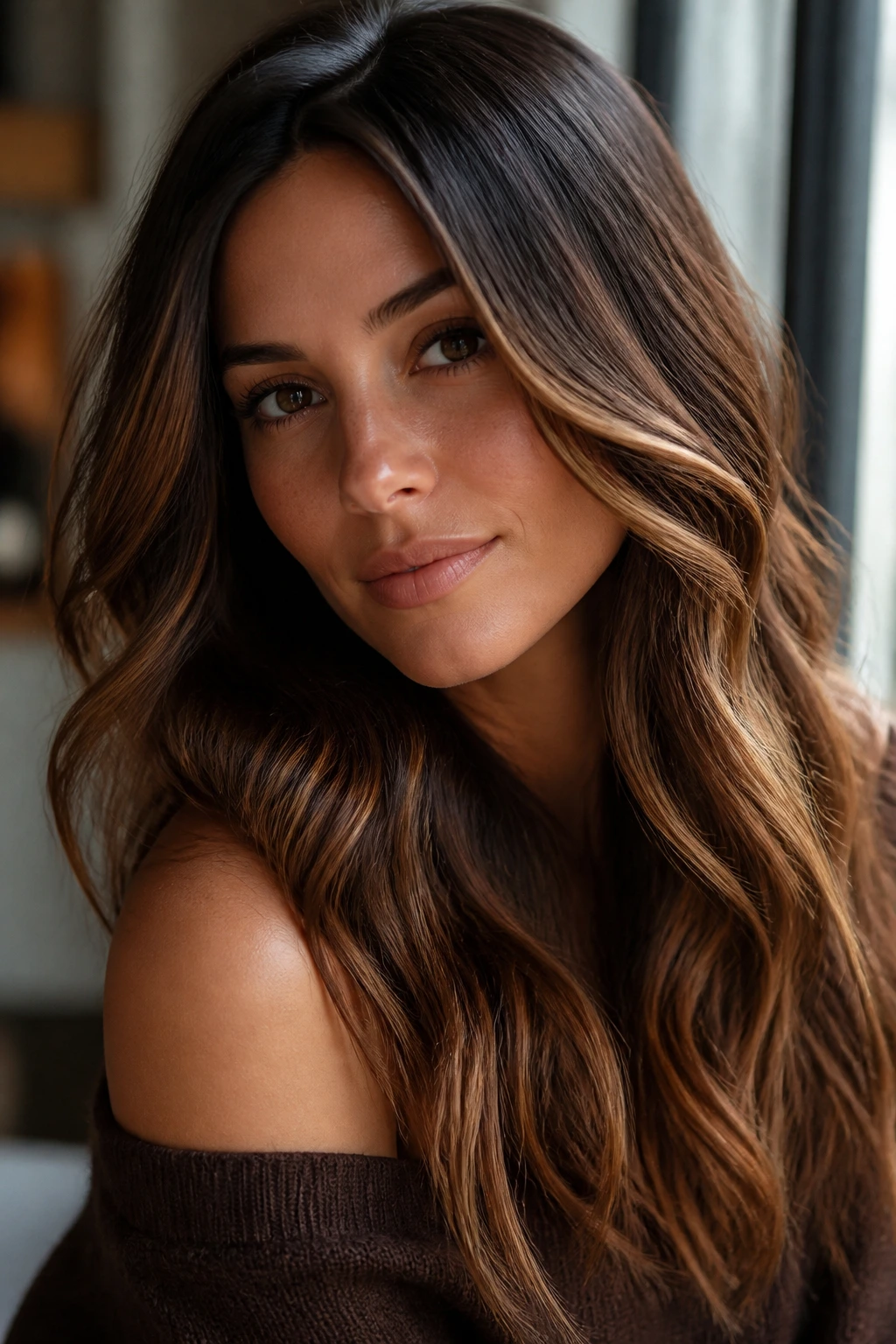
Warm caramel, beige caramel, chestnut mocha, smoky brown — the details matter more than the label. On a brunette base, the wrong tone can pull brassy fast. The right one makes the hair look expensive because it behaves like a real shadow-and-light pattern.
Warm undertones: Pick honey, amber, toffee, or cinnamon if your skin warms up easily, your jewelry is mostly gold, or your natural hair already has golden reflection. These tones usually need less correction and show up beautifully on medium brunettes.
Neutral undertones: Beige caramel is your safest lane. It doesn’t lean too orange or too ash, so it works when you want flexibility. This is the easiest direction if you’re unsure what your skin will do next to the color.
Cool undertones: Choose mocha, mushroom brown, smoky brunette, or beige-brown veils. Too much gold can fight cool skin and make the hair read louder than the face.
Depth control: If your base is dark, keep the light pieces concentrated. If your base is lighter brunette, you can spread the caramel farther through the mids. The color should still read as brown first.
How to Wear These Shades So They Look Their Best
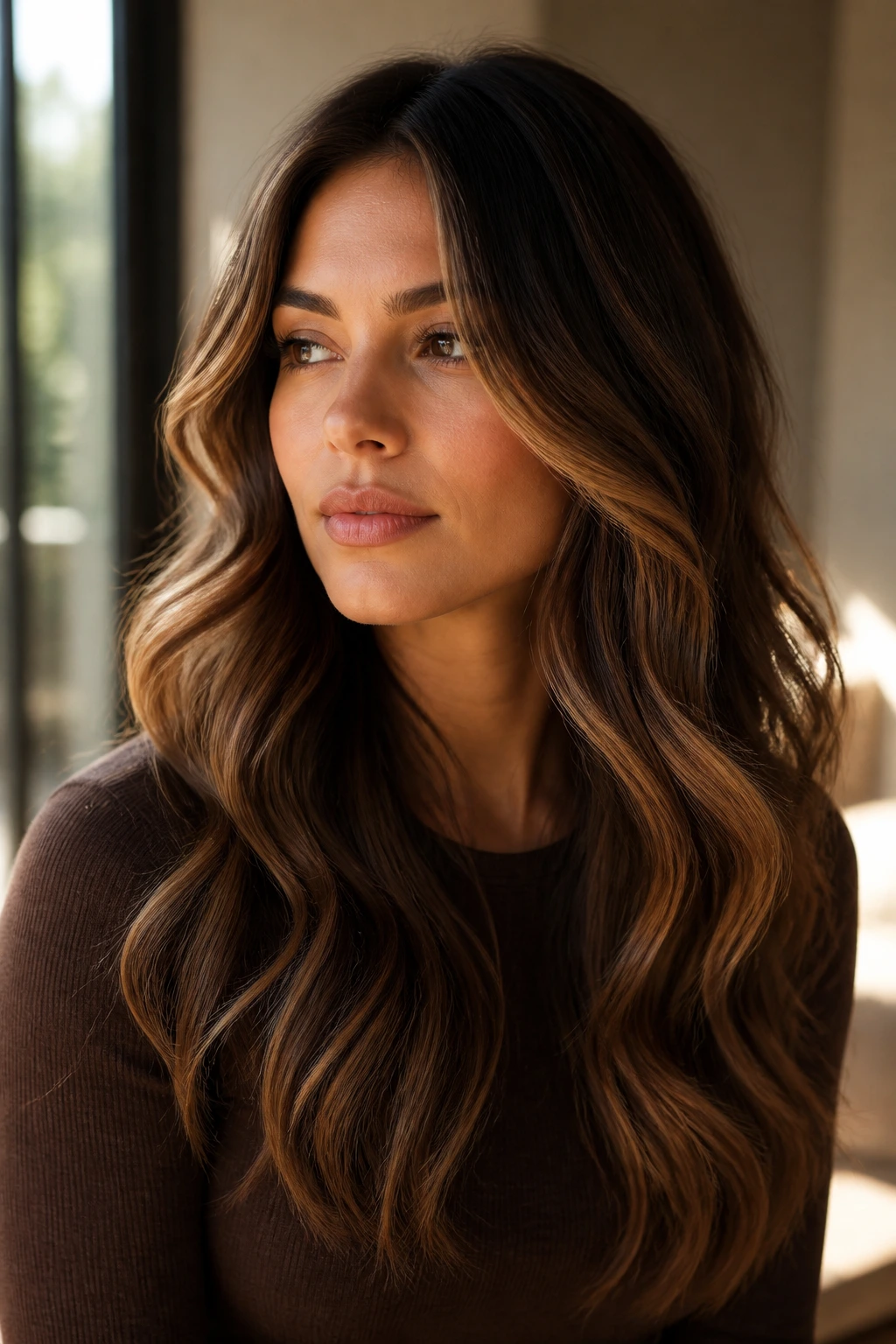
Placement: Put the brightest caramel where the hair moves — around the front, through the top layer, and on the bends of long waves or curls. If all the brightness hides underneath, the color will vanish the second you style it into a bun.
Styling: Loose waves show ribbons, straight blowouts show slices, and curls show internal dimension. Pick a style that lets the placement make sense. A color built for motion looks lifeless when it’s pulled pin-straight every day.
Makeup Pairing: Warm caramel often loves peach, bronze, and soft brown makeup. Cooler mocha shades look cleaner with taupe, rose, and berry tones. You do not need to match your face to your hair, but the right colors stop the hair from feeling disconnected.
Maintenance: Gloss every 6 to 8 weeks if you want the tone to stay clean. If you like a more lived-in look, you can stretch that longer and let the caramel fade softer between visits.
Additional Tips and Tone Boosters
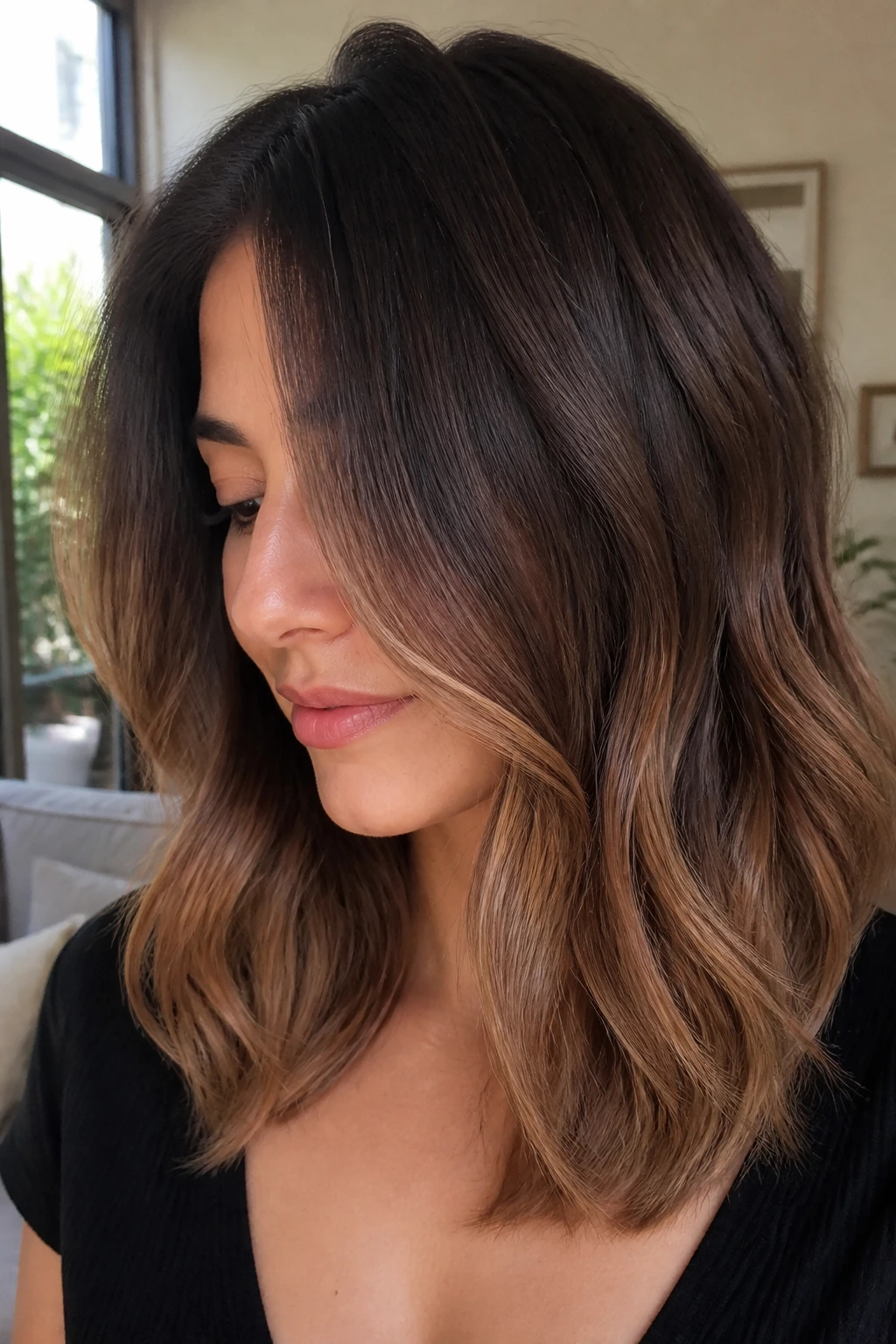
Shine Boost: A clear gloss over brown hair can do more than another round of lightening. It smooths the cuticle, deepens the mocha, and makes the caramel reflect light instead of turning dry and dusty.
Customization: Ask for beige caramel if you tend to go orange. Ask for amber caramel if your hair looks flat in winter light. That one choice changes the whole temperature of the color.
Face-Framing Trick: Keep the front pieces a shade lighter than the rest of the hair, not three shades lighter. A little lift goes a long way, and it blends better once you tuck the hair behind your ears.
Make-It-Yours: Fine hair looks better with thinner ribbons. Thick hair can carry wider panels and more contrast. Curly hair needs the color placed inside the curl pattern, not just on top of it.
Styling Finish: A pea-sized amount of lightweight oil on the ends keeps the caramel from looking frayed. Skip the roots unless your hair is very dry.
Common Mistakes That Make Caramel Mocha Fall Flat
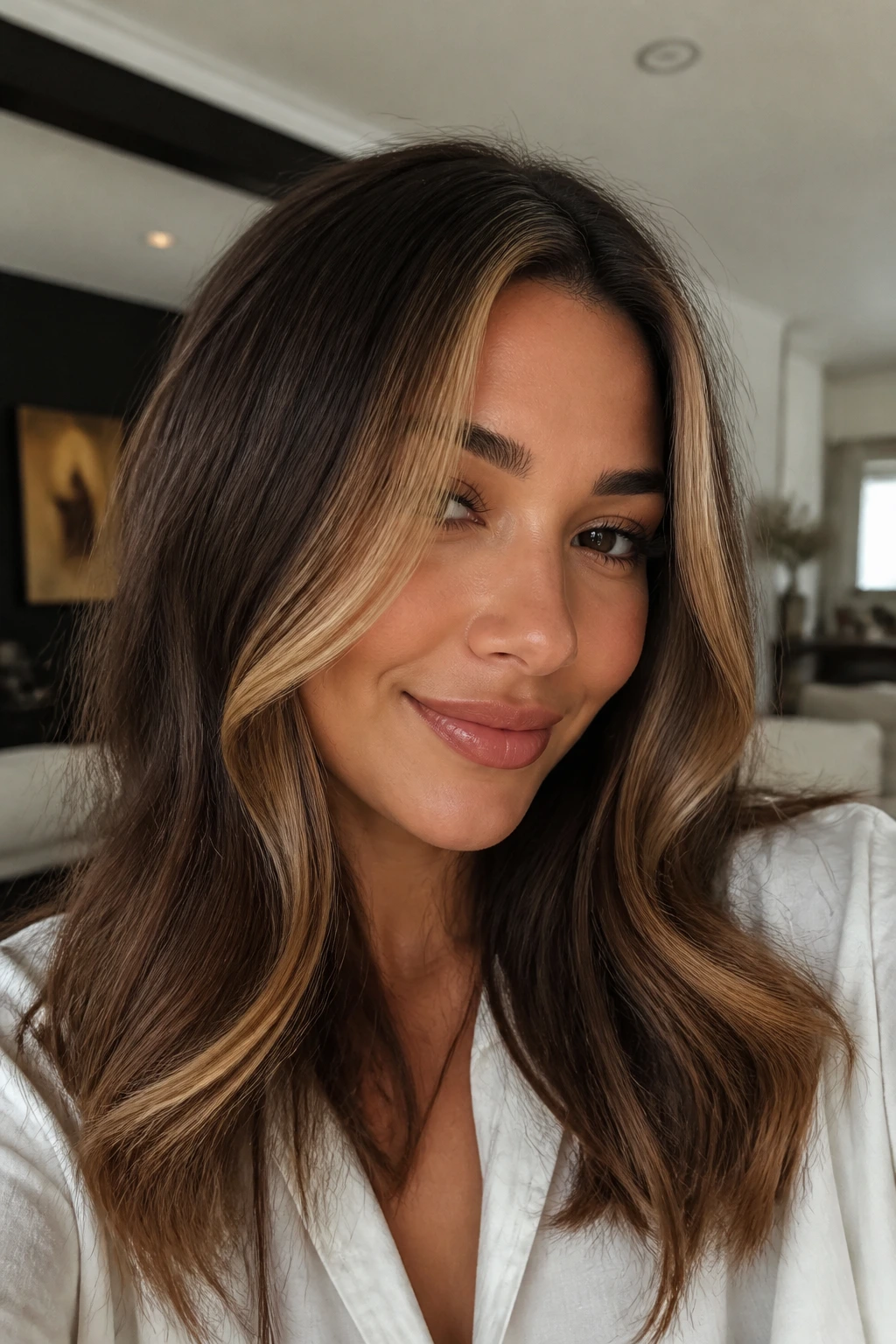
- Going too light too fast: If the highlights jump several levels in one appointment, the hair can lose its brunette identity and the caramel starts looking disconnected. The fix is softer lift and better toning, not more bleach.
- Using one flat tone everywhere: The hair needs some depth under the lighter pieces. If every strand gets the same caramel gloss, the color turns one-note and dull. Leave a deeper mocha somewhere in the pattern.
- Putting brightness in the wrong place: Bright pieces under the top layer are often wasted. Move the light around the face, part line, or upper surface where it will actually show.
- Ignoring porosity: Ends that have been colored before grab tone faster and can go too warm or too dark. A careful colorist will adjust processing time and toner strength instead of treating every section the same.
- Overusing toning shampoo: Purple or blue shampoo can help, but too much of it mutes the warmth that makes caramel mocha look alive. Use it sparingly, and always follow with a moisturizing conditioner.
Variations and Adaptations to Try
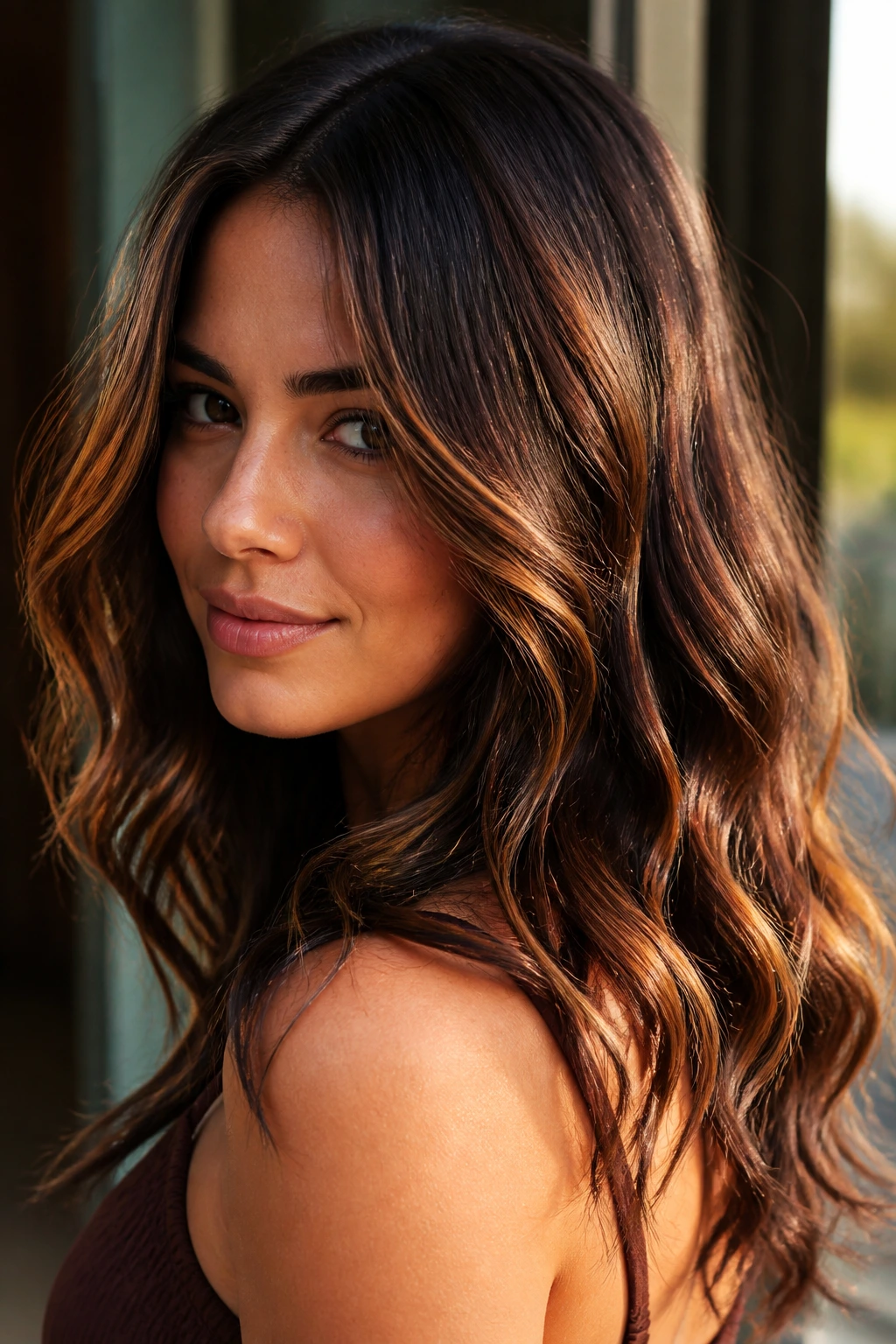
Cool Cocoa Caramel: Keep the brunette base smoky and the caramel beige rather than gold. This suits cooler skin and gives the hair a softer, more muted finish.
Golden Toffee Brunette: Push the caramel warmer and richer, with honey and toffee notes through the mids. It’s a good fit when you want the hair to look sunlit without going blond.
Smoky Mocha Contour: Concentrate deeper mocha near the roots and hairline, then place lighter pieces lower and farther back. This creates a contouring effect around the face.
Copper Spice Mocha: Add a copper whisper to the caramel so the brown picks up a spicy glow. Best for someone who likes warmth and doesn’t mind a little red reflection.
Curly Halo Caramel: Brighten the outer halo and face frame while leaving the interior richer. That keeps curls from losing shape and gives the curl pattern its own light map.
Make-Ahead, Maintenance, and Refreshing Guidance
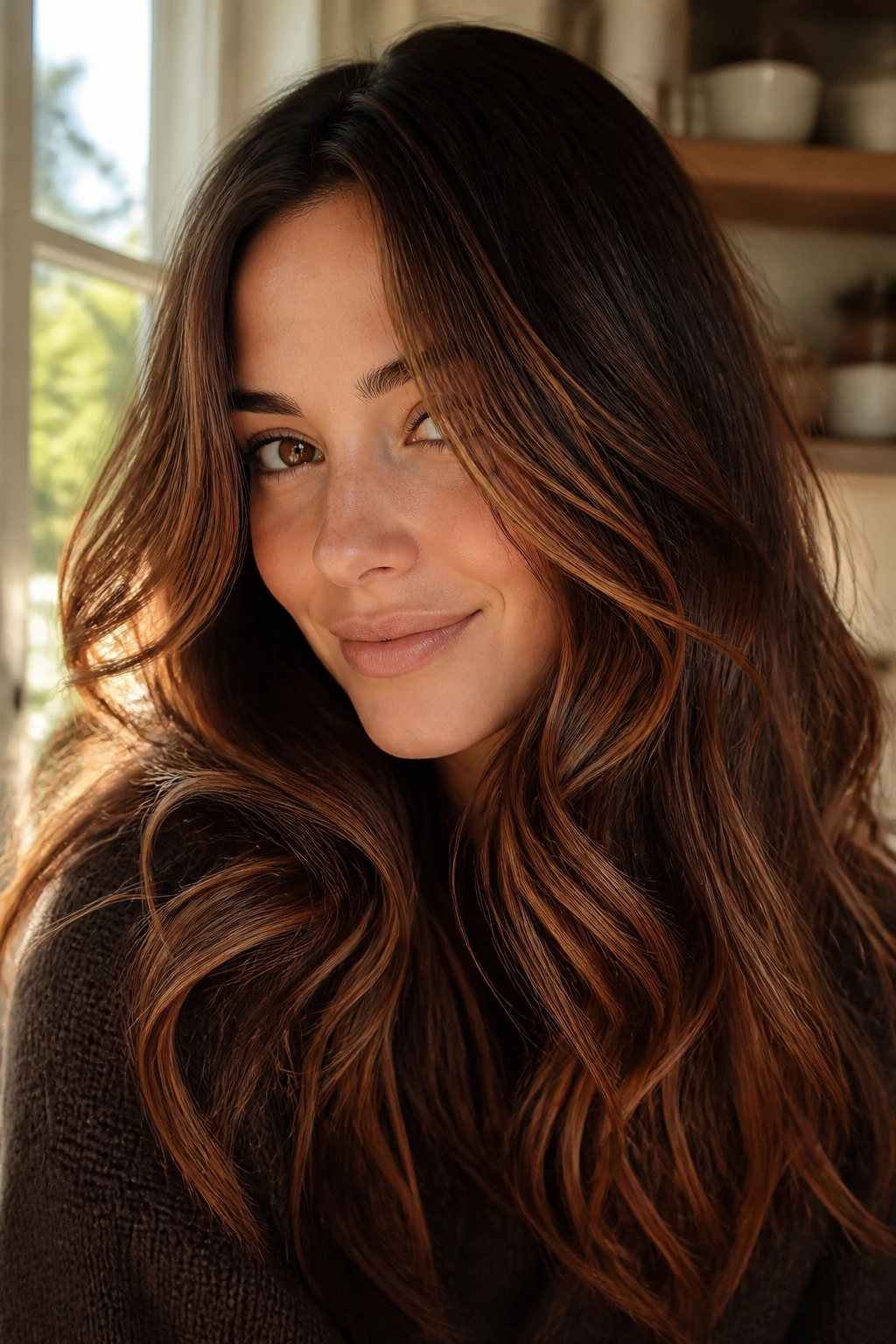
Caramel mocha color keeps best when you treat it like a finish, not a one-time event. The lighter pieces usually hold their shape for about 6 to 8 weeks before the tone starts to drift, and root maintenance often lands around 8 to 12 weeks depending on how much contrast you started with. A softer balayage or root melt can stretch longer than a full foil job.
At home, use color-safe shampoo 2 to 3 times a week and keep the water lukewarm instead of hot. Hot water roughs up the cuticle and strips tone faster than people expect. If your hair turns brass, reach for a blue or purple cleanser once every 1 to 2 weeks, not daily. Overdoing it can mute the caramel and leave the brown looking dusty.
Heat styling matters more than most people admit. A blow-dryer, flat iron, or curling wand without heat protection will fade the sheen quickly, especially on lighter ends. Use protectant every time. If you wear curls or waves often, a lightweight leave-in with slip helps the caramel reflect instead of frizz.
Glosses are worth the appointment. A clear or beige-brown gloss between color services can refresh shine in 15 to 20 minutes and keep the mocha from turning muddy. That small step makes the whole look last longer.
Frequently Asked Questions About Caramel Mocha Hair Color
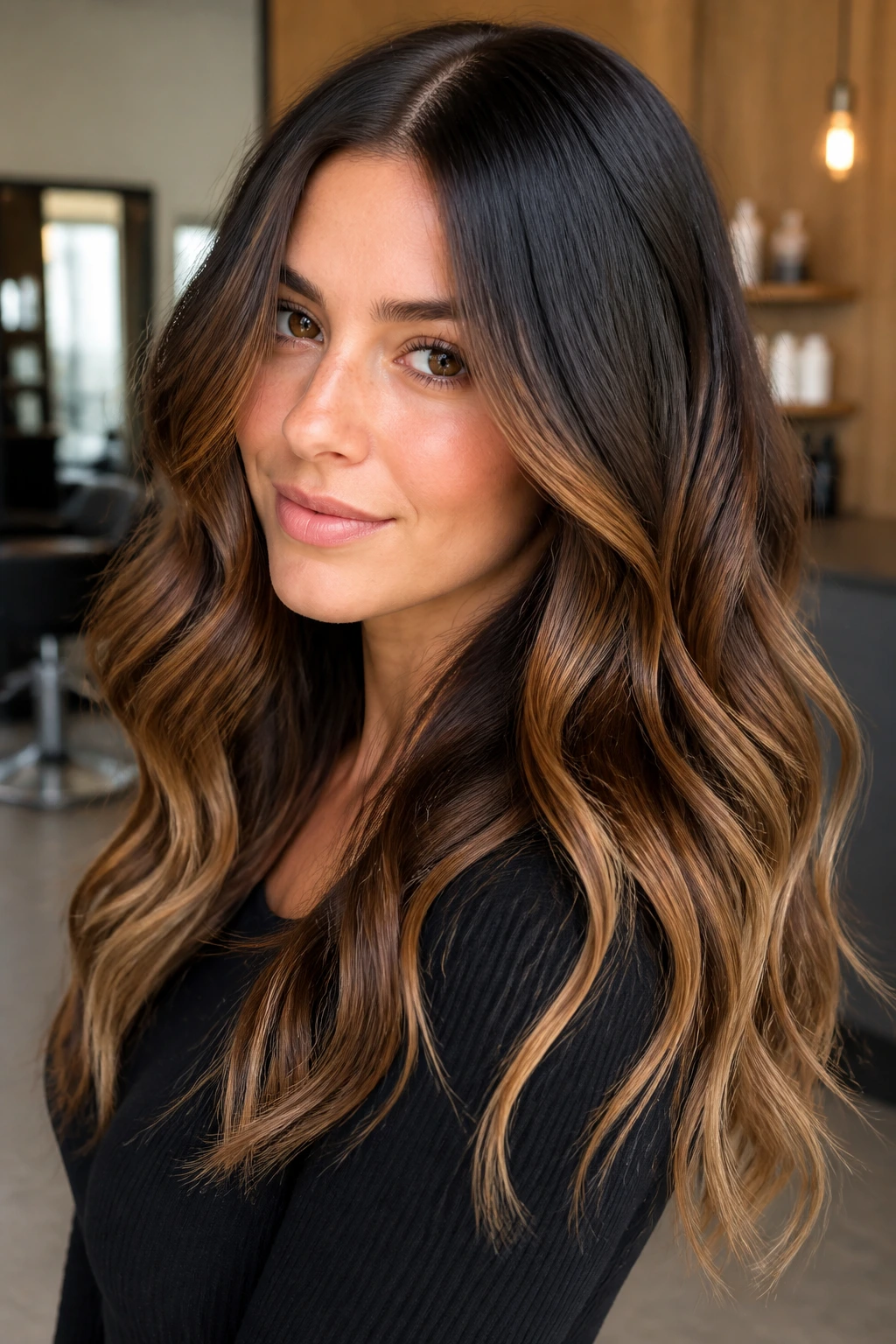
Does caramel mocha hair color work on very dark brunettes?
Yes, but the lighter pieces may need foils or a staged lift to show up against a very deep base. On level 2 or 3 hair, the caramel usually reads better as soft ribbons or face-framing brightness than as all-over lightness.
Will caramel mocha look orange on me?
It can if the toner is too warm for your undertones or if the hair lifts too far into gold without being balanced back down. Beige caramel or chestnut caramel usually gives a safer result when orange is a concern.
How do I ask for this at the salon?
Bring 2 or 3 photos that show placement, tone, and contrast, then use plain words: “soft caramel balayage,” “mocha root shadow,” “face-framing money piece,” or “babylights through the top.” Colorists work faster when you describe where you want brightness, not only the color name.
Can I get this look without bleach?
If your brunette base is already light enough, a gloss or demi-permanent color can add caramel tone without lifting much. On darker brown hair, though, true caramel pieces usually need some lightening.
How often will I need touch-ups?
Most caramel mocha looks stay tidy for 8 to 12 weeks, depending on how much contrast you have and how fast your hair grows. Balayage and root melts usually buy you more time than full highlights.
Does it work on curly hair?
Very well, as long as the placement follows the curl pattern. Curly hair needs lighter pieces where the curl opens and bends, not only on the outer layer.
What if the highlights fade too fast?
That usually means the hair is porous or the aftercare is too harsh. Use color-safe shampoo, lower the water temperature, and ask for a gloss refresh rather than a fresh round of lightening.
Can this color be cool-toned instead of warm?
Absolutely. Swap honey and amber for beige, mushroom, or smoky mocha, and keep the caramel restrained. That version still has dimension, just less gold.
The Brunette Color That Keeps Moving
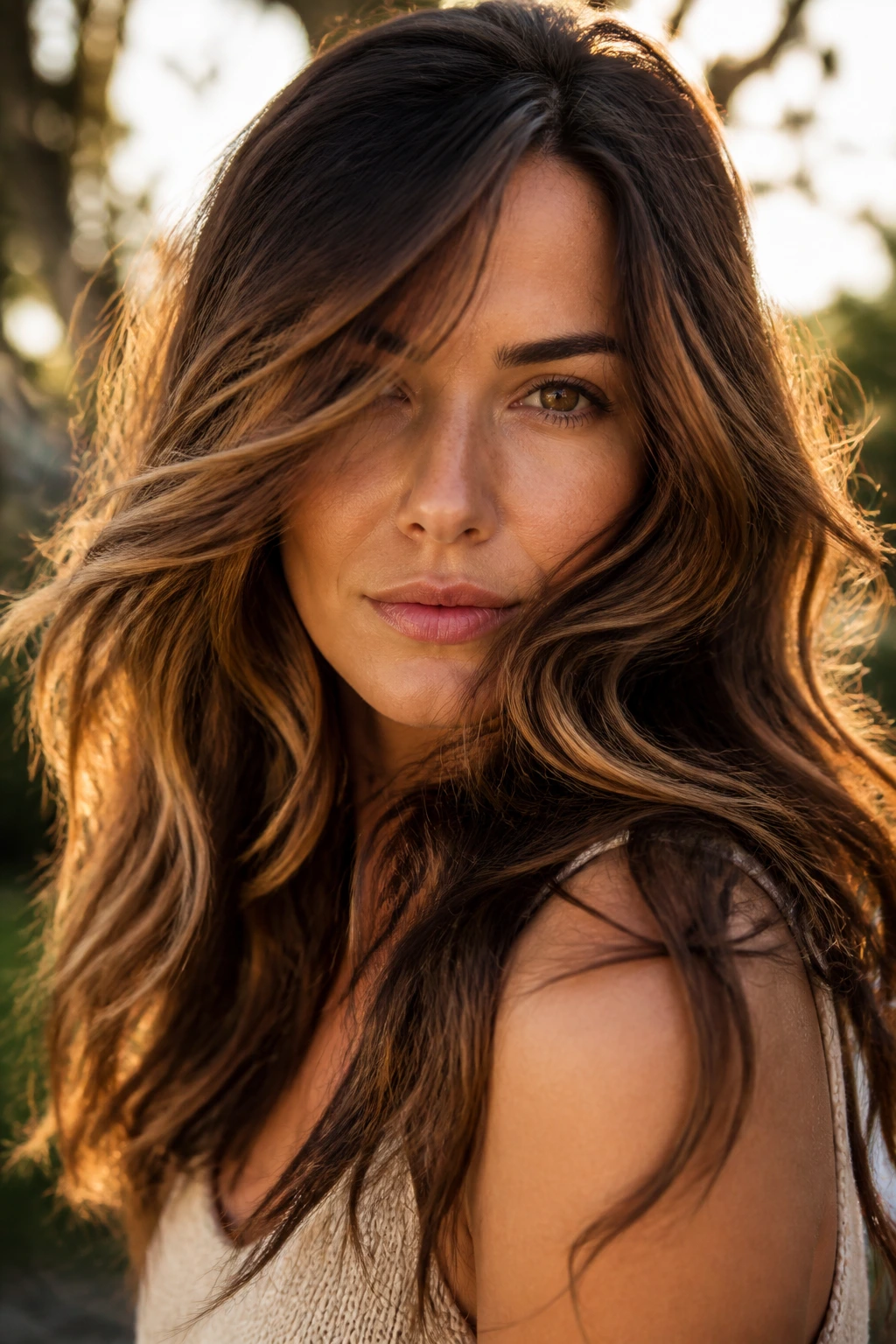
The best caramel mocha brunette shades are the ones that keep some brown at the root, some warmth in the lengths, and enough contrast to show movement without looking painted on. That balance is what makes the color live longer, grow out softer, and work on more hair types than a more extreme blonding job.
Pick the version that matches your upkeep tolerance, not just the photo you liked first. A subtle root melt, a brighter money piece, or a soft babylight pattern can all get you into the same color family, but they won’t behave the same once you’ve worn them for a few weeks. The smarter choice is the one that still looks good when the hair is half-dry, pinned back, and a little bit imperfect.
And that’s the charm of caramel mocha on brunettes. It never sits still for long.