



Caramel, honey, and gold can make tan skin look sun-warmed in the best way — or they can go flat and brassy fast. That’s the part people gloss over. A warm shade is not automatically flattering just because it’s warm. The trick is finding the right depth, the right placement, and the right balance between beige, amber, and gold so the color looks expensive instead of loud.
Tan skin has range. Some people run golden; some lean olive; some sit right in the middle with a neutral warmth that can handle more shine than they think. That’s why caramel honey golden hair color works so well when it’s handled with a little restraint. A soft root shadow, a ribbon of honey around the face, or a gloss over brunette hair can do more than a full head of bright highlights ever could.
The best versions of these shades look like light catching the hair in motion. Not a block of yellow. Not pumpkin. Not dull brown trying to act blonde. The sweet spot is narrower than most salon inspo photos make it look, which is exactly why this collection matters.
Why These Shades Look So Good on Tan Skin
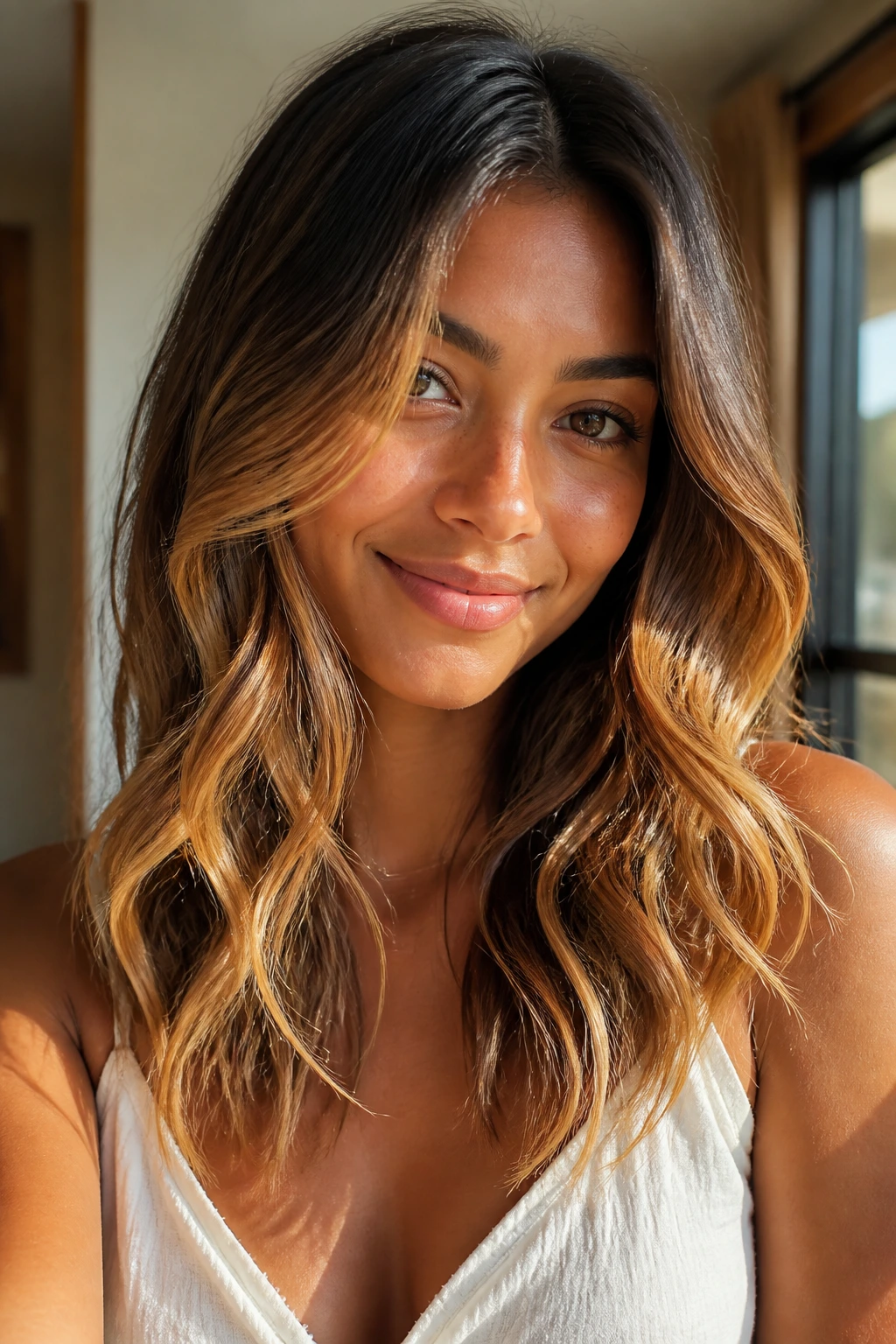
- Warmth without noise: Caramel, honey, and gold echo the natural warmth in tan skin instead of fighting it, so the result looks coherent rather than patched together.
- Soft contrast: These shades can brighten the face with just a few levels of lift, which keeps the skin from looking washed out the way icy blonde sometimes can.
- Salon-friendly choices: Balayage, glosses, money pieces, and root smudges give you room to adjust the tone if your undertone runs more olive or more golden.
- Works on different bases: Dark brown, medium brown, black, and even already-lightened hair can all wear some version of this palette.
- Better grow-out: A caramel or honey placement with depth at the root grows out cleaner than all-over light blonde, which means fewer panic appointments.
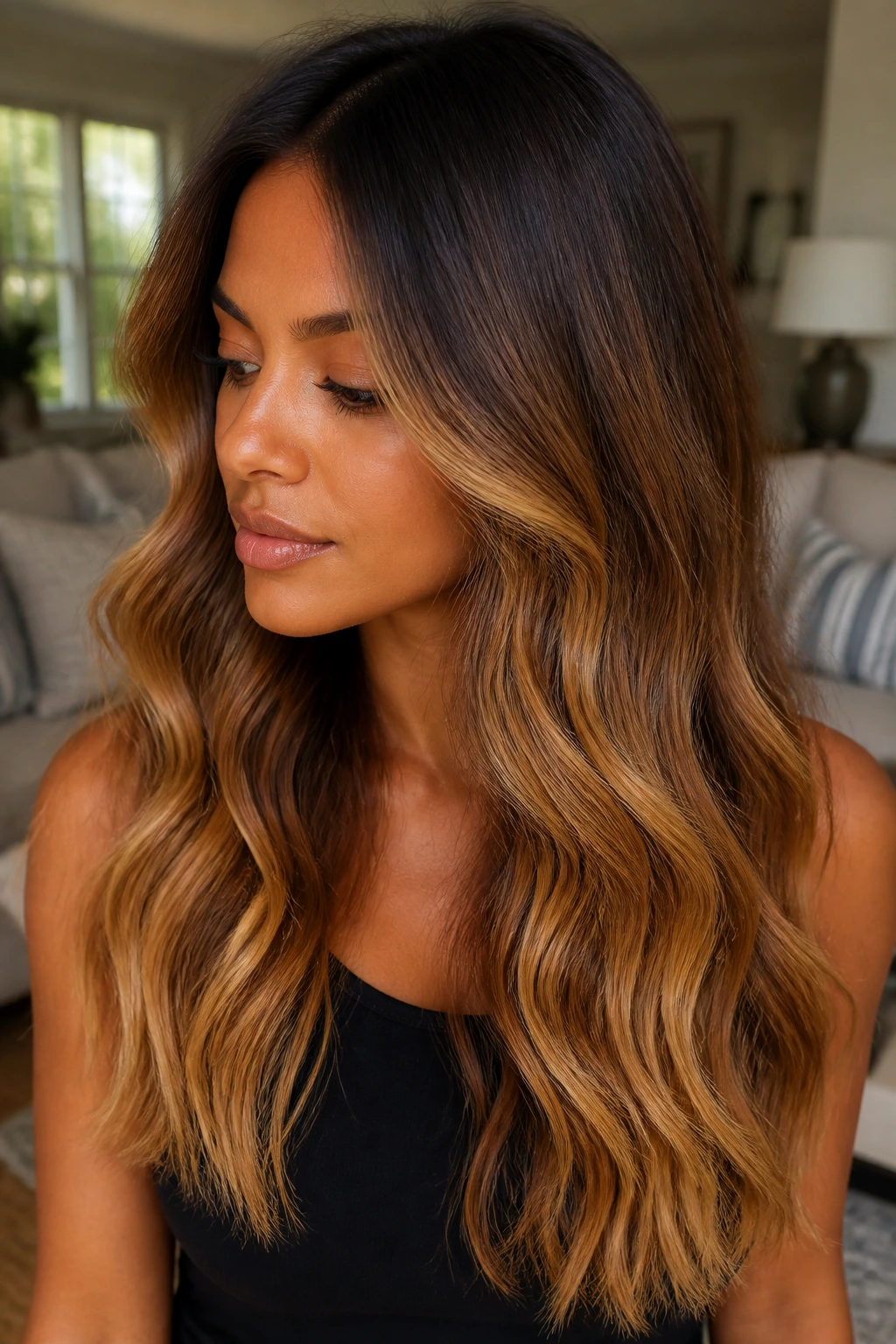
1. Sunlit Caramel Balayage
This is the shade people mean when they say they want “natural but better.” The darker root melts into hand-painted caramel through the mids, then into lighter honey on the ends, so the whole thing moves when you turn your head. On tan skin, that softer fade keeps the color from sitting too flat against the face.
The key is restraint. Ask for balayage pieces that start lower on the head — usually around the cheekbone or below — with a root shadow that stays 1 to 2 levels darker than the lightest ends. That keeps the contrast gentle and makes the tan in your skin look richer, not orange.
Best for: long layers, soft waves, and anyone who hates obvious regrowth.
Skip the ash toner: cool toner can make the caramel read muddy against warm skin.
A loose bend with a 1.25-inch curling iron shows off the gradient better than pin-straight hair.
2. Honey Money Pieces Around the Face
If you want brightness without committing to a full head of highlights, start here. The front sections are lifted to a golden honey blonde, while the rest of the hair stays deeper and more grounded. It’s the kind of placement that makes the cheekbones pop before anyone notices the color itself.
On tan skin, money pieces work because they act like a built-in reflector. The warm front sections catch light near the eyes and temples, which gives the face shape a little lift. Ask for the brightest pieces to stay golden-beige, not pale yellow, especially if your skin already has a sun-kissed cast.
This is also one of the easiest ideas to grow into. If you’re nervous about bleach, ask for two face-framing sections and a soft gloss through the rest of the hair. That’s enough. More can feel busy.
3. Golden Bronde Melt
Bronde lives in that middle zone between brunette and blonde, and that middle zone is where tan skin tends to look the most balanced. A golden bronde melt uses medium brown at the root, toasted caramel through the mid-lengths, and a soft golden finish at the ends. It never has to scream “highlight job.”
The reason this shade works so well is that it changes in different light. Indoors, it reads rich and brunette. Outdoors, the gold starts to show, especially near the crown and along the face-framing pieces. That little bit of movement makes the skin look more alive.
Ask your colorist for fine ribbons instead of chunky stripes. Chunky can be fun, but on tan skin it sometimes goes loud faster than expected. Fine placement keeps the melt believable.
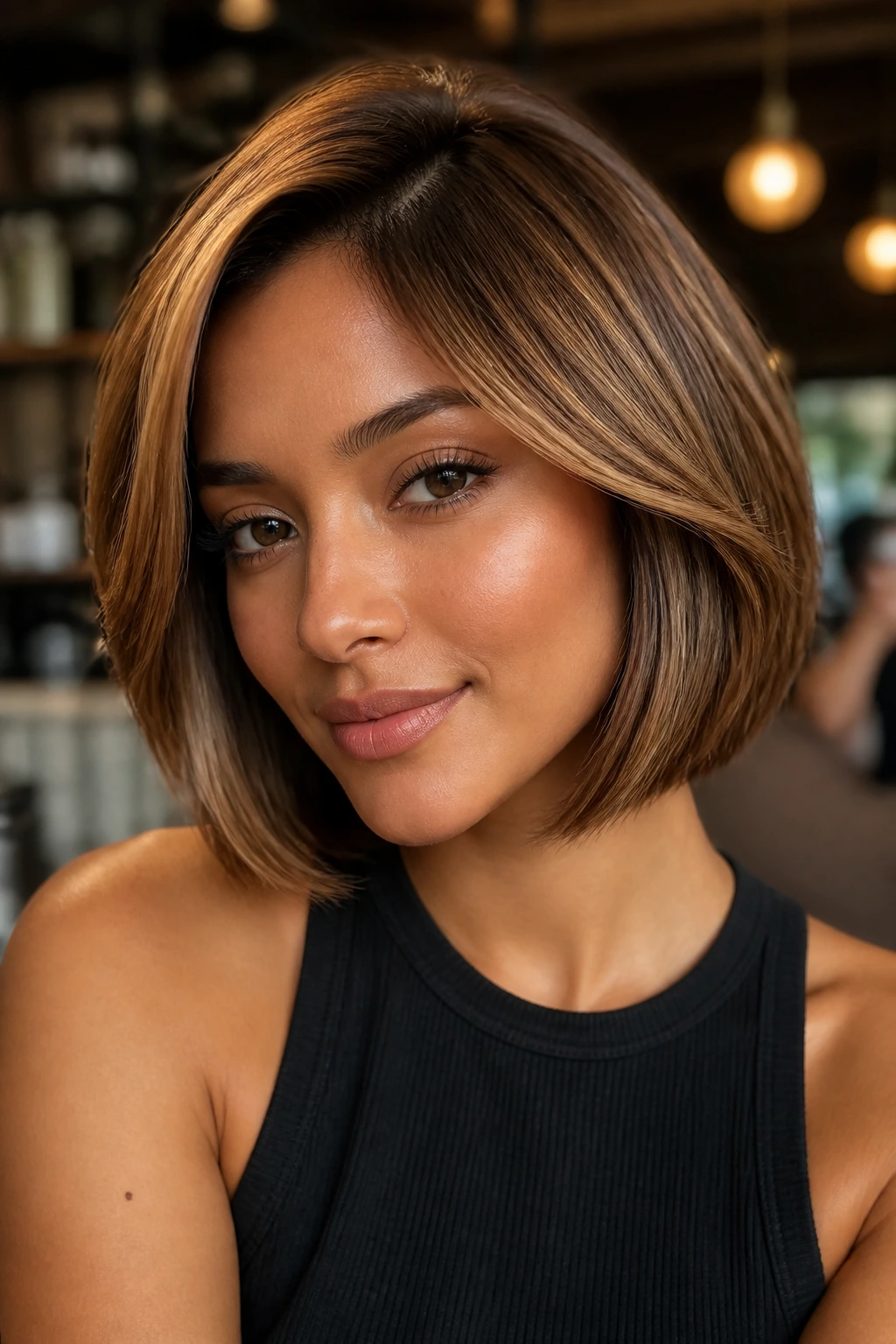
4. Butterscotch Lob With Choppy Ends
A lob gives caramel shades a clean edge, and choppy ends stop the color from feeling too sweet. This look usually sits just above or at the shoulders, with butterscotch highlights concentrated around the outer layers and a deeper brunette base underneath. It has a little swing to it. A little attitude.
The cut matters here almost as much as the color. With a blunt-ish lob, the lighter pieces show in a crisp band, which is gorgeous if your tan skin leans golden. If your undertone is more olive, ask for a beige butterscotch rather than a bright honey yellow.
This one looks especially good with a deep side part and a quick bend through the ends. Straight and glossy works too, but the shape is what makes the color feel deliberate instead of random.
5. Toffee Ribbon Highlights
Toffee ribbon highlights are for someone who wants visible dimension without the patchy effect some highlight jobs get. The colorist paints wider strands of caramel and toffee through a medium or dark brown base, then tones them just warm enough to keep them from reading brassy. It’s dimensional. Not stripey.
Tan skin likes this because the ribbons create contrast without harsh lines. Your face gets a warmer frame, and the darker pieces around it keep the color from overpowering your features. If your hair is thick, ask for surface ribbons and a few hidden ones underneath so the dimension shows from every angle.
Use this approach if:
- you wear your hair in loose waves most days
- you want something visible from across a room
- you hate a high-maintenance grow-out
A gloss every 6 to 8 weeks keeps the toffee from getting flat.
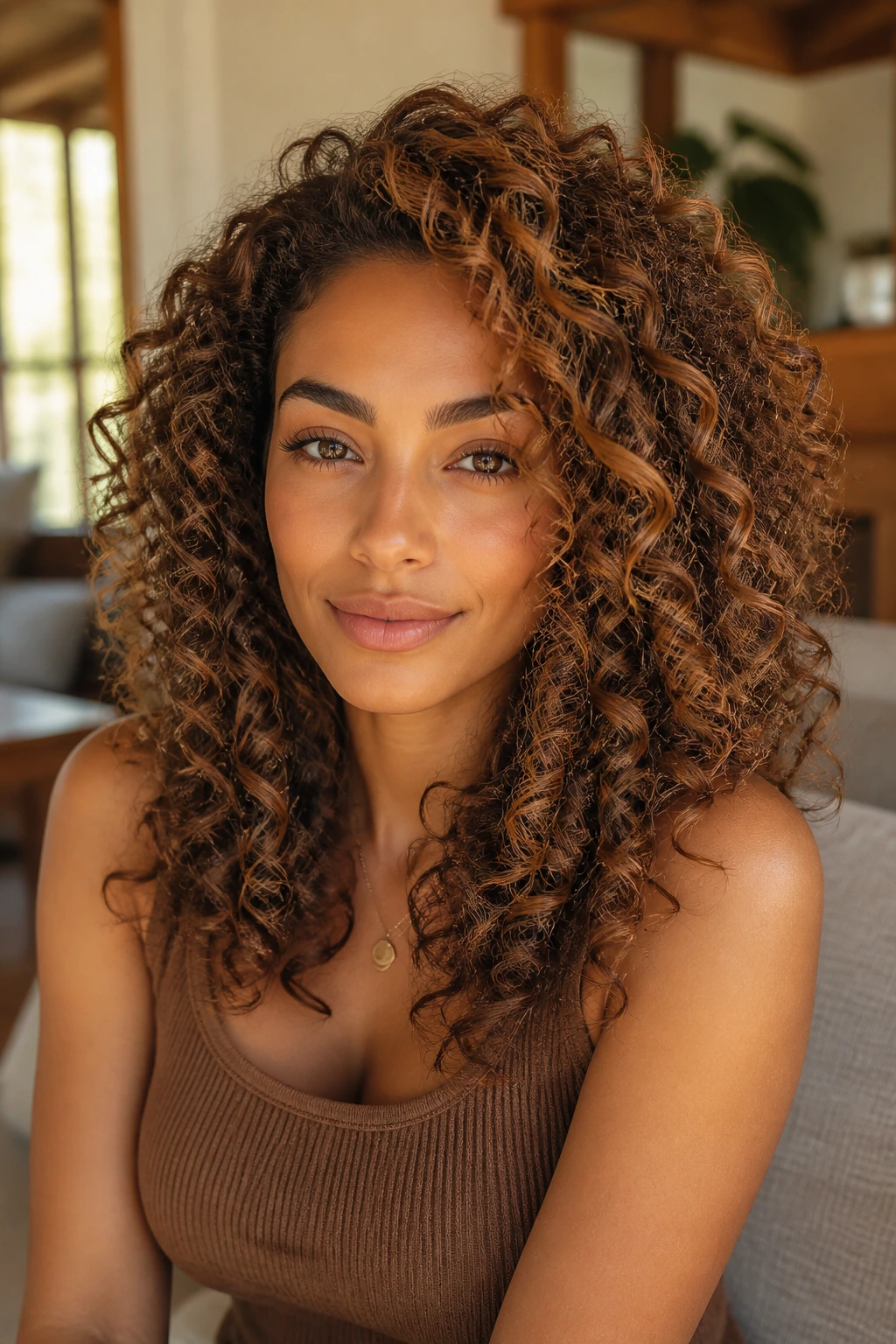
6. Cinnamon-Caramel Curls
Curls change the whole equation. On curly hair, caramel and honey don’t sit as one smooth stripe; they pop up on the bends, coils, and raised areas of the curl pattern. That gives the shade a much more lived-in look. Cinnamon warms the base, while lighter caramel is painted where light naturally hits.
If your tan skin has golden undertones, this combination can look downright glossy. If your skin leans more olive, keep the cinnamon softer and the honey more beige so the whole thing doesn’t tip orange. The curl pattern does some of the work for you, which is nice because you do not need as much contrast as straight hair does.
A curl-defining cream with a light hold makes the highlights show more clearly. Dry, fuzzy curls swallow color. Defined curls show it off.
7. Amber-Caramel Bob
A bob gives caramel hair a sharper shape, and amber tones keep it from feeling too sweet. This version usually sits right at the jaw or just below it, with warm amber highlights feathered through the top layers and a deeper caramel base underneath. It’s polished, but not fussy.
On tan skin, the shorter length makes the color face-forward. That means the shade needs to be clean. Too much yellow can look harsh near the jawline, while amber with a little brown in it looks smoother. Ask for a gloss that leans golden-beige instead of high-shine blonde.
This is one of those cuts that looks expensive when the ends are blunt and healthy. Split ends make the whole shade look tired. Fresh edges matter here more than people think.
8. Maple Honey Ombré
Ombré gets a bad rap because a lot of it was done with a heavy hand. The better version is soft: deep brown at the top, maple through the middle, then honey at the ends in a gradual fade. On tan skin, that slow shift gives the face warmth without forcing brightness all the way to the root.
The nice thing about maple honey ombré is that it keeps the darker color near the scalp, which is flattering if your brows and lashes are deep. It also gives the ends some lightness where the hair usually needs it most. If you like low effort but still want visible color, this is a strong choice.
Wear it in a half-up style and the gradient shows even more. Pull it all the way back, and the darker root keeps it grounded.
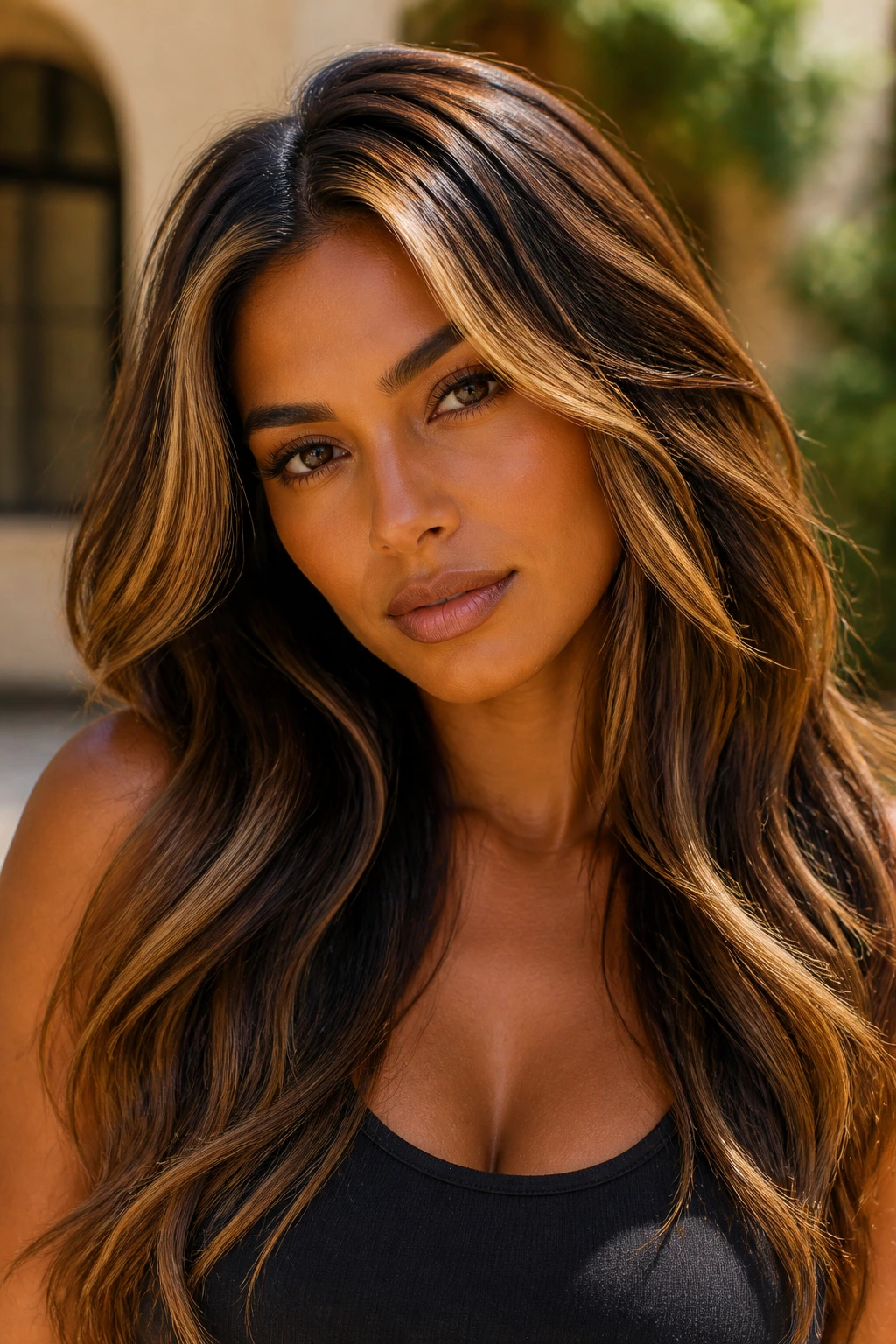
9. Golden Tiger-Eye Dimension
Tiger-eye hair borrows the layered look of the stone: dark base, warm gold, and deep caramel ribbons woven together so the whole thing feels striped in motion. The shade looks especially good on tan skin because it has depth first and brightness second. That keeps it from reading flat.
A good tiger-eye job doesn’t look like random highlights. It looks like the hair has its own internal glow. Ask for vertical ribbons rather than horizontal bands, and keep the brightest gold pieces around the crown and front perimeter. The rest can stay deeper and slightly chestnut.
This is one of the more stylish options on the list, but it still wears well on a normal day. That’s the win. You get dimension without chasing a perfect blowout every morning.
10. Soft Caramel Gloss on Dark Brown Hair
Not every caramel idea needs bleach. Sometimes the smartest move is a gloss. On a dark brown base, a caramel gloss adds warmth and shine without lifting the hair much at all. The result is subtle in the best way: sunlight catches it, and the tone looks richer, not lighter.
For tan skin, this can be a quietly flattering option, especially if your complexion already has warmth and you want your hair to look polished rather than dramatically different. Ask for a semi-permanent gloss or glaze in caramel-brown, not a gold toner that veers yellow. Those are not the same thing.
This is the shade for people who say they want change but still want their hair to look like their hair. Fair enough.
11. Creamy Honey Blonde for Tan Skin
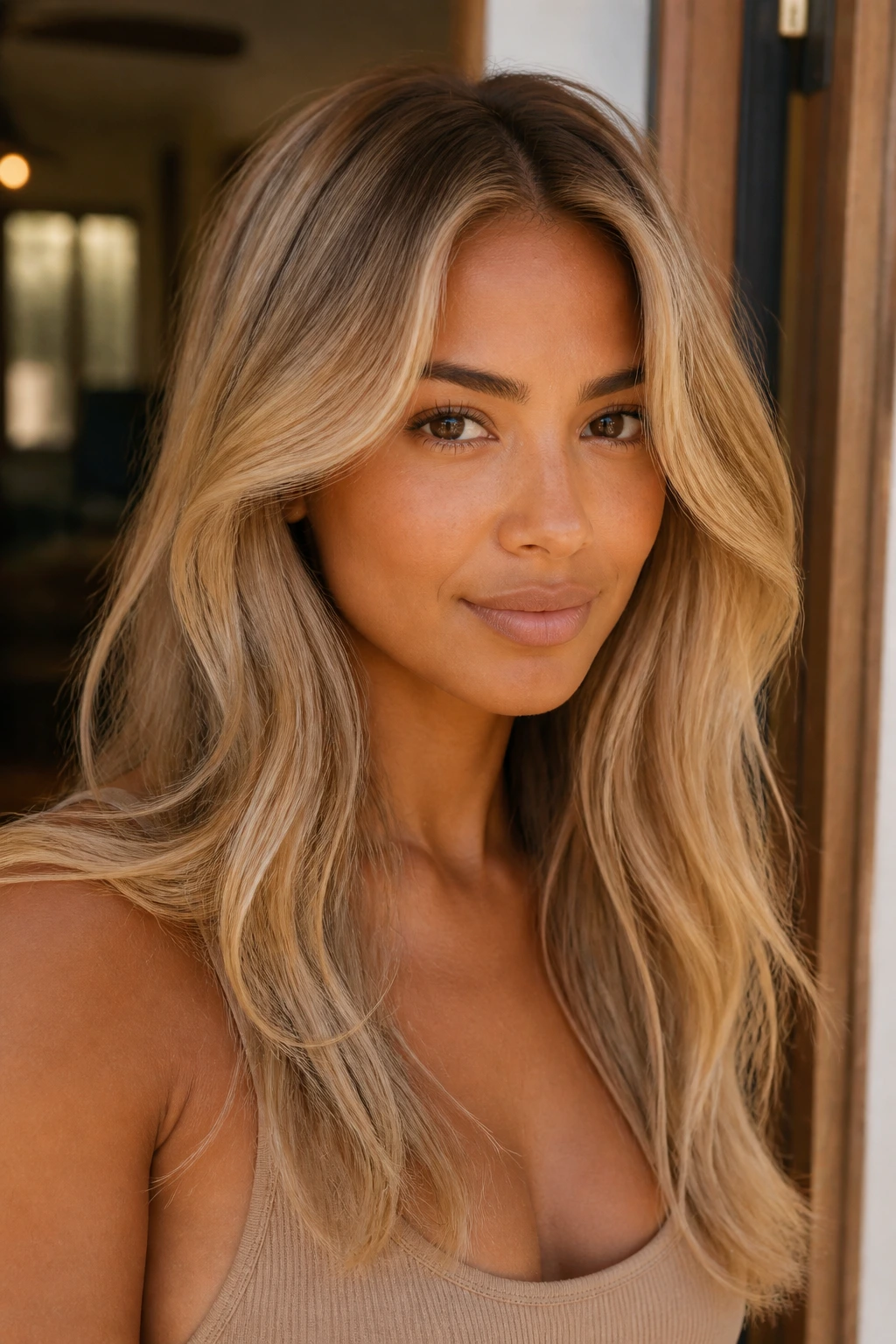
A creamy honey blonde sits lighter than caramel, but it still needs beige depth so it doesn’t turn frosty. On tan skin, the creaminess matters. Pure yellow can get loud, while a honey-beige blend looks soft and expensive. That’s the lane you want.
This works especially well if your natural base is medium brown or light brown and you like a brighter look around the face. Keep the root shadow soft, not severe. A 2-inch root is usually plenty unless you want a more dramatic grow-out.
A lot of people go too pale here. Don’t. Honey blonde should look like the warm side of blonde, not the bright side of it.
12. Toasted Almond Pixie
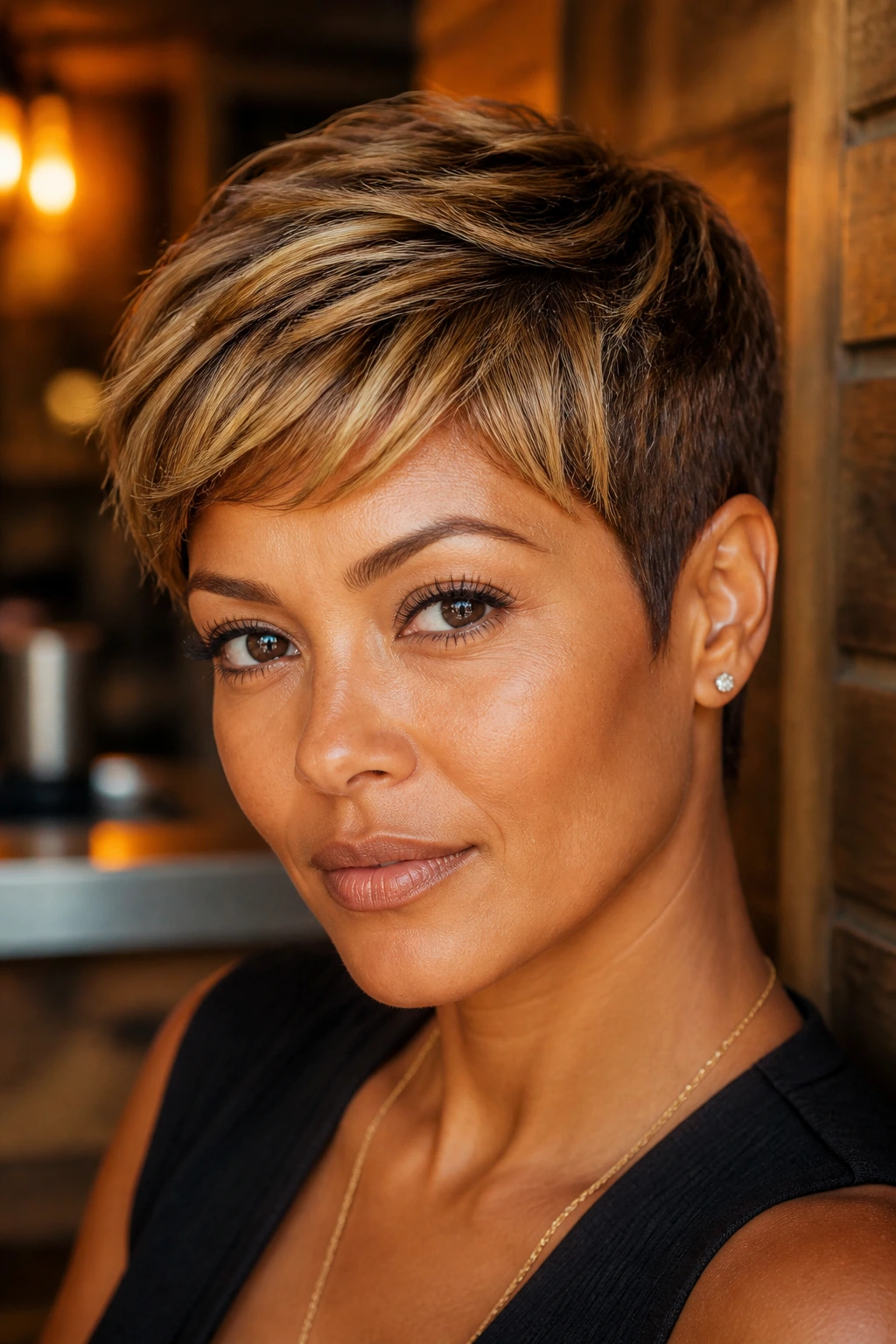
Short hair and warm color make a good pair when the placement is clean. A toasted almond pixie uses micro-highlights and soft pieces of caramel through the top and fringe, leaving the sides a bit deeper. The result is crisp, not busy.
On tan skin, short cuts can lose their shape if the color is too one-note. These little flashes of gold keep the texture visible and stop the cut from disappearing into the face. Ask for delicate foiling or paint-on detail where the hair naturally lifts around the crown.
This is also one of the least fussy options on the list. The cut itself does most of the styling. You just need a little paste or cream to separate the top and let the color catch.
13. Walnut Lowlights With Caramel Ribbons
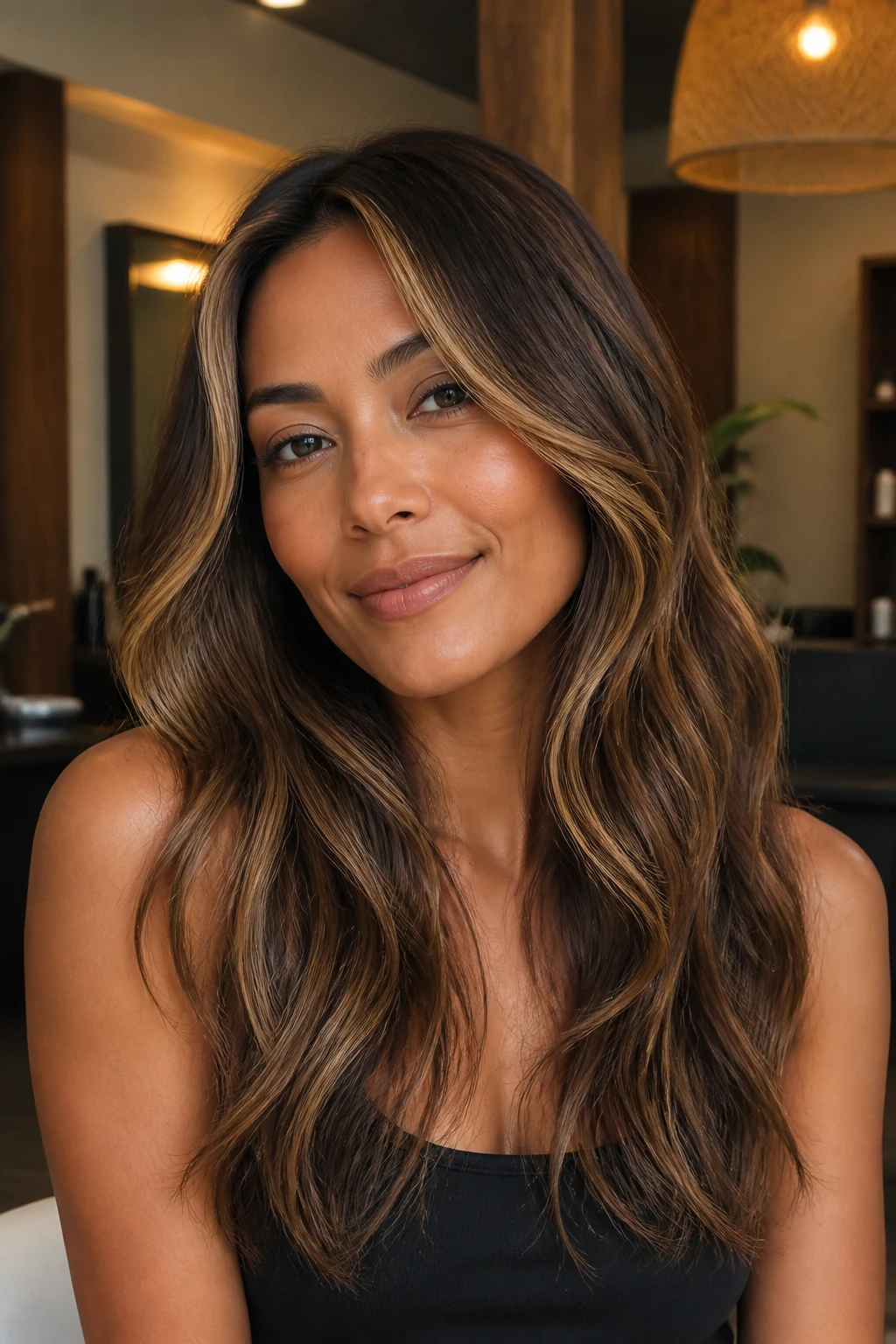
If your hair already has a lot of lightness, lowlights can be a lifesaver. Walnut lowlights deepen scattered sections, while caramel ribbons sit on top and through the mid-lengths. That combination gives tan skin more contrast than all-over blonde does, and it usually looks richer.
The trick is not to bury the hair in darkness. You want enough walnut to anchor the lighter pieces, not enough to swallow them. Think of it as building a frame around the warmth. This is especially good on finer hair, where too much blonde can look thin fast.
A colorist who understands placement will separate the hair into small panels instead of broad swaths. That keeps the dimension soft and believable.
14. Warm Chestnut Waves
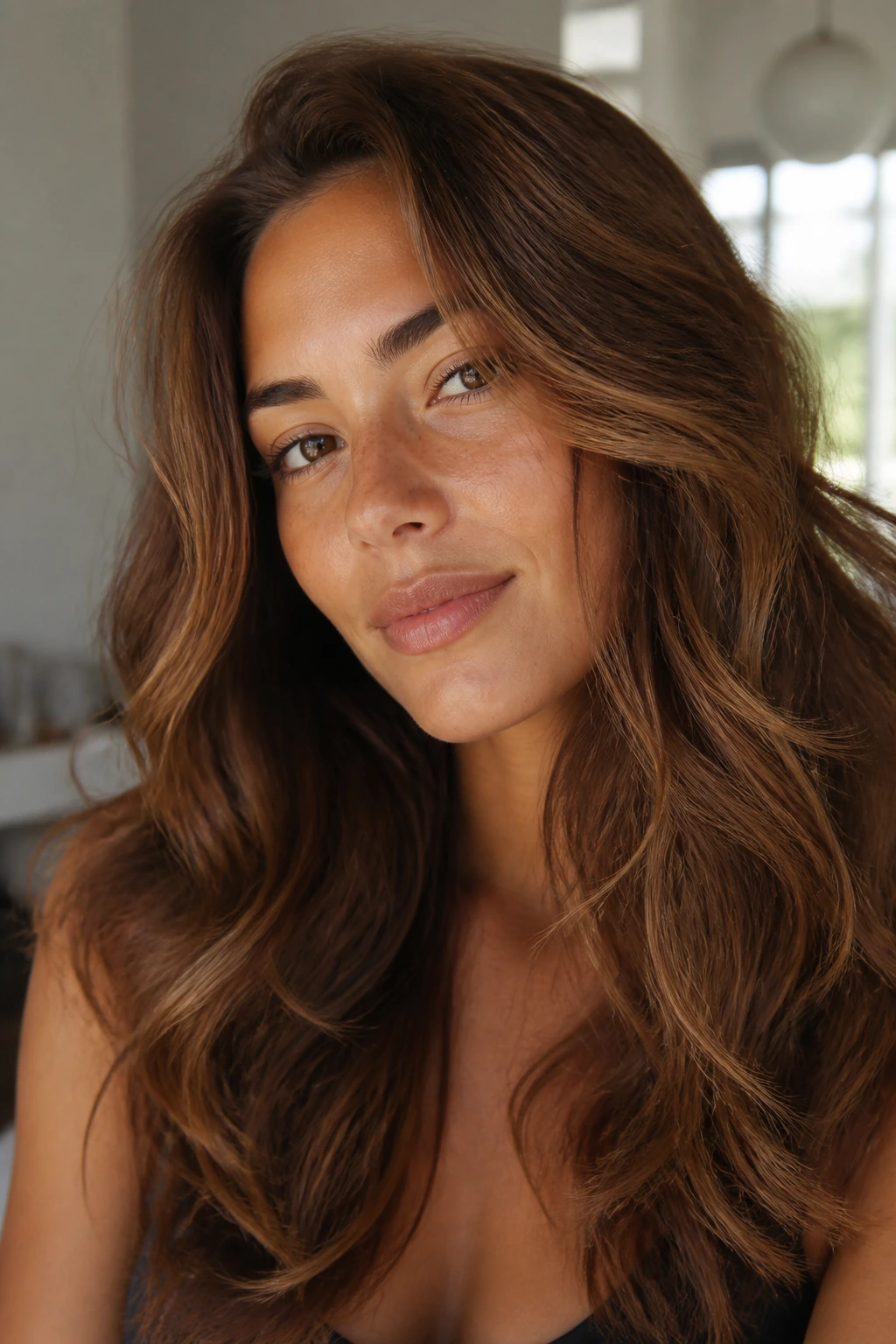
This is one of the easiest shades to wear if you want warm color but don’t want to look obviously highlighted. Chestnut sits darker than caramel and brighter than espresso, with a faint golden cast that shows up most clearly in waves. On tan skin, it reads smooth and polished.
The appeal here is that the warmth comes from the base itself. You don’t need a high-contrast money piece or dramatic ombré to make it work. A chestnut gloss over brown hair can be enough, especially if your natural color already has some red-brown undertone.
Loose waves make this shade look more dimensional, but straight hair gives it a sleek, expensive feel. It does both well. That’s not true of every warm tone.
15. Peach-Honey Caramel Blend
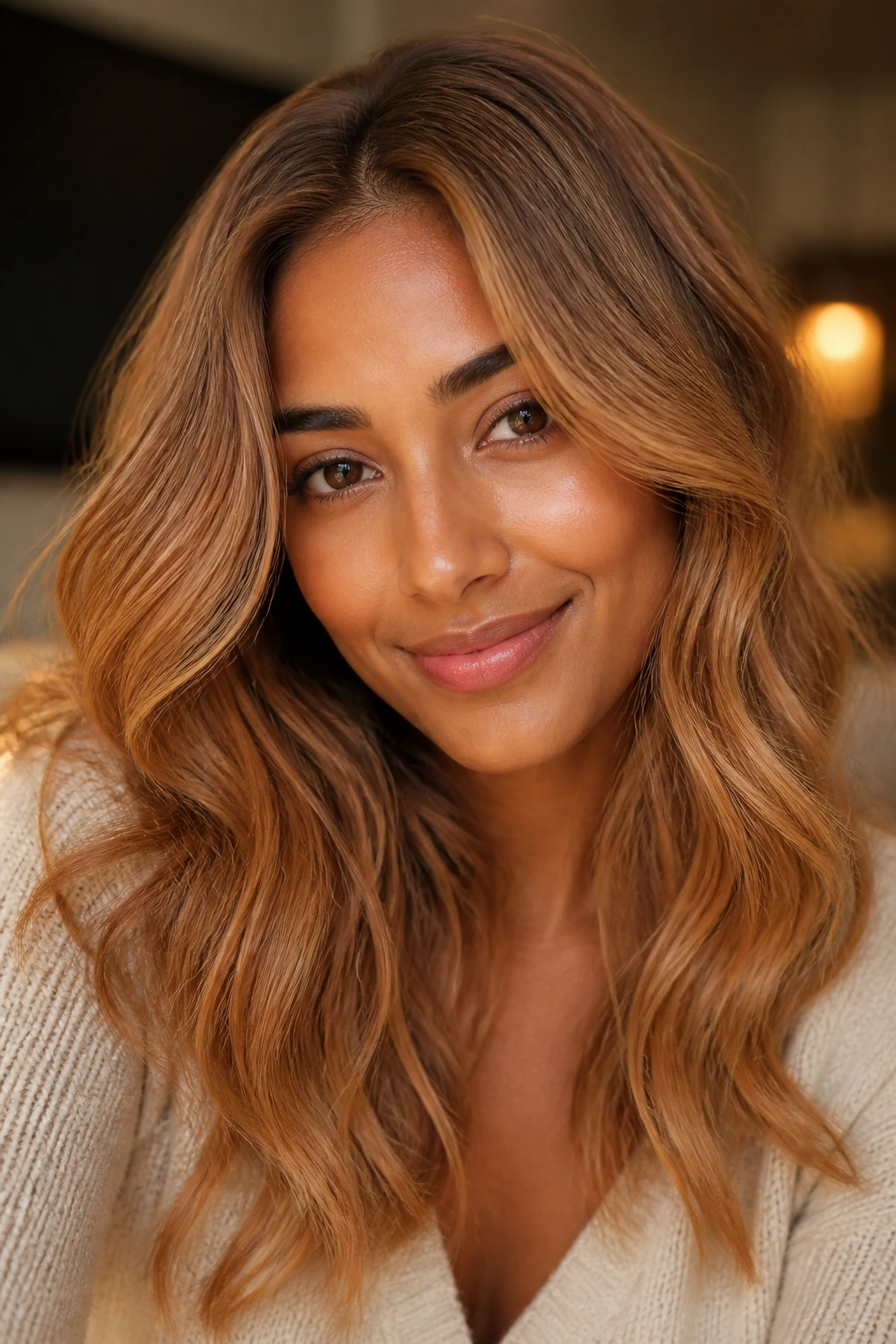
A little peach in a caramel formula can be gorgeous on tan skin, especially if your undertone leans golden. It softens the honey and gives the color a warm, almost sunkissed finish without turning it brassy. The key is keeping the peach whisper-thin, not coral.
This works best when the hair already has lightened pieces to pick up the tone. On darker hair, the peach may disappear. On lighter brunettes, it adds a soft warmth that feels a bit more interesting than plain gold.
If you wear bronze blush or warm lipstick, this shade tends to tie the whole look together. It’s subtle, but makeup people notice it fast.
16. Bronze-Caramel Shag
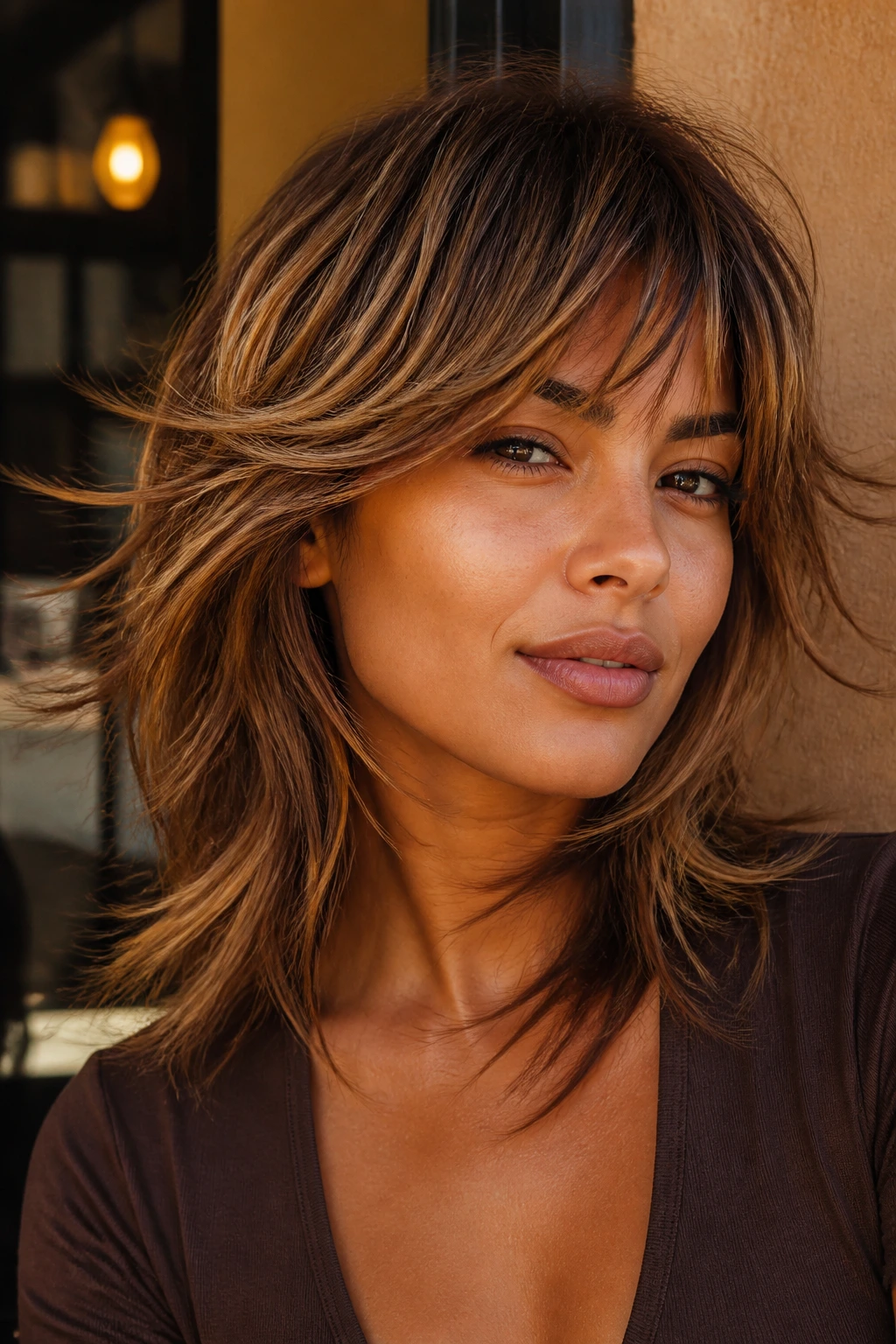
A shag wants movement, and bronze-caramel gives it that in a way a flat single-process color never could. The layers pick up different tones as the hair flips and falls, so the cut feels more alive. That’s especially nice on tan skin, where bronze can look earthy instead of dull.
Ask for brighter pieces on the shag’s top layers and around the face, with deeper caramel underneath. You want the cut to show off texture, not just color. If your hair is naturally wavy, this becomes almost self-styling. If it’s straight, a quick rough-dry with mousse gives the pieces more separation.
This is one of my favorites for people who want a little grit. Not polished perfection. Grit, but in a flattering shade.
17. Liquid Caramel Layers
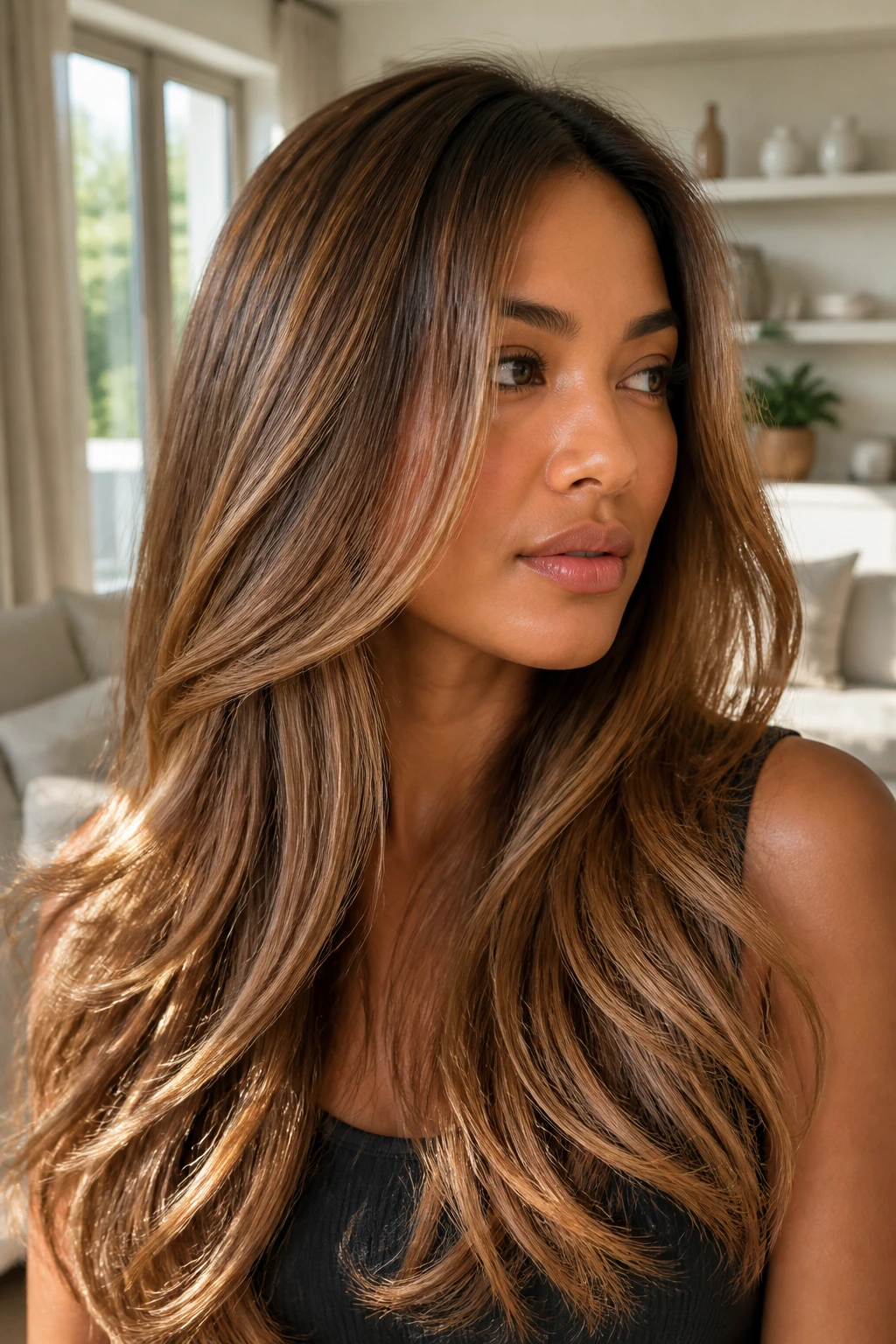
Long layers and high shine are a good match. Liquid caramel means the color is glossy enough to reflect light in a smooth way, with subtle tonal shifts from root to ends. It’s not stripey, and it’s not matte. It just moves.
Tan skin loves shine. Not because it needs to be “brightened,” but because reflective caramel keeps the whole look dimensional and fresh. Ask for a glaze finish or a shine treatment on top of the color, especially if your hair has been lightened more than once.
This is the sort of shade that looks better after a blow-dry brush than after aggressive flat ironing. Keep some bend in the lengths. Too much flattening can erase the movement that makes it good.
18. Espresso Melt With Golden Ends
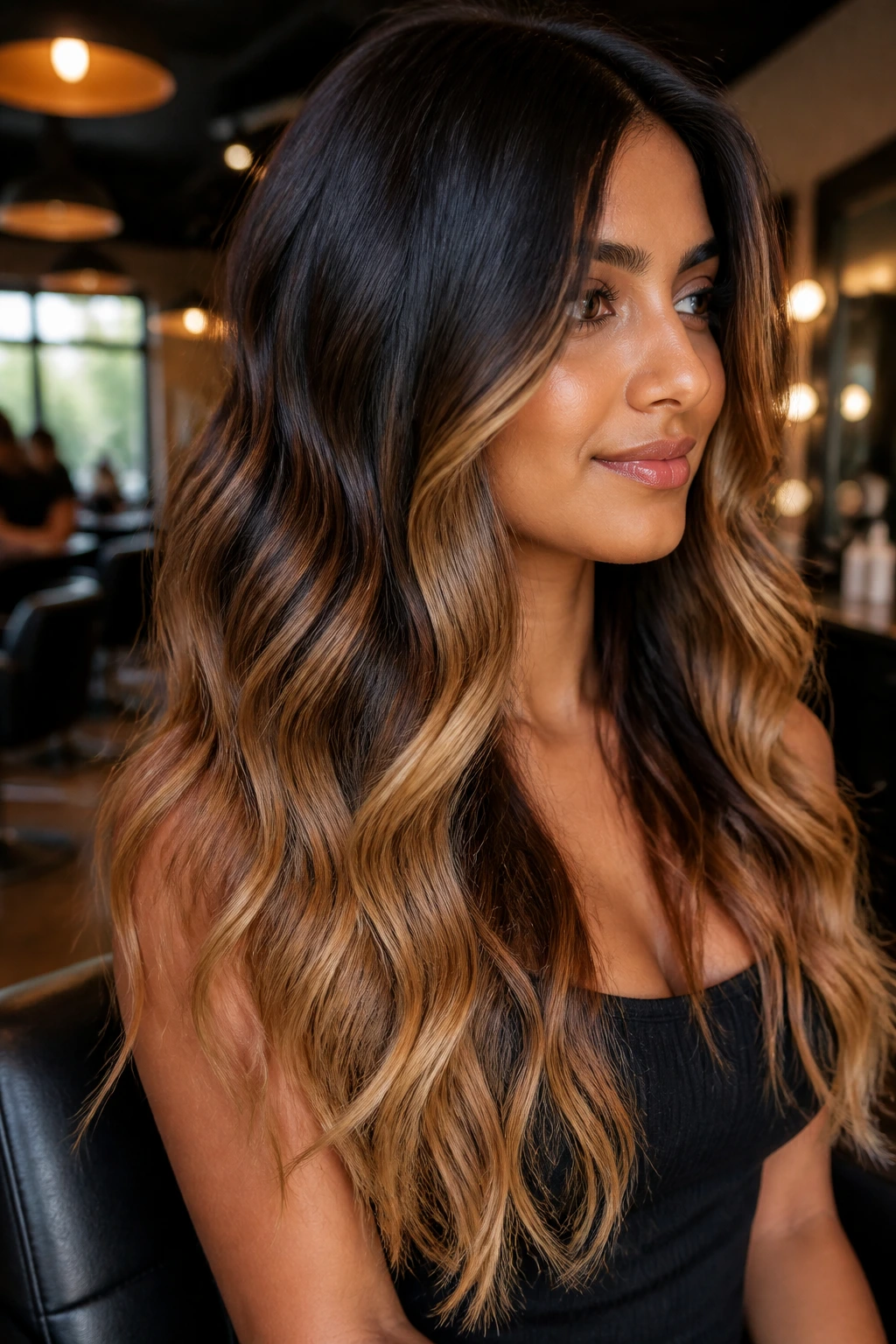
Deep brunette at the root, molten caramel through the middle, golden ends at the bottom. Simple formula. Strong result. The reason it works is that the eye travels downward from dark to light, and tan skin gets framed by all that richness near the face.
This is a smart choice if you like drama but don’t want bright highlights all over the crown. The darker top keeps the maintenance sane, while the ends give you the caramel honey effect you came for. Ask for a soft transition, not a hard ombré line.
A curling wand shows the fade best. Straight hair can still wear it, but movement helps the golden ends look intentional instead of accidental.
19. Honeyed Afro Glow
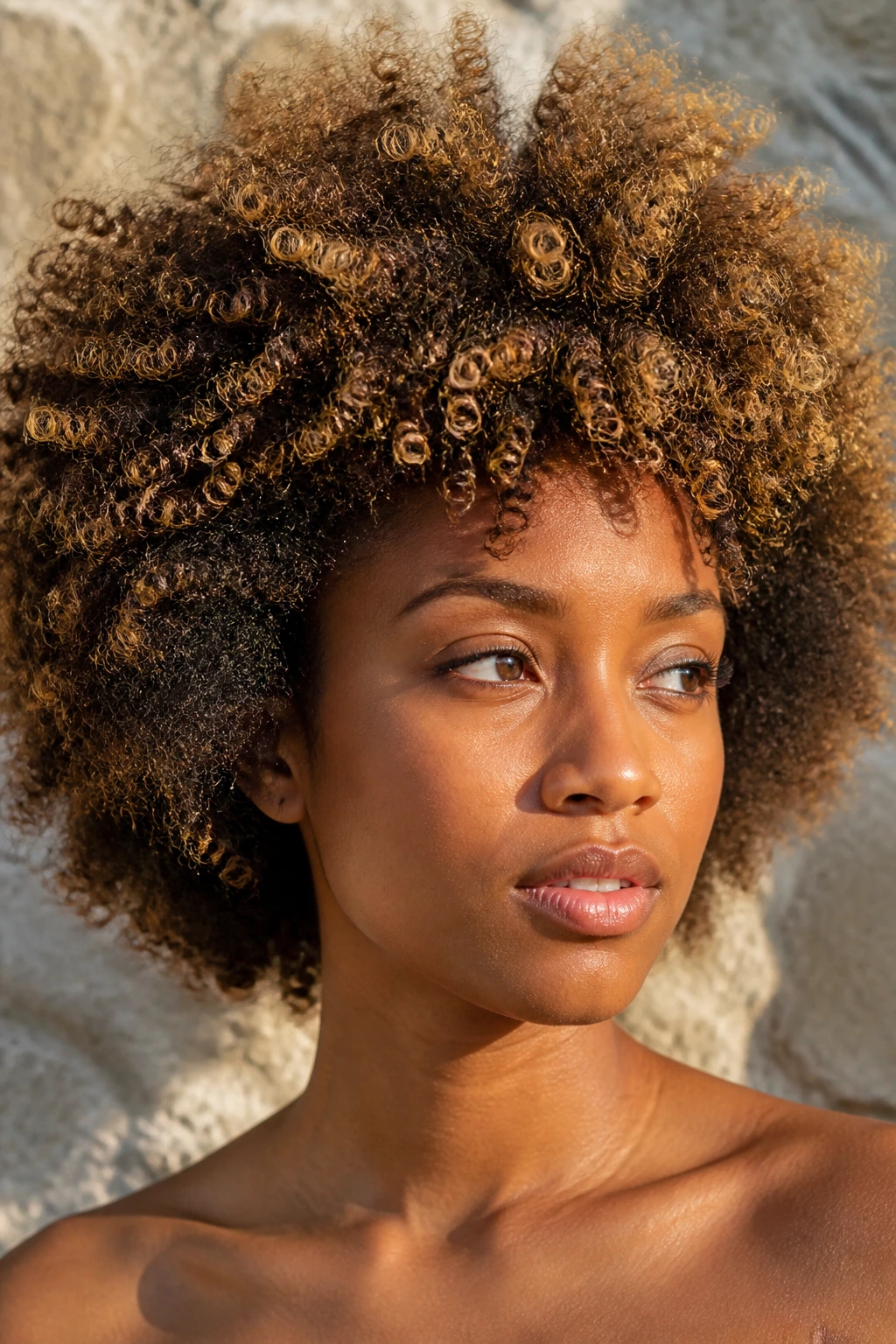
Textured hair and warm highlights can be stunning when the placement respects the curl pattern. A honeyed afro glow uses paint-on warmth around the outer halo, with deeper brown or cocoa underneath so the hair keeps its shape. The lighter pieces catch on the coils and make the texture pop.
Tan skin pairs beautifully with this because the warmth in the hair echoes the warmth in the complexion, but the contrast still needs depth. Too much flat gold can look noisy. Keep the honey in scattered panels, not dense blocks.
A good moisture routine matters here. Dry textured hair can make warm color look dull fast. Leave-in conditioner, oil at the ends, and low-heat diffusing help the shade stay rich.
20. Butterscotch Curtain Bangs
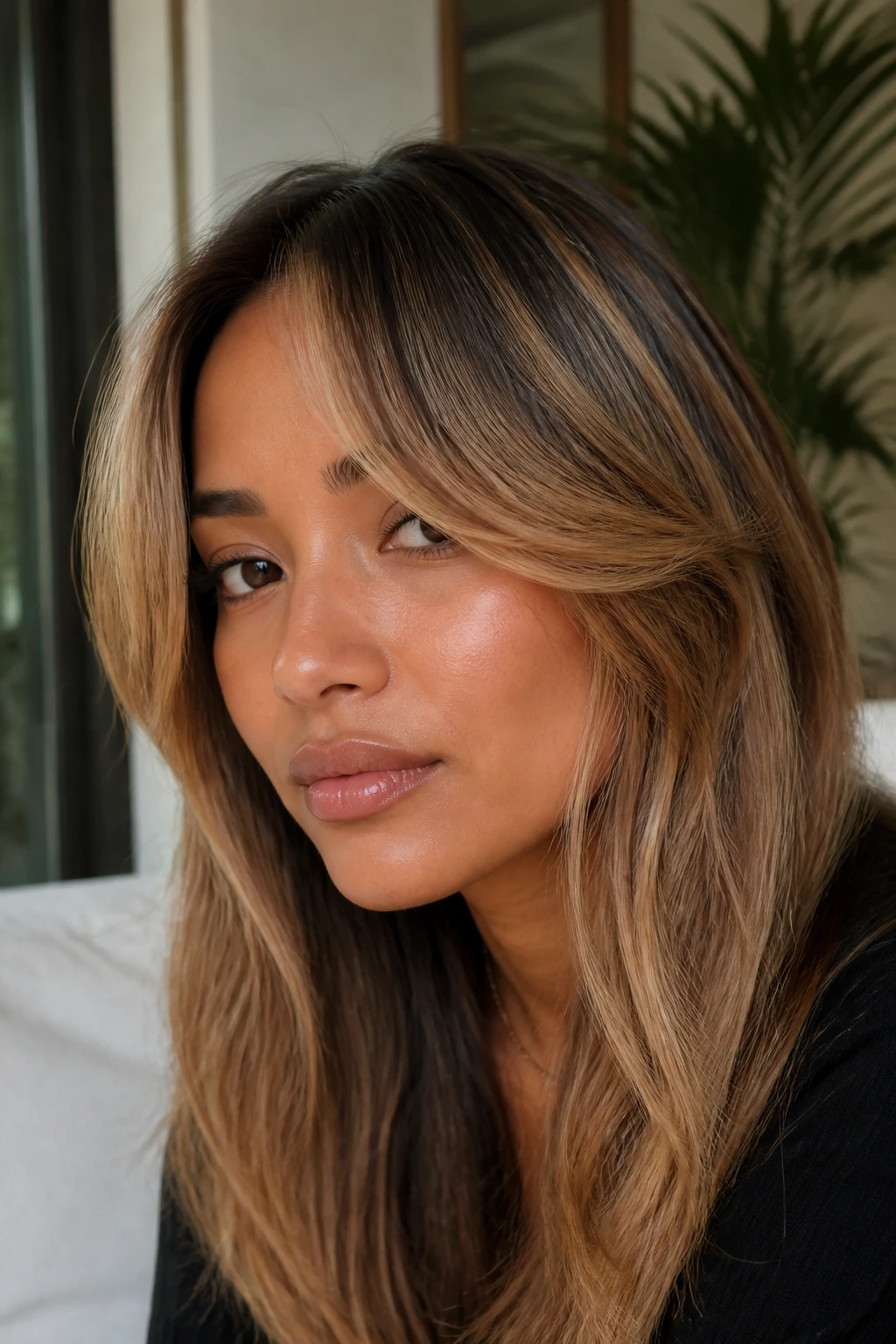
Curtain bangs already draw attention to the face. Add butterscotch ribbons through them, and the whole front of the haircut gets a soft, flattering lift. On tan skin, the lighter pieces around the eyes and temples can do a lot of work without changing the rest of the head much.
This is a good option if you’re color-curious but not ready for a full transformation. The bangs can be lighter than the rest of the hair, while the lengths stay caramel or brown. That keeps the upkeep focused where it matters most.
Keep the butterscotch tone warm and beige. If it gets too light and yellow, it starts to fight the skin instead of complementing it.
21. Caramel Contour Highlights
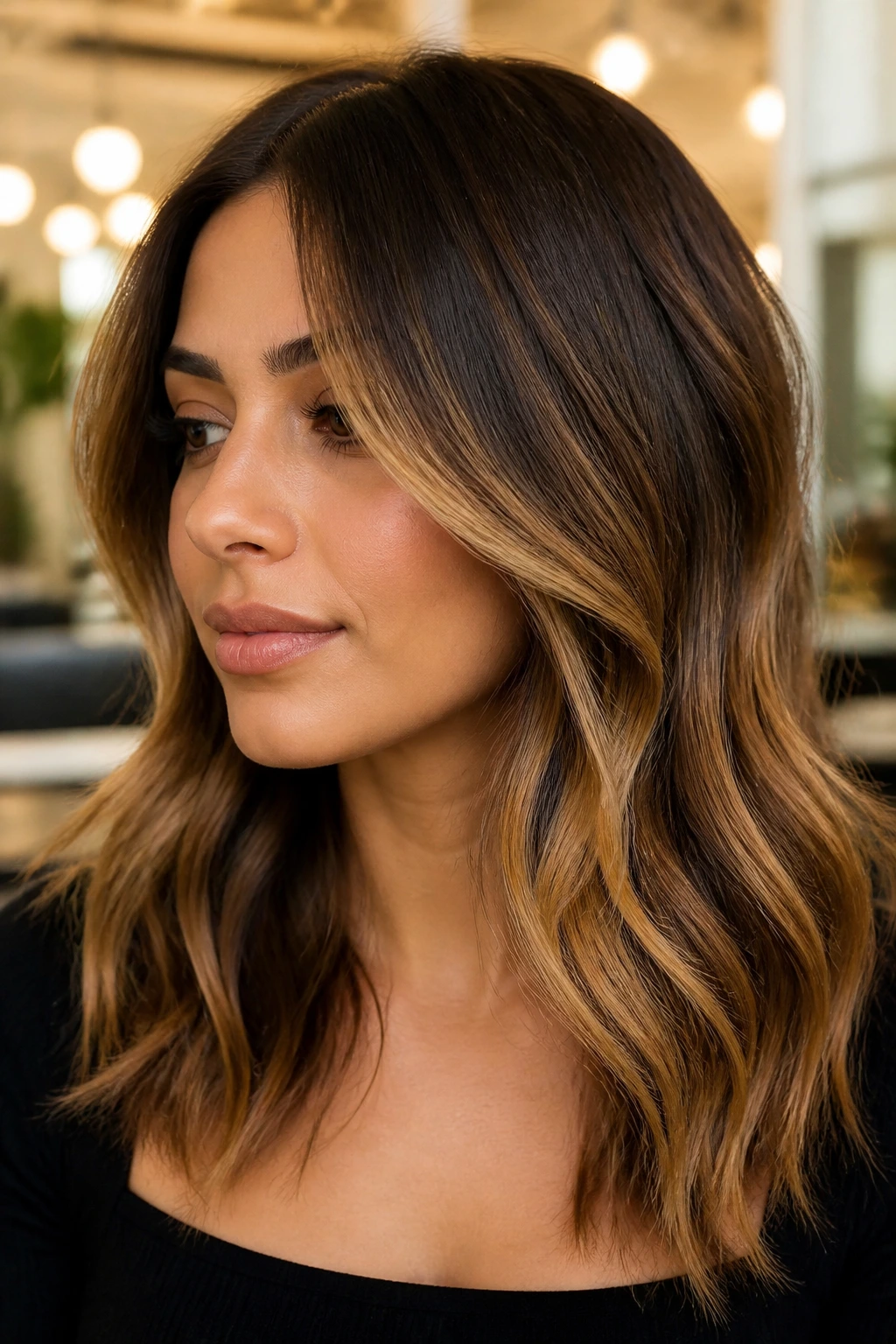
This placement idea is all about face shape. The colorist places brighter caramel where light naturally hits — around the cheeks, jaw, and lower crown — so the highlights mimic contour instead of just sitting there. It’s smart, not flashy.
Tan skin benefits from this because the warmth in the highlight stays close to the face without overwhelming it. Ask for a few brighter ribbons near the front and softer, lower-contrast pieces elsewhere. The result feels tailored.
It’s a good match for round faces, long faces, and anyone who wants more structure without heavy makeup. The color does a bit of the lifting.
22. Golden Maple Butterfly Cut
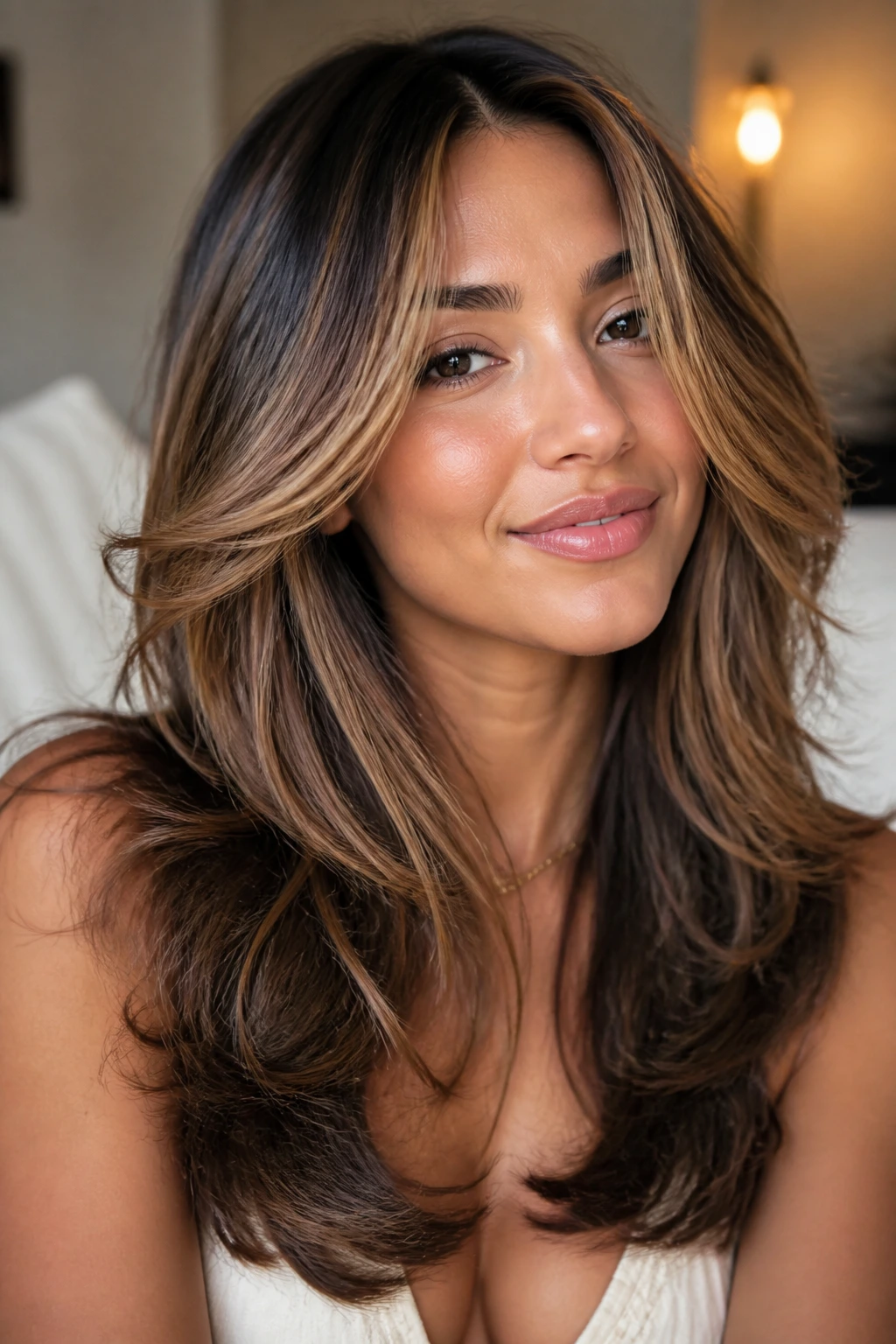
The butterfly cut gives you shorter face-framing layers with longer lengths underneath, which means the color can shift in two directions at once. Golden maple works especially well here because the shorter layers catch light first, and the longer pieces show a deeper caramel fade.
On tan skin, that contrast keeps the style from going mushy. You get definition near the face and softness through the lengths. Ask for maple tones with a honey finish on the front layers and a richer brunette base underneath.
Blown out with a round brush, this look has movement for days. Air-dried, it still keeps shape because the layers are doing the heavy lifting.
23. Soft Vanilla-Caramel Ends
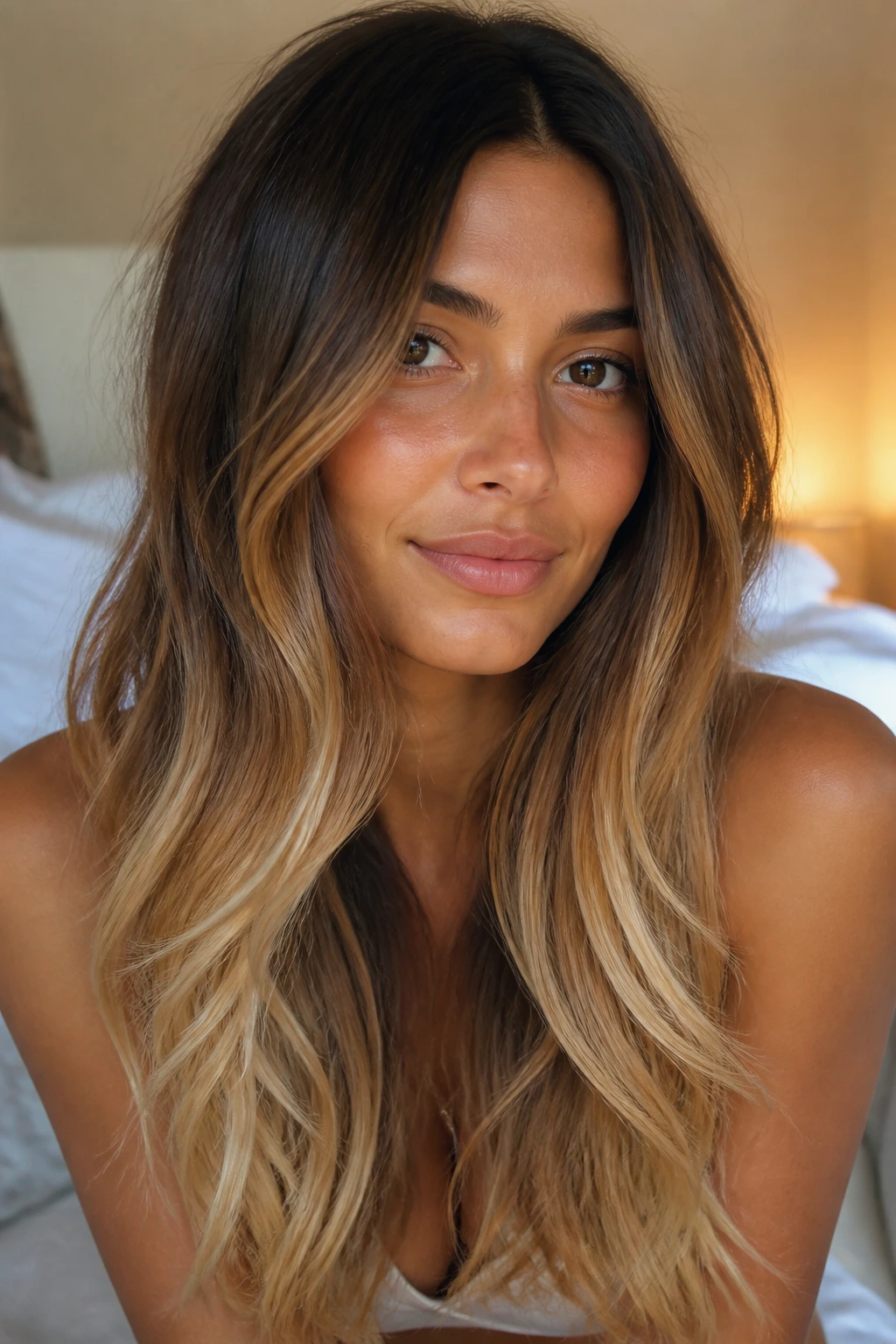
This one sits lighter than most caramel looks, but the roots stay grounded enough to keep it wearable. The vanilla is softened with beige and gold, so it doesn’t drift into icy territory. On tan skin, that warmth is the difference between fresh and washed out.
This is best if you already have lighter brown hair or a soft blonde base and want the ends to read bright without going stark. Keep the fade gradual. A clean line of contrast will feel too sharp here.
If your hair is long, these ends can make the whole style look lighter without touching the top much. That’s a good deal when you don’t want to commit to heavy upkeep.
24. Desert Honey Underdye
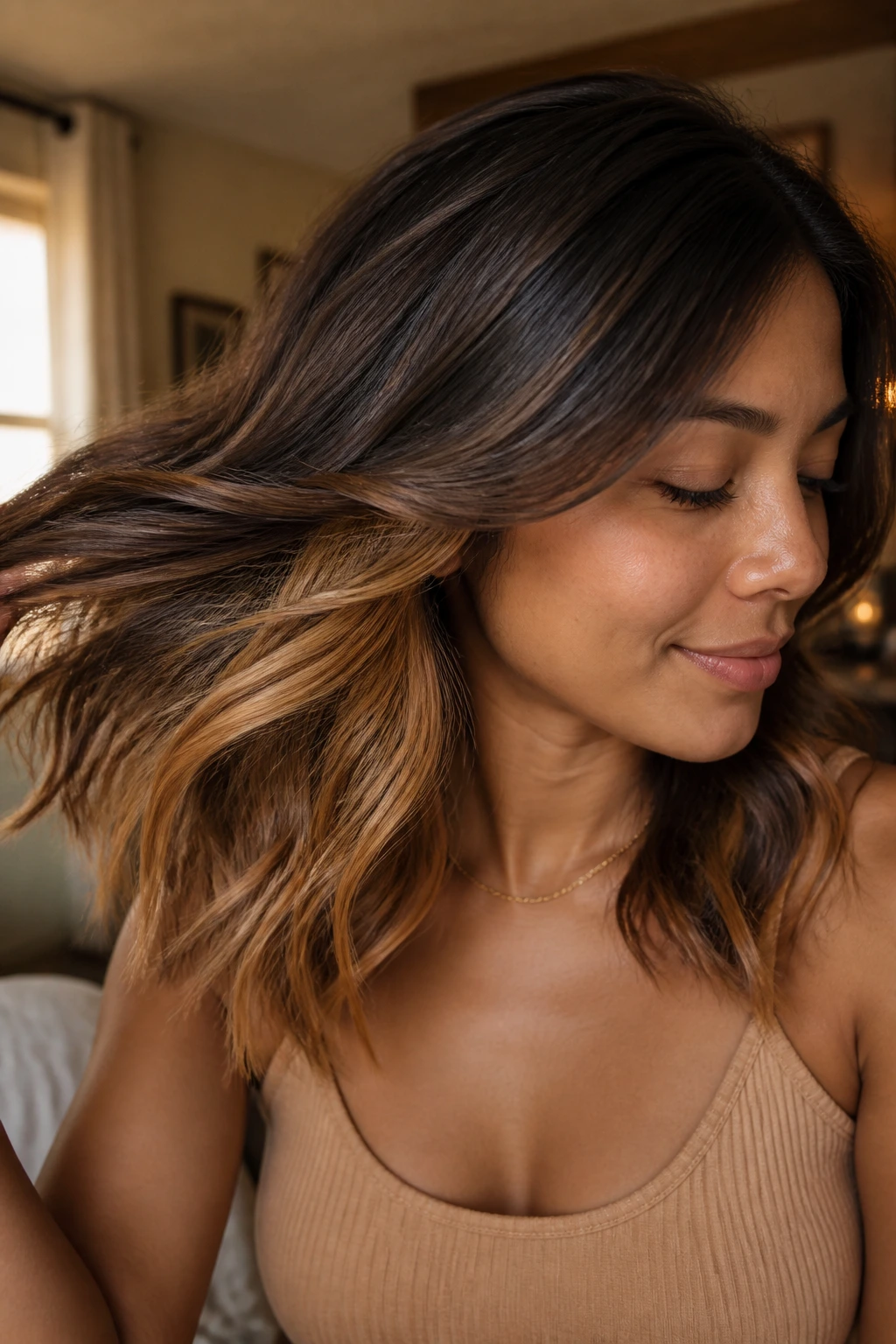
An underdye hides the lighter color underneath the top layer, which makes it a fun choice if you want dimension without broadcasting it all day. Desert honey underdye uses warm gold and honey placement beneath a deeper brown veil. When the hair moves, the hidden brightness flashes through.
On tan skin, this works because the top layer keeps the look grounded while the warm underlayer gives you that golden pop in motion. It’s a little more playful than a standard balayage, but still wearable.
This is a smart option if you tie your hair back a lot. Ponytails and clips reveal the honey underneath, and the effect looks deliberate instead of messy.
25. Deep Mocha to Golden Caramel Fade
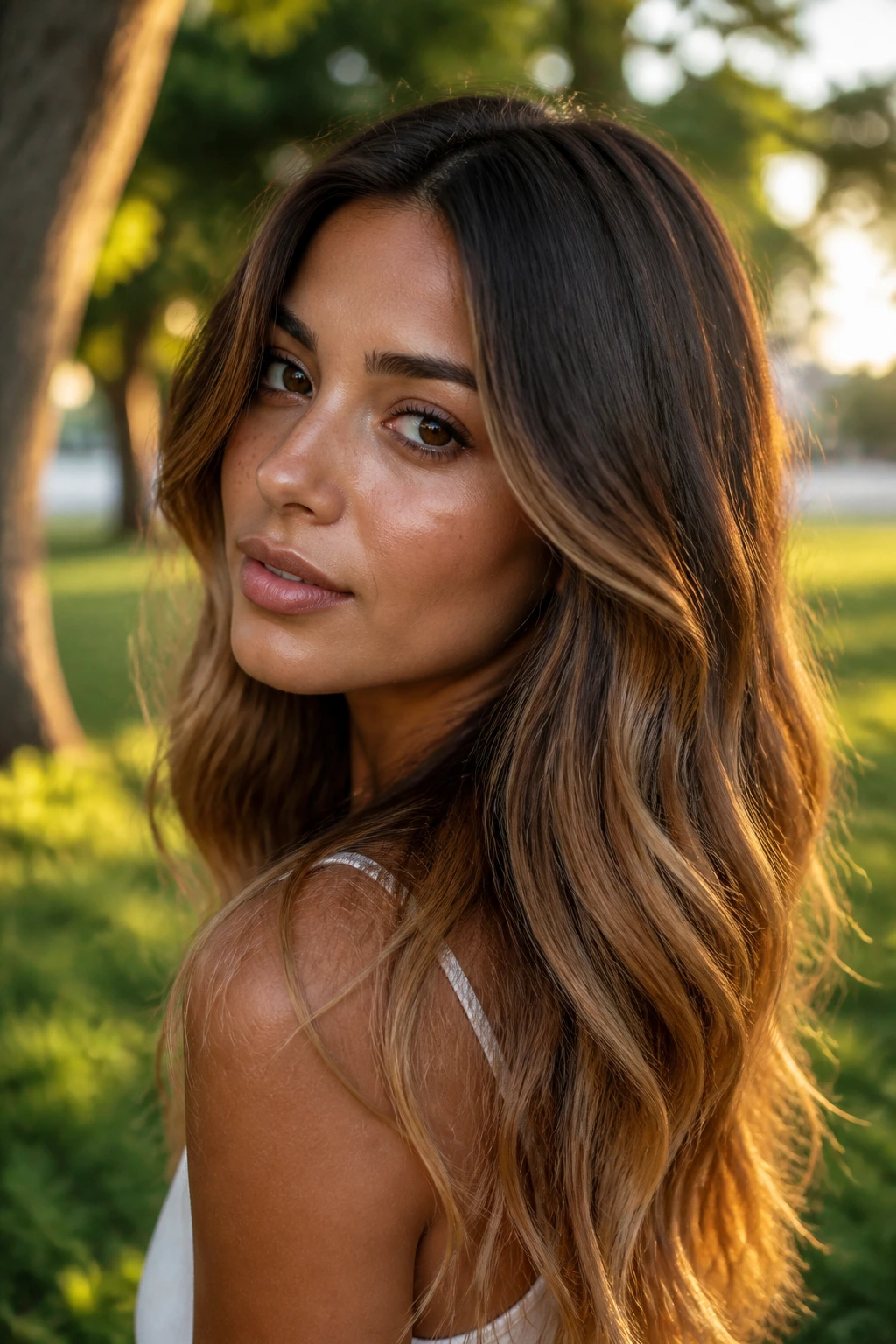
If you want the richest version of the whole palette, this is the one. Deep mocha at the root, caramel through the body, then golden ends that catch the light at the last inch or two. It’s dramatic, but the depth keeps it from turning loud.
Tan skin likes this kind of contrast because the darker base makes the golden pieces look brighter without needing a lot of bleach. Ask for the lightest pieces to stay around the face and ends, not scattered everywhere. That keeps the fade elegant and easy to grow out.
Wear it with big waves or a smooth blowout. Both work. The color has enough depth to stand on its own.
The Undertone Rules That Keep the Color Flattering
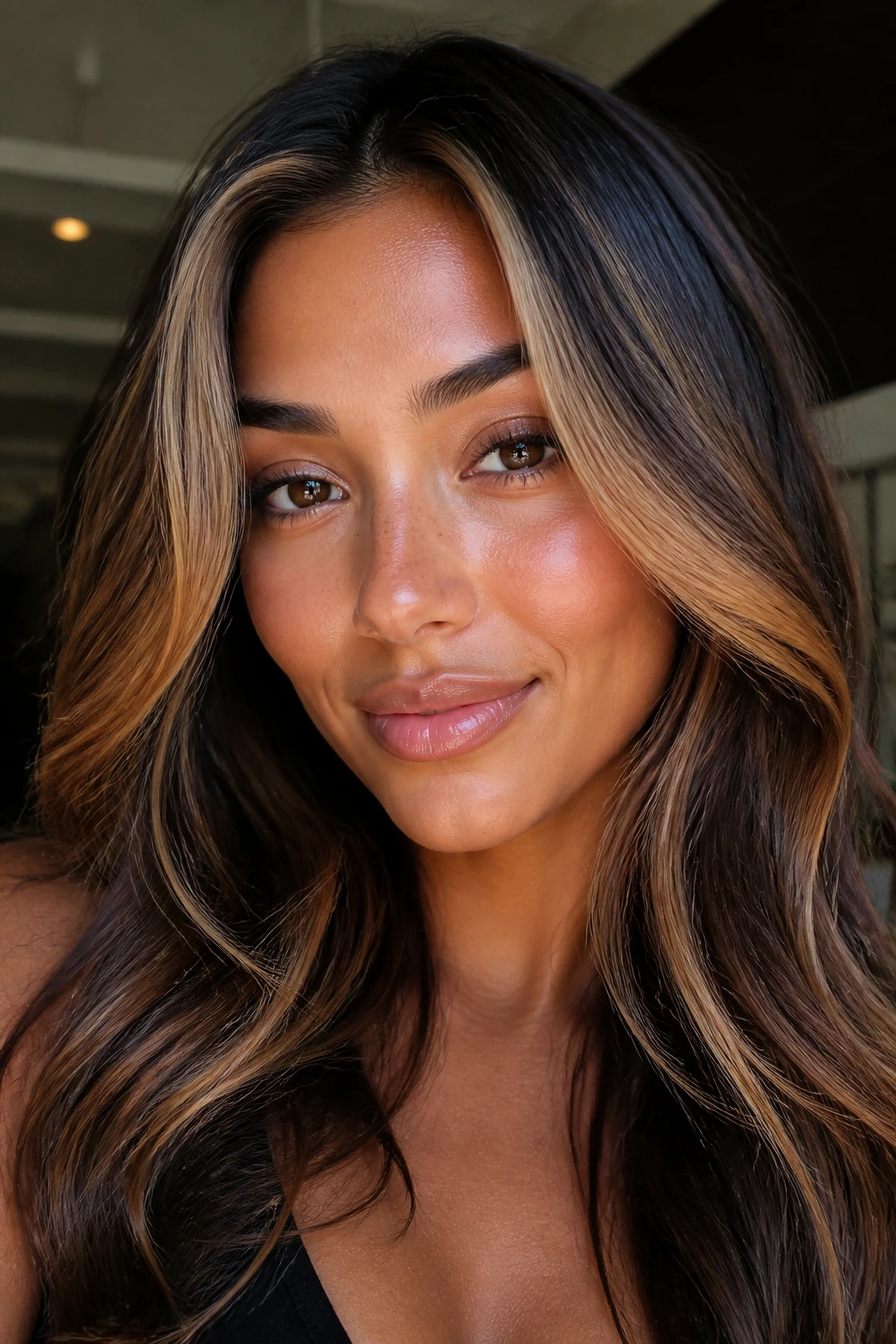
Tan skin is not one thing, which is exactly why a caramel honey golden hair color can go wrong so quickly. If your undertone is golden, most warm shades will sit nicely as long as they don’t get too yellow. If you lean olive, beige and amber usually play better than bright gold because they keep the skin from looking green or sallow.
Here’s the part people miss: warmth is not the same as brightness. A golden toner can be warm but still too high on the scale if it sits at a pale level 9 or 10. On tan skin, that can look harsh near the hairline. A level 7 or 8 caramel often does more for the face than a very light blonde does.
I also like a little depth at the root. Not dark roots for the sake of contrast. Just enough shadow to anchor the shade so the caramel doesn’t float away from the face.
What to Tell Your Colorist at the Salon
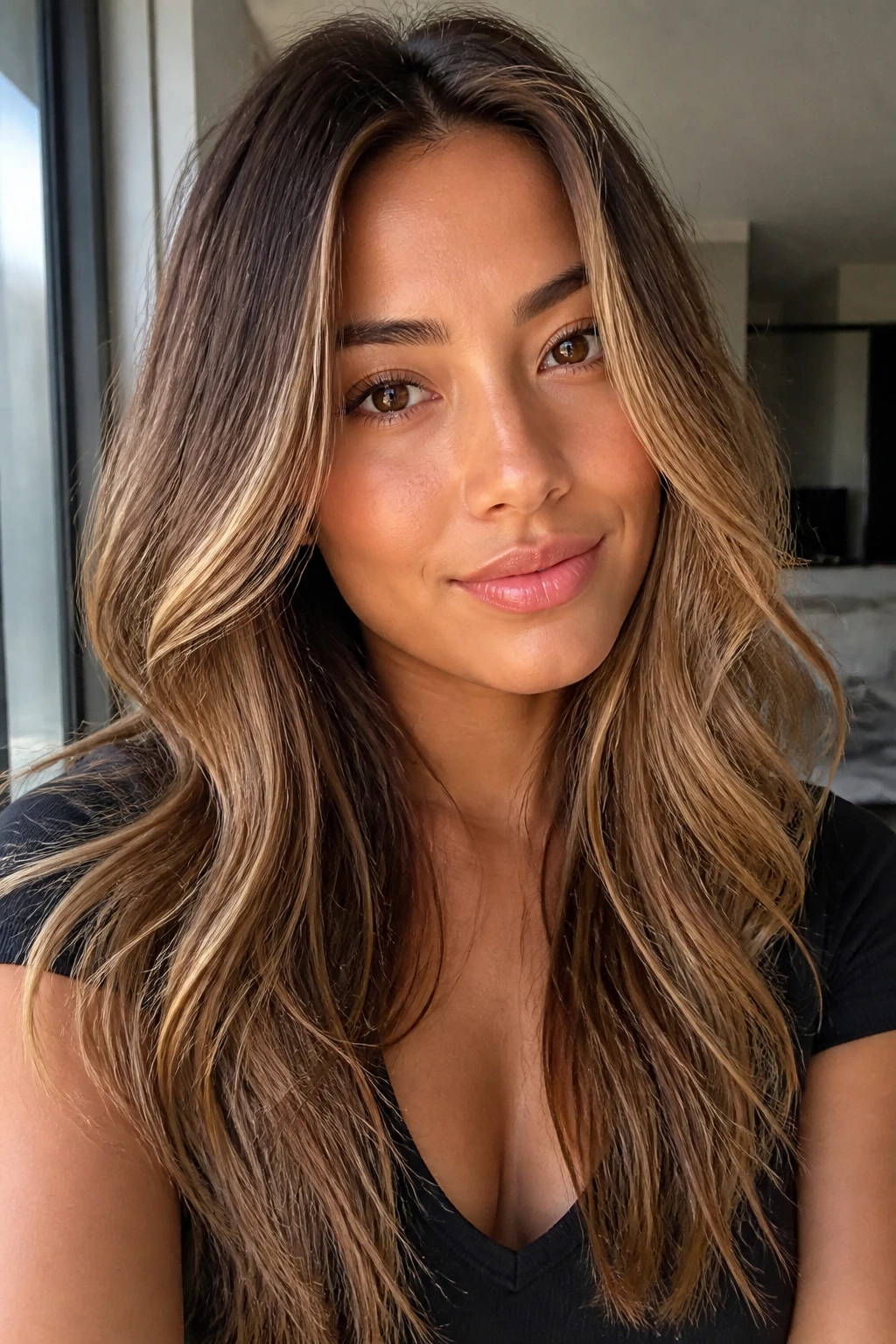
Bring photos, yes, but bring context too. A picture of a shade with a sunlit finish on pale skin may look nothing like the same formula on tan skin. Say what you want the hair to do: brighten the face, soften grow-out, add warmth, or show more dimension in waves. That helps more than pointing and saying, “this.”
Use plain language. “Caramel, but not orange.” “Honey, but beige.” “Golden, but not yellow.” Those little guardrails save a lot of trouble. If you like low maintenance, say that straight out and ask for a root shadow or balayage. If you want the front brighter than the rest, ask for money pieces or contour highlights.
And mention your history. Previous box dye, old black dye, henna, bleach, all of it changes what’s possible. Color can’t ignore the hair it’s sitting on.
Styling Moves That Make Warm Hair Color Read Better
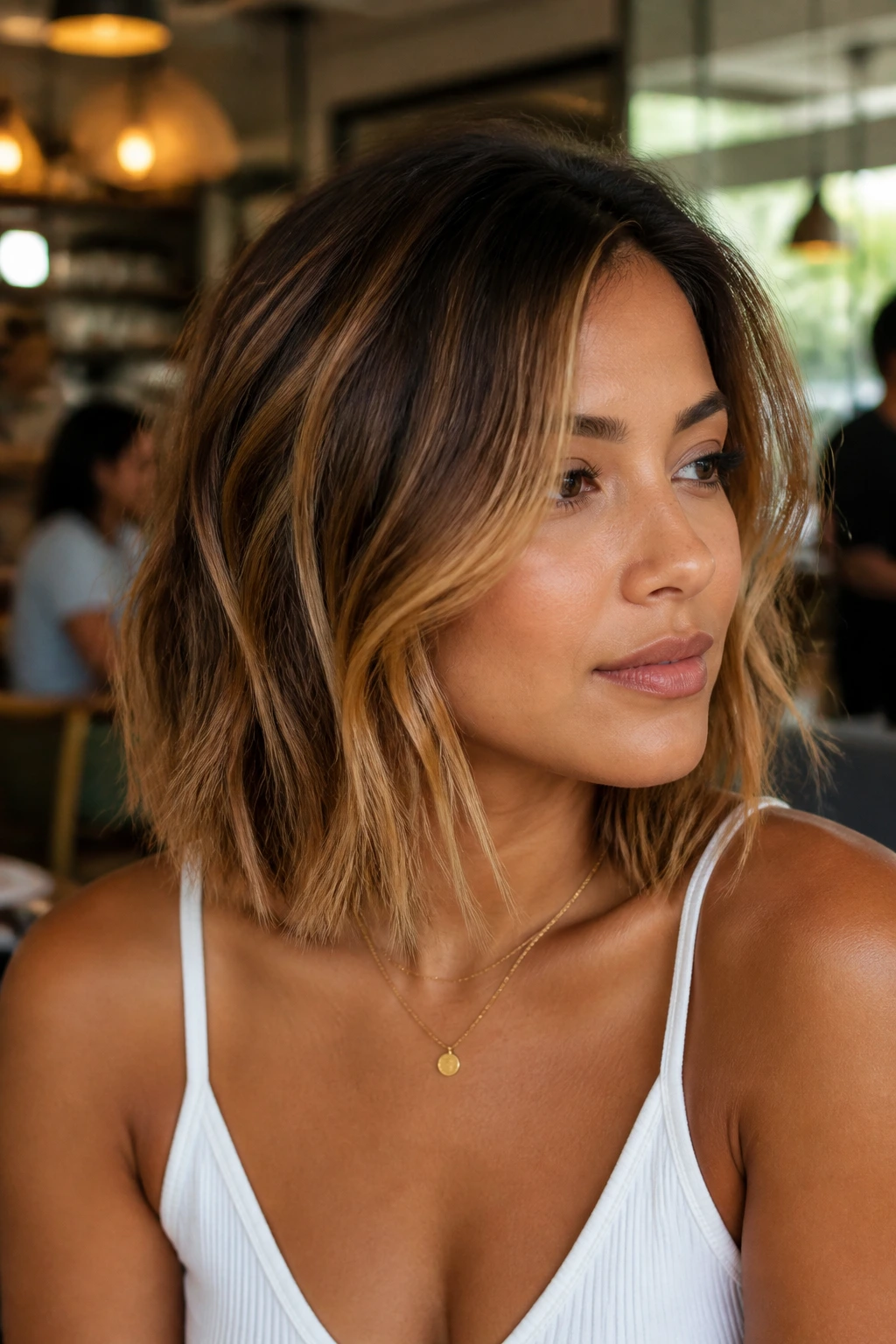
Loose waves are the obvious choice, but there’s a reason they keep showing up in salon photos. They break up the color and let the caramel and honey pieces alternate between light and shadow. Straight hair can look sleek, sure. But waves make dimension visible in a way that’s hard to beat.
A round brush blowout gives honey tones a glossy, soft finish. A flat iron with a slight bend at the ends keeps bronzed shades from looking too severe. On curly hair, a diffuser and a curl cream make the lighter pieces pop without frizz swallowing them whole.
A tiny bit of shine serum on the mids and ends can help too. Tiny. Not enough to make the hair look greasy. Just enough to reflect light at the same spots the colorist worked so hard to place.
Common Mistakes That Make Warm Shades Look Off
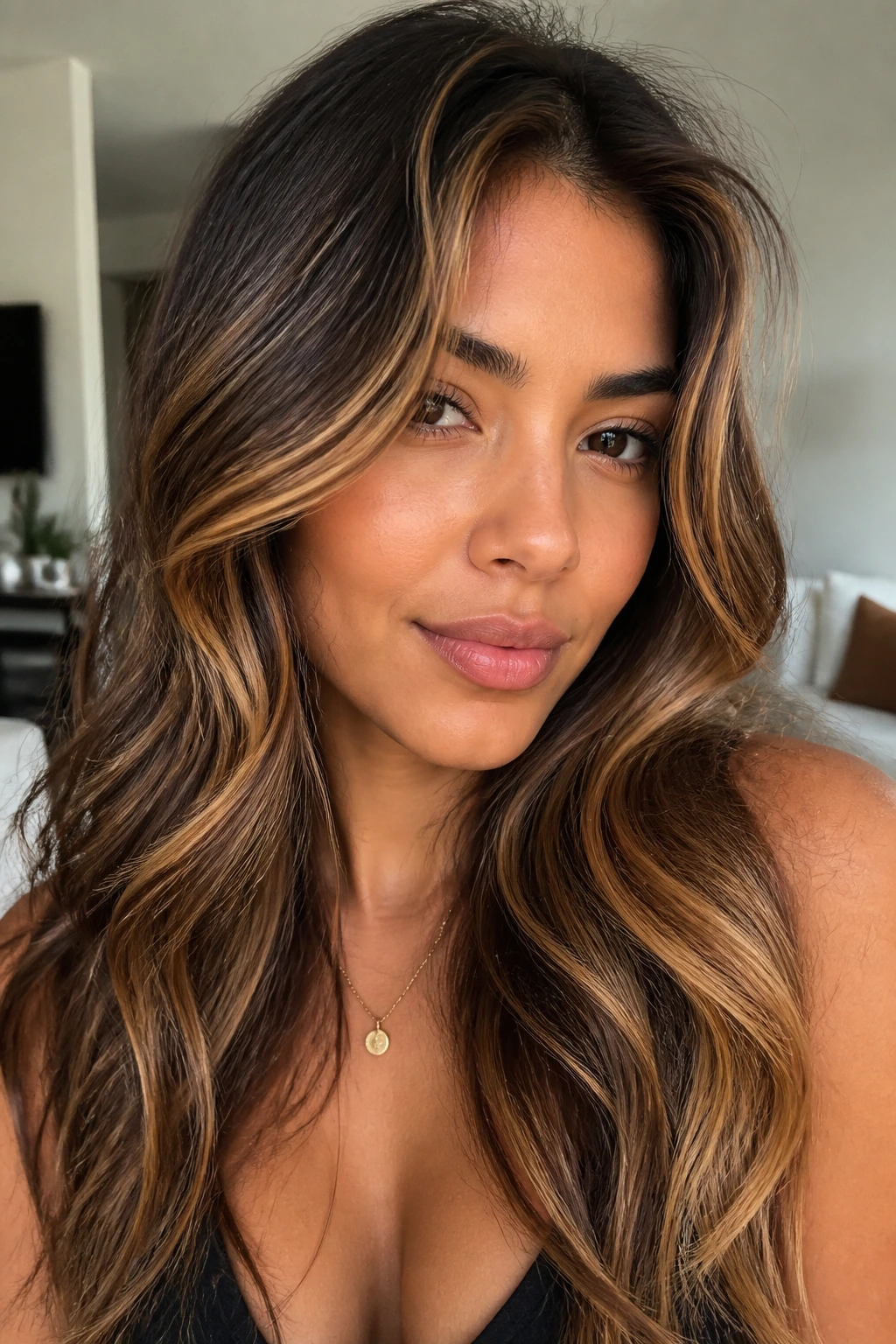
The biggest mistake is choosing a gold that’s too yellow. On tan skin, that can make the hair and complexion fight each other instead of blending. The fix is beige-gold, amber, or caramel with a brown base underneath.
Another one: too much contrast at the root. When the top is very dark and the ends are very light, the result can look striped. A soft melt is kinder to the face and easier to live with.
People also forget about maintenance. Honey tones drift warm fast if the water is hard or the shampoo is too harsh. Use color-safe care and don’t let brass sit for months. It creeps up on you.
And please, do not trust every bright salon photo. Some of those looks depend on filters, ring lights, and six hours of styling.
Variations and Alternatives to Try
The Softest Version: Keep the base close to your natural brown and ask for just a few caramel ribbons and a beige gloss. It gives you warmth without a big visual shift.
The Bold Front Piece: If you want drama, make the face-framing sections honey blonde while the rest stays darker. It’s a clean way to get brightness where it counts.
The Low-Maintenance Melt: Ask for balayage only through the mids and ends with a root shadow. The grow-out is gentler, and the color still reads warm.
The Curly Dimension Mix: On curls, mix caramel, bronze, and honey in scattered panels instead of one continuous highlight pattern. The curl shape will do the blending for you.
The Rich Brunette Upgrade: If bleach isn’t your thing, stick to a caramel glaze or warm brown lowlights. Subtle. Still flattering.
Tools, Products, and Salon Resources Worth Having
- Three reference photos in different lighting — one indoors, one outdoors, one in shade; the lighting tells you more than the filter.
- A notes app with your hair history — previous dye, bleach, and toner matter when you’re asking for warm color.
- Color-safe shampoo and conditioner — sulfate-free is the safer bet for keeping caramel and honey from fading too fast.
- A weekly hydrating mask — lightened hair gets thirsty, and dry ends make warm color look dusty.
- Heat protectant spray — warm tones look better when the hair cuticle stays smooth before blow-drying or ironing.
- Shine serum or lightweight oil — a small amount on the mids and ends keeps golden pieces reflective.
- Purple shampoo, used sparingly if needed — only if the color starts turning too gold; overuse can dull warmth.
- A good colorist with balayage or gloss experience — the placement matters more than a fancy product list.
Color Care, Glosses, and Touch-Up Timing
Warm shades fade in stages. First the shine drops, then the gold softens, then the caramel starts looking a little flat. If you want the color to stay pretty, not just survive, plan on a gloss every 6 to 8 weeks and a deeper salon refresh every 10 to 14 weeks if you have highlights or balayage.
At home, cool water on the final rinse helps more than people expect. Not ice-cold. Just cooler than lukewarm. That keeps the cuticle a bit smoother and helps the color stay reflective. Heat styling is fine, but the ends need a break now and then. A low-heat blowout will always be kinder to these tones than blasting them dry on high.
If the color starts to go too gold, a beige toner can pull it back. If it goes too dull, a warm gloss wakes it up. That little maintenance loop is part of the deal. Warm shades are worth it, but they’re not completely hands-off.
Questions People Ask Before Going Caramel, Honey, or Gold
Will caramel hair color wash out tan skin?
Usually, no. The problem is more often the opposite: a shade that’s too light or too yellow can make the complexion look flat. A caramel base with honey accents tends to be safer than bright all-over blonde.
What if my skin leans olive instead of golden?
Choose beige caramel, amber, or toasted honey rather than bright yellow gold. Olive undertones usually like warmth with some brown in it, not pure sunshine.
Can I do this without bleach?
Yes, if you’re starting with brown hair and want a gloss, lowlights, or a subtle warm tone. If you want visible light pieces, some lightening is usually needed.
Which is better for low maintenance: balayage or highlights?
Balayage, most of the time. The grow-out is softer, and the root line is less obvious. Traditional highlights can still work, but they need more upkeep.
How do I keep honey tones from turning brassy?
Use color-safe shampoo, avoid harsh clarifying washes, and book a gloss when the tone starts to shift. Brass usually shows up when warm tones fade unevenly.
Can this color work on short hair?
Absolutely. Bobs, lobs, and pixies can all wear caramel and honey shades well, especially when the color is placed around the top layers and fringe.
What if I hate how warm it looks after the appointment?
Don’t panic. A toner or gloss can cool it slightly without starting over. Bring it back to the salon sooner rather than later; waiting too long lets the tone settle in.
Warm Color, Better Face
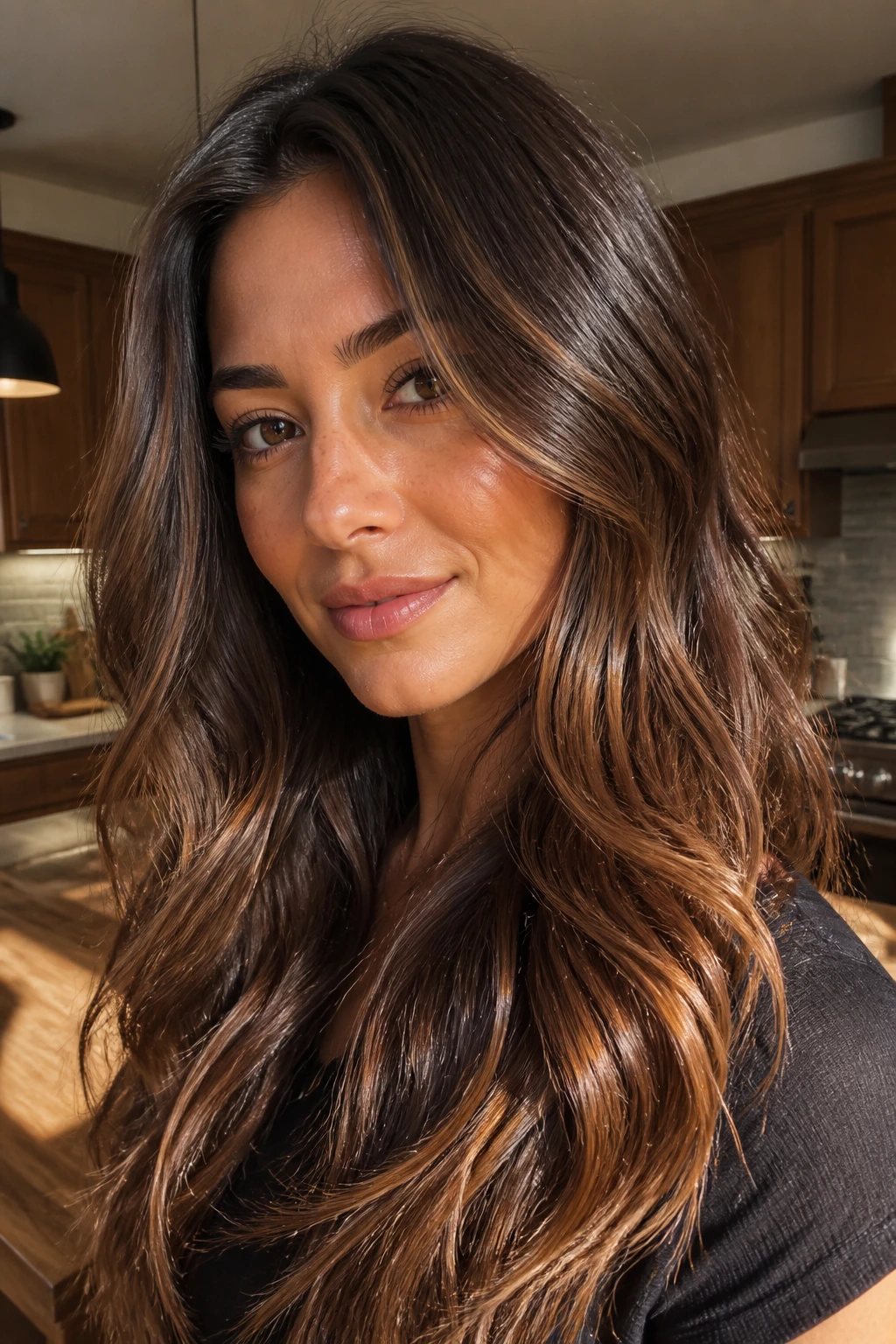
The best caramel, honey, and golden shades on tan skin don’t fight the complexion — they echo it. That’s the whole game. Depth at the root, softness near the face, and just enough brightness to catch the light when you move.
If you remember one thing, make it this: the prettiest warm hair colors are usually the ones with a little brown in them. Beige, amber, caramel, honey. Not yellow for the sake of yellow. That’s where the good stuff lives.
A smart shade choice can make your skin look richer, your features look softer, and your hair look a lot more expensive than the formula on the bottle would suggest.