



Caramel blonde honey hair color ideas for tan skin have a specific kind of pull: they don’t fight the complexion, they echo it. Tan skin already carries warmth in the undertone somewhere — golden, olive, peach, neutral, sometimes all three at once — and the right blonde family makes that warmth look intentional instead of accidental. The wrong blonde can flatten the face fast. Too much ash. Too much pale beige with no depth. Too little contrast at the root. You know the look: the color goes a little chalky around the hairline and suddenly the skin looks more tired than sunlit.
The sweet spot sits in caramel, honey, toffee, amber, bronde, and soft beige-gold. Those shades give you brightness without that dry, over-lifted look that can happen when blonding ignores the skin underneath it. I’ve always liked warm blonde color most when it has a real base — a believable brunette or dark blonde root, then lighter ribbons, then a gloss that keeps the finish soft. That layered approach matters even more on tan skin because the complexion already has enough presence to handle dimension. Flat color wastes that.
The trick is not just choosing “blonde.” It’s choosing where the light sits, how much of it you want, and how warm or neutral it needs to be so the face looks clean, lifted, and alive in daylight, office light, and camera flash. Some versions here are subtle. Some are bolder. All of them are built to flatter tan skin instead of sitting on top of it like an afterthought.
Why These Shades Feel Right on Tan Skin
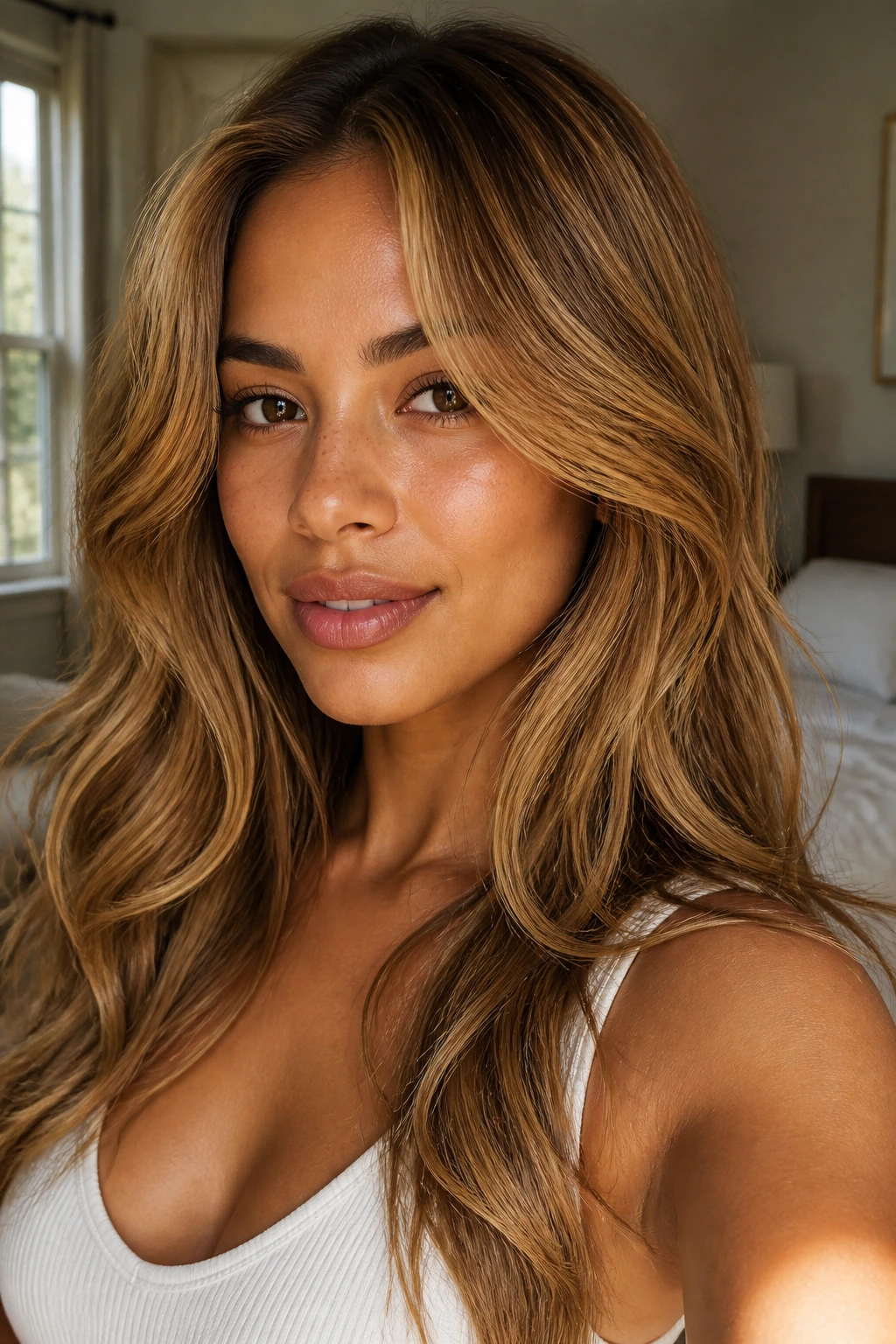
Golden undertones stay in the same family: caramel, honey, amber, and toffee all echo the warmth already in tan skin, so the hair and complexion don’t fight each other.
Dimension keeps the face from going flat: a mix of lowlights, highlights, and root depth gives the eye somewhere to travel, which matters more than people think on medium-to-deep complexions.
Root shadow buys you time: a soft shadow root at level 5, 6, or 7 makes grow-out look deliberate instead of stark, and that’s the difference between “fresh color” and “why is my part line screaming?”
Neutral-gold beats icy ash for most tan tones: too much cool pigment can make the skin look a little muddy or gray, especially if your undertone leans olive or warm-neutral.
Placement matters as much as tone: face-framing pieces, ribbon highlights, and glossy ends brighten tan skin without bleaching the whole head into one loud block of color.
1. Warm Caramel Balayage
This is the classic for a reason. Warm caramel balayage gives tan skin that soft, expensive-looking contrast without turning the hair into a single flat blonde sheet. The paint should live in mid-lengths and ends, with a little brightness around the face and a deeper root left alone so the color breathes.
Why It Works
Ask for a base that stays at your natural level or one shade lighter, then layer in caramel ribbons at level 7 or 8. The warmth reflects the skin instead of washing it out, which is why this looks so good on golden and neutral tan undertones. A neutral-gold gloss at the bowl can keep the caramel from drifting too orange.
Best if: you want dimension, movement, and a grow-out line that does not look harsh.
Watch for: over-lightening the front sections. If the face frame is too pale, the rest of the balayage starts to look disconnected.
2. Honey Blonde Money Pieces
Bright face-framing strands are the fastest way to change the whole mood of tan skin. Honey money pieces pull light right up to the cheekbones and eyes, and that little hit of brightness can make the skin look cleaner and more awake.
If you keep the rest of the head deeper — a brunette base, soft balayage, or even untouched roots — the effect stays sharp instead of sugary. I like this on medium-length hair because the contrast shows immediately, even when the rest is air-dried and messy.
What to Ask For
Request chunky but soft pieces around the part line and temples, lifted to a warm level 8, then toned beige-honey instead of pale platinum. That keeps the look flattering on tan skin with olive undertones, which can get weirdly sallow under cooler blonde.
Good move: tuck them just behind the hairline if you want brightness that shows only when the hair moves.
3. Cinnamon Caramel Melt
Cinnamon caramel has more warmth than standard beige blonde, and that extra warmth is what keeps it looking rich on tan skin. It reads like toasted sugar with a hint of spice, which is a lot more interesting than a generic golden blonde.
This one works especially well if your natural base is medium brown or dark brown. You keep the roots deep, let the mids carry a cinnamon-caramel blend, and glaze the ends just enough so they don’t go orange. It’s a shade with personality. Quiet, but not shy.
How to Wear It
Loose waves are the move here. Straight hair can make the cinnamon look denser, while bends and curls break the color into softer ribbons. If your tan skin leans peach or golden, this is one of the easiest warm shades to wear without needing a heavy makeup routine.
Tip: ask your colorist to stay away from red-heavy copper unless you want the color to read more auburn than caramel.
4. Beige Blonde with Honey Ribbons
This is the one for people who want lightness but don’t want to look like they’re wearing a spotlight. Beige blonde gives a soft neutral base, and the honey ribbons keep tan skin from losing its natural warmth.
A lot of blondes go wrong here because they swing too gray. Beige is useful, but only when it has enough gold woven back in. On olive tan skin, those honey ribbons keep the face from looking drained.
Why It Feels Balanced
The formula usually works best on level 6 to 7 hair with lightened strands sitting around level 8. That means you get contrast, but the blonde still has enough depth to feel wearable. I like this on long layers and curtain bangs because the lighter pieces slide around the face and don’t sit in one heavy band.
5. Toffee Root Shadow
Toffee root shadow is one of my favorite low-maintenance warm blondes. The root stays a few shades deeper, almost like softened brunette, and the toffee-blonde starts lower down, so grow-out looks intentional for weeks.
Tan skin benefits from the depth at the root because it prevents the color from floating on top of the face. That little shadow keeps the whole look grounded. If your natural hair is dark blonde or light brown, this can feel like an easy first step into blonde without the shock of all-over lightness.
Maintenance Note
A root shadow like this usually needs less salon correction than high-contrast foils. Gloss the ends every 6 to 8 weeks, and use a blue shampoo only if the toffee starts tipping orange. Don’t overdo it. One wash a week is enough for most people.
6. Golden Bronde Waves
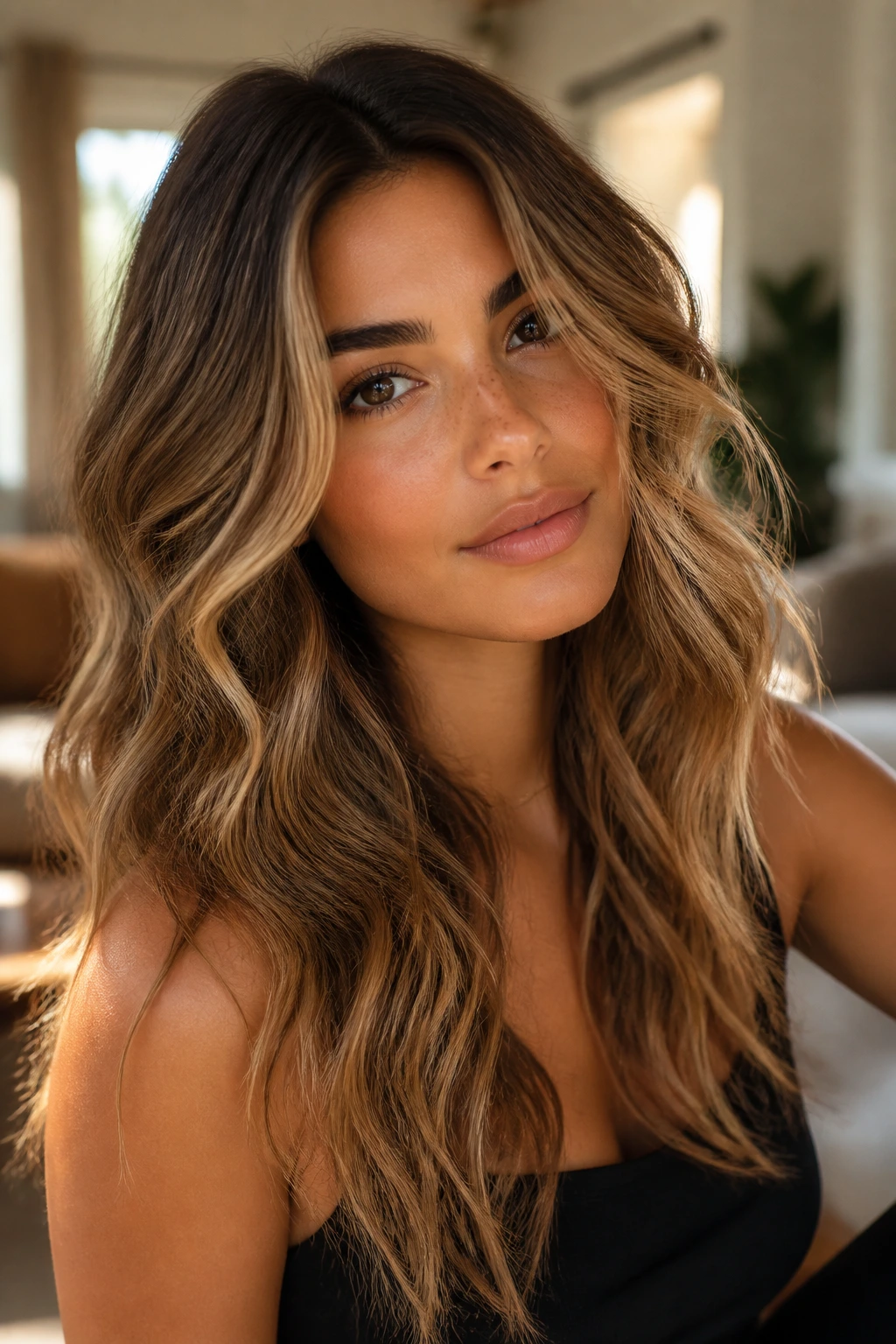
Bronde gets thrown around too casually, but when it’s done well, it’s one of the best shades for tan skin. Golden bronde lives in that middle lane between brunette and blonde, which is exactly where a lot of medium to tan complexions look strongest.
The base should still feel like hair, not dye. A level 5 or 6 brown with caramel-gold pieces around the crown and sides gives you warmth without losing structure. The waves matter too; bronde needs movement or it can read flat.
Best on
- Medium to long layered cuts
- Wavy or textured hair
- Tan skin with neutral or golden undertones
- Anyone who wants brightness without a full blonde commitment
The smartest part is the grow-out. It stays soft. No harsh stripe at the root, no overprocessed ends that feel like straw.
7. Buttery Honey Blonde Lob
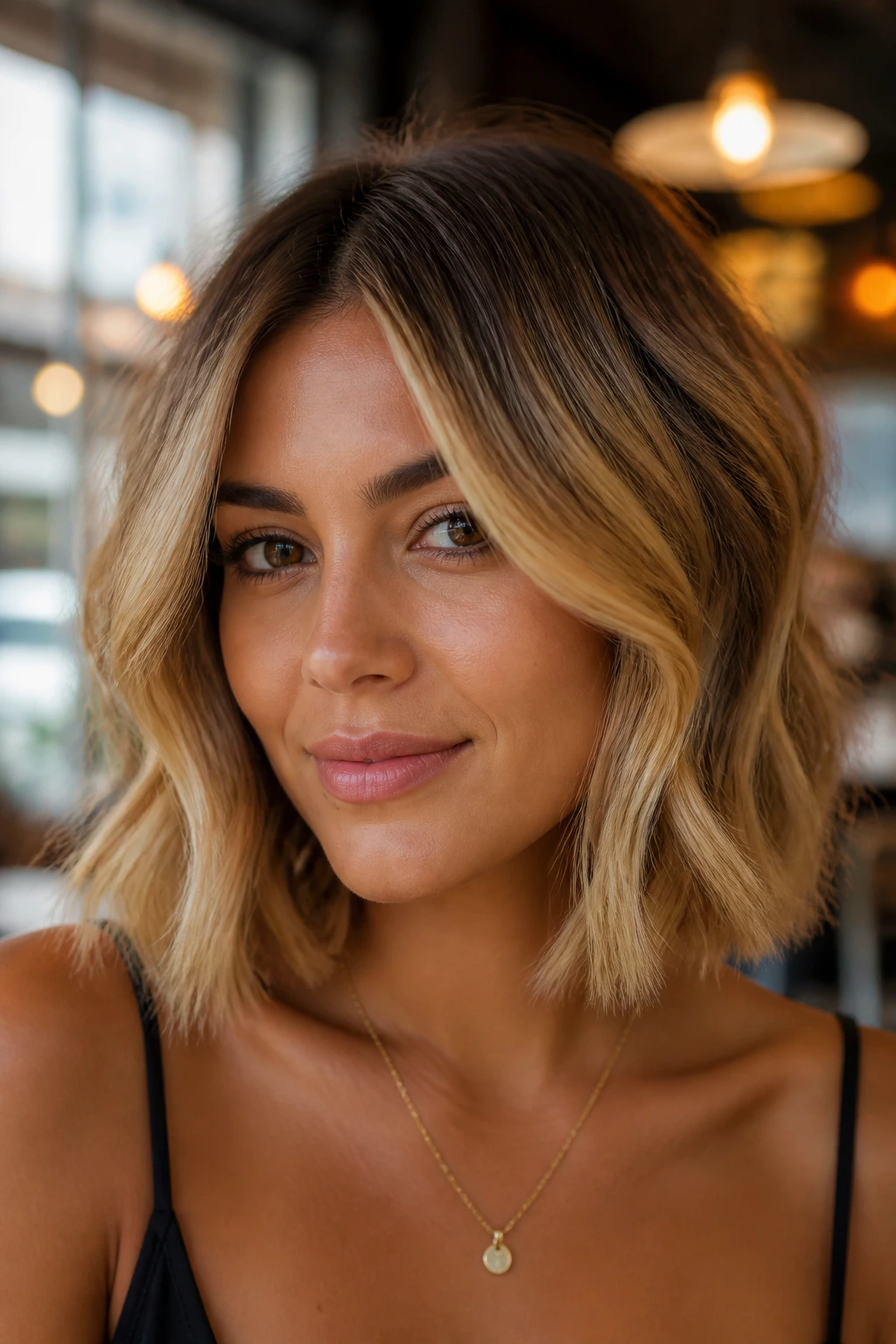
A lob gives buttery honey blonde a clean frame. The cut sits right where the jawline matters, so the color gets a chance to brighten the face without needing a ton of lift everywhere. On tan skin, buttery honey reads warm, fresh, and a little polished.
This is a good choice if your hair is fine or medium and you don’t want heavy highlight placement. The color does more work when the cut is blunt or lightly layered, because the shape holds the brightness. A very shaggy cut can scatter the effect.
My preference: keep the roots softly deeper and let the honey live through the mids and ends. The result feels softer than a high-contrast platinum lob, and much easier to grow out.
8. Maple Brown-to-Blonde Ombré
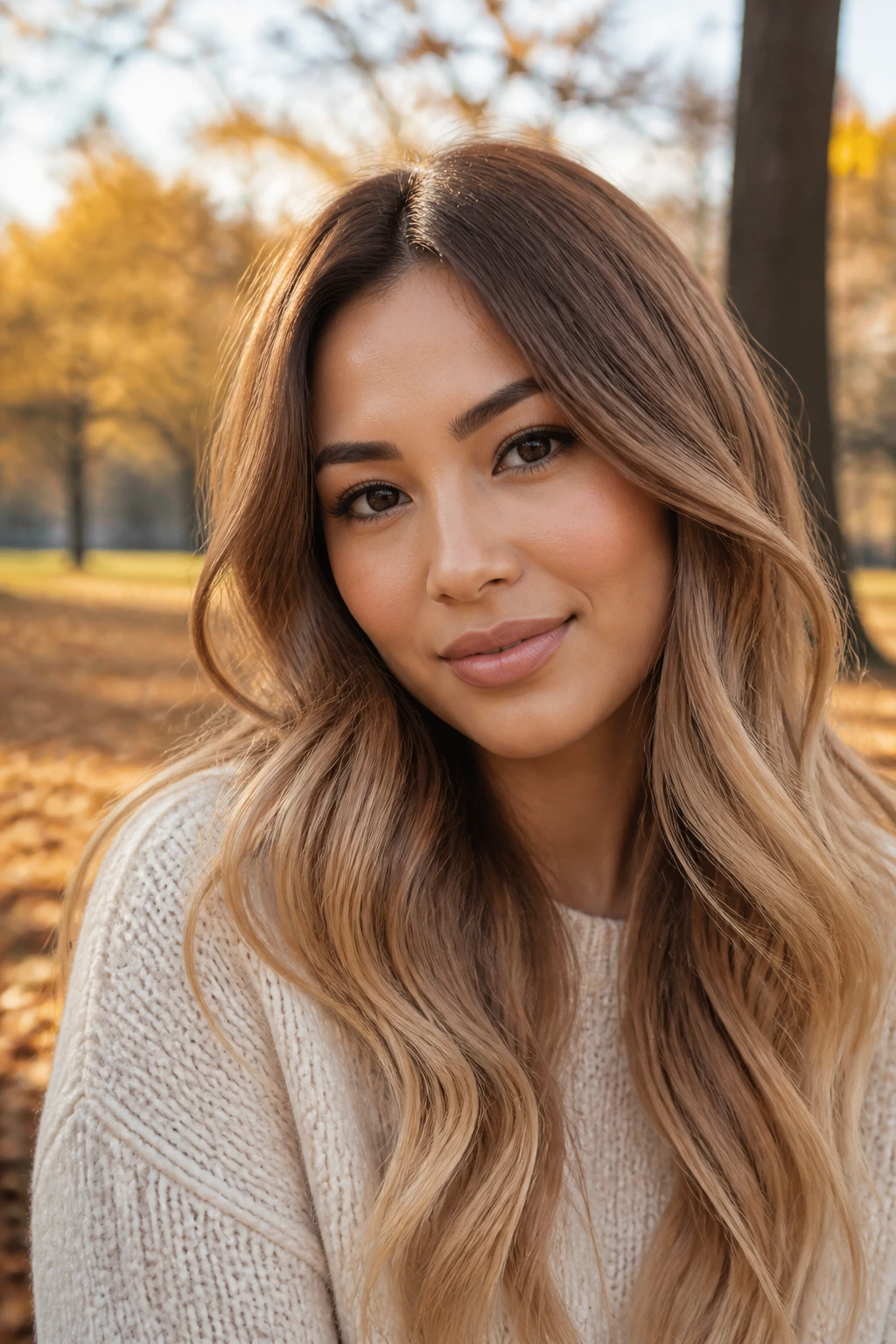
Maple ombré is for length. If you’ve got hair past the shoulders and want the ends to look lighter without turning the whole head blonde, this is one of the cleanest routes.
The fade should move from rich maple brown at the top into honey-blonde at the bottom with no hard shelf in the middle. On tan skin, that warmer transition looks smoother than a cool ash fade, which can feel abrupt against warmer complexions.
How to Ask for It
Bring a photo that shows the transition clearly. Tell your colorist you want a soft four-to-six-inch blend zone, not a blunt strip of lightness. That spacing matters because ombré only looks expensive when the shift feels slow.
If your hair is coarse, keep the ends slightly darker than you think. They’ll still read light once they catch the light, and they won’t look fried.
9. Auburn-Caramel Dimension
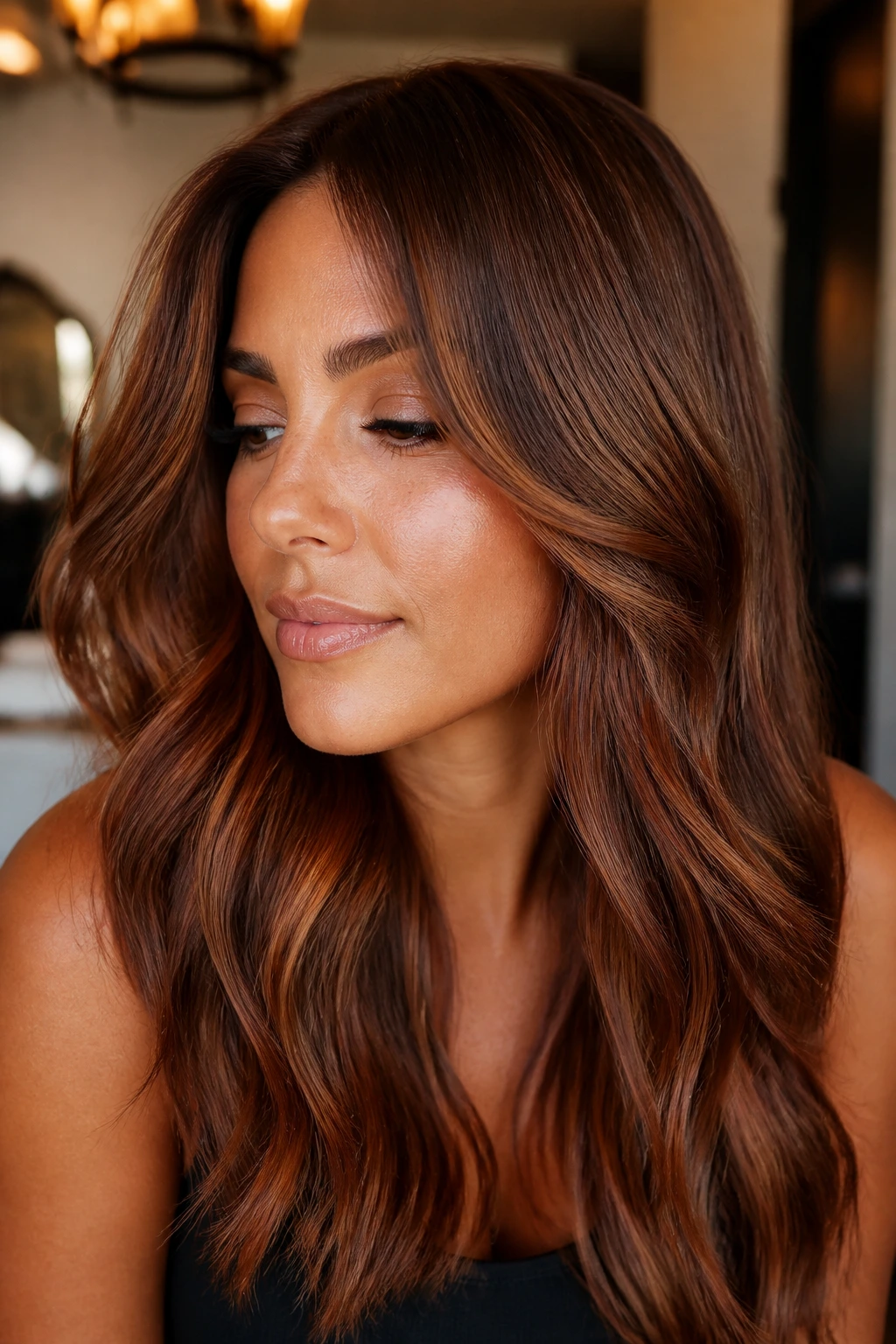
A little red changes everything. Auburn-caramel dimension brings warmth and shine that tan skin can wear easily, especially when the complexion has peach or golden undertones.
I like this when the goal is richness, not brightness. You’re not trying to become blonde from top to bottom. You’re layering caramel highlights over a brunette base, then letting a soft auburn glaze sit underneath so the color feels deep and reflective. The result looks especially good in dim indoor light, where the red-brown tones come forward.
What to Avoid
Too much copper. If the red dominates, the hair starts reading autumn-candle instead of dimensional brunette-blonde. Keep the auburn as a support note, not the headline.
10. Sunlit Vanilla-Caramel Highlights
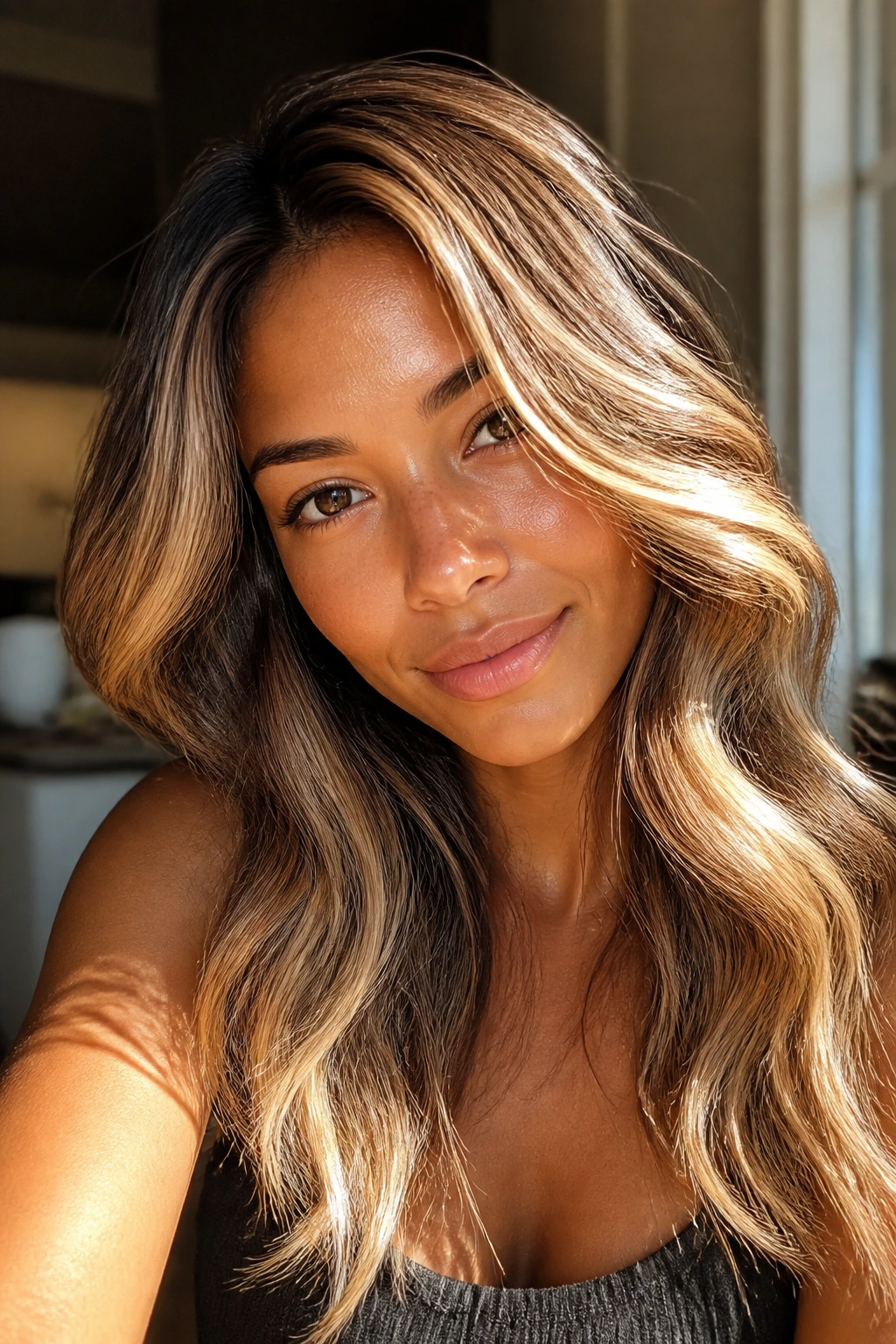
This is a brighter, lighter option for tan skin that can handle contrast. The “vanilla” part should stay warm, not icy. That matters. Vanilla that drifts too cool can make the face look less even, especially if your undertone is olive.
The highlights should be painted with space in between so the darker base stays visible. I’d rather see a few strong vanilla-caramel pieces than too many pale streaks that blur into one loud block. Tan skin tends to look better when the hair has some air around the lighter pieces.
How It Reads
In natural light, this shade gives a lifted effect around the face. Under warm indoor lighting, it softens and goes more caramel. That shifting quality is half the appeal.
11. Sandy Beige Blonde with Warm Lowlights
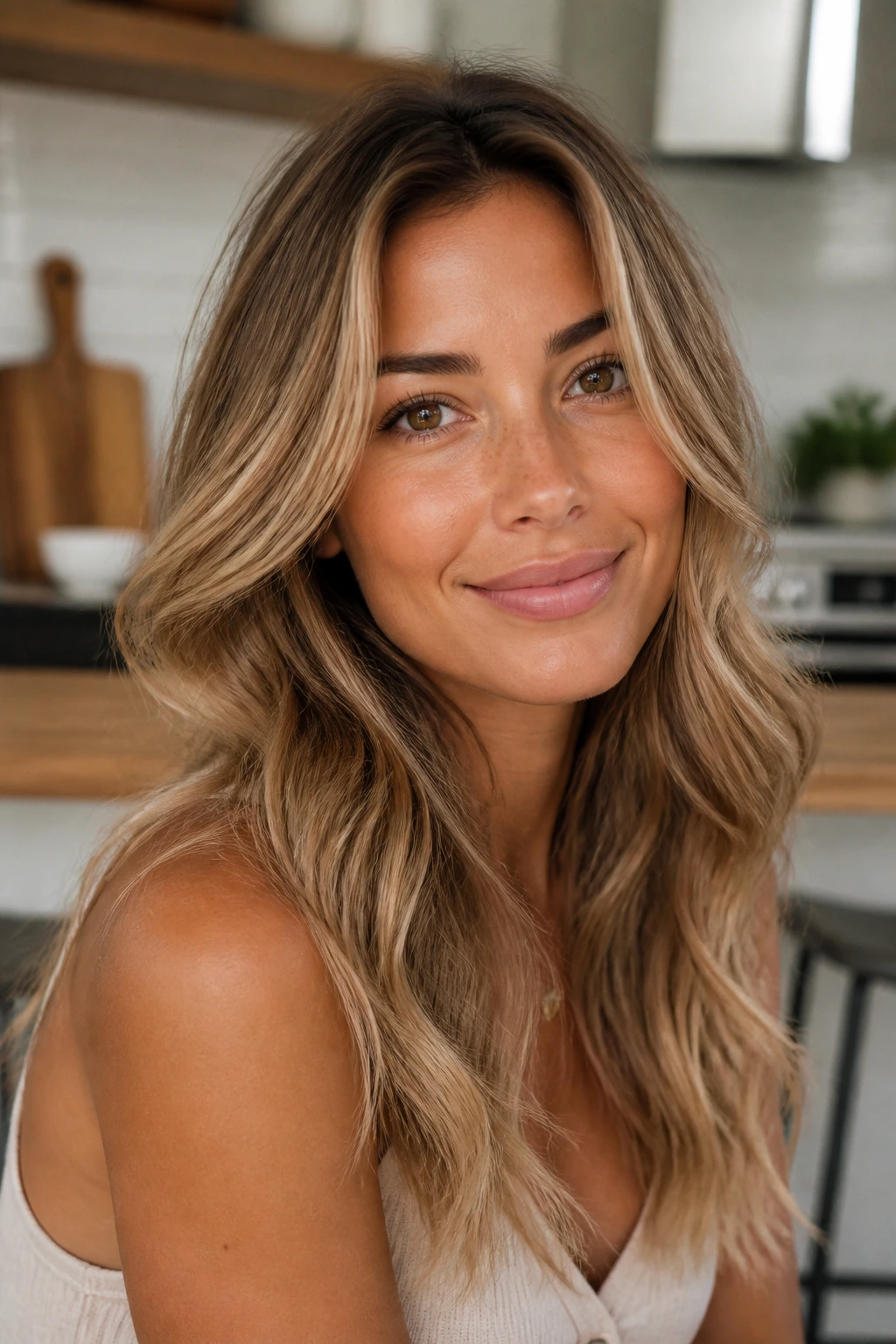
Sandy beige can be tricky. Too cool and it starts to look dusty; too warm and you lose the understated finish. Warm lowlights solve that problem by putting depth back where tan skin needs it most.
This is a smart option if your hair is already light brown or dark blonde and you want a softer blonde that doesn’t shout. The lowlights keep the hair from looking stripped. They also make the lighter pieces look brighter by comparison, which is a nice little trick.
Pro move: ask for lowlights one to two levels deeper than your base, not black-brown. That keeps the contrast believable.
12. Chocolate Base with Caramel Peekaboo
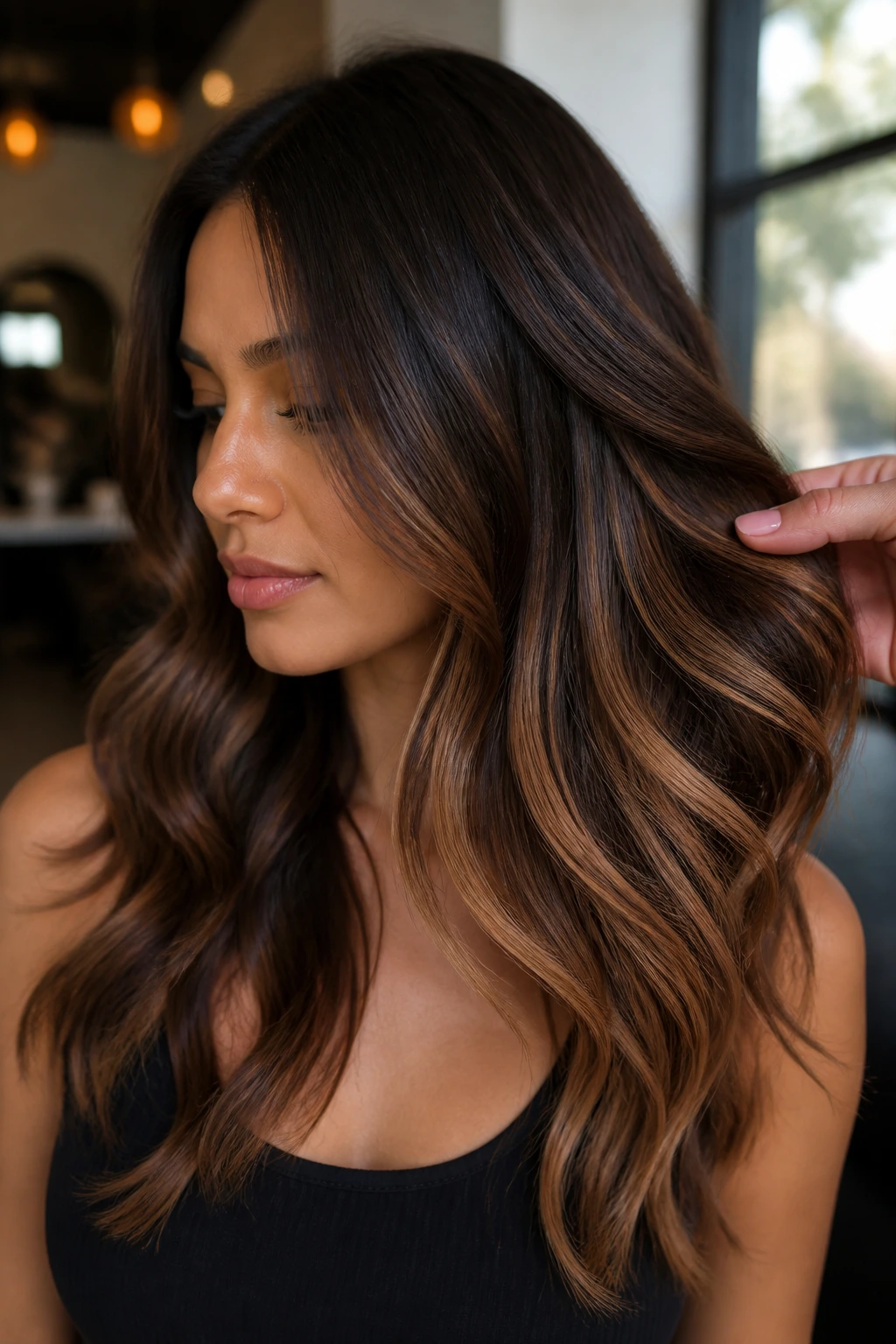
Not every warm blonde idea has to live on the surface. Peekaboo caramel placed underneath a chocolate base gives you that flash of light when the hair moves, which is especially fun on tan skin because the contrast looks intentional rather than harsh.
This works on layered cuts, curls, and long bobs. When the top layer falls over it, the caramel disappears. When the hair swings, it shows. That hidden-light effect is part of the charm.
Good if you want
- A color that feels playful, but not loud
- Low visibility at the roots
- Easy grow-out
- Room to stay professional without looking plain
The darker top keeps the hair thick-looking. The caramel just wakes it up.
13. Chestnut Honey Balayage
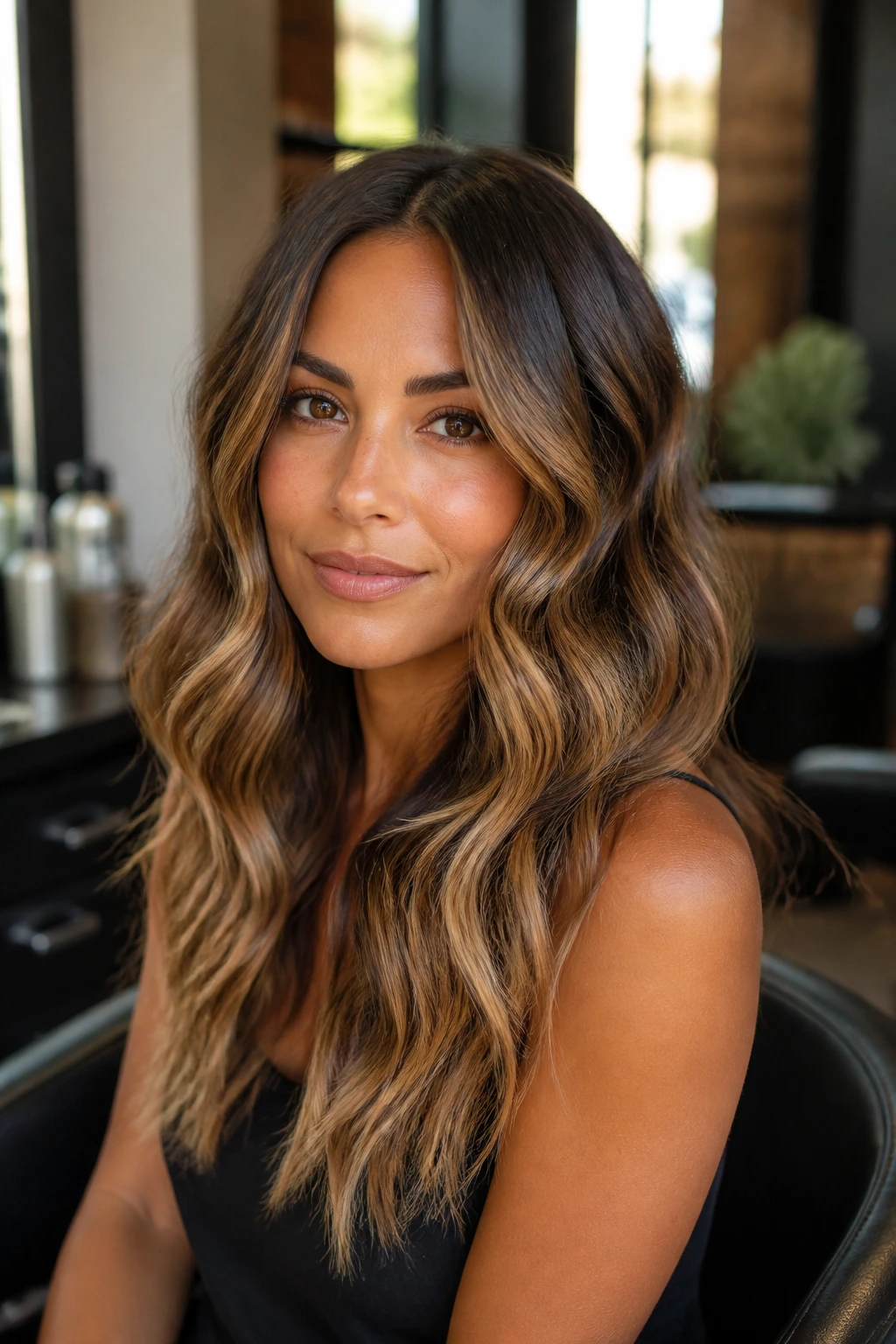
Chestnut honey balayage is a rich brunette-forward look with enough honey to brighten tan skin. I like this for people who don’t want to look blonde at all, but still want the complexion to look warmer and more finished.
The chestnut root gives the color structure. Honey hand-painting through the mids and ends keeps the hair from going too dark, which can happen fast on tan skin when brunette shades are too flat. The trick is keeping the honey soft — not yellow, not brassy, just warm.
Style Cue
Soft curls or a bent blowout show this color best. The honey catches on the curves of the hair, and the chestnut keeps it from turning cartoon-bright.
14. Bronzed Beige Blonde Bob
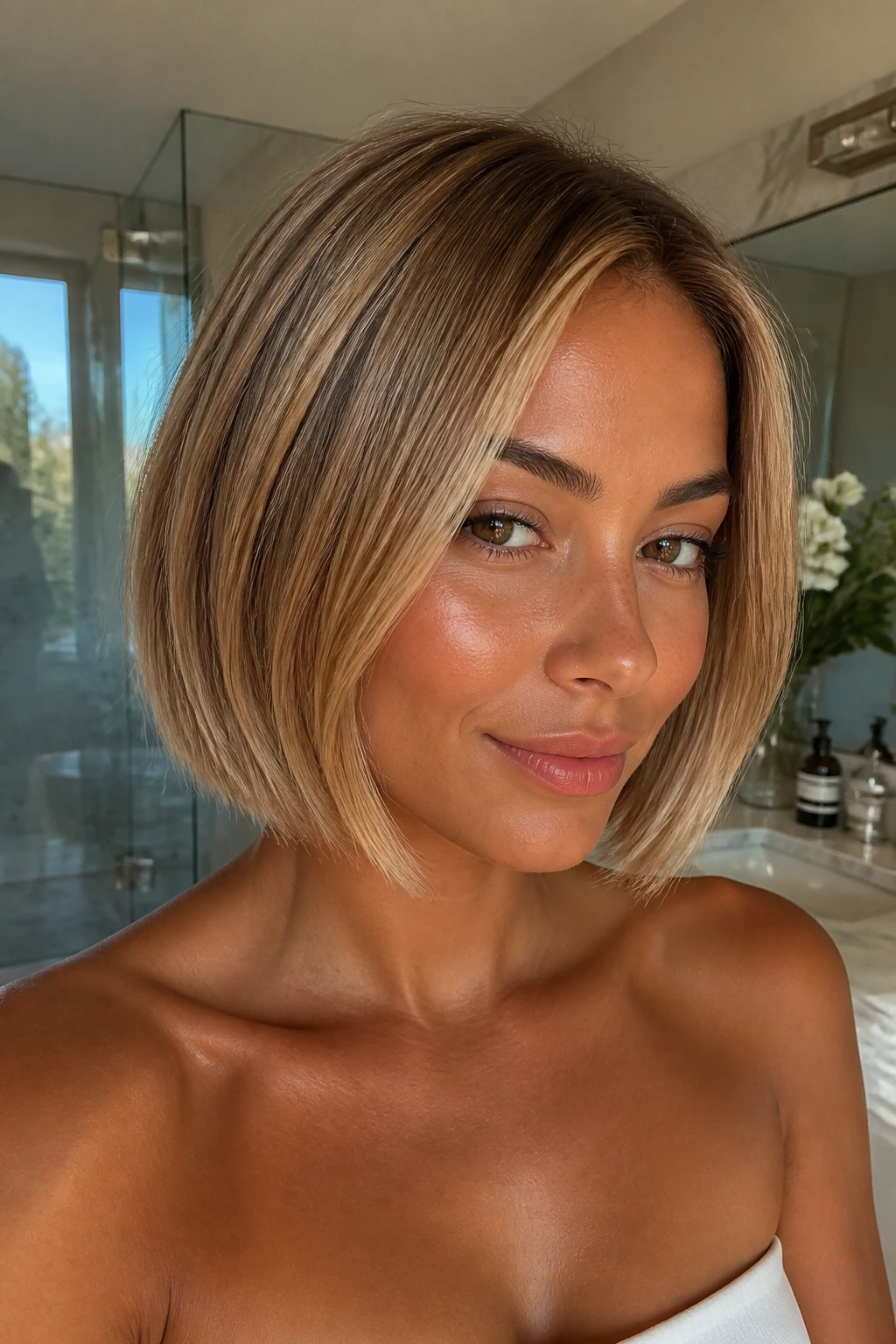
Short hair changes the rules a little. A bob needs cleaner color placement because there’s less length to hide sloppy highlights. Bronzed beige blonde gives tan skin a polished glow while keeping the overall shape sharp.
This shade is best when the highlights are concentrated near the front and crown, with the ends left a touch deeper so the bob doesn’t puff out visually. A very light bob can look too wide on some faces. Bronzed beige keeps the silhouette tighter.
My take
If you wear glasses, this is a strong match. The warm shine sits nicely around the frames without competing with them.
15. Smoked Caramel and Honey Rooted Blonde
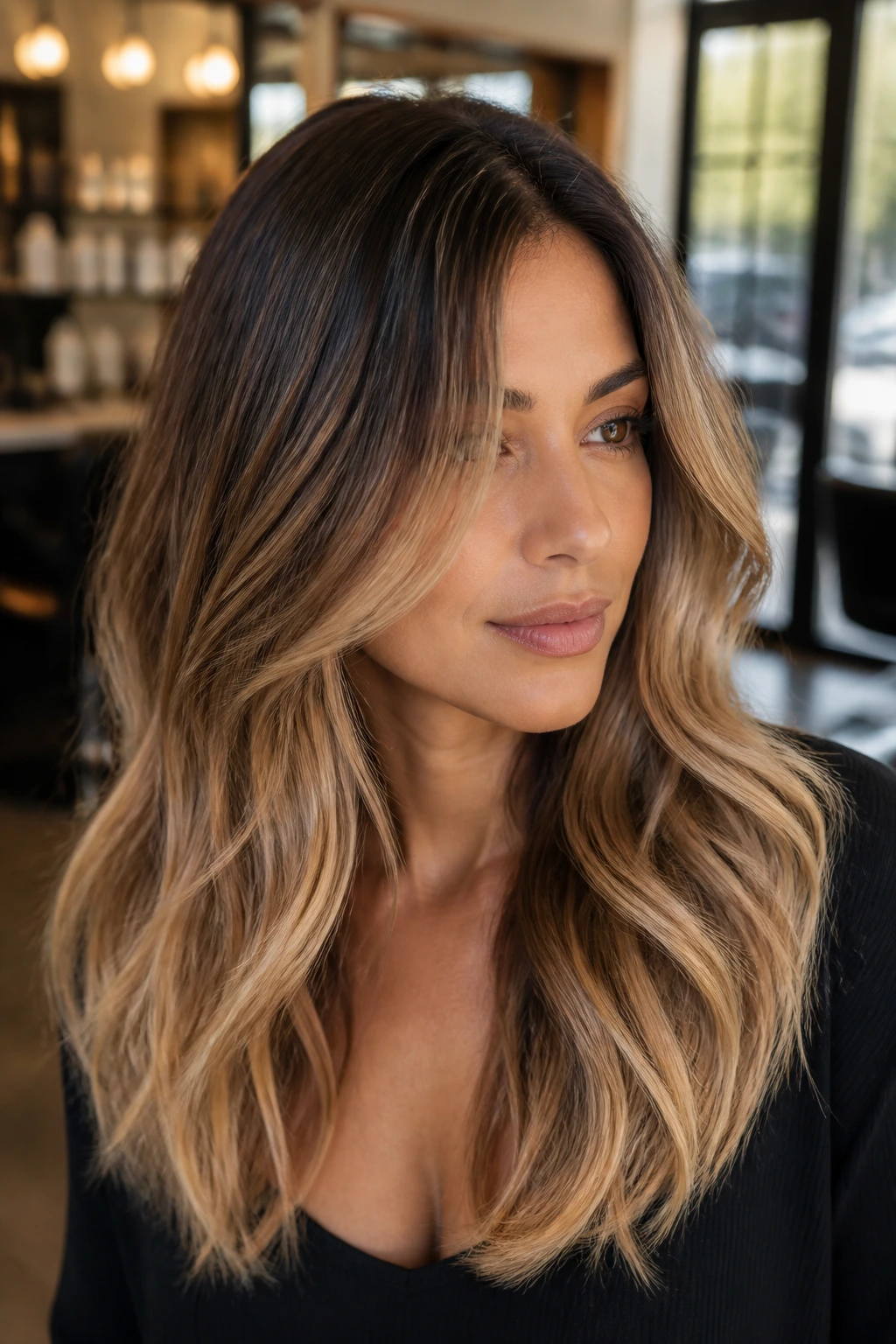
This one is for people who want warmth but don’t want it to get sugary. A smoked root — a neutral brunette with a little cool softness — melts into caramel mids and honey ends, and the contrast is gorgeous on tan skin with olive undertones.
The word “smoked” matters because it keeps the root from looking flat brown. It should feel soft and airy, almost like the color has been dusted with a little haze. Then the honey comes in at the ends where you want the brightness.
Maintenance Reality
You’ll need toner more often than with a plain caramel balayage. The payoff is that the color stays elegant instead of drifting orange. If your hair tends to grab warmth fast, this is one of the smarter ways to stay in the blonde family.
16. Apricot Honey Gloss
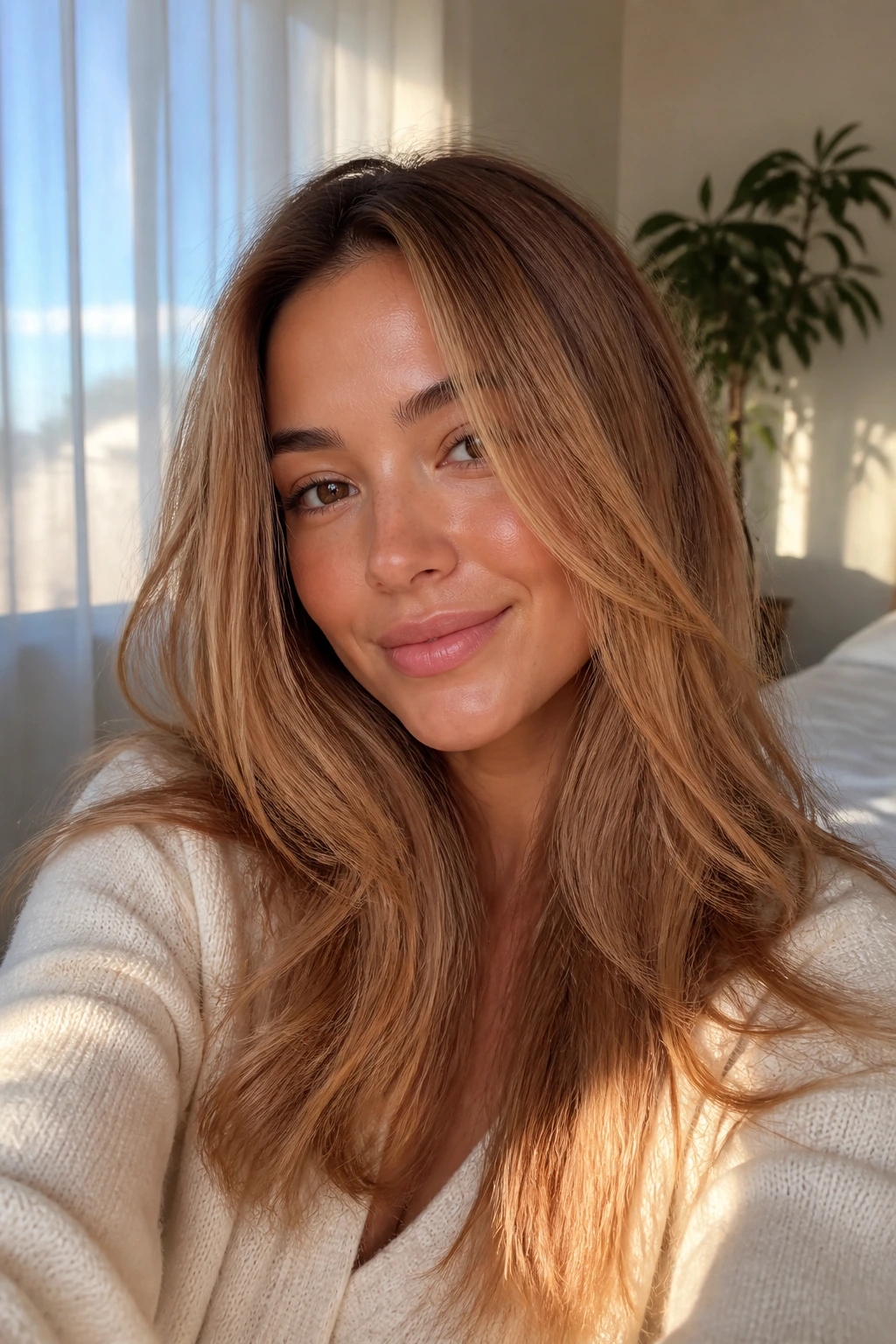
Sometimes the best answer is not a full highlight session. An apricot honey gloss adds warmth, shine, and a slight lift to light brown or pre-lightened hair without the commitment of bleach-heavy work.
On tan skin, apricot can be tricky if it gets too red. The gloss should stay sheer and soft, more like warm nectar than bright orange. That tiny glow is enough to freshen the complexion, especially if your hair has gone dull from sun, heat tools, or hard water.
Best on: previously highlighted hair, light brown bases, and anyone who wants a fast refresh between bigger color appointments.
17. Toasted Almond Balayage
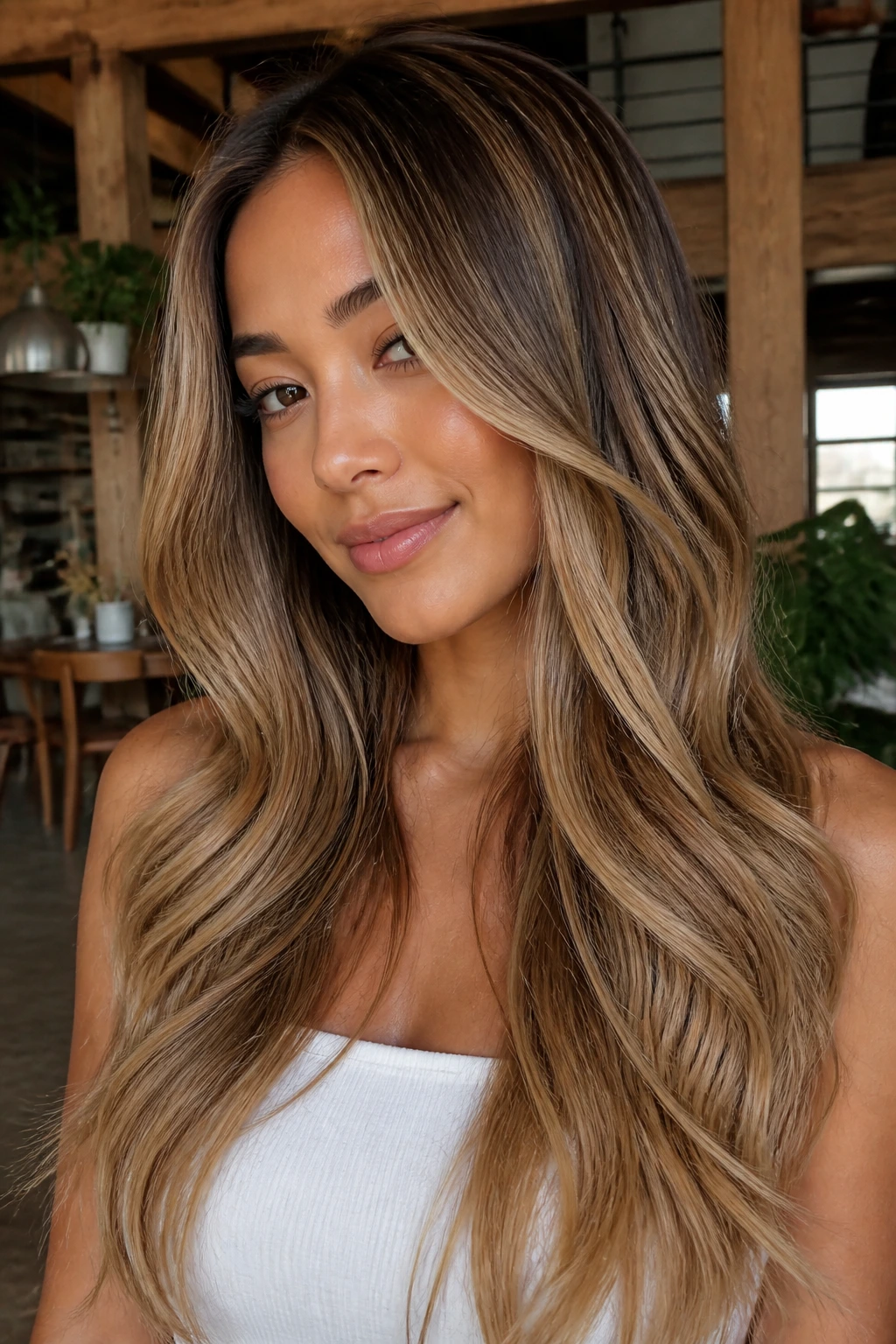
Toasted almond sits a little quieter than honey. That’s the point. It’s a warm-neutral blonde that doesn’t fight tan skin, especially if your undertone leans olive or neutral-warm and you know you don’t want anything too yellow.
The color should move in soft ribbons rather than chunky streaks. I like this with longer layers, because the almond tone looks expensive when it spreads through the hair instead of sitting in obvious bands. The warmth is still there, just more restrained.
Good to know
This is one of the easier shades to keep looking polished if you wash your hair a lot. It fades softly, not in a dramatic way.
18. Soft Copper-Caramel Ribbon Lights
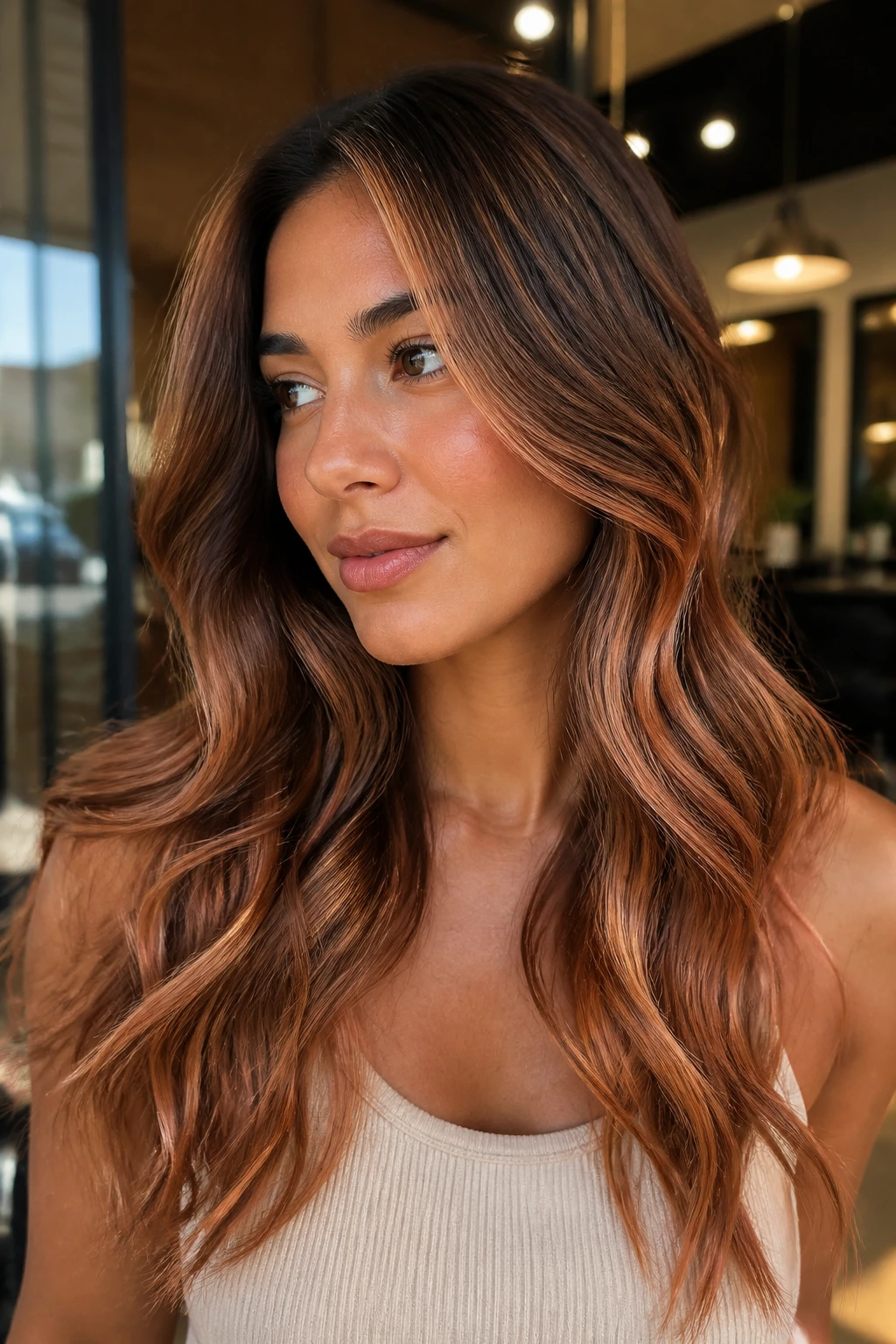
A little copper goes a long way. Ribbon lights in copper-caramel can make tan skin look vivid, especially when the complexion already has gold or peach in it. The color feels alive.
The key is restraint. Thin ribbons. Not giant streaks. Too much copper and the whole thing starts to dominate the face, which is not the goal. You want a few warm notes moving through the hair, not a full red conversion.
Who should try it
If standard honey blonde feels too mild and ash blonde feels too cold, this middle ground can be the answer. It also looks very good on layered curls because the copper catches along the bends.
19. Mushroom Beige with Honey Ends
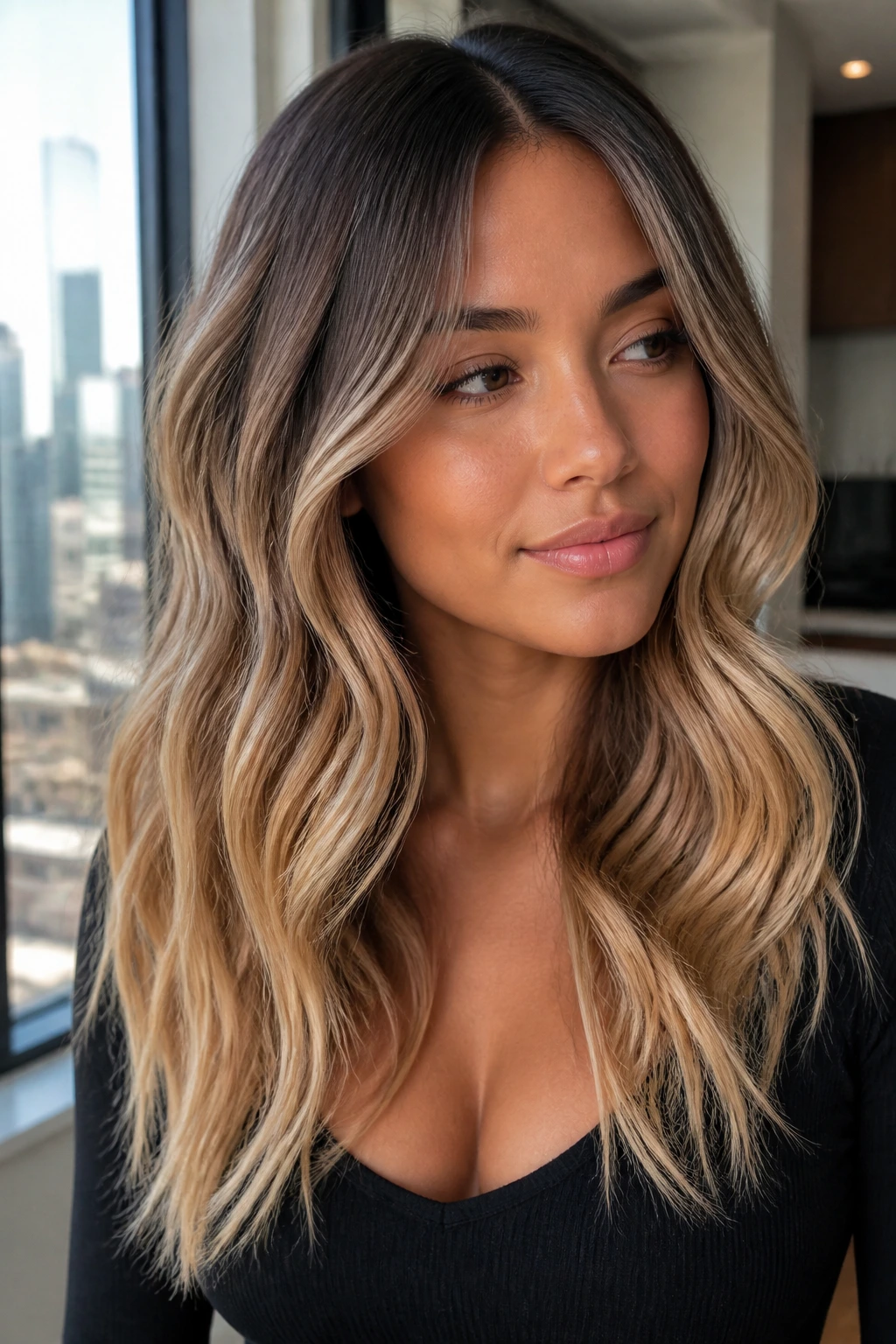
Mushroom beige is the cool-neutral outsider in this group, and I like it more than people expect. On tan skin, it can work when the base is kept soft and the ends are warmed with honey so the whole color doesn’t drift flat.
This is a smart option if you’re fashion-driven and want something a little less sunny. The mushroom root gives a muted, modern feel, while the honey ends stop the face from going dull. The contrast is subtle, not loud.
Important: don’t take the mushroom too gray. Tan skin with olive undertones can handle some coolness, but if the ash level climbs too high, the face starts to look tired.
20. Buttercream Ends on Warm Brown Base
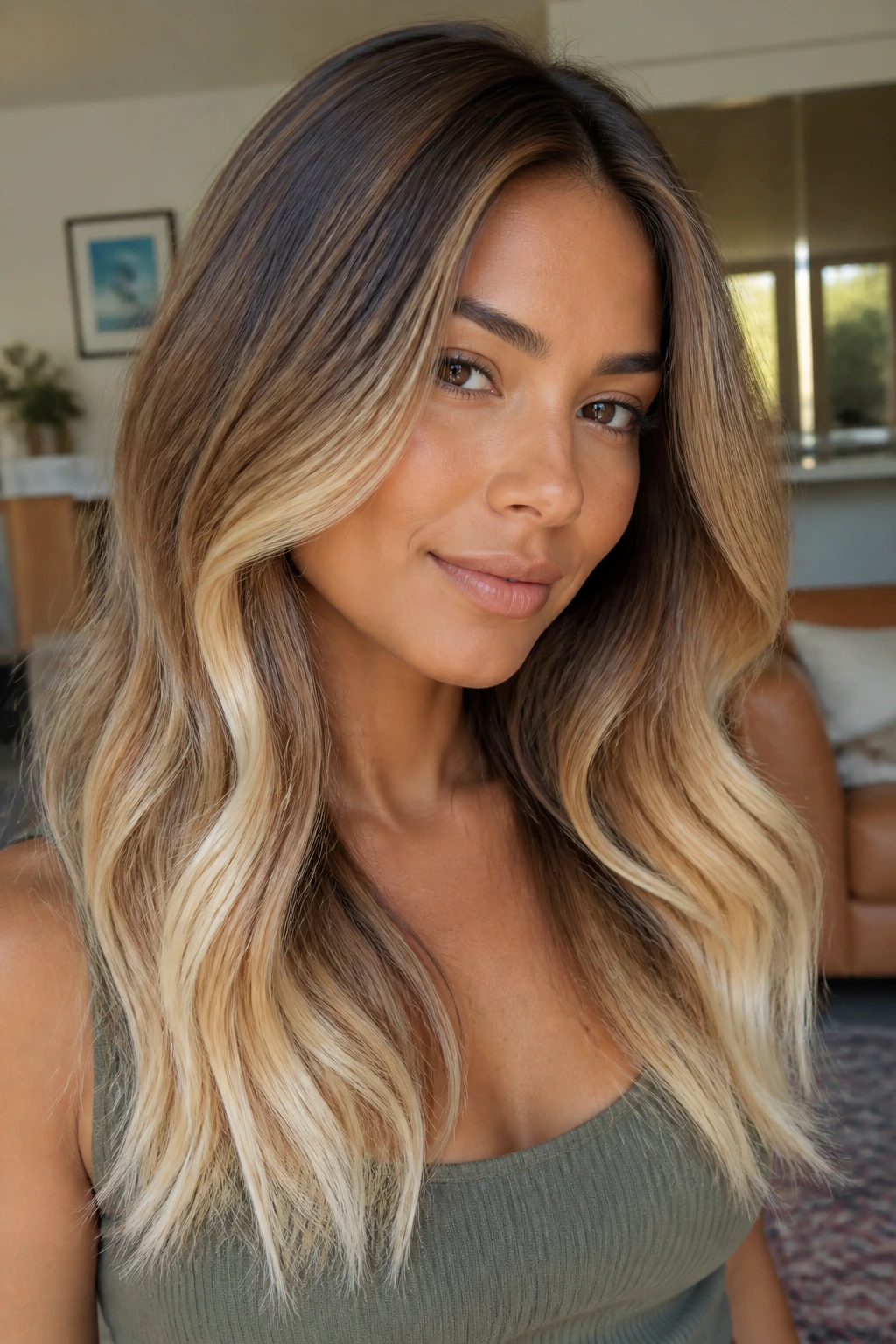
Buttercream ends make the hair look light from the bottom up without asking the roots to do too much. That’s useful if your tan skin looks best with depth near the face but you still want a blonde finish.
This is especially pretty on long layered cuts. The warm brown base keeps the upper section grounded, and the buttercream ends bring brightness where the eye naturally lands. I like this more than an all-over pale blonde on medium to tan skin because it feels softer at the hairline.
Wear it well
A rounded blowout or soft beach wave keeps the ends from looking stringy. Dry, frayed blonde tips will ruin the effect fast, so the ends need regular masks and a careful trim schedule.
21. Honeyed Curly Shag
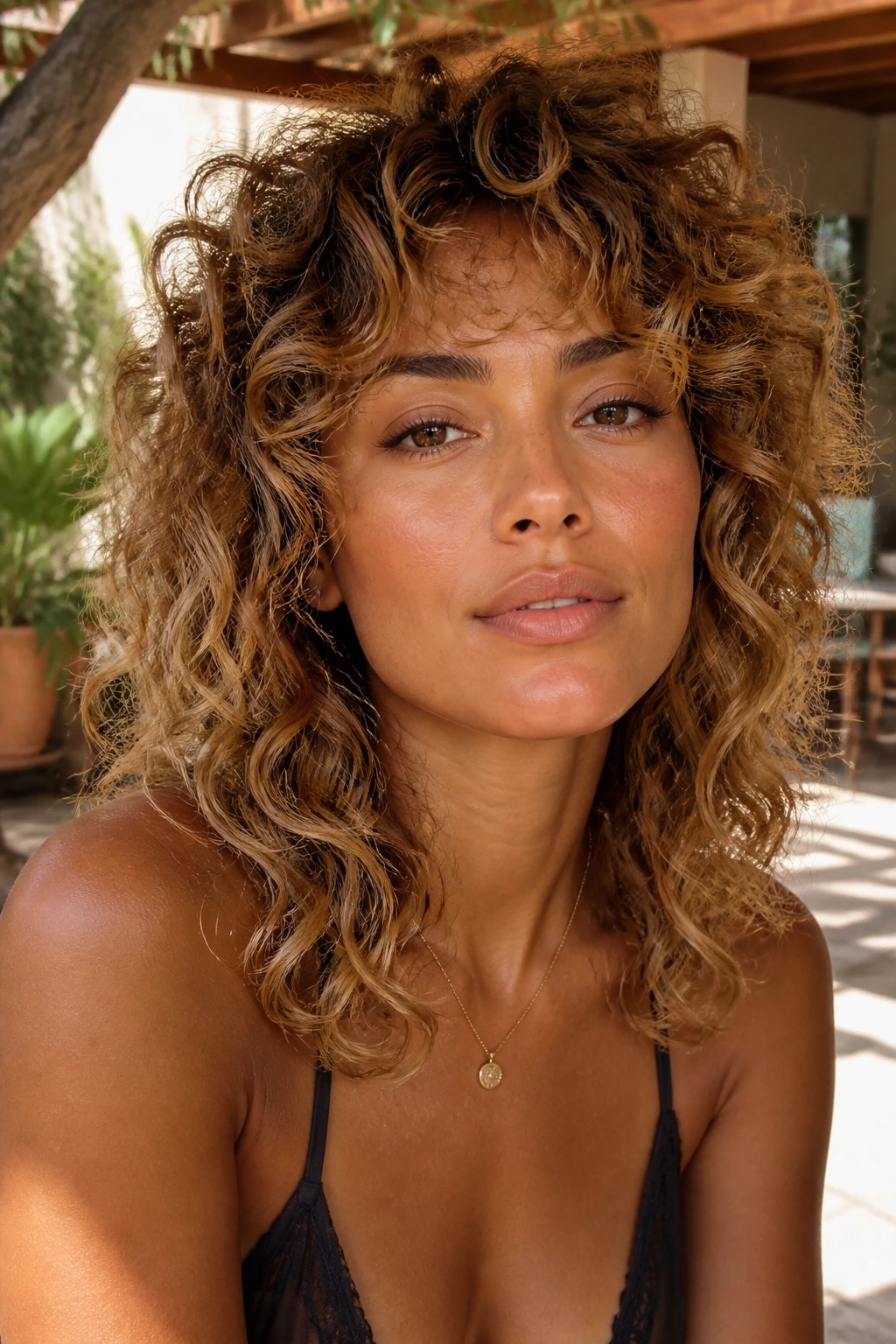
Curly hair changes the whole story. A shag cut with honeyed placement works because curls don’t lie flat; the color moves in pockets, and each curl catches a different part of the shade. On tan skin, that creates a warm halo effect around the face.
The highlights should be painted where the curls open, not only on the outer shell of the hair. That placement is what keeps the color from disappearing once the curl shrinks. Honey is the right tone here because it brings light without breaking the curl pattern visually.
If you wear your curls natural: ask for a dry-cut or curl-specific color placement. It makes a huge difference.
22. Espresso with Caramel Contour Highlights
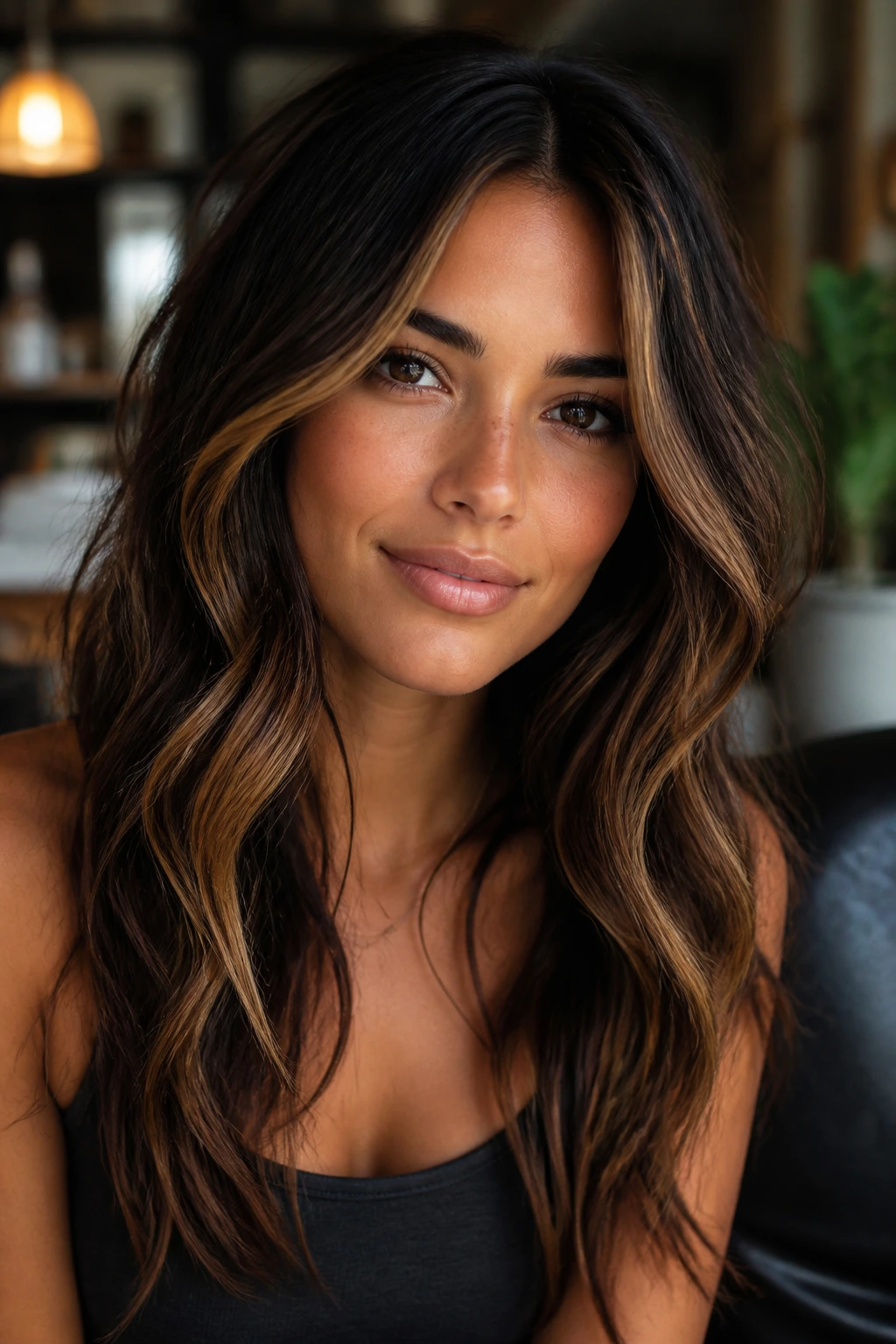
This is one of the most flattering ideas if you want tan skin to look more sculpted. A deep espresso base gives you contrast, and the caramel contour highlights are placed around the face, crown, and top layers to brighten the areas that matter most.
Think of it like hair contouring. The lighter pieces sit where sunlight would naturally hit, which lifts the face without changing the entire head. It’s a good pick if you like dark hair but want the warmth and movement that caramel brings.
Why it works
The darker base keeps the hair glossy and dense-looking. The caramel does the brightening. You get both, which is usually the best outcome when you don’t want to commit to a full blonde look.
23. Warm Champagne Blonde with Honey Shadow Root
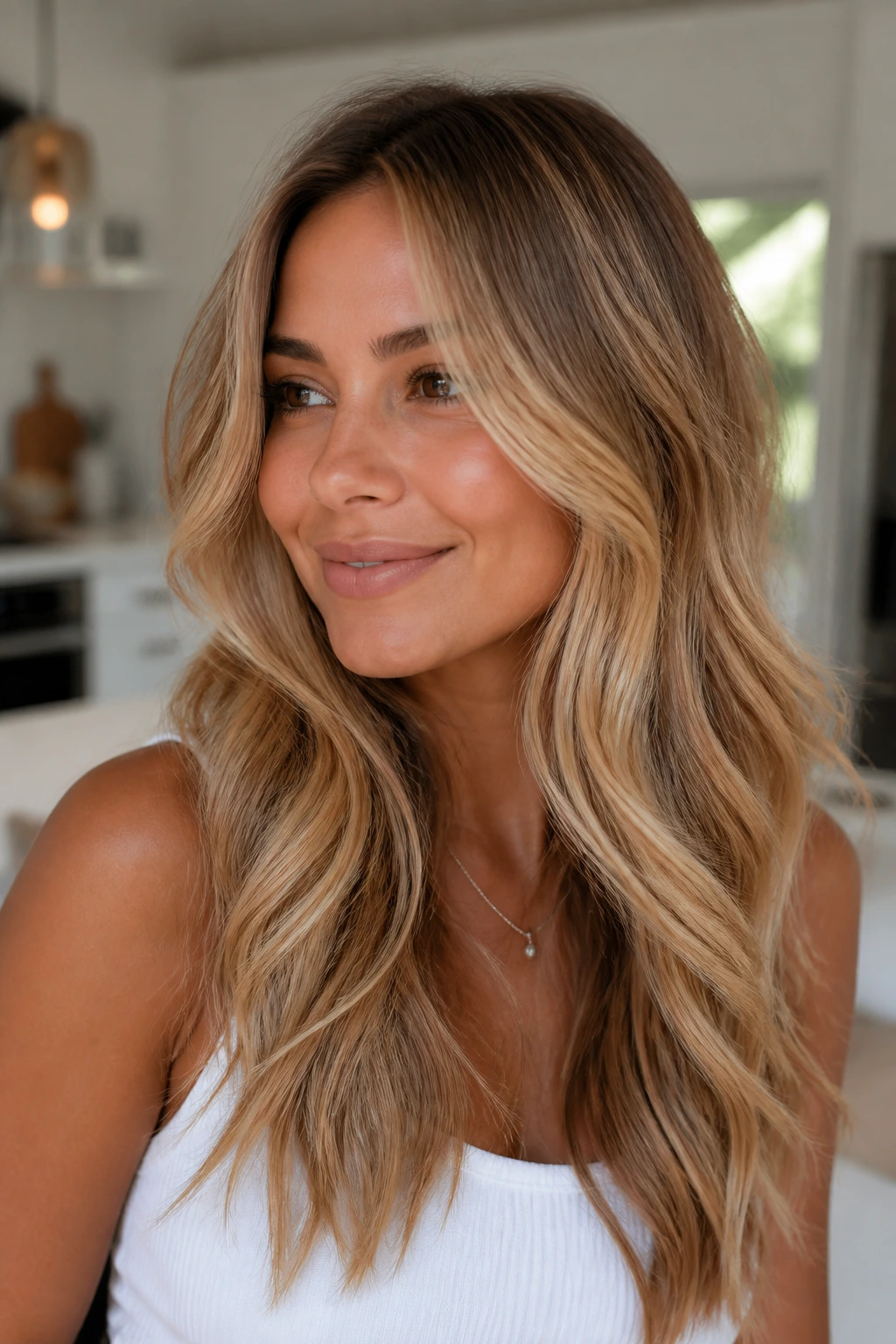
Champagne blonde can go flat fast if it leans too icy. For tan skin, the warm version with a honey shadow root is much easier to wear because the root gives depth and the champagne stays luminous instead of chalky.
I like this on medium-length layered cuts or long hair with a bit of movement. The honey root prevents harsh regrowth, and the champagne through the lengths catches light in a softer way than platinum. It’s a grown-up blonde, not a bleach blast.
Care note
You’ll need a toner that stays beige-gold, not silver. If your hair lifts yellow, purple shampoo can help, but only lightly. Overuse will mute the champagne and make it colder than you want.
24. Spiced Latte Balayage
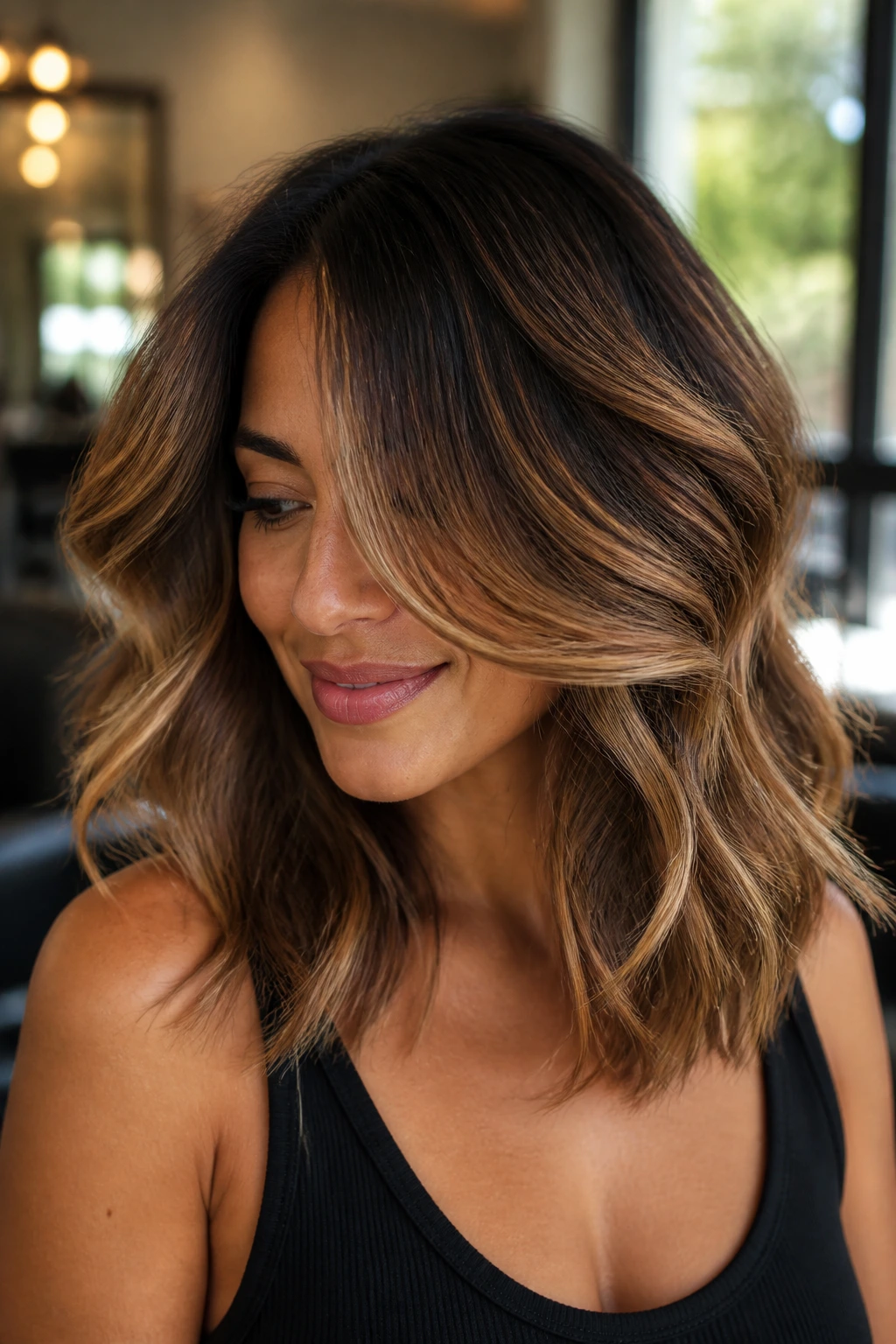
Spiced latte is the reliable middle path. It takes brunette, caramel, and honey and blends them so the result feels warm, dimensional, and wearable on tan skin with almost any undertone.
This is the shade I’d hand to someone who says, “I want something lighter, but not obvious.” The brown base keeps the structure, the caramel warms the mids, and the honey lights the ends just enough to show movement. It doesn’t need a dramatic cut to work.
Best on: shoulder-length layers, long bobs, and hair that’s blown out with a round brush or loose bend.
25. Desert Sun Blonde
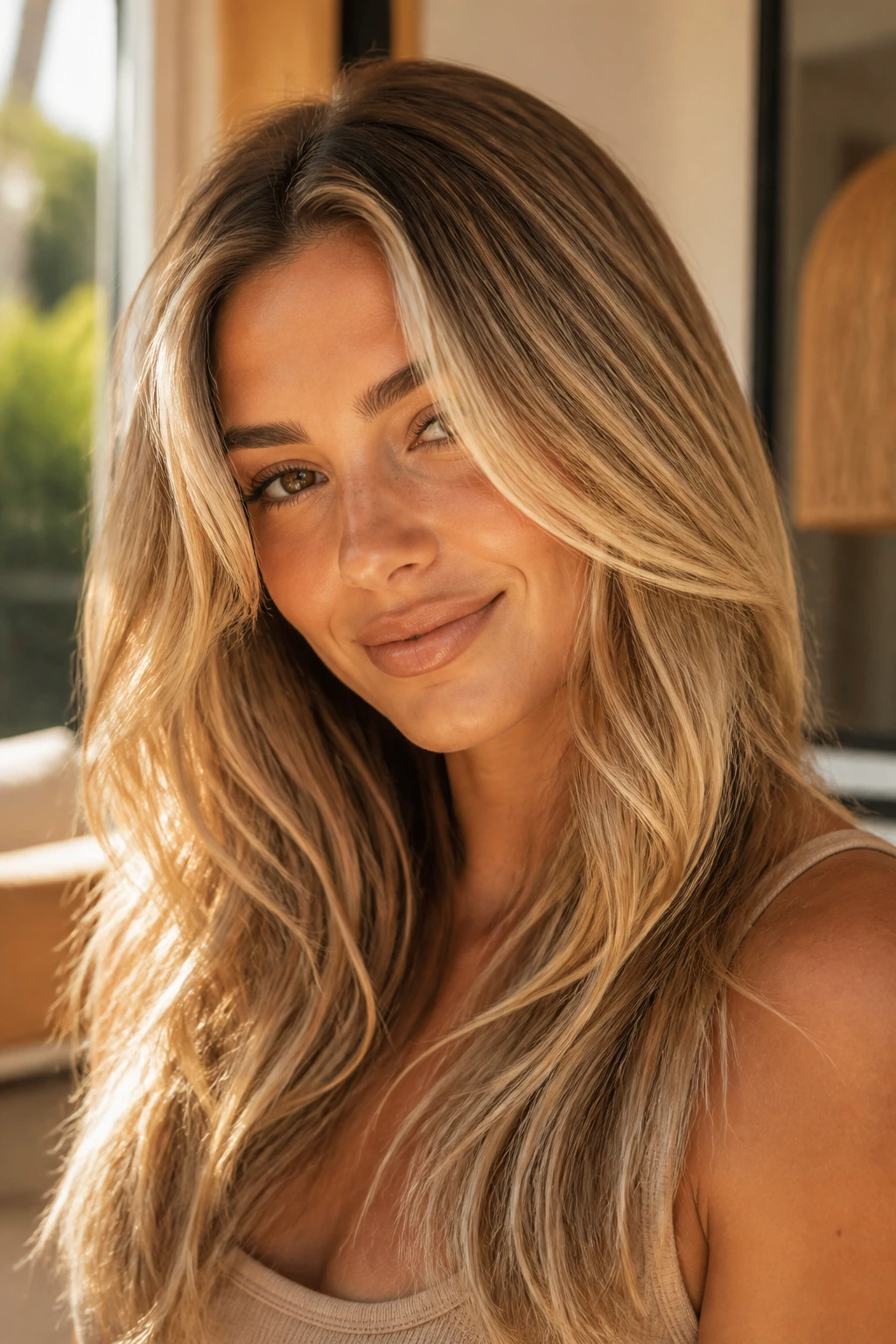
Desert sun blonde is the brightest option here, but it still stays in the warm family. Think golden sand, late-afternoon light, and a root that keeps the color anchored so it doesn’t feel stripy or overprocessed on tan skin.
This shade needs good technique. The highlight pattern should be spaced out, with stronger brightness near the face and softer saturation through the back. If the whole head goes too pale, the warmth disappears and the skin loses contrast. Keep the gloss golden-beige, not icy.
Final note on this one
It’s the color for someone who wants visible blonde but doesn’t want to look washed out. That’s a narrow lane, and this shade stays in it when the root is respected.
Why Warm Blonde Placement Beats Flat Blonde
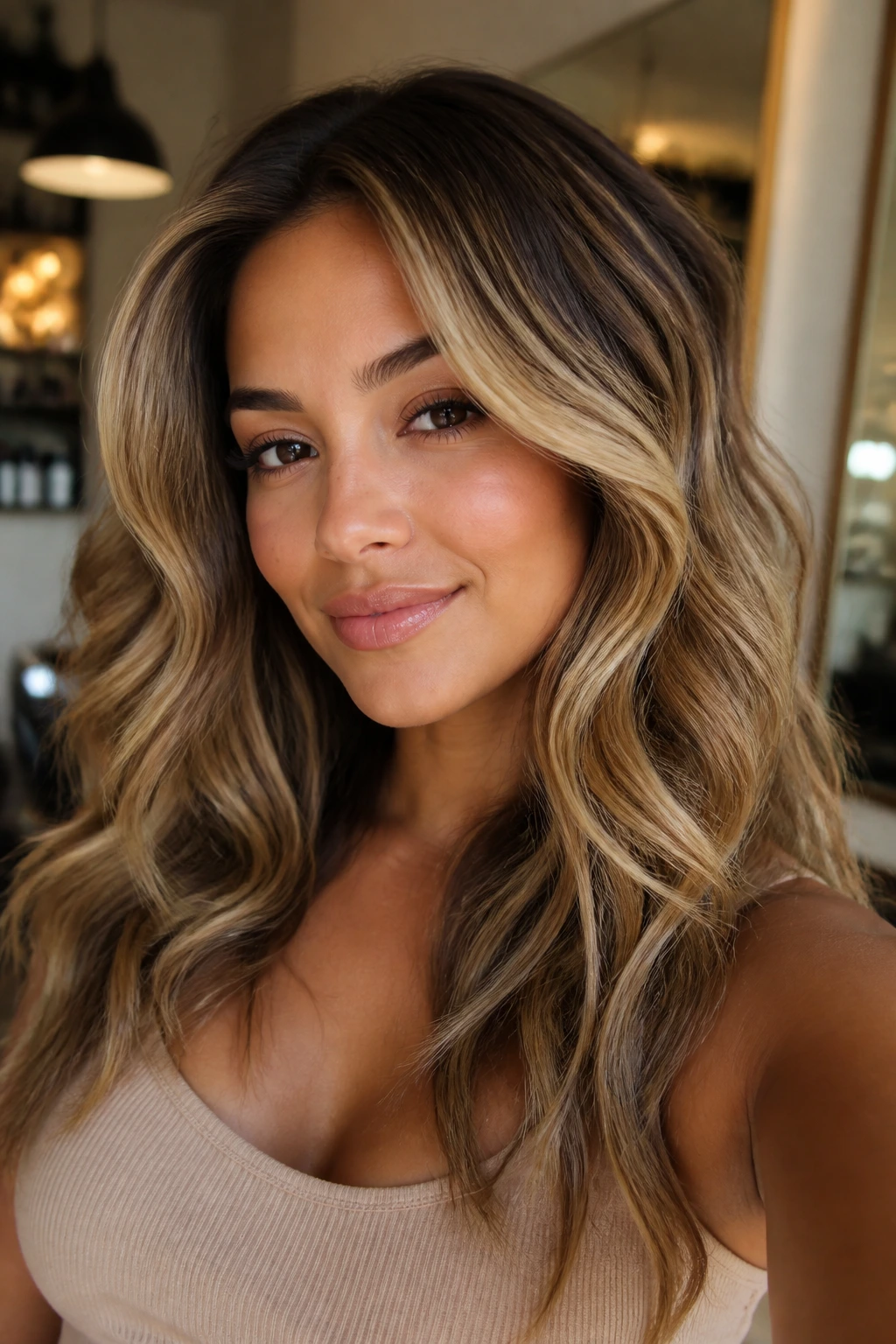
Tan skin can carry a lot of color, which is exactly why one-note blonde often misses the mark. When every strand sits at the same pale level, the hair loses depth and the face can start to look less defined. Warm placement fixes that by giving the hair dark-to-light movement that mirrors the natural shadows and highlights already in the face.
Golden, Olive, and Neutral Undertones
Golden tan skin usually likes honey, caramel, amber, and beige-gold glosses. Olive tan skin often needs a touch more neutrality so the warmth doesn’t turn orange. Neutral tan skin can carry both, but it still benefits from a rooted finish and a few darker panels so the blonde doesn’t overpower the complexion.
Why Ash Can Backfire
Cool blondes have their place. They just need more care on tan skin. Too much ash, and the warmth in the skin can look muted or slightly gray. That’s not a color flaw so much as a mismatch. A warm gloss, a beige toner, or a root shadow often fixes the problem without starting over.
Placement Does the Heavy Lifting
Face-framing pieces, balayage ribbons, and soft lowlights do more than a single all-over formula. They create movement. They also help the tan skin look brighter because the eye keeps catching contrast around the cheekbones, temples, and ends. That contrast is the whole game.
Essential Tools and Products for These Looks
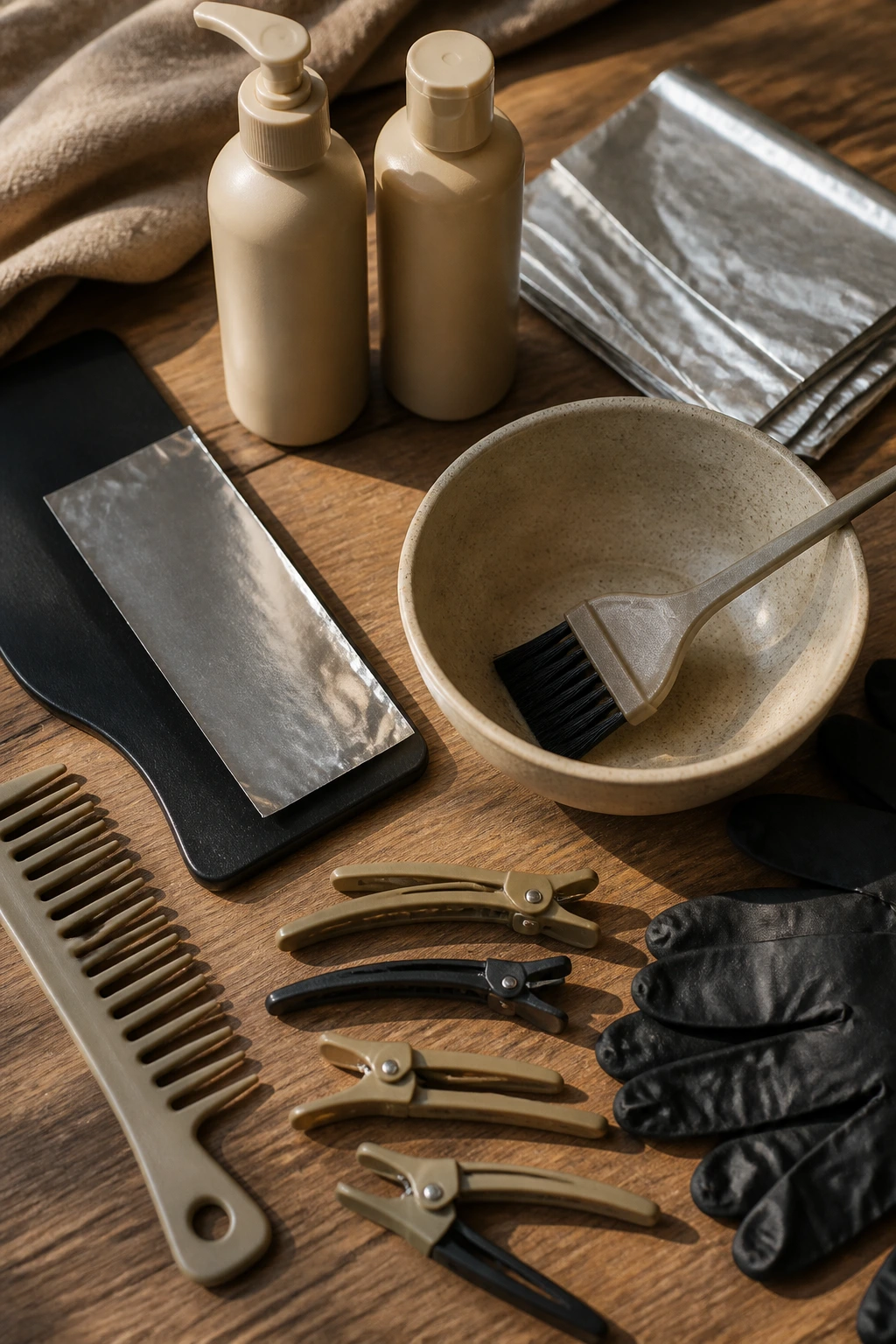
- Natural-light reference photos: Bring at least two, because warm blonde can shift fast between indoor and daylight.
- Sectioning clips: You need clean partings for balayage, foils, or money pieces, and sloppy sectioning shows immediately.
- Tint brush and bowl: Useful for glosses, toners, and hand-painted caramel placement.
- Foils or balayage board: Foils lift faster and brighter; a board gives softer, more painted ribbons.
- Gloves: Even a demi-permanent gloss will stain hands if you skip them.
- Wide-tooth comb: Helps distribute gloss and detangle without ripping through lightened ends.
- Sulfate-free shampoo: Warm blondes fade faster when cleansers are too harsh.
- Purple shampoo: Best for yellow brass, used sparingly.
- Blue shampoo: Better if the blonde keeps swinging orange.
- Heat protectant: Non-negotiable if you blow-dry or curl, especially on pre-lightened ends.
Smart Shopping and Product Notes
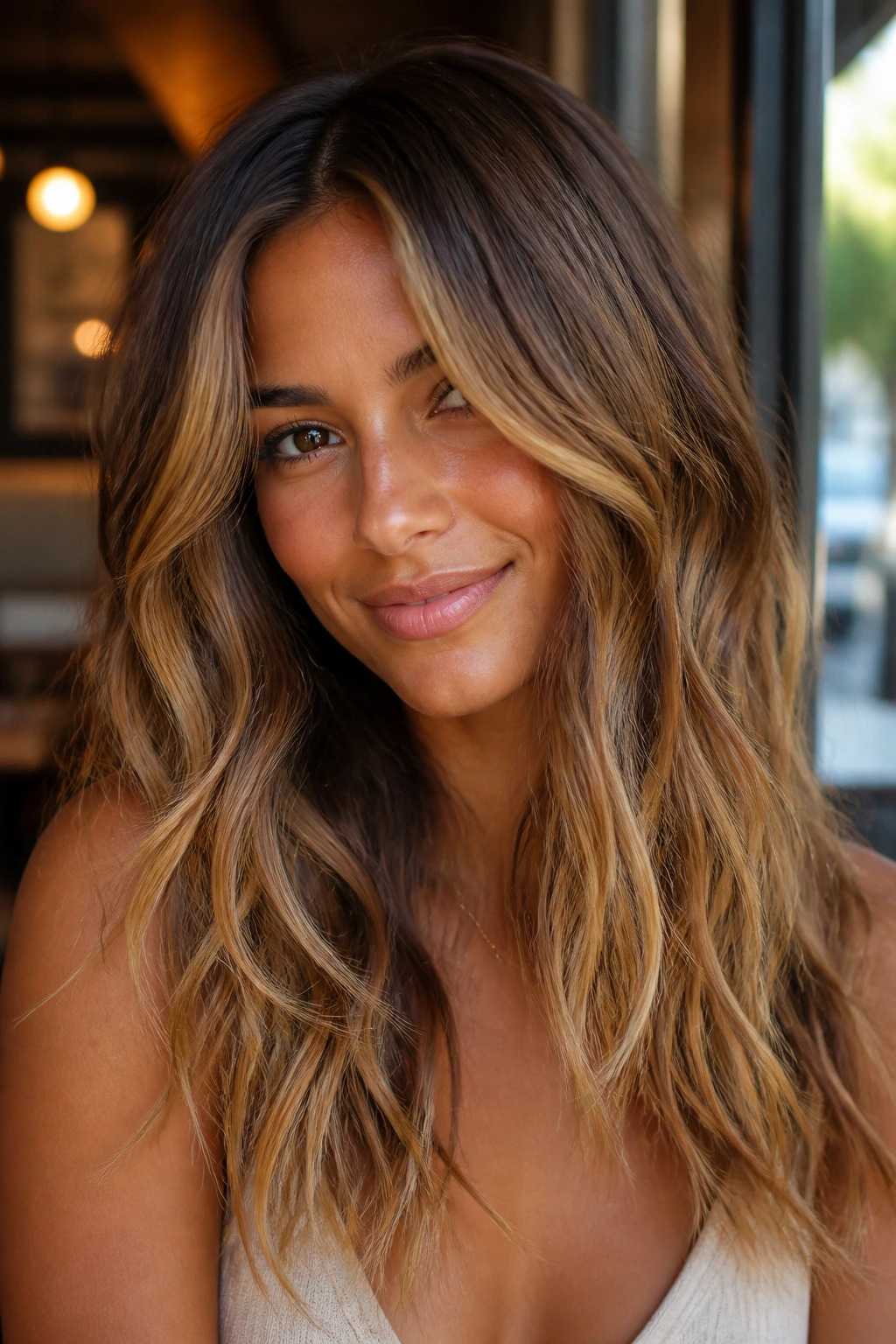
Color shopping gets easier when you stop thinking only in shade names and start looking at level numbers, undertones, and finish. A caramel blonde on a level 5 brunette base is not the same thing as a caramel blonde on a level 7 dark blonde. The base decides how much lift you need, and the lift decides how warm the final tone can stay without turning brassy.
If you’re doing this at a salon, bring photos in natural light and say what you do not want. “Not too ash,” or “No yellow streaks,” is more helpful than a vague request for blonde. If you’re buying toners or glosses, look for beige-gold, honey, caramel, neutral-warm, or soft amber descriptions. Avoid anything that promises icy silver unless that is truly the finish you want.
Porosity matters more than people expect. Hair that’s been bleached before grabs toner fast and fades faster, so a demi-permanent gloss is often smarter than a heavy permanent formula. If your hair is darker and healthy, a stronger lift may be needed, but don’t chase pale blonde in one session just because a picture looked good on someone else. Hair history changes everything.
And one more thing: if your ends are dry, don’t buy a lighter shade and hope the texture will hide it. It won’t. Warm blondes show damage easily because the shine is part of the look.
How to Style These Shades So the Color Shows
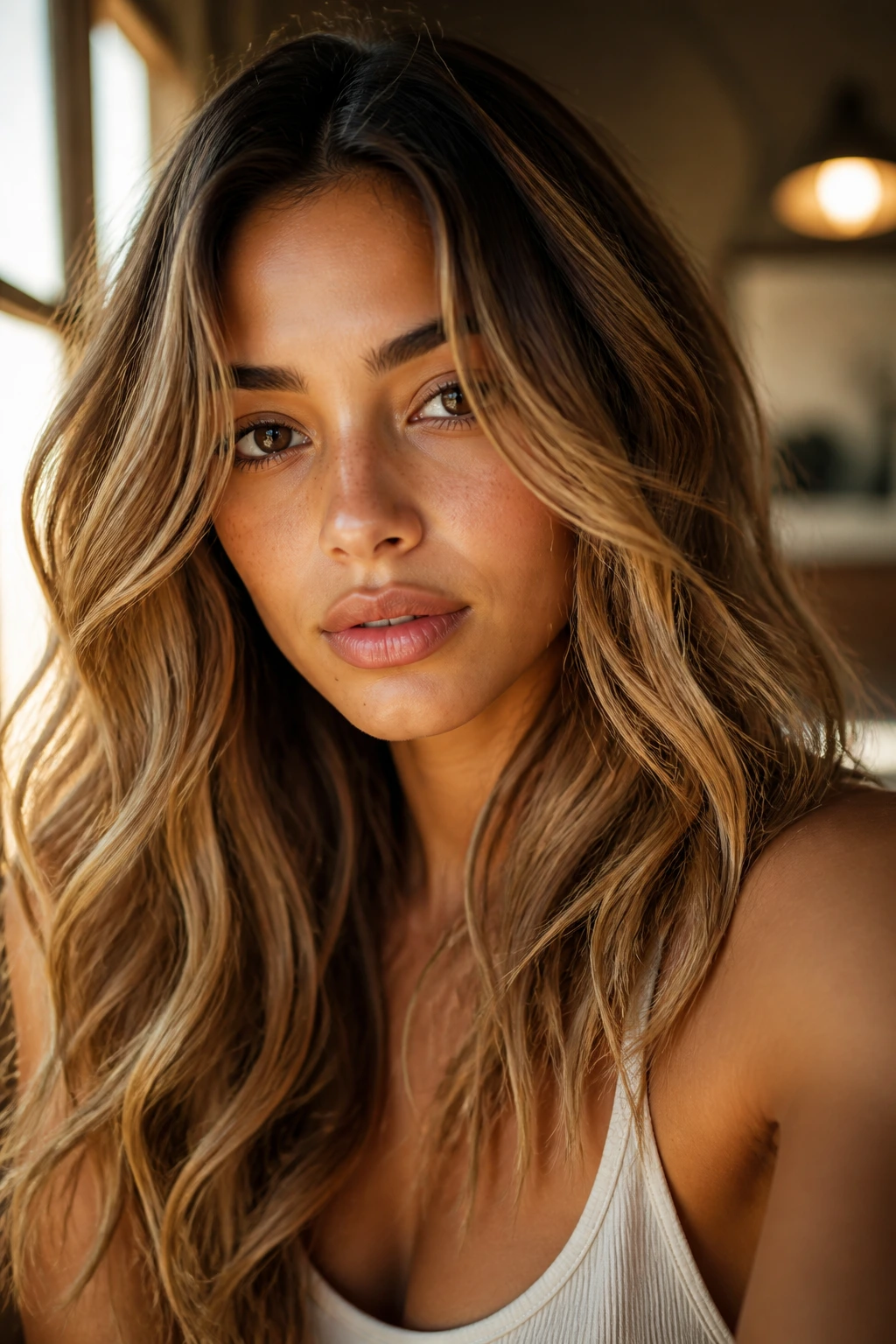
Presentation: Loose waves, a round-brush blowout, or soft bends at the ends show caramel and honey ribbons far better than pin-straight hair. If you want the highlights to look expensive, give the hair movement.
Accompaniments: Peach blush, terracotta lips, warm nude glosses, and gold jewelry keep tan skin in the same warm lane as the hair. Cream, camel, olive, and rust clothing tend to make these shades look richer too.
Intensity: If you want subtle, ask for a shadow root and soft face-framing pieces. If you want bolder contrast, ask for level 8 or 9 brightness around the hairline and keep the back softer so the whole look does not turn loud.
Lighting: Golden-hour light makes honey and apricot tones glow; cool indoor light can mute them. If the color looks different under office lights, that is normal. The warm gloss is doing exactly what it should.
Additional Tips and Shade Boosters
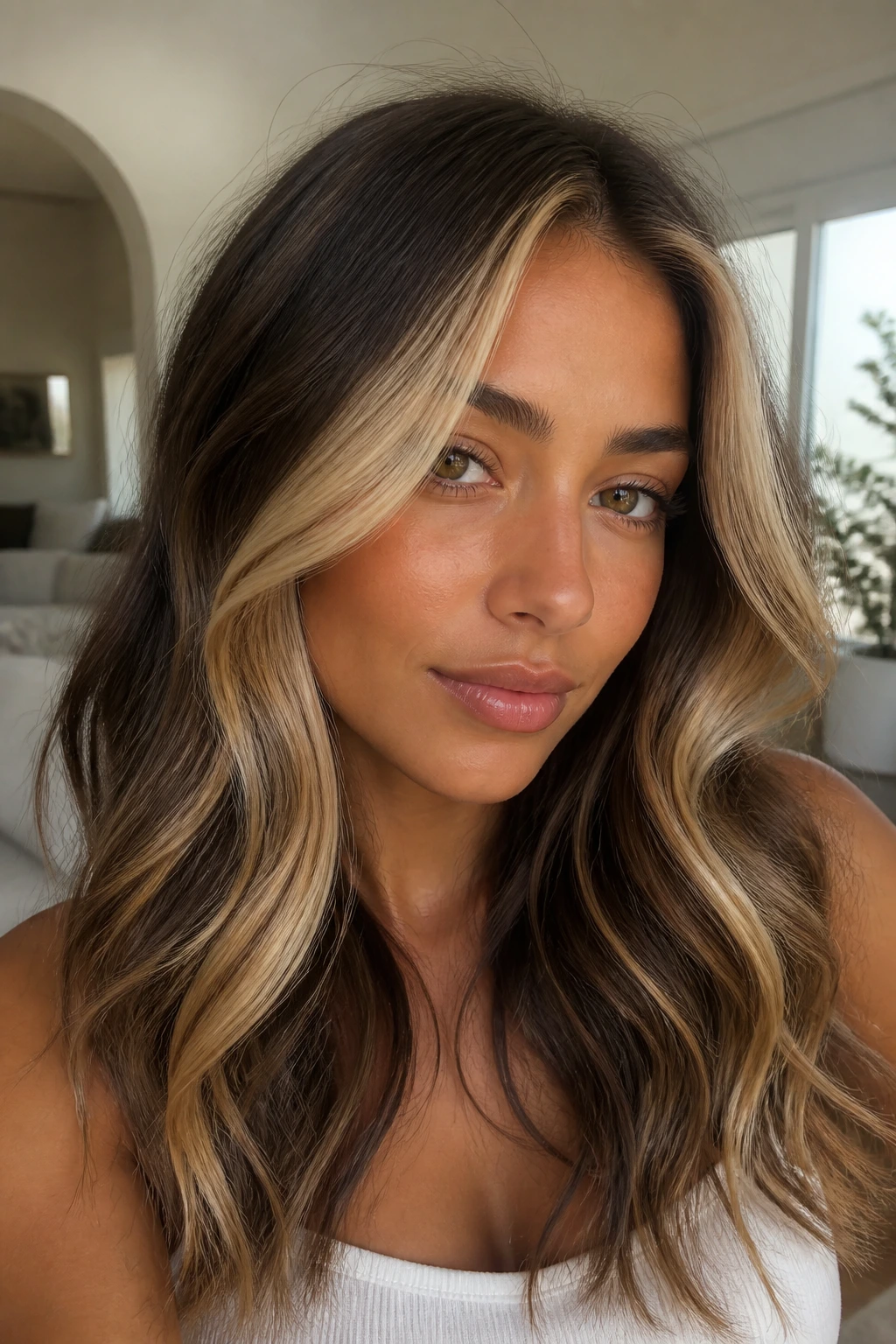
Flavor Enhancement: A clear gloss or beige-gold glaze every few weeks can bring back that soft reflective finish when the color starts looking tired. It doesn’t have to change the shade much to make the whole head look fresher.
Customization: Add slightly deeper lowlights if your hair feels too pale against tan skin, or widen the face-framing pieces if you want a stronger brightening effect without changing the rest of the color.
Serving Suggestions: Soft curtain bangs, a center part, or textured waves all make warm blonde placement easier to see. Straight, one-length cuts can work too, but they need cleaner contrast to avoid looking like one color block.
Make-It-Yours: For olive undertones, keep the blonde more beige and less yellow. For peach-golden skin, you can push the honey a little warmer. If you’re low-contrast naturally, keep the root shadow soft so the color doesn’t wear you.
Maintenance, Touch-Ups, and Fade Control
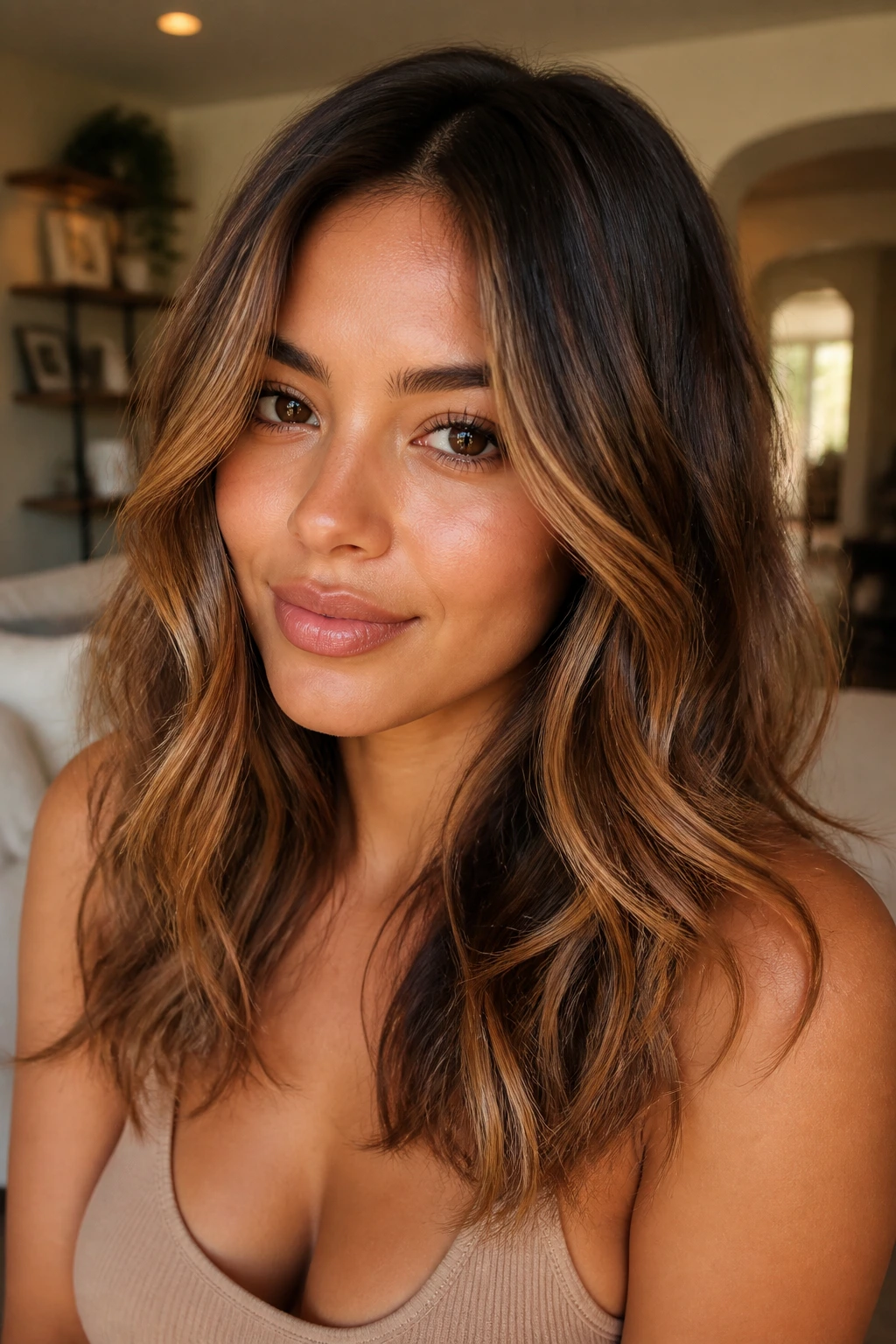
Warm blonde shades look best when you stay ahead of fade instead of waiting until the hair turns dull and brassy. For most balayage and rooted looks, a gloss or toner refresh every 4 to 6 weeks keeps caramel and honey from drifting too far. Highlighted blondes with more lift usually need a salon check every 6 to 8 weeks, especially around the face frame and part line.
Wash less often if you can. Two to three washes a week is kinder to warm blonde than daily shampooing, and it keeps the gloss from sliding out too quickly. Use lukewarm water, not hot. Hot water opens the cuticle and lets the warmth escape faster, which is annoying because the hair often turns uneven rather than just faded.
If your shade has a lot of gold or amber, use purple shampoo only when the color gets too yellow. If it starts to lean orange, blue shampoo is the better fix. Those are not interchangeable, and using the wrong one can make the tone muddy. For bleached ends, a weekly bond-building treatment or a rich mask can keep the hair from feeling rough after styling.
Heat tools need discipline here. Keep the iron under 350°F if the hair is lightened, and always use protectant. Pool water and sun can both rough up honey tones fast, so if you’re swimming, wet the hair with clean water first and add a leave-in conditioner before you get in. Small habit. Big difference.
Variations and Adaptations to Try
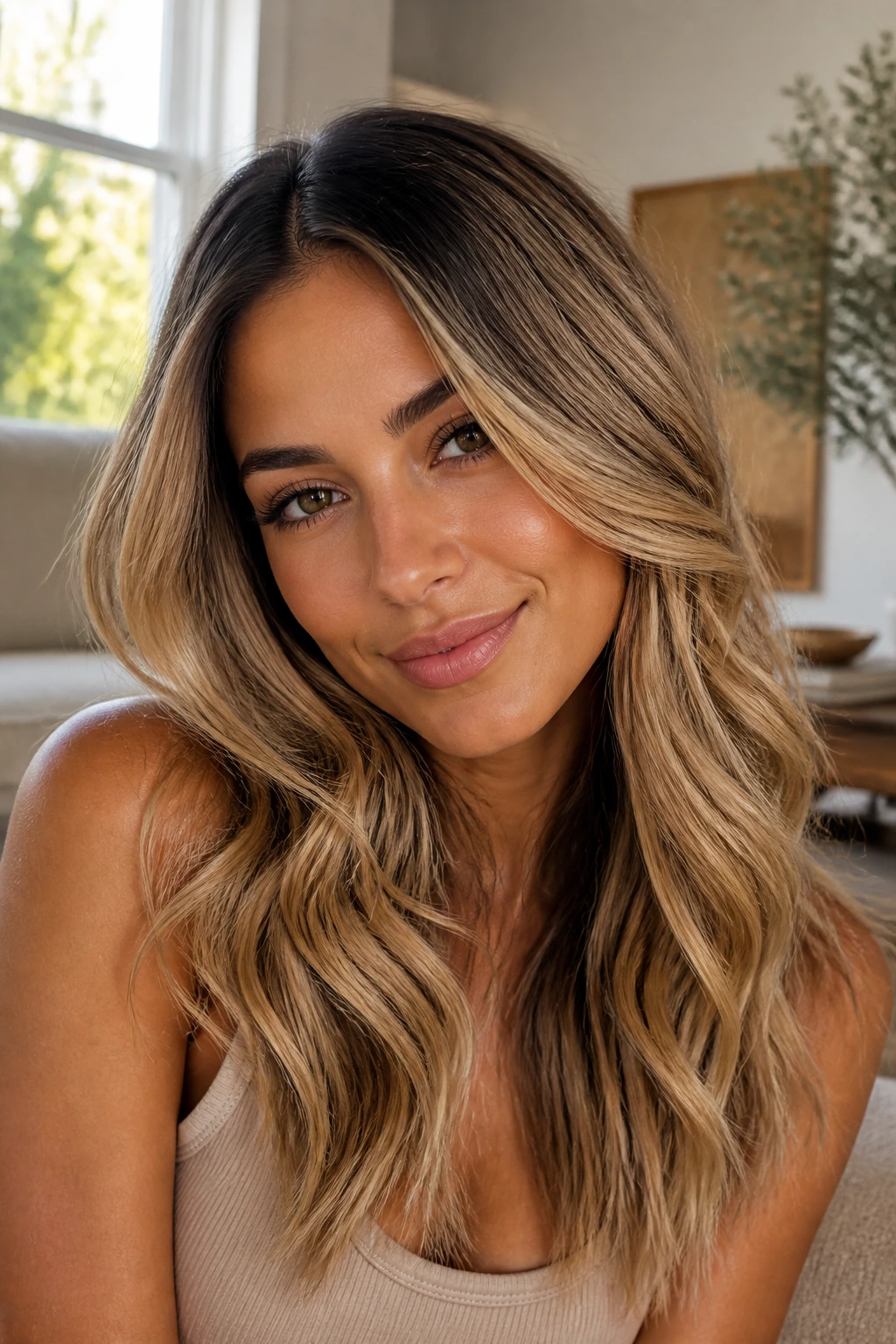
Soft Beige-Only Version: If you want less gold and more restraint, ask for a beige blonde with only a whisper of honey at the ends. It keeps tan skin bright without leaning too yellow, and it works well if you wear cooler makeup or silver jewelry.
Lived-In Rooted Version: Keep the root shadow deeper and let the lightest pieces stay mid-length to end. This cuts down on maintenance and makes the grow-out line almost disappear, which is ideal if you don’t want frequent salon appointments.
Curly Placement Version: For curls and coils, ask for paint placement that follows the curl pattern rather than random surface streaks. The honey shows better when it lands where the curl opens, and the whole style looks more intentional.
Brighter Face-Frame Version: Keep most of the head dimensional, then lift only the front panels and temples to a warm level 8 or 9. That gives tan skin a strong brightening effect without sacrificing depth everywhere else.
Copper-Touched Version: If standard caramel feels too familiar, add a soft copper glaze through the mids. It’s warmer, spicier, and especially nice on tan skin with peach undertones.
Common Mistakes to Avoid
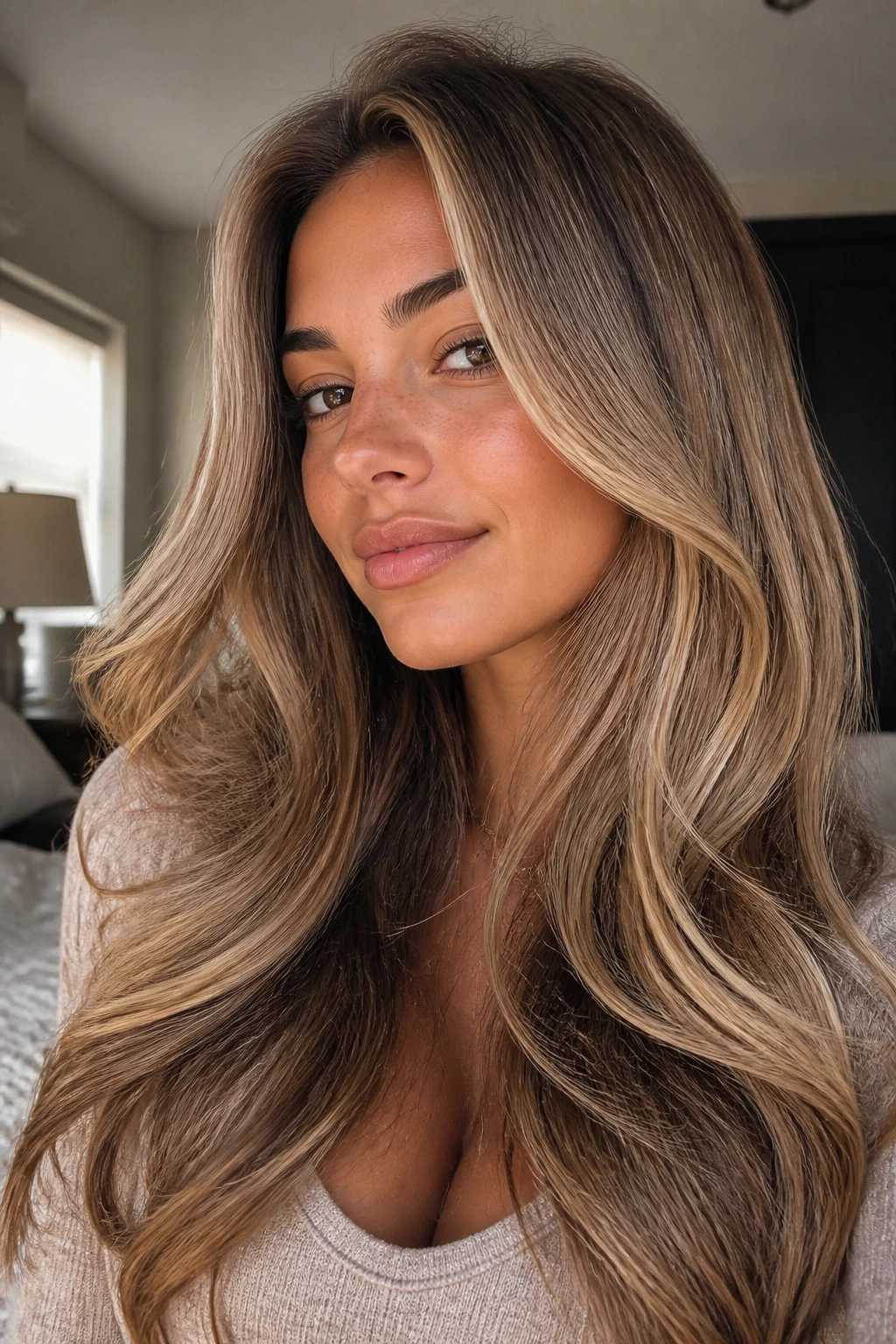
Going too ash, too fast: Tan skin often needs some warmth in the hair to look alive. If the shade goes gray, dusty, or flat, the fix is usually a beige-gold gloss rather than another round of lifting.
Lightening everything equally: One-tone blonde can make tan skin look heavier, not brighter. Keep depth at the root or underneath so the color has shape.
Ignoring porosity: Dry, porous ends soak up toner and fade fast. If the ends are already fragile, ask for softer lift or a rootier design so the lightest pieces are not all concentrated on damaged hair.
Skipping the gloss: Fresh highlights without a finishing gloss can look raw. A gloss softens the line between caramel and honey and makes the result look blended instead of striped.
Using the wrong shampoo: Purple shampoo on orange brass won’t fix orange brass. Blue shampoo handles orange better; purple is for yellow. That one mistake costs a lot of people a week of bad color.
Placing brightness too low or too high: If all the lightness sits only at the ends, the face stays dull. If it sits only at the crown, the style can look stripy. The sweet spot is usually face frame, mid-lengths, and a few lighter ends.
Frequently Asked Questions
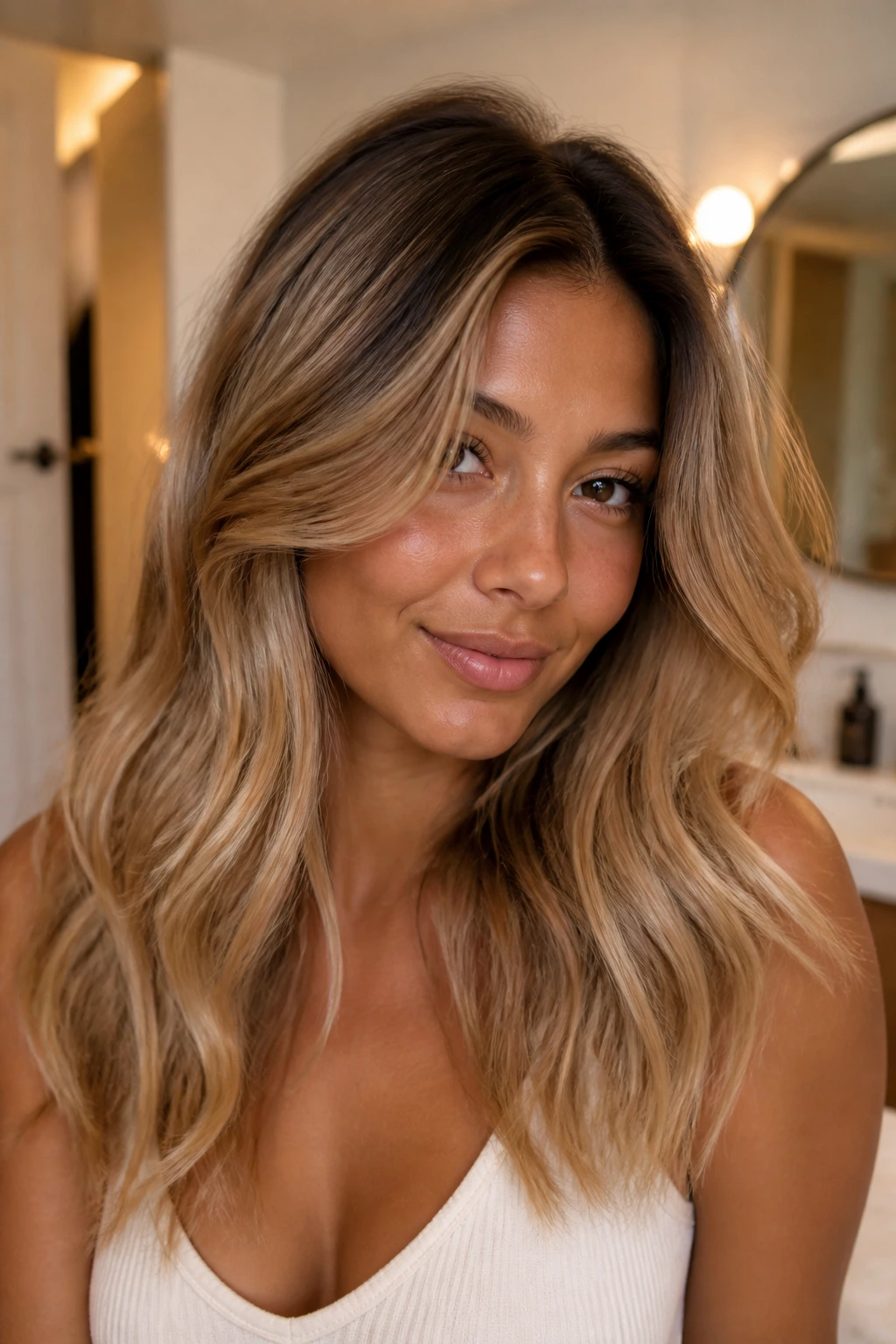
Will caramel blonde look good on olive tan skin?
Yes, if you keep it neutral-warm rather than extra gold. Olive tan skin usually does better with beige caramel, toffee, or honey that has a little brown in it, not bright yellow.
Do I need bleach to get honey blonde pieces?
For darker brown hair, usually yes — at least some lightening for visible honey. The amount depends on your starting level and how bright you want the pieces, but a gloss alone won’t create true honey on a dark base.
What’s better for tan skin, balayage or highlights?
Balayage is softer and grows out with less maintenance, while foiled highlights give more brightness and contrast. If you want a subtle warm glow, balayage is easier; if you want face-framing pop, highlights do more work.
How do I stop caramel blonde from turning orange?
Use the right toner, not just more shampoo. Blue shampoo helps if the blonde shifts orange, but the deeper fix is a beige or neutral gloss at the salon when the tone starts to drift.
Can I keep my natural dark roots with these colors?
Absolutely. In fact, a dark root is one of the best ways to make warm blonde flatter tan skin. It gives the color structure and makes grow-out much less annoying.
What if my tan skin is more neutral than warm?
Neutral tan skin can wear both warm and beige-blonde shades. I’d still stay away from extreme ash or platinum unless the color is balanced with some gold or honey, because neutral skin can look washed out if the hair gets too cold.
How often will I need touch-ups?
Most rooted balayage looks can go 8 to 12 weeks between major salon visits, with gloss refreshes sooner if needed. High-contrast face-framing pieces usually need attention sooner because they show regrowth faster.
Can these colors work on curly hair?
Yes, and the curl pattern actually makes warm blonde look richer because the light lands on each bend differently. The only catch is placement — curls need color painted where the hair opens, or the highlights disappear once the hair dries.
Warm Color, Soft Grow-Out
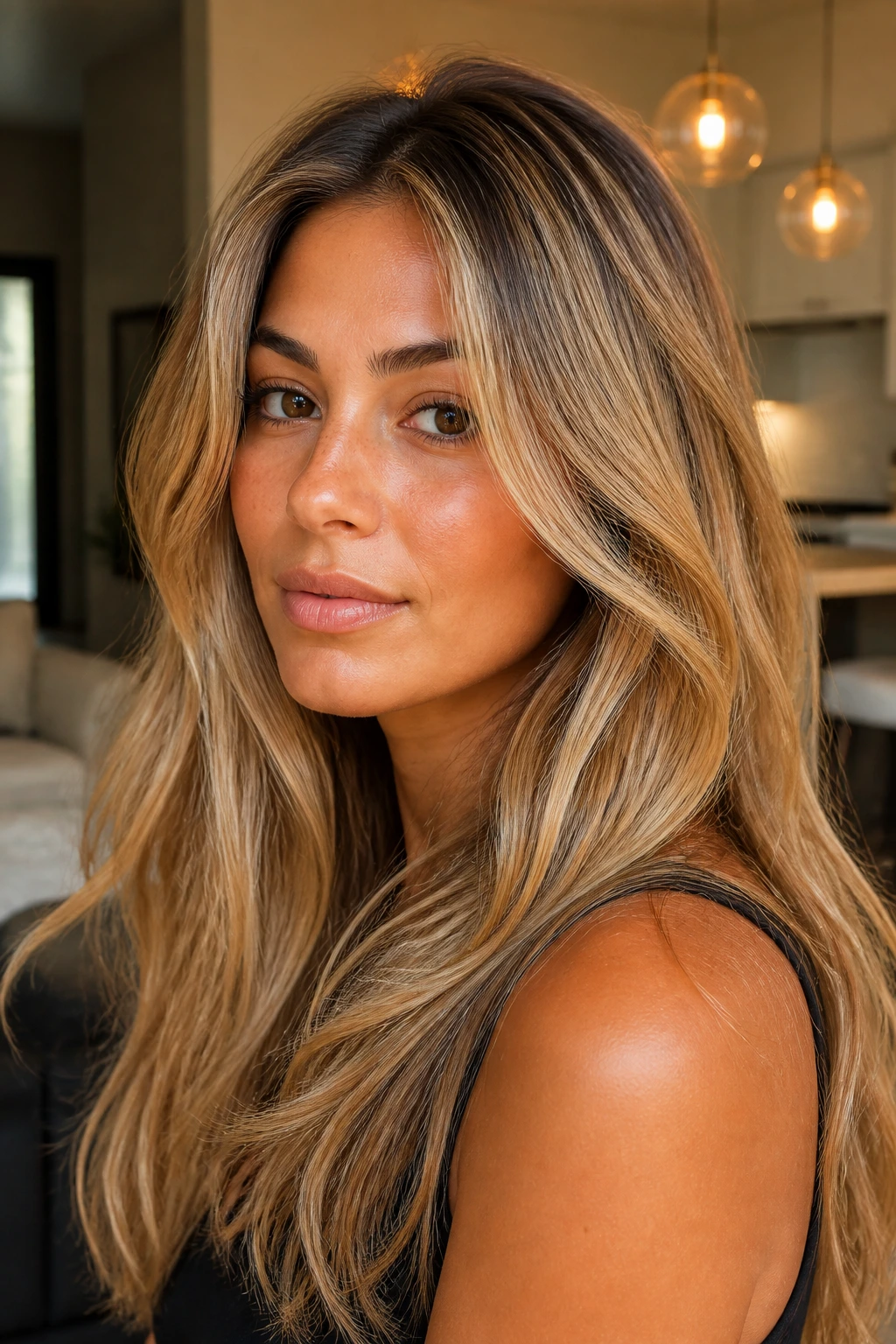
Warm blonde on tan skin works best when it looks like it belongs there. Not forced. Not washed out. Just a clean mix of depth, warmth, and light that echoes the skin instead of competing with it.
That’s why the best caramel and honey shades are rarely the palest ones in the room. They’re the ones with a root, a gloss, and a little shadow around the face. Bring two reference photos to a color appointment — one in daylight, one indoors — and you’ll get closer to the shade that actually fits your skin, not just the one that looked good on someone else.