



Square faces have a kind of honesty to them. The jaw is there. The angles are there. And on dark hair, those lines look even sharper because deep brunette, espresso, and black shades hold shape like ink on white paper. The best hairstyles for dark hair and square faces don’t try to hide that structure. They bend it, soften it, and let it read as strong instead of severe.
That’s the part most generic haircut advice misses. A square face doesn’t need to be “fixed.” It needs line work. A blunt chin-length cut can look expensive on one person and boxy on another; a soft wave that falls just below the cheekbone can do more shaping than a dozen face-framing pieces sprayed into place. Dark hair makes the whole thing more obvious, which is why the right cut matters so much here.
I’ve always liked styles that give square faces a little diagonal movement. Side parts, curtain bangs, broken-up layers, loose bends, and asymmetry all do useful work without looking fussy. They keep the eye moving. They keep the jaw from becoming the only thing you notice. And because dark hair tends to show shine and silhouette before it shows detail, these styles rely on shape first, then texture.
Why These 18 Looks Earn Their Spot
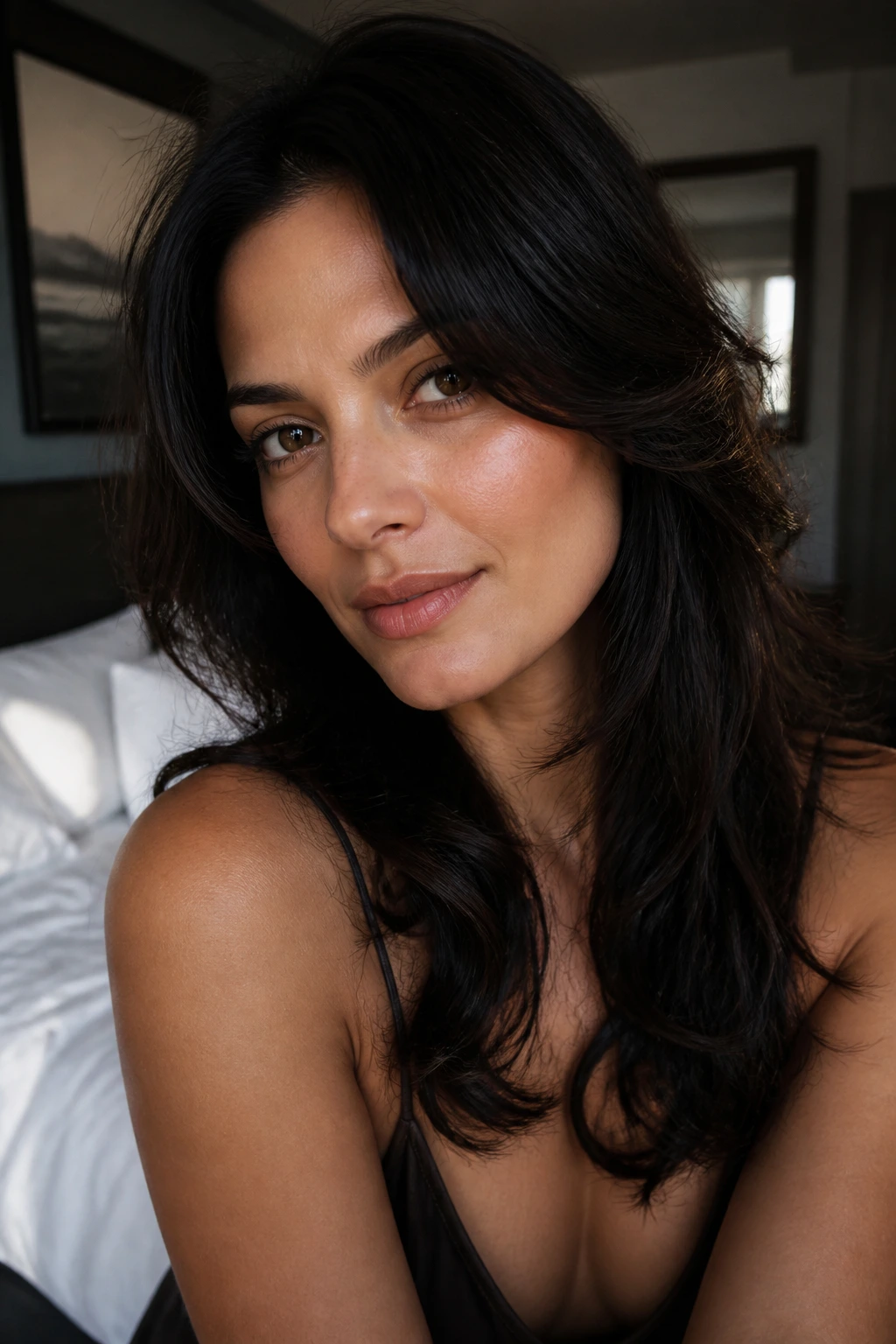
- They soften the jaw without hiding your face: These styles break up the straight line from temple to chin, which is exactly where square faces can start to feel heavy.
- They make dark hair look intentional: On deep brunette and black hair, shape reads fast. A clean part, a bend at the ends, or a side sweep changes the whole mood.
- They work with both polish and air-dry texture: You can wear these looks neat, brushed, and glossy, or a little undone with the same cut.
- They give thick hair somewhere to go: If your hair builds out instead of down, layers and diagonals stop it from turning into one big block.
- They keep fine hair from collapsing: The right cut lifts the crown, gives the ends some life, and keeps dark hair from looking flat and heavy.
- They scale up or down easily: A few of these are everyday cuts. A few are evening styles. Most can do both with a change in part or finish.
What a Square Face Needs From Dark Hair
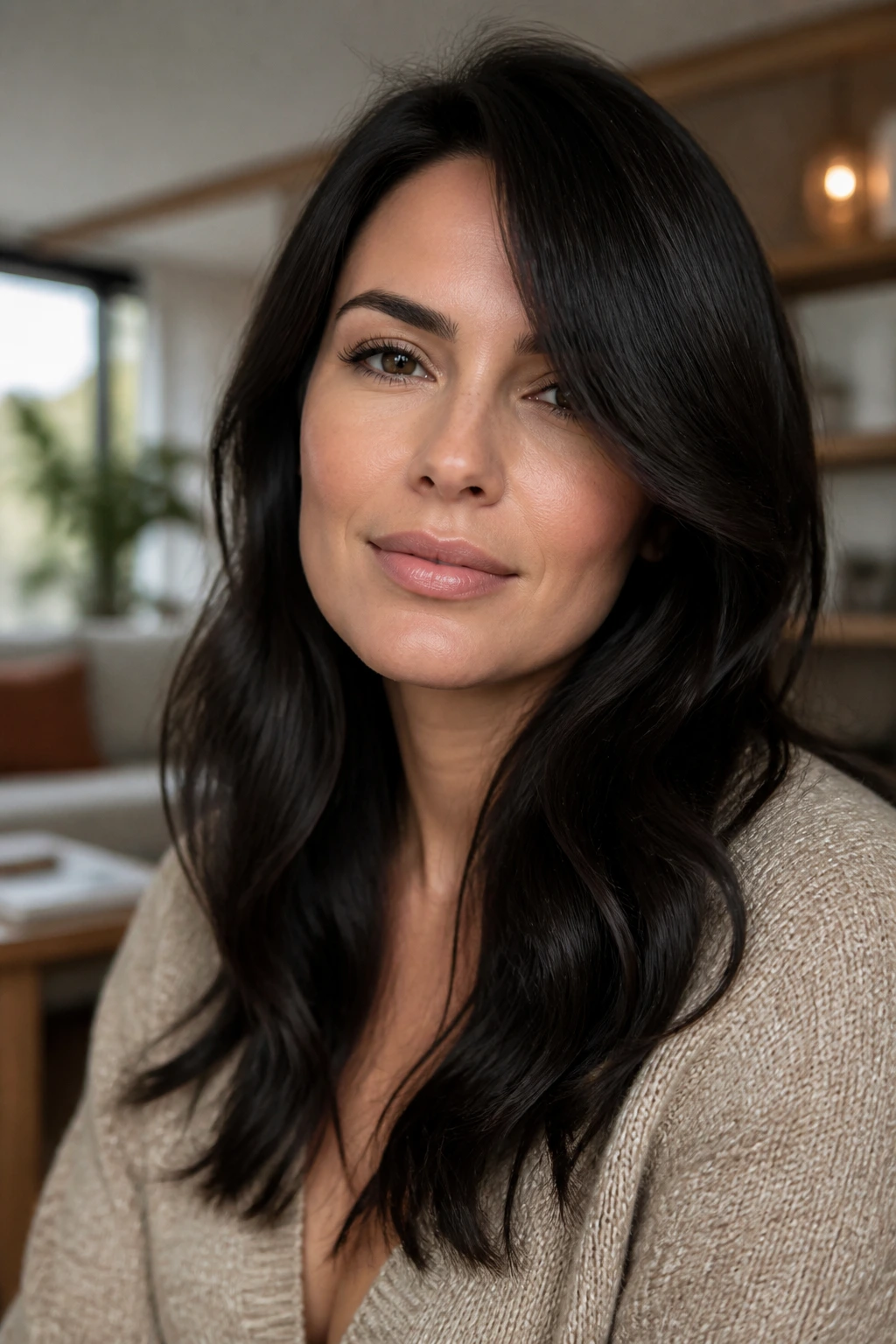
A square face usually has a wider forehead, a strong jaw, and cheekbones that sit in the same conversation as the jawline. That symmetry is striking, but it can make a blunt hairstyle feel extra blunt. The trick is not to erase the angles. It’s to interrupt them. Soft curves, diagonal parts, and pieces that hit around the cheekbone or below it keep the eye moving instead of parking it at the jaw.
Dark hair adds another layer. It doesn’t scatter light the way highlighted hair does, so every line shows more clearly. That means a flat part, a hard edge, or a stiff blowout can read louder than you expect. A little bend, a little lift, a little unevenness at the front — those details matter more on espresso hair than they do on lighter shades.
Length can help, but only if it has motion. One-length hair past the shoulders can still look boxy if it falls in a curtain. On the other hand, a collarbone lob with soft internal layers can make a square face look longer and lighter without losing structure. I tend to like cuts that sit just below the jaw or skim the collarbone, because they give the face room to breathe.
There’s one useful exception. If you love sharpness, you do not have to avoid it completely. A crisp bob, a sleek bun, or a straight long style can look very sharp in a good way. The difference is what happens near the face. Leave a few pieces out. Move the part off center. Add a bend or a wave. That little bit of interruption is doing more than people think.
1. Side-Swept Layered Lob
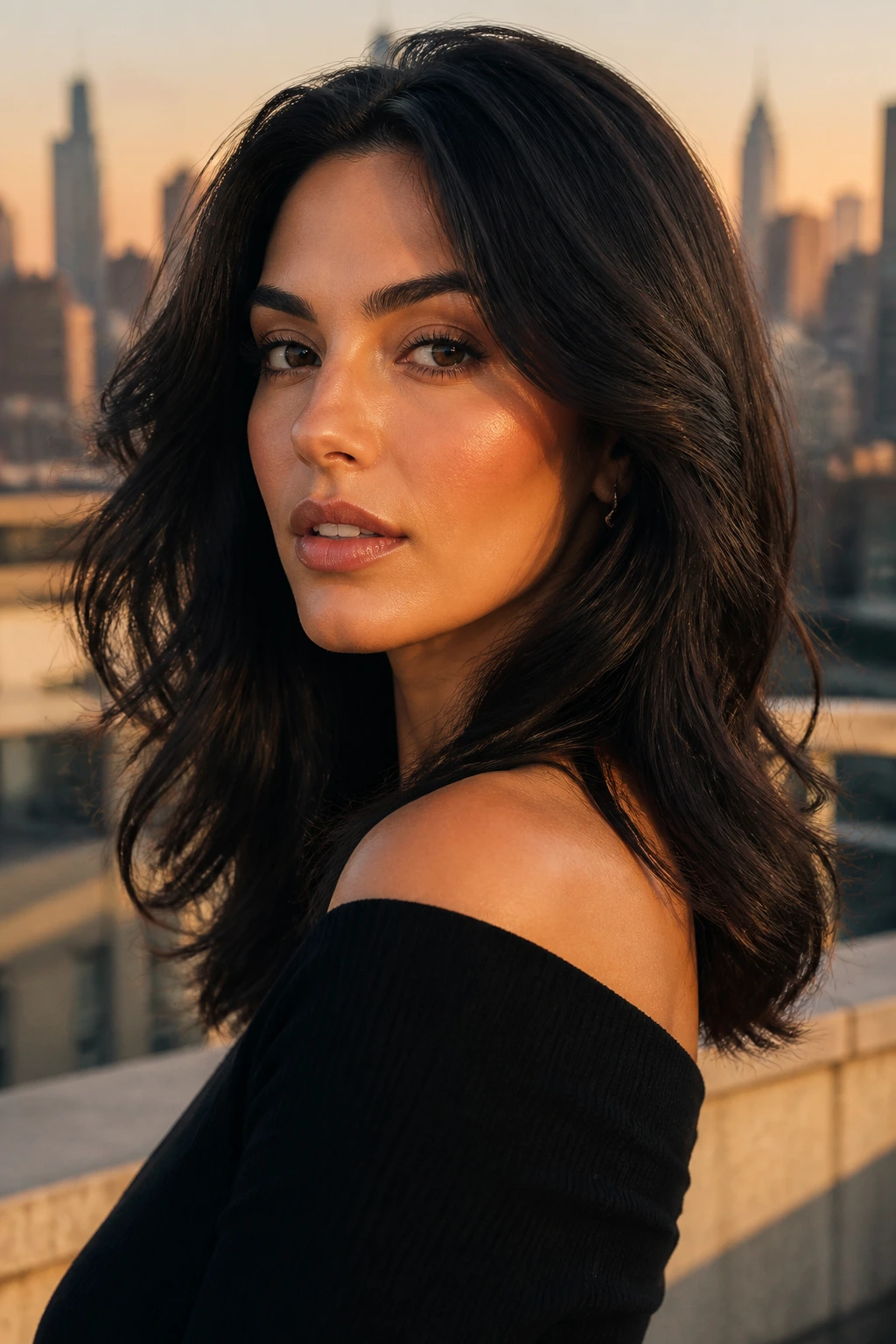
A side-swept layered lob is one of those cuts that quietly does a lot of work. The length usually lands somewhere between the collarbone and the top of the shoulders, which means it skims past the jaw instead of stopping right on it. On dark hair, that extra length gives the silhouette some drama, while the side part keeps the face from reading too square.
The layer placement is the whole story here. Ask for movement that starts around the cheekbone or just below it, not a stack of short layers that puff up near the temples. That lower placement lets the front pieces fall in a clean diagonal, which softens the widest part of the face. I like this cut best with a loose bend through the midlengths and ends. Poker-straight can feel a little formal; a soft wave gives the hair a bit of shadow and air.
Styling note
Use a 1¼-inch curling iron, wrap sections away from the face, and brush the curls out once they cool. A pea-sized amount of shine serum on the ends keeps dark hair looking glossy instead of fuzzy.
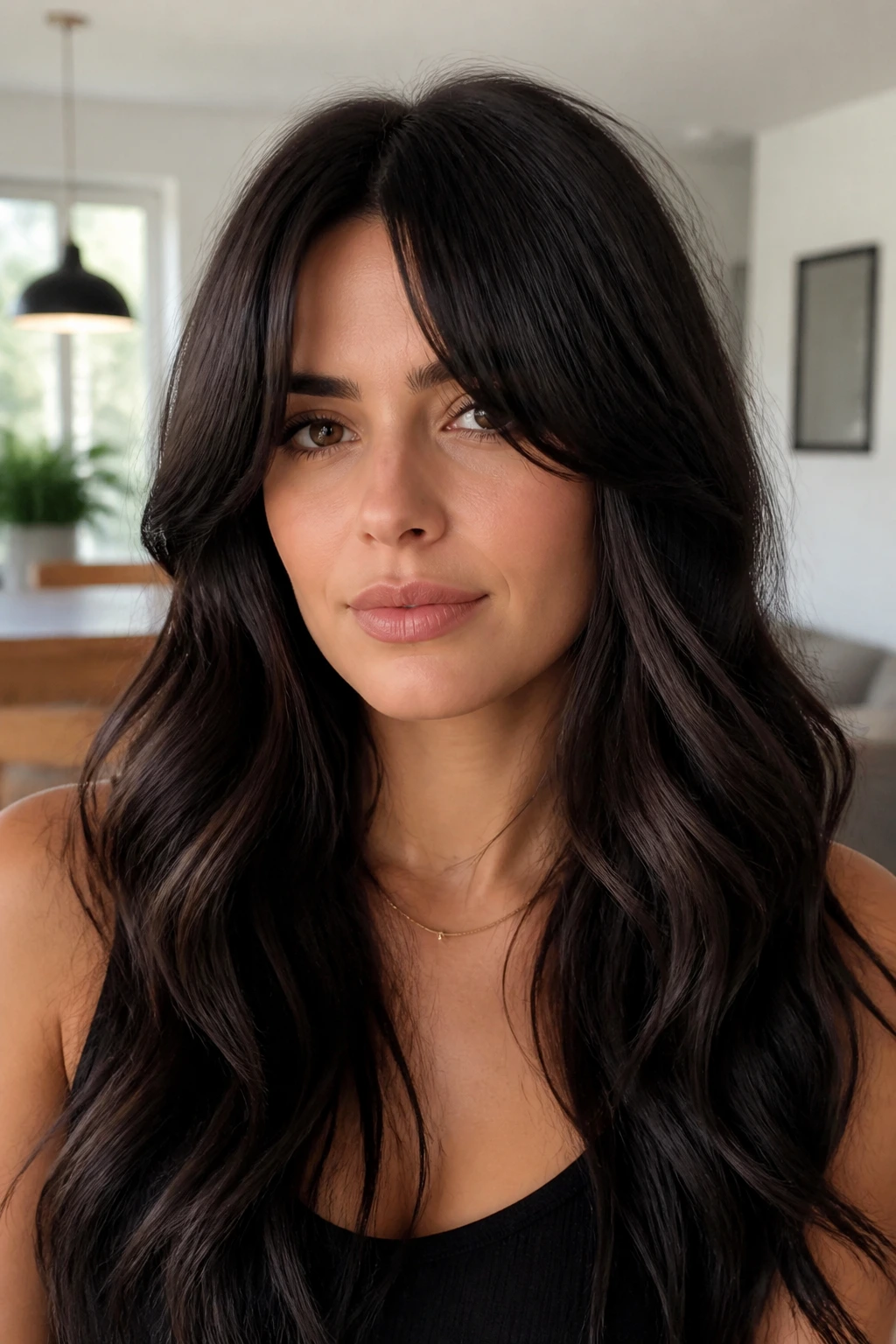
2. Curtain Bangs with Long Waves
Curtain bangs can be a very good thing on a square face, but only if they stay soft and flexible. The center split opens up the forehead, while the longer outer pieces graze the cheekbones and break up the jawline in a nice, lazy way. On dark hair, that shape reads especially well because the bangs create a visible frame without looking heavy.
What I like most here is the contrast. The fringe does the face-softening at the front, and the rest of the hair stays long and loose enough to balance the stronger angles below. If your hair is thick, keep the bangs light and feathered. If it’s fine, ask for a little extra length through the sides so the fringe doesn’t disappear into the rest of the cut.
How to wear it
Blow-dry the bangs with a medium round brush, rolling them away from the face for the first 2 inches, then letting them fall open. The trick is to keep the shortest point around the bridge of the nose or just below the brow, not at eyebrow length. Too short and they can feel choppy against a square jaw; a bit longer and they melt into the rest of the style.
3. Deep Side Part Old-Hollywood Waves
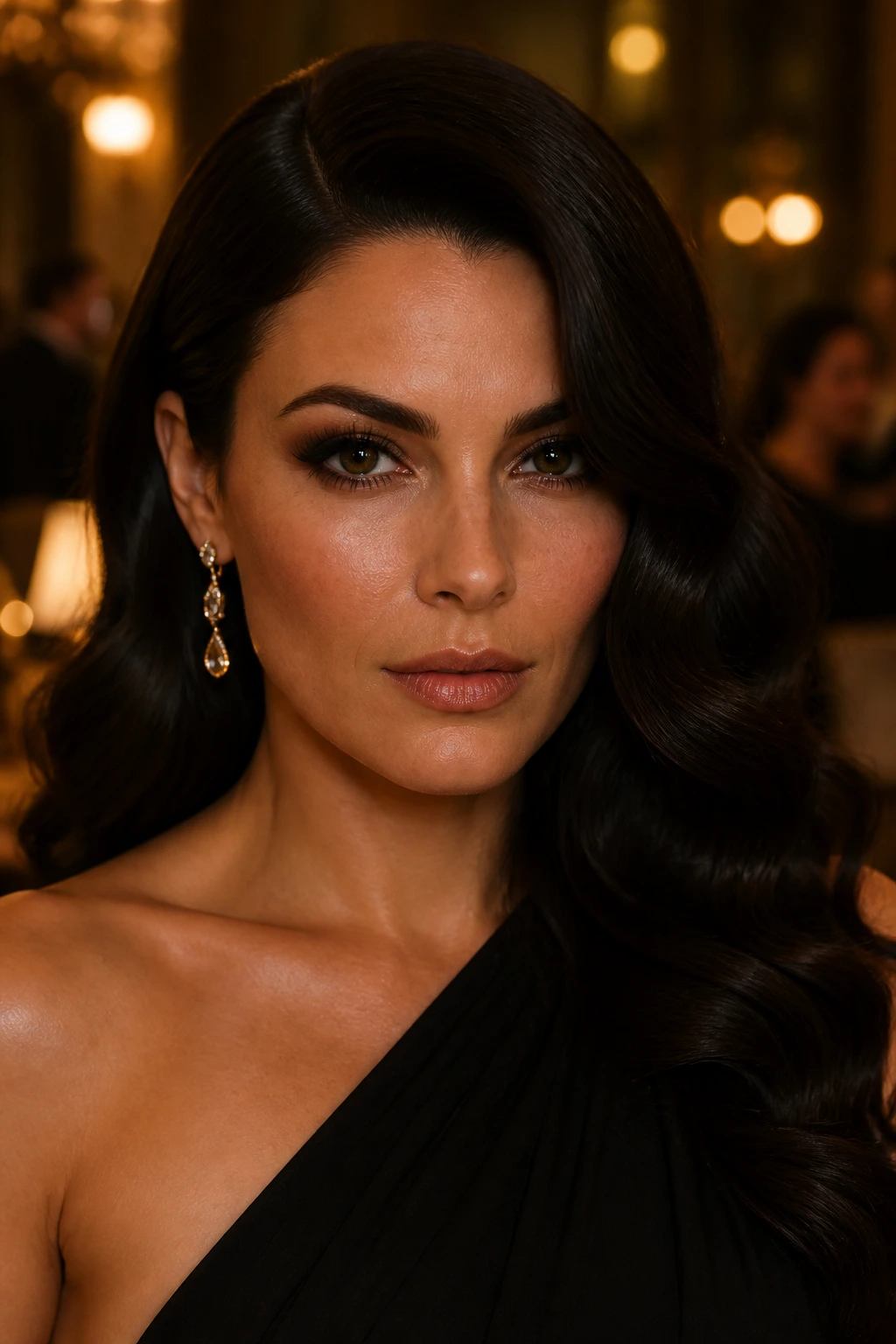
This is the glam option, and it earns every ounce of drama. A deep side part breaks the symmetry of a square face fast, which is exactly why it works. The sweep across the forehead shifts attention off the jaw, and the polished wave pattern adds curves where a square face needs them most. Dark hair loves this look because shine shows up in the wave ridges like polished ribbon.
The important part is where the waves start. They should begin below the cheekbone, not right at the temples. That keeps the top from getting too wide. If the wave falls over one shoulder, even better. It gives the whole look a diagonal line, and diagonal lines are your friend here.
I would use this style for dinners, events, and any day when you want your hair to look deliberate without looking stiff. It’s not the fastest style to do, but it photographs in a very clean way because dark hair catches the light on the curves, not the flat parts.
4. Textured Collarbone Bob
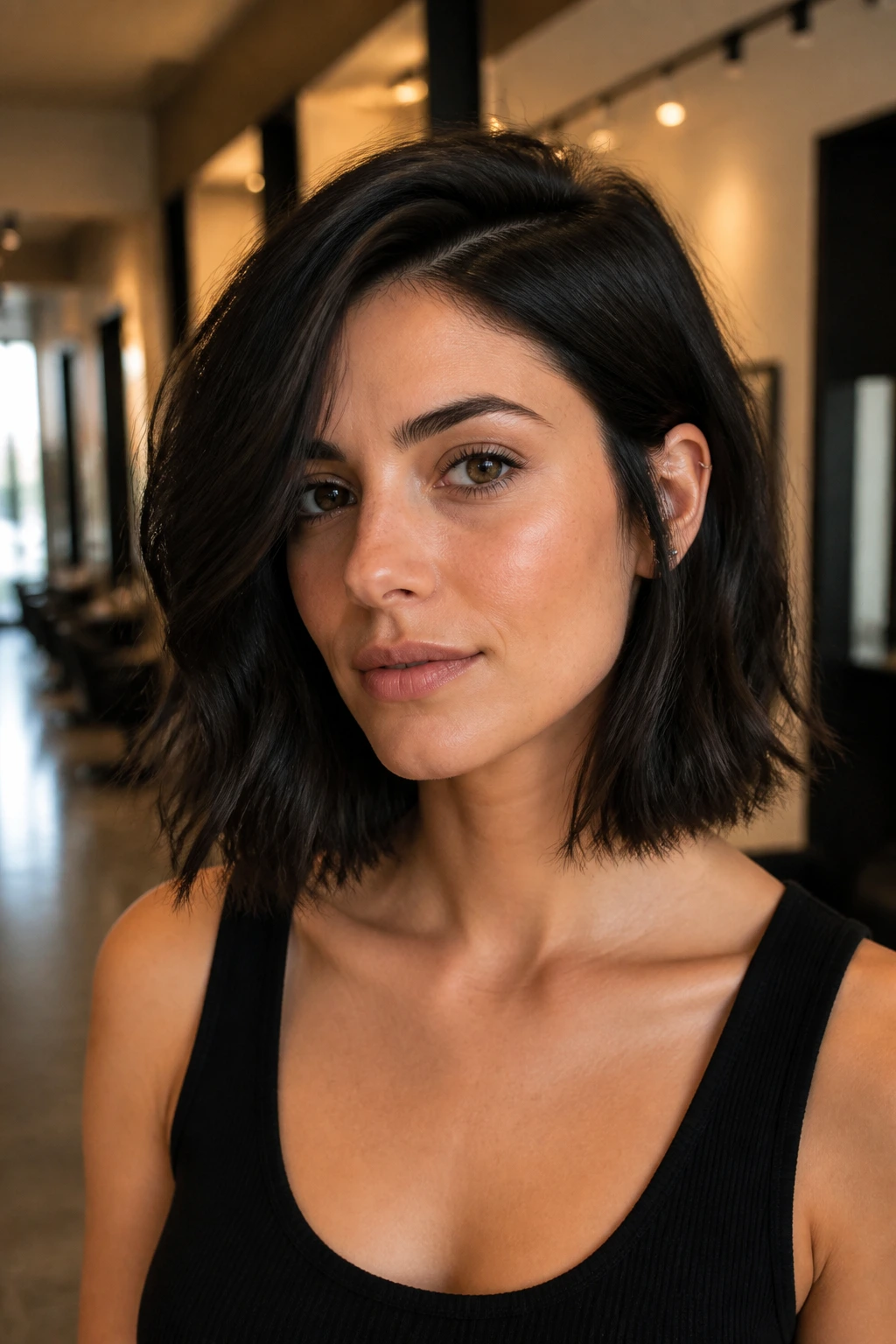
A collarbone bob with texture is the antidote to a boxy blunt cut. The length is short enough to feel current and long enough to skip over the jawline, which matters a lot on square faces. The texture keeps dark hair from turning into one hard block, especially if your hair is dense or naturally straight.
Ask for point-cut ends and a little internal movement through the midlengths. That’s the difference between a bob that looks airy and a bob that feels like a helmet. I like this shape with a slightly off-center part and a bend that tucks one side behind the ear. It breaks up the outline in a small but useful way.
- Best for: thick straight hair, soft waves, and anyone who wants a bob without the bluntness.
- Styling cue: rough-dry the roots first, then add a few bends with a flat iron or curling wand.
- Finish: a dry texturizing spray at the ends gives dark hair a little separation so the cut doesn’t read too dense.
5. Feathered Shoulder-Length Layers
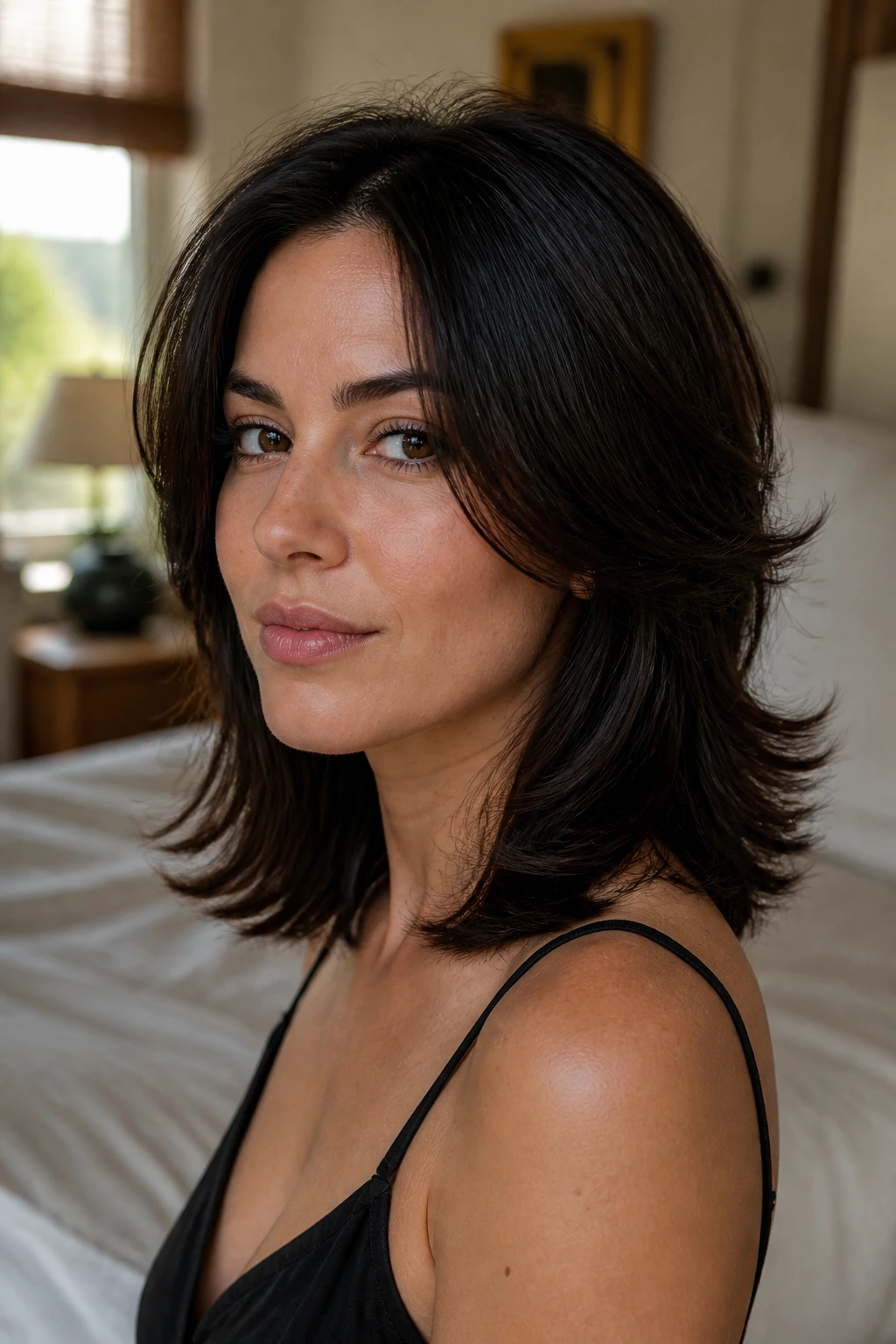
Feathered layers are one of the easiest ways to make square faces look softer without giving up length. The cut usually sits at the shoulders, then fans out lightly through the ends instead of hanging in a single solid curtain. That fan shape matters on dark hair because it stops the silhouette from becoming one flat sheet.
The best version of this cut is not shaggy. It’s controlled, airy, and almost brushed open at the bottom. You want the layers to move away from the jaw rather than sit on top of it. A round-brush blowout makes the feathers show up, but a large curling brush or hot-air brush can do the job if you don’t want to wrestle with a dryer and a separate brush.
Styling note
Flip the front sections away from the face for 5 to 7 seconds with a blow-dryer and round brush, then let them cool in the curve. That tiny bend keeps the cheeks open and the jaw softer.
6. Long Layers with a Glossy Blowout
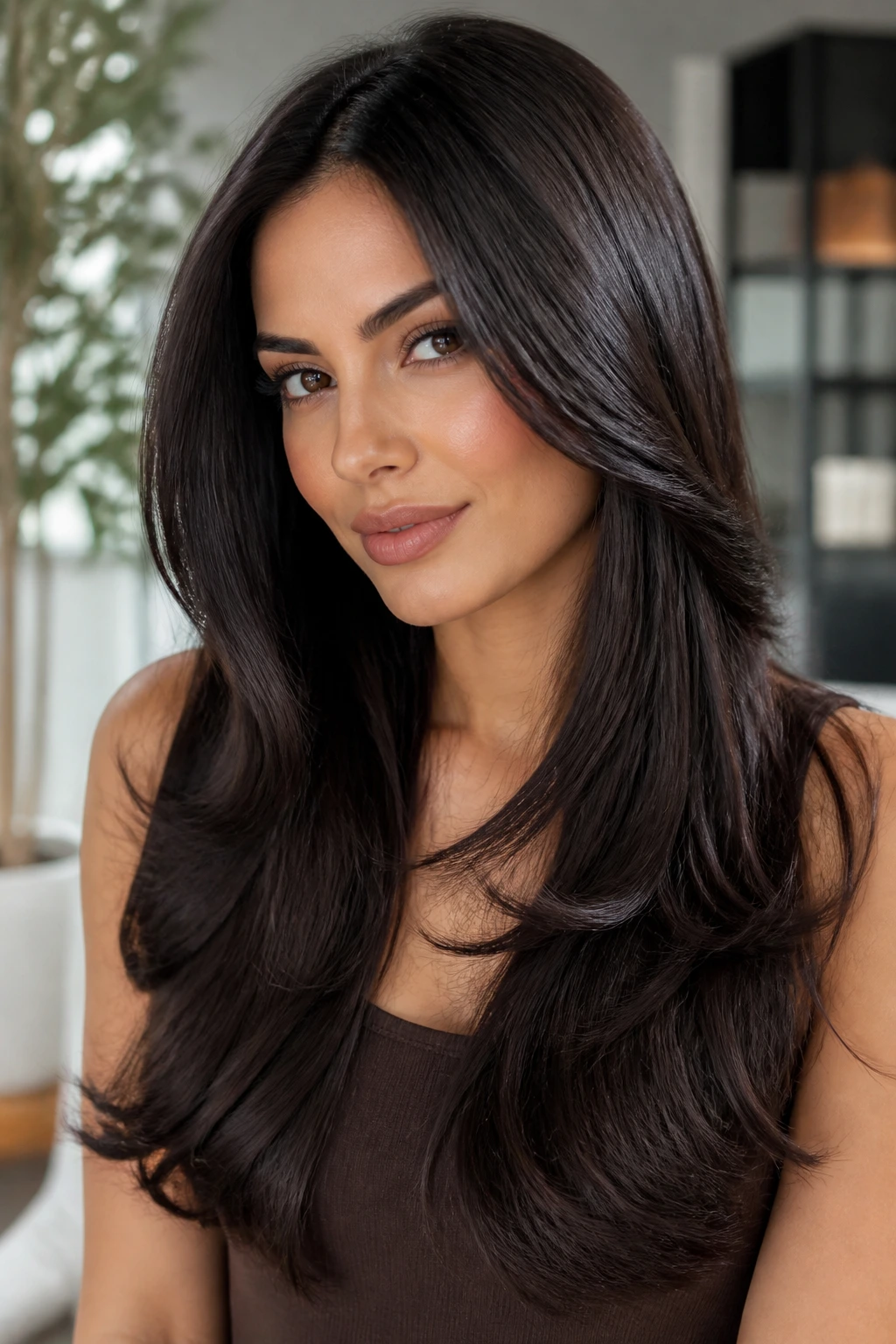
If you don’t want to lose length, this is the safest bet in the group. Long layers preserve the weight of dark hair while taking enough bulk out of the sides to stop the whole shape from drooping. On square faces, the long front pieces should start around the cheekbone or lower, then slide down toward the collarbone. Shorter than that and the cut can get too choppy near the widest part of the face.
A glossy blowout suits this shape because the shine in dark hair becomes part of the design. The hair should look smooth at the root, lifted at the crown, and softly curved through the ends. I’d skip tight curls here. They can make the silhouette busier than it needs to be. A big round brush or a large-barrel dryer brush is better.
This is one of those cuts that looks expensive even when the styling is modest. That’s not hype. It’s just a good shape on a strong hair color.
7. Soft Shag with Invisible Layers
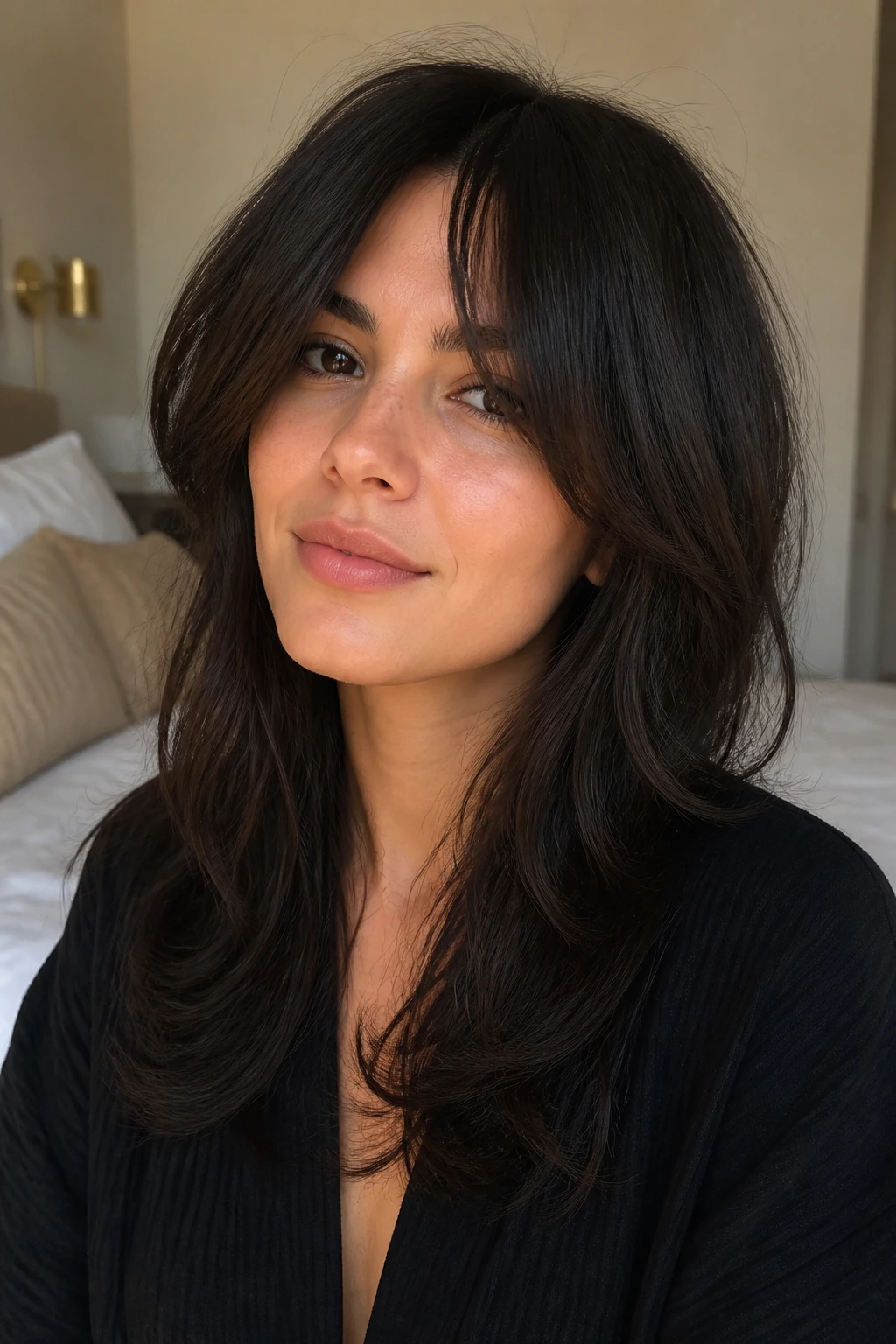
Can a shag work on a square face? Absolutely, if it’s soft enough. A hard shag with a lot of short layers can make the top look puffy and the jaw look stronger. A softer version uses invisible layers instead of choppy ones, so the movement is there without the sharp edges. Dark hair benefits from this because the texture shows in the silhouette rather than in the color itself.
The fringe matters here. Curtain bangs or a long bottleneck fringe keep the front open, and the rest of the cut should fall in loose, irregular pieces around the cheeks and shoulders. You want it a little broken up, not ragged. On wavy hair, this shape can air-dry beautifully with a curl cream and a touch of mousse. On straighter hair, it usually wants a fast bend with a wand.
Best texture match
This is the one I reach for when someone wants style without perfection. If your hair already has a bit of wave, the cut does half the work for you. If your hair is straight, ask for layers that are cut to move, not to spike.
8. Sleek Low Bun with a Side Sweep
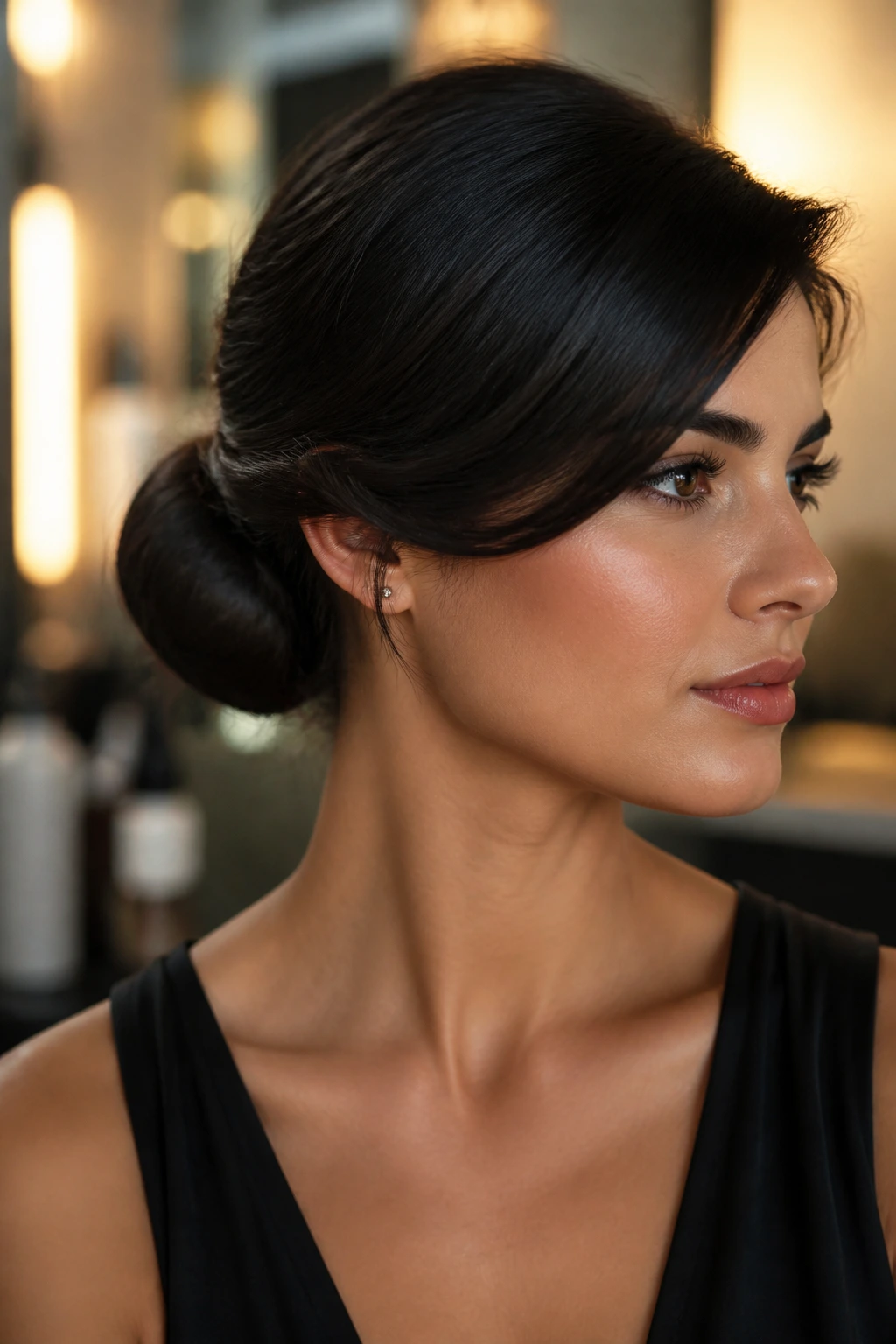
A low bun can look severe on a square face if it’s pinned too tight and parted dead center. But give it a side sweep, soften the front, and it becomes elegant in a much more useful way. Dark hair makes the bun shape read cleanly, so the trick is to keep a little softness at the hairline and near the ears.
I like this style for people who wear strong earrings or open necklines. It clears the face without leaving it bare. The key is to keep some height at the crown and a few loose pieces around the temple. Those little details pull the eye upward and keep the jaw from feeling too boxed in.
If your hair is very long, wrap the bun low at the nape and let the twist sit a touch off to one side. If it’s medium length, a tucked bun with a few bobby pins can still do the job. It doesn’t need to be elaborate.
9. Chin-Length French Bob with a Bend
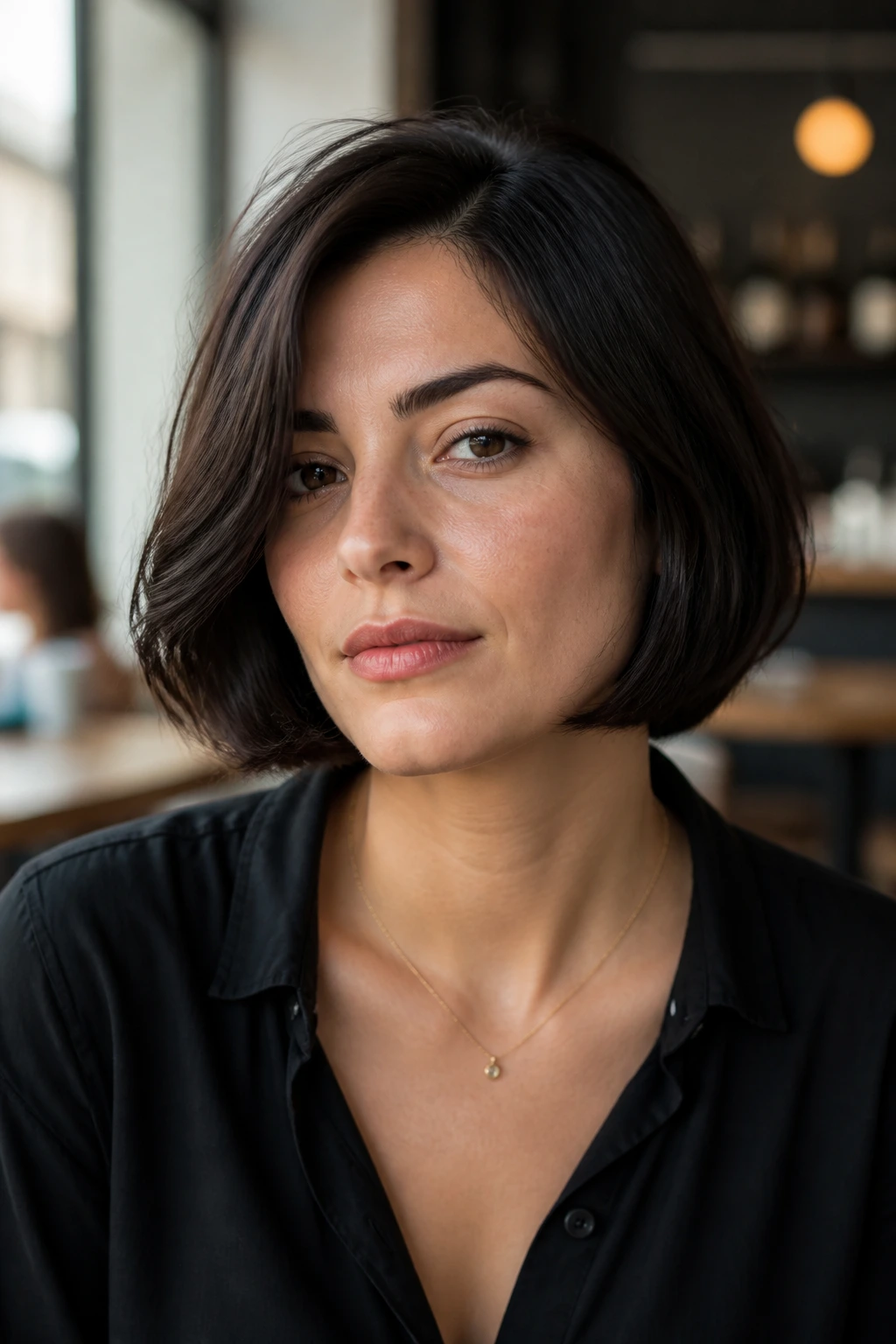
A chin-length bob sounds risky for square faces, and I get why. If it’s cut blunt and worn straight, it can land right on the jaw and make everything look wider. But a French bob with a soft bend is a different animal. The line still feels chic, only now it curves a little, and that curve is the part that matters.
The best version is rarely perfectly even. A side part or a slightly off-center part helps, and the ends should tuck under or bend away from the face instead of sitting like a ruler line. Dark hair makes the shape look especially graphic, so the movement has to be intentional. Use a small round brush or a flat iron bend at the ends, then break the line with your fingers.
This one is for someone who wants short hair and isn’t afraid of a little maintenance. It looks amazing with a clean neckline and a sweater or collared shirt. Sharp, but not harsh.
10. Half-Up Crown Volume Waves
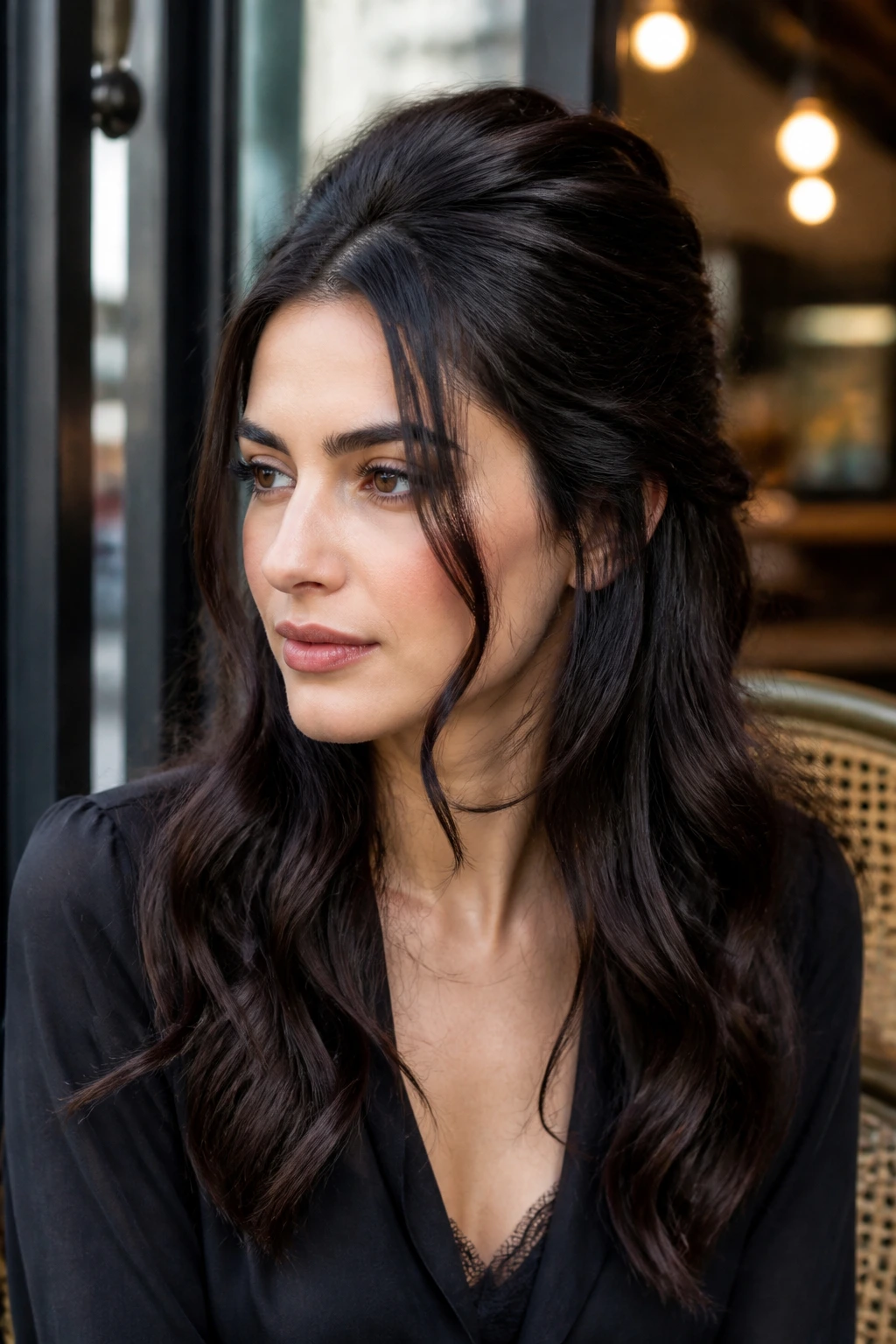
Half-up styles are underrated on square faces. They let you build height at the crown, which subtly lengthens the face, while the loose bottom section keeps the jawline from feeling too exposed. Dark hair loves this because the top section creates a strong silhouette and the lower waves keep the whole thing from turning rigid.
The trick is volume placement. You want lift at the crown, not at the sides of the temples. That lift changes the proportions in a good way. Pull the top half back loosely, secure it with a clip or small elastic, then tug the crown just enough to create height. Leave two front pieces out if you want even more softness around the jaw.
This is one of my favorite “looks like effort, takes less effort” styles. It’s friendly to second-day hair too. A little dry shampoo at the roots and a few bends through the lengths usually do the job.
11. Side-Swept Pixie with a Soft Fringe
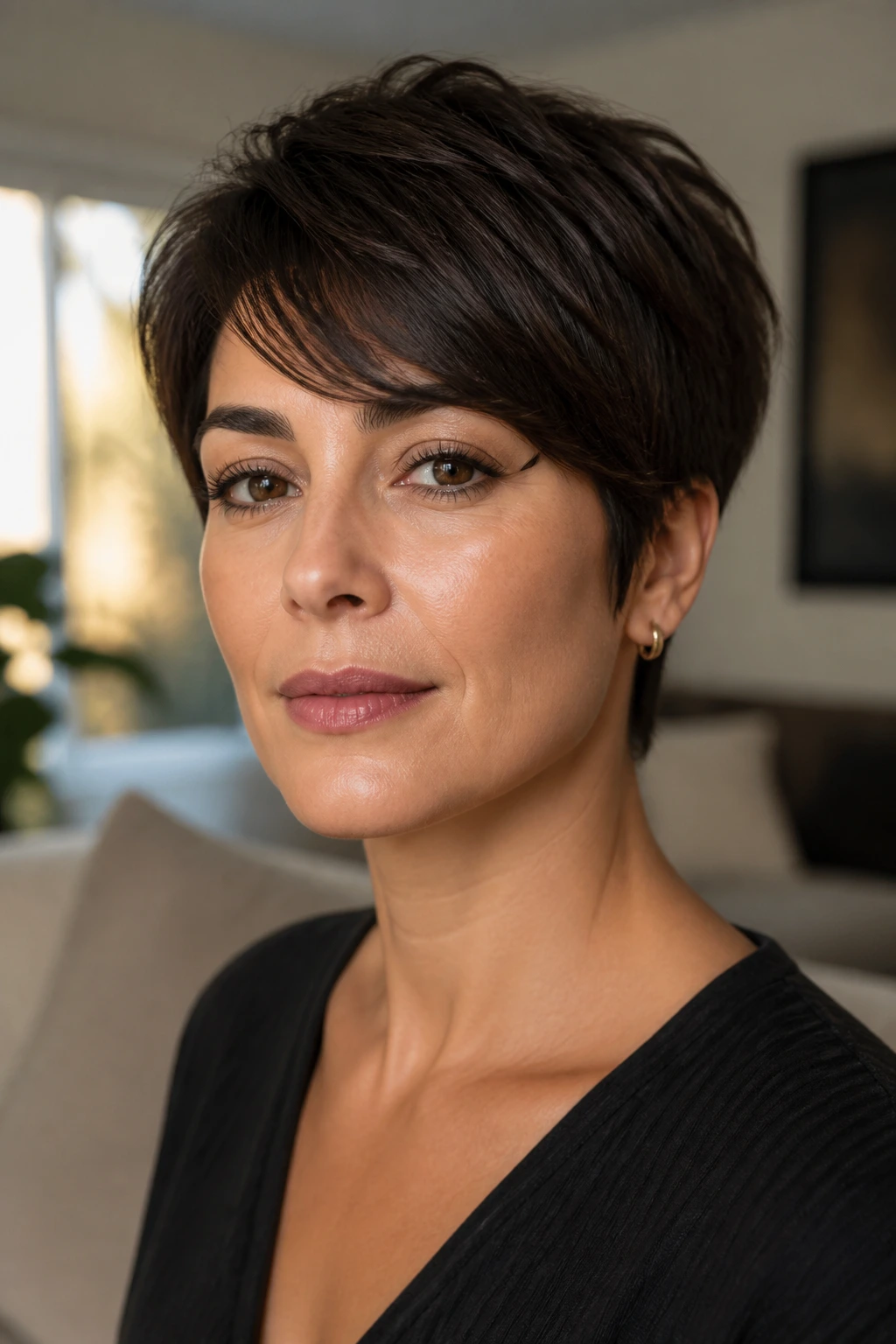
Short hair can absolutely flatter a square face. The mistake is going too clean and too even. A side-swept pixie with a soft fringe keeps the cut compact but stops it from feeling hard. Dark hair shows the shape of a pixie sharply, so the front pieces need a little softness to balance the geometry.
Ask for more length on top and across the fringe than you think you need. That extra hair can be swept over the forehead and feathered toward one eyebrow, which shifts attention away from the jaw. If the sides are too tight and the top is too flat, the whole look goes severe fast. A bit of piecey texture keeps it fresh.
What to watch for
Use a light styling cream or a tiny touch of paste, not a heavy wax that clumps the front together. The best pixies on square faces have movement at the top and a little air around the cheekbones.
12. Braided Crown with Loose Tendrils
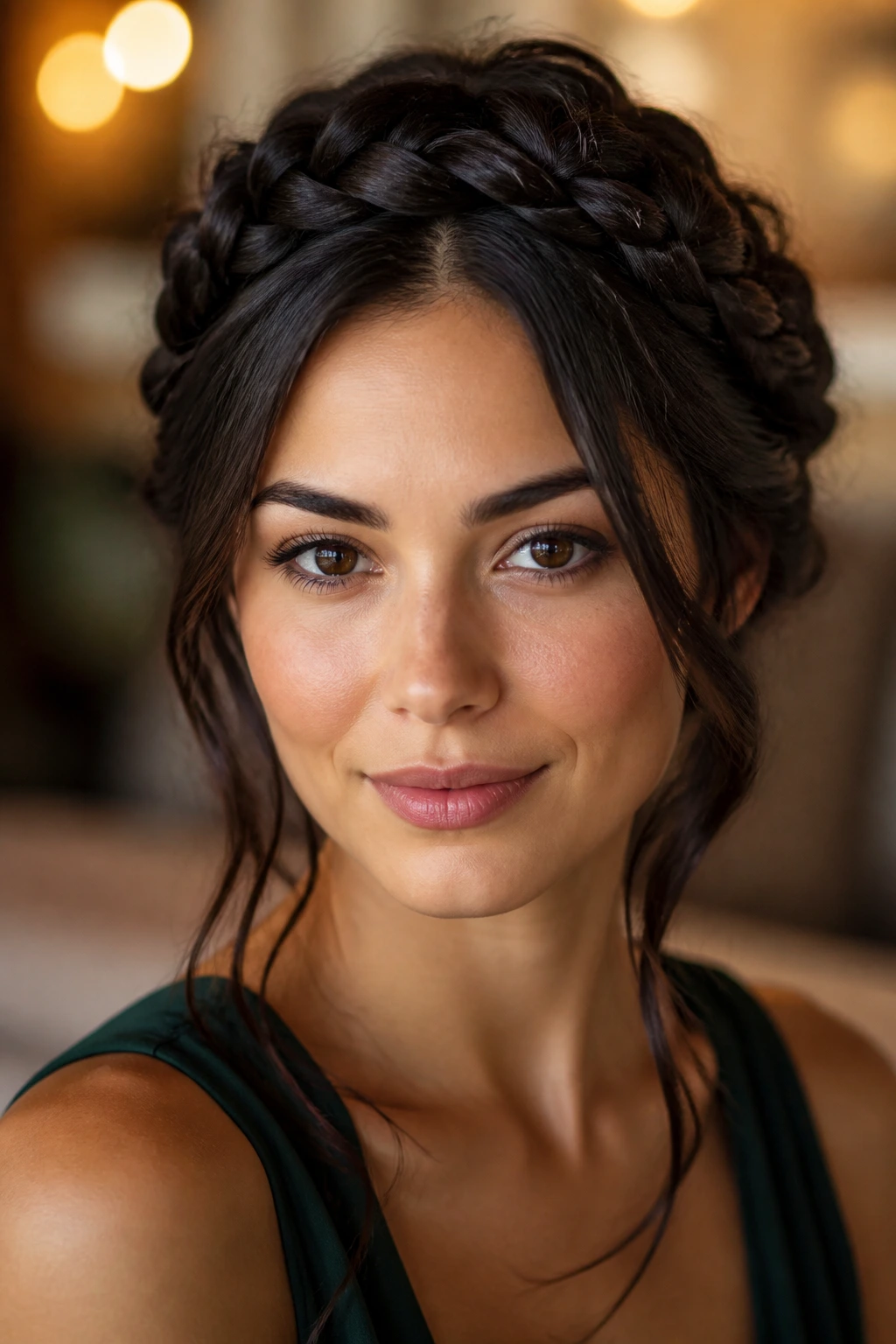
Braids can be a little too tidy on a square face if you pull them tight against the head. A braided crown with loose tendrils fixes that. The braid lifts hair away from the sides of the face, while the loose pieces keep the jawline from looking boxed in. Dark hair makes the braid pattern look crisp, which is useful here because the shape stays visible even from a distance.
This style is especially good for medium to long hair. Braid across the crown or along one side, then leave a few face-framing strands out around the temples and jaw. If your hair is layered, the shorter pieces will fall out naturally anyway, which is half the charm. Don’t fight them.
It’s a good one for weddings, family events, or any day when you want the hair controlled but not severe. A little shine spray on the braid keeps dark hair from looking dusty in the front.
13. Voluminous Blowout with Flipped Ends
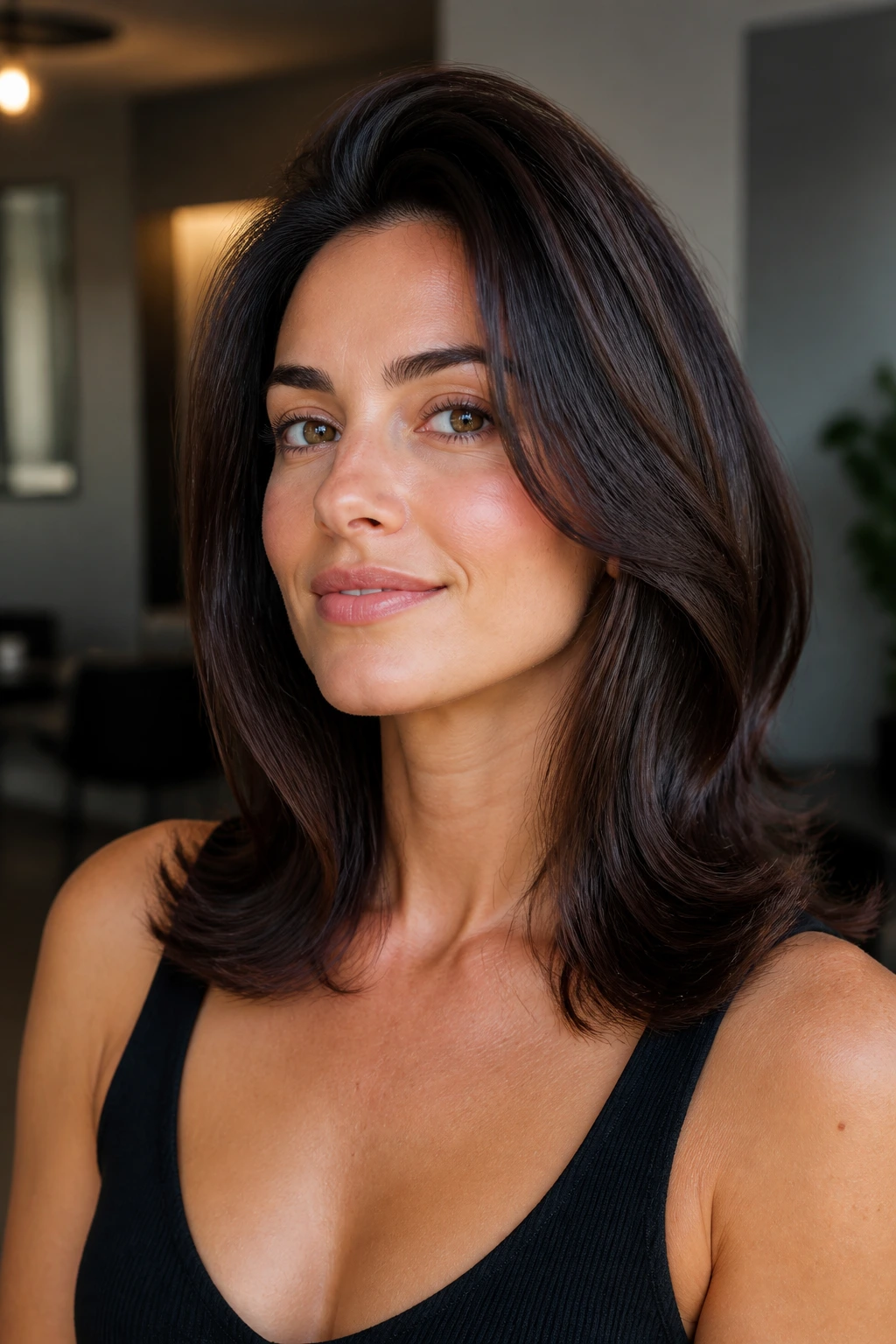
A blowout with lifted roots and flipped ends can do a lot for a square face if the volume stays in the right places. You want height at the crown and movement through the lower lengths, not width at the cheeks. On dark hair, the polished curves make the shine look rich rather than flat.
Where the volume belongs
Keep the crown lifted with a round brush or Velcro rollers while the hair cools. Then flip the ends away from the face at the collarbone or just below. That creates a long vertical line through the center and a soft sweep on the outside.
I like this style for thick hair that tends to collapse into itself. It gives shape without making the hair look overworked. If the ends start to kick out at cheek level, pull that movement lower. That small adjustment changes the whole read of the cut.
14. Low Ponytail with Wrapped Base and Face-Framing Pieces
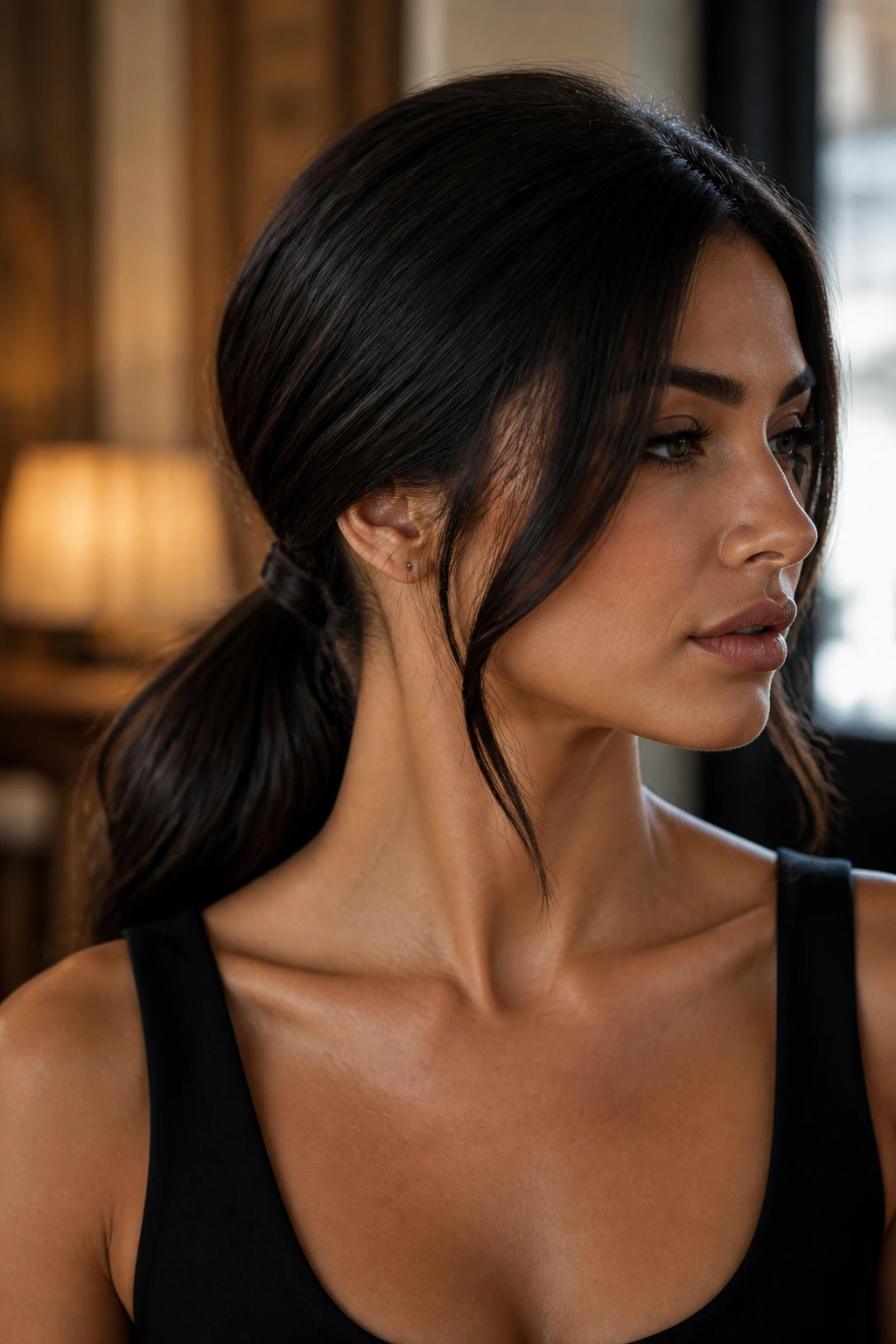
A low ponytail is not a lazy choice when it’s done with shape in mind. On square faces, the ponytail works best when it sits low and a little loose, with face-framing pieces left around the temples or cheekbones. The wrapped base makes it feel polished, while the softer front keeps the jaw from looking too strong.
Dark hair makes this style look very clean because the ponytail line is easy to read. You can go glossy and straight, or add a slight wave through the ponytail for more movement. If your hair is thick, keep the elastic low and secure it with a second hidden tie so the weight doesn’t pull the style down. If your hair is fine, tease the crown a little before smoothing it back.
This is one of those everyday styles that can go from gym to dinner with a small change in finish. Add a drop of serum to the lengths, wrap a strand around the elastic, and let the front pieces fall where they want. The softness matters more than the perfection.
15. Wavy Midlength Cut with Bottleneck Bangs
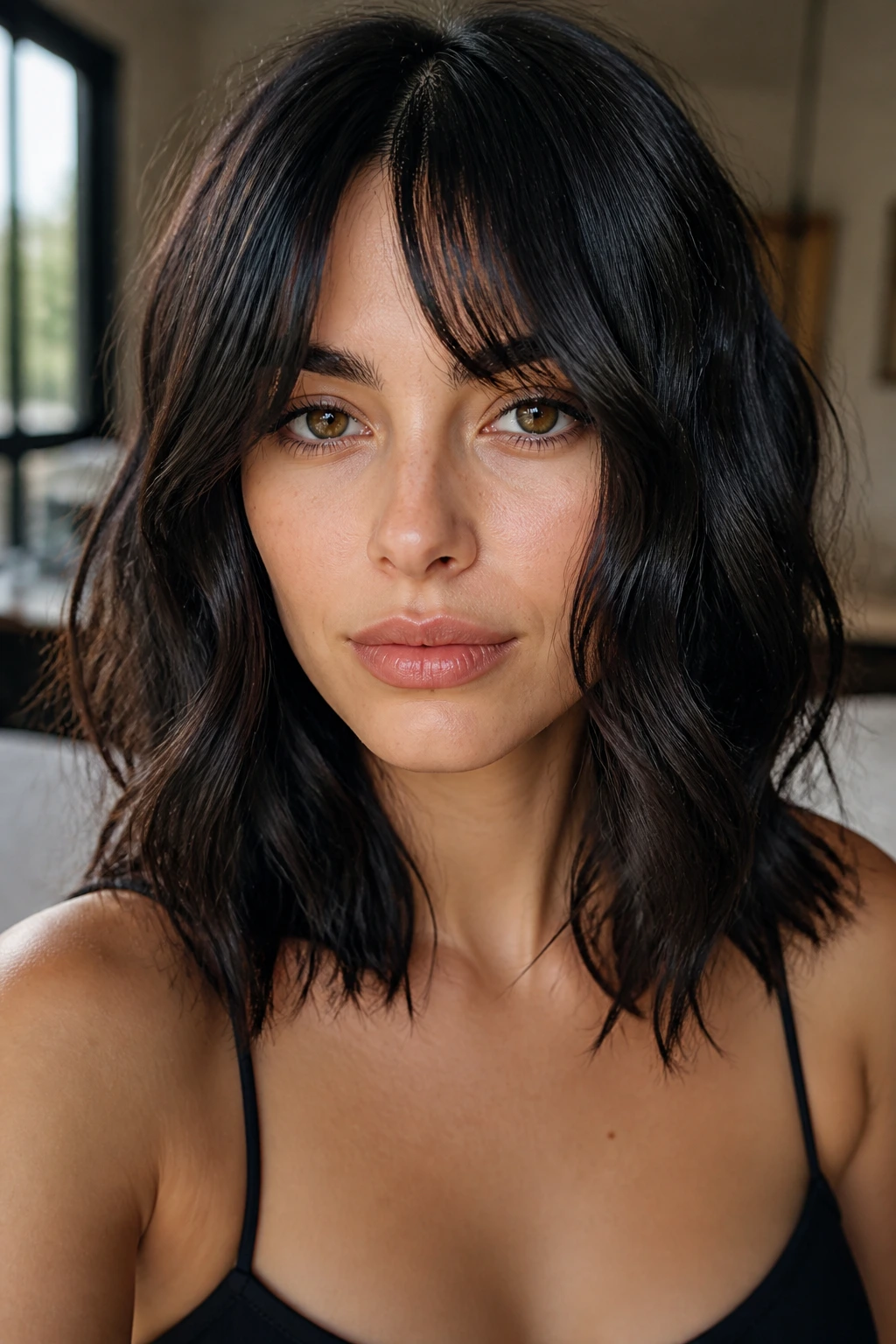
Bottleneck bangs are a smart choice for square faces because they start narrow at the center and open up around the cheekbones. That shape creates a gentle frame without dropping a hard line across the forehead. On dark hair, the contrast between the fringe and the rest of the cut gives the face a clean outline.
The midlength cut underneath should stay loose and wavy. Not fluffy. Not over-layered. Just enough bend to keep the outline from getting boxy. I like this combination because it handles both straight and textured hair well. The bangs do the face framing, and the rest of the cut gives the hair somewhere to move.
- Best if your forehead feels wider than your jaw: the fringe narrows the center and opens the sides.
- Good for medium density: there’s enough weight to keep the cut from going wispy.
- Style it with: a small round brush on the fringe and a 1-inch wand through the rest.
16. Asymmetrical Bob
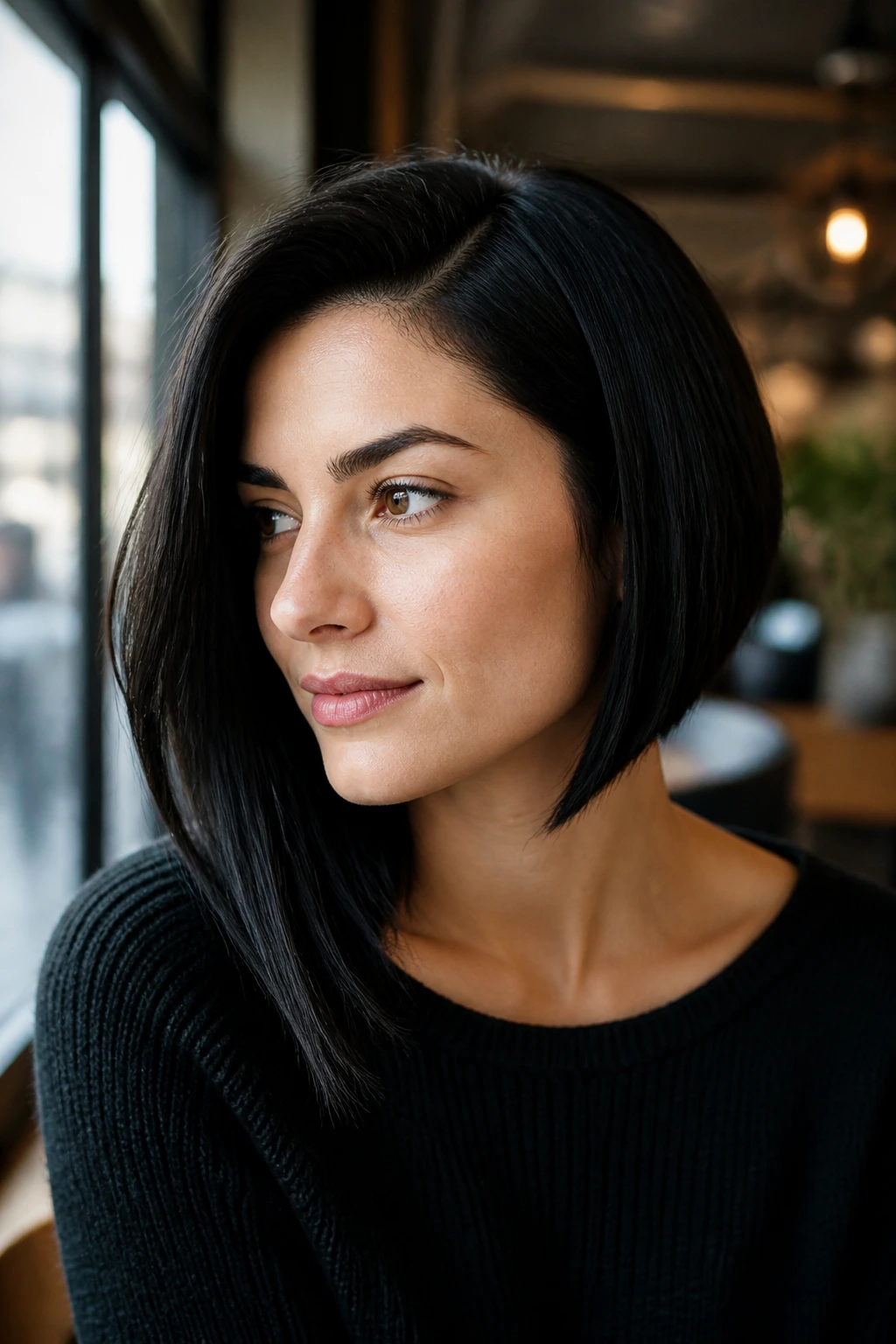
A little asymmetry can be a gift on a square face. A bob that is slightly longer on one side breaks the symmetry of the jaw and makes the whole shape feel more fluid. Dark hair shows that diagonal immediately, so the cut needs to be clean and deliberate. If the line is sloppy, it looks accidental. If it’s precise, it looks sharp in the right way.
I prefer this bob when the shortest side brushes just under the jaw and the longer side lands closer to the collarbone. That range keeps the face open while still giving the hair enough structure. Wear it smooth for a crisp finish or add a few bends for a softer read. Either way, the diagonal is doing the visual heavy lifting.
This is a good option for someone who likes a little edge but doesn’t want to go full blunt-bob territory. It’s a haircut with opinions, which I appreciate.
17. Loose Hollywood Waves over One Shoulder
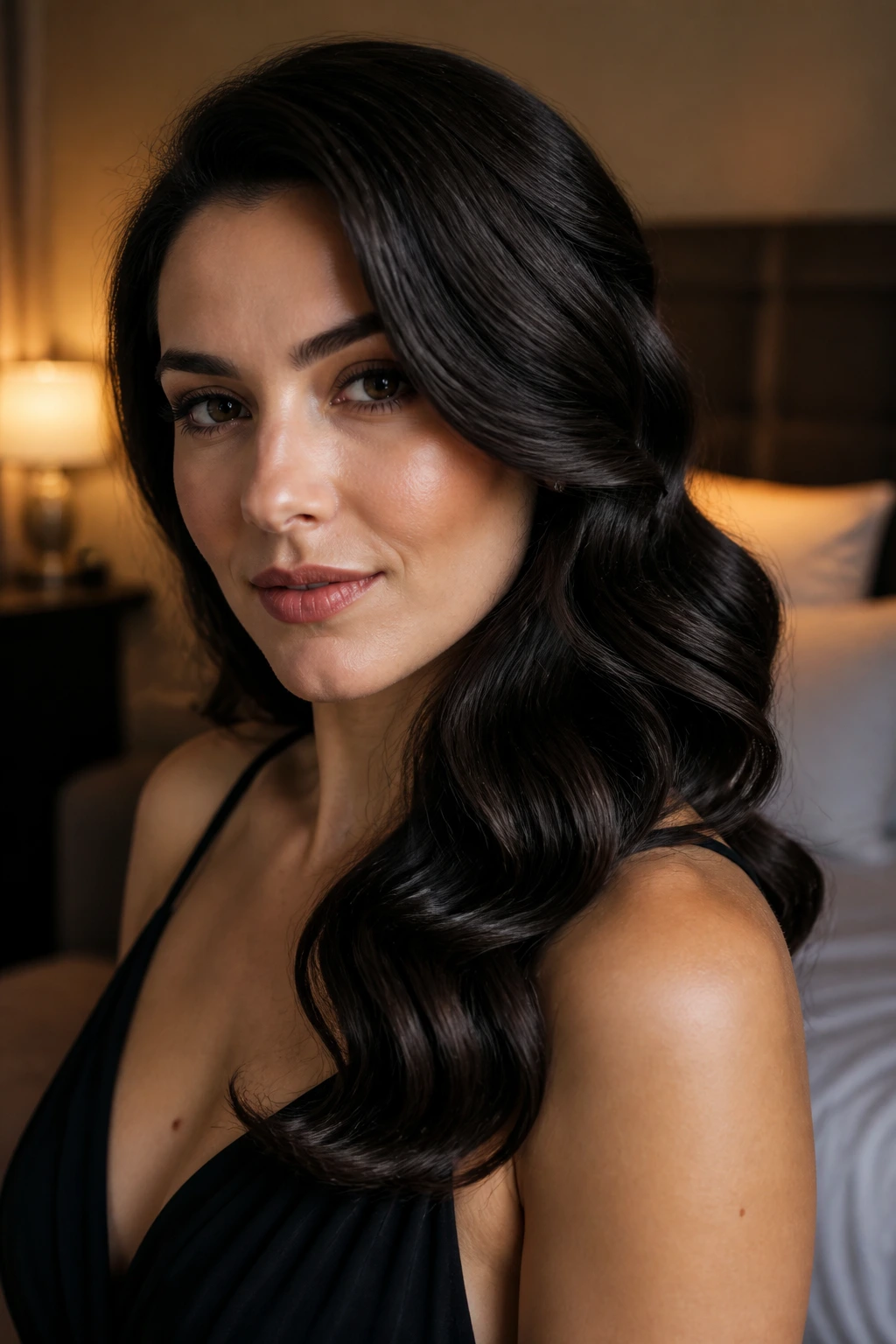
This is the evening version of softness. The waves stay loose and polished, but they’re swept to one side so the face gets a diagonal frame instead of a straight one. On square faces, that single-shoulder drape is a useful trick because it breaks the width at the jaw and pulls the eye downward.
The wave pattern should stay broad. Tight curls can make the style feel too busy, especially on dark hair. A large-barrel iron, brushed-out waves, and a clean side part are usually enough. Once the hair falls over one shoulder, pin the back side lightly so the shape holds.
How to keep it from going flat
Set the waves with clips while they cool, then brush them only after they’ve lost all heat. Finish with a light mist of flexible hairspray and a tiny touch of shine spray on the midlengths. Too much product turns dark hair sticky fast.
18. Rounded Curly Lob with Long Front Pieces
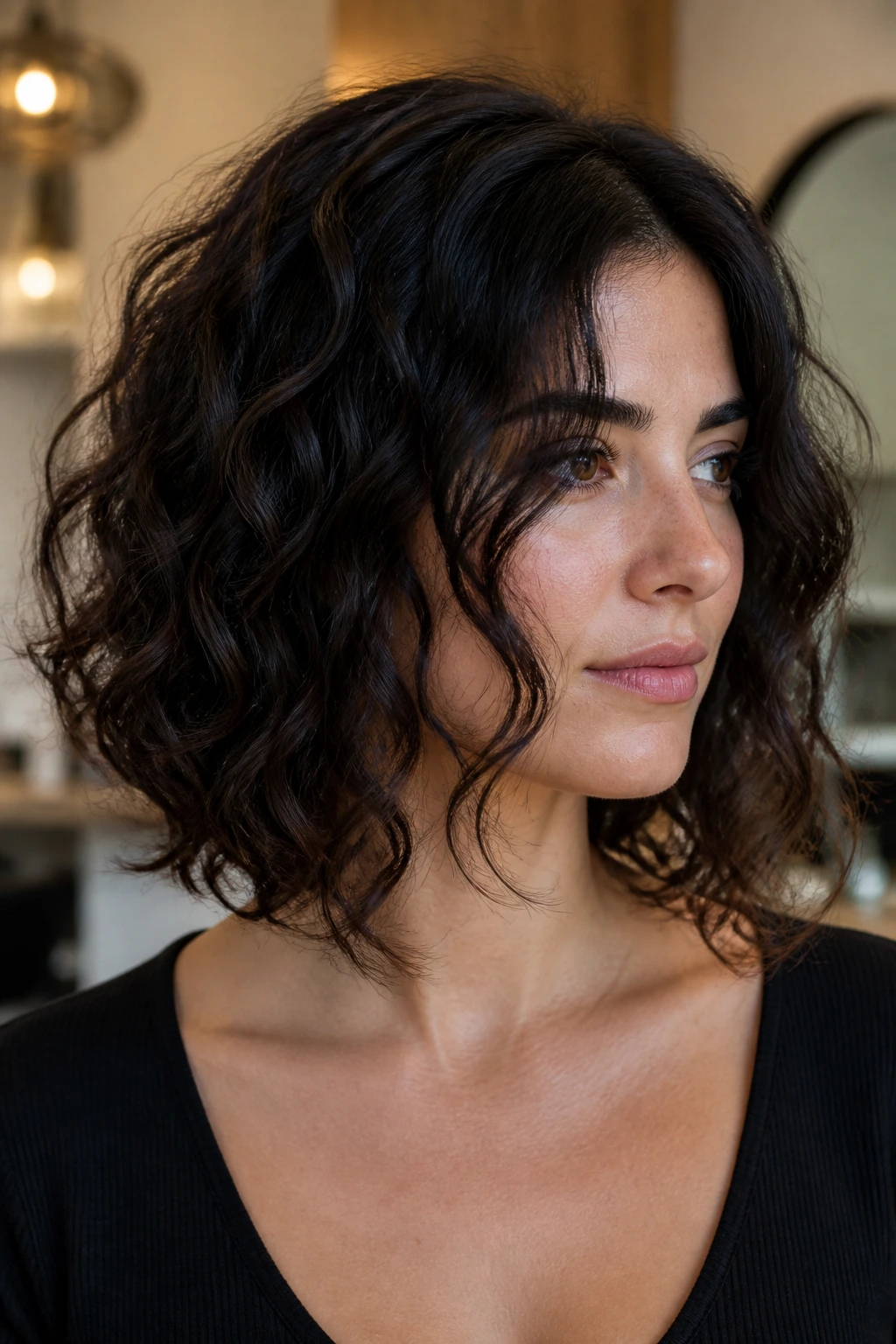
Curly hair on a square face can be gorgeous when the shape is rounded instead of boxy. A lob that hits around the collarbone, with longer front pieces that open around the jaw, gives the curls space to move without building width at the sides. Dark curls especially benefit from a rounded outline because the silhouette stays soft and the texture reads clearly.
The goal is to avoid the triangle. That means keeping bulk out of the lower sides and letting the curls stack with shape, not weight. Ask your stylist to leave length in the front and sculpt the rest into a gentle curve. If you wear your curls naturally, a diffuser and a little curl cream are usually enough. If you stretch your curls, keep the front pieces long so the face stays open.
This is probably the most forgiving curl option in the bunch. It doesn’t fight the hair. It just gives it a cleaner border.
How to Ask for the Right Shape in the Salon Chair
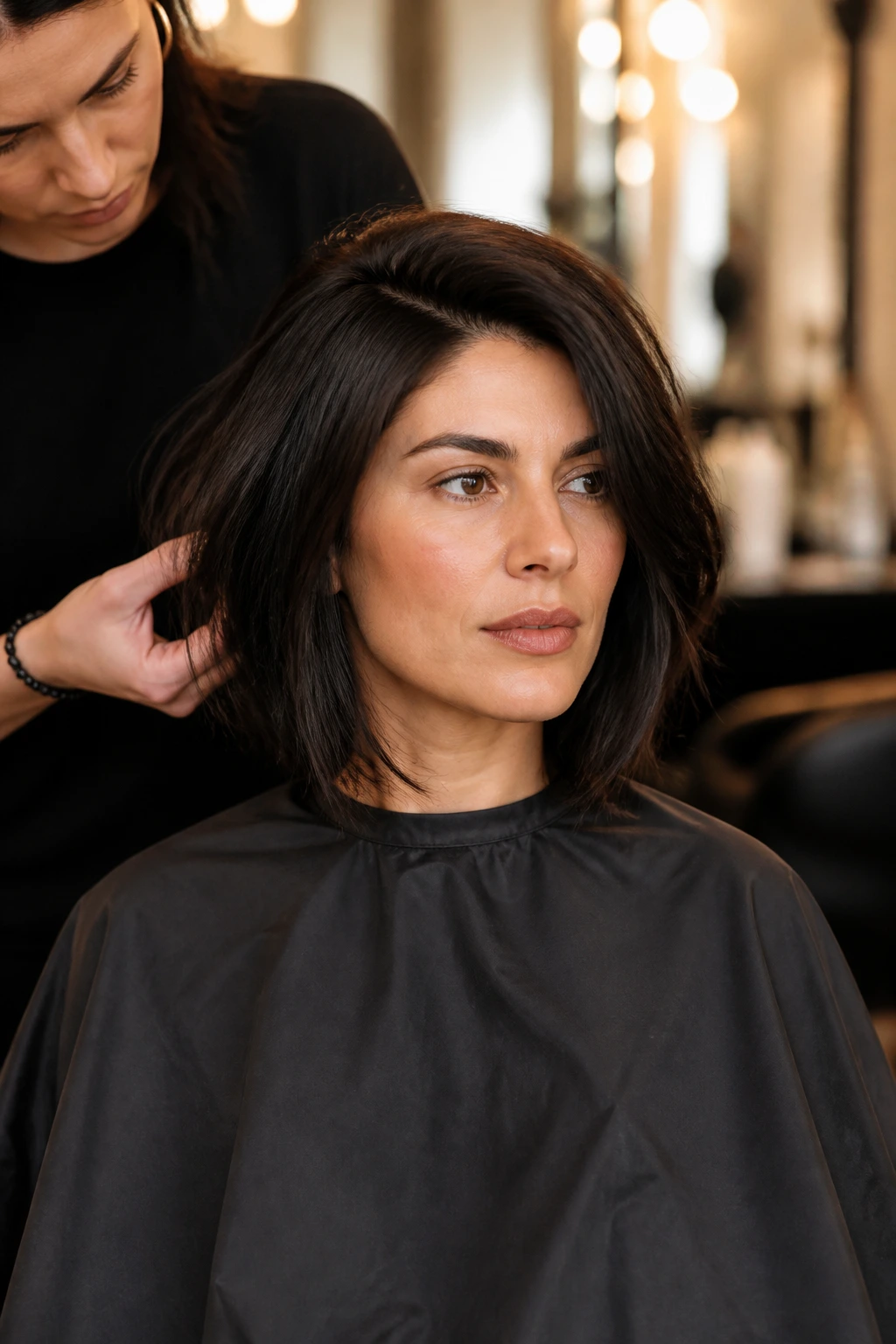
Bring photos, yes, but bring the right kind of photo. One picture of a celebrity with your exact hair texture is useful. Three photos of wildly different cuts are not. A better move is to show your stylist the front view, then point to the part you care about most: the fringe, the length, the volume at the crown, or the way the hair falls near the jaw.
Tell them where you want the shortest front pieces to land. Say “below the cheekbone” if you want softness, or “at the collarbone” if you want the cut to graze longer. That one detail matters more than the name of the haircut. A lob, a shag, and a bob can all land differently on a square face depending on where the front pieces hit.
Say how you actually wear your hair. If you part it on the left every morning, say that. If you air-dry and rarely use heat, say that too. Dark hair shows shape fast, and a good stylist will cut with your real routine in mind, not the routine you wish you had.
Tools and Products That Make Styling Easier
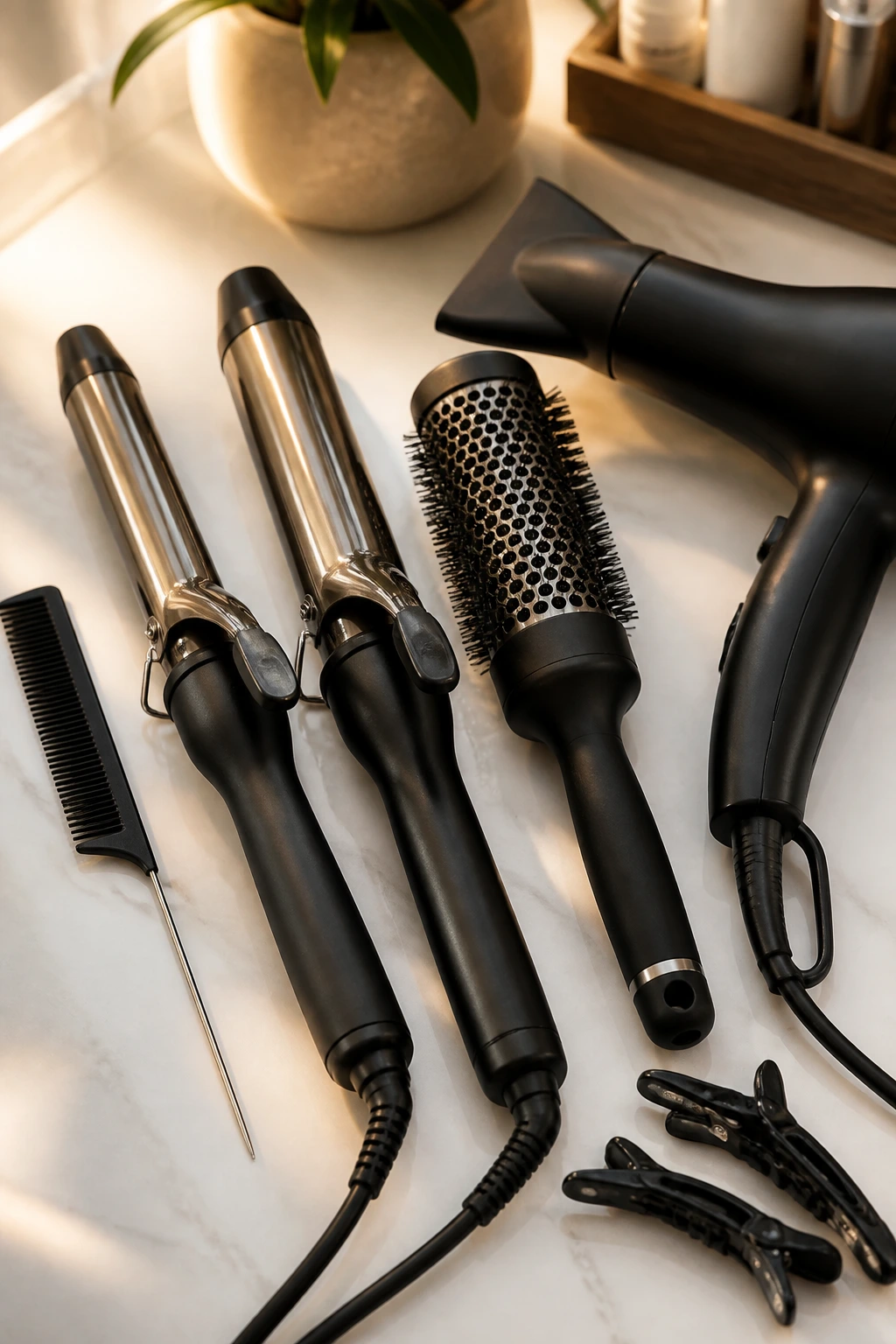
- Tail comb: Clean partings matter on square faces, and a tail comb gives you a sharp line without dragging through the hair.
- 1-inch curling iron or wand: Best for smaller bends, curtain bangs, and tighter face-framing movement.
- 1¼-inch curling iron: The safer all-purpose size for lobs, long waves, and soft Hollywood bends.
- Round brush, 1½ to 2 inches: Useful for blowouts, feathered ends, and fringe shaping.
- Blow dryer with a nozzle attachment: Directs airflow and keeps the cuticle smoother on dark hair.
- Duckbill or sectioning clips: Hold the top layers while you work on the bottom, which keeps volume where you want it.
- Heat protectant spray: Dark hair shows dullness fast when it’s overcooked, so this matters more than people admit.
- Light mousse or root lift spray: Gives crown support without turning the style stiff.
- Flexible-hold hairspray: Keeps movement alive on waves, bangs, and side sweeps.
- Shine serum: One drop on the ends is enough; more can flatten the shape.
- Dry shampoo: Good for second-day volume, especially at the crown on lobs and pixies.
- Bobby pins and small clear elastics: Needed for buns, braids, and side-swept updos that stay put.
The Styling Moves That Keep Dark Hair Looking Intentional
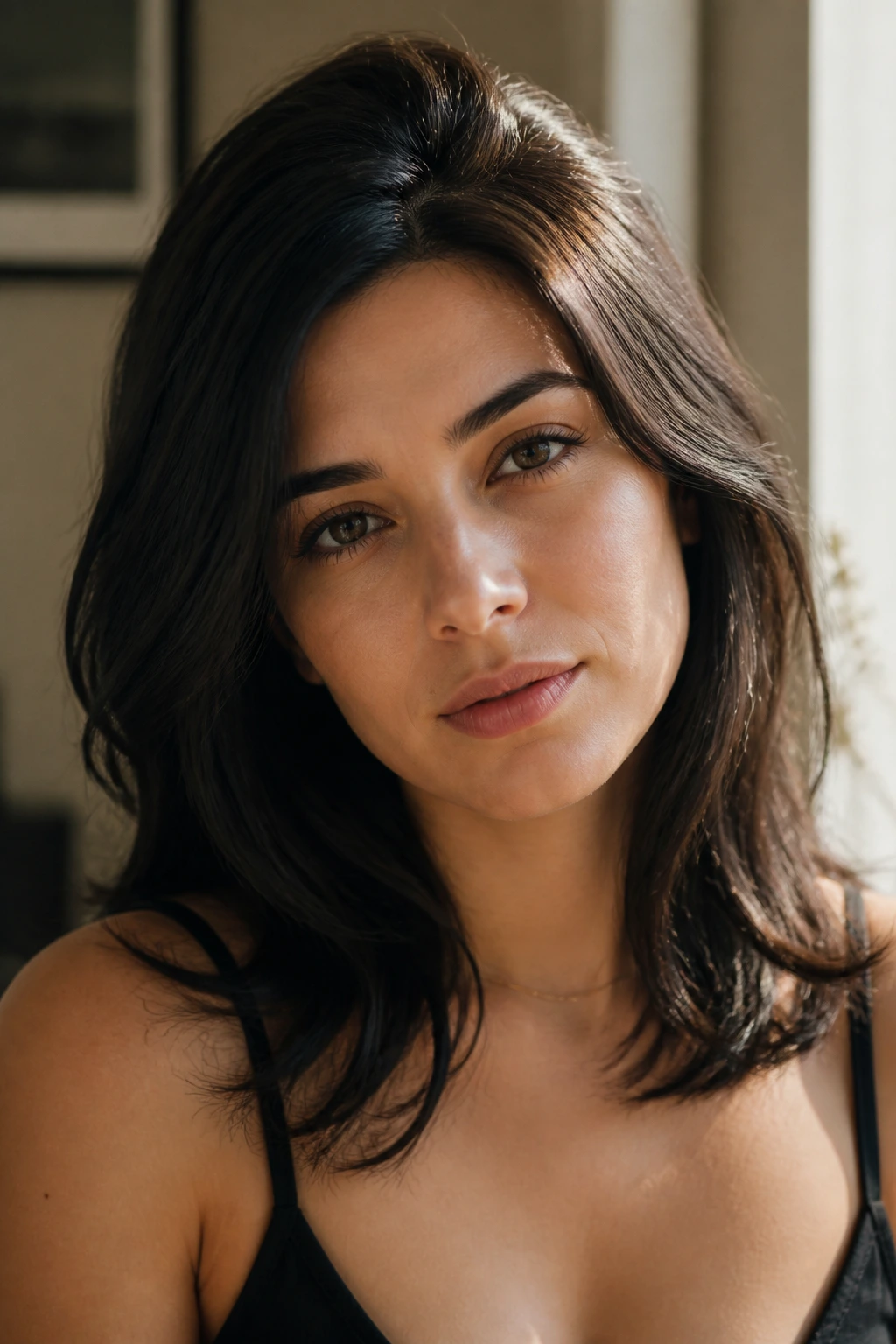
A small part change can do more than a full styling routine. Slide the part half an inch off center and the whole face changes shape. It is that simple, and on square faces it often makes the difference between “straight down the middle” and “softly angled.” Dark hair shows the shift immediately because the line is so visible.
Volume at the crown matters more than volume at the sides. A little lift on top lengthens the face; wide puffiness at the temples does the opposite. If you’re using a blow dryer, aim the airflow up at the roots, then set the crown with clips while it cools. Ten minutes of cooling time can be the difference between hair that lasts and hair that drops before lunch.
Keep the ends softer than the roots. That’s a good rule for almost all of these looks. Dark hair can handle polish, but it still needs some movement near the bottom, especially if your face shape is square. A bend, a turn, or even a tucked-under finish keeps the outline from turning too hard.
Common Mistakes That Make the Face Look Boxier
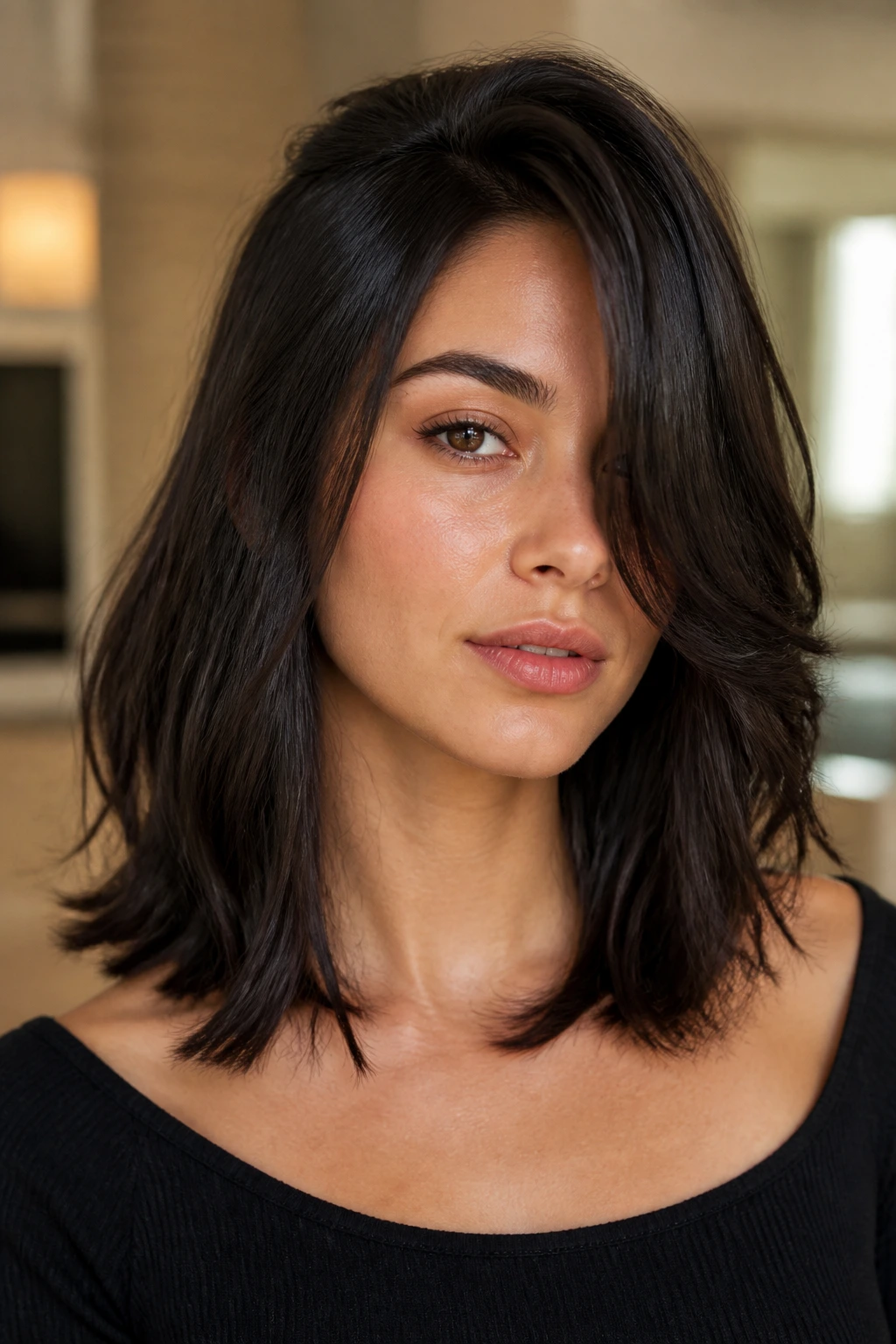
The biggest mistake is cutting blunt ends right on the jawline and stopping there. On a square face, that creates a very literal box. If you want a bob, push the length a little above the jaw or a little below it, then soften the front pieces so the edge doesn’t land like a ruler.
A dead-center part with no fringe can be rough on strong jawlines. It isn’t forbidden, but it needs help. Add a wave, add a bend, or shift the part a touch off center. Dark hair in a straight center part can look beautiful, but it can also feel severe if the cut underneath is too rigid.
Too much width at the cheekbones is another one. This happens when curls expand at the sides or when a blowout flips out too early near the temples. Move that width lower, or keep the side sections closer to the head and build movement below the cheekbone.
Over-thinning curly hair can backfire. You get frizz at the top and a triangle at the bottom. If you have curls, ask for rounded shaping, not aggressive debulking.
Variations for Different Textures and Routines
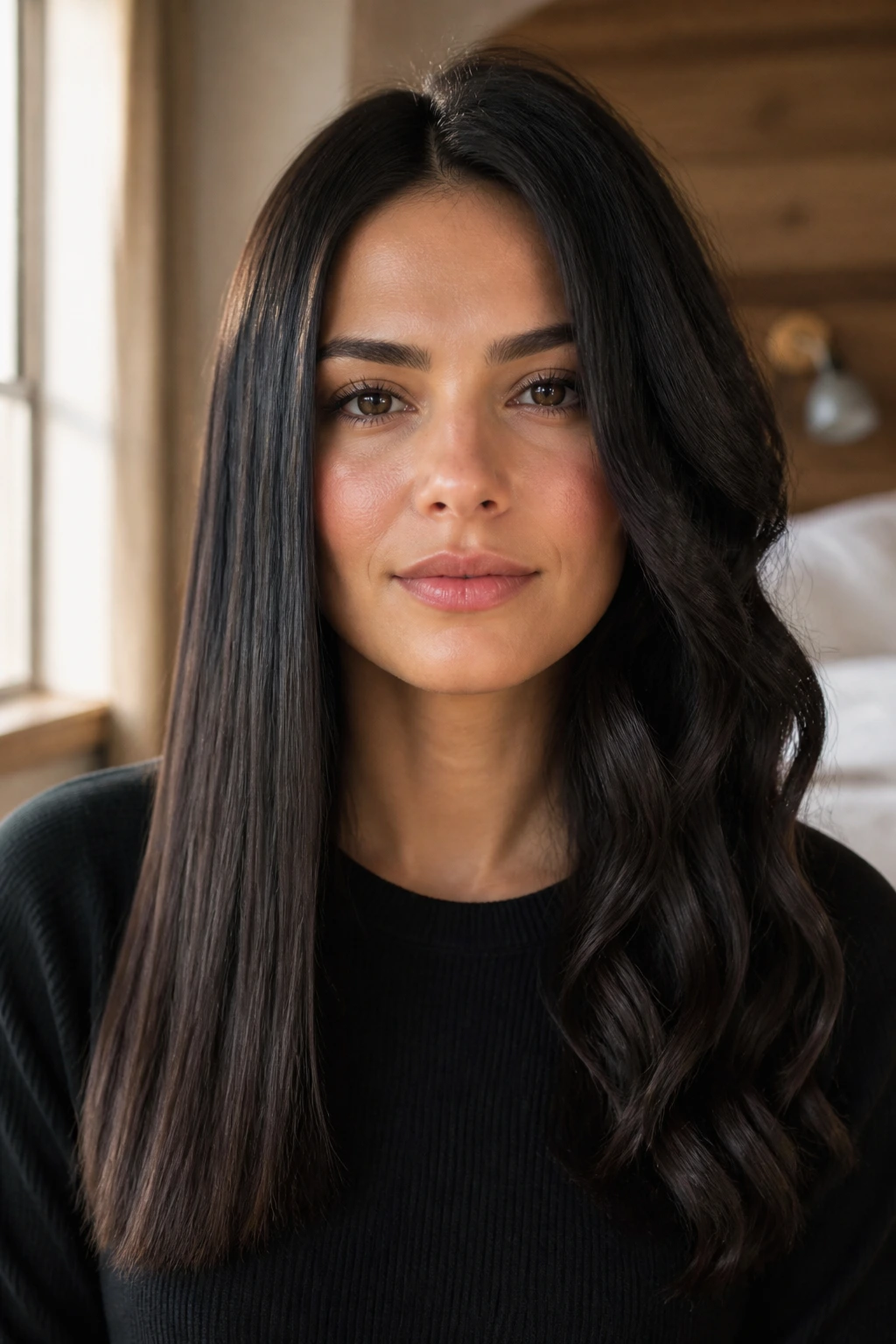
Fine-Hair Float: Choose the layered lob, the half-up style, or the glossy blowout. Keep the layers long and the product light, because fine dark hair can go limp fast if you overload it with creams.
Thick-Hair Glide: Go for the feathered shoulder cut, the shag, or the asymmetrical bob. These shapes remove bulk without stripping the hair of its weight, which keeps the outline from puffing out at the sides.
Curly-Hair Halo: The rounded curly lob is the cleanest fit, but the braided crown and the half-up style also work. The key is to leave some curl definition around the face so the jawline stays soft.
Five-Minute Morning: Low ponytail, sleek bun, or long layers with an air-dry wave. These are the styles that still look deliberate when you have barely touched a brush.
Evening-Only Drama: Deep side-part waves, Hollywood waves over one shoulder, or the side-swept pixie with a polished finish. These lean harder into shine and structure, which dark hair handles well.
Keeping the Shape Fresh Between Cuts
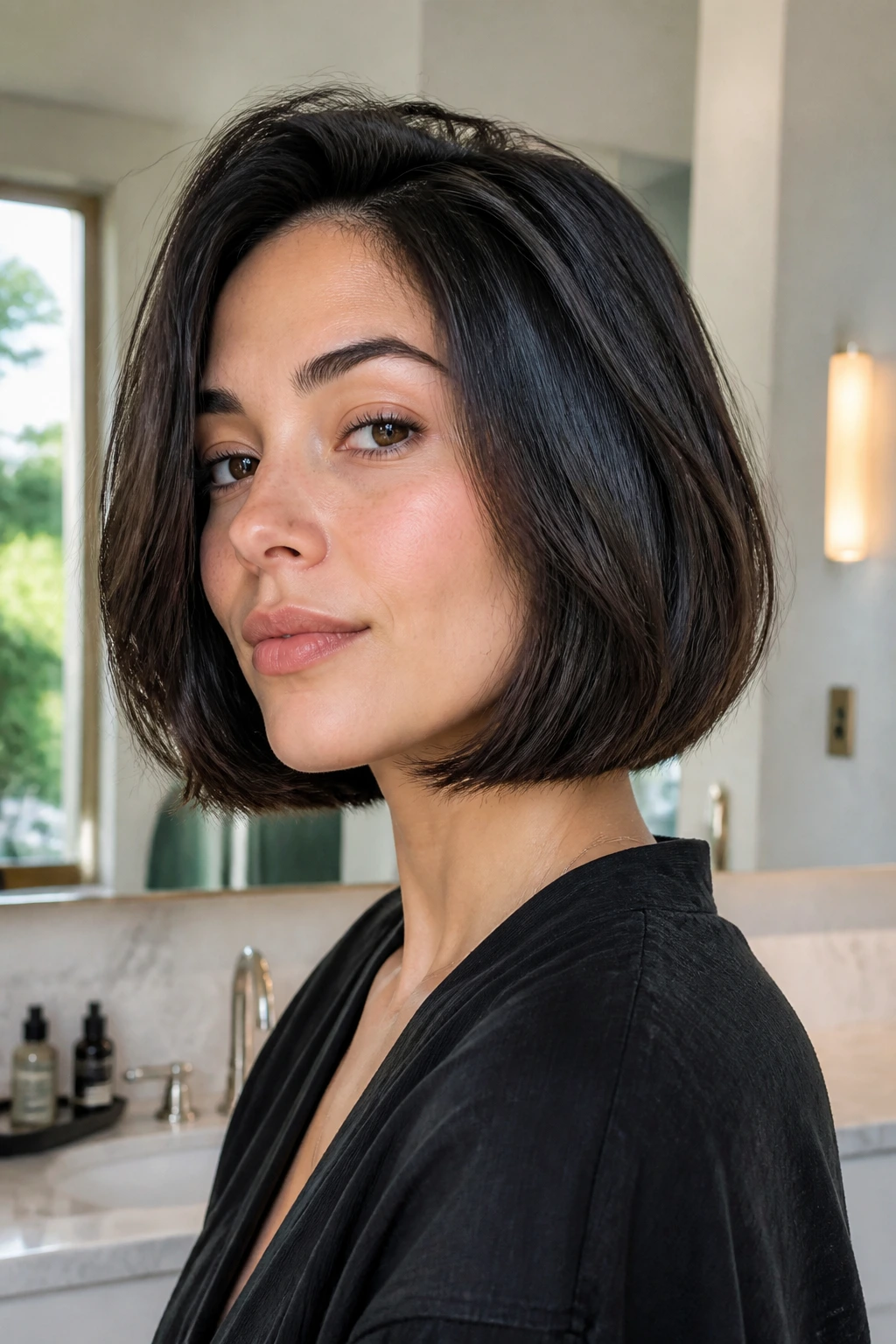
Square-face-friendly cuts depend on shape, and shape slips faster than people think. Lobs and bobs usually need a trim every 6 to 8 weeks if you want the front pieces to keep sitting in the right place. Long layers can stretch a little farther, closer to 8 to 12 weeks, especially if the cut is meant to grow softly.
Pixies are a different story. They lose their line fast, so 4 to 6 weeks is the window if you want the fringe and top to keep their movement. Bangs are their own category. Curtain bangs or bottleneck bangs often need a small trim in between full cuts if they start touching the eyes or falling too flat across the cheekbones.
At home, dry shampoo at the roots can buy you a day or two, but don’t bury dark hair under too much product. A little texture spray at the mids, a quick refresh with a round brush, or a few minutes with a blow-dryer and nozzle usually beats piling on more spray. And if your cut depends on shine, a weekly mask helps more than a mountain of serum. Dark hair shows dullness quickly.
Frequently Asked Questions
Can a square face wear a blunt bob?
Yes, but it needs help. A blunt bob looks best when it lands above the jaw or a touch below the chin, and when the part is off center or softened with texture. If the line ends exactly at the jaw, the cut can look boxy fast.
Are bangs a good idea for square faces with dark hair?
They can be, especially curtain bangs, bottleneck bangs, or a soft side fringe. Those shapes break up the forehead and make the face feel a little longer. Straight, heavy bangs can work too, but they need movement at the sides so they do not feel too rigid.
What length is most flattering for a square face?
The safest range is usually collarbone to mid-chest, because it gives the face some vertical length. That said, short cuts can still work if they have asymmetry, softness, or a bit of lift at the crown. Length alone does not decide the result; the shape around the face does.
Does dark hair need more layers than lighter hair?
Not more layers, exactly. It needs the right layers. Dark hair shows bulk and outline more clearly, so layers should be placed where they create movement instead of puffing up the sides.
How do I make my hair look softer without losing structure?
Use side parts, rounded ends, and pieces that skim the cheekbones. A little bend in the hair is enough. You do not need a full wave set every morning.
What if my hair is very thick and heavy?
Choose cuts with internal layering, not lots of short exterior layers. Feathered shoulder cuts, textured lobs, and soft shags keep thick hair from sitting like a block. The wrong kind of layering can make thick dark hair explode at the sides, which is the exact thing you’re trying to avoid.
Can square faces wear short hair?
Absolutely. A pixie, French bob, or asymmetrical bob can look terrific on a square face if the cut has softness at the front. Keep the sides clean, the top movable, and the fringe a little longer than you first think you need.
What should I tell my stylist if I want something low-maintenance?
Say how much time you actually spend styling and whether you air-dry, blow-dry, or use hot tools. Then ask for a shape that still looks good if you do only one step. That one sentence saves more bad haircuts than people realize.
The Shape That Does the Work
Strong features are not a problem to solve. They’re part of the design. The best hairstyles for dark hair and square faces don’t fight the jawline or flatten the hair into something timid. They use curves, diagonals, and a little lift to give the face room and the color a better outline.
If you keep one rule in your pocket, make it this: let the cut move before the jawline does. That might mean a side part, a longer fringe, a bend at the ends, or a soft frame that starts below the cheekbone. Small moves. Big difference.
Pick the version that fits your mornings, not the one that demands a mood board and a half-hour of styling every day. Dark hair rewards clean shape, and square faces reward softness in the right places. That’s a useful pairing, and it stays useful long after the salon chair is empty.