



Olive skin can make brown hair look either rich and expensive or oddly flat, and the difference between those two outcomes is usually smaller than people think. The best brown hair color ideas for olive skin do not come down to one magic shade; they come down to temperature, depth, and how much light the color lets move through the hair. Too orange, and the color starts yelling. Too gray, and the whole thing can go a little dusty.
That’s why a plain “brown” swatch is almost useless. A chestnut brunette can make one olive complexion glow and make another look tired. An espresso base with caramel ribbons can feel soft and dimensional on one head, then look stripy on another if the face-framing pieces are lifted too high. The skin is doing a lot of the work here. Your hair color just has to stop fighting it.
Olive skin usually carries green, gold, or muted neutral notes, sometimes all three at once. Brown hair can be a brilliant match because it can lean warm, cool, smoky, glossy, or sunlit without losing its brunette backbone. The shades below range from dark, inky espresso to honeyed balayage and mushroom brown, and each one earns its spot for a specific reason: the undertone works, the grow-out behaves, or the overall effect makes the skin look clearer and more awake.
Why Brown Hair and Olive Skin Work So Well Together
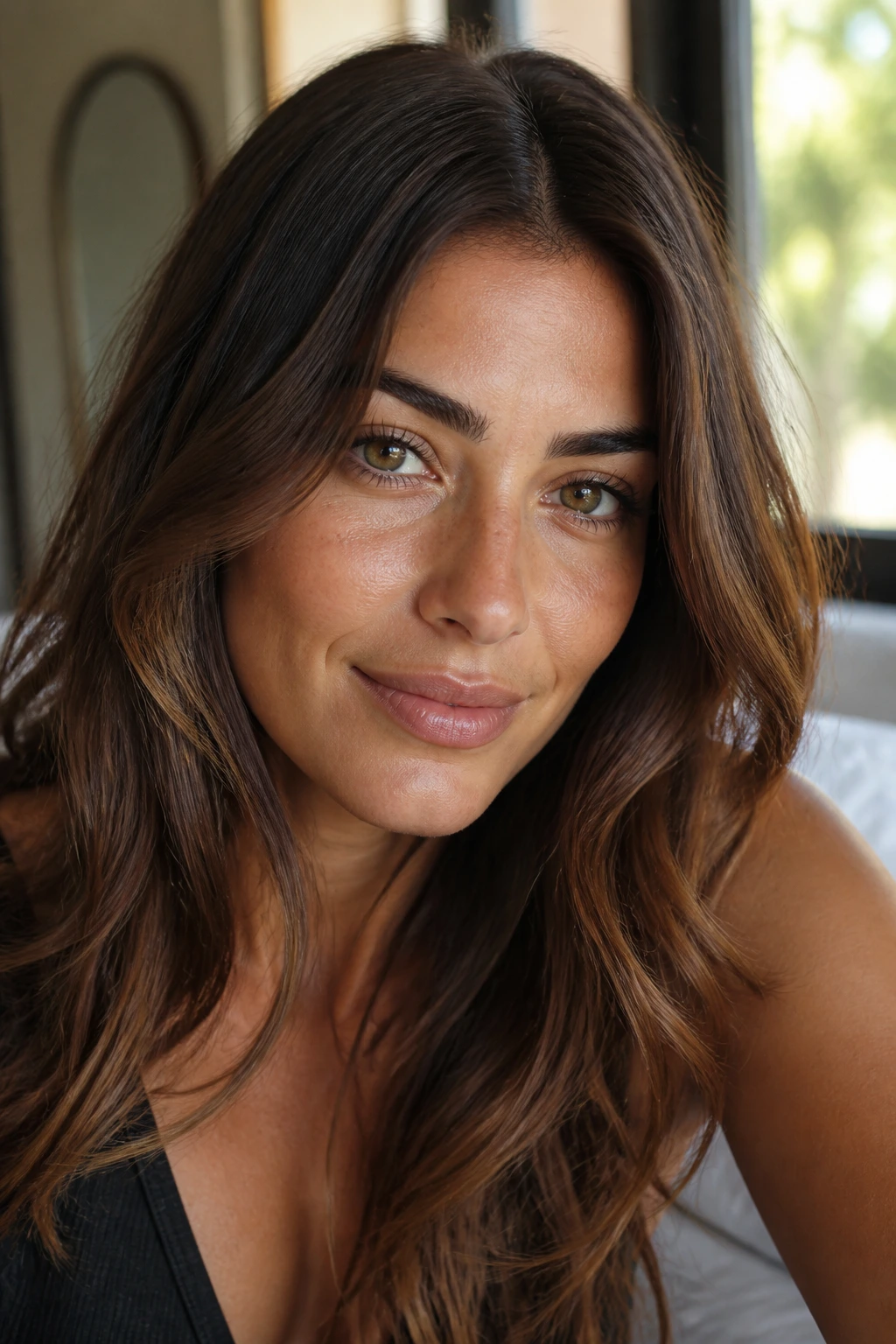
Warmth without brass: Brown hair can echo the gold in olive skin without turning coppery, which is a very useful line to walk.
Depth that flatters the face: Medium and deep brunette shades create a clean frame around the features, especially when the color has shine instead of a chalky finish.
Room for both cool and warm tones: Olive undertones can handle chestnut, ash brown, mocha, and caramel better than many other skin tones because the skin already sits in a muted middle zone.
Soft regrowth: Roots show less harshly in brunette shades than they do in blonde or vivid colors, so the color can grow out with fewer sharp lines.
Better texture on camera and in daylight: Brown hair with dimension picks up light in strands, not just on the surface, which keeps olive skin from looking washed out in flat lighting.
1. Soft Espresso
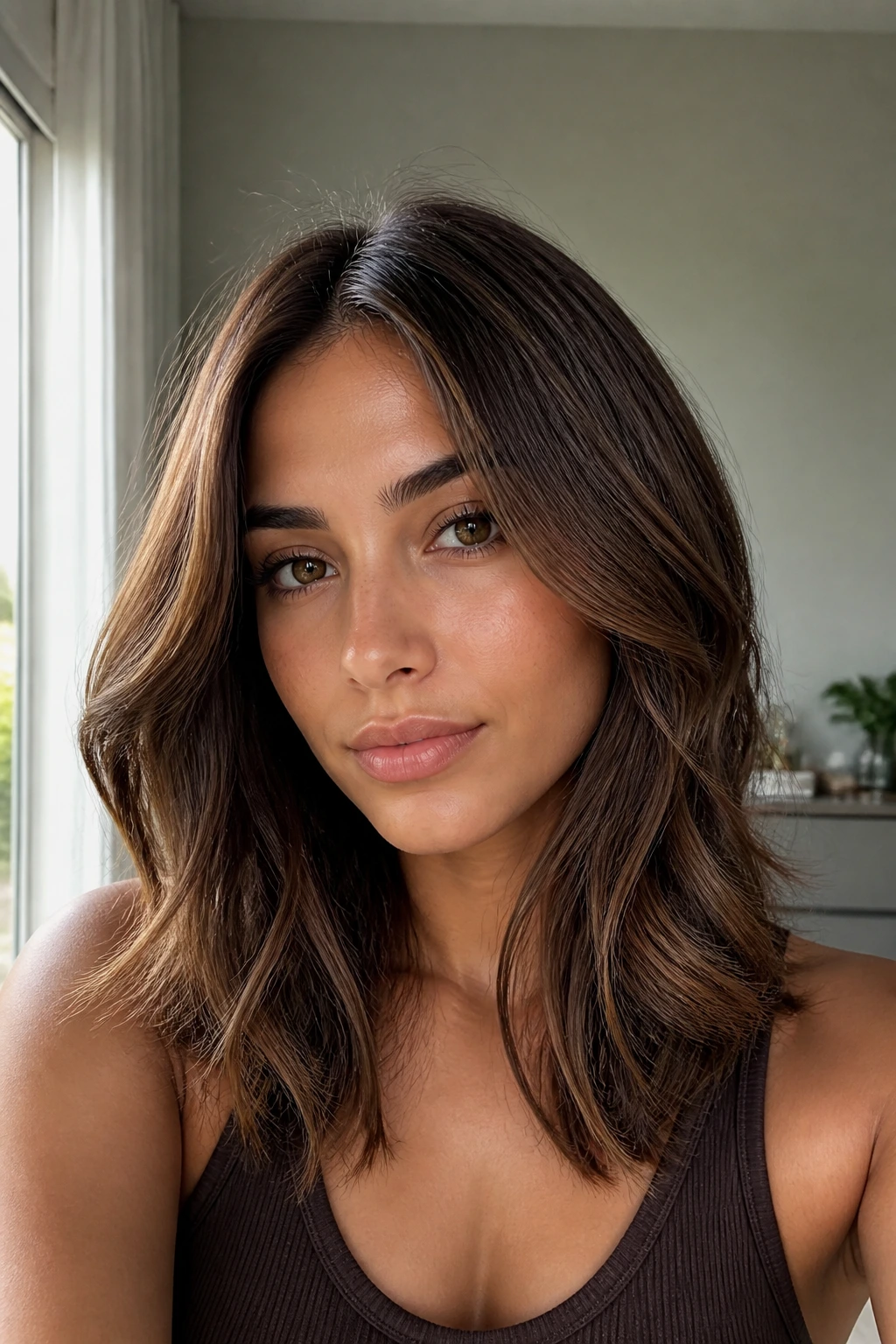
Soft espresso is the brown I reach for when olive skin needs structure more than sparkle. It sits in that deep, glossy level where the hair looks polished and the face gets a crisp outline without the harshness of jet black. On medium and deep olive skin, this shade can look especially clean around the brow line and jaw.
The key is soft espresso, not flat midnight brown. Ask for a neutral-to-cool level 3 or 4 base with a high-shine finish, then keep the ends from going overly dark if your hair is porous. A clear gloss every 4 to 6 weeks keeps the color from reading matte, which is where espresso starts to look heavy.
If your olive skin leans golden, this shade still works, but it likes a little movement. A center part and a loose wave keep the color from feeling severe. Straight, blunt styling can be gorgeous too, but only if the hair reflects light well.
What makes it work
The depth gives olive skin a clean frame, and the soft sheen keeps the whole look from tipping into harsh contrast. If you like dark hair but don’t want it to swallow your face, this is one of the smartest starts.
2. Milk Chocolate Brunette
Milk chocolate brunette is the kind of brown that looks sweet on the surface and quietly clever underneath. It has enough warmth to flatter golden olive skin, but it stops short of orange. That balance matters. Too much warmth and the color turns brassy; too little and it can look dusty.
This shade lives best around level 4 to 5, which means it has substance without going nearly black. I like it on shoulder-length cuts because the midtone shows off movement, especially when the ends are a little beveled or softly layered. On olive skin, it softens sharp features and gives the complexion a calmer, creamier look.
If you want low-maintenance brown hair color for olive skin, milk chocolate is a strong candidate. Faded roots blend in well, and the color does not demand that same constant rescue mission blondes do. A sulfate-free shampoo and a cool rinse at the sink help it stay plush.
Best for: warm olive and neutral olive undertones.
Ask for: a neutral chocolate base with a soft golden veil, not copper.
3. Chestnut Brown
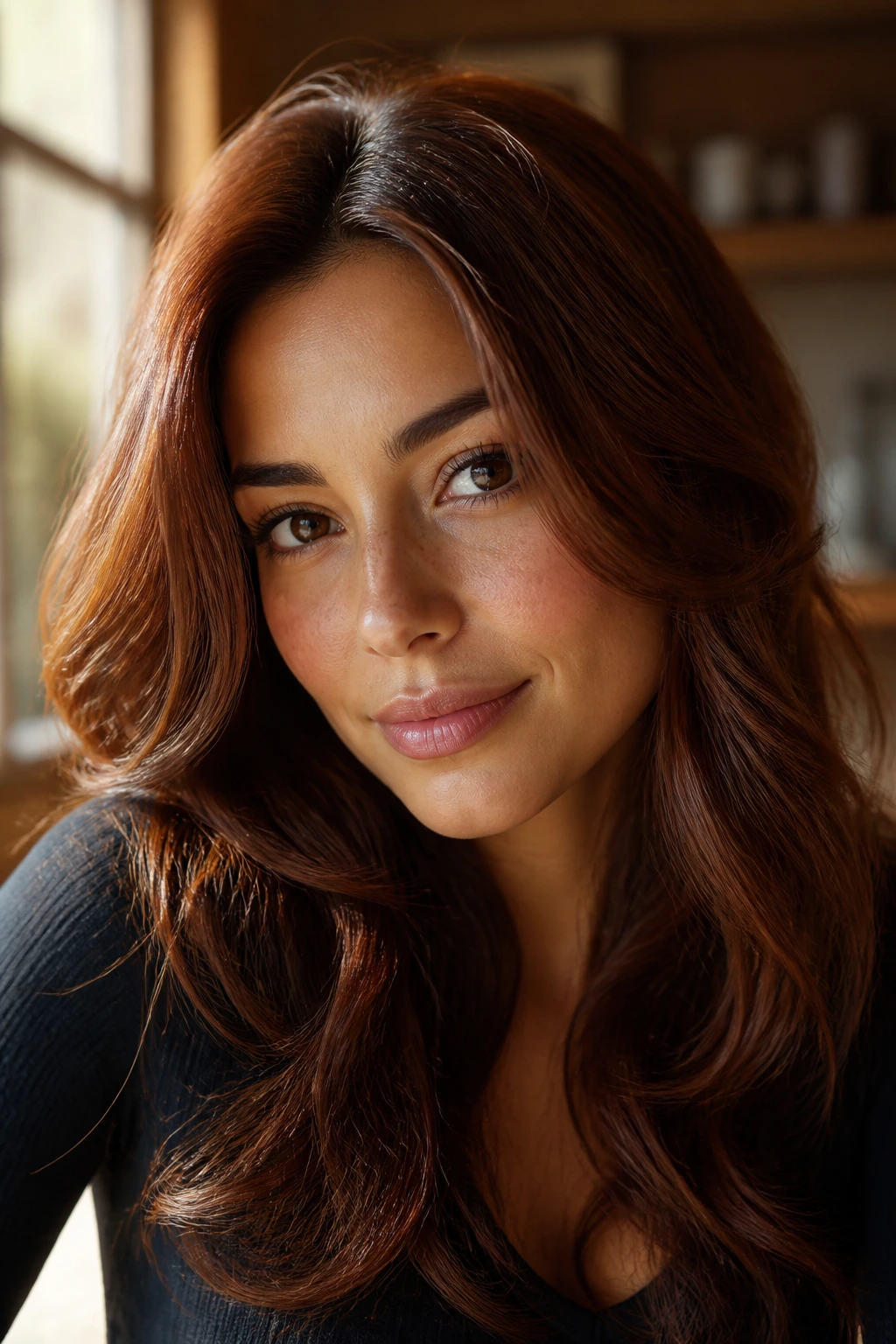
Chestnut brown has one foot in brown and one foot in red, and that little red note can be magic on olive skin when it’s handled lightly. The shade feels earthy and rich, with enough warmth to keep the skin from going gray. If your olive undertone has a golden cast, chestnut can make it look sunlit instead of sallow.
I prefer chestnut when the hair is layered or curled, because the subtle warmth catches on movement. Straight chestnut can look smooth; waves make it look expensive. And yes, that word gets overused, but here it actually applies for a reason: chestnut looks like it belongs to the hair, not painted on top of it.
The danger is going too red. If the formula swings toward auburn, it can pull attention away from the face in the wrong way. Keep the red notes soft, almost walnut-shell deep, and the shade stays grounded.
How to wear it
Pair it with a side part or face-framing layers if you want the color to bring out the eyes. On olive skin, chestnut works especially well when the finish is glossy rather than matte.
4. Mushroom Brown
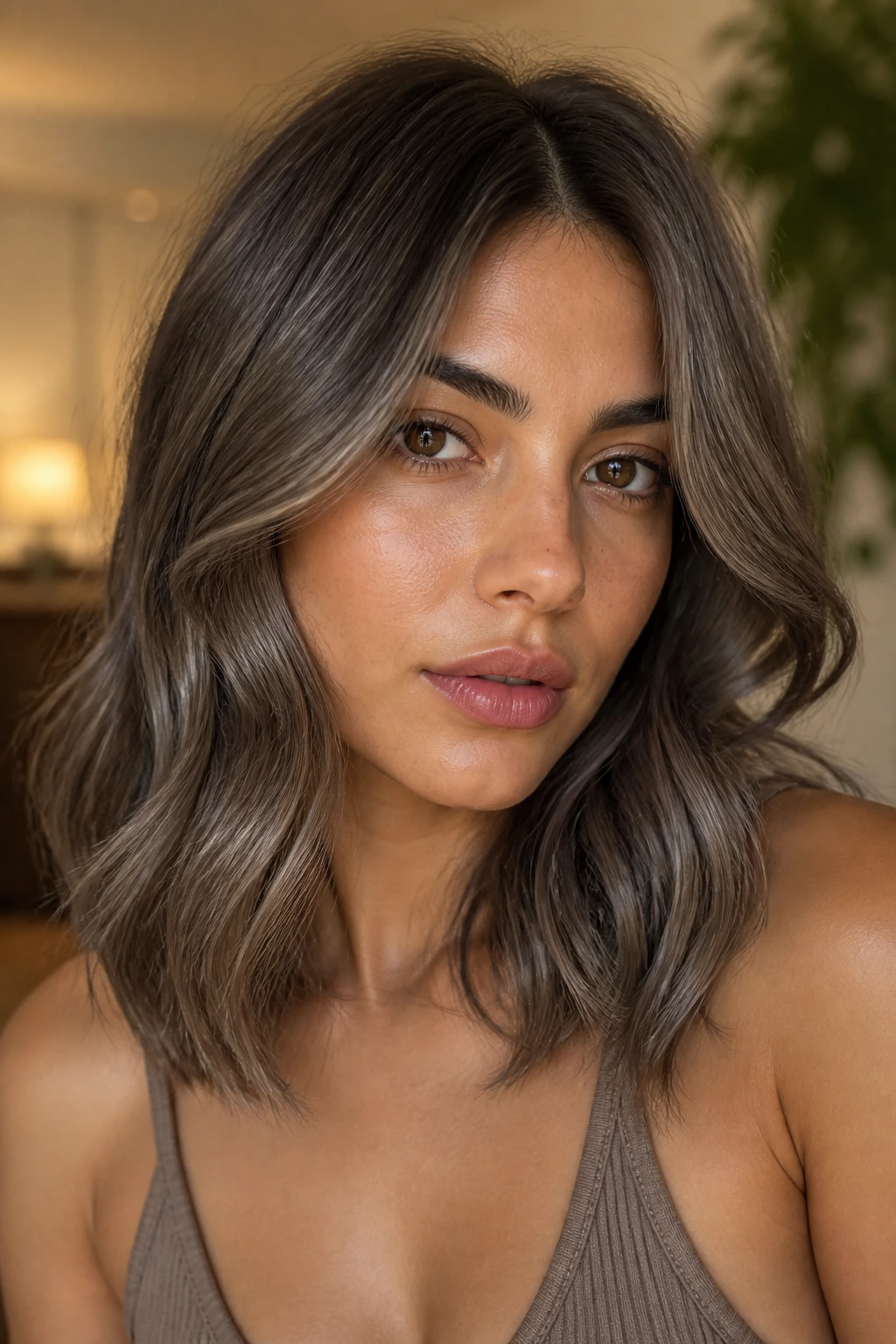
Mushroom brown is the shade for anyone who likes brunette color with a cooler, smoky edge. It has taupe and beige-gray notes in the mix, which makes it useful for cooler olive skin or neutral olive skin that gets overwhelmed by too much gold. If chestnut is a warm mug of cocoa, mushroom brown is the gray knit sweater that somehow makes your face look sharper.
This color usually sits around level 5 to 6, and it tends to look best when it has a soft shadow at the root and lighter ends that are still muted. Too much lift can make it drift toward ash-blonde territory, which is not the same thing. Mushroom brown should feel like a brunette that has been cooled down, not stripped.
I like this shade on medium-length cuts and blunt bobs because the clean line emphasizes the smoky tone. It can also look excellent with lived-in waves. The movement prevents the cooler pigment from reading flat or dusty.
Best for: cool olive or neutral olive skin.
Watch for: too much yellow in the highlights; it breaks the mood fast.
5. Golden Mocha
Golden mocha is the shade I recommend when olive skin needs a little warmth but not a full caramel takeover. It has a coffee base with soft gold woven through it, and that gold can make the skin look clearer, especially around the cheeks and forehead. The effect is subtle, not flashy.
What I like most here is the flexibility. Golden mocha can be worn as an all-over color, or it can become a balayage look with a mocha base and warmer ribbons through the mid-lengths. If your hair tends to go flat in daylight, this shade gives it life without asking for constant upkeep.
The catch is obvious: if the gold goes too bright, the brunette starts looking toasted. Keep the finish soft and muted. A beige-gold gloss beats a yellow one every time.
Why it flatters olive skin
Olive undertones often love warmth, but they want it in a controlled dose. Golden mocha gives that dose without turning the face orange or the hair brassy.
6. Cinnamon Brown
Cinnamon brown walks right up to auburn territory and then stops before it gets loud. That’s why it works so well on olive skin. You get warmth, spice, and a little copper flicker, but the shade still reads brown first. On deeper olive skin, that can look vivid and grounded at the same time.
This color is especially good if your natural hair is medium brown and you want a change without going full redhead. It wakes up the complexion in a way ash tones rarely can. One caveat: if your skin already has a strong yellow-gold cast, too much cinnamon can make the whole look lean warm in a hurry. Keep the red notes restrained.
A few soft curls around the face help this shade show its dimension. On straight hair, cinnamon can appear more uniform. Movement gives it the lift it needs.
Best for: warm olive skin that can carry coppery notes.
Salon note: ask for a brown base with muted copper lowlights, not a red-brown glaze.
7. Dark Auburn Brown
Dark auburn brown is for olive skin that can take a little drama. It’s deeper than cinnamon, richer than chestnut, and more obviously red-brown than mocha. On a warm olive complexion, the result can be stunning in a very grounded way — not fiery, just alive.
This is one of those shades that benefits from a shade line. If the root is too light, the whole color loses its punch. If the ends are too red, it starts looking like a different color at every turn. A level 4 brown with auburn undertones usually gives the right balance.
I like this shade best on longer hair or layered cuts because the red-brown tones need room to move. Short cuts can still wear it, but the color reads bolder there. That may be exactly what you want, of course.
Best if your olive skin…
Leans golden or bronze, especially if you usually wear warm makeup shades and gold jewelry without thinking twice.
8. Caramel Balayage on a Brown Base
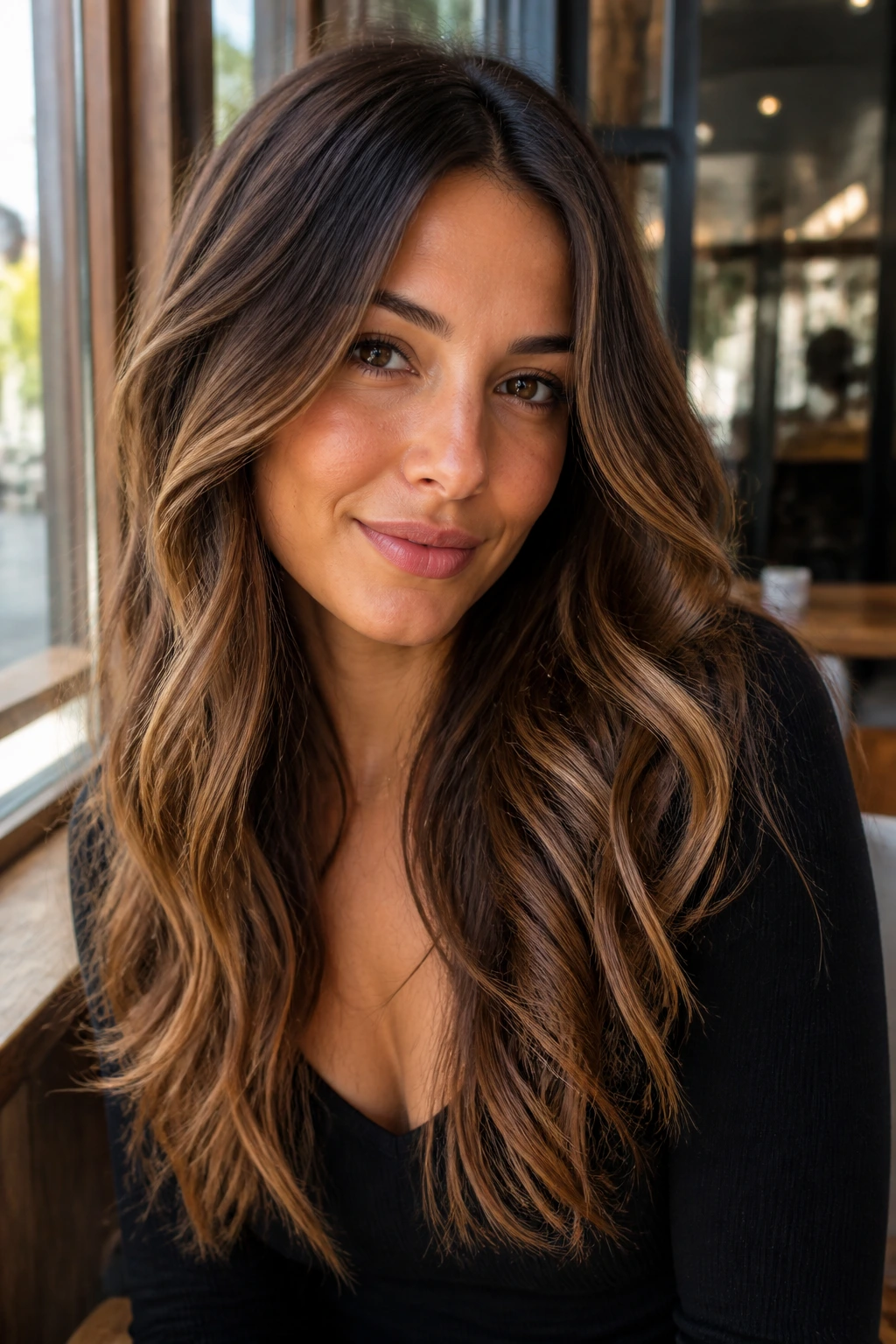
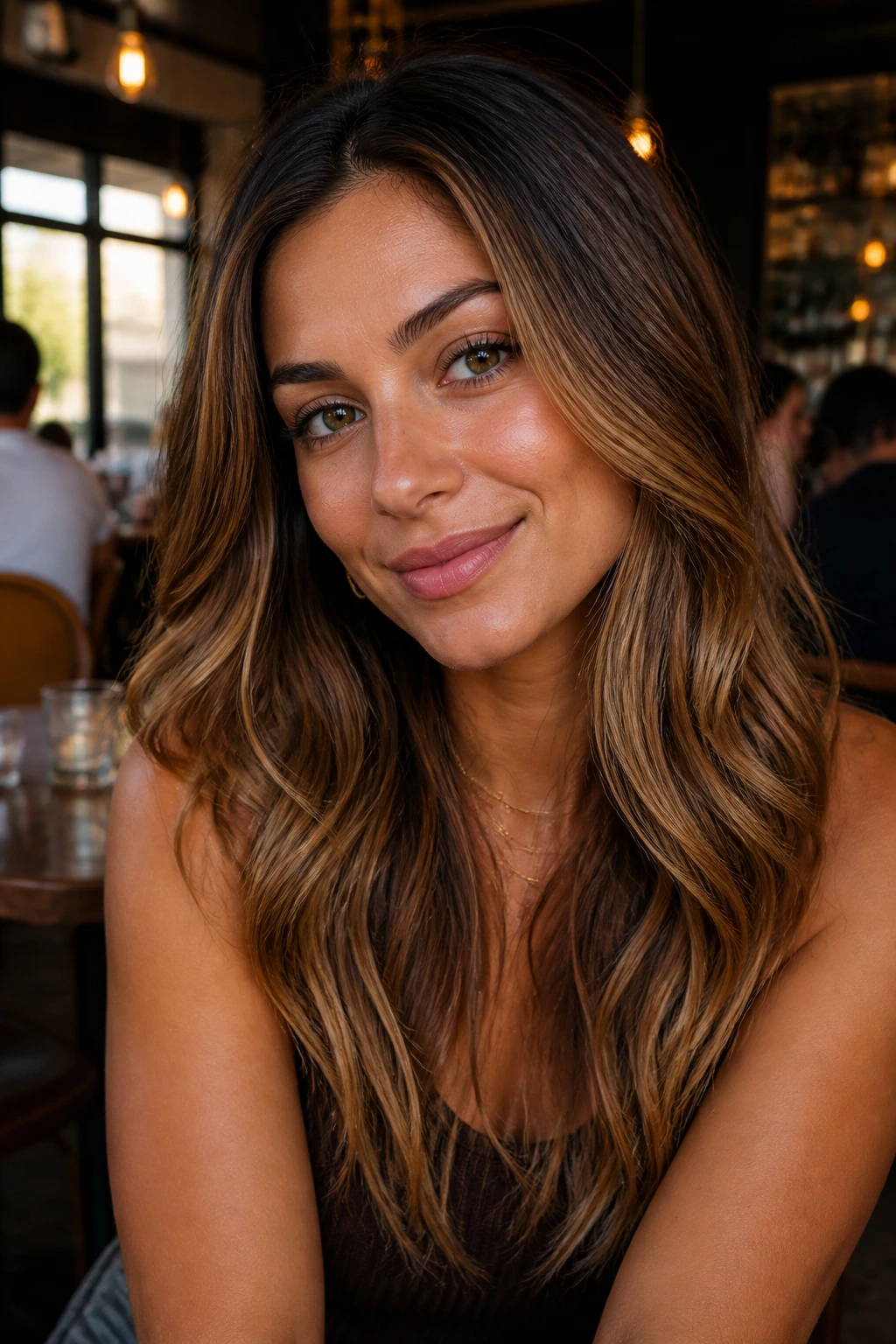
Caramel balayage is probably the easiest way to lighten brown hair for olive skin without losing the brunette frame. The brown base keeps the look anchored, while the caramel ribbons add just enough brightness around the face and through the ends. Done well, it looks sunlit. Done badly, it looks striped. The difference is placement.
For olive skin, the caramel should stay beige-gold rather than bright yellow. That matters more than people realize. Yellow caramel can make the skin look tired; beige caramel gives it a warmer, fresher finish. A colorist who paints the pieces in chunky, over-lightened strips is missing the point.
This is a smart option if you want visible dimension but do not want to commit to all-over blonde maintenance. The grow-out is softer, and the darker base keeps the scalp area tidy. It also works beautifully with waves because every bend catches a little different tone.
9. Toffee Brunette
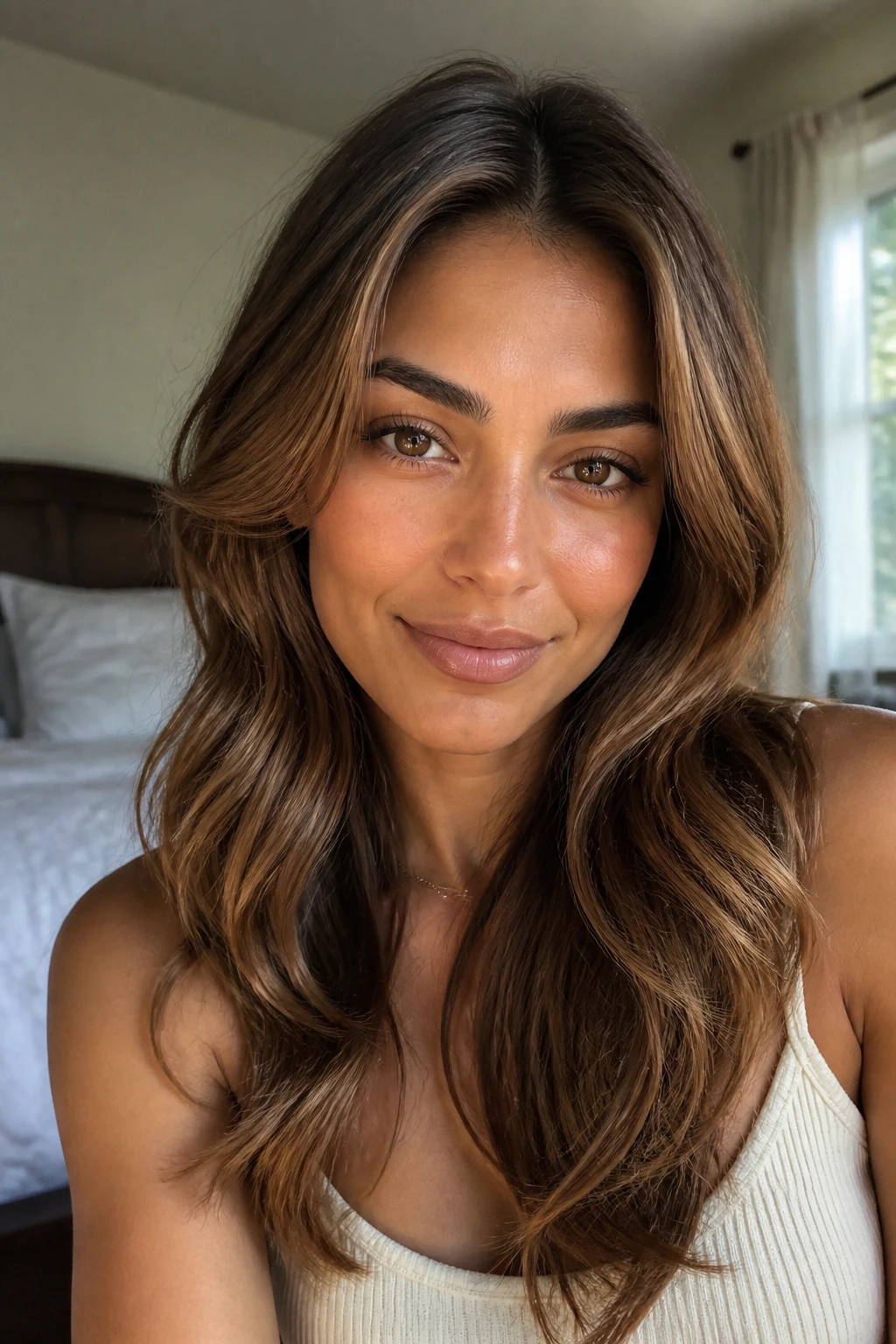
Toffee brunette sits between golden brown and light mocha, and that middle ground is where a lot of olive skin starts to look its best. The shade is warm but not sugary, and it has enough softness to avoid that orange-brown problem that hits at the worst possible time — under indoor lighting.
This color is especially useful on medium olive skin that wants brightness around the face without going full blonde. Toffee gives you that lift. It can be worn as an all-over color or as soft ribbons over a darker base, but I think it looks richest when the root stays about half a level deeper than the ends. That little contrast keeps the finish from going flat.
A glossy blowout helps this shade. Straight hair can look sleek; soft bends make the toffee tones show up better. If your hair is very fine, ask for a dimensional formula instead of one solid block of warm brown.
Best for: warm olive skin and neutral olive skin.
Avoid if: your skin leans cool and you already struggle with orange tones in hair.
10. Hazelnut Brown
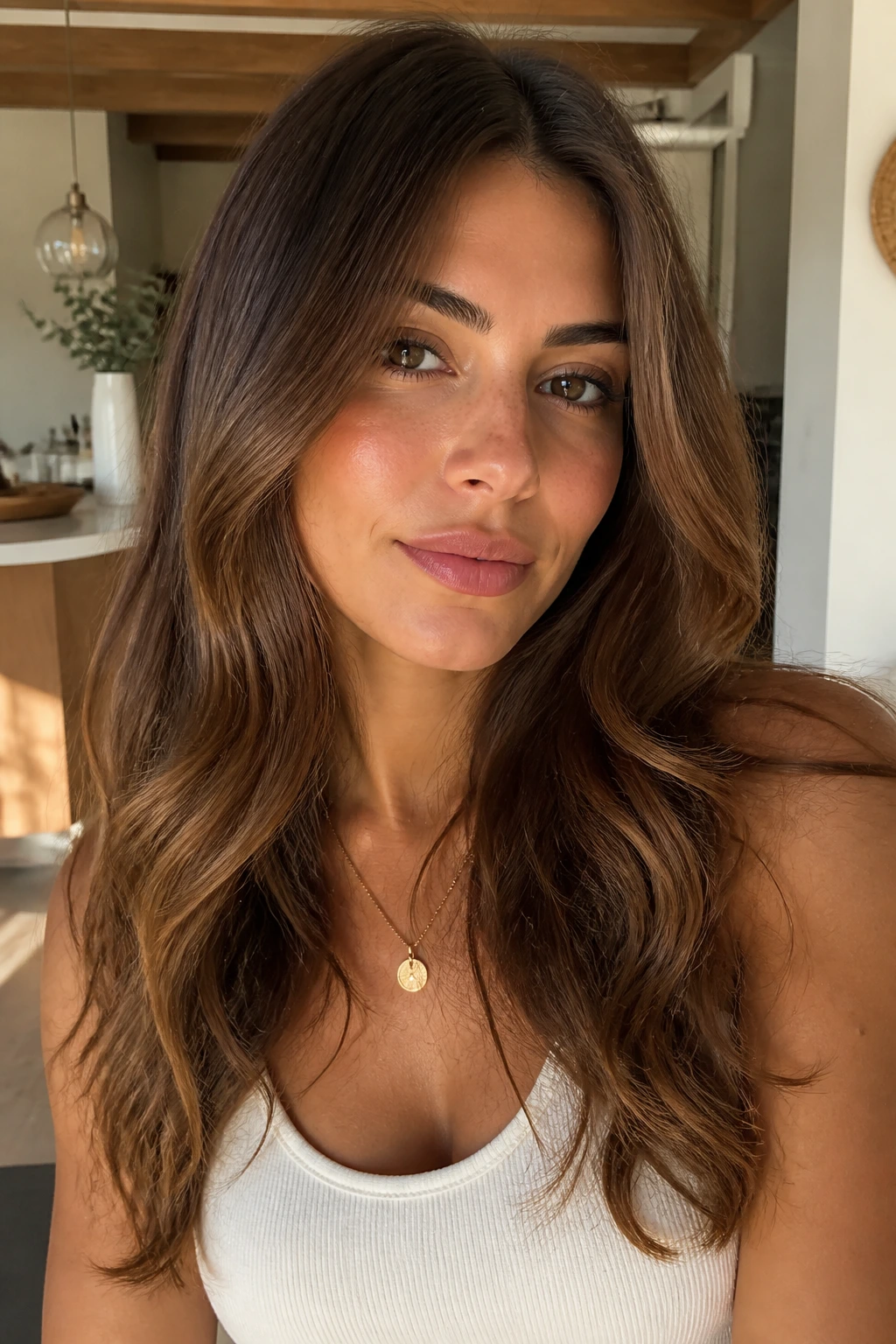
Hazelnut brown has a nutty, neutral quality that makes it one of the easiest brunette shades to wear on olive skin. It does not scream warm, and it does not go icy. It just sits there looking balanced, which is often exactly what olive skin needs.
I like hazelnut for people who want a color that looks believable in every light. It reads soft in the morning, richer at night, and less finicky than many trend shades. The undertone usually lands in a neutral golden-brown zone, which keeps the face from looking flat.
If you’re undecided between chestnut and ash brown, hazelnut is the safer pivot. It keeps the hair from looking too red or too gray. The shade also ages well because the grow-out line is gentle, and the warmth fades more gracefully than copper-heavy browns.
Quick take
Hazelnut brown is not flashy, but it is one of the most wearable brown hair colors for olive skin when you want something that stays flattering through a long grow-out.
11. Ash Brown
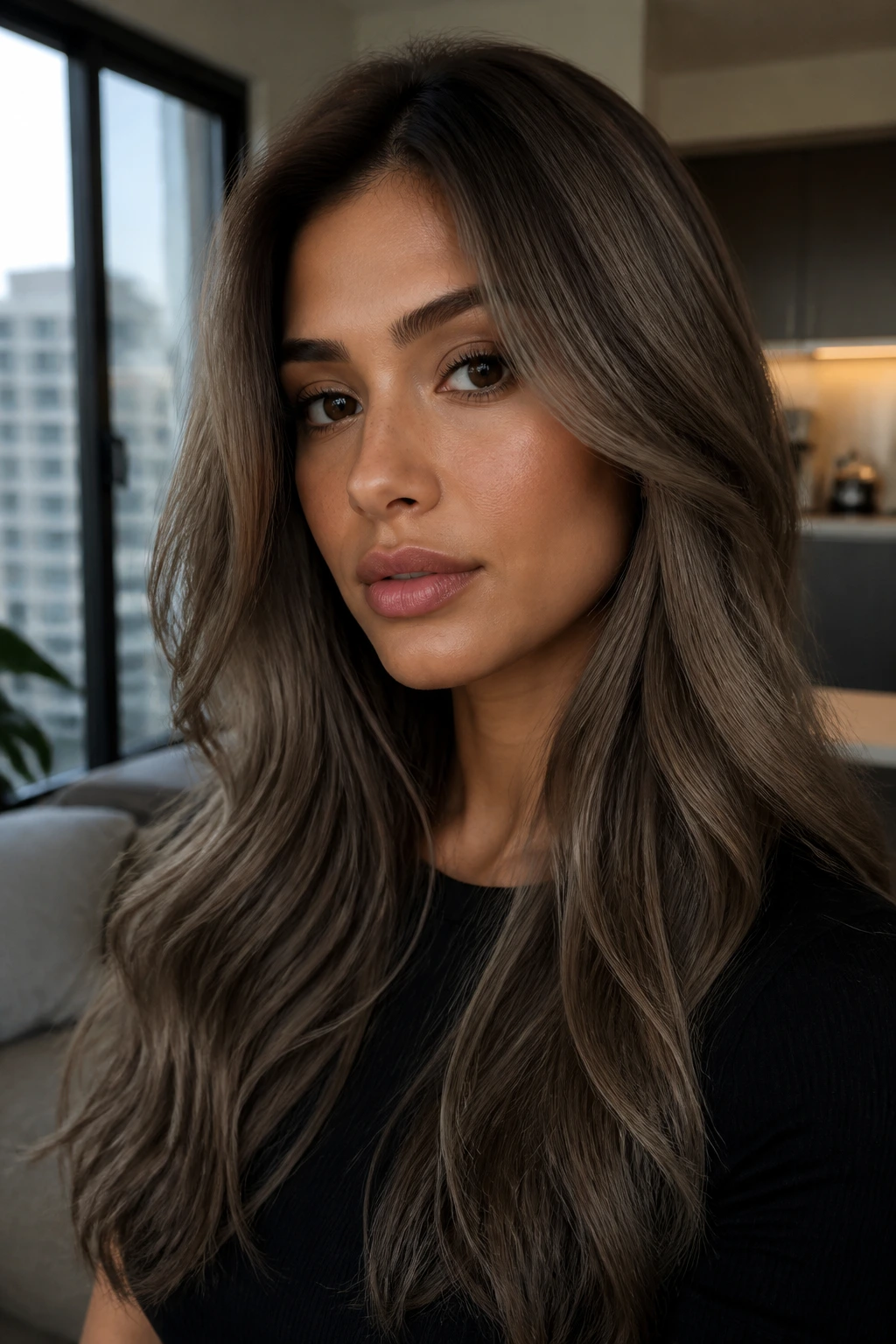
Ash brown is where things get a little tricky, which is exactly why it deserves a place here. On cool olive skin, ash brown can look sleek and modern, especially when the goal is to mute brass and keep the whole look clean. On warm olive skin, the same shade can go flat fast. Not impossible. Just less forgiving.
The color works because ash brown cuts through the gold-green cast some olive skin has, creating a clean contrast that can make the eyes look sharper. But the ash needs help. A bit of dimension, a slightly darker root, or a beige lowlight keeps it from looking like chalky mud.
If your hair naturally pulls orange, ash brown is also useful because it helps cancel the warmth. Blue shampoo can support that at home, but it won’t fix a formula that was too light or too gray to begin with. Think of ash brown as a controlled statement, not a default.
Best for: cooler olive undertones, especially on straight or silky hair.
Skip the flatness: ask for dimension, not one opaque gray-brown block.
12. Bronze Brown
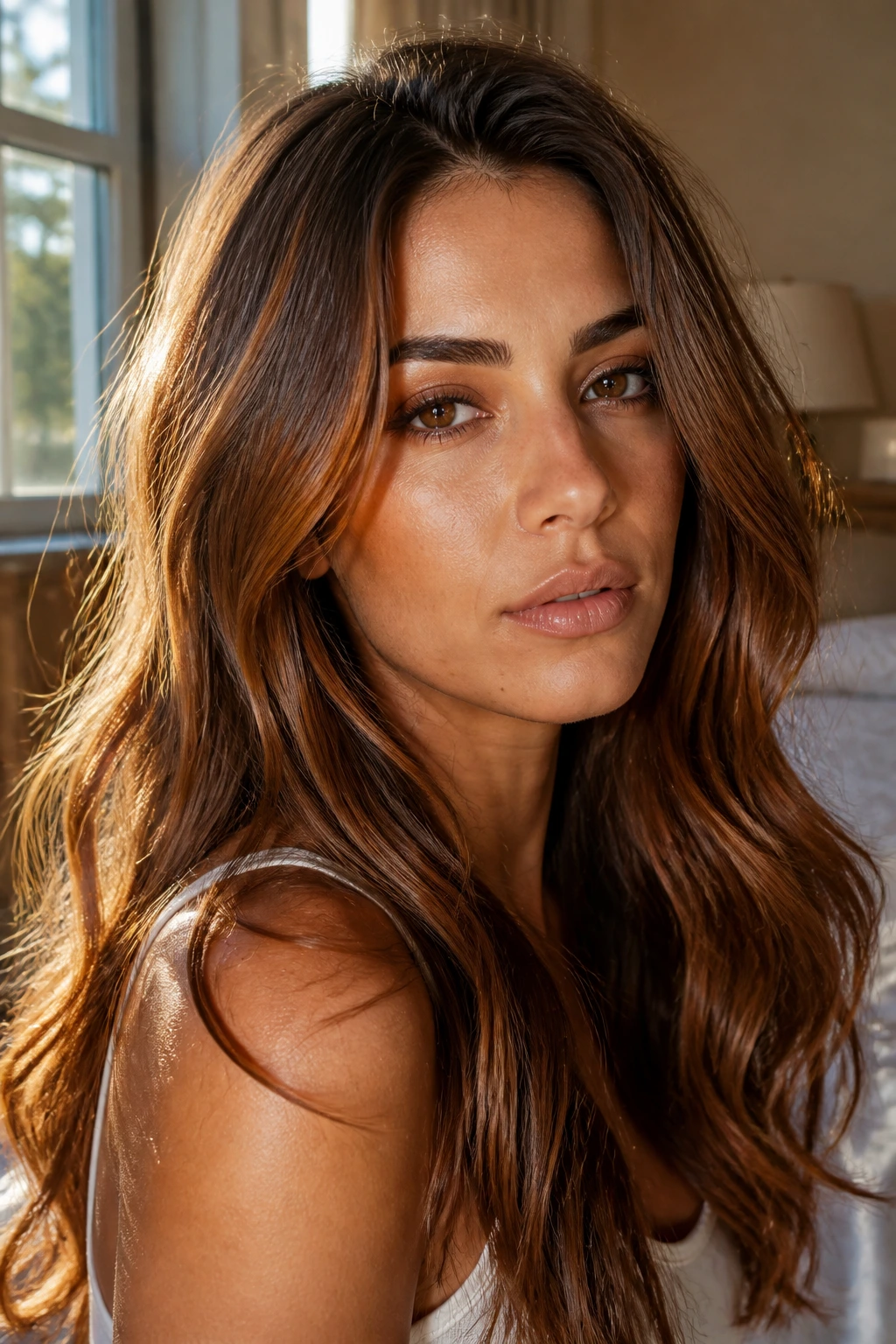
Bronze brown brings a metallic warmth that can look gorgeous against olive skin, especially when the skin already has a sun-touched or golden cast. It has more glow than chestnut and less red than cinnamon, which makes it a very useful middle shade. The effect is polished but not stiff.
I like bronze brown most on layered cuts and loose waves. The reason is simple: bronze needs motion. On a still, flat style, the color can disappear into the hair. With movement, the warmth flickers in and out, and the skin looks more alive by comparison.
This is a good shade if you want a brown that reads richer than standard mocha. It does require some attention to keep the bronze from drifting orange. A beige-gold gloss helps more than a heavily copper toner. That’s a small distinction, but it changes the whole mood.
13. Maple Brown
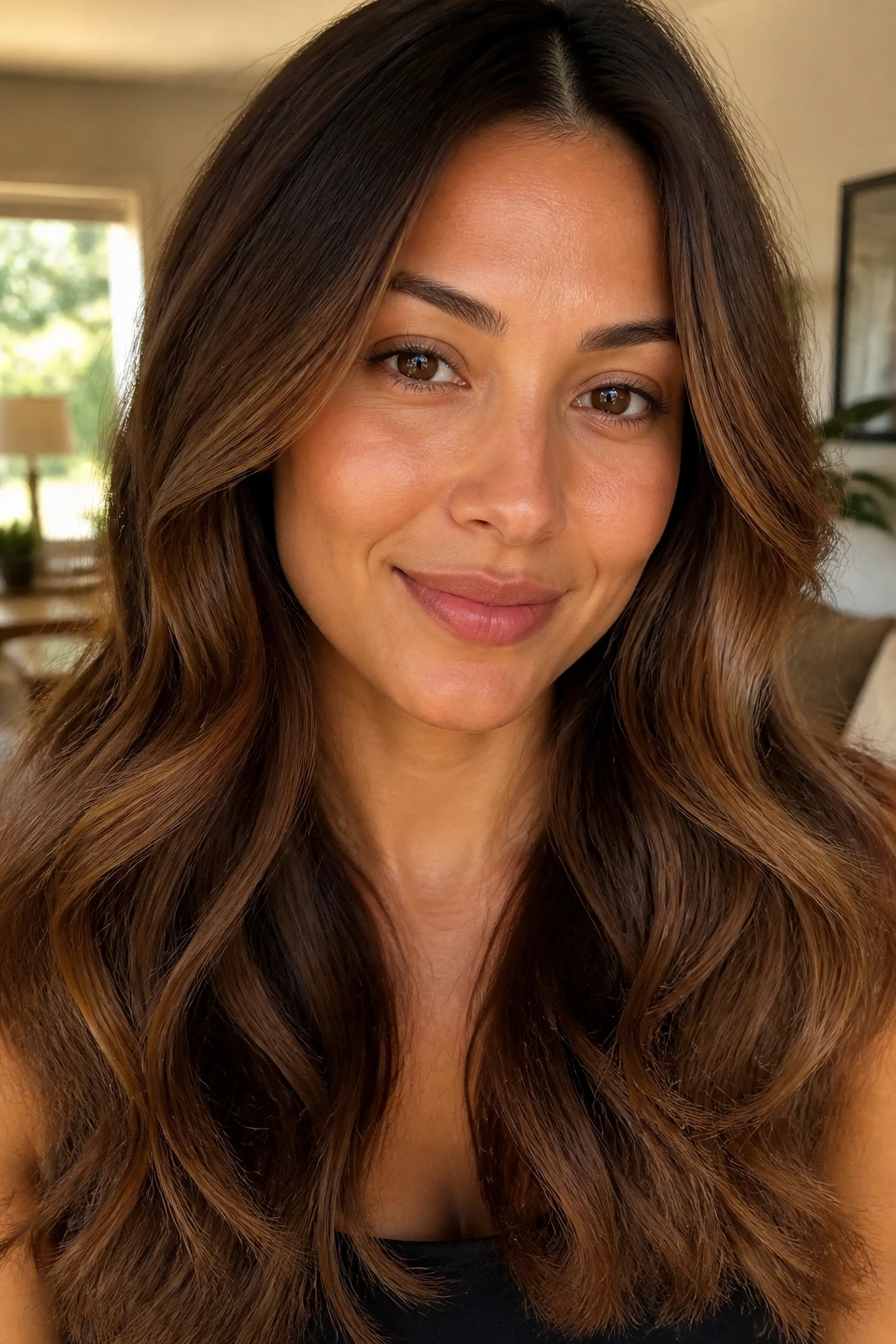
Maple brown has a woodsy, soft warmth that makes it feel less manufactured than some of the brighter brunette shades. On olive skin, that matters. The color has enough amber to lift the face, but it stays grounded in brown so the complexion doesn’t start to look too yellow.
This shade is especially flattering if your natural hair already sits in the medium-brown range and you want a gentle enhancement rather than a sharp change. The color works best when it’s slightly translucent, almost like the light can pass through it. That’s where the maple note shows up.
A lot of people ask for “warm brown” and end up with something too orange. Maple brown is the smarter version. It gives you warmth without the pumpkin problem. If you keep the finish glossy and the root a touch deeper, the result looks easy in the best sense.
A small styling note
Soft waves or a rounded blow-dry help maple brown show its richness. Pin-straight styling can make it read darker than it really is.
14. Walnut Brown
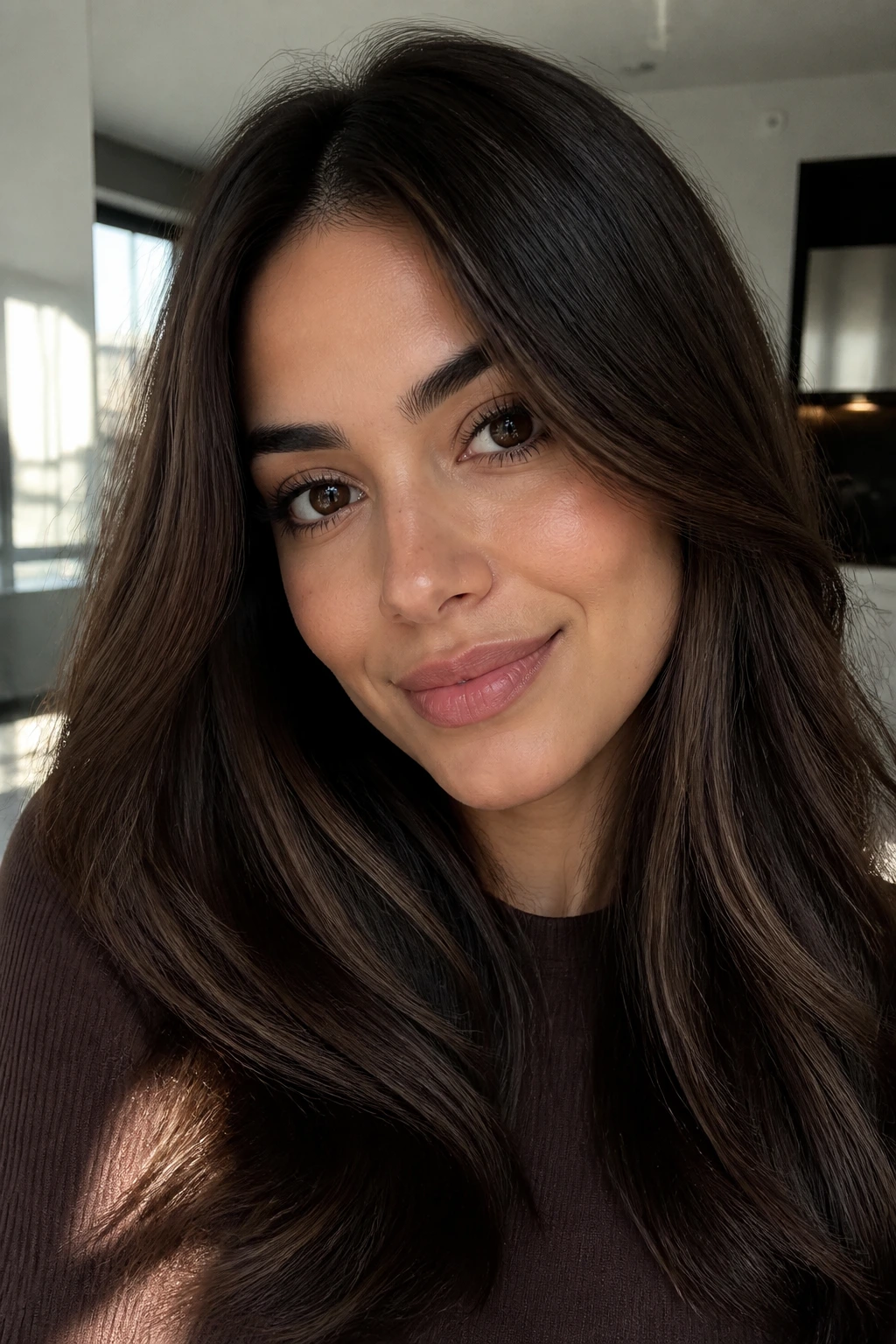
Walnut brown is one of my favorite shades for olive skin because it lands in a very honest middle zone. It’s brown, deeply brown, but not black. It has a muted warmth that works on neutral olive skin and enough depth to flatter medium and deep olive complexions.
This color looks especially good when the hair has a healthy cuticle, because walnut depends on shine. If the hair is rough or over-processed, the shade can start to look dull fast. A smoothing leave-in and a weekly mask make a bigger difference here than people expect.
What makes walnut brown useful is its restraint. It doesn’t try to steal attention from the face. Instead, it gives the face a calmer frame and lets the undertones do their thing. If you want a brunette shade that feels expensive without screaming for attention, walnut belongs near the top of the list.
Best for: neutral olive skin, medium olive skin, and anyone who wants a grounded brunette with polish.
15. Cocoa Gloss
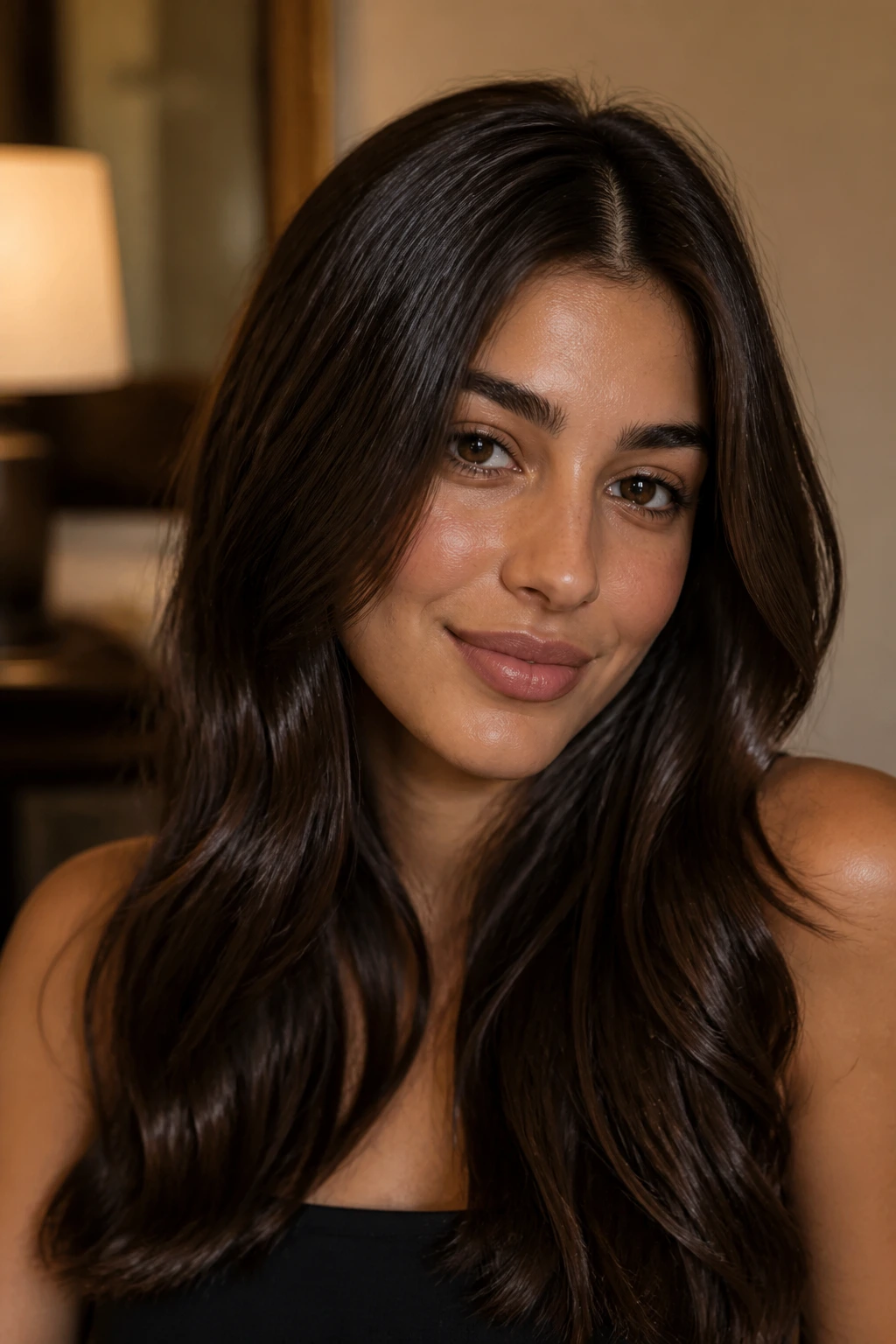
Cocoa gloss is not just a shade; it’s a finish. Think deep brown with a sheer, reflective overlay that makes the hair look polished rather than painted. On olive skin, that shine matters because it keeps the color from sinking into a matte block. The result feels softer around the face and less severe at the ends.
This is a smart choice if your current brown is a little tired and you don’t want a full color overhaul. A demi-permanent gloss in a cocoa tone can refresh the lengths, smooth brass, and make the overall tone look richer in about one salon sitting. It also works beautifully after sun exposure, when brunette hair tends to lose that deep, plush look.
Cocoa gloss is especially nice on long layers and curls. The shine catches the bends, and the skin gets a cleaner frame. If you’ve got olive skin that leans both warm and cool, this shade can sit right in the middle and behave itself.
How to think about it
You are not chasing a dramatic new hue here. You’re giving brown hair more depth and smoother light reflection, which is often what olive skin needs most.
16. Sable Brown
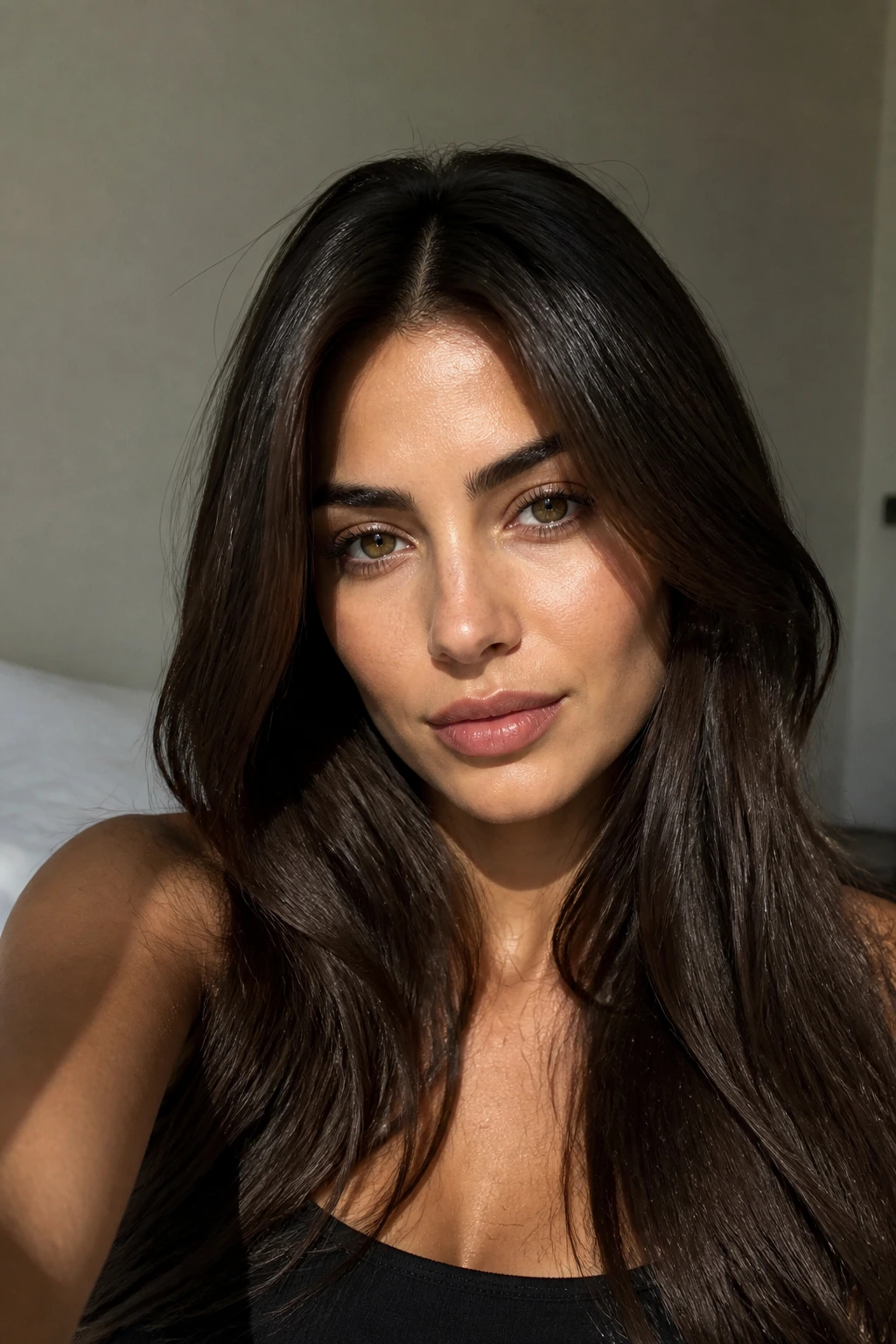
Sable brown is darker and cooler than walnut, but it still has enough softness to avoid looking like a hard black dye. On olive skin, it gives a crisp, elegant border around the face. It can be especially flattering on cooler olive undertones or on people who wear a lot of black, white, charcoal, or silver jewelry.
I like sable brown when the hair has a little movement at the ends. If the cut is too blunt and the color too solid, the whole thing can feel severe. But if the layers are soft and the finish is glossy, it looks modern and controlled in a very good way.
The shade also plays well with minimal makeup. That matters. Sable can make the eyes look clearer and the skin look smoother, but only if the hair is healthy enough to catch light. Dull sable is not the same as rich sable. Not even close.
17. Sandalwood Brown
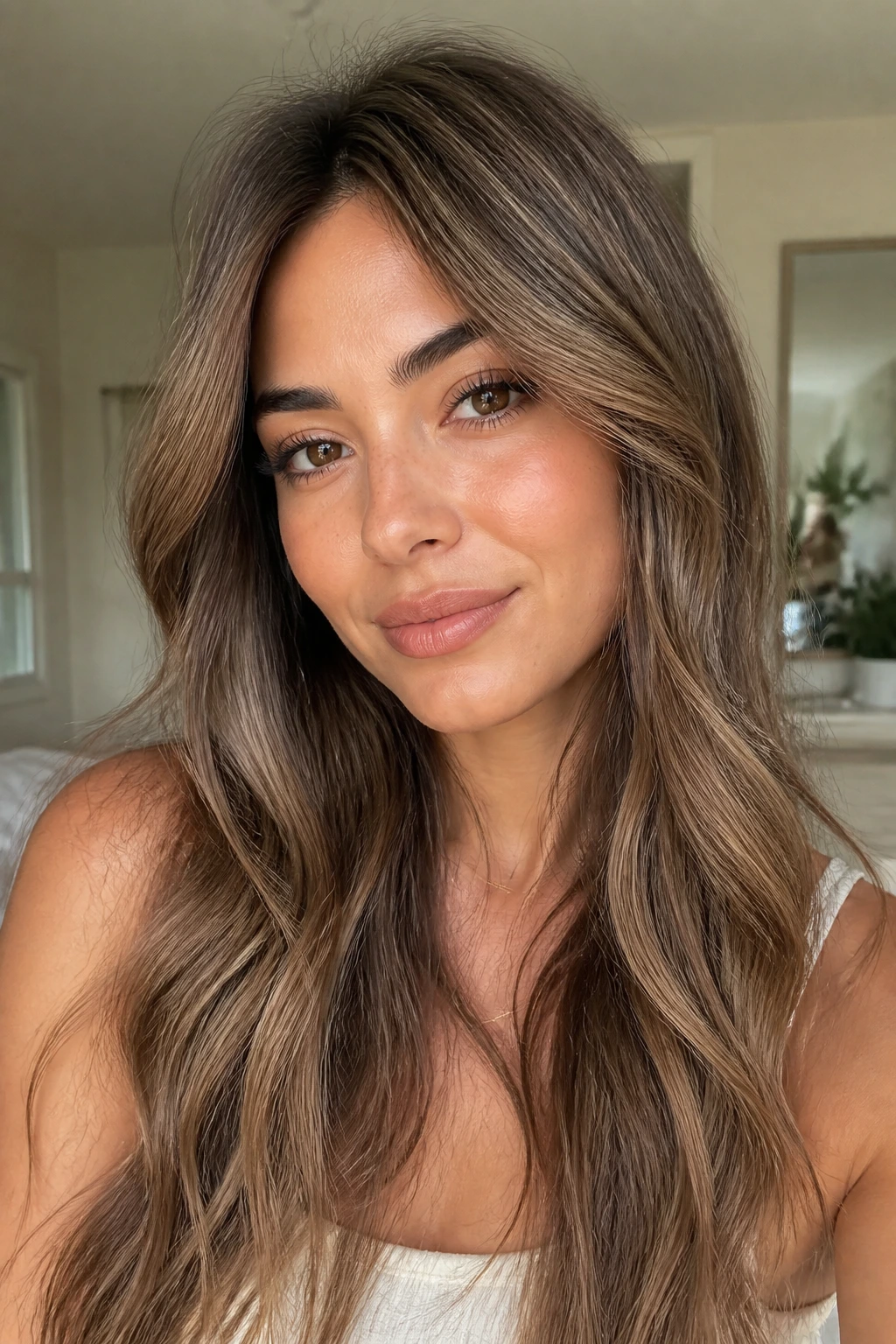
Sandalwood brown has a creamy, slightly beige cast that makes it very useful on neutral olive skin. It’s warmer than ash brown, cooler than caramel, and softer than chestnut. That middle space is where a lot of olive complexions look their cleanest.
This shade is a nice choice if you want brunette color that feels refined rather than dramatic. It’s especially flattering when used as a rooty brunette with lighter beige-brown pieces through the lengths. The beige note keeps the skin from looking too yellow, while the brown base keeps the result grounded.
I’d choose sandalwood brown over a brighter caramel if your skin already reflects a lot of warmth in daylight. It gives dimension without amplifying every gold note on the face. The hair still looks light enough to feel fresh, but not so bright that it starts competing with the complexion.
Good for: neutral olive and softly warm olive skin.
Works best with: loose waves, long layers, or a soft blowout.
18. Honey Brown Ribbons
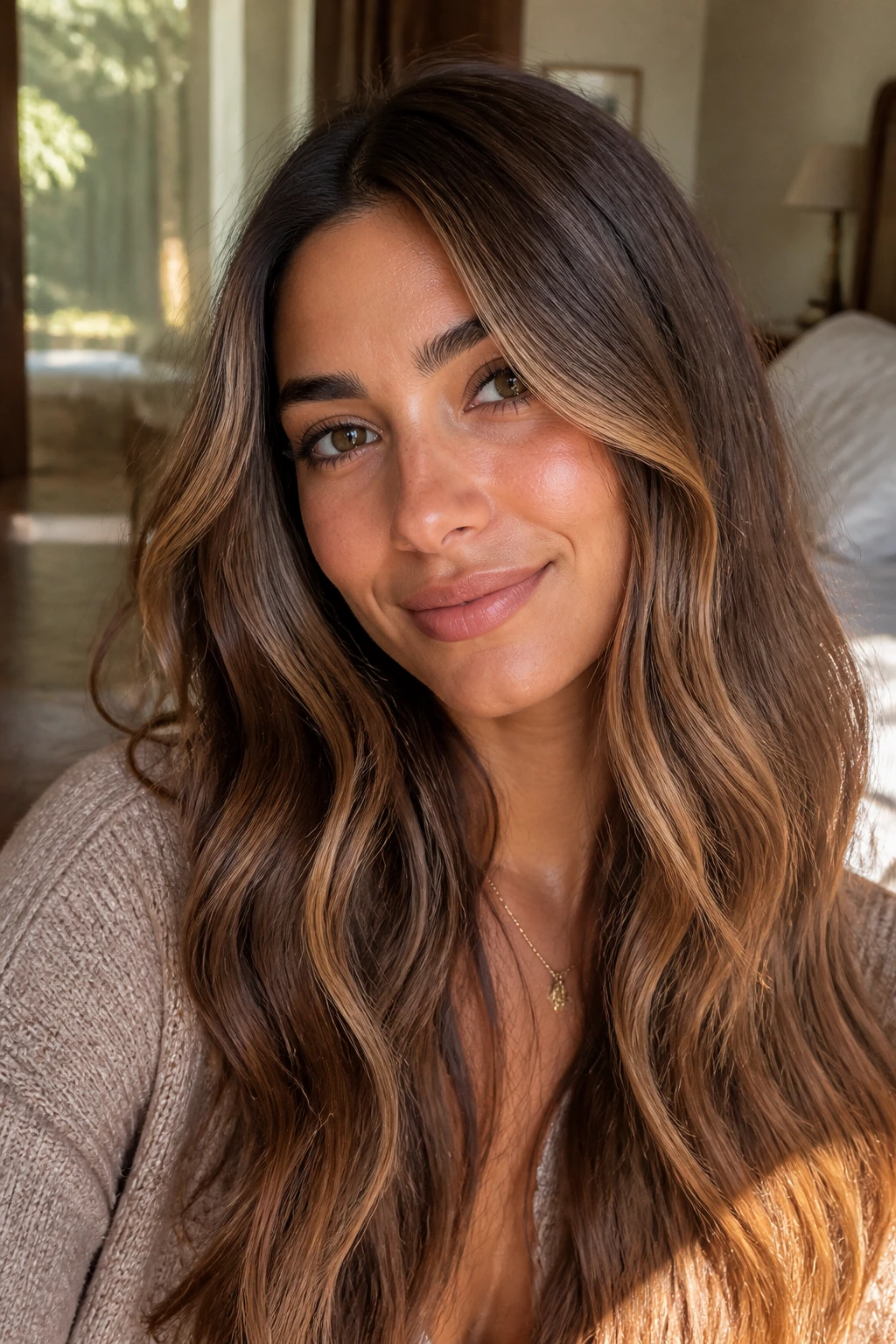
Honey brown ribbons are for people who want brightness without the full leap into blonde territory. On olive skin, they can look gorgeous when the honey stays soft and not too yellow. Think thin, well-placed ribbons around the face and through the top layer, not streaks that announce themselves from across the room.
The reason this works so well is contrast. The deeper brown base keeps the color anchored, while the honey pieces break up heaviness and bring light back into the skin. Done with a careful hand, the result looks sunlit and easy. Done carelessly, it looks striped and dry. Placement matters more than the shade name.
This is a good option if your natural brown feels too dense or one-note. Honey ribbons can soften the look without demanding a full blonding process. Keep the ribbons minimal near the roots if you want the grow-out to stay civilized.
Best styling move
Loose curls or a round-brush blowout show off honey ribbons much better than pin-straight hair. The bend in the hair reveals the color shifts.
19. Cool Mocha Melt
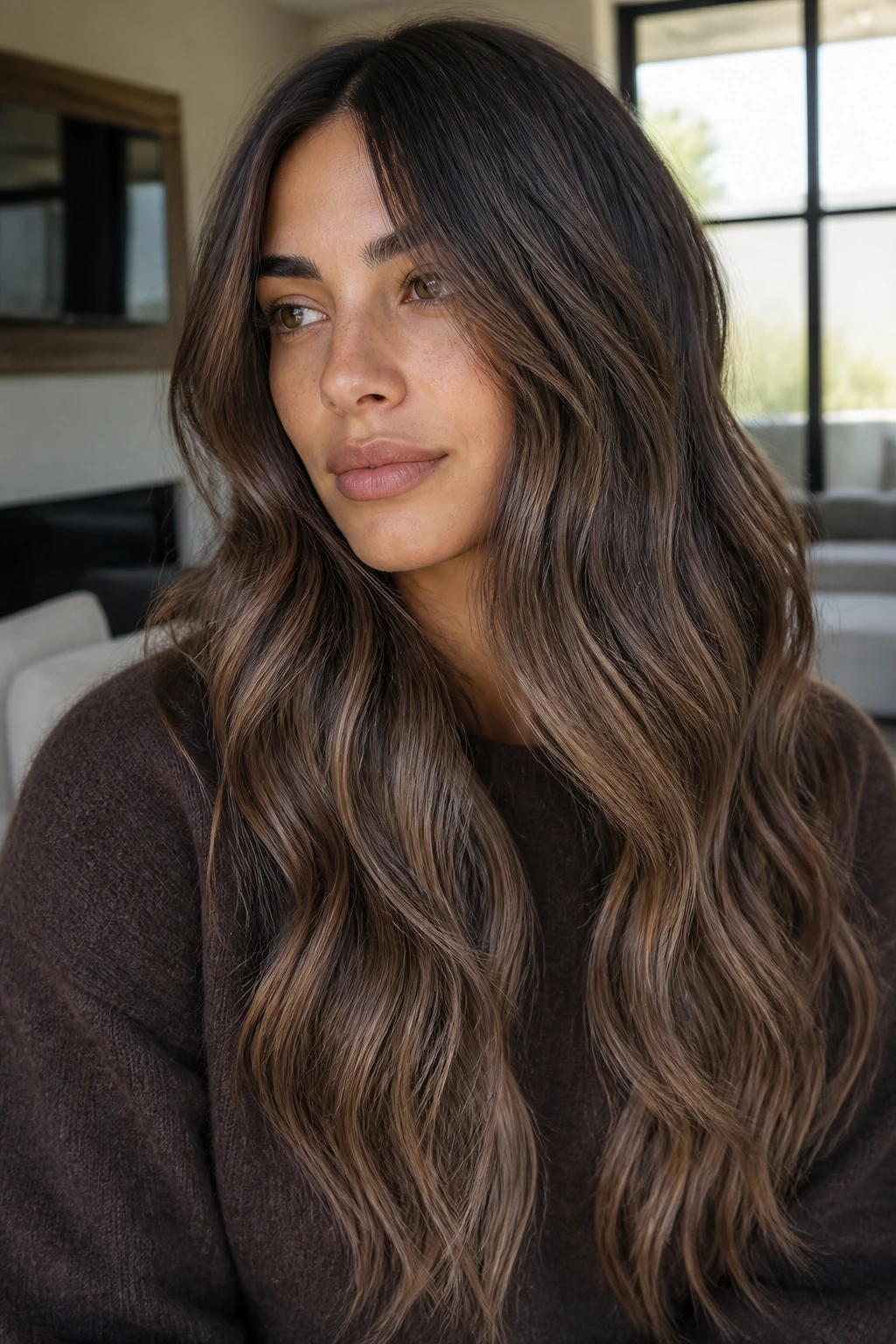
Cool mocha melt is basically the answer to “I want brown, but I do not want warmth taking over.” It blends a cool brunette root into slightly lighter mocha lengths, and on cooler olive skin it can look especially smooth. The melt part matters. The gradient keeps the shade from going blocky.
This is a strong choice if your hair is naturally dark and you want dimension without obvious highlights. A good mocha melt has soft depth at the crown and a gentle fade through the mids, which keeps the face from appearing too heavy. It also grows out in a forgiving way because the root shadow is part of the look, not a problem to fix.
If your olive skin leans green-gray rather than golden, cool mocha can be a smart match. It avoids the orange pull that some brunette dyes bring to the party. Add a touch of gloss and the color starts behaving beautifully in daylight.
20. Espresso with Subtle Copper
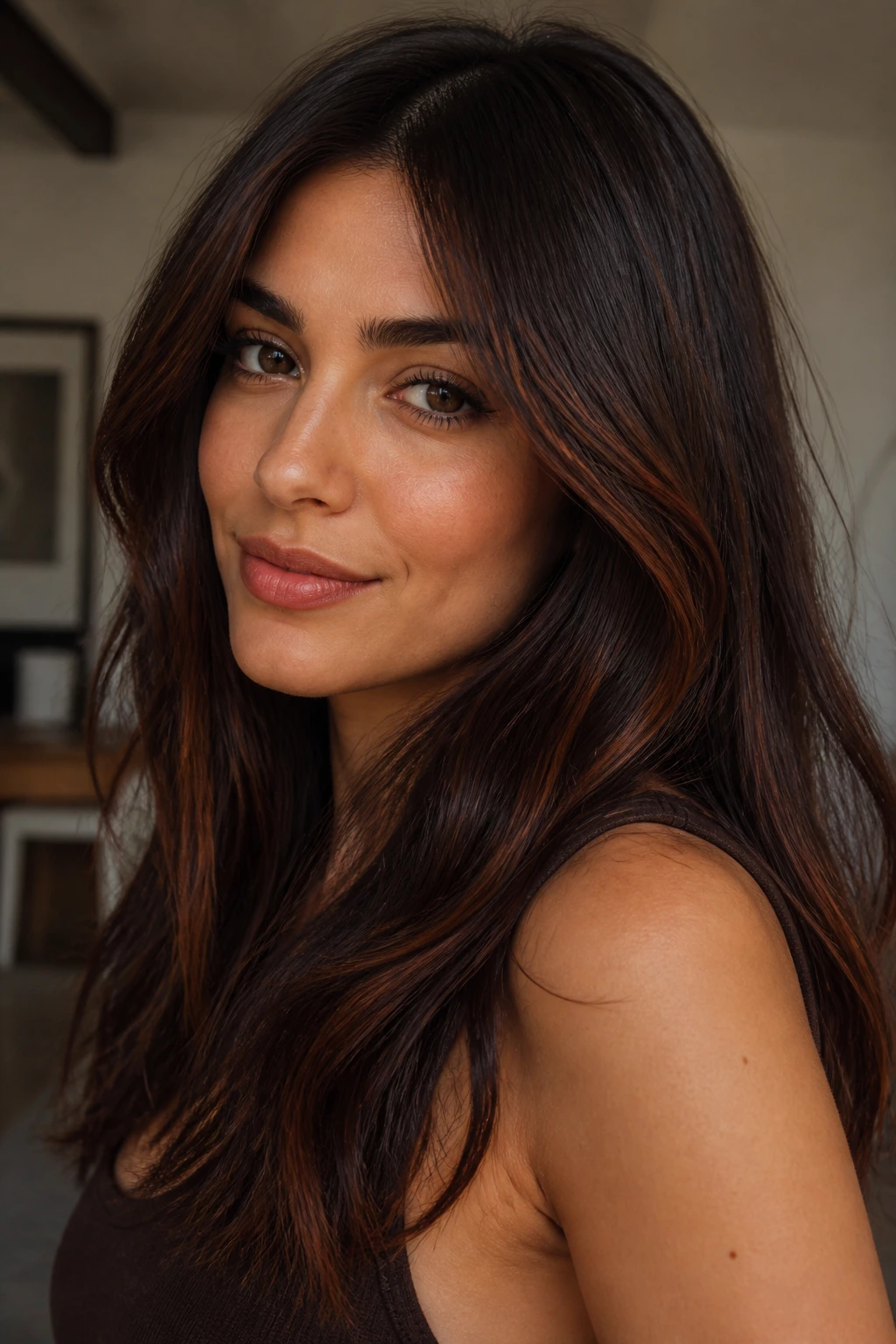
Espresso with subtle copper is a narrow little lane, and that’s why it works. The base stays deep and rich, while the copper is only there as a whisper — enough to warm the hair, not enough to turn it into auburn. On warm olive skin, that tiny copper note can make the complexion look energized.
I like this shade when the goal is dark hair with personality. Pure espresso can sometimes feel too severe on medium olive skin, especially if the rest of the look is soft. A restrained copper reflection gives the color a touch of movement and makes it feel less like one flat block.
The warning is easy to guess: too much copper and you’re in red-brown territory. That may be what you want, but it’s not this look. Keep the copper low and the shine high. The result should read as deep brunette first, warm undertone second.
Who should try it
Anyone with warm or neutral olive skin who wants a darker shade that still has a pulse.
21. Bronde with Beige Low-Lights
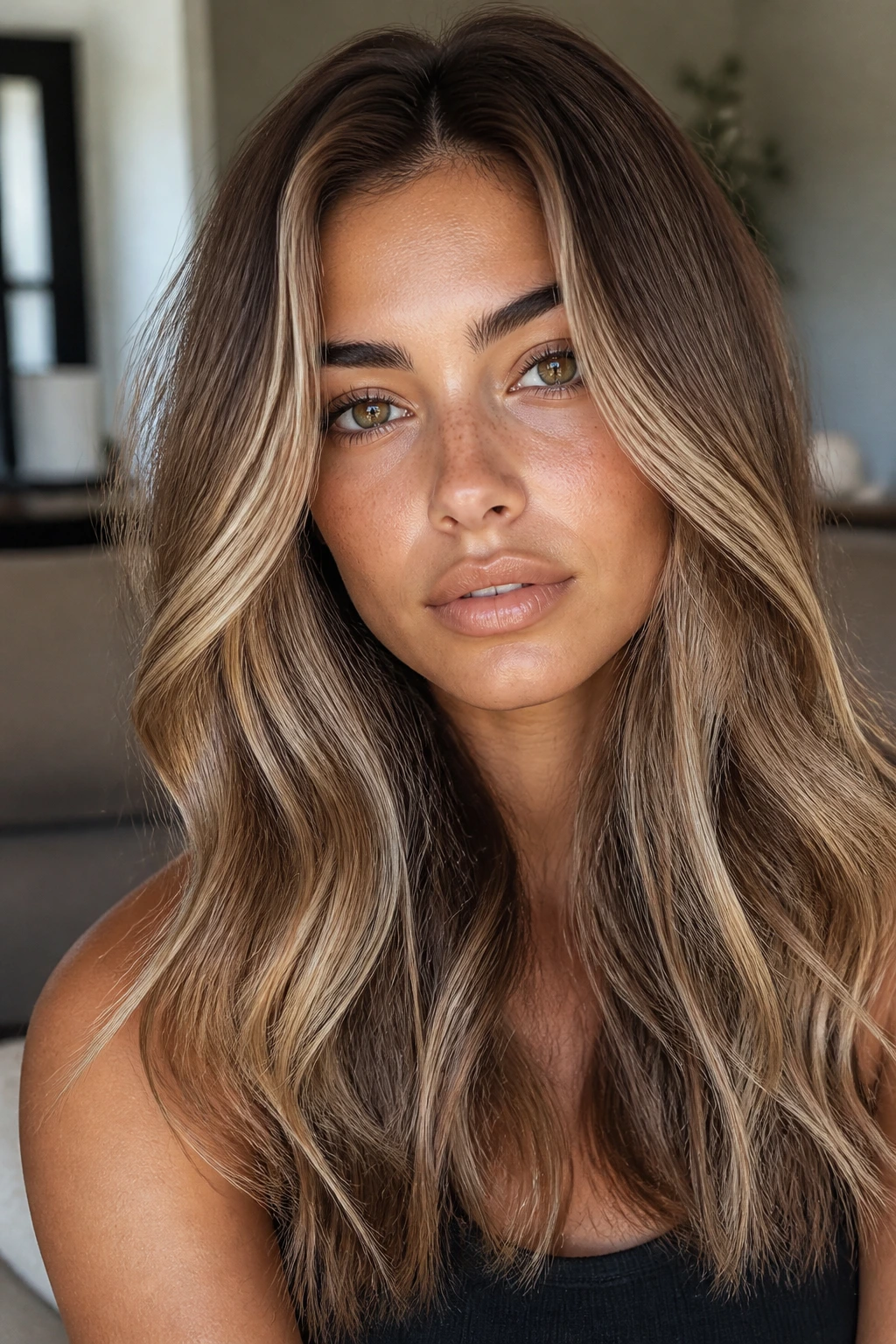
Bronde is often mishandled, but on olive skin it can be excellent when the blonde pieces stay beige and the brunette base stays real. Beige low-lights make the color feel softer, while the lighter ribbons give the face some lift. It’s not a full blonde look. It’s a brunette with a lighter, airier top layer.
This shade works because it gives olive skin contrast without forcing a bright, yellow blonde against it. Beige is the key word. Yellow blonde can tilt too sunny; beige stays in a quieter register. The brown base keeps the roots believable and the overall effect grounded.
If you want to lighten your hair but still keep a brunette identity, this is one of the safest ways to do it. It also photographs well in mixed light because the low-lights keep the dimension visible. That matters more than people admit. Flat bronde is a disappointment. Beige bronde with real low-lights is another story.
22. Smoky Chocolate Brown
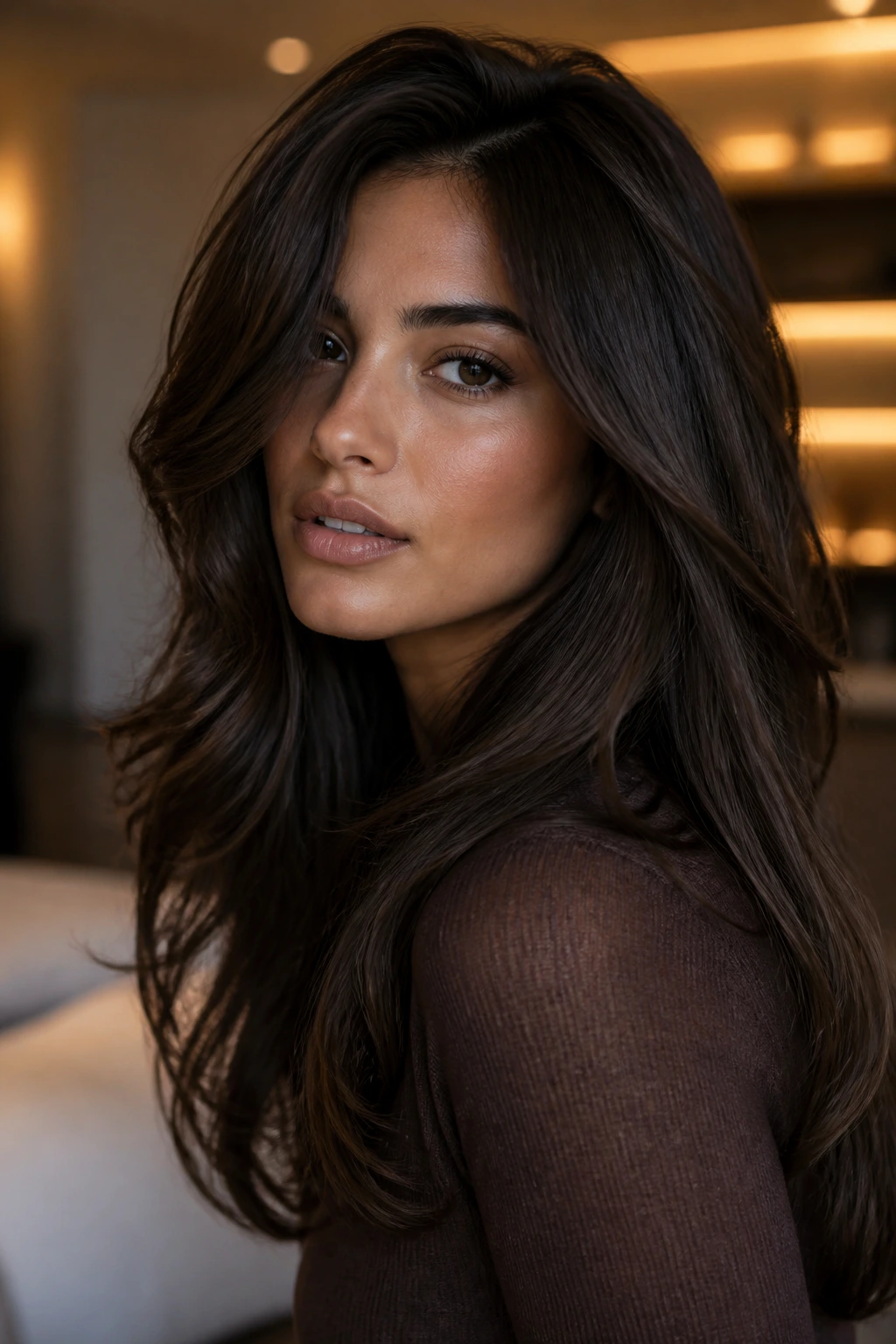
Smoky chocolate brown has the richness of chocolate with a foggier, cooler finish. That smoky note is what makes it interesting on olive skin. It softens the warmth just enough to keep the color elegant rather than sweet.
This shade is a strong pick for medium and cool olive undertones. It adds depth without turning shiny gold, and it keeps the hair from looking reddish under fluorescent light. The finish should feel velvety, not muddy. That means the formula needs enough depth and enough shine to keep the brown distinct.
I especially like smoky chocolate on long hair with subtle layers. The movement shows the smoky overlay, which can disappear on a very blunt, one-length cut. If you wear cool-toned clothes, this shade can be a quiet little powerhouse.
Best for: cooler olive skin, neutral olive skin, and anyone who wants a brunette that stays away from warm brass.
23. Amber Brown
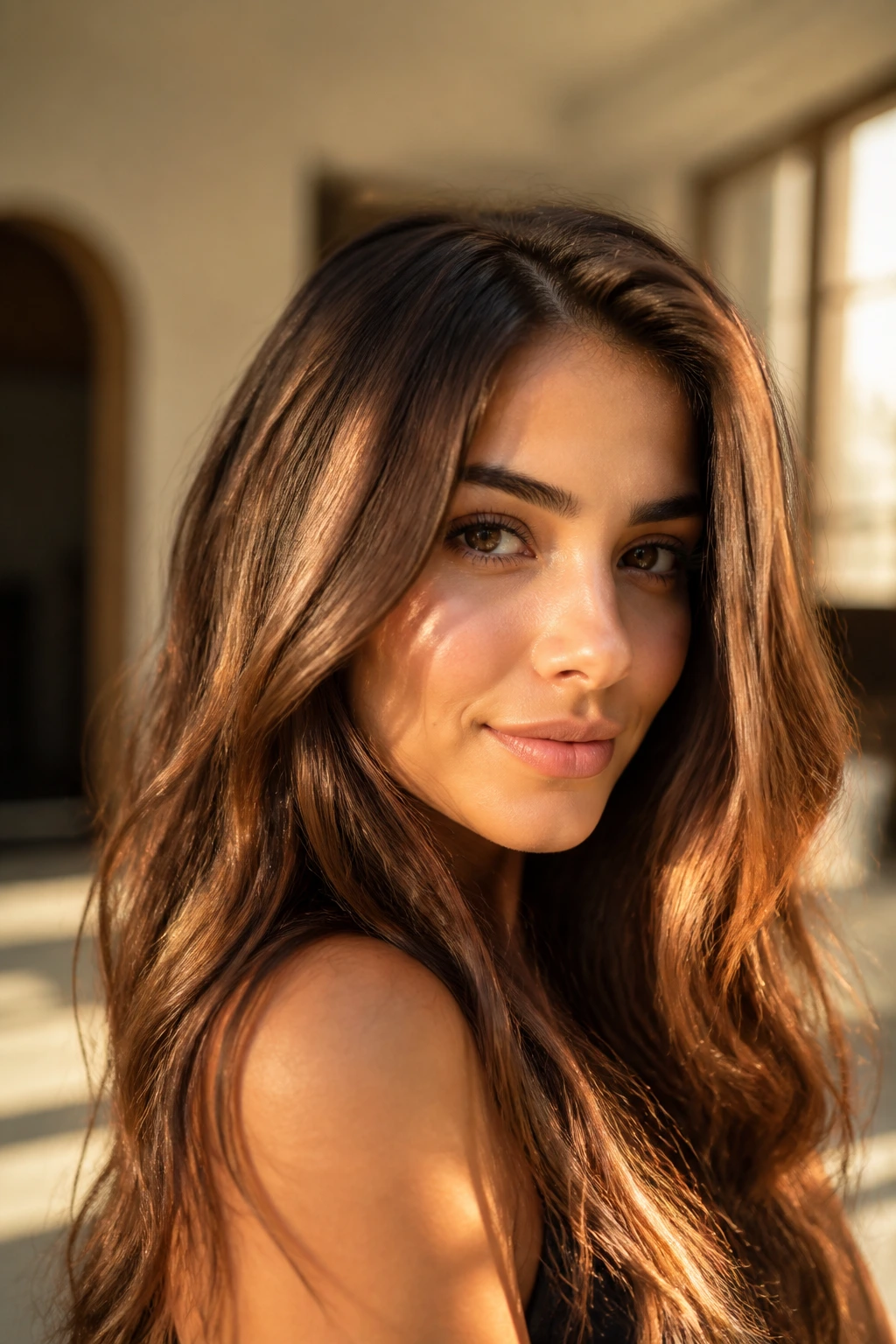
Amber brown is warmer and a touch more luminous than maple or chestnut. It has that polished amber glow that can make warm olive skin look vibrant rather than overcooked. The trick is keeping the amber translucent. Heavy amber can go orange in a hurry.
This color is lovely on hair that moves. Waves, curls, or even a soft bend from a round brush help the amber notes pick up light. On olive skin, that light reflection can make the complexion look smoother because the hair no longer feels like one heavy mass next to the face.
If you want to brighten brown hair without crossing into caramel-heavy territory, amber brown sits in a good middle place. It has warmth, but it still belongs to the brunette family. That makes it easier to wear than louder copper shades.
Small but useful note
Ask for amber as a glaze or a soft ribbon system, not as a heavy all-over red-brown formula. The softer version ages much better.
24. Truffle Brown
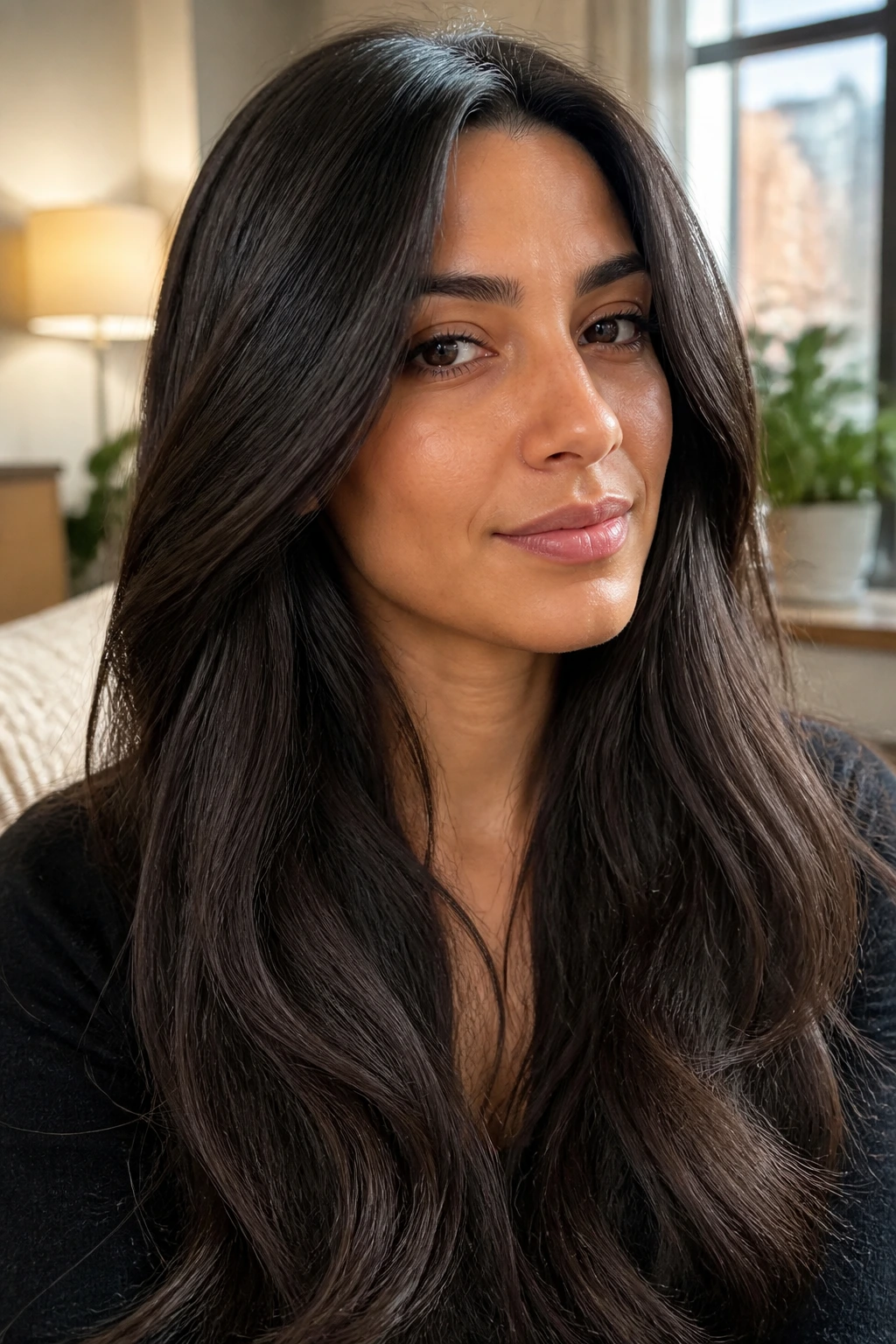
Truffle brown is deep, earthy, and slightly cool, with enough softness that it does not feel black. On olive skin, it can be a beautiful choice when you want the face to look defined and the hair to stay rich. It’s darker than cocoa and cooler than chestnut, which places it in a very workable lane.
I like truffle brown on people who wear darker makeup tones or who already have naturally dark eyebrows. The color helps everything feel connected. It can also be a smart fix if your current brown is too warm and keeps turning orange after a few washes. Truffle pulls that warmth back without flattening the hair.
The shade looks best with shine. A truffle brown that has been dulled by buildup can go dull fast, which is a pity because the whole point is depth. Clarifying occasionally, then following with a glossing mask, keeps the tone clean.
25. Soft Black-Brown
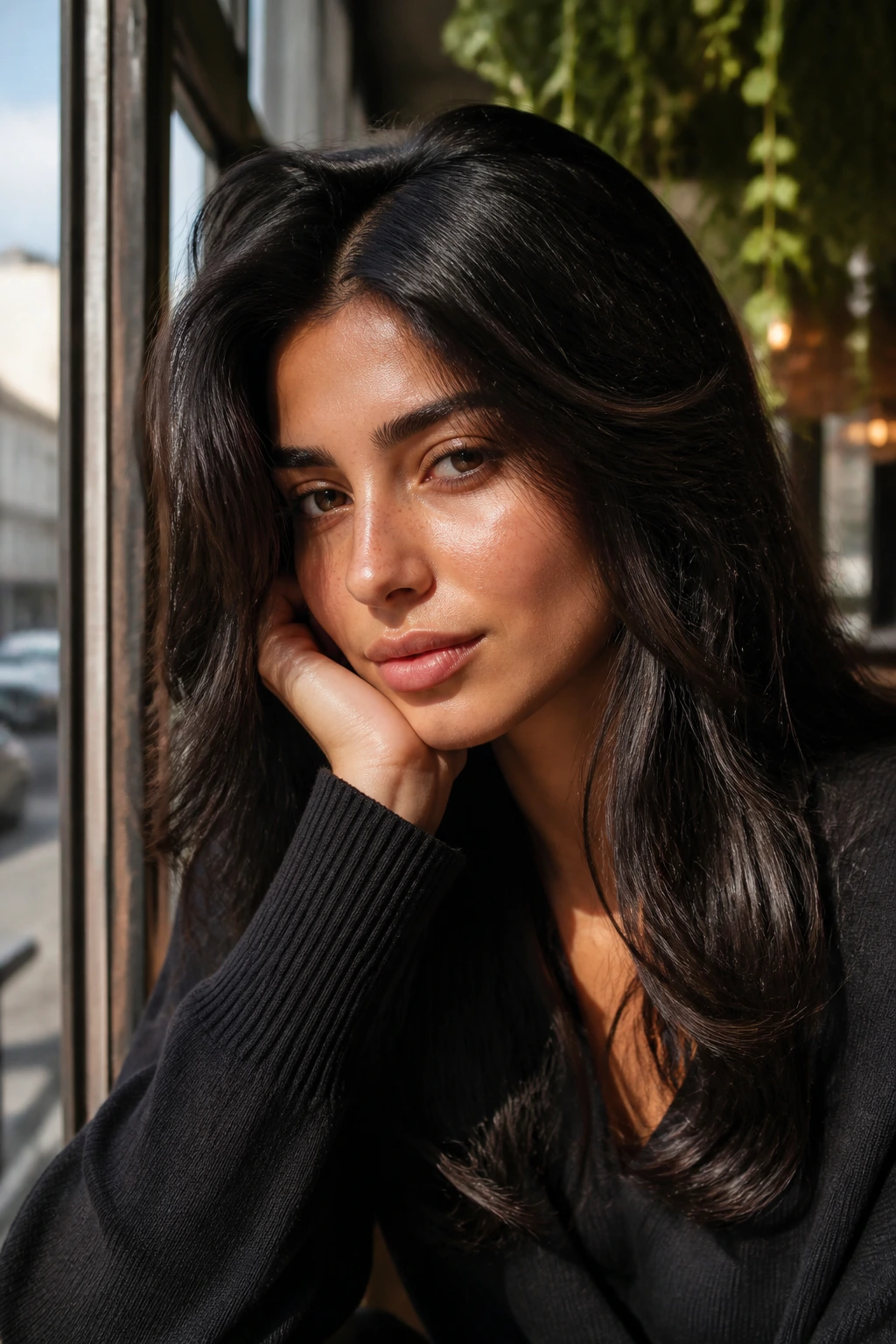
Soft black-brown is the last shade on the list for a reason: it’s not black, but it has enough depth to come close. On deep olive skin, especially with darker eyes and brows, it can look striking and very grounded. On lighter olive skin, it needs caution. Too much opacity and the face can start to look drained.
The reason this shade earns a spot is simple. A softened black-brown can give olive skin a beautiful frame when the hair has shine and the cut has movement. I prefer it with a glossy finish, a few soft face-framing pieces, or a layered haircut that keeps the edges from feeling too severe. The smallest bit of dimension makes a big difference.
If your goal is dramatic brunette color without the harshness of true black, this is the shade to keep in mind. It’s cleaner than many people expect, but it does not forgive dryness.
What to ask for
A level 2 to 3 brown-black with a soft reflective finish, not a flat permanent black box color. That one detail changes the whole result.
How to Choose the Right Brown for Your Olive Undertone
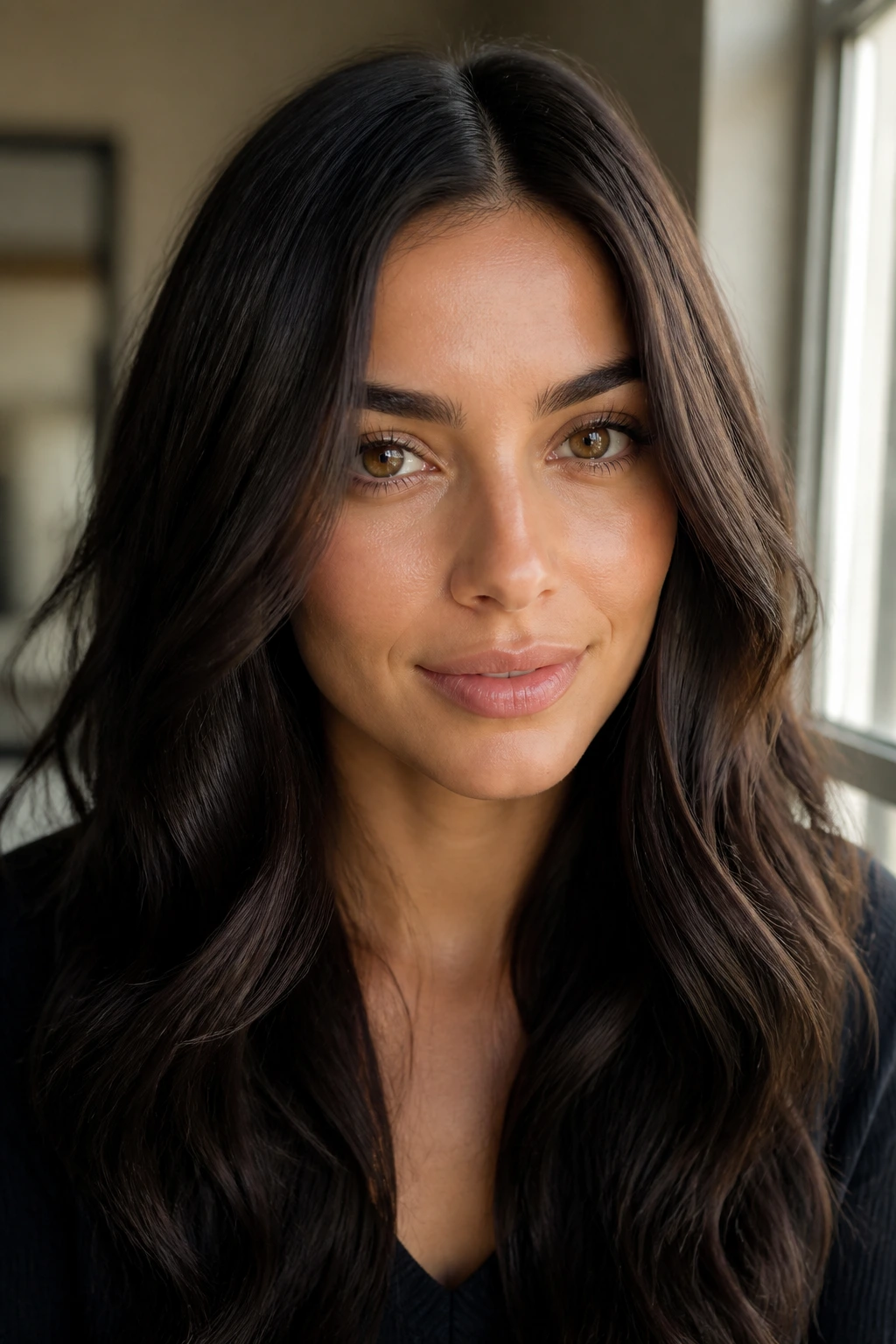
The quickest way to narrow the field is to stop asking, “Do I want warm or cool brown?” and start asking, “What does my skin do beside different metals, fabrics, and light?” Olive skin is sneaky. Under one lamp it looks golden, under another it goes green-gray, and under daylight it often shows both.
Warm olive skin usually plays nicely with chestnut, golden mocha, caramel balayage, amber brown, and toffee brunette. Cool olive skin leans better toward mushroom brown, ash brown, smoky chocolate, truffle, and cool mocha melt. Neutral olive skin has the most room, which is why hazelnut, walnut, cocoa gloss, and sandalwood brown show up so often in a good brunette lineup.
A small practical test helps more than guesswork. Hold a warm brown swatch beside your face, then a cooler one. If the warm shade makes your skin look brighter and your under-eyes less obvious, that matters. If the cool one makes your features look sharper and the skin calmer, that matters too. Ignore the label. Watch the face.
Essential Tools and Products for Keeping Brown Hair Rich
- Color-safe shampoo: Keeps brunette dye from sliding out in the first few washes and helps preserve depth between salon visits.
- Blue toning shampoo: Useful when brown hair starts turning orange or coppery at the mids and ends.
- Color-depositing conditioner: A brown or mocha conditioner can keep faded lengths from looking washed out.
- Hydrating mask: Dry brunette hair looks lighter and duller than it really is, so moisture matters.
- Heat protectant with UV filters: Brown hair fades faster in sun and from hot tools than people expect.
- Wide-tooth comb: Helps move conditioner through the lengths without roughing up the cuticle.
- Tint brush and bowl: Handy for root touch-ups or gloss application at home.
- Sectioning clips: Make it easier to place color evenly instead of guessing in the mirror.
- Microfiber towel or soft T-shirt: Cuts down on friction, which keeps brunette shine from going fuzzy.
Smart Salon Notes for Olive Skin and Brown Color
Bring more than one photo to the salon, and make sure at least one is taken in daylight. A picture under warm indoor bulbs can make a brown look more golden than it really is. That’s how people end up with a color that looked perfect in the chair and orange at home.
Ask in level language if you can. Level 4, level 5, and level 6 brown each behave differently, and a good colorist will know what you mean. Tell them whether you want warmth, ash, or a neutral result, and be honest about how much maintenance you’ll tolerate. A caramel balayage with weekly toning is not the same thing as a walnut gloss that can go six weeks between appointments.
If your olive skin has ever looked sallow with the wrong hair color, say that out loud. It helps the stylist avoid formulas that are too yellow or too gray. The goal is not just a brown that looks nice on a swatch. It’s a brown that keeps your face alive in bathroom light, office light, and late-afternoon daylight.
How to Style Brown Hair So the Shade Actually Shows Up
Flat hair hides good color. That’s the annoying truth. A brown shade with subtle undertones can look like one dark mass if the styling is limp, oily, or blown straight with no bend at the ends. Olive skin usually looks better when the hair has some dimension, because the contrast keeps the face from going dull.
Loose waves are the easiest way to show off multi-tonal brown. They catch light at different points, which matters a lot with caramel balayage, cocoa gloss, bronze brown, and honey ribbons. Sleek styles work too, especially with espresso, sable, or soft black-brown, but the finish has to be polished. A dull black-brown is not a flattering look on anybody.
Haircuts matter here as well. Long layers, curtain bangs, face-framing pieces, and softly beveled ends help brown color move. One-length cuts can still look beautiful, but they need shine and careful tone matching because there’s less texture to break up the color plane.
Common Mistakes That Flatten Brown Hair on Olive Skin
The first mistake is choosing brown by name instead of undertone. “Chocolate” can mean a warm red-brown or a cool deep cocoa, and the difference changes everything on olive skin. If the shade leans wrong, the face looks off before the hair itself looks bad.
The second mistake is going too yellow or too orange with highlights. Olive skin can handle warmth, but bright yellow ribbons or heavy copper streaks can make the complexion look tired. Beige, bronze, and caramel-lowlight mixes usually behave better.
A third problem is one-note color. Flat brown with no root shadow, lowlights, or gloss can make olive skin look a little muted. Even a subtle multi-tone effect gives the face more life. One shade everywhere is almost never the smartest move.
Lastly, people forget maintenance. Brown fades. It gets warmer, duller, or both. Without a gloss, a hydrating mask, and a color-safe wash routine, even a beautiful brunette formula can slip into “meh” territory within weeks.
Variations and Alternatives to Try
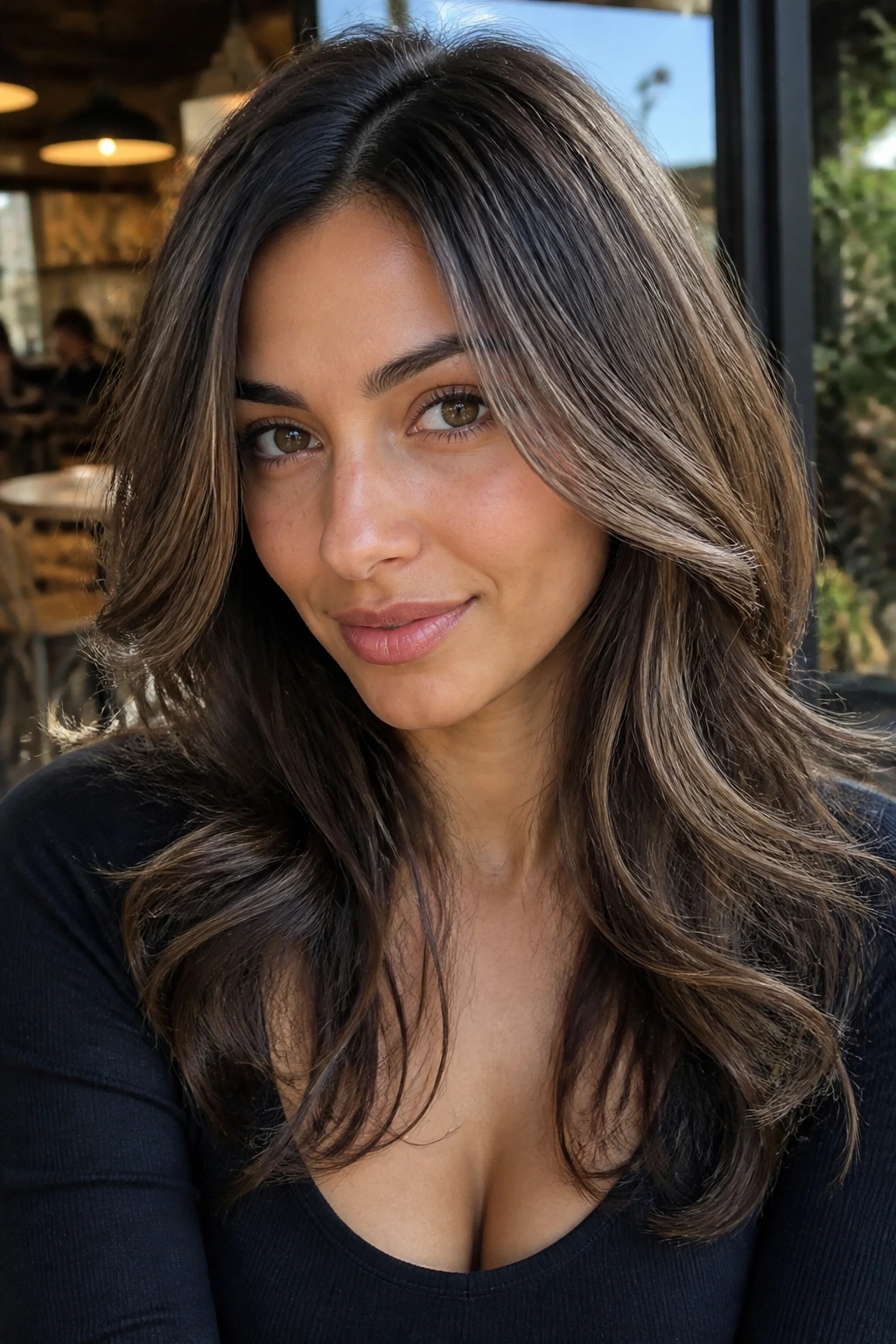
The Low-Maintenance Root Melt:
Keep the roots one shade deeper than the mids and ends, then melt the color softly so regrowth doesn’t draw a hard line. This works especially well for olive skin because the deeper root gives the face structure while the softer ends keep the color from feeling heavy.
The Sunlit Money Piece:
Add two thin face-framing pieces a shade or two lighter than the base, but keep them beige, caramel, or honey rather than bright blonde. On olive skin, that small lightening move can brighten the face fast without taking the whole look into blonde territory.
The Smoky Brunette Refresh:
If your current brown feels too warm, ask for a cool-toned gloss or a smoky brown glaze over the mids and ends. It’s a smart fix when brass keeps creeping in and you want the color to feel calmer.
The Bronze Glow-Up:
Layer bronze lowlights or a bronze-toned toner into a medium brown base. This is useful for warm olive skin that looks best in richer, sun-warmed tones rather than beige ones.
The Deep Espresso Reset:
Go back to a darker, cleaner brown if your hair has too many mixed tones and looks busy. A deep espresso base with a glossy finish can make olive skin look more awake because the contrast becomes cleaner.
Maintenance, Toning, and Fade Control
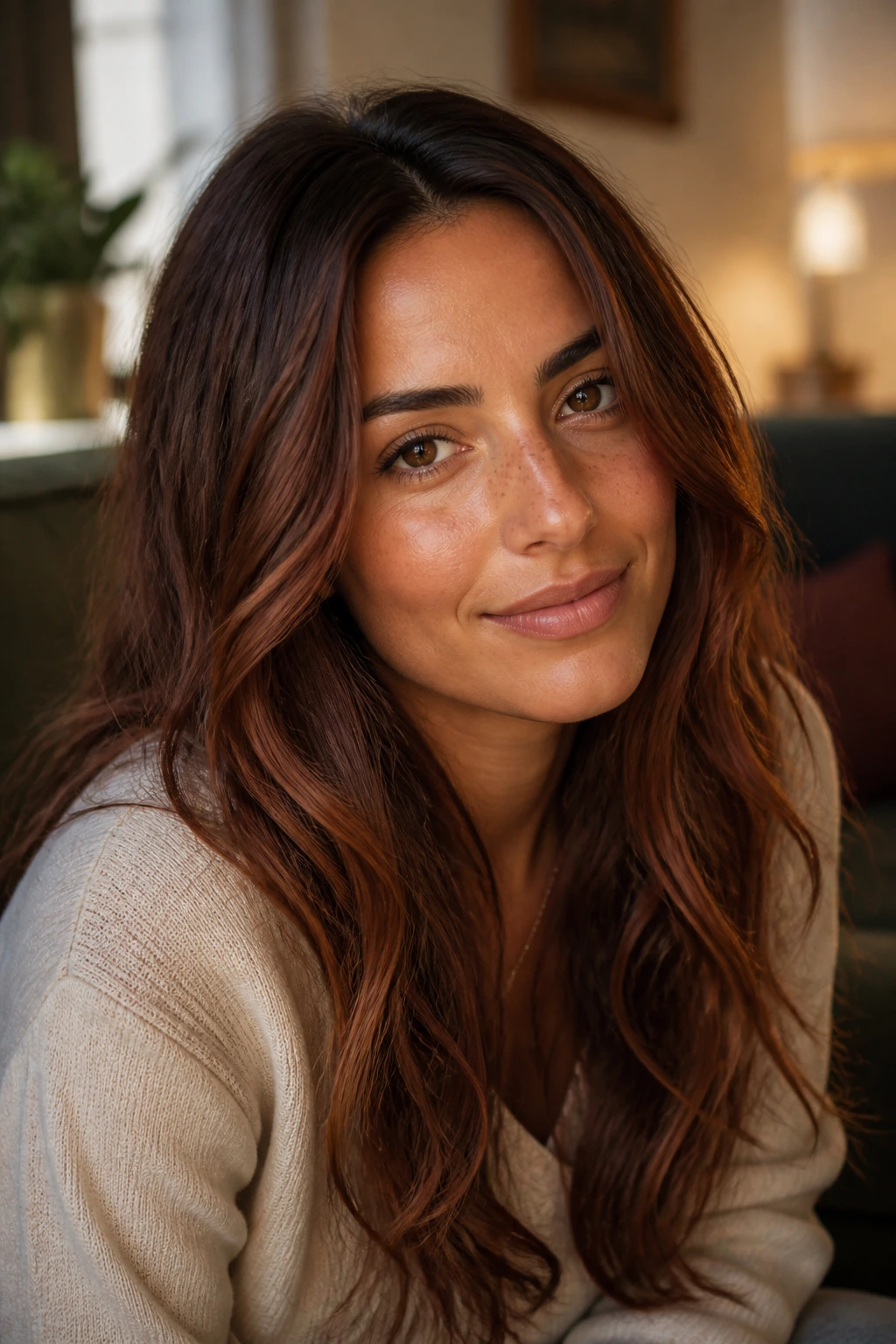
Brown hair on olive skin tends to look best when the tone stays intentional. That means washing with lukewarm water, not hot, and stretching shampoo days when you can. Hot water lifts color faster than people expect, especially on porous ends.
A brown gloss or toner every 4 to 8 weeks usually keeps warmth in check and restores shine. If your shade leans copper, amber, or caramel, watch the ends first; that’s where the brass usually shows up. If your shade is cool, look for dullness instead of orange drift. The fix is different.
For at-home care, use a color-safe shampoo 2 to 3 times a week, a mask weekly, and heat protectant every time you blow-dry or curl. Brown hair can look healthy even when it’s thirsty, which is why people miss the fade until the shine disappears. A little upkeep goes a long way.
Frequently Asked Questions
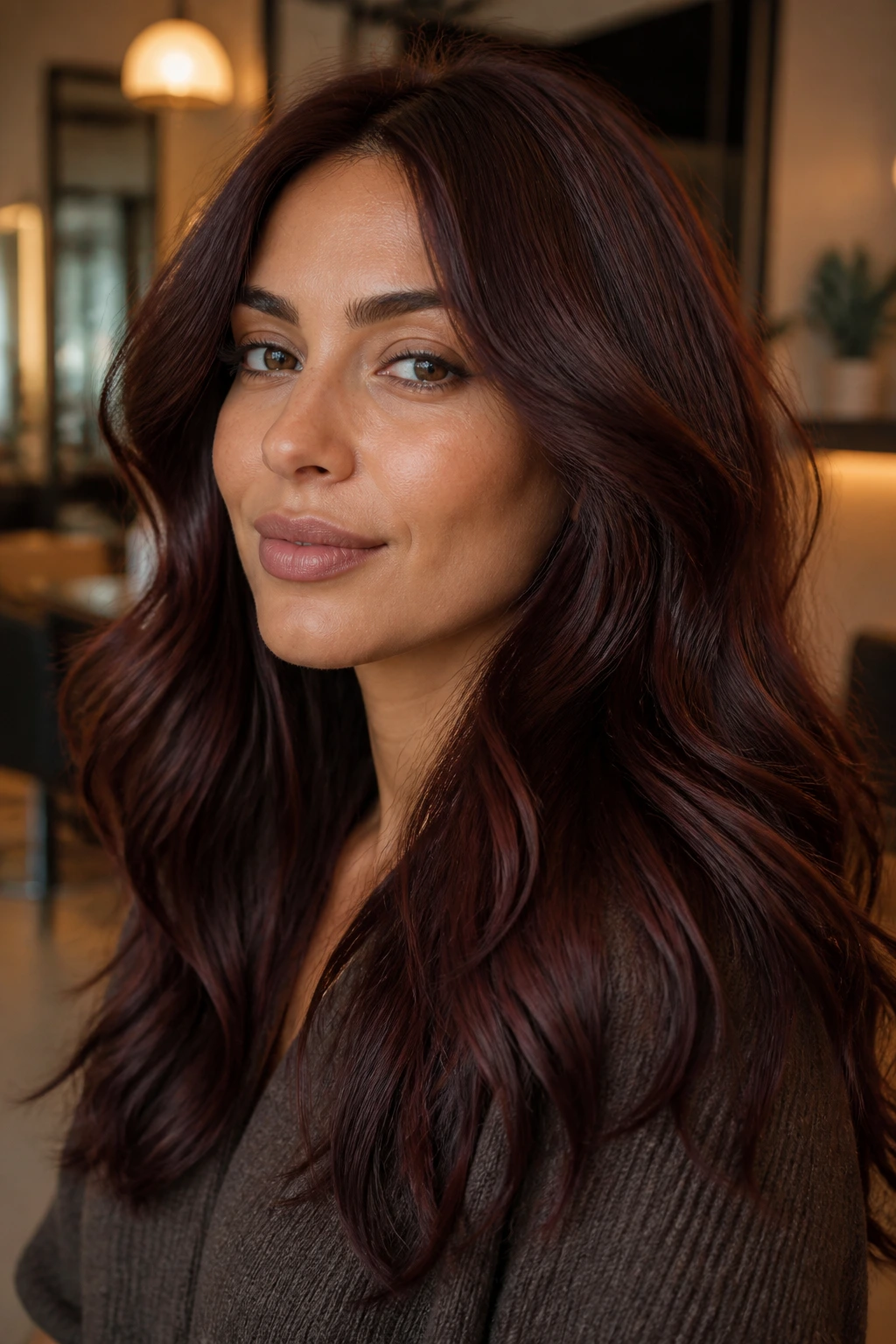
What brown hair color looks best on olive skin?
The safest bets are chestnut, hazelnut, mocha, walnut, and soft espresso because they balance depth and undertone without fighting the skin. If your olive skin leans warm, caramel and golden mocha can also look excellent. Cooler olive skin usually does better with mushroom, ash brown, or smoky chocolate.
Is ash brown flattering on olive skin?
Yes, but it depends on the undertone. Cool olive and neutral olive skin can wear ash brown well, especially with some shine and dimension. Warm olive skin can look flat or slightly gray with too much ash, so a softer neutral brown may work better.
Can olive skin wear black-brown hair?
It can, especially if the skin is deeper or the features are strong and dark. The key is softness and shine. A flat, opaque black-brown can overwhelm lighter olive skin, while a glossy soft black-brown with movement usually looks far better.
Does caramel look too orange on olive skin?
It can if the caramel is too yellow or too coppery. Beige caramel, soft gold, and muted honey usually flatter olive skin more than bright orange-gold pieces. Placement matters too; thin ribbons often look cleaner than broad streaks.
How do I stop brown hair from turning brassy?
Use color-safe shampoo, rinse with lukewarm water, and keep a blue toning product on hand if the hair starts showing orange warmth. A gloss every few weeks also helps. If the color was too warm from the start, toner alone may not be enough.
Should I choose highlights or an all-over brown?
If you want low maintenance, an all-over brunette shade with a soft gloss is easier. If your hair feels heavy or flat, highlights, balayage, or lowlights can create more movement. Olive skin usually benefits from some dimension, but the exact placement depends on how bold you want the look to feel.
Can I go lighter if I have olive skin?
Yes, but lighter usually works better when it stays beige, caramel, or bronde rather than bright yellow blonde. Too much warmth can make olive skin look tired, and too much lift can erase the contrast that makes brunette shades flattering. A controlled lift is usually smarter than a full brightening jump.
What if brown hair makes my skin look sallow?
That usually means the undertone is off. Add warmth if the shade is too gray, or cool it down if it’s too yellow-orange. Sometimes the fix is as small as a gloss change or a few face-framing pieces in a better tone.
The Brown Shade That Makes Olive Skin Look Awake
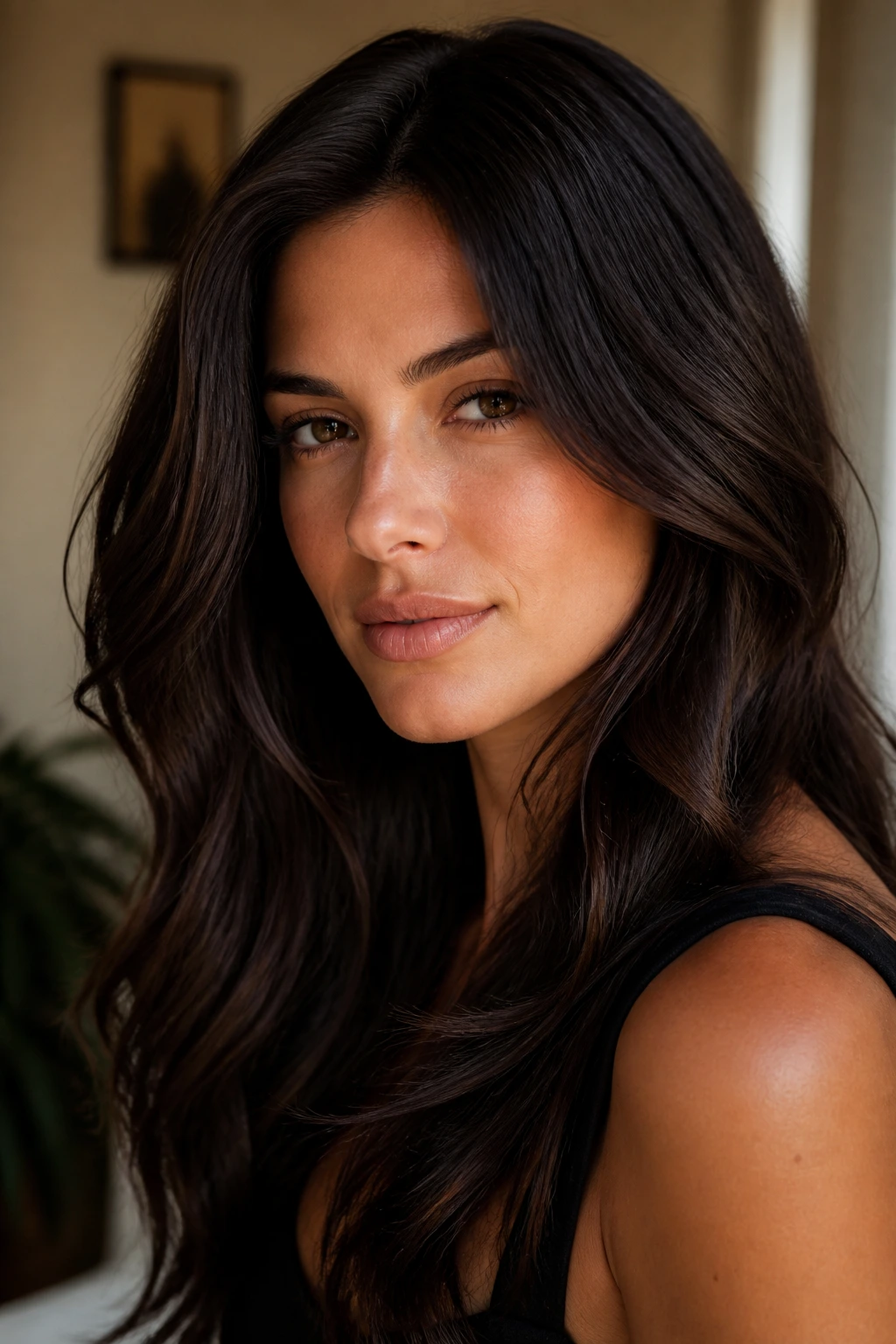
Brown hair on olive skin works best when it looks chosen, not assigned. A shade that’s half a level too warm or too cool can change the whole face, which is why the details matter so much here. Depth, gloss, and undertone do the heavy lifting. The name on the color tube doesn’t.
If you want the easiest lane, start with hazelnut, walnut, chestnut, or cocoa gloss. If you want more presence, espresso, sable, or soft black-brown can be striking. And if you want movement, caramel balayage, honey ribbons, and bronde with beige low-lights give olive skin the brightness it often needs without losing the brunette base.
The best result usually looks like the hair belongs to the face, not the other way around. Choose the brown that still looks rich in daylight, not just in a salon mirror, and the whole thing tends to fall into place.