



A bob on wavy hair can look crisp one day and a little too puffy the next. On a heart-shaped face, the stakes are even higher, because the cut has to do two jobs at once: respect the wave pattern and ease the width through the forehead without making the jaw feel even narrower.
That sounds fussy, but it’s really just geometry with better hair. The best bobs for this face shape don’t fight the bend in your hair or try to force it into a flat sheet. They give the wave a lane to live in, then place the visual weight lower — around the cheekbones, jaw, or collarbone — where it helps the face look balanced instead of top-heavy.
The sweet spot is lower than most people think. Too short, and the hair can flare out at the sides. Too layered, and the shape starts to fray. Too blunt in the wrong place, and the whole thing can read as boxy around the forehead while the chin disappears. The cuts below avoid those traps, and a few of them do it in ways that feel almost sneaky.
Why These Bobs Work Better Than a Generic Chop
-
Wave-friendly length: A line that lands at the collarbone, jaw, or just below the chin gives wavy hair room to bend instead of sticking out like a shelf.
-
Face-shape balance: Heart-shaped faces usually carry more width through the forehead, so the best bobs move the eye line lower with side parts, fringe, or a little extra length in front.
-
Built-in movement: Internal layers, soft bevels, and tucked ends keep the cut from turning into a triangle the moment humidity shows up.
-
Low-drama grow-out: These shapes still look intentional when they gain an inch or two, which matters if you do not want to live in the salon chair.
-
Flexible styling: You can air-dry, diffuse, brush out the wave, or add a bend with a round brush, and the shape still makes sense.
-
Less daily fixing: The right bob should work with your natural wave pattern, not require a 20-minute rescue mission every morning.
1. The Collarbone Bob with Soft Internal Layers
This is the bob I’d hand to someone who wants movement without the “why is my hair standing away from my face?” problem. It lands right at the collarbone or a hair below it, so the wave has room to curve instead of bunching up around the cheekbones. On a heart-shaped face, that little bit of extra length does real work; it softens the lower half of the face without dragging everything down.
Why It Works
The trick here is not the length alone. It’s the way the weight is removed from the inside of the haircut while the outline stays fairly clean. That keeps the ends from puffing out and gives wavy hair a swing that feels controlled, not fuzzy.
Ask for a blunt perimeter with soft internal layers starting below the cheekbone. If your wave is loose, this is the safest “short” cut in the bunch. If your wave is stronger, the extra inch or two below the chin keeps the shape from expanding sideways.
A few things to tell your stylist
- Keep the longest pieces at the collarbone.
- Remove weight from the interior, not the edge.
- Avoid short layers near the temples.
- Check the cut with your hair in its natural part.
Best tip: If you want the cut to read polished instead of shaggy, keep the ends slightly beveled. That tiny bend at the bottom makes the whole thing feel deliberate.
2. The French Bob with Curtain Bangs
Why do some short bobs look fresh and others feel cramped? Usually because the fringe and length are arguing with each other. A French bob with curtain bangs gets around that by opening the forehead instead of boxing it in, which matters a lot on a heart-shaped face.
The length usually sits somewhere between the cheekbone and the jaw, but the bangs are the real balance point. Curtain bangs split the forehead visually, then sweep outward so the face feels framed rather than cut off. On wavy hair, that slight movement at the front keeps the style from looking too severe.
What to ask for
Ask for bangs that start a little longer than you think you need. Wavy hair shrinks, and fringe that looks perfect when wet can bounce up to your brows once it dries. I like curtain bangs that hit around the cheekbone at the sides and sit just below the eyebrow in the center, then blend into the bob instead of sitting on top of it.
If your hair is dense, leave the fringe a touch heavier. If it’s fine, the bangs should stay airy or they’ll separate into little stringy pieces by noon.
A good French bob should feel a little cheeky, not precious. If it looks too round or too sweet, the bangs probably got cut too short.
3. The Jaw-Skimming A-Line Bob
Picture this: your waves are doing that soft S-curve thing, and the front pieces land just below the jaw while the back sits an inch or so shorter. That small angle changes everything. It draws the eye downward and gives a heart-shaped face a cleaner line through the lower half.
This is the bob for someone who wants structure. Not stiffness. Structure.
The A-line shape works because the front pieces create a diagonal that narrows the upper face, while the shorter back keeps the hair from feeling heavy at the nape. On wavy hair, that slant stops the cut from ballooning out around the sides, which is a problem I see all the time when people ask for a “classic bob” and walk out with a mushroom.
Key details to keep it flattering
- Keep the front only slightly longer than the back.
- Let the longest point sit at or just below the jaw.
- Use soft texturizing, not aggressive thinning.
- Ask for a side or off-center part if your forehead is broad.
A useful rule: the steeper the angle, the more attention it pulls to the front of the face. A mild angle is usually better on heart-shaped faces because it feels sleek without getting sharp.
4. The Textured Blunt Bob

Here’s my blunt opinion: wavy hair can absolutely wear a blunt bob, but only if the cut has a little surface texture. If every end is cut on the same line with no adjustment, you can get that awkward boxy halo effect, especially when humidity kicks up.
The blunt edge gives this style its power. The texture gives it sanity.
This cut works best when the perimeter is clean and the interior has just enough point cutting to let the waves nest together. On a heart-shaped face, a blunt bob is best when it lands below the chin or exactly at the jaw, not above it. Too high, and it can make the forehead feel wider by comparison.
If your hair is fine and wavy, this can look chic and sharp. If it’s thick, ask for weight removal from the inside only. Do not let anyone over-thin the ends. That’s how you get the frayed, see-through version that looks tired after one wash.
I like this cut with a slightly off-center part and a loose bend, not a perfect curl. It feels modern without trying too hard.
5. The Shaggy Bob with Heavy Interior Layers

Unlike the blunt bob, this one is all about movement. The edge can still look clean, but the inside is chopped to let the wave collapse and lift in the right places. If your hair naturally bends hard — 2B, 2C, or a coarse wave that has opinions — this is the cut that stops it from fighting itself.
The heart-shaped face piece matters here. Layers should start below the cheekbones, not at the temples. That keeps the cut from widening the upper face, which is the trap a lot of shaggy bobs fall into. You want the messiness lower, around the mouth and jaw, where it softens the narrow chin instead of crowding the forehead.
This is the bob for people who can tolerate a little imperfection. Actually, more than a little. It looks best when the pieces do their own thing, especially around the crown and front corners. If you like hair that feels a bit undone, this one is a favorite. If you want every strand to sit politely, skip it.
The styling is forgiving, though. A curl cream or lightweight mousse, a quick scrunch, and a diffuser on low heat usually does the job. Let some pieces fall where they want. That’s the point.
6. The Rounded Bob That Follows the Cheekbones

A rounded bob can look soft and expensive on wavy hair when it’s cut to follow the face instead of sitting beside it like a helmet. The curve should hug the cheekbones, then slip inward toward the jaw with a gentle bend. On a heart-shaped face, that shape is nice because it gives the lower face a little more presence without shouting.
I like this cut when the wave pattern is loose to medium. The hair already wants to curve, so the haircut is mostly making that curve visible. You can air-dry it and let the ends fold in naturally, or you can use a brush just at the front to encourage a rounder line.
The danger is too much volume at the temples. That’s where the heart shape can get thrown off. If the widest part of the cut sits high on the face, the forehead looks even broader by comparison. So the line should stay low and smooth, with the fullness concentrated more around the jaw.
This one also plays well with side parts. A center part can work, but a slight offset tends to break up the width at the top and let the curve feel softer.
7. The Long Bob with Invisible Layers

If you want the simplest answer, this is it. A long bob — or lob, if you want to use the salon word — gives wavy hair enough length to move without sacrificing shape, and it’s probably the easiest cut in the lineup to live with day to day.
The “invisible” layers matter. They’re tucked inside the haircut so the surface looks smooth, but the wave underneath has room to breathe. That’s a smart move for heart-shaped faces because the length already helps balance the forehead; you do not need a lot of extra chopping at the front.
Best fit
- Loose to medium waves that bend more than they curl.
- Hair that gets frizzy when it’s cut too short.
- Anyone who wants a cut that still works at the six-week grow-out mark.
The nicest thing about this lob is that it can be tucked behind one ear and still fall into place later. That’s useful if you wear glasses, earrings, or anything with a little visual weight around the face. Keep the part just off-center if you want a bit more softness through the upper face.
My preference: if you are nervous, start here. It gives you the cleanest read on how much length your waves actually want before you go shorter.
8. The Side-Part Asymmetrical Bob
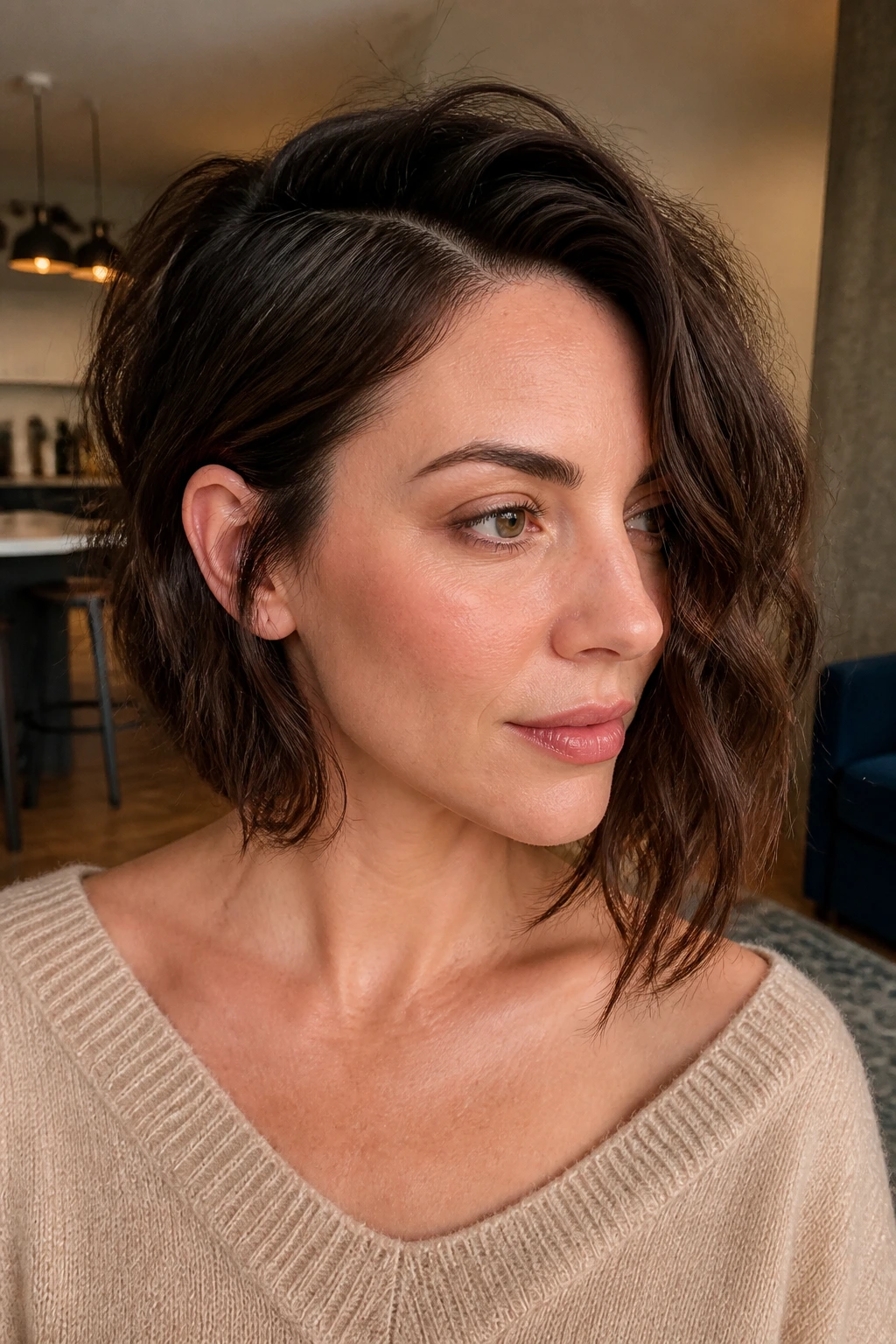
A deep side part changes the whole story. It shifts attention away from the forehead and gives a heart-shaped face a longer diagonal line, which tends to make the lower face feel less narrow. Add a slight asymmetry in the cut — even half an inch can do it — and the effect gets stronger.
This is not the same thing as a dramatic fashion bob with one side chopped off much shorter than the other. That version can be fun, but it’s a commitment. For wavy hair, I like a softer asymmetry: one side a touch longer, the part pushed low and off center, the wave brushed into a loose bend.
It’s especially good if your natural part is already heavy on one side. Fighting a stubborn growth pattern is a waste of time. Work with it, then let the cut echo that shift.
If you wear makeup that emphasizes the eyes or lips, this cut gives you a nice frame without stealing the whole show. It also pairs well with a tuck behind the ear on the shorter side — a tiny move, but it sharpens the line beautifully.
9. The Inverted Bob with a Soft Nape
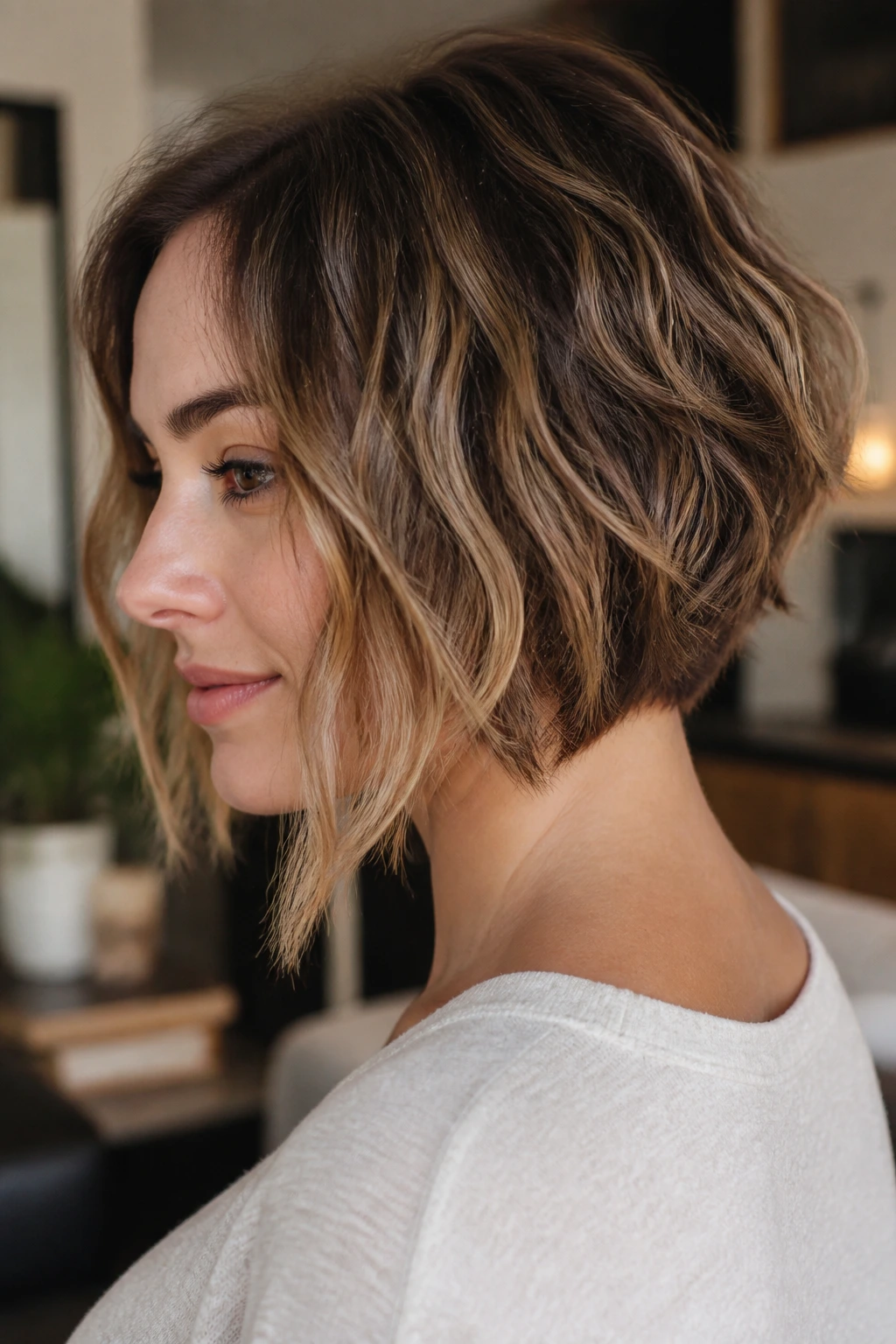
A stacked bob can go wrong fast. Too much graduation in the back, and you get that old-school wedge shape that looks stiff from the side. But soften the nape, keep the front longer, and the inverted bob becomes a smart shape for wavy hair.
The back lift helps the hair avoid that flat, heavy hang that some waves get at the neckline. The longer front pieces keep the face from feeling boxed in. On a heart-shaped face, that front length is the important part; it gives the chin a little more breathing room.
The key is restraint. I would not ask for a hard shelf at the back unless you want the cut to read very structured. The better version uses internal graduation and a little point cutting so the back moves instead of sitting in one solid block.
This cut shines if your hair is thick at the nape or tends to collapse at the crown. It gives shape where the hair needs it most. And because the front remains longer, you can still tuck pieces behind the ears or let them fall forward on a windy day.
10. The Curved Italian Bob
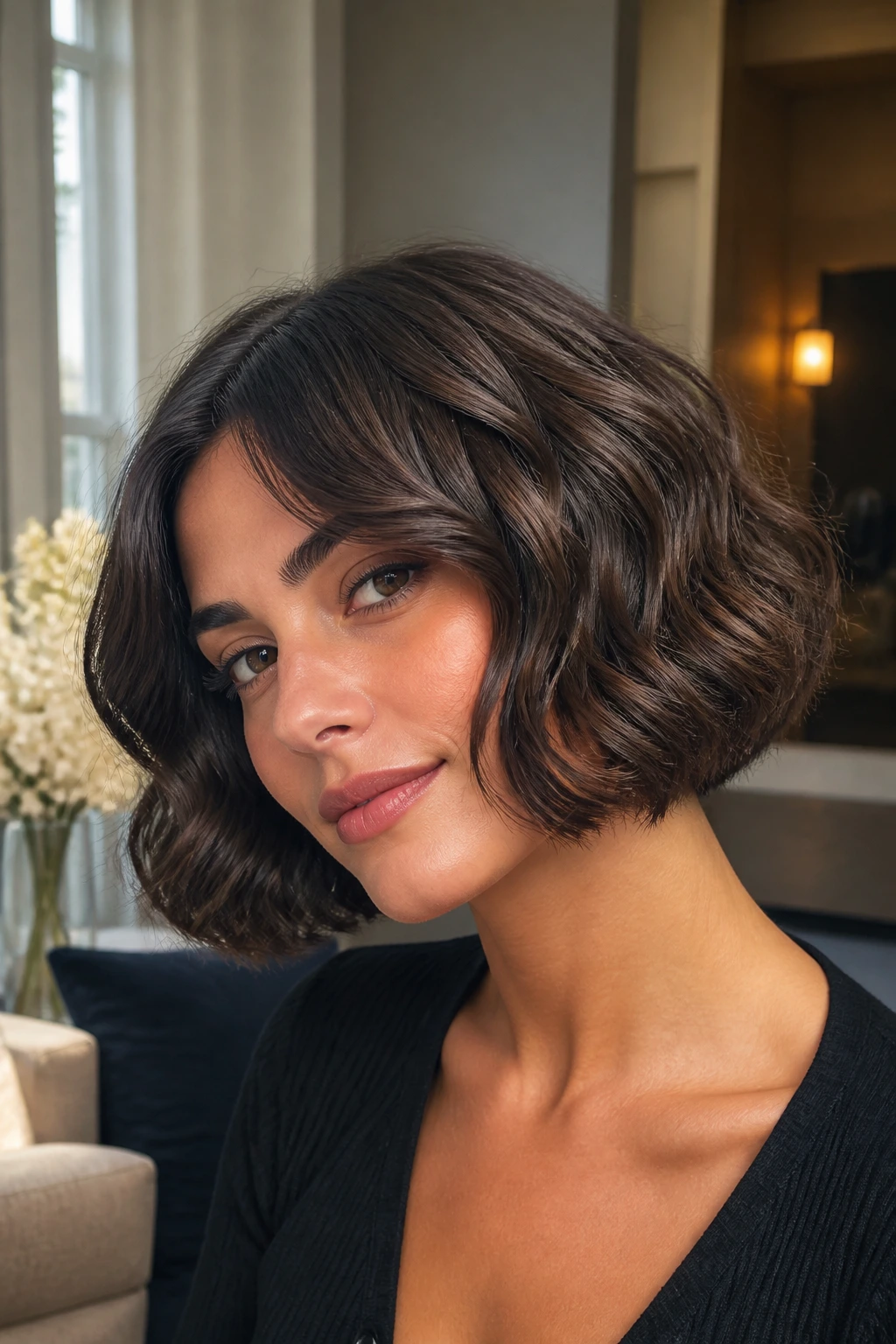
This one has a little attitude, and I mean that in the best way. The Curved Italian Bob sits around the jaw or just below it, with a rounded perimeter that gives the wave a polished bend. It’s less about layers and more about one clean shape that feels full, glossy, and purposeful.
For wavy hair, this style works because the bend in the hair supports the curve instead of ruining it. You are not trying to iron the wave flat. You’re asking it to trace the line of the haircut. That’s a much easier agreement.
Heart-shaped faces usually benefit from the weight staying low, and this bob does exactly that. The curve around the jaw helps widen the lower face just enough to counter the forehead. If you like bold lipstick, sharp brows, or big earrings, the haircut won’t fight them. It gives them room.
The catch is density. Very fine hair can wear this, but the curve looks best when there’s enough body to hold the line. If your hair is sparse at the ends, ask for a slightly longer version so it doesn’t look wispy.
11. The Soft Box Bob with Tucked Ends

A box bob can sound harsh, but it doesn’t have to be. The soft version keeps the outline fairly square while the ends bend inward just enough to stop the shape from looking rigid. On wavy hair, that little bend matters. It keeps the haircut from turning into a shelf.
This is one of the better choices if you want structure around a heart-shaped face. The clean line around the jaw adds visual weight where the face is naturally narrow, and the slightly tucked ends soften the edges so the cut doesn’t feel severe.
I’d use this on medium-density hair, especially if the wave pattern is loose and fairly predictable. Very coarse waves can push the sides outward, which makes the box shape too literal. If your hair has a strong bend, ask for more length and less width through the bottom.
A center part can work here, but a mild side part is usually kinder to the forehead. The whole point is to bring the eye down and out a bit, not chop the face into equal halves and call it balance.
12. The Chin-Length Bob with Bottleneck Bangs
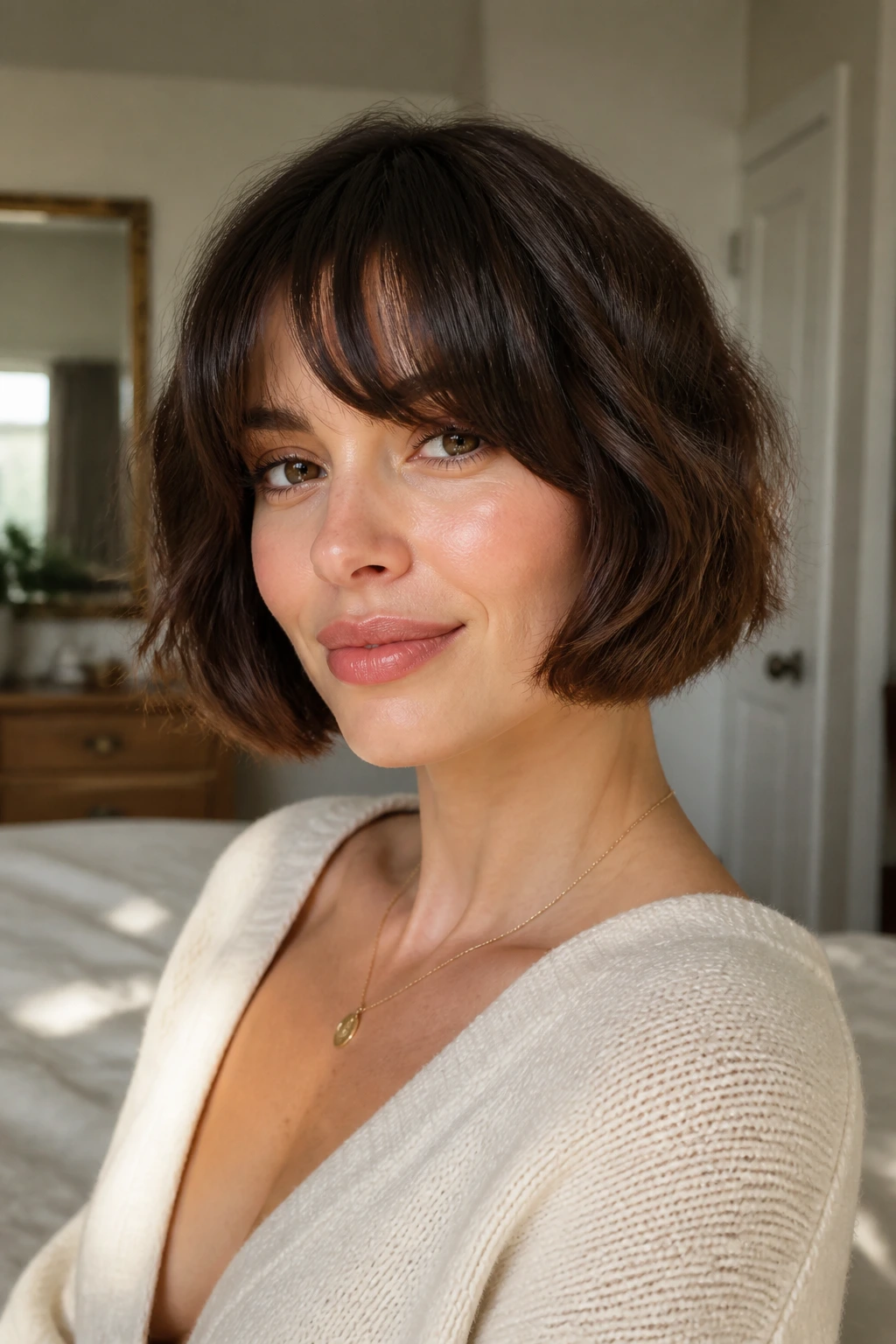
Can a chin-length bob work on a heart-shaped face with wavy hair? Yes, but it needs the right fringe. Bottleneck bangs do a lot of the heavy lifting here because they start narrower in the center, then open out toward the temples. That softens the forehead without making the front heavy.
The cut itself lands at the chin, which is a little bolder than the collarbone versions above. That means the bangs and wave pattern have to behave. I like this on wavy hair that has some spring but not so much puff that the sides explode outward. If the wave is loose, this can look neat and striking. If it’s tight and dense, leave the bangs longer and keep the perimeter softer.
What to watch for
- Keep the bangs a touch longer on the sides.
- Let the chin-length line stay blunt enough to feel intentional.
- Use a diffuser or a round brush at the fringe only.
- If your forehead is broad, do not cut the center of the bangs too short.
This is the strongest style in the group, which is why it works best when everything else is quiet. One good line. One good fringe. That’s enough.
Why Wavy Hair and Heart-Shaped Faces Need a Different Blueprint
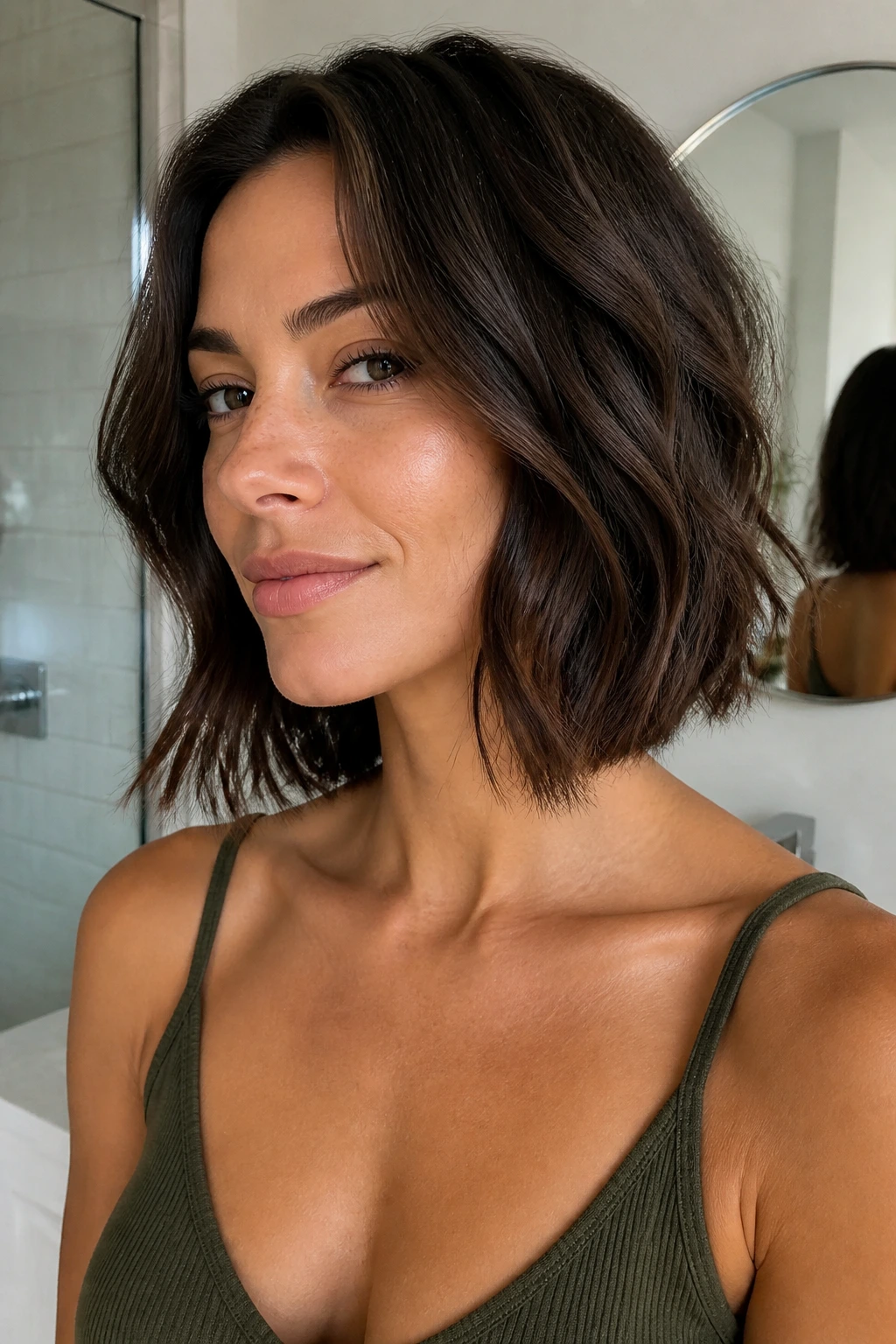
A lot of haircut advice sounds useful until you actually look in the mirror and see your own face shape and texture doing their thing. Then the generic stuff falls apart. Wavy hair has movement, but it also has memory. It bends where it wants, lifts where it wants, and expands when humidity gets bored and joins the party.
Heart-shaped faces have a different problem. The forehead is usually the widest point, the cheekbones carry a lot of presence, and the chin narrows down from there. A bob that stops too high can make the top half of the face feel heavier. A bob that is too hollow through the ends can make the jaw vanish. The cuts that work best are the ones that move some weight lower and keep the top of the head from becoming the loudest part of the haircut.
The shape logic, in plain language
If the haircut adds volume at the temples, it can exaggerate the width up top. If it adds all its weight at the chin, it can make the lower face look pinched. The sweet spot is usually somewhere around the jaw or collarbone, with enough softness that the wave pattern still shows.
That’s why internal layers, side parts, curtain bangs, and gentle bevels show up so often here. They are not decorative extras. They solve a shape problem.
The Tools That Keep a Wavy Bob from Puffing Out
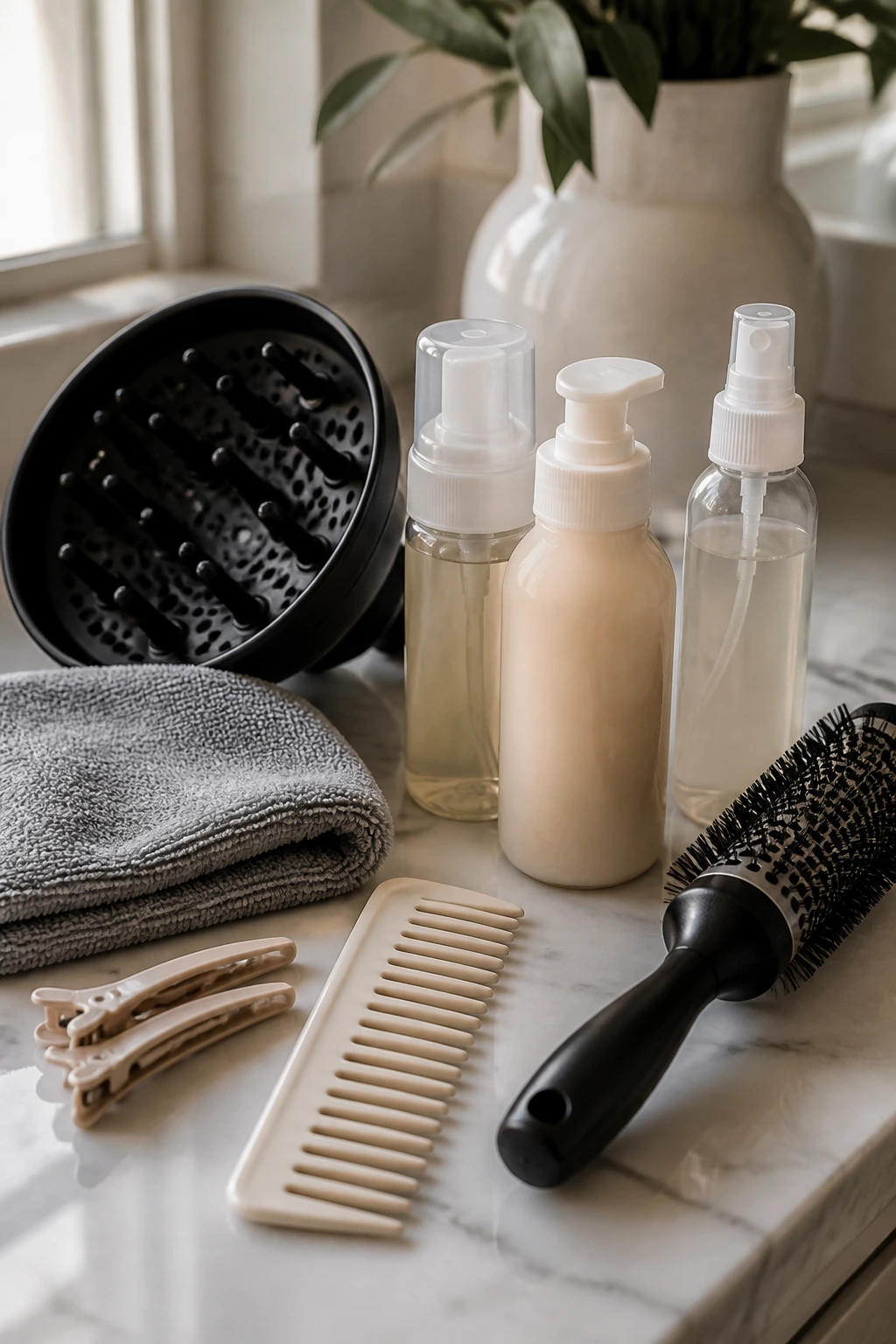
You do not need a bathroom shelf that looks like a salon stockroom. A few honest tools do the job, and the best ones are the boring ones that keep the cut in place without turning it crunchy.
- Diffuser attachment: This keeps wavy hair from blasting apart under direct heat and helps the curl pattern hold its shape.
- Wide-tooth comb: Use it in the shower or on damp hair to detangle without flattening the wave.
- Microfiber towel or cotton T-shirt: Both cut down on frizz better than a regular bath towel, which tends to rough up the cuticle.
- Light mousse: A golf-ball-sized amount on damp roots and mid-lengths gives lift without stiffness.
- Curl cream or wave cream: Good for thicker or drier waves that need clumping at the ends.
- Heat protectant spray: Necessary if you use a round brush, flat iron, or hot air brush.
- Small round brush: Useful for flipping in the front pieces or smoothing the fringe.
- Dry shampoo: Best for day-two root lift, especially on chin-length or jaw-length bobs.
- Duckbill clips or sectioning clips: Handy for setting the crown while you diffuse or rough-dry.
- Pointy tail comb: Great for making a clean side part and checking whether one side has collapsed more than the other.
How to Ask for the Right Bob at the Salon
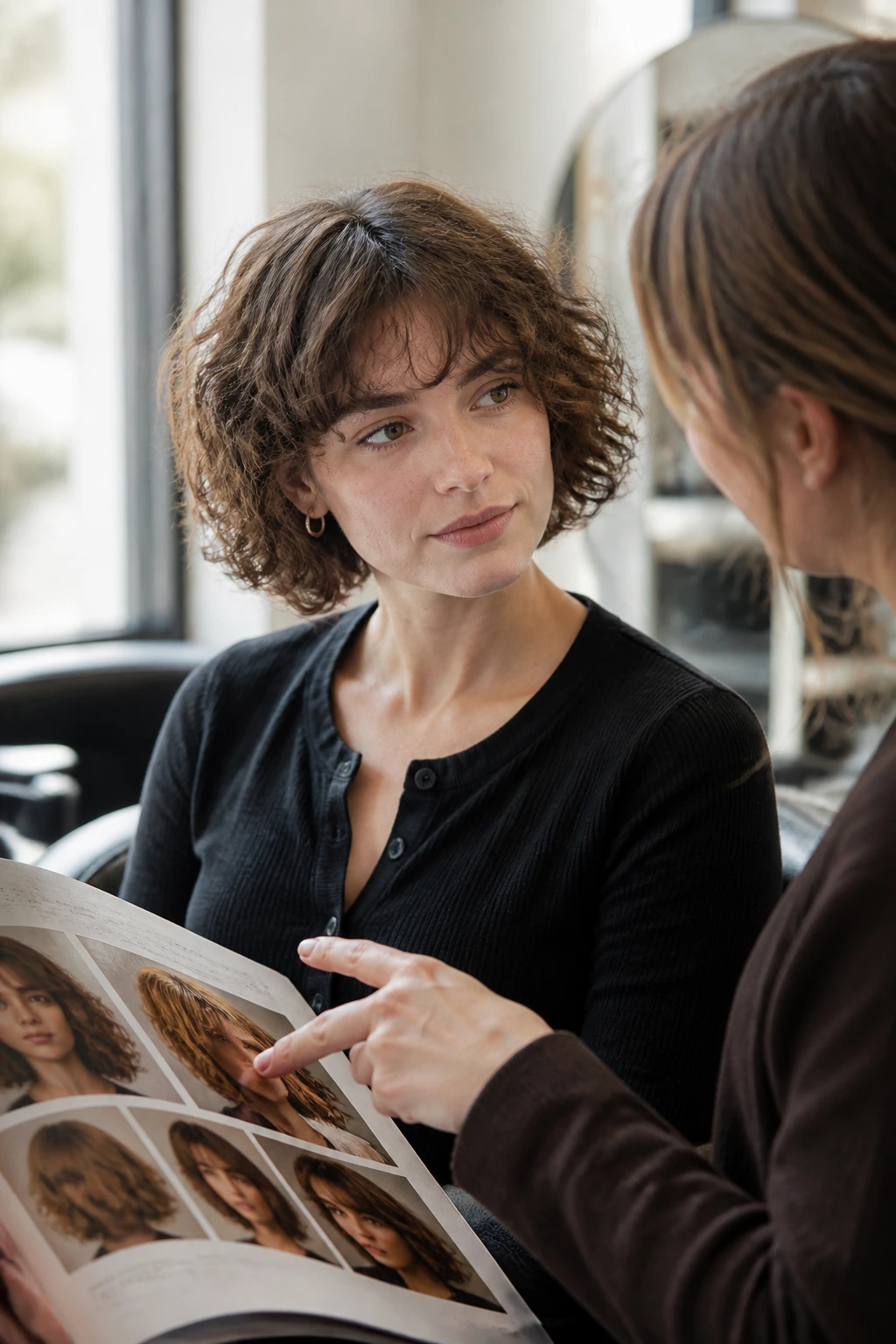
Bring photos, but bring the right ones. A picture of a chin-length bob on straight hair tells your stylist very little if your own wave pattern is stronger and your face is narrower at the jaw. Look for photos where the model has a similar density, a similar bend, and a similar forehead-to-chin ratio. That matters more than the color, the makeup, or whether the person has curtain bangs.
Say where you want the longest pieces to fall. Say what you want the hair to do when it air-dries. If your real life includes washing, scrunching, and leaving the house, say that out loud. A cut that only looks good after 25 minutes with a brush is not a low-maintenance bob. It is a part-time job.
Bring these notes to the chair:
- Length anchor: “I want it to hit the collarbone,” or “I want the front to skim the jaw.”
- Layer rule: “Keep the layers internal” or “Start texture below the cheekbones.”
- Fringe choice: “Curtain bangs that blend” or “No bangs, but soften the front corners.”
- Parting habit: Tell them where your hair naturally falls, not where you wish it fell.
- Finish test: Ask how the cut will look air-dried, not just blown out.
I also like asking for a dry check before the final trim. Wavy hair can shrink in a way that surprises even good stylists, and a half-inch at the wrong moment is the difference between flattering and too short.
How to Wear These Bobs Without Losing the Shape

Presentation: The easiest way to keep a wavy bob looking intentional is to let the bend show. Don’t brush it into a smooth shell unless the style was cut for that. A soft side part, a tucked-behind-the-ear moment, or a little lift at the crown can change the whole mood.
Pairings: Earrings matter more with short hair than people admit. Small hoops, studs with a little shine, or simple drop earrings play nicely with a bob because they echo the curve around the face. Higher necklines can work too, but if the cut is chin-length, a tighter collar can crowd the shape.
Balance: If your bob ends at the jaw, keep the crown flatter and the ends soft. If it ends at the collarbone, you can get away with more root lift because the extra length keeps the silhouette from ballooning. That’s the part most people miss. The same styling trick does not work on every length.
Finish: Air-dried texture reads casual and modern. A brushed-out bend reads cleaner and a little more polished. A diffuser on low heat gives the most control if your wave pattern tends to split or frizz at the ends. Pick the finish that matches the cut, not the fantasy version in your head.
Small Styling Moves That Change the Whole Cut

Root Lift: Clip the crown for 10 to 15 minutes while your hair is damp, then remove the clips and diffuse. That little pause gives the top area some memory without making the ends puffy.
Fringe Control: If you have curtain bangs or bottleneck bangs, dry them first, side to side, before the rest of the hair. Fringe has a nasty habit of drying into the wrong shape while you’re busy elsewhere.
Texture Control: Use less cream than you think. Wavy bobs usually need product through the mid-lengths and ends, not a heavy coat at the roots. Too much product makes the hair look wet for too long, and then flat once it dries.
Shape Refresh: On day two, mist the ends, twist 2-inch sections around your fingers, and warm them for a few seconds with the dryer. That’s enough to restore the curve without starting from scratch.
Keeping the Shape Sharp Between Trims
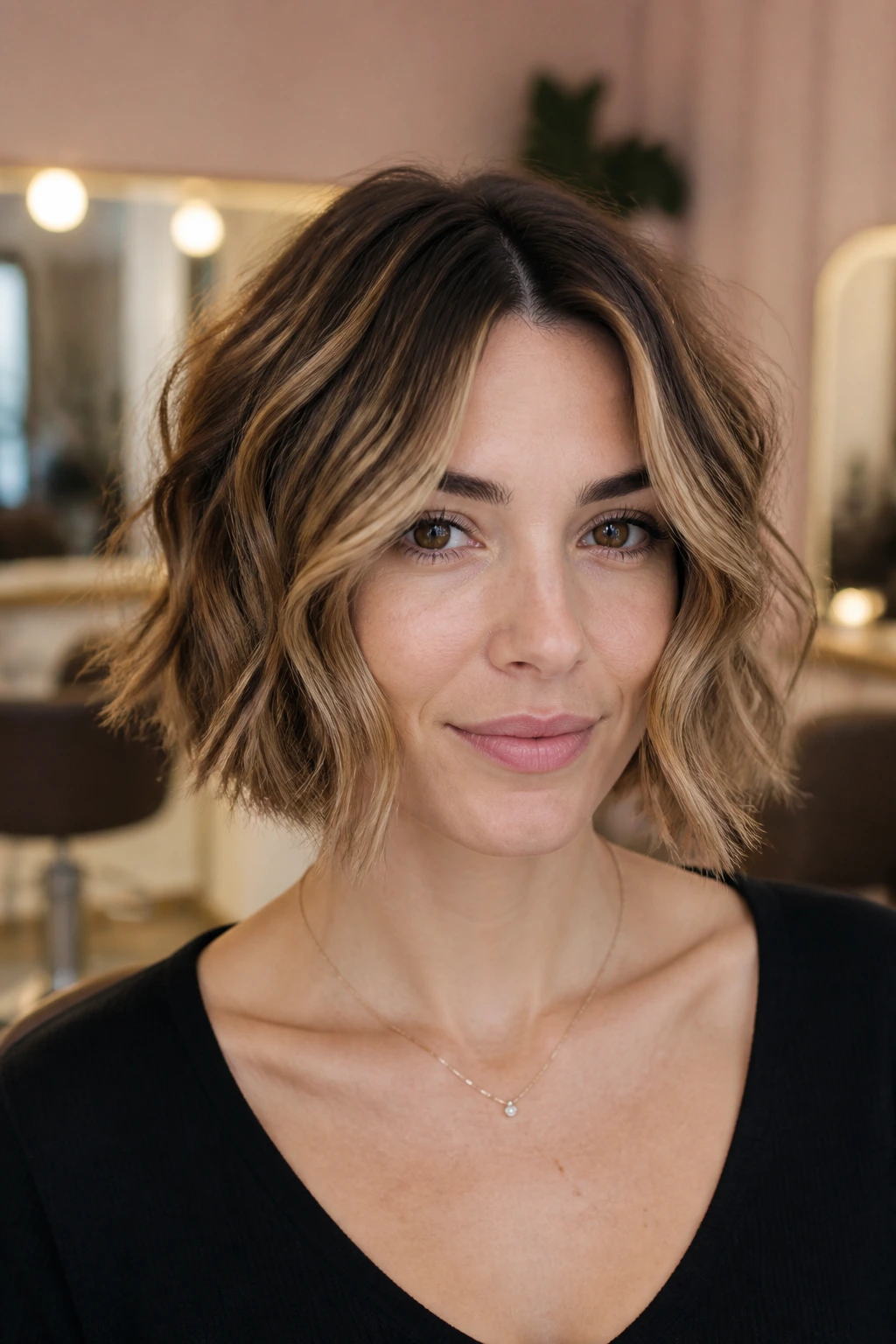
A bob grows out fast in a way that’s sneaky. One week it looks intentional. Two weeks later the front pieces are hanging differently, and the whole cut starts looking like you meant to grow it out, which is not always the same thing.
For chin-length and jaw-skimming cuts, a trim every 6 to 8 weeks usually keeps the outline from blurring. Collarbone lobs can stretch to 8 or 10 weeks if the layers are soft and the ends are healthy. Bangs are their own little universe; curtain bangs and bottleneck bangs often need a tidy-up every 3 to 4 weeks if you want the shape to stay open.
Wash frequency depends on scalp and product, but most wavy bobs hold up better when they’re not shampooed into submission every day. If your roots get flat, use dry shampoo at the crown and work it in with your fingers rather than brushing the whole cut into one dull shape.
Sleeping on a silk pillowcase or clipping the front pieces loosely back can save a lot of morning frustration. And if the nape starts puffing out, don’t blame the haircut first. That’s usually product build-up, humidity, or a trim that’s gone a little too long.
Variations and Alternatives to Try

The Low-Commitment Lob: If you want the safest version of this whole idea, keep the cut at the collarbone with minimal layers. It gives you the face balance of a bob without the maintenance of a shorter line, and it grows out in a way that still looks planned.
The Fringe-Forward Bob: Choose this if your forehead is the feature you want to soften most. Curtain bangs or bottleneck bangs shift the eye line downward, and the bob underneath can stay fairly simple.
The Air-Dry Bob: This version uses fewer layers and more internal weight so the wave can settle on its own. It’s a good call if you do not like heat styling and you want the haircut to look decent after a scrunch and a walk out the door.
The Sleeker Side-Part Bob: If your waves are loose and your hair is fine, this one leans cleaner. The deep side part keeps the top of the face from dominating, while the smoothness through the sides prevents frizz from taking over.
The Short and Swingy Bob: This is the boldest option. It lands above the collarbone, but only works if your wave pattern is tame enough to keep the sides from flaring. Best for people who like a little swing and do not mind more frequent trims.
Common Mistakes That Throw the Whole Cut Off

-
Cutting it too high at the jaw: This makes the widest part of the haircut sit right where a heart-shaped face already narrows. The fix is to keep the front pieces a little longer so they soften the chin instead of pinching it.
-
Taking too much weight from the ends: Over-thinned ends frizz out fast and make wavy hair look wispy. Ask for interior removal or point cutting, not aggressive thinning shears through the perimeter.
-
Ignoring the natural part: Forcing a part where the hair does not live usually causes one side to collapse and the other to swell. Wear the part that matches the growth pattern, then adjust the shape around it.
-
Stacking the back too high: A heavy wedge at the nape can make the bob look dated and boxy. If you want an inverted shape, ask for softness in the graduation so the back still moves.
-
Styling with too much cream or oil: Heavy product weighs the wave down at the roots and turns the ends into separated ribbons. Start with less and add only where the hair feels dry.
-
Using a blunt bob on a very wide wave pattern without beveling: The hair can kick outward at the corners and create a triangle. A slight bevel or internal texture prevents that shelf effect.
Questions People Ask Before They Cut It Short

Which bob length is most flattering for a heart-shaped face?
Usually the collarbone bob, jaw-skimming bob, or a lob with soft layers. Those lengths move some attention below the cheekbones and stop the forehead from feeling like the biggest part of the haircut.
Are bangs a good idea with wavy hair and a heart-shaped face?
Yes, if the bangs are cut for the wave pattern. Curtain bangs and bottleneck bangs are the easiest places to start because they soften the forehead and can blend into the rest of the cut.
Can I wear a blunt bob if my hair is wavy?
You can, but ask for a small amount of internal texture so the ends do not puff outward. A completely blunt, untouched line is the version that tends to misbehave.
How often should a bob be trimmed?
Shorter bobs usually need shape maintenance every 6 to 8 weeks. Longer lobs can last a little longer, but fringe and front corners usually need touching up sooner if you want the style to stay crisp.
What if my waves are loose, not curly?
Loose waves are actually ideal for several of these cuts, especially the collarbone bob, the French bob, and the curved Italian bob. The key is keeping enough weight at the perimeter so the bend looks smooth instead of frizzy.
Will a side part make my face look narrower?
A deep or even moderate side part often helps heart-shaped faces because it moves the focal point away from the forehead. It also gives wavy hair a little natural lift at the root, which is handy on flat days.
What should I avoid if my hair is very thick?
Do not let the stylist remove too much bulk from the ends. Thick wavy hair needs shape, not over-thinning. A clean edge with controlled internal layers usually behaves better than lots of choppy slicing.
The Shape Worth Keeping

A good bob on wavy hair does not bully the texture into place. It gives the wave a frame and gives the face some breathing room. That’s the whole trick, and once you see it, you start noticing which cuts understand the assignment and which ones are just short for the sake of being short.
Heart-shaped faces tend to look best in bobs that move the eye line lower, soften the forehead, and give the chin a little help from the haircut itself. That can mean bangs, a side part, a bevel, a little asymmetry, or simply keeping the length where the wave wants to live. The details change. The logic does not.
If you’re heading to the salon, bring two photos, not ten, and point to the exact line that feels right: jaw, chin, or collarbone. Then let the rest of the cut be shaped around your wave pattern instead of against it. That’s usually where the good stuff starts.