



Grey hair color ideas for medium skin tones can go one of two ways: sleek and deliberate, or flat and tired. The difference is rarely the word grey itself. It’s the undertone, the amount of depth left at the root, and whether the color has enough smoke, pearl, taupe, or graphite in it to sit beside a medium complexion without turning chalky.
Medium skin has more room than people think. A clean silver can look sharp against golden or olive undertones, and a mushroom grey can make the skin look warmer, not colder, when the mix has a little beige instead of pure ash. The trick is not chasing the palest shade on the swatch ring; it’s choosing a grey that behaves well in daylight, office light, and that unforgiving mirror by the front door.
That’s why the best grey hair color ideas for medium skin tones range from smoky balayage and pewter highlights to charcoal glosses and lilac-tinted silver. Some are high-contrast. Some barely whisper grey until you catch them from the side. All of them are built to flatter medium skin instead of fighting it.
Why This Collection Works on Medium Skin
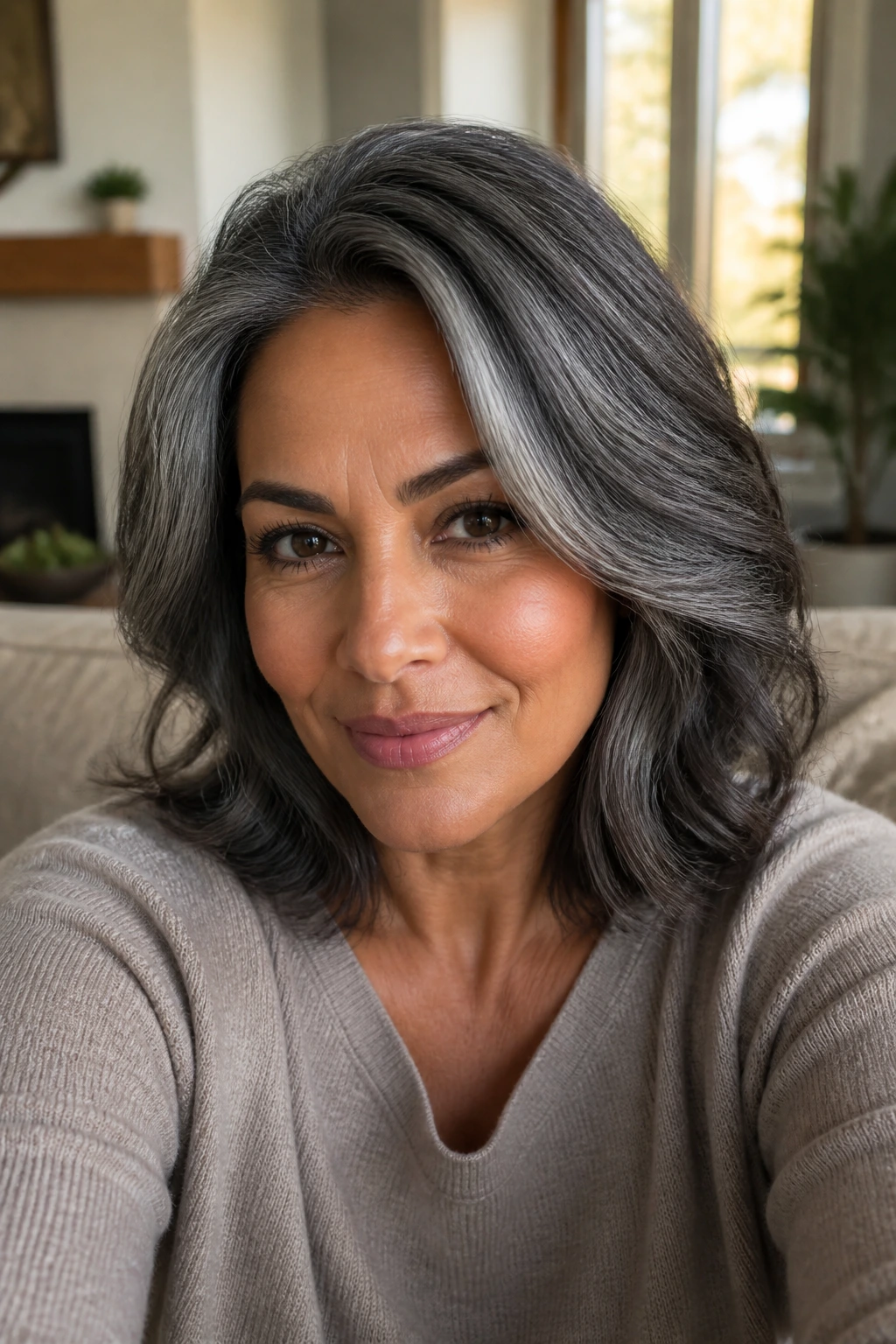
-
Depth keeps the face from going flat: Medium skin usually needs a little shadow somewhere in the color so the grey doesn’t sit like one pale sheet from root to tip.
-
Cool doesn’t have to mean icy: The best greys here lean silver, pewter, mushroom, or smoke rather than neon-blue ash, which is where a lot of at-home color goes sideways.
-
Placement matters as much as tone: Face-framing pieces, root shadows, and balayage give grey dimension, which is especially useful if your hair is thick or wavy.
-
There’s a low-commitment option for almost every base: You do not have to jump straight to full silver. A money piece, a gloss, or a grey melt can test the waters without the full bleach marathon.
-
Texture changes the whole read: On curls, grey looks softer and more dimensional. On blunt bobs and pixies, it looks sharper and more graphic. Same shade. Very different mood.
1. Smoky Silver Balayage
Smoky silver balayage is one of those shades that looks expensive because it never tries too hard. The lighter pieces are painted through mid-lengths and ends, then softened with a root shadow so the grey reads as movement instead of a hard block of color. On medium skin, that little bit of depth near the scalp keeps the face from looking washed out.
Ask for a level 7 or 8 base with silver-toned ribbons, not all-over lightener. The best version has some darker strands left in the mix, because those strands keep the silver from looking flat under indoor light. If your hair is wavy, the bend in the hair shows off the placement even more.
This is a smart first step if you want grey but don’t want to stare at a solid, high-maintenance panel of silver every six weeks. Balayage grows out with a softer line, and that matters when the color itself is already cool and reflective.
2. Rooted Steel Grey Lob
A rooted steel grey lob has a little edge to it, but not the loud kind. The lob keeps the cut clean at the shoulders, while the steel grey adds a cool, metallic finish that sits well against medium skin with neutral or olive undertones. The root shadow is the part that saves it; without that depth, steel grey can look too stark.
This look works best when the roots stay about one to two levels darker than the mid-lengths. That small shift gives the hair a denser look at the scalp, which is especially useful if your hair is fine or naturally straight. The steel tone itself should stay crisp, not blue.
I like this one for people who wear simple makeup and black or cream clothes a lot. It has enough structure to stand on its own. No extra fuss needed.
3. Mushroom Grey Bob
Mushroom grey is the friendliest grey on this list for medium skin with warm or golden undertones. It mixes ash with taupe and beige, so the overall effect is cooler than brunette but softer than silver. On a bob, that muted color looks plush, almost velvet-like, because the cut keeps everything compact and neat.
If you’re nervous about looking drained, this is a very good place to start. The mushroom tones keep a little warmth in the hair, which stops the skin from looking too pink or too flat. A chin-length or jaw-length bob is especially strong here because the shape makes the color feel intentional.
This shade also ages well between appointments. When it fades, it usually slips toward beige-grey instead of turning brassy or green.
4. Pearl Grey Pixie
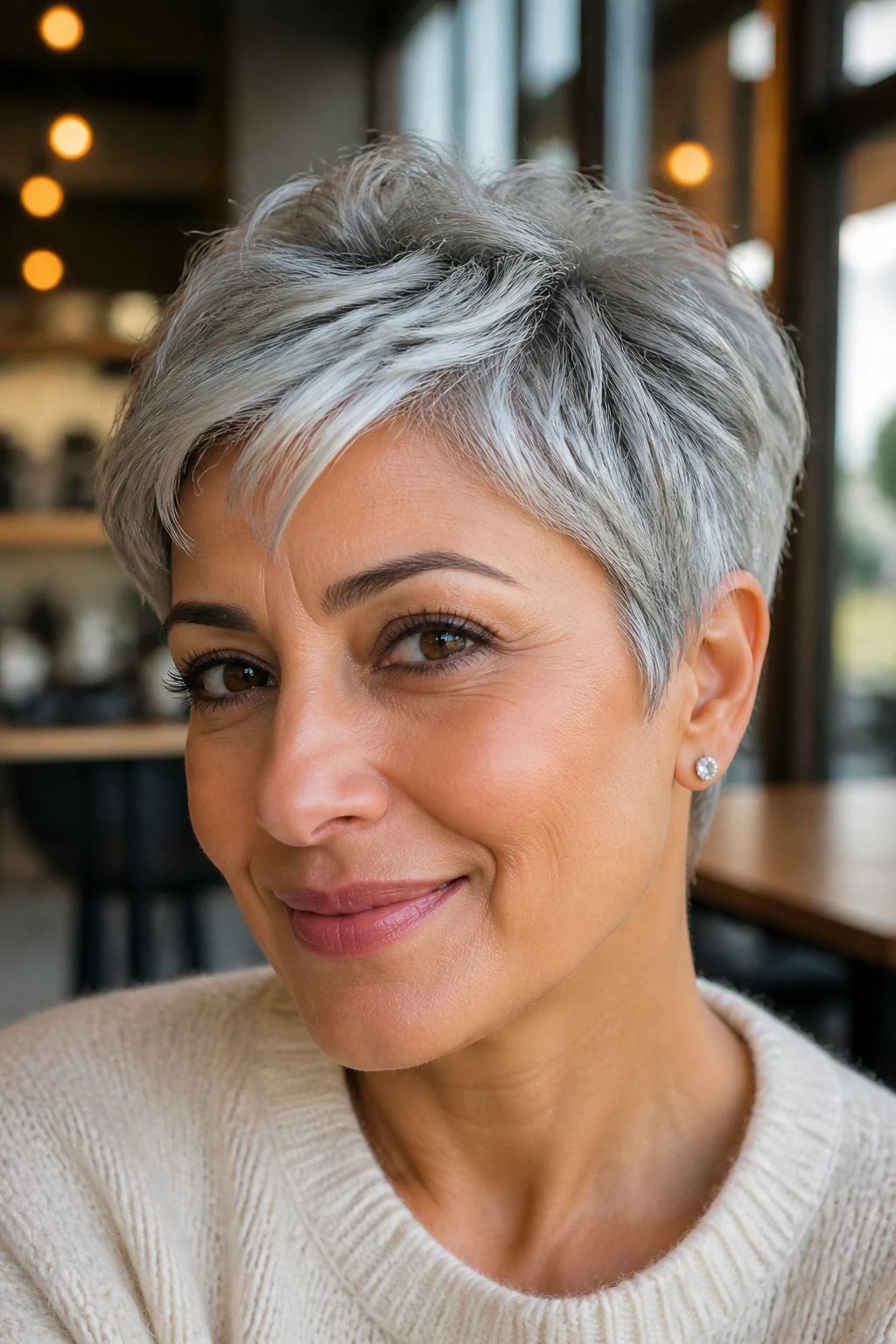
A pearl grey pixie has a clean, bright finish that puts the focus right on the eyes and cheekbones. Because the haircut is short, the color doesn’t have to do all the work. It just sits there and shines, with tiny shifts of silver and soft white catching the light at the top and around the fringe.
The catch is maintenance. Short hair shows every tone change fast, so pearl grey usually needs toning more often than a longer balayage, especially if your hair picks up yellow warmth. If your skin has medium depth with cool undertones, the pearl effect can look crisp and polished. If you lean warm, ask for a beige base under the silver so it doesn’t go too icy.
It’s a strong choice if you like sharp lines, neat edges, and a cut that shows off bone structure. A pixie and pearl grey go together like a well-cut jacket and a plain white tee.
5. Charcoal Money Piece
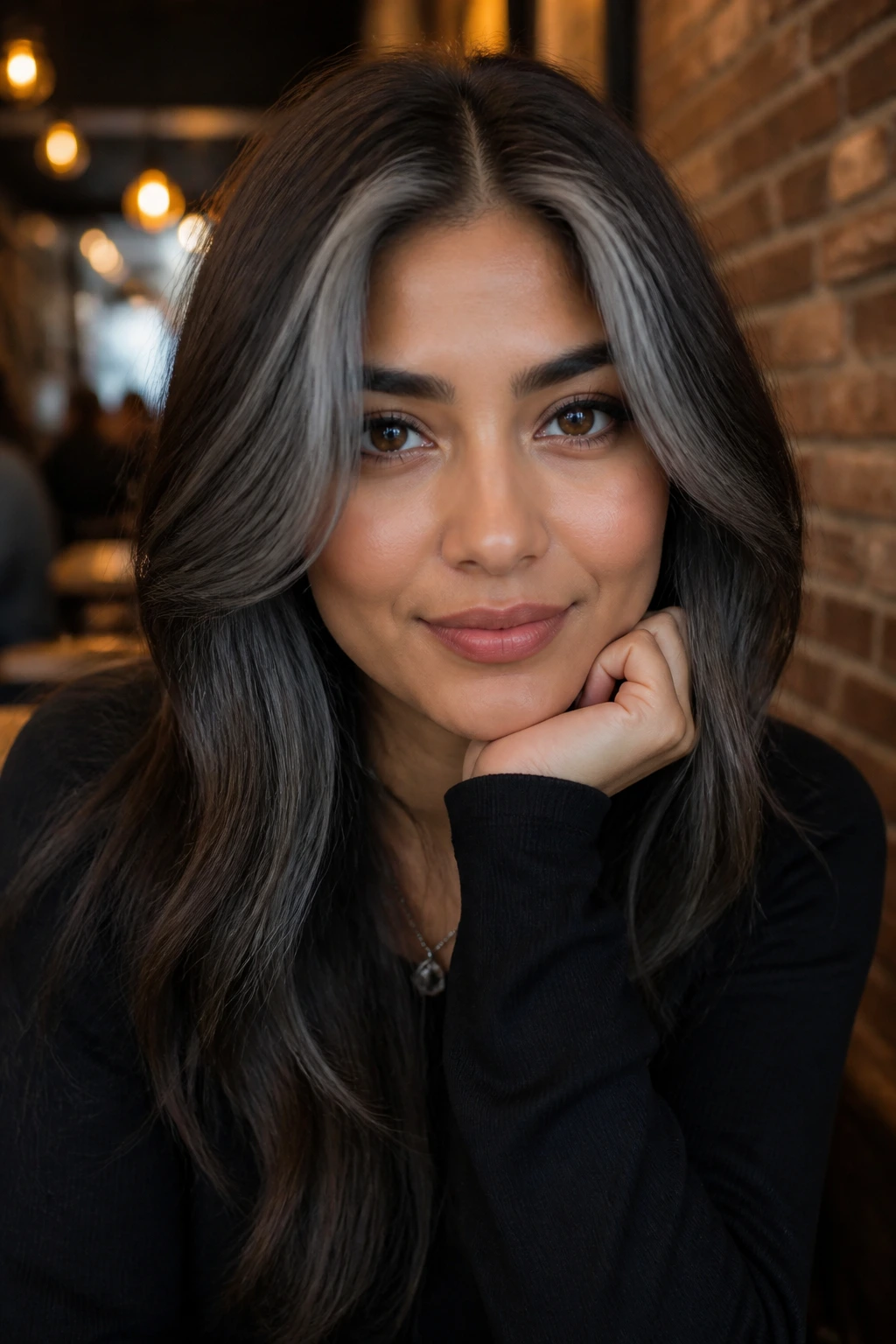
A charcoal money piece gives you grey without signing up for a full head of it. The front sections stay deep and smoky, often on the level of dark graphite or soft black-grey, while the rest of the hair can remain brunette, ash brown, or lightly highlighted. On medium skin, that front contrast is what wakes everything up.
This look is good if you want drama near the face but don’t want the upkeep of all-over silver. It also works on curly or textured hair, where the front panels frame the face and the darker depth keeps the curl pattern from looking washed out. Curtain bangs make it even better.
It’s one of my favorite options for people who wear glasses. The dark-grey pieces near the lenses give the face a clean frame without stealing attention from the eyes.
6. Frosted Silver Ombré
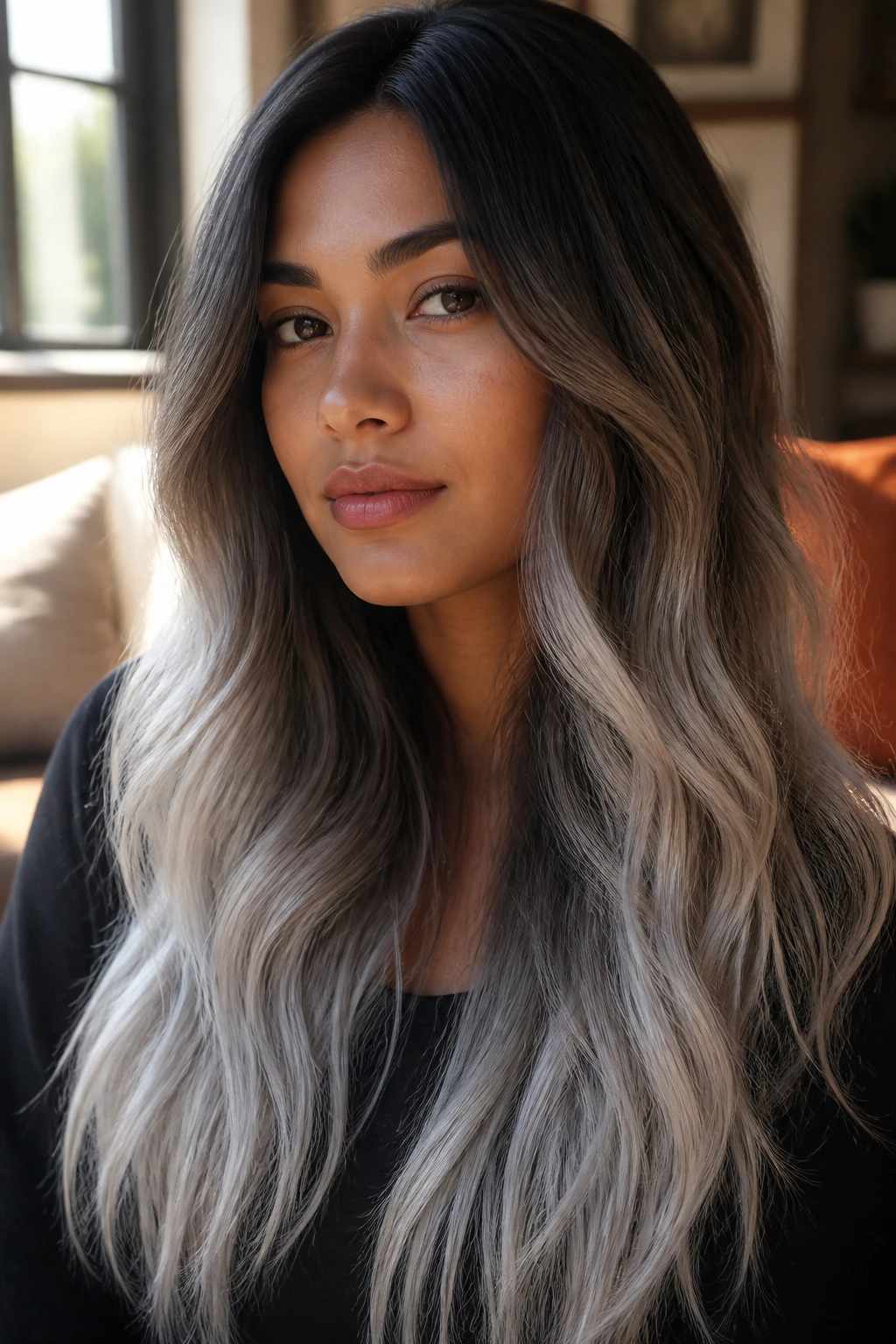
Frosted silver ombré starts deeper at the roots and melts toward a pale silver or frosted white at the ends. The gradient is the point. It keeps the color from shouting all at once, which is useful on medium skin if your undertone leans golden or olive and you still want a bright finish.
Long hair handles this shade best. The ombré needs length to show the transition, and the lighter ends should be trimmed often so they don’t look stringy. If the lightest part is only on the bottom few inches, the whole style reads more deliberate and less “I lightened it in a hurry.”
This is one of those shades that looks especially nice in motion. Curls, waves, and even a loose braid make the silver end points flash in a way that plain flat-ironed hair does not.
7. Slate Grey Waves
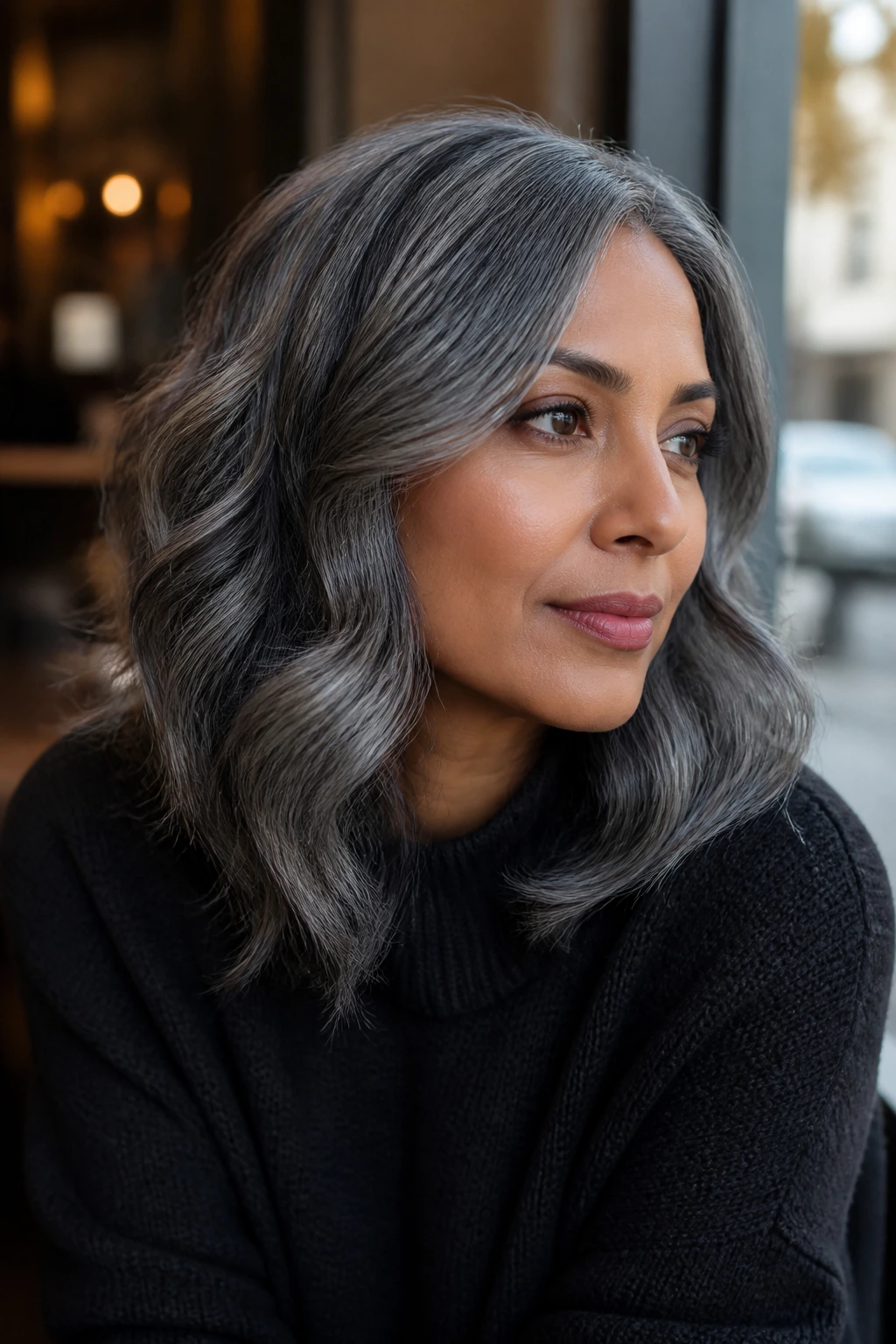
Slate grey has a cooler, slightly blue-leaning tone that sits somewhere between steel and smoke. On medium skin, it works best when the hair has soft waves, because the bend in the hair lets the different grey tones break up the surface instead of turning it into one solid block. Flat ironed slate can look a little severe. Waves fix that fast.
Ask for a slate base with muted lowlights underneath. The lowlights matter because they give the color a darker floor, and that floor helps medium skin hold its shape against the hair. Without it, slate can drift too pale and lose contrast.
This shade has a calm, modern feel without looking severe. It suits people who like monochrome clothes, silver jewelry, and a bit of edge without going full chrome.
8. Ash-Graphite Melt
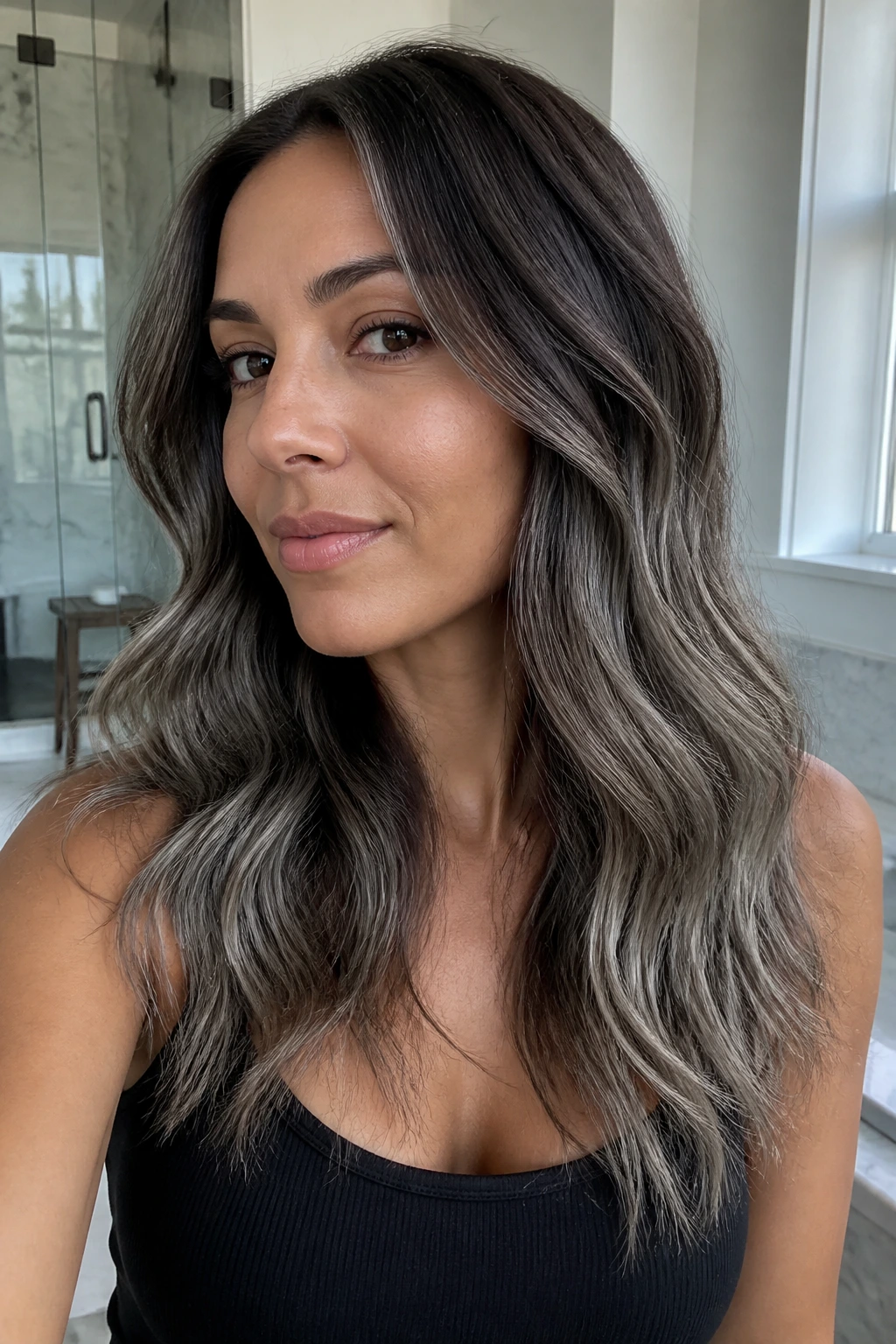
Ash-graphite melt is for people who want grey but are not in the mood for light, airy silver. It starts with an ash brown or cool brunette base and blends into graphite through the mids and ends. On medium skin, that darker range is flattering because it gives the face structure instead of just brightness.
The melt part matters. A clean line between brown and grey can look choppy unless it’s deliberate. Here, the shift should feel gradual, with the grey appearing like smoke under the brown rather than a separate color stuck on top. It’s one of the easiest grey looks to wear if your natural hair is already medium or dark.
This is also one of the better choices if you like low-maintenance grow-out. The root line stays soft, and the graphite tones age into a smoky brunette rather than a yellow mess.
9. Metallic Smoke Layers
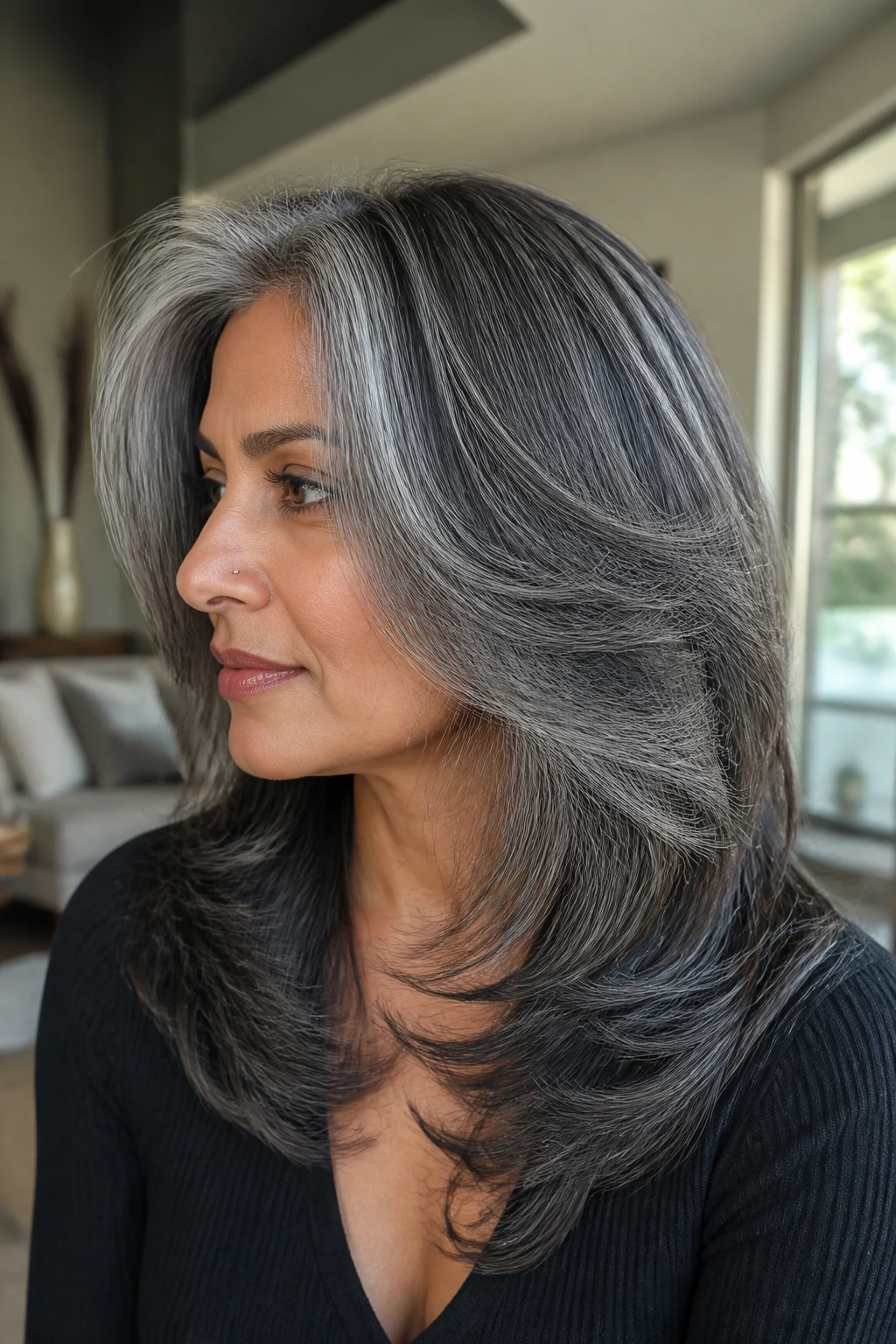
Metallic smoke layers are built for hair that moves. The color blends silver, pewter, and muted gunmetal through a layered cut, so each tier catches light a little differently. Medium skin likes this because the color never sits too flat against the face; it keeps shifting.
This works best on medium to thick hair. Thick hair can hold the contrast between layers, which is where the whole look lives. If the hair is too one-length, the metallic pieces can disappear into each other. Ask your colorist for dimension, not a single grey formula from root to tip.
I’d pick this if you like a lived-in finish and don’t mind some visual texture. It’s the kind of grey that looks better the second day, after the cut has settled and the shine spray has dried down.
10. Lilac-Tinted Silver
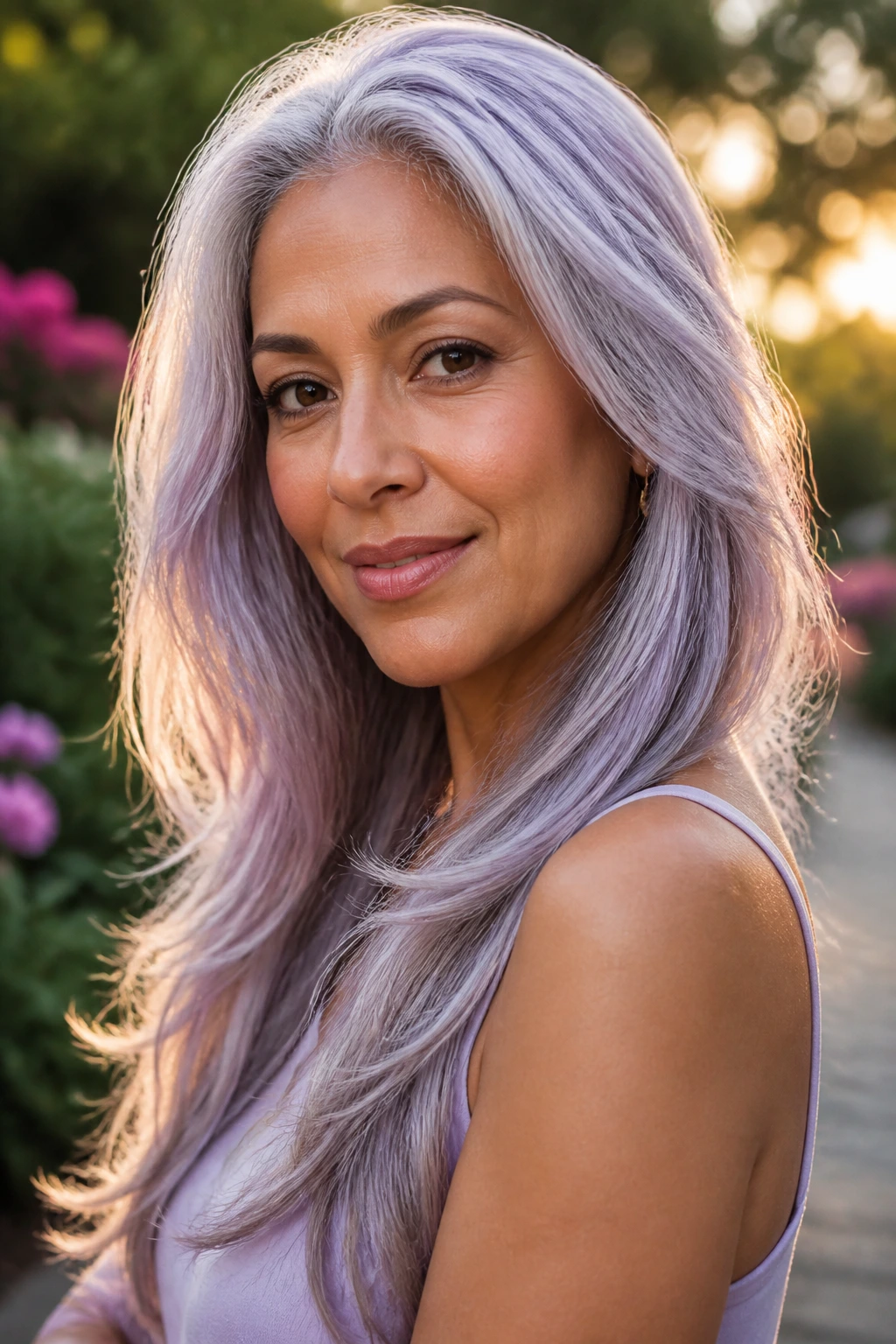
Lilac-tinted silver gives grey a softer edge. The violet note is subtle — not purple hair, not pastel candy, just a cool haze over the silver that keeps brass from taking over. On medium skin, that tiny lilac cast can be flattering because it tempers yellow or olive warmth without making the face look pale.
This is especially useful if your hair tends to yellow after bleaching. A violet-forward toner or gloss can keep the silver cleaner between salon visits. If the lilac is too strong, it starts looking playful in a way that can fight with the skin tone; the goal is a whisper, not a shout.
It’s a nice option for glossy makeup looks. Think soft liner, cool pink blush, and a lip color with a blue-red base. The hair and face end up speaking the same language.
11. Pewter Highlights
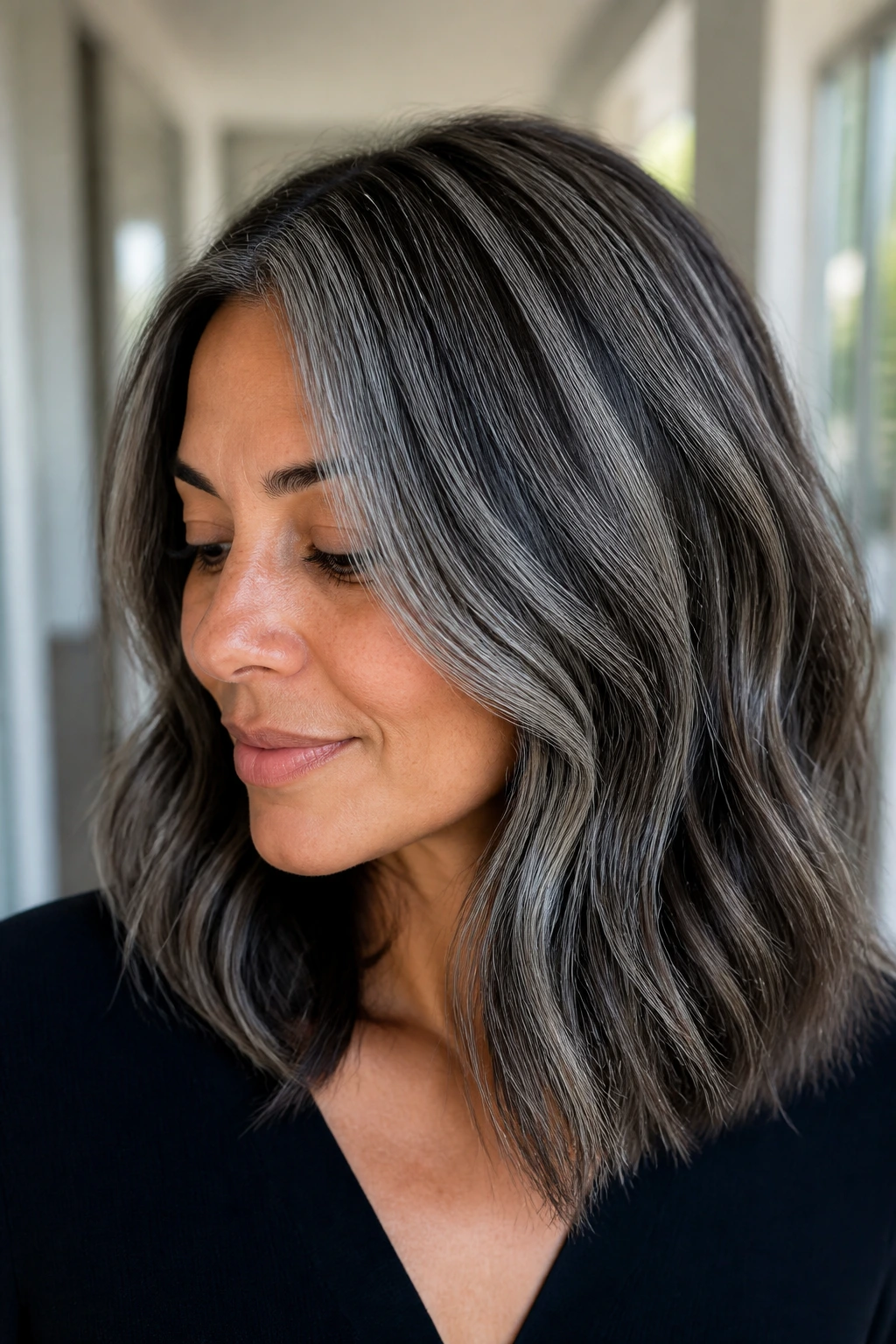
Pewter highlights are one of the easiest ways to test grey without going all in. Instead of flooding the whole head with silver, the colorist places thin ribbons of pewter through the top, around the part, and near the face. On medium skin, that small amount of contrast is often enough to create the grey effect without washing out the complexion.
The trick is keeping the highlights fine. Chunky pewter strips can look harsh. Delicate ones blend into the base and read as shimmer, which is the whole point. If your hair is dark, this can be a much saner first step than trying to lift everything at once.
I like this choice on shoulder-length hair with a clean side part. The highlights catch the light as the head moves, and the result feels smart rather than flashy.
12. Dimensional Silver Brown
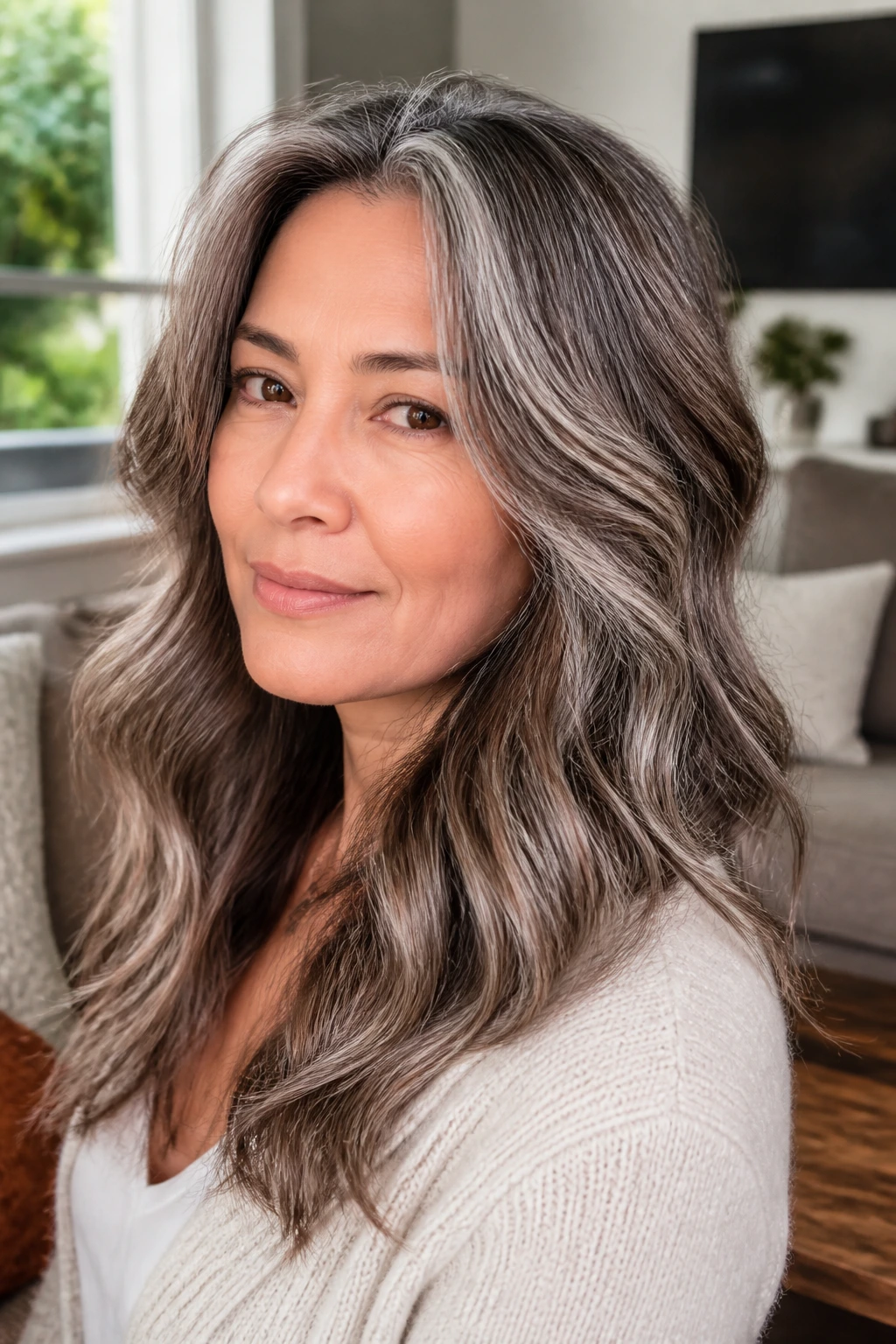
Dimensional silver brown is for the person who likes grey but doesn’t want to abandon brunette completely. The base stays brown, usually in a cool or neutral range, while silver threads, ash ribbons, and soft beige lowlights give the surface that smoky finish. On medium skin, this is one of the most forgiving combinations.
It has a lived-in, expensive look because the eye reads multiple tones at once. That dimension is what keeps the hair from looking dyed in one flat sheet. If your skin leans warm, this is a particularly good choice because the brown keeps the grey from becoming icy in a bad way.
This shade is also kind to growing-out hair. When the silver softens, the brown underneath still carries the look, so you don’t get that sudden “time for a rescue appointment” feeling.
13. Denim Grey Ends
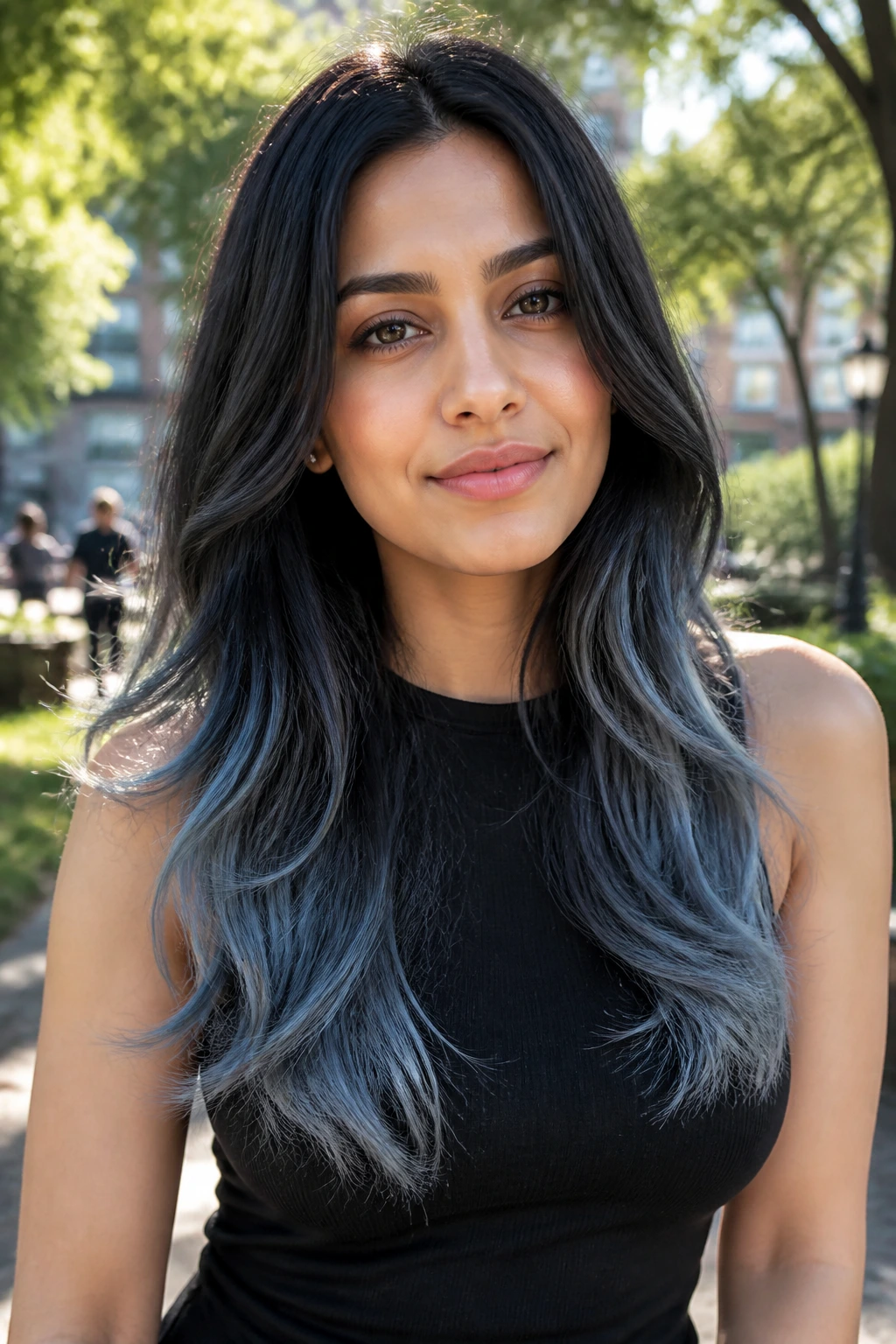
Denim grey ends bring a cool blue-grey edge without going full fantasy color. The tone sits somewhere between washed denim and steel, which makes it more wearable than a bright blue but more interesting than plain silver. On medium skin, the contrast at the ends makes the face look brighter.
This style loves long hair, especially if the lengths are straightened or waved just enough to show the color shift. The ends can be cropped every few months to keep the shape neat, since denim tones tend to look best when the cut is clean. If the ends get too thin, the color can start reading patchy.
It’s a good choice for someone who wants a bit of attitude without committing to a loud color all over. The roots stay calmer. The ends do the talking.
14. Soft Silver Babylights
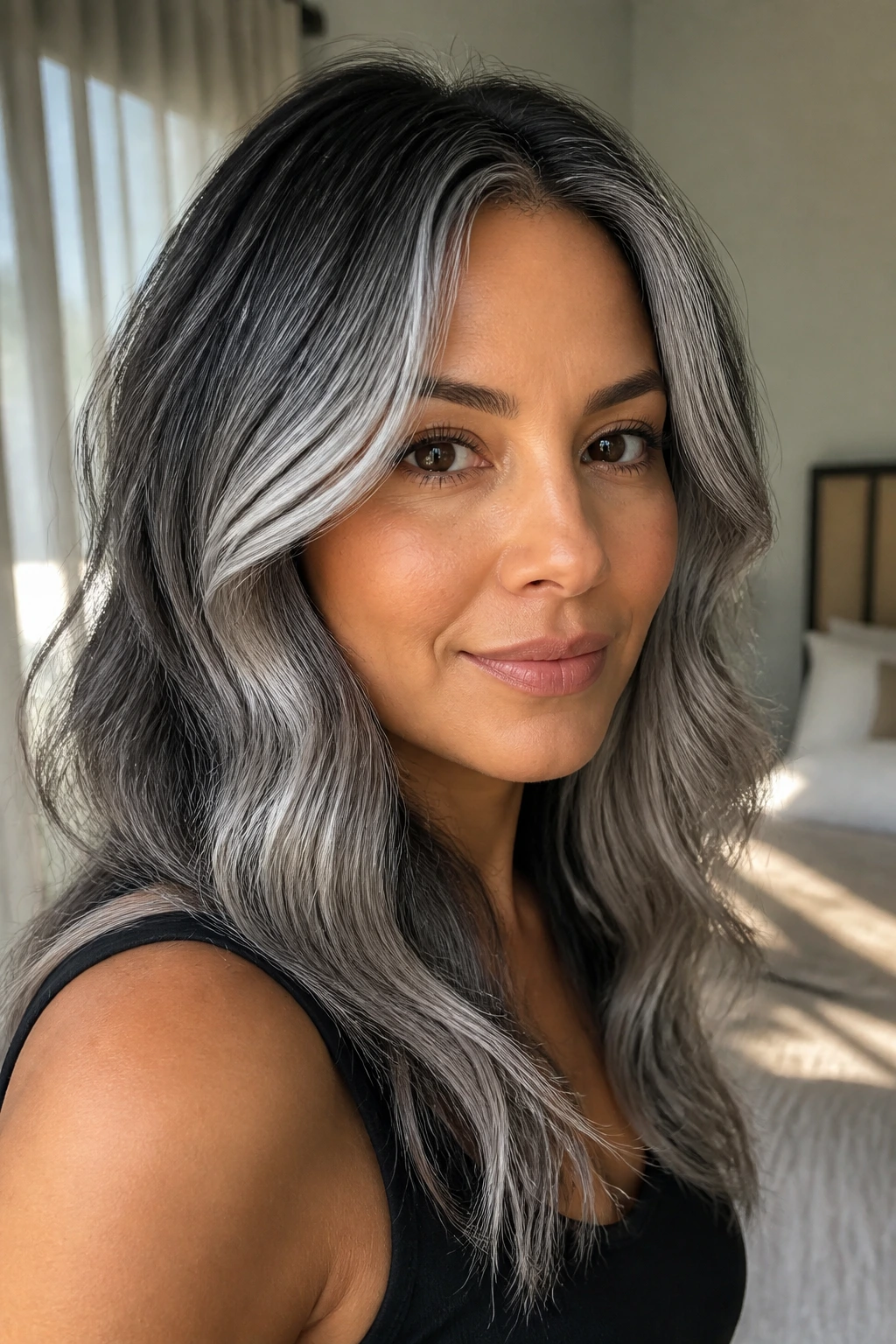
Soft silver babylights are tiny, fine highlights that sit close together and create a diffused grey effect. There’s no obvious stripe. Just a shimmer of silver that moves through the hair, which is exactly why medium skin tends to like it. The color lifts the face without stealing all the attention.
This is one of the best options for first-timers. Babylights grow out gently, and because they’re fine, they don’t create a strong line at the scalp. If your hair is fine, they can make it look fuller. If your hair is thick, they break up the heaviness.
It’s subtle, but not boring. On a glossy blowout, the silver babylights catch enough light to look polished from across the room, then quieter up close.
15. Gunmetal Gloss
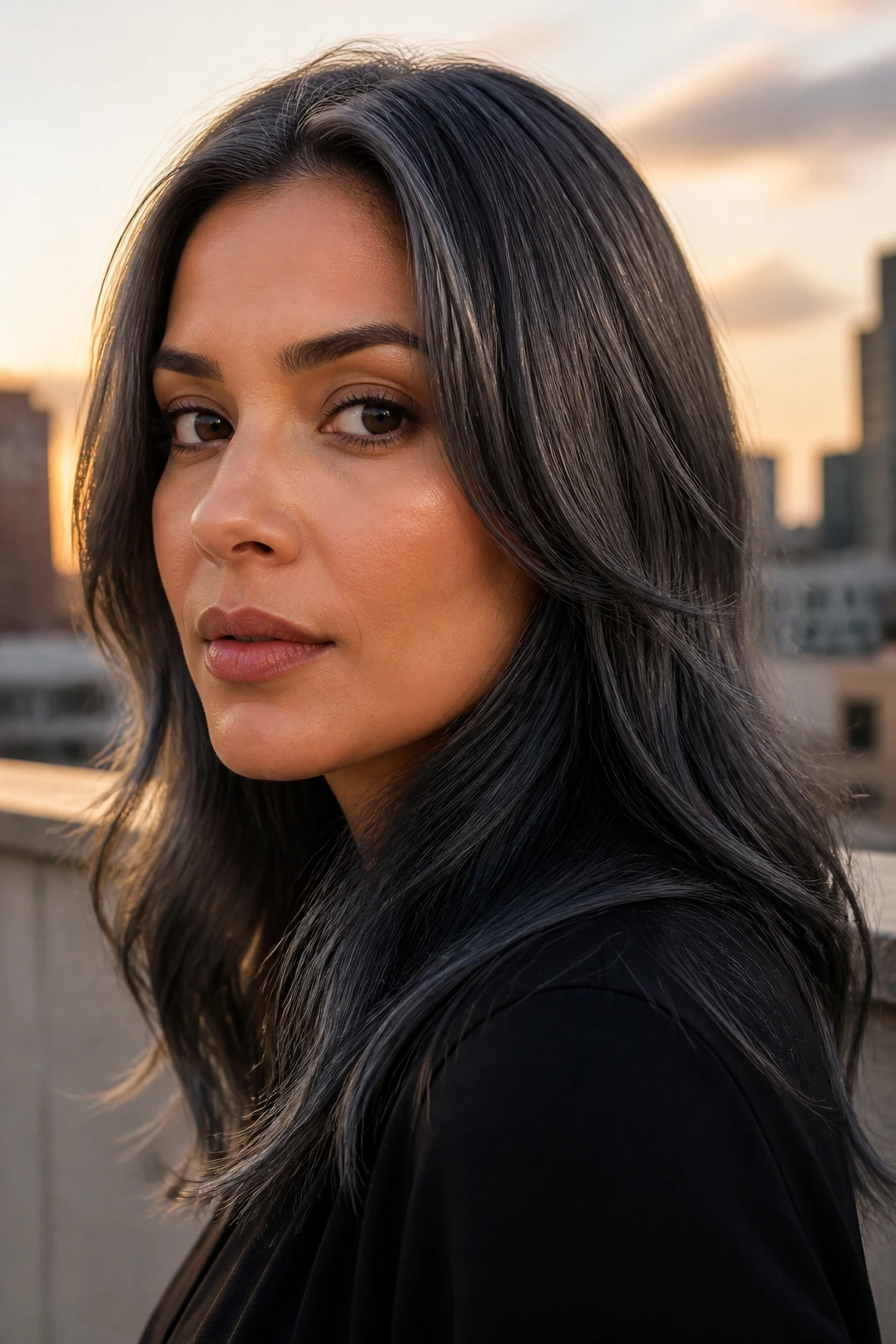
Gunmetal gloss is the darker cousin of silver. Instead of going light and airy, the hair gets a deep metallic grey glaze that sits over a dark base. On medium skin, that depth keeps the color rich and grounded, especially if your undertones lean olive or neutral.
A gloss is a good move if you don’t want a harsh grow-out line. The color usually deposits shine more than it deposits a heavy dye load, so the finish feels sleek rather than painted on. Straight cuts, blunt ends, and smooth blowouts make the most of it.
If you like cool clothes, silver hoops, and a sharp brow, gunmetal is worth a serious look. It has less softness than mushroom grey, but more wearable depth than a bright silver.
16. Ice Grey Curtain Fringe
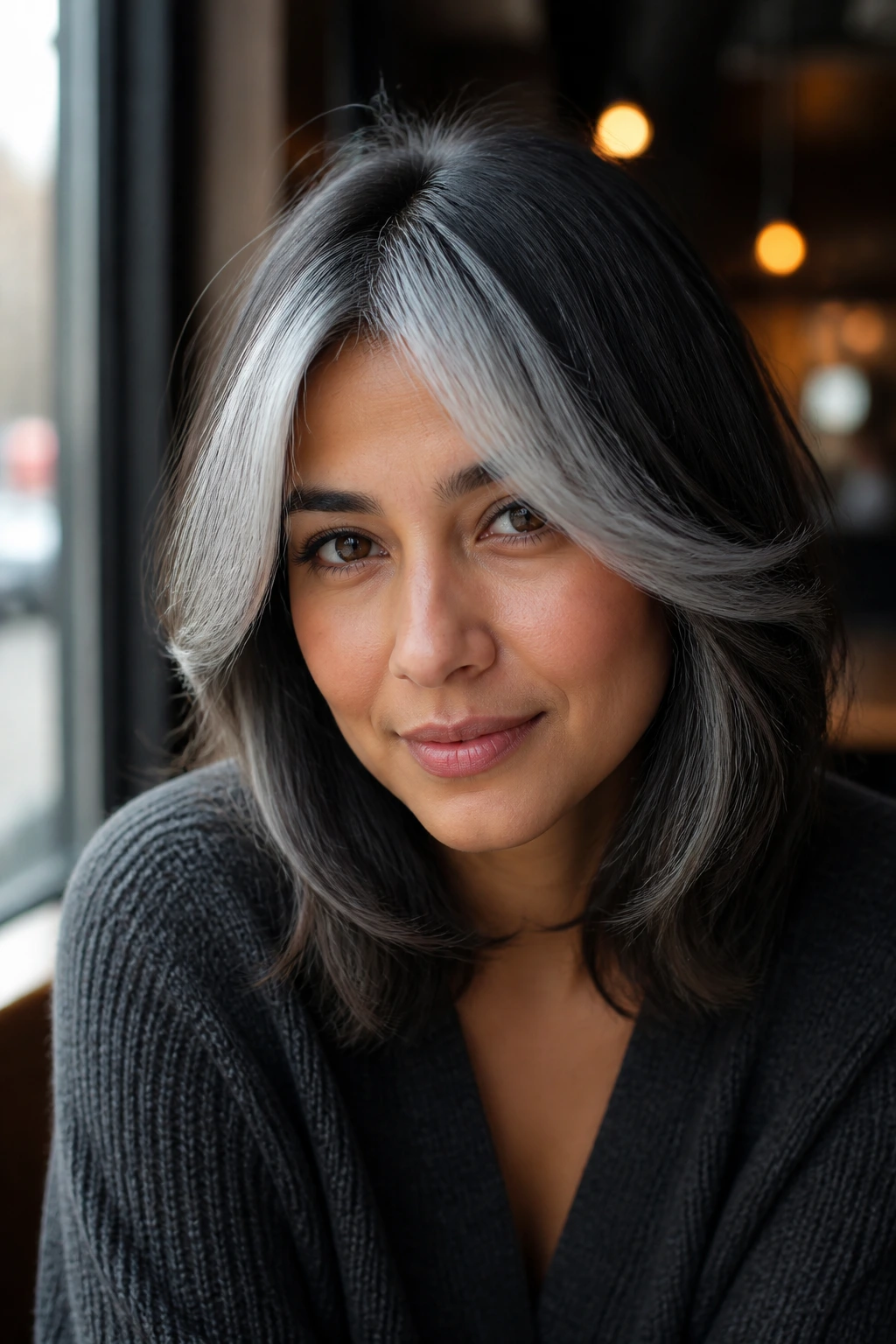
An ice grey curtain fringe puts the brightest shade right where the eye lands first. The fringe and front pieces are lifted to a pale grey-silver, while the rest of the hair can stay deeper and more natural. On medium skin, that brightness near the face acts like a soft reflector.
This works well because curtain bangs already break up the forehead and cheek area. Add ice grey there, and the color feels intentional instead of overwhelming. If your skin has warmth, keep the back sections slightly darker so the front can do its job without making the whole head look too cold.
It’s a smart option for medium-length cuts with movement. The fringe gets attention, the rest of the hair stays easier to manage, and the grey effect doesn’t require a full-head bleach session.
17. Taupe-Grey Mushroom Blend
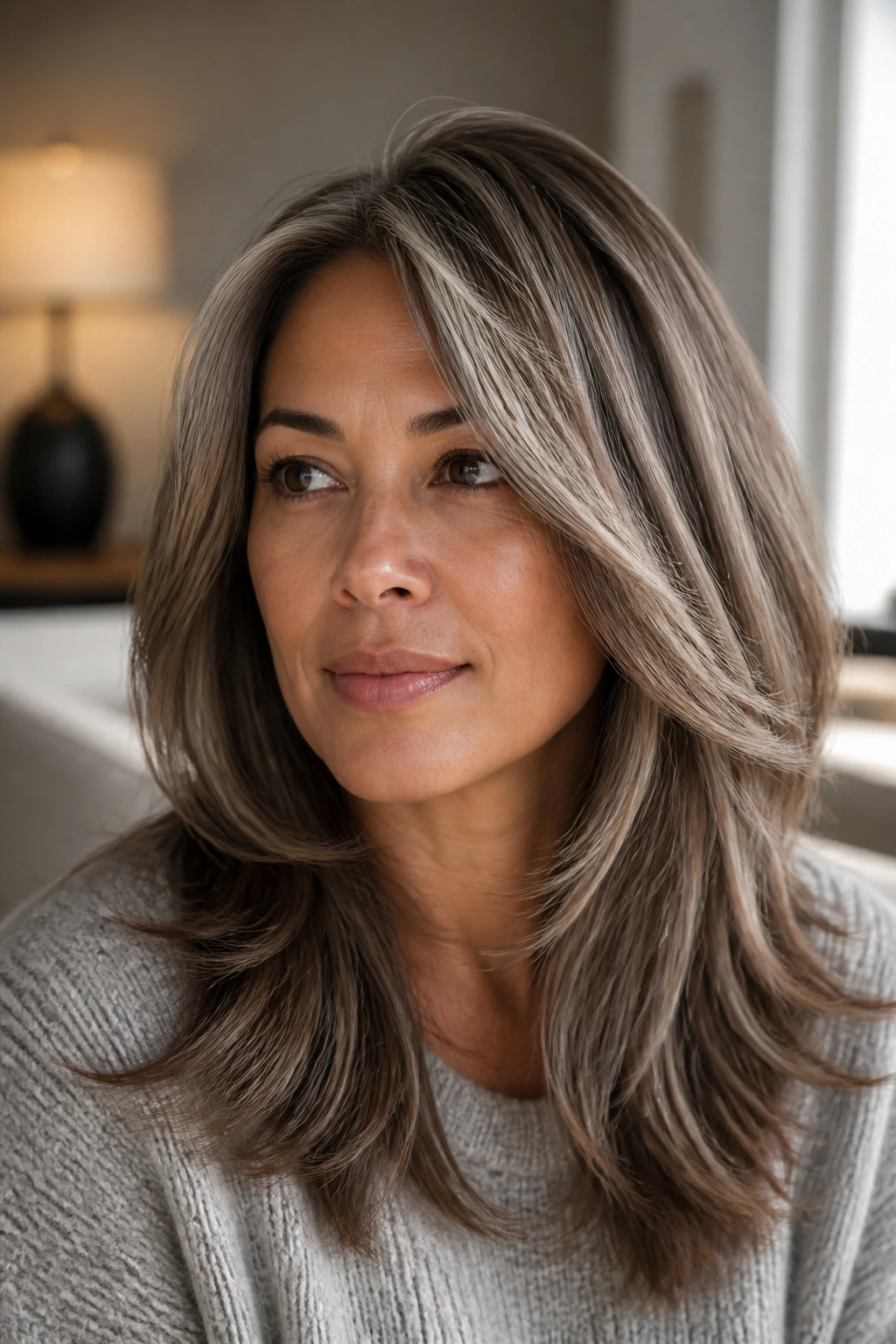
Taupe-grey mushroom blend is one of the easiest greys to wear if you have a medium complexion with warm undertones. The taupe keeps the grey from getting icy, and the mushroom note gives it a soft, earthy base. The result feels calm, not stark.
This shade works especially well on layered cuts because the layers let the taupe and grey alternate in a way that looks natural. It’s also a forgiving choice if you don’t like strong contrast near the scalp. The color sits quietly and still changes in the light.
If you want grey that plays nicely with gold jewelry, warm blush, and cream sweaters, this is the one I’d point you toward first. It doesn’t fight the skin. It settles into it.
18. Silver Fox Blend
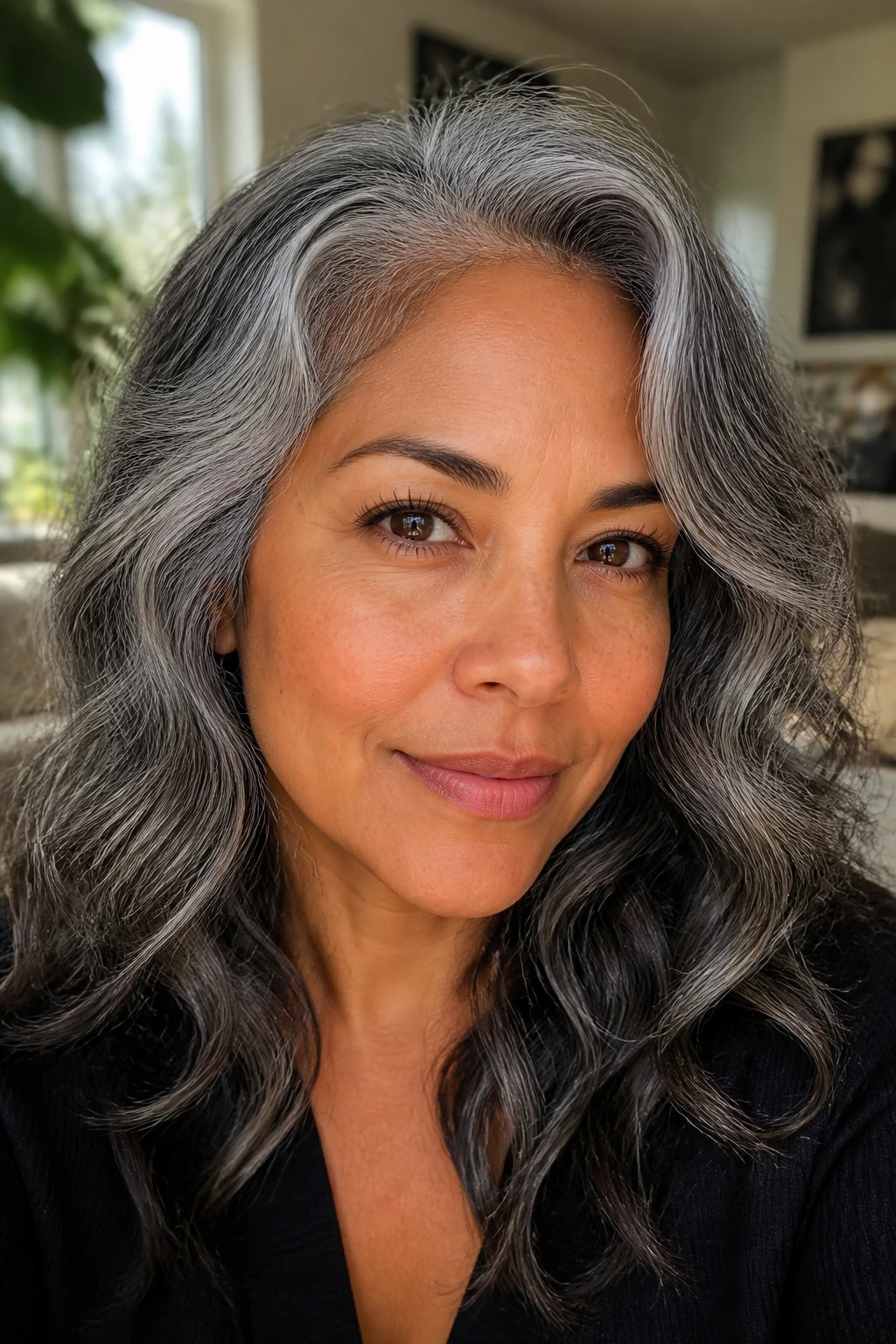
Silver fox blend is less about dyeing the whole head grey and more about making the grey look natural on purpose. It uses highlights, lowlights, and a softened root so the hair mimics the silvering pattern people often get naturally at the temples. Medium skin loves the contrast because it feels elegant instead of severe.
This look is especially good on wavy or curly hair. The texture breaks up the silver, which keeps it from reading flat. A blunt, one-tone version can look costume-like. A blended one looks lived in.
I also like this shade for people who are tired of chasing perfection. The grow-out is part of the charm. That sounds lazy, maybe, but it works.
19. Smoky Rose Grey
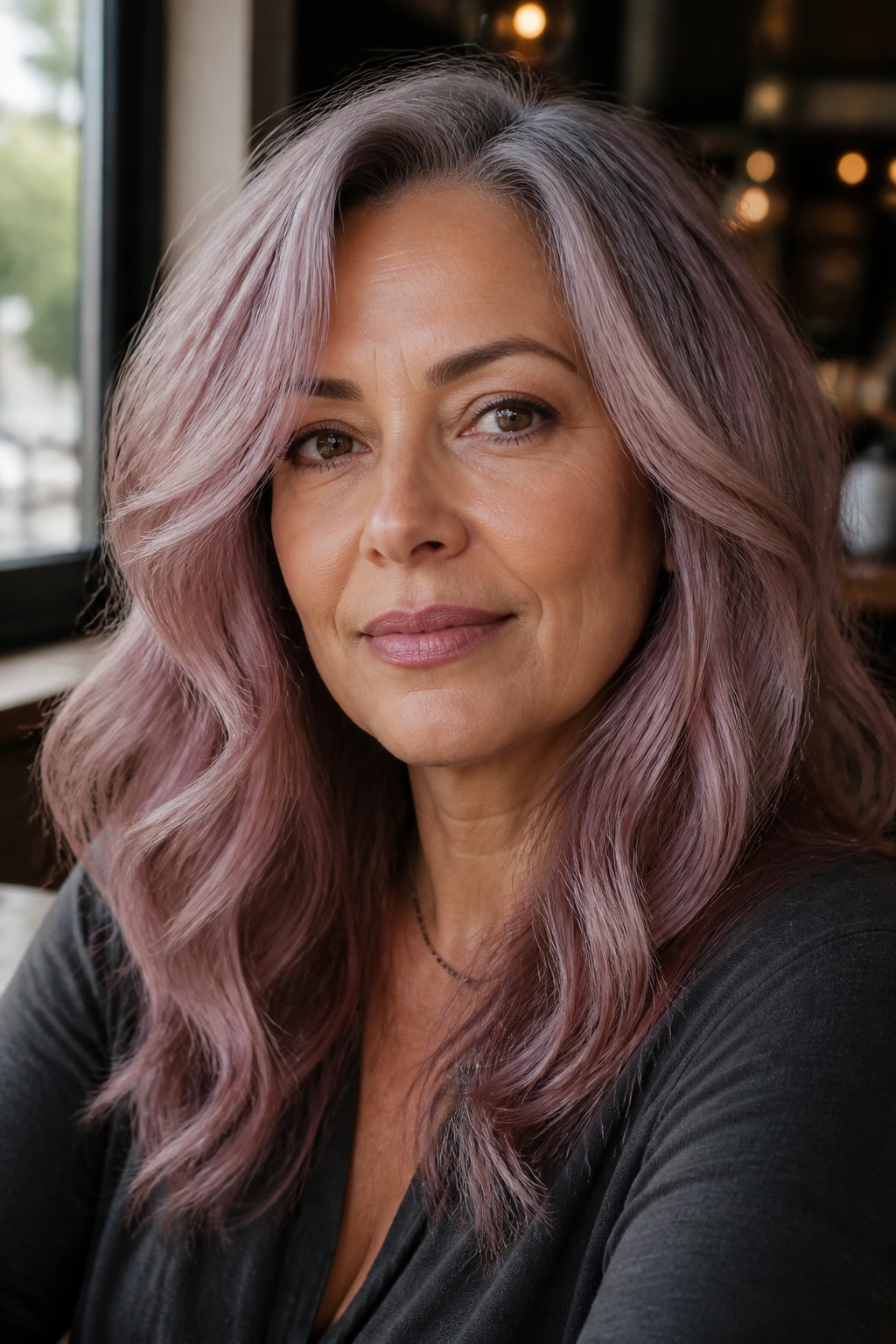
Smoky rose grey adds a faint mauve tone to the silver base, which softens the coolness and gives medium skin a more romantic finish. The rose note should stay quiet. If it gets too pink, the whole thing veers into pastel. The charm here is the smoke.
It’s a strong pick if you want grey that still feels feminine and a little unexpected. The rose tint helps neutralize dullness, especially on skin with golden or olive undertones. A soft wave or loose bend makes the tone shift easier to see.
This one pairs well with berry lip color and soft brown eyeliner. The hair doesn’t need loud makeup, but it likes a bit of color on the face.
20. Cool Beige Grey
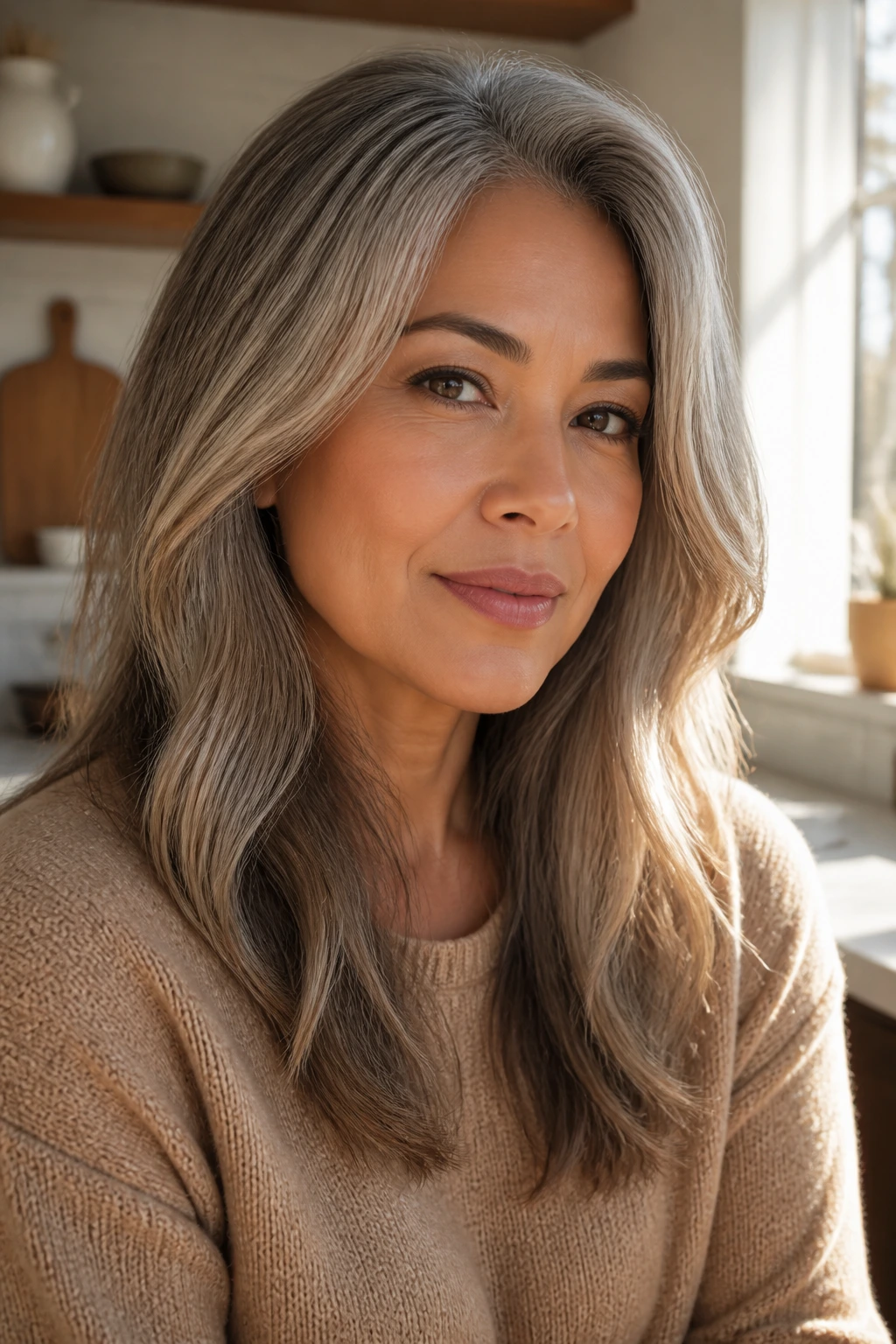
Cool beige grey is a bridge shade for people who want grey without the hard edge of pure silver. It sits between ash and beige, which makes it one of the most wearable shades for medium skin that has warmth in it. You still get the grey effect. It just arrives in a calmer voice.
This is a good option if you wear a lot of camel, ivory, and brown. The hair won’t fight the wardrobe. It also tends to fade in a softer way than very icy shades, so the color stays pleasant even as the toner softens.
If you’ve ever looked at a silver swatch and thought, too cold, this is the answer. It’s less flashy, more useful, and easier to live with.
21. Deep Charcoal Shadow Root
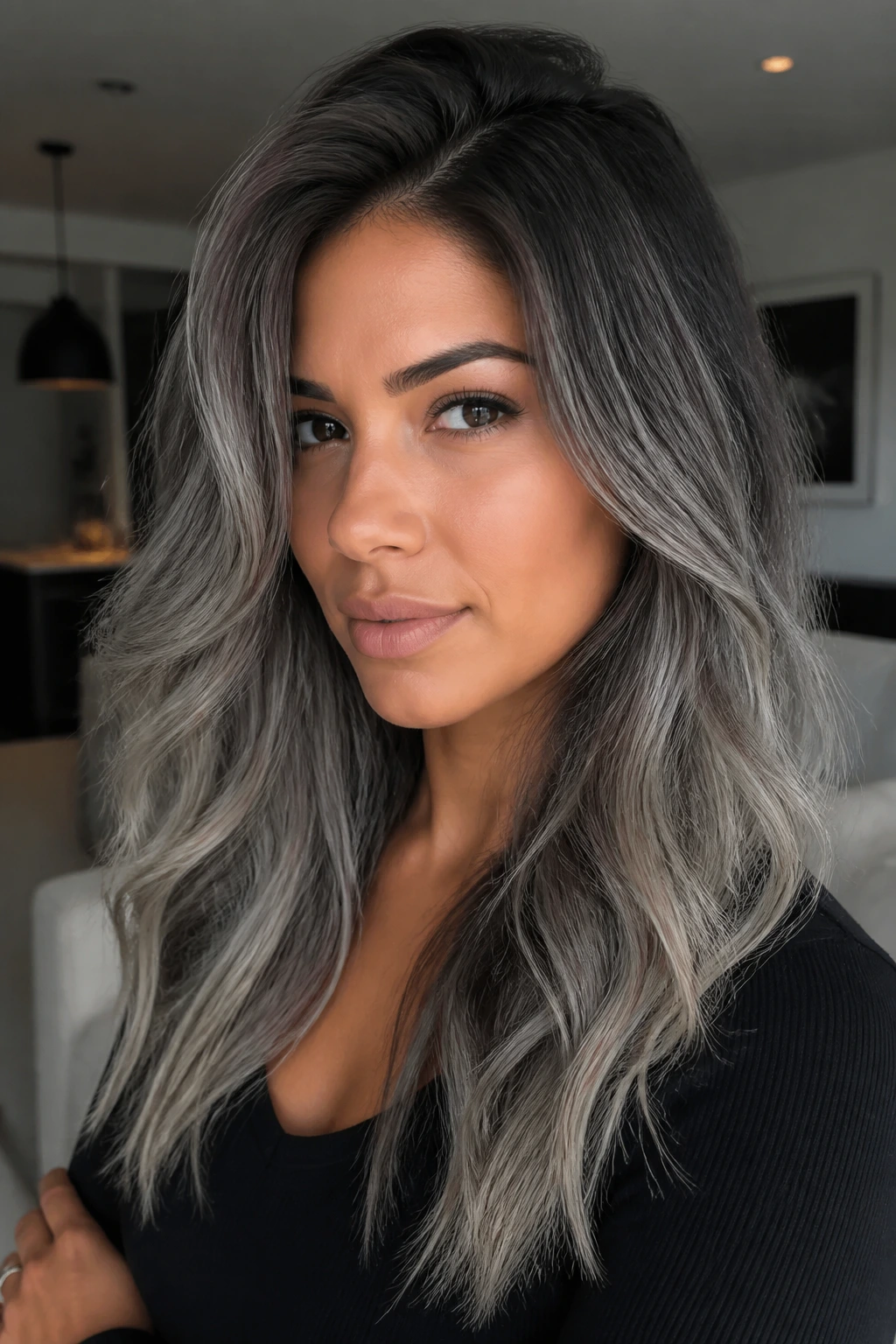
Deep charcoal shadow root is what I reach for when someone wants grey but needs the root area to stay darker. The top stays charcoal, almost like a softened black-grey, then the mid-lengths and ends can lighten a little into smoke or ash. On medium skin, that root depth creates a clean frame.
This is a strong move for brunettes who don’t want a giant contrast line as the hair grows. The root shadow also makes the grey look denser and more deliberate. On straight hair, the result is sleek. On curls, it looks plush.
It’s not the brightest shade in the group, and that’s the point. The darkness gives the grey room to breathe.
22. Opal Grey Rainbow
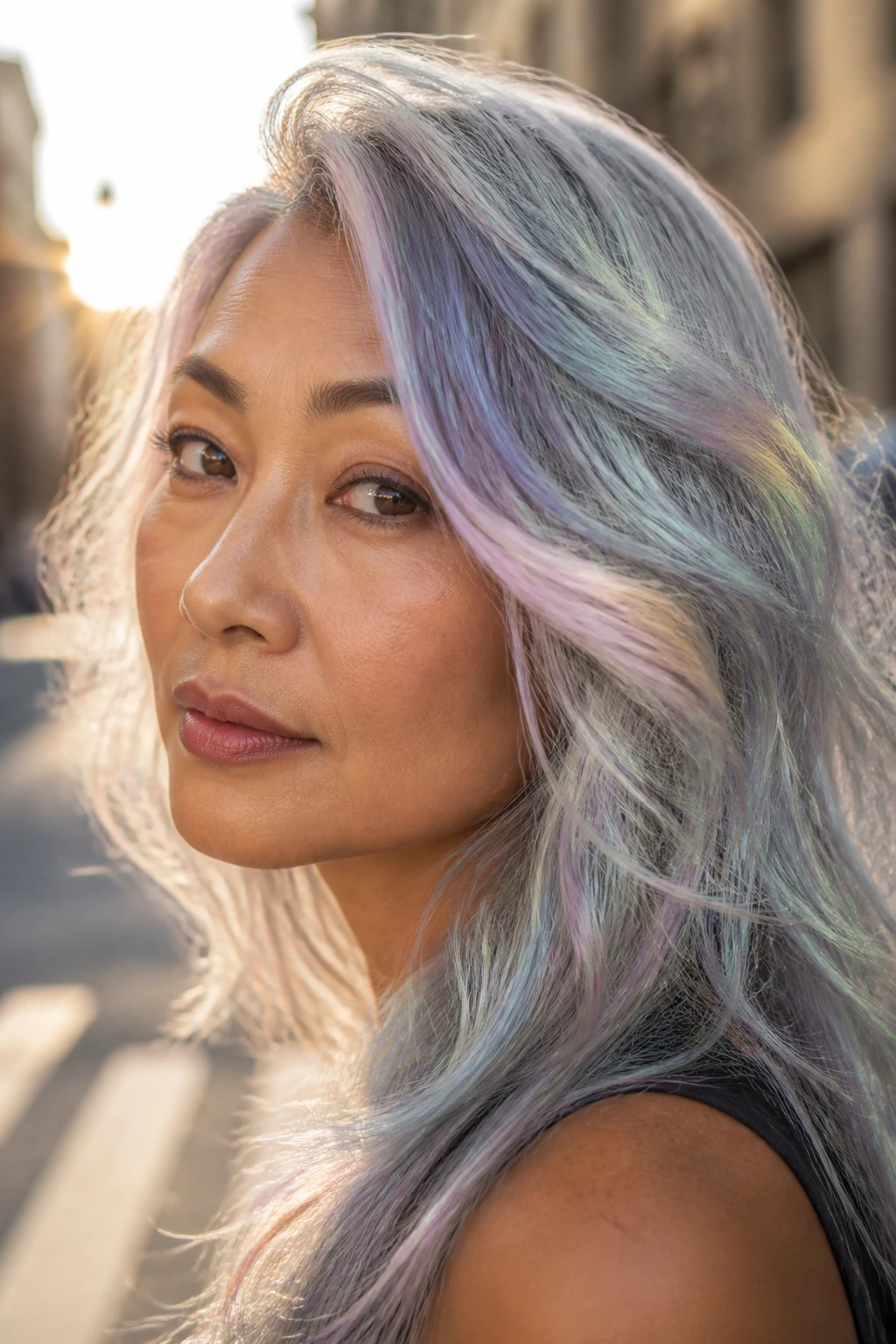
Opal grey rainbow sounds louder than it usually is. Good. Most versions are subtle, with a pearl-grey base and tiny flashes of lavender, blue, or soft green that only show when the hair moves. On medium skin, the multi-tone effect can be lovely because the base grey keeps the whole thing grounded.
This is one of the more playful looks on the list, so it works best on people who don’t mind a little attention. The opal shift tends to look strongest on pre-lightened hair, and it needs careful toning so the pastel notes stay clean rather than muddy. Too much color and it gets busy fast.
If you like silver jewelry, glossy makeup, and hair that changes under different light, this is the shade. If you want quiet, skip it. Easy.
23. Smoky Silver Curls
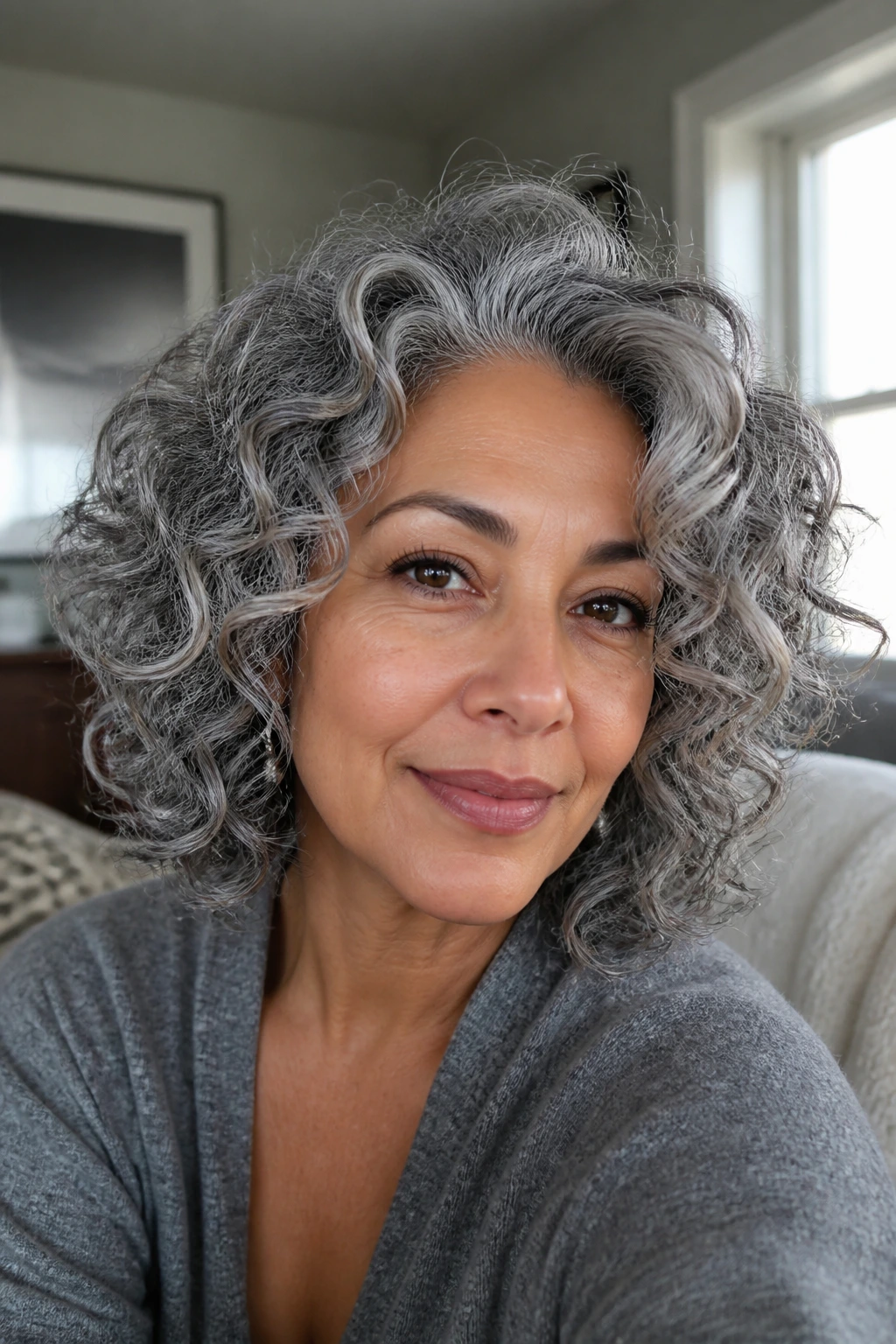
Smoky silver curls are built around movement. The grey isn’t painted to sit flat; it’s placed to show the curl pattern, deepen the shadows between coils, and make the bright parts catch the light. On medium skin, that mix of shadow and shine is one of the most flattering grey effects you can get.
Curly hair needs dimension or it can look like one soft blur. The smoky silver treatment solves that by keeping some deeper lowlights in the base. Ask for ribbons rather than a solid block of color, and keep the curl shape intact. Straightening it out can make the grey feel harsher than it really is.
This shade is also useful if your curls are thick. The color gives the shape more definition, which is half the reason the style works.
24. Platinum-to-Grey Melt
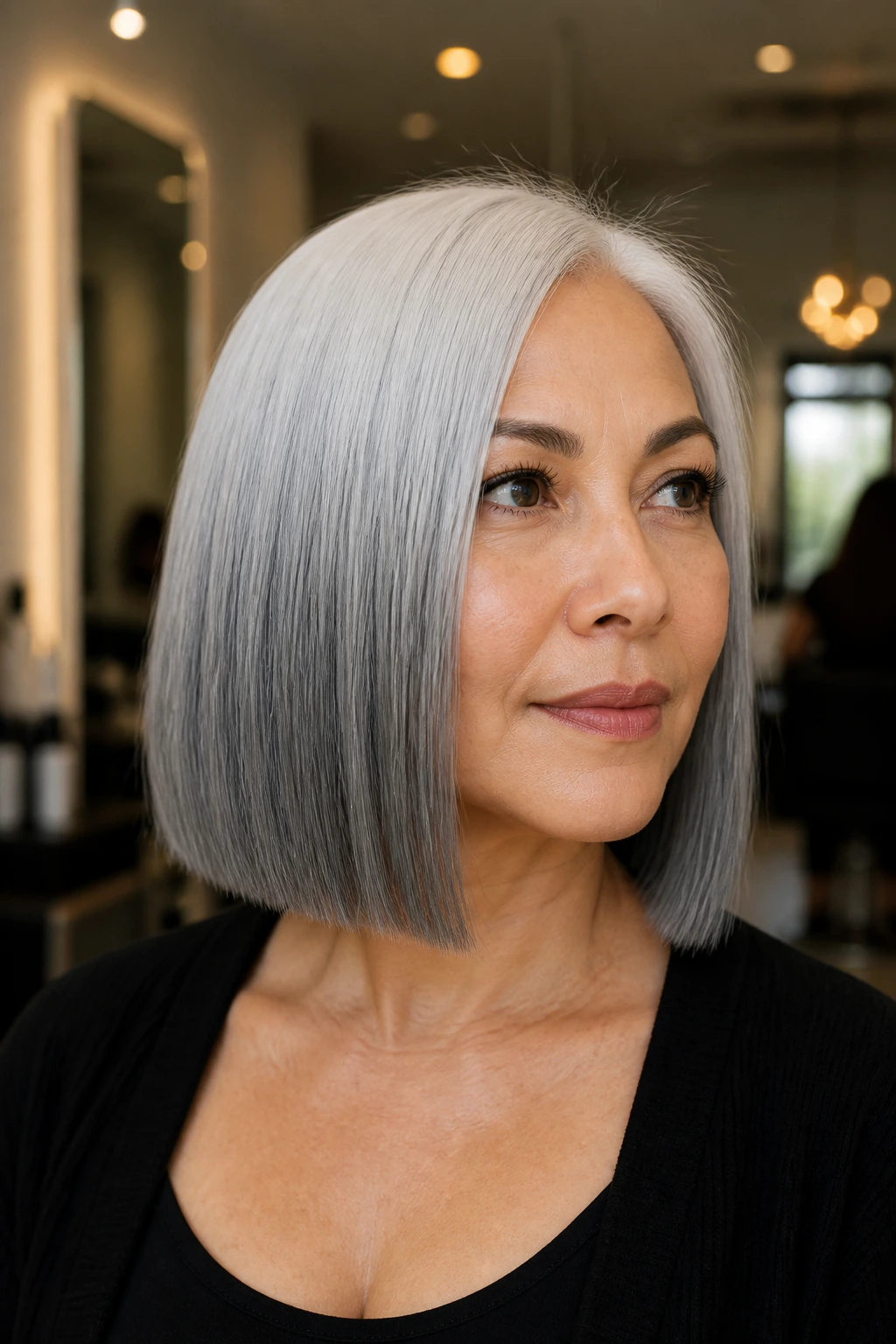
A platinum-to-grey melt is for someone who wants a high-light, high-shine finish with a cool fade. The hair starts brighter and melts into a softer grey, or the other way around depending on the cut and placement. Either way, the transition should look smooth, not striped.
This is a demanding look. The lightest parts need healthy hair, and the toner has to stay on top of brass or the whole thing can go yellow fast. Medium skin with cool or neutral undertones wears this best, because the platinum has enough crispness to stay clear against the face.
It’s one of the boldest options here, but I like it when the cut is clean and the styling is simple. A blunt bob or long, straight length shows off the fade without extra noise.
25. Smoked Lavender Grey
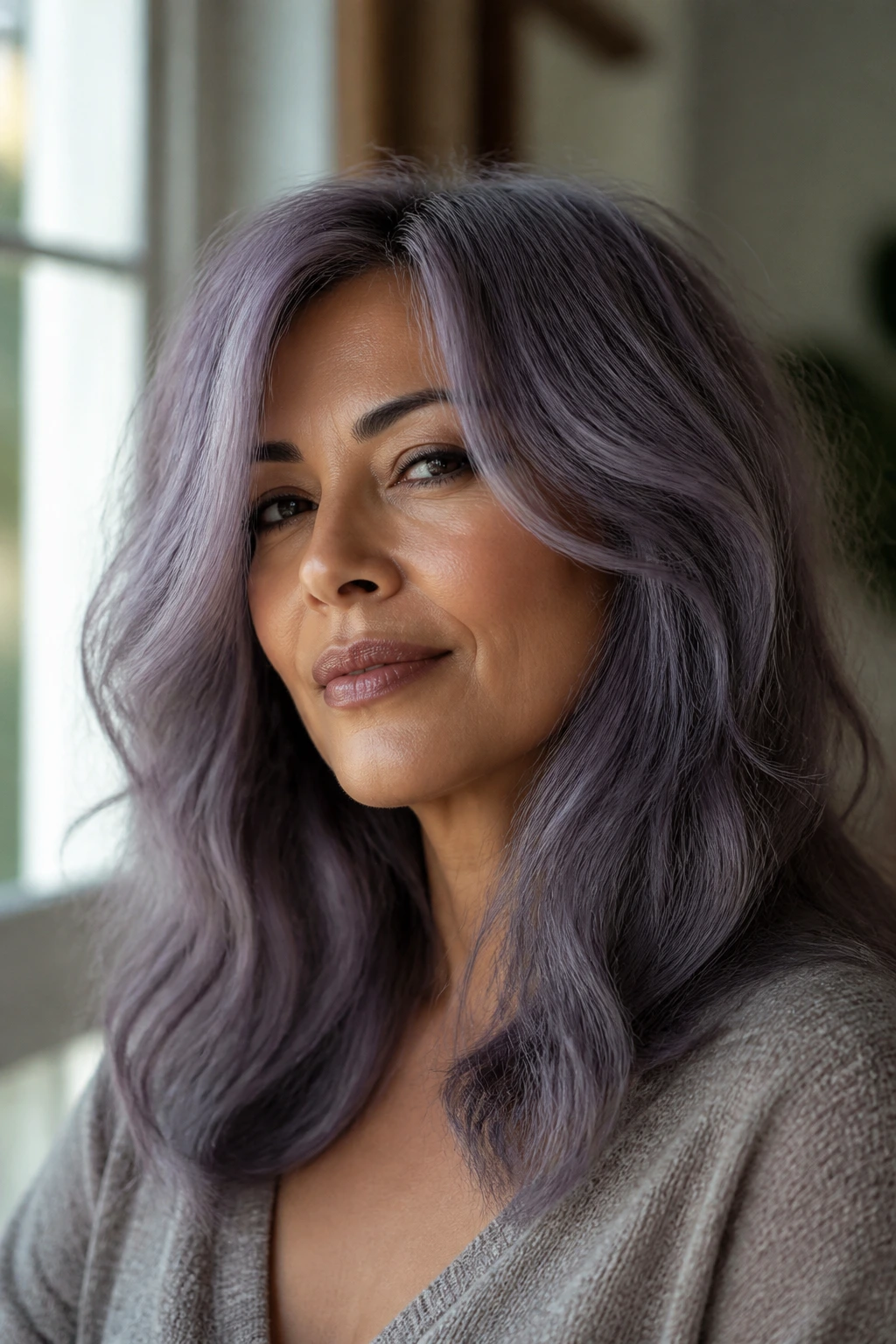
Smoked lavender grey closes the list with a shade that feels soft, cool, and a little moody. The lavender note is deeper than lilac, so it sits closer to charcoal than to pastel, and that makes it easier to wear on medium skin. The color looks especially good when it fades slightly, because the smoke remains even as the violet softens.
This shade needs a careful hand. Too much lavender, and it gets cartoonish. Too little, and it becomes plain silver. The sweet spot is a muted violet cast that appears in daylight and disappears indoors.
If you want grey with a little personality but not a full fantasy-color commitment, this is a strong finish. It has enough edge for black clothing, enough softness for warm skin, and enough depth to avoid looking washed out.
Why Grey Reads So Well on Medium Skin
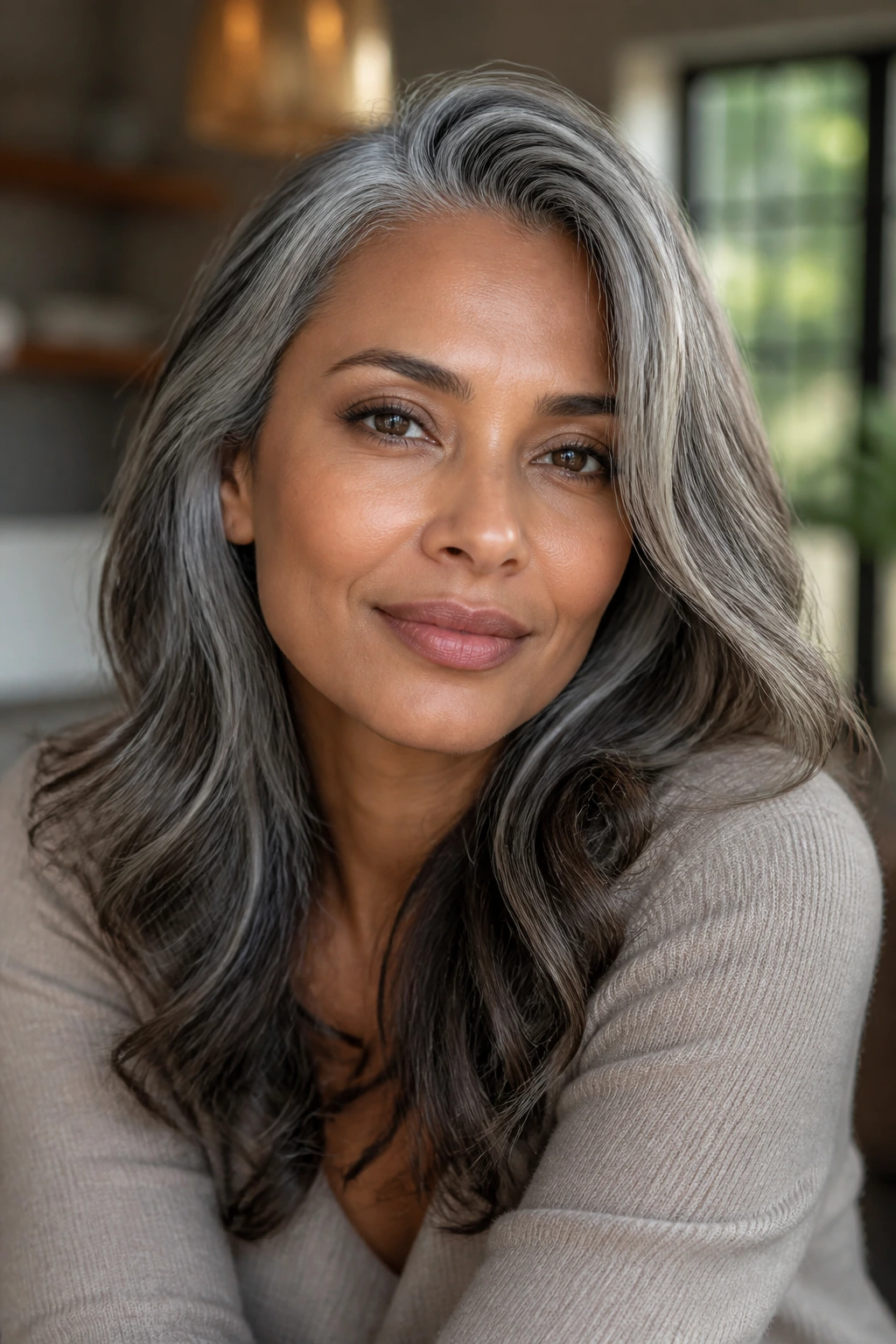
Medium skin has a built-in advantage with grey: there’s usually enough color in the face to hold a cool shade without losing definition. That sounds small, but it’s the whole game. On very fair skin, a pale silver can sometimes swallow the features. On deeper skin, the same shade can look gorgeous but needs enough contrast to keep the grey from disappearing. Medium skin sits right in the middle, which gives you more room to play.
The real question is not “Can I wear grey?” It’s “Which grey does the work?” Cool-toned greys such as steel, smoke, and pearl give a sharper finish. Warm-leaning greys such as mushroom, taupe-grey, and beige-grey soften the face and are often easier to wear if your skin has golden or olive notes. A little depth at the root helps every version. Every single one.
One more thing people skip: grey needs shine. Without gloss or careful conditioning, it can turn chalky fast, and chalky is not the same as cool. You want reflective, soft, and dimensional — not dusty.
The Tools and Products That Keep Grey Clean
-
Salon foil or balayage board: Useful if you’re getting painted highlights or a grey melt, because even placement matters more than people think.
-
Tint brush and color bowl: If you’re doing an at-home gloss or toner, these keep the application controlled instead of blobbed on.
-
Gloves and a dark cape or towel: Grey pigments stain less aggressively than vivid fashion dyes, but bleach, toner, and dark glosses can still leave a mess.
-
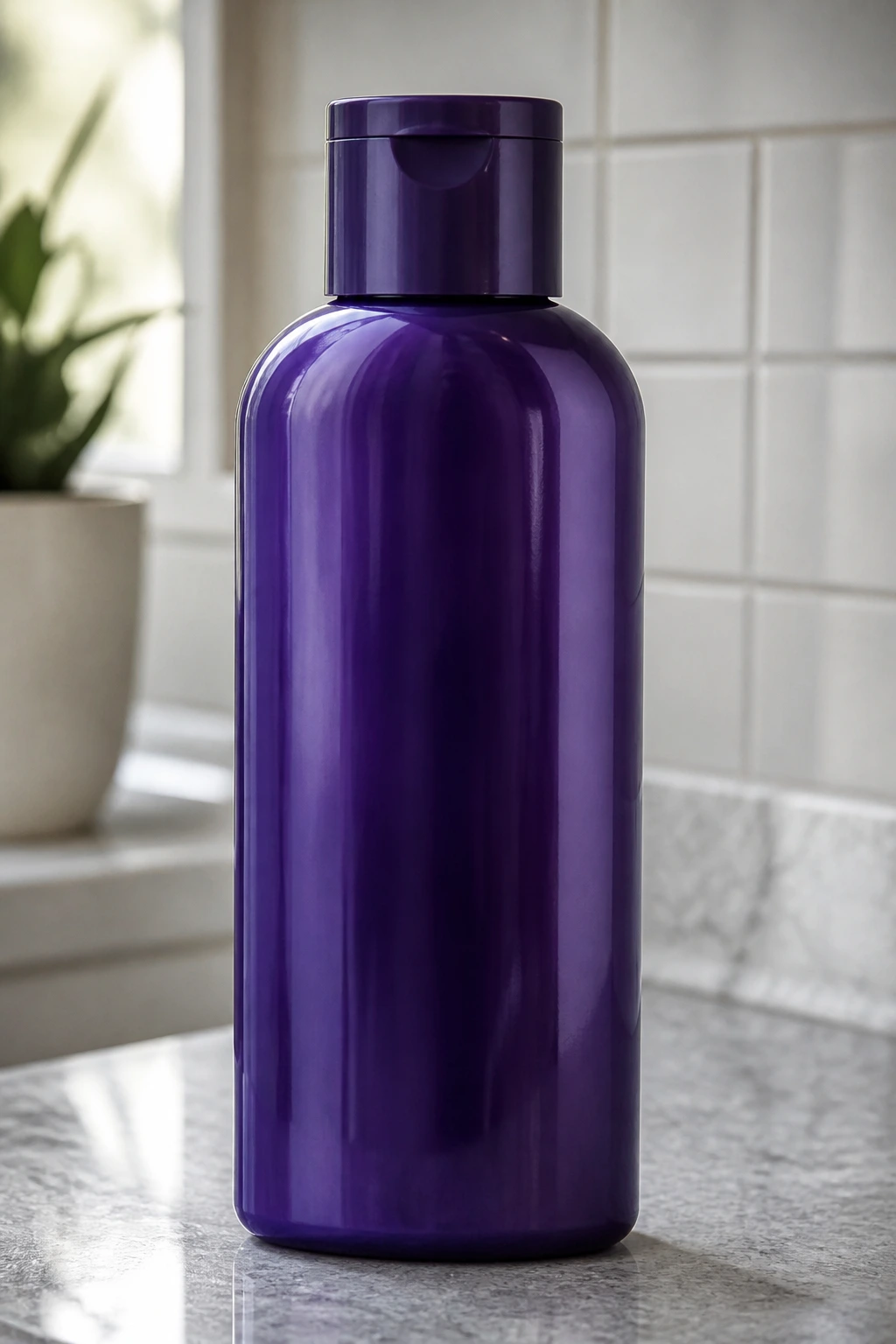
Purple shampoo: Best for silver, pearl, and icy shades. Use it sparingly; too much can leave the hair flat or faintly violet.
-
Blue shampoo: Better for hair that pulls orange or brassy, especially if your base is darker and the grey sits over brunette tones.
-
Bond-building conditioner or mask: Lightened grey hair usually needs this. Bleach weakens the hair, and a bond care product helps keep the ends from snapping off.
-
Heat protectant: If you blow-dry or flat iron, this is not optional. Grey tones show heat damage fast because dull ends pick up less light.
-
Wide-tooth comb: Useful on wet, toned hair. It pulls less and helps avoid breaking fragile strands.
-
Gloss or demi-permanent toner: This is what keeps the grey from looking dead after the first wash. Ask for the tone family that matches your target shade, not just “grey.”
How to Choose the Right Grey for Your Undertone
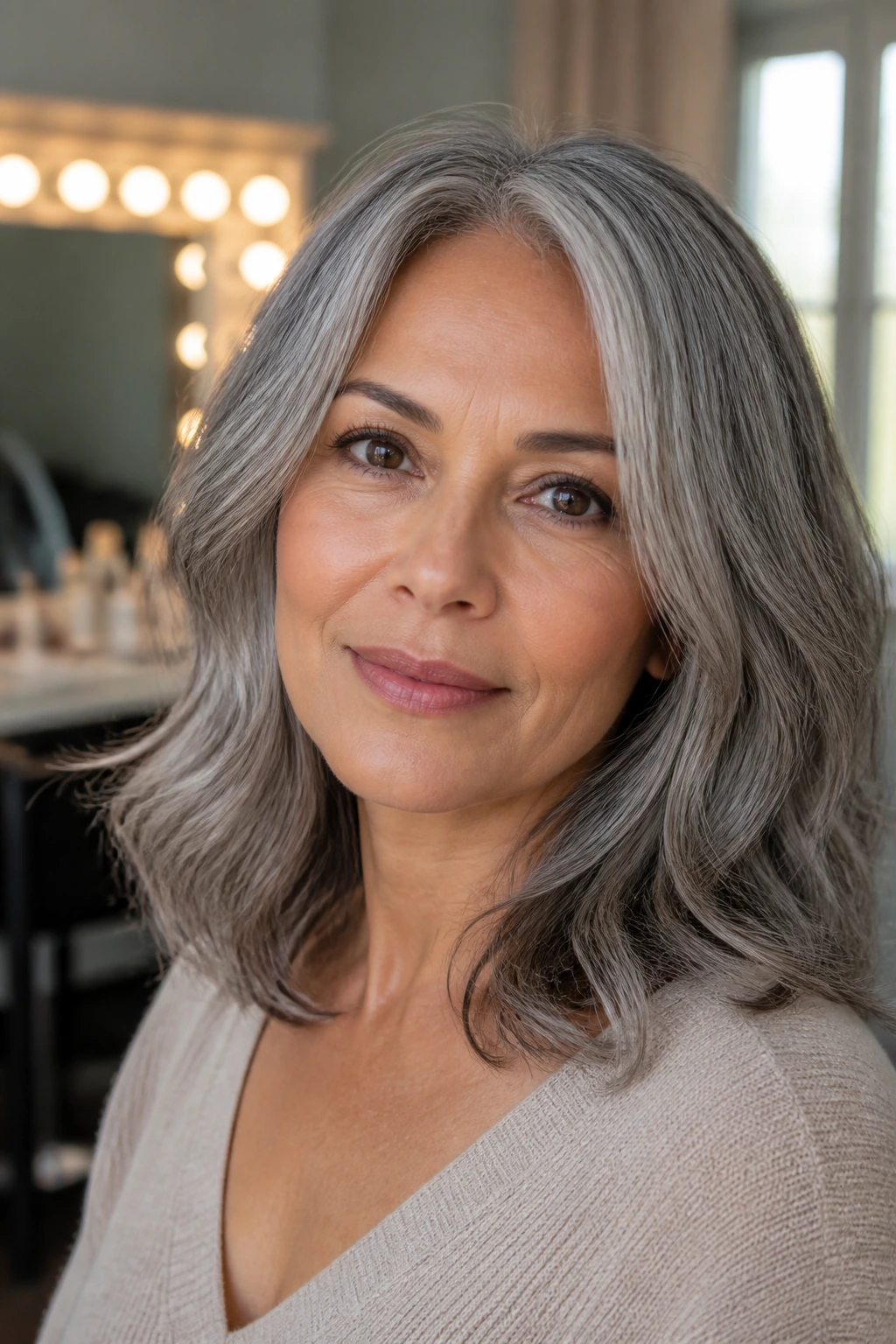
Golden or olive medium skin: Go for mushroom grey, taupe-grey, beige-grey, or smoky silver with a darker root. These shades keep enough warmth in the mix that the face still looks alive. Pure ice grey can work, but only if there’s shadow around it.
Neutral medium skin: You have more room. Steel grey, pewter, silver balayage, and graphite melts all make sense here because the skin doesn’t pull hard in one direction. If you like contrast, go cooler. If you want softness, keep some beige or brown in the mix.
Cool medium skin: Pearl grey, lilac silver, ice grey fringe pieces, and platinum-to-grey melts can look sharp without fighting the face. You can usually wear the frostiest shades as long as the hair stays shiny and healthy.
If you’re stuck, hold fabric against your face in a mirror. Silver, pewter, taupe, and grey-beige all behave differently next to the skin. The one that makes the eyes look clearer and the under-eye area less tired is usually the right lane.
How to Wear Grey Hair So It Frames Your Face
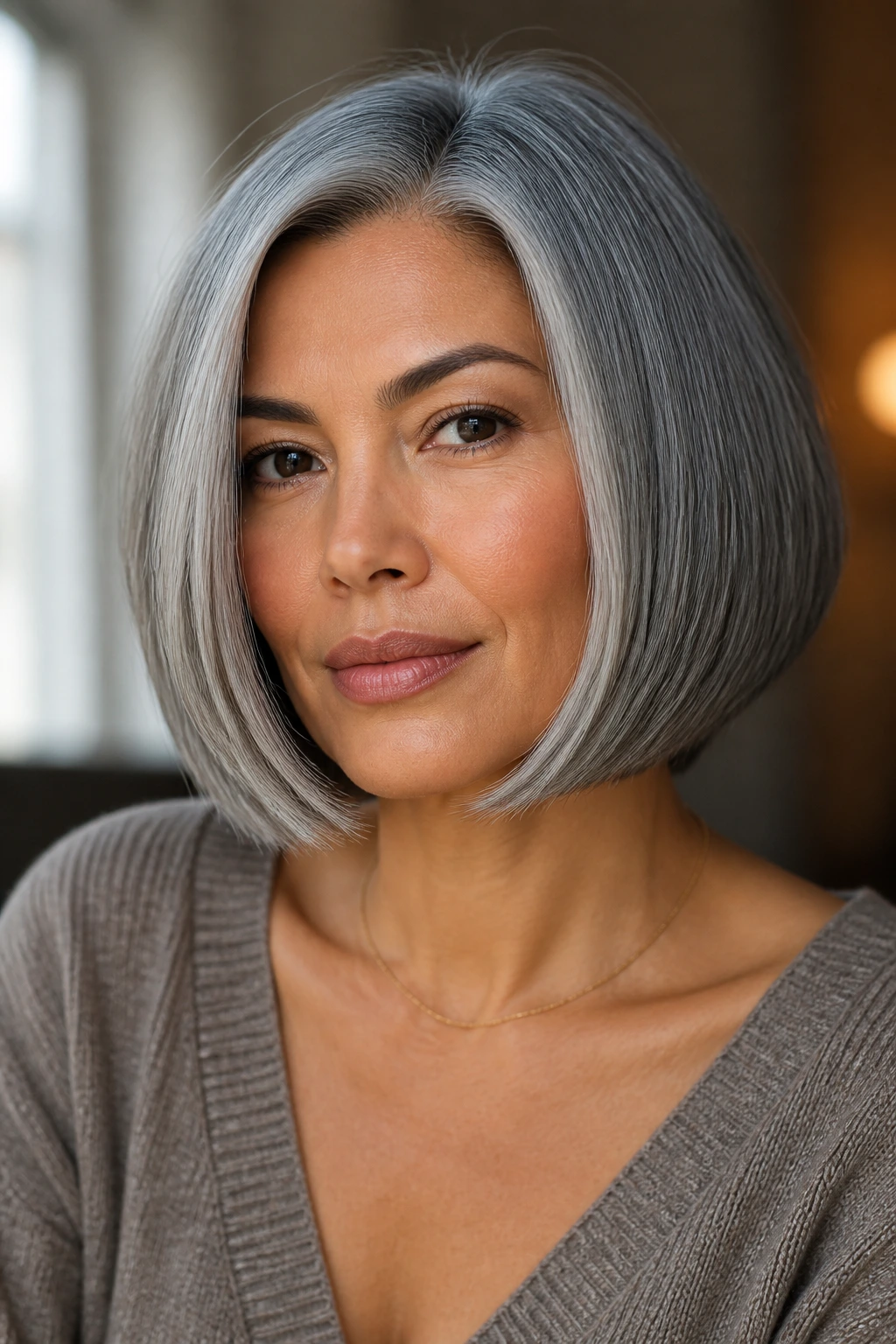
Cut: Grey looks cleaner when the haircut supports it. Blunt bobs sharpen the effect, layers add movement, and curtain bangs keep cool shades from feeling severe near the forehead. A shape that fits your face matters more than the specific grey.
Makeup: Medium skin often looks best with a bit of warmth back on the face when the hair gets cooler. Peach or rose blush, soft brown brows, and a berry or nude lip usually work better than stark, pale makeup. You do not need heavy makeup. Just enough color to keep the face from disappearing.
Wardrobe: Black, charcoal, cream, deep olive, and soft blue all sit nicely with grey hair. If your grey has a warm edge, camel and taupe help. If it’s icy, crisp white and dark denim can look very clean.
Texture: Straight hair makes grey look modern and graphic. Waves and curls make it softer. If you want the color to feel less severe, add texture rather than piling on more toner.
Practical Ways to Get More Wear Out of the Shade
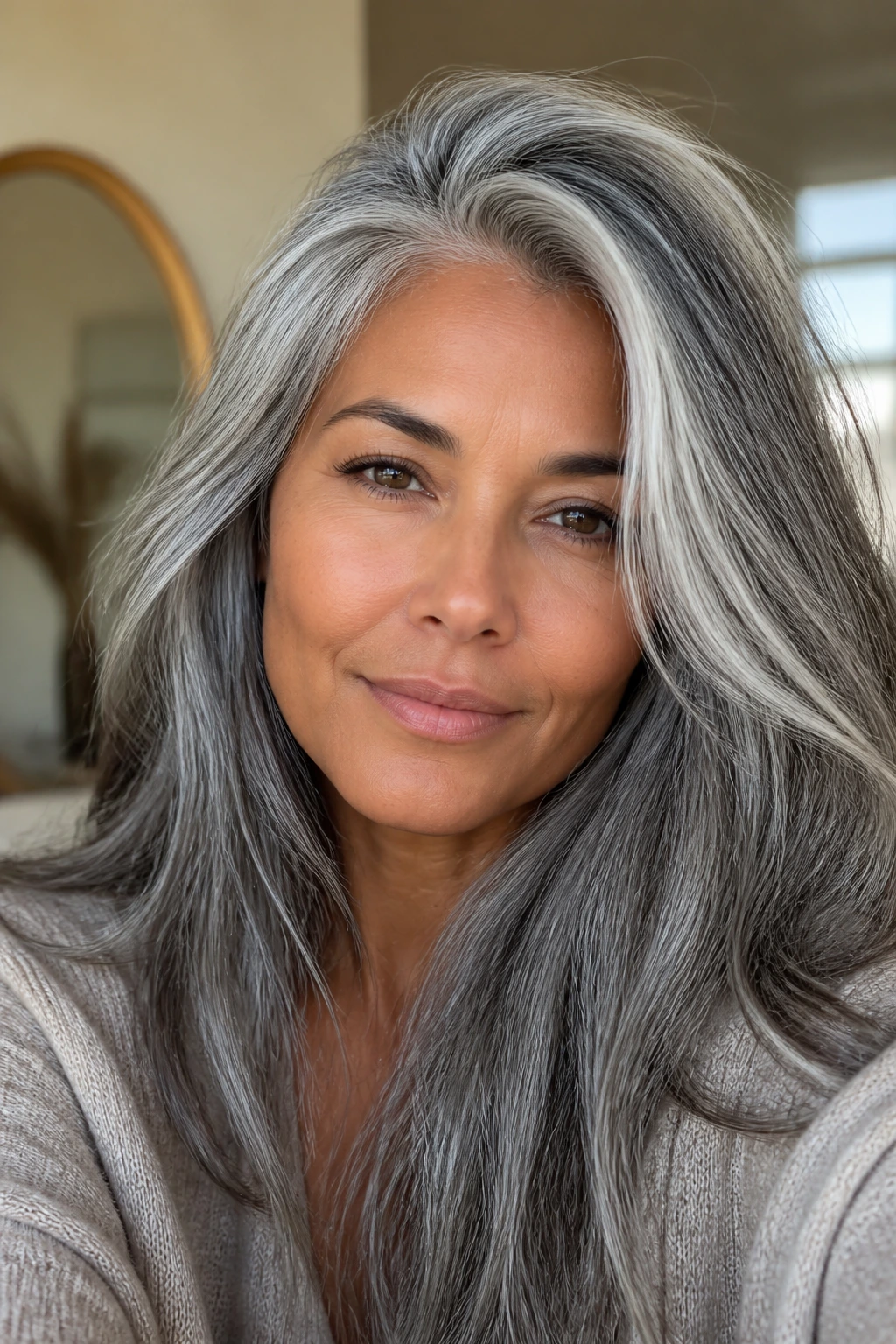
Bring Photos, Not Descriptions: Show your colorist two or three pictures of the same tone in different light. Grey changes fast under warm indoor bulbs, and a photo in daylight tells more truth than a five-minute salon consult.
Ask for a Shadow Root: A root that’s one to two levels darker than the lightest grey pieces keeps the color grounded on medium skin. It also buys you a softer grow-out, which matters when silver starts to fade.
Choose Shine Over Chill: If the grey looks dusty, it needs gloss or conditioner, not more ash. Too much ash is how people end up with hair that looks drained instead of cool.
Move the Part Once a Week: A small shift in the part keeps the grey pieces from breaking in one place and makes the color look fresher. Sounds tiny. It helps more than you’d expect.
Trim the Dry Ends: Grey shows split ends fast. Dry, frayed ends suck the shine out of the whole look, especially on silver and pearl shades.
Common Mistakes That Flatten Grey
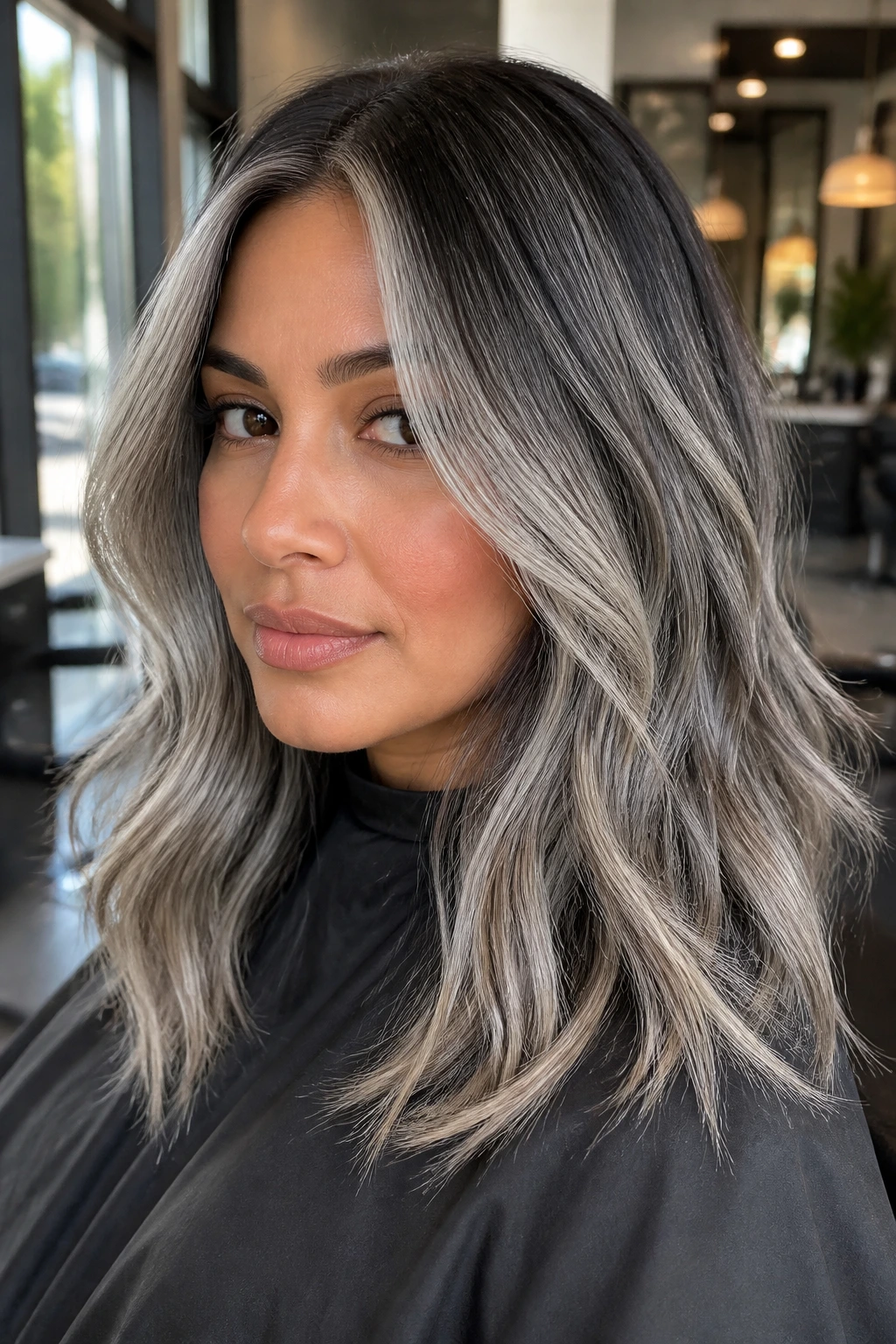
Going too light too fast: This is the big one. If dark hair gets pushed to grey in one leap, the hair can end up overprocessed and the color can look patchy. The fix is usually a slower lift with a professional who knows how to stop before the hair turns mushy.
Ignoring undertone: An icy silver on warm medium skin can look harsh. A beige-grey on cool skin can look muddy. The fix is matching the grey family to the skin’s undertone, not just picking the lightest swatch.
Overusing purple shampoo: Too much purple shampoo can leave grey hair dull or faintly lilac. Use it once a week, sometimes twice if brass shows up fast. Between those washes, stick to color-safe shampoo and good conditioner.
Skipping the gloss: Grey hair needs tone maintenance. Without a gloss or toner refresh, it turns flat and tired. A quick salon gloss every few weeks can do more than another box of purple shampoo.
Leaving the brows untouched forever: I’m not saying dye your brows to match your hair. I am saying that dark, warm brows next to a very cool grey can feel disconnected. A soft brow gel or subtle brow tint usually fixes the problem.
Trying to save it with box dye: Box dye is the fastest route to uneven grey, muddy silver, or a weird green cast over old color. It’s cheap. It is also expensive once the correction bill shows up.
Variations and Adaptations to Try
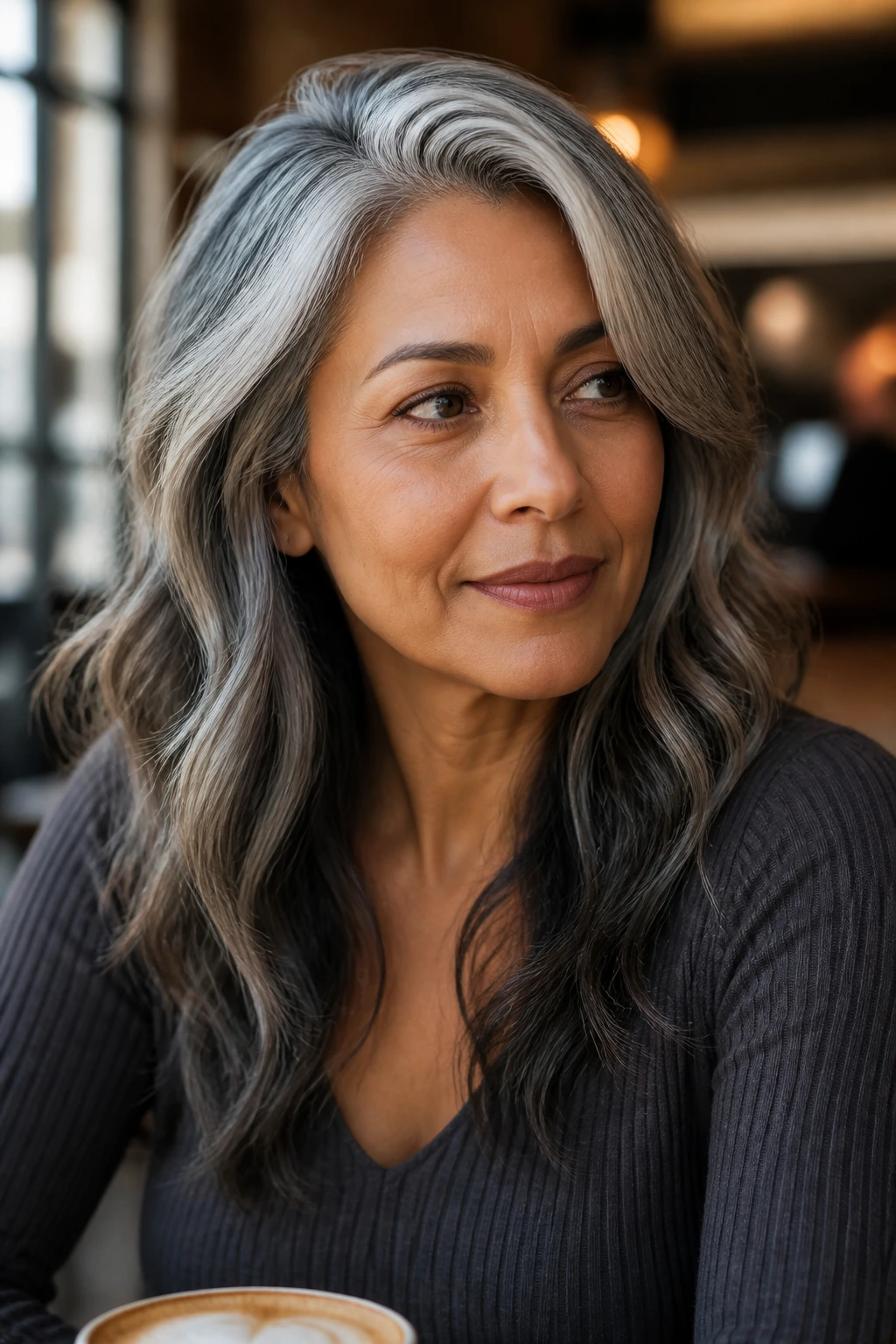
The No-Bleach Smoke: If your hair is already medium brown or darker, ask for a charcoal gloss or ash-brown glaze instead of full silver. You get the grey mood without the bleach damage, and the grow-out stays softer.
The Curly Ribbon Set: On curls, ask for hand-painted silver ribbons instead of all-over lightening. The curls break up the color on their own, and the grey reads richer because the shadows stay in the pattern.
The Soft Office Grey: Choose babylights, a beige-grey gloss, and a darker root. It’s quiet enough for people who want grey that reads polished rather than dramatic.
The Cool-Contrast Frame: Keep the hair deeper through the back and sides, then place pearl grey or silver only around the face. It gives you brightness where it counts, and it works especially well with bobs and lobs.
The Lavender Smoke Shift: Add a faint lilac or mauve toner over silver pieces when you want a little softness. Keep it muted. The second the purple gets loud, the look stops feeling wearable.
The Warm Grey Bridge: For golden medium skin, blend mushroom, taupe, and silver rather than going straight to ice. This version fades gracefully and plays nicely with warm makeup and clothes.
Frequently Asked Questions
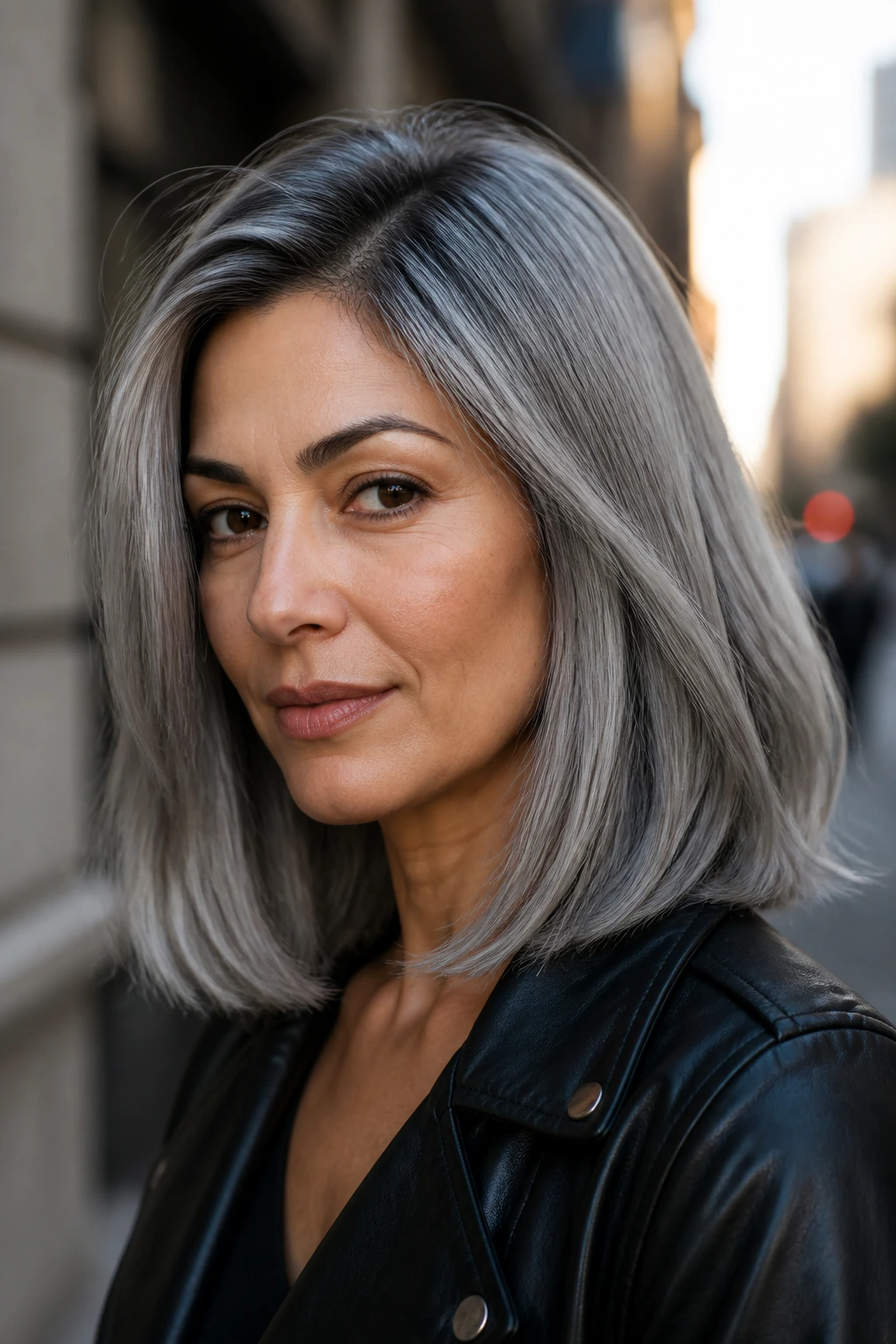
Will grey hair wash out medium skin?
Not if you choose the right tone and keep enough depth around the roots. Medium skin usually needs some shadow or warmth in the formula so the grey doesn’t sit like a pale sheet.
What grey shade works best on olive undertones?
Mushroom grey, taupe-grey, pewter, and ash-graphite are usually the easiest wins. Olive skin often looks best when the grey has a muted base instead of a hard icy cast.
Can you get grey hair without bleach?
Only if your hair is already light enough or you’re choosing a smoky glaze over a dark base. True silver usually needs lift. Dark hair can fake the mood with charcoal, graphite, or ash-brown tones, but not full bright grey.
How often does grey hair need toning?
Most grey shades need a gloss or toner refresh every 4 to 6 weeks, sometimes sooner if your hair pulls warm or you wash it often. Very pale silver and pearl tones can need even more attention.
Why does grey hair turn yellow or green?
Hard water, sun, heat styling, and too much purple shampoo can all mess with the tone. Yellow usually means brass is creeping in. Green often shows up when ash meets mineral buildup or old color underneath.
Is balayage better than all-over grey?
For many medium skin tones, yes. Balayage keeps depth and movement, which stops the grey from flattening the face. All-over grey can look striking, but it’s less forgiving and usually needs more maintenance.
Does grey work on curly hair?
Absolutely, and sometimes better than on straight hair. Curls break up the color naturally, so silver and smoke look more dimensional. The only real catch is that curls need moisture, or the grey can look dry fast.
Should I match my brows to grey hair?
No. Match the brows to the face, not the hair. If your hair goes cool, a soft brow gel or a cooler brow pencil can help, but you want the brows to frame the eyes, not vanish.
A Shade That Moves With You
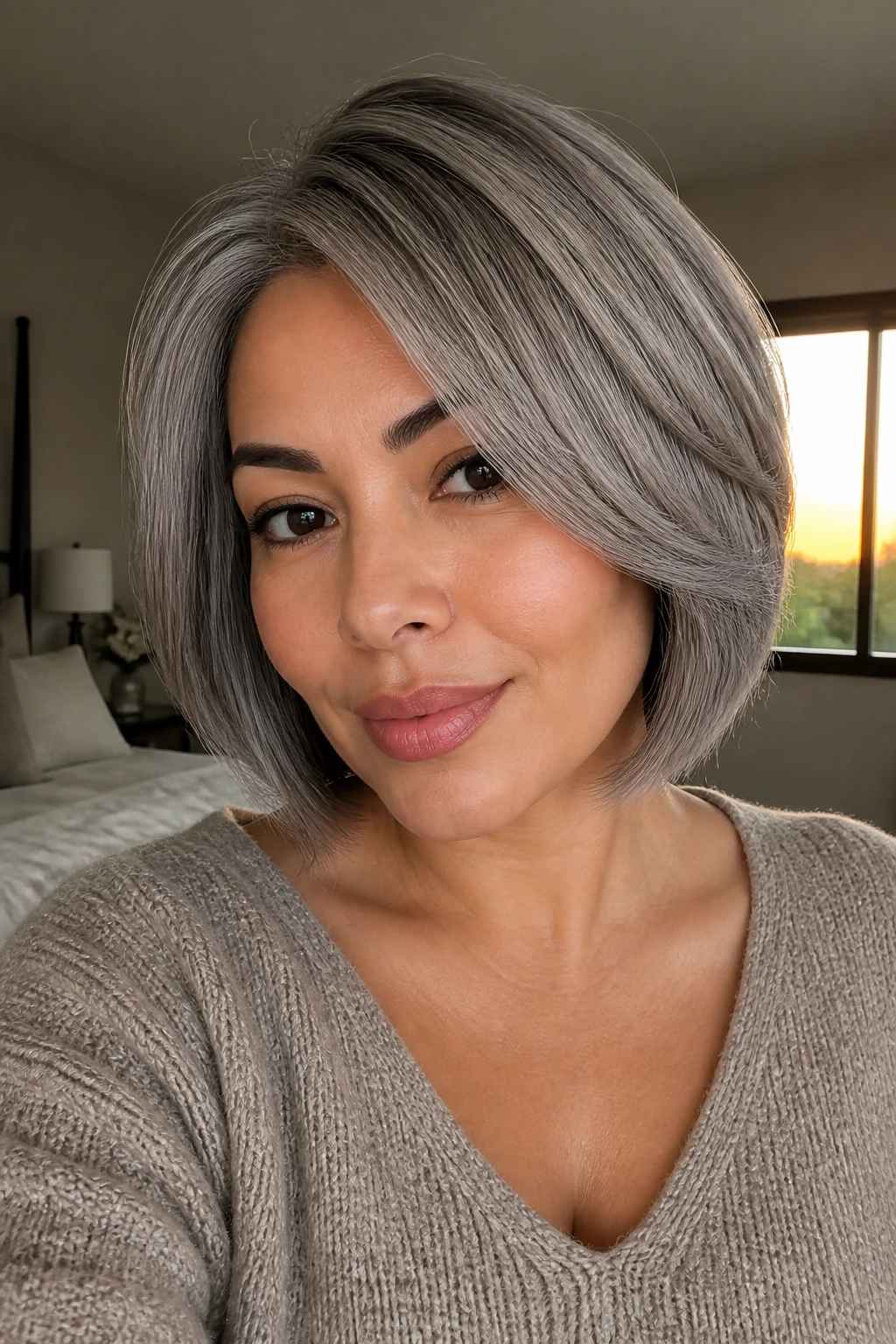
Grey on medium skin works when it has some shape. Some depth. Some air around it. The sharp silver looks, the smoky brunettes, the mushroom blends — they all succeed for the same reason: they give the face enough contrast to stay alive while the hair goes cool.
That’s the part people miss when they stare at swatches. Grey is not one color. It’s a whole range, and medium skin can wear more of that range than the old rules suggest. Pick the shade that fits your undertone, your haircut, and the amount of upkeep you’ll actually do, and the color stops feeling like a trend and starts feeling like yours.