



If your curls puff out at the cheeks and every bob seems to stop at exactly the wrong spot, a blonde lob can fix more than one thing at once. The trick is not just length. It’s where that length lands, how the curls are shaped through the sides, and whether the blonde has enough depth to keep the whole cut from reading like one pale block.
That’s why blonde lobs for round faces and curly hair can be so good when they’re done with some restraint. A cut that drops below the widest part of the face gives the eye a vertical line to follow. A color with root shadow, ribbons, and a few softer pieces around the face keeps the shape from going flat or broad. Without that, curly hair can flare outward and the blonde can turn stripey. Not a flattering combo. Not even close.
I keep coming back to lobs because they’re one of the few cuts that can be sharp and soft at the same time. They can lean polished, shaggy, airy, glam, or low-maintenance, and the silhouette still makes sense if the length clears the jaw. The styles below are the ones that actually do the work, not the ones that just look pretty in a photo for five seconds.
Why These Blonde Lobs Earn Their Spot
-
The length lands in the right place: Most of these cuts sit at the collarbone or just below the chin, which keeps the widest part of a round face from becoming the haircut’s stopping point.
-
Curly hair gets room to move: The shapes here leave enough space for curl shrinkage, so you do not end up with a puffed-out triangle after the first wash.
-
Blonde stays dimensional: Root shadows, beige tones, honey ribbons, and lowlights stop the color from turning into one flat sheet of brightness.
-
Styling stays flexible: A side part, off-center part, or a little crown lift can change the balance fast without cutting the hair again.
-
The looks work with real curl patterns: Loose 2C waves, springy 3A spirals, and denser 3B curls can all wear a lob if the perimeter and layers are chosen with some thought.
-
The grow-out is forgiving: That matters more than people admit. A good lob still looks like a haircut when it grows an inch.
The Best Lob Length for Round Faces and Curly Hair
The safest place for a lob on a round face is usually somewhere between the chin and the collarbone, and I mean somewhere on purpose. A cut that ends right at the jaw can make the face look wider, especially if the curls are full and springy. Move the line down a few inches, and the whole shape calms down.
Curl shrinkage is the part people underestimate. If your curls bounce up 1 to 3 inches after drying, the “collarbone lob” may need to be cut a little longer when it’s wet or blown out. That’s not a flaw. It’s just how curly hair behaves, and a good stylist will plan for it instead of pretending it’ll magically stay where they left it.
For round faces, the best lobs also create a diagonal or vertical line somewhere in the shape. That can come from a side part, long face-framing layers, or a forward angle that starts below the cheekbone and drops toward the front. Straight-across fullness at the widest part of the face is the thing to avoid. It’s too blunt, too boxy, and too eager to sit where you don’t want it.
Why Curly Hair Changes the Lob Formula
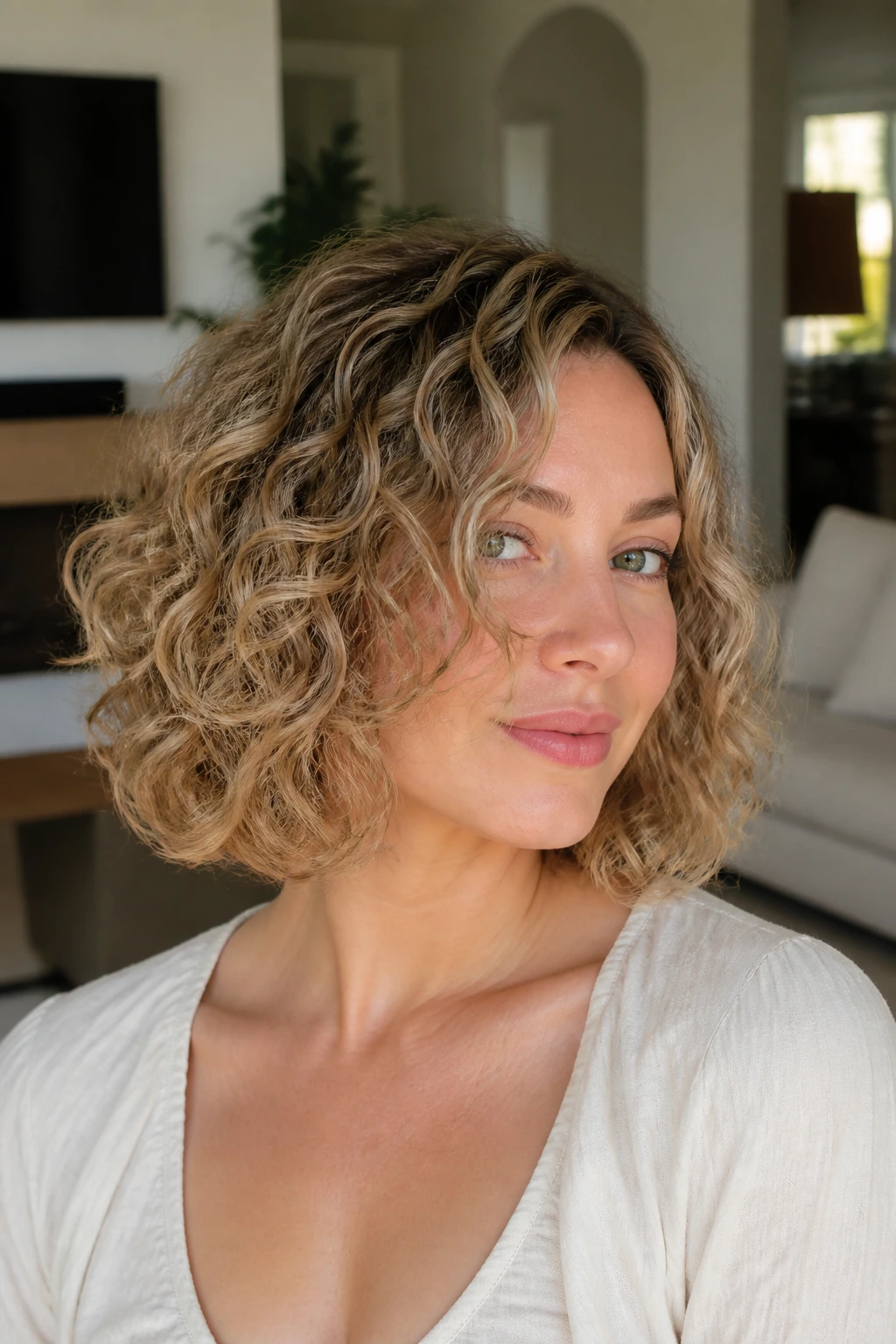
Curly hair does not play by the same rules as straight hair, and honestly, that’s the whole point. A lob cut on loose waves will not behave like one cut on tight spirals. The curl pattern decides how much volume sits at the sides, how the outline rounds out, and how much movement you get without forcing it.
A dry cut is often the smartest move. When curls are cut dry, the stylist can see where each section actually sits instead of guessing through wet shrinkage. That matters a lot on round faces because the wrong inch in the wrong place can widen the silhouette or collapse the front pieces into the cheeks.
What to ask for
- Long internal layers if your curls are dense and tend to bulk up at the bottom.
- A kept perimeter if your hair is fine and needs weight to avoid frizzing out.
- Face-framing pieces that start below the cheekbone, not right beside it.
- No aggressive thinning shears unless your hair is so thick it feels like a helmet.
The nice thing about a curl-friendly lob is that it can look polished even when it’s a little messy. The curls fill in the shape for you. They just need a cut that respects where the volume actually lives.
Blonde Placement That Keeps the Cut From Looking Flat
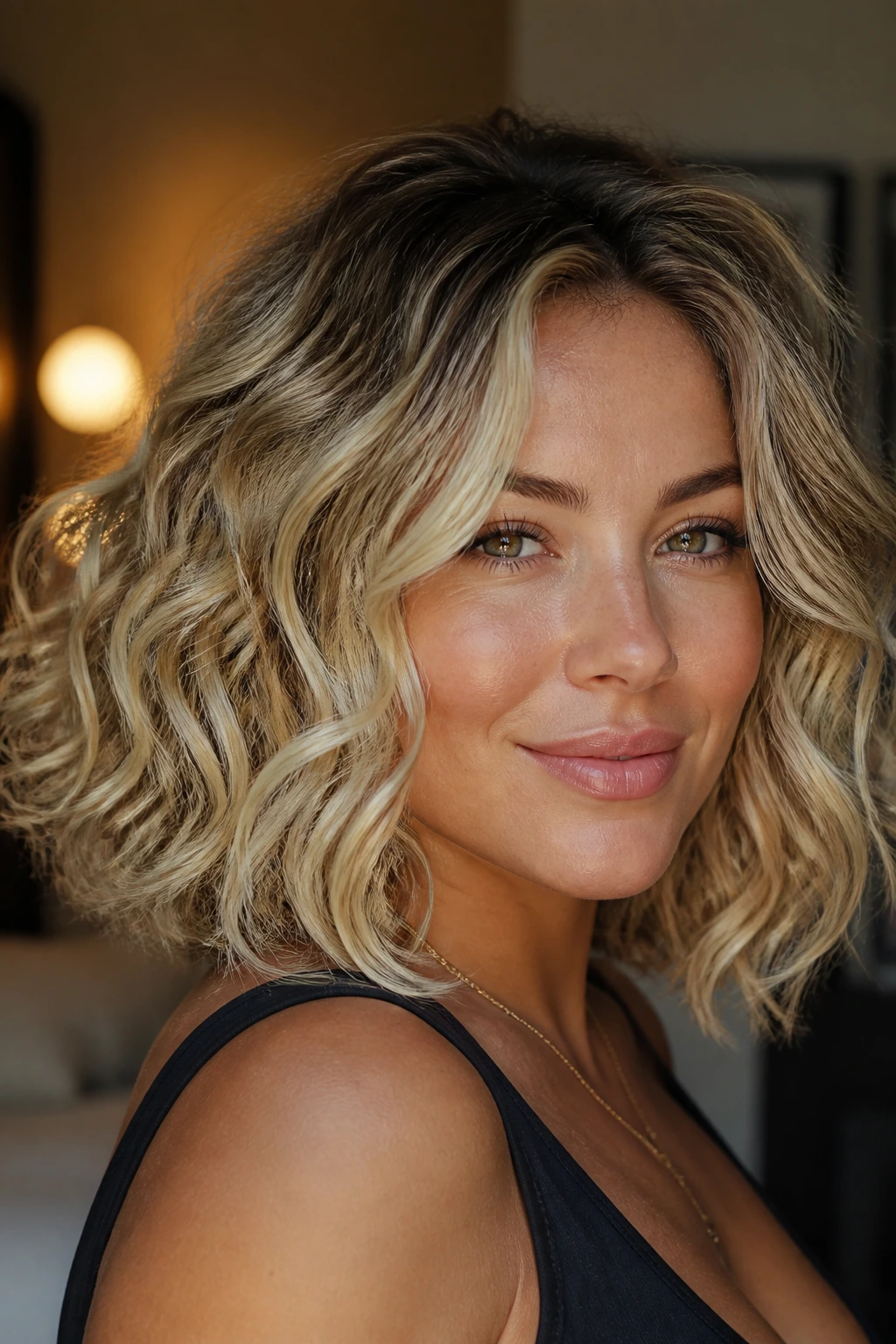
Blonde on curly hair is where people get clumsy. A few thick highlights dumped on the top layer can make the hair look stripy, and stripey curls are never the goal. You want lightness with depth. That means dimension, not decoration.
The best blonde lobs use a rooted technique of some kind—balayage, babylights, a shadow root, or a blend of all three. The root area stays a shade darker so the scalp doesn’t look harsh, and the lighter pieces sit where the curls bend and catch light. Around a round face, that usually means softer brightness near the cheekbone and jaw, not a giant panel of pale hair starting exactly at the widest part of the face.
Tone matters too. Honey, beige, champagne, pearl, and almond blonde all read differently on curls. Honey is warmer and friendlier near the face. Beige and mushroom blonde soften the contrast and hide a little frizz. Ice blonde is dramatic, sure, but it needs healthy hair and regular toner or it starts looking chalky fast.
If you’ve ever looked at a blonde curly cut and thought, why does this feel bigger than it should?, the answer is usually placement. Not the curl pattern. Not the length. The color has been painted without a plan.
Tools That Make These Looks Easier to Wear
-
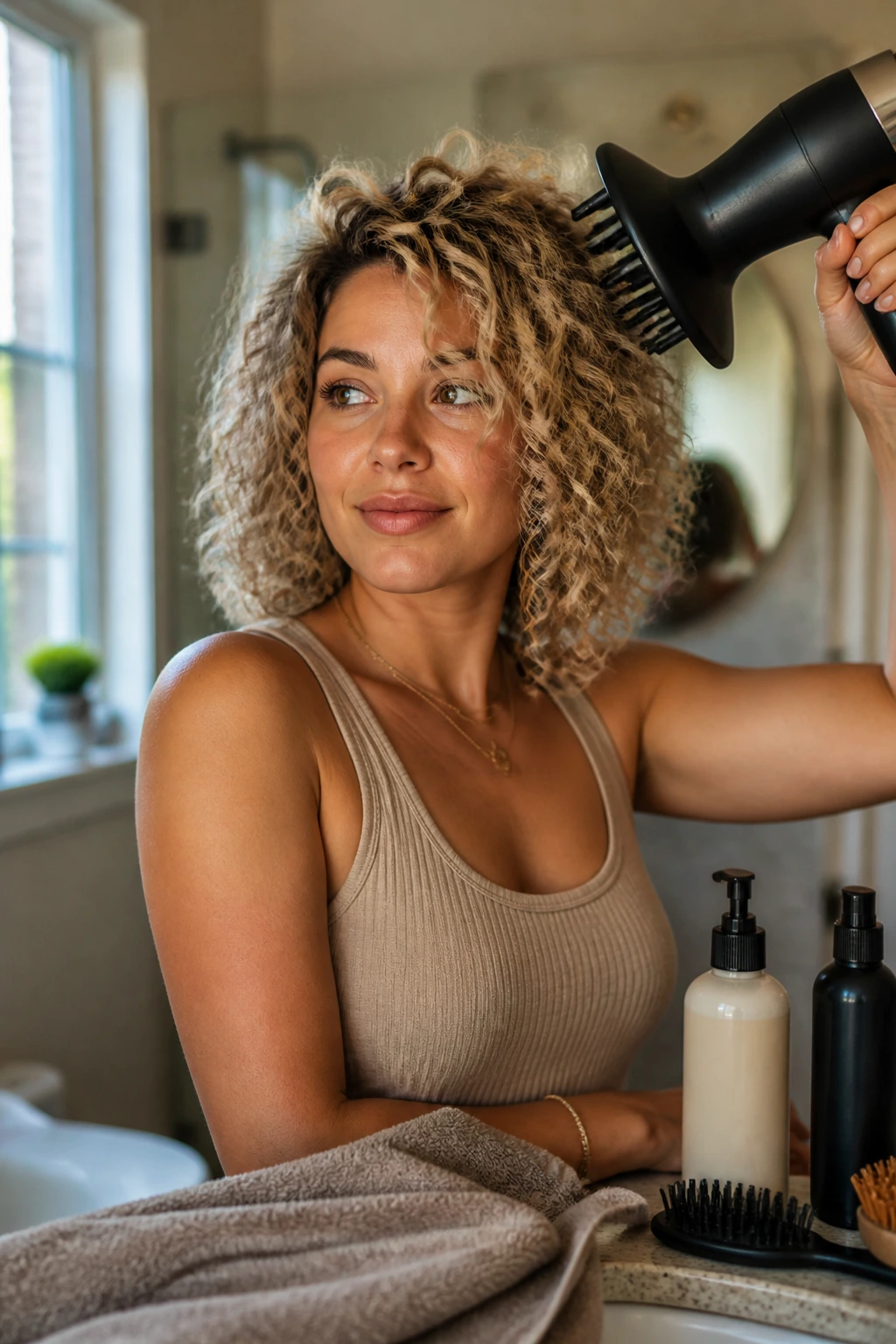
Diffuser attachment: A diffuser keeps curls lifted at the roots without blasting them into a puff. It’s especially useful for lobs that need crown height.
-
Microfiber towel or cotton T-shirt: Rough terry cloth makes curly blonde hair frizz faster than it needs to. A softer fabric pulls out less moisture and leaves the curl clumps cleaner.
-
Leave-in conditioner: Use a light one on the mids and ends. Blonde curls get dry fast, and a little slip helps the shape stay soft instead of fuzzy.
-
Curl cream or gel: Cream gives softness. Gel gives hold. A lot of these lobs work best with both, in small amounts.
-
Wide-tooth comb: Good for distributing product through wet curls without breaking them apart into a halo.
-
Heat protectant: Necessary if you diffuse often or use a round brush at the front pieces.
-
Purple shampoo or a blue-violet gloss product: Keep this for icy or platinum shades. Too much will dull beige or honey tones in a hurry.
-
Duckbill clips: Handy if you want to pin the top for lift while the curls cool.
1. Honey Blonde Collarbone Lob With Soft Spiral Ends
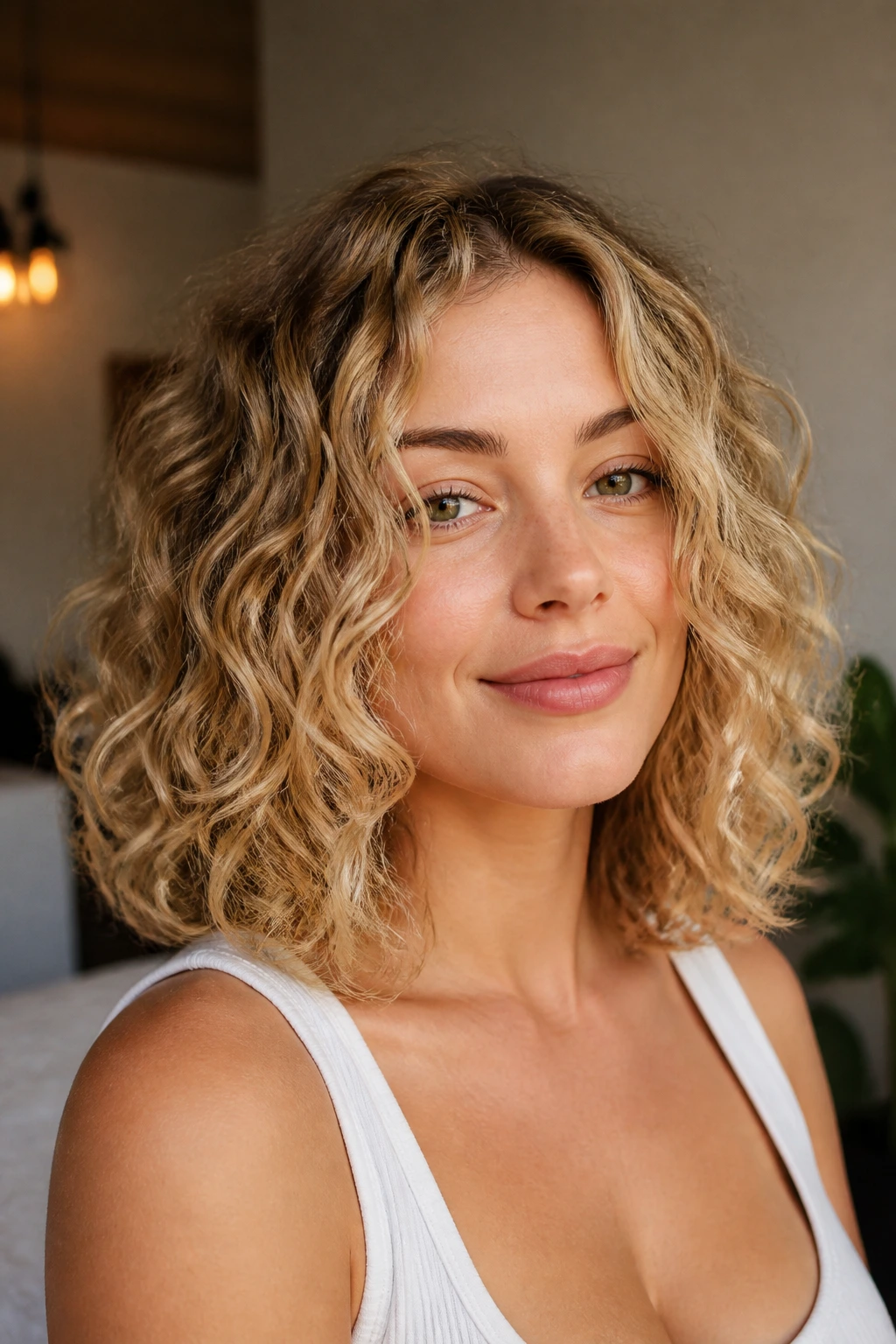
Honey blonde is the friendliest blonde on this list. It warms the face, keeps the curls looking soft instead of chalky, and makes a round face feel a little longer when the length hits the collarbone. The spiral ends give movement without needing too many layers, which is useful if your curls already have plenty of body.
This is the lob I’d hand to someone who wants shape but not drama. It works best when the front pieces are a touch longer than the back, so the eye follows the line downward instead of straight across. If your curls bounce up a lot, ask for the cut to fall just past collarbone length when dry. That little buffer matters.
Use a light cream, a pea-sized amount of gel, and a diffuser on low heat. The curls should look touchable, not crunchy.
2. Beige Blonde Lob With Long Curtain Pieces
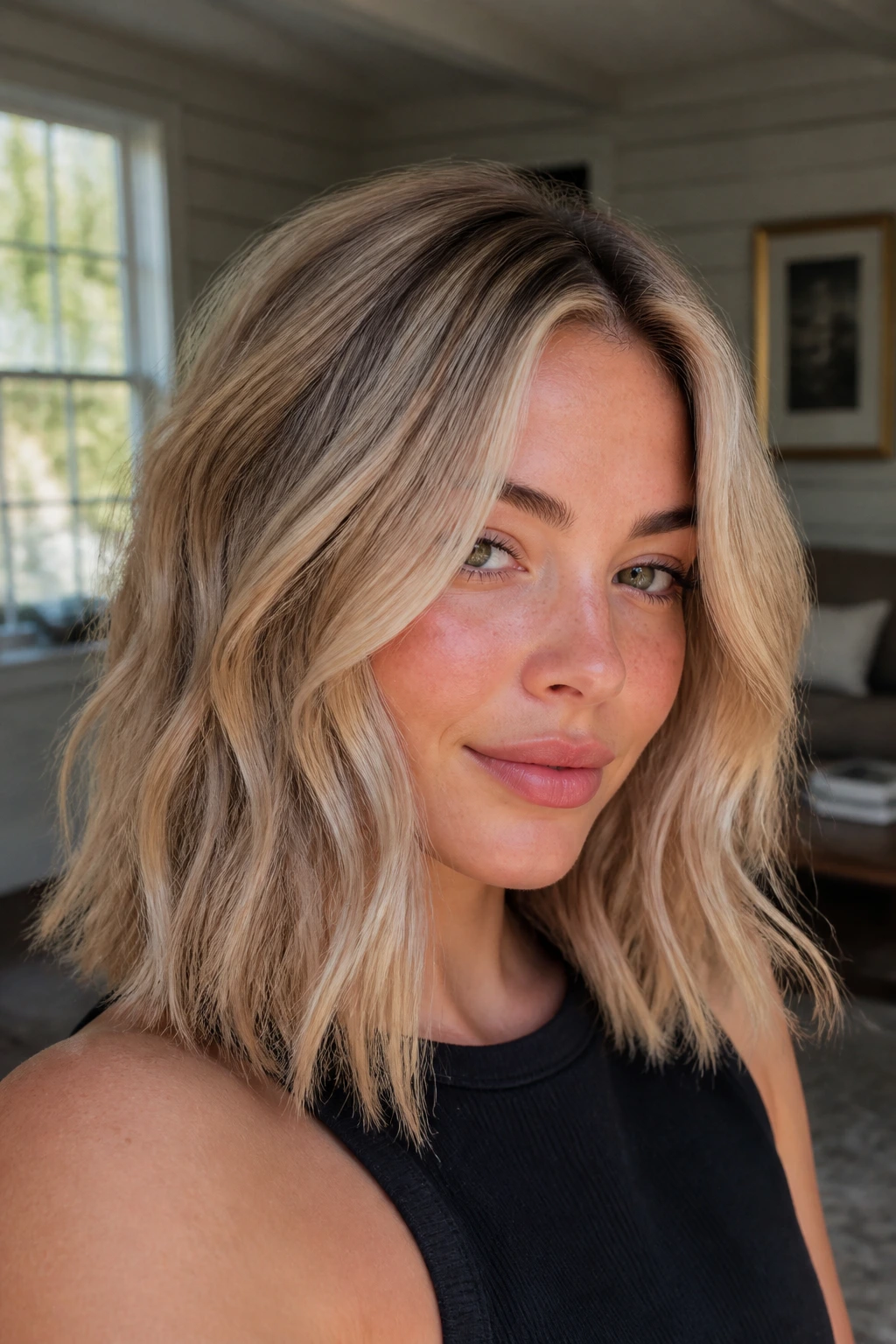
Beige blonde is one of those tones that makes curly hair look expensive without trying too hard. It sits between warm and cool, so the color doesn’t scream at the eye. On a round face, the long curtain pieces help break up the width of the cheeks and pull the focus down toward the chin.
The cut itself should feel airy at the front and stable through the bottom. That means long face-framing pieces, but not so much layering that the shape loses its weight. I like this look on people who wear an off-center part. It gives the curls a little asymmetry, which is exactly what a softer face shape needs.
If you wear this one air-dried, scrunch in a curl gel while the hair is soaking wet. Beige blonde shows frizz more easily than honey, so clean curl clumps matter here.
3. Rooted Platinum Lob With an Off-Center Part
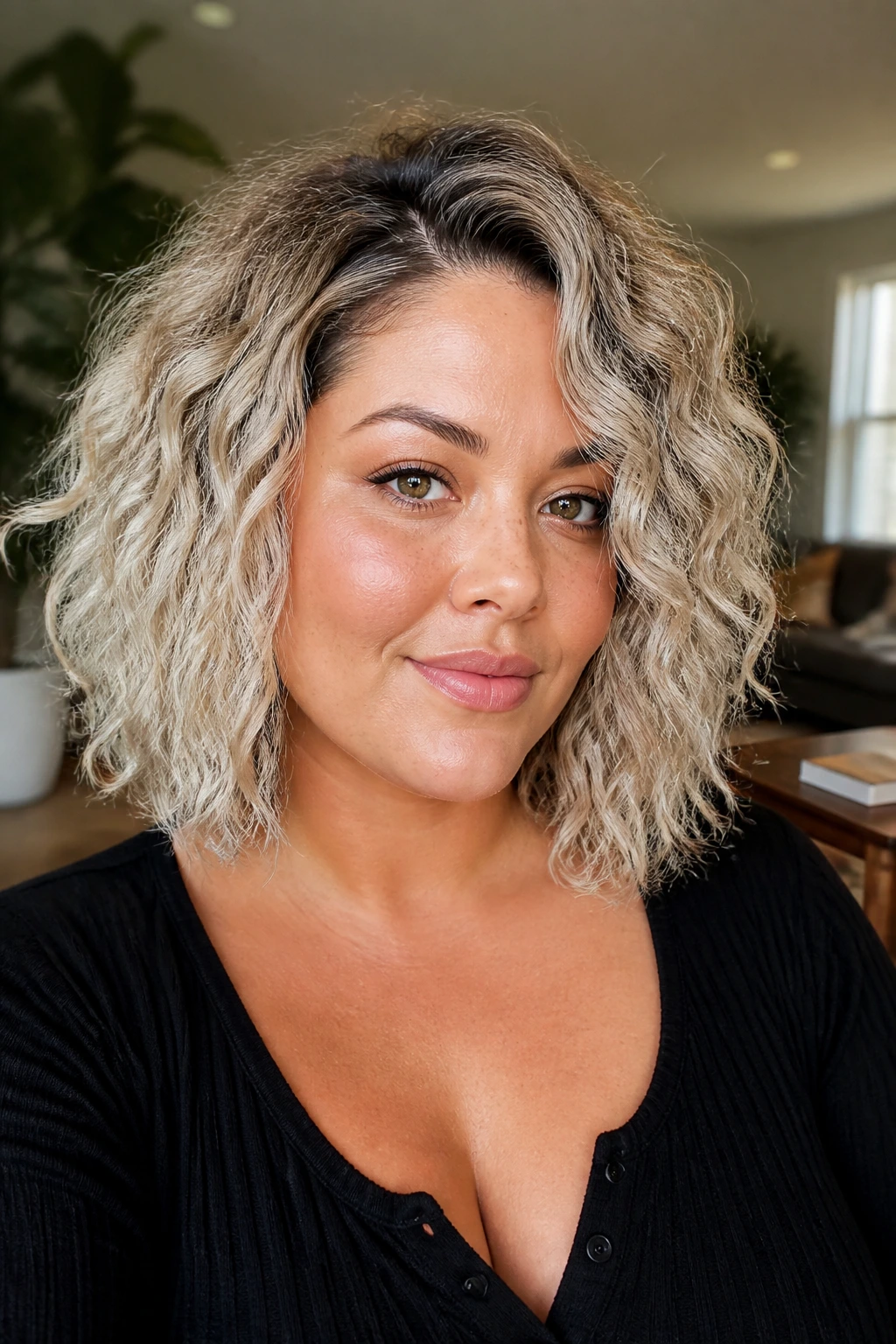
Platinum on curly hair is sharp, and that’s why it works here. The root shadow keeps the color from flattening out at the scalp, while the off-center part breaks the roundness of the face. The shape is cleaner than a lot of curly looks, so the color can do more of the talking.
This cut needs discipline. Too much layering and platinum can start looking wispy in the wrong places. Too little, and the curls balloon. The sweet spot is a blunt-ish perimeter with a few long internal layers to keep the body from becoming a helmet.
I’d only recommend this if the hair is in decent shape and you’re willing to tone it on schedule. Platinum fades fast and can turn a little yellow around the front pieces, where hands and heat hit most often.
4. Golden Blonde Lob With Cheekbone-Grazing Waves
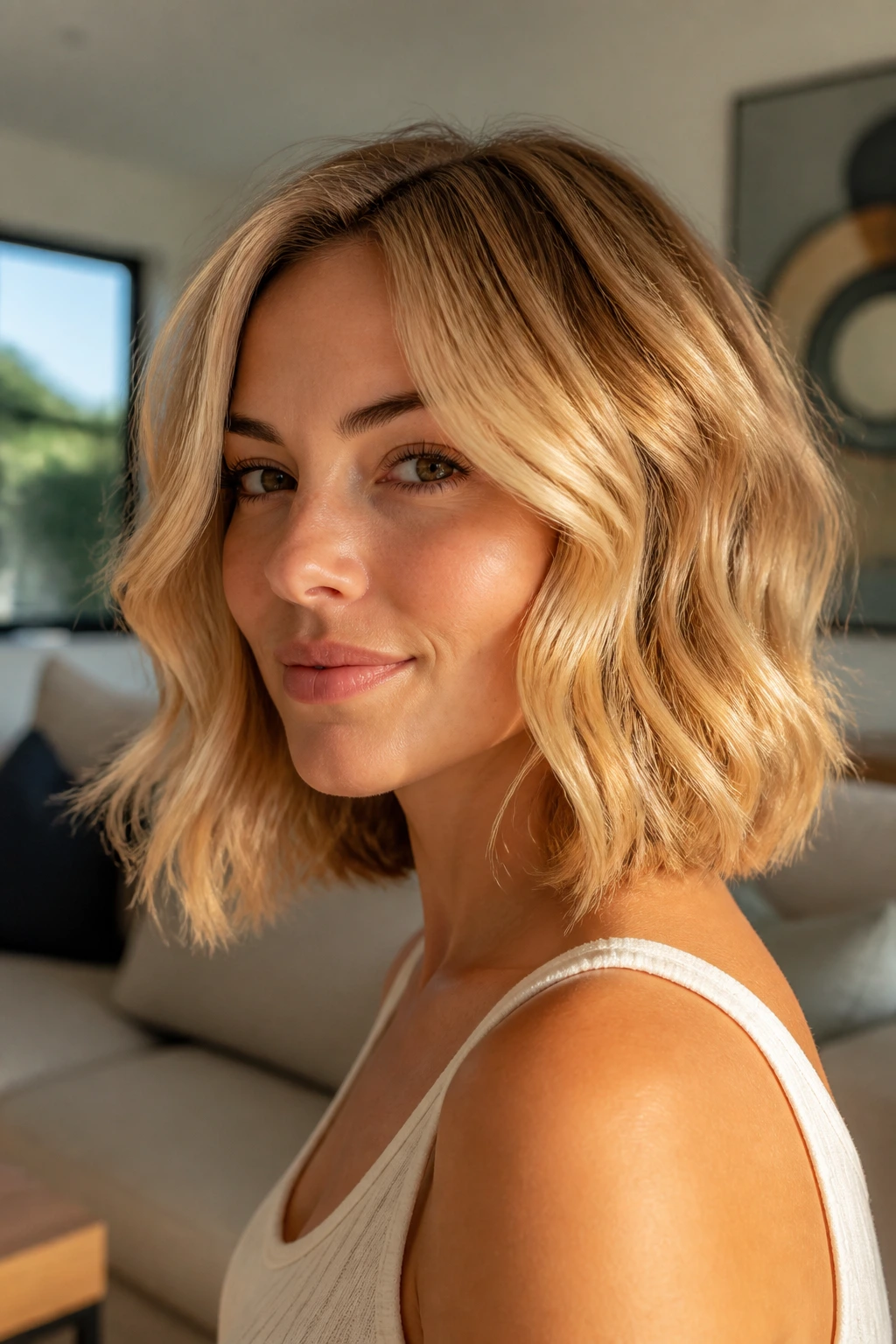
Golden blonde gives curly hair warmth and sheen, and the cheekbone-grazing waves do the flattering part. The trick is that the front pieces should bend around the face, not stick out beside it. That creates a soft diagonal line, which makes a round face look less circular.
This is one of the easiest blonde lobs to wear if your curls are loose or your wave pattern is more 2C than 3B. The color is forgiving, the cut can be simple, and you do not need a stack of products to make it work. A mousse at the roots and a cream on the mids usually does enough.
Keep the waves long enough to skim the jaw without sitting right on it. That’s the whole move. Tiny difference, big payoff.
5. Butter-Blonde Blunt Lob With Curly Ends
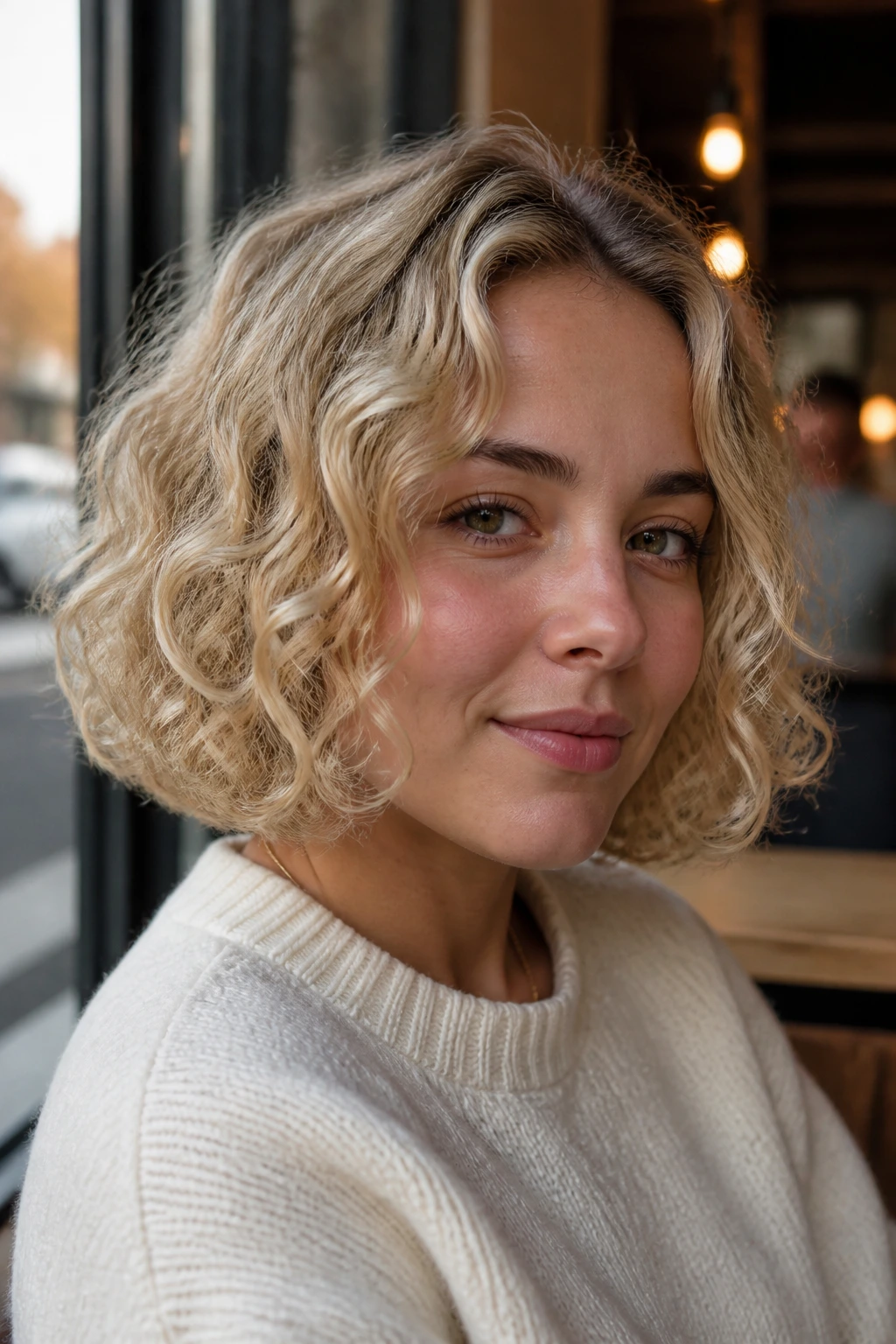
A blunt lob sounds severe until you put curls on it. Then it becomes glossy, full, and a little French-looking in the best way. Butter blonde makes the whole cut feel softer, which matters if the perimeter is intentionally crisp.
This shape works best on medium to dense curls that need weight at the bottom. If the hair is too fine, a blunt line can look stringy instead of lush. If the hair is dense, though, the full bottom edge gives the curl pattern a clean place to land. Ask for the cut to sit below the chin, because a blunt lob at jaw length can widen a round face fast.
The styling trick is simple: dry the roots first, then leave the ends slightly less polished. That gives the haircut movement without fraying it apart.
6. Champagne Blonde Lob With Invisible Layers
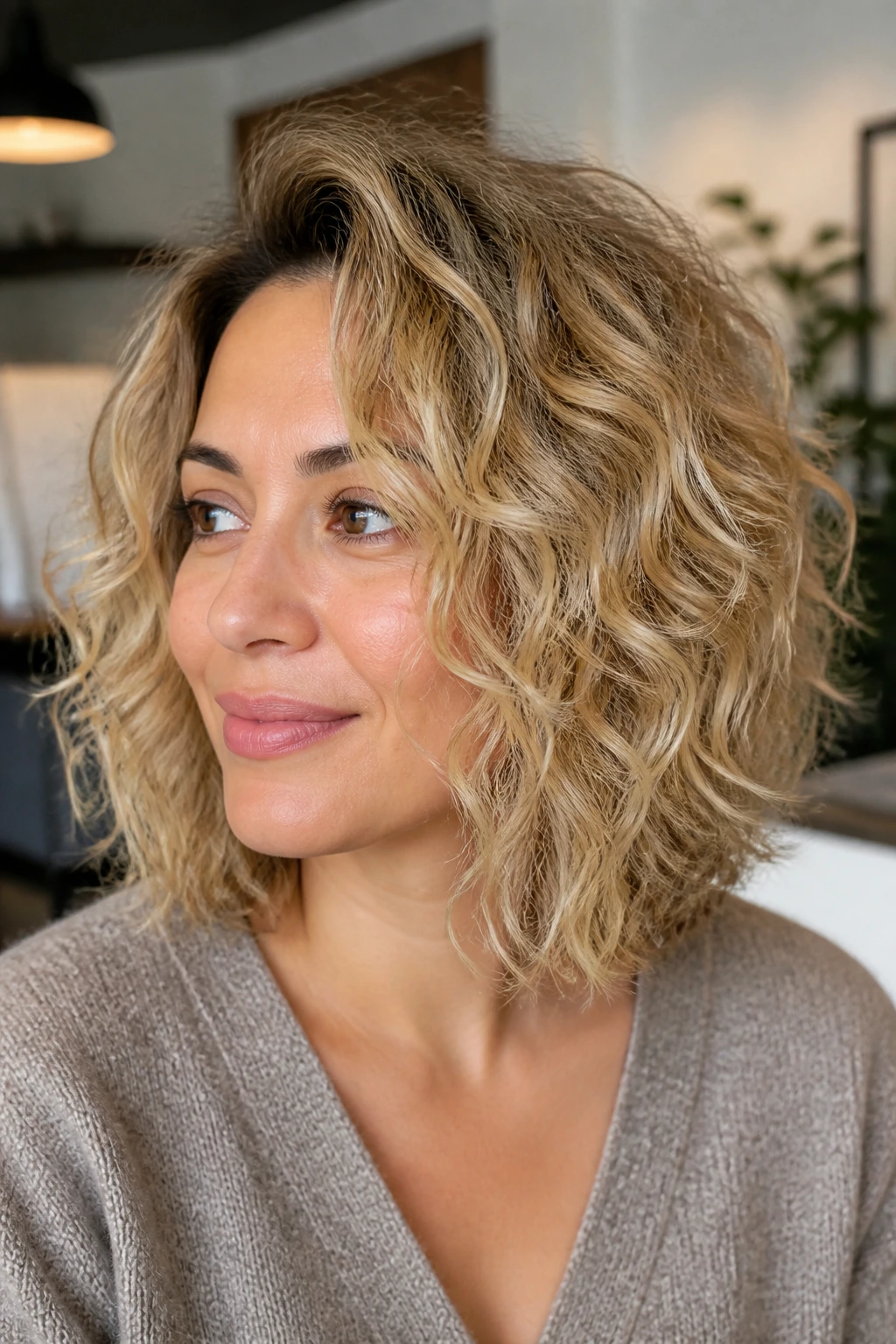
Champagne blonde has a cool sparkle that looks good when the curls catch light at different angles. Invisible layers keep the weight in the cut while letting the curls rise and separate a little instead of clumping into one block. The result is soft, not shaggy.
This one suits round faces that need lift at the crown but don’t want a lot of obvious layering around the cheeks. The silhouette stays smooth, which helps if you like your hair to feel neat on day one and still look acceptable on day three. That “day three” part matters more than the glossy salon photo.
Use a diffuser with the head tipped forward to build height at the roots. Then stop touching it. Champagne blonde shows every bit of fluff if you keep raking your fingers through it while it dries.
7. Caramel Ribbon Lob With a Deep Side Sweep
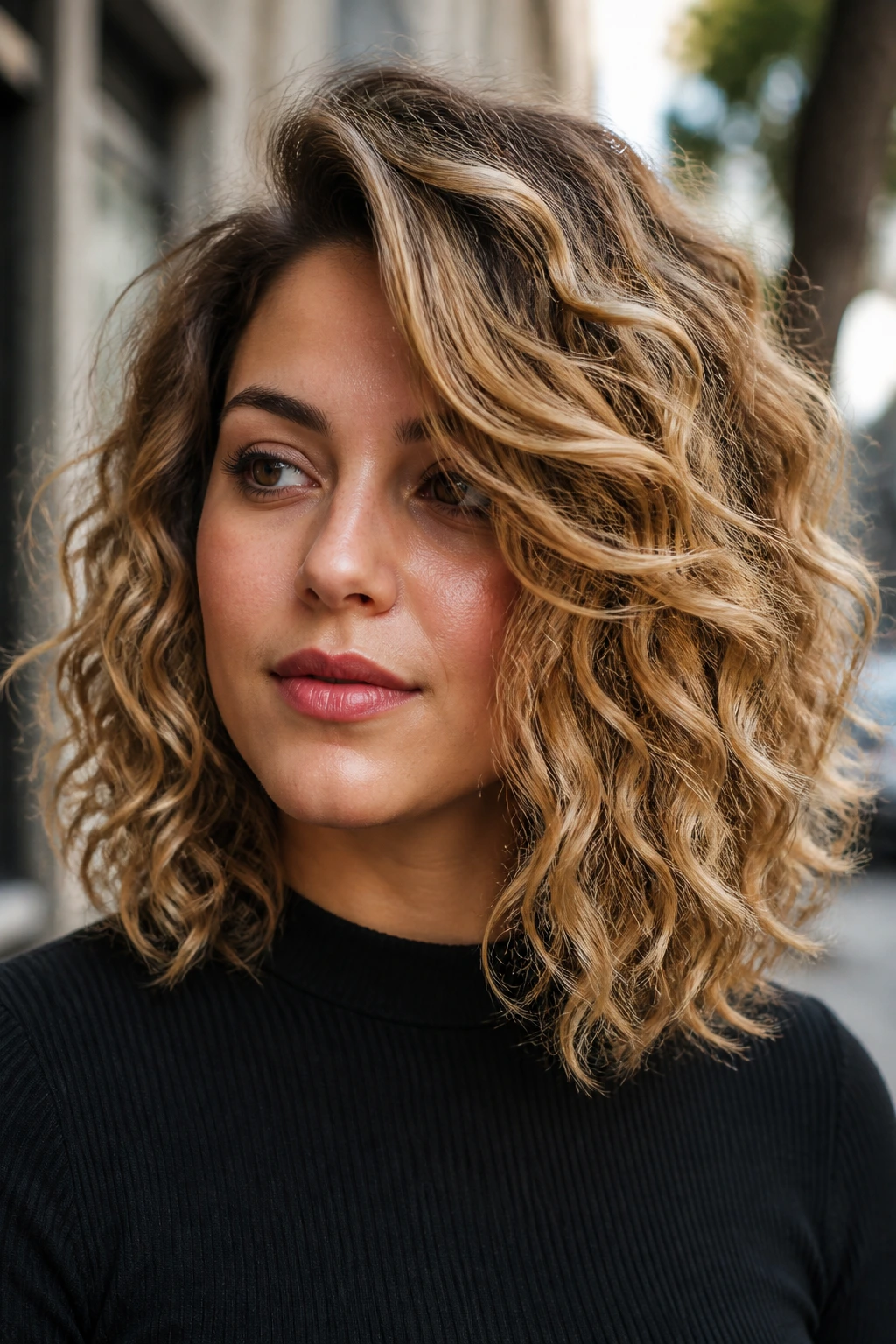
Caramel ribbons change everything here. The darker streaks make the blonde pieces look brighter, and the deep side sweep cuts across the face in a way that immediately narrows the width. It’s a small move with a big visual effect.
This is one of my favorite options for thicker curls because the color creates depth without having to slice too much weight out of the hair. The sweep should start at the temple, not at the part line, so the front isn’t too dramatic. That keeps the style wearable instead of theatrical.
If your face leans round and your hair leans full, this is a smart compromise. It gives you movement near the eyes and keeps the sides from puffing out into a wide halo.
8. Sandy Blonde Shag-Lob With Airy Volume
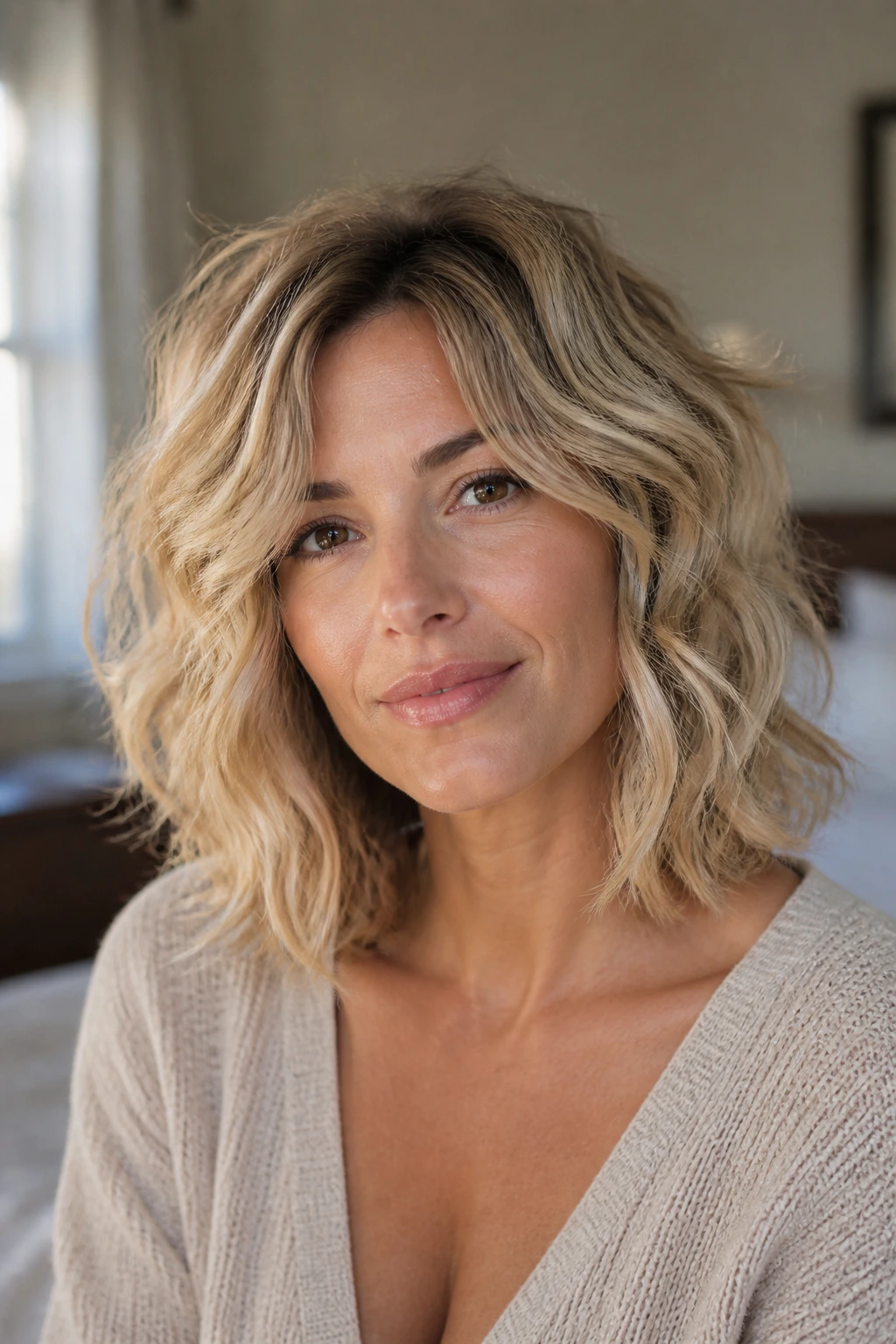
A shag-lob is what you reach for when you want softness with a little edge. Sandy blonde keeps it from feeling harsh, and the airy volume stops the cut from settling into a heavy oval. It’s a good match for curls that like to spring up and hold shape without much persuasion.
The shag part matters. Without those loose layers, the hair can sit too solidly at the bottom and widen the face. With them, the silhouette moves, especially around the cheekbones and the top of the head. That crown lift is doing more work than people think.
This cut looks best scrunched with gel and left alone. If you brush it after it dries, you lose the texture that makes the shape interesting.
9. Pearl Blonde Lob With Feathered Face Framing
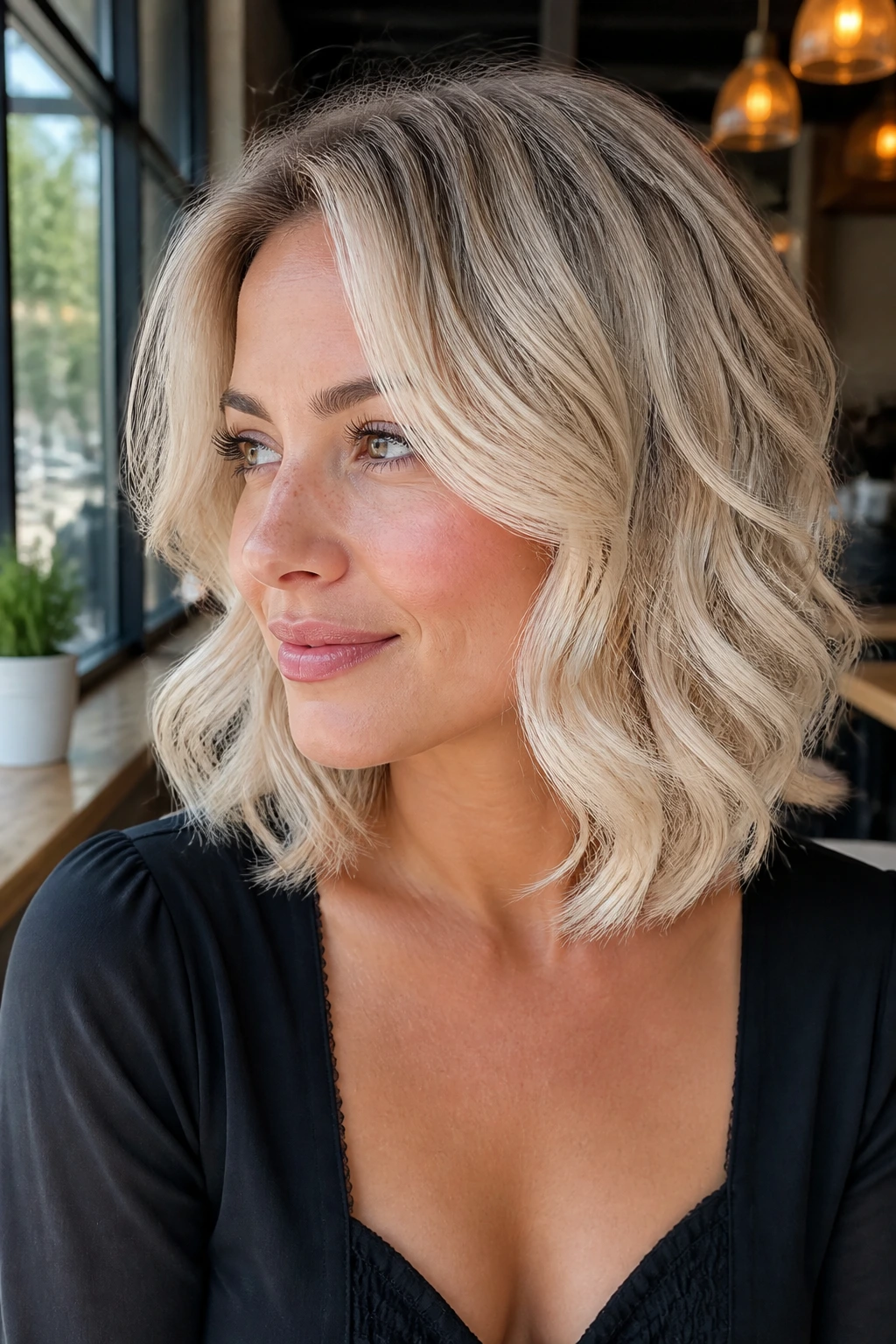
Pearl blonde sits on the cooler side of the spectrum, which gives curly hair a crisp, luminous look. Feathered face-framing pieces soften the front without making the cut collapse inward. On a round face, that feathering helps the cheeks feel less boxed in.
This style is a good choice if your curls are medium density and you want the front pieces to be a little airier than the rest. The feathering should begin below the cheekbone and taper toward the collarbone. Anything shorter can pull the eye back into the widest part of the face, which defeats the whole purpose.
Pearl blonde needs clean toning. If the brass creeps in, the color stops reading pearly and starts reading tired. That shift happens faster than you’d expect.
10. Dimensional Balayage Lob With a Soft Root Shadow
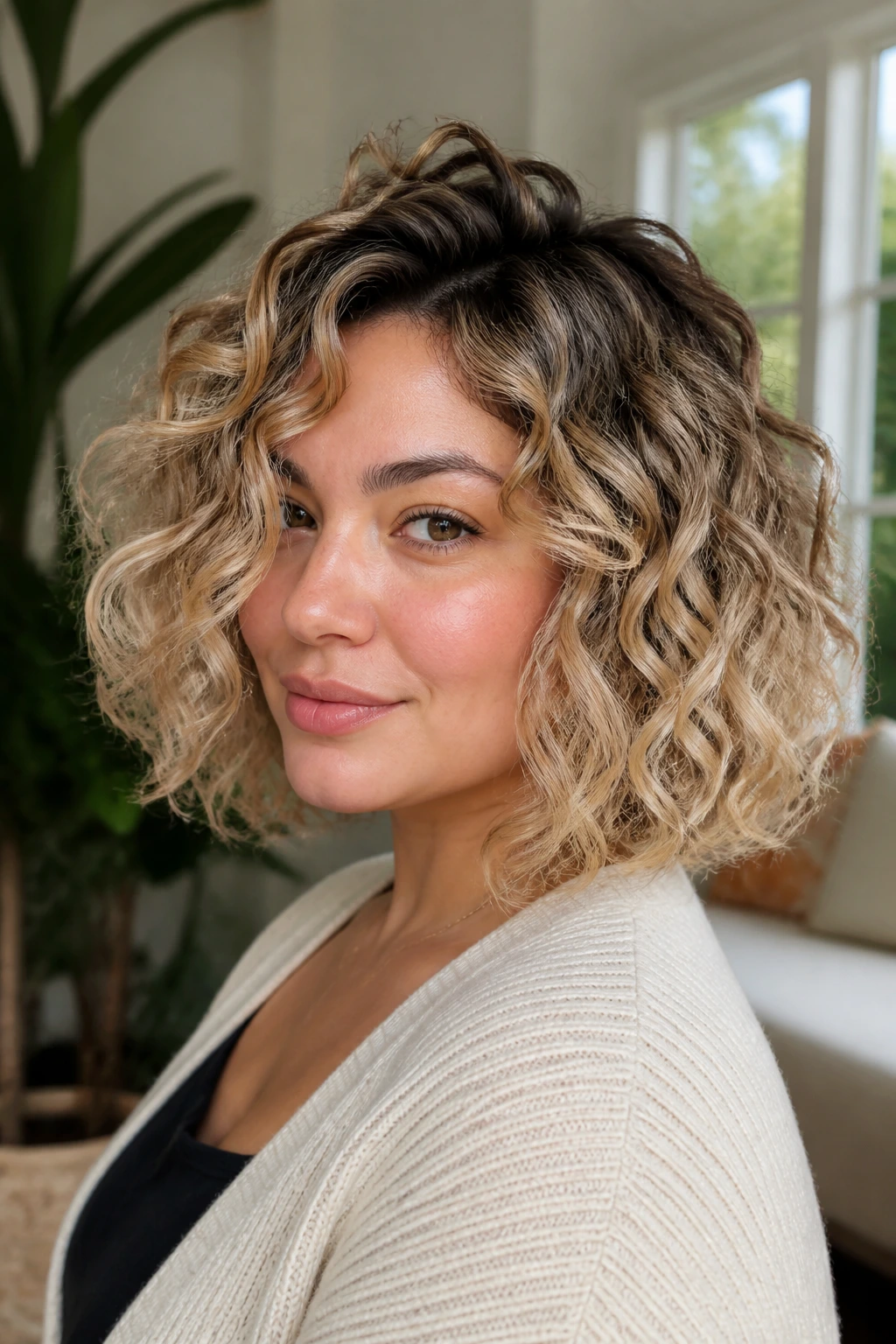
Dimensional balayage is the safest answer when you want blonde on curly hair without flattening the cut. The root shadow gives the scalp depth, and the hand-painted lighter pieces follow the bend of the curls instead of sitting in hard lines. That means the hair still looks like hair, not a chart.
For round faces, the important detail is placement. Put some of the brightness around the lower front pieces and a little near the crown, then leave the area beside the cheeks softer. That pulls the eye up and down, not straight across.
This is a very good option if you air-dry a lot. The color stays readable even when the curls aren’t perfectly set, and that makes the grow-out less fussy.
11. Toasted Almond Blonde Lob With Rounded Ends
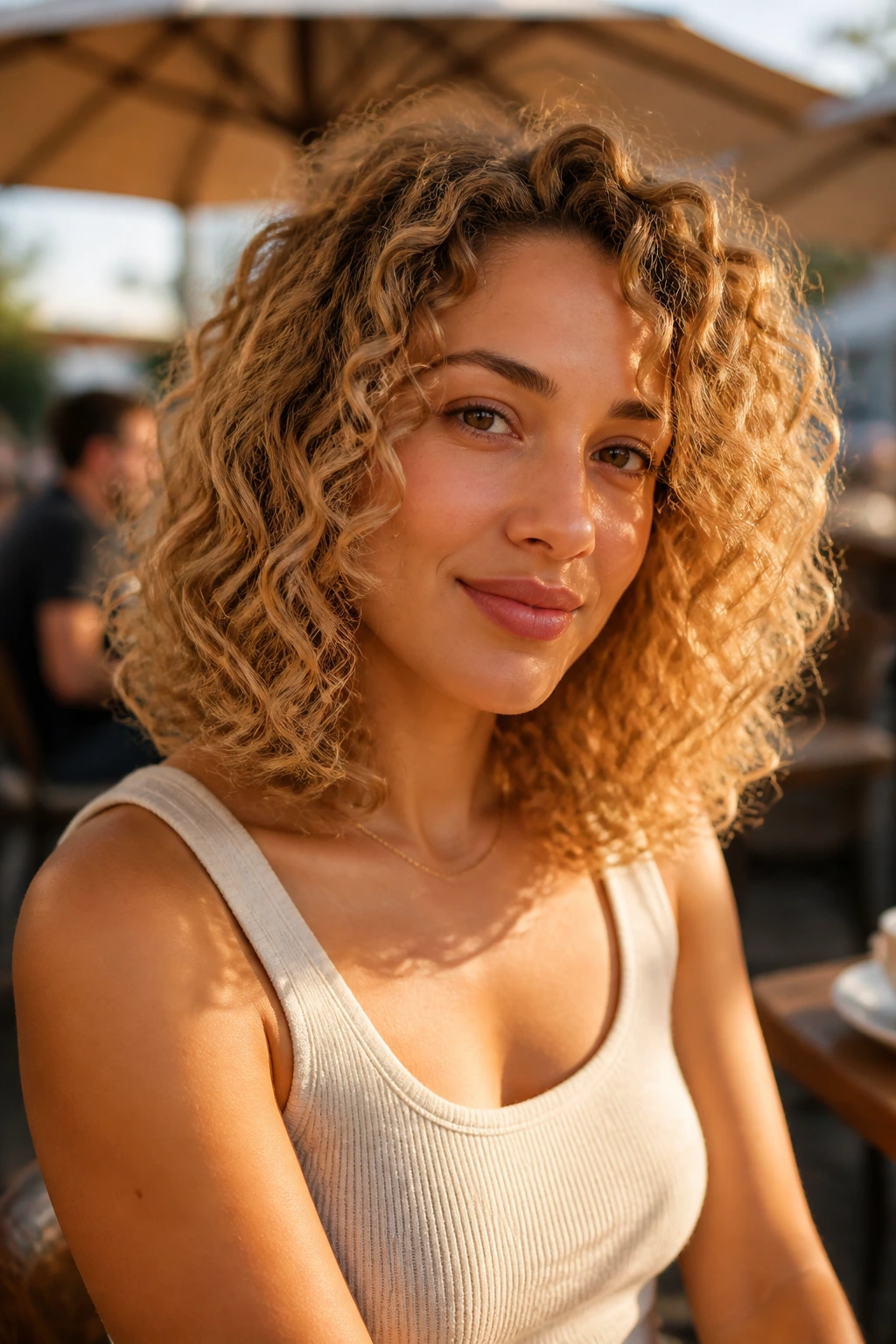
Toasted almond blonde has just enough warmth to stop the hair from looking pale and brittle. The rounded ends give the cut a soft edge, which is useful if you want the lob to feel full without looking bulky. On a round face, the rounded line should still land below the jaw.
This cut is a sleeper hit for coarse curls. The shape is controlled, but not stiff. It can handle a little puffiness and still look intentional because the ends are built to curve inward slightly.
I like this look when the curls are defined but not overworked. A curl cream, a little gel, and a microfiber towel are enough. Don’t load it up with five products. The color already does enough visual lifting.
12. Mushroom Blonde Lob With Piecey Curl Definition
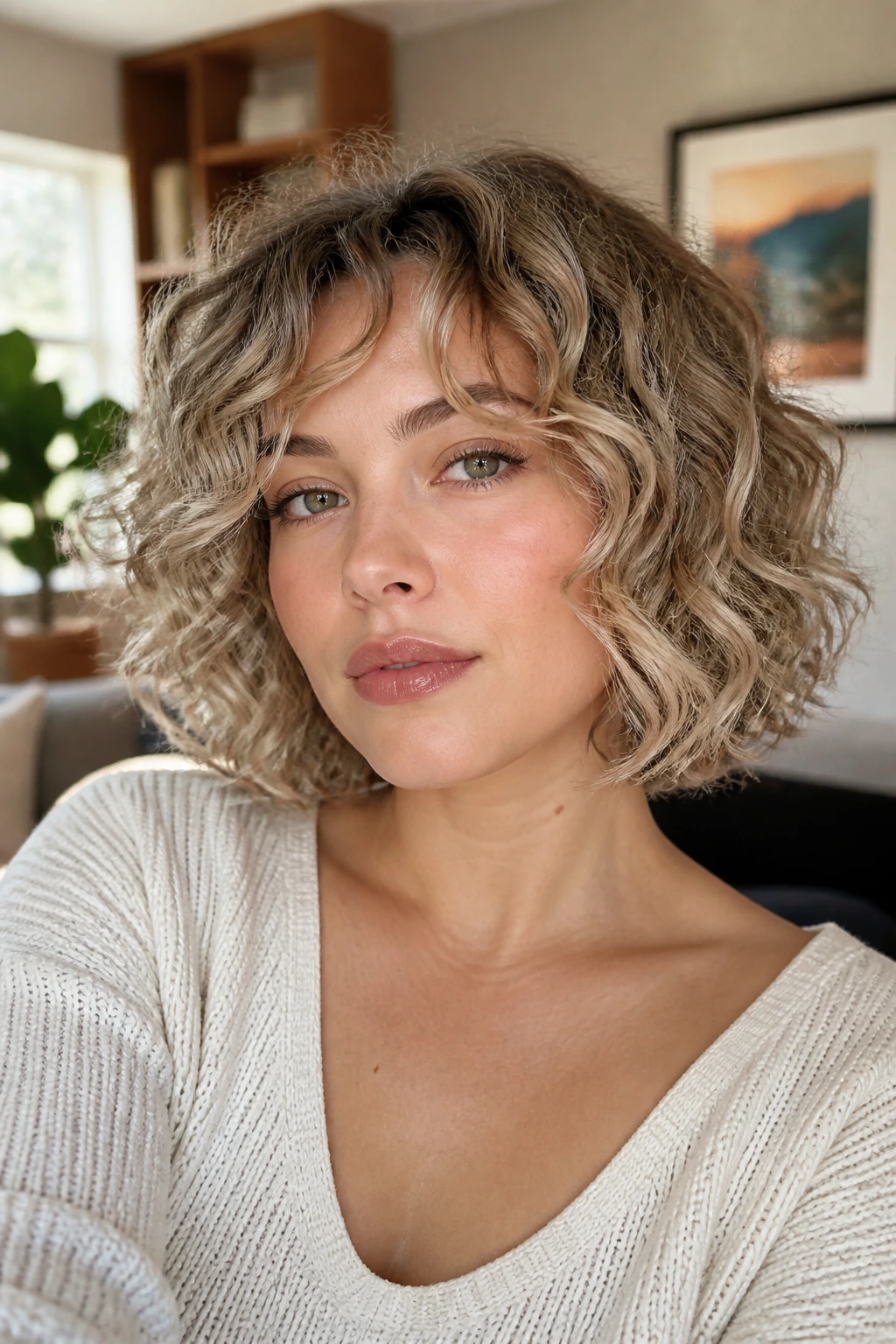
Mushroom blonde is one of the quietest blondes, and that’s why it works on curly hair. The ash-beige tone keeps the hair from going too bright around the face, while piecey definition gives the curls a more separated, modern finish. The cut feels cool without looking hard.
This is a smart move if your round face already has soft features and you don’t want the color to add more volume. The piecey styling makes the surface of the hair feel lighter, which helps the silhouette stay narrow enough through the sides. It’s a subtle trick, but it works.
Use a light gel and scrunch out only the hardest cast once the curls are fully dry. If you break the hold too early, the whole thing frizzes out and the mushroom tone loses its polish.
13. Ice Blonde Lob With Dark Root Smudge
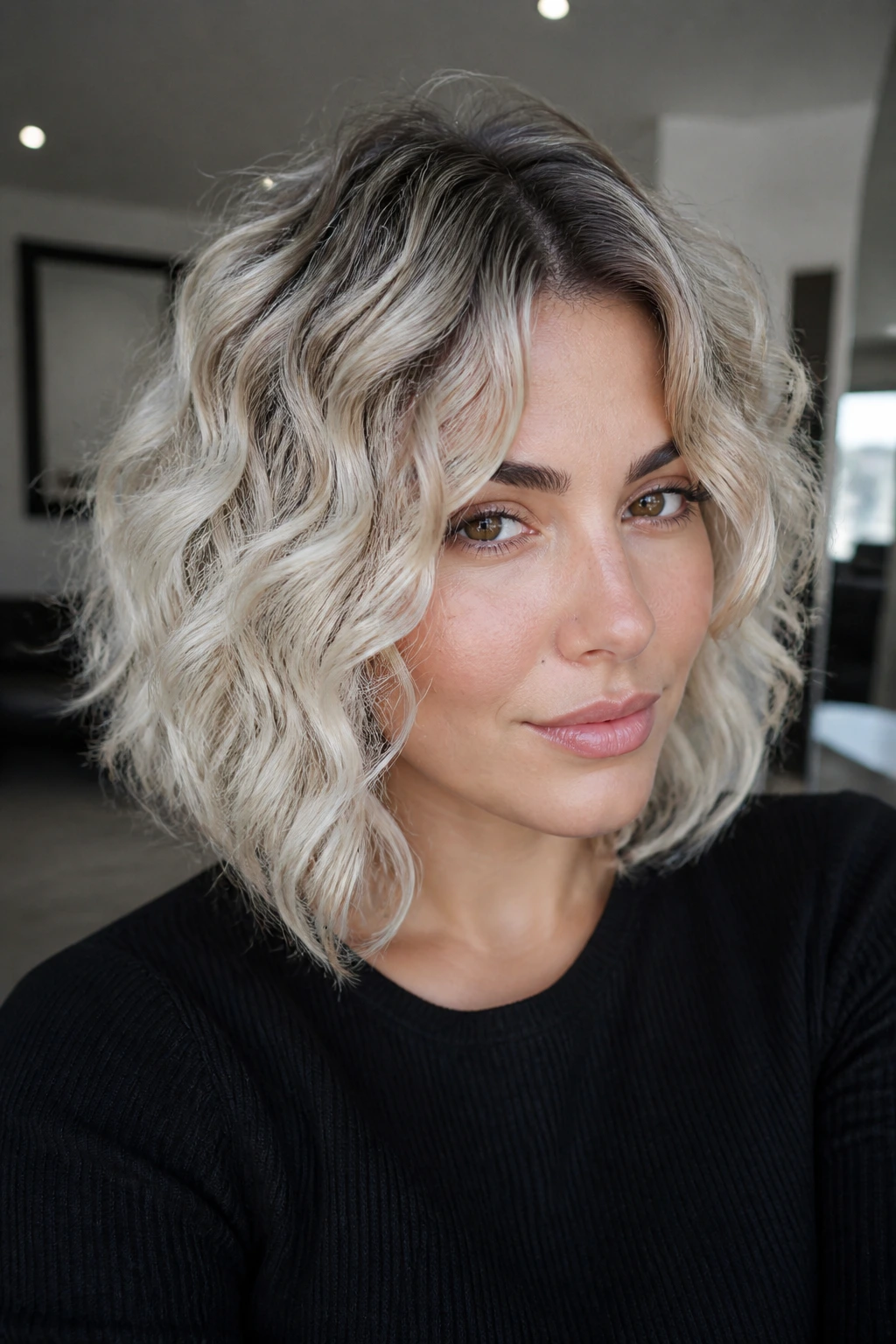
Ice blonde gives you edge. The dark root smudge keeps it from turning harsh at the scalp, which is important because curly hair already has enough visual texture without a stark line at the roots. The contrast helps the face look longer and the hair look denser.
This cut should not be too short. Ice blonde can make a jaw-length lob feel sharp in the wrong way, so keep the perimeter closer to the collarbone. Then let the front pieces angle forward just enough to frame the cheeks without hugging them.
I’d call this a higher-maintenance look, and that’s fair. The toner matters, the hydration matters, and heat control matters. Skip those, and the cool blonde starts to look dry in a hurry.
14. Sunlit Blonde Lob With Long Layers
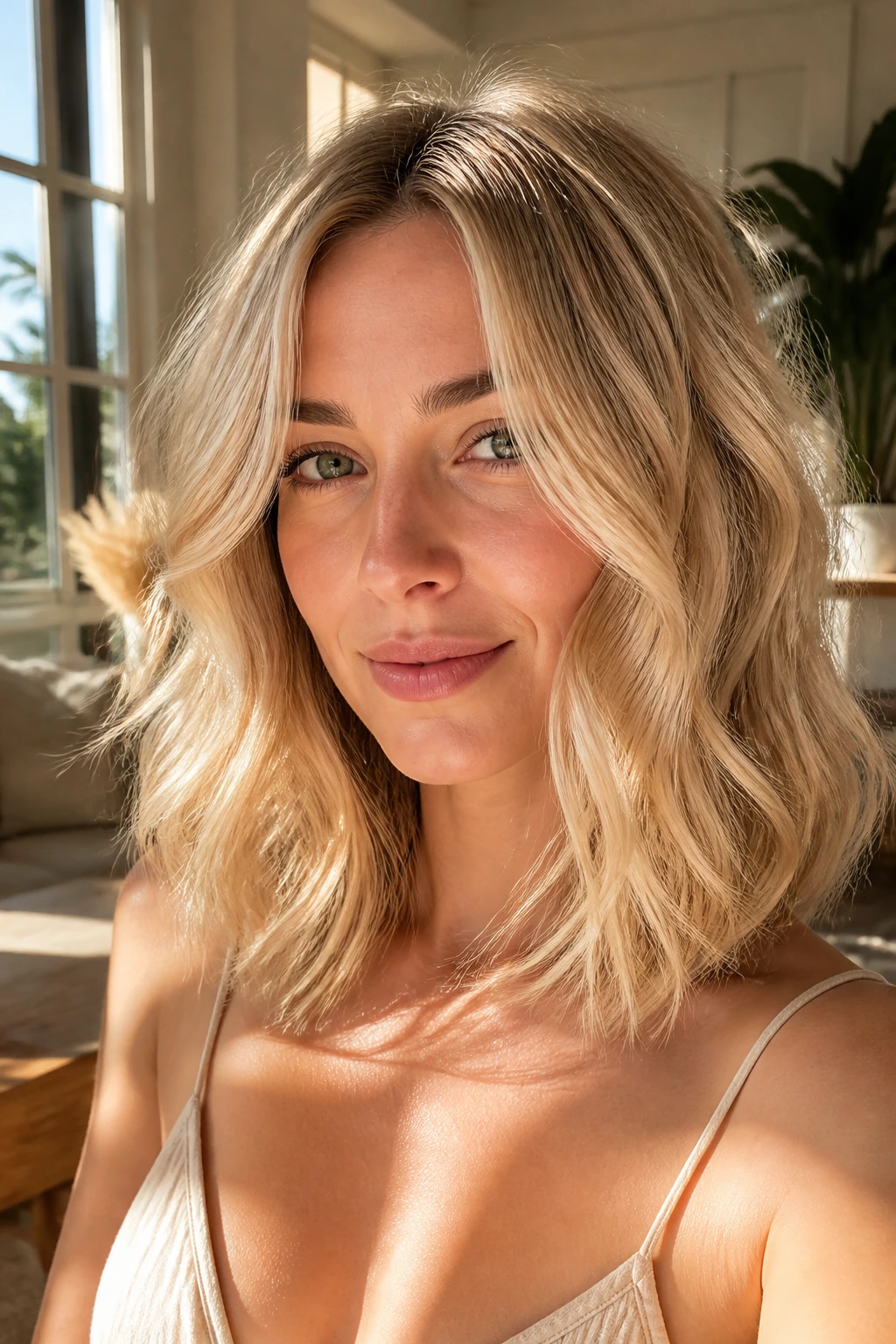
Sunlit blonde is the easygoing cousin in the group. It’s bright, soft, and not overly processed-looking, which makes the curls feel healthy even if they’ve got some natural frizz. Long layers keep the shape open and avoid the dreaded triangle.
This works especially well on round faces when the longest pieces graze the collarbone and the top has just enough lift to keep the profile from going wide. The layers should be long enough that you can still gather the hair into a low ponytail without strange holes near the ends. That’s usually a sign the cut has balance.
The color benefits from a few lighter ribbons near the front and a softer blend through the back. You want the whole cut to feel sun-kissed, not streaked.
15. Bronze-to-Blonde Lob With a Center Part
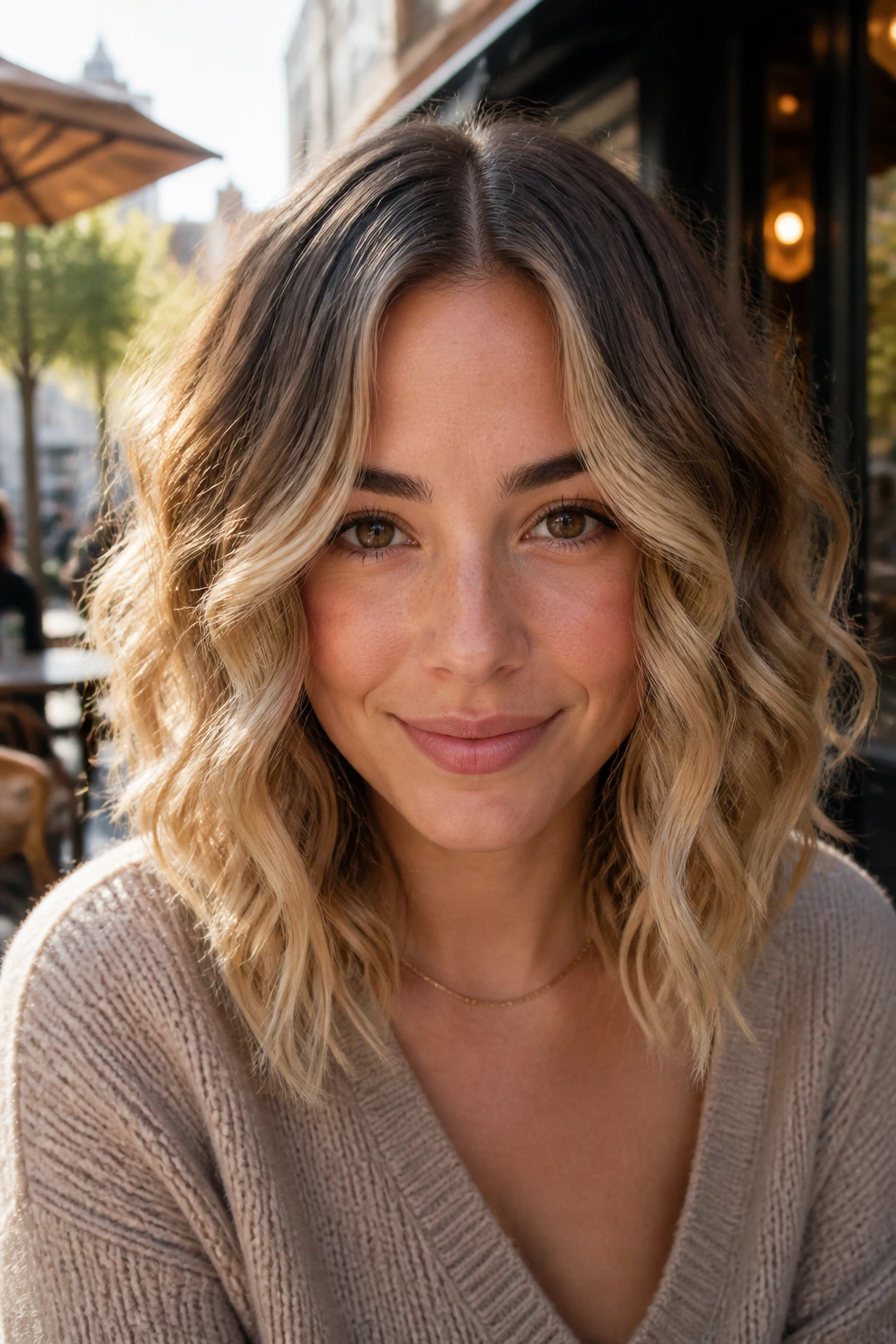
A center part on a round face can be beautiful if the cut is long enough and the color has enough depth. Bronze-to-blonde does that nicely. The darker base anchors the style, and the blonde on the ends and front pieces creates a vertical read that keeps the face from feeling too broad.
The center part works best when the hair falls below the shoulders and the curls are not too short around the cheekbones. If the front pieces sit too high, the middle part can make the width of the face more obvious. If the length is right, though, it’s sleek and modern.
This is a good one for people who like symmetry. The shape is calm. The color does the movement.
16. Retro Flip Lob With Bright Ends
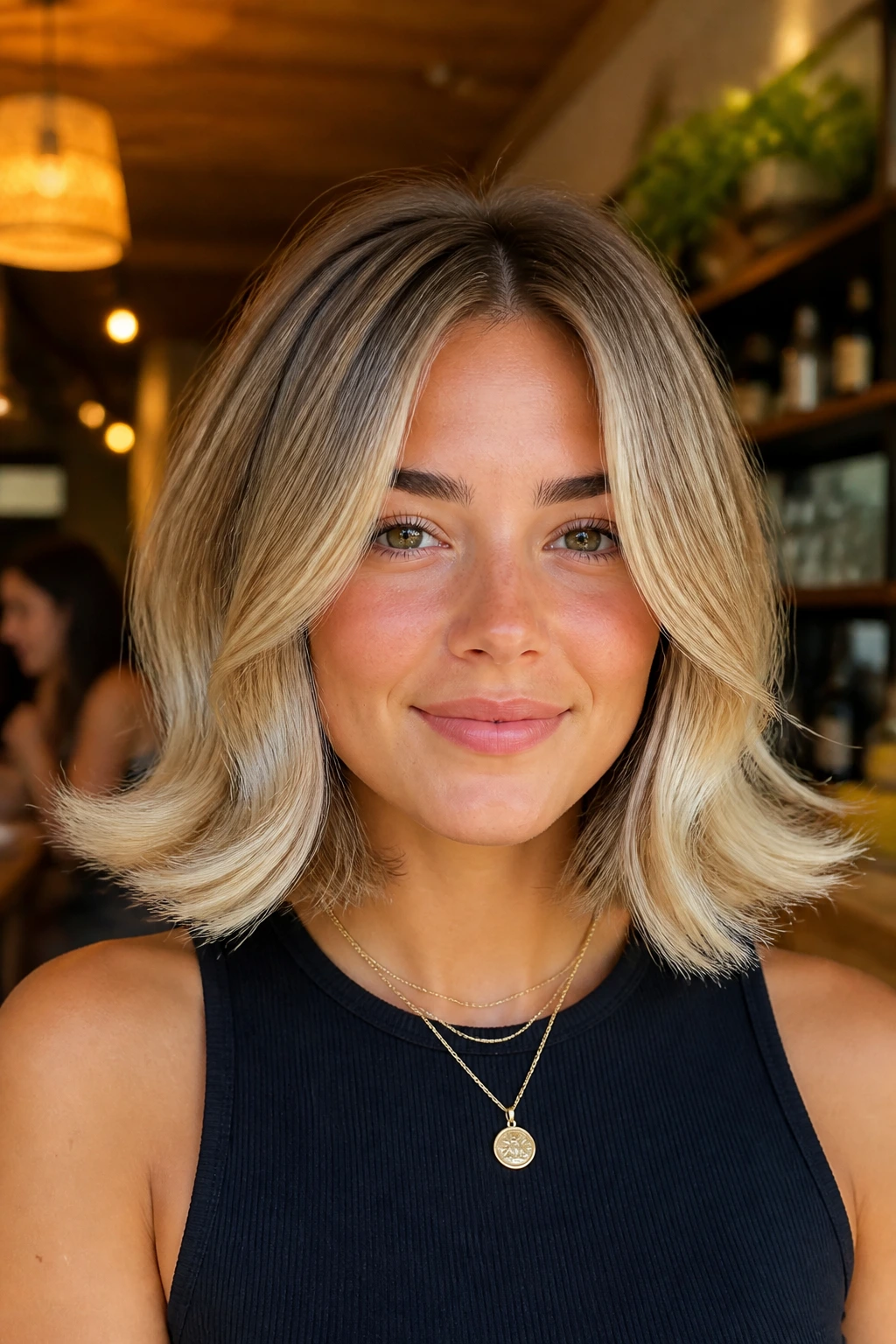
A retro flip on a lob is fun, but it’s also practical in a sneaky way. The outward bend at the ends gives the cut a little lift away from the jaw, which helps a round face feel longer. Bright ends make that flip read cleanly instead of blending into the rest of the hair.
This is best if your curls are loose enough to be guided with a round brush or a big diffuser attachment. The flip should start near the last inch or two of the hair, not halfway up the strand. Otherwise the shape turns dated fast.
I like this look when someone wants personality without layers all over the place. It’s a small styling choice, but it changes the silhouette more than people expect.
17. Rounded-Edge Lob for Dense Curls
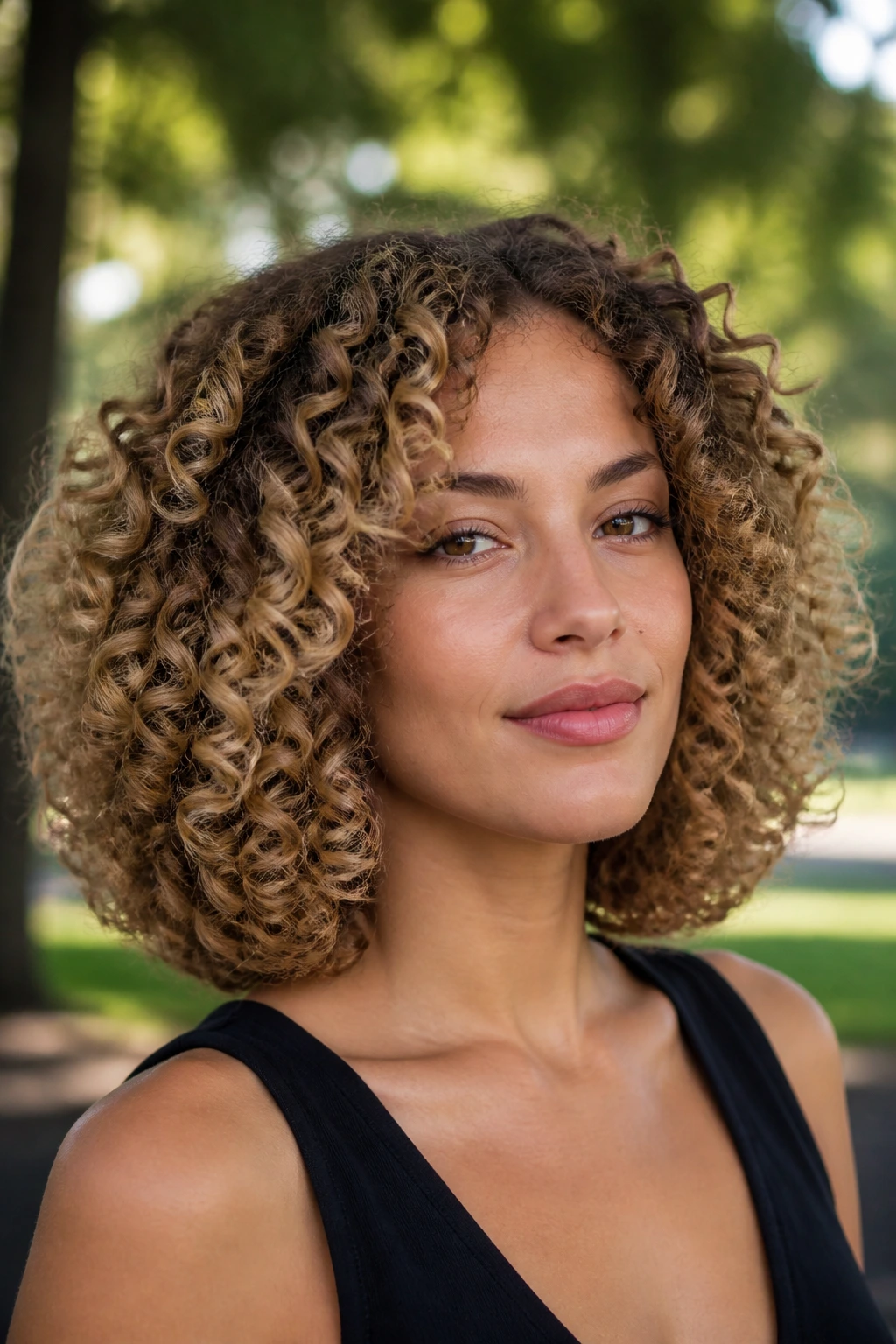
Dense curls need room, but they also need boundaries. A rounded-edge lob gives both. The shape curves gently under at the ends, which keeps the volume from exploding out at the sides, while the blonde streaks are placed to show the curl definition instead of hiding it.
This is a smart cut for round faces because the rounded edge sits lower than the cheek and builds a cleaner perimeter. That keeps the silhouette from looking too square or too wide. Ask for weight to stay in the bottom third of the cut. If the stylist removes too much, dense curls can puff out into a cloud.
The blonde should be broken up in small ribbons, not big blocks. Dense hair can swallow color fast, and chunky highlights will look louder than you wanted.
18. Tapered Lob With Long Front Pieces
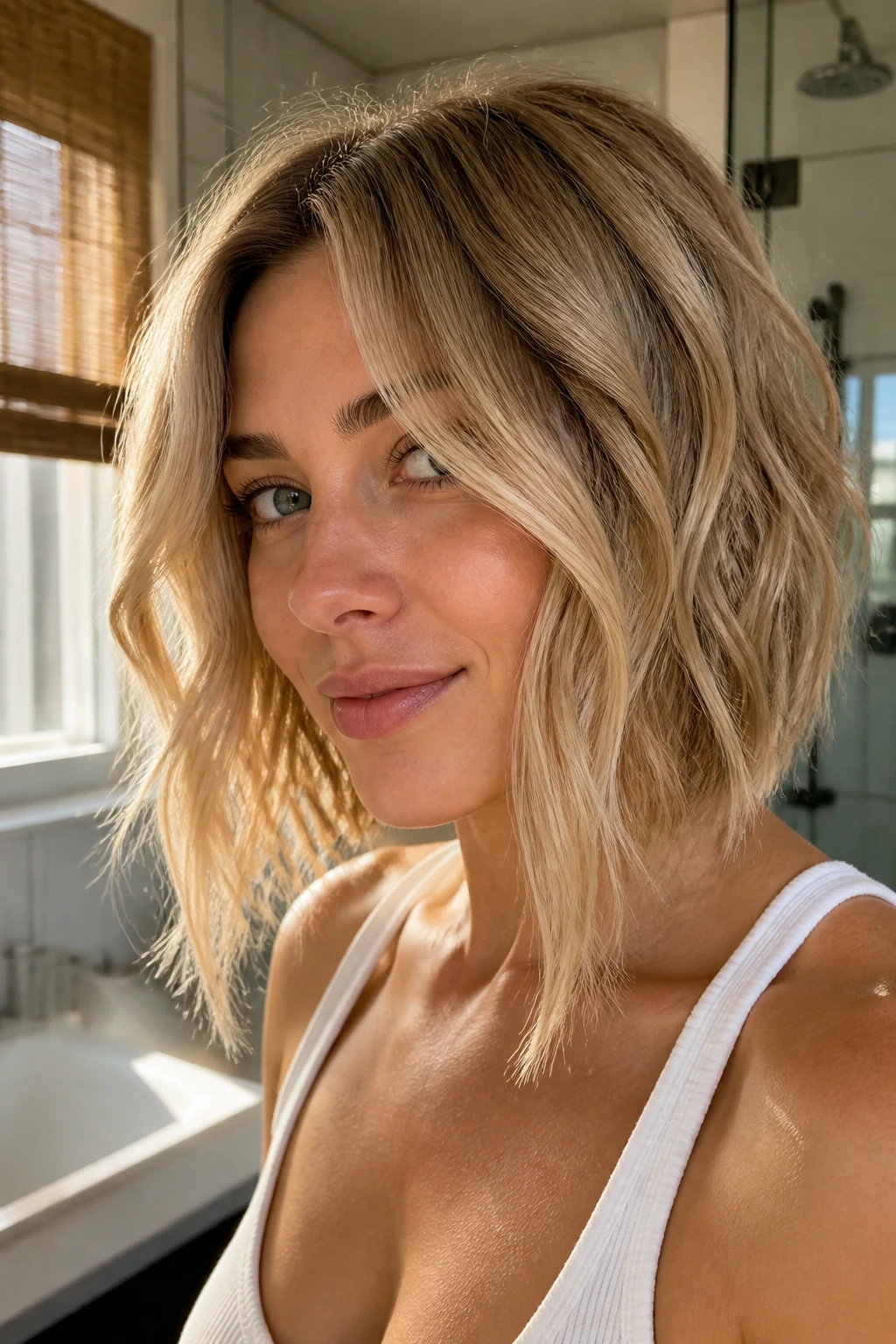
A tapered lob narrows slightly at the back and leaves the front longer, which is a clean way to create length in the face. The long front pieces skim the cheek and drop below the jaw, which gives a round face the diagonal line it likes. Blonde placement should follow that same path.
This cut works well when the curls are medium to tight and need a little directional shaping. The taper keeps the back from puffing out, while the long front stops the front from feeling boxy. It’s one of the more flattering shapes for fuller cheeks because it adds structure without stealing softness.
If your curls have a mind of their own, this is a good one to show your stylist in person. The angle matters. So does the exact point where the front starts to drop.
19. Beachy Lob With Micro-Babylights
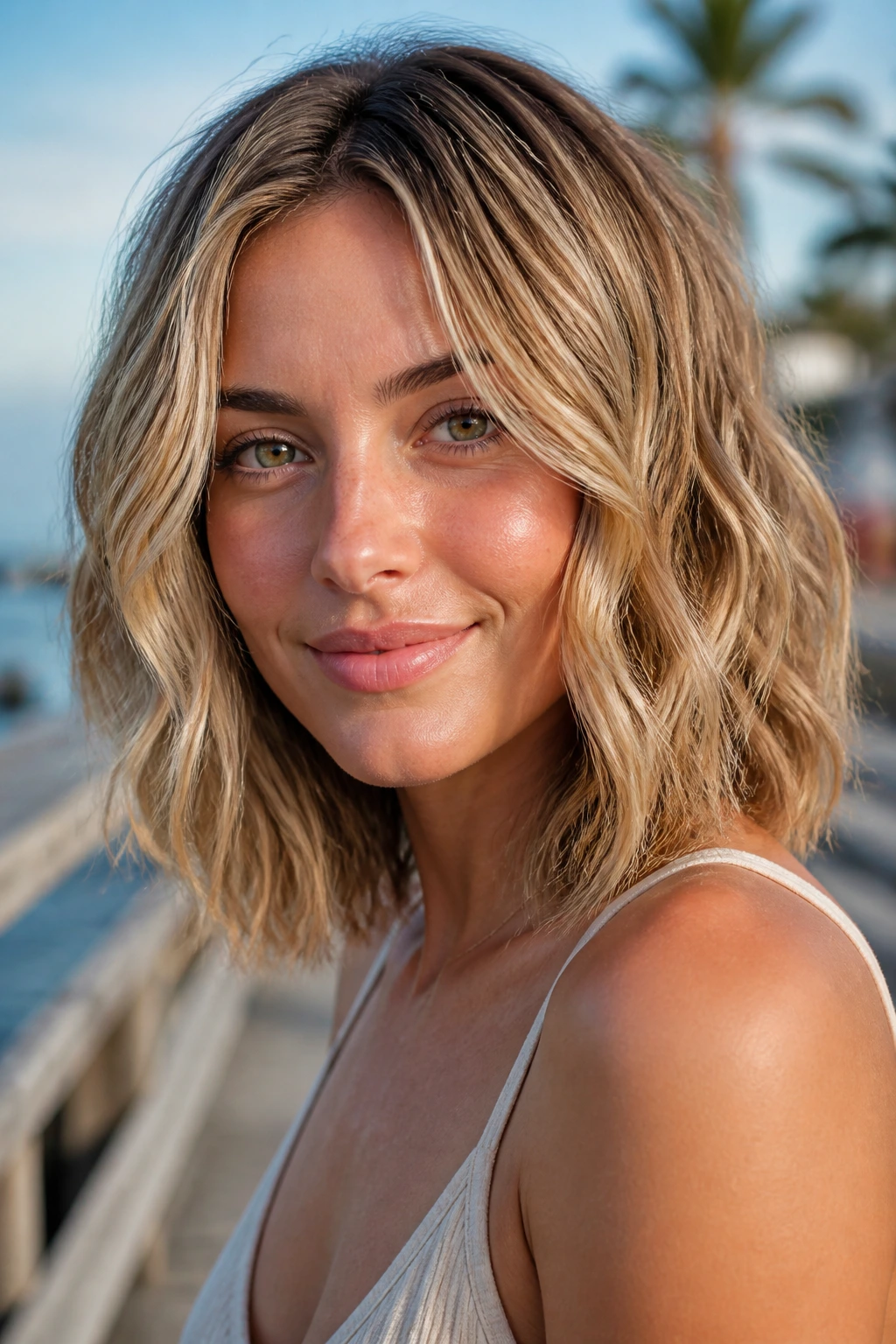
Micro-babylights are tiny, scattered highlights that mimic natural sun-lightening better than chunky stripes ever could. On a beachy lob, they make the curls sparkle without stealing the texture. The effect is light, soft, and surprisingly flattering on a round face because the color doesn’t widen the outline.
This style is forgiving if you like air-drying. The tiny highlights still show up when the hair isn’t perfect, which is a nice thing to have in your back pocket on rushed mornings. The cut should stay a little longer through the front so the curls fall instead of fanning out.
If you want blonde but hate seeing obvious highlight bands, this is one of the best answers. Quiet color. Good shape. No fuss.
20. Soft Wolf-Lob Hybrid in Honey Blonde
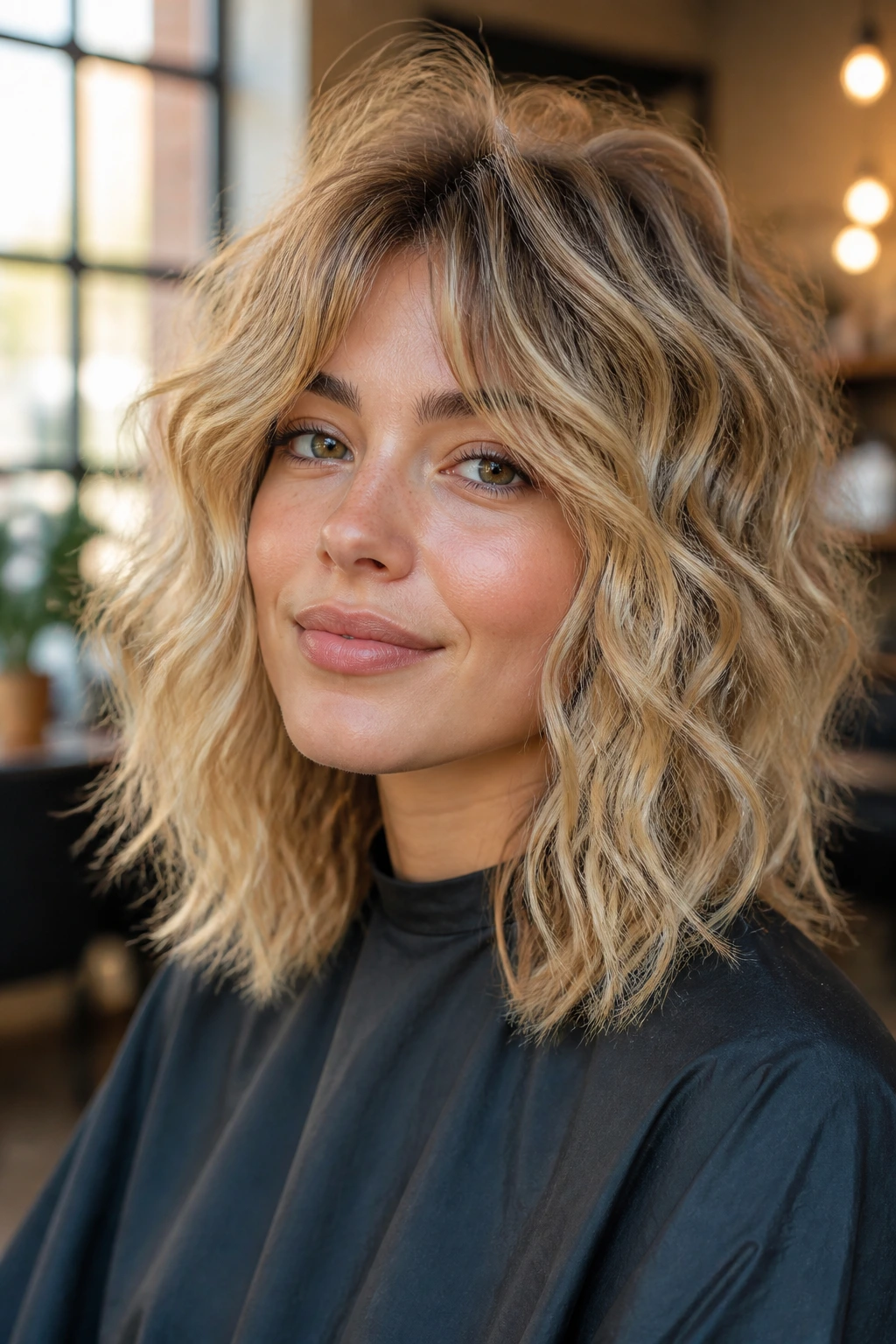
A wolf-lob has more attitude than a classic lob, but the honey blonde keeps it wearable. The top has lift, the sides stay softer, and the ends can be a little broken up without looking unfinished. On a round face, the benefit is simple: height at the crown, width controlled at the cheek.
This is a cut for someone who likes a little edge and doesn’t mind texture. The front pieces should hit below the chin and stay long enough to slice through the fullness of the cheeks. If they stop too high, the wolf shape can veer into wide territory.
I’d wear this one with a diffuser and a light wax or cream on the ends. Don’t over-smooth it. The point is the contrast between soft color and piecey shape.
21. Polished Diffused Lob With Neutral Blonde Tones
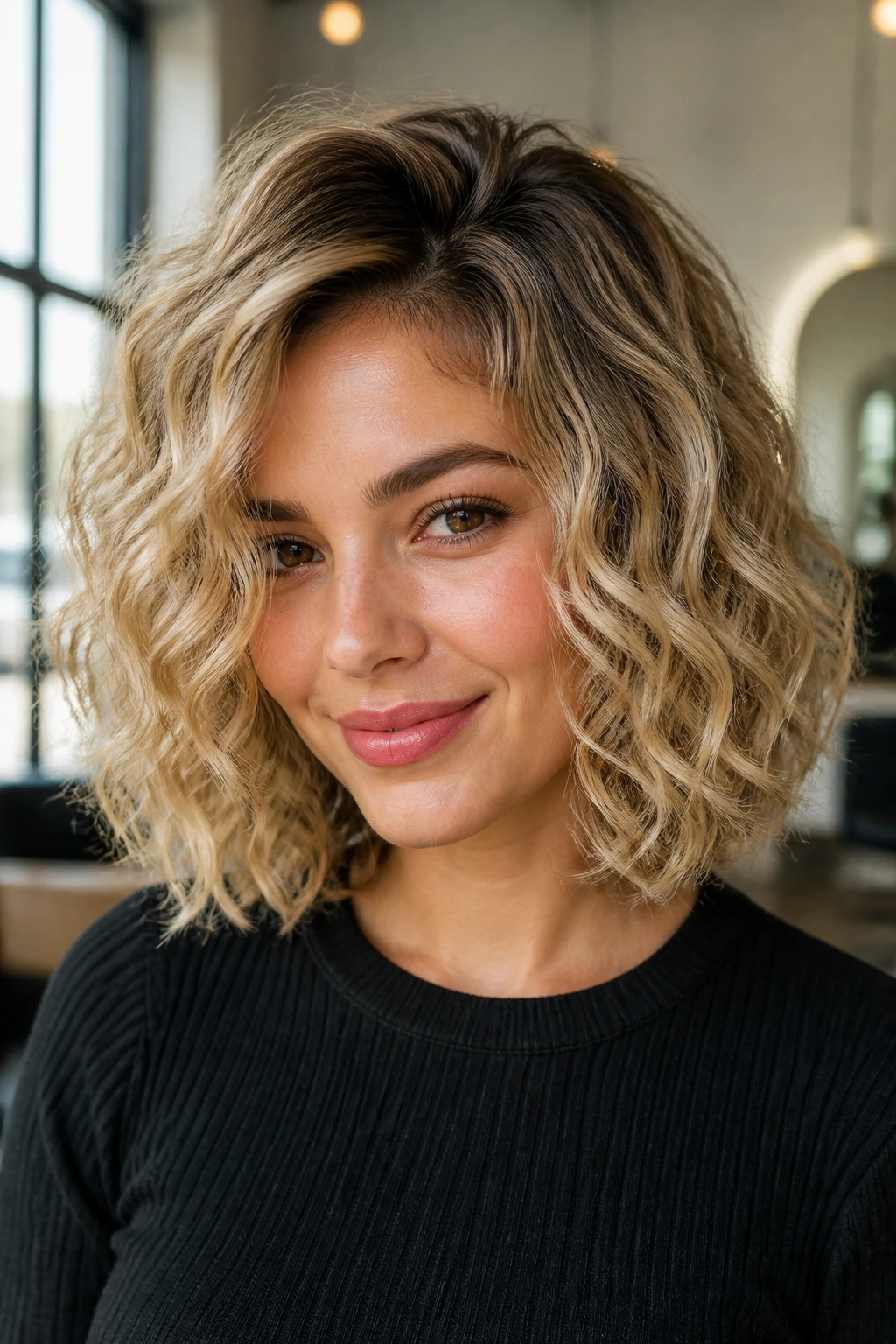
Neutral blonde is the practical person’s blonde. It doesn’t fight with the skin tone, and it doesn’t swing too warm or too icy. On a diffused lob, that neutrality lets the cut look polished even when the curls are slightly imperfect.
This version works well if you want a more refined finish. The diffuser gives the root lift, the neutral tone keeps the blonde from turning brass or silver too fast, and the lob length stays long enough to elongate the face. It’s not flashy. It just works.
A lot of people overlook neutral blonde because it sounds plain. It isn’t. On curly hair, it can be the difference between “salon blonde” and “my hair is trying too hard.”
22. Side-Swept Glam Lob in Beige Blonde
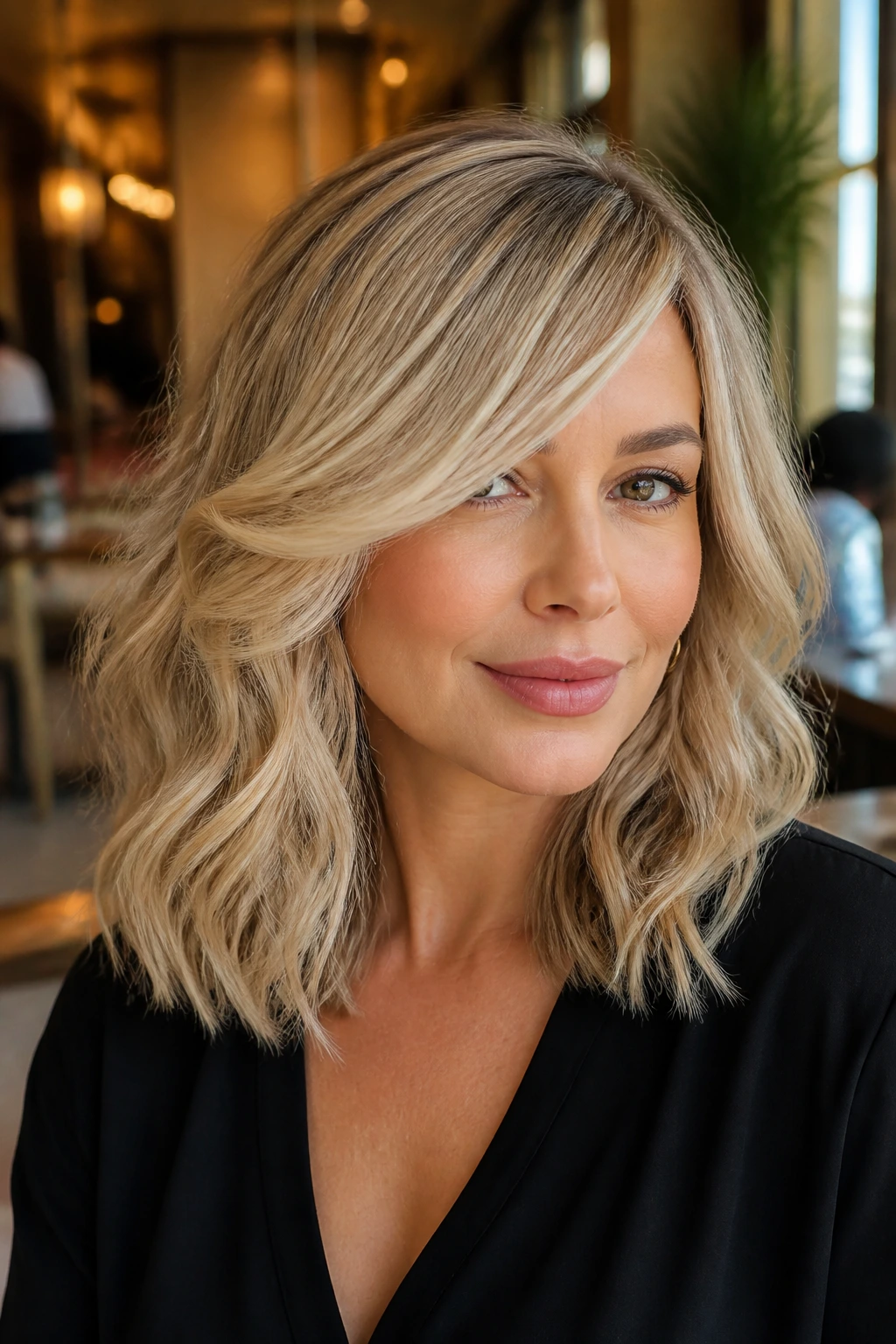
A side-swept lob is one of the easiest ways to thin the look of a round face without changing much else. The sweep creates a diagonal line across the forehead and cheek, and beige blonde keeps the style soft instead of severe. The finish reads polished, not stiff.
This one loves a bit of root volume. Lift at the crown, sweep the front, and let the rest fall in loose curls around the collarbone. If the layers are too short, the shape puffs. If they’re long enough, the sweep feels expensive in a very low-drama way.
I like this for events, but it’s also practical on a plain Tuesday. The parting does a surprising amount of work.
23. Air-Dried Lob With Lowlights and Bright Ribbons
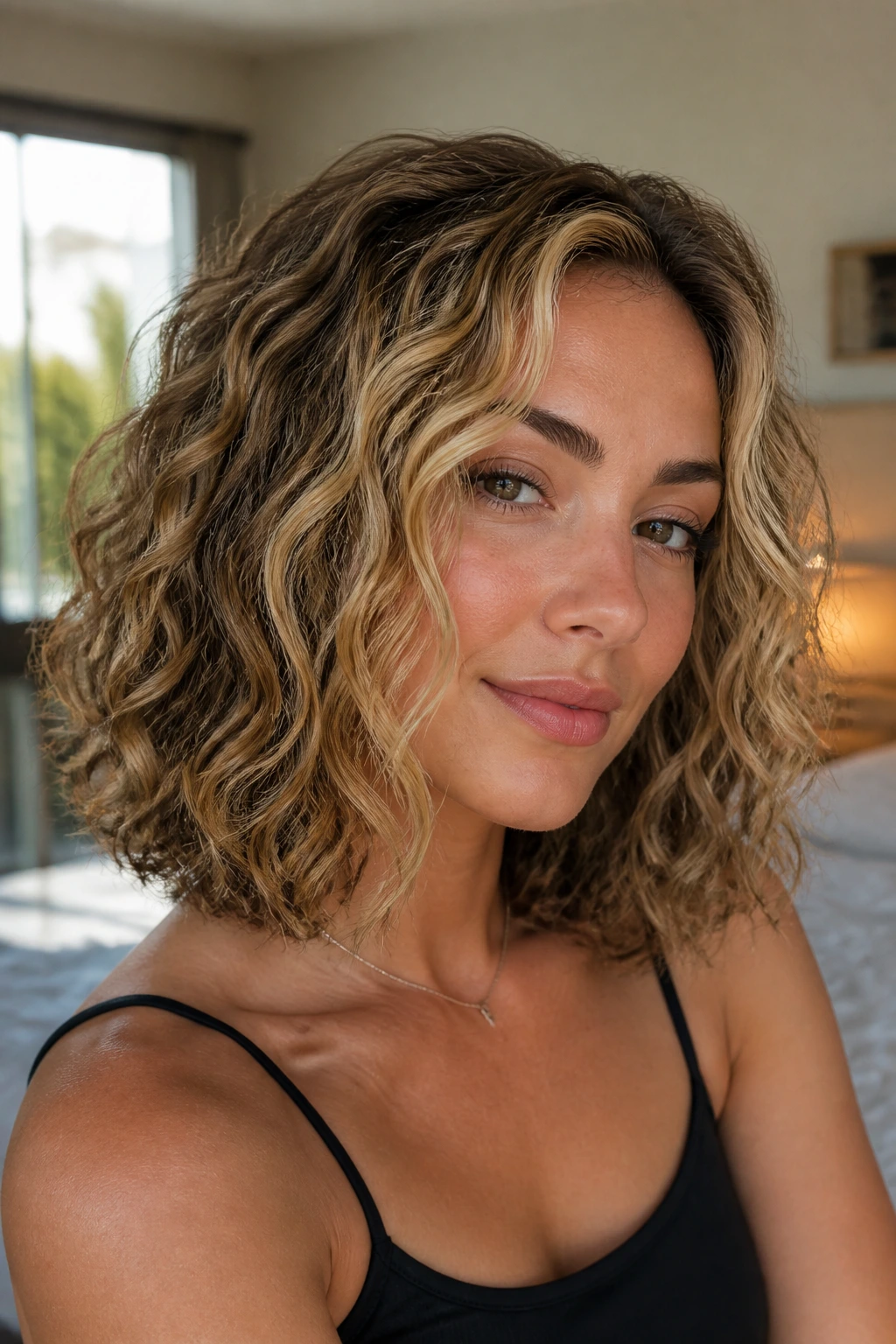
Air-dried curly hair can look messy if the color is all one note. Lowlights and bright ribbons fix that by giving the hair depth at the base and light at the bends. The contrast keeps the lob from reading as one solid helmet of blonde.
This shape is especially nice for round faces because the lowlights create shadow along the sides. That darkens the perimeter just enough to make the face feel slimmer without needing a dramatic haircut. The bright ribbons should live around the front and top, where they’ll catch light and lead the eye upward.
Use a leave-in and a medium-hold gel, then let the hair do its thing. Air-dried curls look best when you stop touching them before they finish setting.
24. High-Volume Crown Lob With Champagne Highlights
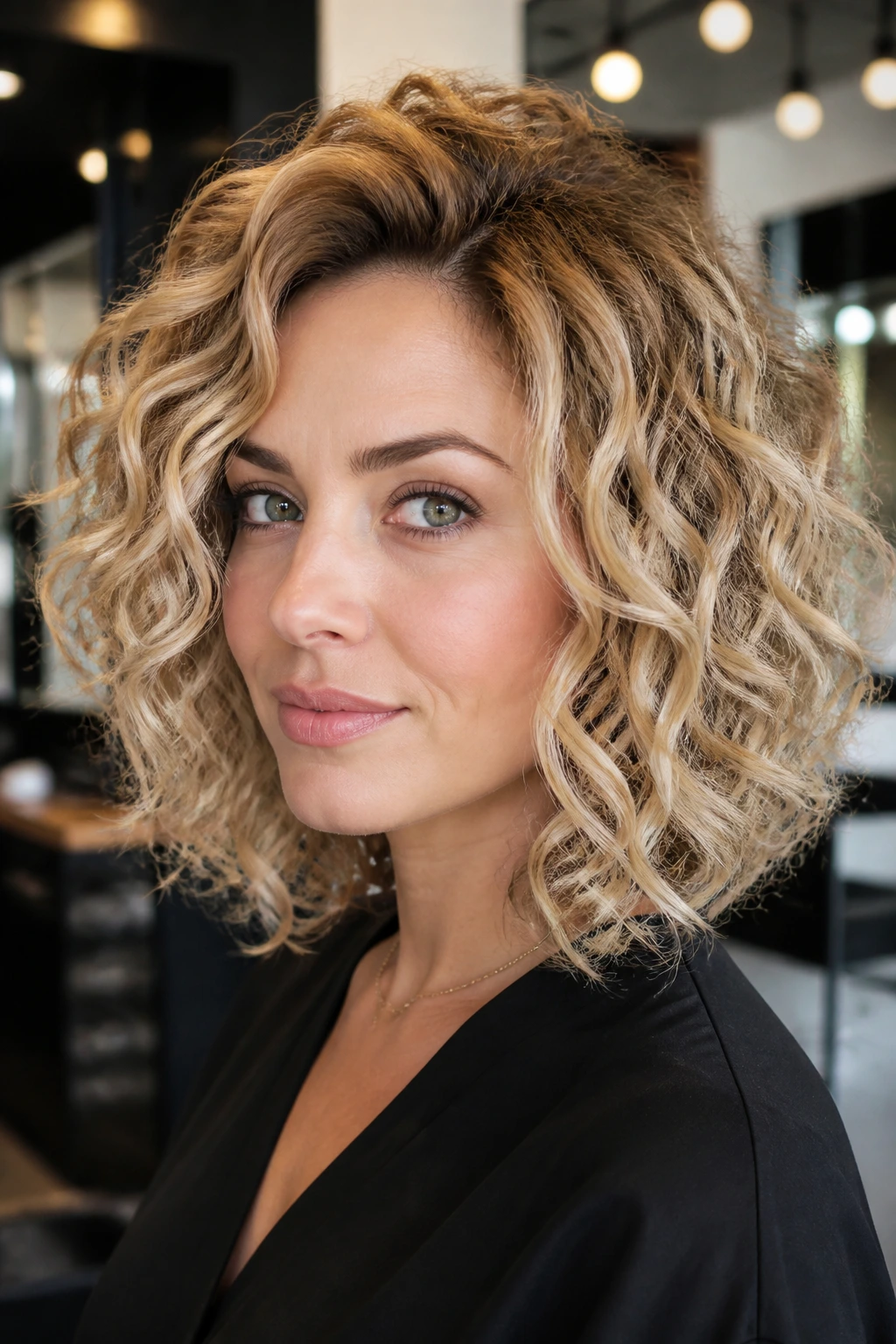
If your curls are flat at the top and full at the sides, this is the one. The high-volume crown gives the face a longer read, and champagne highlights catch light at the top without turning the entire haircut into a halo. The blonde stays lively because the crown lift keeps the shape from sinking.
This cut works best when the layers are concentrated near the top and the lower perimeter stays controlled. Too many layers at the bottom make the ends spread out. Keep the lift where the eye needs it most.
A little mousse at the roots and a diffuser on low heat are enough to build the height. I would not skip the root products here. The whole look depends on that upper shape.
25. Soft Beige Lob With Jaw-Balancing Layers
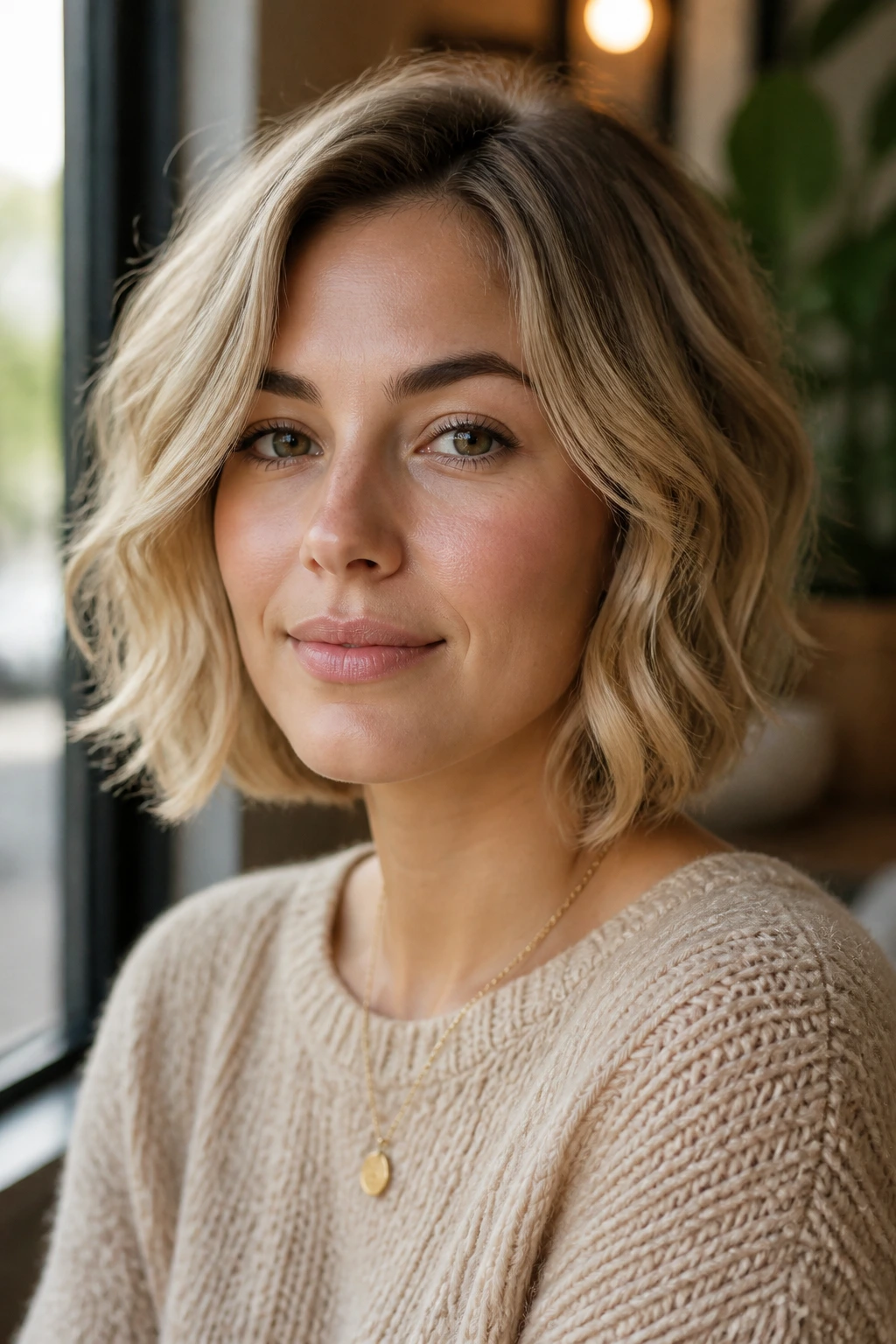
Soft beige blonde is the quiet ending to a very loud hair conversation. It keeps the curl pattern calm, the face soft, and the lob length just long enough to miss the jaw. Jaw-balancing layers mean the cut doesn’t hang like one heavy sheet or puff like a triangle. It sits between those extremes.
This is the most adaptable option in the bunch. Fine curls, dense curls, loose waves—they can all wear it if the layers are long and the front pieces fall below the widest part of the face. Beige blonde also grows out politely, which is a bigger compliment than it sounds.
If you want one haircut that can survive a messy bun, a diffuser, and an off-day without looking confused, this is it.
What Makes the Shape Work Instead of Puff Out
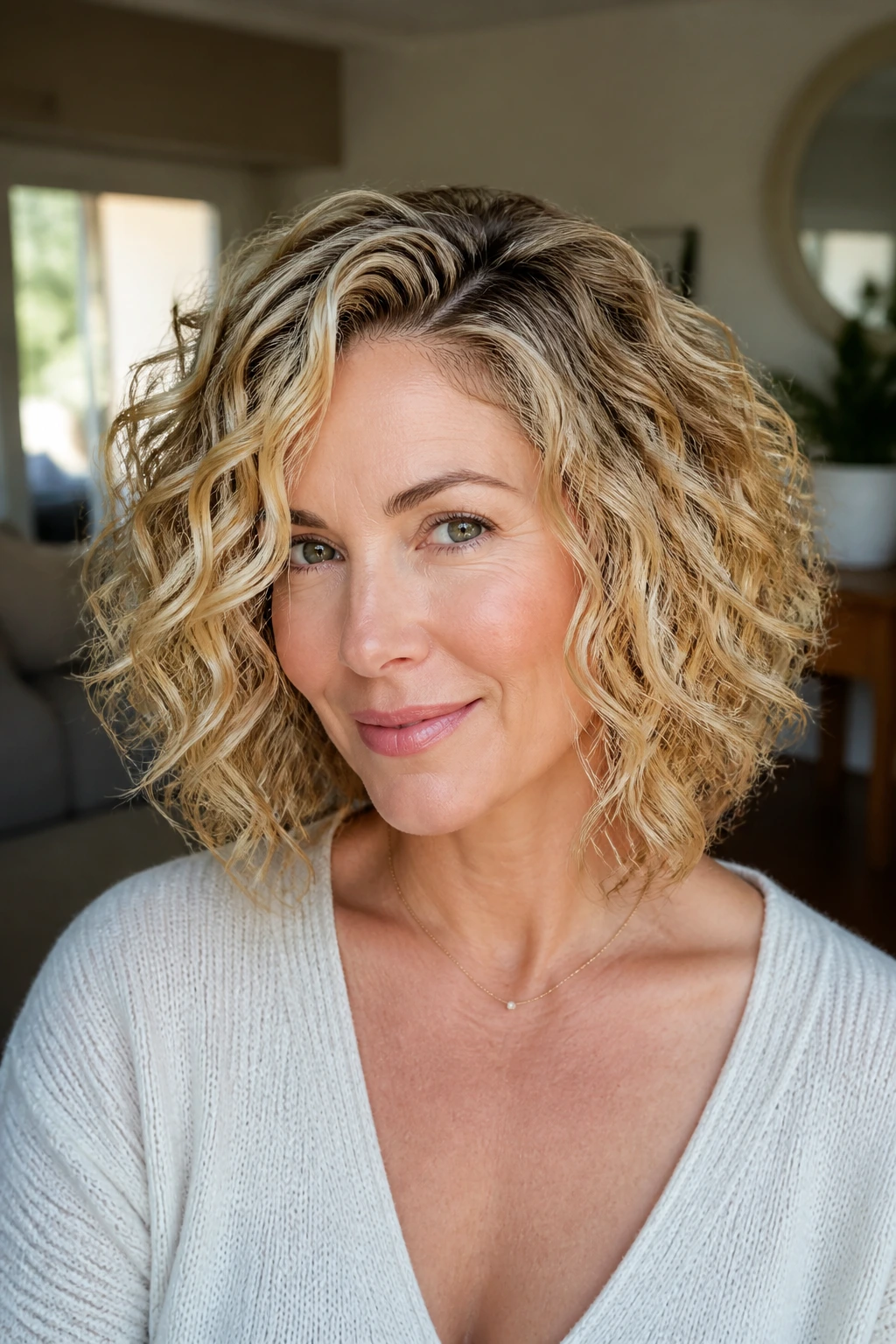
The biggest mistake with a lob on curly hair is treating the cut like straight hair with texture. That’s how you end up with width at the cheeks, volume at the wrong level, and color that looks louder than it should. The better move is to think in terms of balance.
A good lob on a round face usually has at least one of these things happening: length below the jaw, lift at the crown, or diagonal movement in the front. You do not need all three on every head. You do need enough of them that the eye keeps traveling. Stop the eye at the cheek, and the face looks wider. Send it down toward the collarbone, and everything relaxes.
For curly hair, weight is a tool. Too much weight, and the ends look blocky. Too little, and the sides blow out. The stylist’s job is to remove just enough bulk to let the curls stack neatly while keeping the outline under control. That’s why a good curly lob feels expensive even when it’s not highly styled. The shape is doing the heavy lifting.
Styling Moves for Air-Dried Days and Diffused Days
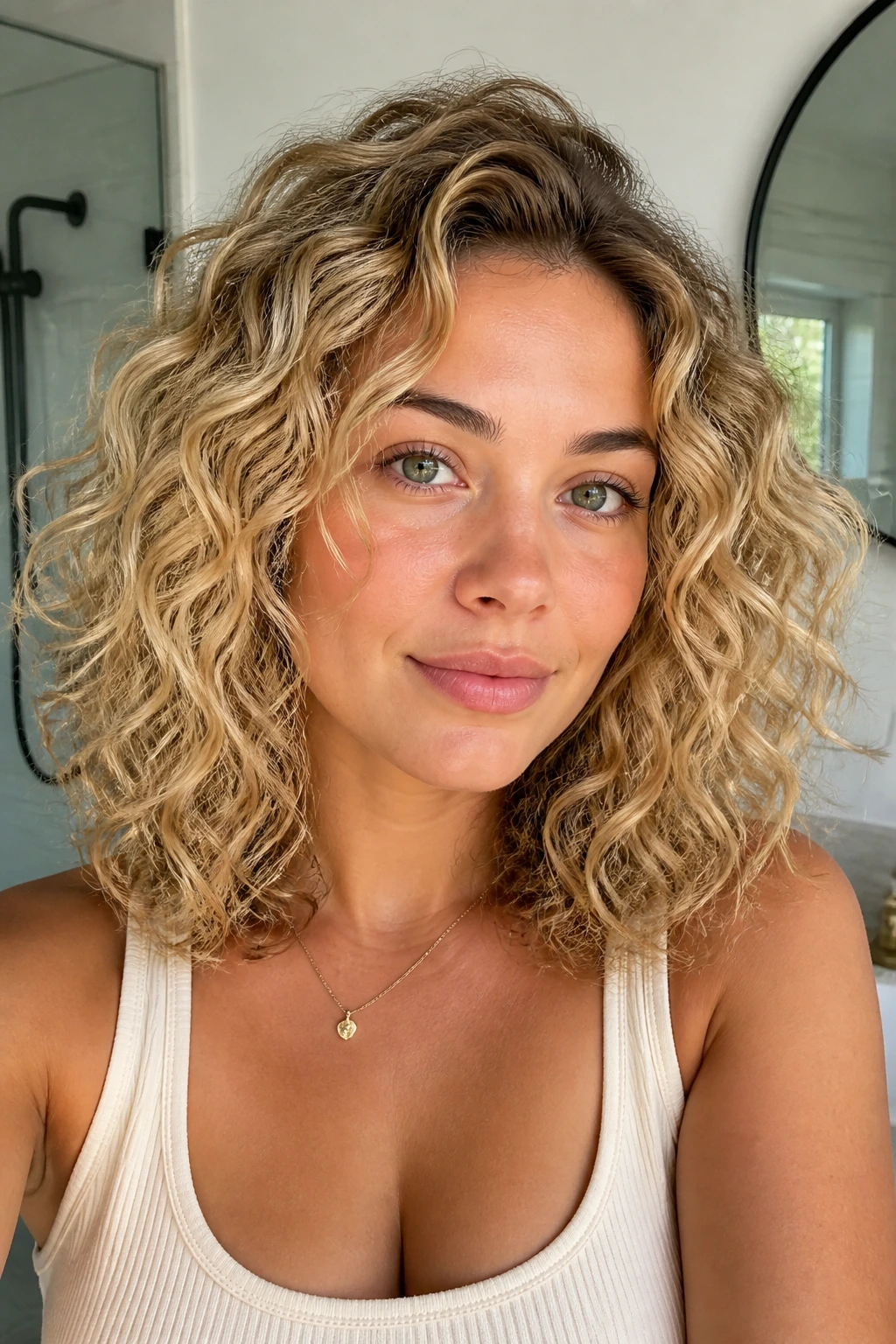
A blonde curly lob can go in two very different directions, and both can look good if you stop fighting the hair. Air-dried styles look softer and a little lived-in. Diffused styles look cleaner, lifted, and more sculpted. Pick one on purpose. Don’t half-commit to both.
For air-dried days: put product on soaking-wet hair, scrunch the ends, and avoid touching the crown while it sets. A lightweight leave-in plus gel usually gives enough hold to keep the lob from expanding sideways. If you need more definition, clip the front pieces back while they dry so they fall forward with a cleaner curve.
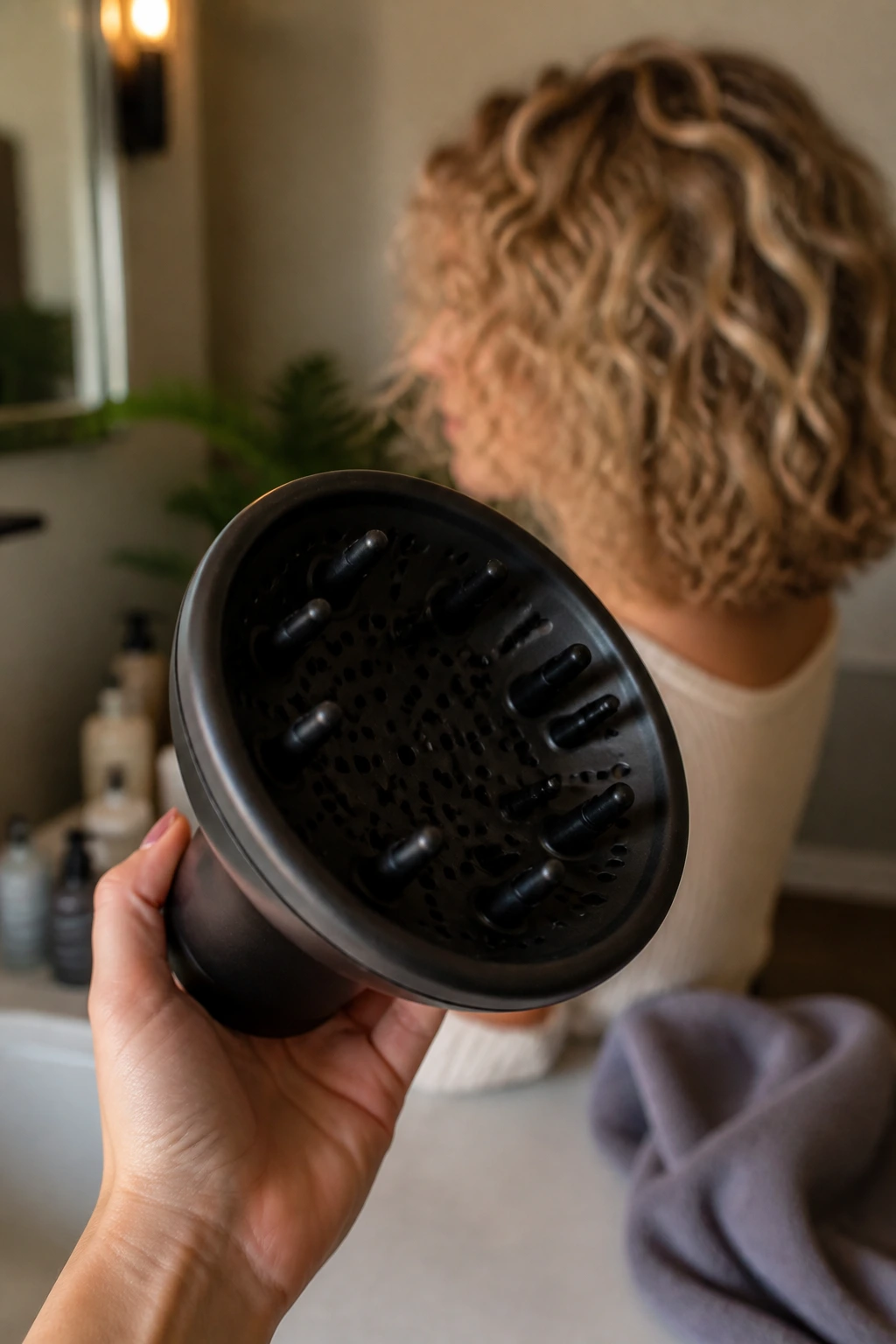
For diffused days: hover the diffuser at the roots first, then cup the curls in sections once the top starts to set. Tilt your head side to side to keep the crown from collapsing. A round face benefits from that extra height. It’s not about making the hair big everywhere. It’s about putting the big where it helps.
Day two is its own animal. Mist the hair with water, work in a teaspoon or two of leave-in mixed with a small amount of gel, and reshape the front pieces with your fingers. That usually saves the whole look.
Essential Tools for These Looks
-
A stylist who cuts curly hair dry or curl by curl: That matters more than the salon chair or the price tag. The curl pattern needs to be seen, not guessed.
-
A diffuser with heat and speed control: High heat can puff out the cut and rough up blonde ends fast.
-
A spray bottle: Useful for reactivating product on day two and reshaping the front pieces without soaking the whole head.
-
Curl cream, mousse, or light gel: The exact mix depends on your hair’s density. Fine curls need less weight; dense curls need more hold.
-
Microfiber towel or T-shirt: Helps keep the blonde pieces from frizzing before they even dry.
-
Purple or violet shampoo: Keep it for icy, pearl, or platinum blondes. Beige and honey tones usually do better with a gentle color-safe cleanser instead.
-
Leave-in conditioner with heat protection: Especially useful if you diffuse or smooth the front pieces.
Smart Salon Notes Before You Book
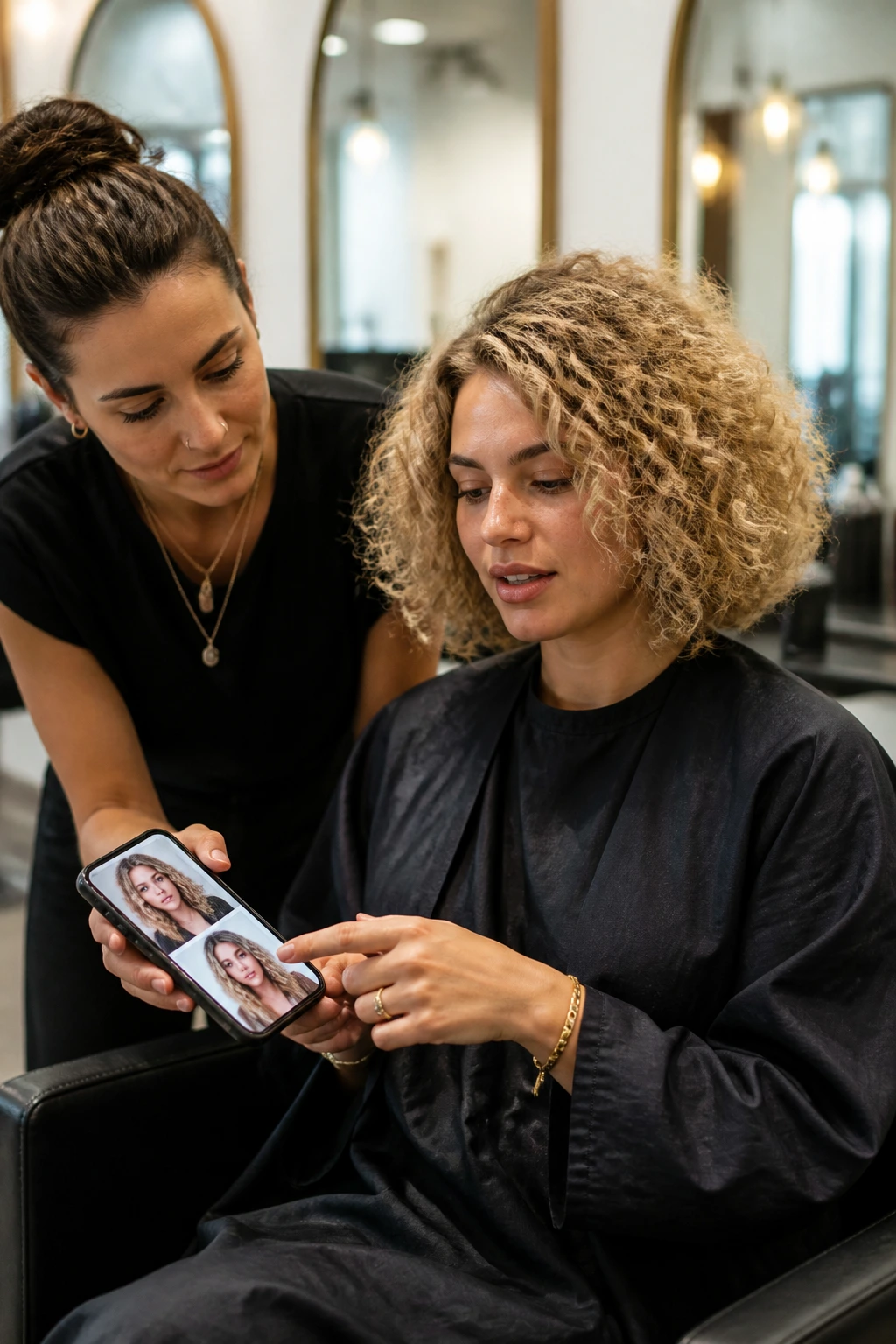
Bring at least two photos to the appointment: one for shape and one for color. One picture rarely covers both well, and curly hair needs both pieces explained. A cut you love might have a color you hate, and the reverse is just as common.
Say how your curls behave on a normal day. Mention whether they shrink a little or a lot, whether you air-dry, and whether you wear a side part or center part most often. Those details change the entire lob. A stylist who knows your routine can place the face-framing pieces in the right spot instead of guessing.
If you want blonde that stays soft, ask for root shadow or lowlight depth somewhere in the interior. That tiny bit of darkness keeps curly hair from looking flat under the bright pieces. If you want a more dramatic look, ask for concentrated brightness around the front and crown. Either way, speak in terms of shape and placement, not just “make me blonder.”
Common Mistakes That Make a Lob Wider Than You Wanted
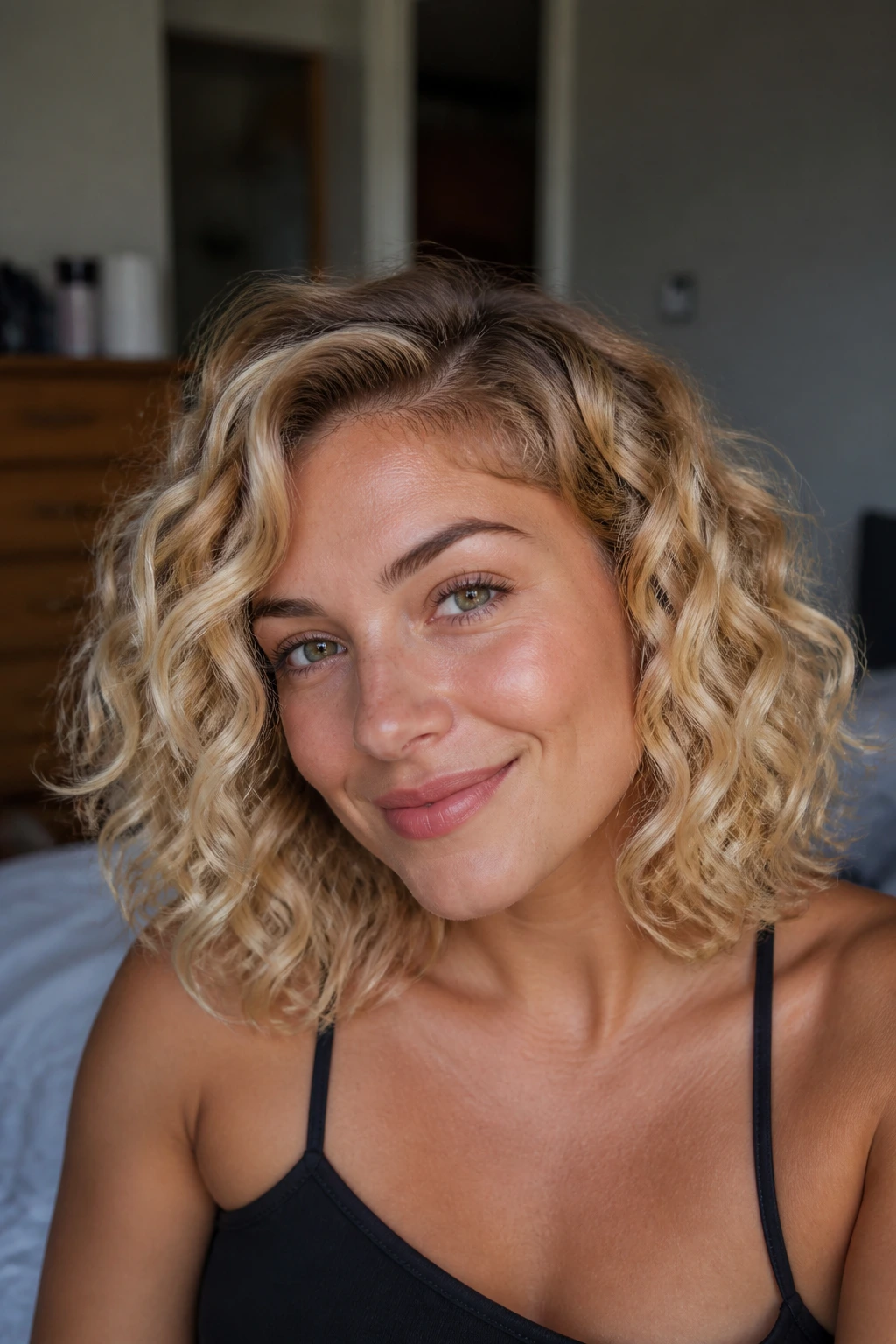
A few errors come up again and again, and they’re fixable if you know what to watch for.
-
Cutting the shape too short at the chin: The ends hit the widest part of the face and the whole cut looks boxy. Ask for collarbone length or longer if your curls bounce up.
-
Putting too much blonde at the sides: Bright panels beside the cheeks widen the face fast. Keep more of the light around the front pieces and crown.
-
Over-thinning curly hair: The cut turns frizzy and ragged at the ends. Dense curls need weight, not shredding.
-
Using the same product on every curl type: Fine curls get limp. Thick curls get dry. Match the hold to the density.
-
Skipping a toner plan: Blonde turns brassy or dull, and then the whole lob loses its shape definition. Schedule toner or gloss touch-ups before the color looks tired.
-
Forcing a straight finish every day: The curl pattern gets stretched, then the lob expands unevenly as soon as humidity hits. Better to work with the bend than fight it.
Variations and Adaptations to Try
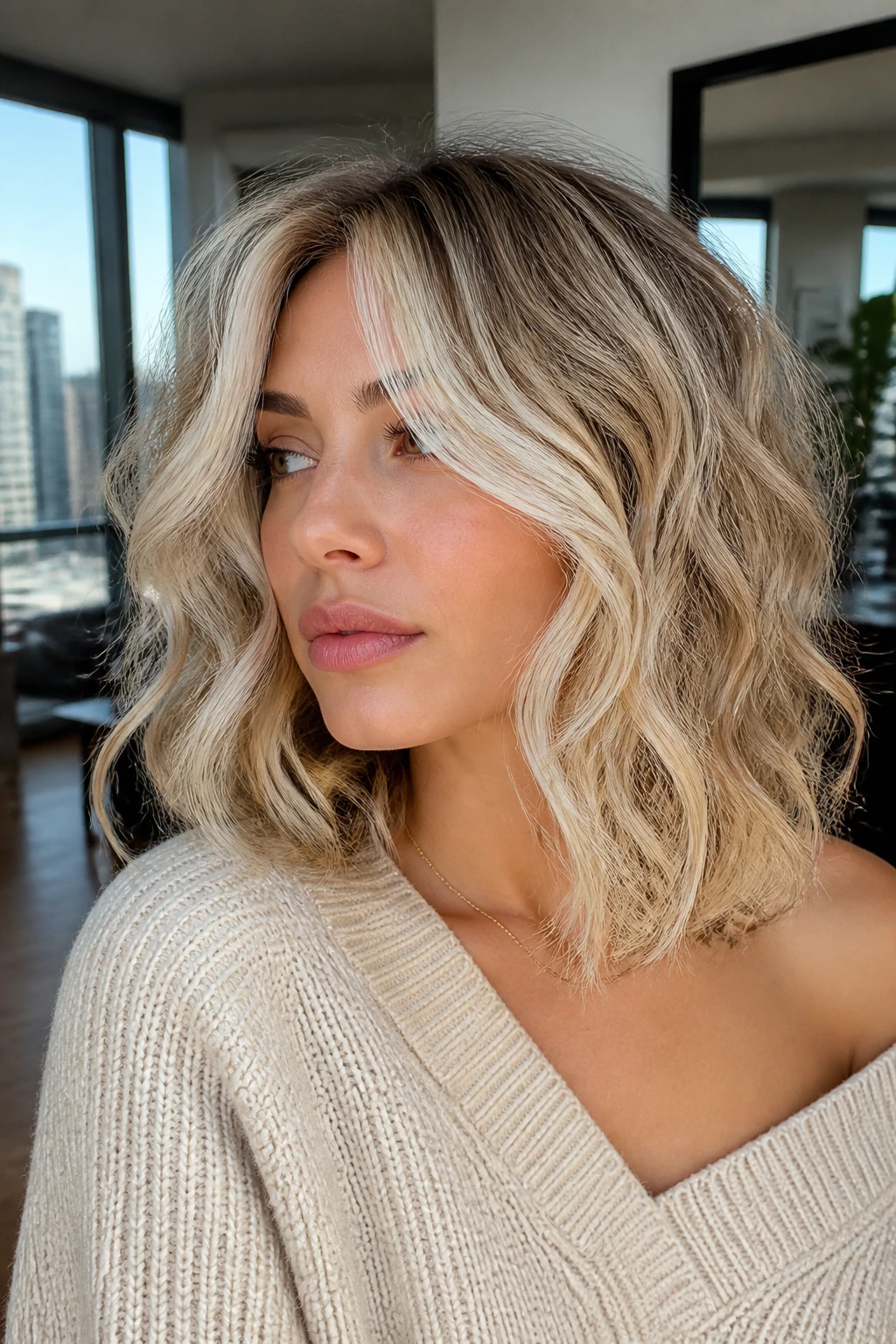
The Fine-Curl Feather Lob
Keep the perimeter clean and the layers long. Fine curls need visible structure, not a lot of interior carving, or the ends go see-through and the blonde reads patchy.
The Dense-Curl Weight-Kept Lob
Ask for a fuller bottom edge and selective removal of bulk only where the hair stacks up at the sides. This keeps the lob from turning into a triangle by lunchtime.
The Low-Maintenance Beige Grow-Out
Use a soft root shadow with beige blonde ribbons through the mids and ends. The grow-out stays polite, which is helpful if salon visits are spread far apart.
The High-Contrast Honey Frame
Brighten the front pieces and crown more boldly while keeping the interior darker. It gives the face a lifted look without bleaching every strand to the same level.
The Ice-Ribbon Statement Lob
Keep the base cool and add narrow platinum pieces rather than full saturation. The effect is sharper, but the curls still show their shape instead of disappearing under color.
Maintenance, Toning, and Trim Timing
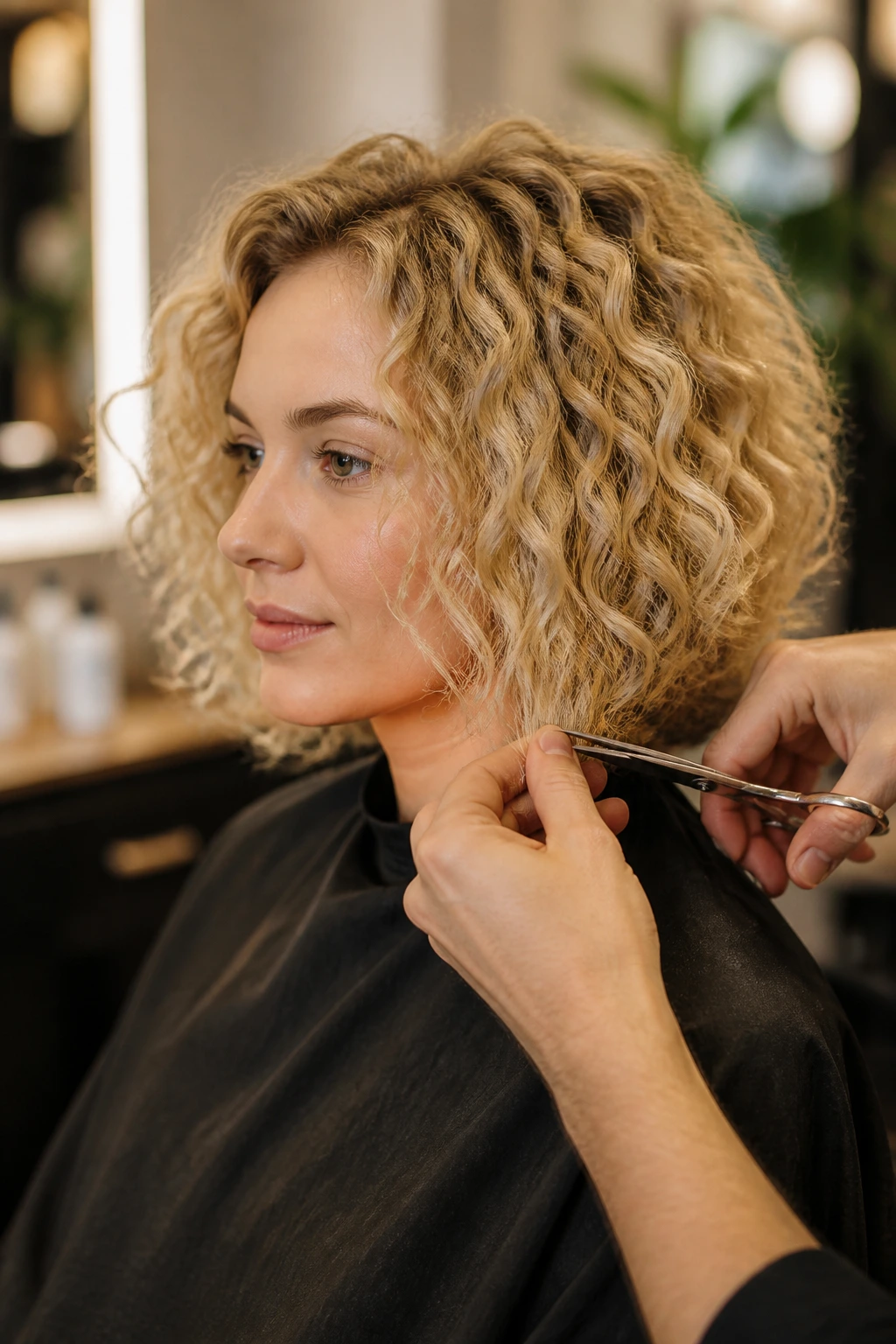
Curly blonde lobs need a little regular attention, but not the kind that eats your whole week. A trim every 8 to 10 weeks keeps the perimeter from turning fuzzy and helps the layers keep their shape. If your hair grows slowly or you like a softer grow-out, you can stretch that a bit longer. Once the front pieces start landing at the cheek again, the balance usually shifts and the roundness comes back.
Toner and gloss timing depends on the shade. Platinum and ice blondes usually need more frequent toning, sometimes every 4 to 6 weeks if the brass shows fast. Beige, honey, and almond blondes can often go longer, especially if you use color-safe shampoo and avoid too much heat. Purple shampoo helps with brass, but don’t overuse it. One wash every 1 to 2 weeks is enough for many blondes. More than that can make the tone look flat or dusty.
Hydration matters too. Curly blonde hair likes a weekly mask, even a simple one. Keep the mask on the mids and ends for 10 to 15 minutes, then rinse thoroughly. On refresh days, a mix of water and leave-in in a spray bottle can reset the curls without loading them down. If the ends start feeling straw-like, stop reaching for stronger hold products and give them moisture first. Blonde hair complains in a very honest way.
Frequently Asked Questions
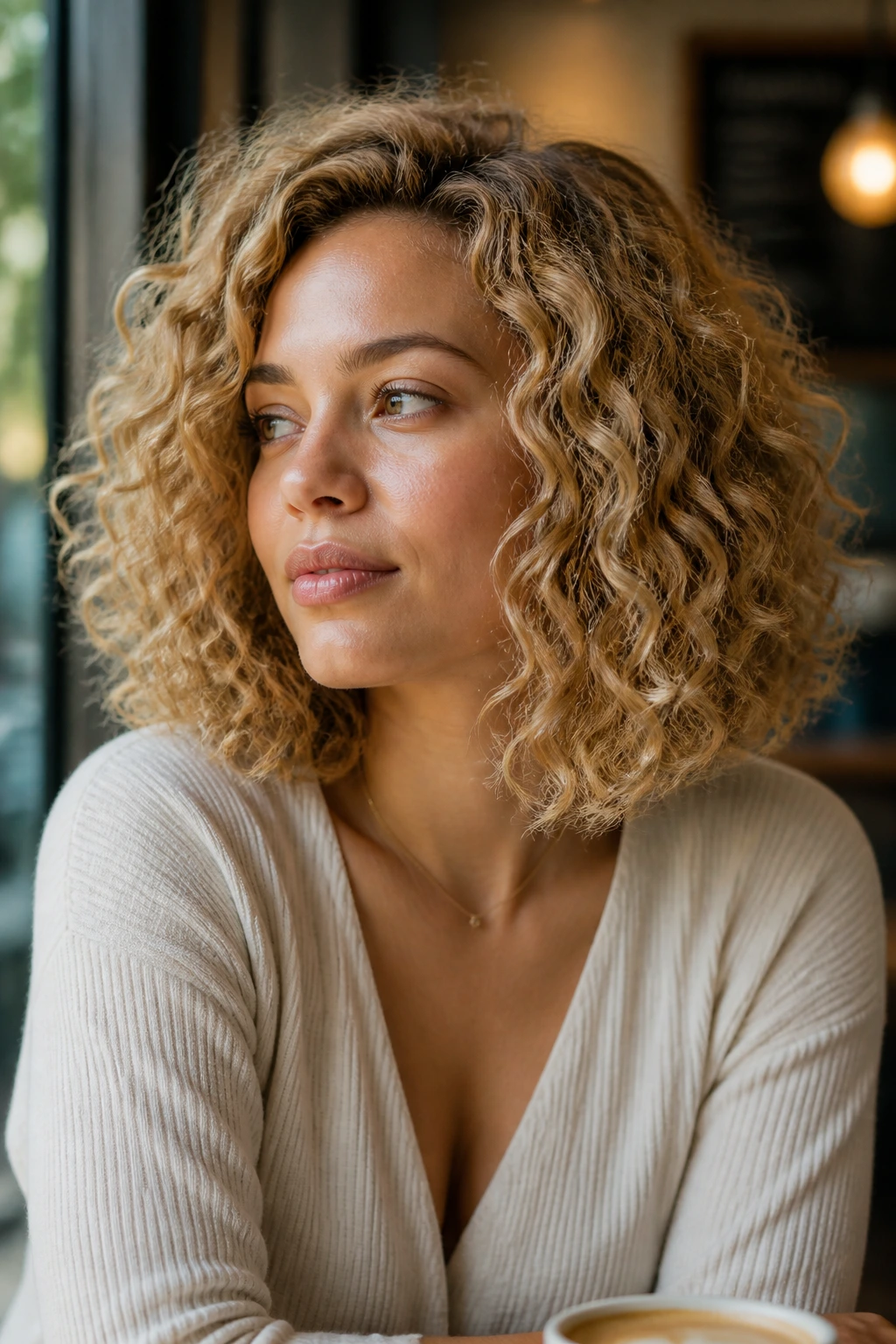
What lob length is best for a round face with curly hair?
A length that sits between the chin and the collarbone is usually the safest range. That keeps the cut from ending at the widest part of the face, and it leaves room for curl shrinkage so the style doesn’t jump upward after drying.
Should curly lobs be cut wet or dry?
Dry cutting is often better for curls because the stylist can see the real shape and where each curl sits. Wet cuts can work, but only if the stylist knows how much your curl pattern springs up once it dries.
Will a lob make my face look wider?
It can, if the cut ends at the jaw or the blonde is concentrated too heavily at the sides. A longer perimeter, a bit of crown lift, and face-framing pieces that start below the cheekbone usually solve that problem.
Can I wear a center part with a round face?
Yes, if the lob is long enough and the front pieces drop below the cheekbones. A center part works best when the cut has some vertical length and the color isn’t too heavy beside the cheeks.
How often should blonde curly hair be toned?
Platinum and icy shades may need toning every 4 to 6 weeks. Honey, beige, and almond blondes often hold longer, especially if you use color-safe shampoo and limit hot tools.
Do layers help curly lobs or make them puffier?
Long layers help when they’re placed with care. Too many short layers near the face can widen the silhouette, but a few well-placed layers keep dense curls from turning into a triangle.
What if my curls shrink a lot after the cut?
Tell the stylist your shrinkage range before the haircut starts. If your curls bounce up 2 inches or more, the lob should usually be cut longer than you think you need so it lands in the right place once dry.
Can this shape work on loose waves too?
Absolutely. Loose waves often look especially good in a lob because they keep the cut soft without adding too much width. A beige, honey, or golden blonde tone tends to make the shape look even more relaxed.
The Shape That Keeps Its Cool
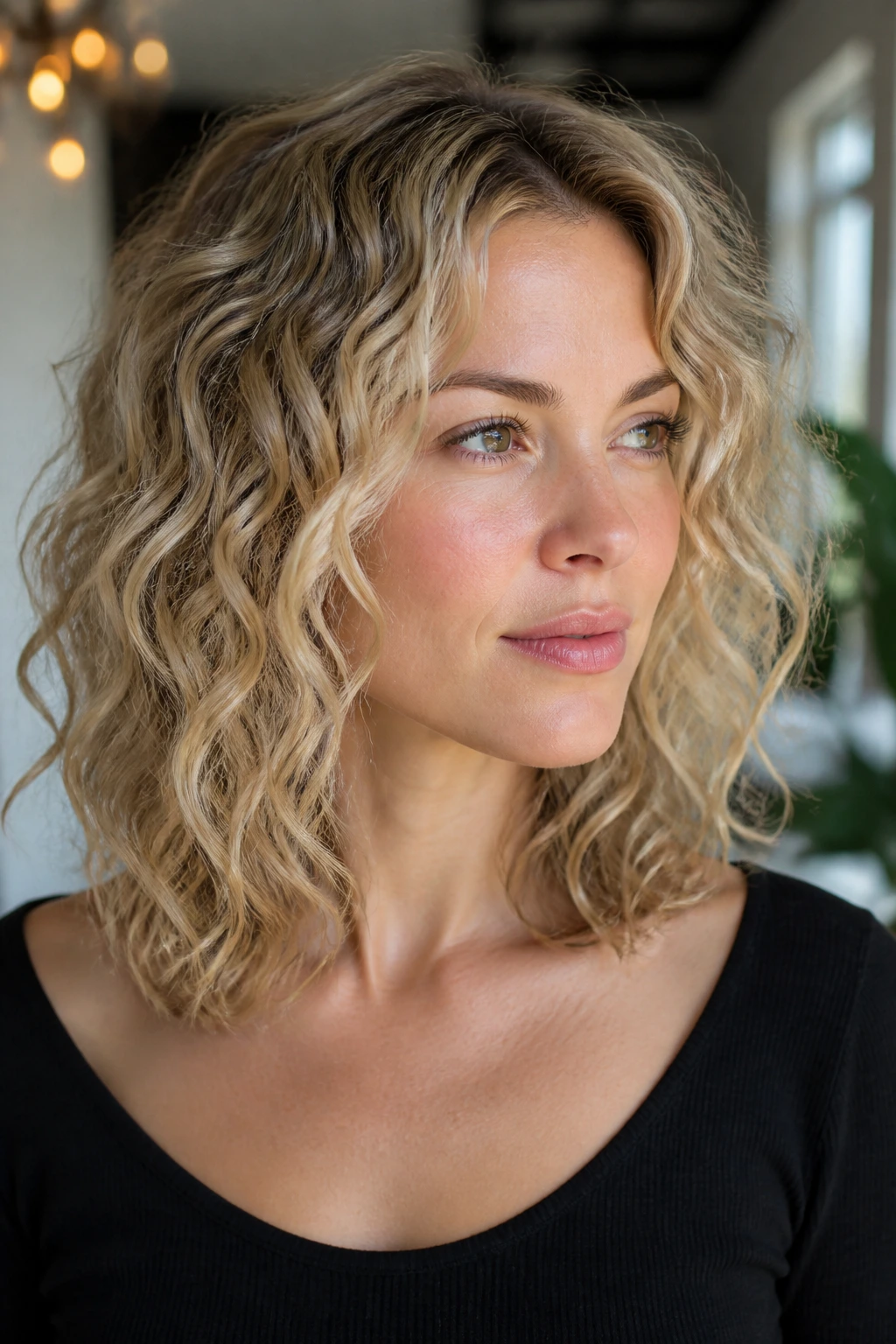
A good blonde lob on a round face doesn’t have to be dramatic to be flattering. It just has to land in the right place, leave the curls enough room to move, and carry enough depth in the color that the whole cut still reads as dimensional. That’s the part people miss when they chase a single photo.
The best versions here don’t fight the curl pattern. They guide it. They let the light in, keep the sides under control, and avoid that blunt, wide line that makes round faces look broader than they are. That’s why the collarbone length keeps showing up, and why the blonde tones with roots and ribbons tend to win.
Bring one good reference photo, yes. Bring notes about shrinkage, too. Those two details are usually enough to steer the cut toward something you’ll actually wear, not just admire once in the mirror and then pin back with a clip.