



Blonde curly bobs for oval faces with face-framing layers are one of those haircut ideas that looks easy on paper and much trickier in the chair. The shape can be sharp, sweet, breezy, or a little bit louche, and the difference usually lives in the front two inches of hair. Get those front pieces right—cheekbone, lip, or jawline—and the whole cut starts doing something useful instead of just sitting there.
Oval faces have a reputation for being “easy,” which is half true and half lazy salon talk. Yes, an oval face can wear more lengths than most face shapes. But curly hair changes the equation fast. Curls shrink, bunch, and spring in ways straight hair doesn’t, and blonde color makes every bend, ribbon, and puff a little easier to see. A blunt cut with no front shaping can look boxy in a mirror and even boxier in daylight.
That’s why the best blonde curly bobs don’t just chop the length off. They steer the eye. Some use cheekbone-grazing layers to open the face. Some keep the nape neat and let the front drift longer. A few lean French and close to the head; others bring in volume at the crown or a fringe that breaks up the symmetry. The point isn’t to tame curls into obedience. It’s to give them a perimeter that makes sense.
Why These Blonde Curly Bobs Keep Working on Oval Faces
-
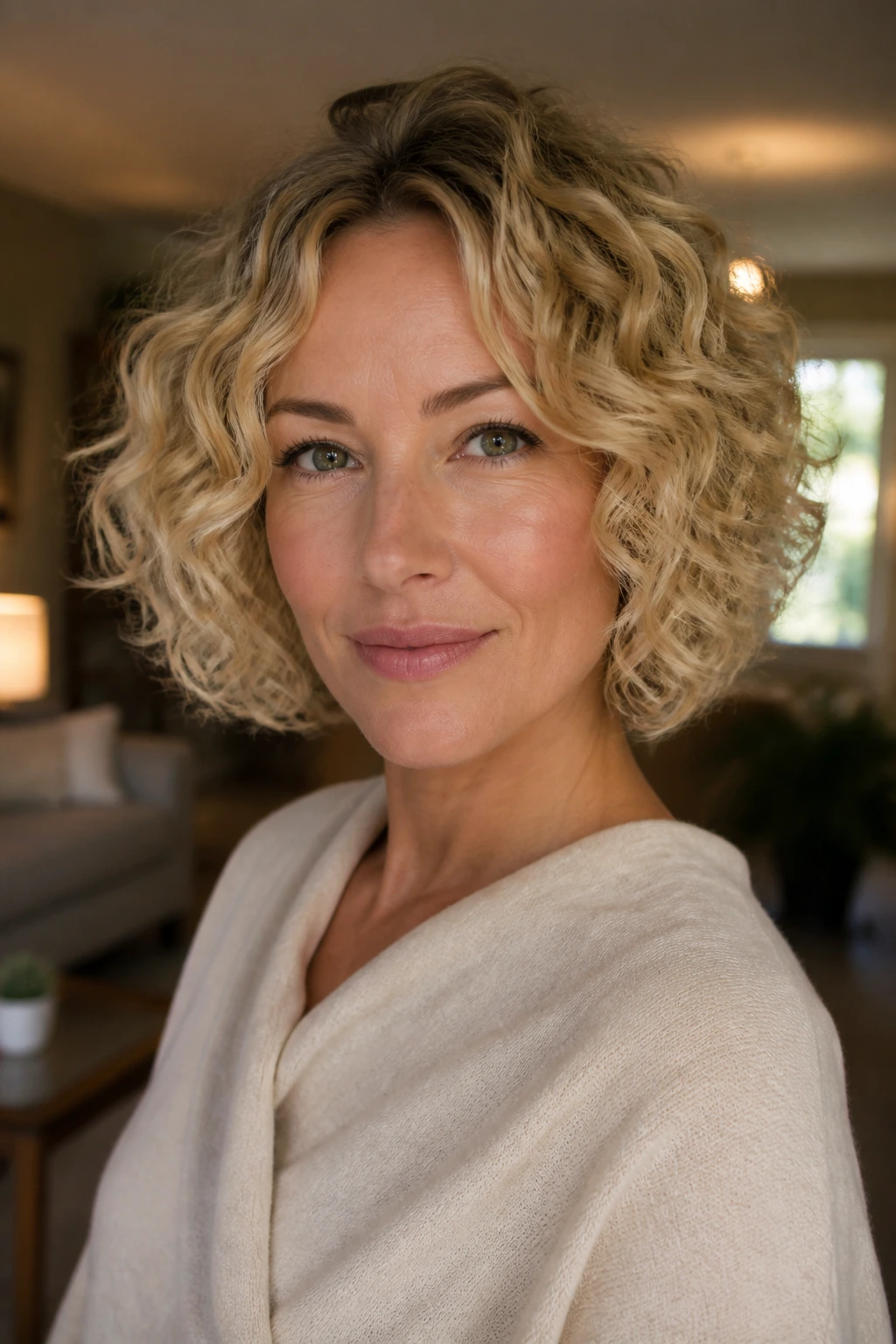
Cheekbone balance: These cuts place the front pieces where an oval face already has structure, so the bob frames the face instead of swallowing it.
-
Curl movement stays visible: Shorter curly hair shows its pattern faster, and blonde tone makes the bends and clumps easier to read from across the room.
-
Face-framing layers do the real work: The best versions use front layers, internal weight removal, or a tapered nape so the outline doesn’t puff into a triangle.
-
Growth-out looks cleaner: A rooted blonde or a bob with longer front pieces still looks deliberate after a few weeks of growth, which matters more than people admit.
-
You get room to play: Center parts, side parts, curtain bangs, micro bangs, and rounded shapes all sit well on an oval face when the curl pattern is given enough space.
Why Oval Faces and Curly Bobs Get Along So Well
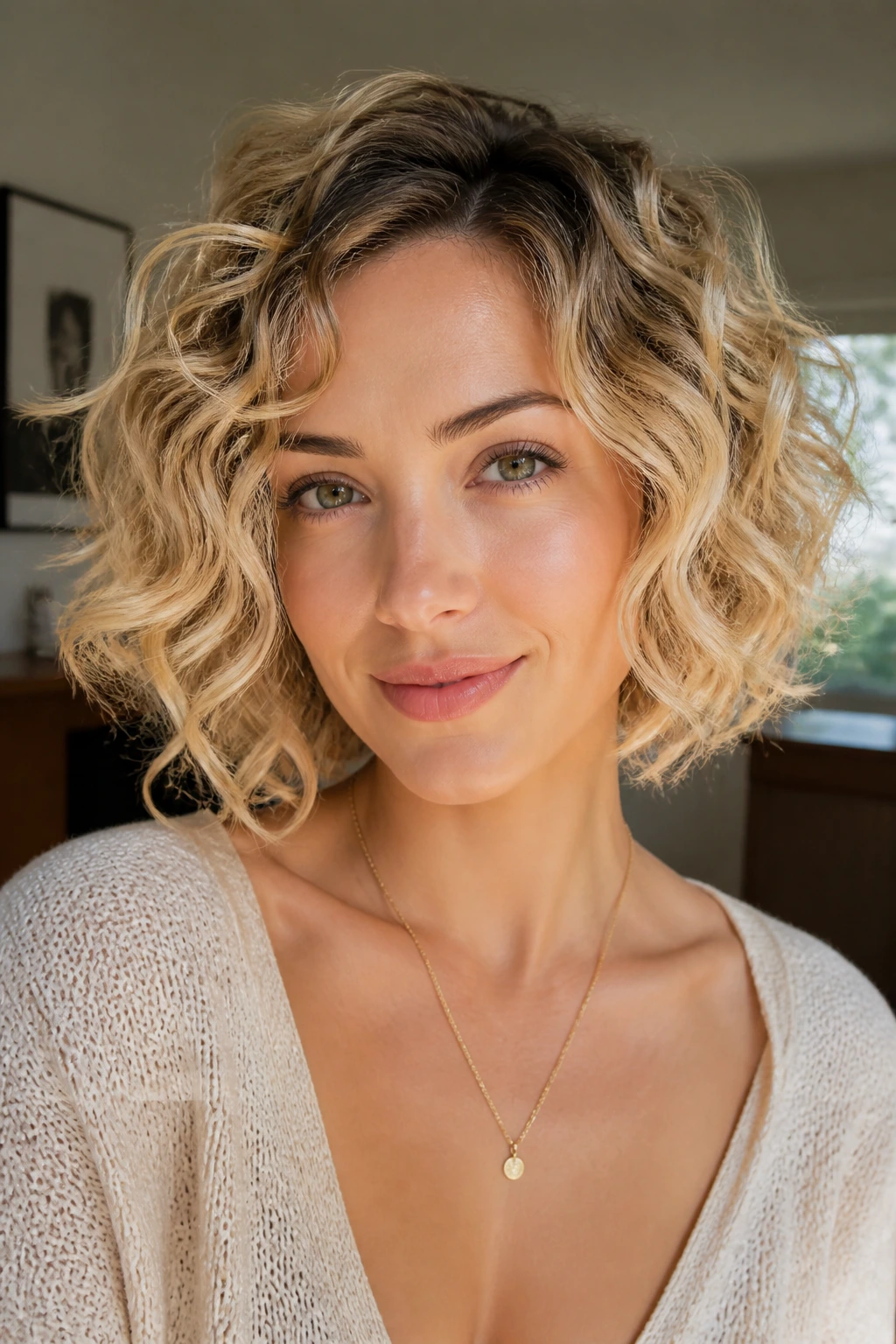
An oval face already gives you a nice amount of balance from forehead to chin, so the haircut doesn’t have to “fix” anything. That’s a gift. It means the bob can be a little shorter, a little longer, a little rounder, or a little sharper, and the shape still reads as intentional if the front pieces are placed well.
Curl changes where the weight lands. A straight bob can sit exactly where you ask it to. A curly bob often rises an inch or two once it dries, which is why the front framing matters so much. If the face-framing layers start too high, the cut can look choppy. Too low, and the face starts to feel longer than it is. The sweet spot is usually somewhere around the cheekbone to lip line for a lighter look, or the jawline if you want more softness and swing.
Blonde tones add another layer of trickery—in a good way. Honey, beige, champagne, and butter tones show dimension better than a flat single shade, and that dimension makes the curl pattern look deliberate. A blunt, monochrome blonde on curly hair can go helmet-shaped fast. A bob with some shadow at the root and some brightness around the face usually feels much more alive.
The Layer Placement That Keeps the Shape Intentional
Cheekbone Start Points
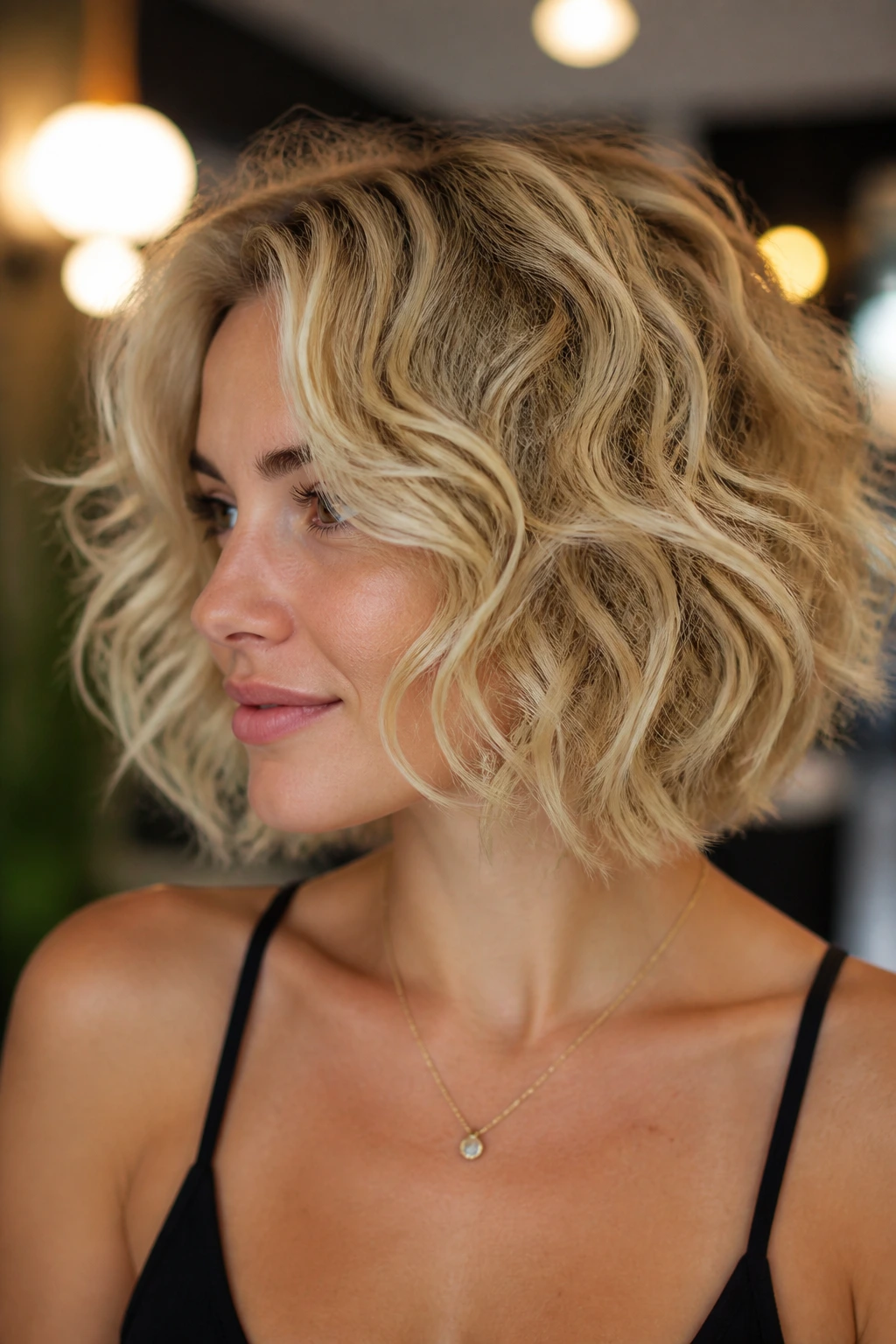
Cheekbone-grazing layers are the easiest way to keep an oval face open. They draw the eye upward and outward, which gives the cut lift without making the sides too wide. If your curls are medium to tight, that starting point often keeps the front from collapsing into a heavy curtain.
Lip-Line Layers
Lip-line layers give you a softer frame. They’re especially handy if your face leans longer within the oval family or if you like the front pieces to curl in and out around the mouth. There’s a reason this length keeps showing up in good French bobs. It flatters without shouting.
Jawline and Collarbone Framing
Jawline and collarbone pieces are your move if you want a little more length up front. They work well when your curls shrink a lot or when you prefer a bob that can tuck behind the ear without losing its shape. The back can stay shorter and cleaner while the front keeps the line moving.
1. Sunlit Chin-Length Curly Bob with Cheekbone Layers
A chin-length bob with cheekbone layers is the cut I reach for when someone wants the face to stay visible. The blonde should live in soft ribbons rather than one flat sheet; a few brighter pieces around the front make the curls read as shape, not just volume. On an oval face, that chin-length perimeter keeps the silhouette tidy while the cheekbone layers stop the sides from feeling square.
Best curl pattern
If your hair sits between loose waves and springy curls, this version tends to behave. The curls have enough bend to show the cut, but not so much shrinkage that the front disappears overnight.
- Ask for the shortest front piece to land just below the cheekbone.
- Keep the nape slightly shorter so the bob tilts forward.
- Diffuse until the roots are dry before you break the cast.
My favorite detail: a half-inch in the front matters more than a whole inch in the back.
2. Butter-Blonde French Bob with a Soft Center Part
A soft center part gives this French bob its shape without making it stiff. Butter blonde keeps the finish warm and creamy, which matters because curly hair can look a little harsh if the tone turns too pale or too ashy. The face-framing layers should skim the upper cheeks, then drop away before the mouth so the bob doesn’t feel crowded around the nose and lips.
What I like here is the restraint. The cut sits close enough to the head to feel polished, but the curls still move. If the front pieces are cut with a light point, not a blunt line, the whole thing avoids that old-school mushroom effect people pretend not to notice.
This is a good choice if you want a bob that looks finished with almost no extra styling. It also suits oval faces that don’t need a big amount of width at the temples. A soft center part gives the curls a mirror-image frame, and that symmetry looks calm rather than boring when the length is kept just under the jaw.
3. Rooted Beige Blonde Bob with Long Front Pieces
Rooted blonde is your friend here. The shadow at the scalp keeps the crown from looking dry or over-lightened, and the beige ends give the curls a quiet shine instead of a chalky flash. Long front pieces—usually grazing the jaw or just brushing the collarbone—make this shape good for people who want a bob, but not the feeling of losing too much length at once.
Why it works on an oval face
An oval face can take a long front without getting swallowed by it. The front pieces frame the face vertically, while the back stays cropped enough to read as a bob. That combination gives the cut a little swing when you turn your head.
If your curls are dense, ask for internal weight removal rather than extra layers on the outside. The outside line should still look clean. You want movement, not gaps.
4. Honey Blonde Curly Bob with a Side-Swept Fringe
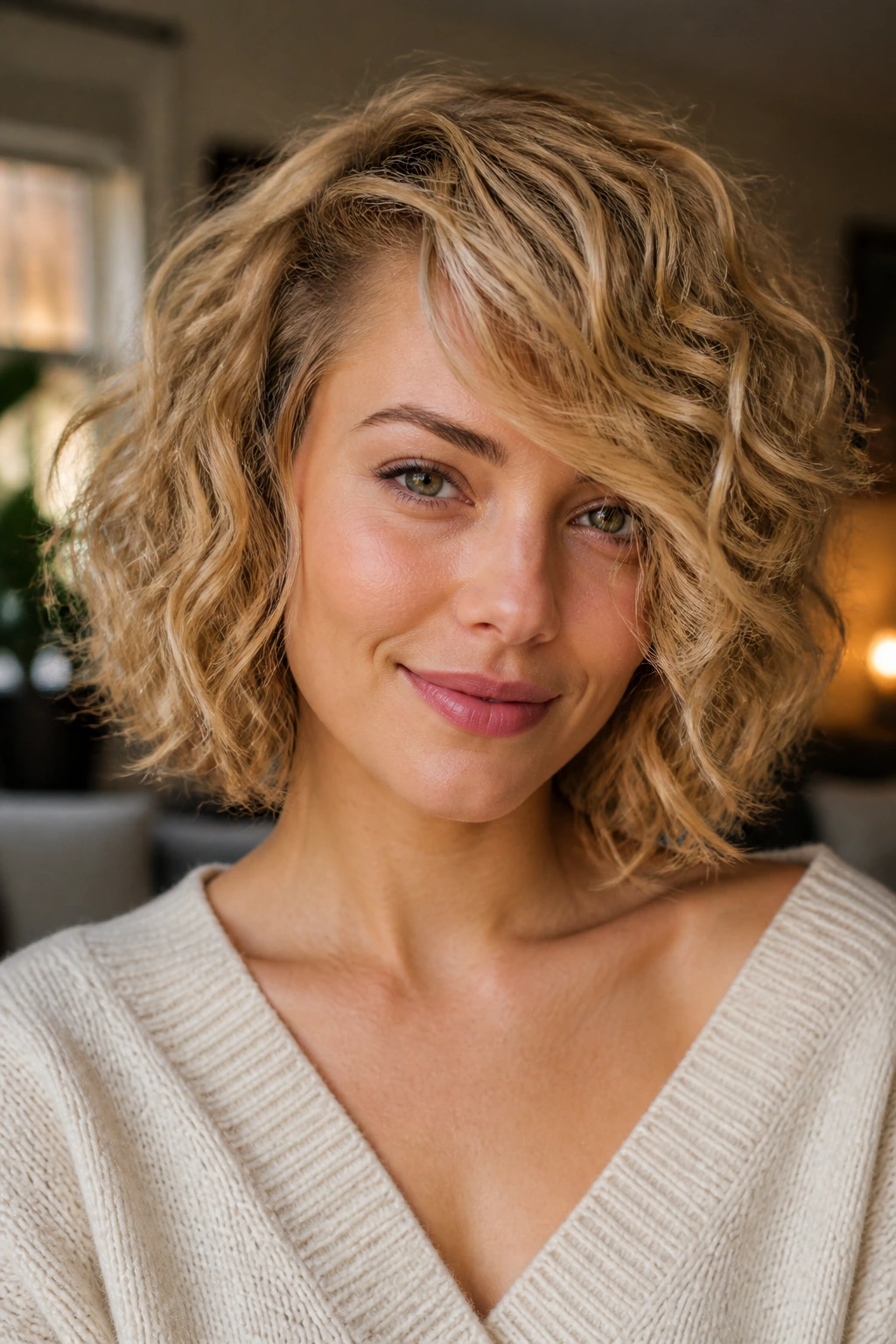
A side-swept fringe is the fastest way to break the symmetry of an oval face when the curls start to sit too evenly around the head. Honey blonde keeps the fringe soft, and the warmer tone helps the curl pattern look plush instead of dry. This version is especially good if you like a little lift at one temple and a little movement across the forehead.
A side part also changes the whole mood of the bob. A center part can feel precise; a side part feels looser, and looser is often better with curly hair. The face-framing layers should be cut so the fringe sweeps into the cheek rather than sitting as a separate chunk.
If your hair tends to collapse at the roots, clip the heavier side up while it dries. It’s a small thing. It changes everything.
5. Champagne Ringlet Bob with Airy Crown Lift
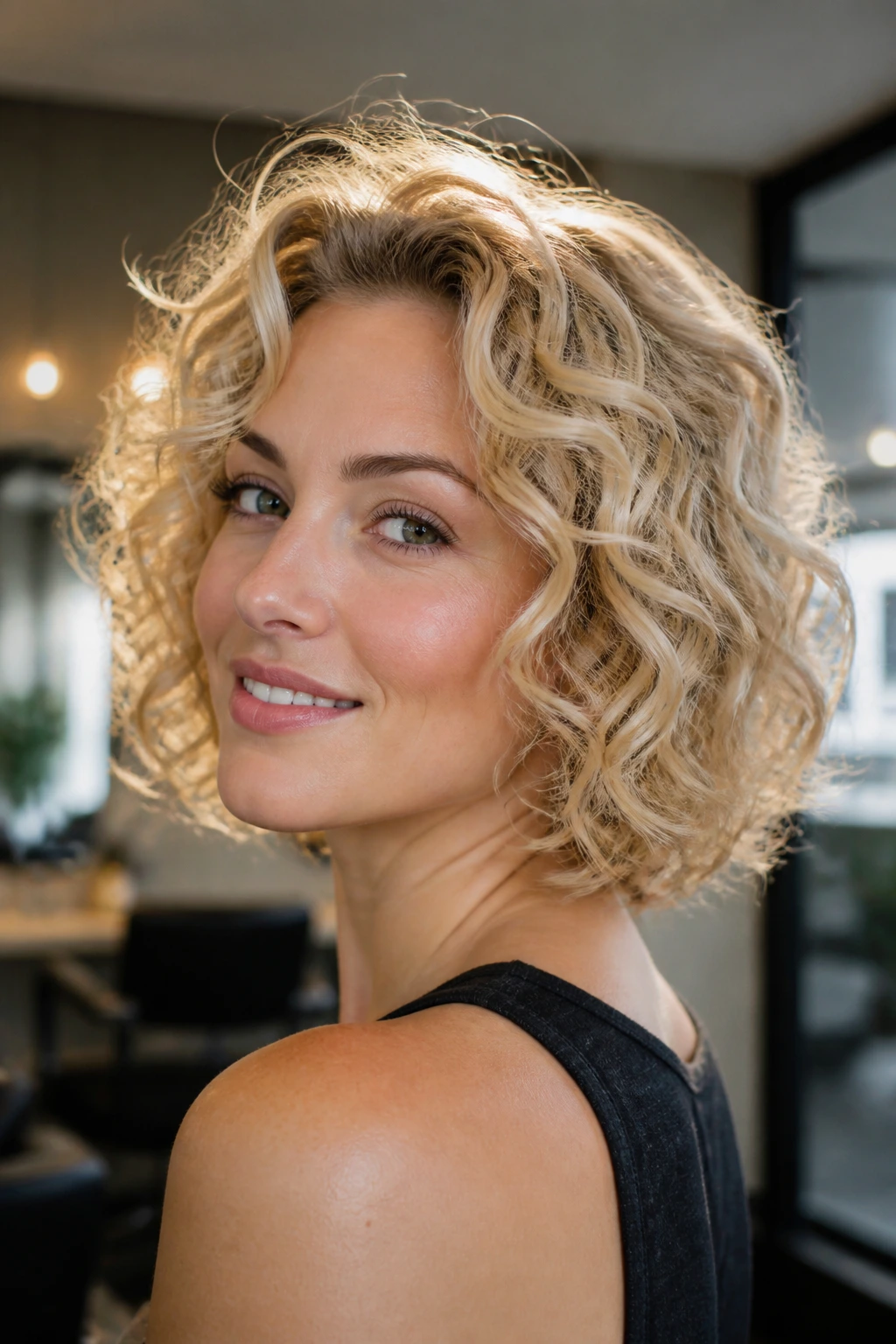
Champagne blonde and ringlets are a clean match because the color picks up every small bend. The secret here is crown lift. Not lion’s-mane lift. Just enough to keep the top from lying flat while the ringlets do their thing around the sides and mouth.
What keeps it from feeling heavy
The top needs breathing room, and the front layers should start a touch higher than you might think. If the crown lies flat, the bob can sink into the face. If the crown is lifted and the sides are kept light, the whole cut looks brighter and more open.
Use a mousse at the roots and a light gel through the mids. Then diffuse in sections. Do not shake the curls apart too early. Champagne tones look best when the ringlets stay grouped.
6. Creamy Blonde Rounded Bob with Jawline Layers
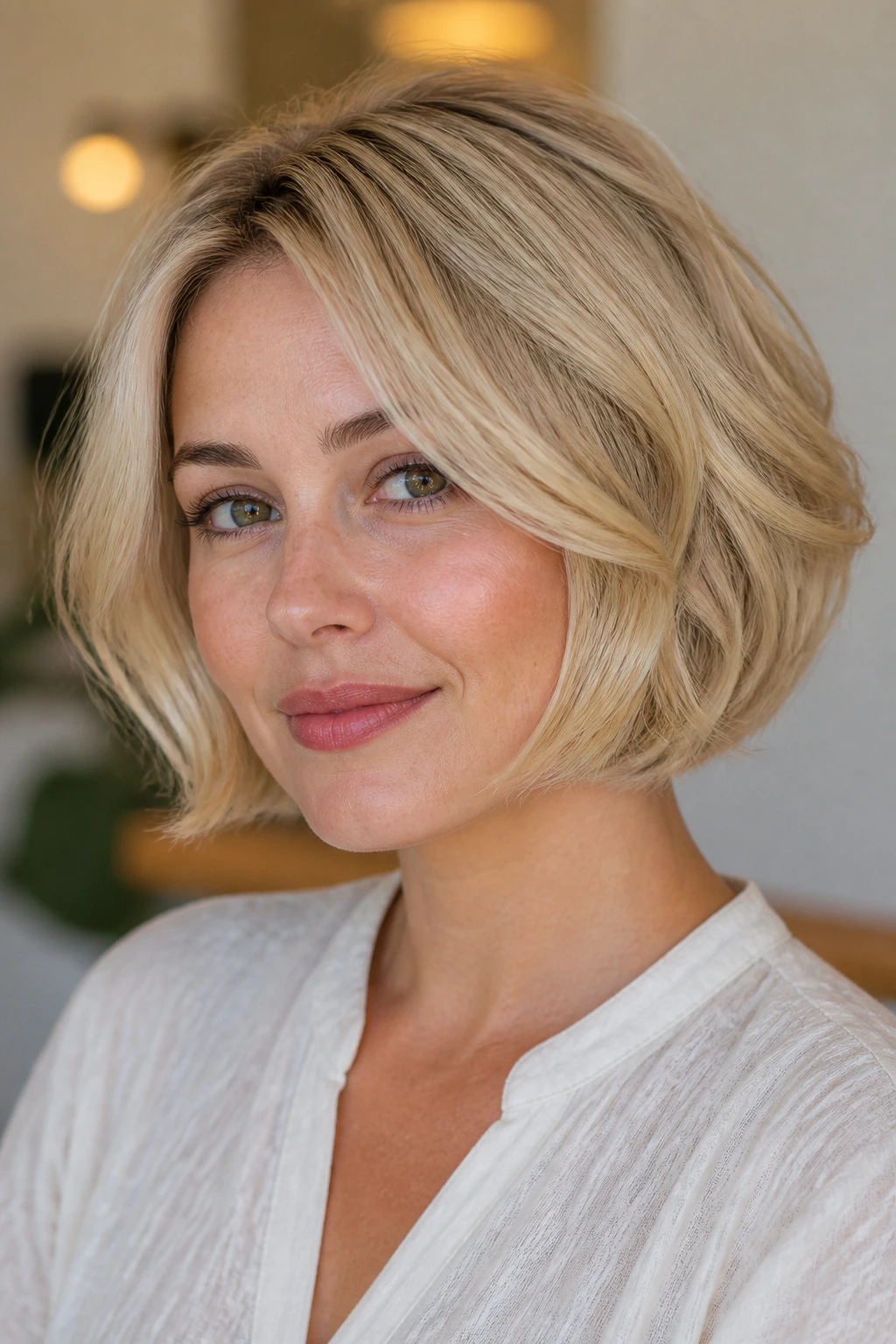
A rounded bob lives or dies by its perimeter, and on an oval face that perimeter can sit right around the jaw without making the cut look severe. Creamy blonde softens the outline, which is useful when you want the bob to feel plush rather than crisp. The face-framing layers should angle inward just enough to follow the line of the jaw.
This version is for someone who likes shape more than drama. It’s the kind of bob that looks good tucked behind one ear, then good again when the curls fall back into place. The rounded silhouette also helps if your curls spread sideways when they dry. A slight inward curve through the front keeps the width where you want it.
It’s tidy, but not fussy. That matters.
7. Golden Balayage Curly Bob with Collarbone-Skimming Front
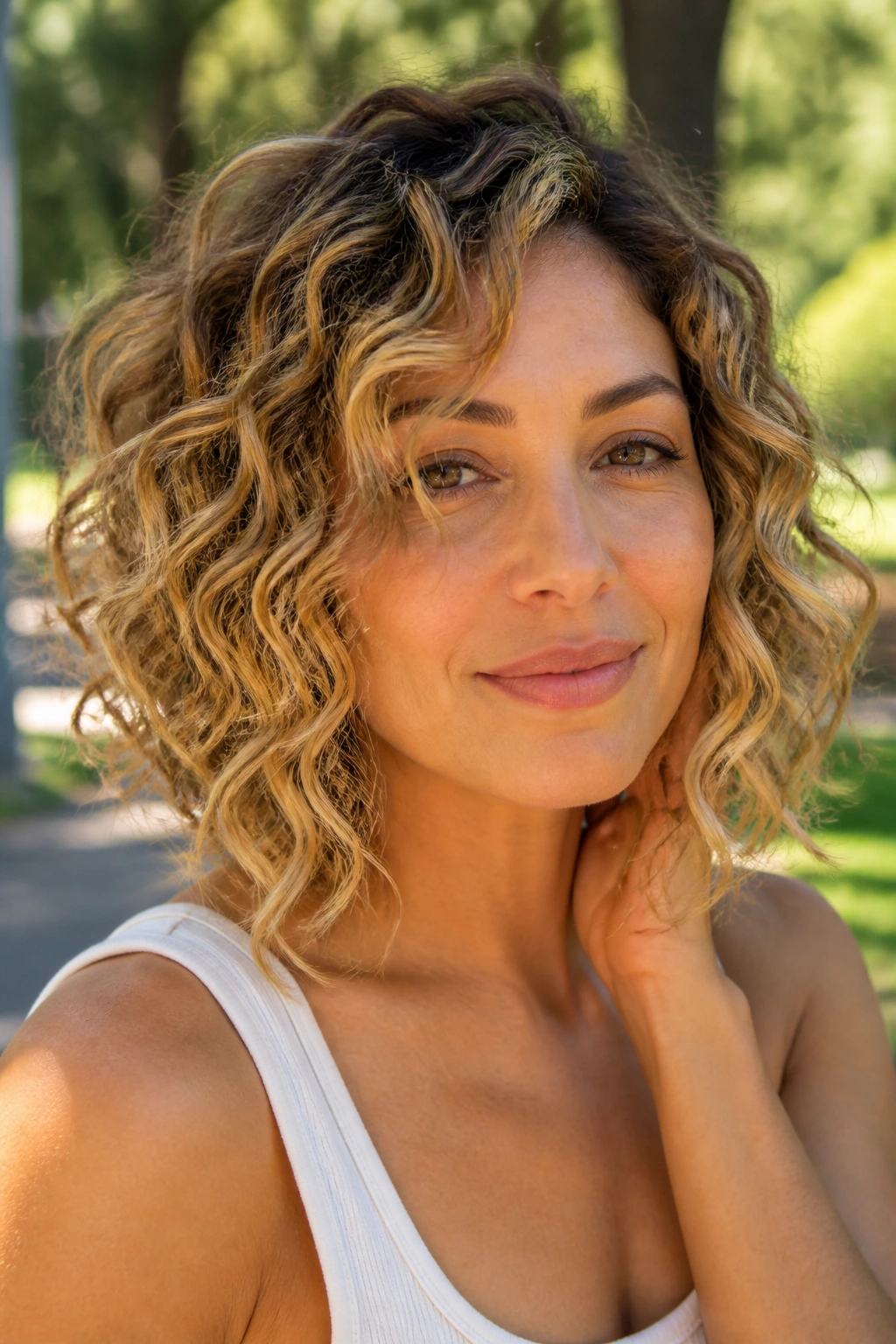
Golden balayage gives the cut motion before you even touch a styling product. The brighter pieces around the front do a lot of visual work, especially when the face-framing layers skim the collarbone and then spring upward as they dry. On an oval face, that little bit of extra length in front prevents the cut from feeling too short or too square.
If your hair has a medium density, this shape tends to shine. The lighter front pieces break up the outline and keep the bob from turning into one solid puff. Ask for the back to stay a touch shorter so the front can do the framing without dragging the whole silhouette down.
This is one of those cuts that looks especially good when a curl falls forward across the cheek. Messy, but in a controlled way.
8. Platinum Curly Bob with Internal Layers for Fine Hair
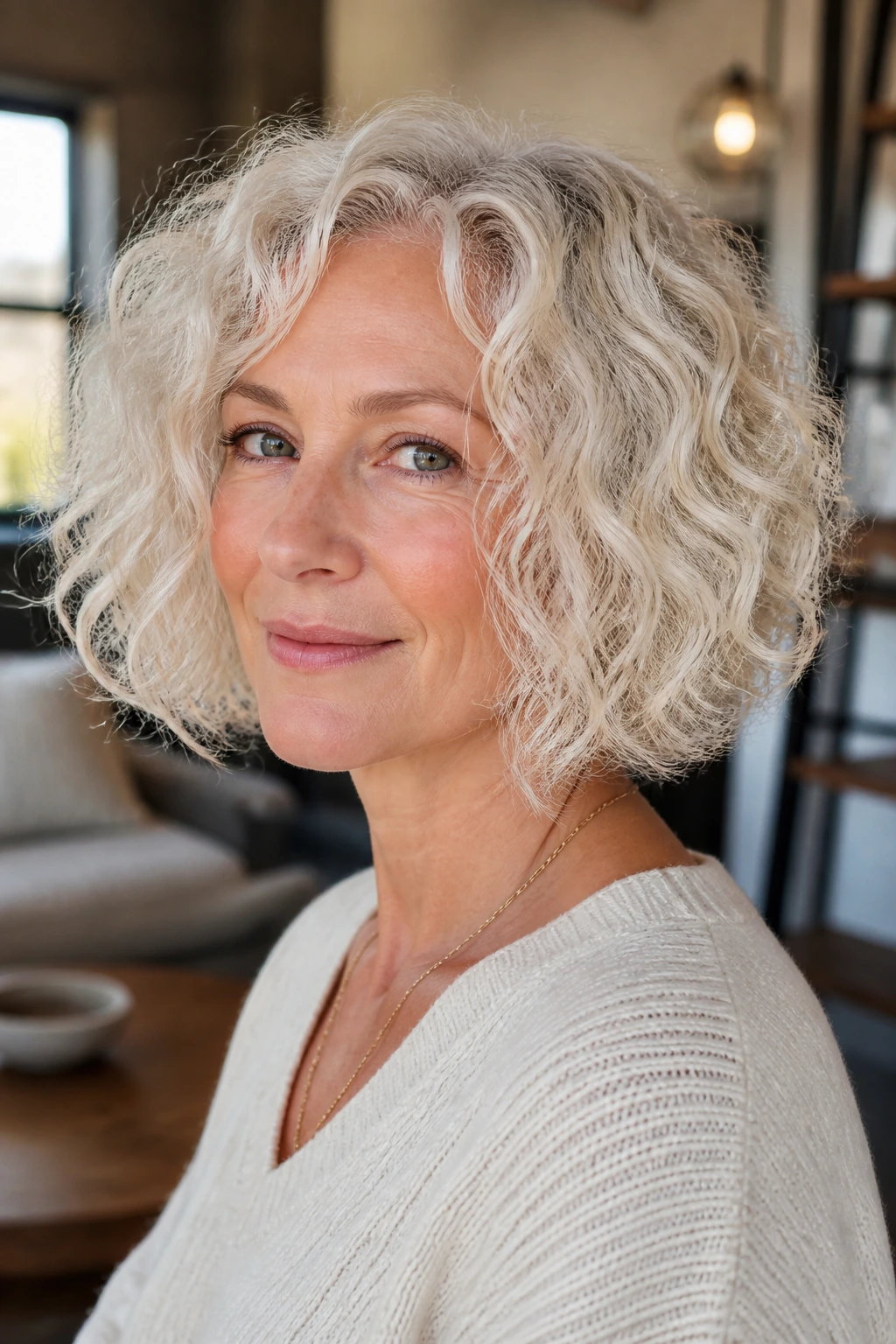
Platinum and curl texture are a demanding pair. The color shows everything, and fine hair shows even more. That’s why internal layers matter here. They remove weight from inside the shape without carving holes into the outer line, which is the mistake that makes fine curly bobs look sparse at the ends.
If you want this cut, keep the front pieces slightly longer than the chin and let the platinum sit on a clean, healthy-looking base. Too much breakage at the ends and the whole thing goes stringy. A bond-building treatment helps, and a gloss keeps the tone from looking flat or dry between salon visits.
Best for: fine curls, loose ringlets, or waves that need a clean silhouette more than a lot of width.
9. Strawberry Blonde Curly Bob with Curtain Bangs
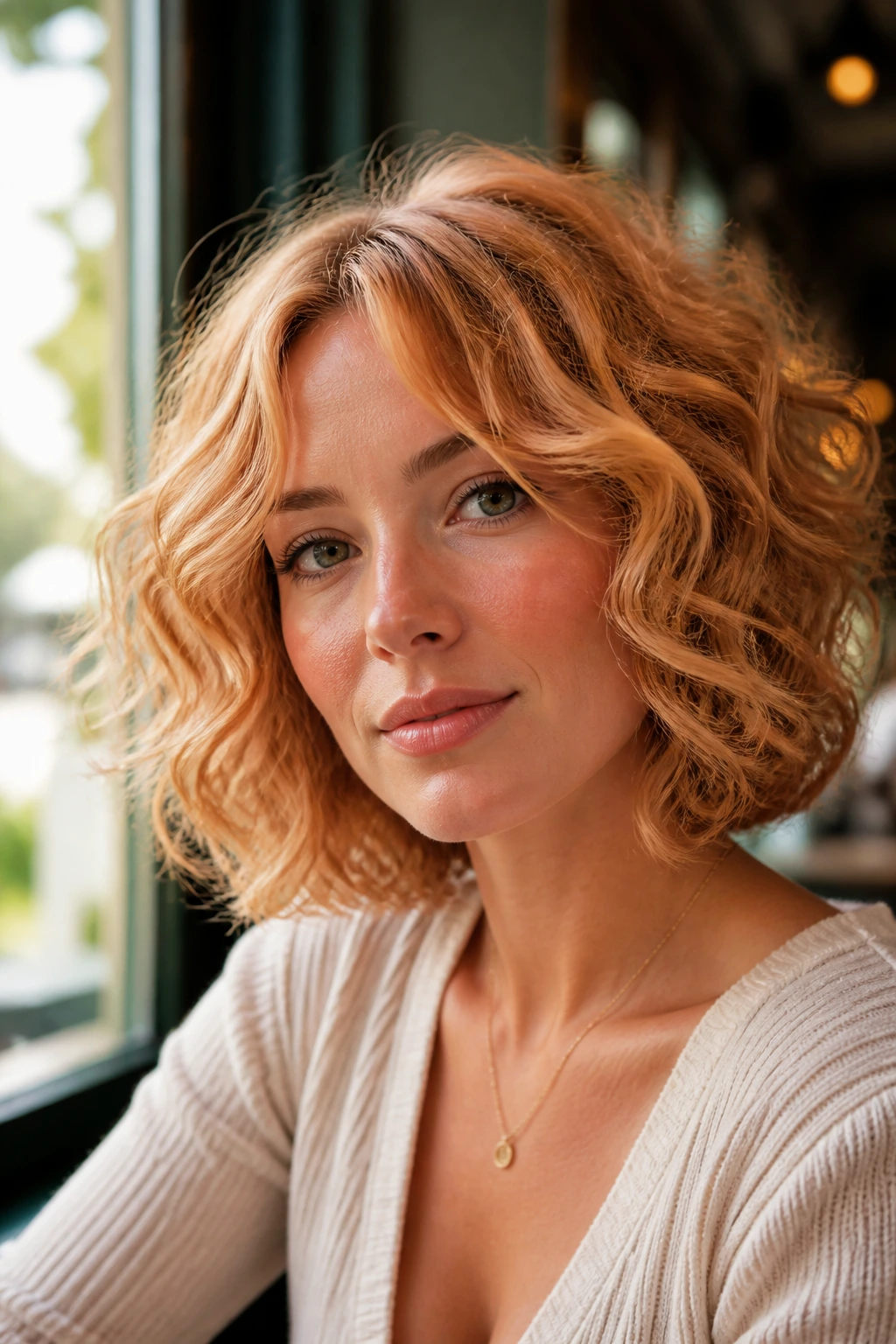
Strawberry blonde has a softness that curtain bangs can use instead of fight. The bangs split at the center and fall into the face-framing layers, which gives an oval face a little extra contour without changing the natural balance of the face. The curls should be cut with enough length in the bang area that they can bend, not stick straight out like a shelf.
This shape is charming in a real, lived-in way. It does not need to be perfect. The curtain fringe can be pushed wider on day two or coaxed back into the center with a damp finger and a touch of leave-in. If your curl pattern is loose, this is one of the most forgiving ways to wear a bob with fringe.
It’s also a good choice if you want the cut to feel a little romantic without getting precious about it.
10. Tapered Ash-Blonde Inverted Bob
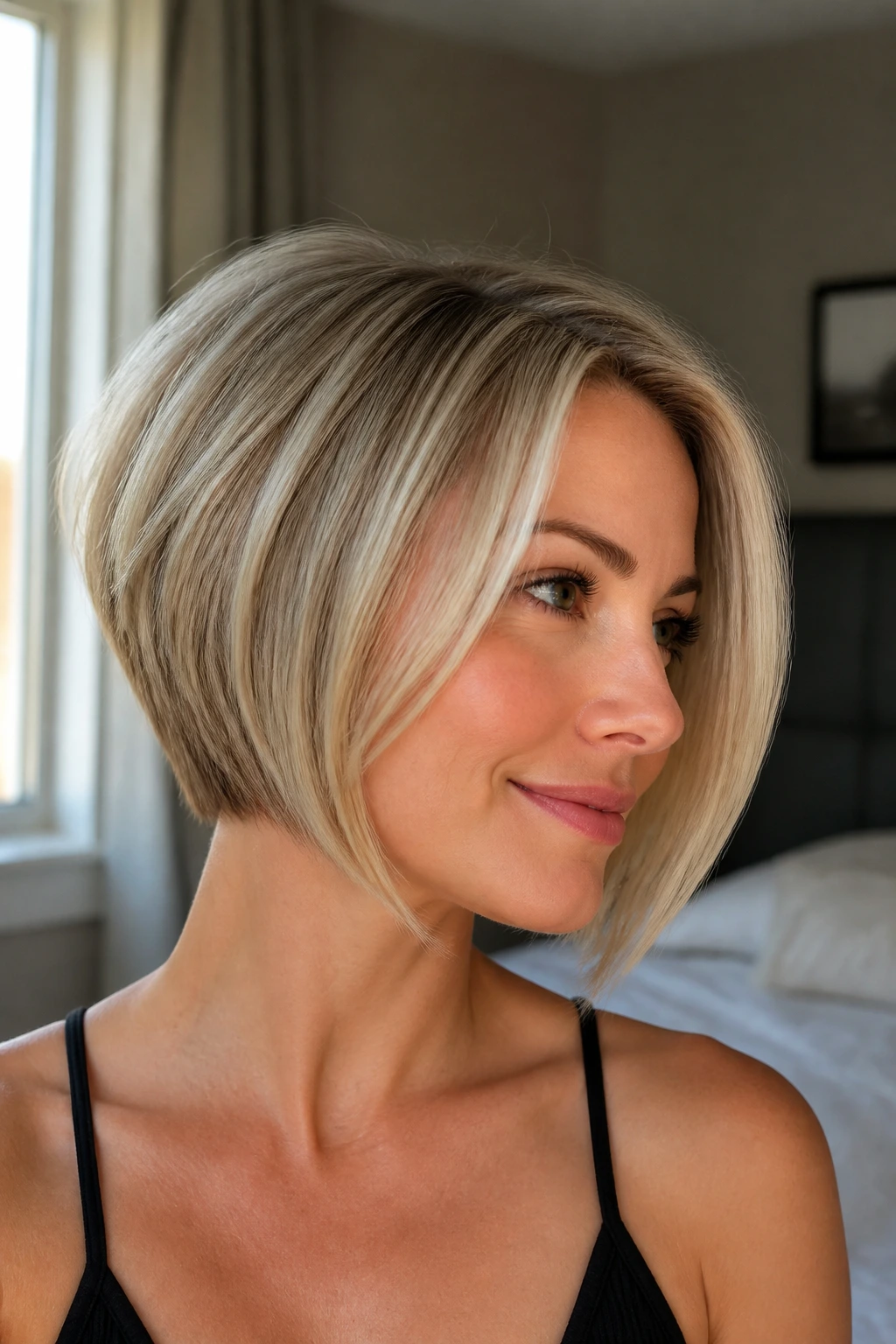
The inverted bob gives you a shorter back and longer front, and that angle can be incredibly good on an oval face. Ash blonde keeps the shape looking sharp rather than sugary. The face-framing layers should be blunt enough to show the line, but soft enough not to look chopped.
This is one of the few curly bobs that can handle a cleaner edge in the nape without losing charm. The back lifts. The front falls forward. The whole thing makes the face feel more open because the eye follows the diagonal. That diagonal is doing more work than people realize.
If your curls are thick at the nape, this cut prevents the back from ballooning. If your curls are fine, keep the taper gentle. Too much stacking and the shape can start to look like it wants to argue with you.
11. Sandy Blonde Bob with Defined Spiral Ends
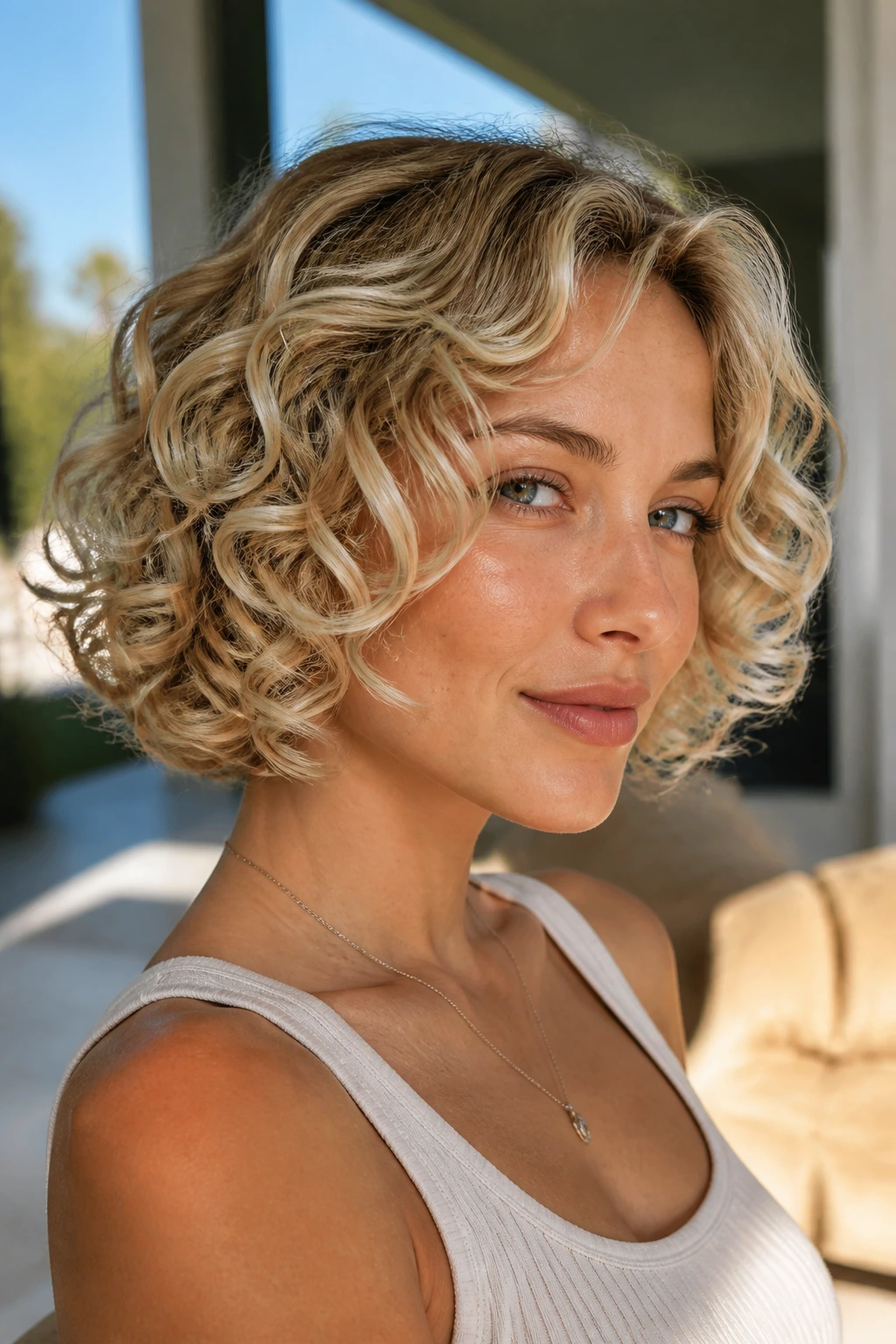
Sandy blonde works best when the curl ends are defined enough to show the movement, not so defined that every strand goes rigid. This bob sits in that good middle place. The face-framing layers can be cut to hit around the cheekbone, then soften toward the mouth so the spiral ends look intentional rather than frayed.
The sandy tone is nice because it doesn’t fight the texture. It lets the spirals show. If your hair likes to separate into smaller clumps, this cut can still look neat as long as you style it while soaking wet and let the product set before touching it.
A diffuser helps, but so does patience. Annoying answer. True answer.
12. Buttery Blonde Bob with a Deep Side Part
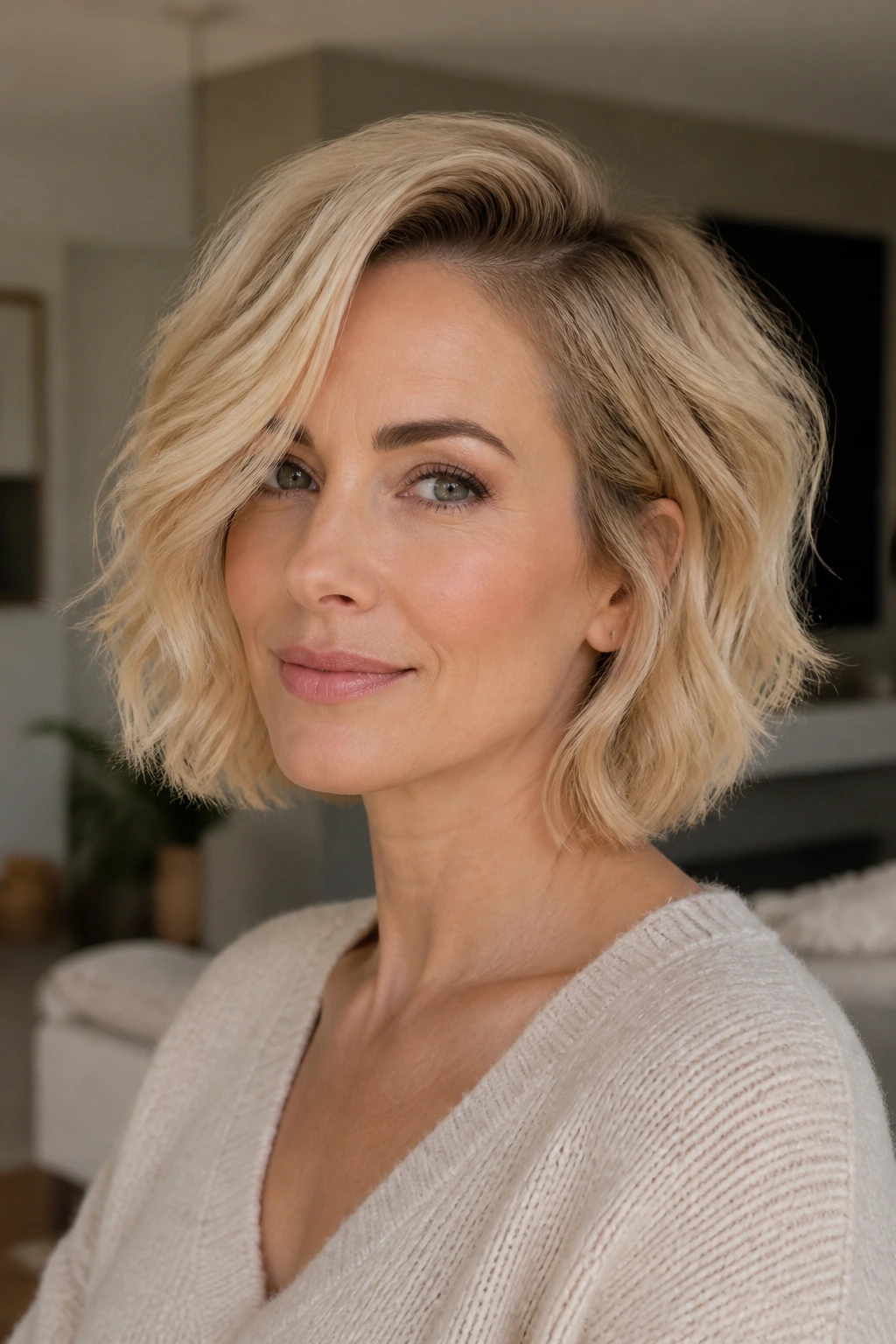
A deep side part makes a curly bob look less predictable in the best way. Buttery blonde keeps the finish soft, and the extra volume on one side helps an oval face feel a little less symmetrical without losing balance. The face-framing layers should follow the heavier side so the bob doesn’t feel like it’s falling off your head.
This cut is a good move if your crown sits flat. The part shift creates lift. The curls near the part get more height, and that height changes the whole profile. It’s also a useful trick if your hairline is slightly uneven, because a deep part hides that fact better than a center part ever will.
One note: keep the heavier side long enough to bend, not so short that it turns into a puff. That’s the line.
13. Caramel-Gloss Blonde Curly Bob with Face-Hugging Layers
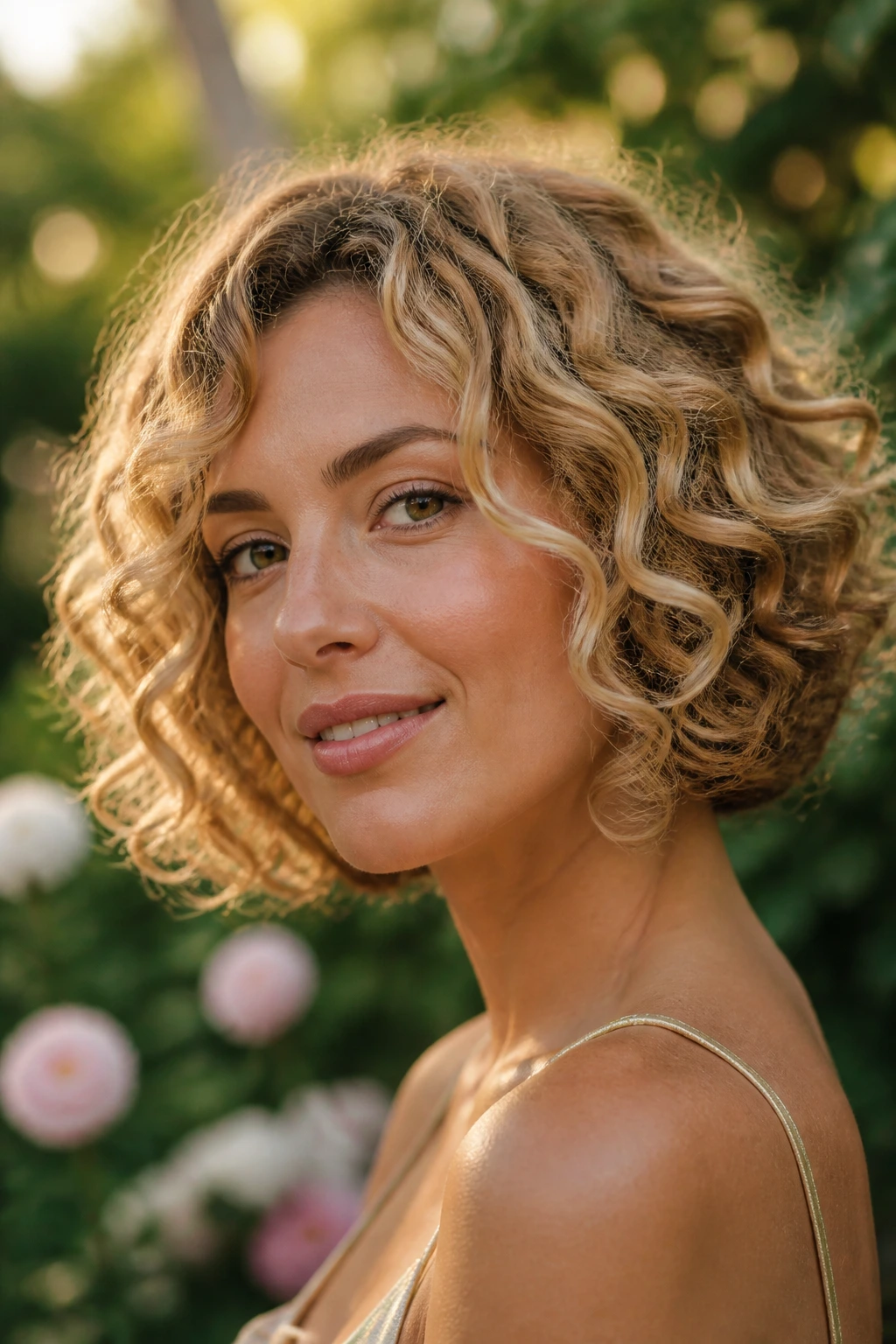
Caramel gloss gives this bob a little depth, which is useful when you want the face-framing layers to sit close to the cheeks without disappearing. The layers should hug the face just enough to trace the contour, then open back out at the jaw. That keeps the cut from feeling blocky.
This is a strong choice for medium-density curls because the shape can carry a little weight. The warm caramel tone picks up the curves in the hair shaft and makes the movement easier to see. I like this better than a flat single-process blonde when the bob needs definition.
If you want it to read more polished, ask for the front pieces to be point-cut rather than sheared blunt. Little detail. Big difference.
14. Pearly Blonde French Bob with Micro Bangs
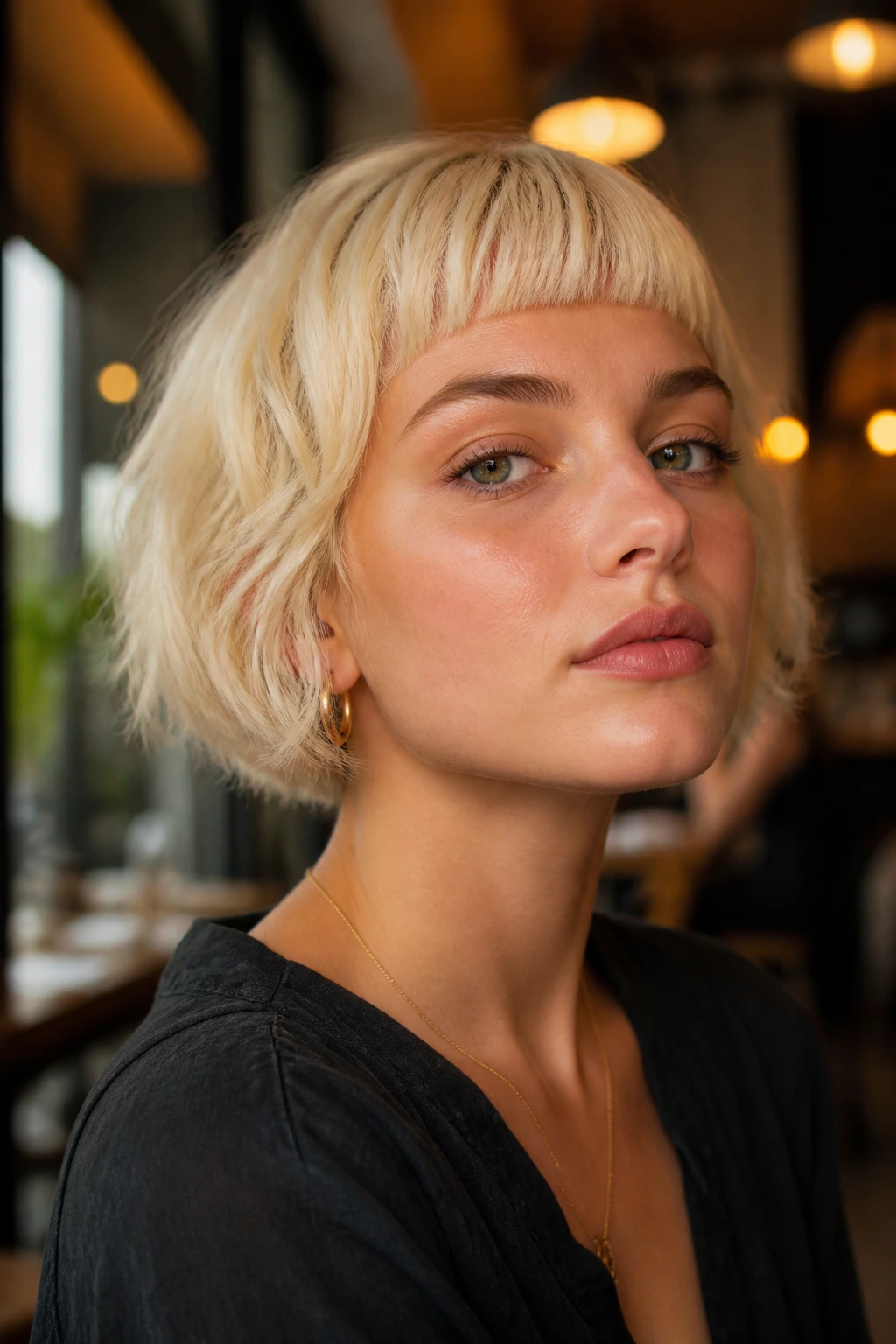
Micro bangs are not for everyone, which is fine. On an oval face, though, they can look sharp in a way that doesn’t fight the shape. Pearly blonde keeps the short fringe from feeling too severe, and the rest of the bob can stay softly curly around the ears and jaw.
The trick is not to over-layer the sides. The bangs already create a strong visual line. If the rest of the bob gets too shaggy, the haircut can lose its clean little punch. Keep the front pieces tidy, let the curls move, and let the bangs sit a bit lighter than the perimeter.
This is a cut with attitude. It doesn’t whisper.
15. Bronzed Blonde Curly Bob with Soft Halo Volume
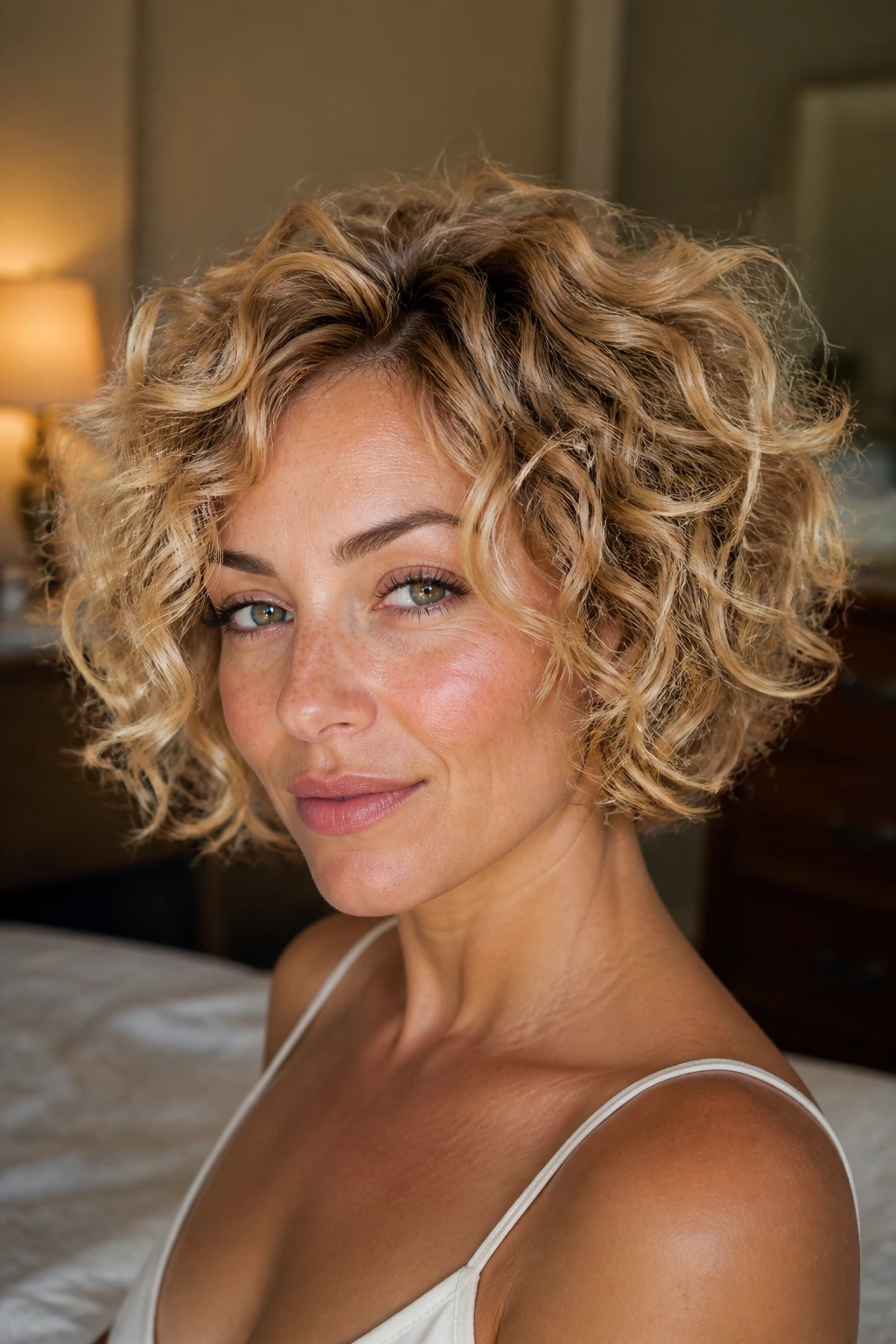
Bronzed blonde looks richest when the cut is built for volume around the crown and upper sides. A halo shape keeps the face open while letting the curls lift away from the head. On an oval face, that can be a very flattering balance, especially if the jawline is soft and you want the top half of the haircut to do a bit more framing.
Styling note
Use a root-lifting spray at the crown and scrunch from the bottom up with a medium-hold gel. Then diffuse just enough to set the top, not so much that the curls lose their roundness.
This shape loves medium to tight curls. If the curls are looser, the halo can collapse unless you clip the roots while drying. Small clips. Big difference.
16. Vanilla Blonde Bob with Wispy Fringe Layers
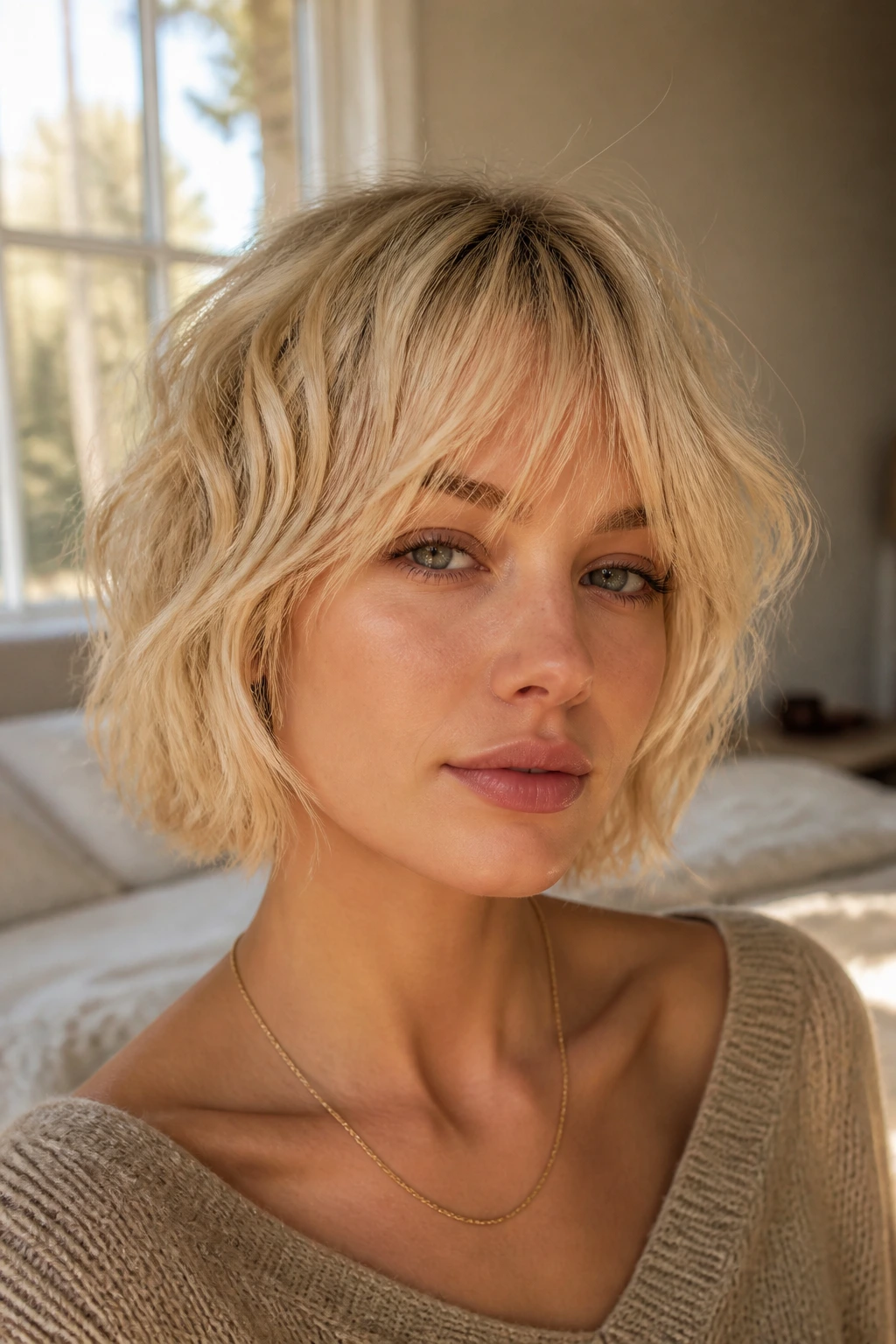
Vanilla blonde can look flat if the cut is too blunt, which is why wispy fringe layers matter here. They soften the forehead without hiding it. For an oval face, that gives the bob a lighter top half and keeps the overall shape from feeling heavy through the front.
This is a friendlier version of a fringe bob. Nothing too heavy. Nothing too severe. The fringe should break apart a little when dry, so the curls land around the brows and temples instead of building a wall.
I like this best on hair that’s fine to medium with loose curls. Thick curls can wear it too, but the fringe has to be handled with more care. Cut it long first. You can always go shorter. The regret version is the one that gets clipped too high.
17. Dimensional Blonde Curly Shag-Bob

A shag-bob is for the person who wants the bob shape, but not the neatness of a salon brochure. Dimensional blonde helps the layers show up without making the cut look overworked. The face-framing layers start higher here—often around the cheekbone—and the rest of the shape falls in pieces that still feel connected.
This is a solid option for thick curls that fight the perimeter of a classic bob. A little chaos is the point. The cut gets movement, the blonde shows it off, and the oval face stays visible because the front layers keep the eye moving up and down, not just side to side.
If you like a hair routine that involves scrunching, diffusing, and then pretending you didn’t try that hard, this one fits.
18. Light Ash Blonde Bob with Piecey Curl Clumps
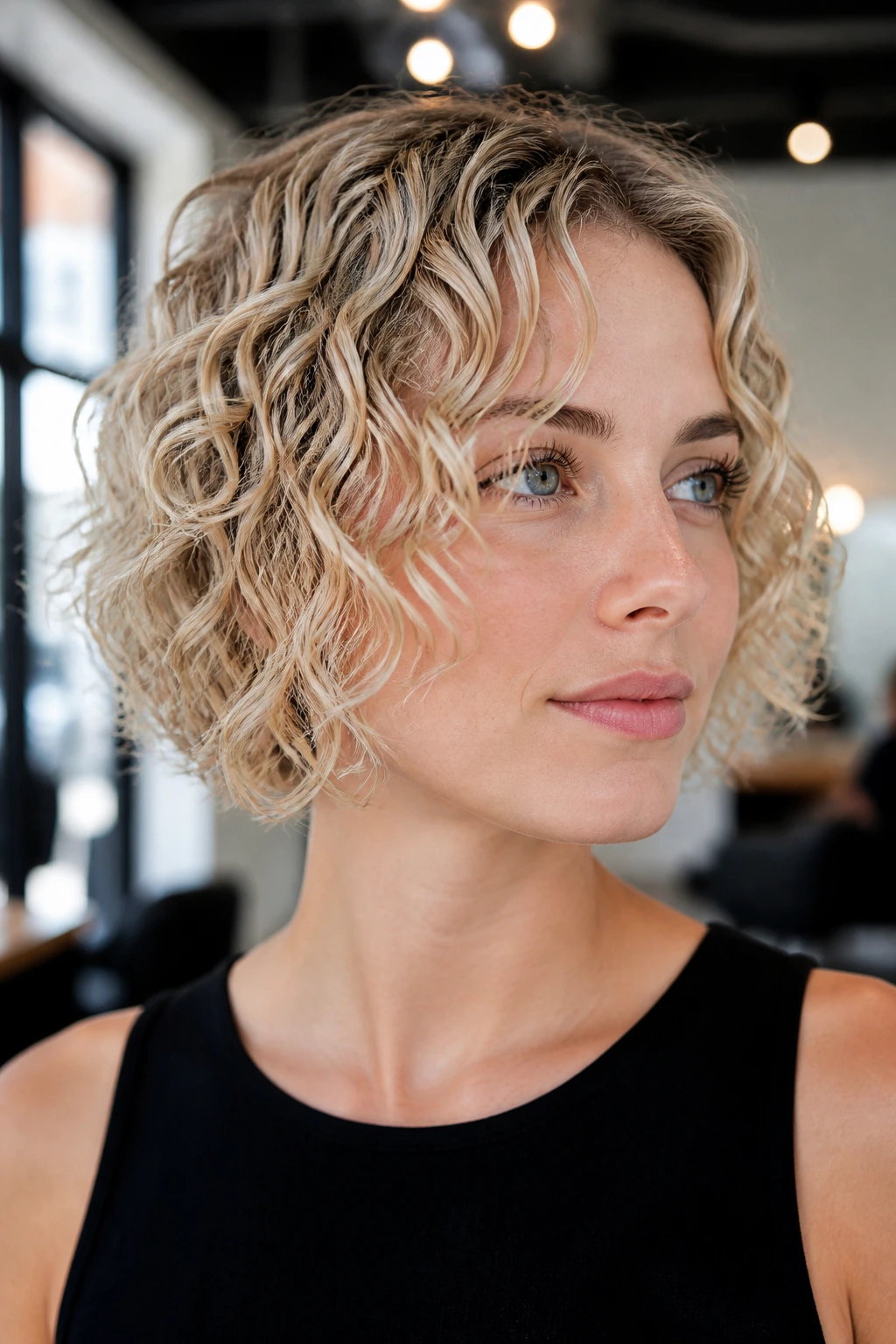
Piecey curl clumps look especially clean in light ash blonde because the tone separates the sections without turning them brassy. The face-framing layers should be cut so they fall in small, readable groups instead of one big curtain. That keeps the face open and the bob looking light.
This style benefits from a gel cast. Hold the shape while it dries, then break the cast with dry hands once the curls are fully set. If you touch it too soon, the clumps fuzz out and the whole thing loses the point.
It’s a crisp bob. Not a stiff one. There’s a difference.
19. Warm Honey Blonde Bob with Jawline-Skimming Layers
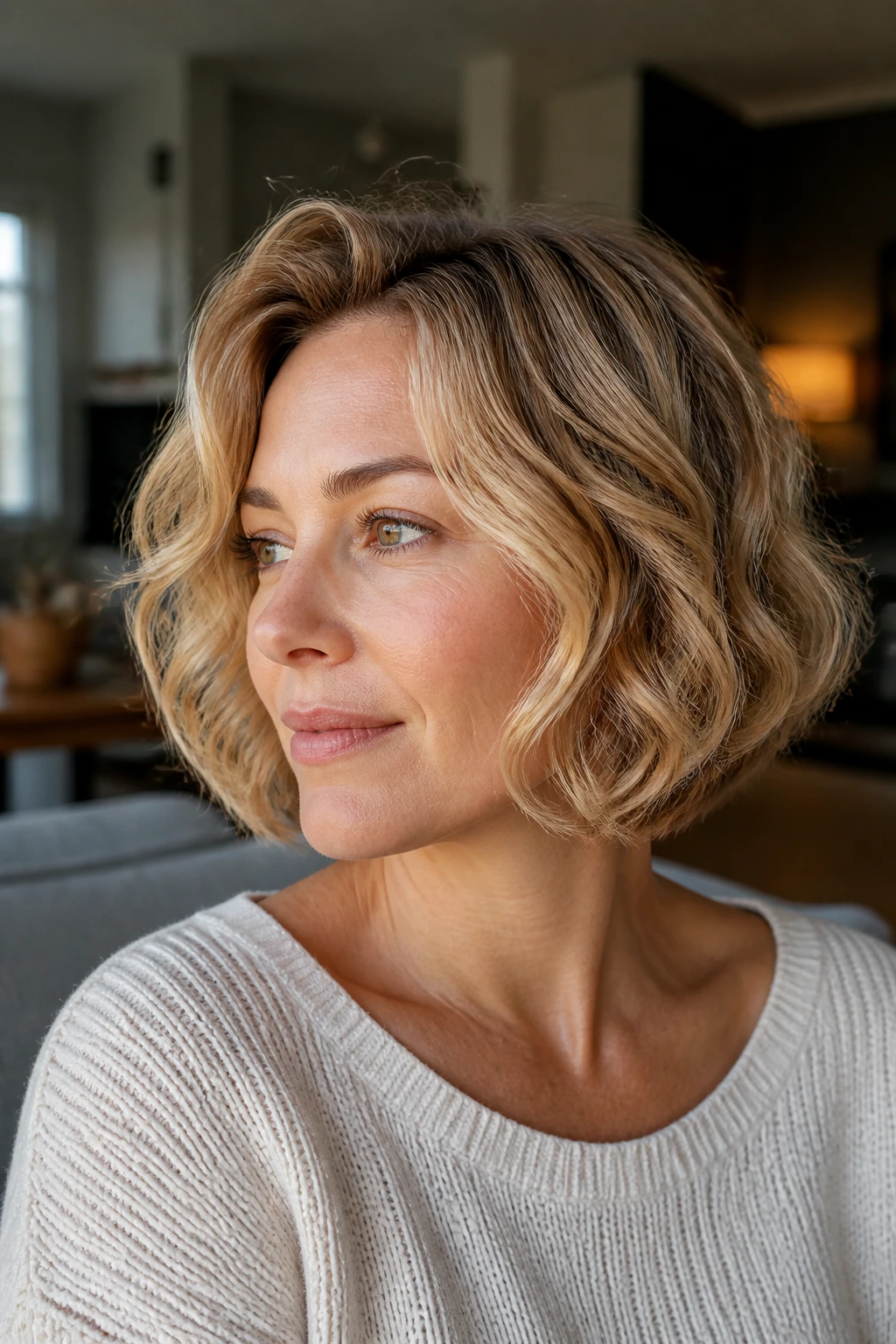
Warm honey blonde makes jawline-skimming layers look even softer. That’s useful on an oval face if you want the lower half of the cut to feel flattering rather than blunt. The layers should curve just under the cheek and then rest near the jaw, where they can bounce without flaring out too much.
Why the jawline matters
That line is where curly bobs can get messy fast. If the layers stop too early, the haircut can look puffy on the sides. If they stop too low, the face frame loses shape.
This version keeps the movement concentrated where it belongs. It’s a very wearable choice for people who want the bob to feel polished during the week and a little more relaxed on the weekend.
20. Mushroom Blonde Curly Bob with a Bendable Shape
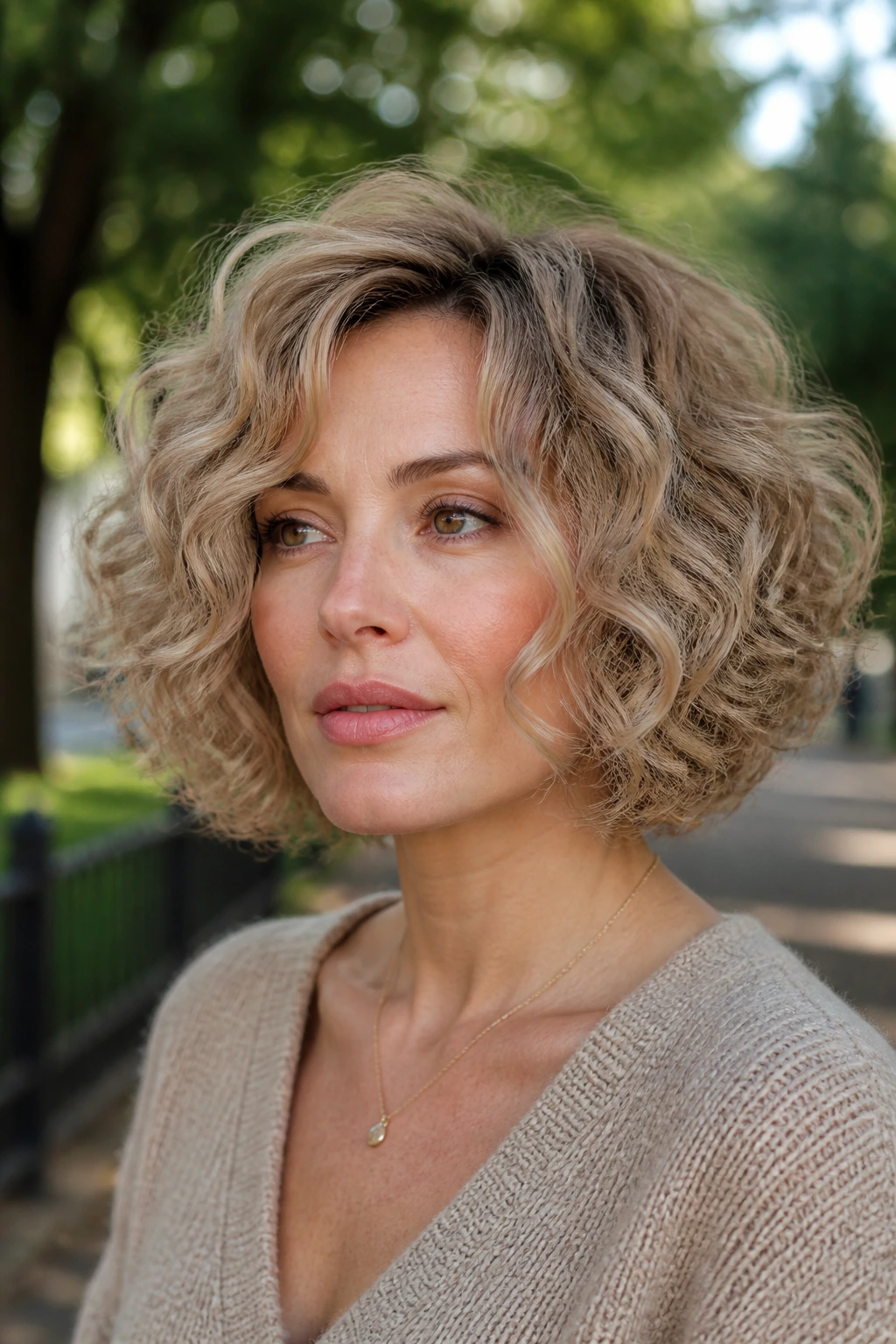
Mushroom blonde has that muted beige-taupe feel that sits somewhere between cool and warm. The color is subtle, which means the cut has to do the talking, and bendable shape is the right approach. The face-framing layers should be soft enough to move around the cheekbones but not so wispy that the bob loses its outline.
This is a good pick if you don’t want your blonde to read loud. The tone lets the curl pattern stay central. It also grows out quietly, which is a blessing if you hate obvious root lines. On an oval face, the muted color keeps the silhouette from taking over the features.
Think of it as the “I want effort, but not fuss” version.
21. Golden Beige Bob with Flipped-Out Ends
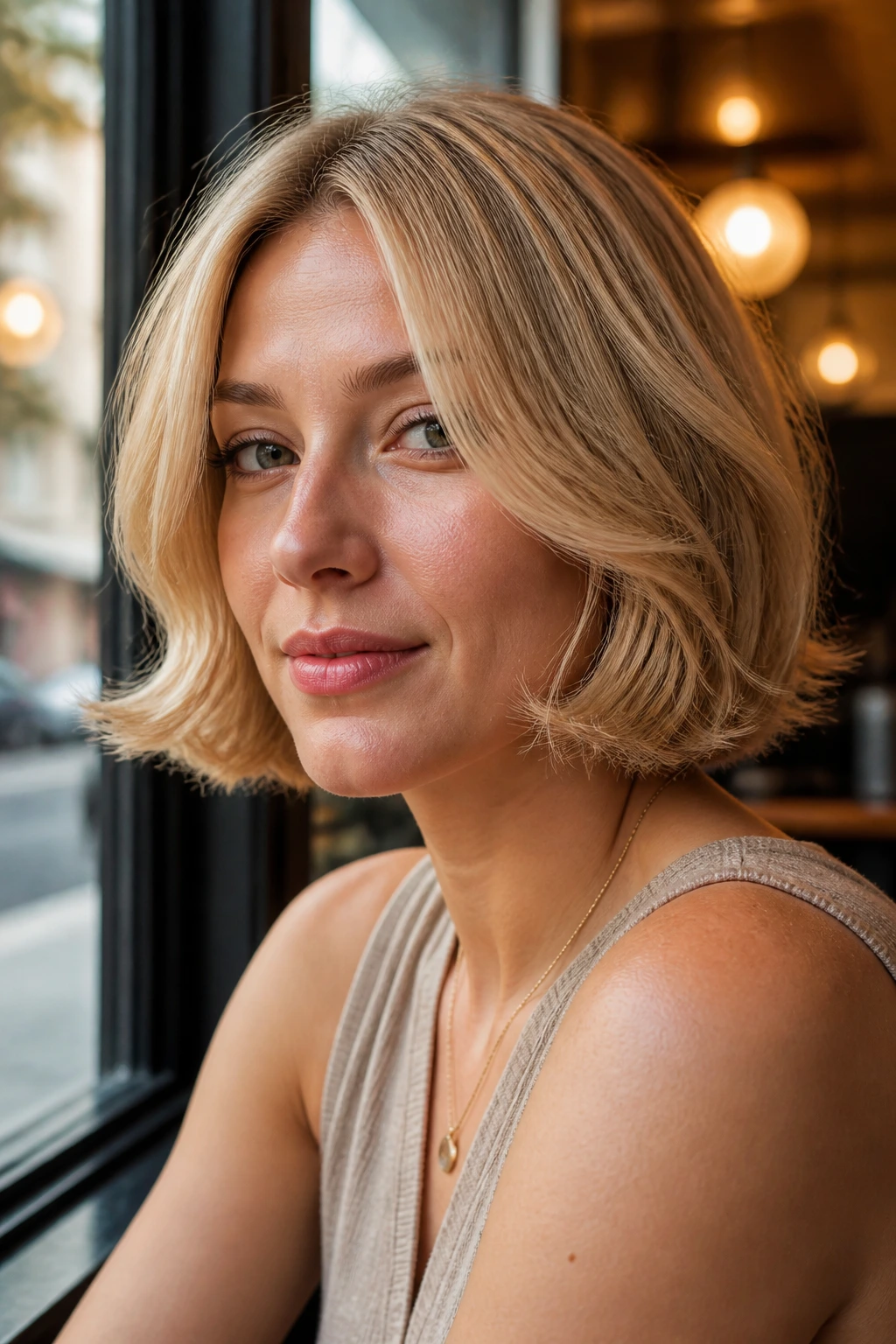
Flipped-out ends sound retro until you see how well they wake up a curly bob. Golden beige keeps the shape sunny, and the outward flip at the perimeter stops the haircut from hugging the face too closely. That matters on an oval face if you want width near the mouth and cheek rather than at the crown.
A small flip at the ends can be built with a round brush while the hair is still damp, or with a diffuser and a little finger shaping at the finish. You do not need every end turned outward. A few strategic pieces are enough.
This version feels playful in a way that still reads clean. That’s harder to get than it sounds.
22. Ice Blonde Bob with Sleek Roots and Bouncy Length
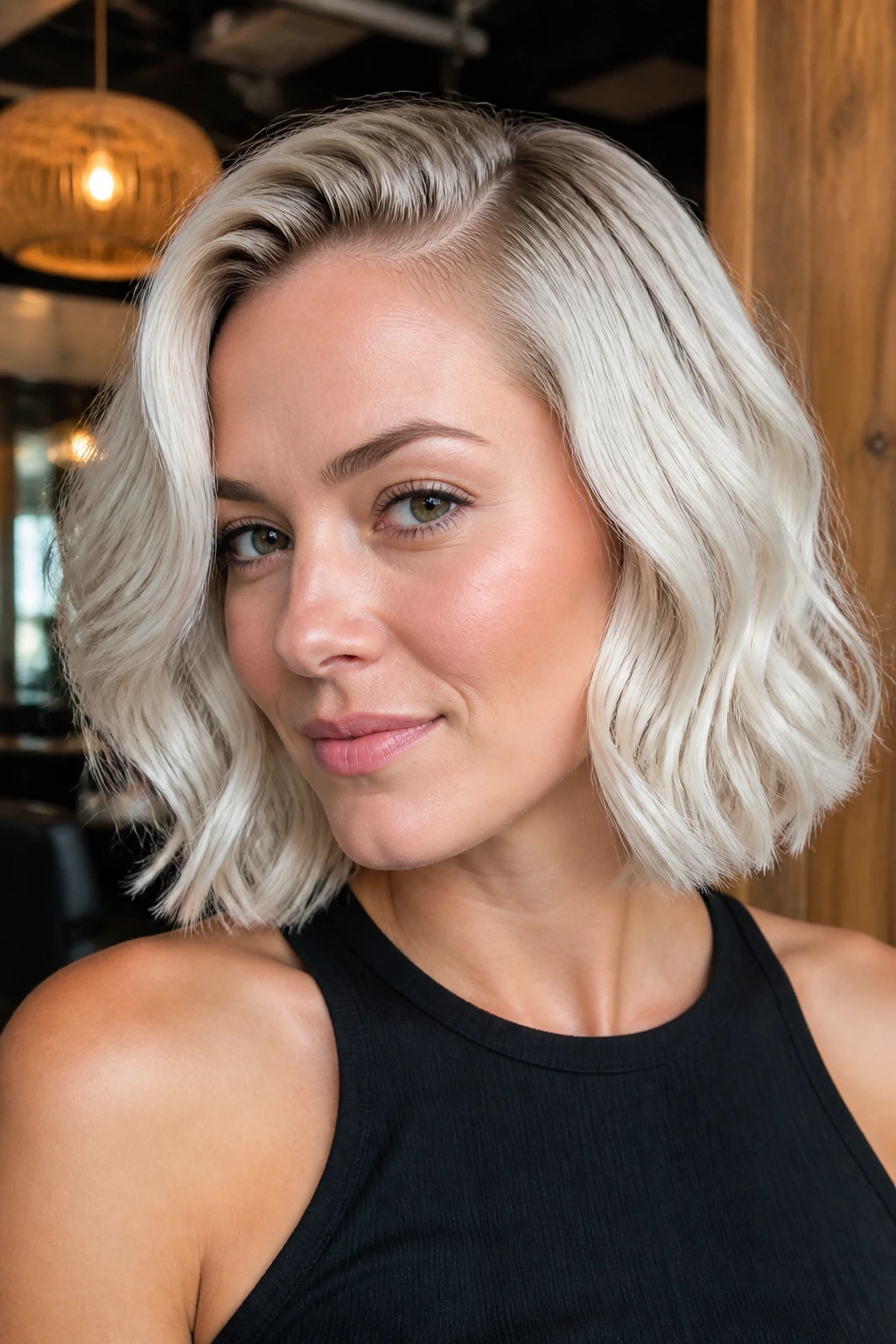
Ice blonde can be beautiful on curls, but it needs discipline. The roots should stay smooth and close so the color looks deliberate, while the lengths keep the bounce. The face-framing layers should not be too short, because icy tones show every dry edge and every awkward step in the cut.
If your hair has been lightened hard, this is the version that demands the most care. A bond-building treatment, a weekly deep conditioner, and a less-aggressive heat routine matter here. The style works best when the ends still feel supple.
Strong look. Strong upkeep. Fair trade, if you want it.
23. Peach Blonde Curly Bob with a Blended Fringe
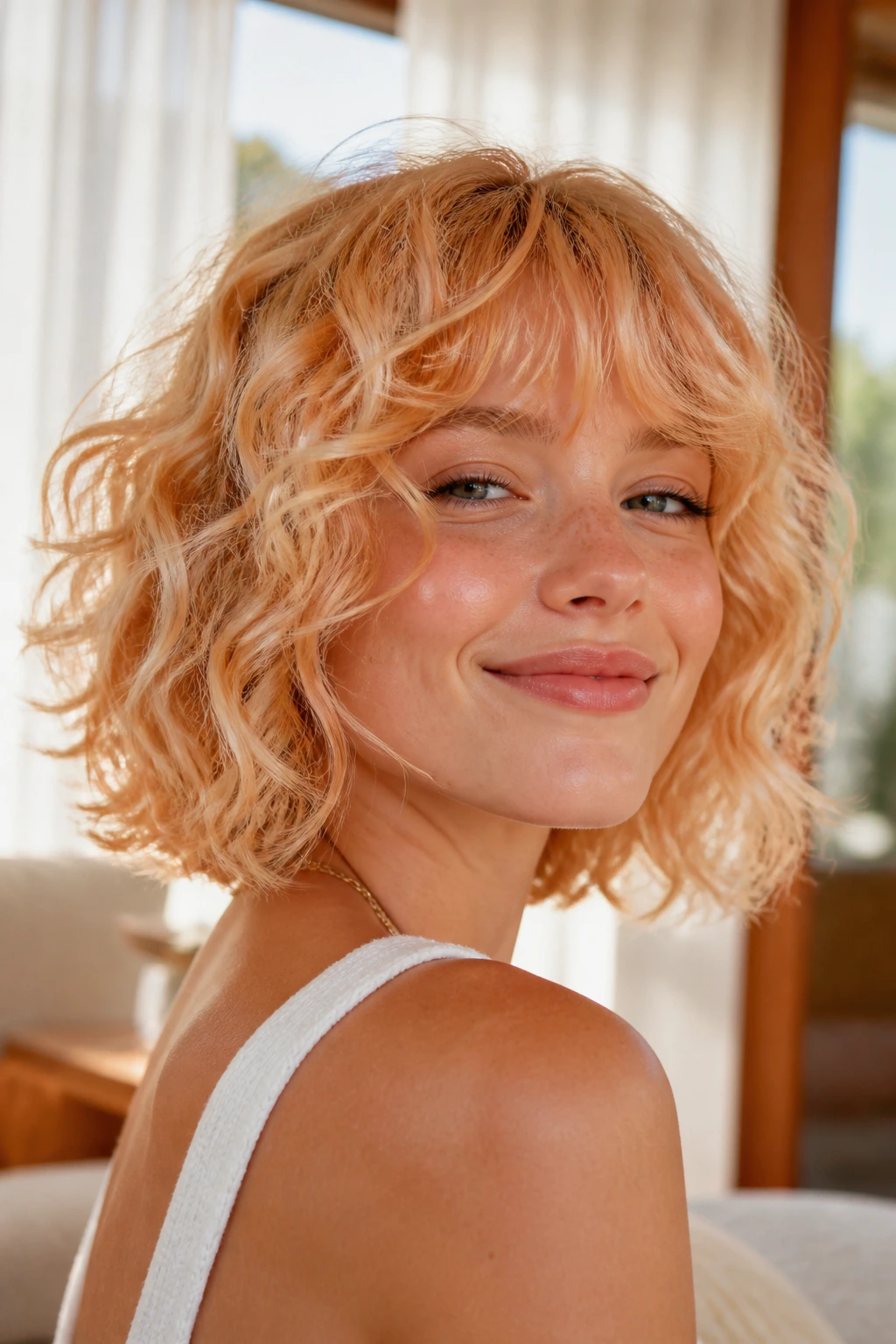
Peach blonde has a soft blush to it that pairs well with a blended fringe. The fringe should fade into the face-framing layers instead of sitting like a separate piece. On an oval face, that blend keeps the cut feeling light around the forehead and temples, where curl buildup can get awkward fast.
This is one of the more playful options in the group. The color adds warmth, and the fringe gives the bob a little personality. If your curls are loose, the peach tone and the soft fringe can make the haircut look almost airy. If your curls are tighter, keep the fringe longer so it has room to shrink.
It’s a little sweet. Not childish.
24. Toffee Blonde Bob with a Piecey Face Frame
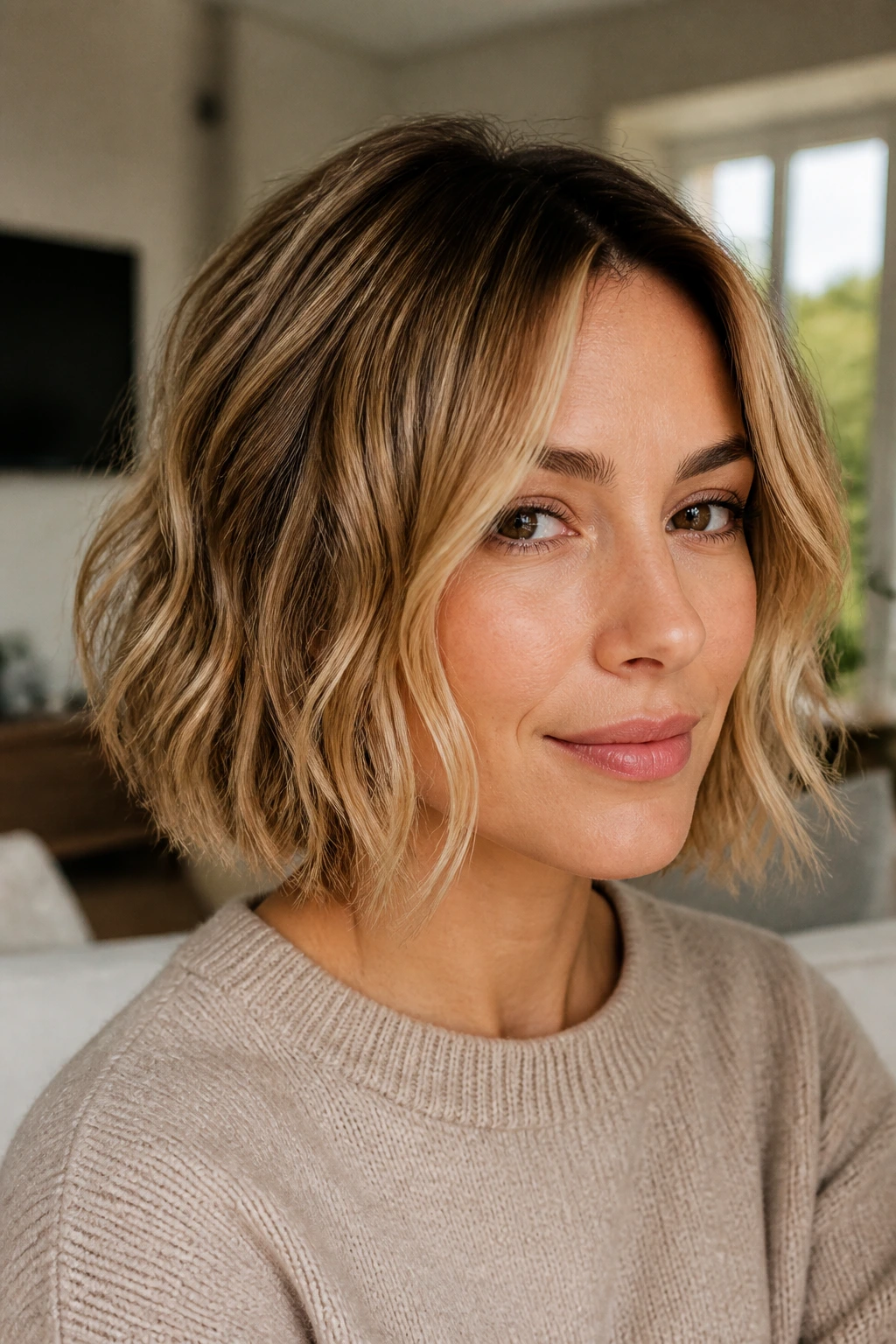
Toffee blonde is one of the easiest shades to live with because it gives depth without making the curl pattern disappear. Piecey face framing keeps the cut from reading heavy. The front sections should be separated enough to move on their own, then blended back into the bob so the shape doesn’t feel disconnected.
This cut is good when you want the face frame to do just enough. No curtain. No bangs. Just a few well-placed pieces that catch the light and steer the eye. On an oval face, that restraint often looks more expensive than a heavily layered look.
It’s also a nice option if you’re growing out shorter layers and want the bob to behave during the awkward stage.
25. Soft Rooted Blonde Curly Bob with Cloudy Volume
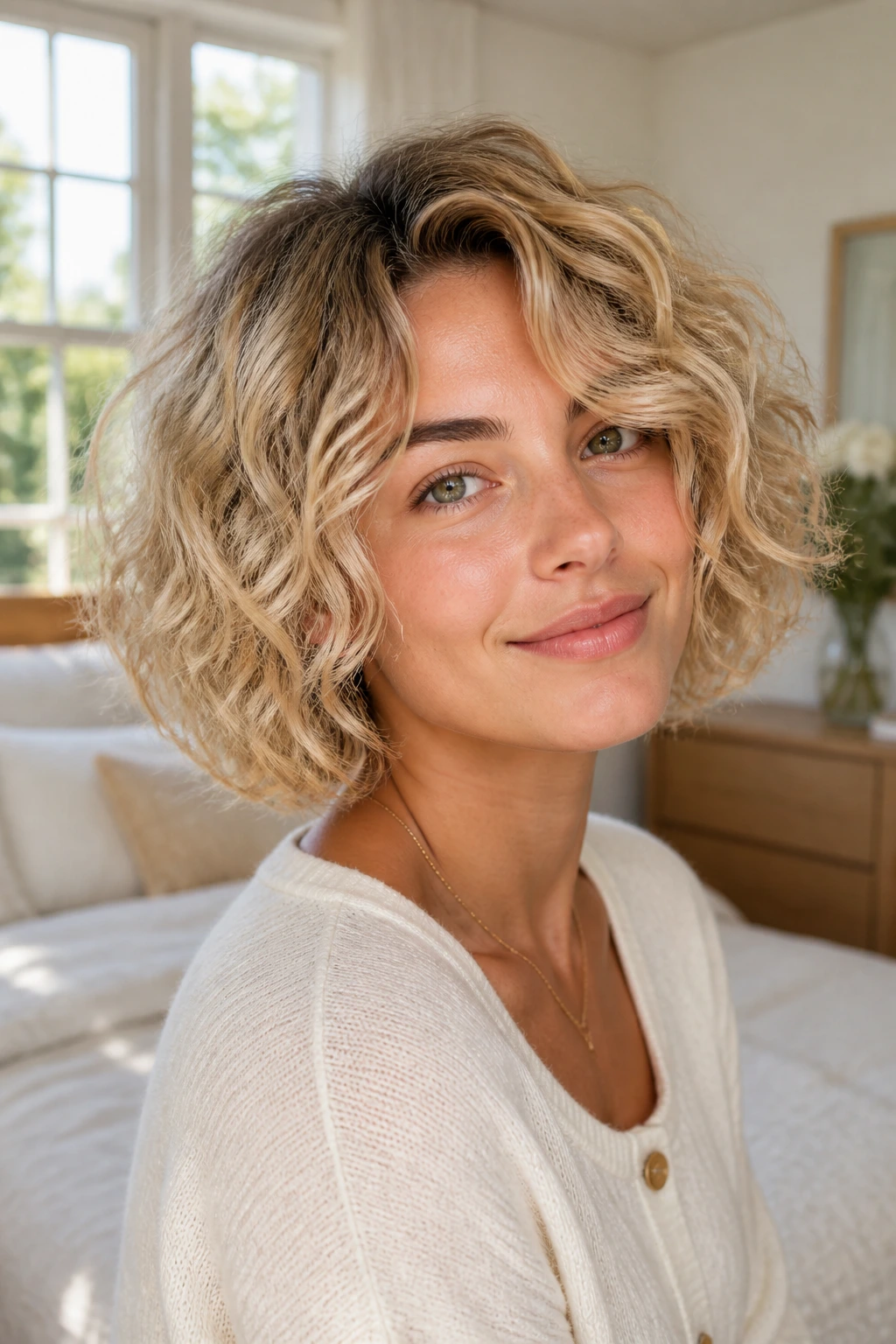
A soft root shadow keeps this bob from looking freshly bleached every day, and the cloudy volume gives it that loose, airy finish people keep trying to fake with products. The face-framing layers should start around the cheekbone and drift down toward the jaw so the oval face keeps its balance.
Final shape note
If you want one cut that can live in a photo, on a school run, and at dinner without feeling overdone, this is probably the one. The root shadow hides grow-out. The volume stays soft. The front pieces do enough work to frame the face without making the bob feel styled within an inch of its life.
It’s the low-drama option. That is not a flaw.
What to Tell Your Stylist Before the First Snip
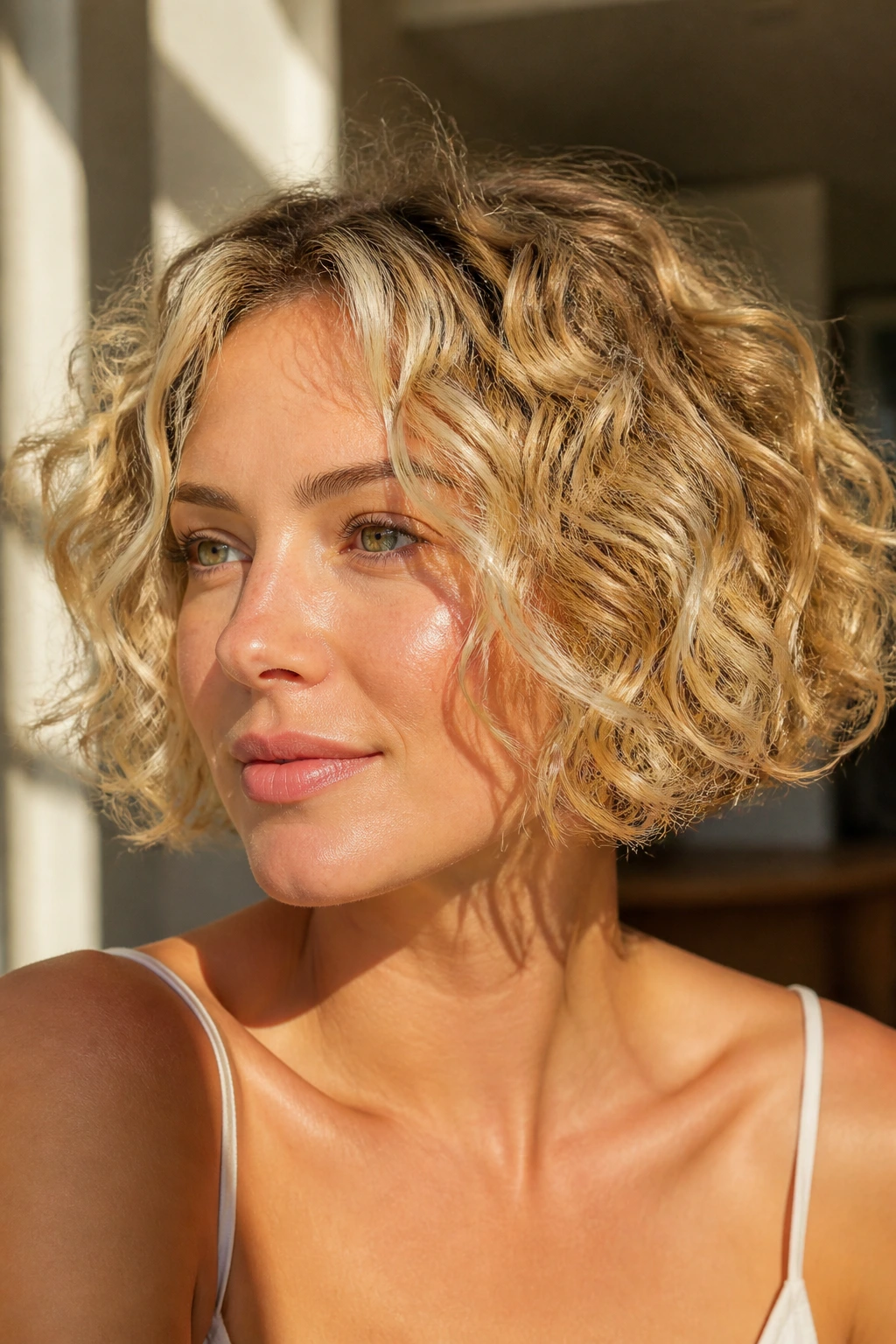
The smartest thing you can do is bring a photo of the length you want and a second photo of the front shape you want. One picture rarely covers both. Curls shrink, and a blonde bob with face-framing layers needs the stylist to understand where the front pieces should actually land when dry, not just when wet.
Ask for a dry or curl-by-curl cut if your hair shrinks a lot. Wet curls can hide a full inch or two of movement. If the stylist cuts too short while the hair is stretched, the front frame can jump above the cheekbone and stay there.
Be specific about the shortest front point. Say chin, cheekbone, lip line, or jawline. Don’t say “a little shorter in front” and hope for the best. That sentence has caused more bad bobs than anyone wants to admit.
Mention how you style at home. If you air-dry, the layers need to sit differently than if you diffuse with a bowl attachment and a lot of root lift. If you part your hair on the side every day, say that before the cut starts. The part changes the whole face frame.
Tools, Products, and Resources That Actually Pull Their Weight
- A curl-savvy stylist: A cut done on dry curls or very carefully sectioned damp curls will usually fit better than a generic wet bob.
- Diffuser attachment: Helps the curls dry in place and keeps the front layers from blowing apart.
- Microfiber towel or cotton T-shirt: Better than terry cloth for preserving curl clumps and stopping frizz at the ends.
- Wide-tooth comb: Good for conditioner distribution; skip the hard brushing once the hair is dry.
- Light leave-in conditioner: Useful for blonde curls that feel dry at the ends after lightening.
- Medium-hold gel: Keeps the face frame defined long enough for the shape to set.
- Curl cream: Use a small amount if the bob feels rough or puffy, especially on the mids.
- Purple shampoo or glossing cleanser: Helps blonde stay clean-toned without constant salon visits.
- Root clips: A cheap fix for a flat crown; use them while the hair cools and dries.
- Silk pillowcase or bonnet: Keeps the front pieces from frizzing into a halo overnight.
How to Choose the Right Blonde Shade for Curly Texture
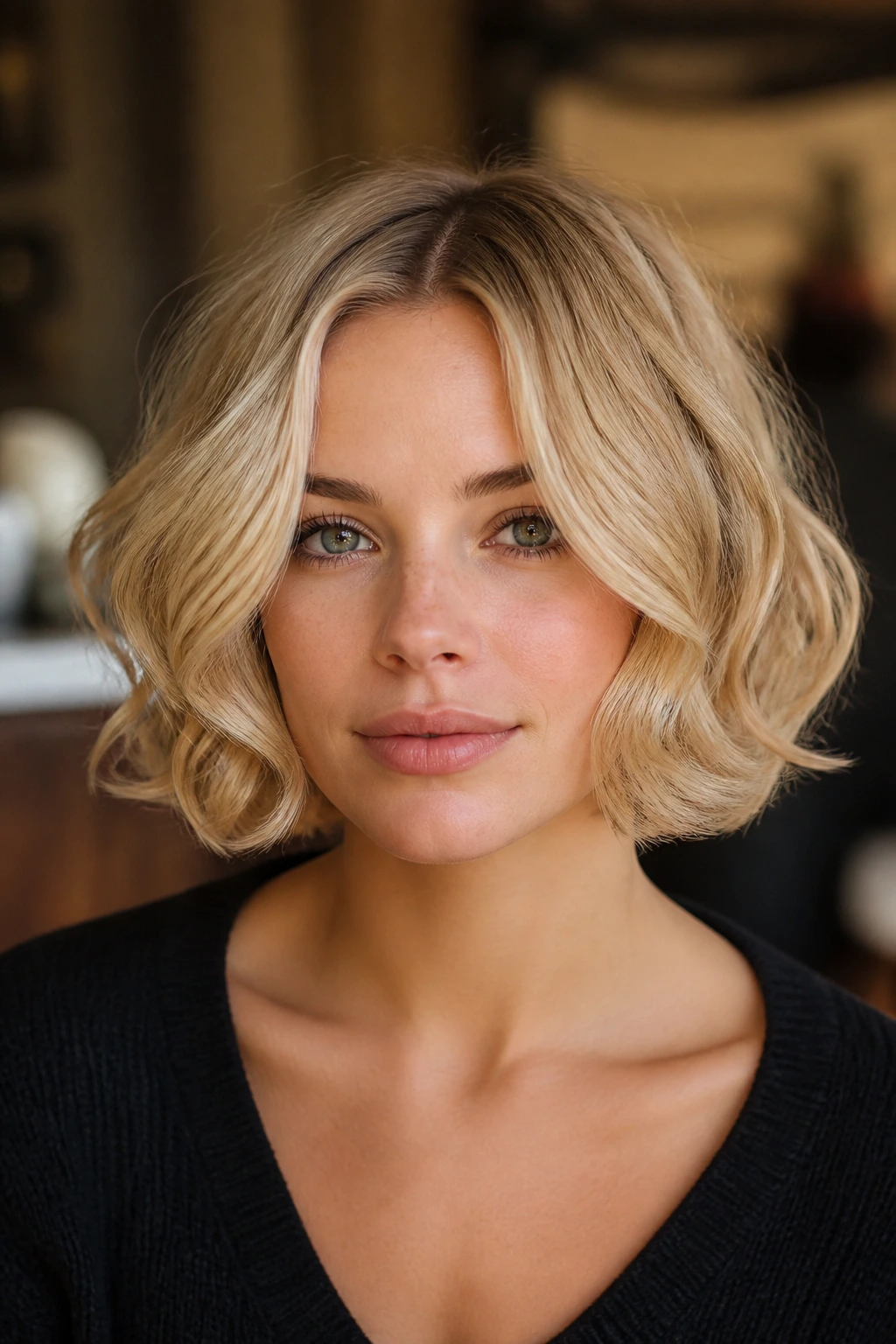
Warm blondes—honey, butter, caramel, and golden beige—tend to flatter curly bobs when the hair wants to look soft and full. They catch the raised parts of the curl and make the texture look plush. If your hair has a little dryness, warm tones are also more forgiving because they don’t put every rough end under a spotlight.
Cool blondes—ash, champagne, icy beige, and platinum—look cleaner and sharper. They suit people who want the curl pattern to read crisp rather than cozy. The catch is simple: cool blondes show damage faster. If the ends are fried, ash or platinum makes that obvious in a heartbeat.
Rooted blonde is the middle ground I trust most. A soft shadow at the scalp gives the curl pattern depth and keeps the grow-out from looking like a stripe. That matters on a bob because the perimeter is already a bold shape. You do not need the color to fight it too.
How to Wear the Shape on Wash Day and Day Three
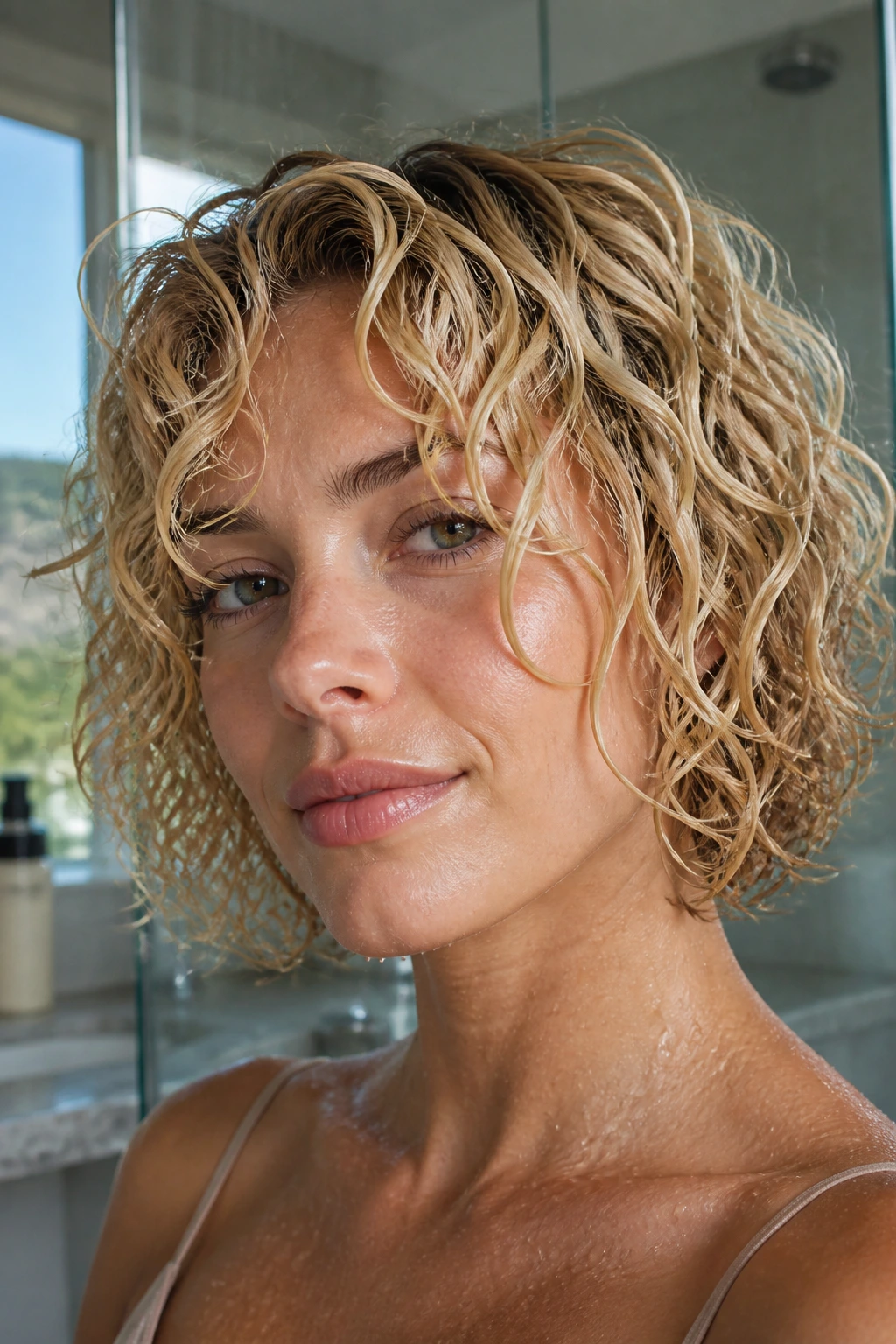
On wash day
Start with soaking-wet hair. Not damp. Wet. Apply leave-in first if your hair is dry, then a curl cream or mousse, then a medium-hold gel through the mids and ends. Scrunch upward with your hands, then diffuse in sections until the roots are dry and the curls have formed a cast.
Do not reach for the towel too early. If you disturb the curl clumps while they’re half-set, the face-framing layers can frizz out and stop looking intentional.
On day two or three
Mist the front pieces with water and a drop of leave-in. Then twirl only the pieces that have lost their shape. A clip at the crown for ten to fifteen minutes can wake up a flat bob faster than a whole extra styling session.
When the bob goes flat
Change the part. Seriously. A few centimeters can move the volume from one side to the other and make the haircut look freshly cut again. If the ends start feeling fuzzy, add a tiny bit of gel to the front frame and smooth it over your palms before touching the curls.
Common Mistakes That Make a Curly Bob Look Boxy or Puffy
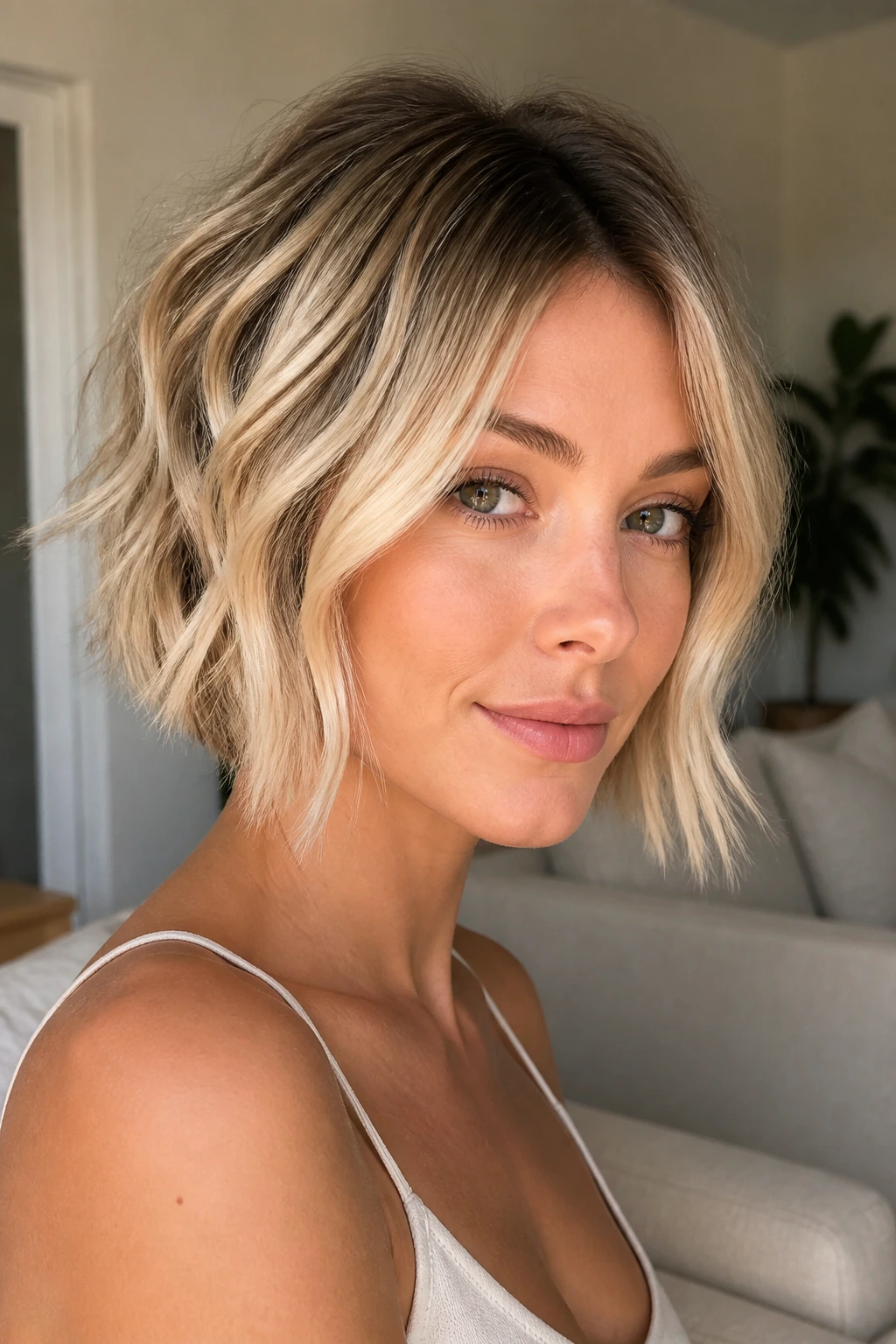
- Cutting the front too short: Curls shrink, and a cheekbone-grazing layer can end up sitting at the upper lip if the hair is cut too aggressively. Fix it by leaving more length than you think and checking the dry shape.
- Thinning the sides too much: Over-thinning leaves the ends wispy while the roots puff. Ask for internal weight removal, not a carved-out perimeter.
- Ignoring the root lift: A flat crown turns a bob into a helmet. Use clips, root mousse, or gentle diffusing at the scalp.
- Picking the wrong blonde tone: Too-ashy can look dusty; too-brassy can flatten the dimension. Match the tone to how much sheen your curls naturally have.
- Brushing the curls once dry: That breaks the clumps and widens the shape. Detangle in the shower or with conditioner, then leave the dry curls alone.
- Styling while the hair is still too wet or too dry: Half-wet hair frizzes, and bone-dry hair resists product. Work when the hair is wet enough to clump but not dripping on your shirt.
Variations and Alternatives to Try
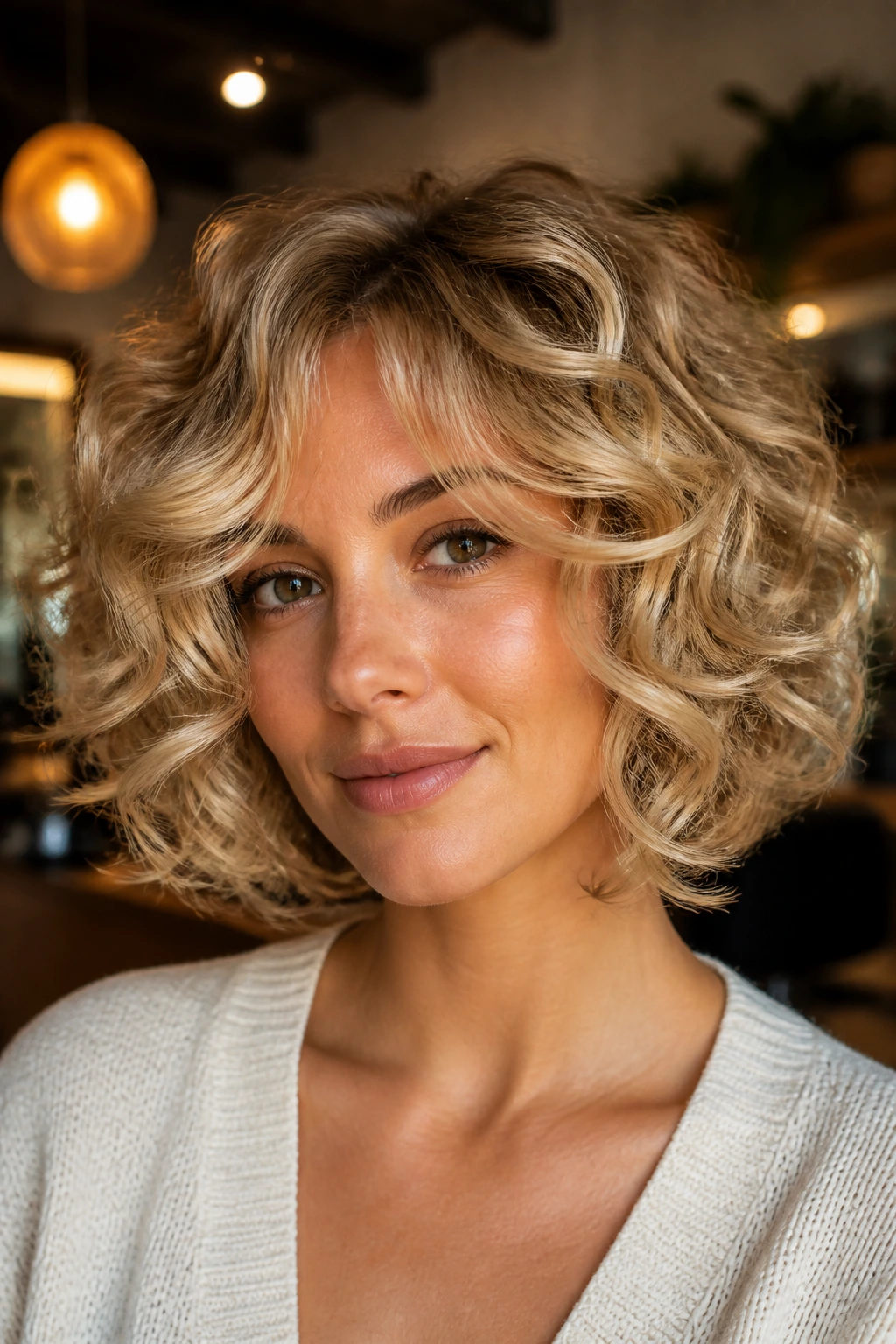
Bronde Borderline Bob: Keep the roots deeper and let the blonde live mostly on the front pieces and ends. This is the easiest option if you want dimension without full-time toning.
Long Bob Reset: Stretch the same face-framing idea into a collarbone-length lob if your curls shrink more than expected or you want a softer grow-out. The front pieces can still frame the cheekbones, just with more breathing room.
Curly Shag-Bob Hybrid: Add more layers through the interior and keep the outline a little rougher. This version fits thick curls that need movement more than polish.
Bang Swap Edition: Trade curtain bangs for side-swept fringe, or micro bangs for a longer wispy fringe. Same bob, different mood. The face frame changes more than people think.
Cool-Gloss Finish: Shift the blonde toward ash, champagne, or pearly beige and finish with a gloss. Use this when you want the curl texture to look crisp and the edges to read clean in bright light.
Keeping the Blonde Bright and the Bob Crisp Between Cuts
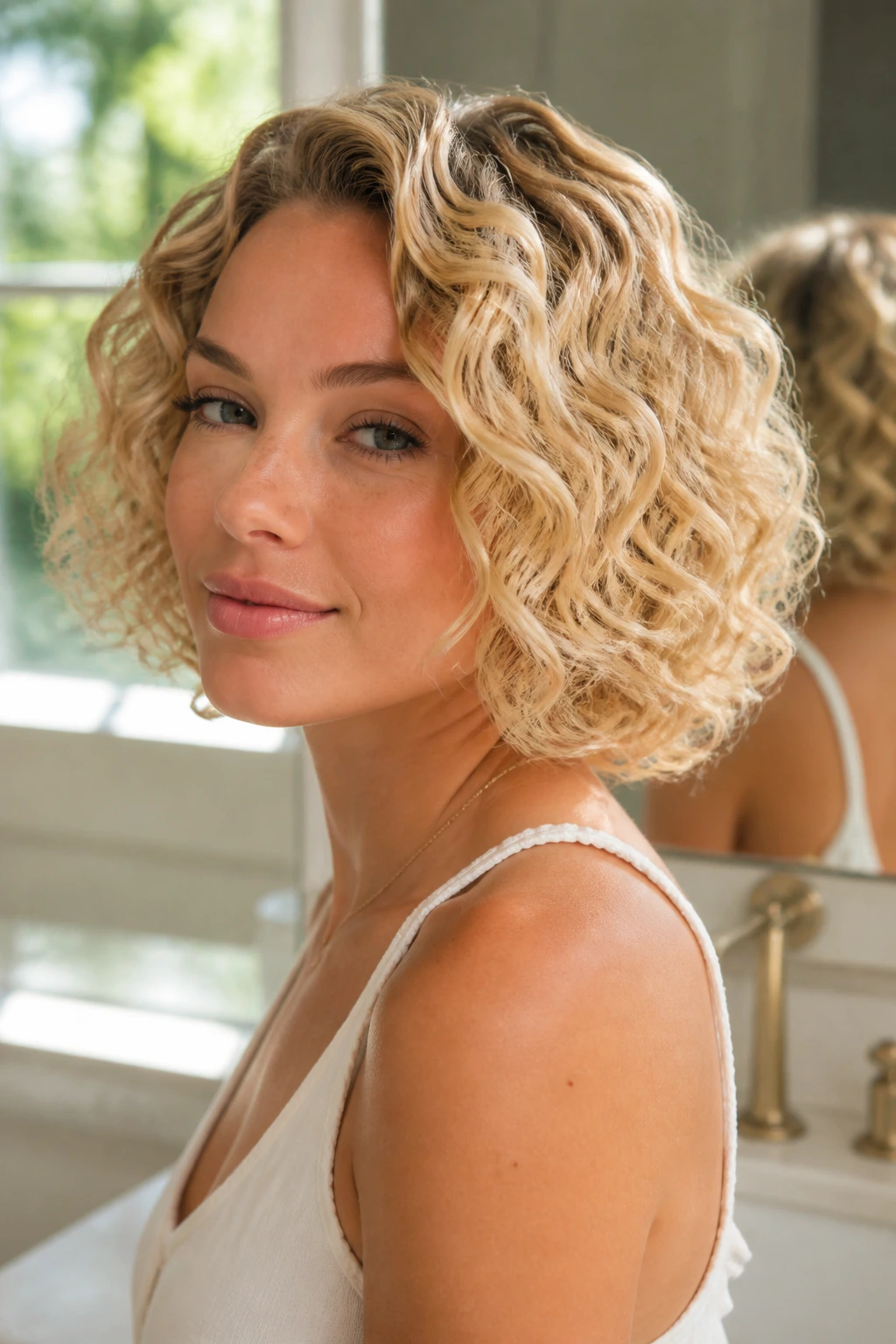
Curly bobs grow out faster than straight cuts because the shape changes as the curl pattern expands. If you want the perimeter to stay neat, plan on trims every 6 to 8 weeks. If you prefer a softer, lived-in line, 8 to 10 weeks can work as long as the nape doesn’t start kicking out or the front pieces don’t drop past the jaw in a weird way.
Blonde care needs its own rhythm. Use a purple shampoo or a toning cleanser every 7 to 10 days if your blonde pulls warm fast. Leave it on too long and the ends can look chalky, so watch the first pass carefully. A gloss or toner helps keep beige and champagne shades from turning muddy, especially if you heat-style the front pieces often.
At night, clip the front layers loosely or sleep on a silk pillowcase. Those face-framing pieces take the hit first, and they’re the ones that decide whether the bob looks fresh or unfinished in the morning. A small mist bottle, a dab of leave-in, and a diffuser in the drawer are enough to rescue most rough days.
Questions People Ask Before They Cut the Hair
Can an oval face wear a blunt curly bob without face-framing layers?
Yes, but the result depends on your curl pattern and density. If the hair is thick, a blunt bob can turn square at the sides. Face-framing layers usually make the shape easier to live with because they stop the cut from sitting like one solid block.
Should the front pieces hit the cheekbone or the jawline?
Cheekbone length gives more lift and opens the face faster. Jawline length gives a softer frame and usually feels better if your curls shrink a lot. If you’re unsure, ask for the front to start at the cheekbone and then taper longer toward the jaw.
Do curly bobs work on fine hair?
They do, but the cut has to be lighter and cleaner. Too many layers can leave fine hair looking stringy at the ends. A bob with internal removal and a rooted blonde usually gives the best balance.
Is a center part better than a side part for an oval face?
A center part gives symmetry and keeps the face open. A side part adds lift at the crown and helps if one side of the curl pattern is stronger than the other. Both can work; the better choice is the one that matches how your hair falls after wash day.
How short is too short for curly bob face-framing layers?
If the shortest front piece climbs above the cheekbone on a dry curl, it can start to feel abrupt. For many curl types, leaving a little more length than you would with straight hair is the safer move. Shrinkage is real. Annoyingly real.
What if my curls look wider than I want after the cut?
Check the crown first. Flat roots and over-puffed sides are often a styling problem, not just a haircut problem. Clip the roots while drying, use a diffuser instead of rough air, and ask the stylist to remove weight inside the shape rather than at the edge.
Can I wear blonde if my curls are fragile?
Yes, but keep the lightening gentle and the maintenance honest. Strong bleach plus dry curls can lead to breakage around the face, where the layers are shortest and most visible. A softer beige or rooted blonde usually behaves better than a very pale platinum.
How often should I trim a blonde curly bob?
Most of the time, 6 to 8 weeks keeps the outline clean. If you like a softer grow-out or wear a longer bob, you can stretch that a bit. Wait too long and the back starts to spread, which is the fastest way to lose the shape.
The Shape That Keeps Its Line
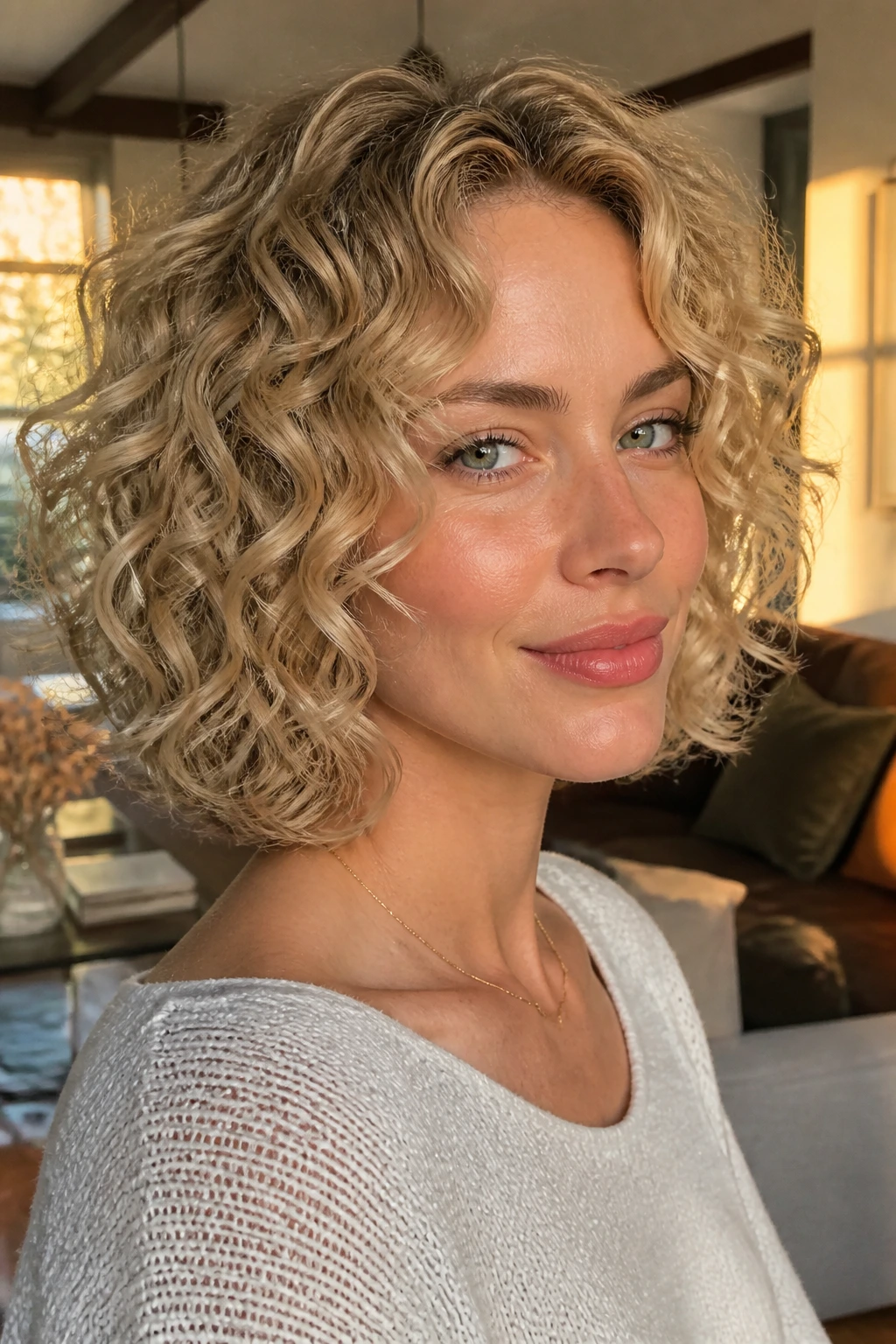
A good blonde curly bob doesn’t ask your hair to become something else. It works with the curl pattern, gives the front pieces somewhere smart to land, and lets an oval face keep its natural balance without looking over-managed. That’s the whole trick, and it’s a better trick than constant heat, constant smoothing, or pretending the right cut doesn’t matter.
If you’re choosing between styles, save two photos: one for the length and one for the front frame. Stylists can read that faster than a hundred adjectives. And once the cut is in place, the best version of it is usually the one that still looks good on day three, under bad lighting, with one side clipped back and a coffee in your hand.