



Grey hairstyles for warm skin tones with soft layers work best when the grey looks like brushed silk, not ice. That distinction matters more than most people think. A cool, blue-white silver can drag peach, honey, golden olive, and caramel undertones into looking sallow. A mushroom grey, a pewter glaze, or a smoky beige ribbon does the opposite: it keeps the face warm while still giving you that elegant grey payoff.
Soft layers are doing half the work here. They stop the color from sitting in one flat sheet, which is where grey hair can start looking chalky or heavy, especially around the jaw and temples. When the cut has movement through the sides, the color reads as dimensional instead of severe. And honestly, that’s the whole trick with grey on warm skin — keep the tone believable, keep the shape light, and let the face frame do some of the flattering.
There’s a wide range of ways to wear it, too. Some of these looks are short and crisp. Some are longer and airy. Some lean polished, others a little undone. What ties them together is a warm-leaning grey palette and layering that softens edges rather than chopping them off.
Why These Grey Looks Work So Well on Warm Skin
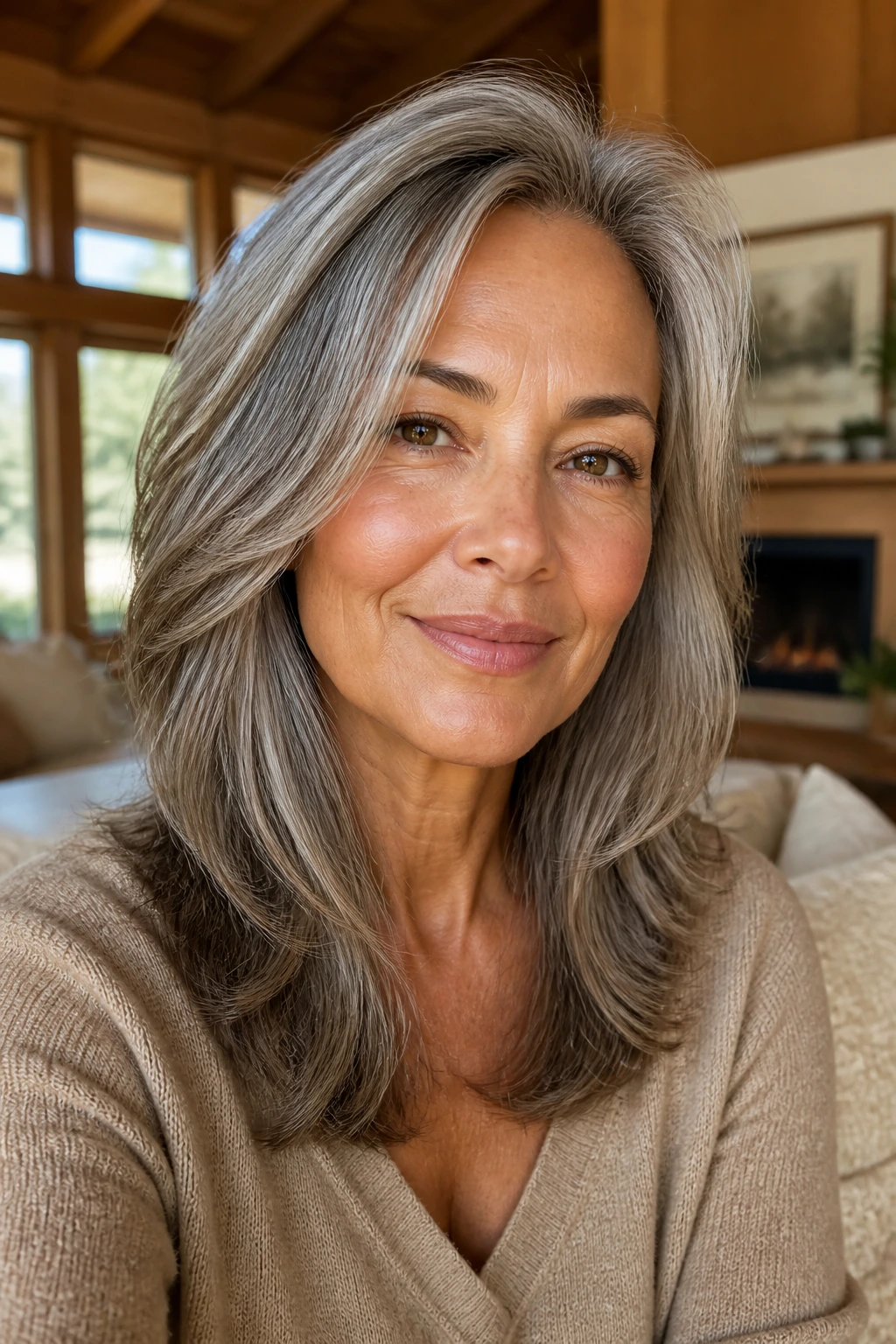
- Mushroom and taupe shades soften contrast: These grey tones sit closer to beige and brown than to blue, which keeps warm complexions from looking washed out.
- Soft layers move the eye, not just the color: A layered cut gives the grey bends, shadows, and highlights, so the finish looks dimensional instead of flat.
- Face-framing pieces matter more than length: A few well-placed layers around the cheekbones can do more for your face than another three inches of length.
- Most of these cuts grow out gracefully: Root shadows, feathered ends, and broken-up layers usually look better at week eight than blunt, perfect lines do.
- They work with straight, wavy, and curly textures: The shape changes, but the same warm-grey logic still applies.
- The right grey can act like a neutral, not a costume: When the tone is softened with beige, pewter, or smoke, the hair looks lived-in instead of overly polished.
1. Mushroom Grey Collarbone Lob
A collarbone lob in mushroom grey is the kind of haircut that makes warm skin look settled and clean. The length gives you enough weight to keep the grey from floating away, while the soft layers stop it from turning into a solid block. I like this one on people who want grey, but not metallic billboard grey.
Why It Works
The collarbone length lands in a useful spot. It skims the shoulders, which means the face stays open, and the grey can shift between cool and warm depending on how you style it. Ask for a mushroom base with a beige gloss, not a flat silver toner. That tiny detail keeps the tone friendly on golden or peach skin.
What to Ask For
- Shoulder-skimming length with a blunt edge softened by internal layers
- Mushroom grey or beige-grey color with a soft root shadow
- Slightly longer front pieces to frame the jaw
- Ends that bend inward or outward, not stick straight
A 1.25-inch curling iron adds just enough bend. Don’t chase perfect waves. The slight curve at the ends is what makes this cut feel expensive instead of stiff.
2. Soft Grey Shag with Curtain Bangs
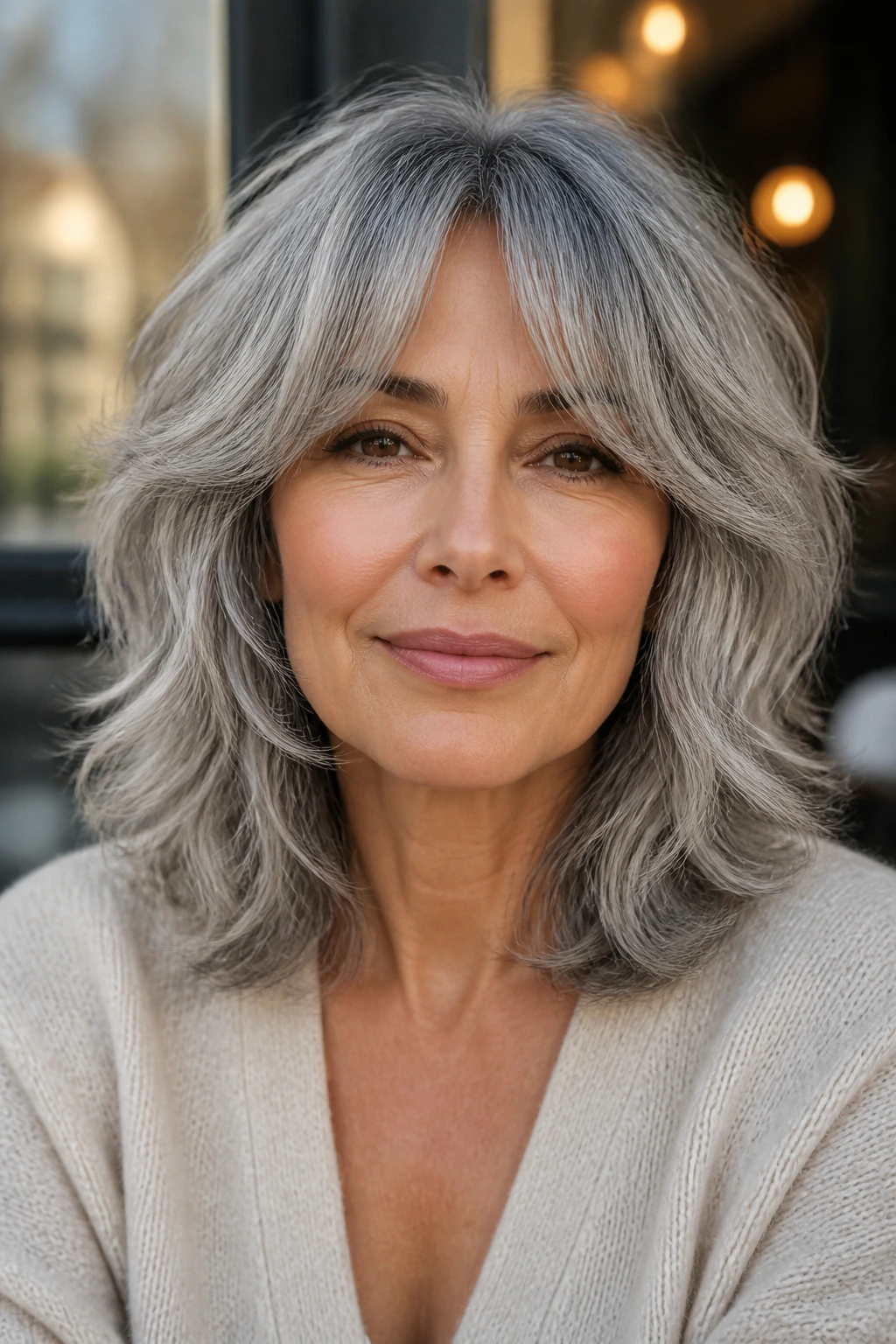
A shag in soft grey is for someone who wants movement first and neatness second. The layers break up the color beautifully, and the curtain bangs help warm skin by drawing attention to the eyes rather than the mouth or jawline. It has a little grit to it. In a good way.
What Makes It Different
The shag’s job is to keep the grey from looking too polished. That matters on warm undertones, because too much shine with too little movement can make the color look like a helmet. The loose fringe gives you a built-in face frame, and the shag layers create those irregular bends that make grey hair look expensive without trying too hard.
Best Styling Habit
Work a light mousse into damp roots, then rough-dry with your fingers. Once the hair is 80 percent dry, use a diffuser or a medium round brush to keep the fringe from collapsing. A tiny bit of matte paste at the ends is enough.
3. Silver-Beige Long Layers
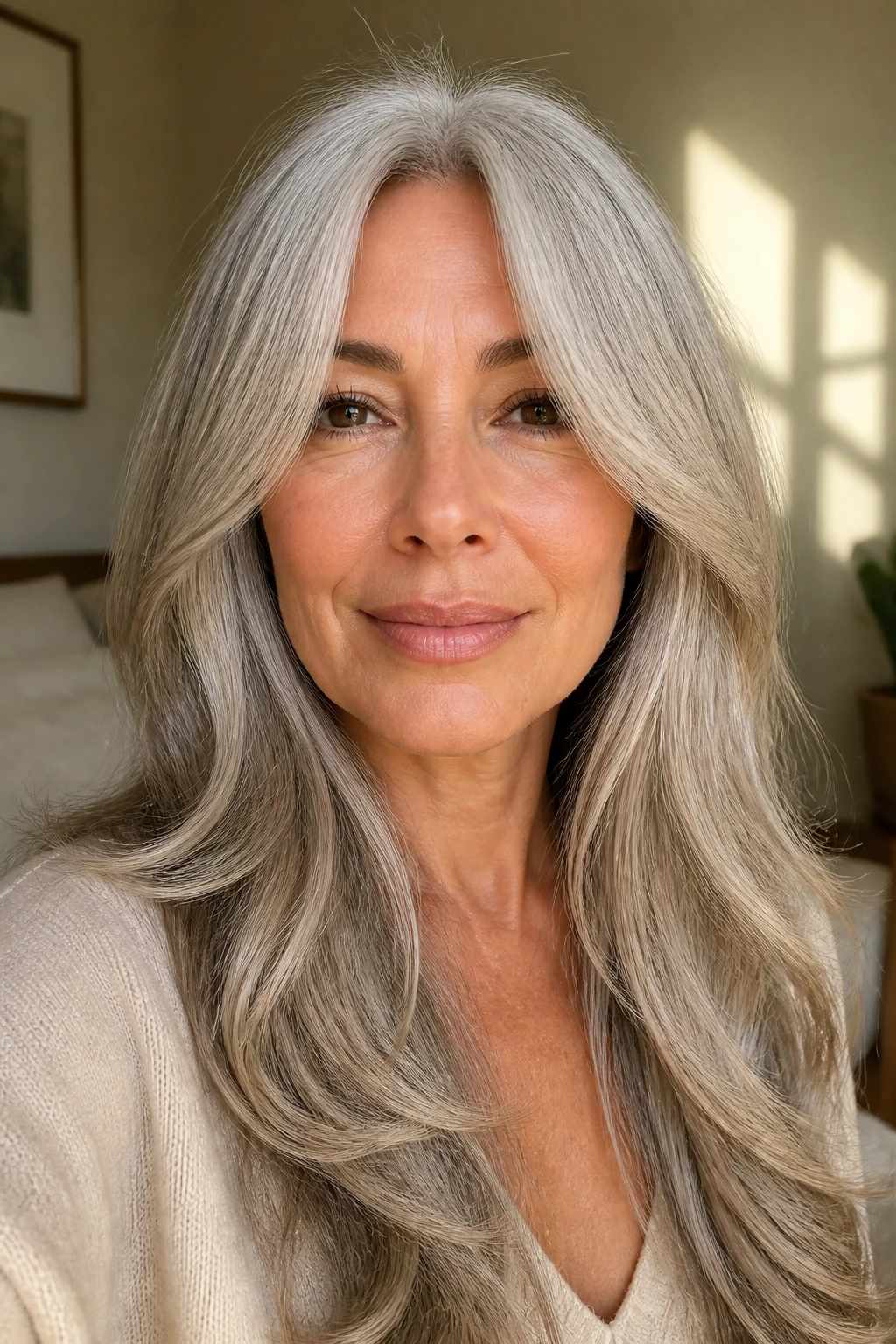
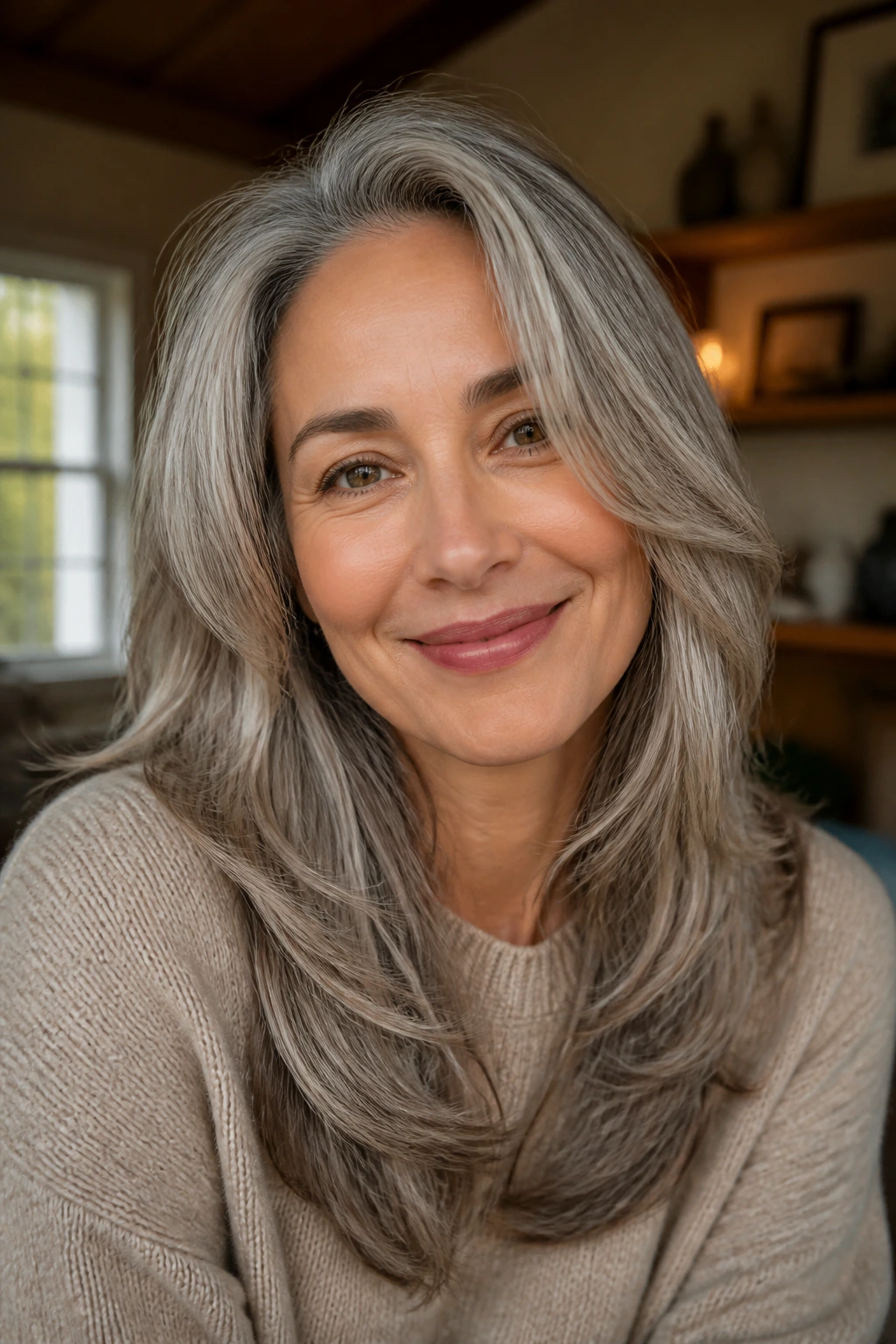
Long grey layers can go wrong fast if the color is too icy or the cut is too straight. Silver-beige solves the first problem, and soft face-framing layers solve the second. The result feels airy, but not flimsy. That’s the sweet spot.
Why Warm Skin Likes It
Silver-beige grey has enough lightness to look modern, but the beige keeps the undertone calm. On warm skin, that means less contrast under the eyes and around the nose. The longest pieces should start around the cheekbone or chin, then fall into longer lengths through the chest. That keeps the hair from hanging like one long curtain.
Styling Note
Loose waves made with a 1.25-inch iron work better than tight curls here. Tight curls make long grey hair look too formal. A soft bend through the mid-lengths gives the face breathing room.
4. Warm Pewter Pixie
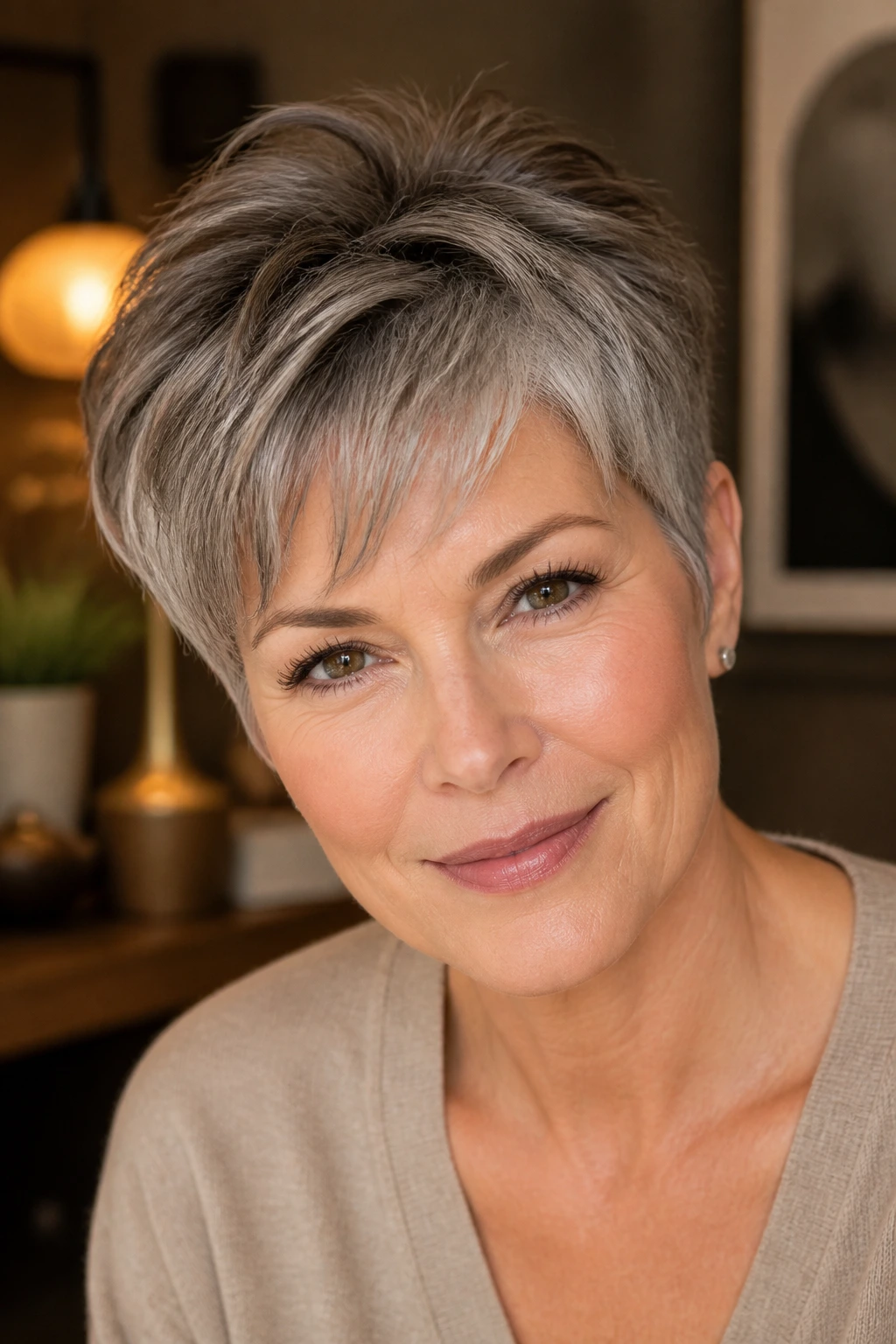
A pixie in warm pewter grey has attitude, but it isn’t harsh. The key is keeping the top soft and the sides tapered so the short length doesn’t expose every edge of the face at once. Pewter is one of those shades that behaves well with gold and peach undertones. It’s calm. Very useful.
How It Flatters
Warm pewter sits between silver and charcoal, which makes it a safer choice than icy platinum for warm skin. A little bit of texture on top keeps the cut from feeling severe, and a longer fringe can be swept across the forehead to soften the brow. If your face is strong through the jaw, this cut can look excellent with just a touch more length at the temples.
Best For
- Fine hair that needs lift
- Thick hair that wants some weight removed
- People who like quick styling in the morning
A pea-sized amount of styling cream is enough. Too much product makes short grey hair look greasy fast.
5. Beveled Grey Bob with a Side Sweep
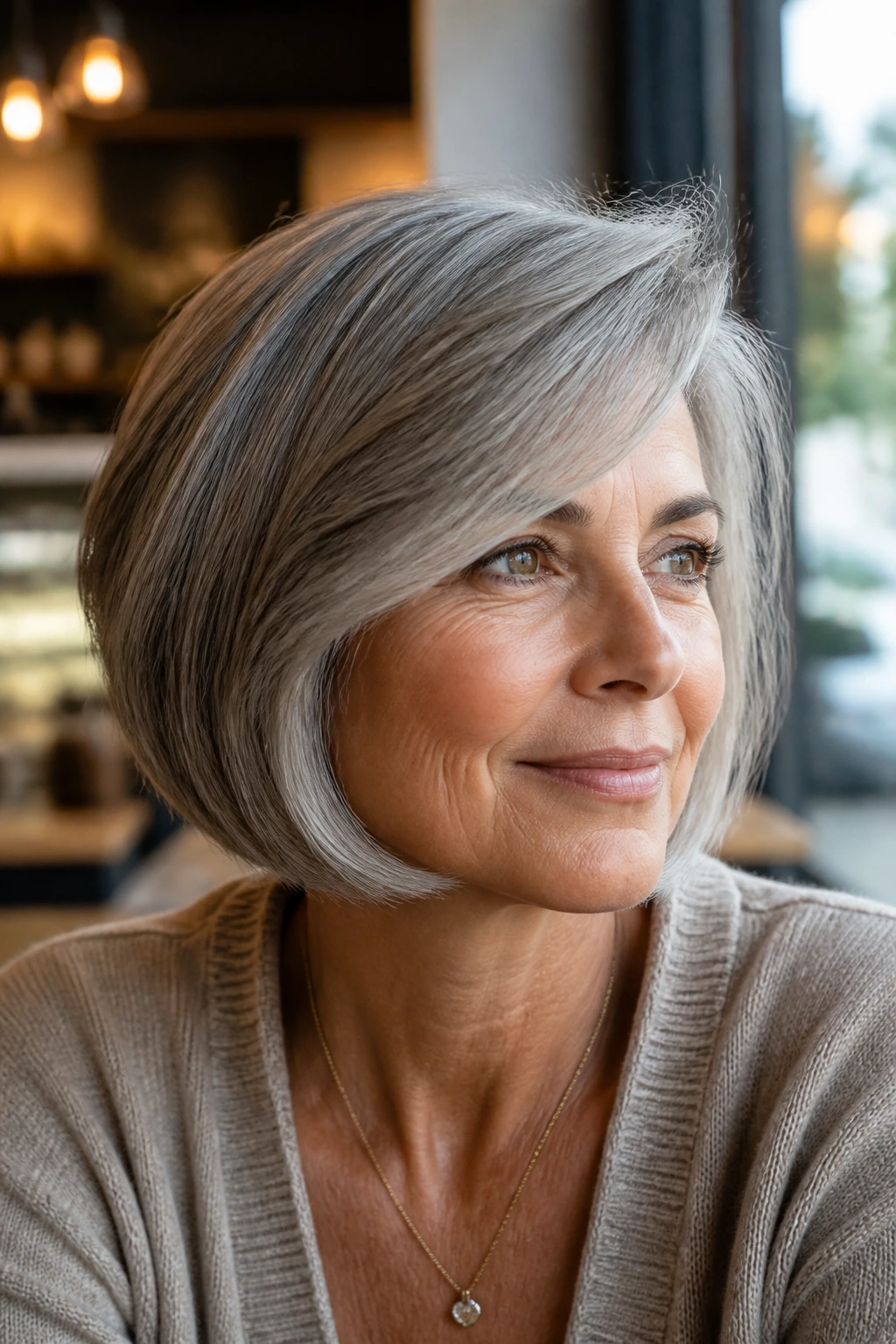
This bob is cleaner than a shag and softer than a blunt bob, which is exactly why it works on warm skin. The bevel at the ends gives the line a little curve, and the side sweep breaks up the forehead area without hiding it. It’s crisp, but not cold.
A beveled shape also gives grey hair some reflection at the edges. That matters. Grey can turn flat in a straight line, but when the ends are tucked or curved under, the whole cut feels more dimensional. Ask for a grey-brown root area that fades into smoky silver through the mid-lengths. That blend is kinder to warm undertones than a single, uniform tone.
6. Rooted Grey Wavy Lob
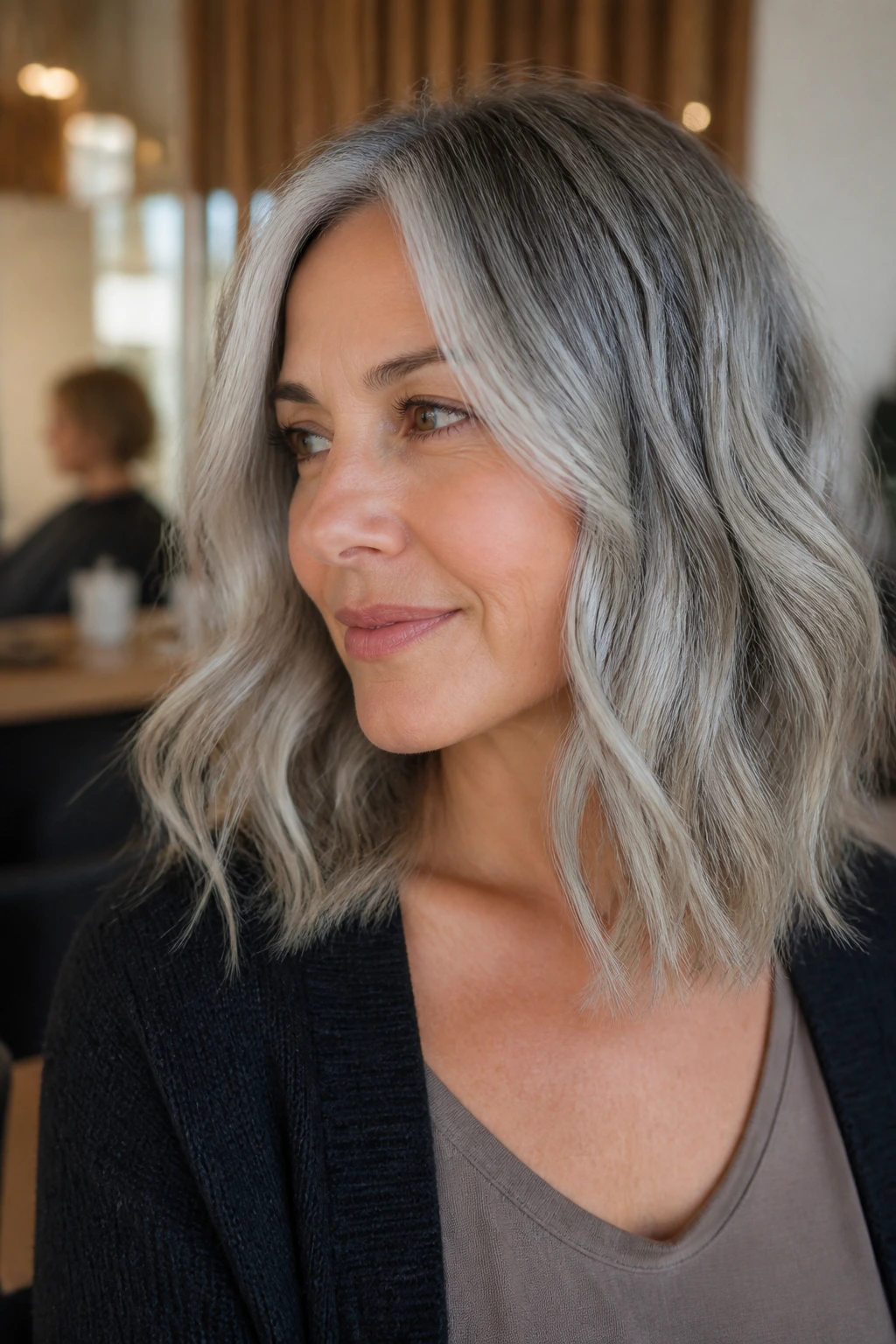
A rooted lob is one of the easiest grey styles to live with, and I say that with affection. The darker root buys you time between salon visits, and the waves keep the grey from reading as one solid sheet. Warm skin tends to look best when there’s a little shadow near the scalp. It gives the color somewhere to breathe.
Why It Helps
The rooted effect softens the contrast at the hairline, which is where grey can feel most exposed. If your undertones are golden or peach, a slightly deeper root keeps the face from being framed by too much brightness. The lob length also lets the waves fall in a relaxed way over the shoulders instead of puffing out at the ends.
Easy Styling
Scrunch in a curl cream, rough-dry, then wrap just the mid-lengths around a curling wand for 6-8 second bends. Leave the ends a little straighter. That unfinished finish makes the colour feel natural.
7. Smoky Taupe Wolf Cut
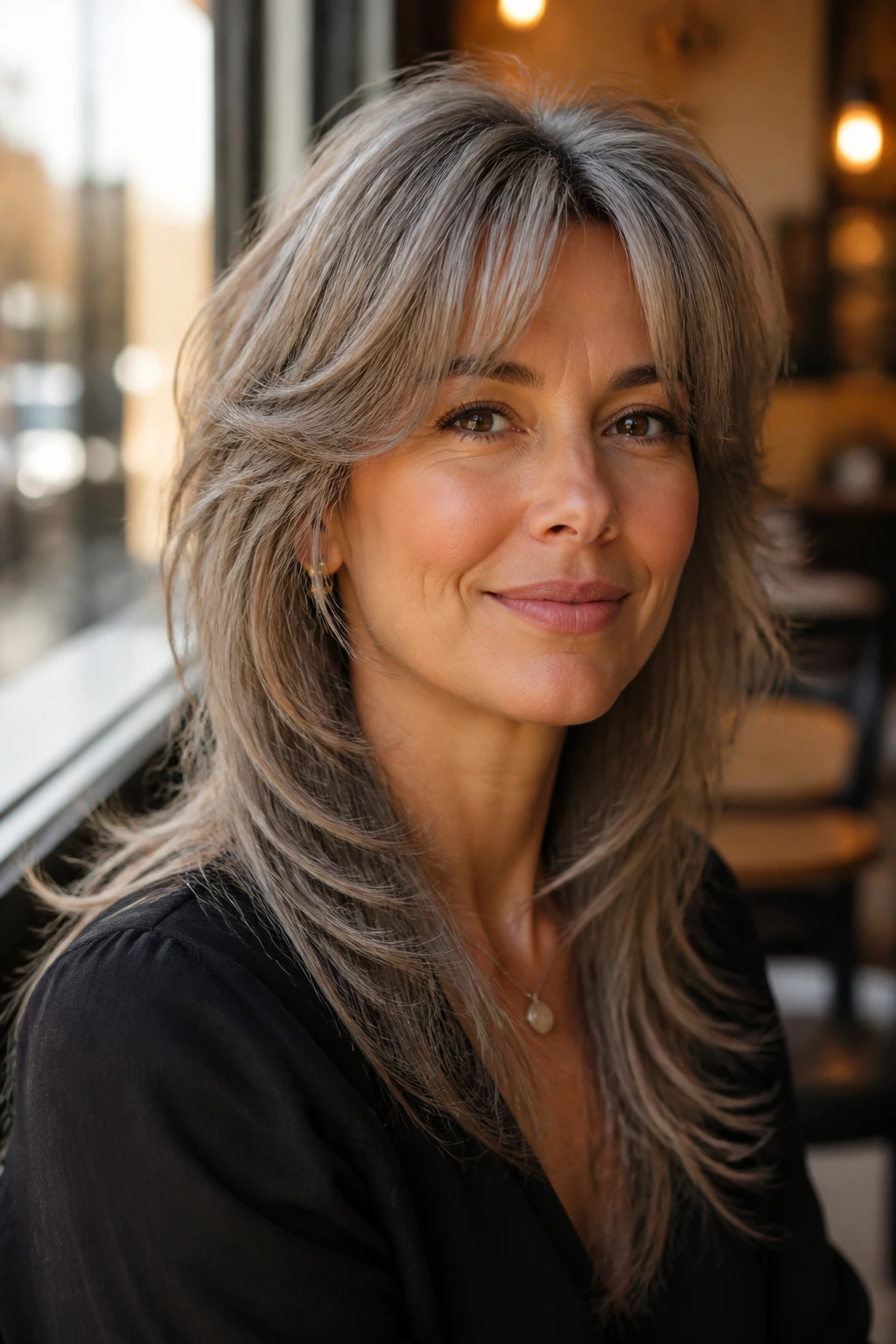
A wolf cut can be a mess if it’s too choppy, but smoky taupe makes it feel deliberate. The layers are short on top, longer at the bottom, and the whole point is movement. On warm skin, taupe grey keeps the cut grounded. It’s a little rock-and-roll without going full frost.
What to Watch
This shape works best when the top layers aren’t thinned to death. You want separation, not see-through ends. Ask your stylist to keep some weight through the perimeter so the grey doesn’t fray around the face. The best wolf cuts on warm skin have a soft fringe or curtain bang that bends away from the cheeks.
Pro Styling Trick
Use a small amount of sea salt spray only at the roots and crown. If you spray it through the ends, the layers can get dry and fuzzy. One or two bends from a wand is enough. Don’t overbuild it.
8. Mid-Length Layers with Bottleneck Bangs
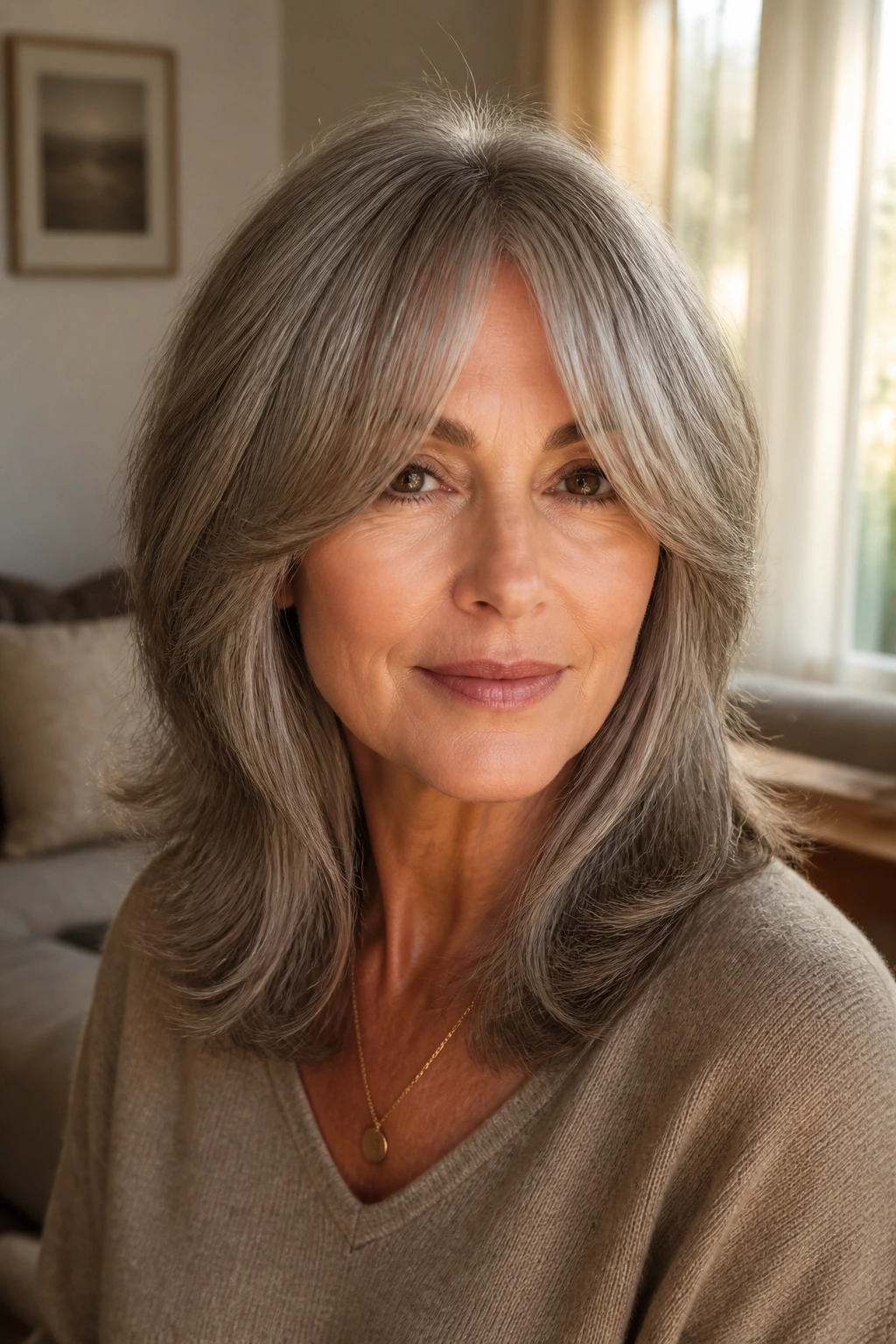
Bottleneck bangs can be a gift for warm skin because they open up the center of the face while softening the temples. Add mid-length grey layers underneath, and the whole shape feels sculpted without looking hard. The grey should lean more mushroom than silver here. That keeps the fringe from looking stark against the forehead.
Why It Reads Soft
The bottleneck shape starts narrow between the brows and opens gently toward the cheekbones. That little flare helps frame the eyes, which is useful if grey hair tends to make your features feel cooler than you want. The layers below should fall around the clavicle and chest so the bangs don’t feel disconnected from the rest of the cut.
Styling Cue
Blow-dry the bangs first, side to side, with a small round brush. If you let them air-dry bent in the wrong direction, they’ll fight you for the rest of the day. A light mist of flexible hold spray is enough.
9. Curly Grey Halo Layers
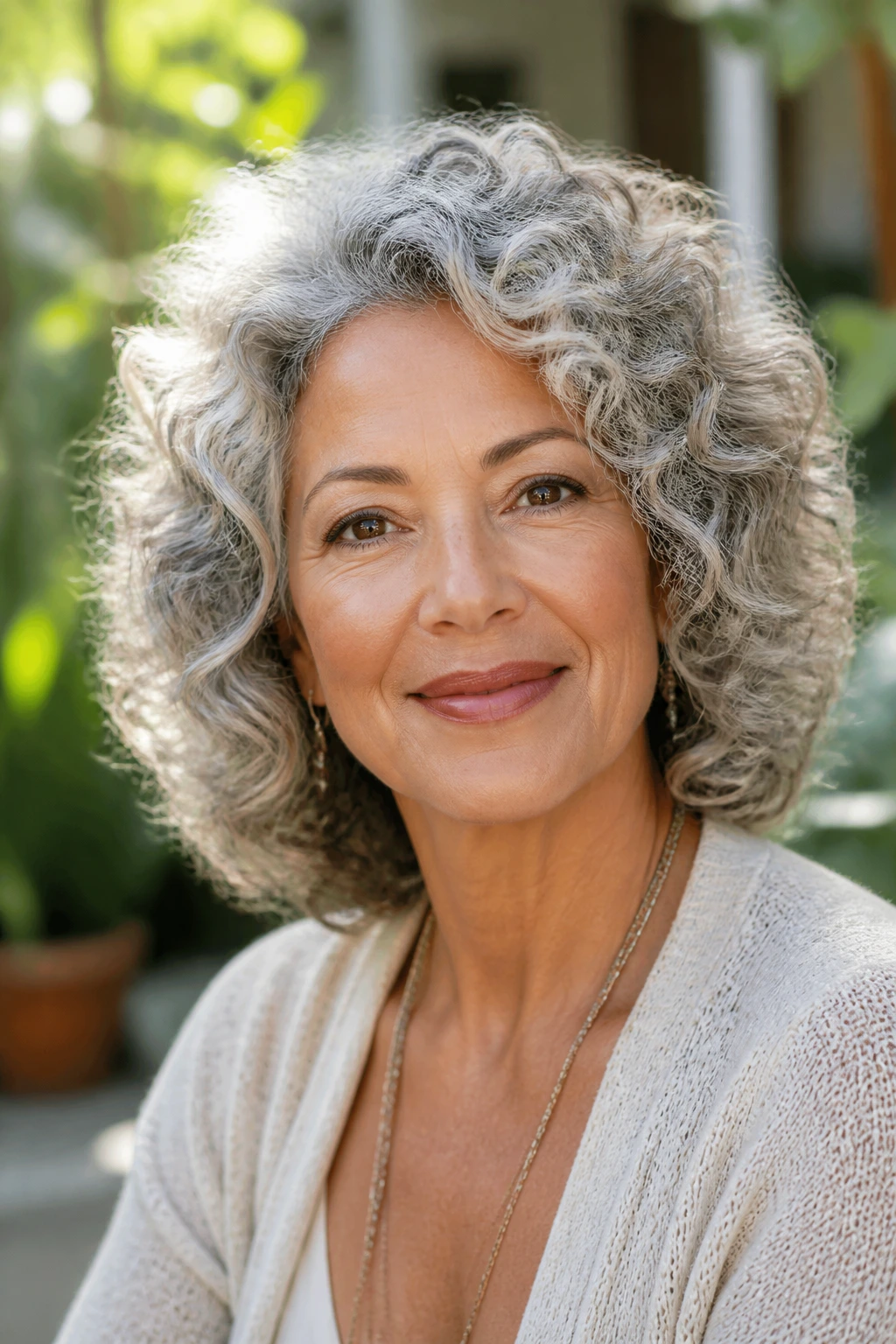
Curly hair and grey tones can look gorgeous together when the layers are cut to follow the curl pattern instead of working against it. Halo layers lift the curl up and away from the face, which is exactly where warm skin benefits most. You get shape, but you keep softness. That’s the whole game.
Why It Works
Curly grey can flatten if the cut is too boxy. Halo layering rounds the silhouette, which helps the color catch light in small patches rather than one flat sheet. On warm skin, those patches of silver-grey and taupe create a softer frame around the face. If your curls are tight, make sure the crown is not over-thinned. You still need some structure.
Best Finish
Use a curl cream with slip, then diffuse on low heat. Once dry, break up any crunchy cast with a drop of serum on your palms. The result should feel airy, not fluffy.
10. Graphite Gloss Long Layers
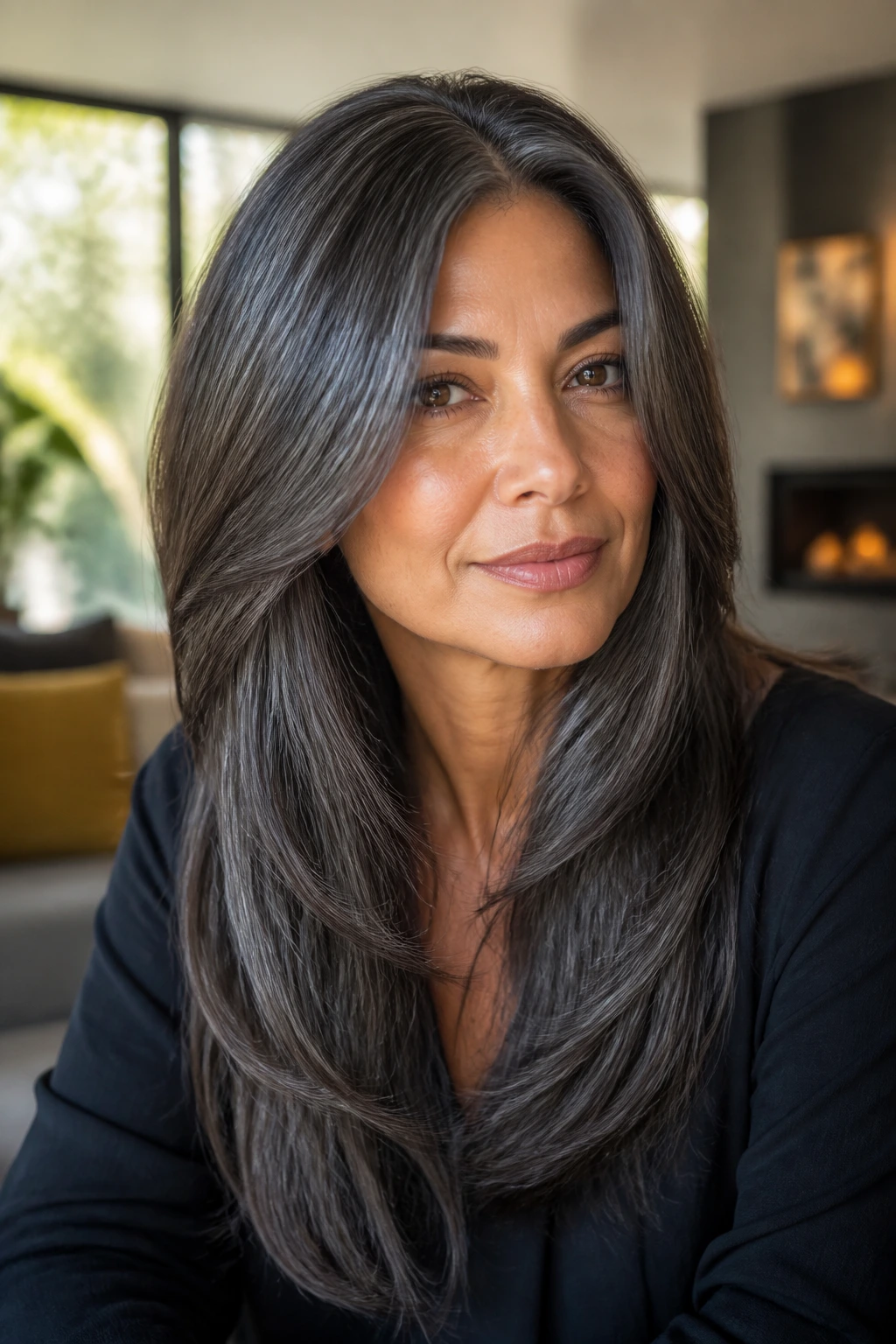
Graphite grey is a stronger choice, but a glossed finish and long layers keep it wearable on warm skin. The key is not making the color too blue. You want depth, shine, and a little softness at the face. Graphite has a lovely dark-silver richness when it’s treated that way.
Long layers also stop graphite from turning into a heavy block. They let the color move. One pass with a large curling iron through the ends is enough to create that gentle bend that keeps the face from being swallowed by dark grey length.
11. Choppy Midi Cut with Feathered Ends
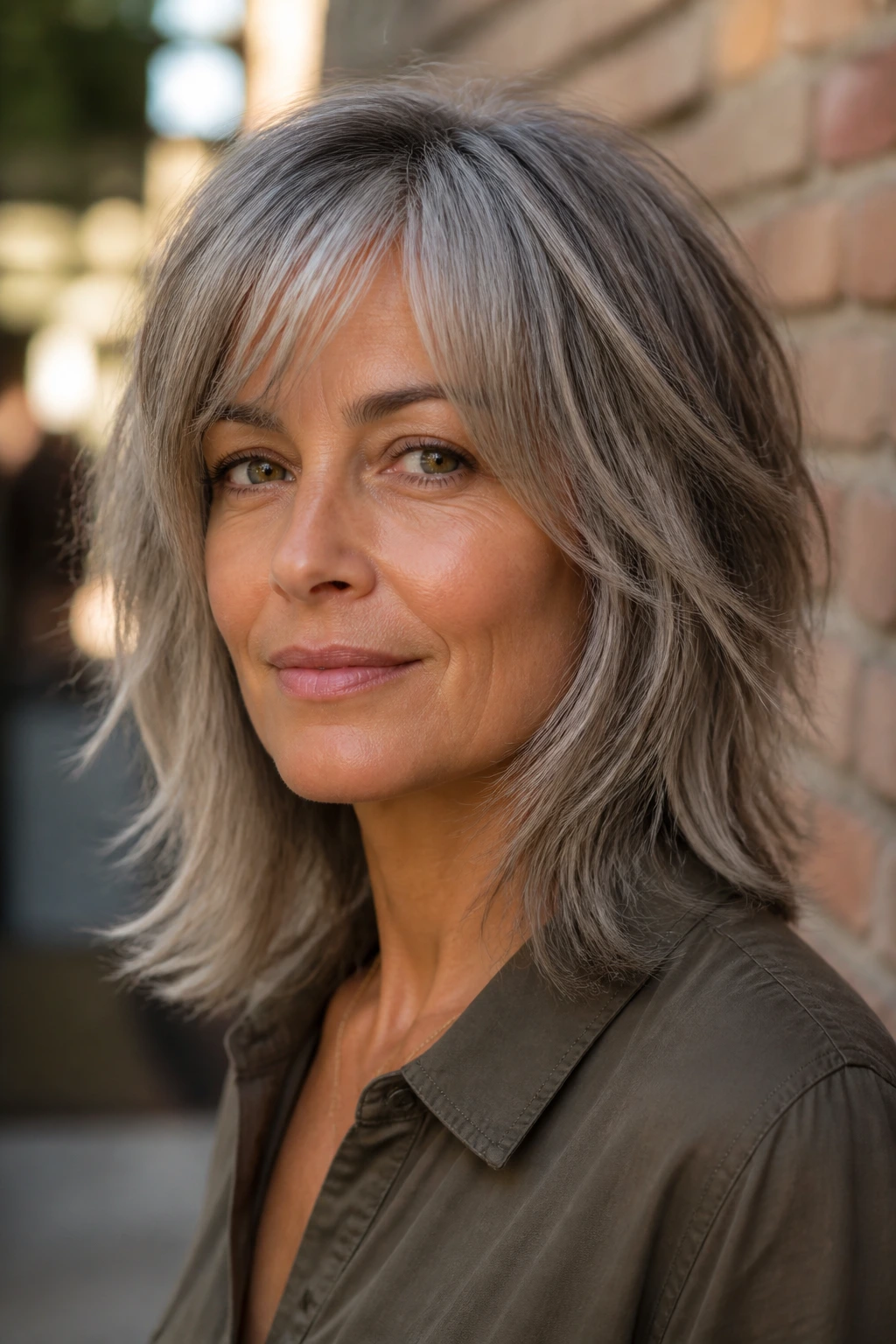
A midi cut sits between a lob and longer hair, which gives you room to play with shape. Feathered ends keep the grey from feeling dense. On warm skin, this matters because a hard edge can make the color feel colder than it is. Choppy, but not ragged. There’s a difference.
Comparison Point
Unlike a blunt midi, a feathered version lets light travel through the ends. That makes mushroom grey, steel grey, or silver-brown tones read as layered rather than flat. It’s especially nice if your hair has some natural wave and you do not want to fight it every morning.
Quick Styling Note
A paddle brush and a small amount of smoothing cream are enough for straight textures. For waves, finger-dry the ends and let them land a little undone.
12. Tapered Pixie-Bob
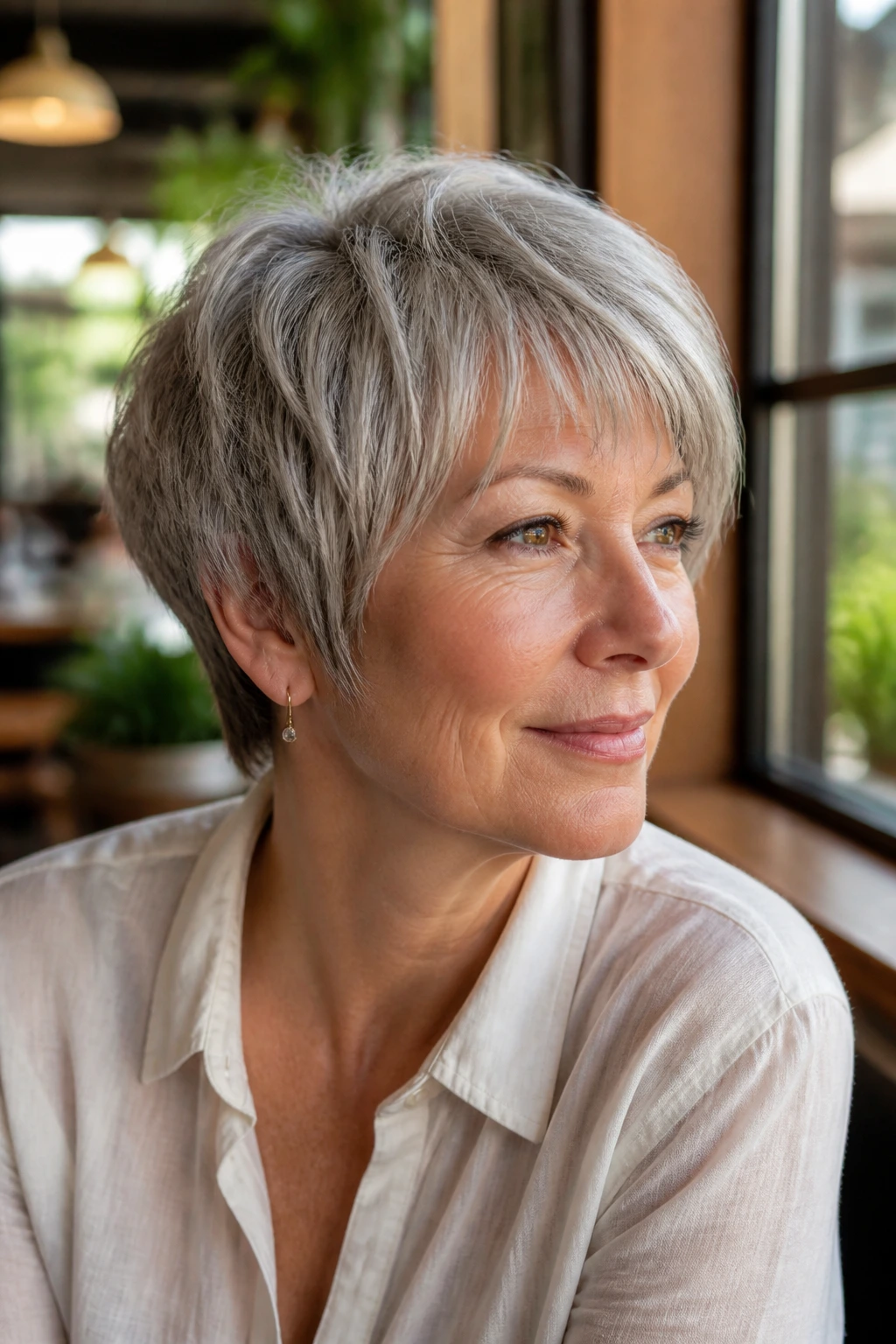
A pixie-bob is one of those cuts that can look sleek or playful depending on the styling. The tapered back keeps the neckline neat, while the longer crown and sides give you room for soft grey movement. Warm skin usually likes this shape when the fringe is kept light and a touch piecey.
Why It Flatters
The taper exposes the face without making it feel bare. That’s useful if your skin leans golden or peach and you still want the grey to feel approachable. A little warm silver glaze on top and darker lowlights underneath can create a nice shadow effect. It’s a small detail, but it changes the whole mood.
Best Ask
Ask for texture through the crown and softness around the ears. Too much bulk near the temples can make the cut look helmet-like. Nobody wants that.
13. Shoulder-Grazing Cut with a Deep Side Part
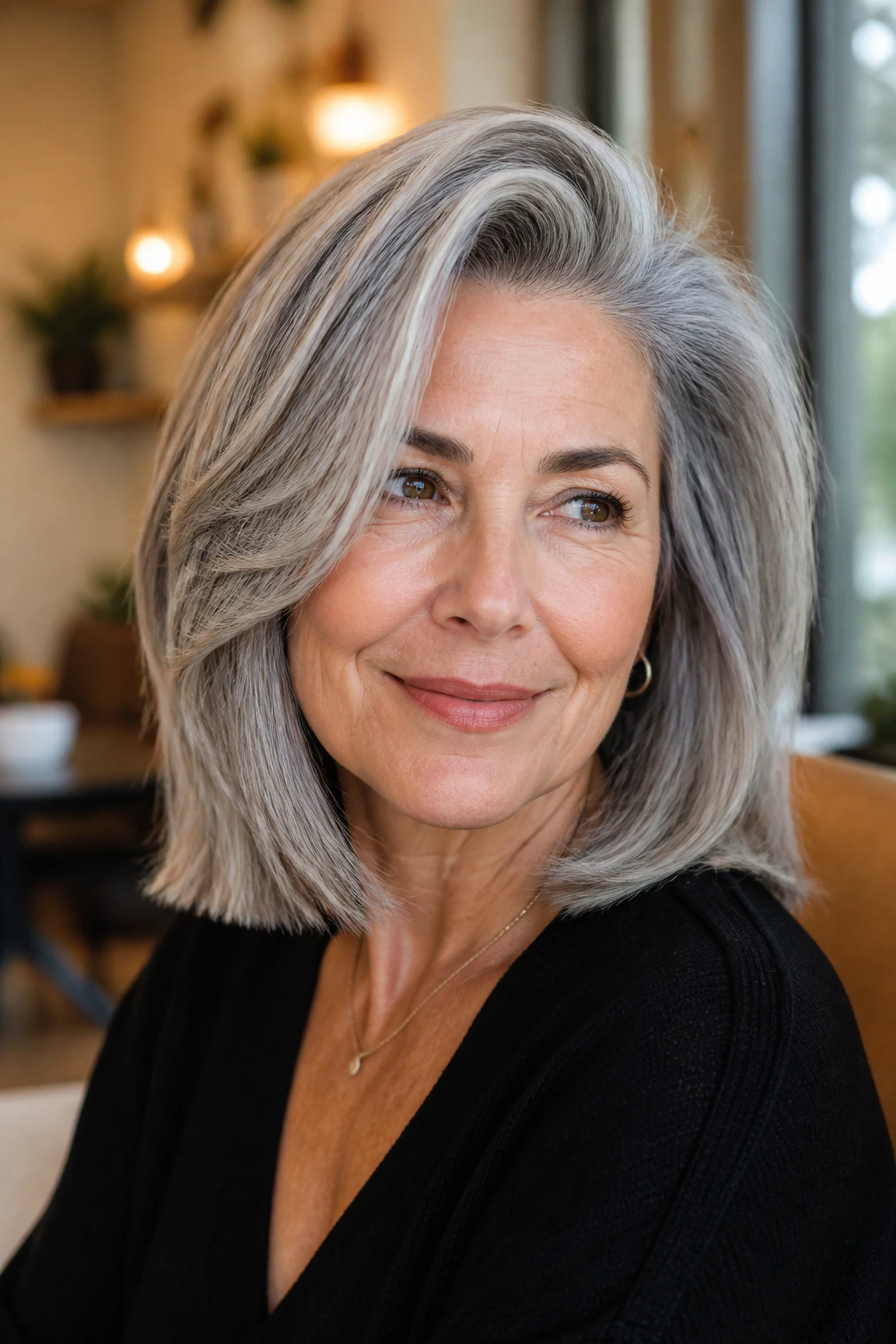
A deep side part gives shoulder-length grey hair instant lift. It also changes how the light hits the face, which can be a relief if warm skin is being flattened by a cool tone. The layers here should be soft enough to swing, not so short they fly everywhere.
The shoulder length is useful because it lets the hair sit against clothing and move with you. Grey at this length can look especially polished in a smoky beige tone. I’d keep the roots one shade deeper than the mid-lengths. That little shadow keeps everything from washing out.
14. Soft Steel Graduated Bob
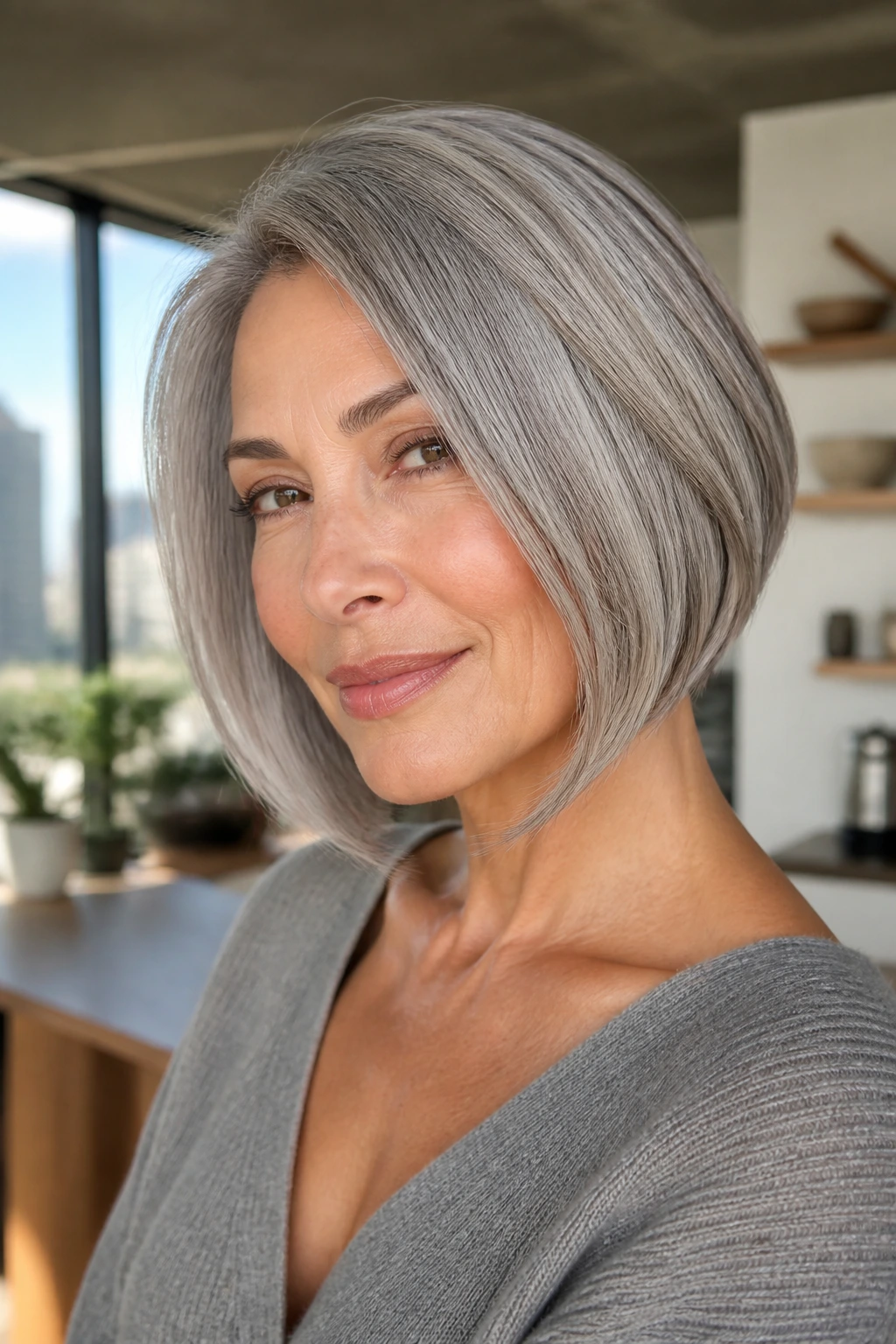
A graduated bob has weight in the back and softness through the front, which makes it a smart choice for warm skin if the grey is handled carefully. Soft steel is the kind of grey that looks polished without veering icy. The front pieces should skim the jaw, not hover awkwardly above it.
The graduation adds shape to the nape, which gives the cut structure even when the styling is minimal. A round brush under the ends and a bit of shine spray is enough. If the cut is too steep, it gets formal fast. Keep the slope gentle.
15. Silver-Ribbon Mermaid Waves
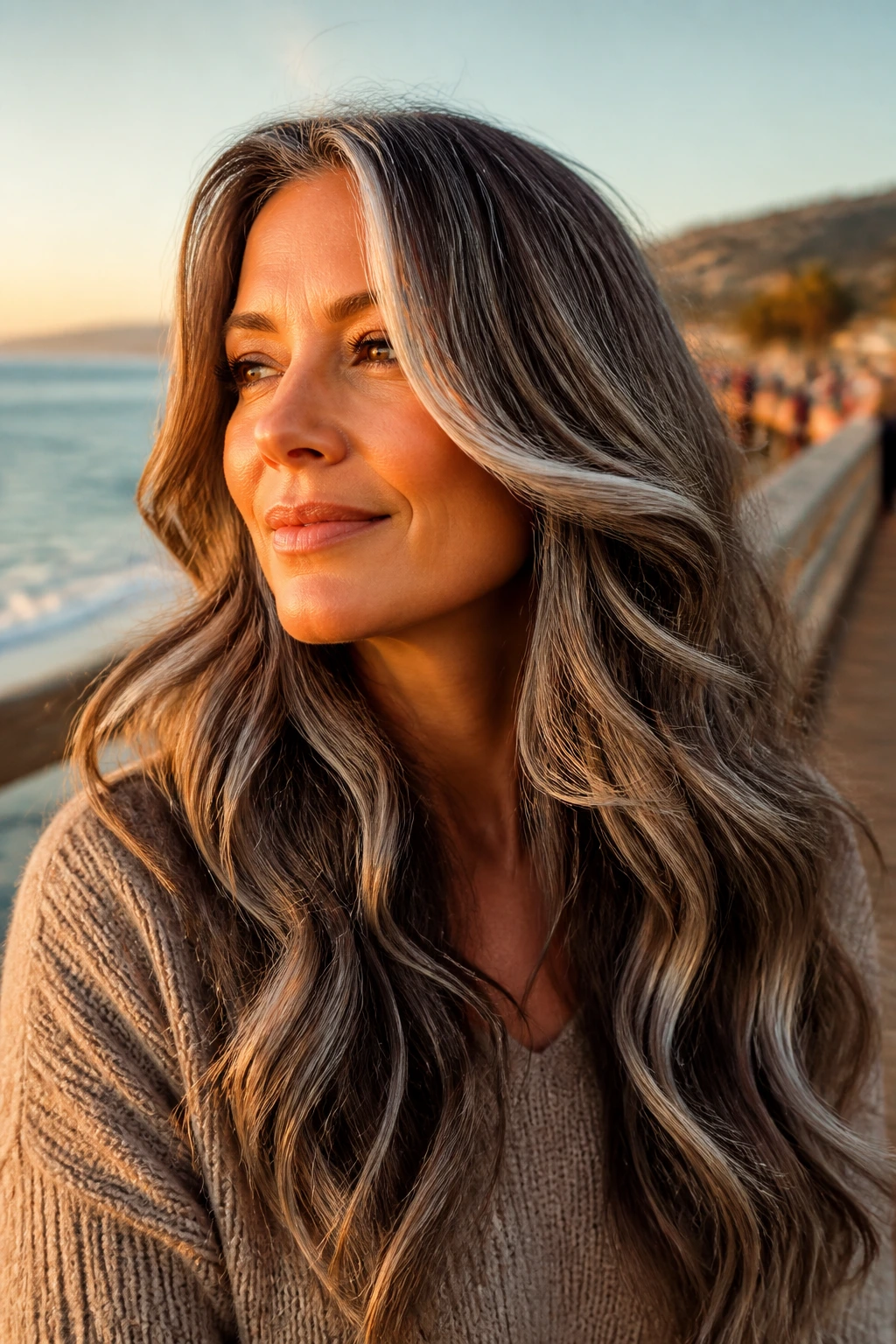
This one is for longer hair that still wants movement. Silver ribbons — thin, cool-grey highlights woven through a warmer base — work better than an all-over pale silver when the skin is warm. The waves carry the color. The layers keep the shape from dragging.
Why It Looks Good
Mermaid waves can go costume-y if the color is too uniform. Ribbon highlights break that up. On warm skin, the trick is keeping the base slightly deeper, with the grey placed where the hair bends and turns. Around the face, the pieces should stay a touch warmer so the whole look doesn’t feel detached from the complexion.
Styling Habit
Wrap the hair away from the face on one side and toward the face on the other. That uneven pattern keeps the wave looking soft, not pageant-like.
16. Polished Soft Mullet
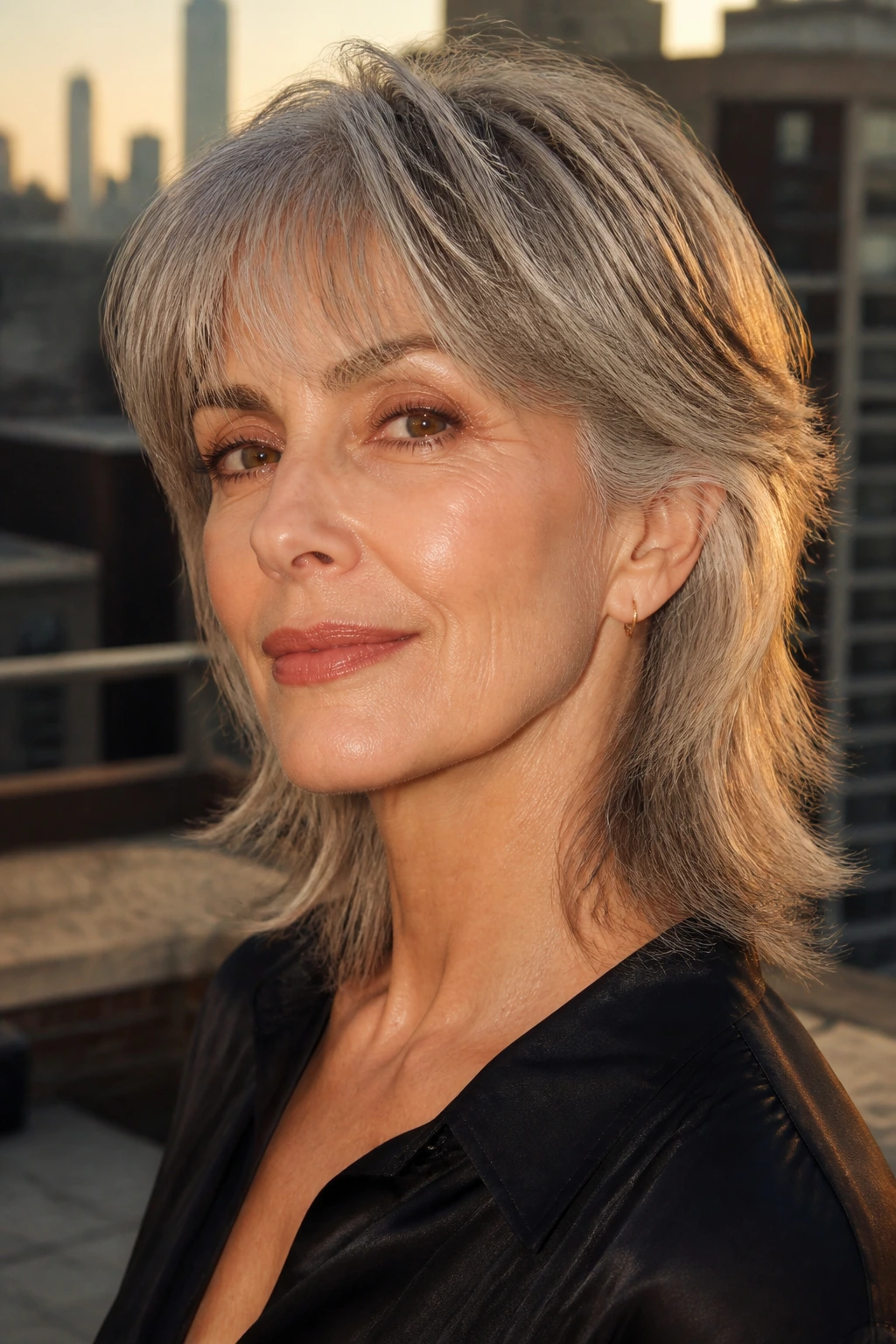
The soft mullet is back in quieter, better form. The best version keeps the front face-framing and the back longer without shouting about either one. In grey, that shape can look beautifully modern on warm skin if the tone leans smoky beige or warm pewter instead of stark silver.
Why It Works
The shorter top layers add lift, while the back keeps enough length to feel feminine, if that’s your lane. Warm skin benefits from the broken outline because it eases the contrast at the cheek and neck. Make sure the fringe or front pieces are soft enough to curve inward. Hard angles will fight the whole point of the cut.
Good Fit For
People who like texture, a little edge, and low-drama styling. If you want a cut that looks intentional with air-dried hair, this is a strong candidate.
17. Warm Ash Ombré Face Frames
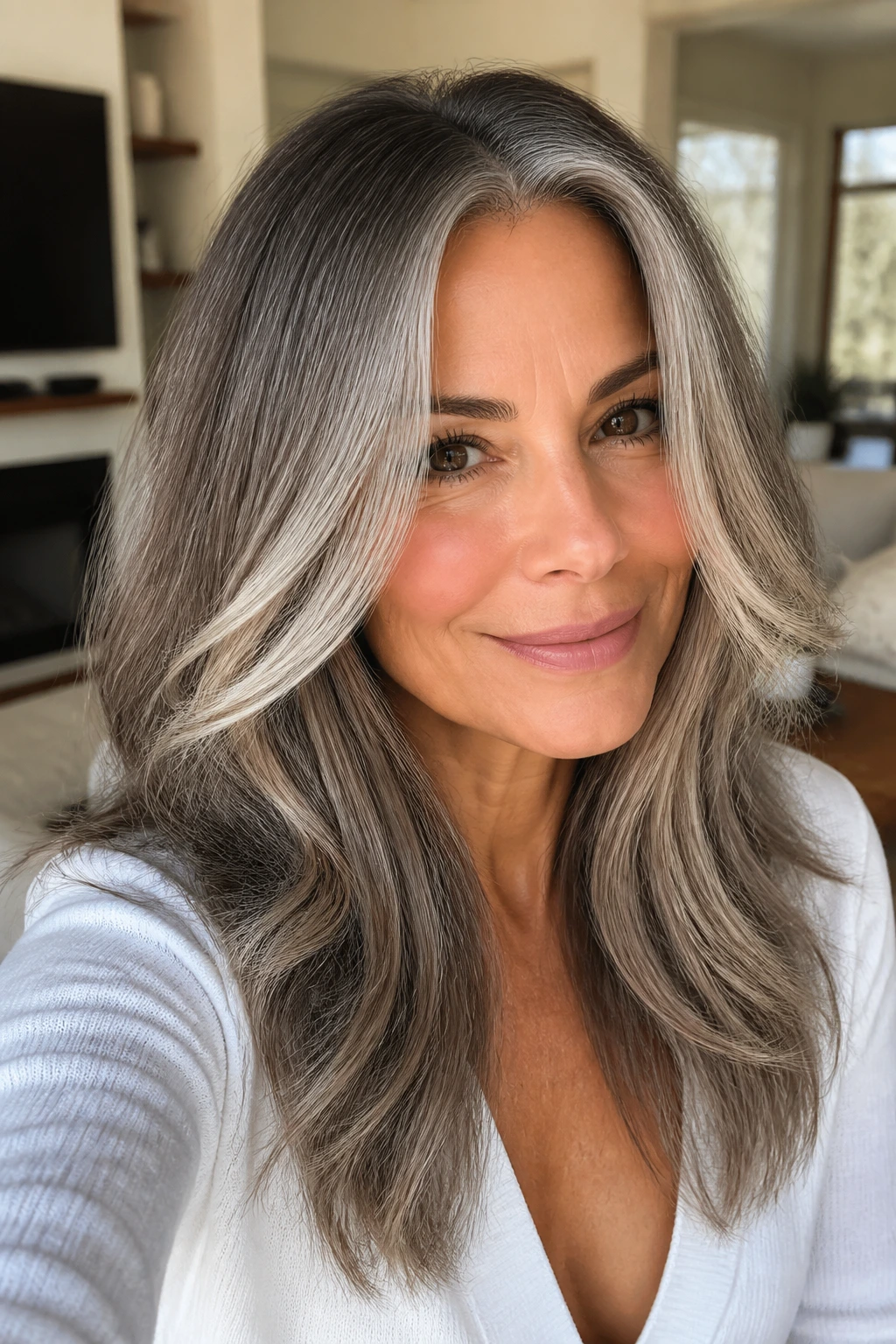
Warm ash ombré is one of the cleaner ways to move into grey without jumping straight to silver. The face frames carry the lighter grey near the cheekbones, while the rest melts into a deeper, softer ash. That gradient is flattering because it keeps the color concentrated where the eye wants it.
H3: Why the Gradient Matters
A straight, all-over grey can pull too much focus to the forehead and jaw. An ombré front frame keeps the brightness near the center of the face and lets the rest of the hair stay grounded. That makes warm skin look more even, especially if you have freckles, golden undertones, or naturally deeper brows.
Best Styling Move
Curl just the face frames away from the face once or twice a week. That small bend keeps the light pieces from hanging straight and cutting the face in half.
18. Textured French Bob
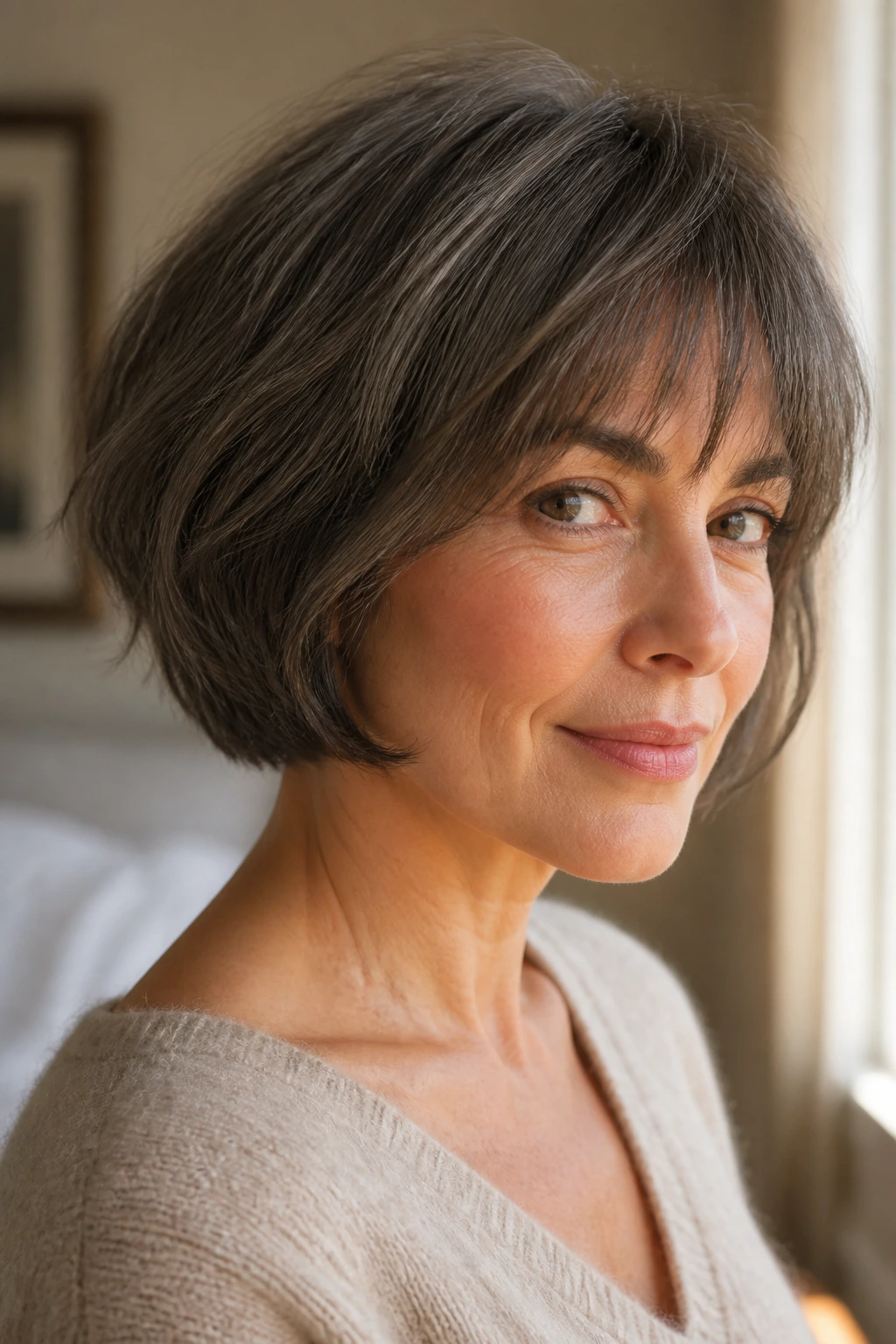
A French bob is short, cheeky, and a little undone. Add texture, and it becomes much easier to wear with warm skin. The grey should not be too stark. Think smoked silver, pearl-grey, or mushroom with a soft root. That gives the bob a Paris-by-way-of-real-life feel instead of a costume feel.
A textured fringe helps here, especially if your forehead is a feature you like to soften. The bob should stop around the jaw or just above it, depending on face shape. Anything too blunt starts feeling severe fast. Texture is what keeps it kind.
19. Long Layers with Silver Money Pieces
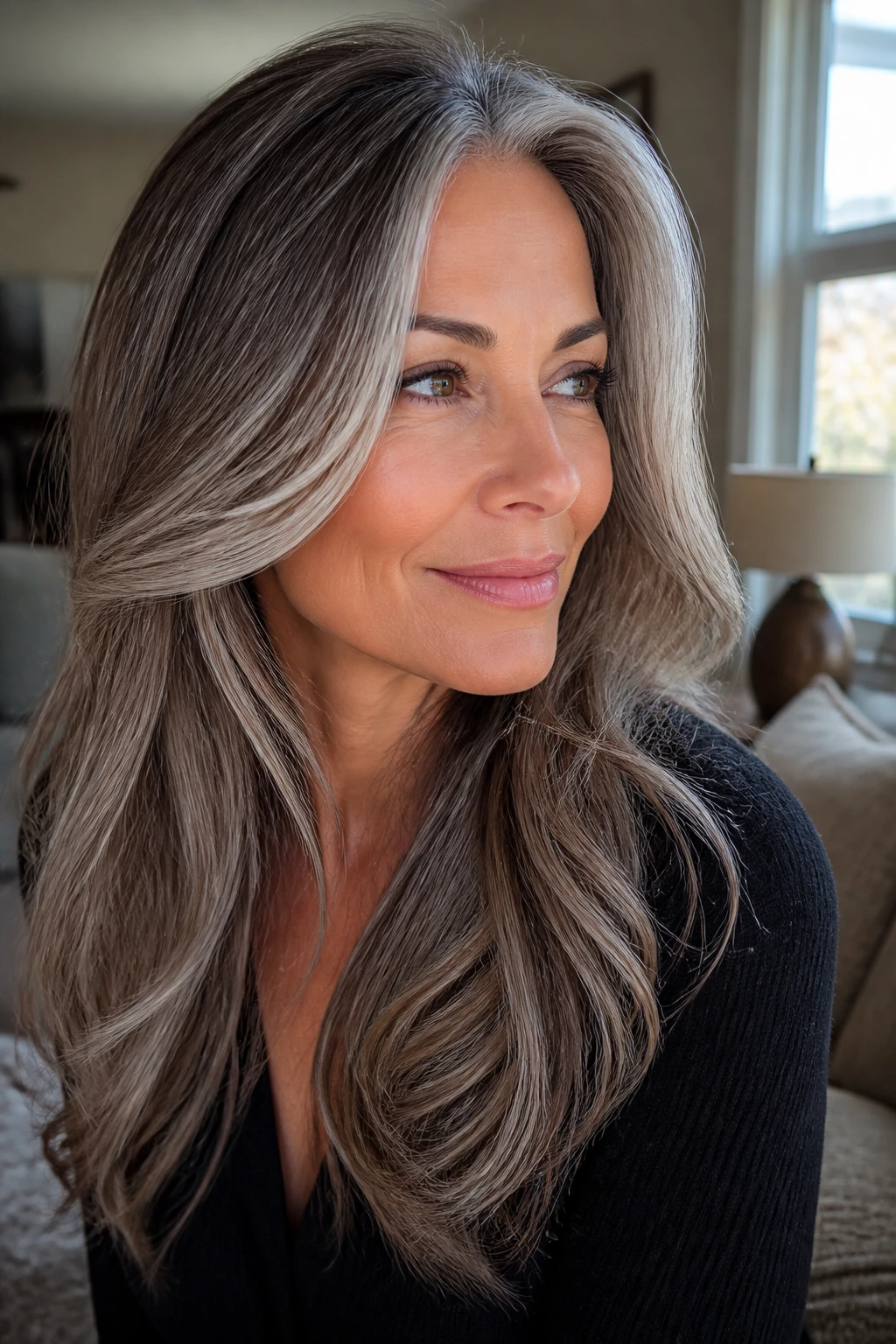
Money pieces can be tricky in grey, because too much brightness around the face can make warm skin look drained. Keep them silver, but not icy, and let the surrounding layers stay slightly deeper. That contrast works best when the cut is long enough to show movement.
What to Ask For
- Lighter grey pieces placed around the cheekbone and temple
- A deeper beige-grey or taupe base through the rest of the hair
- Long layers that begin below the chin
- Soft blending at the root, not a hard line
The money pieces should frame, not dominate. If they’re too wide, the face can disappear inside the color. Narrower, softer sections look better here.
20. Curly Shag with Halo Volume
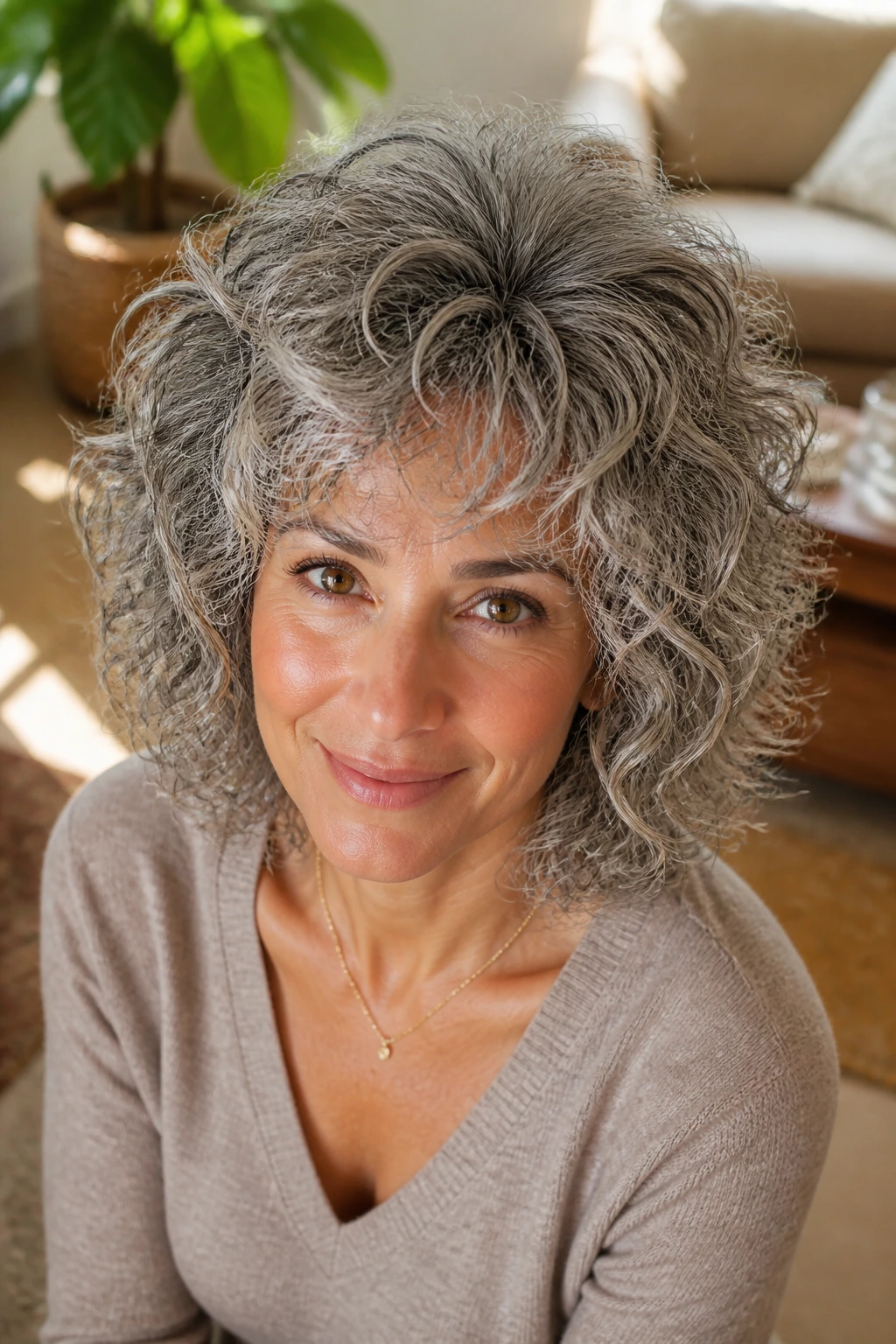
A curly shag can look wild in the wrong hands. In grey, though, it can be one of the easiest ways to make warm skin look fresh. The layers build a halo shape, which means the grey catches light in soft, broken sections instead of all at once. That broken light is what saves it.
The crown should be lifted, not thinned to dust. If the top is too sparse, the cut loses shape and the grey looks drab. Ask for curls to be cut dry, or at least in their natural state, so the layers fall where the hair actually lives.
21. Collarbone Cut with Internal Layers
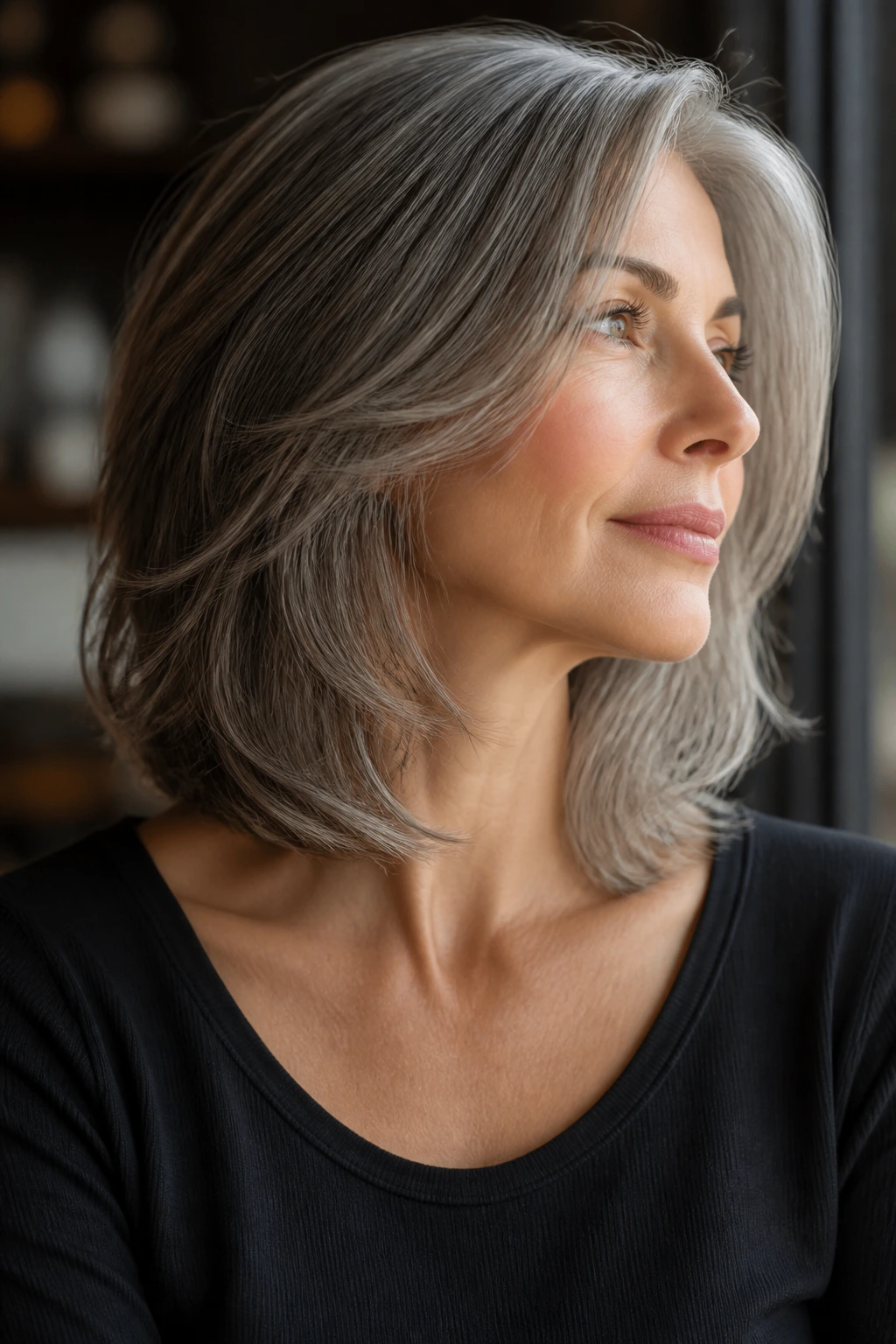
This is the cut for someone who wants the grey to stay calm. The outer shape looks simple, but the internal layers do the work of reducing bulk and creating motion. On warm skin, that means the grey can sit in a neutral zone without looking flat.
Practical Payoff
Internal layers keep the ends from flipping into one heavy line. They also make it easier to wear a mushroom grey or soft graphite tone without the color feeling dense. If your hair is thick, this cut can save you from triangle-head. If it’s fine, the internal movement adds a bit of body without obvious chopping.
Styling Note
A flat iron bend at the last two inches of the hair is enough. You do not need a full wave.
22. Deconstructed Lob with Beveled Ends
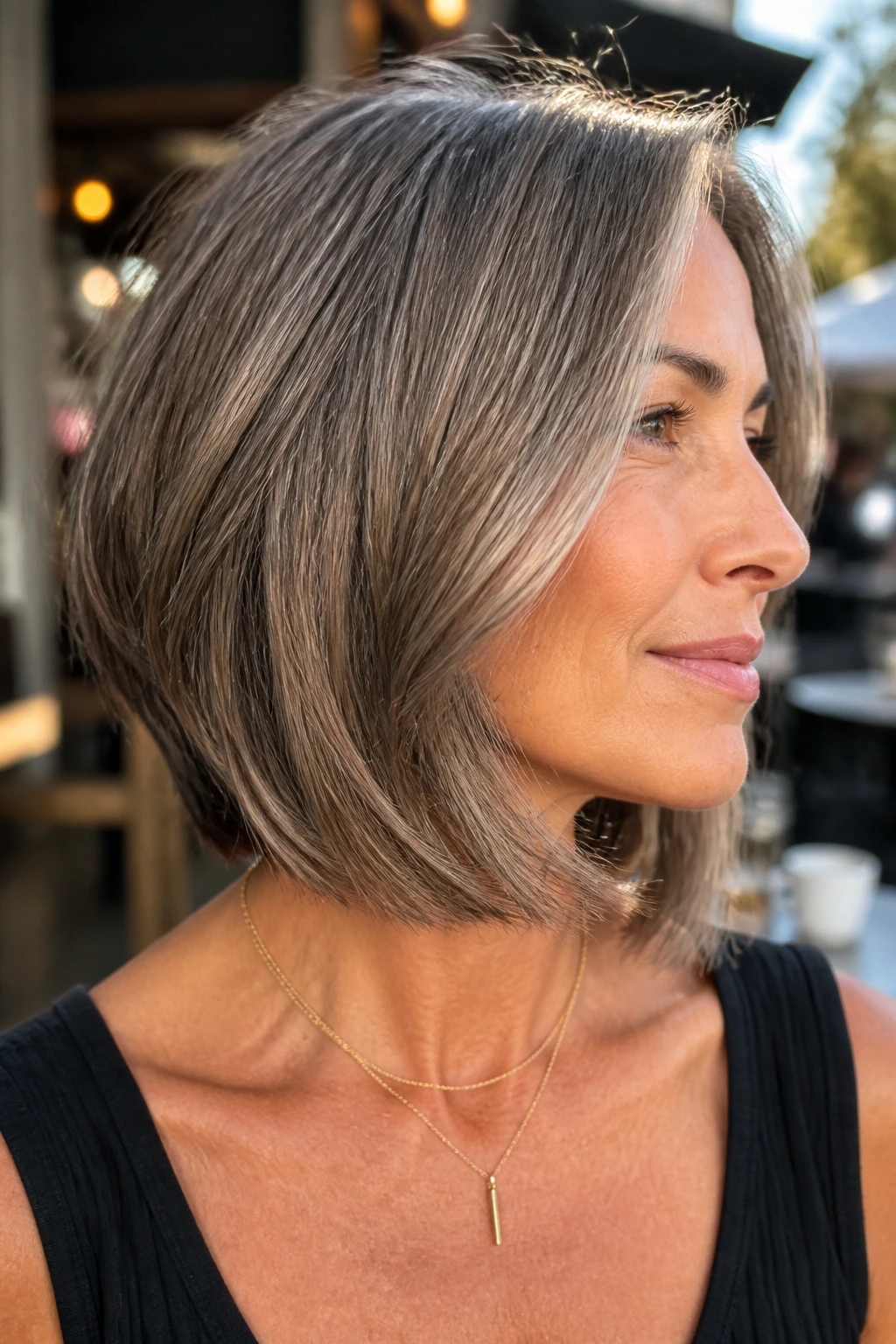
A deconstructed lob is the kind of cut that looks relaxed but still controlled. Beveled ends stop the grey from sitting like a shelf, which is useful on warm skin because the line stays soft around the jaw and neck. The grey can be a smoky beige, steel-brown, or muted silver, depending on how much contrast you want.
The deconstruction comes from the interior layers and piecey finish, not from shredding the haircut to bits. That’s the mistake people make. A good version has shape. It just doesn’t have a hard edge.
A little bend away from the face at the front pieces is enough to finish it.
Why Soft Layers Keep Grey from Looking Harsh
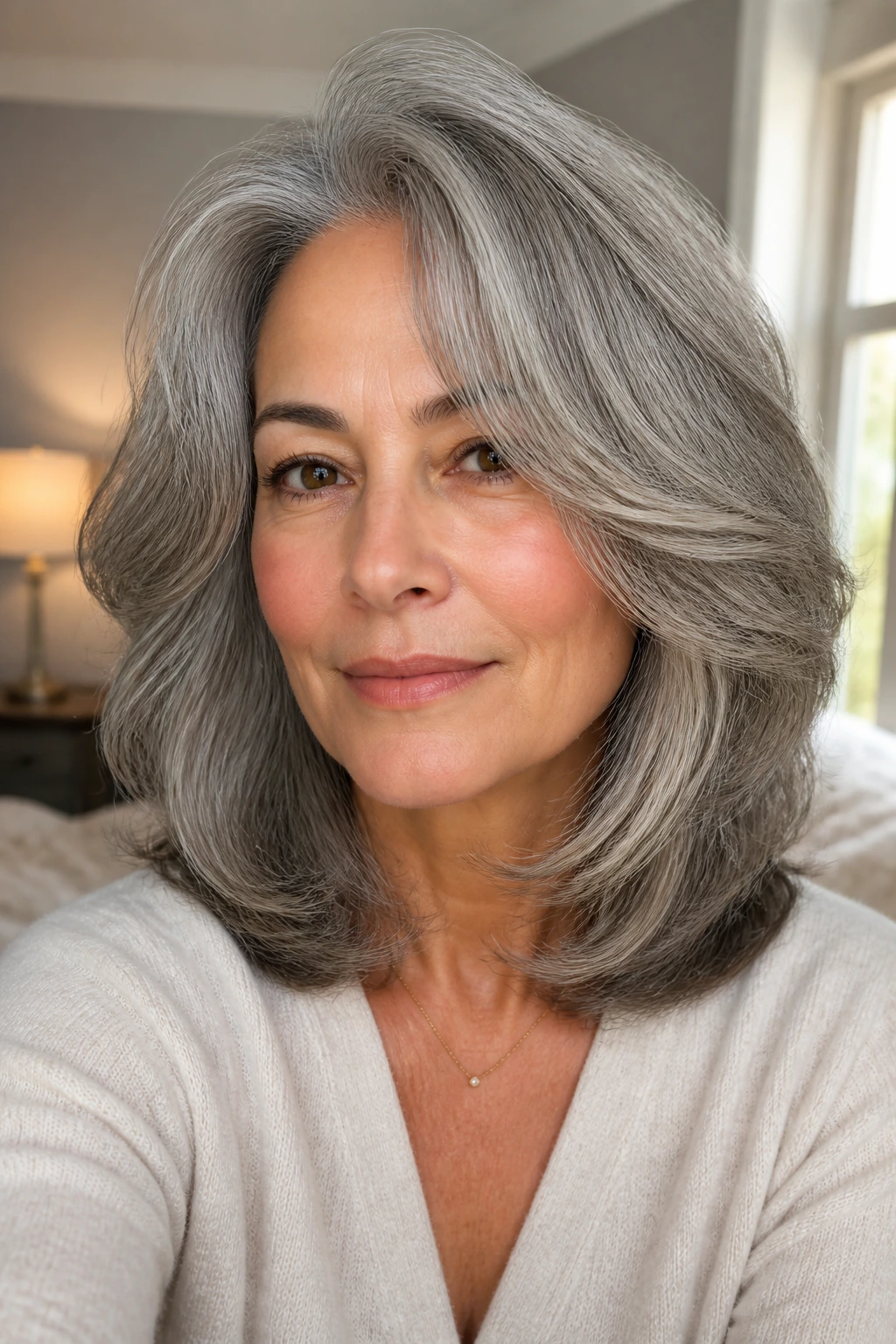
Grey hair can go flat fast when the cut is blunt and the color is uniform. Soft layers interrupt that. They create little shifts in light and shadow, which is exactly what warm skin tends to need when the hair color gets cooler. The hair stops reading like one big panel and starts reading like movement.
There’s also a face-framing effect that matters more than people expect. A layer that lands at the cheekbone can soften the transition from hair to skin in a way that a heavy, blunt edge never will. That is why these styles lean collarbone-length, feathered, tapered, or lightly textured. The shape supports the tone.
I’m also a fan of soft layers because they give you room to change your mind. If the grey feels too pale, you can add lowlights. If it feels too flat, you can add bend. If the cut is already full of harsh angles, every color mistake gets louder. Soft layers keep the whole thing workable.
Choosing Grey Shades That Flatters Warm Skin
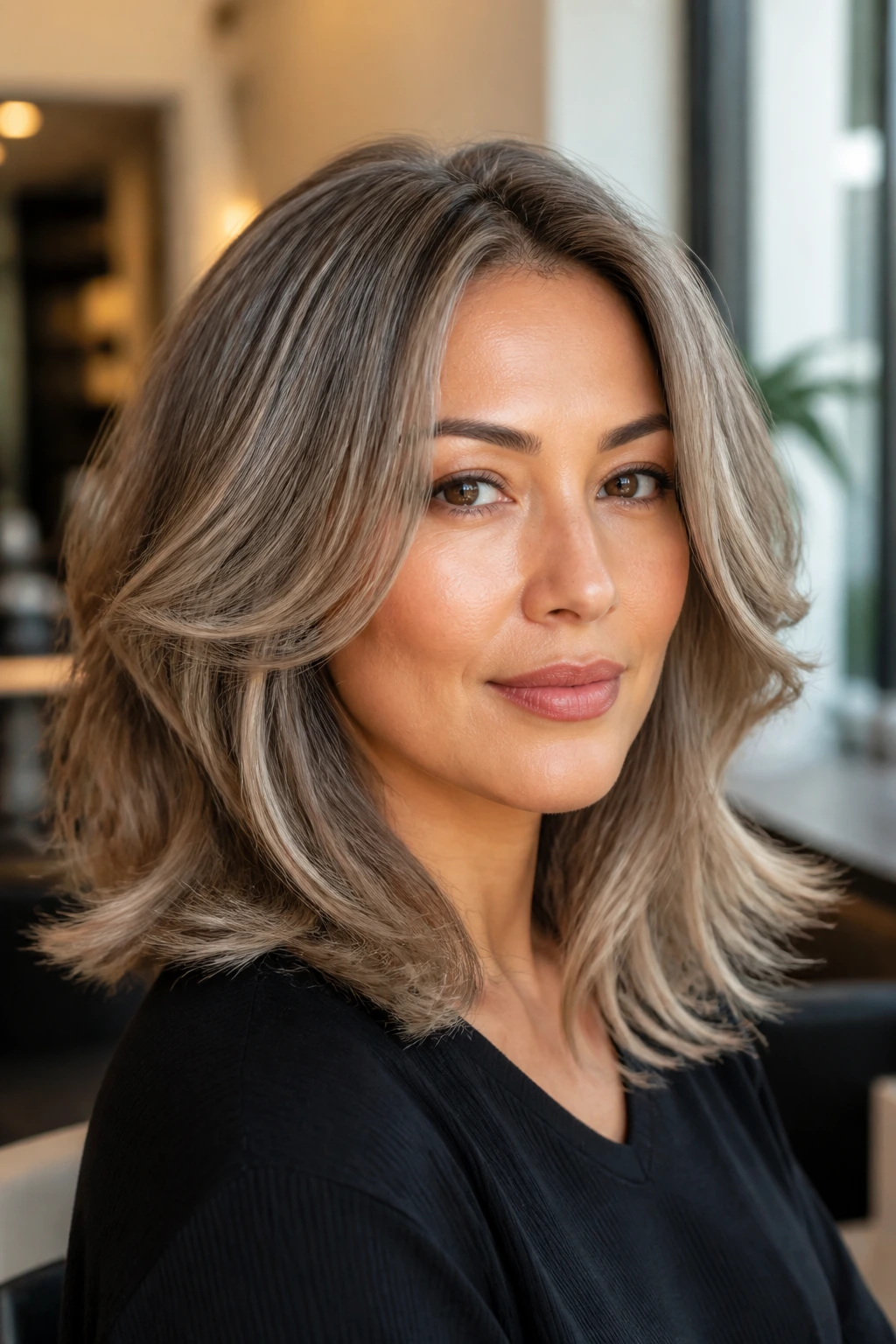
Warm skin usually does better with grey that has a little beige, brown, or taupe in it. Think mushroom, pewter, silver-beige, graphite with a soft gloss, or smoky ash that leans neutral instead of blue. The easiest mistake is asking for a bright silver that looks gorgeous in a photo and then looks too cold under normal light. That happens all the time.
If your skin leans golden, caramel, peach, or olive, ask for a root shadow and a softened toner. The root shadow buys depth near the scalp, while the toned lengths keep the grey luminous. A fully icy formula can work on warm skin, but it usually needs more face-framing, more makeup, or both. Most people don’t want to manage that every morning.
Bring photos that show the hair in daylight. Salon lighting can hide how blue a grey actually is. If you want a low-maintenance lane, ask for dimensional grey with lowlights or a beige glaze rather than a single-tone silver. That tiny wording change makes a real difference in the chair.
The Tools That Make Styling Grey Layers Easier
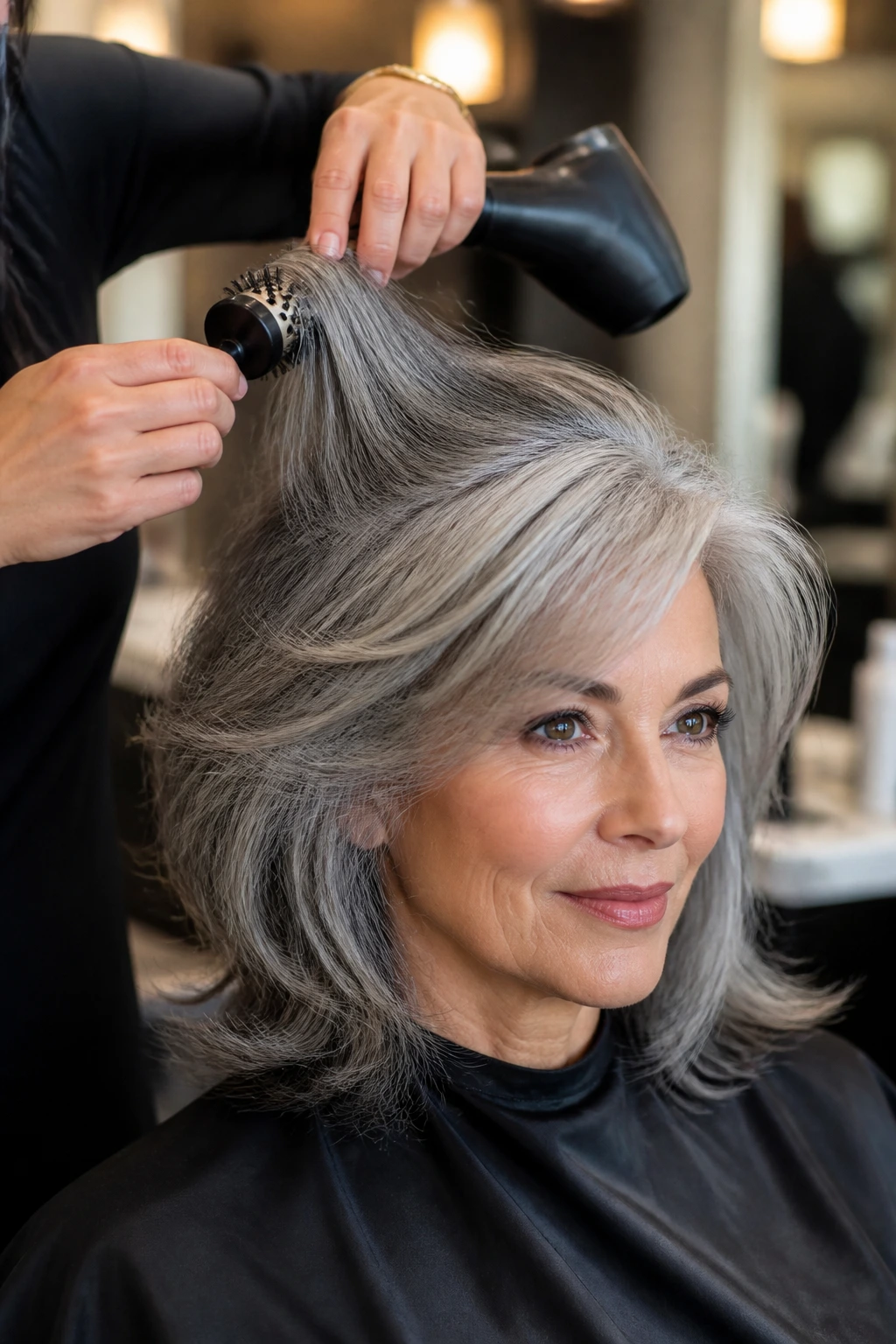
- Blow dryer with a concentrator nozzle: It helps direct the airflow so layered hair doesn’t puff in random directions.
- Medium round brush: Best for shaping collarbone bobs, face frames, and beveled ends.
- 1 to 1.25-inch curling iron or wand: Gives loose bends that suit soft layers better than tight curls.
- Flat iron with rounded edges: Handy for a quick bevel at the ends or a gentle S-bend.
- Wide-tooth comb: Good for detangling without roughing up toned grey hair.
- Sectioning clips: Make layered styling much easier, especially if your cut has a fringe or crown volume.
- Heat protectant spray: Grey hair can feel dry faster than darker hair, so this is not optional.
- Color-safe shampoo and conditioner: The wrong shampoo strips tone in a hurry.
- Lightweight serum or shine mist: A small amount on the mid-lengths keeps the grey looking soft, not dusty.
- Purple shampoo, used sparingly: Useful only when brass starts showing; too much can make warm-grey tones look chalky.
How to Wear These Styles So the Grey Still Glows
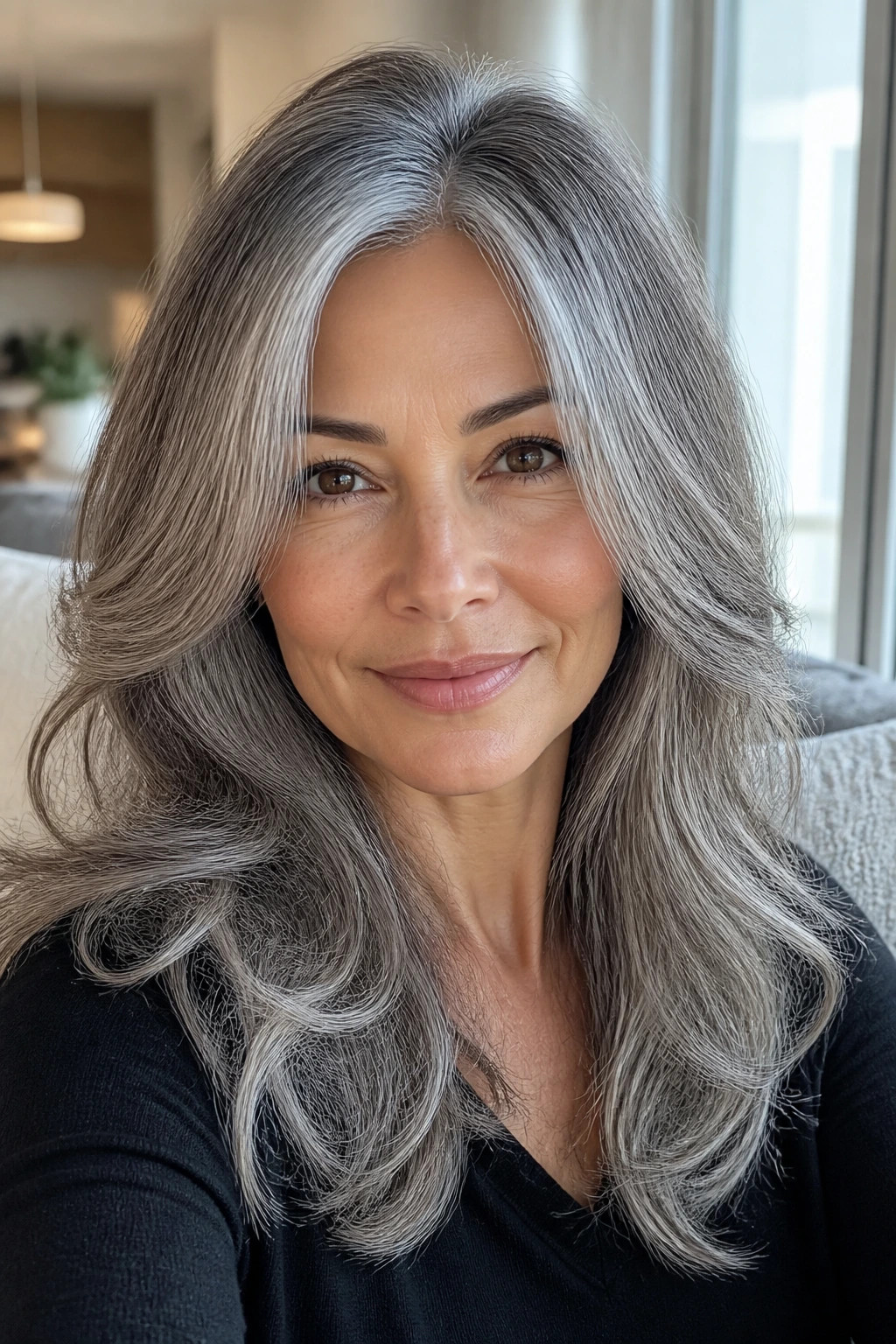
Parting: A middle part works beautifully on longer layers and lobs when you want symmetry. A deep side part is better if you want instant lift at the crown or if your face feels too long without a little asymmetry.
Styling: Keep the bend loose. Soft layers don’t need ringlets; they need movement. A medium barrel iron, brushed out once, usually gives a better result than trying to build too much curl.
Finish: Stay away from heavy oils at the roots. Put serum on the mid-lengths and ends only, then stop. Grey hair can go limp fast if you overload it.
Best Mood: These cuts look especially good when the clothes around them are calm — camel, cream, olive, charcoal, denim, black knit. You do not need a whole wardrobe refresh, but harsh neon next to mushroom grey can make the tone look stranger than it is.
Extra Tips for Shine, Shape, and Tone
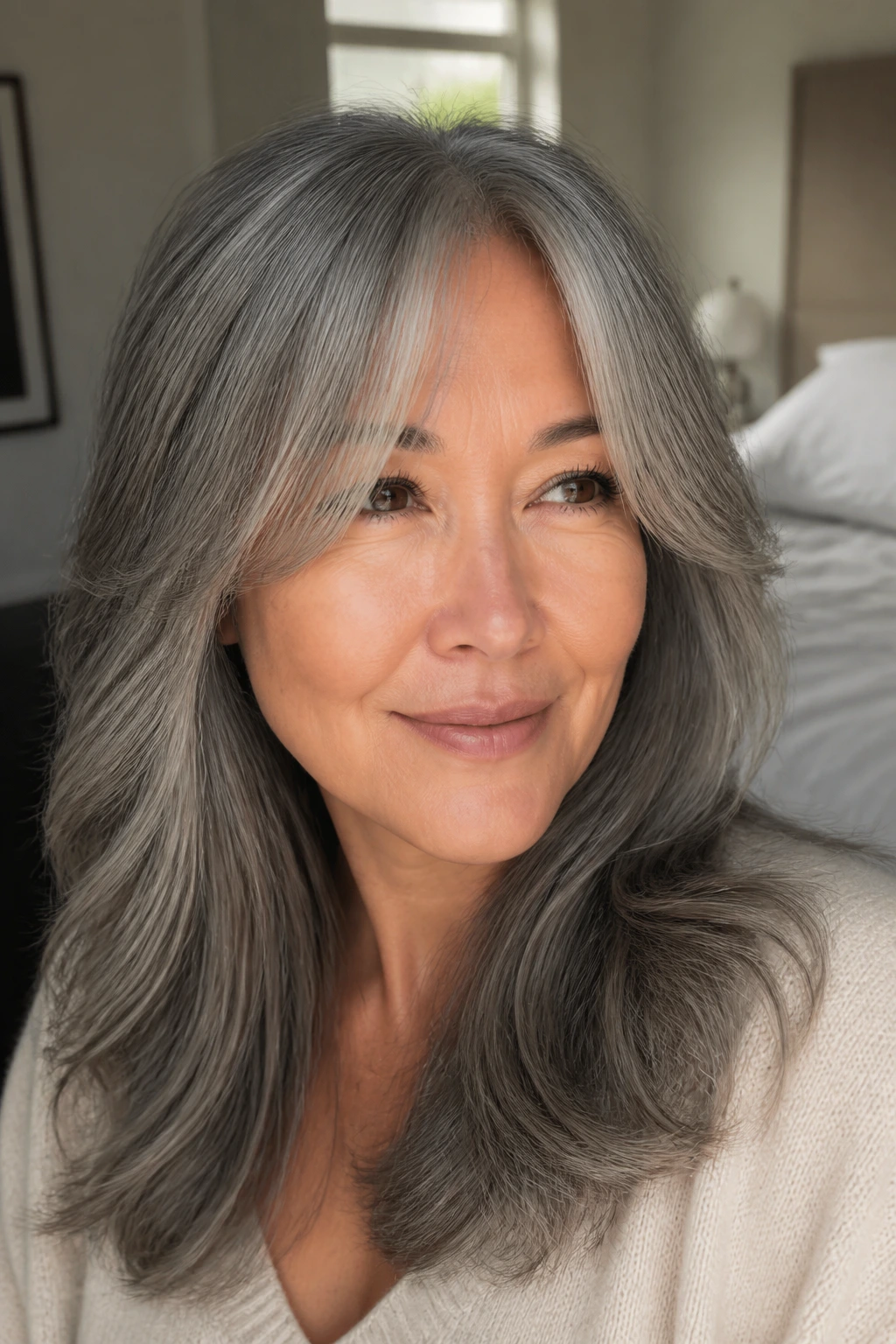
Tone Boost: A beige or pearl gloss every 4 to 8 weeks keeps grey from drifting either too yellow or too flat. If your grey lives in the mushroom zone, ask for a neutral gloss instead of a bright silver refresh.
Customization: Add curtain bangs if you want more cheekbone focus, or keep the front longer if you want the face to look slimmer. Small changes at the front change the whole haircut.
Serving Suggestions: A tiny bit of texturizing spray at the ends makes shags, lobs, and layered bobs look lived-in instead of freshly chopped. Use less than you think. Grey hair shows product overload fast.
Make-It-Yours: Fine hair usually needs fewer layers and more root lift. Thick hair often needs stronger internal layering and a little weight left at the perimeter. Curly hair needs the layers cut to the curl pattern, not against it. That last part saves a lot of grief.
How to Keep Soft Layers and Grey Tone Fresh
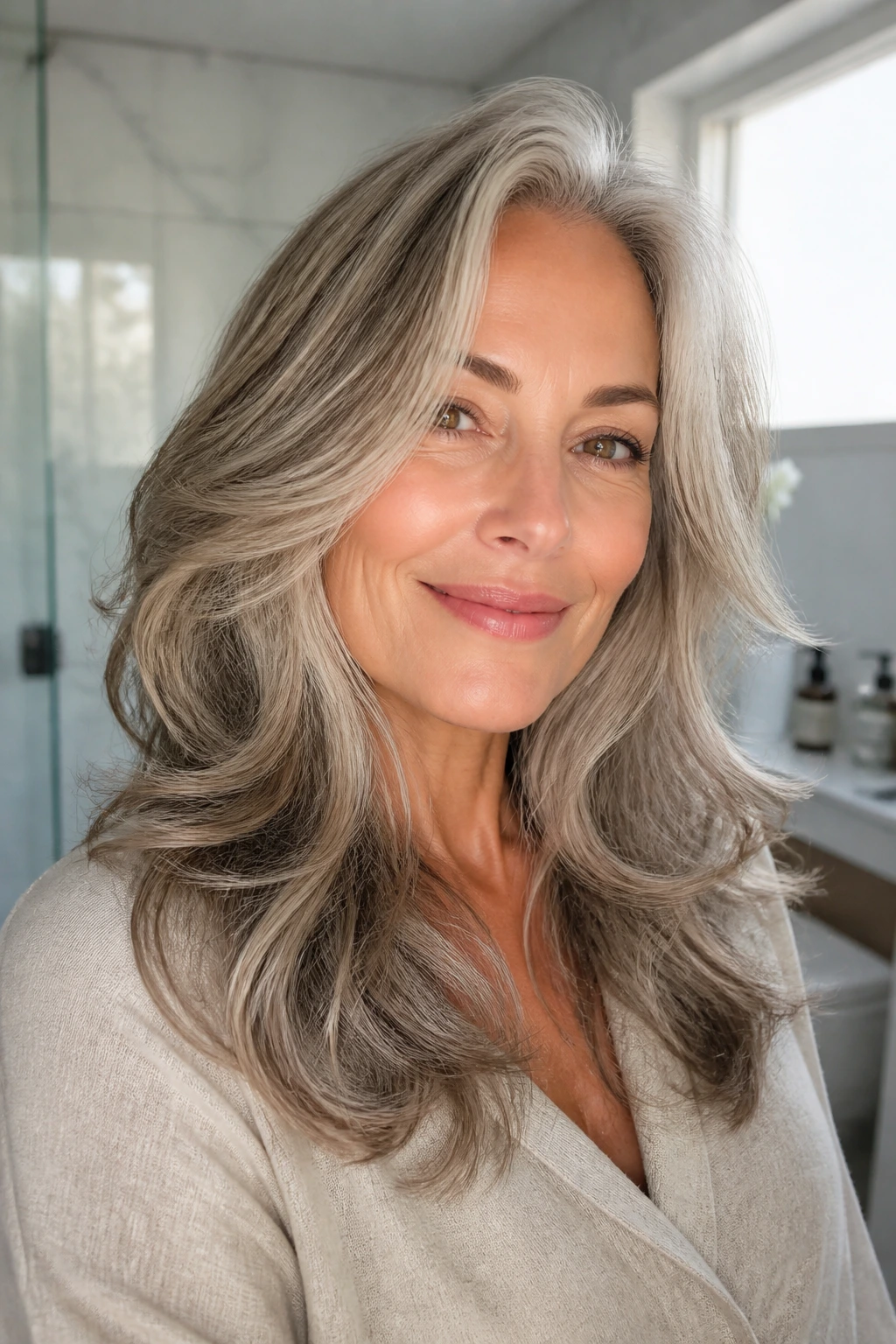
Grey hair is fussy about moisture. It likes it, but not too much. A deep conditioner once a week is a good baseline if your hair is lightened, and every 10 to 14 days if your hair is naturally grey and mostly healthy. If the lengths feel rough, add a leave-in spray after washing and before heat styling.
The color itself usually needs a tune-up more often than the cut. A gloss every 4 to 6 weeks keeps the tone clear. If your grey leans warm, use purple shampoo sparingly — once every 1 to 2 weeks at most, and only on the parts that pull yellow or brassy. Too much purple can make warm grey look cloudy.
For the haircut, plan on a trim every 6 to 8 weeks for bobs, lobs, and pixie-bobs. Longer layered cuts can stretch to 8 to 12 weeks, especially if the perimeter still looks tidy. Sleep matters more than people admit, too. A silk pillowcase or bonnet keeps the ends from rubbing up and frizzing out overnight.
Common Mistakes That Make Warm Grey Hair Look Flat
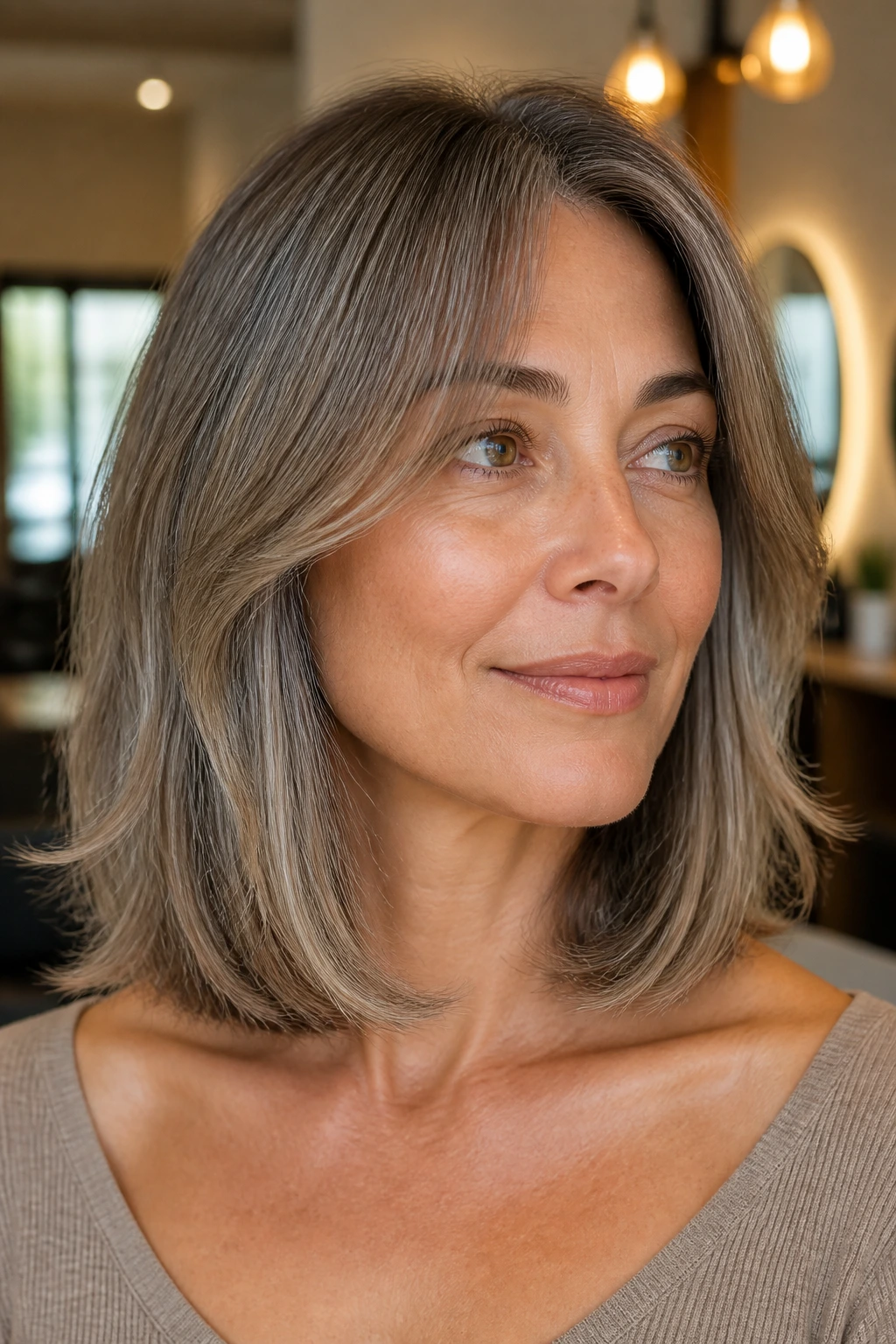
Going too icy too fast: If the grey leans blue-white, warm skin can lose color fast. The fix is a softer toner, a beige gloss, or a deeper root.
Over-layering fine hair: Too many layers on fine hair make grey look wispy and stringy. Ask for internal movement, not a shredded finish.
Using purple shampoo like a daily cleanser: That’s how warm grey turns dull and chalky. Use it only when brass shows up, and rinse it out promptly.
Leaving the haircut too blunt: Blunt grey hair can look boxy around the jaw and heavy at the ends. Soft bevels and face-framing layers solve that without sacrificing shape.
Skipping moisture: Grey hair often needs more conditioning than darker hair. If the cut feels frayed, the color will look drier than it really is.
Ignoring your root pattern: A little shadow at the scalp can make the whole look calmer. Flat, fully bright roots can look disconnected from warm skin.
Variations and Adaptations to Try
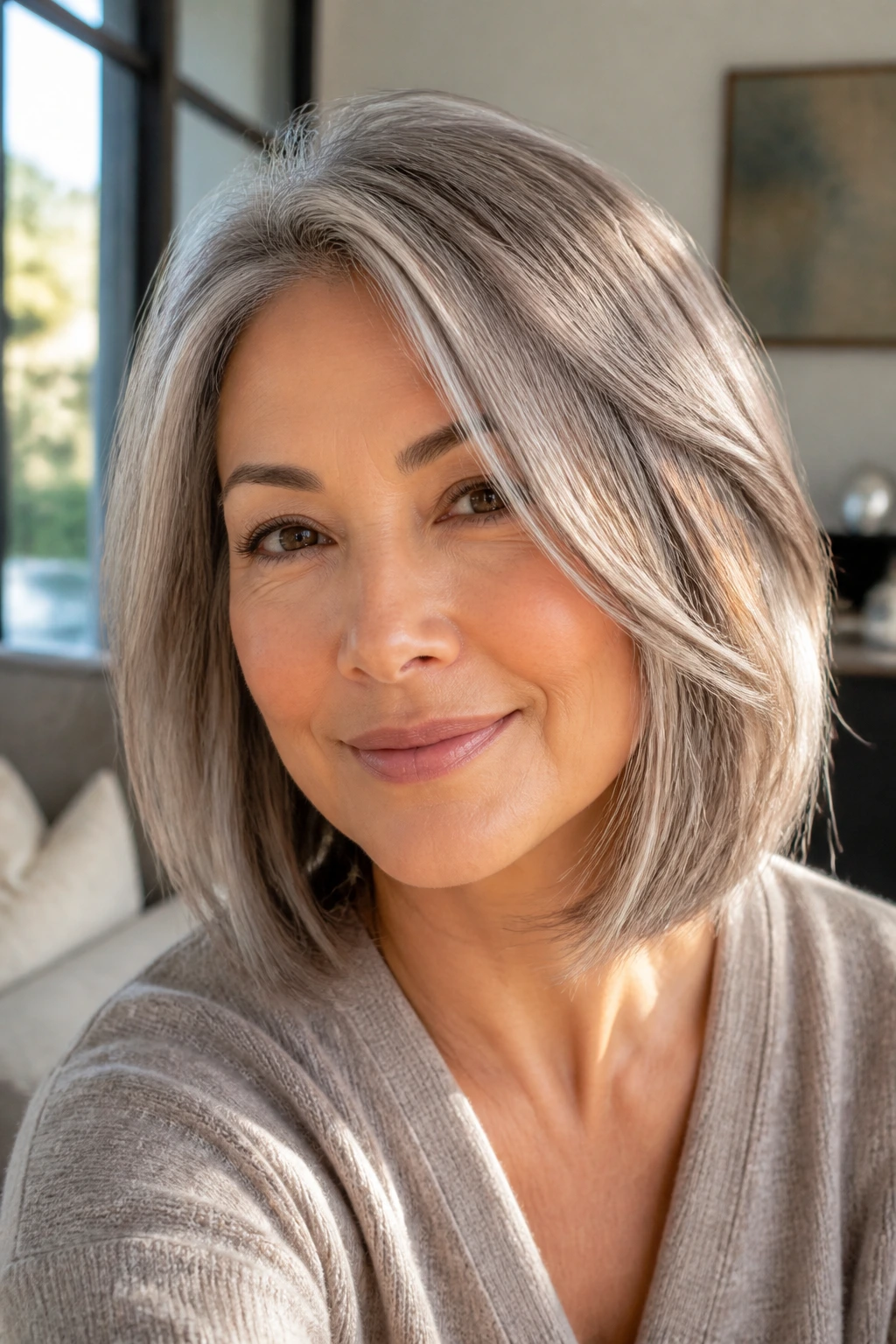
Champagne Grey Lob: Add a champagne-toned glaze over a beige-grey lob if you want more warmth and less steel. It works well when your skin has peach or golden undertones and you want the grey to feel softer in daylight.
Salt-and-Pepper Soft Crop: Keep more natural depth at the roots and through the underside, then feather the top layers. This is a strong option if you want low maintenance and prefer your grey to look blended, not dyed to the last strand.
Curly Mushroom Grey Shag: Let the curls hold the shape while the colour stays mushroom-grey with muted silver accents. The cut needs dry shaping or curl-by-curl trimming so the layers follow the pattern instead of breaking it up.
Rooted Silver-Brown Bob: Ask for a darker silver-brown base with brighter grey through the ends and face frame. This gives warm skin a smoother transition than an all-over pale silver, and it grows out with less drama.
Warm Ash Long Cut with Lowlights: Add a few beige-brown lowlights through the underside of a long layered cut. The contrast keeps the grey from looking flat and gives the face a gentler frame, especially if your natural hair is dark.
Frequently Asked Questions About Grey Hair on Warm Skin
What grey shade is best for warm skin tones?
Mushroom grey, pewter, silver-beige, and smoky taupe usually flatter warm undertones best. They carry enough softness to keep the face from looking drained, which is the big problem with icy silver.
Can warm skin wear bright silver hair?
Yes, but it usually needs help. A soft face frame, a deeper root shadow, or makeup that restores warmth can keep bright silver from overpowering the complexion.
Do soft layers work on thick hair?
They work especially well on thick hair when the layers are internal rather than choppy. That keeps the bulk under control without leaving the ends stringy or over-thinned.
What about fine hair — will layers make it look thinner?
If the layers are too short or too many, yes. Fine hair does better with longer face-framing layers, a light bevel, and enough length left at the perimeter to keep the body.
How often should grey hair be toned?
Most grey hair benefits from a gloss every 4 to 8 weeks, depending on how fast brass shows up. If the tone starts looking flat or yellow, don’t wait for a full color crisis.
Can curly hair pull off grey with soft layers?
Absolutely, and it can look excellent. The trick is shaping the cut to the curl pattern and keeping enough weight so the curls don’t frizz into a halo of dry ends.
Why does my grey hair look dull instead of soft?
Usually it’s either too much purple shampoo, not enough moisture, or a cut that’s too blunt. A beige gloss and a slight bevel through the ends usually fix the problem faster than a complete recolor.
How do I tell my stylist what I want?
Use simple words: mushroom grey, beige-grey, soft layers, face-framing pieces, and a root shadow. Bring 2 or 3 photos that show both the color and the shape, because one photo rarely captures both.
A Grey That Still Feels Warm
Grey hair does not have to fight warm skin. When the tone leans mushroom, pewter, or silver-beige, and the cut keeps some softness around the face, the result looks calm instead of cold. That’s the difference between hair color that wears you and hair color that settles in with you.
If you’re unsure where to start, begin with a rooted lob or a long layered cut. Those shapes give you room to adjust the grey, the fringe, and the finish without making the whole thing feel locked in. Keep the layers soft, keep the tone a little warm, and the grey stops looking like a statement for the sake of a statement.