



Ash blonde can look chalky next to olive skin if you push it too pale, too silver, or too uniform at the root. But give it a smoky base, a little depth through the mids, and the right cut, and the whole face changes. The skin looks clearer. The cheekbones pick up shape. The hair stops floating around like a separate thing and starts working with your undertone instead of arguing with it.
That’s the part people miss. Olive skin is not one flat shade. It often carries green, golden, gray, or neutral notes under the surface, and ash blonde can either echo that softness or flatten it into a pale wash. The difference usually comes down to contrast: how dark the root is, how cool the blonde reads, and how much movement the haircut has. A one-note platinum sheet can look harsh. A rooted mushroom bob or a beige-ash wave with face-framing ribbons? Much smarter.
The good news is that ash blonde is not one single look. It ranges from mushroom beige to silver ash to smoke-tipped balayage, and that range gives you room to work with your skin instead of against it. Some versions are blunt and glossy. Some are messy and airy. Some are barely there until the light hits. That flexibility is exactly why these styles work so well on olive complexions.
Why These Ash Blonde Looks Work on Olive Skin
-
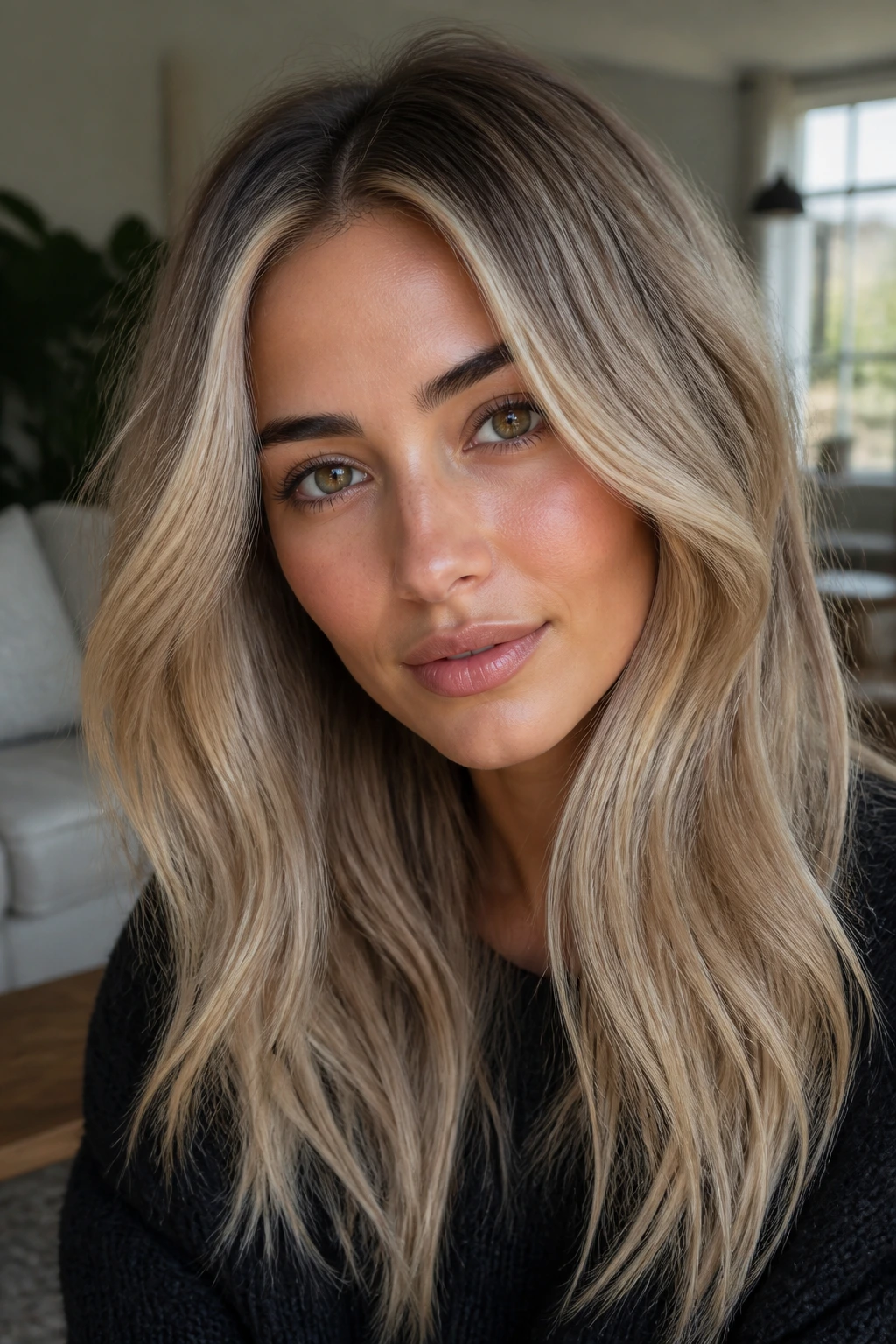
Root depth keeps the color from going flat: A soft shadow at the scalp stops ash blonde from turning chalky against olive undertones, especially when the skin has a green or golden cast.
-
Cool beige is easier to wear than icy platinum: Beige ash, mushroom blonde, and pearl ash usually look cleaner on olive skin than a sharp white blonde that drains the face.
-
Face-framing light matters more than all-over brightness: A few brighter pieces around the cheeks and forehead lift the complexion without flooding the whole head with pale color.
-
Texture makes ash tones look richer: Waves, bends, shag layers, and piecey ends give ash blonde dimension, which keeps it from reading dull in low light.
-
Grow-out is part of the look: Rooted ash tones tend to age well, so regrowth doesn’t scream at you after three weeks the way a flat, single-process blonde often does.
-
There’s room for warm-leaning olive skin too: If your undertone has more gold than green, a smoky beige or muted champagne ash can keep the hair cool without making the skin look tired.
1. Rooted Mushroom Bob
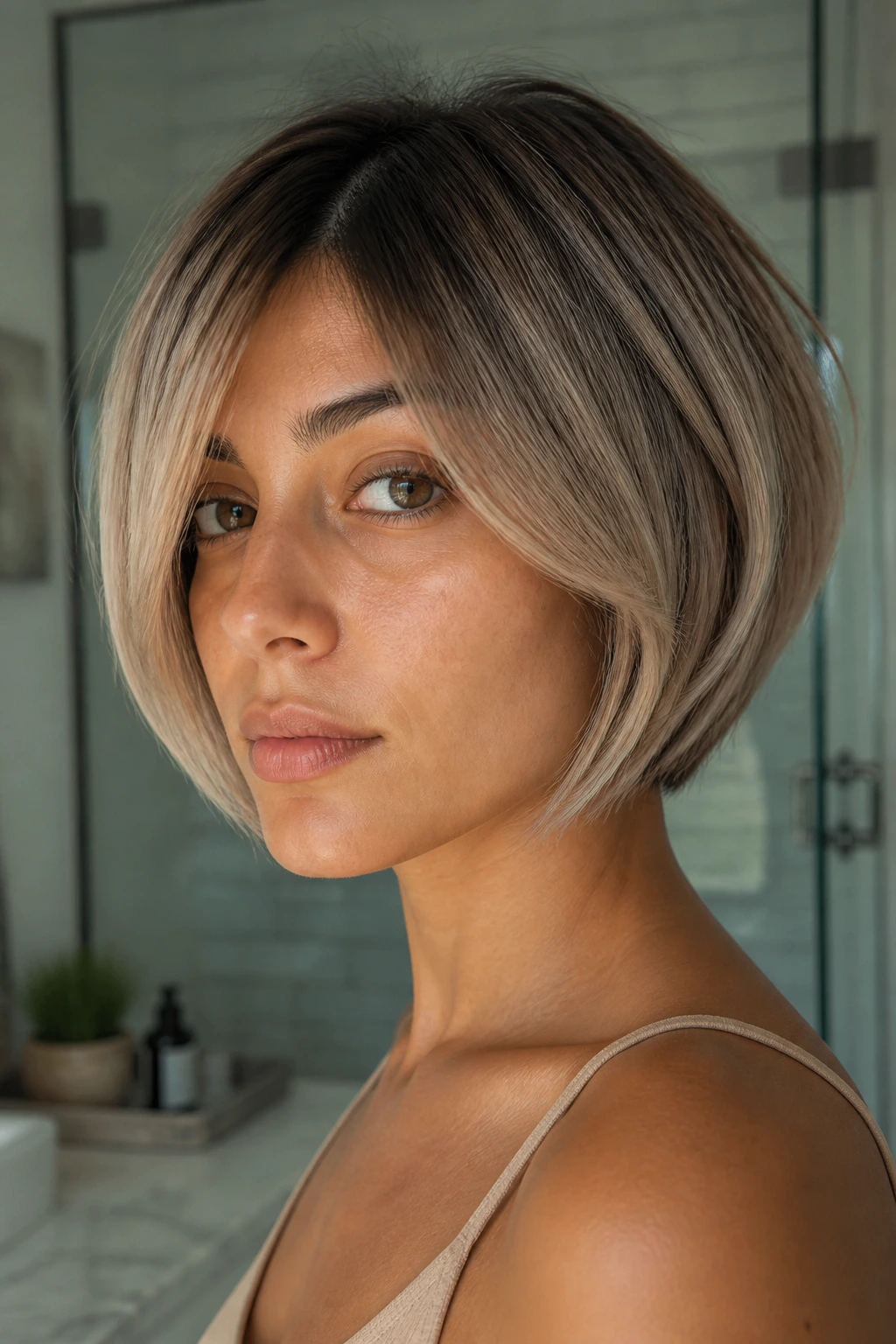
A mushroom bob is one of those cuts that looks expensive even when it’s not trying very hard. The shape is short, usually hitting somewhere between the jaw and the chin, and the color sits in that sweet zone between taupe, beige, and ash. On olive skin, that root shadow is doing real work. It keeps the blonde from floating too light against the face, which matters more than people think.
Why It Flatters Olive Undertones
The darker base gives the skin something to lean against. That contrast makes the complexion look cleaner, not paler, and the cool beige ends stop the hair from pulling orange beside golden or green-leaning skin.
A mushroom bob is also one of the easiest ways to wear ash blonde if you don’t want a fussy upkeep routine. The shape is crisp, so the color can stay soft. You get a sharp silhouette without needing bright highlights in every section.
For the best result, ask for a root shadow one to two levels deeper than the mids, then keep the ends in a muted level 8 or 9 ash beige. If your hair lifts warm, a beige toner beats a flat silver toner almost every time.
Small Details That Matter
- Best for: fine to medium hair that needs a fuller-looking edge.
- Ask for: a soft smudge at the root and blurred ends, not chunky highlights.
- Style note: tuck one side behind the ear to show off the jawline and the cool tone.
Pro tip: If your hair flips out at the ends, run a flat iron through the bottom inch only. A slight bend keeps the bob from looking too severe.
2. Piecey Ash Blonde Lob
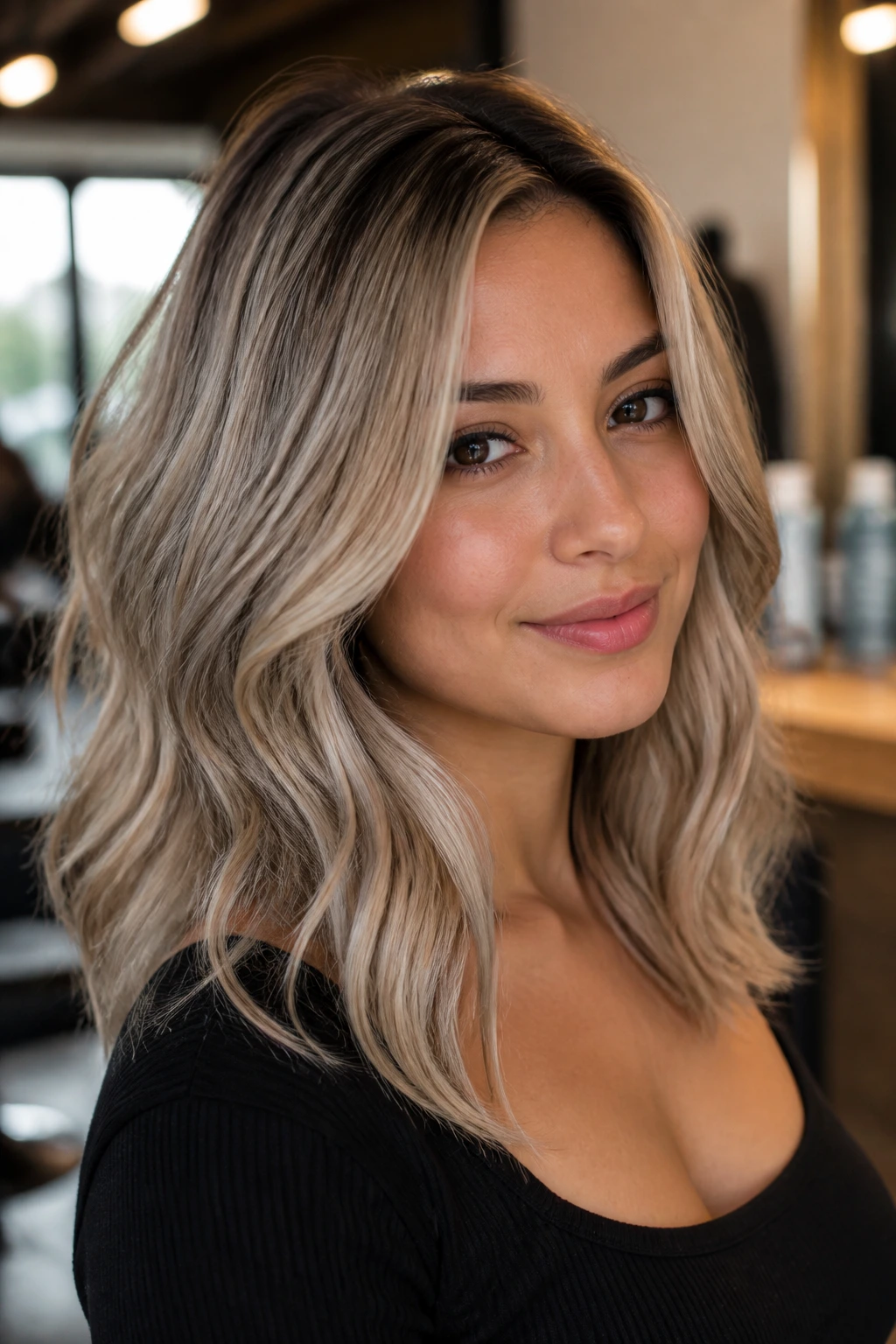
The lob is the workhorse cut in this whole group, and I mean that as praise. It sits around the collarbone, which gives enough length for movement without dragging the face down. Add piecey ash blonde highlights, and olive skin gets a soft brightness that feels controlled, not loud.
What makes this one so useful is the spacing. The blonde is not packed in from root to end. It lives in ribbons, usually a little heavier around the top layers and the front. That keeps the color airy and stops it from turning into a solid beige sheet.
If your olive skin has a warm or golden lean, this cut is especially kind because the texture breaks up the cool tone. The eye reads movement first, not just color. That’s the trick.
How to Wear It
Use a 1-inch curling iron and leave the ends out by an inch or so. You want that undone, separated look, not polished pageant curls. The ash tone shows up best when the waves are loose and the light can pass across different sections.
Keep the makeup simple: taupe shadow, soft brown liner, and a muted lip. A heavy bronzer can muddy the balance and make the blonde feel dusty instead of fresh.
3. Soft Ash Blonde Curtain Bangs
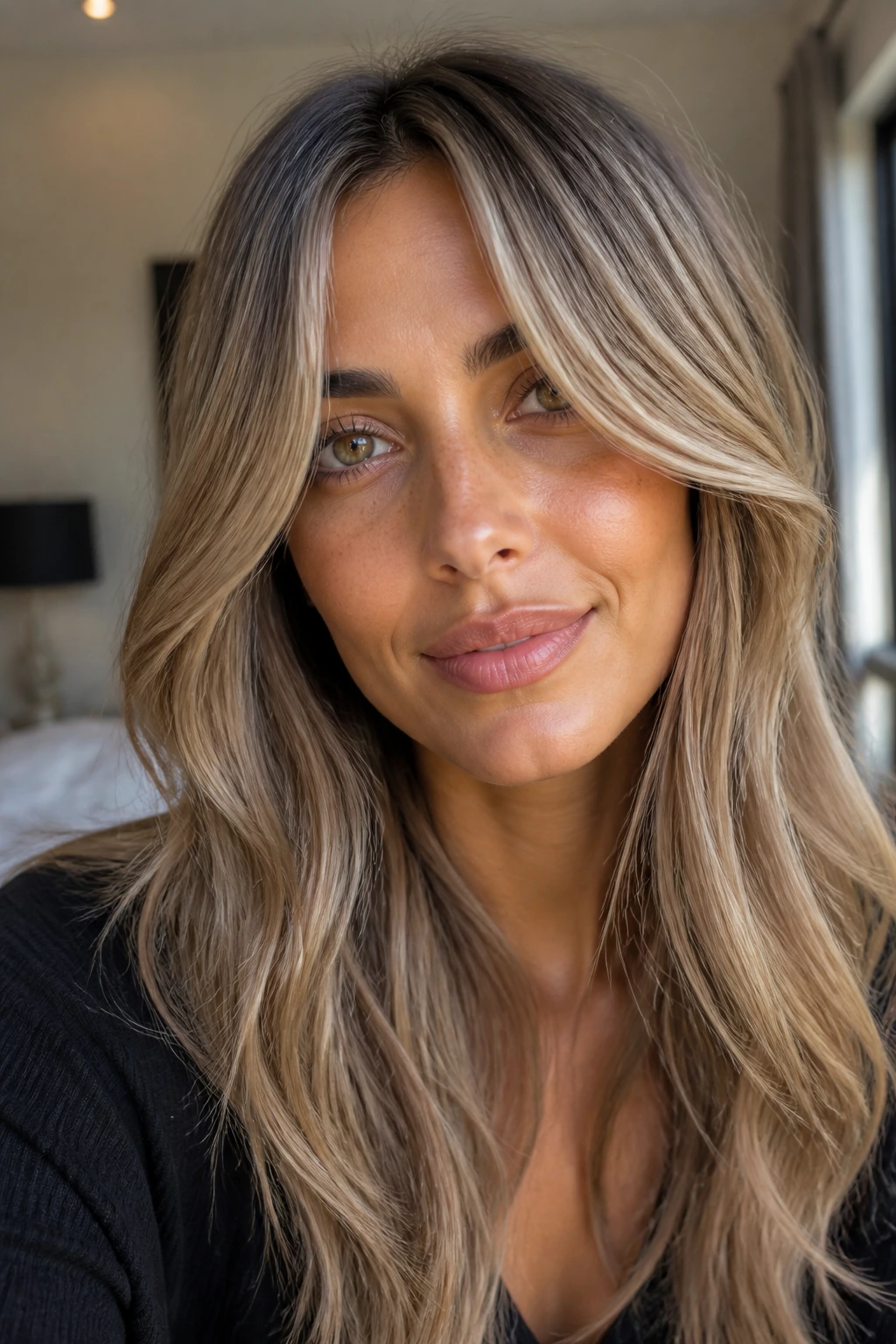
Do curtain bangs work on olive skin? Absolutely, if the blonde is toned correctly. They pull the eye straight to the face, which means the shade around the fringe has to be clean. A soft ash blonde with a little beige in it keeps the bangs from looking flat against the forehead.
Curtain bangs are useful because they break up a larger forehead and add movement right where the face needs it most. On olive skin, that means you can brighten the front without bleaching the entire head to a pale blonde. I prefer this on medium-length cuts where the bangs can blend into layers instead of hanging like a separate piece.
What Makes It Click
The strongest version of this style keeps the roots slightly deeper and the bangs a touch brighter through the mid-lengths. That creates a soft frame rather than a hard stripe. If your hair has a wave, even better. The bend in the fringe makes the ash tone look dimensional instead of stiff.
How to Wear It
- Blow-dry the bangs with a round brush, rolling them away from the face.
- Finish with a light dry texture spray at the ends, not the roots.
- Keep the hair around the cheeks a half shade lighter than the crown.
A tiny detail, but it matters: if the bangs are too icy, they can make olive skin look a little gray around the eyes. Beige ash is the safer move.
4. Shadow-Rooted Beach Waves
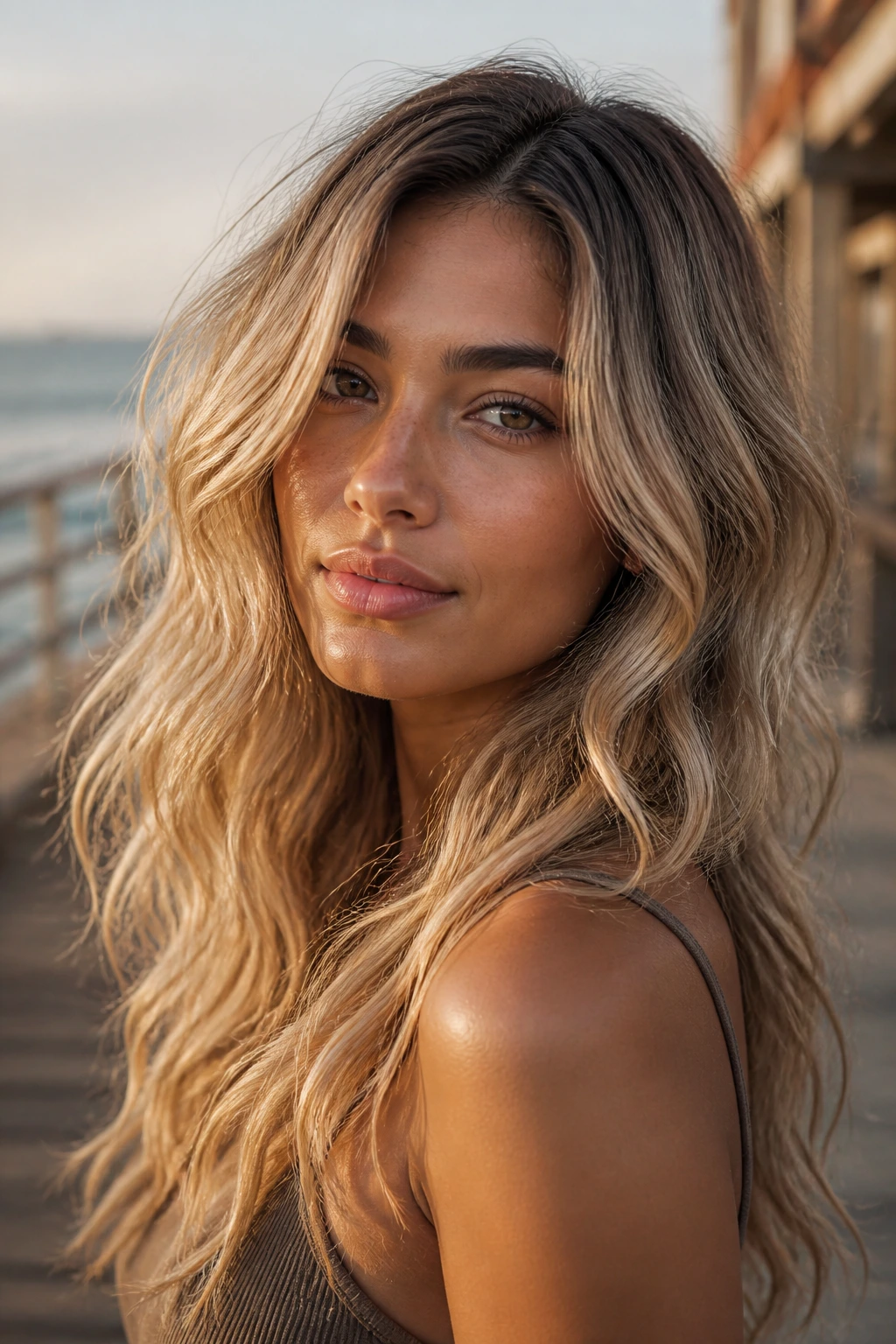
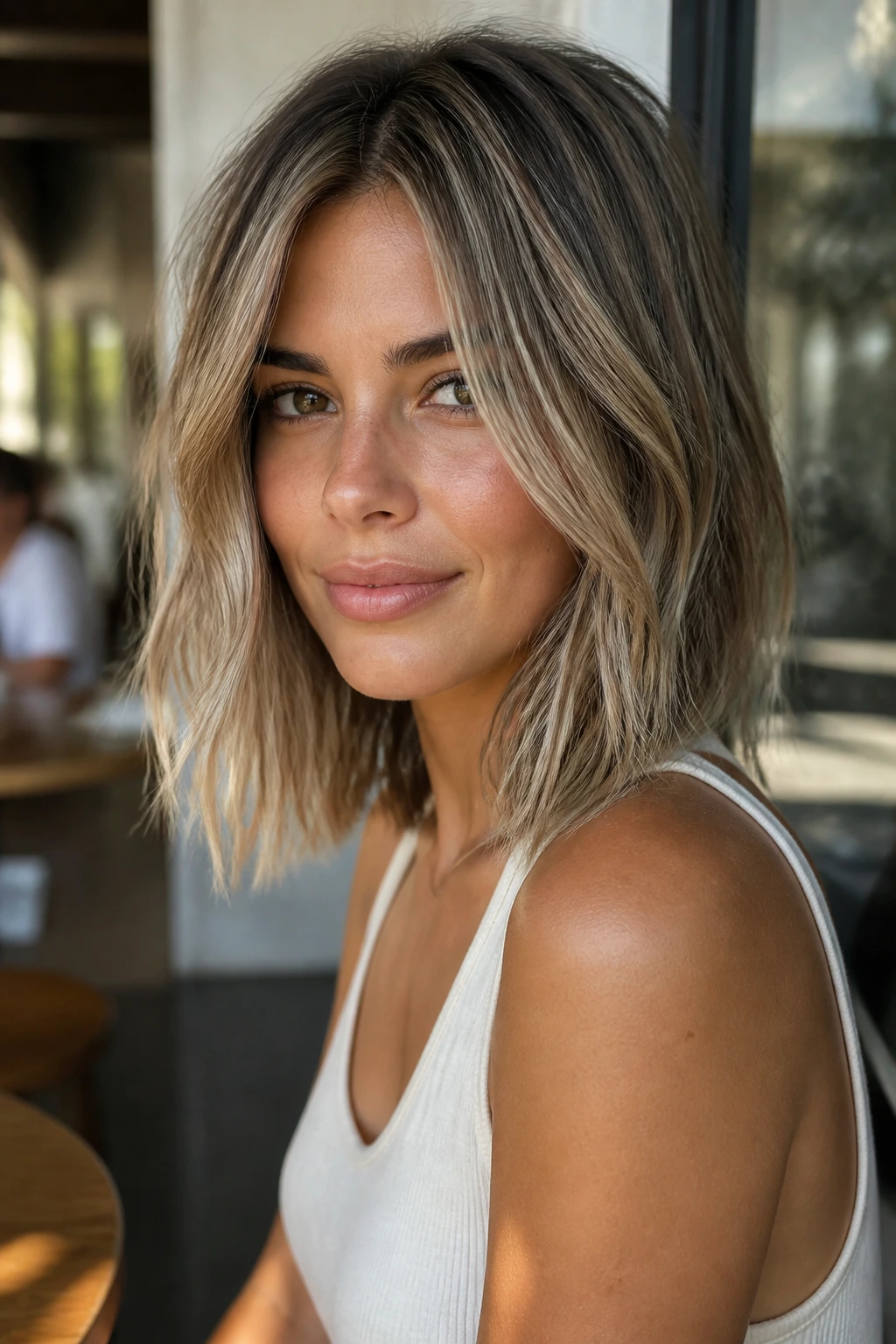
There’s a reason shadow roots keep showing up in ash blonde conversations. They make the whole thing easier to wear. On olive skin, especially skin that leans warm-gold under daylight, a dark root gives the blonde a little anchor. Without it, the color can skitter into “washed out” territory fast.
Beach waves work here because they break the blonde into sections. You’re not looking at one flat color. You’re seeing a root melt, a few lighter ribbons, and then a soft ash finish on the ends. That layering makes the skin look more alive, not less.
Key Pieces of the Look
- Root smudge: keep it soft, not painted like a helmet.
- Mids: ask for cool beige or mushroom tones.
- Ends: slightly lighter, but not white.
- Texture: loose, irregular waves with a flat iron or wand.
This style is one of my favorites for people who don’t want their hair to shout. It reads polished at a glance, then gets better as you notice the depth. If you’re wearing gold jewelry, a rooted ash wave keeps the whole face balanced instead of pulling too warm.
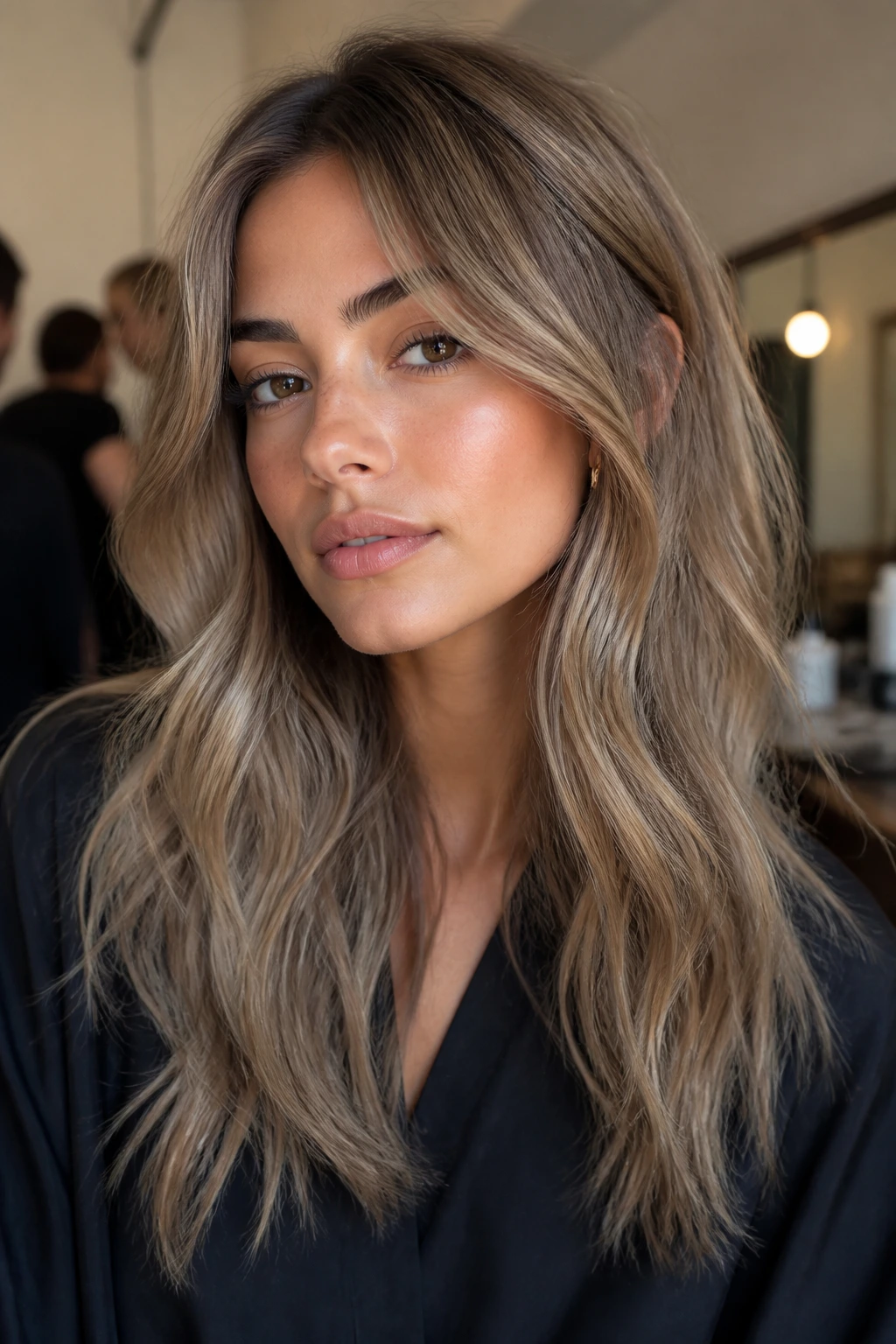
5. Long Layered Ash Blonde with Face-Framing Lights
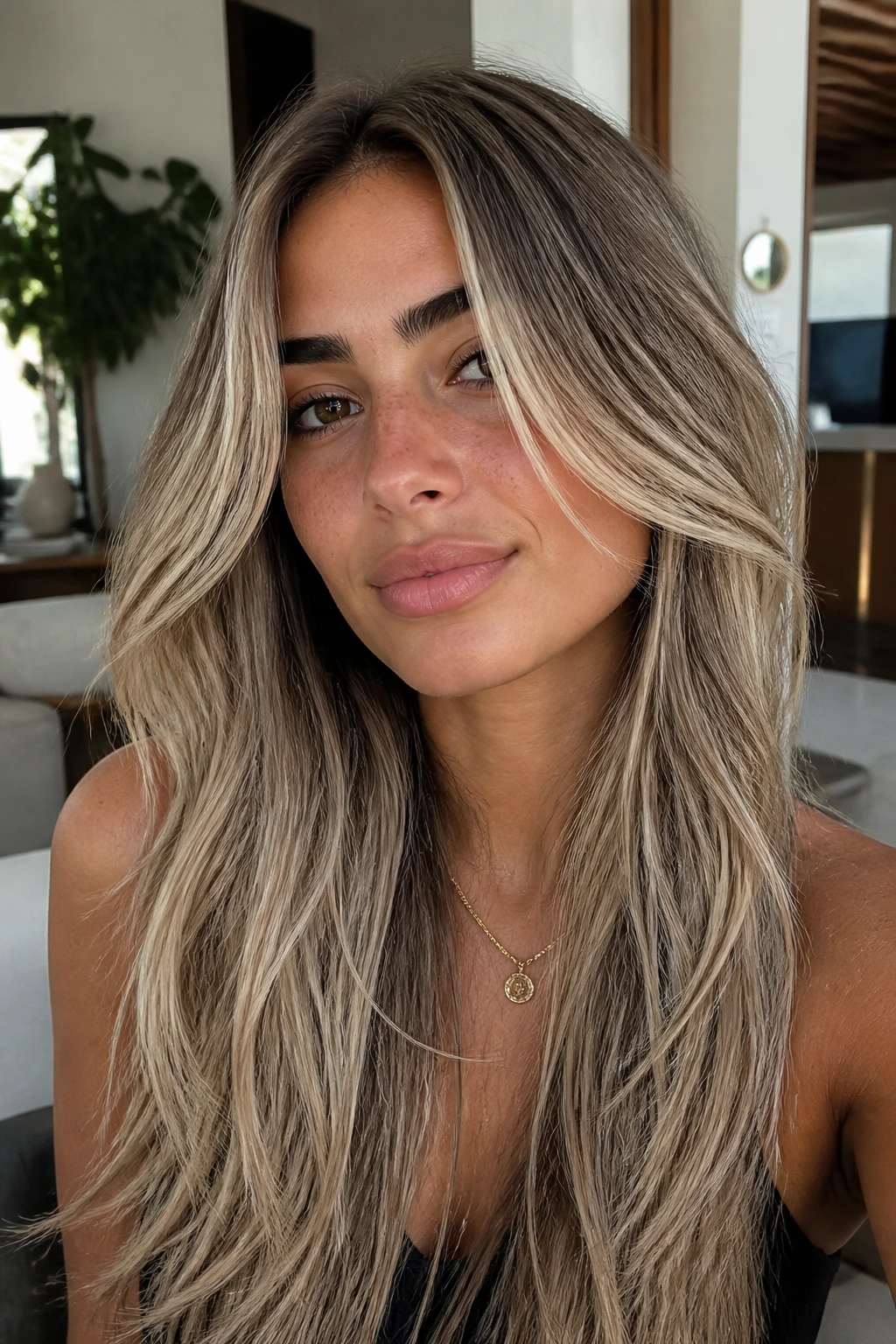
Long layers can get boring when the color is too samey. Ash blonde fixes that. Add brighter face-framing lights, and the whole cut suddenly has structure, especially around olive skin where contrast needs to be handled with a little restraint.
The face-framing pieces should start near the cheekbone or just under it, depending on how sharp you want the effect. Too high, and the blonde can crowd the forehead. Too low, and the lift gets lost. The sweet spot makes the skin look cleaner around the eyes and mouth without turning the front of the head into a streaky panel.
A Useful Way to Think About It
This look is less about being blond and more about controlling where the light lands. The bright pieces act like a built-in soft filter. The rest of the hair stays cooler and deeper, which keeps olive skin from going flat.
If your hair is thick, ask for invisible layers rather than obvious chopping. You want the movement to show when you turn your head, not a haircut that looks shredded from every angle.
One practical note: long ash blonde layers look better when the ends are trimmed every 8 to 10 weeks. Split ends make cool tones look dry faster than warm tones do. No mercy there.
6. Choppy Pixie with Smoky Highlights
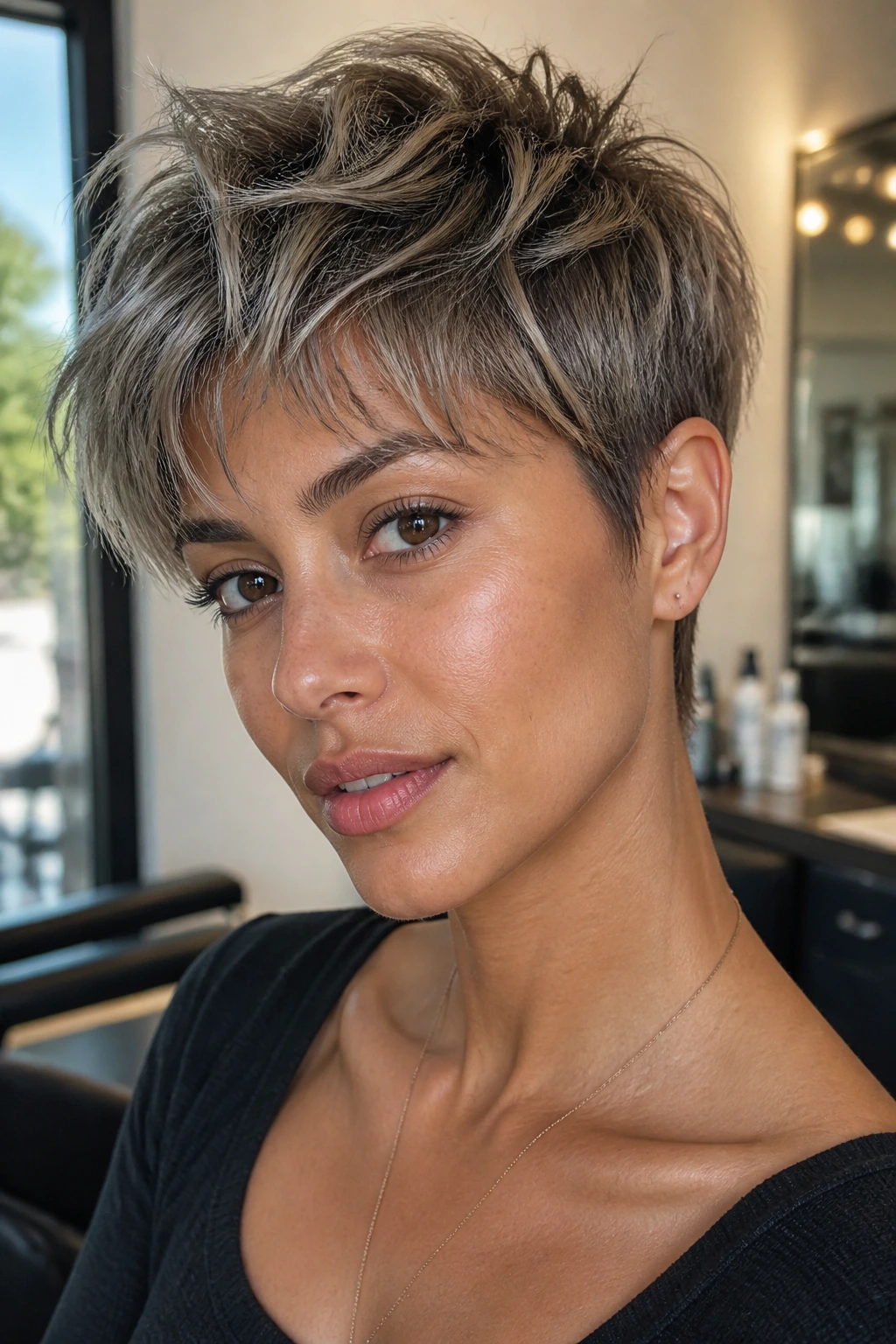
A pixie cut with smoky ash highlights is not shy, and that’s the point. Olive skin can carry a lot of short-hair contrast as long as the blonde isn’t too icy. A soft smoky highlight through the top layers gives the cut some lift while the darker sides keep it grounded.
The best part is how modern the texture feels without getting severe. Choppy pieces around the crown create movement, which stops the ash from reading flat. If the top is too smooth and too pale, the whole thing can look helmet-like. A little separation fixes that instantly.
What to Ask For
- Shorter sides with a bit of softness at the ear.
- A longer top layer that can be pushed forward or back.
- Fine ash babylights through the crown only.
- A matte paste or cream, not a shiny pomade.
This cut loves olive skin with strong brows and defined cheekbones. It also works well if you prefer a more minimal makeup look, because the hair brings enough shape on its own. I’d keep the blonde muted, though. Think smoke, not snow.
7. Sleek Blunt Bob in Pearl Ash
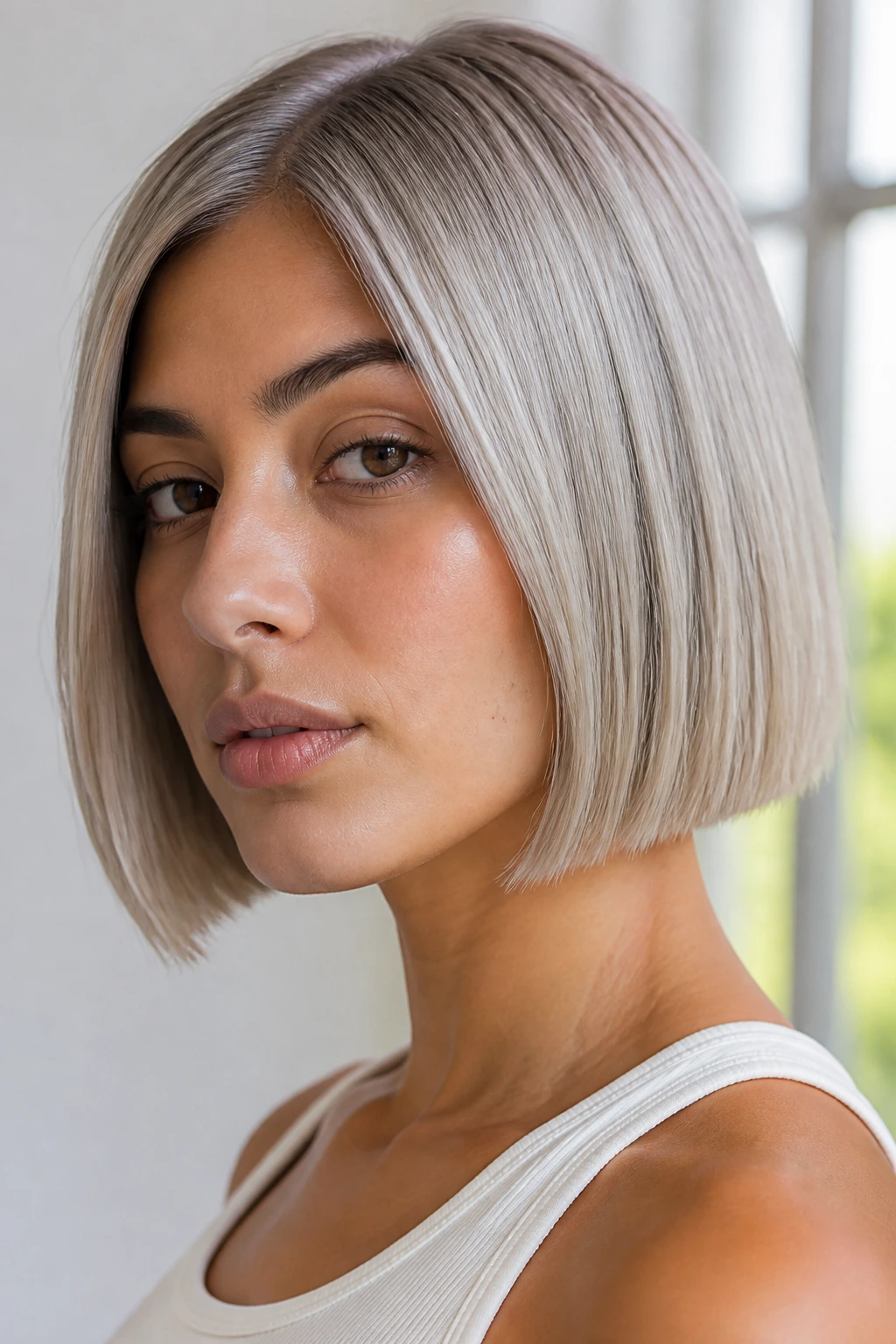
A blunt bob is all about the line. The cut is straight, the edges are clean, and the color has to support that precision instead of competing with it. Pearl ash is the right choice here because it has that cool, luminous quality without veering into harsh platinum.
On olive skin, a blunt bob can either sharpen the face or drag it down. Pearl ash usually does the first one. The reason is simple: the tone reflects light without screaming for attention. It creates a smooth band of brightness at the jawline, which is a very useful place to put it if your skin has muted warmth.
Straight styling is non-negotiable here. A rounded bend at the ends can make the shape softer, but the bulk of the finish should stay sleek. That clean surface lets the color do its work.
Best Styling Move
Use a heat protectant, then blow-dry with a paddle brush until the hair is almost dry before you bring in a flat iron. One pass is usually enough if the cut is sharp. Too many passes make the pearl tone look dull and overworked.
This is a good style if you like clean clothes, crisp collars, and jewelry that has some edge to it. It has a very specific energy. Calm, but not sleepy.
8. Butter-Shadow Ash Balayage on Long Hair
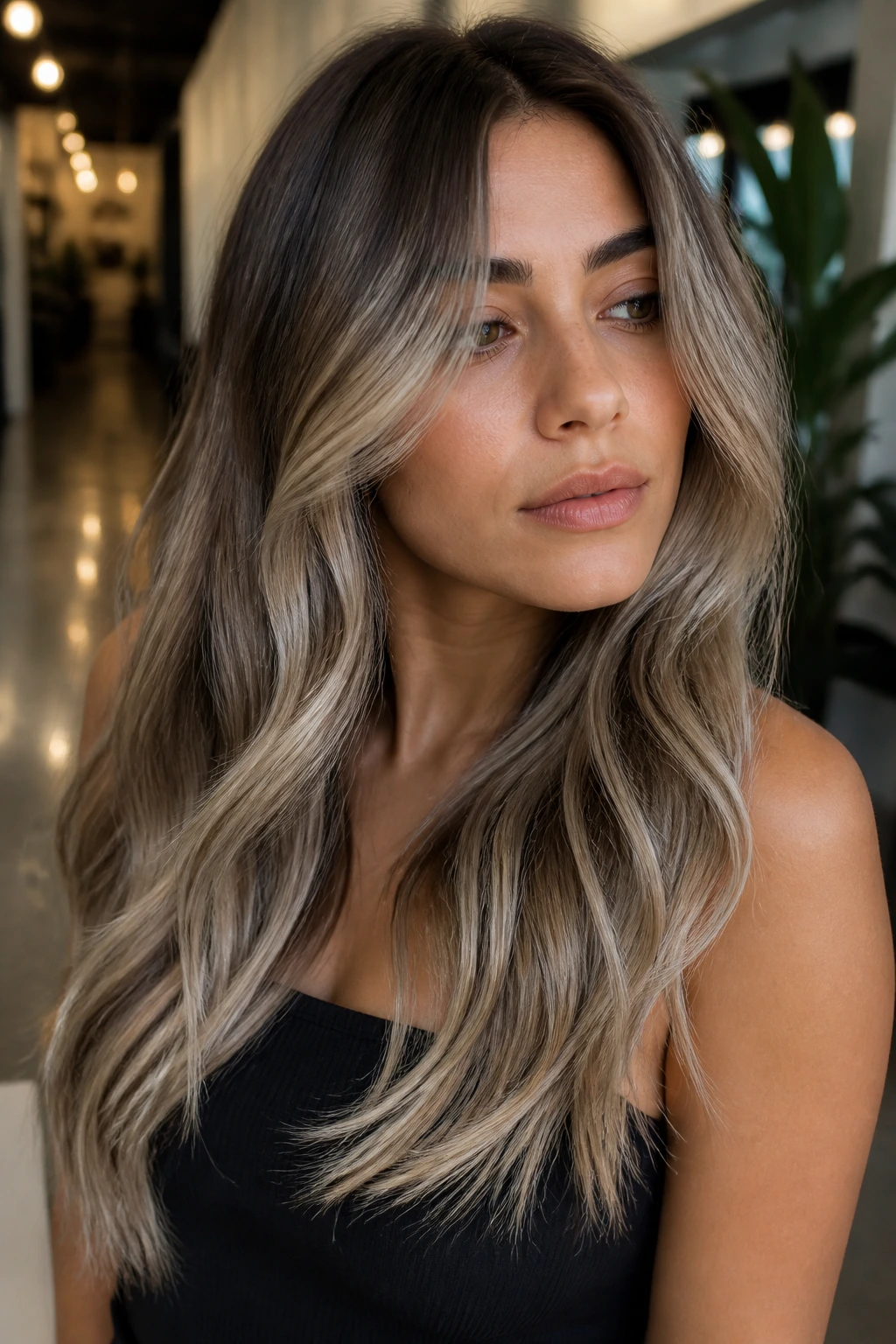
This is the most forgiving long-hair version in the group. A butter-shadow ash balayage keeps the ends soft and cool while leaving enough warmth in the mid-lengths to stop olive skin from looking drained. It’s not a pure silver look. Good. That would be too much for a lot of people.
Balayage helps because the placement is hand-painted, which means the color can follow the haircut instead of sitting in obvious stripes. On long hair, that matters a lot. You want the blonde to drift through the lengths, not sit like a highlighter line.
Why It Feels Different
The “butter-shadow” idea is really about balance. The blonde is cool enough to read as ash, but there’s a creamy softness in the middle that keeps it from looking brittle. Olive skin often likes that middle ground, especially if the undertone has both gold and gray in it.
Use loose curls or a brushed-out wave to show the blend. On pin-straight hair, balayage can look more obvious than you want. Texture softens the transitions and makes the color feel expensive without trying too hard.
A salon gloss every 6 to 8 weeks helps this style stay clean. Ash tones fade fast when you wash with hot water or use a strong clarifying shampoo every other day.
9. Ash Blonde Shag with Wispy Fringe
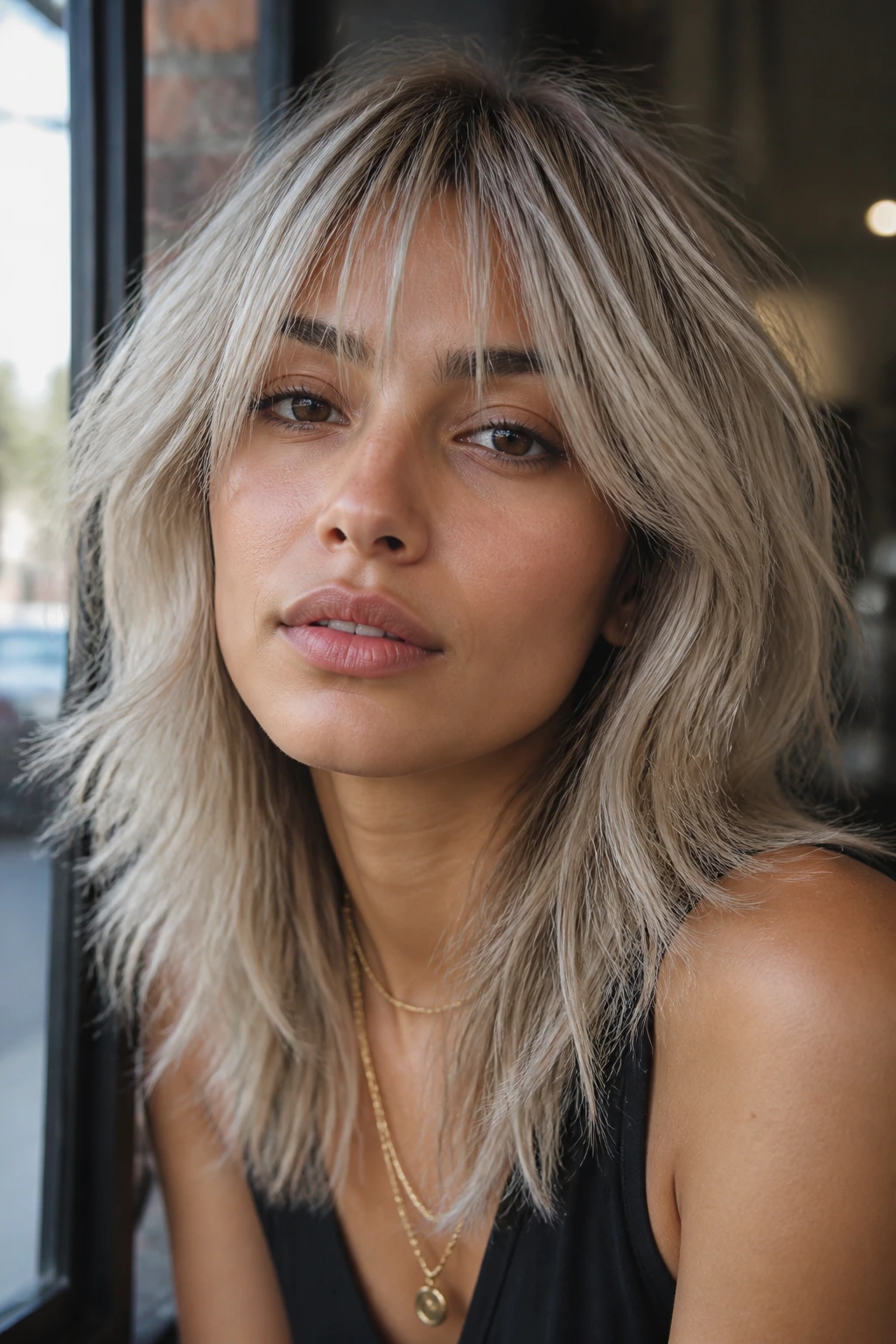
A shag gives ash blonde somewhere to live. Without layers, cool blonde can read flat. With layers, it gets a little grit, a little movement, and a much better relationship with olive skin.
The wispy fringe helps because it breaks up the forehead area without creating a hard line. That matters with ash tones. A heavy blunt fringe can make the color look dense; a lighter fringe lets the cool shade breathe. If your olive skin leans warm, the softness here keeps the hair from overpowering the face.
What It’s Best At
The shag is best when you want the hair to look slightly undone even on a clean day. It’s not supposed to be glassy or perfect. It’s supposed to move. That movement makes every ash ribbon catch light in a different way, which keeps the tone from going dull.
Use a sea-salt spray sparingly. Too much and the ends get crunchy, which makes ash blonde look dry in a hurry. A little bend at the pieces around the face is enough.
This is one of the few styles where I actually like a slightly darker root. It makes the whole cut feel intentional rather than grown out.
10. Platinum Ash Money Piece on Dark Roots
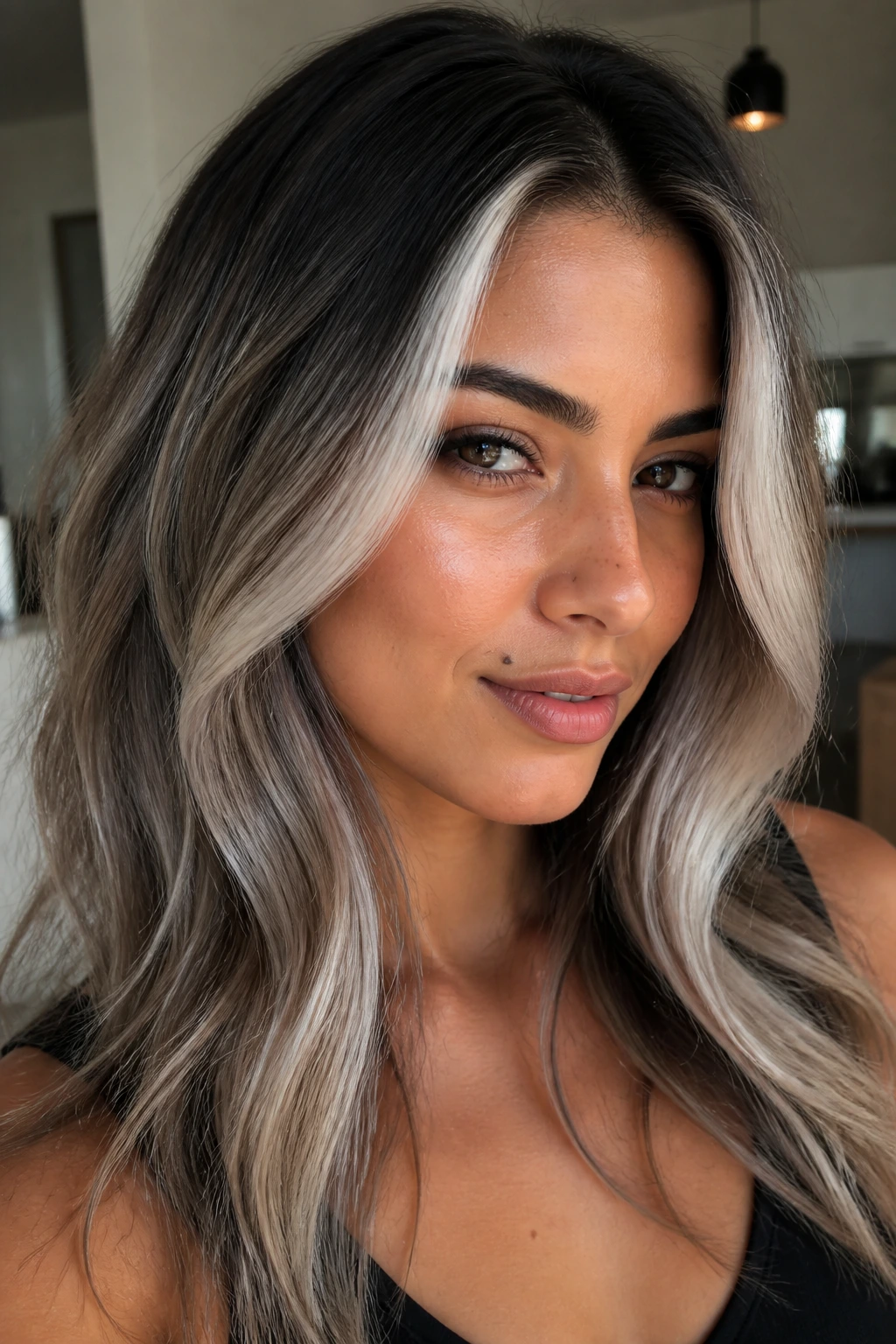
A money piece can be risky on olive skin if it’s too bright and too wide. Narrow it down, cool it off, and keep the roots dark, and it becomes a sharp, face-opening highlight that can look terrific. The contrast is the point here.
The dark root keeps the face piece from bleaching out the skin. That’s useful if your olive undertone tends to pick up yellow or green under fluorescent light. The bright front section gives you lift near the eyes and cheekbones, while the rest of the hair stays controlled.
Use It When You Want Impact
This style works best with a center or slightly off-center part. The front pieces should sit just inside the cheekbone line, not halfway back to the ears. If they’re too chunky, the look turns stripy fast.
A platinum ash money piece is also one of the easiest ways to test whether you like high-contrast blonde without committing the whole head. You get drama at the front and less maintenance everywhere else. That’s the practical appeal.
11. Cool Beige Waves with Invisible Layers
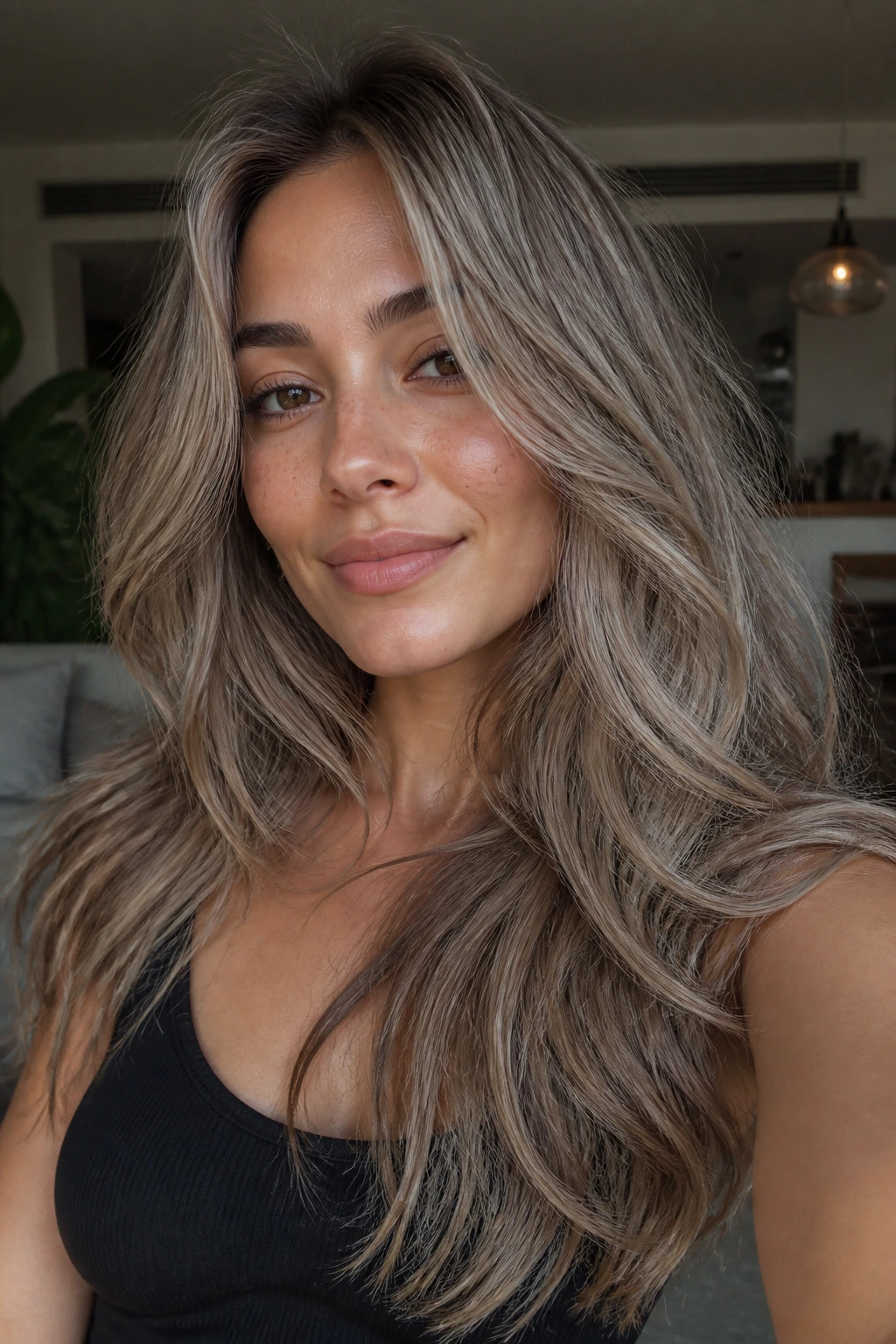
Not every ash blonde look needs a visible cut line. Some of the best ones hide the structure and let the color do the talking. Cool beige waves with invisible layers are exactly that: soft, flowing, and subtle enough to sit beautifully against olive skin without making the complexion look tired.
The layers are cut to remove bulk, not to shout about themselves. You only notice them when the hair moves. That’s why the waves look airy instead of thick and blocky. The color benefits from the same restraint. Beige ash keeps the blonde from going flat, while the hidden layering gives the tone room to breathe.
Who This Suits
If you have medium-density hair and want blonde that looks polished without a lot of styling, this is one of the smartest options. It also works if you wear a lot of neutrals, because the hair doesn’t fight your wardrobe. It sits in the same soft register.
Dry the hair with a nozzle attachment and wrap a few loose sections around a 1.25-inch iron. Don’t curl every piece. Leave some straight bits in there. That unevenness is what makes the ash look natural instead of lacquered.
12. Toned-Down Silver Ash Bob
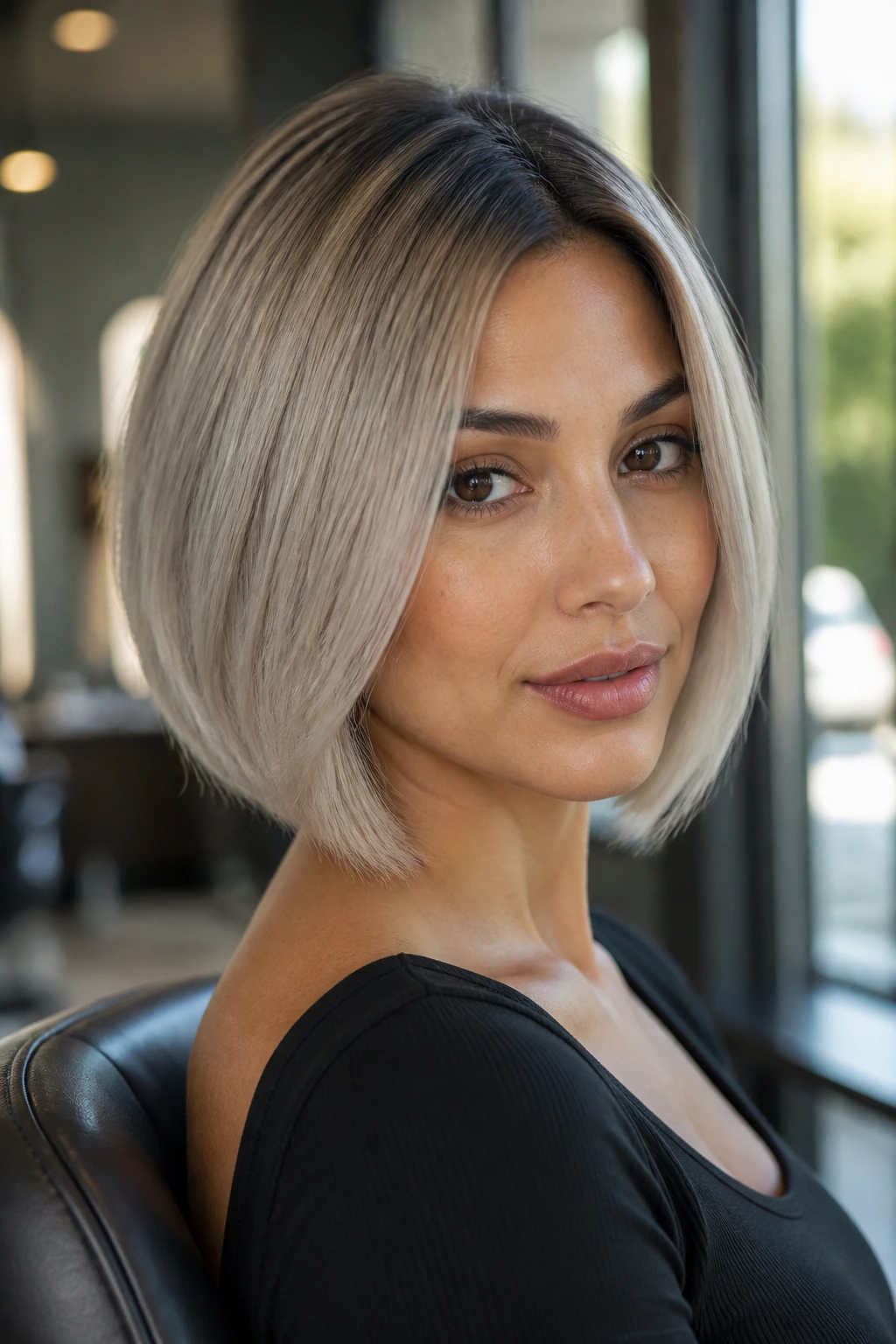
Silver ash can look icy in a way that flatters some faces and overpowers others. On olive skin, I prefer it toned down just a bit. The bob shape keeps the hair controlled, and the cooler silver-ash finish adds enough edge without turning the face gray.
The trick is to keep the silver away from the roots and soften it through the mids. That way, the color doesn’t sit right up against the skin in the wrong way. If your olive undertone leans neutral, this can be one of the cleanest and most striking versions in the whole set.
How to Keep It Wearable
Ask for a toner that leans silver-beige rather than blue-white. Blue-white can get weird next to skin with green undertones. Beige silver is gentler. It still reads cool, just with more softness.
This is a good cut if you like sharp silhouettes and minimal styling. One pass with a straightener, a little shine spray on the ends, and you’re done. The shape carries the look. The color is there to sharpen it.
13. Feathered Collarbone Cut
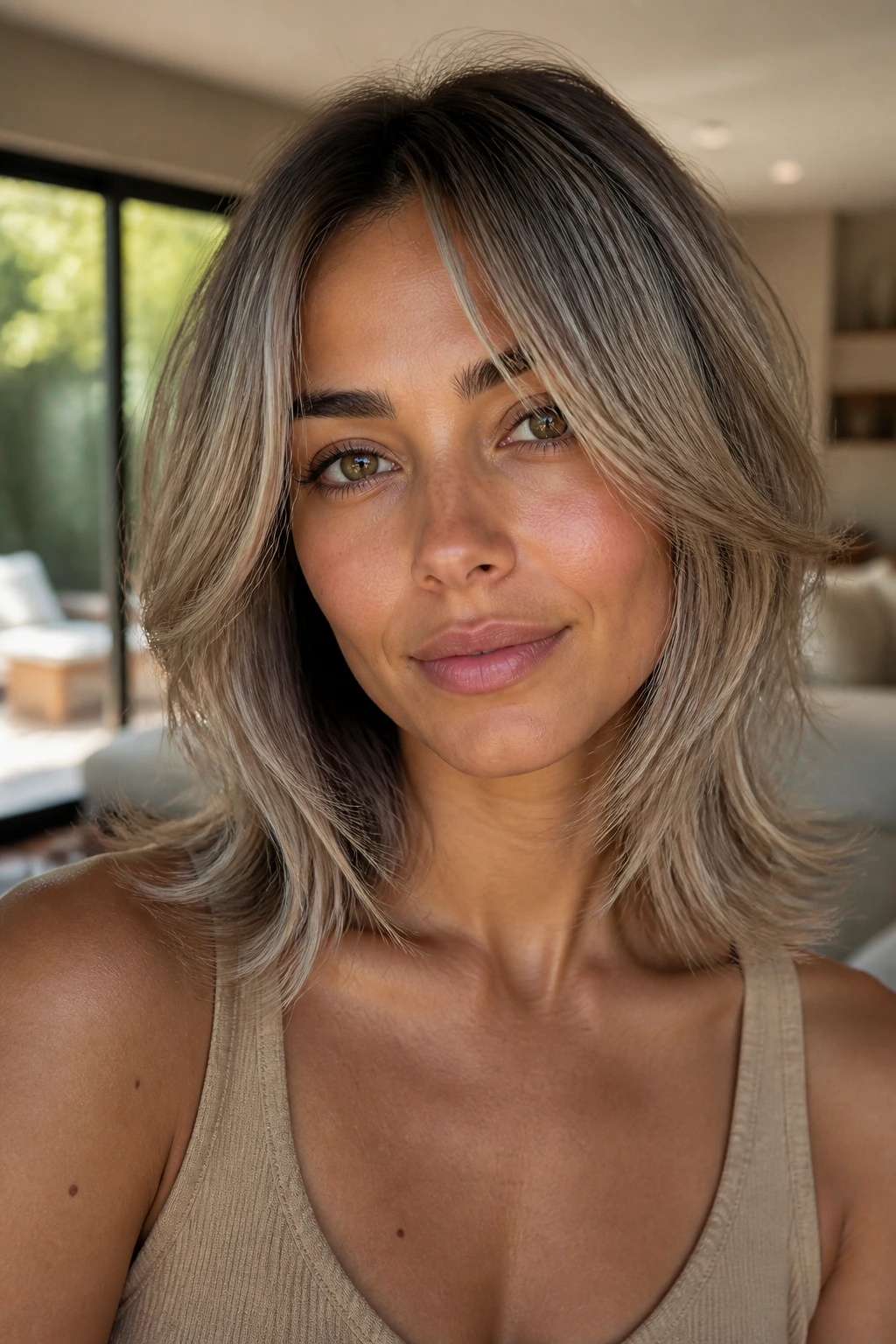
The collarbone cut is one of those lengths that never asks for much and still delivers. Feathered ends give the style movement, and ash blonde highlights through the top layers keep it from feeling heavy. On olive skin, that lightness around the face matters because it opens the whole look without flooding it with brightness.
Feathering works better than blunt ends here because the ash color needs space to move. When the ends are soft and broken up, the tone looks more dimensional. That’s the difference between “blonde hair” and “hair with shape.”
A Good Styling Habit
Blow-dry the crown up and away from the scalp, then bend the ends outward just a touch. The result feels casual but not lazy. If you’re wearing this with a middle part, keep the face-framing pieces a shade lighter so the center part doesn’t flatten the whole style.
This cut is especially kind if you have olive skin and a longer face. The collarbone length adds width, while the ash blonde creates lift. No drama. Just balance.
14. Braided Ash Blonde Halo
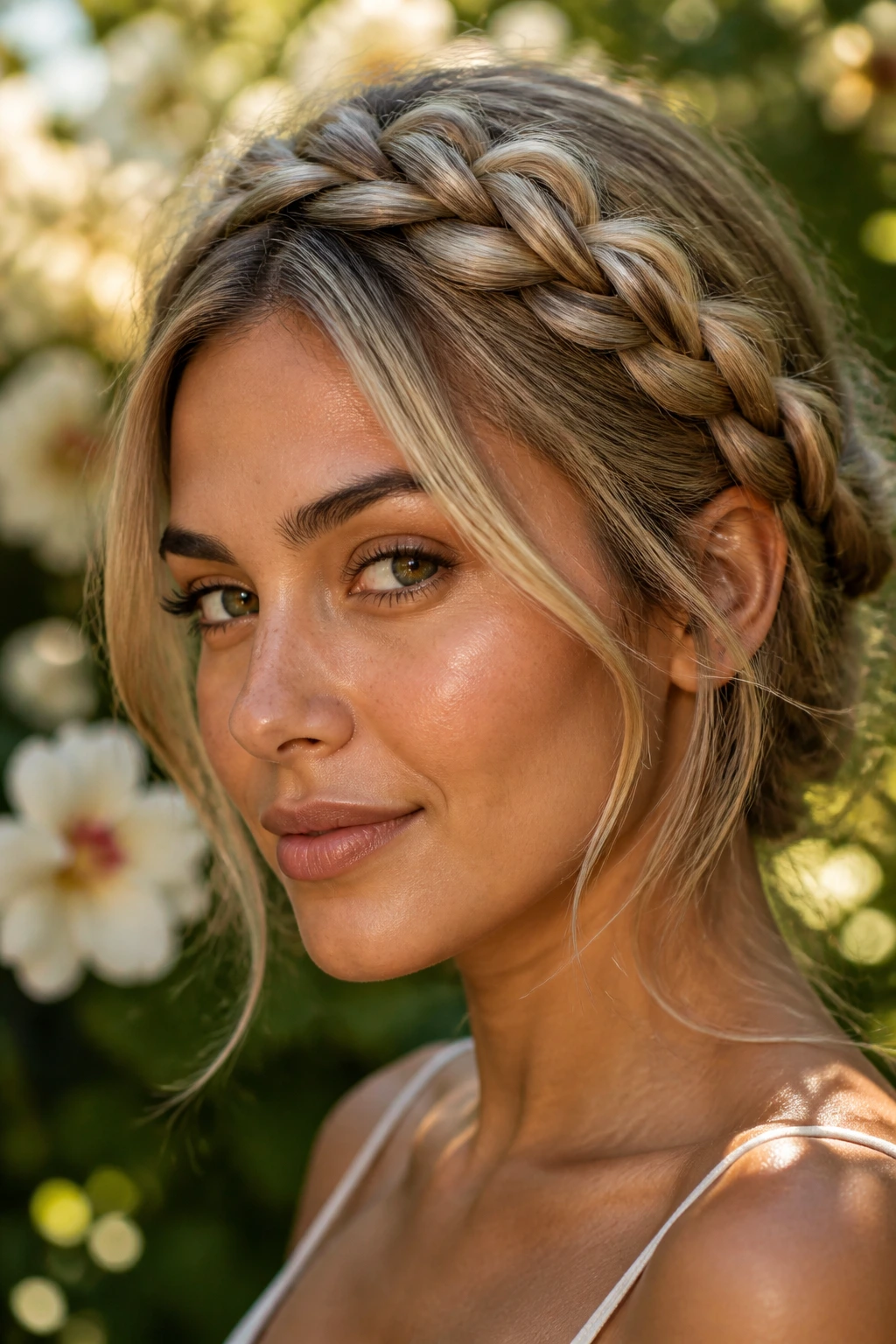
Braids are one of the easiest places to see color contrast, which makes ash blonde look even better when it has depth. A halo braid on olive skin has a soft, detailed feel because the cool blonde weaves in and out of the darker base. It’s a good reminder that ash tones don’t have to be worn loose to be interesting.
This style works especially well if your hair is long enough to wrap around the head or if you’re using two braids pinned into a crown shape. The braid pattern breaks the blonde into little flashes, which keeps the shade from feeling heavy. Olive skin likes that kind of controlled contrast.
When to Wear It
- Weddings
- Late dinners
- Any day your hair won’t stay down
- Photos where you want the color to show without a lot of curl
A little texture spray before braiding helps the strands grip. If the hair is too slippery, the braid collapses and the color reads as one dull stripe. That’s the whole game here: separate the sections enough for the ash to show.
15. Asymmetrical Lob with Smoke-Toned Ends
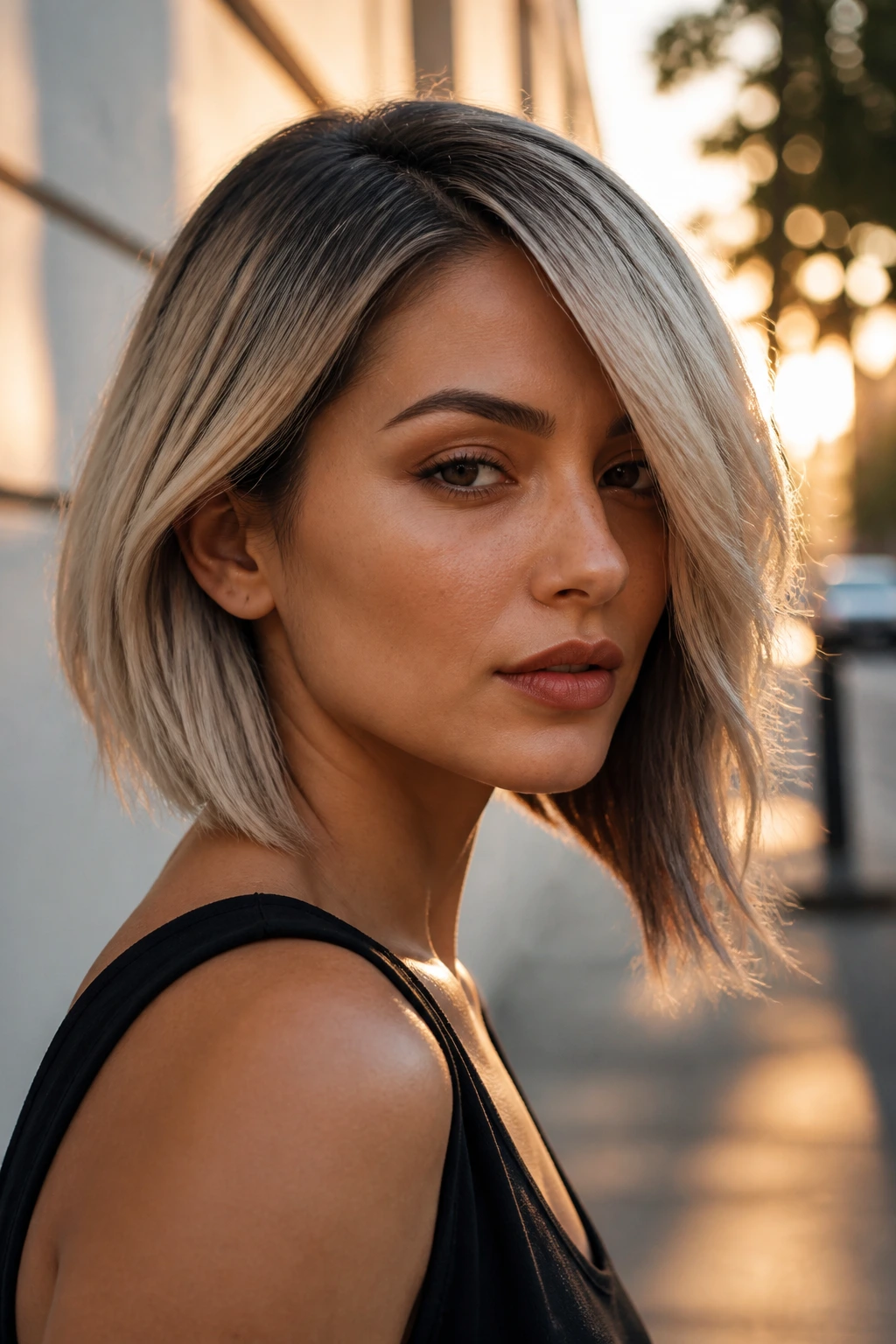
An asymmetrical lob sounds like a small tweak, but it changes the whole mood of the cut. One side sits a bit longer, which gives the hair a clean diagonal line. Add smoke-toned ends, and olive skin gets a shape that feels deliberate rather than cute.
This is one of the better choices if you want ash blonde with edge. The uneven line brings focus to the jaw and neck, while the darker smoke tone at the bottom keeps the style from floating away from the face. If your undertone leans golden, that rooted depth helps the blonde sit more naturally.
Why It Works
A symmetrical cut can sometimes make ash blonde look a little too tidy. The asymmetry breaks that up. It adds tension. That tension keeps the cool tone interesting.
Keep the finish smooth but not flat. A slight bend at the ends on the longer side helps the cut read as soft rather than severe. If you go too sleek, you lose the texture that makes the smoke tone believable.
16. Face-Framing Ash Blonde Layers on Curls
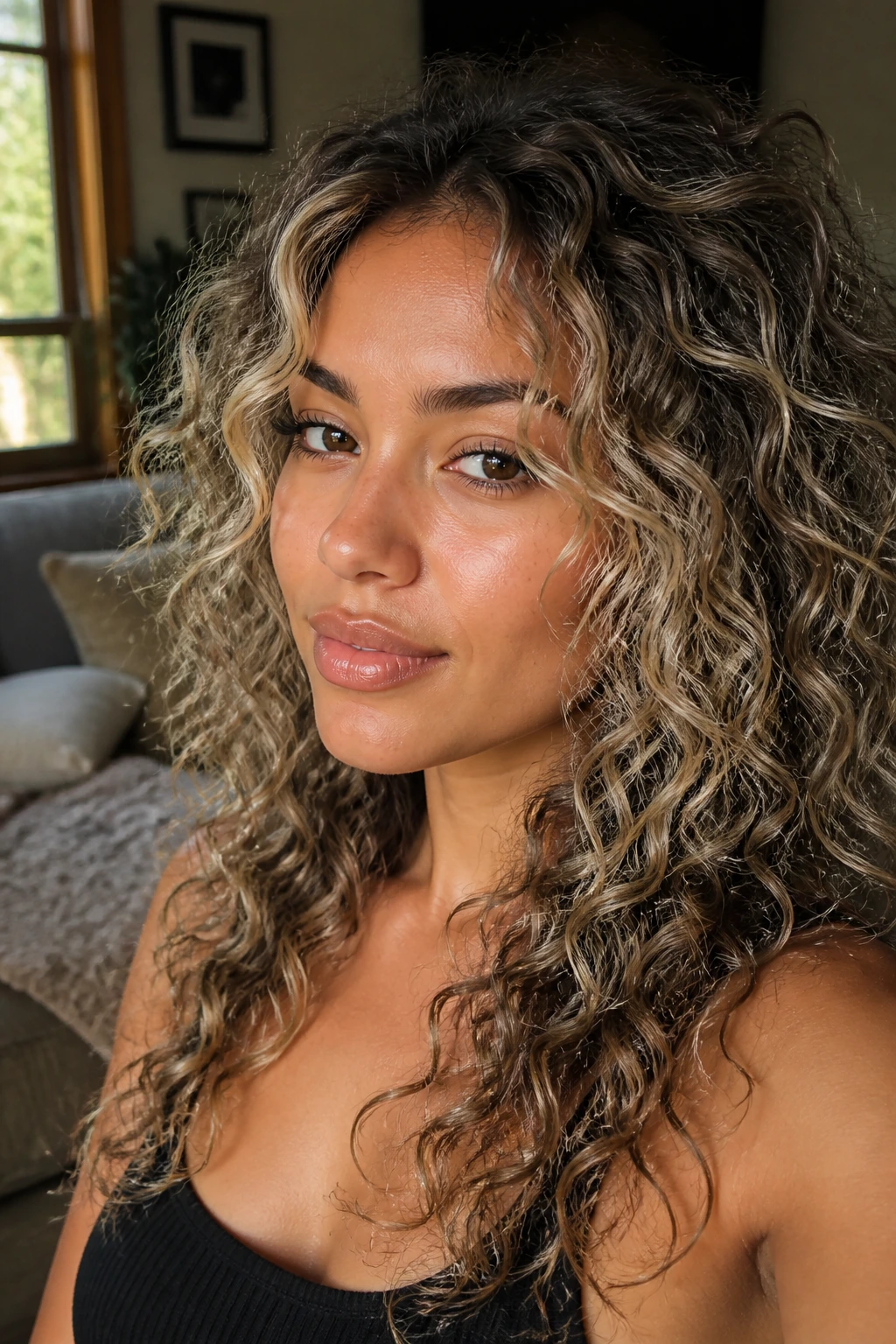
Curly hair and ash blonde need a little respect. Don’t fight the curl pattern. Let it move, then place the lighter pieces where they catch the light on top of the curl rather than underneath it. On olive skin, that creates the clean lift you want without turning the whole head into a pale blur.
The front layers are the important part. They should open the face around the cheekbones and jaw so the ash pieces work like highlights, not strips. If your curls are tighter, keep the light pieces a little chunkier. If they’re loose, finer ribbons usually look better.
What to Ask the Colorist
- Cool beige or mushroom toner, not flat silver.
- Highlights placed on the top curves of the curls.
- Softer brightness around the face.
- A gloss that won’t dry the curl pattern out.
I like this style because it respects the shape of the hair. Too many blonde jobs on curls ignore the cut, and then the color looks disconnected. Here, the ash tone rides the curl. Much better.
17. High-Contrast Root Melt
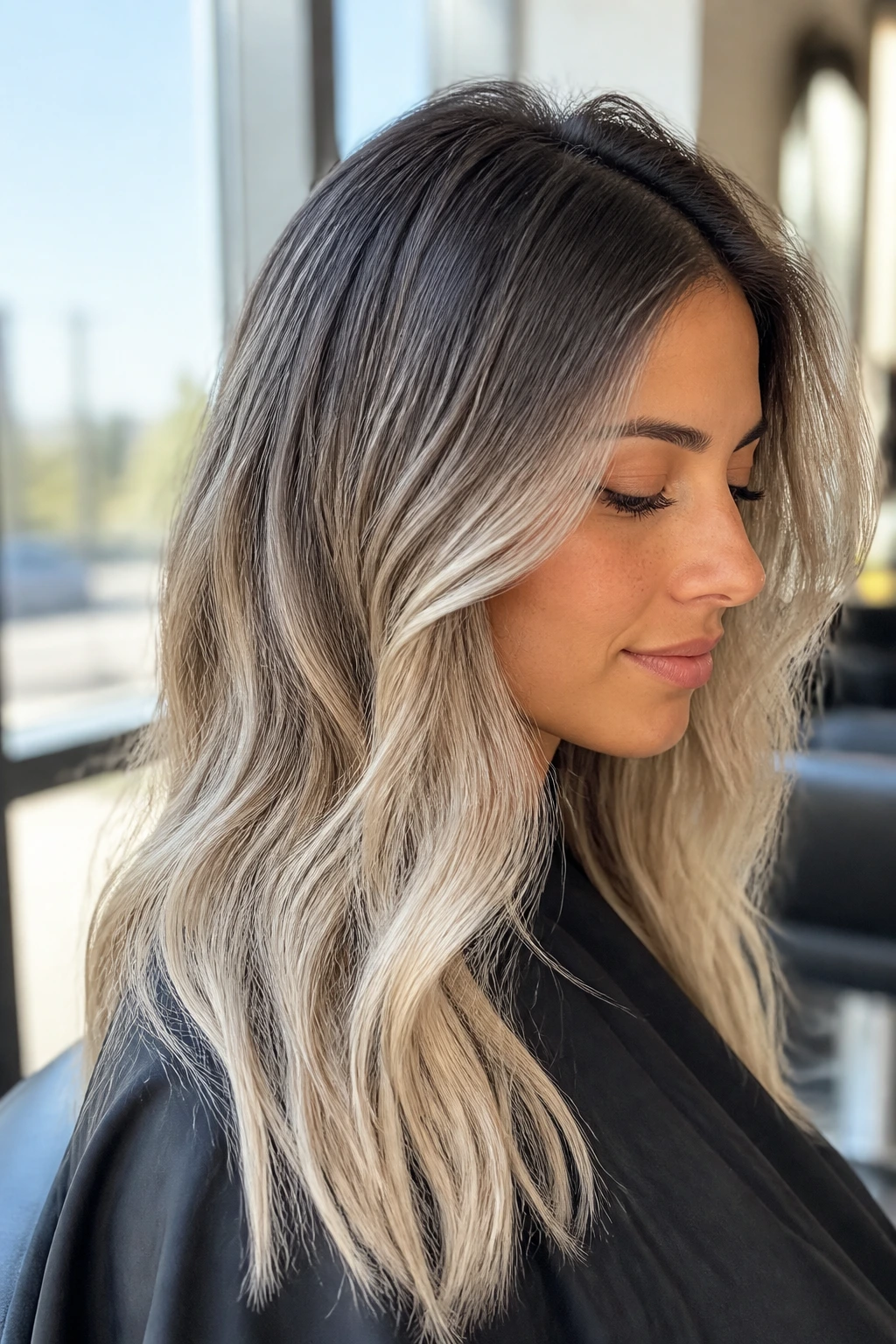
A root melt is one of the smartest moves for anyone who wants ash blonde without constant touch-ups. The roots stay deeper and the color fades into lighter ash lengths. On olive skin, that soft transition keeps the face from looking washed out at the scalp and gives the hair a more expensive, lived-in look.
High contrast doesn’t mean harsh contrast. The root should melt, not stop. That’s the key. If the line between root and blonde is visible, the style starts to feel dated fast. But when the transition is soft, the whole head looks fuller and the color reads richer.
Best For
- People who hate obvious regrowth.
- Medium to long hair.
- Anyone whose natural root is a medium brown or dark blonde.
- Those who want ash blonde but don’t want a fully pale head of hair.
Keep the lengths in smoky beige or ash champagne, not stark white. That gives the style a soft finish and makes olive skin look less drained. It also means the grow-out stays pretty, which is the whole point.
18. Textured French Bob
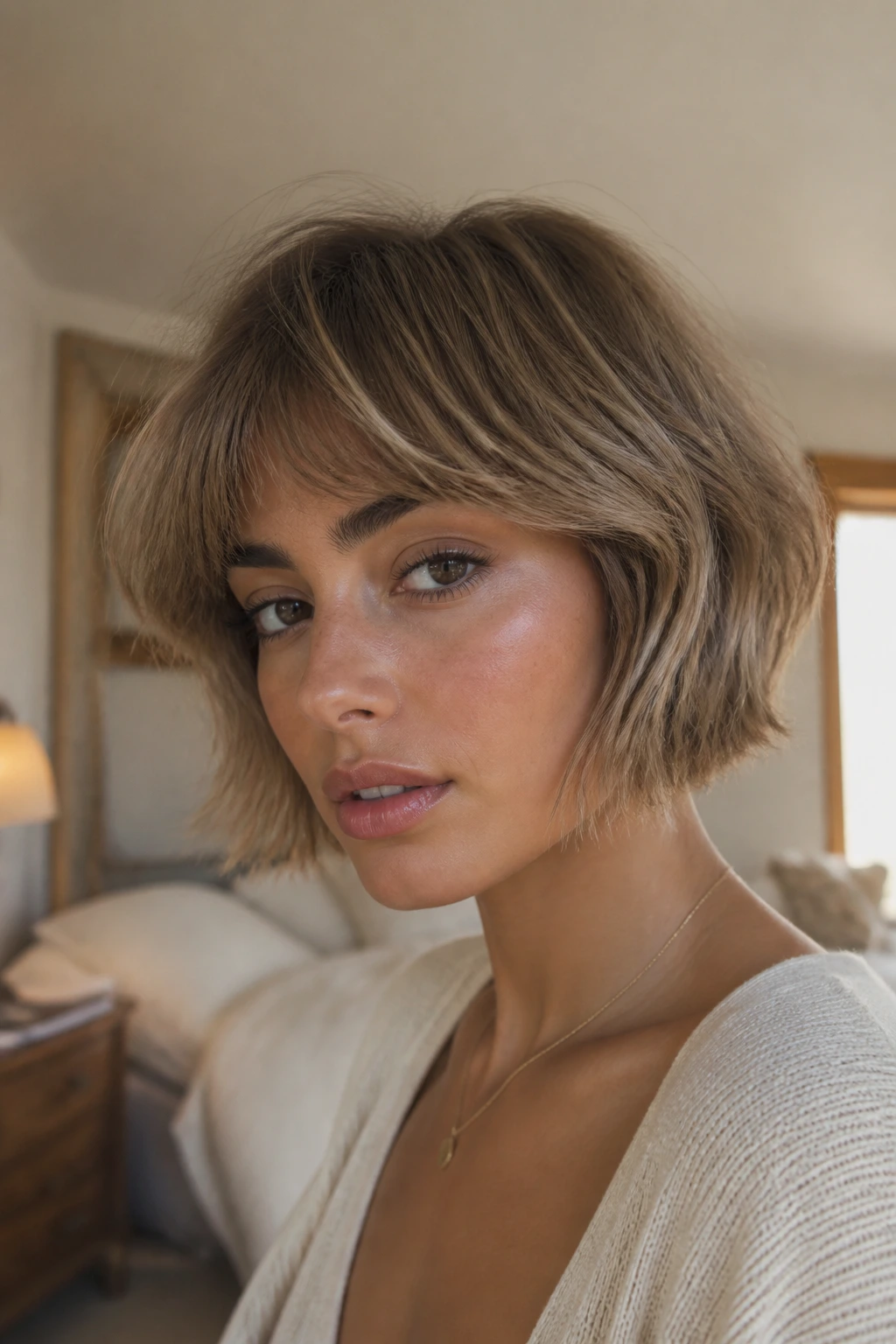
A French bob is already a little chic without trying to be. Add texture and ash blonde, and it becomes even more flattering on olive skin because the cool tone sits inside a shape that already has some attitude. The length usually hugs the jaw or lands just below it, which gives the face a clean frame.
Texture is what stops this cut from feeling rigid. A small bend, a little separation at the ends, and maybe a soft fringe are enough. The color should stay close to natural at the root and brighter through the ends, so the ash reads as a soft finish rather than a hard dye job.
A Nice Detail
If your olive skin has a slightly warm cast, keep the blonde in the beige-ash lane. A pure silver finish can look too stark with the bluntness of the cut. Beige ash keeps the bob elegant instead of frosty.
This is one of those styles that looks even better after a day or two of wear. The texture loosens, the ash reads softer, and the shape settles in. Not fussy. Just good.
19. Long U-Cut with Ash Ribbon Highlights
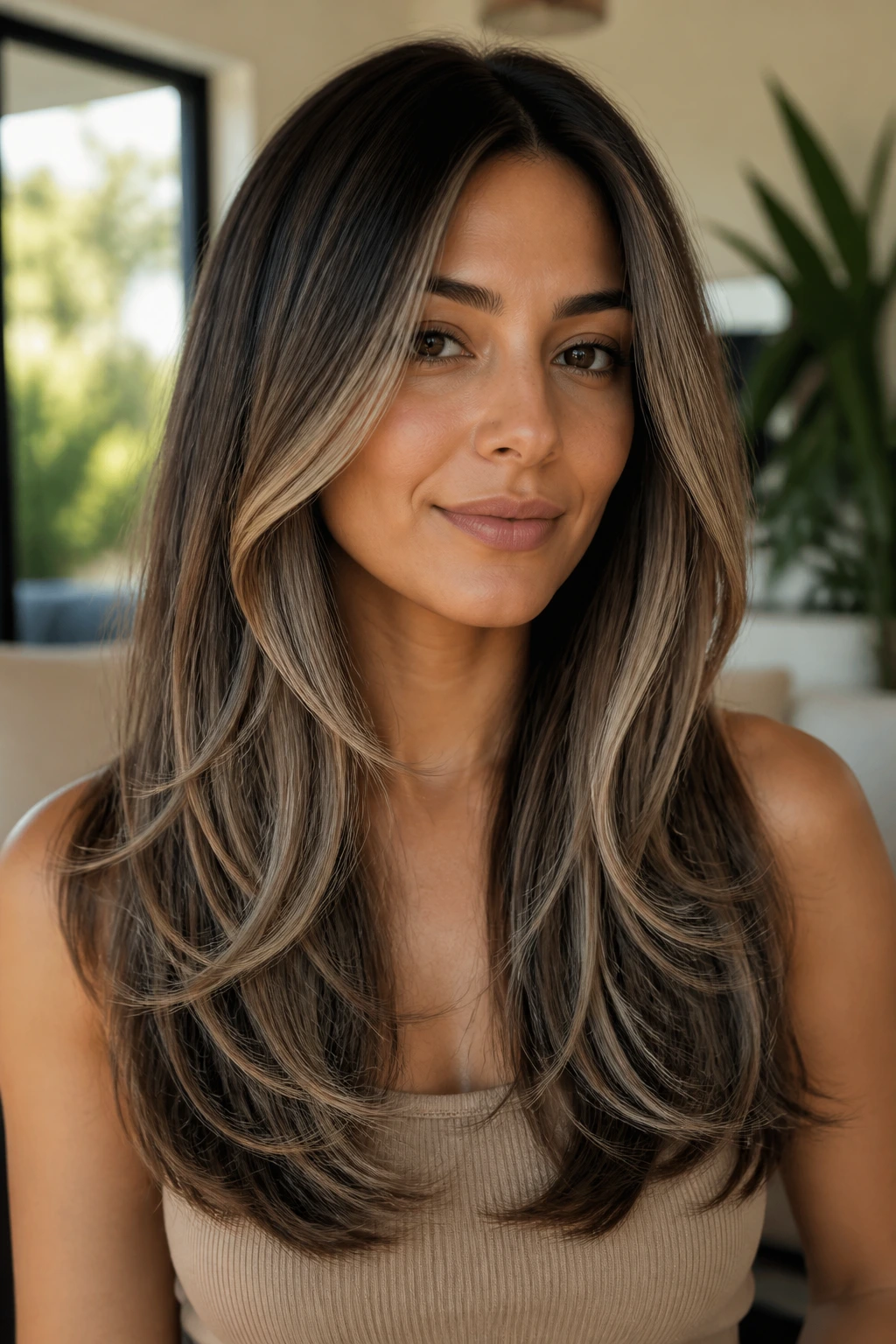
The U-cut is underrated. It keeps length at the sides while carving a soft curve through the back, which makes long hair look full without becoming a heavy curtain. Add ash ribbon highlights, and olive skin gets a gentle brightness that travels through the hair in a more natural way than chunky streaks ever could.
The ribbons should be thin enough to blend but visible enough to catch movement. That’s the sweet spot. When the hair falls in a U shape, the lighter ribbons peek through the lower layers and around the face. The effect is subtle but not invisible.
Why I Like This One
It suits people who want long hair to still look styled. The U-cut gives shape. The ash ribbons give dimension. Together, they stop the style from turning into one flat block of color, which is where long blondes on olive skin can start to look tired.
Use large loose waves or a big blowout brush to show the shape. Tiny curls make the ribbons too busy. Soft movement gives the whole cut room.
20. Messy Top Knot with Ash Blonde Tendrils
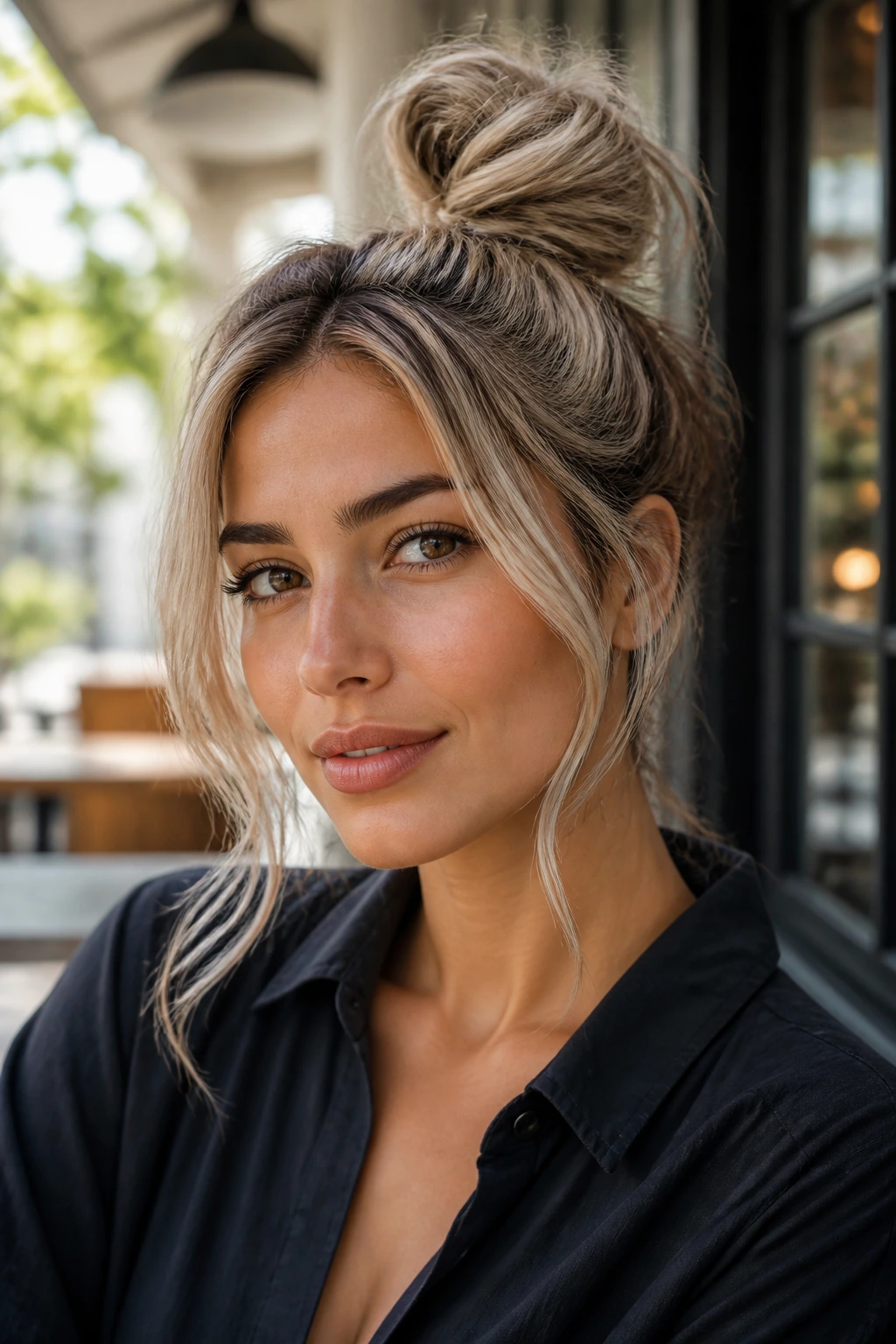
A messy top knot is the kind of thing people dismiss until they see it done right. With ash blonde tendrils left around the face, the style gets a softness that flatters olive skin better than a tight, slick bun ever could. The loose pieces create brightness where the skin needs it most.
What makes this work is contrast: pulled-up hair against soft front pieces, and a cooler blonde against warm or neutral undertones. The tendrils should be thin, not chunky. Let them sit just in front of the ears and along the jaw. That keeps the style casual without making it messy in a sloppy way.
Quick Styling Notes
- Leave the crown slightly loose for height.
- Pull out two face pieces, not six.
- Curl the tendrils away from the face with a 1-inch iron.
- Use a light matte spray so the knot doesn’t collapse.
This is the easy-girl ash blonde look. Not because it’s lazy. Because it knows where to apply effort and where to stop.
21. Soft Wolf Cut in Beige Ash
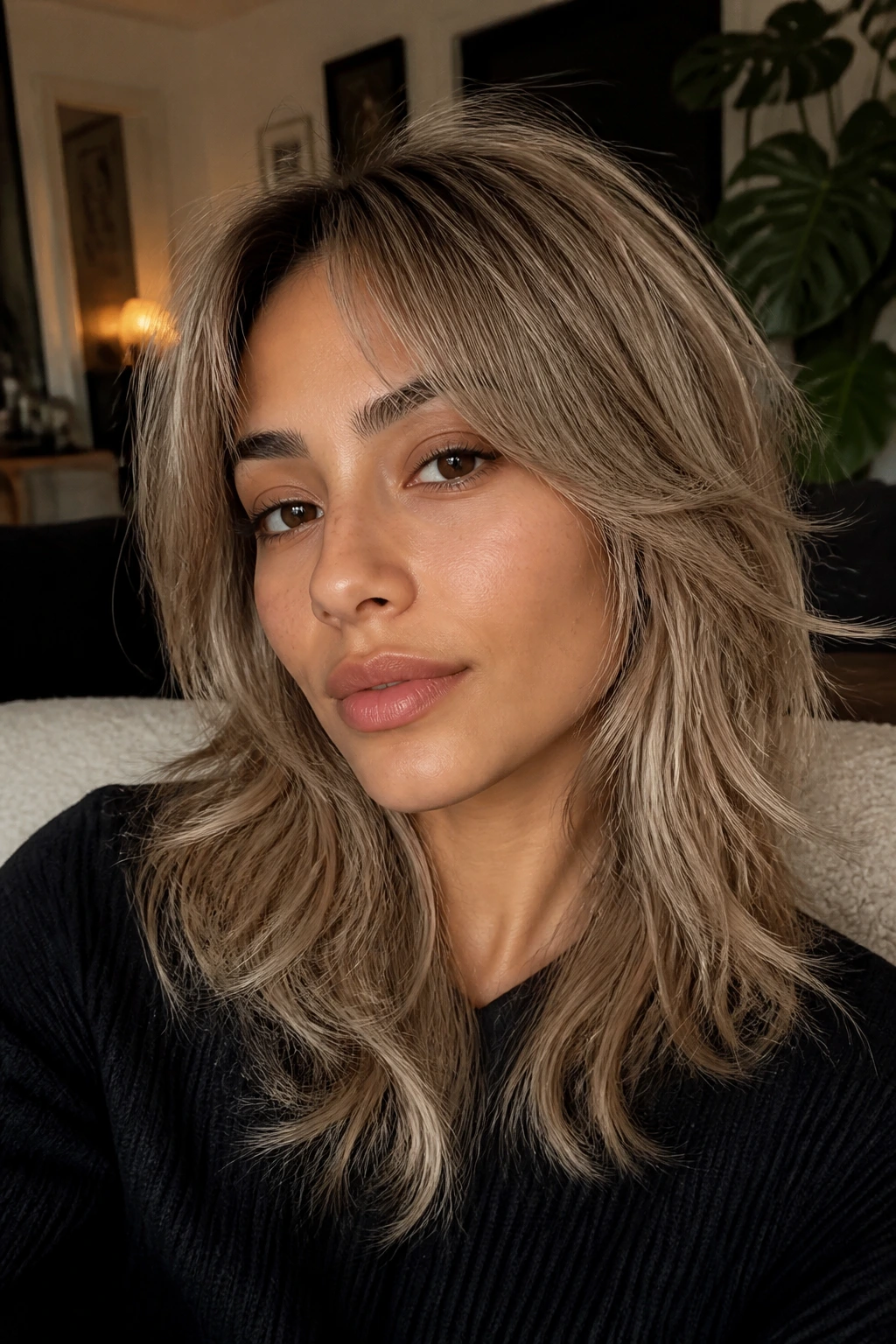
The wolf cut has enough shape on its own that it doesn’t need a lot of help from the color, which is lucky, because beige ash can be tricky if the haircut is too blunt. On olive skin, the soft version works best. You want choppy layers, but not a full-on mullet effect unless that is genuinely your thing.
Beige ash is the right shade here because it keeps the layered texture soft. Too icy and the cut starts looking severe. Too warm and you lose the whole point of the ash. The middle ground is where the magic sits.
Why This Version Works
The layers create movement at the crown and around the face, which gives the color a place to break apart. That is especially useful for olive complexions, because the skin stays central and the hair becomes a frame instead of a distraction.
A little round-brush lift at the roots helps the top layers float. Don’t over-smooth it. The cut is meant to have a little chaos. Controlled chaos, but still chaos.
22. Tapered Crop with Frosted Crown
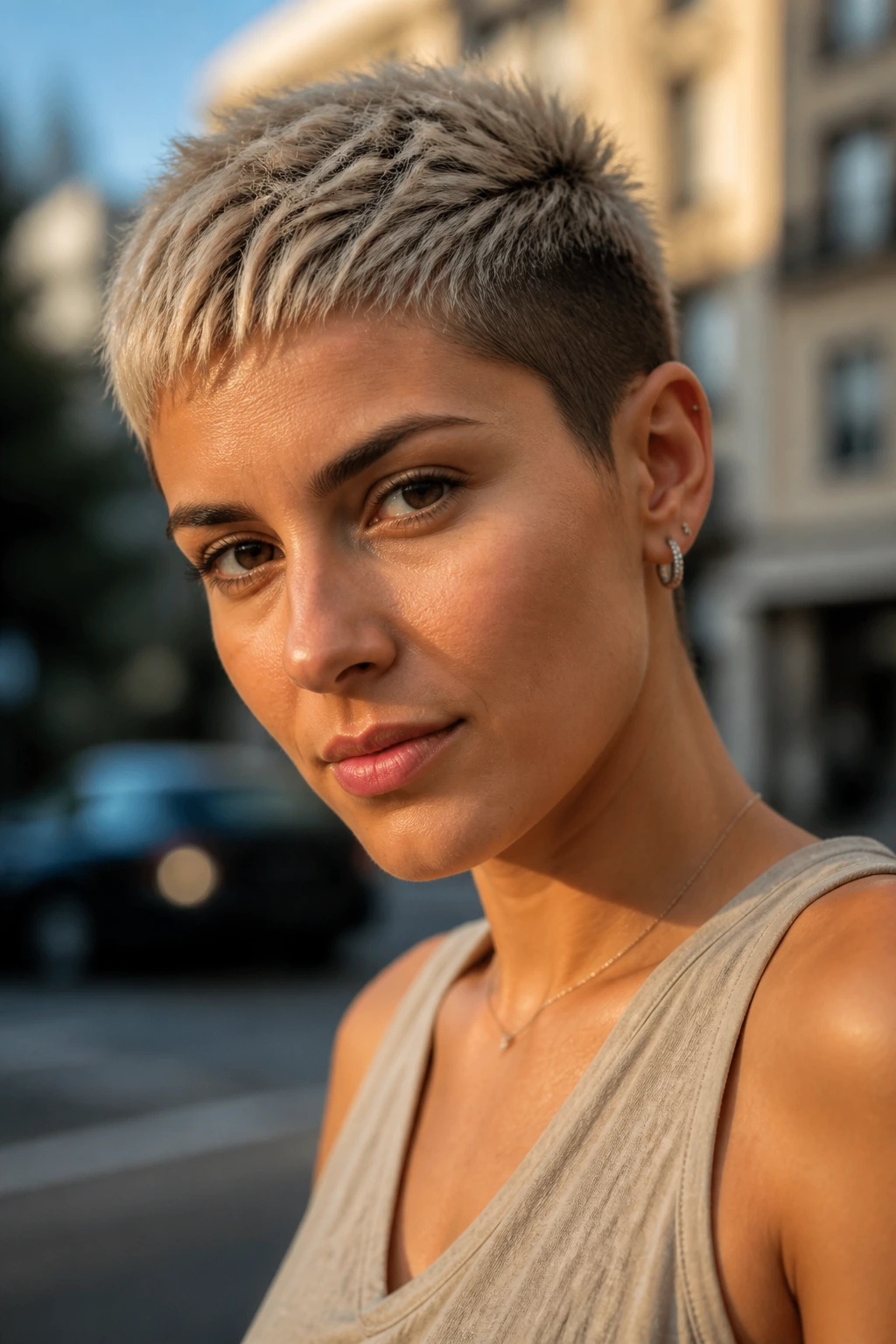
A tapered crop can look flat if the top is the same shade as the sides. Frosted ash through the crown solves that. It adds light where the eye lands first and keeps the tapered sides neat and close. On olive skin, that top brightness can lift the face in a sharp, modern way.
I like this style when the hair is coarse or dense, because the taper removes weight and the frosted crown keeps the top from feeling heavy. If you have warm olive undertones, ask the colorist to keep the frost slightly beige. Pure white frost can get icy fast.
The Balance Point
The sides should stay darker or closer to the natural base. That contrast helps the crown pop without needing a lot of blonde all over the head. It also makes styling easier. A bit of cream or paste at the top, and you’re done.
This is short-hair confidence without the loudness. Clean lines. Cool tone. No fluff.
23. Deep Side-Part Glam Waves
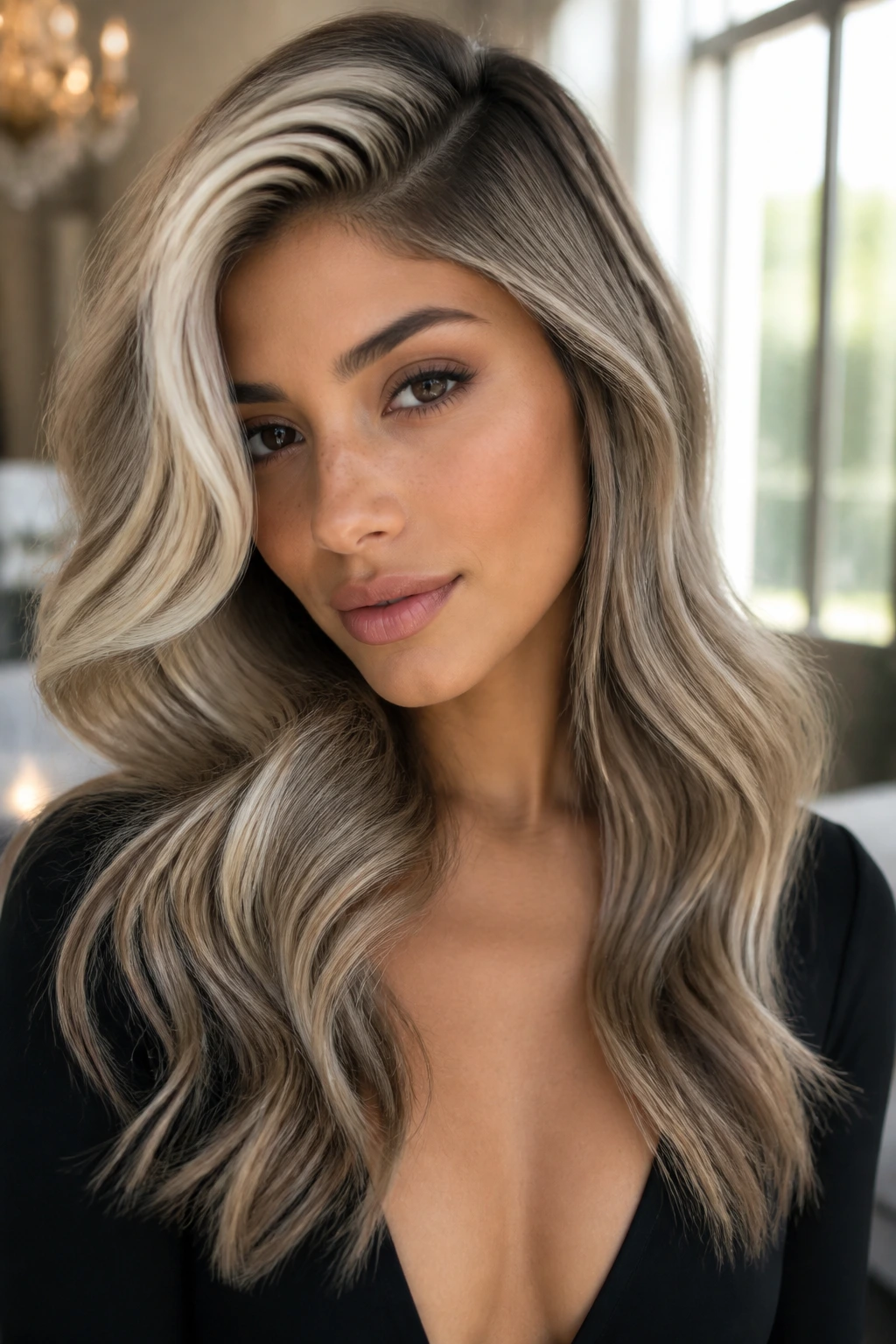
A deep side part changes the entire face. It gives ash blonde waves a little drama, and on olive skin, that drama can be gorgeous when the shade is kept cool and smoky rather than frosty. The side part creates a built-in lift, and the waves add softness around the jaw and cheek.
This style shines when the blonde is placed with intention. The brighter pieces should land on the higher side of the part and around the front. The lower side can stay a little deeper. That contrast creates a sweep that makes the hair look fuller and the skin look more sculpted.
How to Keep It From Looking Old-Fashioned
Use soft waves, not tight curl sets. The goal is movement, not prom hair. A shiny finish on the surface and a cooler tone through the lengths keep the style from tipping into costume territory.
If your olive skin has a warmer lean, this is one of the best places to keep the blonde rooted. The side part already gives drama. You do not need a platinum scalp to compete with it.
24. Half-Up Claw Clip Style with Ash Dimension
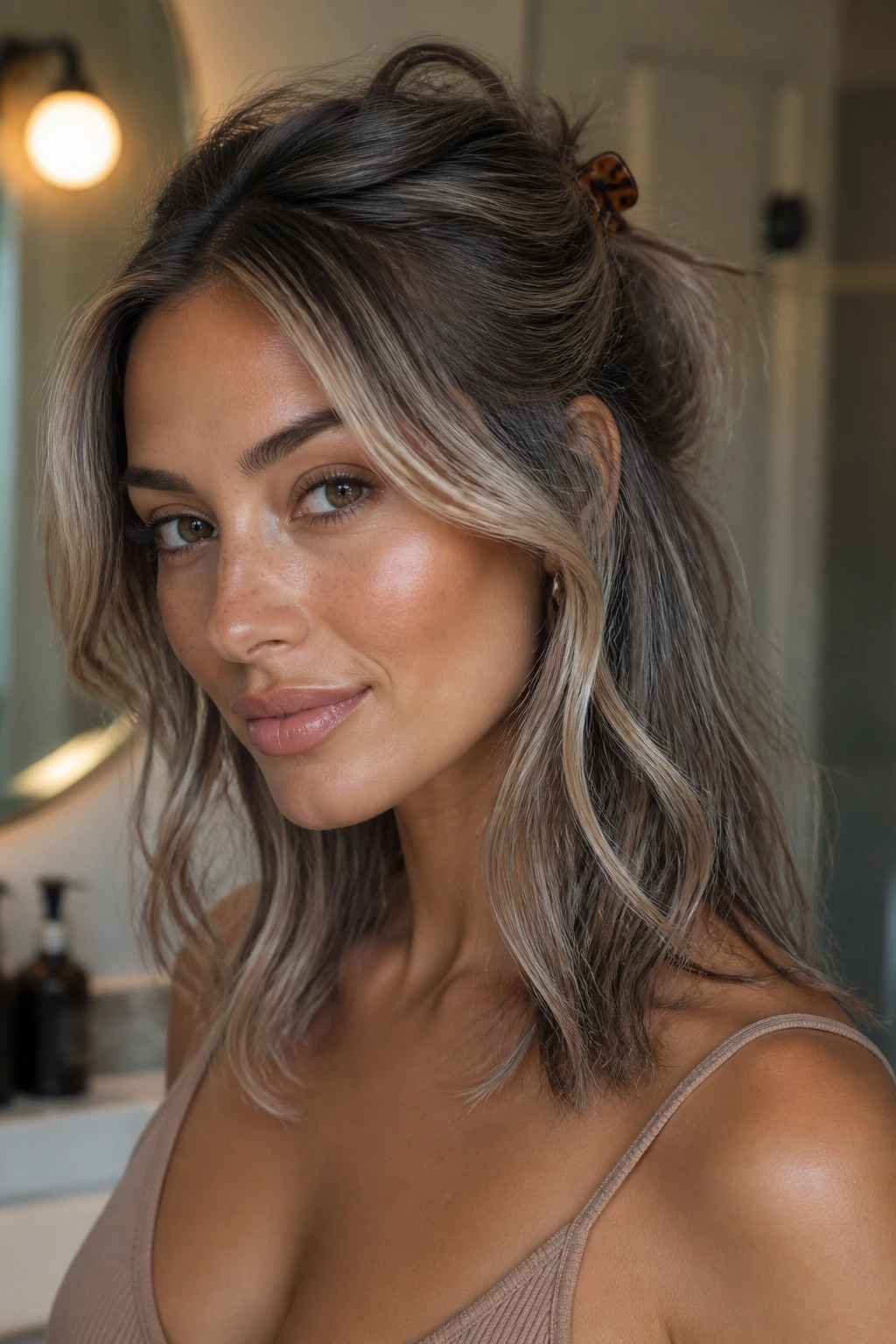
The claw clip trend sticks around for a reason: it lets the texture do the work. With ash dimension through the lengths and a few brighter pieces left out at the front, the style looks intentional instead of thrown together. Olive skin benefits from that loose framing because it keeps the cool blonde near the face without making it feel harsh.
The best version is not about pulling every strand up. Leave the crown slightly loose, twist the hair once, and clip it so the ends spill out. That creates shape. It also gives the ash highlights different angles to catch the light, which keeps the color from going dead flat.
Small But Useful Detail
If the front pieces are too smooth and too long, they can drag the face down. Keep them bent or lightly waved. The difference is tiny and very visible.
This is a good style for second-day hair, and honestly, ash blonde looks better with a little lived-in texture than with a perfect blowout every time.
25. Airy Long Shag with Smoky Ends
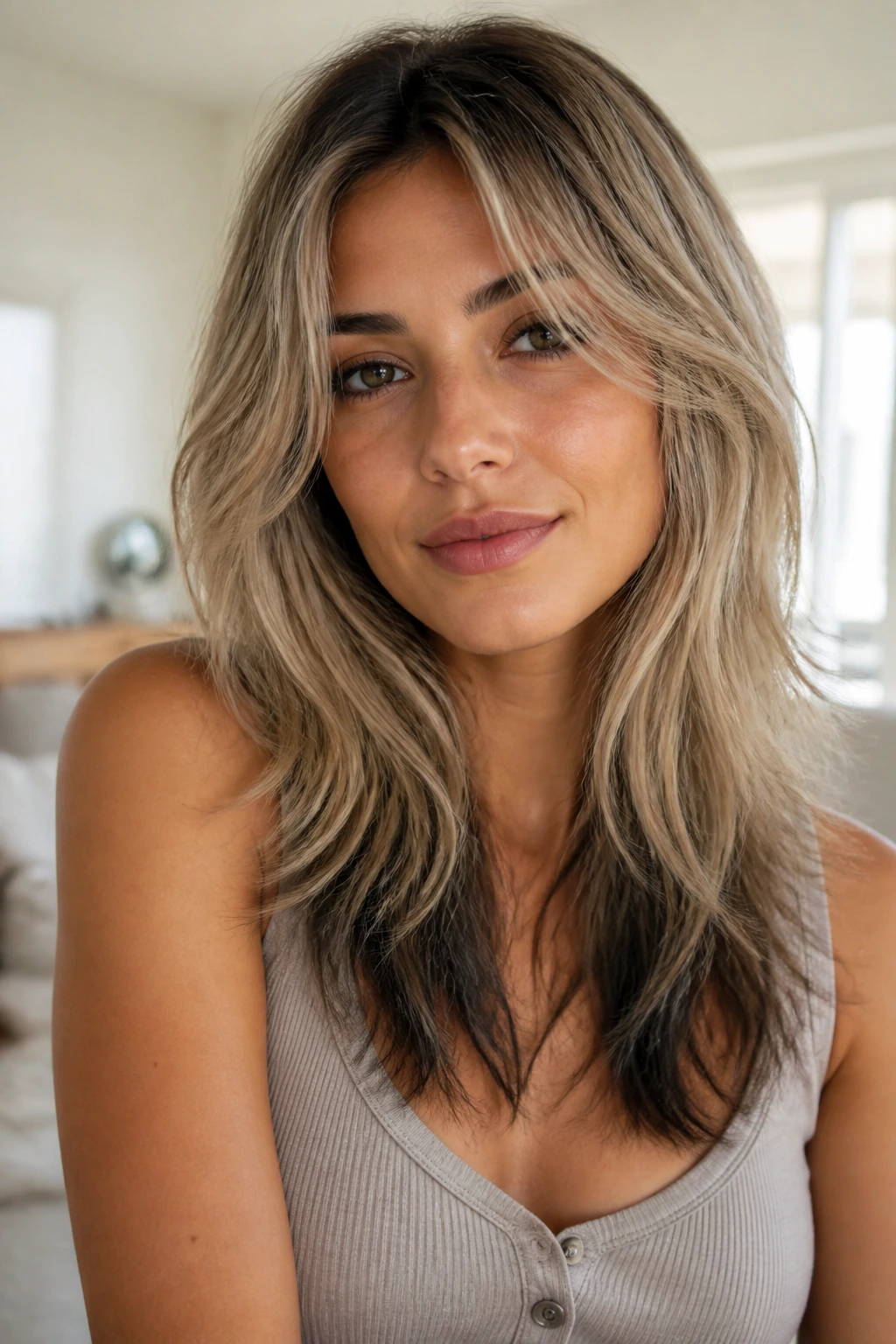
An airy long shag is the style I’d hand to someone who wants movement first and color second, even though the color still matters a lot. The layers are softer than a classic shag, which keeps the length wearable, and the smoky ends give olive skin a grounded frame that keeps the blonde from looking too bright.
The beauty of this cut is that it doesn’t need heavy styling. A rough dry, a few bends with a curling wand, and maybe a light cream at the ends are enough. The ash tone shows up best when the layers separate on their own. That separation is the whole point.
Why It’s a Strong Finish to the List
The long shag gives ash blonde depth without making it precious. It feels relaxed, but not careless. That’s a hard balance to get right, and olive skin tends to love it because the cool tone never sits as a flat sheet.
If you want one practical rule here, it’s this: keep the smoky ends soft and the top layers lighter around the face. That keeps the cut from collapsing into one heavy block. And blocks are the enemy.
Why Ash Blonde Hairstyles for Olive Skin Stay So Wearable
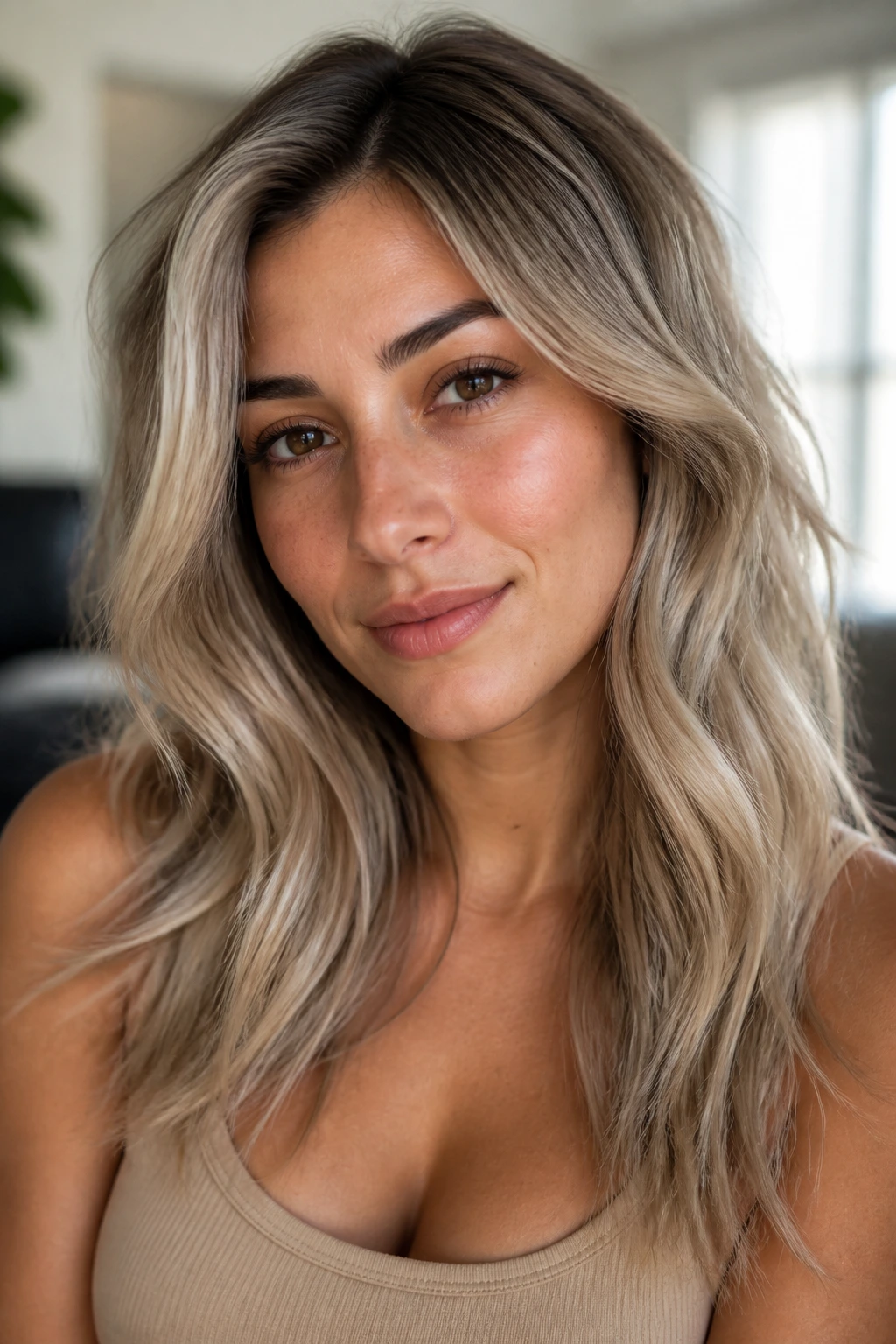
Ash blonde works on olive undertones because it usually controls the exact thing that makes some blondes go sour: too much warmth in the hair. Olive skin often has enough gold, green, or muted gray in it already. Add a gold-heavy blonde, and the face can look sallow. Add a cool ash with too little depth, and the whole thing can go flat. The middle path is where the good hair lives.
That middle path usually means root shadow, beige ash, mushroom blonde, or silver ash softened by dimension. The haircut matters just as much. A blunt bob or layered shag gives the color someplace to move. Straight, one-note lengths can make ash blonde feel thin. Waves, bends, and texture give it a little shadow and a little life.
Colorists lean on the same principle again and again: control the contrast. If the hair is too bright at the root, olive skin loses structure. If the hair is too dark all over, the blonde doesn’t read. So the smartest ash blonde looks keep some darkness near the scalp, some brightness around the face, and enough softness in the mids that the whole thing looks intentional. That’s the difference between “blonde hair” and “that blonde looks right on you.”
Essential Tools for These Styles
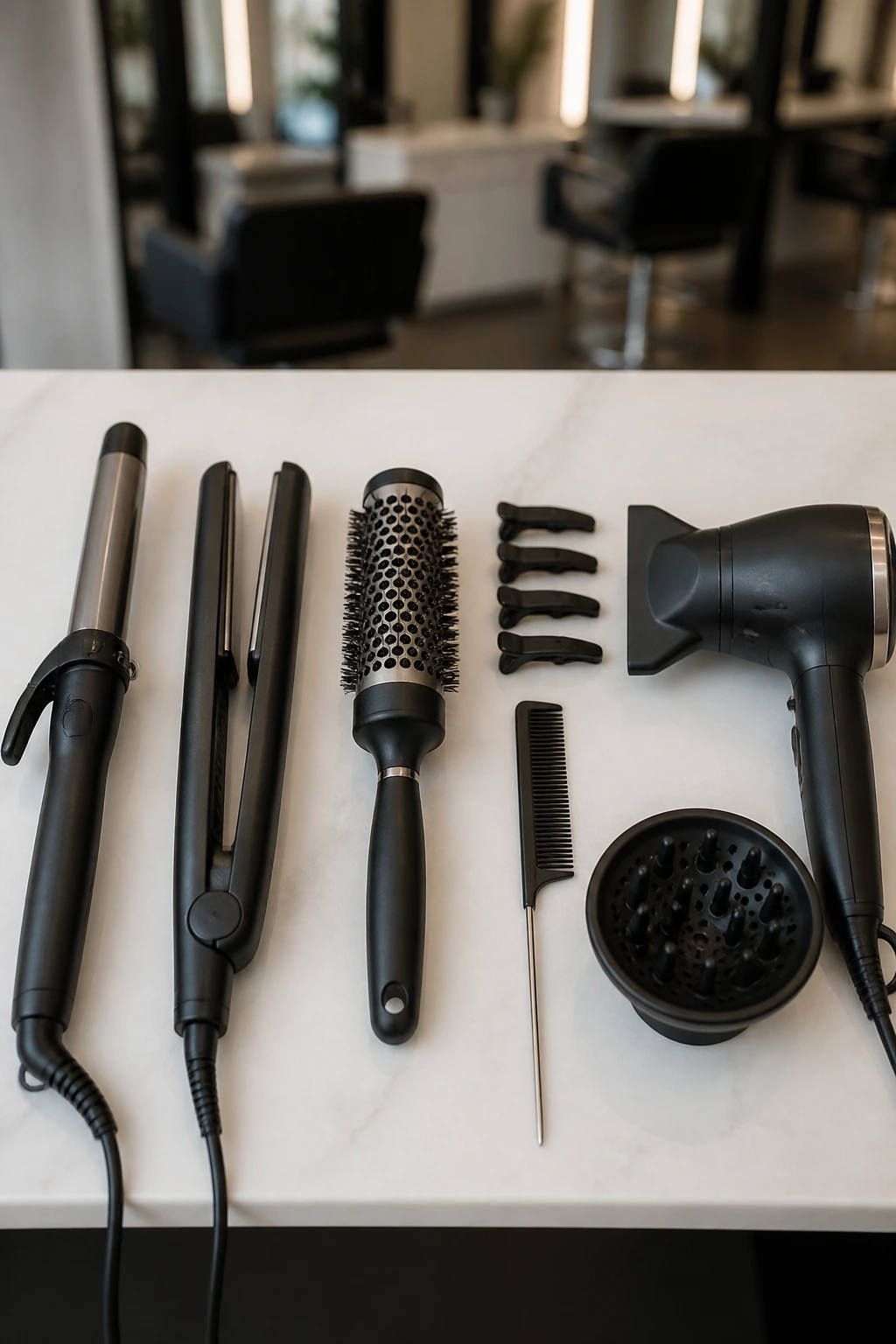
- Purple shampoo: Use it once a week or less; too much can make ash blonde look dull or even lavender-gray.
- Sulfate-free shampoo: Helps keep toner and gloss from fading out too fast.
- Heat protectant spray: Non-negotiable if you blow-dry or curl; ash tones look dry fast when the hair gets cooked.
- 1-inch curling iron or wand: Best for loose bends, waves, and face-framing movement.
- Flat iron: Useful for blunt bobs, sleek lobs, and subtle bends at the ends.
- Round brush: Helps curtain bangs, bob shapes, and lifted roots stay soft instead of puffy.
- Blow dryer with a nozzle: Gives more control and smoother shine through the mids.
- Sectioning clips: They make balayage blending, styling, and root work much easier.
- Tail comb: Handy for clean parts and precise money-piece placement.
- Lightweight shine spray or serum: A tiny amount on the mids and ends keeps cool blonde looking polished, not dry.
Smart Shade Selection and Salon Notes
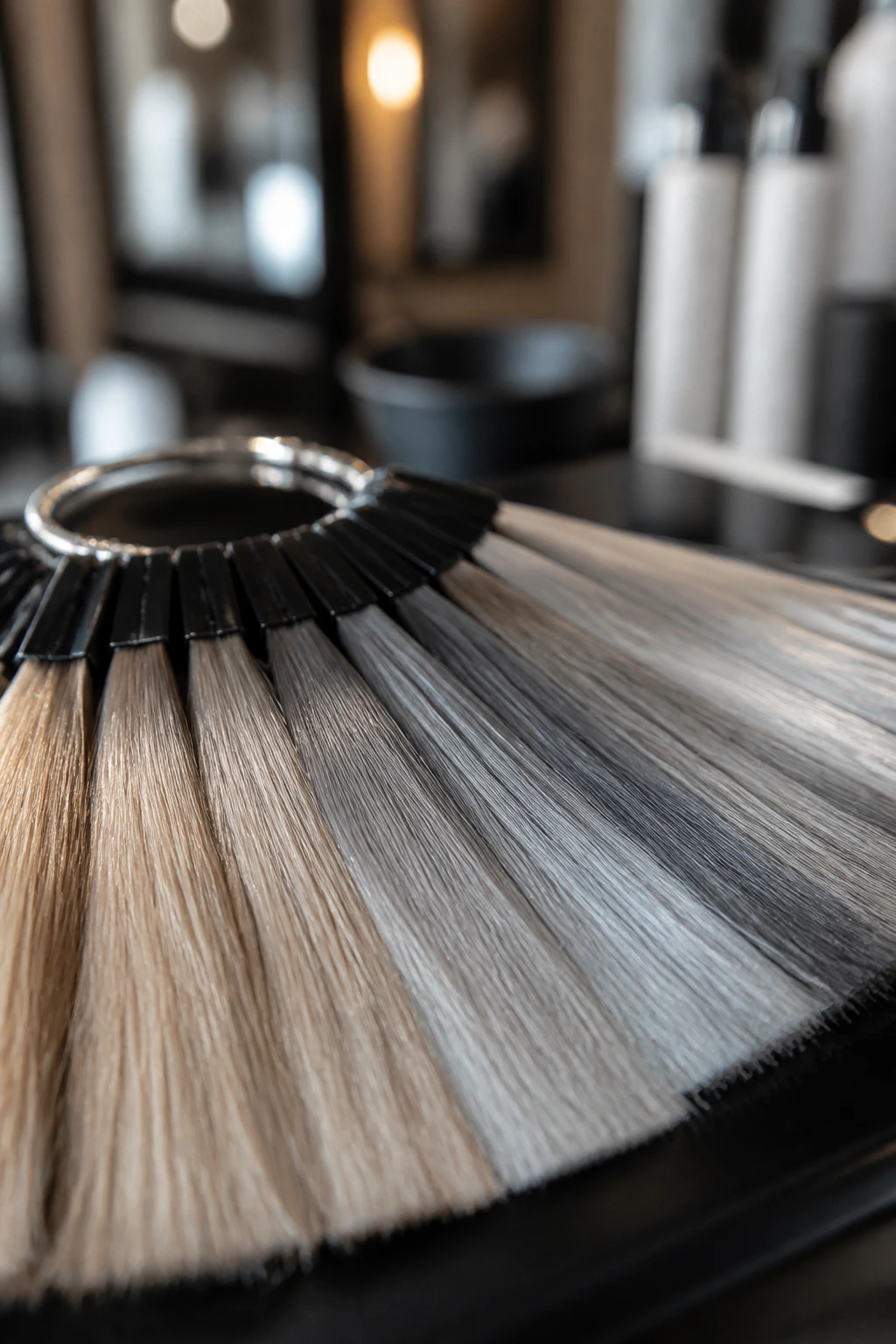
The best ash blonde for olive skin usually starts one step deeper than people expect. If the skin has a warm-gold lean, a level 8 beige ash often looks better than a level 10 ice blonde. If the skin leans neutral or slightly green, you can push cooler, but I still wouldn’t rush straight to white. White hair plus olive undertones can look abrupt unless the haircut is very sharp and the brows are balanced.
Bring photos, yes, but bring the right photos. You want pictures that show root depth, gloss finish, and daylight color, not just a filtered salon shot. Ask your colorist whether the look was created with balayage, babylights, highlights, or a full bleach-and-tone approach. Those are different jobs, and they age differently.
Toner matters more than people think. A violet-based toner can control yellow, but if the hair is pulling orange or too gold, a blue-violet mix usually gets closer to the ash zone. If your hair lifts stubbornly warm, don’t keep asking for “more blonde.” Ask for a cleaner neutralization first. That’s the fix.
One more thing. Olive skin changes in different light. What looks sharp indoors can look flat in sunlight. That’s why rooted ash, beige ash, and smoky dimension tend to win. They handle light shifts better than hard platinum does.
How to Wear These Looks
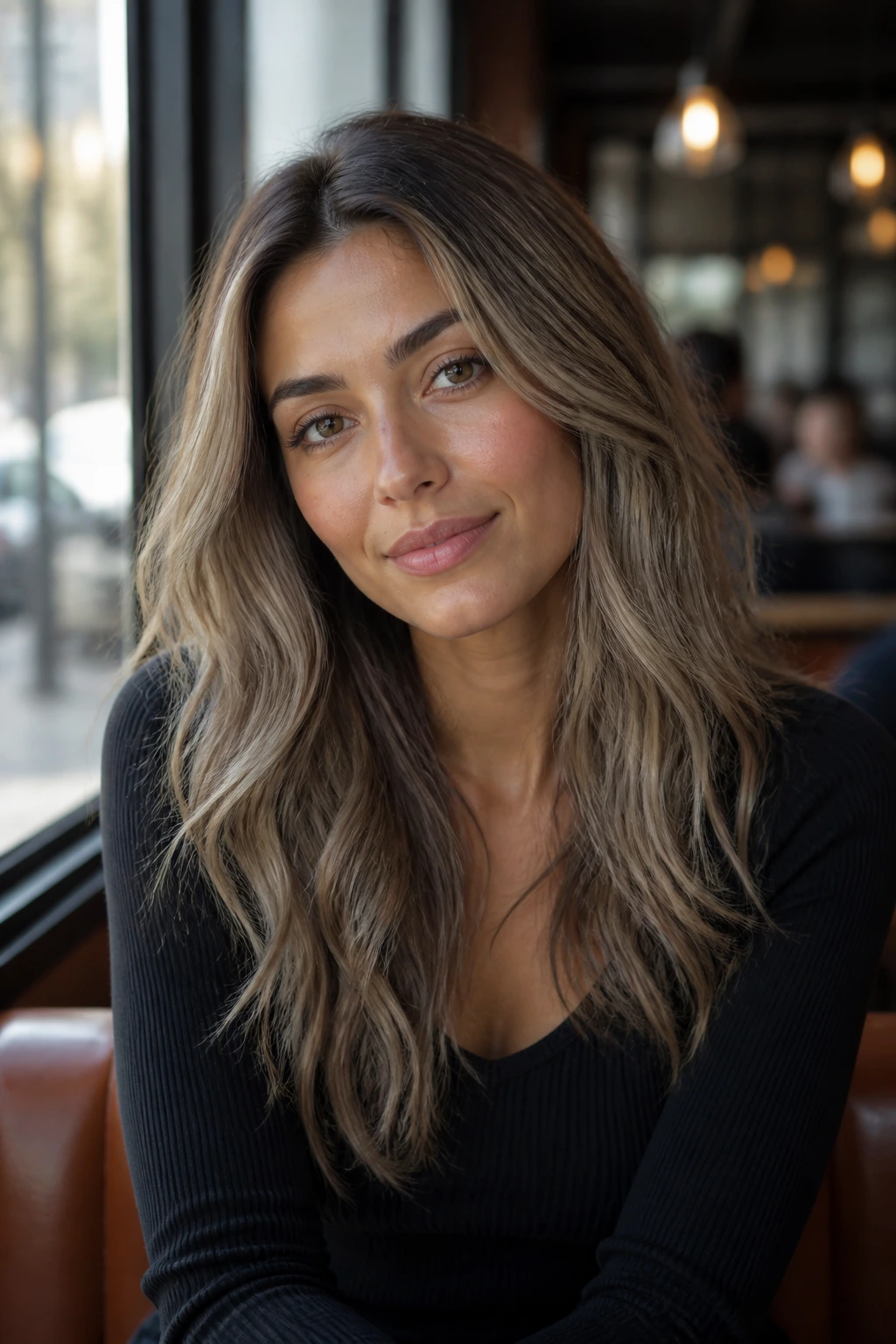
Presentation: Keep the finish clean where the color is strongest. A soft wave on a lob, a sleek edge on a bob, or a loose bend on a shag makes the ash tones show without looking stiff. If the hair is too styled, the cool color can feel mask-like.
Accompaniments: Neutral makeup usually works best: taupe eyeshadow, brown liner, muted rose, soft beige, and brows that aren’t overfilled. Clothing with olive, charcoal, cream, black, and denim tends to sit well beside ash blonde on olive skin. Gold jewelry can warm up the look; silver sharpens it.
Portions: If your hair is fine, keep the ash dimension concentrated around the front and ends so the look doesn’t go sparse. If your hair is thick, spread the brightness in wider ribbons and keep the root shadow visible so the style doesn’t puff outward. Short hair wants less color, long hair can carry more.
Beverage Pairing: Think of the overall vibe the way you’d think about a drink order: an iced coffee version of blonde for crisp, cool, and clean, or a latte version for softer beige tones. The point is balance. If the hair feels too sharp, warm the makeup. If it feels too soft, add a little contrast with a darker brow or liner.
Additional Tips and Flavor Boosters
Flavor Enhancement: A clear gloss or cool beige toner every 6 to 8 weeks keeps ash blonde from drifting brassy. That one step changes the whole look more than another round of highlights usually does.
Customization: If your skin leans warm olive, ask for mushroom blonde, beige ash, or smoky beige instead of icy silver. If your undertone is more neutral or gray-green, you can go cooler through the mids and keep just enough root depth to stop the color from flattening.
Serving Suggestions: Keep the part slightly off-center if you want a softer frame, or go deep side part if you want more drama. A tucked side, a barrette, or a claw clip can change how the ash reflects light without changing the cut at all.
Make-It-Yours: Curly hair tends to look better with finer ash ribbons and a softer toner. Straight hair can handle sharper lines and bolder money pieces. Fine hair likes dimension kept higher up; thick hair needs that dimension spread through the mids so it doesn’t look bulky.
Common Mistakes to Avoid
-
Going too icy too fast: A white-silver blonde can make olive skin look flat or slightly gray. The fix is a beige ash or mushroom base with cooler ends, not a full head of icy toner.
-
Ignoring root depth: A flat, pale root often makes the face disappear. Keep some shadow at the scalp so the blonde has a frame and the skin keeps its shape.
-
Overusing purple shampoo: More does not mean better. If you wash with purple shampoo every time, the hair can turn dull, smoky, or even faintly violet at the porous ends.
-
Blending the highlights too evenly: Ash blonde needs some variation. If every piece is the same width and the same tone, the hair loses depth and starts looking dusty.
-
Choosing the wrong cut for your texture: A blunt bob on thick, puffy hair needs different styling than a shag on fine hair. The shade can be right and the shape can still fail if the cut fights your natural movement.
Variations and Adaptations to Try
Mushroom Beige Softening: If pure ash feels too cold, ask for mushroom blonde with a beige toner over the mids and ends. It keeps the cool mood but adds enough softness for warm olive skin.
Silver Root Melt: For a sharper look, keep the root a deeper neutral brown and let the silver ash emerge only through the lengths. The contrast is stronger, but the face stays grounded.
Curly Ash Ribboning: On waves or curls, use a few fine ribbons instead of broad highlights. That keeps the curl pattern visible and stops the blonde from turning into a block.
Smoky Brunette-to-Blonde Balayage: If your natural color is dark, a slow transition from brunette roots into ash blonde ends is easier to wear than an allover lift. It also grows out in a more forgiving way.
Soft Frost for Short Cuts: For pixies, bobs, or cropped shags, keep the blonde in the crown and front sections only. Short hair can take stronger contrast, but it still looks better when the edges stay a little deeper.
Frequently Asked Questions
Does ash blonde work on warm olive skin, or is it only for cool undertones?
It works on warm olive skin, but the tone usually needs more beige in it. Pure silver can look stark, while mushroom blonde or smoky beige keeps the look cool without draining the face.
How do I stop ash blonde from making my skin look gray?
Keep the root a little deeper, avoid over-toning, and don’t go too pale around the entire face. A softer face-frame with a neutral-beige finish usually fixes the gray cast fast.
What’s the easiest ash blonde style to maintain?
A rooted lob or mushroom bob is easier than a full platinum look because the regrowth blends in. The cut stays polished longer, and the root shadow buys you time between salon visits.
Can curly hair wear ash blonde without losing definition?
Yes, if the highlights are placed on the top curves of the curls and the toner isn’t too harsh. Fine ribbons usually work better than wide streaks because they preserve the pattern of the curl.
How often should I refresh toner?
Most ash blonde shades need a refresh every 4 to 8 weeks, depending on porosity, wash frequency, and heat styling. If the color starts to look yellow, muddy, or too flat, that’s your cue.
Will ash blonde make dark eyebrows look too harsh?
Not if the color has enough root depth and the blonde is softened around the face. Dark brows can actually make olive skin look more balanced, especially with a mushroom or beige ash tone.
Can I ask for ash blonde if I’m starting from very dark hair?
You can, but the process usually takes more than one session if you want the hair to stay healthy. A balayage or root-melt approach is often smarter than trying to drag very dark hair all the way to pale ash in one visit.
What if the color turns brassy after a few washes?
Use cooler water, cut back on clarifying shampoo, and add a toner or gloss instead of piling on purple shampoo. Brass often shows up fastest at the porous ends, so those pieces may need the most attention.
Soft Smoke, Better Contrast
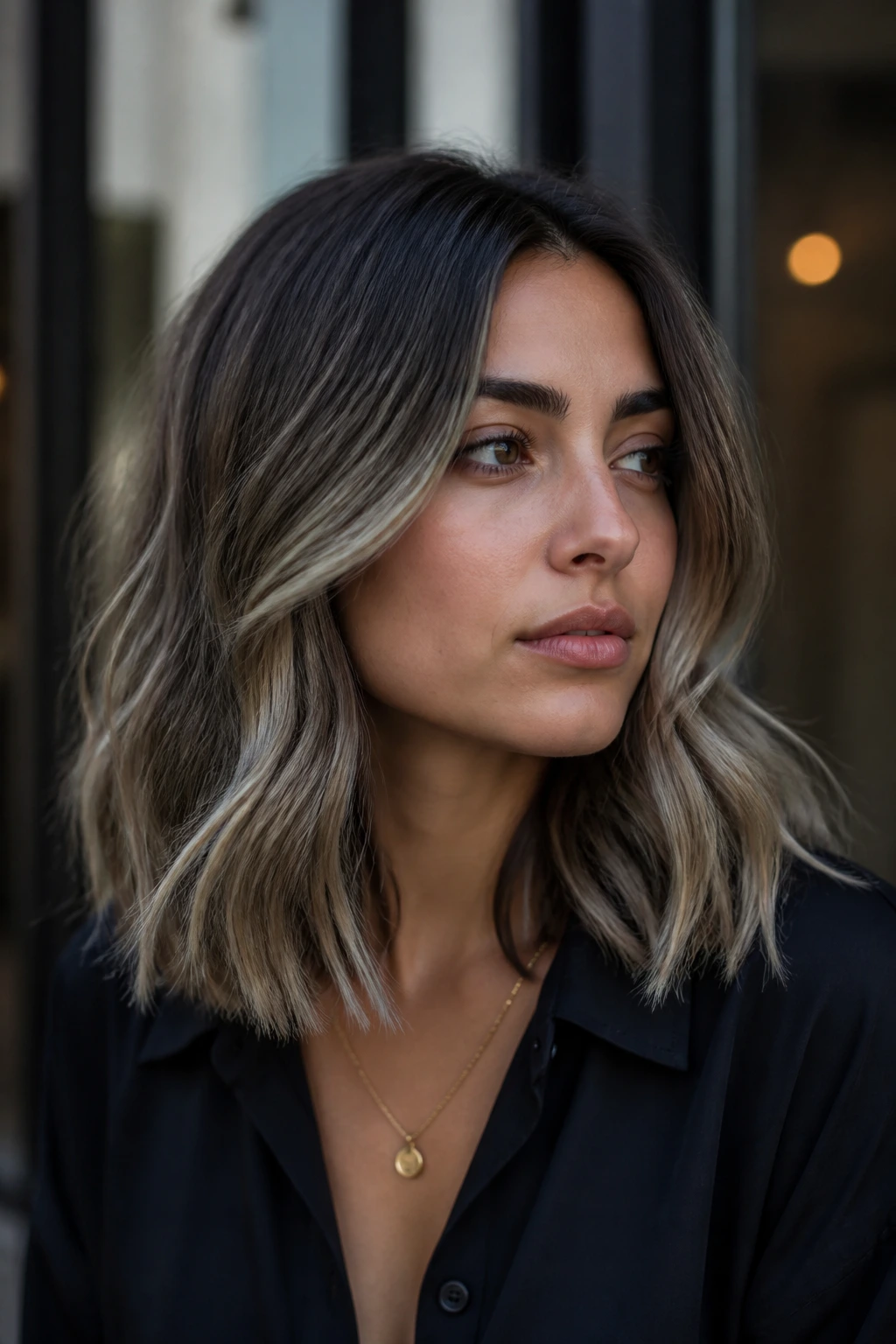
Ash blonde on olive skin works best when it’s allowed to breathe. Too much pale color and the face loses shape. Too much warmth and the shade drifts away from the clean, smoky effect that makes it special in the first place.
The smartest versions in this lineup all do the same basic thing in slightly different ways: they keep some shadow, place brightness where it matters, and give the color a haircut that can actually hold it. That might mean a blunt bob, a shag, a root melt, or a long wave with careful face-framing pieces. The shape changes. The logic doesn’t.
If you’re choosing one place to start, I’d reach for mushroom beige, a rooted lob, or a soft ash balayage first. Those are the styles that tend to stay flattering when the light changes and the grow-out starts showing. That’s where ash blonde on olive skin really earns its keep.